

La era “Trumpista”
que viene: retos y desafíos
para inmigrantes
BY ERIC ALCOCER CHÁVEZ PENINSULA 360 PRESS
El próximo 20 de enero, Donald John Trump, hijo y nieto de inmigrantes, nacido en el barrio de Queens, Nueva York, el 14 de junio de 1946, asumirá el cargo de presidente de los Estados Unidos por segunda ocasión. Convertido en el 47º mandatario del país; su nuevo mandato se extenderá hasta el 20 de enero de 2029, tras una ríspida campaña presidencial como abanderado del Partido Republicano.
Trump, conocido previamente por su participación en el negocio de los concursos de belleza y el ámbito del espectáculo, será el primer presidente estadounidense en ejercer el cargo tras haber sido condenado penalmente. Aunque es improbable que el mandatario electo pise la cárcel, su situación jurídica sigue siendo incierta.
Después de su victoria en las elecciones del pasado 5 de noviembre, donde, según el conteo oficial, superó a la entonces vicepresidenta Kamala Harris, Trump ha vuelto a ser fuente de controversia, especialmente en los ámbitos político y económico. Harris, por su parte, ha mantenido un bajo perfil desde la noche electoral.
Los resultados de las elecciones de 2024 Según los datos finales, Trump obtuvo 312 votos del Colegio Electoral y 77 millones 303 mil 568 votos populares, equivalentes al 49.9 por ciento del total. En contraste, Harris logró 226 votos del Colegio Electoral y 75 millones 019 mil 230 votos populares, representando el 48.4 por ciento.
La campaña de Trump, como es característico, estuvo marcada por ataques y tensiones con sus principales socios comerciales, como México y Canadá, además de sus
críticas hacia países como China, Panamá y Groenlandia.
Sin embargo, el triunfo republicano encendió alarmas inmediatas entre la creciente comunidad de inmigrantes. Millones de personas en América Latina y otras regiones intentan ingresar diariamente, en muchos casos de manera ilegal, en busca del llamado “sueño americano”.
Un voto latino dividido Paradójicamente, en comparación con el proceso electoral de 2016, en el que Hillary Clinton obtuvo más votos populares que Trump (aunque perdió en el Colegio Electoral), en 2024 muchos latinos votaron por Trump, a pesar de sus discursos de odio y amenazas de deportaciones masivas.
Este fenómeno, conocido como el “síndrome del bote salvavidas”, fue descrito por el escritor y senador colombiano Humberto de la Calle, quien escribió en la red social X el 6 de noviembre:
Voto latino en EE. UU. Me permito bautizarlo como el ‘síndrome del bote salvavidas’. Una vez en el bote, hay sobrecupo. Los que lograron subirse patean a los náufragos que aún intentan lograrlo. Y Trump, con su feroz política migratoria, los representa. La naturaleza humana no es propiamente ejemplar”.
El escritor y crítico literario Rafael Narbona, también analizó el apoyo latino a Trump en un artículo publicado el 6 de noviembre de 2024:
“El problema no es sólo Donald Trump. A sus votantes no les importa que sea racista, xenófobo, misógino, autoritario y un delincuente convicto. De hecho, le han votado por ese motivo. (…) Los inmigrantes latinos con papeles tampoco sienten simpatía por
What the Coming ‘Trumpist’ Era Means for
Immigrants
BY ERIC ALCOCER CHÁVEZ PENINSULA 360 PRESS
On Jan. 20th Donald Trump, the son and grandson of immigrants, born in Queens, New York on June 14, 1946, will take office as president of the United States for the second time. Becoming the 47th president of the country, following his tumultuous presidential campaign as standard bearer for the Republican Party. His term will run until January 20, 2029.
Trump, previously known for his involvement in the beauty pageant business and entertainment scene, will be the first American president to hold office after being criminally convicted. While it is unlikely that he will ever see the inside of a jail cell, his legal situation remains uncertain.
After his victory in the November 5 elections, Trump has once again become a source of controversy, especially in the political and economic spheres. His opponent, Vice President Kamala Harris, for her part, has kept a low profile since election night.
As is characteristic, during his campaign and since the election, Trump has lobbed repeated attacks against some of America’s closest allies and trading partners, including Canada and Mexico, even putting aside his remarks threatening an American takeover of Greenland and the Panama Canal.
However, for immigrants, the resounding Republican victory on Nov. 5 – with the GOP taking control of both houses of Congress and the White
House, not to mention the conservative majority on the US Supreme Court –has raised alarm bells for the growing immigrant community.
Paradoxically, compared to the 2016 election, where then-Democratic candidate Hillary Clinton won the popular vote despite losing the election, in 2024 more Latinos voted for Trump despite his hateful rhetoric and threats of mass deportations.
This phenomenon is increasingly being described as the “lifeboat syndrome” by figures including the author and former Colombian politician Humberto de la Calle, who the day after the election posted on X:
“Once on the boat, there is overcapacity. Those who managed to get on kick off the castaways who are still trying to get on board. And Trump, with his fierce immigration policy, represents them.”
The Spanish writer and literary critic Rafael Narbona similarly wrote in a recent article, “The problem is not just Donald Trump. His voters don’t care that he is racist, xenophobic, misogynist, authoritarian and a convicted felon. In fact, they voted for him for that reason. (…) Latino immigrants with papers also do not feel sympathy for their compatriots. The lifeboat is full and could sink if it picks up more people.”
Trump has promised to deport the more than 11 million undocumented immigrants now in the US, putting at risk not only individual migrants but
BILINGUAL EDITION
ENERO 2025 / NO. 79 / ANCHORAGE, ALASKA
sus compatriotas. El bote salvavidas está lleno y podría hundirse si recoge a más gente”.
La amenaza migratoria
Trump ha prometido deportar a más de un millón de inmigrantes indocumentados. Actualmente, se estima que hay más de 11 millones de personas sin estatus legal en Estados Unidos, lo que pone en riesgo a miles de familias que podrían ser separadas.
El presidente electo confirmó que Thomas Homan, exjefe de la Policía de Nueva York y exdirector interino del Servicio de Inmigración y Control de Aduanas (ICE), liderará las políticas migratorias como “zar de la frontera”. Homan será responsable de supervisar las deportaciones.
Ante esta amenaza, México, liderado por la presidenta Claudia Sheinbaum, ha anunciado medidas para proteger a los ciudadanos mexicanos en Estados Unidos, incluyendo una aplicación móvil con un botón de pánico que conectará a los usuarios con consulados y embajadas.
Además, la Secretaría de Relaciones Exteriores (SRE) ha implementado 11 ac-
ciones para apoyar a la comunidad mexicana, entre las que destacan: la difusión del Centro de Información de Atención a Mexicanos (CIAM), una línea de emergencia disponible las 24 horas, consulados móviles y asesoría financiera.
Reflexiones finales
Aunque la alianza que algunos esperaban entre Kamala Harris y Claudia Sheinbaum no se materializó en el voto, el camino sigue adelante. En los próximos cuatro años, la prensa libre y las organizaciones no gubernamentales tendrán un papel crucial para documentar abusos y defender los derechos humanos de los inmigrantes, la comunidad LGBTQI+ y otros grupos vulnerables.
Los retos son inmensos, pero la comunidad latina ha demostrado ser resiliente y trabajadora.
Como dijo el expresidente mexicano Vicente Fox: “Los mexicanos hacen el trabajo que nadie más quiere hacer”.
En tiempos de adversidad, la unión será clave: “Latinos unidos, jamás serán vencidos”.
their families and the communities that depend on them.
The president-elect confirmed that Thomas Homan, former chief of the New York Police and former acting director of Immigration and Customs Enforcement (ICE), will lead immigration policies as “border czar.” Homan will be responsible for overseeing the deportations.
Faced with this threat, Mexico, under the leadership of newly elected President Claudia Sheinbaum, has announced measures to protect Mexican citizens in the United States, including a mobile application with a “panic button” that will connect individuals facing imminent deportation with the nearest Mexican consulates and other resources.
In addition, Mexico’s Ministry of Foreign Affairs (SRE) has implemented 11 actions to support the Mexican im-
migrant community in the US, among which stand out: the dissemination of a 24-hour emergency line, consulates mobile phones and financial advice.
Although the alliance that some expected between Kamala Harris and Claudia Sheinbaum did not materialize, the path continues. In the next four years, the free press and non-governmental organizations will play a crucial role in documenting abuses and defending the human rights of immigrants, the LGBTQI+ community and other vulnerable groups.
The challenges are immense, but the Latino community has proven to be resilient and hardworking. As former Mexican President Vicente Fox said: “Mexicans do the work that no one else wants to do.”
In times of adversity, unity will be key: “Latinos united will never be defeated.”
Republicanos en el Congreso se enfrentan a una mayoría frágil
Los republicanos toman control de la Cámara y el Senado con mayorías estrechas. Las divisiones internas y la influencia de Trump darán forma a los éxitos y desafíos legislativos en el nuevo Congreso.
POR PEDRO GRATEROL
Los legisladores inician una nueva sesión bienal del Congreso en enero, con los republicanos controlando tanto la Cámara como el Senado. Esta trifecta representa una oportunidad para que el Partido Republicano avance en prioridades clave alineadas con las promesas de campaña del presidente Trump, incluyendo recortes de impuestos, aumento en la producción de petróleo y gas, y políticas migratorias estrictas. Sin embargo, el camino hacia el éxito legislativo está lleno de probables obstáculos que dificultarán alcanzar esos objetivos.
Los republicanos son optimistas sobre su capacidad para abordar un amplio espectro de metas legislativas, desde reducir el gasto público hasta implementar la agenda de Trump en cuanto a deportaciones masivas y producción energética. Sin embargo, la mayoría estrecha en la Cámara, que es de apenas cuatro escaños, una de las más pequeñas en la historia moderna, significa que lograr el consenso entre los miembros del partido será crucial.
La mayoría republicana en la Cámara se perfila como la más estrecha en la historia moderna, comenzando con 219-215 debido a la renuncia del representante Matt Gaetz y la inminente salida de los representantes Elise Stefanik y Mike Waltz de la administración Trump. Aunque se esperan elecciones especiales que restauren la mayoría a 220-215, los márgenes estrechos exigen un apoyo casi unánime para la aprobación de legislación. Incluso un pequeño grupo de voces disidentes puede descarrilar leyes esenciales. Este delicado equilibrio se hizo evidente cuando los controvertidos nominados al gabinete obligaron a los republicanos del Senado a navegar cuidadosa-
GOP-Controlled Congress Faces a Fragile Majority
Republicans take the House and Senate with narrow majorities. Internal divisions and Trump’s influence will shape legislative successes and challenges in the new Congress.
BY PEDRO GRATEROL
Lawmakers are embarking on a new two-year session of Congress in January, with Republicans holding control of both the House and Senate. This trifecta presents an opportunity for the GOP to advance key priorities aligned with President Trump’s campaign promises, including tax cuts, increased oil and gas production, and stringent immigration policies. However, the path to legislative success is full of obstacles that will likely make those goals difficult to attain.
Republicans are optimistic about their ability to address a broad spectrum of legislative goals, from reducing government spending to implementing Trump’s agenda on mass deportations and energy production. Yet, the slim majority in the House, which is just four seats, one of the smallest in modern history, means that achieving consensus among party members will be crucial.
The House Republican majority is
mente las demandas de Trump. De hecho, eventos recientes muestran que la próxima administración Trump tendrá una poderosa influencia sobre los votos de los diferentes miembros del Congreso.
En el Senado, los republicanos mantienen una mayoría de 53-47, suficiente para avanzar prioridades acordadas, pero precaria para medidas más controvertidas que requieren un apoyo más amplio. Senadores moderados como Susan Collins y Lisa Murkowski podrían presentar obstáculos para la legislación polémica, como se demostró cuando Gaetz se retiró de la
set to be the narrowest in modern history, starting at 219-215 due to Rep. Matt Gaetz’s resignation and the impending departure of Reps. Elise Stefanik and Mike Waltz from the Trump administration. Although special elections are expected to restore the majority to 220-215, the slim margins necessitate near-unanimous support for passing legislation. Even a handful of dissenting voices can derail essential legislation. This delicate balance was evident when controversial Cabinet nominees prompted Senate Republicans to navigate Trump’s demands carefully. In fact, recent events show that the incoming Trump administration will have a powerful sway over the votes of different members of Congress.
In the Senate, Republicans maintain a 53-47 majority, sufficient for advancing agreed-upon priorities but precarious for more contentious measures that require broader support. Moderate senators like Susan Collins and Lisa Mur-
consideración para fiscal general debido a la falta de respaldo suficiente dentro del partido. Para navegar estos desafíos, los republicanos planean utilizar el proceso de reconciliación, que les permite aprobar proyectos de ley relacionados con impuestos y gasto con una mayoría simple. Esta estrategia refleja las tácticas demócratas usadas para legislación importante en años recientes. Además, los republicanos en la Cámara han integrado el aumento del techo de deuda en sus esfuerzos de reconciliación, preparando el terreno para intensos debates sobre el gasto gubernamental y la
kowski may pose hurdles for controversial legislation, as demonstrated when Gaetz withdrew from consideration for Attorney General due to insufficient GOP backing. To navigate these challenges, Republicans plan to utilize the reconciliation process, allowing them to pass tax and spending-related bills with a simple majority. This strategy mirrors Democratic tactics used for significant legislation in recent years. Additionally, House Republicans have integrated the debt ceiling increase into their reconciliation efforts, setting the stage for intense debates over government spending and fiscal responsibility.
Meanwhile, Democrats, sidelined in both chambers, will likely concentrate on public messaging to highlight the potential negative impacts of Republican policies, aiming to galvanize opposition and secure support for the 2026 midterms. After all, most federal government trifectas last only two years and Democrats hope that, by extending anti-incumbent sentiments, they are able to return to the majority in the next Congress.
responsabilidad fiscal.
Mientras tanto, los demócratas, al margen en ambas cámaras, probablemente se concentrará en mensajes públicos para destacar los posibles impactos negativos de las políticas republicanas, con el objetivo de galvanizar la oposición y asegurar apoyo para las elecciones de mitad de mandato de 2026. Al fin y al cabo, la mayoría trifecta federal suele durar solo dos años y los demócratas esperan que, al extender los sentimientos de oposición a gobiernos de turno, logren regresar a la mayoría en el próximo Congreso.
México lanza aplicación para proteger a los migrantes ante los planes de deportación de EE.UU.
México presenta “Botón de Alerta”, una aplicación para teléfonos inteligentes diseñada para ayudar a los migrantes a notificar a sus familiares y consulados en caso de ser detenidos por oficiales de inmigración de EE.UU.
POR SDMN
México está tomando una medida proactiva para proteger a sus ciudadanos que enfrentan una posible detención en Estados Unidos al lanzar una nueva aplicación para teléfonos inteligentes. Anunciada por el secretario de Relaciones Exteriores de México, Juan Ramón de la Fuente, la aplicación, llamada “Botón de Alerta”, se lanzará en enero y tiene como objetivo proporcionar apoyo inmediato a los migrantes mexicanos en situación de angustia.
La aplicación permite a los usuarios informar instantáneamente a sus familiares y al consulado mexicano más cercano si creen que están a punto de ser detenidos por agentes de inmigración de EE. UU. Esta función es particularmente significativa dado el clima político actual, donde el presidente electo Donald Trump ha prometido iniciar deportaciones masivas de migrantes indocumentados tan pronto como comience su administración. Esta medida ha generado preocupaciones sobre los derechos humanos de los ciudadanos mexicanos y sus familias en EE. UU.
De la Fuente enfatizó el papel de la aplicación para asegurar que los migrantes no se sientan aislados durante tiempos tan desafiantes. “He asistido personalmente a varias reuniones abiertas donde el mensaje clave es decirles a nuestros conciudadanos que no están solos y no estarán solos”, declaró durante una conferencia de prensa. Este sentimiento resalta el compromiso de México de defender los derechos de sus nacionales en el extranjero.
El “Botón de Alerta” es parte de un programa más amplio llamado “Conozca Sus Derechos”, que incluye una red de 329 asesores legales distribuidos en los 53 consulados mexicanos en Estados Unidos. Además, el programa se beneficia del apoyo voluntario de consultores y bufetes de abogados en todo el país, proporcionando una sólida red de seguridad legal para aquellos que enfrentan la deportación.
En respuesta a las acciones de ejecución anticipadas, México también está instando a sus ciudadanos con hijos nacidos en EE. UU. a registrarse en sus consulados locales. Este registro es crucial ya que permite a los consulados ofrecer protección legal y asistencia cuando sea necesario. De la Fuente destacó la importancia de este paso, afirmando: “No todos lo han hecho todavía. Animamos encare-
Mexico Launches App to Protect Migrants Amid U.S. Deportation Plans
Mexico unveils “Alert Button,” a smartphone app designed to help migrants notify family and consulates if detained by U.S. immigration. The initiative aims to safeguard Mexican citizens’ rights amid looming mass deportations.
BY SDMN
Mexico is taking a proactive step to safeguard its citizens facing potential detention in the United States by launching a new smartphone application. Announced by Mexico’s Secretary of Foreign Affairs, Juan Ramón de la Fuente, the app, named “Alert Button,” is set to go live in January and aims to provide immediate support to Mexican migrants in distress.
The app allows users to instantly inform their family members and the nearest Mexican consulate if they believe they are about to be detained by U.S. immigration agents. This feature is particularly significant given the current political climate, where President-elect Donald Trump has pledged to initiate mass deportations of undocumented migrants as soon as his administration begins. The move has raised concerns about the human rights of Mexican citizens and their families in the U.S.
De la Fuente emphasized the app’s role in ensuring that migrants do not feel isolated during such challenging times. “I have personally attended several open meetings where the key message is to tell our fellow citizens that they are not alone and will not be alone,” he stated during a press conference. This sentiment underscores Mexico’s commitment to defending the rights of its nationals abroad.
The “Alert Button” is part of a broader “Know Your Rights” program, which includes a network of 329 legal advisors stationed across all 53 Mexican consulates in the United States. Additionally, the program benefits from the voluntary
cidamente a todos a registrarse en nuestros consulados ya que esto nos permite proporcionar protección legal si la llegasen a necesitar.”
La iniciativa surge en un momento en
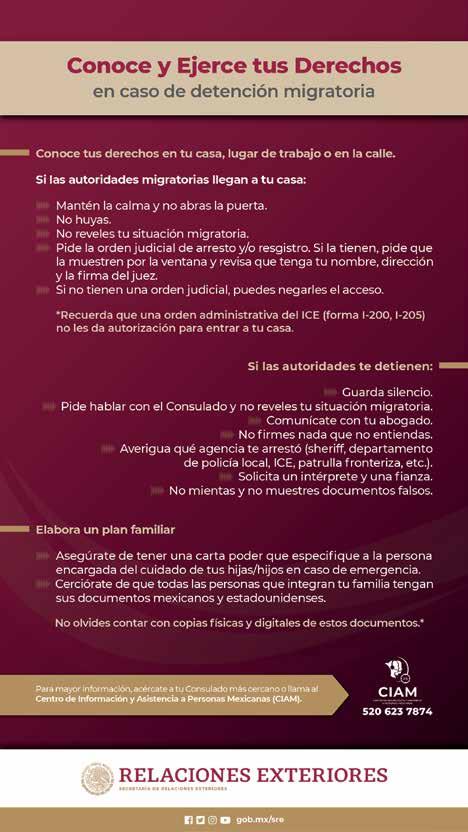
support of consultants and law firms nationwide, providing a robust legal safety net for those facing deportation.
In response to the anticipated enforcement actions, Mexico is also urging its citizens with children born in the U.S. to register with their local consulates. This registration is crucial as it enables the consulates to offer legal protection and assistance when needed.
De la Fuente highlighted the importance of this step, stating, “Not everyone has done this yet. We strongly encourage
que más de dos docenas de gobernadores republicanos en EE. UU. han señalado su intención de apoyar deportaciones masivas utilizando la aplicación de la ley estatal y la Guardia Nacional. Los grupos
everyone to register with our consulates as this enables us to provide legal protection if the time comes.”
The initiative comes at a time when over two dozen Republican governors in the U.S. have signaled their intent to support mass deportations using state law enforcement and the National Guard. Advocacy groups have expressed alarm over these plans, citing potential human rights violations and the logistical challenges of managing such largescale deportations.
de defensa han expresado alarma ante estos planes, citando posibles violaciones de los derechos humanos y los desafíos logísticos de gestionar deportaciones a gran escala.
Recordando a Jimmy Carter

Jimmy Carter, el 39º presidente de los Estados Unidos, falleció pacíficamente a los 100 años el 30 de diciembre de 2024 en Plains, Georgia. De agricultor de maní a estadista, su legado incluye los Acuerdos de Camp David y los esfuerzos humanitarios del Carter Center.
POR SDMN
Jimmy Carter, el 39º presidente de los Estados Unidos, falleció pacíficamente a los 100 años el 30 de diciembre de 2024 en Plains, Georgia. Carter, un humilde agricultor que se convirtió en estadista, dejó una huella imborrable tanto en la nación como en el mundo a través de su inquebrantable compromiso con causas humanitarias y su dedicación al servicio público. Nacido el 1 de octubre de 1924 en el pequeño pueblo de Plains, Georgia.
La vida temprana de Carter estuvo marcada por sus valores profundamente arraigados de fe, humildad y trabajo duro. Después de graduarse de la Academia Naval de los Estados Unidos en 1946, sirvió como oficial de la Marina antes de regresar a Georgia para gestionar la granja familiar de maní tras el diagnóstico de cáncer de su padre. La transición de Carter de la agricultura a la política comenzó con su elección al Senado del Estado de Georgia en 1962 y posteriormente como gobernador en 1971. Su gobernación se caracterizó por iniciativas progresistas, incluyendo la protección ambiental, la educación rural y el establecimiento del Día de Martin Luther King Jr. en Georgia.
En 1976, tras el escándalo de Watergate y la Guerra de Vietnam, Carter ganó la presidencia con una promesa de transparencia
y gobierno ético. Su mandato se definió por logros significativos en el ámbito de la política exterior, como los Acuerdos de Camp David, que forjaron un histórico acuerdo de paz entre Egipto e Israel. Además, lideró el establecimiento del Departamento de Educación y el Departamento de Energía. A pesar de estos logros, la presidencia de Carter enfrentó desafíos formidables, incluyendo luchas económicas con la inflación y la crisis energética, así como la crisis de los rehenes en Irán, que finalmente contribuyeron a su derrota en las elecciones de 1980 ante Ronald Reagan.
Sin embargo, el legado de Carter se extiende mucho más allá de su tiempo en el cargo. Después de dejar la Casa Blanca, fundó el Carter Center en 1982, que se convirtió en una piedra angular de su vida post presidencial, promoviendo la paz global, la democracia y las iniciativas de salud pública, como sus incansables esfuerzos para erradicar el parásito de la lombriz guinea, reduciendo los casos de millones a casi ninguno. Su trabajo humanitario le valió el Premio Nobel de la Paz en 2002.
El fallecimiento de Jimmy Carter marca el fin de una era, pero su legado de servicio, fe y compromiso inquebrantable con la dignidad humana perdurará, recordándonos a todos el profundo impacto que un individuo puede tener en el mundo.
Remembering Jimmy Carter
Jimmy Carter, the 39th U.S. President, died peacefully at 100 on Dec 30, 2024, in Plains, Georgia. From peanut farmer to statesman, his legacy includes the Camp David Accords and The Carter Center’s humanitarian efforts.
BY SDMN
Jimmy Carter, the 39th President of the United States, passed away peacefully at the age of 100 on December 30, 2024, in Plains, Georgia. Carter, a humble peanut farmer turned statesman, left an indelible mark on both the nation and the world through his unwavering commitment to humanitarian causes and his dedication to public service. Carter was born on October 1, 1924, in the small town of Plains, Georgia.
Carter’s early life was shaped by his deep-rooted values of faith, humility, and hard work. After graduating from the U.S. Naval Academy in 1946, he served as a Navy officer before returning to Georgia to manage his family’s peanut farm following his father’s cancer diagnosis. Carter’s transition from agriculture to politics began with his election to the Georgia State Senate in 1962 and subsequently as governor in 1971. His governorship was marked by progressive initiatives, including environmental protection, rural education, and the establishment of Martin Luther King Jr. Day in Georgia.
In 1976, after the Watergate scandal and the Vietnam War, Carter won the presidency with a promise of transparency and ethical governance. His ten-
ure was defined by significant achievements in foreign policy, such as the Camp David Accords, which forged a historic peace agreement between Egypt and Israel. In addition, he spearheaded the establishment of the Department of Education and the Department of Energy. Despite these achievements, Carter’s presidency faced formidable challenges, including economic struggles with inflation and the energy crisis, as well as the Iran hostage crisis, which ultimately contributed to his defeat in the 1980 election by Ronald Reagan.
Carter’s legacy, however, extends far beyond his time in office. After leaving the White House, he founded The Carter Center in 1982, which became a cornerstone of his post-presidential life, championing global peace, democracy, and public health initiatives, like his relentless efforts to eradicate the guinea worm parasite, reducing cases from millions to nearly none. His humanitarian work earned him the Nobel Peace Prize in 2002.
Jimmy Carter’s passing marks the end of an era, but his legacy of service, faith, and unwavering commitment to human dignity will endure, reminding us all of the profound impact one individual can have on the world.

Anchorage acelera la instalación de cámaras para peatones ante el aumento de muertes
Las autoridades de Anchorage aceleran la instalación de cámaras en todos los semáforos para el próximo verano tras registrar 15 muertes de peatones en 2024, incluyendo atropellos y huidas.
POR SDMN
Las autoridades de Anchorage están intensificando los esfuerzos para instalar cámaras en todos los semáforos para el próximo verano, con el objetivo de mejorar la seguridad de peatones y ciclistas. Esta iniciativa, que comenzó con instalaciones graduales en 2017, ha cobrado una nueva urgencia tras registrar un trágico récord de 15 muertes de peatones en 2024, incluyendo varios incidentes de atropellos y huídas. El aumento en las fatalidades ha impulsado una fuerte presión para completar el proyecto de cámaras, reconociendo el papel crucial que estos dispositivos juegan en la identificación de los conductores involucrados en tales accidentes. El ingeniero de tráfico municipal Brady Coy expresó su apoyo a MyAlaskaLink, afirmando: “Podemos regresar y revisar algunas grabaciones de la cámara y entender cuáles fueron todos los diferentes factores o al menos desde ese ángulo de la cámara lo que podemos determinar que ocurrió en algunos de esos choques.”
A nivel nacional, el uso de cámaras de velocidad sigue siendo limitado a menos de la mitad de los estados estadounidenses, aunque su adopción ha ido en aumento a lo largo de los años. Los datos subrayan la gravedad del exceso de velocidad como factor contri-
buyente a las fatalidades por accidentes de tráfico, representando aproximadamente un tercio de todas las muertes en las últimas dos décadas. Solo en 2022, el exceso de velocidad estuvo involucrado en el 29% de las fatalidades de tráfico, resultando en la muerte de 12,151 personas. Además, las muertes de peatones en todo Estados Unidos han aumentado un 77% en la última década, siendo las áreas urbanas, que comprenden solo el 15% de las carreteras del país, responsables del 67% de estas fatalidades.
En Anchorage, el alarmante aumento de muertes de peatones este año ha generado llamados por parte de líderes locales y miembros de la comunidad para reforzar las medidas de seguridad. Según Alaska Public Media, los conductores han atropellado y matado a 15 peatones hasta ahora en 2024. Una ingeniera de tráfico estatal comentó a Alaska Public Media que no hay un solo factor que impulse este aumento, aunque la conducción agresiva ha contribuido a varios incidentes. La mayoría de estos accidentes ocurrieron de noche, en carreteras principales y fuera de pasos de peatones marcados, lo que resalta áreas específicas donde se necesitan intervenciones de seguridad.
En respuesta al creciente número de fatalidades de peatones, los miembros de la Asamblea de Anchorage han instado a las autoridades estatales y municipales a explorar medidas de seguridad adicionales. Estas incluyen la reducción de los límites de velocidad, el aumento de la vigilancia de las infracciones de tráfico y la mejora de la iluminación en áreas de alto tráfico. Tales pasos

buscan crear un entorno más seguro para peatones y ciclistas, reduciendo la probabilidad de accidentes y asegurando que los conductores cumplan con las regulaciones de velocidad.
A medida que Anchorage avanza con la instalación integral de cámaras de tráfico, la ciudad espera aprovechar la tecnología para frenar la preocupante tendencia de incidentes de atropellos y
huidas, así como las muertes de peatones. La combinación de vigilancia, una mayor aplicación de la ley y una mejor iluminación de la infraestructura representa un enfoque multifacético para abordar el complejo problema de la seguridad vial. Al priorizar estas medidas, Anchorage busca proteger a sus residentes y fomentar una comunidad más segura y amigable para los peatones.
Anchorage Accelerates
Pedestrian Camera Installations Amid Rising Casualties
Anchorage authorities are accelerating the installation of cameras at all traffic lights for next summer after recording 15 pedestrian deaths in 2024, including hit-and-runs.

BY SDMN
Anchorage officials are intensifying efforts to install cameras at all traffic lights by next summer in a bid to enhance safety for pedestrians and cyclists. This initiative, which began with gradual installations in 2017, has gained renewed urgency following a tragic record of 15 pedestrian deaths in 2024, including several hit-and-run incidents.
The surge in fatalities has spurred a robust push to complete the camera project, recognizing the critical role these devices play in identifying drivers involved in such accidents. Municipal traffic engineer Brady Coy expressed his support to MyAlaskaLink, stating, “We can go back and pull some footage from the camera and have an understanding of what all the different factors were, or at least from that camera angle, and what we can tell happened in some of those crashes.”
Nationally, the use of speed cameras remains limited to less than half of American states, though their adoption has been increasing over the years. Data underscores the severity of speeding as a contributing factor to motor vehicle fatalities, accounting for approximately one-third of all deaths over the past two decades. In 2022 alone, speeding was involved in 29% of traffic fatalities, resulting
in the deaths of 12,151 people. Additionally, pedestrian deaths across the United States have surged by 77% over the last decade, with urban areas, which comprise just 15% of the nation’s roads, accounting for 67% of these fatalities.
In Anchorage, the alarming rise in pedestrian deaths this year has ignited calls from local leaders and community members to bolster safety measures. According to Alaska Public Media, drivers have struck and killed 15 pedestrians so far in 2024. A state traffic engineer noted to Alaska Public Media that there is no single factor driving this increase, though aggressive driving has contributed to several incidents. Most of these crashes occurred at night, on major roadways, and outside marked crosswalks, highlighting specific areas where safety interventions are needed.
In response to the escalating number of pedestrian fatalities, Anchorage Assembly members have urged state and city officials to explore additional safety measures. These include lowering speed limits, increasing enforcement of traffic violations, and enhancing lighting in high-traffic areas. Such steps aim to create a safer environment for pedestrians and cyclists, reducing the likelihood of accidents and ensuring that drivers adhere to speed regulations.
Detecta estafas de inmigración que comienzan en las redes sociales
POR GEMA DE LAS HERAS ESPECIALISTA EN EDUCACIÓN DEL CONSUMIDOR, FTC
Los estafadores se hacen pasar por abogados y oficinas de abogados que ofrecen servicios de inmigración en las redes sociales. Las publicaciones en Facebook y otras plataformas pueden estar en inglés o en tu idioma preferido. Si haces clic en “Like” o dejas un comentario, se comunicarán contigo y te garantizarán que obtendrás un permiso de trabajo, una tarjeta verde o la ciudadanía, pero es una estafa.
¿Cómo detectar y evitar a los estafadores?
La elaborada estafa a menudo comienza con una oferta para ayudarte con el papeleo de inmigración. Luego, te piden que les envíes dinero mediante Western Union o Zelle. A cambio, dicen que supuestamente te conseguirán una cita con el Servicio de Ciudadanía e Inmigración de Estados Unidos (USCIS). Las personas que pagaron informan que tuvieron citas virtuales en Zoom o WhatsApp con un “oficial de USCIS” en uniforme, todo parte de la estafa. ¿La verdad? Algunos procedimientos de inmigración ahora son virtuales, pero los solicitantes obtienen sus citas por correo o a través de su cuen-
ta MyUSCIS, nunca en aplicaciones de mensajería.
Para protegerte y proteger a otros de las estafas de inmigración:
• Visita USCIS.gov para obtener información legítima sobre inmigración. Si tienes una solicitud o petición pendiente, verifica el estado de tu caso en línea.
• Reconoce sitios web del gobierno falsos. Incluso si una página parece legítima, si la dirección no termina en .gov, no es un sitio web del gobierno.
• Ten claro qué tipos de pago acepta USCIS para las tarifas de presentación de formularios. Cualquiera que te pida que pagues a USCIS de otra manera es un estafador.
• Comparte lo que sabes. Reenvía esta alerta a personas de comunidades inmigrantes. Díles que consulten ftc.gov/ inmigración para obtener consejos sobre cómo encontrar ayuda real y evitar estafas que apuntan contra inmigrantes.
¿Has detectado una estafa de inmigración o crees que pudiste haber pagado a un estafador? Díselo a la FTC en ReporteFraude.ftc.gov o en inglés en ReportFraud.ftc.gov. Para informar en otros idiomas, llama al (877) 382-4357 y presiona 3 para hablar con un intérprete en tu idioma preferido.
How to Detect Immigration Scams that Start on Social Media
BY GEMA DE LAS HERAS CONSUMER EDUCATION SPECIALIST, FTC
Scammers are impersonating attorneys and law firms, offering immigration services on social media. The posts on Facebook and other platforms might be in English or your preferred language. If you press like or leave a comment, they’ll contact you and guarantee you’ll get a work permit, green card, or citizenship — but it’s a scam.
How do you spot and avoid scammers?
The elaborate scam often starts with an offer to help you with immigration paperwork. Next, they ask you to send them money using Western Union or Zelle. In return, they say they’ll supposedly get you an appointment with U.S. Citizenship and Immigration Services (USCIS). People who paid report having virtual appointments on Zoom or WhatsApp with a “USCIS officer” in uniform — all part of the scam. The truth? Some immigration proceedings are now virtual, but applicants get their appointments by mail or through their
MyUSCIS account, never on messenger apps.
To protect yourself and others from immigration scams:
• Go to USCIS.gov for legitimate immigration information. If you have a pending application or petition, check your case status online.
• Recognize fake government websites. Even if a page looks legit, if the address doesn’t end with .gov, it isn’t a government website.
• Know what types of payment USCIS accepts for filing fees. Anyone who asks you pay USCIS a different way is a scammer.
• Share what you know. Forward this alert to people in immigrant communities. Tell them to check out ftc.gov/ immigration for advice on how to find real immigration help and avoid scams targeting immigrants.
Have you spotted an immigration scam or think you may have paid a scammer? Tell the FTC at ReportFraud.ftc.gov — or in Spanish at ReporteFraude.ftc.gov. To report in other languages, call (877) 382-4357 and press 3 to speak to an interpreter in your preferred language.

El compromiso cívico no se trata solo de votar
Mara Kimmel, directora ejecutiva de la American Civil Liberties Union de Alaska, nos habló sobre cómo fomentar la participación comunitaria, el compromiso cívico y la construcción de puentes.
POR TU VOZ IMPORTA
El compromiso cívico a menudo se considera simplemente como votar, pero abarca mucho más. Se trata de participar activamente en tu comunidad, moldear su futuro y asegurarse de que tu voz sea escuchada. Mara Kimmel, directora ejecutiva de la ACLU en Alaska, enfatiza esta definición más amplia al afirmar que “el compromiso cívico es cuando las personas están involucradas en su comunidad de todas las maneras. Es decir, en su gobierno, en su vida social, en su vida cultural y en su vida política. Se comprometen porque se ven a sí mismos como parte de la comunidad. Entienden que su voz importa y que sus opiniones cambian sus propios destinos y futuros y los de nuestra comunidad para mejor.”
Kimmel, quien ha trabajado con varias organizaciones comunitarias, incluida la ACLU, cree que el compromiso cívico es crucial para una democracia próspera. Ella explica que “la naturaleza de la democracia es que es del pueblo, por el pueblo y para el pueblo. La forma en que nos aseguramos de que se cumplan esos valores es a través del compromiso cívico.”
Más allá de votar, hay numerosas formas de involucrarse en tu comunidad. Kimmel sugiere participar en organizaciones cívicas, ofrecerse como voluntario en escuelas o servir en juntas y comités, y enfatiza que “no se trata solo de votar, se
trata de ayudar a dirigir el rumbo de la comunidad en la que vives.”
Kimmel también destaca la importancia del compromiso local y señala que “es realmente importante que nos aseguremos de estar involucrados en nuestros gobiernos estatales y locales, para que nuestros gobiernos estatales y locales puedan proteger nuestros derechos civiles.”
Asimismo, Kimmel resalta la importancia de relacionarse con otros, incluso cuando hay desacuerdos. Comenta que “es fácil estar en desacuerdo con las personas cuando te enfrentas a ellas, pero construyes puentes alrededor de esos desacuerdos. Incluso si terminas dejando la mesa acordándo estar en desacuerdo, al menos se han visto y se han mirado a los ojos y tal vez tengan un poco más de comprensión de por qué la persona siente lo contrario de lo que tú sientes.”
Esta comprensión, según ella, es crucial para fomentar una sociedad más inclusiva y tolerante. Explica que “simplemente es más difícil odiar y es más difícil convertir a alguien en un ‘otro’, alguien con quien no te conectas. Es más difícil separarnos cuando nos conocemos.”
El mensaje de Kimmel es claro: el compromiso cívico no es solo un derecho, es una responsabilidad. Se trata de moldear activamente el futuro de tu comunidad, construir puentes con quienes tienen diferentes puntos de vista y asegurarte de que tu voz sea escuchada.


Civic Engagement is not Just About Voting
Mara Kimmel, Executive Director of the American Civil Liberties Union of Alaska talked to us about fostering community involvement, civic engagement and building bridges.
BY TU VOZ IMPORTA
Civic engagement is often framed as simply voting, but it encompasses much more. It’s about actively participating in your community, shaping its future, and ensuring your voice is heard. Mara Kimmel, the Executive Director of the ACLU of Alaska, emphasizes this broader definition, stating, “Civic engagement is when people are involved in their community in all ways. So, in their government, their social life, their cultural life, and in their political life. They engage because they see themselves as part of the community. They understand that their voice matters and that their opinions change their own fates and futures and those of our community for the better.”
Kimmel, who has worked with various community-based organizations, including the ACLU, believes that civic engagement is crucial for a thriving democracy. “The nature of democracy is that it is of the people, by the people, and for the people,” she explains. “The way that we make sure those values are met is through civic engagement.” Beyond voting, there are numerous ways to engage in your community. Kimmel suggests getting involved in civic organizations, volunteering at schools, or serving on boards and committees. “It’s not just about voting,” she emphasizes, “it’s about helping to steer the direction of the community in
which you live.” Kimmel also stresses the importance of local engagement. “It is really, really important that we make sure we’re involved in our state and our local governments,” she says, “so that our state and our local governments can protect our civil rights.”
Kimmel also highlights the importance of engaging with others, even when there are disagreements. “It’s easy to disagree with people when you are across the table from them, but you build bridges around those disagreements,” she says. “Even if you end up leaving the table agreeing to disagree, at least you have seen each other and looked into each other’s eyes and maybe have a little bit more understanding of why the person feels the opposite of the way that you do.” This understanding, she believes, is crucial for fostering a more inclusive and tolerant society. “It’s just harder to hate and it’s harder to turn someone into an ‘other’, someone you do not connect with.” she explains. “It’s harder to distinguish each other from our community and to separate and segregate when you get to know each other.”
Kimmel’s message is clear: civic engagement is not just a right, it’s a responsibility. It’s about actively shaping the future of your community, building bridges with those who hold different views, and ensuring that your voice is heard.

¿Calificas para el período de inscripción especial?
El período de inscripción abierta en HealthCare.gov cerró el 15 de enero, pero aún hay oportunidades mediante el Período Especial de Inscripción.
POR SDMN
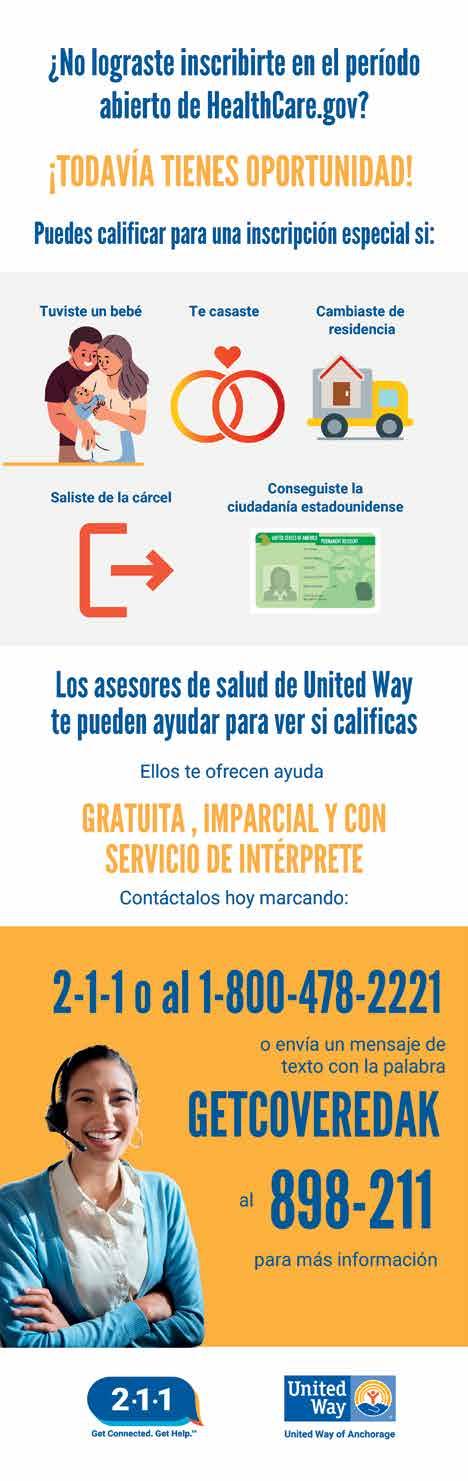
El período de inscripción abierta en HealthCare.gov finalizó el 15 de enero, pero aún existen oportunidades para obtener un seguro de salud a través del Período Especial de Inscripción. Esta ventana extendida está disponible para las personas que experimentan cambios significativos en su vida que requieren ajustar u obtener una nueva cobertura de salud fuera del período de inscripción habitual. Este periodo está diseñado para quienes atraviesan eventos importantes en la vida, como cambios en el empleo, composición del hogar—incluyendo matrimonio, nacimiento, adopción, divorcio o separación legal—y otros ajustes significativos como mudarse a una nueva residencia, cambios en la
membresía tribal, estatus de ciudadanía o transición de la encarcelación.
El Programa de Asesores de Salud de United Way está dedicado a ayudar a las personas a navegar este proceso, asegurando que el seguro de salud esencial permanezca accesible incluso después de que haya pasado la fecha límite estándar. Los asesores de salud de United Way están especialmente capacitados y certificados para identificar estos eventos que califican y asistir a las personas durante el proceso de inscripción. Ayudan a recopilar y presentar la documentación necesaria para verificar la elegibilidad, simplificando lo que a menudo puede ser un procedimiento complejo.
Además de ayudar con las inscripciones en HealthCare.gov, los asesores de salud de United Way también apoyan las solicitudes para Medicaid y Denali KidCare. A diferencia del Período Especial de Inscripción, las solicitudes para Medicaid y Denali KidCare pueden pre-
¿Do You Qualify for the Special Enrollment Period?
The open enrollment period on HealthCare.gov closed on January 15, but there are still opportunities through the Special Enrollment Period.
BY SDMN
The open enrollment period on HealthCare.gov ended on January 15, but there are still opportunities to obtain health insurance through the Special Enrollment Period. This extended window is available for individuals who experience significant life changes that necessitate adjusting or obtaining new health coverage outside the usual enrollment timeframe.
The Special Enrollment Periods is designed for those undergoing major life events such as changes in employment, household composition—including marriage, childbirth, adoption, divorce, or legal separation—and other significant adjustments like moving to a new residence, changes in tribal membership, citizenship status, or transitioning out of incarceration.
The United Way Healthcare Navigator Program is dedicated to helping people navigate this process, ensuring that essential health insurance remains accessible even after the standard deadline has passed.
United Way Healthcare Navigators are specially trained and certified to identify these qualifying events and assist individuals through the enrollment process. They help gather and submit necessary documentation to verify eligibility, simplifying what can often be a complex procedure.
In addition to helping with HealthCare.gov enrollments, United Way Healthcare Navigators also support
applications for Medicaid and Denali KidCare. Unlike the Special Enrollment Period, applications for Medicaid and Denali KidCare can be submitted at any time of the year, with immediate enrollment available for those who qualify. It is crucial for applicants to keep their contact information current with the Alaska Department of Public Assistance and respond promptly to any communications regarding their Medicaid status, as the state has resumed the renewal process to confirm ongoing eligibility.
For those who do not qualify for Medicaid, Healthcare Navigators offer guidance in exploring alternative coverage options available through HealthCare.gov. These Navigators provide free, unbiased, and accurate information, ensuring that everyone can make informed decisions about their healthcare coverage.
“Health insurance can be complicated and confusing,” said Jane Straight, Director of Health, Income Impact at United Way of Anchorage. “Especially if it’s your first experience with insurance or with a new plan. Luckily, no one has to figure it out on their own. We’re here to help all year round. Don’t hesitate to connect with a Navigator and get your questions answered.”
Get in touch with a Navigator by calling 2-1-1 or 1-800-478-2221 or send a text message with the word GETCOVEREDAK to 898-211 for free help. Interpreter services are available.

sentarse en cualquier momento del año, con inscripción inmediata disponible para quienes califican. Es crucial que los solicitantes mantengan su información de contacto actualizada con el Departamento de Asistencia Pública de Alaska y respondan puntualmente a cualquier comunicación relacionada con su estatus de Medicaid, ya que el estado ha reanudado el proceso de renovación para confirmar la elegibilidad continua.
Para quienes no califican para Medicaid, los asesores de salud ofrecen orientación para explorar opciones de cobertura alternativas disponibles a través de HealthCare.gov. Estos asesores proporcionan información gratuita, imparcial y precisa, asegurando que todos puedan
tomar decisiones informadas sobre su cobertura de salud.
“El seguro de salud puede ser complicado y confuso,” dijo Jane Straight, directora de Salud, Impacto de Ingresos en United Way de Anchorage. “Especialmente si es tu primera experiencia con un seguro o con un nuevo plan. Afortunadamente, nadie tiene que resolverlo por su cuenta. Estamos aquí para ayudar durante todo el año. No dudes en conectar con un asesor y obtener respuestas a tus preguntas.”
Ponte en contacto con un asesor llamando al 2-1-1 o al 1-800-478-2221, o envía un mensaje de texto con la palabra GETCOVEREDAK al 898-211 para recibir ayuda gratuita. Tambièn ofrecen servicios de interpretación.

Las vacunas ayudan a proteger a su familia
La vacunación es una de las mejores formas de proteger la salud de los niños desde que nacen y a lo largo de toda su vida.
Las vacunas que recibe durante el embarazo no solo la protegen a usted, sino también a su bebé contra diversas enfermedades. Las vacunas protegen a su bebé con los anticuerpos que usted genera especialmente durante los primeros meses. Durante el embarazo, se recomienda aplicarse las siguientes vacunas:
• TDAP (tétano, difteria y tos ferina)
– Se recomienda aplicarse una vacuna TDAP en cada embarazo, idealmente entre la semana 27 y la 36. La vacuna TDAP le ayuda a compartir los anticuerpos con su bebé antes del nacimiento para prevenir la tos ferina (pertussis).
• Gripe (influenza) – Se recomienda aplicarse la vacuna contra la gripe si está embarazada durante la temporada gripal. La vacuna es segura y efectiva en cualquier trimestre del embarazo.
• VSR (virus sincicial respiratorio) –Hay dos opciones que ayudan a proteger a su bebé durante la temporada del VSR (generalmente, de septiembre a marzo): puede aplicarse la vacuna VSR entre la semana 32 y 36 de su embarazo o su bebé puede recibir la vacuna VSR al nacer.
• COVID-19 – Durante el embarazo, se recomienda estar al día con las vacunas
contra el COVID-19. Es seguro recibir una vacuna contra el COVID-19 en cualquier momento del embarazo.
Las vacunas ayudan a los bebés a desarrollar inmunidad para comenzar a protegerse de las enfermedades lo antes posible. Hable con el pediatra de su hijo para programar sus controles y vacunas de rutina.
¿Le faltó alguna dosis? No se preocupe trate de ponerse al día lo antes posible.
Recursos de información:
Obtenga más información sobre las vacunas durante el embarazo proporcionada por el Colegio Americano de Obstetras y Ginecólogos:
• Inglés: https://www.acog.org/womens-health/infographics/vaccines-during- pregnancy
• Español: https://www.acog.org/womens-health/infographics/vacunas-durante-el-embarazo
Vacunas recomendadas desde el nacimiento hasta los 6 años (CDC): Inglés: https://www.cdc.gov/vaccines/ imz-schedules/child-easyread.html Español: https://www.cdc.gov/vaccines/ imz-schedules/child-easyread-es.html
Vaccines Help Protect your Family
Immunization is one of the best ways to give children a healthy start and help protect their health throughout their lives.
Immunizations during pregnancy help protect you from illness and the antibodies you create are transferred to your baby to keep them healthy during their first months. The following vaccines are recommended during pregnancy:
• TDAP (tetanus, diphtheria and pertussis)– A TDAP vaccine is recommended during each pregnancy, ideally between weeks 27 and 36. Getting TDAP helps you share antibodies with your baby before birth to prevent whooping cough (pertussis).
• Flu (influenza) - A flu shot is recommended if you are pregnant during flu season. The flu shot is safe and effective during any trimester.
• RSV (respiratory syncytial virus) – There are two options to help protect your baby during RSV season (typically September through March): you can get the RSV vaccine during weeks 3236 of your pregnancy, or your baby can get an RSV immunization at birth.
• COVID-19 – Staying up to date on COVID-19 vaccines is recommended during pregnancy. It is safe to receive a COVID-19 vaccine any time during pregnancy.
Immunizations help babies build immunity to protect against diseases as soon as possible in life. Talk with your child’s healthcare provider to schedule well-child visits and routine immunizations.
Missed a dose? That’s okay - try to catch up as soon as possible.
Resources to learn more: Learn more about vaccines during pregnancy from the American College of Obstetricians and Gynecologists:
• English: https://www.acog.org/ womens-health/infographics/vaccines-during- pregnancy
• Spanish: https://www.acog.org/womens-health/infographics/vacunas-durante-el-embarazo
Recommended Immunizations for Birth through 6 Years Old (CDC): English: https://www.cdc.gov/vaccines/imz-schedules/child-easyread. html
Spanish: https://www.cdc.gov/vaccines/imz-schedules/child-easyread-es. html
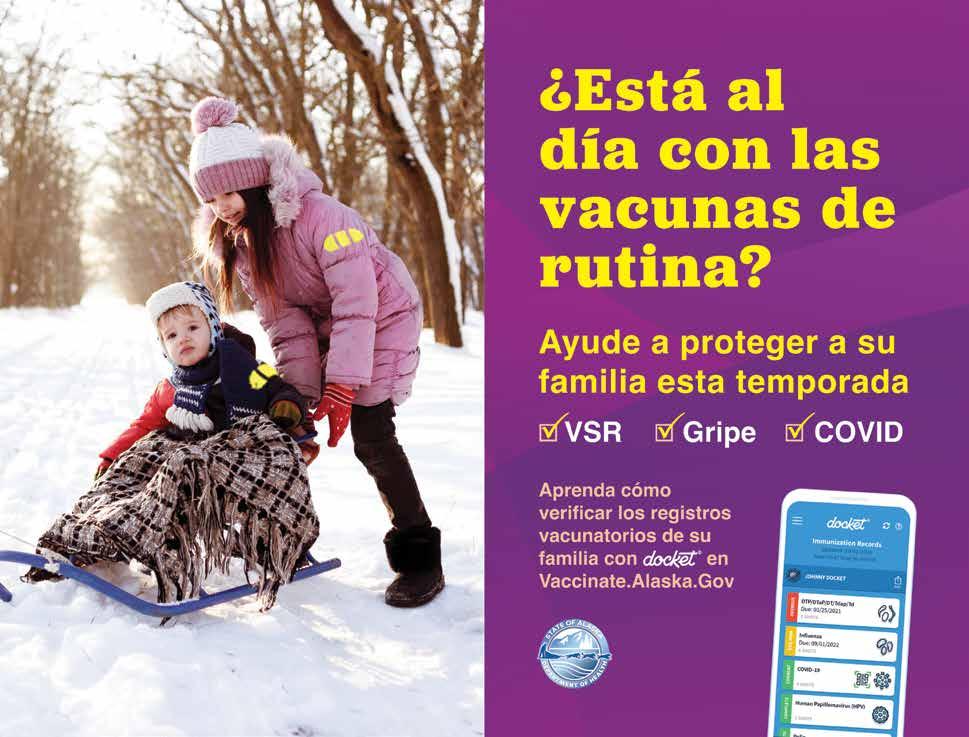
Sobrosol impulsa el arte y el emprendimiento en los jóvenes
Sobrosol apoya a jóvenes y adultos jóvenes entre las edades de 5 y 24 dentro de las comunidades BIPOC, que incluyen negros, indígenas, hispanos, asiáticos, polinesios y otras personas de color.
POR GEORGINA ARIAS AVILA
Natye Briggs es la directora ejecutiva de Sobrosol. Ha trabajado en el campo de servicios para jóvenes durante más de 16 años. Su familia fue destinada a Anchorage, donde creció y formó su propio hogar. Tiene cuatro hijos. Su formación académica incluye una maestría en educación infantil y especial, y una licenciatura en Administración de Empresas, además de una especialización en educación infantil.
“Mi motivación en la vida es asegurarme de que nuestros jóvenes tengan al menos una persona en su vida que crea en ellos y en sus sueños. No importa cuán pequeño o grande sea ese sueño”, dijo.
Briggs cuenta que, en 2018, Dan Alfalla fundó Sobrosol Productions Inc., que presentaba increíbles producciones teatrales. “Dan originalmente formó Sobrosol para presentar artistas BIPOC (negros, indígenas y personas de color) en las artes. En 2024, Sobrosol amplió sus objetivos para fortalecer las comunidades BIPOC de Alaska con oportunidades, espacios seguros y recursos de desarrollo. Reforzar el coraje y el profesionalismo en nuestras comunidades a través de las artes dentro y fuera del escenario”.
Sobrosol apoya a jóvenes y adultos jó-
venes entre las edades de 5 y 24 dentro de las comunidades BIPOC, que incluyen negros, indígenas, hispanos, asiáticos, polinesios y otras personas de color. “En el 2024, Sobrosol brindó servicios a más de 50 jóvenes y adultos jóvenes a través de nuestro programa de Jóvenes Emprendedores y Talleres de Enriquecimiento de Artistas”.
El Programa de Jóvenes Emprendedores involucra a jóvenes de 5 a 17 años en la construcción de las bases dentro del arte del emprendimiento. Los jóvenes reciben capacitación que abarca presentaciones en vivo para el público, auto inversión, desarrollo de artesanías, crítica de desempeño y exhibiciones de talentos a través de mercados comunitarios empresariales. Estos mercados comunitarios ayudan a los jóvenes a retener los conceptos empresariales aprendidos y apoyan el desarrollo de la confianza en sí mismos.
Los Talleres de Enriquecimiento de Artistas apoyan a los jóvenes y adultos jóvenes con actividades y experiencias que exploran varios intereses de las artes escénicas. Cada taller brinda la oportunidad de desarrollar habilidades de pensamiento crítico, mejorar las habilidades blandas (comunicación, liderazgo, inteligencia

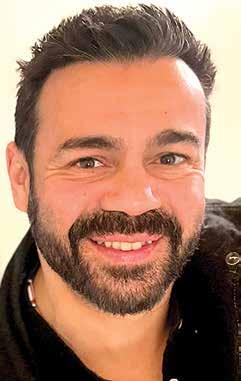
emocional, organización y flexibilidad), generar confianza, desarrollar talentos y actuar en el escenario. Los talleres incluyen tutorías y otros recursos de apoyo. Briggs señala que están planeando un taller de vacaciones de primavera y dos programas de verano. Las fechas se publicarán en Facebook.


Sobrosol Promotes Art and Entrepreneurship in Young People
Sobrosol supports youth and young adults between the ages of 5 and 24 within BIPOC communities, which includes Black, Indigenous, Hispanic, Asian, Polynesian, and other people of color.
BY GEORGINA ARIAS AVILA
Natye Briggs is the Executive Director of Sobrosol. She has worked in the youth services field for over 16 years. Her family was assigned to Anchorage, where she grew up and made her own home. She has four children. Her educational background includes a master’s degree in early childhood and special education, and a bachelor’s degree in business administration, as well as a minor in Early Childhood Education. “My motivation in life is to make sure our youth have at least one person in their life who believes in them and their dreams. No matter how small or big that dream is,” she said.
Briggs says that in 2018, Dan Alfalla founded Sobrosol Productions Inc., which featured amazing theater productions.
“Dan originally formed Sobrosol to feature BIPOC (Black, Indigenous, and People of Color) artists in the arts. In 2024, Sobrosol expanded its goals to strengthen Alaska’s BIPOC communities with opportunities, safe spaces, and development resources. Strengthening courage and professionalism in our communities through the arts on and off stage.”
Sobrosol supports youth and young adults between the ages of 5 and 24 within BIPOC communities, which in-
cludes Black, Indigenous, Hispanic, Asian, Polynesian, and other people of color. “In 2024, Sobrosol served over 50 youth and young adults through our Youth Entrepreneurs program and Artist Enrichment Workshops.”
The Youth Entrepreneurs Program engages youth ages 5-17 in building the foundation within the art of entrepreneurship. Youth receive training that encompasses live performances for the public, self-investment, craft development, performance criticism, and talent showcases through entrepreneurial community markets. These community markets help youth retain learned entrepreneurial concepts and support the development of self-confidence.
The Artist Enrichment Workshops support youth and young adults with activities and experiences that explore various performing arts interests. Each workshop provides an opportunity to develop critical thinking skills, improve soft skills, build confidence, develop talents, and perform on stage. Workshops include mentoring and other support resources.
Briggs notes that they are planning a spring break workshop and two summer programs. Dates will be posted on Facebook.
Natye Briggs en la sesion de clase de emprendimiento de secundaria y preparatoria, mayo de 2024.
Dan Alfalla, creador de Sobrosol.
Baile de Sobrosol Bridgerton. Ganadores de la recaudación de fondos para jóvenes, noviembre de 2024.
POR KARA THRASHER-LIVINGSTON
Y KAT SOWA-LAPINSKAS PARA SENIOR VOICE
¿Alguna vez se ha preguntado cómo obtener ayuda con las tareas o habilidades de la vida diaria a través de la Exención Basada en el Hogar y la Comunidad (HCBW) de Alaska Medicaid o los Servicios de Cuidado Personal (PCS)?
Para obtener ayuda del programa de exención o de los Servicios de Cuidado Personal, primero debe tener Medicaid. Medicaid es un seguro de salud para personas de bajos ingresos. Las personas obtienen Medicaid solicitándolo a la División de Asistencia Pública. El programa de Medicaid paga por la atención médica. También puede pagar por la ayuda de un asistente de cuidado personal (PCA).
Para obtener Medicaid, los adultos deben tener ingresos por debajo de cierto límite. Un niño con una discapacidad podría calificar, ya sea que su familia sea elegible o no para recibir Medicaid. Las personas con discapacidades pueden ser elegibles para Medicaid de Cuidado a Largo Plazo incluso si sus ingresos son demasiado altos para Medicaid regular.

BY KARA THRASHER-LIVINGSTON AND KAT SOWA-LAPINSKAS, FOR SENIOR VOICE
Ever wonder how to get help with daily living tasks or skills through the Alaska Medicaid Home and Community Based Waiver (HCBW) or Personal Care Services (PCS)?
To get help from the Waiver program or Personal Care Services, first you need to have Medicaid. Medicaid is health insurance for people with low income. People get Medicaid by applying for it with the Division of Public Assistance. Medicaid pays for medical care. It can also pay for help with everyday living
Elegibilidad para Medicaid de atención a largo plazo
Cuando una persona con una discapacidad necesita ayuda con actividades en su vida diaria, tal como recordatorios o ayuda para realizar las tareas cotidianas, o necesite el mismo tipo de ayuda que las personas en hogares de ancianos, o tal vez necesiten ayuda similar a la de las personas con discapacidades del desarrollo que viven en centros de atención (la persona debe tener registros médicos que muestren la discapacidad y las condiciones de salud). Entonces es posible que califique para los Servicios de Cuidado Personal o la Exención si necesita que alguien le ayude con las actividades cotidianas. Estos son algunos ejemplos:
Levantarse de la cama, darse la vuelta mientras está en la cama, bañarse y ducharse
Preparar comidas y ayuda para comerlas
Servicios y apoyos a largo plazo de Medicaid: Aquí lo básico Medicaid Long
Usar el baño, incluido el cambio de calzoncillos/pañales y la limpieza
Ayuda en las tareas domésticas como lavar la ropa y los platos
Moverse de una habitación a otra en casa y ayudar a ir a lugares en la comunidad. Ayuda para tomar medicamentos y necesidades médicas diarias limitadas
Las personas con discapacidad intelectual y del desarrollo pueden calificar si la discapacidad comenzó antes de que la persona cumpliera 22 años. Un experto médico debe proveer el diagnóstico.
Ejemplos: Autismo, convulsiones, parálisis cerebral y otros. Una persona con una discapacidad del desarrollo puede pensar, actuar o comunicarse de manera muy diferente a otras personas de su edad sin una discapacidad. Es posible que necesiten ayuda especial para aprender habilidades de la vida cotidiana y habilidades de seguridad, y muchos recordatorios, o alguien que los ayude todos los días. Es probable que la persona aprenda de manera muy diferente a las personas sin discapacidad y

probablemente necesitará este tipo de ayuda durante toda su vida.
¿Por dónde empezar a obtener ayuda en Alaska?
Los programas de los Centros de Recursos para Personas Mayores y Discapacidades y las Conexiones de Recursos para Discapacidades del Desarrollo pueden ayudar. Cubren todas las regiones de Alaska y pueden ayudarlo a entender lo que necesita, mostrarle qué opciones están disponibles y ayudarlo a solicitar Medicaid u obtener ayuda para solicitarlo. Para obtener más información, llame al número gratuito del Centro de Recursos para Adultos Mayores y Discapacitados (ADRC, por sus siglas en inglés), 1-855-565-2017.
¿Qué es un coordinador de atención?
¿Qué hacen?
Cuando se conecte con el ADRC, es posible que se entere de que probablemente califique para la exención de Medicaid. Si lo hace, el ADRC le dará una lista de coordinadores de atención para elegir. Los coordinadores de atención ayudan a las personas a obtener servicios en el hogar o en la comunidad. También ayudan con servicios médicos, sociales, educativos y de otro tipo que no son pagados por Medicaid. Los coordinadores de atención ayudan a las personas a través de un proceso dirigido por la persona que recibe la ayuda y el equipo que la persona misma elija. Ayudan a completar y enviar solicitudes de servicios en el hogar o en la comunidad. Una vez que alguien es elegible, los coordinadores de atención ayudan a la persona a es-
tablecer metas, planificar servicios y elegir proveedores de servicios. Ayudan a crear el primer plan de soporte y lo revisan y actualizan cada año. Se mantienen en contacto con la persona visitándola para asegurarse que están recibiendo los servicios.
Los coordinadores de atención no hacen lo siguiente: llenar las solicitudes de Medicaid, llevar a las personas a hacer mandados o compras, programar el transporte u otros servicios para el cliente. No acompañan a los clientes a las citas médicas ni organizan atención fuera de la Exención o los Servicios de Cuidado Personal. No pueden hacer cosas que sean un conflicto de intereses.
Si tiene preguntas o desea saber si califica, llame al Centro de Recursos para Adultos Mayores y Discapacitados al número gratuito estatal 1-855-565-2017.
¿Desea conectarse con el equipo de capacitación para personas mayores y discapacidades? Únase a nosotros en Zoom para conocer el horario de oficina familiar e individual el primer y tercer lunes de cada mes, desde el mediodía hasta la 1 p.m. Para obtener información y el enlace de Zoom, envíe un correo electrónico a SDSTraining@alaska.gov o llame al 907-269-3685.
- Kara Thrasher-Livingston es gerente de la Unidad de Capacitación y Kat Sowa-Lapinskas es Coordinadora de Enlace de Atención para la División de Servicios para Personas Mayores y Discapacidades de Alaska.
- Este artículo se publicó primero en Senior Voice, https://tinyurl. com/5s8pz4m6
Term Services and Supports:
and activities, like a Personal Care Assistant (PCA).
To get Medicaid, adults need to have income below a certain limit. A child with a disability might qualify, whether or not their family is eligible for Medicaid. People who have disabilities may become eligible for Long-Term Care Medicaid even if their income is too high for regular Medicaid.
Eligibility for Long-Term Care
Medicaid
When someone with a disability needs help with daily living, they might need reminders or help to do everyday tasks.
They may need the same kind of help as people in nursing homes. They might need similar help to people with developmental disabilities living in care facilities. The person must have medical records that show the disability and health conditions.
You may qualify for Personal Care Services or the Waiver if you need someone to help hands-on with everyday activities. Here are some examples:
Getting out of bed, turning while in bed, bathing and showering Preparing meals and help to eat them Using the toilet, including changing
briefs/pull-ups and cleaning up.
Help doing household tasks like laundry and washing dishes
Moving about from room to room at home and help with going places in the community.
Help with taking medicine and limited everyday medical needs.
People with intellectual and developmental disability may qualify if the disability started before the person turned 22. A medical expert must write the diagnosis.
Examples: Autism, seizures, cerebral palsy, and others. A person with a devel-
opmental disability may think, act, or communicate very differently than others their age without a disability. They could need special help to learn everyday life skills and safety skills and lots of reminders or someone to help them every day. The person likely learns very differently than people without a disability and will probably need this kind of help for their whole life.
Where to start getting help in Alaska?
The Aging and Disability Resource Centers and Developmental Disabilities Resource Connections programs can help. They cover every region of Alaska. They can help you understand what you need, show you what choices are available and help you apply for Medicaid or get help to
apply. For more information call the Aging and Disability Resource Center (ADRC) toll free number, 1-855-565-2017.
What is a care coordinator? What do they do?
When you connect with the ADRC, you may learn that you likely qualify for the Medicaid Waiver. If you do, the ADRC will give you a list of care coordinators to select from. Care coordinators help people get services at home or in the community. They also help with medical, social, educational and other services that aren’t paid for by Medicaid.
Care coordinators help people through a process led by the person receiving the help and their chosen team. They assist with completing and submitting applica-
tions for services at home or in the community. Once someone is eligible, care coordinators help the person set goals, plan services and pick service providers. They help create the first support plan and review and update it each year. They stay in contact with the person by visiting them and holding meetings about services.
Care coordinators do not do the following: fill out Medicaid applications, take people to do errands or shopping, schedule transportation or other services for the client. They do not accompany clients on medical appointments or arrange care outside of the Waiver or Personal Care Services. They cannot do things that are a conflict of interest.
If you have questions or would like to find out if you qualify, start by calling the
Aging and Disability Resource Center, statewide toll-free number 1-855-5652017.
Want to connect with the Senior and Disabilities Training team? Join us on Zoom for family and individual office hours the first and third Monday of each month, noon to 1 p.m. For information and the Zoom link, email SDSTraining@ alaska.gov or call 907-269-3685.
- Kara Thrasher-Livingston is a Training Unit Manager and Kat SowaLapinskas a Care Coordinator Liaison for the Alaska Division of Senior and Disabilities Services.
- This article was originally published in Senior Voice, https://tinyurl. com/5s8pz4m6
Superando el TAE en la Comunidad Latina
Durante el invierno, muchos latinos enfrentan el Trastorno Afectivo Estacional (TAE), una forma severa de depresión relacionada con cambios estacionales. Es vital un diagnóstico adecuado y aplicar estrategias de autocuidado para mitigar sus efectos.
POR PEDRO GRATEROL
Durante estos fríos y obscuros meses de invierno, muchos experimentan una disminución en el estado de ánimo y la motivación, comúnmente conocida como el “winter blues” o tristeza invernal. Sin embargo, para algunos, esta depresión estacional se convierte en Trastorno Afectivo Estacional (TAE), una forma más severa de depresión que impacta significativamente la vida diaria. Esta condición, particularmente dentro de la comunidad latina, merece atención y comprensión. El propósito de este artículo es explicar esta condición y algunas acciones que se pueden tomar para mitigarla. El Trastorno Afectivo Estacional se clasifica como un trastorno depresivo, específicamente un subtipo de depresión mayor que se correlaciona con los cambios estacionales. Normalmente emerge en otoño, persiste durante los meses de invierno y termina con la llegada de la primavera. A diferencia de la transitoria tristeza invernal, el TAE presenta características particulares. Por ejemplo, implica una pérdida profunda de interés en actividades, cambios notables en el apetito y los patrones de sueño, y una disminución significativa en la energía y la función cognitiva. Según la Asociación Americana de Psiquiatría, los síntomas pueden incluir sentimientos de desesperanza, inutilidad e incluso pensamientos suicidas, lo que subraya la necesidad de un diagnóstico y tratamiento precisos. El diagnóstico del TAE implica una evaluación exhaustiva por parte de un profesional de la salud para descartar otras condiciones que puedan imitar sus síntomas, como trastornos tiroideos u otras formas de depresión. Este proceso evalúa los cambios en el estado de ánimo, el pensamiento y el funcionamiento diario para
Overcoming SAD in the Latino Community
During the winter, many Latinos face Seasonal Affective Disorder (SAD), a severe form of depression related to seasonal changes. Proper diagnosis and the application of self-care strategies are vital to mitigate its effects.
BY PEDRO GRATEROL
During these cold winter months, many experience a dip in mood and motivation, commonly known as the winter blues. However, for some, this seasonal slump escalates into Seasonal Affective Disorder (SAD), a more severe form of depression that significantly impacts daily life. This condition, particularly within the Latino community, warrants attention and understanding. The purpose of this article is to explain this condition and some things you can do to mitigate it.
Seasonal Affective Disorder is classified as a depressive disorder, specifically a subtype of major depression that correlates with seasonal changes. Typically emerging in autumn, SAD persists throughout the winter months and ends with the arrival of spring. Unlike the transient winter blues, SAD has some particular characteristics. For instance, it involves a profound loss of interest
confirmar que los síntomas depresivos son efectivamente estacionales. Un diagnóstico adecuado es crucial, ya que muchos pueden atribuir erróneamente su condición a meras tristezas invernales, retrasando el tratamiento esencial hasta la primavera. Dentro de la comunidad latina, el TAE presenta desafíos únicos. Los individuos hispanos, especialmente los adultos mayores que viven lejos de sus países de origen o comunidades cohesionadas son más vulnerables a la depresión estacional. La experta en psiquiatría Melissa Rivera, de Suvida

in activities, notable changes in appetite and sleep patterns, and a significant decline in energy and cognitive function. According to the American Psychiatric Association, symptoms may include feelings of hopelessness, worthlessness, and even suicidal thoughts, underscoring the necessity for accurate diagnosis and treatment.
Diagnosis of SAD involves a thorough evaluation by a healthcare provider to exclude other conditions that may mimic its symptoms, such as thyroid disorders or other forms of depression. This process assesses changes in mood, thinking, and daily functioning to confirm that depressive symptoms are indeed seasonal. Proper diagnosis is crucial, as many may mistakenly at-
Healthcare, explicó a KXAN que los adultos latinos mayores tienen hasta cuatro veces más probabilidades de sufrir depresión que sus contrapartes blancas, con tasas que alcanzan hasta el 35%.
Algo particularmente notable es que los estigmas culturales en torno a la salud mental desaniman a muchos a buscar ayuda. Las barreras lingüísticas y la desconfianza en el sistema de salud dificultan aún más el acceso a los servicios de salud mental necesarios. Para mitigar los efectos del TAE, se pueden emplear varias estra-
tribute their condition to mere winter blues, delaying essential treatment until springtime. Within the Latino community, SAD presents unique challenges. Hispanic individuals, especially older adults living away from their home countries or close-knit communities, are more vulnerable to seasonal depression. Psychiatric expert Melissa Rivera from Suvida Healthcare explained to KXAN that older Latino adults are up to four times more likely to suffer from depression than their white counterparts, with rates reaching as high as 35%.
Something particularly striking is that cultural stigmas surrounding mental health discourage many from seeking help. Language barriers and mistrust of the healthcare system further impede access to necessary mental health services. To mitigate the effects of SAD, several self-care strategies can be employed. Regular physical activity, such as daily walks, can enhance mood and provide physical stimulation. Incorporating vitamin D supplements and maintaining a balanced diet are also beneficial. Social engagement through planned activities or reaching out to friends and family helps combat isolation. Establishing a consistent sleep routine and reducing screen time before bed can improve overall mental well-being.
tegias de autocuidado. La actividad física regular, como caminar diariamente, puede mejorar el estado de ánimo y proporcionar estimulación física. Incorporar suplementos de vitamina D y mantener una dieta equilibrada también son beneficiosos. El compromiso social a través de actividades planificadas o al contactar a amigos y familiares ayuda a combatir el aislamiento. Establecer una rutina de sueño consistente y reducir el tiempo frente a pantallas antes de dormir puede mejorar el bienestar mental general.
Obtén ayuda gratuita en Fairbanks durante tu etapa de embarazo
POR GEORGINA ARIAS AVILA
En el 2004 Nancy Gloria llegó a su nuevo hogar en Fairbanks, al quedar encinta, acudió al centro de embarazo. “Me ayudaron con ropa y cobijas para mi bebé. Fue una bendición al iniciar mi etapa de mamá primeriza y doy gracias a la organización por apoyar a tantas jóvenes en tiempos difíciles”, dijo Nancy.
El Centro de Embarazo Gratuito FYNDout brinda servicios a mujeres, hombres y familias en el Valle de Tanana y las áreas circundantes a lo largo de su historia reproductiva. “El centro comenzó a funcionar en 1991 en el antiguo edificio de Fairbanks Rescue Mission”, dijo Trish Winners, directora ejecutiva de esta organización sin fines de lucro.
Cuenta que desde que comenzaron a utilizar registros electrónicos alrededor de 2006, han atendido a más de 4,000 clientes en alrededor de 15,000 citas.” Solo el 6% de las personas se identificaron como hispanos, pero algunas otras etnias hispanohablantes se identificaron como algo diferente. Además, cerca del 30% de los clientes no se identifican con ninguna etnia”.
Winners explica que el programa gratuito mensual de pañales, toallitas y fórmula es muy popular, pero los clientes aprecian reunirse con enfermeras para las pruebas de embarazo gratuitas y ecografías obstétricas limitadas, ya que estos servicios serían costosos, para las mujeres sin seguro médico.
También, brindan clases prenatales para madres y padres en inglés y español a los clientes, aceptadas por la Corte, que les permiten ganar puntos para gastar en una boutique, que recientemente ha sido remodelada para facilitar las compras gratuitas. Los clientes pueden conseguir ropa de maternidad, suministros para la lactancia, sillas de coche para bebe y equipar la habitación de sus hijos con artículos y ropa de bebé hasta los dos primeros años.
“Las clases para padres en español no se están utilizando mucho en este momento, nos encantaría difundir a los latinos para que aprovechen este servicio”, dijo Trish. Ofrecen otros beneficios, como citas, en las que colaboran a los clientes a completar
la documentación para obtener otros recursos disponibles (como WIC, SNAP, Medicaid) en la comunidad y el Estado. Dan apoyo para la lactancia materna, vitaminas prenatales y consejos contra las náuseas, además de soporte en caso de aborto espontáneo.
“Mi satisfacción está en poder ayudar a mujeres, hombres y familias en un momento vulnerable. Somos una organización sin ánimo de lucro basada en la fe y nuestro deseo es amar y cuidar a las personas como lo hizo Jesús”, finalizó.
FYNDout Free Pregnancy Center está ubicado en 4474 Pike ‘s Landing Road Fairbanks, AK 99709. Su número telefónico es 907- 455-8255. fyndoutfree.com




BY GEORGINA ARIAS AVILA
In 2004, Nancy Gloria arrived at her new home in Fairbanks. When she became pregnant, she went to the pregnancy center. “They helped me with clothes and blankets for my baby. It was a blessing as I began my stage as a first-time mother and I thank the organization for supporting so many young women in difficult times,” said Nancy.
The FYNDout Free Pregnancy Center provides services to women, men and families in the Tanana Valley and surrounding areas throughout their reproductive history. “The center began operating in 1991 in the old Fairbanks Rescue Mission building,” said Trish Winners, executive director of this nonprofit organization.
Since they began using electronic records around 2006, they have seen more than 4,000 clients in about 15,000 appointments. “Only 6% of people identified as “Hispanic,” but some other Spanish-speaking ethnicities identified as something different. Additionally, about 30% of clients do not identify with any ethnicity,” she said.
Winners explains that the free monthly diaper, wipes, and formula program is very popular, but clients appreciate meeting with nurses for free pregnancy tests and limited obstetric ultrasounds, since these services would be expensive for uninsured women.
They also provide court-approved prenatal classes for mothers and fathers in English and Spanish, which allow clients to earn points to spend at a boutique, which has recently been remodeled to facilitate free shopping. Clients can get maternity clothes, nursing supplies, car seats, and outfit their child’s room with baby items and clothing for up to two years of age.
“Spanish parenting classes are not being used much right now, we would love to get the word out to Latinos to take advantage of this service,” Trish said.
The center offers appointments, where they help clients fill out paperwork to obtain other available resources (such as WIC, SNAP, Medicaid) in the community and the State. It also provides breastfeeding support, prenatal vitamins, and anti-nausea advice, as well as support in the event of a miscarriage.
“My satisfaction is in being able to help women, men, and families in a vulnerable time. We are a faith-based nonprofit organization, and our desire is to love and care for people as Jesus did,” she concluded.
FYNDout Free Pregnancy Center is located at 4474 Pike ‘s Landing Road Fairbanks, AK 99709. Their phone number is 907- 455-8255. fyndoutfree.com

Actualización del ajuste de tamaño (Rightsizing) para las escuelas
Mientras entramos al nuevo año, el Anchorage School District (ASD) se prepara para tomar medidas que incluyen el cierre de escuelas primarias.
POR RODRIGO SANCHEZ
Inicialmente, el ASD propuso cerrar siete escuelas primarias. Sin embargo, tras una discusión entre los miembros de la Junta Escolar de Anchorage y testimonio por padres de familia, se aprobó la decisión de cerrar únicamente a dos escuelas, Lake Hood y Nunaka Valley Elementary Schools al final del año escolar, en mayo de 2025. Ambas escuelas son Title I, lo que significa que reciben fondos adicionales del gobierno federal y tienen un alto porcentaje de estudiantes que califican para almuerzo gratuito o a precio reducido. El superintendente, Jharrett Bryantt, emitió un comunicado el 18 de diciembre sobre las medidas para apoyar a los estudiantes afectados por el cierre de estas escuelas. Según el distrito escolar, los estudiantes serán reubicados en escuelas cercanas a sus vecindarios. Se estima que 113 estudiantes de Lake Hood Elementary serán trasladados a Turnagain Elementary, mientras que 62 estudiantes de Nunaka Valley Elementary serán enviados a Northwood Elementary. El plan de “Rightsizing” del ASD se enfoca en abordar problemas actuales como la disminución en las tasas de inscripción y un presupuesto cada vez más ajustado. La reubicación de estudiantes también trae consigo desafíos relacionados con el transporte, especialmente para familias donde los padres trabajan o no tienen acceso a un vehículo. Por un lado, esto obligará al ASD
Rightsizing Update for Schools
As we enter the new year, the Anchorage School District (ASD) is preparing to take action including the closure of elementary schools.
BY RODRIGO SANCHEZ
Initially, the SDA proposed closing seven elementary schools. However, after discussion among Anchorage School Board members and testimony from parents, the decision was approved to close only two schools, Lake Hood and Nunaka Valley Elementary schools, at the end of the school year in May 2025. Both schools are Title I, which means they receive additional funding from the federal government and have a high percentage of students who qualify for free or reduced-price lunch.
The superintendent, Jharrett Bryantt, issued a statement on Dec. 18, about measures to support students affected
a realizar ajustes en las rutas de autobuses para acomodar a más estudiantes, evitando trayectos más largos que podrían aumentar riesgos durante el invierno.
Por otro lado, algunos padres ya han expresado preocupaciones sobre la congestión de tráfico en las zonas escolares, un problema que podría agravarse debido a estas modificaciones. Estos son solo algunos ejemplos de cómo los cambios drásticos
Biden extiende el estatus de protección para migrantes de cuatro países antes del regreso de Trump
POR ARIANA FIGUEROA – THE ALASKA BEACON
ASHINGTON — A poco más de una semana del final del mandato del presidente Joe Biden, su administración extendió las protecciones humanitarias para los ciudadanos de cuatro países antes de que el presidente electo Donald Trump, quien ha prometido medidas enérgicas contra la inmigración, regrese a la Casa Blanca. El Departamento de Seguridad Nacional de Estados Unidos extendió el Estatus de Protección Temporal, o TPS, por otros 18 meses para 103.000 ucranianos, unos 600.000 venezolanos y 1.900 sudaneses, hasta octubre de 2026. El DHS también extendió el TPS para 232,000 salvadoreños hasta septiembre de 2026. Aproximadamente 1 millón de personas tienen TPS, que les permite vivir y trabajar
en los EE. UU. porque su país de origen se considera demasiado peligroso para regresar por razones que incluyen guerra, desastres ambientales o violencia. Depende de la administración determinar si renueva o no un estatus. El TPS no conduce a un camino a largo plazo hacia la ciudadanía. Los defensores de la inmigración han presionado a la administración Biden para que extienda el estatus de TPS antes de una segunda administración de Trump. Asi mismo, Trump ha expresado su intención no solo de promulgar deportaciones masivas, sino también de reducir los programas humanitarios.
Durante el primer mandato, Trump intentó poner fin a la designación de TPS para migrantes de Haití, Nicaragua, El Salvador y Sudán, pero los tribunales bloquearon esos intentos en 2018.
by the closure of these schools. According to the school district, students will be relocated to schools near their neighborhoods. It is estimated that 113 students from Lake Hood Elementary will be transferred to Turnagain Elementary, while 62 students from Nunaka Valley Elementary will be transferred to Northwood Elementary.
The SDA’s Rightsizing plan focuses on addressing current issues such as declining enrollment rates and an increasingly tight budget. Student relocation also brings with it transportation-related challenges, especially for families where parents work or do not have access to a vehicle. On the one hand, this will force the ASD to adjust bus routes to accommodate more students, avoiding longer journeys that could increase risks during the winter.
On the other hand, some parents have already expressed concerns about traffic
afectarán a la comunidad con el tiempo. El cierre de escuelas fue una de las decisiones inevitables tomadas por el ASD debido a la disminución de inscripciones, recortes en el presupuesto y la necesidad de apoyar a los estudiantes afectados por la pandemia. El distrito escolar publicó una página en su sitio web donde compara estimaciones de ingresos y gastos proyectados para respaldar su decisión de utilizar los re-
congestion in school zones, a problem that could be exacerbated by these modifications. These are just a few examples of how drastic changes will affect the community over time.
School closures were one of the inevitable decisions made by the ASD due to declining enrollments, budget cuts, and the need to support students impacted by the pandemic. The school district posted a page on its website where it compares estimates of projected revenue and expenditures to support its decision to use resources as efficiently as possible.
According to the ASD, revenues are expected to decrease by $63.5 million (10.39%) while expenses will increase by $36 million (5.9%). Although closing the two schools will save between $300,000 and $800,000, relocating students to nearby schools seeks to maximize financial assistance and available resources.
cursos de la manera más eficiente posible. Según el ASD, se espera que los ingresos disminuyan unos $63.5 millones (10.39%) mientras que los gastos aumentarán a $36 millones (5.9%). Aunque el cierre de las dos escuelas ahorrará entre $300,000 y $800,000, la reubicación de los estudiantes a escuelas cercanas busca maximizar la asistencia financiera y los recursos disponibles.
Biden Extends Protected Status for Migrants from Four Countries Ahead of Trump’s Return
BY ARIANA FIGUEROA – THE ALASKA BEACON
WASHINGTON —
With a little over a week before the end of President Joe Biden’s term, his administration extended humanitarian protections for nationals from four countries Friday before President-elect Donald Trump, who has promised an immigration crackdown, returns to the White House.
The U.S. Department of Homeland Security extended Temporary Protected Status, or TPS, for another 18 months for 103,000 Ukrainians, about 600,000 Venezuelans, and 1,900 Sudanese, which is until October 2026. DHS also extended TPS for 232,000 Salvadorians until September 2026.
Roughly 1 million people have TPS, which allows them to live and
work in the U.S. because their home country is deemed too dangerous to return to for reasons including war, environmental disasters or violence. It’s up to an administration to determine whether or not to renew a status. TPS does not lead to a long-term path to citizenship.
Immigration advocates have pushed the Biden administration to extend TPS status before a second Trump administration. The former president has expressed his intent to not only enact mass deportations, but to scale back humanitarian programs.
During Trump’s first term, he tried to end TPS designation for migrants from Haiti, Nicaragua, El Salvador and Sudan, but the courts blocked those attempts in 2018.
Capellanes bilingües, una necesidad real más allá de una crisis
En una ciudad tan diversa como Anchorage, es extremadamente importante tener a alguien que entienda las diferentes culturas, idiomas y complejidades de navegar por los diversos sistemas sociales disponibles para la comunidad.
POR LINA MARISCAL
Muchas personas piensan que los ca pellanes, así llamados a miembros de una fe cristiana, solo se encargan de los deberes religiosos, pasando por alto las diversas funciones que desempeñan. Pero los capellanes comunitarios rompen el molde: se sumergen por completo en las vidas de aquellos a quienes sirven y perma necen a su lado mucho después de que la crisis se desvanece.
Un capellán comunitario establece relaciones cercanas con personas de di ferentes entidades para crear sistemas de apoyo. La comunidad recibe apoyo emo cional, espiritual, social, financiero y, a veces, religioso de estas personas compa sivas, su trabajo también implica visitar a las personas donde están: en casa, en el hospital, en la cárcel, en la iglesia y, a veces, incluso en su lugar de trabajo.
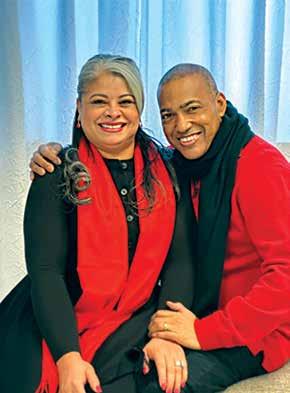
Para Moyce Polanco, pastor principal de la Iglesia de Dios Hispana Bethel durante los últimos 23 años, ser capellán de la comunidad no limita su trabajo y dedicación a brindar servicios de apoyo a los miembros de su iglesia. Explicó que decidió ser capellán de la comunidad porque lo vio como una extensión de sus deberes pastorales, y dar palabras de esperanza y paz a los necesitados complementó su deseo de servir. Es capellán desde 2014.
Saber que puede conectarse con las personas de una manera compasiva, independientemente de su afiliación religiosa, y guiarlas a través de un momento difícil en su propio idioma, le permite cumplir su deseo de ayudar a los demás.
“Cuando se trabaja con personas, es importante entender que las necesidades de cada una son diferentes. En el caso del fallecimiento de una persona, algunos miembros de la familia entienden por lo que están pasando y aceptan el proceso. Otros son emocionalmente menos fuertes y necesitan más apoyo. Todo depende de las necesidades de la persona en ese momento”, explicó.
Durante su formación, los capellanes reciben una amplia orientación sobre cómo manejar el suicidio, los accidentes, los diferentes grupos de edad o culturas y, por supuesto, la intervención de crisis durante las emergencias de salud mental. También visitan a pacientes enfermos o lesionados y ofrecen compañía. Su apoyo es compasivo y desinteresado, disponible las 24 horas y gratuito.
Polanco explica: “Cuando me reúno con alguien, no estoy allí para juzgar a nadie, sino para escuchar, para tratar de hacer que la persona a la que estoy ayudando sienta paz y esperanza sin entrar en conversaciones o enseñanzas religiosas. No hay límite de tiempo para el apoyo que brindo. Por lo general, cuando ya no me piden que regrese a visitar a alguien, es porque esa persona se siente suficientemente fuerte emocionalmente como para continuar solo”.
que pueda entender lo que está sucediendo sin sentirse culpable o deprimido y aceptar recibir ayuda. Si lo piensas, algunas de estas situaciones son tabú en la mayoría de las culturas,” dijo Polanco.
Es importante tener a alguien disponible para ayudar a navegar el complejo mundo del duelo, la depresión, la adicción o la salud mental. Es por eso por lo que Polanco ha dedicado tiempo a capacitar a miembros bilingües calificados de su iglesia para ayudar a otros durante un momento de necesidad.
Cualquier persona que sienta el llamado a ser compasivo y útil con aquellos que necesitan apoyo puede convertirse en capellán. Hay un proceso a seguir, pero si alguien ya está haciendo parte de ese trabajo, dar el siguiente paso no es difícil.
Si bien los capellanes están disponibles para cualquier persona en cualquier situación, deben ser verdaderamente representativos de la comunidad a la que sirven. Siendo Polanco el único capellán bilingüe, otras comunidades que no hablan inglés o español quedan fuera.
Bert McQueen, capellán jubilado y fundador de los Capellanes de Policía y Bomberos de Alaska, una organización estatal sin fines de lucro con unos 100 miembros, explicó que a lo largo de los años, sus miembros tenían capellanes que hablaban otros idiomas, pero como fue hace varios años, sus servicios bilingües no eran tan necesarios como lo serían ahora, y finalmente esos capellanes se mudaron fuera del estado. Recordó algunos de los idiomas que hablaban: samoano, coreano y tagalo. Actualmente, solo hay un capellán que es bilingüe y habla español.
McQueen explicó que a pesar de que la organización comenzó a partir de la necesidad de servicios de apoyo para los oficiales de paz durante una crisis, entendió el valor de extender dichos servicios a la comunidad y lo importante que era ayudar a ambos. McQueen y Polanco están de acuerdo en que la asociación se beneficiaría de tener más representación en su membresía. Anchorage es el hogar de 112 idiomas, y tener más capellanes bilingües disponibles haría que su trabajo fuera aún más valioso para todos.
Bilingual Chaplains, a Real Need Beyond a Crisis
In a city as diverse as Anchorage, it is extremely important to have someone who understands the different cultures, languages, and intricacies of navigating the various social systems available to the community.
BY LINA MARISCAL
Many people think chaplains only handle religious duties, overlooking the diverse roles they play. But community chaplains break the mold—fully immersing themselves in the lives of those they serve and staying by their side long after the crisis fades.
A community chaplain builds close relationships with people from different entities to create support systems. The community receives emotional, spiritual, social, financial, and sometimes religious support from these compassionate individuals, their work also involves visiting people where they are: at home, the hospital, in jail, at church, and sometimes even at their workplace.
For Moyce Polanco, a senior pastor at the Bethel Hispanic Church of God for the past 23 years, being a community chaplain does not limit his work and dedication to providing support services to the members of his church. He explained that he decided to be a community chaplain because he saw it as an extension of his pastoral duties, and giving words of hope and peace to those in need complemented his desire to serve. He has been a chaplain since 2014.
Knowing that he can connect with people in a compassionate way regardless of religious affiliation and guiding them through a difficult time in their own language allows him to fulfill his desire to help others.
“When working with people, it is important to understand that each person’s needs are different. In the case of a relative’s passing, some family members understand what they are going through and accept the process; others are emotionally less strong and need more support. It all depends on the person’s needs at the time,” he explained.
During their training, chaplains receive extensive guidance on how to handle suicide, accidents, different age groups or cultures, and, of course, crisis intervention during mental health emergencies. They also visit sick or injured patients and offer companionship. Their support is compassionate and selfless, available 24 hours, and free.
Polanco explains, “When I meet with someone, I am not there to judge anyone but to listen, to try and make whomever I am assisting feel peace and hope without going into religious conversations or teachings. There is no time limit to the support I provide. Usually, when I am
not asked to come back to visit someone anymore, it is because that person feels strong enough emotionally to go on.”
“After someone goes through a crisis, the possibility of developing a mental health episode increases,” Polanco added.
To obtain the best outcome during an episode of depression or mental crisis, it is crucial to assist someone in their language so they can understand what is happening without feeling guilty or depressed and agree to receive help. If you think about it, some of these situations are taboo in most cultures.”
It is important to have someone available to help navigate the complex world of grief, depression, addiction, or mental health. This is why Polanco has dedicated time to training qualified bilingual members of his church to assist others during a time of need.
Anyone who feels the call to be compassionate and helpful to those that need support can become a chaplain. There is a process to follow but if someone is already doing some of that work, taking the next step is not hard.
While chaplains are available to anyone in any situation, they need to be truly representative of the community they serve. With Polanco being the only bilingual chaplain, other communities that do not speak English or Spanish are left out.
Bert McQueen, a retired chaplain and the founder of Alaska Police and Fire Chaplains, a statewide non-profit organization with about 100 members, explained that through the years, their membership had chaplains that spoke other languages, but since it was several years ago, their bilingual services were not as needed as they would be now, and eventually those chaplains moved out of state. He remembered some of the languages they spoke: Samoan, Korean, and Tagalog. Currently, there is only one chaplain that is bilingual, and he speaks Spanish.
McQueen explained that even though the organization started from the need for support services for the peace officers during a crisis, he understood the value of extending such services to the community and how significant it was to assist both.
McQueen and Polanco agree that the association would benefit from having more representation in their membership. Anchorage is home to 112 languages, and having more bilingual chaplains available would make their work even more valuable to all.