SOL MEDIAN CHE DE


 POR SDMN
El martes se produjo un hito importante en la búsqueda de la igualdad en el matrimonio. El presidente Biden firmó la Ley de Respeto al Matrimonio (RFMA), un proyecto de ley que codifica el reconocimiento federal del matrimonio entre personas del mismo sexo y/o interracial. Esto llega después de varios meses de deliberación y un voto aprobatorio en la Cámara de Representantes a principios de este mes.
Los legisladores introdujeron esta propuesta como respuesta a la anulación de Roe v. Wade. Si bien el tema puede no parecer relacionado directamente, existe una conexión importante. Cuando la Suprema Corte decidió revocar el derecho al aborto en Dobbs v. Jackson Women’s Health Organization, el juez Clarence Thomas sugirió en una opinión concurrente que la corte debería reconsiderar Obergefell v. Hodges, el caso que legalizó el matrimonio entre personas del mismo sexo en todo el país. Además, los argumentos de la corte en Dobbs ponen en duda muchos de los derechos que no se otorgan explícitamente en la Constitución de los Estados Unidos. Esto incluye el matrimonio interracial e incluso los métodos anticonceptivos. Cathryn Oakley, del grupo de defensa LGBT Human Rights Campaign, le dijo a la BBC: “Estas cosas que pensábamos que eran leyes establecidas, de las que la gente ha de-
pendido, y con las que han construido sus vidas, de hecho, no están tan establecidas a los ojos de la Corte Suprema de Estados Unidos tal como son a los ojos del resto de los Estados Unidos”.
Dado el riesgo que representa esta interpretación que parece estar ganando terreno en la mayoría conservadora de la Corte Suprema, las senadoras Dianne Feinstein (D-Calif.), Tammy Baldwin (D-Wis.) y Susan Collins (R-Maine) introdujeron la RFMA. La ley solidifica el matrimonio igualitario en la ley federal y brinda más protecciones legales. Además, también incluye protecciones para el matrimonio interracial. Si bien ha sido legal durante 55 años, no estaba protegido por la ley federal. Sin embargo, a pesar de ser un paso importante, la RFMA no obliga a los 50 estados a permitir el matrimonio igualitario. De hecho, no impide que los estados prohíban o limiten el matrimonio igualitario si se anula la decisión de Obergefell. Además, las organizaciones sin fines de lucro, incluidos múltiples tipos de organizaciones religiosas pueden rechazar servicios y alojamiento para la solemnización o celebración de un matrimonio.
La ley fue aprobada en una votación en la Cámara con un margen de 258-169 con un representante votando “presente”. El proyecto de ley obtuvo el apoyo de la mayoría demócrata actual, así como de 39 representantes republicanos, una caída no-
 BY SDMN
An important landmark in the quest for marriage equality happened on Tuesday. President Biden signed the Respect for Marriage Act (RFMA) a bill that codifies the federal recognition of same-sex and interracial marriage. This comes after several months of legislative deliberation and a vote of approval in the House of Representatives earlier this month.
Lawmakers introduced this legislation as a response to the overturning of Roe v. Wade. While the topic might not seem related directly, there is an important connection. When the Supreme Court decided to overturn abortion in Dobbs v. Jackson Women’s Health Organization, Justice Clarence Thomas suggested in a concurring opinion that the court should reconsider Obergefell v. Hodges, the case that legalized samesex marriage nationwide. Furthermore, the arguments of the court in Dobbs puts into question many of the rights that are not explicitly given in the U.S Constitution. This includes interracial marriage and even contraception. Cathryn Oakley, of the LGBT advocacy group Human Rights Campaign, told the BBC: “these things that we thought were settled law - which people have depended on, people have built their lives around - are in fact not as settled in the eyes of the US Supreme Court as they
are in the eyes of the rest of America.”
Given the risk posed by this interpretation that seems to be gaining traction in the current conservative majority of the Supreme Court, Senators Dianne Feinstein (D-Calif.), Tammy Baldwin (D-Wis.), and Susan Collins (R-Maine) introduced the RFMA. The law solidifies marriage equality in federal law and provides further legal protections. In addition, the bill also includes protections for interracial marriage. While it has been legal for 55 years, it was not protected by federal law. However, despite being an important step, this new law comes with limitations. The law does not require all 50 states to allow samesex marriage. In fact, it does not limit states from banning or limiting samesex marriage if the Obergefell decision is overturned. Furthermore, non-profit organizations, including multiple types of religious organizations, are allowed to refuse services and accommodations for the solemnization or the celebration of a marriage.
The bill passed the vote in the House with a margin of 258-169 with one representative voting “present.” The bill got support from the current Democratic majority as well as 39 Republican representatives, a notable drop-off from the 47 Republicans who supported the fill this summer. This can be attributed to the fact that because we are no longer in

table de los 47 republicanos que apoyaron en un voto este verano. Esto se puede atribuir al hecho de que, debido a que ya no estamos en temporada electoral, algunos representantes republicanos en distritos liberales no enfrentaron presión electoral para apoyar el proyecto de ley.
La RFMA también deroga formalmente una ley anterior, la Ley de Defensa del Matrimonio, de 1996, que establecía la defini-
ción federal de matrimonio como la unión legal entre un hombre y una mujer como marido y mujer” y permitía a los estados negar el reconocimiento a los matrimonios del mismo sexo y les negaba beneficios federales. Algunas partes importantes de este proyecto de ley fueron invalidadas por la Corte Suprema en los casos Estados Unidos v. Windsor y Obergefell v. Hodges en 2013 y 2015, respectivamente.
election season, some Republican representatives in liberal districts did not face electoral pressure to support the bill.
The RFMA also formally repeals a previous law, the Defense of Marriage Act, from 1996, which established the federal definition of marriage as a “legal union between one man and one wom-
an as husband and wife” and allowed states to refuse recognition to same-sex marriages and would deny them federal benefits. Some important provisions of this bill were invalidated by the Supreme Court in the cases United States v. Windsor and Obergefell v. Hodges in 2013 and 2015, respectively.

 POR CARLOS MATÍAS
Casi nueve millones de inmigrantes, la mayoría hispanos, siguen pendientes de las resoluciones del Servicio de Ciudadanía e Inmigración de los Estados Unidos (USCIS, por sus siglas en inglés). Los retrasos pueden llegar a los dos años. Demoras exageradas en la tramitación de las diferentes licencias y permisos para residir en los Estados Unidos. La propuesta del congresista Tony Cárdenas ha generado grandes expectativas. Pero también grandes escepticismos.
La iniciativa de la Ley de Casos Atrasados y Transparencia, presentada por el congresista Tony Cárdenas el 25 de octubre busca “abordar las largas demoras que enfrentan millones de inmigrantes que solicitaron un beneficio migratorio. Cárdenas considera, además, que “la Ley de Reducción de Inflación beneficiará a millones de latinos”, lo que también ha generado tanto optimismo como dudas.
La situación es “muy grave”, según algunos expertos en inmigración. El aumento de los tiempos de demora y el colapso de los casos en los últimos años se debe al enorme número de peticiones de asilo aplicadas en la frontera con México, “y crecerá mucho más cuando se elimine la política del Título 42”, advierten. Esta norma fue activada en marzo de 2020 por la pandemia del COVID-19 y permitía la “expulsión inmediata de extranjeros” por razones de salud pública. El pasado 16 de noviembre, un juez federal de Washington DC dio plazo al gobierno hasta el 21 de diciembre para eliminarla.
Para el abogado de Nations Law Group Nicolás Olano, experto en temas de in-
migración, “la situación de los permisos de trabajo y otras aplicaciones está directamente relacionada con el influjo de migrantes en la frontera con México. Con el aumento de personas, sobre todo familias, que han ingresado a los EE. UU. en los últimos años, el número de personas aplicando para asilo ha crecido exponencialmente”.
“Esto, sumado a la baja de personal que se dio durante la Administración Trump y a las demoras de COVID-19, ha dado como resultado un serio problema para el Servicio de Inmigración y Ciudadanía, pues el número de aplicaciones pendientes se ha vuelto exorbitante”.
Olano considera que, “dado lo anterior, es claro que la propuesta del Congresista Tony Cárdenas no tiende a solucionar las verdaderas causas de las demoras en USCIS. Poner fechas límite no va a aumentar el número de personal necesario para procesar el creciente número de aplicaciones que están pendientes. Obligar a USCIS a producir más reportes va a reducir perso-
nal, indispensable para procesar casos, y no ayuda a reducir los tiempos de espera de los clientes. Lo que necesita USCIS en este momento es un influjo de dinero por parte del gobierno, para que contrate más personal y así pueda atender como se debe a su clientela: los inmigrantes”.
Para Raúl Pinto, también abogado experto en inmigración y transparencia de la Administración, de la American Immigration Council, con sede en Washington DC, “la propuesta de Cárdenas es muy importante”. Raúl Pinto sitúa el problema de los retrasos en USCIS en fechas anteriores al COVID-19. “Los problemas vienen de lejos. Donald Trump dio un giro en las concesiones de permisos y licencias”.
Fue como levantar un “muro administrativo”, además del muro físico de la frontera con México. “Expedientes que normalmente se tramitaban en un mes comenzaron a demorarse un año y medio”, comenta.
Raúl Pinto también señala a la pandemia como origen de estos atascos adminis-
trativos. “El COVID contribuyó. Pero las causas de las demoras han sido diversas. Durante la época de Trump las aplicaciones a los beneficios migratorios de trabajo, residencia permanente, ciudadanía, etcétera, se retrasaban mucho porque USCIS se concentró en ayudar a las demás agencias de inmigración, principalmente al Servicio de Control de Inmigración y Aduanas (ICE, por sus siglas en inglés), a ejecutar estrictamente la ley y deportar a los peticionarios”.
“Por ejemplo”, sigue Raúl Pinto, “si alguien pedía permiso de residencia y se le denegaba, antes de Trump USCIS le daba un periodo de tiempo para presentar alegaciones, pero con Trump se enviaban directamente las aplicaciones denegadas a los procesos de deportación en las cortes de inmigración”.
Ahora es Joe Biden quien preside el país. Lleva suficiente tiempo para arreglar esta situación, pero las cifras de los retrasos en las tramitaciones siguen siendo alarmantes.
| ISSN (print) 2473-6880 | ISSN (online) 2473-6899.
Nearly nine million immigrants, most of them Hispanic, are still awaiting rulings from the U.S. Citizenship and Immigration Services (USCIS). Backlogs can be as long as two years triggering lengthy delays in the processing of the different licenses and permits needed to reside in the United States. Congressman Tony Cardenas’ proposal has generated great expectations. But also, great skepticism.
The Backlog and Transparency Act initiative, introduced by Congressman Tony Cardenas on October 25 seeks to “address the long delays faced by millions of immigrants who applied for an immigration benefit but have not received a decision.”
Cardenas also believes that “the Inflation Reduction Act will benefit millions of Latinos,” which has also generated both optimism and doubts.
The situation is “very serious,” according to some immigration experts. The increase in delay times and the collapse of cases in recent years is due to the enormous number of asylum petitions applied for at the border with Mexico, “and will grow much more when Title 42 policy is eliminated,” they warn. This rule was activated in March 2020 by the COVID-19 pandemic and allowed the
“immediate removal of immigrants” for public health reasons. Last November 16, a federal judge in Washington, D.C., gave the government until December 21, to remove it.
For Nations Law Group attorney Nicolas Olano, an expert on immigration issues, “the situation of work permits, and other applications is directly related to the influx of migrants at the border with Mexico. With the increase of people, mostly families, entering the U.S. in recent years, the number of people applying for asylum has grown exponentially.”
“This, coupled with the downsizing that occurred during the Trump Administration and COVID-19 delays, has resulted in a serious problem for the Citizenship and Immigration Services, as the number of pending applications has become exorbitant.”


Olano believes that “given the above, it is clear that Congressman Tony Cardenas’ proposal does not tend to solve the real causes of the delays at USCIS. Setting deadlines will not increase the number of staff needed to process the growing number of pending applications. Forcing USCIS to produce more reports will reduce the number of staff needed to process cases and will not help reduce waiting times
for customers. What USCIS needs right now is an influx of money from the government to hire more staff so it can properly serve its clientele: immigrants.
For Raul Pinto, also a lawyer and expert in immigration and government transparency at the American Emigration Council, based in Washington, D.C., “Cardenas’ proposal is very important.” Raul Pinto places the problem of delays at USCIS in dates prior to COVID-19. “The problems go back a long way. Donald Trump made a turnaround in permitting and licensing.”
It was like erecting an “administrative wall,” in addition to the physical wall on the border with Mexico. “Files that were normally processed in a month began to take a year and a half,” he says.
Raul Pinto also points to the pandemic as the origin of these administrative bot-
tlenecks. “COVID contributed. But the causes of the delays have been diverse. During the Trump era, applications for immigration benefits for work, permanent residency, citizenship, etc., were greatly delayed because USCIS focused on helping the other immigration agencies, mainly Immigration and Customs Enforcement (ICE), strictly enforce the law and deport petitioners.”
“For example,” Raul Pinto continues, “if someone applied for a green card and was denied, before Trump USCIS gave them a period of time to file pleadings, but with Trump denied applications were sent directly to deportation proceedings in the immigration courts.”
Now it is Joe Biden who presides over the country. It takes time to fix this situation, but the numbers of processing delays continue to climb.
El 24 de mayo, la Corte Suprema de Alaska determinó que un nuevo mapa de distrito elaborado por el Senado Estatal estaba parcializado “inconstitucionalmente” a favor de Eagle River, el cual se inclina políticamente hacia los republicanos. Su orden fue una victoria para las prácticas electorales justas e igualitarias en la lucha contra el partidismo radical. Ahora, con los conservadores mostrando una mayoría en la Corte Suprema de los Estados Unidos, existe la posibilidad de que los tribunales estatales de todo el país no vuelvan a ejercer ese poder nunca más.
El proceso de dividir estados en distritos electorales en función de la población debería ser un proceso burocrático estándar (aburrido). Pero cuando la Corte Suprema dictaminó en 1964 que las legislaturas estatales deben rediseñar los distritos cada diez años para mantenerse al día con los cambios demográficos, la redistribución de distritos se convirtió en un tema político. Si bien los demócratas han coqueteado con el gerrymandering, la práctica de dibujar distritos en torno a raza, clase económica y líneas políticas para manipular el poder electoral, los republicanos están absolutamente comprometidos con ella. The Associated Press encontró “cuatro veces más estados con distritos de Asamblea o de la Cámara de Representantes estatales parcializados a favor de los republicanos que de los demócratas”, lo que crea una amenaza “real y alarmante” para la democracia. Esa amenaza pronto puede volverse mucho peor. El 7 de diciembre, la Corte Suprema comenzó a escuchar los argumentos de Moore v. Harper. Este caso tiene que ver con la legislatura estatal de Carolina del Norte, que aprobó un mapa de redistribución de distritos antes de las elecciones de noviembre diseñado para favorecer en gran medida a los republicanos. Cuando la Corte Suprema de Carolina del Norte anuló dos de estos mapas, llamándolos una “manipulación partidista atroz e intencional” que ponía en peligro la igualdad de los votantes y violaba la constitución estatal, los legisladores republicanos apelaron ante la Corte Suprema de los Estados Unidos. Si bien su petición fue inicialmente rechazada debido a su proximidad a las elecciones intermedias, los jueces Kavanaugh, Gorsuch, Alito y Thomas alentaron a los legisladores a volver a presentarla y el tribunal aceptó el caso.
El argumento principal de los demandantes se basa en la teoría de la Legislatura Estatal Independiente (LEI), que sostiene que la Constitución otorga a todas las legislaturas estatales el derecho a regular las elecciones sin la supervisión de la corte suprema del estado. La teoría de la LEI se deriva de los artículos 1 y 2 de la Constitución de los Estados Unidos, los cuales otorgan a las legislaturas el derecho de regular las elecciones. Según los demandantes, los mapas de distrito sesgados aprobados por la legislatura de Carolina del Norte debe-
rían mantenerse. Varios académicos han rechazado casi unilateralmente esta idea. Durante siglos, los tribunales estadounidenses han interpretado que estas cláusulas incluyen normas constitucionales. De lo contrario, las cortes supremas estatales no tendrían jurisdicción para defender la constitución, el cual es su único propósito, y las legislaturas estatales no podrían ser controladas. Esto es “fatalmente inconsistente con los preceptos básicos tanto del federalismo como de la separación de poderes”, según las profesoras de derecho Kate Shaw y Leah Litman. De hecho, la propia Corte Suprema rechazó la teoría de la LEI en 2015 en la opinión mayoritaria de la Legislatura del Estado de Arizona v. Comisión Independiente de Redistribución de Distritos de Arizona.
Si la corte anula ese precedente ahora (lo cual es muy posible dado que cuatro jueces alentaron a que se volviera a presentar Moore v. Harper), la democracia sufrirá. Incluso una leve aprobación de la teoría de la LEI le daría a la Corte Suprema autoridad total sobre la ley electoral estatal y dejaría las funciones más mundanas a los tribunales estatales. Como describe la académica constitucional Carolyn Shapiro, “en lugar de que las cortes estatales de apelaciones y las cortes supremas estatales hagan lo que han estado haciendo durante los últimos dos siglos y medio, la Corte Suprema [podría] entrar y potencialmente cuestionar las decisiones.” Esto sería desastroso, convirtiendo a la Corte Suprema en un campo de batalla interminable por los derechos de los votantes y hundiendo las elecciones estadounidenses en aún más caos.
Dependiendo de cuánta autoridad otorgue la opinión de la mayoría a las legislaturas estatales, un escenario posible haría que las legislaturas estatales escogieran electores para resistirse a resultados electorales. El ex-juez federal J. Michael Luttig, un conservador, criticó la teoría de la LEI como parte de un “proyecto republicano para robar las elecciones de 2024”. Incluso si la mayoría disiente, Moore v. Harper aún arroja una sombra sobre la democracia estadounidense. Cuando la Corte Suprema, que acepta solo el 1 por ciento de las peticiones que recibe cada año, revisa un argumento tan ahistórico, envía el mensaje de que la teoría de la conspiración merece una consideración genuina. Los Padres Fundadores no pretendían ninguno de estos escenarios. De hecho, la mayoría dudaba notoriamente en dar demasiado poder a los congresos estatales. Los cinco jueces conservadores que se identifican como originalistas han ignorado este hecho de la misma manera como anularon un precedente de cincuenta años para la protección del aborto este julio.
Parece que los conservadores, habiendo agotado la utilidad política del originalismo, buscan una forma más radical de forzar su moralidad sobre los estados y, peor aún, sobre las personas.
BY KIRA SMALLOn May 24, Alaska’s Supreme Court decided that a new district map drawn up by the state senate was “unconstitutionally” biased towards Eagle River, which leans Republican. Its order was a victory for fair and equal voting practices in the fight against radical partisanism. Now, with conservatives flexing a supermajority in the Supreme Court of the United States, there’s a chance that state courts nationwide won’t wield that power ever again.
The process of dividing states into electoral regions based on population ought to be a standard (boring) bureaucratic process. But when the Supreme Court ruled in 1964 that state legislatures must redraw districts every ten years in order to keep up with demographic changes, redistricting became a political issue. While Democrats have flirted with gerrymandering — the practice of drawing districts around race, class, and political lines in order to manipulate electoral power — Republicans are positively wedded to it. The Associated Press found “four times as many states with Republican-skewed state House or Assembly districts than Democratic ones,” creating a “real and alarming” threat to democracy.
That threat may soon become much worse. On December 7, the Supreme Court began hearing arguments for Moore v. Harper. This case concerns North Carolina’s state legislature, which passed a redistricting map ahead of the 2022 midterm elections designed to heavily favor Republicans. When the Supreme Court of North Carolina struck down two of these maps, calling them an “egregious and intentional partisan gerrymander” that jeopardized voter equality and violated North Carolina’s own constitution, Republican legislators appealed to the Supreme Court of the United States. While their petition was initially rejected because of its proximity to the midterms, Justices Kavanaugh, Gorsuch, Alito, and Thomas encouraged the legislators to resubmit it, and the court accepted the case.
The plaintiffs’ primary argument rests upon the Independent State Legislature (ISL) theory, which argues that the Constitution gives all state legislatures the right to regulate elections without any oversight from their state’s supreme court. ISL theory is derived from Articles 1 and 2 of the U.S. Constitution, which grant legislatures the right to regulate elections. As such, according to the plaintiffs, the biased district maps passed by North Carolina’s legislature should hold. Scholars have almost unilaterally rejected this idea. For centu-
ries, American courts have interpreted these clauses to include constitutional regulations. Otherwise, state supreme courts would be powerless to uphold the constitution, which is their sole purpose, and state legislatures would go unchecked. This is “fatally inconsistent with basic precepts of both federalism and the separation of powers,” according to law professors Kate Shaw and Leah Litman. In fact, the Supreme Court itself rejected ISL theory as recently as 2015 in the majority opinion for Arizona State Legislature v. Arizona Independent Redistricting Commission.
If the court overturns that precedent now, (which is very possible given that four justices encouraged Moore v. Harper to be resubmitted), democracy will suffer. Even a mild approval of ISL theory might allow the Supreme Court complete authority over statewide election law while leaving more mundane functions to the state courts. As constitutional scholar Carolyn Shapiro describes, “instead of having state appellate courts and state supreme courts do what they have been doing for the past two and a half centuries, the Supreme Court [would be] able to come in and potentially second-guess those decisions.” This would be disastrous, turning the Supreme Court into an unending battleground for voter rights and plunging America’s elections into further chaos.
Depending on how much authority the majority opinion grants to state legislatures, a true nightmare scenario would involve state legislatures appointing electors to resist election results. Former federal judge J. Michael Luttig — a conservative himself — condemned ISL theory as part of a “Republican blueprint to steal the 2024 election.” Even if the majority dissents, Moore v. Harper still casts a shadow over U.S. democracy. When the Supreme Court, which accepts a mere 1 percent of the petitions it receives every year, reviews such an ahistorical argument, it sends the message that conspiracy theory is worthy of genuine consideration. The Founding Fathers intended none of these scenarios. In fact, most were notoriously hesitant to give state congresses too much power. The five conservative justices who identify as originalists have neglected this fact as quickly as they overturned a fifty-year-long precedent for abortion protection this July.
It seems that conservatives, having exhausted the political utility of originalism, are looking towards a more radical way to supplant their morality onto the states — and, worse still, onto the people.
Alaska Youth for Environmental Action ayudará a los jóvenes a que sus voces se escuchen en Juneau en la Cumbre de Educación Cívica y Conservación AYEA 2023.
POR MARLOWE SCULLYLos adultos jóvenes a menudo quedan fuera de las decisiones que los afectarán por el resto de sus vidas. Los directores ejecutivos de las corporaciones, los gobernadores, los senadores de los Estados Unidos y las personas en el poder que ganan dinero con las grandes petroleras evitan enfrentar a los jóvenes que soportan la carga del cambio climático y la ansiedad climática. En Alaska, donde el Ártico se está calentando al doble del promedio mundial y las comunidades enfrentan sus impactos más extremos, este problema es particularmente frecuente. Los adolescentes de Alaska merecen las herramientas, las conexiones y la esperanza de aprovechar su poder contra estos gigantes y crear un futuro brillante para ellos y sus comunidades.
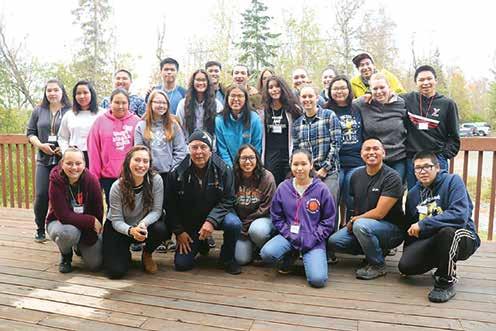
Este otoño, 12 jóvenes de Alaska de comunidades de todo el estado se reunieron en Anchorage para hacer precisamente eso. En la Cumbre de Organizadores Juveniles 2022, los organizadores juveniles eligieron y comenzaron a planificar su proyecto estatal para proteger y aumentar el acceso de los habitantes de Alaska a los alimentos locales a través de la acción y la educación. El problema de la inseguridad alimentaria
Alaska Youth for Environmental Action will help youth make their voices heard in Juneau at the 2023 AYEA Conservation and Civic Education Summit.
 BY MARLOWE SCULLY
Young adults are often left out of decisions that will affect them for the rest of their lives. Corporation CEOs, Governors, United States Senators, and people in power making money from big oil avoid facing youth who bear the burden of climate change and climate anxiety. In Alaska, where the arctic is warming at double the global average and communities face more extreme impacts of climate change, this issue is particularly prevalent. Alaska’s teens deserve the tools, the network, and the hope to leverage their power against these giants and create a bright future for themselves and their communities.
This fall, 12 young Alaskans from communities around the state gathered in Anchorage to do just that. At the 2022 Youth Organizer Summit, Youth Organizers chose and began to plan their statewide project to protect & increase Alaskans’ access to local food through action and education. The issue of food insecurity and access is a significant challenge facing communities across Alaska. Throughout the pandemic and as climate change impacts worsen, the challenges surrounding food access and Alaska’s supply chain have become increasingly evident and extreme. According to a recent draft report by the Alaska Food Security and Independence Task Force, around 95% of Alaska’s food is imported, making our food systems and distribution
y el acceso es un desafío importante que enfrentan las comunidades de Alaska. A lo largo de la pandemia y a medida que empeoran los impactos del cambio climático, los desafíos que rodean el acceso a los alimentos y la cadena de suministro de Alaska se han vuelto cada vez más evidentes y extremos. Según un informe reciente del Grupo de Trabajo de Seguridad e Independencia Alimentaria de Alaska, alrededor del 95% de los alimentos de Alaska son importados, lo que hace que nuestros sistemas alimentarios y distribución sean vulnerables a interrupciones y fallas en la cadena de suministro. El mismo informe encontró que aproximadamente 1 de cada 8 habitantes de Alaska lucha contra el hambre y el acceso a los alimentos, con tasas más altas en las comunidades rurales. Los organizadores juveniles esperan hacer una diferencia para sus comunidades locales y Alaska a través de la acción y la educación.
En el próximo año, los organizadores juveniles de Alaska Youth for Environmental Action construirán sus secciones locales en todo el estado. Estas secciones y organizadores juveniles crearán conciencia sobre el tema de la inseguridad alimentaria y el acceso al llamar la atención sobre los costos de
los alimentos y el acceso a ellos en las zonas rurales de Alaska. Elevarán las historias de los más afectados, aprenderán y enseñarán sobre alimentos tradicionales y prácticas de subsistencia, proporcionarán capacitación a cazadores, construirán invernaderos y jardines comunitarios, y abogarán por un mayor acceso y seguridad alimentaria a sus funcionarios electos. Los organizadores juveniles están buscando compañeros y mentores adultos que se preocupen por el clima y la seguridad alimentaria que se les unan y elijan priorizar los alimentos locales.
A medida que nuestros océanos aumentan, nuestro clima se vuelve más extremo y nuestros sistemas alimentarios se desestabilizan, nuestros líderes continúan invirtiendo en soluciones falsas. Es hora de que nuestros líderes prioricen a los jóvenes. Es hora de que escuchen los hechos y enfrenten nuestra verdad. Es hora de organizarse. Alaska Youth for Environmental Action ayudará a los jóvenes a que sus voces se escuchen en Juneau en la Cumbre de Educación Cívica y Conservación AYEA 2023. La Cumbre de Educación Cívica y Conservación es una oportunidad única para que los adolescentes de Alaska viajen a Juneau, aprendan más sobre la Legislatura del Estado de Alaska, se conecten con sus representantes e impacten la aprobación de proyectos de ley. La cumbre rompe las barreras entre los delegados y la Legisla-
tura. Al enfocarse en proyectos de ley específicos dentro de la actual sesión legislativa del estado, los delegados obtendrán habilidades de comunicación, abogacía y participación cívica. La cumbre culmina con reuniones constituyentes entre los delegados y sus legisladores, ¡donde podrán abogar por los proyectos de ley y los temas que les interesan!
Se necesitó mucha ingeniería y capacidad intelectual para construir nuestra tubería para el petróleo y estructurar el estado a su alrededor. Podemos usar la misma ingeniería, capacidad intelectual y creatividad para reducir y eliminar nuestros contaminantes mientras nos aseguramos de que nuestros vecindarios tengan alimentos nutritivos, locales y poco desechables. Los jóvenes pueden unirse a AYEA como organizadores juveniles para su comunidad, y los adultos pueden nominar a adolescentes para unirse a la cumbre visitando ayea.org o enviando un correo electrónico a ayea@ akcenter.org.
Marlowe Scully es la Coordinadora del Programa de Alaska Youth for Environmental Action. Vive en las tierras de Dena’ina en Anchorage con su pareja, dos perros y dos gatos. ¡Marlowe comenzó como organizador juvenil y le satisface mucho el ayudar a los jóvenes de Alaska a hacer un cambio en sus comunidades!
gain communication, advocacy, and civic participation skills. The summit culminates with constituent meetings between delegates and their legislators - where they can advocate for the bills and topics they care about!
vulnerable to supply chain disruptions and breakdowns. The same report found that about 1 in every 8 Alaskans struggles with hunger and food access, with higher rates in rural communities. Youth Organizers hope to make a difference for their local communities and Alaska through action and education.
In the upcoming year, Alaska Youth for Environmental Action Youth Organizers will build their chapters across the state. These chapters and Youth Organizers will raise awareness around the issue of food insecurity and access by bringing attention to food costs and access in rural Alaska. They will uplift the stories of those most impacted, learn and teach about traditional foods and subsistence practices, provide hunter training, build greenhouses and community gardens, and advocate for increased food access and security to their elected officials. Youth Organizers are looking for peers
and adult mentors who care about climate and food security to join and choose to prioritize local food.
As our oceans rise, our climate becomes more extreme, and our food systems destabilize, our leaders continue to invest in false solutions. It’s time our leaders prioritize youth. It’s time they hear the facts and face our truth. It’s time to organize. Alaska Youth for Environmental Action will be helping young people make their voices heard in Juneau at the 2023 AYEA Civics & Conservation Summit. The Civics & Conservation Summit is a unique opportunity for Alaskan teens to travel to Juneau, learn more about the Alaska State Legislature, connect to their representatives, and impact the passage of bills. The summit breaks down barriers between delegates and the Alaska State Legislature. By focusing on specific bills within the current Alaska State Legislative session, delegates will
It took a lot of engineering and brainpower to build our pipeline and structure the state around it. We can use the same engineering, brainpower, and creativity to reduce and eliminate our pollutants while ensuring our neighborhoods have nutritious, local, low-waste foods. Youth can join AYEA as youth organizers for their community, and adults can nominate teens to join the summit by visiting ayea. org or emailing ayea@akcenter.org!
Marlowe Scully is the Program Coordinator for Alaska Youth for Environmental Action. They live on Dena’ina lands in Anchorage with their partner, two dogs, and two cats. Marlowe started as a youth organizer and finds great joy in helping young Alaskans make a change in their communities!
 POR KENDRA ARCINIEGA
El tiroteo masivo en el club nocturno Pulse en Florida no ocurrió en el vacío. Esta tragedia, aún viva en nuestros corazones, ocurrió en junio de 2016; un devastador mes del Orgullo en el que en lugar de celebrar la resiliencia de nuestra comunidad, perdimos a docenas de hermanos y aliados LGBTQ + por la violencia armada. Fue un recordatorio aleccionador de que nuestros espacios sagrados no son seguros. Otra tragedia en la que los legisladores ofrecieron “pensamientos y oraciones”, pero nada para mantenernos a salvo. El clima político se volvió más agresivo y la legislación sobre armas de fuego nunca llegó. Avancemos rápido hasta 2022 y la comunidad LGBTQ + está resistiendo ataques y hostilidad más que nunca. Recientemente, los ecos de Pulse Nightclub resonaron en todo el país cuando un hombre armado ingresó a otro club nocturno queer, Club Q en Colorado, y robó la vida de 5 personas. Si dos clientes del bar, un veterano del ejército y una mujer transgénero, no hubieran acometido al tirador, probablemente habría habido más muertes.
Ataques como Pulse Nightclub y Club Q no son casos de lobos solitarios, ni pueden tratarse como asuntos de enfermedad mental mientras descartamos toda evidencia de neofascismo acelerado y una mayor retórica violenta hacia las personas LGBTQ +. La homofobia es un adoctrinamiento peligroso, no una enfermedad mental. La homofobia y el odio no son opiniones; son fuentes de violencia. La violencia no siempre viene como un evento de víctimas masivas. Estamos sujetos a la violencia cada vez que nos atrevemos a existir en público o crear espacios inclusivos, especialmente para los jóvenes queer y los jóvenes aliados que merecen comunidad. Los espectáculos de drag para todas las edades son el último objetivo de la violencia en todo el país, presentando un retrato asombroso de la intersección del cristofascismo y el terrorismo doméstico. Nos guste o no, los eventos de drag amigables para los niños SÍ existen. El drag no es inherentemente sexual, aunque algunas interpretaciones pueden ser sexuales, como con todas las demás formas de arte. Has visto actuaciones hipersexuales de Lady Gaga y también la has visto actuar con elegantes vestidos junto a la leyenda del jazz Tony Bennett. Gaga también tiene un Muppets Holiday Spectacular. Los artistas pueden mostrar su gama a través de estilos y audiencias, y muchos artistas se adaptan a entornos familiares. La narrativa de “preparación” a través de espectáculos drag para todas las edades es un tema de conversación homofóbico sensacional destinado a avivar el miedo y la violencia hacia las personas LGBTQ + y los miembros más visibles de nuestra comunidad: los artistas drag.
Según un nuevo informe de GLAAD (Gay & Lesbian Alliance Against Defamation), ha habido al menos 124 protestas contra el drag y amenazas significativas contra eventos drag en 47 estados en 2022. Este informe fue publicado antes de que una red eléctrica fuera vandalizada en Carolina del Norte, supuestamente con la
intención de obstruir un espectáculo de drag y, por lo tanto, poner en peligro a más de 40,000 personas con un corte de energía de una semana. La hora del cuento de drag queen fue cancelada en Ohio debido a neonazis armados, y otro espectáculo drag fue cancelado en Carolina del Sur debido a una amenaza de una bomba. Todos estos eventos ocurrieron después de un aviso de terrorismo doméstico recientemente emitido por el Departamento de Seguridad Nacional sobre el aumento de las amenazas contra la población LGBTQ +. La evaluación de amenazas no es nueva para las personas queer. No hay un solo espacio queer en el que entre donde no esté considerando
el peor de los casos, sentándome cerca de las salidas, cuidando mi espalda y revisando planes de emergencia con mi esposa. Como lesbiana y productora de un programa drag inclusivo, el peor de los casos siempre está en mi mente. Me aterroriza.
Aliados y legisladores, les rogamos que den un paso adelante para su comunidad LGBTQ +. Estamos en peligro y estamos cansados. La gente consume las mejores partes de nuestra cultura queer, pero muchos nos dejan lidiar solos con las cosas difíciles. Si te gustan los espectáculos de drag, ves RuPaul’s Drag Race o vienes a bares gay, necesitamos que hables para proteger a los artistas drag que son blan-
co de violencia. Ten estas conversaciones difíciles en la mesa de la cena y en la iglesia. Preocúpate por hacer que el mundo sea más seguro para los niños trans. Apóyanos a través de la promoción y siendo una zona de exclusión para la retórica homofóbica. Si consumes arte y cultura queer, debes presentarte para nosotros donde cuenta. El silencio y la inacción te ponen del lado de la violencia.
Kendra Arciniega es organizadora comunitaria y directora de Arciniega Street Productions: siguela @ArciniegaStreet para obtener información sobre los próximos eventos comunitarios.
anti-drag protests and significant threats against drag events across 47 states in 2022. This report was published before a power grid was vandalized in North Carolina, allegedly with the intention of shutting down a drag show and therefore endangering more than 40,000 people with a week-long power outage. Drag queen story time was canceled in Ohio due to armed neo-Nazis, and another drag show was canceled in South Carolina due to a bomb threat. All these events happened after a newly issued domestic terrorism advisory from the Department of Homeland Security concerning heightened threats against the LGBTQ+ population.
BY KENDRA ARCINIEGAThe mass shooting at Pulse Nightclub in Florida did not happen in a vacuum. This tragedy, still vivid in our hearts, occurred in June of 2016; a devastating Pride month where instead of celebrating our community’s resiliency, we lost dozens of LGBTQ+ siblings and allies to gun violence. It was a sobering reminder that our sacred spaces are not safe. It was another tragedy where lawmakers offered ‘thoughts and prayers’ but nothing to keep us safe. The political climate grew more aggressive and firearm legislation never came. Fast forward to 2022 and the LGBTQ+ community is withstanding attacks and hostility more than ever. Recently, echoes of Pulse Nightclub rang through the nation as a gunman entered another queer nightclub, Club Q in Colorado, and stole the lives of 5 people. Had two bar patrons - an Army veteran and a transgender woman - not tackled the shooter, there would’ve likely been more casualties.
Attacks like Pulse Nightclub and Club Q are not lone wolf cases, nor can they be treated as matters of mental illness while we toss out all evidence of ramped-up neo-fascism and increased violent rhetoric towards LGBTQ+ people. Homophobia is a dangerous indoctrination, not a
mental illness. Homophobia and hatred are not opinions; they’re sources of violence. Violence doesn’t always come as a mass casualty event. We’re subject to violence every time we dare to exist in public or create inclusive spaces - especially for queer youth and young allies who deserve community. All-ages drag shows are the latest target for violence across the country, presenting a staggering portrait of the Christofascism and domestic terrorism intersection. Like it or not, kid-friendly drag events DO exist. Drag is not inherently sexual, though some interpretations can be sexual - as with all other art forms. You’ve seen hypersexual performances by Lady Gaga and you’ve also seen her perform in elegant gowns alongside jazz legend Tony Bennett. Gaga also has a Muppets Holiday Spectacular. Artists can showcase their range across styles and audiences, and plenty of artists adapt to family-friendly settings. The ‘grooming’ narrative about all-ages drag shows is a sensational homophobic talking point meant to stoke fear and violence towards LGBTQ+ individuals and the most visible members of our community – drag performers.
According to a new report from GLAAD (Gay & Lesbian Alliance Against Defamation), there have been at least 124
Threat assessment isn’t new to queer people. There’s not a single queer space I enter where I’m not considering the worst-case scenario, sitting near exits, watching my back, and reviewing emergency plans with my wife. As a lesbian and producer of an inclusive drag show, the worst-case scenario is always on my mind. It terrifies me.
Allies and lawmakers, we’re begging you to step up for your LGBTQ+ community. We’re in danger and we’re tired. People consume the best parts of our queer culture, but many leave us to deal with the hard things alone. If you like drag shows, watch RuPaul’s Drag Race, or come to gay bars, we need you speak out to protect drag artists who are targets for violence. Have tough conversations at the dinner table and at church. You need to care about making the world safer for trans kids. Support us through advocacy and by being a no-fly zone for homophobic rhetoric. If you consume queer art and culture, you need to show up for us where it counts. Silence and inaction put you on the side of violence.
Kendra Arciniega is a community organizer and showrunner for Arciniega Street Productions – follow @ArciniegaStreet for information on upcoming community events.
Qyah es una aldea como muchas de las hermosas aldeas rurales de Alaska.
Tiene una población de aproximadamente 94 personas, un puesto comercial donde los visitantes pueden comprar recuerdos, una escuela, una biblioteca, una cooperativa que sirve comida deliciosa e incluso un salón tribal para eventos comunitarios. Es un lugar perfecto para conocer Alaska y su cultura. La única complicación para llegar es que es un lugar ficticio. Para visitarlo hay que ver el programa Molly of Denali de Atomic Cartoons y WGBH Kid’s, el primer programa distribuido a nivel nacional que tiene una protagonista nativa de Alaska y el primero en hacer que la gente se enamore de la belleza de la cultura de Alaska. El programa estrenó recientemente su tercera temporada y recibió dos nominaciones al Emmy.
Hablamos con Dorothea Gillim y Yatiabey Evans, la productora ejecutiva y directora creativa del programa, sobre la historia de cómo surgió el programa. El origen es bastante curioso. Gillim es originaria del oeste de Nueva York y mientras crecía, tenía un cariño infantil por la tienda de comestibles Wegmans. Entonces, ella siempre supo que quería hacer un programa centrado en una tienda. Estaba desarrollando uno con Kathy Waugh y después de que el presidente Obama visitó Alaska, se dieron cuenta de que Alaska era el escenario perfecto para la historia que estaban creando.
Sin embargo, Alaska es más que un telón de fondo para la serie, es su corazón. Evans le dijo a Sol de Medianoche: “Los valores nativos de Alaska son un componente integral de la serie y cada episodio está conectado a uno de los valores”. Esto se logra con la colaboración constante con miembros de las comunidades nativas de Alaska. “Cada parte de la producción involucra voces nativas e indígenas de Alaska tanto
en la pantalla como detrás de escena. Esto incluye no solo a los productores, como yo, sino también a los escritores y actores”. Hay un comité asesor nativo de Alaska que supervisa todos los aspectos del programa e incluso asesores de historia e idioma nativos de Alaska. “Dado que Molly of Denali representa esencialmente a las 229 tribus de Alaska, es importante contar con la mayor representación posible para crear historias auténticas y verdaderas”, dijo Yatiabey.
El producto es la dinámica aldea de Qyah donde Molly, una niña, vive con su familia y amigos y vive constantemente aventuras que resaltan la vida en Alaska, desde balnearios hasta la aurora boreal. Sin embargo, no hay iglús y Molly participa en muchas actividades que cualquier otro niño haría. Evans fue enfática en explicar que esta desviación es intencional: “Como nativa de Alaska, me he enfrentado a muchos estereotipos en mi vida, desde la falta de comprensión o conocimiento de cuál es mi cultura, hasta ser percibida como una cultura del pasado. Somos miembros activos de nuestra comunidad, vamos a la escuela, somos profesionales, vivimos en casas, usamos tecnología y en muchos aspectos somos similares a los demás”. La serie quiere mostrar esta realidad y no huye de temas complicados. Hay un episodio en el que algunos turistas les dicen a Molly y a su amigo Tooey que su ropa y el uso de la tecnología no son “lo suficientemente nativos”, pero Molly y Tooey explican por qué decir eso es dañino. En otro, abordan el hecho de que el abuelo de Molly vivió la asimilación forzada de los internados. Sin embargo, todo esto se hace de una manera amigable para los niños pequeños. “Es importante tratar temas como el racismo y los estereotipos porque estos problemas afectan a los niños. Pero hacemos esto de una manera en que los niños pueden entender y relacionarse. Contamos estas historias a través de sus ojos con la misión
Qyah is a village like many of the beautiful villages in rural Alaska. It has a population of approximately 94 people, a trading post where visitors can buy souvenirs, a school, a library, a co-op that serves delicious food, and even a tribal hall for community events. It’s a perfect place to be introduced to Alaska and its culture. The only thing is that it is a fictional place. The only way to visit it is by watching the Atomic Cartoons and WGBH Kid’s show Molly of Denali, the first nationally distributed show that has an Alaskan Native lead and the first to make people fall in love with the beauty of Alaskan culture. The show recently premiered its third season and received two Emmy nominations.
We talked with Dorothea Gillim and Yatiabey Evans, the executive producer and the creative director of the show about the story of how the show came to be, and its origins are quite surprising. Gillim is originally from Western New York and growing up, she had a childhood fondness for the grocery store Wegmans. So, she always knew she wanted to make a show centered around a store. She was developing one with Kathy Waugh and after President Obama visited Alaska, they realized that Alaska was the perfect setting for the story that they were creating.
However, Alaska is more than a backdrop for the series, it’s its beating heart. Evans told Sol de Medianoche News: “The Alaska Native values are an integral component to the series and every episode is connected to one of the values”. This is achieved with the constant collaboration with members of Alaskan Native communities. Yatiabey further explained: “Every part of production involves Alaska Native and Indigenous voices both on screen and behind the scenes. This includes not only producers, such as myself, but also writers and actors.” There is an Alaska Native advisory committee that supervises every aspect of the show and even Alaska Native story and language advisors. “Since Molly of Denali essentially represents the 229 tribes in Alaska, it is important to have as much representation as possible to create authentic and true stories” explained Evans.
The product is Qyah, the dynamic
de ser inclusivos y encontrar una solución”, agregó Yatiabey.
El programa ganó un premio Peabody en 2020 y ahora está nominado a Mejor Serie Animada Preescolar y Mejor Escritura para un Programa Animado Preescolar en los Premios Emmy y tanto Evans como Gillim están muy emocionadas. Yatiabey amplió esto: “¡Estamos extasiadas! Es realmente un honor increíble y estoy encantada de que
village where Molly, a young girl lives, with her family and friends and is constantly going on adventures that highlight life in Alaska, from Hot Springs to the Northern Lights. However, there are no igloos, and Molly participates in many activities that any other kid would do. This is an intentional departure from Alaska Native stereotypes. Evans was very clear about this: “As an Alaska Native person I’ve been faced with many stereotypes in my life, from the lack of understanding or knowledge of what my culture is, to being perceived as a culture from the past. We are active members of our community, we go to school, are professionals, live in houses, and use technology and in many ways are similar to everyone else.” The series wants to show this reality and it does not shy away from complicated topics. There’s an episode where Molly and her friend Tooey are told by some tourists that their clothes and use of technology is not “Native enough” but Molly and Tooey explain why saying that is harmful. In another, they address the fact that Molly’s grandfather suffered through forced assimilation in a boarding school. However, all of this is done in a way that is friendly for young children. “It’s important to deal with topics such as racism and stereotypes because those issues affect kids. But, we do this in a way where kids can understand and relate. We tell these stories through their eyes with a mission to be inclusive and find a solution,” Yatiabey added.
The show won a Peabody award in 2020 and is now nominated for Outstanding Preschool Animated Series, and Outstanding Writing for a Preschool Animated Program at the Emmy Awards and both Evans and Gillim are very excited. Yatibey expanded on this: “We’re ecstatic! It’s really an amazing honor and I’m just thrilled that so many people appreciate the show as much as I love being a part of it” and it’s not stopping here. There are exciting new adventures still awaiting Molly. “We have so many more stories and adventures still to come and we can’t wait. We are excited to be able to continually share Molly and the larger Qyah community with everyone,” Dorothea mentioned.
You can watch Molly of Denali on PBS Kids.
tanta gente aprecie el programa tanto como a mí me encanta ser parte de él” y no se detiene aquí. Hay nuevas y emocionantes aventuras que aún esperan a Molly. “Tenemos muchas más historias y aventuras por venir y no podemos esperar. Estamos emocionadas de poder compartir continuamente a Molly y la comunidad Qyah más grande con todos”, mencionó Dorothea.
Puedes ver Molly of Denali en PBS Kids.

Con la alegría que caracteriza la época más bonita del año y gracias al programa “I AM Anchorage” y el Anchorage Senior Activity Center (ASAC) se realizó con todo éxito el evento “Arboles Navideños de todo el mundo”, organizado bajo la iniciativa de la directora de Comunicación y Desarrollo del centro para personas de la tercera edad, Tabitha Karpow. La actividad se llevó a cabo el pasado viernes 2 de diciembre, en las instalaciones del Senior Center dando así la bienvenida a la magia de la Navidad en Anchorage.
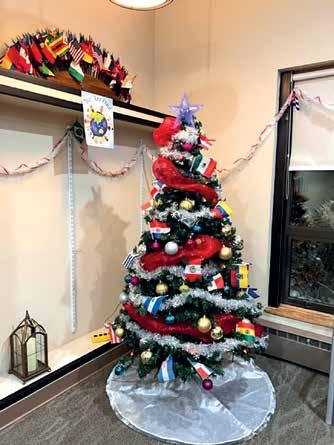
Con un derroche de creatividad, colorido y emoción por parte los participantes de Estados Unidos, Filipinas y Latinoamérica, se presentaron los bellos árboles, algunos de ellos decorados con símbolos patrios cómo las banderas de cada país, el brillo y los adornos típicos de la Navidad, dejando ver la esencia de cada árbol y su cultura.
La música, la danza y ricos platos tradicionales estuvieron presentes para amenizar la velada a la cual asistieron personas de todas edades y de diferentes comunidades étnicas.
Se afianza la integración multicultural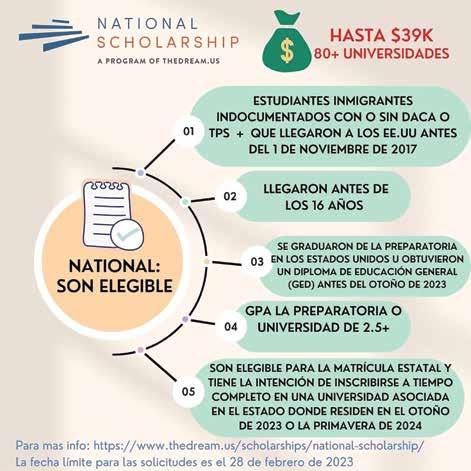
valioso trabajo que las personas mayores y no tan mayores realizan voluntariamente, motivando así a las personas de todas las edades y culturas a qué se integren a los distintos eventos que están orientados en mejorar la calidad de vida de los alaske ños, mediante la actividad física, la salud, el bienestar y la interacción social.
Anchorage Senior Activity Center es una organización sin fines de lucro El ASAC está abierto a toda la comunidad, un promedio de 200 adultos mayores y miembros de la comunidad están involucrados en actividades cada mes, las cuales incluyen una variedad de programas y eventos. Cómo recientemente la celebración del “Día de Muertos” donde los presentes disfrutaron de gratos momentos y aprendieron el significado de una de las tradiciones más importantes de México.
El esfuerzo de Anchorage Senior Activity Center es apoyar, educar y conectar a los adultos mayores con la población de todas las edades. Hay que mencionar, que Alaska en los últimos cinco años, es el estado de la nación con el crecimiento más rápido de la población adulta mayor. El Senior Activity Center se encuentra en 1300 East 19th Ave-
 BY MILAGRO DELGADO HUERTA
With the joy that characterizes the most beautiful time of the year and thanks to the “I AM Anchorage” program and the Anchorage Senior Activity Center (ASAC), the event “Christmas Trees from Around the World” was very succesful. It was organized under the initiative of the director of Communication and Development of the center for the elderly, Tabitha Karpow. The activity took place on Friday, December 2, at the facilities of the Senior Center, thus welcoming the magic of Christmas in Anchorage.
The participants presented the beautiful trees with extra creativity, color, and emotion. Trees from the United States, Philippines, and Latin America were decorated with patriotic symbols such as the flags of each country, and the typical decorations of Christmas, showing the essence of each tree and the culture they represented.
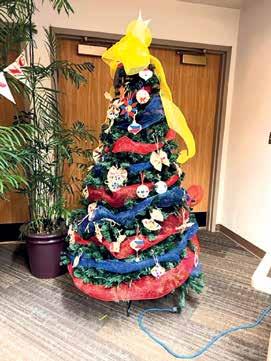

The evening was well attended by people of all ages and different ethnic communities.
Music, dance, and rich traditional dishes were shared with the attendees.
events aimed at improving the quality of life of older Alaskans while promoting physical activity, health, well-being, and social interaction.
Anchorage Senior Activity Center is a non-profit organization

The center is open to the entire community. An average of 200 seniors and community members are involved in hundreds of activities each month, including a variety of programs and events. Most recently the “Day of the Dead” celebration where people attending learned the meaning of one of the most important traditions of Mexico.

The Anchorage Senior Activity Center’s mission is to support, educate and connect older adults with people of all ages. In the last five years, Alaska is the state with the fastest growing elderly
The Senior Activity Center is locatedsite is www.anchorageseniorcenter.org
Durante todo el mes pasado, los ojos del mundo han estado prestando atención a la Copa Mundial de la FIFA, el evento futbolístico más importante donde los equipos nacionales juegan para decidir quién es el mejor equipo del mundo. Para el momento de salida de este periódico estaremos a pocos días de saber quién va a ser el equipo ganador de este prestigioso torneo. No solo está en juego el prestigio y reputación en la comunidad atlética mundial, sino que también hay un premio monetario importante. De acuerdo con Sporting News, el equipo ganador de la Copa del Mundo recibiría 42 millones de dólares, lo que representa un muy buen incentivo. No obstante, todos los equipos reciben algún tipo de compensación por participar desde los que salen en fase de grupos, que reciben 9 millones de dólares hasta el segundo lugar, el cuál recibe 30 millones. Sin embargo, los equipos no son los únicos ganadores. Un artículo reciente de Marco Mello analizó el impacto económico para el país ganador del torneo. El estudió analizó datos de producto interno bruto (PIB) de países miembros de la OECD (Organización para la Cooperación y el Desarrollo Económicos) y determinó que existe un incremento pequeño pero notable (0.25%) de producto interno bruto, una medida general de la salud de la economía, después de que un país gana la copa del mundo. Parte de esto es atribuido a un incremento en las exportaciones. De acuerdo con el artículo, los productos y servicios del país ganador se vuelven más populares en el mercado internacional. Sin embargo, este incremento es relativamente breve, solamente por los dos primeros trimestres después de la copa. Curiosamente, el mismo artículo no consiguió evidencias de que estos beneficios económicos se vean reflejados en el país anfitrión. De hecho, existen otros estudios de 2016 y 2022 que reportan que los eventos deportivos masivos, como los Juegos Olímpicos o el Mundial de Fútbol, no traen los beneficios económicos previstos. De acuerdo con Al Jazeera, ser el país anfitrión no tiene sentido a corto plazo. La FIFA se queda con las ganancias por la venta de derechos de transmisión, mercadeo y la venta de entradas. Además, el país anfitrión está requerido a tener cortes de impuestos a las marcas asociadas con el torneo, así que sus ganancias no necesariamente son reflejadas en los ingresos nacionales. Los incrementos de turismo tampoco son los esperados. Los turistas que no están interesados en el torneo no tienden a ir durante ese mes. Incluso, en el caso del mundial de Catar, las personas sin entradas a los eventos no podían ingresar al país hasta el final de la primera fase del torneo. ¿Entonces, por qué un país decide ser anfitrión de la Copa?
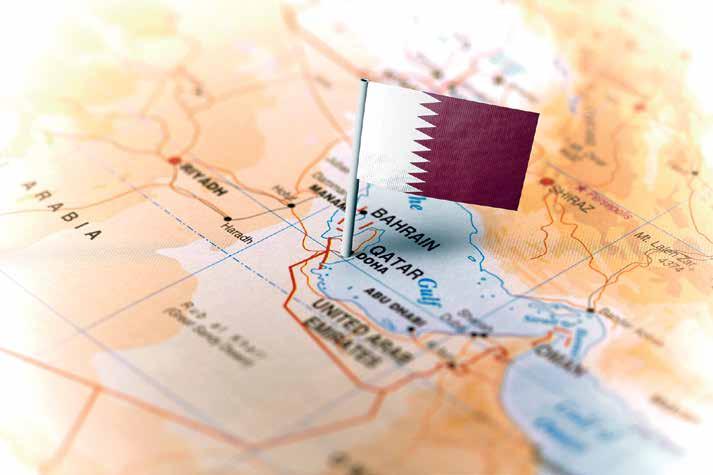
La oportunidad de ser anfitrión es una oportunidad para que un país desarrolle lo que los politólogos llamamos “poder suave” o la habilidad de modificar las acciones de otros países con influencia cultural y económica. La atención del mundo se concentra en el país, por lo que las naciones usan esta oportunidad para mostrar su cultura, infraestructura y capacidad organizativa para demostrar que puede ser un destino turístico o un aliado político
y económico. Esta es la apuesta que está haciendo Catar. El controversial anfitrión intenta usar este torneo para presentar a su país como un jugador fuerte en la región, la cual está dominada por sus vecinos Irán y Arabia Saudita. Para hacer esto, el país ha realizado una campaña de modernización y solidificación de poder suave que incluye la creación del medio de comunicación Al Jazeera y la prestigiosa aerolínea Qatar
Airways. El mundial es la culminación de estos esfuerzos, y una muy costosa, dado que Catar gastó aproximadamente 300,000 millones de dólares preparando el torneo. Sin embargo, la efectividad de este intento para conseguir poder suave estará por verse. El país ha estado en medio de controversia por acusaciones de sobornos para ser nombrado anfitrión y por múltiples violaciones de derechos humanos tanto en la
construcción de sus estadios como en contra de las mujeres y la comunidad LGBTQ. Los ganadores del mundial no solo van a ser los jugadores que levanten la copa. El evento tendrá ramificaciones económicas para el ganador y tiene el potencial de afectar el balance geopolítico de la región, pero hay que seguir prestando atención porque en el partido de este análisis sólo estamos en el primer tiempo.
Throughout the past month, the eyes of soccer fans around the world have been watching the FIFA World Cup, the most important soccer event, and where the national teams play to determine who is the best one in the world. By the time this newspaper goes to print, we will be a few days away from knowing who the winning team of this prestigious tournament will be. Not only is there prestige and reputation in the world’s athletic community at stake, but there is also a significant monetary prize. According to Sporting News, the winning team will receive $42 million dollars, which represents a very good incentive. Nevertheless, all the participating teams receive some form of compensation, from those who lose at group stage, which receive $9 million each, to the team that ends in second place and receives $30 million.
However, the winners of the World Cup are not only soccer teams. A recent article by Marco Mello analyzed the impact of a World Cup victory on the economy of the winning countries. The study analyzed gross domestic product (GDP) data from OECD (Organization for Economic Co-operation and Development) member countries and found that there is a small but measurable increase (0.25%) in GDP, a general measure of the health of the economy. Part of this is attributed to an increase in exports. According to
the article, the winning country’s products and services become more popular on the international scene after winning the tournament. However, this increase is relatively brief and lasts only for the first two quarters after winning.
Interestingly, the same article found no evidence that these economic benefits are reflected in the host country. In fact, there are other studies from 2016 and 2022 that report that massive sporting events, such as the Olympic Games or the World Cup, do not bring the economic benefits that are usually expected. According to Al Jazeera, being the host country makes no sense in the short term. FIFA keeps the proceeds from the sale of broadcast rights, marketing, and ticket sales. In addition, the host country is required to grant tax breaks on brands associated with the tournament, so their winnings are not necessarily reflected in national revenue. The increases in tourism are not as large as commonly thought. Tourists who are not interested in the tournament tend not to go during the tournament. Even in the case of the World Cup in Qatar, people without tickets could not enter the country until the end of the first phase of the tournament. So why does a country decide to host the Cup?
The opportunity to host is an opportunity for a country to develop what we political scientists call “soft power” or the ability to influence the actions of other countries and people with cultural and
economic relevance. The world’s attention is focused on the country, so nations use this opportunity to showcase their culture, infrastructure, and organizational capacity to demonstrate that they can be a tourist destination or a political and economic ally. This is the bet that Qatar is making. The controversial host is trying to use this tournament to present their country as a strong player in the region, which is dominated by its neighbors Iran and Saudi Arabia. To do this, the country has carried out a soft power solidification and modernization campaign that includes the creation of the media outlet Al Jazeera and the prestigious airline Qatar Airways. The World Cup is the culmination of these efforts, and a very expensive one given that Qatar spent an estimated $300 billion preparing for the tournament. However, the effectiveness of this attempt to achieve soft power remains to be seen. The country has been in the midst of accusations of bribery for hosting the event and multiple human rights violations, both in the construction of stadiums and against women and the LGBTQ community.
The winners of the World Cup are not only going to be the players who proudly raise the trophy. The event will have economic ramifications for the winner and has the potential to affect the geopolitical balance of the region, but we must continue to pay attention because in this match we are only in the first half.
Las celebraciones navideñas son universales. En ellas, se mezclan los sentimientos religiosos con las reuniones familiares y entre amigos; mucho consumismo, incentivado por las grandes firmas comerciales; buenos deseos para los demás y frecuentes excesos en comidas y bebidas. Las Navidades hispanas son las más extendidas por el número de países que las celebran. Pero cada país tiene sus peculiaridades. El tiempo se ha ido encargando de asumir tradiciones navideñas de otras culturas y “exportar” las propias. Estados Unidos es el país con mayor variedad de celebraciones.

Los europeos tienden a creer que el “Thanksgiving Day” (último jueves de noviembre) es el “inicio oficial” de las navidades estadounidenses, por la semejanza con la Navidad. El día más importante en Estados Unidos es el 25 de diciembre, que se suele celebrar con una cena en familia, con pavo asado, puré de patatas y pasteles salados de carne. En la madrugada llega Santa Claus. Por eso, las familias suelen desayunar juntas el 25 de diciembre, mien-
tras todos abren los regalos que “Santa” ha dejado durante la noche.
En los países latinoamericanos, la ma yoría de las tradiciones navideñas provie ne de las costumbres cristianas españo las. Pero tienen sus particularidades. Los peruanos celebran la Navidad de forma parecida a los estadounidenses, con pavo relleno como plato principal y en algunos lugares con cuy asado: un mamífero roedor similar a las cobayas, autóctono de la selva peruana, que es uno de los platos más exóticos de Latinoamérica.
El inicio de la Navidad está marcado en Colombia por la Noche de las Velitas durante la noche del 7 y la madrugada del 8 de diciembre: el país se ilumina con velas y faroles. Una celebración que da comienzo a la Novena de Aguinaldos, en la que las familias se reúnen para rezar alrededor del pesebre y del árbol de Navidad durante nueve días.
México celebra estas fechas con posadas, piñatas, pastorelas y villancicos, Las Posadas se llevan a cabo cada noche del 16 al 24 de diciembre, Nochebuena, y conmemoran la llegada de María y José a Belén,
en busca de un lugar donde dar a luz al niño Jesús. La Pastorela (obra de pastor) es la representación escénica de diferentes episodios en su peregrinar hasta Belén, con motivo del nacimiento del Niño. Es frecuente celebrar el Año Nuevo en las playas de Tulum o Cancún y disfrutar de los fuegos artificiales. En el día de los Reyes Magos, enero 6, se come la Rosca de Reyes.
Todos los países coinciden en las cenas familiares y de amigos para los días 24 y 31 de diciembre. Pero la comida depende del hemisferio en el que se encuentre el país. En Chile y Argentina, el tradicional asado se acompaña con alimentos fríos, como ensaladas, frutas y helados. En Chile es famoso el queque, o pan de Pascua, y la bebida “cola de mono”, preparada con canela, clavo, nuez moscada, vainilla, leche,
café, azúcar y brandy.
La última noche del año está marcada por distintas costumbres para atraer la suerte. La tradición de las 12 uvas está muy extendida por los hispanohablantes, pero también es seguida la costumbre italiana de comer lentejas. Colombia y Venezuela celebran el Año Nuevo con un paseo con maletas. En las calles de Perú, Honduras, Argentina y Ecuador son quemados muñecos, que simbolizan el deseo de no volver a vivir los malos momentos del año anterior.
Algunos países tienen a Papá Noel como encargado de los regalos. En Chile es el Viejito Pascuero; en Venezuela, San Nicolás; en Centroamérica, Santa Claus, Santi Clo o Santa Clos; y en Costa Rica, Colacho. En Colombia, el encargado de los regalos es el Niño Jesús.
Christmas is a universal holiday.
Religious sentiments get mixed in family and friends’ gatherings; a lot of consumerisms, encouraged by large commercial firms; good wishes for others and frequent excesses in food and beverages. La Navidad is the most widespread because of the number of countries that celebrate it. But each country has its own peculiarities. Time has been taking over Christmas traditions from other cultures and “exporting” its own. The United States is the country with the greatest variety of celebrations.
Europeans tend to believe that Thanksgiving Day (last Thursday in November) is the “official start” of the American Christmas. The most important day in the United States is December 25, which is usually celebrated with a family dinner of turkey, mashed potatoes, and savory meat pies. In the early morning Santa Claus arrives. For this reason, families usually have breakfast together on December 25, while everyone opens the gifts that “Santa” has left them during the night.
In Latin American countries, most of the Christmas traditions come from Spanish Christian customs. But they have



their particularities. Peruvians celebrate Christmas in a similar way to Americans, with stuffed turkey as the main dish and in some places with roasted guinea pig: a rodent mammal, native to the Peruvian jungle, which is one of the most exotic dishes in Latin America.
The beginning of Christmas is marked in Colombia by the Night of the Candles during the night of December 7 and the early morning of December 8: the country is illuminated with candles and lanterns. A celebration that begins the Novena de Aguinaldos, in which families gather to pray around the manger and the
Mexico celebrates these dates with posadas, piñatas, pastorelas and Christmas carols, the posadas are held every night from December 16 to 24, Christmas Eve, and commemorate the arrival of Mary and Joseph to Bethlehem, in search of a place to give birth to Baby Jesus. The Pastorela (shepherd’s play) is the scenic representation of different episodes in their pilgrimage to Bethlehem, on the occasion of the birth of Baby Jesus. It is common to celebrate New Year’s Eve on the beaches of Tulum or Cancun and enjoy the fireworks. On Three Kings Day,
January 6, the Rosca de Reyes is eaten.
All countries coincide in family and friends’ dinners on December 24 and 31. But the food depends on the hemisphere in which the country is located. In Chile and Argentina, the traditional asado is accompanied by cold food, such as salads, fruit, and ice cream. In Chile, the queque, or Easter bread, is famous, as well as the “cola de mono”, a drink prepared with cinnamon, cloves, nutmeg, vanilla, milk, coffee, sugar and brandy.
The last night of the year is marked by different customs to attract luck. The tradition of the 12 grapes is widespread among Spanish speakers, but the Italian custom of eating lentils is also followed. Colombia and Venezuela celebrate the New Year with a short walk in which they carry suitcases. In the streets of Peru, Honduras, Argentina and Ecuador, dolls are burned, symbolizing the wish not to relive the bad moments of the previous year.
Some countries have Santa Claus in charge of the gifts. In Chile it is the Viejito Pascuero; in Venezuela, San Nicolás; in Central America, Santa Claus, Santi Clo or Santa Clos; and in Costa Rica, Colacho. In Colombia, Baby Jesus brings the gifts.
La Navidad es una de las festividades más celebradas en Latinoamérica. Las familias se reúnen para compartir, recordar y participar en múltiples y variadas tradiciones en todo el continente. Normalmente, estas incluyen una deliciosa cena. Sin embargo, estas fechas también se destacan por exquisitos postres que son tan distintos como cada país de la región. Acá te traemos una lista de algunos de los más importantes.
Argentina. Además de los chocolates, turrones, panes dulces y helados, resalta entre sus costumbres el budín inglés, un pastel hecho con frutas confitadas que lleva fresas troceadas y especias.
Brasil. Aquí el postre es la rabanada, se trata de un postre elaborado a base de pan el cual se sumerge en una mezcla de leche y huevos batidos fritos en mantequilla y cubiertos en almíbar, miel y un toque de canela.
Bolivia. Degustan buñuelos, los típicos de harina de trigo fritos y endulzados con miel o chambergos que son similares a los buñuelos tradicionales pero un poco más duros y dulces, también incluyen las sopaipillas.
Chile. Disfrutan de bebidas dulces como el ponche de chirimoya y el cola de mono, este último, hecho a base de leche y café, lleva un toque de licor, se consume frío. El de chirimoya se hace a base de pulpa de esta fruta, se le agrega vino blanco, azúcar, se le deja macerando toda la noche y se consume frío.
Colombia. Lo mejor son la natilla y los buñuelos, a los buñuelos se les agrega preferentemente papelón y queso costeño, mientras que para el relleno suelen usar arequipe, miel, chocolate o coco rallado. En el caso de la natilla, esta lleva leche, fécula de maíz y azúcar.
Costa Rica. El queque es el postre estrella, es un bizcocho que lleva frutas confitadas y semillas, lo acompañan con bebidas calientes, sus ingredientes principales son la harina de trigo, huevos, azúcar, sal y se le agrega leche o licor en pequeñas cantidades.
Cuba. En este país es una deliciosa tradi ción servir los dulces buñuelos elaborados con harina de yuca con almíbar, los cuales son generosamente ofrecidos a los visitan tes en fiestas decembrinas.
Ecuador. Allí los buñuelos con miel no faltan, son unas bolitas que se hacen a base de harina y queso, se fríen y se mezclan con miel. Sus orígenes corresponden más que nada a la cocina mediterránea.
El Salvador. Aquí hay para todos los gustos, acostumbran a tomar bebidas frías o calien tes, entre estas el chocolate o el café. A la hora del postre disfrutan de la semita plana, un pan dulce que identifica mucho a los sal vadoreños, se consume durante todo el año.
Guatemala. La reina de la celebración es la trenza rellena, un pan trenzado que puede rellenarse con jamón, queso o dulce. La trenza y el pirujo, un pan dulce que se come con chocolate caliente o café, siempre están en el centro de la mesa.
Honduras. Aquí las torrejas son las preferidas, se elaboran a base de pan de yema frita y se bañan en caramelo, se sirven después de la comida o para los intercambios navideños.
México. Los tamales son los dignos representantes de este país, pero en esta ocasión, la especialidad sería los tamales de chocolate, existen diferentes opciones de tamales de dulce, pero los de chocolate son la máxima expresión del tamal de dulce.
Panamá. El dulce de frutas navideño que es un bizcocho hecho con harina de trigo, huevo, azúcar, leche condensada, frutas confitadas, frutos secos y varios tipos de ciruelas pasas, es el postre que deleitará a los comensales.
Perú. En Perú no puede faltar el pan llamado encanelado, es un postre hecho de harina, huevo, mantequilla y concentrado natural de canela, el cual además de darle ese sabor tan particular, le da también el inconfundible color de la canela.
Puerto Rico. Se acostumbra el tembleque de coco que es un postre más típico de la temporada navideña, pero durante el resto del año también se acostumbra el flan, el majarete y otros dulces hechos a base de coco.
República Dominicana. El pudín de pan es infaltable, lleva pan en lonjas o en trocitos, se le agrega leche o crema de leche, azúcar, mantequilla, pasas o canela, queda como un bizcocho.
Uruguay. Además de los turrones y el panetón, otra de las tradiciones es servir ensalada de frutas, estas deben estar cortadas en cubitos y se les agrega algún refresco.
Christmas is one of the most celebrated festivities in Latin America. Families come together to share, reminisce, and participate in multiple and varied traditions throughout the continent. Normally, these include a delicious dinner. However, these holidays are also marked by exquisite desserts that are as different as each country in the region. Here, we bring you a list of some of the most important.
Argentina. In addition to chocolates, nougats, sweet breads and ice cream, the English pudding stands out, a cake made with candied fruits that has chopped strawberries and spices.
Brazil. Here, the dessert is the rabanada. It is a dessert made from bread submerged in a mixture of milk and beaten eggs fried in butter and covered in syrup, honey and a touch of cinnamon.
Bolivia. They enjoy buñuelos, the typical fried wheat flour sweetened with honey or chambergos that are similar to traditional buñuelos but a little crispier and sweeter. They also include sopaipillas.

Chile. Enjoys sweet drinks such as cherimoya punch and “monkey tail,” the latter, made with milk and coffee, has a touch of liquor, and is consumed cold. The cherimoya is made from the pulp of this fruit, white wine and sugar are added. It is left to marinade all night and it is savored cold.
Colombia. The best desserts are the custard and the buñuelos. The buñuelos are added papelón and coastal cheese, while for the filling they usually use arequipe (dulce de leche), honey, chocolate, or grated coconut. The custard is made with milk, corn starch and sugar.
Costa Rica.The queque is the star dessert, or a canned-fruit cake. It is accompanied with hot drinks such as coffee or tea. Its main ingredients are wheat flour, eggs, sugar, salt, and milk (or liqueur) is added in small quantities
Cuba. In this country, it is a delicious tradition to serve sweet fritters made with cassava flour with syrup, which are generously offered to visitors during December Holidays.
Ecuador. There is no shortage of buñuelos with honey. They are little balls that
are made from flour and cheese, fried, and covered with honey. Its origins correspond more than anything to Mediterranean cuisine.
El Salvador. There is something for all tastes. They usually drink hot or cold drinks, including chocolate or coffee. At dessert time, they enjoy the semita plana, a sweet bread that identifies Salvadorans very much. It is consumed throughout the year.
Guatemala. The queen of the celebration is the trenza rellena, a braided bread that can be filled with ham, cheese, or sweets. The trenza and the pirujo, a sweet bread eaten with hot chocolate or coffee, are always in the center of the table.
Honduras. Here the torrejas are favored. They are made with fried yolk bread and dipped in caramel; they are served after the meal or for Christmas dessert exchanges.
Mexico. Tamales are the worthy representatives of this country, but on this occasion, the specialty would be chocolate tamales. There are different options for sweet tamales, but chocolate ones are the maximum expression of sweet tamales.
Panama. The Christmas fruit cake, which is a cake made with wheat flour, egg, sugar, condensed milk, candied fruits, dried fruits, and various types of prunes. This is dessert that will delight diners.

Peru. In Peru, you cannot miss the encanelado. It is a dessert made of flour, egg, butter, and natural cinnamon concentrate, which in addition to giving it that particular flavor, also gives it the unmistakable color of cinnamon.
Puerto Rico. The coconut tembeleque is customary, which is a more typical dessert of the Christmas season, but during the rest of the year flan, majarete (corn pudding) and other sweets made from coconut are also customary.
Dominican Republic. Bread pudding is inescapable. It has bread in slices or in pieces, milk or heavy cream, sugar, butter, raisins, or cinnamon are added. It is similar to a sponge cake.
Uruguay. In addition to nougats and panetón (fruit cake), another tradition is to serve fruit salad, these must be cut into small cubes and some soft drink is added.
Consejos del Departamento de Transporte e Instalaciones Públicas de Alaska durante las condiciones invernales:
Prepare su vehículo. Asegúrese de que su vehículo esté debidamente equipado para condiciones de conducción invernales y/o en caso de emergencia. Si bien debe mantener su vehículo en óptimas condiciones de funcionamiento durante todo el año, es especialmente importante que lo prepare para el invierno. Lea el manual del propietario y verifique lo siguiente: presión de los neumáticos, desempañador y calentador, batería y luces, aceite de motor, anticongelante, correas, mangueras, filtros, frenos, líquido de frenos, limpiaparabrisas y líquido limpiaparabrisas. Lleve provisiones adicionales en caso de que se quede varado, es decir, bengalas, velas, mantas, comida, pala, etc.
Reduzca la velocidad. Conduzca de acuerdo con las condiciones de la carretera y el clima. Recuerde, los límites de velocidad publicados son para pavimento seco. Remoción de nieve. Esté atento al equipo de remoción de nieve y deles mucho espacio. Manténgase al menos 200 pies atrás del equipo de remoción y no pase por la derecha. Precaución: El equipo de remoción de nieve puede causar ráfagas de nieve cuando se conduce demasiado cerca.
Manténgase alerta. Los animales gran des que cruzan las carreteras de Alaska ocurren a menudo, es decir, alces o cari búes. Esté atento al equipo de remoción de nieve y deles mucho espacio. Mantén gase al menos 200 pies atrás del equipo y nunca rebase por la derecha.
Cruce de Vida Silvestre. males grandes como alces y caribúes en las carreteras de Alaska ocurre a menu do. Las migraciones típicas de caribúes ocurren en las carreteras Richardson y Tok-Cutoff, pero pueden ocurrir en otros lugares. Los avisos de caribú generalmente se publican en el 511.Alaska.gov, pero siempre debe permanecer alerta para el cruce de animales grandes.
Deje mucho espacio para detenerse. Se necesita más tiempo para detenerse cuando las carreteras están mojadas o tienen hielo.
Conduzca con las luces delanteras encendidas. Encienda las luces del auto para que otros puedan verle.
Esté atento al hielo en puentes y pasos elevados. Incluso cuando el resto de la carretera está en buenas condiciones, las cubiertas de los puentes y los pasos elevados se congelan primero. Uso de neumáticos con clavos. Los neumáticos con clavos se pueden usar solamente del 15 de septiembre al 1 de mayo.
Los cinturones de seguridad salvan vidas. Use el cinturón de seguridad. Es por ley y por su propia seguridad. No beba y conduzca, ni siquiera “medio borracho”. Beber y conducir no se mezclan. Utilice un conductor designado. La cobertura de telefonía celular es limitada. La cobertura de telefonía celular es muy esporádica fuera de Anchorage y Fairbanks. Prepare su vehículo antes de
viajar y consulte los pronósticos del Servicio Meteorológico Nacional.
El tráfico más lento se mantiene a la derecha. Deténgase y permita que los vehículos pasen de manera segura. Es ilegal mantener 5 o más vehículos detrás de usted. ¡Despacio! Siempre planifique suficiente tiempo para llegar a su destino. No querrá sentirte apresurado a conducir en condiciones climáticas adversas. ¡Despacio!

Tips from the Alaska Department of Transportation and Public Facilities during winter conditions:
Prepare your vehicle. Make sure your vehicle is properly equipped for winter driving conditions and/or in case of an emergency. While you should keep your vehicle in top operating condition all year round, it is especially important to get it winterized. Read your owner’s manual and check the following: tire pressure, defroster & heater, battery & lights, motor oil, antifreeze, belts, hoses, filters, brakes, brake fluid, wiper blades and windshield washer fluid. Carry extra provisions in case you get stranded, i.e., flares, candles, blankets, food, shovel, etc.
Reduce speeds. Drive according to road and weather conditions. Remember, the posted speed limits are for dry pavement.
Snow Removal. Watch for snow removal equipment and give them plenty of room. Stay at least 200 feet back and don’t pass on the right. Caution: Snow removal equipment can cause white out conditions when driving too close.
Stay Alert. Large animals crossing Alaska’s highways occur often, i.e., moose, caribou. Watch for snow removal equipment and give them plenty of room. Stay at least 200 feet back and don’t pass on the right.
Wildlife Crossing. Large animals crossing Alaska’s highways occur of-
ten, i.e., moose, caribou. Typical caribou migrations occur on the Richardson and Tok-Cutoff Highways but may occur elsewhere. Caribou notices are generally posted on the 511.Alaska.gov, but you should always remain alert for large animal’s crossing.
Leave plenty of room for stopping. It takes more time to stop when the roads are wet or icy.
Drive with your headlights on. Turn your lights on so others can see you. Watch for ice on bridges and overpasses. Even when the rest of the road is in good condition. Bridge decks and overpasses ice up first.
Studded tire usage. Studded tires may be used from Sept 15 – May 1st.
Seatbelts saves lives. Wear a safety belt. It’s the law and for your own safety.
Don’t drink and drive, not even with a “buzz.” Drinking and driving don’t mix. Use a designated driver.
Cellular phone coverage is limited. Cellular phone coverage is very sporadic outside Anchorage and Fairbanks.
Prepare your vehicle before you travel and check the National Weather Service forecasts.
Slower traffic keep right. Pull over and allow vehicles to safely pass. It is illegal to hold up 5 or more vehicles behind you.
Wait it out! Always plan plenty of time to reach your destination. You do not want to feel rushed into driving through adverse weather conditions. Wait it out!
El Programa de Investigaciones del Ártico (AIP), una rama de los CDC situada en Anchorage asegura a Sol de Medianoche que “la prevención del VRS (virus respiratorio sincitial) en los Indígenas Nativos de Alaska es una prioridad”. Pero los niños Indígenas Nativos del delta del Yukón Kuskokwim están siendo hospitalizados en triple proporción que la población infantil del resto del país. No hay vacunas.
POR CARLOS MATÍASUno de cada cincuenta niños menores de cinco años en el mundo muere por el VRS, según la revista Lancet Respiratory Medicine. Sus estudios, dados a conocer por Ethnic Media Services, señalan que el VRS mata anualmente entre 100,000 y 200,000 bebés menores de doce meses. El VRS es la segunda causa de muerte infantil, tras la malaria. En USA, los CDC estiman que entre cien y trescientos niños menores de cinco años fallecen por la infección. Su mortalidad en adultos mayores de 65 años oscila entre seis mil y diez mil fallecidos.
Hablamos con Jasmine Reed, de la División de Relaciones con los Medios del Centro de Control y Prevención de Enfermedades (CDC).
¿Cuál es la diferencia entre gripe y VRS? ¿Cuál es más mortal?
La gripe está causada por el virus de la influenza. El VRS es el virus sincitial respiratorio. Ambas infecciones pueden ser graves para bebés, adultos o personas con afecciones médicas. Los CDC estiman que en Estados Unidos el VRS provoca entre 6,000 y 10,000 muertes en adultos de 65 años o más, y entre 100 y 300 muertes en niños menores de 5 años. La gripe provoca entre 12,000 y 52,000 muertes anuales.
¿Estamos ante otra pandemia, como el Covid-19?
No. Si se produce algún cambio, alertaremos al público.
¿Qué estadísticas tiene el CDC sobre el VRS en Alaska?
El VRS en los niños Indígenas Nativos de Alaska del delta del Yukón Kuskokwim está asociado a una tasa de hospitalización tres veces superior a la del resto de la población infantil del país. Los bebés Indígenas Nativos de Alaska experimentan una de las tasas más altas de hospitalización por infecciones del tracto respiratorio inferior (LRTI) y por el VRS.
¿Por qué corren más riesgo?
El sistema de salud tribal para la prestación de servicios médicos en las zonas rurales de Alaska está bien desarrollado. Pero hay factores que podrían impulsar el VRS: el amontonamiento en los hogares, la falta de agua corriente y saneamiento y la calidad del aire interior. La disparidad es multifactorial y se relaciona con la pobreza.
¿Qué están haciendo para combatir el VRS?
La prevención del VRS en los Indígenas Nativos de Alaska es una de las actividades prioritarias del Programa de Investigaciones del Ártico (AIP), que es una rama de los CDC situada en Anchorage. La mayoría de las infecciones desaparecen por sí solas en una o dos semanas. No hay tratamiento para el VRS.
Los investigadores trabajan para desarrollar vacunas, pero todavía no hay ninguna.
¿Qué puede detener al VRS?
Hay un fármaco, el palivizumab, que previene la enfermedad grave por VRS en lactantes y niños de alto riesgo, como bebés nacidos prematuramente, o con una cardiopatía congénita, o con una enfermedad pulmonar crónica. El medicamento puede ayudar a prevenir la enfermedad grave por VRS, pero no la infección en sí misma, tampoco puede curarla.
The Arctic Investigations Program (AIP), a branch of the CDC located in Anchorage, assures Sol de Medianoche that “preventing RSV (Respiratory Syncytial Virus) in Alaska Natives is a priority.” But Native children in the Yukon Kuskokwim Delta are being hospitalized at triple the rate of the child population in the rest of the country. There are no vaccines.
BY CARLOS MATÍASWorldwide, one in fifty children under the age of five dies from RSV, according to the journal Lancet Respiratory Medicine. Their studies, released by Ethnic Media Services, indicate that RSV kills between 100,000 and 200,000 infants under the age of 12
months annually. RSV is the second leading cause of infant death, after malaria. In the USA, the CDC estimates that between one hundred and three hundred children under the age of five die from the infection. Mortality in adults over 65 years of age ranges from six thousand to ten thousand deaths.
We spoke with Jasmine Reed, from the Division of Media Relations at the Centers for Disease Control and Prevention (CDC).
What is the difference between the flu and RSV, which is more deadly? The flu is caused by the influenza virus. RSV is caused by the respiratory syncytial virus. Both infections can be serious for infants, adults, or people with medical conditions. The CDC estimates that in the United States, RSV causes 6,000 to 10,000 deaths in adults 65 years of age and older, and 100 to 300 deaths in children under 5 years of age. Influenza
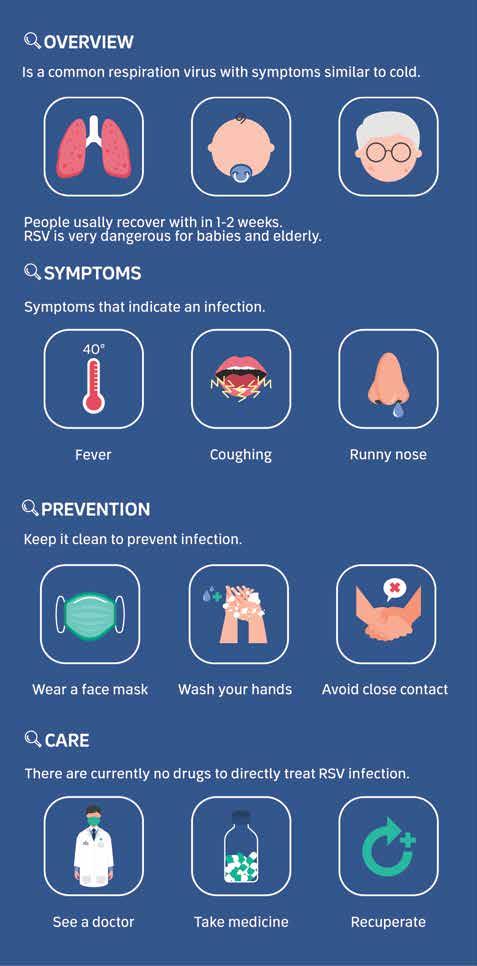
causes between 12,000 and 52,000 deaths annually.
Are we facing another pandemic, like Covid-19?
No. If there is any change, we will alert the public.
What statistics does CDC have on RSV in Alaska?
RSV in Alaska Native infants in the Yukon Kuskokwim Delta is associated with a hospitalization rate three times higher than the rest of the nation’s infant population. Alaska Native infants experience one of the highest rates of hospitalization for lower respiratory tract infections (LRTI) and RSV.
Why are they most at risk?
The tribal health system for delivering medical services in rural Alaska is well developed. But there are factors that could drive RSV: overcrowded homes,
lack of running water and sanitation, and indoor air quality. The disparity is multifactorial and related to poverty.
What are you doing to combat RSV?
Preventing RSV in Alaska Natives is one of the priority activities of the Arctic Investigations Program (AIP), which is a branch of the CDC located in Anchorage. Most infections go away on their own within one to two weeks. There is no treatment for RSV. Researchers are working to develop vaccines, but there are none yet.
There is a drug, palivizumab, that prevents severe RSV illness in infants and children at high risk, such as babies born prematurely, or with congenital heart disease, or with chronic lung disease. The drug can help prevent severe RSV disease, but not the infection itself, nor can it cure it.
Además de atentar contra la democracia en Estados Unidos, hace dos años (6 de enero de 2021), QAnon, el movimiento que promueve diferentes teorías de conspiración de la extrema derecha estadounidense lidera una “Alianza” internacional supremacista en Europa y el mundo desarrollado. En Alemania, han sido detenidos 25 extremistas del grupo nazi Reichsbürger (Ciudadanos del Reich) y de QAnon. Las detenciones se han producido el 7 de diciembre y al salir este nuevo número de Sol de Medianoche pueden ser muchas más. Al menos, hay otros 52 activistas investigados.

Los nazis alemanes preparaban un golpe de estado violento. Iban a asaltar al Bundestag (Parlamento alemán). Se inspiraban en los “rioters” (sediciosos) del Capitolio y han tenido el mismo final: el fracaso. Pero “no hay que confiarse, porque el peligro no ha pasado”, según afirman tanto el ministro alemán de Interior, Horst Lorenz Seehofer, como el fiscal que lleva este caso.
“El terrorismo de extrema derecha es una amenaza real para las democracias”, ha afirmado el ministro Horst Lorenz Seehofer. Alemania lo tiene catalogado como “el peligro número uno”, mayor que el terrorismo yihadista. De hecho, se han producido muchos más altercados y delitos de odio, machistas y racistas por parte de los extremistas de ultraderecha y los nazis que por parte de otros delincuentes relacionados con otras ideologías.
Además de Alemania, QAnon tiene más filiales y organizaciones afines de extrema derecha en Austria, Italia, Francia, España, Suecia, Finlandia, Hungría y Bulgaria, como mínimo. En España, el líder de QAnon se hace llamar “Alpaxino”, en alusión al actor neoyorquino de ascendencia italiana que interpretó a Michael Corleone en “El padrino”.
En todos estos países, los simpatizantes de QAnon están experimentando un rápido aumento y es posible que ya sean más de cien mil en toda Europa. Según los servicios de inteligencia europeos, se infiltran en cuerpos armados como las unidades del ejército o de la policía para reclutar nuevos miembros.
Hay cientos de páginas web europeas que venden libremente las camisetas con la Q (de QAnon) de los fanáticos seguidores de Donald Trump. “Se venden muy bien”, dicen algunos de estos vendedores.

En Estados Unidos, una encuesta exclusiva de la organización The Marshall Project entre los sheriffs de todo el país, dada a conocer el pasado mes de octubre, ha revelado que la mayoría de los que han respondido a dicha encuesta (más de 500 sheriffs) son de ideología conservadora o muy conservadora. Son partidarios de Trump y sienten que el poder que ellos tienen como sheriffs de sus condados está por encima del poder que tienen los gobernadores de sus respectivos estados, e incluso por encima de la autoridad que tiene el presidente Joe Biden.
In addition to attacking democracy in the United States two years ago (January 6, 2021), QAnon, defined as a movement that promotes several conspiracy theories, is leading an international supremacist “Alliance” in Europe and the developed world. In Germany, 25 extremists from the Nazi group Reichsbürger (Citizens of the Reich) and QAnon have been arrested. The arrests took place on December 7, and as this new edition of Sol de Medianoche is published, there may be many more. At least 52 other activists are under investigation.
BY CARLOS MATÍASThe German Nazis were preparing a violent coup d’état and storm the Bundestag (German Parliament). They were inspired by the “rioters” seditionists of the Capitol but had the same ending: failure. But “we should still worry, because the danger has not passed,” according to both the German Minister of the Interior, Horst Lorenz Seehofer, and the public prosecutor handling the case.
“Right-wing extremist terrorism is a
real threat to democracies,” said Minister Horst Lorenz Seehofer. Germany has listed it as “the number one danger,” greater than jihadist terrorism. In fact, there have been far more altercations and hate, misogynist, and racist crimes by far-right extremists and Nazis than by other criminals related to other ideologies.
In addition to Germany, QAnon has more far-right affiliates and related organizations in Austria, Italy, France, Spain, Sweden, Finland, Hungary, and Bulgaria,
at the very least. In Spain, the QAnon’s leader calls himself “Alpaxino,” a reference to the New York actor of Italian descent who played Michael Corleone in “The Godfather.”
In all these countries, QAnon sympathizers are experiencing a rapid increase and may already number more than 100,000 across Europe. According to European intelligence services, they infiltrate armed corps such as army or police units to recruit new members.
There are hundreds of European websites freely selling the Q (for QAnon) T-shirts of passionate Donald Trump sup-
porters. “They sell very well,” say some of these sellers.
In the United States, an exclusive survey by The Marshall Project organization among sheriffs across the country, released last October, has revealed that the majority of those who responded to the survey (more than 500 sheriffs) are of conservative or very conservative ideology. They are Trump supporters and feel that the power they have as sheriffs of their counties is above the power held by the governors of their respective states, and even above the authority held by President Joe Biden.
Los miembros de la Junta Escolar de Anchorage discutieron una reducción de aproximadamente $20 millones al déficit presupuestario de $68 millones del distrito durante una sesión de trabajo el pasado 11 de diciembre, pero aún se avecinan decisiones difíciles sobre cómo superar el déficit restante.
Los $20 millones provinieron de un aumento inesperado en los ingresos, el municipio cubrió el costo de los oficiales de recursos estudiantiles asignados a las escuelas y fondos federales únicos. Esto deja a ASD con $48 millones aún por compensar.
No hubo votación durante la sesión de trabajo, sin embargo, la junta llegó a un consenso cercano a la reducción del déficit en $28.3 millones adicionales, al reducir el saldo del fondo del distrito al 8%. La política del distrito actualmente requiere un saldo mínimo de fondos del 8%, pero los puestos vacantes han resultado en mayores reservas. Esto compra tiempo mientras se determina una solución de financiación a largo plazo.
Los distritos escolares de todo el estado enfrentan problemas financieros porque la financiación estatal de la educación no se ha mantenido al día con la inflación. Desde 2017, la financiación por alumno ha aumentado en aproximadamente un 0,5%, mientras que la inflación ha aumentado alrededor del 22%.
Según el miembro de la Junta Escolar, Carl Jacobs, la continua falta de acción de la legislatura resultará en un déficit presupuestario de más de $80 millones para 2025. El distrito escolar está pidiendo un
aumento ajustado a la inflación de $860 por estudiante. Sin fondos adicionales, los distritos tendrán que considerar recortar programas, maestros y cerrar escuelas.
La Junta Escolar también llegó a un consenso sobre los recortes propuestos a la administración y las operaciones, lo que ahorraría otros $ 3.5 millones, y recortaría el programa en línea de ASD para K-5. Varios miembros expresaron interés en recortes más profundos a las clases en línea, las cuales comenzaron como una respuesta a COVID-19.
La mayoría de los miembros de la junta estuvieron de acuerdo con un plan que aumentaría el tamaño de las clases en un promedio de un estudiante. Esto reduciría 60 puestos del personal docente a través del distrito y ahorraría $7 millones. Debido a la gran cantidad de vacantes de maestros, esto no tendría un impacto notable inmediato, pero evitaría que se llenaran algunos puestos vacantes. Los miembros de la junta escolar también dijeron que el tamaño de las clases podría reducirse nuevamente si la legislatura aumentara los fondos.
El distrito también está considerando cerrar varias escuelas, lo que podría ser necesario simplemente porque el distrito ha visto una caída significativa en la población estudiantil. Sin embargo Andy Holleman, miembro de la junta escolar, dijo que los cierres deberían ser parte de un plan a largo plazo para aumentar la eficiencia en lugar de una reacción a problemas presupuestarios inmediatos. También expresó la importancia de contar con un plan de apoyo para los estudiantes reubicados.
De las seis escuelas propuestas para el cierre, solo se llegó a un consenso sobre una:
Anchorage School Board members discussed a reduction of about $20 million to the district’s $68 million budget deficit during a Saturday work session, but tough decisions about how to overcome the remaining shortfall still loom.
The $20 million came from an unexpected increase in revenues, the municipality covering the cost of student resource officers assigned to schools, and one-time federal funds. This leaves ASD with $48 million still to make up.
No votes were taken during the work session, however the board came to near consensus on lowering the deficit by an additional $28.3 million, by reducing the district’s fund balance to 8%. District policy currently requires a minimum fund balance of 8%, but unfilled positions have resulted in higher reserves. This buys time while a long-term funding solution is determined.
School districts around the state are facing financial woes because the state funding of education has not kept up with inflation. Since 2017, per-pupil funding has increased by about .5% while inflation has increased about 22%.


According to Board Member Carl Jacobs, continued lack of action from the legislature will result in a budget deficit of over $80 million by 2025. The school district is asking for an inflation-adjusted increase of $860 per student. Without additional funding, districts will have to look at cutting programs, teachers and closing schools.
The School Board also came to consensus on proposed cuts to administration and operations, which would save
another $3.5 million, and cutting the ASD online program for K-5. Several members expressed interest in deeper cuts to ASD online, which began as a response to COVID-19.
Most board members agreed with a plan to increase class sizes by an average of one student. This would decrease teaching staff by 60 district wide and save $7 million. Because of the large number of teacher vacancies, this wouldn’t have an immediate noticeable impact, but would prevent some open positions from being filled. School board members also said that class sizes could be reduced again if the legislature increased funding.
The district is also considering closing several schools, which could be necessary simply because the district has seen a significant drop in student population. However, member Andy Holleman said closures should be part of a long-term plan to increase efficiency rather than a reaction to immediate budget issues. He expressed the importance of having a plan of support for relocated students.
Of the six schools proposed for closure, near consensus was only reached on one – Abbott Loop Elementary. Abbott Loop Elementary needs extensive maintenance and repair, and the building may end up being demolished. Closure would save the district close to $1 million in the first year.
The School Board is still looking at other cost-saving measures, including moving the IGNITE gifted program online and moving 6th grade students into middle school district wide.
ASD administration is preparing a memo of the issues discussed Saturday, which the school board is expected to vote on Dec. 19.
el programa para estudiantes superdotados IGNITE en línea y añadir a los estudiantes de 6º grado a las escuelas secundarias.
La administración de ASD está preparando un memorando de los temas discutidos el sábado, y se espera que la junta escolar vote el 19 de diciembre.
Al manantial sin fondo voy para disfrutar de lo fresco de su agua pertenezco a un sacrificio ritual donde mi vida no importará
Hoy lo llaman Cenote para los Mayas era ts’onot donde se ofrendaba de vida a los dioses pero ahora denotan manantiales de energía y paz
A cambio de victorias y poder sacrificios humanos el cenote vio entre huesos y piedras preciosas me baño, nado, y siento la garra del más allá ahora yo.
 BY LINA MARISCAL
To the bottomless sinkhole I go to enjoy its cool, fresh water in a ritual sacrifice, I belong where my life will not matter
Today they call it Cenote to the Mayans it was ts’onot where life offerings to the gods they made but springs of energy and peace denote
In exchange for victories and power human sacrifices a cenote saw among bones and precious stones I bathe, I swim, I feel the afterlife claw.