AFRICAN ECONOMIC AND COMMERCIAL POTENTIAL FOR PERU
ROMINA BIELICH ESCARO POLITICAL SCIENTIST AND SPECIALIST IN AFRICAN ISSUES
From the Latin American point of view, the African continent displays an adverse outlook, supported by a general idea of need, vulnerability, and low growth expectations However, African nations have made important efforts for decades, realizing a growing industrialization, the creation of private capital, democratization, modernization and innovation to such an extent that its current situation emboldens Africa’sinsertioninforeignmarkets,suchasPeru
A piece of data that stands is that of South African private investment This country currently has a diversified portfolio in Peru, in fields such as financial intermediation (Racetrack Peru), brewery (SABMiller), fruit export (Hans Merensky) and mining (Gold Fields CoronaandAngloAmerican) Thelatterisanareaisof special importance for the Peruvian economy, and South African investment is registered as the highest in the country Projects such as Quellaveco in Moquegua, while still in a developmental stage, registers an investment of more than USD $55 billion, and Cerro Corona in Cajamarca, which displays an accumulated investment of USD $16 billion and generates approximately USD $58 million in taxes since2021
Algeria, on the other hand, presents an interesting option concerning natural gas, since this OPEC member ranks tenth in terms of the world's largest provennaturalgasreserves,andisthesixthlargestgas exporterandhasthethirdlargestshalegasreserves.
Regarding the commercial aspect, one of the most important port trade centres is located in Morocco. Tangier Med is a global logistics hub located in the Strait of Gibraltar, connected to more than 180 world ports capable of managing 9 million containers, 7 million passengers, 700,000 trucks and 1 million cars. Thus, Tangier Med constitutes an industrial platform with more than 1,100 companies that represent an annual turnover of € 5,300 million in areas such as automobiles, aeronautics, logistics, textiles, and commerce
Likewise, there are currently 9 public free zones in Egypt, in Alexandria (Amrya), Cairo (Nasr city), Port Said, Suez, Ismailia,Damietta,ShebeenAlKoum,Qeft,andMediaZone All of them are equipped with facilities and infrastructure essential for the establishment, operation, and execution of investment projects Additionally these free zones offer tax exemptions, freedom to transfer profits and investment of money,therighttoimportandexportwithoutrecordsinthe Registry of Importers, exemption from customs duties and sales taxes for all equipment, machinery and means of transportation necessary for commercial activities, among otherbenefits
Considering the current crisis caused by the rise in oil and fertilizers prices due to the Russian-Ukrainian conflict and sanctions imposed on Russia for its military intervention in Ukrainian territory, Nigeria constitutes an attractive alternativefertilizersmarket
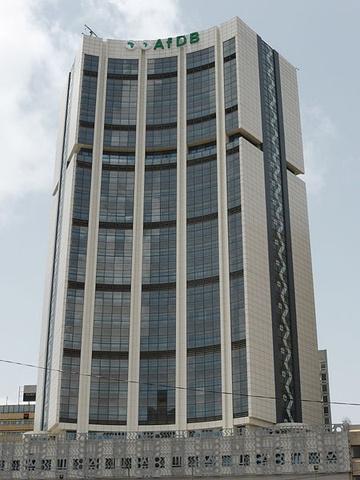
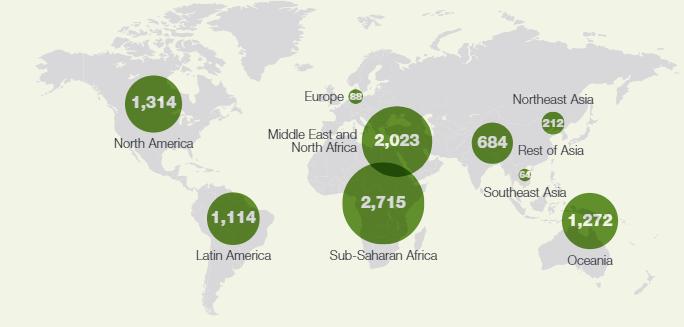
Maponthetechnicalpotentialofglobalregionstoproducecheap,greenhydrogenatlessthan $1.50perkilogram,by2050
Source:AfricanEconomicOutlook2022-AFDB
Such opportunity is supported by Nigeria’s plans to become a net exporter after commissioning the second largestureaplantintheworldinthefirstquarterof2022
The facility, which is already shipping its products to the United States, India and Brazil, will produce some 3 million tons of nitrogenous fertilizers (urea and ammonia), added to Nigeria's annual production of 31 milliontons
TheincreaseinenergyexchangebringsustoAngola,a Central African nation that is prepared to become the largest crude oil producer in southern Africa, complemented with a renewable energy base, through investments and support measures, according to the International Energy Agency To date, oil represents andestimated90%ofAngola’sexportincome,with295 million barrels exported in 2021 Additionally, French Total Energies (representing 45 % of the country's production) and American Exxon (with a forty-year presence in the country), have declared their commitment with the growth of Angolan oil industry through an increased investment, as well as the implementationofrenewableandsustainablecriteria
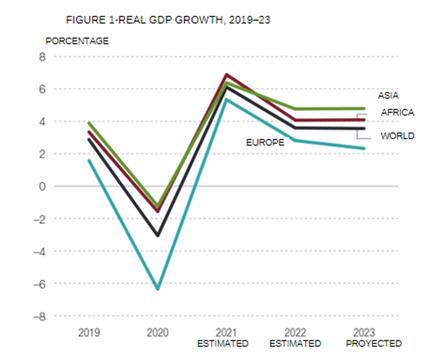
In view of the great potential of various African nations in terms of trade and investment, it is possible to say that, despite the lack of diffusion of information and certain preconceived ideas, Africa is establishing itself as a flourishing region with which we have been forgingtiesandwithwhomweexpecttokeepworking
Source:AfricanEconomicOutlook2022-AFDB
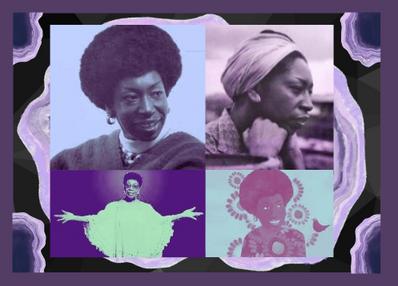
FOUR STAGES OF LOVE AND ACCEPTANCE OF OUR BLACKNESS, ACCORDING TO THE POEM: “THEY CALLED ME BLACK” BY VICTORIA SANTA CRUZ
 ELIZA RAMIREZ
BUSINESS ADMINISTRATOR, DIGITAL MARKETER, AND BLOGGER ON RACIAL AND GENDER
ISSUES
The outstanding Peruvian artist, Victoria Santa Cruz, in her poem: "They called me Black", reveals the process of love and acceptance of our blackness She manages to symbolize in her verses the experiences that will take us fromself-hatredtopersonalliberation
I have characterized this process in four main stages: recognition,awareness,self-acceptance,andself-loveinits entirety, so that when reading the poem we look at it from a different perspective, questioning the stage in which we areandstaymotivatedinourconstruction..
Although each of us work at different paces, it is never too latetoloveourblackidentity.
1.Acknowledgment
“Iwasbarelysevenyearsold,sevenyearsold?Iwasnot evenfive!Suddenlysomevoicesinthestreetcalledme: Black!(Black!Black!Black!Black!Black!Black!Black!)Am IBlack?Iaskedmyself(Yes!)WhatisittobeBlack? (Black!)”
This is how the poem begins, with a discovery, an existentialquestioning:AmIBlack?WhatisittobeBlack? Weperceiveourselvesastheother,werecognizeourselves, but from an external perspective, from negative imaginaries of our blackness, we automatically feel racism anddiscrimination
“AndIdidnotknowthesadtruththishid(Black!)AndI feltBlack(Black!)Astheysaid(Black!)AndIbackeddown (Black!)Astheywanted(Black!)AndIhatedmyhairand mythicklipsandIlookedsadlyatmytoastedskin AndI backeddown(Black!)AndIbackedoff (Black!Black! Black!Black!Black!Black!Neeeegra!Black!Black!Black! Black!Black!Black!Black!Black!)Andtimepassed,and alwaysbitter,Ikeptcarryingtheheavyloadonmyback, andhowheavyitwas!Istraightenedmyhair,powdered myface,andthesamewordalwaysresonatedinmyguts: Black!Black!Black!Black!Black!Black!Neeeegra!The samewordalwaysresounded:black!Black!Black!Black! Black!Black!Neeeegra!"
When we realize that for humankind, “black” is equal to bad, ugly, we begin to hate ourselves, to despise our hair, our skins, our features, and our culture; hence, unconsciously or consciously, we decide to inhabit a more accepted body, less socially irritating For this reason, some of us straighten our hair, powder or bleach our skin, change our tastes, our way of expressing ourselves, as a wayoffittingin,ofavoidingrejection
2.Consciousness
“UntilonedaywhenIwasgoingback,goingbackandI goingtofall(Black!Black!Black!Black!Black!Black! Black!Black!Black!Black!Black!Black!Black!Black! BLACK!)Sowhat?Sowhat?(Black!)Yes,Black!IamBlack! Black!(Black!)I'mBlack(Black!)Yes,Black!I'mBlack! (Black!Black!)IamBlack!”.
A decisive moment arrives in our lives, as a result of a series of situations that lead us to wake up: we take off our bandages off our eyes and become aware. We began to investigate our history, to understand a little more about our roots and struggles, we define ourselves as black, we build an identity in which we recognize ourselves, this time not from an external vision, but from a selfacknowledgment of being black, proud, and with a powerfulancestry
3 Self-acceptance
“FromnowonIdon'twanttostraightenmyhair,Idon't wantto AndI'mgoingtolaughatthosewho,accordingto them,toavoidsomeunpleasantness,callblackmenand women: “peopleofcolour” Andwhatacolor!BLACK!And howniceitsounds!BLACK!Andwhatarhythmithas! BLACK!BLACK!BLACK!BLACK!BLACK!BLACK!BLACK! BLACK!BLACK!BLACK!BLACK!BLACK!BLACK!BLACK! BLACK!”
We start a learning path, eliminating limiting beliefs, accepting ourselves We get rid of each of the stereotypes black women carry. We understand that recognizing ourselves as beautiful and loving ourselves as we are is an actofvindicationandfreedom.
We go from acceptance to total love. We accept and we love ourselves, seeing ourselves complete and perfect; we radiate power. We have appropriated our roots. We are confident and we have character. We are happy and proud tobeblack!
"They called me Black" is a poem that leaves a great space forreflection,ittakesusfromanegativeconnotationofthe term "black" to a positive one, a change that happens as a result of our own experiences and constructions, our blackness becomes a source of pride, a great heritage, a greatpower.Completefreedom!
“SotodayIknowwhoIam Todaynoonecan insultme AndtodayIknowwhatsharingislike AndtodayIknowthatwehaveacommitment Thiscommitmentstartswithoneself Thatwho isnotloyaltooneselfcannotbeloyaltoanyone
VictoriaSantaCruz
Article originally published by Afroféminas , available at https://afrofeminas.com/2020/05/26/4-etapas-de-amor-y-aceptacion-denuestra-negritud-segun-el-poema-me-gritaron- black-from-victoriasanta-cruz/.
The original poem, recited by Victoria Santa Cruz, is available at https://www.youtube.com/watch?v=cHr8DTNRZdg