Community Liaison / Enlace Comunitario: Ramon Chapa Jr. r.chapa@laprensatexas.com
Creative Director / Director Creativo: Nicodemus Gonzalez
Advertising & Production Coordinator / Coordinadora de Publicidad y Producción: Jessica Medrano
Contributors / Colaboradores: Dr. Ricardo Romo, Henrietta Hernandez info@laprensatexas.com
Editor Español: José I. Franco
Sales Representative / Representante de Ventas: Maria Cisneros
La Prensa Texas is a grassroots, bilingual publication that serves as a vital voice for the community — especially for those who are too often left out of mainstream media conversations. Since its founding, La Prensa Texas has been dedicated to providing relevant, accessible, and culturally rooted news that reflects the lives, struggles, and triumphs of the people of San Antonio and surrounding counties. Our mission is simple yet powerful: to inform, inspire, and empower our readers through storytelling that uplifts the diverse voices of our community. This publication continues to be the lifeline of local news, bridging the gap between the people and the stories that matter most.
Sales Info: Our Circulation
45,000 Printed And Distributed Weekly English And Spanish Send Press Releases And Advertising Inquiries To: Info@LaPrensaTexas.com 210-628-9611
By Yvette Tello
Silence used to be seen as the safe move — stay quiet, don’t rock the boat, wait it out. But as Jon Favreau points out, that era is over. In a moment when rights, truth, and accountability are openly challenged, staying silent isn’t neutral anymore — it’s a choice. What’s changed is the cost of saying nothing. When misinformation spreads faster than facts and power goes unchecked, silence leaves space for others to define the narrative. It allows decisions to be made without public pressure and policies to move forward without scrutiny. And history shows us that progress rarely happens quietly. Speaking up doesn’t always mean shouting. It can mean asking questions, sharing accurate information, voting, organizing locally, or simply refusing to accept “that’s just how it is.” Voices don’t have to be perfect to matter — they just have to be present. Your vote matters. Your voice matters.Do you agree — is silence still an option today, or has the moment demanded more from all of us? Is it time to speak up? Do you think it will make a difference? Do you think this can’t happen to you? Let’s talk about it …
Jeff Hull: “Just about every Right and Freedom we have today was gained by people speaking out, protesting or marching for it. From women’s rights to alcohol. So the killing of American citizens in our streets by ICE agents in such an unlawful, violent and unjust manner is definitely a reason to stand up and shout. Unfortunately, I hate to think it but we may have just passed the tipping point. If the government fails the people. Then it is up to the people to save the country. This isnt the first time we’ve been here. Unfortunately, Trump holds the keys to
Let’s Talk About It: Is Silence an option anymore?
our military forces and will not hesitate to use them on American citizens. That is a big problem. He needs to be stopped and removed from office before it really is too late. Otherwise, I believe Americans will have to fight fire with fire. I hope we dont get there but we’re definitely in the neighborhood.”
Rachel Nathanson: “Thank you! Let’s ask any influencers we follow to step up and speak out!”
Shaun Whittington: “True courage is doing the right thing when it’s uncomfortable, inconvenient, and no one is applauding.”
Nazli Chase: “Silence is not a virtue! It’s compliance which tells the aggressors it’s okay, thus the violence will only escalate.”
Karen Hofland: “Agree and time to replace all this hate with love, honesty, decency and morals again. Restore America to the land of the respected and free.”
Dolly Ensey: “If not now, then when, right?”
Katie Abbene: “ I agree 100%. At least until midterms. I can’t in good conscience be silent with my children’s generation’s future on the line. I realize not everyone is in a position where they can without significant consequence but it’s getting to the point where it’s really needed.”
Bud Curtis: “This is so true. Why most citizens don’t demand more appearance to the Constitution is beyond me?”
Laurie Bell: “I am Canadian and I agree. Sadly, so many people in the U.S. put their heads in the sand while they watch state media. Even here, because of U.S. owned media outlets and disinformation campaigns. We need to dig for accurate
information. These Canadians are rooting for you and all the other American people who have decency and compassion.”
Doris Laurence: “A call to restore empathy and decency in America. Seems like a cause we can all support.”
Graeme Martin: “We cannot afford to wait him out. But we don’t always know where to speak out, except among ourselves.”
Linda Driscoll Lopez: “Silence is not an option”
Crystal Munoz; “I keep seeing these posts but why don’t you share the different ways we can actually help? For example, like making calls to congress.or providing phone numbers. I can do it but I don’t have 21.3k likes or know history and a big following on social media. Can you use your platform to help make a difference?”
Gregg Davidson: “You can’t condemn people who are struggling just to make ends meet for not being political activists. If they vote, they’re already doing more than the millions who don’t even do that much. It’s easy to preach when you are not in survival mode every day of your life.”
W Steven Montano: “ I’m astounded how quiet and “neutral” many people still are. This is how democracy bleeds a slow death”
Vera Dahlstrom: “Watching in horror from Australia”
Melissa Kish Hahn: “It’s appalling how so many are acting like nothing is wrong. Keeping your head in the sand won’t protect you.”
Mary Beardemphl: ” Trump doesn’t pass laws, he signs executive orders”.
By Dr. Ricardo Romo
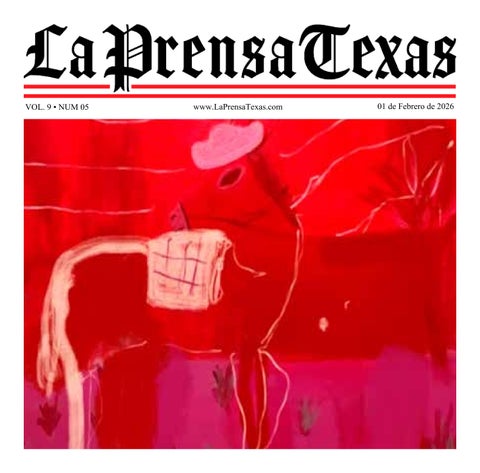
About The Cover Artist: Alejando Diaz
Alejando Diaz’s work is widely collected and exhibited, held by institutions including the Smithsonian American Art Museum; Los Angeles County Museum of Art; El Museo del Barrio, New York; Fundación Colección Jumex, Mexico City; RISD Museum of Art; Blanton Museum of Art, Austin; and McNay Art Museum, San Antonio.Grounded in wit and cultural observation, Diaz’s multimedia work—spanning cardboard signs, neon, sculpture, furniture, ceramics, tapestries, paintings, and installations—uses humor and vernacular aesthetics to probe issues of class, race, border politics, tourism, and the art market.
Growing up in San Antonio’s working-class Westside, Diaz was immersed in a Mexican American community shaped by the diaspora of the 1910 Mexican Revolution. His early sensory world included neighborhood bakeries, molinos making fresh tortillas, and weekend barbacoa stands—everyday experiences that later surfaced in his art’s engagement with language and
place. He earned a BFA from the University of Texas at Austin in 1987 and soon after returned to exhibit at the San Antonio Southwest Craft Center.
From 1990 to 1994, Diaz lived in Mexico City, where he joined a circle of emerging artists connected to Calle Licenciado Verdad, a vital hub of 1990s contemporary art. This period profoundly influenced his sensibility, merging the conceptual and the handmade in ways that mirrored life between borders. As curator Patricia Ruiz Healy has written, Diaz’s art reflects “the complex and visually rich cultural environment of South Texas and Mexico.” His first solo exhibition followed in 1994 in Omaha, Nebraska. Returning to San Antonio that same year, Diaz became intertwined with the city’s burgeoning contemporary art scene. While working at the Liberty Bar, he met philanthropist and collector Linda Pace, a fortuitous encounter that led to his selection as one of the inaugural Texas Artistsin-Residence at Artpace in 1996. Around this time, Diaz founded Sala Diaz, a nonprofit art venue housed in a modest Southtown residence—
soon recognized, as noted in Texas Observer, as a cornerstone of San Antonio’s artist-run spaces. The project embodied Diaz’s belief in accessible, community-rooted artmaking.
In the late 1990s, Diaz relocated to New York, earning an MFA from Bard College’s Center for Curatorial Studies in 1999. His practice expanded internationally, with major commissions including I (Heart) Cuba for the 2003 Havana Biennial and public sculptures for New York City’s Grand Concourse commissioned by the Public Art Fund. Throughout, he maintained ties to Texas and Mexico. Diaz’s return to painting in recent years—explored in exhibitions such as Rooms and Places—marks both a renewal and homecoming. Employing the technique of pentimento, he reveals layers of change and imperfection as metaphors for memory and transformation. His canvases draw inspiration from artists such as Goya, Picasso, and Munch, yet ultimately find their rhythm in intuitive, solitary reflection.
On the West Side, Danger Is Not
an
Accident
— It’s a Choice
By Louis R. Escareño
I write this as a lifelong West Side resident and as a member of the Executive Committee of Estar West, a coalition of more than 40 neighborhood and community organizations serving ZIP code 78207. I also write with urgency. The intersection of Zarzamora and West Martin Street is dangerous. Not in theory. Not someday. Right now. The sidewalk along Zarzamora is barely four feet wide. It is not ADA compliant. Pedestrians are routinely forced into traffic—parents with children, seniors, people with disabilities, and bus riders transferring between routes. This is not an exaggeration. It is an observable reality. What has changed— and made the danger even more acute—is that the Basila Frocks Building has reopened. What was once vacant is now active again: offices, community space, people coming and going throughout the day. Foot traffic has increased, exactly as anticipated. And just one block away sits Davy Crockett Elementary School. This is not a remote corner of the city. This is the heart of 78207. What makes this situation unacceptable is not only the risk—it is the fact that the City of San Antonio has been repeatedly warned, formally and informally, and has still failed to act. In fact, a solution already exists. VIA Metropolitan Transit, after being contacted about pedes-
trian and bus rider safety concerns tied to the Basila Frocks redevelopment, prepared a formal improvement concept for the Martin and Zarzamora intersection. The plan includes curb bulb-outs, sidewalk widening, lane reconfiguration to slow traffic, and ADA-compliant pedestrian space. VIA explicitly supports these improvements, citing high ridership on Routes 77 and 103 and the increased foot traffic generated by the redevelopment . In other words: The danger has been identified. The fix has been proposed. The transit agency is on board. Yet nothing has happened. Zarzamora is already recognized by the City’s own Vision Zero data as one of the most dangerous pedestrian corridors in San Antonio. This is not speculation; it is the City’s own analysis. Still, this intersection remains unchanged. On July 18, 2025, Estar West sent a formal letter to the City of San Antonio warning that the existing sidewalk conditions posed a clear and present danger, especially given the reopening of Basila Frocks and the proximity of a school. The letter called on the City to act before someone is seriously injured or killed.
On July 25, 2025, the City Attorney’s Office received that warning by certified mail. The City was placed on formal notice. At that point, this ceased to be an oversight. It became a matter of responsibility. And yet, as of today:
Public Works has not convened
VIA and Transportation to implement the proposed plan
No interim safety measures are in place
Pedestrian exposure continues to increase
This is what continued underinvestment looks like on the West Side.The surrounding area does not have a formal neighborhood association, and as a result, this intersection was effectively left off priority lists—despite known risk, documented solutions, and a school nearby. In 78207, communities with the greatest need often had the least political insulation. That reality shows up in our infrastructure. Danger becomes normalized. Delay becomes routine. And only after tragedy does the City ask how it happened. If someone is seriously injured at Zarzamora and Martin, the City will not be able to say it didn’t know. The record is clear. The warnings were given. The solution was identified. The notice was delivered. The question is no longer whether this corner is dangerous. The question is whether the West Side must always wait for tragedy before it receives basic safety. As a resident of 78207, and as part of a coalition that has done everything asked of it—met with officials, provided documentation, proposed solutions—I believe we deserve better. Safety should not depend on ZIP code.
AVISO PÚBLICO
AVISO DE DISPONIBILIDAD DE BORRADOR DE DECLARACIÓN DE IMPACTO AMBIENTAL DEPARTAMENTO DE ASUNTOS DE LOS VETERANOS DE LOS EE. UU.
Reubicación Propuesta del Centro Médico de Asuntos de los Veteranos San Antonio, Texas
Asuntos de los Veteranos San Antonio, Texas
El Departamento de Asuntos de los Veteranos de los EE. UU. (VA, por sus siglas en inglés) anuncia la disponibilidad del Borrador de la Declaración de Impacto Ambiental (DEIS) para la construcción y operación propuestas de una nueva instalación de aproximadamente 1,600,000 pies cuadrados brutos, destinada a reemplazar el actual Centro Médico Conmemorativo de Asuntos de los Veteranos (VAMC) ubicado en 7400 Merton Minter Boulevard en San Antonio, Texas. El propósito de la Acción Propuesta es proporcionar servicios excepcionales de atención médica a la creciente población de Veteranos en la región del sur de Texas. La Acción Propuesta es necesaria para abordar las limitaciones críticas de infraestructura, funcionalidad y espacio del VAMC existente.
El VA invita al público a revisar el DEIS y a presentar comentarios durante el período de comentarios públicos de 45 días, del 30 de enero de 2026 al 16 de marzo de 2026. El DEIS está disponible en https://www.cfm.va.gov/environmental/ y en las siguientes bibliotecas locales: Leon Valley Public Library (6425 Evers Road, Leon Valley, TX 78238); Westfall Branch Library (6111 Rosedale Court, San Antonio, TX 78210); y John Igo Library (13330 Kyle Seale Parkway, San Antonio, TX 78249).
Los comentarios respecto al análisis ambiental pueden enviarse por correo electrónico a vacoenvironment@va.gov. Incluya “San Antonio VAMC EIS – DEIS Comment” como asunto en su correspondencia. Los comentarios deben recibirse a más tardar el 2 de marzo de 2026. El VA resumirá y responderá a los comentarios sustantivos en el EIS Final.
El VA llevará a cabo una reunión pública para recibir comentarios sobre el DEIS el 18 de febrero de 2026, de 6:00 p.m. a 8:00 p.m., en North West San Antonio VA Clinic, ubicada en 9939 State Highway 151, San Antonio, TX 78251.
ALAMO COLLEGES DISTRICT
Purchasing & Contract Administration
Office: (210) 485-0100 Fax: (210) 486-9022
ALAMO COLLEGES DISTRICT BID/PROPOSAL INVITATION
The Alamo Colleges District is receiving sealed bids/proposals prior to 2:00 PM (CST), unless otherwise indicated, on the date shown.
RFP# 2026-0087 Purchase of Legal Training & Expungement Services
Proposal Deadline: February 17, 2026, at 2:00 PM
Specifications are available by visiting the Alamo Colleges District website: www.alamo.edu/purchasing or by emailing dst-purchasing@alamo.edu
By Eduardo Jiménez Mayo, Ph.D., J.D.
Like my mother before me, I was born in Boston. And although I was raised in San Antonio, Texas— my Mexican-American father’s hometown—I was brought up as a loyal New England Patriots fan. At ten years old, I vividly remember watching the Patriots’ painful Super Bowl XX loss to the Chicago Bears in 1986, surrounded by my Bostonian uncles, aunts, and cousins. To my knowledge, there were no Latino players on that roster. But as Bob Dylan famously reminded us, the times, indeed, are a-changin’.
Today, at least three Latino players are starting for the Patriots: Colombian defensive back Christian González, Venezuelan kicker Andrés Borregales, and safety Jaylinn Hawkins, who is Panamanian-Cuban on his mother’s side. I interviewed Hawkins the week before the Patriots’ January 11 playoff victory against the Los Angeles Chargers, speaking with
Jaylinn Hawkins: A Latino Patriot
him about his Latino heritage, his desire to inspire future Latino NFL players, and his efforts to connect with a growing Latino fan base in the United States and abroad.
Hawkins speaks fondly of his childhood memories, particularly the aroma of plantains and other Caribbean staples wafting from his maternal grandmother’s kitchen. Latin music and rhythms filled his home, creating an environment rich with movement, joy, and cultural pride during his upbringing in Orange County, California. Athletically, his AfricanAmerican father introduced him early to track, soccer, and football.
But when it comes to cultural grounding, Hawkins is clear. “As far as Latino culture and traditions go,” he says, “I have my mother and grandmother to thank for that.”
This offseason, Hawkins plans to travel with his family to Panama and is currently in the process of securing passports for himself and his loved
ones—another meaningful step in deepening his connection to his roots.
My Bostonian uncles hold Hawkins in high regard, both as a player and as a person, often describing him as a leader on the field. Hawkins, however, understands that leadership in the NFL comes without guarantees. “You have to earn your starting position every game,” he explains. “You can’t get lazy or expect anything to be handed to you. You have to stay disciplined and humble. It’s about perseverance— learning from your mistakes and improving, not just from game to game, but from play to play.”
Although Hawkins began attracting NFL scouts as early as his sophomore year at the University of California, Berkeley— where he transitioned from wide receiver to safety— he never assumed success would come easily. Since turning professional in 2020, the Patriots are the third team he has played for and the first with which he has consistently
started, a testament to his persistence and respect for the game.
Beyond football’s physical demands, Hawkins emphasizes the importance of mental preparation. Even the smallest details matter. He carefully adjusts the type and volume of music he listens to on the way to the stadium, upon arrival, and before taking the field— moving from hype, to calm, and back to intensity as the moment requires.
Despite his rising profile, Hawkins has not forgotten
his maternal roots. He is currently developing a philanthropic initiative aimed at increasing Latino participation in American football, a sport in which Latinos have long been underrepresented. He also remains active on social media, engaging with a growing Latino fan base throughout the United States and Latin America.
Jaylinn Hawkins is already a star. But more importantly, he represents possibility—and in my view, his brightest moments are still ahead.
Víctor Wembanyama De Estelar en 2026 NBA All-Star Game
Por Franco
El prospecto francés
Víctor Wembanyama (Wemby), delantero estelar de Los Spurs de San Antonio, en esta su segunda temporada ha sido elegido para ser parte de la quinteta estelar por la Conferencia del Oeste.
Qué estará participando en actividades y el gran partido con su rival de la Conferencia del Este, el cual se jugará el domingo 15 de febrero en su 75a edición en el nuevo estadio
Intuit Dome sede del equipo Clippers de Los Ángeles.
Wemby, tendrá de compañeros a Shai Gilgeous-Alexander (Oklahoma City). Nikola Jokic (Denver), Luka Doncic Los Ángeles Lakers).
Stephon Curry (Golden State).
En boletín oficial informativo se dijo que los jugadores titulares, fueron determinados por votaciones de los fanáticos con un 50%, jugadores activos en la NBA con 25% y un panel de medios especializados en la cobertura de temporada NBA con el 25%.
Wemby, así se une con cinco ex jugadores de la franquicia Silver and Black, quienes fueron elegidos de titulares: George Gervin, Albin Robertson. David Robinson, Tim Duncan y Kawhi Leonard. Spurs, cuando menos han tenido un jugador representante en elecciones del AllStar Games en 43 ocasiones de las 49 desde que la ABA-
NBA se juntaron en 1976. Con esa marca Spurs se empataron con Lakers durante ese lapso.
Cabe anotar que los jugadores de Spurs, los escoltas Stephon Castle, prospecto y Dylan Harper, novato, así como de David Jones García, han sido convocados para su participación en el clásico evento denominado Castrol Rising Stars que se llevará acabo el viernes 13 de febrero en el Intuit Dome.
Castle y Harper, fueron tomados en cuenta por sus excelentes actuaciones con Spurs durante la presente temporada y Jones García, nativo de Santo Domingo, República Dominicana, quien
tras once partidos con Spurs, fue enviado al circuito G League, con la sucursal Toros de Austin, donde en nueve partidos es el líder de temporada con promedio de 26.8 puntos anotados por partido. Wemby, ha ayudado a Spurs en su foja de 29-13, y marcha en segundo lugar de la tabla general en el oeste. Su promedio de juego es de 24.5, 10.9 rebotes, 3.0 asistencias y 2.64 bloqueos durante 28.8 minutos de juego logrados en 28 partidos. (Fotos de Cortesía).
By J. Gilberto Quezada
The Rio Grande has long been more than a river dividing nations; it has been a meeting place of cultures, faiths, and hidden legacies. Along its banks, towns in northern Mexico and South Texas became home to families who carried with them traditions that were not always spoken aloud. Among these were crypto-Jews—descendants of Sephardic Jews who had fled Spain and Portugal during the Inquisition, forced to outwardly adopt Catholicism while secretly preserving fragments of their ancestral faith. Their practices, often disguised within Catholic rituals, shaped the cultural fabric of the borderlands in subtle but enduring ways.
One of the most fascinating aspects of this legacy was how Jewish customs blended with Mexican Catholicism, creating hybrid identities. Families lit candles on Friday nights but explained them as honoring saints. Certain prayers were whispered in Spanish but carried echoes of Hebrew cadences. Food traditions also carried hidden meanings: bread recipes, avoidance of shellfish, and the quiet refusal to eat pork. These practices became part of everyday life, passed down without explanation, yet deeply rooted in centuries of survival.
My own recollection of being told by my mother not to eat pork on Fridays fits into this tapestry of hidden customs. For many crypto-Jewish families, pork was avoided altogether, as it is forbidden in Jewish dietary law. Yet in Catholic Mexico,
No Pork on Friday: A Family Memory
abstaining from meat on Fridays was also a common practice, especially during Lent. Over generations, these traditions blurred together. A family might avoid pork specifically on Fridays, believing it to be a Catholic custom, when in fact it echoed a much older Jewish prohibition. The blending of faiths created a ritual that was both Catholic and crypto-Jewish, a living symbol of the borderlands’ layered identity.
In towns along the Rio Grande, these practices became markers of difference—quiet signals that some families were “not quite like the others.” I am sure there were some cases in some households where pork was never served, or where children were scolded for asking why certain foods were forbidden. The answers were often vague, wrapped in secrecy, because the memory of persecution lingered. Yet these silences carried meaning. They preserved identity in ways that were invisible to outsiders but deeply felt within families.
By the mid-20th century, when I was growing up in my beloved Barrio El Azteca, these traditions had already been passed through generations of adaptation. My mother’s instruction not to eat pork on Fridays may have been her way of honoring what she had been told, even if she did not know its origin. Was it Catholic discipline? Was it Jewish law? In truth, it was both—a hybrid practice born of survival and memory. And by continuing it today, I am a part of that long
chain of remembrance, keeping alive a ritual that connects me to my ancestors who lived in secrecy along the borderlands.
For Jewish families, the refusal to eat pork was never simply about food—it was about faith, identity, and survival. In Jewish law, pork is considered unclean, a boundary marker that has for centuries distinguished the community from the surrounding world. To abstain from it was to quietly affirm belonging to a people who carried their covenant across continents and generations. Even in the borderlands, where traditions blurred
and secrecy was often necessary, the choice to avoid pork became a silent act of remembrance. Each meal without it was a way of honoring ancestors who clung to their faith under persecution, a way of saying: we are still here, we have not forgotten who we are. In this way, the absence of pork at the family table was not deprivation but devotion—a small, everyday ritual that kept alive the thread of Jewish identity woven into the fabric of life along the Río Grande.
The story of my own experience at home growing up in Laredo, Texas as I am sure others who
lived along the Rio Grande’s communities is thus not only about geography but about faith carried in whispers, recipes, and family rules. Thus, Mamá’s advice to me is a tale of how Jewish legacy shaped families and towns where Catholicism reigned, and how traditions like avoiding pork—whether on Fridays or forever—became symbols of hidden identity. In these hybrid practices, the past lives on, reminding us that faith is not always found in grand cathedrals or synagogues, but in the quiet choices families make at their dinner tables, generation after generation.
Alejandro Díaz, A Latino Texan-New Yorker Exhibits at Ruiz-Healy-Art Gallery.
By Ricardo Romo, Ph.D
Texas native Alejandro Díaz developed an artistic practice over thirty-five years grounded in the bicultural and visual mix of South Texas and Mexico, with formative ties to Mexico City in the early 1990s. He is known for multimedia work: cardboard signs, neon, sculpture, furniture, tapestries, ceramics, paintings, and installations. Early in his career, he was best known for witty, textbased cardboard signs and their subsequent neon versions, which use humor to address class, race, border politics, tourism, and the art market.
Díaz grew up in the deep Westside of San Antonio, residing in various neighborhoods that were nearly 100 percent Mexican American. As a boy, he attended Guadalupe Catholic School on El Paso Street, only blocks away from several popular Mexican panaderias [bakeries], molinos that made fresh tortillas daily, and corner stores that sold barbacoa on the weekends. The Westside was largely an immigrant community born out of the 1910 Mexican Revolution diaspora. San Antonio was the largest urban center in South Texas, and the
city’s link to the Rio Grande border two hours away by car, impacted the daily lives of its bilingual residents.
Díaz’s art career began in earnest after he graduated from the University of Texas at Austin in 1987 with a BFA degree. He returned to his hometown of San Antonio and was included in a show at the San Antonio Southwest Craft Center the following year. His social commentary through art was well received. Díaz’s popular “Make Tacos Not War” neon sign was featured at the Xicanx: Dreamers + Changemakers | Soñadores + creadores del cambio, a sweeping exhibition at the Contemporary at Blue Star in San Antonio in 2024.
Patricia Ruiz Healy, who has known Díaz for more than two decades, wrote that Díaz developed his distinctive work while growing up in San Antonio, Texas, and living in México City from 1990 to 1994. She added: “This background deeply informed his art, which reflects the complex and visually rich cultural environment of South Texas and Mexico.” While residing in México City, Díaz was part of an inner circle of artists who lived and worked around the Calle Licenciado Verdad. A
1990s - focused publication titled Licenciado Verdad, Vol. 1: Groups and Spaces in Mexico Contemporary Art of the 90s explicitly names this tenement and street as a key locus for Mexico City’s contemporary art networks, underscoring its role as an address that included studios, living spaces, and informal exhibiting/meeting sites. In 1994, his first solo show opened in Omaha, Nebraska. Díaz returned to San Antonio in 1994 and created art while working at the famed Liberty Bar off Broadway and Grayson. One of Díaz’s most transformative art moments came about at the Liberty Bar. The restaurant sent Díaz to Linda Pace’s home to cater for a small dinner party. He and Linda met in the kitchen. He vividly recalled the meeting: “I told her I was an artist, and we got carried away in a lengthy and engrossing conversation about Texas art and artists. She wanted to know everything.” All of this occurred before the creation of Artpace and the Linda Pace Foundation. In 1996, Díaz was selected as one of the first Texas Residents of ArtPace.
Díaz moved to New York City in the late 1990s and received an MFA from the
Center for Curatorial Studies at Bard College, Hudson, NY, in 1999. Although Díaz had moved to New York City, Alix Ohlin of the Texas Observer included Díaz in his 2001 story titled “San Antonio Art: Down Home and World Famous.” Ohlin noted that Díaz was the founder of Sala Díaz, a San Antonio Southtown art gallery situated in a “dilapidated white house that sits slouched on a shady street about a mile south of the sprawling downtown.” Gregory Sandoval, ArtPace’s program coordinator at the
time, visited the gallery often, noting that many artists were resisting going to New York or Los Angeles and staying close to home; “they’re putting their money into doing their own galleries, finding their own alternative spaces, getting their work seen there.”
In 2003, shortly after completing his graduate studies, Díaz was asked to create a large-scale artwork for the Havana Biennial, which resulted in the creation of “I (Heart) Cuba” [I Love
Cuba], an installation of free souvenir items emblazoned with the artist’s twist on the familiar “I Love New York” slogan. The Cuba Heart art project gave Díaz the recognition he needed as a New York artist, and a few years later, he was commissioned by New York City’s Public Art Fund to create four large-scale sculptures along the historic Grand Concourse in the Bronx.
Ruiz Healy Art produced a beautiful catalogue of Díaz’s work for an exhibit of his paintings at her San Antonio gallery on January 24, 2026. The gallery hosted an artist’s talk that Harriett and I attended. We were curious about Díaz’s artistic approach to his most recent paintings. I was instantly drawn to a series of painted shapes subtitled Texas, Spain, and Mexico. Le Flore, a San Antonio poet and artist, observed a painting of soccer goals and explained: “The soccer goals seen in Spain and Mexico express those countries’ joy of sport, competition, athleticism, and pride.” LeFore found that the oil rig that Díaz had painted to represent Texas also served as “the goal,” adding “it is a solo machine that works tirelessly but nonetheless, behaves like a sport to its investors, landowners, and its betters.”
Díaz and LeFlore teamed up to lead the discussion of Díaz’s gallery exhibit. LeFlore stated that in Díaz’s
paintings, there is “an art that emerges as inspiration, creation, and existence–becoming inseparable.”
Díaz’s painting of a boat on a dark lake with a moon shining on the water says something different to each viewer. LeFlore saw the presence of a boat in a vast space with pink clouds overhead and a full pink moon to mean movement. He added. “We’re all coming from somewhere in order to go somewhere else. The movement is what counts, especially its serenity.” I also found a sense of motion in Díaz’s painting of a horse bridled to a manned cart loaded wth harvest. I was also moved by Díaz’s use of color. A tall mountain, reminding me of rural Mexico, was painted in blue.
The gallery discussion turned to Díaz’s artistic approach and what inspires him to paint. After acknowledging that Díaz is always reading and learning about great artists, LeFlore added that “Alejandro paints what makes his heart beat as he explores all the rhythms and mysteries of his life experiences. He paints paintings that wonder and wander.” With regard to a question about a painting of a room that included a bed, a chair, and portraits hanging on the wall, Díaz acknowledged the influence of painters like Vincent van Gogh, who had done a similar painting called “The Bedroom” (the Yellow Room). LeFlore concluded that Díaz “paints
images that are beautiful and psychologically powerful; the tonality, the iconography, the contrasts, the stillness–all united in service to Alejandro’s artistic intentions.”
Díaz is internationally known and his artwork has been collected by the Smithsonian Museum of American Art, Washington, DC; the Los Angeles County Museum of Art, CA; the University of St. Gallen, Switzerland; the Fundación Colleción Jumex, Mexico City, Mexico; the Scottsdale Museum of Contemporary Art, AZ; El Museo del Barrio, New York, NY; the RISD Musem of Art, Providence, RI; the National Museum of Mexican Art, Chicago, IL; and the Museum of Contemporary Art San Diego, CA.
Díaz closed his remarks explaining that in these new works, he has found meaningful creations that bring him peaceful calmness. The carefully chosen colors and simple images are reflections of his Mexican and Chicano memories. Ruiz Healy proposed that Rooms and Places encourages selfreflection and philosophical inquiries about one’s place in the world. The exhibition will be on view at the San Antonio gallery from January 21, 2026 to February 28, 2026.
Alejandro Díaz at the Ruiz-Healy Art forum.
Photo by Ricardo Romo.
Alejandro Díaz, Untitled. Courtesy Ruiz-Healy Art.Photo by Ricardo Romo.
Confieso que soy católico. Asumo que el tema de este artículo puede ser molesto para la Iglesia católica en cuanto se trata de la Inquisición en la Nueva España. Conste que mi propósito no es una crítica a la Iglesia como tal, sino el de indagar en un capítulo de la historia, en la que se cometieron errores monstruosos contra comunidades indígenas, judías y algunas otras. En esta oportunidad me limito a presentar el caso de la victimización de los judíos, aunque fueran conversos, porque el 27 de enero se conmemora el Día Internacional de del Holocausto. Teniendo en mente la voluntad de evitar que se repitan los horrores del pasado, pongo a consideración de los lectores esta breve recapitulación de los hechos. En la preparación de este texto conté con la asistencia intelectual de un compañero de armas, el profesor Ilan Stavans, catedrático de estudios latinoamericanos en la Universidad de Massachusetts en Amherst. Por Virreinato de Nueva España entendemos el llamado virreinato mexicano. La sede de la inquisición en el virreinato radica en la Ciudad de México. Por lo tanto, no
Judíos Conversos y la Inquisición en la Nueva España
es infrecuente que familias conversadoras se muden lo más lejos posible, incluso hasta la frontera norteña.
La historia de los judíos en la Nueva España arranca en 1492 con la propia tripulación a cargo de Cristóbal Colón. Ese mismo año los reyes Isabel y Fernando expulsaron a los judíos de la península Ibérica, excepto a aquellos que se convirtiesen al catolicismo. Algunos se quedaron y otros zarparon en las galeras de la Corona de Castilla, haciéndose pasar como conversos. Aquellos que fueron perseguidos por la inquisición en el virreinato fueron relativamente pocos, (alrededor de 50), y solían ser conversos al cristianismo, aunque seguían practicando sus ritos.
Se han hecho excavaciones en los estados norteños de México. En una de ellas, fueron descubiertos baños para los ritos hebreos de higiene, entre otras reliquias de lo que se conoce como cripto judaísmo. Estos cristianos judaizantes a veces caían en manos de la inquisición, sobre todo cuando insistían en publicar su afiliación. El ejemplo más radical es el de Luis de Carvajal el Mozo, muerto en la hoguera en 1596. Carvajal se autodenominaba profeta. Escribió el primer diario judío en el Nuevo Mundo (asi de-
nominado por los europeos), y se consideraba a si mismo, al nivel de los grandes profetas de la historia del Viejo Testamento.
No está claro si tuvo séquitos, pero después de ser acusado por la inquisición, lo pasaron al brazo seglar que lo condenó a la muerte. El profesor Stavans opina que Carvajal pudiera haber sido esquizofrénico, pues mostraba características de una profunda inestabilidad mental. La importancia de este tema para los tejanos es enorme, ya que fueron los estados norteños la cuna de la población conversadora. Imaginen que Carvajal mismo procedía de Nuevo León. “…En Nuevo México y en Tejas hay muchos
cementerios católicos en donde uno puede caminar, yo lo he hecho mucho [dice Ilan Stavans], y ver tumbas donde el ancestro le manda mensaje a la gente que está viva todavía de que ellos eran judíos. A veces por ejemplo hay una estrella de David con un crucifijo adentro o hay un león que era un símbolo de los judíos cabalistas que está integrado, y eso quiere decir que esas familias mantenían esa identidad secreta que pasaba de un lado a otro…”
“…De sumo interés, [también comenta Stavans] es que “ha habido en los últimos años un despertar de estas familias, desde 1980 al presente, que se están convirtiendo nuevamente al ju-
daísmo y que se manifiestan más abiertamente como lo que eran al principio.” Lamentablemente en este espacio no profundizaremos en la historia de los judíos en el Nuevo Mundo más allá de la época colonial –por ejemplo, cómo se establecieron judíos hablantes del yiddish, francés, ladino o árabe que comenzaban a emigrar a México en el siglo XIX provenientes del imperio otomano –, por no mencionar el siglo XX o XXI, pero el meollo del asunto es que judíos había desde el principio de nuestra historia pluricultural en lo que hoy conocemos como México, y no queremos que tal diversidad se olvide o se vuelva a castigar de ninguna manera.
Comisión de Calidad Ambiental de Texas
AVISO DE SOLICITUD Y DECISIÓN PRELIMINAR
PARA EL PERMISO TPDES PARA AGUAS RESIDUALES MUNICIPALES RENOVACIÓN
PERMISO N.º WQ0010137008
SOLICITUD Y DECISIÓN PRELIMINAR. San Antonio Water System, 2800 U.S. Highway 281 North, San Antonio, Texas 78212, ha solicitado a la Comisión de Calidad Ambiental de Texas (TCEQ, por sus siglas en inglés) una renovación del Permiso No. WQ0010137008, que autoriza la descarga de aguas residuales domésticas tratadas a un flujo medio anual que no exceda de 46,000,000 galones di arios. La TCEQ recibió esta solicitud el 14 de febrero 2025.
La instalación está ubicada en 13496 Blue Wing Road, en la Ciudad de San Antonio, condado de Bexar, Texas 78223. El efluente tratado se descarga directamente a el Río San Antonio superior Segmento N.º1911 de la Cuenca del río San Antonio. Los usos designados para el segmento N.º 1911 son recreación de contacto primario y alto uso por parte de la vida acuática. Este enlace a un mapa electrónico de la ubicación general del sitio o instalación se proporciona como cortesía pública y no forma parte de la solicitud o aviso. Para c onocer la ubicación exacta, consulte la solicitud. https://gisweb.tceq.texas.gov/LocationMapper/?marker=-98.429214,29.284387&level=18
El Director Ejecutivo del TCEQ ha concluido el examen técnico de la solicitud y ha preparado un proyecto de permiso. El proyecto de permiso, de ser aprobado, establecería las condiciones bajo las cuales la instalación debe operar. El Director Ejecutivo ha tomado la decisión preliminar de que este permiso, si se emite, cumple con todos los requisitos legales y reglamentarios. La solicitud de permiso, la decisión preliminar del Director Ejecutivo y el borrador del permiso están disponibles para ver y copiar en San Antonio Water System, Administrative Building-First Floor, 2800 U.S. Highway 281 North, San Antonio, Texas. La solicitud y los avisos relacionados están disponibles en formato electrónico en la siguiente página web: https://www.tceq.texas.gov/permitting/wastewater/pending-permits/tpdes-applications.
AVISO DE IDIOMA ALTERNATIVO. El aviso de idioma alternativo en español está disponible en https://www.tceq.texas.gov/permitting/wastewater/plain-language-summaries-and-public-notices. COMENTARIO PÚBLICO / REUNIÓN PÚBLICA. Puede enviar comentarios públicos o solicitar una reunión pública sobre esta solicitud. El propósito de una reunión pública es para brindar la oportunidad de enviar comentarios o hacer preguntas sobre la solicitud. La TCEQ convocara una reunión pública si el Director Ejecutivo determina que existe un grado significativo de interés público en la solicitud o si lo solicita un legislador local. Una reunión pública no es una audiencia de caso impugnado.
OPORTUNIDAD PARA UNA AUDIENCIA DE CASO IMPUGNADO. Después de la fecha límite para presentar comentarios públicos, el Director Ejecutivo considerará los comentarios y preparará una respuesta a todos los comentarios públicos relevantes y material es, o significativos. A menos que la solicitud sea remitida directamente para una audiencia de caso impugnado, la respuesta a los comentarios se enviará por correo a todos los que enviaron comentarios públicos y a aquellas personas que estén en la lista de correo para esta solicitud. Si se reciben comentarios, el correo también proporcionará instrucciones para solicitar una audienc ia de caso impugnado o reconsiderar la decisión del Director Ejecutivo. Una audiencia de caso impugnado es un procedimiento legal similar a un juicio civil en un tribunal de distrito estatal.
PARA SOLICITAR UNA AUDIENCIA DE CASO IMPUGNADO, USTED DEBE INCLUIR EN SU SOLICITUD LOS SIGUIENTES DATOS: su nombre, dirección, y número de teléfono; el nombre del solicitante y número del permiso; la ubicación y distancia de su propiedad/actividad con respecto a la instalación; una descripción específica de la forma cómo usted sería afectado adversamente por el sitio de una manera no común al público en general; una lista de todas las cuestiones de hecho en disputa que usted presente durante el período de comentarios; y la declaración “[Yo/nosotros] solicito/solicitamos una audiencia de caso impugnado”. Si presenta la
petición para una audiencia de caso impugnado de parte de un grupo o asociación, debe identificar una persona que representa al grupo para recibir correspondencia en el futuro; identificar el nombre y la dirección de un miembro del grupo que sería afectado adversamente por la planta o la actividad propuesta; proveer la información indicada anteriormente con respecto a la ubicación del miembro afectado y su distancia de la planta o actividad propuesta; explicar cómo y porqué el miembro sería afectado; y explicar cómo los intereses que el grupo desea proteger son pertinentes al propósito del grupo.
Tras el cierre de todos los periodos de comentarios y solicitudes aplicables, el Director Ejecutivo remitirá la solicitud y cualquier solicitud de reconsideración o de una audiencia de caso impugnado a los Comisionados de la TCEQ para su consideración en una reunión programada de la Comisión.
La Comisión sólo puede conceder una solicitud de una audiencia de caso impugnado sobre los temas que el solicitante haya presentado en sus comentarios oportunos que no fueron retirados posteriormente. Si se concede una audiencia, el tema de la audiencia estará limitado a cuestiones de hecho en disputa o cuestiones mixtas de hecho y de derecho relacionadas a intereses pertinentes y materiales de calidad del agua que se hayan presentado durante el período de comentarios. La TCEQ puede actuar sobre una solicitud de renovación de un permiso para el vertido de aguas residuales sin dar la oportunidad de una audiencia de caso impugnado si se cumplen ciertos criterios.
ACCIÓN DEL DIRECTOR EJECUTIVO. El Director Ejecutivo puede emitir la aprobación final de la solicitud a menos que se presente una solicitud de audiencia de caso impugnado oportunamente o una solicitud de reconsideración. Si se presenta una solicitud de audi encia oportuna o una solicitud de reconsideración, el Director Ejecutivo no emitirá la aprobación final del permiso y enviará la soli citud y la solicitud a los Comisionados de TCEQ para su consideración en una reunión programada de la Comisión.
LISTA DE CORREO. Si envía comentarios públicos, una solicitud de una audiencia de caso impugnado o una reconsideración de la decisión del Director Ejecutivo, se le agregará a la lista de correo de esta solicitud específica para recibir futuros avisos p úblicos enviados por correo por la Oficina del Secretario Oficial. Además, puede solicitar ser colocado en: (1) la lista de correo permanente para un nombre de solicitante específico y número de permiso; y/o (2) la lista de correo para un condado específico. Si desea ser coloc ado en la lista de correo permanente y / o del condado, especifique claramente qué lista (s) y envíe su solicitud a la Oficina del Secret ario Oficial de la TCEQ a la dirección a continuación.
Todos los comentarios públicos escritos y las solicitudes de reunión pública deben enviarse a Office of the Chief Clerk, MC 105, TCEQ, P.O. Box 13087, Austin, TX 78711-3087 o electrónicamente a www.tceq.texas.gov/goto/comment dentro de los 30 días a partir de la fecha de publicación de este aviso en el periódico.
INFORMACIÓN DISPONIBLE EN LÍNEA. Para obtener detalles sobre el estado de la solicitud, visite la Base de Datos Integrada de los Comisionados en www.tceq.texas.gov/goto/cid. Busque en la base de datos utilizando el número de permiso para esta solicitud, que se proporciona en la parte superior de este aviso.
CONTACTOS E INFORMACIÓN DE LA AGENCIA. Los comentarios y solicitudes públicas deben enviarse electrónicamente a www. tceq.texas.gov/goto/comment, o por escrito a Texas Commission on Environmental Quality, Office of the Chief Clerk, MC-105, P.O. Box 13087, Austin, Texas 78711-3087. Cualquier información personal que envíe a la TCEQ pasará a formar parte del registro de la agencia; esto incluye las direcciones de correo electrónico. Para obtener más información sobre esta solicitud de permiso o el proceso d e permisos, llame al Programa de Educación Pública de TCEQ, línea gratuita, al 1- 800-687-4040 o visite su sitio web en www.tceq.texas.gov/goto/pep. Si desea información en español, puede llamar al 1-800-687-4040.
También se puede obtener más información de San Antonio Water System en la dirección indicada anteriormente o llamando a Ms. Olga Galindo, Executive Administrative Assistant al (210) 233- 3830.
Fecha de Emisión 27 de enero de 2026
By Rosie Speedlin-Gonzalez MANGUERA MEMORIES:
Being from Brownsville, a small border town on the southernmost tip of south Texas, brought with it experiences, conversations and stories that were fraught with “La Migra” y los “Pinches Rinches” . . . now known as the INS and Texas Rangers (dis)respectively. I have foggy, distant memories that although reflect incidents that took place close to 50 years ago, the sounds and emotions of those incidents and experiences flood my conscience as if it was yesterday. On any given early morning, our barrio that surrounded Garfield Park was buzzing with activity: La radio carefully placed on the kitchen window sill tocando at full volume blasting Los Cadetes de Linares, las lavadoras starting up and grinding out today la ropa de las semana antes, la agua del sink used one minute to wash los trastes y the next minute to fill las cubetas para trapiar, the scents of Pine Sol, frijoles cooking en la olla and tortillas on the comal . . . all this work was coordinated like only a good “criada bien criada” could do. Every other house seemed to have a . . . pues for a lack of better words, and calling them what they were . . . seemed to have a maid. Women con
MANGUERA MEMORY: La Migra
brazos de tamaleras and the work-ethic of the camaroneras who processed shrimp from daybreak to dusk at the shrimp processing plant on 14th Street (La Catorce). Las criadas were also wet nurses when needed, disciplinarians when required, jardineras when paid extra and all around domestic engineer superstars 24/7. They were someone’s mother, someone’s daughter, someone’s wife, someone’s sister, someone’s widow, someone’s girlfriend and, every once in while, someone’s sancha when duty called. That working group of women who came across the bridge on Sunday afternoons into American homes of Mexicanos, Judios, Gringos and left back to their motherland on Friday nights were a resourceful group of women. On any one of those given mornings, while working en las casas Americanas, the phones would start to ring. Juanita from the house near International Boulevard would start the calls, a phone chain if you will, all down Hayes Street, then Garfield St., then back all the way to Grant St., then Lincoln St. . . . YA VIENE LA MIGRA!!! All the mujeres would be on full lock-down alert. The radios were turned off, the windows were shut, the children were brought inside from their
playgrounds in the park, in the front and back yards, doors were locked, curtains drawn and washing machines came to a dead halt. Children were scolded in the most stern yet silent ways. Callate!!!! Within minutes, all you could hear were the squawks de las gaviotas and los cantos de las cicadas. Then suddenly, you started to hear knocks on doors that creeped closer and closer, house after house, door after door . . . “ BOOOO EN NOOO. Ahh Bray Poo Eehr Tah Americano Immigration aqui.” The Border Patrol would be conducting a regular sweep of the barrio, looking for criadas to deport by way of a quick ride back to El Puente. Although our Maria and Angelita never fell victims to one of these sweeps, many others did, leaving children to other criadas for emergency care until their parents could leave work and come home for the day to care for them, or pay the criada next door extra dinerito to care for their kids, or drop them off at the neighborhood daycare, Tiny Tots, for a day or two, until Juanita, Pina, Tencha or Nachi, could find their way back and pick up where the Border Patrol disrupted their day. For those that were spared, the days resumed as soon as La Migra was out of sight, back to la radio, la
ropa, la cocina, el trapiador . . . vamonos para fuera a colgar la ropa y a rregar las matas con la manguera . . . make sure you don’t water el chile piquin too much porque si le hechas mucha agua no crecen y no tenemos chiles para dinner. Las criadas were indeed teachers of networking and resourcefulness, they filledin when our hard-working parents could not, they knew about resiliency, they had dreams. Those same dreams
lived through their children and they carried on through the children they helped raise. Y la Migra, well, la Migra gave us all a common enemy then, and to this day still.
Editor’s Note:This article is being republished for historical and contextual purposes. It was originally written by The Honorable Judge Rosie Speedlin Gonzalez prior to her judicial appointment, at a time when she was practicing as an attorney.
Abierta Y Másters Continuarán En Potranco Sus Series De Playoffs
Por Sendero Deportivo
Esté domingo 1 de febrero en el complejo deportivo y social Potranco, sede de las ligas categoría Abierta y Másters 50+, que preside Simón Sánchez quién comparte honores con el artista Eloy Rocha, propietario. Continuarán con las series de playoffs en ambos circuitos. Acereros de los directivos-
jugadores Memo de la Cerda y Luis Mendoza “El Tronco”, reanudarán su primer partido contra Piratas del manager Iván Vaquera y el coach Mauricio Esparza “Malaka”. Tras haber jugado siete entradas, Acereros con pizarra a favor de 9-4 carreras y con su pitcher abridor Jheyson Manzueta, volverán a la acción ante Piratas con su lanzador
relevista Sebastián Cuéllar, quien entró en relevo del abridor Miguel Rondon.
Posteriormente ambos equipos jugarán su segundo partido de la serie pactada a ganar dos de tres partidos. A la 1 pm se jugará el segundo partido entre Broncos del timonel Roberto Garza y el coach José Pérez, ante Dodgers de Carlos Iglecias y los coaches Nacho García y Efraín Cruz Franco.
Broncos tomó ventaja al doblegar a Dodgers 5-2 carreras con victoria para Leo Terán y relevos de Juan Rosa y Matt Harrell. Emiliano Chávez dejó el partido 1-0 y el relevista Orlando Barroso, cargo con el descalabro.
En categoría Másters 50+, en la cual José Sánchez, lleva las estadísticas y comenta jugada-por-jugada, la final por el trofeo del playoff, comenzará en el campo 2 de Potranco, su serie 2 de 3, en el horario de las 12pm de acuerdo al presidente Simón Sánchez. Los equipos participantes son el pentacampeón Yankees del manager y jugador Luis Velázquez y Astros del también timonel y jugador Pedro Espinoza, quien en su vitrina exhibe trofeo de campeón en esa categoría.
Astros en semifinales eliminó a Rangers y Yankees a Los Rojos. Por lo qué la serie final será de muchas acciones entre ambos equipos quienes estarán buscando llegar a ser parte de la historia de este circuito que
a bien tuvo crear el presidente Simón Sánchez.
Cabe destacar que el club Los Rojos (The Reds), dirigidos por los también jugadores Jimmy Martínez, Catarino Obregón y Alacrán Galindo, durante la temporada realizaron emotivas fiestas en honor de sus jugadores y seguidores. Por igual Rangers de Benito Martínez y Ruperto Ortega, quienes con su base de patrocinadores al final de cada partido celebraron con
exquisitos platillos preparados por el chef Víctor Silva y su esposa Nora, dueños de “Taquitos al Minuto”.
Astros hizo lo mismo y por igual Yankees.
En las fotos aparecen: Alacrán Galindo, Catarino Obregón y Jimmy Martínez de Los Rojos y Jheyson Manzueta, lanzador estelar de Acereros.
(Fotos de Franco).
MARCH MATTERS
10% of Texans Pick Our Elected Leaders
Are you one of them?
Texas primaries in March decide who is on your November ballot, but few voters participate. Help us change that.
Scan the QR code
✔ Check voter registration
✔ See what’s on your ballot
✔ Find where to vote
IMPORTANT 2026 DATES
Monday, February 2: Voter registration deadline
February 17-27: Early voting days
Tuesday, March 3: Primary election day
Tuesday, May 26: Runoff election (if needed)
BUILT ON LEGACY
Lucia LaVilla-Havelin, Marilyn Lanfear, Leigh Anne Lester, Joe Lopez, Cesar Martinez, Linda Monsivais Hernandez, Deborah Moore Harris, Howard Rhoder Jr., Elizabeth Rodriguez, Jesse Treviño, Anita Valencia, Kathy Vargas, Ramon Vasquez y Sanchez, Andy Villarreal
Maria Jessica Brown, Ruth Buentello, Mel Casas, Juan de Dios Mora, Juan Carlos Escobedo, Jose Esquivel, Barbara Felix, Doroteo Garza, Paul Hurd,