Community Liaison / Enlace Comunitario: Ramon Chapa Jr. r.chapa@laprensatexas.com
Creative Director / Director Creativo: Nicodemus Gonzalez
Advertising & Production Coordinator / Coordinadora de Publicidad y Producción: Jessica Medrano
Contributors / Colaboradores: Dr. Ricardo Romo, Henrietta Hernandez info@laprensatexas.com
Editor Español: José I. Franco
Sales Representative / Representante de Ventas: Maria Cisneros
La Prensa Texas is a grassroots, bilingual publication that serves as a vital voice for the community — especially for those who are too often left out of mainstream media conversations. Since its founding, La Prensa Texas has been dedicated to providing relevant, accessible, and culturally rooted news that reflects the lives, struggles, and triumphs of the people of San Antonio and surrounding counties. Our mission is simple yet powerful: to inform, inspire, and empower our readers through storytelling that uplifts the diverse voices of our community. This publication continues to be the lifeline of local news, bridging the gap between the people and the stories that matter most.
Sales Info: Our Circulation
45,000 Printed And Distributed Weekly English And Spanish Send Press Releases And Advertising Inquiries To: Info@LaPrensaTexas.com 210-628-9611
Let’s Talk About It: When VIA Transit Police Signals You -You
By Yvette Tello
If you live in San Antonio, you’ve seen the buses. What many people don’t realize is that the officers who work with those buses — the VIA Transit Police — are sworn peace officers under Texas law.That means they have the same legal authority as other police officers in many situations — including the power to pull over drivers and enforce traffic and public safety laws. They are licensed peace officers certified by the Texas Commission on Law Enforcement (TCOLE) and trained to protect riders, transit property, and the public. If a VIA Transit Police officer activates lights and signals you to pull over — you must do so just as you would for an officer from the San Antonio Police Department, Texas Department of Public Safety, or sheriff’s office. That’s because:They enforce relevant traffic laws when they are on duty and performing official tasks related to the transit system. While their primary focus is transit safety, their peace officer status gives them authority in Bexar County to act in many enforcement situations when responding to observed violations. VIA Transit Police officers are trained and authorized to ensure safety on and around San Antonio’s transit system, including enforcement when appropriate. When they signal you to pull over, treat it with the same
Need to Treat Them Like Law Enforcement
level of seriousness and respect you would for any peace officer. That means if their lights come on and they signal you to pull over, you’re legally required to stop—just like you would for any police officer. They have the authority to enforce the law while on duty and performing official transitrelated functions. This matters. Recently, a local business owner ended up in jail simply because he didn’t realize VIA Transit Police had that authority and did not pull over when the lights were activated. What felt like a misunderstanding quickly became a serious legal situation. If you see lights: Safely pull over, Stay in your vehicle, Follow lawful instructions. Not knowing can still have real consequences. Were you aware of this? Let’s talk about it…
Jennifer Perez: “I didn’t know that either, but I know park police can do that…. I think. Wow, this is good to know.”
Angie Rabago: “Wasn’t aware, wow”
Petey Pete Pedro Lara: “They are considered police officers. So, yes they can pull you over. Duh…”
Michelle Penaloza: “I had no idea”
Alfred Pena: “Yes. Metro Transit Police officers are fully sworn peace officers with the same powers of arrest as other city or county law enforcement agencies”
Robert Rodriguez: “Any law enforcement entity has arrest authority”
Jd Garza: “It’s what it is ! Obey the laws!A Peace officer is a peace officer, is a law peace officer. That’s why they legally carry.!!! Treat them with full respect, they may someday save your life. Don’t mistake them for just a run of the mill employed security guards. Although they also do a lot, they may not be trained Certified Pease Officers in that sense!”
Alexandra Arguello: “I had no idea VIA Transit Police were real police. I would have never pulled over for a VIA Transit Police officer”
Robert Moreno: “I wouldn’t pull over for anyone that isn’t clearly identified as a police officer. Maybe there’s more to it.”
Mike Mikemikemike: “Why would you pull over for a via bus supervisor?”
Adrian Alexander Perez: “I didn’t know VIA transit officers can really pull you over. Without being in an official (normal) SAPD uniform, a citizen can’t be certain the apprehension is lawful. He will get off simply with the argument that he acted in defense that it wasn’t a SAPD officer pulling him over.”
Stephen A Mireles: “I legit didn’t know via transit police could pull you over”
By Dr. Ricardo Romo
About The Artist: Patrick Martinez
Patrick Martinez (b. 1980, Pasadena, California) is a Los Angeles–based visual artist recognized for his multidisciplinary practice that examines the layered social, cultural, and material realities of contemporary urban life. Drawing from the visual vernacular of workingclass Los Angeles, Martinez incorporates stucco, ceramic tile, neon, vinyl signage, and graffiti into his mixed-media paintings, installations, and sculpture. His work explores the intersections of race, policing, displacement, memorialization, and resilience, often situating personal experience within the broader histories of Black, brown, and immigrant communities that define the city’s identity.
Raised in the San Gabriel Valley and of Filipino, Mexican, and Native American heritage, Martinez’s early immersion in hip-hop culture and local street aesthetics informs a practice rooted in observation, empathy, and critical commentary. After earning his BFA with honors from the Art Center College of Design in Pasadena in 2005, Martinez developed a distinctive visual language that merges painting, assemblage, and installation. His mixed-media landscape paintings—composed of distressed stucco, spray paint, tile, and neon tubing— evoke the layered surfaces of Los Angeles streetscapes, functioning as living archives of cultural endurance and urban transformation.
Martinez’s neon works reimagine commercial signage
to convey urgent poetic and political messages. Illuminated phrases such as People Over Property and Poetic Justice repurpose the familiar glow of storefront lights to highlight systemic inequities while asserting compassion and collective care. His “cake paintings,” rendered in acrylic on panel to resemble celebratory sheet cakes, juxtapose festivity with mourning, memorializing activists, thinkers, and victims of state violence. The ongoing Pee Chee series reinterprets the classic student folder as a contemporary history painting, mapping the surveillance and criminalization of Black and brown youth within public education and the school-toprison pipeline. In social projects like Cost of Living, Martinez collaborates with unhoused youth to
transform their words into illuminated signs displayed in public spaces. Through this dialogic approach, he foregrounds marginalized voices using the visual language of small business signage as both warning and beacon. Across media, his work reflects on temporality—how materials weather, communities shift, and histories are layered or erased. Symbols drawn from Mesoamerican mythology, Latin American muralism, Filipino iconography, and Indigenous traditions intertwine within compositions that reimagine history painting for the twenty-first century. Martinez has presented solo exhibitions at ICA San Francisco (Ghost Land, 2023), Dallas Contemporary (Histories, 2024), the Tucson Museum of Art, the Madison
Museum of Contemporary Art, the Vincent Price Art Museum, and the Rollins Museum of Art. His work has appeared in group exhibitions at the Whitney Museum of American Art (where his neon installations remain on view), MOCA Los Angeles, the Smithsonian National Portrait Gallery, the Studio Museum in Harlem, and the Hammer Museum’s Made in L.A. 2025 biennial.
His works are held in major collections including The Broad, Whitney Museum of American Art, LACMA, MOCA, Crystal Bridges Museum of American Art, and the Museum of Latin American Art. Patrick Martinez lives and works in Los Angeles, transforming its evolving streetscapes into enduring monuments of memory, resilience, and resistance.
By Henrietta Hernandez Buress
Latinos and film! We need more films and shows that represent our community and culture. I recently talked to Paul Rodriguez in his recent film The Dreamer Cinderella. A delightful inspiring, funny but yet hits home with todays latinos who are American Dreamers and have immigrant parents.
“The Dreamer Cinderella”: A Timely Story of Voice, Visibility, and Latino Identity
As The Dreamer Cinderella makes its highly anticipated premiere this month, the film arrives at a moment when conversations about immigration, identity, and representation are once again at the forefront of the national dialogue. Written and directed by Dr. Jose-Luis Ruiz, the film explores the emotional realities faced by Latino families — dreams deferred, voices unheard, and the quiet resilience that defines a community too often overlooked.
Veteran comedian and actor Paul Rodriguez, who appears in the film, believes its message speaks directly to the political and cultural environment Latinos are navi-
CULTURA Y GENTE
gating today.
In a recent interview, Rodriguez emphasized that representation is not about competition, but about inclusion.
“We are the largest ethnic minority in this country,”
Rodriguez said. “We have fought and died for this country. We’ve contributed to it, built it, and defended it — yet we still don’t see ourselves reflected the way we should.”
Rodriguez spoke candidly about the historical passivity that has limited Latino visibility in media, noting that change requires participation and advocacy.
“People don’t realize how much power they actually have,” he explained. “Making a phone call, writing a letter, telling studios you want stories that reflect your community — that matters. That gets noticed.”
In The Dreamer Cinderella, those sentiments are woven into a deeply human story — one that mirrors the lived experience of many Latino families who struggle with feeling unseen or unheard, despite their deep roots in American society.
The film’s title itself speaks volumes: dreams that exist, but are often postponed by circumstance, policy, or perception.
Rodriguez also reflected on the immigrant experience and how it can create a sense of disenfranchisement.
“Many of us are children of immigrants,” he said. “Sometimes that makes people feel like they don’t have a say — like this isn’t really their country. But it is your country.”
That message resonates strongly today, as debates over immigration, voting
rights, and cultural inclusion continue to shape the political landscape. Rodriguez’s call is not one of anger, but of pride and participation.
“I want to infuse a sense of pride everywhere I go,” he said. “Not just in words, but in action.”
With a diverse cast that includes Anakaren Chablé, Tara Reid, Paul Johansson, and Anthony Preston, The Dreamer Cinderella stands as both a cinematic achievement and a cultural statement
— reminding audiences that Latino stories are American stories.
As the film premieres this month, it serves as a timely reminder: visibility begins when a community believes its story is worth telling — and demands to be seen.
So grab some popcorn and support Latinos in film and your local theaters January 23rd! The Dreamer Cinderella!
Tax Assessor-Collector Reminds Taxpayers that the Monday, February 2nd, Property Tax Payment Deadline is Quickly Approaching
Bexar County Tax Assessor-Collector, Albert Uresti, announces that Monday, February 2, 2026 is the property tax payment deadline to pay your 2025 property taxes. Unless you are participating in the Half, Quarter, or 10-Month Payment Plans, State mandated penalty and interest will be assessed on any unpaid property taxes at a rate of 7%, with additional late fees added each month until the balance is paid in full.
“We want to remind our taxpayers about the upcoming deadline, so they can avoid additional State mandated fees. Because the property
tax deadline falls on a weekend, we are extending the deadline until Monday, February 2, 2026,” announced Albert Uresti, Bexar County Tax Assessor-Collector.
Important Notice: Payments deposited in the mail are processed by the Tax Assessor-Collector’s Office based on the official United States Postal Service postmark date. However, due to a recent United States Postal Service (USPS) procedural change, the postmark date may not reflect the date the payment was deposited in the mail, but instead, may reflect the date the payment was processed
at the USPS Regional Processing Hub. To ensure your payment includes the correct postmark date, it is recommended that you obtain official proof of mailing by requesting a hand stamped postmark at the post office or by mailing your payment early enough, so that your payment is received by the deadline date.
“Payments deposited in the mail are processed by the Tax Assessor-Collector’s Office based on the official United States Postal Service postmark date. However, due to a recent United States Postal Service (USPS) procedure change, the postmark date may not reflect
the date the payment was deposited in the mail. This may affect all your payments, including potentially those to the IRS,” said Albert Uresti.
To make paying your taxes easier, all Tax Office locations will be open until 6:30 PM on Monday, February 2nd, to allow taxpayers additional time to visit our offices. Additionally, the downtown Tax Office, located at 233 N. Pecos La Trinidad, will have two curbside drop-offs available from 7:30 a.m. until 6:30 PM. Northeast and Northwest substations will have curbside dropoffs from 2:30 PM until 6:30 PM, and our Southside and
Rocket Lane locations have drive-thru lanes. Each Tax Office location has a drop-box for customers to use after business hours. Taxes can be paid electronically by credit card or e-check by visiting our website at www. bexar.org/tax or by phone at 1-888-8523572.
If residents need more information or want to confirm the amount due, they may visit the Tax Office website at www. bexar.org/tax, or call the Tax Office at (210) 335-2251. The mission of the Bexar County Tax Assessor-Collector’s Office continues to be “Helping Keep Families In Their Homes.”
Celebrate San Antonio’s Booming Education Scene with School Discovery Day at the DoSeum
San Antonio families have more school options than ever—and now there’s a fun, free way to explore them all in one place. On Saturday, January 24, families are invited to School Discovery Day at the DoSeum, a flagship community event hosted by School Discovery Network and timed to kick off National School Choice Week. The event blends education exploration with hands-on fun at one of the nation’s top children’s museums, The DoSeum. Parents and caregivers can meet representatives from more than 40 schools—charter, magnet, private, preschool, homeschool, microschool, and more—while kids enjoy interactive exhibits, activities, music, and surprises throughout the museum.
San Antonio’s education landscape has changed dramatically in recent years. As traditional campuses close and new models emerge, families are seeing an explosion of high-quality schools of choice. Today, the city offers roughly 280 options, from SAISD magnet campuses to nationally recognized charter networks and specialized schools for artists, athletes, and innovators. Adding to that momentum, Texas has launched Texas Educational Freedom Accounts (TEFAs), opening the door for eligible families to receive state funding to help cover private school tuition, homeschool expenses, and related services. School Discovery Network—formerly known as San Antonio Charter Moms—has grown alongside this shift. Now rebranded to reflect a broader mission, the nonprofit is widely regarded as a trusted local resource for unbiased school information. Families can ac-
cess tools like an interactive schools map, district profiles, education policy updates, online discussion groups, and a new one-onone consultation service.
At School Discovery Day, bilingual staff and specialists will be available to make sure families can get answers in the language they’re most comfortable using.
The DoSeum event is designed as a true onestop resource. Families can ask schools what makes their programs unique, how to schedule a campus visit, and how to apply. New this year are complimentary, onsite one-on-one consultations with School Discovery Network staff to help parents navigate enrollment timelines, eligibility, and policy questions. Participating organizations include free schools of choice as well as private schools that accept TEFA tuition, along with evaluation consultants and groups that help families
understand affordability and learning differences. Early registrants are in for an extra treat. The first 1,000 pre-registered families will receive free admission to the DoSeum from 9 a.m. to noon, along with free food truck fare during that time window. DJs, a mobile zoo, a student-led taco truck, scavenger hunts, and raffle prizes round out a morning built to keep kids engaged while parents gather critical information.For families who can’t get enough—or who need follow-up conversations—School Discovery Network will host another School Discovery Day later this spring. The final event in the series takes place March 7 at Hemisfair, offering a relaxed outdoor setting at Yanaguana Garden with splash pads, playgrounds, music, and school representatives on hand to answer last-minute questions.
School Discovery Day at the DoSeum
Flagship Event | National School Choice Week
When: Saturday, January 24, 2026 | 9:00 a.m.–12:00 p.m.
Where: The DoSeum, 2800 Broadway, San Antonio, TX 78209
Cost: Free (pre-registration strongly encouraged) School Discovery Day at Hemisfair
When: Saturday, March 7, 2026 | 11:00 a.m.–2:00 p.m.
Where: Yanaguana Garden at Hemisfair, 434 S. Alamo St., San Antonio, TX 78205
Cost: Free and open to the public
Families are encouraged to register in advance, review participating schools, and plan their visit by going to schooldiscoverynetwork.org. In a city bursting with educational possibility, School Discovery Day offers a joyful, empowering way for families to find the right fit—and celebrate the future of learning in San Antonio.
Por Franco
Mitch Johnson Fue Nombrado NBA
Western Conference Coach Of The Month
El pentacampeón
equipo Los Spurs de San Antonio propiedad de la empresa Spurs Sports and Entertainment (SS&E), cuya mesa directiva preside Peter J. Holt, ha comenzado por el sendero del éxito ahora bajo la dirección de Mitch Johnson, quien se encuentra debutando el el mejor baloncesto universal como entrenador en jefe. Johnson, quien estuvo cubriendo interinato tras la ausencia del legendario Gregg “Pop Popovich, en esta su primer temporada de tiempo completo recientemente fue elegido como el entrenador del mes de diciembre.
“NBA Western Conference Coach of the Month”, ello como consecuencia por sus
buenos resultados guiando a la franquicia Silver and Black, al segundo escaño de la tabla de posiciones en la Conferencia del Oeste, donde aparece por debajo del líder y actual campeón Thunder de OKC.
De acuerdo a boletín oficial informativo, se dijo lo siguiente.”Johnson, por su excelente desempeño fue nombrado Coach of the Month Award, tras guiar a los Spurs a un buen récord de 11-3, en el que se incluyó su clasificación a la Emirates NBA Cup Championship Game, así como de 6 victorias y 1 derrota en calidad de visitante durante el mes de diciembre.
Spurs bajó su dirección, en partidos de gira, lograron victorias ante Orlando y Lakers de Los Ángeles, así
como tres victorias sobre el campeón Thunder y en fin del año contra Knicks de Nueva York.
Del periodo diciembre 8-25, Spurs ganaron ocho partidos seguidos, en los que diferentes jugadores guiaron al equipo con excelentes anotaciones en cada uno de los primeros partidos.
San Antonio tuvo promedio de 121.4 puntos anotados por partido y contuvieron a rivales con 115.0 puntos poniendo marca de 118.9 en su ofensiva (quinto en la NBA). Y promedió de 112.0 en su defensiva (sexto en el circuito), mientras lideraban la liga en rebotes defensivamente con promedio de 74.3.
Mitch Johnson así se unió a Joe Mazzulla, entrenador en jefe de los Celtics de Boston designado “Eastern Conference Coach of the Month “.
Por otro lado medios especializados, continúan candidateando como el sexto hombre, a Keldon Johnson, guardia y delantero de Spurs quien desde la banca ha venido trabajando duro en sus estrategias defensivas y ofensivas. Su habilidad
sigue siendo parte del proceso en el desarrollo del cuadro sanantoniano. Keldon, ahora en su séptima temporada se ha destacado en sus habilidades encestando a la hora oportuna, triples de dobles así como en robos del balón. Por todo ello basados en su actual promedio de juego de 13.7 puntos encestados por juego, y 6.4 en robos, se le sigue considerando
candidato a obtener el nombramiento antes citado. Johnson, egresado de la Universidad de Kentucky, en el NBA Draft del 2019, fue fichado por Spurs del legendario entrenador en jefe Gregg Popovich (Pop). Quien siendo técnico del seleccionado nacional lo convocó para ser jugador en la olimpiada de 2020 Tokyo, donde obtuvo medalla de oro. (Fotos de cortesía).
The Cristero War -100th Anniversary and A Personal Connection
By J. Gilberto Quezada
This year is the 100th Anniversary of The Cristero War that started in 1926 under Mexican President Plutarco Elías Calles, an atheist, when he enforced five articles in the 1917 Constitution that were anti-Catholic and anticlerical because he believed that the Catholic Church was getting too powerful and too influential in local, state, and national politics. President Calles even enacted his own laws with the objective of doing away with the Catholic religion. Soon he began the deportation of foreign priests and nuns, closed all Catholic and clerical primary schools, ordered priests to register with the civil authorities, confiscated all church property, including hospitals, monasteries, and convents.
Many Mexican priests and bishops fled to the United States and many more were expelled or assassinated. They were forced to abandon their parishes. Thus, they were not available to perform the sacraments or to say Mass. The parishioners were deprived of practicing their Catholic faith. In the process, many church records were lost, misplaced, or destroyed. The Mexican priests who did stayed behind could not wear their religious habits in public, vote in any election, or criticize government officials, or write negative editorials about public affairs in religious publications. A hefty fine was imposed for violating these laws.
Those who came to the defense of the clergy and against the Mexican government were called Cristeros and their battle cry was “¡Viva Cristo Rey!” “¡Viva la Virgen de Guadalupe!” (Long live Christ the King! Long live the Virgin of Guadalupe!) It became a bloody war when the Cristeros took up arms to defend themselves against the brutal and vicious federal troops. The Cristero War ended in a com-
promise between the two warring factions that claimed some 90,000 lives. On Thursday, June 27, 1929, the church bells all over Mexico rang for the first time in three years.
In the early part of October 2018, a dear friend and his wife took their first trip to Mexico City where they visited several museums, the Metropolitan Cathedral, and the Basilica of Our Lady of Guadalupe. They also went to the old Basilica of Our Lady of Guadalupe and saw a large painting of the twenty-five martyrs of the Cristero War, who were canonized by Pope John Paul II on Sunday, May 21, 2000. The impressive and reverential painting is hanging inside the old basilica and a tour guide told them that the painting has only been on display for about a year.
The vast majority of the martyrs are Catholic priests who were executed. These are the names of the 25 martyrs:
• Cristóbal Magallanes Jara (1869-1927)
•Román Adame Rosales (18591928)
•Rodrigo Aguilar Alemán (1875-1927)
•Julio Álvarez Mendoza (18661927)
•Luis Batis Sáinz (1870-1926)
•Agustín Caloca Cortés (18981927)
•Mateo Correa Magallanes (1866-1927)
•Atilano Cruz Alvarado (19011928)
•Miguel De La Mora (18741927)
•Pedro Esqueda Ramirez (18971927)
•Margarito Flores Garcia (18991927)
•José Isabel Flores Varela (1866-1927)
•David Galván Bermudes (18821915)
•Salvador Lara Puente (19051926)
•Pedro de Jesús Maldonado (1892–1937)
•Jesús Méndez Montoya (18801928)
•Manuel Moralez (1898-1926)
•Justino Orona Madrigal (18771928)
Sabas Reyes Salazar (18791927)
•José María Robles Hurtado (1888-1927)
•David Roldán Lara (19071926)
•Toribio Romo González (19001928)
•Jenaro Sánchez Delgadillo (1886-1927)
•Tranquilino Ubiarco Robles (1899-1928)
•David Uribe Velasco (18881927)
My mother was born on December 12, 1927, on the feast day of Our Lady of Guadalupe, and I found the following document in her personal papers that I have had in my possession since she passed away on New Year’s Eve of 2003. I made a translation of the document, but in essence, on March 18, 1946, she went to the parish church of the Santa María de la Misericordia in Apizaco, Tlaxcala, where she was baptized, to secure a copy of her baptismal record.
But, according to the parish priest, Father Marcial Aguila González, her baptismal certificate was lost due to the religious persecutions in 1927. Mamá was born right in the middle of the Cristero War and this explains her missing birth certificate, and this research evoked a desire to write this essay because of a personal connection with Mamá and Papá.
The English translation of the document is as follows:
To Whom It May Concern:
By way of this communication, I do hereby certify that, by virtue
of having been baptized in this parish, the carrier: Eloisa Lima Carmona during the epoch of the religious persecution, that is to say in the year 1927, the certificate of baptism was lost and it is not possible to issue a Certificate of Baptism now.
Apizaco, Tlaxcala, March 18, 1946
Your Parish Priest, Marcial Aguila González
Moreover, when I was growing up in the 1940s, 1950s, and 1960s, Papá would tell me stories of how he helped Father Enrique Tomás Lozano, the parish priest from the church of El Santo Niño de Atoche in Nuevo Laredo, Mexico, escape across the Río Grande into Laredo, Texas, in the trunk of his car during the Cristero War. Papá and Father Lozano were very good friends. Father Lozano stayed in Laredo, probably with my father and his family, until the Cristero War was over, and then in 1929, Papá took him back. On two occasions, in the 1950s, Papá brought him to our house for dinner. We were living in the Barrio El Azteca in Laredo, Texas, at 210 Iturbide Street. The first thing he did when he entered the house was to kneel in front of the framed image of Our Lady of Guadalupe that Mamá had brought from Mexico and had it hanging on the wall.
And every time Papá and I went walking across the Río Grande to Nuevo Laredo to buy groceries and/or to get a haircut, he would stop by the church to say hello to Father Lozano. The church was just one block away from the international bridge.
Father Enrique Tomás Lozano became well known in Nuevo Laredo and Laredo because he converted an old building next to the priests’ residence and made
it into a safe haven for orphaned boys that he called his beloved “pelones.” He shaved their hair for hygienic reasons. He was very proud of them. And, most importantly, he sent many of them to Monterrey, Mexico, to continue their education, and some became doctors, engineers, lawyers, and teachers.
Fr. Enrique Tomás Lozano
Catholic Church of Santo Niño de Atoche
The Cristero War and its enduring legacy serve as a poignant reminder of the resilience and sacrifice of those who fought for their faith and freedom. This 100th anniversary is not just a historical milestone but a deeply personal reflection of our shared heritage. It bridges the past and present, connecting the stories of martyrs and heroes to personal family experiences that have shaped our identities. Whether through the courage of those who resisted oppression or the kindness of individuals like Father Lozano and Papá, their actions continue to inspire hope, faith, and a commitment to justice for future generations. By remembering and sharing these stories, we honor their legacy and ensure it is never forgotten.
By Ricardo Romo, Ph.D
The San Antonio Museum of Art (SAMA) has nearly 90,000 square feet of gallery space and a permanent collection of over 30,000 objects. SAMA’s collections span over 5,000 years and comprise objects from the ancient Mediterranean, Asian, Latin American, contemporary, and other areas. The museum includes a superb Rockefeller Latin American collection installed in a 30,000-square-foot wing. The works of the four artists featured here are new to SAMA and are discussed for the first time in my newsletter.
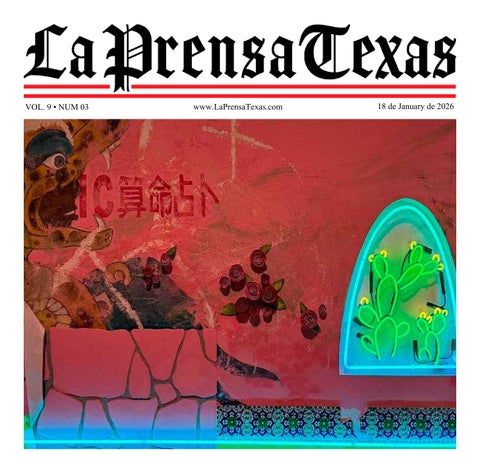
Patrick Martinez, a PasadenaCalifornia-born, Los Angeles–based artist of Filipino, Mexican, and Native American heritage, has a new contemporary piece, “Jaguar Garden” [2024], featured in the SAMA collection. The Dallas Contemporary Museum noted, “Through his multidisciplinary practice, Martinez creates works that reflect on the ever-evolving landscapes of Los Angeles, considering the passage of time and its impact on the lived environment and consequently on the multicultural communities that call it home.”
Martinez’s mixed media work at SAMA includes a painting that incorporates distressed stucco, ceramic tile, vinyl signage, security bars, flowers, and other LA streetscape materials. SAMA curators noted that his “landscape” is created to evoke working-class neighborhoods and their socio - economic pressures.
New Latino Art Featured in San Antonio Museum of Art
The curators explained, “The colorful neon lights, stucco, ceramic tiles, and faded graffiti in Patrick Martinez’s work appear to be taken directly from a local storefront.”
The array of materials and imagery Martinez uses to construct layered surfaces of his “landscape paintings” connects far-reaching time periods and histories in exploration of memory, cultural hybridity, and the changing urban landscape. Martinez also incorporates Mesoamerican imagery. The open-mouthed jaguar in the SAMA piece is drawn from the murals of the Cacaxtla archaeological site in Central Mexico (650-950).
Mexican artistic influences are evident in the works of several other Latino artists in the SAMA collection. Alberto Mijangos is listed as Mexican, perhaps more accurately, Mexican-born, having lived for many years in his adopted home of San Antonio, Texas. His “Rodeado de sonido / Surrounded by Sound,” an oil, acrylic, and mixed-media work on canvas, was completed in San Antonio in 1988.
The SAMA curators note that in this painting, intense red and deep purple hues are accentuated by a richly textured surface. They explained that during the 1980s, “Mijangos began employing an abstracted T-shape as a compositional device to explore the expressive qualities of color in a series he referred to as ‘T-shirt’ works. The T-shape references a common T-shirt and the religious cross, imbuing abstract forms with
spiritual and symbolic meaning. Mijangos spent his early years in Mexico City and eventually settled in San Antonio in the 1950s.
Mario Perez is a Texas painter and photographer rooted in the Rio Grande Valley with a long and active career in Houston and San Antonio art circles. He has had a parallel career working behind the scenes in museums and galleries as a preparator and installer. He studied graphic design in Houston and subsequently pursued painting and photography, exhibiting his work across Texas.
While living in Mexico City during the 1990s, Mario Perez was inspired by rotulistas (sign painters) and the landscape scenes he observed pictured on the backs of city buses. Perez recognized the art’s erosion by exhaust, weather, and time, and recognized the symbolic potential of the deteriorated landscapes, which he simulates by sanding down his paintings. In his SAMA painting, “Encarnación,” Perez draws attention to the illusion of representation on a flat surface by layering crisp lettering atop a faded image—a conceit echoed in the title, “Encarnación.” This signifies the concrete form of an abstract concept reflecting his interest in vernacular typography, commercial graphics, and street-level visual culture between Texas and Mexico.
Glasstire characterizes Perez’s paintings as materially dense, “messy” abstractions with streaks, blots, and pools of paint, often occupying square canvases that
Huichol Painting in the Rockefeller Latin American Collection. [Yarn and ceremonial art]. Courtesy of San Antonio Museum of Art. Photo by Ricardo Romo.
emphasize process, gravity, and accumulation. Perez’s paintings engage with ideas of foreground and background, surface and depth, allowing underlayers or previous decisions to remain visible as a kind of archaeological record of the art-making process.
A large painting by Jesse Treviño of the San Antonio Mexican theater, “El Alameda” [1980], hangs in an alcove as visitors enter the SAMA Latin American Collection area. Treviño was born in Monterrey, Mexico, but moved to San Antonio at age five. He grew up on the city’s Westside and attended a Technical and Industrial High School where he
studied commercial art. [I lived on the same street as Jesse Treviño’s family and attended the same high school two years ahead of him].
The Alameda Theater was completed in 1949 as a Spanishlanguage movie theater and performance space that promoted Mexican American culture. The beautiful, ornate Alameda was the city’s first desegregated movie venue. The Alameda Theater featured the best and newest Mexican movies. As a young boy in the 1950s, Treviño and his nine siblings frequently visited the movie house on Houston Street, along with Westside residents of all ages.
In Treviño’s painting of the iconic building, the Alameda is pictured in bright daylight with great precision and detail. The SAMA curators noted that the building’s “vibrant past is replaced by vacant windows and missing marquee panels that signal its impending closure.” Treviño recalled, “The year I painted it, it seemed like no one cared about it. That’s why I painted it.” His work monumentalizes an important site in an act of Latino cultural preservation.
Treviño is a renowned San Antonio artist whose paintings and large-scale public artworks have left an indelible legacy in this city and beyond. He gained prominence in the 1970s with photorealist depictions of people and places in the Latino community. The “El Alameda” painting is a gift of Ernest and Aimée Bromley to the SAMA Latin American art collection.
In explaining another recent acquisition, SAMA curators noted that photographer Al Rendon’s gelatin silver 1993 portrait of Tejano music icon Selena
Quintanilla-Pérez “exemplifies both celebrity iconography and a visual archive of Tejano cultural production in late twentiethcentury Texas.”
Rendon’s early 1980s assignments for the San Antonio Fiesta Commission deepened his connection to Mexican and Tejano experiences, which led to steady work with the Guadalupe Cultural Arts Center. There, he documented annual conjunto festivals, ballet folklórico presentations, cinema festivals, and other cultural events. He photographed participants at the Guadalupe Center’s Inter - American Book Fair, capturing writers such as Carlos Fuentes, Isabel Allende, and Maya Angelou.
Rendon’s photographs of Flaco Jiménez, Santiago Jiménez Jr., Emilio and Raulito Navaira, and especially a young Selena, mark milestones in Tejano music history. When Rendon took the 1993 photo of the young Selena, she had just released “Live!” [Selena Live!], an album that later won the 1994 Grammy Award for Best MexicanAmerican Album, making her the first female Tejano artist to win a
Grammy.
SAMA curators recognize that Rendon’s photograph of Selena illustrates the “interplay of grace and fashion and underscores the negotiation between timeless selfpresentation and the spectacle of performance. To her fans, Selena’s poised, self-assured presence embodies the aesthetics of Latina empowerment within the broader framework of US-Mexican visual culture.” The curators concluded, “This portrait merges documentary traditions with formal precision and emotional impact, securing Selena’s enduring role in regional and Transnational cultural memory.”
The Rendon Selena portrait is part of a donation to SAMA of over 550 serigraphs, lithographs, artist portfolios, and photographs by Chicano and Mexican artists that Harriett and I have acquired over five decades. We have collected Chicano and Mexican art for the past 56 years, with the intention of enjoying it in our home, supporting artists, and sharing our collection with museums, libraries, and universities so that others can know and appreciate this art.
Patrick Martinez, “Jaguar Guardian” [2024]. Courtesy of San Antonio Museum of Art. Photo by Ricardo Romo.
Alberto Mijangos, “Rodeado de sonido / Surrounded by Sound.” Courtesy of San Antonio Museum
Mario Pérez, “Encarnación.” Courtesy of San Antonio Museum of Art. Photo by Ricardo Romo.
Marisa Moran Jahn, SAMA “Gateway.” Courtesy of San Antonio Museum of Art. Photo by Ricardo
By Yvette Tello
The Navy All-American Bowl, a marquee event in high school football, showcased the elite talent of approximately 100 of the nation’s top recruits from the 2025-2026 class. This year’s game featured a thrilling face-off between the East and West teams, held at a packed stadium that echoed with the cheers of enthusiastic fans.
In a closely contested match, the East team emerged victorious, defeating the West team with a final score of 17-14. The game was a showcase of skill, strategy, and determination, with both teams displaying exceptional talent and athleticism.
A standout performer of the match was Luke Wafle, who was named the Most Valuable Player (MVP) for his remarkable defensive display. Wafle’s performance was nothing short of spectacular, as he not only contributed to the team’s defensive strength but also tied the sack record for the game. His ability to disrupt the West team’s offensive plays was pivotal in securing the East’s victory.
Community involvement played a significant role in the success of the event. Robert Romo, Navy All American Bowl ambassador and the community liaison for Walmart, has been instrumental in inviting local residents, including La Prensa Texas, to participate in this amazing annual event. His efforts to recruit volunteers have
Navy All-American Bowl: East Team Clinches Victory
helped foster a sense of community spirit and engagement, allowing more people to be part of this remarkable organization.
The Navy All-American Bowl continues to be a significant platform for young athletes to display their skills on a national stage, with many players looking to take their talents to the next level in college football. The successful event not only highlights the future stars of the sport but also fosters a spirit of camaraderie and competition among the nation’s best high school football players.
As the players from both teams return to their respective homes, the memories of this thrilling encounter and the pride of representing their regions will surely motivate them in their future endeavors on and off the field. The contributions of community leaders like Romo ensure that this event remains a cherished tradition for years to come.
Frena por cualquier persona en el cruce peatonal.
Aprende más sobre cruces peatonales. saspeakup.com/keepcrossingssafe
Escanea Aquí Para Aprender Más
By Rafael Ernesto TejadaFlores
Estimados, Me atrevo a enviarles este comentario sobre la situación y los peligros que enfrentamos, todos los de herencia hispana, no solamente en mi propio Estado de Colorado, sino a traves del suroeste, esperando que se pueda publicar entre otras “cartas a la dirección” que ustedes reciben en estos días dificles. Según parece, la mayoría de mis vecinos, residentes
Carta a la Redacción
hispanoamericanos, aquí en el sur de Colorado donde vivo, no votan. Claro que esto fue lo que me motivó a escribir mi comentario (abajo).
Yo nací en Bolivia y aunque no sea ni académico ni político, creo que le toca a cada uno levantar la voz contra lo que pasa actualmente en este país.
Gracias de antemano por su consideración
Atentamente
Rafael Ernesto TejadaFlores
Mi comentario:
AVISO URGENTE
Amigos, amigas
Hermanos, hermanas Aquí estamos—juntos— en peligro!
No solo ustedes pero nosotros todos, tus familiares, tus hijos, tus padres, tu pueblo, tu comunidad, incluso tu propia vida, todo y todos, sí, nosotros todos.
Ya es tarde, Ojalá no
demasiado tarde, aún no, pero es el momento de la verdad.
Resistimos ahora o perdemos todo.
¿Cuál es el problema? ¿Por qué nos odian tanto los republicanos?
Los partidarios del gobierno Trump? Los aduladores ciegos del monstruo Trump?
¿Por qué nos persiguen con ICE? con la migra? con sus tropas? con sus milicias?
¿Simplemente porque hablamos español? No es un crimen.
Quizá porque el pais nos necesita tanto? Y ellos lo saben?
¿Por qué nuestra piel no es tan blanco cómo lo suya? Basta! Entonces amigos, ¿Qué podemos, qué debemos hacer? Votar. Sí, votaré contra los republicanos, los racistas de MAGA. Parece poco, poca cosa, pero no lo es.
Votar es nuestra única arma, la única manera para defendernos, para decir No. Gritamos todos: No más!
Nuevo Año, Nuevas Estafas: Consejos para no ser víctima en 2026
Llegó el nuevo año, y los estafadores continúan activos.
Según el informe más reciente de la FTC, en 2025 se reportaron más de 2.3 millones de casos de fraude. Desde mensajes que parecen venir de bancos, agencias gubernamentales o incluso familiares, los estafadores siguen encontrando nuevas formas de engañar y poner en riesgo a los consumidores.
A continuación, Chase comparte algunas estafas que conviene tener en cuenta este año, junto con recomendaciones prácticas para ayudar a los consumidores
a estar preparados en 2026:
Estafas por suplantación: Los estafadores suelen hacerse pasar por bancos, empresas reconocidas, o incluso familiares para crear urgencia y engañar a las personas con falsas amenazas o supuestos problemas, con el fin de obtener pagos o información personal y financiera.
o Consejo: No actúes de inmediato ni compartas información confidencial. Verifica siempre contactando a la entidad por canales oficiales y considera usar herramientas gratuitas de monitoreo de identidad, como Chase Credit Journey, para
detectar actividades inusuales.
Estafas de compras en línea: Los estafadores publican ofertas que parecen demasiado buenas para ser verdad, usando frases como “última oportunidad” u “oferta válida solo por hoy” para que tomes decisiones rápidas sin verificar al vendedor.
o Consejo: Compra solo en sitios web y tiendas de confianza. Si usas un marketplace, mantén la comunicación y el pago dentro de la plataforma para mantener las protecciones al consumidor.
Siempre que sea posible, usa tarjeta de crédito, ya que puede ofrecer cobertura para reclamar
cargos si no recibes lo que pagaste.
Estafas románticas: Personas que conoces en línea o en aplicaciones de citas buscan ganarse tu confianza para luego pedir dinero u ofrecer falsas oportunidades de inversión.
o Consejo: Sospecha si alguien que conoces solo en internet o por teléfono pide dinero, regalos o información personal rápidamente. Verifica la autenticidad de sus fotos y perfiles buscando en internet y presta atención a inconsistencias en sus historias o excusas urgentes.
Estafas durante la temporada de impuestos: Los estafadores aprovechan que muchos presentan sus impuestos a principios de año para enviar correos, llamadas o mensajes que parecen ser del IRS u otras autoridades fiscales, exigiendo pagos inmediatos o amenazas de acciones legales.
o Consejo: Nunca compartas información personal o financiera por correo o teléfono sin verificar la identidad del solicitante. Contacta siempre al IRS u otra entidad fiscal a través de los canales oficiales antes de tomar cualquier acción.
Por Sendero Deportivo
Esté domingo 18 de enero, arranca el playoff categoría
Abierta dominical Potranco, cuyas series se estarán realizando en el estadio Potranco Baseball Field propiedad del artista Eloy Rocha.
Arranca Playoff Abierta Potranco
Su presidente Simón Sánchez, convoca a los aficionados para que no se pierdan las espectaculares acciones que estarán protagonizando los cuatro equipos clasificados a semifinales, en lo que serán series a ganar dos de tres partidos.
con récord de 9-4-1. 1:30pm Piratas primer lugar (12-2), contra Acereros cuarto lugar con récord de 7-6-1.
Rol de juegos: 10am Broncos (segundo lugar con marca de 9-3-2) vs Dodgers tercer lugar
El pitcher Miguel Rondon, de Piratas celebró haber obtenido el campeonato del lanzador campeón con 8 victorias y 1 derrota. Mientras que Acereros y sus directivos Memo de la Cerda y Jesús “El Tronco” Mendoza, celebraron en grande su victoria tras doblegar 4-2 carreras a White Sox, con victoria monticular de Jheyson Manzueta y derrota para Carlos Reyes.
Dodgers de Carlos Iglecias empató en diez entradas 1-1 ante Diablos de Mike Tabhan. Broncos en gran partido para despedir la temporada regular derrotó a Blue Jay’s con pizarra de 4-3.
Leo Terán se llevó el triunfo ante el rival Taylor Gorski. Blue
Jay’s, en la apertura del noveno episodio con un out y pizarra de 4-3 carreras, llenó la casa, el timonel Roberto Garza, de Broncos, mandó llamar al relevista derecho José Pérez, quien en siete disparos al home plate logró histórico salvamento con elevado al jardín derecho y rola por el campo corto para preservar la cerrada victoria del sublider. Por lo qué recibió felicitaciones y a la vez como coach dijo estar listo para seguir adelante en el playoff. Dodgers en su empate por límite de tiempo ante Diablos utilizó los servicios del lanzador abridor Roger Bernal, los relevistas Luis García y el novato Chris Arriaga.
En categoría Máster 50+ resultados del primer partido del playoff: Yankees 12 Los Rojos 6. Moisés Cervantes ganó con relevo de Alan Mow. Amado
Razura perdió con relevo de Carlos Cerda. Astros se llevó el primero ante Rangers con triunfo para Ubaldo Montelongo en la serpentina quien fue declarado campeón pitcher de temporada lo cual suma su segundo trofeo de monarca en dicho departamento. Tony Arriaga perdió con relevo de Jorge Moreno. Rol de juegos campo 2 Domingo 18 de enero: 11am Astros vs Rangers. 2pm Yankees vs Los Rojos. En las fotos aparecen: Lalo Olivares copatrocinador de Piratas. Miguel Rondon, campeón pitcher de Piratas, Tronco Mendoza de Acereros, Iván Vaquera manager de Piratas y Memo de la Cerda de Acereros. José Pérez, pitcher y coach de Broncos.
(Fotos de Franco).
SAN ANTONIO ZOO’S FAMOUS “CRY ME A COCKROACH”
FUNDRAISER RETURNS FOR VALENTINE’S DAY
San Antonio Zoo is once again inviting people everywhere to turn heartbreak into humor— and conservation— with the return of its world-famous Cry Me a Cockroach Valentine’s Day fundraiser. This year, the Zoo has rolled back prices, making it even easier to join the fun while supporting wildlife. Known for its cheeky spirit and global following, Cry Me a Cockroach lets participants symbolically name a cockroach, rodent, or veggie after an ex— or any not-so-special
someone. That named item is then fed to one of the Zoo’s animal residents. It’s all in good fun, and every donation fuels a meaningful mission.
Donation “Revenge Levels” include:
• $5 Cockroach
• $5 Veggies
• $15 Rodent
Each contribution directly supports wildlife conservation, animal care, and education programs at San Antonio Zoo.“With Cry Me a Cockroach, we’ve
found a fun and creative way for people around the world to get some innocent revenge,” said Tim Morrow, President & CEO of San Antonio Zoo. “It’s a lighthearted fundraiser with real impact, and it’s become a Valentine’s Day tradition across the globe.”
With every Cry Me a Cockroach donation, participants receive:
• A downloadable Valentine’s Day card to share with friends—or former flames
• A special Valentine’s Day video featuring one of the Zoo’s popular animal
residents
Fans can catch the feeding fun on Valentine’s Day by following @ SanAntonioZoo across social media platforms. Whether you’re freshly
single, happily over it, or simply looking for something wildly different, Cry Me a Cockroach offers a hilarious way to celebrate Valentine’s Day—while giving back to wildlife.
LA FAMOSA RECAUDACIÓN DE FONDOS “CRY ME A COCKROACH” DEL ZOOLÓGICO
DE SAN ANTONIO REGRESA PARA EL DÍA DE SAN VALENTÍN
El Zoológico de San Antonio vuelve a ayudar a personas de todo el mundo a “exterminar” su pasado con el regreso de su mundialmente famosa recaudación de fondos de San Valentín, Cry Me a Cockroach, y este año hemos reducido los precios para que sea aún más fácil participar. Conocida por su humor atrevido y la atención global que recibe cada año, Cry Me a Cockroach
permite a los participantes nombrar simbólicamente una cucaracha, roedor o vegetal con el nombre de su ex o de alguien no tan especial, y luego el zoológico lo sirve como un delicioso regalo para uno de los residentes animales. Todo es por diversión… ¡y por una gran causa! Niveles de donación: $5
Cucaracha, $15 Roedor $5 Vegetales
Cada donación ayuda a apoyar los esfuerzos de conservación de la vida silvestre, el cuidado de los animales y los programas educativos del Zoológico de San Antonio. “Con Cry Me a Cockroach, hemos encontrado una manera divertida y creativa para que personas de todo el mundo puedan desquitarse de forma inocente,” dijo Tim Morrow, Presidente y CEO del Zoológico de San Antonio.
“Es una recaudación de fondos ligera y divertida, pero con un impacto real, y se ha convertido en una tradición del Día de San Valentín en todo el mundo.” Con cada donación de Cry Me a Cockroach, los participantes recibirán: Una tarjeta descargable del Día de San Valentín para compartir con amigos… o con ex amores,Un video especial de San Valentín con uno de los populares
residentes del zoológico Los fans pueden ver la acción en vivo el Día de San Valentín siguiendo @ SanAntonioZoo en todas las plataformas de redes sociales. Ya sea que estés recién soltero, felizmente superándose o simplemente buscando algo totalmente diferente, Cry Me a Cockroach ofrece una forma divertida y única de celebrar San Valentín… ¡mientras apoyas la vida silvestre!
NOTICE OF PUBLIC MEETING FOR: TRIUMPH PUBLIC HIGH SCHOOLS STUDENT ALTERNATIVES PROGRAM, INC.
Notice is hereby given that, the following Open Public Meetings for the Student Alternatives Program, Inc. dba: Triumph Public High Schools – (Central Texas), (Lubbock), (Rio Grande Valley), and (West Texas), will be held on:
• Monday, January 26, 2026 beginning at 5:00 p.m. CST virtually at the Central Administrative Offices - San Antonio, 731 Fredericksburg Road, San Antonio, TX 78201. link to attend meeting:
Time zone: America/Chicago Google Meet joining info
Video call link: https://meet.google.com/ibh-rgoa-hsw Or dial: (US) +1 435-268-2177 PIN: 739 741 213#
More phone numbers: https://tel.meet/ibh-rgoa-hsw?pin=5805771479394
This annual public meeting will be held to comply with statute in Title 19 TAC §109.1001(g)(3) in which Charter Districts are required to publicly discuss financial management information and financial accountability ratings with parents, taxpayers, and other stakeholders by distributing annual financial management reports that explain the Charter Districts’ ratings and its performance in the 2023-2024 Charter FIRST. and
This public meeting will be held to comply with the requirements given in TEC (§39.305)-Public Discussion of Ratings in which each Charter District and campus must hold at least one open public meeting annually for the purpose of discussing the performance of the Charter District and campus and the Charter District and campus performance objectives found as part of the Texas Academic Performance Report (TAPR).
POSTING INFORMATION
This notice is being posted at each of the charter campuses, the Central Office of the Triumph Public High Schools located at 731 Fredericksburg Road, San Antonio, Texas 78201 and on the Triumph Public High Schools official website [www.triumphpublicschools.org].