Community Liaison / Enlace Comunitario: Ramon Chapa Jr. r.chapa@laprensatexas.com
Creative Director / Director Creativo: Nicodemus Gonzalez
Advertising & Production Coordinator / Coordinadora de Publicidad y Producción: Jessica Medrano
Contributors / Colaboradores: Dr. Ricardo Romo, Henrietta Hernandez info@laprensatexas.com
Editor Español: José I. Franco
Sales Representative / Representante de Ventas: Maria Cisneros
La Prensa Texas is a grassroots, bilingual publication that serves as a vital voice for the community — especially for those who are too often left out of mainstream media conversations. Since its founding, La Prensa Texas has been dedicated to providing relevant, accessible, and culturally rooted news that reflects the lives, struggles, and triumphs of the people of San Antonio and surrounding counties. Our mission is simple yet powerful: to inform, inspire, and empower our readers through storytelling that uplifts the diverse voices of our community. This publication continues to be the lifeline of local news, bridging the gap between the people and the stories that matter most.
Sales Info: Our Circulation
45,000 Printed And Distributed Weekly English And Spanish Send Press Releases And Advertising Inquiries To: Info@LaPrensaTexas.com 210-628-9611
Let’s Talk About It:
NO WARRANT NECESSARY TO ENTER OUR HOMES
By Yvette Tello
For a long time, people were told this simple rule: don’t open your door to immigration officers unless they show a warrant signed by a judge. That advice came from the Constitution and court rulings that say the government usually can’t enter your home without a judge’s permission. Now, according to an internal memo reported by the Associated Press, immigration officers are saying they can force their way into a home without a judge’s warrant. Instead, they may rely on an administrative warrant, which is basically paperwork signed by immigration officials themselves — not by a judge. That’s a big change. This is why people are confused and scared. What families were told for years may no longer protect them the same way. The rules people relied on to feel safe inside their own homes are being challenged.So what does this mean for regular people?If immigration officers come to your door and won’t show a judge-signed warrant, you’re suddenly stuck in a very stressful situation. Do you open the door? Do you keep it closed? Are your rights still protected? What happens if you don’t comply?These are not easy questions — especially for mixed-status families, immigrants, or anyone worried about a loved one.That’s why we’re asking: Do you know the difference between a judge’s warrant and an immigration warrant?Have you been told one thing for years and now hear something different?How should families protect themselves when the guidance keeps changing? Were you aware of this? What would you do if this happened at your door? Let’s talk about it…
Sandra Banks: “Scary times”
Bob Marsh: “Warrant has to be signed by Judge in wet ink...anything else can be
beaten…”
Richard Cortez: “Yeah it’s a little scary, only thing is if haven’t done anything wrong or against the state, county, USA laws then you have nothing to fear but if you know you have a warrant and or violated such laws then you have to use common sense either turn yourself in self deport whatever the law you broke you’ll be living in fear so what’s better to live in fear or not that’s on you just my opinion”
Jeff Hull: “In my opinion. This opens the door (no pun intended) to the “Castle Doctrine” Law. The law provides a defense from prosecution if the person was defending themselves, another person, or property. It is with good reason that a home owner/renter could/would shoot first and ask questions later. Especially if they literally break into your home. Breaking into someone’s home is still illegal. Just because you have a badge or a bulletproof vest. Doesn’t give them the Right to break into someone’s house without probable cause or a warrant. Now I know some will think that opinion is crazy. However, it’s bound to happen. The other day ICE was going door to door in the neighborhood I grew up in. A neighborhood known as gang members in organizations like the Mexican Mafia and others. If they hit the wrong house. They will be fired upon. Now I know those gang types are criminals but every day citizens also protect their homes with firearms. So this gives them the opportunity to fire on them and them claim fear and that they thought they were intruders. So this is not a good thing.Again, this is all based on opinion and common sense. At some point we as American Citizens may have to start fighting fire with fire. The People in 1930s Germany and especially the Jewish People and others did not fight back and look how that turned out. We are no longer dealing with legit Law Enforcement. They are using Hitlers gestapo tactics. It won’t stop until we stop it. No one is going to come and save America. It’s up to us.”
Vivian Ruiz: “I’d like to know what happened to the “Castle Doctrine” where we have the right to protect ourselves once there inside and we fear for our lives? Providing we have no legal issues....”
Dana Quinones:
This morning at my mom’s apartment complex Ice arrived in black SUVS. The maintenance man told them they needed to leave unless they had a warrant signed. They ignored him so he went and got the manager. The manager called the police. The police asked for a warrant and they didn’t show anything so they were asked to leave the premises and they did. I don’t know if this will always work but it did today. I was so proud of the people who work there and reside there who stand strong with their beliefs. If someone is a criminal and there is a warrant for their arrest by all means show me the paper and proceed to what you are here to do. But if you are just out “HUNTING” move along. Poachers are NOT allowed!!
Robert Vasquez: “Deport all illegals. It’s just the law..The law doesn’t pertain to those that are here illegally. They don’t have a valid ID. It’s time to go back home regardless of where they are from.”
Severiano Flores: “If someone breaks in my door unannounced I’m defending my home.”
Edna Lugo: “So done with Trump supporters... I have cut so many “friends” at this point.”
Michael Suarez: “Absolutely no, an “administration” warrant cannot Trump the constitution, if they break in, offer no resistance, fight it in court. DO NOT SPEAK AT ALL but to take the 5th as in some states silence can be a backhanded admission to guilt. Let your section 42 1983 lawsuit make you some easy money.”
Joy Poth-Aleman: “This is the last gasp of the Constitution. The GOP and the Executive Branch have thrown it out.”
By Dr. Ricardo Romo
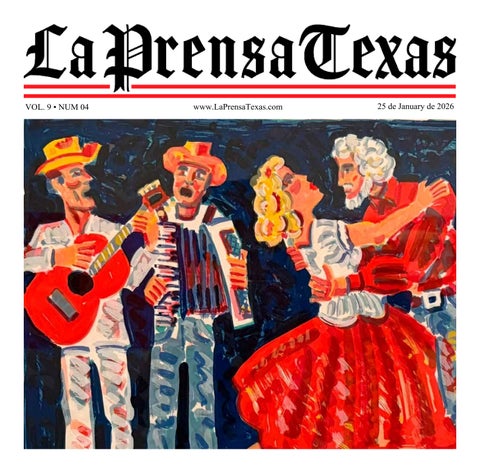
About The Cover Artist: Frank Romero
Frank Romero is recognized as one of the pioneering figures in Chicano and Latino art. He grew up in Boyle Heights, a vibrant neighborhood in East Los Angeles known for its multicultural heritage. In the 1950s, Boyle Heights was one of the few genuinely integrated communities in the country — home to Mexican Americans, Jews, Japanese, and European immigrants. During his youth, Romero attended Roosevelt High School, where his classmates reflected this unique cultural mosaic. Early on, he dreamed of becoming an artist and began taking weekend classes at the Otis Art Institute. After graduating from Roosevelt in 1959, he studied art at California State University, Los Angeles, while working parttime in design and photography for the Los Angeles County Student Professional Program.
At Cal State, Romero met Carlos Almaraz, a fellow artist who would become both collaborator and lifelong friend. After a stint in New York working for Penguin Books and Ballantine Books, Romero returned to Los Angeles in 1970 to design for A&M Records. By his forties, he dedicated himself fully to his art. In 1973, he co-founded the legendary collective Los Four alongside Almaraz, Roberto de la Rocha, and Gilbert “Magu” Luján. Their 1974 exhibition at the Los Angeles County Museum of Art became a landmark moment— marking the first major Chicano art show in a U.S. museum. As Romero later told journalist Carolina Miranda, Los Four emerged from “the idea of being Chicano,” a vision shaped by protest, community, and cultural revolution.
Romero’s creative path has spanned over fifty years, encompassing painting, sculpture,
ceramics, murals, photography, and design. With brilliant use of color and imagery drawn from East L.A.—cars, palm trees, and cityscapes—his art evokes both nostalgia and identity. Among his most celebrated public works is the 1984 mural Going to the Olympics, a 102-foot visual ode to Los Angeles painted along Highway 101. His murals at Boyle Heights’ Estrada Courts stand among the earliest public artworks to affirm Chicano cultural identity. Over the decades, Romero has exhibited globally and earned recognition from major institutions, including the Smithsonian. His 2017 retrospective Dreamland at the Museum of Latin American Art reaffirmed his remarkable versatility and enduring influence. As artist, teacher, and mentor, Frank Romero remains one of the most vital and multifaceted voices in contemporary Chicano art.
By Ramon Chapa
La Prensa Texas was proudly represented at this year’s MLK March by Community Liaison Ramon Chapa Jr., standing shoulder to shoulder with the community in a powerful show of unity, purpose, and hope. An estimated 300,000 people filled the streets for the March for Freedom, making it one of the largest gatherings in the nation honoring the legacy of Dr. Martin Luther King Jr. The energy was undeniable. The message was clear. And the photos say everything words cannot.
2026 MLK MARCH
COMISIÓN DE CALIDAD AMBIENTAL DE TEXAS
AVISO DE RECIBIMIENTO DE LA SOLICITUD E INTENCIÓN DE OBTENER RENOVACIÓN DEL PERMISO DE AIRE (NORI)
NÚMERO DE PERMISO 6348
SOLICITUD. NuStar Logistics, L.P. ha solicitado a la Comisión de Calidad Ambiental de Texas (TCEQ, por sus siglas en inglés) la renovación del Permiso de Calidad del Aire Número 6348, que autorizaría la continuación del funcionamiento de una terminal de petróleo a granel situada en 10619 South U.S. Highway 281, San Antonio, Condado de Béxar, Texas 78221. Este enlace a un mapa electrónico de la ubicación general del sitio o de la instalación se ofrece como cortesía pública y no forma parte de la solicitud o del anuncio. Para conocer la ubicación exacta, consulte la solicitud. https://gisweb.tceq.texas.gov/LocationMapper/?marker=-98.476944,29.311111&level=13. La instalación existente está autorizada a emitir los siguientes contaminantes atmosféricos: monóxido de carbono, contaminantes at mosféricos peligrosos, óxidos de nitrógeno, compuestos orgánicos, material en partículas incluyendo material particulado con diámetros de 10 micras o menos y de 2.5 micras o menos y dióxido de azufre.
Esta solicitud se presentó a la TCEQ el 23 de diciembre de 2025. La solicitud estará disponible para su visualización y copia en la oficina central de la TCEQ, la oficina regional de la TCEQ en San Antonio, y la Biblioteca Cortez, 2803 Hunter Boulevard, San Antonio, Condado de Béxar, Texas a partir del primer día de la publicación de este aviso. El expediente de cumplimiento de la instalación, si existe, está a disposición del público en la oficina regional de la TCEQ de San Antonio. La solicitud (cualquier actualización inclusive) está disponible electrónicamente en la siguiente página web: https://www.tceq.texas.gov/permitting/air/airpermit-applications-notices
El director ejecutivo ha determinado que la solicitud está administrativamente completa y llevará a cabo una revisión técnica d e la misma. Además de la renovación, esta acción de permiso incluye la incorporación de cambios en los factores de emisión relacionados con este permiso. También se está revisando una solicitud de enmienda que no está sujeta a notificación pública ni a una oportunidad de audiencia de caso impugnado. Las razones de cualquier cambio o incorporación, en la medida que estén incluidas en el permiso renovado, pu eden incluir la mejora del control operativo en la planta o la ejecutabilidad del permiso. La TCEQ puede actuar sobre esta solicitud sin buscar más comentarios del público o dar la oportunidad de una audiencia de caso impugnado si se cumplen ciertos criterios.
COMENTARIOS DEL PÚBLICO. Puede presentar comentarios públicos a la Oficina del Secretario Oficial en la dirección indicada a continuación. La TCEQ considerará todos los comentarios del público al elaborar una decisión final sobre la solicitud y el director ejecutivo preparará una respuesta a esos comentarios. Cuestiones como el valor de la propiedad, el ruido, la seguridad del tráfico y la z onificación están fuera de la jurisdicción de la TCEQ para ser tratadas en el proceso de permiso.
OPORTUNIDAD DE UNA AUDIENCIA DE CASO IMPUGNADO. Puede solicitar una audiencia de caso impugnado si usted es una persona que puede verse afectada por las emisiones de contaminantes atmosféricos de la instalación tiene derecho a solicitar un a audiencia. Si solicita una audiencia de caso impugnado, deberá presentar lo siguiente (1) su nombre (o, en el caso de un grupo o asociación, un representante oficial), dirección postal y número de teléfono durante el día; (2) el nombre del solicitante y el número de permiso; (3) la declaración “[Yo/nosotros] solicito/solicitamos una audiencia de caso impugnado”; (4) una descripción específica de cómo se vería/n afectado/s por la solicitud y las emisiones atmosféricas de la instalación de una manera no común al público en general; (5) la ubicación y la distancia de su propiedad en relación con la instalación; (6) una descripción del uso que usted hace de la propiedad que puede verse afectada por la instalación; y (7) una lista de todas las cuestiones de hecho controvertidas que presente durante el periodo de comentarios. Si la solicitud la realiza un grupo o asociación, deberá identificarse con nombre y dirección física a uno o varios miembros que estén legitimados para solicitar una audiencia. También deben identificarse los intereses que el grupo o asociación pretende proteger. También puede presentar sus propuestas de ajustes a la solicitud/permiso que satisfagan sus preocupaciones.
El plazo para presentar una solicitud de audiencia de caso impugnado es de 15 días a partir de la publicación del anuncio en el periódico. Si la solicitud se presenta a tiempo, el plazo para solicitar una audiencia de caso impugnado se ampliará a 30 días después del envío de la respuesta a los comentarios.
Si se presenta a tiempo cualquier solicitud de audiencia de caso impugnado, el Director Ejecutivo remitirá la solicitud y cualq uier solicitud de audiencia de caso impugnado a los Comisionados para su consideración en una reunión programada de la Comisión. A menos que l a solicitud se remita directamente a una audiencia de caso impugnado, el director ejecutivo enviará por correo la respuesta a los comentarios junto con la notificación de la reunión de la Comisión a todas las personas que hayan presentado comentarios o esté n en la lista de correo de esta solicitud. La Comisión sólo podrá conceder una solicitud de audiencia de caso impugnado sobre cuestione s que el solicitante haya presentado en sus comentarios a tiempo y que no hayan sido retirados posteriormente. Si se concede una audiencia, el objeto de la misma se limitará a las cuestiones de hecho controvertidas o a las cuestiones mixtas de hecho y de derecho relativas a los problemas de calidad del aire pertinentes y materiales presentados durante el periodo de comentarios. Cuestiones como el valor de la propiedad, el ruido, la seguridad del tráfico y la zonificación quedan fuera de la jurisdicción de la Comisión p ara ser tratadas en este procedimiento.
LISTA DE CORREO. Además de presentar comentarios públicos, puede solicitar que se le incluya en una lista de correo para recibir futuros avisos públicos sobre esta solicitud específica enviando una solicitud por escrito a la Oficina del Secretario Oficial en la dirección que figura a continuación.
CONTACTOS E INFORMACIÓN DE LA AGENCIA. Los comentarios y solicitudes del público deben presentarse vía electrónicamente en www14.tceq.texas.gov/epic/eComment/, o por escrito a la Texas Commission on Environmental Quality, Office of the Chief Clerk, M C-105, P.O. Box 13087, Austin, Texas 78711-3087. Tenga en cuenta que cualquier información de contacto que proporcione, incluyendo su nombre, número de teléfono, dirección de correo electrónico y dirección física, formará parte del registro público de la agenci a. Para más información sobre el proceso de tramitación de permisos, favor de llamar al Programa de Educación pública de la TCEQ sin costo al 1-800-687-4040, o bien visitar su sitio web, www.tceq.texas.gov/goto/pep. Para información en español, favor de llamar al 1-800-687-4040. También es posible consultar oportunidades de participación pública en nuestro sitio web, www.tceq.texas.gov/goto/participation.
También se puede obtener más información de NuStar Logistics, L.P., 2829 Texaco Road, Corpus Christi, Texas 78402-1922 o llaman do al Sr. David Edge, Mánager Ambiental, Región Suroeste, Sunoco LP al (361) 249-9446.
Fecha de emisión del aviso: 8 de enero de 2026
Por Franco
Julian Champagnie Delantero De Los Spurs Visitó La AFB Lackland
El pentacampeón equipo
Los Spurs de San Antonio por más de cincuenta años se ha destacado por su excelente servicio
comunitario. Recientemente
el delantero Julián Champagnie, quien en sus tres años militando con la franquicia Silver and Black,
se ha convertido en uno de los embajadores llevando felicidad a diferentes organizaciones en la región de San Antonio llamada “Military City”, por sus bases militares sirviendo a las Fuerzas Armadas de Estados Unidos.
De acuerdo a boletín oficial informativo de la empresa Spurs Sports and Entertainment (SS&E), se dijo qué orgullosamente se cumplieron los objetivos con la empresa financiera USAA (patrocinadores de diversos eventos con Spurs), para este principio de año visitar la base aérea de Joint Base San Antonio Lackland USAF, ubicada en el corazón del sector oeste.
Dónde tuvo gran recepción y a la vez recibió información de cómo opera esa base aérea. A la vez hizo recorrido por el sector del 44th Training Squadron Hangar, donde se le invitó abordar uno de los helicópteros en suelo.
Ahí se le explicó el funcionamiento del aparato militar de la fuerza aérea.
Su visita concluyó con la firma de autógrafos para los militares presentes, por lo cual una vez más USAA cumplió con dicho programa instaurado en la temporada NBA 2015-16.
Con lo cual a se aporta mejor información y apreciación del deber para quienes sirven al país en las Fuerzas Armadas. (Fotos cortesía de SS&E).
My Father And Two Well-Known Mexican Actors
By J. Gilberto Quezada
During the 1940s and 1950s, two of the wellknown Mexican actors of the Golden Age of Mexican cinema that I would see on the big screen at the Cine Azteca in the Barrio El Azteca were Arturo de Córdova and René Cardona. The Cine Azteca was located at 311 Lincoln Street and was situated in the heart of the historic barrio. It is estimated that the building was constructed with an expansive high facade and a Mission Revival parapet during the 1920s and named the Teatro Nacional, and was used for vaudeville Mexican shows. In the 1930s, when movies became popular, it became known as the Cine Azteca and showed Mexican movies. American movies were consequently added to the
program but on a limited basis. The ticket booth was located in the center entrance. If you were standing in front of the theater, to your left was the concession stand with a big glass window. And to the sides of the entrance, the movie posters were located in glass frames showing the current features and the coming attractions. Sadly, the building has since been demolished to make room for a parking lot. Mamá took my older brother and sister and I to the movies every Friday. It was a popular form of entertainment. We walked from our house at 402 San Pablo Avenue down to Lincoln Street, turned left, and then continued for two and a half blocks to the theater. She paid ten cents for each of us and a quarter for her.
The projection room was located right in the middle of the balcony. I got to know all the actors and actresses, and besides Arturo de Córdova and René Cardona, I enjoyed watching Pedro Infante, Dolores del Río, Jorge Negrete, Emilioi Tuero, María Félix, Fernando Solere, Yolanda Montes (la Tongolele), Joaquín Pardavé, Sara García, Gloria Marín, Antonieta Pons, Luis Aguilar, Carlos López Moctezuma, Libertad Lamarque, and many more. These two famous and popular actors, Arturo de Córdova and René Cardona, had a special meaning to me, and more importantly, a personal connection to my father, Pedro de Quezada. Later on, when Papá joined the U.S. Navy during World War II, he deleted the “de”
from his name. Very early in my life, he would tell me many stories about his friendship with them in Mexico City. Before he met my mother, who was living with her godparents in a big multi-story house in Mexico City, and part of the house was used as a bed and breakfast guesthouse. Papá worked as the private chauffeur of Dr. Manuel Galicia, a well-known physician who practiced medicine in Laredo and across the Río Grande in Nuevo Laredo, Tamaulipas, as well as in Mexico City. And, when they were in Mexico City, they stayed in my mother’s godparents’ house.
The relationship between Papá and Dr. Manuel Galicia was much more than employee and employer. According to Papá, they became intimate friends and enjoyed hobnobbing with the Mexican movie stars.
Papá was always very proud of his two inscribed
photographs that Arturo de Córdova and René Cardona gave him as a token of their appreciation and friendship. All three of them were contemporaries, having been born in the early decade of the twentieth century. Arturo de Córdova was born in Merida, Yucatan, while René Cardona was born in Cuba but emigrated to the United States at a very early age. Both achieved their success in movies, while the former acted in action and adventure movies and became a major movie star in Latin American and Spain, he also made four American movies: For Whom the Bell Tolls (1943), Frenchman’s Creek (1944), Incendiary Blonde (1945), and New Orleans (1947). The latter, besides a stellar acting career, he also became a director, producer, screenwriter, and editor. And both of them received national accolades for their achievement in the Mexican movie industry.
Chicano and Mexican Art Featured in Current McNay Art Museum Exhibit
By Ricardo Romo, Ph.D
The McNay Art Museum, founded in 1954 as Texas’s first modern art museum, occupies Marion Koogler McNay’s Spanish Colonial Revival mansion in San Antonio. The museum is situated on 24 landscaped acres, featuring courtyards, a fish pond, and a beautiful nature garden. The museum’s collection of over 20,000 artworks showcases 19th- and 20th-century European and American modernism, contemporary art, prints, drawings, and theatre arts. Artists represented include Cézanne, Picasso, Matisse, van Gogh, O’Keeffe, and Rivera.
Phoenix, Arizona artist Fausto Fernandez grew up in the twin border cities of El Paso/Juárez and maintains deep ties to the regional art scene through his studio practice and public commissions. He earned dual BFAs in graphic design and painting from the University of Texas at El Paso in 2001, commuting daily across the border during his studies, an experience that continues to inform his work’s layered sense of movement, translation, and border crossing.
Fernandez identifies as a mixedmedia collage artist, working primarily in painting, public art, and community - engagement projects. He frequently works in series, drawing on mathematics, technology, border culture, Navajo textiles, mythology, and community life. Figurative and abstract elements interweave as metaphors for human interaction
and social dynamics. Fernandez’s borderlands upbringing informs recurring interest in U.S.–Mexico crossings, infrastructure, and shared everyday experiences, such as border crossing traffic and the port-of-entry environment.
Fernandez’s composition on display at the McNay, “Burden Narratives While Stuck in Traffic in Pursuit of an Obligation at the Port of Entry” [2023], includes collages, paper, and paint to depict a traffic jam at the US-Mexico border. The McNay curator noted that Fernandez “positions the border as a third space, or a transition between cultures.” Abstracted images of cars are layered as if they are lanes of traffic, using repetition to call to mind the tedium of waiting to cross the border. The colors and textures Fernandez employs recall rusted metal or pools of oil, an aesthetic present in many of the artist’s works.
Fernandez’s paintings have been described as vibrant “explosions of color,” where translucent layers of paint partially obscure and reveal archival images and his own photographs, producing a dynamic interplay between control and spontaneity. His diagrams, schematics, and blueprints are used as metaphors for systems, rituals, and the architectures of contemporary life. In some series, he incorporates materials such as asphalt or gunpowder, linking his abstractions to ideas of infrastructure and fragility.
Another Borderland artist
born and raised in San Antonio, Nivia González, demonstrated extraordinary artistic talent from an early age, holding her first solo exhibition at the San Antonio Witte Museum at just seventeen while a student at Alamo Heights High School. She went on to earn a bachelor’s degree in studio art from San Antonio’s Trinity University, attended the Cooper Union art program in New York City, and completed a master’s degree in art education at the University of Texas at Austin.
González rose to prominence during the 1980s and early 1990s and was a nationally recognized Latina visual artist. She created the artwork for the covers of notable books such as The House on Mango Street (1983) and Woman Hollering Creek (1991) by Sandra Cisneros and By the Light of My Father’s Smile (1998) by Alice Walker. Rejecting the romanticized stereotypes often imposed on women of color, González’s paintings asserted dignity and cultural pride.
One of Gonzalez’s most significant achievements was the founding of the Bexar County Jail Arts program in 1986, where she taught art to inmates in the Bexar County criminal justice system. Through the guidance of Gonzalez, a group of inmates created a largescale mural that was used as the backdrop for Pope John Paul II’s visit to San Antonio in 1987.
Beyond gallery circles, Gonzalez’s art appeared in settings ranging from the Smithsonian
Fausto Fernandez, “Burden Narratives While Stuck in Traffic in Pursuit of an Obligation at the Port of Entry”. Courtesy of the McNay Art Museum. Photo by Ricardo Romo.
Latino Center in Washington, D.C. to community spaces and cultural centers. At the height of her career, González received numerous public art commissions and continued to produce new work with the help of her twin daughters, who occasionally assisted her in her studio. A devastating car accident in 1997 caused a traumatic brain injury and partial paralysis of her dominant hand, but after nearly a decade of rehabilitation, she resumed painting, continuing to create radiant portraits of Latina women with enduring devotion and grace.
The McNay curators have long admired the talent of El Paso Latino artist Luis Jimenez, and the museum has numerous works by him, including his famous “Man on Fire” sculpture in the patio sculpture garden.
The large alligator print by Jiménez [which Harriett and I proudly donated to the museum] is currently on display in the McNay Print Gallery. The alligator has an interesting history. From the
Gonzalez’s colorful piece at the McNay includes a framed portrait of the Virgin of Guadalupe overlooking a tabletop still life of watermelon, fish, and papaya.
1880s to the 1960s, El Paso’s San Jacinto Plaza housed live alligators, making the plaza a popular tourist attraction featured in newspapers and postcards. By the 1960s, city officials relocated the alligators to the city zoo due to safety concerns.
In the 1990s, Jiménez was commissioned by the City of El Paso to create a public artwork commemorating the plaza’s historic live-alligator fountain. The resulting sculpture, commonly called Los Lagartos or Plaza de los Lagartos, consists of fiberglass life-size alligators placed at the center of the plaza, explicitly honoring the former alligator fountain. Jiménez’s work on the alligator sculpture led him to create the large alligator lithographic print, which is currently on display at the McNay.
Jiménez’s father’s electric sign company, located a few short blocks from the Rio Grande, specialized in neon signs, a trade and business that the senior Jiménez hoped to pass on to his talented son. The young Luis Jiménez grew up in El Paso learning how to spray paint, weld, and mold glass in his father’s shop.
In 1965 Jiménez journeyed to Mexico City to study art. In Mexico City, the leading art capital of Latin America, Jiménez found himself surrounded by a vibrant artistic culture. On the UNAM campus where he studied, bold and colorful murals by David Alfaro Siquiros dominated one of the entryways.
After the stay in Mexico City, Jiménez journeyed to New York City, where he joined a highly dynamic art scene heavily influenced by pop art. Jiménez was one of many struggling artists living in New York City during the
late 1960s. In New York, Jiménez constructed the seven-foot-tall Man on Fire bronze sculpture.
Jiménez was influenced by watching television in horror as monks set themselves on fire in protest against the Vietnam War. Jiménez explained in one of his interviews that the sculpture, on a universal level, serves as a visual symbol of courageous action in the face of oppression and recognized the disproportionately large numbers of Chicanos who were drafted into the military and sent to Southeast Asia.
On June 13, 2006, Jiménez was working in his studio in Hondo, New Mexico on a large commissioned mustang sculpture for the Denver Airport when the massive 50-foot sculpture slipped off a rope and fell on him, crushing him to death. We are grateful that Jiménez’s work lives on in his numerous sculptures, paintings, and lithographs on view in museums and public spaces, as well as in numerous publications about borderland artists.
Los Angeles artist Frank Romero’s “Bailando” [Dancing], a watercolor on paper, is also currently featured in the McNay Print Gallery. The work portrays a joyful couple dancing to the music of two Mexican musicians, one with a red guitar and his companion with an accordion.
Romero is one of the most multifaceted and talented Chicano artists of his generation. In his 50 plus years as an artist, he has produced exceptional works as a painter, a sculptor, a ceramicist, a muralist, a graphic designer, a draftsman, and a photographer. Romero’s art has been exhibited in major U.S., European, and Japanese galleries.
From his teen years on, Romero always thought about becoming an artist. At age fifteen, while attending Roosevelt High School in Boyle Heights, he began taking weekend and evening art classes at the Otis Art Institute. While attending Cal State Los Angeles, Romero worked part-time with the Los Angeles County Student Professional Program, where he was assigned work in graphic design, photography, and archival management.
Romero met the talented Chicano artist Carlos Almaraz at Cal State, and Almaraz was a central figure in major collaborative art projects in later years. Romero moved to New York City in 1968 and found work in design and production for Penguin Books and later as Assistant Art Director for Ballantine Books. When Romero returned to Los Angeles in 1970, he joined A&M Records as a creative designer.
In 1973, Romero, Almaraz, Roberto de la Rocha, and Gilbert “Magu” Lujan formed an art collective which they named Los Four. Their 1974 exhibit at the Los Angeles County Museum of Art, Los Four: Almaraz/ de la Rocha/ Lujan/Romero, was a breakthrough for Chicano art. Los Four was the first Chicano exhibit in a major U.S. museum and the first to receive mainstream media coverage. The planning and successful opening of the Los Four exhibition complemented the opening of the Exposición Chicanarte exhibit in 1975 at the Los Angeles Municipal Gallery that also included works by Romero.
The McNay Art Museum has the work of these and other Chicano artists in its permanent collection, and the curators continue to find creative exhibits that feature Latino art.
Nivia Gonzalez, Untitled. Courtesy of the McNay Art Museum. Photo by Ricardo Romo. of Art. Photo by Ricardo Romo.
Frank Romero, “Bailando”. Harriett and Ricardo Romo gift. Courtesy of the McNay Art Museum.
East Los Angeles neighborhood near Frank Romero’s studio. Photo by Ricardo Romo. Romo.
El Weinecero Announces Grand Opening of Second Location Inside Gimme Gimme in Southtown
By LPT STAFF
El Weinecero, San Antonio’s beloaved late-night Mexican gourmet hot dog concept, is proud to announce the grand opening of its second location inside Gimme Gimme, lo-
cated at 803 S. St. Mary’s Street in Southtown.
The grand opening celebration will take place Saturday, January 24, 2026, with doors opening at 5:00 PM and live music at 10:30PM. The event is 21 and up only.
This new location marks a major milestone for El Weinecero, as it will operate out of a fully equipped kitchen, allowing the brand to expand beyond its signature Weinasos into a broader, scratch-made menu.
Guests can expect a late-night offering that includes wings, grinders, tacos, pastas, and full entrées, all crafted with the bold flavors and quality El Weinecero is known for.
“Opening inside Gimme Gimme gives us the opportunity to grow creatively and operationally while staying true to our roots,” said the El Weinecero team.
“Southtown is the perfect environment for our next chapter — culture-driven, energetic, and deeply connected to the city’s food and nightlife scene.”
Located in the heart of Southtown, Gimme Gimme is a Southtown favorite that provides a builtin late-night crowd that aligns naturally with El Weinecero’s
brand and extended operating hours. The collaboration brings together craft cocktails, music, and elevated late-night food under one roof. Gimme Gimme will operate kitchen Mondays and Wednesdays to continue providing customers their menu items.
A soft opening will take place Thursday and Friday prior to the grand opening, from 5:00 PM to 2:00 AM, allowing guests to preview a portion of the expanded kitchen menu. Customers can expect a full menu launch on Saturday.
The El Weinecero × Gimme Gimme location represents a strategic step forward for the brand as it continues to grow its presence in San Antonio and beyond.
Chicano and Mexican Art Featured in Current McNay Art Museum Exhibit
Navy All-American Bowl moments in San Antonio: Navy All-American Bowl Ambassador Robert Romo welcomes elite athletes as volunteers help coordinate arrivals at the Grand Hyatt, including volunteer Mary preparing to check in players. Among those arriving for practices is 2027 five-star tight end Ahmad Hudson, stepping onto the national stage alongside Ambassador Robert Romo.
UNITYFest 2026 Brings Free Global Music Performances to San Antonio
Por Sendero Deportivo
For the eleventh year, Musical Bridges Around the World (MBAW) will present UNITYFest 2026, a free, citywide international music festival taking place February 12–15, Valentine’s Day weekend, at multiple venues throughout San Antonio. Featuring seven free performances by internationally acclaimed artists, UNITYFest offers the community a rare opportunity to experience music from across the globe in just four days. A ticketed closing soirée will conclude the festival.
Rooted in the mission of Musical Bridges Around the World, UNITYFest reflects San Antonio’s long-standing role as a cultural crossroads, celebrating global musical traditions while honoring the city’s own diverse heritage. Even the festival’s venues—from Stable Hall and the Carver Community Cultural Center to the Majestic Theatre and the Chapel of the Incarnate Word—are deeply tied to San Antonio’s history. “UNITYFest reminds us that the strength of this city has always been found in our unity within diversity,” said Anya Grokhovski,
founder and CEO of Musical Bridges Around the World. “Our reason for being is bridging the bounty of world cultures and celebrating their intrinsic beauty.” The festival opens Thursday, February 12, with Pasatono Orquesta, whose performance revives the nearly lost sounds of Mixtec village orchestras from Oaxaca, Mexico. On Friday, February 13, the acclaimed Japanese theater company EXTRAD will present the centuries-old traditions of Noh and Kyōgen, blending classical artistry with modern storytelling. Saturday,
A TODAS LAS PERSONAS Y PARTES INTERESADAS:
NuStar Logistics, L.P. ha solicitado a la Comisión de Calidad Ambiental de Texas (TCEQ, por sus siglas en inglés) la renovación del Permiso de Calidad del Aire No. 6348, que autorizaría la continuación del funcionamiento de una terminal de petróleo a granel ubicada en 10619 South U.S. Highway 281, San Antonio, Condado de Béxar, Texas 78221. Información adicional sobre esta solicitud se encuentra en la sección de aviso público de este periódico.
February 14, showcases a dynamic lineup, including Insun Park & Generals, a groundbreaking fusion of Korean traditional mask dance and modern rock; Irish folk favorites Socks in the Frying Pan; and a powerhouse American jazz performance by saxophonists Shelley Carrol and Brad Leali, both longtime members of the Duke Ellington and Count Basie Orchestras. The festival concludes Sunday, February 15, with performances by Kitka, a renowned women’s vocal ensemble drawing from Eastern European traditions, followed by
Grammy-winning Iranian musician Kayhan Kalhor and Turkish bağlama master Erdal Erzincan, whose collaboration transcends borders through shared musical heritage. UNITYFest 2026 will close with a paid reception at the historic Gunter Hotel, featuring festive German-style music by the Alex Meixner Band, offering a celebratory finale to the weekend. All UNITYFest concerts are free and open to the public, though tickets are required. For FAQs, full schedules, artist information, and ticket links, visit mbaw. org/unityfest.
The Alamo Colleges District is receiving sealed bids/proposals prior to 2:00 PM (CST), unless otherwise indicated, on the date shown.
RFP# 2026-0087 Purchase of Legal Training & Expungement Services Proposal Deadline: February 17, 2026, at 2:00 PM
Specifications are available by visiting the Alamo Colleges District website: www.alamo.edu/purchasing or by emailing dst-purchasing@alamo.edu
Bexar County Honors Tejano Music Icons in Historic Commissioners Court Ceremony
By Ricardo Romo, Ph.D
Bexar County formally recognized the legacy and living impact of Tejano music during a historic Commissioners Court ceremony held at the Bexar County Courthouse, where proclamations were presented honoring legendary artists as Tejano Icons. The recognitions were presented by the Bexar County Clerk, in partnership with Commissioners Court and De Luna Event Consulting, as a public show of appreciation for Texas-born artists whose music helped define a genre deeply rooted in culture, identity, and community. Held inside the courthouse’s Double Height Courtroom, the ceremony took place during Commissioners Court proceedings following roll call and prayer, underscoring the official and lasting nature of the recognition. “Tejano music is more than a sound — it is history, identity, and storytelling passed down through generations,” one proclamation noted. “These artists carried the voice of our
communities far beyond Texas, while never losing sight of where they came from.” Tejano music emerged from the blending of Mexican folk traditions, polka, country, jazz, and rhythm and blues, evolving into a genre that speaks to the Mexican American experience in Texas.
For decades, Tejano artists have served as cultural ambassadors, preserving language, tradition, and pride while breaking barriers in the mainstream music industry. From barrio dance halls to international stages, Tejano musicians have chronicled love, struggle, celebration, and resilience — often long before their contributions were formally acknowledged by institutions.
“This recognition is about correcting that oversight,” organizers shared. “It is about honoring the artists while they are here, and remembering those who paved the way.”
Artists Recognized as Tejano Icons
(In no particular order)
• In Memory of Johnny Rodriguez
• In Memory of Flaco Jiménez
• Stefani Montiel
• Shelly Lares
• Elida Reyna
• Ram Herrera
• Michael Salgado
• Little Joe
• Gary Hobbs
• David Lee Garza
• Jay Perez
• David Marez
Each proclamation recognized not only individual achievement, but the collective influence these artists have had on Texas culture, Latino identity, and the preservation of Tejano music for future generations.The ceremony marked a rare moment where government, culture, and community intersected — affirming that Tejano music is not just entertainment, but a vital part of Texas history.
As applause filled the courtroom, the message was clear: Tejano music belongs in the history books, the halls of government, and the hearts of the people it continues to inspire.
En Másters Yankees Vs. Astros Final Playoff Los Piratas Contra Acereros Fue Postergado
Por Sendero Deportivo
El pentacampeón Yankees
SA del timonel y jugador Luis Velázquez tras eliminar a Los Rojos ahora enfrentan a los Astros que eliminaron a Rangers en playoff categoría Másters 50+ Liga Potranco que preside Simón Sánchez y está a cargo de su hijo José Sánchez quien es comentarista y compilador oficial.
Sus manejadores Luis Velázquez y Pedro Espinoza respectivamente felicitaron a sus jugadores y
seguidores.
Los mismo recibieron Rangers de Benito Martínez “El Venado” y el coach Ruperto Ortega, por Los Rojos, sus directivos y jugadores, Jimmy Martínez, Catarino Obregón y Alacrán Galindo, agradecieron el respaldo de sus familias, jugadores y seguidores. Los Rojos durante la temporada realizaron emotivos festejos en honor de jugadores y fans quienes estuvieron cumpliendo años.
Con ello aparte de haberse destacado jugando y dirigiendo el
trío directivo celebró el éxito de su participación en la temporada dedicada al Capitán Erick Montes, campo corto de Yankees.
En el primer partido del playoff acategoría Abierta Liga Potranco, estos fueron los resultados en series a ganar dos de tres partidos: Broncos doblegó a Dodgers con pizarra de 5-2 carreras, con victoria para el abridor Leo Terán y relevos de Juan Rosa y Matt Harrell. Por derrotados lanzaron Emiliano Chávez quien dejó el score 1-0, el relevista Orlando Barroso, cargo con el descalabro.
Piratas de visitante ante Acereros, aceptó tres anotaciones en el primer episodio lo cual no pudo remontar ha pesar de haber empatado la pizarra, y después anotar la cuarta carrera. La cual no fue suficiente ante unos crecido Acereros quienes hicieron nueve carreras respaldando el pitcheo de su abridor Jheyson Manzueta, quien estuvo superando al lanzador rival Miguel Rondon y al relevista Sebastián Cuéllar. El partido con muchas acciones y carreras a favor de Acereros
dirigidos por Memo de la Cerda y Luis Mendoza “Tronco”, lamentablemente en el cierre del séptimo episodio fue postergado por falta de luz ambiental. Quedando la pizarra a favor de Acereros 9-4 carreras. De acuerdo al manager Iván Vaquera, este domingo 25 de enero de común acuerdo se jugarán las tres entradas restantes ya que Piratas es home team.
Los pronósticos del medio ambiente anticipan fin de semana lluvioso por lo que se espera ver los acontecimientos de humedad en los campos 1 y 2 del estadio
Potranco propiedad del artista Eloy Rocha si el accede para jugarse. En las fotos aparecen en acción Henry Pichardo llegando al plato con la anotación de la novena carrera para Acereros el pitcher Sebastián Cuéllar en espera de la asistencia. Doug Rosini de Yankees campeón bateador con promedio de .518. Alacrán Galindo, Catarino Obregón y Jimmy Martínez directivos de Los Rojos, celebraron el éxito de finales de temporada en Másters.
(Fotos de Franco).
49th Annual Segundo de Febrero Exhibit Honors Mexican American History and the Treaty of Guadalupe Hidalgo
Centro Cultural Aztlan will present its 49th Annual Segundo de Febrero Exhibit, commemorating the signing of the Treaty of Guadalupe Hidalgo in 1848, a defining moment in U.S. and Mexican American history. The exhibit will be on view February 2 through February 26, 2026, and is free and open to the public.
Since 1977, Centro Cultural Aztlan has produced the annual Segundo de Febrero exhibit as a commitment to preserving and elevating Mexican American history, culture, and lived experience. The exhibit reflects on the
lasting impact of the Treaty of Guadalupe Hidalgo, which ended the U.S.–Mexican War and redrew national borders— transforming thousands of Mexican citizens into residents of the United States overnight.
Those newly drawn borders created communities with dual identities, shaped by shared history, culture, language, and traditions. The Segundo de Febrero exhibit explores those realities and their continued influence on what shapes the nation today.
An opening reception will be held on Monday, February 2, 2026, from 6:00 to 9:00 p.m., featuring light refreshments
and live music. The reception offers the public an opportunity to meet artists and engage with the work in a celebratory setting.
Participating Artists
The exhibit features work by a distinguished group of artists, led by Xavier Garza as lead artist, alongside:
Kim Bishop, Celeste De Luna, Antonio Garcia, Eduardo Garcia, Jesse Garcia, Hector Garza, Irma Garza, Joe Garza, Luis Guerrero, Jim Haught, Gerald Lopez, Joe Lopez, Wil Martin, Angelica Mayorga, Juan De Dios Mora, Lucrecia Morales, Jimmy Peña, Juan Miguel Ramos,
Mary Agnes Rodriguez, Raul Servin, Sarah Shore, Clifton Tinker, Luis Valderas, Aleida Garcia Wedgworth, Brian Wedgworth, and Uri Whitehead.
Exhibit Details
What: 49th Annual Segundo de Febrero Exhibit
When: February 2 – February 26, 2026
Opening Reception: Monday, February 2, 2026 | 6:00–9:00 p.m.
For nearly five decades, the Segundo de Febrero exhibit has served as both remembrance and reflection— honoring history while giving voice to the ongoing Mexican American experience in the United States.