International Research Journal of Engineering and Technology (IRJET) e-ISSN: 2395-0056

Volume: 09 Issue: 09 | Sep 2022 www.irjet.net p-ISSN: 2395-0072
International Research Journal of Engineering and Technology (IRJET) e-ISSN: 2395-0056
Volume: 09 Issue: 09 | Sep 2022 www.irjet.net p-ISSN: 2395-0072
Dean Research (Former) & Assistant Professor Bioprocess Laboratory, P.G. Department of Biotechnology Khalsa College (Autonomous), Amritsar, Punjab, India ***
Abstract - ThewordpigmentofLatinoriginmeans acoloredmatter;nowelaboratedtoallthecolouredmaterials of/in fruits, vegetables, flowers, textile, paper etc.. From the middleages,thecolouredplantandvegetablewereprocessed to obtain food colourants. The “pigment”asaword has been now associated with all the organic and natural colouring materials of animals and plants origin. The definition also includes organic compounds isolated from cells and their modifiedstructure.Thenaturalpigmentsincludecarotenoids, flavonoids (anthocyanin’s) and some tetrapyrroles (chlorophylls, phycobiliproteins). The first industrial production of astaxanthin was reported from Phaffia rhodozyma and Haematococcus pluvial is and other organisms.Intherecenttimesresearchershavereportedand optimizedthefactorsimprovingtheproductionofpigmentsby rent microbes. The methods for their extraction and applicationascolourantsinvariousfields,likefoodindustries, pharmaceuticals, etc., have also been standardized.
Beforetheturnof19th century,naturewastheonlysources ofcoloravailableandwidelyusedandtraded,providinga majorsourceofwealthcreationaroundtheglobe.Sincethe availabilityofsyntheticdyes,manyeasilyavailableandcost effectiveartificialpigmentsarenowavailablewithAzodyes as most frequently used synthetic dyes on the industrial scale.However,environmentaltoxicityandmutagenicityof thesecompounddshaveserioushealthissues(Singh et al., 2022).Theseadversitiesofthesyntheticdyessawrevivalin applicationsofnaturaldyeshavingbetterbiodegradability and have a higher compatibility with the environment. Lately, the natural color production potential of microbes and its successive use as natural colorants is actively investigated (Cerdá-Olmedo, 2010). Hence, work on the productionofpigmentsandothercompoundsfrommicrobes shouldbeintensified(Carvalho et al.,2019,Chander2021) especially in finding cheap and suitable growth medium whichmaydecreasethecostandincreaseitsapplicability forindustrialproduction(Abed et al., 2008).
The word pigment has been derived from Latin denoting a colored matter but it was later extended to indicateallcoloredobjects.Inthestartofthemiddleages,
the word was also used to describe the diverse plant and vegetableextracts,especiallythoseusedasfoodcolorants (An etal.,2001,Wang,2002).Thepigmentisstillusedinthis sense in the biological terminology such as the colored matter present in animals and plants, occurring in the granulesinsidethecellsasdepositontissuesorsuspended inbodyfluids(Ernst,2002,NigamandLuke,2016).Italso includes organic compounds isolated from cells and their modifiedstructure.
Some of more important natural pigments are the carotenoids, flavonoids (anthocyanin’s) and some tetrapyrroles(chlorophylls,phycobiliproteins).Othergroups are less important than betalains and quinones (Verdoes, 2003, Sen etal.,2019).Thecarotenoidsmoleculesaremade upofisoprenoidssubunitsandthemostimportantusedas colorantandbaseofthealphaandbetacarotenewhich in turn basis form biosynthesis of vitamin A, and some xanthophyllsasastaxanthin(Sardaryan,2004).Thepigment more used in the industry is the beta-carotene which is obtained from some microalgae and cyanobacteria. This carotenoid,aredpigmenthasagreatcommercialvalueas rawmaterial/feedforpharmaceuticalfeedandaquaculture industries. This pigment is mainly obtained from Phaffia rhodozyma (Vazquez, 2001, Dominiguez et al., 2007) and Haematococcus pluvial is and other organisms. It has also been employed as fluorescent marker in certain immunological assays (Johnson et al., 2003). A few recent studieshavereportedtheoptimizationofphysico-chemical growth conditions and other growth affecting factors that improve the microbial production of pigments and their higher extraction from fermentation media Flores-Cotera, 2001). Thus,microbialpigmentsarethecolorantsobtained from microorganisms that are used in various fields, like foodindustries,pharmaceuticals,etc.
Microbes synthesize pigments as part of their metaboliccycleswhichinturnhaveimportantroleintheir life cycle. Some microbes like bacteria (cyanobacteria) require pigments like phycobilin for their photosynthesis. Other example for pigment producer microbes include
International Research Journal of Engineering and Technology (IRJET) e-ISSN: 2395-0056
Volume: 09 Issue: 09 | Sep 2022 www.irjet.net p-ISSN: 2395-0072
Serratia marcescens (produces prodigiosin), Streptomyces coelicolor (synthesize prodigiosin and actinorhodin), Chromobacterium violaceum (produce violacein) and Thialkalivibrio versutus. They can be isolated and purified from various ecosystems namely water bodies, soil, plant, insects etc. A variety of nutrient mediums are available which can be used to screen bacteria with desired characters. However, cost limitations of using synthetic medium restricts it’s use in screening for low economy processes.However, cheapagro-residuescanbeusedfor microbialisolationhenceachievingthehigherpurification causingthecostcuttingofpigments.Thefurtherpurification and characterization of these pigments is required for evaluationofphysico-chemicalcharacteristicsusingvarious biochemicalandbiophysicaltechniquesnamelyTLC,UV–vis Spectroscopy, FTIR, FPLC and Gel Permeation Chromatography.
Nutrient broth and Nutrient agar were used as growthmedium.Theauthorssterilizedthegrowthmediaby wet-heatingat121ºCfor15min Theagarwasallowedto solidify and further kept at incubation for 25oC for 4 h to ensurethatitisfreefromcontamination.
Liquid and soil samples used by authors were obtained aseptically from the brackish water Aquaculture ResearchCentre(BARC),Johorandoneoilrefineryfacilityin PortDickson,Negeri.Atotalof16soilsamples,consistingof amixtureofclayandsand,werecollectedinthevicinityof thewastewatertreatmentpondoftheoilrefinerywhileat the Brackish water Aquaculture Research Centre, solid samplesweretakenfromareaneartheshrimppondandthe liquid samples, from the effluent fraction of various tanks namely fish rearing, rotifer breeding, fish breeding and organicwastecollector.Thesamplingweredoneaccording toStandardMethodsofAmericanPublicHealthAssociation (APHA)standards.Pre-sterilized250mLSchottbottleswere filledwithliquidandsoilsamplesandsampleairspace(for liquidsamples),about2.5cm,werelefttofacilitatemixing, aeration and thermal expansion normally encountered duringhandlingandtransportation.Thebottleswereplaced insideaniced-boxpolystyrenecontainerduringthe2–3h transportation journey to the laboratory (to minimize indigenous microbial activity and preserve original speciationofchemicalspresent).
Each of the liquid samples (2.5 mL) was aseptically transferredintoaseriesof250mLconicalflaskscontaining 22.5mLNBmediumfollowed byincubationat 30ºC,200 rpmfor24h(Certomat-B,B-Braun).Oneloopfulofbacterial cultureswasthentransferredontoNAplatesandincubated
at30ºCfor24h(Memmert,USA).Serialsub-culturingwas carried out until single bacterial colonies were obtained. Similarexperimentalprocedureswererepeatedforthesoil samplesusingonegramofsoilsampleasinoculant.Single bacterial colonies were identified via the 16S rRNA gene sequencinganalysiscarriedoutbyVivantisTechnologySdn. Bhd.,Malaysia.
ThesampletakenformBARC,Joharformed45bacterial colonies fromsolidandwhileNegeriSembliansamplecold formonly32colonies.liquidsamplesfromtheBARC,Johor (45colonies)andoilrefinerywastewatertreatmentplantat Port Dickson, Negeri Sembilan (32 colonies). The culture numberS8bofJoharsamplewasfurtherchosenforfurther studies based on its yellow-orange coloration in nutrient agarandnutrientagarandnutrientbrothmedia.Whileonly 8 colonies obtained for oil recovery centre sampl., Port Dickson, 8 were colored. Of these, S1a culture undergoes colorchangegraduallyfromgreytodarkvioletduringthe incubationperiod waschosenforfurtherstudy.
Theauthorscharacterizedthebacteriaby using16S rRNA sequence analysis. From the analysis, the pigmentproducing bacteria were identified as follows; yellow–orange as Chryseobacterium sp. violet pigment as Chromobacterium violaceum. This bacterium and Serratia marcescens, producedredpigment. C.violaceum,belongsto family Rhizobiaceae and is Gram-negative bacteria, is a soil/water inhabiting microcosmic saprophyte found in tropicandsubtropicalzones.Itformsslightlyconvex,nongelatinous,regulartoirregularandnon-pigmentedcolonies onsolidgrowthmedia However,authorshavereported C. violaceum to be producing “violacein”, a violet pigment Violacein has pronounced bio-activity and shows antileishimanial, anti-viral, antitumoral and anti- tubercules activities. This bacteria also has a great role in industrial microbiology as producer microbe of cyanide, solubilizer/bioleacher of gold ore, chitinolytic enzymes producer,andinvolvedinthesynthesisofbioplastics.Ithas agreatpotentialin environmentaldetoxificationprocessin microbialtreatmentprocesses.
The members of Genera – Flavobacterium were relocatedinnewGenera– Chryseobacterium.Nowthenew genera include Chryseobacterium balustinum, C. gleum, C. indologenes, C. indoltheticum, C. meningosepticum and C. scophthalmum, C. defluvii, C. joost, C. miricola , C. daecheongense, and C.taichungense. Membersofthisgenera producetranslucent,shiny,smoothedgedcoloniesonagar medium. However, upon prolonged incubation the colony forming units (CFU) merged to form a single, fused large colony.OnNA,itcanproduceabrightyellownondiffusible, non-fluorescentflexiRubinpigment.Itwasalsoreportedto haveanabilitytoproduceheatstablemetalloproteasesand proteindeamidatingenzymes.
International Research Journal of Engineering and Technology (IRJET) e-ISSN: 2395-0056
Volume: 09 Issue: 09 | Sep 2022 www.irjet.net p-ISSN: 2395-0072
The authors of present work used LB-glycerol solution for long-term storage (months to years) of the nutrientagar (NA)plateandincubatedat300Cfor24hrs. ThebacterialCFUswerethensub-culturedonLB-glycerol mediumandstoredinadeepfreezermaintainedat -20ºC. LB-glycerolmediumcontainedtryptone(10g),yeastextract (5 g) and NaCl (10 g) dissolved in 1 L distilled water (pH=7.0). The medium was sterilized before use. The bacterialstockcultureswerepreparedbytransferring2mL ofactiveculture(fromNAplates)intoaseriesof5mLscrew capedvialscontaining2mLofglycerol,25%(v/v)followed bystorageat-20ºCpriortouse.Anothermediumusedfor themaintenanceofbacterialstockcultureswas0.1%(w/v) peptonewater,whichwasusedspecificallyfor C.violaceum. This was due to the inability to revive its growth in broth medium upon storage for 14 days in LB-glycerol. The medium containing peptic digest of animal tissue rich in tryptophancanpreservethemicrobesforseveralyearsat low temperature storage During the biosynthesis of violaceintryptophanisrequiredasaprecursorfurtheritsan essential raw material for development of pigment in C. violaceum. The absence of tryptophan/cofactors and accessory proteins may also disturb the normal host cell metabolism and hindering catalytic activity of various biosyntheticenzymes.
The studies have suggested that availability of specific type of carbon source (organic or inorganic) may also affect the microbial potential to synthesize pigments. Author have reported that Pseudomonas fluorescens produces yellow-green, fluorescent pigment only when grown in an iron-deficient media and the pigment production potential was independent of the presence or absence of the organic carbon source. The pigment was synthesized as a complex with Fe3+ ions and was downstream processed in same form. P. fluorescens synthesized onlyoneformoffluorescentpigment;however,itsalkaline affinity may lead to the generation of several isomeric degradationproducts.Theauthorsfurtherconsolidatedthe biochemical properties of this pure pigment spectroscopically,showingitsmolecularmass(1500±75) andstabilityconstantforFe3+ (oftheorderof1032).Hence the“desferri-siderophore”characteristicofthisfluorescent pigmentwasconfirmed
Spectral imaging is a technique in which spectral information(i.e.,thespectrumoflightthatisscatteredfrom, transmittedthrough,oremittedbyanobject)isacquiredat every location in an image. Since the spectral information reflects the object's identity, status, and/or composition, combining it with spatial information(i.e., the size, shape, andlocationoftheobject)enhancesourabilitytounravel and understand possible links between the spatial organizationandfunctionalrelationshipsforconstituentsof asystem(Polerecki et al.,2008)
These attributes have endorsed the role of spectral imaging in different areas of basic and applied research, findingtheirscale-uptoindustrialapplications.
The use of modular spectral imaging (MOSI) systemhasbeenreportedbytheauthors.Itwasconstructed usingacombinationofcommerciallyavailableandself-made components by the authors They used a fire-wire hyper spectral (HS) imaging system (Pika II; Resonon, USA), it performedspectraldetectionin640nmdiscretebandswith the same bandwidth (∼0.7 nm) in wavelength spectrum, ranging from 460 to 913 nm. The spectra were recorded with480pixelslineofview(LOV)orviewfield.Byscanning the LOV over the sample at a uniform velocity, it was possibletoperform2-Dspectralimaging.Thus,eachpixelin theHSdataset,referredtoasthe“hypercube,”hadaspectral dimensioninadditiontotwospatialdimensions.
1,HScamera;
2,motorizedlinearstage;
3, LEDs with collimating optics and short-pass excitation filters;
4,LEDpowersupply;
5,holderforthelong-passemissionfilter;
6,substrateforthesample;
7,microscope;
8,motorformicroscopetablemovement.(Inset)Orientation andangulardivergence(nottoscale)oftheLOVimagedby thecamera
International Research Journal of Engineering and Technology (IRJET) e-ISSN: 2395-0056
Volume: 09 Issue: 09 | Sep 2022 www.irjet.net p-ISSN: 2395-0072
For imaging in vide range of spectral reflectance and transmission, a set of light-emitting diodes (LEDs), in combinationwitheitherahalogenbulb orfiberopticlight guide(halogenbulbKL-2500;Schott)wasusedforsample illumination in the visible to near-infrared range (visible light,400to700nm;near-infraredlight,700to1,000nm).
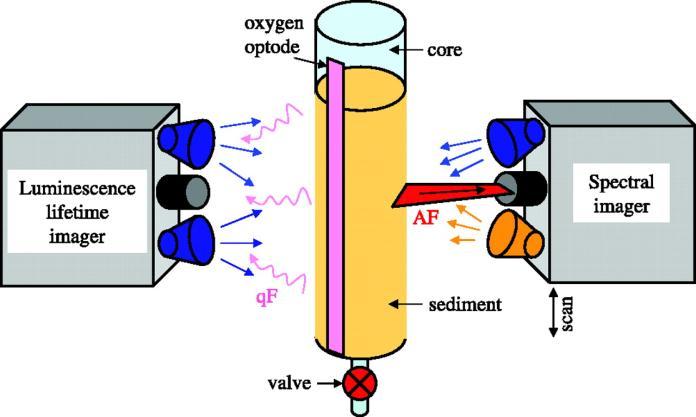
For imaging of auto fluorescence, high-power LEDs (Lumileds, United States) that emitted blue, green, and amber light and were equipped with 5° collimating optics (LXHL-NX05-5; Lumileds) were used as narrow-band excitation sources. Additionally, a set of low-pass optical filterplacedinfrontoftheLEDsandacomplementaryhighpassopticalfilterplacedinfrontoftheHScamerawasused to remove the longer-wavelength LED emission and thus allowed sensitive detection of auto fluorescence at wavelengths higher than the cutoff wavelength (λc). LEDs werepoweredbyaself-madepowersupplythatprovided directcurrentintherangefrom1to999mA.Alternatively,a mercury lamp (HBO 50; Zeiss) and a combination of lowpass and high-pass optical filters were used when auto fluorescence was imaged with an epi fluorescence microscope.
Thespectral scanning was done underconditions excludingambientlightsoastoavoidvariableillumination. Itwasnecessaryduringautofluorescenceimagingbecause oflowintensityofthefluorescenceincomparisonwiththe ambientlightlevels.Theassembledsystemcanbeoperated in any desired mode (macro, meso, microscopic) for scanning of spectral reflectance, transmission, or auto fluorescence.Itworkinginvolvedthefollowingsteps.First, an appropriate light source was selected for beaming the sampleandmovedinordertocoveraspatialfeaturewith distinct spectral properties by LOV. The LOV was continuouslydisplayed,andtheframerate,gain,andshutter durationfortheHS camera wereadjusted interactively to ensure that the brightest possible image which was not saturated was obtained. After this, the LOV was focused, either by refocusing the objective lens or, preferably, by
slowlymovingthesampletowardorawayfromtheobjective lens while observing the level of sharpness of the spatial featureseenintheLOV.Afterfocusing,withafinalcheckfor signal oversaturation, the sample was scanned using a uniform velocity of the LOV and image was acquired at a framerateof3.75framespersecond,whichwasusedinour measurements,thetypicalvelocitieswere1to2,10 to20, and 50 to 200 μm s 1 during the micro-, meso-, and macroscopicscans,respectively.Dependingonthevelocity and the scan range, measurement took from several tens of secondstoafewminutes,whichresultedina50-to200-MB hypercube.Forautofluorescencescanning,thesamplewas beamedwiththeexcitationlightforafewminutespriorto scanninginordertoensurethatthevariablefluorescenceof pigments associated with reaction centers of the photosynthetic apparatus had reached a steady state (Govindjee etal.,2004)andthuswouldnotplayarolewhen the extent of fluorescence in different parts of the same samplewerecompared.
The application of the MOSI system involved microscopic spectral imaging of cells. A sample sets was prepared by pipetting a small drop of cyanobacterial and algal cells grown in a culture onto microscope slides. The microbesusedwere
(i) Leptolyngbya sp.strainPCC8103, Redfilamentous organism (ii)Thegreenfilamentous Leptolyngbya-M1C10,and (iii)Theyellowishgreenspherical RhabdodermarelatedmorphotypeM7R1.
The authors purchased first organism from the Pasteur collection of cyanobacteria (Paris), and the other two organisms were isolated from microbial mats on intertidalflatsintheArabianGulf(AbuDhabi,UnitedArab Emirates) (Abed, et al., 2008). In the present study, all organismsweremaintainedat25°Cwithalight-darkcycle consisting of 12 h of light and 12 h of darkness (light intensity,25μmolphotonsm 2 s 1)inASN-IIIB12 medium. Theoval-shapedgreenalgaeused(speciesnotdetermined) originatedfromRiouMort(France)andweregrownat15°C withalight-darkcycleconsistingof12hoflightand12hof darkness (light intensity, 100 μmol photons m 2 s 1) in modified Bold's basal medium. The diatoms used (Cylindrotheca closterium CCMP1855; United States) were grownat15°Cwithalight-darkcycleconsistingof12hof light and 12 h of darkness (light intensity, ∼100 μmol photons m 2 s 1) in f/2 medium with additional silicate. Transmissionandautofluorescencespectraforthesamples wereobtainedimmediatelyaftersamplepreparation,using anAxiophotmicroscopeanda×40or×100objectivelens. The spectra were averaged for 20 to 50 pixels associated withasinglecellandusedtodeterminethecellularpigment
International Research Journal of Engineering and Technology (IRJET) e-ISSN: 2395-0056
Volume: 09 Issue: 09 | Sep 2022 www.irjet.net p-ISSN: 2395-0072
content. For tested samples, scan were observed at absorptionmaximaofthemajorpigmentsinthecells.The intensityoftheautofluorescencepeakwereusedtovisualize thecells.Thespectrawereaveragedfor20to30pixelsfor one cell or filament and used to determine the cellular pigmentcontent.
Thetransmissionandautofluorescencespectrafor single cells were clearly resolved when the Axiophot microscope was used. The spectra obtained for different pixels for the same cell or for different cells of the same species in the same physiological state were very similar, andthusonlytheaveragespectraarediscussedbelow.The transmission and emission spectra of the cyanobacteria (morphotypesM1C10andM7R1)werefoundtobesimilar.
Theflatzonesintransmissionspectrumaround675 and460nmindicatedthepresenceof Chlorophylla,whereas phycocyanin (PC) peak was a observed at 630 nm. The emissionspectra hadapronouncedpeakat653nmanda shoulderaround685nm,whichwereduetoPCandChla, respectively.
Incyanobacteria(Leptolyngbya sp.strainPCC8103) phycoerythrin (PE) was the main accessory pigment as shown by a peak around 574 nm. Chl.and PC were also detected in the filaments, as shown by the valleys around 678and630nm,respectively.Thedatasuggestedthatthe redcyanobacteriahadamuchlowerPC/Chl.aratiothanthe green cyanobacteria. The presence of PE and PC in Leptolyngbya sp.strainPCC8103wasalsoconfirmedby emissionspectralpeaksat588and650nmunderblueand greenlight,respectively.Furthermore,whenbluelightwas used, a shoulder in the spectrum due to Chl. A was also observed. The major pigments detected in the green algal cellswereChl.AandChl.b,asindicatedbythevalleysinthe transmissionspectra around460and675nmandaround 652nm,respectively.ThepresenceofChlAwasconfirmed bytheemissionpeakat685nmwheneitherblueorgreen excitationwasused.
Theuseoftextilecolorantsknownas“dyes”isnot dealtwithveryhard safetyrequirementsasfoodcolorants. However, therearemanymorebacterialpigmentsusedas dyesintextiles,paper andleatherindustriesothernon-than in food. Ahmad et al. describes the extraction of yelloworange, red, and purple pigments from Chryseobacterium sp., Serratia marceseus, and Chromobacterium violaceum, respectively Thered(prodigiosin)andpurple(violacein) were then used as colorants on different fabrics (acrylic, spun, silk, viscose, cotton, polyester, and polyester microfiber),andtheircolorfastness(tendencytoclingonto fabricwhenwashed,exposedtolightorperspiration)onthe fabrics was recorded. Both pigments showed high colorfastness when stained on to acrylic fiber, silk, and
polyestermicrofiber,whiledisplayingaveragecolorfastness tocottonandpolyester.
Furthermore, both pigments displayed a high staining capability on all the fabrics, implying that a minimum amount of pigment was required to stain the fabrics.Thesetestsshowtheabilityofspecificpigmentsto be employed effectively as dyes/colorants for textiles. As newsafeandeffectivenaturalcolorantsarediscovered,they canreplacethepotentiallyharmfulsyntheticdyesthatare currentlyusedonproductssuchasdenimandyarn.
Bacterial pigments with fluorescence are used in laboratories to label antibodies and also indicate the progress of specific reactions. A key example of this is phycoerythrin, an accessory pigment to chlorophyll in photosyntheticbacteria. It is essential because it captures lightenergyandthentransfersittothechlorophyllreaction center.
Thepigmentnamedphycoerythrinhasbeenapplied as an indicator (fluorescent} to analyze the effect of free peroxyradicalsonlivingcelssandtissues.Asphycoerythrin hasstrongaffinityforfreeradicals,researcherscanmakean assaythatshowsthechangeintheconcentrationofpigment overtime.Initially,thepigmentwillappearontheassayas anareaoffluorescentglow.Asperoxyradicalsareaddedto thepigment,darkspotsappearwhereradicalshavereacted withthepigment,causingtheoverallfluorescenceemission todecreaseovertime.Thisassaycanthenbeusedtopredict the rate of peroxy radical scavenging in human plasma. A specific typeofPhycoerthyrin,knownasR Phycoerthyrin, maybeusedtofluorescentlylabelantibodies.Mahmoudian et al.,reportedthatR-PhycoerthyrinwasboundtoIgG(an antibody) bySPDP,a linkerprotein.Fluorescently-labeled antibodies can be exposed to a pathogen such as E. histolytica, and consequently stain the pathogen as the labeledantibodiesbindtoit.
Interestingly, one major industrial application of bacterial pigments has nothing to do with the pigments’ visual properties. Some bacterial pigments are used to promote human health, providing key nutrients and compoundsthatareneededbythebody.
The β-carotenerepresentanimportantcategoryof colored compounds known as carotenes. These pigments inducemanyusefulmetaboliteswhichhasbeneficialeffects in different organ systems in man. Apart from vegetables, differentbacteriaalsosynthesizeβ-caroteneandastaxanthin (axanthophyll).Thetwopigmentsarerequiredfornormal functioning of human eye, as the yellow pigment of retinalmaculaforblockingexposureofsensitivepartsofeye
International Research Journal of Engineering and Technology (IRJET) e-ISSN: 2395-0056
Volume: 09 Issue: 09 | Sep 2022 www.irjet.net p-ISSN: 2395-0072
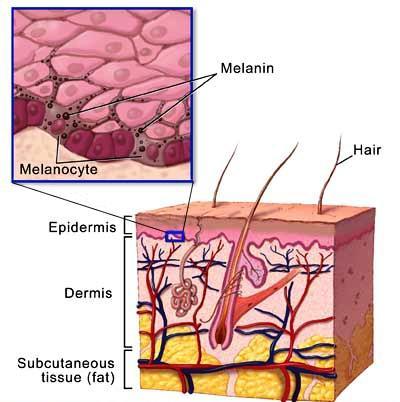
tosunlight. Thusimprovingthehealthofthehumaneyes. Furthermore,commonbacteriapigmentssuchasprodigiosin (redcolor),carotene,andxanthophyllshavecarcinogenesispreventionroles,asthesepigmentshaveanti-oxidative,antifree radical and apoptosis-inducing activity. Melanin, a common pigment that creates the black, brown, and grey colors in many bacteria, has also shown significantantioxidantactivity.Furthermore,melaninisused insunblocktoprotecttheskinfromUVradiation.
Conventional sources of pigments range from inorganic metals and metal oxides to organic molecules. Paleolithichumansknewtheartofmakingpigmentsfrom oresnamelyredochre,whichgetsitscolorfromhematite (Fe2O3), yellow ochre (Fe2O3·H2O), and green malachite (Cu2Co3(OH)2)andsuspendingtheseintheirownsalivaasa binder.These30Kyearoldpigmentshavebeenusedbyuthe artiststilldate.Additionallyuseofsomeinorganicpigments includingtitaniumwhite(TiO2),cobaltblue(CuO+Al2O3), Egyptian blue (CuO•CaO•SiO2), cadmium red (CdSe), and blackoxideofiron(FeO) isquitecommon. .Thesourceof delocalizedelectronsinthesepigmentsisthemetal–ligand complex.
Traditional sources of organic pigments and dyes include natural products such as flavinoids and anthraquinones producedbyplantsandanimals. Dapson (2007) reported a deep red anthraquinonic pigment of insect’ sorigin,nowsuccessfullyusedasacoloringagentin paints, ink, cosmetics, and food pigmentation. From the onset of the 20th century, due to high demand and lower availabilitythenaturalpigmentshavebeenseldomusedfor their scale-up or industrial applications. The synthetic colors namely phthalocyanines (blue to green), arylides (yellow to greenish/ reddish-yellow), and quinacridones, (orange to violet) have totlally replaced their organic counterparts (Lomax et al., 2006). Advances in chemical synthesishas enabledhighscaleproductionwhilecutting the overall process cost drastically, hence making these colorsabestchoiceforindustrialapplications.
The bacterial genus of Streptomyces has been reported to be producing important antimicrobial compoundssuchasstreptomycinandtetracycline(Keiser et al., 2000). They also produce many intensely pigmented molecules that can be isolated in a pure form including “polyketides” the colored pigments that have absorption maxima in visible region of light spectrum. Streptomyces coelicolor synthesized an ultramarine blue pigment in submerged fermentation called actinorhodin (Leathers, 2004)
Every Streptomyces strainhascapabilitytoproduce colored pigments falling in various zones of visible light spectrum,thatdeterminesthestrain'scharacteristicleached color saturation and contrast. Some pigments, such as actinorhodin, change color in a pH-dependent manner (Keiser et al., 2000), whereas others maintain their characteristiccoloroverarangeofpH.
Thereisincreasingdemandfornaturally-derived foodgradepigments.Themajorityofexistingpigmentsare plantextractssubjecttovariabilityandseasonalsupply.The CMIhastheabilitytoselectandisolatenovelpigmentsfrom microbial sources, offering a more reliable and scalable technology. This places the CMI in a strong position to respond to increasing market demand for natural colors overtheirsyntheticcounterparts.
Dr.SilasVillas-Bôas'researchgrouphasscreened hundredsofNewZealandpigment-producingfungi,bacteria and algae, resulting in successful isolation of a variety of yellow, red, orange, pink and blue pigments. These have beentestedforwatersolubilityandheat,lightandpH.
Dr. Susan Turner's research group is using molecularbiologicalmethodstocharacterizethemicrobial communitiesandinteractionspresentinmilk.Dr.Turner's
2022, IRJET | Impact Factor value: 7.529 | ISO 9001:2008 Certified Journal |
International Research Journal of Engineering and Technology (IRJET) e-ISSN: 2395-0056
Volume: 09 Issue: 09 | Sep 2022 www.irjet.net p-ISSN: 2395-0072
group also aims to create a 'wiring' diagram to help understand how the microbes in cheese products and processesbehave.Itiswidelyassumedthatallthemicrobes presentincheeseareintroducedwiththestarterculture,but theyactuallycomefromthemilkenvironmentandarethus presentfromthestart.
Lipidmoleculesareimportantmediatorsofcentral cellular processes, but the metabolic pathways involving lipidsarepoorlyunderstood(Dufosse,2005).Manipulation ofmicrobiallipidmetabolismmayresultinimprovedfood fermentationprocesses,butthisrequiresbetterknowledge of the pathways involved. The lactic acid bacterium Lactococcus lactis is commonly used in seed inmoculumforcheeseproductioninNewZealand,andcan produce "functional" lipids with health benefits. Dr. Silas Villas-Bôas'researchgroupisconstructingagenome-scale mathematical model of Lactococcus metabolism. Identificationofthegenes,enzymesandpathwaysinvolved in fatty acid metabolism will provide a basis for improvement of Lactococcus fermentation processes, with the aim of enhancing production of desirable functional lipidsindairyproducts.
ProfessorMohammedFaidisachemicalengineer whose research expertise includes the development of innovative food processing methods, especially food sterilization and pasteurization techniques. He is wellknownnationallyandinternationallyfor his work innonthermalinactivationofmicroorganisms,includingspores,by usinghighpressure,pulsedelectricfieldandUVprocessing
The small scale production of pigment are not sufficientforindustrialapplications.Therefore,theutilityof apigmentisdictatednotonlybyitsinherentpropertiesbut alsobytheabilitytoproduceitinsufficientquantities.This scale may face several associated challenges to biological production and isolation from Streptomyces bacteria,. However, studies involving technical advancement to overcomethesechallengeshasalreadybeeninitiated,which providesapotentialrouteforreintroducingbio-pigmentsto a cost-sensitive world. For example, the design of continuously stirred bioreactor (CSTR) has given the solution to problems of aseptic process operation, stirring/agitation, aeration, maintenance of pH and temperature etc. during Streptomyces submerged fermentations.Thesefindingsof fermentationtechnology hasalreadyfacilitatedthemicrobialgrowthandproductions inpharma,animalhealth,food,andagriculturalapplications.
Mostimportantofallistoscale-upmicrobialfermentations tohighestlevelsothatmaximumproductionofpigmentscan be achieved in minimum incubation periods while minimizingproductionandpurificationcosts.
The genetic engineering has an important role to play incloningofvariousgenesinvolvedinbiosynthesisof pigments.Theunderlyingrecombinant-DNAtechnologycan further help in hyperproducing these pigments in prokaryotic hosts (Hannibal 2000) A workgroup at at Amgen, Inc. has achieved success in hybridizing a widely used non-pathogenic strain of Escherichia coli to hyperproduce indigo dye (wood plant derivative) in fermentationtanks(Iturriaga,2005).
The Biotechnologists can also modify the biosynthetic pathwaystotransformapigment'smolecular structure and consequently its color (Jones, 2004) In one such process, Streptomyces coelicolor, producing actinorhodin(bluepigment),canbegeneticallyengineered to hyper-produce a kalafungin (a bright yellow colored polyketide).Alternatively,actinorhodingenerationcanalso modifiedgeneticallytosynthesizeorangeanthraquinones.
The downstream processing or isolation of these pigments and further purification to analytical or food –grade is also a great challenge. Broadly speaking, Streptomyces produce two classes pigments intracellular(thoseremaininsidethe bacterialmycelia)and intercellular(secretedintothefermentationmedium).The recovery of intracellular pigments require extra steps of disruptingthemyceliaandfurtherusingavailableseparation techniquestoisolatethepigment(Fang,2002),addingtothe costinvolvedandmakingproductcostlier.Insuchcases,the use of large quantities of organic solvents such as ethyl acetate for product recovery has adverse environmental impacts
Lastbutnotleast,tobeusefulinpaint,apigment must have acceptable stability when exposed to environmentalstresses,especiallyUVlight.Itstarts rapid free-radical reactions in paints causing separation of its constituents ultimately lead to their degradation. These degradationproductifreleaseduntreatedineffluent,have provedtobehighlytoxicandmutagenicinnature(Chander, 2020) Henceuseof UVabsorbers(benzotriazole)andfreeradical scavengers became utmostimportant in the paint industry. Whereas their effectiveness in conjunction with bio-pigmentsremainstobestudied,astheseprocessesmay also enhance the application of Streptomyces pigments in paintindustry
Thecolorsare beautyof natureandthemicrobes involved in pigment production add up to this attraction. The microbes namely fungi, and bacteria
International Research Journal of Engineering and Technology (IRJET) e-ISSN: 2395-0056
Volume: 09 Issue: 09 | Sep 2022 www.irjet.net p-ISSN: 2395-0072
(thermoactinomycetes) needed to be screened for their carotenoids, melanins, flavins, quinones, monascins, violacein , indigo and several other pigments production potential The various aspects like acceptability in the market, regulatory approval, and the size of the capital investment involved in microbial pigment production industrywilldecidethefutureofenhanceduseofbiological pigments in various coloring processes However, some reservations about use of natural pigments has been removedbythescientificdataandpublicawarenessdrives awakeningmasses.Thebiosafety,toxicitystudiesregarding useoftheseproductsdonebytheregulatoryagencieshave increasedthedemandofnaturalpigmentsinpublic.Hence publicperceptionofbiotechnology-derivedproductsshould alsobetakenintoaccount.
Nowadayssomefermentativefoodgradepigments areavailableinthemarket andthesuccessfulmarketingof algae-derivedorvegetable-extractedpigments, foodcoloras wellasanutritionalsupplement,highlightsthepresenceand importanceofgrowingmarketswhereconsumersarepaying apremiumfornaturalororganicproducts
[1] Abed,R.M.M.(2008)Lipidbiomarkers,pigmentsand cyanobacterial diversity of microbial mats across intertidalflatsofthearidcoastoftheArabianGulf(Abu Dhabi,UAE).FEMSMicrobiol.Ecol.65:449-462.
[2] An. G.H., Jang. B.G., M.H. (2001) Cultivation of the carotenoid- hyperproducing mutant 2A2N of the red yeast Xanthophyllomyces dendrorhous (Phaffia rhodozyma)withmolasses,J.Biosci.Bioeng.121–125.
[3] Baker. R.T.M. (2002) Canthaxanthin in aquafeed applications:Isthereanyrisk?TrendsFoodSci.Technol. 12:240–243.
[4] Britton(2004)CarotenoidsHandbook,BirkhäuserPubl., Basel,Switzerland.
[5] Carvalho,J.C.De, V.Ghiggi,A.L.Woiciechowski,L.P.deS. Vandenberghe,C.R.Soccol(2019).Microbialpigments. S.K. Brar et al. (eds.), Biotransformation of Waste BiomassintoHighValueBiochemicals,73.DOI10.1007 /978-1-4614-8005-1_4.
[6] Cerdá-Olmedo (2010) Phycomyces and the biology of lightandcolor,FEMSMicrobiol.Rev.25503–512.
[7] Chander, M. (2019). Recent advances in microbial production of proteases. International Journal of Research and Analytical Reviews, 6 (1). e ISSN 2348–1269,PrintISSN2349-5138.
[8] Chander,M.(2020).AComparativeStudyofBioactive Molecules in Treatment and Control of Cancer. l International Journal of Mechanical and Production EngineeringResearchandDevelopment.10,3,10499–10514.
[9] Chander,M.(2021).Biocomposites:UseofLigninasa Core Material in Synthesis of Various Industrially Important Biomaterials. International Journal of Advances in Engineering and Management (IJAEM), 3 (8): 593-602. ISSN: 2395-5252. doi 10.35629/52520308593602
[10] Domínguez,B.,Alma,P.N.,Teresa,T.,Muñoz,J.(2007) Astaxanthin production by Phaffia rhodozyma and Haematococcuspluvialis:Acomparativestudy.Applied microbiology and biotechnology. 75. 783-91. 10.1007/s00253-007-0889-9.
[11] Downham,P.C (2000)Colouringourfoodsinthelast andnextmillennium,Int.J.FoodSci.Technol.5–22.
[12] Dufossé,M.C.deEchanove (2005)thelaststepin the biosynthesisofarylcarotenoidsinthecheeseripening bacteria Brevibacterium linens ATCC 9175 (Brevibacterium aurantiacum sp. nov.) involves a cytochromeP450-dependentmonooxygenase,FoodRes. Int.967–973.
[13] Dufossé,P.G,(2005) Spectro-colorimetryin theCIELab color space as useful toolfor monitoring the ripening processandthequalityofred-smearsoftcheeses,Food Res.Int.919–924.
[14] Ernst,(2002)Recentadvancesinindustrialcarotenoid synthesis,PureAppl.Chem.741369–1382.
[15] EuropeanCommission,(2000)OpinionoftheScientific Committee on Food on β-carotene from Blakeslea trispora,SCF/CS/ADD/COL158.
[16] Fang. T.J., Wang. J.M. (2002) Extractability of astaxanthin in a mixed culture of a carotenoid overproducing mutant of Xanthophyllomyces dendrorhous and Bacillus circulans intwo-stagebatchfermentation, ProcessBiochem.37.1235–1245.
[17] Flores-Cotera.L.B.,(2001)Citrate,apossibleprecursor of astaxanthin in Phaffia rhodozyma: Influence of varyinglevelsofammonium,phosphateandcitrateina chemicallydefinedmedium,Appl.Microbiol.Biotechnol. 341–347.
[18] Galaup(2005)HPLCanalysisofthepigmentsproduced by the microflora isolated from the ’Protected Designation of Origin’ French red-smear soft cheeses
2022, IRJET | Impact Factor value: 7.529 | ISO 9001:2008 Certified Journal |
International Research Journal of Engineering and Technology (IRJET) e-ISSN: 2395-0056
Volume: 09 Issue: 09 | Sep 2022 www.irjet.net p-ISSN: 2395-0072
Munster, Epoisses, Reblochon and Livarot,FoodRes.Int. 38855–860.
[19] Hannibal, (2000) Isolation and characterization of canthaxanthin biosynthesis genes from the photosynthetic bacterium Bradyrhizobium sp. Strain ORS278,J.Bacteriol.3850–3853.
[20] Iturriaga, E.A., (2005) Strain and Culture Conditions Improvementforβ-CaroteneProductionwithMucor.In: Methods in Biotechnology: Microbial Processes and Products, Vol. 18, Humana Press Inc., Totowa, New Jersey,USA 239–256.
[21] Jacobson,G.K.(2003)Astaxanthinoverproducingstrains of Phaffiarhodozyma,methodsfortheircultivationand theiruseinanimalfeeds.USpatent20030049241
[22] Johnson, E.A., (2003) Phaffia rhodozyma Colorful odyssey,Int.Microbiol.6.169–174.
[23] Jones, J.D. (2004) Genetically Modified Strains of Fusarium sporotrichioides for Production of Lycopene and β-Carotene, Society of Industrial Microbiology AnnualMeeting,SanDiego,USA.91.
[24] Leathers, T.D. (2004) System for the sequential, directional cloning of multiple DNA sequences. US patent6,696,282.
[25] Navarro(2001)Anegativeregulatoroflight-inducible carotenogenesis in Mucor circinelloides, Mol. Genet. Genom.463–470.
[26] Nigam,P.S.,Luke,J.S.(2016).Foodadditives:production ofmicrobialpigmentsandtheirantioxidantproperties, CurrentOpinioninFoodScience,7,93-100.ISSN22147993,doi.10.1016/j.cofs.2016.02.004.
[27] Palágyi.Z.(2001)Carbon-sourceassimilationpatternof the astaxanthin-producing yeast Phaffia rhodozyma, WorldJ.Microbiol.Biotechnol.17:95–97.
[28] Polerecky,L.,Bissett,Aetal.,(2008).Modularspectral imagingsystemfordiscriminationofpigmentsincells andmicrobial communities Applied &Environmental Microbiology.75,3,758-771.
[29] Ramirez, H. Guttierez, A. Gschaedler (2001) Optimization of astaxanthin production by Phaffia rhodozyma through factorial design and response surfacemethodology,J.Biotechnol.259–268
[30] Santos. M.A. (2005) Insertional Mutagenesis in the Vitamin B2 Producer Fungus Ashbya gossypii. In: Methods in Biotechnology: Microbial Processes and
Products,Vol.18,J.L.Barredo(Ed.),HumanaPressInc., Totowa,NewJersey,USA.283–300.
[31] Sardaryan,H.Zihlova,(2004)ArpinkRed–MeetaNew Natural Red Food Colorant of Microbial Origin. In: PigmentsinFood,MorethanColours,L.Dufossé(Ed.), Université de Bretagne Occidentale Publ., Quimper, France.207–208.
[32] Sardaryan. E., (2002) Food supplement. Patent WO 02/1153.
[33] SenT,BarrowCJandDeshmukhSK.(2019)Microbial PigmentsintheFoodIndustry ChallengesandtheWay Forward. Frontiers In Nutrition. 6:7. doi: 10.3389/ fnut.2019.00007
[34] Singh,S.,Kapoor,S.,Chander,M., andGill,P.K.(2022). Recent Update on Serum Alkaline and Acid PhosphatasesinPre-andPostoperativeBreastCancer Patients. Sudan Journal of Medical Sciences. 17, 1. doi 10.18502/sjms.v17i1.10686
[35] Stahmann. K.P. (2000) three biotechnical processes using Ashbya gossypii, Candida famata, or Bacillus subtilis compete with chemical riboflavin production, Appl.Microbiol.Biotechnol.509–516.
[36] Vazquez(2001)Effectofthelightoncarotenoidprofiles of Xanthophyllomyces dendrorhous strains (formerly Phaffiarhodozyma),Food Technol.Biotechnol.39123–128.
[37] Verdoes. J.C. (2003) Metabolic engineering of the carotenoid biosynthetic pathway in the yeast Xanthophyllomyces dendrorhous (Phaffia rhodozyma), Appl.Environ.Microb-+iol.3728–3738.
[38] Young,M.TheTechnicalWriter’sHandbook.MillValley, CA:UniversityScience,1989.
© 2022, IRJET | Impact Factor value: 7.529 | ISO 9001:2008 Certified Journal | Page374
International Research Journal of Engineering and Technology (IRJET) e-ISSN: 2395-0056
Volume: 09 Issue: 09 | Sep 2022 www.irjet.net p-ISSN: 2395-0072
Dr. Mukesh Chander has done his Doctorate from Guru Nanak Dev University, Amritsar, Punjab, India; has research interests in BioProcessEngineeringof Microbial metabolites. Currently he is working as Assistant professor in Biotechnology, in Khalsa College, India. He has 20 researchpublications,13 invited talks and three editedbookstohiscredit

Board of seven International journals of repute including- World JournalofMicrobiology& Biotechnology(Springer), Animal Biotechnology, Bioprocess Engineering Journal (Science PublishingGroup,USA).