
International Research Journal of Engineering and Technology (IRJET) e-ISSN: 2395-0056
Volume: 12 Issue: 07 | July 2025 www.irjet.net p-ISSN: 2395-0072
International Research Journal of Engineering and Technology (IRJET) e-ISSN: 2395-0056
Volume: 12 Issue: 07 | July 2025 www.irjet.net p-ISSN: 2395-0072
Abdul Latheef1 , Aleefna P R1 , Amaan Fayeez1 , Muhammed Adnan S1 , Dr Shaina Beegam N2
1UG Student, Dept. of Civil Engineering, Ilahia college of Engineering and Technology
2Professor,Dept. of Civil Engineering, Ilahia college of Engineering and Technology
Abstract - In the heart of Pinavoorkudy, a tribal community struggles with issues like inadequate housing and lack of basic necessities, similar to urban slums. The "Planning and Designing of Residential Area for Tribal Community" project stands out by prioritizing the voices of the people. It’s about understanding their lives, traditions, and needs, and creating homes that reflect the soul of the community. Beyond just housing, the project ensures clean water, proper sanitation, and reliable energy, which are essential for a dignified life. The focus isn’t only on physical structures but also on empowering the community. Workshops and consultations help build skills, confidence, and a sense of ownership. This initiative is about fostering pride and self-reliance, not handouts. By respecting their culture and valuing their input, the community is transforming itself, proving the power of human connection and the belief that everyone deserves a better future rooted in their heritage.
Key Words: Sustainable Housing, Residential Planning , Rural Development, Tribal Housing ,Quality of Life, Quality of Life
Ruralareaaretheareawhichrequiredimmediateattention to raise the level of living conditions. In Kerala, the rural areasareseeneverywhereduetolessdevelopment.Their livingconditionsarepoor, negligibleorless education, no awareness are the main factors that stood them behind livingconditions. Nowadays,thereareseveralprogramslike Lac-Housingscheme,PMGYetc.. areavailabletoraisethe livingstandards
Pinavoorkudy, a small tribal community in Kerala, faces challenges such as poor housing, lack of clean water, and poverty,muchlikeurbanslums.Thecommunityalsodeals withisolationandlimitedaccesstoessentialservices.The projectaimstodomorethanjustbuildhomesbyengaging with the community and empowering them. Inspired by globalexamples,itfocusesonimprovinghousing,ensuring accesstocleanwater,andcreatingcommunal spaces.The goal is to help the community develop new skills, gain support, and build a better future for their children. By combining sustainable methods with respect for their culture,theprojecthopestosparklastingchangeinother tribalcommunities
Astuti&Prasetyo(2014)highlightedthatlocalorganizations often fail to promote community inclusion, limiting residents' access to essential resources. Empowering community-basedorganizations(CBOs)isessential,asthey act as bridges between communities and the government, aiding in resource mobilization and decision-making. In Surakarta, there are two housing systems: formal and informal,withtheCBHDsystemgainingimportanceduring MayorJoko Widodo'sterm(2005-2012).CBOslikePOKJA play a key role in organizing communities and accessing government programs aimed at improving housing. Initiatives such as Bedah Kampung show how community empowermentcanraiselivingstandards.
Santosa (2012) further stressed the importance of combininghousing,employment,andaccesstoresourcesfor sustainable urban development in Kampungs. Successful programs like Bedah Kampung focus on community involvement, fostering a sense of ownership and accountability.Althoughtheprogramhasimprovedhousing conditions,challengesineconomicoutcomesremain,asseen in the Human Development Index (HDI). Santosa emphasized the need to evaluate the long-term effects of these initiatives on community resilience and poverty reduction. Both studies highlight the critical role of community empowerment in addressing housing and economicissues,showcasingthesignificantimpactofCBOs andparticipatoryprogramsonimprovinglivingconditions.
Pinavoorkudy is a scenic tribal village nestled in the hilly, forestedlandscapeofErnakulamdistrict,Kerala.Thearea hasamoderatetropicalclimate,withtemperaturesranging from 20°C to 32°C and consistent humidity year-round. During the monsoon season (June to September), heavy rainfall nourishes the region’s lush vegetation and local watersourceslikestreams.Therockyhillsandvalleysaddto the village's natural beauty but also make agriculture difficultduetothesoil’slimitedfertility.
The village's geography, with its dense forests and rolling hills,createsacoolermicroclimate,providingrelieffromthe warmer lowland areas. During the monsoon, mist often envelopsthevillage,andwhilethe rain supportsthelocal
International Research Journal of Engineering and Technology (IRJET) e-ISSN: 2395-0056
Volume: 12 Issue: 07 | July 2025 www.irjet.net p-ISSN: 2395-0072
ecosystem, it also causes soil erosion and water runoff, affecting mobility and stability. The daily life of the communityiscloselylinkedtotheseenvironmentalfactors, making it essential for development initiatives to be sustainable,respectingthenaturalbalancewhileaddressing theneedsofthepeople.
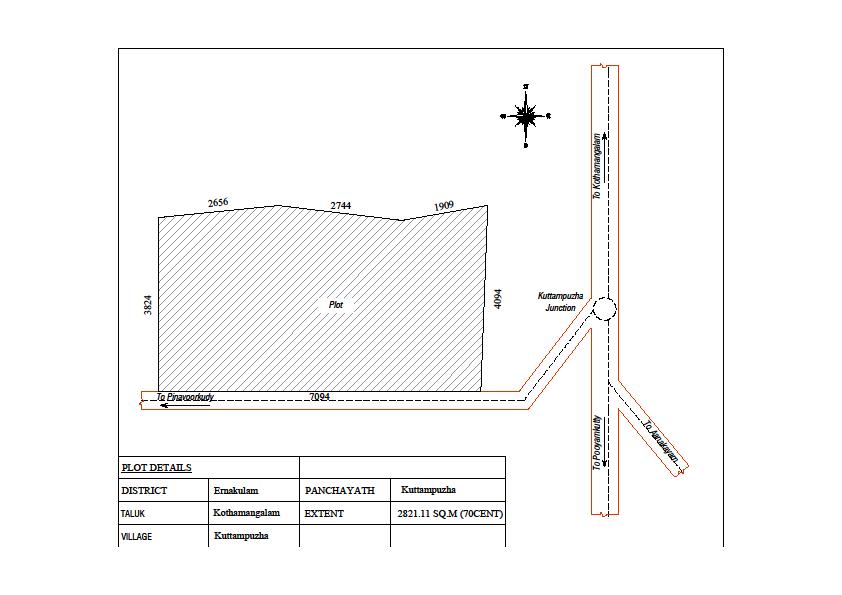
Fig-1 Layoutofthesite
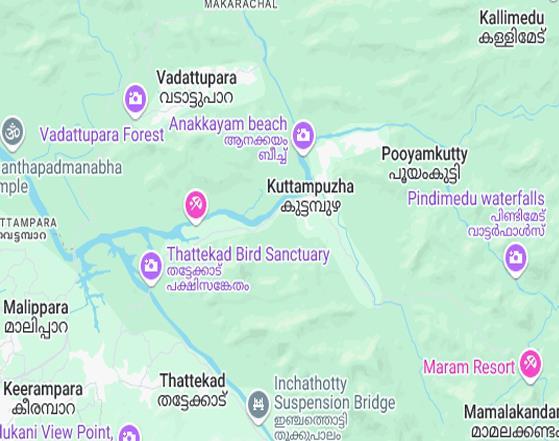
Fig-2 Locationmap
LocalityName:Pinavoorkudy
BlockName:Kothamangalam
District:Ernakulam
State:Kerala
Division:CentralKerala
Timezone:IST(UTC+5:30)
Elevation/Altitude:12meters.AboveSeallevel
TelephoneCode/StdCode:0485
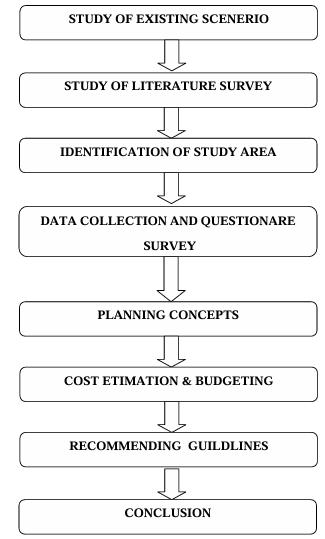
Fig-3 Methodologyadopted
InordertoidentifythedevelopmentofthePinavoorkudy,20 samplesofquestionnairesurveys arecarriedout.Andthe findingsfromthesurveyaremostofthehousesaredilaped condition&noeducation,lessinfrastructurefacilities Sampleofquestionnairesurveyaregivenbelow:
International Research Journal of Engineering and Technology (IRJET) e-ISSN: 2395-0056
Volume: 12 Issue: 07 | July 2025 www.irjet.net p-ISSN: 2395-0072
80%ofpeopleowntheirhomes,and20%rent.Manyhomes are small, overcrowded, and built with cheap materials, which makes them weak and vulnerable to bad weather. Poorventilationandlowdurabilityalsocreatehealthrisks. Overcrowding reduces privacy and makes it hard to keep clean.Toimprovelivingconditions,homesneedmorespace, strongermaterials,andbetterdesignsfortheweather.These changeswouldmakehomessaferandmorecomfortable. The housingcharacteristicsaregivenbelow:
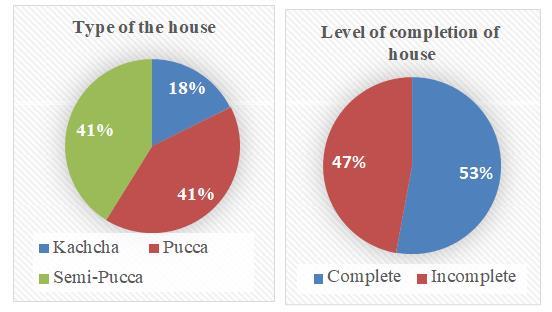
TheinhabitantsofthePinavoorkudyneeddevelopments .ThevariousplanningconceptslikeKeralaBuildingrules areconsideredwhileplanningandtheinhabitantsare relocated.
Theplanningdetailsaregivenbelow:
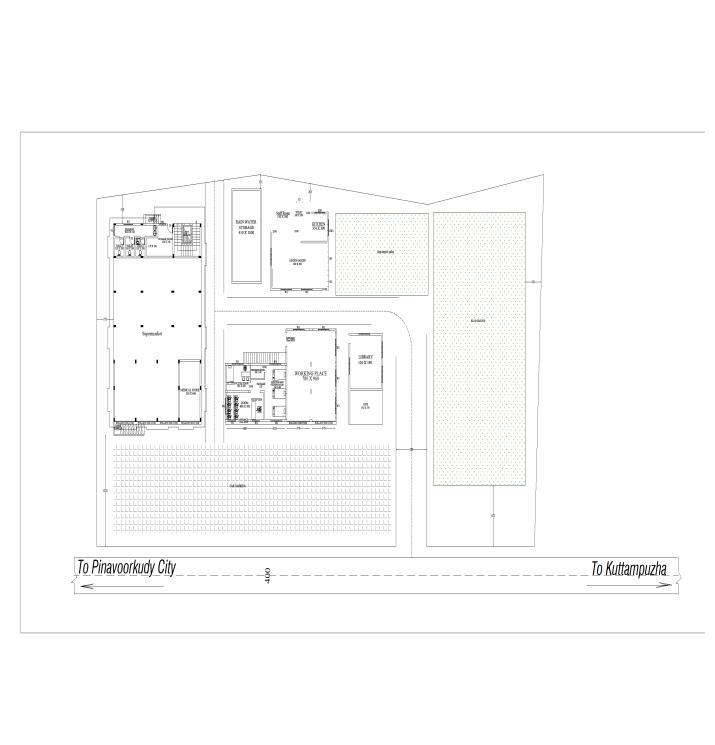
Thesiteincludesamainbuilding,akindergarten,aclinic,a café,rainwaterharvestingsystems,parkingspaces,anda playground.Itisawell-equippedareadesignedtoserve variouscommunityneedsandprovideessentialservices.
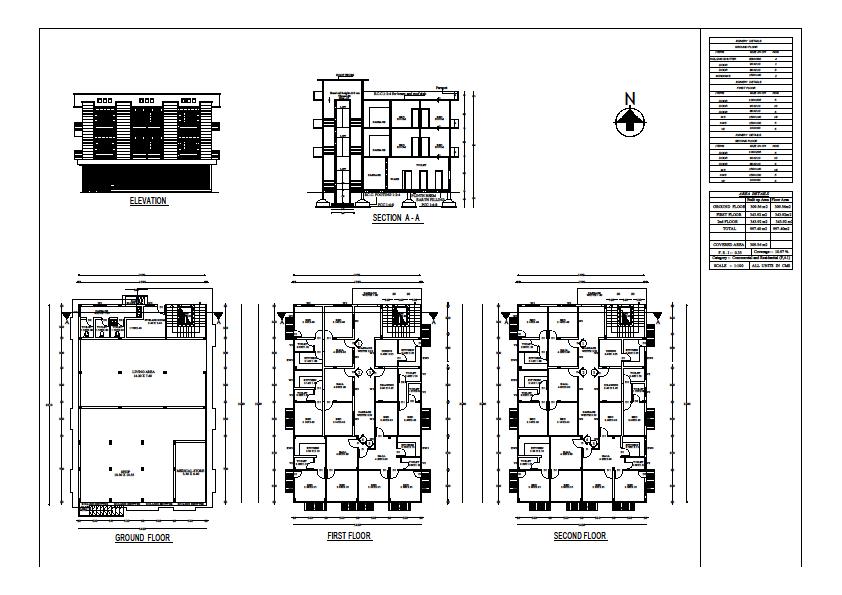
Themainbuildingconsistsoftenapartments,eachfeaturing twobedrooms,akitchen,alivinghall,andabathroom.The groundfloorincludesacommonlivingarea,amedicalstore, ashop,andindividualbathroomsforeachunit.Thebuilding
coversatotalfloorareaof997.40squaremeters
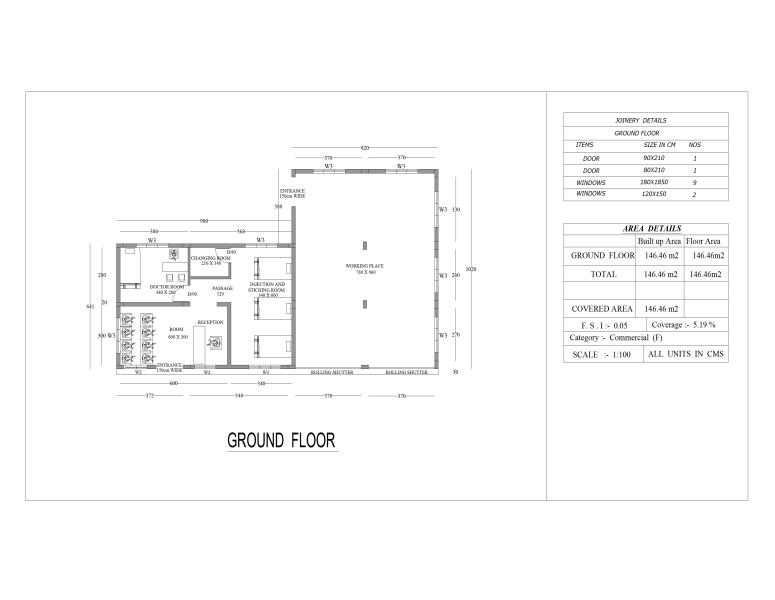
Theclinichasafloorareof146.46sq.m.Theclinicoffers a wide range of healthcare services, prioritizing personalized care and the latest medical treatments for everypatient
International Research Journal of Engineering and Technology (IRJET) e-ISSN: 2395-0056
Volume: 12 Issue: 07 | July 2025 www.irjet.net p-ISSN: 2395-0072
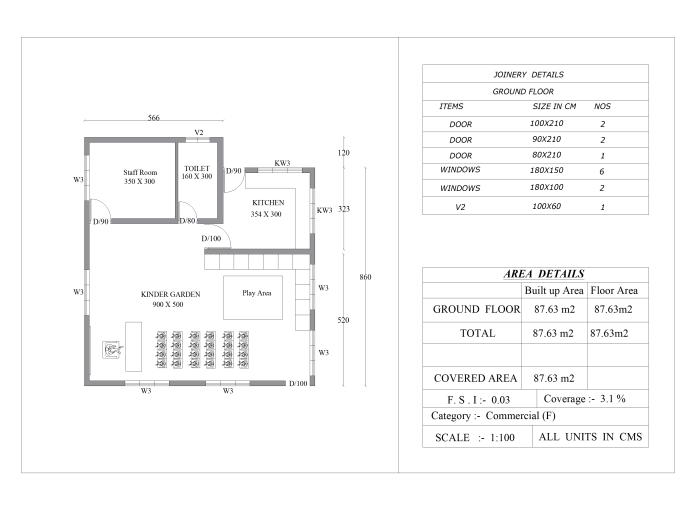
Fig-7 PlanofKinderGarden
The kindergarten plan features a kitchen, staff room, play area,andstudyarea,withatotalsizeof87.63sq.m.Agood kindergarten space is important for supporting children's growthandprovidingasafe,comfortableenvironmentfor bothkidsandstaff.
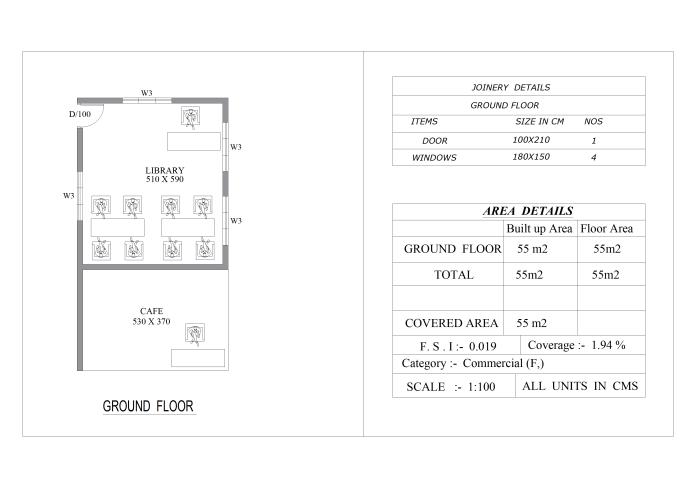
Fig-8 Planofcafeandlibrary
Thecafeandlibraryoccupyatotalfloorareaof55sq.m.This space needs to be inviting and functional, providing a peaceful setting for reading and a comfortable area for dining.

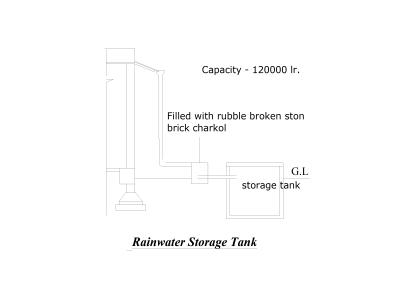
Fig-9 Planofrainwaterstoragetank
The rainwater storage tank measures 400x500x600 and holds120,000litresofwater,collectedfromtheterrace.This systemhelpssavewaterandreducestheneedforexternal sources.
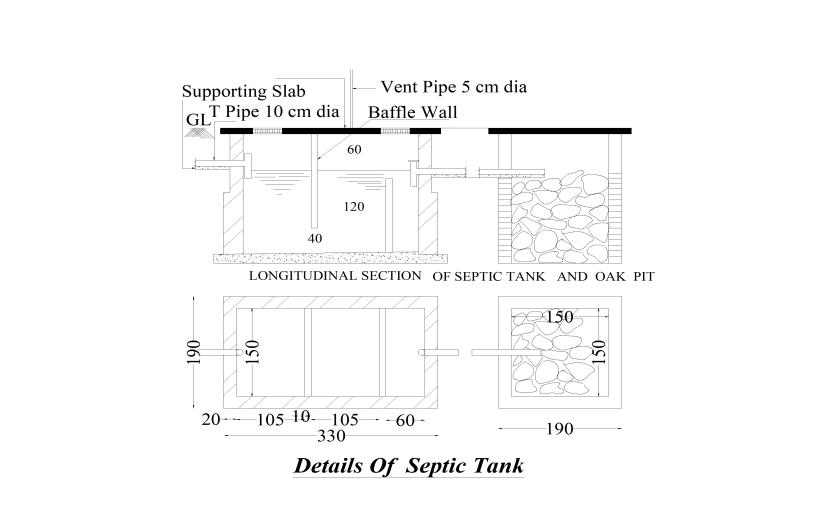
Fig-10 Detailsofseptictank
The development provides job opportunities in multiple areas, such as the kindergarten, cafe, library, clinic, and shops.Itoffersemploymentforteachers,caregivers,medical staff,andcustomerserviceworkers,helpingtosupportthe communityandcreateavarietyofrolesforlocalresidents.
Public awareness is must to enhance the developmentofPinavoorkudy
Education is provided to help understand basic concepts.
As these inhabitants are not mingled with other community, it is better to provide small scale industrieswithintheareaforincomegeneration.
Wardmembersshouldunderstandtheissuesfaced by residents and work to improve their living standards. They can involve NGOs or other organizationstohelpwiththiseffort.
Inconclusion,theCommunity-BasedHousingDevelopment (CBHD) approach offers a sustainable solution to the challengesfacedbythetribalcommunityinPinavoorkudy, Kerala.Byinvolvingthecommunityintheplanningprocess, the project aims to improve housing, infrastructure, and social conditions while empowering residents to take ownership. A detailed cost estimation, covering labor, materials,andinfrastructure,ensuresefficientresourceuse andhelpssecurefunding.Theprojectisphasedtoaddress
International Research Journal of Engineering and Technology (IRJET) e-ISSN: 2395-0056
Volume: 12 Issue: 07 | July 2025 www.irjet.net p-ISSN: 2395-0072
immediateneedswhileconsideringlong-termmaintenance and sustainability. By respecting Pinavoorkudy’s cultural values, the project provides a model for other tribal communitiesinIndiafacingsimilarchallenges.Ultimately, the goal is to create a resilient, self-sustaining community thatbalancesmoderndevelopmentwithtraditionalvalues foramoreinclusivefuture.
1. Bezabih Fanta, Zekarias Zemarku, Elias Bojago “Adoption of community-based land rehabilitation programs(CBLRP)anditseffectonlivelihoodsinOffa district,southEthiopia”(2024)
2. Winny Astuti, Daniel Adi Prasetyo “Model of Community- based Housing Development (CBHD) of Bedah Kampung Program in Surakarta Indonesia”(2013)
3. Iffah Farhana Abu Talib, Roshana Takim, Mohammad Fadhil Mohammad, Padzil Fadzil Hassan “Community Empowerment through Rehabilitation and ReconstructioninSocialSectorofKualaKrai,Kelantan, Malaysia”(2017)