International Research Journal of Engineering and Technology (IRJET) e-ISSN: 2395-0056

Volume: 09 Issue: 08 | Aug 2022 www.irjet.net p-ISSN: 2395-0072
WIRELESS VOICE CONTROLLED ROBOT
Ghante Shweta1 , S. V. Sagavkar2
2
1
Abstract - Robot control systems have been a topic of greater research. The control systems have different implemented in near present yet the topic of the control ofthe robotic vehicle remains of greater research. This projectdeals with the development of voice controlled robotic vehicle. The Robotic vehicle is designed which can move forward, backward, left and right using the voice commands given by the user using android application. The android application developed uses speech to text to determine the voice commands and then Bluetooth socket to send it to the robotic vehicle. The robotic vehicle structurethenparsestheincoming Bluetooth data to move or navigate the robotic vehicle in different directions. The robotic vehicle can move in different directions as well as turn at degree as we have included the precision turning system using servo motors.
Key Words: Bluetooth, Voice, Speech To Text, Robot, Navigation,ServoMotorsEtc
1. INTRODUCTION
Roboticsisthecurrentlybeingusedinanyfieldrightfrom industrial automation to medical sciences and home automation. The ongoing techniques on the robot control methodology and analysis of the same has delivered few impressive results and innovative methodologies in the controloftheroboticvehicle.Alotofresearchworkisbeing carriedouttoenhancethecontrolmethodologyandimprove theeasyinteractionbetweenthehumanandtherobots.The robotcontroltechniquesvaryfromcompletelyautonomous which can take their decisions on own using SLAM and manualcontroltechniquesorsemiautonomoustechniques. TheAutonomousrobotsfailandfallshortinresultswhere morehumanintelligenceisrequiredanddecisionsaretobe madeinrealtime.Theautonomouscontroltechniquesofthe robot involves various techniques including the preprogrammed path on which robot vehicle can move, GPS guided navigation, SLAM and Lidar based real time path mapping systems and RF based indoor positioning techniques.
Themanualcontroltechniquesinvolveteachpendantbased approachtocontroltherobot,wiredjoystickwhichcantrack themotionofthe5djoystickandgeneratethecontrolsignal as well as RF based robot control system to establish wireless communication. Voice control robotic control is another innovative method to control the robotic vehicle. Voice control system are slowly capturing the virtual assistantmarketandcanthesamecanbeusedtocontrolthe
robotic vehicle due to ease of the ability to control the roboticvehicle.
Voice control robot is highly advantageous in fields where there is the risk for humans to enter. The Voice controlledroboticsystemcanbedevelopedwhichwillparse the voice commands of the person and then generate the controlsignaltocontroltherobot.Differentvoicecommand s will be used to control the robot movement in different directions.Thevoicecontrolsystemcanbeimplementedto use speech recognition system to determine the speech commands of the user using the speech recognition hardware or the PC with the software running on it. Howeverthisisnotuserfriendlyandaccurate.
2. PROBLEM STATEMENT
Thecontrolcommandmethodologytocontrolherobotic vehicle needs to be user friendly and easy to operate. The Manualcontrolmethodsusingwiredcontrollerareinefficient andrequirewirestobeavailablebetweentherobotandthe controllertocontrolthevehicle.TheRFbasedcontrolsystem required transmitter and receiver which is an additional piece of hardware. Our approach is to develop and voice controlled robot which can use android application developed as a part of this project to control the robotic vehicle by using just voice commands and Bluetooth technology.
3. OBJECTIVES
Themainobjectivesofthepaperare:
Todeveloparoboticvehiclewhichcannavigatein forward, backward, left and right direction using microcontrollerbasedcontrolsystem
Tomaketheroboticvehiclewirelessbyinterfacing and controlling it using the Bluetooth commands received from the Bluetooth module interfaced to thecontroller
To developa voicecontrol system which can take user voice commands and perform speech recognition and speech to text conversion to generate the control signal for controlling the roboticvehicle
Todesignanddevelopanandroidapplicationwhich canbeinstalledinuserssmartphonetorecognize
International Research Journal of Engineering and Technology (IRJET) e-ISSN: 2395-0056
Volume: 09 Issue: 08 | Aug 2022 www.irjet.net p-ISSN: 2395-0072
the voice commands form the user to control the robot using voice and Bluetooth wireless connectivity.
Toimplementdegreeturningsystemthiscanforce theroboticvehicletoturnatprecisedegree.
4. METHODOLOGY
The implementation of this project involves designingandfabricationofsmartsystemandalsoa prototype of vehicle on which the concept can be demonstrated.
Phase 1: TheAndroidapplicationdevelopmentfor voicecommandrecognition:
o To bring about of concept of voice controlledrobotusingmicrocontrollerthe first step proposed is the development of android application for detection of voice commands given by user and converting speech to text. The android application is developed using android studio which consist of Bluetooth adapter and speech recognition activity to detect the voice commandfromtheuser,convertittotext andtransmitittotheBluetoothsocket.
Phase 2: The hardware design, fabrication and assembly:
o Themicrocontrollerunitistheheartofthis project and is responsible for controlling the robotic vehicle . In this phase the hardware of the project is designed by interfacingthedifferentcomponentstothe microcontrollersuchasBluetoothmodule, motor drivers, power supply unit etc and PCBforthesameisfabricated.Afterthepcb isfabricatedthedifferentcomponentswill be mounted to complete the hardware assemblyoftheproject.
Phase 3: TheRobotic vehicleDevelopment:
o To demonstrate this concept, robotic vehicleisfabricated. Thiscanbeoperated using the voice commands received form theandroidapplicationdeveloped
Phase 4: ProgrammingandTesting:
o In this phase the programming of the project is done. The microcontroller programisdevelopedanduploadedonthe arduinomicrocontroller.
The system consists of android application developed which is installed on the users smart phone.
Theandroidapplicationdevelopedwilltaketheuser speechinput,performspeechrecognition,convert detectedspeechtotextandsendthedetectedvoice commandintheformoftextstringtotheBluetooth paireddevicewhichispairedwiththeuserssmart phone.
TheRoboticvehicleontheotherhandconsistsofthe microcontroller interfaced with the Bluetooth module and the motor drivers for controlling the motor.
TheBluetoothmoduleispairedwirelesslywiththe android smart phone and waits for the command formthevoicecontrolapplicationdeveloped.
When the control command is received from the Bluetooth,thecommandstringiscomparedwiththe validcommandstringsandtherobotiscontrolled accordingly with the voice command given by the user.
After checking the voice command the microcontrollersignalsthemotordrivertodrivethe motors to move the robotic vehicle in accordance withthecontrolcommandreceivedfromthevoice controlapplication.
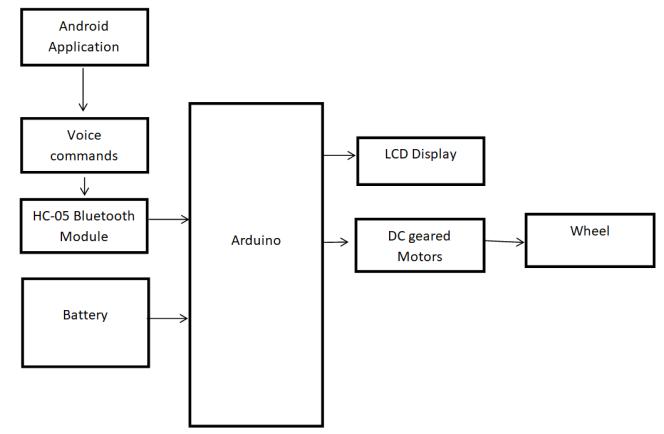
5. BLOCK DIAGRAM
Fig.1BlockDiagram
International Research Journal of Engineering and Technology (IRJET) e-ISSN: 2395-0056
Volume: 09 Issue: 08 | Aug 2022 www.irjet.net p-ISSN: 2395-0072
6. HARDWARE AND SOFTWARE USED
i. Regulated Power Supply
Fig2:Powersupplycircuitdiagram
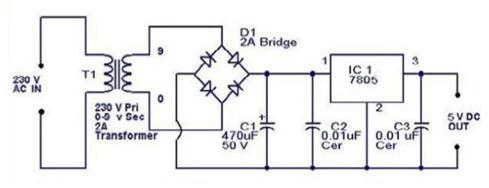
Power supplies are essential for the testing and implementation of any useful electronic circuit. If power suppliesarenotavailablethentheonlywaytoprovidepower to a circuit is the battery. For long-term use and frequent manipulation,batteriesarenotfeasible.Moreovertheseare not flexible as modern day power supplies. They do not provideforoverloadprotectionandthermalprotection.
ii. DC Geared Motors
Fig3DCmotor
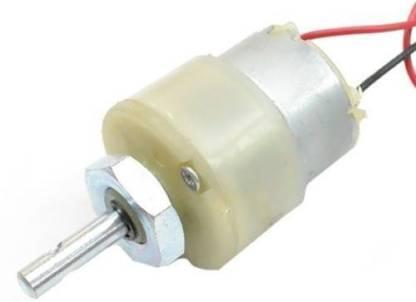
ADCmotorisanyofaclassofelectricalmachinesthat converts direct current electrical power into mechanical power.Themostcommontypesrelyontheforcesproduced bymagneticfields.NearlyalltypesofDCmotorshavesome internalmechanism,eitherelectromechanicalorelectronic, toperiodicallychangethedirectionofcurrentflowinpartof themotor.Mosttypesproducerotarymotion;alinearmotor directlyproducesforceandmotioninastraightline.
iii. The microcontroller
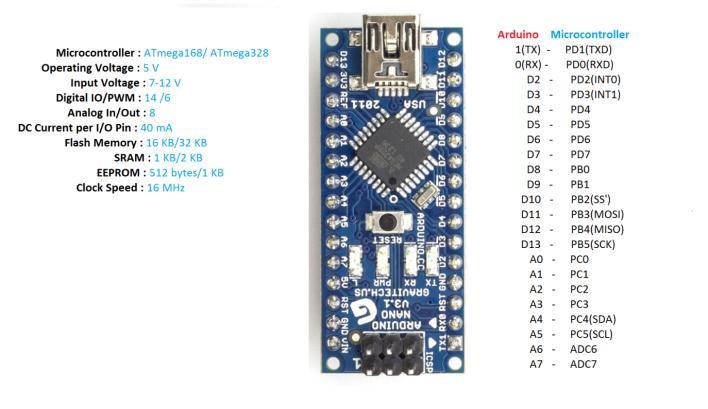
A microcontroller is a compact integrated circuit designed to govern a specific operation in anembedded system. A typical microcontroller includes aprocessor,memoryandinput/output(I/O)peripheralsona singlechip.Sometimesreferredtoasanembeddedcontroller ormicrocontrollerunit(MCU),microcontrollersarefoundin vehicles,robots, office machines, medical devices, mobile
radiotransceivers,vendingmachinesandhomeappliances amongotherdevices.
Fig4.microcontroller
iv. HC-05 Bluetooth Module
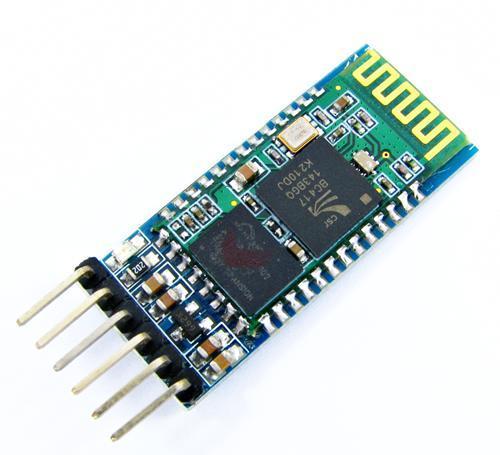
TheHC05BluetoothModuleisusedforcommunication andprocessingthevoicecommandsreceivedbythesystem. HC-05isaBluetoothmodulewhichisdesignedforwireless comunication.Thismodulecanbeusedinamasterorslave configuration.
Fig.5.Bluetoothmodule
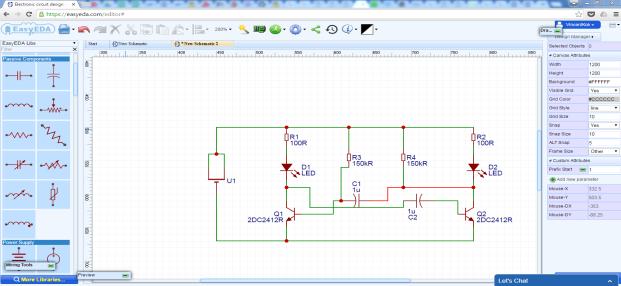
v. SOFTWARE USED- Easy EDA
AgreatwebbasedEDA(ElectronicDesignAutomation) tool for electronics engineers, educators, students, market andenthusiasts.EasyEDAisfreeonlinesoftwareforcreating circuit schematics, designing PCBs as well as simulating electronicscircuits.
International Research Journal of Engineering and Technology (IRJET) e-ISSN: 2395-0056
Volume: 09 Issue: 08 | Aug 2022 www.irjet.net p-ISSN: 2395-0072
8. Flow Chart of the App part:
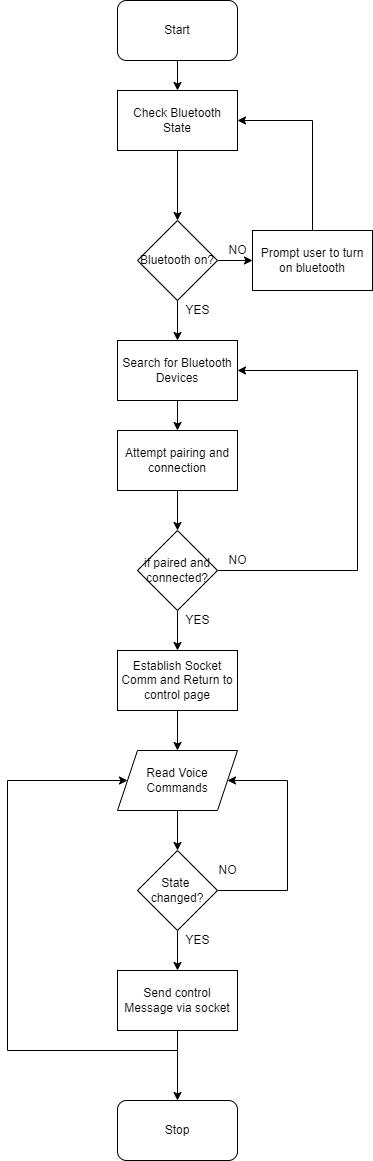
Fig.6.Softwareinterface
7. Important Functions of the developed Application:
Therobotiscontrolledviavoicecommandsandthevoice commandsdetectedaresenttotheroboticvehicleusingthe Bluetooth protocol. The following important functions are implemented in the project while designing the android applicationforthecontroloftheroboticvehicle.
Importantfunctionsintheimplementationofappandtheir description:
onCreate():used to set layouts, call ui related tasks, and handleuirelatedinteractionsandrunbackgroundservices.
SetOnTouchListener(): Returnsifthebuttonispressedor released.Wecallthisfunctiononeverybuttontocheckifthe buttonwasclicked
setOnCheckedChangeListener(): Usually used in toggle switchestocheckifthedevicestatehasbeenchanged.We usethisintheapptomonitorthetoggleswitchandsendthe messageviaBluetooth.
onResume(): This is the inbuilt function which is called when the app UI is loaded or app returns from the minimizationstate
Socket.connect():Connect to the Bluetooth device (voice controlled robot)usingtheinbuiltphoneBluetooth
onPause(): onPausefunctionisusedtopausethestateofthe serviceswhentheappisminimizedorgoesinbackground state
SendSignal(char message): Thisfunctionistheimportant functionwhichisusedtosendthecontrolcommandfromthe app to the robot. This function checks if the Bluetooth is connectedandifitisconnecteditwillsendthemessageto theRobotusingtheOSlevelfunctions.
International Research Journal of Engineering and Technology (IRJET) e-ISSN: 2395-0056
Volume: 09 Issue: 08 | Aug 2022 www.irjet.net p-ISSN: 2395-0072
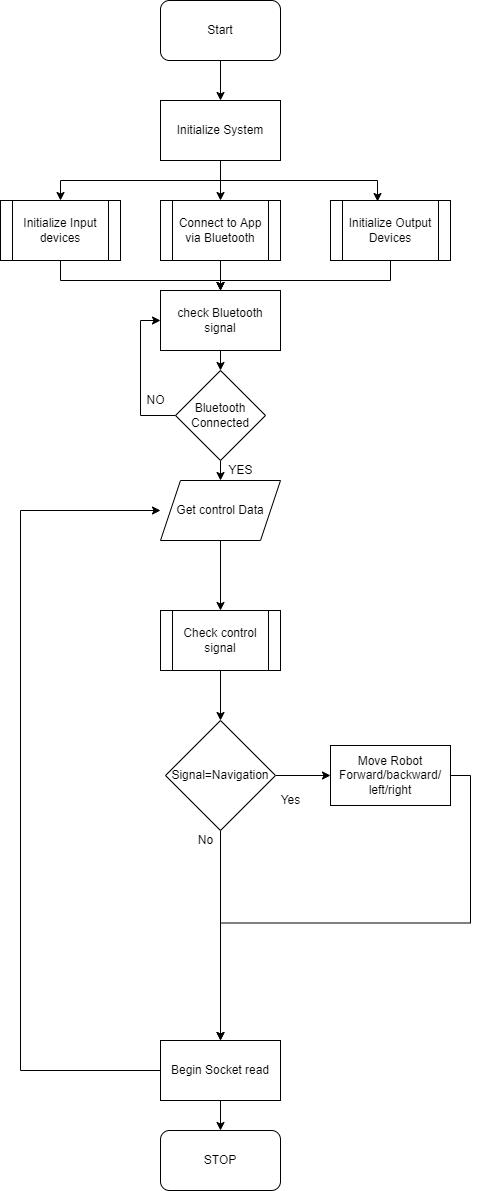
9. Flow Chart of the robotic Vehicle Part:
10. RESULT AND DISCUSSION
The implanted projectdeals with the development of wirelessvoicecontrolledrobot.Thesnapshotsbelowshow thecompletedproject.Oncetheprojectwascompleted,the project was tested for the performance. The results of the projectareasshownbelow.
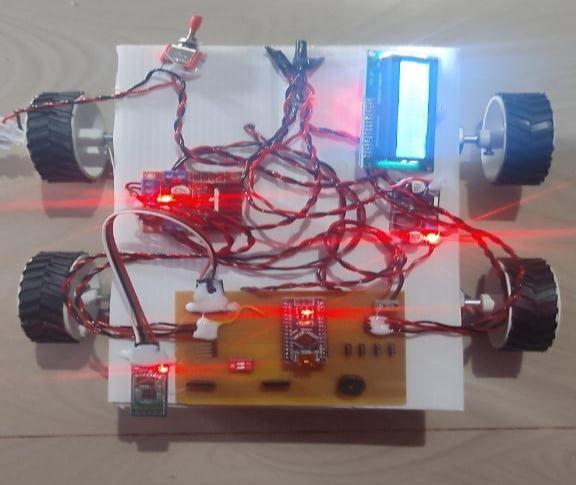
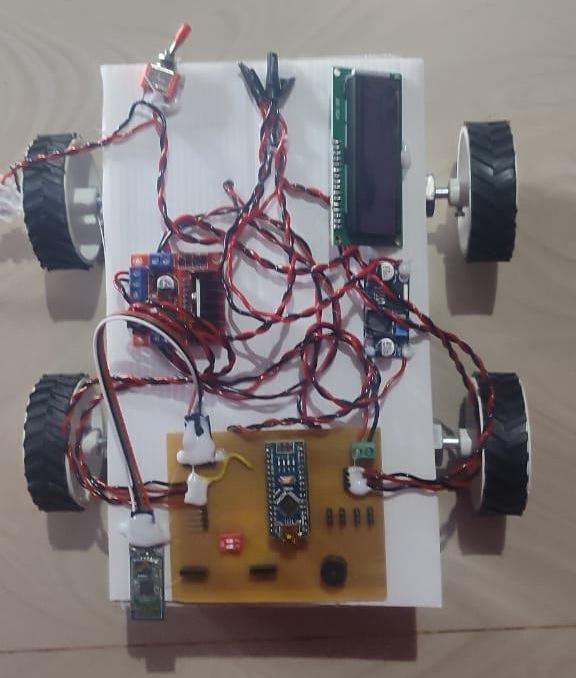
Fig.6AssemblyoffinalRobot
Testsaregroupedtogetherbasedonwheretheyare addedinSDLCorthebythelevelofdetailingtheycontain.In general, there are four levels of testing: unit testing, integration testing, system testing, and acceptance are testing.ThepurposeofLevelsoftestingistomakesoftware testingsystematicandeasilyidentifyallpossibletestcasesat aparticularlevel.
Therearemanydifferenttestinglevelswhichhelptocheck behaviorandperformanceforsoftwaretesting.Thesetesting levels are designed to recognize missing areas and reconciliationbetweenthedevelopmentlifecyclestates.In SDLC models there are characterized phases such as requirementgathering,analysis,design,codingorexecution, testing,anddeployment.
Allthesephasesgothroughtheprocessofsoftwaretesting levels.Therearemainlyfourtestinglevelsare:
i. ModuleTesting
ii. IntegrationTesting
iii. SystemTesting
International Research Journal of Engineering and Technology (IRJET) e-ISSN: 2395-0056
Volume: 09 Issue: 08 | Aug 2022 www.irjet.net p-ISSN: 2395-0072
Test case number Test cases
Case1 Establish Bluetooth communication
Expected output Actual output
Socket connection Charmessage fromappto phone
Case2 DetectVoice command Speechtotext conversion Voicetotext convertedand displayed
Case3 Runrobot Control navigationofthe robot
iv. Acceptance testing: Acceptance testing is a test conducted to find if the requirements of a specificationorcontractaremetasperitsdelivery. Acceptancetestingisbasicallydonebytheuseror customer. However, other stockholders can be involvedinthisprocess.
The following test cases were carried out on the project.Theresultsobtainedareasshownbelow.
Generated controlsignals forthemotor whichcontrol thedirectionof the motor.
Case4 Turnatangle Turingat expectedangle Controlsignal for turningwith delayandstop
iv. AcceptanceTesting
Each of these testing levels has a specific purpose. These testing level provide value to the software development lifecycle.
i. Module testing: A module is a smallest testable portion of system or application which can be compiled,liked,loaded,andexecuted.Thiskindof testinghelpstotesteachmoduleseparately.Theaim istotesteachpartofthesoftwarebyseparatingit.It checks those components are fulfilling functionalities or not. This kind of testing is performed by developers. The individual Module testesarecarriedoutandthefollowingoutput
ii. shown Integration testing: Integration means combining. For Example, In this testing phase, differentsoftwaremodulesarecombinedandtested as a group to make sure that integrated system is readyforsystemtesting.Integratingtestingchecks the data flow from one module to other modules. Thiskindoftestingisperformedbytesters.
iii. System testing: is performed on a complete, integrated system. It allows checking system's compliance as per the requirements. It tests the overallinteractionofcomponents.Itinvolvesload, performance,reliabilityandsecuritytesting.System testing most often the final test to verify that the system meets the specification. Evaluates both functionalandnon-functionalneedforthetesting.
From the tests conducted we can conclude that the robotic vehicle was able to execute the above tests successfullywithprecisionandaccurateoutput.Thesystem isbasedonBluetoothcommunicationandworksonlywhen Bluetoothisconnectedandsockedconnectionisestablishes prop
11. CONCLUSION AND FUTURE SCOPE
Theproposedprojectdealswiththedevelopmentofthe wireless voice controlled robot. Form the implemented project we can conclude that the proposed system is completely voice controlled and runs using the voice commandsgivenbytheuserusingtheandroidapplication. The separate androidapplicationisdevelopedasa partof thisprojectwhichwillbeusedtoissuethevoicecommands totheroboticvehicleusingspeechtotextanddependingon the voice command detected the Bluetooth socket communication sends the data to the Bluetooth device presentintheandroidapplication.Thuswecanconcludethat thedevelopedsystemcanprovidevoicecontrolinterfacefor robotsmakingiteasiertocontrolthem.
Theprojecthaswidescopeforfuturemodifications.In future the project can be modified with the deep learning basedsystemtorecognizethevoiceofa particularperson andafterperformingvoiceverificationwillissuethecontrol signaltotherobot.Thiscanensuresecurity.
REFERENCES
[1]DesignofaBluetoothEnabledAndroidApplication foraMicrocontrollerDrivenRobotByVitoM.Guardi,(May 2014).
[2]AndroidControlledMobileRobotByJorgeKazacos Winter,(July2013).
[3]AndroidBasedRobotImplementationForPickand RetainofObjectsByRanjithKumarGoud,B.SanthoshKumar, (Oct2014).
[4]Smartphonebasedroboticcontrolforsurveillance applicationsByM.Selvam,(IJRET2014)
[5]ControllingaRobotusingAndroidInterfaceandVoice ByKishanRajKC,(2012).
International Research Journal of Engineering and Technology (IRJET) e-ISSN: 2395-0056 Volume: 09 Issue: 08 | Aug 2022 www.irjet.net p-ISSN: 2395-0072
[6]Motion Control of Wheeled MobileRobotByGyula Mester,(SISY2006)
[7] Design of PI and PID Controllers with Transient Performance Specification By J. C. Basilio and S. R. Matos,(IEEE2002).
[8]RobotControlDesignBasedOnSmartphonebyXiao Lu, Wenjun Liu, Haixia Wang, Qia Sun, IEEE, 978-1-46731382,pp-2820-2823,Jun2013.
[9]AndroidphonecontrolledrobotusingBluetoothby ArpitSharma,ReeteshVerma,SaurabhGupta,Sukhdeepkaur bhatia,IJEEE,Vol.7,pp-443-448,Nov-2014
2022, IRJET | Impact Factor value: 7.529 | ISO 9001:2008 Certified Journal |