Implementation of Automatic Attendance Management System Using Harcascade and Lbph Algorithms
Middela Naveen1, Yarram RajaShekhar Reddy2 , Orsu Uday Chandra3 , Halavath Balaji4 , Preethi Jeevan51,2,3 B.Tech Scholars, Dept. of Computer Science and Engineering, SNIST, Hyderabad-501301, India
4,5 Professor, Dept. of Computer Science and Engineering, SNIST, Hyderabad-501301, India ***

Abstract:-Industries today are concerned about their time because they think that time equals money. Calling out the names or getting the employee to sign a piece of paper are the two main traditional ways to record attendance. They both take more time and effort. Therefore, a computerbased attendance management system is needed to help them maintain attendance records automatically. Using ‘TKINTER’ and ‘PYTHON’, we created an automatic attendance system for this project. Our plan to implement an "Implementation Of Automatic Attendance Management System Using Harcascade And Lbph Algorithms" have been projected. Because the application is entirely software-based and features face recognition, it can be deemed environmentally friendly because it reduces the use of paper and saves time. Due to the face being utilized as a biometric for authentication, this technology also completely eliminates the possibility of fraudulent attendance. This technique can therefore be used in a profession where attendance is crucial. The proposed system was created using the TKINTER platform and is supported by a PYTHON script and a SQL database. The algorithm utilized by the system is based on image comparison using the encoded values of the face from the image from the database with the image recorded by the system in run time. A spreadsheetinexcelformatisthesystem'soutput.
Keywords: face detection, face recognition, feature extraction,harcascade,lbph
I. INTRODUCTION
Aperson'sfaceisanimportantanddistinctivefeatureof their head. Since Woody Bledsoe, Helen Chan Wolf, and CharlesBissonfirstutilizedcomputerstorecognizefaces in 1964 and 1965,face recognition has come a long way. [1]. Though it was later discovered that they concentrated on facial landmarks, or points on the face like the centres of the eyes and the space between the lips, among other things, it is believed that most of their work went undetected. Aside from that, computerised facial recognition has been the subject of numerous theories and investigations, making it one of the most
cutting edge technologies now in use. Most social networkingapps,likeFacebook,employfacerecognition toidentifypeopleinuploadedimages,makingitsimpler for app users. Mobile camera apps also employ face recognition to determine age and identify traits that make the face more attractive. Apps like Instagram and Snapchat employ facial recognition and augmented realitytodisplayavarietyofentertainmentfeatures.
Conversely,mostinstitutions,includingschools, universities, and other employee-based organisations, utilise the attendance criterion to decide whether students are allowed to take tests or to determine an employee's pay based on how many days they have worked. In educational institutions, it is frequently observed that students use proxy attendance (attendance that is recorded even when the student is notpresent),givingthemanunfairadvantage.[2].
Additionally, when taking attendance, teachers could unintentionally make a mistake. An employee-based business may experience a situation where the employee's attendance is inaccurately recorded in the ledger. To get around this restriction, you can automate the process by utilizing an artificial intelligence system that recognizes the person as they enter the building, logs their attendance, and stores the information for a considerable amount of time in a database. In any case, having this data on hand will be helpful. In this system, face recognition is helpful in a variety of ways, some of whicharelistedbelow.
● Reducesthepossibilityofhumanerror.
● Saves time and resources because administrators don't have to manually record absencesintheRegister.
● Compared to manual attendance systems, AIbased attendance systems are much more automated. These systems update and save daily records in real time. Facial recognition attendance systems can be set up to take care ofdailyattendanceaswellasproducinghighly accurate timesheets for specific employees on alargescale.
II. BACKGROUND STUDY (LITERATURE)
Smart Attendance Monitoring System: It is a Face Recognition based Attendance System for Classroom Environment [1]. developed an attendance system that eliminates the manual technique of the current system. The mechanism used to take attendance is face recognition. Even the person's position and facial expressionaretakenintoaccountbythealgorithmwhen takingattendance.
Attendance System Using Face Recognition and Class Monitoring System's author states that facial images of variouspeopleandstudentsfromattendancerecognition would be uploaded to a database in Attendance System Using Face Recognition [2]. This suggests that face recognition-based automatic attendance systems reduce manuallabouraswell.
Automatic Attendance System Using Face Recognition [3]for Students. The Viola-Jones and PCA facial recognition algorithms are used in this system. A digital cameraisusedinthissystemtotaketwopictures,oneat thebeginningandtheotherattheendofthelesson.This systemwillprocessbothphotos,whichwillplayacrucial part in the process of employing face recognition to identify the student. If the student is identified both at the beginning and conclusion of class, their attendance willberecorded.
ClassRoomAttendanceManagenentSystemUsingFacial RecognitionSystem [4], a novel method known as a 3D facial model is created to recognise a student's face inside of a classroom. It will be possible to recognise students in an automated attendance system by using these analytical studies. In order to record their attendance and assess their performance, it recognises facesfromimagesorvideostreams.
RFID-based attendance systems [5] requires the placementofRFIDtagsandIDcardsonthecardreaders inordertorecordattendance.RS232isemployedtolink the system to the computer and save the database's recordedattendancedata.Thissystemwillcausea surge in the issue of fraudulent access. A person will enter the corporation withauthorizationfromanIDcard,justlike anyhacker.
An iris recognition wireless attendance management system's design and installation [6] The iris can be employed as a biometric feature in this system to recognise irises. A wireless technology called Iris Recognition was designed and put into practise. The Daugman algorithm serves as the foundation of the iris recognitionsystem.Thisirisrecognitionsystemusesthe following steps to capture an iris recognition image: extracting the image, saving the image's features, and comparing those characteristics to the image that is stored in the database. The iris recognition topography, however,ispoor.
III. METHODOLOGY
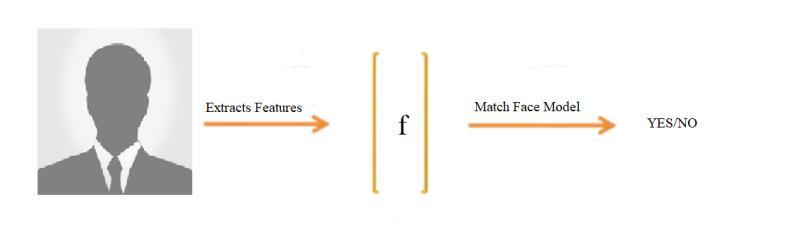
The strategy outlined here is to develop an automatic attendance system that logs attendance and recognizes peoplebasedontheirfaces.Thismethodcanbeapplied in both businesses and educational institutions where staff members are required to keep track of their attendance. Administrators and participants in the institution's attendance may both receive the system's advantages. Additionally, by minimising human error thatcouldoccurwhendocumentingattendance,suchas proxyattendance in educational institutions,thesystem aims to lower the amount of resources required to maintainattendance.
The suggested method makes use of a histogram of oriented gradients as a workable answer for the application. A high-definition camera will be installed outside the classroomor work placeas part of this system to track attendance. camera will be positioned within the classroom so that every student or employee maybeseenbythecamera'slens.camerawill have facial recognition and identification systems that will scan the subjects' faces and document their attendance.
Apersonenteringthefrontentranceturnshisfaceinthe direction of the camera, creating 128-d encodings. next we compare these 128-d encodings to the known encodings produced after our system was trained using the data we collected. We add the person's name to our database,whichisorganizedbythedateandtimeofhis admission into the premises, if the matches are found. This makes it easier for us to manageably and systematically track attendance. The system will simply keep scanning for the subsequent visitor if no match is found, indicating that the person's photo has not yet beenprogrammedintothesystem.
Untilthesystemisshutoff,thiscontinues.Byvisitingthe configured home page with proper credentials Admincan view the attendance and details of employee orstudent. Weupdatetheattendanceinrealtimeinto alocalexcelsheetthatcanbereadbyadmin.
IV. ALGORITHMS
4.1Harcascade:
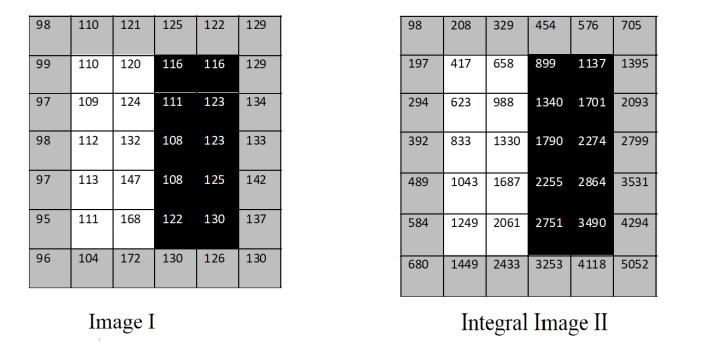
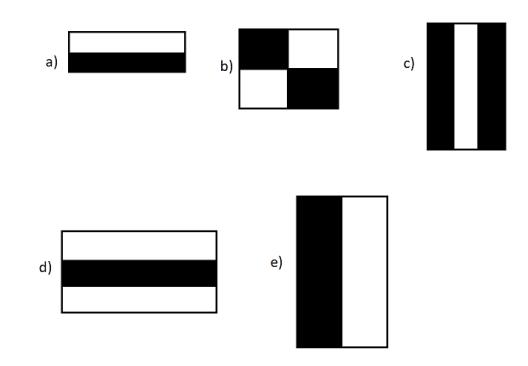
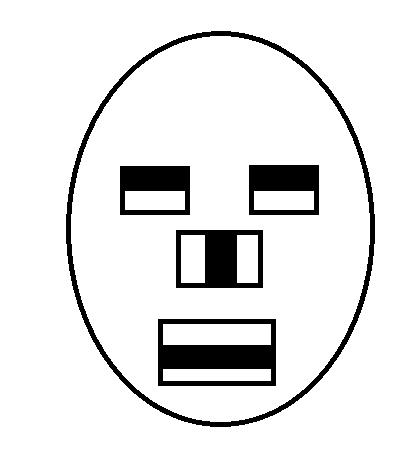
The Haar Cascade classifier uses the Haar Wavelet techniquetodividethepixelsinthepictureintosquares according to their functions. To compute the "features" that are detected, "integral image" concepts are used. Withtheuseofcascadingtechniques,HaarCascadescan detect faces in images by selecting a small number of highly effective classifiers from a wide collection of available characteristics using the Adaboostalgorithm. FollowingaresomeHaarFeatures.
Haar Cascades employ machine learning strategies that include training a function using a large number of both positive and negative images. Feature extraction is this algorithmicprocedure.
Darkpixels:lowervalues
BrightPixels:highervalues
Haarfeaturesonlyatcertain locationsareactivated
During Face Recognition for each user it follows these steps:
CalculationofHaarFeature:
VA=Σ(pixelintensitiesinwhitearea)
–Σ(pixelsintensitiesinblackarea)
VA=(2061-329+98-584)-(3490-576+329-2061)
VA=64
LBPHAlgorithm:
It was initially described in 1994 (LBP), and since then, it has been discovered to be an useful characteristic for textureclassification. Onsomedatasets,ithasalsobeen found that the detection performance is significantly enhanced when LBP and the histograms of oriented gradients (HOG) descriptor are combined. Our ability to representthe facial photos usinga straightforwarddata vector using the LBP and histograms. As a visual descriptor, LBP can be utilizedfor tasks involving face identification, as demonstrated in the explanation that followsindetail.
TheLBPHusesthefollowingfourparameters:
1. Radius: The circular binary pattern serves as a representation of the area surrounding the center pixel.Itcouldbe0or1
2. Neighbors: The total number of sample points iswhat isusedtoconstructthe circular binary pattern. The computational cost increasesalongwiththesamplepoint count.Thus,itis typicallysetto8.
3. Grid X: The total number of cells running horizontally. The grid will function better as there are more cells, and the dimensionality of the generated vectorwillriseaswell.Itistypicallysetto8aswell.
4. Grid Y: This refers to the total number of cells arrangedvertically.Thegridwillfunctionbetterasthere are more cells, and the dimensionality of the generated vectorwillriseaswell.Typically,itisalsosetto8.
Weneedtocollectallofthefaceswhosefaceswewishto recognizeinordertotrainthealgorithm.Inordertouse these identifying codes to recognizea new image, we alsoneedaspecialnumberornameforeachimage.The sameidentifyingnumbershouldappearonall photosof thesameface.
To produce an intermediate image, the LBPHalgorithm goes through a number of computational phases. By emphasising a few characteristics, the intermediate


image will more formallydescribe the original image. The technique uses a concept known as sliding window, whichisbasedontheparameters,radius,andneighbors, toobtainthecharactersoftheface.
Now,just256locations(i.e.,0-255)ineachhistogramof each grid will indicate the occurrences of each pixel's intensity.
We are going to make a new, larger histogram at this point. If we use 8x8 grids, there will be 16,384 possible spots.Thefinalhistogramthatwilldepictthefeaturesof anoriginalimageisthisone.
Foreachimage,wehavenowconstructedthehistogram. Eachimageinthetrainingdatasetisnowrepresentedby one of these histograms. We will now provide a fresh input image and repeat the process to produce a new histogramforthisinputimage.
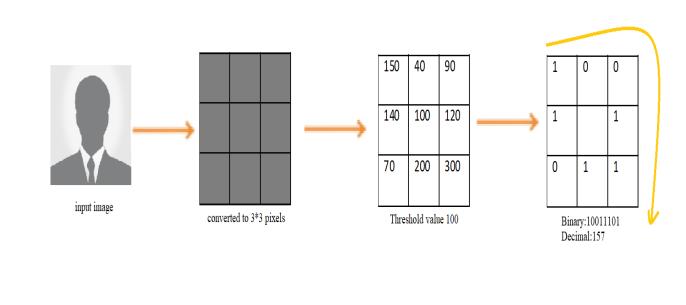
Fig5.CalculatingtheLBPHThresholdValue
Let'sbreaktheprocessdownintoafewstepsinorderto comprehendtheimageabove.
a.Assumewehaveagrayscaleimage.
b.Inordertoextractaportionoftheimage,wepartition itinto3x3pixels.
c.Itcanalternativelybeshownasa3x3matrix,witheach pixelcarryinganintensitythatrangesfrom0-255.
d. The centre value will be taken into account as a thresholdvalue.
e. By taking into account this threshold value, we can choose a new binary value for each neighbour. The binary value will be set to 1 if the neighbor's value is greaterthanorequaltothethresholdvalue;otherwise, itwillbesetto0
f. With the exception of the threshold value, the new matrixwillnowbeabinarymatrix.Now,we'llfocuson each binary value in the matrix line by line, according toitsposition.Forinstance,ifwetakeintoaccountthe image above, the binary number is 10011101. Line by line approach is not required. Although some authors may employ either a clockwise or an anticlockwise strategy,theendresultwillbethesame.
g.Wewillnowtranslatethisbinarynumberintodecimal form, where 157represents the decimal equivalent of 10011101. Then, we set this decimal value to the image'scentrevalue,whichisapixel.
h.Weshallobtaina freshimageattheconclusionofthis processthatwillspecifybetterqualitiesofit.
Using this updated image now, we can divide an image using the parameters Grid X and Grid Y into multiple grids
Thehistogramofeachimagemaynowbeextractedusing thetechniquesbelow.
We will now compare this new image's histogram to all thehistogramsofthephotosinthedataset.
Wecancomparehistogramsinmanydifferentways (by comparing the differences between two histograms), Examples include absolute value, chi-square value, and others.
V. IMPLEMENTATION
The system marks a employeeas present when it recognizestheirfaceanddeterminesthattheymatchthe imageinthedatabase.
Theemployee'sattendancestatusremainsabsentifthat doesn'tmatchthephotograph.
Algorithm:
INPUT:Employee'sfacesattheentrance.
OUTPUT:Automaticattendancemarking.
Identification of faces and recording the attendanceasnecessary.
StepI:Start
StepII:Enteringemployeeinformationintothedatabase ofemployee's.
Step III:Setup the camara at the entrance gate.Employye'sfaceswillappearinthecamera
StepIV:HaarCascadefacedetection.
Step V:Face Recognition utilizingthe Local Binary Pattern Algorithm by contrasting the employee'sfaces with pictures in the employee'sdatabase.
StepVI:IFemplyee’sfaceispresentinthedatabase,
THENGotoStep7.
ELSE:GobacktoStep2.
Step VII:IF Faces are recognized and matched THEN Markthemaspresent.
ELSE:Markas absent.
Step VIII:Mark the attendance in the attendance database.
StepIX:End.
Dataset:
Ourdataset,whichincludes50imagesofeachemployee, was developed. A real-time web camera is used to test our technology, capturing the faces of the employee After preprocessing, some sample photos are shown in Fig.6.
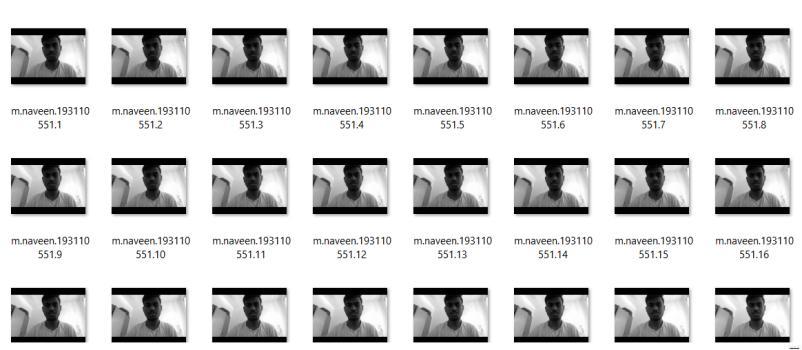
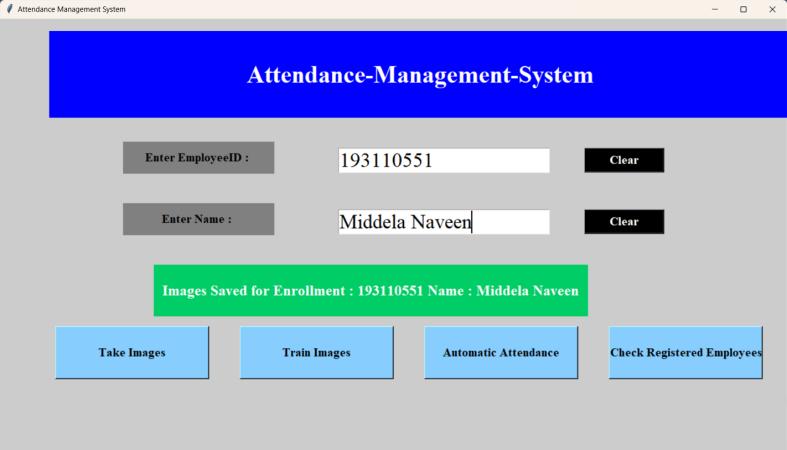
After Successful of previous step when the images are stored to database then it displays the successful messageasshownbelow.
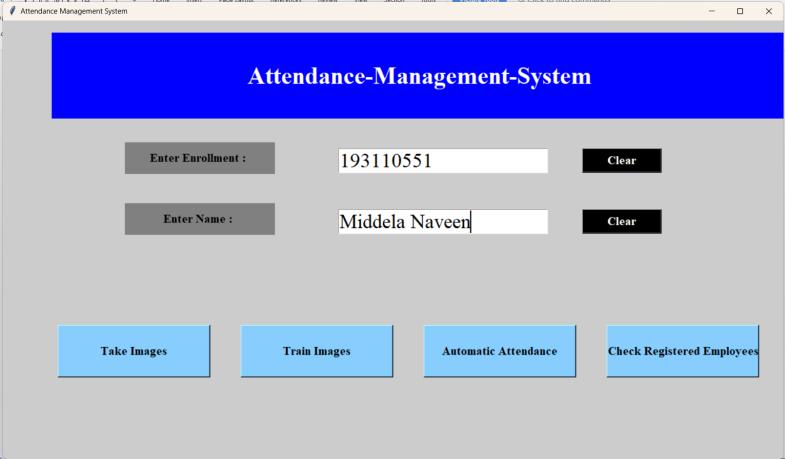
Thisistheinitialpageofourprojectwhichcontainstabs to check registered employees and to fill the automatic attendance.
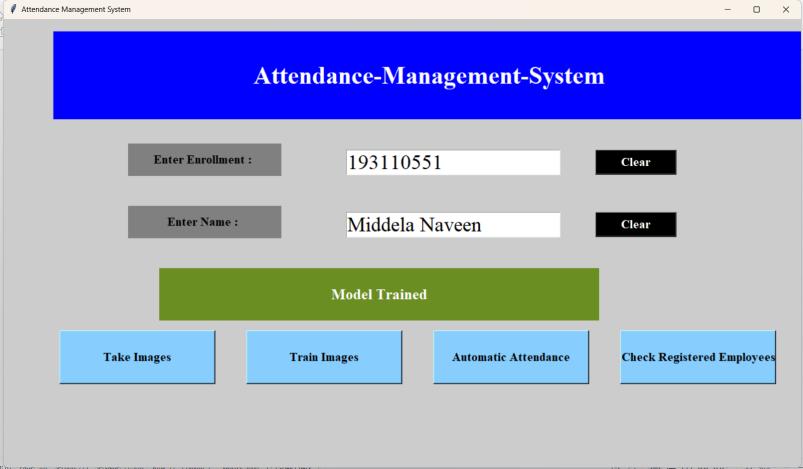
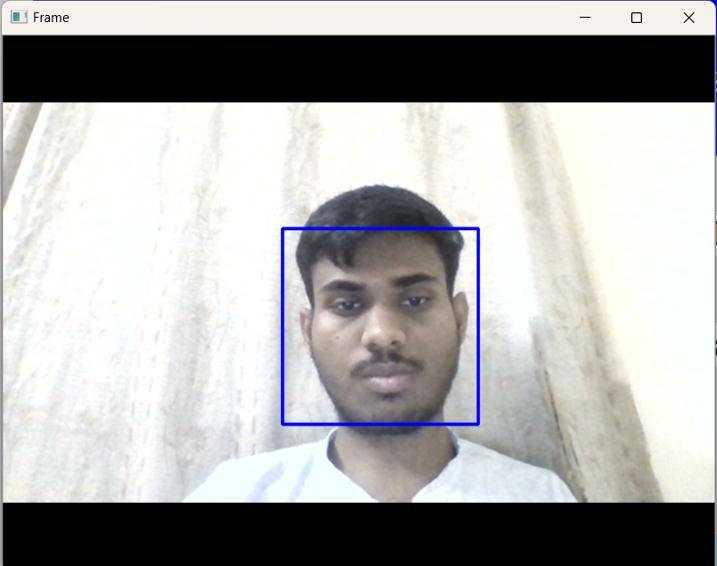
After filling the details of employee(i.e Employee ID and Name).it automatically captures the images for haar feature Extraction and stores the images in Training database.
We need to train the model if any new employee is registeredinordertomaintainhishaarfeaturestoo.
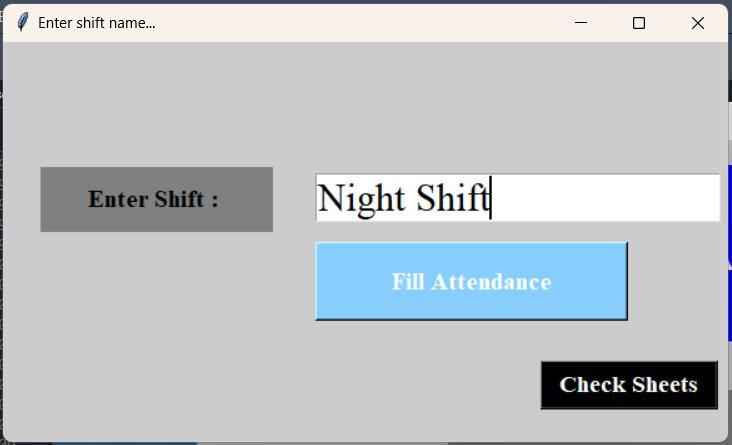
When we want to take attendance then we have to give theshiftnameaccordinglyinmycaseitisNightShiftyou havetogivebasedonyourshift.
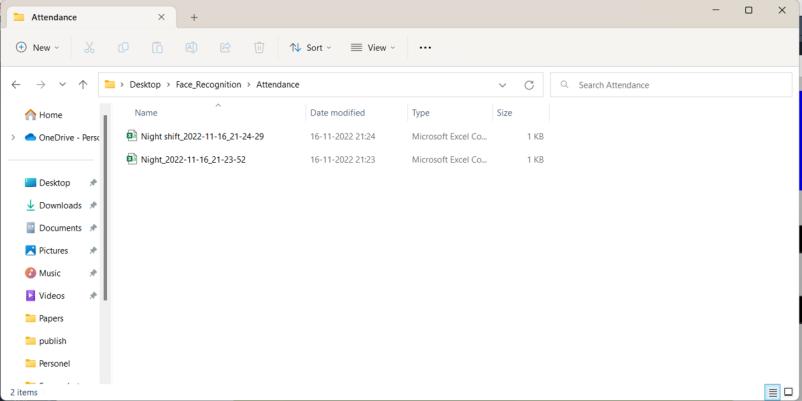
Theseistheexcelformatofpresenteesonvariousshifts.
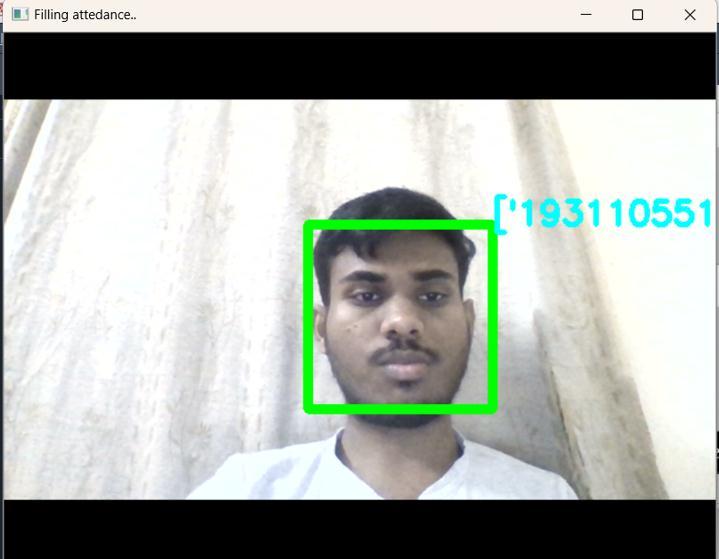
It captures the images and displays the empoloyee ID and name once it is detected and whose are undetected theyaredisplayedasunknown.
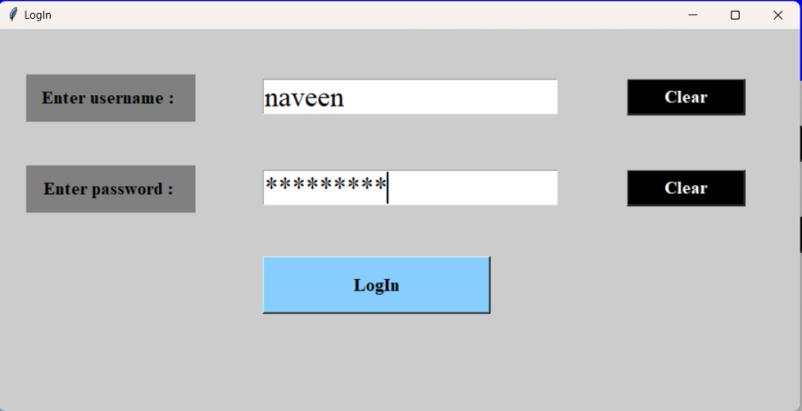
Thispanelisforadminonsuccessfulloginadmincansee thedetailsofallregisteredemployees.
After completion of taking attendance it displays the name and Employee ID, Name, Date and Time on screen and at the same time it is added to database in excel formatforfuturereference.


After Successful login of admin following details of each employeeisseenasshownbelow.
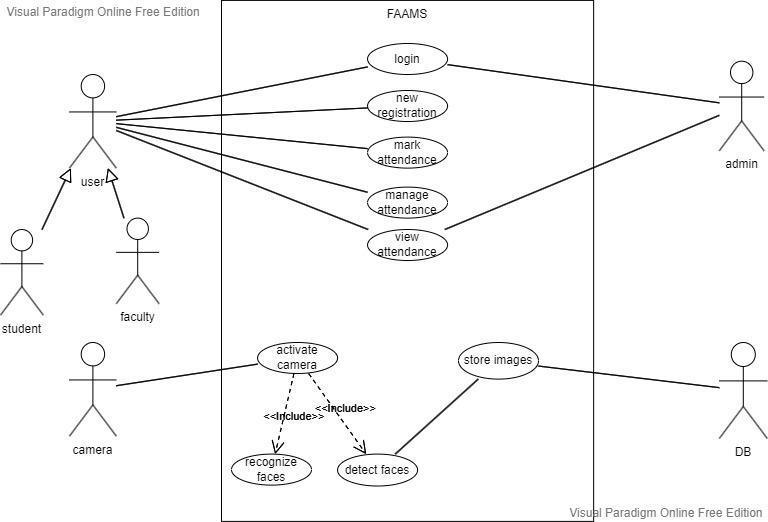
Use-case diagrams assist in capturing system requirementsanddescribeasystem'sbehaviourinUML. The scope and high-level functions of a system are described in use-case diagrams. The interactions between the system and its actors are also represented inthesediagrams.
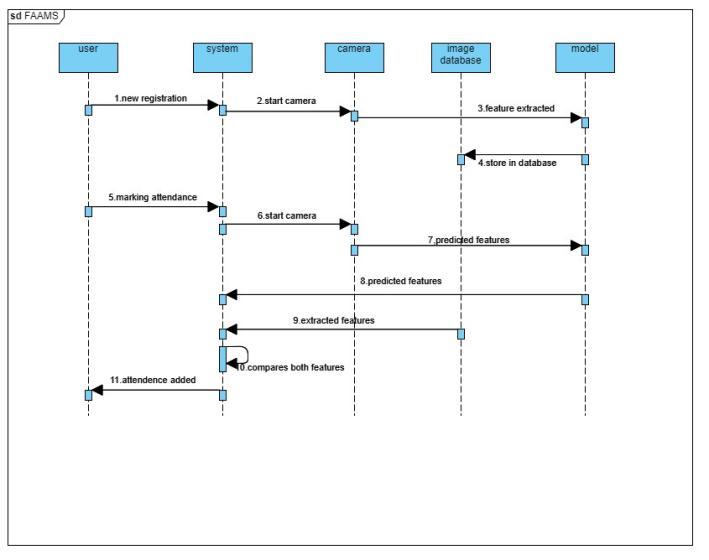
A sequence diagram (UML) is a visual representation of the flow of messages between objects during an interaction.Agroupofobjectsconnectedbylifelinesand themessagesthey exchangethroughoutthecourseofan interactionmakeupasequencediagram.
VIII. ADVANTAGES OF THE SYSTEM
The suggested system uses a much more straightforward and effective method. The usage of an easy-to-useFrameworkmakesthesystemsimpler.Ithas fewercomplicateddatabase setupsanda more effective algorithm.Duetoitsplatformindependence,thesystem ismoreeffective.
IX. CONCLUSION
This system is being used in order to decrease the numberofemployeesandextendtheworkingtime.This system demonstrates improved algorithmic usage and demonstrates strength in accurately identifying users. The outcome demonstrates the system's ability to handle variations in facial projection, position, and distance.
The problem of environment change is resolved during face detection since the original image is converted into a HOG representation, which captures the key elements oftheimageregardlessofimagebrightness,accordingto researchonfacerecognitionwithmachinelearning.
The whole project is implemented using the python programminglanguage.
X. FUTURE ENHANCEMENT
Onthisproject,therearestill sometaskstocompletein ordertonotifytheemployeeabouthisorherattendance by SMS.and creating login for employee's in order to checktheirpaymentinfoandtheirschedules.
XI. ACKNOWLDEMENT
For his insightful suggestion, knowledgeable counsel, and moral support during the writing of this work, we would like to express our gratitude to Dr. Halavath Balaji.
XII. REFERENCES
VII. RESULTS AND ANALYSIS
Inoursystem,threefeetistheminimumdistanceneeded for an image to be recognized. our system have an 90% accuracy rate for facial recognition . The employeesare identifiedbythissystemeveniftheyarewearingglasses orgrownabeard.
The accuracy also depends on the system configuration andcomputationspeed.asweknowtheseprojectrunson machine learning algorithms so it requires high configuration system to process it.high configuration giveshigherresults.
[1] H.K.Ekenel and R.Stiefelhagen, Analysis of local appearancebasedfacerecognition:Effectsoffeature selection and feature normalization.In CVPRBiometricsWorkshop,NewYork,USA,2006
[2] W. Zhao, R. Chellappa, P. J. Phillips, and A. Rosenfeld,“Face recognition: A literature survey,” ACMComputing Surveys,2003, vol.35, no. 4,pp. 399-458.
[3]Jomon Joseph1, K. P. Zacharia, “Automatic Attendance Management System Using Face Recognition”, International Journal of Science and Research(IJSR),2013.
[4]O.Shoewu, PhD, O.A.Idowu, B.Sc., “Development of Attendance Management System using Biometrics.”, ThePacificJournalofScienceandTechnology(2012).
[5]P.Viola and M.Jones,”Rapidobject detectionusinga boosted cascade of simple features,” Proceedings of the 2001 IEEE Computer Society Conference on Computer Vision and Pattern Recognition. CVPR 2001,Kauai,HI,USA,2001,pp.I-I.
[6]P.Viola and M.Jones,”Rapidobject detectionusinga boosted cascade of simple features,” Proceedings of the 2001 IEEE Computer Society Conference on Computer Vision and Pattern Recognition. CVPR 2001,Kauai,HI,USA,2001,pp.I-I.
[7]Anagha Vishe,Akash Shirsath, Sayali Gujar, Neha Thakur , “Student Attendance System using Face Recognition”,EngpaperJournal
[8]A Study of Various Face Detection Methods, Ms.VarshaGupta1,Mr.DipeshSharma2,ijarccevol.3
[9]P. Viola and M. J. Jones, “Robust real-time face detection. International journal of computer vision”, vol.57,no.2,pp.137-154,2004
[10] M. Mathias, R. Benenson, M. Pedersoli, and L. Van Gool, “Face detection without bells and whistles”, European Conference on Computer Vision, pp. 720735,2014.
[11] Adam Schmidt, Andrzej Kasinski, “The Performance of the Haar Cascade Classifiers Applied to the Face andEyesDetection”,ComputerRecognitionSystems 2
[12] Arun Katara, Mr. Sudesh, V.Kolhe,” Attendance SystemusingFaceRecognitionandClassMonitoring System”, IJRITCC, Volume: 5,Issues: 2 ,February 2017.
[13] Anushka Waingankar1, Akash Upadhyay, Ruchi Shah, Nevil Pooniwala, Prashant Kasambe. Face Recognition based Attendance Management System usingMachineLearningIEEE8/6/2012]
[14] Face Recognition based Attendance Management System using Machine Learning. IRJET 06, June 2011]
[15] P.PattnaikandK.K.Mohanty,"AI-BasedTechniques for Real-Time Face Recognition-based Attendance System- A comparative Study," 2020 4th International Conference on Electronics, CommunicationandAerospaceTechnology(ICECA), 2020, pp. 1034-1039, doi: 10.1109/ICECA49313.2020.9297643.
[16] V. Yadav and G. P. Bhole, "Cloud Based Smart Attendance System for Educational Institutions," 2019 International Conference on Machine Learning, Big Data, Cloud and Parallel Computing (COMITCon), 2019, pp. 97-102, doi: 10.1109/COMITCon.2019.8862182.
[17] Sai Ba Oo, Nang Hlaing Myat Oo, Suparat Chainan, Arpha Thongniam and Waralak Chongdarakul”Cloud-basedWeb Application with NFC for Employee Attendance Management System” -The 3rd International Conference on DigitalArts,MediaandTechnology(ICDAMT2018).