
International Research Journal of Engineering and Technology (IRJET) e-ISSN: 2395-0056
Volume: 12 Issue: 06 | Jun 2025 www.irjet.net p-ISSN: 2395-0072
International Research Journal of Engineering and Technology (IRJET) e-ISSN: 2395-0056
Volume: 12 Issue: 06 | Jun 2025 www.irjet.net p-ISSN: 2395-0072
Bhaskar G1 , Dr. C S Ravindra Sagar2 , Sudarshan B B3, Prem4, Nandeesha R5, Prajwal C R6 ,
1Assistent Professor, Department of Mechanical Engineering, SSIT, Tumakuru, Karnataka, India
2Professor, Department of Mechanical Engineering, SSIT, Tumakuru, Karnataka, India
3-6Research Scholars, Department of Mechanical Engineering, SSIT, Tumakuru, Karnataka, India
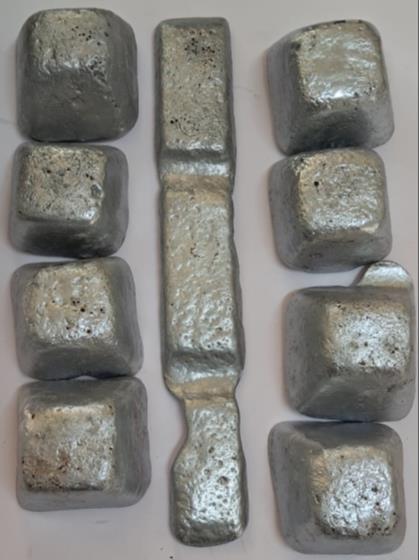
Abstract - Thestudyofmetalmatrixcompositematerials has gained significant attention in the field of materials science due to their enhanced mechanical properties like specific strength, light weight, specific toughness etc. Aluminiumalloyiswidelyusedmaterialasmatrixbecauseof itsuniquecharacteristicslikelightweight,lowcast,easyto castetc.AmongAluminiumalloyLM26isuniqueinnature becauseofitsalloyingelementsisSi,CU,Mgwhichmakesit suitable for automobile and aerospace industries. In the presentwork,LM26AlalloyisreinforcedwithSiCparticleto studyitsmechanicalproperties.Thestircastingmethodwas followedtocastspecimensfrom0to10%atastepsof2% weightpercentageofSiCreinforcement.Thespecimenswere machined to make tensile compression and hardness specimens as per ASTM standards. The specimens were tested in a laboratory equipment’s having NABL accreditation. The results shows that overall mechanical propertiesinuptrendasreinforcementpercentageincreases up to 8% SiC. Then there is a down trend as increasing reinforcementinducedbrittleness.Theseobservationswere confirmedbymicrostructurestudyinopticalmicroscopeat 100Xand500X.
Key Words: LM26, SIC, Tensile Strength, Compression Strength,BHN,StirCasting,MMC’s,Microstructure.
Thestudyofmetalmatrixcompositematerialshas gainedsignificantattentioninthefieldofmaterialsscience due to their enhanced mechanical properties like specific strength,lightweight,specifictoughnessetc.Amongthese, aluminiumalloysreinforcedwithceramicparticlessuchas silicon carbide (SiC) particles have shown promising improvementsinstrength,hardness,durability,lightweight, easy to cast, and many more.[1,2] The development of compositematerialshasrevolutionizedvariousindustriesby providing materials with superior mechanical properties. Among these, aluminium matrix composites (AMCs) are particularly noteworthy due to their lightweight nature combinedwithenhancedstrengthanddurability.[3,4]
LM26,ahigh-performancealuminiumalloyaspecial alloy which have many benefitting properties like low weight,Corrosionresistant,easytocast,lowcostetc.LM26, a high-strength aluminium alloy, has been extensively
researched for its potential applications in automotive, aerospace. This alloy when reinforced with SiC, exhibits significant improvement in mechanical properties like tensile strength, compression, and hardness properties, making it an ideal candidate for various industrial applications,automotivepartsespeciallyinElectricvehicles.
Incorporating ceramic particles such as silicon carbide (SiC) into LM26 alloy forms a composite material that leverages the overall mechanical properties. This reinforcement significantly improves the mechanical properties of the base aluminium alloy, making it an attractiveoptionforfutureapplicationsespeciallyadvanced automotive body parts. By analysing these properties, the researchseekstoprovidecomprehensiveinsightsintothe benefitsandpotentialapplicationsofLM26/SiCcomposites. The findings will not only highlight the improved performance metrics but also discuss the practicality of integrating such materials into existing manufacturing processes.[4]
Thisresearchworkaimstoassessthemechanical behaviour of LM26 aluminium alloy reinforced with SiC particlesat0%to10%atstepsof2%increasing.Thiswork focus on its tensile strength, compressive strength, and hardness. By understanding these properties, the study seekstoprovideinsightsintothepotentialapplicationsand benefits of using such composites in sectors that demand highstrengthandreliability.
LM26 aluminum alloy is a cast aluminum alloy renowned for its excellent casting characteristics and balanced mechanical properties. It is part of the Al–Si–Cu family, meaning that while aluminum is the principal component,significantamountsofsiliconandcopper(along with minor additions of magnesium, iron, and others) are incorporatedtooptimizeitsperformance.Thiscomposition givesLM26superiorfluidityduringcasting aresultofthe high silicon content (typically around 8.5–10.5%) and strengthenhancementsfromcopper(commonlyaround2–4%),makingitespeciallysuitedforapplicationswhereboth intricatecastingsandrobustpropertiesarerequired.[3,4]
International Research Journal of Engineering and Technology (IRJET) e-ISSN: 2395-0056
Volume: 12 Issue: 06 | Jun 2025 www.irjet.net p-ISSN: 2395-0072
LM26 is a designation for a specific type of Aluminium alloy commonly used in casting applications whereLMstandsforLinearmonolithic.ItispartoftheAl-Si (Aluminium-Silicon) familyofalloys,whichareparticularly known for their good cast ability, low shrinkage, and excellentwearresistance.LM26isoftenusedforpartsthat are exposed to moderate to high stress, especially where good strength-to-weight ratio, wear resistance, and corrosionresistanceareimportant.[2]
Mechanical Properties LM26 Aluminium
LM26Aluminiumisahigh-strengthAluminiumalloywith thefollowingproperties.[2,3]
Table no 1.1: LM 26 Mechanical properties
SlNo Property Value
1 Density(g/cm3) 2.6-2.7
2 MeltingPoint(°C) 600-650
3 ThermalConductivity(W/m-K) 120-150
4 Co-EfficientofThermalExpansion 22x10-6°C
5 Hardness(BrinnelHardness) 75-90
6 ModulusofElasticity(GPa) 70-80
7 UltimateTensileStrength(MPa) 180-250
The combination of extreme hardness, thermal stability,andexcellentelectricalcharacteristicsmakesSiCa materialofchoiceinapplicationsthatdemanddurabilityand efficiency.Astechnologycontinuestopushtheboundariesof performance,especiallyinmaterialsscience.Siliconcarbide
or carborundum material with exceptional thermal, mechanical,andelectricalproperties.Thesepropertiesmake ithighlyvaluedinavarietyofapplications,includingpower electronics, abrasive materials, heat exchangers, wearresistantcomponentsetc. Siliconcarbideisthethirdhardest materialavailable.SiC'shardnessisduetoitsuniquecrystal structure,whichconsistsofsiliconandcarbonatomstightly bonded together.This arrangement gives SiC its great strengthandhardness,andmakesithighlyresistanttowear andabrasion
Important properties of Silicon Carbide:
Table No 1.2: Mechanical Properties of Silicon Carbide
5x10⁶/°C 5 Hardness(BrinnelHardness) 9.0(Mohs scale)
6 ModulusofElasticity(GPa) 400-500 7
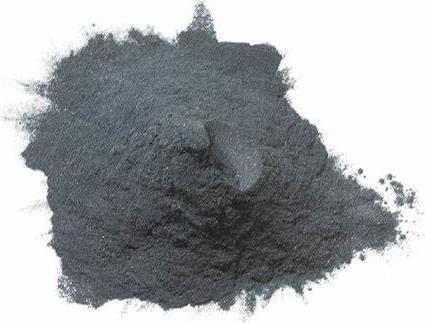
Fig1.2 Silicon carbide Powder
Grit size: 325, Mesh size: 45microns
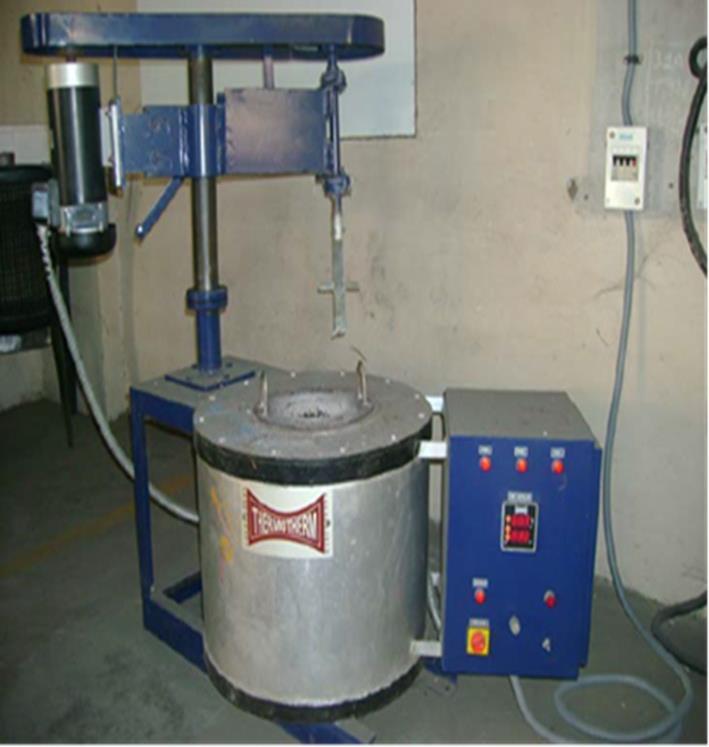
Stircasting,alsoknownascompositecasting,isan essential method for manufacturing metal matrix composites.Itinvolvesthereinforcementphase(particlesor fibers)beingblendedorstirredintoamoltenmatrixmetal. This technique is highly favored in industrial applications duetoitseasyimplementationandeconomicviability.The process begins by heating a metal alloy until it reaches a liquid state, typically in a furnace designed to maintain precisetemperaturecontrols.Followingcompletemelting,
International Research Journal of Engineering and Technology (IRJET) e-ISSN: 2395-0056
Volume: 12 Issue: 06 | Jun 2025 www.irjet.net p-ISSN: 2395-0072
reinforcement materials such as silicon carbide (SiC) is introduced into the molten metal. Mechanical stirring is employedtocreateavortex,allowinguniformdispersionof the particles throughout the matrix while minimizing agglomeration.Thisstirringcontinuesforaspecifiedperiod, ensuring even distribution and effective bonding at the matrix-reinforcement interface before the mixture is cast intomouldstosolidify.
3.
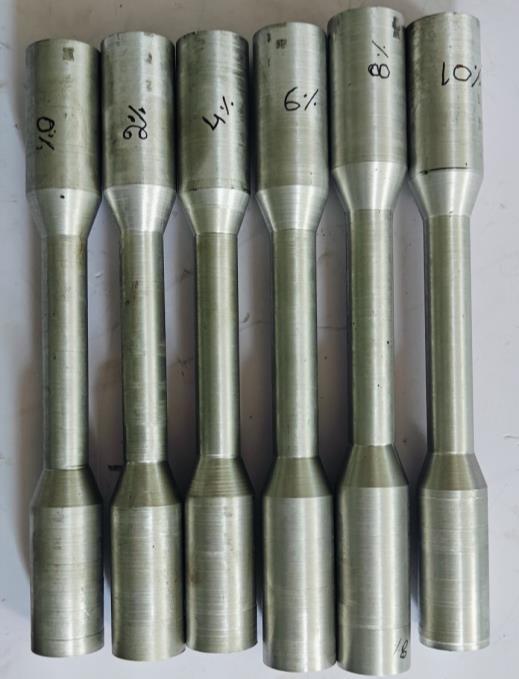
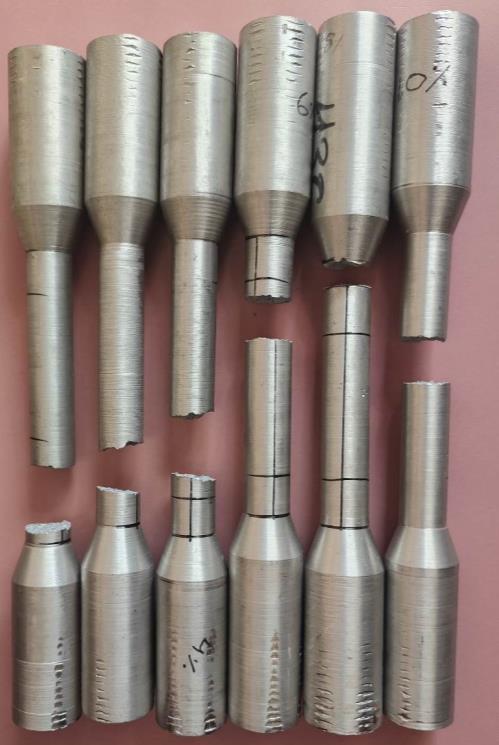
Tensile strength is one of the basic mechanical properties which was widely used for designing most of parts. By assessing the tensile strength only, a particular material can be declared for desired application. Tensile testingisoneofthemostwidelyusedmethodstoevaluate the mechanical properties of materials such as metals, plastics, wood, and composites. The procedure is standardized and commonly follows guidelines set by organizationslikeASTM,SAE,ASM,andANSI.Inthistest,a specimen with a known cross-sectional area and gauge lengthissubjectedtoagraduallyincreasinguniaxialtensile load using a Universal Testing Machine, typically at room temperature. A tensile test conducted using a Universal TestingMachine(UTM)isacrucialmethodforevaluatingthe mechanicalpropertiesofmaterials.
International Research Journal of Engineering and Technology (IRJET) e-ISSN: 2395-0056
Volume: 12 Issue: 06 | Jun 2025 www.irjet.net p-ISSN: 2395-0072
Table No 3.1 Tensile test results table for varying SiC Reinforcement/LM26 MMC along with Yield Stress and % of elongation
AcompressiontestinaUniversalTestingMachine (UTM) is performed to evaluate a material's ability to withstandcompressiveforces.Inthistest,aspecimenoftena cylindrical or cubical block is placed between two compressionplatesintheUTM.Astheplatesmovetowards each other, a gradually increasing compressive force is applied to the specimen until it deforms or fails. Sensors measure the applied force and resulting deformation, generating a stress-strain curve that helps determine key propertiessuchascompressivestrength,elasticlimit,and modulus of elasticity. This test is commonly used for materialslikeconcrete, metals,polymers,andceramicsto ensuretheymeettherequiredstrengthcriteria.
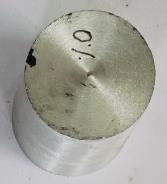
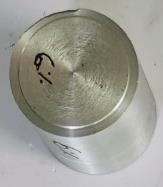
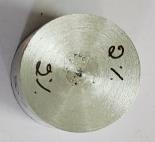
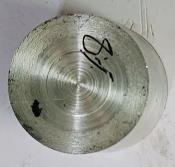
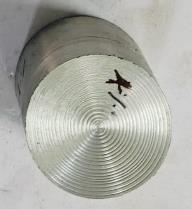
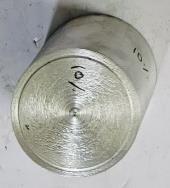
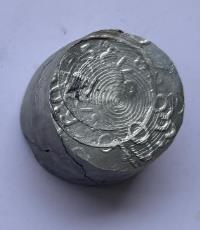
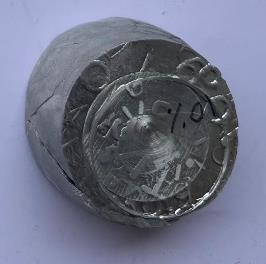
Table no 4.1 Results of Compression test
Hardness testing is a technique used to evaluate how well a material resists deformation, especially when subjected to indentation, scratching, or abrasion. The process involves applying a controlled force to press a harderobject,calledanindenter,ontothesurfaceofthetest materialforaspecifiedperiod.Theresultingindentation measured in size or depth is used to determine the material's hardness value, indicating its resistance to localizedplasticdeformation.VariousmethodslikeBrinell, Rockwell, Vickers, and Knoop are selected based on the specific characteristics of the material, such as thickness, type,andthelevelofprecisionneeded.Duetoitsefficiency andnon-destructivenature,hardnesstestingplaysacrucial role in quality assurance, material selection, and investigatingmaterialfailures.
TheBrinellhardnesstestisawidelyusedtechnique forassessingthehardnessofmetalsandalloysbyevaluating theirresistancetoindentation.Itinvolvespressingahard tungstencarbideball,typically10mmindiameter,intothe
International Research Journal of Engineering and Technology (IRJET) e-ISSN: 2395-0056
Volume: 12 Issue: 06 | Jun 2025 www.irjet.net p-ISSN: 2395-0072
material'ssurfaceusingaspecificforcerangingfrom500to 3000kilograms-force,dependingonhowhardthematerial is. This load is maintained for a set time, usually 10 to 15 seconds. After the load is removed, the diameter of the resulting indentation is measured in two directions and averagedtonotetheBrinellhardnessnumber.
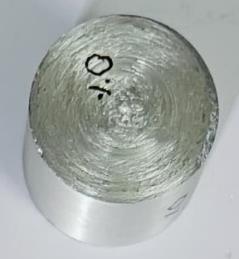
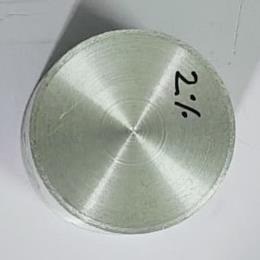
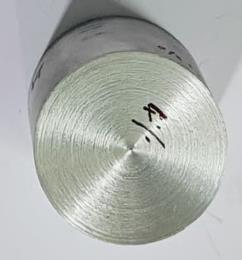
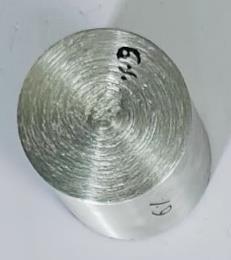
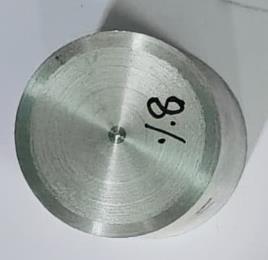
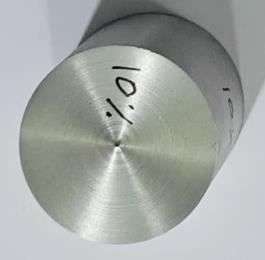
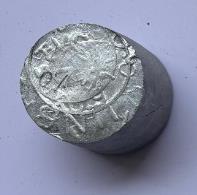
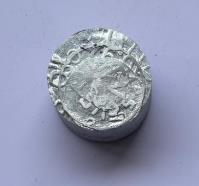
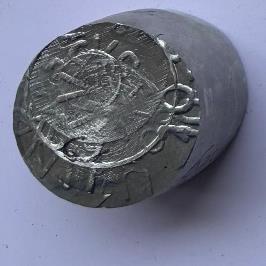
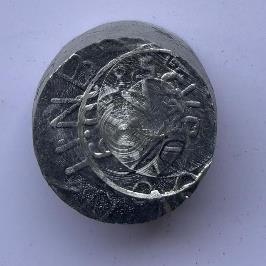
Fig 5.1 BHN Specimen for Different SiC % Reinforcement
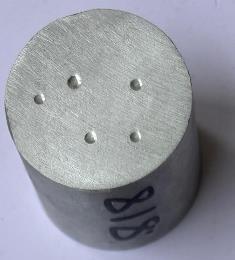
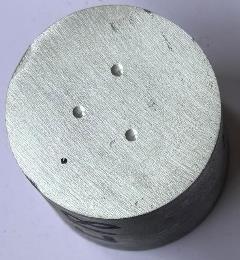
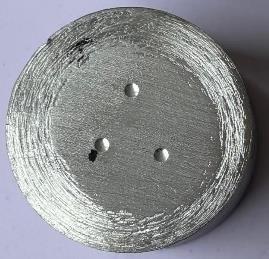
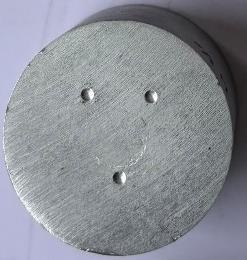
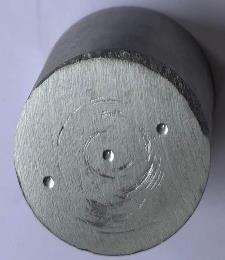
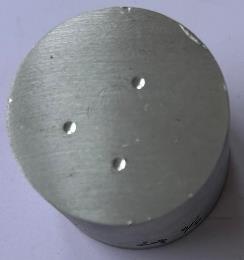
Fig 5.2 BHN Specimen for Different SiC % Reinforcement after 3 indentation
Table no 5.1 Hardness test results
6.1 LM26 Composition
ComparisonbetweenStandardvalueswithexperimental valueofLM26.
The procured LM26 Aluminium alloy was conducted a chemicaltesttoidentifythevariouselementspresentinit along with weight percentage. The optical emission spectrometerDV6Ewasusedandtestwasconductedasper ASTM E1251 17a. the following percentage values were obtained.
Table no 6.1: Comparison between standard levels element of LM26 and experimental Value.
Bycomparingthereferencevalueandexperimentalvalue,it can be concluded that the experimental values are in the rangeofstandardreferencevalues.Theobtainedmaterial matcheswithStandardASTMLM26Aluminiumalloy.These materialscanbeusedforfurtherresearchwork.
International Research Journal of Engineering and Technology (IRJET) e-ISSN: 2395-0056
Volume: 12 Issue: 06 | Jun 2025 www.irjet.net p-ISSN: 2395-0072
DensityofMetalMatrixcompositewascalculatedby using‘ruleofmixture’method,andcomparedwithmeasured calculation. The physical volume of the specimen is calculated by measuring diameter and length and final volume iscalculated.The weight of the specimen is noted downinstandard weighingmachine.Theratiosarenoted downfordifferentpercentageofSiC reinforcedSpecimen. The following Table gives the Details of Density for increasingreinforcementpercentage.
Table 6.2: Comparison between theoretical density and calculated density
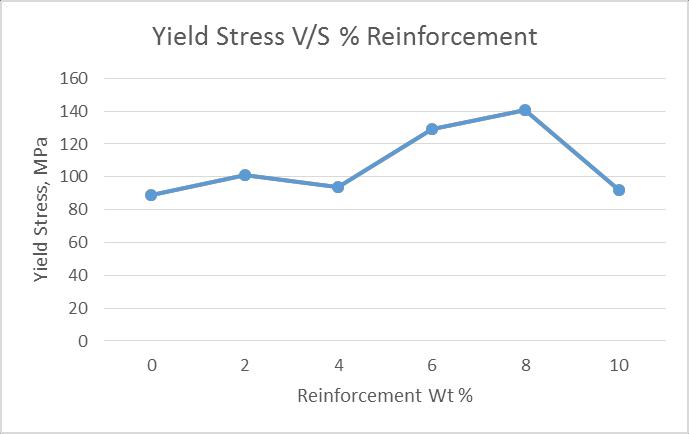
The trio of graphs demonstrates how different reinforcementpercentagesinfluenceamaterial’smechanical characteristics namely yield stress, tensile strength, and elongation.Yieldstressandtensilestrengthbothexhibita progressiveincreaseasreinforcementlevelsrise,reaching theirhighestvaluesaround140.6MPaat6%and152.8MPa at 8% reinforcement. This indicates that reinforcing the material up to this level effectively boosts its tensile strength.
Bycomparingabovedensitytable,itcanbeobservedthat thetheoreticalcalculateddensitybyusing“ruleofmixture method” matches with the experimental calculated value. Theerrorisvaryminutewhichcanbeoverlooked.
6.3 Tensile Strength
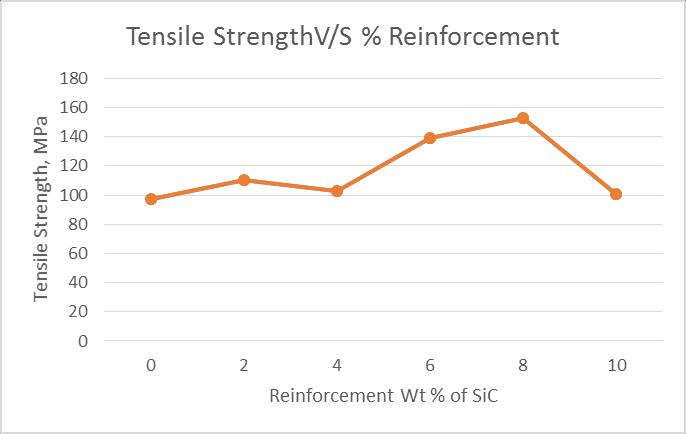
However,at10%reinforcement,bothyieldstress and tensile strength drop sharply, revealing a potential critical point where excess reinforcement may start to negativelyaffectthematerial’sstructuralperformance.This is may be increased SiC reinforcement induced the brittleness to high level hence reduces the strength, also decreased level of matrix have limited the reinforcement wetting and reduced the bonding between matrix and reinforcement.
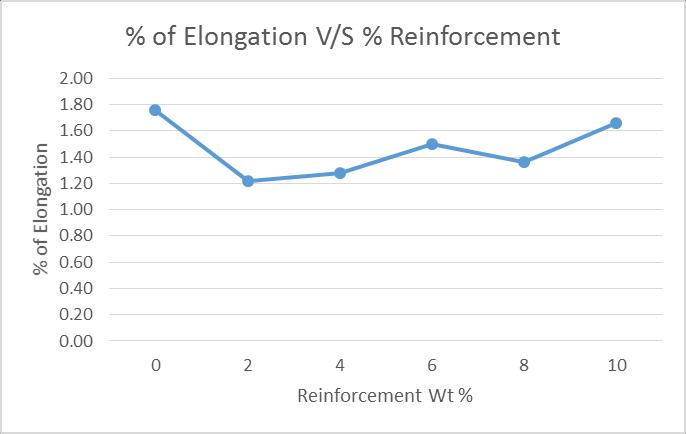
showing % of elongation at different levels of SiC %
In contrast, the percentage of elongation, which reflectsthematerial'sductility,exhibitsaninversepattern.It dropstoitslowestpointat2%reinforcement(1.22%),then gradually increases again, reaching 1.66% at 10%. This indicates that small amounts of reinforcement reduce the material'sabilitytostretchbeforebreaking,buthigherlevels
International Research Journal of Engineering and Technology (IRJET) e-ISSN: 2395-0056
Volume: 12 Issue: 06 | Jun 2025 www.irjet.net p-ISSN: 2395-0072
begintorestoresomeofthatflexibility thoughneverquite returningtotheoriginal1.76%at0%reinforcement.These graphs collectively show that while reinforcement can greatlyimprovestrength,itmustbeoptimizedtomaintaina balancewithductility.
6.4 Compression Strength
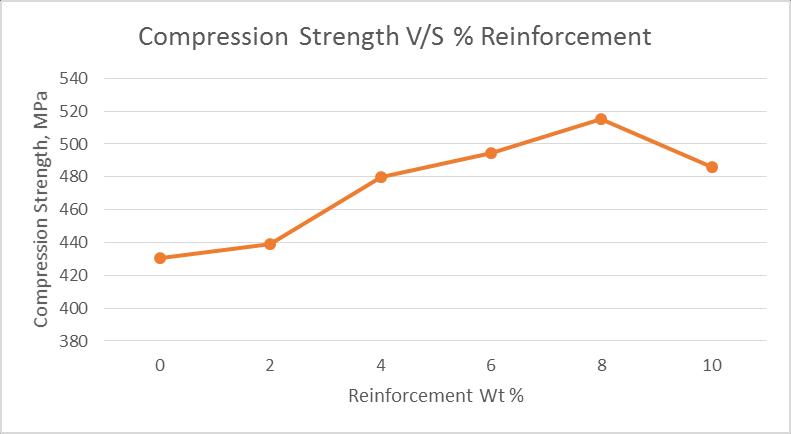
The analysis reveals a clear relationship between reinforcementpercentageandmaterialperformance.Asthe reinforcement content increases from 0% to 8%, the compression strength improves steadily, reaching a maximum of 515.1 MPa at 8%. This suggests that reinforcement up to this level significantly enhances the structuralintegrityofthematerial.
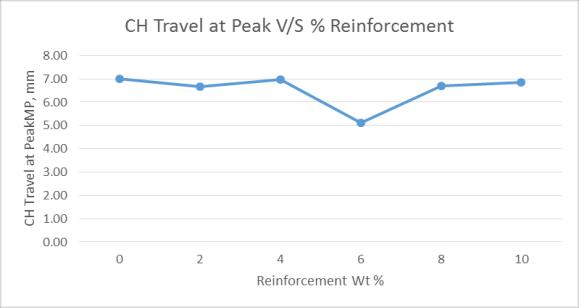
However, a further increase to 10% results in a reduction in strength to 486 MPa, indicating a possible oversaturation that negatively impacts performance. In contrast, the CH travel value at peak, which measures deformation characteristics, shows no consistent trend. Althoughitslightlydipsat6%,itgenerallyremainswithina narrow range, suggesting that reinforcement has minimal influenceonthisproperty.Thesefindingsindicatethat8% reinforcement is optimal, balancing maximum strength withoutadverselyaffectingdeformationbehavior.
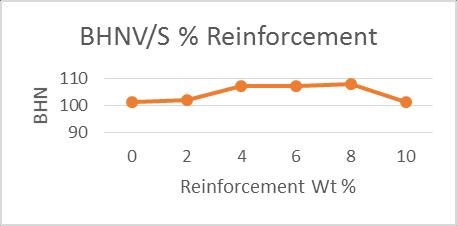
The data highlights the effect of varying reinforcementlevelsonBrinellHardnessNumber(BHN).As reinforcement increases from 0% to 8%, BHN also rises, indicatinganimprovementinmaterialhardness.Thepeak value of 108 BHN is observed at 8% reinforcement, suggestingthisastheoptimallevelforenhancinghardness. However, beyond this point, at 10% reinforcement, BHN sharplydropsto101,thesameastheunreinforcedmaterial. This decline implies that excessive reinforcement may disruptthestructuraluniformityorhindereffectivebonding, therebyreducinghardness.Overall,thefindingsunderscore thatmoderatereinforcementsignificantlybenefitshardness, with8%offeringthemostfavorableoutcome.
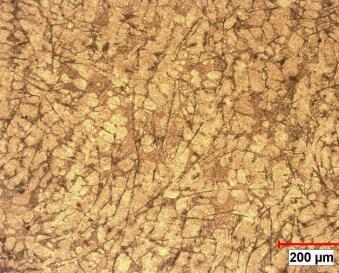
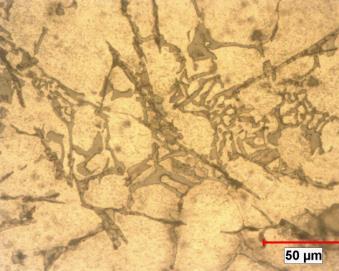
To study the microstructure of the specimen, the unused side of Brinnel Hardness specimen was taken. It was polished to have a mirror surface finish. The specimen surfacewasobservedattwolevelsofresolution100Xand 500X.forthispurposeopticalmetallurgymicroscope,Nikon Epiphote 200/Clemex Vision PE was used. The test was conductedat24ᵒCasperASMMetalHandbookVol9.The test was conducted at Raghavendra Spectro Metallurgical Lab,PeenyaIndustrialarea,Bangaluru.
FollowingaretheImagesobtained.
International Research Journal of Engineering and Technology (IRJET) e-ISSN: 2395-0056
Volume: 12 Issue: 06 | Jun 2025 www.irjet.net p-ISSN: 2395-0072
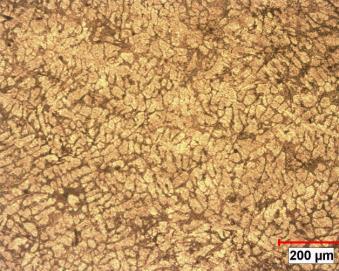
100XImage,2%SiC Reinforcement
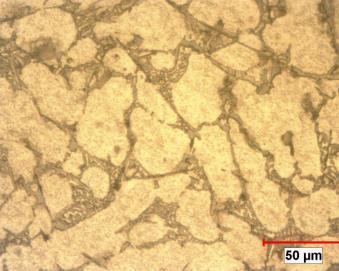
500XImage2%SiC Reinforcement
Fig 6.8 Optical image of 2% SiC/LM26 MMC at 100Xand 500X
By comparing 100X and 500X 0% SiC reinforced LM26 Al Alloy,wecanseethat0%havecontinuesphasewithoutany SiliconCarbideparticles.Wherein2%SiCreinforcedLM26 thefewparticlesvisibleatwhicharerandomlydistributed.
Further4%and6%SiCReinforcementshowsthatuniformly increasing and showing considerable enhancement in MechanicalProperties.The100Xand500Xresolutionshows uniformdistributionofSiCParticles.
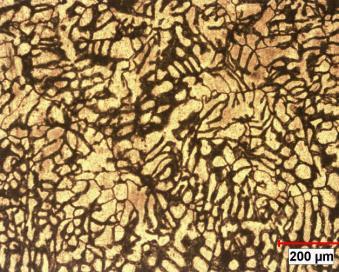
100XImage,8%SiC Reinforcement
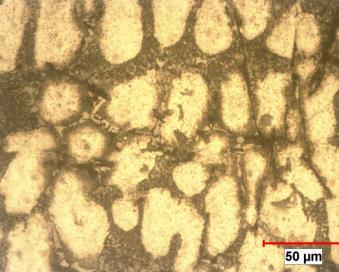
500X Image 8% SiC Reinforcement
Fig 6.9 Optical image of 8% SiC/LM26 MMC at 100Xand 500X
By observing 100X and 500X 8% SiC Reinforced LM26 Al Alloy,itcanbenotedthatReinforcingparticlesSiCarelarge innumberComparedto2%Reinforcement.AndSicParticles are uniformly distributed indicating maximum properties can be obtained at this level of reinforcement. It can also observedthatthereinforcingparticlesarethoroughlywet andhaveagoodbondingwithmatrixmaterial.
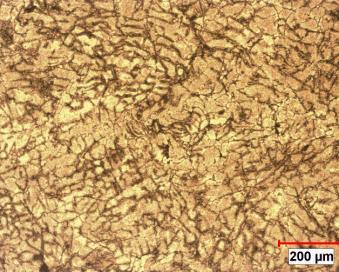
Image,10%SiC Reinforcement
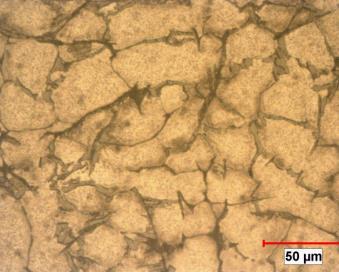
500X Image 10% SiC
In10%SiCParticlesReinforcedLM26AlAlloy,itcanbeseen thatSiCparticlesaremoreandthereissomedeficiencyod matrix materials which leads to some non-wetted SiC Particles. This leads close packing of Reinforcing particles andreducemechanicalproperties.
In the present work, LM26 Al alloy reinforced with SiC particle(325Gritsize)wassuccessfullydone.Forcastinga specimen, a stir casted machine was used which stir the moltencompositionat200rpmfor10minbeforepouringit into steel mold. The Tensile, Compression and Hardness specimensweremachinedasperASTMstandardandwas testedinarespectivemachinewhichweremaintainedasper NABLstandards.Alsotounderstandthemicrostructurethe specimens were studied under microscope for 100X and 500X. The results were obtained and tabulated. After this followingconclusionweredrawn.
1. Thetensilestrengthfornoreinforcementhasavalueof 97MPa,asthereinforcementincreased atthestepsof 2%,tensilestrengthkeepsincreasingandreachesavalue of153MPaat8%Sic.Whichshows58%enhancementin tensilestrength.
2. YieldStrength at0% SiC,89MPa,whereat8%SiChac enhancedupto141MPawhichalsoenhancesupto58% inYieldstrength.
3. Thecompressionstrengthat0%SiCindicates430MPa whereas8%SiCshows515Mpa,WhichShows20%Rise inCompressionstrength.
4. The Brinnel hardness test results indicate at 0% SiC reinforcingshowsanaveragevalueof101,furtherat8% SiC has increased the value to108. Which indicate 7% increasedvalue.
5. Themicrostructurestudyshowsfor0%reinforcement,a continuesphaseofLM26Alloywithoutmuchreflecting particles. The image shows eutectic silicon as dark, needle-likestructure.The8%SiCimageshowsPrimary α-Phase aluminum rich matrix, with SiC particle nucleation during solidification. The dark surrounding
International Research Journal of Engineering and Technology (IRJET) e-ISSN: 2395-0056
Volume: 12 Issue: 06 | Jun 2025 www.irjet.net p-ISSN: 2395-0072
regionindicateseutecticsilicon.TheSicParticleappear asfinediscreteparticles.
[1] Bharath.L, Dr.M.sreenivasa Reddyb, Dr.Girisha H.Nc, Dr.G.Balakumard,“FORMATIONANDEVALUATIONOF TENSILESTRENGTHANDHARDNESSPROPERTIESOF AL2024ALLOYREINFORCEDWITHBORONCARBIDE PARTICULATES”JRARJanuary2020,Volume7,Issue1, (E-ISSN2348-1269,P-ISSN2349-5138)
[2] RamachandraRajuK,G.SenthilkumarG,“Investigation onpropertiesofLM26hybridcompositematerialwith ceramicreinforcements”,MaterialsTodayProceedings 45(3)
[3] Suyash Y. Pawar, Julfikar Haider, Giuseppe Pintaude, “MechanicalandTribologicalBehaviorofLM26/SiC/NiGrHybridComposites”,J.Compos.Sci.2023,7,159
[4] S N Vijayan, Samson Jerold, A Saiythibrahim, “Investigation on Mechanical behaviour of LM26 AL alloy ZrB2 Copper coated short fiber reinforced composites using Stir casting process”, International JournalofMetalCasting,14March2024,Vil19,Pages 213-226(2025)
[5] C.S.Ravindra Sagar and T.K.Chandrashekar “Effect of solutioninzing and Ageing on Hardness of Aluminum LM13-MgO particulate metal matrix composite” Published under licence by IOP Publishing Ltd, IOP Conference Series: Materials Science and Engineering,Volume376,conference1.
[6] C.S.Ravindra SagarandT.K.Chandrashekar “Thestudy on Mechanical Properties of Aluminium LM13/MgOP Metal Matrix Composites” International Journal of ScientificandResearchPublicationISSN2250-3153,Vol 8,Issue2Feb2018.
9. BIOGRAPHIES


Mr.BhaskarG bhaskarg@ssit.edu.in




SudarshanBB sudarshanbb021@gmail.com Prem premshetty8479@gmail.com
NandeeshR nandi511071@gmail.com
PRAJWALC.R prajwalgowdapraju150@gmail.co m
Dr CSRavindraSagar ravindrasagarcs@ssit.edu.in