
International Research Journal of Engineering and Technology (IRJET) e-ISSN: 2395-0056
Volume: 10 Issue: 03 | Apr 2025 www.irjet.net p-ISSN: 2395-0072
International Research Journal of Engineering and Technology (IRJET) e-ISSN: 2395-0056
Volume: 10 Issue: 03 | Apr 2025 www.irjet.net p-ISSN: 2395-0072
J. R. González-Martínez1, R. Gámez-Corrales2 , F. Barffuson-Dominguez2, G.T. Paredes-Quijada3
1J.R. González-Martínez, Departamento de Investigación en Física, Universidad de Sonora, Apdo. Postal 1626, 83000 Hermosillo, Sonora, México.
2R. Gámez-Corrales, Professor, Departamento de Física, Universidad de Sonora, Apdo. Postal 1626, 83000, Hermosillo, Sonora, México.
2F. Barffuson-Dominguez, Departamento de Física, Universidad de Sonora, Apdo. Postal 1626, 83000, Hermosillo, Sonora, México.
3G.T Paredes-Quijada, Departamento de Ciencias Químico-Biológicas, Universidad de Sonora, Hermosillo, Sonora, México.
Abstract - Nanocomposites ofchitosan(CHs) andcarbon nanotubes (CNTs) have emerged as a multifunctional platform with promising applications in biomedicine and technology. Their unique combination integrates the biocompatibility,biodegradability,andbiologicalactivityof CHs with the electrical conductivity, mechanical strength, and high specific surface area of CNTs. In biosensors, these nanocomposites improve the detection of biomarkers and pathogens by optimizing electron transfer and stabilizing bioactive components. In oncological therapies, their functionalization with specific ligands allows the active targeting of drugs to cancer cells, facilitating a controlled release in tumor microenvironments and reducing adverse effectsonhealthytissues.Additionally,intissueengineering, they act as structural supports that favor cell adhesion, bone mineralization, and regeneration of damaged tissues. Recent studies highlight their versatility to adapt to challenges in diagnostics, disease treatment, and the development of bioactive materials, consolidating their relevance in applications that demand precision, efficacy, andsustainability. These synergistic properties positionCHCNT nanocomposites as innovativetools in the convergence ofnanotechnologyandlifesciences.
Key Words: Chitosan, Carbon nanotubes, Cancer, Biosensors,BoneRegeneration
The advent of nanocomposites has precipitated a paradigm shift across diverse scientific and technological domains, owing to their augmented properties, which emanate from the amalgamation of materials at the nanometer scale. Within this paradigm, the integration of chitosan and carbon nanotube nanocomposites has emergedasaparticularlysalientcombination,capitalizing on the inherent strengths of these two materials to addressabroadrangeofapplicationsinkeydomainssuch
as biosensors[1], cartilage and bone regeneration[2–3], andcancerdiagnosisandtreatment[4–5]
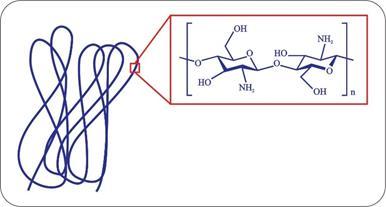
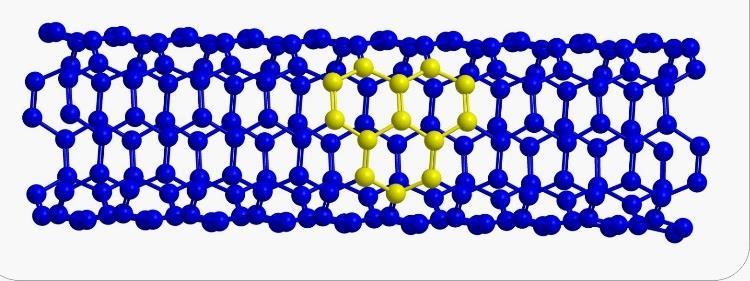
Chitosan, a natural biopolymer derived from chitin, possesses noteworthy characteristics, including biocompatibility[6],biodegradability[7],andantimicrobial properties[8], rendering it a material of considerable interest for various healthcare and environmental engineering applications [9]. In contrast, carbon nanotubes (CNTs) are materials that exhibit exceptional electrical conductivity, high mechanical strength, and a largesurfacearea,renderingthemidealforenhancingthe properties of other compounds in various technological applications.
International Research Journal of Engineering and Technology (IRJET) e-ISSN: 2395-0056
Volume: 10 Issue: 03 | Apr 2025 www.irjet.net p-ISSN: 2395-0072
In the field of medicine, nanocomposites have found application in the fabrication of drug delivery systems [10], biomedical devices [11], and functionalized tissues [12–13],atestamenttotheirbiocompatibilityandcapacity tointeractwithhumancellsandtissues[13]
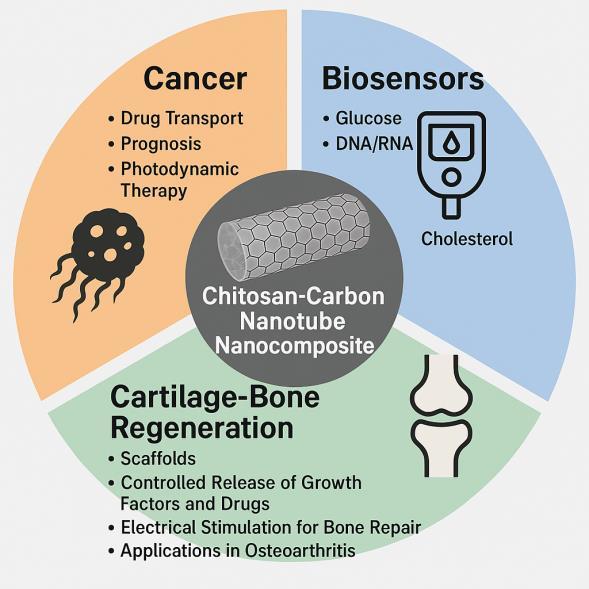
Fig-3.Nanocomposite-BasedStrategiesforMedical Applications:OncologicalTherapies,Biosensing,and BoneTissueEngineering
1. Chitosan Nanocomposite and Carbon Nanotubes in Biosensors: Advances and Perspectives.
This article reviews the most recent and relevant applications of chitosan and carbon nanotube nanocomposites in these areas, highlighting research advances and the opportunities these materials offer for the development of innovative and sustainable solutions acrossmultipledisciplines.
ThecombinationofchitosanCHsandCNTshasemergedas a promising nanocomposite system for biosensor development, notable for its synergy between biocompatibility and electrochemical functionality. In the contextofbiosensorsforclinicalbiomarkers[14], designed a nanohybrid of CH, Fe3O4 nanoparticles, and carboxylfunctionalizedMWCNTs(c-MWCNTs)wasdesigned,which demonstrated a significant improvement in the sensitivity and stability of the L-lactate biosensor. The covalent immobilization of the lactate oxidase enzyme was facilitated by the presence of the CHs, while the CNTs optimized electron transfer, achieving a detection limit of 0.15 μM and an extended lifetime of 100 days. In the context of electrochemical applications, the potential of glassy carbon electrodes modified with CHs and CNTs for nicotine detection was investigated [15]. The functionalization of the CNTs with carboxyl groups resultedinenhancedconductivityandanaugmentedactive surface area, thereby reducing the oxidation potential of
nicotineto0.74Vinthepresenceofoxygen.CHIT,inturn, functioned as a stabilizing matrix for the P450-CYP2A6 enzyme,therebyenhancingthesensor'sreproducibility.
In the context of pesticide detection,a biosensor has been developed that utilizes an immobilized esterase on CHs/CNTs, employing an enzyme-inhibition mechanism [16]. Their study revealed that functionalized carbon nanotubes (GNP-COOH) exhibited the most significant inhibition (9.94%) against methyl parathion, attributed to their substantial surface area and electron transfer capability. The incorporation of CHs has been shown to enhanceenzymeadhesionandmitigateCNTaggregation,a prevalentchallengeincarbonaceousnanocomposites. This finding highlights the dual role of chitosan in biosensors, underscoring its function as both a biocompatibility agent andstructuralsupportforCNTs[17].ThecapacityofCHSto form stable films, in conjunction with its chemical reactivity (-NH2 and -OH) facilitates targeted functionalization The incorporation of CNTs enhances conductivity and sensitivity, as demonstrated by the detection of microRNA-21 with limits in the nanomolar range
A collective analysis of these studies underscores the fact that the CHs/CNTs nanocomposite combines ideal properties for biosensing: high sensitivity, enzymatic stability, and adaptability to diverse applications. Nevertheless, challenges persist in the standardization of CNT functionalization and industrial scalability. Nonetheless, recent innovations suggest the emergence of integrated solutions for personalized medicine and environmentalmonitoring.
The development of a glucose biosensor characterized by exceptional stability was achieved through the incorporation of a nanocomposite constructed on a foundation of CHs and MWCNTs [18]. They developed a cryo-gelcomposedofchitosanandalbumin(Chi-BSA)that incorporatedMWCNTsandferroceneasaredoxmediator. Thecryo-gel'smacroporousstructure,whichisobtainedby freeze-thaw cycles, provides a high specific surface area that facilitates the efficient immobilization of the glucose oxidase (GOD) enzyme. The MWCNTs, situated as an intermediate layer between the gold electrode and the cryo-gel, enhance electron transfer, reducing the working potential to 0.175 V and minimizing interference from electroactive species such as ascorbic and uric acid. The synergistic effect of the biocompatible and reactive amino groups of the chitosan and the high conductivity and surface area of the MWCNTs endows the biosensor with remarkablesensitivity(7.77µAmM-1cm-2),awidelinear range (0.010-30 mM), and exceptional operational stability. This work underscores that the incorporation of chitosan with carbon nanotubes not only enhances the stabilityandselectivityofthebiosensorbutalsoprovidesa versatile model for other enzymatic applications. This
© 2023, IRJET | Impact Factor value: 8.226 | ISO 9001:2008 Certified Journal | Page1776
International Research Journal of Engineering and Technology (IRJET) e-ISSN: 2395-0056
Volume: 10 Issue: 03 | Apr 2025 www.irjet.net p-ISSN: 2395-0072
approach has emerged as a promising strategy for the designofhigh-performanceelectrochemicaldevices.
A novel electrochemical biosensor for the detection of glucose has been developed, which utilizes a nanocomposite array of MWCNTs, polyaniline (PANI), and carboxymethylated chitosan (CCs) for the immobilization of glucose oxidase (GOx) enzyme onto a glassy carbon electrode [19]. The synergistic effect among these componentsenhancesboththeelectricalconductivity(due to MWCNTs and PANI) and the biocompatibility (via CCs), thereby facilitating enzyme stabilization and efficient electron transfer. The biosensor exhibits a wide linear range (10 nM to 10 µM), high sensitivity (1791 µA mM-1 cm-2), low detection limit (1.41 µM), and an apparent Michaelis-Menten constant (18 nM), suggesting a high affinity for glucose. The biosensor demonstrated exceptional stability and additionally exhibited selectivity against interferents such as uric and ascorbic acid, and precision in human serum samples. These characteristics underscore its potential forclinical applicationsin glucose monitoring, particularly in the control of diabetes, providingarapid,sensitive,andcost-effectivemethod.
An enzymatic biosensor for histamine based on a nanocompositeofCHsandMWCNTs.TheMWCNTs,which had undergone functionalization and deposition on a screen-printed electrode, served as a support medium for Prussian blue (PB) electrodeposition, thereby enhancing surface charge and conductivity [20]. The MWCNTs-PB layerfacilitatedelectrontransferandcatalysisofhydrogen peroxide (H2O2), a by-product of the diamine oxidase (DAO) enzymatic reaction. In addition to the aforementioned structure, a macroporous CHs-gold nanoparticles (AuNPs) cryo-gel was incorporated. The incorporationofCHs,abiocompatiblematerialwithahigh concentrationofaminogroups,resultedintheformationof a three-dimensional matrix that provided an ideal environment for the stable immobilization of DAO. The porosityofthecryo-gelwasfoundtooptimizethediffusion of the analyte and increase the active area. Furthermore, the AuNPs were found to improve the intrinsic conductivity of the CHs, thereby enhancing the electrochemical signal. The CS-MWCNTs nanocomposite exhibited remarkable performance, with a detection limit of1.81µmolL-¹,twolinearranges(2.50-125.0and125.0400.0 µmol L-1), and exceptional selectivity towards interferents such as amino acids and other biogenic amines.
In a separate study, Soyalp et al. (2025) developed an electrochemical biosensor based on CHs nanocomposites and MWCNTs to analyze the interaction between mitomycin C (MC), an anticancer pharmaceutical, and calf thymus double-stranded DNA (ctdsDNA) [21]. The biosensor facilitated concurrent monitoring of the oxidation signals of MC and guanine from DNA by differentialpulsevoltammetry(DPV),revealingadeclinein
both signals upon interaction, suggesting a preferential covalent binding mechanism in GC pairs. This study emphasizes the synergistic relationship between a biocompatiblematrixcomposedofCHsandmultifunctional MWCNTs that function as conductivity enhancers. This establishes a stable, reproducible, and economically viable platform for elucidating drug-DNA interactions. The findings of this investigation offer a promising foundation for advancing pharmaceutical development and toxicologicalassessment.
Zhang et al. (2018) developed an electrochemical biosensor based on single-walled carbon nanotubes (SWCNTs) and CHs nanocomposites for the ultrasensitive detection of leptin in serum. In addressing the aqueous insolubility of SWCNTs, the approach entails functionalizing the nanotubes with CS and activated carboxyl groups using EDC/NHS, thereby achieving a homogeneous and stable dispersion [22]. The SWCNTs-CS nanocomposites enhanced the conductivity of the glassy carbonelectrode(GCE),demonstratingawidelinearrange (0–1000ngmL-1)andanexceptionaldetectionlimit(5pg mL-1) using electrochemical techniques (cyclic voltammetry, impedance, and differential pulse). In the context of clinical validation, the biosensor demonstrated recoveries with superior precision (RSD <3%) in comparison to ELISA, exhibiting reduced interference in real samples. According to Zhang et al. (2018), this approach demonstrates the potential of SWCNTs-CS nanocomposites for precise diagnostic applications, offering advantages in sensitivity, stability, and cost for biomarkers such as leptin, which is key to obesity and inflammatoryprocesses.
2. Chitosan/Carbon Nanotube Nanocomposites in Oncology: Smart Systems for Targeted Drug Delivery and Combined Therapies
CNT nanocomposites have emerged as a promising platform for targeted drug delivery in cancer treatment [23-24]. These nanocomposites are distinguished by their biocompatibility, controlled-release capacity, and sensitivity to stimuli such as pH. Recent studies, including that of [25], have demonstrated that tryptophan-coated carbon nanotubes (TRP@CNT) function as effective nanocarriersfordrugssuchastopotecan,releasingthemin a controlled manner under acidic conditions, which are characteristic of the tumor microenvironment. Furthermore, the combination ofCHswithCNTs enhances the solubility and stability of the nanocarriers, leveraging the biodegradable properties of chitosan and the high loading capacity of CNTs. This allows for controlled drug release in response to pH changes, mitigating side effects, andenhancingtherapeuticefficacy[26].
A targeted nano-therapy was designed to target breast (MCF7) and liver (HepG2) cancer cells. This therapeutic modality employs modified MWCNTs that are loaded with
International Research Journal of Engineering and Technology (IRJET) e-ISSN: 2395-0056
Volume: 10 Issue: 03 | Apr 2025 www.irjet.net p-ISSN: 2395-0072
cisplatin (Cis) and anthocyanins (Ant). The MWCNTs are coatedwithfolicacid-conjugatedCHs.Thebiocompatibility and biodegradability of the CHs facilitated the uniform coating necessary for the controlled release of the drug. The MWCNTs provided a robust platform with a high loading capacity and cell penetration. This nanoformulation exhibited remarkable efficacy in terms of its cytotoxic, pro-apoptotic, antioxidant, anti-inflammatory, anti-angiogenic, and anti-metastatic properties, with the combination treatment (Cis + Ant) demonstrating particularly notable outcomes. The results of the study demonstrated up-regulation of pro-apoptotic genes (Bax), antioxidantgenes(Nrf2,HO-1),andmetastasissuppressor genes (TIMP1), along with the inhibition of VEGF, TNFα, and MMP9. These results position this strategy as a promising alternative for targeted therapies against resistantcancers[27].
The development of CMCS-FA-MWCNT-BA nanocomposites, which are based on carboxymethyl chitosan (CMCS) and MWCNTs, signifies a significant advancement in the field of targeted therapy for oral squamous cell carcinoma (OSCC) [28]. CMCS, when functionalized with folic acid (FA), has been shown to enhance biocompatibility and enable active targeting of tumor cells that overexpress folate receptors. In addition, MWCNTs have been demonstrated to facilitate high baicalin (BA) loading and controlled release in acidic microenvironments (pH 5.5) [28]. In vitro studies have demonstrated that these nanocomposites increase cell apoptosis(↑40%vs.freeBA),inhibitmigration(↓70%)and invasion of CAL27 cells, and reduce tumor colony formation [28]. Invivo,thenanocomposites demonstrated selectiveaccumulationintumors,tumorvolumereduction (60% decrease), and liver metastasis, in addition to modulating epithelial-mesenchymal transition (downregulated vimentin, increased E-cadherin) [1]. The functionalization process with CMCS has been shown to mitigate the cytotoxic effects in healthy cells, with a reported viability greater than 90%. Additionally, it has been demonstrated to enhance colloidal stability, as evidencedbyadecreaseinzetapotentialfrom-44mV[28]. Theseresultsunderscorethesynergybetweenchitosan(a biocompatible modifier) and MWCNTs (a multifunctional vehicle),positioningthesystemasapromisingplatformfor preciseandlow-toxicityoncologytherapies[28].
Anovelscaffoldwasdeveloped,composedofpolyurethane (PU) functionalized with CHs and functionalized multiwalledcarbonnanotubes(fMWCNTs),inadditiontometal oxide nanoparticles such as superparamagnetic iron oxide (SPIONs) and strontium dioxide (SrO₂). CHs have been demonstrated to enhance cell adhesion, cell proliferation, and osteoinductive activity of the scaffold due to their biocompatibility, hydrophilic nature, and structural
similarity to components of the extracellular matrix. In contrast, fMWCNTs demonstrated heightened mechanical strength,electricalconductivity,andanaugmentedspecific surface area, thereby fostering cell differentiation and interaction with other nanoparticles. The results demonstrated an elevated expression of osteogenic markers, including ALP, RUNX2, and COL-I, as well as remarkable hydroxyapatite formation. In addition, the scaffold exhibited effective inhibition of bacterial growth against Staphylococcus aureus and Escherichia coli, supporting its potential in bone tissue engineering and regenerativemedicineapplications[30].
A study was conducted to develop thermosensitive injectable hydrogels composed of CHs and collagen (Coll). These nanomaterial-based hydrogels were nanoengineered with single-walled carbon nanotubes (SWCNTs) that were functionalized with carboxyl groups (COOH-SWCNTs). The primary objective of this study was to explore the potential of these hydrogels for minimally invasive applications in bone regeneration. CHs provided biocompatibility, antimicrobial properties, and a porous structure,whileCOOH-SWCNTssignificantlyimproved the mechanical strength, thermal stability, and crystallinity of the hydrogel. The hydrogels demonstrated an increase in Young's modulus of over 60%, reachingvalues in the MPa range, which is suitable for load-bearing bone defects. Furthermore, the study demonstrated a promotion of cell adhesion, osteoblast proliferation, and hydroxyapatite deposition. The synergistic integration of these components resulted in the formation of a threedimensional network that was stable at physiological temperature and exhibited optimal porosity, rapid gelling, andadequatebiodegradabilityforbonetissueengineering applications[31].
Doublenetwork(DN)hydrogels,composedofCHs,sodium alginate (SA), and polyvinyl alcohol (PVA), fortified with MWCNTs and graphene nanoplatelets (GNPs), signify a paradigmshiftinthefieldofbonetissueengineering[32]. CHsarenotablefortheirbiocompatibilityandantibacterial activity,whichhavebeendemonstratedinseveral studies. InMG63osteoblasts,forexample,CHshavebeenshownto increase viabilityby170%over sevendays. Similarly,CHs have been observed to reduce infections by 93.38% in S. aureus cases. MWCNTs, functionalized with carboxyl groups, exhibited increased mechanical strength (Young's modulus:47.5±5kPa)andelectricalconductivity(5.7×10³ S/m), thereby facilitating hydroxyapatite mineralization (Ca/P ratio ≈2.29). The CHs-MWCNTs synergy-optimized porosity(poresizeincreasedby17.0±35.3μmwithGNPs) and controlled degradation (46.5% in 40 days), which are essentialforboneregeneration,werealsoobserved.These scaffolds, with 680% swelling, have demonstrated their versatility for clinical applications by combining mechanical properties, bioactivity, and antimicrobial functionality[32].
International Research Journal of Engineering and Technology (IRJET) e-ISSN: 2395-0056
Volume: 10 Issue: 03 | Apr 2025 www.irjet.net p-ISSN: 2395-0072
Scaffolds based on CHs, hyaluronic acid (HA), and hydroxyapatite (HAp), reinforced with f-MWCNTs, demonstrate significant advances in bone regeneration [33]. CHs are distinguished by their biocompatibility and antimicrobial activity, which promote cell adhesion and proliferation. In addition, f-MWCNTs enhance mechanical strength (Young's modulus: ~9.43 MPa) and structural stabilitythroughsynergisticinteractionswiththepolymer matrix [33]. The incorporation of f-MWCNTs, which exhibited optimized porosity (16.1%) and controlled degradation (20.4% within seven days), was found to be instrumental in facilitating tissue integration. CHs/HA/HAp/HAp/f-MWCNTscaffoldsdemonstratedhigh efficiency in hydroxyapatite mineralization (Ca/P ratio ≈2.29) and stimulation of osteogenic stem cell differentiation,outperformingcompositeswithgraphiteor graphene oxide [33]. Preliminary biocompatibility studies have confirmed the viability of cells, with a viability rate greater than 85%. Furthermore, these studies have demonstrateda lowlevel oftoxicity,attributedto theacid functionalizationofMWCNTs.However,challengessuchas the homogeneous dispersion of nanomaterials persist, necessitating the optimization of synthesis methods [33]. These findings position CHs/f-MWCNT nanocomposites as promising candidates for clinical applications, combining mechanical properties, bioactivity, and antimicrobial functionality.
ThenanocompositeofCHsandCNTshasdemonstratedits potentialasaversatilematerialinthefieldofbiomedicine, with applications ranging from biosensors to tissue regeneration and cancer treatment. The incorporation of chitosan's distinctive properties, including its biocompatibility, biodegradability, and antimicrobial capacity,withtheexceptionalcharacteristicsofCNTs,such as their high electrical conductivity, mechanical strength, and large surface area, has resulted in a composite material with considerable potential to address critical challengesinhumanhealth.
In the domain of biosensors, the nanocomposite has exhibited notable enhancements in sensitivity, stability, andselectivity,therebyfacilitatingtheprecisedetectionof clinical biomarkers, pesticides, and other analytes of significance. The combination of CHs´ capacity to immobilize enzymes and its inherent chemical reactivity, in conjunction with the enhanced conductivity of CNTs, has contributed to the development of high-performance electrochemical devices. These advancements are of particular relevance for applications in medical diagnostics, environmental monitoring, and food safety, whererapidandaccuratedetectionisimperative.
In the domain of tissue regeneration, particularly in the contexts of cartilage and bone regeneration, nanocomposites have demonstrated their efficacy as a material for tissue engineering. The combination of CHs´ biocompatibility and CNTs' capacity to augment the material's mechanical and electrical properties renders it a promising candidate for the fabrication of scaffolds that facilitate cell adhesion, proliferation, and differentiation. This phenomenon is especially evident in the domain of regenerative medicine, where the objective is to restore thefunctionalityofdamagedorlosttissues.
Conversely, in the domain of cancer diagnosis and treatment, nanocomposites have emerged as an effective platform for controlled drug release. The combination of CHs´pH-responsiveproperties,whicharewell-matchedto the acidic tumor microenvironment, and the high loading capacity of CNTs, facilitate targeted delivery of anticancer drugs, thereby reducing systemic toxicity and enhancing therapeutic efficacy. Recent studies have demonstrated the potential of these nanocomposites to enhance drug uptake in cancer cells, inducing apoptosis and reducing metastasis. This suggests that they could serve as a valuable tool for developing more targeted and less toxic cancertherapies.
In summary, the chitosan-carbon nanotube nanocomposite signifies a substantial advancement in biomedicine, providing innovative and sustainable solutionsforabroadspectrumofapplications.Despitethe challenges, including the standardization of CNT functionalization and industrial scalability, recent research advances indicate that this composite material possesses considerable potential to transform diagnosis, treatment,andtissueregenerationinthefuture.
1. H. Nasiri, K. Abbasian, M. Salahandish, & S. N. Elyasi, Sensitive surface plasmon resonance biosensor by optimized carboxylate functionalized carbon nanotubes/chitosan for amlodipine detecting. Talanta, 276 (2024) 126249. https://doi.org/10.1016/J.TALANTA.2024.126249
2. M. H. Mirmusavi, M. Ahmadian, & S. Karbasi, Polycaprolactone-chitosan/multi-walled carbon nanotube: A highly strengthened electrospun nanocomposite scaffold for cartilage tissue engineering. International Journal of Biological Macromolecules, 209 (2022) 1801–1814. https://doi.org/10.1016/J.IJBIOMAC.2022.04.152.
3. S.Shrestha,B.K.Shrestha,S.W.Ko,R.Kandel,C.H. Park, & C. S. Kim, Engineer cellular microenvironments from functionalized multiwalled carbon nanotubes integrating Zein/Chitosan @Polyurethane for bone cell
International Research Journal of Engineering and Technology (IRJET) e-ISSN: 2395-0056
Volume: 10 Issue: 03 | Apr 2025 www.irjet.net p-ISSN: 2395-0072
regeneration. Carbohydrate Polymers, 251 (2021) 117035.
https://doi.org/10.1016/J.CARBPOL.2020.117035.
4. M. G. Awad, N. A. N. Hanafy, R. A. Ali, D. D. Abd ElMonem,S.H.El-Shafiey,&M.A.El-Magd,Exploring the therapeutic applications of nano-therapy of encapsulated cisplatin and anthocyanin-loaded multiwalled carbon nanotubes coated with chitosan-conjugated folic acid in targeting breast and liver cancers. International Journal of Biological Macromolecules, 280 (2024) 135854. https://doi.org/10.1016/J.IJBIOMAC.2024.135854.
5. M. F. Naief, S. N. Mohammed, & A. M. Mohammed, Carbonnanotubes:Areviewonsynthesisanddrug delivery for cancer treatment. Inorganic Chemistry Communications, 159 (2024) 111694. https://doi.org/10.1016/J.INOCHE.2023.111694.
6. L.Spitzer,A.Adrien,U.T.Veettil,S.Olza,A.AlonsoVarona, & S. C. M. Fernandes, Exploring marinebased compounds as cross-linkers to improve the biocompatibility and sustainability of chitosanbased hydrogels. Carbohydrate Polymer Technologies and Applications, 8 (2024) 100541. https://doi.org/10.1016/J.CARPTA.2024.100541.
7. A. Anisiei, B. I. Andreica, L. Mititelu-Tartau, C. G. Coman, R. Bilyy, G. Bila, I. Rosca, A. I. Sandu, E. Amler, & L. Marin, Biodegradable trimethyl chitosan nanofiber mats by electrospinning as bioabsorbable dressings for wound closure and healing. International Journal of Biological Macromolecules, 249 (2023) 126056. https://doi.org/10.1016/J.IJBIOMAC.2023.126056.
8. K. Eickelpasch, P. Lemke, S. Sreekumar, N. Chilukoti, B. M. Moerschbacher, & C. Richter, A bioactivity matrix for antimicrobial activities of chitosans: A review. International Journal of Biological Macromolecules, 299 (2025) 140740 https://doi.org/10.1016/J.IJBIOMAC.2025.140740.
9. D.Manohar, R.S.Babu, B. Vijaya,S.Nallakumar,R. Gobi,S.Anand,D.S.Nishanth,A.Anupama,&M.U. Rani, A review on exploring the potential of PVA andchitosaninbiomedicalapplications:Afocuson tissue engineering, drug delivery and biomedical sensors. International Journal of Biological Macromolecules, 283 (2024) 137318. https://doi.org/10.1016/J.IJBIOMAC.2024.137318.
10. Z. Heidary, S. R. Ramezani, & A. Mojra, Exploring the benefits of functionally graded carbon nanotubes (FG-CNTs) as a platform for targeted drug delivery systems. Computer Methods and
Programs in Biomedicine, 238 (2023) 107603. https://doi.org/10.1016/J.CMPB.2023.107603.
11. K. Wu, J. Tao, Q. Liao, S. Chen, & W. Wan, Intracellular microtubules as nano-scaffolding template self-assembles with conductive carbon nanotubesfor biomedical device. Materials Science and Engineering: C, 113 (2020) 110971. https://doi.org/10.1016/J.MSEC.2020.110971.
12. M. Gharivi, M. Saraei, A. M. Khachatourian, A. Nemati, & M. Gholipourmalekabadi, Fabrication and characterization of functionalized carbon nanotube-reinforced hydroxyapatite/silk fibroin scaffolds for bone tissue engineering applications. Materials Chemistry and Physics, 338 (2025) 130656.
https://doi.org/10.1016/J.MATCHEMPHYS.2025.1 30656.
13. M. M, S. Sagadevan, B. E, I. Fatimah, J. A. Lett, S. Moharana, S. Garg, & M. A. Al-Anber, Enhancing biocompatibility and functionality: Carbon nanotube-polymer nanocomposites for improved biomedical applications. Journal of Drug Delivery Science and Technology, 99 (2024) 105958. https://doi.org/10.1016/J.JDDST.2024.105958.
14. K.Dagar,V.Narwal,&C.S.Pundir,AnenhancedLlactatebiosensorbasedonnanohybridofchitosan, iron-nanoparticles and carboxylated multiwalled carbon nanotubes. Sensors International, 4 (2023) 100245.
https://doi.org/10.1016/J.SINTL.2023.100245.
15. A.Mirani,A.MahdiRheima,Z.talibturki,S.Farhan Jawad, D. Mohammed Athair, Z. T. Al-Sharify, M. Esmaili, H. Sayadi, & E. kianfar, Effect and investigating of oxygen / nitrogen on modified glassycarbonelectrodechitosan/carbonnanotube and best detection of nicotine using Cyclic voltammetry measurement technique. Results in Chemistry, 10 (2024) 101739. https://doi.org/10.1016/J.RECHEM.2024.101739
16. M. F. Amir Hafiz, F. B. Ahmad, & M. H. M. Akmal, Novel Rhizophus oryzae esterase-immobilized chitosan/carbonnanomaterialsassensingsupport for enzyme inhibition-based biosensor in the detection of organophosphorus pesticide residues on crops. Journal of Natural Pesticide Research, 10 (2024) 100092. https://doi.org/10.1016/J.NAPERE.2024.100092.
17. Y. Zhang, J. Guo, Z. Tang, C. Tang, Y. Li, X. Tao, B. Zhou, W. Chen, L. Guo, K. Tang, & T. Liang, Recent developments and trends of biosensors based on carbon nanotubes for biomedical diagnosis
2023, IRJET | Impact Factor value: 8.226 | ISO 9001:2008 Certified
| Page1780
International Research Journal of Engineering and Technology (IRJET) e-ISSN: 2395-0056
applications: A review. Biosensors and Bioelectronics: X, 17 (2024) 100424. https://doi.org/10.1016/J.BIOSX.2023.100424.
18. A.Fatoni,A.Numnuam,P.Kanatharana,W.Limbut, C.Thammakhet,&P.Thavarungkul,Ahighlystable oxygen-independent glucose biosensor based on a chitosan-albumin cryogel incorporated with carbon nanotubes and ferrocene. Sensors and Actuators B: Chemical, 185 (2013) 725–734. https://doi.org/10.1016/J.SNB.2013.05.056.
19. N. S. Hadian, H. Faridnouri, & E. N. Zare, Glucose biosensing based on glucose oxidase immobilization on carboxymethyl chitosan/polyaniline/multi-walled carbon nanotubes nanocomposite. Diamond and Related Materials, 148 (2024) 111423. https://doi.org/10.1016/J.DIAMOND.2024.111423
20. N. Nontipichet, S. Khumngern, J. Choosang, P. Thavarungkul, P. Kanatharana, & A. Numnuam, An enzymatic histamine biosensor based on a screenprintedcarbonelectrodemodifiedwithachitosan–gold nanoparticles composite cryogel on Prussian blue-coated multi-walled carbon nanotubes. Food Chemistry, 364 (2021) 130396. https://doi.org/10.1016/J.FOODCHEM.2021.1303 96.
21. S. Soyalp, E. Eksin, & A. Erdem, Chitosan and carbon nanotube modified DNA biosensor for determination of drug-DNA interaction. Journal of Pharmaceutical and Biomedical Analysis Open, 5 (2025) 100050. https://doi.org/10.1016/J.JPBAO.2025.100050.
22. Q.Zhang,Y.Qing,X.Huang,C.Li,&J.Xue,Synthesis of single-walled carbon nanotubes–chitosan nanocomposites for the development of an electrochemical biosensor for serum leptin detection. Materials Letters, 211 (2018) 348–351. https://doi.org/10.1016/J.MATLET.2017.10.036.
23. K. Balakrishnan, S. Sreekumar, K. Arumugam, & P. K. Gupta, Nano cerium oxide loaded magnetic multi-walledcarbonnanotubes nanocompositefor anti-cancer and anti-bacterial applications. Biocatalysis and Agricultural Biotechnology, 57 (2024) 103114. https://doi.org/10.1016/J.BCAB.2024.103114.
25. E. Rahmanifar, V. Saheb, & M. Yoosefian, Carbon nanotubecoatedwithtryptophanasapH-sensitive nanocarrier in the delivery and smart release of theanticancerdrugtopotecan. JournalofMolecular Liquids, 419 (2025) 126767. https://doi.org/10.1016/J.MOLLIQ.2024.126767.
26. A.Farokh,M.Pourmadadi,H.Rashedi,F.Yazdian,& M. Navaei-Nigjeh, Assessment of synthesized chitosan/halloysite nanocarrier modified by carbon nanotube for pH-sensitive delivery of curcumintocancerousmedia. InternationalJournal of Biological Macromolecules, 237 (2023) 123937. https://doi.org/10.1016/J.IJBIOMAC.2023.123937.
27. M. G. Awad, N. A. N. Hanafy, R. A. Ali, D. D. Abd ElMonem,S.H.El-Shafiey,&M.A.El-Magd,Exploring the therapeutic applications of nano-therapy of encapsulated cisplatin and anthocyanin-loaded multiwalled carbon nanotubes coated with chitosan-conjugated folic acid in targeting breast and liver cancers. International Journal of Biological Macromolecules, 280 (2024) 135854. https://doi.org/10.1016/J.IJBIOMAC.2024.135854.
28. Z.Li,J.Han,S.Yan,J.Lei,L.Meng,C.Tian,&Y.Wu, Carboxymethyl chitosan-modified folate-targeted carbon nanotubes-baicalin complexes for cancer progression and metastasis. International Journal of Biological Macromolecules, 282 (2024) 136896. https://doi.org/10.1016/J.IJBIOMAC.2024.136896.
29. Z.Li,J.Han,S.Yan,J.Lei,L.Meng,C.Tian,&Y.Wu, Carboxymethyl chitosan-modified folate-targeted carbon nanotubes-baicalin complexes for cancer progression and metastasis. International Journal of Biological Macromolecules, 282 (2024) 136896. https://doi.org/10.1016/J.IJBIOMAC.2024.136896.
30. U.Ghimire,S.R.Jang,J.R.Adhikari,R.Kandel,J.H. Song, & C. H. Park, Conducting biointerface of spider-net-like chitosan-adorned polyurethane/SPIONs@SrO2–fMWCNTs for bone tissue engineering and antibacterial efficacy. International Journal of Biological Macromolecules, 264 (2024) 130602. https://doi.org/10.1016/J.IJBIOMAC.2024.130602.
24. Z. Khorsandi, M. Borjian-Boroujeni, R. Yekani, & R. S. Varma, Carbon nanomaterials with chitosan: A winning combination for drug delivery systems. JournalofDrugDeliveryScienceandTechnology, 66 (2021) 102847. https://doi.org/10.1016/J.JDDST.2021.102847.
31. K. Kaur, S. S. Paiva, D. Caffrey, B. L. Cavanagh, & C. M.Murphy, Injectablechitosan/collagenhydrogels nano-engineered with functionalized single wall carbon nanotubes for minimally invasive applications in bone. Materials Science and Engineering: C, 128 (2021) 112340. https://doi.org/10.1016/J.MSEC.2021.112340.
| Page1781
Volume: 10 Issue: 03 | Apr 2025 www.irjet.net p-ISSN: 2395-0072 © 2023, IRJET | Impact Factor value: 8.226 | ISO 9001:2008 Certified
International Research Journal of Engineering and Technology (IRJET) e-ISSN: 2395-0056
Volume: 10 Issue: 03 | Apr 2025 www.irjet.net p-ISSN: 2395-0072
32. S.Seifi,A.Shamloo,A.K.Barzoki,M.A.Bakhtiari,S. Zare, F. Cheraghi, & A. Peyrovan, Engineering biomimetic scaffolds for bone regeneration: Chitosan/alginate/polyvinyl alcohol-baseddoublenetwork hydrogels with carbon nanomaterials. Carbohydrate Polymers, 339 (2024) 122232. https://doi.org/10.1016/J.CARBPOL.2024.122232.
33. S.F.Rahman,M.M.Ghiffary,J.Y.Tampubolon,E.S. Yulianti, M. H. Nadhif, P. A. Katili, S. Hanafiah, A. I. Pangesty, & M. A. J. Maras, Effect of graphite, graphene oxide, and multi-walled carbon nanotubes on the physicochemical characteristics and biocompatibility of chitosan/hyaluronic acid/hydroxyapatite scaffolds for tissue engineering applications. Journal of Science: Advanced Materials and Devices, 9 (2024) 100719. https://doi.org/10.1016/J.JSAMD.2024.100719.
2023, IRJET | Impact Factor value: 8.226 |