
e-ISSN:2395-0056
Volume: 12 Issue: 05 | May 2025 www.irjet.net p-ISSN:2395-0072
e-ISSN:2395-0056
Volume: 12 Issue: 05 | May 2025 www.irjet.net p-ISSN:2395-0072
Sampath Kumar S1, Dr. Valarmathi S2
1Research Scholar, Department of Visual Communication, School of Mass Communication, Vels Institute of Science, Technology and Advanced Studies (VISTAS) Pallavaram, Chennai, India
2Research Supervisor & Associate Professor, Department of Visual Communication, School of Mass Communication, Vels Institute of Science, Technology and Advanced Studies (VISTAS) Pallavaram, Chennai, India
Abstract - Cinematography plays a pivotal role in shaping a film’s visual language, blending aesthetic composition, lighting, framing, and camera movement to enhance narrative depth and emotional resonance. This study explores the cinematographic techniques employed by P.C. Sreeram in Thevar Magan (1992), a seminal Tamil film that examines tradition, power, and duty within a feudal rural society. Grounded in aesthetic film theory, the research adopts a qualitative approach, analyzing key elements such as frame-line composition, focus, texture, depth perspective, shot duration, spatial orientation, and lighting to assess their impact on storytelling. Sreeram’s masterful use of lighting manipulates mood and psychological depth, while his framing and spatial orientation reinforce thematic contrasts between modernity and tradition. The film’s temporal modifications in character, space, and light further enrich its visual storytelling, illustrating Sakthi’s transformation from a reluctant outsider to a leader bound by duty. The study reveals that cinematographic aesthetics are integral to narrative immersion, influencing audience engagement and emotional interpretation. Ultimately, this research underscores the interplay between visual artistry and narrative substance, positioning Thevar Magan as a landmark in Tamil cinema and reaffirming P.C. Sreeram’s role as a visionary cinematographer.
Key Words: Cinematography,AestheticTheory,TamilCinema,P.C.SreeramandThevarMagan.
Cinematography is the mode, “of photographing motion pictures. The art of cinematography involves working with three distinct sets of tools the camera, the film and the lighting” (Keating, 1). Cinematography is the skillful craft of capturingthemotionpicture,whereasequenceofimagesiscomposedtovisuallynarrateastory.Similartophotography, it demands a sharp eye, meticulous attention to details and a vivid imagination where, “a film is a series of motionless imageprojectedontoascreensofastastocreateinthemindofanyonewatchingthescreenanimpressionofcontinuous motion,suchimagesbeingprojectedbyalightshiningthroughacorrespondingseriesofimagesarrangedonacontinuous band of flexible material” (Sparshott, 209). It not only captures images but also shapes the viewer's experience through deliberate aesthetic choices. These choices, when aligned with aesthetic film theory, can elevate a film from mere storytellingtoaprofoundaestheticexperience.
Aestheticsincinematographyencompasstheartistic andvisual elementsthatelevateafilm’sstorytelling,mood, and emotional depth. This involves the intentional use of composition, lighting, color, camera movement, framing, and otherstylistictechniquestocraftavisuallyengagingexperience.Cinematicaestheticssignificantlyinfluencetheaudiences tointerpretandengagewithafilm,helpingtosetthetone,reinforcethemes,andcreateanimmersiveatmospherewhere every frame feels meaningful and expressive. As Wang says, “Directors exploit the expressive elements to convey meanings, values and feelings during the production. Explicitly, directors create and manipulate expressive elements relatedtosomeaspectsofvisualorauralappealtohaveperceptualorcognitiveimpactontheaudience”(Wang,606).
Cinematography is integral to the aesthetic construction of Tamil cinema, seamlessly integrating visual storytelling with cultural richness to produce immersive cinematic experiences. The distinctive cinematographic style in Tamil filmsischaracterizedby thestrategicuseof expressiveframing,lightingtechniques,colorpalettes,and innovative camera movements,all ofwhichserve toenhancenarrativedepthandevoke emotional resonance. Kollywood, theTamil film industry, is widely acclaimed for its distinctive cinematographic aesthetics, which blend cultural depth, realism, and stylized visual storytelling. Over the decades, Tamil cinema has evolved significantly, incorporating global cinematic influences while preserving its regional and artistic identity. A pivotal figure in this evolution is P.C. Sreeram, whose innovative approach to lighting, framing, and camera movement has redefined visual storytelling in Tamil cinema. The
Volume: 12 Issue: 05 | May 2025 www.irjet.net
e-ISSN:2395-0056
p-ISSN:2395-0072
cinematography of Kollywood continues to progress, seamlessly integrating traditional artistic sensibilities with modern filmmakingtechniques.Whetherthroughrawrealism,grandvisualspectacles,orpoeticnarratives,Tamilcinema’svisual languageshapedinpartbypioneerslikeSreeramremainsoneofthemostdistinctiveandinfluentialinglobalcinema.
P.C.Sreeramis a highly esteemed cinematographer in the Kollywood film industry, renowned for his mastery in crafting lightingand aestheticcompositionsthat enhance the visual artistryandcinematicappeal of a film. His expertise extends across multiple Indian film industries, having contributed as a cinematographer in Tamil, Telugu, Malayalam, Hindi,andKannadacinema.Inadditiontohiscontributionsasacinematographer,Sreeramhasalsoestablishedhimselfas afilmmaker,directingnotablefilmssuchasMeera,KuruthiPunal,andVaanamVasapadum.“PCSreeramisuniqueinhis wayofcinematography.Heiswellknownforhislighting,framing,andcomposition”(Kumar,2992).
P. C. Sreeram, an eminent Indian cinematographer and filmmaker, has profoundly influenced the aesthetic and technicalevolutionofIndiancinema.Renownedforhisinnovativeapproachestolightingandvisualcomposition,Sreeram hassignificantlyshapedthecinematicvisualapproach.Hisabilitytoharmonizetechnicalprecisionwithnarrativedepthis exemplified in the movie Thevar Magan, where his cinematography amplifies the film's thematic and emotional impact. Thisstudy examinesthecinematographictechniquesemployed byP.C.Sreeramin ThevarMagan,witha particularfocus ontheiraestheticimplicationsandartisticsignificance.
Thevar Magan (1992), directed by Bharathan and written by Kamal Haasan, is a seminal Tamil drama that examines the interplay of tradition, power, and duty within a feudal rural society. The narrative centers on Sakthivel Thevar (Kamal Haasan), a Western-educated man who returns to his ancestral village with aspirations to establish a restaurant business alongside his girlfriend. However, he becomes entangled in the entrenched caste-based and political rivalriesthatdominatehisfamily’slegacy.
At the heart of the story is the conflict between Sakthivel’s progressive ideals and the rigid traditionalism embodied by his father, Periya Thevar (Sivaji Ganesan), a revered village patriarch whose authority is challenged by Chinna Thevar (Nassar) and his faction. As tensions escalate, Sakthivel initially resists involvement but is compelled to assume his father’s leadership role following a series of tragic events. This transition forces him to confront the harsh realitiesofpower,violence,andsacrifice,culminatinginhistransformationintoacustodianofhisfamily'slegacy.Thefilm is distinguished by its powerful performances, particularly those of Kamal Haasan and Sivaji Ganesan, as well as its nuancedexplorationofruralsocio-politicaldynamics.P.C.Sreeram’scinematographyenhancesthenarrative'semotional depth and visual authenticity through naturalistic lighting and earthy tones, while Ilaiyaraaja’s evocative score underscoresthefilm’sdramaticintensity.
A landmark in Tamil cinema, Thevar Magan received widespread critical acclaim and won five National Film Awards, including Best Tamil Film and Best Supporting Actress for Revathi. It was also India’s official entry for the Best Foreign Language Film category at the 65th Academy Awards. The film’s enduring influence is evident in its remakes across multiple languages (Virasat in Hindi, Thandege Thakka Maga in Kannada, and Jageer in Pakistani Punjabi), solidifyingitsplaceasaculturaltouchstoneinIndiancinema.
Thestudyadoptsaqualitativeresearchmethodology,whichiswell-suitedforanalyzingtheaestheticdimensions of cinematography, as it focuses on the interpretation of visual elements, artistic techniques, and narrative structures withinThevarMagan.Groundedinaesthetictheory,theresearchexamineshowlighting,framing,composition,andcolor gradingcontributetothefilm’semotionalandthematicdepth.
Thequalitativeapproachinvolvessystematicobservation,classification,andanalysisofthefilm’svisuallanguage, symbolicrepresentation,andstylisticchoices,aimingtouncoverprevailingcinematicpractices,artistictrends,andcause effectrelationshipsintheportrayaloftraditionandconflict.Byemployingfilmanalysisandinterpretativetechniques,this study ensures an adequate and accurate assessment of the film’s aesthetic significance, offering deeper insights into P.C. Sreeram’scinematographicmasteryanditsroleinshapingTamilcinema’svisualidentity.
ThesubsequentsectionspresentacomprehensiveanalysisofthekeycinematographicelementsinThevarMagan, examined through the lens of aesthetic theory. This study explores how visual composition, lighting, framing, and color
International Research Journal of Engineering and Technology (IRJET) e-ISSN:2395-0056
Volume: 12 Issue: 05 | May 2025 www.irjet.net p-ISSN:2395-0072
grading contribute to the film’s artistic expression and narrative depth, offering an in-depth evaluation of its cinematic aesthetics.
3.1
The frame line in cinematography delineates the predetermined boundaries and aspect ratio that structure the visual composition of a filmic image. Historically, the 1.33:1 aspect ratio was the standard in early cinema, whereas contemporary filmmaking predominantly employs widescreen formats such as 1.85:1. Additionally, the Cinemascope format (2.35:1) is frequently utilized to achieve a broader, more immersive visual scope. The choice of aspect ratio significantlyinfluencesframing,spatialcomposition,andtheoverallaestheticimpactofafilm.
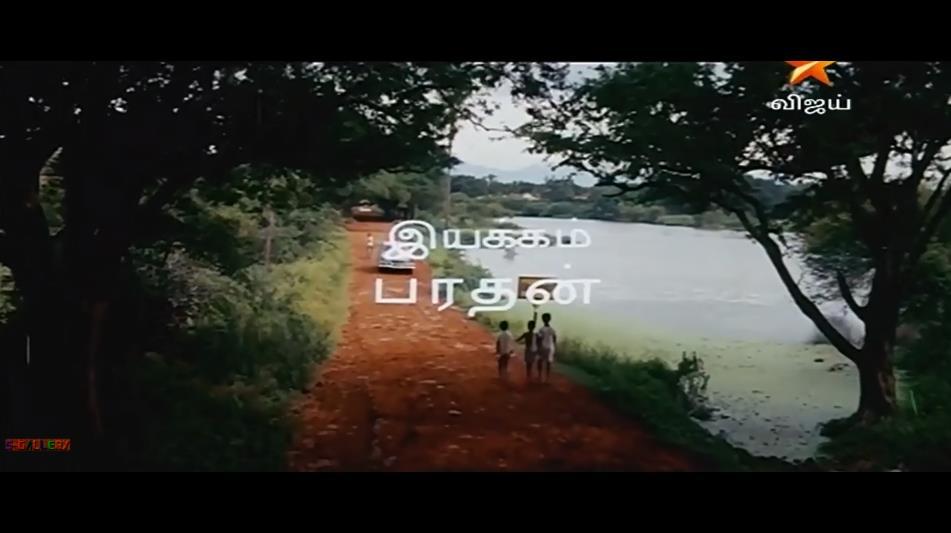
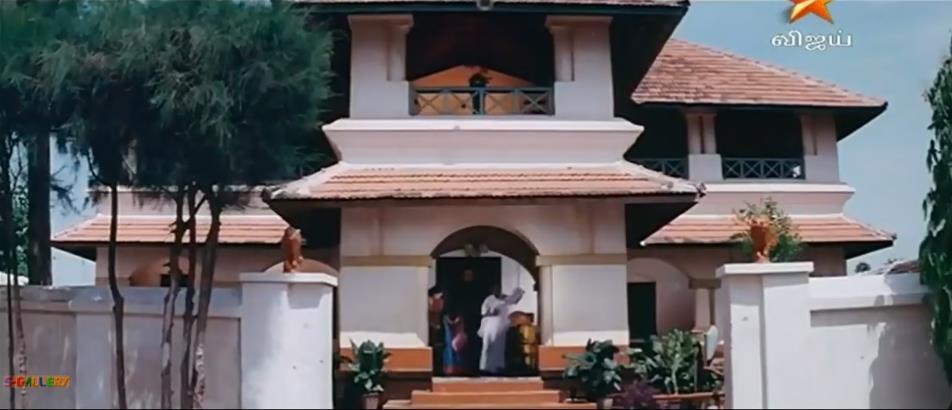
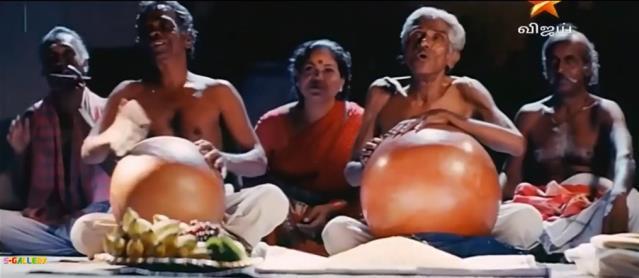
Spottiswoode (1950) talks of the “Proportions of Composition” (142). This technique is evident in the opening scene of the movie Thevar Magan, where the framing of the village landscape establishes a strong sense of place and community, positioning characters within theirsocio-political context. The meticulous composition enables theaudience tovisuallyengagewiththepowerstructuresandinterpersonaldynamicsembeddedwithinthenarrative.
Fig -1: ThisframeshowshowSakthiiswelcomedintherailwaystationbythevillagepeoplewiththetraditionalmusic instrumentsandmaketheaudiencetovisuallyengagewiththepowerstructures
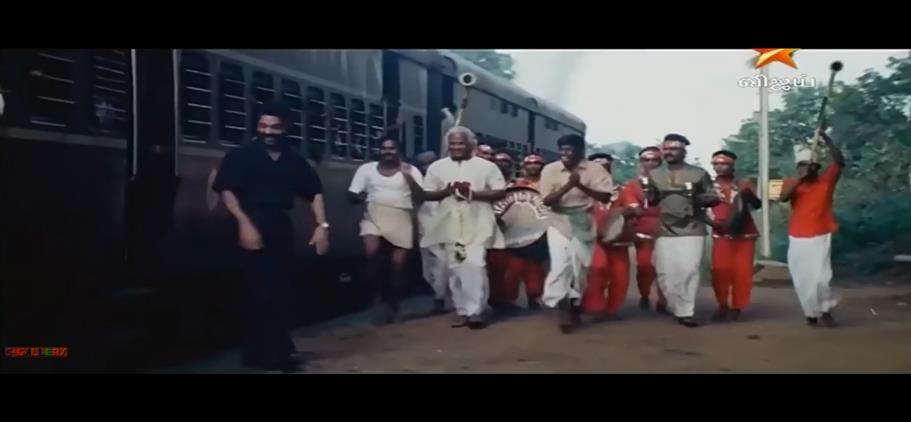
Fig -2: Thisframeiscomposedtoestablishthestoryisgoingtotravelinthevillageatmosphere.
International Research Journal of Engineering and Technology (IRJET) e-ISSN:2395-0056
Volume: 12 Issue: 05 | May 2025 www.irjet.net p-ISSN:2395-0072
Fig -3: Thisshotestablishesastrongsenseofplaceandcommunity,positioningcharacterswithintheirsocio-political context.
Incinematography,focusreferstothesharpnessandclarityofanimage,determiningwhichelementswithinthe framearedistinctlydefinedandwhichremainblurred.Itfunctionsasavitalstorytellingmechanism,guidingtheviewer’s attentiontospecificsubjectsordetails,therebyreinforcingnarrativedepthandcompositionalintent.
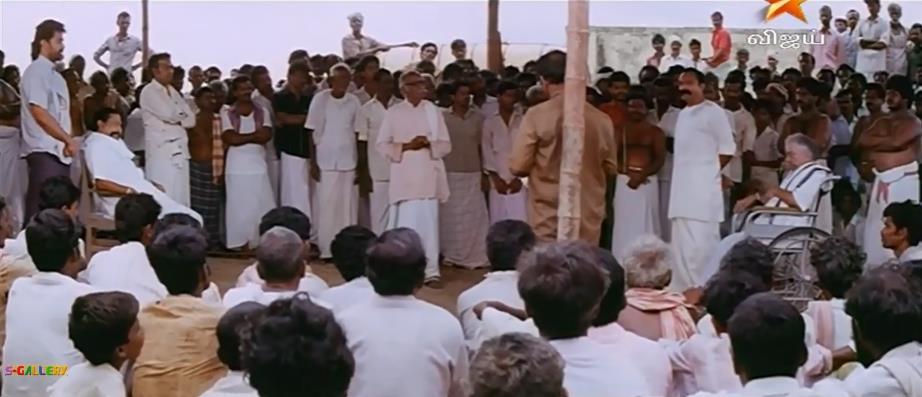
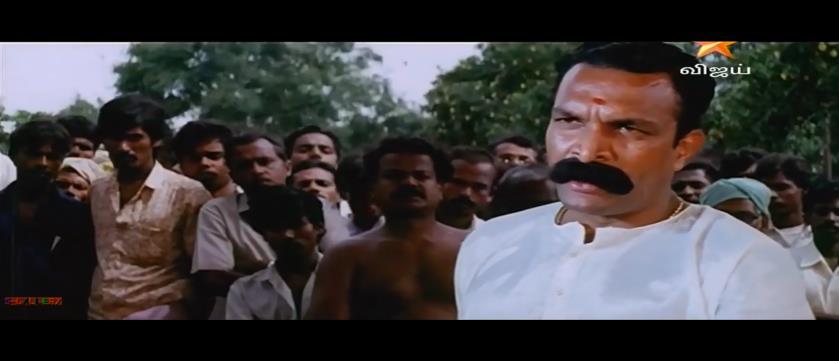
Arnheim (1957) discusses the “Manipulation of Focus” (p. 125), highlighting its role in shaping audience perception and emotional engagement. This technique is effectively employed in the movie Thevar Magan during the intense panchayat meeting scene, where Sakthi (Kamal Haasan) confronts Mayan (Nassar). As Sakthi asserts his determination,thefocussubtlyshiftstohisface,isolatinghimfromthebackground,whichgraduallyblurs.Thisdeliberate focustransitionheightenstheemotionalgravityofthemoment,visuallyreinforcinghisresolvewhilediminishingexternal distractions,therebydeepeningtheaudience’sconnectiontothecharacter’sinternalconflict.
Fig -4: Mastershotshowstheheatoftheissue.
-5: Thefocusshitreinforcesanddeepeningtheaudienceconnectiontothecharacter’sinternalconflict.
International Research Journal of Engineering and Technology (IRJET) e-ISSN:2395-0056
Volume: 12 Issue: 05 | May 2025 www.irjet.net p-ISSN:2395-0072
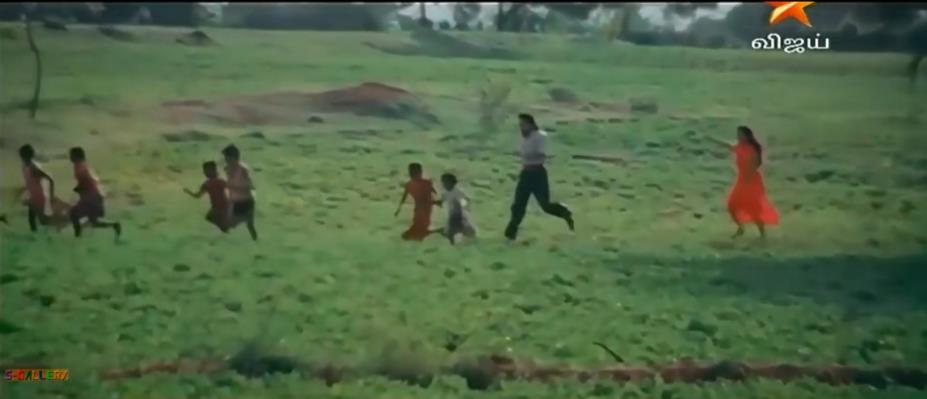
Texturereferstothevisualandtactilequalitiesofanimage,shapingtherepresentationofsurfaces,materials,and atmospheric conditions within a film. As a critical aesthetic component, texture significantly contributes to perceived depth,realism,andemotionalresonance,therebyenrichingtheoverallsensoryengagementandinterpretivedepthofthe visual narrative. Through the intentional manipulation and strategic capture of texture, cinematographers construct a more immersive cinematic experience, employing it as a vital tool to elicit specific emotional responses and thematic interpretations,ultimatelystrengtheningtheaudience’sconnectiontothefilm’svisualstorytelling.
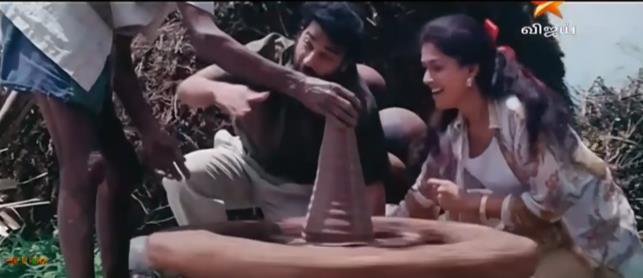
Bordwell and Thompson (1990) examine the role of texture in film, particularly how the selection of film stock influences a film’s aesthetic presentation and visual tone (156). This technique is effectively demonstrated in Thevar Magan, where the textural richness of rural landscapes, traditional architecture, and earthy color palettes reinforces the film’s cultural authenticity and visual realism. The film’s tactile dimension is especially evident in sequences depicting characters traversing vast fields or interacting with traditional elements such as clay pots and rustic interiors. These meticulous textural details serve to establish a profound sensory connection to the environment, enhancing the film’s commitmenttorealismandsocio-culturalrepresentation,therebydeepeningaudienceimmersion.
In cinematography, shot duration refers to the temporal length a single shot remains on screen before transitioningtothenext.Thisaspectoffilmmakingplaysapivotalroleinshapingthepacing,rhythmicflow,andaudience engagementwithinanarrative.Thedurationofashotisinfluencedbyvariousfactors,includingnarrativestructure,genre conventions, editing techniques, and directorial intent, all of which contribute to the overall cinematic experience and storytellingeffectiveness.
Nilsen(1937)discussesshotdurationwithinhisclassificationof“TheTimeFactor”(65),whichencompassesslow motion,fastmotion,andtime-lapseeffects,highlightinghowtemporalmanipulationenhancescinematicstorytelling.This techniqueisexemplifiedin ThevarMaganduringtheclimacticconfrontationbetween Sakthi(Kamal Haasan)andMayan (Nassar).Cinematographer P.C.Sreeramstrategicallyemploys extended shots toheighten dramatictension, allowing the
International Research Journal of Engineering and Technology (IRJET) e-ISSN:2395-0056
Volume: 12 Issue: 05 | May 2025 www.irjet.net p-ISSN:2395-0072
audiencetofullyabsorb the emotional gravity of Sakthi’sdilemma beforeheultimatelytakesaction. The prolongedshot duration intensifies the moment, reinforcing the character’s internal conflict and deepening audience immersion in the scene’spsychologicalcomplexity.
4.1
Orientation (Angle, Height, Rotation, and Apparent Distance):
Orientation in cinematography refers to the camera's role in establishing the positioning, movement, and perspective of subjects within a structured spatial environment. It is a critical component in defining the spatial relationshipsbetween characters,objects,andtheirsurroundings,ultimatelyshapingtheaudience'sperception ofdepth, motion,andnarrativecoherencewithinthevisualcomposition.
This approach is especially prominent in scenes that convey power dynamics, as exemplified in Thevar Magan (1992).WhenPeriyaThevar(SivajiGanesan)addresseshisfollowers,theuseoflow-angleshotsreinforceshisdominance andauthoritativepresence.Incontrast,hisadversariesareoftenframedusinghigh-angleshots,visuallydiminishingtheir stature and highlighting their vulnerability and subordination. Through such deliberate spatial orientation and camera positioning, the film effectively accentuates hierarchical structures and character relationships, enhancing the thematic depthofitsstorytelling.
Fig -9: HighangleshotshowshowthePeriyaThevarfamilyisvulnerableandenhancesthedepth.
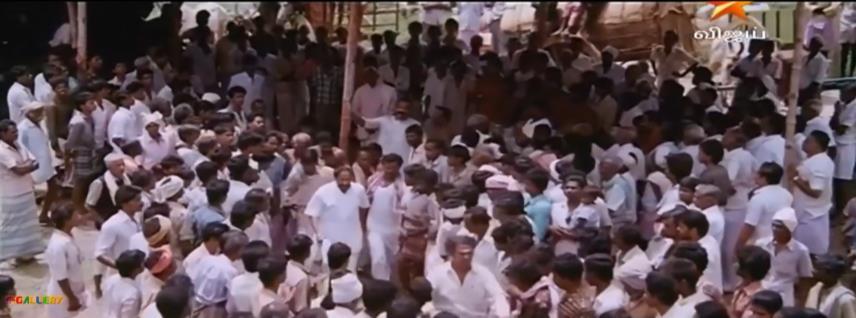
Depth perspective encompasses the techniques utilized to simulate three-dimensional space within the limitations of a two-dimensional film frame. It serves a crucial function in enhancing visual depth, defining spatial relationships,and fostering immersive engagement, allowing filmmakers to deliberatelyshapethe audience’s perception ofdistance,scale,andmovementwithinacinematiccomposition.
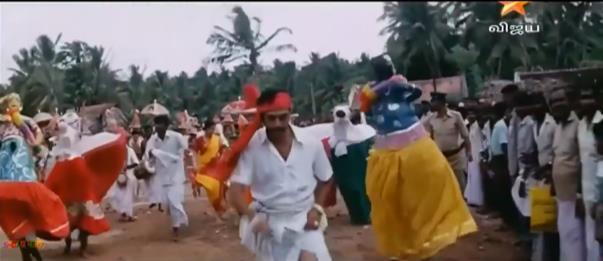
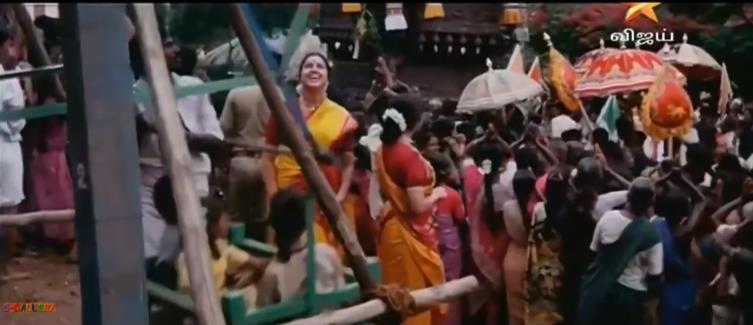
Nilsen explores the concept of perspective in relation to focal length under the classification of “The Optical Design of the Image” (55), emphasizing its technical significance in shaping visual depth. This principle is effectively demonstrated in Thevar Magan during the village festival sequences, where characters are strategically positioned at varyingdistancesfromthe camera.Thislayeredcompositioncreatesa heightened sense ofspatial depthand movement, immersing viewers in the vibrancy and dynamism of the bustling environment. Through such calibrated use of depth perspective,thefilmreinforcesbothitsnarrativerealismandculturalauthenticity.
Fig -10:
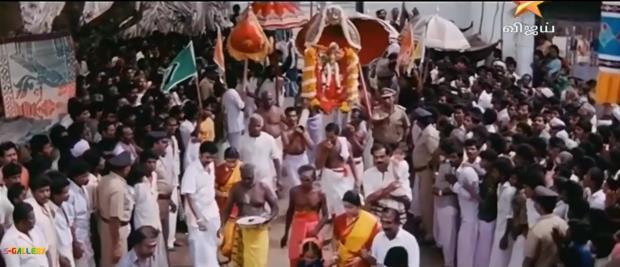
Fig-11:
International Research Journal of Engineering and Technology (IRJET) e-ISSN:2395-0056
Volume: 12 Issue: 05 | May 2025 www.irjet.net p-ISSN:2395-0072
Fig -12: Charactersareplacedinthedifferentplacesduringthefestivaltime.Allarenottogetheralltimeduringthe festivaltime.
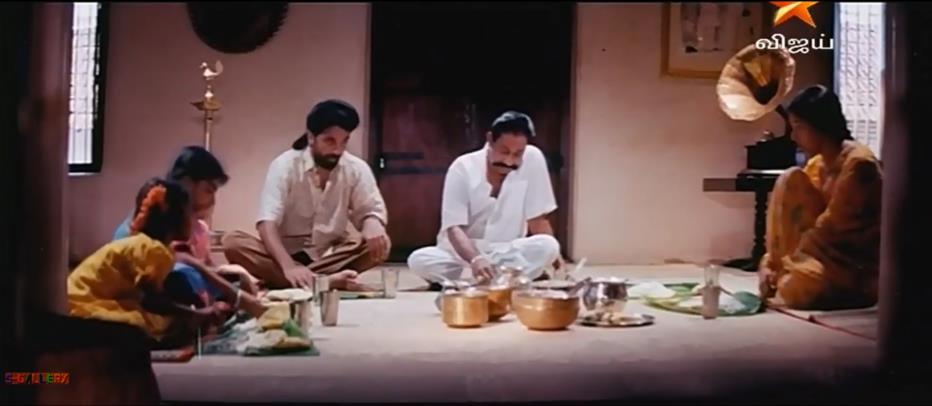
Surfacecompositionreferstothedeliberatearrangementof objects,shapes,andspatialelementswithinthetwodimensional plane of the image, influencing visual balance and narrative expression. Arnheim (1957) examines this concept through his discussion of "decorative surface patterns," emphasizing their role in the reduction of depth perspective(p.130).
This technique is effectively applied in Thevar Magan, particularly in scenes depicting family tensions, such as during dinner conversations. Cinematographer P.C. Sreeram utilizes carefully composed framing to reflect character dynamics and emotional undercurrents. For instance, physical distance between characters within the frame serves as a visualmetaphorforemotionalestrangement,reinforcingthenarrative’sthematicdepthandinterpersonalconflicts.
Fig -13: DistancebetweentheThevarfamilyandBhanuiscomparativelymore.
Light refers to the intentional manipulation of illumination to construct the visual composition of a scene. As a fundamental cinematic element, it plays a pivotal role in shaping mood, tone, depth, and narrative expression. Light governs visibility, contrast, and texture, while simultaneously guiding the audience’s attention toward key subjects and emotionswithinthecinematicframe.
Lindgren(1963)identifiesthreeprimarycharacteristicsoflighting,statingthat"therearethreeprincipalwaysin whichthecameramancancontrolhislighting:indirection,inintensity,andindegreeofdiffusion"(125).Theseelements collectively influence a film's aesthetic and emotional resonance, as demonstrated in Thevar Magan (1992), where cinematographer P.C. Sreeram employs varied lighting techniques to enhance narrative depth and character dynamics.
International Research Journal of Engineering and Technology (IRJET) e-ISSN:2395-0056
Volume: 12 Issue: 05 | May 2025 www.irjet.net p-ISSN:2395-0072
Through the meticulous application of lighting techniques, the movie Thevar Magan achieves a visually immersive and emotionallyresonantstorytellingexperience,demonstratingthecriticalroleoflightinshapingcinematicexpression.
5.1 • Quality of Light (Hard vs. Soft):
Soft lighting is prominently used in intimate moments between Sakthi and Bhanu (Gautami), creating a warm, romanticambiance.
Conversely, harsh lighting intensifies confrontational scenes, heightening tension and emphasizing emotional conflicts.
5.2 • Contrast Ratio:
The interplay of light and shadow is particularly striking during the climactic confrontation between Sakthi and Mayan.
The stark contrast across their faces visually reinforces the heightened emotional stakes, deepening the psychologicalintensityoftheirconflict.
5.3 • Direction of Light:
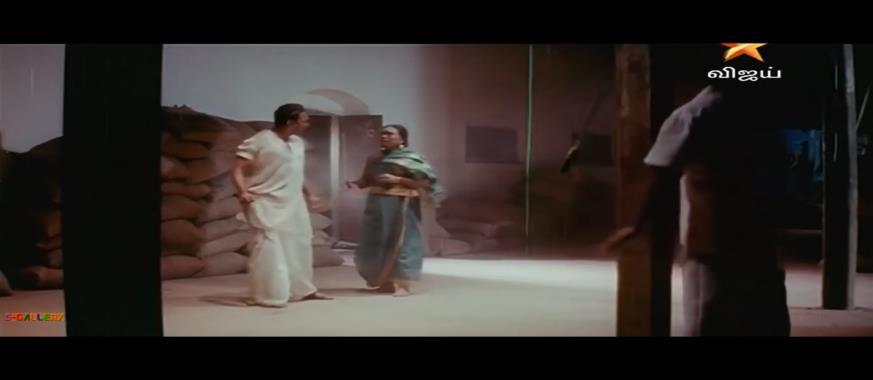
Strategic side lighting is employed in moments of realization and anger, such as Periya Thevar’s discovery of Sakthi’sdecisions.
Thistechniqueaccentuatesfacialexpressions,illuminatinginnerturmoilandcharacterdepth.
5.4 • Color in Cinematography (Realistic, Psychological, and Cultural):
Thefilm’scolorpaletteholdsculturalandpsychologicalsignificance.
Earthytonesdominate rural settings, reinforcingauthenticityandtradition,while vibrantcolors enhancefestive sequences,elicitingemotionalengagementandemphasizingculturalrichness.
Fig -14: SoftLightingisusedduringintimatescenesin-betweenSakthiandBhanu.
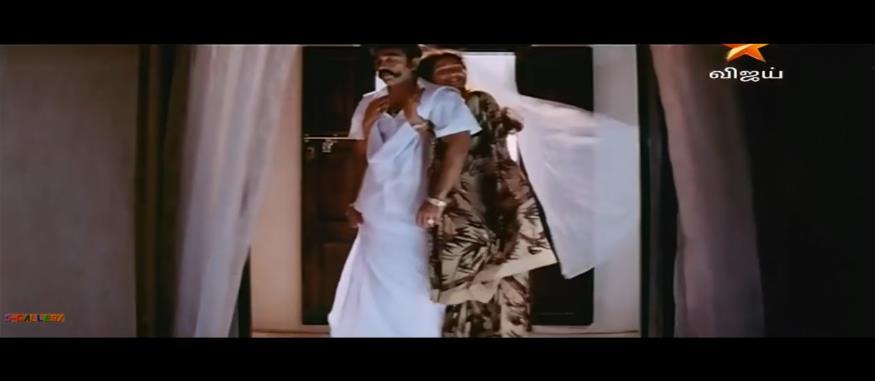
Fig -15: Duringtheclimaxscenetheprotagonistandantagonistareplacedinlightandshadowtoshowtheintensityofthe conflict.
International Research Journal of Engineering and Technology (IRJET) e-ISSN:2395-0056
Volume: 12 Issue: 05 | May 2025 www.irjet.net p-ISSN:2395-0072
Fig -16: OnesidelightingisusedtocapturetheexpressionofthePeriyaThevarduetothedecisiontakenbySakthito openthetemple.Itexplicithowtofacetheconsequencesinthepanchayat.
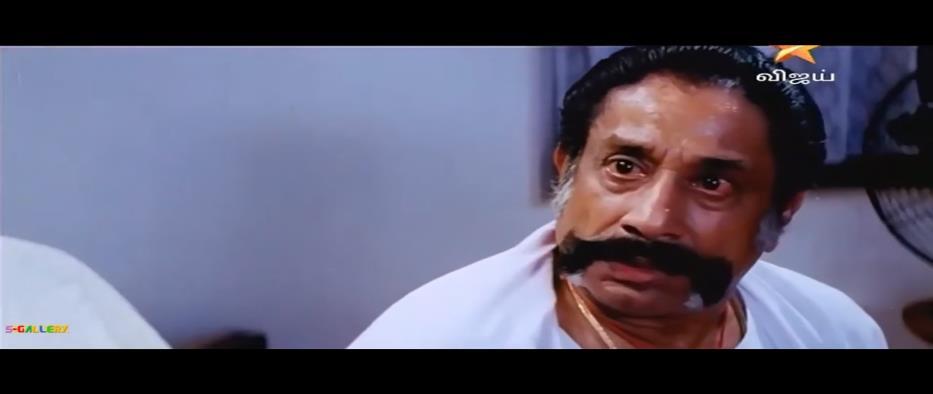
Temporalmodificationincharacter,spatialelements,andlightingisacrucialcinematographictoolthatenhances narrativeprogression,emotionaldepth,andthematiccomplexity.Byalteringtheseelementsovertime,filmmakerscrafta visuallyimmersiveandpsychologicallycompellingexperiencefortheaudience.
Temporalelementspertaintothemanipulationoftime,pacing,andrhythmwithinafilm’snarrative.Modification within these elements refers to how a character’s development, spatial relationships, and lighting evolve over time, shapingthefilm’svisualstorytellingandthematicdepth.
6.1 • Temporal Modification in Characteristics:
Temporal modification in character refers to how a character’s physical, psychological, or emotional transformationisvisuallyrepresentedovertimethroughcinematographictechniques.
Sakthi (Kamal Haasan) transforms from an educated, modernized youth to a traditional village leader. This transition is emphasized through gradual changes in costume, body language, and cinematographic choices, such as increaseduseofearthytonesandsolemnframingashisresponsibilitiesgrow.AsSakthievolvesthroughoutthefilmfrom areluctantheirtoadecisiveleaderSreerammodifiesshotcharacteristicstoreflectthisgrowth.Forinstance,earlyscenes featuremorestaticshotsthatbecomedynamicasSakthigainsconfidence.
6.2 • Temporal Modification in Spatial Elements:
Spatial elements in cinematography refer to the arrangement and movement of characters and objects within a frame. Over time, these spatial relationships can be modified to reflect shifting power dynamics, emotional changes, or narrativeprogression.
During the early family gatherings, characters are placed symmetrically, signifying unity. As conflicts escalate, spatialcompositionchangescharactersarepositionedatoppositeendsoftheframe,visuallyemphasizingtheiremotional andideologicaldivide.
6.3 • Temporal Modification in Light Elements:
Lighting is a dynamic storytelling tool that evolves throughout a film to reflect changes in mood, theme, and characterpsychology.
Inthebeginning,soft,naturallightingdominates,reflectingthepeacefulruralsetting.Aspowerstrugglesemerge, high-contrastlightingwithdeepshadowsisintroduced,visuallyreinforcingtensionandinternalconflict.Lightingchanges throughout key moments in the film; for example, during Sakthi's internal conflict about taking over his father's legacy, lightingshiftsfromsofttoharshashegrappleswithhisidentityandresponsibilities.
International Research Journal of Engineering and Technology (IRJET) e-ISSN:2395-0056
Volume: 12 Issue: 05 | May 2025 www.irjet.net p-ISSN:2395-0072
P. C. Sreeram’s cinematography in the movie Thevar Magan exemplifies how deliberate aesthetic choices can significantly enhance a film’s narrative and emotional impact. By skillfully employing elements such as framing, focus, lighting, and camera angles, Sreeram elevates the storytelling, creating a visually compelling and emotionally resonant experience. This analysis demonstrates that Thevar Magan stands as a testament to the power of cinematography in shapingtheaestheticlandscapeofIndiancinema,solidifyingitsplaceasaclassic.
Through a comprehensive analysis of P.C. Sreeram’s cinematographic techniques in Thevar Magan, this study establishes that cinematography transcends its technical function to emerge as a profound artistic discipline, fundamentallyshaping narrativeinterpretation, emotional depth, andaudience engagement. Sreeram’sadeptintegration of technical precision and aesthetic sensibility underscores how cinematographic elements when meticulously aligned with a film’s thematic foundation have the capacity to elevate a narrative from conventional storytelling to a form of visualpoetry.
Furthermore,thisstudyemphasizestheevolutionofcinematographicaestheticsinTamilcinema,illustratinghow the industry has successfully blended regional authenticity with global cinematic influences. P.C. Sreeram’s pioneering contributionstoKollywood’svisuallanguagecontinuetoinfluencecontemporaryfilmmakers,ensuringthatthe legacyof aesthetic cinematography remains integral to the identity of Tamil cinema. As Thevar Magan endures as an exemplar of the power of visual storytelling, it reaffirms the transformative impact of cinematography in shaping the artistic and culturaldiscourseofIndiancinema.
[1] Keating,Patrick.(2008).TheInternationalEncyclopediaofCommunication.P-1.
[2] SparshottF.E.(1971).BasicFilmAesthetics.FilmTheoryandCriticism.P-209.
[3] Wang, Chia-Wei. (2007). Advances in Multimedia Modeling, Film Narrative Exploration Through the Analysis of AestheticElements.Springer,Jan9-12,P-606.
[4] Kumar, Dinesh. (2023). Understanding the Mise-en-scene in Romantic Movies of Maniratnam and P.C. Sreeram combination across Decades: A Comparative Analysis, The Online Journal of Distance Education and E-Learning, volume 11,issue3.P-2992.
[5] Spottiswoode,R.(1950).Agrammarofthefilm.LosAngeles,CA:UniversityofCaliforniaPress.P-142.
[6] Arnheim,R.(1957).Filmasart.California:UniversityofCaliforniaPress.P-125.
[7] Bordwell,D.,&Thompson,K.(1990).Filmart:Anintroduction.NewYork:McGraw-HillPublishingCompany.P-156
[8] Nilsen,V.(1937).Thecinemaasagraphicart.(S.Garry,Trans.).UK:NewnesLtd.P-65.
[9] Lindgren,E.(1963).Theartoffilm.London:GeorgeAllen&UnwinLtd.P-125.