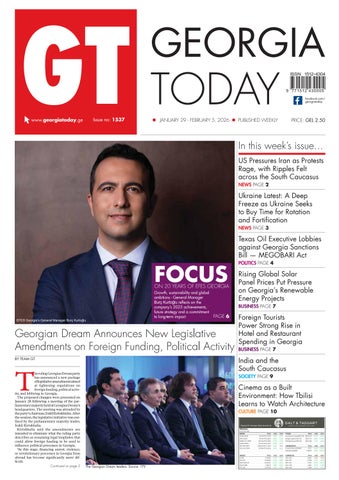
Georgian Dream Announces New Legislative Amendments on Foreign Funding, Political Activity

In this week’s issue...
US Pressures Iran as Protests Rage, with Ripples Felt across the South Caucasus
Ukraine Latest: A Deep Freeze as Ukraine Seeks to Buy Time for Rotation and Fortification
Texas Oil Executive Lobbies against Georgia Sanctions Bill — MEGOBARI Act
4
Rising Global Solar Panel Prices Put Pressure on Georgia’s Renewable Energy Projects
Foreign Tourists
Power Strong Rise in Hotel and Restaurant Spending in Georgia
India and the South Caucasus
Cinema as a Built Environment: How Tbilisi Learns to Watch Architecture



Zelensky Appoints New Ukrainian Ambassador to Georgia after Years-long Vacancy
BY TEAM GT
Ukrainian President Volo-
dymyr Zelensky has appointed Mykhailo Brodovych as the new Ambassador Extraordinary and Plenipotentiary of Ukraine to Georgia, ending a diplomatic vacancy that had lasted for more than three years. The appointment was formalized by a presidential decree published on January 27, marking the first time since 2022 that Kyiv has restored full ambassadorial representation in Tbilisi.
The post had remained vacant after Ukraine recalled its previous ambassador, Ihor Dolhov, in the early weeks following Russia’s full-scale invasion of Ukraine. At the time, relations between Kyiv and Tbilisi deteriorated sharply due to Georgia’s cautious approach toward Moscow, including its refusal to join international sanctions against Russia and its restrictions on certain forms of support for Ukraine. Ukrainian officials openly criticized the Georgian government’s position, and diplomatic relations were subsequently maintained at a lower level through a chargé d’affaires.
Mykhailo Brodovych is a career diplomat with extensive experience in international postings. He joined Ukraine’s Ministry of Foreign Affairs in the mid1990s and has served in a range of senior
roles, including as Ukraine’s ambassador to Slovenia from 2015 to 2022, and in consular and diplomatic positions in Türkiye and Poland. His appointment is widely seen as a signal that Kyiv is prepared to re-engage more actively with Georgia despite ongoing political disagreements.
Ukraine and Georgia established diplomatic relations in 1992 and have long shared common geopolitical challenges, including unresolved conflicts involving Russian-backed separatist regions and aspirations for closer integration with European and Euro-Atlantic institutions. While the two countries have often expressed solidarity with one another, relations have fluctuated in recent years, particularly as Georgia’s current leadership has pursued a more cautious and pragmatic policy toward Russia compared with Ukraine’s openly confrontational stance.
The decision to appoint a new ambassador suggests a potential attempt to stabilize bilateral ties and reopen channels for dialogue at a time when regional security dynamics remain tense. Although significant political differences persist, the restoration of ambassadorial-level relations may create space for renewed cooperation on issues such as trade, humanitarian engagement, and coordination with international partners, even as broader disagreements continue to shape the relationship between Kyiv and Tbilisi.
TBC Concept Presents “Winter Jazz Bakuriani 2026” Festival

BY TEAM GT
TBC Concept, one of the country’s leading supporters of culture and a principal presenter of jazz festivals for over 15 years, is the offi cial presenter of the “Winter Jazz Bakuriani 2026” festival.
This year, for the fi rst time, the Winter Jazz Festival will be held in Bakuriani on February 14 and 15.
For two days, the winter stage set against the mountains of Bakuriani will host contemporary jazz artists and bands. Guests of Winter Jazz Bakuriani 2026 will enjoy a diverse musical program featuring vintage grooves, modern British soul-funk, brass bands, and innovative fusions of electronic music and jazz, among other styles.
The “Winter Jazz Bakuriani 2026” festival is organized by Eastern Promotions and will take place on the
US Pressures Iran as Protests Rage, With Ripples Felt across the South Caucasus
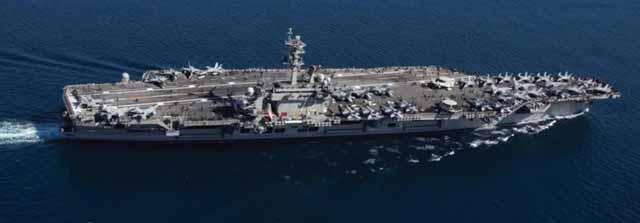
BY TEAM GT
Pressure on Iran is rising from two directions at once: from the streets at home and from Washington abroad. As protests continue across the country, the United States is escalating its rhetoric and military posture, with consequences that reach beyond the Middle East and into the South Caucasus, including Georgia.
US President Donald Trump this week urged Iran’s leadership to return to negotiations and accept what he called a “fair agreement” that would rule out nuclear weapons. Writing on his Truth Social platform, Trump said he hopes Iran will “quickly sit down at the negotiating table,” adding that “time is of the essence now.” Trump said a “massive armada,” led by the aircraft carrier Abraham Lincoln, is moving toward the region. He described the deployment as larger than previous US naval missions, and said it is advancing “with great strength and enthusiasm.”
Recalling earlier warnings to Tehran, Trump claimed Iran’s refusal to make a deal led to what he called “Operation Midnight Hammer,” which he said caused major destruction. He warned that any
future strike would be far more severe. Tehran continues to insist its nuclear program is peaceful and rejects talks conducted under threat.
Inside Iran, the situation remains grim.
Protests that began in late December 2025 over economic hardship and political frustration have spread nationwide.
Rights groups say more than 6,000 protesters, and likely many thousands more, have been killed in the security forces’ response, a figure the authorities dispute.
Since early January, the government has enforced a near-total internet blackout, cutting off access to social media and independent news. Activists say the shutdown is meant to disrupt protest organization and prevent evidence of violence from reaching the outside world.
One striking feature of the unrest has been the way funerals have turned into protests. Families and mourners have used traditional burial ceremonies to voice anger and defiance, chanting slogans, playing music, and openly honoring those killed. These gatherings allow people to grieve while also keeping the protest movement alive under heavy repression.
The Trump administration is deepening its engagement in the South Caucasus. Vice President J.D. Vance is scheduled to visit both Armenia and
Azerbaijan in February 2026 to reinforce the US role in regional peace and cooperation under what the administration calls the Trump Route for International Peace and Prosperity. His trip, designed to build on last year’s peace accord between Armenia and Azerbaijan, marks high-level US attention to the region’s security and economic connectivity. While Georgia is not on Vance’s official itinerary, the crisis in Iran, including disruption of trade and logistics routes across the broader region, has raised concerns in Tbilisi about stability and the indirect effects of geopolitical tensions on Georgian economic and diplomatic calculations.
Analysts worry that Iran’s internal turmoil and US pressure could heighten ethnic and security tensions across neighboring states. Iran’s instability is seen as a risk factor for ethnic Azeri populations and broader regional power competition involving Russia, Turkey and Western actors across the South Caucasus.
As both Tehran and Washington signal readiness to escalate or, alternatively, pursue negotiation, the coming weeks could prove decisive not only for Iran’s internal future but for the broader geopolitical balance, reaching into the Caucasus and beyond.
Georgian Dream Announces New Legislative Amendments on Foreign Funding, Political Activity
Continued from page 1
However, in practice, we still see certain mechanisms and ways to bypass existing laws. If left unaddressed, these could jeopardize the peace, stability, economic progress, and prosperity that our country has preserved through great effort,” Kirtskhalia stated.
“This is why we are introducing legislative changes—to ensure that no alternative mechanisms exist for financing disorder or violence in Georgia from outside the country in the future,” he added.
AMENDMENTS TO THE LAW ON GRANTS
terrace of Kokhta-Bakuriani Hotel.
FESTIVAL LINE-UP
February 14
• Sweet Life Society
• Smoove and Turrell
• Kraak & Smaak
• Dennis Rollins
February 15
• Kraak & Smaak
• Bass Monkeys
• Swingrowers
Since 2011, TBC Concept has been systematically supporting a series of jazz festivals in Georgia, significantly contributing to the development of contemporary music and the strengthening of international cultural exchange. With TBC Concept’s support, some of the region’s most large-scale and influential music events have been created and developed, including the Black Sea Jazz Festival, the Tbilisi Jazz Festival, the Jazz & Wine Kakheti Festival, and the Winter Jazz Festival, which launched in Gudauri in 2024 and is being held in Bakuriani for the first time this year.
One of the key components of the legislative package concerns amendments to Georgia’s Law on Grants. The proposed changes expand the definition of a grant to include any transfer of funds or in-kind resources, from any individual or legal entity to another, if such resources are intended—or may be intended—to influence Georgia’s authorities, state institutions, or any segment of society in matters related to domestic or foreign policy.
Under the draft legislation, receiving such a grant would require prior approval from the Government of Georgia. The amendments also introduce a definition of a foreign legal entity whose activities are substantially connected to Georgia. Such entities would likewise be required to obtain government consent before receiving grant funding. For example, an organization registered abroad but primarily operating in Georgia would need prior government approval to receive funding. Failure to do so would result in criminal liability.
Additionally, the definition of a grant would explicitly include funding provided in exchange for technical assistance
such as the transfer of technologies, expertise, specialized knowledge, skills, consulting services, or other forms of support. Based on the proposal, if a foreign actor hires experts in Georgia in exchange for payment, such funding would be classified as a grant and would require government authorization.
The draft law further stipulates that branches or representative offices of non-resident legal entities—including those receiving funding from their parent organizations—must obtain prior government consent to receive grants. Unauthorized receipt would result in administrative liability, including fines amounting to double the value of the unlawfully received grant.
CRIMINAL CODE AMENDMENTS
The legislative package also proposes amendments to the Criminal Code of Georgia. Violations of the Law on Grants would become subject to criminal liability punishable by a fine, community service ranging from 300 to 500 hours, or imprisonment for up to six years.
An aggravating circumstance would be added to Article 194 of the Criminal Code, under which money laundering conducted to finance political activities related to Georgia would be punishable by nine to twelve years of imprisonment.
The amendments also introduce criminal liability for senior officials of political parties who violate the Organic Law on Citizens’ Political Associations by accepting foreign funding. Such violations would be punishable by a fine, community service, or imprisonment of up to six years.
In addition, foreign lobbying activities would become a criminal offense. Specifically, transferring money, securities, property, or other benefits—directly or indirectly—to a foreign citizen or legal entity in exchange for political activity
related to Georgia would carry criminal penalties similar to those outlined above.
CHANGES RELATED TO POLITICAL PARTY MEMBERSHIP Amendments to the Organic Law on Citizens’ Political Associations would introduce new restrictions on political party membership. Under the proposed rules, individuals employed under a labor contract by an organization that receives more than 20% of its annual income from foreign sources would be prohibited from holding political party membership for eight years.
The State Audit Office would be tasked with monitoring the financial activities of political party members.
The term “entity with a declared electoral purpose” would be replaced with “entity with a declared party-political purpose,” and restrictions currently applicable to political parties would also apply to such entities. Criminal liability would be introduced for party leaders and declared party-political entities in cases involving foreign funding.
RESTRICTIONS ON POLITICAL ACTIVITY BY BUSINESS ENTITIES
The legislative package also includes amendments to the Administrative Offenses Code, introducing a new offense related to public political activity by business entities that is unrelated to their primary commercial activities.
In such cases, the State Audit Office would impose an administrative fine of GEL 20,000, with repeat violations carrying fines of GEL 40,000 for each subsequent offense.
EU High Representative for Foreign Affairs and Security Policy Kaja Kallas said the European Union may consider taking action in response to the legislative changes planned by Georgia’s ruling party.
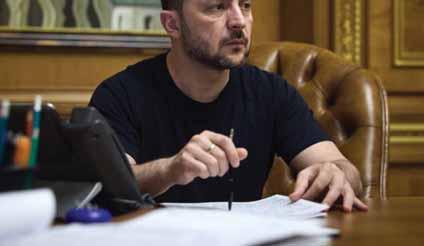
President Volodymyr Zelensky. Source: president.gov.ua
Aircraft carrier USS Abraham Lincoln. Source: Reuters
The festival poster. Source: TBC
Ukraine Latest: A Deep Freeze as Ukraine Seeks to Buy Time for Rotation and Fortification
COMPILED BY ANA DUMBADZE
The Russia–Ukraine front line remained largely static this week, but the fighting was anything but quiet. Russia continued to press along several axes in eastern Ukraine with localized advances measured in small distances, while Ukraine sought to blunt assaults with artillery, drones, and counterattacks, and expanded its long-range strike campaign against Russian fuel and logistics nodes. The defining feature of the week, however, was the renewed intensity of Russia’s attacks on Ukraine’s energy system during a deep freeze, magnifying the humanitarian impact far beyond the battlefield.
In Donetsk Oblast, the Pokrovsk sector again drew the heaviest reported combat activity, with Russian forces attempting to exploit gaps and push into villages that would improve their tactical positioning and pressure Ukrainian lines of communication. Ukrainian OSINT analysts at DeepState reported Russian advances in Shakhove on the Pokrovsk front, describing continued attempts to break through defenses in the broader area. While Russia’s gains in this sector were incremental, the pattern remained consistent: repeated assaults, heavy reliance on glide bombs and drones, and grinding attempts to widen footholds rather than dramatic armored breakthroughs.
Further northeast, the Bakhmut–Chasiv Yar–Kramatorsk complex remained contested, with Russia continuing to probe for openings that could support pressure toward key Ukrainian defensive hubs. DeepState reported Russian advances near, and within, Orikhovo-Vasylivka in Donetsk Oblast, another sign of incre-
mental movement in an area where small terrain changes can matter for observation and artillery coverage. As in other sectors, the pace underscored the attritional reality of the campaign: movement occurs, but slowly, and at high cost in manpower and equipment, a point echoed by broader analytical assessments of the war’s recent offensives.
Ukraine, for its part, prioritized holding key defensive lines while looking for opportunities to claw back ground through limited counterattacks and localized advances. A daily ISW summary carried by Kyiv Post indicated Ukrainian forces “recently advanced near Pokrovsk,” suggesting at least some successful tactical action amid intense pressure. Even when such gains are small, they can disrupt Russian assault group staging areas, force redeployments, and buy time for rotation and fortification — crucial in winter conditions when mobility and logistics are harder for both sides.
The air-and-drone war again shaped operations on the ground. Russia maintained a high tempo of Shahed-type drone attacks and missile strikes, increasingly linked to the goal of degrading Ukraine’s power generation and transmission during extreme cold. Ukrainian officials described the coming weeks as particularly difficult as Russia targets the power sector, with millions affected by outages and heating disruptions in multiple regions. This week’s strikes showed the breadth of the campaign: beyond frontline-adjacent regions, attacks hit major population centers and infrastructure nodes intended to support both civilian resilience and military logistics.
The most lethal incidents reported in international coverage included a strike that killed at least two people in Odesa and wounded 23, while also damaging an energy facility and civilian sites includ-
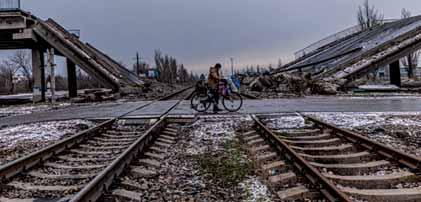
ing a school and church; in Kharkiv, power was knocked out across much of the city and surrounding areas after a combined missile-and-drone attack. In a separate overnight wave, Ukrainian authorities said two people were killed in the Kyiv region, with additional injuries reported in Odesa, Zaporizhzhia, and Kryvyi Rih; the same attack set damaged port infrastructure in Odesa and caused localized power outages closer to the front. The cumulative effect of these repeated waves is a rolling crisis: even when power is partially restored, subsequent strikes force new emergency shutdowns, disrupt district heating, and complicate repairs as temperatures plunge. Ukraine’s energy sector also described persistent, repeated hits. Naftogaz reported another strike on its infrastructure as the month’s attacks accumulated, reinforcing Kyiv’s long-standing argument that Russia is waging a parallel war against civilian endurance and industrial capacity. With demand elevated in freezing weather, officials warned that generation remains insufficient for winter peaks, increasing reliance on imports and scheduled outages — a vulnerability
Russia appears determined to exploit. Ukraine answered with its own deepstrike focus: refineries, depots, and energy-related assets that feed Russia’s military economy and sustain operations.
Early in the week, Russia said drone fragments ignited a fire at the Afipsky oil refinery in Krasnodar region, though local authorities reported no injuries and the fire was extinguished. Days later, Ukrainian forces struck the Slavyansk Eco oil refinery in Russia’s Krasnodar region, with Ukraine’s General Staff confirming the hit and describing the facility as part of Russia’s “energy rear” supporting the war effort. Such strikes do not need to permanently destroy facilities to have operational value: repeated disruptions force shutdowns, repairs, tighter air defenses around industrial nodes, and broader logistical friction — and Reuters reporting on Russian refined products output has noted refinery repairs following Ukrainian drone attacks as one factor affecting production and flows.
On the diplomatic track, the week’s military escalation unfolded in parallel with renewed negotiations. US-facilitated
talks continued in Abu Dhabi, but Russia’s core position remained unchanged: the Kremlin reiterated demands that Ukraine cede the entire Donbas as a precondition for ending the war, according to Reuters, citing Russian state media. Ukraine, meanwhile, signaled cautious movement on process rather than substance, describing “progress” in the talks even as the fundamental territorial dispute and questions of long-term security guarantees remain unresolved. Kyiv’s push for binding security arrangements and reconstruction frameworks also remained central. President Volodymyr Zelensky said work continues on a post-war recovery agreement with the United States, framing it as part of a wider effort to lock in support and rebuild capacity after nearly four years of fullscale war. In Europe, political backing stayed firm and increasingly tied to energy resilience: Nordic-Baltic governments issued a joint statement condemning Russia’s destruction of Ukraine’s energy infrastructure and urging an end to strikes that cut off heat, electricity, and water in harsh winter conditions. Military assistance and defense-industrial support flowed alongside diplomacy. The European Commission presented a major support package for 2026–2027, describing a €90 billion loan-based commitment to help cover Ukraine’s needs over the next two years: a signal to both Kyiv and Moscow that EU support is being structured for endurance, not just emergency response. At the same time, Europe’s air-defense pipeline continued to expand: German firm Diehl said it plans to boost production of IRIS-T airdefense systems used by Ukraine, reflecting the sustained demand created by Russia’s drone-and-missile campaign and the urgent requirement to protect cities and critical infrastructure.

A man in Pokrovsk carries his belongings on a bicycle past a bridge destroyed by Russian shelling. Photo by Anton Shtuka for NPR
POLITICS
Texas Oil Executive Lobbies against Georgia Sanctions Bill — MEGOBARI Act
BY TEAM GT
ATexas oil executive and Republican donor is lobbying US lawmakers against bipartisan legislation that would impose sanctions on pro-Russian and anti-democratic officials in Georgia, based on a letter obtained by The Hill.
The outlet reports that Steve Nicandros, chairman and CEO of a Houstonbased energy company with major investments in Georgia, sent a letter this month to at least one Republican member of the US House of Representatives urging opposition to the MEGOBARI Act. The Hill did not name the lawmaker, citing source protection.
Nicandros claims his company is preparing a new $100 million investment program in Georgia over the next two years. In his letter, he argues that the MEGOBARI Act — and similar efforts aimed at sanctioning Tbilisi — would harm US businesses operating in the country.
The MEGOBARI Act (H.R. 36 / S. 868) seeks to impose costs on Georgia’s ruling Georgian Dream party over its violent crackdown on protests, democratic backsliding, and deepening ties with Russia, China, and Iran. While the bill passed the US House in March by a wide bipartisan margin, it remains stalled in Congress after being blocked in the Senate by Markwayne Mullin.
Nicandros has previously donated to Mullin’s campaign and political action committee, as well as to other Republican lawmakers. Mullin told The Hill that his opposition to the MEGOBARI Act

is unrelated to Nicandros. However, in 2020, Mullin advocated on behalf of Nicandros’ company, Frontera Resources, during a dispute with the Georgian government.
House Speaker Mike Johnson attempted to attach the MEGOBARI Act to the National Defense Authorization Act late last year, but the move was blocked by Senate Majority Leader John Thune.
In his January 19 letter, Nicandros explicitly urged lawmakers “to oppose the Megobari Act (H.R. 36/S.868) and
Giorgi Gakharia Congratulates Armenia and Azerbaijan on Peace Milestone, Warns of Georgia’s Growing Isolation
BY TEAM GT
Former Georgian Prime Minister Giorgi Gakharia has welcomed what he described as a significant step toward historic peace between Armenia and Azerbaijan, while sharply criticizing the current Georgian government for, in his words, pushing Georgia into strategic isolation.
In a post published on X, Gakharia congratulated Armenian Prime Minister Nikol Pashinyan and Azerbaijani President Ilham Aliyev on what he called a “recent milestone toward historic peace,” emphasizing that the breakthrough was made possible through the leadership and engagement of US President Donald Trump.
Gakharia claims that sustained US involvement in the South Caucasus remains “essential to regional peace, security, and prosperity,” particularly at a time when countries are actively repositioning themselves in what he referred to as a “new world order.”
However, Gakharia used the occasion to issue a strong warning about Georgia’s current foreign policy trajectory. He argued that, while neighboring states are advancing their national interests and strengthening international partnerships, Georgia is “losing strategic relevance and becoming increasingly isolated” as a result of the “deliberate actions and incompetence” of the ruling Georgian Dream party. He accused the authorities of failing to restore relations with the United States and of missing a critical opportunity to position Georgia at the center of Washington’s South Caucasus agenda. Instead, Gakharia claimed, the government con-
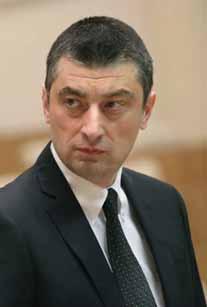
Giorgi Gakharia. Source: Imedinews tinues what he described as attacks and disinformation against the US, while aligning itself with hostile actors—moves he warned could endanger not only Georgia’s own security interests, but also long-term regional stability and even US national security interests.
“Georgia must work closely with its neighbors and strategic partners to bring the country back onto the agenda,”
Gakharia stressed, underscoring the importance of renewed diplomatic engagement and regional cooperation amid ongoing geopolitical shifts in the South Caucasus.
The statement comes against the backdrop of renewed international efforts to stabilize the Armenia–Azerbaijan relationship following decades of conflict, as well as growing debate within Georgia over its foreign policy orientation and relations with Western partners.
any additional legislation modeled on it,” expressing concern over what he described as the continuation of “Bidenera policies.”
During Frontera Resources’ 2020 dispute with Tbilisi, the company claimed to have invested more than $500 million in Georgia. That year, it reportedly spent $1 million on lobbying, and Georgian authorities later allowed Frontera to resume operations.
Nicandros framed his latest outreach as a follow-up to a September letter to
Republican members of the House Foreign Affairs Committee, thanking them for voting against a bill that would have withheld US recognition of the Georgian Dream-led government.
Both that bill and the MEGOBARI Act were sponsored by Joe Wilson, who has publicly raised concerns about Nicandros’ lobbying activities. In September, Wilson told Reuters that, as co-chairman of the Helsinki Commission, he would seek further scrutiny of Nicandros’ operations.
The legislation comes amid deteriorating US–Georgia relations. Sanctions imposed under the Biden administration remain in place, including measures targeting Georgian Dream officials involved in violent crackdowns on protesters and sanctions against party honorary chairman Bidzina Ivanishvili. The US also suspended the US–Georgia Strategic Partnership, which had facilitated cooperation in defense, security, trade, energy, and democratic development.
Ivanishvili, who amassed his fortune in post-Soviet Russia, has steered Georgian Dream toward closer relations with Moscow, including resuming flights with Russia and mirroring Kremlin-style legislation restricting civil society. Georgia has also refrained from fully joining Western sanctions against Russia following President Vladimir Putin’s invasion of Ukraine.
In an email to The Hill this week, Wilson defended the MEGOBARI Act as essential to advancing US strategic interests in the South Caucasus, including the “Trump Route for International Peace and Prosperity” connecting Armenia and Azerbaijan — Georgia’s southern neighbors.
Armenia and Azerbaijan signed a USbrokered peace deal in August, but Azerbaijani media have reported rising tensions between Tbilisi and Baku that could threaten the route.
“The historic peace between Armenia and Azerbaijan, the success of the Trump Route for International Peace and Prosperity, and removing China, Iran, and Russia from the Middle Corridor are only possible if the Georgian Dream government changes its anti-American behavior,” Wilson said.
UN Special Rapporteur Urges Georgia to Guarantee Peaceful Assembly, End Excessive Force against Protesters
BY TEAM GT
UN
Special Rapporteur
on Human Rights Defenders
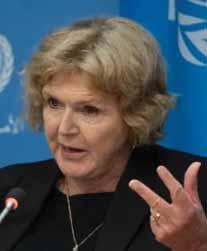
Mary Lawlor has urged Georgia to fully guarantee the right to peaceful assembly and to refrain from the excessive use of force against protesters, warning of a serious deterioration in the environment for civil society and human rights work in the country.
Lawlor made the remarks in response to the discussion of Georgia’s national report in Geneva during the 51st session of the UN Human Rights Council under the Universal Periodic Review (UPR) mechanism. Special Rapporteur claimed that human rights defenders in Georgia have increasingly become targets of intimidation, threats and physical attacks, particularly in recent years.
In a statement published on X, Lawlor said that since Georgia’s previous UPR review in 2021, her mandate had sent or joined eight formal communications to Georgia’s mission in Geneva, none of which received a response. She also recalled her official country visit to Georgia in October–November 2023 and the presentation of her findings to the Human Rights Council in March 2024. During that visit, she documented what she described as a serious decline in the space to exercise the right to defend human rights, citing government repression of civil society organizations, critical journalists and independent human rights defenders.
Lawlor noted that since 2023, human rights defenders who opposed the Law
on Transparency of Foreign Influence had faced intimidation, threats and physical attacks for speaking out. She further pointed to developments following the Georgian Prime Minister’s announcement in November 2024 that the government would halt efforts toward European Union accession, after which mass protests erupted across the country. Special Rapporteur added that those demonstrations were met with alleged widespread human rights violations, excessive use of force by law enforcement and reports of torture and ill-treatment in detention.
She also criticized the legislative changes adopted between December 2024 and February 2025, when the Georgian Parliament rapidly passed reforms affecting the rules on assemblies, administrative offences and criminal law. Lawlor said these changes significantly restrict the ability of individuals and organizations to defend human rights. In parallel,
she highlighted new laws targeting civil society, including the Foreign Agents Registration Act (FARA) and amendments to the Law on Grants, which require government approval for NGOs to receive or renew funding.
Lawlor noted that these legislative measures have been accompanied by smear campaigns and what she described as spurious criminal cases against human rights defenders, including accusations such as “sabotage.” She stressed that LGBTIQ+ rights defenders have been particularly affected, including through the adoption of what she referred to as the so-called “LGBT propaganda law.”
In her recommendations, the UN Special Rapporteur called on Georgia to repeal the Foreign Agents Registration Act and the recent amendments to the Law on Grants, as well as recent changes to the Code of Administrative Offences, the Law on Assemblies and Demonstrations and the Criminal Code. She also urged the repeal of the Law on Family Values and Protection of Minors, a review of the functioning of the Anti-Corruption Bureau, and the introduction of independent judicial oversight over decisions to freeze the bank accounts of human rights NGOs.
Lawlor further called on the Georgian authorities to implement the recommendations contained in her country visit report, to fully guarantee the right to peaceful assembly, to refrain from the excessive use of force against protesters, and to immediately cease smear campaigns against human rights organizations, defenders and lawyers, including those carried out by high-level politicians and government-controlled media outlets.
Steve Nicandros. Photo by Jon Shapley, Houston Chronicle
Mary Lawlor. Source: FB
“We Are Flying into an Abyss”:
Vasily Zharkov on Putin’s War, Peace Proposals, and Russia’s Future
BY VAZHA TAVBERIDZE
We are flying into an abyss. We don’t know its depth, we don’t know the speed of the fall, but we know with absolute certainty that we are falling. - says Vasily Zharkov, a Russian historian, in an interview with Radio Free Europe/Radio Liberty’s Georgian Service, reflecting on Vladimir Putin’s latest “peace proposal” on Ukraine and what he sees as the irreversible collapse of Putin’s political project. In conversation with Radio Free Europe’s Georgian Service, Zharkov argues that war has become the primary source of legitimacy for the Kremlin and that any real peace will only be possible after Putin leaves power. He also discusses whether a post-Putin Russia could be forced to return occupied territories - including Crimea - and why Russia, in his view, has already placed itself on “the wrong side of history.”
IN PUTIN’S LATEST “PEACE” PROPOSAL, HE OFFERED A CEASEFIRE PROVIDED THAT, AMONG OTHER THINGS, UKRAINE PULLS ITS TROOPS OUT OF DONBAS AND ESSENTIALLY WRITES IT OFF. WHAT DO YOU MAKE OF THAT?
Putin is doing fine, at least on the surface. As we understand it, his army isn’t retreating; it’s not advancing much either, but it’s not collapsing. There is no obvious military fiasco. The economy is holding. And yet, despite all that, war fatigue inside society is growing. Recent polling shows the demand for immediate peace talks is rising. And perhaps, given that Putin keeps his finger on the pulse of public mood, this is his move: “Look, I offered a peace plan. If you refuse, it’s your fault. Not my problem. Here, my voters, my people: I offered, they wouldn’t agree. Are we
Putin has no chance of entering history in any way other than as a great disgrace for Russia
supposed to give them territory? No.”
To my mind, this is a single, calculated play. Not exactly throwing a bone, but a little handout: “You wanted talks right now? Well, I offered them. They refused. I’m not some bloodthirsty tyrant who only thinks about war. I want peace, just like you. I’m offering it, but they don’t want it.”
BUT HOW DOES THIS SQUARE WITH HIS DREAM OF ENTERING THE HISTORY BOOKS AS THE VICTOR OF THIS WAR? IS IT A VICTORY BIG ENOUGH TO EARN HIM A PLACE NEXT TO PETER THE GREAT?
I think that by starting this war he made a strategic mistake. On the one hand, in his own logic it was “natural.” Note that Putin’s ascent to power began with the Second Chechen War. War has, effectively, always been a source of his legitimacy. Each time his legitimacy weakened, another conflict followed. In 2008, the war with Georgia, same story. It served his interests. In 2012, his position dips again. In 2014, the seizure of Crimea. And now, essentially, the same pattern again. After the pandemic, he needed to mobilize society.
But having gotten himself into this war, he will never truly get out of it. Does he understand that himself? Hard to say. He exists inside a kind of capsule, sealed off from the world so tightly that I’m not sure. In the short term he seems fine. But strategically he has lost, completely. He has no chance of entering history in any way other than as a great disgrace for Russia. Moreover, you can’t exclude another possibility: that he ends up being the last ruler of Russia in the traditional sense. The last tsar. Because Russia simply may not survive another monarch of that type.
NOT SURVIVE, OR NOT ALLOW IT?
Both, I think. But we need to understand that he most likely doesn’t see the mistake. First, because he’s in a state where he’s effectively a divinely anointed figure. He’s not speaking to us; he’s speaking to Peter the Great, so to speak. He’s “working” on another plane altogether. So what matters here is only this: he is sinking the country with himself, its history too. Because clearly everything will have to be reinvented from scratch. Russia will have to be reinvented after the catastrophe that is bound to happen. Something will have to be done with Russian history as well. The entire historical canon that took shape in the nineteenth century will have to be rethought. It no longer works.
Second, we will have to reinvent what Russia is, what “Russian” is, what power in Russia is. All of it, from zero. It’s an extraordinarily difficult task that awaits us. And I’m afraid it won’t be solved overnight, obviously. But Putin, for me, no longer plays any role here. He’s said everything, done everything. We are flying into an abyss. We don’t know its depth. We don’t know the speed of the fall. We don’t know how long the fall will take. But we know with absolute certainty that we are falling. That is certain.
Russia is programmed to lose. And it would be strange if the international community allowed it to win
And the longer we fall, the heavier the consequences will be. UNDERSTOOD. LET’S RETURN TO PUTIN AND HIS “PEACE” PROPOSAL, AND TALK THROUGH THE OPPOSITE SCENARIO: ONE IN WHICH HE IS FORCED TO GIVE BACK SOME OF THE TERRITORIES HE SEIZED. WHAT WOULD HAVE TO HAPPEN? AND WHAT WOULD RUSSIA LOOK LIKE AFTERWARDS IF HE HAD TO GO ALONG WITH IT?
As I’ve said, the source of Putin’s regime’s aggression is war. War is the main source of his legitimacy. Power rests on war, and war rests on power. Power feeds on war and prolongs it in return.
If he retreats in anything, it will be a catastrophe for him. It will be bad for the regime, bad for his legitimacy. He will look like a loser in the eyes of his subjects.
So, in reality, I think the war will continue for exactly as long as Putin remains in power, while he is alive. And that means, most likely, any government after him will, one way or another, move toward agreements and concede as much as possible.
AND THOSE CONCESSIONS, DO YOU THINK THEY COULD INCLUDE CRIMEA?
It depends on the situation on the front. But why not?
Crimea is, in fact, an isolated part of Russia now. Hardly anyone goes there.
It’s a frontline zone. It’s dangerous. It’s been dangerous since 2022, by the way.
And I don’t think Crimea is some sacred, indispensable part for the Russian psy-
che; those are [Putin’s] fantasies. And you know, this Russian ruling class, there’s nothing sacred to them. Let’s admit it. Nothing sacred.
FINAL QUESTION, AND MAYBE A PHILOSOPHICAL ONE. AS A HISTORIAN, HOW DO YOU THINK HISTORY WILL JUDGE THIS WAR, ESPECIALLY IF THE OLD ADAGE IS TRUE, THAT HISTORY IS WRITTEN BY THE VICTORS?
First, as I’ve said, Russia is doomed in this war. This war is unjust, dirty, deeply vile, and profoundly unjust. This is obviously not a Second World War–scale conflict. It’s a much smaller story, a fragment of a former empire trying to swallow its neighbors. And it looks bad, very bad, in the eyes of the rest of the world. So yes, it is the wrong side of history. And it’s tragic that Russia chose that wrong side. And I think many people inside Russia understand this as well. Many understand it and still say, “It’s my country. Yes, it took the wrong position. I’ll speak that way because it’s my country. It can be wrong a hundred times over, but I won’t go against it. I won’t criticize it.”
You can’t compare the scales, but Germany was on the wrong side of history too. And those people who brought it back said that they were, in a sense, trying to bring their country back to the right side of history. But for that, defeat must happen. It was defeat that produced that conclusion.
Here too, it will have to be that way. But the defeat may come in another form. I don’t think it will be Ukraine’s flag over the Kremlin tower, so to speak. It will be closer to what happened between Iran and Iraq, or to what happened in the First World War between Germany and the Western allies. Something like that. Because Russia, in reality… We all remember that old Leninist phrase, the weakest link in the chain of imperialist powers. As it was, so it remains. And it’s surprising it’s still holding together. It has taken on a kind of mythical quality, that no matter how weak Russia may look, in the end it will “prevail.”
In reality, not much time has passed. Just a bit more than twenty years. And in that time we’ve already seen plenty of signals that the regime is unstable. So I think, in principle, Russia is programmed to lose. And it would be strange if the international community allowed it to win. That would be illogical. You have to keep Russia contained. And then, I think, it can happen at any moment.
INTERVIEW
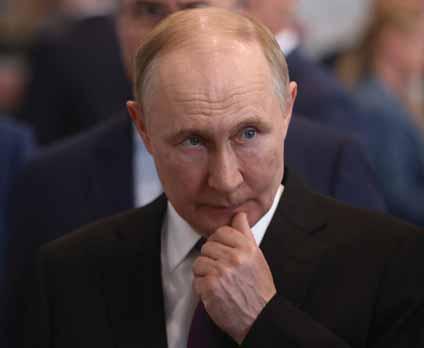
Vladimir Putin. Source: Getty
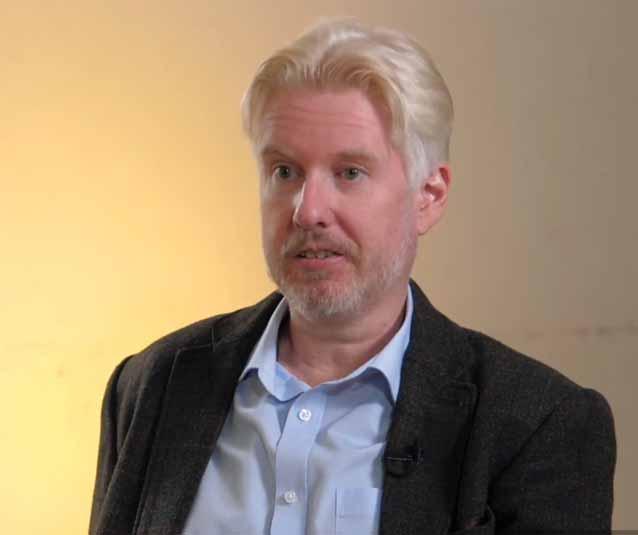
Vasily Zharkov. Source: Youtube
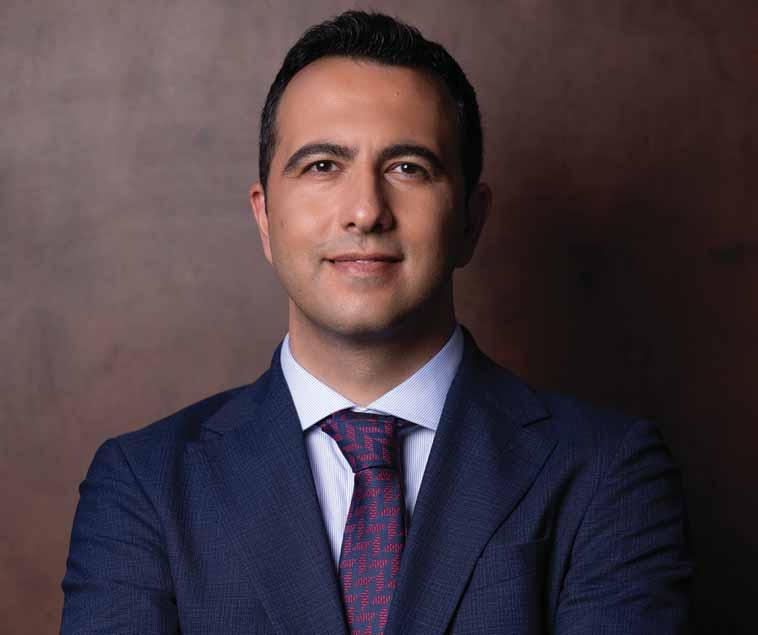
Marking 20 Years of EFES Georgia - Growth, Sustainability and Global Ambitions

General Manager Burç Kurtoğlu reflects on the company’s 2025 achievements, future strategy and a commitment to long-term impact.
EFES GEORGIA’S GENERAL MANAGER BURÇ KURTOĞLU
EFES Georgia marks an exceptional year in 2025 as it celebrates 20 years of its flagship brands Natakhtari Beer and Lemonade while maintaining its position as the country's beer and lemonade market leader. In a special interview with Georgia Today, General Manager Burç Kurtoğlu discusses the company's anniversary campaigns, corporate sustainability initiatives, and ambitious export strategy that now spans 23 countries worldwide.
2025 HAS BEEN A SPECIAL YEAR FOR YOU AND THE COMPANY. HOW WOULD YOU SUMMARIZE THE YEAR?
2025 has been a truly defining year for both EFES Georgia and me. Taking on the responsibility of leading EFES Georgia at such an important milestone has been both an honor and a strong motivation. From the very beginning, I was deeply impressed by the strength of our people, our brands, and our connection with Georgian consumers.
2025 has been a defining year for EFES Georgia - a year in which we strengthened our leadership position while reinforcing our long-term vision. We celebrated two iconic Georgian brands reaching their 20-year milestone, and deepened our impact in sustainability, innovation, and social responsibility.
ONE OF THE MAIN HIGHLIGHTS OF 2025 IS NATAKHTARI BEER’S 20TH ANNIVERSARY. HOW DOES THE BRAND CELEBRATE THIS DATE?
Natakhtari Beer’s 20th anniversary is not just a celebration of time - it is a celebration of leadership, consistency, and consumer trust. For two decades, Natakhtari has represented Georgian quality, pride, and authenticity.
Our anniversary strategy was built around three pillars: heritage, innovation, and emotional connection. Limitededition packaging, rugby-themed designs, and the launch of Natakhtari Katkha allowed us to honor our past while shaping the future. Katkha, in particular, reflects our ambition to continuously refresh the category with new experiences. Natakhtari Katkha is now available at draft beer retail outlets.
Alongside Natakhtari Beer, our brand Karva beer, which is mostly focused on youth, was especially active last year. The brand intensively supports young Georgian artists. Worth mentioning also is Karva's limited edition release, featuring summer packaging design inspired by travel and discovery themes.
NATAKHTARI LEMONADE ALSO HAD AN ANNIVERSARY YEAR. HOW DID THE BRAND MEET THIS DATE?
Natakhtari Lemonade’s 20th anniversary symbolizes how a Georgian brand can become both a national icon and an international success story. Successfully represented in international markets, the product has been exported since 2006 and is currently sold in 23 countries worldwide. On the 20th anniversary we decided to renew the visual identity of the brand guided by deep consumer insights.
ENVIRONMENTAL PROTECTION IS ONE OF THE MOST IMPORTANT COMPONENTS OF RESPONSIBLE BUSINESS. 2025 HAS BEEN EVEN MORE DISTINGUISHED IN THIS REGARD. EFES GEORGIA, TOGETHER WITH THE NATIONAL FORESTRY AGENCY, STARTED CARING FOR A NEW TERRITORY WITHIN THE FRAMEWORK OF THE "FOREST FRIEND" PROJECT IN THE DIRECTION OF ENVIRONMENTAL PROTECTION AND SIGNED A CORRESPONDING MEMORANDUM.
Supporting this project is very important to us. EFES Georgia was the first company

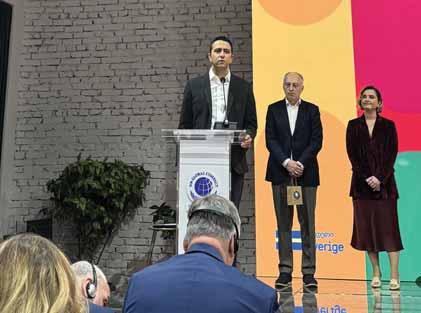
to join Georgia's voluntary forest care program Forest Friend in 2023. Within the framework of corporate responsibility, the EFES Special brand began to care for the renewal of 12 hectares of forest located in Simoniantkhevi quarter of Tianeti forest district and forest natural renewal promotion measures this year. In 2025, another memorandum of cooperation was signed between EFES Georgia and the National Forestry Agency. Within the framework of the memorandum, EFES Special beer, in cooperation with the agency, continues to care for Georgia's forests and will undertake the restoration and development of up to 3,000 square meters of slope area neighboring to Jvari Monastery in Mtskheta forest district. Within the framework of the project, the existing ecosystem will be restored and a new green, recreational space will be created near the capital, which includes 25,306 planted trees that will produce 1,226.4 tons of oxygen. Additionally, EFES Special's communication is based on an environmental protection campaign. By scanning the QR code on beer packaging, consumers have the opportunity to learn about the voluntary forest care platform "Forest Friend," and if desired, they also have the opportunity to make a donation and become a "Forest Friend." It's important that EFES Georgia also takes care of long-term maintenance of the restored area within the framework of the program.
This same philosophy guides our social responsibility approach. Since 2011, the Natakhtari Fund, with the professional support of the Association Our Home – Georgia, has supported over 750 young people without parental care with up to 1,200,000 GEL. Built on three core priorities - higher and vocational education, employment, and psychological support - the Fund has enabled hundreds of young people to live independently and build successful careers.
Over the past 14 years, the Natakhtari Fund has allocated its resources based on the individual needs of each beneficiary. As of today, 90% of the young people involved in the project are employed, with over 70% holding stable jobs. Through the joint initiative of the Natakhtari Fund and the Association
Our Home – Georgia, a social advocacy campaign was conducted in Batumi, Zugdidi, Kutaisi, Rustavi, and Tbilisi. As a result, support for young people who have left the state care system has been strengthened within the framework of local social programs. We believe true sustainability is about creating measurable, visible, and lasting impact for future generations.
I WOULD LIKE TO DISCUSS YOUR SUCCESS IN 2025. THE UN GLOBAL COMPACT
NETWORK GEORGIA HELD ITS CS AWARD CEREMONY, WHERE EFES GEORGIA RECEIVED AWARDS IN 3 NOMINATIONS IN THE LARGE BUSINESS CATEGORY.
Corporate sustainability is a declared
priority for EFES Georgia. For more than 17 years, we have been implementing various projects in the direction of corporate responsibility. Accordingly, the awards received within the framework of the UN Global Compact Network Georgia program are precisely an appreciation of our efforts in this direction, which shows us that we are moving in the right direction.
EFES Georgia received awards in the large business category in 2 nominations: “Decent Work and Economic Growth” and “Sustainable Consumption and Production.” Also, at the awards ceremony, the UN Global Compact Network Georgia's 2024 SDG Pioneer Award in the large business category was presented to EFES Georgia's Public Relations and Digital Communications Manager, Keti Zhvania.
Recently EFES Georgia received another significant award - we have been honored by the UN Global Compact Network Georgia with the “Business for SDGsSpecial Recognition Award 2025.” This award acknowledges our long-standing commitment to sustainability, our active participation in the Corporate Sustainability Awards, and the numerous awards we have received throughout the years.
In the future, we will definitely continue and expand our activities to strengthen the decent work environment, for the economic growth of the company and the country, and also for the development of sustainable consumption and production.
WHAT CAN YOU TELL US ABOUT THE COMPETITION IN GEORGIA AND HOW DO YOU ASSESS THE GEORGIAN BEER MARKET IN GENERAL?
The Georgian beer market is dynamic and highly competitive, which we see as a positive driver for innovation, quality, and responsibility. Strong competition pushes us to understand consumers better, execute faster, and think more strategically - while never losing sight of our commitment to society and the environment.
EFES Georgia’s strength lies in its balanced portfolio, strong brands, operational excellence, and deep market knowledge. This combination allows us not only to adapt quickly and maintain leadership in changing market conditions, but also to create sustainable value for our communities, our consumers, and future generations.
WHAT IS THE EXPORT POTENTIAL OF THE INDUSTRY AND WHAT IS THE COUNTRY DOING IN THIS REGARD?
The export direction in our company has been developing steadily over the years, both in terms of market volume and quantity, and remains one of our key priorities and growth perspectives. Today, we proudly export to 23 countries, and our ambition is to further strengthen our exports.
Natakhtari Lemonade leads our export growth today, but beer exports represent a strong future opportunity. Every bottle
exported is not only business value, but also national value for Georgia.
IT'S IMPORTANT THAT THE NON-ALCOHOLIC BEVERAGE INDUSTRY IN THE COUNTRY HAS GREAT POTENTIAL. HOW IS EFES GEORGIA DEVELOPING IN THIS REGARD?
Natakhtari Lemonade has created a “Made in Georgia” perception in international markets. This opens doors not only for us, but for Georgian industry as a whole.
Our 16% export growth confirms that Georgian non-alcoholic beverages have strong global potential when quality, branding, and consistency come together.
MANY IMPORTANT AND VALUABLE INNOVATIONS HAVE ACCUMULATED FOR YOU THIS YEAR...
By the end of September, Oktoberfest had traditionally begun in Georgia with our licensed brand, Löwenbräu. The festival was larger in scale and more popular than last year’s event. Löwenbräu is one of the six breweries authorized to participate in Oktoberfest in Munich. It is noteworthy that Löwenbräu has been served at every Oktoberfest since 1810. On September 20–21, we gathered at Dedaena Park in Tbilisi and celebrated a true German festival with real German beer - Löwenbräu! The main highlight of the day was the competition among the finalists of Löwenbräu’s Facebook contest, followed by the awarding of the winner, who won a trip to attend Oktoberfest in Munich.
WHAT ARE YOUR KEY EXPECTATIONS FOR THE YEAR 2026?
As we step into 2026, our focus remains firmly on the consumer - their needs, preferences, and expectations. Understanding what truly matters to them is at the heart of our strategy. To achieve this, we plan to invest in deeper research and data-driven solutions that will help us respond effectively to market dynamics and evolving consumer trends. Our goal is not only to stay relevant but to build meaningful connections with our audience. Strengthening our brand portfolio will be a key priority, enabling us to continue delivering value in a competitive landscape.
Looking at the broader market, we anticipate growth in both the beer and lemonade segments. Expanding into new export markets will be a major focus, as we see significant potential in this area. Natakhtari Lemonade, already a global brand with a presence in multiple countries, continues to offer exciting opportunities for further international expansion. Beer exports will also play an important role in our strategy, and we are committed to leveraging our capabilities to strengthen our position globally. Our ambition is simple but powerful: to grow responsibly, lead confidently, and represent Georgia proudly on global markets.
EFES Georgia signed a “Forest Friend” memorandum with the National Forestry Agency
EFES Georgia at the UN Global Compact Network Georgia’s CS Award Ceremony
Rising Global Solar Panel Prices Put Pressure on Georgia’s Renewable Energy Projects
BY MARIAM RAZMADZE
Tornike Darjania, co-founder of Helios Energy and the Georgian Solar Energy Association, stated that the cumulative effect of the global rise in solar panel prices amounts to roughly a 30% increase in panel prices.
As a result, the overall cost of developing solar power projects in Georgia is expected to rise by at least 15%, significantly impacting project economics for investors.
The global solar panel market has entered a new phase after years of falling prices, with costs climbing rapidly and reshaping investment calculations worldwide. In 2026 alone, solar panel prices have already increased by around 20%, and market participants expect a further 9–10% rise from April, driven by higher prices for main raw materials such as silver and other non-ferrous metals, as well as policy changes in China.
Projects still awaiting preliminary technical approvals from the Ministry of Economy are particularly exposed. Some

investors, anticipating price increases, began construction or purchased equipment before securing formal memorandums, and are now being forced to revise their business models. Others remain in limbo, holding off on procurement while approval processes continue.
Financing conditions further complicate the picture. With bank lending rates
currently being around 9–9.5%, higher capital costs combined with more expensive equipment are prompting many developers to reassess feasibility. Darjania warned that under the new pricing environment, certain solar projects may no longer meet investors’ return expectations, potentially slowing solar energy expansion in Georgia.
Georgia to Waive GEL 1 billion in Fines for Energy Companies
BY MARIAM RAZMADZE
Prime Minister Irakli Kobakhidze has announced a financial relief measure for Georgia’s energy sector, confirming that fines totaling GEL 1 billion will be written off for all energy companies operating in the country.
Kobakhidze stated that the decision is unprecedented in scope as it applies uniformly across the sector without distinguishing between companies by size, ownership structure or operational profile. He stressed that every energy company will benefit from the amnesty under the same conditions.
The Prime Minister explained that the waived fines could be reinstated only if a company fails to fulfill its obligations
going forward, a mechanism he said is designed to ensure accountability while offering immediate relief.
While the government has not yet specified when the full list of eligible companies will be made public, Kobakhidze reiterated that the measure is intended as sector-wide support rather than targeted assistance, reflecting the government’s goal to stabilize the energy industry as a whole.
Black Sea Power Cable Could Generate €6 bln Annually for Georgia

BY MARIAM RAZMADZE
mentioned that Georgia’s

Foreign Tourists
Power Strong Rise in Hotel and Restaurant
Spending
in Georgia
BY TEAM GT
Georgia’s hotels and restaurants ended 2025 on a strong note, with cashless spending jumping sharply in December, driven mainly by foreign visitors, according to TBC Capital.
Hotels saw a 40% increase in cashless spending compared to December 2024, as the average transaction climbed to GEL 536. Most of this money came from international travelers, who accounted for 86% of all cashless hotel spending during the month. Foreign guests also spent more per stay, with an average transaction of GEL 724. In annual terms, their hotel spending rose by an impressive 46%, far ahead of domestic growth.
Local travelers played a smaller role, contributing 14% of hotel spending. While residents spent less per transaction— about GEL 201 on average—their overall
spending still grew by 14% year-on-year, suggesting steady demand for domestic travel.
Restaurants experienced a similar boost. TBC Capital reported that non-cash restaurant spending through TBC Bank channels rose by 42% year-on-year in December, with the average bill reaching GEL 36. Tourism was a major driver here as well, as restaurant spending by non-residents nearly doubled, surging by 94% compared to the same period last year. Foreign diners spent significantly more per visit, with an average transaction of GEL 140—around five times higher than that of residents. Despite the surge in tourist spending, locals remained the backbone of restaurant activity, accounting for 68% of noncash transactions. Spending by residents increased by 26% year-on-year, with an average transaction value of GEL 27. TBC Capital said the figures underline how important foreign visitors have become for Georgia’s hospitality sector, with tourism playing a decisive role in driving growth at the end of 2025.
pean markets a realistic long-term prospect rather than a theoretical ambition. However, he identified outdated energy infrastructure as the country’s most serious constraint. While engagement with local communities around energy projects has improved in recent years, the transmission grid has not kept pace with development needs. Many regional substations lack the capacity to absorb additional generation, and existing transmission lines are often unable to carry new volumes of power.
As a result, even projects that are technically ready, those with secured financing, completed feasibility studies, and construction plans, are frequently delayed or halted. “The grid is old and overloaded. This has become the main bottleneck in almost every region and village,” Margebadze said.
Recent energy data shows the urgency of infrastructure upgrades. In December 2025 alone, Georgia imported about 300 million kilowatt-hours of electricity from neighboring countries. Total electricity generation in 2025 fell to 13.8 billion kWh, the lowest level since 2021 and a 3% decline year-on-year, while consumption rose to 14.8 billion kWh.
As Margebadze stated, without largescale investment in grid modernization, Georgia risks remaining dependent on imports despite its vast renewable resources and the strategic opportunity presented by the Black Sea cable project.
BY MARIAM RAZMADZE
Tourists paying at a restaurant. Source: thepointsguy
Solar panels. Source: Austra Solar Power
iorgi Margebadze, head of the Small and Medium Hydropower Plants Association,
Underwater cable. Source: GSE
Who Says Sakartvelo Was Absent in Davos?
OP-ED BY NUGZAR B. RUHADZE
There is a saying that business and technology speak, while politics and ideology walk. Indeed, while political talking heads, no matter how wise or unwise they might be, keep talking, the miracles of modern technology and the gains from contemporary business means and methods are doing their great job, keeping humanity fed and clad. Meanwhile, nothing happens without shrewd and perceptive leadership. Professor Nino Enukidze of Georgia, 39, Doctor of Business Administration, Rector of Georgia's Business and Technology University (BTU), was once rated by the World Economic Forum among 100 Young Global Leaders (YGL), who have the global view for handling the challenges that the world is faced with today.
The world already has 1,500 such young leaders, among them heads of governments and leaders of Fortune 500–rated companies, winners of the Nobel Prize and Grammy Award, UN Goodwill Ambassadors, and others, who have reached remarkable prominence in various walks of life. And our Nino Enukidze is shining among those outstanding celebrities of global significance. Isn’t this truly mind-boggling! She founded the famous Coding School for Women, the most extensive platform for assisting
women in the process of enhancing their qualifications in technology and employment therein.
Nino is also serving as the President of the Academic Consortium within the European Marketing and Management Association, being an Honorary Board member of the same Association and a member of the Business Advisory Council for Children (BACC) in Georgia, supported by UNICEF. Nino is the winner of the Architect of Tomorrow award by Emerging Europe. She was also nominated among 200 outstanding leaders of the world by the famous international publication called Powerful Women in IT.
I wonder how many of her fellow Georgians would have a clue that among us there goes a lady with such unbelievable achievements of international caliber and national standing, whereas every other mediocre Georgian singer or socalled influencer, for instance, would claim more fame and celebrity than this brilliant young Georgian. Maybe this is exactly where we are wrong as a nation! This amazing success was not at all a manna from the sky for Nino Enukidze. Having invested an impressive number of painful efforts and a huge amount of her valuable time, she went through complicated academic trials at Tbilisi State University, Georgian-American University, Ilia State University, Maastricht Management School, Berlin Free University, the Swedish Royal Institute of Technology, and Harvard Kennedy School. Nino has left her trace in our
political realm too, having been a sitting member of the advisers’ council of the Committee of Science and Technology in the country’s legislative body. And finally, among national leaders and technological giants at the January
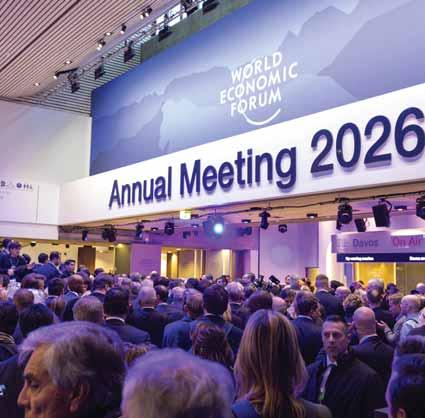
2026 World Economic Forum (WEF), there was Professor Nino Enukidze, where she joined the high-level sessions concentrating on future solutions and innovations, artificial intelligence, and inclusive technology. In her interview
with Entrepreneur, Nino noted that BTU became Georgia's sole contributor to WEF's newly created Strategic Intelligence Platform: “Our university's researchers now systematically contribute studies and reports to the Platform. We also pioneered the integration of this platform into our curriculum, the first instance of this in Georgia, allowing our students to learn using the latest global resources and materials curated by WEF.” As a speaker, Nino Enukidze participated in the Forum in two sessions: the first focused on strategies for supporting female entrepreneurs globally, and the second dedicated to the potential of Artificial Intelligence to revolutionize healthcare and create better economic opportunities for women. Georgia’s true darling, Nino Enukidze, strongly believes that it is vital for Sakartvelo to be represented in these dialogues, as education, human capital, and innovation are the pillars of our knowledge-based economy. I believe it exactly as she does. Incidentally, I have never in my life met this remarkable young Georgian professor, but I have a feeling that I have been talking to her all my life on many different occasions, though not in person. On the other hand, in our scientifically and technologically savvy times, virtuality is no obstacle anymore. Who knows, someday very soon, the field of science this astute lady is handling may start manipulating our lives more overwhelmingly than we can imagine now. She definitely knows it better than I do!
Government Approves National Concept for Reform of General Education System
BY TEAM GT
The Georgian government has approved a National Concept for Reforming the General Education System, marking one of the most extensive overhauls of school education in recent decades, with the relevant decree signed on January 27 by Prime Minister Irakli Kobakhidze.
The government says the reform concept responds to long-standing systemic challenges in Georgia’s education sector, including overloaded and fragmented curricula, weak links between different stages of education, unequal access to learning resources, and a mismatch between school programmes and national examinations — a gap that has driven widespread dependence on private tutoring.
DIAGNOSING THE SYSTEM’S CHALLENGES
The reform document identifies several core problems: excessive academic burden on students, insufficient focus on civic, cultural, and personal development, and the lack of continuity between preschool, primary, basic, and secondary education. Another key concern highlighted is the inequity created by the current examination system, which often disadvantages students from lowerincome families who cannot afford private tutors.
Against this backdrop, the government frames the reform as an attempt to restore schools as the central place of learning, reduce social inequality in education, and better align teaching with the country’s long-term social and economic needs.
CORE OBJECTIVES AND
CURRICULUM REFORM
A central pillar of the reform is the strengthening of fundamental subjects. Greater emphasis will be placed on
Georgian language instruction, not only to improve literacy, but also to foster cultural thinking, civic consciousness, and identity formation.
At the same time, mathematics and the natural sciences — physics, chemistry, and biology — will receive enhanced and more systematic support. The reform acknowledges that these subjects have been weakened over time by curriculum overload and frequent reforms that prioritized new disciplines at the expense of core knowledge.
NEW SCHOOL STRUCTURE
The education system will be reorganized into three clearly defined stages:
* Primary education (years 1–6) will focus on reading, writing, and basic mathematical competencies.
* Basic education (years 7–9) will aim to reduce excessive academic pressure, introduce more interactive learning, and offer a broader range of experiences.
* Secondary education (years 10–11) will provide profile-based learning aligned with academic pathways and professional orientation.
From the 2027–2028 academic year, year 11 will become the standard final year of general education. Schools will be required to offer mandatory, in-school preparatory courses for national exam-
inations, a move intended to significantly reduce reliance on private tutoring. Year 12 will remain optional for students seeking additional academic preparation, with enrolment based on advance registration to allow schools to plan resources effectively.
ALIGNMENT OF NATIONAL EXAMS AND SCHOOL PROGRAMS
One of the most significant changes concerns national examinations, which will be fully synchronized with the national curriculum. This addresses a long-standing grievance among students, parents, and educators that exam content often does not reflect what is taught in schools. In addition, the school starting age will be standardized at six years, with children eligible for enrolment only if they turn six by September 15. The government says the change is aimed at ensuring adequate socio-emotional readiness and concentration skills among firstgrade students.
LEARNING RESOURCES AND DIGITAL TOOLS
The Ministry of Education will introduce unified textbooks for each subject, replacing the current multi-textbook system. The goal is to ensure equal access to
quality learning materials, facilitate easier school transfers, and strengthen coherence between educational stages. Textbooks will be regularly updated and supported by digital resources, including video lessons, simulations, research-based assignments, and virtual learning platforms, reducing exclusive reliance on printed materials.
SCHOOL LIFE, NON-FORMAL EDUCATION, AND EQUALITY
Non-formal education will become an integral part of school life rather than an optional add-on. Schools will be encouraged to develop clubs, creative initiatives, and values-based programs that support students’ social responsibility and personal development.
Sports and creative activities will be integrated directly into schools instead of being outsourced, addressing disparities that currently prevent many families from affording extracurricular services. School camps, thematic gatherings, and project-based learning will be expanded to promote tolerance, empathy, cultural diversity, and historical awareness.
CONTINUITY AND CAREER ORIENTATION
To strengthen continuity across education levels, early childhood education standards will be updated to define minimum competencies required for school readiness. Schools will also establish career orientation and professional management systems to help students identify interests and abilities early on.
Short-term vocational training programs will be expanded as additional options, complementing general education and improving links between schooling and the labor market.
TEACHERS, INFRASTRUCTURE, AND SAFETY
The reform introduces a long-term model for teacher professional development, based on demographic trends and labor market forecasting over the next 5–10
years. Teachers will have clearer career pathways linked to subject expertise, research, and leadership roles, supported by online training platforms. Teacher salaries will be increased. Schools will be equipped with modern infrastructure, including laboratories, sports facilities, libraries, dining areas, and inclusive spaces adapted for students with special needs. Rules on mobile phone use will be developed to improve concentration and learning continuity. Anti-bullying measures will be strengthened through awareness campaigns and expanded support services. The number of school psychologists, social workers, and security officers will be increased to ensure comprehensive coverage.
INCLUSIVE EDUCATION AND SCHOOL UNIFORMS
Inclusive education will be embedded into teacher professional standards, requiring all subject teachers — particularly in primary education — to possess inclusive competencies, rather than relying solely on specialist staff.
From the 2026–2027 academic year, school uniforms will become mandatory for primary students (years 1–6). The government says the measure is intended to reduce visible social inequality, strengthen school identity, and create a learning-focused environment.
GOVERNANCE, FUNDING, AND PARENT ENGAGEMENT
Educational resource centers will be strengthened to provide professional support, mentoring, and consultation to school administrations and teachers. Parent–school collaboration will also be enhanced, with the Ministry planning direct engagement with parents from 2026 onward.
Finally, the current per-pupil funding model will be adjusted to better reflect schools’ individual needs and development potential, addressing concerns that some institutions lack the resources to offer non-formal education and additional services.
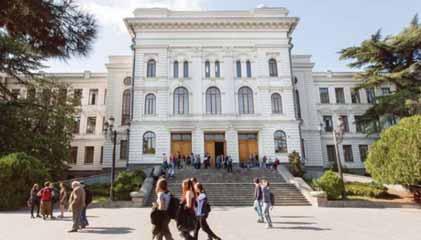
Tbilisi State University. Source: FB
WEF 2026. Source: weforum
India and the South Caucasus
BY AMBASSADOR ASHOK SAJJANHAR
Ambassador Ashok Sajjanhar has written an article entitled “India and the South Caucasus”. We present below his article.
INTRODUCTION
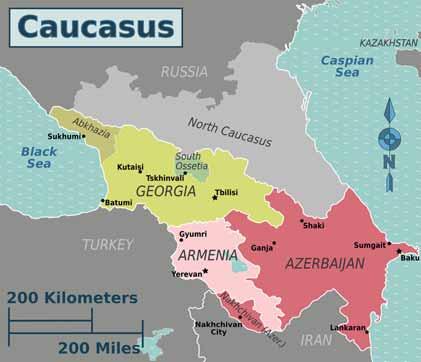
The South Caucasus – comprising Armenia, Azerbaijan, and Georgia – is a small but geopolitically significant region, susceptible to intense competition between regional and global powers. It is also at a strategic crossroads between Russia and Europe, the Middle East, and Asia. The 2020 Nagorno-Karabakh War, which was followed by the expulsion of 120,000 ethnic Armenians from NagornoKarabakh and Azerbaijan’s forcible takeover of the entire region in September 2023, shifted the regional balance of power in favor of Azerbaijan.
India’s relationship with the South Caucasus is a blend of ancient silk-road connections and evolving geo-political realities of the 21st century, which present significant challenges but also opportunities. Over the last few years, this region has shifted from the periphery to a core strategic focus for New Delhi.
India's relations with the South Caucasus nations are growing, focusing on strategic connectivity via the International North-South Transport Corridor (INSTC), defense cooperation (especially with Armenia as a major arms buyer), and economic links in energy, IT, trade, education and tourism, while balancing great power dynamics and regional stability. Armenia is currently India's closest partner, receiving significant development aid and defense support, but India also fosters ties with Azerbaijan on energy, tourism and trade, and with Georgia on investments, education and tourism. These partnerships promote win-win economic benefits and geopolitical leverage, supporting regional stability through infrastructure and increased connectivity.
HISTORICAL & CULTURAL RELATIONS
India’s ties with the South Caucasus are rooted in millennia of trade, connectivity, culture and people-to-people interactions. Historical evidence suggests Indian settlements existed in Armenia
CULTURE
as early as 149 BCE.
Armenia: The Armenian community in India has a longstanding history. Emperor Akbar famously had an Armenian wife, and granted commercial privileges to Armenians. Kolkata and Chennai still house historic Armenian churches. The world’s first Armenian journal, Azdarar, was published in Madras (Chennai) in 1794.
Azerbaijan: The Ateshgah of Baku (Fire Temple) stands as a testament to the presence of Indian merchants (Hindus and Sikhs) who travelled by the Silk Road. Inscriptions in Devanagari and Gurmukhi scripts are visible on its walls.
Georgia: Cultural links were highlighted in 2021 when India returned the holy relics of Saint Queen Ketevan to Georgia, nearly 400 years after they were brought to Goa. This "relic diplomacy" significantly boosted bilateral warmth.
POLITICAL RELATIONS
Armenia: Strategic Partner: Armenia has emerged as India’s strongest ally in the region. The relationship has been significantly upgraded in recent years due to mutual concerns over the AzerbaijanPakistan-Turkey nexus.
Azerbaijan: Pragmatic Ties: Relations are strained because Baku openly supports Pakistan’s stance on Kashmir. However, in pursuance of its policy of multialignment, India maintains expedient ties with Azerbaijan based on energy
and commercial partnership.
Georgia: Growing Partner: India views Georgia as a gateway to the Black Sea. Relations have improved steadily since 2021, with Georgia remaining neutral on India's internal issues. As a sign of expanding bilateral ties, India opened its resident Mission in Georgia in July, 2024.
ECONOMIC & DEFENSE COOPERATION
The South Caucasus is a vital node in India’s quest for a trade route to Europe and Russia. A robust defense partnership with Armenia, supplying arms to strengthen its self-defense, is a key element reflecting geopolitical shifts and regional security concerns. New Delhi and Yerevan are also exploring the significant, untapped potential in developing bilateral trade in pharmaceuticals, information technology, culture, tourism, education, and diaspora ties.
India-Azerbaijan relations are based on civilizational linkages, cultural affinities and shared values of understanding and respect for other cultures. Energy trade and tourism form the bedrock of contemporary India-Azerbaijan ties.
Significant Indian investments have been made in Georgia in steel, infrastructure, and the agriculture and service sectors. Major Indian companies operating in Georgia are Tata Power, Geo Steel, Jindal Petroleum and KEC Inter-
With All My Breath and All My Blood:
Giorgi Gigashvili
BY IVAN NECHAEV
There are albums that feel like carefully curated visiting cards, and then there are those that arrive as a statement of existence. With All My Breath and All My Blood, released by Alpha Classics, belongs decisively to the second category. It is a recording that behaves less like a recital and more like a confrontation — with history, with the instrument, with the accumulated mythology of Sergei Prokofiev’s so-called “War Sonatas,” and, quietly but insistently, with the political and emotional pressure lines of contemporary Georgia.
For Giorgi Gigashvili, this is his second solo album, though the word solo is slightly misleading. Even when alone at the keyboard, he sounds accompanied by ghosts: the twentieth century’s industrial violence, Soviet coercion, and the private rage of a composer who knew how to encode brutality into rhythm. Gigashvili has lived with Prokofiev for
national Limited. The Connectivity Factor: India is one of the original proponents of the INSTC. Armenia & Georgia: India is promoting a "Persian Gulf–Black Sea" corridor. This route would take goods from India by the maritime route to Iran’s Chabahar Port and thereafter through Armenia and Georgia to the Black Sea, and onwards to Europe.
Azerbaijan: While the original INSTC route passes through Baku, India has diversified its options due to geopolitical considerations, though Azerbaijan remains a key node in the INSTC and energy supplies (crude oil).
DEFENSE:
The Armenia Pivot: In recent years, the India-Armenia defense partnership has evolved from a series of individual sales into a full-scale strategic alliance. Armenia is now India's largest customer for finished weapon systems, a shift driven by Armenia's need to diversify its defense procurement and India's "Make in India" export ambitions. The Defense Cooperation Program today entails joint combat training, military education, and expert exchanges. For the first time, Military Attachés have been posted in each other’s embassies for technical and tactical coordination. While Armenia’s leadership pursues a peace agenda, it enhances its self-defense capacity to safeguard its borders and to deter any possible aggression from Azerbaijan.
The India-Armenia defense cooperation contributes to regional stability by helping strengthen the self-defense capacity of Armenia.
Major Deals: India has exported the Pinaka multi-barrel rocket launchers, Swathi weapon-locating radars, Akash surface-to-air missile systems, Brahmos supersonic cruise missiles and anti-drone technology to Yerevan. Since 2022, Armenia has signed weapons contracts with India worth more than $1.5 billion. These deals have been a primary driver in India hitting its $5 billion defense export target, with Armenia alone accounting for nearly 15–20% of India's total defense exports in recent years.
Significance: This marks India’s transition from an arms importer to a significant exporter, using the South Caucasus as a launch base for its proven indigenous defense industry.
PEOPLE-TO-PEOPLE & EDUCATION
Education: Georgia and Armenia have
Wrestles Prokofiev
a decade, and the familiarity shows — though never as comfort. What emerges instead is a sense of prolonged physical engagement, a pianist who approaches the instrument less as a lyrical vehicle and more as a resistant body.
The three sonatas — Nos. 6, 7, and 8 — have been overexposed by virtuosity culture, routinely treated as athletic benchmarks. Gigashvili declines that tradition. His readings avoid sleek aggression or metronomic brutality. Instead, he cultivates friction. In Sonata No. 6, the Allegro moderato unfolds with a deliberately unstable gait, phrases articulated as if the ground beneath them might shift. The infamous motoric drive never quite locks into place; it threatens, hesitates, surges again. This uncertainty becomes expressive — a refusal to aestheticize violence into efficiency.
Sonata No. 7, the most frequently weaponized of the three, reveals Gigashvili’s particular intelligence. The Andante caloroso, often sentimentalized, here carries a strange, exhausted warmth, like a memory replayed after too many retellings. And when the Precipitato arrives, it does not explode; it accelerates with grim inev-
itability. The hammering is less triumphant than compulsive, suggesting not victory but entrapment — history repeating itself because it has not learned how to stop.
The Eighth Sonata, expansive and deceptively lyrical, becomes the album’s emotional center. Gigashvili resists any temptation to smooth its contradictions. The long first movement breathes with a tense, almost suspicious lyricism; beauty is allowed, though never trusted. In the final Vivace, brilliance flashes through layers of irony, reminding us that Prokofiev’s wit is inseparable from cruelty. This is playing that understands irony as an ethical stance.
The album’s title — With All My Breath and All My Blood — risks sounding like marketing hyperbole, yet the performances justify its extremity. Gigashvili has spoken openly about pouring personal rage into this music, shaped by Georgia’s recent history. Crucially, that rage is never presented as confession. It is metabolized into structure, tempo, articulation. The result feels closer to reportage than diary — a quality that aligns the album surprisingly well with the sensibility of a New Yorker essay:
become major hubs for Indian medical students. In Georgia, Indian students often constitute the largest segment of the international student body.
Tourism: Azerbaijan has seen a massive surge in Indian tourists, with India becoming its 3rd largest source of visitors by 2024–2025. Direct flights from Delhi and Mumbai to Baku and Yerevan have bolstered this trend.
IT & Labor: Indian tech professionals and agricultural workers have found opportunities in the region, particularly in Armenia’s growing tech sector and Georgia’s agricultural lands.
India-Armenia relations have developed at a rapid pace in recent years –there has been a high number of highlevel visits, boosting bilateral trade and most importantly defense ties. Both countries are democracies. They support each other politically on international platforms. Yerevan has always supported India on Kashmir and, more recently, expressed its support to India in the India-Pakistan military conflict of 2025, condemning the Pahalgam attack. While the International North-South Transport Corridor (INSTC) is the acknowledged parent project, India has increasingly pivoted toward a specific "sub-route" viz. Persian Gulf–Black Sea Corridor to bypass hostile neighbours and secure its strategic exports to Armenia.
Armenia has proposed the "Crossroads of Peace" initiative (2025–2026), which envisions reopening borders with Azerbaijan and Turkey. India supports this for regional stability but remains focused on the North-South axis (Iran-ArmeniaGeorgia).
CONCLUSION
India is moving from an observer to a strategic actor, leveraging defense, diplomacy, trade, energy, education, tourism and connectivity projects to secure its interests and promote a stable, multialigned South Caucasus. India's relationship with the South Caucasus region is strategically diverse, marked by a deepening, multifaceted partnership with Armenia, particularly in the defense and connectivity sectors, in conjunction with economic, tourism and energy ties with Azerbaijan (via ONGC investments and oil imports) and expanding engagement with Georgia (focused on education and trade, and connectivity potential through the Black Sea), reflecting a pragmatic, country-by-country approach rather than an omnibus regional strategy.

Giorgi Gigashvili. Source: IG
personal without being self-indulgent, political without being declarative. The second half of the disc introduces a change of texture through collaboration with Lisa Batiashvili, Gigashvili’s compatriot and long-time artistic ally. Their transcription of the “Dance of the Knights” from Romeo and Juliet avoids orchestral bombast. Instead, it sharpens the music’s authoritarian pulse, stripping it down to its skeletal menace. The piano becomes percussive architecture; the violin, a blade cutting through mass.
Most telling, however, is the inclusion of To Giya, P.S. by Josef Bardanashvili, written especially for this duo. Dedicated to Giya Kancheli, the piece functions as a quiet epilogue — brief, restrained, and weighted with cultural memory. After Prokofiev’s clenched fists, Bardanashvili offers something closer to a scar: understated, sensitive, unresolved. It situates
the album firmly within a Georgian musical lineage that values ethical gravity over spectacle.
Alpha Classics deserves credit for allowing this album to breathe. The sound is close, tactile, unvarnished. You hear the resistance of the keys, the density of attacks, the micro-hesitations that carry meaning. Nothing is upholstered. Nothing is explained.
With All My Breath and All My Blood ultimately refuses the comfort of heroic narrative. It proposes a different model of virtuosity — one rooted in endurance, moral tension, and an almost journalistic attentiveness to sound as evidence. Gigashvili does not redeem Prokofiev; he exposes him. And in doing so, he exposes something of our present moment as well: a world in which violence keeps returning in new guises, and art’s task is to remember, articulate, and withstand.
Cinema as a Built Environment: How
Tbilisi Learns to Watch Architecture
BY IVAN NECHAEV
In Tbilisi this winter, architecture is temporarily relieved of its usual burden: it no longer has to justify itself through square meters, budgets, or seismic codes. Instead, it appears flickering on a screen, unstable, poetic, and strangely vulnerable. The screening cycle Film and Architecture, hosted at Art Foundation AFA Cinema Hall and curated in collaboration with Irina Kurtishvili, reads less like a thematic film series and more like a careful cultural intervention—one that asks a deceptively simple question: how does cinema teach us to inhabit space?
Running from late January through mid-March, the program assembles a canon where buildings are never mere backdrops. They breathe, dominate, decay, seduce, and occasionally betray their inhabitants. This is architecture as fate, as ideology, as erotic object, as ghost.
For a city like Tbilisi—where Soviet modernism, post-Soviet improvisation, and speculative glass towers coexist in permanent tension—this question lands with particular force. Watching films about cities elsewhere becomes a way of thinking about the city at home, without the defensive reflexes that usually accompany local debates on urban development. The program opens with Concrete Love – The Böhm Family, a portrait of architectural lineage that treats modernism as a family inheritance rather than a stylistic doctrine. Here, concrete is

intimate, almost tender—an idea that resonates quietly in Tbilisi, where béton brut still carries the unresolved emotions of the twentieth century. Michelangelo Antonioni’s Zabriskie Point follows, detonating the American
Curiouser and Curiouser
BLOG BY TONY HANMER
After several very fruitful days photographing tiny parts of ice puddles in rural Kakheti (outside my wife’s home village), having returned to Tbilisi, I waited patiently here too for more ice, i.e. cold enough temperatures for the local puddles to freeze.
And, for a day or two, conditions were ideal in our neighborhood. Rejoicing, out I went to meet the ice with only my macro lens. Images abounded, including plenty of things which I interpreted as other things. I’m always looking for the kind of image which will prompt a viewer to ask, “What even IS that [made of]?”
These were many. But the rarer kind, for me, are those which I shoot out of interest and only afterwards realize what I have, on my laptop screen in post-processing.
One such image I have called Ellen Ripley’s Nightmare, after the heroine of the earlier Alien films, played by Sigourney Weaver. It is a close-up of one of the
Alien monsters, also called xenomorphs, against which Ripley is pitted in the films. Astoundingly to me, several square inches of ice have yielded this little terror, complete with fractal detail and some areas out of focus behind the sharp surface plane. I could blow it up to wall-size, the resolution is great enough; but my wife would not thank me, even though she hasn’t seen more than a few clips of the films. It’s pretty amazingly disturbing. For some, but not for everyone.
I also found myself noticing and shooting frozen MUD for the first time, marveling in its own unique colors and textures. There is as much to discover here as there is in clear, nearly colorless ice. Certainly a departure for me.
Then the Big Snow came, and suddenly the whole city and its surroundings were buried in it for a few days. Ice became ubiquitous, far too much to deal with, vast. I didn’t find much to inspire in these conditions. But another image, from a tiny patch of ice on stone stairs in the Old City, I have called She Looks Up. But it might also be called Storm Trooper’s Helmet X-ray… It’s less disturbing than the ice alien, but still quite strange. Growing on me. One of her eyes is clearly
desert into a landscape of eroticized alienation. Architecture, in Antonioni’s hands, becomes the ultimate modernist trap: clean lines, open plans, emotional vacuum. The film’s relevance today feels uncomfortably fresh, especially in cities learning to equate visibility with value.
By the time we arrive at REM, architecture has fully merged with celebrity, speed, and intellectual branding. The figure of Rem Koolhaas hovers over the program like a benevolent disruptor, his thinking echoed again later in Koolhaas Houselife, where the myth of the starchitect dissolves into dust, leaks, and domestic choreography.
The emotional core of the cycle arrives with Wings of Desire, Wim Wenders’ Berlin elegy, where architecture becomes a listening device. Libraries, rooftops, and empty lots absorb human thought like sponges. Watching this film in Tbilisi today—another city layered with invisible histories—feels less like nostalgia and more like recognition.
Villa Tugendhat shifts the gaze inward, into one of modernism’s most fetishized domestic spaces. The house is immaculate, rational, and emotionally perilous.
The film quietly exposes the cost of architectural perfection: a life that must constantly adapt itself to an idea.
Sarah Morris’s Rio returns the programme to the contemporary city as a system—color-coded, surveilled, endlessly patterned. It is urbanism as abstraction, the city flattened into data and rhythm, a condition familiar to anyone watching Tbilisi’s accelerating transformation.
The cycle closes with Death in Venice, Luchino Visconti’s slow, devastating meditation on beauty, decay, and architectural melancholy. Venice here is not scenery; it is destiny. A city so heavy with aesthetic meaning that it crushes those who seek purity within it.
What makes Film and Architecture significant in the Georgian context is its refusal to localize too quickly. These films are not about Tbilisi, yet they speak directly to it. They offer a language— visual, emotional, theoretical—for discussing space without reducing it to politics or profit. The post-screening discussions, conducted in Georgian, extend this gesture, translating global cinematic thought into local intellectual currency.
Irina Kurtishvili’s curatorial logic is precise and patient. Rather than proposing architecture as salvation or cinema as critique, the programe allows both to remain unstable. Architecture emerges as something that shapes subjectivity over time. Cinema becomes the medium that makes this shaping visible. In a cultural moment where Georgia’s urban future is often narrated in extremes—heritage versus development, past versus future—this series introduces a third register: attention. To watch closely how others have filmed their cities is to learn how to look again at one’s own.
For a few Thursdays, in a cinema hall on Zurab Avalishvili Street, Tbilisi becomes a city watching itself indirectly. And sometimes, that is the most honest way to see.
visible, the other less so but still just about. There is no clear sense of scale here, as with the Nightmare image, another characteristic which pleases me greatly. Tiny or huge? Millimeters or miles? They could be either.
Now I’m waiting for the snow here to melt or sublimate into the air, as temperatures warm up. A freeze after this will restore what I am looking for. Before then, though, I will make a short trip back up to our village in Svaneti. Lamproba is coming on February 1, when we men carry burning birch torches to bonfire locations before sunrise, pray for every family in our village, and then have big feasts. I try not to miss this, and have been or gone there for it for many years now, even during our winters away in Tbilisi. It will likely yield wonderful images, but the time reconnecting with both my neighbors and with proper Winter are the main things for me. I’m taking up a Georgian friend for his first taste of this Svan holiday.
One thing I have realized about myself is that I have boundless curiosity. The finding of concrete forms in nature’s abstractions like ice gives an outlet for this curiosity, with delight the result. This is very satisfying. And, not meaning to sound selfish, while I do greatly appreciate it when others like my work too, this is secondary to me. I know what I like!
If you are blessed with the kind of vision which I have, to even notice the world in this way, be glad, even if sometimes what you see is disquieting or worse. In my experience, such images are the small minority in a sea of the beautiful, fantastic and glorious. As I hope to demonstrate with my ongoing Coffee + Chaos exhibition at Corner House Coffee in Tbilisi, anyone with a smartphone/camera, AND the desire to slow down and notice, can shoot amazing images. And if you don’t see like this, come in, let me do the seeing and the showing for you. The world is stranger and more wonderful than we might imagine. Enjoy.

and
and
for
since early
He runs the “Svaneti Renaissance” Facebook group, now with over 2000 members, at www.facebook.com/groups/ SvanetiRenaissance/ He and his wife also run their own guest house in Etseri: www.facebook.com/hanmer.house.svaneti
Shot from the movie
Tony Hanmer has lived in Georgia since 1999, in Svaneti since 2007,
been a weekly writer
photographer
GT
2011.
Photo by the author
Photo by the author
Photo by the author
Holding Freedom: Art in the Shadow of Iran
BY TEAM GT
Sanna Namin is a Swedish–Iranian multidisciplinary artist based in London. She works with sculpture, performance, and textiles, often exploring themes of identity, cultural belonging, and personal history through material and form. Her practice is hands-on and process-driven, using materials such as fabric, foam, and metal to create sculptural works that investigate the body, movement, and presence.
Sanna graduated from the Royal College of Art in 2023 and has exhibited her work in London, Stockholm, and Greece. She is currently participating in a threeweek residency in Georgia with the Ria Keburia Foundation.
WHAT IS THE MAIN IDEA OF THIS ARTWORK?
This artwork is a response to what is currently happening in Iran. I am half Iranian and half Swedish, and I arrived in Georgia for my residency at the Ria Keburia Foundation just as protests began after the new year. From Kachreti, the straight-

make work about Iran for a long time but struggled with how to approach it.
The current moment made it clear that I needed to respond through my work.
When I visited Tehran almost eleven years ago, I noticed a great deal of protest street art. It made me reflect on how visual language becomes a vital tool when speech is controlled. In Iran, anonymous street art is especially significant, as artists and musicians who challenge the regime risk imprisonment.
The tubes in the work resemble a shutter, referencing how closed and restricted life in Iran can be. The graffiti text “Woman Life Freedom” points to the most basic rights people are demanding.
The Azerbaijani–Persian fabric found in Lilo Bazaar wraps the piece as a reminder that culture survives even when regimes attempt to erase it.
tion to a struggle that has been ongoing since 1979 and is still not fully acknowledged. While people in Iran continue to resist, many media outlets remain silent, and world leaders have not done enough to respond.
The words insist on visibility and urgency. They name a revolution that is already in motion, even when it is ignored. “Woman Life Freedom” is not an abstract slogan; it is a direct demand for the most fundamental right: freedom. This work holds that reminder and refuses to let it disappear.
WHAT ARE YOUR FUTURE PLANS?
Art by Sanna Namin
line distance to Namin, Ardabil—where my father’s family is from—is only 430 kilometers. This geographical closeness intensified my awareness of events that were already present and ongoing.
Over the past weeks, concern for people in Iran, including my own family, and admiration for the courage of those standing up to the regime have been constantly on my mind. I had wanted to
HOW DOES THE PHRASE “WOMAN LIFE FREEDOM” CHANGE THE EMOTIONAL IMPACT OF THE PIECE?
I want the artwork to feel urgent—something that cannot be ignored.
The phrase “Woman Life Freedom” is a reminder of what this revolution is about at its core: freedom. It draws atten-
At the moment, my focus is on the present. When so much is happening in the world—especially in Iran—it feels impossible to separate the future from what is urgently unfolding now. I want to continue working through art as a way of responding to this moment and staying engaged.
Alongside my own practice, I work as a freelancer and as a tutor. I want to continue working in this way—developing my own projects while also supporting artists who have important things to say.
The "Daughter of Zion" – From Tears to Triumph
SPONSORED CONTENT
The bottle of TEARS of the Daughter of ZION reveals a narrative of intense suffering, divine judgment, and ultimate restoration.
The "Daughter of Zion" is a poetic, personified metaphor for Jerusalem and its inhabitants, symbolizing God’s covenant community, which is beloved yet, due to disobedience, experiences profound distress, abandonment, and mourning. Here is a step-by-step biblical analysis of this vision.
1. THE PERSONA OF THE DAUGHTER OF ZION
Definition: She represents the inhabitants of Jerusalem and the House of Israel.
Dual Identity: In scripture, she is both a cherished "daughter" under God’s protection and a "mother" weeping for her dying children.
Symbolism: She embodies the covenant relationship, signifying God’s tender affection, but also his righteous anger when His people turn away.
2. THE TEARS (THE APOCALYPTIC CRISIS/TRIBULATION)
The Cause of Weeping: The tears are triggered by judgment, destruction, and spiritual adultery (following false gods). The Scene of Desolation: She is often described as "left alone," "a shelter in a vineyard," or a city besieged (Isaiah 1:8, Lamentations 1:1).
Maternal Grief: The "tears" represent the ultimate sorrow of losing children to war, exile, or death (Lamentations 2:11-12).
"Wound is as Deep as the Sea": This phrase describes the utter hopelessness, with no immediate comforter for her pain (Lamentations 2:13).
3. THE APOCALYPSE: THE STEP-BY-STEP VISION
The biblical narrative of the Daughter of Zion follows a pattern from ruin to
redemption:
Step 1: The Warning (Prophetic Rebuke): Prophets call her to repentance, pointing out her "haughty" ways (Isaiah 3:1617).
Step 2: The Judgment (The "Apocalypse"): Due to disobedience, the "apocalypse" or unveiling of the covenant curses occurs—destruction of the temple, siege, and scattering (Lamentations 1).
Step 3: The "Tears" (Despair): She sits in the dust, weeping, asking, "Is this the city about which they said, 'It is perfect in beauty'?" (Lamentations 2:15).
Step 4: The Vindication (Divine Intervention): In the darkest moment, her "punishment is completed" (Lamentations 4:22). God intervenes, not to destroy, but to save.
Step 5: The Transformation (Restoration): The "weak, powerless woman" is promised to become a "bull with horns of iron" that crushes her enemies (Micah 4:13).
Step 6: The King’s Arrival: The Daughter of Zion is told to "rejoice greatly" because her King comes to her, bringing salvation (Zechariah 9:9, fulfilled in Matthew 21:5).
Step 7: The New Jerusalem (Final Consummation): The final vision in Revelation 21:2-4 shows the "New Jerusalem" (the ultimate Daughter of Zion) coming down from heaven, where God wipes away all tears, and there is no more death or sorrow.
4. KEY BIBLICAL THEMES IN THE VISION
Solidarity in Suffering: The tears show that God is not indifferent to the suffering of His people; she represents the community and its pain.
Repentance and Hope: The "tears" are necessary for purification, moving the Daughter from arrogant independence to total reliance on God.
The Reversal of Fortune: The narrative moves from a "widow" in chains to a "joyful mother of children" (Isaiah 54:1).
In summary, the apocalyptic vision of the Daughter of Zion is from "tears to triumph." Analysis of this figure reveals
COMMERCIAL DEPARTMENT
Commercial Director: Iva Merabishvili
Marketing Manager: Natalia Chikvaidze
EDITORIAL DEPARTMENT:
Editor-In-Chief: Katie Ruth Davies
a 10-verse progression (primarily focusing on the shift from Lamentations to Revelation) detailing a, apocalyptic vision of devastation, sorrow, and ultimate restoration.
THE 10-VERSE VISION: FROM TEARS TO TRIUMPH
Isolation (Lamentations 1:1): "How lonely sits the city that was full of people! How like a widow has she become, she who was great among the nations!"
Uncomforted Grief (Lamentations 1:2): "She weeps bitterly in the night, with tears on her cheeks; among all her lovers she has none to comfort her..."
Divine Abandonment (Lamentations 1:12): "Is it nothing to you, all you who pass by? Look and see if there is any sorrow like my sorrow, which was brought upon me, which the Lord inflicted..."
Desolation (Lamentations 2:10): "The elders of the daughter of Zion sit on the ground in silence; they have thrown dust on their heads and put on sackcloth..."
Utter Ruin (Lamentations 2:13): "What can I say for you? To what can I compare you, O daughter of Jerusalem? To what can I liken you, O virgin daughter of Zion? For your ruin is vast as the sea; who can heal you?"
The Promise of Rescue (Isaiah 62:11): "Behold, the Lord has proclaimed to the ends of the earth: 'Say to Daughter Zion: See, your Savior comes! Look, His reward is with Him...'"
The Coming King (Zechariah 9:9): "Rejoice greatly, Daughter Zion! Shout, Daughter Jerusalem! See, your king comes to you, righteous and victorious, lowly and riding on a donkey..."
The Shift to Vengeance (Micah 4:13): "Arise and thresh, O daughter of Zion; for I will make your horn iron, and I will make your hooves bronze; you shall beat in pieces many peoples..."
The New Covenant (Zechariah 2:10): "Shout and be glad, Daughter Zion. For I am coming, and I will live among you,' declares the Lord."
Final Restoration (Revelation 21:4): "He will wipe away every tear from their eyes. Death will no longer exist; grief,
Journalists: Ana Dumbadze
Vazha Tavberidze
Tony Hanmer
Nugzar B. Ruhadze
Ivan Nechaev
Mariam Razmadze
Layout: Misha Mchedlishvili
Photographer: Aleksei Serov

crying, and pain will exist no longer, because the previous things have passed away."
STEP-BY-STEP BIBLICAL ANALYSIS
The Tears (Lamentations 1–2): The Daughter of Zion is shown in profound suffering, stripped of her pride, and desolate because of her sins. The "tears on her cheeks" are the result of God’s judgment.
The Perplexing Paradox (Micah 4): The prophet Micah shows the same entity simultaneously as a captive going
International Relations & Communications
Sofia Bochoidze E: sbochoidze@georgiatoday.ge
Website Editor: Katie Ruth Davies
Webmaster: Sergey Gevenov
Circulation Managers: David Kerdikashvili David Djandjgava
ADDRESS
22 Janashia Str. Tbilisi, 0179, Georgia
to Babylon (judgment) and an aggressive force that crushes nations (victory). This reveals a progression from punishment to vindication.
The Apocalyptic Vision (Zechariah 9): The "apocalypse" or unveiling occurs when the daughter is told to rejoice because her King comes not as a conqueror, but humble, yet victorious.
The Ultimate End (Revelation): The sorrow of the Daughter of Zion is finally abolished when she is transformed into the New Jerusalem, where God dwells with His people permanently, removing all pain and tears.
Tel.: +995 32 229 59 19 E: info@georgiatoday.ge F: GeorgiaToday
ADVERTISING & SUBSCRIPTION
+995 577 72 52 61
E-mail: marketing@georgiatoday.ge
Reproducing material, photos and advertisements without prior editorial permission is strictly forbidden. The author is responsible for all material. Rights of authors are preserved. The newspaper is registered in Mtatsminda district court.
Reg. # 06/4-309