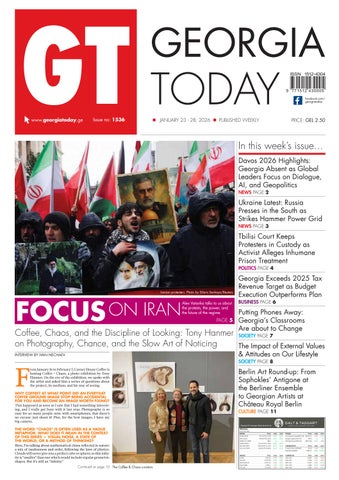

FOCUS
Coffee, Chaos, and the Discipline of Looking: Tony Hanmer on Photography, Chance,
From January 16 to February 5, Corner House Coffee is hosting Coffee + Chaos, a photo exhibition by Tony Hanmer. On the eve of the exhibition, we spoke with the artist and asked him a series of questions about the project, its medium, and his way of seeing.
WHY COFFEE? AT WHAT POINT DID AN EVERYDAY COFFEE GROUND IMAGE STOP BEING ACCIDENTAL FOR YOU AND BECOME AN IMAGE WORTH FIXING? This happened as soon as I saw that I had something interesting, and I really got busy with it last year. Photography is so easy for so many people now, with smartphones, that there’s no excuse: just shoot it! Plus, for the best images, I have my big camera.
THE WORD “CHAOS" IS OFTEN USED AS A VAGUE METAPHOR. WHAT DOES IT MEAN IN THE CONTEXT OF THIS SERIES — VISUAL NOISE, A STATE OF THE WORLD, OR A METHOD OF THINKING?
Here, I’m talking about mathematical chaos reflected in
a mix of randomness and order, following

In this week’s issue...
Davos 2026 Highlights: Georgia Absent as Global Leaders Focus on Dialogue, AI, and Geopolitics
Ukraine Latest: Russia Presses in the South as Strikes Hammer Power Grid
Tbilisi Court Keeps Protesters in Custody as Activist Alleges Inhumane Prison Treatment
Georgia Exceeds 2025 Tax Revenue Target as Budget Execution Outperforms Plan
Putting Phones Away: Georgia’s Classrooms Are about to Change
The Impact of External Values & Attitudes on Our Lifestyle
SOCIETY PAGE 8
Berlin Art Round-up: From Sophokles’ Antigone at the Berliner Ensemble to Georgian Artists at Château Royal Berlin
SOCIETY PAGE 7 POLITICS PAGE 4 CULTURE PAGE 11


Vatanka
INTERVIEW BY IVAN NECHAEV
Iranian protesters. Photo by Dilara Senkaya/Reuters

U.S. Temporarily Suspends Immigrant Visa Processing for Georgia, Clarifies Policy
BY TEAM GT
Tbilisi became the latest stop in a series of diplomatic clarifications last Thursday as Georgia’s Deputy Minister of Foreign Affairs, Lasha Daraselia, met with US Chargé d’Affaires Alan Purcell to discuss a recent US policy affecting visa issuance for Georgian citizens. The talks aimed to provide clarity following a controversial announcement by the US Department of State under President Donald Trump regarding the temporary suspension of immigrant visa processing for nationals of about 75 countries, including Georgia. In the meeting, held at the Foreign Ministry, Daraselia received detailed explanations from Purcell about the scope of the policy. The US diplomat emphasized that the suspension applies exclusively to immigrant visas, those intended for individuals seeking permanent residency in the United States, and does not affect visas for other purposes, such as tourism, study, business trips, or
temporary work.
The US announcement, made on January 14 and set to take effect on January 21, reflects a review of screening procedures linked to concerns about potential dependency on public assistance. Purcell clarified that the pause does not revoke visas already issued, nor does it prevent Georgian citizens from applying for or attending immigrant visa interviews. Instead, it reflects a broad review of screening and vetting practices to ensure compliance with public-charge rules.
The discussions also included bilateral and multilateral issues, covering regional security dynamics and ongoing cooperation between Georgia and the United States. The talks come at a time of evolving geopolitical circumstances in the South Caucasus and broader international context.
For Georgian families planning to relocate to the United States, the suspension of immigrant visa processing may cause delays. However, the assurance that nonimmigrant visas remain unaffected provides relief to students, tourists, and business travelers whose plans do not involve permanent residency.
Ombudsman Challenges New Restrictions on Demonstrations in Constitutional Court

BY TEAM GT
The Public Defender of Georgia has filed a constitutional complaint with the Constitutional Court of Georgia, challenging recently introduced restrictions on participants in assemblies and demonstrations under the Law of Georgia “On Assemblies and Manifestations”.
The Ombudsman’s Office says the complaint contests several provisions of the law, including the blanket prohibition on covering one’s face with a mask or any other means during assemblies and demonstrations. The Public Defender argues that such restrictions may disproportionately limit the constitutional right to peaceful assembly and freedom of expression.
The constitutional claim also questions the legality of liability measures envisaged by the Georgian Code of Administrative Offences. These include fines and administrative detention, in some cases imprisonment without alternative sanctions.
In addition, the Ombudsman challenges provisions of the Criminal Code of Geor-
GD Files Formal Complaint against BBC over Allegedly Defamatory Report
BY MARIAM RAZMADZE
The ruling Georgian Dream – Democratic Georgia party has formally lodged a complaint with the BBC, accusing the British public broadcaster of disseminating false, defamatory and politically motivated allegations against the Georgian authorities. The announcement was made by Parliament Speaker Shalva Papuashvili during a briefing.
Papuashvili stated that the complaint relates to a BBC film and accompanying materials published on December 1, 2025, which alleged that Georgian law enforcement used the World War I-era chemical agent ‘camite’ during protests. He stated that these claims are entirely unfounded and have no basis in verified evidence, stressing that Georgia’s Ministry of Internal Affairs has never possessed or used such a substance.
The Speaker said Georgian Dream is demanding a public apology from the BBC and the immediate removal of the film and all related content from its platforms. He argued that the publication violates the BBC’s own editorial standards, the UK Office of Communications (Ofcom) Broadcasting Code and core principles of responsible journalism.
Papuashvili outlined several grounds for the complaint. He said the BBC breached its obligation of accuracy by

presenting unverified allegations as established fact. He also accused the broadcaster of misrepresenting the events surrounding protests in November–December 2024 by suggesting that demonstrators were peaceful and that law enforcement acted without provocation while ignoring documented acts of violence against police officers.
Another issue raised concerns impartiality. Papuashvili stated the report advances a one-sided narrative portraying the Georgian government as violent and ‘pro-Russian,’ while excluding official explanations, law enforcement accounts and broader contextual information necessary for a balanced assessment. He also rejected as baseless the claim that Georgian Dream’s Honorary Chairman, Bidzina Ivanishvili, was involved in decisions related to the dispersal of protests.
The complaint further argues that the BBC failed to respect the right to reply,
noting that government representatives were approached only days before the broadcast despite the seriousness of the accusations. Papuashvili added that the report relies on statements from individuals whose credibility and potential conflicts of interest were not disclosed, resulting in speculation being presented as fact.
Under UK law, the filing of a complaint directly with the broadcaster is a required first step, which Papuashvili confirmed has now been completed. If the BBC does not address the alleged violations, Georgian Dream plans to escalate the matter to Ofcom and, if necessary, pursue legal action in UK courts. The party also reserves the right to apply to the European Court of Human Rights.
“We will use all available legal mechanisms to respond to what we view as a coordinated and damaging campaign against Georgia,” Papuashvili stated.
Davos 2026 Highlights: Georgia Absent as Global Leaders Focus on Dialogue, AI, and Geopolitics

eration in an increasingly contested global environment.
Tgia that introduce criminal liability — including deprivation of liberty — for participants in assemblies or demonstrations, as well as organizers, particularly in cases of repeated offences. The complaint also raises concerns over the application of these measures to minors.
The contested provisions are part of a broader package of legislative amendments adopted amid ongoing street protests and heightened political tension in Georgia. Authorities have argued that the changes are necessary to maintain public order and ensure security during demonstrations. Critics, however, say the amendments significantly tighten state control over protests and may have a chilling effect on civic activism.
Civil society organizations, opposition groups, and international observers have warned that restrictions such as banning face coverings and expanding administrative and criminal penalties risk undermining democratic standards and Georgia’s international human rights obligations. The Constitutional Court’s review is expected to play a key role in determining whether the new regulations comply with constitutional guarantees of freedom of assembly and expression.
he 56th World Economic Forum convened under the theme “A Spirit of Dialogue,” bringing together nearly 3,000 leaders from governments, business, and civil society to discuss global challenges from economic headwinds to geopolitical tensions. Over 130 countries were represented, including close to 65 heads of state and government, marking one of the largest gatherings in the forum’s recent history. Speakers emphasized the need for coop-
A central geopolitical focus was the United States’ controversial push regarding Greenland. President Donald Trump delivered a lengthy address outlining his intention to begin negotiations over US claims to Greenland while reiterating that force would not be used. His remarks sparked reactions from European leaders and highlighted trans Atlantic tensions—including tariff threats tied to Arctic security arrangements—though subsequent negotiations led to a temporary de escalation and withdrawal of the tariff threat, which then buoyed financial markets.
Artificial intelligence remained a dominant theme throughout the forum. Leaders from major tech firms and investors underscored the transformative impact of AI on productivity, labor markets, and economic growth, alongside debates about risks and governance. Discussions also touched on broader economic growth challenges, including sluggish global expansion, trade uncertainties, and the need for innovation led investment.
In parallel, sessions covered topics ranging from investment trends and capital flows to soft power and economic resilience, reflecting evolving priorities for national competitiveness and sustainable growth.
Beyond economics and technology, the forum included dialogue on global security dynamics, climate change adaptation, and preparedness for future health crises. Speakers stressed the importance of resilient global cooperation mechanisms in the face of rising risks such as conflict, supply chain disruption, and environmental instability.
Notably, Georgia’s government did not attend the 2026 Davos Economic Forum. The Georgian government administration confirmed that Prime Minister Irakli Kobakhidze did not receive an invitation and would not participate, continuing a pattern from 2025 when Georgian officials were also absent.
Energy Expert Warns Georgia’s Rising Dependence on Russian Gas Threatens Energy Security
BY MARIAM RAZMADZE
Energy expert Archil Mamatelashvili stated that Georgia’s increasing reliance on Russian natural gas is creating serious political and economic vulnerabilities. Preliminary figures indicate that in 2025 Georgia imported more than 1 billion cubic meters of gas from Russia, accounting for roughly one-third of total national consumption. This marks a sharp increase from 2024 when Russian imports stood at about 788 million cubic meters.
Mamatelashvili cautions that Russia has repeatedly used energy supplies as
a political instrument, mentioning past pressure exerted on European states and Ukraine. Against this backdrop, he argues that deepening dependence on Russian gas exposes Georgia to heightened geopolitical risk.
The economic consequences are also significant. Russian gas is considerably more expensive than alternative supplies, priced at approximately $185–215 per cubic meter, compared with an average of around $110 for Azerbaijani gas.
Given that about 18% of Georgia’s electricity is generated by gas-fired power plants, higher gas import prices directly translate into increased electricity costs for consumers and businesses.
The expert said that part of the surge
in Russian gas imports stems from domestic infrastructure constraints. The capacity of the Azerbaijani Saguramo pipeline is insufficient to fully meet Georgia’s growing daily demand, particularly during winter months. At the same time, Azerbaijan has been expanding gas exports to European markets, reducing the volumes available for Georgia. To address these challenges, Mamatelashvili advocates the construction of a strategic gas storage facility with a capacity of 1–1.2 billion cubic meters. He estimates the project would require an investment of $800–900 million, but says it would allow Georgia to better manage seasonal demand, and limit exposure to costly emergency imports.
Tbilisi protests. Source: Tabula.ge
Tbilisi protests. Photo: Voxeurop.
Davos 2026. Source: theafricareport BY TEAM GT
Deputy Minister of Foreign Affairs, Lasha Daraselia, meets with US Chargé d’Affaires Alan Purcell
Ukraine Latest: Russia Presses in the South as Strikes Hammer Power Grid
COMPILED BY ANA DUMBADZE
This week, Russia’s ground campaign and winter air offensive followed a familiar pattern: steady pressure along multiple front-line sectors combined with heavy strikes on Ukraine’s energy infrastructure, timed to maximize disruption during sub-zero temperatures. While neither side reported major breakthroughs, the fighting included confirmed and claimed village-level changes along the front, sharp contrasts between better-equipped and weaker Ukrainian sectors, and renewed attacks on power generation and distribution nodes that left parts of Ukraine’s largest cities intermittently dark and cold.
FRONTLINE DEVELOPMENTS IN THE NORTHEAST
In the northeast, around Kupiansk, Ukrainian commanders and analysts reported a notable stabilization compared with the precarious situation of previous months. The improvement is credited to the deployment of better-equipped, higherreadiness units and drone-heavy formations, which have helped blunt Russian pushes and reclaim lost positions around the city. Kyiv’s strategy here highlights an ongoing trade-off: concentrating scarce, trained manpower on a critical node can strengthen one sector while leaving others thinner and more vulnerable.
This balancing act has become a recurring theme in Ukraine’s defense strategy. While the northeastern sector has seen some relief, the southern front, particularly around Huliaipole in Zaporizhzhia Oblast, has borne the cost. Ukrainian monitoring group DeepState reported that Russian forces occupied the village of Krasnohirske and continued to advance in and around Huliaipole and nearby set-
tlements. These moves reflect ongoing pressure on a sector where territorial defense units face limitations in manpower, equipment, and endurance. Here, the strategic imbalance observed in the northeast appears in reverse: as stronger formations are dispatched to critical hotspots elsewhere, the southern line faces persistent probing and gradual Russian gains.
Russia also claimed additional village captures, though independent verification remains difficult in near real-time.
On January 16, the Russian defense ministry reported that its forces had taken Zakitne in Donetsk region and Olenokostiantynivka in Zaporizhzhia region. While Reuters noted it could not independently verify these claims, even localized advances matter. Village-level changes can improve firing positions, widen tactical footholds, and slowly reshape a front that stretches roughly a thousand kilometers from north to south.
ENERGY INFRASTRUCTURE UNDER SIEGE
The most consequential developments this week were in Ukraine’s energy sector. On the night of January 18–19, Ukraine reported a large drone barrage targeting energy facilities, leaving widespread power outages across several regions during freezing conditions. The Ukrainian air force said 145 drones were launched, and air defenses intercepted 126. Nevertheless, Kyiv reported outages in Sumy, Odesa, Dnipropetrovsk, Kharkiv, and Chernihiv regions. In Odesa, authorities reported damage to both energy and gas infrastructure and said one person was injured. DTEK, the country’s largest private energy firm, said one of its facilities in Odesa was “substantially” damaged, leaving 30,800 households without power. The strikes were followed by an even more consequential wave on January 19–20, which impacted both power gen-
eration and distribution. Ukrenergo, Ukraine’s grid operator, reported severe emergency limitations and described Kyiv and several regions—including Kharkiv, Sumy, Donetsk, Odesa, and Poltava—as among the most difficult areas as repair crews worked to restore service. Reuters reported that the attacks cut power to more than one million households in the Kyiv area, leaving thousands of apartment buildings without heat. Substations critical to nuclear safety were also damaged or disrupted, according to the International Atomic Energy Agency (IAEA). Drone and missile strikes killed four people during this wave—three in Zaporizhzhia and one in the Kyiv region.
The nuclear-safety dimension added a heightened political and strategic significance. Several substations crucial for nuclear safety were affected, and off-site power to the Chornobyl site was temporarily lost before being restored. Ukraine relies heavily on nuclear generation for electricity, and strikes on the grid connecting plants to consumers can create cascading risks, even if reactors themselves are not directly targeted. Ukraine accused Moscow of deliberately targeting these substations and using the threat of a nuclear-linked incident as coercion, while Russia claimed it struck militaryindustrial, energy, and transport infrastructure to support its operations.
HUMANITARIAN TOLL
The human cost of these energy attacks extended beyond temporary blackouts. Heating failures left residents exposed to freezing temperatures in winter apartments. By January 21, President Volodymyr Zelensky reported that nearly 60% of Kyiv remained without electricity and around 4,000 buildings still lacked heat. Kharkiv region officials reported hundreds of thousands of residents without power, while further damage in Odesa added to the strain. These disruptions also degraded

cellular networks and other basic services, compounding the psychological and logistical pressures of blackouts and cold on civilians.
UKRAINE’S COUNTEROFFENSIVE OPERATIONS
Ukraine continued to expand its drone operations, striking Russian-occupied areas and targets across the border, including energy-related infrastructure. On January 18, a Ukrainian drone strike caused a major outage in Russian-occupied parts of Zaporizhzhia region, affecting more than 200,000 people across nearly 400 settlements. Other strikes hit Russian territory: in Belgorod region, one person was killed and another wounded in Nechaevka; in Beslan, North Ossetia, two children and one adult were injured when a strike hit a residential building; and in Ryazan, a high-rise was hit, injuring two people.
CASUALTIES OVERVIEW
The week’s casualty reporting was dominated by the aerial campaigns. Reuters reported that a mass Russian drone attack overnight into January 18 killed two people and wounded dozens. Subsequent strikes on January 19–20 killed four people—three in Zaporizhzhia and one in Kyiv region. Ukrainian counterstrikes caused injuries and fatalities in Russian territory as noted above. These numbers reflect publicly confirmed incidents and do not capture total military casualties, which neither side discloses comprehensively.
DIPLOMATIC DEVELOPMENTS
Diplomacy moved in parallel with the intensifying strike campaign, though battlefield realities and negotiating positions
remained far apart. US special envoy Steve Witkoff said he and Jared Kushner would travel to Moscow to meet President Putin for talks related to ending the war. Zelensky emphasized that Washington could exert more pressure on Moscow, calling for stronger sanctions, including measures aimed at curbing ongoing Russian missile production.
INTERNATIONAL SUPPORT FOR UKRAINE
International assistance this week focused heavily on financial and military support. The European Commission proposed a multi-year support package totaling €90 billion, including €30 billion in general budget support and €60 billion earmarked for military procurement, largely with European suppliers. NATO Secretary General Mark Rutte urged allied military chiefs to press their governments to provide additional air defense systems, reflecting Ukraine’s urgent need to blunt missile and drone attacks that are hitting both cities and the energy nodes that keep them warm.
UKRAINE’S MODERNIZATION DRIVE
Ukraine also signaled a push to translate battlefield experience into long-term operational advantage. Defense Minister Mykhailo Fedorov announced a data-driven overhaul of the military, including systems to improve drone and artillery decisionmaking, and closer cooperation with allies on AI tools for drone interception. While these reforms cannot prevent missiles already in the air, they reflect Ukraine’s broader strategy for 2026: to offset Russia’s scale with smarter targeting, faster response cycles, and more efficient use of personnel and ammunition.

A member of a Ukrainian mobile air defense team scans the sky near the southern port city of Odesa for an incoming Russian attack. Photo by Michael Shtekel / Media Center Ukraine
Tbilisi Court Keeps Protesters in Custody as Activist Alleges Inhumane Prison Treatment
BY TEAM GT
Tbilisi City Court has decided to keep all defendants in custody in connection with the October 4 protests near Atoneli Palace. During the hearing, some defense lawyers asked the court to release their clients or allow bail, arguing that the prosecution’s evidence did not prove their guilt. The prosecution countered that detention should continue, citing risks of witness tampering, the possibility that the defendants could flee, and concerns they might commit further offenses. The court sided with the prosecution, leaving all detainees in pretrial custody.
The case involves several people: Beka Kelekhsashvili, Mamuka Labuchidze, Guriel Kardava, Vakhtang Pitskhelauri, Aleksandre Khabeishvili, Abo Naveriani, Anton Uper, Avtandil Surmanidze, Giorgi Muladze, and Temur Kurtsikidze. They are charged with attempting to seize or block objects of strategic importance and participating in group violence.
Mariam Mekantsishvili faces charges of organizing a group action.
Nana Sander, also detained in connection with the case, faces multiple charges, including organizing group violence and calling for the violent overthrow of the constitutional order, carrying potential sentences of up to nine years. During a


court hearing, she accused prison authorities of inhuman and degrading treatment, saying she was denied medical care and essential medication, subjected to aggressive behavior by staff, and forced to endure conditions she described as torture.
Sander said she began a hunger strike on January 13 to protest her treatment but had to stop after four days following

De Facto Leader of Occupied Tskhinvali Dissolves “Government,” Appoints
Acting Prime Minister
BY TEAM GT
The de facto leader of Georgia’s occupied Tskhinvali region, Alan Gagloev, has dissolved the so-called “government,” based on a decree released by his press service.
Under the order, the region’s de facto “prime minister,” Konstantin Dzhussoev, was dismissed from his post. Gagloev appointed Dzambolat Tedeev, previously serving as the de facto “vice-prime minister,” as acting head of the “government.”
Gagloev also instructed members of the outgoing de facto cabinet to continue performing their duties until a new “government” is formed.
The reshuffle comes amid ongoing political instability in the occupied region of Tskhinvali, which is internationally recognized as part of Georgia. The ter-
ritory has remained under Russian occupation since the 2008 Russia–Georgia war, and its so-called authorities and institutions are not recognized by Tbilisi or the international community.
Alan Gagloev, who assumed power following de facto elections in 2022, has previously carried out cabinet changes and personnel reshuffles, often citing the need for administrative “efficiency.”
Analysts note that such decisions are frequently shaped by internal power struggles within the occupied region, as well as by Moscow’s political and security influence, given Russia’s decisive control over the territory.
Georgia’s central authorities consistently describe the Tskhinvali region as occupied territory and regard all de facto institutions operating there as illegal, stressing that such appointments and political processes have no legal force and violate Georgia’s sovereignty and territorial integrity.
a doctor’s warning that she risked falling into a coma. She described her condition as critical, with dangerously low blood sugar, swelling, constant pain, sleep disturbances, and limited access to proper medical care. She also accused staff, including senior officials, of forced undressing and sexual harassment. “I am an innocent political prisoner. This is not humanity, this is torture,” she told
the court.
Prison authorities rejected Sander’s claims, saying they were attempts to discredit the institution. The Special Penitentiary Service stressed that all procedures for admitting and inspecting detainees, including medical examinations, are carried out according to Georgian law, with same-sex inspections and limits on removing clothing. The Service
said it would nonetheless launch an internal investigation, and if any violations are found, appropriate measures would be taken. The results would be shared publicly and with Sander herself. The protests on October 4 began as demonstrations against government policies and concerns about political freedoms. Hundreds of people gathered near Atoneli Palace, and the situation escalated when some protesters broke down a fence in an attempt to access the President’s residence. Security forces clashed with demonstrators, and authorities later accused some participants of trying to seize strategic locations and committing acts of group violence. These events are part of a larger wave of protests in Tbilisi and across Georgia, fueled by frustration over political reforms, allegations of government overreach, and demands for greater accountability. Human rights groups have repeatedly voiced concern about the government’s response, particularly regarding the treatment of detainees and restrictions on peaceful assembly. Allegations of mistreatment in Georgian prisons often draw public attention, especially as debates continue about prison reform, human rights, and institutional accountability. The outcome of the investigation into Sander’s claims could lead to further legal or disciplinary action and will likely shape the conversation around detention practices and political freedoms in Georgia.
Zurabishvili: Georgia’s Crisis Must Remain in Global Focus

BY TEAM GT
It is important that Georgia and Georgia’s crisis remain in the focus of the world’s attention, – Georgia’s fifth president Salome Zurabishvili said in an interview with The Brussels Times last week.
Zurabishvili stressed that the idea of an independent Georgia with a “natural
European future” is deeply rooted in Georgian society. She accused the country’s ruling party of acting in line with Moscow’s interests, arguing that their increasingly harsh anti-European and anti-Western rhetoric is alien to the Georgian public and aimed at severing ties with Europe.
She noted that, amid multiple global geopolitical crises, keeping international attention on Georgia has become increasingly difficult. At the same time, Zura-
bishvili warned that the European Union’s inaction is having a damaging effect on public attitudes toward Europe in Georgia.
“People hear calls for sanctions, but then see that in reality nothing happens,” she said, adding that the sense of powerlessness to prevent a country that was “almost at the EU’s doorstep” from being drawn back under Russian influence is alarming—not only for Georgians, but for Europe as well.
Detained activist Nana Sander. Source: FB
Salome Zurabishvili. Source: IPN
Alan Gagloev. Source: FB
Iran on the Brink: Protests, Power, and the Future of the Regime
INTERVIEW BY VAZHA TAVBERIDZE
For the first time in nearly four decades, Iran is facing a wave of protests that many analysts say could reshape the country’s future. Alex Vatanka, senior fellow and founding director of the Iran Program at the Middle East Institute in Washington, D.C., explains why this unrest is different from anything the regime has faced before. Speaking to Radio Free Europe’s Georgian Service last week, Vatanka outlined the stakes for both domestic and international actors, the limits of US involvement, and the fragile state of a leadership that has ruled for decades.
FOR THE FIRST TIME IN NEARLY FOUR DECADES, IT FEELS LIKE THINGS MIGHT FINALLY CHANGE IN IRAN. IT INCREASINGLY LOOKS LIKE A MAKE-OR-BREAK THING. PROTESTS HAVE HAPPENED BEFORE—MANY PROTESTS. HOW IS THIS ONE DIFFERENT?
Obviously, Iran has experienced a number of protests in the last decade, and even before. What has happened during the last decade is the frequency of the protests. They happen more often, and they have become more radical. Ten years ago, protesters would ask for policy change, and they would chant slogans about how miserable life is. Today, they are shouting for the toppling of the regime. They are shouting for the death of the dictator, by which they mean the supreme leader, Ali Khamenei. Previously, they would be in the streets and maybe burn some garbage cans in the city of Tehran. Now what we are seeing is attacks on mosques. Some of the protesters have been willing to fight the security forces. We have seen thousands of people killed. The fact is, this is on a different scale, and each time we have seen the trend continue, the protesters are becoming angrier. Their demands are more fundamental. They want fundamental change, and the security forces are acting more ruthlessly. The external context matters here because the regime genuinely seems to believe that even if these protesters are homegrown, external powers are going to try to exploit the moment for their benefit. They accuse the United States and Israel of somehow being involved. That just makes this cocktail much more dangerous than what we have seen in previous rounds of protests.
LET’S TALK ABOUT THE POSSIBLE US INTERVENTION. BASED ON PRESIDENT TRUMP’S INITIAL TWEETS, “HELP IS ON ITS WAY,” IT SEEMED LIKELY; THEN IT SEEMED TO HAVE KIND OF PETERED OUT. SO HOW LIKELY IS IT, AND HAS THE REGIME AT LEAST GOTTEN A REPRIEVE?
President Trump does not seem to have a clear strategy in mind. He stepped in and talked about being on the side of the protesters when the protests were gaining momentum. For a moment, it looked like the regime was on the brink. But as soon as the protests died down, the president backtracked, saying they are not killing people and they are not executing people. Therefore, he does not see a need for the United States to intervene. That takes us to his basic philosophy. He intervenes when he thinks he is going to be on the winning side. He is certainly not interested in getting the United States involved in another openended conflict in the Middle East that looks like nation-building, which is exactly what he has always argued against. He is not a man who is interested in building other people’s nations for them.


He wants to, as he says, Make America Great Again. In that sense, he was never going to intellectually commit himself to a long campaign to help the protesters, to help them organize, or to give them whatever they need to empower them in a prolonged struggle against the regime. That was never on the cards. For a second, he thought maybe they were going to win in Iran and that he should side with them. When it turned out they were not that close to victory, he stepped out.
SO COULD HE BE TEMPTED TO DO SOME SORT OF MADURO 2.0, AS OPPOSED TO A PROTRACTED INVOLVEMENT? AND IF HE WERE TO DO SO, WHO WOULD THANK HIM FOR IT?
The “Maduro scenario” hinges on whether there are figures within the Iranian regime with whom US intelligence can engage— people willing to accept a transfer of power. Real change would require removing Ali Khamenei; keeping him in place, even with reforms, wouldn’t satisfy Iranians or the opposition. A meaningful transition would occur if insiders conclude the system cannot continue and look for a way out, especially if the United States offers an off ramp or alternative path rather than allowing the regime to persist until it ultimately collapses.
THEY SEEM TO HAVE GOTTEN A TEMPORARY REPRIEVE. HOW LONG CAN IT LAST? IS IT DESTINED TO FALL IMMINENTLY, OR CAN IT SUSTAIN ITSELF FOR ANOTHER 10 OR 20 YEARS?
There is no sign to suggest that the regime can last another 10 to 15 years because for the first time we are seeing that the economy has really exhausted itself after more than a decade of sanctions. Previously, the authorities were able to maneuver, coming up with flexible policies to deal with sanctions, but now they are running out of options. On top of that, there is the corruption issue and the governance issue, where the ruling elite have lost their way. They do not appeal to or inspire the youth. All sorts of things are coming together to create conditions that are very unique. The idea that the regime could last much longer is questionable. Killing your way out of a problem can solve the issue once or twice, but it is not guaranteed to work every time.
CAN THE REGIME ALLOW ITSELF ANY CONCESSIONS OR PROMISES OF POLICY REFORM, OR WOULD THAT BE A SHOW OF WEAKNESS THAT MIGHT INVIGORATE THE PROTESTS?
Ali Khamenei has been shaped by two events more than anything else in his determination not to give in to protesters when they are angry in the streets
and challenging him. One was how the Shah tackled the protests and the revolution he faced in 1978 and 1979. Khamenei was there. He saw the Shah come on national television and say, “I have heard the voice of your revolution.” That was the end of him. Khamenei is not going to do that. He is not going to say anything like that. In fact, he is doing the opposite. He has greenlighted the crackdown because he thinks intimidation and fear are the way forward. The second event that shaped him was what Mikhail Gorbachev did in the Soviet Union.
IRANIAN GLASNOST?
Khamenei was a young supreme leader when he saw the Soviet Union collapse, which shaped his aversion to major reform. Instead, he takes small steps that suggest flexibility without publicly accepting change. For example, authorities have eased enforcement of the mandatory hijab, and they are engaging in talks with the Americans and, reportedly, with Israelis via Russian mediation. This shows a regime aware it must compromise to survive. Khamenei’s stubbornness remains, but it is strategic—not suicidal. The regime gives limited concessions to avoid a slippery slope, signaling some willingness to change, though not enough to satisfy the public.
HOW STRONG IS THE IDEOLOGICAL PART RIGHT NOW COMPARED TO THE 1980S, DURING HIS PREDECESSOR’S TIME?
Forty-seven years into this regime, whatever ideology once drove it is largely gone. It mattered in the 1980s, but today the vast majority of people in the system are there because that is where they get their salaries. They do not have alternatives, and nobody has shown them a different political system in which they could still have a role. They fear that major change would mean losing their jobs, their money, or potentially their lives. That is why so many people are hanging on to what is essentially a sinking ship.
WITH THE AYATOLLAH BEING 86 YEARS OLD, WHO CAN SUCCEED HIM WITHOUT THEIR LEGITIMACY BEING QUESTIONED?
This is the big question. He has never pointed to a successor, which would be against his nature. He does not want to share the limelight with anyone, so he has never had a deputy. Constitutionally, it is up to the Assembly of Experts to choose his successor. But there could be a situation where there is no supreme leader after him. Since 1979, this role has been held by only two men, Khomeini and Khamenei. There is no deeper precedent for it in Iranian history. Getting rid of the Office of the Supreme Leader and restructuring political power is not as far-fetched as it might seem.
WOULD THAT MEAN THE REVOLUTIONARY GUARDS REINVENT THEMSELVES WITHOUT THE FAITH ELEMENT?
This is a theocracy, and by nature, a theocracy is meant to be run by senior religious authority, not uniformed men. One scenario is a token cleric as supreme leader with little real power, while the Revolutionary Guards run the country. In many ways, the IRGC already runs the show. Khamenei is much more powerful than anyone who could replace him. After 37 years in power, no one can really fill his shoes. But for at least the last two decades, the IRGC has been the state machinery people associate with Iran.
SO COULD WE SEE THEOCRACY TRANSFORMED INTO A NATIONALISTIC MILITARY JUNTA?
It could happen. That is one scenario people speculate about. But Iran has no history of military rulers. This is not Latin America in the 1970s. Historically, Iran was ruled by kings and then, from 1979, by clerics. An openly ruling IRGC would be a new reality. Even then, the regime’s problems would not go away. The IRGC has effectively been running Iran for decades, both domestically and abroad. Simply moving from Khamenei to open IRGC rule does not solve anything.
WOULD THAT GIVE SOCIETY A FALSE SENSE OF REPRIEVE—THE FEELING THAT KHAMENEI IS GONE AND NOW EVERYTHING IS FOR THE GREATER GLORY OF THE NATION?
No. The IRGC is not seen as nationalist heroes. They may have been viewed that way in the 1980s during the war with Iraq, but for decades they have mostly fought Iranians at home or pursued adventurous policies in places like Lebanon or Gaza. Very few Iranians see the IRGC as nationalist heroes. In that sense, Khamenei and the IRGC are indistinguishable. Their takeover would make no real difference to the fate of the regime.
MUCH LIKE PUTIN IN RUSSIA, ENTIRE GENERATIONS IN IRAN HAVE GROWN UP SEEING THIS MAN AS THE SOLE LEADER OF THE NATION. WHAT DOES THAT DO TO THE SOCIETAL PSYCHE, AND HOW DOES THAT COMPLICATE THINGS FOR WHOEVER COMES AFTER HIM?
The end of Ali Khamenei would be an opportunity for the nation to return to where it left off. For decades, Iran has been frozen in the ideological bubble he is committed to. His departure opens space. Yes, there are followers of Khamenei in society, but we are talking about maybe five to ten percent. He is not the hero of a nation of 90 million. He is seen
as the problem. He is not the father figure he claims to be. When you order mass killings of the country’s youth, including children, you cannot credibly claim that role.
IF THE PROTESTS SUCCEED NOW OR IN THE NEAR FUTURE, WHAT WILL HAPPEN TO FAITH AS AN INSTITUTION?
We see mosques being openly attacked, which shows religion is under massive pressure. Many Iranians are giving up on Islam, particularly the version represented by Khamenei. Iran is arguably the most secular country in the broader Middle East—more secular than Turkey or the Gulf states. This is not because Islam itself has done something wrong, but because of how it has been practiced by the regime.
HOW DOES ONE EXPLAIN THE CULT OF THE SHAH? IS IT SIMPLY BECAUSE HE WAS NOT AS BAD AS THE REGIME THAT REPLACED HIM, OR ARE PEOPLE LOOKING FOR A STRONGMAN WITHOUT A TURBAN?
This goes back to the question of who inspires. Monarchists who look up to Reza Pahlavi, his father the Shah, and his grandfather Reza Khan argue that those leaders achieved a great deal during their time in power. They developed Iran. In contrast, the Islamic Republic has brought isolation, sanctions, and dependence on Russia and China. Many Iranians judge leadership by who made the country stronger and more respected. MAKE IRAN GREAT AGAIN?
Yes. There is a lot of nostalgia, but that nostalgia is not born out of a vacuum. It exists because the regime has done such a poor job of connecting with and inspiring people.
BUT IT IS STILL A PERSONALITY CULT, IS IT NOT? IF A STRONGMAN WERE TO EMERGE WHO COULD MAKE THE COUNTRY MATTER AGAIN, ARE PEOPLE LOOKING FOR THEIR OWN PUTIN?
To some extent, yes. Anyone who can save them from Khamenei gains appeal. Reza Pahlavi has history, name recognition, and some access to foreign powers. But this is a deeply contested issue inside Iran and in the diaspora. The idea that Iranians can only be ruled by a strongman is simplistic. There is hope that the opposition can organize itself and move toward a democratic, pluralistic system similar to Europe. Concentrating too much power in one individual always carries risks.
CHINA AND RUSSIA ARE CLEARLY PAYING ATTENTION. WHAT REALISTIC OPTIONS DO THEY HAVE, AND WHAT WOULD IT COST THEM IF THE REGIME WERE TO FALL?
China has very limited appetite for defending the Islamic Republic. Beijing treats Iran as a transactional partner, useful mainly as a source of discounted oil, and did very little during the protests or during the 12-day US-Israel strikes. China will not confront Washington or invest political capital to save Tehran. If the regime were to fall, China’s main cost would be losing a cheap, sanctionshit energy source, not a true strategic ally.
Russia, meanwhile, sees Iran as a strategic buffer and a useful partner in regional confrontations, but not an ideological ally. Moscow’s support is real and important but bounded by pragmatism. A collapse of the regime would cost Russia a regional partner that helps absorb Western pressure, but Moscow does not stake its own security on Iran’s internal survival.
Alex Vatanka. Source: Arab Center Washington


Georgia’s E-commerce Market Accelerates toward GEL 10.7 bln by 2030
BY MARIAM RAZMADZE
Galt & Taggart reported this week that Georgia’s e-commerce sector is rapidly expanding and is on track to become a major pillar of the retail economy, driven by growing digital adoption, growing competition and continuous improvements in online platforms.
The market has expanded at an exceptional pace, growing tenfold between 2018 and 2024 to reach GEL 3.5 billion. This momentum is expected to continue, with the market projected to increase to GEL 4.7 billion in 2025 and to GEL 10.7 billion by 2030, supported by average annual growth of over 20%.
Consumer engagement with online shopping has also risen sharply. The number of e-commerce users has increased from around 600,000 in 2018 to more than 1 million in 2025 while the number of Georgian businesses selling goods and services online now exceeds 10,000. In 2024, domestic online trans-
actions accounted for 60.9% of total e-commerce turnover, with the remaining 39.1% coming from cross-border purchases.
E-commerce already represents a growing share of overall retail activity. In the first half of 2025, online sales made up 8% of total retail turnover, with crossborder shopping contributing the larger portion at 5.8%.
The competitive landscape is particularly intense. In the services segment, platforms such as Wolt, Glovo, Bolt, Yandex, tkt.ge and biletebi.ge dominate the market. Online retail competition is even stronger, led by local players Veli. Store and Extra.ge, while Temu ranks as the most popular international platform among Georgian consumers. Other widely used global marketplaces include Amazon, eBay, AliExpress, Taobao, Trendyol, Zara and Farfetch.
Despite the sector’s rapid expansion, the report shows several structural challenges. Long delivery times, limited coverage outside major cities, courier shortages and ongoing concerns over product quality continue to hinder user experience and operational efficiency.
Georgia Establishes Government Commission to Address Food Prices

Groceries. Source: eatthis
BY MARIAM RAZMADZE
Georgia’s government has formally launched a Coordination Commission on Food Prices to improve the affordability and accessibility of essential products for the population. The commission held its first meeting this week, focusing on organizational matters and setting out an action plan through the end of April.
The body is chaired by Prime Minister Irakli Kobakhidze and brings together relevant state institutions to coordinate policy responses to price dynamics in
Georgia Exceeds 2025 Tax Revenue Target as Budget Execution Outperforms Plan

BY MARIAM RAZMADZE
Georgia closed 2025 with tax revenues slightly above target, according to the budget execution report published by the Treasury under the Ministry of Finance. While the state budget projected GEL 21.94 billion in tax collections, actual revenues reached GEL 21.96 billion, surpassing the plan by GEL 17.5 million. Most major tax categories performed close to expectations. Profit tax collections fully met the target while excise
taxrevenues exceeded projections by a notable margin, reaching 103% of plan.
Import duties also outperformed expectations at 101%, reflecting resilient traderelated revenues. By contrast, personal income tax and value added tax (VAT), the two largest revenue sources, fell marginally short of their targets, achieving 99.6% and 99.9% of planned levels, respectively. Revenues from other taxes showed the weakest performance, reaching 96.4% of the forecast.
Beyond taxes, the state budget benefited from stronger-than-expected proceeds from privatization and other non-financial asset sales. Total receipts in this
Georgia’s Tourism
category amounted to GEL 345 million or 115% of the planned figure. A significant share of this income, GEL 125.7 million, came from fees paid for 5G radio spectrum licenses.
Financing through government borrowing also largely met expectations. The state raised GEL 1.58 billion via the issuance of treasury bonds and obligations, achieving 99.3% of the annual plan. External debt issuance reached GEL 1.5 billion, corresponding to 98% of the target. Overall, the Treasury’s data indicate a broadly balanced budget execution in 2025, with tax revenues meeting expectations, stronger-than-planned privatization income.
Revenue
Tops USD 4.69 Billion in 2025
BY MARIAM RAZMADZE
The National Bank of Georgia (NBG) stated that Georgia’s tourism sector closed 2025 with solid financial results as income from international travel reached USD 4.69 billion, a 6% increase compared to the previous year. Growth was particularly strong in the final months of the year. In the fourth quarter of 2025, tourism revenues totaled USD 1.05 billion, reflecting a 9.2% year-on-year increase.
the food market. Mikheil Sarjveladze stated that Minister of IDPs, Labor, Health and Social Protection, the commission’s mandate is to develop practical mechanisms that enhance access to food products while improving the quality of that access.
Sarjveladze said the inaugural meeting defined how the commission will operate over the coming months in order to achieve measurable results. He emphasized that the goal is not only to monitor prices but to put in place coordinated measures.
The minister noted that, as the commission’s work progresses, it is expected to create conditions that could lead to a gradual decline in food prices.
European markets played an increasingly important role in tourism income. Revenues generated by visitors from EU countries reached USD 145.2 million in the fourth quarter alone, accounting for 13.8% of total travel income for the period and marking a sharp 26.6% annual increase.
The NBG also shows notable growth from several regional markets. Income from visitors from Israel and Azerbaijan rose by 37% and 31.6%, respectively, on an annual basis, signaling expanding demand from these countries. In contrast, revenues linked to travel from Russia continued to decline. During the fourth quarter, income from Russian visitors fell by 23.7%, extending a downward trend observed earlier in the year.
A breakdown of tourism income by

Map, calculator, miniature plane and coins. Source: BMG
country in the fourth quarter of 2025 shows the following figures: Israel (USD 156.1 million), Turkey (USD 151.7 million), European Union (USD 145.2 million), Russia (USD 133.7 million), Azerbaijan (USD 54.3 million), Ukraine (USD 43.2 million), Armenia (USD 42.2 million), Iran (USD 24.8 million), Belarus (USD 17.0 million), Saudi Arabia (USD 16.6 million), with other countries contributing a combined USD 267.5 million. Overall, the data indicate a gradual diversification of Georgia’s tourism revenue sources, with growing contributions from European and Middle Eastern markets.
Temu package.
Business of Fashion
Calculating tax. Source: globalEDGE/Michigan State University
Putting Phones Away: Georgia’s Classrooms Are about to Change
BY KATIE RUTH DAVIES
Ihave been teaching at a high school in Georgia for several months now. It’s a private school, and, from the outset, students have been required to turn in their phones at the start of the school day, not getting them back until the last bell rings several hours later. Yes, some cheeky students try to trick the system, claiming they left their phones at home when, in fact, they have them hidden in pockets or bags. They know if they get caught texting, though, they will have to hand them over and may not get them back until the next day.
I’ve seen how challenging it can be when there are no such rules when I’ve sat in on classes at state schools. Some students are engaged in the lessons, but many are checking their phones under the desk, and I’ve even teachers occasionally glancing at notifications. I know this scenario reflects a challenge common in classrooms worldwide: balancing learning with the presence of smartphones and the constant pull of social media.
But Georgia is finally planning to limit mobile phone use in classrooms across the board, for both students and teachers. Under proposed amendments to the Law on General Education, mobile phones would need to be stored away during lessons in public schools starting from the 2026–2027 academic year. The Ministry of Education emphasizes that this policy is not intended to punish teachers, but to set a positive example. Teachers would place their phones in boxes or cupboards alongside students’ devices during lessons, reinforcing a culture of attention, discipline, and engagement.
I love the idea. That said, as a teacher who occasionally gives students online research tasks in pairs during class, I hope some teacher-controlled flexibility will be allowed: cell phones are a part of our lives, after all, and can be used for good (research) as well as bad (social media scrolling!).
The Ministry has said that detailed regulations, including exceptions and oversight mechanisms, are still under development. However, the main con-

cept is to reduce distractions, encourage participation, and improve the overall learning environment. I can only see the good in that.
HOW OTHER COUNTRIES HANDLE CLASSROOM PHONES
Georgia’s approach aligns with international trends, though it varies compared with neighboring countries and Europe.
In Armenia, many schools, particularly in the capital Yerevan, already restrict mobile phone use. Younger students aren’t allowed to use phones during the school day, while older students may use devices only for educational purposes under teacher supervision.
Azerbaijan does not have a nationwide policy. Individual schools set their own rules on phone use, and there are no statutory restrictions comparable to those upcoming in Georgia and in some European countries.
In Europe, policies vary. France intro-
duced a nationwide ban for primary and secondary schools in 2018, prohibiting phones during the school day. Finland allows students to use phones only with teacher permission, and primarily for educational purposes. Greece prohibits mobile phone use during school hours, requiring devices to be stored away.
While the European Union doesn’t have a single binding policy on phone use in schools, many member states have tightened restrictions in recent years, citing benefits for classroom focus, social interaction, and student wellbeing.
EVIDENCE ON EDUCATIONAL AND HEALTH IMPACTS
I did some digging into the research, and what I found suggests that the impact of mobile phones in schools isn’t straightforward, but there are credible indications that limiting phones can help. Multiple international studies have found that, overall, student mobile phone use tends
Capital to Tighten Enforcement of Penalties for Vandalism
BY TEAM GT
Tbilisi is to strengthen the enforcement of legal penalties for vandalism, with the Ministry of Internal Affairs working alongside the municipality to curb such incidents, Tbilisi Mayor Kakha Kaladze announced at a meeting of the municipal government on Wednesday.
The mayor noted that although legislation regulating vandalism has long been in place, shortcomings in enforcement have allowed the problem to persist.
“At a time when the city still faces numerous challenges, we are seeing frequent cases where individuals deliberately damage building façades in a vandalistic manner,” Kaladze said. “Over the past two years alone, nearly 5,000 incidents of vandalism have been recorded. These have affected residential and public buildings, cultural heritage monuments, facilities of various agencies, metro station entrances, bus stops,

and other public spaces.”
Kaladze emphasized that while a legal framework already exists, the municipality is appealing to Parliament to further strengthen the legislation. He noted that addressing the consequences of vandalism costs tens of millions of lari— public funds that could otherwise be directed toward more pressing needs.
“These are ordinary citizens’ funds that must be spent from the budget to repair damage, instead of being used to solve other important problems facing the
city,” he said.
As part of the response, the mayor instructed the head of the Tbilisi Municipal Inspection, Gogi Chikhovani, to make combating vandalism one of the agency’s top priorities. He also tasked Giorgi Papava, head of Tbilservice Group, with launching restoration works immediately to ensure damaged façades are repaired within two weeks.
Kaladze added that the municipality has already held a working meeting with Interior Minister Geka Geladze and representatives of the Ministry of Internal Affairs to discuss coordinated measures to address the issue, thanking the minister for his support.
“The involvement of various state agencies in resolving such problems is critically important,” the mayor said. “We do not take pleasure in fining anyone. I always urge citizens to respect the law and not to cross boundaries, because this city belongs to all of us. Do not damage building façades, parks, squares, or public property. Otherwise, we will be forced to strictly enforce the responsibilities defined by law.”
to be negatively associated with academic outcomes such as test scores and grades.
In nearly all the research examined, higher levels of phone use were linked with lower classroom performance measures and poorer self reported academic achievement, even though a few studies found no positive effects.
Targeted research from the United Kingdom, combining data from many schools, found that when mobile phones were banned, students’ test scores improved modestly, roughly equivalent to what you might expect from an extra hour of teaching per week. These gains were most noticeable among students who were struggling before the ban, while high achieving students showed little change.
As a parent of teens, I can confirm that excessive smartphone use is linked to poor sleep, increased anxiety, and reduced physical activity. In our house, prying phones out of teen fingers is a nightly
battle for a routine I wish I’d instilled earlier.
Phone bans during school hours can also reduce cyberbullying incidents and encourage face-to-face interaction. However, bans alone won’t necessarily reduce overall screen time or fully address mental health concerns. That’s why the increasingly popular idea of a “social media ban for under 16s” would be a welcome addition in Georgia.
Surveys show that teachers experience fewer disruptions and report lower stress levels when students’ phone use is restricted. Teachers’ own use of phones during lessons has been linked to decreased student attention, with the limiting of teacher phone use intended to set a good example by modeling focused behavior. Research on long-term effects on teacher health is limited, but suggests improved classroom management and engagement.
LOOKING AHEAD TO THE BIG BAN
I’m eagerly awaiting the Ministry of Education’s release of further details about the implementation of phone restrictions, including how exceptions will be handled and how oversight mechanisms will work. Georgia’s recognition of the issue at least reflects the growing international trend seeking to manage digital distractions, particularly in schools.
While phone bans are not a universal solution to this 21st-century problem, evidence suggests they can support better learning outcomes, improved classroom behavior, and more meaningful teacher-student interactions. By encouraging both students and teachers to limit phone use during lessons, Georgia aims to create classrooms where attention, participation, and personal example come first.
As a teacher at a school that already bans phones in the classroom, I can already picture the difference this could make countrywide: students truly looking up from their desks, participating in lessons, talking to each other during breaks instead of scrolling, and teachers fully present in the room. For once, the classroom might feel like a space where learning, curiosity, and connection come first, and that’s a change I’m excited to see.
Georgian Regulator Defends Broadcasting Law Changes as Tool against Disinformation
BY MARIAM RAZMADZE
Kakhaber Bekauri, Chair of the Georgian Communications Commission, stated that recent amendments to Georgia’s broadcasting law are to tackle disinformation and restore clear boundaries between factual reporting and opinion. Speaking on Imedi TV, Bekauri said the reforms respond to long-standing weaknesses in media selfregulation that allowed ethical standards to be applied inconsistently.
Under the revised rules, broadcasters are now legally required to deliver accurate, fact-based news, ensure fairness and impartiality and clearly distinguish facts from commentary. The amendments also strengthen the right of reply, obliging media outlets to give individuals who are the subject of accusations a chance to respond.
Bekauri emphasized that these standards are not new in principle, but have now been made enforceable due to repeated failures of voluntary compli-
ance. He noted that the commission modeled the changes on British media regulation, drawing specifically on the practices of the UK regulator Ofcom to guide enforcement. The commission stated that implementation is already in progress. Since the amendments came into force, 11 complaints have been reviewed, around half of them submitted by organizations that had previously opposed the legislation. Bekauri stressed that the goal is prevention rather than punishment, pointing out that sanctions against major broadcasters have been rare over the past five years.
Placing the changes in a broader context, Bekauri pointed to the liberalization of Georgia’s media environment over the past decade. The transition to digital broadcasting and the removal of the traditional licensing regime have significantly expanded media pluralism. Georgia currently has 21 national broadcasters and more than 100 television channels while new entrants can begin broadcasting through a simplified authorization process completed within 10 days.
A classroom sign. Source: techdetoxbox
BLOG
Mayor Kaladze. Source: FB
The Impact of External Values & Attitudes on Our Lifestyle
OP-ED BY NUGZAR B. RUHADZE
Georgia’s current geopolitical stance, giving preference to the unaffected sovereignty of the country, sounds attractive and deserves admiration, with the hope that national freedom and independence will be enjoyed as a sustainable socio-political position. On the other hand, Georgia is an integral part of the flagrantly globalized world, which exudes permanent and unmitigated influence on any nation on our planet, including Sakartvelo. Meanwhile, a global tendency is becoming clearly noticeable: the youth are loath to have families of their own because family is no longer seen as a value, as it is believed to hamper personal freedom and stunt self-development. If this kind of attitude persists in our society, Georgia’s future might become a little murky, because a strong traditional family is a powerful prerequisite for a demographic boom, without which our ethnic and cultural survival is merely impossible. Thinking more optimistically, panicking about demography as something catastrophic and describing the situation as unmanageable is not quite healthy—as the saying has it, if there is a will, there is a way.
Here goes another issue of acute concern: The West is broken up into hundreds of groups, each having its own values and its own truth, because there is no unified understanding of good and evil in a fragmented world. Speaking in more general terms, modern social culture emphasizes individualism and materialism, leading to feelings of loneliness, isolation, and nervous breakdowns due to unshared moral standards. Moreover, there is growing concern about a sharp increase in the number of older people and a decrease in the number of workingage individuals, economic strain, popu-


lation decline, rising mental health issues, increased rates of anxiety and depression, the pressures of modern life, and a general tiredness of life, all of this accompanied by political polarization and economic inequality, loss of traditional or foundational values, and a shift toward consumerism, all of which have the potential for a pernicious impact on our people.
At the same time, Western society, which we tend to consider ourselves part of, is still suggesting longer life expectancies as well as continued scientific and technological advancements. The West is still upheld as a beacon of democracy and human rights, with continuous progress in areas such as civil rights, gender equal-
ity, and the reduction of racism and sexism. The continued global influence of Western ideas remains in place, and the desire of many nations to align with the West and emulate it is still strong, all of which can be beneficial to us too, provided we are capable of adopting these ideas and attitudes. In a word, the situation is a complex structural challenge with both severe risks and potential opportunities—and this is not all. Research identifies several interconnected factors that contribute to a lack of confidence in the future among youth worldwide, which also has a certain bearing on the life and overall stance of the younger generation of this nation. Among these factors can be counted
economic issues such as rising prices for products, services, and housing, education and healthcare, combined with stagnant wages and unwarranted scarcity of jobs. Climate change is a major source of stress, especially in the West, with many young people suffering from feelings of worry, powerlessness, and hopelessness regarding the planet’s future. Social and digital pressure is also a factor, such as the intensive use of social media, triggering depression and loneliness, persistent feelings of sadness, or hopelessness. Some recent reports indicate that young people are less happy than older generations in many Western nations, which could be true in this country too. According to other research,
children and adolescents around the world fear that current global crises will persist, making their lives worse. As a consequence, the trend of self-harm among young people tends to increase in many developed regions.
Debates on these issues are regular and ubiquitous, and Sakartvelo is not lagging behind. This nation is speaking loudly about any issue that the world has adopted as a topic of controversy, although not every new norm is taken for granted. For instance, gender-neutral parenting and egalitarian and non-binary family structures are not readily accepted by our society, which decidedly refuses to reject traditional gender ideology, although we might sporadically hear arguments that gender neutrality could be a logical progression of modernization. Many Georgians would still insist that Western culture is simultaneously distorting gender perceptions, sometimes to the detriment of masculinity. Finally, the entire narrative above leads to the viewpoint that globalization encourages a shift toward so-called World Citizenship, a.k.a. cosmopolitics, which is not quite accepted or recognized by the majority of our people. Western intellectuals tend to emphasize global justice, environmental stewardship, and human rights over what they see as the narrow-minded indigenous interests of the nation-state, but this perspective faces strong resistance from those advocating national sovereignty and tradition. Opponents believe that the cosmopolitan attitude often imposes a Western style of life and ignores cultural differences, arguing that the nation-state remains the only valid political and administrative unit. Yet what can one do with the fact that individuals now connect globally thanks to modern technology, meaning that digital cosmopolitanism is taking the world into its hands? Thus, a very tricky question may arise: what is left for Sakartvelo to do—succumb or continue resisting?
Georgia’s Tobacco-Free 2040 Goal under Threat as E-Cigarette Use Surges, Alliance Warns
BY TEAM GT
Georgia’s ambition to become a tobacco-free country by 2040 is facing growing challenges, particularly due to the rapid rise in electronic cigarette and heated tobacco product use, according to the Tobacco Control Alliance. The organization warns that these trends threaten progress made over the past decade and require urgent legislative action, including raising the legal age for purchasing tobacco from 18 to 21.
According to the 2025 Global Adult Tobacco Survey (GATS), Georgia has achieved notable progress, with overall tobacco use declining from 33% to 24% over the last ten years. Despite this ninepercentage-point reduction, smoking prevalence in Georgia remains well above the European average. At the same time, the Alliance highlights a sharp increase in the use of electronic cigarettes and heated tobacco products over the past three years, describing it as a particularly alarming development, especially among young people.
In a regional context, Georgia’s tobacco use levels are broadly comparable to
those of neighboring Armenia, where adult smoking prevalence is also estimated at around 24%, driven largely by very high rates among men. Azerbaijan, by contrast, reports lower overall adult smoking prevalence at around 18%, although male smoking rates there also remain high. Across all three South Caucasus countries, smoking among women is significantly lower, particularly in Azerbaijan, where it is among the lowest globally. While traditional cigarette smoking remains the dominant public health concern region-wide, the growth of alternative nicotine products such as e-cigarettes and heated tobacco products is increasingly recognized as a shared emerging challenge.
Georgia’s long-term public health strategy goes beyond traditional tobacco control and aims at a so-called “tobacco endgame” policy, defined as reducing the use of all tobacco and nicotine products to below 5% of the population by 2040. The Tobacco Control Alliance stresses that achieving this target is essential to reducing the country’s severe health, demographic and financial burden associated with tobacco-related disease and premature mortality. It estimates that the economic damage caused by tobacco use is roughly ten times greater than the tax revenues generated


by the tobacco industry.
To meet the 2040 goal, the Alliance proposes a comprehensive package of policy measures. Key recommendations include equal taxation of all tobacco products and raw materials to prevent consumers from switching to cheaper alternatives, and Georgia’s accession to the Protocol to Eliminate Illicit Trade in Tobacco Products. The organization also calls for extending plain packaging and advertising bans to nicotine-free electronic cigarettes and herbal smoking products.
Additional proposals focus on protecting children and adolescents. These
include banning all flavors except tobacco flavor, raising the legal age for purchasing tobacco from 18 to 21, and introducing a lifetime ban on tobacco sales to individuals born after 2015. The Alliance further recommends doubling fines for tobacco sales near schools and kindergartens, restoring a special licensing system, and significantly increasing penalties for violations of smoking bans in enclosed public spaces.
Other measures proposed include a complete ban on smoking in casinos and on theater stages, higher fines for smoking in the metro system, and stricter enforcement overall. Beyond regulatory
restrictions, the Alliance urges the government to adopt rules ensuring transparency in interactions with the tobacco industry, strengthen laboratory capacity at the National Center for Disease Control, restore funding for tobacco control programs that was reduced in 2025, and impose compensation obligations on the tobacco industry for damage caused to public health.
The Alliance notes that several neighboring countries, including Armenia, have recently expanded smoke-free legislation in public places, while enforcement challenges persist across the region. Against this backdrop, it argues that Georgia has an opportunity to position itself as a regional leader in tobacco control by adopting more ambitious endgame-oriented policies.
Public backing for stricter tobacco control in Georgia appears strong. According to the 2025 GATS survey, around 75% of the population supports the proposed changes. The Tobacco Control Alliance describes this as a clear public mandate, stressing that the government’s commitment to protecting future generations must be reflected in concrete action. Failure to do so, it warns, would signal that the interests of the tobacco industry are being placed above public health priorities.
A child with a telescope. Source mind24-7
Smoking habits. Source gsu
Grounds for a Show
Ihave been photographing the bottoms of my coffee mugs for years, and every now and then something really jumps out at me from the remains. No surprise for me, being that I see faces and forms in many of nature’s random places. Coffee grounds might be considered one of many ideal places to find such denizens. They’re a great little mix of randomness and the laws of physics operating together, and you never know what will peer back at you.
Eventually, I had amassed enough interesting images to consider a photographic exhibition, and approached my great friend Eli, who runs not only a gallery
space but also Corner House Coffee, on the 2nd floor of Aghmashenebeli Avenue 109, in Tbilisi. With the theme of coffee, how could he say no? He said yes.
I then asked another great friend, Michelle, who has curated several art shows for Eli already, and she agreed to help me curate it, with her son assisting too. Together, we chose some pieces which stood out from the crowd.
A couple of these are my favorites. A horn-rim-bespectacled lady straight out of the Far Side comics, calmly being swallowed by a Lovecraftian slug-monster, stands out, because what are the odds of ever finding such a scene in coffee grounds? It’ll never happen again.
The same for a much larger piece, which rates a triptych of zooming-in shots. This, leftover grounds from a cold coffee brewing in an enamel teapot, is called “The

Tyrant Dreams of Mushroom Clouds”. A disturbing image, not necessarily a pleasing one, but powerful. I chose to spray-varnish both of these pieces, to preserve them forever. What, I can’t buy my wife a new teapot to replace that one?
We did all the exhibition advertising for free, on my wife’s and my burgeoning joint Facebook page and other social media; no posters this time. I chose a printer on Freedom Square to print and foam-board back the prints at 300 DPI, and they did a great job. True, their maximum smallest dimension is 90 cm. But for this show, it was enough.
The day before the opening, my curatorial team and I hung the prints in the gallery, finding first some natural groupings by theme, such as animals or people. Hanging was quick using wires, hooks and a ladder, and then directing the track lighting. Most of one wall was apparently not useable due to a projector needing to be used on it off and on during parts of the show’s duration. So, still wanting that space to be used at least for the opening evening, I got Eli’s permission to run a looped video.
Have you ever seen milk or cream being poured into stirred coffee, close up and in slow motion? The magic of turbulence.
Michelle, her husband Bart and I filmed this at their place, using a new Sony camera paired with a specially adapted manual-focus Nikon macro lens, at 60 frames/second, to be slowed down to 30 fps when running it.
Then, after some trouble, I found a free online program which would let me render this video backwards, and then I spliced the two together. But when I started it for the show opening, I let the backwards part run first. Still coffee starts turning around on its own, faster and faster, eddies and galaxies forming in it. The cream jug’s spout appears, sucking up the cream; my hand unstirs the black coffee to stillness; and then it runs forwards. A bit of magic.
About 50 people showed up on opening evening, including three ladies who are Lali’s Facebook followers and had

seized the chance to meet this minor celebrity in person. A couple of my old Teach and Learn with Georgia (TLG) friends also came; and numerous other friends and some unknowns too. We had a speech and some snacks ready. They looked around, asked some questions or made comments, and left, possibly dazzled, puzzled, or some mix of the two. I was happy with the turnout, hoping some of my vision rubs off on others and makes them look a bit deeper into the drained
coffee mug. What might be looking back? Tony Hanmer has lived in Georgia since 1999, in Svaneti since 2007, and been a weekly writer and photographer for GT since early 2011. He runs the “Svaneti Renaissance” Facebook group, now with over 2000 members, at www.facebook.com/groups/ SvanetiRenaissance/ He and his wife also run their own guest house in Etseri: www.facebook.com/hanmer.house.svaneti
Otar, Before He Left: The Cinema of Duration, Attention, and a Country Observed Sideways
BY IVAN NECHAEV
When DOCA Film Club launches a retrospective, the gesture rarely functions as a commemorative ritual. Over the years, DOCA has shaped its audience into readers of programs rather than consumers of schedules. A retrospective, in this context, becomes a curatorial essay written in screenings, pauses, and carefully chosen intervals. Otar – Before He Left, unfolding across January and February at Amirani Cinema, belongs precisely to this tradition: a long-form meditation on cinema as a practice of attention.
The figure at the center, Otar Iosseliani, has always resisted neat positioning. His films circulate freely between documentary and fiction, music and labor, comedy and melancholy, urban noise and rural stillness. Watching them in chronological proximity reveals something essential: this is cinema built on duration rather than plot, ethics rather than thesis, gesture rather than statement.
JANUARY: THE GRAMMAR IS ALREADY THERE
The retrospective opened on 19 January with a cluster of early works that function as a quiet manifesto. Aquarelle and Sapovnela (1959), followed by April (1962) and Cast Iron (1964), establish a vocabulary that will persist for decades. Dialogue is absent. Meaning arises from

Source: doca.ge/en/film-club
rhythm, from the placement of bodies in space, from the insistence that everyday objects deserve as much cinematic respect as human faces.
In Aquarelle, Iosseliani’s graduation film, irony appears without punchlines. Actions unfold with a musical sense of timing, suggesting that cinema, for him, is already closer to composition than narration. Sapovnela deepens this intuition, treating sound, color, and movement as elements of a single score. The world hums, clinks, rustles. April sharpens observation into social critique without relying on explicit commentary. Love drifts out of focus amid accumulating objects, furniture, routines.
The film’s history with Soviet censorship is well known, yet its enduring power lies elsewhere: in the calm with which it allows material life to reorgan-
ize emotional priorities. Cast Iron, the documentary portrait of the Rustavi Metallurgical Plant, extends this logic into industrial space. Labor becomes tempo. Fatigue becomes visible. The factory breathes alongside the workers.
LATE JANUARY: ETHICS WITHOUT ELEVATION
On 26 January, Falling Leaves (1966) occupies the evening, accompanied by Film Journal 2–3 (1967), a commissioned chronicle for the anniversary of the Tbilisi Conservatoire. The pairing is instructive. Falling Leaves follows a young man whose quiet insistence on professional integrity isolates him within a collective system built on compromise. The film’s moral tension unfolds without dramatic escalation. Decisions register through posture, silence, repetition.
Film Journal 2–3, by contrast, presents an official celebration, polished and ceremonial. Seen alongside Falling Leaves, it reads as an accidental essay on public ritual and private conscience. Iosseliani’s cinema never shouts its conclusions; it allows adjacency to do the work.
FEBRUARY: CITIES, SONGS, COUNTRYSIDE, RETURN
The February screenings widen the lens.
On 2 February, Georgian Ancient Songs (1968) precedes There Once Was a Singing Blackbird (1971). Folk polyphony emerges within everyday contexts— feasts, labor, coexistence—untreated as heritage display. Song circulates as social glue. The feature that follows shifts to urban Tbilisi, where the city itself becomes an acoustic environment. Street sounds, rehearsals, missed cues, chance encounters assemble a portrait of a man whose internal rhythm never aligns with institutional time. Comedy drifts gently into melancholy. Life continues. Pastorale (1976), screened on 9 February, stands as one of Iosseliani’s most intricate constructions. Musicians retreat to the countryside, where rehearsals, meals, work, and nature form a deceptively calm surface. Underneath, incompatibilities accumulate. Art, labor, and social organization share space without resolving their frictions. The countryside functions neither as refuge nor as idyll; it becomes another field of observation, governed by the same quiet ironies as the city.
The retrospective concludes on 16 and 23 February with Alone, Georgia (1994),
shown across its parts. Made during Iosseliani’s temporary return for Arte, the film avoids the familiar grammar of national portraiture. There is no explanatory arc, no touristic impulse. The country appears fragmentary, discontinuous, observed with a gaze sharpened by distance. Nostalgia surfaces briefly, then recedes. Skepticism lingers longer. Affection survives without sentimentality.
A CINEMA THAT TRAINS THE EYE
All screenings in the program are presented with English subtitles, an important curatorial choice that extends the conversation beyond linguistic borders. Yet accessibility here does not translate into simplification. Iosseliani’s cinema demands a particular mode of viewing— patient, alert, receptive to minor variations. Meaning emerges cumulatively, often sideways. What DOCA Film Club constructs through this retrospective resembles a long sentence rather than a series of statements. Films respond to one another across decades. Early shorts converse with late documentaries. Industrial noise echoes in polyphonic song. Ethical solitude reappears in different guises. Georgia remains present throughout, less as a symbol than as a lived texture. This is cinema that trusts the intelligence of duration. It understands that watching, sustained over time, reshapes perception. Otar – Before He Left offers precisely this experience: a space where film becomes a method of thinking, and thinking unfolds through looking.
Coffee + Chaos. Photos by Scott Noble & Tony Hanmer
BLOG BY TONY HANMER
Tony Hanmer with guests. Photo by Scott Noble
Coffee, Chaos, and the Discipline of Looking: Tony Hanmer on Photography, Chance, and the Slow Art of Noticing
Continued from page 1
YOU WORK WITH MARKS THAT EMERGE SPONTANEOUSLY. WHERE, FOR YOU, IS THE BOUNDARY BETWEEN AUTHORIAL CONTROL AND TRUST IN CHANCE?
I’m big on photographing what is simply there, whether it be a landscape or a detail in nature. There are certain things I might do, though, such as wait for better light (landscape) or alter existing light with a reflector, shadow, or flash. In portraits, I work with the subject, but I do direct the subject. With coffee grounds, the only thing I might do is pour out more grounds when they are too thick; or wait for cracks to form when they dry fully.
DO YOU CONSIDER THESE IMAGES DOCUMENTARY IN NATURE? AND IF SO, DOCUMENTARY OF WHAT EXACTLY — A GESTURE, A MORNING ROUTINE, FATIGUE, TIME?
I would say partly documentary (recording what is there), and partly conceptual (I choose only the best ones to show people). I intend to surprise and astonish, and to get people to think. Coffee grounds are merely the medium, in this instance.
MANY OF THE FORMS RESEMBLE ORGANIC OR BODILY STRUCTURES. WAS THIS EFFECT INTENTIONAL, OR DID IT REVEAL ITSELF ONLY LATER?
Pareidolia is a great gift! The seeing of forms in nature’s random places. I chose these images from hundreds of “failures”. I stay away from “cute” or cartoonish images, generally, although the otter and Far Side lady might be in these categories.

WHY THIS SCALE? HOW DOES PERCEPTION CHANGE WHEN A MICROSCOPIC IMAGE BEGINS TO READ LIKE A LANDSCAPE?
I’m trying to be economical with my expensive medium (coffee), so, using

the thrice-daily cup or occasional cold brew in a teapot instead of trying to make larger pourings. I do have macro photographic equipment, so the small scale works for me. Tiny details and textures do emerge: Noah’s Ark Cave Painting is an example of this, with its large menagerie of animals.
WHY DID YOU CHOOSE A COFFEE HOUSE RATHER THAN A GALLERY AS THE EXHIBITION SPACE? WHAT DOES THIS CONTEXT GIVE TO THE WORK?
The coffee house was a perfect venue because a) it links the space with the medium, b) it HAS a gallery, and c) it’s run by a good friend of mine, who was, as I suspected, delighted with the idea.
WHO DO YOU IMAGINE AS YOUR VIEWER HERE — THE ACCIDENTAL PASSERBY WITH A CUP IN HAND, OR THE ATTENTIVE READER OF IMAGES? Either of these works well for me.
CAN COFFEE + CHAOS BE READ AS AN ATTEMPT TO RESTORE ATTENTION TO THINGS THAT USUALLY SLIP PAST OUR GAZE?
Definitely: let the whole world, while not trying to become fortune tellers, simply revel in noticing fascinating things in unusual places! Not always EASY things, i.e. “The Tyrant.” But worth preserving. Him, in his teapot, I am sprayvarnishing to have him around forever. Same with the Far Side lady.
EACH STAIN IS UNIQUE, YET THE RITUAL REPEATS DAILY. WHAT MATTERS MORE TO YOU: THE UNIQUENESS OF THE COFFEE IMAGE OR THE MONOTONY OF THE ACTION OF CAPTURING IT? The uniqueness. Three tries daily still don’t give consistently great results, but it’s not worth getting frustrated with the low returns. Better simply to rejoice when a masterpiece pops up. And to use the right kind of coffee! Forget instant,
for many reasons. Finely ground is the best, also for many reasons.
YOU WORK WITH WHAT IS USUALLY PERCEIVED AS DIRT, RESIDUE, OR ERROR. HOW CLOSE IS THE IDEA OF THE “BEAUTIFUL MISTAKE” TO YOUR PRACTICE?
Really enjoying these questions! I’m pleased to use a medium that is either studied by future-seekers (far from my own habit) or not noticed at all. I would be happy to have people record their own chance finds, and even share them.
DO YOU SEE THIS SERIES AS ABSTRACT PHOTOGRAPHY, OR IS IT STILL DEEPLY ANCHORED IN REALITY FOR YOU?
Definitely both. Crazy images from the most prosaic of media.
WHAT ROLE DOES TIME PLAY HERE — THE TIME OF DRYING, OF PAUSE, OF REPETITION BETWEEN CUPS?
Time is important, because I usually wait for the grounds to dry, or at least shoot them both wet and then dry. I don’t make 10 cups at once to see what I’ll get, though. The occasional surprise is enough.
AT WHAT MOMENT DO YOU FEEL THAT AN IMAGE BECOMES “YOURS,” RATHER THAN SIMPLY A TRACE LEFT BEHIND?
As soon as I decide that it’s worth recording for posterity, to enjoy and also to share.
CAN THESE FORMS BE READ
AS A PORTRAIT OF URBAN RHYTHM — HURRY, FATIGUE, HABITUAL MOVEMENT?
Maybe, because uncounted millions of people around the world do drink coffee regularly. It’s something which unites us. The seeing of the image, though, is a slowing down from the rush.
THERE IS A STRONG SENSE OF SILENCE IN THESE IMAGES. IS THIS A CONSCIOUS RESISTANCE TO THE VISUAL NOISE OF CONTEMPORARY LIFE?
Definitely: I’m big on slowing down, while acknowledging that not everyone has this luxury.
DO YOU SEE COFFEE + CHAOS AS A COMPLETED SERIES, OR AS AN OPEN SYSTEM THAT COULD CONTINUE INDEFINITELY?
I will be making such images as long as coffee and I coexist. Same with ice, snow and clouds.
WHAT MATTERS MORE TO YOU: THAT THE VIEWER RECOGNIZES WHAT IS DEPICTED, OR THAT THEY FORGET ITS ORIGIN AND SIMPLY LOOK?
I hope that the viewer will bounce between simply enjoying the image and remembering that it’s just a hugely enlarged shot of the inside of a coffee mug.
Tony Hanmer has lived in Georgia since 1999, in Svaneti since 2007, and been a weekly writer and photographer for GT since early 2011.

Coffee & Chaos. Photos by Michelle Gagnon & Tony HanmerCoffee & Chaos. Photos by Michelle Gagnon & Tony Hanmer
Tony and his wife Lali
Berlin Art Round-up: From Sophokles’ Antigone at the Berliner Ensemble to Georgian Artists at Château Royal Berlin

Sophokles’ Antigone is undoubtedly one of the most famous works of Greek antiquity, known to anyone interested in theatre and literature. Staging it in contemporary times at the Berliner Ensemble theatre, with its remarkable history and spectacular ambience, requires profound knowledge, taste, and an emotional connection to the subject, because each new production is compared to previous ones in other theatres and other times. Luckily for all involved, director Johan Simons opted in this production for Hölderlin’s text of Antigone and for the “less is more” principle, reducing it all to a black-and-white col-
our palette and to three outstanding actors who impersonated the major protagonists, the chorus, and the rest of the important characters. Undoubtedly, Jens Harzer delivered one of the best performances of his career at the premiere, because his Antigone was so visceral, powerful, and over the top that it definitely set new standards for coming generations of performers. Rendering the complexity of it all with profound intensity, lightness, and passion would even make the blind see with their inner eye. Antigone, of all people, had to be well aware of this as the daughter of Oedipus, who blinded himself when he learned the whole truth about killing his own father, King Laius of Thebes, and marrying his mother, Queen Iokasta; their children, born of this marriage, had to suffer the curse of the gods as a con-
sequence of these sins. Constanze Becker and Kathleen Morgeneyer, playing Kreon, the new ruler of Thebes, and Ismene, Antigone’s sister, as well as the rest of the characters, were likewise as impressive and unforgettable. The act of crossdressing, repeatedly recurring throughout the whole piece, gave it a seldom sense of fluidity of identities rather than genders, emphasising the conventionalities of theatre. That it all irrevocably dealt with the realms of shadows and death was underlined, last but not least, by the ominous shades of the protagonists in reenactments of ancient Greek rituals with animal masks projected onto the white backgrounds behind them.
The familiar visual attributes of Greek antiquity—wreaths, walking canes, draped white garments, masks, and sacrificial ritual animal imitations—contributed to the authentic aura of ancient battlefields after the war’s end, sanctuaries, or burial places respectively, with a tongue-in-cheek hint at the theatrical artificiality of it all. The intensity of the tragic experience was heightened by Hölderlin’s text, which, despite its utter complexity, was rendered by the actors with rare beauty and ease. Hölderlin, a pivotal German Romantic poet and philosopher who spent a large part of his life in seclusion in a tower in Tübingen, could not fit better here as a metaphoric figure of the marginalized. Antigone’s shaking and shivering, as Jens Harzer portrayed her, will go into history as a symbolic gesture of awe culminating in despair, yet showing her unbreakable spirit, superior to bodily weakness. Trembling and shaking served as gestures imitating the quiverings of a soul touched by the monstrosities of this ancient story and of Antigone’s tragic fate.
In what way did Johan Simons’ interpretation of Antigone enrich the centuries-old tradition of the performing arts and our perception of her now? Probably it made evident that theatrical play and the theatre of wars and staged events fall together in a play of forms, creating revelatory new meanings; or that identities do not really exist but are preconditioned by costumes, contexts, historical circumstances, or private histories; that art is the highest and holiest sacrifice, recognizing neither earthly rulers
nor their laws and belonging only to the upper eternal realms; and that old façades have to be torn down like scraps of paper to be reused as blindfolds to shut off the outer world in order to open up true inner visions, as the protagonists did on stage. Speaking of this, the remarkable stage designs by Johannes Schütz contributed significantly to the whole concept. It was all about touching the spectator’s soul, if such a thing ever exists, emotionally. As for meaning, it differs from epoch to epoch according to changing values, prevailing fashions, beliefs, cultures, and conventions. Settings and interior designs play a significant part in our perception of things not only in the arts but in real life, especially when fine arts intervene in semi-private and public spaces like hotel suites, foyers, corridors, and spaces for eating and drinking. Berlin’s worldfamous reputation as a metropolis for contemporary art has over decades attracted some of the most prominent blue-chip and award-winning artists who live and work here. Some of these, alongside superstars like Damien Hirst and Rosemarie Trockel, to name but a few, are beautifully fitted into the Château Royal Berlin boutique hotel in the heart of the city center. Ninety-three international artists who have earned names and fame on international markets and museum scenes have been tastefully selected by Kirsten Landwehr, head of the art department, for the purpose of giving this hotel its extraordinary aura. The concept could not fit better, as it gives this historical edifice—formerly the quarters of the menacing ex-Stasi, the GDR Ministry of State Security—an “edgy” look. Art hotels are very trendy all over the world now, but Château Royal has managed to get in on a whole new level by combining its sumptuous interiors and luxurious furniture with provocative artworks that build contrasts and raise the curiosity of spectators. Needless to say, a couple of Georgian artists who made it into this honourable collection really hit it and truly added extra charm to the royal hotel ambience. The contradiction between the opulent hotel context and the artistic interventions—some disruptive, others hardly noticeable, as if left over by chance, wait-
ing to be discovered or forever overlooked—is exemplified by, for example, Thea Djordjadze’s inconspicuous installation in one of the hotel suites that draws upon mimicking interior design elements. Her lamp with the green lampshade next to the double bed, placed above the actual lamp, and its smaller image applied to the wooden wardrobe on the opposite side looks like a funny take on mimicry, the original and its copy. Thea Djordjadze, alongside Rosemarie Trockel, who used to be her teacher at the Düsseldorf Art Academy, both on view in this hotel, can hardly be overlooked and prove that artists’ collaborations evolve, as the two were already exhibited together at the Lenbachhaus and other Kunsthalles.
Ketuta Alexi-Meshishvili and Andro Wekua, on the contrary, opted for darker humor: a black hand against a wood-grain background casting an ominous shadow. A premonition, or maybe the hand of the hotel ghost waving to the shadows of past nightmares. Salome Machaidze’s piece, spaciously displayed in the hallway in a wooden frame, appeared like a wellmeaning dark figure in profile with a thin smile—maybe the artist’s self-portrait as I remember her, but probably it was just a silhouette of someone standing in a green meadow with a pool, looking for something. The green colour corresponds beautifully with the hotel settings, as many parts, including the bathrooms, are decorated with specially produced green ceramic tiles that were used in the original building before the renovations. All the artists’ names are indicated in white chalk writing above the suite entrances respectively, as if the suite numbers have been replaced by the names of the artists exhibited inside.
As for Shotiko Aptsiauri, the work still waits to be discovered, because that section of the hotel was in use by guests and staff. Semi-private spaces, like semipublic collections, are there for guests’ eyes only. Art in such places eliminates barriers between the private and the public by shifting conventional boundaries. This tour, opening up all the closed doors to show the collection, was an exception made for this review. Stay at Château Royal Berlin to discover more and indulge in contemporary art and lifestyle.
"Bring your bottle of tears, Daughter of
SPONSORED CONTENT
The phrase "Bring your bottle of tears, Daughter of Zion" signifies God collecting believers' sorrows (Psalm 56:8), transforming suffering into spiritual growth, compassion, and deeper intimacy. It means moving from helpless weeping to purposeful intercession. It takes just 10 steps, involving authenticity, journaling, repentance, embracing vulnerability, seeking God, and cultivating hope to grow from trials into joyful, worshipful, and intercessory living for His glory, as tears become seeds for a harvest of blessing, not waste.
BIBLICAL ANALYSIS: DAUGHTER OF ZION & BOTTLED TEARS
Daughter of Zion: A metaphor for Jeru-
salem/Israel, representing God's covenant people, often used to call them to repentance, acknowledge their brokenness, and promise future restoration (Isaiah 62:11).
Tears in a Bottle (Psalm 56:8): David's plea shows God's intimate awareness of suffering; He collects tears (like ancient tear bottles) as tangible evidence of pain, not to waste them, but to use them for blessing and vindication.
THE FLOW OF TEARS
Tears transform from expressions of helplessness (brokenness) into:
Seeds of Hope: Growing humility, faith, and perseverance.
Language of Worship: Intimacy with God.
Intercession: Weeping with and for others (compassion).
Divine Purpose: Turning sorrow into a fragrant offering, bringing revival and
COMMERCIAL DEPARTMENT
Commercial Director: Iva Merabishvili
Marketing Manager: Natalia Chikvaidze
EDITORIAL DEPARTMENT:
Editor-In-Chief: Katie Ruth Davies
fruitfulness (Psalm 126:5-6).
10-Step Guide to Spiritual Growth Through Tears
Acknowledge & Offer (Authenticity): Don't suppress feelings; offer your raw emotions and tears as a prayer to God, allowing Him to see your true state.
Journal Your Tears (Reflection): Write down your hurts, burdens, and prayers, giving voice to the "language of your tears" for God to record.
Embrace the Valley (Repentance): Walk through the "valley of weeping," recognizing your need for God, turning sorrow into a spring of living water (Psalm 84:6).
Receive His Presence (Comfort): Know that God weeps with you; feel His presence as Emmanuel, God with us, comforting your pain.
Seek the Harvest (Hope): Believe your tears aren't in vain; they are seeds for a future harvest of joy, strength, and bless-
Journalists: Ana Dumbadze
Vazha Tavberidze
Tony Hanmer
Nugzar B. Ruhadze
Ivan Nechaev
Mariam Razmadze
Layout: Misha Mchedlishvili
Photographer: Aleksei Serov

International Relations & Communications
Sofia Bochoidze E: sbochoidze@georgiatoday.ge
Website Editor: Katie Ruth Davies
Webmaster: Sergey Gevenov
Circulation Managers: David Kerdikashvili
David Djandjgava
ADDRESS
22 Janashia Str. Tbilisi, 0179, Georgia
Zion"
ing (Psalm 126:5).
Learn Intercession (Compassion): Let your tears build empathy, turning your prayers from self-focused to intercessory for others' suffering.
Cultivate Worship (Transformation): Let brokenness lead to a deeper worship, a shimmering oil of adoration, replacing helpless weeping with love.
Rest in His Promises (Faith): Trust that God will wipe away all tears and make all things new (Revelation 21:4), giving you strength to endure.
Be a Weeper (Martyr Spirit): Strive for a "melting spirit," letting your tears wash away sin's filth, making your heart shine with divine beauty (2 Corinthians 7:10).
Live the Transformation (Glorify): Go from strength to strength, allowing your past sorrows, gathered by God, to fuel your praise and service for His Kingdom.
Tel.: +995 32 229 59 19 E: info@georgiatoday.ge F: GeorgiaToday
ADVERTISING & SUBSCRIPTION
+995 577 72 52 61
E-mail: marketing@georgiatoday.ge
Reproducing material, photos and advertisements without prior editorial permission is strictly forbidden. The author is responsible for all material. Rights of authors are preserved. The newspaper is registered in Mtatsminda district court.
Reg. # 06/4-309
Thea Djordjadze. Château suite views. Photo by the author BY DR. LILY FÜRSTENOW
