

www.fruittoday.com

El reto energético del almacenamiento Storage, an energy challenge Nueva vida para el tomate español New life for Spanish tomatoes María José Sánchez, Fruit Attraction www.fruittoday.com





/Summary STAFF Editor / Directora: Carmen Cabra Reporters / Redacción: Sonia Cortés, Virginia Hernández, Elisa Benavent y Alessandro Panebianco Photos / Fotos: Manuel Martín Translation / Traducción: A2Z Traducciones, S.L. Design and grafic: Yogur de Fresa Printed by: M. Selvi, S.A. Depósito Legal: V-483-2004 www.fruittoday.com fruittoday@fruittoday.com Ediciones Fruit Today, S.L. Fruit Today Magazine nº 88 Septiembre - Octubre 2022 September - October 2022 Sumario 140. Perfil del Mes / Profile of the Month María José Sánchez 12. Fruit Attraction 62. Tropicales / Tropical fruit 78. Manzana / Apple 102. Kaki / Persimmon 116. Tomate / Tomato 128. Pimiento / Pepper
 by Carmen Cabra

Conjura de circunstancias
En mis 25 años como periodista agroalimen taria, me he dado cuenta de que nunca había asistido a un otoño-invierno como el que se avecina. Y me refiero a que, como igual es cribo sobre la evolución del cítrico que sobre la campaña de manzana, he observado que todas, absolutamente todas las producciones irán a la baja. Da igual en la que te fijes: patata, kaki, aguacate, etc.
Todo ello en un contexto inflacionario, que intenta atajarse a parches y que, de momento, no se consigue. Sin ser yo economista, pero utilizando el sentido común, me atrevo a decir que la inflación se ataja en origen. Es decir, si los precios de los alimentos suben desmesu radamente (y eso que no se han repercutido todas las subidas y el primer escalón soporta lo peor), habrá que actuar sobre la subida de aquellos insumos que están en el origen: fer tilizantes, factura energética procedente del riego, factura energética del almacenamiento en cámaras.
No existe una sola empresa agro en este país que no haya visto como su factura energética se triplica o cuadruplica.
En esta secuela de perturbaciones socioeco nómicas, primero la recuperación pandémica, después la guerra y ahora la crisis energética se sigue fraguando una estela de desajustes que han desembocado en proposiciones varias como una cesta de la compra básica por 30 euros que, de momento, ahí ha quedado, en su propio debate y en escasas iniciativas.
Hay, además dos hechos nada favorables que se suman a esta conjura. Uno en el plano

Conspiracy of circumstances
Thinking about my 25 years as a food and agriculture journalist, I realise that I have never seen an autumn-winter like the one that is approaching. And this is so because, since I write about everything from the evolution of citric fruits to the apple campaign, I have observed that all, absolutely all, products are experiencing a downward trend. It does not matter where you look: potato, kaki fruit, avocado, etc.
All of this in an inflationary context in which temporary solutions are being applied but without, at the moment, any success. Although I am not an economist, common sense tells me that inflation should be dealt with at its origin. In other words, if food prices are rising excessively (even though they still do not reflect all the increased costs, with the first level bearing the brunt), we will have to take action regarding the increase of those supplies affecting prices at the origin: fertilisers, energy bills due to watering, energy bills for cold storage.
There is not a single agricultural company in this country whose energy bill has not tripled or quadrupled.
In this series of socioeconomic disruptions, first the recovery from the pandemic, then the war, and now the energy crisis, we are continuing to experience the impact of imbalances that have led to several proposals, such as a series of basic food items for 30 euros that, at the moment, has not moved beyond the debating stage and has resulted in very few initiatives.
There are, in addition, two unfavourable circumstances that are going to make this conspiracy worse. One on the international scene: the largest purchaser of Spanish fruit and vegetables, Germany, will enter into recession within a few months and, as we know, when Europe’s main driving force sneezes, we will all be affected to some extent. And I am afraid that it will be to a large extent in our case, since some German supermarkets have already stopped stocking some bio products and started replacing them with essential categories (e.g., potatoes). Even Germany’s Ministry is carrying out thought-provoking campaigns to promote its own apples, not only as a more sustainable measure, but also as a more economical one.
internacional: el mayor comprador de frutas y hortalizas españolas, Alemania, entrará en pocos meses en recesión y ya se sabe que, si estornuda la gran locomotora, algo nos llegará. Me temo que mucho, porque algu nos supers germanos ya han dejado de lado alguna referencia bio para sustituirla por ca tegorías esenciales, léase patatas. El mismo Ministerio germano está haciendo sugerentes campañas de promoción de sus manzanas, no solo como una medida más sostenible, sino más económica.
Y ya en el ámbito nacional, dentro de tres me ses nos llegará un nuevo varapalo, cuando entre en vigor una legislación restrictiva y estúpida para que las frutas y hortalizas, en unidades de peso inferior a 1,5 kilos, estén en el lineal sin ningún tipo de embalaje. Ya veremos cómo se adaptan las empresas comercializadoras y los propios supermercados porque de momento, nadie tiene ni idea. Ni siquiera sus propios ideó logos, léase, los políticos de turno.
Nos jugamos la alimentación y las empresas agroalimentarias españolas no pueden estar en números rojos o acercarse a ellos. ¿Que existe más importante que las cosas del comer? Obviamente la salud, que está íntima mente ligada con lo que comemos.
Pero todo en estas líneas no va a ser negativo. Estamos en vísperas de Fruit Attraction y la feria madrileña, con récord de expositores ex tranjeros, ya mira de tú a tú a Fruit Logistica. Así que, desde estas líneas, os deseo a todos muchos contactos, muchos inputs, mucho diálogo y lo mejor de lo mejor, de persona a persona.
And at the national level, within three months we will experience another blow in Spain with the introduction of restrictive, and stupid, legislation obliging fruit and vegetables, in quantities weighing less than 1.5 kilos, to be placed on shop shelves without any type of packaging. We will have to see how marketing companies and the supermarkets themselves adapt because, at the moment, nobody has the slightest idea. Not even the legislation’s ideologists, ie, the politicians of the moment.
Our food supply is at stake, and Spain’s food and agricultural companies cannot be in the red or close to such a situation. What can be more important than what we eat? Our health, obviously, which is closely linked to our diet.
But not all of this text is going to be negative. We are about to begin Fruit Attraction, and this Madrid fair, with a record of foreign exhibiters, is now on the same level as Fruit Logistica. Therefore, I hope you make a lot of contacts, receive a lot of input, participate in a lot of dialogue and, the best of all, in person.
editorial
Editorial
2022:
mundial hortofrutícola
con
participación de África, especialmente de Kenia, Guinea y Costa de Marfil.
Programa de compradores
Uno de los grandes objetivos de Fruit At traction es ofrecer una plataforma de im pulso y expansión internacional. En este sentido, IFEMA MADRID, con la colabora ción del Ministerio de Agricultura, Pesca y Alimentación y del ICEX, vuelve a realizar una importante inversión en el Programa de Invitados Internacionales, que atrae a Madrid a 700 compradores de 70 países, jefes de compra retail, importadores y mayoristas que aportarán un especial dinamismo al negocio de la feria.


A este programa se suma el ´País Importa dor Invitado´, con Emiratos Árabes Unidos, Arabia Saudita, Vietnam y Canadá como protagonistas de esta edición
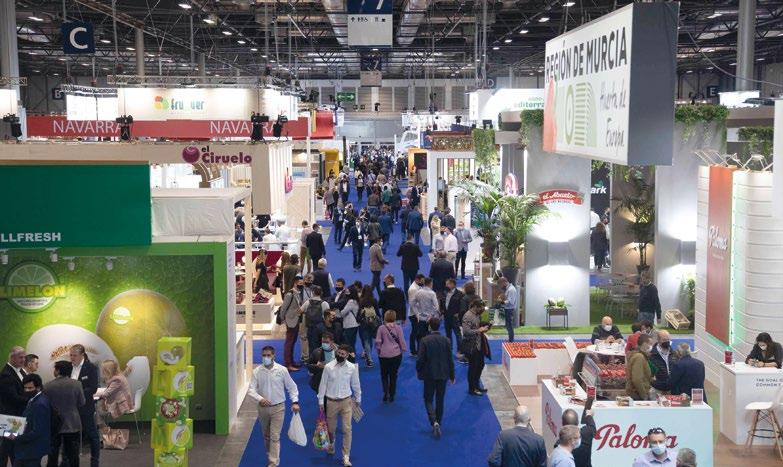
Lamayor cita internacional del sec tor, organizada por IFEMA MADRID y FEPEX, ha logrado en esta edición batir todos los récords con la par ticipación de 1.800 empresas expositoras de 55 países, la previsión de asistencia de 90.000 profesionales de 130 países, y la ocupación de más de 58.000 metros cua drados de superficie expositiva.
En total serán 8 pabellones, lo que supone un incremento de ocupación del 38% con respecto a la pasada edición, además de superar los parámetros prepandémicos de 2019. Un crecimiento que se deriva también de la incorporación de nuevas empresas, cuyo peso supera el 19% del total de participación.
Unos datos altamente positivos que ponen de manifiesto el creciente interés del sector de frutas y hortalizas por participar del mayor centro de negocio del sector, y su respaldo por impulsar Fruit Attraction como palanca fundamental de interna cionalización, y punto de encuentro del conjunto de los profesionales que integran toda la cadena de suministro.
La gran potencia de España como líder mundial del mercado hortofrutícola se de jará sentir en la participación nacional con la presencia de la práctica totalidad de las comunidades autónomas productoras de frutas y hortalizas del país, confirmando a Fruit Attraction como una herramienta eficaz para la generación de oportunida des de negocio y para el acceso a nuevos mercados internacionales.
En cuanto a su impacto en la participación internacional, en esta ocasión cuenta con la representación de 55 países, lo que confirma a Fruit Attraction como el evento comercial clave para la producción, comercialización y distribución mundial. A la potente participación europea con presencia de em presas de Francia; Italia; Países Bajos; Reino Unido; Bélgica; Portugal; Polonia o Alemania, se suma la entrada de la parti cipación agrupada de Serbia, y de otros países como Colom bia; Estados Unidos; Corea; Perú; Chile; Sudáfrica o India, y el aumento de la
Andalucía, Región Invitada
Una de las novedades de la Feria será la incorporación de la figura de Región Invi tada. Una acción que se estrena en esta edición con Andalucía, y que representa una gran oportuni dad y una excelente ocasión para poten ciar a la región como referente mundial hortofrutícola.
Esta figura de Región Invitada que arranca en 2022, nace con la finalidad de consoli darse en los próximo años, con el objetivo de reforzar la visibili
Fruit Attraction Fruittoday 12
Fruit Attraction
capital
Madrid vuelve a convertirse en capital mundial hortofrutícola
la celebración de la 14ª edición de Fruit Attraction El programa de compradores internacionales tiene una gran acogida, con la presencia de 700 compradores de 70 países diferentes
dad de las distintas comunidades autóno mas y, sobre todo, de mostrar la diversidad de la producción española.
En esta ocasión, Andalucía cobrará un destacado protagonismo y una visibilidad estratégica para la promoción al mundo entero de la riqueza hortofrutícola de todas las provincias y la extraordinaria calidad de sus producciones.
Áreas específicas
En esta ocasión, a las ya reconocidas áreas Fresh Produce, que vuelve a regis trar la mayor representación, con un 70% de la oferta, e Industria Auxiliar, con el 30%, se suma Fresh Food Logistics.

Fruit Attraction vuelve a apostar por las soluciones de transformación a través de la innovación, de la sostenibilidad y de la digitalización con el Área Smart Agro -pro ductos innovadores que apliquen tecnolo gías de la información al sector hortofrutí cola-, y Biotech Attraction -investigación y desarrollo tecnológico en agrobiología/ biotecnología vegetal- y Ecorganic Market.
Por otro lado, The Innovation Hub –en el nexo de los pabellones 8 y 10, con cerca de 50 productos- y Foro Innova son las áreas dedicadas a la innovación y novedades empresariales en el sector
Centro de conocimiento para el sector
El completo programa de jornadas técni cas hace de la Feria el gran centro de co nocimiento del sector hortofrutícola, con unas sesiones caracterizadas por la gran diversidad de contenidos, así como por el alto nivel de los participantes y ponentes.
Entre las sesiones, destacan algunas orga nizadas por FEPEX como “Líneas públicas de financiación de gastos e inversiones en investigación e innovación en el sector de frutas y hortalizas”, en colaboración
con el grupo FI Group, y “La nueva PAC en el sector de frutas y hortalizas a partir de 2023”, que se celebrarán el miércoles 5 de octubre por la tarde, así como la relativa al “Nuevo Reglamento de Uso Sostenible de Productos Fitosanitarios: complejo, poco realista y con impacto directo en la agricultura europea”, el jueves 6 de octu bre por la mañana, en colaboración con AEPLA.
De la misma manera, Fruit Attraction será marco de otras jornadas como el III Fresh Food Logistics Summit, así como Biofruit Congress, Biotech Attraction 2022: Bio tecnología e innovación para la agricultura del futuro, y el VI Congreso Grape Attrac tion, entre otras.
Por supuesto, la gran cita del sector dará cabida a la sección Factoria Chef, que re presenta el espacio gastronómico dentro de Fruit Attraction con atractivas demos traciones y showcookings.
Este año, la feria también será escenario de la entrega del premio al ganador del II Concurso de Podcast Fruit Attraction: relatos de #agroinspiracion, en apoyo a nuevos formatos de comunicación dentro del sector agroalimentario. Además, se entregarán los XII Premios Periodísticos de APAE y de Fruit Attraction dedicado éste último a medios internacionales de reconocido prestigio en el sector horto frutícola.
Fruit Attraction 2022: world horticultural capital
Madrid is once again the world fruit and vegetable capital thanks to the 14th Fruit Attraction fair
The sector’s largest international event, organised by IFEMA MADRID and FEPEX, has managed to break all records this year with the participation of more than 1,800 exhibiting companies from 55 countries, a forecasted attendance of 90,000 professionals from 130 countries, and the occupation of more than 58,000 square metres of exhibition space. There will be a total of 8 pavilions, which is a 38% increase in occupation compared to last year, in addition to surpassing the prepandemic parameters of 2019. An increase that is also derived from the incorporation of new companies, whose weight exceeds 19% of total participation.
This highly positive data highlights the growing interest on the part of the fruit and vegetable sector for participating in the sector’s largest business centre, and its support for promoting Fruit Attraction as an essential tool of internationalisation, and a meeting place for all professionals making up the entire supply chain.
Spain’s great potential as a world leader in the fruit and vegetable market will be felt in its national participation, with the presence of practically all Spanish autonomous regions that produce fruit and vegetables. This confirms Fruit Attraction as an effective tool for generating business opportunities and accessing new international markets.
In relation to its impact on international participation, 55 countries are represented this year, which confirms Fruit Attraction as a key commercial event for global production, marketing, and distribution. In addition to the strong presence of European companies from France, Italy, the Netherlands, United Kingdom, Belgium, Portugal, Poland and Germany, there is the clustered participation of Serbia, and of other countries such as Colombia, the United States, Korea, Peru, Chile, South Africa and India, and an increase in African participation, especially form Kenya, Guinea, and Ivory Coast.
Purchasing programme
One of Fruit Attraction’s main objectives is providing a platform for international promotion and expansion. In this regard, IFEMA MADRID, with the collaboration of the Ministry of Agriculture, Fisheries and Food, and ICEX, is once again investing strongly in
the Programme of International Guests, which is bringing to Madrid 700 purchasers from 70 countries, directors of retail purchasing, importers, and wholesalers that add a special energy to the fair’s business. In addition to his programme, there is the “Guest Importer Country,” which features the United Arab Emirates, Saudi Arabia, Vietnam, and Canada this year.
Andalusia, Guest Region
One of the fair’s new features is the Guest Region. An initiative that starts with Andalusia, being a wonderful opportunity and excellent occasion for promoting the region as a global leader in the fruit and vegetable sector.
The Guest Region feature that is beginning in 2022 was created with the idea of being consolidated in upcoming years, with the objective of enhancing the visibility of different autonomous regions in Spain and, above all, highlighting the diversity of Spanish production.
This year, Andalusia will enjoy special prominence and strategic visibility for the worldwide promotion of the outstanding fruit and vegetables grown in all its provinces, and the extraordinary quality of its produce.
Specific areas
On this occasion, in addition to the well-known areas of Fresh Produce, which again enjoys the greatest representation, with 70% of the products on offer, and Auxiliary Industry, with 30%, there is also Fresh Food Logistics.
Fruit Attraction is once again committing itself to transformation solutions by means of innovation, sustainability, and digitalisation with the Smart Agro Area –innovative products that apply information technologies to the fruit and vegetable sector– and Biotech Attraction –technological research and development in plant agrobiology/ biotechnology– and Ecorganic Market.
On the other hand, The Innovation Hub –in the nexus of Pavilions 8 and 10, with close to
50 products– and Foro Innova are the areas devoted to innovation and new business initiatives in the sector
Knowledge centre for the sector
The complete programme of technical seminars makes the fair a great knowledge centre for the fruit and vegetable sector, featuring sessions characterised by a large variety of content, as well as the high level of its participants and speakers.
The sessions that stand out include some organised by FEPEX such as “Public finance schemes of expenditure and investment in research and innovation in the fruit and vegetable sector,” in collaboration with the FI Group, and “The new CAP in the fruit and vegetable sector from 2023 onwards,” which will be held on Wednesday, October 5, in the afternoon, as well as the one dealing with “New Regulations on the Sustainable Use of Phytosanitary Products: complex, not very realistic and with a direct impact on European agriculture,” on Thursday, October 6, in the morning, in collaboration with AEPLA.
Fruit Attraction will likewise be the venue for other events such as the 3rd Fresh Food Logistics Summit, as well as the Biofruit Congress, Biotech Attraction 2022: Biotechnology and innovation for the agriculture of the future, and the 4th Grape Attraction Congress, among others.
Of course, the sector’s main event will also have room for the Factoria Chef section, which is Fruit Attraction’s gastronomic space featuring attractive demonstrations and cooking shows.
This year, the fair will also feature the awarding of the 2nd Fruit Attraction Podcast Competition prize: stories of #agroinspiration, in support of new communication formats within the food and agriculture sector. In addition, the 12th APAE and Fruit Attraction Journalism Prizes will also be handed over, with the latter being devoted this year to internationally renowned media in the fruit and vegetable sector.
Fruit Attraction
The podcast competition was created to support new communication formats
Fruit Attraction Fruittoday 14
Estrellas de Internet: todos los finalistas
Con un récord de participación que no se había visto en las ediciones anteriores, el jurado ha tenido una ardua tarea para elegir a los mejores
Las Estrellas de Internet ya van por su XII Edición y no han perdido ni un ápice el sentido por el que se crearon, fomentar el marketing online entre las empresas del sector hortofrutícola.
En un ambiente digital tan cambiante, las compañías se encuentran cada año con nuevos retos a la hora de comunicar y poder llegar a sus clientes y al consumidor final. La competencia es abrumadora.
A través de estos galardones, la revista Fruit Today magazine intenta premiar su esfuerzo y dar a conocer al resto del sec tor los proyectos que se realizan, animan do al resto a aportar su granito de arena. Entre todos, es más fácil dar a conocer las maravillas de las frutas y hortalizas.
Un año más, contamos con el patrocinio de Euro Pool System y Proexport y la cola boración de Fruit Attraction y Fepex.
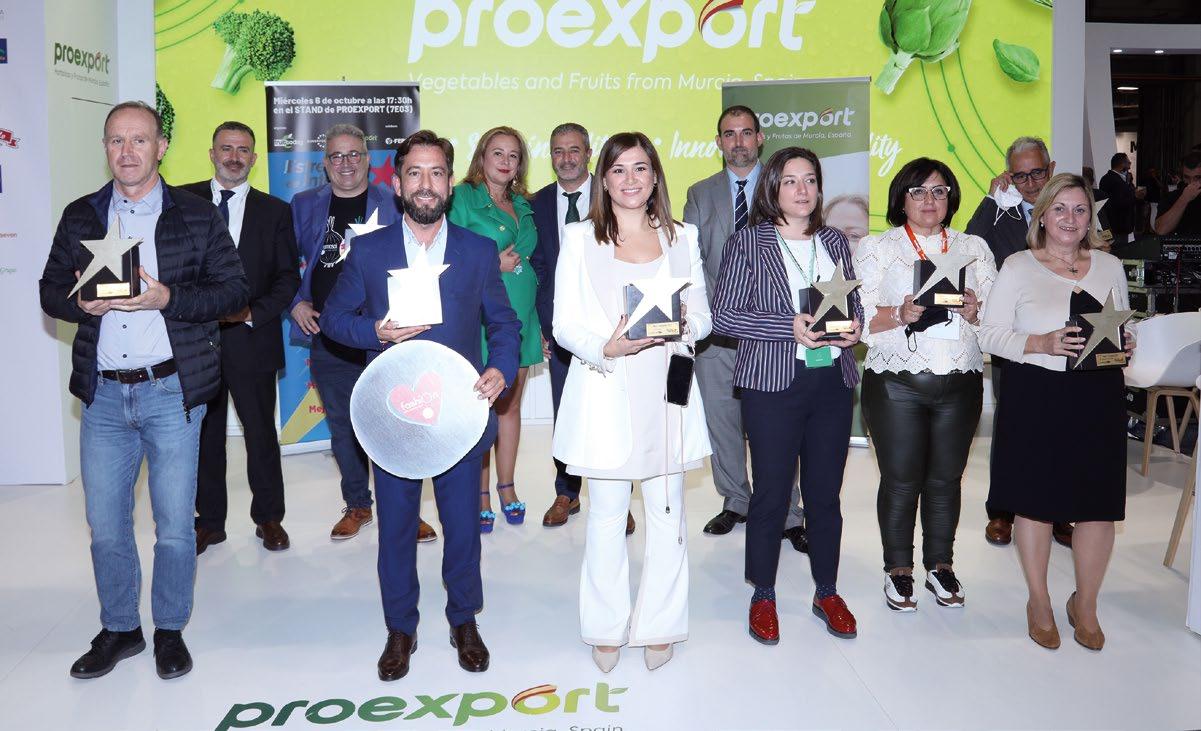
En esta edición 2022, los finalistas de los Premios Estrellas de Internet son:
MEJOR TWITTER
Uvas Doce, +Brócoli, Campo de Lorca Cricket, Reyes Gutiérrez, Mandarina Orri y Manzana Livinda.
MEJOR FACEBOOK
Nunhems, Bonnysa, Melones el Abuelo, Primaflor, Reyes Gutiérrez y Bouquet Ysi de Anecoop.
MEJOR INSTAGRAM
Sandía Fashion, Cítricos Campal, Única Fresh, Kimitec, Zespri y 5 al Día
MEJOR YOUTUBE
Comercial Peregrín, Novagric, Grupo Anecoop, DO Granada de Elche, Manzana Livinda y LoveKlabaza.
MEJOR WEB
Brio Fruits, Agrodolores, Cítricos La Paz, Induser, Fruits Ràfols y Grupo G’S.
MEJOR E-COMMERCE
Amefruits, Naranja Salvaje de Iberhanse, Frutas Eloy, Única Fresh, Manzanas de Soria y Trops.
MEJOR BLOG
Vicente Peris, Ilerfred, Melones el Abuelo, The Natural Fruit Company, Zespri y Man zanas Envy.
MEJOR CAMPAÑA
‘Más que un melón’ de Melones el Abuelo, ‘Tan frescos que sorprenden’ de Primaflor, ‘Raciones de Vida para el Campo’ de Anecoop, ‘El sabor de los que saben’ de Europlátano, ‘Ama a tu media calabaza’ de LoveKlabaza y ‘Las chuches de Uvasdoce’ de Uvas Doce.
MEJOR EMPRESA
Bonnysa, Belsan, Vicente Peris, Uvas Doce, Comercial Peregrín y Sakata.
Fruit Attraction Fruittoday 18
El Jurado que nos acompaña en esta andadura está formado por:
Mario Sánchez, tecnólogo alimentario especializado en seguridad alimentaria y nutrición. Creador de contenidos en Se fiFood a través de su canal de YouTube y diferentes medios de comunicación como RTVE, Eroski Consumer o Vitónica. Ade más, es CEO de la agencia de comunica ción y divulgación científica Destakando, donde también imparte formación en estas temáticas.


Anna Mayer nació en Italia, pero lleva más de 25 años establecida en España. En 2009 crea Panepanna, un proyecto de divulgación gastronómica alrededor de la cocina italiana y desde 2010 trabaja en Guitián Mayer, desarrollando proyectos alrededor de la gastronomía con produc tores, instituciones y hostelería. Colabora con El Comidista y Forum Gastronòmic entre otros.
César Brito, periodista, creador de conte nido y podcaster. Cuenta con casi quince años de experiencia en el mundo de la co municación. Está especializado en mar keting digital, redes, estrategia social y branding. Genera material para empresas con perspectiva inbound, ofrece asesoría y consultoría en innovación, digitalización y nuevos formatos.
Estrellas de Internet: all the finalists

With a record participation not seen in previous editions, the jury has had a difficult task to choose the best
The Estrellas de Internet are now celebrating their 12th Edition and the reason for their creation is still completely valid: promoting online marketing amongst companies in the fruit and vegetable growing sector.
In an ever-changing digital environment, companies are finding new challenges every year when communicating and being able to reach their clients and end consumers. The competition is overwhelming.

Through these awards, Fruit Today magazine attempts to reward their effort and inform the rest of the sector about the projects being carried out while encouraging others to do their bit. It is easier to inform about the marvels of fruit and vegetables if we all do it.
Once again this year we have been sponsored by Euro Pool System and Proexport, along with the collaboration of Fruit Attraction and Fepex.
At this 2022 edition, the finalists for the Estrellas de Internet Awards are:
BEST TWITTER: Uvas Doce, +Brócoli, Campo de Lorca Cricket, Reyes Gutiérrez, Mandarina Orri and Manzana Livinda.
BEST FACEBOOK: Nunhems, Bonnysa, Melones el Abuelo, Primaflor, Reyes Gutiérrez and Bouquet and Ysi by Anecoop.
BEST INSTAGRAM: Sandía Fashion, Cítricos Campal, Única Fresh, Kimitec, Zespri and 5 al Día
BEST YOUTUBE: Comercial Peregrín, Novagric, Grupo Anecoop, DO Granada de Elche, Manzana Livinda and LoveKlabaza.
BEST E-COMMERCE: Amefruits, NaranjaSalvaje de Iberhanse, Frutas Eloy, Única Fresh, Manzanas de Soria and Trops.
BEST BLOG: Vicente Peris, Ilerfred, Melones el Abuelo, The Natural Fruit Company, Zespri and Manzanas Envy.
BEST CAMPAIGN: ‘Más que un melón’ by Melones el Abuelo, ‘Tan frescos que sorprenden’ by Primaflor, ‘Raciones de Vida
para el Campo’ by Anecoop, ‘El sabor de los que saben’ by Europlátano, ‘Ama a tu media calabaza’ by LoveKlabaza and ‘Las chuches de Uvasdoce’ by Uvas Doce.
BEST WEBSITE: BrioFruits, Agrodolores, Cítricos La Paz, Induser, FruitsRàfols and Grupo G’S.
BEST COMPANY: Bonnysa, Belsan, Vicente Peris, Uvas Doce, Comercial Peregrín and Sakata.
The Jury accompanying us on this journey is formed by:
Mario Sánchez, a food technologist specialising in food safety and nutrition. A content creator on SefiFood through his YouTube cannel and different media, such as RTVE, Eroski Consumer or Vitónica. He is also the CEO of the communication and scientific dissemination agency Destakando, where he also gives classes on these subjects.
Anna Mayer was born in Italy, but she has been living in Spain for over 25 years. In 2009, she created Panepanna, a gastronomic communication project about Italian cuisine, and since 2010 she has been working at Guitián Mayer, developing gastronomy projects with producers, institutions and the hotel and catering trade. She collaborates with El Comidista and Forum Gastronòmic, amongst others.
César Brito, a journalist, content creator and podcaster. He has almost fifteen years of experience in the communication world. He is specialised in digital marketing, networks, social strategy and branding. He generates material for companies with inbound perspective, offering assessment and consulting services in innovation, digitalization and new formats.
Fruit Attraction Fruittoday 20
‘ESTRELLAS DE INTERNET’ AWARD CEREMONY Wednesday, 5th October – 5.30 pm Proexport’s Stand (7E03) Fruit Attraction > > > Entrega de las ‘Estrellas de Internet’ Miércoles 5 de octubre 17:30h Stand de Proexport (7E03)

Agromark se suma a la V gama
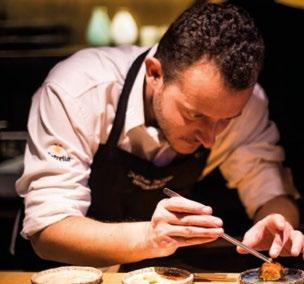
De la mano del chef Nacho Doménech, con experiencia en el mejor restaurante el mundo, el Noma, la firma murciana Agromark se lanza a la conquista de la V gama
y dar con una empresa para que produzca nuestros productos a maquila.
Contamos con la colaboración y la gran experiencia de Jean Michel Beranger que nos está ayudando con el proyecto y una firma como Naturvega, de absoluta confianza, que elabora los productos con nuestra materia prima y recetas.
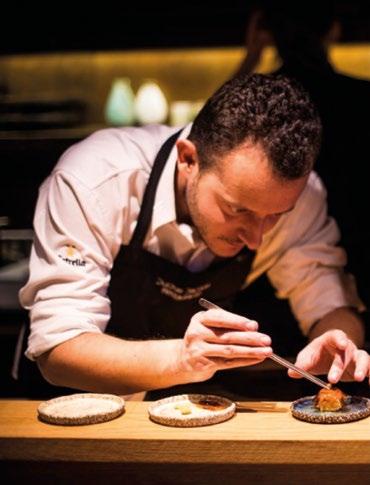
También contamos con Nacho Doménech, chef de reconocido prestigio, que ha tra bajado de la mano de Albert Adrià y hasta muy hace muy poco tiempo era chef en el Noma, el mejor restaurante del mundo. Nacho ha elaborado las primeras recetas y tiene muchas más ideas que poco a poco iremos poniendo en marcha.
¿Qué va a diferenciar los productos de Agromark del resto que ya existen en el mercado?
Y creemos que el consumidor, a pesar de la inflación, siempre está abierto a probar productos nuevos y sanos, a pesar de que pueda suponer un ligero esfuerzo.
¿Me puede explicar las características de cada uno de ellos en particular? Sus porcentajes de producto, su vida útil y su conservación…
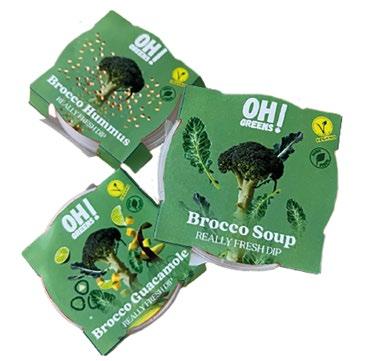
En esta primera fase lanzamos tres referencias 3 referencias. La primera es una crema de brócoli en la que utilizamos todas las partes del mismo. Este producto lleva únicamente brócoli, agua, sal y aceite de oliva virgen. Es decir, es un alimento 100% natural sin ningún tipo de conser vantes ni aditivos. Se comercializa en un formato de 400 gramos de polipropileno y es un envase reciclable.
Una empresa enfocada desde hace varias generaciones al producto en fres co con grandes resultados, ¿en qué mo mento y por qué decide dar el salto hacia productos elaborados en quinta gama?
Efectivamente, somos una empresa ligada a la comercialización en fresco y esta actividad implica descartar muchos kilos de producto dañado por un golpe o por no cumplir los calibres exigidos por los clientes. Dicho esto, la calidad del produc to es exactamente igual que la del que se comercializa en fresco, aunque no su forma o tamaño.
El segundo motivo es la propia evolución social y las nuevas tendencias de los mercados. Cada vez la gente dispone de menos tiempo para co mer, se cocina menos en casa y se consumen más productos de V gama.
¿Cuánto tiempo se ha invertido en este desarrollo y cuáles han sido las etapas?
Llevamos volcados con el proyecto apro ximadamente 6 meses. En una primera etapa estuvimos volcados en encontrar a alguien con experiencia en la industria ali mentaria para que nos ayudara a lanzarlo
La particularidad de nuestros productos es que son 100% naturales, sin ningún tipo de conservantes ni aditivos, totalmente frescos. En este sentido, podemos afirmar que somos pioneros porque no existe actualmente nada que se parezca a lo que hemos desarrollado.
Nutricionalmente hablando son muy salu dables y tiene un alto contenido en fibra.
¿Cuál será el target de público al que vayan dirigidos? ¿Se pretende ‘hacer marca’ o por el contrario será MDD o ambas cosas?
El público al que va dirigido es aquel que quiere cuidarse, comer sano y probar cosas nuevas. Nuestra idea es hacer marca para posicionar OH GREENS! con la mayor penetración posible, pero cada supermer cado funciona de una manera distinta y las exigencias son diferen tes.
En los momentos económicos que vive toda Europa, ¿cree que es el tiempo adecuado para presentar este tipo de productos? ¿Será un segmento de alto precio?
La situación actual es crítica e inestable, la subida de la luz y del gasoil junto a la sequía provocan una cierta inseguridad a la hora de cultivar productos de I gama. Frente a ello, la V gama garantiza más es tabilidad y los márgenes son más altos.
El segundo producto es un hummus de brócoli, realizado con un 35% de garbanzo y todos los ingredientes que conlleva un hummus y para terminarlo le añadimos brócoli ligeramente escaldado que le aporta frescura y clorofila. Se presenta en tarrinas de 150 gramos de polipropileno y reciclable.
El ultimo producto y más complejo a desa rrollar, es un guacamole de brócoli y como su propio nombre indica lleva un porcen taje de aguacate y floreta de brócoli, zumo de limón, picante… El envase tiene un peso de 150 gramos y su material es polipropile no; por supuesto siempre reciclable.
Todos nuestros productos están elabora dos para poder conservarse fácilmente, entre 0 y 4 º, con una vida útil de entre 50 y 60 días.
Tenemos en la recámara muchos más proyectos que verán la luz en los próximos meses de la mano del chef Nacho Do ménech, todos ellos en la misma línea de productos sanos y sostenibles.
Fruit Today habló con Alfonso Domé nech, director comercial de Agro mark.
Nacho Doménech
Fruit Attraction Fruittoday 22
Los tres productos que presenta Agromark tienen como base el brócoli y una caducidad de entre 50 y 60 días
Agromark is joining the ready-cooked food market
Alongside Chef Nacho Domenech, with experience at Noma, the best restaurant in the world, the company from Murcia, Agromark, is leaping in to conquer the ready-cooked food market
Fruit Today spoke with Alfonso Doménech, commercial director of Agromark.
For a company that has been very successfully focusing on fresh produce for several generations, when and why was the decision made to move into prepared products in the ready-cooked food market?
Indeed, we are a company linked to marketing fresh produce, and this activity means discarding many kilos of produce damaged by impacts or because it does not reach the calibres demanded by clients. Having said this, the quality is exactly the same as the produce marketed fresh, although it may not have the same shape or size.
The second reason is the social evolution itself and the new market trends. People have less and less time to eat; they cook less at home and eat more ready-cooked products.
How much time has been invested in this development, and what were the stages involved?
We have been immersed in the project for about 6 months. In the first stage, we had to find someone with experience in the food industry who could help us to launch it and a company to produce our products externally.
We can rely on the collaboration and great experience of Juan Michel Beranger, who is helping us with the project, and the completely trustworthy company Naturvega, which is preparing the products using our raw materials and recipes.
We are also collaborating with Nacho Domenech, a highly prestigious chef, who has worked alongside Albert Adria
and until very recently he was a chef at Noma, the best restaurant in the world. Nacho has prepared the first few recipes and he has many more ideas that little by little we will start to prepare.
What is going to differentiate Agromark’s products from those already on the market?
The particularity of our products is that they are 100% natural, without any type of preservatives or additives, completely fresh. Accordingly, we can affirm that we are pioneers because at present there is nothing similar to the products we have developed.
Nutritionally speaking, they are very healthy and they have a high fibre content.
What target group will they be aimed at? Is the idea to ‘create a brand’ or, on the other hand, will it be MDD or both?
The target group will be people who want to look after themselves, eating healthily and trying new things. Our idea is to create a brand to position OH GREENS! with the greatest penetration possible, but each supermarket works differently and the demands are different.
Do you think it is the right time to present this type of product, due to the economic problems being experienced in Europe at present? Will it be a high-priced segment?
The current situation is critical and unstable, the rise in electricity and fuel prices along with the drought are causing insecurity when
growing fresh produce. Compared to this, ready-cooked products guarantee more stability and the profit margins are higher.
And we believe that consumers, in spite of inflation, are always open to trying new, healthy products, although this might mean a slight effort.
Can you explain the characteristics of each of them in particular? Product percentages, shelf-life and conservation…
In this first phase we are launching three references. The first is a cream of broccoli in which we use all of it. This product only includes broccoli, water, salt and virgin olive oil. That is to say, it is a 100% natural food, without any type of preservative or additive. It is marketed in a 400 gram polypropylene format, and the container is recyclable.
The second product is broccoli hummus, made using 35% chickpeas and all the ingredients included in a hummus and, to finish it off, we add lightly blanched broccoli that brings freshness and chlorophyll. It is presented in recyclable polypropylene tubs of 150 grams.
The last, most complicated product to develop is a broccoli guacamole, which, as its name implies, has a percentage of avocado and broccoli sprouts, lemon juice, a touch of chilli… The container weighs 150 grams and it is made of polypropylene, which is obviously always recyclable.
All our products are prepared to be able to be kept easily, between 0º and 4º C, with a shelf-life of between 50 and 60 days.
We have many more projects in the pipeline that will appear over the next few months by the hand of Chef Nacho Domenech, all of them in the same line of healthy, sustainable products.
 Fruit Attraction
The company is already working on the development of new recipes with Chef Nacho Domenech’s know-how, who is endorsed by his time at Noma, the best restaurant in the world
The three products presented by Agromark have a broccoli base and an expiry date of between 50 and 60 days
Nutritionally speaking, they are very healthy
El clima deslocaliza la sandía
altos”. A ojos de la sociedad, la fruta del verano ha sido la metáfora de la inflación, pero como opina Joaquín Hidalgo, “la rea lidad es que es la única fruta que se podía comprar. La de hueso ha estado a 3€/kg”.
Grupo
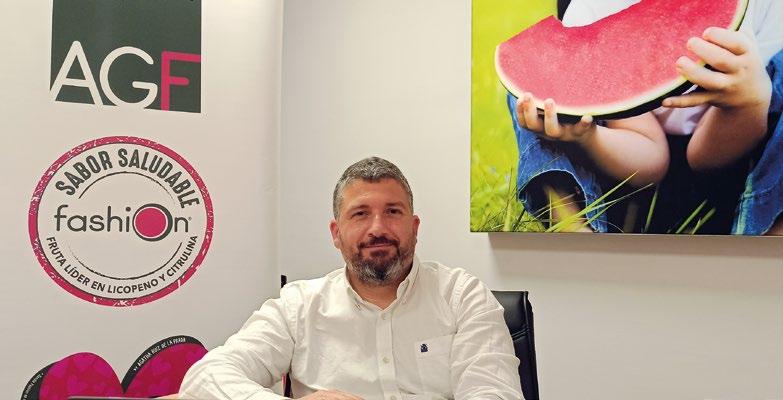
AGF recordará 2022 como el año en que su reconocida marca, Sandía Fashion, cumplió 20 años (lo celebran en Fruit Attraction), pero también como el año de la inflación y en el que comenzó su nueva estrategia para adaptarse a una dificultad que, sin duda, seguirá de plena vigencia en los próximos 20 años, el calentamiento global.
Para Joaquín Hidalgo, coordinador general de Grupo AGF-Sandía Fashion, en los próxi mos años será imprescindible adaptarse rápido a los cambios que se van a producir. “Es prudente diversificar. Nosotros no vamos a hacerlo porque trabajamos solo la sandía, pero sí queremos buscar nuevas zonas de producción para adaptarnos al cambio climático”, adelanta a Fruit Today. Su estrategia pasa por buscar fincas con una altitud adecuada para cada etapa de la campaña, desde el nivel del mar a los 600700 m de La Mancha, una tarea cuyo factor limitante es la disponibilidad de agua. “La sandía necesita un salto térmico entre día y noche, no le vienen bien noches tropica les con 28 grados”.
menor que en 2021 debido, en buena parte, a unas temperaturas altísimas. Hemos vivido una situación extraña, con más de manda que oferta, la sandía ha estado muy cara y los precios en el lineal han sido muy
Nada más cerrar la campaña, el equipo de Sandía Fashion se apresta a planificar la siguiente. Una tarea que este año será más compleja. “La teoría dice que, con los buenos precios de este año, los agricul tores plantarán más sandía en 2023. Pero nos damos de bruces con el cambio cli mático. Tenemos la sequía más severa en Europa en 500 años, con temperaturas sin precedentes en muchas zonas. Hay que encontrar el equilibrio entre crecimiento y disponibilidad de agua”. En este sentido la planificación es fundamental. “Yo llamaría a hacer un análisis de las circunstan cias: ¿son reproducibles? El año pasado a finales de agosto estábamos labrando los campos por falta de demanda, espe cialmente en Europa y este año se está vendiendo absolutamente todo”
Vaivenes
El sector cierra la campaña con rendimien tos bajos, un 30-40% menos de produc ción (30% en el caso de Fashion respecto a sus previsiones) y +35% de costes (es pecialmente significativo el +200% de la luz). “El volumen de sandía ha sido mucho
The AGF Group will remember 2022 as the year when their famous brand, Fashion Watermelon, reached its 20 year anniversary (they will celebrate it at Fruit Attraction), but also as the year of inflation and when it started its new strategy to adapt to a difficulty which, without any doubt, will remain valid over the next 20 years, global warming.
For Joaquín Hidalgo, the General Coordinator of AGF Group – Fashion Watermelon, over the next few years fast-moving adaptation to the changes that are going to occur will be essential. “It is wise to diversify. We are not going to do this because we only work with watermelons, but we do want to look for new production areas to adapt to climate change,” he advances to Fruit Today. His strategy involves looking for farms with suitable altitudes for each stage of the campaign, from sea level to the 600-700 m of La Mancha, a task where the limiting factor is the availability of water. “Watermelons need a thermal leap between day and night; they don’t like tropical nights with temperatures of 28 degrees.”
Fluctuations
The sector is ending the campaign with low yields, between 30-40% less production
(30% in the case of Fashion compared to the forecasts) and a 35% rise in costs (the +200% of electricity being particularly significant). “The volume of watermelons was much lower than in 2021, to a large extent due to the very high temperatures. We have experienced a strange situation, with greater demand than supply. Watermelons have been very expensive and the prices in the supermarkets have been very high.” Today’s society has chosen summer fruit as a metaphor for inflation, but according to Joaquín Hidalgo, “the truth is that it is the only fruit that people could afford. Stone fruit reached prices of 3€/kg”.
As soon as the campaign ends, the Fashion Watermelon team start to plan the next one. A task that will be more complicated this year. “Theory says that, with this year’s good prices, farmers will plant more watermelons in 2023. But we are up against climate change. We are suffering from the harshest drought in Europe over the last 500 years, with unprecedented temperatures in many areas. A balance must be found between growth and availability of water.” On this point, planning is essential. “I would call for an analysis of the circumstances to be done: are they reproducible? Last year at the end of August we were ploughing out the fields due to a lack of demand, particularly in Europe, and this year everything is being sold.”
En su 20 aniversario Sandía Fashion se lanza a la búsqueda de nuevas áreas de producción en España para afrontar los problemas del calentamiento global Weather conditions mean relocating watermelons
On its 20th anniversary, Fashion Watermelon is leaping into the search for new production areas in Spain to face up to the problems generated by global warming
Joaquín Hidalgo
Fruit Attraction
Fruit Attraction Fruittoday 24
Reto: buscar fincas a altitud adecuada y con disponibilidad de agua

Un año más, Primaflor presenta sus novedades
Laúltima novedad de Primaflor sigue con su compromiso en innovación y en línea de la estrategia de Soste nibilidad de Primaflor 2030, donde busca reducir el uso masivo de plásticos en 4ª gama.
Dos referencias clásicas y muy demanda das en el mercado, como son la ensalada Mezclum y Gourmet presumirán de este nuevo envase 100% sostenible.
La característica principal de esta nove dad es su envase 100% sostenible (biode gradable y compostable), fabricado a base de plantas, que ayuda a disminuir nota blemente la huella de carbono. Se trata, además, de un envase más resistente y duradero, que permite mantener mejor el frescor del producto, siendo reaprovecha ble en su totalidad y biodegradable, ya que se convierte en abono al desintegrarse con el medio ambiente, lo que reduce la huella de carbono y evita el uso no racional de plástico, contribuyendo a una economía circular.
Este nuevo envase 100% sostenible que comercializa Primaflor, bajo su denomi nación comercial Mimaflor, no deja ningún residuo tóxico y se degrada mucho más rápido que otros tipos de materiales sostenibles, limitando así la explotación descontrolada de materias primas.
Estos envases cuentan con el Certificado Sostenible FSC, ya que está compuesto de materiales forestales respetuosos con el Medio Ambiente, procedentes de bosques gestionados de forma sostenible.
Primaflor también expondrá otra de sus últimas novedades, una gama de ensa ladas frías y completas con legumbres: Ensalada Mezclum con guisantes y Mezclum con lentejas.
Estas dos novedosas referencias se dis tinguen del resto ya que son una opción saludable, que cubre las necesidades del mercado, aportando una alternativa al consumo de legumbres, en frío. Son platos equilibrados, con bajo contenido en grasas y azúcares. Opciones sanas, ligeras y sabrosas, para consumir donde y cuando quieras, ya que incluyen un tenedor en su interior. Ideales para mantener una dieta equilibrada sin necesidad de cocinar, estas ensaladas son también fuente de fibra y proteínas y están envasadas en rPET (Plás tico reciclado y reciclable).
La feria será también el escenario per fecto para presentar la nueva imagen de todas las referencias de ensaladas, salsas y complementos de la marca Mimaflor, que a través de un restyling realizado en el último año, se ha trabajado con el objetivo
de crear una marca global más amable y respetuosa con el medioambiente, así como una unificación total de packaging y personalización por familias y tipologías, que ayuda al consumidor facilitando su elección en los lineales.
Once again, Primaflor is presenting its latest developments
At F. Attraction the company from Almeria, Primaflor, will present its new salad format with 100% sustainable packaging
Primaflor’s latest development continues with its commitment to innovation and in line with the Primaflor 2030 Sustainability strategy, where it seeks to reduce the mass use of plastic for fresh-cut produce.
Two classic references that are very popular on the market, such as the Mezclum and Gourmet salads, will boast this new 100% sustainable packaging.
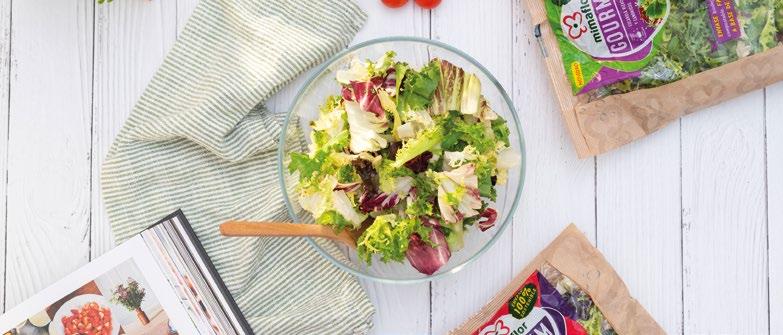
The main characteristic of this new development is the 100% sustainable packaging (biodegradable and compostable), using a plant-based product, which helps to decrease the carbon footprint significantly. It is also a more resistant and longer lasting packaging, which allows the freshness of the produce to be improved, as well as being completely usable and biodegradable, as it turns into compost when it disintegrates with the environment, reducing the carbon footprint, preventing the non-rational use of plastic and contributing to a circular economy.
This new 100% sustainable packaging marketed by Primaflor, using its commercial name Mimaflor, leaves no toxic residue and it decomposes much quicker than other types of sustainable materials, therefore limiting an unbridled use of raw materials.
This packaging holds the FSC Sustainable Certificate, as it is made up of
Environmentally-friendly forestry materials from sustainably managed forests.
Primaflor will also display another of its latest new developments, a range of cold, complete salads with legumes: Mezclum Salad with dried peas and Mezclum with lentils
These two new references distinguish themselves from the rest as they are a healthy option which covers the market requirements, bringing a consumption alternative for legumes, in a cold dish. They are balanced dishes, with low fat and sugar content. Healthy, light and tasty options, for eating when and where you want, as they include a fork. Ideal for maintaining a balanced diet without having to cook, these salads are also a source of fibre and protein, and they are packaged in rPET (Recycled and recyclable plastic).
The trade fair will also be the perfect setting to present the new Mimaflor brand image for all their salads, sauces and complements, which has seen a restyling carried over the past year, aimed at creating a more respectful, environmentally-friendly global brand, as well as a total unification of packaging and personalisation according to families and typologies, which helps consumers when making their choices on the supermarket shelves.
En F. Attraction la empresa almeriense Primaflor presentará su nuevo formato de ensalada con envase 100% sostenible
Fruit Attraction
Fruit Attraction Fruittoday 26



El dicho de Maradona que puede impulsar al agro
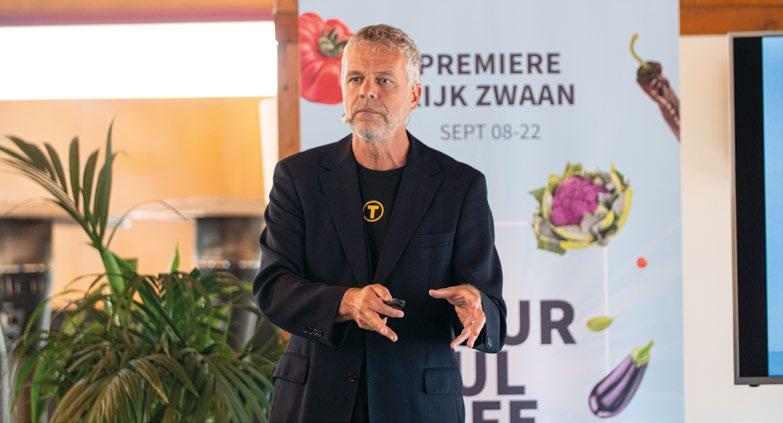
El experto en Marketing y CEO de TOTEM Branding, Andy Stalman, explicó ‘Por qué la marca importa para el sector de frutas y verduras’ en la Premiére de Rijk Zwaan
generaciones más jóvenes (con permiso de Tik Tok).
Si el sector quiere que, como dice Enrique Colilles, CEO de Trops, “este sea el año del despegue del ‘branding’ en frutas y hor talizas”, debe apostar por la marca y ser consciente de que es vital invertir ahora, y no esperar a que ‘se le escape la tortuga’. Porque “las condiciones ideales no exis ten”, dijo Stalman.
“Ya vislumbramos la metamorfosis del sec tor. Y lo único transformador es la acción”. Para ello, anima a seguir el ‘Modelo de la gallina’: COcreación, Colaboración, Cons trucción, Cooperación. “Todo esto llevará al COÉXITO”.
¿Marca o mercancía?
¿Asu empresa “se le escapó la tortu ga”? Este dicho argentino que popu larizó el futbolista Diego Maradona se refiere a alguien lento a quien se le escapan oportunidades de las manos de la forma más inverosímil. Al experto en Marketing y CEO de TOTEM Branding, Andy Stalman (conocido como Mr. BrAnd yng), le gusta usarlo para arrojar luz sobre la importancia de la comunicación y el marketing, y la repitió en la charla ‘Por qué la marca importa para el sector de frutas y verduras’, en la Premiére de Rijk Zwaan previa a Fruit Attraction.
Aprender a comunicar y emocionar al consumidor es una necesidad imperio sa para el sector agrícola, sobre el que recaen numerosos mitos y ‘fake news’, de los que Ricardo Ortiz, Business Manager de Rijk Zwaan, destacó tres: “dicen que las frutas y hortalizas no saben a nada; que son caras; y el sector es sospechoso de todo: contaminar el agua, usar químicos, transgénicos… En el sector comunicamos muy mal y somos el lobby más débil de la alimentación”.
O estás en Instagram, o no existes
Durante su charla, Andy Stalman recordó una frase que le dijo Enrique de los Ríos, ge rente de Unica: “Aproximadamente el 98% frutas y hortalizas van sin branding. Tene mos capacidad, pero nos falta voluntad”.
Para que una empresa hortofrutícola pue da ponerse en el mapa y llegue al consu midor, necesita una marca que la diferen cie. Y como ejemplo mencionó a Sweet
Palermo, el producto más emblemático de Rijk Zwaan. “Hoy en día la gente quiere consumir experiencias. Y la experiencia es cómo te hacen sentir”. Por ello recomienda hacer a la gente parte de nuestras histo rias y tener un enfoque experiencial, huyendo del ‘commodity’.
“Si paso de ‘commo dity’ a marca estoy en Instagram. Si estoy en Instagram, me recomiendan. Si me recomiendan, la gente me compra. Ergo, voy a aumentar las ven tas”, resumió Stalman. Precisamente esta red social es una de las preferidas por las
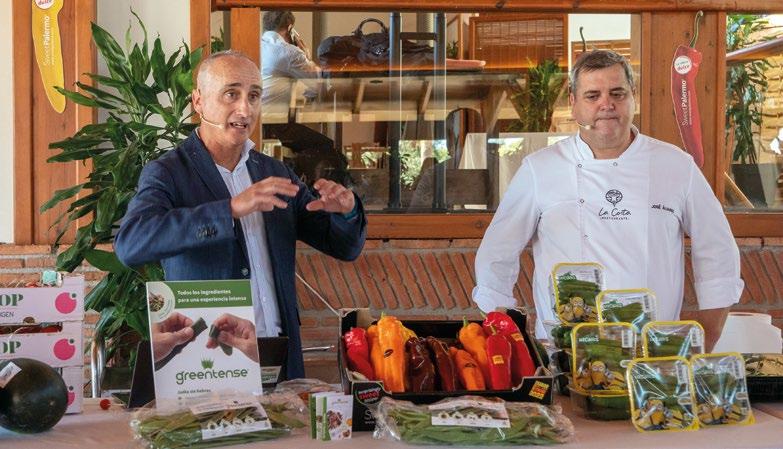
Tras la charla, Ricardo Ortiz animó a las empresas a aplicar estas enseñanzas en Fruit Attraction. “Nosotros desarrollamos semillas, inspiramos... pero las obtentoras no deberíamos ser las únicas que dina micemos la comuni cación. Si no somos marca, somos mercan cía”. Acto seguido, dio comienzo un ‘showcoo king’ con Jose Álvarez, chef del Restaurante La Costa, con una estrella Michelin, y Al berto Cuadrado, Chain Manager de Rijk Zwaan, donde dieron a conocer las novedades y conceptos que llevarán a la
Andy Stalman
Alberto Cuadrado y José Álvarez
Fruit Attraction Fruittoday 30
feria. El acuerdo con Universal y Minions impulsa un 30-40% las ventas de MyCubies
Diferenciación
La primera novedad es Maui, un melón dulce y con notas cítricas con el que Rijk Zwaan pretende generar nuevas oportunidades de consumo fuera del postre por su amplia versatilidad. El chef José Álvarez comentó que marida perfectamente con sardinas en vinagre, foie…
En tomate, tienen varias novedades de sabor premium. Dos en formato pequeño: Deliquia RZ y Reddery RZ, ideal para consumo en fresco y elaboraciones como un Bloody Mary. En calibre más grande, el rosa TY-12 RZ, con el que Rijk Zwaan quiere recuperar el consu mo de tomate de ensalada. Disponible los 12 meses, se puede encontrar con las marcas Tip-Top, comercializado por Ametller, y en Galicia como Riquiño.
Alberto Cuadrado aseguró que “nuestro objetivo es aumentar el consumo de pepino”. Y para ello han asociado la marca My Cubies a los Minions. “Tras el acuerdo con Universal, las ventas en los lineales han aumentado un 30-40%”. Para los niños, estos personajes animados son un reclamo, y cuando prueban el pepino, repiten por su sabor dulce, textura crujiente y piel fina.
Con la mini microsemillas Corellana RZ, primera del concepto Candy Ball, Rijk Zwaan ofrece una sandía muy productiva, compe titiva, de gran sabor y más asequible para el consumidor final”.
Con una trayectoria más larga, estarán la Lechuga Snack, las judías sin hebras Gre enTense y la gama de pimiento cónico extra dulce Sweet Palermo, con la que “estamos cambiando el mercado”.
Gastro-ruta y premio Michelin
Elisabet Expósito, Marketing Specialist, explicó las acciones que va a llevar a cabo la empresa en Fruit Attraction, como una ruta gastronómica por diferentes stands de em presas ‘partner’ y un concurso cuyo premio será una experiencia en un restaurante de 3 Estrellas Michelin.
The saying by Maradona that could boost agriculture
The marketing expert and CEO of TOTEM Branding, Andy Stalman, explained ‘Why brand matters for the fruit and vegetable sector’ at of Rijk Zwaan’s Premiére
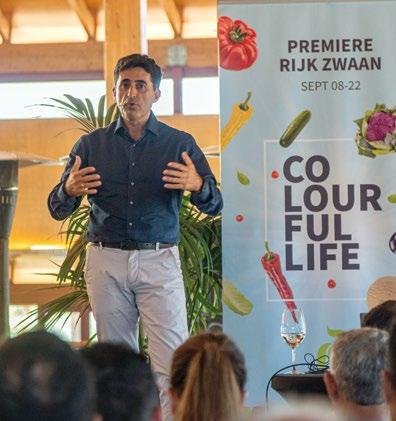
Has your company “let its tortoise get away”? This Argentinean saying that was made popular by the footballer Diego Maradona refers to someone slow, who lets the opportunities slip by them in an a most implausible way. The expert in marketing and CEO of TOTEM Branding, Andy Stalman (known as Mr. BrAndyng), likes to use it to shed light on the importance of communication and marketing and he repeated it in his talk ‘Why brand matters for the fruit and vegetable sector,’ at Rijk Zwaan’s Premiére, prior to Fruit Attraction.
Learning to communicate and to excite consumers is an imperious need for the agricultural sector, on which many myths and fake news fall, of which Ricardo Ortiz, Business Manager at Rijk Zwaan, underlined three: “they say that fruit and vegetables have no taste; they are expensive; and the sector is suspected of everything: polluting the water, using chemicals, transgenics… In the sector, we communicate very badly, and we are the weakest food lobby.”
You are either on Instagram or you don’t exist
During his talk, Andy Stalman recalled a sentence that Enrique de los Rios, Manager of Unica, used: “Approximately 98% of fruit and vegetables are not branded. We have the capacity, but not the will.”
In order for a fruit and vegetable company to be able to position itself on the map and reach consumers, it needs a brand that differentiates it. And as an example he mentioned Sweet Palermo, Rijk Zwaan’s most emblematic product. “Today people want to consume experiences. And experiences are what make you feel.” For this reason, he recommends making people part of our stories and using an experience focus point, moving away from the commodity.
“If I go from commodity to brand, I am on Instagram. If I am on Instagram, people recommend me. If they recommend me, people purchase me. Therefore, I am going to increase sales,” Stalman summarised. This social media network is precisely one of the favourites of the younger generations (with TikTok’s permission).
If the sector wants, as Enrique Colilles, CEO of Trops, states, “this to be the year when fruit and vegetable branding takes off,” it must opt for branding and be aware that it is essential to invest now and not wait until “the tortoise gets away.” Because “ideal conditions do not exist,” Stalman explained.
“We are beginning to glimpse the sector’s metamorphosis. And action is the only transformer.” To do this, he encourages the “Chicken model’ to be followed: CO-creation, Collaboration, Construction, Cooperation. “All of this leads to CO-SUCCESS.”
Brand or goods?
After the talk, Ricardo Ortiz encouraged companies to apply these lessons at Fruit Attraction. “We develop seeds, we inspire… but the plant breeders should not be the only ones who make communication more dynamic. If we are not a brand, we are just goods.” Following this, a show-cookingdisplay started with Jose Álvarez, chef from the Restaurante La Costa, winner of one Michelin star, and Alberto Cuadrado, Chain Manager of Rijk Zwaan, where the information about the latest developments and concepts that they will take to the trade fair was given.
Differentiation
The first new development is Maui, a sweet melon with citric notes with which Rijk Zwaan hopes to generate new consumption opportunities apart from a dessert, due to its extensive versatility. Chef José Álvarez commented that it pairs up perfectly with sardines in vinegar, foie…
In tomatoes, they have several premium flavour varieties. Two in a small format: Deliquia RZ and Reddery RZ, ideal for eating fresh and in preparations such as a Bloody Mary. In a larger size, there is the pink tomato TY-12 RZ, with which Rijk Zwaan wants to recover salad tomato consumption. Available 12 months of the year, it can be found with the Tip-Top brands, marketed by Ametller, and in Galicia as Riquiño.
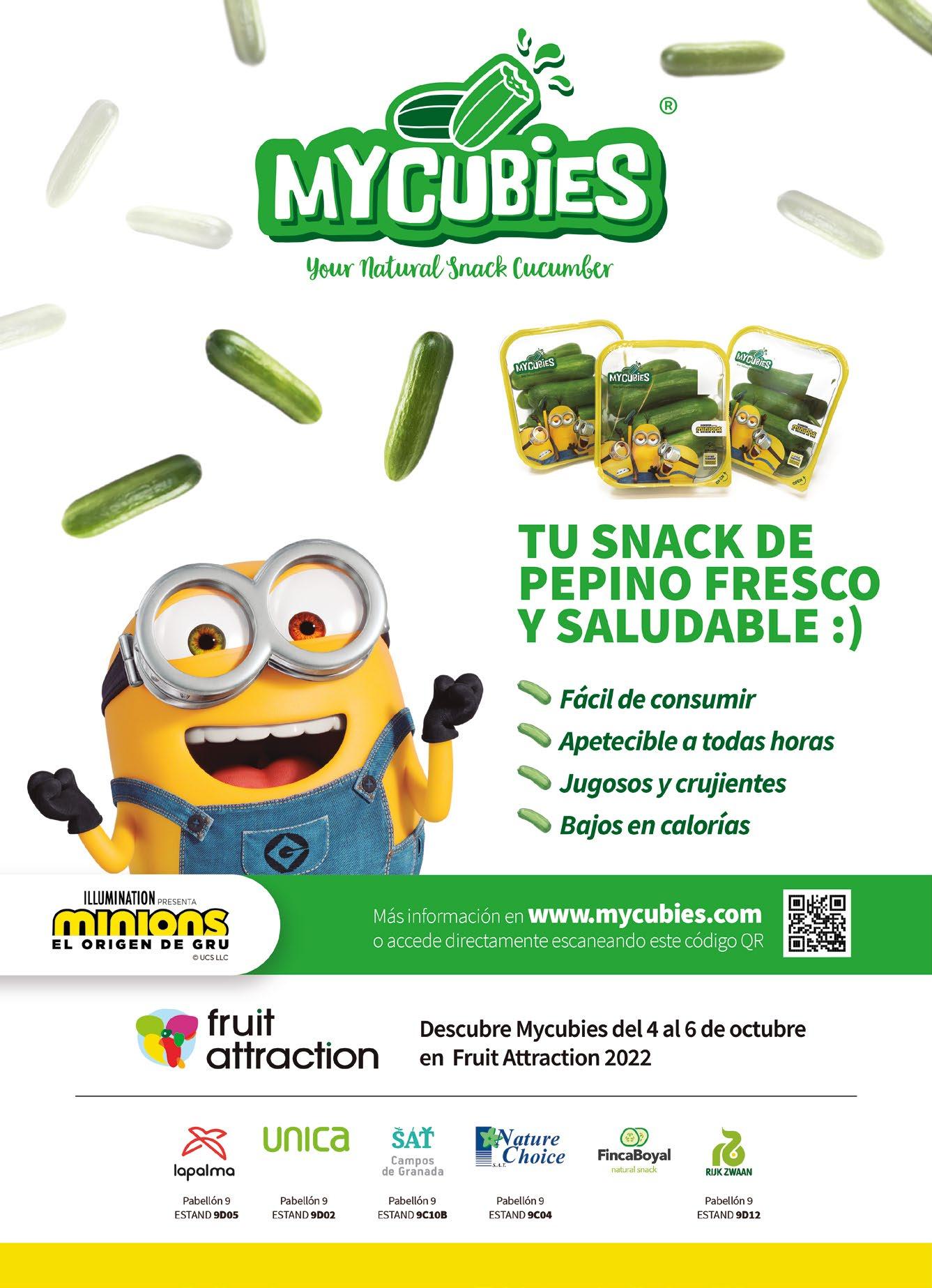
Alberto Cuadrado affirmed that “our goal is to increase cucumber consumption.” And to do this they have associated the MyCubies brand with the Minions. “After an agreement with Universal, supermarket sales have increased by 30-40%.” For children, these cartoon characters are a claim and once they have tried the cucumbers, they eat them again due to their sweet flavour, crunchy texture and thin skin.
With the mini, micro-seed watermelon, Corellana RZ, the first Candy Ball concept, Rijk Zwaan is offering a highly productive, competitive watermelon, with great flavour and very reasonably priced for end consumers.”
With a longer history are Snack lettuces, string-free beans GreenTense and the range of extra sweet conical peppers Sweet Palermo, with which “we are changing the market.”
Gastro-route and Michelin prize
Elisabet Expósito, Marketing Specialist, explained the actions that the company is going to carry out at Fruit Attraction, such as a gastronomic route around different stands belonging to partner companies and a competition with the prize of an experience in a 3-star Michelin restaurant.
Fruit Attraction
Ricardo Ortiz
The agreement with Universal and the Minions is boosting MyCubies sales
Bonnysa, siempre innovando
Dip
de Remolacha y Brocoli Mole, son las dos novedades que la empresa con sede en Alicante va a presentar aprovechando el marco de Fruit Attraction. Desde 2006, cuando inició su andadura con el tomate rallado fresco, Bonnysa no ha dejado de sorprendernos con sus innovaciones en productos de IV y V gama, tal y como ya hizo con la Saborsa da®, una versión vegetal de la sobrasada, el dip de alcachofa que presentaron el año pasado, o su gama de guacamole.
El dip de remo lacha es un untable, que va bien tanto para mojar, como para usar en recetas. Su principal atrac tivo, es el color. Llamativo a más no poder y aunque
no seas un ferviente seguidor de la remolacha le das una oportunidad. Es muy versátil para darle un toque de color a un humus, preparar una tosta o simplemente acompa ñar un pescado como parte de guarnición / salsa.
El brócoli mole supone una nueva vuelta de tuerca a su ya completa gama de guacamoles (original, de autor, picante, con espi rulina) donde unen dos super alimentos en un mismo producto. Desde la firma aseguran que es un gua camole con brócoli. Que sabe a guacamole pero que tiene un punto especial, tanto en vista, como en textura y, por su puesto, en sabor. La intención de Bonnysa con este producto es hacer más divertido el consumo de
Bonnysa, constant innovation
Beetroot Dip and Broccoli Mole are the two new developments that the company based in Alicante is going to present, taking advantage of the setting of Fruit Attraction. Since 2006, when it started its journey with fresh grated tomato, Bonnysa has continuously surprised us with its innovation in freshcut and ready-cooked products, as it did with its Saborsada®, a vegetable version of sobrassada, the artichoke dip they presented last year or its guacamole range.
The beetroot dip is a spread, which is good for both dipping and for using in recipes. Its main attraction is its colour. Incredibly eye-catching and although you might not be
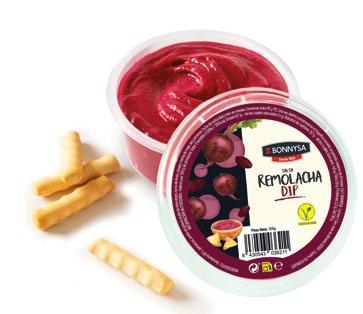
a great fan of beetroot, it encourages you to give it a chance. It is very versatile for giving a touch of colour to hummus, preparing a savoury toast or just to accompany a fish dish as part of a garnish/sauce.
Broccoli mole is another twist to its already complete range of guacamoles (original, signature, spicy, with spirulina) where it brings together two super foods in a single product. Sources at the company affirm that it is a guacamole with broccoli. It tastes of guacamole, but it has a special touch, both visually and textually and, of course, in its flavour. Bonnysa’s intention with this product is to make vegetables more fun to eat,
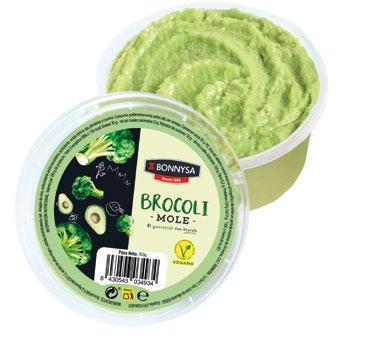
vegetales, promoviendo el movimiento “fast Good” donde atien den a la demanda de los consumido res de productos saludables pero muy sabrosos y con cero añadidos.
En Bonnysa saben que las necesidades de los consumi dores han cambiado, que hoy en día prima la salud y que se buscan recetas saludables, preferentemente vegetales, pero sin olvidar la comodidad.
En su stand de la feria (3D01) contarán con una cocina en directo, como en otras ediciones, para mostrar a todo el que se pase por allí las diferentes maneras de utilización de sus productos. También podrán degustar tanto las novedades de este año como los productos que ya son más conocidos.
promoting the “Fast Good” movement, where they are serving consumers with healthy, but very tasty products, with nothing added.
At Bonnysa they know that consumer requirements have changed. Nowadays health is a priority and they are looking for healthy, preferably vegetable recipes, but without putting convenience to one side.
On its stand (3D01) at the trade fair, they will have show-cooking, as at other editions, to show visitors the different ways to use their products. Both this year’s new developments and products that are already well-known will be available for tasting.
La firma valenciana presentará en Fruit Attraction sus últimas novedades, que este año son untables vegetales
The Valencian company will present its latest developments at Fruit Attraction: this year vegetable spreads
Fruit Attraction
Fruit Attraction Fruittoday 32
El pabellón francés bate récords
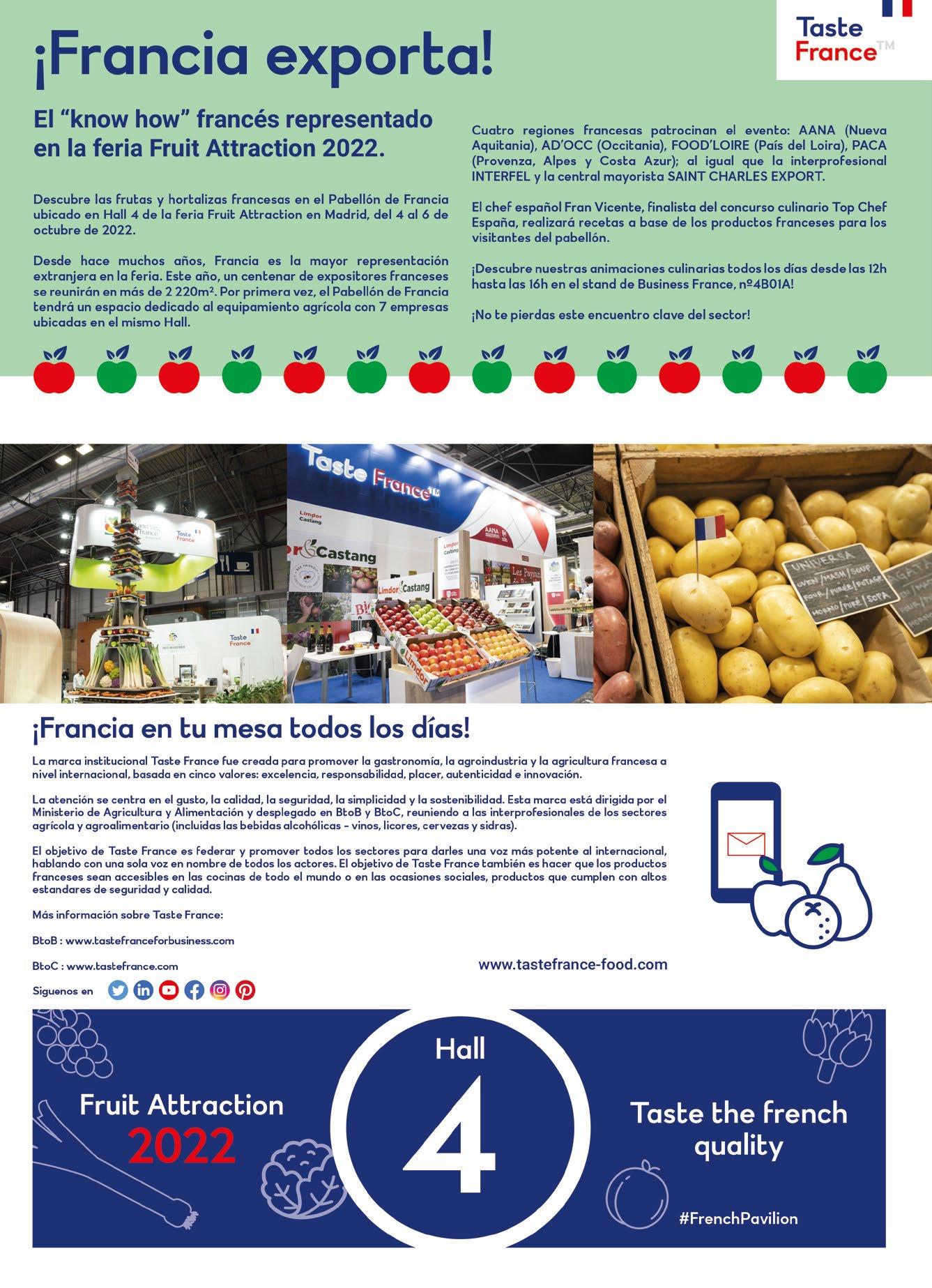
Francia ocupará 2.200 m² y acogerá a más de 100 expositores de frutas y hortalizas
Conel fin de facilitar el contacto entre los profesionales españoles y los expositores del pabellón de Francia, Business France, organi zador del pabellón de Francia, ha creado una página web para concertar citas antes y durante la feria. También existe un nuevo catálogo, disponible en versión impresa en el stand 4B01A del Hall 4 y en versión digi tal (http://businessfrance.jpm-associes. com/fruit-attraction-2022), que clasifica a los expositores por categoría de producto.
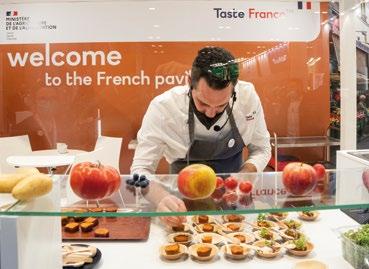
Se realizarán también degustaciones y exhibiciones culinarias en el stand, lo que permitirá a los visitantes obtener más información sobre la ventaja competitiva de las frutas y hortalizas francesas.
Otro pabellón de Francia, especializado en equipamiento se encontrará también en el Hall 4.
124 expositores
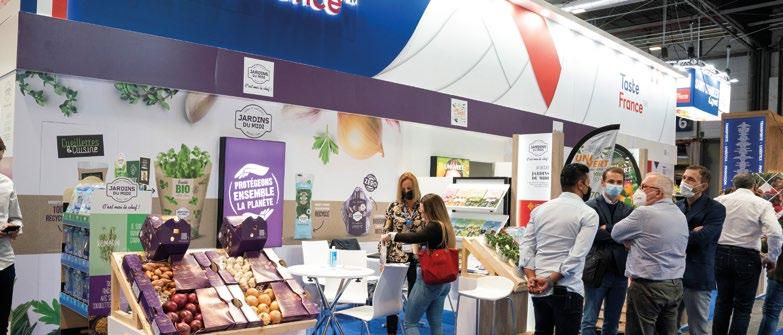
Todo tipo de verduras, de hoja, de tallo... tubérculos, bulbos, fruta de pepita, de hueso, de cáscara, frutos rojos, cítricos, frutas tropicales, estarán representados por 124 expositores en el pabellón de Fran cia, bajo la marca Taste France.
El pabellón de Francia contará con la participación de la Agencia Alimentaria de Nueva Aquitania (AANA), la región Pro vence-Alpes-Cote d’Azur (PACA), Sur de Francia y Food’Loire, el mercado de mayo ristas de Perpiñán (Saint-Charles Export) y la Asociación Interprofesional de Frutas y Hortalizas de Francia (Interfel).
Datos de interés
Francia es el cuarto productor europeo de frutas y hortalizas frescas excluyendo la patata, detrás de España, Italia y Polonia, pero sigue siendo el líder europeo en la producción de productos como la manza na, la nuez, el albaricoque y la coliflor.
El país galo se situó en 2021 como cuarto proveedor de frutas de España a nivel mundial con 168 964 T y exporta principal
mente plátanos (55,3 M EUR y 90 962 T) y manzanas (36,8 M EUR y 41 057 T). Y es el primer proveedor de hortalizas a España, exportó 761 861 T en 2021 por un valor de 211 M EUR. Los principales productos son patatas frescas (671 840 T) y judías verdes (33 581 T).
Taste France
Lanzada en 2020, Taste France es la marca que promociona la gastronomía francesa y todo el ecosistema agrícola y
agroalimentario francés, incluyendo las empresas, los proveedores y la restau ración, cuya misión es unir a todos los actores del sector en torno a sus intereses comunes.
Business France
Es la agencia nacional que se encarga del desarrollo internacional de las empresas y de sus exportaciones, así como de la pros pección y acogida de inversiones interna cionales en Francia.
The French hall is beating records
France will occupy 2,200 m² and will accommodate over 100 fruit and vegetable exhibitors
Aimed at simplifying contacts between Spanish professionals and the exhibitors in the French hall, Business France, its organiser, has created a website to arrange appointments before and during the trade fair. There is also a new catalogue, available in hard copy on stand 4B01A of Hall 4 and in digital format (http://businessfrance.jpmassocies.com/fruit-attraction-2022), which classifies the exhibitors by product category.
Tastings and food displays will also be carried out at the stand, which will allow visitors to obtain more information about the competitive advantage of French fruit and vegetables.
Another French hall, specialising in equipment, can be found in Hall 4.
124 exhibitors
All kinds of vegetables - leaf and stem… tubers, bulbs, pit fruit, stone fruit, shell fruit, red berries, citrus fruit and tropical fruit, will all be represented by 124 exhibitors in the French hall, covered by the brand Taste France.
The French hall will include the participation of the Food Agency of New Aquitaine (AANA), the region of Provence-Alpes-Cote d’Azur (PACA), South of France and Food’ Loire, the wholesale market of Perpignan (Saint-Charles Export) and the Interprofessional Association of Fruit and Vegetables of France (Interfel).
Interesting facts
France is the fourth European producer of fresh fruit and vegetables excluding potatoes, after Spain, Italy and Poland, but it continues to be the European leader in the production of apples, walnuts, apricots and cauliflowers.
In 2021, France was ranked as Spain’s fourth fruit supplier on a global level with 168,964 T and it mainly exports bananas (55,3M EUR and 90 962T) and apples (36,8M EUR and 41 057T). And it is the first supplier of vegetables to Spain: it exported 761,861T in 2021 for a value of 211M EUR. The main products are fresh potatoes (671,840T) and green beans (33581T).
Taste France
Launched in 2020, Taste France is the brand that promotes French gastronomy and the entire French agrifood and agricultural ecosystem, including companies and suppliers, bringing together all the agents in the sector around their common interests.
Business France
This is the national agency that is in charge of the international development of the companies and their exports, as well as the prospecting and reception of international investments in France.
Fruit Attraction
Fruit Attraction Fruittoday 34
Ecoinver cumple 15 años
los materiales y energías similares, lo que volverá a ser una complicación para todos los productores”.
Como novedad, destaca una nueva línea de Tomate Pink Asurcado con un pro ducto mejorado, al igual que el resto de especialidades hortofrutícolas, cada vez más adaptadas a las necesidades de los consumidores y del mercado.
Este
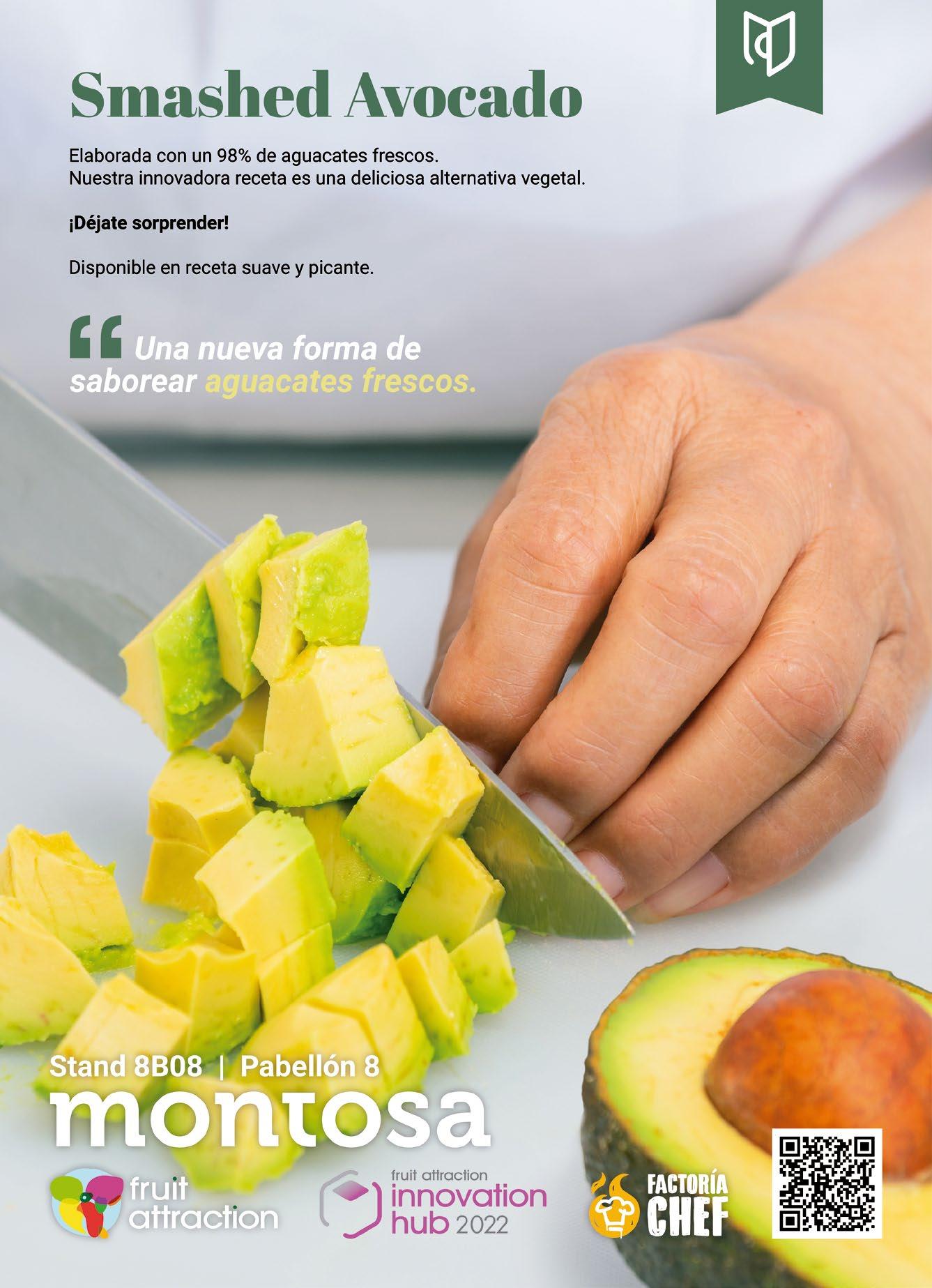
2022 es importante para Ecoinver, ya que cumple 15 años de historia como empresa. Para esta fecha señalada, han decidido acudir por primera vez como expositores a Fruit Attraction. Entre las novedades que van a llevar a este encuentro de referencia en el sector destaca un catálogo mejorado, con especialidades hortofrutícolas perfec cionadas y cada vez más adaptadas a las nuevas tendencias del mercado. Además de Ecoinver Export, también contarán con la presencia de su empresa Ecoinver BIO, constituida a finales de 2021, con la que también presentarán un amplio catálogo de especialidades con certificación eco lógica y biodinámica. Por último, y aunque no es una novedad, también destacarán su marca de pepino mini, MiniGu, con la cual reiteran su firme apuesta por los objetivos de desarrollo sostenibles y por una manera diferente de ofrecer el producto final.
Balance y previsiones
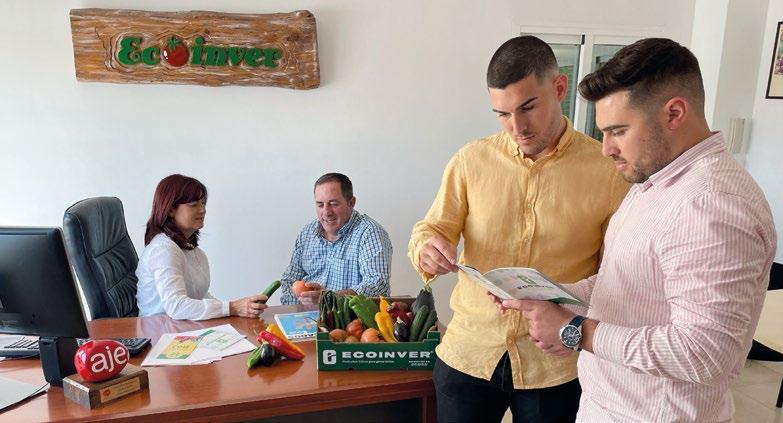
Ismael Segura Martín, gerente de Ecoin ver, hace balance del ejercicio 2021/22. Una campaña “complicada en todos los sentidos. El clima social, sumergido en el conflicto, y el aumento de costes, han hecho que la trayectoria de la campaña se complicara más de lo esperado”. En lo que a cifras respecta, la producción rozó los 30 millones de kilos (más de 8 mill. de su producto estrella, el pepino mini), y supe raron las 250 ha de producción, de las que 190 fueron destinadas a especialidades de pepino como el mini o snack.
A destacar su decidida apuesta por las especialidades (pepino mini, snack, pi miento sweet bite, picantes y tomate rosa asurcado, entre otros), que ya representan más de un 65% de las ventas frente a las tipologías tradicionales.
Salto hacia delante
En 2022/23 la firma incrementará la pro ducción, alcanzando los 45 mill. kg. “Vamos a variar la superficie de todos nuestros productos ya que la empresa está crecien do, al igual que la demanda de nuestros clientes y nuestra capacidad de produc ción. También estimamos una campaña parecida a la anterior, con los precios de
Ecoinver: 15 years of hard work
To celebrate this anniversary, the company is coming to the sector’s benchmark trade fair for the first time
2022 is important for Ecoinver, as it is celebrating 15 years as a company. For this significant date, they have decided for the first time to come as exhibitors to Fruit Attraction. Amongst the new developments they are bringing to this reference meeting in the sector are its upgraded catalogue, with improved fruit and vegetable specialities, increasingly adapted to the new market trends. In addition to Ecoinver Export, Ecoinver BIO will also be present, established at the end of 2021, with which it will also present an extensive catalogue of specialities holding ecological and biodynamic certificates. Finally, and although this is not a new development, they will also give special relevance to their mini cucumber brand, MiniGu, with which they repeat their important commitment to sustainable development goals and a different way of offering the end product.
Summary and forecasts
Ismael Segura Martín, manager of Ecoinver, sums up the 2021/22 financial year. A “complicated campaign in all senses. The social climate, submerged in the conflict and the rise in costs, have meant that the campaign was more complicated than expected.” Regarding the figures, production reached nearly 30 million kilos (over 8
million of the company’s star product, the mini cucumber), and they exceeded 250 ha of product, of which 190 were destined to cucumber specialities such as mini or snack cucumbers.
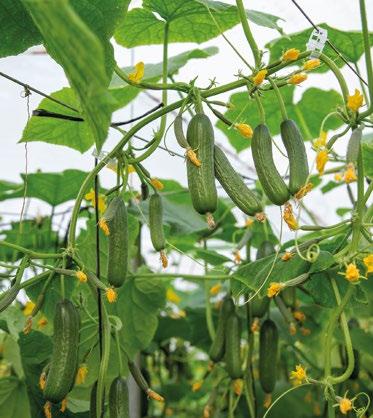
Its categorical commitment to specialities (mini, snack cucumbers, sweet bite, spicy peppers and pink grooved tomatoes, amongst others) should be highlighted, as they represent over 65% of the sales compared to traditional typologies.
A leap forward
In 2022/23 the company will increase production, reaching 45 million kg. “We are going to vary the surface area of all our products as the company is growing, in line with the demand by our customers and our production capacity. We also estimate a campaign similar to the previous one, with similar prices for materials and energy, which will once again cause a complication for all the producers.”
As a new development, a line of Pink Grooved Tomatoes stands out with an improved product, along with the rest of the fruit and vegetable specialities, which are increasingly adapted to consumer and market requirements.
Para celebrarlo, la firma acude por primera vez con stand a la feria de referencia del sector
Fruit Attraction
Fruit Attraction Fruittoday 36

Tres nuevas novedades del Grupo MAF RODA
Lapropuesta de valor de MAF RODA Agrobotic se centra en ofrecer soluciones tecnológicas personali zadas para sus clientes, proyectos completos llave en mano que van desde el despaletizado hasta el paletizado y flejado final, pasando por sistemas de tratamiento, clasificación por calidad externa e interna o confección.
La multinacional sigue apostando por la inversión en I+D de forma constante. Es su motor para poder estar siempre a la cabeza y ofrecer a sus clientes soluciones que mejoran la eficiencia y productividad de las centrales hortofrutícolas.
“Este año presentamos tres grandes nove dades en automatización, robótica y cla
sificación de calidad que suponen un gran salto cualitativo en nuestro catálogo de soluciones tecnológicas”, comenta Chris tophe Blanc, Director General del Grupo. “En primer lugar y siempre con el objetivo de facilitar y hacer más sencillo el trabajo del día a día a nuestros clientes, hemos desarrollado una nueva versión del sof tware de análisis de calidad Globalscan 7. Con este nuevo software el operario podrá ajustar la línea de forma mucho más rápida e intuitiva. El cliente es mucho más autóno mo en este proceso y gana en eficiencia y productividad. Durante la feria, los clientes podrán ver esta nueva funcionalidad en su versión Beta.”
Otro pilar importante, es la gama de maqui naria de confección automática que cubre
desde el llenado a granel hasta el encajado y llenado de cestas o formatos pequeños.
“Otra de las grandes novedades es el robot automático de encajado Fast Pack para melocotón y nectarina. Los robots de encajado son un gran avance en la automa tización del encajado con orientación de la fruta. Especialmente relevante en produc tos como la manzana, con el que llevamos trabajando varios años, y que ahora amplia mos con el melocotón y la nectarina.”
La automatización completa de los almace nes ya es posible con la gestión del trasiego de cajas y pallets mediante AGVs. “Estos vehículos autónomos están especialmente diseñados para las centrales hortofrutíco las, por lo que dan solución a las necesida des específicas del sector”, afirma Blanc.
Three new developments from the MAF RODA Group
These new technological developments are focused on automation, robotics and quality classification
MAF Roda Agrobotic’s value proposal concentrates on offering custom technological solutions for their clients. Complete, turnkey projects that range from de-palletisation to palletisation and final strapping, passing through treatment systems, external and internal quality classification or preparation.
The multinational continues committing constant investment in R&D. This is the driving force to ensure it is always at the forefront and to be able to offer its clients solutions that improve efficiency and productivity in fruit and vegetable preparation plants.

“This year we are presenting three important new developments in automation, robotics
and quality classification that mean a great qualitative leap in our catalogue of technological solutions,” comments Christophe Blanc, the General Manager of the Group. “In the first place and always aimed at aiding and making everyday work easier for our clients, we have developed a new version of the quality analysis software Globalscan 7. With this new software, operators will be able to adjust the production line in a much quicker and more intuitive way. Clients will be much more independent in this process, and they will gain efficiency and productivity. During the trade fair, clients will be able to see this new functionality in its Beta version.”
Another important pillar is the range of automatic preparation machinery that
covers all aspects from bulk filling to boxing and filling of baskets or small formats. Another of the important new developments is the automatic boxing robot Fast Pack, for peaches and nectarines. Boxing robots are a leap forward in box automation aimed at fruit. Particularly relevant for products such as apples, with which we have been working for several years now and which now we are extending to peaches and nectarines.”
Warehouses may be completely automated now with the management of the movement of boxes and pallets using AGVs. “These autonomous vehicles are specially designed for fruit and vegetable preparation centres; therefore, they provide a solution for the sector’s specific needs,” Blanc affirms.
Estas novedades tecnológicas están enfocadas en la automatización, la robótica y la clasificación de calidad
Fruit Attraction
Fruit Attraction Fruittoday 38

Éxito de Koppert en control de pulgón
Su enfoque preventivo y asesoramiento técnico personalizado consiguen frenar la plaga en cultivos protegidos y aire libre
Amplia gama
En su estrategia para el control biológico de pulgón, Koppert ha integrado un com pleto catálogo de soluciones. El uso de enemigos naturales es primordial, junto con plantas refugio y setos vegetales que contribuyen a mantener estables durante todo el año las poblaciones de insectos beneficiosos.
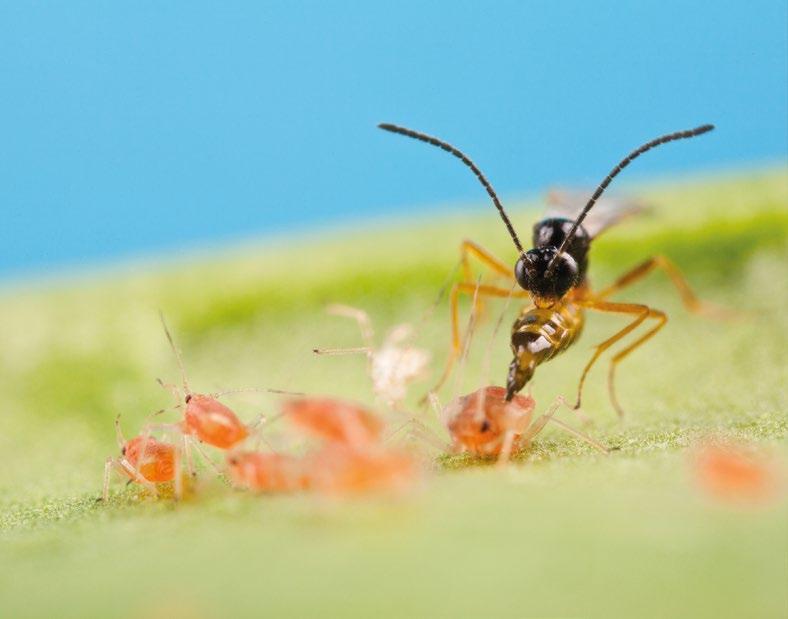
En cuanto a los enemigos naturales contra el pulgón, Koppert apuesta por el empleo de avispas parásitas, que comercializa individualmente o de forma combinada. Un ejemplo de esto último es Aphiscout, con 5 especies de avispas parásitas, que ejerce un control efectivo de la gran mayoría de especies de pulgón.
Lalucha biológica contra el pulgón tendrá una presencia destacada en el stand de Koppert (9F12) en Fruit Attraction. A pesar de que la presión de la plaga crece de forma generalizada en cultivos protegidos y al aire libre, el depar tamento técnico de Koppert ha obtenido excelentes resultados mediante el control biológico.
En la feria, Koppert mostrará los detalles técnicos de su estrategia exclusiva, con un enfoque basado en la prevención y un completo paquete de soluciones biológi cas que ejercen un control efectivo des pués de que la presencia de la plaga haya sido detectada en el cultivo.
Asesoramiento permanente
El enfoque preventivo de Koppert se desa rrolla mediante un asesoramiento técnico personalizado en todo el ciclo. Un factor clave, ya que permite identificar los momen tos más oportunos para realizar las sueltas de cada enemigo natural, en función del
estado de desarrollo vegetal, las condicio nes de la finca y la climatología.
El momento de suelta puede significar la di ferencia entre el éxito y el fracaso. Por ello, su estrategia tiene un enfoque holístico que analiza todos los factores que influyen en el cultivo antes de tomar una decisión.
“Los resultados que hemos obtenido en campo en diferentes zonas del país, tanto al aire libre como en invernadero y bajo malla, ponen de ma nifiesto que el control biológico de diferentes especies de pulgón es una realidad consoli dada y la opción más viable en este momen to para cumplir con los requisitos normativos en vigor, especialmen te en agricultura eco lógica”, explica Antonio Giménez, director técnico de Koppert en España.
Otras avispas parásitas muy eficaces son Aphipar (Aphidius colemani), Ervipar (A. ervi), o Aphilin (Aphelinus abdominalis), especialmente eficaz para control en focos localizados. También destaca la amplia eficacia contra todas las especies de pulgón de Aphidend (Aphidoletes aphi dimyza), un mosquito cecidómido cuyas larvas comen pulgones. Mención especial merece Aphibank, un sistema de plantas refugio para favorecer la presencia de los enemigos naturales del pulgón (parasitoi des y depredadores).
El uso de avispas parásitas se com plementa con el sírfido Predanos trum (Sphaerophoria rueppellii), que ya se ha convertido en una importante solución biológica para llevar a cabo con éxito el control biológico del pulgón en fresa y frutos rojos. Con poco más de 1 cm, esta mosca es un voraz depredador de todas las especies de pulgón y ya está presente en cientos de hectáreas de berries en Huelva.
La presencia de fauna auxiliar, introduci da o espontánea, debe complementarse con microorganismos para mejorar la biodiversidad del suelo. En este sentido, Koppert ha comprobado los importan tes beneficios de TRIANUM®, fungicida biológico que controla las enfermedades provocadas por patógenos y devuelve al suelo su biodiversidad.
TRIANUM® ha demostrado importantes beneficios para mejorar la biodiversidad del suelo
El uso de avispas parásitas y el sírfido Predanostrum ya se aplica en cientos de hectáreas de berries
Aphidius colemani
Fruit Attraction Fruittoday 40
Koppert’s success in aphid control
Its preventive approach and personalised technical assessment manage to stop this pest in protected and open-air crops
The biological fight against aphids will hold a prominent position on Koppert’s stand (9F12) at Fruit Attraction. In spite of the fact that, in general, the pressure of this pest is growing in protected and open-air crops, Koppert’s technical department has obtained excellent results using biological control.
At the trade fair, Koppert will show the technical details of its exclusive strategy, focused on prevention and a complete package of biological solutions that achieve an effective control after the presence of the pest has been detected on the crop.
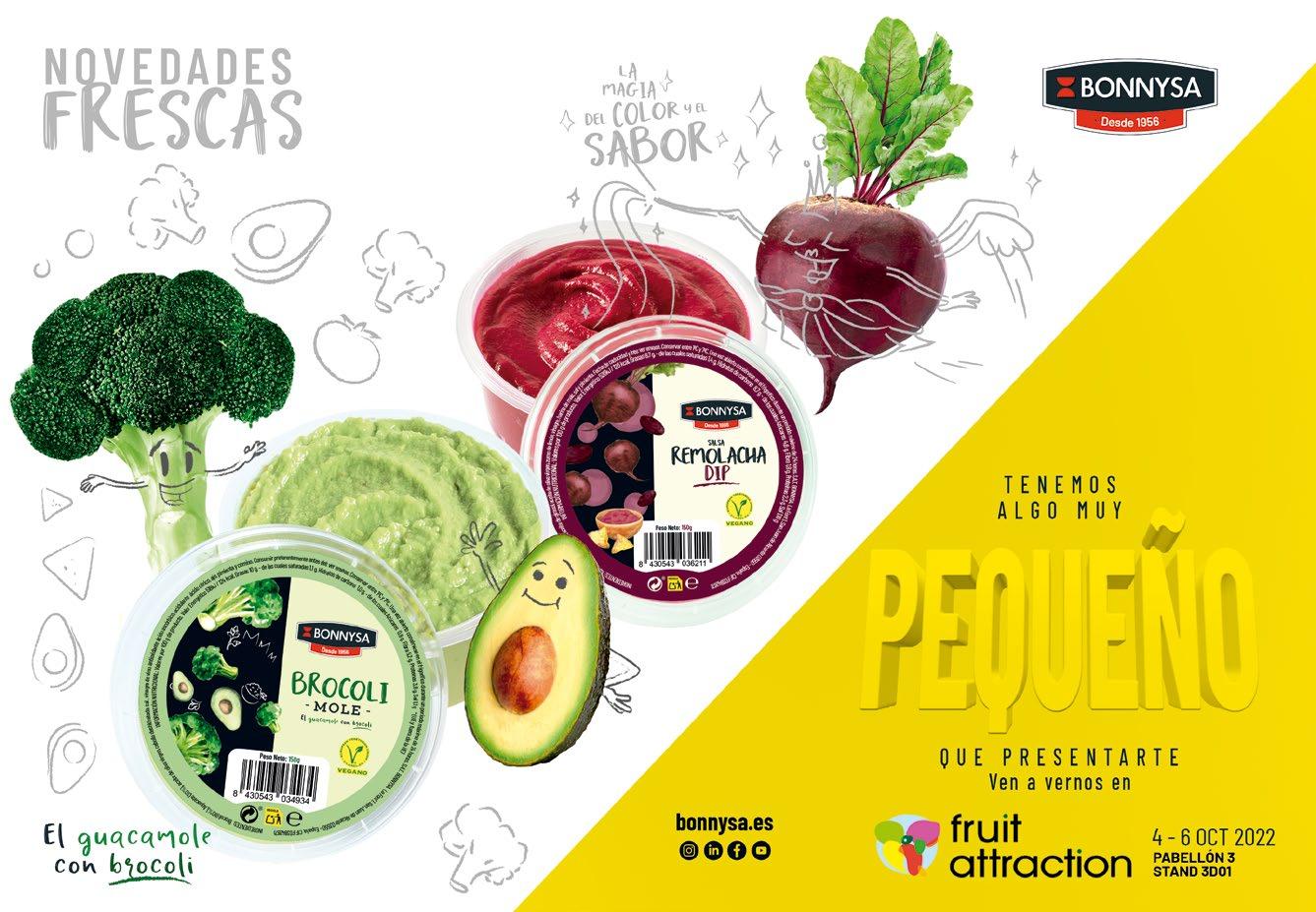
Permanent assessment
Koppert’s preventive approach is developed using personalised technical assessment throughout the entire cycle. This is a key factor, as it allows the identification of the most suitable moments for releasing each natural enemy in terms of the state of vegetable development, the situation of the farm and weather conditions.
The moment of release can mean the difference between success and failure. For this reason, its strategy has a holistic approach
that takes into account all the factors that affect the crop before making a decision.
“The results we have obtained in the fields in different regions around the country, in the open-air, in greenhouses and under mesh, show that the biological control of different aphid species is now a consolidated reality and the most feasible option at present to meet the legislation requirements in force, particularly in ecological farming,” explains Antonio Giménez, the Technical Manager at Koppert in Spain.
An extensive range
In its biological control of aphid strategy, Koppert has integrated a complete catalogue of solutions. The use of natural enemies is paramount, along with refuge plants and vegetable hedges that contribute to keeping the populations of beneficial insects stable all year round.
Regarding the aphid’s natural enemies, Koppert has opted for using parasitoid wasps, which it markets either individually or combined. An example of the latter is Aphiscout, with 5 species of parasitoid wasps, exercising an effective control over most aphid species.
Other highly effective parasitoid wasps are Aphipar (Aphidiuscolemani), Ervipar (A.ervi), or Aphilin (Aphelinusabdominalis), which is particularly effective for controlling localised outbreaks. The extensive effectiveness of Aphidend (Aphidoletesaphidimyza), a cecidomyiidae mosquito or gall midge the larvae of which eat aphids also stands out. A special mention must be given to Aphibank, a system of plant refuges to encourage the presence of the aphids’ natural enemies (parasitoids and predators).
The use of parasitoid wasps is complemented with the hoverfly Predanostrum (Sphaerophoriarueppellii), which has already become an important biological solution for carrying out successful biological control over aphids in strawberries and red berries. With a length of just over 1 cm, this fly is a voracious predator of all aphid species and it is already present in hundreds of hectares of berries in Huelva.
The presence of auxiliary fauna, introduced or spontaneous, must be complemented with microorganisms to improve soil biodiversity. Accordingly, Koppert has confirmed the important benefits of TRIANUM®, a biological fungicide that controls the diseases caused by pathogens and returns biodiversity to the soil.
Attraction
TRIANUM® has shown important benefits for improving soil biodiversity
Fruit
Cooperativa La Palma, 50 años imparables
Sorprende de nuevo en Fruit Attraction 2022 con la celebración de su 50 aniversario
Sin parar de cooperar, innovar, generar riqueza y mejora social. Sin parar de comprometerse con el futuro, con el planeta y las perso nas. 50 años que han impulsado a La Palma, galardonada como mejor Cooperativa Española en la VI edi ción de los Premios de Cooperativas Agro-ali mentarias de España, hacia una auténtica revolución alimentaria, a través de sus inno vadores y extraordina rios productos frescos que no dejan de sorprender al mercado.
En su Plan de Sostenibilidad
2030 hay acciones pioneras como el Proyecto ‘Energía Verde’
de lanza de su apuesta en I+D, compues ta por deliciosas elaboraciones 100% naturales a base de sus productos fres cos, presentadas en innovadores formatos, como Atún rojo vegetal “Tunato®”, Hamburgue sas veganas, Vegetales deshidratados y Salsas vegetales.
Su propósito va mucho más allá: construir una agricultura mejor con la que obtener nuevos productos y concep
Su tomate Amela® ha recibido el premio más prestigioso de la horticultura mun dial: Fruit Logistica Innovation Award 2022. Continúa apostando por su magnífi ca selección de hortalizas de primerísima calidad, con la que son líderes en la gama de Mini-Verdura con una amplia variedad de tomate especialidad, pepino snack y mini-pimiento. Y con nuevas propuestas de tomate de sabor con beneficios nu tricionales. Así como una amplia línea de Subtropicales compuesta por chirimoya, aguacate y mango a la que incorpora pita haya, fruta de la pasión y caviar cítrico.
Además, está inmersa en el desarrollo de la V Gama Premium La Parcela®, punta
tos eficientes, sosteni bles y saludables que satisfagan las nue vas necesidades de alimentación. Para ello avanza en una innova dora estrategia 3S+D bajo las premisas de Sostenibilidad, Salud, Sabor y Digitalización.
Su Plan de Sosteni bilidad 2030 imple menta acciones pio neras en el sector agro español como el Proyecto Energía Verde, centrado en el
aprovechamiento solar para el desarrollo de una energía 100% renovable y eficien te. Éste ha permitido crear un modelo energético descentralizado, justo, efi ciente y colaborativo del que se benefi cian sus más de 700 socios agricultores. Una forma de desarrollar una agricultura más respetuosa, comprometida y solida ria con el reto climático.
Paralelamente, Cooperativa La Palma está centrada en invertir en la moder nización de explotaciones y prácticas agrícolas sostenibles para optimizar su producción. Implementando medidas que garantizan el ahorro hídrico, aprovechamiento de renovables y control biológico.
Cooperativa La Palma, 50 unstoppable years
Another surprise at Fruit Attraction 2022: the celebration of its 50th anniversary
Non-stop cooperating, innovating, generating wealth and social improvement. Non-stop commitment to the future, to the planet and to people. 50 years that have pushed La Palma, award-winner as the Best Spanish Cooperative at the 6th Edition of the Spanish Agri-food Cooperative Awards, towards a true food revolution, through its innovative and extraordinary fresh produce that continue to surprise the market.
Its Amela® tomato has received the most prestigious global horticulture award: the Fruit Logistic Innovation Award 2022. It continues to be committed to its magnificent selection of top-quality vegetables, with which it is the leader in the Mini-Vegetable range with a wide variety of speciality tomatoes, snack cucumbers and snack peppers. And with new proposals for flavourful tomatoes with nutritional benefits. As well as an extensive line of
Subtropical fruits made up of custard apples, avocados and mangos, to which it has now incorporated pitayas, passion fruit and citrus caviar.
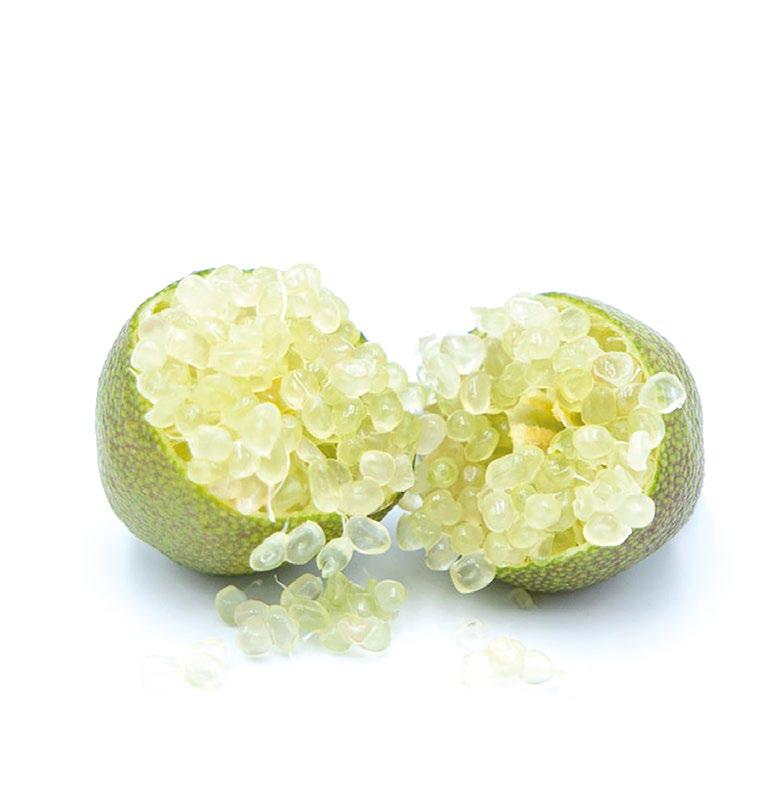
Additionally, it is immersed in the development of its Ready-cooked Premium Line, La Parcela®, a spearhead for its R&D commitment, composed of delicious 100% natural preparations based on its fresh produce, presented in innovative formats, such as vegetable red tuna fish “Tunato”; Vegan hamburgers; Dehydrated vegetables and Vegetable sauces.
Its end goal goes way beyond this: building a better farming system to obtain new, efficient, sustainable and healthy products and concepts that meet the latest food requirements. To do this, they are moving forward in an innovative 3S&D strategy under the premises of Sustainability, Health,
Flavour and Digitalisation.
Its Sustainability 2030 Plan implements pioneering plans in the Spanish agricultural sector, such as the Green Energy Project, centred on the use of sun power for the development of a 100% renewable and efficient energy. This has allowed a decentralised, fair, efficient and collaborative energy model to be created, from which its over 700 farmer associates benefit. A way of developing a farming method that is more environmental-friendly, committed and supportive towards the climate challenge.
Parallel to this, Cooperativa La Palma concentrates on investing in the modernisation of developments and sustainable farming practices to optimise its production. Implementing steps that guarantee water saving, use of renewable energy sources and biological control.
Fruit Attraction
Fruit Attraction Fruittoday 42
Zespri Global Supply cumple 20 años
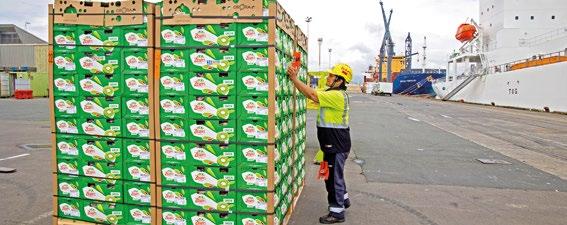
Zespri™,
compañía líder en la comercialización de sus kiwis en más de 60 países, está de aniversario. El programa de distribución de 12 meses, conocido como Zespri Global Su pply (ZGS), cumple 20 años. Con el objetivo de dar un sumi nistro continuado y mantener un estándar de calidad extraordina rio a lo largo del año, Zespri™ cuenta con plantaciones en los dos hemisferios, principalmente en Europa y Nueva Zelanda. En todas ellas implementa un sistema de control de calidad de doce pasos, para que los consumidores puedan disfrutar de sus deliciosos kiwis durante todo el año.
En esta apuesta, Zespri™ además busca asegurar un futuro soste nible, desde sus cultivos y centros de envasado hasta el mercado, con unos objetivos basados en un packaging 100% reciclable, reusable o compostable para 2025; huella de carbono positiva para 2035; un plan de adaptación de su producción en base al cambio climático; y fomento de estilos de vida más saludables, con programas lanzados en 2022 en los principales mercados.
El sistema Zespri Global Supply está estructurado en tres pilares: cultivo, almacenamiento y transporte. Con especial atención en el cultivo de sus kiwis, tratados con abonos hechos a base de mate rial orgánico reutilizado y un control responsable del agua.
20 years of Zespri
Global Supply
Zespri™, the leading marketing company for its kiwis in over 60 countries is about to have a big birthday. The 12-month distribution programme, known as Zespri Global Supply (ZGS), has reached the age of 20 years. Aimed at providing continuous supply and maintaining an extraordinary quality standard all year long, Zespri™ has plantations on both hemispheres, mainly in Europe and New Zealand. In all these plantations the twelvestep quality control system is implemented, to ensure that consumers can enjoy their delicious kiwis all year long.
In line with this commitment, Zespri™ is also seeking to ensure a sustainable future, from its cultivation processes and packaging centres to the marketplace, with some goals based on 100% recyclable, reusable or compostable packaging for 2025; a positive carbon footprint for 2035; an adaptation plan for its production based on climate change; and the promotion of healthier lifestyles, with programmes launched in 2022 on the main markets.
The Zespri Global Supply system is structured around three pillars: crop, storage and transport. This system places particular attention on the cultivation of their kiwis, treated with fertilisers made from reused organic material and a responsible use of water.
Los Gallombares, a toda máquina
En 2023 Los Gallombares SCA tendrá operativa su nueva planta de envasado. Unas instalaciones que le permitirán alcanzar una capacidad de manipulado de espárrago de 120.000 kilos/8 horas. La nave tiene una superficie de 10.000m², con 11 líneas de maquinaria especializada de última ge neración para el manipulado de producto fresco.
de kilos, incrementándose en un futuro dicho valor, puesto que en 2023 dispon dremos de nuevas plantaciones”, explica Francisco Delgado, gerente de Gallombares.
De cara al futuro, el objetivo de la enti dad en lo que respecta a un tema tan im portante como la eficiencia energética,
Los Gallombares: full speed ahead
es poder desarrollar su actividad abaste ciéndose de energías renovables casi en su totalidad. Para ello van a implan tar en la cubierta de la nueva industria placas fotovoltaicas que generarán el 90-95% de la energía se necesitan para toda la maquinaria y equipos (líneas de manipulación, cámaras y túneles frigorí ficos, etc.).
Esta actuación está englobada en la estrategia de crecimiento de la cooperativa granadina, que prevé una mejora en la logística, la calidad y el control del producto, centralizando la actividad en unas instalaciones que además cuentan con el aval de las certifi caciones de calidad Global GAP y GRASP.
“Para esta campaña esperamos tener una producción de 9 millones
In 2023, Los Gallombares SCA will have its new packaging plant up and running. These installations will allow the cooperative to reach a handling capacity of asparagus of 120,000 kilos/8 hours. The premises cover a surface area of 10,000m², with 11 lines of state-of-the-art specialised machinery for handling fresh produce.

This action is encompassed in the Granada cooperative’s growth strategy, which foresees an improvement in the logistics, quality and product control, centralising the activity in installations that also include the guarantees of the following quality certificates: Global GAP and GRASP.
“For this campaign we hope to have a production of 9 million kilos, with this figure increasing in the future, as we will have new plantations available in 2023,” explains Francisco Delgado, Manager of Gallombares.
Looking to the future, the organisation’s aim regarding such an important topic as energy efficiency is to be able to develop its activity almost totally using renewable energies. To do this, they are going to install photovoltaic panels on the roof of the new premises that will generate 90-95% of the energy they require for all the machinery and equipment (handling lines, chilling rooms and tunnels, etc.).
Fruit Attraction
Fruit Attraction Fruittoday 44
En la nueva nave podrán manipular 120.000 kilos/8 horas
Innovación sostenible
“Estamos pasando unos tiempos de cambios rápidos y la percepción es que el desarrollo de la horticultura está evolucionando. Esta situación nos hace pensar que la vía de trabajo de Bejo, que empezamos hace ya muchos años combi nando la innovación, pero adaptando a la realidad de la produc ción, ha sido acertada”, cuenta a Fruit Today Enrique Cadiñanos, responsable de Ventas y Desarrollo de Bejo. La situación de los insumos y las limita ciones en la superficie agrícola debidas al cambio climático está limitando la superficie agrícola, de forma que va a ser difícil encontrar mercados saturados de producto. Por otro lado, está claro que la protección de la salud y la con veniencia de los formatos de compra a la realidad de los hogares empujan a innovar, pero siempre sobre la base de produccio nes sostenibles, que los productores sean capaces de programar. En este sentido, los mejores ejemplos de Bejo son REDI, una hortaliza fácil de producir, pero con una presentación y sabor inigualables, que es posible producir de una forma razona ble en las explotaciones; y Bmox, presen tación de semilla que potencia el vigor y uniformidad para obtener con la misma superficie más producción con menos insumos, al aprovechar las defensas de la propia planta. “La calidad siempre estará ahí, si no la hay no se vende. Pero la priori dad va a estar cada vez más en variedades resistentes a una situación ambiental cada vez más extrema”.
Novedades en Ifema
En Fruit Attraction, Bejo mostrará algunas de sus últimas novedades. Una de ellas es Akasya, la primera variedad de su apuesta por el pepino en Almería y en zonas nuevas del interior continental. “Los principales retailers del panora ma nacional ya están apostando por esta variedad”.
En cebolla lo nuevo es Macon, una variedad tipo Vidalia dulce, que permite empezar de forma precoz la cam paña de recolección nacional, y al tener además buena conser vación, adelantándose a las cebollas de
otros orígenes, permite ampliar la produc ción nacional de este producto.
Además, tienen nuevas variedades de chalota, pero a partir de semilla y no de bulbo, evitando contaminación por virus y otros patógenos, y aportando facilidad de producción, lo que supone una revolu ción en la bajada de costes en este cultivo (hace posible su producción en España).
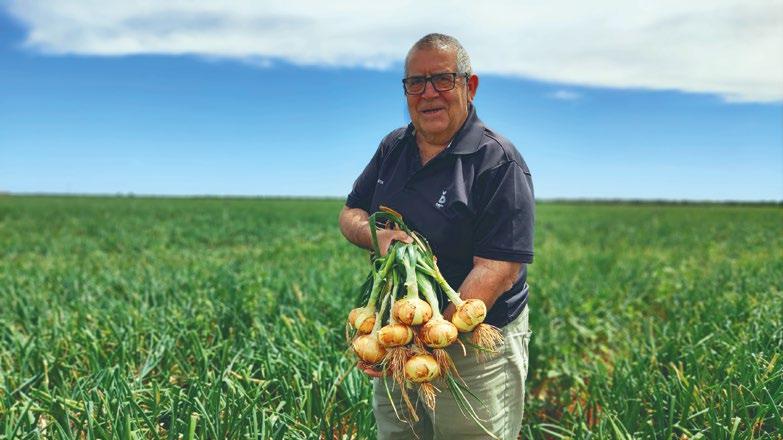
En hoja, la novedad es Pershing, espinaca tipo semi-Savoy resistente a 19 cepas de Mildew.
No faltará Redi (brotes de brócoli mora dos), galardonado con el Innovation Hub 2020. Bejo continúa su introducción con muy buenos resultados en restauración de alta gama. “Vamos a tener un punto de venta permanente en Mercamadrid que concentrará las ventas minoristas para Madrid y posteriormente para el resto de España”. Fuera de nuestras fronteras se ha introducido en Alemania, Escandinavia y Reino Unido (allí bajo otras marcas).
Por último, van a presentar un importante desarrollo en mejora de abejas reinas para el medioambiente, más adaptadas al cam bio climático y que permitirá mantener la producción de semilla en las nuevas condi ciones ambientales por su adaptabilidad.
En la feria, el equipo de Bejo mantendrá encuentros con clientes, a los que les transmitirá su política de sostenibilidad en materia de ODS, unas acciones que van a facilitar la producción ecológica “El calendario del Green Deal es una de nues tras prioridades. Queremos transmitir la urgencia de poner en marcha los procesos para llegar a tiempo”.
Bejo trabaja en I+D enfocada a una demanda real y sostenible para favorecer el aprovechamiento al 100% de los recursos y “recolectar y vender el 100% de las plantas”
Pedro María Jurado
Fruit Attraction Fruittoday 46
Los principales retailers nacionales ya apuestan por Akasya, su primer pepino para Almería
Sustainable innovation
“The times we are living through are full of fast changes, and the perception is that the development of fruit and vegetable growing is evolving. This situation makes us think that the working method started by Bejo many years ago, combining innovation, but adapting to the reality of production, is the right one,” Enrique Cadiñanos, Head of Sales and Development at Bejo, tells Fruit Today. The situation of inputs, along with climate change is limiting agricultural surface area, in such a way that it is going to be difficult to find markets saturated with produce. On the other hand, it is obvious that the protection of health and how convenient purchase formats are in terms of the reality of Spanish households are driving forward innovations, but always based on sustainable productions, which the producers are able to programme.
Accordingly, the best examples from Bejo are REDI, a vegetable that is easy to produce, but with unbeatable presentation and flavour, which can be produced reasonably on the farms; and Bmox, a seed presentation that enhances the strength and uniformity to obtain greater production on the same surface area, with fewer inputs, as it takes advantage of the
plant’s own defences. “The quality will always be there: without it the produce doesn’t sell. But the priority is going to fall increasingly on varieties that are resistant to an ever more extreme environmental situation.”
New developments at Ifema
At Fruit Attraction, Bejo will show some of its latest developments. One of them is Akasya, the first variety of its commitment to cucumber in Almeria and in new inland regions. “The main retailers on the Spanish market are already opting for this variety.”
In onions, the new option is Macon, a sweet Vidalia-type variety, which allows the Spanish harvest to be started early, and as it also keeps well, getting ahead of onions from other sources, it allows the Spanish production to be extended.
They also have new varieties of shallot, but starting from seeds and not from bulbs, avoiding contamination by viruses and other pathogens and bringing ease of production, which means a revolution in the reduction of costs for this crop (this makes it possible for production in Spain).
In leafy vegetables, the new development is Pershing, a semi-Savoy-type spinach that is resistant to 19 strains of Mildew.
Redi will also be there (purple sprouting broccoli), awarded with the Innovation Hub 2020. Bejo is continuing its introduction with very good results in top-class restaurants.
“We are going to have a permanent point of sale in Mercamadrid that will concentrate the retail sales for Madrid and, subsequently, for the rest of Spain.” Outside Spain’s borders, it has been introduced in Germany, Scandinavia and the United Kingdom (using other brand names there).
Finally, they are going to present an important development in the improvement of bee queens for the environment, with greater adaptation to climate change that will allow the seed production to be maintained under the new environmental conditions due to their adaptability.
At the trade fair, the Bejo team will hold meetings with clients, to whom they will pass on their sustainability policy on the subject of SDOs, actions that are going to make ecological production easier “The Green Deal calendar is one of our priorities. We want to transmit the urgency for starting up the processes in order to get there in time”.
Bejo is working on R&D focused on a real, sustainable demand to encourage the 100% use of the resources and to “harvest and sell 100% of the plants”
The main Spanish retailers are already opting for Akasya, its first cucumber for Almeria
Fruit Attraction
Las novedades de Fitó se inspiran en el consumidor
El tomate Wabi-Sabi y el melón Little Planet serán las sorpresas que Semillas Fitó presentará en Fruit Attraction
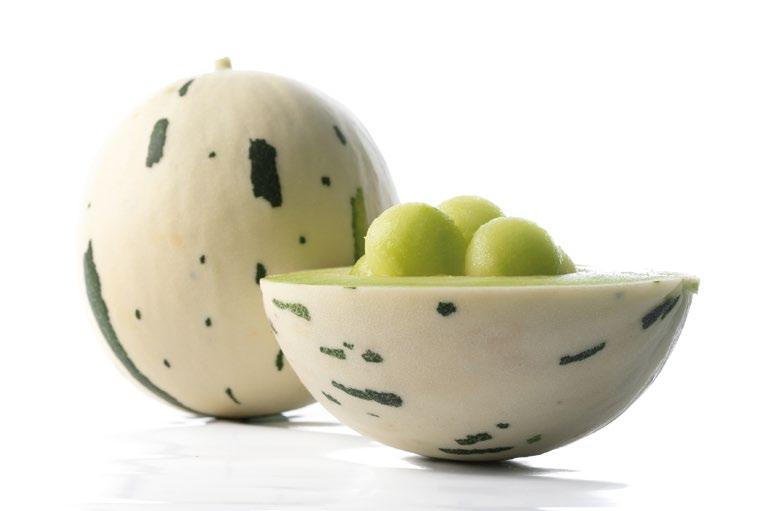
Lacompañía estará ubicada en el Pabellón 7, stand B13, junto a las empresas más destacadas de Fresh Produce de la Región de Murcia.
Semillas Fitó quiere trasladar una vez más su firme propósito de crear riqueza sostenible a lo largo de toda la cadena de valor del sector hortofrutícola, siendo Fruit Attraction el lugar ideal para presentar sus novedades, todas sus gamas de produc tos, las líneas de trabajo en las que se está centrando en I+D y, lo más importante, para mantener la relación de proximidad con los clientes y profesionales del sector de todo el mundo.
En esta Fruit Attraction mantiene el eslogan “Veggies inspired by consumers” (hortalizas inspiradas en los consumidores) que introdujo el pasado año y que refleja la filosofía de la compañía de mantener una escucha activa hacia las necesidades del consumidor, investigando y buscando so luciones que puedan satisfacerlas, además de potenciar diferentes estilos de consumo y de consumidores, apoyando tanto sus marcas como la gama mainstream.
La apuesta de Semillas Fitó por el sabor, la sostenibilidad y la innovación, se materializa en las novedades que se presentan este año: el tomate Wabi-Sabi y el melón Little Planet.
Little Planet no es solo un melón de aspec to y formato diferencial, sino que ofrece al consumidor una nueva e innovadora carne de melón. Es una carne afrutada, aromáti ca y extra jugosa que desde Semillas Fitó se ha bautizado como “Ice green” por su refrescante tonalidad verde.
Por su parte, Wabi-Sabi sorprende por ser un tomate de excelente sabor en una forma única. De nombre como la estética japonesa que persigue la belleza de la imperfección en todos los aspectos de la naturaleza, con Wabi-Sabi se pretende vencer la creencia de que la calidad de la fruta va ligada a su perfección estética, algo que siempre ha conllevado un gran desperdicio alimentario.
Por último, se va a seguir apostando por la gama Organic, de semilla ecológica, y también se amplía el sello de calidad Flavourite, que distingue las variedades de la compañía con más sabor, que ya tenían los tomate cherry Mulán y Solemío, y que ahora han conseguido los melones piel de sapo Arroyo y Montiel.
Fitó’s new developments inspire consumers
The Wabi-Sabi tomato and the Little Planet melon are the surprises to be presented by Semillas Fitó at Fruit Attraction
The company will be located in Hall 7, stand B13, alongside the most prominent Fresh Produce companies from the Region of Murcia.
Once again, Semillas Fitó wants to pass on its strong commitment to creating sustainable wealth throughout the entire chain of values in the fruit and vegetable growing sector. And Fruit Attraction will be the ideal place to present its new developments, all of its product ranges, the lines of work on which its R&D teams are focusing and, the most important point, to maintain a close relationship with clients and professionals in the sector from all over the world.
At this edition of Fruit Attraction, it is maintaining the slogan “Veggies inspired by consumers” that it introduced last year and that reflects the company’s philosophy of upholding an active listening process towards consumer needs. The company will keep researching and seeking out solutions that might meet these needs, in addition to promoting different consumption styles and consumers, supporting both its brands and the mainstream range.
Semillas Fitó’s commitment to flavour, sustainability and innovation can be seen in the new developments that the company is presenting this year: the Wabi-Sabi tomato and the Little Planet melon.
Little Planet is not only a melon with a differentiating appearance and format, but it also offers consumers a new, innovative melon flesh. It has a fruity, aromatic and extra juicy flesh that Semillas Fitó has christened as “Ice green” due to its refreshing green colour.
On the other hand, Wabi-Sabi is surprising as it is a tomato with excellent flavour in a unique shape. With a Japanese-style name, following the beauty of imperfection in all aspects of nature, with Wabi-Sabi the company is attempting to overcome the belief that the quality of the fruit is linked to its aesthetic perfection, a factor that has always caused an incredible amount of food waste.
Finally, the company is going to continue opting for the Organic range, with ecological seeds, and it is also extending the quality stamp Flavourite, which distinguishes the company’s varieties with most flavour, already held by the Mulan and Solemio cherry tomatoes and that has now been obtained by the piel de sapo melons Arroyo and Montiel.
As a new development, a line of Pink Grooved Tomatoes stands out with an improved product, along with the rest of the fruit and vegetable specialities, which are increasingly adapted to consumer and market requirements.
Fruit Attraction
Fruit Attraction Fruittoday 48
Estabilidad contra los vaivenes
Vamos a ver cómo evoluciona el invierno, hay mucha incertidumbre”, explica Juani Navarro, responsable del departamento Comercial. Estabilidad por tanto en lo que se refiere a superficie de cultivo y a número de referencias ofertadas (lechu ga iceberg, coliflor, calabacín, aloe vera ecológico y sandía).
Este año la campaña de sandía, su producto estrella, ha sido “muy dura y
complicada”. Dio comienzo con la calima y las lluvias, que derivaron en problemas de cuajes y de calidad. Y luego llegaron las olas de calor, tanto en España como fuera. “Todo ello ha hecho que en mu chos momentos faltara producto, y el precio ha sido en algunos momentos muy elevado por el alto consumo. Por el con trario, el rendimiento de la producción ha caído. Cerraremos el año con 40 millones de kilos”.
Stability against fluctuations
Como cada año, la empresa alme riense Agrícola Navarro de Haro regresa a la feria Fruit Attraction para reencontrarse con sus clien tes y tratar de forjar nuevas alianzas en su stand (Pabellón 9, 9C01). Una cita en la que suele aprovechar para presentar novedades. Sin embargo, para la campa ña 2022/23 la firma apuesta por mante ner su portfolio de productos. “Hemos decidido mantenernos e ir poco a poco.
As happens every year, the company from Almeria Agrícola Navarro de Haro is returning to the Fruit Attraction trade fair to meet up with its clients again and attempt to forge new alliances on its stand (Hall 9, 9C01).
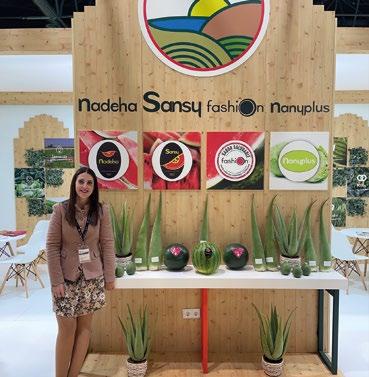

An event it usually takes advantage of to present new developments. However for the 2022/23 campaign, the company is opting for maintaining its present product portfolio. “We have decided to maintain our position and move forward little by little. We are going to see how the winter evolves; there is a great deal of uncertainty,” Juani Navarro, head of the Sales Department, explains. Stability, therefore, regarding crops surface area and the number of references offered (iceberg
lettuce, cauliflower, courgette, ecological aloe vera and watermelon.)
This year the watermelon campaign, the company’s star product, has been “very tough and complicated.” It started with the ‘calima’ or Sahara dust clouds and rainfall, which caused problems with setting and quality. And then the heat waves arrived, both in Spain and abroad.
“All of this has meant that at times there has been a shortage of product and the prices were very high at times due to the high consumption. On the other hand, the production yield has dropped. We will close the year with 40 million kilos.”
Fruit Attraction
Juani Navarro de Haro
Fruit Attraction Fruittoday 50
Espárrago: una unión que se afianza
Cesurca, Espárrago de Granada y Los Fresnos llegan juntos a Madrid para presentar nuevos proyectos en una campaña en la que ya suman 8.500 t de espárrago solo en convencional”
Este
año Centro Sur (Cesurca) llega a Fruit Atracttion de la mano de Espárrago de Granada y Los Fres nos. Será la primera vez juntos tras la suma del tercer integrante, Los Fresnos. Una unión fructífera, ya que además de ampliar su músculo comercial, les permite llevar a cabo proyectos de valor añadido como los que presentarán en la feria. Uno, un dip de espárrago y aguacate que mos trarán en el Innovation Hub Awards. El otro, una línea de espárrago congelado de Cesurca, ya ha echado a rodar (lo pusieron en marcha en mayo), y se presen tará de forma oficial en Madrid. “Estamos terminando de realizar las últimas pruebas y ajustes y mandando muestras”, avanza el presidente de Cesurca, Antonio F. Zamora.
La línea de congelado trabajará producto 100% español, solo durante la campa ña nacional. Los productos listos para cocinar o comer ven cómo se incremen ta su demanda (por falta de tiempo del consumidor, desconocimiento a la hora de tratar la materia prima…), y en el caso del congelado, que suma un +9-10% anual, se prevé que siga teniendo un crecimiento importante. “Facilitan la vida y reducen el desperdicio, porque el 100% es aprove chable. En nuestro caso, nos sirve para diferenciarnos y también como mecanis mo para regular la sobreoferta en algunos momentos”, comenta el responsable de Cesurca.
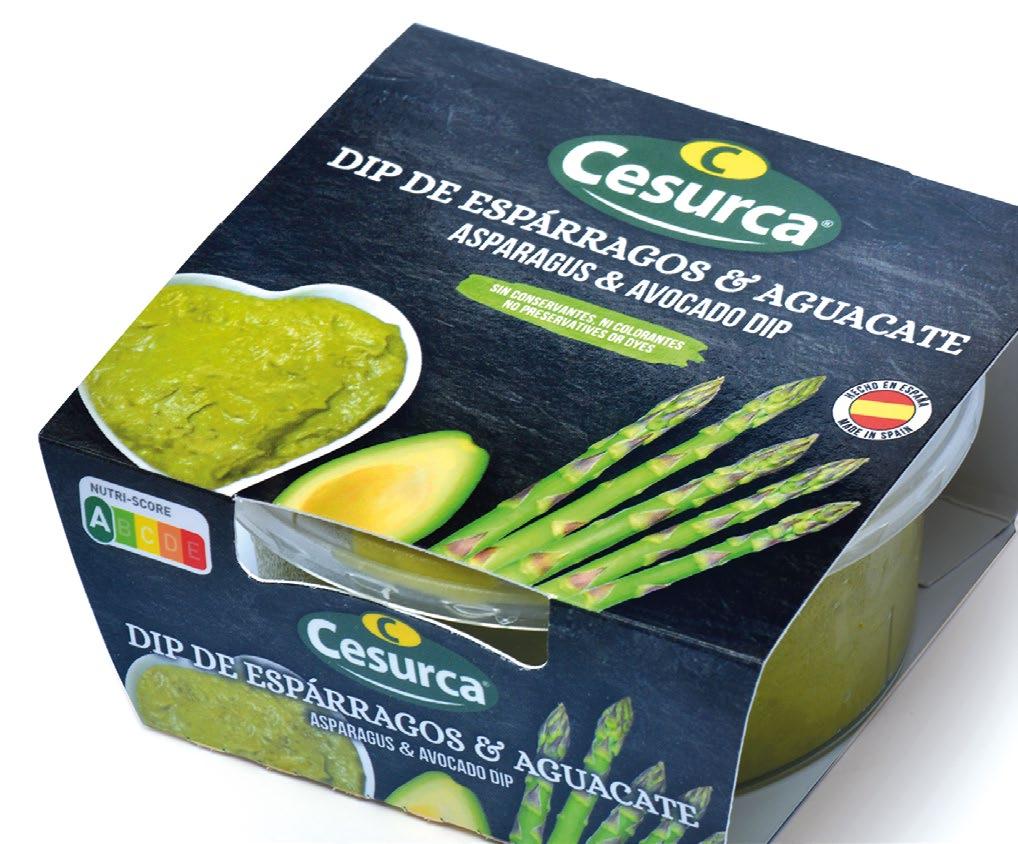
La nave, que se ubica en sus instalaciones, cuenta con una potente inversión en energías renovables que les permitirá mitigar la escalada de precios de la factura energética. “Ac tualmente tenemos 400kw y vamos a sumar otros 300kw este año, lo que nos permitirá fabricar en horario solar para poder congelar con el sol”.
¿Habrá alimentos?
En esta campaña las 3 coopera tivas darán un importante salto en ecológico, pasando de 8 a 38 ha de espárrago. En convencional tienen
1.680 ha, lo que se debería traducir en unas 8.300-8.500 t si el tiempo (nunca mejor dicho) lo permite. “Aún es pronto para hacer previsiones, pero la sequía que estamos padeciendo hace que las planta ciones sufran. Si no llueve, esperamos una previsible reducción”.
En Granada las comunidades de regantes están restringiendo el uso desde agosto, lo que, sin duda, afectará al volumen de pro ducción. “En España hay agua, pero no está bien distribuida”.
En la UE también hay falta de agua y, como aquí, suben los costes de insumos de uso diario en los hogares, lo que podría afectar a las ventas. “Si sigue la misma línea, habrá un traspaso de consu mo y se podría sustituir el espárrago por otros productos.
Pero ¿el año que viene habrá alimentos?
El problema del agua es más im portante de lo que parece.
El 2022/23 puede ser difícil, pero habrá que intentar equilibrar la balanza”.
Para depender cada vez menos de la importación, la alianza de cooperativas quiere ampliar el arco comercial del es párrago nacional apostando por cultivos en distintas zonas de España. “En Perú se planta cada vez menos espárrago en favor de aguacate y arándano”.
Fondos y desequilibrio
En medio de un contexto en el que los fondos de inversión apuestan por adquirir supermercados y cadenas de restauración de comida barata, Zamora subraya que “cada vez tenemos menos interlocutores para poder negociar. En producción hay proyectos de integración de la oferta, pero no son suficientes frente a la pequeña y gran distribución”.
Por su know-how, para los productores “el camino es la con centración, pero es necesario el apoyo de la Administración, incentivando y ase sorando a nivel jurídico, económico, etc”.
Lanzan un dip de espárrago y aguacate y una línea de congelado de Cesurca
Fruit Attraction Fruittoday 52
Asparagus: consolidating their union
This year Centro Sur (Cesurca) is coming to Fruit Attraction alongside Espárrago de Granada and Los Fresnos. It will be their first joint visit, after their third member, Los Fresnos, joined them. A fruitful union, as in addition to extending their business muscles, it allows them to carry out value-added projects such as the ones they will present at the trade fair. One, an asparagus and avocado dip they will present at the Innovation Hub Awards. The other, a line of frozen asparagus by Cesurca, which is already on the road (they started it up in Mary) and that will be officially presented in Madrid. “We are finishing the latest trials and adjustments and sending out samples,” the chairman of Cesurca, Antonio F. Zamora, advances.
The frozen line will work with 100% Spanish produce, only during the Spanish campaign. The ready-to-cook or eat products are seeing an increase in demand (due to a lack of time by consumers, lack of knowing how to cook the raw material…) and in the case of the frozen product, which is growing by +9-10% every year, a continuous important growth is forecasted. “They make life easier and reduce wastage, because 100% can be used. In our case, it is a differentiating method and also a mechanism to regulate the surplus offer at certain times,” the executive from Cesurca comments.
The premises, which are located in their installations, have seen a significant investment in renewable energies that will allow them to mitigate the surge in prices in energy bills. “Currently, we have 400kw and we are going to add another 300kw this year, which will allow us to manufacture in sunlight time in order to be able to freeze with the sun.”
Will there be food?
In this campaign, the 3 cooperatives will take an important leap in ecological produce, going from 8 to 38 ha of asparagus. In conventional, they have 1,680 ha, which should translated into around 8,300-8,500 t, weather permitting. “It is still early to make any forecasts, but the drought that we are enduring means that the plantations are suffering. If it doesn’t rain, we can expect a sizable reduction.”
In Granada, the irrigating communities have been limiting use since August, which, without any doubt, will affect the production volumes. “There is water in Spain, but it is not properly distributed.”
In the EU there is also a water shortage, and as is happening here, the cost of daily household goods is going up, which could
affect sales. “If things carry on in the same line, there will be a movement in consumption and asparagus could be replaced by other products. But, will there be food next year? The water problem is more important than it seems. 2022/23 could be difficult, but we must try to even out the balance.”
In order to depend less and less on imports, the cooperatives alliance wants to extend the commercial span of Spanish asparagus by opting for crops in different regions of Spain. “In Peru, they are reducing their asparagus plantations in favour of avocados and bilberries.”
Funds and imbalance
In the middle of a context in which investment funds are opting for acquiring supermarkets and cheap food restaurant chains, Zamora underscores that “every day we have fewer partners to negotiate with. In production, there are offer integration projects, but these are not enough when they come up against the small and large distribution chains.”
Due to their know-how, for the producers, “the way ahead involves concentration, but support by the Administration is needed, motivating and assessing on a legal and economic level.”
Cesurca, Espárrago de Granada and Los Fresnos are coming to Madrid together to present new projects in a campaign in which they have already produced 8,500 t of asparagus in conventional crop alone
Fruit Attraction
Entre la espada y la pared por culpa de la carestía energética
Los altos costes energéticos están llevando a las empresas a una situación límite respecto a su viabilidad económica
Adolfo
García, gerente de Campose ven, se atreve a aventurar que, si no se toman medidas, “los agri cultores cuanto más vendan, más podrían perder.”
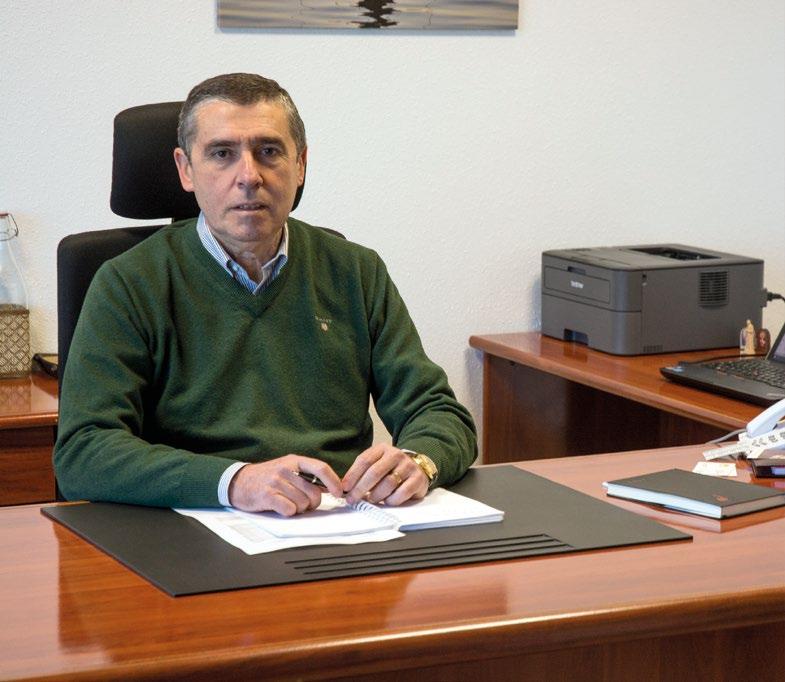
En el momento actual, la carestía ener gética está influyendo en el buen desa rrollo de muchas empresas, imagino que también en la de ustedes. ¿qué solución aportaría usted para superar esta situa ción?
El aumento de costes en todos los proce sos de la cadena alimentaria es tremen damente preocupante, creo que podemos alcanzar precios de venta en los productos alimentarios muy preocupantes y difíciles de asumir por el consumidor final. Si estas subidas no se aplican, va a ser la ruina de la agricultura. Se puede alcanzar la circuns tancia de que cuanto más se venda más se pierda.
A mi juicio, no se tiene en cuenta, que un agricultor tiene que invertir su dinero en un negocio y existen dos factores impor tantísimos que no controla, el precio de venta y las situaciones climatológicas. Por este motivo, teniendo en cuenta que pro ducimos alimentos, creo que deberíamos reflexionar muy seriamente sobre el asunto.
En cuanto a la energía, no soy especia lista en el tema, pero si escucho noticias sobre las medidas que están poniendo en marcha otros países de la UE y que en España no serían difíciles de implantar por nuestros recursos naturales, así como otro tipo de energías que habría que volver a retomar su funcionamiento, en vez de pensar en su desman telamiento.
¿Aprecian ustedes alguna reducción del consumo de ecológico en Europa? ¿Y en España cuál está siendo su comportamiento?
El consumo de pro ductos ecológicos en Europa tiene su mer cado. Sinceramente creo que va a ir en au mento, y en España creo también seguirá la misma tendencia porque efecto salud y medioambiente preocupan cada vez más a importantes segmentos de la población.
Aunque el precio, es un “hándicap”, los consumidores tienen claro a que se debe esa diferencia de precio, lo saben valorar y lo pagan. También son conscientes que si no fueses así el producto ecológico no existiría.
Hay muchas empresas que están optando por los frutos secos debido a su mayor rentabilidad (almendra y pistacho), creo que también es vues tro caso, ¿me puede dar datos?
Dentro de nuestra amplia gama de productos ecológi cos y biodinámicos, hace años apostamos por los frutos secos, en concreto por la almendra. No tenemos grandes cantidades, pero está dentro de nuestra gama.
De todo su portfolio, ¿me puede indicar qué productos están sufriendo la mayo res subidas o descensos?
Nosotros desde el principio apostamos por tener un porfolio amplio, de hecho, tenemos más de 25 productos distintos, por tanto, a nuestros clientes ofrecemos una variedad, más que una cantidad y pro curamos adaptarnos a sus peticiones y así evitar la especulación.
En estos momentos algunos medios in ternacionales están hablando de que este invierno podríamos encontrar lineales vacíos, que la sociedad de la opulencia alimentaria ha acabado. ¿Qué opina sobre estas informaciones?
Tal y como transcurren los acontecimien tos geopolíticos creo que cualquier cosa puede acontecer. No creo que pueda haber escasez de comida en un país que como el nuestro que es una potencia agroalimentaria, pero lo peor de todo es que no hemos apren dido de lo sucedido durante los años de pandemia. No podemos depender de otros países. Europa y España, en con creto, debe buscar su soberanía alimen taria. Es como si el COVID no nos hubiera enseñado nada.
“A estas alturas es como si la pandemia no nos hubiera enseñado que debemos ser soberanos en muchas actividades estratégicas, entre ellas la alimentación.
Adolfo García
Fruit Attraction Fruittoday 54
Between a rock and a hard place due to energy prices
High energy costs are leading companies to an extreme situation regarding their financial feasibility
Adolfo García, the Manager of Camposeven, dares to venture that if steps are not taken, “the more the farmers sell, the more they stand to lose.”
At present, high energy prices are affecting the smooth running of many companies. I imagine that this is also your case. What would your solution be to overcome this situation?
The increase in costs in all the processes of the food chain is incredibly worrying; I think that we could reach very concerning selling prices for food products that could be difficult for end consumers to assume. If these increases are not applied, this will destroy the farming industry. We could reach the circumstance that the more that they sell, the more they stand to lose.
In my opinion, the fact that a farmer has to invest his money in a business and there are two very important factors over which he has no control, ie, the selling price and the weather, is not taken into account. For this reason, considering that we produce food, I think that we should think about this matter very seriously.
Regarding energy, I am not a specialist on the subject, but I have heard the news about
the steps being put into action by other EU countries and that would not be difficult to implant in Spain due to our natural resources, as well as other energy types that should be started up again, instead of thinking about dismantling them.
Are you noticing any reduction in ecological consumption in Europe? And in Spain, how is it behaving?
The consumption of ecological produce in Europe has its own market. I sincerely believe that it is increasing and in Spain I also think that the same trend will continue because it affects health and the environment, which are concerning increasingly important segments of the population.
Although the price is an obstacle, consumers are clear what this price difference is due to; they know how to value it and they pay for it. They are also aware that if this were not the case, ecological produce would not exist.
There are many companies that are opting for nuts due to their greater profitability (almonds and pistachios). I believe this is also your case. Could you give me some data on this?
Within our wide range of ecological and biodynamic products, for many years we have
opted for nut, specifically, almonds. We don’t have large amounts, but they are in our range.
Of your entire portfolio, could you tell me which products are suffering from the highest rises or drops?
From the very beginning we have always opted for having an extensive portfolio. In fact, we have over 25 different products. Therefore, we offer our clients a variety, more than an amount and we try to adapt to their requests and so avoid speculation.
At present some international media sources are talking about the fact that this winter we could see empty supermarket shelves; that the society of food opulence has come to an end. What is your opinion about this information?
With the geopolitical events that are occurring at present, I think that anything could happen. I don’t think that it is likely there could be a food shortage in a country like Spain, which is a leader in the agrifood sector, but the worst thing of all is that we haven’t learnt from what happened during the pandemic years. We cannot depend on other countries. Europe and Spain specifically must look for their own food sovereignty. It is as if COVID hadn’t taught us anything at all.
Fruit Attraction
UNICA apuesta por los snacks y dips saludables
Vending de verduras, frutos rojos, brócoli morado o packaging compostable son algunas de las novedades que presentan este año en Madrid
UNICA asistirá a Fruit Attraction (9D02) con un amplio catálogo de novedades que reflejan su apuesta por la innovación y por encontrar soluciones prácticas y salu dables a las necesidades de sus clientes gracias, en parte, al impulso que se le ha dado en los últimos meses a su planta de IV Gama.
Un alto porcentaje de consumidores europeos compraría más frutas y hortali zas si estuvieran disponibles en formato snack. Por eso UNICA apuesta por snacks mini fresh (lavados y cortados, listos para consumir), ideales para combinar con untables vegetales, otra tendencia en auge. Las referencias que estarán expuestas en la feria serán bastones de zanahoria, pepino snack, tomate Cherry, pimiento Sweet Palermo, calabacín crudo dulce Crü y el primer brote de brócoli morado, Redi.
Respecto a las salsas untables, en una pri mera fase lanzará tzatziki (yogur y pepino) y hummus de garbanzo para combinar con snacks en formatos listos para degustar. Este proyecto es fruto de la colaboración
UNICA is opting for healthy snacks and dips
Vegetable vending, red berries, purple broccoli or compostable packaging are some of the new developments that they are presenting this year in Madrid
UNICA will attend Fruit Attraction (9D02) with an extensive catalogue of new developments that reflect their commitment to innovation and to finding practical, healthy solutions for its clients’ needs, thanks in part, to the boost that has been given recently to its fresh-cut range.
A high percentage of European consumers would purchase more fruit and vegetables if they were available in snack format. For this reason, UNICA has opted for mini fresh snacks (washed and cut, ready-to-eat), ideal for combining with vegetable spreads, another rising trend. The references that will be on display at the trade fair will be carrot sticks, cucumber snacks, cherry tomatoes, Sweet Palermo peppers, Crü sweet raw courgettes and the first purple sprouting broccoli, Redi.
Regarding spreadable sauces, in a first phase it will launch tzatziki (yogurt and cucumber) and chickpea hummus to combine with snacks in ready-to-eat formats. This project is the result of the collaboration with UNICA’s associate, Vegetales Línea Verde, through its company Productos Naturales de la Vega (Naturvega).
As a disruptive element, it is taking UNICA’s healthy snack vending machine concept to the trade fair, with the idea of implementing it in schools, hospitals and health centres,
and revealing the saturation of unhealthy products that are usually eaten in these settings. In addition to opting for health, sustainability is also essential, an area in which UNICA has been working for many years. This is the reason behind the OK Compost HOME (biodegradable) packaging for these washed and ready-to-eat snacks in the case of the bags and rPET, for the tubs.
Within the snacking line, through the cucumber club snack MyCubies®, UNICA is collaborating with the Minions in order to catch the attention of a younger target group and a series of boosting actions are planned on the stand at the fair to promote them.
The variety and development of new products as the result of constant innovation are key pillars in UNICA’s philosophy. At this edition, differential products will be presented, such as the Wabi-Sabi tomato, unusual in terms of texture and flavour, the Little Planet melon, fruity and very juicy, or the Sweet Palermo Chocolate pepper.
In line with the rising consumer trend of super foods, visitors will be able to discover new developments in red berries (strawberries, bilberries and raspberries) on UNICA’s stand, thanks to the incorporation of Bonafrú.
con el socio de UNICA, Vegetales Línea Verde, a través de su empresa Productos Naturales de la Vega (Naturvega).
Como elemento disruptivo se lleva a la feria el concepto de snack en la máquina de vending saludable de UNICA, con la idea de implementarla en colegios, hospitales y centros de salud, y poner en evidencia la saturación de productos insanos que suele consumirse en esos entornos. Además de apostar por la salud, también es clave la sostenibilidad, ámbito en el que UNICA lleva años trabajando. De ahí que el packa ging de esos snacks lavados y listos para consumir sea OK Compost HOME (biode gradable), en el caso de las bolsas y rPET, en los vasos.
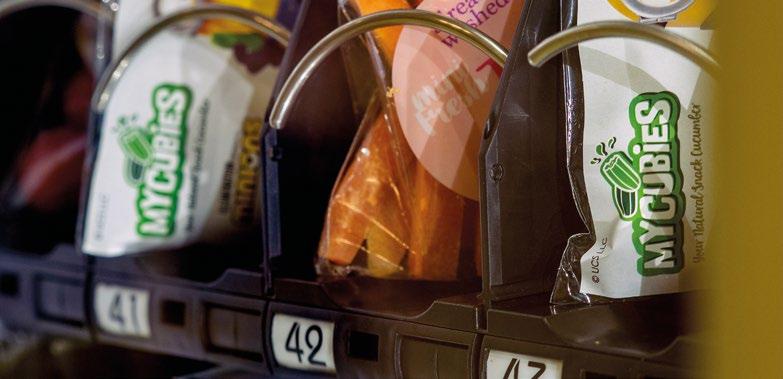
Dentro de la línea del snacking, a través del club de pepino snack MyCubies®, UNICA cuenta con una colaboración con Minions, para captar la atención de un público más joven y están previstas una serie de accio nes de dinamización en el stand de la feria para su promoción.
La variedad y el desarrollo de nuevos productos como fruto de la innovación constante son un pilar clave en la filosofía de UNICA. En esta edición, se presentarán productos diferenciales como el tomate Wabi-Sabi, inusual en términos de textura y sabor, el melón Little Planet, afrutado y muy jugoso, o el pimiento Sweet Palermo Chocolate.
En línea con la tendencia al alza del con sumo de superalimentos, los visitantes podrán conocer en el stand de UNICA novedades en frutos rojos (fresas, arán danos y frambuesas), gracias a la reciente incorporación de Bonafrú.
Fruit Attraction
Fruittoday 56Fruit Attraction
El emotivo 30 cumpleaños de Europlátano
La empresa reunió en un acto a socios fundadores, agricultores, trabajadores, representantes empresariales y autoridades del sector agrícola para reconocer su trabajo e implicación
reunir todos los requisitos para que la fruta cumpla con las expectativas de los consumidores más exigentes, los sistemas de producción de Europláta no son respetuosos con el agricultor y el medio ambiente, promoviendo la agricultura sostenible como uno de los pilares fundamentales de la filosofía de la empresa.
Prueba de ello son los certificados de calidad como Global GAP o GRASP que atestiguan que se trata de un producto con un sabor único, saludable, de producción nacional, y artesanal.
Europlátano,
una de las seis organi zaciones que componen Plátano de Canarias, cumple 30 años y lo hace de la mejor forma posible, acompa ñada por todas las personas que hacen po sible el futuro del plátano y, por supuesto, centrada en la recuperación de la actividad agrícola en La Palma tras la erupción del volcán de Cumbre Vieja, del que se cum plió un año el 19 de septiembre.
Tres décadas apostando por la calidad del plátano
La historia de Europlátano se remonta a 1992. En el marco natural incomparable de las Islas Canarias, con un cultivo que se lleva a cabo en las tierras de origen volcá nico, climatología privilegiada y empleando métodos tradicionales agrícolas; con un producto único, pero que se veía amena zado por la liberalización de los mercados y la entrada de la competencia directa de la banana en Europa, apostando por la cali dad como forma de diferenciación.
El inicio de la empresa hunde sus raíces en el Valle de Aridane, donde 43 agricultores fundaron Europlátano. Con un objetivo co mún basado en el compromiso y el trabajo consiguieron una fruta que reúne todos los requisitos de calidad y confianza para el consumidor, valores que tras más de tres décadas se mantienen intactos.
Para romper la estacionalidad del pro ducto y ampliar la producción que diera respuesta a la creciente demanda de los clientes, Europlátano dio un paso más allá y creció hacia Tenerife, por convicción de productores de la isla, fieles creyentes de la filosofía de la empresa.
Agricultura sostenible
Los valores de la empresa se transmitie ron a la marca Gabaceras que, además de
A lo largo de todo este tiempo, Europlátano ha logrado mantener los estándares de calidad y por octavo año consecutivo, Plátano Gabaceras, producto premium de la firma, ha obtenido el reconocimiento Sabor del Año 2022.
The emotional 30th anniversary of Europlátano
Europlátano, one of the six organisations that make up “Plátano de Canarias,” is celebrating its 30th anniversary and in the best way possible, accompanied by everyone that makes possible the future of Canary Island bananas. It is, of course, centred on restarting fruitgrowing activities in the island of La Palma after the eruption of the Cumbre Vieja volcano, which began on September 19, 2021.
Three decades of commitment to the quality of Canary Island bananas
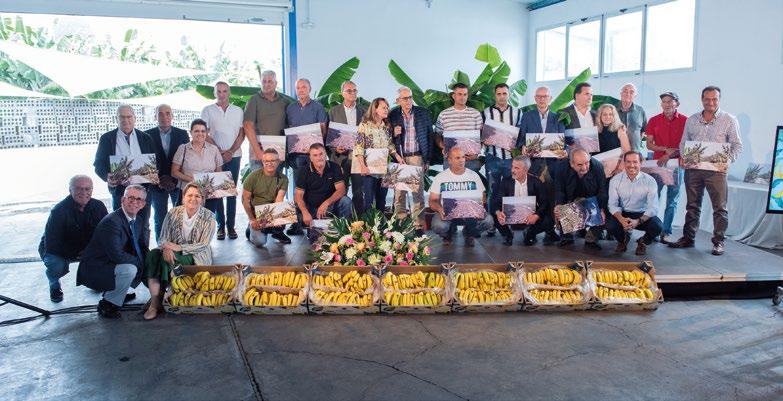
The history of Europlátano goes back to 1992. In the matchless natural setting of the Canary Islands, with a crop that is cultivated on volcanic land, featuring a privileged climate and employing traditional growing methods; with a unique product, but one which was under threat due to the liberalisation of markets and the entry of direct competitors of the banana in Europe, committing ourselves to quality as a way of standing out.
The beginning of the company is rooted in the Aridane Valley, where 43 fruit growers founded Europlátano. With a common goal based on commitment and work, they managed to produce fruit that satisfies all the requirements of quality and trust for consumers, values that remain intact after more than three decades.
In order to overcome the product’s seasonal nature and increase production to satisfy growing demand on the part of its clients, Europlátano took a step forward and extended towards Tenerife, due to the conviction of the island’s fruit growers, who firmly believed in the company’s philosophy.
Sustainable agriculture
The company’s values were passed on to the Gabaceras brand regarding which, in addition to satisfying all the necessary requirements so that the fruit meets the expectations of the most demanding customers, Europlátano’s production systems respect the grower and the environment, promoting sustainable agriculture as one of the main pillars of the company’s philosophy.
Proof of this is quality certification such as Global GAP or GRASP, which indicate that the product has a unique taste, is healthy and produced nationally using artisanal methods.
Throughout this time, Europlátano has managed to uphold its standards of quality and, for the eighth year in a row, “Plátano Gabaceras,” the company’s premium product, has been named the Taste of the Year, in this case for 2022.
The company brought together the founding partners, fruit growers, workers, business representatives and authorities from the agricultural sector to acknowledge their work and engagement
Fruit Attraction
Fruittoday 57 Fruit Attraction
Hispatec Agrointeligencia: líder en Smart Agro

La multinacional presentará en Fruit Attraction su portfolio renovado de tecnología agrícola y desarrollará talleres gratuitos de capacitación en digitalización

En esta feria, Hispatec cuenta con el mayor espacio dedicado a la tecnología agrícola: 80 m2 para demostraciones, presentaciones de producto y encuentros con los operadores. Los visitantes podrán conocer la oferta integral de soluciones tecnológicas, de la semilla al mercado, y reunirse con técnicos para pre-eva luar las soluciones más adecuadas para mejorar procesos de impacto clave en el negocio, según segmentos y estructura empresarial.
Hispatec presentará la evolución de su ecosistema de soluciones avanzadas para la gestión de procesos y la toma de deci siones de todos los estadios y operadores de la cadena agroalimentaria internacio nal. Entre las novedades que expondrá se encuentran avanzadas herramientas de gestión integral.
Hispatec
estará presente, como cada año, en Fruit Attraction 2022 liderando el área Smart Agro en su stand 5C07 y dará a conocer sus últimas innovaciones en digitalización e in teligencia artificial para la agricultura que buscan mejorar la sostenibilidad -econó mica, social y medioambiental- del sector.
Como proveedor líder en tecnología agrí cola en España, Hispatec ofrece solucio nes para integrar todos procesos que se dan en la red agroalimentaria: producción, transformación, logística e industria auxi liar. Su propuesta de valor integrada y con cobertura total de las operaciones de la red lo convierten en un proveedor único en el mercado.
Dentro del programa de actividades en el marco de la feria, Hispatec impartirá talleres gratuitos de digitalización para los responsables y técnicos de los negocios agroalimentarios, con un objetivo eminen temente divulgativo que persigue capaci tar a la red agroalimentaria en materia de tecnología aplicada a la agricultura. Miquel Villanueva, director de Marketing de His patec, afirmó que “queremos compartir el conocimiento sobre digitalización práctica de la agricultura que hemos adquirido du rante más de 35 años de actividad con los responsables clave de las organizaciones que conforman el sector”.
Hispatec Academy se celebrará el 5 de octubre en el Foro Innova del Pabellón 5 de la zona Smart Agro y su programa consta de tres talleres:
12:45h: Cómo implantar con éxito un proyecto de analítica de datos en la agricultura
13:30h: De tu almacén al cliente: cla ves de la agroexportación
15:50h: Rentabilidad, productividad y sostenibilidad: claves de la gestión integral de explotaciones
Los talleres serán presenciales, estarán impartidos por el equipo técnico de His patec y durarán 30 minutos. Estas forma ciones tendrán un carácter muy práctico y en ellas se abordarán los aspectos críticos y las claves del éxito de cada uno de los temas propuestos. El aforo y las plazas son muy limitadas y es imprescindible inscri birse previamente en este enlace.
La multinacional nació en los ‘80 en Almería, tiene filiales en 7 países -México, Perú, Colombia, Chile, Brasil, Costa Rica y en breve abrirán Portugal-, realiza ope raciones comerciales en toda Latinoamé rica y emplea a más de 200 profesionales de diversos sectores, entre los que desta can TI y agronomía avanzada.
Hispatec renueva cada año su compromiso con la innovación del sector agrícola y su digitalización, ofreciendo soluciones modulares que se adaptan a las necesidades, objetivos y tamaño de cada operador y aportan valor real al desempeño del negocio. Ello lo ha convertido en un referente tecnológico para el sector internacional, contando con el respaldo de más de 500 clientes en todo el mundo.
José Luis Molina
Fruit Attraction Fruittoday 58
> > >
Hispatec Agrointelligence: a leader in Smart Agro
As every year, Hispatec will be present at Fruit Attraction 2022 leading the Smart Agro area on its stand 5C07. There, it will inform about its latest innovations in digitalisation and artificial intelligence for agriculture, seeking to improve the sector’s economic, social and environmental sustainability.
As the leading provider in agricultural technology in Spain, Hispatec offers solutions to integrate all the processes that occur in the agrifood network: production, transformation, logistics and auxiliary industries. Its integrated value proposal, with total cover of the network operations turns it into a unique provider on the market.

Within the trade fair’s activities programme, Hispatec will give free workshops in digitalisation for managers and technicians from the agrifood business, with a highly informative aim that seeks to train the agrifood network on the subject of technology applied to agriculture. Miquel Villanueva, Hispatec’s Marketing Manager, stated that “we want to share knowledge about the practical digitalisation of agriculture that we have acquired during over 35 years of activity with the key people in the organisations that shape the sector.”
On October 5th, the Hispatec Academy will be held in the Innova Forum of Hall 5 of the Smart Agro area and its programme includes three workshops:
12:45 pm: How to successfully implement a data analysis project in agriculture
1:30 pm: From your warehouse to the client: agro-export keys
3:50 pm: Profitability, productivity and sustainability: keys for comprehensive farm management
The workshops will be in-person. They will be given by Hispatec’s technical team and they will last 30 minutes. These training sessions will be very practical, and critical aspects and the keys to success of each of the proposed topics will be covered in them. The capacity and places are very limited and those interested must register beforehand using this link.
At this trade fair, Hispatec has the largest space devoted to agricultural technology: 80 m2 for demonstrations, product presentations and meetings with operators. Visitors may discover their complete offer of technological solutions, from seeds to the market, and meet up with technicians to pre-evaluate the most suitable solutions
to improve key impact processes in the business, according to segments and business structure.
Hispatec will present the evolution of its ecosystem of advanced solutions for process management and decision-making for all the stages and operators from the international agrifood chain. Amongst the new developments that it will display are advanced comprehensive management tools.
The multinational was established in the 1980s in Almeria; it has subsidiaries in 7 countries – Mexico, Peru, Colombia, Chile, Brazil, Costa Rica and in the near future they will be opening in Portugal. It carries out trade operations all over Latin America and it employs over 200 professionals from different sectors, amongst which IT and advanced agronomy stand out.
Every year, Hispatec renews its commitment to innovation in the agricultural sector and its digitalisation, offering modular solutions that adapt to the needs, goals and size of each operator and bring real value to the business’ performance. This has turned it into a technological benchmark for the international sector, with the endorsement of over 500 clients all over the world.
At Fruit Attraction, the multinational will present its renewed portfolio of agricultural technology and it will carry out free training workshops in digitalisation
Attraction
> > > Fruit
FNM, pone en el mapa mundial la genética nacional en berries
Fresas Nuevos Materiales, una firma 100% participada por el sector productor y viverista de berries, ha logrado poner en el mapa mundial su catálogo varietal
FruitToday magazine habló con el di rector de Fresas Nuevos Materiales, Juan Manuel Arenas, de la compañía española de genética y desarrollo varietal que ha dado al sector de berries nacional la oportunidad de estar entre los grandes obtentores mundiales.
¿Cuáles son las conclusiones que extrae Fresas Nuevos Materiales de la campaña 2021-22?
Hemos tenido una campaña marcada climatológicamente por un otoño-invier no cálido y una primavera con intensas precipitaciones y las variedades de FNM han demostrado, una vez más, un compor tamiento fiable y adaptado a las condi ciones agroclimáticas de la provincia de Huelva. Nuestros campos de selección establecidos en las diferentes áreas pro ductivas nos permiten ofrecer materiales más adecuados a las necesidades de los agricultores.
El IFAPA acaba de realizar un estudio en el que se habla de la idoneidad de sus materiales.
Sí, efectivamente. En su estudio ‘Evalua ción de caracteres ligados a la producción en variedades de fresa’ se remarca cómo Rociera FNM y Marisma FNM han desta cado un año más como las variedades ensayadas con mayor producción precoz a finales de febrero y finales de marzo, así como las de mayor producción total en condiciones de cultivo convencional.
¿Son ambas variedades aptas en todos los sentidos para todos los sistemas de cultivo ensayados?
En concreto, Marisma FNM ha demostra do tener un comportamiento altamente productivo en todos los sistemas evalua dos, me refiero a cultivos sin desinfección, cultivo sin suelo y cultivo ecológico. Es una variedad muy fiable y extratemprana en cualquier condición de cultivo.
Y, ¿qué puede decirme tanto de Marisma como de Rociera respecto a la calidad de su fruto?
Según el mismo informe, Marisma es la variedad ensayada con la mayor firmeza en todas las condiciones de cultivo evaluadas y Rociera ha destacado por sus elevados valores de grados brix en cualquier mo mento de campaña y ambiente de cultivo.
¿Cómo se ve el futuro desde Fresas Nuevos Materiales en relación con la actual Directiva Europea para un uso sostenible de productos fitosanitarios?
Creemos que la genética de Fresas Nuevos Materiales nos permite mirar el futuro con mucha ilusión y convencidos de que son una herramienta muy útil de agricultores y comercializadores para ofrecer al consumidor un producto de calidad.
Se trata de materiales seleccionados y adaptados a nuestras condiciones de cul tivo, que creemos facilitarán el objetivo común europeo de disminuir el uso de fitosanitarios en 2030.
FNM puts Spanish genetics on the world map at Berries
Fresas Nuevos Materiales, a company fully-owned by the berry producer and nursery sector, has managed to put its variety catalogue on the world map
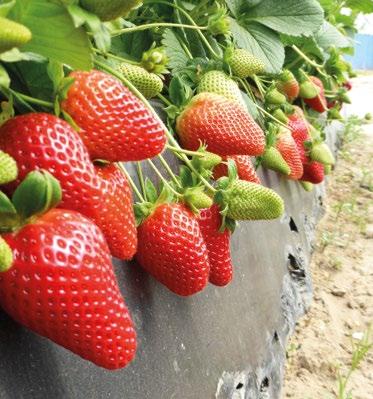
Fruit Today magazine talked to the Manager of Fresas Nuevos Materiales, Juan Manuel Arenas, about the Spanish genetics and variety development company that has given the Spanish berry sector the chance to be amongst the top plant breeders in the world.
What are Fresas Nuevos Materiales’ conclusions regarding the 2021-22 campaign?
We have a campaign marked weather-wise by a warm autumn-winter and a spring with heavy rainfall, and FNM’s varieties have shown, once again, reliable behaviour, adapted to the agricultural weather conditions in the province of Huelva. Our selection fields established in the different production areas allow us to offer materials that are best suited to the farmers’ requirements.
The IFAPA has just carried out a study in which it talks about the suitability of your materials.
Yes, indeed. In its study ‘Evaluation of characters linked to production in strawberry varieties’ it comments how Rociera FNM and Marisma FNM have once again stood out as the varieties tested with greater early production at the end of February and the end of March, as well as the greatest total production in conventional cultivation conditions.
Are both varieties suitable in all senses for all the cultivation systems tested?
Specifically, Marisma FNM has been seen to have a highly productive behaviour in all the systems evaluated. Here, I am referring to crops without disinfection, crops without soil and ecological crops. It is a very reliable, extra-early variety in any cultivation conditions.
And what can you tell me about Marisma and Rociera regarding the quality of their fruit?
According to the same report, Marisma is the tested variety with the greatest firmness in all the cultivation conditions evaluated, and Rociera stood out for its high brix score at any point of the campaign and cultivation environment.
How does Fresas Nuevos Materiales see the future regarding the current European Directive for a sustainable use of plant protection products?
We believe that the genetics of Fresas Nuevos Materiales allow us to look to the future with anticipation and convinced that they are a very useful tool for farmers and marketers to offer consumers quality produce.
They are selected materials, adapted to our cultivation conditions, which we believe will help the common European goal of decreasing the use of plant protection products in 2030.
Fruit Attraction
Rociera
Fruit Attraction Fruittoday 60

Aguacate: más competencia y guerra
En España se espera un descenso del 30% de la cosecha, mientras Perú no para de crecer y la guerra rusa desestabiliza los mercados vía fertilizantes
De cara a la campaña próxima campaña de aguacate nacional, el sector espera un importante des censo productivo cercano al 30%, motivado principalmente por la sequía. Empresas del sector consultadas por Fruit Today coinciden en afirmar que los tiempos de precios altos tocarán a su fin más pronto que tarde por el aumento de la oferta mundial de aguacate y los nuevos actores.
Perú se ha convertido en el principal actor de la exportación sudamericana y no para de crecer, primando la ‘palta’ por delante de otros cultivos. En 2021 certificó 39.645 ha, situadas en 17 regiones. Solo en zonas de la sierra se han plantado 10.000 ha nue vas que en los próximos años comenzarán a exportar fruta en el mes de febrero, coincidiendo con la campaña española. Unos volúmenes que afectarán al mercado a corto plazo.
El informe ‘Mercado internacional del aguacate’ de RaboFinance destaca el gran tamaño de las plantaciones y la amplia ción de la ventana de producción. Según el Servicio Nacional de Sanidad Agra ria (SENASA), actualmente Perú puede vender su palta en 66 mercados del mundo y explora otros nuevos, ávido de oportunida des comerciales. Solo en 2021, el país andino aumentó un 30% las exportaciones, lle gando a 38 mercados internacionales.
Otro actor a tener en cuenta por su rápido crecimiento en los últimos 5 años es Colombia, un origen que presenta un hán dicap por su logística interna, más com plicada que en otros orígenes.
Según RaboFinance, un aspecto que podría desestabilizar el mapa del aguacate es la guerra de Rusia en Ucrania. El Servicio para el Desarro llo Integral Rural
(SEDIR) de Perú indicó que el precio de los fertilizantes ha subido un 500%, afectando a la agricultura familiar y la producción de palta de exportación. Un 54% de los fertili zantes que usa Perú procedían de Rusia.
Además, tanto Rusia como Ucrania esta ban aumentando sus importaciones de palta latinoamericana los últimos años. De hecho, en febrero del 2021, Rusia se había posicionado como el tercer destino más importante para la palta peruana, con un 11% del total.
Mango: inicio regular en España
El mango ha dado el pistoletazo de salida a la campaña de frutas tropicales en España. La recolección ha comenzado con antelación debido a la climatología de este verano y probablemente se alargará hasta no viembre con varie dades tardías como Palmer y keitt. Según las previsiones de la Asociación Española de Tropicales (AET), la cosecha oscilará entre las 35.000-40.000 toneladas. Las altas temperaturas de este verano han provocado que la fru ta madure antes y el clima de este año, muy seco, ha favorecido una calidad de fruto “excepcional, con buen color y altos contenido de azúcares”, explican a Fruit Today. El único ‘pero’ es el calibre. “La fruta tiene un menor tamaño este año, debido principalmente a la climatología. Se está recolectando mucho Osteen con calibre 10 y 12, pero por otro lado son tamaños muy aceptables para un fruto, ya que hablamos de un mango de entre 350 y 400 gramos”, defienden.
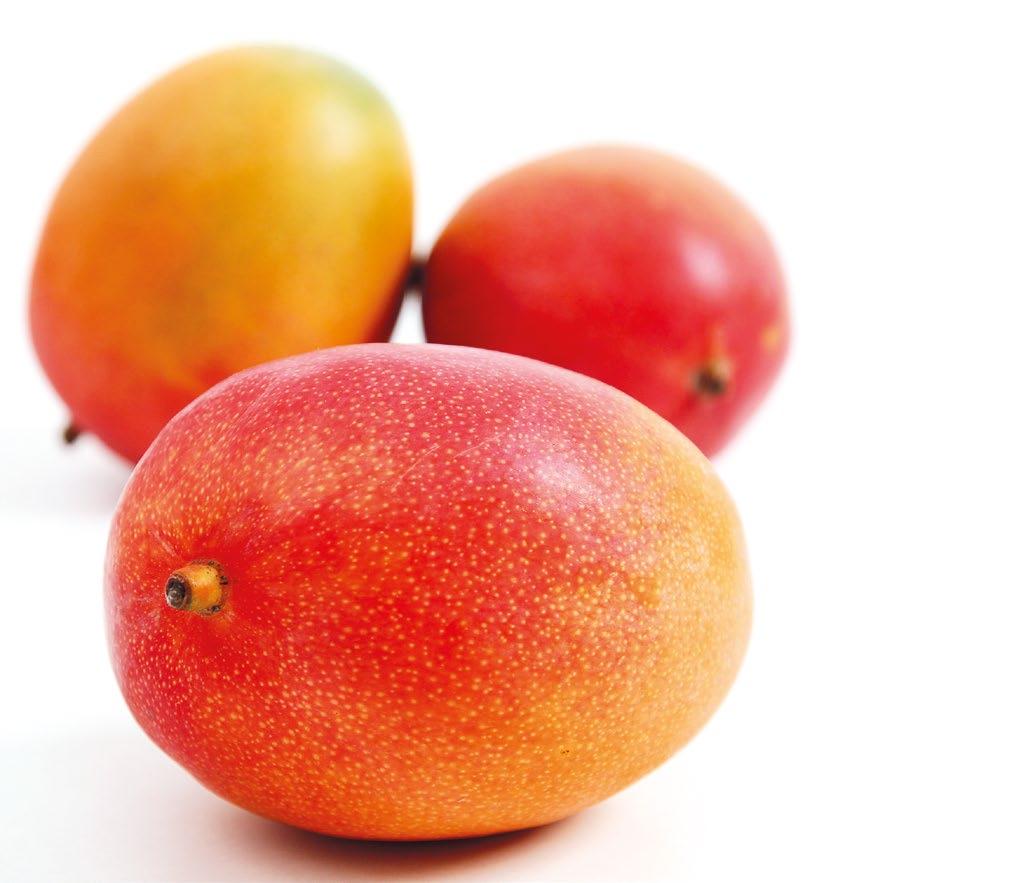
La recolección del mango nacional avan za a buen ritmo, y los mercados están respondiendo con una alta demanda debido a los bajos precios. Justo ahí está el problema. “Hay mucho descontento por parte de los productores de mango, ya que no solo tenemos unos precios en campo muy bajos, sino que nuestros cos tes de producción se han incrementado mucho debido a la subida de las materias primas tales como electricidad, gasóleo y fertilizantes”.
La organización agraria COAG Málaga ha expresado este descontento de los productores apuntando el dedo contra la
Coag denuncia precios en origen de “ruina” a 0,20-0,25€/kg
Perú no para de crecer, en 2021 certificó 39.645 ha de ‘palta’
Tropicales Fruittoday 62
distribución, que ha “herido de muerte” al mango de la Axarquía, y la comercia lización. “El modelo comercializador, que cede a las presiones especulativas de los grandes canales de distribución, está ofreciendo precios en origen de ruina, 0,20-0,25€/kg, por frutas que en la campaña anterior eran consideradas de I Cat.”, han asegurado en un comunicado.
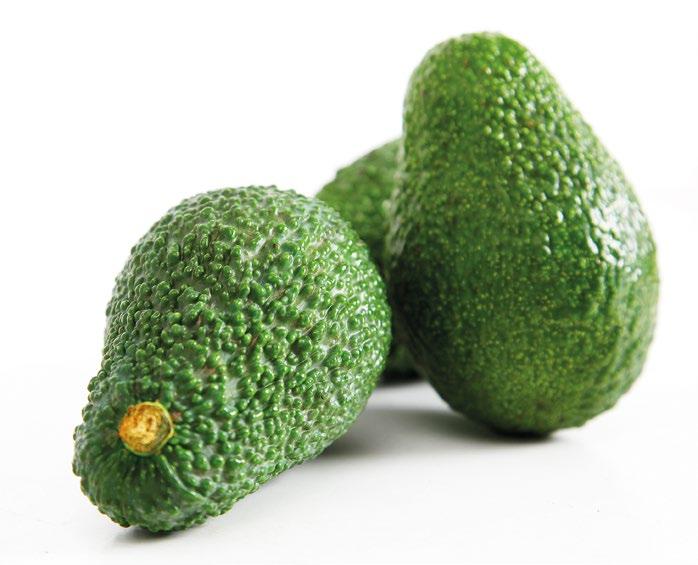
Impulso a la marca Mango de Málaga
El pasado 19 de septiembre la AET presentó oficialmente la marca colectiva Mango de Málaga, que actualmente aúna a una decena de pro
ductores y comercializadores (Natural Tropic, Reyes Gutiérrez, Frunet, Axarfruit, Tropical Millenium, Managú, Eurofresh, Bioalgarrobo, Tropico Spain y Axarquía Tropical) y cuenta con el respaldo de Diputación de Málaga a través de Sabor a Málaga. Prudencio López, presidente del comité de gestión de la marca colectiva, apuntó que “nuestro objetivo es impulsar la cuota de mercado res pecto a otros orígenes que coinciden con nuestra tempo rada”. Y es que, como recordó el presidente de la AET, Domin go Medina, “hemos visto en muchas ocasiones cómo man gos produci dos en nues tra región y de una excelente calidad, van perdiendo su sello de identi dad a lo largo de la cadena de distri bución y se banalizan al compararse con frutas de diferentes orígenes y países productores”.
El gerente de Tropical Bayper incide en un tema de relevancia como es de los límites de la mate ria grasa del aguacate y pide a las autoridades europeas que consi deren establecer ese límite en el 24 ó 25%, puesto que “de las im portaciones llega mucho aguacate por debajo del 20% y eso dificulta los mercados porque la calidad es pésima y las cantidades masivas”.
Se trata así de una situación dife rente con respecto a otros países, ya que, por ejemplo, mientras que en EE.UU. se le exige un 27% de materia grasa a las importaciones que provienen de Perú, en Euro pa no se exige ni se impone una barrera que determine la materia grasa que tiene que tener el agua cate para ser importado.
Bayona añade que la falta de fito sanitarios y reguladores de crecimiento ha sido también un factor diferenciador: “Europa tiene que ponerse las pilas con estas cosas y exigir las mismas condiciones que nos exigen a nosotros”.
Aguacate: el problema del % de grasa
Avocados: more competition and war
Looking towards the next Spanish avocado campaign, the sector is expecting an important drop in production of around 30%, mainly caused by the drought. Companies from the sector consulted by Fruit Today coincide in affirming that the times of high prices will come to an end sooner rather than later due to the increase in global avocado offer and the new agents.
Peru has become the main agent for South American exports and it continues to grow, giving priority to the ‘palta’ or avocado over all other crops. In 2021 it registered 39,645 ha, located in 17 regions. In mountain areas around 10,000 ha have been planted, which over the next few years will start exporting fruit every February, coinciding with the Spanish campaign. These volumes will affect the market in the short-term.
The ‘International Avocado Market’ Report by RaboFinance emphasises the large size of the plantations and the lengthening of the production window. According to the Peruvian Agricultural Health Service (SENASA), currently Peru can
sell its avocados on 66 markets around the world and it is exploring new ones, eager for business opportunities. In 2021 alone, the country increased its exports by 30%, reaching 38 international markets.
Another agent to be taken into account due to its rapid growth over the past 5 years is Colombia, a source that has the obstacle of its internal logistics, which is more complicated than in other sources.
According to RaboFinance, an aspect that could destabilise the avocado map is the war between Russian and Ukraine. The Peruvian Service for Comprehensive Rural Development (SEDIR) indicated that the price of fertilizers has risen by 500%, affecting family-run farms and avocado production for exports. 54% of the fertilizers used in Peru come from Russia.
Additionally, both Russia and Ukraine have been increasing their Latin American avocado
imports in recent years. In fact, in February, 2022, Russia was ranked as the third most important destination for Peruvian avocados, with 11% of the total.
Mangos: a regular start in Spain
Mangos have kicked off the tropical fruit campaign in Spain. The harvest started early due to this summer’s weather conditions and it will probably continue until November with late varieties such as Palmer and Keitt. According to the forecasts by the Spanish Tropical Fruit Association (AET), the harvest will range between 35,000-40,000 tonnes. The high temperatures this summer have made the fruit ripen early and this year’s weather conditions, which were very dry, have encouraged an “exceptional fruit quality, with good colour and high sugar content,” they explained to Fruit Today. The only disadvantage is the calibre. “The fruit is smaller this year, mainly due to the weather conditions. A large amount of Osteen are being harvested with 10 and 12 calibres, but on the other hand, these are very respectable sizes for a fruit, as we are talking about a mango weighing between 350 and 400 grams,” they defend.
In Spain, a 30% drop in the harvest is expected, while Peru continues to grow and the Russian war is destabilising the markets via fertilisers
Coag is denouncing “ruinous” prices in the fields of
Peru continues to grow; in 2021 it registered 39,645 ha of ‘palta’ or avocados
Tropicales Fruittoday 64
0.20-0.25€/kg
The Spanish mango harvest is progressing well, and the markets are responding with a high demand due to the low prices. And here lies the problem. “Mango producers are very unhappy, as not only do we have very low prices in the fields, but our production costs have increased a great deal due to the rise in raw materials such as electricity, fuel and fertilisers.”
The agricultural organisation COAG Málaga has expressed is producers’ discontent by pointing the finger at the distribution, which has “fatally wounded” mangoes from Axarquía and their marketing. “The marketing model, which gives in to the speculative pressure of the large distribution chains, is offering ruinous prices at source, 0.200.25€/kg, for fruit that in the previous campaign were considered as First Category,” they have affirmed in a press release.
A boost for the Mango de Malaga brand
On the 19th of September, the AET officially presented the group brand, Mango de Málaga, which currently brings together around ten producers and marketers (Natural Tropic, Reyes Gutiérrez, Frunet, Axarfruit, Tropical Millenium, Managú, Eurofresh, Bioalgarrobo,
Tropico Spain and Axarquía Tropical) and it is backed by the Provincial Council of Malaga, through ‘Sabor a Málaga’. Prudencio López, Chairman of the group brand’s management committee, indicated that “our aim is to boost the market share compared to other origins that coincide with our season.” And the fact is, as the chairman of the AET, Domingo Medina recalled, “we have often seen how excellent quality mangos produced in our region lose their stamp of identity along the distribution chain and are played down when compared with fruit from other origins and producing countries.”
Avocados: the fat % problem
The Manager of Tropical Bayper underscores a relevant topic such as the limits of fats in avocados and asks the European authorities to consider establishing this limit at 24 or 25%, as “the imports are bringing many avocados below 20% and this makes it difficult for the markets because the quality is very bad, along with massive amounts.”
This situation is dealt with differently in other countries, as, for example, in the USA they demand a 27% of fat for imports from Peru; in Europe no barrier is required or imposed determining the percentage of fat that imported avocados must have.
Bayona adds that the lack of plant protection and growth regulators have also been differentiating factors: “Europe must pull its socks up with these things and demand the same conditions as they demand of us.”
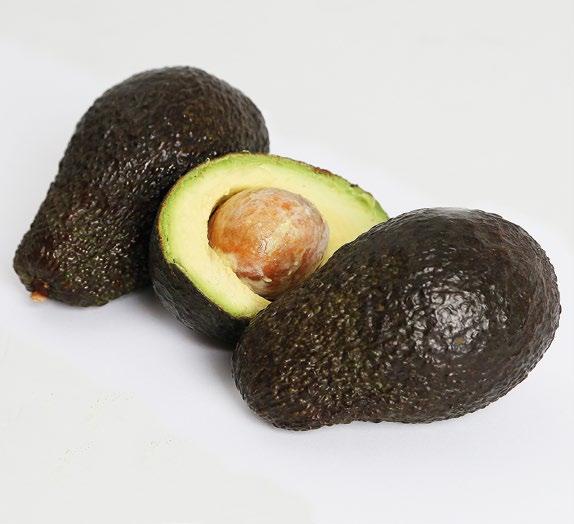 Tropical
“El sector debe debatir sobre el correcto manejo del Lamb Hass”
El sector del aguacate en la Comunidad Valenciana ha experimentado en los últimos años un crecimiento notable y, aunque este año la tendencia no sea tan expansiva, no por ello dejará de crecer
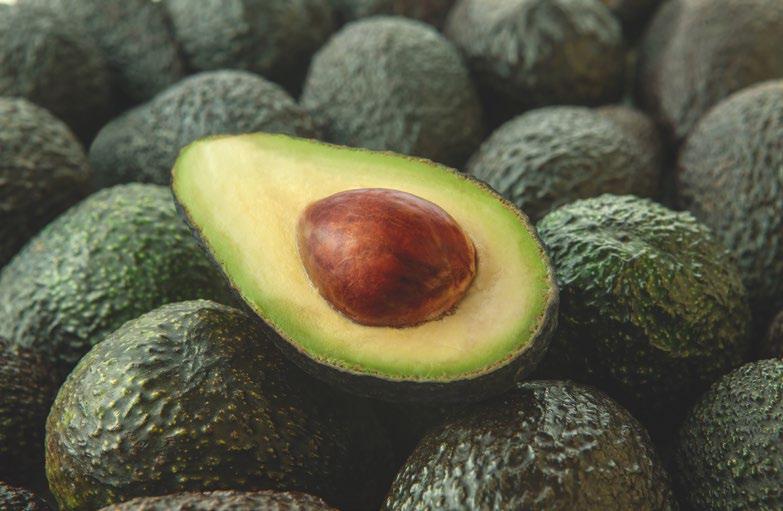
lizado y esto provoca que se practiquen políticas conservadoras, no invirtiendo más en los campos y no ampliando las plantaciones.”
Además, Bayona no quiere olvidar algunos aspectos fundamentales del comercio del aguacate: la calidad, la técnica y el desarrollo. En este sentido asegura que “tenemos que procurar que no se recolec ten los aguacates por debajo del índice de madurez y debe hacerse hincapié sobre su peculiar manejo para que los clientes los conozcan y tomen precauciones”.
Una de las variedades de Tropical Bayper es el Lamb Hass, que ha estado “apartado de las necesidades de la distribución hasta el momento ya que el Hass ha sido consi derado habitualmente como prioritario, pero ahora ya se observa un crecimiento relevante año tras año”. Así, Bayona con sidera que “todos los actores de la cadena deben estar preparados para que esta va riedad penetre con fuerza en las grandes plataformas y supermercados”.
Desconocimiento sobre la maduración del Lamb Hass
Prueba
de ello es la empresa cas tellonense Tropical Bayper, que aglutina una de las producciones de aguacate más septentrionales de España y a la que recientemente se ha in corporado, con una participación del 50%, Yellow Bone, una ‘spin off’ del importante grupo empresarial Simetría.
Sin embargo, el gerente mantiene los pies sobre el suelo y es consciente de la incer tidumbre económica que vivimos. “Creo que en 2023 vamos a tener un crecimiento muy conservador, quizás nos quedamos un poco por debajo de los índices de 2020/2021. El agricultor está descapita
Sin embargo, la variedad Lamb Hass re sulta ser de unas características y manejo totalmente diferentes a la variedad Hass: “su recolección se debe realizar con el óptimo índice de materia seca, es decir, del 24%, dado que tiende a adquirir un
Vicente Bayona, gerente de Tropical Bayper, define ese crecimiento del aguacate valenciano como “latente” y se mantiene positivo respecto al futuro de Tropical Bayper. Bayona asegura, incluso, que los comerciantes y agricultores de Málaga también ponen ahora su mirada sobre Valencia, “porque es el único sitio donde poder crecer sin tener el riesgo de no tener agua”.

“Todos los actores de la cadena deben de estar preparados para que el Lamb Hass llegue a las grandes plataformas”
Vicente Bayona
Tropicales Fruittoday 66
color oscuro. La selección debe hacerse meticulosamente porque a la hora de su comercialización hay que separar entre el color verde, el entreverado, el marrón y un tono más oscuro”.
En el Lamb Hass, el color marrón puede significar que esté en su punto de madura ción óptimo o que se pueda consumir, por lo que se trata de una fruta que “engaña” y confunde. El ejecutivo insiste en que hay un gran desconocimiento por parte de los maduradores sobre el producto y este as pecto perjudica al sector: “muchas veces escucho que nuestra variedad no madura bien, pero eso es porque se han mezclado los aguacates verdes, entreverados y los más oscuros”.
“The sector must discuss the correct handling of Lamb Hass”
In recent years, the avocado sector in the Valencian Community has experienced considerable growth, and although this year the trend is not as expansive, this does not mean it will stop growing
Proof of this is a company from Castellón, Tropical Bayper, which brings together one of the most northerly avocado productions in Spain and which recently has incorporated Yellow Bone, with a 50% participation, a spin-off of the important business group, Simetría.
Vicente Bayona, Manager of Tropical Bayper, defines this growth of Valencian avocados as “latent” and he maintains a positive viewpoint regarding the future of Tropical Bayper. Bayona even affirms that the marketers and farmers in Malaga are also now putting their sights on Valencia, “because it is the only place where growth is possible without the risk of not having any water.”
Asimismo, el gerente de Tropical Bayper incide en un tema de relevancia como es el de los límites de la materia grasa del agua cate y pide a las autoridades europeas que consideren establecer ese límite en el 24 o 25%, ya que con “las importaciones llega mucho aguacate por debajo del 20% y esto dificulta los mercados porque su calidad es pésima y las cantidades masivas”.
Se trata así de una situación diferente con respecto a otros países. En Estados Unidos se exige un 27% de materia grasa a las importaciones que provienen de Perú, en Europa no se requiere ni se impone una barrera que determine la materia grasa del aguacate que se importa.
Bayona añade que la falta de fitosanitarios y reguladores de crecimiento ha sido tam bién un factor diferenciador: “Europa tiene que ponerse las pilas con estos aspectos tan cruciales para la pervivencia de nues tra propia agricultura y exigir las mismas condiciones que nos exigen a nosotros”.
However, the Manager is keeping his feet on the ground and he is aware of the economic uncertainty we are experiencing. “I believe that in 2023 we are going to see a very conservative growth, we might reach figures that are just below the rates for 2020/21. Farmers are undercapitalised and this means that they are carrying out cautious policies, not investing more in the fields and not extending plantations.”
Additionally, Bayona does not want to forget some essential aspects of the avocado trade: quality, technique and development. Accordingly, he affirms that “we have to try to ensure the avocados are not harvested before they are ripe, and emphasis must be made on their peculiar handling so that clients know about this and take precautions.”
One of Tropical Bayper’s varieties is Lamb Hass, which has been “set aside from the distribution’s requirements until recently, as the Hass was usually considered to be the priority variety, but now, year after year, a relevant growth may be observed.” Therefore, Bayona considers that “all the agents on the chain must be ready for this variety to make strong inroads on the large platforms and supermarkets.”
Ignorance about Lamb Hass’ ripening process
However, the Lamb Hass variety has some characteristics and handling that are totally different from the Hass variety: “it must be harvested with the optimum rate of dry material; that is to say, 24%, given that it tends to take on a dark colour. It must be carefully selected, because when marketing the fruit, they must be separated into colours: green, mixed, brown and a darker shade.”
With Lamb Hass, the brown colour may mean that it is at its perfect point of ripeness or that it can be eaten, which means that it is a fruit that “deceives” and confuses. The executive insists that there is great ignorance by ripeners about the product and this aspect is damaging the sector: “I often hear that our variety does not ripen well, but this is because they have muddled the green, mixed and the darker-coloured avocados.”
Likewise, the Manager of Tropical Bayper also underscores a relevant topic: the limits of avocado fats, and asks the European authorities to consider establishing this limit at 24 or 25%, as with “imports many avocados are arriving with under 20% fat content and this causes difficulties for the markets as their quality is very bad, and there are huge amounts.”
This situation differs from that in other countries. In the United States, a 27% fat content is demanded of imports from Peru, while in Europe no barrier determining avocado fat is required or imposed on imported avocados.
Bayona adds that the lack of plant protection products and growth regulators has also been a differentiating factor: “Europe has to pull up its socks regarding these crucial aspects for the continued existence of our own agriculture, and it must demand the same conditions that are demanded of us.”
“El agricultor está descapitalizado y practica políticas conservadoras. Es decir, no invierte”
Tropical
Mango: nuevo récord de producción
Natural Tropic observa buenas perspectivas para el mango pese a los calibres pequeños y subraya la importancia del lanzamiento de la Marca Mango de Málaga
Laempresa Natural Tropic arranca la campaña de tropicales con la vista puesta en la situación hídrica y la apuesta por la diversificación, a través de nuevas líneas de negocio.
Como sucede desde hace varias campa ñas, el principal escollo es el agua, aunque este año los problemas empiezan a tener visos de solucionarse, tras el anuncio de la Administración de la puesta en mar cha de la ampliación del tratamiento de aguas regeneradas en Torrox y El Rincón de la Victoria y el proyecto de desaladora. Para Prudencio López, gerente de Natural Tropic, se trata de “buenas noticias” que permitirán al sector tener una mayor dis ponibilidad de agua y crecer a medio plazo.
Con la campaña de mango ya iniciada, el gerente confirma que los volúmenes au mentarán un 25-30% respecto a 2021 en la Axarquía malagueña y Almuñécar. “Puede que estemos ante una campaña récord en producción”, con el añadido de una exce lente calidad de la fruta.
Precisamente ese aspecto, la calidad, es uno de los valores que se destacarán como uno de los valores diferenciales de la Marca Mango de Málaga, un proyecto de la Asociación Española de Tropicales en el que participa Natural Tropic (con Pruden cio López como presidente de la gestora) junto a otras empresas, con el objetivo de promocionar el producto e incentivar su conocimiento y consumo.
Respecto a la próxima campaña de aguaca te, espera que la andadura sea contraria a la del mango: 50% de descenso productivo en la Axarquía y Almuñécar y un 30% menos en otras zonas. En ambos casos, mango y aguacate, la firma mantiene su tradicional apuesta por la producción propia.
Reto: Interprofesional
Entre los retos necesarios para seguir im pulsando las tropicales españolas, López aboga por unificar a todo el sector a través de la interprofesional del sector, puesta ya en marcha, y en la que Natural Tropic par ticipa como promotora. Este organismo permitirá combatir problemáticas como la mala imagen que generan estos cultivos por su consumo de agua.
Pistacho, nuevo reto
Este año, la empresa tiene una novedad importante: un proyecto de diversifi
cación a través del pistacho. En esta primera etapa tienen ya 50 ha de cultivo y prevén duplicar la superficie de forma paulatina. López explica que están en proceso de desarrollo de una procesado
ra en la zona norte de Granada y la puesta en marcha de una red comercializadora. “Es un producto muy saludable, con mu chas propiedades y una gran demanda. Es muy interesante”.
Mango: a new production record
Natural Tropic is seeing good prospects for mangos in spite of the small-sized fruit, and the company underscores the importance of the launch of the ‘Mango de Málaga’ brand
The company Natural Tropic is starting off the tropical fruit campaign with its sights set on the water situation and its commitment to diversification, through new business lines.
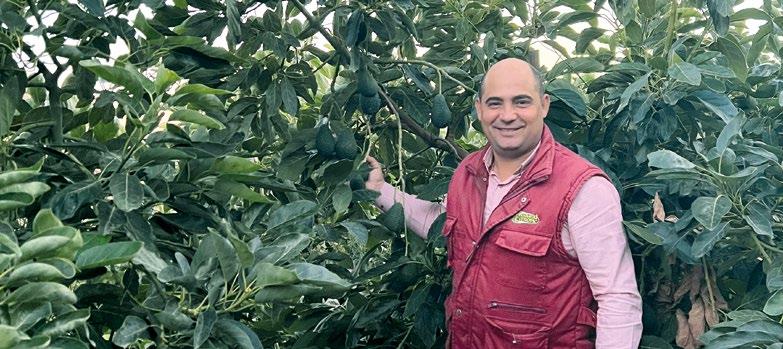
As has been the case over the past few campaigns, the main obstacle is water, although this year it is beginning to look like a solution to the problems may have been found after the announcement by the Administration of the start up of the extension of the treatment of reclaimed water in Torrox and El Rincón de la Victoria and the desalination plant project. For Prudencio López, the Manager of Natural Tropic, this is “good news” that would allow the sector to have a greater availability of water and to grow in the medium term.
With the mango campaign already in progress, the manager confirms that the volumes will increase by 25-30% compared to 2021 in the Malaga Axarquía region and Almuñécar. “We could be about to see a record production campaign,” with the added extra of excellent fruit quality.
This aspect, the quality, is precisely one of the values that will stand out as differential for the Mango de Málaga brand, a project set up by the Spanish Tropical Fruit Association in which Natural Tropic is taking part (with Prudencio López as chairman of the management) along with other companies, aimed at promoting the produce and fostering knowledge about it and consumption.
Regarding the next avocado campaign, it is expected that it will be the opposite of the mango campaign: a 50% drop in production in the Axarquía Region and Almuñécar, and 30% less in other areas. In both cases, mangos and avocados, the company is maintaining its traditional commitment to its own production.
The inter-professional challenge
Amongst the challenges needed to continue promoting Spanish tropical fruit, López makes the case for unifying the entire sector through an inter-professional organism, already up and running, and in which Natural Tropic is taking part as a promoter. This organism will allow problems to be tackled, such as the bad image generated by these crops due to their water consumption.
Pistachio, a new development
This year, the company has an important new development: a diversification project involving pistachio nuts. In this first phase they already have 50 ha of crops and they plan to gradually double the surface area. López explains that they are in the process of developing a processer in the northern area of Granada and the commissioning of a marketing network. “It is a very healthy product, with many properties and in great demand. It is very interesting.” Tropical
Prudencio López
Tropicales Fruittoday 68
Trops refuerza su posición dominante
La SAT es responsable del 55% del mango en España, del 50% del aguacate, y consolida la organización de productores transnacional con socios productores de Latinoamérica
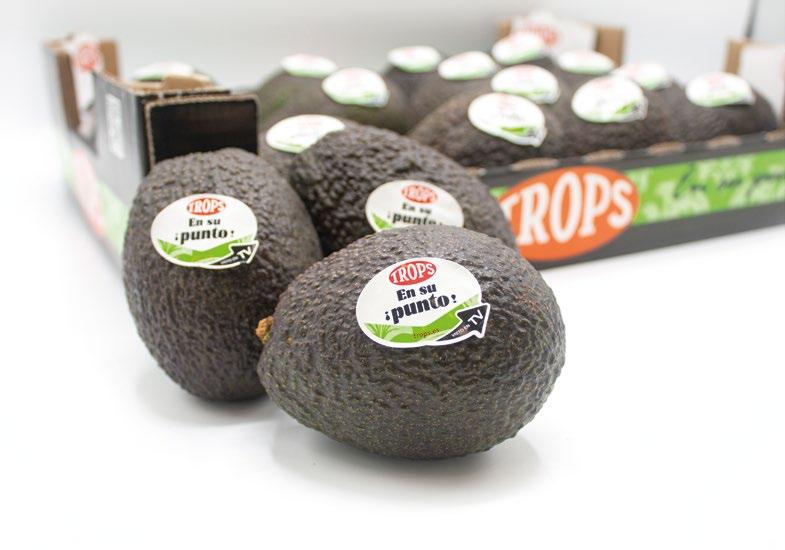
“Poco a poco empieza a haber más dis ponibilidad de aguas regeneradas, y está pendiente la autorización de las obras de una desaladora, pero se trata de un pro yecto que verá la luz a largo plazo, en 5 o 6 años, según promotoras de desaladoras. Por eso es necesaria una provisional”.
Y es que las restricciones hídricas están provocando que algunos agricultores cam bien al mango en detrimento del aguacate, ya que necesita menos agua. “Hay que regar ambos, igual que cualquier otra fruta como los cítricos o un almendro de rega dío… pero la diferencia es que el mango solo deja de producir si no lo riegas, y el aguacate se muere”.
Lacampaña de Tropicales de 2022 superó las expectativas iniciales de Trops, alcanzando los 183 millones de euros de facturación, un 23,6% más que en el ejercicio anterior, así que para este nuevo ejercicio, el director gene ral, Enrique Colilles, prefiere no adelantar demasiados datos porque hay “muchos frentes abiertos”. Lo que sí está claro es que en la campaña del mango, que empezó a finales de agosto, alcanzarán las 18.000 toneladas (de un total nacional de 32.000), un 25-30% más que año el pasado, y que los calibres oscilarán entre los 450/350 gr. de media. Mientras que en aguacate, probablemente haya un 30% menos en el sector y, en el caso de Trops, entre 18.000-20.000 t frente a las 34.000 t del año pasado.
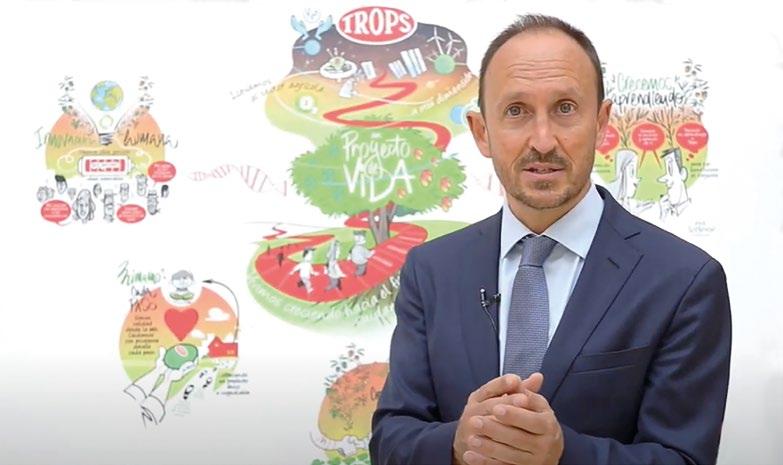
La SAT continúa su firme apuesta por el producto nacional, sin dejar de lado la perspectiva global. “Estamos consolidan do la organización de productores trans nacional junto con socios productores de Latinoamérica”, cifra Colilles. Actualmente la SAT es responsable del 55% del mango que se comercializa en España y aumen ta su posición dominante con el 50% del aguacate español.
Fruit Today habló con el responsable de Trops en el inicio de la campaña, días después de que la consejera andaluza de Agricultura, Carmen Crespo, volviera a comparecer para anunciar medidas en materia hídrica. Unos proyectos que
urgen. “En Vélez-Málaga muchos siguen sufriendo. Municipios como Benamargosa o Benamocarra, sobre todo, están mal. Esperamos que la Administración actúe y que del dicho al hecho no haya un gran trecho”, comentó Colilles. A su juicio, los proyectos prioritarios son la interconexión de embalses, el aprovechamiento de un mayor volumen de aguas regeneradas al 100% y la puesta en marcha de desalado ras “en dos fases: una de urgencia para tener agua inmediatamente, y una segun da con la construcción de una desaladora grande para que a medio plazo se puedan incrementar las plantaciones”.
De momento Trops mantiene su estrategia de crecimiento sin intención de trasvasar cultivos, y sigue apostando por la máxima calidad para mantener su posición en los mercados. Una tarea nada fácil en un con texto en el que los precios de los insumos son “elevadísimos”. “Vamos a pagar cuatro veces más por la luz, es insostenible. Las perspectivas son malas, solo nos queda sobrevivir como siempre hemos hecho”.
Más I+D
A medio-largo plazo, Trops prevé crear una finca experimental en la que centralizar todas las iniciativas de investigación en las que están inmersos para optimizar los cultivos de mangos y aguacates. “Es un proyecto que tenemos en mente. Podre mos avanzar más detalles en primavera”.
Enrique Colilles
Tropicales Fruittoday 70
Trops is consolidating its dominant position
The 2022 Tropical Fruit campaign exceeded Trops’ initial expectations, reaching 183 million euros in invoicing, ie, 23.6% higher than in the previous year. Therefore, for this new year, General Manager Enrique Colilles prefers to not advance too much information because there are “many fronts open”. What is clear is that in the mango campaign, which started at the end of August, they will reach 18,000 tonnes (out of a national total of 32,000 in Spain), 25-30% more than last year and that the calibres will range between an average of 450/350 g. In avocados, however, there will probably be 30% less in the sector and, in the case of Trops, between 18,000-20,000 t compared to last year’s 34,000 t.
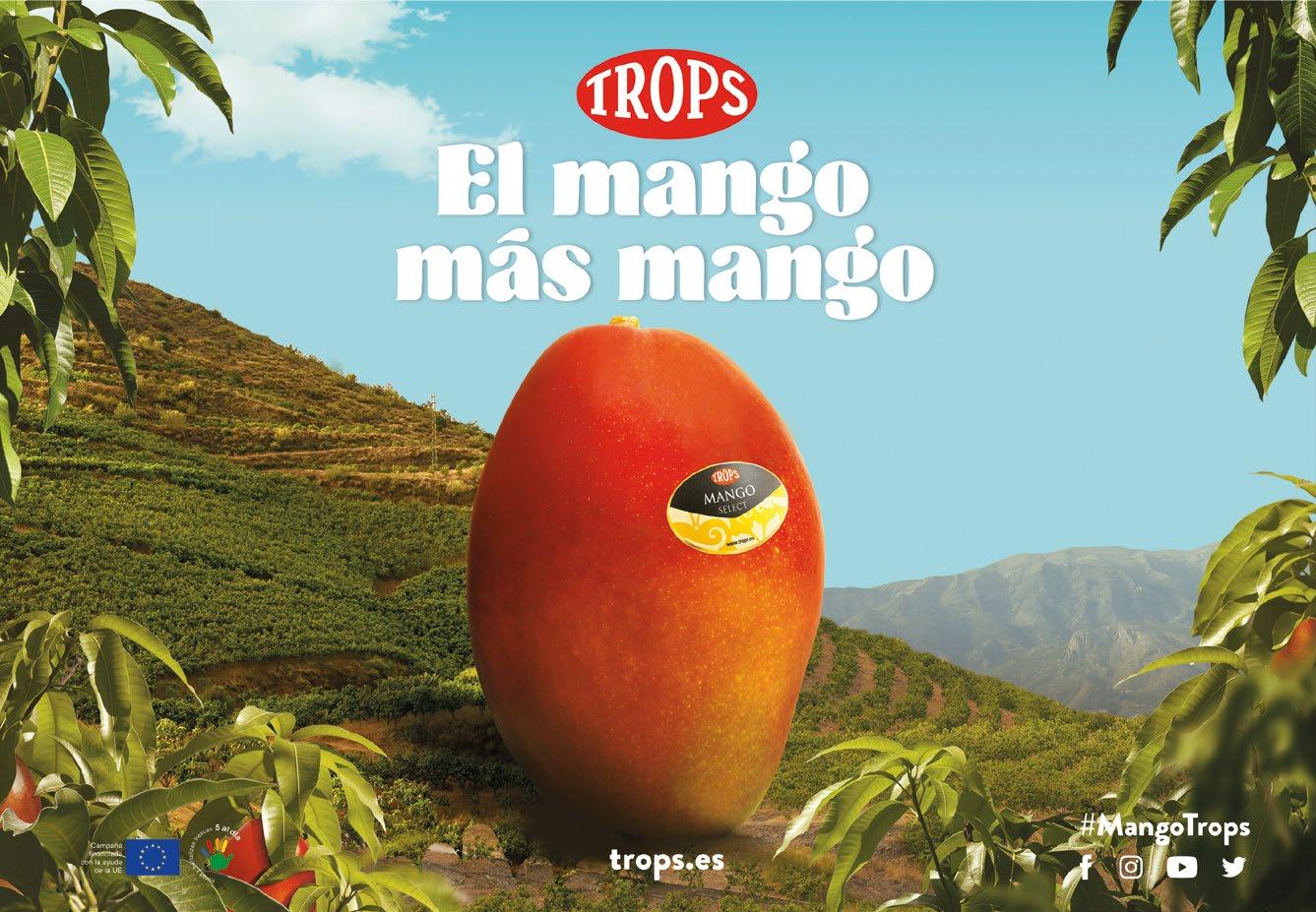
The SAT is continuing with its firm commitment towards Spanish produce, without putting the global viewpoint to one side. “We are consolidating the transnational producers’ organisation with Latin American producers,” Colilles affirms. Currently, the SAT is responsible for 55% of the mangos that are marketed in Spain, and it has increased its dominant position with 50% of Spanish avocados.
Fruit Today talked to the person in charge at Trops at the start of the campaign, days after the Andalusian agricultural minister, Carmen Crespo, appeared again to announce the steps to be taken regarding water. Urgent projects, indeed. “In Vélez-Málaga, many continue to suffer. Towns such as Benamargosa or, above all, Benamocarra, are in a bad situation. We hope that the Administration will act and they won’t drag their feet about it,” Colilles commented.
In his opinion, the priority projects are the interconnection of reservoirs, making use of a larger volume of 100% reclaimed water, and the start-up of desalination plants “in two phases: an urgent one to obtain water immediately, and a second phase with the construction of a large desalination plant to ensure that in the medium term plantations can be increased.”
“Little by little, more reclaimed water is beginning to be available, and the authorisation of the work on a desalination plant is pending, but this is a project that will come to light in the long term, in 5 or 6 years, according to the desalination plant
promoters. Therefore, a provisional one is needed.”
And the fact is that the water restrictions are causing some farmers to change over to mangos from avocados, as they require less water. “Both need to be watered, as with any other fruit, such as citrus fruits or irrigated almond trees… but the difference is that mangos will just stop producing if you don’t water them, while avocados will die.”
At present, Trops is maintaining its growth strategy without any intention of changing crops and it continues to opt for maximum quality to maintain its position on the markets. A task that is not easy in a context where the prices of inputs are “incredibly high”. We are going to pay four times more for electricity – this is an unsustainable situation. The prospects are bad; we just have to survive, as we always have done.”
More R&D
In the medium-long term, Trops plans to create an experimental farm that will centralise all the research initiatives it is immersed in to optimise the mango and avocado crops. “It is a project that we are bearing in mind. We will be able to advance more details in the spring.”
The SAT is responsible for 55% of mangos in Spain and 50% of avocados, and it is consolidating the transnational producers’ organisation with Latin American producers
“We need two desalination plants: an urgent one and another, large one to be able to grow in the medium term”
Tropical
Salto en mango
Bio Procam amplía el volumen y la ventana de producción de mango y ‘rejuvenece’ sus fincas de aguacate
Laempresa ecológica Bio Procam refuerza su producción de tropica les, una línea en la que mantiene una estrategia de crecimiento que se concretará el próximo año con la entrada en producción de nuevas fincas de mango. Para ello, han apostado por distintas va riedades, haciendo hincapié en las tem pranas y tardías. “Tenemos de todo: Irwin, Osteen, Kent y Keitt, y también Palmer en menor medida”, explica a Fruit Today el gerente, Fernando Martín. Este año tienen un +40% de producción, principalmente de calibres medianos (7-9) y para 2023/24 alcanzarán las 700 t de mango ecológico.
En el caso del aguacate, la firma apuesta de forma decidida por la variedad Hass, en detrimento de variedades de piel lisa, y está renovando sus fincas.
Como en el resto del sector, este año las previsiones de producción son bajas. “Va a ser un año malo en general, se acortará la campaña. El año pasado terminó en mayo, pero en esta campaña no llegaremos a

A leap in mangos
esas fechas. Nos quedaremos como mu cho en 2 mill. kg de aguacate frente a los 3 del año pasado”.
Bio Procam is extending its mango volume and production window and it is “rejuvenating” its avocado orchards
The ecological company Bio Procam is strengthening its tropical fruit production, a line where it maintains a growth strategy that will be defined next year with the coming into production of new mango farms. To do this, they have opted for different varieties, with an emphasis on early and late ones. “We have a bit of everything: Irwin, Osteen, Kent and Keitt, and to a lesser extent Palmer as well,” the Manager, Fernando Martín, explains to Fruit Today. This year they have an extra 40% of production, mainly in medium-sized fruit (7-9) and for 2023/34, they will reach 700 t of ecological mangos.
In the case of avocados, the company is making a categorical commitment to Hass, at the expense of the smooth-skinned varieties, and it is renewing its farms.
As is occurring in the rest of the sector, this year the production forecasts are low. “It is going to be a bad year in general; the campaign will be cut short. Last year it finished in May, but in this campaign we won’t reach those dates. At best, we will reach 2 million kg of avocados compared to last year’s 3 million.”
“The Germans are already looking at the price”
At Fruit Attraction, Bio Procam will finish planning a campaign in which the leitmotiv is “maintain the levels, communicate the
increase in certificates (we will grow in certified hectares with BioSwisse and Naturland) and try to set prices.” All of this to try to contain any possible setbacks derived from international instability. “Some German clients have already commented to us that consumers are beginning to look at the prices of bio produce. Unheard of in the country, where ecological consumers are seriously committed to the produce for both conscience and health.”
To date, at Bio Procam they haven’t noticed any references being cutback, and they continue working to close the cycle in all the categories where it is possible. “In cucumbers, we produce 12 months a year and in other crops 9-10 months, all with bio produce.”
Preventive steps
Historically, Bio Procam has carried out optimum water use and management, but they continue to study steps to fine-tune the water input. “We already use 100% drip irrigation. In all the renewed installations, we test the efficiency, we give more frequent, but shorter irrigation periods, etc.” As they are members of a fruit and vegetable producer organisation (OPFH), they have a high number of inspections regarding irrigation efficiency. “We shouldn’t’ wait until the last minute to take preventive steps. The Administration should start using waste water.”
“Los alemanes ya se fijan en el precio”
En Fruit Attraction, Bio Procam terminará de planificar una campaña en la que el ‘leit motiv’ es “mantenerse, comunicar el aumento de certificaciones (creceremos en hectáreas certificadas con BioSwisse y Naturland) e intentar alicatar precios”. Todo para tratar de contener posibles contratiempos derivados de la inestabili dad internacional. “Algún cliente alemán ya nos ha comentado que los consumi dores empiezan a fijarse en los precios del bío. Algo inédito en ese país, donde el consumidor de ecológico está realmente comprometido con el producto por con ciencia y salud”.
En Bio Procam no han notado, al menos de momento, que se recorten referencias, y siguen trabajando para cerrar el ciclo en todas las categorías posibles. “En pepino producimos los 12 meses y en otros culti vos, 9-10 meses, todo bío”.
Medidas preventivas
Históricamente Bio Procam ha realizado un aprovechamiento y gestión hídrica ópti mas, pero siguen estudiando medidas para optimizar el aporte de agua. “Ya tenemos el 100% de riego por goteo. En las instalacio nes que se renuevan testamos la eficien cia, damos más riegos cortos, etc.”. Y es que al ser OPFH, tienen un elevado número de inspecciones relativos a eficiencia de riego. “No hay que esperar a verle las orejas al lobo para tomar medidas preven tivas. Desde la Administración se debería poner en marcha el aprovechamiento de aguas residuales”.
Tropical
Fernando Martín
Fruittoday 72Tropicales
Aguacatera del Sur crece con Perú
Aunque
la situación del mercado ha sido complicada por la demanda y el aumento de costes inherentes a las importaciones para la entrega al cliente, Aguacatera del Sur cerrará la campaña de importación de Perú con un crecimiento cercano al 22%.
El valor de los costes vía terrestre está en tre un 30-40% más caros, y el de los fletes marítimos un +50%. “El impacto es directo y demoledor para los resultados de este ejercicio”, explica Miguel Ángel Loayza del Castillo.
“La guerra y la situación de inflación des orbitada perjudica al consumo de frutas tropicales”, con unas familias que ven mermada su capacidad adquisitiva y lo trasladan a la cesta de la compra. Según las estadísticas oficiales en junio el des censo en la compra y consumo familiar de frutas y verduras cayó un 14%. Un contexto complicado, como explica Miguel Ángel Loayza del Castillo: “La bajada de precios y de demanda de este año son un hándicap para la competitividad de las empresas”.
El país andino es uno de los principales orí genes de la compañía, y va al alza en produc ción de aguacate. “En la sierra ya hay 10.000 hectáreas nuevas que en los próximos años
comenzarán a introducir fruta en febrero. Los volúmenes provenientes de las nuevas plantaciones de Perú afectarán al mercado a corto plazo”, pronostica Loayza del Castillo.
Aguacatera del Sur is growing with Peru
Aguacatera del Sur is growing with Peru
Although the market situation has been complicated due to demand and the increase in costs inherent to imports for delivery to clients, Aguacatera del Sur will close the import campaign from Peru with a growth of around 22%.
The value of the land transport costs is between 30-40% more expensive and maritime shipping has risen by over 50%.
“There is a direct, devastating impact on the results for this year,” according to MiguelÁngel Loayza del Castillo.
“The war and sky-high inflation rates are undermining tropical fruit consumption,” with some families seeing their purchasing
power dropping, and this is being passed on to the shopping basket. According to the official statistics in June, the drop in family fruit and vegetable purchasing and consumption dropped by 14%. A complicated context, as explained by MiguelÁngel Loayza del Castillo: “The drop in prices and demand this year are obstacles for company competitiveness.”
Peru is one of the company’s main sources and its avocado production is on the rise. “In the mountains there are already 10,000 new hectares that will start to introduce fruit over the next few years every February. The volumes from the new Peruvian plantations will affect the market in the short term,” Loayza del Castillo forecasts.
Tropical TropicalesFruittoday 73
“La chirimoya tiene un gran futuro”
Novofrut sigue apostando por un producto ávido de promoción para popularizarse entre los consumidores
Sincompetencia, con una produc ción que abarca 9 meses al año, sabrosa y con múltiples propieda des saludables. “La chirimoya es muy atractiva y tiene un gran futuro por delante”, asegura el responsable comer cial de Novofrut, José Francisco Novo. La única barrera para esta fruta tropical es el desconocimiento. “El gran porcentaje de ventas está del centro de España hasta el sur, aunque cada vez se vende más en el norte. Con promoción estoy seguro de que pegaría una explosión de consumo”.
La empresa granadina apuesta desde sus inicios por la chirimoya, y actualmente tiene 120 ha de cultivo, entre propias y de asociados. El año pasado, a diferencia de otras referencias como el mango y el aguacate, mantuvo unos precios estables
pese al aumento de producción. Para este 2022/23, prevén mantener los mismos niveles en chirimoya, si bien se espera que los calibres sean más pequeños por la falta de agua.
En aguacate, las primeras previsiones indican una caída de más del 30% de los volúmenes, y en mango un aumento cerca no al 25-30%. Entre todas las referencias Novofrut sumará 5,5 millones de kilos. “Ya estamos casi al límite de nuestra capacidad de manipulado y envasado”, explica Novo.
Costes y precios
Sobre el agua, uno de los eternos caballos de batalla del sector, Novo confiesa que hay cierta esperanza en que la Junta de Andalucía cumpla lo prometido y ponga
“Custard apples have a great future”
en marcha, al fin, las conducciones en Béznar y Rules.
Otra de las principales preocupaciones de Novo es, como en el resto del sector, el encarecimiento de costes de entre el 3040% de luz, materiales, transporte… “La factura eléctrica se ha incrementado un 130%”, se queja. Por ello estudian implan tar energías renovables para mitigar, en parte, esta problemática.
Y en medio de todo ello, la creciente com petencia exterior acota la ventana comer cial del aguacate. “Perú, Colombia, México, Chile… pueden llegar a ser productores 365 días, y la mano de obra y costes de allí son muy inferiores. Son muy competitivos. Aquellos precios altísimos del aguacate español serán difíciles de ver en el futuro”.
Novofrut continues opting for a promotion-hungry product to make it popular amongst consumers
Without competition, with a production that covers 9 months of the year, tasty and with many healthy properties. “The custard apple is very attractive and has a great future ahead of it,” the Sales Manager at Novofrut, José Francisco Novo, affirms. The only barrier for this tropical fruit is a lack of knowledge about it. “The largest percentage of sales lies in central and southern Spain, although sales are increasing in the north. With promotion, I am sure that consumption could really take off.”
From the very beginning, the company from Granada has opted for custard apples, and currently it has 120 ha of crop land, including its own and land belonging to associates. Last year, unlike other references such as mangos and avocados, custard apple prices
maintained stable in spite of an increase in production. For 2022/23, they foresee maintaining the same levels in custard apples, although the calibres are expected to be smaller due to the water shortage.
In avocados, the first forecasts are indicating a drop of over 30% in volumes and in mangos, an increase of around 25-30%. Including all Novofrut’s references, they expect to produce a total of 5.5 million kilos. “We are almost at full capacity for handling and packaging,” Novo explained.
Costs and prices
Regarding water, one of the eternal bones of contention in the sector, Novo admits that there is some hope that the Andalusian
Government might deliver on its promise and finally start up pipelines in Béznar and Rules.
As with the rest of the sector, another of Novo’s main concerns involves the increase in costs of between 30-40% for electricity, materials, transport… “Our electricity bill has increased by 130%,” he complains. Therefore, they are studying implanting renewable energies to partially mitigate this problem.
And in the middle of all this, the growing foreign competition is limiting the sales window for avocados. “Peru, Colombia, Mexico, Chile… can all produce 365 days a year and they have much lower labour costs over there. They are very competitive. The previous, very high prices of Spanish avocados will be difficult to see in the future.”
Tropical
Tropicales Fruittoday 74

Axarfruit estrena V Gama

La empresa malagueña presentará su nueva línea de procesados durante Fruit Attraction
Guacamole
suave, picante, bío, pulpa de aguacate y una crema untable de aguacate con queso sin lactosa. Son las referencias con las que Axarfruit inaugura su línea de V Gama. Productos saludables, sabrosos y listos para degustar, con los que se sube al carro de una ten dencia que se ha extendido por numerosas empresas del sector agroalimentario.
La empresa aprovechará su presencia en una de las principales ferias de referencia del sector, Fruit Attraction, para llevar a cabo la presentación oficial de esta gama, que incluye distintos formatos e irá incrementando sucesivamente el portfolio para dar respuesta a las demandas de la distribución.
Y no será la única sorpresa. Este año la firma cumple su décimo aniversario, y lo celebrará por todo lo alto de la mano del chef Iván Muñoz, estrella Michelin con su restaurante El Chirón, de Valdemoro (Ma drid). El cocinero llevará a cabo un show cooking con los productos de Axarfruit durante los dos primeros días de la feria, el martes 4 y el miércoles 5 de octubre, en
horario de 13:00 a 15:00 h, y durante todas las jornadas el hilo conductor del catering de Axarfruit serán el aguacate y el mango.
Crecimiento sostenido
La firma sigue creciendo en extensión. La última incorporación suma 10.000 árbo
Axarfruit is launching readycooked products
The company from Malaga will present its new line of processed products at Fruit Attraction
Smooth, spicy and bio guacamole, avocado pulp and an avocado and lactose-free cheese spread. These are the references that Axarfruit are using to launch its readycooked line. Healthy, tasty and ready-to-eat products, with which it is jumping on the bandwagon of a trend that is spreading through many companies in the agri-food sector.
The company will take advantage of its presence at one of the benchmark trade fairs in the sector, Fruit Attraction, to officially present this range, which includes different formats and with a successively extending portfolio to respond to demands by the distribution.
And this will not be the only surprise. This year the company is celebrating its tenth anniversary in style with Chef Iván Muñoz, the holder of one Michelin star, with his restaurant El Chirón, in Valdemoro (Madrid). The chef will carry out a show-cooking display with Axarfruit products during the first two days of the trade fair, Tuesday the 4th and Wednesday the 5th of October, from 1 pm to 3 pm, and avocado and mango will be the connecting thread for the catering at Axarfruit throughout the fair.
Sustained growth
The company continues its expansion. The latest incorporation has added 10,000 avocado trees on farms in Alhaurín de la Torre. “We continue growing, but cautiously,”the Manager, Álvaro Martínez explains to Fruit Today. In mangos, they are mainly growing with the Palmer mango variety, a material with which they are seeking “to come out of the Osteen bottleneck,” as the latter is the variety with the greatest commercial volume.
If everything goes according to plan, they will close the campaign in a similar way to last year in terms of invoicing, in spite of a 15% increase in volumes. “The profit margins are being affected by the extra costs of inputs, logistics… we are bearing a great weight,”Álvaro Martínez points out. Likewise, he indicates that in the supermarkets “mangos and avocados cost the same price, but the import containers cost double” those from previous campaigns.
In order to attempt to contain energy costs, they are going to implement a 300Kw photovoltaic energy installation aimed at “becoming self-sufficient energy-wise before the end of the year.”
les de aguacate en fincas de Alhaurín de la Torre. “Seguimos creciendo, pero con cautela”, explica a Fruit Today el gerente, Álvaro Martínez. En mango principalmente crecen con la variedad de mango Palmer, un material con el que buscan “salir del cuello de botella del Osteen”, la variedad de mayor volumen comercial.
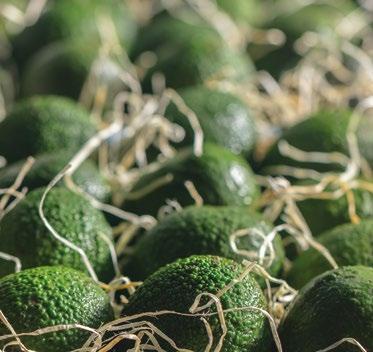
Si todo marcha según lo previsto, cerrarán la campaña como el año pasado en térmi nos de facturación, pese a un incremento del 15% en los volúmenes. “Los márgenes se están viendo afectados por los sobre costes de insumos, logística… estamos soportando mucho peso”, apunta Álvaro Martínez. Asimismo, señala que en los supermercados “el mango y el aguacate cuestan igual, pero los contenedores de importación valen el doble” que en anterio res campañas.
Para tratar de contener los gastos energé ticos, van a implementar una instalación de energía fotovoltaica de 300Kw con el objetivo de “ser autosuficientes energéti camente antes de fin de año”.
Tropical
Tropicales Fruittoday 76
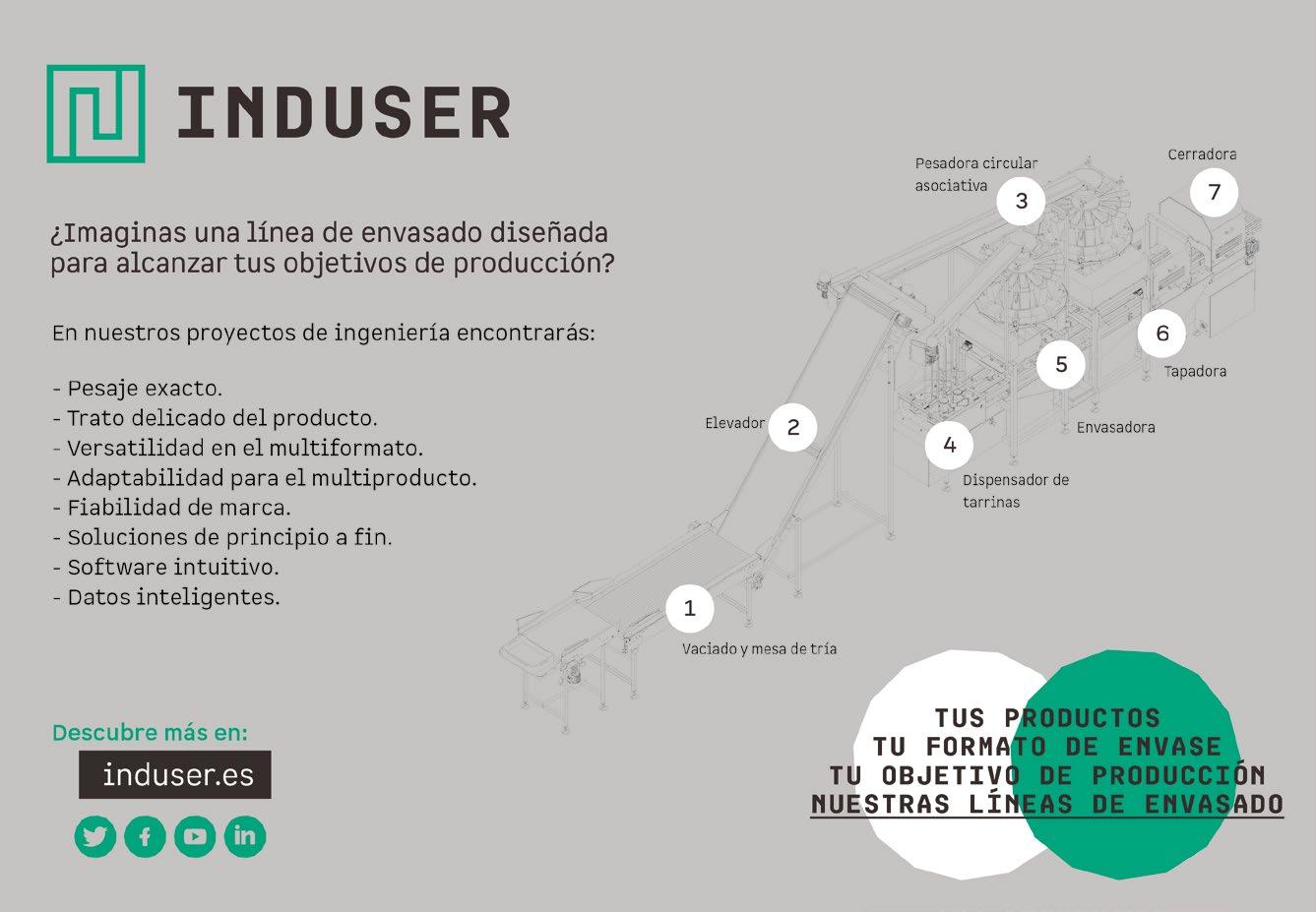

Revisión a la baja de la cosecha europea de manzanas
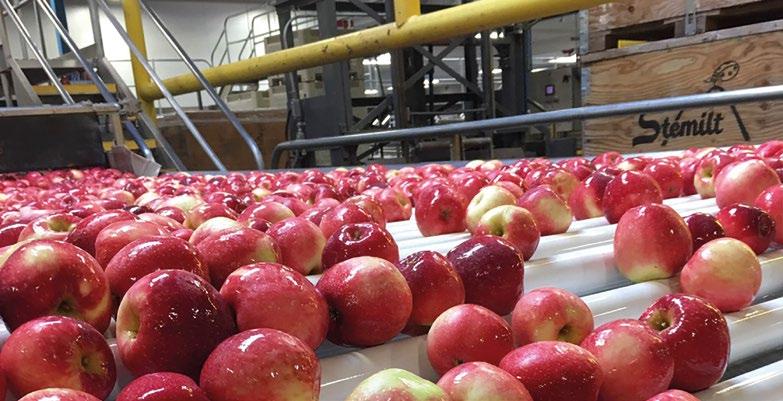
Desde el primer aforo, hecho público durante la primera semana de agosto, hasta el momento de publicar esta información (mediados de septiembre), la cosecha europea de manzanas sufre una revisión a la baja
Francia
Los problemas climáticos se han manifes tado de diferentes maneras en el mercado francés, que este año ha realizado una pronta reevaluación de su cosecha a la baja, sin descartar que todavía pueda ser más escasa. Esta podría estimarse en un 1.300.000 t. Las mayores dificultades se presentan con las variedades más tempra nas como la Gala, con importantes proble mas de coloración. La única lectura positiva de esta coyuntura son los elevados índices de azúcar, especialmente en Galas.
La World Apple and Pear Associa tion (WAPA) estima que la cosecha europea disminuirá sobre sus previsiones iniciales y se situará en torno a las 12.076.000 toneladas. Esta ci fra representa aproximadamente 90,000 t menos de lo que su gería el pronóstico de agosto (12,168,000 t).
La mayoría de los paí ses, excepto Polonia y la República Checa, han revisado a la baja sus estimaciones originales, especial mente Francia, Italia y España. También los Estados Unidos, registra una disminución y estima una recolección de 4,6 millones de toneladas.
Problemas de toda índole
La escasez de trabajadores estacionales es uno de los problemas que ha persistido desde el comienzo de la pandemia de co ronavirus y se ha vuelto aún más relevan te para aquellas empresas que contaban con mano de obra estacional procedente de Ucrania. En este sentido, Polonia es el país más afectado, no solo por su proxi midad, sino por su gran producción.
Otro de los problemas más acuciantes, asunto común para todo el sector de frutas y hortalizas, es el aumento vertigi noso de los precios de la electricidad, que ha elevado el coste de almacenamiento a un nivel insostenible para los producto res. La situación es tan apremiante que
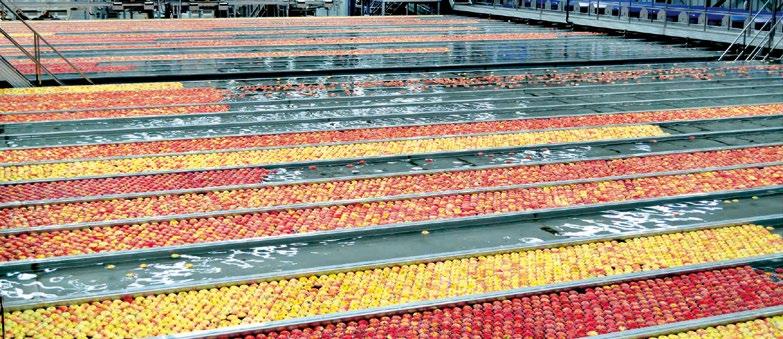
algunos productores pueden optar por no recolectar la cosecha debido a los altos costes que ello conlleva.
Estos factores plantean un problema importante para la producción final y la competitividad del sector y, por lo tanto, incluso amenazan su existencia futura. Además de un limitado retorno de la inversión para los productores, otro problema añadi do será el tamaño de las manzanas y peras frescas.
Las intensas condiciones climáticas en agosto (olas de calor y sequía en algunas regiones) han tenido un impacto negativo en el tamaño y la coloración de una gran parte de la fruta. Todo ello podría derivar en un aumento sustancial de fruta para los procesos industriales.
La situación general para los fruticultores franceses difiere muy poco del resto de sus colegas europeos, aquejados por esa fuerte subida de la electricidad, que afecta a todos los procesos, desde el riego al propio almacenamiento, que podría poner en peligro muchas explotaciones.
Italia
Las tres regiones productoras, Piamonte, Trentino y Sur Tirol registran un descenso productivo, tal y como está siendo habitual en el resto de países europeos. Sin embar go, Italia hace mucho énfasis en poner en valor sus producciones de manzanas orgá nicas y, sobre todo, en seguir adelante, en la investigación varietal y la salida al mercado de nuevas variedades que supongan un revulsivo para los mercados. Este es el caso de la manzana SweeTango, una manzana que se cosecha a mediados de agosto de textura fresca, crocante y muy jugosa.
En líneas generales, la situación no difiere de lo ocurre a otros productores, donde las altas temperaturas y los incrementos de los costes energéticos y de envases supo nen una importante rémora para el sector.
La
a
Manzana Fruittoday 80
falta de coloración y el tamaño podrían derivar mucha fruta
la industria
Downward revision of the European apple harvest
From the first valuation, published during the first week in August, to the time of publishing this information (mid-September), the European apple harvest has experienced a downward revision
The World Apple and Pear Association (WAPA) estimates that the European harvest will drop from its initial forecasts to around 12,076,000 tons. This amount is approximately 90,000 t less than what the August forecast suggested (12,168,000 t).
Most countries, except Poland and Czech Republic, have revised their original estimations downwards, especially France, Italy, and Spain. The United States is also experiencing a decrease and estimates a harvest of 4.6 million tons.
All kinds of problems
The lack of seasonal workers is another problem that has persisted since the beginning of the coronavirus pandemic. It has become even more important in the case of those companies that were counting on seasonal labour from Ukraine. In this regard, Poland is the country affected the most, due not only to its proximity but also to its large production.
Another urgent problem –something that affects the entire fruit and vegetable sector– is the sky-high increase in electricity prices, which have raised storage costs to unsustainable levels for fruit growers. This situation is so serious that some fruit growers
are deciding not to collect their harvest due to the high costs involved.
These factors pose an important problem for the sector’s final production and competitiveness, and even threaten its future existence. In addition to a limited return on fruit growers’ investment, another problem will be the size of fresh apples and pears. The severe weather conditions in August (heatwaves and droughts in some regions) have had a negative impact on the size and colouring of a large part of the fruit. All this could result in a substantial increase in fruit used for industrial processes.
France
The weather problems have emerged in different ways in the French market, which this year has carried out an early downward re-evaluation of its harvest, without ruling out that it could drop even more. This could be estimated at 1,300,000 t. The greatest difficulties have appeared with the early varieties, such as Gala, with important colouring problems. The only positive reading of this situation lies in the high sugar levels, particularly in Galas.
The general situation for French fruit growers is very similar to the rest of their European colleagues, afflicted by the significant rise in electricity prices, which are affecting all the processes, from irrigation to storage itself, costs that could jeopardise many farms.
Italy
The three apple-growing regions of Piedmont, Trentino, and South Tyrol experienced a decrease in production, which is proving to be the case in the rest of Europe. However, Italy is strongly emphasizing the promotion of its production of organic apples and, above all, its ongoing varietal research and marketing of new varieties that are shaking up the markets. This is the case of the SweeTango apple, which is harvested in mid-August, featuring a refreshing, crispy, and very juicy texture.
In general, the sector’s situation is no different than that of its fruit-growing neighbours, where high temperatures as well as rising energy and packaging costs are weighing heavily on the sector.
The lack of colouring and size could send a great deal of fruit to industry
Apple
El problema de la mano de obra en las centrales de manzana
Elenorme valor del mercado global de la manzana (unos 79.000 millo nes de dólares anuales) únicamente puede mantener de forma rentable a aquellos productores y centrales de confección que logren ser competitivos. Y seguir siendo competitivo es mucho más fácil con las innovadoras tecnologías de clasificación y calibrado actuales, que solventan los retos a los que hacen frente hoy en día.
La tecnología de TOMRA permite que las centrales de confección reduzcan sus necesidades de mano de obra para la cla sificación y mejoren significativamente la consistencia, precisión y empaquetado del producto final.
Entre las soluciones se encuentran:
TOMRA 5S Advanced es la única platafor ma diseñada para permitir un funciona miento higiénico, un proceso de desinfec ción y limpieza sencillo que no requiere herramientas especiales, y cuyas zonas de contacto son 100% de acero inoxidable y polímeros aptos para su uso alimenta
Manpower problems in apple preparation centres
Damien Gibson, Global Category Director Apples at TOMRA Food, analyzes the challenges faced by apple packhouses
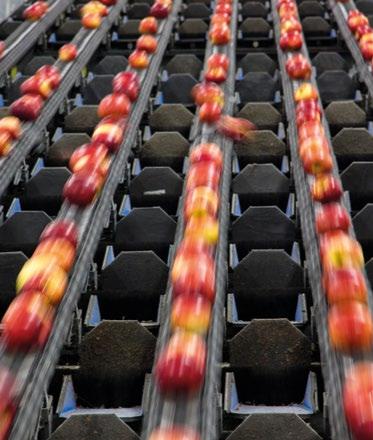

The huge value of the global apple market - approximately US$79bn per year - can profitably sustain the many thousands of growers and packers able to stay competitive. And staying competitive is made much easier by adopting today’s stateof-the-art sorting and grading technologies, which solve the challenges faced today.
TOMRA’s technologies allow packhouses to reduce the labor required for sorting whilst significantly improving the consistency, accuracy, and packout of the sorted product.
Solutions include:
The TOMRA 5S Advanced is the only platform designed for hygienic operation, with toolless cleaning and sanitization, and 100% stainless steel and food-safe polymer contact areas. Unrivaled efficiencies are made possible by the machine’s specialized software features and connectivity to the data platform TOMRA Insight.
TOMRA Insight can make sorting machines the digital heart of packhouse operations
and enables better flow of information up and down the supply chain, and opens a pathway to traceability from bin to pack.
When using Spectrim , first the apples are sorted according to surface blemishes. Then they are graded on minor and major defects, including skin blemishes, insect damage, misshapen fruit, bruising, and abrasions.
The UltraView inspection module integrates with Spectrim to take its ‘seeing’ power to the next level. With a dedicated set of high-resolution multi-spectral (color and infrared) cameras and LED lights located ideally close to the fruit and parallel to its direction of travel, this is the world’s most powerful fresh produce grading platform.
Inspectra² is a non-invasive solution for internal defect grading. This platform’s near-infrared spectrometer can detect brix, core rot, internal browning, water core, firmness, hue, and bleeding. These detection capabilities keep bad apples out of a good box and reduce fruit giveaway.
rio. Su eficiencia es posible gracias a su software especializado y a su conectividad con la plataforma de datos TOMRA Insight.
TOMRA Insight permite convertir las máquinas de clasificación en el corazón di gital de la actividad de envasado y mejora el flujo de la información a lo largo de la cadena de suministro y abre una vía para la mejor trazabilidad del producto, del árbol a la mesa.
Al usar Spectrim, primero se clasifican las manzanas según sus imperfecciones superficiales. Luego, se calibran según defectos mayores y menores, incluidas imperfecciones de la piel, daños provoca dos por insectos, fruta de forma irregular, arañazos y abrasiones.
El módulo de inspección UltraView se integra con el Spectrim para lograr una máxima capacidad de “visión”. Para ello emplea un conjunto exclusivo de cámaras multiespectrales (de color e infrarrojas) de alta resolución y luces LED perfectamente ubicadas cerca de la fruta y ubicadas en paralelo a la dirección en la cinta.
Por su parte Inspectra² es una solución no invasiva para el calibrado de defectos internos. El espectrómetro de infrarro jo cercano de la plataforma es capaz de detectar el grado Brix de la fruta, así como su estado de pudrición interna, ennegre cimiento, vidriosidad, firmeza, tonalidad y picado. Estas posibilidades de detección logran evitar que la fruta de mala calidad se mezcle con la de buena calidad y mini mizan el despilfarro de fruta.
Damien Gibson, Director Global de la Categoría de Manzanas en TOMRA Food, analiza los retos a los que se enfrentan las centrales de envasado de manzanas
Apple
Damien Gibson
Manzana Fruittoday 82
“La mayor preocupación del sector radica en cómo repercutir los costes”
En un momento en el que la subida de costes afecta a todo el sector productor por igual, el mercado de la manzana no resulta ser una excepción y muchos aseguran estar cansados de tener que asumirlos sin ningún tipo de ayuda ni solución
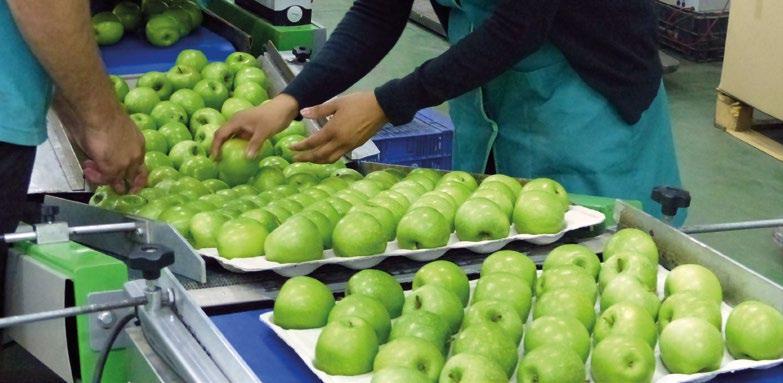
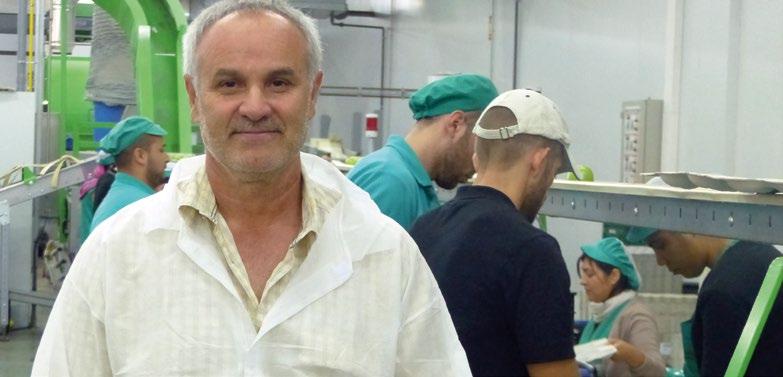
Parece que los supermercados han su bido los precios. ¿Cómo repercute esta subida al sector comercializador?
Los supermercados han aceptado una ligera subida de precios, pero que no llega a compensar los costes que hemos tenido. Nuestro negocio tiene mucha demanda eléctrica muy elevada debido a las cámaras frigoríficas
¿Es la energía fotovoltaica una solución real?
Fruit
Today habló con Alex Creixell, gerente de Girona Fruits Costa Bra va, quien nos habló de las mayores preocupaciones de este año en el mercado, como son, entre otras, el precio de la energía o una producción mermada debido a las condiciones meteorológicas.
¿Cuáles son los hechos más destacados de la campaña que ahora arranca?
Ha sido un año en el que el calor ha afec tado al calibre y esto ha hecho que un porcentaje de fruta no se pueda aprove char. Por tanto, al haber menos calibre, la consecuencia más inmediata es que habrá menos kilos. Está por ver el cálculo total, pero estamos seguros de que en toda Europa habrá menor volumen de lo aforado en agosto. Esto ya ha pasado con la varie dad Gala, una de las que más ha sufrido la ola de calor.
También hay menores plantaciones de Golden, mientras que la Pink Lady se man tiene bastante estable, aunque con una menor cosecha. Sin embargo, al entrar en producción nuevas plantaciones, al final contaremos casi con el mismo volumen.
¿Existen nuevas variedades de cara a esta temporada?
Desde nuestra cooperativa hemos realiza do una importante apuesta por la variedad Candine de ASF Edition. Empezamos a plantarla el año pasado y ya contamos
con una producción de unos 30.000 kilos. Por otra parte, el IRTA está trabajando en variedades adaptadas al cambio climático y muy enfocadas en veranos muy caluro sos, como los que tenemos y seguiremos teniendo.
¿Cuáles son las mayores preocupaciones por parte de los productores de manzana?
Fundamentalmente el aumento de costes a nivel energético y de materiales, es de cir, embalajes, el cartón, la madera… Todo ello, sin obviar que, a veces nos encontra mos con problemas de suministro. Pero, sobre todo, la mayor preocupación radica en cómo repercutir esos costes porque los productores trabajan con márgenes muy justos.
No. Es una gran inversión, que más o me nos da un 20% de autoconsumo, pero es un porcentaje pequeño. A partir de ahora, el rendimiento de las placas baja mucho. En verano se genera más energía, pero en líneas generales, es el momento en que las cámaras están vacías. No considero la fotovoltaica una solución, sino más bien una ayuda.
¿Qué novedades existen de cara a pro teger las plantaciones? ¿Y en la propia central?
El 85% de nuestras plantaciones está bajo malla y casi nadie en nuestra zona piensa en plantar sin tener una estructura de cobertura de granizo, que además nos aisla del viento. En la central, en 2023, esperamos tener una línea robotizada al completo, una máquina con varios brazos robóticos que pone las manzanas dentro de la caja, sustituyendo así la mano de obra.
Alex Creixell
Manzana Fruittoday 84
“The sector’s greatest concern lies in how to pass on the costs”
At a moment when the rising costs are affecting the entire producing sector in the same way, the apple market is no exception and many affirm that they are tired of having to assume the costs without any kind of help or solution
Fruit Today talked to Alex Creixell, the Manager of Girona Fruits Costa Brava, who told us about this year’s greatest concerns on the market, which, amongst others, are the price of energy or a reduced production due to the weather conditions.
What are the most prominent facts of the campaign that is just starting now?
It has been a year when the heat has affected size, and this has meant a percentage of the fruit cannot be used. Therefore, as they are smaller, the most immediate consequence is that there will be fewer kilos. The total calculation has yet to be made, but we are certain that all over Europe there will be a lower volume than anticipated in August. This has already happened with Gala apples, one of the varieties that have suffered most from the heat wave.
There are also fewer Golden plantations, while Pink Lady is remaining quite stable, although with a smaller harvest. However, as new plantations are coming into production, in the end we will have almost the same volume.
Are there any new varieties this season?
Our cooperative has made an important commitment to the Candine variety by ASF Edition. We started planting it last year and we now have a production of around 30,000 kilos. On the other hand, the Food and Agricultural Research and Technology Institute (IRTA) is working on varieties adapted to climate change, highly focused on very hot summers, such as the ones we are already experiencing and will continue to have.
What are the greatest concerns for apple producers?
Basically, the increase in energy and material costs, that is to say, packaging, cardboard, wood… All of this without forgetting that at times we are experiencing supply problems. But above all, the greatest concern lies in how to pass on these costs, because the producers work with very tight profit margins.
It seems that the supermarkets have put the prices up. How is this rise being passed on to the marketing sector?
The supermarkets have accepted a slight price rise, but this does not compensate the costs we have incurred. Our business has a very important electricity demand due to the cold storage rooms.
Is photovoltaic energy a real solution?
No. It is an important investment, which more or less gives 20% of self-consumption, but it is a small percentage. From this point of the year onwards, the yield of the panels drops a great deal. In the summer, they generate more energy, but in general, this is the time of year when the cold rooms are empty. I don’t consider photovoltaic energy a solution.
What new developments are there to protect the plantations? And in the central plant itself?
85% of our plantations are under mesh and almost nobody in our region thinks about planting without installing a covering structure for hail, which also shields us against the wind. At the central plant, in 2023, we expect to have a completely automated line, a machine with several robotic arms that puts the apples in boxes, replacing workers.
Apple
Home of Apples, el nuevo concepto de VOG
Origen, maestría, sostenibilidad, surtido y marcas son los elementos que constituyen el VOG del mañana
ElConsorcio representa el 6% del total europeo de manzanas y el 32% del mercado italiano. La compa ñía está presente en 75 mercados internacionales. Los cuatro factores que siempre han formado parte del ADN del VOG ahora cobran un nuevo significado:
Origen
Altitudes que van de los doscientos a los mil metros, una fuerte oscilación térmica entre el día y la noche y trescientos días de sol al año crean las condiciones perfectas para la maduración, mientras que el terre no, de bajo contenido arcilloso y rico en arena favorece el desarrollo de las raíces de los manzanos.
Maestría
De los cuatro mil seiscientos campesinos, las doce cooperativas y los departamentos de venta, control de calidad, administra ción, logística, marketing y relaciones públicas. “Más de diez mil manos trabajan cada día para llevar las mejores manzanas a las mesas del mundo entero”, comenta el responsable de ventas de VOG Klaus Hölzl.
Sostenibilidad
Medioambiental, y a la vez económica y social, como remarca la responsable de calidad, Kathrin Pirchstaller: “Nues tras manzanas son un recurso para toda la región y para nuestros hijos; por eso hemos creado el proyecto sustainapple: además de promover el empleo de prác ticas de bajo impacto medioambiental, nos valemos de innovación y tecnología de vanguardia para garantizar un bienestar duradero a nuestra cadena productiva en las próximas décadas.”
Gran surtido en marcas
De la marca Marlene®, a Pink Lady®, Kanzi®, envy™ y Yello®, JazzTM y SweeTango®, para llegar a las manzanas de nueva ge neración como RedPop®, Giga® y Cosmic Crisp® y a las variedades y a las marcas biológicas, el surtido de VOG está en condiciones de ofrecer la manzana idónea para satisfacer cualquier exigencia en los doce meses del año.
Campaña 2022
Las previsiones de volumen en lo que concierne a la producción integrada son ligeramente inferiores a las 450.000t, con una disminución del 3,5% con respecto a la temporada precedente. Sin embargo, la estimación de producción biológica va en claro aumento (+15%), con más de 35.000t, gra cias a los nuevos árboles tras plantados en los últimos años.
Por lo que respec ta a las varieda des, se registra un evidente descenso de las Royal Gala (-15%), debido a la fuerte caída de frutos, anormal y pre
matura, en primavera. La Granny Smith recupera sus niveles normales tras la escasa cosecha de la temporada pasada, mientras que disminuyen las cantidades del resto de manzanas tradicionales, como consecuencia de la renovación varietal emprendida por el Consorcio en los últimos años.
Los planes varietales también llevan a incrementos importantes en las nuevas marcas y en las variedades sujetas a contrato, como Pink Lady® (+15%), Kanzi® (+11%), envy™ (+35%), yello® (+32%), Joya® (+74%), Crimson Snow® (+40%) y SweeTango® (+32%). Además, continúa el crecimiento de las últimas novedades lanzadas por el VOG: Giga® doblará la pro ducción con más de 4.000t, la RedPop® rozará las 3.000 (+40%) y la Cosmic Crisp® alcanzará las 3.500.
Promoción
El chef surtirolés del restaurante de tres estrellas St. Hubertus del Hotel Rosa Alpina, Norbert Niederkofler, es el nuevo rostro del gusto y la excelencia de las manzanas Marlene®. En una relación de colaboración que aúna orígenes y dimen sión internacional, placer y sostenibili dad, arte y cultura, el chef acompañará al Consorcio VOG durante toda la temporada con iniciativas de alto nivel dedicadas al arte de degustar la manzana, pres tando una especial atención a las cuatro estaciones.
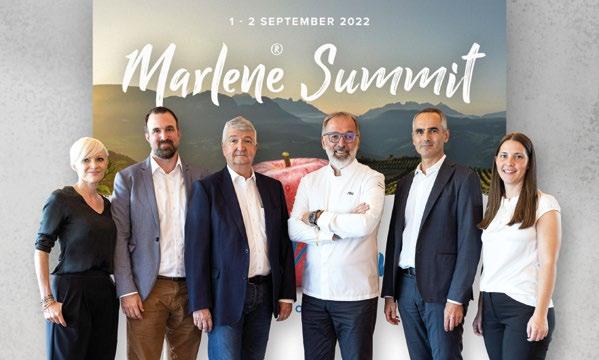
 Walter Pardatscher
Manzana Fruittoday 86
Home of Apples, VOG’s latest concept
Origin, expertise, sustainability, range and brands are the elements that make up tomorrow’s VOG
The Consortium represents 6% of all European apples and 32% of the Italian market. The company is present on 75 international markets. The four factors that have always formed part of VOG’s DNA are now taking on a new meaning:
Origin
Altitudes ranging from two hundred to one thousand metres, an important temperature variation between day and night and three hundred days of sunshine a year create the perfect conditions for ripening, while the soil, with a low clay content and rich in sand, encourages the development of the apple tree roots.
Expertise
Four thousand six hundred farmers, twelve cooperatives and the sales, quality control, administration, logistics, marketing and public relations departments. “Over ten thousand hands work every day to bring the best apples to the tables of the entire world,” comments the Sales Manager at VOG, Klaus Hölzl.
Sustainability
Environmentally, and at the same time, economically and socially sustainable, as the Quality Manager, Kathrin Pirchstaller,
remarks: “Our apples are a resource for the entire region and for our children; for this reason, we have created the sustainapple project: in addition to promoting the use of low environmental impact practices, we are using innovation and cutting-edge technology to guarantee a long-lasting wellbeing to our production chain over the next decades.”
Wide range in brands
From the Marlene® brand to Pink Lady®, Kanzi®, envy™ and Yello®, JazzTM and SweeTango®, up to the latest generation apples such as RedPop®, Giga® and Cosmic Crisp® and the biological varieties and brands, VOG’s range is able to offer the perfect apple to meet any demand, twelve months of the year.
2022 Campaign
The volume forecasts regarding comprehensive production are slightly below 450.000 tn, with a 3.5% drop compared to the previous season. However, the biological production estimates are clearly rising (+15%), with over 35,000 tn, thanks to the new trees transplanted in recent years.
With respect to the varieties, an obvious drop in the Royal Gala (-15%) has been recorded due to the significant, abnormal
and early falling of fruit in the spring. Granny Smiths are recovering their normal levels after last season’s small harvest, while the rest of traditional apples are seeing drops in their amounts, as a result of the variety renewal undertaken by the Consortium in recent years.
The variety plans also involve important increases in the new brands and in the varieties subject to contract, such as Pink Lady® (+15%), Kanzi® (+11%), Envy™ (+35%), Yello® (+32%), Joya® (+74%), Crimson Snow® (+40%) and SweeTango® (+32%). The growth of VOG’s latest launches also continues to grow: Giga® will double its production with over 4,000 tn; RedPop® will reach around 3,000 (+40%) and Cosmic Crisp® will reach 3,500 tn.
Promotion
The south Tyrolean chef from the 3-star restaurant St. Hubertus, at the Hotel Rosa Alpina, Norbert Niederkofler, is the new face for the flavour and experience of Marlene® apples. It is a collaboration that brings together origins and a dimensional scope, pleasure and sustainability, art and culture. The chef will accompany the VOG Consortium throughout the season with top-level initiatives devoted to the art of sampling apples, paying special attention to the four seasons.
Apple
Pink Lady®, más de
toneladas
% vs N-1)
Esta campaña, frente a una baja da generalizada del consumo de fruta y en especial de manzanas en Europa (-6,7 % en España, -10 % en Francia o más -6 % en Alemania), la Asociación Pink Lady® Europa se movi liza por un precio justo, una producción sostenible y una calidad controlada des de los cultivos hasta el consumidor, así como de la dinamización de la manzana en tienda.
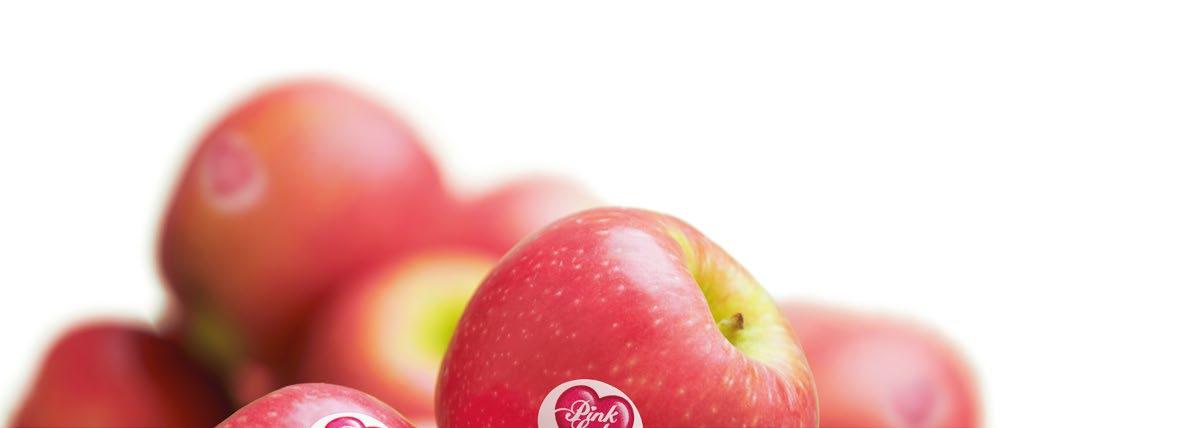
Dinamismo en tienda
En tienda, Pink Lady® persigue sus inno vaciones con: soluciones de comercio electrónico con sitios de en trega y/o recogida por parte del consumi dor en su propio vehículo (Drive); una variedad para niños con PinKids®; el desarrollo de la doble referencia:
embalajes cero plástico por toda Europa asociados al desarrollo del granel; tres nuevas bolsas de transporte y el segui miento del desarrollo de los productos bajo licencia que tiene como objetivo ampliar la oferta de Pink Lady® y desta car el 100 % de la producción, como el zumo Tropicana en Francia, los yogures Mila en Italia o incluso una referencia de compota en proceso de creación en Alemania.
Experiencia de marca
La manzana también va a mejorar la ex periencia de la marca para seguir sedu ciendo y fidelizando a sus consumidores con un dispositivo lleno de significado: una campaña mediática en 12 países europeos que prevé alcanzar 300 millones de contactos; un nuevo club de fide
lidad experiencial; operaciones trans versales con placeres de la gastronomía con Pink Chefs en enero, transparencia y proximidad con «Adopta un árbol» en el mes de marzo y compromisos por la biodiversidad y por las abejas alrededor de Bee Pink;
Sostenibilidad
Con su cero plástico, cero despilfarro y la conservación de la biodiversidad, Pink Lady® persigue sus compromisos en favor de una agricultura más sostenible y continúa apoyando su carta de com promisos. Se pueden encontrar varias iniciativas en la agenda de este año: Pink Lady® y la Liga francesa para la Protec ción de las Aves (LPO) y El campo del futuro.
Joya®, joya certificada sobre el estand
En paralelo a Pink Lady® y PinKids®, el stand de Fruit Attraction acogerá la manzana Joya®, hoy en pleno apogeo gracias sobre todo a los programas de las plantaciones de Italia y España, que tienen previsto conseguir un potencial de 20.000 toneladas en 2025.
Pink Lady®, over 200,000 tonnes
In spite of the spring frosts and after the summer’s heat and drought, the Pink Lady® Europe Association predicts crossing the barrier of 200,000 tonnes this season (+13.5%vsN-1)
This campaign, faced with a generalised drop in consumption of fruit and particularly of apples in Europe (-6.7 % in Spain, -10 % in France or over -6 % in Germany), the Pink Lady® Europe Association is taking action regarding a fair price, a sustainable production and controlled quality from the crops to the consumers, as well as for the revitalisation of apples in the stores.
Revitalisation in stores
In the stores, Pink Lady® is pursuing its innovations with the following: electronic trade solutions with delivery and/or collection sites by consumers in their own vehicles (Drive); a variety for children with PinKids®; the development of the double reference: zero plastic packaging all over Europe associated with the development of loose produce selling; three new transport bags and the monitoring
of the development of the products under licence that is aimed at extending the offer of Pink Lady® and emphasising the 100 % of the production, such as the Tropicana juice in France, Mila yoghurts in Italy or even a compote reference being created in Germany.
Brand experience
The apple is also going to improve the brand experience in order to continue seducing and making its consumers loyal using a mechanism full of meaning: a media campaign in 12 European countries that plans to reach 300 million contacts; a new experience loyalty club; crossover operations with Pink Chef gastronomic pleasures in January, transparency and local proximity with “Adopt a tree” in March and commitments to biodiversity and for the bees around BeePink.
Sustainability
With its zero plastic, zero waste policies, along with biodiversity conservation, Pink Lady® is pursuing its commitments in favour of more sustainable agriculture and it continues to support its commitment charter. Several initiatives may be found on this year’s agenda: Pink Lady® and the French league for the Protection of Birds (LPO) and the Fields of the Future.
Joya®, a certified gem on the stand
Parallel to Pink Lady® and PinKids®, the stand at Fruit Attraction will also host the Joya® apple, currently in full swing thanks to all the plantation programmes in Italy and Spain, which plan to obtain a potential of 20,000 tonnes in 2025.
Apple
Manzana Fruittoday 88
200.000
A pesar de las heladas de primavera y tras el calor y la sequía del verano, la Asociación Pink Lady® Europa prevé pasar la barrera de las 200.000 toneladas esta temporada (+13,5

Las especialidades de Blue Whale baten récords
Candine y Envy, son las variedades club por las que Blue Whale apuesta fuertemente en el mercado español
Como empuje a este comienzo de campa ña, Blue Whale ha organizado promocio nes en mercados mayoristas de Madrid, Barcelona y Valencia. El lema es ‘Fuji Pri meur: la primera de su clase’. De manera adicional, también habrá acción especial dirigida a los fruteros.
Las acciones se verán reforzadas por el equipo de embajadores de la marca, quienes visitarán las fruterías de Madrid, Barcelona y Valencia para seguir de cerca las necesidades del sector, la correcta presentación del pro ducto y repartir a los fruteros el material especial que Blue Whale ha preparado para ellos.
Gracias
a las nuevas plantaciones y a que no hubo que lamentar heladas esta campaña, los volúmenes de manzana de la firma gala se dupli caron en comparación con la temporada pasada.
Aunque la llegada de Candine y Envy a los lineales españoles todavía está por llegar, la recolección de Candine, una variedad que se produce por todo el territorio fran cés, ya se está llevando a cabo y arrancará su promoción en España coincidiendo con la celebración de Fruit Attraction. Por su parte, Envy llegará a los mercados en el mes de noviembre.
La manzana que ya se encuentra disponi ble en España y que es una de las favoritas de los consumidores, así como líder de ventas para Blue Whale es la Fuji. Esta variedad, producida casi en su totalidad en el suroeste francés, arranca con la comercialización de su cosecha más temprana, Fuji Primeur. Con unos datos de producción similares a los del pasado año, es la manzana con la que da comienzo una temporada que se prevé muy positiva.
“El año pasado nuestros calibres se vieron afectados por las heladas que azotaron el país. Esta temporada, a pesar de las olas de calor de este verano, que también pueden afectar al tamaño, tendremos mejores calibres”, señala Adrien Touzet, export marketing manager de Blue Whale. Bien es cierto que la previsión de volú menes de cosecha se ha reajustado tras las olas de calor que ha experimentado Europa este verano, que han afectado principalmente al color de la variedad
Gala. “Para alcanzar buenos niveles de coloración tiene que haber una diferencia de temperatura entre el día y la noche, y no fue el caso”, añade Touzet.
También se ha puesto en marcha un sorteo entre los consumidores, quienes contestando una pregunta en www.promobluewhale.es pueden ganar un fin de semana rural para dos personas.
Blue Whale’s specialities are beating records
Blue Whale is strongly committed to the club varieties Candine and Envy on the Spanish market
Thanks to the new plantations and to the fact that there were no frosts during this campaign, the French company’s apple volumes have doubled compared to the previous season.
Although Candine and Envy have yet to reach Spanish supermarket shelves, the Candine harvest, a variety that is completely produced in French territory, is underway and its promotion will start in Spain coinciding with the trade fair Fruit Attraction. Envy, on the other hand, will reach the markets in November.
Fuji is the apple that is already available in Spain and that is a consumer favourite, as well as a leader in sales for Blue Whale. This variety, produced almost entirely in Southwest France, starts off marketing its earliest harvest, Fuji Primeur. With some production data similar to that of last year, it is the apple that starts off a season and which has very positive forecasts.
“Last year our calibres were affected by the frosts that scourged the country. This season, in spite of the heat waves this summer, which may also affect the size, we will have better calibres,” indicates Adrien Touzet, Export Marketing Manager
for Blue Whale. Although it is also true that the harvest volumes forecasted have been readjusted after the heat waves experienced in Europe this summer, which mainly affected the colour of the Gala variety. “To reach good colouring levels, there must a difference in day and night temperatures, and this was not the case,” Touzet adds.
As a boost for the start of the campaign, Blue Whale has organised promotions on wholesale markets in Madrid, Barcelona and Valencia. The slogan being used is: ‘Fuji Primeur: la primera de su clase’ (Fuji Primeur: first in its class). Additionally, there will also be special actions aimed at the fruit sellers.
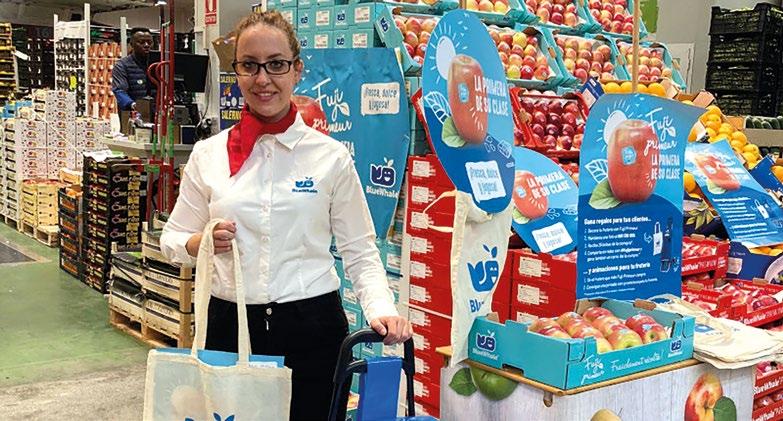
These actions will be strengthened by the team of brand ambassadors, who will visit fruit shops in Madrid, Barcelona and Valencia to closely follow the sector’s requirements, along with the correct product presentation and to hand out to the fruit sellers the special material that Blue Whale has prepared for them.
A prize draw has also been started up amongst consumers, who can win a weekend country break for two people by answering a question on www. promobluewhale.es.
Manzana Fruittoday 90
Apple
Nufri: un operador global con muchas raíces locales
Reivindicar sus raíces locales sin abandonar una visión global del negocio es para Nufri una tarea esencial en las circunstancias socioeconómicas actuales
Fruit
Today tuvo ocasión de conver sar con Iván Elías, director de fruta fresca del Grupo Nufri, con quién abordamos este y otros muchos temas del sector.
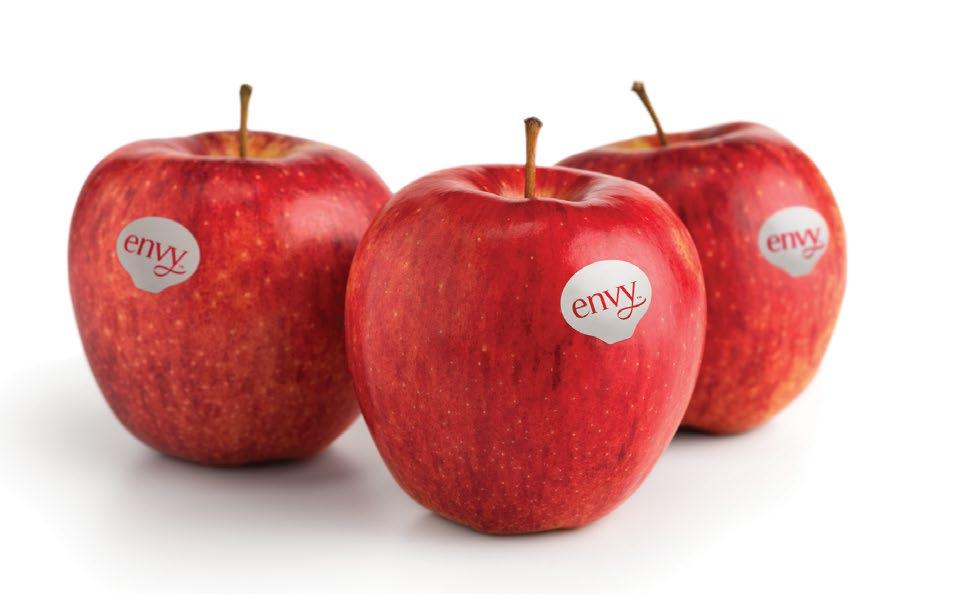
En los últimos años su empresa ha dado un salto numérico respecto a las manza nas club, ¿cómo ve la evolución de estas categorías?, ¿el futuro de la manzana pasa solo por los clubs o también por las variedades libres?
La evolución hacia estas categorías es lógica y natural, y ello es debido a que las nuevas variedades club, ofrecen unas cualidades organolépticas distintas a las libres. Estas características diferenciales son más apreciadas por los consumido res, hecho que se demuestra en los consumos. Con las varieda des tradicionales tene mos rotaciones muy largas, en cambio con las pertene cientes a club el consumo mantiene un mejor com portamiento. Por esto mismo, en un momento en que el con sumo de fruta per cápita disminuye año tras año, es im portante ofrecer manzanas que sean buenas de comer y revertir esta tendencia.
La producción soriana de La Rasa en Soria será completa. ¿Me puede hablar de su calidad? ¿la cosecha se está llevando a tiempo? ¿en qué medida le afecta el cambio climático? ¿de qué volúmenes globales de producción hablamos?
La finca de La Rasa está situada a 870 m de altitud. Dicha altitud otorga a las man zanas mayor jugosidad, crocantez, dulzura y color a las manzanas rojas y bicolores debido al contraste térmico entre el día y la noche. Para ciertas variedades, que se cultivan en La Rasa, su aumento de calidad, debido a la zona geográfica, es muy considerable; sobre todo ahora que estamos sufriendo con el cambio climá tico (disminución de precipitaciones,
noches cada vez más calurosas, olas de calor que se prolongan en los días). En Nufri intentamos apaciguar todos estos cambios con la versatilidad geográfica de nuestras plantaciones, cultivando donde mejor se adapta cada variedad según las condiciones climáticas del lugar.
Paralelamente, la cosecha va en tiempo y forma a pesar de las circunstancias de pérdida de producción en Lleida, que se paliarán con los 35 millones de kilos en Soria, significando para la finca el alcance de la producción completa.
Respecto a sus campañas de promoción, siempre muy destacas, para este año, ¿qué acciones están barajando? (deporte, tv, radio...)
Uno de los principios de nuestro grupo agroindustrial se basa en la toma de deci siones sostenibles, a través de la apuesta por proyectos y medidas con un alto com ponente en desarrollo sostenible, con el fin de contar con procesos que moderen
La marca Livinda, de origen nacional, ya ofrece tres variedades ecológicas
el impacto en el medio ambiente. Desta can la optimización de energía a través de energías renovables y cogene raciones, así como la utiliza ción y gestión de recursos naturales, como el agua a través de depuradora, o la conversión de los residuos en biogás y la optimización del riego a través de sondas y sensores que dan a los culti vos el agua justa y necesaria en todo el ciclo productivo. Para nuestra com pañía, la sostenibili dad no es una filoso fía, es una convicción: somos una empresa en economía circular que practica la economía circular.
Como un operador global, ¿qué dificul tades encuentran en la actualidad desde el punto de vista logístico y de costes?
Siguiendo con la dinámica de los últimos años seguiremos acercando nuestras man zanas a todos los públicos y reivindicando, sobre todo, el origen a través de todos los canales de comunicación on y off-line, así como en nuestra plataforma de RSC EllasSonDeAquí. Como también, motivando a nuestros mejores prescriptores, los frute ros, a que ofrezcan las mejores manzanas de origen nacional. También tendremos novedades en más plataformas sociales.
En materia de sostenibilidad, ¿me puede decir cuáles son los últimos avances de la firma?
Se ha encarecido toda la cadena de valor, que junto con la cada día más complica da burocracia europea, desencadena un verdadero quebradero de cabeza para la importación y exportación. Debemos de ser conscientes de ello, y dar un mayor valor a la producción local. Hay que inver tir dinero y esfuerzos en comunicar a los consumidores de dónde vienen los pro ductos y como llegan las frutas y verduras a sus hogares.
En este sentido, ustedes han realizado una fuerte apuesta con su propia marca Livinda, ¿no es así?
Manzana Fruittoday 92
Efectivamente, y ahora nuestra Livinda de origen nacional, presenta la manzana ecológica porque también deseamos satisfacer este tipo de demanda. Esta nueva gama contará con tres variedades: la Royal Gala, la Golden Delicious y la variedad Opal. Todas ya están disponibles y forman parte de esta campaña en la que quere mos dar a conocer la importancia de reivindicar el origen que, lo hacemos a través de La Ruta de las Manzanas de Soria, donde contamos con un centro de interpretación de la manzana.
En un momento dado, ustedes mantuvie ron una gran expansión hacia mercados lejanos, ¿cuál es la situación actual?
En Nufri nunca hemos dejado de explorar nuevos mercados. En estos momentos nos encontramos en una situación de espera con la administración para que establezca nuevos protocolos y poder llegar a nuevos horizontes.
Nufri: a global operator with widespread local roots
Vindicating its local roots without giving up its global business view is essential for Nufri in the current socio-economic circumstances
Fruit Today had the chance to talk to Iván Elías, Fresh Fruit Manager at the Nufri Group, with whom we tackled this and many other subjects from the sector.
In recent years the company has taken a numerical leap regarding club apples, how are these categories evolving? Does the future of apples only involve the clubs or does it also include free varieties?
The evolution towards these categories is logical and natural, and this is due to the fact that the new club varieties offer organoleptic qualities that differ to those of the free varieties. These differentiating characteristics are appreciated more by consumers, a fact that can be seen in the consumption figures. With the traditional varieties, we have very long rotations. On the other hand, club varieties maintain better consumption behaviour. For this reason, at a time when fruit consumption per capita is dropping, year after year, it is important to offer apples that are good to eat and to turn this trend around.
The production from La Rasa in Soria will be complete. Could you tell me about its quality? Is the harvest being carried out in time? To what extent is climate change affecting it? What global production volumes are we talking about?
The farm of La Rasa is located at an altitude of 870 m. This altitude gives apples greater juiciness, crunchiness, sweetness and colour to red and bicoloured apples due to the contrast in temperatures between day and night. For some varieties, grown in La Rasa, the increase in quality, due to the geographical area, is very considerable, especially now that we are suffering from climate change (a decrease in rainfall, nights that are becoming hotter, heat waves that last for days)…At Nufri, we are trying to calm these changes down with the geographical
versatility of our plantations, cultivating where each variety adapts best according to the place’s weather conditions.
Parallel to this, the harvest is taking place on time and correctly in spite of the circumstances regarding the production loss in Lerida, which will be compensated with the 25 million kilos in Soria, meaning that the farm has completed its production scope.
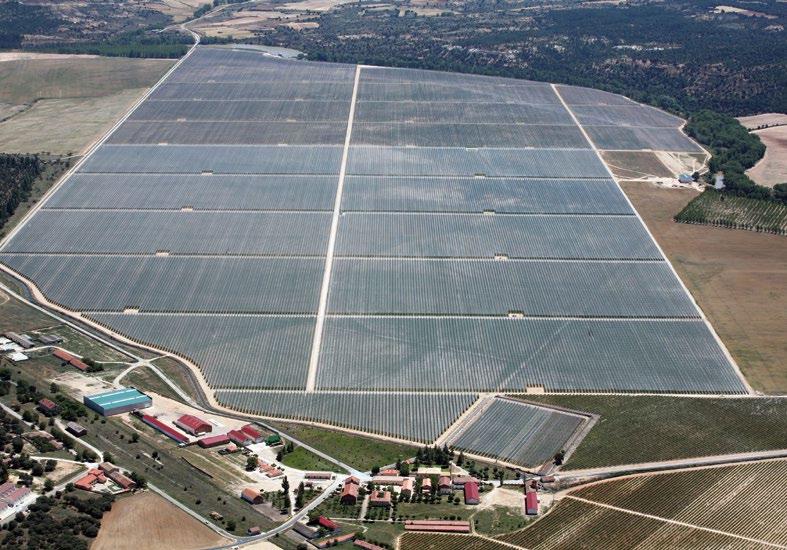
In terms of your promotion campaigns, which are always very prominent, which actions are being considered this year (sports, TV, radio...)?
Following the dynamics of recent years, we will continue bringing our apples closer to all the target groups and vindicating, above all, their origin, through all the communication channels both on and off-line, as well as on our CSR platform EllasSonDeAquí (TheyAreFromHere). As well as motivating our best prescribers, the fruit sellers, to whom the best nationally-grown apples are offered.
There will also be new developments, on other social platforms, which we will inform about later on.
Regarding sustainability, could you tell me about the company’s latest advances?
One of our agricultural industry group’s principles is based on taking sustainable decisions, through the commitment to projects and steps with a high sustainable development component, aimed at relying on processes that moderate environmental impact. Energy optimisation through renewable energies and cogenerations stand out as well as the use and management of natural resources, such as water through treatment plants or the conversion of waste into biogas and the optimisation of irrigation using probes and sensors that give the
crops the exact, necessary amount of water throughout the production cycle. For our company, sustainability is not a philosophy, it is a conviction: we are a circular economy company that practices circular economics.
As a global operator, what difficulties are you finding at present from the logistics and costs point of view?
The entire chain of value has become more expensive, which, alongside European bureaucracy that is becoming more complicated on a daily basis, is causing serious headaches for imports and exports. We must be aware of this, and give greater value to local production. Money and effort must be invested in communicating to our consumers where the products come from and how the fruit and vegetables reach their homes.
Accordingly, you have made a strong commitment to your own brand Livinda, haven’t you?
Indeed, and now our Spanish-grown Livinda is presenting its ecological apples, because we also want to meet this type of demand. This new range will have three varieties: Royal Gala, Golden Delicious and Opal. All of them are already available and form part of this campaign in which we want to emphasise the importance of vindicating the origin, which we are doing through the ‘Ruta de las Manzanas de Soria’ (Soria Apple Route), where we have an apple interpretation centre.
At one point, you started up a great expansion towards distant markets, what is the current situation?
At Nufri, we have never stopped exploring new markets. At present, we are playing a waiting game with the Administration for new protocols to be established and to be able to reach new horizons.
Apple
La producción más corta de toda una década
La nueva cosecha española de cítricos será la más baja de las últimas diez campañas, debido a las anómalas condiciones climáticas registradas en primavera y la sequía del verano
la media de las últimas campañas), el limón (con descensos del 12,4 % y 11,3 %, respectivamente) y el pomelo (13,7 % y 4,5 %.).
La naranja será, como es habitual, el cí trico de mayor producción, con 3.010.491 toneladas, el 50,4 % del total. De estas, el 75 % de naranjas corresponderán al grupo Navel. La producción de pequeños cítricos se elevaría a 1.953.954 toneladas, el 32,7 % del total, con las clementinas como grupo mayoritario.
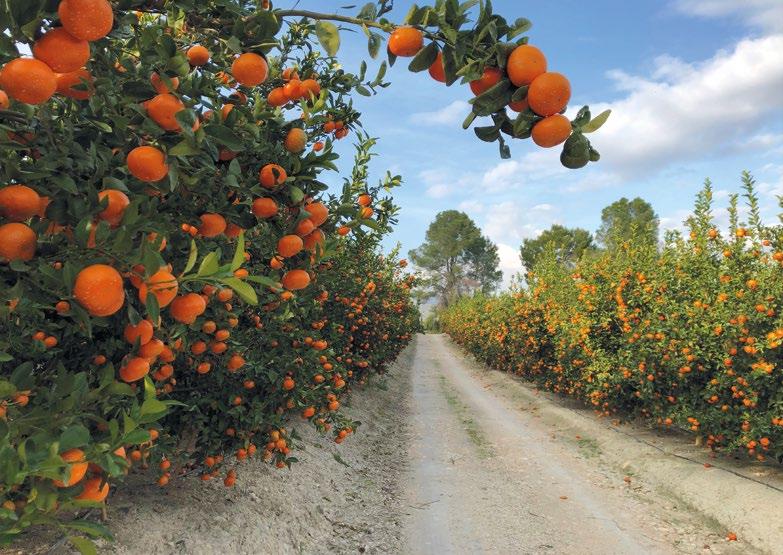
Bajada significativa en limones
La producción de limones se estima en 918.802 toneladas, un 15,4 % de la produc ción cítrica total, que sería la cifra más baja de las últimas siete campañas.
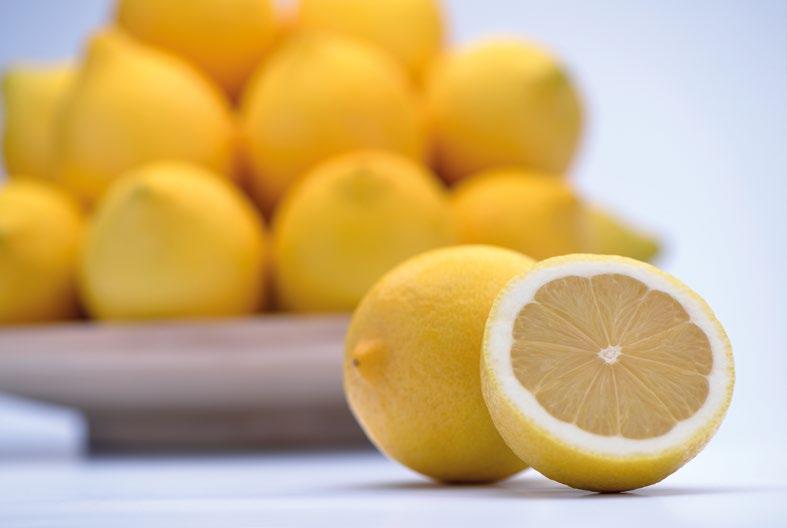
El aforo de cítricos elaborado por el Ministerio de Agricultura, Pesca y Alimentación (MAPA) estima una producción de 5,968 millones de toneladas para la campaña 2022/2023, iniciada el pasado 1 de septiembre. Estas cifras suponen un significativo descenso respecto a cosechas anteriores, del 15,6% sobre la campaña pasada y del 12,8 % respecto a la media de los últimos cinco años (1,1 millones de toneladas menos). Hay que remontarse a la campaña 2012/13 para encontrar una campaña con menos producto.
La campaña citrícola se inició el pasado 1 de septiembre con una novedad clave para el desarrollo de la misma, la impo sición del tratamiento en frío para la im portación a la Unión Europea de naranjas procedentes de países como Sudáfrica en los que está presente la plaga de la polilla del naranjo.
Según los últimos datos disponibles, las superficies de cultivo aumentaron un 1,7 % en 2021 y suman 219.096 hectáreas. Las condiciones climáticas han sido deci sivas en esta baja producción, fundamen talmente por el exceso de lluvias durante las fases de floración y cuajado del fruto, y por las temperaturas extremadamente altas en estadios posteriores y restriccio nes al riego en algunas regiones.
Las naranjas caen un 20%
Por producto, serán las naranjas las que experimenten un mayor descenso, con caídas del 19,9% respecto a la campaña anterior y del 15,7% respecto de la media de las últimas cinco campañas. Descen derán también los pequeños cítricos (9,8 % respecto al año anterior y 9,1 % sobre
La producción de pomelos alcanzaría las 75.394 toneladas, el 1,3% del total de cítricos, con la cosecha más baja de las últimas tres campañas, después de los récords productivos consecutivos alcan zados en las dos anteriores.
Un adicional análisis del MAPA
El MAPA ha dado a conocer una nueva realidad productiva del sector citrícola correspondiente al año 2021 en el que se advierte un incremento del 1,7% en las superficies de 2021 respecto a 2020,
Cítricos Fruittoday 94
con un total de 219.096 hectáreas. Las superficies que más han crecido son las destinadas limonero y pomelo, más de un 10 %, y su mayor auge se localiza en la Región de Murcia, con un aumento de casi el 7 %, seguida de Andalucía (3,2 %).
Frutkia, la nueva herramienta
El Ministerio contará con una nueva herramienta, Frutkia basada en mode los matemáticos y desarrollada con el objetivo de conocer de manera anticipada el volumen productivo de cada campaña en sectores especialmente sensibles a
situaciones de sobreoferta como son las frutas de hueso o los cítricos.
Comunidad Valenciana
La cosecha en esta comunidad se situará en algo menos de 3 millones de tonela das. Dado que el balance de la campaña
2021-22 llegó a ser de 3,26 la temporada puede cerrarse con un descenso su perior al 8%. Un porcentaje, que, tiene, por sí mismo, bastante importancia. De hecho, desde la campaña 2005-06 no se había dado una cosecha tan corta. Esta reducción afectará a todos los tipos de cítricos, pero serán las naranjas las más
Las nuevas superficies citrícolas se incrementan en un 1,7% en 2021, y suman 219.096 hectáreas. El aumento se da fuera de la Comunidad Valencia, que sigue perdiendo peso en toda la categoría
perjudicadas con una merma cercana a las 150.000t, respecto a las 164.000t del ejercicio precedente.
Las mandarinas irán a la zaga con una caí da aproximada de, entorno a las 100.000t, comparado con la campaña previa n la que se llegó a las 133.000t.
El descenso del aforo se atribuye a varios factores, uno de ellos es que el árbol de los agrios es vecero, lo que significa que, si un año da muchos frutos, al siguiente su cosecha es más corta.
Hay otro tipo de motivos, que vienen registrándose en esta comunidad desde hace varios años y el más destacado es el paulatino abandono de las tierras de cul tivo, preferentemente aquellos terrenos pequeños y menos rentables
En estas circunstancias otras autonomías como Andalucía e incluso Murcia, donde se ha apostado por los grandes latifun dios, han ganado terreno a la Comunidad valenciana.
En la década de los 80, la Comunidad Va lenciana llegó a representar el 85% de la producción citrícola española y, en estos momentos, se encuentra rozando menos del 50%.
En cualquier caso, la lectura que po dríamos hacer de estos primeros aforos estriba en que una menor producción en campo podría elevar los precios en ori gen, pero este punto está por ver.
The lowest production of the last decade
The latest Spanish citrus fruit harvest will be the lowest of the last ten campaigns, owing to the unusual weather conditions recorded in spring and the summer drought
The citrus fruit evaluation prepared by the Spanish Ministry of Agriculture, Fishing and Food (MAPA) estimates a production of 5,968 million tonnes for the 2022/2023 campaign that started on the 1st of September. These figures mean a significant drop compared to previous harvests: 15.6% less than the last campaign and 12.8% less with respect to the average for the last five years (1.1 million tonnes less). We have to look back to the 2012/13 campaign to find a season with less produce.
The citrus fruit campaign started on the 1st of September with a key new development, the imposition of the cold treatment for orange imports to the European Union from countries such as South Africa where the Honeydew moth is present.

According to the latest data available, crop surface areas increased by 1.7% in 2021, making a total of 219,096 hectares. The weather conditions have been a determining factor for this lower production, basically due to excess rainfall during the flowering and fruit setting phases and to the extremely high temperatures in subsequent stages, along with irrigation restrictions in some regions.
Oranges drop by 20%
By product, oranges will experience the greatest drop, with decreases of 19.9% compared to the previous campaign and 15.7% compared to the average of the last five campaigns. Small citrus fruit will also decrease (9.8% compared to the previous year and 9.1% of the average over the past five campaigns), lemons (with reductions of 12.4% and 11.3%, respectively) and grapefruit (13.7% and 4.5%.).
As is normal, oranges will be the citrus fruit with the largest production, with 3,010,491 tonnes, 50.4% of the total. Of these, 75% of oranges will correspond to the Navel group. The production of small citrus fruit will reach 1,953,954 tonnes, 32.7% of the total, with clementines making up the majority group.
A significant drop in lemons
Lemon production is estimated at 918,802 tonnes, 15.4% of the total citrus fruit production, showing the lowest figures of the last seven campaigns.
Grapefruit production will reach 75,394 tonnes, 1.3% of total citrus fruit production, with the lowest harvest of the past three campaigns, after the production records reached during the two previous years running.
An additional analysis by the Spanish MAPA
The Spanish MAPA has informed of a new production reality in the citrus fruit sector in 2021 in which it informs of an increase of 1.7% in the surface areas for 2021 compared to 2020, making up a total of 219,096 ha. The surface areas that have increased most are for lemon and grapefruit, over 10% and the highest increase may be found in the Region of Murcia, with a rise of almost 7%, followed by Andalusia (3.2%).
Frutkia, the new tool
The Ministry will be using a new tool, Frutkia, based on mathematical models and developed with the aim of discovering the production volume for each campaign beforehand in sectors that are particularly sensitive to oversupply situations such as stone fruit or citrus fruit.
Valencian Community
The harvest in this community will reach slightly less than 3 million tonnes. Given that the balance for the 2021-22 campaign reached 3.26 million tonnes, the season could close with a drop of over 8%. A percentage which in itself is quite important. In fact, since the 2005-6 campaign there has not been a harvest as small as this year’s. This reduction will affect all types of citrus fruits, but oranges will be worst hit, reducing the amount to around 150,000 tn compared to the 165,000 tn of the previous year. Mandarins will lag behind, dropping to approximately 100,000 tn, compared to the 133,000 tn harvested in the previous campaign.
The decrease shown in the evaluation is attributed to several factors, one of which is that citrus fruit trees are ‘veceros’, meaning that if they give large amounts of fruit one year, the next harvest will be much smaller.
There are other types of reasons, which have been recorded in this region for several years now, and the most prominent one is the gradual abandoning of the crop land, particularly less profitable smallholdings.
In these circumstances other autonomous regions, such as Andalusia and even Murcia, where they are committed to very large farms, have been gaining ground on the Valencian Community.
In the 1980s, the Valencian Community represented 85% of the Spanish citrus production and now, it barely reaches 50%.
In any event, the reading we could make of these first evaluations consists of the fact that a lower production in the fields could bring the prices up at source, but this remains to be seen.
Citrus
The new citrus fruit surface areas increased by 1.7% in 2021, making a total of 219,096 ha. This increase is taking place outside the Valencian Community, which continues to lose weight in the category as a whole
Cítricos Fruittoday 96

“Soy la primera: es el momento”
Más tarde o más temprano, los productores de cítricos tienen que plantearse qué variedad eligen dentro de la multitud de oferta de mandarinas, clementinas, o satsumas, presentes en el calendario de recolección de cítricos
Eneste contexto, la variedad prote gida US Early Pride aparece en este panorama varietal con un valor ya consolidado pues se ha cultivado con éxito en otros países como en EEUU.
Esta variedad sería el primer híbrido de mandarina irradiada del calendario de recolección de las variedades que hoy se cultivan en España. Su época óptima de recolección se inicia a finales de octubre y se extiende a finales de diciembre. Todo ello, sin contar con la viabilidad que posee la fruta para permanecer en el árbol tras su madurez. Por ello, a finales de octubre, ya se dispone de esta apetecible manda rina: una fruta de un color naranja rojizo muy, muy intenso
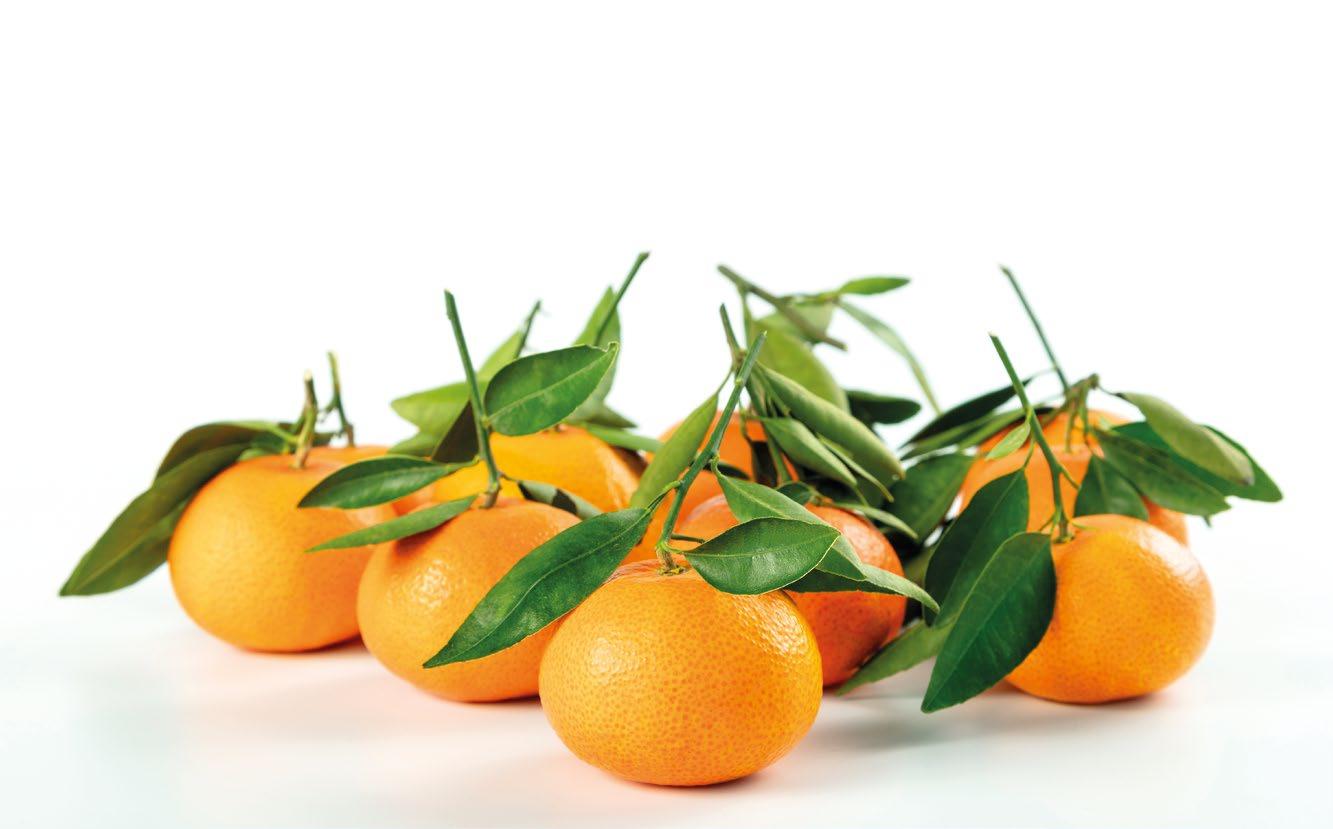
Los profesionales del sector comprende rán rápidamente la importancia de este segmento de fruta con este color en un período tan temprano. De ahí su slogan y el título de este artículo. El hecho de que empiece antes conlleva múltiples conse cuencias a nivel de recursos hídricos, hoy tan escasos, de manejo agronómico y, por supuesto, económicos. Lo que va delante va primero como diríamos todos.
Una variedad que empieza antes y cuya fruta no contiene semillas habiendo sido descrita por la Unidad de Examen Técni co de identificación varietal de la Oficina Española de Variedades Vegetales como una mandarina seddless. La viabilidad de su polen es muy muy baja siendo que su potencial de germinación es inferior al diez por ciento (10%).
La Early Pride puede convivir con varieda des polinizantes y con nuestras amigas las abejas conservadoras del medio ambiente. Por
tanto, es una forma más de conservación de estos organismos en los agroecosis temas y, por ende, de la agrodiversidad, contribuyendo a dar estabilidad al inmi nente, o mejor dicho, ya existente, cambio climático. Además, no es sensible al pixat por la forma de su fruto, achatado, y por la textura de su piel.
El Laboratorio autorizado por el Servi cio de Sanidad Vegetal de la Consellería Agricultura de la Generalitat Valenciana, ValGenetics, ha testado su resistencia a Alternaria alternata lo que también la ca racteriza especialmente y evita al agricul tor la adopción de medidas de prevención.
No nos olvidemos de su tallo y hoja, que la hacen especialmente atractiva para los amantes del mercado de hoja para el beneplácito del consumidor y de la propia frescura del producto. El mercado ha empujado en los últimos años a muchos agricultores a buscar un signo de diferen ciación con el objetivo de poder acceder a su cuota de mercado y esta variedad les ofrece una nueva opción, que incluye además un pelado fácil pelado por la débil adherencia de su piel al fruto.
Llega al mercado de la mano de agricul tores con una larga experiencia ya que los socios del Licenciatario exclusivo de la Variedad, la nueva empresa Euro Varieties Agronomic Management, S.L. o EVAM para los amigos, son productores de fruta y segunda generación de una familia que ha dedicado toda una vida y esfuerzo a los cí
tricos. la última apuesta de sus miembros se ha consolidado a través de la entidad americana New Varieties Development and Management Corporation, Master Licence, por esta variedad americana titularidad del Ministerio de Agricultura de los Esta dos Unidos (United States Department of Agriculture USDA).
Cítricos Fruittoday 98
Publireportaje
“I am the first: it is time”
In this context, the protected variety US Early Pride appears on this variety scene with an already consolidated value, as it has been successfully grown in other countries such as the USA.
This variety would be the first radiated mandarin hybrid on the harvesting calendar of the varieties that are grown today in Spain.
Its optimum harvesting time starts at the end of October and continues until the end of December. All of this, without mentioning the fact that the fruit can remain on the tree after ripening. For this reason, at the end of October, this appealing mandarin is already available: a fruit with a very, very deep reddish-orange colour.
Professionals from the sector will quickly understand the importance of this fruit segment, with such a colour at such an early period. This is the reason behind the slogan and the title of this article. The fact that it starts earlier has many consequences regarding water resources, which are so scarce at present, agronomical handling and
of course, economic consequences. First come, first served, as we would all say.
A variety that starts earlier, with fruit that does not contain any seeds, being described by the Technical Inspection Unit for Variety Identification of the Spanish Vegetable Varieties Office as a seedless mandarin. The feasibility of its pollen is very low, as its germination potential is below ten percent (10%).
The Early Pride can live alongside pollinator varieties and with our environmentallyconserving friends, the bees. Therefore, it is another way to conserve these organisms in the agricultural ecosystems and thus, agricultural diversity, contributing to bringing stability to the imminent, or rather, already existing climate change. Additionally, it is not sensitive to pixat or water staining due to the shape of its flattened fruit and to the texture of its skin.
The Laboratory authorised by the Vegetable Health Service of the Agriculture Department of the Valencian Regional Government, ValGenetics, has tested its resistance to
Alternaria alternate, which is another of its special characteristics, meaning that farmers do not have to adopt prevention steps.
We should not forget its stalk and leaves, which make it particularly attractive for the lovers of the leafed vegetable market, welcomed by consumers and also for the freshness of the product itself. In recent years the market has pushed many farmers to seek out a sign of differentiation aimed at being able to reach their market share and this variety offers a new option, which also includes easy-peeling due to the weak adherence of the skin to the fruit.
It reaches the market endorsed by farmers with extensive experience as the associates of the exclusive Varity Licensee, the new company Euro Varieties Agronomic Management, S.L.o EVAM to its friends, are fruit producers and the second generation of a family that has devoted an entire lifetime and effort to citrus fruits. The latest commitment by its members has been consolidated through the American body New Varieties Development and Management Corporation, Master Licence, for this American variety belonging to the United States Department of Agriculture USDA).
It is the time to discover it!

Sooner or later, citric producers have to decide which variety to choose from the multitude on offer of mandarins, clementines or satsumas, present on the citrus fruit harvesting calendar
The Early Pride can live alongside pollinator varieties and with our environmentallyconserving friends, the bees
Publireportaje Citrus
“Ailimpo viaja al futuro y regresa con lo que ha aprendido”
En 24 años de vida, la Interprofesional del Limón y Pomelo (Ailimpo) es todo un modelo de éxito, donde el bien general del sector ha primado sobre el individual y los personalismos

de riego, de abonado, etc. Hay países como Argentina que han sido capaces de desarrollar un patrón de negocio en el que la fruta llega con calidad tras 30 días de viaje. Ya está inventado y debemos adap tarlo. En el terreno comercial, deberíamos contar con estructuras más grandes y consolidadas, que nos permitan afrontar este tipo de aventuras. Además, tene mos que hablar con nuestros ‘supuestos competidores’ para establecer redes de colaboración y abordar nuevos destinos. Un ejemplo muy claro sería establecer una estrecha colaboración con Argentina y po der dar continuidad a su campaña con li món español en Estados Unidos. O hacerlo con los países asiáticos, donde Sudáfrica ya tiene importantes lazos comerciales.
¿Y el segundo reto?
Sinembargo, no hay que bajar la guardia y seguir explorando nuevos caminos.
Fruit Today magazine habló con José Antonio García, su director, quién a pesar de sus exitosas campañas en redes con su “lemonencer”, el primer limón in fluencer, explicó que “no es hora de bajar la guardia sino de explorar nuevos caminos”.
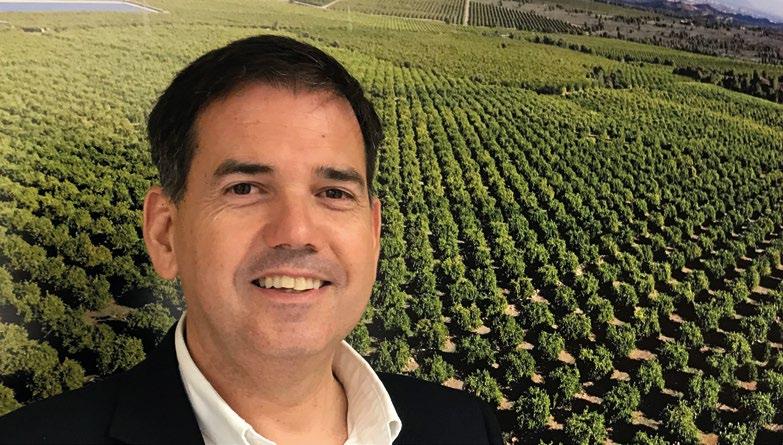
¿Cuál es su valoración al frente de Ailimpo y su feed back después de la Asamblea?
Hace 24 años tres locos o iluminados tu vieron la genial idea de organizar el sector de una manera diferente a como estaba hasta el momento. Ha sido una tarea ardua y complicada, pero hemos genera do una cultura de diálogo, con un enfoque basado en el beneficio general. Por su puesto, en este camino se han cometido errores, pero hemos aprendido.
¿Qué es lo más importante en estos momentos?
Tener identificados los retos, mirar hacia adelante y no quedarse observando. Es el momento de desplegar los planes de acción adecuados, unos serán a corto plazo, otros a medio y otros a largo y, con probabilidad, habrá que ir variando en función de las circunstancias geopolíti cas. Metafóricamente hablando “viajamos al futuro y regresamos con lo que hemos aprendido.”
Ustedes son muy partidarios de la cultura de la colaboración con los que son apa rentemente competidores
Sí, por suerte, tenemos una estrecha re lación con nuestros competidores con los que tratamos de hablar, cooperar, inter cambiar experiencias, etc.
Están excesivamente centrados en el mercado europeo
Sí, así es. No somos una excepción. Sólo el 4% de nuestro producto sale del ámbito comunitario, aunque realmente es me nos porque por metodología esta dística incluimos Noruega y Suiza. Por lo tanto, nos quedamos en un 1%. A día de hoy, la complejidad logística es un freno importan te, pero hay que mirar a largo plazo porque posiblemente la situación actual sea cíclica.
Entonces, ¿cuáles son los retos que tienen identificados?
Por un lado, el de la produc ción ya que nuestro modelo actual está basado en un ‘transit time’ de unas 48 o 72 horas. El objetivo debe ser conseguir fruta de calidad que aguante 30 o 40 días. Somos conscientes de que esto no se hace de la noche a la mañana y hay que trabajar en el modelo de cultivo,
Este es un reto más transversal y afecta no solo a nuestro sector sino a todos. Es la digitalización, que no solo significa poner una sonda o utilizar un dron. Hay que ser más ambiciosos e introducir la robótica de forma generalizada, la IA, el blockchain. En Ailimpo nos encontramos en una fase preliminar para encontrar los socios ade cuados que nos acompañen en el camino.
Tenemos referentes en Israel o California. Y, por supuesto, voluntad de hacer bien las cosas porque el sector, aplicando altas tecnologías, será irreco nocible dentro de algunos años.
José Antonio García
Cítricos Fruittoday 100
“Ailimpo travels to the future and comes back with lessons learned”
In 24 years of existence, the Interprofessional Lemon and Grapefruit Association (Ailimpo) is a real model of success
However, we cannot let our guard down and must continue to explore new paths.
Fruit Today magazine spoke with its director, José Antonio García, who, despite its successful social network campaigns featuring its “lemonencer,” the first lemon influencer, explained that “it’s not the time to let our guard down but to explore new paths.”
What is your evaluation as the head of Ailimpo and your feedback after the Assembly?
Twenty-four years ago, three madmen, or geniuses, had the brilliant idea of organising the sector differently from how it had been until then. It’s been a tough, complicated task, but we’ve created a culture of dialogue, with an approach based on the general good. Of course, we’ve made mistakes along the way, but we’ve learned from them.
What’s the most important thing at this time?
Identifying the challenges, looking forwards, and not being just an observer. It’s time to deploy appropriate actions plans, some in the short term, others in the medium term, and still others in the long term. And we’ll probably have to adapt as we go along, in accordance with the geopolitical circumstances. Metaphorically speaking, “we travel to the future and come back with lessons learned.”
You’re in favour of the culture of collaborating with your supposed competitors
Yes, fortunately, we’ve got a close relationship with our competitors, with whom we try to speak, cooperate, exchange experiences, etc.
You’re excessively focussed on the European market
Yes, that’s right. We’re not an exception. Only 4% of our produce leaves the European Union, although it’s actually less since our statistical methodology includes Norway and Sweden. Therefore, we’re down to 1%. Nowadays, logistical complexity is an important obstacle, but we have to look at the long term because the current situation may be cyclical.
Therefore, what challenges have you identified?
On the one hand, production, since our current model is based on a transit time of around 48 to 72 hours. The objective must be to obtain quality fruit that lasts for 30 to 40 days. We’re aware that this can’t be done overnight, and that we have to work on the model of cultivation, watering, fertilising, etc. There are countries, such as Argentina, that have been able to develop a business pattern in which the fruit arrives as a quality product after a 30-day journey. It’s already been invented, and we have to adapt it. In the commercial field, we need to have larger, more consolidated structures, which will enable us to undertake this type of adventure. In addition, we have to speak with our “supposed competitors” to establish collaboration networks and tackle new destinations. A very clear example would be establishing close collaboration with Argentina, and extending its campaign with Spanish lemons in the United States. Or to do so with Asian countries, where South Africa already has important commercial links.
And the second challenge?
This is the most transversal challenge and affects not only our sector but all of them. It’s digitalisation, which not only means using a probe or a drone. We have to be more ambitious and introduce robotics in a generalised way, AI, blockchain. At Ailimpo, we find ourselves at a preliminary stage for finding appropriate partners to accompany us along the way. We have reference points in Israel or California. And, of course, the desire to do things well because the sector, by applying high technology, will be unrecognisable within a few years.
millones de pérdidas
agricultores de kaki
Losproductores podrían dejar de in gresar más de 50 millones de euros en relación con el pasado ejercicio que ya no fue bien, según los datos de LA UNIÓ de Llauradors. En junio las perspectivas eran de una reducción del 35% respecto a una producción normal, pero tras el verano se ha comprobado que la cosecha aún será inferior, con una media del 55% menos. Una media que, en determinadas comarcas se convierte en un 60% y en otras llega al 75%.
La falta de producto no compensa los precios
Aunque el precio de los primeros tratos de compraventa es algo superior al de la campa ña pasada, no compen
sará ni la gran reducción de cosecha, ni el desorbitado aumento de los costes de producción. Y es que distintos operadores comerciales, ante esas previsiones de una cosecha muy inferior, intentan acelerar las compras de fruta en campo. Los primeros precios ofertados se sitúan en una me dia de entre 0,34/0,40 €/kg, solo un 14% superiores a los de la pasada campaña por estas mismas fechas.

La primera estimación de LA UNIÓ cuanti fica unas pérdidas de 26 millones de € respecto de los ingresos, y si se tiene en cuenta el aumento de costes hay que incrementar unos 24 millones de €, por lo que las pérdidas totales superarían ampliamente los 50 millones de €.
Elevada reducción de ventas en los viveros Según los últimos datos disponibles, la cantidad de planta reproducida de caqui el pasado año por los viveros homolo gados se ha reducido un 4% sobre el anterior, y si lo comparamos con 2015, la reducción es de casi el 80%. Las causas climáticas generaron ya una serie de pro blemas con el actual sistema de seguros en la línea de este cultivo, ya que no todos esos daños tendrán cobertura del segu ro y únicamente lo serían aquellos que resultaran de forma clara originados por heladas.
Por esta razón, desde la organización agraria se solicitó a la Conselleria de Agri cultura una línea de ayudas extraordina rias para todos los agricultores que, con su póliza de seguro en vigor, no cobrarán indemnización alguna.
Kaki Fruittoday 102
Más de 50
para los
Las previsiones para la recién comenzada campaña de kaki son bastante desalentadoras. Algunas comarcas valencianas registran descensos de un 75% de producción En algunas comarcas, como la Vall d’Albaida, las mermas de producción pueden llegar a un 75%
More than 50 million in losses for kaki fruit growers
Forecasts for the recently started kaki fruit campaign are fairly discouraging. Some Valencian regions are seeing decreases in production of 75%
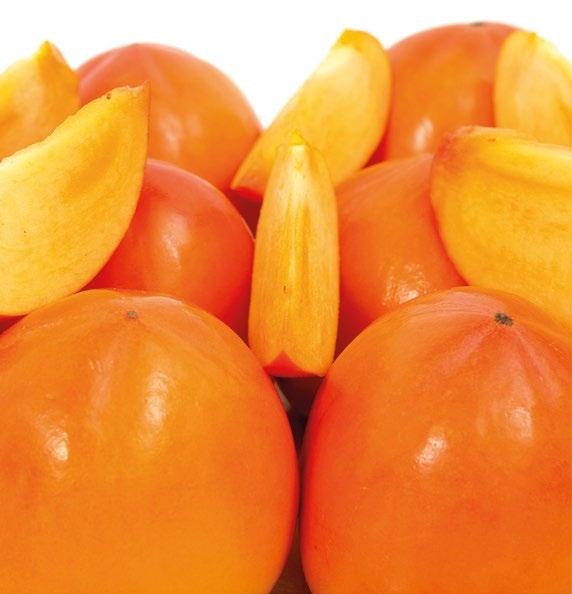

Growers could lose up to 50 million euros compared to lastyear, which was also bad, according to data from LA UNIÓ de Llauradors. In June, a 35% reduction in normal production was expected. However, after the summer, it became clear that the harvest would be even smaller, with an average decrease of 55%, which is even higher in certain regions (from 60% up to 75%).
Prices do not compensate for the lack of produce
Although the price of the initial sales is slightly higher than last year’s campaign, it will not compensate for the reduced harvest or the exorbitant increase in production costs. In view of the forecasts pointing to a much smaller harvest, many commercial operators are trying to speed up in-field fruit purchases. The first prices offered range from 0.34 to 0.40 €/kg on average, which is only 14% higher than those of last year’s campaign at this time.
LA UNIÓ’s initial estimation points to losses of € 26 million in income, plus another € 24 million if we take into account the increase in production costs. Total losses would therefore amount to well over € 50 million.
Sharp decrease in nursery sales
According to the latest available data, the amount of kaki plants grown last year in certified nurseries was 4% less than the previous year, while the reduction rises to almost 80% compared to 2015. Weather-related factors have resulted in a series of problems with the current insurance system for this crop, since not all these losses will be covered by insurance but only those that are clearly due to frost.
The agricultural organisation has therefore called on the Agriculture Department to provide special aid schemes for all growers that have an insurance police in force, but will not receive any compensation.
Kaki
El kaki Persimon Bouquet cumple 25 años
“Un cuarto de siglo de trayectoria merece un reconocimiento”
ElGrupo Persimon de Anecoop, re ferente en esta categoría de la que consolida el 50% de las exportacio nes, lleva meses preparando una campaña condicionada por un importante descenso de cosecha, trabajando en la planificación de la temporada sopesando todos los factores a la espera de ver cómo se comporta el mercado ante una menor oferta.
En esta línea, la habitual campaña pro mocional que la cooperativa de segundo grado despliega cada año para impulsar el consumo del kaki Persimon Bouquet, experimentará un reajuste para adaptarla a la coyuntura comercial.
Este reajuste no altera el propósito de Anecoop de rendir un homenaje a esta popular fruta de otoño en su 25 aniver
sario. Para ello, desarrollará una serie de acciones conmemorativas para que este reconocimiento llegue también a los con sumidores.
Fruit Attraction ha sido el escenario elegido para dar el pistoletazo de salida a una campaña cuya principal motivación es reconocer el papel de este kaki de la variedad “Rojo Brillante” y la novedad que supuso su apertura definitiva al mercado europeo en 1997. Una iniciativa que propi ció un crecimiento exponencial, gracias a sus excelentes características, sus propiedades y al alargamiento de su vida comercial, pasando de consumirse a nivel local a comercializarse en toda Europa. Un caso de éxito que multiplicó por 100 las ventas, pasando de las 1.000t en 1997 a un promedio de 100.000t en las últimas campañas.
Para Piedad Coscollá, responsable de Mar keting de Anecoop, este reconocimiento va más allá del propio producto: “Es un ho menaje al compromiso, esfuerzo y visión de investigadores, técnicos de produc ción y calidad, agricultores, especialistas en marketing, en comercialización, en logística, de los distintos distribuidores al apostar por esta fruta. En estos 25 años ha habido campañas mejores y otras para olvidar, afortunadamente de estas últimas ha habido menos, y no podemos dejar que quiten el mérito a un cuarto de siglo de trayectoria en positivo, el mérito que tiene conseguir que una innovación orientada al producto, siendo lo habitual innovar en mejora varietal, se haga un hueco en el mercado como lo ha hecho el kaki Persi mon. Una fruta que cuenta con su propio sello de calidad, el de la D.O. Kaki de la Ribera del Xúquer”.
Persimon Bouquet is celebrating 25 years
“A quarter of a century deserves recognition”
The Persimon Group at Anecoop, a benchmark in this category of which it consolidates 50% of exports, has spent months preparing a campaign marked by an important drop in the harvest, working on the season’s planning, weighing up all the factors while waiting to see how the market behaves with less offer available.
Along these lines, the normal promotional campaign that the second degree cooperative deploys every year to encourage Persimon Bouquet consumption will undergo a readjustment to adapt it to the market situation.
This readjustment does not alter Anecoop’s proposal to pay tribute to this popular autumn fruit on its 25th anniversary. To do this, it will develop a series of commemorative actions
to ensure that this recognition also reaches consumers.
Fruit Attraction has been the setting chosen for the launch of a campaign that is mainly motivated by acknowledging the role of this “Bright Red” persimmon variety and the novelty that its final opening up to the European market meant in 1997. An initiative that fostered an exponential growth, thanks to its excellent characteristics, its properties and the lengthening of its shelf life, moving from local consumption to Europe-wide marketing. A case of success that multiplied sales one hundredfold, moving from 1,000 tn in 1997 to an average of 100,000 tn in recent campaigns.
For Piedad Coscollá, the Marketing Manager at Anecoop, this recognition
goes beyond the product itself: “it is a tribute to the commitment, effort and vision of researchers, production and quality technicians, farmers, specialists in marketing, in sales, in logistics and to the different distributors for backing this fruit. Over these 25 years, there have been good campaigns and ones that are better off forgotten, (although fortunately, there have been fewer of the latter) and we cannot let them take away the merit of a positive journey spanning a quarter of a century; a merit that involves managing to make a product-orientated innovation, while usually this innovation is based on in variety improvement, making a niche on the market as has been done by the Persimon variety of persimmon. A fruit that has its own quality stamp, that of the D.O. Kaki de la Ribera del Xúquer”.
Kaki
Kaki Fruittoday 104
Arnandis: “Vivimos un proceso de estabilización del kaki”
Aunque el kaki verá reducida drásticamente su producción en un 50% esta campaña, debido principalmente a una meteorología adversa y a las plagas, el sector sigue acometiendo nuevos retos para mantener la calidad y sanidad de la fruta, entre ellos el control biológico
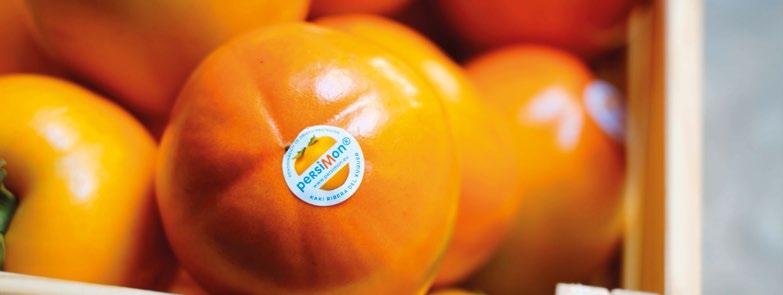
FruitToday habló con Cirilo Arnandis, presidente de la DO Kaki Ribera del Xúquer, quien nos comentó la hoja de ruta para erradicar plagas como el cotonet y la mosca blanca. Una realidad y un proyecto de futuro que se basa en el control biológico.
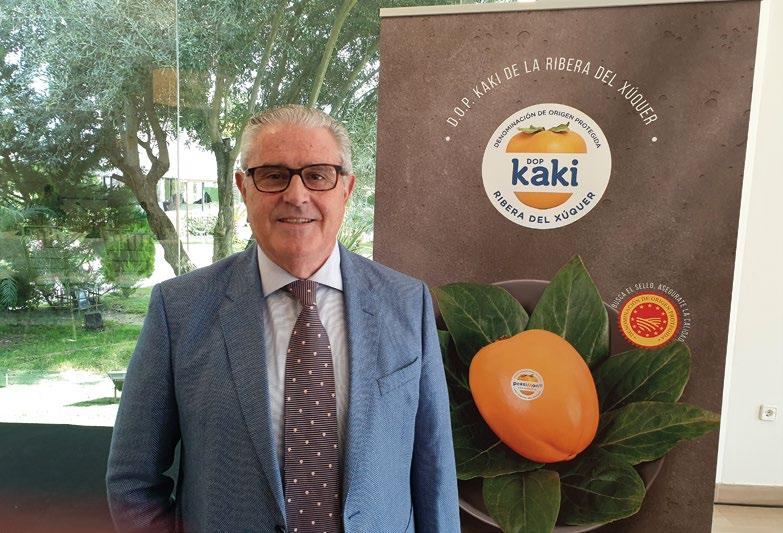
¿En qué consiste el plan de control bio lógico sobre la producción de la DO Kaki Ribera del Xúquer?
Hay dos plagas que dañan el kaki: el coto net y la mosca blanca. Esta segunda, esti mula la aparición de un hongo, la negrilla, que provoca que la fruta ennegrezca y se convierta en un producto no comercial.
En el cotonet, el control biológico lo lle vamos a cabo con una suelta continua de depredadores.
También aplicamos métodos de confusión sexual, un método que tuvo mucho éxito con la mosca del Mediterráneo y que con siguió controlarla.
¿En qué medida ha afectado la reducción de fitosanitarios a ese control de las plagas?
El problema que te nemos con la erradi cación de plagas es consecuencia directa de la falta de materias que actúen sobre las mismas. Los produc tos que utilizamos son cada vez más formula dos, con la mirada enfocada en la sosteni bilidad y el medioambiente, aspecto con el que estamos totalmente de acuerdo. Pero
antes de tomar la medida de eliminar pro ductos, se debería realizar una valoración de las repercusiones que esta cancelación puede tener sobre la producción.
Estamos investigando mucho para solucionar este tipo de problemas mediante la utilización de insectos y la suelta regulada de depreda dores. Por otra parte, con los productos autorizados hemos realizado un plan de control continuado para tratar las plagas en el momento que son más agresivas.
¿Esta situación podría haber generado un desencanto en el agricultor a la hora de cultivar esta fruta?
Habría que retroceder en el tiempo para entender la situación. Llevamos un cuarto de siglo generando un producto en la zona de la Ribera como nadie había hecho nun ca. Hubo una bajada de precios a la que, de forma simultánea, se le unió un problema de nuevas plagas y que, en su día, provocó cierto desencanto. Hemos asistido a una evolución en la que se ha pasado de utilizar dos tratamientos y tener un cultivo limpio y con producto de calidad, a tener que aplicar diez tratamientos. Esto, por su
Cirilo Arnandis
“Priorizaremos la demanda de los clientes europeos y de cercanía”
“A pesar de la situación actual, somos conscientes de que contamos con un producto de altísima calidad que ha conquistado el paladar de muchos consumidores”
Kaki Fruittoday 106
puesto, ha encarecido la producción y, además, sin buenos resultados. Con este panorama, es normal que exista desen canto, pero le aseguro que la resiliencia y la capacidad de innovación del agricultor de la Ribera es extrema. Hemos pasado por muchas vicisitudes y hemos sabido reinventarnos.
Hay una cosa clara e innegable: el kaki es un producto de calidad, una gran fruta y, cada año, el mercado y los consumidores esperan esta fruta de temporada.

Creo que, por todo esto, nos encontramos en un proceso de estabilización, pero no olvidamos que contamos con un gran producto que durante muchos años ha sido líder en el mercado y esperamos que recupere ese liderazgo.
Fruit Today talked to Cirilo Arnandis, chairman of the DO Kaki Ribera del Xúquer, who commented the roadmap to eradicate pests such as mealybugs and whitefly. A reality and a future project that is based on biological control.
What does the biological control plan on the production by the DO Kaki Ribera del Xúquer consist of?
There are two pests that harm persimmons: mealybugs and whitefly. The second one stimulates the appearance of a fungus, sooty mould, which causes the fruit to go black and turn into non-saleable produce.
For mealybugs, biological control is carried out by the continuous release of predators.
We also apply sexual confusion methods. This was very successful with the Mediterranean fruit fly and managed to control it.
To what extent has the reduction of plant protection products affected this pest control?
We’d have to go back in time to understand the situation. We have been generating a product in the Ribera region for a quarter of a century in a way that nobody has ever done before. There was a drop in prices which, simultaneously, was added to the problem of new pests and which, at the time, caused some disillusionment. We have been witnesses to an evolution in which we have gone from using two treatments and having a clean crop and quality produce, to having to apply ten treatments. This, of course, has made the production more expensive and, additionally, has not even had good results. With this panorama, it is normal for farmers to become disillusioned, but I can assure you that the resilience and capacity for innovation of the farmers from La Ribera is incredible. We have gone through many ups and downs and we have known how to reinvent ourselves.
One thing is clear and undeniable: persimmons are high-quality produce, a great fruit and every year, the market and consumers wait for this seasonal fruit.
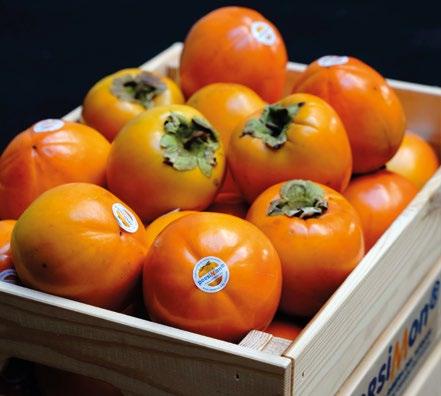
La producción se ha reducido en un 50%, por lo que se calcula que en total serán alrededor de unos 180 millones de kilos de comercialización. En agosto ya éramos co nocedores de que este aforo iba a ser bas tante más reducido, pero que la calidad de un producto avalado por la Denominación de Origen iba a continuar siendo excelente.
A nivel comercial, priorizaremos a nues tros clientes europeos y de cercanía y, en segundo lugar, intentaremos también atender las demandas de los de ultramar.
The problem we have with the eradication of pests is a direct consequence of the lack of materials that act on them. The products we use are increasingly more formulated, with all the sights focused on sustainability and the environment, aspects that we totally agree with. But before taking the step of eliminating products, a valuation of the repercussions that this cancelation might have on production should be carried out.
We are carrying out a great deal of research to resolve these types of problems through the use of insects and the regulated release of predators. Furthermore, using authorised products we have carried out a continuous control plan to treat the pests at the time when they are most aggressive.
Could this situation have generated disillusionment amongst farmers when growing this fruit?
I think that, for all these reasons, we are in the middle of a stabilisation process, but we must not forget that we have a great product that for many years has been a market leader and we expect it to take this leadership back.
What volume of persimmons is expected for this campaign?
Production has been reduced by 50%; therefore, it is calculated that in total there will be around 180 million kilos for marketing. In August we were already aware that this capacity was going to be much smaller, but that the quality of a product endorsed by the Denomination of Origin was going to continue to be excellent.
Commercially-speaking, we will give priority to the demand by our European and local clients and in second place, we will try to take care of the demands from overseas clients.
¿Qué volumen de kaki se espera para la presente campaña?
Arnandis: “We are undergoing a persimmon stabilisation process”
Although persimmon production will be reduced drastically by 50% this campaign, mainly owing bad weather conditions and pests, the sector continues to take on new challenges to maintain the quality and health of the fruit, amongst which is biological control
Kaki
Prats: “el inicio de campaña es problemático”
un avance de las negociaciones Anecoop y la Asociación Española del Kaki solici taron en julio al Ministerio de Comercio español la fecha en la que sería idóneo que los inspectores visitaran las planta ciones: la primera semana de noviembre. “No han contestado todavía en qué fechas van a venir, pero ojalá vengan y se firme el acuerdo el año que viene. Sería algo muy positivo poder exportar a China, porque el mundo está globalizado y si otras produc ciones vienen a Europa, nosotros también tenemos que salir, con todas las dificulta des que ello acarrea”, afirma Prats.
Lafalta de producto se concreta rá más en la primera parte de la campaña, es decir, afectará más a la fruta que se empieza a recolectar antes y se comercializa desde finales de septiembre hasta finales de octubre.
El presidente de la Asociación Española del Kaki, Pascual Prats, asegura que “la po linización, fecundación y cuajado del kaki coincidieron con esa meteorología adversa durante la primavera” y, por tanto, “no fue ron buenas”. Prats prevé así un “volumen muy escaso” para el mes de octubre.
Sin embargo, el presidente de la aso ciación espera que a finales de octubre haya un cambio, “aunque siempre con una merma importante en la producción”. Así, Prats estima estar entre los 160.000 y 180.000 kilos en total para la campaña y afirma que especialmente Huelva y la Co munitat Valenciana han disminuido mucho su producción.
Otra de las grandes razones que explican esta merma es la pronunciada subida de los gastos de producción: “Tenemos entre 20 y 25 céntimos de coste superior res pecto a la campaña pasada”, declara Prats y añade que solo la electricidad “supone un 40 ó 50% más”. A ello se le suma la subida de costes de envasado: “antes una caja de madera valía 50 céntimos, ahora ya son 74”.
Sin embargo, el presidente de la Asocia ción Española del Kaki asegura que, por el momento, no han “recibido ni un solo euro de ayuda del gobierno, ni autonómico ni nacional”.
Por otra parte, se espera que los inspec tores del gobierno chino visiten pronto España, aunque sin una fecha concreta. En
Pero esta campaña del kaki podría verse enfrentada a otra gran dificultad, como puede ser la escasez de productos como el CO2, indispensable para quitar la as tringencia de la fruta almacenada en las cámaras. “Es otra de las incertidumbres de este otoño”, concluye el directivo.
Prats: “a problematic start to the campaign”
The low temperatures and non-stop rain during the month of March have caused an important reduction in Spanish persimmon production
Product scarcity will become more obvious in the first part of the campaign, that is to say, it will affect the fruit that will start being harvested first and will be marketed from the end of September until the end of October.
The chairman of the Spanish Persimmon Association, Pascual Prats, affirms that “the pollination, fertilisation and setting of the persimmons coincided with the bad weather in the spring” and, therefore, “they were not good.” Prats forecasts a “very limited volume” for the month of October.
However, the chairman of the association expects a change at the end of October, “although still with an important reduction in production.” Therefore, Prats estimates between 160,000 and 180,000 kilos in total for the campaign and he affirms that, in particular, Huelva and the Valencian Community will see their production decrease a great deal.
Another important reason that explains this decrease is the steep rise in production expenses: Costs have risen by between 20 and 25 cents compared to the previous campaign,” Prats states, and adds that the electricity alone “means an extra 40 or 50%.” Added to this, the packaging costs have risen: “previously a wooden box cost 50 cents, now it is 74.”
However, the chairman of the Spanish Persimmon Association guarantees that, for the moment, they have not “received a single euro of aid from any Government, either regional or national.”
Furthermore, it is expected that the inspectors from the Chinese government visit Spain soon, although there is still no specific date set for this. In a move forward in the negotiations in July, Anecoop and the Spanish Persimmon Association requested the Spanish Trade Ministry for a date on which it would be good for the inspectors to visit the plantations: the first week in November. “They have yet to give an answer about the dates on which they are going to come, but hopefully they will come, and sign the agreement next year. It would be very positive to be able to export to China because the world has become globalised and if other productions come to Europe, we also have to export, with all the difficulties that this entails, ” Prats affirms.
But this persimmon campaign could face another significant difficulty, such as the shortage of products such as CO2, essential for removing the astringency of the fruit kept in cold storage. “This is another uncertainty this autumn, ” the executive concludes.
Las bajas temperaturas y las lluvias consecutivas durante el mes de marzo han provocado una importante reducción en la producción de kaki a nivel nacional
Kaki
Pascual Prats
Kaki Fruittoday 108
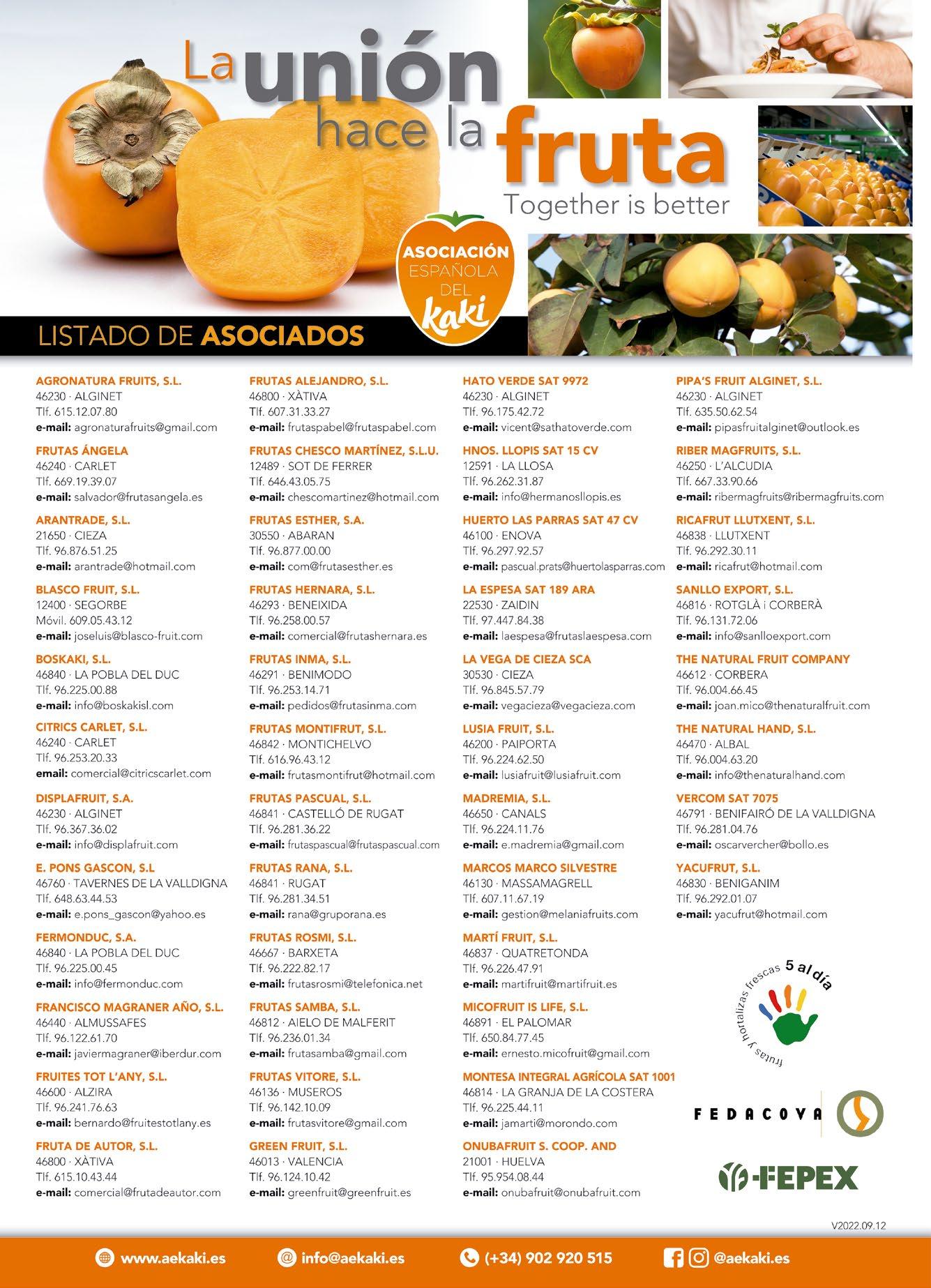
La producción europea de patata cae entre un 8% y un 12%
Las adversas condiciones climáticas pasan factura al sector de la patata, que verá como disminuye su producción en los principales países productores
Losproductores europeos asociados en la NEPG (Bélgica, Holanda, Fran cia y Alemania) han dado a conocer las cifras. Pese a que el número de hectáreas cultivadas crece, el volumen de producción será menor. Se estima que la superficie cultivada estará en torno a las 511.000 hectáreas, que significan un incremento de un 3,2% respecto a la tem porada anterior; y respecto a la media de los últimos 5 años significa un incremento de un 1,7%. Un caso singular es el fuerte incremento de la superficie plantada en Holanda donde sube hasta casi un 8% si se compara con las cifras de 2021.
A expensas de lo que puede suceder en los meses sucesivos, la producción global de los países integrantes en la NEPG puede oscilar entre los 20 y los 21 millones de toneladas.
Las circunstancias son muy variables entre las diferentes regiones o países. Franceses y belgas están más afectados por esta reducción de volúmenes, espe cialmente estos últimos, que pueden al canzar cifras de -20% de producción. Los holandeses están menos afectados por la ola de calor, sobre todo las zonas norte del país, donde la lluvia ha hecho mayor acto de presencia.
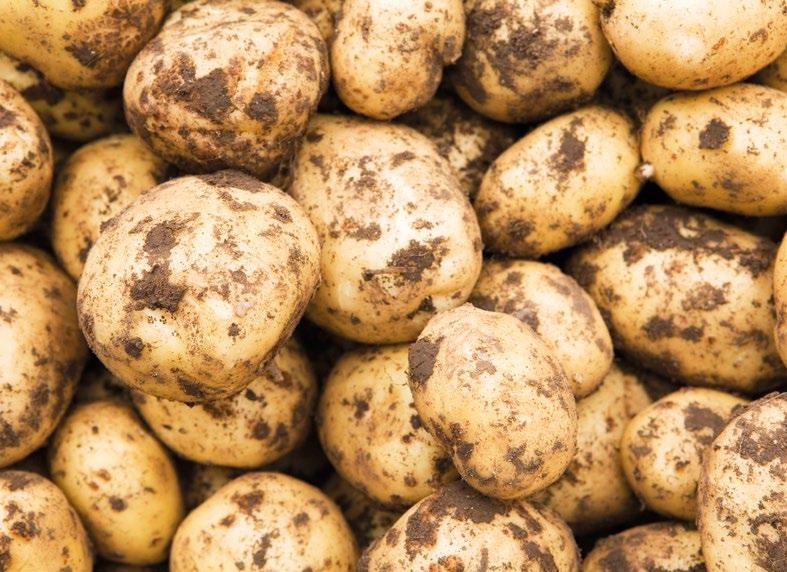
La situación en general es bastante complicada, sobre todo para aquellos que afrontan dificultades de suministro y temen no poder cumplir sus contratos debido a los escasos rendimientos.
El verano 2022 será recordado como una temporada difícil y un año de altos costes, no solo porque los rendimientos por hectárea han sido escasos, sino porque a esta situación se ha sumado una impor tante carestía de los costes de la energía y de regadío.
Otra de las dificultades futuras puede sur gir durante el periodo de almacenamiento en el que se puede dar una temprana germinación, lo que desembocaría en ma yores dificultades para los operadores. La pérdida de peso del tubérculo y los niveles de desperdicio (debido entre otros facto res al bruising) puede ser elevados.
Preocupación por los contratos ya firmados
Los contratos para la campaña 2022-2023 se firmaron a principios de año, momento en el que la guerra en Ucrania no había es tallado y la situación económica europea se centraba especial mente en la recupera ción post pandémica. Sin embargo, el con flicto bélico trasto có las previsiones económicas de las em presas, que desde ese momento vieron como sus costes subían de forma alarmante.
Estos contratos fir mados por los produc tores no cubren, en la actualidad, los costes productivos.
El precio en el merca do de 25 euros por 100 kilos ya no cubre los gastos productivos y la espada de Damo cles se cierne sobre muchos productores, que reclaman que los gastos se repartan entre toda la cadena.
Con estas circunstancias económicas más la incertidumbre que se cierne sobre todo el sector, muchos productores se plantean varias opciones como el cambio de culti vos o simplemente el abandono.
Francia inicia sus exportaciones antes de lo previsto
El miedo a la falta de suministro por parte del gigante galo ha provocado que las ex portaciones de patata francesa se acele ren y comiencen antes de hora.
“Se vive cierto recelo sobre la posibili dad de que los volúmenes de producto sean menores de lo que oficialmente se comenta y los importadores queremos asegurarnos el sumi nistro de producto”, aseguran diversos compradores.
En el lado opuesto, se encuentra la posición de los operadores franceses, que además del deber de satisfacer la demanda del mercado, deben mantener un posicio namiento de precios que tenga en cuenta todos los aumentos de costes de los últimos meses.
“Los contratos que se firmaron antes del estallido de la guerra no cubren los costes productivos actuales”
Crece la preocupación sobre las siembras de primavera. Si optar por la patata o cambiar de cultivo. Incluso abandonar
Patata Fruittoday 110
European potato production falls by between 8-12%
The European producers from the Northwest European Potato Growers Association -NEPG (Belgium, Holland, France and Germany) have announced their figures. Although the number of cultivated hectares is growing, the production volume will be lower. It is estimated that there will be around 511,000 hectares of cultivated surface area, meaning a 3.2% increase compared to the previous season and regarding the average over the past 5 years this means a 1.7% increase. The important increase of surface area planted in Holland is a unique case, where it has risen by almost 8% compared to 2021 figures.
Taking into consideration what could happen over successive months, the overall production by the countries belonging to the NEPG could range between 20 and 21 million tonnes.
Circumstances vary greatly between different regions or countries. The French and Belgian producers are more affected by this reduction in volumes, particularly the latter, which could reach figures of 20% less production. The Dutch were affected less by the heat wave, particularly in northern areas of the country, where rainfall has been more plentiful.
The general situation is quite complicated, particularly for those facing supply difficulties
and who fear they will not be able to meet their contracts due to the limited yield.
The summer of 2022 will be remembered as a difficult season and a year of high costs, not only because the yield per hectare has been low, but because an important rise in energy and irrigation costs has been added to this situation.
Another of the future difficulties that could arise during the storage period is that germination could start early, which would cause greater difficulties for the operators. The weight losses of the tubers and the wastage levels (among other factors due to bruising) could be high.
Concern about contracts that have been signed
The contracts for the 2022-2023 campaign were signed at the beginning of the year, before the outbreak of the Ukraine war and the European economic situation was particularly centred on post-pandemic recovery. However, the conflict disrupted company economic forecasts, which from this moment onwards saw how their costs rose alarmingly. At present, these contracts signed by the producers do not cover the production costs.
The market price of 25 euros for 100 kilos no longer covers the production costs and the sword of Damocles is hanging over many producers, who demand that these costs should be shared out along the entire chain.

With these economic circumstances, plus the uncertainty hanging over the entire sector, many producers are considering several options such as a change of crop or simply throwing the towel in.
France is starting its exports ahead of schedule
The fear of a supply shortage by the French producers has meant that French potato exports have speeded up and will start earlier than expected.
“There is some apprehension about the possibility that the product volumes will be lower than are being commented officially and importers want to guarantee the product supply,” different buyers state.
On the other hand, the French operators are seeing that in addition to having to meet the market’s demands, they must maintain a price positioning that takes into account all the increases in costs seen in recent months.
The bad weather conditions have affected the potato sector, which will see how its production has dropped in the main producing countries
Potato
Situación de la campaña en otros países europeos
Bajo la tónica común de menores rendimientos debido a las in clemencias meteorológicas, las siguientes líneas describen la situación en otros países no NEPG
Polonia también se ha visto afectada por lo inusual de un clima excesivamente cálido. Los rendimientos y la producción han bajado. Se baraja una un posible des censo de la superficie por debajo de las 200.000 ha, frente a las 236.000 de 2021. Esta disminución está relacionada con la bajada productiva de patata de fécula y en menor medida, con la de patata de consumo.
En el Reino Unido, los rendimientos también son inferiores a los del año anterior y se están dando problemas de calidad como una elevada materia seca, dartrosis, crecimiento secundario de los tubérculos, etc.
En España, la cosecha de patata en la mayor zona productora Castilla-León, también registra una reducción de cose
cha. Se estima que en esta campaña las plantaciones alcanzarán las 17.000 hectáreas, con un rendimiento medio de unas 60 toneladas por hectárea. El precio en origen para los agricultores está resultando bastante bueno, en torno a unos 30 y 40 céntimos por kilo.
The campaign in other European countries
With the common trend of smaller yields due to the bad weather conditions, the following lines describe the situation in other nonNEPG countries
Poland has also been affected by the unusual occurrence of excessively hot weather. Both yield and production have dropped. A possible decrease in surface area below 200,000 ha compared to the 236,000 of 2021 is under consideration. This reduction is linked to the production decrease of potato flour and to a lesser extent, of consumption potatoes.
In the United Kingdom, the yields are also lower than the previous year’s and they are having quality problems such as high amounts of dry material, dartosis, secondary growth of the tubers, etc.
In Spain, the potato harvest in the largest production region, Castilla-León, is also recording a reduced harvest. It is estimated that in this campaign 17,000 hectares of plantations will be reached, with an average yield of around 60 tonnes per hectare. The price at source for the farmers is quite good, at around 30 to 40 cents per kilo.

Patata Fruittoday 112
Potato
Princesa Amandine presenta su V gama
Princesa Amandine está de estreno y cómo no, lo vuelve a hacer en Fruit Attraction. Tras el éxito alcanzado en sus formatos de fresco y microondable, ahora lo hace en V gama
Udapa (10E08A), GV El Zamorano (10G05), Ibérica de Patatas (5D03) y Campotec.
La asociación Princesa Amandine Ibérica, formada por estas 4 empresas es la encar gada de comercializar la patata Princesa Amandine en España y Portugal desde hace tres años.
En esta última campaña de 2021/2022 el vo lumen de patatas comercializado ha supe rado las 5.500 toneladas, lo que representa un 49% más que en la anterior campaña.
Fuerte avance en las cadenas
En la actualidad, el producto se puede adquirir en las principales cadenas de
distribución como: Alcampo, Ahorramás, Simply, Eroski, Carrefour, El Corte Inglés, Hipercor, DIA, Lidl y Supercor. También está disponible en otros establecimientos de carácter regional como Consum (en Cataluña) y Lupa (en Cantabria, Castilla y León y La Rioja). “Nuestro objetivo, una vez hemos llegado a las cadenas nacionales, será adentrarnos en supermercados de carácter regional ya que, en España, gozan de una importante penetración entre los consumidores”
Beranger invita a probar este suculento tubérculo en el Show Cooking de Cristina Ferrer, el día 5 de octubre a las 14.00 horas en el espacio Factoría Chef (conexión entre Pabellón 4 y 6)”.
Princesa Amandine is presenting its ready-cooked range
Princesa Amandine is showcasing a new release and, naturally, Fruit Attraction is its chosen setting.
Elnuevo producto viene presentado en un estuche de cartón, precoci nado al vapor, con todo su jugo, y preparado para ser calentado en 2 o 3 minutos. La patata está aderezada con hierbas provenzales y se puede consumir hasta dos meses después de su compra
Jean Michel Beranger, director general de la Asociación Princesa Amandine Ibérica explica que “la nueva presentación res ponde a un nuevo momento de consumo, a otras circunstancias en las que se desea comer algo sabroso y rápido. Además, puede convertirse en un excelente acom pañante de un plato principal.”
El nuevo formato se une a los ya existentes en el mercado, como son la bolsa clásica de 1,5 kg con patatas de calibre 46-65 mm, el pack de patatas para microondas en bolsa compostable cien por cien libre de plásticos con un peso de 400 gramos y la caja a granel de 6 kg para centros de cash and carry.
Presencia de todos sus socios y creci miento récord
Princesa Amandine participa en esta edi ción de Fruit Attraction con presencia en los stands de sus cuatro socios ibéricos:
After the success of its fresh and microwavable formats, it is now producing ready-cooked dishes
The new product is presented in a cardboard carton, pre-steamed, with all its juice and ready to be heated up in 2 or 3 minutes. The potato has been dressed with Provencal herbs and can be eaten up to two months after its purchase.
Jean Michel Beranger, the General Manager of the Princesa Amandine Iberica Association explains that “the new presentation responds to a new consumption moment, to other circumstances when consumers want to eat something tasty and fast. It can also be turned into an excellent garnish for a main dish.”

The new format has been added to those already on the market, such as the classic 1.5 kg bag of 46-65 mm calibre potatoes, the pack of potatoes for microwaving in a compostable, one hundred percent plasticfree bag, weighing 400 grams and the 6 kg box of loose potatoes for cash and carry centres.
Presence of all its associates and record growth
At this edition of Fruit Attraction, Princesa Amandine is participating with its presence on the stands of its four Iberian associates: Udapa (10E08A), GV El Zamorano (10G05), Ibérica de Patatas (5D03) and Campotec.
The Princesa Amandine Iberica Association, formed by these 4 companies has been in charge of marketing Princesa Amandine potatoes in Spain and Portugal for the past three years.
In the latest campaign of 2021/2022, the volume of marketed potatoes has passed 5,500 tonnes, ie, 49% more than in the previous campaign.
An important move forward in the supermarket chains
At present, the product may be acquired in the main distribution chains such as: Alcampo, Ahorramás, Simply, Eroski, Carrefour, El Corte Inglés, Hipercor, DIA, Lidl and Supercor. It is also available in other regional supermarkets, such as Consum (in Catalonia) and Lupa (in Cantabria, Castilla y León and La Rioja). “Our aim, once we have reached all the nationwide Spanish supermarket chains, will be to enter the regional supermarkets which, in Spain, have an important penetration amongst consumers.”
Beranger invites visitors to try this succulent tuber at the Show Cooking by Cristina Ferrer, on the 5th of October at 2 pm in the ‘Factoria Chef’ space (the connection between Halls 4 and 6)”.
Jean Michel Beranger
Potato
Patata Fruittoday 114
Segunda vida para el tomate español
El descenso de superficie de Holanda por el alto coste de los insumos favorece a la producción española, que sumará un 15% más de cultivo de tomate este año
Siel tomate fuera el protagonista de una película, podría decirse que acaba de vivir un giro de guion dig no de cualquier epopeya cinema tográfica. Hace exactamente un año, en plena Fruit Attraction, algunas de las prin cipales empresas del sector lanzaron un grito alto y claro en forma de manifiesto: el tomate se estaba muriendo. Hablaban de ‘Réquiem por el tomate español’. Doce meses después, con un aumento galopan te de la inflación, la Covid-19 aún coleando y una guerra que no cesa en plena Europa, la situación de nuestro protagonista es bien distinta. Por fin hay motivos para la esperanza (al menos en lo que respecta a las ventas).

Y es que la ventaja competitiva de los invernaderos solares gana enteros frente a los ingentes costes que supone poner en marcha la climatización e iluminación de los invernaderos de Holanda. Los altos costes de la energía han provocado que este país competidor reduzca su superfi cie de producción y retrase las cosechas dejando un importan te espacio al produc to español durante los meses más fríos. “Es como volver atrás en la historia, con Es paña produciendo en invierno y los países del norte de Europa produciendo sus propias verduras en vera no”, dijo a Reuters la analista de Rabobank, Cindy van Rijswick.
British
Ya el invierno pasado Holanda produjo en tre un 20-30% menos de tomate que otros años, según cifró en una rueda de prensa en Coexphal Juan Antonio González, presi dente de Cooperativas Agro-alimentarias de Almería. ¿Se acentuará más este descenso en la presente campaña o, como opinan algunos operadores, compensa rán con una producción más fuerte en la etapa central del año? Lo que sí esta claro es que, antes incluso del inicio de la campaña espa ñola, ya se percibía una mayor demanda de pro ducto por parte de los compradores para los meses de invierno. Sin duda, el empu jón definitivo se lo han dado los buenos
precios de la campaña pasada (el aumento del coste unitario del +25% no impidió que fuera uno de los productos más rentables, con un +46% de precio respecto a 2020/21 y un crecimiento de los ingresos del +45%, según Coexphal), así que no es de extrañar que las previsiones indiquen un aumento de la superficie de tomate para este año del 15%, según cifran ASAJA Almería y obtentoras consultadas por Fruit Today.
Exportación, Marruecos y UK
Desafortunadamente, no todo es de color de rosa. Según el Informe sobre perspec tivas a corto plazo para los mercados agrí colas de la CE, la producción de tomate en fresco en la UE mantiene la tendencia a la baja de los últimos años. En 2022 decrece rá un 3% respecto a 2021, totalizando 6,2 mill. Tn y un - 5% respecto al último lustro.
Cae también el consumo anual de tomate fresco (-2%) con 14,6 kg/per cápita.
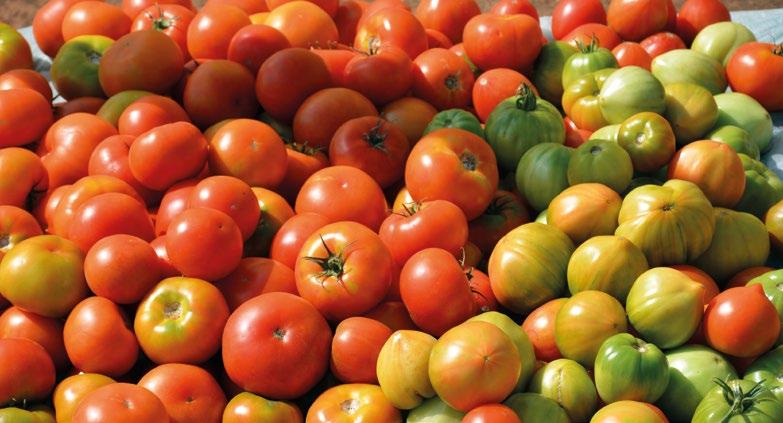
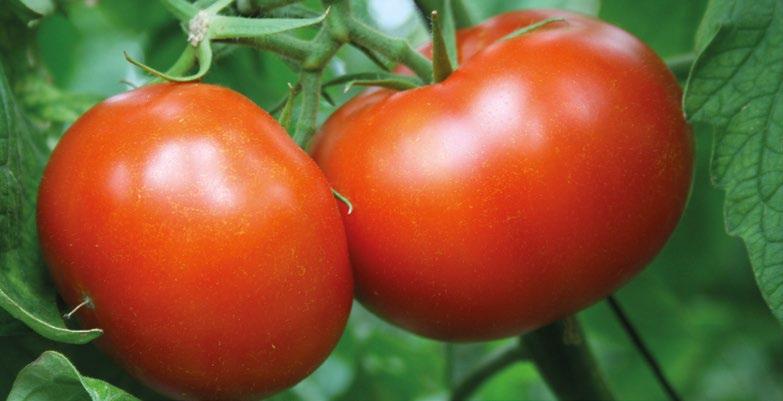
La exportación comunitaria se ve resen tida por el eterno competidor de España, Marruecos, que ha sabido aprovechar la puerta que le abrió el Brexit. En Reino Unido las importaciones procedentes de Marruecos en el primer semestre crecie ron un 15%, con 74.519 Tn, desplazando al sector español como primer proveedor.
A la inversa, desde UK, Jack Ward, director ejecutivo de la British Growers Association, declaró a Reuters que es inevitable que la producción de frutas y hortalizas se tras lade a climas más cálidos por el aumento del coste de los insumos. “Moveremos la producción más al sur, a través de España, Marruecos y otras partes de África”.
Por/by Virginia Hernández
la
más al sur, a través de España, Marruecos y otras partes de África”
Tomate y pimiento Fruittoday 116
Growers Association: “Moveremos
producción
A second chance for Spanish tomatoes
If tomatoes were the stars of a film, it could be said that there has just been a plot twist worthy of any high-budget blockbuster. Exactly a year ago, in the middle of Fruit Attraction, the main companies in the sector manifested loud and clear: tomatoes are on their death bed. They talked about a ‘Requiem for the Spanish tomato’. Twelve months later, with a rampantly rising inflation, Covid-19 still in the air and a never-ending war in the middle of Europe, the situation of our star is very different. Finally, there are reasons for hope (at least regarding sales).
And the fact is that the competitive advantage of solar-powered greenhouses is a winning element when faced by the huge costs involved in heating and lighting greenhouses in Holland. The high energy costs have caused this rival country to reduce its production area and delay its harvests, leaving an important space for Spanish produce during the colder months.”It is like going back in time, with Spain producing in the winter and northern European countries producing their own vegetables in the summer,” the Rabobank analyst Cindy van Rijswick commented to Reuters.
Last winter, Holland was already producing between 20-30% fewer tomatoes than in previous years, according to figures given
at a press conference at Coexphal by Juan Antonio González, chairman of Agrifood Cooperatives of Almeria. Will this drop deepen during this campaign, or as some operators think, will they compensate with a stronger production in the central part of the year? What is clear is that, even before the Spanish campaign, a greater demand of produce was being seen by buyers for the winter months. Without any doubt, the decisive push was given by the good prices from the previous campaign (the +25% increase in the unit cost did not prevent it from being one of the most profitable products, with +46% in price compared to 2020/21 and a growth in revenue of +45%, according to Coexphal), therefore it is not surprising that the forecasts indicate a 15% increase in tomato surface area for this year, according to figures from ASAJA Almeria and plant breeders consulted by Fruit Today.
Exports, Morocco and the UK
Unfortunately, all is not rosy in the garden. According to the Report on short-term
prospects for the EC agricultural markets, fresh tomato production in the EU is maintaining its falling trend of recent years. In 2022 it will decrease by 3% compared to 2021, making a total of 6.2 million tn and -5% compared to the past five years.
Annual fresh tomato consumption is also dropping (-2%) with 14.6 kg/per capita.
Community exports have suffered from Spain’s eternal rival, Morocco, which has known how to take advantage of the door opened by Brexit. In the United Kingdom, imports from Morocco in the first half of the year grew by 15%, with 74,519 tn, overtaking the Spanish sector as the top supplier.
On the other hand, from the UK, Jack Ward, the executive director of the British Growers Association indicated to Reuters that there is no escape from moving fruit and vegetable productions to warmer climates due to the increase in input costs. “We will move production further south, through Spain, Morocco and other parts of Africa.”
The drop in Dutch surface area due to the high cost of inputs is benefitting the Spanish production, which will add another 15% of tomato crops this year
Tomato and pepper
British Growers Association: “We will move production further south, through Spain, Morocco and other parts of Africa”

KWS Hortícolas España está preparándose
KWS,
una de las principales casas de semillas del mundo centrada hasta hace poco en remolacha azucarera, maíz, cereales, colza y girasol, traba ja para posicionarse en hortícolas. En 2019 comenzó esta nueva línea y en 2021, como parte de su estrategia de crecimiento, ad quirió la italiana Geneplanta, especializada en semillas de tomate.
“En México e Italia estamos muy adelanta dos con variedades comerciales y pre-co merciales. En Almería, estamos realizando ensayos con agricultores de referencia.
Uno de nuestros enfoques prioritarios es la obtención de variedades resistentes a ToBrFV, por el riesgo que supone para el cultivo a nivel mundial”, cuenta Arturo Chi ca, mejorador de Tomate en KWS Hortíco las España.
En febrero, KWS adquirió un terreno de 14,5 ha en Almería donde ubicarán su centro de referencia mundial para hortícolas. En un futuro cercano, comprarán otra finca similar en el Campo de Cartagena.
“Estamos creciendo muy rápido”, destaca Esmeralda García, directora de Ventas en España. “Somos nuevos en hortícolas, pero no en la industria de semillas. Contamos
con un amplio respaldo tecnológico de nuestras sedes de Wageningen (Holanda) y Einbeck (Alemania) que nos permiten ace lerar el desarrollo sin sacrificar la calidad.
Tomato and pepper
KWS Hortícolas España is getting ready
With the common trend of smaller yields due KWS, one of the main seed companies in the world, until recently concentrating on sugar beet, corn, cereals, rapeseed and sunflowers, is working to position itself on the fruit and vegetable market. In 2019, it started this new line, and in 2021, as part of its growth strategy, it acquired the Italian company, Geneplanta, specialising in tomato seeds.
“In Mexico and Italy, we are way ahead with commercial and pre-commercial varieties. In Almeria, we are carrying out trials with benchmark farmers. One of our top focus points lies in obtaining varieties resistant to ToBrFV, due to the risk this means for the crop worldwide,” states Arturo Chica, a Tomato breeder at KWS Hortícolas España.
In February, KWS acquired 14.5 ha of land in Almeria, where it will locate its world reference centre for fruit and vegetables. In the near future, they will purchase another similar farm in Campo de Cartagena.
“We are growing very fast,” points out Esmeralda García, Sales Manager in Spain. “We are new to fruit and vegetables, but not to the seed industry. We have extensive technological backing in our centres in Wageningen (Holland) and Einbeck (Germany), which allows us to speed up the development without putting quality to one side. Our goal is to position our company as one of the main fruit and vegetable breeders in the world.”
Tomate y pimientoFruittoday 119
Bacares F1 y Azovian F1 siempre cumplen
Las variedades de Nunhems® han demostrado dar la talla frente a adversidades climáticas, aportando rendimiento y calidad
Elaño pasado supuso una prueba de fuego para las variedades de tomate. En un año climatológica mente adverso, la mayoría de los materiales presentes en el mercado se mancharon, y el tomate ramo fue espe cialmente problemático en este sentido. Fueron tantos los problemas, unidos a la falta de producción, que la distribución pasó por alto algunos problemas externos que, en condiciones normales, habrían sido un motivo para rechazos comercia les. En medio de esta tesitura, BASF salió reforzada con Bacares F1. “A pesar de todos los problemas que hubo, los pro ductores pudieron comprobar que, o no se manchaba, o había una escasa incidencia”, recuerda José Antonio Furió, Senior Sales Specialist del negocio de semillas hortíco las de BASF, que opera en el mercado bajo la marca Nunhems. Y es que este material aporta una mejora importante en lo que respecta a tolerancia al manchado y raja do, a virus de la cuchara, Fusarium radici, Stemphylium y Cladosporium, además de buen color y firmeza. Por todo ello, desde la compañía confían en que tendrán una muy buena proyección en todas las zonas clave. “En este primer año comercial, vamos a escalar la introducción con los principales operadores del mercado de ramo, y en 2023 daremos a cono cer la variedad masivamen te”, adelanta Furió. Muy versátil, Bacares F1 es idóneo para pro
ducción ecológica y convencional, y tiene mimbres para triunfar en todos los super mercados europeos.
Otra de las soluciones que aportan al mer cado es Azovian F1, un auténtico tomate pera ideal para cualquier zona de gran pro ducción, pudiéndose producir los 12 meses del año aportando continuidad con calidad a la cadena. Además, destaca por su facilidad de manejo y calibre, con el que los productores salen
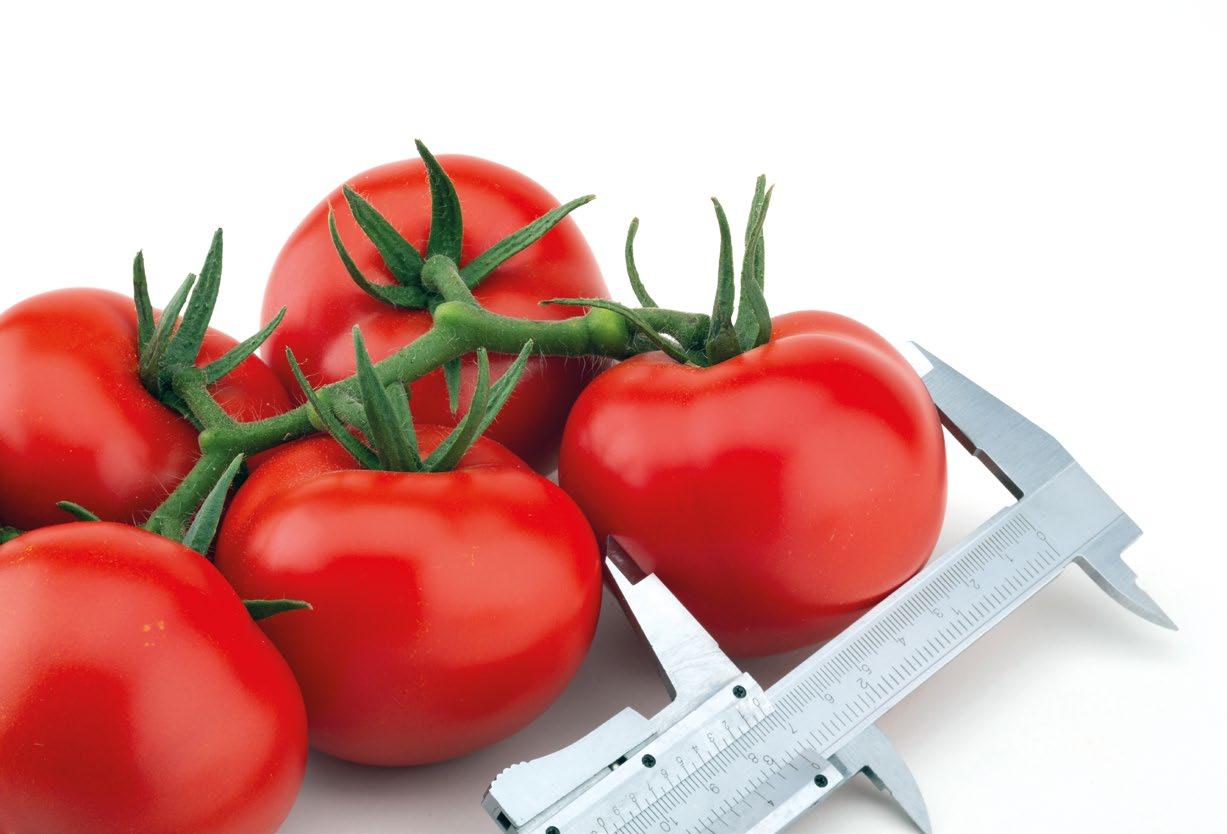
airosos frente a uno de los problemas his tóricos del tomate, la falta de rentabilidad.
Como Bacares F1, aporta un paquete de resistencias muy consistente contra las principales enfermedades en el sur de Es paña, lo que permite un ahorro de costes en tratamientos. Además, en el caso de Azovian F1, tiene resistencia intermedia al virus rugoso del tomate (ToBRFV). “En paí ses como Holanda, Turquía e Italia, el virus ha pegado muy fuerte. Nosotros hemos probado Azovian F1 en países bajo presión del virus y se comporta muy bien”.
Otras ventajas de Azovian F1 son su forma, que se mantiene bajo cualquier condición y ciclo de cultivo, haciéndolo fácilmente identificable por parte del consumi dor, y su larga vida comercial.
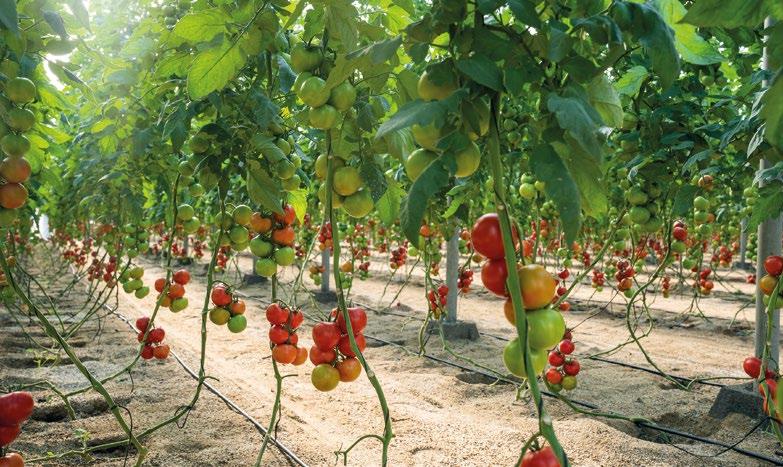
Tomate y pimiento Fruittoday 120
Bacares F1 and Azovian F1 always meet the grade
Last year was a real test for tomato varieties. In a bad year, weather-wise, most of the materials on the market became infected with spotted, and vine tomatoes were particularly problematic on this point. There were so many complications, along with the production shortage that the distribution overlooked some external problems which, under normal conditions, would have been a reason for commercial rejections. In the middle of all this, BASF has come out stronger with BacaresF1. “In spite of all the problems, producers could see that either they had no spotting, or they had very little,” according to José Antonio Furió, Senior Sales Specialist for BASF’s fruit and vegetable seed business, which operates on the market under the brand name Nunhems. And the fact is that this material provides an important improvement in terms of tolerance to spotting and splitting, to TYLCV, Fusarium radici, Stemphylium and Cladosporium, in addition to good colour and firmness. For all these reasons, sources at the company trust that they will have a very good projection in all the key regions. “In this first commercial year, we are going to stagger the introduction with the main operators on the vine market, and in 2023 we will give it mass advertising,” Furió advances. Highly versatile, Bacares F1 is
suitable for both ecological and conventional production and it has all the components to triumph in all the European supermarkets.
Another of the solutions they have brought to the market is Azovian F1, a true plum tomato ideal for any large production area. It can produce 12 months of the year, bringing continuity with quality to the chain. Its ease of handling and calibre also stand out, with which producers are succeeding compared to one of the historic problems of tomatoes: lack of profitability.
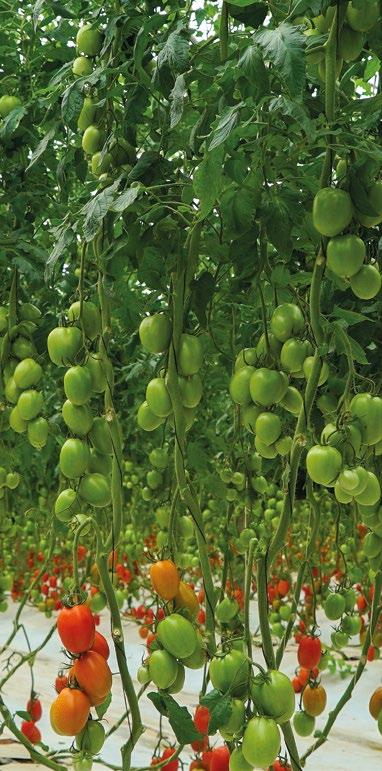
As with Bacares F1, it includes a package of resistances that is very consistent against the main diseases in southern Spain, which allows savings to be made on treatments. Also, in the case of Azovian F1, it has intermediate resistance to ToBRFV. “In countries such as Holland, Turkey and Italy, the virus has attacked hard. We have tried Azovian F1 in countries where the virus is putting the pressure on and it behaves very well.”
Other advantages of Azovian F1 are its shape, which is maintained under any conditions and crop cycle, making it easily identifiable by consumers, along with its long shelf life.
Nunhems’® varieties have shown that they can rise to the challenge of bad weather, providing yield and quality
Tomato and pepper

Looije aumenta su superficie
En 2022/23 sumará casi 7,5 ha y reforzará su apuesta por el cherry Kumato
Tras la campaña 2021/22, en la cual las condiciones meteorológicas fueron totalmente adversas, repercutiendo en un descenso del volumen producido, este año en Looije esperan continuar la senda de crecimiento iniciada en 2018, cuan do incorporaron 28 nuevas hectáreas a su producción por parte de uno de los socios.
“En una primera etapa, construimos un nuevo invernadero en 2019. Más tarde, el pasado mes de agosto, finalizamos la construcción del siguiente invernadero, dotado de las últimas novedades tecnoló gicas y donde concluimos la plantación a finales del mes de agosto”.
Holanda, fuerte a mitad de año
En el sector se está percibiendo un aumento en la demanda comercial para los meses más fríos por el descenso de la producción holandesa como con secuencia de la crisis energética. Una situación que Looije conoce de primera mano, ya que su matriz está en Holanda. Allí también existe una gran incertidum bre sobre la situación y, por tanto, consi deran que habrá que ir adaptándose a la situación conforme tenga lugar. Ya que se prevé que, si Holanda opta por cultivar con el método tradicional, su producción será muy fuerte durante la etapa central del año.
Looije is increasing its surface area
In 2022/23, it will add almost 7.5 ha and strengthen its commitment to Kumato cherry tomatoes
En esta campaña, Looije refuerza su superficie de cultivo sumando casi 7,5 hectáreas. “Continuaremos apostando con fuerza por nuestro producto insignia, el cherry redondo, al mismo tiempo que cultivaremos nueva mente cherry pera y cherry Kumato”, ex plica Jacqueline Looije, directora general de la empresa.
Como novedad, en esta campaña Looije seguirá desarrollando el cherry Kumato, destinando una mayor parte de su super ficie cultivada a esta variedad. “El nivel de aceptación por parte de los clientes está siendo muy bueno, de modo que no descartamos ampliar aún más nuestra superficie en el futuro”.
En su afán de continua mejora, la em presa estudia la posibilidad de cultivar nuevas tipologías de Cherry.
In this campaign, Looije is strengthening its crop surface area, adding another almost 7.5 hectares. “We will continue to be strongly committed to our flagship product, the round cherry tomato; although at the same time we will once again be growing plum and Kumato cherry tomatoes,” explains Jacqueline Looije, the General Manager of the company.
As a new development, in this campaign Looije will continue developing Kumato cherry tomatoes, devoting most of their crop surface area to this variety. “There is a very high level of acceptance by clients; therefore, we are not ruling out extending our surface area in the future.”
In its desire for continuous improvement, the company is studying the possibility of growing new Cherry typologies.
After the 2021/22 campaign, in which the weather conditions were very bad, adversely affecting the volume produced, this year at Looije they hope to continue the line of growth they started in 2018, when they

incorporated 28 hectares to their production from one of their associates.
“In a first stage, we built a new greenhouse in 2019. Later on, last August, we finished the construction of the next greenhouse, equipped with the latest technological developments, and where we finished planting at the end of August.”
Holland, strong mid-year
In the sector, an increase in commercial demand for the colder months is being perceived due to the drop in Dutch production as a result of the energy crisis. A situation that Looije is suffering first hand, as its parent company is located in Holland. There is also great uncertainty about the situation there and, therefore, they consider that it will be necessary to adapt to the situation as it occurs. Since it is expected that if Holland opts for cultivating using traditional methods, its production will be very strong during the central part of the year.
Tomato and pepper
Jacqueline Looije
Tomate y pimientoFruittoday 123
Maravilla, novedad de Caparrós Nature en Fruit Attraction
Fuerte apuesta en bío
“En esta campaña vamos a poner el acento y a hacer una fuerte apuesta por el ecológico con la gama Caparrós Bio que iniciamos hace 3 años. Para ello hemos adquirido una nave en el PITA (Parque Tecnológico de Almería), dedicada exclu sivamente a la comercialización y envasa do de esta línea”. En su portfolio bío hay: cherry rama, rama, pera, pimiento Califor nia, calabacín, pepino y sandía mini.
Más sostenibles
Caparrós Nature es la 2º empresa de España adherida al Decálogo de Sostenibilidad del MAPA. “En esa línea y en nuestro afán de mejorar nues tro compromiso medioambiental, hemos llevado a cabo una instalación solar foto
voltaica de autoconsumo para dotarnos de mejores energías renovables. Lleva incorporado un sistema de monitorización con un seguimiento de los resultados energéticos en tiempo real”.
Adaptación constante
De cara a la nueva campaña, muestran el optimismo que les caracteriza. “Mantenemos un crecimiento constante. Más de 38 años dedicados a la calidad tienen su recompensa”. Pese a la gran incertidumbre mundial, “hemos demos trado junto con nuestros agricultores la capacidad de adaptación a adversidades: en la pandemia y ahora con una guerra en Europa y un excesivo incremento de costes. Toca seguir trabajando unidos, codo con codo”.
Maravilla, a new development by Caparrós Nature at Fruit Attraction”
The company from Almeria is repeating its commitment to top quality in tomatoes, launching a new reference and underscoring the Caparrós Bio range
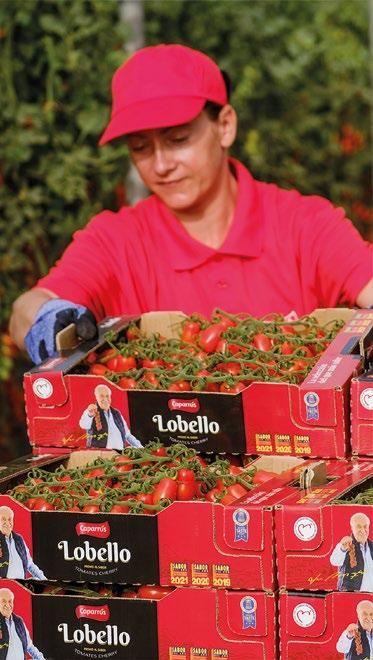
Comocada año, Caparrós Nature estará presente en Ifema en el Pa bellón 9, stand 9D07, para reunirse con clientes y visitantes y dar a co nocer sus productos, referentes en sabor y calidad. Señas de identidad que impregnan su catálogo.
En esta ocasión, presentarán Maravilla, un nuevo tomate de sabor muy especial que hará las delicias de los paladares más exi gentes, que buscan el sabor de siempre.
Esta nueva referencia se une a un amplio catálogo con el que buscan la excelencia. “Día a día nos esforzamos por ofrecer al cliente un producto de máxima calidad, por eso estamos especializados en frutos difíciles de cultivar, pero que consiguen la calidad y el sabor supremo, como el cherry pera Lobello y la sandía sin pepitas Capa rrós Premium, ambas Sabor del Año 4 años consecutivos, el tomate de untar Laloba, el tipo corazón de buey Rosamary… todas marcas en exclusiva”.
El día 4, les visitará en el stand el exselec cionador Vicente del Bosque, embajador de Lobello y Patrono de Honor de la Funda ción Pedro Caparrós.
As every year, Caparrós Nature will be present at IFEMA in Hall 9, stand 9D07, to meet up with customers and visitors, and to inform about its products, benchmarks in flavour and quality. Both distinguishing marks that permeate its catalogue.
This time, they will present Maravilla, a new tomato with a very special flavour that will delight the most demanding palates who are seeking traditional flavour.
This new reference has been added to an extensive catalogue in the search for excellence. “Every day we make a special effort to offer customers top-quality produce, which is the reason we specialise in fruit that are difficult to grow, achieving supreme quality and flavour, such as the Lobello plum cherry tomato and the seedless watermelon Caparrós Premium, both Flavour of the Year 4 years running, the spreading tomato Laloba, the beefsteak type, Rosamary… all exclusive brands.”
On the 4th of October, the former Spanish national football team coach, Vicente del Bosque, ambassador for Lobello and Patron of Honour of the Fundación Pedro Caparrós, will visit the stand.
A significant commitment to bio
“During this campaign we are going to underscore and make a significant
commitment to ecological produce with the Caparrós Bio range that we started 3 years ago. To do this, we have acquired some new premises in the PITA (Almeria Technology Park), exclusively devoted to marketing and packaging this line.” In its bio portfolio it has: vine cherry, vine and plum tomatoes, California peppers, courgettes, cucumbers and mini watermelons.
More sustainable
Caparrós Nature is the 2nd company in Spain to join the Ministry of Agriculture and Fishing’s Sustainability Decalogue. “Along these lines, with our desire to improve our environmental commitment, we have carried out a selfconsumption solar panel installation to improve our use of renewable energy. It includes a monitoring system that follows the energy results in real time.”
Constant adaptation
Looking towards the new campaign, they are showing the optimism that characterises the company. “We are achieving constant growth. Over 38 years devoted to quality reap their fruits.” In spite of the significant global uncertainty, “alongside our farmers, we have shown our capacity to adapt to adversities: in the pandemic and now with a war in Europe and an excessive rise in costs. We have to carry on working, side by side.”
La empresa almeriense reitera su compromiso con la máxima calidad en tomate lanzando una nueva referencia y pone el acento en la gama Caparrós Bio
Tomato and pepper
Tomate y pimiento Fruittoday 124
Carbonite se ‘porta’ excepcional con altas temperaturas
TopSeeds amplía su catálogo con Carbonite, un portainjertos de tomate de vigor alto enfocado tam bién a ciclos cortos de verano con temperaturas muy extremas.
En las fincas de cultivos al aire libre en Málaga, con tomate suelto de calibre, ha tenido un comportamiento “excepcional”. El agricultor Luis Miguel Ruiz acostumbra ba a poner tomate suelto sin injertar, y a final del cultivo acusaba falta de calibre y pérdidas de plantas por hongos. Este año ha injertado buena parte de la finca con Carbonite, y ha contrastado sus beneficios frente a la zona sin injertar: “La experien cia ha sido notoria. Ofrece un sistema radicular muy denso, que ayuda a que la planta tenga gran vigor, aportando frutos homogéneos y de buen calibre. Durante la cosecha hemos observado este mayor calibre y homogeneidad frente al manejo tradicional. En el futuro seguiremos injer tando en Carbonite”.
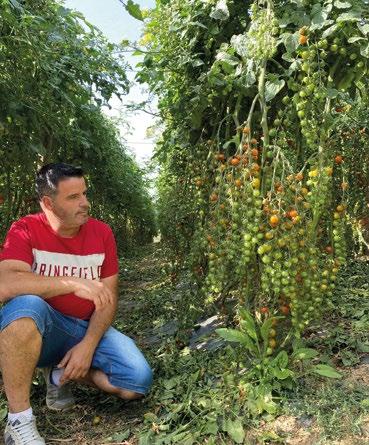
Contrariamente a lo que suele pasar con otros portainjertos, que retrasan la pri mera recolección, en la zona injertada con Carbonite los frutos maduraban al mismo tiempo que los del área sin injertar. Y con una peculiaridad: cada planta de tomate tenía dos ‘brazos’ o tallos, alcanzando un mayor peso de fruto, mientras que en las plantas sin injertar solo había un tallo.
Manuel Cara, responsable comercial de Top Seeds en Granada y Málaga, destaca que Carbonite tuvo más vigor y fuerza para tirar con los dos tallos que la zona testigo sin injertar. Además, el calibre fue supe rior en todo el ciclo, incluso en la parte alta, un aspecto importante. Luis Miguel, agricultor de Agroaxarquía, estuvo “muy contento” con los resultados en las ventas de subasta.
Otro productor, Jesús Maldonado, de la Costa de Granada, valora: “Carbonite tolera muy bien las altas temperaturas, ofrece un
Carbonite rootstock, exceptional behaviour at high temperature
The rootstock from Top Seeds is leaving a very good feeling in short-cycle tomato crops
Top Seeds is extending its catalogue with Carbonite,a high-strength tomato rootstock also aimed at summer short cycles with very extreme temperatures.
On the open-air crop farms in Malaga, with large-sized loose tomatoes, it has shown “exceptional” behaviour. The farmer Luis Miguel Ruiz was used to planting ungrafted, loose tomatoes, and at the end of the crop, they suffered from a lack of size and loss of plants due to fungus. This year he grafted a large part of the crop with Carbonite and he compared the benefits as opposed to the area of ungrafted plants: “The experience has been remarkable. The rootstock offers a very dense root system, which helps the plant to be stronger, giving homogeneous, good-sized fruit. During the harvest, we have observed this larger size and homogeneity compared to the traditional handling. In the future we will continue grafting on Carbonite”.
Contrary to normal performance with other rootstocks, which delay the first harvest, in the area grafted with Carbonite, the fruit ripened at the same time as fruit in the ungrafted area. And with a peculiarity: each tomato plant had two ‘arms’ or stems, reaching a greater weight of fruit, while on the ungrafted plants there was only one stem.
Manuel Cara, Sales Manager atTop Seeds inGranada and Malaga, emphasises that Carbonite was stronger and had greater robustnessfor growth with the two stems than the ungrafted control area. Additionally, the size was greater throughout the entire cycle, even in the highest part, an important aspect. Luis Miguel, a farmer belonging to Agroaxarquía was “very happy” with the results at the auction sales.
Another producer,Jesús Maldonado, from the Costa de Granada, indicates: “Carbonitetolerates high temperatures very well; it offers a more significant bearing of the plant and it has many secondary roots with a large amount of absorbent hairs. Up to now, I have been able to observe that, for early transplants and high temperatures, it is the best rootstock on the market. If everything continues along the same line, the next campaign I will opt for Carbonite, without any doubt.”
In the Alpujarra region and in Zujar, both in Granada, an area with an important presence of summer tomato crops, they are also opting for this rootstock. “People are very happy, as we are seeing what we expected: an increase in size, particularly at the end of the cycle and with a high tolerance to nematodes and fusarium,” Manuel Cara concludes.
porte de planta superior y tiene bastantes raíces secundarias con muchísimos pelos absorbentes. Hasta el momento he podido observar que, para trasplantes tempranos y temperaturas altas, es el mejor ‘porta’ del mercado. Si todo sigue así, la campa ña que viene apostaré por Carbonite sin dudarlo”.
También en la Alpujarra granadina y Zújar, zona muy potente en cultivos de tomate de verano, están apostando por este por tainjertos. “La gente está muy contenta, y nosotros viendo lo que esperábamos: incrementa calibre, sobre todo al final de ciclo, y tiene una alta tolerancia a nemáto dos y fusarium”, concluye Manuel Cara.
Luis Miguel Ruiz
Jesús Maldonado
El portainjertos de Top Seeds está causando muy buenas sensaciones en cultivos de tomate de ciclo corto
Tomato and pepper
Tomate y pimiento Fruittoday 126
Karamel Rome, equilibrio perfecto
Un estudio de la UAL destaca el balance idóneo entre ácidos orgánicos, azúcares y ácido clorogénico del cherry pera de KEOPS
Keops
Agro vuelve a la feria Fruit Attraction como cada año y lo hace con Karamel Rome como protago nista de su espacio. Este tomate cherry rama pera de sabor fue una apuesta de Keops que lanzaron hace ya tres años y les está dando muy buenos resultados. Con Karamel Rome “queríamos ofrecer lo que pensamos que el consumidor y el su permercado quiere, formatos más peque ños, con un plus de sabor y una calidad de poscosecha muy alta. Es difícil aunar todo eso, hay productos muy dulces, pero con problemas de poscosecha, y con Karamel Rome no pasa. Los problemas en poscose cha son nulos, no tenemos constancia de ello”, asegura Francisco Javier del Águila, gerente de la empresa almeriense de pro ducción ecológica.
Según los estudios realizados por la Universidad de Almería (UAL) en mate ria de sabor, Karamel Rome “presenta niveles de ácido málico muy inferiores a otras variedades a nivel metabólico, resultando más apetecible al gusto. Tiene muy buen equilibrio entre ácidos orgáni cos, azúcares (9-12 grados Brix) y ácido clorogénico, un conservante natural”. Por sus compuestos saludables, es un ideal para cuidar la salud y “prevenir problemas cardiovasculares”.
De momento solo está disponible en los mercados francés y alemán, y en me nor medida, en Holanda. “Nos falta género por la alta demanda que tiene”, asegura Del Águila.
Dentro de la línea Karamel, Keops cuen ta también con Karamel Cerise, cherry redondo.
En la feria, además de esta gama, se po drán ver otros productos como los pican tes tipo guindilla larga, a los que pronto
sumarán nuevas tipologías y formatos de pimiento en los que ya trabajan.
Asimismo, Keops mostrará su compro miso con la salud dejando un espacio destacado al sello Epigen Healthy Bite, del que forma parte junto con otras 14 empresas a nivel nacional. “Este sello de calidad diferencia a productos con ventajas en materia de medio ambiente, captura de carbono, y producción, ya que permite la expresión natural de los frutos, maximizándola”.
Karamel Rome, a perfect balance
A study by the UAL emphasises the ideal balance of organic acids, sugars and chlorogenic acid of the KEOPS plum cherry tomato
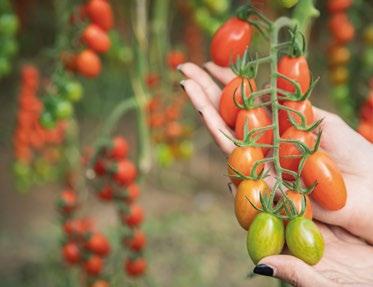
Keops Agro is returning to the Fruit Attraction trade fair, as it does every year, and this time it is bringing Karamel Rome as the star of its space. This tasty vine cherry tomato was launched by Keops three years ago and it is having very good results. With Karamel Rome “we wanted to offer what we think consumers and supermarkets want: smaller formats, with extra flavour and very high post-harvest quality. It is difficult to bring all these factors together – there are very sweet products available, but with post-harvest problems, and this is not the case with Karamel Rome. It has no post-harvest problems; we have no record of any at all,”according to Francisco Javier del Águila, the Manager of the ecological production company from Almeria.
According to the studies carried out by the University of Almeria (UAL) on the subject of flavour, Karamel Rome “has much lower levels of malic acid than other varieties on a metabolic level, making it more appetising. It has a very good balance of organic acids, sugars (9-12 Brix) and chlorogenic acid, a natural preservative.” Due to its healthy compounds, it is ideal for
looking after your health and “preventing heart problems.”
At present it is only available on the French and German markets, and to a lesser degree, in Holland. “We haven’t got enough producedue to the high demand it has,” Del Águila affirms.
Within the Karamel line, Keops also has Karamel Cerise, a round cherry tomato.
At the fair, in addition to this range, there will be other products such as the spicy peppers of the long chilli type. Moreover, new pepper typologies and formats will soon be added since they are already working on them.
Likewise, Keops will show its commitment to health with a prominent space for the Epigen Healthy Bite stamp, of which it forms part along with another 14 national companies. “This quality stamp differentiates products with advantages regarding the environment, carbon sequestration, and production, as it allows the natural expression of the fruit, maximising this quality.”
 Tomato and pepper
Tomate y pimientoFruittoday 127
Enza Zaden aumenta las ventas de cónico
La casa de semillas sigue sumando cuota de mercado, principalmente en variedades amarillas y naranjas, en un año complicado para el mercado holandés
Para el sector español, podría suponer una buena temporada en precios, tanto en pimiento como en tomate. “Va a haber demanda de suministro. Por lo que los pre cios han de ser buenos durante la campaña productiva del sur de Europa”.
Muchas novedades
En Enza Zaden no dejan de trabajar para ofrecer materiales que se adapten a las necesidades de la cadena, desde los agricultores a los consumidores. “Desa rrollamos el pimiento junto a nuestros clientes”.
La última novedad que han lanzado es el pimiento cónico rojo Prost con resistencia a LT, TM3, spotted y nemátodos. Una de
sus características diferenciales es la lon gitud, ligeramente menor que otros mate riales, que hace que los frutos sean rectos y muy homogéneos. Su calibre (110 gr.), es ideal para bolsas trico lor o monocolor.
Para completar la línea de calidad de Prost, han sumado el naranja E20C10405, y un nuevo amarillo, E20C10403, también con LT, TM3 y spotted.
En pimiento California, Enza Zaden es la única empresa que ofrece los tres colores con LT, TM3 y spotted: Navel (naranja), en el que son líderes; Carrizo (amarillo) con precocidad y elevada producción; y Vanadio (rojo), la principal referencia entre productores que buscan el tamaño ideal para flowpack.
Europale abre los brazos al pimiento cónico. Aunque la tipología repre senta aún el 15% de la superficie to tal de pimiento en la principal zona productora, Almería, los consumidores crecen año tras año. En Enza Zaden están experimentando un aumento en las ven tas, principalmente de cónicos, amarillos y naranjas, así como en las variedades minis, que gozan de una muy buena posición en el mercado de la mano de su famosa marca Tribelli®. Y es que, como explica Carlos Herrerías, Product Manager de Pi miento, “con nuestras variedades, además de aportar sabor y calidad organoléptica para el consumidor, el agricultor va mucho más tranquilo. Gracias a la introducción de resistencias a Leivellula Taurica (Oidium), ofrecemos una mayor seguridad alimenta ria y más sanidad”.
Esta seguridad es aún más importante en una campaña repleta de incertidumbres. La inestabilidad geopolítica y aumento de precios a todos los niveles provocarán problemas de suministro, porque Holan da va a producir alrededor de un -15% de pimiento. “Plantarán más tarde y reduci rán calefacción, lo que significará menos rendimiento. Los pimientos de Holanda llegarán a los mercados más tarde y su calidad puede verse afectada”.
Enza Zaden is increasing its sales of conical peppers
The seed company keeps gaining market share, mainly in yellow and orange varieties, in a complicated year for the Dutch market
Europe is opening its arms to conical peppers. Although the typology still represents 15% of the total pepper surface area in the main production region, Almeria, consumer numbers are increasing, year after year. At Enza Zaden they are experiencing a rise in sales, mainly in yellow and orange conical peppers, as well as in the mini varieties, which are enjoying a very good position on the market through their famous brand, Tribelli®. And the fact is that, as Carlos Herrerías, Pepper Product Manager, explains, “With our varieties, in addition to bringing flavour and organoleptic quality to consumers, they help farmers to become much less concerned. Thanks to the introduction of resistances to LeivellulaTaurica (Oidium), we offer greater food safety and healthier produce.”
This safety is even more important in a campaign that is full of uncertainty. The geopolitical instability and rise in prices at all levels will cause supply problems because Holland is going to produce around 15% fewer peppers. “They will be planted later, with less heating, which will mean a reduced yield. Dutch peppers will reach the markets later and their quality could be affected.”
For the Spanish sector, this could mean a good season regarding prices, for both peppers and tomatoes. “There is going to be a demand for the supply. This means that

the prices should be good during the south European production campaign.”
Many new developments
At Enza Zaden, they continue working to offer materials that adapt to the chain’s needs, from farmers to consumers. “We are developing peppers along with our clients.”
The latest development that they have launched is the Prost red, conical pepper with resistance to LT, TM3, spotted and nematodes. One of its differentiating characteristics is its length, slightly shorter than other materials, which make the fruit straight and very homogeneous. Its calibre (110 g) is ideal for bags of three-coloured or one-coloured peppers.
To complete Prost’s quality line, they have added the orange pepper, E20C10405, and a new yellow one, E20C10403, also with resistance to LT, TM3 and spotted.
In California peppers, Enza Zaden is the only company that offers three colours with resistance to LT, TM3 and spotted: Navel (orange), with which they are market leaders; Carrizo (yellow) with an early, high production; and Vanadio (red), the main reference amongst producers who are looking for the ideal size for flow packs.
Carlos Herrerías
Pepper
“España tendrá una buena temporada en precios por el descenso en Holanda”
Pimiento Fruittoday 128
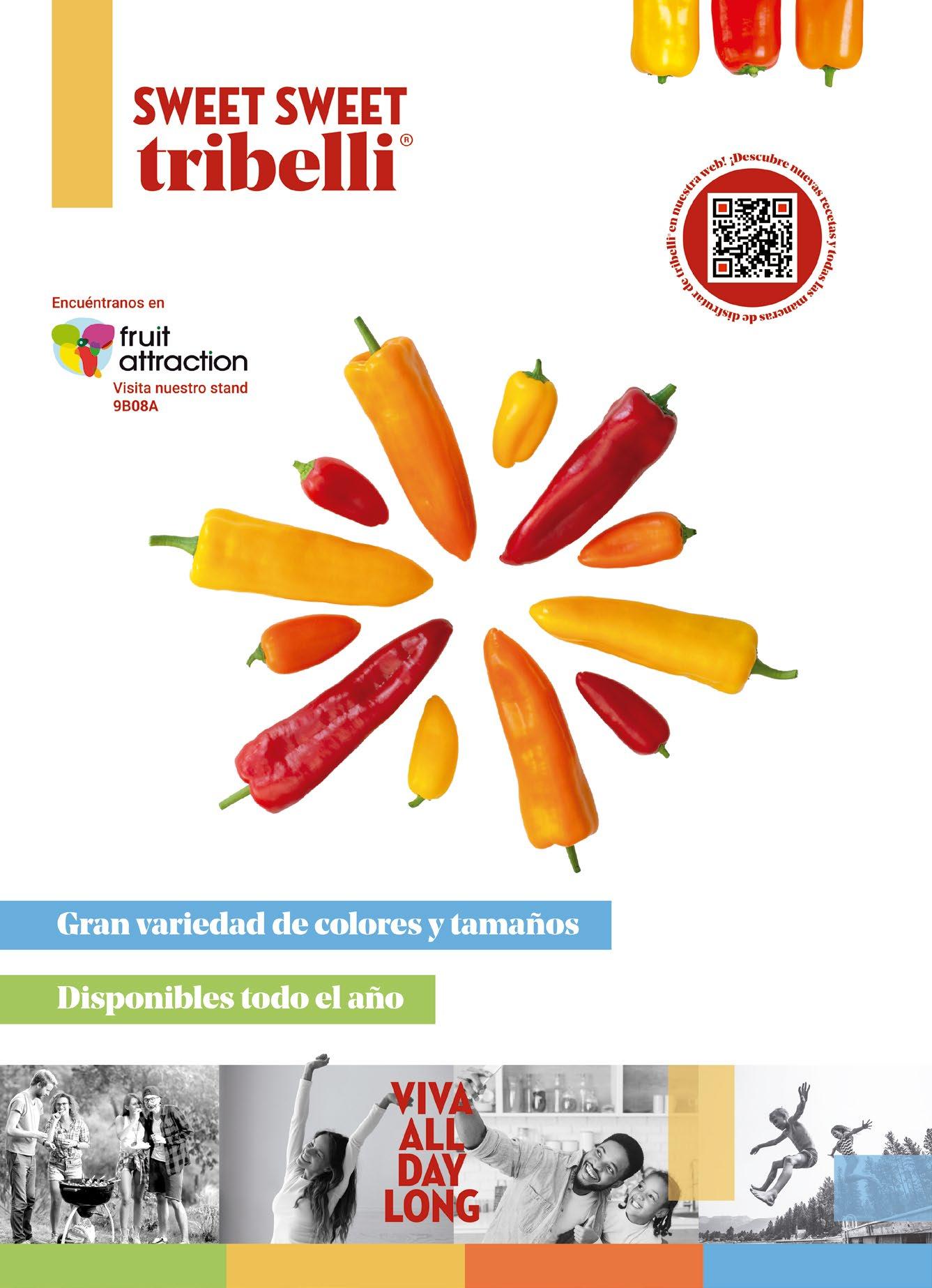
Sanifruit lanza su primer tratamiento postcosecha en pimiento
La empresa valenciana Sanifruit se adentra por primera vez en el mundo de las hortalizas con el primer y único tratamiento postcosecha en pimiento que existe actualmente en el mercado
Alargar la vida comercial de las hortalizas es un beneficio directo para los almace nes que ven como mejora la calidad de su producción.
A diferencia de otros proyectos como el de la banana, en el que tardaron hasta 5 años en lanzarlo, el del pimiento ha supuesto un nuevo récord. En apenas un año Sanifruit ha conseguido lanzar su producto y ya son muchos los clientes, traders y proveedo res que lo han acogido positivamente.
Debut en Fruit Attraction
Elgerente de Sanifruit, Javier Biel, se muestra ilusionado y asegura que están “muy satisfechos con los resultados” y que esta solución su pone un paso importante para la empresa y para el mercado. Aunque la compañía inicia así su andadura con las hortalizas, Biel está seguro de que habrá más noveda des y de que se seguirá avanzando en ese mundo a partir de 2023. “Uno de nuestros principales objetivos estratégicos es y será la diversificación”
El tratamiento, que es “natural, biológico y cuenta con certificación en ecológico”, se ha empezado a utilizar principalmente en el pimiento California, y se realiza tras el lavado o desinfección que ya se realiza habitual mente.
Su nombre es Sanipe pper L y se vende en garrafas de 10 litros. Mediante su aplicación se consigue reducir la podredumbre, así como la merma de peso y, además, se ob tiene un mejor aspecto visual. En cuanto a la aplicación, Sanifruit lo pone fácil y pue de instalar un sistema en el cliente que se adapta a cualquier entorno. El montaje no
interfiere en el trabajo diario de la central.
“Donde más aporta es en el pimiento rojo, naranja o el amarillo. En el verde, los re sultados son menos visibles, porque está menos maduro y tiende a pudrirse menos.
“Hablamos de unas diferencias respecto al control del 80%. Es decir, con el control se pudre un 10%, pero con el tratamiento se pudre máximo un 2%”, explica Biel.
El ejecutivo declara que ha sido un proyec to “duro, pero express”, en el que la expe riencia y los 30 años de investigación en más de 500 sustancias han jugado un papel determinante: “gracias a esto hoy es más fácil conseguir productos, porque sabemos cada sustancia qué hace, a qué hongos ataca, qué tipos de pieles son más susceptibles… Porque lo complica do no es frenar los hongos, lo complicado es hacer que no se desarrollen sin matar a la fruta”.
“Esto está suponiendo para nuestros clien tes una mejora de la rentabilidad y una reducción considerable de las mermas”.
La feria madrileña de Fruit Attraction será el primer gran evento en el que la em presa presente esta novedosa solución de postcosecha en pimiento, una de las principales estrategias de Sanifruit. Para su presentación se ayudarán de la tecnolo gía, en una propuesta original e innovadora de realidad virtual, en la que los visitantes podrán conocer a fondo el funcionamiento de la empresa y la ciencia que se esconde bajo sus productos.
En su stand, los invitados podrán obser var un pequeño vídeo de unos minutos de duración mediante unas gafas de realidad virtual. “Es una explicación muy sencilla, como si fuera ciencia para niños”. Además, podrán elegir entre tres frutas y observar cómo actúan los diferentes productos, cómo consiguen fortalecer la fruta y hacer que los hongos no proliferen. “Verán por qué conseguimos los resultados que con seguimos”, declara finalmente Biel.
Javier Biel
Pimiento Fruittoday 130
“La compañía valenciana lleva 30 años de investigación y 500 sustancias estudiadas”
Sanifruit is launching its first post-harvest treatment for peppers
The Manager of Sanifruit, Javier Biel, is excited and he asserts that they are “very satisfied with the results” and that this solution means an important step both for the company and for the market. Although the company is starting off its journey with vegetables with this product, Biel is certain that there will be many new developments and that they will continue to move forward in this world from 2023 onwards. “One of main strategic goals is and will always be diversification”
The treatment, which is “natural, biological and holds an ecological certificate,” has started to be used mainly on California peppers and it is applied after the washing or disinfection that is normally carried out.
It is called Sanipepper L and it is sold in 10-litre carboys. Rot is reduced by its application, as well as the weight decrease and also, a better visual appearance is achieved. Regarding the application, Sanifruit makes it easy, and a system can be installed for clients that adapts to any environment. The assembly does not interfere with the preparation centre’s daily work.
“It works best on red, orange or yellow peppers. The results are less visible on green
peppers, because they are less ripe and tend to rot less.”
“We are talking about some differences of 80% compared to the control group. That is to say, with the control group 10% rots, but with the treatment a maximum of 2% rots,” Biel explains.
The executive states that it has been a “tough, but express” project, in which the experience and 30 years of research on over 500 substances have played determining roles: “thanks to that, today it is easier to obtain products, because we know what each substances does, which fungus it attacks, which type of skins are more susceptible…
Because the complicated part is not stopping the fungus, it lies in ensuring that they don’t develop without killing the fruit.”
“This means an improvement in profitability and a considerable reduction in wastage for our clients.” Extending the shelf life of vegetables is a direct benefit for the warehouses that can see how the quality of their production improves.”
Unlike other projects, such as bananas, which they took 5 years to launch, the pepper
treatment has set a new record. In just one year, Sanifruit has managed to launch its product and many clients, traders and suppliers have already shown a positive attitude towards it.
Debut at Fruit Attraction
The Madrid trade fair Fruit Attraction will be the first important event at which the company will present this novel post-harvest solution for peppers, one of Sanifruit’s main strategies. For its presentation they will use technology in an original and innovative virtual reality proposal, in which visitors will be able discover in depth how the company works and the science hidden behind its products.
On the stand, guests will be able to watch a short video, of just a few minutes, using virtual reality glasses. “It is a very simple explanation, as if it were a children’s science class.” Additionally, they will be able to choose between three fruits and see how the different products act, how they manage to strengthen the fruit and ensure that the fungus does not proliferate. “They will see how we get the results we get,” Biel finally states.
The Valencian company Sanifruit is making its debut in the vegetable world with the first and only post-harvest treatment for peppers currently on the market
Pepper
Ramiro Arnedo, fácil para el agricultor
“Nuestro trabajo pasa por ofrecer en todas las tipologías variedades que faciliten la labor de los agricultores, sin perder de vista la calidad y producción”
Fruit
Today magazine habla con Jorge Bervel, responsable de pimiento de la casa de semillas Ramiro Arnedo.
¿Cómo evolucionan en ventas los últimos lanzamientos? (Quijano, Sancho, Clipeo, Pavés…)
Estamos muy contentos por la exce lente acogida y gran representación en esta campaña de estas variedades. Para Quijano es su segunda campaña siendo líder en su fecha para los trasplantes de segunda quincena de julio, para Sancho es su primera etapa comercial y esperamos con ansia las primeras recolecciones para disfrutar de sus gigantescos frutos.
En el caso de los california (Clipeo y Pavés), ambos se han hecho hueco en el segmento de ciclos medios, siendo sabedores de la excelente calidad de fruta que ofrecen con rendimientos productivos altos y reduciendo los problemas de los agricultores con su alta tolerancia a oídio.
¿Qué novedades se preparan para este año? ¿Cuáles son sus características?
Para esta campaña traemos un amplio abanico de novedades, tanto en california de ciclo medio-temprano, con Broquel, que ofrece plantas muy versátiles y con un largo recorrido, dando un fruto de calibre grande y alta homogeneidad. Para ciclos tardíos introducimos dos varieda des Adarga y AR-371179, que tienen un excelente comportamiento en los meses fríos y una excelente consistencia de sus frutos, ambas son para el mismo ciclo, pero hablamos de diferentes calibres para la elección del agricultor, siendo
Adarga una variedad que mayoritariamen te da calibres GG y la novedad AR-371179 aumenta su porcentaje en G.
En los california amarillos ofrecemos dos novedades, Yelmo y Morrión, siendo el primero para ciclos medios y el segundo para ciclos tardíos, con excelente color y consistencia en ambos y, por supuesto, acompañados de una buena tolerancia a oídio y rendimiento final alto.
También incidimos en el segmento del lamuyo tardío con dos variedades semi comerciales de excelente homogeneidad de sus frutos, con muy alta consistencia y calidad, AR-371151 y AR-371184.
Quiero destacar que, por primera vez en
Ramiro Arnedo, entramos en el segmento de guindilla amarilla con la variedad Gualda y en el segmento de los sweet bite con juntando los tres colores Placido (rojo), Pavarotti (amarillo) y Carreras (naranja).
Si hablamos de tomate, ¿cuáles son las principales novedades?
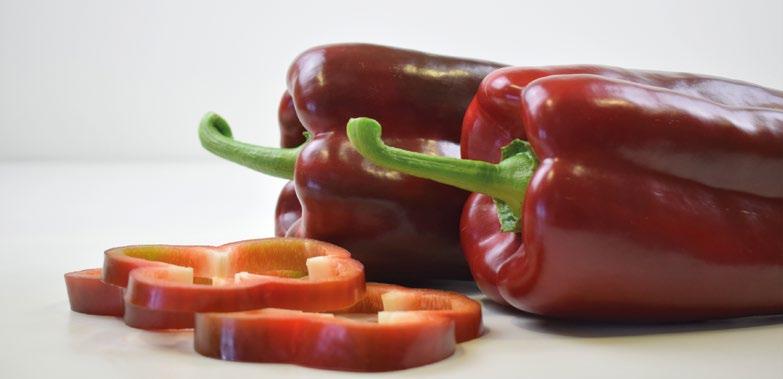
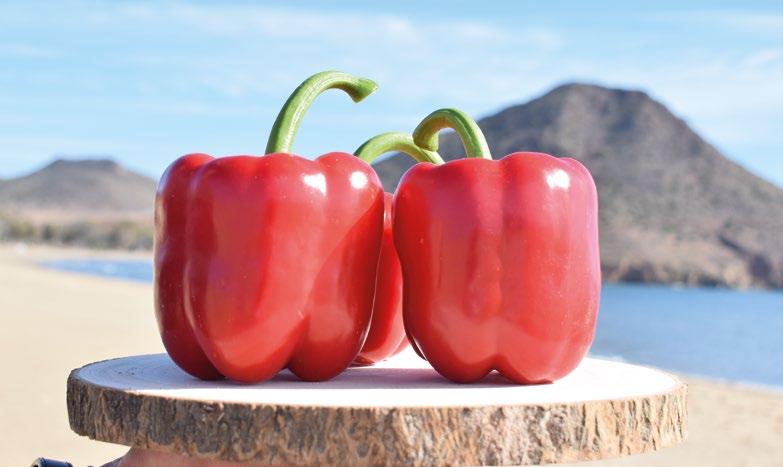
Esta campaña apostamos con varieda des de sabor para diferentes tipologías, como es el caso de las variedades Príncipe (tomate azul asurcado), Roncal (asurca do beef) y Colgatón (tomate de colgar o restregar), todas ellas enfocadas en sabores tradicionales que les aportan una distinción en los mercados, además de su atractivo visual como puede ser el caso de Príncipe, que destaca por unos hombros oscuros que hacen resaltar aún más su color azul, orientándolo a merca dos gourmet. Roncal es un tomate de alta producción para recolecciones en verde o pintón, orientado a mercados nacionales, y Colgatón es muy rústica, con frutos que desprenden su piel con mucha facilidad lo cual lo hace idóneo para su cometido, a esta característica se le unen otras como su buen aguante a rajado, su excelente vida útil tras el corte y su alta uniformidad de fruta, con lo cual facilitan las labores de agricultores y comercializadoras.
Por supuesto recordar la buena campaña realizada con variedades de la empre sa más conocidas como es el caso de Romancero (ramo), Macizo (pera gorda) y Trabuco (Beef).
Clipeo
Pimiento Fruittoday 132
Quijano
Ramiro Arnedo, easy for farmers
Fruit Today magazine talked to Jorge Bervel, in charge of peppers at the seed company Ramiro Arnedo.
How are the latest launches evolving regarding sales? (Quijano, Sancho, Clipeo, Pavés…)
We are very happy about how well they have been received and the important representation in this campaign of these varieties. For Quijano, it is the second campaign as the leader on its transplant dates in the second fortnight of July; for Sancho, this is its first commercial phase and we are anxiously waiting for the first harvests to enjoy its gigantic fruit.
In the case of the California peppers (Clipeo and Pavés), both have found a space in the medium cycle segment, as people have become aware of the fruit’s excellent quality that they offer with high production yields, reducing farmers’ problems due to their high tolerance to powdery mildew.
What new developments are being prepared for this year? What are their characteristics?
For this campaign, we are launching a wide range of new developments, both in
medium-early cycle California peppers, with Broquel, which offers very versatile plants, long range, giving large calibre, highly homogeneous fruit. For late cycles, we are introducing two varieties: Adarga and AR-371179, which behave very well in cold months and the fruit of which have an excellent consistency. Both are for the same cycle, but we are talking about different calibres for harvesting, with Adarga as a variety with mainly GG calibres and the new development, AR-371179 is increasing its percentage in calibre G.
In yellow California peppers, we are offering two new developments: Yelmo and Morrión. The former is for medium cycles and the latter for late cycles, both with excellent colour and consistency and, of course, accompanied by a good tolerance to powdery mildew and high final yield.
We are also contributing to the late Lamuyo segment with two semi-commercial varieties that have excellently homogeneous fruit, with very high consistency and quality, AR371151 and AR-371184.
I would like to underscore that, for the first time at Ramiro Arnedo, we are entering the yellow chilli pepper segment with the variety Gualda, and in the sweet bite segment,
combining the three colours: Placido (red), Pavarotti (yellow) and Carreras (orange).
Now talking about tomatoes, what are the main new developments?
This campaign we are opting for flavourful varieties for different typologies, such as the Principe varieties (blue grooved tomato), Roncal (grooved beefsteak) and Colgatón (hanging or spreading tomato), all of them focused on traditional flavours that bring distinction to the market, in addition to their visual attractiveness, as is the case of Principe, which stands out due to its dark shoulders highlight its blue colour even more, aimed at gourmet markets. Roncal is a high production tomato for harvesting green or dark green, aimed at the Spanish markets, and Colgatón is very rustic, with fruit on which the peel comes off very easily, making it perfect for its use. Added to this characteristic are others such as its endurance to cracking, its excellent shelf life after cutting and the high uniformity of its fruit, making the work by both farmers and marketers easier.
Of course, we should mention the good campaign by the company’s best known varieties, as is the case of Romancero (vine), Macizo (large plum) and Trabuco (Beefsteak).
“Our work in all typologies involves offering varieties that help farmers to do their work, without losing sight of quality and production”
Pepper
Arnon y Galiano, garantía de rendimiento
Top Seeds sigue sumando superficie con estas variedades de pimiento y lanzará nuevos desarrollos a lo largo de la campaña
Conpaso lento, pero seguro. A lo largo de la campaña Top Seeds irá desvelando las novedades que ha desarrollado en pimiento bajo el concepto ‘R€npimiento’ (pimiento y rendimiento); hecho que caracteriza a sus variedades comerciales Top Arnon y Galiano y que ofrece continuidad asegu rada con las novedades que presentará esta campaña. Ambas son ya conocidas en el campo almeriense y siguen sumando superficie, gracias a una productividad que además se produce de forma continua a lo largo del ciclo de cultivo, a su elevado número de kilos de alta calidad y calibre G-GG a lo largo del ciclo, y a la facilidad de manejo.
Top Arnon (temprano) destaca por su potente sistema radicular, ideal en todo tipo de suelos. La planta, de porte abierto
y entrenudos medios, es precoz y rápida. Los frutos, uniformes, alcanzan un calibre G-GG desde el inicio, con gran calidad, buen grosor de pared y un excelente color, tanto en verde como en rojo.
Por su parte, Galiano se enfoca a siembras medias y tardías. La planta es fuerte y ofrece facilidad de cuaje y elevada produc ción, con frutos cuadrados, de buen color y firmeza, sin cracking y que permiten un elevado aguante en planta y una excelente poscosecha.
Próximas novedades
Su I+D pone el foco en más resistencias, principalmente en añadir nemátodos, en otras fuentes de resistencia que están en fase avanzada, y en un desarrollo radicular que cumpla en condiciones de escasez de
Arnon and Galiano, a guarantee of yield
Slowly, but surely. Over this campaign, Top Seeds will reveal its new pepper developments under the concept of ‘R€npimiento’ (pepper and yield, in Spanish); this characterises its commercial varieties Top Arnon and Galiano and offers guaranteed continuity with the new products that will be presented this campaign. Both are already well-known in the fields of Almeria and their surface area continues to be extended, thanks to its continuous productivity throughout the crop cycle, to the high number of kilos of top-quality and G-GG calibre throughout the cycle and the ease of handling.
Top Arnon (early) stands out due to its powerful root system, ideal in all kinds of soil. The open growing plant with medium internodes is early and fast. The uniform fruit reach a G-GG calibre from the beginning, with great quality, good wall thickness and excellent colour, both in green and in red.
Galiano, on the other hand, is focused on medium and late sowing. The plant is strong and offers easy setting and high production, with square, good coloured, firm fruit, without any cracking, and that allow significant endurance on the plant and an excellent postharvest.
Forthcoming developments
Its R&D is focusing on greater resistances (mainly by adding nematodes), on other
sources of resistance that are in an advanced phase and on a root development that works well when there is a water shortage. “The main goal will be aimed at the pepper crop, but we also have many ongoing trials with tomatoes.”
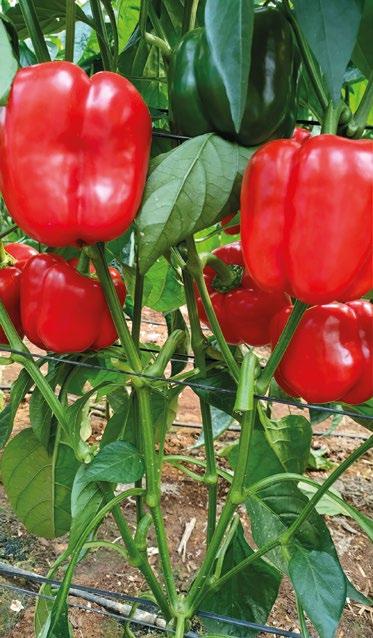
As Ángel Pelegrina, General Manager of Top Seeds, affirms “we are not seeking to launch varieties to fill up the catalogue, but rather to really bring a differential product to the market. The fact of launching 3, 4, 5 or 6 new varieties year after year in the same segment is a kind of confusing war that should be considered more carefully.”
This year they will launch two varieties that have yet to be registered, a red California for early cycles, and another for medium cycles.
They are two “highly competitive” materials that are following the same line that has become a “brand of the company”: powerful roots and medium-high strength, ideal for crops in conditions of “heat that is becoming increasingly extreme,” and with HR to powdery mildew.
Another introduction, in this case a yellow California pepper, will be focused on earlymedium plantations. In Lamuyo, they will also add a variety for July plantations, ideal for cooperatives due to its compact size, with “extra-thick” walls.”
agua. “El objetivo principal será el cultivo del pimiento, pero tenemos muchos ensa yos con tomate también”.
Como asegura Ángel Pelegrina, direc tor general de Top Seeds, “no buscamos lanzar variedades para rellenar catálogo, sino para aportar realmente algo diferen cial al mercado. El hecho de lanzar 3, 4, 5 o 6 nuevas variedades año tras año en el mismo segmento es una especie de guerra por confusión que debería de valorarse más cuidadosamente”.
Este año lo harán con dos variedades aún pendientes de registro, un California rojo para ciclo temprano y otro para medio.
Se trata de dos materiales “muy compe titivos” que siguen la misma línea que ya es “marca de la casa”: raíz potente y vigor medio-alto, ideales para cultivos en con diciones de “calor cada vez más extremo” y con HR a oídio.
Otra introducción, en este caso de Califor nia amarillo, se enfocará a plantaciones tempranas-medias. En Lamuyo, sumarán también una variedad para plantaciones de julio, ideal para cooperativas por su tama ño compacto, con pared “supergruesa”.
Top Seeds continues to add surface area with these pepper varieties, and it will launch new developments over the campaign
Pepper
Pimiento Fruittoday 134
Los 40 años de Intersemillas
En 2023 la firma valenciana celebra su 40 aniversario siendo un referente en producción de semillas de sandía y melón
aumentado su personal con delegaciones en Portugal y México y, en breve, se prevé la apertura de un centro de alta tecno logía agrícola en el paraje Las Almenas (Almería).
Pimiento Nabone
Nabone está consolidado en el campo al meriense y granadino. Un pimiento de una producción escalonada, que no se detiene en invierno por el frío y que aporta frutos rectos. De cara al consumidor tiene doble aptitud tanto para el consumo en crudo como cocinado.
“La planta de Nabone es vigorosa, lo que ayuda a su elevada producción durante el invierno, sin paradas”, señala Ana Belén Gónzalez. “Nabone es calidad durante todo el ciclo. No disminuye el calibre al final”, describía.
Lospilares de Intersemillas son: in novación, servicio y asesoramiento. Desde la empresa son conscientes de que para ofrecer semillas de variedades de vanguardia con la más alta calidad tienen que seguir invirtiendo en I+D+i.
La calidad, el control exhaustivo del vigor y germinación de sus semillas, la alta pureza y la uniformidad de todos sus híbridos son los compromisos que ofrece la firma a sus clientes. Esto se consigue con las tecnolo gías más vanguardistas, con recursos in vi tro, identificación molecular y la creación de sus propias semillas.
En 2008 separaron la producción de la investigación, lo que se materializó en el traslado de las oficinas y el almacén, de jando independiente el área de producción de semilla.
En 2012 dan un paso más y crean la empre sa Inveseed para la innovación, investiga ción, desarrollo y control de calidad. Todo para mejorar sus variedades siguiendo un riguroso protocolo de calidad.
En esas mismas fechas se incorporó el control genético de variedades mediante la identificación molecular, lo que permi te ofrecer al cliente final la seguridad de compra de la variedad requerida.
Y, desde hace 5 años, Intersemillas cuenta con un departamento de patología ve getal que apoya el proceso de control de calidad.
En su afán de evolución constante, en los últimos años han crecido en su programa de investigación de mejora en melón, ha
Otros aspectos de este pimiento son sus buenos cuajados en las zonas altas de la planta o el hecho de que “apenas sufre de microcracking y es poco sensible a blossom”.
Intersemillas turns 40
In 2023, the Valencian company will celebrate its 40th anniversary as a reference in watermelon and melon seed production
Intersemillas is founded on innovation, service and assessment. At the company they are aware that in order to be able to offer cutting-edge, top-quality seed varieties, they must continue investing in R&D+i.
Quality, exhaustive control over the strength and germination of their seeds, along with the high purity and uniformity of all their hybrids are the commitments offered by the company to its clients. This is managed using the latest technologies, with resources including in vitro, molecular identification and the creation of their own seeds.
In 2008, they separated production from research, which meant moving the offices and the warehouse, leaving the seed production area independent.
In 2012. they took a further step and created the company Inveseed for innovation, research, development and quality control. All of this aimed at improving its varieties, following a strict quality protocol.
At the same time, they incorporated the genetic control of varieties, using molecular identification, which allowed end clients to be offered the certainty of purchasing the required variety.
And for the past 5 years, Intersemillas has
had a vegetable pathology department, supporting the quality control process.
Due to its desire for constant evolution, in recent years the company has extended its melon improvement research programme, it has increased its staff with branches in Portugal and Mexico, and in the near future it plans to open a high technology agricultural centre in Las Almenas (Almería).
Nabone peppers
Nabone has become consolidated in the fields of Almeria and Granada. A pepper with a staggered production, which does not stop in the winter due to the cold and that produces straight fruit. For consumers, it has the double advantage of being suitable for eating raw or cooked.
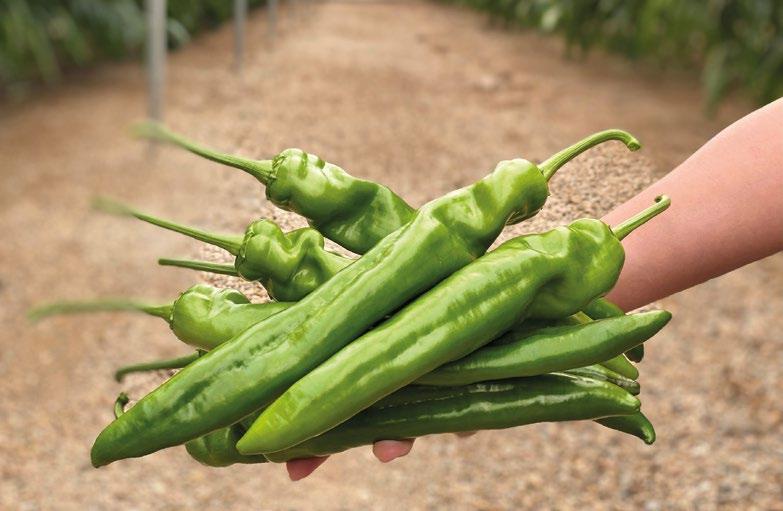
“The Nabone’s plant is strong, which helps its high production in the winter, without any halts,” Ana Belén Gónzalez indicates. “Nabone has quality throughout the entire cycle. The size does not drop off at the end,” she states.
Other aspects of this pepper are its good setting in the high areas of the plant or the fact that it “hardly suffers from any micro cracking and it is not very sensitive to blossom.”
Pepper
Nabone
Pimiento Fruittoday 136

Vilmorin-Mikado refuerza sus cultivos pilares
La variedad Anakin F1 se suma a Yuko F1 aportando más precocidad y resistencia a nematodos
Lacasa de semillas Vilmorin-Mikado lleva tiempo trabajando en la línea de pimiento cónico. Una tipología que gana cuota de mercado entre los consumidores europeos gracias al atractivo de su sabor dulce. En este senti do, la empresa obtentora ha optado por la búsqueda de materiales con los que busca mejorar la calidad agronómica de otras propuestas presentes en el mercado. Y lo hace de la mano de Yuko F1 y Anakin F1, dos variedades de cónico rojo dulce para exportación.
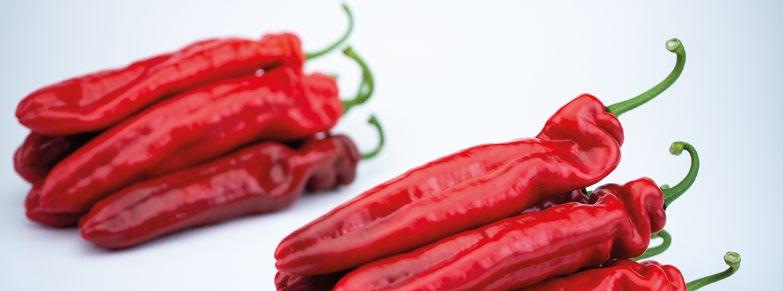
La primera variedad comercial en sumarse a su porfolio fue Yuko F1, que incorpo ra resistencias a Spotted y L4. “Yuko F1 destaca por tener un fruto de tamaño más homogéneo que otros, con un peso medio y una forma sostenidas a lo largo de todo el ciclo, un factor importante porque se vende embolsado”, explica a Fruit Today Joaquín González, Crop Specialist Pepper Europe de Vilmorin-Mikado.
Enfocado a fechas de plantación de finales de julio hasta primeros de agosto, Yuko F1 permite alargar el ciclo hasta finales de abril-mayo con una producción escalo nada.
Tras Yuko F1, este año en Vilmorin-Mi kado lanzan Anakin F1, un complemento ideal para aquellos productores que prefieren adelantarse. Y es que el ciclo de plantación es un poco más precoz (todo el mes de julio). Otra diferencia importante es que, además de Spotted y L4, incorpora la resistencia a ne matodos, aportando un plus de seguridad al agricultor, así como un ahorro de costes en tratamientos.
Ya en la gama de pimiento Lamuyo, Vilmorin-Mikado llega este año con otra importante novedad que se encuentra en fase de introducción, Carletto F1, con resistencia a oídio. Esta característi ca es un reclamo ya es tablecido en el mercado de California, y empieza a demandarse también en Lamuyo porque evita tratamientos fitosani tarios, lo que convierte a Carletto F1 en la opción ideal para producción bío y residuo cero, detalla Joaquín González.
Además, en su porfolio, Vilmorin-Mikado tiene una amplia gama de pimiento Cali fornia con variedades muy consolidadas como Nyobi F1(temprano con resistencia
alta a oídio y gran precocidad) y Nyostar F1 (también para temprano, con resisten cia alta a oídio y nematodos). A ellas se sumarán próximamente dos novedades.
La primera es un pimiento California rojo en fase precomercial, para ciclo medio y que incluye todo el pack de resistencias.
La segunda, un California amarillo con resistencia a oídio para ciclo medio, que complementa a su ya gran reconocida variedad Eglantine F1.
Diversificación en tomate
En la categoría de tomate, la línea de desarrollo de Vilmorin-Mikado se centra en la diversificación en formatos. Manuel Ruiz Ayala, Crop Specialist Tomate & Rootstock Europe, recuerda casos de éxito como el tomate asurcado rojo Rebelión F1; una de las últimas incorporaciones, el tipo San Marzano Sir Galvan F1; el tomate pera Tru jillo F1; el tomate rama Barbarela F1, ideal para cultivo ecológico… Pero no se quedan ahí. Muy pronto darán a conocer nuevos desarrollos en las tipologías de tomate beef, cherry y un tomate pera enfocado a mercado nacional
Todo ello va acompañado de una nutrida gama de portainjertos cuya última incor poración es Fullpro F1, con máximo vigor y una resistencia aún poco habitual en el mercado: Fusarium oxysporum f.sp. lycopersici (For), además de resistencia a Fol:0.1.2(1-3)USA.
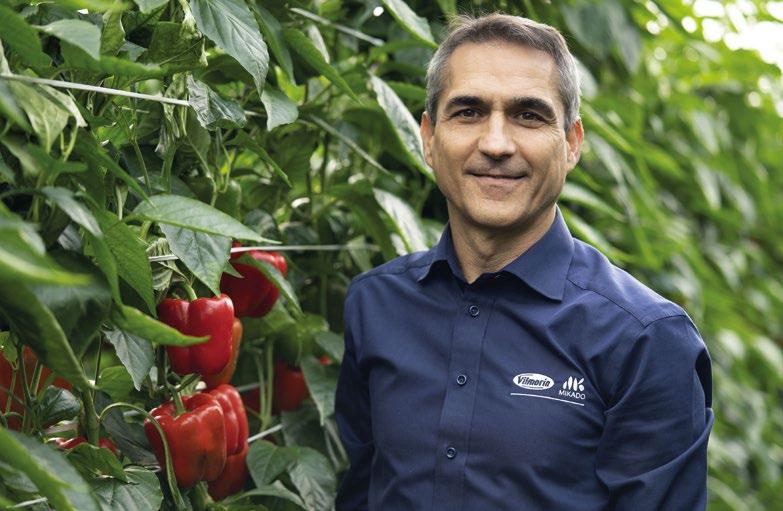 Joaquín González
Pimiento Fruittoday 138
Yuko En Lamuyo lanzan Carletto que incorpora una gran novedad, la resistencia a oídio
Vilmorin-Mikado is strengthening its main crops
Anakin F1 has been added to Yuko F1, bringing earlier crops and resistance to nematodes
The seed company Vilmorin-Mikado has been working on the conical pepper line for some time now. A typology that is gaining market share amongst European consumers thanks to the attraction of its sweet flavour. Accordingly, the plant breeder has opted for seeking out materials to improve the agronomical quality of other proposals already on the market. And it is doing this with Yuko F1 and Anakin F1, two sweet red conical varieties for export.
The first commercial variety to be added to its portfolio was Yuko F1, which incorporates resistance to Spotted and L4. “Yuko F1 stands out due to its more homogeneous fruit sizes than others, with an average weight and shape that continues throughout the cycle, an important factor because it is sold in bags,” Joaquín González, Europe Pepper Crop Specialist at VilmorinMikado, explains to Fruit Today.

Focused on plantation dates from the end of July to the beginning of August, Yuko F1 allows the cycle to be extended until the end of April-May, with a staggered production.
Following Yuko F1, this year Vilmorin-Mikado is launching Anakin F1, an ideal complement for producers who prefer to be ahead of the crowd. And the fact is that the plantation cycle is slightly earlier (the entire month of July). Another important difference is that in addition to Spotted and L4, it incorporates resistance to nematodes, bringing extra security to farmers, as well as savings in treatment costs.
And in the Lamuyo pepper range, this year Vilmorin-Mikado has another important new development that is in an introductory phase, Carletto F1, with resistance to powdery mildew. This characteristic is a claim that is already present on the California market and is beginning to also be demanded in Lamuyos because it means fewer plant protection treatments, which turns Carletto F1 into the ideal option for bio and zero residue production, according to Joaquín González.
Additionally, Vilmorin-Mikado has a wide range of California peppers in its portfolio, with highly consolidated varieties such as Nyobi F1 (very early, with high resistance to
powdery mildew) and Nyostar F1 (also for early crops, with high resistance to powdery mildew and nematodes). In the near future, new developments will be added to these. The first one is a red California pepper in a pre-commercial phase, for medium cycle and that includes a complete pack of resistances. The second one is a yellow California with resistance to powdery mildew for medium cycle, which complements the already very well-known variety, Eglantine F1.
Diversification in tomatoes
In the tomato category, Vilmorin-Mikado’s development line is centred on format diversification. Manuel Ruiz Ayala, Tomato & Rootstock Crop Specialist for Europe, recalls successes such as the grooved red tomato, Rebelión F1; one of the latest incorporations, the San Marzano style, Sir Galvan F1; the plum tomato Trujillo F1; the vine tomato F1, ideal for ecological crops… but that is not all. Very soon they will inform about new developments in beefsteak and cherry tomatoes, along with a tomato aimed at the Spanish home market.
All of this is accompanied by a wide range of rootstocks, the latest incorporation being Fullpro F1, with maximum strength and an as yet unusual resistance on the market: Fusarium oxysporumf.sp.lycopersici (For), in addition to resistance to Fol:0.1.2(1-3)USA.
Pepper
In Lamuyo they are launching Carletto, with a great new development: resistance to powdery mildew

Perfil del mes

María José Sánchez
Por/by : Carmen Cabra
Fotos/photos: Manuel Martín
Directora de Fruit Attraction Fruit Attraction CEO

Tengo muchas vidas

Durante el día que pasé con ella, me dijo esta frase en varias ocasiones. Al acabar la entrevista, la entendí perfectamente.

Cuando nos presentaron y la oí hablar, lo primero que pensé es que tenía acento vasco. No iba yo muy desencaminada porque, entre risas y sin conocerme de nada, me dijo que dormía con un vasco. Su acento se le intensifica los fines de semana cuando descansa en un pequeño pueblo de Navarra, de donde es su pareja.
En toda mi vida solo he echado un currículum, el de IFEMA
Sin embargo, María José Sánchez (1967) nació en Málaga porque su padre se casó con una colombiana y el frío madrileño hizo que la familia pusiera pies en polvorosa y llegara a Marbella. Ella, a su vez, repitió la jugada y en un viaje familiar por Sudamérica, se enamoró de un paraguayo, que años más tarde se convertiría en su marido. Fueron padres de Claudia, una adolescente de 24 años que este año va a residir en Alemania. Ahora están divorciados, pero viven cerca y se llevan bien.
 Puedes
ver el vídeo en You can see the video Fruit Today euromagazine
Asíes María José, abierta, natural, sin filtros o con los absolutamente necesarios. Y advierte al fotógrafo que, en las fotos debe salir tal cual es, sin retoques.
Me han dicho que usted podría ser la periodista, y yo, en todo caso, la entrevis tada. Eso suponiendo que yo tuviera algo que contarle. jajaja
Sí, es verdad, quise estudiar periodismo, pero mi padre me lo quitó de la cabeza por que él lo era. Durante más de dos décadas fue el director de Radio España y conocía muy bien la profesión. En realidad, mi pa dre era periodista y abogado, pero ejercía como gestor del ente Radio España. Así que yo soy licenciada en Derecho, pero no he ejercido nunca. En cambio, con 17 años sí que estuve haciendo algunos pinitos en la BBC internacional en Londres.
¿Dónde estudió?
Estudié en un centro privado francés, regido por unas monjas de carácter muy estricto. El francés fue mi lengua hasta la Selectividad. Después hice la carrera en la Complutense.
¿Qué hace una abogada en IFEMA?
En esta vida hay cosas que fluyen y ocurren porque han de ocurrir. A los 18 años comencé a trabajar de azafata en los distintos eventos que se celebraban. Cuando la feria se trasladó desde la Casa de Campo a su ubicación actual buscaban personal y eché el único currículum que he redactado en mi vida. A partir de entonces, empecé a ser la directora comercial de ferias muy diversas. Llevo más de 31 años cotizados porque el otro día consulté mi vida laboral en la página de la Seguridad Social. He estado al frente de la feria del Mueble, de la de Mascotas, de Decoración, una feria que se llamaba Integra, en la épo
ca que llegaba mucha población extranjera a trabajar a nuestro país. Igual hasta me falta alguna… y muchos años en de la de Joyería y Bisutería.
¿Por eso me ha citado aquí en esta joyería, Coolook?
He pasado tantos años, más de una déca da, como directora de esta feria, que me encuentro como en casa. Es casi defor mación profesional. Además, entre los expositores haces amigos.
Yo soy peligrosa en este tipo de estable cimientos porque todo me gusta.
Ya somos dos.
Tantos años entre joyas, debe tener el joyero a rebosar.
No le voy a engañar. Sí tengo algunas porque, entre otras cosas, eran la debilidad de mi madre.
A ella le encantaban y mi padre le hizo regalos que ahora son míos y, a eso, incluyo mis propias adquisiciones, sobre todo en bisutería.
¿Se ha llevado algún susto con tanta joya?
En el aeropuerto de Zúrich me dejé en el lavabo un anillo que me había regalado mi madre. Removí Roma con Santiago para encontrarlo porque tenía mucho valor sentimental. Para olvidarme del mal trago, pedí a una joyería una réplica y ahora lo tengo exactamente igual. Si usted no me lo pregunta, cuando me lo pongo, ni me acuerdo.
De la joyería al campo, es usted una todo terreno, versátil y se adecúa a todo. He
visto una foto suya cazando y otra con perros. Ya voy entendiendo lo de “tengo muchas vidas”.
Adoro los perros y todos los animales. He montado a caballo durante mucho tiempo, pero ahora ya no lo hago porque no tengo tiempo. En casa hemos tenido perros siempre. Ahora tengo a Chimbo, un Gos Datura y a Rudy, un Pomerania
Si le soy sincera ya voy entendiendo eso de que usted no se pierde nada. Me ha dejado con la boca abierta al enseñarme su trofeo de caza, un jabalí. ¡Qué atrevida!
Me encanta el campo y me escapo cuan do puedo con un grupo de amigos a Los Montes de Toledo.
¿Es usted una persona hiperactiva?
No. Soy una mujer activa. La vida está para vivirla, para compartirla, para ser feliz y hacer las cosas que a uno le gustan. En la mayoría de las ocasiones depende de nuestra actitud ante las adversidades. Hace más de 30 años que me detecta ron esclerosis múltiple y aquí estoy. Es un baño de realidad pasar por un tipo de experiencia así. Yo veo la vida en colores y me ha hecho apreciar las cosas pequeñas.

Creo que es una gran deportista. Se le ve muy en forma
Adoro y practico muchos deportes. Formo parte de un grupo de mujeres ‘padelistas’, que jugamos los miércoles por la noche. Ahora estoy en ‘stand by’ porque sufro una lesión en el piramidal que me impide inclu so correr. Estoy haciendo elíptica pero la verdad es que la odio.
En invierno me escapo a Baqueira, a Formigal, a cualquier lugar donde haya buenas pistas y nieve
¿Qué libro está leyendo en la actualidad?
En este momento no sé darle la traducción exac ta porque lo estoy leyendo en francés. Es algo así como “El Crepúsculo y la Aurora”. Es el anterior a ‘Los Pilares de la Tierra’ de Ken Follet, pero lo leo en francés. Me gusta la novela histórica y no soporto la ciencia ficción.
Supongo que lo hace para no perder el idioma
Siempre que puedo hago lecturas en este idioma. Es una forma de tenerlo presente.
Posdata. De Coolook ambas salimos con unos pendientes maravillosos que espera mos lucir durante Fruit Attraction. Lo cor tés no quita lo valiente porque entre tanta probatura hicimos esta entrevista.
Odio la elíptica, aunque en estos momentos no tengo otra alternativa debido a mi lesión
Perfil del mes Fruittoday 144
María José Sánchez
“I’ve got many lives”
When we met and I heard her speak, the first thing I thought was that she had a Basque accent. I was not far wrong since she laughingly told me, although we did not know each other, that she slept with a Basque man. Her accent gets stronger at the weekend when she rests in a small village in Navarre, where her partner is from.
However, María José Sánchez (1967) was born in Malaga because her father married a Colombian woman and, due to the cold Madrid climate, the family decided to escape to Marbella. She, in turn, followed her father’s example. During a family trip to South America, she fell in love with a Paraguayan who, years later, became her husband. They have a 24-year-old daughter called Claudia, who is going to live in Germany this year. They are now divorced, but live close to each other and get along well.
So, this is what María Jose is like: open, natural, completely –or as much as you can be–unfiltered. And she tells the photographer that she should appear in the photos just as she is, without any touching-up.

I’ve been told that you could be the journalist and that you could interview me, supposing that I had something to tell you, ha-ha.
Yes, it’s true, I wanted to study journalism, but my father made me change my mind because he was one. For more than two decades, he was director of Radio España and was well acquainted with the profession. In fact, my father was a journalist and a lawyer, but he worked as a director in Radio España. I’ve got a degree in Law, but I’ve never used it. However, at the age of 17 I started working at the BBC World Service in London.
Where did you study?
I studied in a private French school, run by nuns who were very strict. French was my language up to the university entrance exam. I then studied at the Complutense University.
What is a lawyer doing at IFEMA?
In life, some things happen because they’re meant to happen. When I was 18, I started working as a hostess at different events that were being held. When the fairground was moved from Casa de Campo to its current location, they were looking for personnel and I submitted the only CV I’ve ever written in my life. From then on, I started working as the commercial director of a great variety of fairs. I know that I’ve been paying National Insurance contributions for more than 31 years because the other day I checked my employment record on its website. I’ve been in charge of the Furniture Fair, the Pet Fair, the Decoration Fair, a fair that was called Integra, at a time when a lot of foreigners were coming to our country to work. I might even have forgotten some other one… and many years in the Jewellery Fair.
Is that why you asked me to meet you here in this jeweller’s, Coolook?
I’ve spent so many years –more than a decade–as director of this fair that I feel like at home. It’s almost an obsession. You also make new friends among the exhibiters.
I can be a danger in this type of establishment because I like everything.
That makes two of us.
So many years surrounded by jewels, your jewellery case must be filled to the brim.
I won’t fool you. I do have a few because, among other reasons, my mother had a weakness for them. She loved them and my father gave her wonderful gifts, and now they’re mine. And then there’s my own acquirements, especially costume jewellery.
Have you ever had a bad experience with so many jewels?
At Zurich Airport I left a ring my mother had given me in the toilet. I did everything I could to find it because it a had a lot of sentimental value. To get over this misfortune, I asked a jeweller to make an exact replica and now I have one exactly the same. When I wear it, I don’t remember what happened –it’s just because you asked me.
From jewellery to the country, you’re an allrounder, versatile and able to adapt to everything. I’ve seen a photo of you hunting and another with dogs. I’m beginning to understand what you mean by “I’ve got many lives”.
I love dogs and all animals. I’ve ridden horses for a long time, but now I don’t have time to do it. At home we’ve always had dogs. Now I have Chimbo, a Catalan Sheepdog, and Rudy, a Pomeranian.
To be frank, I’m beginning to understand what you mean when you say you don’t miss anything. I was dumbstruck when you showed me your hunting trophy, a wild boar. You were brave!
I love the country and I escape whenever I can with a group of friends to Montes de Toledo.
Are you a hyperactive person?
No. I’m an active woman. Life has to be lived, to be shared, you have to be happy and do the things you like. Most of the time, it depends on our attitude when faced with adversities. More than 30 years ago, I was diagnosed with multiple sclerosis and here I am. It’s a reality check when you experience something like that. And I see life in full colour, and it’s made me appreciate small things.
I believe that you’re a great sportswoman. You look really fit.
I love and practice many sports. I’m part of a group of female paddle players that play on Wednesday evenings. Now I’m on “standby”
because I’ve injured my pyramidal bone and I can’t even run. I’m using an elliptical bike, but the truth is that I hate it.
In winter, I get away to Baqueira, to Formigal, to any place where there are ski runs and snow.
What book are you reading at the moment?
Right now, I don’t know the exact translation because I’m reading it in French. It’s something like “The Evening and the Morning.” It’s the one before Ken Follet’s “The Pillars of the Earth,” but I read it in French. I love historical novels but can’t stand science fiction.
Whenever I can, I read in this language. It’s a way of keeping it present.
P.S. We both left Coolook with wonderful earrings that we plan to wear at Fruit Attraction. We were able to multitask, doing this interview while trying on a lot of jewellery.
I suppose you do that so as not to lose the language.
I hate the elliptical bike, but right now I have no choice but to use it due to my injury
“I have only submitted one CV in my life, at IFEMA”
Profile of the month