

Maharani Mancanagara
Nurrachmat Widyasena
Katalog untuk
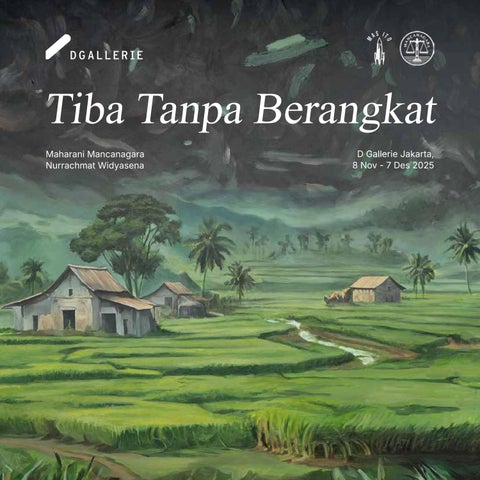
Tiba Tanpa Berangkat
Maharani Mancanagara & Nurrachmat Widyasena
D Gallerie, Jakarta Nov 2025
Kurator Chabib Duta Hapsoro
Diterbitkan oleh
D Gallerie, Nov 2025
Jl. Barito I No.3, Kebayoran Baru Jakarta 12130 +62 21 739 9378 dgalleriejakarta@gmail.com dgalleriejakarta.com
Desain oleh Kotasis 333 Surabaya, Indonesia www.kotasis.com
Maharani Mancanagara
Nurrachmat Widyasena
Tiba Tanpa Berangkat
Sejarah produksi pengetahuan di Indonesia
memperlihatkan relasi yang hierarkis antara subjek dan objek: pihak yang berkuasa memproduksi serta mengklaim pengetahuan, sementara yang lainnya dijadikan sumber pengetahuan sekaligus pihak yang dieksploitasi. Sejak masa kolonial hingga Orde Baru, sejak pembentukan kebun raya dan institusiinstitusi riset negara pascakolonial, pengetahuan diproduksi tidak dalam ruang yang netral. Ia diproduksi dan disebarluaskan dalam struktur kekuasan yang membentuk cara kita memahami alam, ilmu pengetahuan, teknologi dan masa depan.
Pameran Tiba Tanpa Berangkat bertolak dari kesadaran ini, bahwa pengetahuan di Indonesia selalu dibentuk oleh hubungan antara sains, negara, dan imajinasi. Judul tersebut mengacu pada kondisi paradoksal yang telah lama membayangi sejarah produksi pengetahuan di negeri ini, kita seolah tiba di masa depan yang dijanjikan, namun tanpa pernah benar-benar berangkat dari masa lalu yang mengikat.
Karya-karya Maharani Mancanagara dan Nurrachmat Widyasena memperlihatkan dua arah waktu yang saling bertaut.
Mancanagara menggali akar masa lalu kolonial, sementara Widyasena menatap langit masa depan yang selalu tertunda.
ArsipIngatan yang Memulihkan
Sejak awal karir kesenimanannya, Mancanagaraa menaruh perhatian yang besar pada sejarah, arsip, dan ingatan yang terhapus dari narasi besar. Melalui karya-karyanya seperti Susur Leluri (2021) dan Testimonial Objects (2023), ia menelusuri dokumen pribadi, memorabilia, dan arsip keluarga untuk menyingkap lapisan-lapisan sejarah yang terabaikan oleh narasi nasionalisme. Dalam karya-karya tersebut, sejarah tidak tampil sebagai deretan linimasa yang linear, terhubung secara mulus dan menarasikan kegemilangan kepahlawanan, melainkan sebagai pengalaman yang bersifat emosional, penuh kehilangan, luka, dan sekaligus menyembuhkan.
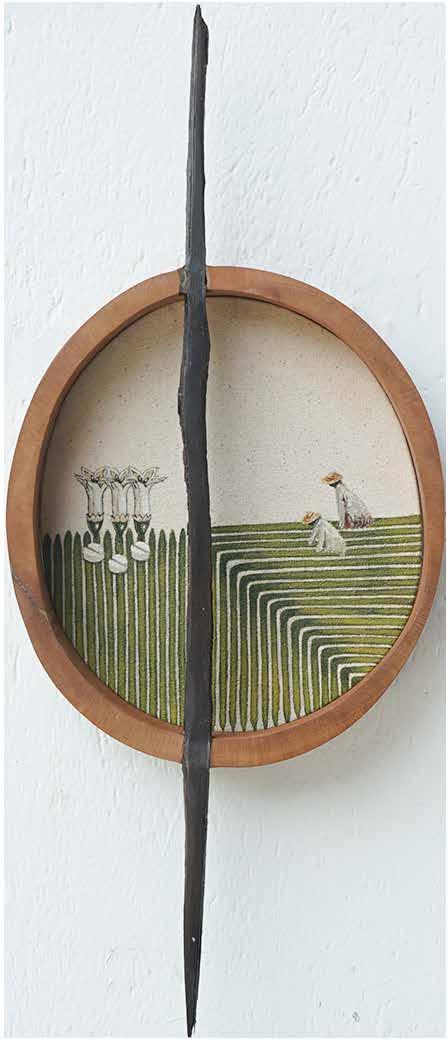
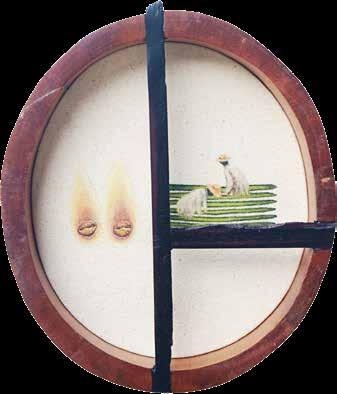
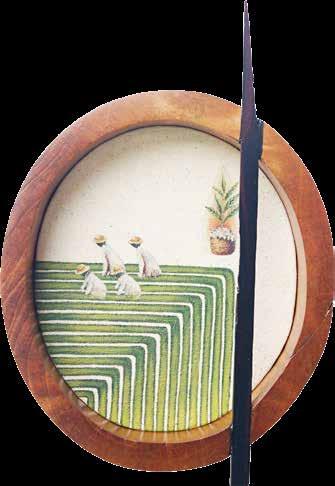
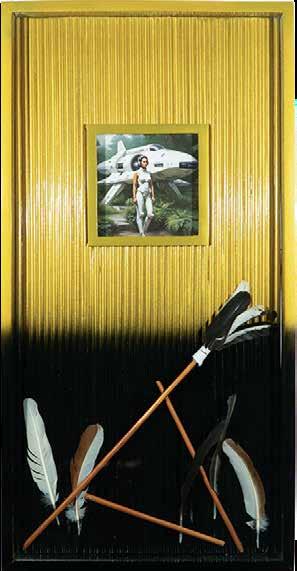
Dalam beberapa tahun terakhir, Mancanagara memperluas medan refleksinya dari arsip personal menuju arsip kolonial, terutama melalui seri Floracrats (2024–2025). Ia meneliti sejarah kebun raya dan botani kolonial di Hindia Belanda, tempat ilmu pengetahuan tumbuh seiring-sejalan dengan penaklukan. Kebun Raya Bogor, yang sering dianggap simbol kemajuan ilmiah, dalam pembacaannya, adalah ruang di mana alam tropis dijinakkan dan dijadikan mesin komoditas ekonomi. Dalam karya seperti Apostles of Enlightenment dan Silent Cultivation, Mancanagara menggambarkan bagaimana sains kolonial memanfaatkan tanaman-tanaman seperti kopi, kina, atau nila sebagai komoditas, sekaligus sebagai simbol moralitas modernitas Eropa.
Ia menggunakan medium kayu yang mengingatkan kita pada komoditas perkebunan, serta tanah-tanah dan tubuh-tubuh yang tereksploitasi olehnya. Ia juga menggunakan arang
“... Mancanagaraa menaruh
perhatian yang besar pada
sejarah, arsip, dan ingatan yang
terhapus dari narasi besar.”
Tiba Tanpa Berangkat
sebagai material utuh maupun tertoreh sebagai media gambar; mereka mengingatkan kita pada residu pembakaran dan jejak waktu. Di tangan Mancanagara, arang menjadi material historis: manifestasi kekuasaan kolonial yang terus membakar dan menghitamkan ingatan. Di samping itu ia menghadirkan citraan tanaman dalam potongan-potongan individual, yang menyaran pada penggambaran mereka dalam gambar-gambar spesimen, sebagaimana mereka dikelompokkan dan dikatalogisasi. Ia menyadari bahwa sains modern mewarisi cara pandang yang sama, yang mengukur, menata, menguasai. Karya Mancanagara berbicara tentang bagaimana pengetahuan botani kolonial membentuk pandangan kita terhadap alam hingga hari ini.
Menariknya kekaryaan Mancanagara justru meminjam prosedur dan bahasa ilmiah, yakni dokumentasi, taksonomi, katalogisasi, namun menyelewengkan fungsinya. Perwujudan rupa karyakarya Mancanagara menyerupai eksperimen laboratorium, tetapi hasilnya justru mengaburkan batas antara manusia
Tiba Tanpa Berangkat
“... Widyasena bekerja dengan citra masa depan, yang selalu dijanjikan, tetapi tidak pernah menjadi nyata.”
dan tumbuhan, sains dan mitos, objektivitas dan emosi. Di situ ia menampilkan, pengetahuan dan ingatan yang tak bisa
dipisahkan dari tubuh dan pengalaman. Melalui seni, ia berusaha memulihkan relasi yang merangkul memori-memori yang telah lama disubjugasi.
Karya-karya ini melanjutkan semangat Testimonial Objects, yang menggugat museum sebagai tempat pengagung narasi kegemilangan masa lalu dan kepahlawanan. Dalam pameran ini
Mancanagara memindahkan fokus dari benda-benda museum ke kebun raya, dari benda-benda koleksi ke lanskap yang hidup.
Ia
memperlakukan alam bukan sebagai obyek pengetahuan, tetapi sebagai subyek yang menyimpan trauma kolonial.
Masa Depan yang Tak Dapat Diraih
Berbeda dari Mancanagara yang menelusuri masa lalu, Widyasena bekerja dengan citra masa depan, yang selalu
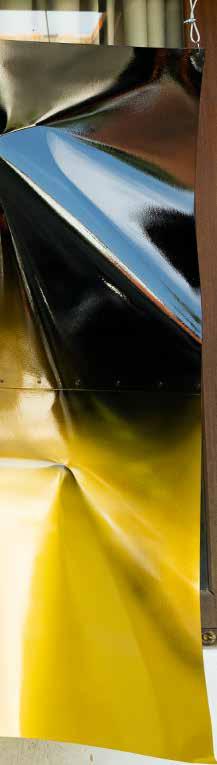
dijanjikan, tetapi tidak pernah menjadi nyata. Ia dikenal lewat karya-karya yang mengolah estetika retrofuturisme dan meminjam bahasa visual era Space Age antara 1940–1980-an seperti piring terbang, roket, satelit, logam berkilau, dan bentukbentuk geometris. Namun, di balik kesan optimistik dan futuristik, karya Nurrachmat memuat kegelisahan yang dalam. Ia menulis, “Yesterday’s tomorrow is still the future.” Kalimat itu merangkum posisinya sebagai seniman dari dunia bekas jajahan yang hidup di tengah janji-janji modernitas yang tak terpenuhi.
Latar belakang pendidikan seni cetak grafis membuat Widyasena akrab dengan proses reproduksi dan pencetakan, yang menyaran suatu metafora tentang bagaimana ide-ide modernitas disebarkan dan diulang. Dalam karya-karyanya, ia mencetak kembali mimpi-mimpi lama tentang kemajuan: pesawat luar angkasa, mobil terbang, dan gedung-gedung futuristik. Akan tetapi, ia menyajikannya dengan nada ironis, yakni dengan warna logam yang memudar, teks-teks propaganda yang mengandung optimisme sekaligus kepasrahan, dan bentuk-bentuk yang penyok tidak sempurna. Ia membayangkan Indonesia bukan sebagai bangsa yang menatap masa depan, tetapi sebagai bangsa yang terus memandangi masa depan dari kejauhan: “near enough to know it well, distant enough to desire it still.”
Melalui pendekatan ini, Widyasena membicarakan Indonesia sebagai negara pascakolonial yang mewarisi logika sains kolonial. Jika di masa Hindia Belanda pengetahuan dipusatkan pada pengaturan alam, maka di masa Orde Baru pengetahuan dipusatkan pada pengaturan masa depan. Negara menjanjikan
Tiba Tanpa Berangkat
modernitas—melalui teknologi dan industri—namun membatasi ruang imajinasi warganya.
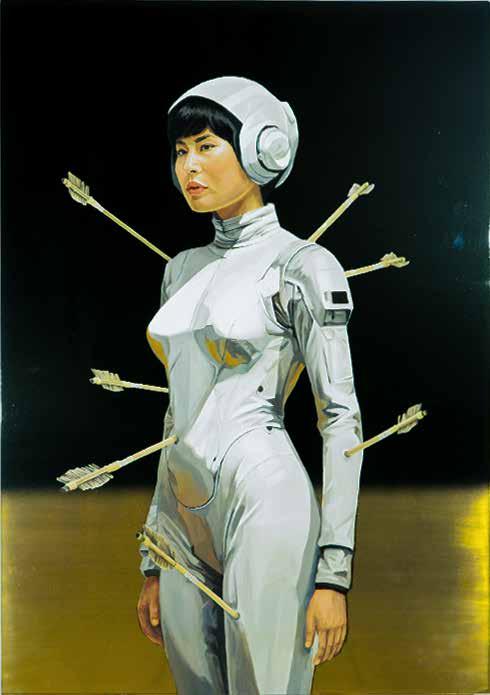
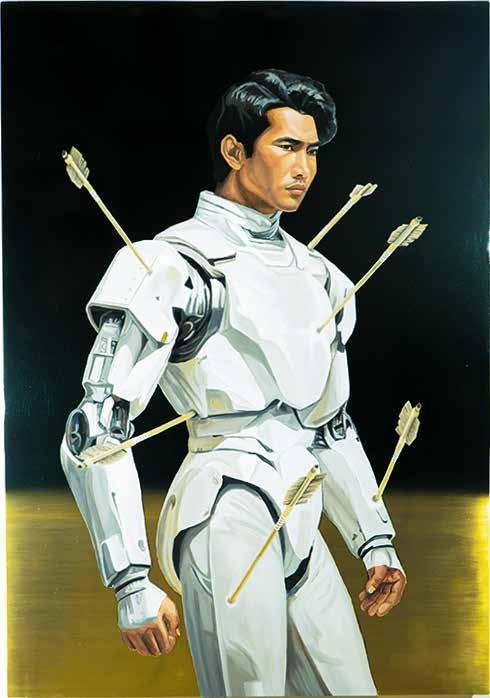
Dalam karya-karya seperti Gold Beneath the Dust dan Fighter Series, Widyasena menampilkan figur-figur pekerja, insinyur, dan mesin dalam suasana absurd. Mereka bekerja keras membangun sesuatu yang tak jelas wujudnya, seperti proyek yang tak pernah selesai. Material logam dan enamel yang ia gunakan mencerminkan daya tarik dan sekaligus keterjebakan kita pada modernitas yang elitis. Ia kuat sekaligus dingin. Ia pun selalu memantulkan cahaya namun sekaligus tidak reflektif. Dengan pendekatan “plesetan”, Widyasena menyatukan elemen-elemen yang tak sepadan satu sama lain. Ia menciptakan citraan yang ambigu: antara ironi dan nostalgia, antara propaganda dan harapan.
Widyasena menyadari bahwa imajinasi teknologi di Indonesia selalu datang dari luar, dibungkus sebagai visi nasionalisme, lalu gagal diwujudkan. Kegelisahan itu ia tangkap dengan humor getir yang dibalut dengan visualisasi grafis yang terkontrol. Di balik rupa yang rapi, ia merenungkan kegagalan kolektif kita untuk membayangkan masa depan sendiri karena ketiadaan otonomi.
Pengetahuan dan Kekuasaan Mancanagara dan Widyasena berangkat dari dua titik sejarah yang berbeda. Mancanagara menggugat penjajahan pengetahuan di masa lalu. Sebaliknya, Widyasena menyoal penjajahan imajinasi di masa kini, bagaimana modernitas global menempatkan Indonesia sebagai penonton, bukan pelaku. Namun, keduanya bertemu dalam satu kesadaran: bahwa produksi pengetahuan di Indonesia selalu berputar dalam
Tiba Tanpa Berangkat
“... keduanya bertemu dalam satu kesadaran: bahwa produksi pengetahuan di Indonesia selalu berputar dalam sebuah lingkaran, selalu menjanjikan
keberangkatan, tetapi terus berputar di tempat yang sama.”
sebuah lingkaran, selalu menjanjikan keberangkatan, tetapi terus berputar di tempat yang sama.
Mancanagara memperlihatkan bagaimana sains kolonial menundukkan alam dan manusia melalui sistem klasifikasi
dan eksploitasi. Widyasena menunjukkan bagaimana negara Indonesia pascakolonial menundukkan imajinasi dengan janji masa depan yang tak kunjung tiba. Di antara keduanya, terbentang waktu yang stagnan, yang melandasi ungkapan tiba tanpa berangkat. Ungkapan ini juga menunjukkan kesinambungan antara masa lalu dan masa depan, yakni pada bagaimana legasi kolonial dari masa lalu menghidupi watak
dan imajinasi Indonesia pascakolonial dalam memproyeksikan masa depan. Sejarawan Andrew Goss dalam bukunya The floracrats: State-sponsored science and the failure of the Enlightenment in Indonesia (2011) mencatat bahwa pada masa kolonial terutama pada abad ke 19, sains dijalankan oleh para floracrats, yakni ilmuwan-birokrat yang di atas kertas bekerja
Tiba Tanpa Berangkat
di bawah panji pencerahan namun kenyataannya terjerat oleh tujuan pragmatis dan administratif (pp. 5–7). Melalui floracrats sains di Hindia Belanda tidak mendasarkan pada kebebasan berpikir, melainkan untuk menata dan menguasai wilayah jajahan. Kebun raya, museum, dan lembaga penelitian menjadi laboratorium kekuasaan sebagaimana diungkapkan oleh karyakarya Mancanagara. Mereka mengklasifikasi tanaman dan manusia, menjadikan pengetahuan sebagai alat kontrol dan eksploitasi. Goss (2011) menyebut proyek sains di Hindia Belanda sebagai kegagalan Pencerahan, yakni sains yang kehilangan jiwa emansipatorisnya karena tunduk pada kepentingan kolonial (pp. 10-12).
Sejarawan Suzanne Moon (2015) menunjukkan bahwa Orde Baru melanjutkan warisan kolonial itu dengan membentuk imajinasi sosioteknis (sociotechnical imaginary) tertentu. Rezim Orde Baru membentuk imajinasi sosioteknis pembangunan yang dikomandoi oleh negara, di mana kemajuan dipahami sebagai proyek teknokratik dari atas. Dengan demikian, imajinasi modernitas— yang termanifestasi pada kemajuan iptek dan sains—diatur dari atas, seragam, terpusat, dan eksklusif. Oleh karena kemajuan selalu dihela melalui proyek teknokratis dari atas, negara Orde Baru pun mensyaratkan tercerabutnya ilmuwan dan intelejensia dari aspirasi politis (pp. 181-183). Kita bisa melihat bahwa rezim Orde Baru melanjutkan watak produksi pengetahuan oleh pemerintah kolonial Hindia Belanda.
Imajinasi sosio-teknik yang terpusat itu diartikulasikan oleh sosiolog teknologi Sulfikar Amir (2013) sebagai “nasionalisme teknologis” yang menjadi keyakinan rezim Orde Baru. Rezim ini melihat kemajuan teknologi sebagai ukuran kemerdekaan bangsa. Para teknokrat menempatkan sains dan teknologi sebagai simbol kedaulatan nasional sekaligus instrumen kontrol
politik. Melalui lembaga seperti Badan Pengkajian dan Penerapan Teknologi (BPPT), Industri Pesawat Terbang Nusantara (IPTN), dan Badan Tenaga Nuklir Nasional (BATAN), negara membentuk kelas baru ilmuwan dan insinyur yang setia terhadap negara dan ideologi pembangunan. Sulfikar Amir menyebut hal ini sebagai bentuk nasionalisme teknologis yang menganggap kemajuan teknologi sebagai simbol moral patriotisme. Namun bagi Widyasena, gagasan ini menyimpan paradoks: teknologi hanya menjadi mimpi negara yang dimiliki segelintir elit, bukan pengalaman yang hidup di tengah publik. Seperti floracrat kolonial, mereka tidak menempatkan khalayak sebagai penerima manfaat utama dalam produksi pengetahuan dan penemuan,
Tiba Tanpa Berangkat
“Keduanya menyingkap kesinambungan antara kolonialisme dan Pembangunan. Keduanya menjadikan pengetahuan sebagai alat kontrol, bukan pembebasan.”
melainkan untuk penguasa demi menegakkan ketertiban dan stabilitas.
Kekaryaan Mancanagara dan Widyasena dapat dibaca dari sebagai perspektif kritis atas sejarah produksi pengetahuan di Indonesia. Mancanagara menelusuri akar kolonial pengetahuan, yakni bagaimana klasifikasi ilmiah mengubah hubungan manusia dan alam. Widyasena menatap langit-langit pascakolonial, yakni bagaimana teknologi dijadikan simbol kemajuan yang tak kunjung terwujud. Keduanya menyingkap kesinambungan antara kolonialisme dan Pembangunan. Keduanya menjadikan pengetahuan sebagai alat kontrol, bukan pembebasan.
Lepas dari Belenggu
Tiba Tanpa Berangkat menghadirkan seni sebagai cara untuk menafsir ulang hubungan antara pengetahuan, kekuasaan, dan imajinasi. Karya-karya Mancanagara dan Widyasena menunjukkan bahwa kolonialisme tidak pernah sepenuhnya berakhir. Ia bertransformasi menjadi struktur rasionalitas yang membatasi cara kita berpikir tentang kemajuan.
Seni rupa kontemporer, dalam konteks ini, menjadi ruang dekolonial, bukan untuk melupakan, tetapi untuk memulihkan imajinasi yang telah lama disandera oleh kekuasaan. Pameran ini mengajak kita memikirkan ulang arti kemajuan: bukan sekadar bergerak ke depan, tetapi juga memahami dari mana
kita berangkat, dan mengapa langkah itu sering kali berhenti di tengah jalan.
Tiba Tanpa Berangkat
Daftar Pustaka
Amir, S. (2013). The technological state in Indonesia: The coconstitution of high technology and authoritarian politics. Routledge.
Goss, A. (2011). The floracrats: State-sponsored science and the failure of the Enlightenment in Indonesia. University of Wisconsin Press.
Moon, S. (2015). Building from the outside in: Sociotechnical imaginaries and civil society in New Order Indonesia. In S. Jasanoff & S.-H. Kim (Eds.), Dreamscapes of modernity: Sociotechnical imaginaries and the fabrication of power (pp. 148–173). University of Chicago Press.
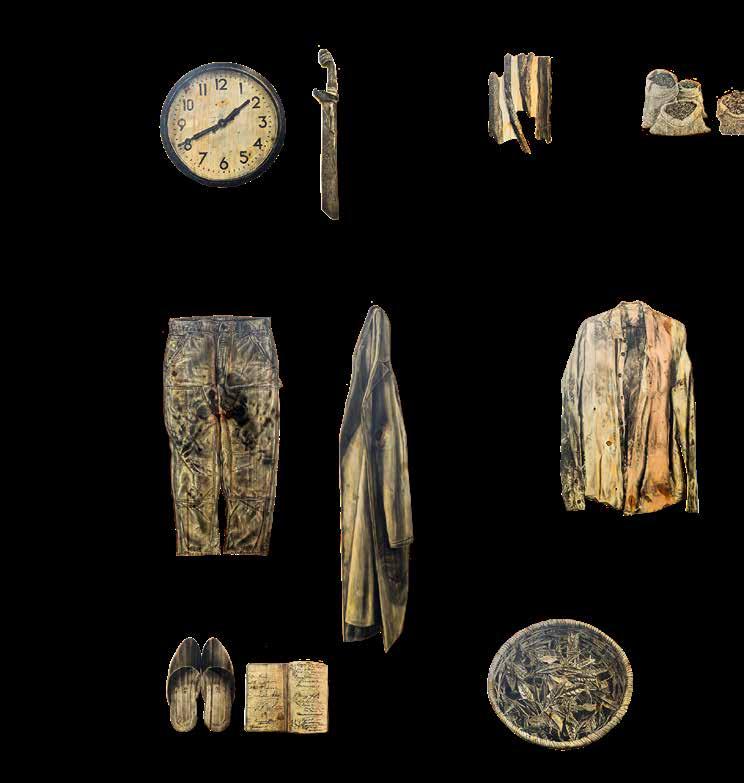
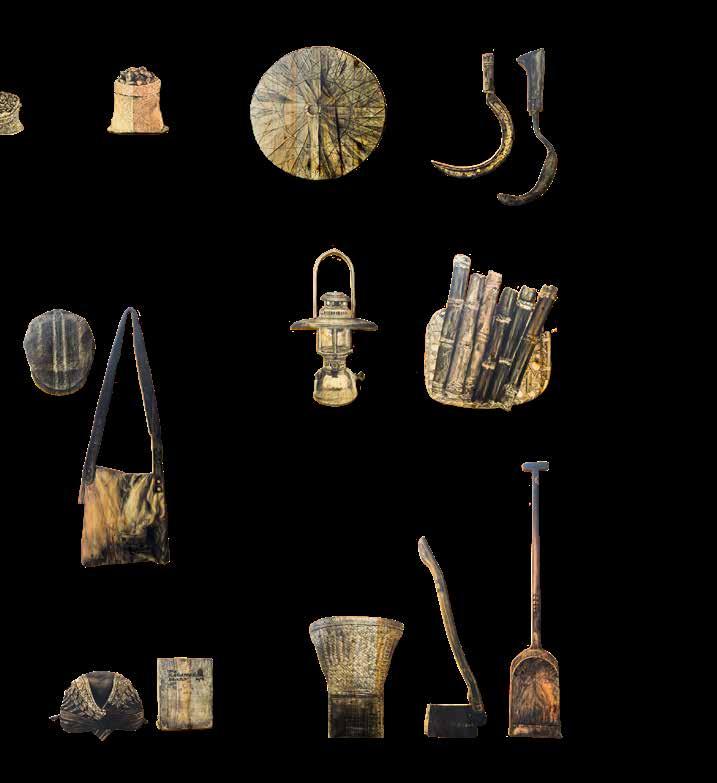
Cultured Minds, Cultivated Fields
Charcoal on wood
250 x 390 x 5 cm (configuration)
2025
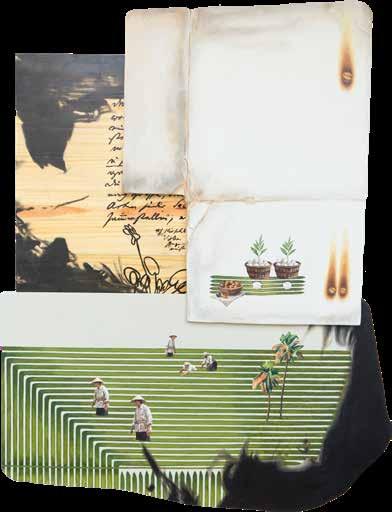
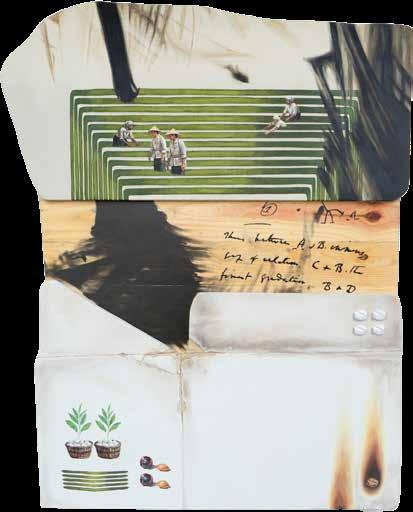
133 x 150 x 25
2025

Apostles of Enlightment #6
Acrylic painting on canvas, charcoal on wood
133 x 150 x 25 cm
2025





Tiba Tanpa Berangkat
Arriving without
Departing
by Chabib Duta Hapsoro
The history of knowledge production in Indonesia reveals a hierarchical relationship between subject and object: those in power produce and claim knowledge, while others are rendered as its source and simultaneously as the exploited. From the colonial era to the New Order, from the establishment of botanical gardens to state research institutions in the postcolonial period, knowledge was never produced in a neutral space. It was generated and disseminated within structures of power that shaped how we understand nature, science, technology, and the future.
The exhibition Tiba tanpa Berangkat (Arriving without Departing) departs from this awareness—that knowledge in Indonesia has always been shaped by the interrelations between science, the state, and imagination. The title refers to a paradoxical condition that has long shadowed the history of knowledge production in this country: we seem to have arrived at the promised future without ever truly departing from the lingering past.
The works of Maharani Mancanagara and Nurrachmat Widyasena reveal two interwoven temporal directions.
Tiba Tanpa Berangkat
Mancanagara traces the colonial roots of knowledge, while Widyasena looks toward the ever-delayed horizon of the future.
From the beginning of her artistic career, Mancanagara has been deeply concerned with history, archives, and memories erased from dominant narratives. Through works such as Susur Leluri (2021) and Testimonial Objects (2023), she examines personal documents, memorabilia, and family archives to uncover layers of history neglected by nationalist narratives. In these works, history is not presented as a linear and triumphant chronology but as an emotional experience marked by loss, pain, and healing.
In recent years, Mancanagara has expanded her reflection from personal to colonial archives, particularly through the series Floracrats (2024–2025). She investigates the colonial history of botany in the Netherlands East Indies, where scientific pursuit grew hand in hand with conquest. The Bogor Botanical Gardens, often regarded as a symbol of scientific progress, in her view, is a space where tropical nature was domesticated and turned into an economic machine. In works such as Apostles of Enlightenment and Silent Cultivation, Mancanagara portrays how colonial science exploited plants like coffee, quinine, and indigo as both commodities and moral symbols of European modernity.
Using wood, which recalling plantation commodities, as well as charcoal, she evokes residues of burning and traces of time. In her hands, charcoal becomes a historical material: a manifestation of colonial power that continues to burn and blacken memory. She also presents fragmented images of plants, recalling specimen illustrations, where they were classified and
“... Mancanagara has been deeply concerned with history, archives, and memories erased from dominant narratives.”
Tiba Tanpa Berangkat
catalogued. Mancanagara reflects on how modern science continues to inherit this epistemic framework, one that measures, orders, and dominates. Her works speak to how colonial botanical knowledge continues to shape our perception of nature today.
Interestingly, Mancanagara’s practice borrows the procedures and language of science, namely documentation, taxonomy, and cataloguing, while deliberately subverting their functions. Her works resemble laboratory experiments, yet their results blur the boundaries between human and plant, science and myth, objectivity and emotion. Here, she presents knowledge and memory as inseparable from the body and lived experience. Through art, she seeks to restore relations that embrace memories long subjugated by systems of power.
These works continue the spirit of Testimonial Objects, which challenged the museum as a space that glorifies heroic and
Tiba Tanpa Berangkat
“... Widyasena works with images of futures that were promised but never realized..”
triumphant historical narratives. In this exhibition, Mancanagara shifts her focus from museum objects to the botanical garden, from collections to living landscapes. She treats nature not as an object of knowledge but as a subject that bears the traumas of colonial history.
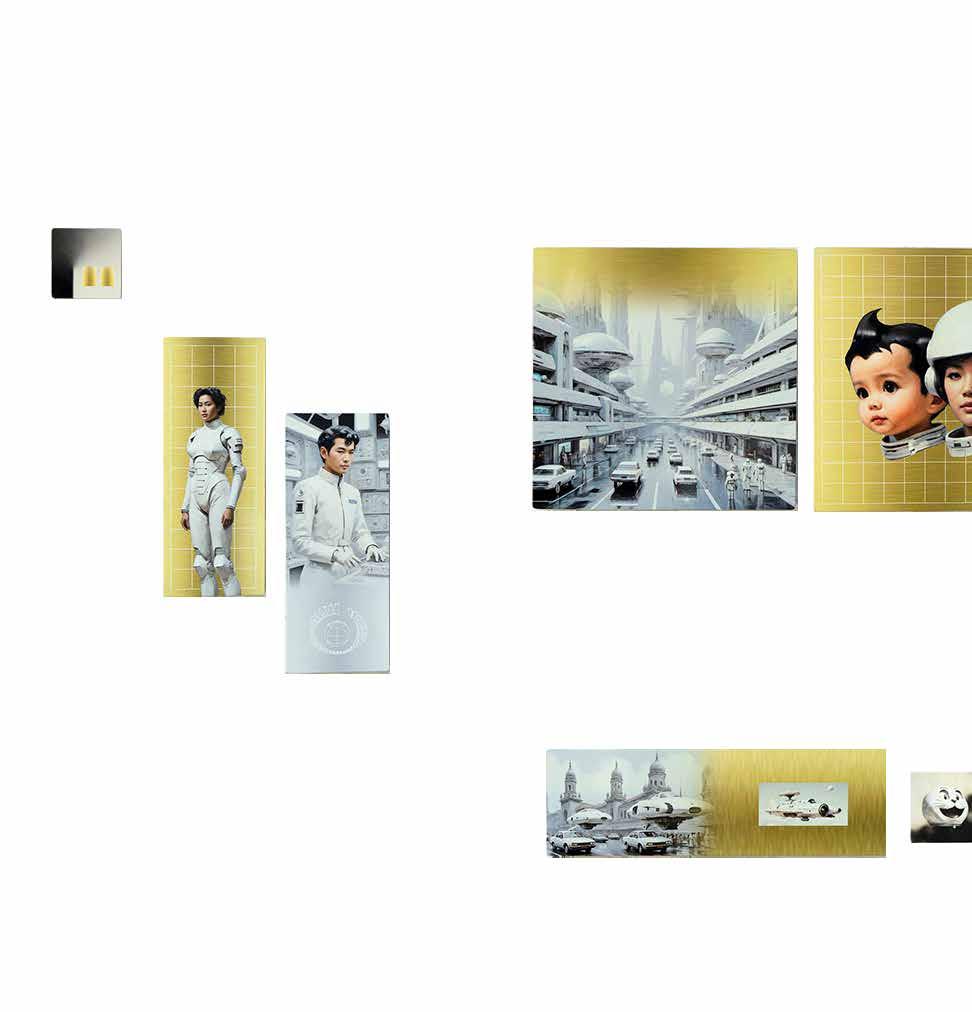
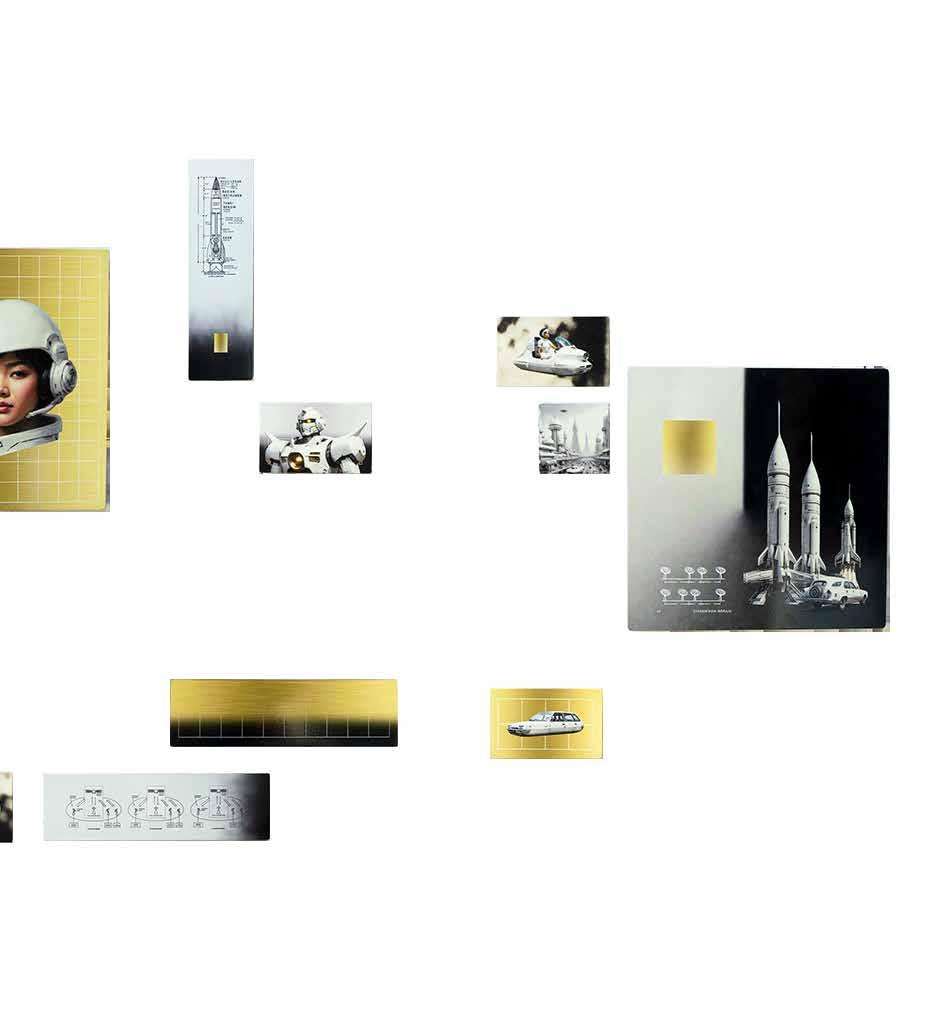
Unlike Mancanagara, who investigates the past, Widyasena works with images of futures that were promised but never realized. Known for his use of retrofuturist aesthetics, he draws from the visual language of the Space Age between the 1940s and 1980s, such as flying saucers, rockets, satellites, metallic sheen, and geometric forms. Beneath their optimism lies deep unease. “Yesterday’s tomorrow is still the future,” he writes, encapsulating his position as an artist from the postcolonial world living amid unfulfilled promises of modernity.
Trained in printmaking, Widyasena is familiar with reproduction processes that serve as a metaphor for how modern ideas are reproduced and disseminated. His works reprint old dreams of progress like spaceships, flying cars, futuristic architecture, yet with irony: faded metallic colors, propagandistic texts filled with both optimism and resignation, and imperfect, dented forms. He imagines Indonesia not as a nation looking forward but one perpetually gazing at the future from afar like he said, “near enough to know it well, distant enough to desire it still.”
Through this approach, Widyasena reveals how Indonesia, as a postcolonial nation, inherited the colonial logic of science. If colonial knowledge was organized around controlling nature, the New Order organized knowledge around controlling the future. The state promised modernity—through technology and industry—while restricting its citizens’ capacity to imagine.
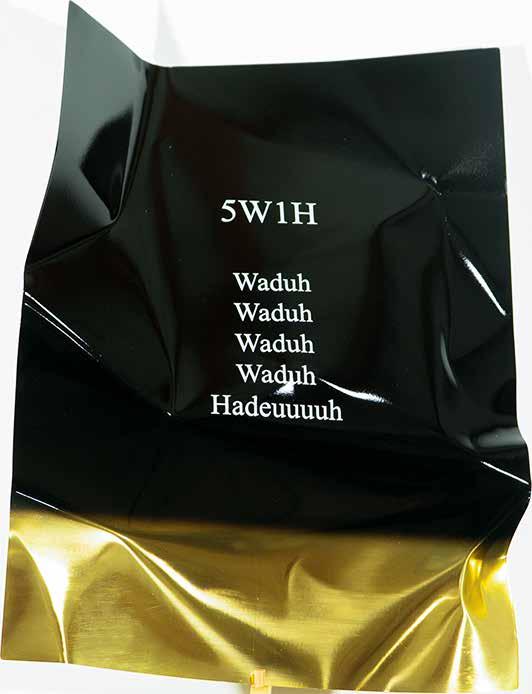
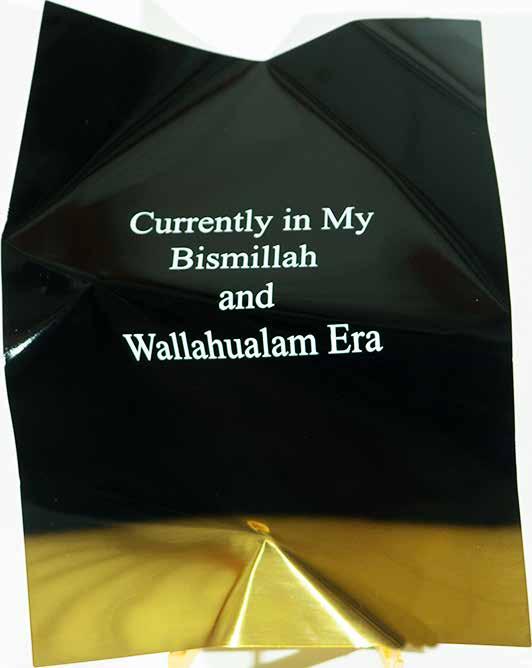
In works such as Gold Beneath the Dust and Fighter Series, Widyasena depicts workers, engineers, and machines in absurd situations. They labor endlessly to build something whose form remains undefined, like a project that never reaches completion. The metallic and enamel materials he employs reflect both our fascination with and entrapment in elitist modernity: strong yet cold, reflective yet unreflective. Through a strategy of playful distortion, Widyasena combines incongruent elements to produce ambiguous imagery, between irony and nostalgia, propaganda and hope.
Widyasena recognizes that Indonesia’s technological imagination has always arrived from elsewhere, packaged as a vision of nationalism yet failing to materialize. He captures this disquiet through a restrained, graphic visual language laced with bitter humor. Beneath the polished surfaces of his works lies a
Tiba Tanpa Berangkat
Tiba Tanpa Berangkat
reflection on our collective failure to imagine our own future. A failure born from the loss of autonomy.
Mancanagara and Widyasena depart from two distinct historical points. Mancanagara interrogates the colonization of knowledge in the past, while Widyasena addresses the colonization of imagination in the present; how global modernity positions Indonesia as a spectator rather than an actor. Yet both share the same awareness: that knowledge production in Indonesia moves in a perpetual loop, forever promising departure, yet remaining in the same place.
Mancanagara reveals how colonial science subdued both nature and human beings through systems of classification and exploitation. Widyasena, on the other hand, exposes how postcolonial Indonesia subjugated imagination through endless promises of a future that never arrives. Between them stretches a stagnant temporality—one that underlies the phrase arriving without departing. This phrase captures the continuity between past and future, showing how colonial legacies continue to shape the character and imagination of postcolonial Indonesia in envisioning its own future.
Historian Andrew Goss, in The Floracrats: State-Sponsored Science and the Failure of the Enlightenment in Indonesia(2011), notes that in the 19th century, science in the Dutch East Indies was carried out by floracrats, bureaucratic scientists who, while nominally working under the banner of Enlightenment, were in fact constrained by pragmatic and administrative aims (pp. 5–7). Through these floracrats, colonial science did not advance intellectual freedom but served to organize and control the
Tiba Tanpa Berangkat
“Yet both share the same awareness: that knowledge production in Indonesia moves in a perpetual loop, forever promising departure, yet remaining in the same place.”
colonies. Botanical gardens, museums, and research institutes became laboratories of power, as reflected in Mancanagara’s works. They classified both plants and people, turning knowledge into an instrument of control and exploitation. Goss (2011) calls this a “failure of the Enlightenment”, a science that lost its emancipatory spirit by submitting to colonial interests (pp. 10–12).
Historian Suzanne Moon (2015) argues that the New Order continued this colonial legacy by constructing a particular sociotechnical imaginary of state-led development, in which progress was understood as a top-down technocratic project. Modernity, which manifested through the rhetoric of science and technology, was centrally planned, uniform, and exclusive. Because progress was always directed from above, the New Order’s model of knowledge production demanded that scientists and intellectuals detach themselves from political aspiration (pp. 181–183). In this sense, the regime perpetuated
Tiba Tanpa Berangkat
the same character of state-managed knowledge inherited from the Dutch colonial government.
This centralized sociotechnical imagination has been articulated by sociologist Sulfikar Amir (2013) as technological nationalism— the belief, embraced by the New Order regime, that technological advancement signified national independence. The regime’s technocrats positioned science and technology as both symbols of sovereignty and instruments of political control. Through institutions such as the Agency for the Assessment and Application of Technology (BPPT), the Indonesian Aerospace Industry (IPTN), and the National Nuclear Energy Agency (BATAN), the state created a new group of scientists and engineers loyal to the state and its ideology of development. Amir describes this as a form of technological nationalism that equates technological progress with moral patriotism. Yet, as Widyasena suggests, this vision carries a paradox: technology became a dream possessed by the elite few, not a lived experience shared by the public. Like the colonial floracrats, they did not situate the public as the main beneficiaries of knowledge and invention, but as subjects governed in the name of order and stability.
The practices of Mancanagara and Widyasena can thus be read as critical reflections on the history of knowledge production in Indonesia. Mancanagara traces the colonial roots of scientific knowledge, how systems of classification reshaped the relationship between humans and nature. Widyasena, meanwhile, gazes at the postcolonial ceiling, showing how technology has become an unfulfilled emblem of progress. Both expose the continuity between colonialism and development: in
both, knowledge serves as an instrument of control rather than liberation.
Tiba tanpa Berangkat presents art as a means to reinterpret the intertwined relations between knowledge, power, and imagination. The works of Mancanagara and Widyasena reveal that colonialism has never fully ended; it has transformed into a structure of rationality that continues to constrain how we think about progress.
In this context, contemporary art becomes a decolonial space, not to forget, but to restore imagination long held captive by systems of power. This exhibition invites us to reconsider the meaning of progress: not merely as a forward movement, but as an act of understanding where we come from, and why our steps so often falter along the way.
Tiba Tanpa Berangkat
References
Amir, S. (2013). The technological state in Indonesia: The coconstitution of high technology and authoritarian politics. Routledge.
Goss, A. (2011). The floracrats: State-sponsored science and the failure of the Enlightenment in Indonesia. University of Wisconsin Press.
Moon, S. (2015). Building from the outside in: Sociotechnical imaginaries and civil society in New Order Indonesia. In S. Jasanoff & S.-H. Kim (Eds.), Dreamscapes of modernity: Sociotechnical imaginaries and the fabrication of power (pp. 148–173). University of Chicago Press.

You Promised Me The Future Enamel paint on stainless steel
133 x 150 x 25 cm
2025
78 x 40 x 6 cm 2025

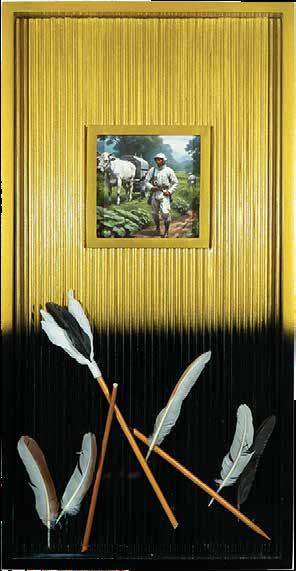
78
2025
200 x 147 x 4 cm
2025

Acrylic paint on brass, arrows
70 x 100 x 5 cm
2025
In Search of a Nation To Be #2
Variable dimensions
Digital print on alumunium
2025

Installation of radio, found objects, wood, metal & audio conversation
36 x 31 x 33 cm - Duration 30 minutes
2025
161 x 131 x 5 cm
2025
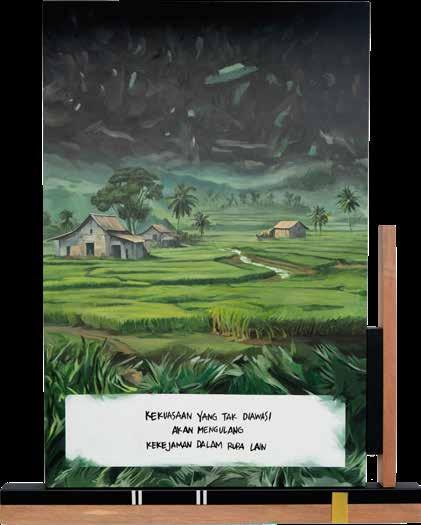
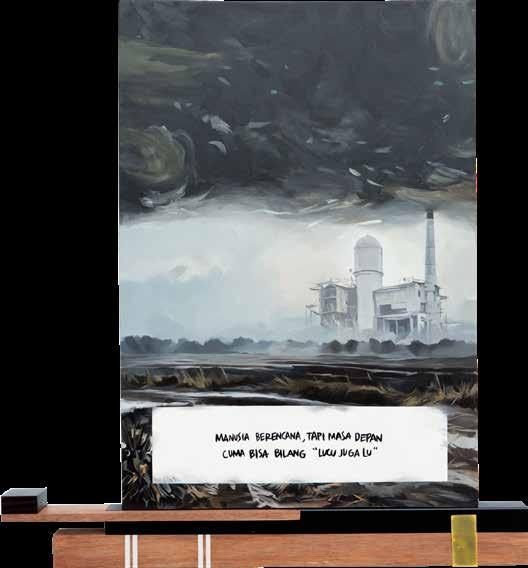
2025

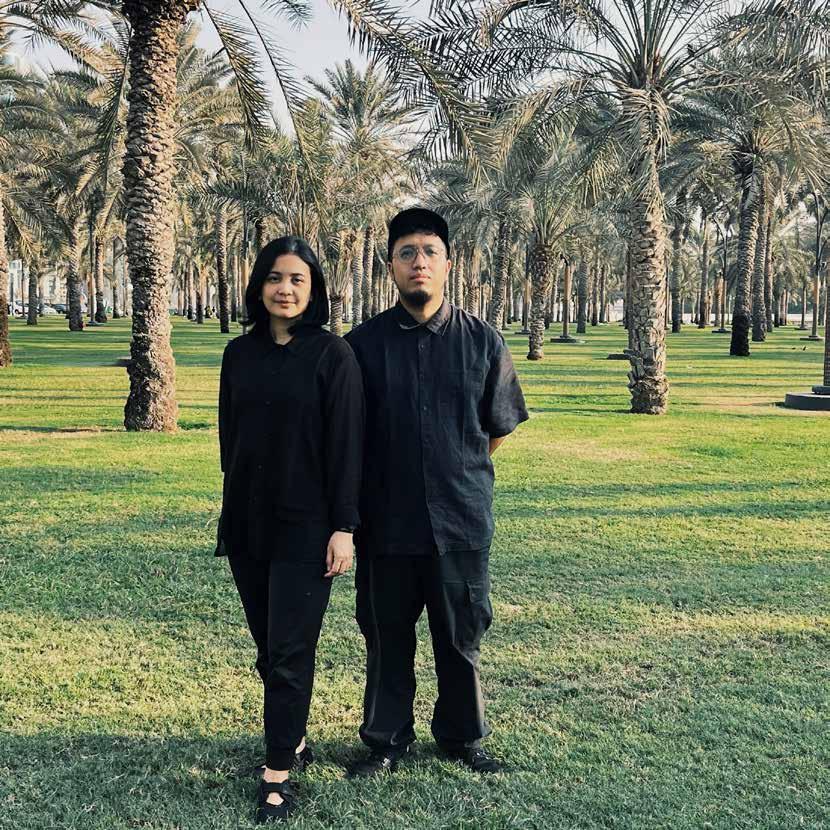

Maharani Mancanagara (b. 1990) was born in Padang, West Sumatra (Indonesia). Her work reflects on and reinterprets Indonesia’s complex and sometimes sensitive issues of modern sociopolitical and cultural history through fictional storytelling. She studied printmaking at the Institut Teknologi Bandung, where she began to utilize drawing, print, painting and installation often time on used wood surfaces.
Drawing on her personal family experiences of relocation and aggression in Indonesia prior to independence, Maharani's work refers to and develops conversation about the condition of social equality, investigating its political and social complexity via the study of form and materiality. Maharani’s interest towards history began when she discovered her grandfather’s diary, which led her into a journey of intertwining a plethora of personal histories that reflect larger socio-political dynamics of 20th century Indonesia. In her study, she frequently met compelling personal narratives, often imbued with the source’s own subjectivity, which offers an alternative view towards documented history as well as revealing its complex layers.
She has held solo and group exhibitions in Indonesia, Taiwan, Thailand, Australia, Malaysia, Philippines, Singapore, South Korea, Taiwan, Thailand and United Arab Emirates. She is currently lives in Bandung, Indonesia.
Collection
Museum and Art Gallery of the Northern Territory (MAGNT), Darwin – Australia
Residency
2025 De Lapae Art Space, NarathiwatThailand
2024 Pier-2 Art Center Artist in Residence, Kaohsiung – Taiwan
2024 Indian Ocean Triennial Australia, Fremantle Arts Centre, FremantleAustralia
2022 Devfto Printmaking Institute, BaliIndonesia
Solo Exhibitions
2025 On the Edge I See Yellow, Warin Lab, Bangkok - Thailand
2024 Silent Accolades, Pier-2 Art Center, Kaohsiung - Taiwan
2023 Testimonial Objects, Warin Lab at Art Jakarta, Jakarta - Indonesia
2018 Zero Sum Game, Galeri Soemardja, Bandung – Indonesia
2017 Parodi Partikelir, Visma Gallery, Surabaya - Indonesia
Selected Group Exhibitions
2025 World Stage Design Sharjah – Scenofest, Sharjah, United Arab Emirates
Distribusi Distorsi, Abraham & Smith, Bandung, Indonesia
Continuum 25th Anniversary of CAN’s Gallery – Bentara Budaya Art Gallery, Jakarta - Indonesia
Alternate Reality, Whitestone Gallery
Taipei - Taiwan
Individual Memory of Narathat, Paktai
Design Week, Songkhla - Thailand
Beyond Unsettled Pasts, Erasmus Huis, Jakarta - Indonesia
Artjog : Motif Amalan, Jogja National Museum Yogyakarta – Indonesia
Salon Et Cetera, Ace House Collective, Yogyakarta - Indonesia
Tengara, Ning Art Space, Yogyakarta -
Indonesia
The 2025 Sovereign Asian Art Prize, Phillps Auction – Hong Kong
15x15x15 : Manipulasi Batas, Galeri
Soemardja, Bandung – Indonesia
Art SG Whitestone Gallery, Singapore
Stockroom by Stockroom Bar, Ruci Art Space, Jakarta – Indonesia
Art Ono, Baik Art, Seoul - South Korea
Marka / Matriks, Komunitas Salihara, Jakarta – Indonesia
Nature, Everyday Life and Glimplses of the Past, Gajah Gallery, Singapore
2024 By Hand : In The Fringe Exhibition, Hybridium Space, Bandung - Indonesia
Bandung Painting Today, Grey Art Gallery, Bandung - Indonesia
Beyond Elasticity : Rubber and Materilaity, Jagad Gallery, Jakarta – Indonesia
Salon Et Cetera, Ace House Collective, Yogyakarta - Indonesia
Indian Ocean Triennial Australia : Codes in Parallel, Fremantle Art Centre, Fremantle – Australia
Nonalog, Baik Art, Jakarta – Indonesia
Bandung Contemporary Art Awards #8, Lawangwangi Creative Space, Bandung –Indonesia
Art Subs, Posbloc, Surabaya – Indonesia
Rundiang Si Kalingkiang, Alek Mandeh : Matrilineal Festival, traditional village of Sijunjung, Padang – Indonesia
Alternate reality, New Art Museum
Singapore by Whitestone Gallery, Singapore
2023 Sharjah Biennial 15 : Think Historically in Present, Khorfakkan Art Centre, Sharjah, United Arab Emirates
Intentions in Manifold Dimensions, Gallery
Ruang Dini, Bandung – Indonesia
The Mirror of Print, Lawangwangi
Creative Space, Bandung- Indonesia
Body, Community, Society : She is House, 333 Gallery, Bangkok – Thailand
Continuum, TEKA Showroom, Jakarta –
Indonesia
Bhineka Tunggak Ika, Eclipse Art Project at Bentara Budaya Jakarta, JakartaIndonesia
Geopoetics : Changing Nature of Threatened Worlds, National Taiwan
Museum of Fine Arts, Taichung – Taiwan
The Body of Works, Parq Art Space, BaliIndonesia
2022 Reverberation: From the Past to the Present, ISA Art & Design, Jakarta –Indonesia
Seni Baru : New Art from Bali & Bandung, 16thAlbermarle Project Space, Sydney –Australia
Tacit, duo exhibition, Artsphere Gallery, Jakarta – Indonesia
To Each Their Own, Cheongju Museum of Art, Cheongju – South Korea
Titicara, Selasar Sunaryo Art Space, Bandung – Indonesia
Distrik Seni : Berkelanjutan!, Sarinah, Jakarta – Indonesia
Our Grandfather Road, 16th Albermarle, Sydney – Australia
Paperwork 1 : Universality, Artsphere Gallery, Jakarta - Indonesia
Across The Time, Cans Gallery, JakartaIndonesia
2021 Stories Across Rising Lands, Museum
MACAN, Jakarta – Indonesia
HBdM Exhibition, Ciputra Artpreneur, Jakarta – Indonesia
#Perempuan2021, Castlemaine Art Museum, Victoria - Australia
Influx : Extended, Ruang Dini, BandungIndonesia
Sensing Sensation, Semarang Gallery, Semarang – Indonesia
Jakarta Biennale : Esok, Museum
Kebangkitan Nasional, Jakarta –
Indonesia
2020 Axis by Praxis : Global Wave, G13 Gallery, Kuala Lumpur – Malaysia
Seni Rupa Kontemporer?, Sakarsa Art Space, Jakarta – Indonesia
Indonesia Calling, 16th Albermarle,
Sydney - Australia
2019 Letter – Callus – Post War, Lorong Gallery, Yogyakarta – Indonesia
Termasuk, Darren Knight Gallery, Sydney – Australia
Indonesian Women Artists : Into The Future, National Gallery Indonesia, Jakarta – Indonesia
Bandung Contemporary Art Award : Assemblage, Lawangwangi Creative Space, Bandung – Indonesia
I....Therefore I Am, Cans Gallery, Jakarta – Indonesia
Letter – Callus – Post War, Kuandu Museum of Fine Arts, Taipei – Taiwan
Retrospect.Repose.Redefine, dia.lo.gue artspace, Jakarta – Indonesia
Over Here : Specific Moment, OverLab, Gwangju – South Korea
Art Bali : Speculative Memories, ABBC Building, Bali - Indonesia
2018 Manifesto 6.0 : Multipolar, National Gallery Indonesia, Jakarta – Indonesia
Bukan Perawan Maria, Bandung Creative Hub, Bandung – Indonesia
SSAS.AS.IDEAS Selasar Sunaryo Art Space, Bandung - Indonesia
Java!, Institut des Cultures d’Islam, Paris – France
Biennale Jateng #2 – The Future of History, Semarang Contemporary Art Gallery, Semarang - Indonesia
Tapak Jejak Langkah Jelajah – Pameran
Besar Seni Grafis ITB, Galeri Soemardja, Bandung – Indonesia
Art Unlimited : XYZ – Gedung Gas
Negara, Bandung – Indonesia
Celebration of The Future – AB.BC
Building Art Bali, Bali – Indonesia
2017 Kaya Kayu : Care of Wood, Tha Space
The Parlor, Bandung – Indonesia
Bandung Drawing Festival, NuArt
Sculpture Park, Bandung – Indonesia
Mereka - reka, Galeri Lorong, Yogyakarta – Indonesia
Kecil Itu Indah #15, Edwin’s Gallery,
Jakarta – Indonesia
Re:Emergence, Selasar Sunaryo Art
Space, Bandung – Indonesia
Equidistant Night, Provenance Gallery, Manila – Philippines
X, Orange Gallery, Bacolod – Philippines
What You Wear is (Not) What You Are, You Are (Not) What You Wear, The Warehouse, Jakarta – Indonesia
Infamy, Pinto Art Museum, AntipoloPhillippines
2016 Historia Docet, Historia Vitae Magistra, D
Gallerie, Jakarta-Indonesia
A.S.A.P, G13 Gallery, Kuala Lumpur –
Malaysia
Redraw II : Discovery, Edwin’s Gallery, Jakarta – Indonesia
Constituent Concreteness, Mizuma
Gallery, Singapore
Kolektif Kolegial, Cemeti Art House, Yogyakarta – Indonesia
Kecil Itu Indah, Edwin’s Gallery, Jakarta –Indonesia
2015 Aku Diponegoro, National Gallery, Jakarta-Indonesia
Contemporary Alternative, Ar+otel, Jakarta-Indonesia
Connection, Commemorative 60th years of Asian African Conference, Rumah Seni Sarasvati, Bandung-Indonesia
Void, Langgeng Gallery, MagelangIndonesia
Artmoments Jogja, Jogja National Museum, Jogjakarta-Indonesia
Langkah Kepalang Dekolonisasi, National Gallery Indonesia, Jakarta – Indonesia
Art Sneakers by Bazaar Art Jakarta
Pacific Place, Jakarta – Indonesia
Pameran Gagasan : Getok Tular Omni
Space, Bandung – Indonesia
Bardo, Edwin’s Gallery, Jakarta –Indonesia
New Future, Art1 New Museum, Jakarta –Indonesia
Friend’s and Family, ROH Projects, Jakarta – Indonesia
Gudang Garam Indonesia Art AwardRespublica, Galeri Nasional, Jakarta
Bandung Contemporary Art Award #4, Lawangwangi Creative Space, Bandung –Indonesia
Jerman Fest :Market Share, Pameran Seni di Pasar Tebet Timur Jakarta – Indonesia
SHOUT! Mapping Melbourne 2015, Melbourne - Australia
Selected Honors & Awards
2025
Finalist, The Sovereign Asian Art Prize, Hong Kong
2024 Finalist, Bandung Contemporary Art Award #8, Lawangwangi Creative Space, Bandung - Indonesia
2015 Finalist, Gudang Garam - Indonesia Art Award, Yayasan Seni Rupa Indonesia, Galeri Nasional, Jakarta – Indonesia
Finalist, Bandung Contemporary Art Award #4, Lawangwangi Creative Space, Bandung - Indonesia
2014 Finalist, BEXCO Young Artist Award, Art Show Busan,Busan – South Korea
2013 Finalist, Gudang Garam - Indonesia Art Award, Yayasan Seni Rupa Indonesia, Galeri Nasional, Jakarta – Indonesia 1st Prize, Soemardja Award, Galeri Soemardja, Bandung - Indonesia

Nurrachmat Widyasena (b. 1990), known as Mas Ito, is an Indonesian artist based in Bandung. A graduate of ITB’s Faculty of Art and Design in printmaking, Mas Ito explores retro-futurism by standing at the intersection of reality and fantasy. Positioning himself as a stupid third-world Asian, he humorously reflects on forgotten Space Age ideals and utopian dreams, using low-tech methods to critique Indonesia’s technological aspirations. His work—through painting, installation, metal plates, wood, and found objects—reconstructs sci-fi visions with satire and simplicity. While futuristic in theme, Mas Ito’s practice comments on the cultural and political ambitions that shaped the Space Age and its global dream for a better future. Mas Ito is also the co-founder of a geeky fashion brand known as KITC, continuing his exploration of pop culture and identity beyond the white cube.

Work
2014- Now CEO of PT Besok Jaya
2014 – Now Director & Founder of KITC
2017 – 2019 Designer, Selasar Sunaryo Art Space
Education & Workshop
2008 Faculty of Art & Design, majoring in Printmaking Studio, Bandung Institute of Technology
2011 Image On Photographic Print Workshop – Festival Grafis Berseni, Lawangwangi, Bandung,Indonesia
Spit Bite Etching Workshop – Singapore
Tyler Print Institute, Singapore
Residency
2013 Nafas Residency, Yogyakarta, Indonesia
2018 Bluecoat Artist Residency, Liverpool, United Kingdom
2024 Pier 2 Artist Residency, Kaohsiung, Taiwan
2024 Indian Ocean Craft Triennale, Perth, Australia
2025 Koganecho Artist in Residence, Yokohama, Japan
Award
2021 Winner – Young Artist Award, Art Jog MMXXI Time (to) Wonder, Yogyakarta, Indonesia
2017 Finalist – 32 Art Award, Gudang Sarinah, Jakarta, Indonesia
2015 Special Mention – Bandung Contemporary Art Award #4, Lawangwangi Creative Space, Bandung, Indonesia
2013 Finalist - Young Artist Award, Art | Jog | 13, Bentara Budaya Selatan, Yogyakarta, Indonesia
Finalist - Soemardja Award, Soemardja
Award, Galeri Soemardja, Bandung, Indonesia
Solo Exhibition
2019 Nostaljik Kritik : Operasi Taimket, Solo Exhibition, Ruci Art, Jakarta, Indonesia
After Einstein Rosen Bridge, Solo Presentation, The Bluecoat, Liverpool, United Kingdom
2014 Young Artist Discovery, Art Taipei 2014, Solo Presentation, Taipei World Trade Center, Taipei, Taiwan
2013 Patriotic Myth of Space Age, Bandung Contemporary, Solo Exhibition, Kamones Gallery & Workshop, Bandung, Indonesia
Selected Group Exhibition
2025 Scenofest World Stage Design Sharjah, Sharjah, United Arab Emirates
Continuum 25th Anniversary of CAN’s Gallery, Bentara Budaya Art Gallery, Jakarta, Indonesia
Art Jakarta, JI Expo, Jakarta, Indonesia
Koganecho Bazaar and Kamiooka Bazaar, Yokohama, Japan
Distribusi Distorsi, Abraham & Smith, Bandung, Indonesia
Alternate Reality, Whitestone Gallery, Taipei, Taiwan
Art Borneo : Baladingan, Dekranasda, West Kalimantan, Indonesia
Salon Et Cetera, Ace House Gallery, Yogyakarta, Indonesia
15x15x15 Mini Art Project, Galeri
Soemardja, Bandung, Indonesia
Art Jakarta Garden, Semarang Gallery, Jakarta, Indonesia
Stockroom Bar, RUCI Art Space, Jakarta, Indonesia
Art SG, Whitestone Gallery, Marina Bay Sands, Singapore
2024 Alternate Reality, New Art Museum by Whitestone Gallery, Singapore
Conversation with NoThings, Basuki
Abdullah Art Award, National Gallery of Indonesia, Jakarta, Indonesia
ArtSubs, Pos Bloc, Surabaya, Indonesia
Art Jakarta, JIE Expo, Jakarta, Indonesia
ArtJog : Motif Ramalan, Jogja National Museum, Yogyakarta, Indonesia
Art Jakarta Garden, Hutan Kota by Pelataran, DGalerie, Jakarta, Indonesia
Abstraction Distinction, Semarang Gallery, Kota Lama, Semarang, Indonesia
Velocity Visions, Can’s Gallery, Range
Rover Plaza Indonesia, Jakarta, Indonesia
Pamerame, Komik Ga Jelas, Public Space Cafe, Bandung, Indonesia
2023 Art Jakarta, JIE Expo, Jakarta, Indonesia
Continum, TEKA Showroom, Alam Sutra, Jakarta, Indonesia
Keuken : Mise en Place, Laswi Heritage, Bandung, Indonesia
Indonesia UFO Fest 2023, Boredoom Project, Yogyakarta, Indonesia
Gelar Grafis Devfto, Langgeng Art Foundation, Yogyakarta, Indonesia
Sub Values, Galeri R.J. Katamsi, Srisasanti, Yogyakarta, Indonesia
Art Jakarta Garden, Hutan Kota by Pelataran, Bale Project, Jakarta, Indonesia
2022 Paper Work : Universality, Artsphere Gallery, Jakarta, Indonesia
Dream Of The Day, Ilham Gallery, Kuala Lumpur, Malaysia
Art Jakarta, Senayan, Jakarta, Indonesia
(F): Space, Time, Movement, Galeri
Semarang, Semarang, Indonesia
Manifesto 2022, Kebangkitan Nasional Museum, Jakarta, Indonesia
Art Jakarta Garden, Hutan Kota by Pelataran, Bale Project, Jakarta, Indonesia
Salone Del Sneakers, C on Temporary, Bandung, Indonesia
Explore The Laminates, Indo Built Tech – CS Laminates, Bale Project, Jakarta, Indonesia
2021 Art Jog MMXXI Time (to) Wonder, Jogja National Museum, Yogyakarta, Indonesia
Art Moments Online, G13 Gallery, Virtual Art Fair, Jakarta, Indonesia
Hidup Berdampingan Dengan Musuh, Virtual Group Exhibition, Ciputra
Artpreneur, Indonesia
2020 OPPO Art Jakarta Virtual 2020, Virtual Art Fair, Indonesia
Contemporary Art?, Sakarsa Art Space, Bekasi, Indonesia
Scope Vol. 1, Online Group Exhibition, Bale Project, Bandung, Indonesia
Cleaning Rag, Group Exhibition, Art Factory FLOX, Kirschau, Germany
Arisan Karya Vol. 2, Charity Show, Museum Macan, Jakarta, Indonesia
Arisan Karya Vol. 1, Charity Show, Museum Macan, Jakarta, Indonesia
Art for Life, Charity Show, Charity Exhibition, Jakarta
Mending Fence : Tales From Isolation, Online Exhibition, G13 Gallery, Malaysia
2019 Out Of Print, Group Exhibition, Selasar Sunaryo, Bandung, Indonesia
Art Bali : Collective Memories, Group Exhibition, AB BC Building, Nusa Dua, Bali, Indonesia
Instrumenta : Machine / Magic, International Media Art Festival, Group Exhibition, Galeri Nasional, Jakarta, Indonesia
Phantom Plane, Cyberpunk in the Year of The Future, Group Exhibition, Tai Kwun
Museum, Central, Hong Kong
Art Jakarta 2019, Art Fair, Jakarta
Convention Center, Senayan, Jakarta, Indonesia
Chromaticity, Can’s Gallery, Jakarta, Indonesia
Art Moments, Art Fair, Sheraton Hotel
Grand Ballroom, Gandaria City, Jakarta, Indonesia
2018 Art Unlimited : XYZ, Gedung Gas Negara, Bandung, Indonesia
Biennale Jawa Tengah #2 : The Future of History, Semarang, Indonesia
SSAS/As/Ideas, Bale Project, Selasar
Sunaryo, Bandung, Indonesia
Bazaar Art Jakarta, Art Fair, Ritz-Carlton
Jakarta, Pacific Place, Jakarta, Indonesia
Manifesto 6.0 : Multipolar, Galeri
Nasional, Jakarta, Indonesia
Axis By Praxis, G13 Gallery, Petaling Jaya, Malaysia
A Small Universe In The Field Of Meaning, Edwin Gallery, Jakarta, Indonesia
2017 Infamy, Pinto Art Museum, Antipolo, Philippines, Indonesia
WHAT YOU WEAR (are not) YOU ARE YOU ARE (not) WHAT YOU WEAR, The Warehouse, Plaza Indonesia, Jakarta, Indonesia
Biennale Jogja XIV Equator #4, Jogja
National Museum, Yogyakarta, Indonesia
Art Expo Malaysia Plus, MATRADE
Exhibition & Convention Center, Kuala Lumpur, Malaysia
X, Orange Gallery, Bacolod, Philippines
Equidistant Night, Provenance Art Gallery, Manila, Philippines
Kecil Itu Indah, Edwin Gallery, Jakarta, Indonesia
Art Stage Jakarta, Bale Project, Grand Sheraton Ballroom, Jakarta, Indonesia
BNE Re:Emergence, Selasar Sunaryo, Bandung, Indonesia
Ace Mart, Ace House, Yogyakarta, Indonesia
The Group Show, Platform 3, Bandung Indonesia
Faux Utopia, Living Lab Vol 1, Greenhost Boutique Hotel, Yogyakarta, Indonesia
Pra-Biennale Jogja XIV Equator #4, PKKH UGM, Yogyakarta, Indonesia
Care of Wood, Kaya Kayu Exhibition, The Space The Parlor, Bandung, Indonesia
2016 Syarikat Dagang Vol 1, Gudang Sarinah, Jakarta, Indonesia
Art Point, Senayan City, Jakarta, Indonesia
Sea+ Triennale 2016, Galeri Nasional, Jakarta, Indonesia
Universe Behind The Door, Artotel, Jakarta, Indonesia
Art Mosphere, Galleries Lafayette, Pacific Place, Jakarta, Indonesia
Pindai/Senarai, Galeri Teras, NuArt
Sculpture Park, Bandung, Indonesia
Bazaar Art Jakarta, Art Fair, Ritz-Carlton Jakarta, Pacific Place, Jakarta, Indonesia
Pintu Rejeki Vol 1, Gudang Sarinah, Jakarta, Indonesia
Street Stage, Gudang Cicaheum, Bandung, Indonesia
Waiting For It To Happen, Nadi Gallery, Jakarta, Indonesia
A.S.A.P., G13 Gallery, Kuala Lumpur, Malaysia
RADAAR, Awanama Art Habitat, Jakarta, Indonesia
Multiple Junctures, Mizuma Gallery, Gilman Barrack, Singapore
2015 Road To Artistic Diversity, Nafas
Residency Showcase, Chandan Gallery, Kuala Lumpur, Malaysia
[Re]—Affirmation Channels, Jogja
National Museum, Yogyakarta, Indonesia
Getok Tular, Omni Space, Bandung, Indonesia
Bazaar Art Jakarta, Art Fair, Ritz-Carlton Jakarta, Pacific Place, Jakarta, Indonesia
#familyandfriends, ROH Project, Equity Tower, Jakarta, Indonesia
The Collective Young From South East Asia, Mizuma Gallery, Singapore
Void, Langgeng Gallery, Magelang, Indonesia
Road To Artistic Diversity, Nafas
Residency Showcase, Langgeng Art Foundation, Yogyakarta, Indonesia
Art Moments, Jogja National Museum, Yogyakarta, Indonesia
Art Stage Singapore 2015, Marina Bay Sands, South East Asia Pavilion, Singapore
Pop Mart, Art Exhibition, Artotel, Jakarta, Indonesia