
CANADIAN WOMEN AT
THEN AND NOW
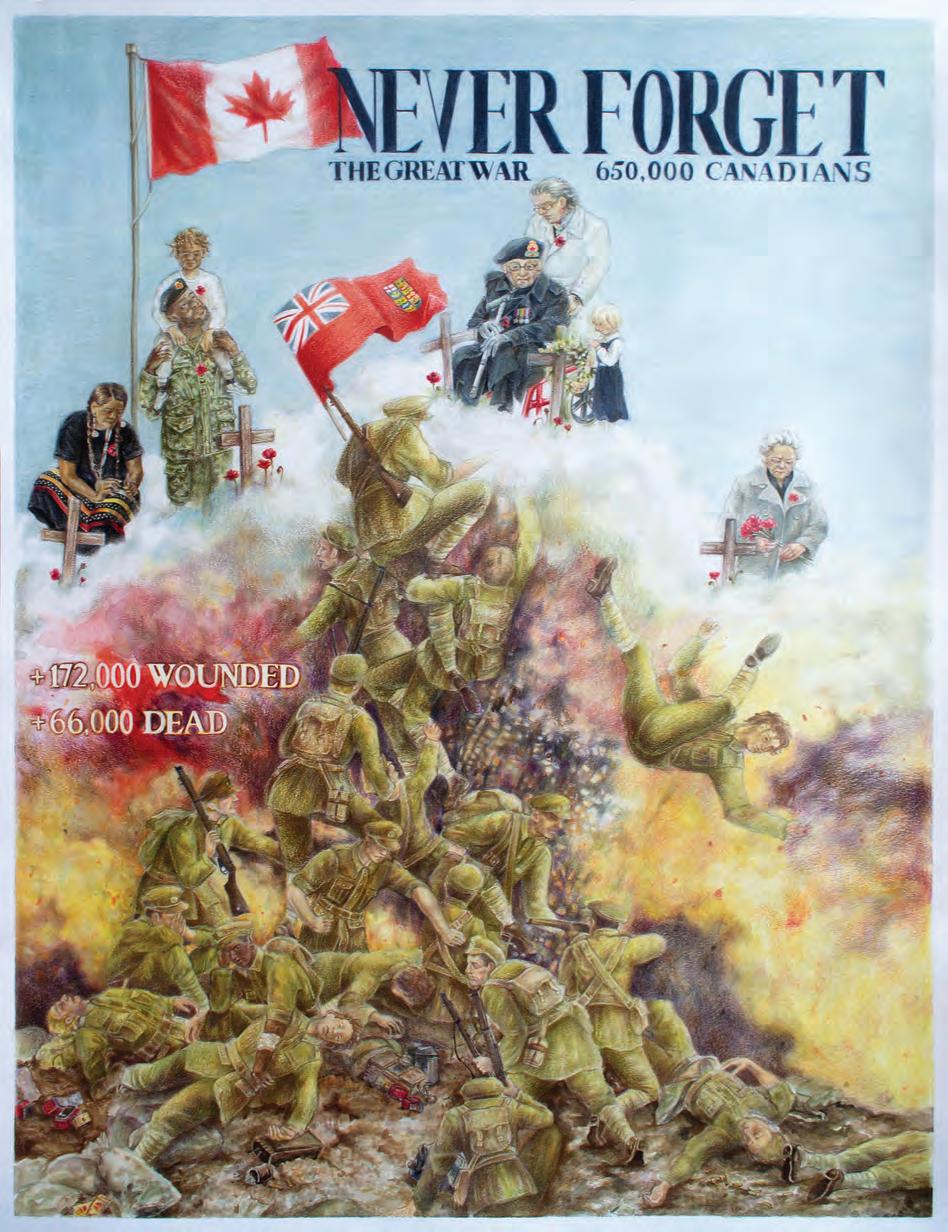
Yuanxi Liu’s artwork won the 2025 Legion National Foundation’s National Youth Remembrance Contests’ senior colour poster category.
See page 54
Features
20 COMMAND AND CONTROL
A fearless Canadian woman was in command, but the Japanese soldiers who worked for her were in control
By John Boileau
24 SEARCHING FOR ANSWERS
How determination and an innate curiosity led Gladys Arnold to become the only Canadian journalist in Paris when France fell to the Germans in WW II
By Valerie Knowles
28 ALIAS FRANKLIN THOMPSON
During the American Civil War, a young New Brunswick girl disguised herself as a man—and served as a soldier in the Union Army
By John Boileau
32 THE QUILT MAKERS
How Canadian women and girls crafted for victory in WW II
By Alex Bowers
38 A STITCH IN TIME
A revival of interest in wartime knitting inspires remembrance
By Allan Lynch
42 UNDYING LOVE
A grieving mother secrets her Great War soldier son’s remains home to Canada
By Stephen J. Thorne
49 WOMEN AT WAR
A collection of iconic artwork sharing the contributions of Canadian women to the country’s military Words by Legion Magazine design staff


THIS PAGE
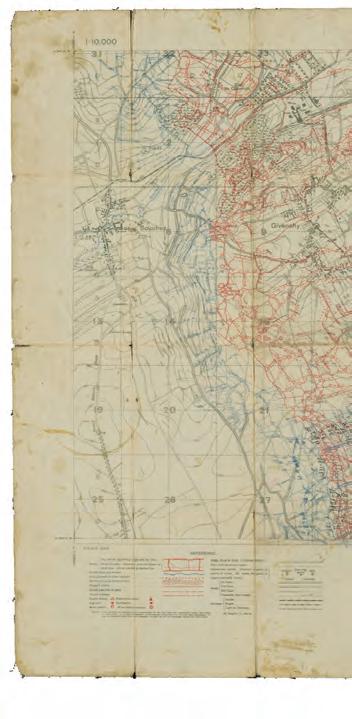
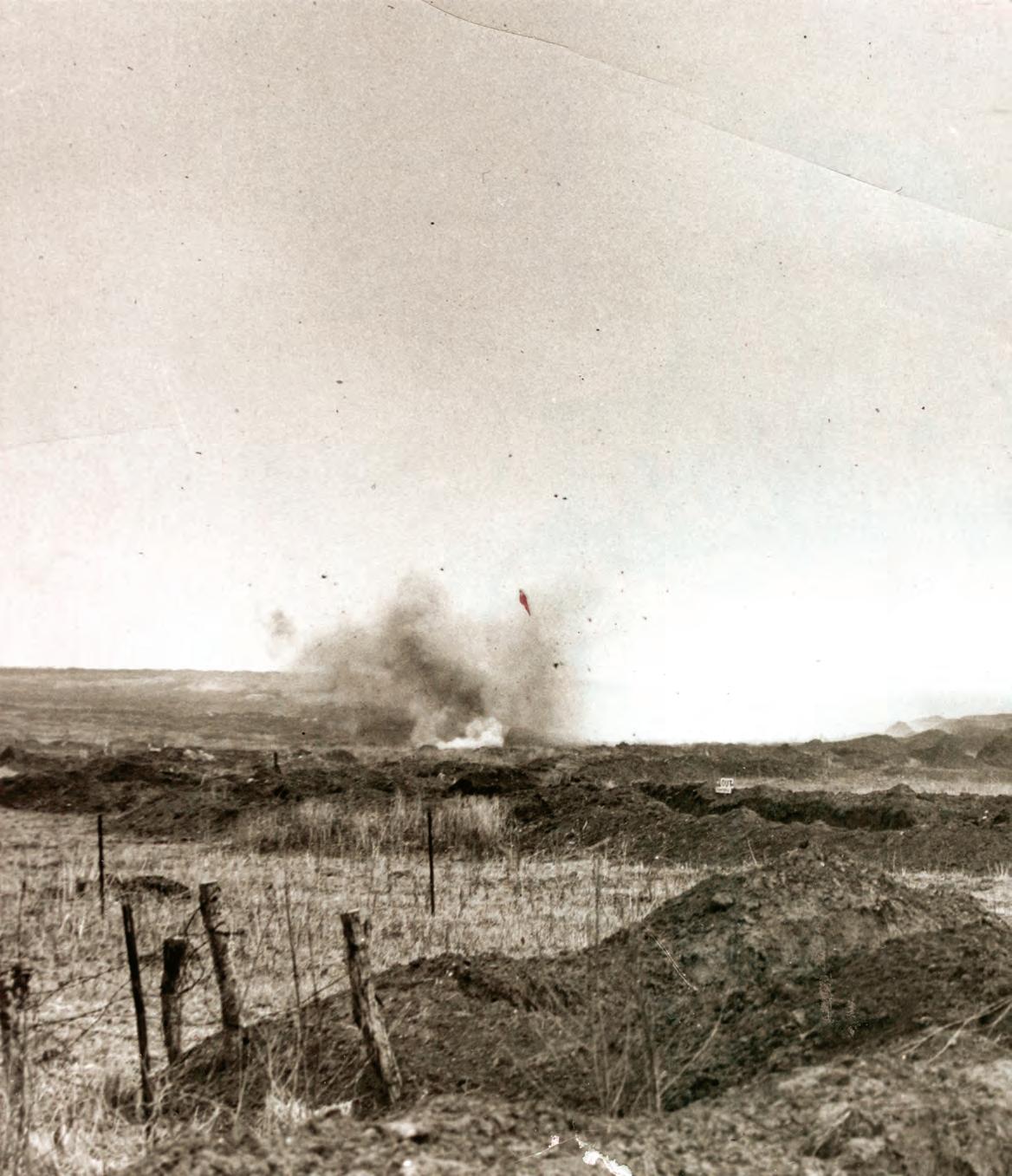
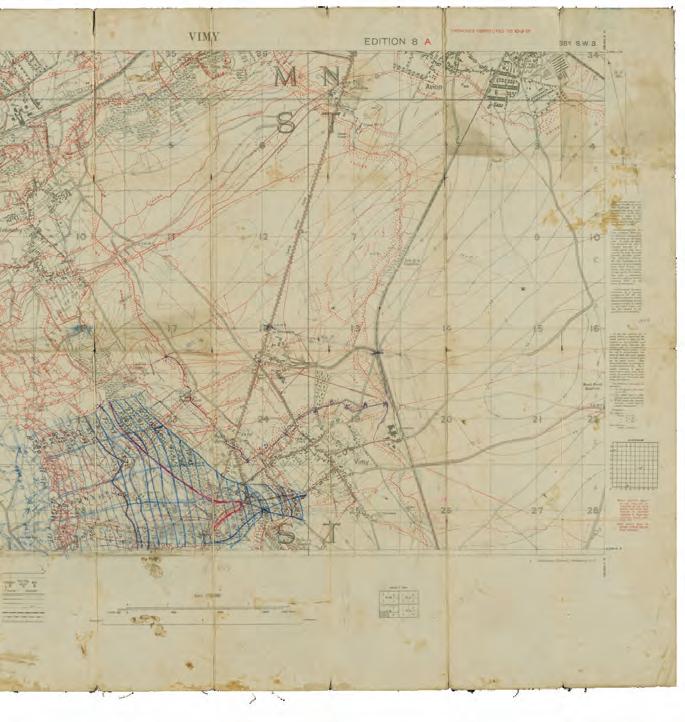
The Vimy Ridge battlefield circa 1917. A trench map of the area belonging to Captain William Arthur Peel Durie. LM Archives; City of Toronto Archives
ON THE COVER
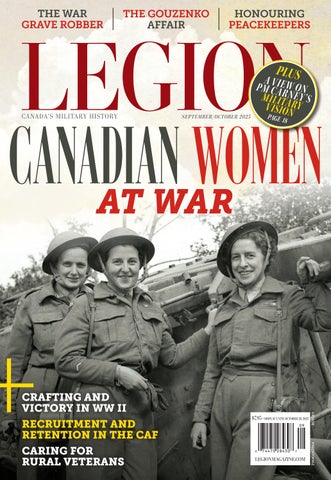
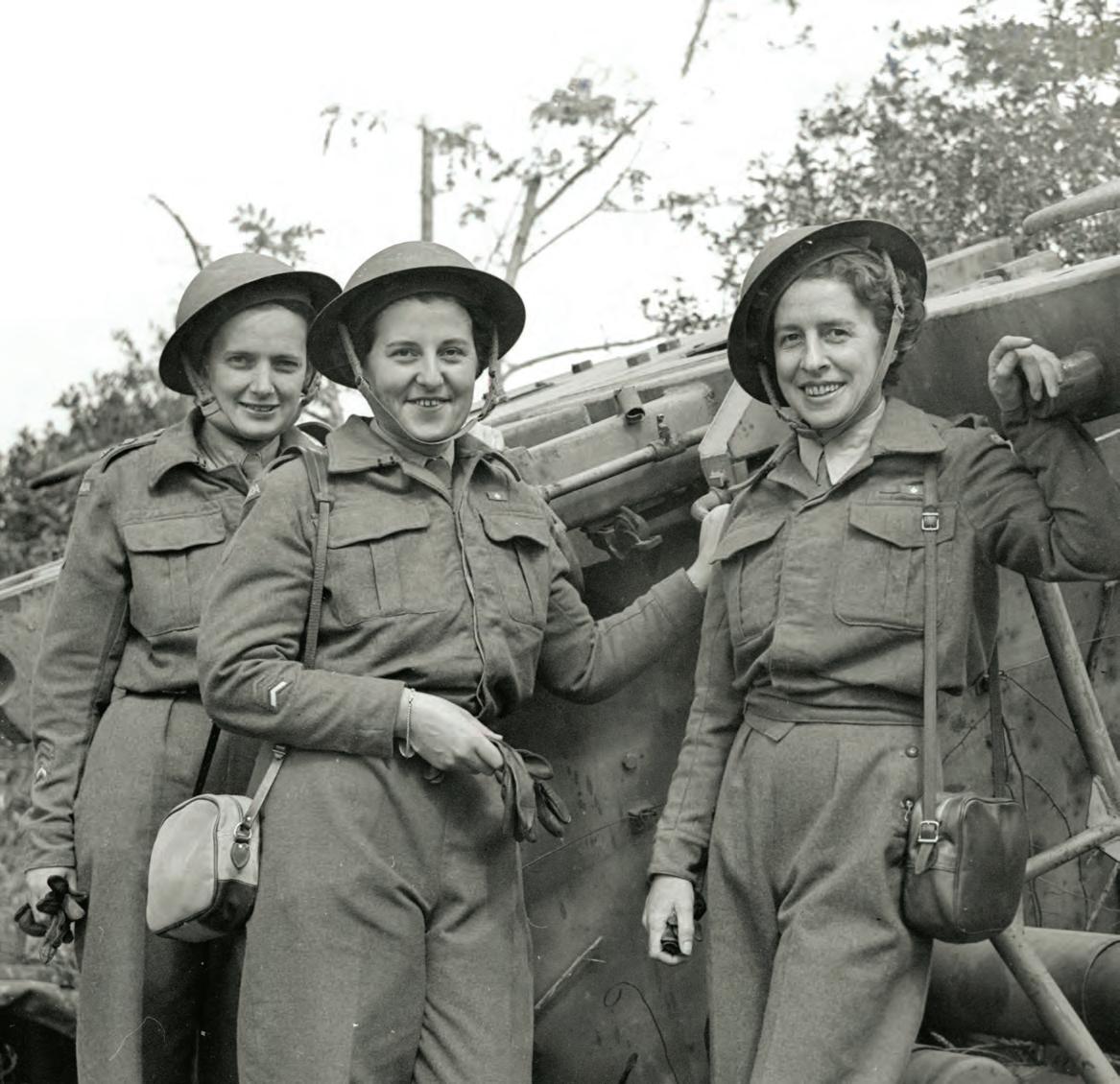
Lieutenant M. Green, Captain H.M. Boutilier and Major Moya MacDonald, the first nursing sisters of the Royal Canadian Army Medical Corps to land in France after D-Day, pose for a photo on July 17, 1944. Frank L. Dubervill/DND/LAC/PA-204952
COLUMNS
DEPARTMENTS



Getting my ducks in a row

Get organized with a convenient week-toview calendar including inspirational quotes, time zone map and important dates.
shipping
Board of Directors
BOARD CHAIR Sharon McKeown BOARD VICE-CHAIR Berkley Lawrence BOARD SECRETARY Bill Chafe
DIRECTORS Steven Clark, Randy Hayley, Trevor Jenvenne, Bruce Julian, Valerie MacGregor, Jack MacIsaac Legion Magazine is published by Canvet Publications Ltd.
GENERAL MANAGER Jason Duprau
EDITOR
ADMINISTRATION MANAGER
Stephanie Gorin
SALES/
ADMINISTRATIVE ASSISTANT
Lisa McCoy
ADMINISTRATIVE ASSISTANT
Chantal Horan
ADMINISTRATIVE AND EDITORIAL CONTENT
CO-ORDINATOR
Ally Krueger-Kischak
Aaron Kylie
ASSISTANT EDITOR
Michael A. Smith
SENIOR STAFF WRITER
Stephen J. Thorne
STAFF WRITER
Alex Bowers

NOTICE OF ANNUAL MEETING OF THE ROYAL CANADIAN LEGION
The Dominion Executive Council of The Royal Canadian Legion hereby gives notice of an Annual General Meeting of the organization which will take place at 9:00 am on Saturday, 22 November 2025 at Legion House, 86 Aird Place, Ottawa, Ontario.
Agenda for the meeting:
1. Presentation of the audited financial statements
2. Approval of the auditors for 2025-2026
This meeting is being held to fulfill the requirements of the Canada Not-For-Profit Corporations Act. Members wishing to make comment or raise questions on these two items may do so by written submission to Dominion Command, 86 Aird Place, Ottawa, ON K2L 0A1 to be received no later than Oct. 17, 2025.
Documentation pertaining to this annual meeting shall be made available on the Legion website at www.legion.ca at least 21 days prior to the annual meeting or upon written request by a member, enclosing a self-addressed stamped envelope (9” x 12” envelope with $5 in postage) received at Dominion Command at least 14 days prior to the annual meeting.
ART DIRECTOR, CIRCULATION AND PRODUCTION MANAGER
Jennifer McGill
SENIOR DESIGNER AND PRODUCTION CO-ORDINATOR
Derryn Allebone
SENIOR DESIGNER
Sophie Jalbert
DESIGNER
Serena Masonde


Advertising Sales CANIK MARKETING SERVICES NIK REITZ advertising@legionmagazine.com
MARLENE MIGNARDI marlenemignardi@gmail.com OR CALL 613-591-0116 FOR MORE INFORMATION
WEB
CO-ORDINATOR
Ankush Katoch
Published six times per year, January/February, March/April, May/June, July/August, September/October and November/December. Copyright Canvet Publications Ltd. 2025. ISSN 1209-4331
Subscription Rates
Legion Magazine is $13.11 per year ($26.23 for two years and $39.34 for three years); prices include GST. FOR ADDRESSES IN NS, NB, NL, PE a subscription is $14.36 for one year ($28.73 for two years and $43.09 for three years). FOR ADDRESSES IN ON a subscription is $14.11 for one year ($28.23 for two years and $42.34 for three years).
TO PURCHASE A MAGAZINE SUBSCRIPTION visit www.legionmagazine.com or contact Legion Magazine Subscription Dept., 86 Aird Place, Kanata, ON K2L 0A1 Call 613-591-0116 or toll-free 1-844-602-5737. The single copy price is $7.95 plus applicable taxes, shipping and handling.
Change of Address
Send new address and current address label, or, send new address and old address. Send to: Legion Magazine Subscription Department, 86 Aird Place, Kanata, ON K2L 0A1. Or visit www.legionmagazine.com/change-of-address. Allow eight weeks.
Editorial and Advertising Policy
Opinions expressed are those of the writers. Unless otherwise explicitly stated, articles do not imply endorsement of any product or service. The advertisement of any product or service does not indicate approval by the publisher unless so stated. Reproduction or recreation, in whole or in part, in any form or media, is strictly forbidden and is a violation of copyright. Reprint only with written permission.
PUBLICATIONS MAIL AGREEMENT NO. 40063864
Return undeliverable Canadian addresses to Legion Magazine Subscription Department 86 Aird Place, Kanata, ON K2L 0A1 | magazine@legion.ca
U.S. Postmasters’ Information
United States: Legion Magazine, USPS 000-117, ISSN 1209-4331, published six times per year (January/February, March/April, May/June, July/August, September/October, November/December). Published by Canvet Publications, 866 Humboldt Pkwy., Buffalo, NY 14211-1218. Periodicals postage paid at Buffalo, NY. The annual subscription rate is $12.49 Cdn. The single copy price is $7.95 Cdn. plus shipping and handling. Circulation records are maintained at Adrienne and Associates, 866 Humboldt Pkwy., Buffalo, NY 14211-1218. U.S. Postmasters send covers only and address changes to Legion Magazine, PO Box 55, Niagara Falls, NY 14304.
Member of Alliance for Audited Media and BPA Worldwide. Printed in Canada.
We acknowledge the financial support of the Government of Canada. Version française disponible.
From time to time, we share our direct subscriber list with select, reputable companies whose products or services we believe may interest our subscribers. To opt out of receiving these offers, please send your request, including your full name and address, to magazine@legion.ca. Alternatively, you can write to Legion Magazine, 86 Aird Place, Kanata ON K2L 0A1, call 613-591-0116, or call toll-free 1-844-602-5737.
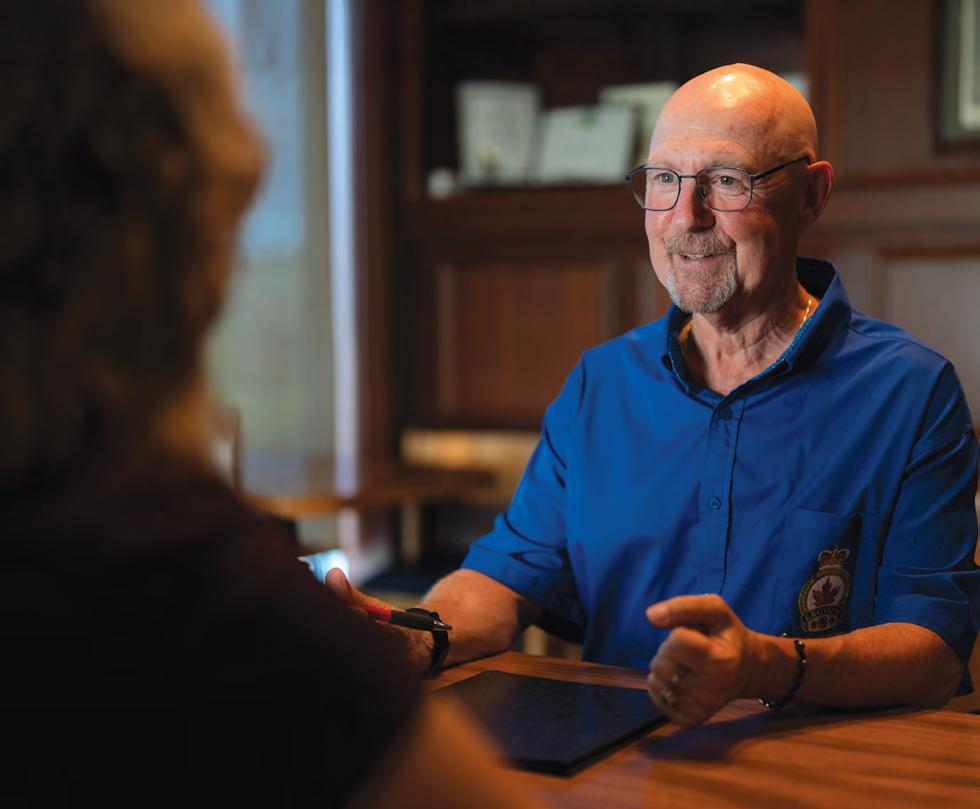
It’s because of members like you... that we receive letters like these:
“I can’t thank you enough for everything you did to make his last days and my life less stressful by coming to bat to help him receive deserved funding. Every penny went toward caregiving and other medical or travel expenses while he was alive and the last compassionate payment toward funeralhome expenses. I shall be indebted to you for the rest of my life.”
“Your hard work and perseverance on my behalf made it possible for me to receive a medical pension for on-going health issues. It has allowed me some peace of mind regarding my family’s well-being. In addition, the pension allows my wife and I to remain living in our own home and we are very grateful for that.”
affair Family
For years, Canada’s defence spending as measured as a percentage of the country’s gross domestic product (GDP) has been stagnate between one and 1.4 per cent. On June 9, 2025, however, newly minted Prime Minister Mark Carney announced a monumental $9 billion increase to military spending in fiscal 2025-26, a 15 per cent increase to the department’s original $53.4 billion budget.
Not coincidentally, the new total ($62.7 billion) is two per cent of GDP, NATO’s defence-spending goal for its members at the time. (Later in June, the western security alliance agreed to a new five per cent target.) Canada’s boost was widely applauded by Canadians, particularly amid ongoing tensions flamed by U.S. President Donald Trump and increasing global instability (see Russia-Ukraine and the Middle East).
WHILE CANADA BUILDS UP ITS MILITARY MIGHT, LET IT NOT FORGET THOSE WHO’VE ALREADY SERVED
But, largely buried in Carney’s decree was also a promise to boost support for veterans, though no specific dollar amount was attached. While there’s no question the Canadian Armed Forces need the lion’s share of the additional money to enhance existing and emerging military capabilities, strengthen the country’s defence industry and diversify its security partnerships, Canada’s veterans and their families continue to need more assistance.
“I wish I had the answer,” David Doucette, The Royal Canadian Legion’s new P.E.I. Command President, told Legion Magazine of the challenges younger veterans, such as his son who served in Afghanistan, face (see page 64). “They’re not as apt to open up. They keep to themselves.”
Indeed, in the veterans ombud’s 2025 annual report, retired colonel Nishika Jardine identified mental health struggles as one of the top issues her office is attempting to address.
“One individual who has become the caregiver to her grievously injured Veteran spouse shared about how she needs mental health treatment for herself and her children as a result—beyond what the [Veterans Affairs Canada] Assistance Service can provide,” wrote Jardine. “Our January 2021 recommendation to the Minister in this regard is still outstanding and is still, if not more, pressing.”
So, while Canada builds up its military might, let it not forget those who’ve already served. Five years on, it’s time to address the action items in the ombud’s “Mental Health Treatment Benefits for Family Members” report. It was just three items:
• ensure family members of veterans, including former spouses, survivors and dependent children, have access to government-funded mental health treatment when the situation is related to conditions of military service;
• conduct an analysis of accessibility to mental health treatment benefits and services to such family members;
• a nd demonstrate flexibility to address the urgent mental health needs of such family members.
“It is unfair for family members to be denied access to mental health treatment for illness or injury related to the unique conditions and challenges of military service,” the report concluded. Yep.
Carney’s June announcement included $2.6 billion to support military recruitment and to retain current personnel and noted the Canadian Armed Forces need 13,000 members to fulfill its authorized strength of 101,500 by 2030. That task is even more difficult if the families of those who’ve served aren’t being looked after properly. Word gets around.
With the influx of military money, now’s the time to set some aside to address this longstanding challenge. L










A-bomb debate
Ihave always been of the view that dropping A-bombs on Japan hastened the Pacific War’s end and saved many Allied lives. However, I feel Craig Baird’s analysis in support of that in Face to Face (“Did the U.S. need to drop the atomic bombs on Japan,” July/August) was centred around
You can argue the pros and cons forever about whether it was necessary to drop the atomic bombs on Japan, but the bottom line is that after Hiroshima and Nagasaki were attacked, the Japanese surrendered. We will never know what history would have been had the weapon not been used.
BILL SHOLDICE MISSISSAUGA, ONT.
Comments can be sent to: Letters, Legion Magazine , 86 Aird Place, Kanata, ON K2L 0A1 or emailed to: magazine@legion.ca
Canada’s support of the U.S., which didn’t exactly reaffirm my belief with any clarity. Savannah Kylie (a Grade 12 student showing astute wisdom and understanding), on the other hand, made a convincing argument against the move, noting in particular the devastation unleashed on Japanese civilians. Yes, why not military targets? It was evident the U.S. wanted to field test Robert J. Oppenheimer’s creation to its full effect.
ROBERT L. TRIPP
RIDGEWAY,
ONT.
Savannah Kylie’s opinion about the need for the U.S. to drop atomic bombs on Hiroshima and Nagasaki is a brave one. While I was in university in 1973, I wrote a history-class essay in which I similarly argued that the move was unnecessary because Japan was already effectively defeated. Though I’m not a subscriber to Legion Magazine,
I think she should know that there’s support for her view.
MANUEL ERICKSON
MILL BAY, B.C.


Back to the future
The May/June issue was another triumph. The editorial captured the times perfectly, but the “war clouds” reference was a bit much—until I realized the piece was 90 years old! Canada went from that point in 1935 through war preparedness
that included never-before-seen construction, manufacturing, women in the workforce en masse, and military recruitment and training, all of which contributed to the defeat of tyranny at the time. Canadians were a proud lot in 1945. How far the proud have

fallen. I’m encouraged, however, by indications from Prime Minister Mark Carney that plans are underway to see Canada’s forces enjoy comfortable housing, respectable pay and growing levels of service equipment. The sooner the better.
DAVID POISSANT
BURLINGTON, ONT.
Your call
MEDIPAC TRAVEL INSURANCE
Re “A war by any other name” (July/August) by Stephen J. Thorne: After years of crediting Captain Wally Mills with calling in the danger-close fire, it’s well known that it should have been credited to Lieutenant Mike Levy. He initiated and directed the successful attack, though this wasn’t recognized at the time. Otherwise, the article was an excellent read.
JACK BATES
VICTORIA
Canadian proud
My father Charles Cartmel was seriously wounded crossing the Maas River in Holland on Nov. 17, 1944. “First Troop, Charlie Squadron, Royal Canadian Dragoons,” by Charles Wilkins (March/April) confirmed what my dad told me: the Germans never liked fighting the Canadians. In fact, he always said that in both wars the Canadians outdid themselves. With so much uncertainty in global affairs these days, it’s good to see Legion Magazine covering what Canada has accomplished.
RICK CARTMEL
DORVAL, QUE.
Size matters
I like your magazine content, but the print is too small. I get eye strain and have to give up reading. Surely a lot of your readers have this problem.
JAMES DUNNE
CALGARY L




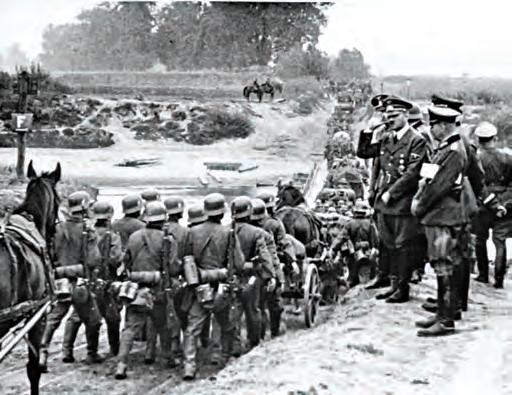
1 September 1939
Nazi Germany invades Poland.

September
2 September 1918
After a week of heavy fighting, Canadian troops break through the DrocourtQuéant Line near Arras, France.
3 September 1943
10 September 1813
The Americans gain control of the upper Great Lakes after defeating the British at the Battle of Lake Erie.
19 September 1915
The Newfoundland Regiment lands at Suvla Bay in Gallipoli, Turkey.
22 September 1915
The British 8th Army under Field Marshal Bernard L. Montgomery begins the Allied invasion of the Italian peninsula, crossing the Strait of Messina from Sicily and landing at Calabria.
4 September 1914
The Canadian military camp at Valcartier, north of Quebec City, swells with 32,000 men and 8,000 horses.
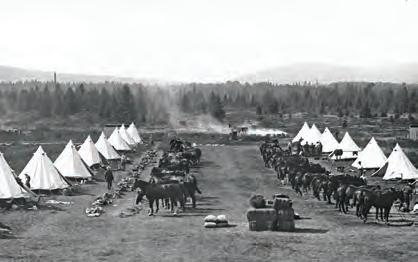
5 September 1758
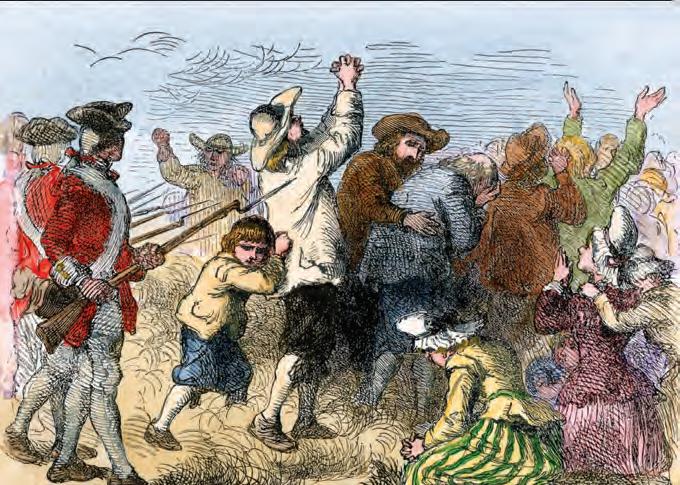
A force of 1,500 British troops in nine vessels arrives in Gaspé Bay to begin raiding Acadian villages on the coast of present-day New Brunswick and the Gaspé peninsula.
8 September 2007
Under enemy fire, Capt. Joesph H.S. Tremblay of Courcelette, Que., leads Afghan soldiers in combat. He is awarded the Medal of Military Valour.
11 September 1942
U-517 torpedoes and sinks HMCS Charlottetown in the St. Lawrence River near Cap-Chat, Que. Six of its crew are lost that day, with four later dying of wounds sustained during the attack.
The Newfoundland Regiment’s first war fatality is Pte. Hugh McWhirter, in Gallipoli, Turkey.
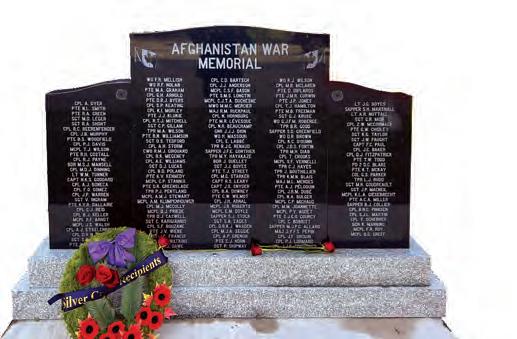
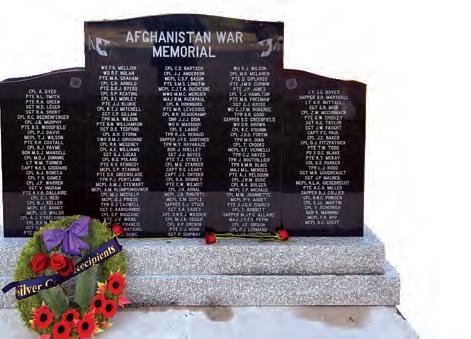
23 September 2023
A granite monument memorializing the 158 members of the Canadian Armed Forces who died in Afghanistan is unveiled in Amherst, N.S.
18 September 1998
Canadian search and rescue technicians MCpl. Bryan Pierce and Sgt. Keith Mitchell each receive the Cross of Valour for a Nov. 12, 1996, nighttime parachute jumps into freezing Arctic waters to save a critically ill fisherman.
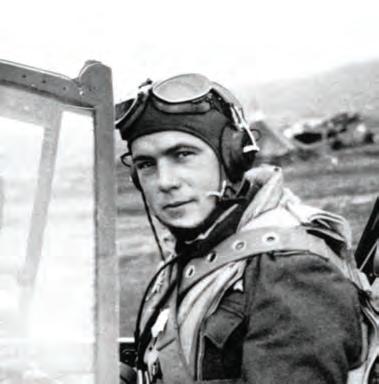
25 September 1942
A Japanese aircraft is destroyed by RCAF Sqdn. Ldr. Kenneth A. Boomer over an Aleutian island near Alaska.
28 September 1875
Heavy timbers on the track derail a train near Yamaska, Que., killing 10. Sabotage or vandalism is suspected.
29 September 1988
It’s announced that the Nobel Peace Prize is to be awarded to the United Nations peacekeeping forces.
October
3 October 1927
Prime Minister Mackenzie King chats with his British counterpart, inaugurating Canadian transatlantic telephone service.
4 October 1957
The Avro Arrow is unveiled on the same day the Soviets launch the satellite Sputnik
6 October 1986
The United Nations awards the people of Canada the Nansen Refugee Award for the country’s record of sheltering world refugees.
9 October 1958
The last Sabre jet rolls off the assembly line at Canadair for delivery to the West German air force.

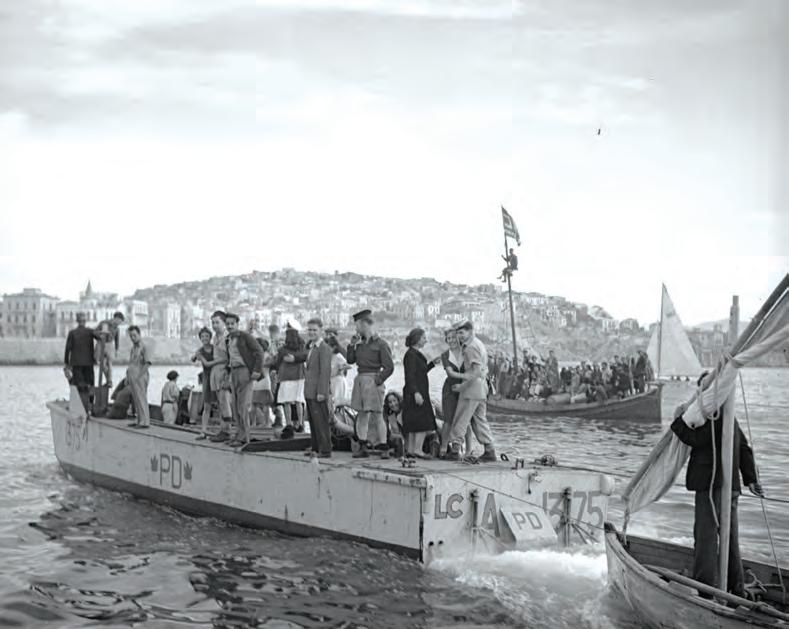

17 October 1944
HMC ships Prince Henry and Prince David land liberation forces in Greece.
18 October 1917
The Canadian Corps relieves Australian and New Zealand forces, which had been decimated at the First Battle of Passchendaele.
21 October 1916
11-12 October 1899
The Second Boer War begins in South Africa; more than 7,000 Canadians serve there during the next three years; 267 die.
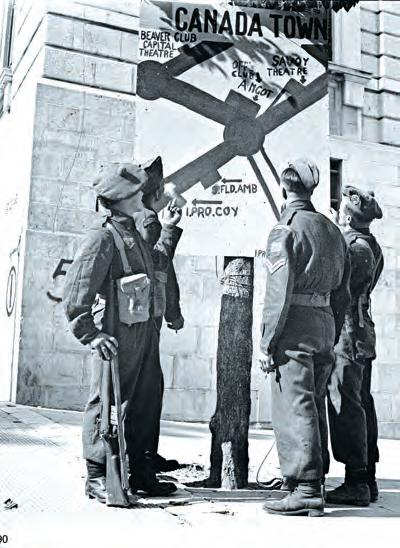
13-14 October 1943
Canadians enter Campobasso, Italy. The town becomes a recreational hub for Canadian troops, earning it the nicknames Canada Town and Maple Leaf City.
During the Battle of Ancre Heights in France, Canadians briefly hold Regina Trench. They would capture it for good on Nov. 11.
22 October 1940
Sqdn. Ldr. Ernie McNab, commanding officer of No. 1 (Canadian) Fighter Squadron, becomes the first member of the RCAF awarded the Distinguished Flying Cross.
23 October 1969
An explosion and fire in the engine room of HMCS Kootenay kills nine and wounds 53, 354 kilometres west of Plymouth, England. The ship was deployed with NATO.
24 October 1945
The United Nations Charter is ratified in Washington, D.C.
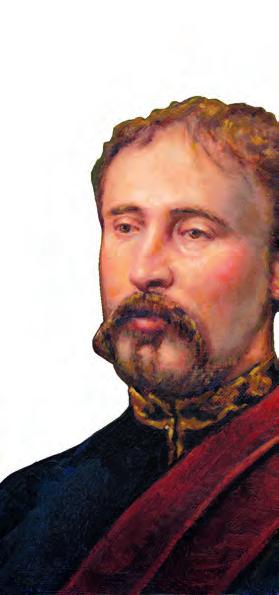
25 October 1854
During the Charge of the Light Brigade in the Crimean War, Canadianborn Lieut.Alexander Roberts Dunn earns the Victoria Cross.
27 October 1943
Troops sail from Scotland to Italy to strengthen Canadian forces.
28 October 1942
The Alcan Military Highway linking Yukon and Alaska, intended to move supplies north in the event of a Japanese invasion, is completed.
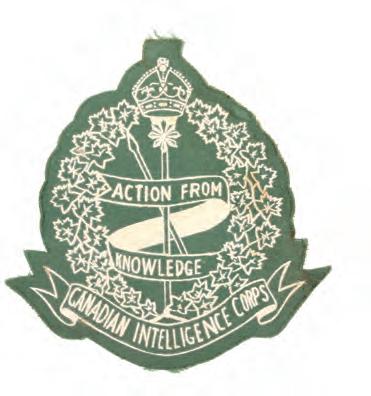
29 October 1942
The Canadian Intelligence Corps is authorized.
30 October 2009
A landmine kills Spr. Steven Marshall while on foot patrol in Panjwai district southwest of Kandahar, Afghanistan.
HEALTH MATTERS
Remote control
By Alex Bowers
Imagine, like many Canadians, you live outside of the city, somewhere in the quiet countryside. Life is peaceful, until, that is, you need urgent medical care, and you live hours from the closest doctor. It doesn’t matter who you are, says an Ottawa expert in mental health and substance abuse, a crisis can quickly turn tragic if timely care isn’t received.
“For veterans, for many people, that’s just not going to happen,” affirmed Fardous Hosseiny, president and CEO of the Atlas Institute for Veterans and Families.
“Imagine, too, that as a result of that crisis,” he continued, “your healthcare needs end up getting


worse because of that lack of access. It becomes a vicious cycle.”
Of course, for some of Canada’s former military personnel who chose the rural lifestyle, they don’t need to imagine. They’re aware of the reality of the isolation, coupled with myriad health challenges that may arise from their service career.
The Atlas Institute, a research organization funded by Veterans Affairs Canada but whose team operates independently to bridge the gap between research and implementation, has since highlighted the plethora of hurdles faced by rural and remote veterans in a project entitled “The Art of the Possible.”
“The name reflects our focus on the smaller, realistic changes that could be implemented,” said Hosseiny, acknowledging the need for larger, systematic reform. “We must start with the small wins and build upward from there.”
In sitting down and engaging with Canadian Armed Forces and RCMP veterans, their families, medical practitioners and researchers, the Atlas Institute determined that distance was a significant barrier to accessing adequate health care, noting that exorbitant travel costs and poor public transport also have a sizable impact.
“Many of these communities are far from city centres,” said Hosseiny, “but the onus is currently on [veterans] to seek out health care in urban
areas. As for the service providers, few settle in these communities because there is either little work or they’re unaware of the work. It may also mean uprooting their lives.”
Those health-care providers already there, meanwhile, are often familiar faces—they’re friends, acquaintances and neighbours. That brings unique challenges, explained Hosseiny, where “despite privacy and confidentiality protections, some veterans might be reluctant getting care from those with whom they’re on a first-name basis.”
Perhaps of greater concern is the lack of cultural-competency training among a proportion of rural health experts.
“Veterans and their families have strong BS detectors,” said Hosseiny. “They can be in a room for 30, 60, 90 seconds, and tell if their service provider gets their world and what they’ve dealt with. We must ensure service providers have specialized training in military and RCMP cultures. We must ensure they’re trauma informed, that they get why certain veterans can’t have their backs to windows or might want to face a door.”
Equally, the Atlas Institute identified several health-care barriers for First Nations, Inuit and Métis veterans, many of whom reside in remote communities, but whose Indigenous treatment models have long been underrepresented and underfunded.
In keeping with the team’s collaborative approach with former service members, numerous potential solutions were highlighted during round-table discussions.
“What we heard was that virtual care is necessary,” said Hosseiny, “and it increases flexibility and access for veterans in rural and remote areas. It also often comes with its own limitations, however, and one of them is bad internet connection.”
A government-sanctioned audit found that 90.9 per cent of Canadian households had access
to minimum connection speeds across Canada in 2021. Nevertheless, it conceded that only 59.5 per cent of rural and remote households had access to the same speeds, extending to just 42.9 per cent of homes on First Nations reserves.
In 2020, the Liberal government committed to making high-speed internet accessible for 98 per cent of all Canadians by 2026, its aim to reach 100 per cent no later than the end of the decade.
“Virtual care,” continued Hosseiny, “is also sometimes not ideal during a crisis. It can be difficult for health-care providers to read the visual cues. We must have in-person emergency services available to all veterans for when these events occur.”
Included in the Atlas Institute’s list of recommendations is the need for mobile outreach units and satellite care sites, which “bridge service gaps
“THE ONUS IS CURRENTLY ON [VETERANS] TO SEEK OUT HEALTH CARE IN URBAN AREAS. AS FOR THE SERVICE PROVIDERS, FEW SETTLE IN RURAL COMMUNITIES.”
providers closer to rural and remote communities. These units can deliver on-site care. They reduce travel costs and logistical barriers.”
Unfortunately, limitations persist: “We have [health-care] recruitment issues across the country,” noted Hosseiny, “so just imagine how difficult it is bringing folks to rural communities. But one of the perspectives shared was funding incentives to attract providers to rural areas. We’re talking student loan forgiveness. We’re talking rural practice bonuses. It’s one strategy that could leverage change.”
Additional change, suggested Hosseiny, might come from within— or perhaps more specifically, within the communities themselves: “We sat down and talked to veterans
them spoke about the power of peer support, the power of sitting across from someone who understands your reality, understands your world.
“We need to expand peer support networks,” continued Hosseiny. “They may exist informally, such as a meal or a coffee with friends, but we also need to establish more formal support groups.”
And those small towns are obvious candidates to benefit from peer support, said Hosseiny.
“Rural communities are strong communities. Remote communities are strong communities,” he noted. “They really look out for one another, and now, their stories are getting heard. If organizations like us, the Legion and all our partners work together, we, too, are stronger. If we work in isolation, the distance grows.” L




By Stephen J.Thorne
A “hinge moment”
Canada to meet defence spending target by March 2026
Declaring American dominance on the world stage at an end, Prime Minister Mark Carney announced Canada will meet NATO’s two per cent of GDP military spending target by March 2026—six years earlier than originally planned.
It will be the first time Canada’s defence spending has hit the two per cent mark since 1990. Now NATO says it wants five per cent.
Addressing a conference of foreign policy wonks, national security officials and defence industry leaders June 9 in Toronto, Carney outlined his plan to reduce Canada’s reliance on the United States and draw closer to its European allies.
“We stood shoulder to shoulder with the Americans throughout the Cold War and in the decades that followed, as the United States played a dominant role on the world stage,” he said. “Today, that dominance is a thing of the past.”
The measures to boost defence spending from its current 1.37 per cent of gross domestic product (GDP) include $9.3 billion in new money: pay raises, improvements to recruitment and retention, expanding the defence industry, and bringing maintenance and repair of existing ships, vehicles and infrastructure up to scratch. Among the big-ticket items are new aircraft, drones, armoured vehicles and naval vessels, including submarines.
The total investment to bring military spending to the two per cent threshold is estimated at between $18 billion and $20 billion. Carney promised his tax cuts will not be compromised as a result, and said sacrifices elsewhere will cover the additional costs.
Carney said the world is at a crossroads—a “hinge moment,” he called it—and that Canada must chart its own path.
“The United States is beginning to monetize its hegemony: charging for access to its markets and reducing its relative contributions to our collective security,” said the PM. “In parallel, the world’s trade routes, allegiances, energy systems and even intelligence itself are being rewired. Rising great powers are now in strategic competition with America. A new imperialism threatens.
“Middle powers compete for interests and attention, knowing that if they are not at the table, they will be on the menu.”
Carney signed a wide-ranging defence pact with the European Union on June 23. “Seventy-five cents of every dollar of capital spending for defence goes to the United States. That’s not smart,” he told CBC in May.
Canada had been talking with the EU about collaborating since Carney succeeded Justin Trudeau as prime minister in March, weeks before his government won a minority government in the April 28 federal election. European nations are planning to spend $1.25 trillion on defence over the next five years.
U.S. President Donald Trump has said his administration was negotiating with Canada about joining his “Golden Dome”
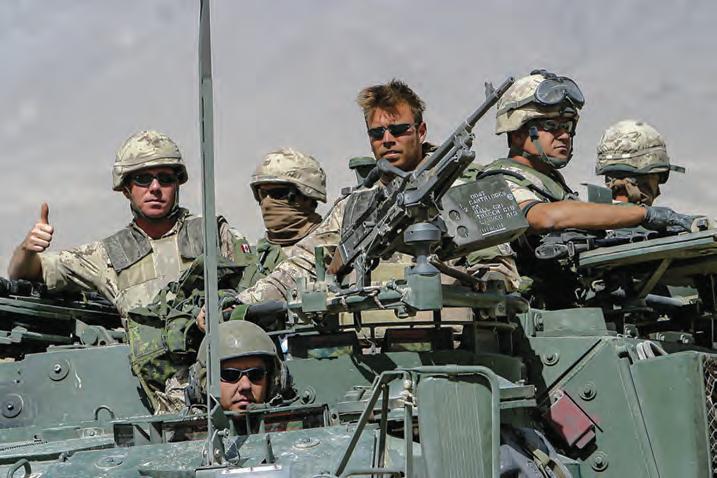
Canadian combat engineers serving with NATO forces take a break near the village of Leyvani, Afghanistan, on July 5, 2004.
> Check out the Front lines podcast series! Go to legionmagazine.com/en-frontlines
“SEVENTY-FIVE CENTS OF EVERY DOLLAR OF CAPITAL SPENDING FOR DEFENCE GOES TO THE UNITED STATES. THAT’S NOT SMART.”
missile defence system. Meanwhile, Washington welcomed Canada’s spending increase despite Carney’s pledge to look elsewhere for military hardware and alliances. The U.S. ambassador to Canada, Pete Hoekstra, posted on X that the plan is “an important step toward strengthening the Alliance and reinforcing our shared security.”
A statement issued in conjunction with Carney’s speech at the University of Toronto said Ottawa will also boost efforts to support veterans, modernizing the benefits system so they get supports
sooner, streamlining military trade credentials in the civilian sectors, and improving health services for women veterans.
A May 2025 defence report put military enrolment at as many as 14,000 short of its target strength of 71,500. The recruitment and training process is notoriously slow and cumbersome, and forces’ readiness is far below ideal—at just 58 per cent able to respond if called upon by NATO allies, according to a March 2024 report.
There was also speculation Carney’s plan would fold the Canadian Coast Guard entirely into National Defence. The
coast guard is currently a special operating agency under the Fisheries Department with an annual budget of $2.5 billion.
Defence officials told a media technical briefing the coast guard would remain where it was and there was no need to arm the civilian agency. However, senior federal officials told CBC the service was in for a more fundamental reorganization.
Carney told the national broadcaster in May that Canada will spend what makes sense on defence; he wouldn’t commit to a specific figure.
“I’m not a fan of picking an arbitrary number and then trying to figure out how to spend up to it,” he said. “NATO partners are going to be asked to spend more, to do more, for mutual protection. We’re going to participate in that.” L
Maximizing Health and Independence of Canadians Impacted by Vision Loss
Two veterans from different eras, both living with vision loss. What unites them? The national health care organization that helped them regain their independence.
Alex Itenson in Ontario, is an adventurer. As a lover of fast cars, he was the first Canadian to jump with a ram-air parachute. Now 85, Itenson is living with wet age-related macular degeneration (AMD), a condition that damages the retina and causes rapid vision loss.
“At the end of March [2024], I had a massive hemorrhage in my right eye,” Itenson shares. “In minutes, my vision went. I'm legally blind now and no longer drive. I lost my freedom.”
Mark Shaver, 65, from Manitoba, served 25 years in the Canadian Armed Forces; now his two daughters continue the family’s military legacy. After years of battling glaucoma, he lost vision in both eyes by 2024.
Thankfully, both veterans were referred to Vision Loss Rehabilitation Canada (VLRC)—an organization approved
by Veterans Affairs Canada to provide vision rehabilitation services and prescribe low-vision aids.
What is vision rehabilitation?
It’s a personalized process that empowers people with vision loss to make the most of their remaining sight and regain independence through adaptive techniques, assistive technology, and mobility training.
VLRC’s therapists helped both men adjust to life with vision loss. Shaver, an avid cook, struggled with food preparation.
“I was nicking myself with the knife,” he says. Thanks to in-home rehab sessions, he learned to cook safely again. “I’m doing pretty good… and haven’t served up anything we shouldn’t be eating.”
Itenson, through orientation and mobility training, learned to use a white cane and confidently cross busy intersections.
To other veterans facing vision loss, Itenson advises, “Reach out for help immediately—it makes a difference. It’s a whole new world.”
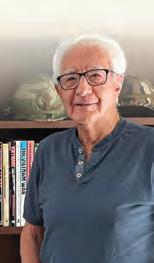
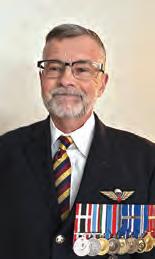


Alex Itenson, ONMark Shaver, MB
By David J. Bercuson
Rebuilding, rearming
Canada steps up on military spending
InJune, Prime Minister Mark Carney held a notable, if not historic, press conference in Toronto that focused almost entirely on national defence. Carney announced that Canada would achieve the current NATO target of two per cent of gross domestic product (GDP) on defence spending this year.
For the nearly half of Canadians who, according to a 2024 Defence Department study, believe the Armed Forces is underfunded, and the majority who do not consider it modern, the news must have seemed like manna from heaven. No other prime minister has placed national defence spending this high on the priority list since the Second World War.
It appears Canada may finally have someone at the pinnacle of power who is seriously paying attention to the borders, coastlines and airways, and the part the country should play in protecting its allies and interests abroad. Carney has committed to hiring more border agents, is teasing the idea of arming the coast guard and replacing aging vessels, while expressing interest in joining the U.S. in its potential Golden Dome missile defence program.
Achieving the goals Carney laid out, however, will be no easy feat.
Take Carney’s intention to spread military procurement more broadly, rather than relying
so heavily on the U.S. for equipment. When Canada can purchase first-rate materiel from other allies at a fair price, it should. It does so already: its tanks are from Germany; and its new search-andrescue aircraft and helicopters are both European-built.
NO PROCUREMENT PROCESS—CIVILIAN OR MILITARY—IS WITHOUT RISKS
Indeed, some European countries make some of the best defence equipment in the world. But they don’t produce the best fighter jet—the F-35—or the best anti-submarine patrol aircraft, the P-8 Poseidon. Plus, Europe has major defence obstacles of its own. For instance, the European Union encourages so-called “green procurement,” in which environmental friendliness may impact efficiency. And while some European countries are collaborating to build aircraft (such as the Eurofighter Typhoon), there is no single training program, logistical approach or chain of command for continental defence.
Another problem that must be overcome: transforming the image (and the reality) of the Canadian Armed Forces from an almost forgotten vocation for young people
into one that showcases how the military can be a rewarding career. Much better pay and benefits, and advertising to the adventurous among Canada’s youth is essential. The military in Canada must also mirror, much more than it does, the country’s current demographics. And supporting serving members in post-secondary education pursuits might do wonders for recruiting.
The CAF infrastructure must also be modernized. Many structures on bases across Canada should be torn down and rebuilt. To throw new recruits into 40-year-old (or older) accommodations is disrespectful. Old armouries will make good regimental museums. As heritage buildings they’re fine. As modern homes or workplaces, they don’t pass muster.
One practical problem arising out of Carney’s plan is that of moving the Canadian Coast Guard from the Fisheries Department to National Defence. Does that mean its current fleet will be painted as warships and armed? What will happen to the coast guard’s personnel? Will they be absorbed into the Royal Canadian Navy if they are willing and have the requisite training? Many countries have coast guards that are quasi-military in nature (the U.S., for example), but the effort to create that in Canada will have many obstacles.
Regardless, Canada won’t solve the challenges facing its military without first recognizing that no procurement process—civilian or military—is without risks. Risks must be accepted and managed. Failures will occur. Secondly, Canada needs a well-compensated professional corps of people to manage the system, not for two or three years, but for as long as the capable are willing to stay on.
So, many of the prime minister’s aims are commendable. But the hard work has only just begun. L

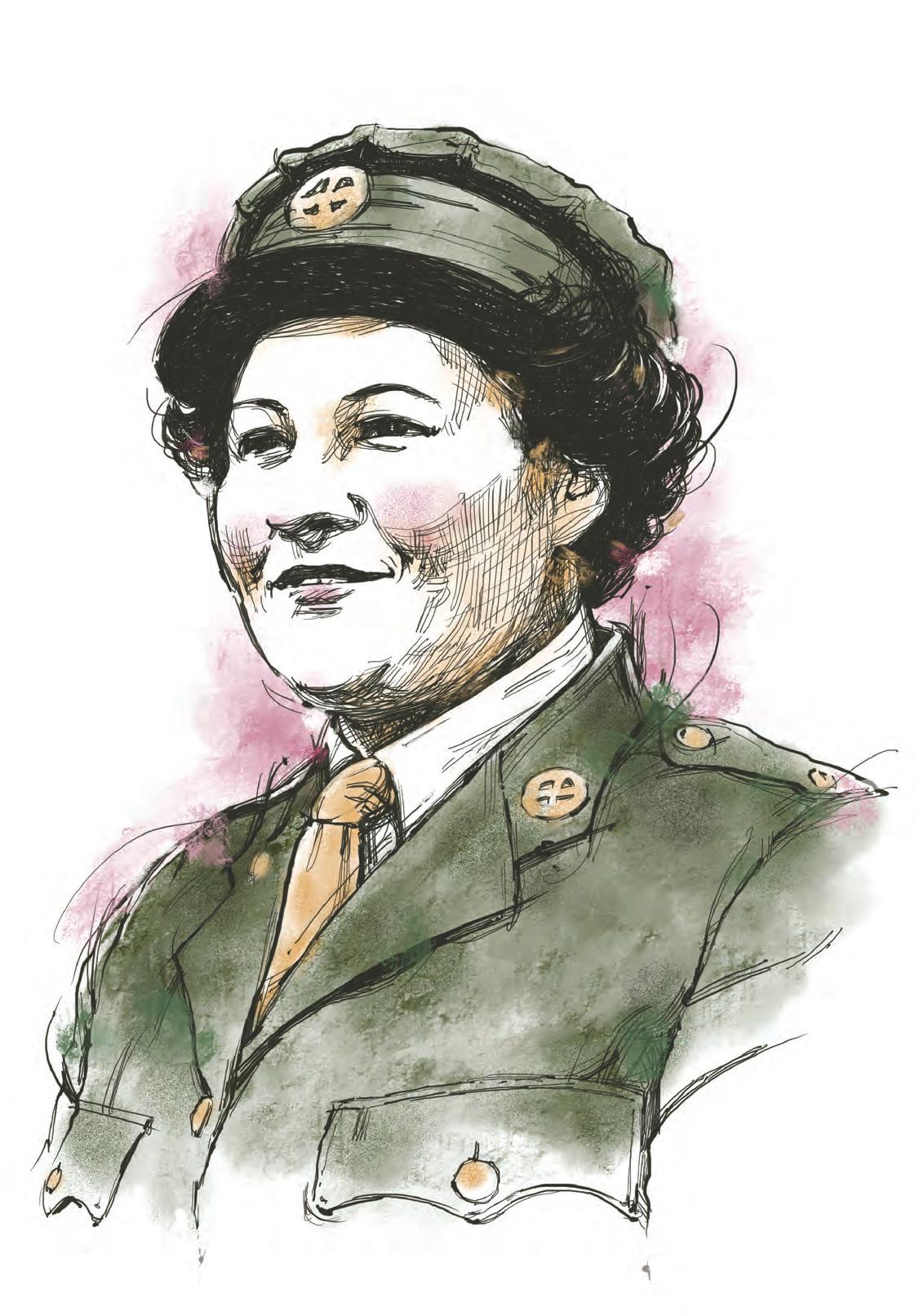
A fearless Canadian woman was in command, but the Japanese soldiers who worked for her were in control
By John Boileau | Illustration by Kerry Hodgson

Command and control

omen have always played a part in Canada’s wars. Initially employed mainly as nurses, their role began to change during the First World War, when women known as VADs (Voluntary Aid Detachments) served not only as nurses’ aides, but as ambulance drivers, cooks and clerical staff.
During the Second World War, the role of women expanded exponentially, as the three separate services each created their own female components. By the end of the war, almost 46,000 women had enrolled in more than 160 occupations; 41 of them died on active service.
When the Second World War began, Saskatchewan native Joan Bamford Fletcher wanted to do her part and joined the Canadian Red Cross as a driver. She also studied motor mechanics with the Canadian Auxiliary Territorial Service. But Fletcher wanted to do more. She was born in Regina on July 12, 1909. Around 1906, her

parents immigrated to Canada from England, where her father came from a family of successful cotton merchants. In Saskatchewan, he established a horse ranch. Reflecting the family’s status, Fletcher was educated at schools overseas in London and later in Brussels.
When she returned to Canada, Fletcher eventually worked at the Prairie Farm Rehabilitation Administration. The organization had been established in 1935 to help farmers deal with soil erosion, soil conservation and water resources during a long drought.
But Fletcher was more interested in helping her father raise horses. She had always enjoyed working with them and could often be found on the family ranch, helping to train them.
In 1941, Fletcher paid her way to Britain and joined the First Aid Nursing Yeomanry or FANY, affectionally known as the Fannies. The all-volunteer FANY had been
to find themselves under the command of a woman.”
established in 1907 but was not part of the British forces.
During the First World War, Fannies were largely employed as ambulance drivers. Initially, they worked for the Belgians and French before the British forces accepted them.
After the German invasion of Poland in September 1939, about 24,000 Poles escaped and formed fighting units in Scotland. The FANY provided these Free Poles with drivers, clerks, cooks and administrative services. Fletcher was sent to Scotland, where she drove cars and ambulances for the exiled soldiers. Vehicle repair and maintenance was also an important part of FANY duties.
As the war drew to a close in the spring of 1945, Fletcher was part of a FANY welfare group assigned to southeast Asia. She arrived in Calcutta (now Kolkata) in April and sailed on a hospital ship to Singapore. Due to mine-filled waters, her group did not arrive until Sept. 2, the day the Japanese signed the surrender documents.
Fletcher was part of a group that travelled to various prisoner-of-war camps to help the sick, using vehicles confiscated from the Japanese. They distributed Red Cross parcels they found in Japanese supply depots, which had been intended for the PoWs. While there, she was promoted to lieutenant and assigned as personal assistant to the brigadier in command.
During the war, the Japanese had interned about 130,000 Allied civilians across southeast Asia, 108,000 of whom were Dutch nationals. In October, authorities sent Fletcher to the Dutch East Indies (now Indonesia) to evacuate
the Bangkinang internment camp.
The internees had existed on starvation rations and been treated harshly. During their imprisonment, many died from malnutrition and diseases such as malaria, while those who survived were weak.
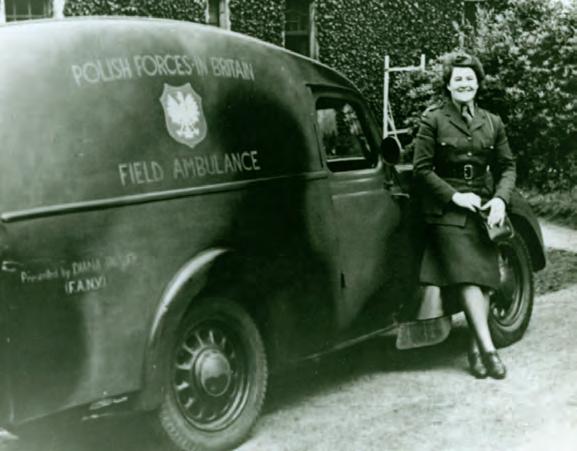
The rough, narrow road from Bangkinang to Padang stretched for 450 kilometres through jungles and across mountains. It took 20 hours to complete each trip.
The Bangkinang facility was located in the central part of the island of Sumatra. At the end of August 1945, it held mostly Dutch citizens, some 539 men and 1,244 women and children.
Fletcher arrived to find the internees in very poor condition. Her job was to evacuate them to safety at Padang on the island’s west coast for repatriation. At the time, there were no Dutch or other Allied military personnel in the area and Indonesian nationalists stepped into the power vacuum the Japanese surrender had created.
On Aug. 17, after news of the Japanese surrender was confirmed, the leaders of the Indonesian nationalist movement, Sukarno and Mohammad Hatta, declared Indonesia an independent republic. Nationalist groups roamed the country and imprisoned many Dutch civilians.
Fletcher turned to the only readily available source of manpower and vehicles—the Japanese 25th Army. She persuaded their commanders to provide 15 trucks, 40 armed soldiers and an interpreter, English-speaking Sergeant Art Miyazawa. Drawing on her experience as a driver and her knowledge of motor mechanics, Fletcher had broken-down vehicles salvaged and repaired, adding 10 trucks to her convoy.
“It shook the Japanese to find themselves under the command of a woman,” she later noted.
Fletcher travelled back and forth along each convoy, to deal with rebel barricades, sabotaged bridges and hazardous road conditions. On the third convoy, Fletcher got caught between two vehicles, causing a four-inch gash on her scalp. A Japanese doctor treated the wound, and she was back to work two hours later.
This accident earned her the respect of the Japanese soldiers who were working with her.
“From there the Japanese couldn’t do enough for me,” said Fletcher. “My interpreter told me they had discussed that night and he said they would like me to know I had won the respect of every man in the convoy, but they decided they would never marry a European woman—they were too tough.”
When the monsoon season came, it turned roads into long quagmires, which the rebels continued to barricade.
When British troops finally arrived, the brigadier in charge allowed Fletcher to remain in command of the convoys at her request. She concentrated on working with the Japanese to complete the evacuations.
During her second-last journey, Fletcher and a Japanese officer were in a jeep at the head of the convoy when they had a flat tire. After fixing it, she noticed that two Dutch internees in the vehicle behind



Joan Bamford poses for a photo during her wartime service in Britain. The sword Bamford was gifted from a Japanese soldier she worked with in the Dutch East Indies.
them were missing and a rebel was attempting to steal the car.
Fletcher shouted “Out!” at the rebel, who instantly followed her command and ran away. She and Miyazawa quickly found the two Dutch passengers in a nearby hut, tied up and held by three armed rebels.
“I was yelling at the top of my voice, to keep up my courage, but they didn’t understand a word of it,” Fletcher later recounted. “I added colour by cursing a blue streak.”
She grabbed a knife, cut the internees free and quickly exited the hut. Fortunately, the rebels did not follow.
By the time the final convoy occurred, 70 Japanese soldiers were assigned to the journey, with many of the vehicles mounting machine guns. Fletcher also put five armed soldiers in the lead vehicle, which she had fitted with a sturdy bumper to crash through any barriers. Fletcher remained unarmed throughout the evacuations.
and settled in her left jawbone. As a result, she lost half of her lower teeth and part of her jaw, which was replaced through plastic surgery.
On Oct. 29, 1946, The London Gazette announced that Fletcher had been appointed a Member of the Order of the British Empire, “For services to the Forces in the Far East.” When she learned of the award, the unassuming Fletcher’s remark was typical: “My, it was a surprise.”
She was also awarded the British General Service Medal with the South East Asia 1945-46 bar.
Fletcher returned to Canada on the Queen Elizabeth for a well-deserved rest and to visit her parents, by now living in Vancouver. But the fearless woman’s exploits were not yet over.
Because Fletcher could speak Polish and had worked with their soldiers in exile in Scotland, the British government asked her to go to Poland to work with the informa-
Fletcher fled Warsaw on a Royal Air Force courier aircraft, avoiding arrest by a few hours. She “went through customs with a nightdress, a toothbrush and the six aspirins I had swallowed to hold my stomach down. I was a nervous wreck. I didn’t carry anything that would give them an excuse to hold me.
“I am glad to be going home to get as far away as I can from Communism.” For their part, Polish authorities maintained they had never intended to arrest her.
Fletcher returned to Canada aboard the Empress of Canada and spent her last years in Vancouver. She remained in touch with Art Miyazawa and even attended a reunion of Yamashita Butai’s soldiers.
Fletcher died suddenly on April 30, 1979.
The Yamashita Butai’s honour roll of deceased veterans includes Fletcher. After her death, Miyazawa recalled the “fair-minded woman lieutenant who amazed our troops
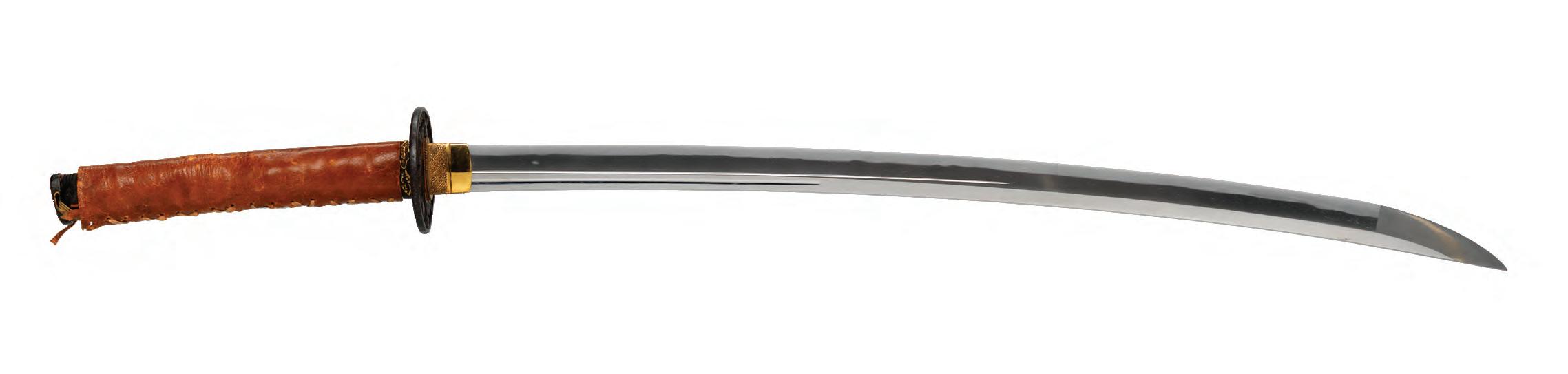
unit that had helped her, to be exempted from a year’s hard labour, which most Japanese soldiers had to perform after the war.
By late November, Fletcher was in Hong Kong, where she came down with swamp fever—malaria. She returned to England in July 1946, but the disease returned

the Soviets and the story about the Polish girl was propaganda. She believed it was because she helped three Britons involved in a dispute with Polish authorities.
Fletcher stated the secret police followed her everywhere she went in Warsaw and her hotel room was searched several times.
After her death, Joan Fletcher’s tale of courage largely disappeared for several years. Then, in 2001, a five-part television series was produced for History Television that focused on women who served Canada during the Second World War. Titled “Women of Courage: Untold Stories of WW II,” the segment about Fletcher is called “Rescue from Sumatra.”
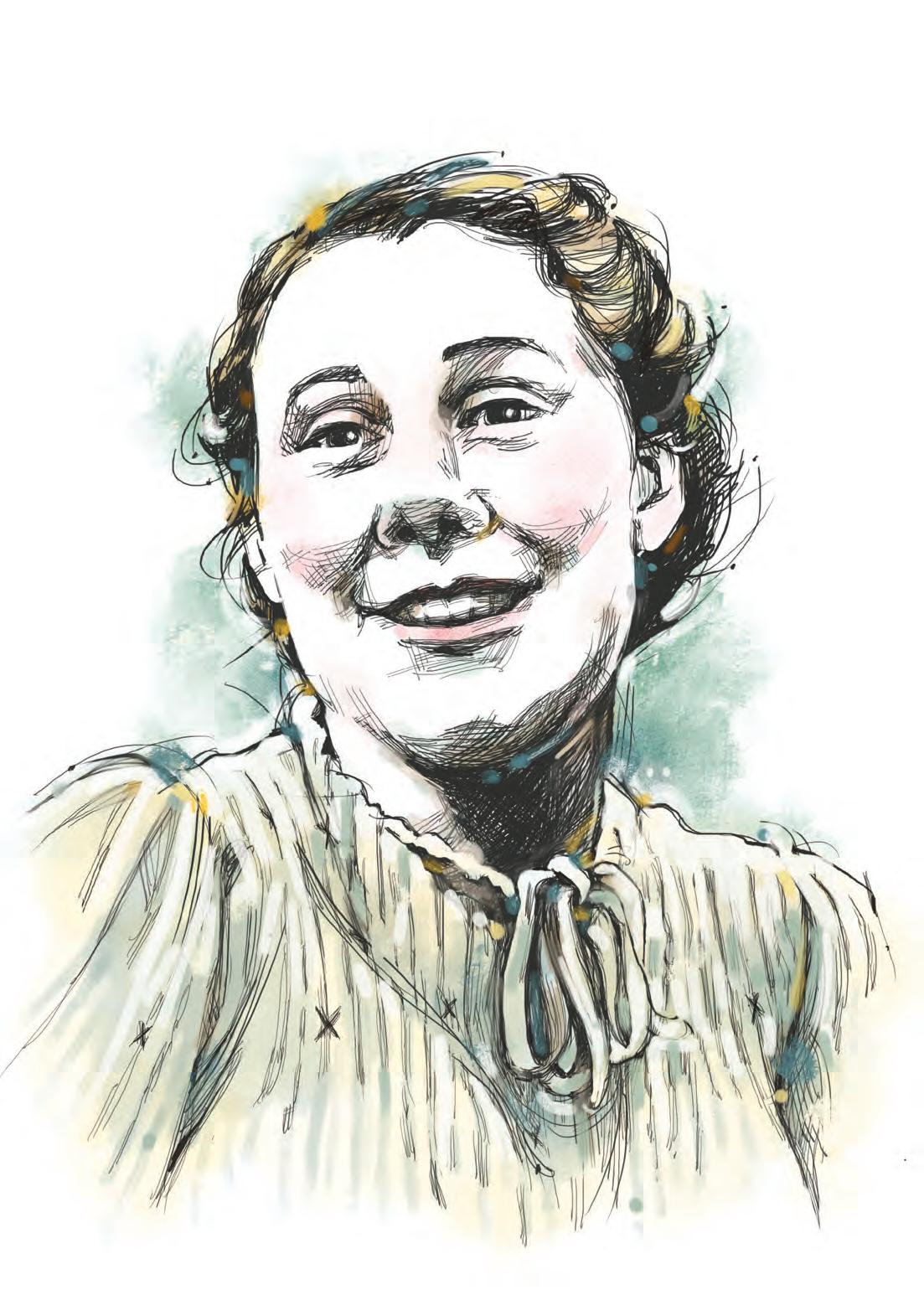
How determination and an innate curiosity led Gladys Arnold to become the only Canadian journalist in Paris when France fell to the Germans in WW
II
By Valerie Knowles | Illustration by Kerry Hodgson
Searching for answers

Gladys Arnold was the only Canadian journalist in Paris as the city fell to the Germans in June 1940.
was June 1940, and the Maginot Line had been outflanked. French and British troops had failed in their attempt to stop the German advance toward Paris. From the skies, German bombers unleashed deadly cargo while, in an effort to flee France’s capital, desperate refugees in cars, on bicycles and on foot clogged roads leading to the coast and to relative safety.
Among these hordes was Gladys Arnold, the only accredited Canadian journalist to witness first-hand the fall of Paris and France. She had managed to escape the French capital by car in the grey dawn of June 12, only one day before the Nazis invaded the city.
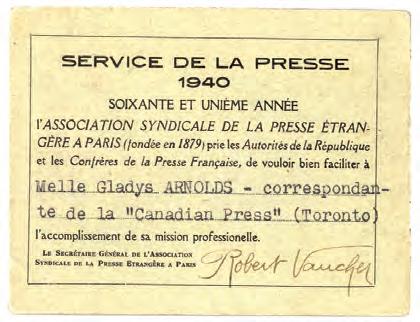
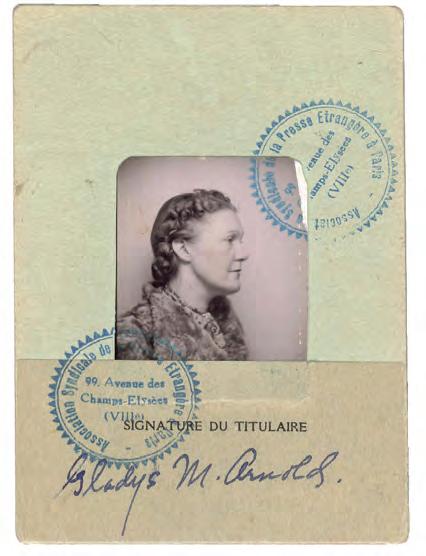
Years after the fact, Arnold vividly recalled one of the nights during which she was a refugee.
“Just before midnight a great wave of German bombers came over,” she wrote in
her memoir One Woman’s War. “They were dropping flares.... Voices screamed. There were sounds of people fighting, of smashing blows. It was bedlam in the dark. People somehow found space to cower by the road or against the walls. A space opened before us as people moved aside to seek shelter.”
In the five days she was on the road, this intrepid, determined young woman used scraps of paper to record interviews with displaced French, Belgian and Dutch people. She attempted to mail these stories, but with the country’s government and infrastructure collapsing, her efforts were in vain. None of her articles reached its destination.
When conducting her interviews, Arnold never heard a defeatist word among the “ordinary people” where, according to her, the true French spirit lived, not in their
trusted military and political leaders, whom she labelled the real defeatists. It was, claimed Arnold, an experience that changed the course of her life.
But even by the age of 35, this woman had led a remarkable existence. In fact, she had already overcome many challenges to reach this stage of her celebrated career, one that was partly shaped by her early years.
Gladys Arnold was born in a small Saskatchewan town, Macoun, in 1905, the year the province was created. The first child of Albert and Florida May Arnold, she led a nomadic existence in her early years since her father’s job as a Canadian Pacific Railway troubleshooter required that he frequently move his family from one town or city to another.
thesis in history, “Gladys Arnold: The formative years.” Not only did Arnold come to depend on herself and her own abilities to make her way in the world, but the loneliness and lack of love she felt after her mother’s departure led her to seek solace in books and writing.
Further uprooting occurred after his untimely death in 1914. Arnold’s mother left her daughter in the care of relatives and moved east with her son Max, Arnold’s only sibling, to study nursing. Because of all this upheaval, Arnold attended at least a dozen different schools before she graduated high school.
Her father’s passing when she was only nine years old and the resulting breakdown of the family unit affected Arnold deeply, wrote Joanna Leach in her 2008 master’s
This eventually led to a career in journalism. The job would satisfy her abiding curiosity about the world, an inquisitiveness that would be expressed in the pledge she made in 1929 to “someday see every country in the world, get everything out of every day, live in the pursuit of all my life and there make my future.”
But before she entered journalism, Arnold obtained a teaching certificate in 1925. This led to a job at a schoolhouse in the remote village of Amulet, then at other rural

great wave of German bombers came over. Voices screamed. There were sounds of people fighting, of smashing blows. It was bedlam in the dark.”
Gladys Arnold’s French press credentials.
villages in Saskatchewan. Her teaching career ended when she moved to Winnipeg to study at Success Business College. After graduating she taught shorthand at the school for a year before jumping at the opportunity to become secretary to the editor of Regina’s Leader-Post in 1930. Although she lacked any formal journalism training, it wasn’t long before she was promoted to reporter, a significant achievement in a male-dominated profession that was traditionally patriarchal and very resistant to change.
Four years later, Arnold was promoted to women’s editor and began writing a column. In it, she covered traditional women’s topics, but she also attempted to broaden the horizon of her readers by discussing arts and cultural events in Regina, suffrage, socialism and pacifism, as well as international developments such as the rise of fascism in Europe. Her priorities weren’t shared, however, by her editor Bob MacRae, who, in a letter, informed her, “Only a fraction of our readers get het [sic] up about economics and foreign policy...they are more concerned with love, food, the movies, clothes and family affairs.”
In the five years that she spent at the paper, Arnold honed her journalism skills and acquired a better understanding of herself and her goals. While doing so, she became more convinced than ever that she wanted to advance in areas hitherto largely reserved for male reporters and to satisfy her curiosity about developments in Europe.
So, in 1935, Arnold left the Leader-Post and headed for Paris. In her memoir, she described the reasons for this move.
“As a young reporter with the Regina Leader-Post, I had gone to Europe in 1935, intending to stay for a year or so. My reason for going can be boiled down to two words: political curiosity.
Living through the drought and unemployment of the Depression in Saskatchewan, those of us in our twenties passionately debated the pros and cons of socialism, communism, fascism and democracy, searching for answers as to why more than a million Canadians could not find a job,” she wrote. “In Saskatchewan it was difficult to examine these isms first hand. But in Europe surely we would find some answers.”
Arnold grew to love Paris and its people and, in the four years she spent there, she learned French and immersed herself in the culture. Initially, she submitted freelance articles with a Canadian angle to the Canadian Press (CP), as well as to newspapers in Western Canada. In 1936, CP hired Arnold as its Paris correspondent (for $15 per week). During this period, she reported from France, Belgium, Austria, Germany, Czechoslovakia, Switzerland, Italy, Hungary and from the Spanish border during the civil war there.
However, in August 1939, with war threatening, Arnold sailed home to Canada to visit her family.
“I had been homesick for the sight of the big night sky and the golden haze of windborne chaff, and for the smell of wheat baking in the sun,” she wrote. With the eruption of the Second World War, Arnold realized she had to return to Paris. “Staying home,” she recalled, “would be like leaving a theatre just after the curtain rises and the main characters are identified.” Determined to see the conflict between fascism and democracy first-hand, she left Canada for France in mid-October.
Back in Paris, she found accommodation at the Foyer International and from this cozy residence she spent time searching for stories during what was then the so-called Phony War. Although she, like other journalists, yearned to visit the Maginot Line, the front or the naval bases, she was
ordered by CP to “stick to human interest stories.” The boys in the London bureau would look after the political and military ones.
Perhaps unwittingly, however, the national wire service gave her what she considered to be the real story. This entailed reporting on what the troops were eating and how the French army managed to feed 200,000 troops at one supply station every day. She also went on expeditions to witness French women at work, running farms, driving buses, staffing factories and doing jobs that had previously been done by mobilized men. It was while she was dispatching stories such as these to CP that she learned of the Germans’ imminent arrival in Paris and the need to escape France.
Leaving the country that so enchanted her for England, then Canada, after the fall of Paris was exceedingly difficult, both emotionally and physically. There was not only the wrenching departure from friends, but also the hardships endured on the perilous voyage from Le Verdon, France, to Falmouth, England.
Along with the constant fear the small cargo ship she sailed on might be sunk at any moment, there was the physical discomfort endured by the vessel’s passengers, including more than 300 refugees and over 20 wounded British soldiers.
When the ship’s Dutch captain spotted Arnold’s typewriter, he asked her to record the names and addresses of all passengers as, should the vessel be torpedoed, there was only a handful of lifebelts and boats available. The list included the names of several political figures.
After the ship’s safe arrival at Falmouth, Arnold made her way to London, where she succeeded in getting an interview with General Charles de Gaulle, the leader of the Free French,
the French military and civilian forces outside mainland France. He left a lasting impression on her.
“I was surprised by his great height, his grave and thoughtful mien and the warmth of his keen eyes,” she said. “As he welcomed me, his voice was soft and his manner touched with old-world courtesy.”
So captivated was Arnold by de Gaulle that she blurted out: “Is there a place for me in your volunteer army?” Whether she realized it or not, this offer foreshadowed a new direction her life would soon take: a career serving France with the Free French.
As the young general didn’t have even one tank at his disposal, let alone any troops, Arnold decided she would remain in London chasing war-related stories. The Canadian Press, however, had different ideas. It wanted her back in Canada and, in August 1940, it arranged for her to return on a ship carrying British youngsters destined for new lives in her homeland. Arnold was asked to report on the crossing and the children’s reaction to it.
Back in Canada, Arnold did follow-up stories about the children, along with other assignments for CP. The thought of serving the Free French cause, however, continued to consume her and, in July 1941, she resigned from the Canadian Press and set about helping establish the Free French Information Service in Ottawa. She became director of the organization when it was attached to the French Embassy postwar.
Arnold retired in 1971. Four year later, she was named Chevalier de la Légion d’honneur for her service to France, a recognition that followed her nomination as honorary brigadier in the French Free Forces in 1940.
The former small-town prairie girl, resourceful and courageous journalist died in 2002 in Regina. L
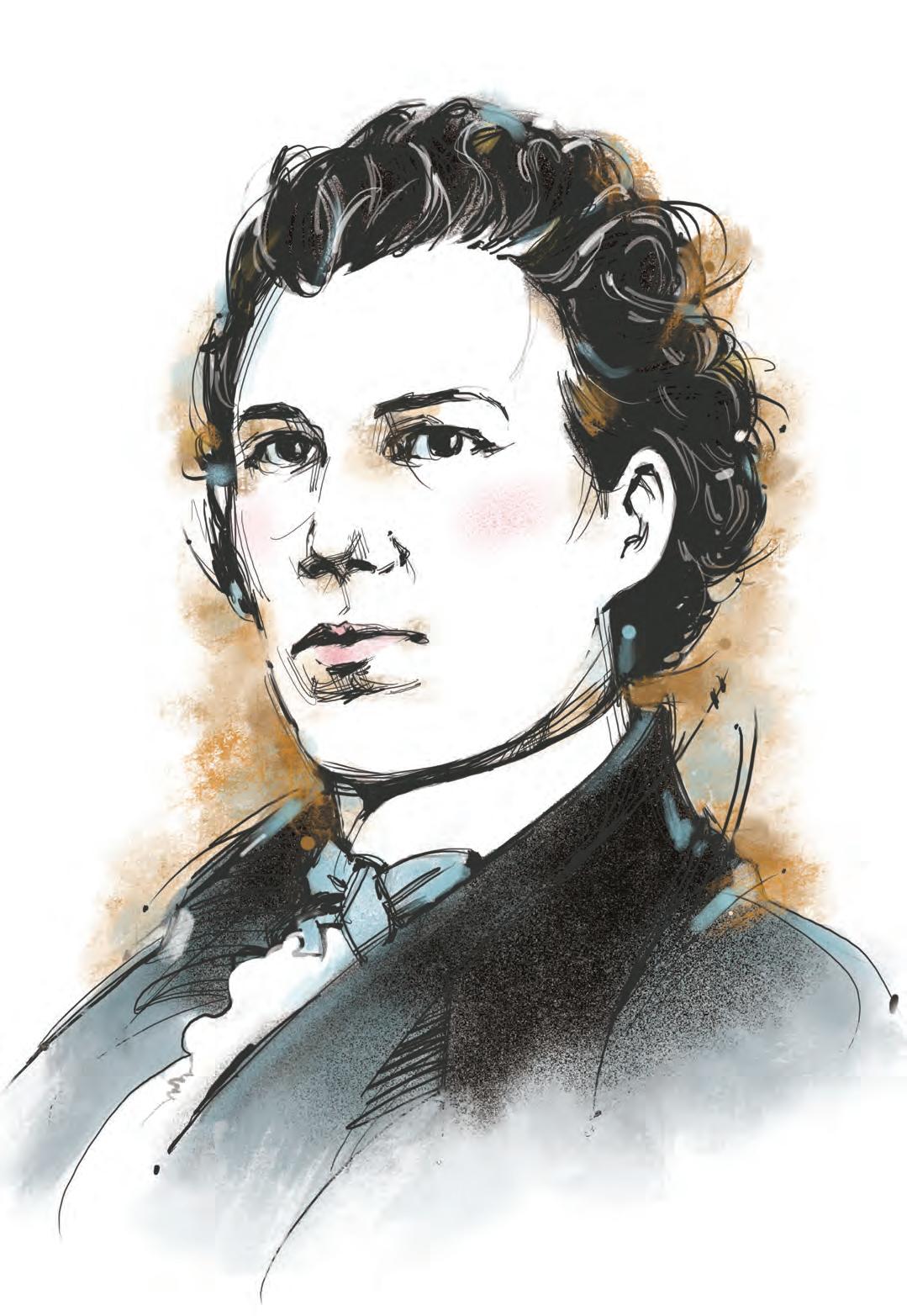
During the American Civil War, a young New Brunswick girl disguised herself as a man— and served as a soldier in the Union Army
By John Boileau | Illustration by Kerry Hodgson
Alias
Franklin Thompson

arah Emma Evelyn Edmondson took it as long as she could. Born in December 1841 in the small farming community of Magaguadavic, about 60 kilometres southwest of Fredericton, Emma was the youngest of four girls and an epileptic boy. When she arrived, her father Isaac resented the fact she was not a healthy male who could help on the farm. Despite excelling at everything she could to prove she was as good as a boy—riding, shooting, swimming—it still was not enough for her dad. With limited opportunities, Emma had undoubtedly reconciled herself to the lot of a typical mid-19th century woman: early marriage, followed by a lifetime of household labour.
Then a book she received from a passing peddler when she was nine years old changed everything. It was the 1844 novel Fanny Campbell, the Female Pirate Captain. In it, Fanny disguises herself as a man to rescue her lover. She does so by the simple expedient of cutting off her brown curls and donning men’s clothing.
The realization that such a possibility was also open to her hit Emma like a freight train. After surreptitiously reading the book (when she should have been planting potatoes), her one goal was to achieve the independence Fanny had. As she later wrote, when she first read of Fanny’s adventures, she felt as if an angel had touched her with a live coal.
When she was 15, Emma’s father arranged her marriage to an
When she first read of Fanny’s adventures, she felt as if an angel had touched her with a live coal.
older man. The prospect upset her so much that, assisted by a family friend, she ran away. She changed her last name to Edmonds and eventually ended up as the co-owner of a millinery shop in Moncton, N.B.
When her father discovered her whereabouts, Emma quickly packed up and moved to Saint John, N.B. Once in the port city, she disappeared and emerged as a new person. Emma cut her hair short, tanned her face with stain and wore men’s suits. And she changed her name again.
As Franklin (Frank) Thompson, Emma got a job as a travelling salesman peddling Bibles door to door. Her employer later stated that in 30 years, none of his men sold more Bibles than Frank. In 1860, Emma moved to Flint, Mich., where she continued to sell Bibles.
In May 1861, a month after Confederate forces started the American Civil War by firing on Fort Sumter, Franklin Thompson enlisted in the Union Army, swept up in a spirit of patriotism toward her new country. She joined Company ‘F’, 2nd Michigan Volunteer Infantry Regiment. Medical examinations were cursory in those days, consisting only of a few questions and rarely requiring the prospective recruit to remove any clothing. Due to her small stature (five feet, six inches) Frank became a “male” field nurse. Thousands of other recruits were smooth-faced boys wearing ill-fitting uniforms, so Emma had no difficulty fitting in.
She was also helped by the male modesty standards of the time. In the field, soldiers slept
fully clothed and bathed in their underwear. Whenever they could, they bypassed smelly open pit latrines for a private spot in any nearby woods. Emma did likewise.
After training, Emma’s unit was sent to Virginia to join Major-General George McClellan’s campaign. She was assigned to a hospital unit. Before McClellan could attack, however, he needed a spy to go behind Confederate lines and replace a Union agent who was executed by the rebels. Emma volunteered.
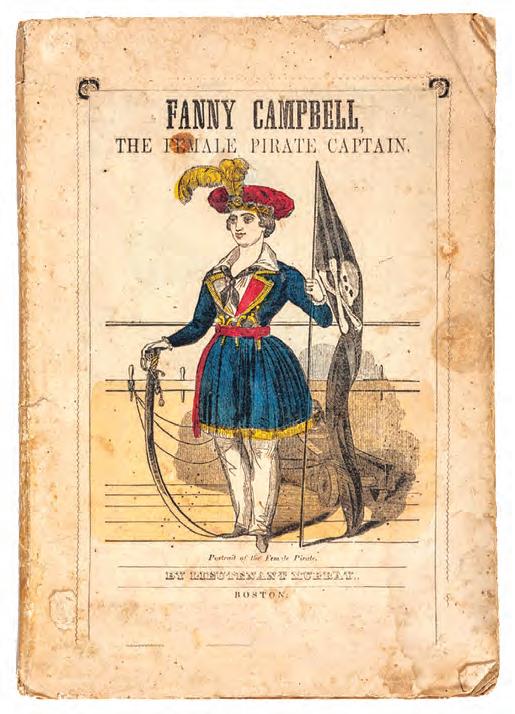
As a youngster, Emma read the 1844 novel Fanny Campbell, The Female Pirate Captain, which influenced her greatly.
To avoid suspicion, Emma disguised herself as a Black man. She darkened her skin with silver nitrate and wore a curly black wig. When she arrived behind the rebel front, she was put to work with other Blacks digging defences for the expected Union assault. After the first day, Emma’s hands were so badly blistered that she was able to change jobs and get work in a kitchen.
Emma kept her eyes and ears open and learned much valuable information about the Confederates. After her second day, she was given picket duty, which allowed her to escape and return to the Union side. Emma brought back crucial details about Confederate morale, numbers, weapons and plans. Then she returned to her duties as a male nurse.
Two months later, Emma was again ordered to infiltrate the rebel lines. This time, she posed as a fat Irish peddler woman. She once more brought back valuable intelligence to the Union Army.
By this time, the 2nd Michigan was transferred to the Shenandoah Valley to take part in a campaign under Major-General Philip Sheridan. Emma’s reputation preceded her, and she made many more clandestine journeys into the Confederate lines, including disguised as a Black washerwoman. In that part, she was cleaning an officer’s coat one day when a packet of official papers fell out of a pocket. Quickly scooping them up, Emma returned to Union lines, where the papers proved to contain useful information.
Emma was again transferred with her unit, this time to Major-General Ambrose Burnside’s forces in Kentucky. Her spying continued, including masquerading as a Southern civilian sympathizer. She fulfilled her mission to assist in discovering a Confederate spy network in Louisville.
Emma and her unit were next sent on what would be her final transfer. Assigned to Major-General Ulysses S. Grant for the Vicksburg Campaign, Emma continued her nursing job in a hospital, but became

ill with malaria in April 1863. She was faced with a dilemma—how could she get treatment without having her gender discovered?
Emma was forced to desert. She checked herself into a private malaria hospital in Pittsburgh—as a woman—and quickly recovered. Emma planned to return to the army, but then she saw a list of deserters posted in the window of a newspaper office, which included Private Franklin Thompson. She could not adopt that identity again.
Emma went to Washington, where she finished out the war as a civilian female nurse for the Christian Sanitary Commission.
After the war, Emma wrote a popular, and rather lurid, account of her escapades titled Nurse and Spy in the Union Army, which she later admitted “was not strictly authentic.” The 1865 book sold 175,000 copies and was a best-seller.
Emma became the most famous of the approximately 650 women who enlisted as men during the Civil War, some 250 for the Confederacy and 400 for the Union. Of all these women, only Emma is definitely known to have published a memoir of her experience, becoming the most famous female soldier of the conflict.
Once the book was finished, Emma became homesick. She returned to New Brunswick for a short time before moving back to the U.S. There she married fellow New Brunswicker Linus Seelye in 1867, settling initially in Cleveland and raising three sons, one of whom enlisted in the army “just like Mama did.”
But Emma was not completely happy, as she was still officially branded a deserter in the records. She had served faithfully in the army for two years, not only as a nurse and spy, but also as a colonel’s orderly, postmaster and dispatch carrier, and had seen action at some of the greatest battles of the war. Supported
by her friends and fellow soldiers, she petitioned the War Department for a full review of her case.
In 1883, she received an honorable discharge, then in 1884, a special Act of Congress granted Sarah E.E. Seelye, alias Frank Thompson, a veteran’s pension of $12 a month.
Emma lived in several other locations before she settled in La Porte, Texas, where she spent her last few months rewriting her autobiography. She died before it was completed, on Sept. 5, 1898, at 56. In honour of her wartime service, she was reburied in the military section of the Washington Cemetery in Houston in 1901.
Several years after her death, her bravery, daring and resourcefulness were recognized by several
institutions. She was inducted into the Michigan Women’s Hall of Fame in 1992, the U.S. Military Intelligence Corps Hall of Fame in 1998, and the Harvey Regional Heritage & Historical Association Wall of Recognition in 2017.
Historical markers were also erected in her honour by the Historical Society of Michigan near the Genesee County Circuit Court building in Flint, Mich., in 1992 and by re-enactors from Company ‘I’, 20th Maine Volunteer Infantry Regiment near her Magaguadavic, N.B., home in 2023. The little girl from a New Brunswick farm, who yearned for the freedom that came with being a male in the 19th century, had come a long way. L
An illustration from Emma’s 1865 account of her soldiering, Nurse and Spy in the Union Army
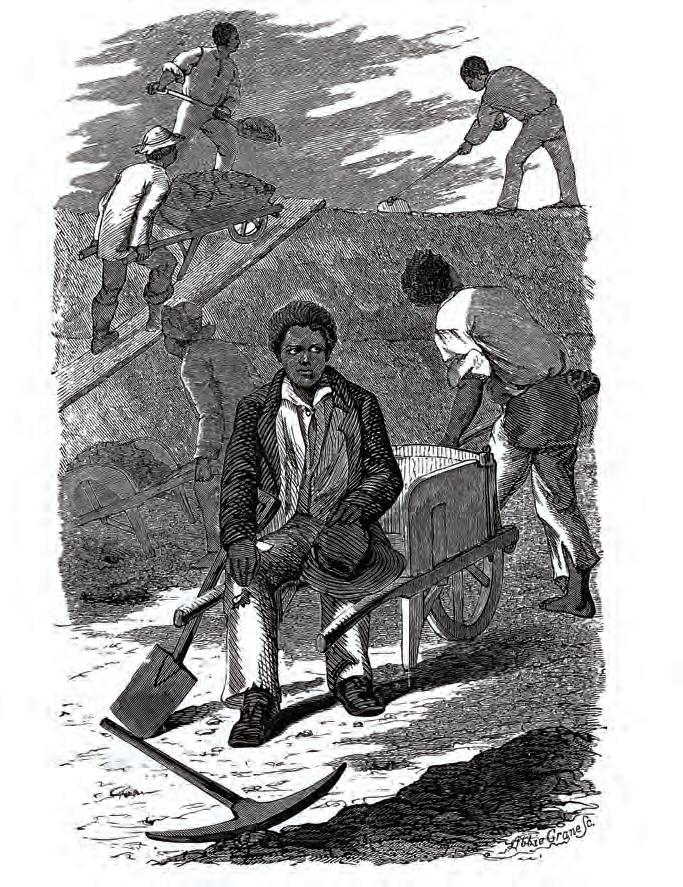
Fanny Campbell, The Female Pirate Captain ; University of Michigan Library Digital Collections
FRONT By Alex Bowers

THE OUILT MAKERS

How Canadian women and girls crafted for victory in WW II

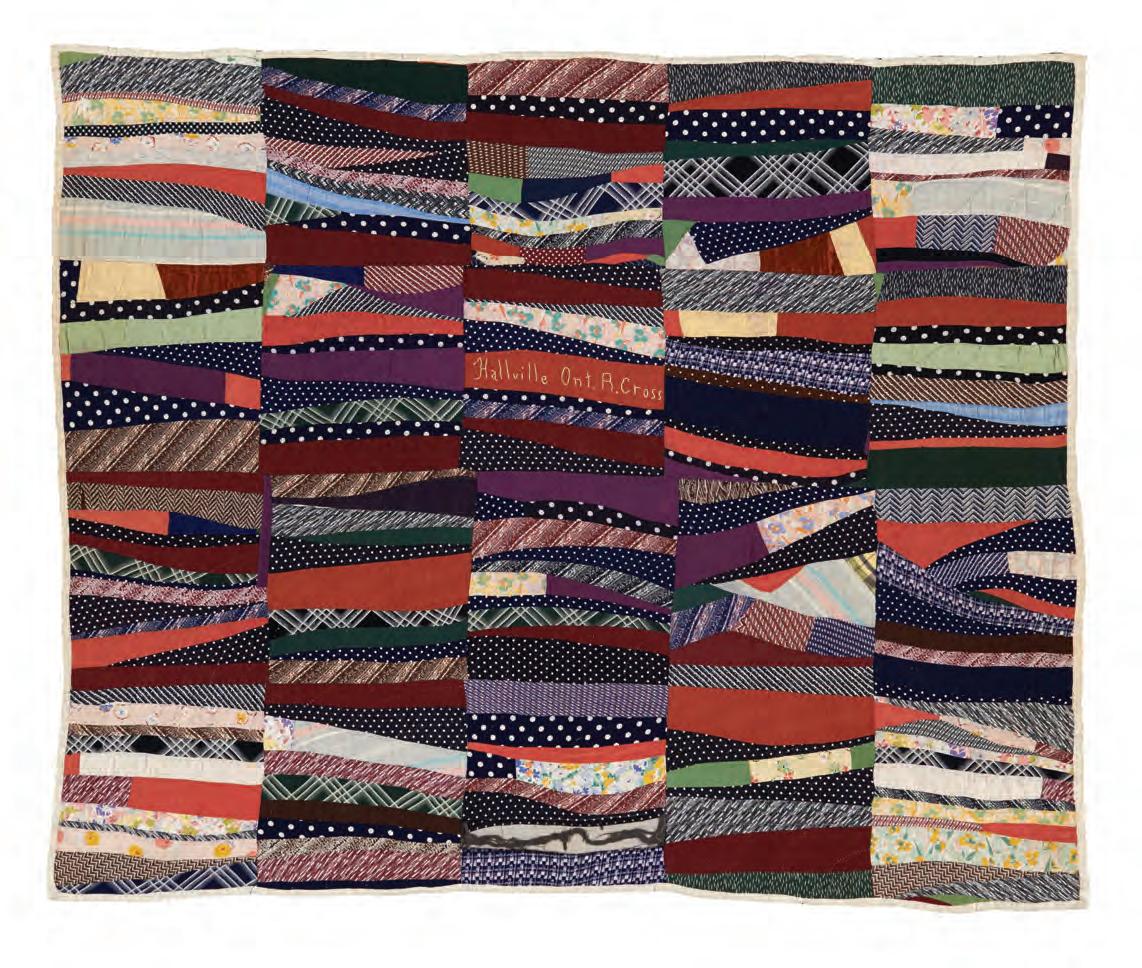
Quilt Collection/Bill Richard; The Quilt Collection

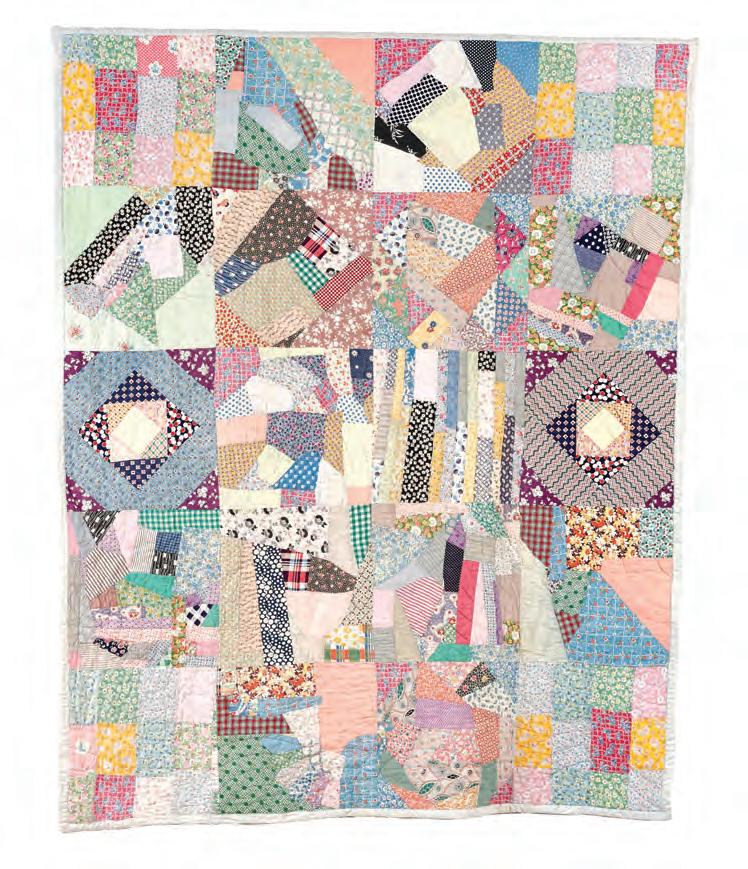
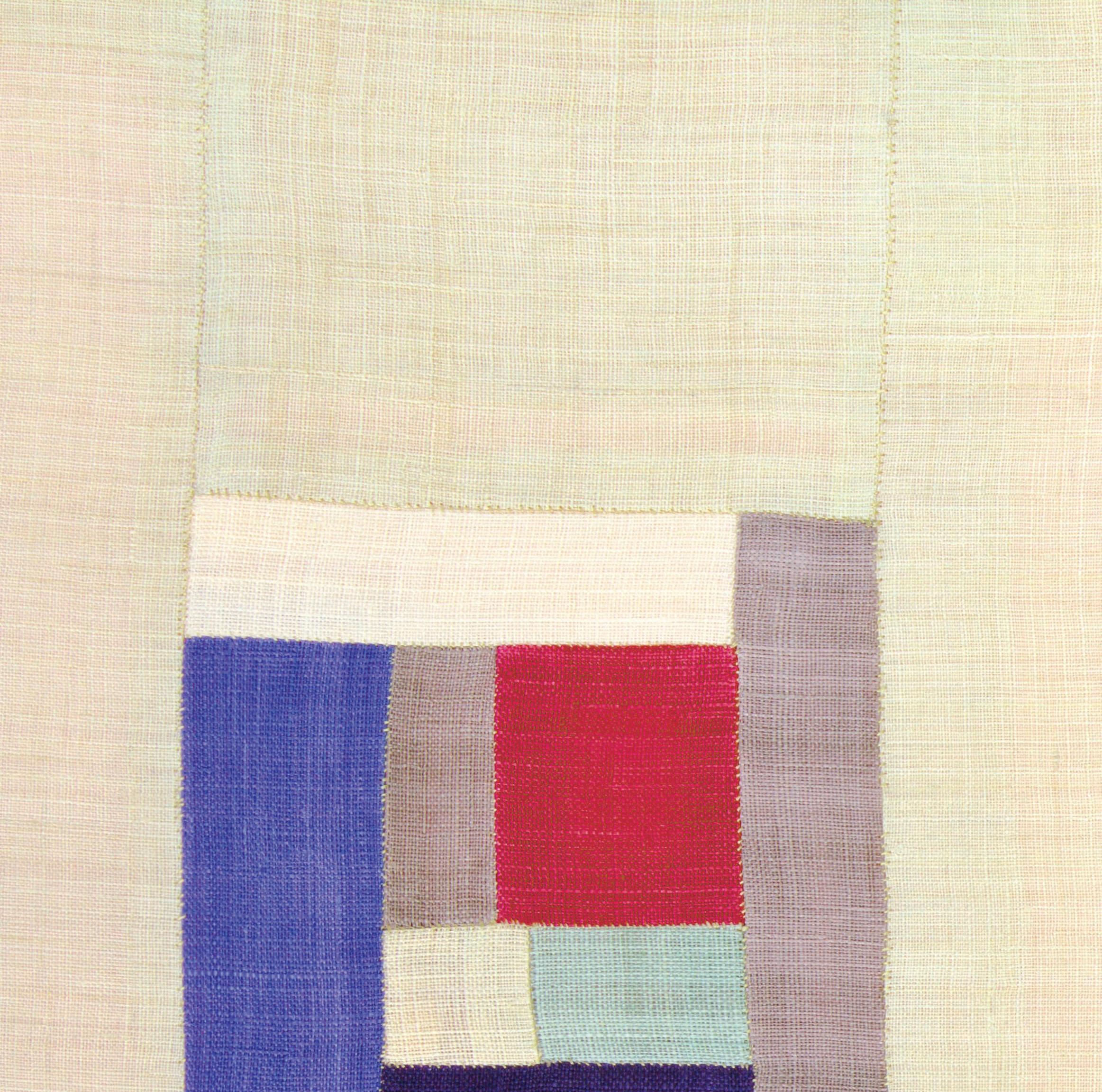
Two examples of Canadian-made WW II-era quilts, the so-called “Crazy Patchwork Canadian Red Cross Quilt” (right ) and the “Hallville Canadian Red Cross Quilt” (opposite hrough hushed voices, stooped shoulders, bent heads and labouring hands, the women quietly fought. They gathered in Alberta farmhouses, Ontario church halls and Maritime libraries, their weapons of choice that of needle, thread and fabric.
A dozen crafters—some older, others younger—maintained focus as the more experienced stitchers, those with skills born of Depression-era necessity or passed down generationally, offered guidance to amateurs, their apprentices-in-all-but-name.
The patchwork forum was a safe space to improve, yes; where abilities may be honed to form a quilt’s three layers, from top to backing to its middle batting—what those poor bombed-out Britons for whom the bedcovering was made, tended to call wadding.
But the congregation’s role, its purpose, went far beyond a makeshift classroom.
Here, in the company of home front do-gooders, of Red Cross volunteers, Ladies’ Auxiliary members and Women’s Institute supporters, there existed community, itself the product of a common goal: Bringing comfort and care to the war’s weariest.
This is the story of those quilt makers.
Sewn into the fabric of nationhood is Canada’s quilting history, explained expert researcher, author, military veteran and quilt maker Pam Robertson Rivet. “There are some great examples [of quilts] throughout much of the 19th century, but the Confederation Quilt is particularly special. It
was made by Fannie Parlee, who used fabric from dresses worn at formal events during the 1864 Charlottetown Conference.”
While quilting trends fluctuated during the succeeding years and decades, it returned in full swing after the outbreak of the First World War. The privations of life in the trenches galvanized Canadian women and girls like never before, their collective efforts bolstered by the still-fledgling Canadian Red Cross—legally established in 1909.

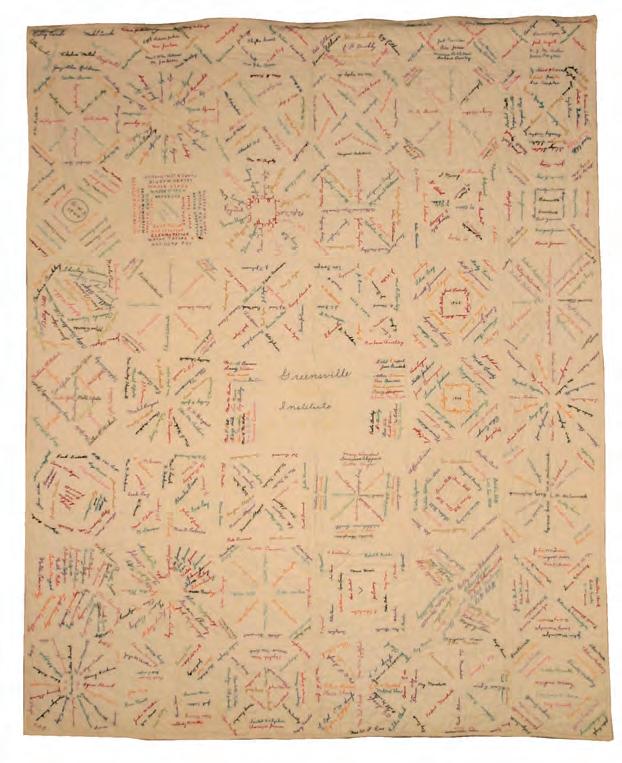
“The First World War was a time for fundraising quilts,” said Rivet. “Of those, the most popular were probably signature quilts, where people would pay a few cents to have their names embroidered into the fabric. Once complete, they were raffled off to raise additional money [for the war effort] in which $1,000 could outfit 126 hospital beds with sheets and blankets or support in organizing a field ambulance.”
Beyond crafting quilts, volunteers produced socks, sweaters, and “miles and miles” of bandages. Equally, patriotism could manifest itself in the canning of preserves and preparing care packages for soldiers, sailors and airmen fighting overseas. By the 1930s, however, the Great Depression ensured that charity began at home. Crafters continued to form social circles for many important tasks, keeping fabric scraps from Eaton’s catalogues and recycling any and all cloth leftovers. Though impractical for earning money, quilting was a frugal option in household warmth. It was a make-do-and-mend mentality destined to endure, indeed amplify, into the Second World War, when “women were getting themselves organized before the conflict had even been declared,” said Rivet. “It was evident that they knew what was coming.”
A seismic shift in societal expectations for Canadian women dawned on Sept. 10, 1939, expanding exponentially during the following six years. In the preceding peacetime, nearly 600,000 women—out of a nationwide population of 11 million—held jobs. By 1945, 1.2 million female volunteers had served king and country, be it through the tens of thousands working in war industry, the 4,480 enlisted as nursing sisters, or the broader 50,000 in the armed forces.

Gender norms were turned on their head. Nevertheless, there remained an ever-critical place in the Allied war effort for traditionally female homemakers, from planting victory gardens to salvaging metal for collection drives. Civilian women prepared parcels for troops overseas. They supported displaced people by donating clothing and helping to establish refugee centres. Investing in war bonds, creating non-perishable foodstuffs and volunteering labour all became standard practices, mirroring similar acts of the Great War.
Ontario’s Greensville Women’s Institute created this signature quilt as a fundraiser in 1944. Individuals paid 50 cents each to have their names embroidered on it.
This is the story of those
quilt makers.
but there are many other types of quilts made during the period.
“Whole-cloth quilts were one such type, made from one large piece of fabric or sometimes two sewn together. There were a lot of crazy quilts done in a similar style to the Confederation Quilt; people think these were just randomly placed scraps, but they were actually intentionally made with a great deal of thought.”
Also as before, women wielded knitting needles and sewing machines, fashioning upward of 50 million comfort items, including mitts, scarves, balaclavas, socks, slippers, pyjamas and more, as well as wartime essentials, including uniforms and surgical face masks. The Canadian Red Cross again played a leading role in orchestrating efforts, tasked with prioritizing humanitarian aid for those in the direst need of it.
By the fall of 1940, as the German Luftwaffe rained hell on London and other British cities, that aid was primarily directed toward civilian victims of the Blitz. For Canada’s quilt makers, news of destitute families devoid of most possessions became a call to action. Organizations, including the Imperial Order Daughters of the Empire and various local women’s groups, mustered their members.
“They were often getting together in homes and community halls,” noted Rivet. “Patchwork was being done, which is essentially combining squares of new or leftover fabric,
Despite this, it was quantity, not always quality, required by the Canadian Red Cross, meaning that a sizable proportion of quilts were decidedly utilitarian in appearance. Rationing’s impact on clothing shortages, combined with the Red Cross’s own limited supplies, resulted in most volunteers having to improvise.
Offcuts from garment manufacturers, remnants of worn-out clothes and leftover “orphan blocks” from completed quilts were incorporated into new patterns.
Textile constraints aside, plenty were as visually striking as they were practical.
A certain degree of uniformity came in labels attached to each quilt reading “Gift of the Canadian Red Cross Society,” with personal notes identifying place names, groups or individuals discouraged. “But that wasn’t always the case,” said Rivet.
“Every once in a while, the more rebellious women might embroider the name of their town or organization into the quilt itself. Others even snuck in messages that contained their own names and addresses. There appears to be some resistance in being told

what to do in terms of how, exactly, they could support the war effort.”
In a sense, however, the women were just as much helping themselves.
“Their husbands were gone,” Rivet continued. “Their sons, neighbours and loved ones were gone, some never to return. Many women had few other people to talk to, so quilting bees, or sewing days, could offer them a community of belonging.”
Grief-stricken volunteers, bearing the tragic news of loss overseas, could, if they so chose, seek solace in fellow quilt makers. “Occasionally,” Rivet suggested, “sitting in melancholy can be comfort in itself. So, if you’re in a community that shares those feelings, it can sometimes be a better way, at least for certain people, to process it.”
Their collective commitment, meanwhile, was resolute from province to province. Records lack consistency, but widely referenced figures indicate that Nova Scotians contributed roughly 25,000 quilts between 1941 and 1945; Albertans’ total output topped 43,000; and Saskatchewanians supplied 50,000. Perhaps unsurprisingly, the greatest producer was densely populated Ontario, with donations hitting the hundreds of thousands.
Collected by the Red Cross, they would find homes with those experiencing homelessness.
Alice Amy Treeby, a young resident of the English village of Strete, remembered the day she was ordered to leave. It was, she wrote, the second week of November 1943, and “we were given notice to quit our homes and farms within six weeks to make way for military training of American troops” ahead of D-Day preparations.
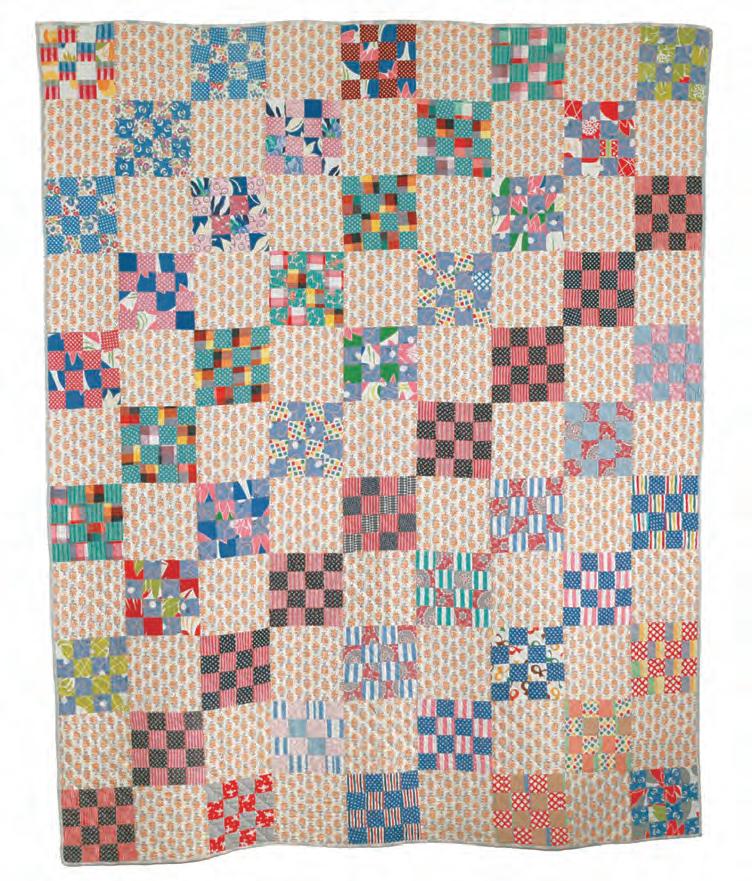
The entire Treeby family resettled for 11 months before being permitted to return. For their troubles, they received five Canadian Red Cross quilts, one a 16-block patchwork crafted from
dress cottons and rayons, backed with pyjama material or striped flannelette, and adorned with what appear to be Spitfire motifs.
The following year in the same west coast English county, Bill Richard was vacationing with his mother, sister and neighbours when they learned their home in the town of Bexley had been destroyed. The Richards, too, received quilts, one consisting of spotted, striped and floralpatterned strips, mostly rayons.
“The quilt stayed on my bed for years and then on my children’s bed,” he wrote.
Maureen Hill of London recalled her father fixing a ceiling light when a V-2 landed on the house next door. Her parents became the recipients of a double quilt and
she a single—both donations from the Imperial Order Daughters of the Empire. In the corner of one, “Mrs. J. A. McCowan” of Summerberry, Sask., identified herself as the creator.
Across much of the country, wherever Britons had lost their belongings, Canadian quilts brought warmth from afar. Having journeyed over the Atlantic as part of the Allied convoys, most spreads were distributed by the Women’s Voluntary Service, aided by welfare organizations such as the Salvation Army and the British Red Cross.
Quilts arrived at English orphanages, Belgian field hospitals and Dutch refugee centres. They were wrapped around the shoulders of convalescing Canadians in London and spread
One of the five Canadian Red Cross quilts Briton Alice Amy Treeby’s family received late in WW II.
over the laps of dust-covered civilians after bombing raids.
Not only did quilts offer warmth, but they also animated spirits with their abundance of colour. One Canadian in Britain described an underground shelter where he saw countless civilians swaddled in patchwork: “I came to call them Canadian flower beds…very bright and homelike they seemed to me.”
Similarly, A. Shannon of
PATCHWORK SPIRIT
a Canadian chairperson at war’s end: “Please tell the women of Canada how deeply touched I am by all they have done for us.”
An estimated 400,000 quilts passed through the hands of Canadian women and girls, as well as a scattering of men and boys, bound for European civilians and Allied service personnel during the Second World War. Calculations by textile expert Joanna Dermenjian allude to approximately 50 hours of committed crafting per quilt—or minimum of 20 million work hours for the entire feat.



MARGARET EATON BISHOP, wife of Canadian airman and Great War Victoria Cross recipient Billy Bishop, found a different way to galvanize quilt makers. Though a venture replicated elsewhere, she capitalized on her husband’s transatlantic travel plans by having him collect signatures to later embroider into a fundraising quilt. Their joint efforts at home and abroad—part of a larger initiative
by air force officers’ wives in Ottawa— produced 1,000 autographs, including at least 100 of renowned figures such as Walt Disney, Bing Crosby, Judy Garland, Mackenzie King and Winston Churchill. Consisting of 67 white squares and framed by a light-blue border, the spread—crafted by nuns of the Shepherds of Good Hope in Ottawa—was fittingly dubbed the “Famous Names” quilt. It next embarked on a nationwide tour where Canadians purchased raffle tickets at 25 cents—or five for a dollar—to have a chance of winning the bedcovering. The scheme raised $12,000 (more than $274,000 in 2025), with the quilt presented to a Mrs. K. Molt-Wengel of Pointe du Bois, Man., in 1943, who hosted home showings to raise further war funds. It resides today at the C2 Centre for Craft in Winnipeg.
KINU MURAKAMI of Vancouver, meanwhile, was a dressmaker of Japanese origin whose experiences couldn’t have been starker. Having immigrated to Canada in 1907, she, her entire family and some 21,000 other Japanese-Canadians were forcibly relocated from the West Coast to inland internment camps, deprived of most property and belongings, and framed as enemy aliens during WW II. Murakami was first exiled to Kaslo, B.C., but was subsequently transferred
Canada’s handmade spreads remained treasured possessions for an untold number of households, many of which were passed down through the generations like the very skills that made them possible. Over the decades, however, moth-eaten quilts began to fray, their patches never repaired. Others were misplaced and forgotten.

The “Famous Names” quilt (below ) boasts embroidered signatures of dozens of WW II-era celebrities, from Judy Garland to Winston Churchill. Japanese-Canadian Kinu Murakami likely created this quilt (bottom) while in an internment camp.
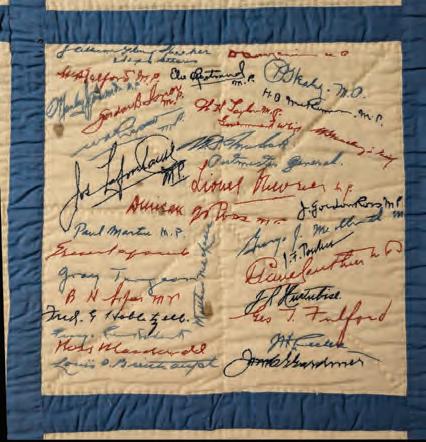
to the provincial incarceration centre in New Denver. Though little is known about her experiences, it’s likely that she began quilting around the time of her internment.
The bulk of Murakami’s block design comprises 247 so-called silks from cigarette packets, a corporate marketing strategy that attempted to promote smoking among women. Technically made from cotton and silk blend patches, 225 of these inserts depict Canadian regimental uniforms, unintentionally imbuing the quilt top with irony that perhaps wasn’t lost on its maker. The remainder of the spread includes fragments of Japanese kimonos, a testament to resilience during one of Canada’s darkest chapters. Murakami’s quilt is in the collection of the Royal Ontario Museum in Toronto.

Manitoba Crafts Museum and Library; Royal Ontario Museum
“Never in all my war service have I known any comforts give more pleasure.”
So, too, were their respective histories and creators, noted Rivet: “It’s no secret that volunteer organizations aren’t typically the place to be if people want recognition. That was sometimes, if not always, the case for the quilt makers in World War II.”
itself an offshoot of the British Quilt Study Group, was founded to help raise the profile of the Canadian volunteers and, above all else, to repatriate their surviving bedspreads to Canada.

In 2005, the Canadian Red Cross Quilt Research Group,

ETHEL ROGERS MULVANY of Manitoulin Island, Ont., showed resilience of her own when the British colony of Singapore fell to Japanese forces on Feb. 15, 1942. An Australian Red Cross ambulance driver in the Crown
Though no definitive figure exists, it has been suggested that between 200 and 300 quilts remain on both sides of the Atlantic. Of
these, dozens have since returned to Canadian soil despite challenges in finding a museum to host the entire collection. The group has instead approached local institutions to maintain individual quilts.

Nestled in darkened closet corners, stowed beneath unused beds, tucked away in dusty attic spaces and perhaps hidden in plain sight— displayed in a second-hand shop window, showcased as an heirloom of unknown origins, or balanced on a loved one’s favourite armchair— are undoubtedly, unquestionably, more, their aging yet sturdy fabric a testament to resilience, their stories a thread to pull. L

Denis, a doctor, were among thousands of Allied civilians taken prisoner. Their Japanese captors separated the men from women and children with almost no means to communicate. Mulvany, however, devised a plan in
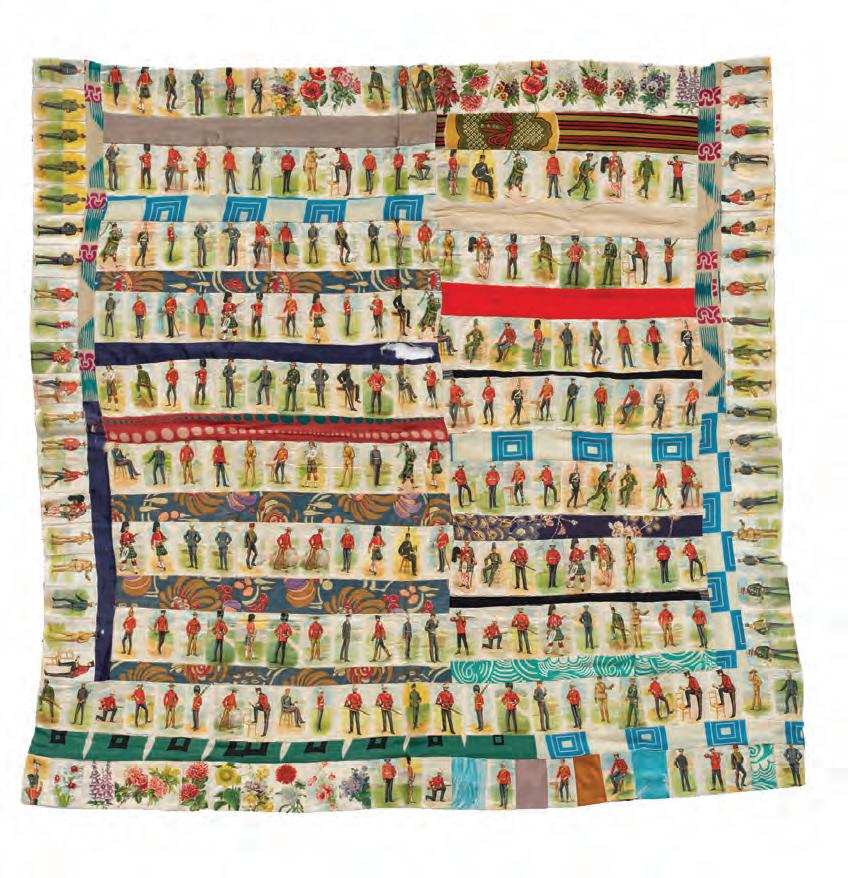
The women received permission from Japanese authorities to create quilts for the men in hospital. Spearheaded by Mulvany, prisoners embroidered their signatures and personalized imagery onto patches of white cloth and empty rice sacks. Each patchwork contained 66 squares, within which were subtle messages to recipients.
Australian internee Ossie Hancock stitched a “V,” presumably for victory, beside two rabbits, a possible reference to her two daughters for her incarcerated husband. British nurse Mary Buckley, meanwhile, portrayed Welsh symbols, writing “Cymru am byth” (Wales forever). Trudie van Roode, a Dutch teacher, chose to encapsulate the mood of innumerable prisoners by displaying a table laid with a banquet next to the words, “It was only a dream.” Mulvany, aided by comrade Margaret Burns, worked two maple leaves into her square, embroidering “Canada” as a final note.
Two Changi quilts are part of the Australian War Memorial collection in Canberra. A third resides at the British Red Cross Museum and Archives in London.
Bishop and Mulvany survived the war. Murakami died in New Denver in 1947.

A
stitch in time
A revival of interest in wartime knitting inspires remembrance
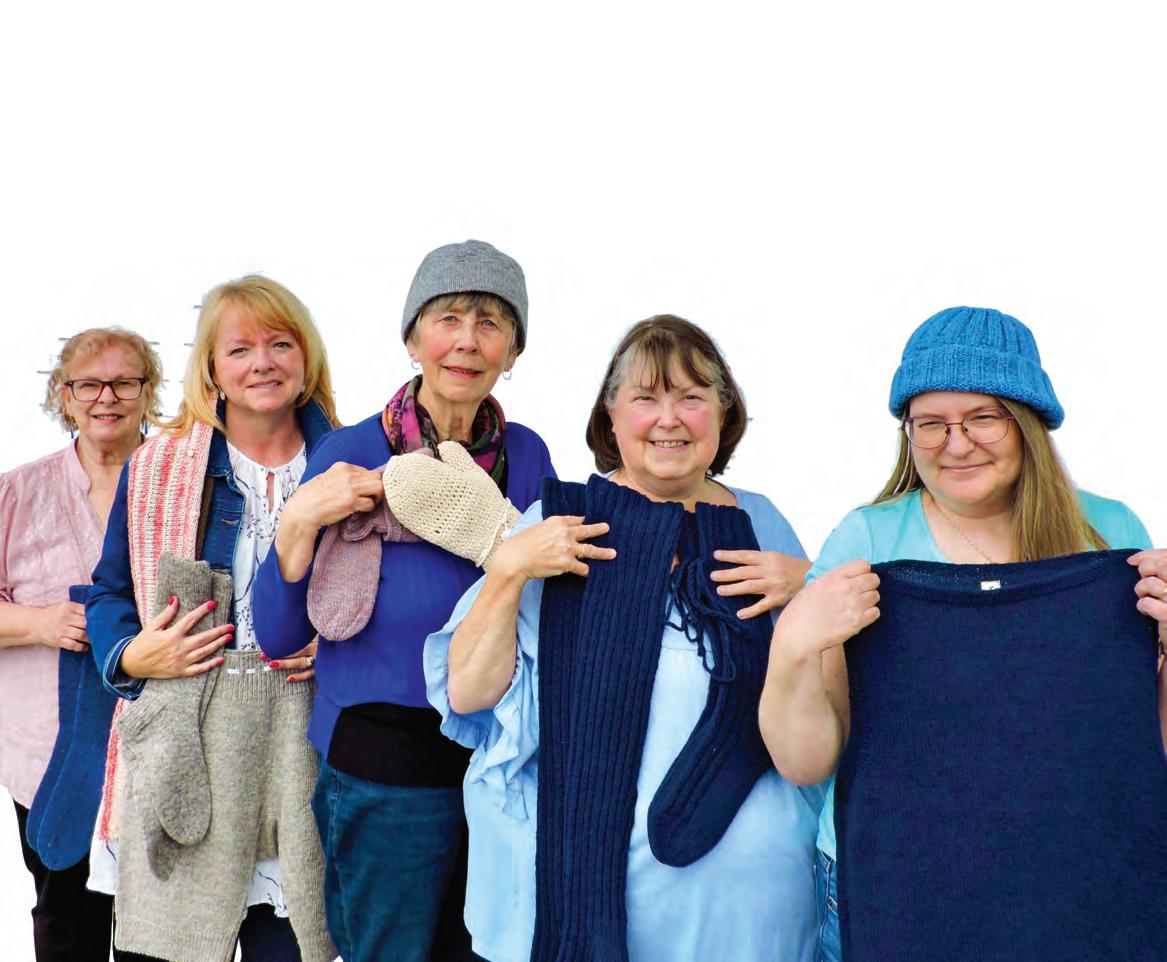
Members of the Four Seasons Fibre Group display knitted items they made for a special wartime exhibit on the craft. The display includes items such as this knit hat and shawl, which each include hidden messages.
By Allan Lynch
“When the ladies from Kentville came to me with a knitting display I was rather skeptical,” says Ian Patrick, board chair of the Greenwood Military Aviation Museum at 14 Wing Greenwood in Nova Scotia.
I wanted to commemorate him and the memory of my greatgrandmother. I did some research, talked to [fellow knitter] Margaret Benjamin and presented the idea to the Four Seasons Fibre Group and they agreed to do the project.”

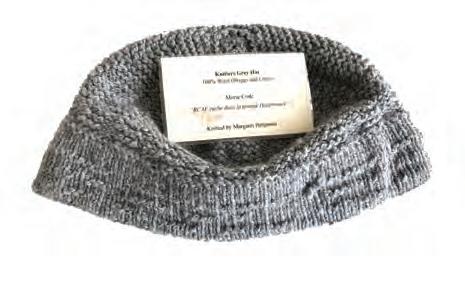
“But when I saw it and photographs of some of their relatives who were in the war and how the soldiers really needed the extra clothing to keep warm in the winter,” Patrick got behind the idea.
The idea turned into an exhibition called Wartime Knitting: Remembrance and Recognition. It was created by the Four Seasons Fibre Group, 16 women from Nova Scotia’s Kings County. They gathered weekly at the Kentville, N.S., branch of Annapolis Valley Regional Library until the pandemic forced them to knit in local parks, on a beach and at the Kings County Museum.
“In January 2022, I was knitting and thinking about my great grandmother Emily Robart DeWinter,” said group member Marie Meldrum.
“Her four sons served in the Second World War. The youngest, Private Robert DeWinter, served in the Princess Louise Dragoon Guards. He was killed on the 13th of December, 1944, at Villanova in Italy. He was 20.
The knitters started to look into their family histories and wartime knitting. They got their hands on a pattern book that was based on the Imperial Order Daughters of the Empire’s Knitting Instructions for Field Comforts guide from 1942 and got stitching to create a 48-piece collection. Meldrum’s research showed that more than two million pieces were sent overseas during the First World War and as many as 50 million pieces in WW II.
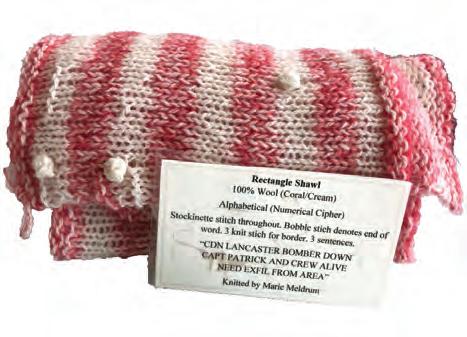
The group also found that New Brunswick’s Briggs & Little Woolen Mill still produced the finer, tighter wool used during the war and in the approved wartime colours.

“My great grandmother never got over the loss. She was adamant we keep his memory alive. So,
“I knit for my dad, Captain Kenneth McLay,” said Benjamin. “He was in the navy, on
Allan Lynch
Jocelyn Kydd Schnare knit this toque for the exhibit. Other Maritime knitters were inspired to create poppies, such as these that adorn the Kings County Museum in Kentville, N.S.
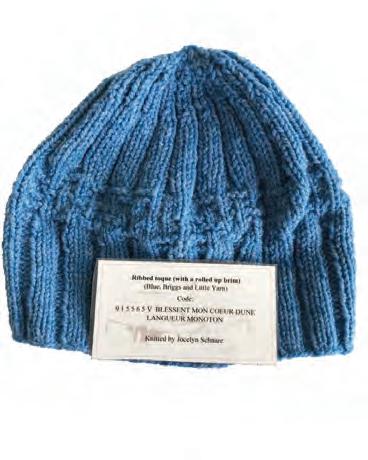
minesweepers. When the war broke out, he joined the Black Watch and switched to the navy because he had his naval ticket since he had worked on the lake boats in Ontario. I made minesweeper mitts. They were crocheted knit cotton with a wool lining.”
Minesweeper mitts were designed to prevent a shock or arc from static electricity, which could set off an explosion.
Group member Marie Gallant knit a sweater to represent her father, one of three brothers who served overseas. A fourth brother stayed home to run the farm. She also made a shawl, which was part of her mother’s air force nursing uniform. Brenda Thompson-Woodworth knit socks in the navy pattern in memory of her great uncle Ernest Thompson, a captain on a fuel supply ship. Thompson was torpedoed three times off the Grand Banks and Nova Scotia and, said his niece, “lived to tell about it.”
“I didn’t have any family members in the war, but my parents were children living in Friesland in Holland during the war,” said Connie Parker. “I knit in memory of the Canadian soldiers because the Dutch are really appreciative of what they did for them. It was a nice learning experience seeing what Canadian women did for the war effort.”
“It was a nice learning experience seeing what Canadian women did for the war effort.”
Sherri Farmer knit various socks. There were six official socks
styles, including a pair of convalescent socks, which was “a wool sock that came up your leg [to the hip] for people in hospital,” noted Farmer. “They were warm and didn’t have anything tight on them.
“The old patterns do not have a lot of details,” she continued. “They are written for people who knew how to knit because people had skills passed down for generations. People today expect more detail in patterns.”
People were also smaller. Large wartime sweaters don’t fit medium-sized men today.
Megan McHugh, meanwhile, knit bandages, a scarf and a balaclava in honour of two great uncles, Colonel Leonard Symroski of the U.S. Air Force, and BrigadierGeneral Charles Symroski, and “a couple of relatives who were imprisoned in Bergen-Belsen. I remember they always wore long sleeves to cover up the numbers tattooed on their forearms.”
Jocelyn Kydd Schnare was inspired by her brother, currently serving in an anti-submarine task force in Halifax, four other relatives in the Royal Canadian Navy, and her great uncle, Charles Hewson Kydd, who spent his life known as Captain Kydd.
“He was a tank commander,” said Schnare of Kydd. “His tank was blown up in Normandy. He survived and received a medal of bravery for single-handedly taking a German position.”
Schnare also participated in an espionage element of the collection.
“There’s a Morse code message knit underneath the brim,” she said of a cap she made. “I did quite a bit of research on wartime knitting and learned Morse code. The message has to do with D-Day preparations London would radio to the French Resistance. It was a line from a poem used as a code saying how many days until D-Day.”
The message begins with a sequence of numbers representing the time and date of broadcast, then lets the decoder know Operation Overlord was close and the Resistance should begin its sabotage plans.
Meldrum said the idea for including reproduction espionage knitting came when Patrick took her “on a tour of a fuselage in the Greenwood museum. He captained a Lancaster and as he talked about his navigator doing code while the plane was flying, my mind went ‘ding, ding, yes there is espionage knitting.’”
“Espionage knitting typically happened in Europe for the Resistance,” said Meldrum. “A woman who lived near a train station would count the German troop movements, how many cars of ammunition, tanks and other things passed by, and would knit the information in hats, scarves, mittens, shawls. It would be a certain knit purl, knit purl,” continued Meldrum of the fundamental building-block stitches of knitting.
“You can knit Morse code because it’s binary.” Other wartime
knitters also used phonetic code. “You could use the alphabet,” explained Meldrum. “‘A’ would be two stitches, ‘D’ would be four purls. The knitter would pass the encoded piece to the Resistance. It was a very discreet, creative way of passing on information.”
Simply drop a scarf or hat on the street or leave it on a bench.
In Wolfville, N.S., not far from where the group does its work, is a statue of local Mona Parsons (see “Moed en vertrouwen” in Legion Magazine March/April), who was imprisoned by the Gestapo for aiding downed Allied airmen. In prison, Parsons taught fellow inmates forced to knit socks for the Germans how to include a small knot that would cause wearers blistering and pain.
Farmer said her family’s silence on the war meant she had no stories of uncles, grandfathers or fathers to share, but found it “amazing to hear what people contributed, whether it was the women at home, women working in factories who still had time in the evening, or the grandfathers and children sitting around listening to the radio with their knitting needles doing work to contribute to the war. It didn’t matter how old you were, how young you were, everybody had something to do.”
The knitting exhibit has toured eight Maritime-area museums and is set to open at the Shearwater Aviation Museum this fall. The group hopes the display will eventually be hosted across Canada and in Europe.
Melynda Jarratt, curator of the New Brunswick Military History Museum in Gagetown, said the knitting exhibition was so popular, it inspired the facility and the local military family resource centre to revive the tradition for modern-day troops. In six weeks, knitters made more then 200 items in the colours of The Royal Canadian Regiment, which were hand-delivered to members of its 2nd Battalion serving in Latvia.
“Our oldest volunteer was 92 and said when she was a little girl she knit for the troops,” relayed Jarratt. “We also had young children knitting. It was such a success we’re doing it again.”
Joanne Barrett, the executive director of Connell House Museum in Woodstock, N.B., likewise found the exhibit resonated with people, including some who are knitting for troops in Ukraine.
“It spoke to the heart,” said Barrett. “It was volunteerism at its finest. I had people coming from the local nursing homes who had some memory of knitting for troops. I think it’s an important record of history and shows how the smallest contribution can turn out to be quite large. It speaks to Canadian generosity.” L
continue Memories
The Wartime Knitting exhibition inspired the Four Seasons Fibre Group to start a new remembrance project—one that’s expanding throughout Nova Scotia. Along with other locals, they knit and crocheted 2,200 poppies to decorate the entrance of Kings County Museum, and 1,600 for the entrance of The Royal Canadian Legion’s Dr. C.B. Lumsden Branch in Wolfville. Inspired by the idea, teachers and students at Kings County Academy in Kentville made several hundred foam poppies that they fastened to the fence around their playing fields. Meanwhile, the Macdonald Museum in Middleton created a display of 2,024 poppies to celebrate the Royal Canadian Air Force’s centennial in 2024. And a group in Bridgetown decorated power poles in hundreds of knit and crocheted poppies. The goal of it all? Creating a regional poppy trail.
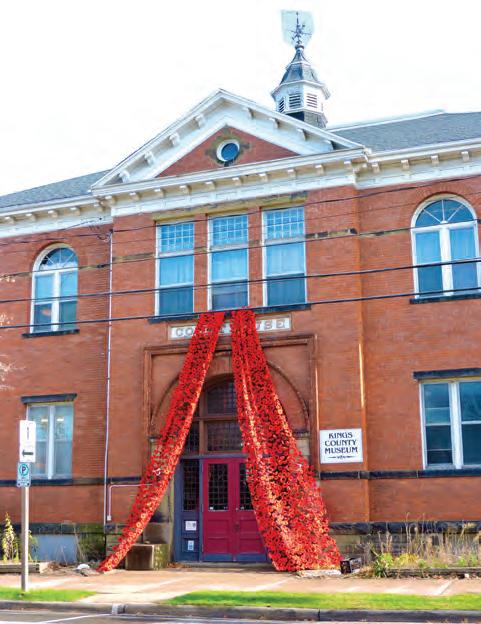

love Undying
By Stephen J. Thorne

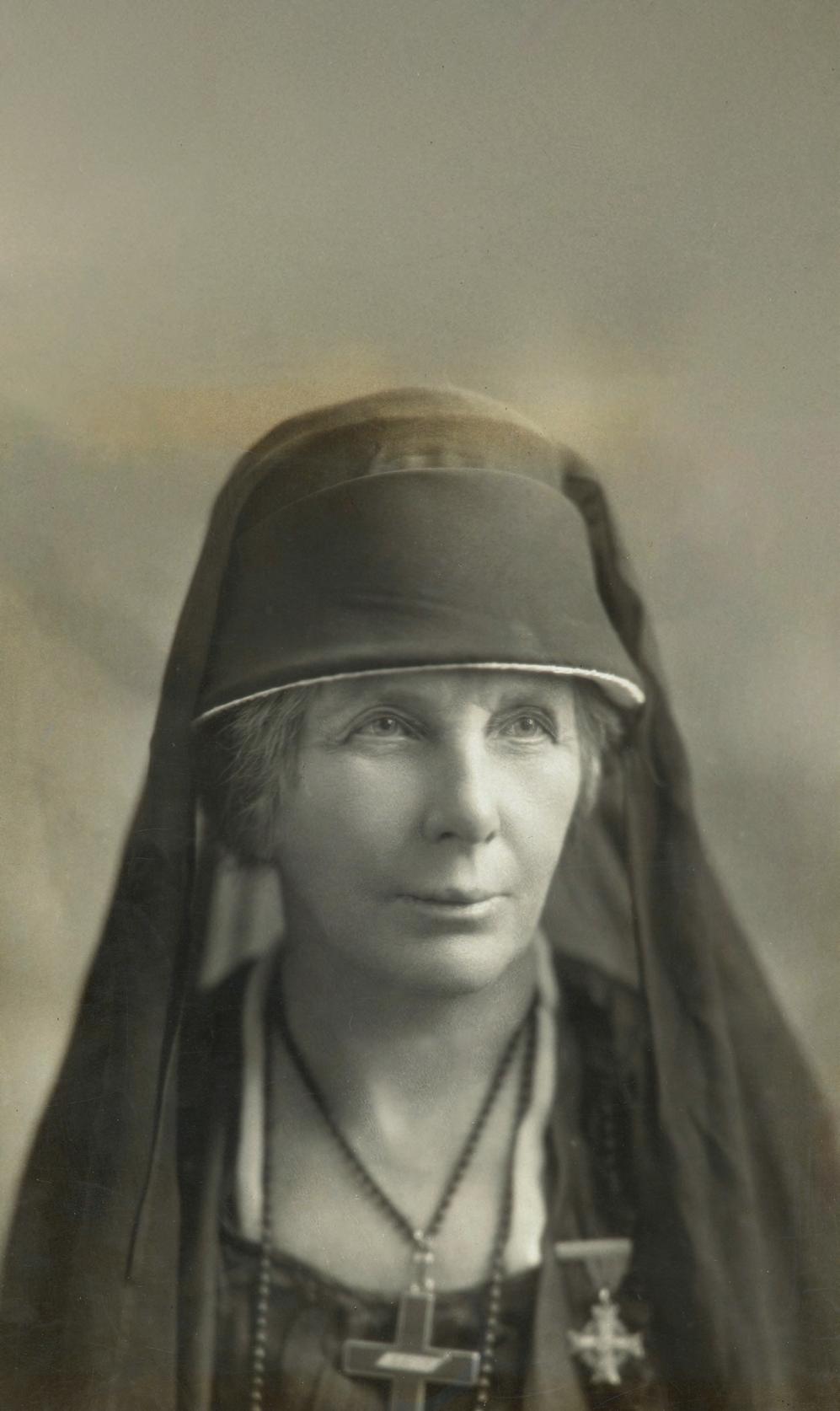
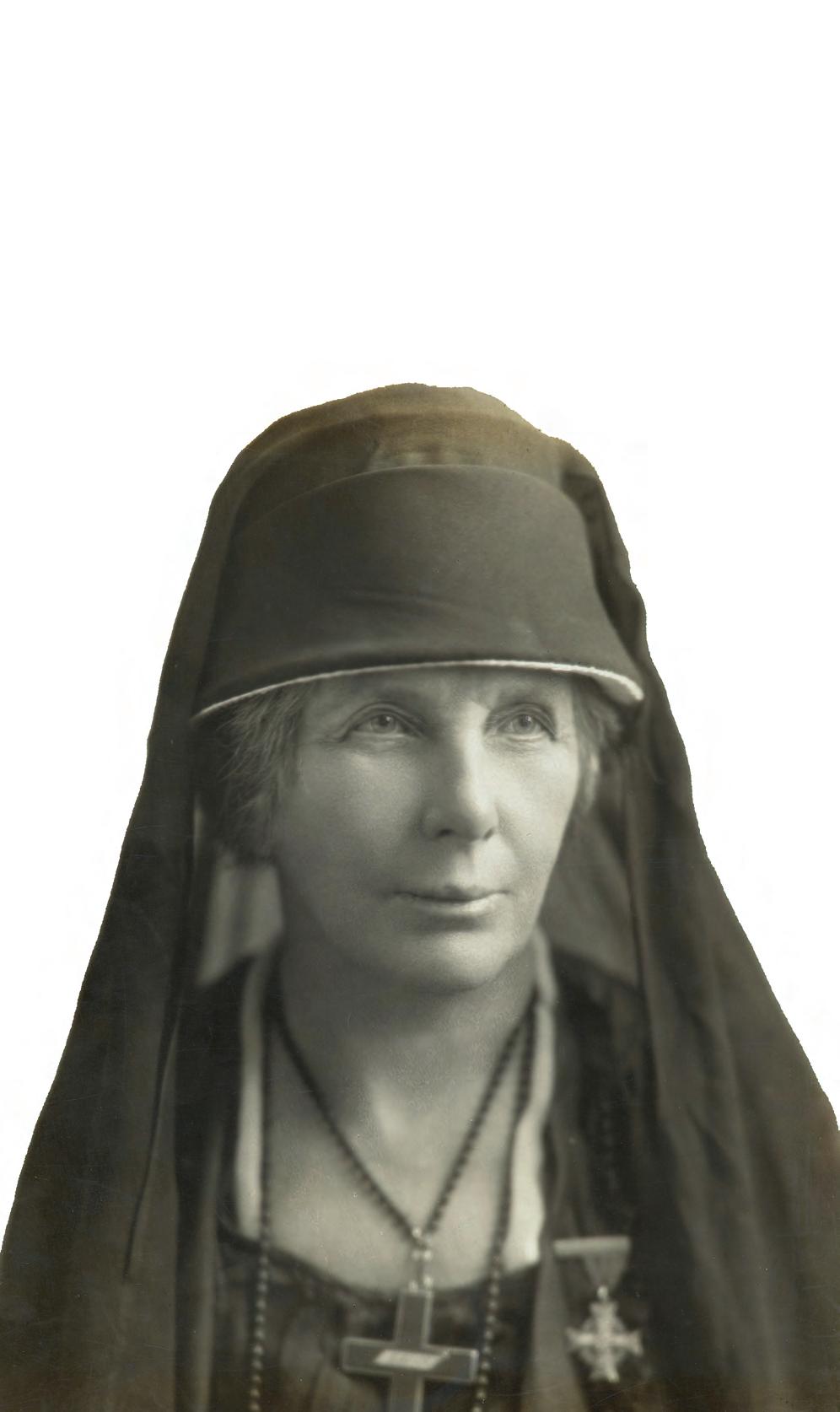
Anna Bella Durie repatriated her soldier son’s remains from France after WW I.


A grieving mother secrets her Great War soldier son’s remains home to Canada
the dark of a summer’s night in 1925, four shadowy figures— two women and two men—stole into the Loos British Cemetery in Loos-en-Gohelle, France, dug up grave No. 19 in Plot 20, Row G, broke open one end of the coffin, dragged out the remains therein, and made off with them in a sack.
The bones were those of Captain William Arthur Peel Durie, a former Toronto bank clerk who had commanded ‘A’ Company, 58th (Central Ontario) Battalion. He had fought at Vimy Ridge, Passchendaele and Hill 70. The women were his sister Helen and his doting and, the evidence suggests, difficult mother, Anna Bella Durie.
Anna recognized the remains of the son she called her “poor darling bunny” by the boots she had bought him for Christmas just days before he died.
“I was going like a criminal, by night, to exhume the body of one of the bravest officers that ever left Canada!” she would later write.
It was July 25, 1925. The remains of Arthur, as he was known to his family, had only recently been moved from his battlefield grave at Corkscrew Cemetery close to the site of his death outside Lens. So, when the clandestine cadre returned the coffin to its resting place, with a few bone fragments and some clothing still inside and covered it over, they left the topsoil looking much as it was before.

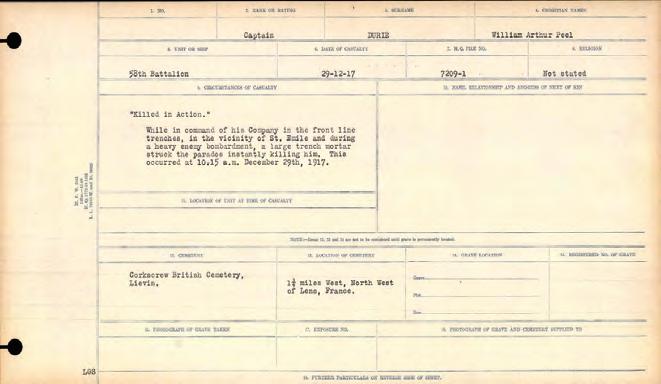
Within days, Anna and Helen were aboard a ship sailing for Canada, with Arthur’s remains stuffed in a suitcase. Cemetery workers and officers of the Imperial War Graves Commission were none the wiser—until, that is, Toronto papers announced his Aug. 22 burial in St. James’ Cemetery off Parliament Street in Cabbagetown.
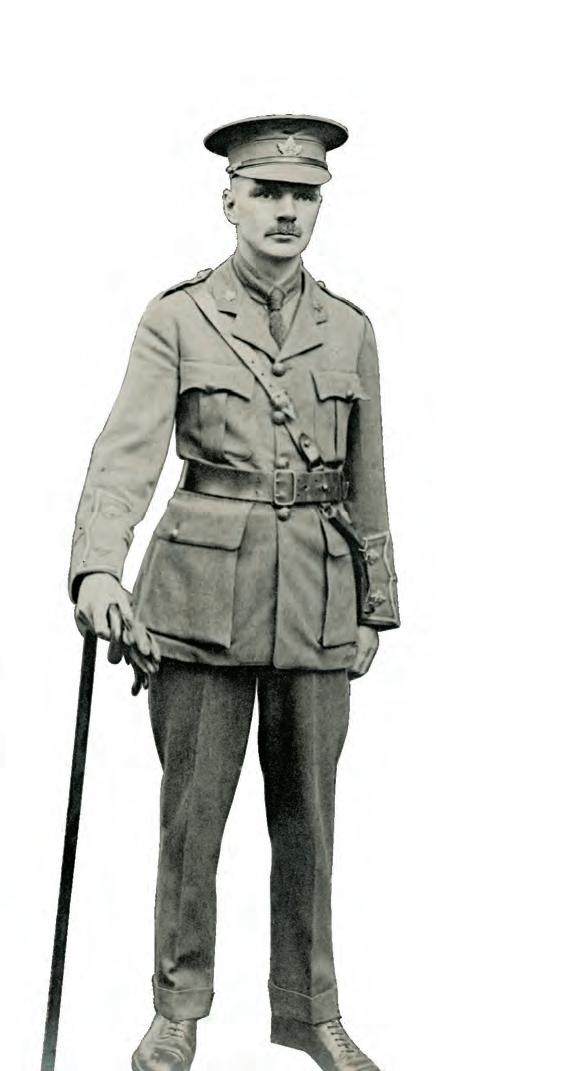
It was at least the second time Anna had tried to exhume the remains of her son after he was killed in action in late December 1917. By her previous actions and the flood of letters she had written, commission higher-ups knew her only too well and had little doubt as to who was behind Arthur’s unorthodox repatriation.
was 34 years old when he enlisted in June father was the late Lieutenant-Colonel William Smith Durie, first commandQueen’s Own Rifles of Canada.
Anna was 43 years her husband’s junior. They had been married just five years when he died in 1885. She would prove a formidable force—a seasoned, worldly Victorianera military wife and fervent mother who wasn’t about to take any guff from anyone, least of all army stuffed shirts and cemetery mucky-mucks. story saddled her with the latter-day title of “helicopter parent.”
Arthur didn't know his father long. He was four years old when he died. Widowed at 29, his classically educated mother struggled to uphold the life to which she was accustomed.
Captain William Arthur Peel Durie died near Hill 70 in France in late December 1917.
In the 1890s, Anna lost her home and six hectares of land on Toronto’s Spadina Road. Though money was tight, she managed to send Helen and Arthur to private schools, where they were educated among Toronto’s elite.
Helen flourished at Bishop Strachan. Arthur was perpetually languishing at the bottom of his class at Upper Canada College. “Seems to work hard,” the teachers wrote, “a little slow.”
Arthur left school as a junior and by 1899 he was working at the Royal Bank.
“He likes the work ever so much better than he did at first,” Helen wrote to her grandfather. “I do hope he will succeed. He is not clever, but is exceedingly persevering, and mother and I hope that will him to success.”
He attended the Toronto School for Military Instruction in the fall of 1908 and was awarded the rank of subaltern, a British military term for a junior officer. He enlisted soon after war was declared and joined the 58th as a lieutenant.
Within days, Anna and Helen were aboard a ship sailing for Canada, with Arthur’s remains stuffed in a suitcase.
Durie’s sister Helen was complicit in her mother’s plans.
Anna followed her son as he began his military training in Niagara-onthe-Lake, then again to England. She took up residence in a London hotel and proceeded to relentlessly petition British, French and Red Cross officials to allow her to volunteer as a nurse or anything else near the front.
Now 60, she had seen her share of conflict, including the 1862 siege and capitulation of her Irish family’s adopted city of New Orleans during the U.S. Civil War.
Her proposals were all rejected, but Anna remained in England for much of the war, active with the Red Cross and financed by Arthur’s army pay, while Helen, an English teacher, for the most part remained in Toronto.
With Arthur now residing in the mud-soaked, rat-infested trenches of the Western Front, his mother was sending him cakes and sweets from Oxford Street in London.
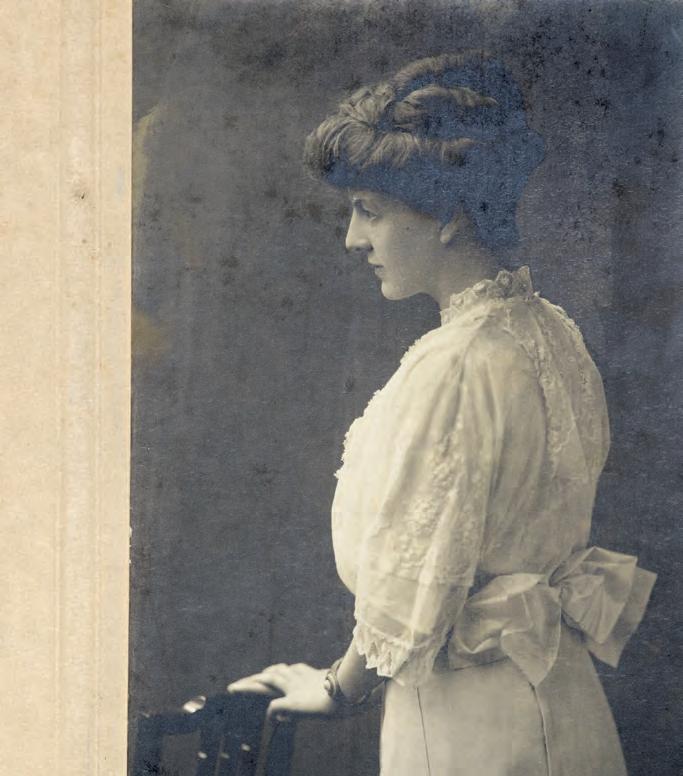
She also bought him a shield and helmet for nearly $20 (the equivalent of almost C$590 in 2025).
Arthur wrote letters to his mother and sister about life at the front and undisturbed parts of the countryside that reminded him of Ontario. His nerves were steadier through the shelling than they had been at the bank, he told Helen. He asked his mother not to send the helmet. He wouldn’t wear it, he said. Officers just didn’t do that.
“As you walk through the lovely country you would not know there was a war on,” he wrote from his billet “somewhere in France” on March 21, 1916. The rest of his battalion had moved to Vierstraat, in Belgium’s volatile Ypres salient, and he would be headed there soon.
“You see the peasants working away tilling the ground and it is perfectly quiet except for the occasional firing.”
Eight weeks later, three days after a major skirmish at Sanctuary Wood (nine killed, 14 wounded, six
shell shocked, 12 missing), Arthur was shot through the right lung while riding with a supply column delivering ammunition near Ypres. It was May 4, 1916. A Toronto Telegram report, with the headline HELMET SAVED HIS LIFE, reported at the time that he was also hit in the head and rendered unconscious for two days.
“One of the new steel helmets now being worn by the British soldiers at the front saved the life of Lieut. W.A.P. Durie of Toronto,” the paper reported. It said it was shrapnel from a shell burst, not a bullet, that hit him.
Whether he had relented, and it was the helmet that his mother bought him is not known.
“Lieut. W.A.P. DURIE wounded slightly,” the war diary records.
In fact, he was declared “seri ously wounded” and “dangerously ill,” and hospitalized for months. Steel was still embedded deep in his chest when he was reactivated,




though the documents claim that it was giving him “no trouble.”
“We had always known that Arthur would be seriously wounded that was why I was in England,” his mother confided in an unpublished manuscript of letters in the Toronto Archives.
“I had been in London a little over two months and was dressing for dinner on a lovely May evening when the Swedish maid came into my room with a telegram enclosed in one of those reddy brown envelopes that everyone in England with men at the front had learned to dread.”
Anna left for France immediately, doing her best to disregard a ban on civilians at the front. She talked her way into her son’s hospital, where she promptly began criticizing his medical care. She kept fresh fruit and flowers at his bedside.
“His breath came with such difficulty that he could only speak in gasps,” she wrote to her daughter, shocked by the blood bubbling and drooling from his mouth whenever he tried to talk.
He couldn’t lie down for 12 days. His mother followed him to a convalescent home in Brighton, England. Helen arrived soon after.
They spent many happy hours together. Mother and daughter hoped Arthur’s wound would be his ticket home. His sister couldn’t imagine a medical board clearing her beloved brother for front-line service; he could barely walk.
Meanwhile, Anna had gone behind her son’s back, finagling an audience with Canada’s minister of militia and defence, Sam Hughes.
She secured Arthur a staff position, but he refused it. Undeterred, his mother mined her London society connections and snared him administrative jobs in England and France, which he also declined.
“I do not want a job, and was very sorry you spoke to Sir Sam Hughes,” he wrote her. “I could have got some sort of a job in London, but would rather rejoin the 58th.
“Everyone knows I want to go back and I am afraid you have only done me harm,” he told his mother on Nov. 20, 1916. “I know dearest Mother, you think you do things for the best, but don’t you think you are (sometimes) a little impetuous.
“This is a battalion where all the officers and men return to their own battalions in France, and I will rejoin the 58th in due course.”
Said Anna: “Arthur was very firm: Imperial officers always returned to the front without a word of complaint, rather, with eagerness, and a Canadian could not do less.”
By Christmas 1916, Arthur was back in a “quiet spot” at the front relishing family care packages—and sending home blank cheques to pay his mother’s mounting bills. He was a popular officer; the men called him Bill.
On Christmas, he read his ‘A’ Company boys the poetry of Robert Service.
“You don’t know how strange it was to be in the line on Christmas Day,” he wrote. “We were very near the enemy; they could hear us walking through the water” in no man’s land.
But Arthur was developing trench fever and neurasthenia, a form of nervous exhaustion similar to what is today known as chronic fatigue syndrome. He was sent to recover in the south of France.
“Will you please join me there?” he asked his mother in January 1917.
Anna met him in Menton, just up the Mediterranean coast from Nice. Her letters reflect her revulsion at her son’s stories of death and corpses left rotting in the mud. Things were grim, different, she told her daughter.
“I am not going home until the war is over,” she wrote. “If Arthur goes to the front in March I shall have to return to England; otherwise I should remain in France.
“I think, if you come over, that we can persuade Arthur to come back. The London offer was from Sir Sam and we must never forget it. I will talk the whole position over with Arthur and see what can be done.”
Arthur went back to the 58th in March 1917, and joined the assault on Vimy Ridge, where he was gassed. His mud-stained map of the battle, showing the creeping barrages that proved so successful, is in the Toronto Archives.
He fought with the 58th at Passchendaele later that year, where he retrieved wounded and brought them to safety under heavy fire. He was promoted to captain on Sept. 15, but two weeks later he was back in London for 10 days’ rest.
He “made the impression on me of a broken old man,” Anna wrote her daughter.
Rest helped, but the brass “realize that his health is hopelessly broken, and so does he, and it is making him wild,” said his mother.
Arthur returned to London for another 14 days’ leave in December. He rejoined his unit on the 22nd.
Six days later, on Dec. 28, 1917, the 58th was relieving the 116th (Ontario County) Battalion at the site of yet another great Canadian victory. Hill 70 was the first major action fought by the Canadian Corps under a Canadian commander, Lieutenant-General Arthur Currie.
The Aug. 15-25 battle had given the Allies a crucial strategic position overlooking the occupied mining city of Lens. Six Canadians earned Victoria Crosses at Hill 70.
Now the Canadians were holding the line in a particularly active sector.
Durie’s ‘A’ Company occupied the Nabob trench on the right; ‘D’ Company took up positions in Nestor trench on the left, while ‘C’ Company assumed support positions in Congress and Catapult trenches and ‘B’ stood in reserve with the battalion headquarters in Counter trench.
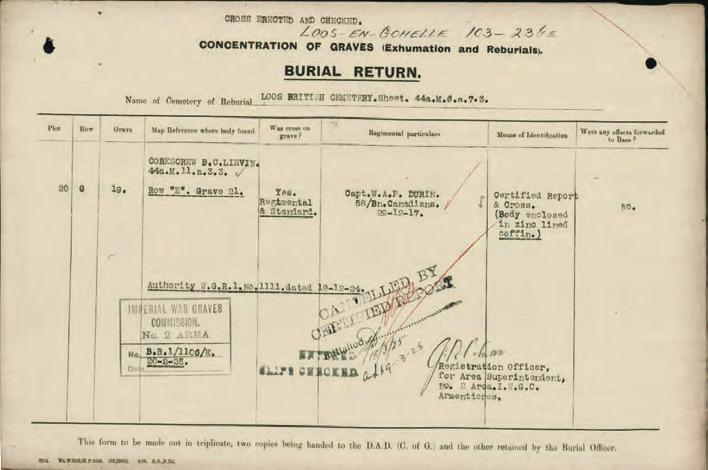
Before the First World War, the British Army—and therefore the British Empire—had no policy dictating the burial places of soldiers killed on active duty. The dead were often placed in local cemeteries and frequently on the battlefield itself.
Bodies of those whose families could afford it were sometimes shipped back for burial in their hometown cemeteries.
The takeover was uneventful. The battalion had not suffered a single casualty in the month of December. That was about to change.
Early the following day, with a cold wind blowing from the north, the Germans unleashed a mortar onslaught. The 25-centimetre minenwerfer was an extremely capable weapon and, on this day, the enemy used it to great effect.
“At 9:45 a.m. a heavy trench mortar bombardment took place on ‘A’ Coys frontage and CANTEEN Communication Trench (Square N.8.b.) and reached its greatest intensity at 10 a.m.,” wrote the battalion’s acting commander, Major Dougall Carmichael.
“There were several casualties, including Captain W.A.P. Durie, O.C. [officer commanding] ‘A’ Coy., who was killed,” along with two enlisted men and two others wounded.
Three years later to the day, a soldier wrote Anna to tell her details of how “Bill” died as he made his way along the communication trench a half-hour into the attack.
“In December we were ordered to the Trenches in a very wicked part of the line just North of ‘Lens,’” W.H. Edwards wrote in 1920, “and on December 29, 1917, the ‘Hun’ placed a very heavy Gunfire ‘barrage’ on our front, resulting in Bills’ [sic] men catching it very heavy.
“As usual, he was out in it all, encouraging his men, when he could have been lying in his dugout under cover, but not him, out he went, collected the few men left, and stayed with them, until his sergeant remonstrated with him to get below, he refused to leave and was struck down, resulting in the loss of the biggest man the Battalion ever had.”
Reports said he died instantly. Shortly after, 20 Germans emerged from the trench opposite and began an advance.
“Party was preceded by 2 scouts about 20 yards ahead,” reported Dougall, a 32-year-old farmer who would end the war with a Military Cross and bar, along with a Distinguished Service Order and bar, and two Mentions in Dispatches.
“Our trench at this point was not well manned but party was dispersed by Sgt. [Joseph] Hardy, who shot the two leaders with his revolver and Lieut. Horton, who turned a Lewis Gun on the remainder.”
The Germans dropped 200 cylinders of gas on the Canadian line at 4:30 the next morning, wounding seven more members of the 58th. An explosion wounded six others.
Arthur was buried in a hastily dug battlefield grave at what would become Corkscrew (Bully-Grenay) British Cemetery, France.
The body of at least one Canadian, Captain Robert Clifford Darling of the 15th Battalion (48th Highlanders), who died of wounds in England on April 19, 1915, was officially repatriated to Canada and buried in Toronto’s Mount Pleasant Cemetery.
When Fabian Ware learned that official records weren’t kept after he volunteered with the Red Cross to record the location of British burial sites in 1914, he took steps that led to the creation of the Graves Registration Commission.
An over-age Ware would become a British army majorgeneral, and the commission would evolve into the Imperial War Graves Commission. Now the Commonwealth War Graves Commission, it cares for the graves of about 1.7 million Commonwealth war dead in more than 23,000 separate burial sites and memorials worldwide.
In April 1915, the commission established a policy of “equality of treatment after an equality of sacrifice.” The order prohibited exhumations for repatriation on grounds of hygiene and “on account of the difficulties of treating impartially the claims advanced by persons of different social standings.”
Besides the issues of hygiene and fairness, there was the matter of the war itself. The Great War—the war to end all wars—was the first industrialized war, a war in which refined versions of the machine gun were ubiquitous, artillery more mobile and accurate, and airplanes a weapon that opened whole new avenues of warfare.


An Imperial War Graves Commission file indicates Durie’s remains were originally moved from the Corkscrew cemetery to the Loos British Cemetery in France.
Military tacticians were slow to adapt to the new realities, and wholesale slaughter as troops poured over the top and across no man’s land in the face of withering machine-gun and artillery fire was common. There were more than nine million military deaths in WW I.
It was, for all intents and purposes, industrialized slaughter. Commonwealth countries alone lost more than 1.1 million uniformed military between 1914 and 1918, some 66,000 of them Canadian. Repatriating the dead was out of the question.
the commission and parlayed a reluctant sanction for the removal from local authorities.
“With the assistance of one of the two Frenchmen who were with us, I and my daughter laid him in this oak coffin, which is lined with metal of some kind and the coffin bears a leaden plate with his name and the number of his battalion,” Anna wrote.
But as the coffin was hoisted onto a waiting cart, the horse reared and snapped the shafts. Shards of wood pierced the animal’s side. Arthur’s remains were left in the new casket and returned to the grave.
Bodies of those whose families could afford it were sometimes shipped back for burial in their hometown cemeteries.
Anna Durie couldn’t accept this and in June 1921, she and Helen went to France with the intention of bringing Arthur’s remains home to Canada, by hook or by crook.
Local commission officials tried to restrain this “quite unreasonable” woman who “has practically lost her senses on this one subject,” to no avail.
In one of her many letters to the commission spanning two decades, she declared its Britishborn deputy controller, Colonel Herbert Tom Goodland, an American “by birth” and “not likely, it appears to me, to understand Canadian standards.” Goodland had lived in Canada for 30 years.
Unconvinced that her son’s remains were, in fact, where the commission said they were, Anna and her daughter, along with two local men, exhumed Arthur’s blanket-wrapped corpse from the Corkscrew cemetery on the night of July 30, 1921.
The quixotic Anna had apparently done an end run around
“When I exhumed my son’s body I found him only about 4 feet below the surface of the ground and now the top of his coffin is not more than 3 feet below,” lamented his mother.
As was the case with many battlefield cemeteries, remains of some Corkscrew occupants, including members of Arthur’s 58th, would later be transferred and consolidated in a more suitable location, in this case, at the larger Loos graveyard.
Angry that she wasn’t informed of the transfer beforehand, convinced she had been misled, and fearful that her son’s remains were lost, Anna returned to France in the summer of 1925 and engineered an extraordinary transfer of her own.
“It is only by falsehood and misrepresentation that you could have accomplished the removal of the remains of my beloved son…from Corkscrew Cemetery,” she had written Ware, by then the commission’s vice-chair.
“It is not usual to find an Englishman so wanting in a sense of honour.”
Ware subsequently warned Goodland that the irrepressible Anna Durie was on her way to Europe and told him: “I think you had better warn people privately to be very careful how they talk to her.”
Arthur’s subsequent Toronto funeral announcement prompted a commission investigation. Its report, published on Sept. 4, 1925, painted a graphic picture.
“The coffin was found to have been forced open, the timbers had been broken and the zinc shell had been cut open,” it said. “The coffin was empty apart from a few [seven] small pieces of bone and fragments of clothing.”
“I think Mrs. Durie must have bribed very heavily to have carried this out,” Colonel Henry Osborne, secretary-general of the commission’s Canadian agency, wrote in a separate memo. “The police had previously been advised of a possible attempt.”
In a last act of defiance, Anna filled out a form requesting a personal inscription for the headstone planned for her son’s now-empty grave at Loos: “He took the only way and followed it unto the glorious end.”
The request was moot. Arthur’s headstone was removed from the Loos cemetery in 1928. The location of his grave is listed on the Commonwealth commission’s website as Toronto (St. James’) Cemetery, Canada.
The French authorities were eager to prosecute, but their British and Canadian counterparts wanted to avoid alienating a sympathetic public and arousing any lingering resentment that existed among the general populace over the repatriation ban. An internal commission report noted that “it is the view of those familiar with the case that any reopening by legal process will result in more harm than good.”
“There are other Canadians who are trying to get their relatives’ remains home,”
“I think Mrs. Durie must have bribed very heavily to have carried this out. The police had previously been advised of a possible attempt.”
acknowledged another commission document dated Nov. 2, 1925. “The High Commissioner’s office is uneasy on the matter.”
Indeed, the Durie saga wasn’t the only attempt by a Canadian family to repatriate a loved one’s remains from the continent. In 1919, with the consent of the prefect of Pas-deCalais, France, the remains of Major Charles Elliott Sutcliffe were moved from their resting place at Épinoy and reburied in Lindsay, Ont.
And in May 1921, after the commission refused permission, William Hopkins, the former mayor of Saskatoon and father of Private Grenville Carson Hopkins, surreptitiously took his only son’s remains from a Belgian cemetery to a mortuary in Antwerp. They were recovered before they could be shipped to Canada. Threatened with legal action, Hopkins returned to Saskatchewan empty-handed; his local helper was prosecuted but avoided jail.
The records suggest postwar smuggling of British solders’ remains, especially, was more common than authorities were prepared to admit.
“I am on the horns of a dilemma,” Ware wrote as French gendarmes continued their investigation in April 1926. “We cannot allow our cemeteries to be violated in this disgraceful way with impunity— goodness knows the dreadful things that might happen if once it becomes known it could be done.
“What the Police are frightened of is that Mrs. Durie must have made use of some organization existing in France to make money in this way and they have other evidence to this effect.
“I do not see how I can stop the course of their investigation, even if I ought to. On the other hand, from the point of view of our general policy, in our own interests and those of all decent sentiment, we ought now to leave Mrs. Durie alone.”
The commission appealed through Canadian diplomatic channels to have the case quashed.
More concerned with finding her French associates, the gendarmes abandoned attempts to interview Anna and ultimately dropped the case on March 31, 1928.
Anna never formally acknowledged to the commission the role she played in the pilfering of her son’s remains. And no body-snatching epidemic ever materialized.
The mother who wouldn’t quit succumbed to cancer in December 1933 at age 77. Her daughter Helen never
They are buried next to William and Arthur in St. James’ Cemetery. A 2.5-metre-tall cross of sacrifice marks Arthur’s plot, on which the words “he showed conspicuous bravery” are engraved.
Anna’s memorial declares her devotion as a mother and the force of nature that she was.
“She was a tree of life to them that laid hold upon her,” it says. “Her children shall rise up and call her blessed.” L
Mourners gather in August 1925 as Durie’s remains are laid to rest in Toronto’s St. James’ Cemetery. The unconventional repatriation is noted in his service file.
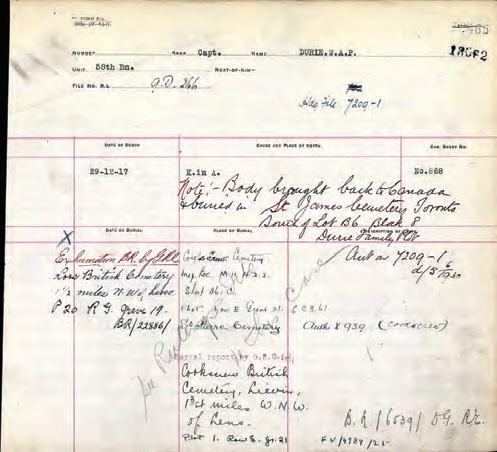



Painted by Mabel May in 1919, this piece captures women at work in a munitions factory late in the Great War. She was one of four female artists commissioned by the Canadian War Memorials Fund at the time to create such works.
WOMEN AT WAR
A collection of iconic artwork sharing the contributions of Canadian women to the country’s military
As readers will likely note, the features in this edition of Legion Magazine share a common theme: they all cover women and a range of their contributions to military history in Canada—and beyond.
Of course, women have done much, much more in addition to
what’s covered in these pages, and, as such, we intentionally chose not to denote this issue as in any way special. Indeed, its content is essentially as usual, just with stories focused on women as opposed to those typically dominated by men.
Coincidentally, Legion Magazine’s design team is all women. Combined, they have decades of experience researching and publishing the best Canadian military photography and artwork, and as such, it seemed natural to ask them to select a collection of the most exemplary of those images to accompany the other features here.
Herewith, iconic art of Canadian women at war as chosen by art director Jennifer McGill, senior designers Derryn Allebone, Sophie Jalbert and Diana Coote and designer Serena Masonde. L
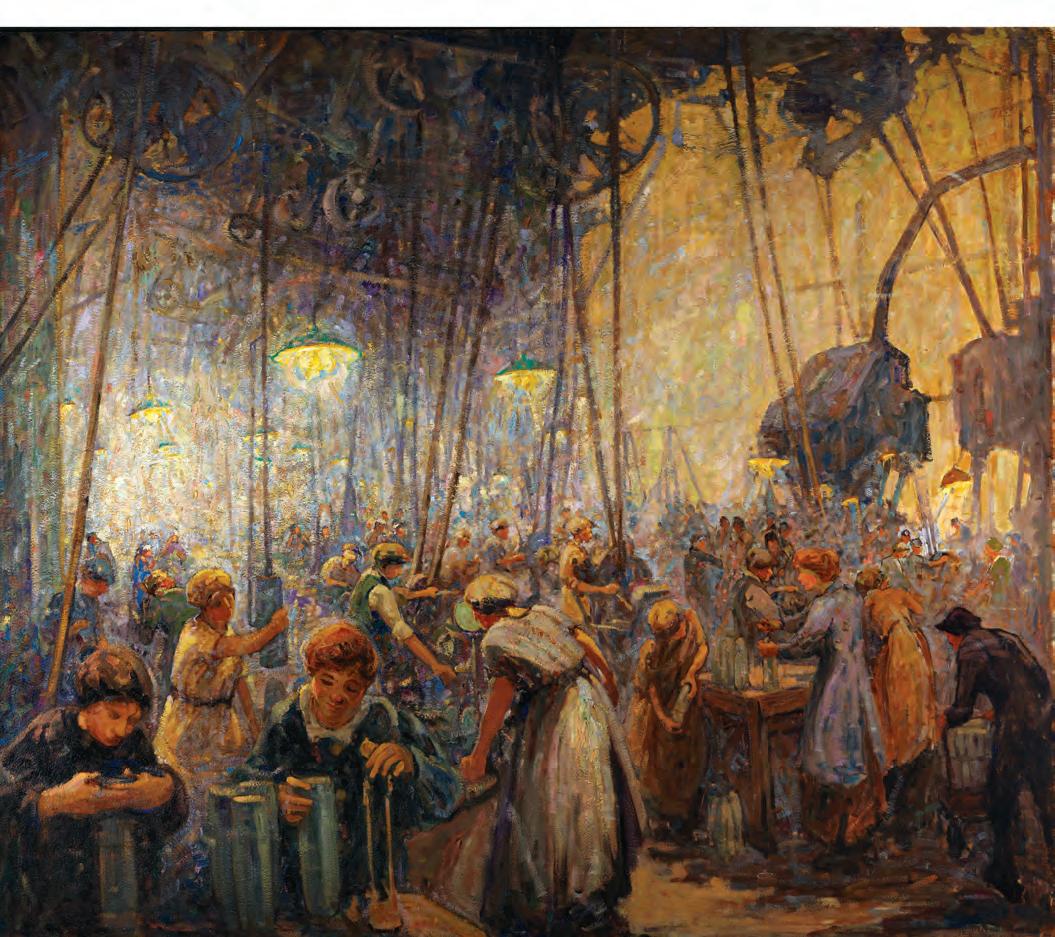

Pictorial
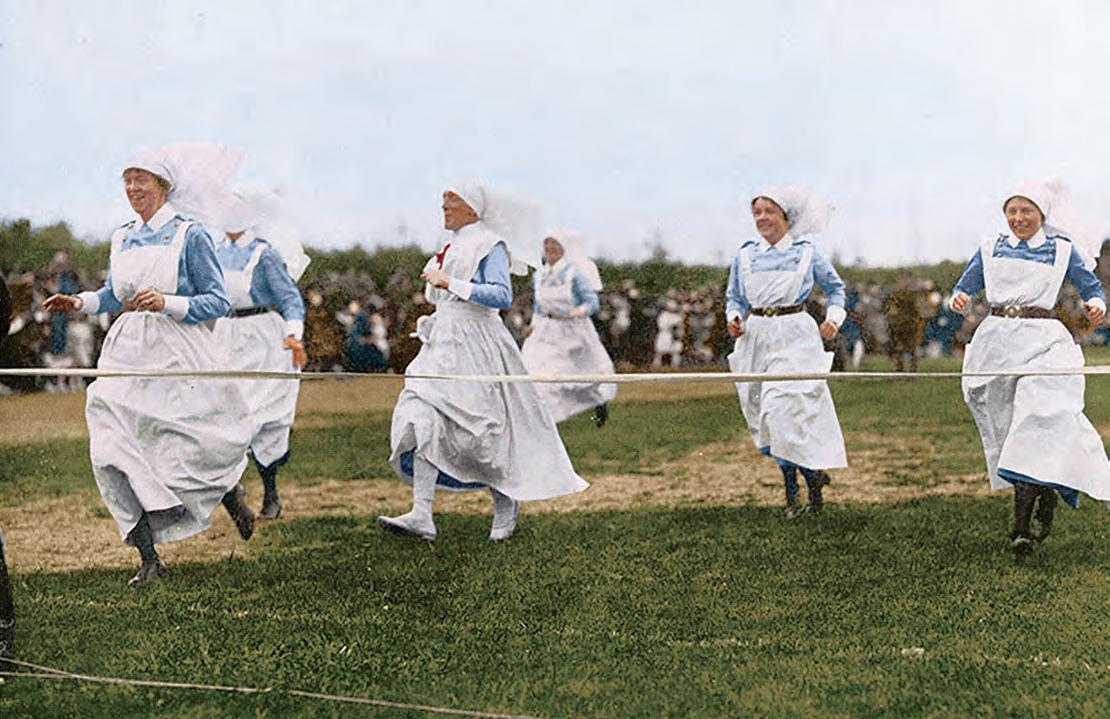
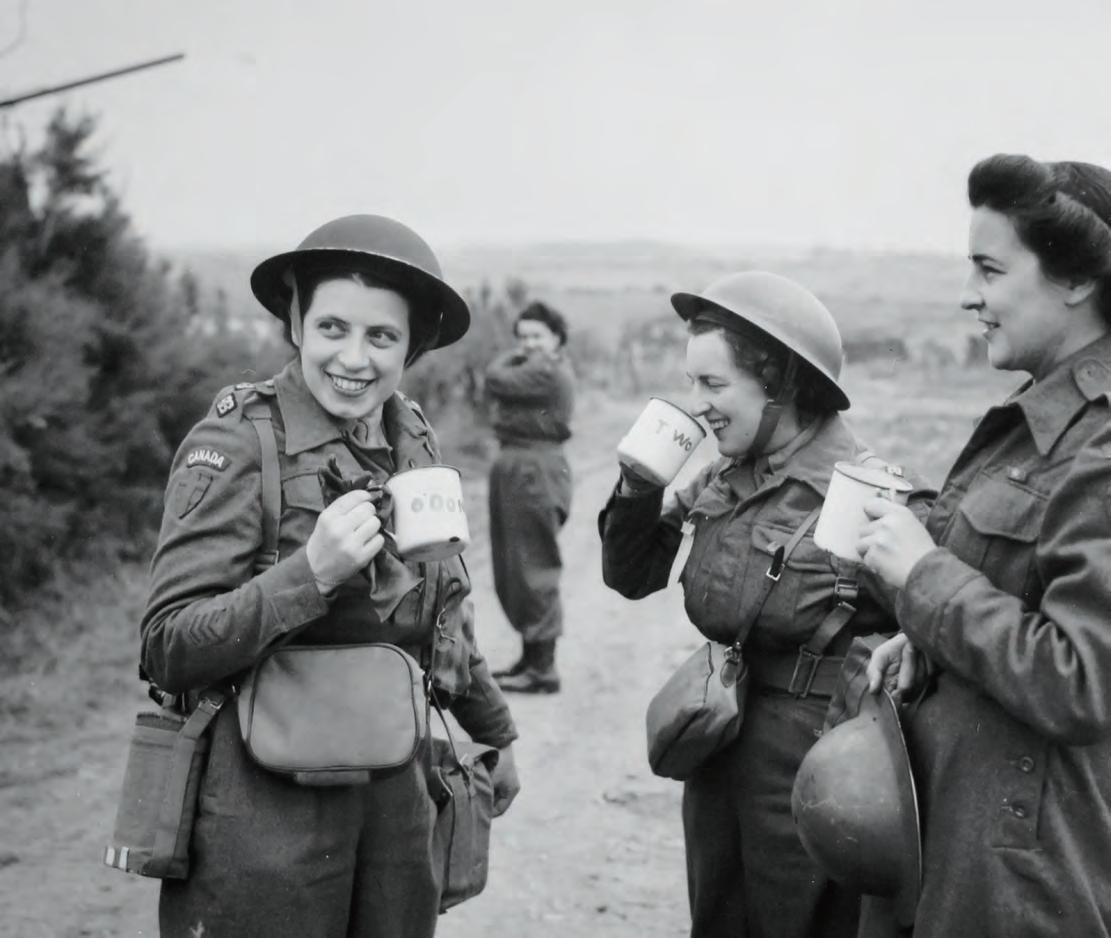
Nursing sisters—Lieutenants H. O’Donnell, T.M. Woolsey and J. Mackenzie—of No. 10 Canadian General Hospital pause for a cup of tea at Arromanches, France, on July 23, 1944.

Nursing sisters race during a sports day at Winnipeg’s Manitoba Military Convalescent Hospital in 1917.
Artist Paraskeva Plistik Clark depicts female parachute riggers at work during the Second World War. In December 1944, Clark was commissioned by the National Gallery of Canada to paint activities of the Women’s Division of the Royal Canadian Air Force.
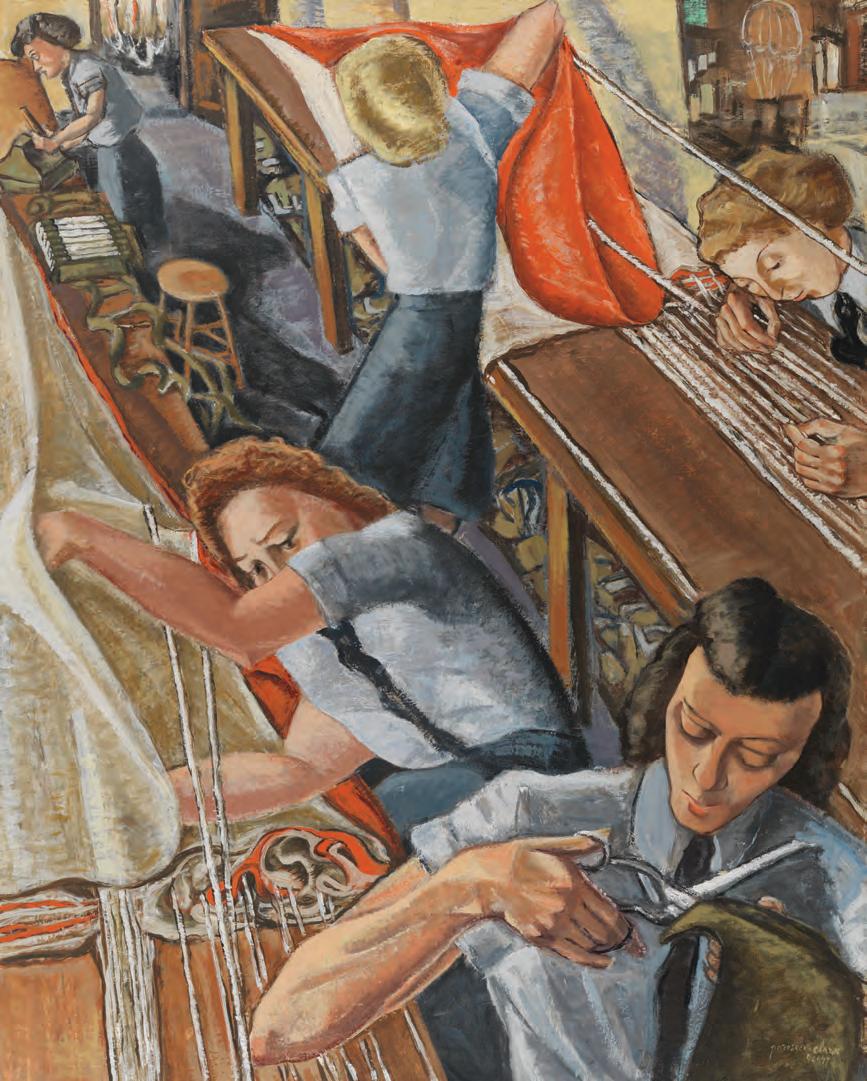

Former night club performer Cecilia Butler at work in the Small Arms Ltd. section of Toronto’s John Inglis Company munitions plant in December 1943.
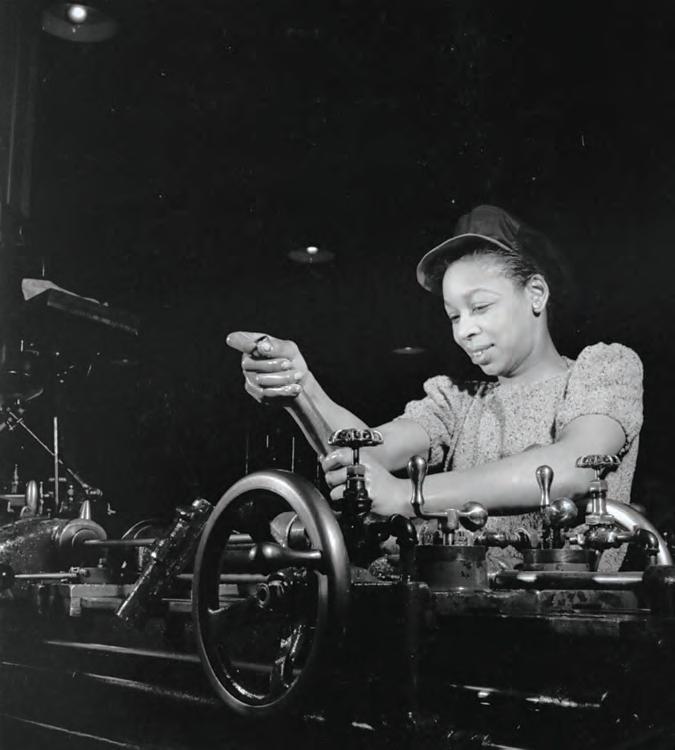

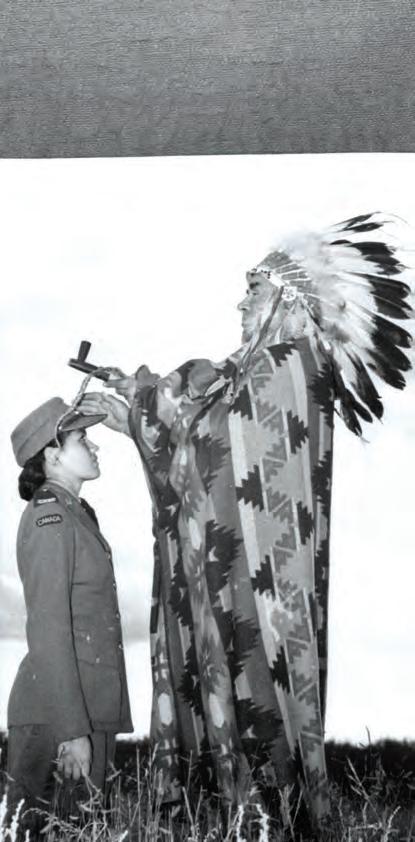
Private Mary Greyeyes of the Muskeg Lake Cree Nation in Saskatchewan shares a moment with Harry Ball of Piapot First Nation farther south in the province on Sept. 29, 1942. Greyeyes served with the Canadian Women’s Army Corps.
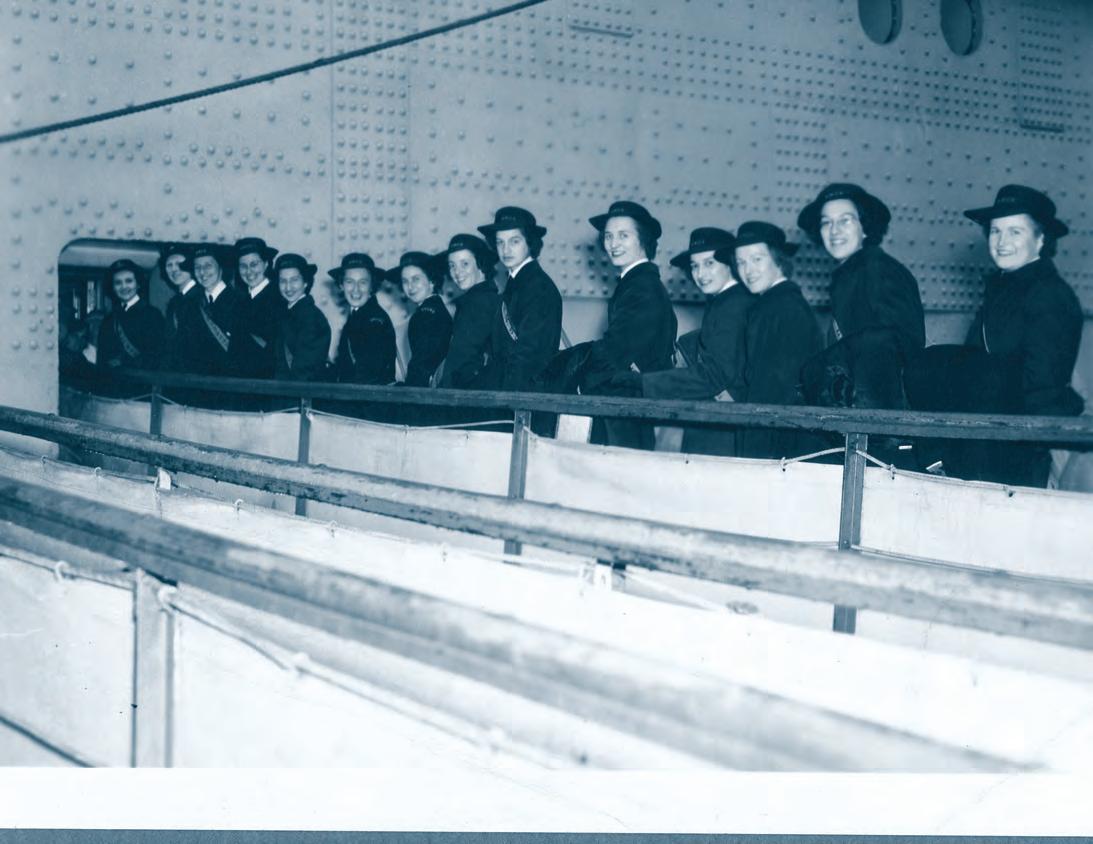
The first contingent of the Women’s Royal Canadian Naval Service head overseas in August 1943.
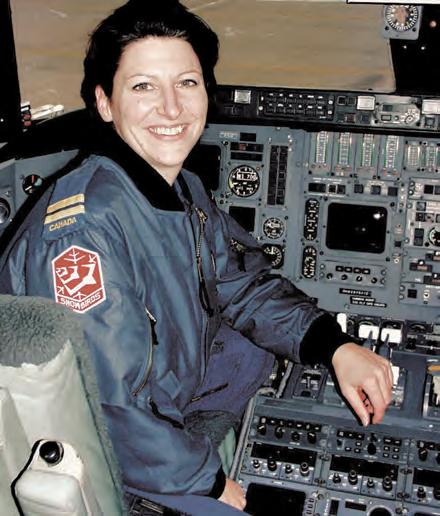

Captain Maryse Carmichael poses for a photo on Nov. 17, 2000, the day she’s selected as the first female member of the Snowbirds military aerobatics team. Ten years later, Carmichael became the first woman to lead the squad.
Sarah Benson’s portrait of Corporal Karine Marie Nathasha Blais. The 21-year-old was killed by a roadside bomb north of Kandahar, Afghanistan, on April 13, 2009, just two weeks after arriving.
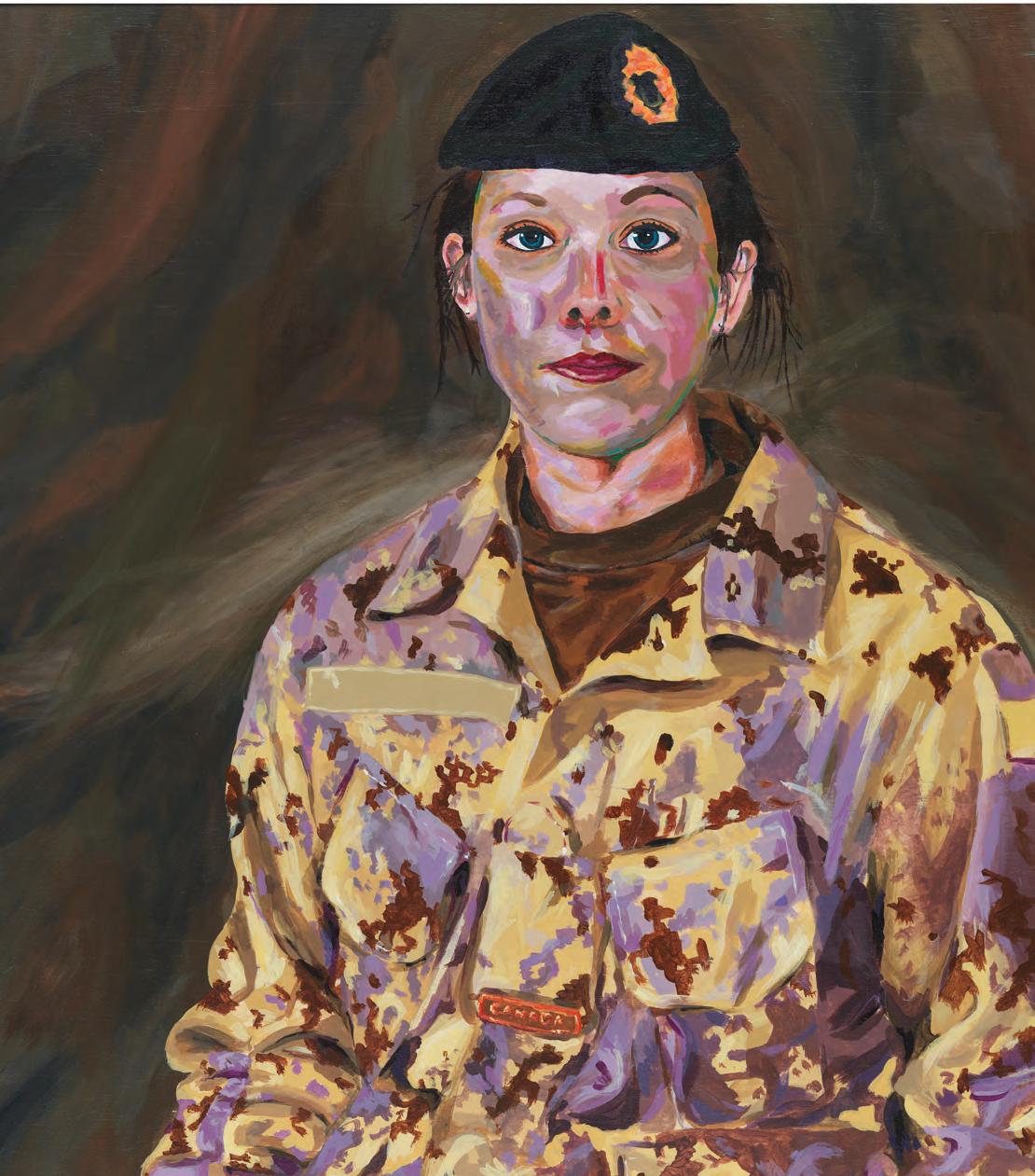
By Aaron Kylie
2025 Legion Remembrance contests winners
By Aaron Kylie
earing
By Michael A. Smith
By Michael A. Smith
By Alex Bowers
By Stephen J. Thorne
By Michael A. Smith
The Last Post and The Rouse for the first time, I learned about the true power and emotion that music could convey,” wrote Oluwadarasimi David Oketona of Kelowna Christian School in B.C. “The sounds of those pieces stayed with me and I gained new thoughts and perspectives about the purpose of music.”
Oketona’s essay, “The Sounds of Remembrance Day,” took second place in the senior essay category of The Legion National Foundation’s 2025 National Youth Remembrance Contests. The competition celebrates primary (Kindergarten to Grade 3), junior (Grades 4-6), intermediate (Grades 7-9) and
senior-level (Grades 10-12) students’ essays, poetry, artwork and videos, dedicated to the theme of remembrance.
National-level winners receive cash prizes, first-place senior level winners are eligible for a trip to Ottawa for the national Remembrance Day ceremony and the works of select winners are exhibited at the National War Museum in Ottawa. In all, 48 young artists were honoured nationally in 2025. The full list of prize winners appears on page 56. With the limited space available here, Legion Magazine is highlighting a selection of winning artwork and writing. See all the top entries at www.legion magazine.com/2025RCLcontests.
By Aaron Kylie
By Alex Bowers
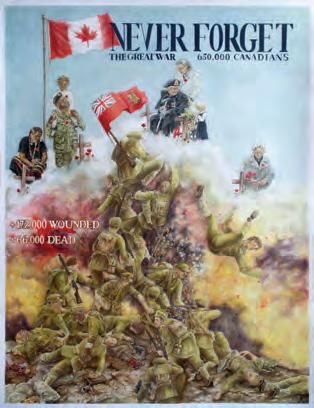
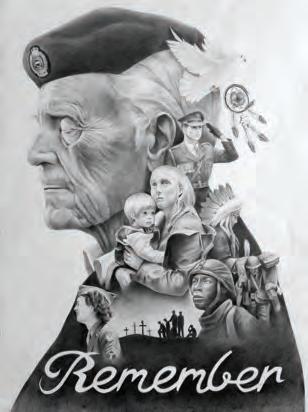
SENIOR POSTERS FIRST PLACE
Yuanxi Liu of Burnaby, B.C., won the senior colour poster category for her piece commemorating WW I (left), while Nancy Ge of Waterloo, Ont., nabbed top spot for senior black and white poster.
FIRST PLACE SENIOR POEM
A mother’s heart, a father’s pride
By Preston Kane, Beaverlodge Regional High School, Wembley, Alta.
IN THE NEWS
In fields now quiet, shadows sleep, Where mothers’ tears still softly weep. A son, her boy, once held so near, Now lost beyond this world’s frontier.
She feels his laughter in the breeze, A memory that will never ease. Her arms ache still, though he is gone, In dreams, she still sings his cradle song.
A father stands with empty hands, His pride now dust, in distant lands. Once strong and tall, his son will say, “Don’t worry, Papa – I’ll be okay!”
But battles steal what words can’t mend, And silence is a bitter friend. The father’s strength, now hollowed out, A heart weighed down with fear and doubt.
A sister’s voice calls through the years, Her laughter stained by hidden tears. She thinks of games they used to play, In fields of green on summer days.
And somewhere, a child cries alone A face she’ll never fully know Small hands reach out for someone dear, A ghost who cannot hold her near.
Yet in soil, their memory grows In every flower that bravely shows They gave the world a gift unpriced Their love, their lives, their sacrifice.
FIRST PLACE INTERMEDIATE POEM
Remembrance Day
By Veronika Haidaichuk, Notre Dame Catholic High School, Carleton Place, Ont.
In fields where bright red poppies grow, Lie those who fought so long ago.
They stood for peace, they stood for light, They stood together through the night.
They left their homes, their friends, their town, They gave it all, they laid life down.
Through darkened skies and days of dread, They kept our hopes and dreams ahead.
They braved the cold, the fear, the pain, They battled storms and endless rain.
They fought for days so we live right now, For peace to last, they took a vow.
They dreamed of what the world could be, A place for all, for you and me.
They held their courage, hearts so true, So, we could build a future new.
They knew their fight would shape the way, For children to be safe and to laugh and play.
They carried faith, they carried pride,
They left their mark, they paid the cost, For peace to bloom, for hate to frost.
For freedom’s light, they took the stand, To guard our lives, to guard our land.
So now we stand, our heads held high, And thank those heroes who said goodbye.
They gave their all, they gave their best, So future hearts could live and rest.
FIRST PLACE JUNIOR ESSAY
Yearlong remembrance
By Georgia Morson, home schooled, Saskatoon
I recently visited a military museum. As I toured it, running my eyes over the many fascinating and curious historical objects, I noticed something I had never realized before: “remembrance” does not just mean going to a Remembrance Day service on November 11, though obviously that is a good thing to do. Real remembrance is yearlong, not just in November—the sacrifice our soldiers and their families made for us is far too big for that.
It would be unheard of for a family who had lost a loved one in war to only remember them in November or even just on Remembrance Day. Despite the sorrow in remembering a dear family member who has been lost, it is essential to do so anyway. Even though they are not present in body, in remembering them they have a special place in their families’ hearts.
A treasured tradition, in place since the Vietnam War, is the setting of a separate table (at a large event or holiday, such as a wedding or Christmas celebration) in honour of a missing comrade. The Table of a Fallen Soldier uses many symbols to aid us in remembering our sisters
SENIOR
Black and white poster—Nancy Ge, Waterloo, Ont.; Second: Isabella Huang, Calgary; Third: Stephanie Simonson, Hawarden, Sask.
Colour poster—Yuanxi Liu, Burnaby, B.C.; Second: Signe Evren, Minnedosa, Man.; Third: Kerstine Sebiano, Esterhazy, Sask.
Poetry—Preston Kane, Wembley, Alta.; Second: Avery James, Pisquid East, P.E.I.; Third: Meghan Cormier, St. Teresa, N.L. Essay—Brooklyn Stanford, Gull Lake, Sask.; Second: Oluwadarasimi David Oketona, Kelowna, B.C.; Third: Ellen Turner, Kenora, Ont.
Video—Micah Griffin, Olds, Alta.; Second: Alixia Côté, Saguenay, Que.; Third: Micah Kent, Waterville, N.B.
INTERMEDIATE
Black and white poster—Annabelle He, Waterloo, Ont.; Second: Jessica Jia, Surrey, B.C.; Third: Phoebe Borejon, Stoughton, Sask.
Colour poster—Annabella Manery, Campbellford, Ont.; Second: Zixuan Zheng, Calgary; Third: Abigail Hoskins, Gander, N.L.
Poetry—Veronika Haidaichuk, Carleton Place, Ont.; Second: Nash Hove, Gunn, Alta.; Third: Loujin Farhat, Charlottetown Essay—Ziyan Bai, Charlottetown; Second: Leah Dunham, Nanaimo, B.C.; Third: Eloise Lush, St. John’s, N.L.
Video—Olivia Craswell, Charlottetown; Second: Gus Cassidy, Saint John, N.B.; Third: Roman Polsky, Barrie, Ont.
JUNIOR
Black and white poster—Evonne Cheng, Richmond Hill, Ont.; Second: Arya Smith, Lundar, Man.; Third: Ewa Hu, Calgary
Colour poster—Elizabeth Bouchard, Chapleau, Ont.; Second: Freya He, Stratford, P.E.I.; Third: Caleb Lee, Calgary Poetry—Maximus Snider, Woodstock, Ont.; Second: Oliver Vidal Yang, Burnaby, B.C.; Third: Eseose Lily-Ojo, Dieppe, N.B. Essay—Georgia Morson, Saskatoon; Second: Anna Hartley-Banks, Corner Brook, N.L.; Third: Emery Stewart, Big Valley, Alta.
PRIMARY
Black and white poster—Solomon Velji, Calgary; Second: David Folkerts, Winnipeg; Third: Elizabeth Zhang, Waterloo, Ont.
Colour poster—Ethan Chen, Kitchener, Ont.; Second: Sophia Covarrubias, Calgary; Third: Vivian Anderson, Saint John, N.B.
and brothers in arms. For example, some of the most significant symbols are: the white tablecloth representing the purity of their motives in answering the call of duty. The slices of lemon on the bread plate mean the bitter loss of the fallen soldier. In addition, the inverted wine glass represents that the dead comrade will not be able to participate in the joyful toasts at the gathering.
The soldiers who have fallen in war are gone from us in earth, but that is no occasion to forget them. It would be no less than tragic to completely forget someone who had been previously loved, and ignore them as if they had not given their lives for us. L
INTERMEDIATE POSTERS FIRST PLACE
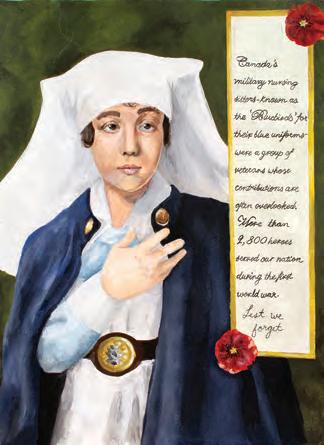
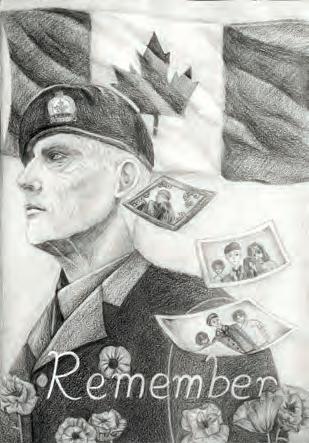
in the intermediate
JUNIOR POSTERS FIRST PLACE
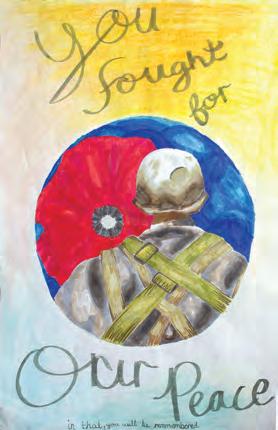
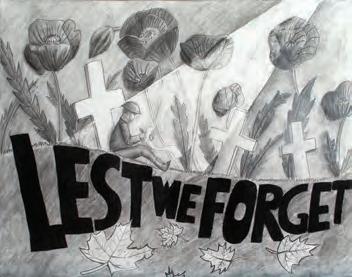
Cheng
Annabella Manery of Campbellford, Ont., captured first place
colour poster contest for honouring nursing sisters (left). The intermediate black and white poster category was taken by Annabelle He of Waterloo, Ont.
Elizabeth Bouchard of Chapleau, Ont., garnered first in the junior colour poster category (left), while Evonne
of Richmond Hill, Ont., won the junior black and white poster category.
IN THE NEWS
Former Dominion Command first vice and Ontario Command president Garry Pond died in Ottawa on May 30, 2025, after a brief illness. He was 73.
Born in St. John’s, N.L., the eldest of eight children, Pond was active in sports in his youth. With jobs scarce in Newfoundland, he joined the Canadian Armed Forces in 1972. After training in Cornwallis, N.S., he served in North Bay, Ont., Shilo, Man., and Petawawa, Ont., specializing in logistics, a job he described as “getting people and supplies to the ‘pointee’ end of the stick.”
His final posting was at National Defence Headquarters in Ottawa where he was a supply technician. He retired as a master corporal in 1996, then worked for the military for another 25 years as a private contractor.
He had joined The Royal Canadian Legion in Petawawa in 1988, but transferred to the Carleton Place, Ont., Branch, after he moved to Ottawa. In 1991, then-branch president Ron Goebel asked him to become the sergeantat-arms. He then moved up through the Legion ranks.
“He had always been a very dedicated and committed Legion member in carrying out whatever duties were assigned him and, in particular, the care and welfare of our veterans,” said Goebel, the current chair of Ontario Command. “Garry has inspired everyone he came in contact with in one way or another, through his kindness, generosity, wisdom and leadership.” Pond went on to serve in Ontario
Command, becoming president for a three-year term from 2019 to 2022, owing to restrictions during the COVID-19 pandemic. During that time, he chaired the membership, constitution and laws, veterans’ homelessness, and other committees. He went on to Dominion Command where he advanced to the position of first vice, the last step before becoming national president.
An appreciation day for Pond was held at the Carleton Place Branch on April 27, 2025, coinciding with a regular meeting of the Legion’s Dominion Executive Council in nearby Ottawa. Legion representatives from across the country attended. Dominion President Berkely Lawrence and others spoke. Pond stayed for the entire three-hour event and borrowed a guitar to sing one of his favourite songs, “Sonny’s Dream” by Newfoundlander Ron Hynes.
Pond is survived by his wife of 51 years Linda, daughter Rhonda and two grandchildren. L
website. For years of archives, visit www.legionmagazine.com
Veterans and dual entitlement
Aveteran with dual entitlement is someone who has disability entitlement under both the Pension Act and the new Veterans Well-being Act. Assessment is the term used to determine the extent of disability that helps to set financial benefits. When a veteran’s conditions combined total 100 per cent assessment, there is no further financial compensation. For any new successful claim, only treatment benefits would be available. For some, however, it may be more beneficial to receive decisions on claims under one law before proceeding with claims under the
other. While each case is unique, there are factors that veterans may wish to consider before proceeding with a new disability benefits application or a reassessment.
One consideration is whether you have a dependant to whom a survivor pension may be payable. For a full survivor pension, a veteran must have been receiving a 48 per cent disability pension under the Pension Act. In 2025, this rate is $2583.44 per month. But, if a veteran was receiving 47 per cent prior to death, the survivor pension would be half the amount the veteran was getting. Half currently equates to $968.80. In other words, depending on
a disability award, a survivor might no longer be able to qualify for a full survivor pension.
Each situation is unique, and there may be different factors to consider, but it’s important that veterans understand the potential implications before proceeding with either, or both, a disability benefits claim and assessment. There is no legislative authority to reverse a disability-award decision.
If you’re a veteran with dual entitlement, a Royal Canadian Legion command service officer can explain how a new disability claim or reassessment may impact a survivor pension. L
ONTARIO CONVENTION 53rd Alberta-Northwest Territories Convention
Facing forward
By Michael A. Smith
was a balmy weekend in early May, and the Edmonton Oilers hockey team had just won an exciting overtime game. The city had an energy typical in a place where a professional sports team is winning. But, about 40 kilometres outside the Alberta capital, the excitement started to dissipate. And, if you found yourself among the couple of hundred fans of the victors who came to Stony Plain, Alta., earlier that day, you would think serious work was ahead. It was.
Representing 162 branches stretching from Hay River, N.W.T., to Lethbridge, Alta., nearly 300 members of The Royal Canadian Legion arrived in town for the 53rd Alberta-Northwest Territories Command convention. An opening ceremony was held on the evening of May 2 in Spruce Grove Hall at the community’s Heritage Park centre.
Sergeant-at-Arms Don Ebbett led the colour party and a bugler throughout the hall to a temporary wooden cross serving as a war memorial for the event. Community leaders, Legion executive members and active service personnel then placed wreaths. Local cadets Joshua Dupuis and James Fowler were on hand for the event and were each presented the Legion’s Cadet Medal of Excellence, in recognition of their efforts to enhance the aims and objectives of that program.
Stony Plain Mayor William Choy was joined by his counterpart Jeff Acker from nearby Spruce Grove
for the opening, and both spoke to those in attendance about the importance the Legion plays as a heartbeat of their communities.
As the Legionnaires settled into the hall the following morning, treasurer Chris Strong, a Royal New Zealand Air Force veteran, joked that the temperature inside was a lovely reminder of home. Talk of the heat, however, was soon forgotten as an impressive range of relevant topics, from modernization and internal business to support of youth sports—especially track and field—membership and Legion dress, took centre stage. The convention’s tone was set when Dominion President Berkley Lawrence addressed delegates, reminding them: “It is here that you will consider important proposals designed to facilitate and evolve your work.”
New Alberta-N.W.T. President Dave Velichko shares a moment with his predecessor, Rosalind LaRose.
There was a sense that the topics of the event’s debate were of long-term consequence, which Lawerence emphasized when he said, “our discussions, ideas and decisions will ultimately help the Legion collectively grow, modernize and remain highly relevant.”
That message was driven home by Alberta-N.W.T. Command President Rosalind LaRose of Stettler, Alta., Branch, when she told attendees they are the ones who “will carry our wonderful organization onward into the next century.”
And local Legions, despite a few branches closing, look to be headed in the right direction, with membership increasing for a third straight year, noted LaRose in her president’s report. At the end of 2024, the command had 34,653 members.
Meanwhile, the command’s financial health was also reported to be in good shape, with the
auditor indicating that money isn’t being wasted frivolously, not even on staff salaries when compared to other non-profits. Ultimately, the command’s general fund reported net assets of $2,406,365 and appears to be positioned well for the future.
Still, First Vice Dave Velichko of Joe Wynne Branch in Edson, Alta., expressed concern.
“Honestly,” he said, “I am worried about the future of the Legion.” He pointed to infighting as one of the biggest challenges facing the organization and said the issue is tarnishing not only the Legion’s reputation, but also its ability to attract new members and accomplish its mission.
“We were once an elite organization that worked well together,” Velichko told delegates. “We found ways to resolve differences, without making enemies with everyone in the process.”
He pleaded for members to keep disagreements in perspective. Delegates then queried Velichko about initiatives to attract new, younger members. He put the onus
Dominion President Berkley Lawrence (left) congratulates outgoing AlbertaN.W.T. president Rosalind LaRose on her term (left). Scrutineers collect ballots during elections (below).
Delegates then got down to finalizing nominations for executive positions, and, as the voting approached, there was much chatter and tension in the air as some members discussed their options with one another. Others were more stoic and didn’t share their thoughts. After the voting, the executive featured several new faces.
Donovan Arnaud of Strathmore, Alta., Branch, and Kelly Lindbeck of Worthington Branch in Wainwright, Alta., vied with Velichko for president, while LaRose declined her nomination for the position. Velichko was elected.
BOTH SPOKE TO THOSE IN ATTENDANCE ABOUT THE IMPORTANCE THE LEGION PLAYS AS A HEARTBEAT OF THEIR COMMUNITIES
on branches, saying each knows its community best, and encouraged them to develop new ideas.
Before the election of a new executive, members heard committee reports and dealt with a variety of resolutions. Two specific items garnered the most attention: Legion sports and executive terms.
On the first, delegates seemed largely in favour of continuing both their member activities and supporting youth sports, which is manifest mainly through the Legion’s involvement in track and field. Command still plans to send teams to the national level yearly.
On the second, it was argued that limiting vice-presidents to no more than two consecutive terms could encourage new members to get more involved. A third vice-president position was also added in hopes of achieving the same result.
Arnaud and Lindbeck were dropped to the first vice ballot, along with Scott Sadler of Onoway, Alta., Branch. Sadler prevailed. The third try was the charm for Lindbeck, who was elected to one of the three vice-president positions, along with Bob Peterson of Morinville, Alta., Branch and Tim Penney of St. Albert, Alta., Branch. Bill Hart of Camrose, Alta., Branch was elected treasurer, while Terry Kuzyk of Vegreville, Alta., Branch was named chair.
In addressing members after his installation, President Velichko promised that branches would see more of command executives and develop a greater personal relationship with them. “We are more than just another social club,” he reminded his fellow Legionnaires, “so, please, let’s work together to keep it that way.” L
60th Quebec Convention
Optimism reigns among Legionnaires in la belle province
By Michael A. Smith
Along the banks of the iconic St. Lawrence, and not far from the Plains of Abraham where the consequential 1759 battle took place, members of The Royal Canadian Legion gathered May 17-19, 2025, for Quebec Command’s 60th Convention. In the shadow of such history, the Legionnaires put differences aside to ensure the organization’s bright future.
The cloudy, cool and wet spring weather was perfect for business indoors to review various committee reports recapping the Legion’s recent past in the province— and to discuss its future. Quebec Command President Tom Irvine was bullish on what lies ahead.
“In my three years as provincial president,” said Irvine, who spent much of his term leading from hospital after dealing with several health issues, “I am more than pleased with my committee chairs and committee members. They have worked hard building this command with increased membership, proper leadership and the drive to meet my objectives.”
Though Canada’s largest province by geographic area and second largest by population, the Legion’s presence in Quebec is relatively small compared to other provincial commands, with just over 100 branches and 12,000-plus members. This was evident by the smaller
convention hall and the number of delegates in attendance.
But, as Irvine noted, “it means a lot” that the Legion is showing significant growth in the province.
“I am also pleased with the [membership] committee,” said Irvine, who then asked the two-member team to stand as he announced that they oversaw the addition of more than 600 new members this year. They were greeted by thunderous applause.
In his president’s report, Irvine also mentioned the creation of two new branches, though one other branch was suspended and is awaiting a decision on its future. He also emphasized the importance to identify and eliminate cases of stolen valour, which Irvine said has been reported more and more across the country, with most cases involving people in trusted positions.
“What stands out is that most of the individuals involved held key leadership roles within the organization,” said Irvine. “Branch presidents, VPs, sergeants-at-arms, etc., at both branch and district levels.”
Irvine added that eliminating future such occurrences is essential to preserve the integrity and credibility of the RCL.
Greetings from Dominion Command followed Irvine’s address, with Vice-President Valerie MacGregor representing national headquarters at the event. She
largely echoed Irvine’s message, reiterating the importance of the Legion’s work and how crucial it is to continue to expand membership.
“People understand the importance of the work we do,” said MacGregor, noting, however, that the organization can’t get complacent. “One constant we are facing,” she said, “is the world is always changing and that means we are looking at new projects and initiatives that will ultimately have a direct effect on our work, including how we foster remembrance.”
MacGregor highlighted biodegradable poppies, Remembrance Day planners for teachers, and the co-ordination of national organizations to help combat veteran homelessness as examples of how the Legion is evolving, fostering remembrance in young people and making a difference in the lives of veterans.
In her constitution and laws committee report, chair Susan Donnelly shared great news with respect to member disputes, typically an ongoing challenge across the country. Just 10 complaints were lodged, and only one was legitimate; another needed mediation. Donnelly also oversaw the adoption of several new and amended bylaws, though she noted that many proposed changes had to be rejected due to missing documentation. Donnelly reminded
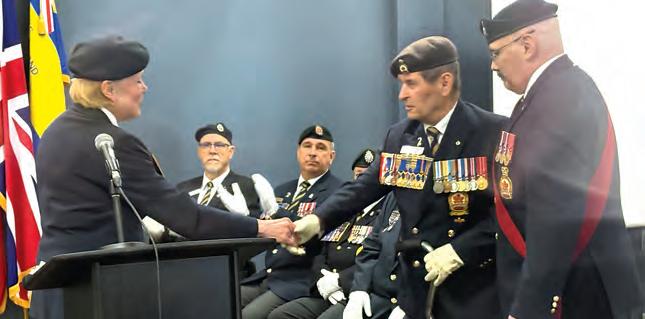
delegates of the importance of including proper paperwork.
Poppy chair Terrance Deslage also had an important reminder, urging members to review the Legion’s Poppy Manual, which outlines guidelines for how funds raised through the annual remembrance campaign can be used. He also reinforced the need of completing and submitting poppy reports on time.
“Your late reports are affecting our reporting,” said Deslage. “It is your responsibility to submit these reports as poppy funds are made available by the public and are part of the trust between Canadians and the Legion.”
In his report, treasurer Norman Shelton noted that the command is in good financial health, though he noted said more donations from branches would be beneficial to support the work of the service bureau. Shelton also oversaw the adoption of a motion to change how branches contribute income from the poppy campaign to Quebec Command. Going forward, branches will send
Dominion Vice-President Valerie MacGregor thanks outgoing Quebec Command President Tom Irvine for his service (left). New President Luc Fortier addresses delegates (below).
Fortier was elected. Another incumbent VP, Terrance Deslage of Greenfield Park Branch, won the first vice position over Robert Trépanier of la filiale cercle des Legionnaires de la capitale nationale Branch in Quebec City.
Trépanier, Yves Boucher of Trois-Rivières Branch, Sandra Morissette of Arthabaska Branch in Victoriaville, Ron Kappert of Greenfield Park Branch, and Jean St-Laurent of Quebec North Shore Branch were nominated for the three vice-president positions. Boucher, Morissette and Kappert
“I OFFER YOU A LEGION WHERE EVERY VOICE IS HEARD, EVERY BRANCH SUPPORTED, AND INFORMATION FLOWS WITH CLARITY, RESPECT, TRANSPARENCY AND EFFICIENCY.”
five per cent of gross sales to the provincial HQ as opposed to the previous five per cent of net sales. The change should increase revenue allocated to the service bureau.
Ken Oullette, chair of the veterans and seniors services committee, also spoke about programs available to veterans who could benefit from more funding. He also updated delegates on his committee’s work, which included consultations with a wide-range of veterans groups, attending forums, and meetings with all levels of elected officials.
Elections for the provincial executive took place throughout business. Incumbent Vice-President Luc Fortier of Chicoutimi Branch and Rick Cartmel of Churchill Branch in Ste-Anne-de-Bellevue were nominated for president.
were elected. Susan Donnelly of St-Eustache Branch in DeuxMontagnes and Norman Shelton of Chomedey Branch in Laval were acclaimed chair and treasurer.
“I stand before you with a simple but strong conviction,” said President Fortier in addressing delegates after his election. “I offer you a Legion where every voice is heard, every branch supported, and information flows with clarity, respect, transparency and efficiency.
“Our volunteers are the beating heart,” he continued. “Listen to them, support them, and provide them with complete tools, especially those in remote locations. I ask for your trust. Let’s make our command human, strong and engaged. And remember to always focus on those who serve.” L
ONTARIO CONVENTION
Dedication to honouring and serving veterans shines through 57th Nova Scotia/Nunavut Convention
By Alex Bowers
Retired corporal
Kate MacEachern admits that “growing up, I really felt that the Legion was honestly where old guys went to drink.”
Once, and always, a tanker of Lord Strathcona’s Horse, the veteran was speaking in front of The Royal Canadian Legion’s May 16-19, 2025, Nova Scotia/Nunavut Command convention hosted in Antigonish, N.S. The now-member of the local Arras Branch has since changed her mind.
“Like many soldiers, when I got out [of the armed forces in 2014], I struggled with finding my purpose again,” continued MacEachern as she outlined her operational stress injuries, as well as the head and spinal cord trauma she sustained in uniform.
“I wasn’t sure I belonged in the Legion…until I walked through these doors.”
MacEachern discussed other pursuits after her service, among them co-founding the humanitarian organization The Canada Way, which has “delivered 290 metric tons of life-sustaining aid” to wartorn Ukraine since Russia’s 2022 full-scale invasion. Many in the crowd—including some 135 delegates carrying 80 proxies—were moved to tears as MacEachern shared her on-the-ground experiences and their impact.
It was but one example of both passion and compassion at the 57th convention.
The town last held the biennial event 44 years ago, in 1981. Then, as now, attendees paraded to the nearby cenotaph for a wreathplacing ceremony, led by local branch President Tim Hinds. Back at the branch, Chaplain Steven Cochrane offered an opening prayer, then outgoing president Don McCumber, unable to attend proceedings in person due to health issues, made a surprise appearance via webcam, leaving some onlookers visibly and audibly emotional.
“I had six more days to go,” quipped McCumber of his tenure in the address before laying out his future hopes and concerns.
“Please, when you go back to your branches, don’t lose sight of why we’re there.”
McCumber highlighted long-term bed shortages for Nova Scotia’s roughly 33,200strong veteran population as a major challenge, a sentiment mirrored by Dominion Chair Bill Chafe, who, speaking on behalf of senior Legion leadership, remarked that “we share Don’s frustrations, and [are] working and assisting his efforts to get these concerns resolved to the benefit of the veterans who need these designated beds.”
Chafe also touched on a few other themes, including the RCL’s centenary plans for 2026: “This will be a year for all of us at every level to shine.”
Summarizing The Royal Canadian Legion’s overarching role for veterans and their communities across the country, Chafe added: “Please continue with the wonderful things that you are doing and stay proud of the successes you have created. People recognize and acknowledge what we do and want to be part of it.”
A number of additional matters were discussed during the ensuing business meetings. It was reported that the provincial service bureau handled 795 Veterans Affairs Canada files in 2023 and 450 in 2024.
Retired corporal Kate MacEachern addresses delegates at the 57th Nova Scotia/Nunavut Command convention in Antigonish, N.S., in May 2025.
Meanwhile, 239 VAC disability claims were approved last year, weighed against only 37 unsuccessful applications, amounting to more than $18 million being awarded. The bureau also facilitated 17 new pensions and pension increases through 2024.
Even greater light was shed on Nova Scotia/Nunavut Command’s endeavours in the veterans’ outreach report. “This file is near and dear to my heart,” expressed George Della Valle, relaying how he had served as its committee chair under “five different presidents” as he detailed several initiatives.
The Veteran Farm Project Society was one, established in 2018 for female veterans wishing to embrace therapeutic horticulture alongside informal peer support. Since its founding in Sweets Corner, N.S., the program has supported some 150 families and nearly 700 individuals, with 32 free workshops and 256 participants joining in 2023 alone. There were challenges in 2024, however, “with the big storm down in Windsor [that] blew down their big greenhouse,” explained Della Valle.
“I’d like to thank all branches across Nova Scotia who stepped forward to help with a donation. In the end, we were able to buy a new, beautiful greenhouse for them.”
Representatives from other initiatives supported by Nova Scotia/ Nunavut Command were on hand to make presentations. Speaking on behalf of Heroes Mending on the Fly, a program dedicated to veterans’ rehabilitation through fishing and related activities, provincial director Ray McEachern underscored its recent successes and continued development: “We want to reach as many veterans as we can because we’ve seen the benefit of it. It’s incredible when someone who was suicidal tells you our program saved their life.”
Meanwhile, appearing virtually, Danielle Kelly of the Operational Stress Injury Social Support (OSISS) services, which provides
peer support to both veterans and their families, joined her colleagues in describing the provincial facilities available.
Assisting military communities, not only at home but overseas, was equally on full display during the collection for the Royal Commonwealth Ex-Services League (RCEL), an organization that delivers financial aid to impoverished veterans and their widows in the Caribbean. The convention’s delegates, observers and guests donated $9,541.55 to the fund, contributing toward the 25 beneficiaries presently receiving RCEL relief.
The good news continued in the membership committee report: Across more than 100 branches, Nova Scotia/Nunavut Command now boasts 18,205 Legionnaires, an increase of 1,799 since the last convention. “This year, in 2025, all commands are on pace for yearover-year growth,” noted Chafe.
Discourse surrounding resolutions became a more impassioned affair in subsequent proceedings, including the purchase of Canadian flags for veterans’ graves through the Poppy Trust Fund. After deliberating whether the collection
Unable to attend in person for health reasons, outgoing president Don McCumber speaks to the convention virtually. Dominion Command rep Bill Chafe poses with new N.S./Nunavut Command President George Della Valle.
should be put toward deceased vets, the motion was carried with an annual branch cap of $2,000.
A resolution to have the poppy prominently displayed, along with the Canada flag, on Nova Scotia veterans’ licence plates was next on the agenda. In the ensuing debate, one argument centred on the suggestion that a large portion of younger veterans were advocating for change, while others countered that “poppies are for remembrance of those who lost their lives and those who have passed on.”
After 15 minutes of a fullhearted exchange, the motion was voted down.
A broad consensus emerged, however, in the nomination of officers and the election. Della Valle of Dominion Branch was acclaimed president. “As I stand before you today,” he told attendees, “I can only promise you one thing, and that’s that I will always give you my very best.”
Speaking to Legion Magazine, Della Valle paid tribute to late mentor Ted Martens, former grand president of Nova Scotia/Nunavut Command: “He is deeply missed.”
Meanwhile, Harry Jackson and Conrad Gilbert of Hants County Branch in Windsor, and Ron Langevin of New Ross Branch, were all also acclaimed as first vice, treasurer and chair. The only two-candidate election was for second vice, with Joanne Geddes of Centennial Branch in Dartmouth prevailing.
Business concluded with a closing ceremony fronted by the new executive. L
ONTARIO CONVENTION 67th Prince Edward Island Convention
P.E.I. Command emerges from biennial meeting with new name
By Stephen J. Thorne
Prince Edward Island Command of The Royal Canadian Legion is no more— in name, that is.
In one of his last official acts at the helm of the country’s smallest collection of RCL branches, outgoing president Jack MacIsaac declared passed a motion to change the name to Prince Edward Island/ Magdalen Islands Command.
The unanimous approval at the Island’s 67th convention comes as a nod to the Quebec archipelago’s lone Legion branch and its 30 members whose forebears opted to join their neighbouring island of P.E.I., 120 kilometres south, rather than the province to which Les Îles-de-la-Madeleine belong, 120 kilometres northwest.
“They’re kind of the long-lost cousin of ours, if you will, but we do look after them and are in touch with them frequently,” said MacIsaac. “We were never called [P.E.I.-Magdalen Islands Command], we were just called P.E.I. Command. But we’d like to change that so the Magdalen Islands is included.”
Shortly thereafter, the Charlottetown resident swore in the new command executive: President David Doucette of Lt.-Col. E.W. Johnstone Branch in Kensington; First
Vice Mario Couture of the host Wellington Branch; vice-presidents Gordon Perry of George Pearkes VC Branch in Summerside, Mario Henry of Borden-Carleton Branch in Borden and Robert MacDougall of Miscouche Branch; and two more Wellington Branch members, finance chair Gilles Painchaud and vice finance chair Marlene Gaudet.
The new president, a metal worker and Legion member for 27 years, said veterans will remain the command’s No. 1 priority.
“It’s always been veterans,” Doucette said in a post-convention interview. “Veterans are
first and foremost, making sure we serve them any way we can.”
He said 75 WW II and Korean War veterans attended his first RCL veterans’ dinner hosted annually by the branch in Kensington. Now they’re down to four.
When people think of veterans, he said they still tend to think of the world wars and Korea, but he added the emphasis is shifting toward Afghanistan and peacekeeping vets now that those who served in WW II and the Korean War are aging out.
“My goal is to make sure they are all looked after, any way we can,” said Doucette.
Legionnaires parade in Wellington ahead of the 67th P.E.I. Command convention.
“There is a good-sized community of younger veterans, a lot of young men who have served in Afghanistan on the Island.”
Doucette said local Legions need to reclaim their place in their cities, towns and villages.
“Years ago, the Legions were the centre of the communities—every wedding, every birthday, every anniversary, we were always here. And it’s starting to get away from that. I want the people to realize, you know, that there is still the Legion in the community, and we’ve got to get them back. We’re not just a bar here; we want to serve our veterans, but we also want to serve our community.”
The primary challenge is the same across the country: engaging younger veterans.
Doucette, whose son served two Afghanistan tours, said veterans’ needs have changed. After the two world wars, “Captain Morgan helped them with their problems.
“And the younger ones? I wish I had the answer.”
He said the war is still fresh to many.
“They’re not as apt to open up. The old fellas, they put it in the closet and never ever spoke. And back then that was par for the course—shove it under the table and ‘we’ll not worry about it.’ Now, it is a very touchy subject. They keep to themselves.
“The worst part of it is—and I hate to say it but—when they do want to talk about it, it’s in a very
negative way. A lot of hate. It was a different kind of war…you didn’t know who you were fighting over there. During the first and second world wars, at least you could see the fella you were shooting at, so to speak. Over there, you didn’t.”
Once the war ended, he said, it was as if the country didn’t need them anymore, added Doucette. “A lot of them young men were hurting mentally, wouldn’t go for help because they knew if they went for help they’d get kicked out of the Forces.”
Newly minted provincial presidents George Della Valle of Nova Scotia/Nunavut and Lynn McClellan of Ontario were observers, while N.S./Nunavut past president Donna McRury was a jill of all trades, helping out during the twoday convention at the gateway to
The new P.E.I. Command executive, flanked by provincial Sergeant-at-Arms Dennis Hopping: finance vice chair Marlene Gaudet, Vice-President Mario Henry, First Vice Mario Couture, Vice-President Gordon Perry, Immediate Past President Jack MacIssac, Chair Duane Phelan, President David Doucette and finance chair Gilles Painchaud. Painchaud, Sergeant-atArms at the host Wellington Branch, reads the roll during the convention.
“WE WERE NEVER CALLED [P.E.I.MAGDALEN ISLANDS COMMAND], WE WERE JUST CALLED P.E.I. COMMAND. BUT WE’D LIKE TO CHANGE THAT.”
P.E.I.’s Evangeline region, so named for its rich Acadian roots.
The walls of the Wellington Branch are plastered with Arsenaults, Poiriers, Richards and Gaudets, their names prominent among the area dead of two world wars, Korea, and throughout the annals of the Legion’s 79-year history here.
In P.E.I., everything Legion works on a smaller scale, especially compared to McClellan’s Ontario Command, with its 388 branches and 100,000plus members. The Island has 18 branches and 1,850 members.
The command spent $116,672 in 2024 on revenues of $120,432, for a surplus of $1,760.
P.E.I. Command withdrew its sponsorship of athletes aspiring to compete in the annual Legion National Youth Track and Field Championships three years ago. It has since endorsed an Athletics PEI initiative, funded by a $7,000 grant from the provincial government, to send athletes under the Island RCL banner to the Legion-sponsored event. L
Stephen J. Thorne/LM
ONTARIO CONVENTION 56th British Columbia/ Yukon Convention Helping veterans remains the focus out West
By Michael A. Smith
Nestled in the hills of British Columbia’s southern interior is a place partly known for bringing things together. Often, it’s a confluence of rivals for one of more than 100 tournaments the area hosts annually; but it’s also where the mighty North and South Thompson rivers meet. On June 6-8, The Royal Canadian Legion’ British Columbia/Yukon Command gathered in Kamloops, B.C., for its 56th convention.
Representatives of Legion branches from the southern coast of Canada’s westernmost province up to the glacial territory of the Yukon met to determine a new executive, discuss the group’s state of affairs and to vote on new by-laws.
Before the Legionnaires got down to business, however, they convened at City Hall, where Mayor Reid Hamer-Jackson presented B.C./ Yukon Command the “Freedom of the City,” Kamloops’ highest honour. It’s only the second time the award has been presented, the first, nearly 30 years ago to 419 Squadron. The group then paraded to the city’s Cenotaph in Memorial Park for a brief remembrance service.
With scorching hot temperatures reaching close to 40 C as business sessions kicked off the following day, the air conditioning inside the Coast Kamloops Hotel & Conference Centre kept delegates cool-headed throughout the productive, though at times emotional, convention.
The event’s tone and purpose was set early by outgoing President Craig Thomson of the host branch.
“I remind all members, our mission statement is to serve veterans, their families and our communities,” said Thomson in his opening address. “With constant infighting and bickering, we are not doing that. As I said to a branch member earlier this year, if our mission statement is not the reason for you being a Legion member, you should rethink why you are a member.”
Thomson stressed the importance of the organization’s mission because of such challenges threatening to impact the vitally to its branches.
“If this trend continues,” warned Thomson, “it could erode all the hard work the Legion has accomplished over the past 100 years.”
Indeed, Thomson highlighted the 2023 opening of Legion Veterans Village at Whalley Branch in Surrey, B.C., and its associated Centre of Clinical Excellence, as the kind of accomplishments resulting from the extraordinary efforts of Legion members.
B.C./Yukon membership passed 50,000 during Thomson’s three-year term, with a goal of 55,000 before the end of 2025. And a new office was purchased for the organization’s operations, with treasurer Glenn Hodge noting the move will save $145,000 annually.
Hodge also briefed delegates on the latest poppy campaign. “Our Branches collectively raised an impressive $8,353,361 in poppy donations. Of this amount, $5,402,943 was disbursed in the form of grants to veterans and their families, bursaries, donations, and special use expenditures,” he noted. “This represents a 13 per cent increase in total poppy donations.”
Having joined B.C./Yukon Command in May 2023, executive director Michelle Courtney presented a new strategic plan, which aims to grow membership, develop and conduct more branch training and implement greater support for branches.
In her report, constitution and law committee chair Karen Kuzek observed the group has been busy dealing with a steady increase in complaints and requests to amend certain laws. The number of complaints went from 11 in 2023 to 32 in 2024, with nine in 2025 at the time of the early May convention. It was pointed out that interpersonal drama is no way to encourage new members to join.
As the RCL gets set to celebrate its centenary in 2026, B.C./Yukon Command is getting creative with membership initiatives. Membership committee chair Brad Young presented a couple of the ideas in his report. First is Find the Poppy, a contest to promote increased
readership of the command’s “Legion lazer” newsletter. The bulletin currently has about 2,500 readers, but Young is keen to have all members on its mailing list.
Command has also created a social media graphic and other information for the public, which will be available to each branch. The goal is a top-quality, consistent social media message across branches that aims to attract new members and communicate with current members more clearly.
Other topics that garnered much interest, and sparked the most discussion, were veteran homelessness and mental health and addictions issues, along with what the Legion is doing, and could be doing, on these fronts. B.C./Yukon Command has prioritized establishing its Operation Leave the Streets Behind program during the last few years, and while it faced some challenges early on, mainly due to costs, it’s now fully operational. Indeed, transitional housing for veterans experiencing
Bob Underhill is installed as president of B.C./Yukon Command (left) at the organization’s 56th convention in Kamloops, B.C. Delegates participate in a remembrance service in Memorial Park prior to the event.
“I WOULD LIKE TO COMMEND ALL MEMBERS OF THE LEGION WHO HAVE TAKEN ON ADDED RESPONSIBILITY ON BEHALF OF THE BRANCHES… THEIR WORK IS INVALUABLE .”
homelessness in Victoria is now at full capacity, so there’s a need for still more assistance. It’s estimated there are some 2,600 veterans experiencing homelessness in B.C.
Meanwhile, a survey of veterans experiencing homelessness in the Yukon was conducted and identified at least 145 individuals.
During the course of business, elections were held for a new executive. Bob Underhill of B.C./Yukon Command Branch was acclaimed president. As he has moved up the ranks over the years, Underhill helped oversee development, and he thanked those who worked to ensure business went smoothly.
“I would like to commend all members of the Legion who have taken on added responsibility on behalf of the branches,” said Underhill. “Their work is invaluable.”
Gary Peters of Seaview Centennial Branch in Lantzville, B.C., beat out Dale Johnston of Cloverdale Branch in Surrey, John Scott of Prince George, B.C., Branch and Norman Scott of Prince Edward Branch in Victoria for first vice. Karen Kuzek of Mission City Branch in Mission was re-elected to one of the two vice-president positions, while Dwight Grieve of Malahat Branch in Shawnigan Lake, B.C., edged Brenda Thomson of Kamloops Branch for the second VP spot. Thomson went on to be elected chair, while Hodge of Trail, B.C., Branch held onto his role as treasurer.
The organization’s finances were reported to be in order based on a review of the independent auditor’s report conducted by Clearline CPA. The audit showed revenues increased in 2024 over 2023, although so did expenses. Net assets continued to rise by more than $1 million. And net revenue over total expenses also increased. It was, however, encouraged that branches stay up-to-date on safety regulations and do regular inspections.
As for the future, one member surmised: “I don’t think we can do anything better to help veterans than to get one off the street. They are at their lowest point after giving their all for us. Should we not be able to give our all to them?” L
ONTARIO CONVENTION
Dedication to honouring and serving veterans shines through 51st Manitoba-Northwestern Ontario Convention
By Aaron Kylie
Ifyou were magically transported to the Field of Honour in Winnipeg’s Brookside Cemetery, you could easily mistake the setting for a Commonwealth War Graves Commission (CWGC) site in Europe.
Opened in 1915 after the Daughters of the Empire requested the city set aside a section of the graveyard for the internment of First World War veterans, it now holds more than 10,000 burials of veterans of both world wars and other service members. The area also boasts a Cross of Sacrifice memorial and the only Stone of Remembrance—the sarcophagus-like altar centrepiece of many European CWGC grounds—in the Americas.
In a particularly meaningful display, some 100-plus members of The Royal Canadian Legion’s Manitoba-Northwestern Ontario Command marched a short distance past dozens of rows of iconic CWGC light-gray granite headstones on June 13, 2025. The group, assembled for its 51st annual convention, then held a brief remembrance ceremony surrounded by the dead.
Master of ceremonies and local arrangements committee chair Brian Rodgers recited the Act of Remembrance before wreaths were placed by Manitoba Lt.-Gov. Anita R. Neville, RCL Dominion
Immediate Past President Bruce Julian, provincial command President Ernie Tester, provincial RCL Ladies’ Auxiliary President Jane Brown and Mike Bowman Wilson on behalf of Veterans Affairs Canada.
The opening ceremony was held a short time later at the Birchwood Inn hotel, site of the convention. Notably, delegates sang “O Canada” unaccompanied. The Legionnaires then retired to the event’s host branch, Charleswood, for comradery, sloppy joes and evening entertainment.
The gathering got down to its business agenda the following two days, June 14-15. Julian was first to address the crowd, bringing updates from headquarters.
“The future continues to look bright for The Royal Canadian Legion,” said Julian. “Membership numbers are increasing across the board, our profile across the country is getting stronger, and we are helping thousands of veterans through the work of our service officers and branches.”
He noted that membership grew for the third consecutive year in 2024, up five per cent from 2023, and that all provincial commands are on track for year-over-year membership growth. Julian also highlighted the Legion’s advocacy efforts and the work of its service officers.
“We will never stop pushing for change related to our veterans’ well-being,” he emphasized.
“Our national service officers alone had over 8,000 interactions with veterans last year, from filling out forms for benefits to answering one-off questions, we are proud of the crucial assistance they offer.”
The convention then heard from the first of several guest speakers, retired lieutenant-colonel Matt Halpin, president of the Manitoba board of the Last Post Fund. He spoke about his organization’s mission to ensure that no veteran is ever denied a dignified funeral. He noted that the government support
Legion Dominion Immediate Past President Bruce Julian thanks Manitoba-Northwestern Ontario Command outgoing president Ernie Tester for his service.
under which the fund operates hasn’t increased in a decade, and highlighted the group’s work to identify veterans in unmarked graves and its efforts to have the tombstones of Indigenous veterans reflect their heritage with appropriate symbols and traditional names, among other updates.
A short time later, Suzette Brémault-Pillips, director of the Heroes in Mind Advocacy and Research Consortium, detailed her organization’s work in resiliency training, its efforts to build an academic network of innovation, and research into a new post-traumatic stress disorder treatment known as 3MDR, which thus far has proved to be very successful. Of particular note in Brémault-Pillips presentation was her concern about the prospect of future conflict.
“The young generation needs to learn from you,” she told the Legionnaires. “We need to learn from you about what kinds of things to prepare for and how to prepare Canada for what we may be walking into. Many people in our younger generation are not attuned to the realities that we might be facing in days ahead.”
President Tester’s address to members noted several significant moments from his three-year tenure, with many relating to honouring veterans. He highlighted the rededication ceremonies of the cenotaph in Roblin, Man., and the Belgian Veterans War Memorial in Winnipeg, as well as the dedication of memorials for LieutenantColonel Lockhart Fulton in Birtle, Man., and the Dufferin Gang in Selkirk, Man., in 2022; and the unveiling of a plaque at the Manitoba Legislative Building honouring special forces executives and military families in 2023.
“I extend sincere gratitude to provincial council members, branches and all [members] for your continued support, dedication and hospitality,” said Tester.
“It has been an honour to serve alongside each of you.”
Elections followed Tester’s remarks and continued throughout the convention. There were 118 voting delegates and 219 proxies. Robert Cutbush of Port Arthur Branch was acclaimed president, advancing from his tenure as first vice. Gail Conrad Davey of Lac du Bonnet, Man., Branch filled that position over fellow incumbent vice president Wayne Baker of Kenora, Ont., Branch. Baker joined four others vying for the three VP positions: Chris Flood of Carberry, Man., Branch, Jason Lava of Kenora Branch, Ken Morley of St. James Branch in Winnipeg and Joan Wright of Brandon, Man., Branch. Baker, Flood and Lava were all elected on the first ballot.
Tanya Bishop of Winnipeg’s Transcona Branch was voted honorary treasurer over former executive member Rick Bennett of Fort Garry Branch in Winnipeg. Incumbent chair Bette Vance of Winnipeg’s Norwood-St. Boniface Branch faced off against John Kosowan of Winnipeg’s Prince Edward Branch and Trevor Jenvenne of Lac du Bonnet, Man., Branch, but lost her gavel to Jenvenne on a second ballot. Roland Fisette of St. James Branch was acclaimed sergeant-at-arms.
Throughout the convention, committees shared reports on their works and other presentations were made.
Notable among the latter was a donation made by Jo-Jo Barkley, acting president of Winnipeg’s former Ukrainian Canadian Veterans Branch. “With pride
New ManitobaNorthwestern Ontario Command President Robert Cutbush (right) is escorted to the stage for the installation of the latest executive.
and regret, after over 70 years of serving our veterans and community we were compelled to close our doors, sell the building and turn in our charter,” said Barkley. “It’s been an honour and privilege to be able to distribute the branch’s remaining legacy.”
Barkley then presented $9,000 to the Veterans Alliance of Canada, a Winnipeg-based non-profit that assists veterans living in Manitoba, $20,000 to the ManitobaNorthwestern Ontario Command branch assistance fund, and $100,000 to the Canadian Legion Memorial Housing Foundation, a provincial command initiative that has operated low-cost housing for veterans since 1956.
“With the Ukrainian Canadian Veterans Branch 141 Legion’s final breath,” said Barkley, “we present our last gesture of goodwill in these three cheques.”
Dominion Past President Julian oversaw installation of the newly elected officers to conclude the event. President Cutbush addressed delegates before they were dismissed, getting right to business.
“The operation, administration and fiscal responsibilities shall run economically and efficiently, tracking incoming contacts in a business-like manner, keeping comradeship as the lead mark” said Cutbush of his approach.
“Each member of The Royal Canadian Legion and their respective branch is the backbone of this organization,” he continued. “Recruiting and retaining new members is paramount to ensure the next 100 years will be effective.” L
Legion’s 2025 Dominion eight-ball champs
By Alex Bowers
Russ Kelly understands the power of a good break—on and off the pool table.
“I used to play [eight-ball] at the Legion’s Jasper Place Branch in Edmonton from 18 until I was 30, when I quit because I needed to commit more time to my career.”
The retiree, now playing out of Mount Arrowsmith Branch in Parksville, B.C., “only started playing again about two and a half years ago.” Two years, however, was clearly enough for him to chalk-up the old cues, having since won the singles crown at The Royal Canadian Legion’s May 24-25, 2025, national eight-ball championships hosted by New Brunswick’s Fredericton Branch.
Kelly wasn’t the sole victor representing Mount Arrowsmith Branch, as his comrades Brad Uytterhagen and Dave Williams snagged the doubles title. As for the team competition, that title went out east when the four Legionnaires of Nova Scotia/Nunavut Command prevailed after two days of nail-bitingly tight matches.
“We’ve got a whole room full of champions,” remarked Dominion Command representative Harold Defazio at the opening ceremony, noting that all 40 players of nine provincial/territorial commands— in absence of Quebec—and a host team had earned their place through skill displayed back home. Despite grey skies and rain forcing the opening ceremony inside Fredericton Branch, the drizzle did nothing to dampen spirits as the gathered participants began the first of 360 round-robin games.
Competing on only three tables, it became evident that time might pose a significant challenge to
Eventual
maintaining the schedule, with several matches concluded in as few as four minutes, but as many as 15. No matter: Fredericton Branch, which has been using a temporary location until recently, tackled numerous hurdles to not only host this year’s competition, but to simply be open.
In April 2018 and again in 2019, floodwater from the nearby Saint John River breached the premises and left its members scrambling for interim space mere weeks before hosting the latter year’s Dominion eight-ball tournament, which in the end proved to be a success.
“We were only supposed to be there for three years,” explained returning Branch President Joanne Gibson of the temporary site, “but we were there for almost six.”
The Legionnaires themselves returned to their old building— since renovated into a multi-storey, multi-use apartment complex—in
early September 2024. Fredericton Branch has thrice held the national eight-ball championships, twice under Gibson.
“It’s been a journey, believe me,” she said, “but we’ve put our heart and soul into it.”
Few encapsulated that sentiment more than Local Arrangements Committee chair Ellen Whalley, who kept a cool head in navigating the issues at hand. Free-flowing coffee, pastries and meals, provided by the Ladies’ Auxiliary, also undoubtedly helped ensure energy levels stayed high amid the scheduling concerns.
“Thank God for good volunteers,” said Gibson.
Participants played for a full 12 hours on Day One, finishing partway through the sixth of nine rounds at 9 p.m. Accompanying the crack of the first break at 9 a.m. was a continuous chorus of laughter,
singles’ winner Russ Kelly of B.C. lines up a shot during the playoffs.
Annie Bowers
jokes and light-hearted banter. But, amidst the competitiveness remained respect as an echo of “Good game” could be heard during post-match handshakes.
Slowly, surely, crowds began to increase around the scoreboards as leads tightened. Nevertheless, without any commanding edges, the discussion turned to tiebreakers, provoking an impassioned debate on how best to move proceedings forward under time constraints. A more immediate matter was concluding the round-robin games.
B.C.’s Dave Williams and Brad Uytterhagen pose with local organizer Ellen Whalley and Dominion rep Harold Defazio (left) after taking the doubles title. Nova Scotia/Nunavut’s Bob Miklos, Jon Kynock, John Dugas and Lawrence Borden hoist the top-team plaque (below).
“IT’S WHAT YOU MAKE THAT CUE BALL DO. YOU MUST KNOW HOW TO CONTROL IT. HOW TO POSITION IT. HOW TO SPIN IT ANYONE CAN MAKE THE SHOT.”
Cautiousness reigned supreme on the three blue-felted tables, heightening anxieties that play might impede the evening’s roast beef banquet. To keep waiting contestants occupied, cribbage boards were brought out as others, like the noticeably gleeful Albertans, watched the Edmonton Oilers beat the Dallas Stars in game seven of the Stanley Cup playoffs.
Ultimately, just four finalists of the four separate divisions emerged: B.C.’s Brad Uytterhagen and Russ Kelly of divisions 1 and 3, respectively; John Dugas from Vimy Branch in Halifax, representing division 2; and
Manitoba-Northwestern Ontario’s Fred Pebbles, from NorwoodSt. Boniface Branch in Winnipeg, the frontrunner in division 4. All were destined to battle it out for the singles title.
“It’s what you make that cue ball do,” suggested Kelly, who achieved exactly that. “You must know how to control it. How to position it. How to spin it. Anyone can make the shot.” Equally, he added, camaraderie at his local branch had a sizable influence: “I’m very, very proud of our Legion. It’s a good club with good people.”
Meanwhile, Uytterhagen and Williams vied for the doubles title against Saskatchewan’s Burt Blondeau and Steven Valentine from Estevan Branch. Though sportsmanship was, as ever, on full display, it became clear that
both pairs of finalists, showcasing an unwavering focus, were quietly contemplating success.
“Best out of three on the Dynamo, this one for the trophy,” remarked Uytterhagen of the agreed upon playoff mode, his preferred billiard table brand, and the stakes.
He and Williams triumphed in two consecutive matches.
Joining them on the stage at the closing ceremony were Nova Scotia/Nunavut team winners Lawrence Borden, John Dugas, Bob Miklos and Jon Kynock of Halifax’s Vimy Branch with 47 victories. The Saskatchewan team claimed second, just three wins behind. Pocketing third was B.C., with 43 points.
Asked how he planned to celebrate his provincial command’s fortunes, Kelly lifted a glass of wine and gestured to where the room full of champions would soon dine. “We’re also going to take a little vacation,” he noted.
“We’ve travelled across the country, so we thought we’d see P.E.I. and tour more around New Brunswick.
“My wife is the travel coordinator. She’s got a big list.”
Checked off already is Fredericton Branch; its tournament organizers, contestants, observers, members, and volunteers have done it again. L
Members gather for the first Rimbey, Alta., Branch gala, including 101-year-old veteran Michael Jarmulak, who enjoyed the evening with a dance. SHEILA BUDD
Beaverlodge, Alta., Branch members Len Mainville, President Pat Garrison, Andy Meggitt and Wayne Putman present Preston Kane with his first-place national-level award in the Legion poster and literary contests. LEN MAINVILLE
Pat and Bob Dart of Bashaw, Alta., Branch present certificates to the Bashaw School winners of the Legion poster and literary contests. SHEILA SEALE
President Ben MacRae and John Markwart of Vulcan, Alta., Branch present $1,000 to members of 903 Strathmore air cadets. BEN MacRAE
Bob Dart, President Glenn Knockleby, and Pat Dart of Bashaw, Alta., Branch present district-level first-place winner Weston Clifford with $145 for his submission to the Legion poster and literary contests. GLENN KNOCKLEBY

President Ben MacRae and Laureen Bowman of Vulcan, Alta., Branch present $500 to Lilly Somarriba who will be competing in the Deaflympics in Tokyo in November. BEN MacRAE
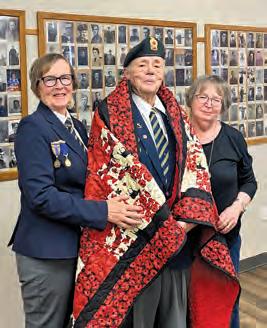
Beaverlodge, Alta., Branch member Andy Meggitt receives a Quilt of Valour, presented by Hythe, Alta., Branch President Joann Rueckert and quilter Inez Thomson. LEN MAINVILLE
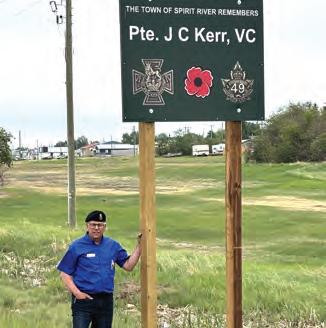
Jim Sharkey of Fairview, Alta., Branch stands by one of the signs installed, in partnership with The Loyal Edmonton Regiment, to commemorate Pte. J.C. Kerr, VC, on Hwy. 49 through Spirit River. JIM SHARKEY
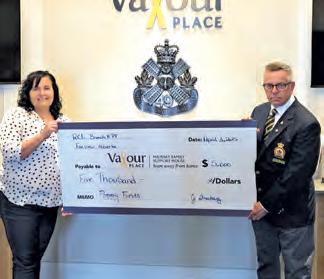
Jim Sharkey of Fairview, Alta., Branch presents $5,000 to Valour Place Edmonton representative Sylvie Keane. JIM SHARKEY

Shannon Doré and President Roy Buchanan of the Alberni Valley Branch in Port Alberni, B.C., present $700 to Alberni Valley Hospice, represented by Margaret Vatamaniuck, and $1,103 to Abbeyfield Retirement Home, represented by Sandi Patterson.
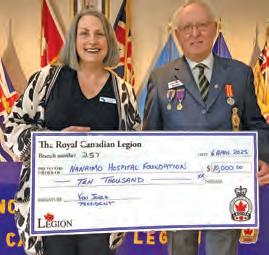
Barry French of Seaview Centennial Branch in Lantzville, B.C., presents $10,000 to Karen McCarthy of Nanaimo Hospital Foundation.
President Helene Boudreau and Ian Campbell of Cariboo Branch in Quesnel, B.C., present $12,000 to Capt. Mike Forster and 768 Jet Ranger Squadron cadets.
Members Robert and Leslie Driemel of Fort Rupert Branch in Port Hardy, B.C., present $1,000 to representative Josh Morgan of Loaves & Fishes.
Barry French of Seaview Centennial Branch in Lantzville, B.C., presents $2,500 to representative Bob Milne of Vancouver Island Adaptive Snow Sports.
President George Molnar and Mike Uhre of Mount Benson Branch in Nanaimo, B.C., present $1,200 to the RCACC Canadian Scottish Regiment Corps, represented by MWO Larken Knight.
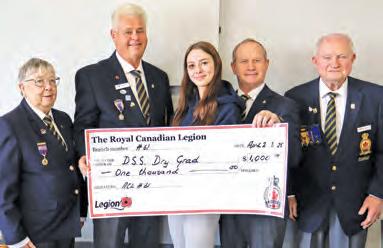
Naia Lockhart receives $1,000 toward organizing Delta Secondary School’s Dry Grad, presented by Barbara Dyck, Brian Reid, Russell Ford and Gerry Bramhill of Delta, B.C., Branch.

Richmond, B.C., Branch President Ron Fontaine and member Bill Costain present $15,000 to Richmond Hospice, represented by Bal Bains.
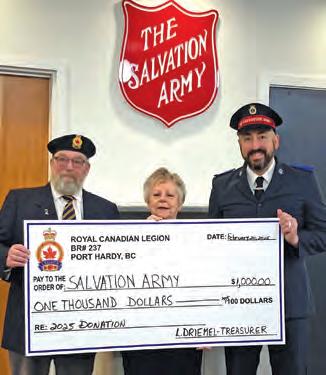
Fort
members
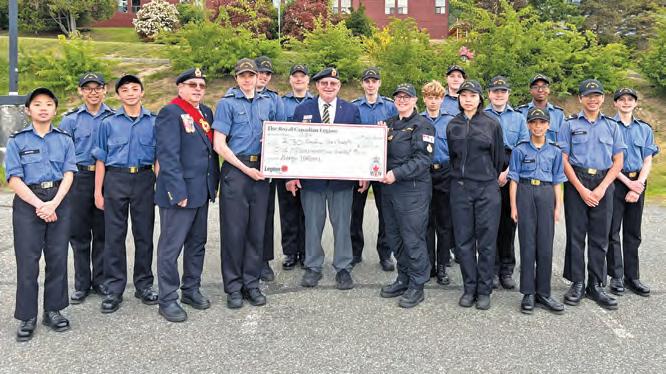
President George Molnar (centre) and Mike Uhre of Mount Benson Branch in Nanaimo, B.C., presents $1,200 to the RCSC sea cadets.
Leslie
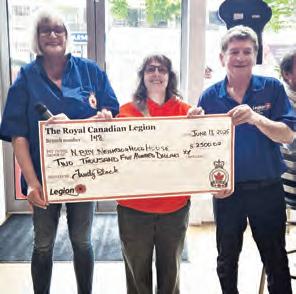
President Trudy Black and Rick Spelling of North Burnaby, B.C., Branch present $2,500 to the North Burnaby Neighbourhood House, represented by Kimberly Barwich.
At
Rupert Branch in Port Hardy, B.C.,
Robert and
Driemel present $1,000 to the Salvation Army, represented by Michael Winter.
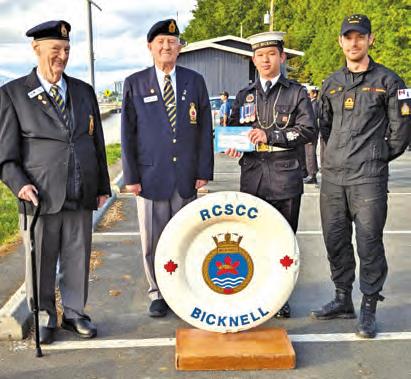
Richmond, B.C., Branch members Tom Jones and Tony Spierings present $3,000 to the local sea cadet corps, represented by Cpl. Darin Ng and 2nd Lieut. Alex Gaio.
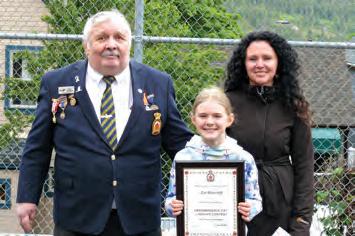
President John Riesterer of Nelson, B.C., Branch presents Zoe Huscroft, accompanied by her teacher Zav Huscroft, with the provincial first-place junior essay award in the Legion poster and literary contests.
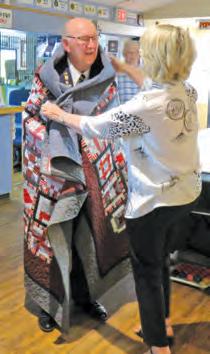
Albert Walsh of Qualicum Beach, B.C., Branch receives a Quilt of Valour, presented by Joan Irving.
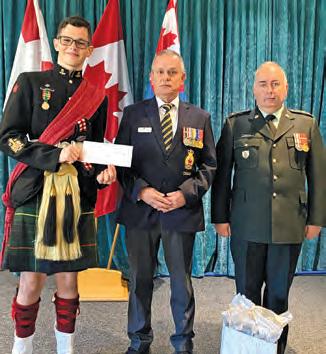
Courtenay, B.C., Branch representative Robert O’Connor presents $2,000 to CWO Clifford and CO Capt. Brad Waterfall of the 1726 Canadian Scottish Regiment army cadets.
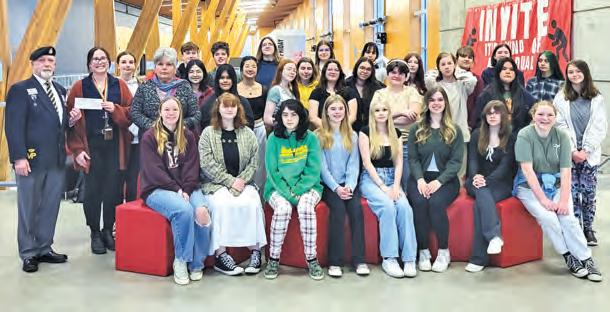
President Roy Buchanan of the Alberni Valley Branch in Port Alberni, B.C., presents Alberni District Secondary School’s drama club with $1,000.
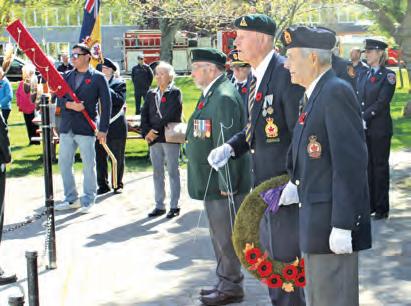
Cranbrook, B.C., Branch members David Dulmage, Bill Cnossen and Larry Miller commemorate the 80th anniversary of VE-Day by placing a wreath at the Cranbrook Cenotaph.
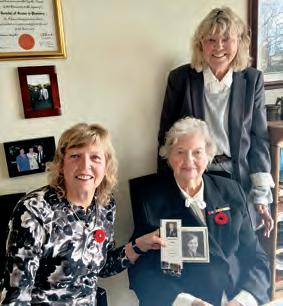
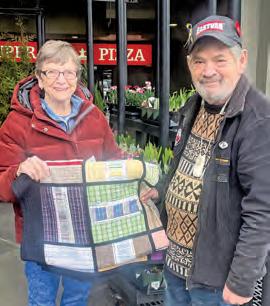
Michael Siew of Britannia Branch in Victoria, B.C., receives a Quilt of Valour, presented by Irene Harrison.
Members of White Rock Branch in Surrey, B.C., celebrate RAF veteran Eileen Amy Mosely’s 100th birthday.
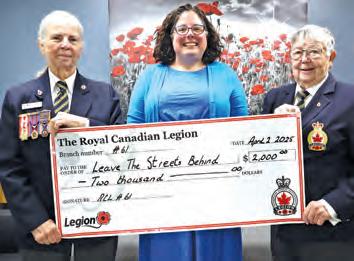
Delta B.C., Branch Second Vice Olwen Demidoff and Barbara Dyck present $2,000 to Leave the Streets Behind representative Amber Stewart.
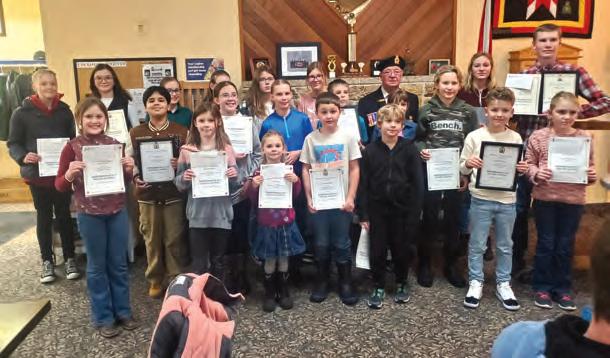

George Romick of Port Arthur Branch in Thunder Bay, Ont., presents $350 to the George Jeffery Children’s Foundation, represented by Cindy Levanto.

George Romick of Port Arthur Branch in Thunder Bay, Ont., presents $250 to the Thunder Bay St. John Ambulance, represented by Cheryl Austin.
President Jason Lava of Kenora, Ont., Branch presents $2,000 respectively to the 645 Kenora Lions air cadet squadron and 774 Keewatin-Kenora cadets, received by Capt. Marci MacFarlane.
Brian Prewitt of Pasadena, Calif., Branch presents Los Angeles' Claire Martin with the trophy sponsored by the Royal Canadian Legion for winning the Aggregate Winner Beginner Category for Highland dancing at the Scottish-Fest Highland games in Costa Mesa, Calif.
District 4 Chairman Rob Wiebe of Morden, Man., Branch presents certificates to the winners in the Legion poster and literary contests from Carman, Man., Branch.
Carman, Man., Branch President Kyrke Nussey presents certificates to the winners in the Legion poster and literary contests.
President Gerald Coyle and P.E.I. Command chair John Yeo of Charlottetown Branch present winners Scarlett Bar, Olivia Craswell and Loujin Farhat, accompanied by their principal K.J. White and vice-principal Kara Whitnell, with a cumulative $1,150 for submissions to the Legion poster and literary contests.
Dominion Vice-President Jack MacIsaac (right) and Morell, P.E.I., Branch President Garry Doyle present a second-place award in the Legion poster and literary contests to Avery James Muise.
President Gerald Coyle of Charlottetown Branch presents winner Freya He with her award in the Legion poster and literary contests. Accompanying are teacher Karla Matheson, P.E.I. Command chair John Yeo and teacher Holly Betts.
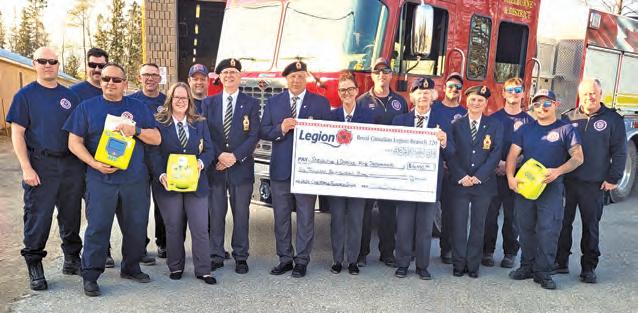
On behalf of the Ontario Command Branches and L.A. Charitable Foundation, Shelburne, Ont., Branch members present $6,450 to the Shelburne and District Fire Department.
of the coffee group

On behalf of the Ontario Command Branches and L.A. Charitable Foundation, President Earl MacDonald of Paris, Ont., Branch and President Ronald Butcher of Telephone City Branch in Brantford, Ont., present $8,884 to representatives of the Brant Community Healthcare System Foundation.
Members
at Varnavair Branch in Tillsonburg, Ont., pose with their new shirts.
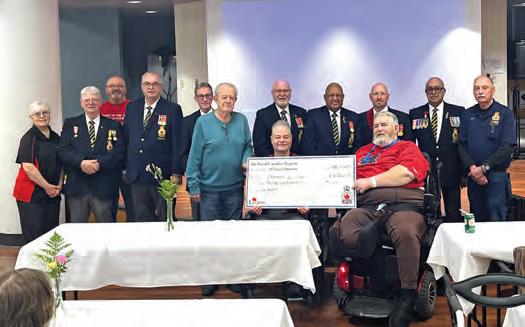
Members of Varnavair Branch in Tillsonburg, Ont., sponsor a luncheon at the Parkwood Institute.
Woodstock, Ont., Branch
President Gary Moon presents First Vice Ernie Guy with the Legionnaire of the Year award.
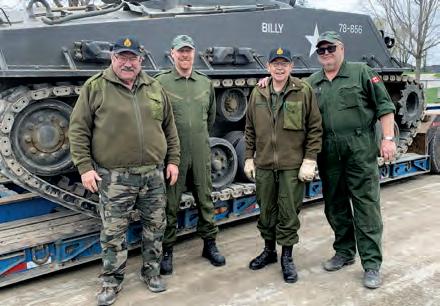
Port Perry, Ont., Branch hosts an event marking the 80th anniversary of VE-Day, complete with tank courtesy of the Canadian Tank Museum.
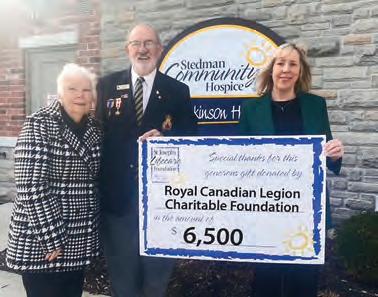
On behalf of the Ontario Command Branches and L.A. Charitable Foundation, Sandy Wallace and President Ron Butcher of Dunsdon Branch in Brantford, Ont., present $6,500 to representative Julie Powell of St. Joseph’s Lifecare Foundation.
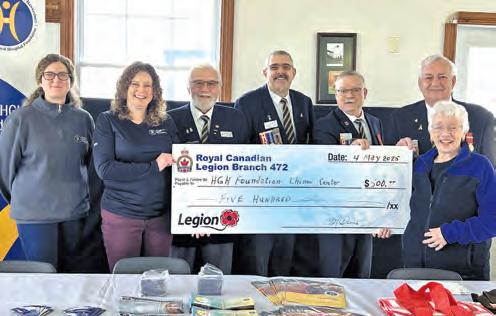
Georges Vanier Branch in Hawkesbury, Ont., represented by Jack Hume, Gerald Woodward, Steve Morin and Michel Denis, present $500 to the Hawkesbury General Hospital Foundation Chemotherapy Centre.
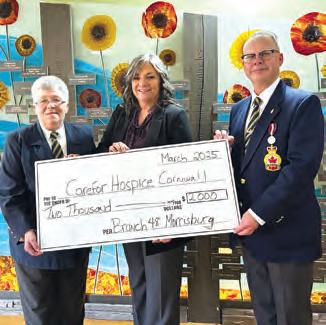
President Donna Dillabough and Eric Fernberg of Morrisburg, Ont., Branch present $2,000 to Carefor Hospice Cornwall representative Rhonda Simpson.
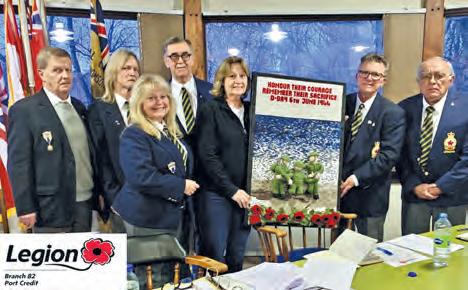
Brenda Littler (centre) of Col. Alex Thomson Memorial Branch in Mississauga, Ont., presents a commemorative D-Day wall hanging to executive members (from left) Larry Brown, Wayne Johnston, Anne Lawrence, Vito Tomas, Steve Lawrence and Matt Goledzinowski.
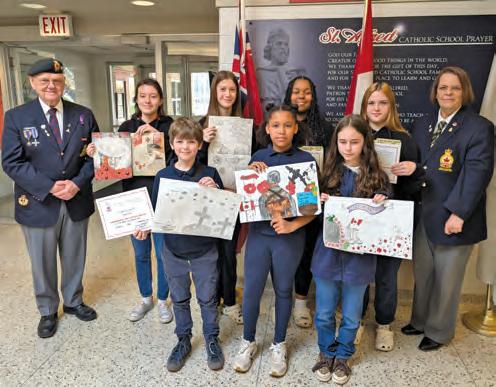
Stefan Wieclawek and President Yvonne Glowacki of Polish Veterans Branch in St. Catharines, Ont., recognize local award winners of the Legion poster and literary contests from St. Alfred Catholic School.
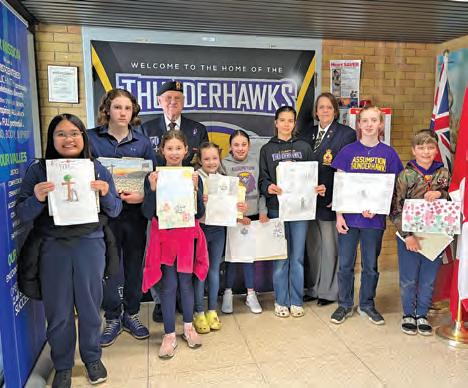
President Yvonne Glowacki and Stefan Wieclawek of Polish Veterans Branch in St. Catharines, Ont., congratulate local award winners of the Legion poster and literary contests from Assumption College School.
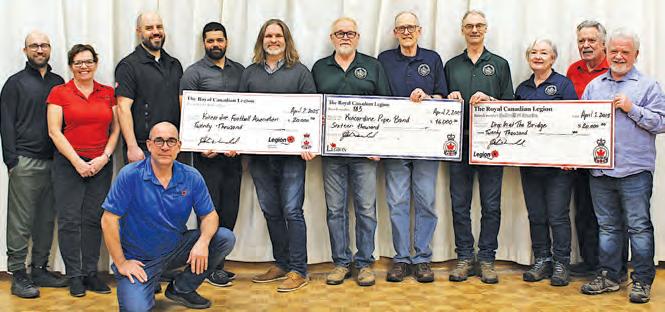
President Jim McDonald (second right), Teri Leslie (second left), and Russ Crook (front) of MacDonald Branch in Kincardine, Ont., present $20,000 to the Kincardine Football Association, $16,000 to the Kincardine Scottish Pipe Band, and $20,000 to Drop-In at The Bridge. Representatives of each organization were present. GLENN BOOKER

First Vice Yves Bouchard and Peggy Nancarrow of Trenton, Ont., Branch present representative Karen White of the Bay of Quinte Relay for Life with $1,500.
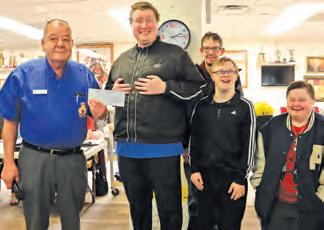
First Vice Yves Bouchard of Trenton, Ont., Branch presents $1,000 to members of the Sunny Days Group.
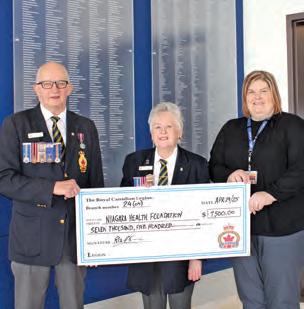
Ron Chassie and Barbara Earle of H.T. Church Branch in St. Catharines, Ont., present $7,500 to the Marotta Family Hospital, represented by Erika Figuero.
President Tony Goslinski of Fairbank Branch in Toronto presents $7,000 to CO Johnnie Vu and Leanne Gazzellone of the 709 Toronto Signals army cadet corps.
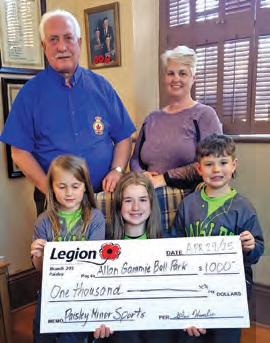
President Glen Hanley of the Paisley, Ont., Branch presents $1,000 to municipality of Aran-Elderslie representative Kim Craddock toward the repair of Allan Gammie ball park. In attendance are players of the U7, U11 and U9 teams.
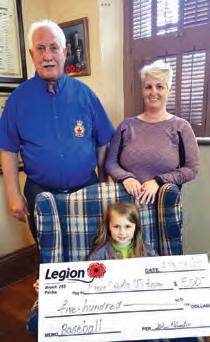
Paisley, Ont., Branch
President President Glen Hanley presents Paisley Minor Sports Manager Kim Craddock with $500 for the Paisley U7 team.
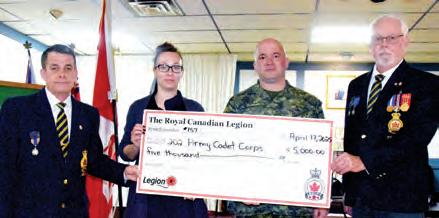
President Shawn Wilkie and Ernie Gazdig of Fort Malden Branch in Amherstburg, Ont., present $5,000 to Capt. Stegan Miller and Heaven Cooper of the 202 Fort Malden Windsor Regiment RCAC cadet corps. RON GIOFU
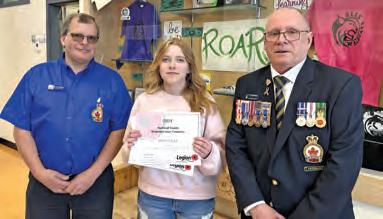
Terrence Renkas and Chris Valgardson of Wilcox, Sask., Branch present a first-place award to Emily Tyacke for her entry in the Legion poster and literary contests. CHRIS VALGARDSON
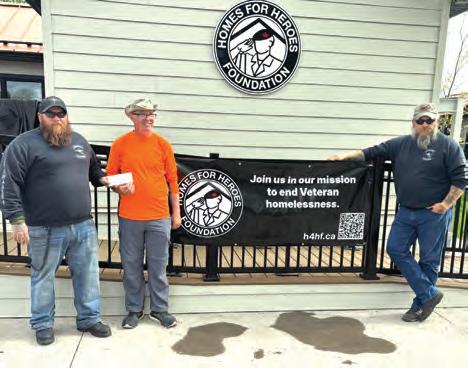
Members Cory Johnson and Paul Foley of Perth-UponTay Branch in Perth, Ont., present $1,000 to Ken MacKay in support of his Trek 4 Vets journey from Windsor to Ottawa, during a stop at the Homes for Heroes Foundation in Kingston, Ont.
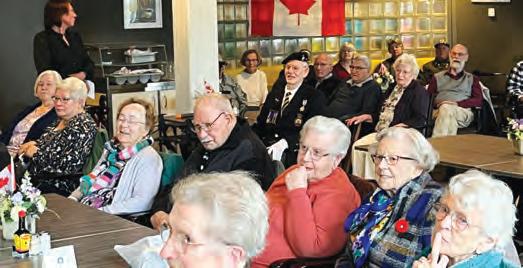
Members of the Liberation Branch in Apeldorn, Netherlands, commemorate the 80th anniversary of the country's liberation with other locals.
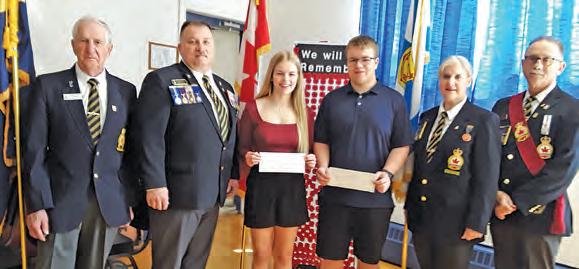
At Whitney Pier Branch in Sydney, N.S., members J.C. Levesque, Steven MacLennan, Beverly NcNeil and Donnie Hussey present bursaries to Breagh and Braden Dolan. MARY PHILLIPS
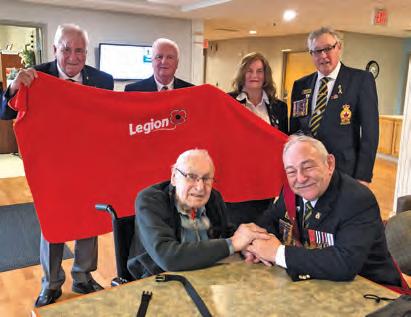
Members Gary Patterson, Lorne MacKinnon, Carolyn Deleskie, Larry Wall and Dave Piercy (front right) of Ashby Branch in Sydney, N.S., visit 107-year-old veteran Ernie Buist.
President Art Burns of Normandy Branch in New Glasgow, N.S., presents a bursary to Sophia Bezanson.
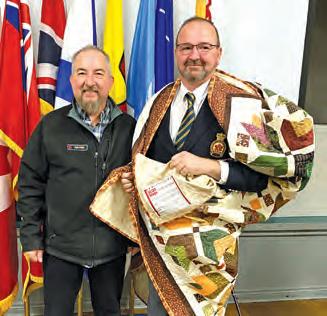
Trefry of Weymouth,
Branch receives a Quilt of Valour. Accompanying is WO Darren McDonald.
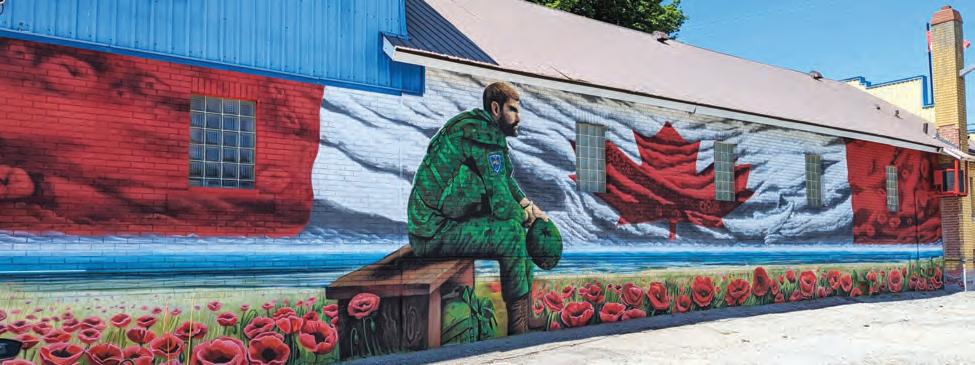
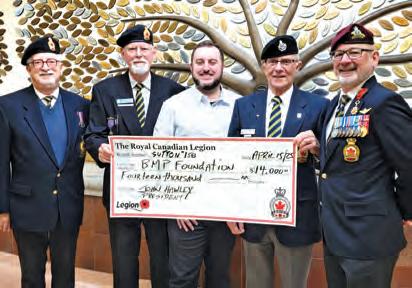
Que., Branch Second Vice Kenneth Hill, President John Hawley, Chuck Richards and First Vice Claude Vadeconcoeur present a representative of the Brome Missisquoi Perkins Hospital Foundation with $14,000. K.
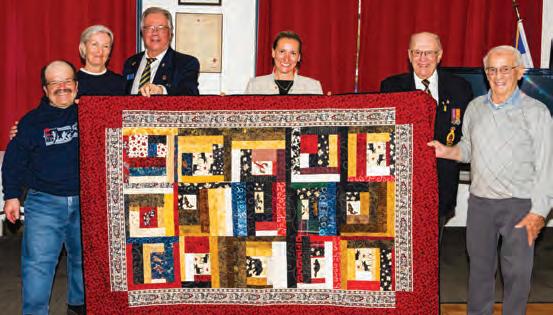
Thomas
N.S.,
Sutton,
HILL
Art Woods (right) of Hudson, Que., Branch receives a Quilt of Valour. Accompanying, from left, are members Lance Hodgson, Mayor Chloe Hutchison, Branch President Jon Bazar, Soulanges MNA Marilyne Picard and member Rod Hodgson. BRYAN FRITZ
Buckingham, Que., Branch unveils a new commemorative mural. P. SCANTLAND
Local historian and Hudson, Que., Branch member
Rod Hodgson (right) presents Branch President Jon Bazar with the first copy of the branch’s 80th anniversary history book.
ROD HODGSON
First Vice Susan Donnelly and Second Vice Darlene Normoyle of St-Eustache Branch in DeuxMontagnes, Que., present a $1,000 bursary to Makayla Bélair. M. LEPAGE
President Adeline Savoie and Gérard Trudeau of Lt.-Col. Charles Forbes Branch in Quebec City present $5,300 to representative Richard Blanchet of the “Soigner nos braves par la mouche” organization, a veterans organization dedicated to physical and emotional rehabilitation through fly fishing.
ALCIDE MAILLET
Members of Lt.-Col. Charles Forbes Branch in Quebec City conduct the annual review of the region’s cadet corps. ALCIDE MAILLET
N.B. Deputy District Commander Ed Blanchard and Saint John District Commander Jean Stevens present Vivian Anderson, accompanied by her parents, with her first-place award at the provincial level of the Legion poster and literary contests. H.E. WRIGHT
Representatives Tina Schmeller and Diane Kyte of Elderhelp of Lanaudiere receive $700 from President Sherri Routledge of Montcalm Memorial Branch in Rawdon, Que.
Cap Pele, N.B., Branch President Charles Richard and Richard Vautour present Legionnaire of the Year awards to
and
René Cormier
Léo Donelle.
Shediac, N.B., Branch President Ryan Seguin and Ron Arsenault present Dennielle Allen with a second-place award at the provincial level of the Legion poster and literary contests. TOSH LEBLANC
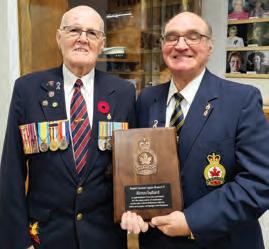
Dalhousie, N.B., Branch member Alonzo Guitard receives the Legionnaire of the Year award from President Mike Letourneau.
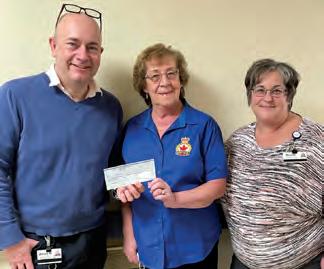
Sussex, N.B., Branch President Barbara Bickerton presents $8,569 to the Ridgewood Veterans Wing, represented by Adam Richardson and Nicole Robertson.
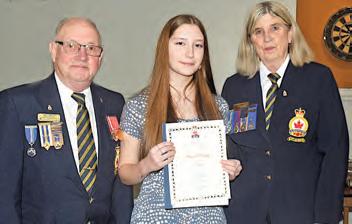
Second Vice Art Caravan of Kennebecasis Branch in Rothesay, N.B., and District Commander Kathy Campbell present Allison O’Reilly with her second-place award in the Legion poster and literary contests.
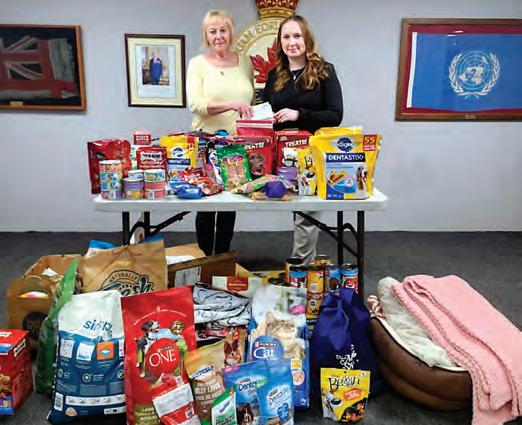
Fredericton Branch member Brenda Sharp presents $1,205 to the Fredericton SPCA, represented by Racheal McDonald.
Sackville, N.B., Branch VicePresident Victor Sears presents $2,000 to Capt. Colin Burke of the 681 Tantramar air cadet squadron.
Second Vice Art Caravan and First Vice Harold Defazio of Kennebecasis Branch in Rothesay, N.B., present Gus Cassidy with his second-place award in the video category of the Legion poster and literary contests. BRIAN EISAN
Members Linda Bartlett, Paul Cane, Albert Fairweather, Leon Savoie and Delia Fairweather of St. Croix Branch in St. Stephen, N.B., present a furniture donation to Lincourt Manor Nursing Home, represented by Roni-Sue Moran. At front is Legion member and resident Dale Greenlaw. GERALDINE LEAVITT
LEAH SPENCER
NEWS
ALBERTA
Members of the Vulcan Branch, accompanied by the 903 Strathmore air cadets, marched together at the 2025 Spock Days Parade.
Okotoks, Alta., Branch member Rob Calvert and High River, Alta., Branch member Bob Collins presented Flt. Sgt. Lucas Thompson of Foothills 187 air cadets with the Legion Cadet Medal of Excellence.
BRITISH COLUMBIA/YUKON
Padre Brian Kirby of Bowser, B.C., Branch presented Flt. Sgt. Adam Hager of 893 Beaufort air cadets with the Legion Cadet Medal of Excellence. At Fort Rupert Branch in Port Hardy, B.C., members presented $1,000 to Eagle Ridge Manor council and staff.
President Rob Driemel of Fort Rupert Branch in Port Hardy, B.C., presented $1,000 to the Hardy Bay Seniors Centre.
MANITOBA/NORTHWESTERN
ONTARIO
Sgt. Landon Connolly of the 600 Starfighter Squadron, RCAC, receives the District 7 Legion Cadet Medal of Excellence.
NEW BRUNSWICK
The St. Croix Junior L.A. of St. Stephen presented $500 to the Lincourt Manor Nursing Home.
NOVA SCOTIA/NUNAVUT
Stewart Cameron of Hants County Branch in Windsor, N.S., presented the Legion Cadet Medal of Excellence to MCpl Willoughby Larder.
ONTARIO
Amelia Langer is awarded the Legionnaire of the Year award for Trenton Branch.
Oshawa Branch presented Viola Pikey, a member of the L.A. since 1949, with flowers and quilts at her 100th birthday celebration.
PRINCE EDWARD ISLAND
George Pearkes VC Branch in Summerside presented $1,000 to P.E.I. Hospice.
First Vice Gordon Perry of P.E.I. Command presented the Legion Cadet Medal of Excellence to Flt. Sgt. Lawrence Chan of the 53 RCACS in Summerside, P.E.I.
CORRESPONDENTS’ ADDRESSES
Send your photos and news of The Royal Canadian Legion in action in your community to your Command Correspondent. Each branch and ladies auxiliary is entitled to two photos in an issue. Any additional items will be published as news only. Material should be sent as soon as possible after an event. We do not accept material that will be more than a year old when published, or photos that are out of focus or lack contrast. The Command Correspondents are:
BRITISH COLUMBIA/YUKON: Graham Fox, 4199 Steede Ave., Port Alberni, BC V9Y 8B6, gra.fox@icloud.com
ALBERTA–NORTHWEST TERRITORIES: Donna Ganzon, 2020 – 15 Street NW Calgary, AB T2M 3N8, abnwtsubmissions@abnwtlegion.com
SASKATCHEWAN: Tara Brown, 2267 Albert St., Regina, SK S4P 2V5, admin@sasklegion.ca
MANITOBA: George Romick, 320 Admiral Court, Thunder Bay, ON P7A 8B5, romickg@tbaytel.net
NORTHWESTERN ONTARIO: George Romick, 320 Admiral Court, Thunder Bay, ON P7A 8B5, romickg@tbaytel.net
ONTARIO: Julie Stephens, 2 Malibu Lane, Fenelon Falls, ON K0M 1N0, juliestephenslegion25@gmail.com
QUEBEC: Mary-Ann Latimer, 105-2727 rue St. Patrick, Montreal, QC H3K 0A8, msmarts@bell.net
NEW BRUNSWICK: Harold Wright, 2-299 Main St., Saint John, NB E2K 1J1, foulis20@gmail.com
NOVA SCOTIA/NUNAVUT: Mary Phillips, 319 East Broadway, South Bar, NS B1N 3J9, maryp7910@gmail.com
PRINCE EDWARD ISLAND: John Yeo, 657 Rte. 19, Meadow Bank, PE C0E 1H1, islander657@yahoo.ca
NEWFOUNDLAND AND LABRADOR: Brenda Slaney, Box 5745, St. John’s, NL A1C 5X3, bslaney@nfld.net
DOMINION COMMAND ZONES: EASTERN U.S. ZONE, Gord Bennett, 803-190 Cedar St., Cambridge, ON N1S 1W5, Captglbcd@aol.com; WESTERN U.S. ZONE, Douglas Lock, 1531 11th St., Manhattan Beach, CA 90266, douglock@fastmail.com
Submissions for the Honours and Awards page (Palm Leaf, MSM, MSA and Life Membership) should be sent directly to Legion Magazine, 86 Aird Place, Kanata, ON K2L 0A1 or branchnews@legion.ca.
TECHNICAL SPECS FOR PHOTO SUBMISSIONS
DIGITAL PHOTOS—Photos submitted to Command Correspondents electronically must have a minimum width of 1,350 pixels, or 4.5 inches. Final resolution must be 300 dots per inch or greater. As a rough guideline, colour JPEGs would be between 0.5 megabytes (MB) and 1 MB.
PHOTO PRINTS—Glossy prints from a photofinishing lab are best because they do not contain the dot pattern that some printers produce. If possible, please submit digital photos electronically.
FRENCH INSERT—To receive a French insert of Legion Magazine content, please contact MagazineSubscriptions@legion.ca or call 613-591-3335.


LONG SERVICE AWARDS


50 years







CHERYL ROUSSEAU Metropolitan Br., Windsor, Ont.
TERRY BRAINARD Chatsworth Br., Ont.
JOHN MacLEOD Chatsworth Br., Ont.
PAULA MARKNETTE Calais Br., Lower Sackville, N.S.
NEIL WEBSTER
Capt. Fred Campbell VC Br., Mount Forest, Ont.
TERRY BROWN Chatsworth Br., Ont.
JAMES ROSS
Metropolitan Br., Windsor, Ont.
ETHEL DEMYEN Kipling Br., Sask.
GARY A. PLONKA Weyburn Br., Sask.
KENNETH GALLAGHER Lower Southampton, Br., Nackawic, N.B.
RICHARD CARDER
Metropolitan Br., Windsor, Ont.
MARGARET CRAMM Chatsworth Br., Ont.
BRAD WHITE Dominion Ottawa Br.
ARMAND ROCK Metropolitan Br., Windsor, Ont.
PAUL M cKAY Chatsworth Br., Ont.
WALTER DOMINIX Calais Br., Lower Sackville, N.S.
ROLAND FISETTE St. James Br., Winnipeg
ROBERT CUTBUSH Port Arthur Br., Thunder Bay, Ont.
MURRAY SINNOTT Metropolitan Br., Windsor, Ont.
KENNETH E. NOBLE St-Eustache Br., Deux-Montagnes, Que.
PAUL HERROD Calais Br., Lower Sackville, N.S.
RICK BENNETT Morden, Man., Br.
MALCOM WEBSTER Capt. Fred Campbell VC Br., Mount Forest, Ont.
GEORGES GOHIER RMR Br., Montreal
BRENDA HOBBIN Calais Br., Lower Sackville, N.S.
LIFE MEMBER AWARDS
MANITOBANORTHWESTERN ONTARIO
HARVEY KINSMAN
Morden, Man., Br.
ROBERT FROST
Morden, Man., Br.
VAL EKSTROM
Atikokan, Ont. Br.
KRYSTYNA BEDNARSKI
Atikokan, Ont. Br.
NEW BRUNSWICK
ROXANNE KYLE
Sussex Br.
CINDY COATS
Sussex Br.
SASKATCHEWAN
ROBERT STEIL
Kipling Br.
SHARON STEIL
Kipling Br.
TERRY OVANS
Kipling Br.
GLORIA OVANS
Kipling Br.
LOST TRAILS
Mr. HAYDEN—From Brantford, Ont., served with 1 Canadian Ordnance Maintenance Company during the liberation of Belgium and corresponded with a Belgian missionary sister staying in America at the time. Please contact to Suzanna Lamberts-Van Assche at suzanna.lamberts-van.assche@telenet.be.
UNIT REUNIONS
CANADIAN MILITARY WOMEN’S ASSOCIATION—women veterans in southwestern Ontario are invited to gather for lunch at 975 Wallace Ave. in Listowel, Ont., to establish a new sub-group of the CMWA. Please contact Theresa Winchester at twinchester2023@gmail.com or 519-386-6393 to register.





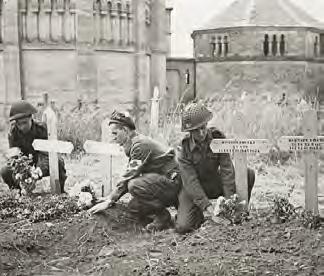



They are places big and small, hidden and magnificent, now quiet. They are the places where Canadians, and others, gave their all in the greatest conflicts ever fought. Battlefields still scarred by war. Cemeteries that testify to the losses. Landmarks that have survived the turmoils of history. These are the stories behind some of the most iconic sites in Canada’s saga, as told by historian John Goheen, who has guided tours through the battlefields and war cemeteries of Europe for 30 years.
CANADA AND THE NEW COLD WAR
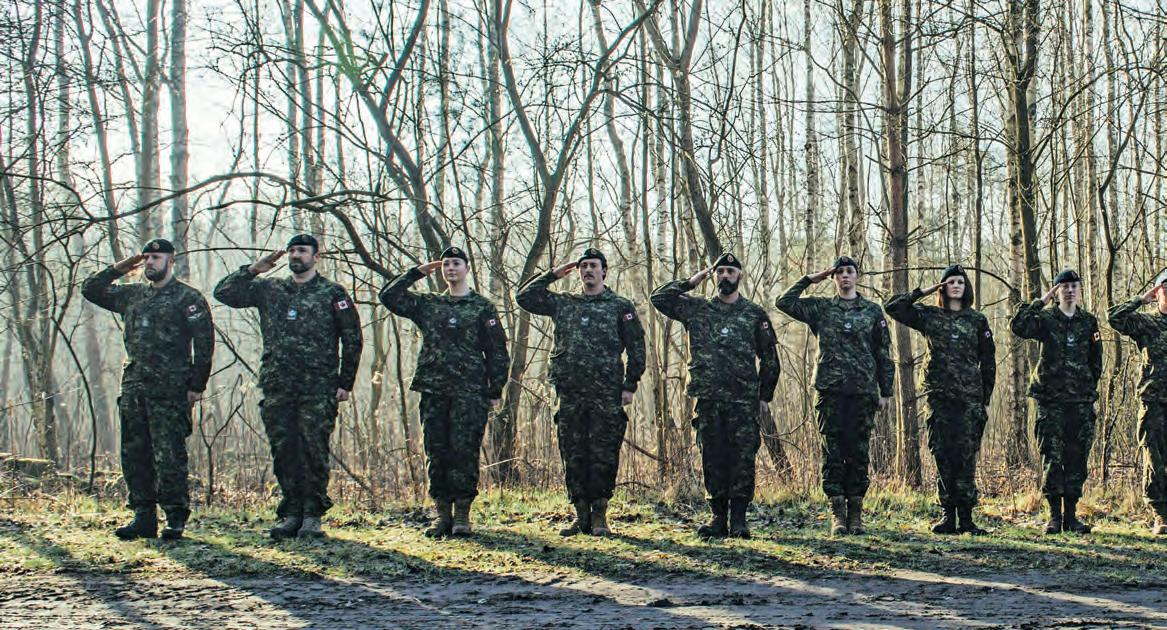
By J.L. Granatstein
Bringon’em
Canada’s new defence chief making key changes to recruitment and retention
General Jennie Carignan became defence chief on July 18, 2024. Within a few months, changes in recruiting and retention in the Canadian Armed Forces were becoming apparent.
One announcement was particularly noteworthy. Previously, applicants for the forces had to wait until their security screening was complete before being accepted for basic training. In 2023, there had been some 70,000 expressions of interest in joining the CAF, but less than 5,000 were accepted for basic training. Most of this shortfall was due to the screening delays that led potential soldiers to give up on the military and seek work elsewhere.
This snafu might have been fixed before Carignan took her post, but she gets the credit. Indeed, there’s nothing top secret to be found in basic training, and if recruits are found to be a threat to national security, they can be released during or shortly afterward. This is eminently sensible, and something critics inside and outside the military have urged for years. It speeds up a glacially slow recruiting process.
The requirement for applicants to take an aptitude test indicating their suitability to the military was also changed. Direct-entry officer candidates are now excused from this procedure, as are those with university degrees, college
diplomas or specialized skills and work experience. The CAF established a Cyber Command in September 2024, and technology wizards were needed, for example. Why not get them into uniform as quickly as possible, no aptitude test required? That, too, makes sense.
A third change was to alter medical standards for enlistment. Before the new rules, applicants with asthma, attention-deficit hyperactivity disorder (ADHD), allergies or anxiety were refused. Now, each case is judged on its severity. While ADHD and anxiety might be a danger to those in action, for instance, not all service members necessarily serve in or near battle zones. A soldier in Canada with an anxiety problem might function normally on the job; the same might be said for one with ADHD and following a treatment plan. Allergies can also be treated, but a life-threatening peanut or tree nut allergy, for example, might make it necessary to reject an applicant because field-use meals can’t be guaranteed to be free of allergens. These moves, too, are generally sensible.
But there are other matters the new defence chief couldn’t immediately fix. The housing situation for families on military bases remains
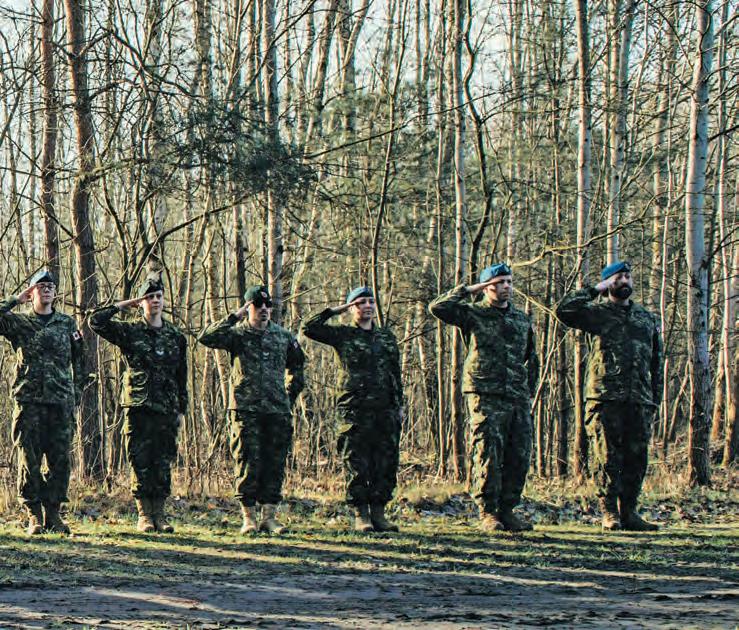
an issue. While Ottawa has promised to add 1,400 new units during the next five years, that’s far short of the estimated 6,700 needed to meet the current demand. That, alongside obsolete equipment and the sense that the government won’t increase spending to help fix the CAF, hurts morale and drives people out of the military—though the Carney government has provided more funding to tackle these challenges. Another problem was the training system. General Carignan told the Standing Committee on National Defence on Sept. 26, 2024, that the CAF could process 6,400 recruits a year. The military is understrength, with scarcely any unit fully staffed. Infantry battalions and artillery regiments are short, pilots and aircraft maintenance workers are lacking, ships are docked for lack of crews, and retirements are currently on par with recruitment—meaning no net increase in personnel.
What defence minister Bill Blair has called a “death spiral” is underway. And the CAF can only train 6,400 recruits a year? Given the threats facing Canada that number needs to be increased quickly.
Carignan also told the national defence committee that the CAF had 92,798 in uniform; the authorized regular and reserve force strength is 101,500. Critics, however, noted that the current strength included personnel on sick leave, retirement leave, and those who had completed basic training but had yet to proceed to their trades training. None of those people—estimated to total more than 10,000—can be deployed.
Reserve force numbers are also soft. A unit with a paper strength of 300 all ranks might ordinarily have 100 or so turn up on parade. How many might actually be deployable if necessary? Worse yet, the overall force strength continues to decline: this past June, the Prime Minister indicated CAF strength was 88,500, down some 4,000 from General Carignan’s September committee report. This past July, however, Carignan indicated that both recruitment and retention are improving. Canada, it must be noted, isn’t alone in facing such challenges. In both 2022 and 2023, the U.S. army missed its recruiting targets by nearly 25 per cent. The U.S. navy, meanwhile, accepted recruits who scored below average on
Members of the Canadian Armed Forces salute departing Ukrainian military trainees in Poland in March 2024.
aptitude tests to fill its ranks. And in 2023, the U.S. air force missed its recruiting target by 30 per cent.
One major problem in the U.S.: according to a Pentagon study, three quarters of Americans were ineligible because they were either obese, suffering mental or physical issues or had criminal records. Might the same challenge exist in Canada? A June 2024 CAF report noted that 78 per cent of servicemen and 57 per cent of servicewomen were overweight or obese (compared to 68 per cent of men and 53 per cent of women in the general population).
In 2022, the U.S. army started a program designed to help marginal candidates become acceptable. The Future Soldiers initiative is rigorous three-month training in which potential recruits exercise regularly, eat healthy meals and are tutored to make up educational deficiencies. In 2024, the program delivered about a quarter of the army’s recruits.
The Royal Canadian Navy, meanwhile, started the Naval Experience Program in 2023. It offers those interested in a naval career one year of paid work—including streamlined enrollment, eightweek basic military training, fourweek naval training and time at sea. The army and air force might want to try something similar.
Regardless, the Carney government has now provided the funds to remedy the recruitment and retention challenges, indicating it will increase pay and provide money to improve infrastructure and speed up the acquisition of new equipment. Canadians must hope this works as the country’s military remains understaffed and ill-equipped. L
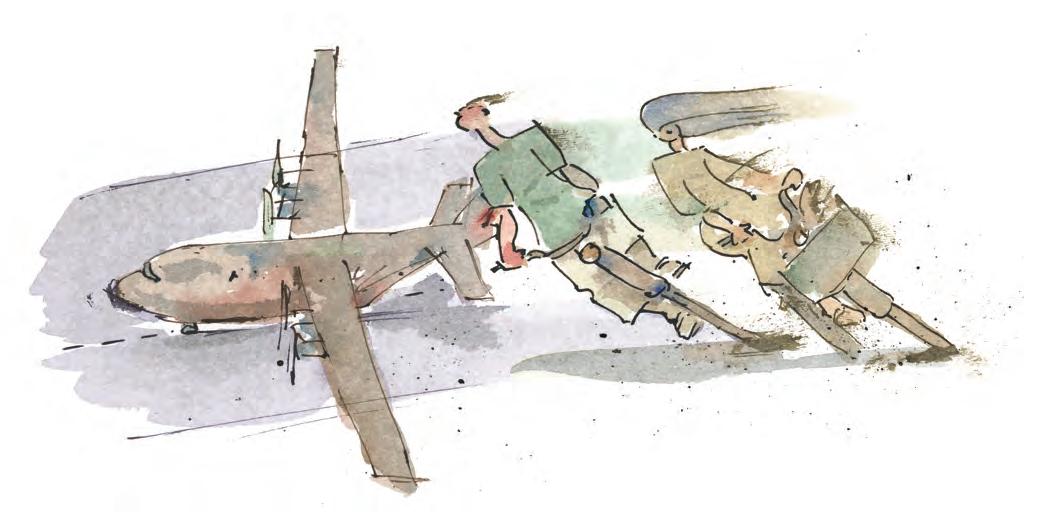
Blown over
Tony Nichols has a tale about an international training flight he made as a C-130 aircraft commander in November 1983. The mission was, in part, to deliver Christmas presents to Canadian embassies. In Beijing, one of the flight engineers dressed as Santa Claus for the embassy children, much to the interest of Chinese police officers who came aboard to admire the spectacle.
On departure, as the plane moved toward the runway, it approached an internal crossing road crowded with cyclists. Nichols applied some brake and, once the cyclists decided to stop, he applied some thrust briefly to get moving again.
“Shorty afterward,” said Nichols, “the loadmaster, who had been spotting out back with the ramp open, came forward laughing. He said as soon as we cleared the roadway, the cyclists surged back to cross behind us, leaning into the propwash as they pedalled. When I throttled back to low speed, they all fell over in a jumble of bikes and riders.”
In the late 1960s, while touring a fish plant in Hamburg, Germany, a seafood dealer from Glace Bay, N.S., meet the factory’s manager. The pair got to chatting and the German mentioned that he knew of Glace Bay. The Canadian asked how that could be. It turned out that the plant manager had served in a U-boat during the war. While on a tour off the East Coast, his sub would surface near Glace Bay at night to recharge its batteries. Thanks to the radio station in Sydney, N.S., the German crew developed an unlikely appreciation for country icons Hank Snow and Wilf Carter.
During the Second World War, more than 35,000 prisoners of war were housed in dozens of camps situated across Canada. They were watched over by 11,000 members of the Veterans Guard. Over the course of the war, they lost only one prisoner.
Franz von Werra was a German fighter pilot shot down over England toward the end of the Battle of Britain. He made three escape attempts from British PoW camps, but was recaptured each time. In January 1941, he was shipped to Canada.
He was aboard a train heading for a northern Ontario prison camp when he and seven others jumped from a window as the train slowed near Smiths Falls, Ont. While the others were captured, von Werra got to the St. Lawrence, stole a rowboat and crossed to the then-neutral U.S. While Canada and the U.S. discussed extradition, a German diplomat smuggled him into Mexico. From there, he made his way home, arriving on April 18, 1941.
> Do you have a funny and true tale from Canada’s military culture? Send your story to magazine@legion.ca
Though his escape earned him the Knight’s Cross medal, he did himself no favours. Returned to combat flying, his plane crashed in the sea after engine failure during a practice flight in October 1941. His body was never recovered.
Ernest (Smokey) Smith earned the Victoria Cross for his actions in October 1944 during the Italian Campaign. He ended up as Canada’s last living VC recipient, dying in 2005 at 91. He had a well-earned reputation as a prankster, and he wore his decoration and its maroon ribbon at every opportunity.
During a royal visit, the Queen noticed the medal and stopped to chat briefly with Smith. He was scrummed by reporters afterward and was asked if he had been nervous. “Nah,” said Smith, “when you’ve met one, you’ve met them all.” He had received his VC from the Queen’s father, King George VI.
Smith was also once invited to a mess dinner to share the head table with
“WHEN I THROTTLED BACK TO LOW SPEED, THEY ALL FELL OVER IN A JUMBLE OF BIKES AND RIDERS.”
Cecil Merritt, another VC recipient. Smith noted the mess had a picture of Merritt on the wall and demanded his picture be hung alongside. It was pointed out that this was an officer’s mess. “Makes no difference,” he said. “If you don’t put my picture up, I’m not coming.”
Up went his picture. L
Legion and Arbor Alliances
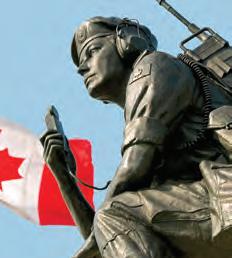
Illustration by Malcolm Jones

By Mark Zuehlke
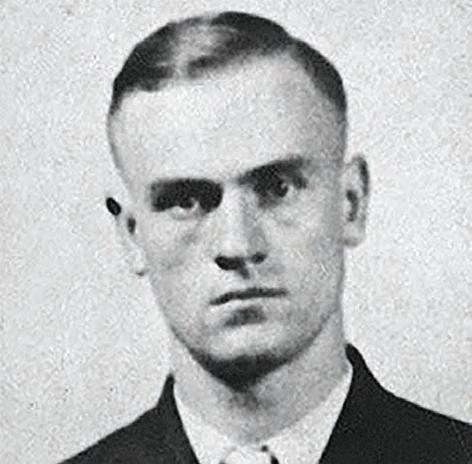
TIgor Gouzenko’s 1945 defection in Ottawa provided a spark that helped ignite the Cold War
GOUZENKO
IGOR GOUZENKO
he Second World War ended on Sept. 2, 1945, with Japan’s official surrender. Three days later, a 26-year-old cipher clerk who had been posing as a junior diplomat at the Soviet Embassy in Ottawa slipped out of his apartment with his wife and young son. Lieutenant Igor Sergeievich Gouzenko carried with him more than 100 documents detailing Soviet espionage efforts in Canada.
HIS DOCUMENTS AND TESTIMONY REVEALED TO CANADIAN, U.K. AND U.S. SECURITY SERVICES THE EXTENT AND DEPTH OF SOVIET ESPIONAGE ACTIVITIES.
Gouzenko was the most junior of four undercover agents with the Soviet military’s intelligence agency (GRU) under command of LieutenantColonel Nikolai Zabotin, the embassy’s military attaché. The clandestine GRU cell had begun work at the embassy in June 1943.
Everyone working in the embassy was closely surveilled by its resident secret police, the NKVD, for any hint of treasonous activity or attitudes.
Gouzenko was entranced by the freedoms Canadians took for granted, but simultaneously feared the NKVD were closing in. “Even as I would breathe the clean, free Canadian air through the steel bars of the cipher-room window,” he said later, “there would come from behind and around me…ugly sounds.”
When Moscow ordered his return in September 1944, Zabotin—who liked Gouzenko—didn’t comply. Knowing time was running out, Gouzenko and his wife agreed to defect.
“I felt a great load lifted from me. The die had finally been cast,” Gouzenko wrote in his memoirs. On Sept. 5, 1945, Gouzenko acted.
“I felt a great load lifted from me. The die had finally been cast.”
—Igor Gouzenko
Gouzenko’s role was to encrypt and decipher coded transmissions to and from Moscow. This made him privy to reports detailing Soviet efforts to recruit and exploit Canadian politicians, scientists, bureaucrats and other officials. Primary targets included anyone with knowledge of the development of nuclear weapons—the Soviets were scrambling to catch up to their western Allies on this front. Accordingly, the team focused on penetrating the National Research Council Canada and the Defence Department’s research branch.
What ensued was farcical. During the family’s first 24 hours on the run, Gouzenko was rebuffed by government, police and reporters. He narrowly averted being caught by NKVD agents. Connecting with the RCMP the following day, Gouzenko was eventually taken seriously.
His documents and testimony revealed to Canadian, U.K. and U.S. security services the extent and depth of Soviet espionage activities. A chill between the West and Soviet Union developed, presaging the Cold War. L
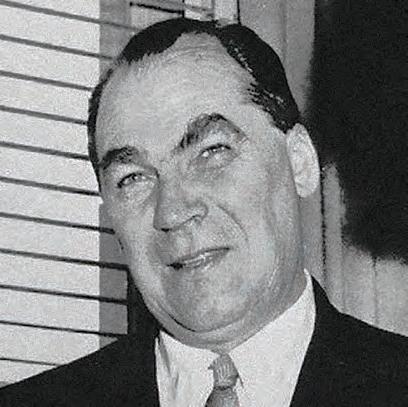
ZARUBIN
GEORGI ZARUBIN

Igor Gouzenko’s defection caused panic within Ottawa’s Soviet embassy. Ambassador Georgi Zarubin became fully involved in efforts to get Gouzenko back to the Soviets. Two days after the defection, Zarubin wrote to the Canadian government.
He accused Gouzenko of stealing embassy money and that this led to NKVD agents raiding his apartment during the night of Sept. 6 (the police briefly detained the agents). Zarubin accused the cops of treating the agents “in a rude manner” and ignoring their diplomatic credentials. He demanded the officers be held “answerable for their actions” and that the federal government “take urgent measures” by arresting Gouzenko and surrendering him for deportation.
The government acceded to neither demand.
The same night that Zarubin submitted this letter, he and his wife met Prime Minister Mackenzie King at a garden party at the British High Commission. King noted in his dairy that Zarubin “looked quite concerned. Indeed, he had a very anxious look on his face.” Zarubin’s hopes that it might be possible to have Gouzenko secretly deported were dashed during a second meeting with King on Sept. 10. When King failed to mention Gouzenko at all, Zarubin realized the defection couldn’t be undone.
For his part, King was anxious to maintain the good relationship forged with Zarubin since he had opened the Ottawa embassy in May 1944. As autumn progressed, Gouzenko’s revelatory information exposed evermore Soviet perfidy. In December, King proposed using Zarubin to deliver a message to Soviet leader Joseph Stalin detailing everything the defector’s intelligence had revealed. King’s belief that both Zarubin and Stalin had been unaware of the spy activity wasn’t shared by Canada’s western allies, however, and they convinced King to abandon such communication.
AMBASSADOR GEORGI ZARUBIN BECAME FULLY INVOLVED IN EFFORTS TO GET GOUZENKO BACK TO THE SOVIETS.
Zarubin was soon recalled to Moscow and never returned. His career was seemingly unblemished, however, as he was appointed ambassador to the U.K. in 1946, then ambassador to the U.S. in 1952. He died on Nov. 24, 1958, in Moscow.
In Canada, a Royal Commission investigating Gouzenko’s claims led to 18 convictions, two more convictions in the U.K., and the eventual execution of Julius and Ethel Rosenberg in the U.S. Gouzenko and his family were granted Canadian citizenship and new identities. He never appeared publicly without wearing a hooded mask to conceal his appearance. Gouzenko died on June 25, 1982. L
“He
had a very anxious look on his face.”
—Prime
Minister Mackenzie King
Alex Bowers
For peace
25 years ago, Canada finally created a service medal for the country’s UN peacekeeping veterans
“Itis the considered opinion of the Committee,” declared the presenters of the 1988 Nobel Peace Prize, “that the [recipient] Peacekeeping Forces through their efforts have made important contributions towards the realization of one of the fundamental tenets of the United Nations.” In bestowing the prestigious accolade on all blue beret wearers, Canadian or otherwise, more than 40 years of service— and the sacrifices of at least 733 lives—had finally been recognized.
Heralded on the world’s stage, a portion of Canadian peacekeeping veterans still wondered at the time if they might receive material acknowledgement closer to home.
“Though Canadian peacekeepers were eligible for specific UN mission medals, formal recognition from the federal government of a similar nature was long in becoming a reality,” explained the Canadian War Museum’s medals specialist Caitlin Pilkington. “The onus was largely on the veterans
themselves to lobby government bureau crats and politicians to champion their cause, but progress slowed because of the need to consult and gain approval from many invested parties. It took five attempts for a bill establish ing the award to pass into law.”
action was deemed contrary to the national honours policy, but the Canadian Peacekeeping Service Medal was nevertheless instituted on Oct. 21, 1999. Designed by Bruce W. Beatty, whose other motifs include the Order of Canada and the Canadian Victoria Cross, the accolade showcases a disc made of an oxidized silver-coloured alloy measuring 36 millimetres (1.4 inches) in diameter.
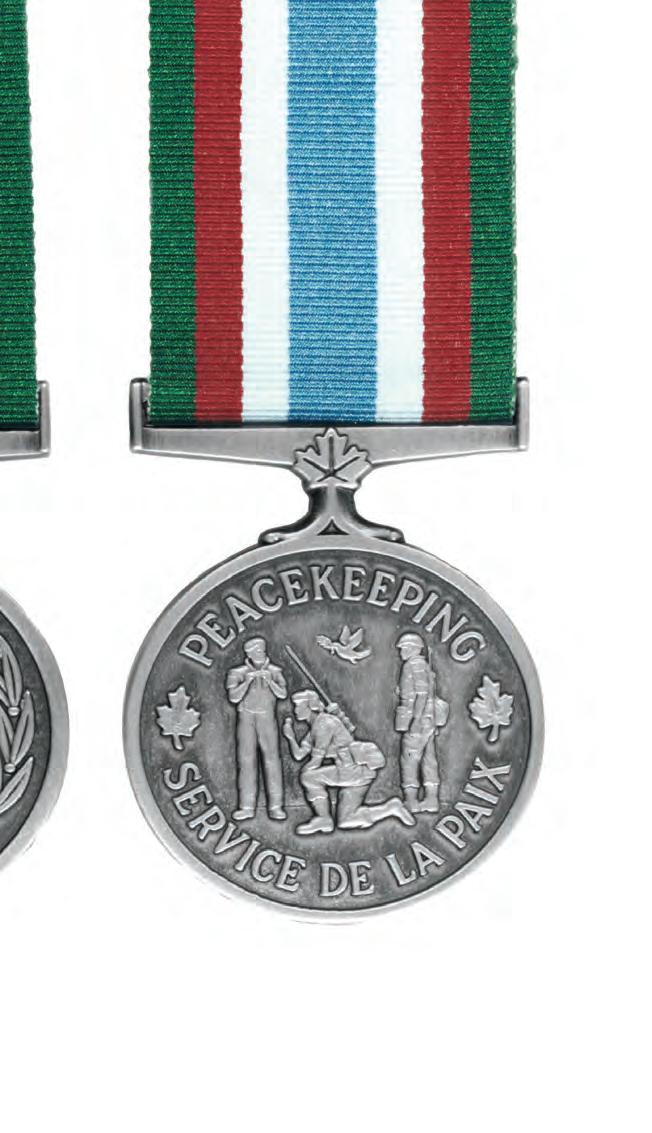

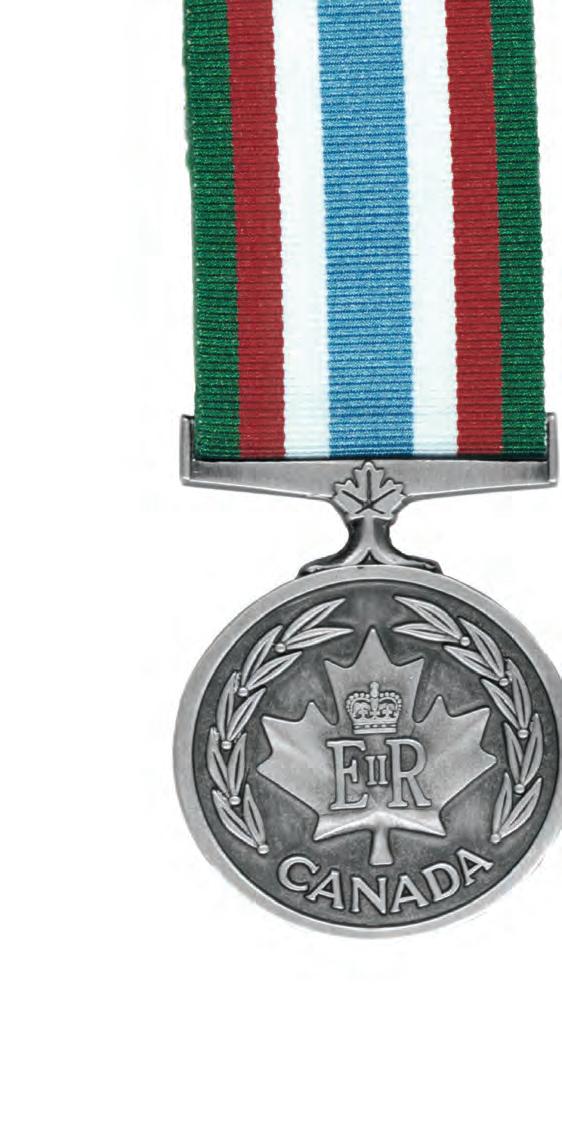
ribbon comprised a central stripe in UN blue, on either side of which were bands of white (representing peace), red (recognizing bloodshed) and green (a homage to those personnel to whom the accolade was dedicated).

Its obverse depicts the same three personnel found atop Ottawa’s Peacekeeping Monument.
Queen Elizabeth II’s royal cypher and crown act as a centrepiece to the medal’s reverse, superimposed on a maple leaf and flanked by two
Eligibility for the honour extended to (and beyond) military members, police officers, and civilians alike, present or posthumous, who had completed at least 30 days’ worth of relevant duties. It was likewise applied

“For over five decades, Canadian peacekeepers had served and sacrificed in the pursuit of peace, often with little understanding or appreciation of those efforts.”
Members of a Canadian medical team participate in an exercise in Mali during a 2018 UN mission. The Peacekeeping Monument in Ottawa (below).
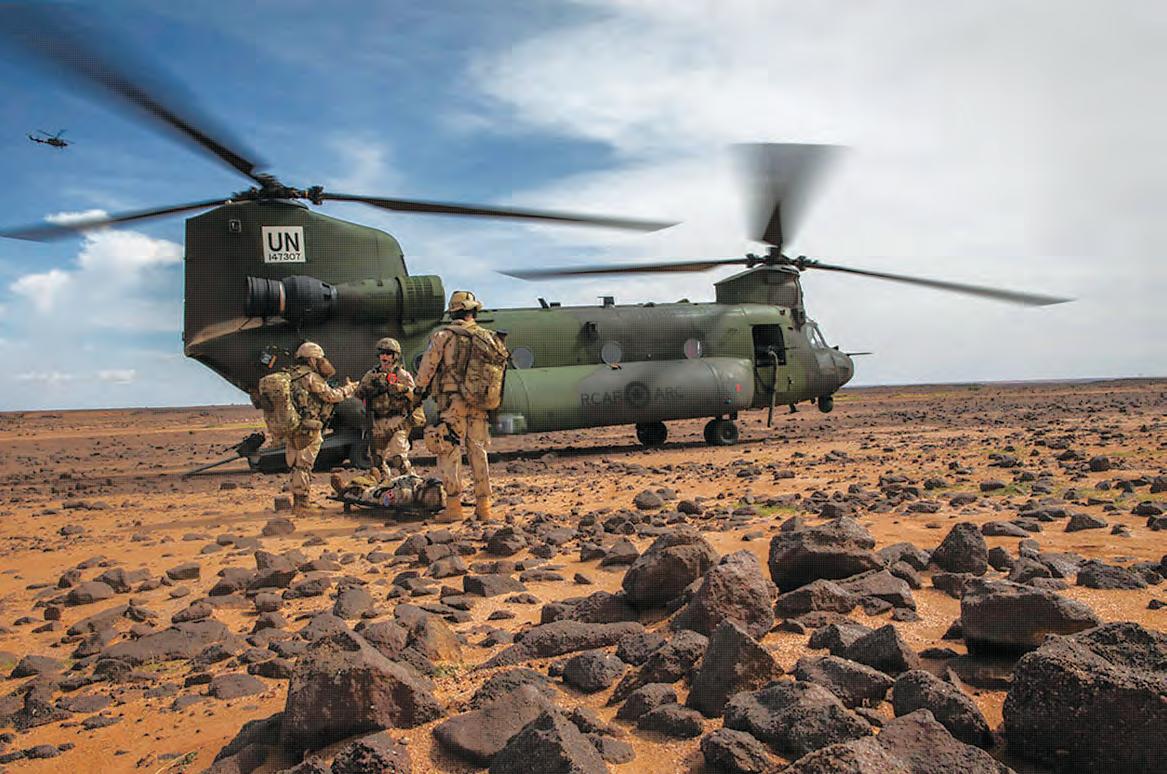
retroactively to UN peacekeeping missions from 1948, barring exceptions.
An inaugural presentation ceremony took place less than a year after its creation—on Sept. 6, 2000—at the Peacekeeping Monument. There, Gov. Gen. Adrienne Clarkson honoured first 90 recipients. Now, 78,056 medals in total have been issued to the approximately 125,000 Canadian peacekeeping veterans considered eligible.
“For over five decades [by 2000], Canadian peacekeepers had served and sacrificed in the pursuit of peace, often with little understanding or appreciation of those efforts,” said Pilkington. “The Canadian Peacekeeping Service Medal symbolized the gratitude of a nation and her citizens to personnel involved in peacekeeping operations, thereby legitimizing their contributions and instilling pride in the veterans, their respective loved ones, and the wider public.” L
BY THE NUMBERS
733
UN peacekeeper fatalities when the Nobel Peace Prize was awarded in 1988
321
Days between the Canadian Peacekeeping Service Medal’s creation and it first being awarded
52
Years between the first UN peacekeeping mission (in 1948) and the ceremony in which the Canadian Peacekeeping Service Medal was first presented

90
Number of recipients to receive the medal at the inaugural ceremony
78,056
Total number of recipients of the Canadian Peacekeeping Service Medal
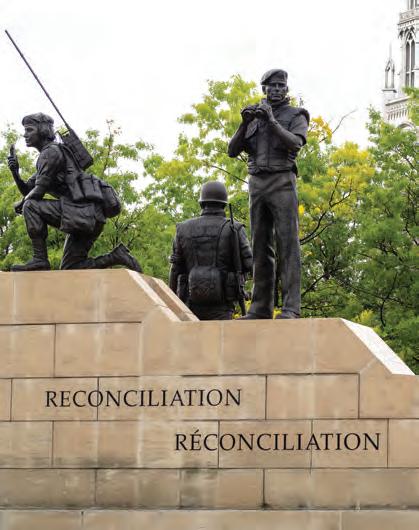
O CANADA

By Don Gillmor
THE NATION GROWS
Ma province of Canada in 1870, though at the time it didn’t extend much past the Red River Valley (it wasn’t until 1912 that it expanded to its current boundaries). In 1871, B.C. became a province. Between them, was a vast area then known as the North-West Territories.
The West was rapidly changing; buffalo were disappearing, and settlers were slowly populating the region. Too slowly, though, from the federal government’s perspective.
Find many more stories in our O Canada special issues, NOW available in our SHOP!



Interior minister Clifford Sifton first looked to Britain and the U.S. to find immigrants to move to the area. When he couldn’t find enough people there, he broadened his search to include Doukhobors, Poles, Finns, Icelanders and Ukrainians. For the first time, Canada was attracting large numbers of people who weren’t French or English, the inadvertent beginnings of multiculturalism.
Sifton hired agents who went abroad and gave lectures about Western Canada’s bounty, and he sent out more than a million pamphlets, extolling the virtues of the soil and pure air. Some were a bit misleading— “The frontier of Manitoba is about the same latitude as Paris”—but they worked. During his tenure, the population of the West grew from 300,000 to 1.5 million.
Sifton was also the superintendent general of Indian affairs, a post he was less adept at. He cut funding to Indigenous schools and negotiated Treaty 8, which gave 850,000 square kilometres of the West to the Crown. His goal was to populate the region with white farmers.
Its residents argued that they needed local representation. In 1897, an executive council was formed, giving the area responsible government. But local political leaders lobbied for provincial status. Their original vision was of one large province that would include the districts of Alberta, Saskatchewan, Assiniboia (present-day southern Saskatchewan) and Athabasca (present-day northern Saskatchewan and northern Alberta). But Prime Minister Wilfrid Laurier and others felt that was too big to administer. So, on Sept. 1, 1905, the federal government adopted The Alberta Act and The Saskatchewan Act, creating Canada’s eighth and ninth provinces as we know them today. That day, Laurier spoke to an audience of 10,000 in Edmonton, the capital of Alberta. He praised the burgeoning agricultural sector, the city’s “young and vigorous people” and said it was an occasion of national rejoicing.
“THOSE WHO COME AT THE ELEVENTH HOUR WILL RECEIVE THE SAME TREATMENT AS THOSE WHO HAVE BEEN IN THE FIELD FOR A LONG TIME .”
On that front, Sifton largely succeeded. By 1885, roughly half the population of the North-West Territories was Indigenous. Twenty years later, less than three per cent were Status Indians.
The North-West Territories were large and diverse and essentially run by the federal government, some 2,500 kilometres away in Ottawa.
“Let me say to one and all, above all those newly our fellow countrymen, that the Dominion of Canada is in one respect like the Kingdom of Heaven: those who come at the eleventh hour will receive the same treatment as those who have been in the field for a long time.”
Amen. L
Stay. Save. Support.

Welcome to Legion Travel
Enjoy up to 50% off accommodations at more than one million hotels worldwide when you sign up*—and it’s FREE! That’s incredible savings for you, your family and your friends.
Plus, a portion of all proceeds from hotel bookings at Legion Travel assist The Royal Canadian Legion and its efforts to support Veterans.
STAY, SAVE and SUPPORT—scan the QR code or visit legiontravel.ca/magazine today!

Free Membership
Sign up for instant access to amazing hotel deals with no hidden fees.
Exclusive Savings Travel in style or on a budget. Get access to up to 50% off hotels*, with our exclusive unpublished rates.
Travel Your Way
Book at over one million hotels in 155,000 cities in 220 countries. The world is your oyster.