Make the most of your Legion Membership
As a Legion Member, you take pride in the fact that your membership helps support and honour Canada’s Veterans.
Did you know that it comes with benefits you can use, too? Take advantage of all the benefits that come FREE with your membership.

Renew your membership to get all these benefits and more!
MemberPerks® unlocks $1000s in potential savings on offers and deals at stores and restaurants across Canada, including national chains, local businesses and online stores. Use the MemberPerks® app, print out coupons or shop online to save on electronics, travel, fashion, entertainment and so much more!
Your membership also gives you access to additional benefits, including:
• savings and deals from our Membership Partners
• a paid subscription to Legion Magazine
• exclusive members-only items at PoppyStore.ca

POSTER BOYS
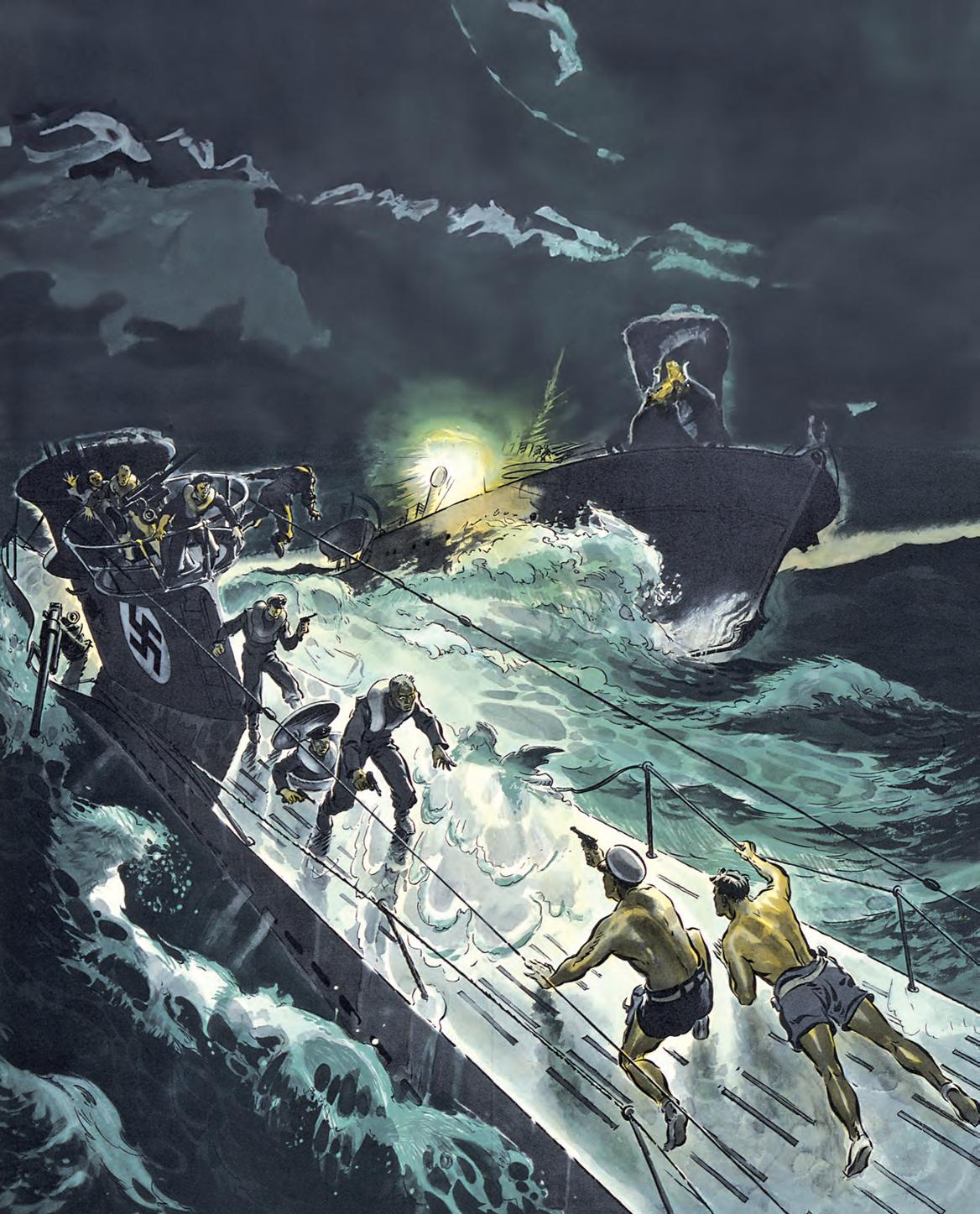
Artist Reginald Rogers depicts the two-man boarding party of HMCS Oakville boarding U-94 in August 1942 for the Men of Valor propaganda campaign.
See page 50
Features
22 DIGGING IN
A deep dive into the evolution of tunnel warfare
By Stephen J. Thorne
30 SISTERS ACT
How the Great War’s Canadian nurses brought comfort and care to patients while enduring their own personal turmoil
By Alex Bowers
36 THE BOMBER BOOK
A wartime tome of fictional tales of Canadian airmen hits close to home
By George Case
42 JA, VI ELSKER DETTE LANDET
When Canada welcomed Norwegian mariners exiled from their homeland by the Nazis, it brought new meaning to the country’s de facto national anthem—“Yes, we love this country”
By Alex Bowers
50 MEN OF VALOR
A unique Second World War propaganda campaign highlighted Canadian bravery By
Robbie McGuire
56 IN SERVICE, TOGETHER
An exclusive excerpt from The Good Allies: How Canada and the United States Fought Together to Defeat Fascism During the Second World War
By Tim Cook
60 THE B’YS BACK Newfoundland repatriates an unknown First World War soldier
By Michael A. Smith
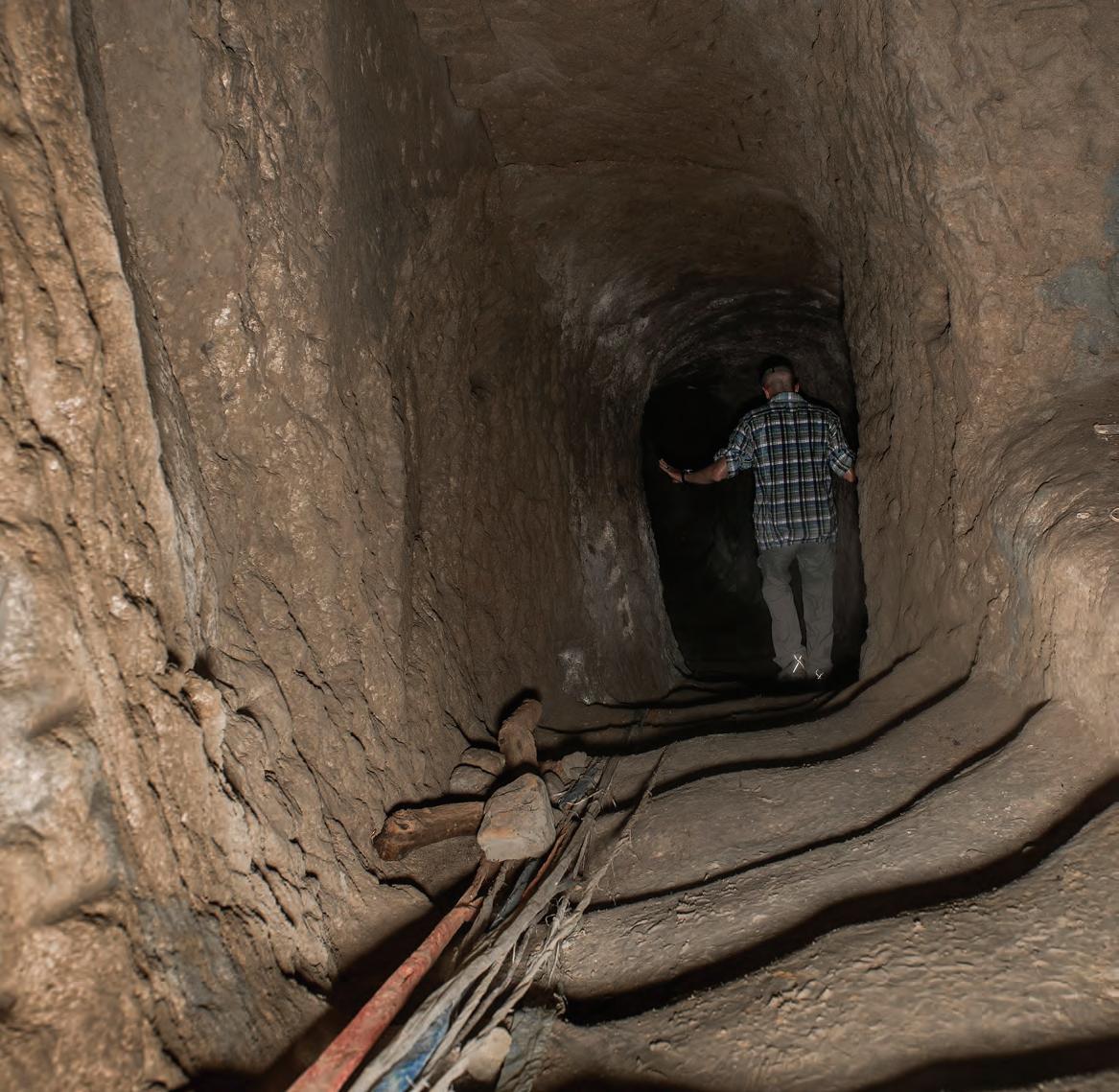
A visitor explores a tunnel dug by Japanese defenders of Iwo Jima during the Second World War. Donald Hudson/DVIDS/U.S. Department of Defense
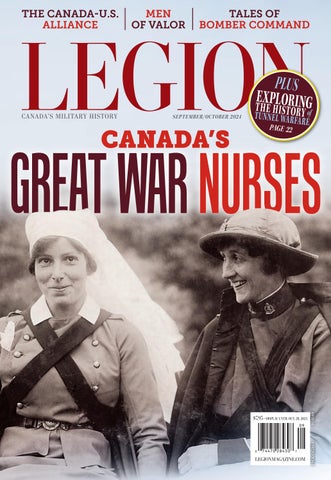
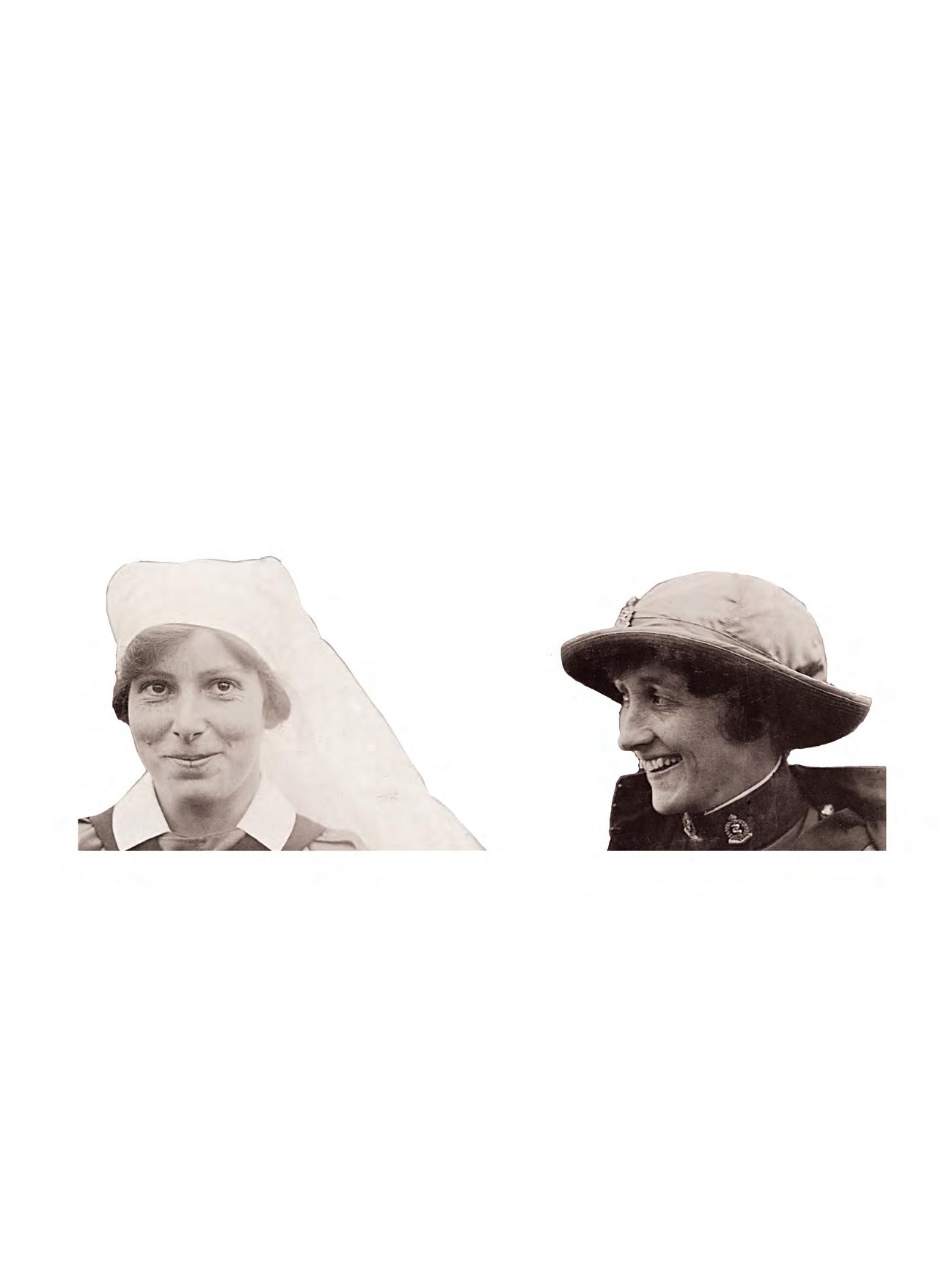
A pair of Canadian nursing sisters pose for a photo overseas in May 1917. CWM/19920085-353
Vol. 99, No. 5 | September/October 2024
Board of Directors
BOARD CHAIR Berkley Lawrence BOARD VICE-CHAIR Bruce Julian BOARD SECRETARY Bill Chafe
DIRECTORS Tom Bursey, Steven Clark, Thomas Irvine, Jack MacIsaac, Sharon McKeown, Brian Weaver, Irit Weiser Legion Magazine is published by Canvet Publications Ltd.

ADMINISTRATIVE
SUPERVISOR
Stephanie Gorin
SALES/
ADMINISTRATIVE ASSISTANT

Lisa McCoy
ADMINISTRATIVE ASSISTANT
Chantal Horan



GENERAL MANAGER Jason Duprau
EDITOR
Aaron Kylie
ASSISTANT EDITOR
Michael A. Smith
SENIOR STAFF WRITER
Stephen J. Thorne
STAFF WRITER
Alex Bowers

ART DIRECTOR, CIRCULATION AND PRODUCTION MANAGER
Jennifer McGill
SENIOR DESIGNER AND PRODUCTION CO-ORDINATOR
Derryn Allebone
SENIOR DESIGNER
Sophie Jalbert
DESIGNER
Serena Masonde


Advertising Sales
CANIK MARKETING SERVICES NIK REITZ 416-317-9173 | advertising@legionmagazine.com
MARLENE MIGNARDI 416-843-1961 | marlenemignardi@gmail.com OR CALL 613-591-0116 FOR MORE INFORMATION
SENIOR
Dyann
WEB
Ankush Katoch

Published six times per year, January/February, March/April, May/June, July/August, September/October and November/December. Copyright Canvet Publications Ltd. 2024. ISSN 1209-4331
Subscription Rates
Legion Magazine is $9.96 per year ($19.93 for two years and $29.89 for three years); prices include GST. FOR ADDRESSES IN NS, NB, NL, PE a subscription is $10.91 for one year ($21.83 for two years and $32.74 for three years). FOR ADDRESSES IN ON a subscription is $10.72 for one year ($21.45 for two years and $32.17 for three years).
TO PURCHASE A MAGAZINE SUBSCRIPTION visit www.legionmagazine.com or contact Legion Magazine Subscription Dept., 86 Aird Place, Kanata, ON K2L 0A1 or phone 613-591-0116. The single copy price is $7.95 plus applicable taxes, shipping and handling.
Change of Address
Send new address and current address label, or, send new address and old address. Send to: Legion Magazine Subscription Department, 86 Aird Place, Kanata, ON K2L 0A1. Or visit www.legionmagazine.com/change-of-address. Allow eight weeks.
Editorial and Advertising Policy
Opinions expressed are those of the writers. Unless otherwise explicitly stated, articles do not imply endorsement of any product or service. The advertisement of any product or service does not indicate approval by the publisher unless so stated. Reproduction or recreation, in whole or in part, in any form or media, is strictly forbidden and is a violation of copyright. Reprint only with written permission.
PUBLICATIONS MAIL AGREEMENT NO. 40063864
Return undeliverable Canadian addresses to Legion Magazine Subscription Department 86 Aird Place, Kanata, ON K2L 0A1 | magazine@legion.ca
U.S.
Postmasters’ Information
United States: Legion Magazine, USPS 000-117, ISSN 1209-4331, published six times per year (January/February, March/April, May/June, July/August, September/October, November/December). Published by Canvet Publications, 866 Humboldt Pkwy., Buffalo, NY 14211-1218. Periodicals postage paid at Buffalo, NY. The annual subscription rate is $9.49 Cdn. The single copy price is $7.95 Cdn. plus shipping and handling. Circulation records are maintained at Adrienne and Associates, 866 Humboldt Pkwy., Buffalo, NY 14211-1218. U.S. Postmasters send covers only and address changes to Legion Magazine, PO Box 55, Niagara Falls, NY 14304.
Member of Alliance for Audited Media and BPA Worldwide. Printed in Canada.
We acknowledge the financial support of the Government of Canada. Version française disponible. On occasion, we make our direct subscriber list available to carefully screened companies whose product or services we feel would be of interest to our subscribers. If you would rather not receive such offers, please state this request, along with your full name and address, and e-mail magazine@legion.ca or write to Legion Magazine, 86 Aird Place, Kanata ON K2L 0A1 or phone 613-591-0116.
We’re T
back?
he night he was first elected prime minister, a triumphant Justin Trudeau declared that Canada was poised to reclaim its rightful place in the world after more than nine years of Conservative anti-globalist isolationism.
“Many of you have worried that Canada has lost its compassionate and constructive voice in the world,” Trudeau told a boisterous victory rally on Oct. 20, 2015, in Ottawa. “Well, I have a simple message for you: on behalf of 35 million Canadians, we’re back.”
THIS PAST MAY, 23 BIPARTISAN U.S. SENATORS URGED TRUDEAU TO IMMEDIATELY DEVELOP A PLAN TO INCREASE CANADA’S MILITARY SPENDING.
Nine years later, the country is under fire for failing to hold up its end of bargains with both the North Atlantic Treaty Organization and the United Nations, and its military is in dire straits (see “Front Lines,” page 18).
Canada continues to fall well short of NATO spending minimums and hasn’t contributed meaningfully to the very UN peacekeeping missions it was a driving force in creating.
More than 125,000 Canadians have served and 130 have died on UN deployments since Lester B. Pearson, a Liberal, was awarded the Nobel Peace Prize for his role in assembling an armed peacekeeping force to defuse the 1956 Suez Crisis.
Canada was a leading contributor to peacekeeping into the 1990s, when
its numbers peaked at 4,000. In 2016, and again in 2017, Ottawa pledged to renew its commitment and contribute substantially more to UN efforts.
After the 2019 election, Trudeau tasked his defence and foreign ministers to “expand Canada’s support for United Nations peace operations.” The Liberal party’s 2021 election platform included a pledge to “renew Canada’s commitment to peacekeeping efforts.” Its UN mission roster as of April 30, 2024, numbered 40.
Likewise, Canada has made repeated pledges to boost its military spending to meet NATO’s minimum two per cent of gross domestic product (GDP). It hasn’t.
According to NATO data, Canada spent 1.33 per cent of GDP on defence in 2023, ranking 27th in the 32-member alliance. In actual dollars spent, it’s seventh.
This past May, 23 bipartisan U.S. senators signed a letter urging Trudeau to immediately develop a plan to increase Canada’s military spending. And NATO Secretary General Jens Stoltenberg has insisted the status quo is “not good enough.”
“I continue to expect that all Allies should meet the guidelines of spending two per cent,” Stoltenberg said in Ottawa this past June. “I know that this is not always easy... but when we reduce defence spending when tensions are going down, we must be able to increase spending, investments in our security, when tensions are increasing and are high as they are today.”
Stoltenberg praised Canada for its leading role in a Latvia-based deterrence force and the billions in aid it has provided Ukraine in its fight against Russian aggression, including air defence systems, battle tanks and fighter pilot training.
In July, Trudeau said Canada would reach NATO’s benchmark by 2032, noting it has increased military spending by $175 billion since 2015.
For Canada’s security, and its faltering reputation, it must make good on a promise it has repeatedly failed to keep. L
Exciting Transition from SimplyConnect to Rogers

Since 2017, Legion members have benefited from exclusive cell phone services through SimplyConnect, enjoying reliable, affordable cell phone plans and devices tailored to their needs, a reliable network, and best-in-class customer service
However, changes in communications technology, such as the 3G network shutdown in the U.S., outdated travel solutions, and limited data plans, have impacted the ability of SimplyConnect Legion customers to fully enjoy their service.
Furthermore, with the 3G network in Canada also phasing out in the future, it was important for The Royal Canadian Legion to endorse a reliable nationwide partner to offer simple and affordable 5G cell phone service - introducing the Rogers program for Legion members
Through this new partnership, SimplyConnect customers and Legion members alike can now upgrade to a 5G mobile plan on Canada's largest and most reliable 5G network while continuing to enjoy simple and affordable cell phone service. Key features include:
• Unlimited Canada-wide Talk and Text plans starting from just $20/month
• Unlimited Canada-wide Talk, Text, and data plans starting at $29/month
• For travelers, a new Canada + U.S. plan allows you to stay connected without changing your device or SIM card, and in over 185 countries with Roam Like Home for a low daily fee
• Competitive pricing on a wide selection of the latest devices from popular brands like Apple and Samsung at exclusive pricing, negotiated for you
By making the switch to Rogers, you will continue to enjoy affordable mobile plans with even greater benefits designed to meet your modern communication needs, on Rogers' 5G network, covering over 30 million Canadians from coast to coast.
• Sign up with no activation fee (Legion members see their activation fees credited thanks to this new program)
• Sign up worry-free with a 30-day satisfaction guarantee.
• Enjoy helpful features such as Spam Call Detect. It notifies users when they receive spam calls on their cell phone.
But, that’s not all, this exclusive partnership is provided by Red Wireless - your exclusive Rogers dealer. Their dedicated team of experts, called Account Managers, is prepared to assist you in selecting the right plan and device to suit your needs. They will guide you through a seamless switch, ensuring no activation fees and a 30-day satisfaction guarantee
Whether you're upgrading to the latest smartphone or looking for a cost-effective plan, their expert team is here to support you. Make the switch today to experience greater savings and amazing customer service. Stay connected with your loved ones, no matter where you are.

This program is brought to you by Red Wireless - your exclusive Rogers dealer, and is not available in stores.
Are you an existing SimplyConnect customer?
Visit www.redwireless.ca/simply-switch or call a dedicated Red Wireless Account Manager at 1-888-271-7206 and ask for your Rogers 5G SIM card to get started.
Are you a new customer?
Call a dedicated Red Wireless expert at 1-888-251-5488 or visit them at www.redwireless.ca/legion



Lest we forget T
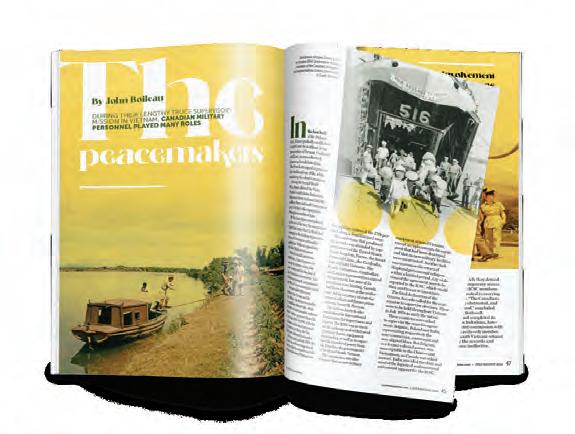
hank you for the fine article (“The peacemakers,” July/August) concerning the Canadian military involvement in Vietnam control commissions that operated from 19541973. As a crew member of HMCS Terra Nova, which was deployed
from January-June 1973 in support of the Canadian contingent of the International Commission of Control and Supervision (ICCS), I believe another name should be added to the Canadian casualties of the Vietnam commissions.
On March 15, 1973, Leading Seaman Ned Memnook, a member of HMCS Terra Nova’s company, died in a Singapore hospital due to a viral infection. While not officially a part of the ICCS contingent, Terra Nova was dispatched to act as a communications relay for Canadian members of the commission and to provide an emergency escape
Comments can be sent to: Letters, Legion Magazine , 86 Aird Place, Kanata, ON K2L 0A1 or emailed to: magazine@legion.ca
means for the Canadians ashore in Vietnam.
Memnook, a member of the Saddle Lake Cree Nation in Alberta, was one of serveral crew with Indigenous heritage who got sick and needed hospitalization. He was the only fatality. His body was returned to Esquimalt, B.C., where he’s buried at the Veterans Cemetery in Victoria. He was survived by his wife Frances and two children, Carolyn and Conrad. Memnook was the only member of the Terra Nova’s crew to receive the International Commission of Control and Supervision Vietnam Medal.
JOHN APPLER
VANCOUVER
ATTENTION CANADIAN MILITARY FAMILIES
Did you or a family member receive VAC disability benefits between 2003 and 2023? A class action settlement may affect you. Please read this notice carefully.
On 17 January 2024 the Federal Court approved a settlement in a class action involving alleged underpayment of certain disability pension benefits administered by Veterans Affairs Canada (“VAC”) payable to members or former members of the Canadian Armed Forces (“CAF”) and the Royal Canadian Mounted Police (“RCMP”) and their spouses, commonlaw partners, survivors, other related individuals, and estates (the “Settlement”).
If you received any of the disability-related benefits listed below at any time between 2003 and 2023, you may be entitled to compensation under the Settlement. As the executor, estate trustee, administrator, or family member of a deceased class member who collected VAC-administered disability benefits, you may also be able to claim on behalf of the estate. If you are entitled to compensation under the Settlement and you have an active payment arrangement with VAC, such as direct deposit, you do not need to do anything to receive payment. If you are claiming on behalf of a deceased veteran of the CAF or RCMP, including as the executor, trustee, administrator of an estate, or a family member, you must submit a Claim Form to KPMG Inc., the administrator responsible for handling claims available at:
KPMG Inc.
C/O Disability Pension Class Action Claims Administrator 600 boul. de Maisonneuve West, Suite 1500 Montréal, Québec H3A 0A3
Online: https://veteranspensionsettlement.kpmg.ca/ E-mail: veteranspension@kpmg.ca
For assistance with submitting a Claim Form, please contact the Administrator’s dedicated call center at 1-833-839-0648, available Monday to Friday, 8:00 AM to 8:00 PM (Eastern Time).
The deadline to submit a claim is 19 March 2025. All eligible claimants are entitled to receive legal assistance free of charge from Class Counsel for purposes relating to implementing the Settlement, including preparing and/or submitting a claim to the Administrator.
You may contact Class Counsel for more information or for assistance with filing a claim, at info@vetspensionerror.ca, or 1-866-545-9920. To see the full text of the Final Settlement Agreement, please visit https://vetspensionerror.ca/court-documents/. WHO IS INCLUDED?
The Settlement covers members and former members of the CAF and the RCMP and their spouses, common–law partners, dependents, survivors, orphans, and any other individuals, including eligible estates of all such persons, who received—at any time between 2003 and 2023—disability benefits based on annual adjustments of the basic pension under s. 75 of the Pension Act (the “Class Members”). The terms of the Settlement are binding on Class Members. The Settlement includes releases of claims asserted in the certified Class Action.
WHAT ARE THE AFFECTED BENEFITS?
The Settlement affects prescribed annual adjustments of the following benefits:
• Pension Act pensions for disability, death, attendance allowance, allowance for wear and tear of clothing or for specially made apparel and/or exceptional incapacity allowance;
• RCMP Disability Benefits awarded in accordance with the Pension Act;
• Civilian War-related Benefits Act war pensions and allowances for salt water fishers, overseas headquarters staff,
air raid precautions works, and injury for remedial treatment of various persons and voluntary aid detachment (World War II);
• Flying Accidents Compensation Regulations flying accidents compensation;
• Veterans Well-being Act clothing allowance.
WHAT DOES THE SETTLEMENT PROVIDE?
The Settlement provides direct compensation to Class Members who receive (or have previously received) any of the Affected Benefits listed above, since 1 January 2003. Class Members will receive a single payment of about 2% of all Affected Benefits they have received since 1 January 2003. The total amount of compensation paid by Canada to the Class could be as much as $817,300,000. This is only a summary of the benefits available under the Settlement. The full text of
the Final Settlement Agreement (“FSA”) is available online at https://vetspensionerror.ca/ court-documents/. You should review the entire FSA in order to determine your entitlement and any steps you may need to take to access compensation.
HOW AM I PAID?
Eligible Class Members who are currently collecting VAC-administered disability benefits or pensions will receive a Settlement payment automatically through the same payment method they currently use to collect benefits, including by direct deposit.
Class Members who received Affected Benefits between 2003 and 2023 but who do not have a current payment arrangement with VAC will be required to make a claim with the Claims Administrator. This includes all Class Members who are deceased, and where an executor, estate trustee, administrator of an estate, or a family member is making a claim on behalf of that Class Member.
However, if a deceased Class Member has a survivor who is in receipt of VAC benefits and has a current payment arrangement, that survivor will automatically receive the deceased Class Member’s entitlement without the need to make a claim with the Claims Administrator.
HOW DO I MAKE A CLAIM?
If you do not have an active payment arrangement with VAC, you must submit a claim form with the Administrator.
You must submit a completed and signed Claim Form to the Administrator within the Claim Period. You are encouraged to use the Claim Form submission link available online at https://veteranspensionsettlement.kpmg.ca/. You may, however, submit your Claim Form to the Administrator using one of the following three methods: 1. online at https://veteranspensionsettlement.kpmg.ca; 2. by e-mail to veteranspension@kpmg.ca; or 3. by mail to: KPMG Inc.
C/O Disability Pension Class Action Claims Administrator 600 boul. de Maisonneuve West, Suite 1500 Montréal, Québec H3A 0A3
You may download a copy of the Claim Form available online at: https://veteranspensionsettlement.kpmg.ca/download/Claim-Form.pdf.
If submitting electronically, the Administrator must receive your completed and signed Claim Form no later than 19 March 2025. If submitting by mail, your completed and signed Claim Form must be postmarked no later than 19 March 2025. For assistance with submitting a Claim Form, please contact the Administrator’s dedicated call center at 1-833-839-0648, available Monday to Friday, 8:00 AM to 8:00 PM (Eastern Time).
Please read and follow the instructions on the Claim Form. Class Counsel are also available, free of charge, to answer your questions and assist you with preparing your claim form.
The deadline to file a claim is 19 March 2025.
AM I RESPONSIBLE FOR LEGAL FEES?
You are not responsible for payment of legal fees. The Federal Court has approved Class Counsel’s fees (including HST) and disbursements to be automatically calculated and deducted from the Settlement amount you are entitled to receive before the payment is issued.
The Federal Court approved payments to Class Counsel equal to approximately 17% of each payment made under the Settlement for legal fees, disbursements, and HST.
The FSA contains additional details about Class Counsel fees, available online at https://vetspensionerror.ca/court-documents/.
Class Counsel are available to assist Class Members through the claims process free of charge.
FURTHER INFORMATION?
For further information or to get help with your claim, contact Class Counsel at: https://vetspensionerror.ca/ or Call: 1-866-545-9920 or info@vetspensionerror.ca
DO YOU KNOW ANY OTHER RECIPIENTS OF A VAC DISABILITY PENSION?
Please share this information with them.
Butterfly effect
Thank you for including an article in the July/August issue on my dad, Charles (Charley) Fox, and his encounter with German General Erwin Rommel. That moment 80 years ago certainly influenced the outcome of the Second World War. Dad always wondered if his backroad encounter with Rommel in France hadn’t occurred, might the highly popular general have been able to sway an earlier conclusion to the war. We will, of course, never know.
JIM FOX
VIA EMAIL
Blame Blair
Defence Minister Bill Blair is an embarrassment to Canada and NATO (Editorial, July/August). His reluctance to understand Canada’s defence budget deficits, personnel shortfall and the navy’s four-submarines debacle is not acceptable. Canada needs a strong leader with a persuasive voice to rectify these shortfalls. The country must be prepared to assist NATO as required.
STEPHEN JORDAN
VIA EMAIL
Muck up
I thoroughly enjoyed the excellent article “Licence to Plunder” (July/August) by Stephen J. Thorne. But, in the interest of historical accuracy, the terms England and the United Kingdom are not synonymous. The letters of marque were not issued by the King of England, as no such title exists. Since 1603, the British monarch has been the King of the United Kingdom. Similarly, the U.S. did not declare war on England in 1812 as England had ceased to exist as a country in 1707. They declared war on the U.K.
RON
ROSS
GUELPH, ONT.
CORRECTIONS
The Royal Canadian Legion 2024 national Cribbage Championships second-place pairs duo—Grant Graham and Darrell Gorvett—are from Perth Regt. Veterans Branch in St. Marys, Ont. In “The Greatest Landing” (May/June), the list of Royal Canadian Navy ships off Normandy on D-Day did not include HMCS Kitchener. The corvette escorted a second wave of American infantry at the Omaha landing area. And, in “The peacemakers” (July/August), the medal pictured is the International Commission of Control and Supervision Vietnam Medal, not the International Commission for Supervision and Control Indo-China Medal.

MEDIPAC TRAVEL INSURANCE
Exclusive HIGHLIGHT from LegionMagazine.com
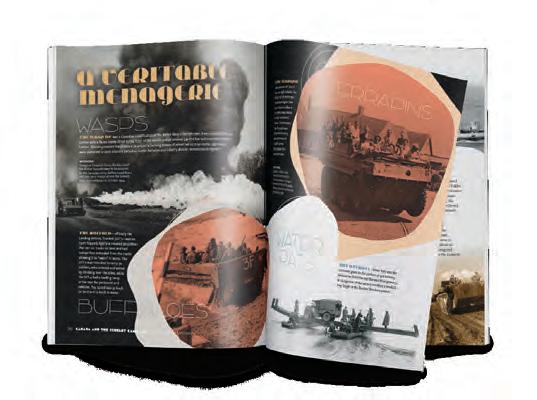
attack against what was expected to be a weak and demoralized enemy with little equipment. Due to a failure of intelligence, however, it was doomed from the start. The Battle of the Scheldt was arguably the most critical battle
fought by the Canadian Army during the Second World War. Some historians believe that, after Normandy, it was the single most significant Allied campaign in Western Europe. Yet, for some strange reason, it remains relatively little-known. Readers can now learn more about this necessary victory in the special collector’s edition of Canada’s Ultimate Story titled “Canada and the Scheldt Campaign: The Necessary Victory,” written by frequent Legion Magazine contributor John Boileau. It can be found on
Get notified of all the latest updates on legionmagazine.com by signing up for our weekly e-newsletter at www.legionmagazine.com /newsletter-signup
newsstands until Nov. 4, and online at https://shop.legionmagazine.com/. Accompanying the edition is a video on the battle, narrated by Canadian actress Cobie Smulders, known for her work in TV’s “How I Met Your Mother” and various Marvel superhero movies. Viewers will be transported to Europe in the fall of 1944 and shown how more than 40,000 Germans were taken prisoner and, ultimately, how the successful conclusion of the Battle of Scheldt became a testament to the quality, determination and skill of Canadian soldiers. Watch it on Legion Magazine’s YouTube channel. L




1 September 1880
The British Arctic Territories are ceded to Canada, becoming part of the North-West Territories.
3 September 1783
The Treaty of Paris (1783) is signed by representatives of Great Britain and the U.S., officially ending the American Revolutionary War.
4 September 1939
Pilot Officer S.R. Henderson, serving in 206 Squadron, Royal Air Force, becomes the first Canadian to participate in an operational sortie during the Second World War when he serves as the lead navigator in a bomber force attacking German warships.
5 September 1979
The first Canadian gold bullion coin, stamped with the maple leaf, goes on sale.
7 September 1850
The Robinson Treaties are signed. The British Crown agrees to pay the Ojibwa 2,160 pounds and annual payments of 600 pounds for lands on the northern shores of lakes Superior and Huron.
September
16 September 1939
The first convoy of the Second World War—designated HX-1—leaves Halifax for the United Kingdom. Eighteen merchant ships are escorted by HMC ships Saguenay and St. Laurent to a North Atlantic rendezvous with Royal Navy cruisers.
17 September 1944
8 September 1978
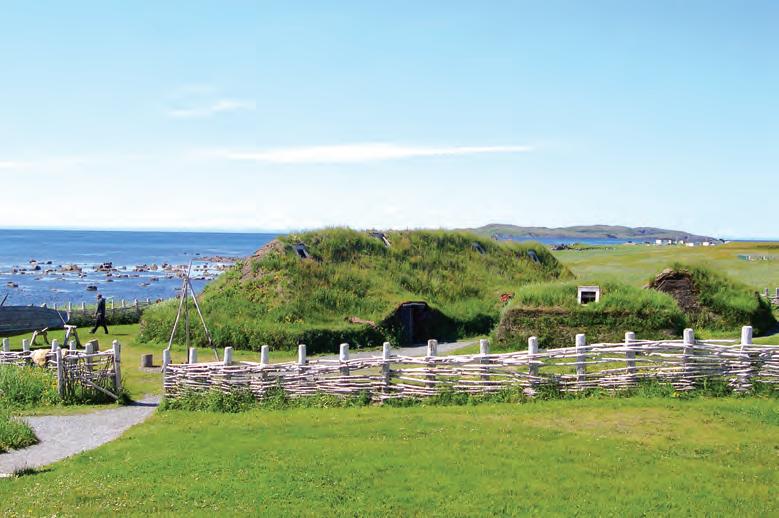
L’Anse aux Meadows, the site of a 1,000-year-old Norse colony in Newfoundland, is named a world heritage site.
10 September 1939
Canada declares war on Germany.
11 September 2001
Al-Qaida terrorists hijack four commercial jets, crashing two into the World Trade Center in New York City and one into the Pentagon in Washington, D.C.; passengers of the fourth plane force it to crash in Pennsylvania.
12 September 1846
Royal Navy ships Erebus and Terror of the Franklin expedition are trapped in ice in the Arctic.


Operation Market Garden, a bold but unsuccessful Allied attempt to shorten the war, begins.
18 September 1941
Vancouver’s Asahi baseball club plays its last game as Japanese Canadians are sent into exile or internment camps.
21 September 1995
The $2 coin—the Toonie—is unveiled.
23 September 1787
Mississauga chiefs sell 101,528 hectares of land—in the area of present-day Toronto—to the British for the modern equivalent of about $200,000.
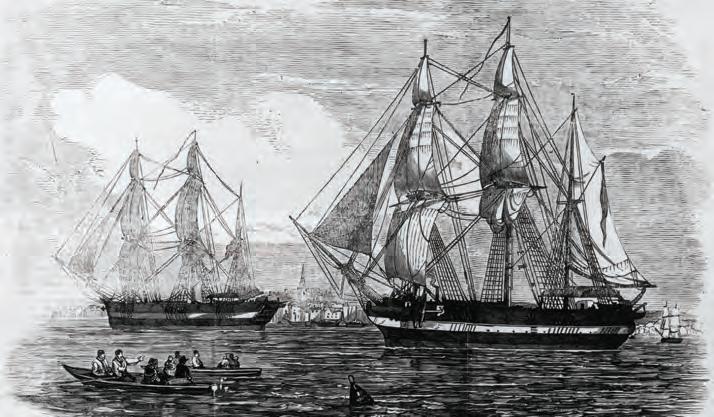
14 September 1889
Nearly 400 Canadian voyageurs leave Halifax to participate in the Nile Expedition to rescue a British major-general trapped at Khartoum in the Sudan.
15 September 1762
Britain defeats France in St. John’s, Nfld., in the last battle of the Seven Years’ War.
25 September 1942
Canada joins the United States in combat against the Japanese in Kiska Harbor, Alaska.
28 September 1972
Canada defeats the Soviets in the eighth and final hockey game of the Summit Series.


October
2 October 1535
Jacques Cartier arrives at Hochelaga (now Montreal) on his second voyage to North America.
3 October 1914
The Canadian Expeditionary Force’s first contingent of 30,000 sails from Quebec to join the war effort in Europe.
4 October 1944
HMCS Chebogue is torpedoed by U-1227 in the mid-Atlantic and seven sailors die.
5 October 1970
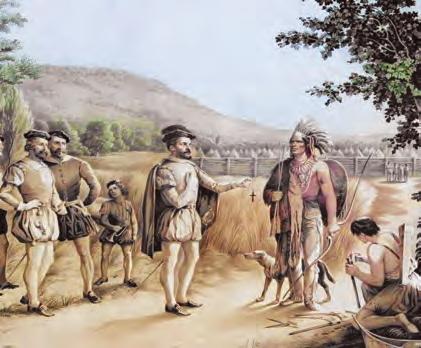
13 October 1812
Major-General Isaac Brock dies during the Battle of Queenston Heights. Total British losses are 105 killed and wounded. There are at least 300 American casualties.
22 October 1940
Squadron Leader Ernest A. McNab is awarded the Royal Canadian Air Force’s first Distinguished Flying Cross for his service during the Battle of Britain.
23 October 1958
An earthquake near a coal mine at Springhill, N.S., traps 174 miners underground. Seventy-five die.
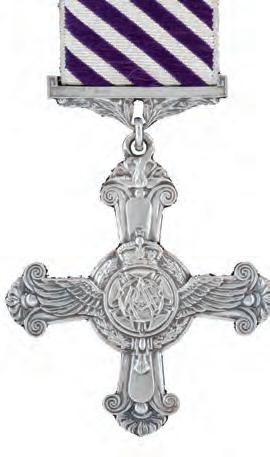
25 October 1973
British Trade Commissioner James Cross is kidnapped in Montreal by the Front de libération du Québec, beginning the October Crisis.
7 October 1918
The first of Canada’s 50,000 Spanish flu victims dies in Montreal.
9 October 1967
Reports from Bolivia state that Marxist revolutionary Che Guevara has been killed.
10 October 1970
Quebec Labour Minister Pierre Laporte is kidnapped by the FLQ.
11 October 1918
Lieut. Wallace Algie leads the capture of two machine guns, an officer and 10 men at Cambrai, France, earning the Victoria Cross.
14 October 1914
The First Canadian Contingent begins to disembark after arriving at Plymouth, England.
16 October 1970
Prime Minister Pierre Trudeau invokes the War Measures Act in response to a deepening crisis in Quebec.
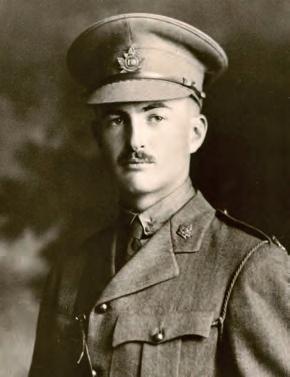
12 October 1915
British nurse Edith Cavell is executed for helping Allied prisoners escape occupied Brussels.
The second United Nations Emergency Force is established to supervise the implementation of a ceasefire in the Yom Kippur War.
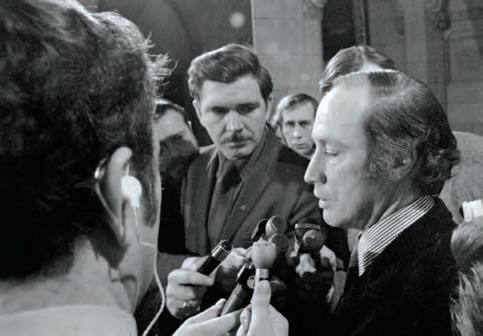
17 October 1970
Quebec Labour Minister Pierre Laporte is found dead in the trunk of a car seven days after being kidnapped by members of the FLQ.
19 October 1944
HMCS Bras d’Or vanishes without a trace in the Gulf of St. Lawrence. Thirty die.
21 October 1916
The first of three attacks are launched on Regina Trench by 4th Canadian Division.
26 October 1917
The Canadian Corps attacks Passchendaele Ridge. Fighting into November, the Canadians succeed, but suffer 15,654 casualties.
27 October 1915
King George V of Great Britain visits the Canadian Corps on the Western Front.
28 October 1790
On present-day Vancouver Island, Spain signs an agreement with Britain to end its Pacific Northwest monopoly.
30 October 2009
A landmine kills Private Steven Marshall while on foot patrol in Panjwaii district southwest of Kandahar, Afghanistan.
31 October 1995
Premier Jacques Parizeau resigns after a narrow loss in the Quebec sovereignty referendum.
By Alex Bowers
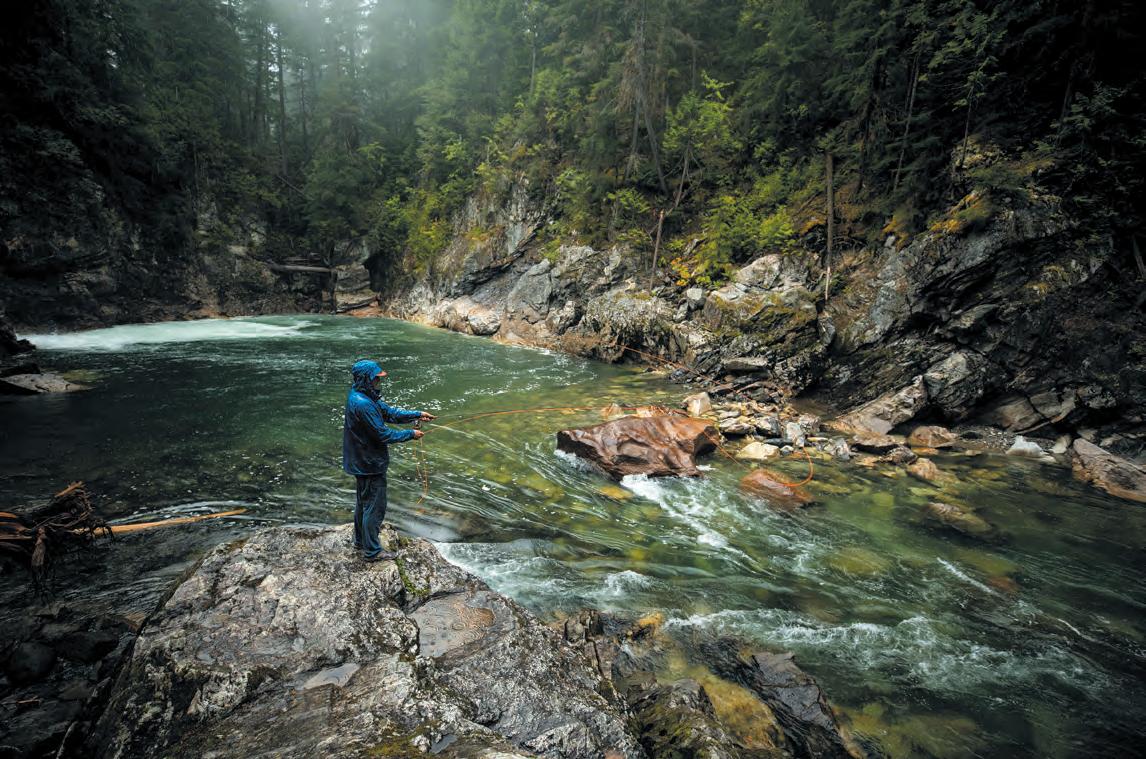
Lured by nature
How a veterans’ fly-fishing program has embraced the healing power of the great outdoors
G
ervais Jeffrey, 68, remembers when his fly-fishing journey began.
Just a boy at the time, he had been at a summer camp about three hours’ drive from Quebec City, a tranquil getaway run by his father’s boss. There, he watched the camp operator out on the water “catching all kinds of fish” while he, using lures instead of worms, caught nothing.
“One day,” Jeffrey explained, “I asked if I could learn what he did. [The operator] gave me a big grin and said, ‘Well, it’s about time you asked.’”
Sixty years later, and following more than four decades in the Canadian military, the army and navy veteran understands the true meaning of that moment.
“After I came back from Afghanistan in 2008, actually around the same time I was posted back to Quebec City, I used to go fly fishing on the weekends when I was tired and depressed. I felt directly connected with nature— the water running between my legs, feeling the currents, or sometimes not fishing at all and instead sitting or lying on a rock. It all brought a sense of liberty.”
Inspired to bring the same feelings to others, Jeffrey became involved in a U.S. fly-fishing project for fellow veterans. Then, in early 2019, he helped establish Heroes Mending on the Fly Canada, an organization catered exclusively to Canadian service members, first responders and their families.
With individual programs spread nationwide, Jeffrey, as national director, oversees a team of provincial co-ordinators and volunteers—most of whom are veterans—offering classes, trips and more.
Experience is never an issue, explained Jeffrey: “For beginners, we teach basic fly fishing and fly tying. There are casting classes, instructions on material care, setting up—everything.”
The group likewise supplies all the necessary gear for the first year for free. It’s merely one of several ways that the organization accommodates newcomers, regardless of their circumstances.
“One time,” noted Jeffrey, “we had a veteran with one arm. He needed adaptive equipment that could
enable him to fly fish and reel the line back. We got him the devices that were actually designed for people who had lost an arm.”
Finally, there’s the option of matching beginners with more experienced anglers. Such tutorials, alongside a general sense of camaraderie, play a critical role in the program’s mission—especially for service members, former and active, with post-traumatic stress disorder or who face other challenges.
“I was going to cancel due to anxiety,” Dave, a veteran attendee, wrote to Jeffrey after a Heroes trip. “On that first day I chose to wade into the water and fish by myself...you are always safe when you are by yourself.”
Once out there, however, Dave had gazed up at the evergreen hills, letting the cool lake wash over his senses. He felt his heart jump with excitement when the first fish broke the surface, and, at least momentarily, all worries disappeared. The day, he later recalled, “was probably the most peaceful...in a long time.”
Back at the fishing lodge, Dave found himself becoming more open with other veteran attendees: “we shared conversations of common experiences with regard to PTSD, which really brought to light the fact that the things I am experiencing, the sometimes cold and painful existence, is not solitary.”
Whether forming bonds akin to those in the service, sharing stories with like-minded individuals, or simply being immersed in nature, the program has helped hundreds of veterans coast-tocoast cope with difficulties.
Jeffrey is quick to assert that his organization should be seen as supplementary to conventional treatment options. Nevertheless, research does recognize the potential benefit of naturebased recreation. In one recent study, evidence suggested that fly
“WE’RE
.”
fishing could help alleviate PTSD symptoms and perhaps, under certain circumstances, contribute to post-traumatic growth.
What remains clear is the group’s year-round dedication. “We’re there for the veterans, and we’re there for their needs,” said Jeffrey.
Even in the winter, when there are fewer opportunities to be outside, the merits of fly fishing can continue by preparing for the season ahead.
“Fly tying can teach patience,” explained Jeffrey. “We practice our motor and concentration skills in order to place the material on the hooks, sometimes working in small groups while managing stress. Where people may otherwise have been sitting alone in their homes, they’re instead focusing on something that could be meaningful. Some of those guys have said it saved their lives.”
But challenges remain in raising awareness, having enough experienced volunteers for certain provincial programs, and,
fundamentally, ensuring the organization grows for the betterment of veterans’ health and wellness.
“Most of the money right now that we raise is the generosity of the Legion,” said Jeffrey, who also serves as president of Rockland, Ont., Branch. “Dominion Command supports us on the national side; so do the provinical commands, and then there are the Legion branches themselves.”
Sponsorship funds, Jeffrey is proud to note, directly benefit veteran attendees, enabling all participants to embrace the healing power of nature.
It is, according to Jeffrey, as important now as it ever was: “Some people think that because the Afghanistan War is over, everything is over, but we’re still losing veterans to suicide, to homelessness, to drugs, and other serious issues. We need to get those veterans on their feet again.”
For Jeffrey, Dave and fellow anglers, to have feet planted firmly in water—all the while surrounded by Canada’s natural beauty— can make all the difference. And it doesn’t matter the type of fish they reel in, because the real catch is finding peace of mind.
“Trout, salmon, pike, bass,” he listed off in reference to just some of his catches, past and present. “Whatever swims in the water, I would go fish for it.” L


Carignan takes command
Canada names its first female defence chief
Lieutenant-General Jennie Carignan, a 35-year military veteran who headed the forces’ topical professional conduct and culture directorate, became the first woman to serve as Canada’s chief of the defence staff.
Prime Minister Justin Trudeau made the announcement on July 3, congratulating Carignan and saying “her exceptional leadership qualities, commitment to excellence, and dedication to service have been a tremendous asset” to the forces.
“I am confident that, as Canada’s new Chief of the Defence Staff, she will help Canada be stronger, more secure, and ready to tackle global security challenges.”
She officially became a full general and replaced the outgoing chief, General Wayne Eyre, at a change-of-command ceremony on July 18, 2024.
Carignan inherits a military in dire straits—understaffed, underequipped, underfunded and, when it comes to women, under-represented.
An internal Defence Department presentation dated Dec. 31, 2023, and recently obtained by CBC’s Murray Brewster says just 58 per cent of Canada’s armed forces could currently respond to a crisis if called upon by NATO allies.
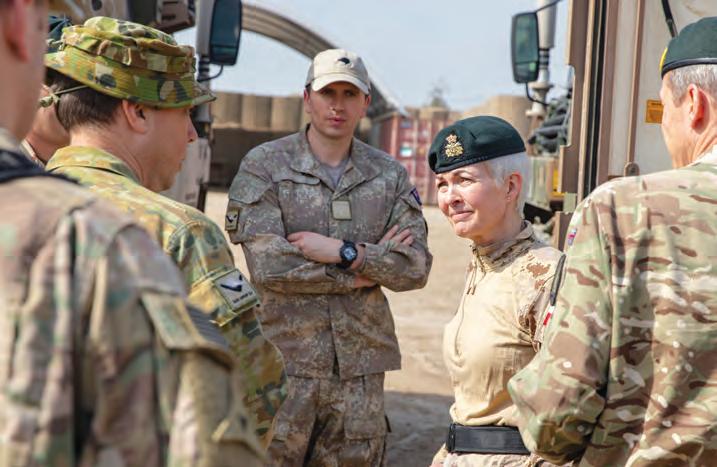
Then major-general Jennie Carignan meets with colleagues on Feb. 7, 2020, while in command of a NATO mission in Iraq.
The presentation, which addresses issues from readiness and equipment to recruiting and ammunition supplies, says 45 per cent of the military’s equipment is considered “unavailable and unserviceable.”
“In an increasingly dangerous world, where demand for the CAF is increasing, our readiness is decreasing,” says the document.
The numbers are jarring:
• 55 per cent of Royal Canadian Air Force fighters, maritime aviation, search and rescue, tactical aviation, trainers and transport aircraft are considered “unserviceable;”
• 54 per cent of Royal Canadian Navy frigates, submarines, Arctic offshore patrol ships and defence vessels are not deployable;
• 46 per cent of army equipment is considered “unserviceable.”
But the biggest challenge, says the document, is “people shortfalls— technicians and support” along with “funding shortfalls—spare parts and ammo.” It says the military was short 15,780 regular members and reservists at the end of 2023.
Meanwhile, the federal government has started to reallocate hundreds of millions of dollars in defence money, forcing parts of DND to cut spending to pay for new equipment.
Kerry Buck, a career diplomat and Canada’s former ambassador to NATO, told CBC the numbers show that Canada is “falling further down the rank of allies.”
“It means that the gap is growing between our international commitments and our capacity,” said Buck. “It impacts our credibility at NATO for sure, but it impacts our security interests, too.”
Underlying some of the recruiting problems, particularly regarding women, are issues with which Carignan, a native of Asbestos, Que., is intimately familiar—professional conduct and culture.
The forces’ set a goal of increasing the percentage of women in its ranks from 14.6 per cent in 2016 to 25 per cent by 2026. In May 2023, the percentage was 16.48.
“The CAF will clearly not reach its female recruiting target by 2026,” said a 2021 article in Queen’s University’s Smith School of Business newsletter.
“There were no illusions that this was anything but a stretch goal,” it said. “The CAF’s own survey of Canadian women found that the military was second only to mining and banking as the least appealing career choice.”
An engineering graduate of Royal Military College Saint-Jean,
Carignan served in combat engineering regiments throughout the 1990s and early 2000s, including stints in the Golan Heights, Bosnia and Afghanistan, where she commanded a task force engineering regiment.
As a full colonel, she was appointed commandant of her alma mater in 2013.
She was promoted to brigadiergeneral in 2016, Canada’s first female general from a combat command. She was promoted to major-general in 2019 and commanded NATO forces in Iraq.
As a lieutenant-general, she became the Canadian military’s first chief of professional conduct and culture.
The job demanded nothing less than “leading institutional efforts to develop a professional conduct and culture framework that holistically tackles all types
Keep hearing & learning
Learning is lifelong, and discovering new hobbies and interests is part of what makes you, you. Whether it’s taking a new class, joining a discussion group, or learning a new language, your hearing plays an essential role in these experiences.
That’s why we encourage you to love your ears and take advantage of a FREE hearing test at any HearingLife clinic* –no referral needed. Plus, Legion Members and their family receive an EXTRA 10% off the final purchase price of hearing aids.**

of discrimination, harmful behaviour, biases, and systemic barriers”—essentially a mandate to prevent sexual assault in the military.
“It was a tall order,” Legion Magazine’s former news editor, Tom MacGregor, wrote in the Ottawa Citizen on July 5, 2024, “but insisted on by politicians and the public as, increasingly, sexual discrimination, harassment and generally poor conduct were cited by women as a major obstacle to attracting young women.
“The situation was not helped by the sexual conduct of several in the senior ranks in recent years.”
Carignan married a college platoon mate, Éric Lefrançois, in 1990. He eventually retired from the military to care for their four children, two of whom— a son and daughter—now serve in the Canadian forces. L


By David J. Bercuson
Recruiting agency
Canada’s military recruitment issues are hardly new— the country identified them nearly 30 years ago
“Tens of thousands of people want to join [Canada’s] military but we’re snubbing them,” wrote John Ivison in a column for the National Post at the end of May 2024. The piece confirmed information published by the Toronto Star earlier in the month that the Canadian Forces Recruiting Group had received 70,080 applications for the Canadian Armed Forces in 2023-2024, but enrolled only 4,301 new recruits. At a time when the CAF is running at least 16,500 below its current year enrollment targets, the articles raise serious questions about the country’s recruitment process.
When the armed services are so far below the optimum strength set for them by the government, it means that there aren’t enough senior personnel to train new recruits. A professional Canadian service person needs to not only know how to march and shoot, but also should be trained in a wide aspect of modern warfare technology, from working with drones to communicating using highly technical digital radios, not to mention deadly weaponry.
The lack of recruits also means there aren’t enough
personnel to fly the country’s military aircraft and fill its infantry battalions, nor enough sailors for its naval vessels or enough supply-andsupport workers to keep everything shipshape. And while Canada’s four 1980s-era submarines are barely seaworthy—having spent just 228 days at sea combined from 2000-2023—that hardly matters as there aren’t enough submariners to operate them.
In the fall of 1997, I was invited to, and participated in, the defence minister’s Monitoring Committee for the Department of National Defence and the Canadian Armed Forces. Art Eggleton, a former mayor of Toronto, had assumed the defence portfolio and received reports from a number of parliamentary investigations into many aspects of life in, and the performance of, Canada’s military in the aftermath of the so-called Somalia Affair.
In 1993, a Somali teenager had been beaten to death over several hours one night by Canadian paratroopers serving in a UN-backed humanitarian mission the African country. Members of the same regiment had previously shot a number of Somalis to death. The subsequent inquiries appointed to examine the CAF found there was plenty wrong. One of the main conclusions of the Special Committee on the Restructuring of the Reserves, for instance,
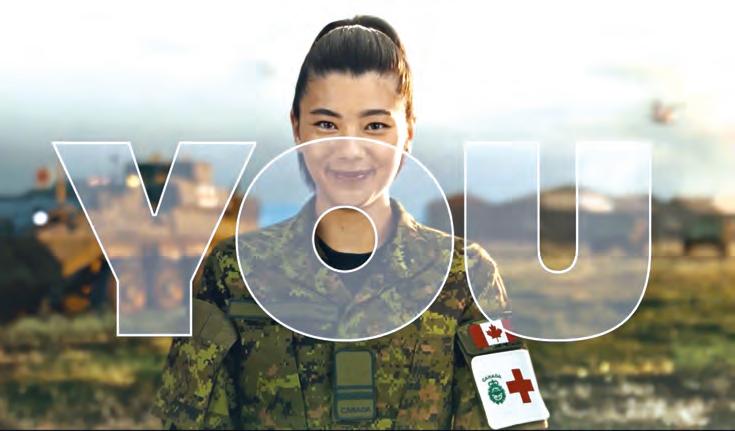
The Canadian Armed Forces’ current recruitment campaign, “This Is For You,” is generating applicants, but the military is struggling to enroll them.
was that the recruiting system just didn’t work. People wanting to join the reserves experienced lost files, a broken communication system, delays in medical examinations, transfers from the regular force that took months and, in some cases, years, and numerous other challenges. The recruiting system for the regular force was somewhat better, but stumbled, for example, on security clearance issues. Keep in mind, this was nearly 30 years ago. Many, if not all, of the same issues still exist.
Case in point: an individual who retired from the reserves as a captain several years ago, who held a PhD in security studies, was awarded the Order of Military Merit and served two tours in Afghanistan, considered returning to the naval service. He was eventually cleared to rejoin… as a cook. He declined the offer.
Canada’s recruitment system is broken in numerous ways, and has been for a long time. Auditor general reports from 2002 and 2006 found issues with training recruiting staff, the quality of the tools used to assess applicants and processing in general, which caused people to withdraw applications. They weren’t meeting recruiting targets 20 years ago and subsequently made no plans to meet them.
The system’s ultimate fault is that it’s not designed to attract the best and brightest who want to serve. Instead, it’s designed to keep the worst of this country’s young people from joining. In the words of the young former captain, it’s a defensive system designed to keep people out, not an offensive system designed to entice them.
The most significant challenge for Canada’s military isn’t the need
THE SYSTEM’S ULTIMATE FAULT IS THAT IT’S NOT DESIGNED TO ATTRACT THE BEST AND BRIGHTEST WHO WANT TO SERVE.
for modern kit, it’s the need for a smart cohort of young and educated people who want to challenge themselves for the most difficult job any country can offer—to go into harm’s way to guard those of us at home. Standing on guard is hard enough without having to claw through the narrow doors of a thoroughly broken recruitment system. L



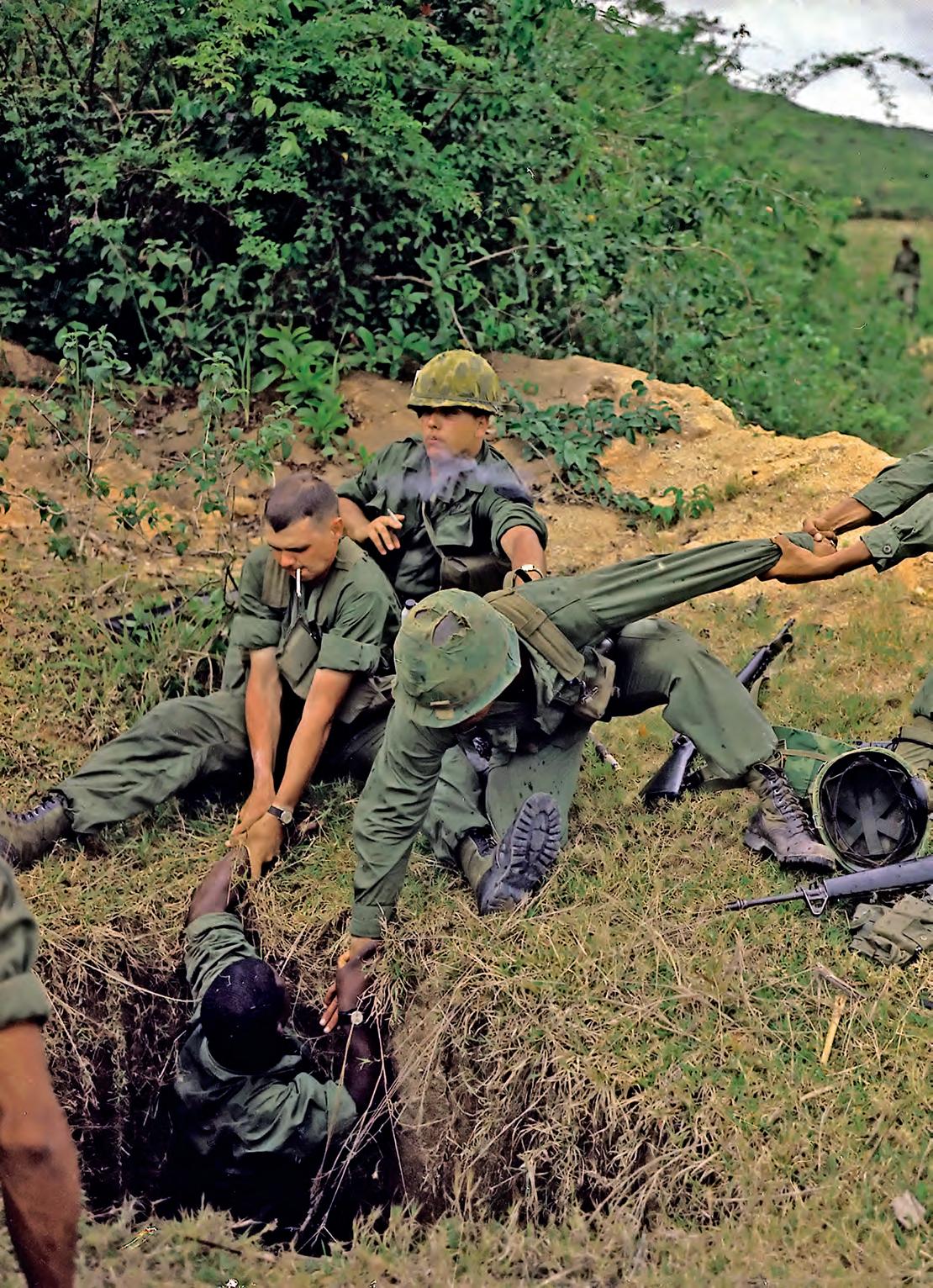

An American “tunnel rat” of Troop B, 1st Reconnaissance Squadron, 9th Cavalry, 1st Cavalry Division (Airmobile), is lowered into a Viet Cong tunnel on April 24, 1967.
By Stephen J. Thorne
For all the advances in humankind’s abilities to wage war, one particular tactic has bedevilled military strategists from ancient times to this day: tunnels.
Tunnels have figured in battles for millennia, from ancient Egypt through the ages of Macedonian and Roman conquest, two world wars, the Vietnam War and onward. They’ve provided cover, storage and surprise; overcome (or undermined) obstacles, optimized the strength of modest forces and maximized their hitting power. They remain hard to detect and difficult for anyone but their occupants to navigate.
Ancient Egyptians tunnelled beneath city walls; Assyrians were employing specialized engineering troops as early as 850 BC.
In his Histories, the Greek historian Polybius describes mining and
counter-mining during the Roman siege in 338 BC at the ancient Greek city of Ambracia, where its Aetolian defenders’ “gallant resistance” compelled the attacking forces to resort to mines and tunnels. This, in turn, brought what were, for their time, remarkable countermeasures.
“For a considerable number of days the besieged did not discover them carrying the earth away through the shaft,” wrote Polybius. “But when the heap of earth thus brought out became too high to be concealed from those inside the city, the commanders of the besieged garrison set to work vigorously digging a trench inside, parallel to the wall and to the stoa which faced the towers.
“When the trench was made to the required depth, they next placed in a row along the side of the trench nearest the wall a number of brazen vessels made very thin; and, as they walked along the bottom of the trench past these, they listened for the noise of the digging outside. Having marked the spot indicated by any of these brazen vessels, which were extraordinarily sensitive and vibrated to the sound outside, they began digging from within, at right angles to the trench, another tunnel leading under the wall, so calculated as to exactly hit the enemy’s tunnel.
“This was soon accomplished, for the Romans had not only brought their mine up to the wall, but had under-pinned a considerable length of it on either side of their mine; and thus the two parties found themselves face to face.”
The Aetolians then released smoke from burning feathers and charcoal, essentially unleashing an early form of chemical warfare.
“THE TUNNEL WAR IS ONE OF THE MOST IMPORTANT AND MOST DANGEROUS MILITARY TACTICS IN THE FACE OF THE ISRAELI ARMY.”

Despite the development of daunting countermeasures, however, tunnels became such an effective tactic that, early on, the very threat of them could inspire fear and capitulation.
Philip V of Macedon discovered the ground was too rocky and hard for mining during his siege at the fortified town of Prinassos in 201 BC. So, he ordered his soldiers to collect earth from elsewhere under cover of night and throw it all down at a fake tunnel entrance, suggesting the Macedonians were nearing completion of a tunnel system. When Philip then falsely declared that his army had undermined large parts of the town walls, its citizens promptly surrendered.
In the Middle East, archeologists recently uncovered a vast tunnel system under northern Israel believed to have been used by Jewish rebels fighting Roman occupation 2,000 years ago.
Indeed, tunnels are an age-old tool in the region where, during the Syrian Civil War in Aleppo in March 2015, rebels detonated explosives beneath the headquarters of the Syrian Air Force Intelligence Directorate, killing dozens.
Mining became standard in siege warfare and, by the 17th century, architects were including complex counter-mining measures into their geometric fortifications.
Ever more powerful artillery rendered sieges a shrinking element of warfare until new tunnelling tactics evolved during the Russo-Japanese War of 1904-05.
During the largely stagnant warfare on the First World War’s Western Front, sappers from both sides—Canadian miners among them—began tunnelling under enemy trenches, planting massive explosives beneath opposing armies, and literally blowing them to bits. The terrifying prospect of an undetected enemy suddenly and decisively taking out an entire frontline trench works and its occupants, without ever showing their faces, proved a formidable psychological weapon as well as a practical one.
On the Pacific island of Iwo Jima, a key stepping stone in the Allied march north during the Second World War, Japanese troops dug a network of tunnels and caves from which they mounted a suicidal defence that exacted a mighty price on the U.S. Marine Corps.
Two decades later, in the C ủ Chi District of Saigon (now Ho Chi Minh City), Viet Cong guerillas operated incognito from a vast tunnel network, mounting major operations that plagued American forces for much of the Vietnam War, including the pivotal Tết Offensive of 1968.
Today, tunnels figure infamously in the Hamas-governed Gaza Strip.
In the Palestinian enclave, the loose, easily dug subsoil is the stuff of legend. Its tunnels have confounded armies since Alexander the Great’s siege in 332 BC to Israel’s current offensive against Hamas militants.
As Jean-Pierre Filiu writes in his book, Gaza: A History, Alexander expected a quick victory on the road to Egypt when he set out to take the fortified city on the Mediterranean Sea. It wasn’t to be. Instead, his Macedonian army was forced into what Filiu describes as 100 days of “fruitless attacks and tunneling,” the latter by both the defending Persians and his invading army.
The Gazan commander Batis had known Alexander was coming. He prepared, shoring up fortifications and building an extensive tunnel network. It took Alexander four attempts to overcome his enemy, and the Macedonian commander was wounded in the process.
Batis’ steadfast defence, and refusal to kneel before his ultimate conqueror, so infuriated Alexander that the usually compassionate victor ordered the men of Gaza killed, its women and children sold into slavery, and Batis dragged to death behind his chariot.

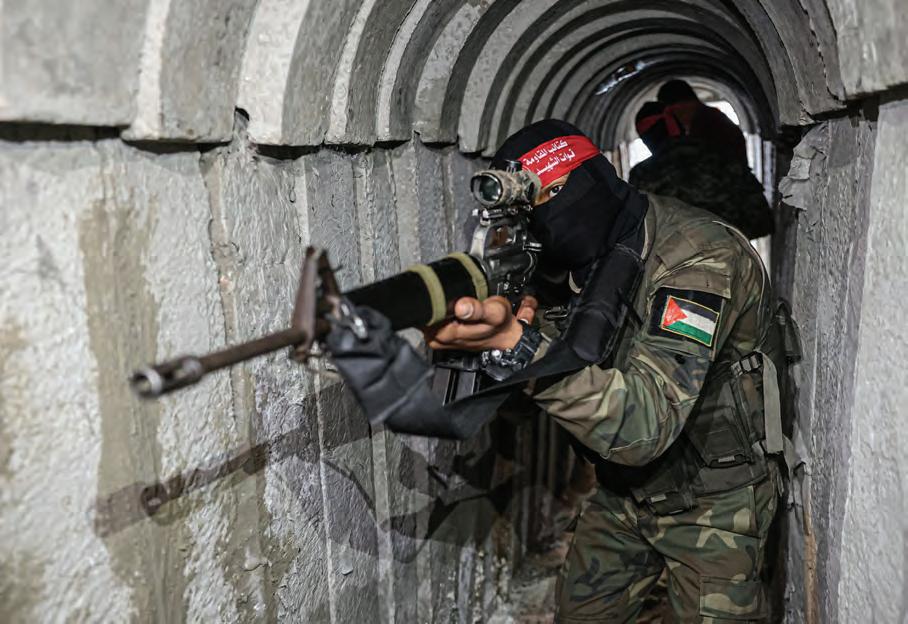
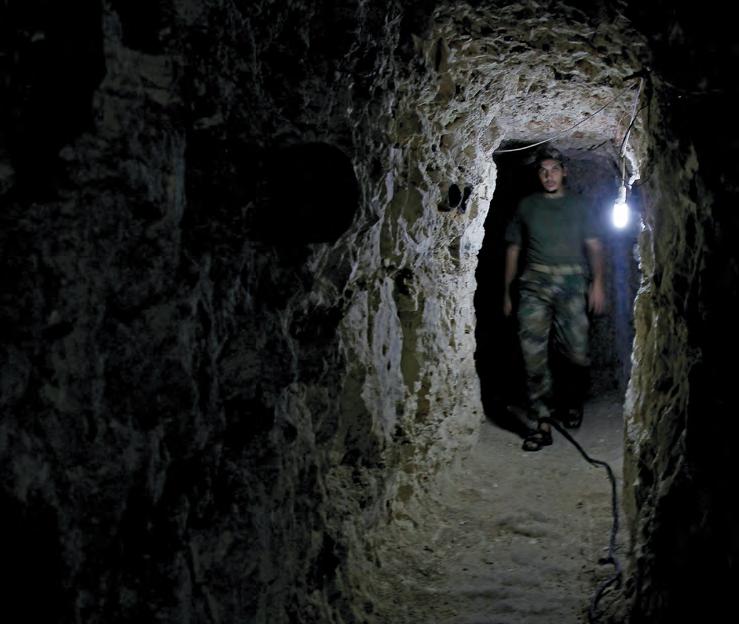
A Syrian soldier walks a tunnel during a battle with Assad regime forces in Aleppo, Syria, on Aug. 20, 2015. Fighters from the Democratic Front for the Liberation of Palestine press forward through a tunnel in the southern Gaza Strip on May 19, 2023.
Gaza’s tunnels have been infuriating prospective conquerors ever since. Ottoman Turks constructed tunnels during the First World War as they tried unsuccessfully to hold onto what had been for centuries a strategic link between Persia and Egypt.
The Gazan tunnel network expanded after Israel’s statehood in 1948, particularly once Hamas took power in the enclave in 2007.
Known as the Gaza metro, estimates of the size and scope of the tunnels vary. Daniel Rubenstein, former director of the U.S. State Department’s Office of Israel and Palestinian Affairs, has written that Israel discovered 100 kilometres of underground passages during the 2014 Gaza War, a third of them beneath Israeli territory.
Yaniv Kubovich, a journalist with the Israeli newspaper Haaretz, reported in 2021 that Hamas had since constructed “hundreds of kilometers of tunnels the length and breadth of the Gaza Strip.”
Senior Iranian officials, who were involved in the project, have estimated the network at 400 to more than 500 kilometres long.
The labyrinth is used to smuggle goods and people in and out of the
territory, while Hamas and other militant groups use it for a variety of purposes, including: to store weapons; gather and move underground; communicate, train and launch attacks from it; transport hostages through it; and retreat undetected by Israeli or Egyptian authorities.
“Most tunnels have several access points and routes, starting in several homes or in chicken coops, joining together into a main route, and then branching off again into several separate passages leading into buildings on the other side,” architect Eyal Weizman wrote in his book, Hollow Land: Israel’s Architecture of Occupation
Israeli defence officials estimated that in 2014, Hamas spent US$30 million-$90 million and poured 600,000 tonnes of concrete in building three dozen tunnels, some of them costing as much $3 million apiece.
Workers laboured 8-12 hours a day, earning US$150-$300 a month running jackhammers and digging down 18-25 metres
advancing 4-5 metres a day. The notoriously sandy soil required more durable levels of rooftop clay and reinforced concrete panels that were manufactured in workshops adjacent to each tunnel.
It was dangerous work. Hamas reported that 22 members of its armed wing died in underground mishaps—accidental explosions and passage collapses—in 2017.
Buried deep, the shafts are about two metres high by a metre wide, and have electric lights and fixtures. Some even have tracks for transport. They are sometimes booby-trapped.
Hamas is said to have addressed a host of potential challenges, including possibilities that Israeli forces could gas, flood, or blow up parts of the tunnels.
The passages have been used to launch raids, stage kidnappings and resupply the Palestinian resistance. Hamas terrorists used them during the Oct. 7, 2023, attacks on Israeli border communities in which they killed some 1,200 people, including at least seven Canadians, and wounded more than 2,500 others.
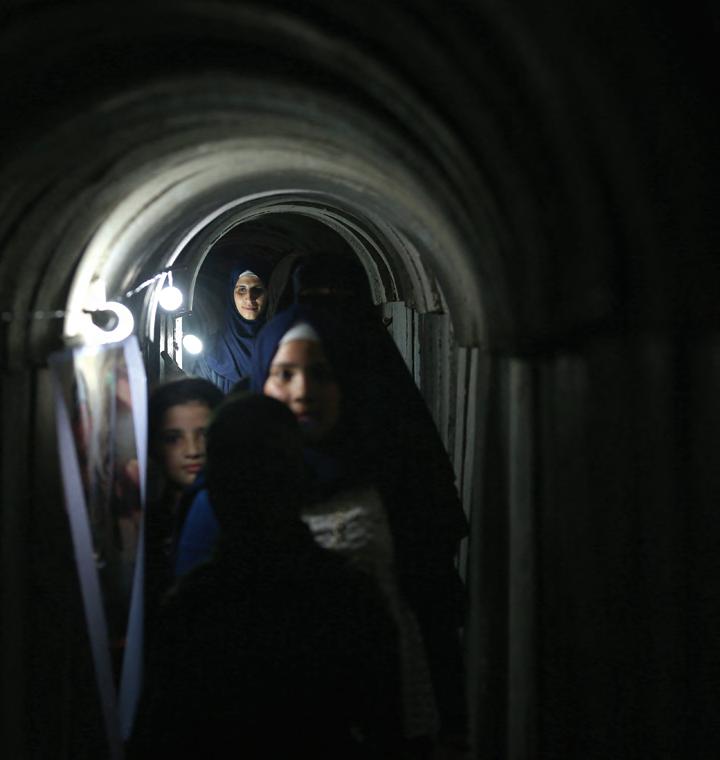
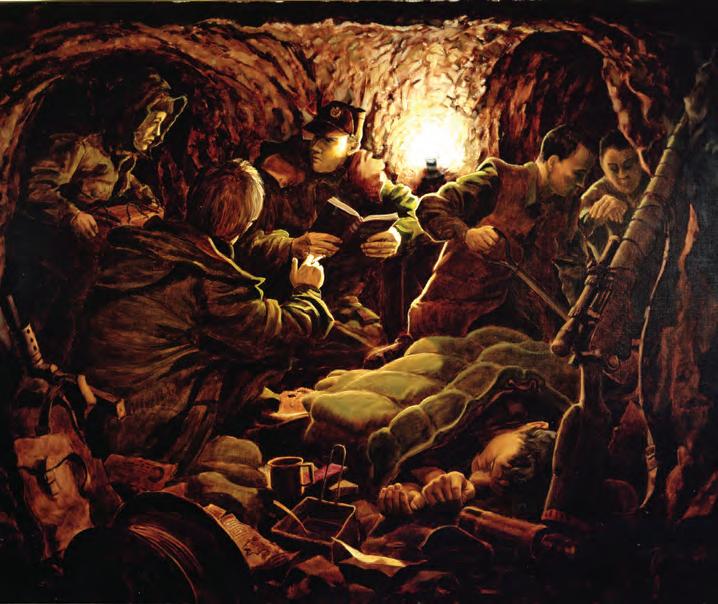
Palestinians move through a tunnel used for military exercises during a weapons exhibition at a Hamas-run youth summer camp in Gaza City on July 21, 2016. Soldier/artist Ted Zuber depicts Canadian troops and Korean labourers in a tunnel on the Korean peninsula on New Year’s Eve 1952.
An estimated 250 hostages were taken. Survivors have reported groups were transported and kept in the tunnel network.
Whatever can be said of Israel’s merciless response to the attacks, its defence forces have encountered a significant and complex problem in the Gazan tunnels.
“The tunnel war is one of the most important and most dangerous military tactics in the face of the Israeli army because it features a qualitative and strategic dimension, because of its human and morale effects, and because of its serious threat and unprecedented challenge to the Israeli military machine, which is heavily armed and follows security doctrines involving protection measures and preemption,” Adnan Abu Amer wrote for the Al-Monitor, a Middle East newspaper.
The tactic is to “surprise the enemy and strike it a deadly blow that doesn’t allow a chance for survival or escape or allow him a chance to confront and defend itself.”
Tunnelling took on new dimensions during the First World War when what was amounting to a protracted stalemate in France and Belgium inspired a rethink of underground warfare.
German pioneers blew the war’s first mine in late 1914. Isolated British efforts soon evolved into the formation of specialized tunnelling companies co-ordinated by John Norton-Griffiths, a millionaire entrepreneur, MP and mining engineer who had been advocating for subsurface tactics since the fighting began.
Norton-Griffiths was authorized to raise a tunnelling company in
TUNNELS BECAME SUCH AN EFFECTIVE TACTIC THAT, EARLY ON, THE VERY THREAT OF THEM COULD INSPIRE FEAR AND CAPITULATION.

February 1915, recruiting workers he had employed to extend Manchester’s sewage system. He had recognized that Manchester’s geology was similar to Flanders’ and that his miners could transfer the technique known as “clay kicking” to the front lines.
Norton-Griffiths had his first 18 clay kickers—the term inspired by the way the men worked— enlisted and tunnelling to the enemy within 36 hours.
“With his back braced the seated miner would use his legs to push an extremely sharp ‘grafting tool’ into
the clay,” explained Engineers at War, a website exploring all things related to combat engineering.
“Working from the bottom up the kicker would work 9 inches before fixing a set of timber, a bagger would bag up the spoil and a trammer loaded a tram taking the spoil to the surface. The process was almost silent and very fast.”
Four times faster than traditional mining methods in the firm clay of the Western Front, in fact. To maintain silence, no nails or screws were used to hold supporting timbers together; they relied
on the natural swelling of the clay to keep them in place. The process was unknown to the Germans.
Tunnelling capabilities rapidly expanded. On Sept. 10, 1915, the British government sent appeals for tunnelling companies to Canada, South Africa, Australia and New Zealand.
The Canadian Military Engineers raised four tunnelling companies; three served at the front with British formations under the Controller of Mines at General Headquarters. One of the units was formed from men on the battlefield; the two other front-line companies trained in Canada before shipping out.
Formed in Eastern Canada, No. 1 Tunnelling Company moved into the Ypres salient for further instruction in early 1916. By March, it was relieving the British 182nd Tunnelling Company near Armentières, then moved to The Bluff near St. Eloi in Belgium.
Mining operations peaked in 1916 when some 30 Allied tunnelling companies and 30,000-40,000 men were waging underground warfare, their tunnels protecting 50 of the 129 kilometres of British-held front line. Some 1,500 mines were blown in 1916 alone.
In the chalky soil of the Somme, Norton-Griffiths turned to coalmining techniques. He was allowed to bring in overaged recruits, whose experience would prove vital.
“Digging proceeded with pick and some mechanisation but many tunnel galleries and mine chambers still had to be completed by hand, cutting the chalk with bayonets to limit noise,” said the engineers’ site.
“In this way extensive systems progressed along and across the front lines; spearheading an enormous logistical effort to supply timber, explosives and other equipment whilst ensuring that spoil and any other sign of mining remained unobserved.”
British combat engineers blew up 19 mines under German lines on the Battle of the Somme’s first day, destroying fortifications and killing hundreds of German troops. But the tactic failed to secure the objectives British commanders had hoped for.
In fact, the craters they created became traps for Allied soldiers who poured into them only to become easy prey for German artillery and machine-gunners.
Tunnelling companies of Royal Engineers, many of them Welsh and north English coal
miners, had dug passages up to 17 metres down and almost a kilometre long, penetrating deep under key German positions.
In some areas they dug saps, or covered trenches, from the British front lines into no man’s land in efforts to shorten the attackers’ exposure to enemy fire once they launched their assaults.
Silence and secrecy were paramount. Both sides maintained underground listening posts to monitor enemy activity and progress.
“At first relatively rudimentary methods such as water in a glass and augers were used,” said the engineers’ site, “but by 1915 the introduction of geophones was enabling much more accuracy. Using these, tunnelling could be heard in clay from 100m and in chalk from a 240m distance.
“Establishing quiet relied fundamentally on discipline and attention to detail. British miners wore plimsolls underground, Germans remained in their hobnailed boots; British trucks and trams ran on rails screwed into place, German rails were nailed and by 1916 all British mine trolleys had self-oiling bearings.”
Nevertheless, British Captain Stanley Bullock of the 179th Tunnelling Company said his crews could hear German miners working toward them, creating the prospect of pre-emptive explosions or subterranean combat. The Brits finished a small chamber in which to plant explosives just before the Germans stopped their underground advance.
“I used to hate going to listen in that chamber more than any other place in the mine,” wrote Bullock. “Half an hour, sometimes once, sometimes three times a day, in deadly silence with the geophone to your ears, wondering whether the sound you heard was the Boche working silently or your own heart beating.
“THERE WAS AN EAR-SPLITTING ROAR, DROWNING ALL THE GUNS, FLINGING THE MACHINE SIDEWAYS IN THE REPERCUSSING AIR. THE EARTHLY COLUMN ROSE, HIGHER AND HIGHER.”

“God knows how we kept our nerves and judgment. After the Somme attack when we surveyed the German mines and connected up to our own system…we found that we were five feet apart.”
The charges were massive: some 25,000 kilograms of explosive at the site known as Lochnagar near La Boisselle, 18,000 kilograms each at H3 (Hawthorn Ridge) near Beaumont-Hamel and Y Sap in La Boisselle and, in three large mines opposite Fricourt: 11,000 kilograms at G15, 6,800 kilograms at G19 and 4,000 kilograms at G3.
There were others too, including lighter charges in shallower mines designed to remove smaller German positions such as machine-gun posts.
When they were triggered on July 1, 1916, the Lochnagar and Hawthorn Ridge mines were the largest ever detonated. They were deemed at the time to be the loudest artificial noises in history, reportedly heard as far away as London.
Fighter ace Cecil Lewis’s aircraft was hit by lumps of mud from the explosions at La Boisselle. “We were over Thiepval and turned south to watch the mines,” wrote Lewis.
“As we sailed down above all, came the final moment…the earth heaved and flashed, a tremendous and magnificent column rose up into the sky.
“There was an ear-splitting roar, drowning all the guns, flinging the machine sideways in the repercussing air. The earthly column rose, higher and higher to almost four thousand feet. There it hung, or seemed to hang, for a moment in the air, like a silhouette of some great cypress tree, then fell away in a widening cone of dust and debris. A moment later came the second mine. Again the roar, the upflung machine, the strange gaunt silhouette invading the sky. Then the dust cleared and we saw the two white eyes of the craters. The barrage had lifted to the second-line trenches, the infantry were over the top, the attack had begun.”
The officer in charge detonated the Kasino Point mine late when he saw that British troops had left their trenches and begun their advance. Instead of exploding upward, it sent debris outward over a wide area, obliterating several German machine-gun nests, but also causing casualties among at least four British battalions.
“I looked left to see if my men were keeping a straight line,” said Lance-Corporal E.J. Fisher of the 10th Essex Regiment. “I saw a sight I shall never forget. A giant fountain, rising from our line of men, about 100 yards from me.
“Still on the move I stared at this, not realizing what it was. It rose, a great column nearly as high as Nelson’s Column, then slowly toppled over. Before I could think, I saw huge slabs of earth and chalk thudding down, some with flames attached, onto the troops as they advanced.”
Planners ultimately decided the negatives of mining the Somme outweighed the positives, and opted against offensive mining in the Canadian attack on Vimy Ridge the following April.
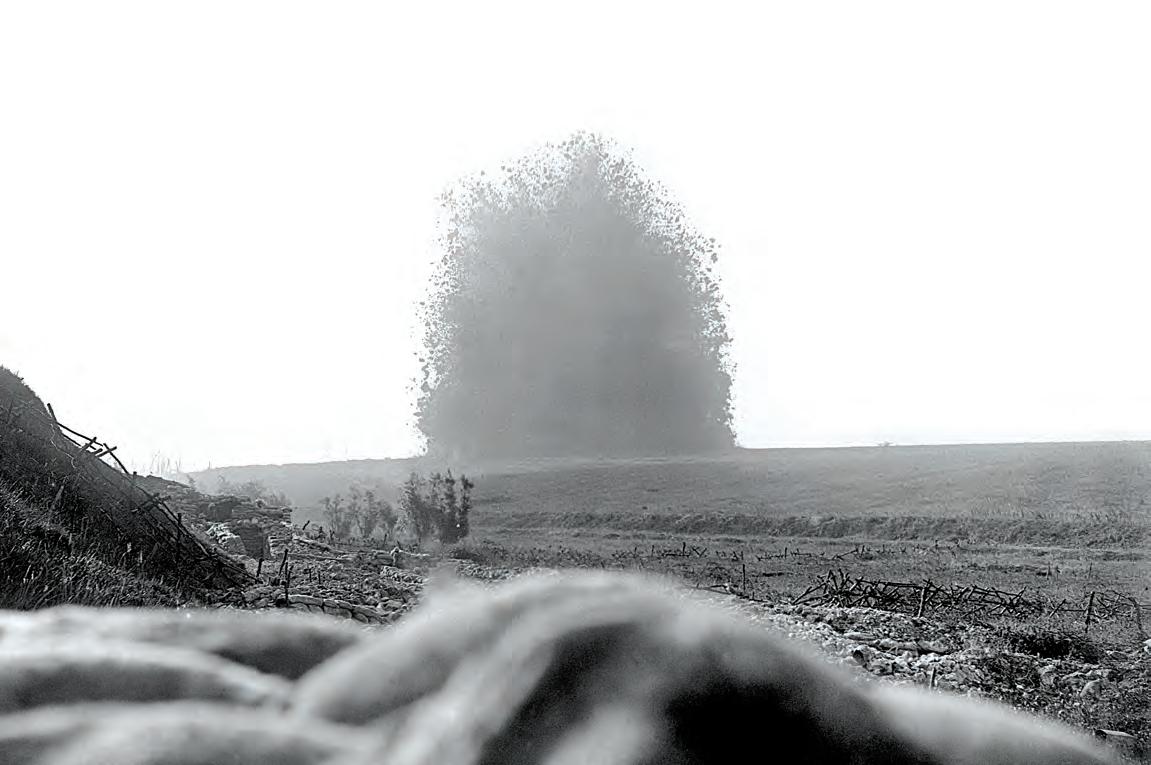
The war’s most successful mining operation took place in 1917 during the Messines Ridge offensive on the Ypres salient, where 6,000 sappers and attached infantry prepared 19 mines and distributed nearly 450 tonnes of explosives across a 16-kilometre front.
Canadian tunnelling companies blew five of the mines during the battle in which engineers detonated all 19 at 3:10 a.m. on June 7, 1917, just before nine divisions from Britain, Ireland, Australia and
Sappers blow a mine beneath the German field fortification on Hawthorn Ridge Redoubt during the WW I Battle of the Somme on July 1, 1916. Artist David Bomberg depicts Canadian engineers building a tunnel near St. Eloi, Belgium, in 1918.
New Zealand assaulted German positions on the ridge.
“The [mining] effort was enormous, relying on successful dispersals of tons of spoil, accurate surveying of targeted German positions and the constant husbandry of many mines which had been laid and tamped over a year in advance,” said the engineers’ site.
“Time and geology combined to allow an extensive system which, when blown, destroyed an enormous area of ground and is thought to have instantly killed 10,000 Germans. The remaining defenders were profoundly disorientated and incapable of mounting any resistance to the British attack.”
Even some British troops amassed on the Allied line were concussed.
Messines essentially marked the end of large-scale offensive mining operations. Tunnelling companies were instead increasingly used to construct enormous subterranean systems of accommodation, headquarters, dressing stations and subways.
Nearly a century later, archeologists uncovered the labyrinth of tunnels at La Boisselle, finding poems and soldiers’ signatures etched into the walls along with hundreds of artifacts, including ammunition and discarded food tins.
“It is such an amazing piece of history and it’s so fresh,” genealogist Glen Phillips told the BBC in 2014. “The signatures have been there for nearly 100 years and because the tunnels have been sealed up, they are as fresh as the day they were made…like doodles on a notebook.”
Two of Canada’s three mining companies were disbanded in the summer of 1918 and their 1,100 tunnellers redistributed throughout Canadian engineer battalions.
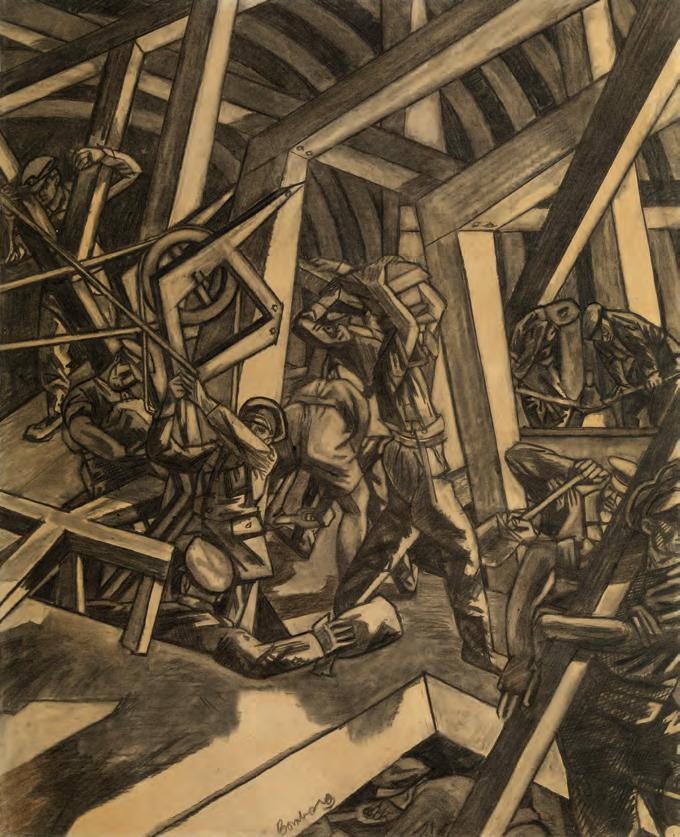
During the war’s final Hundred Days Offensive in 1918, Allied sappers—including the last remaining Canadian mining company, the 3rd—removed more than 1,100 tonnes of explosives from German mines and booby traps.
It was during this final push with the 4th Canadian Division to prevent the demolition of bridges on the Canal de l’Escaut, northeast of Cambrai, in which Captain Coulson Norman Mitchell, a 28-year-old combat engineer from Winnipeg, earned a Victoria Cross.
On the night of Oct. 8-9, Mitchell led a small party ahead of the first wave of infantry to examine the canal bridges and try to keep them intact.
“On reaching the canal he found the bridge already blown up,” said his VC citation. “Under a heavy barrage he crossed to the next bridge, where he cut a number of ‘lead’ wires. Then in total darkness, and unaware of the position
or strength of the enemy at the bridgehead, he dashed across the main bridge over the canal.
“This bridge was found to be heavily charged for demolition, and whilst Capt. Mitchell, assisted by his N.C.O., was cutting the wires, the enemy attempted to rush the bridge in order to blow the charges, whereupon he at once dashed to the assistance of his sentry, who had been wounded, killed three of the enemy, captured 12, and maintained the bridgehead until reinforced.”
Mitchell continued cutting wires and removing charges, all while under heavy fire and the lingering threat that the explosives could be triggered at any moment.
“It was entirely due to his valour and decisive action that this important bridge across the canal was saved from destruction.”
He was the only Canadian combat engineer to receive a VC for First World War actions. L
How the Great War’s Canadian nurses brought comfort and care to patients while enduring their own personal turmoil
Sisters
ACT C
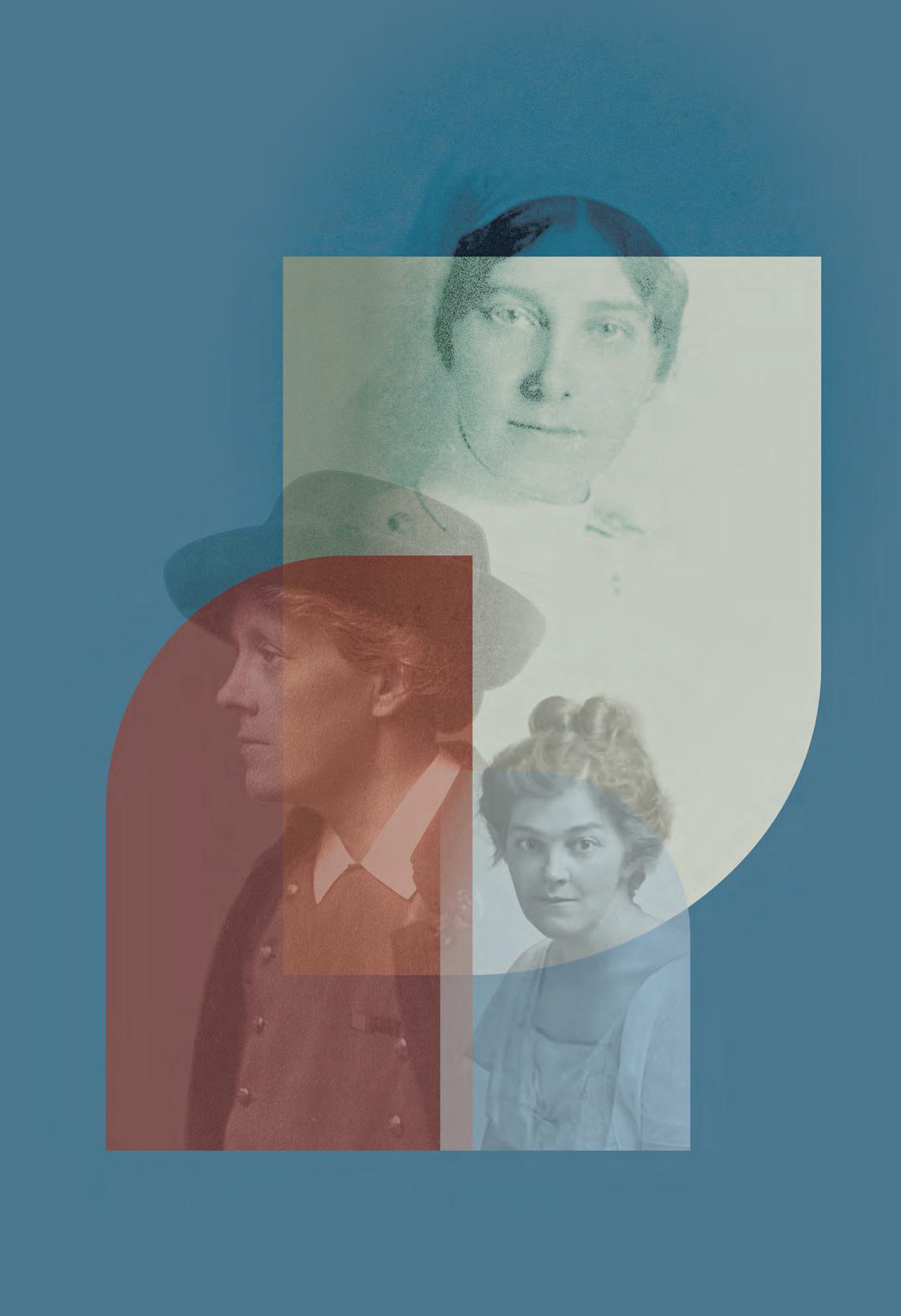
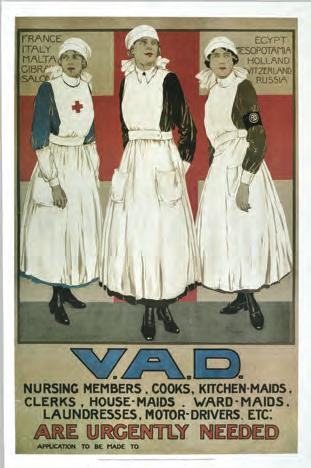
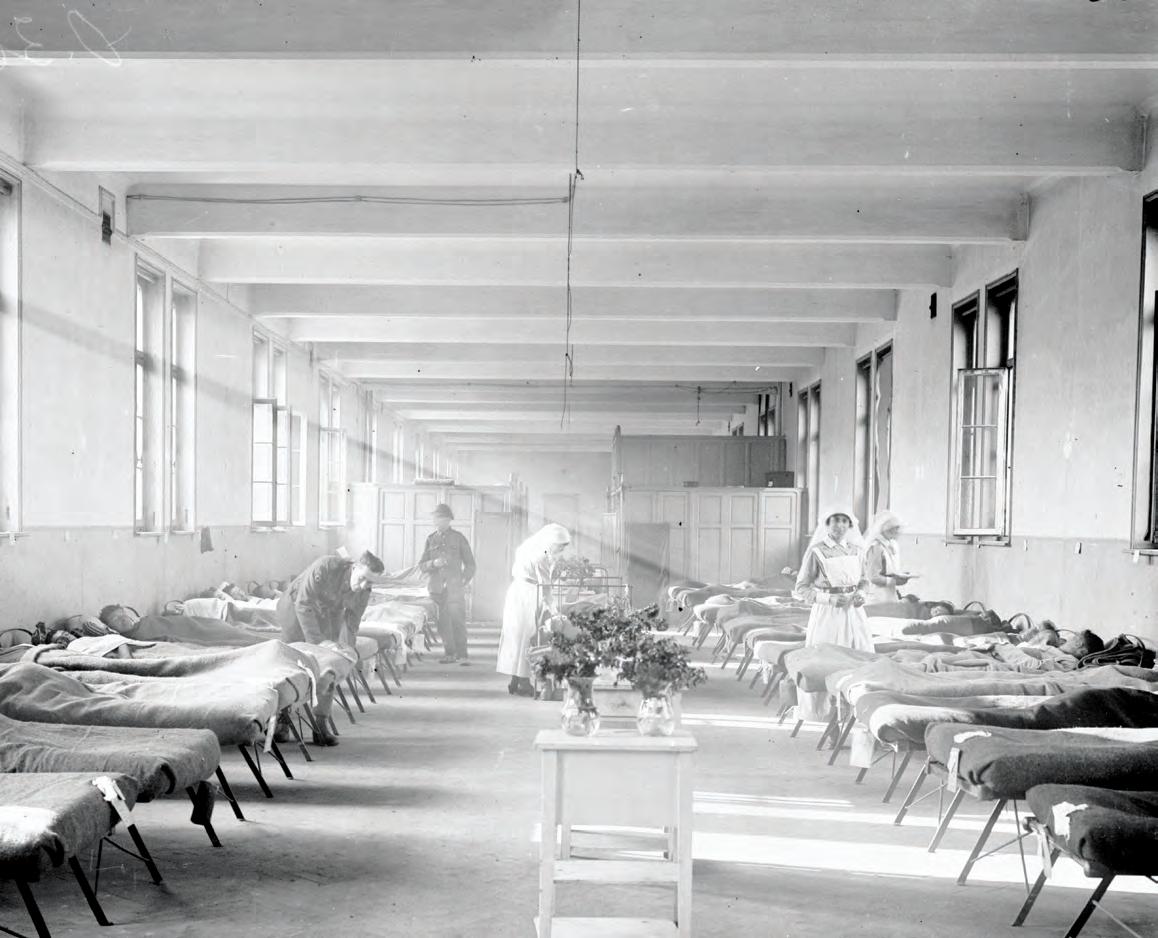
Anna Stamers, Margaret Macdonald and Jessie Brown Jaggard (opposite, top to bottom) played critical roles during the First World War as nurses, an in-demand role as this recruiting poster for the Voluntary Aid Detachments makes clear. The ward of a Canadian Casualty Clearing Station in Valenciennes, France, in November 1918 (bottom).
CBy Alex Bowers
Canadian Nursing Sister
Anna Stamers of Saint John, N.B., bound for England aboard Metagama, pondered her fate across the ocean.
Having graduated from her local nursing school in 1913 before accumulating two years’ relevant work experience, the Maritimer appeared prepared for the challenge ahead that June 1915—at least on the surface.
The reality, as is so often the case with conflict—regardless of specific roles and duties— seldom matched expectations.
Indeed, for Stamers and the 2,844 other nurses who served in the Canadian Army
Medical Corps (CAMC) during the First World War, destiny brought many of the same horrors witnessed and experienced by soldiers on the front lines. And like those soldiers, not every nurse would sail home.
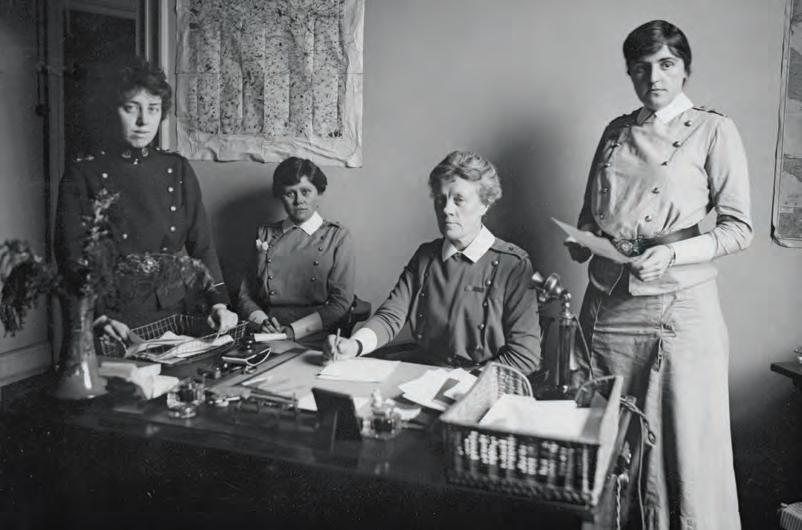
Matron-in-Chief Margaret Macdonald (second from right) and nursing sister colleagues in wartime London. Gerald Moira depicts wartime action at the No. 2 Canadian Stationary Hospital in Doullens, France.
Such realities, however, were not without precedent.
While organized military nursing boasted strong roots in the 1853-1856 Crimean War, women had acted as battlefield caregivers long before the groundbreaking work of Florence Nightingale and Mary Seacole.
In Canada alone, Jeanne Mance and the nursing sisters of St. Joseph de La Flèche had tended to wounded troops in 17th-century New France. Canadian nurses had also served in the 1885 North-West Resistance, as well as during the 1899-1902 Boer War.
When war was declared in 1914, an influx of more than 1,000 applications showed that Canadian nurses were again willing to answer the call.
Like their male counterparts, motivations to serve varied, although adventure, duty, status, career aspirations and financial security were the most common factors. Unlike their arms-bearing comrades—a high proportion of whom were immigrants—some 83 per cent of WW I Canadian nurses were born in the country.
The earliest months of the war had nevertheless seen applicants whittled down to only the most eligible, a task carried out by Matron-in-Chief
Margaret Macdonald. Noted as the first woman in the British Empire to achieve the rank of major, Macdonald had initially selected just 100 nurses to join the CAMC.
Many more, not least the 27-year-old Stamers, followed when the desperate need for additional support became evident.
Among the requirements, those chosen were expected to be welltrained, experienced and display traits deemed appropriate for the dynamic, high-pressure environments they would soon encounter.
Almost always unmarried, the nurses’ average enlistment age was 29.9, making them slightly older than most soldiers in the Canadian Expeditionary Force (CEF)—sometimes dubbed their “boys” when admitted as patients.
Canadian nursing sisters, as they were called despite the lack of religious affiliations, were commissioned as lieutenants with equal pay to men of the same rank. This, along with the women’s sharp blue uniforms, white aprons, CAMC buttons, and two stars on the shoulder straps, became the envy of their British peers. Their distinctive appearance, meanwhile, earned them the affectionate nickname, Bluebirds.
A capacity for tenderness would be necessary once the women established themselves at hospitals and casualty clearing stations, the latter a short distance from the front and often well within range of enemy artillery fire.
Yet perhaps above all else, the Bluebirds required resolve to deal with the lethal efficiency of industrialized warfare—as they would soon discover.
Katharine (Kate) Wilson of Chatsworth, Ont., came to understand flesh torn from the body, muscles ripped to shreds, limbs turned gangrenous, and bones splintered into countless pieces. As part of No. 3 Canadian Stationary Hospital situated in the Dardanelles theatre in 1915, there was an equally deadly killer to contend with.
“Here,” wrote the Canadian nursing sister, “practically every man admitted was critically ill with fevers that left them eventually worn to skeletons.”
While disease itself was hardly a surprise, the global nature of the Great War brought with it varying health-care challenges. On the Western Front after the Second Battle of Ypres, it was gas; on the Greek island of Lemnos in
support of the ill-fated Gallipoli Campaign against the Ottomans, dysentery had run rampant.
On Sept. 25, 1915, the pestilence claimed 42-year-old Matron Jessie Brown Jaggard of Wolfville, N.S., a figure held in high regard by the nurses, and who left behind a grieving cousin in Prime Minister Robert Borden.
“Lying with the picture of her seventeen year old son smiling down at her,” Wilson recorded of the beloved matron’s death, “one night she closed her eyes for the last time and slept. In her service blue uniform...covered with a British flag...and carried by boys who knew and loved her, she was laid to rest. Forever she will remain in the hearts of those who were privileged to serve under her.”
With additional Canadian deaths anticipated, a makeshift cemetery was created. Beside these premature graves stood a sign reading: “For Sisters Only.”
Despite the daily reminder of a perceived fate while plagued by dust and flies, Wilson and her fellow nurses continued under increasingly difficult conditions.
Whether assisting medical or surgical procedures, performing therapeutic nursing techniques, maintaining wards, providing bedside care or carrying out administrative tasks, Bluebirds were typically the backbone of CAMC units.
They also found themselves on the front line of advances in medicine, be it dealing with infection or evolving perceptions around shell shock.
Moreover, when supplies became scarce and, particularly in the case of Lemnos, when temperatures could fluctuate dramatically, simple acts such as a few kind words or an encouraging smile were critical to patients’ morale.
Frequently, of course, compassion could do little to mend bodies shattered beyond healing. In these instances, nursing sisters might showcase their tenderness by joining chaplains in the final hours with dying soldiers.
Holding hands as their boys slipped away, the women could be mistaken for angels sent from above to guide lost souls to the next world.
But then it was on to the next bed, the next soul, as nurses—and all caregivers—found ways to cope with the intense emotional strain.
On Nov. 26, 1915, a freak storm struck Gallipoli. More than 200 troops drowned or froze to death in flash floods and a blizzard. Another 5,000 were evacuated from the peninsula for hypothermia and trench foot.
Writing after the latest inpouring of patients, Wilson noted that “many of the cases became gangrenous, and many feet had to be amputated.”
Only in January 1916, when the Allies withdrew from Gallipoli, did Wilson escape the flies, dust and death of Lemnos.
Death, though, would follow her.
Canadian nursing sisters were commissioned as lieutenants with equal pay to men of the same rank.
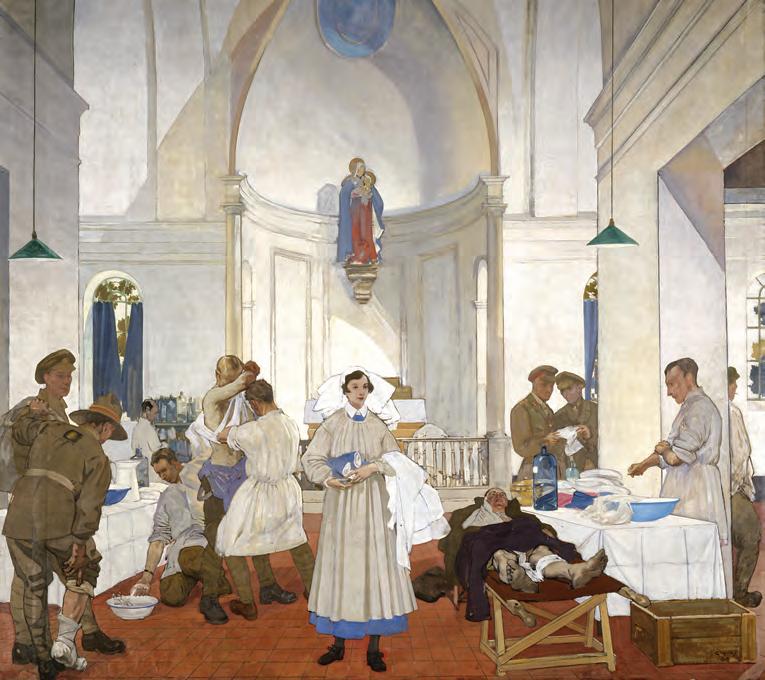
As the CEF expanded between 1914-1916, so did the CAMC on the Western Front—including at Anna Stamers’ No. 1 Canadian General Hospital.
Many facilities had more than 1,000 beds and a staff at full strength of 30 medical officers, 70 nurses and 205 other ranks. During the war, the CAMC eventually grew to comprise 37 overseas medical units with a combined bed capacity of 14,000, counting specialist hospitals and wards.
In the meantime, Stamers settled into the steady flow of tending to sick and wounded during the supposedly quieter periods between great battles. Even in the absence of large-scale campaigns, there was no shortage of work in the wards, where Stamers and her comrades performed their daily duties while forming strong bonds.
In June 1916, she developed a severe ear infection and spent several weeks hospitalized. She returned from her convalescence at the end of the month.
July 1 was the first day of the Battle of the Somme, and Canadian caregivers across the front required all the assistance they could get.
“A boy would come in with all his senses, and suddenly I would hear a scream, and would find that he had gone absolutely insane.”
Orders soon arrived at Étaples, where the hospital was situated, for six nurses to proceed to casualty clearing stations closer to the fighting. Fully understanding the dangers, the women departed, leaving the remaining staff stretched thin.
Stamers almost certainly shared in her fellow nurses’ sense of foreboding as the wounded streamed in like a ceaseless torrent. By the end of July, No. 1 Canadian General Hospital had handled 4,363 admissions, of which 3,808 resulted from wounds and 555 from disease. Of those, however, just 51 soldiers died, standing testament to professionals such as Stamers and her colleagues.
Whenever possible, from the Somme to Vimy Ridge to Hill 70 to Passchendaele, it was the CAMC’s task to get bedridden soldiers back on their feet so they might fight once more. The glaring irony
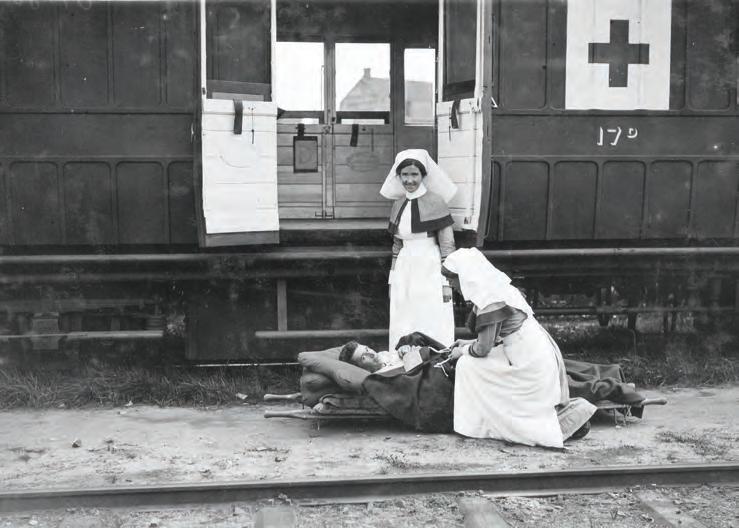
wasn’t lost on personnel that their life-saving interventions could facilitate the taking of further life.
Nevertheless, some patients would never return to the trenches, instead spending the rest of their shortened lives forever changed.
“Perhaps the head cases were the most harrowing,” wrote Kate Wilson of dealing with what she saw as the truly helpless cases. “A boy would come in with all his senses, and suddenly I would hear a scream, and would find that he had gone absolutely insane, often with all his bandages torn off, and his wound haemorrhaging, with particles of his brain oozing out of the open wound.”
Nor were the Bluebirds themselves immune from similar wounds.
Mustard gas, still lingering on its victims, could cause doctors and nurses to go temporarily blind. Infection and disease, as had happened to the late Matron Jaggard in Lemnos, spread to medical staff. Then there were the women close enough to the front to be in the firing line of enemy shells.
In March 1918, after about three years of static lines, the Germans launched a penetration into Allied territory. Imperilled facilities, together with their wounded— some of whom were unlikely to survive the move—attempted to withdraw on clogged roads.
By May, enemy air raids had begun disrupting the Allies’ transport and communication hubs, with bombs dropping perilously close to hospitals. Marked with large red crosses, CAMC units should have been safe. They weren’t.
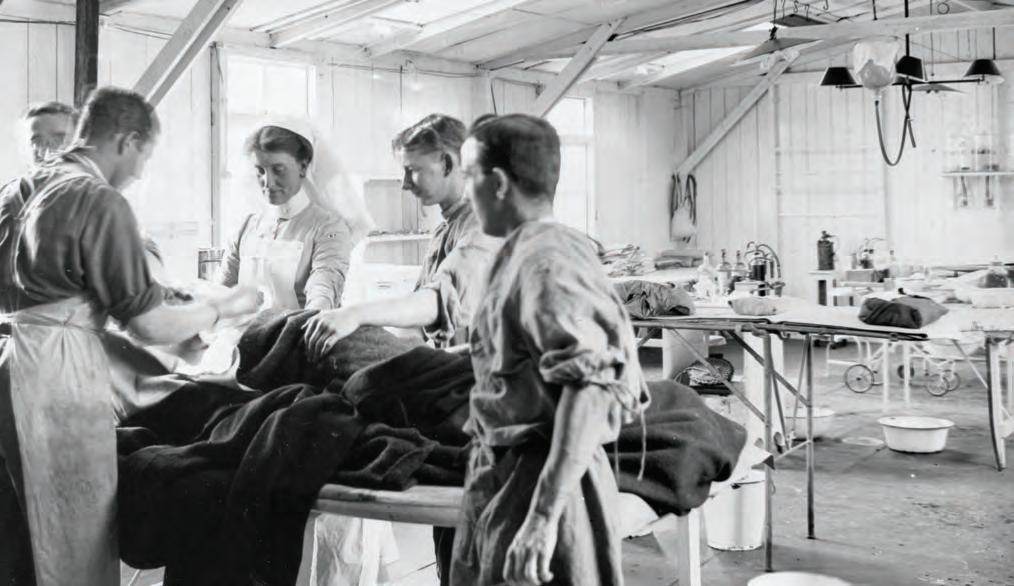
A nursing sister assists in the operating room at No. 10 Casualty Clearing Station in July 1916. Nursing sisters attend to a soldier wounded during the capture of Hill 70 in France in August 1917 (opposite). Nearly a year later, 14 Canadian nurses drowned after a U-boat attack on hospital ship Llandovery Castle—an incident used to inspire continued support for the war.
Stamers was not in Étaples when No. 1 Canadian General Hospital was attacked on May 19, 1918. She did not see the flames rise, hear the screams or smell the charred bodies as 66 Canadians, including three nurses, died.
Among those killed was nurse Katherine MacDonald of Brantford, Ont. Writing the day before the raid, she had assured her mother of being “far from harm.”
Additional air raids—war crimes—were carried out during the subsequent weeks. On May 30, No. 3 Canadian Stationary Hospital, by then having been relocated to Doullens, France, was targeted. Three more nursing sisters died alongside two surgeons, 16 orderlies and four patients.
Kate Wilson likewise escaped the casualty list. In 1917, she had returned home to Canada, where she married Captain (later Major) Robert Simmie and eventually had six children in Wiarton, Ont. Her experiences as a nurse were later published in her memoir, Lights Out!. She died in 1984, aged 95.
Stamers had been absent from the onslaught for a very
different reason: she had been transferred to the Canadian hospital ship, Llandovery Castle.
On June 27, 1918, the now 30-year-old nurse was bound for England on a journey not dramatically dissimilar to the one she had taken three years earlier. That changed, however, when a German torpedo struck the red cross-emblazoned vessel.
Llandovery Castle sank beneath the waves within 10 minutes with the loss of 234 souls, many of whom were murdered by U-86 when the submarine began ramming lifeboats and gunning down survivors to cover up the crime.
The 14 nurses aboard all perished when the suction from the descending ship drew them down with it. This, tragically, was Stamers’ fate, along with any written accounts she had kept at the time.
But her story, and the story of some 60 nurses killed or who died of wounds during the Great War, remained alive with the women who did sail home.
Some had or would write of their exploits for future generations. Others, like countless male
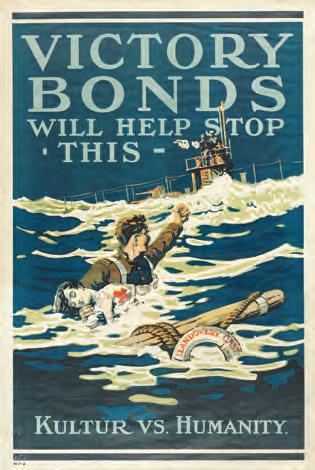
comrades, chose to bury their experiences. Yet more stayed on in the immediate aftermath of the conflict to contend with the influenza pandemic sweeping across the planet. Many, however, would struggle to stay in the profession due to few nursing jobs back in Canada.
Regardless of how individual Bluebirds interacted with their veteran status, their collective service and sacrifice was immortalized in August 1926 when the Nurses’ Memorial was unveiled in Parliament.
Today, the marble sculpture, depicting in part nursing sisters tending to a wounded soldier, reminds onlookers that war can seep into every facet of society, from those at the front to the ones left to pick up the pieces. L
By George Case
B THE BOMBER BOOK
A WARTIME TOME OF FICTIONAL TALES OF CANADIAN AIRMEN HITS CLOSE TO HOME
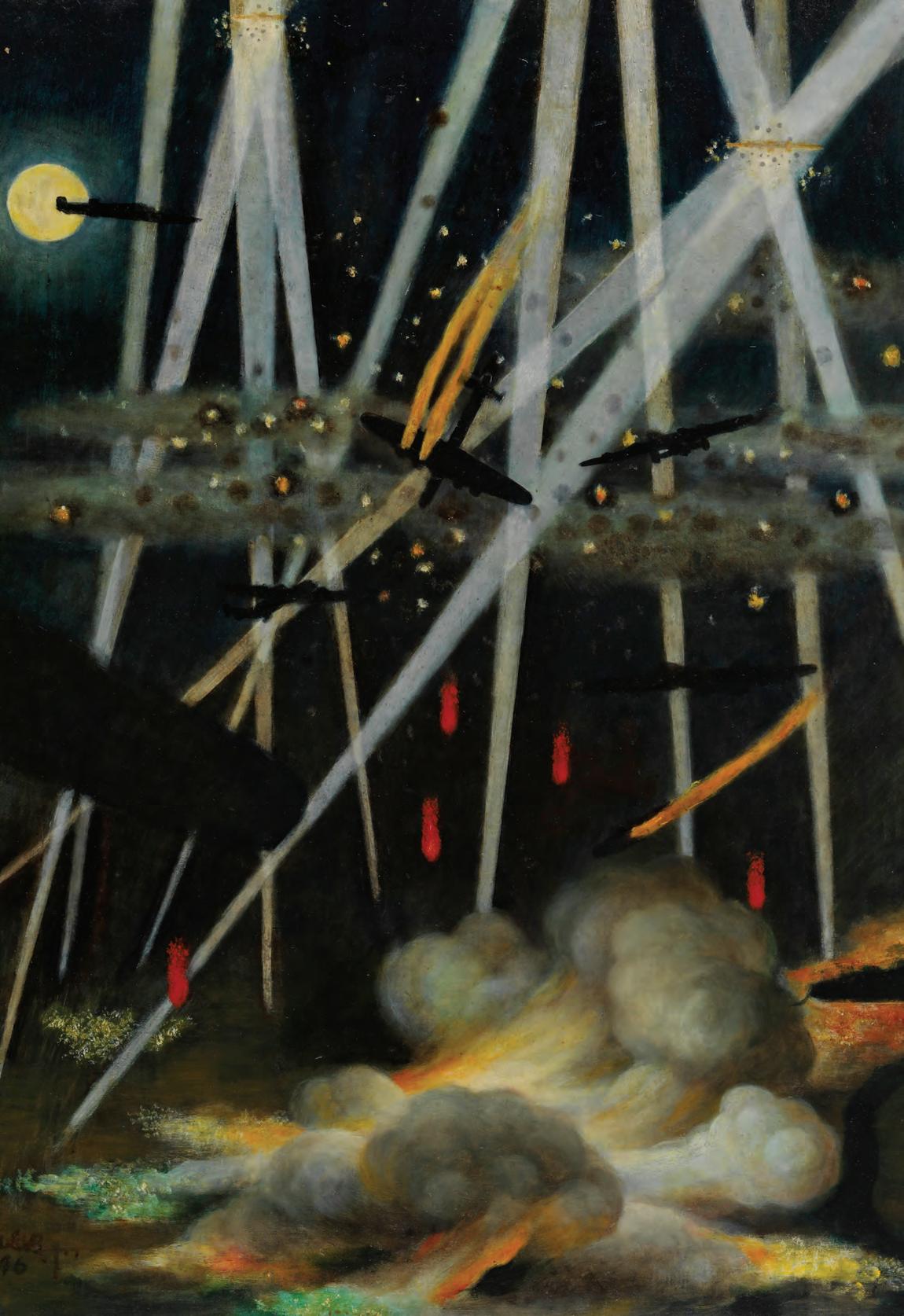

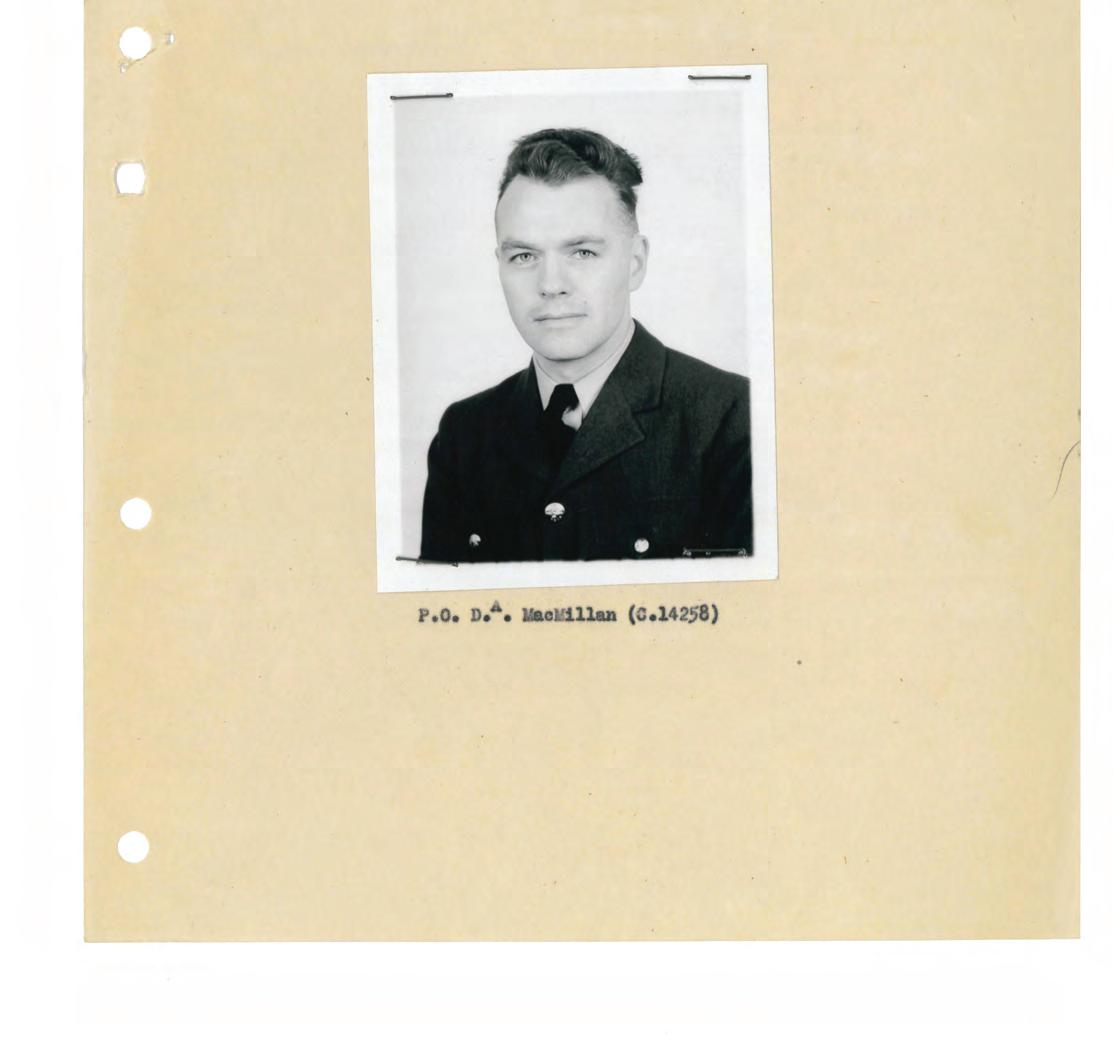
BFlight Lieutenant Miller Gore depicts a Second World War Allied bombing raid over Germany (opposite). Flight Lieutenant Donald A. MacMillan’s Only the Stars Know, a series of fictionalized— though hyperrealistic—accounts of bomber crewmen, was published in 1944. Readers were eager for similar non-fiction accounts (below).
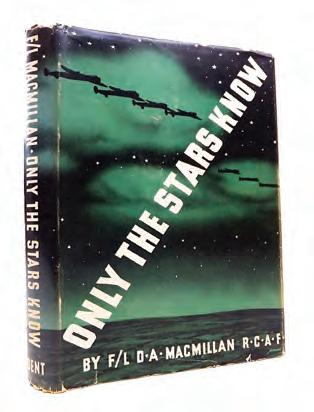
By 1944, the Allied aerial offensive against Nazi Germany was reaching its crescendo, in both damage inflicted and casualties taken. Flying from Britain, squadrons of the Royal Air Force’s Bomber Command were engaged in nightly battles with the Third Reich, itself armed with formidable antiaircraft and fighter defences. Many of the bomber crews were Canadians serving with the RAF or in No. 6 Group, Royal Canadian Air Force, an all-Canadian division co-ordinating its efforts with the overall campaign. It was gradually becoming apparent to the airmen and their commanders that this form of warfare—conducted by the newest and most glamorous branch of the military, using the most advanced technology in the
world—had an attrition rate comparable to the bloody trench slaughters of the First World War. How to convey this realization to citizens back home? And to convince them that the mounting sacrifices of their husbands, brothers and sons were worth it?
In the autumn of 1944, a 138-page book titled Only the Stars Know was issued by the Canadian arm of J.M. Dent and Sons, a large British publishing house. Written by Flight Lieutenant Donald Archibald MacMillan of the RCAF, the work offered a series of fictionalized vignettes about life—and death—among the men of No. 6 Group.
The market for nonfiction books and novels about the ongoing war, especially first-hand accounts written by uniformed fighting personnel, was already large: Dent alone had previously released For Freedom, a collection of poetry by RCAF Squadron Leader G.L. Creed, and the pictorial volume First Steps to Tokyo: The Royal Canadian Air Force in the Aleutians, by Flying Officer David F. Griffin.
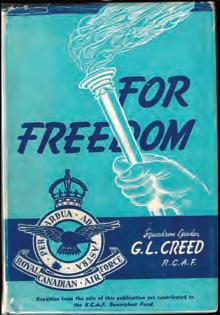
A Royal Canadian Air Force letter to MacMillan about Only the Stars Know notes that sale proceeds were to go to the RCAF Benevolent Fund.
Only the Stars Know fell into the same broad category of morale-boosting, patriotic material pitched to what was generally known as “the war effort”—and as with For Freedom, dust jacket and inside copy promised that royalties would go to the RCAF Benevolent Fund—yet MacMillan’s subtler themes made his book resonate more with the audience most affected by his subjects of duty, bravery and loss, both upon its publication and ever since.
Although one of its chapters was later included in the 2001 anthology Great Canadian War Stories, Only the Stars Know is not a literary landmark. If MacMillan has an identifiable style, it might be classed with the mid-century Canadiana of Hugh Garner, another writer whose fiction featured ordinary small-town characters touched by the Great Depression and WW II, or roughly



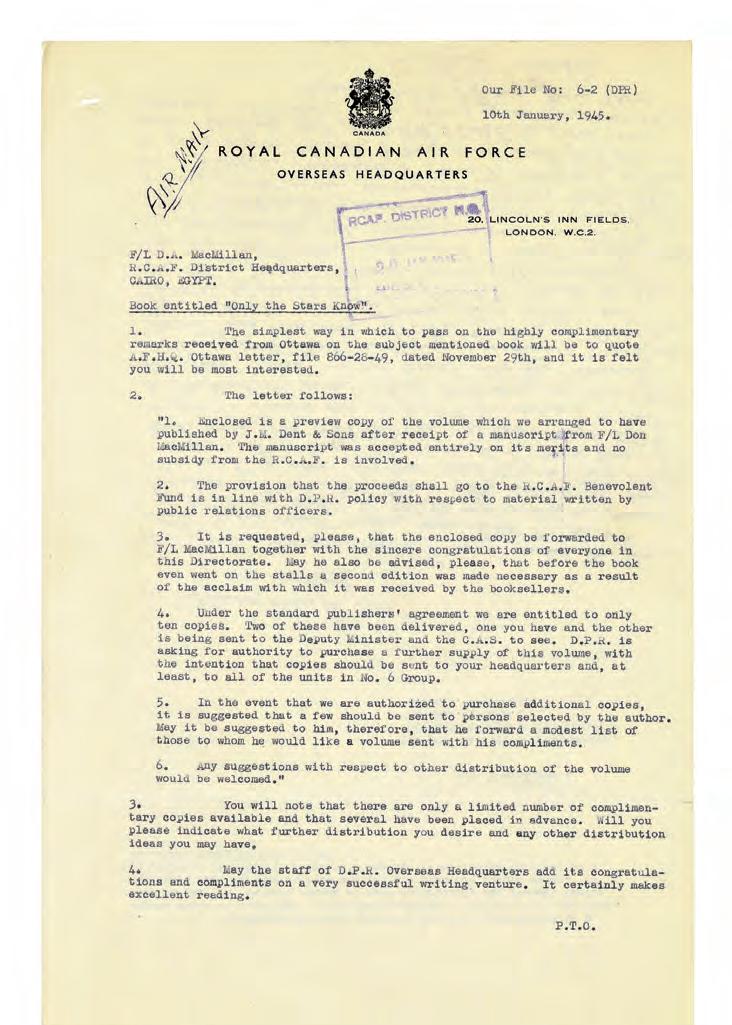
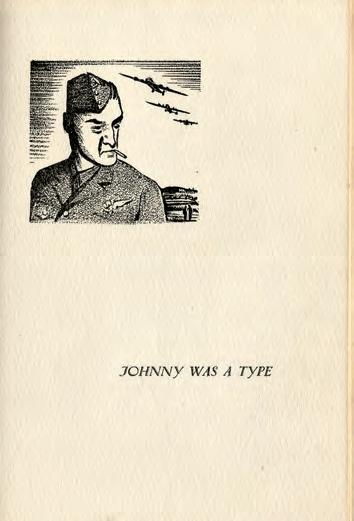
The book won favour from reviewers who welcomed its insights into a conflict not yet safely resolved.
a northern equivalent to John Steinbeck’s The Grapes of Wrath and Of Mice and Men Steinbeck, coincidentally, contributed the journalistic Bombs Away! The Story of a Bomber Team, to the U.S. mobilization in 1942.
MacMillan, Garner and their generation of writers were eventually made passé by the likes of more postwar sophisticated authors such as Robertson Davies, Mordecai Richler, Margaret Laurence and other Canadian novelists. But in 1944, Only the Stars Know won favour from reviewers who welcomed its insights into a conflict not yet safely resolved.
The Winnipeg Free Press noted that, “Few books of real literary merit have come out of the present war—fewer will outlast it, but in Only the Stars Know is the wonderful, moving story which we believe will be read many years after the new world has come into being. [The book] is a story of the young and strong who died far from home in a battle of rights which they did not fully understand.”

A reviewer in the Ottawa Citizen, meanwhile, wrote, “We have in this volume not so much the conventional account of routine operations demanded by the Press Associations as a pen portrait gallery of sensitively drawn sketches.” The Globe and Mail concluded: “The author knew personally all the boys of whom he writes and out of his knowledge and love of them he has written a book that, while at times moving the reader to tears, will almost burst his heart with pride and admiration.”

Donald Archibald MacMillan was born in Regina in 1911. After stints teaching at country schools, selling articles and fiction to national magazines, reporting for his hometown Daily Star and Leader-Post and at radio stations CKCK in Regina and CKOC in Hamilton, he joined the RCAF in September 1942.
Turned down for flight training due to substandard vision, his background as a writer and broadcaster made him valuable in recruiting drives out of Edmonton and Saskatoon. “I regard this officer as one of the most able public relations men in the service,” a superior noted in his personnel file.
MacMillan went overseas in 1943 and was stationed at the headquarters of No. 6 Group from August to May the next year, at the very climax of the
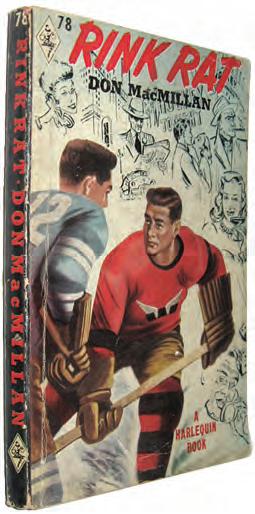

Allied bombing campaign. He was later sent to the Middle East and worked out of Cairo and Tel Aviv until the end of the war. He returned to civilian life in 1945 and wrote one other book, a small-town hockey story called Rink Rat, published by Dent in 1949. Like many other authors with bills to pay and a family to raise, MacMillan found steadier income as an advertising copywriter, first joining the Toronto agency of Young & Rubicam, then working for Cockfield Brown until retirement. He died in 1983, survived by a wife and two children. His obituary noted Rink Rat and Only the Stars Know as his published legacies. While the latter was not officially an RCAF publication, MacMillan’s position in the air force, his access to No. 6 Group bases in Yorkshire and his rank implied the military’s tacit approval of the book. Though public relations today carry the impression of spin and deception, in 1943 the unprecedented scale of social and industrial organization required by the war meant that promoting the RCAF’s continued relevance to ordinary Canadians—far from the fighting and unfamiliar with the principles and methods of strategic bombing—was vital.
Chapter title pages from Only the Stars Know. MacMillan’s second and last book, Rink Rat
Much of MacMillan’s job would have involved attending debriefings of returned bomber crews and transcribing their accounts into press releases for Canadian newspapers, with suitable quotes from individual airmen identified by their hometowns. All service branches employed teams of public relations officers at the time, working out of various theatres and units, feeding stories, photos and radio spots to an array of media outlets. The RCAF even had its own tabloid, Wings Abroad.
“He liked writing these stories,” wrote the reporter turned airman in one of the vignettes in Only the Stars Know titled “The Newspaper Writer.”
“It was little enough, but he could imagine some mother or father at home clipping them from the paper and saving them through the years.”


The dedication in Only the Stars Know
Some of the book’s entries may have been meant as understated propaganda for the Allied cause: the personifications of British, American and Commonwealth servicemen harmoniously integrated into Canadian crews; the loyal admiration of plucky English resilience; the unquestioned faith that strategic bombing was a worthwhile allocation of human and material resources in the fight against Hitler (something subsequent analysis would cast into serious doubt).
Still, other passages are remarkably gloomy. Most of MacMillan’s fictional fliers, for instance, don’t survive: Bill, the quiet wireless operator briefly drawn out of his shell by an extroverted pal; Johnny, the hardened tail gunner from a bad part of town; Jumbo, the naive farm boy promoted to wing commander for his simple courage.
The book even alludes to the real-life Nuremberg raid of March 1944 in which a staggering 90-plus Bomber Command planes were lost.
Across the brief profiles, the recurring message is that flying RCAF bombers is dangerous, and many airmen die in the line of duty. After the war, these truths were brought home in the films Appointment in London (1953) and The Dam Busters (1955), and in Len Deighton’s classic novel Bomber (1970) and Canadian Spencer Dunmore’s Bomb Run (1971). But Only the Stars Know made similarly honest observations of a battle that was still being waged.
MacMillan’s title alludes to both the RCAF motto Per Ardua ad Astra Through Adversity to the Stars—and to the haunting uncertainty of the fates that befell so many of its members.
Men killed on bomber operations often died alone at night over enemy territory, with no record of their final minutes; sometimes an entire crew of six or seven was simply struck off strength after a mission, their deaths unseen by fellow fliers. Performed as a kind of shift work, there was a surreal disconnect between the relative safety and comfort enjoyed by off-duty aircrews and the extreme danger of their combat roles, something the book tried to convey.
“It dawned on you that this was a new way to fight a war: that it was utterly remote and different from that other war, where men fought in the trenches,” wrote MacMillan in the chapter “This Is Bomber Station.”
“It was a swing-music-on-Monday-night, maybe-dead-on-Tuesday existence.... You lived, as it were, at a gentlemen’s club. Then you went out and died with your well-polished boots on.”
Nearly 10,000 Canadians were killed serving in Bomber Command.
Copies of Only the Stars Know are still found in a few Canadian libraries or private collections. I have a copy, inherited from

my father, who received it as a Christmas gift from his uncle Howard Case in 1944.
Howard’s son, Dad’s older cousin, was Thomas Edward (Ted) Case, from Kelvington, Sask., an RCAF pilot who served with the RAF in Bomber Command. On the night of Feb. 19, 1943, Ted flew his Lancaster out of 156 Squadron’s base in England to take part in a raid on Wilhelmshaven, Germany. Neither he nor his crew were seen again. A few months after his final sortie, he was officially presumed dead. Postwar research revealed his plane was probably shot down by a German night fighter and crashed into the North Sea, but only the stars know.
Perhaps MacMillan’s poignant little book provided a measure of comfort to Ted’s family and friends, reminding them that they shared their grief with thousands of other people whose sons, brothers, husbands and cousins, in the author’s words, “having completed their tour of operations in the skies, have now joined the Higher Command beyond the skies.”
After the war, my father remembered how he travelled with Uncle Howard to visit a memorial at the family ancestral home in Dungannon, Ont. Dad said that when they read the inscription for Pilot Officer Thomas Edward Case, missing over Germany in 1943, aged 20 years, his uncle broke down and wept. L
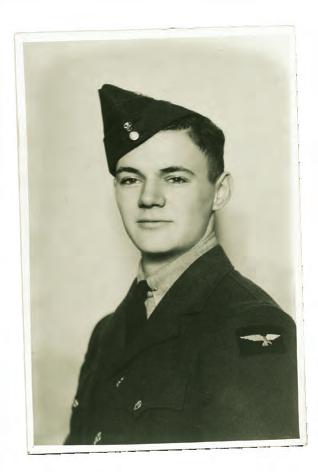
The author’s distant cousin Thomas Edward Case served in Bomber Command. An all-Canadian bomber crew from 419 Squadron.
“It was a swing-musicon-Monday-night, maybe-deadon-Tuesday existence...You lived, as it were, at a gentlemen’s club. Then you went out and died.”
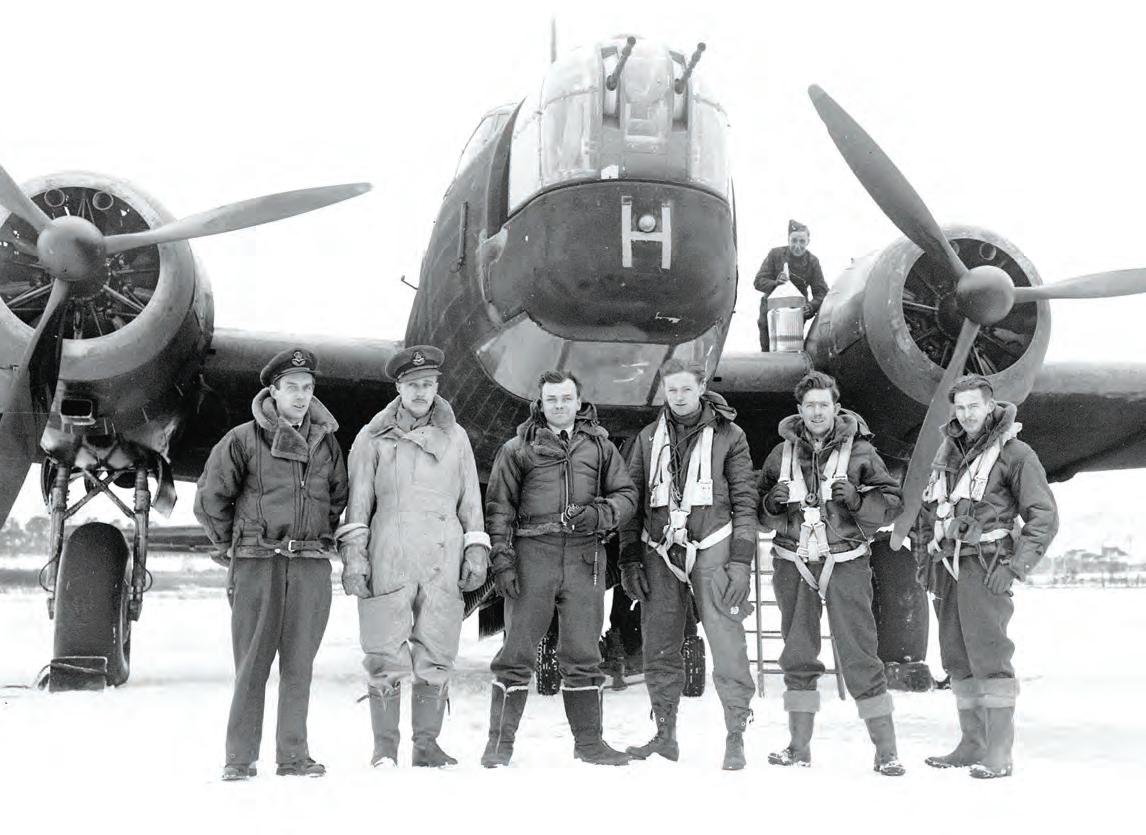

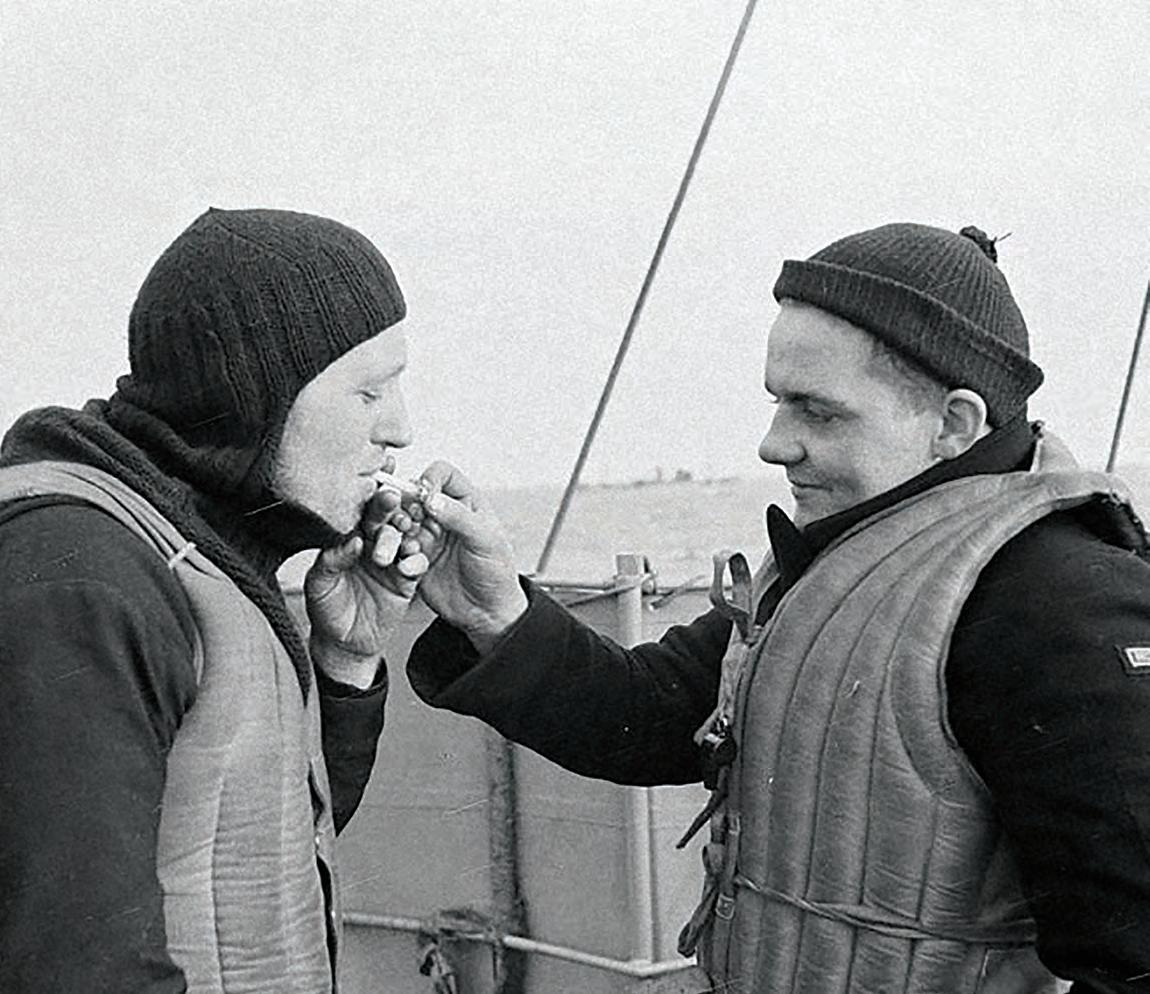
When Canada welcomed Norwegian mariners exiled from their homeland by the Nazis, it brought new meaning to the country’s de facto national anthem—“Yes, we love this country”
JA, VI ELSKER DETTE LANDET
BY ALEX BOWERS
Two Royal Norwegian Navy gunners share a moment of respite aboard merchant ship Montevideo circa 1942 (opposite). Able Seaman Paul Ellefsen (below) trained for the Norwegian merchant marine in Nova Scotia. On Nov. 3, 1941, a Norwegian gunnery school opened in Lunenburg, N.S. (bottom).
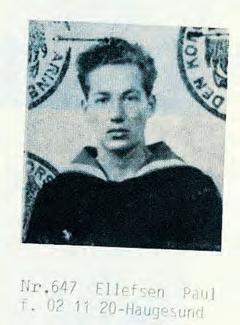
Norwegian Able Seaman Paul Ellefsen had weathered storms before, but what he faced on April 9, 1940, was something entirely different.
The 19-year-old mariner, hailing from the herring town of Haugesund and having already been at sea for several years, recalled waves “as big as mountains” where he felt his vessel would never climb out of their watery valleys.
This, though, was a storm unlike any other.
News that Norway had been invaded by the Nazis had stuck him like “a thunderbolt from a clear sky,” consuming him with shock and rage.
Yet in some respects, he was one of the lucky ones. Docked in San Pedro in the United States, Ellefsen was technically safe from German occupation.
So too, were the more than 1,000 Norwegian merchant ships scattered through the oceans when word also reached them of Hitler’s scheme.
Now, however, these crews had an unimaginable choice to make. Either the men return to Norway, thus bowing to the demands of Vidkun Quisling—the country’s Nazi collaborationist leader-in-waiting—or follow the Norwegian government-in-exile’s orders and head for Allied or neutral ports.
Not a single vessel obeyed Norway’s infamous traitor.
With one of the world’s largest merchant navies out of enemy hands, thoughts promptly drifted to how, exactly, it could help liberate the homeland.
Ellefsen’s time would come, but as hundreds and hundreds of Norwegian seamen descended upon Halifax, a new home was needed.
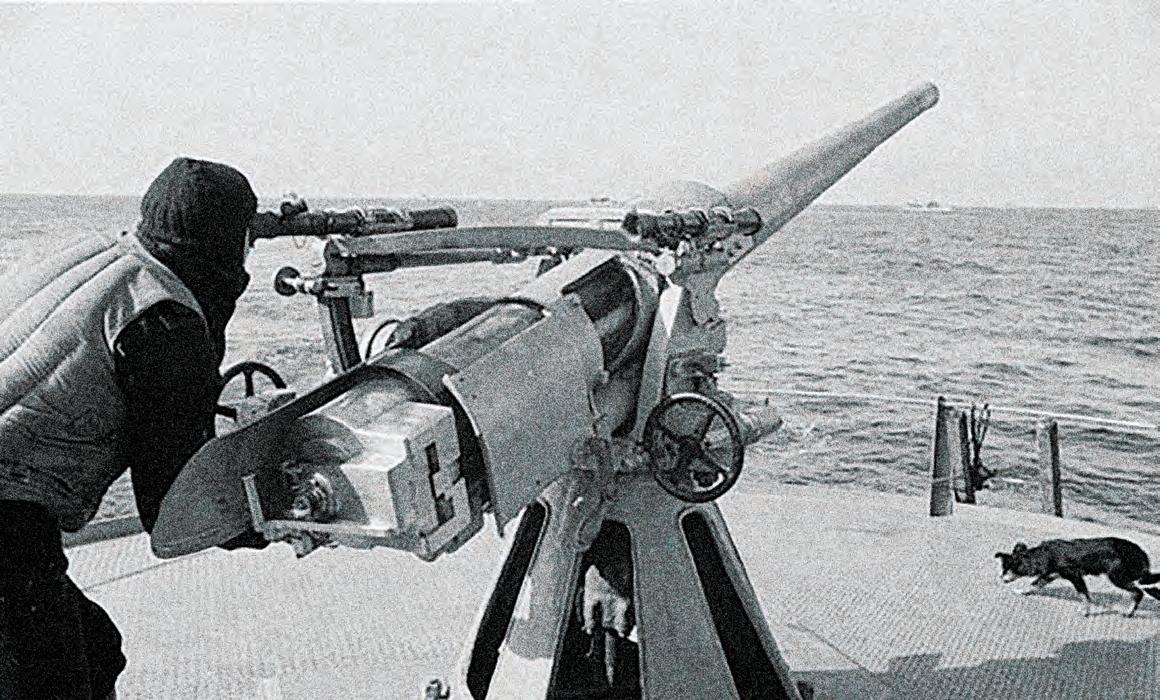
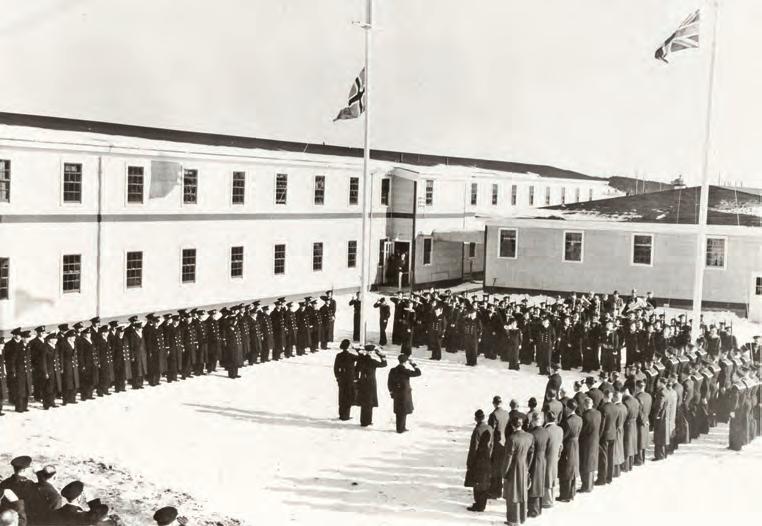
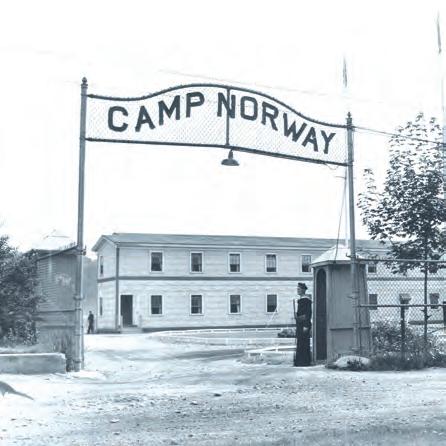
Camp Norway’s name-emblazoned gate (above) remains in Lunenburg, N.S., today. The facility’s official opening on Nov. 29, 1940 (top).
It would be far from smooth sailing.
While the Norwegians continued pouring into Halifax Harbour during the spring and summer of 1940, Canadian authorities—perhaps influenced by distorted news reports that Norway had passively accepted the invasion—remained vigilant for Quisling spies and fifth columnists among the crews.
Refused permission to come ashore, the seamen waited for a breakthrough in negotiations, left to ponder the fate of their faraway families.
The first breakthrough came in late April when the Norwegian government-inexile—by then based in England—offered the services of its large merchant fleet to the Allies. A company called the Norwegian Shipping and Trade Mission—or Nortraship— was formed to oversee operations.
With Norwegian naval personnel in the process of establishing offices in London, New York and Halifax, considerable progress was being made.
Finally in June, after weeks afloat in the harbour, an agreement between
the Canadians and Norwegians allowed the seamen to again walk on dry land.
There were conditions, however. First and foremost was that a Norwegian camp, paid for by Nortraship, would be constructed where the men could live under Norwegian military control. Secondly, since Halifax was a hub of activity for transatlantic convoys, the facility would need to be outside the city limits.
The question of location was answered by Liberal MP John James Kinley, who volunteered Lunenburg, N.S., in his electoral district as a potential site for the coastal base. Situated a reasonably short distance from Halifax and renowned for its shipbuilding industry, the Royal Norwegian Navy approved the move.
Dubbed Camp Norway, construction began as the Norwegians began filtering into the town in September. The men were temporarily housed in the Lunenburg Curling Club—nicknamed The Rink— until their new barracks could be built.
In the meantime, preparations were underway for trouble.
Acting Police Chief Hugh Corkum was not strictly against the soon-to-be-opened Camp Norway, but he had his reservations.
Though the 30-year-old officer had not yet familiarized himself with the town’s incoming Scandinavian guests, he had spent enough time at sea—and not always on the right side of the law—to be ready for anything.
The Lunenburg native was wary of alcohol in a seaman’s hands, not least those he thought had good reason to drown their sorrows amid the hardships of war and the absence of loved ones. He had served under drunken ship captains, had watched crews waste their wages on liquor, and had even participated in rum-running between the
AFTER WEEKS AFLOAT IN THE HARBOUR, AN AGREEMENT BETWEEN THE CANADIANS AND NORWEGIANS ALLOWED THE SEAMEN TO AGAIN WALK ON DRY LAND.
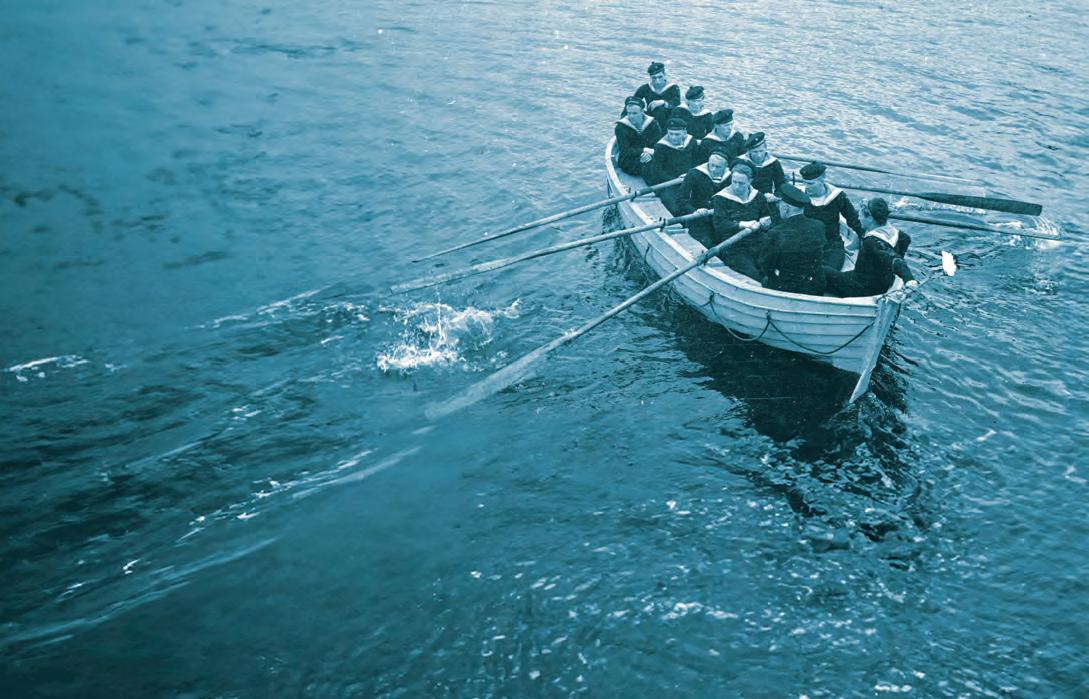
French islands of Saint-Pierre and Miquelon off the coast of Newfoundland and the United States during the Prohibition era. It had since become Corkum’s job to enforce the law, not break it. What would residents say if he failed so soon after taking on his sick superior’s duties?
At a meeting with the Halifax chief of police, it was determined that up to four extra officers would be needed as a precautionary measure.
Whether such fears were misplaced remained to be seen. Watching the men arrive, all Corkum knew was that they were a “fine-looking crowd.”
Camp Norway was founded on Nov. 29, 1940. The site, situated on the harbour’s south side, ultimately comprised the main barracks, a mess, storage buildings, a garage and a carpentry shop, all surrounded by a two-metre-high chain-link fence with several anti-aircraft and 76mm guns for protection.
The facility’s primary goal was to provide basic military training to seamen for the Royal Norwegian Navy, as well as refit several Norwegian whaling ships for war service. Additionally, Camp Norway would be incorporated into the Canadian coastal defence against the German U-boat menace.
Older men and those deemed unfit were also to be put to work in various sectors such as agriculture, forestry, fishing and, of course, shipbuilding.
The Norwegian contingent in town and beyond grew during the years, including a short-lived Norwegian Army base from 1942 to 1943, shipbuilding amenities in nearby Liverpool and a convalescent home in Chester.
And all the while, the mariners were making an impression on the locals.
Paul Ellefsen’s experience as a seaman was about to change forever.
The rage he had once felt on a San Pedro dock had never fully gone away, at first compelling him to find a means of fighting the Germans more directly, but he had been convinced to stay on with his current ship duties.
Already, Ellefsen had sailed much of the globe with vital Allied war materiel. Already, he had felt the terror of seeing smoke on the ocean horizon. Already, he had lost a dear friend, serving aboard another ship, to enemy action.
It was no longer enough. He intended to train as a gunner on merchant naval vessels, affording him the chance to fire back at would-be assailants.
Camp Norway could give him that chance.
Norwegian recruits carry out rowing exercises near Lunenburg, N.S. The mariners march, in what became a Sunday tradition, to Zion’s Lutheran Church.
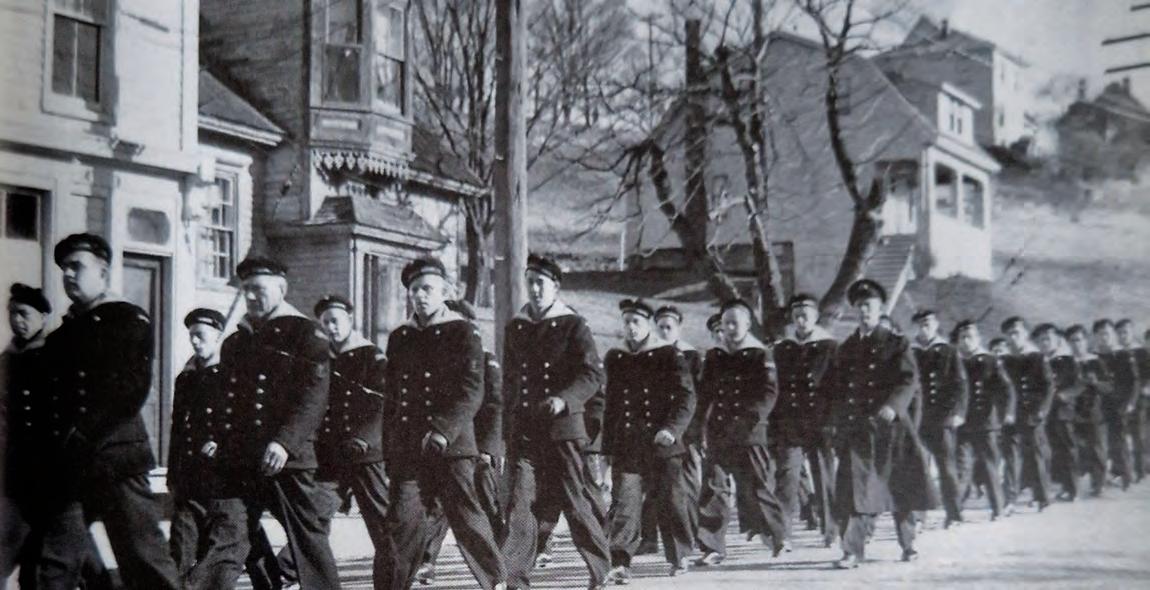
CAMP NORWAY WAS FOUNDED ON NOV. 29, 1940. THE FACILITY’S PRIMARY GOAL WAS TO PROVIDE BASIC MILITARY TRAINING TO SEAMEN FOR THE ROYAL NORWEGIAN NAVY.
On Nov. 3, 1941— just under a year after the base had officially opened its name-emblazoned gate—a Norwegian gunnery school opened in Lunenburg to complement the basic military training facility.
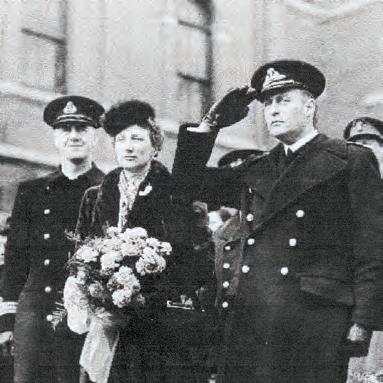
Crown Prince Olav and Princess Märtha visit Camp Norway in February 1942 (top). Prospective Norwegian gunners receive weapons training (below).
Ellefsen passed through the very same gate in February 1942. There, the now-21-year-old sailor settled into the Royal Norwegian Navy’s routine. Days started with the bugle call bellowed out by “a small and very popular fellow” from Ellefsen’s hometown of Haugesund. With the Norwegian flag and Union Jack flying above the grounds, recruits learned the theoretical and practical use of numerous weapons, among other exercises. Aboard a recently converted whaling-turned-training ship, Ellefsen remembered firing mounted weapons in Lunenburg’s harbour, knowing that within a few weeks, such skills could help keep him and crew members alive.
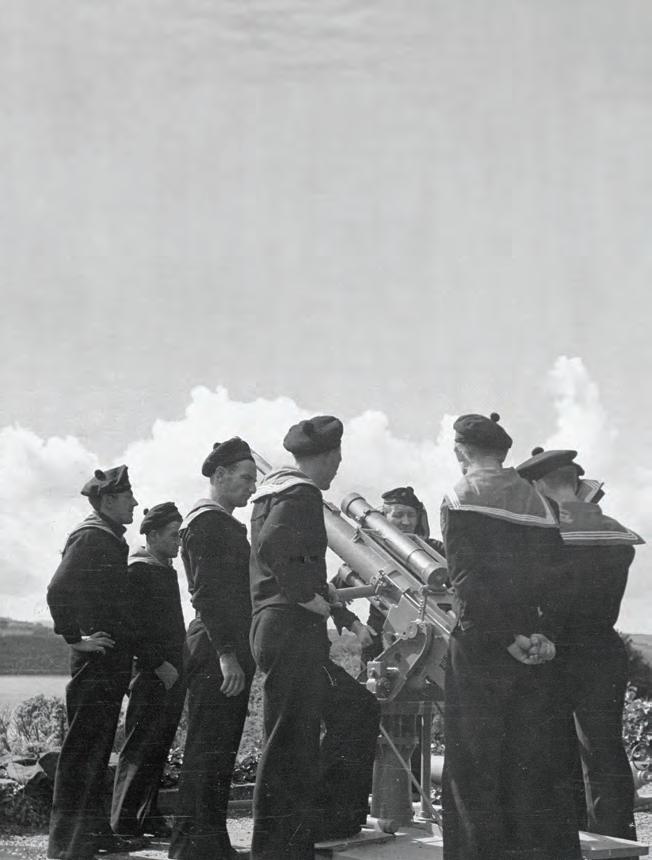
Spare time was spent in Lunenburg itself.
The Norwegians frequented the town’s restaurants and hotels, putting considerable—if not wholly unwelcome— strain on businesses until the Prince Olav Cafe was opened, its kitchen catering to the sailors’ taste for strong coffee and other Norwegian comforts. It wouldn’t be the only royal presence during Camp Norway’s tenure. On two separate occasions, Crown Prince Olav himself—eventual successor to the Norwegian throne—accompanied by his wife Princess Märtha, visited the town to considerable fanfare from sailors and Lunenburg residents alike.
On one of the trips, the royal couple witnessed the sailors’ Sunday tradition of marching to Zion’s Lutheran Church for services. Ellefsen participated in similar parades, which were a hit with locals.
Romance between the Norwegian men and Canadian women was likewise in the cards, as military authorities had anticipated by creating a $5,000 bond to support potential children from such liaisons. Reportedly, it was needed only once, although many marriages blossomed from these relationships.
Lunenburg had come to respect its wartime visitors, finding common ground in a people whose ancestors had also been defined by the sea. Like the Vikings, these descendants had travelled far and wide, albeit under completely different circumstances. Yet what of the more notorious, if debated, aspects of their forebears? Had the obvious distinctions been made clear?
Policeman Corkum’s concerns had foreseen a handful of confrontations with the law, but fundamentally, he, too, had discovered his admiration for the men.
Since being promoted to chief after the passing of his former boss, he had arrested the odd drunken sailor, broken up the odd fight at dance halls and bolstered the odd shore patrol in the occasional raid for AWOL personnel. Nevertheless, the small-town cop could concede that “things started to level off to more normal living” after the initial growing pains.
If these were the last Vikings, they were a new breed with undeniably righteous motives: to contribute toward the liberation of their homeland.
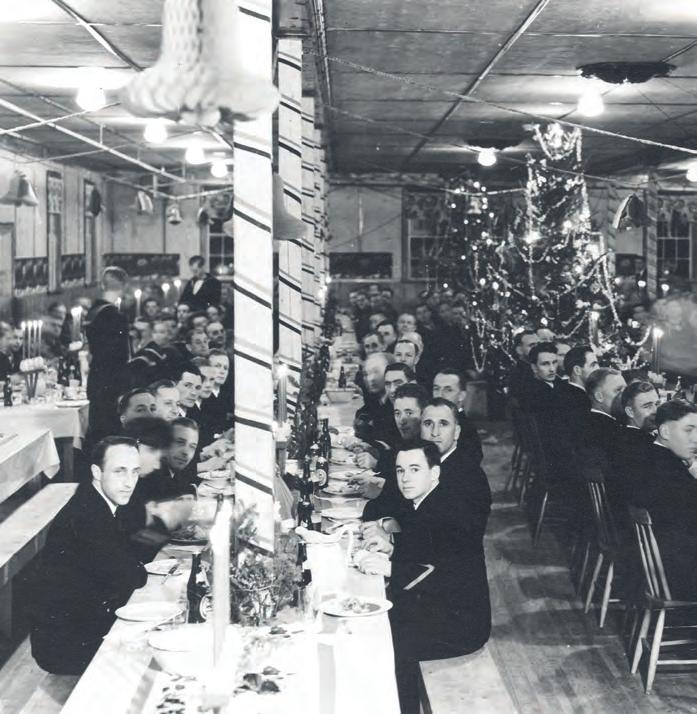
That goal seemed increasingly within reach after the U.S. entered the war. What’s more, the American involvement meant New York had become even more important for transatlantic convoys. So, in the spring of 1943, Camp Norway was moved to Travers Island near the U.S. city, prompting the closure of the Lunenburg site on June 25.
It was a sad day for many, but the prevailing emotion was pride in the estimated 1,200 Royal Norwegian Navy recruits and 600 gunners trained at the base. Among those grateful for the sailors’ presence was local MP Kinley. During a March 14, 1944, speech in the House of Commons, he said: “If we have any typically Canadian decoration I think it should be given to those Norwegians, for they earned it by their courage, their discipline and their contribution to this country…. When we said goodbye to these Norwegians we felt that we were losing good citizens.”
Tragically, if inevitably, the greatest losses would be felt beyond any training camp, regardless of location.
Approximately 4,000 Norwegian merchant seamen paid the ultimate sacrifice without ever seeing their country freed.
Ellefsen remained one of the lucky ones, even after graduating as a gunner and again serving in the Norwegian merchant marine, now armed. The still-young seaman had suffered significant trauma and endured
numerous harrowing incidents when the war ended. Most unforgettable, however, was his ship journey back to the land he had left behind. Home, he said, “never looked so beautiful, and so fairy tale-like, as when the mountains of Southern Norway first appeared, growing higher the closer we got to the coast.”
Meanwhile in Lunenburg, Corkum’s policing career continued, and, in the years to come, his son would follow in his footsteps. Neither he nor the town had seen the last of the Norwegians, a proportion of whom moved to the community to be with their Canadian sweethearts. Others brought their new wives back to Norway for a fresh start across the ocean.
Memorials dedicated to Camp Norway have since been erected in Nova Scotia in Lunenburg, Liverpool and Chester, and in 1994, a local reunion was held in the veterans’ honour. Attended by the former sailors living in Norway, Canada or elsewhere, the event helped seal the bond between the province and their returning guests.
Today, an ever-dwindling number of people can vividly recall when the Norwegians made Lunenburg their home away from home. Memories are instead kept alive by their children and family members who, like some of the seamen themselves, made this proud Bluenose town their real home. L
Camp Norway trainees celebrate Christmas in Canada in 1941.


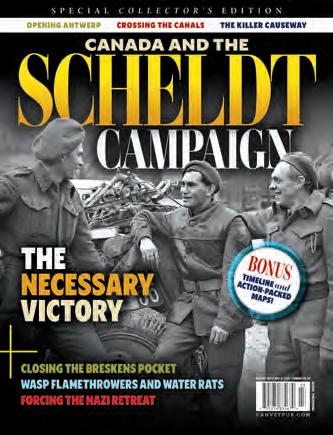
It’s
The
The


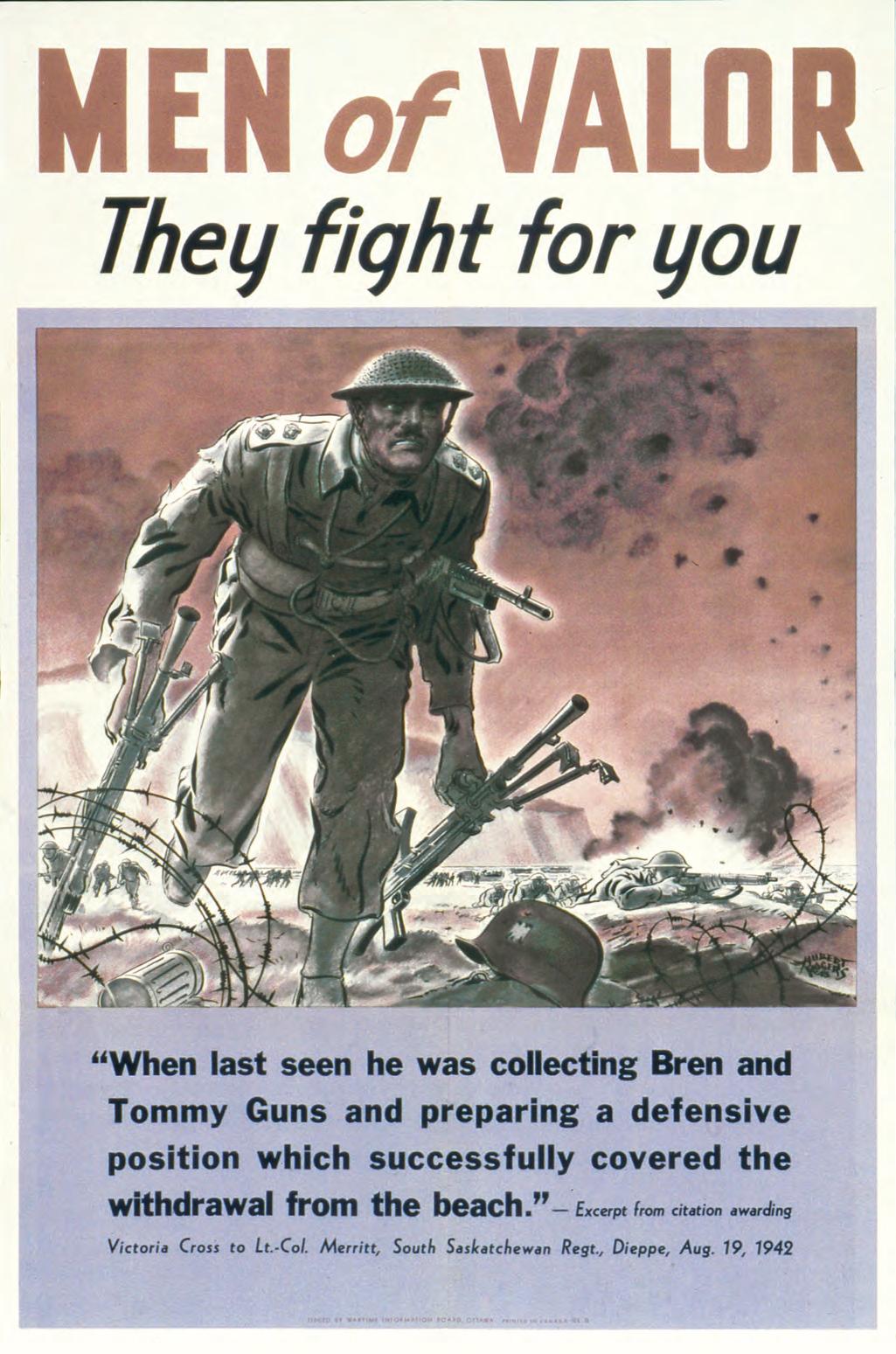
MEN of VALOR
By Robbie McGuire
A unique Second World War propaganda campaign highlighted Canadian bravery
I recently came across a slide show of various propaganda posters from the Second World War. There was the standard fare of “Keep calm and carry on,” “Loose lips sink ships” and Rosie the Riveter’s “We Can Do It!” But tucked away at the end was a 1943 poster that I hadn’t seen before. I was stuck by the artist’s depiction of a tale of Canadian derring-do, which was accompanied by the tag line “Men of Valor, They fight for you.”
This poster wasn’t like any I had seen in my years of researching military history. It depicted a recent action from the front—in this case, Lieutenant-Colonel Charles Merritt’s Victoria Cross-earning actions during the ill-fated 1942 Dieppe Raid—with a beautiful illustration by Canadian artist Hubert Rogers and accompanied by a short quote from his VC citation. The impact couldn’t help but inspire the viewer.
The poster was part of a series created by the Canadian government, the first of which was published in 1942; the last appeared in 1943. Each included artwork by Rogers,
in a style resembling the covers of postwar comic books, The Victor and War Picture Library. And unlike many other propaganda posters, the Men of Valor set is more about the men featured than a snappy or morale-boosting slogan. They were produced in both English and French.
The Merritt piece was one of two to recall Operation Jubilee at Dieppe. It shows The South Saskatchewan Regiment soldier running with two Bren guns and a Thompson squeezed under his arm as he helped his comrades withdraw from the carnage at Green Beach in front of the town of Pourville, just west of Dieppe. Merritt was instrumental in attacking a series of German positions on his own and had set up a makeshift perimeter to help men escape.
“Although twice wounded Lieutenant-Colonel Merritt continued to direct the unit’s operations with great vigour and determination and while organising the withdrawal he stalked a sniper with a Bren gun and silenced him,” noted his VC citation.
“He then coolly gave orders for the departure and announced his intention to hold off and ‘get even with’ the enemy. When last seen he was collecting Bren and Tommy guns and preparing a defensive position which successfully covered the withdrawal from the beach.”

Unlike many other propaganda posters, the
Men of Valor set is more about the men featured than
a snappy or moraleboosting slogan.
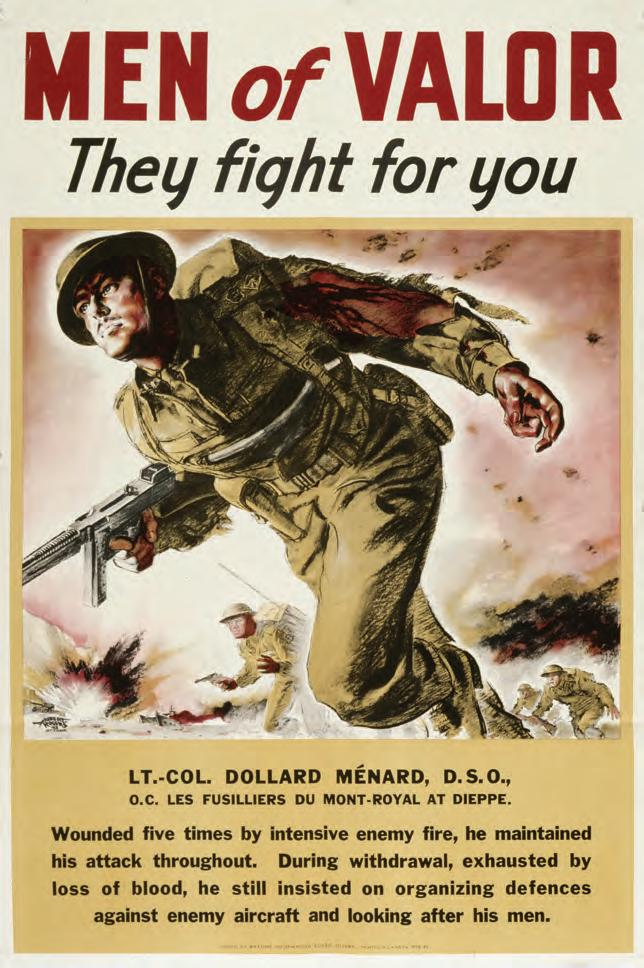
The other poster to depict the Dieppe Raid shows Quebec-born Lieutenant-Colonel Dollard Ménard, commander of Les Fusiliers du MontRoyal, running with Thompson in hand, his uniform torn away showing a bleeding wound and his men following. The Fusiliers were
among the first to hit the beaches that day and incurred many casualties. Dollard himself was wounded five times during the raid and was the only commanding officer not killed or captured at Dieppe. He was awarded a Distinguished Service Order (DSO) for his actions.
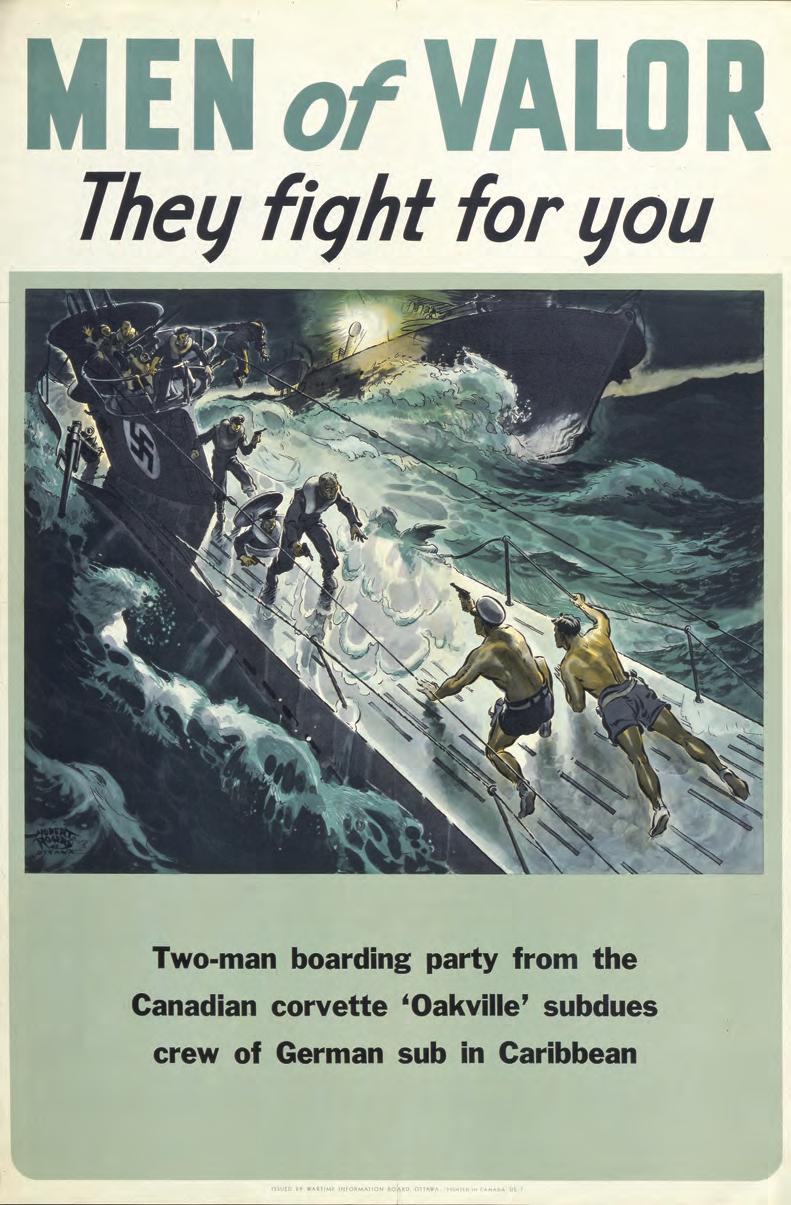
Another poster in the series shows two sailors from HMCS Oakville boarding a U-boat. On Aug. 28, 1942, the Canadian corvette was part of an escort convoy near Haiti when it attacked U-94, depth charging, then ramming the German sub twice. It surfaced and
the boarding party was dispatched.
“Mariners Lawrence and Powell jumped onto the submarine and shot and killed two of the crew who rushed to the deck. And then dug the Germans out of the conning tower like ants from an ant hill,” reported a British newspaper.

The sailors subsequently searched the vessel for its remaining crew and forced them over the side at gunpoint. The duo then jumped over themselves after discovering the boat had been scuttled by its crew. Most of the survivors were later picked up by USS Lea.

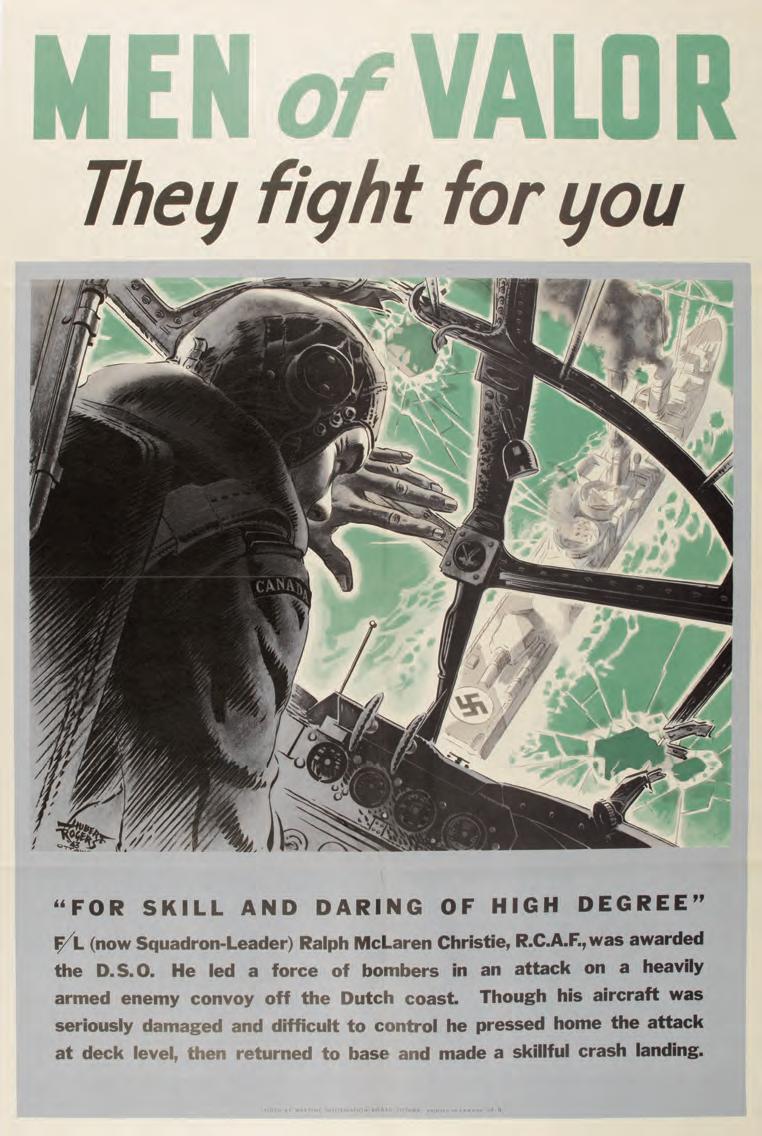
The Men of Valor series featured all three services of Canada’s armed forces. Royal Canadian Air Force Flight Lieutenant Ralph McLaren Christie was depicted in the cockpit of his Hudson bomber during an attack on a German convoy in May 1942 in another poster. Christie, a prewar bush pilot, had joined the RCAF in October 1939. At the time of the action depicted on the poster he was featured in,
Christie was with 407 Squadron, RCAF, which was part of No. 16 Group Coastal Command. On May 15, 1942, Christie led a bomber attack on a German convoy off the Dutch coast. His Hudson bomber took significant damage during the encounter, but he continued to press on before making a controlled crash landing back at base. Christie was the first RCAF pilot awarded a DSO during the war.
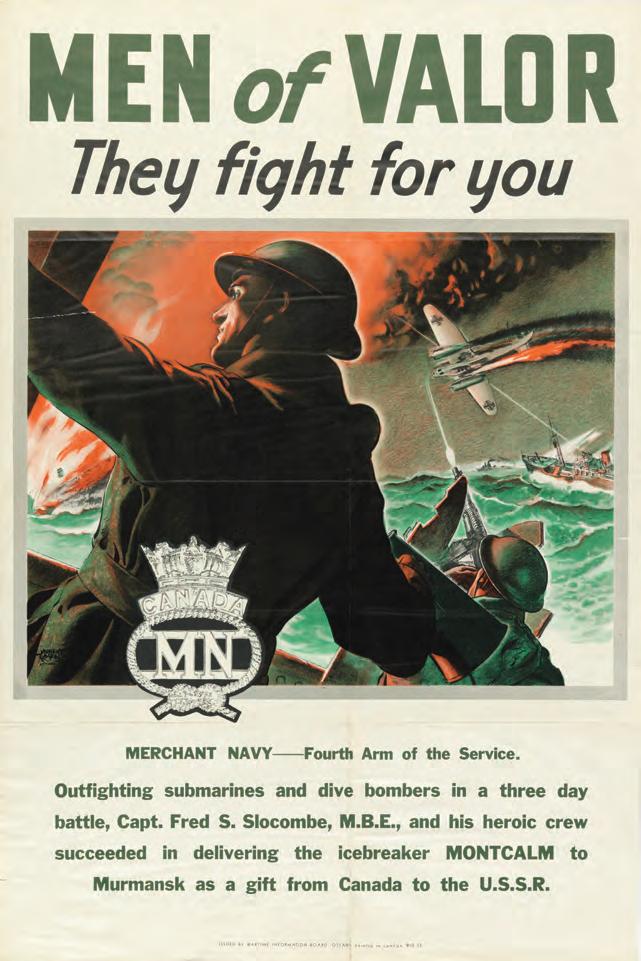
The fifth poster in the series highlights the contributions of an often overlooked but vital element of the Allied war effort: the Merchant Navy, or the “Fourth Arm of the Service” as the poster refers to it.
The artwork shows the crew of the icebreaker Montcalm fending off attack from a U-boat and a bomber during their journey
to Murmansk to deliver the ship as a gift from Canada to the Soviet Union to aid in moving materiel to the port in response to the 1941 German invasion.
It took Captain Fred S. Slocombe three attempts to get the aging vessel to Murmansk, twice having had to return to Halifax for repairs to its boilers. On the final trip,
The fifth poster in the series highlights the contributions of an often overlooked but vital element of the Allied war effort: the Merchant Navy.

the crew fought off German attacks over three days. In recognition of his leadership, Slocombe was made a Member of the Order of the British Empire. The ship, meanwhile, served the U.S.S.R. through the remainder of the war and on.
The Men of Valor poster series hit home the way few propaganda pieces ever did. L
SECOND WORLD WAR
TOGETHER In service,
AN EXCLUSIVE EXCERPT FROM THE GOOD ALLIES: HOW CANADA AND THE UNITED STATES FOUGHT TOGETHER TO DEFEAT FASCISM DURING THE SECOND WORLD WAR
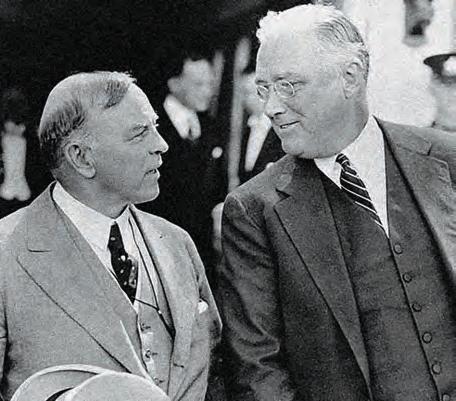
By Tim Cook
While Canada would become one of the U.S.’s most steadfast allies in the Second World War—and was already its number one trading partner by the 1920s—Americans have often taken Canada for granted. Perhaps that is typically the case with good neighbours. And yet trade deals, diplomatic relations, and military alliances take work: hard as they are in times of peace, they are harder still during wartime, when nations have their way of life imperilled and there is little time to formulate plans.

Major-General Maurice Pope, an experienced soldier who was a key Canadian officer in wartime Washington, wrote of the challenges he faced in dealing with the Americans and standing up for the Dominion. It was never easy, he wrote, and one always ran the risk of being “big-sticked.” This was a reference to President Theodore Roosevelt’s intimidating phrase from the early 20th century, in which he advocated for “speaking softly, and carrying a big stick” for possible use in bludgeoning Canadians into accepting American demands.
“We shall not be a burden on anyone else—neither a burden on the States nor a burden on England,” said Prime Minister Mackenzie King before the war. He lived up to that promise. The Canadian and American joint effort to fortify the nations’ shared frontiers may
Prime Minister Mackenzie King and U.S. President Franklin D. Roosevelt chat during a 1936 meeting in Quebec City.

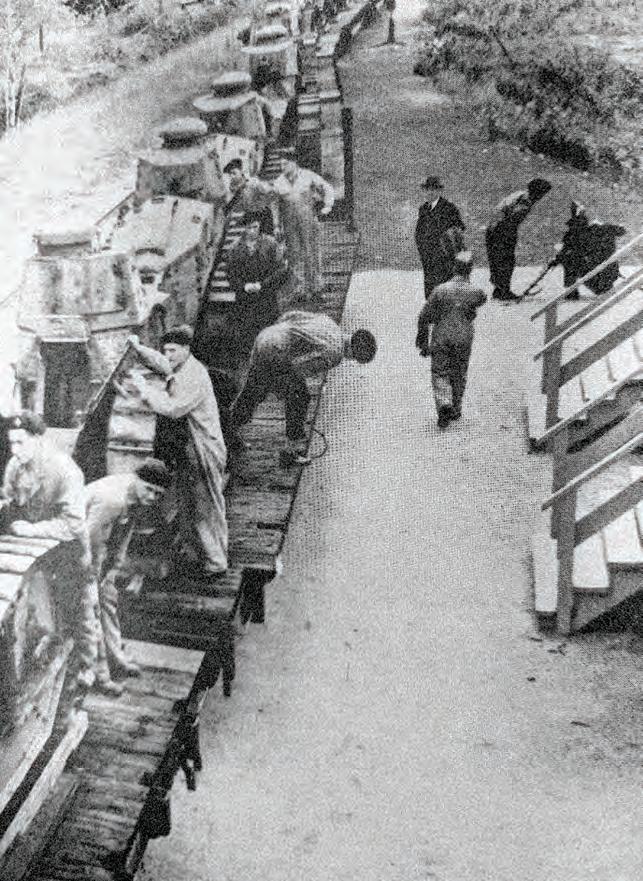
be the most successful alliance ever forged by the U.S. in terms of both ease and resources expended for ultimate gain.
In the context of prosecuting the war against the Axis powers, the U.S. had a more important wartime alliance with Britain than with Canada, but it was the relationship with the Dominion that was critical for defending North America. The Soviets—one-time enemy turned untrustworthy co-belligerent—were a different breed of ally. They had to be propped up with billions of dollars in aid and military equipment, as it was understood that if the Communists had not been bleeding the Nazis dry through bitter fighting on the Eastern Front from June 1941, there would be little hope of the war ending in anything other than a negotiated peace with Hitler in control of Europe.
The Canadian and American joint effort to fortify the nations’ shared frontiers may be the most successful alliance ever forged by the U.S.
Great War-era American tanks arrive in Canada early in WW II, a sign of U.S. support of the country’s war effort, as materiel production ramps up.
Though Canada was never a great power, and stayed clear of the responsibilities and challenges that are required of such nations, it emerged during the war—and because of the war—as a wealthy country better able to exploit its natural resources, harness its industry potential and fulfill security obligations. It did so because it had largely shed its colonial past to act as an independent nation, turning to the U.S. even as it strove to stand with Britain in facing the Axis powers.
Though much energy has been directed toward exploring Canada’s military effort overseas, far less has been spent examining the defence of North America. It is a story that mattered from 1939 to 1945, and one that continues to offer lessons to this day. At the same time, most Canadian wartime histories are centred on the Canadian and British experience—not surprisingly, since the Canadians most often served with Imperial forces.
Ties of kith, kin, history, politics, and culture also cemented this focus. Despite its historic role in aiding the Canadian war effort, the U.S. has rarely been the focus of a comprehensive study that examines defence, security, culture, economics, trade, politics and diplomacy. And, so, The Good Allies shifts the gaze from the east-west axis of the transatlantic toward the north-south partnership over the border, providing a new way to understand the Canadian war effort and its profound legacy for the development of the country.
The discussion here is weighted firmly toward the Canadian war effort from a Canadian perspective. Tens of thousands of books have been written about the American experience of the war, from the standpoint of both participants and historians over several generations,

and almost all neglect Canada and its considerable contributions to the Allied victory. Some of that blindness is due to the scope and breadth of the American martial mobilization; some of it too is because Canada was a dependable ally and much determined effort was made to ensure the wartime machinery worked smoothly between the two nations.
Historical analysis is often drawn to crisis and conflict, and there was little of that in the profitable Canadian-American alliance. Some of the responsibility for our absence from the American historical record also rests on Canadians. Much of the literature related to North American relations is coloured by the fear of a postwar loss of independence, especially from the 1960s to the end of the century. The countries’ relationship during the Second World War does not fit easily into that literature of grievance and anxiety.
The Good Allies shows that Canadians and Americans served together to safeguard North America, and that once it was protected from invasion and had its defences built up, they jointly took the war to the fascists overseas. At home, during the period of the United States’ neutrality, Canada’s rearmament programs on the two coasts were often driven by the need to convince the Americans that the Dominion was secure against incursion by a foreign power.
“To the Americans the defence of the United States is continental defence,” warned one senior Canadian general, noting that this included Canada, with or without its leaders’ consent. “What we have to fear is more a lack of confidence in the United States as to our security, rather than enemy action.”
Canadians were acutely aware of the hazard at stake if the southern
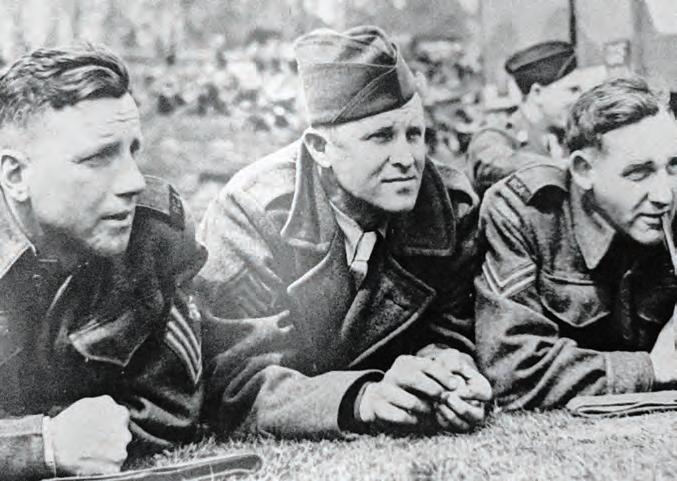
In a time of great destruction, the alliance between Canada and the U.S. was nothing short of astonishing.
behemoth felt its northern border was exposed. The King government wished to give the Americans no reason to feel they needed to liberate their neighbour from an invading force, for he worried the U.S. soldiers might not leave after the crisis. Canada would struggle throughout the war to ensure its sovereignty was respected by the republic to the south.
Though a cross-border invasion by the U.S.—even one to liberate Canada from a German or Japanese invasion force—was an unlikely scenario, Ottawa had to plan to avoid any such threat. The first fruit of this initiative was the promotion of mutual co-operation and military support between Canada and the U.S. On the east coast, Canadian naval and air forces wrestled with the German U-boat threat and led essential convoys across the Atlantic to bring war supplies to a besieged Britain. Even before the Americans formally came into the war on the side of the Allies, the U.S. navy was assisting in the war at sea.
That action came from Roosevelt, who, as commanderin-chief of the U.S. armed forces, slowly positioned his nation to fight, citing his obligation to protect America’s coast. Indeed, in February 1942, the president watched in desperation as the Axis powers were winning on every front. He described the struggle as being “different from all the other wars of the past,” and predicted it would determine the “survival of our civilization.”
After the Japanese attack against the West on Dec. 7, 1941, Canada and the U.S. were drawn closer together, with the Royal Canadian Navy assisting the Americans along the North American east coast as enemy U-boats savaged their shipping. In the West, Canada strengthened its defences to reassure the Americans and jointly protect the long coastline, sent military formations to Alaska to stand with their allies, and even participated in a combined invasion of the Japanese-occupied Kiska Island in August 1943.
Canadian and U.S. troops take in a baseball game in Britain during WW II.
Courtesy Tim Cook; Courtesy Allen Lane, a division of Penguin Random House Canada
These actions were done despite Canada having lost much of its influence with the U.S. after Britain pushed the Dominion aside to have closer relations with the Americans. Led by Prime Minister Winston Churchill, the British worked in a bilateral relationship with the Americans, anxious not to have Canada present, which could dilute Britain’s voice, but equally eager to continue to draw upon the Commonwealth nation’s considerable military and economic resources. In early 1942, Prime Minister King complained that when the two great leaders were in conversation and jousting with one another, it “crowd[ed] both Canada and myself off the map.” Canada did not withdraw in a sulk. The nation’s politicians, diplomats and service personnel shored up defences, worked with their American counterparts, and continued to fight abroad. While the country’s people were galvanized to victory on farms, in mines, and from the factory floor, Canadian officials conducted the delicate dance of assisting Britain by forging closer ties with the Americans.
In dealing with both Britain and the U.S., the Canadians grappled with exerting their sovereignty, with no area more problematic than the North, where the Americans insisted on building the Alaska Highway and air staging routes to support Alaska. Even with more than 30,000 foreign soldiers and workers operating on Canadian soil, the Canucks remained accommodating allies, willing to swallow their fear of the concentrated U.S. presence. That did not mean there was no worry as Ottawa navigated this new relationship and learned how to stand up for itself. Robert G. Riddell, an astute observer in the Department of External Affairs, wrote in February 1943, “[W]e are letting the Americans get away with things that would have broken the Commonwealth in little pieces if London had tried them.”
With North America secure from enemy attack by 1943, the Canadians and Americans took their co-operation overseas, fighting side by side in Sicily and mainland Italy. This partnership found its culmination in the First Special Service Force, a unique unit consisting of Canadians and Americans. In the air war over Europe, North American bombers, often operated by crews made up of “New World” airmen, struck Germany.
At least 30,000 American volunteers served in the Royal Canadian Air Force and the Canadian Army. The multi-pronged war against the Nazis culminated in the great crusade for Europe, starting on June 6, 1944. Canadian, British, and American forces landed on D-Day, clawing their way forward in that enormous military operation to liberate the French and other oppressed people. This dangerous landing, and the grim combat to follow, was a visible demonstration of that three-way partnership.
In the Pacific, Canadians and Americans rarely fought together, although 10,000 Canadians were stationed in that geographic theatre of war, and more would have served if the war had extended into 1946. Even more important, more than three million Canadians
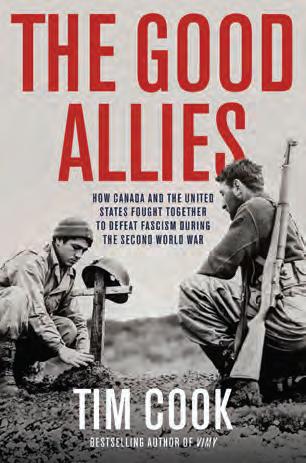
were engaged in home-front war industry work, mineral extraction and food production, all of which involved deep collaboration with the American war effort, revealing that the good allyship went both ways.
The massive production of weapons and vehicles pulled the Dominion from the mire of the Depression years and gave it immense resources that it directed most forcefully toward supporting Britain in its desperate battles.
Sometimes the relationship between the North American nations was antagonistic, but more often it was based on mutual goals. Flying in the RCAF, New York state native Malcolm Hormats recalled that his service “left [him] with a profound respect and admiration for Canadian flyers in particular and Canadians in general.”
Many Americans felt the same way.
In a time of great destruction, unimaginable slaughter, and genocidal actions against the people of neighbouring nations, the alliance between Canada and the U.S. was nothing short of astonishing. Both the heroic and the ordinary are covered in The Good Allies, including presidents and prime ministers, generals and admirals, but also service personnel, war workers and civilians on the home front.
Training its focus on the history of war both in North America and beyond its borders, the narrative shifts from the strategic to the operational level and then percolates down to units and individuals. Victory would not have been possible without the Canadian and American relationship based on a common cause: to liberate the oppressed and destroy fascism. L

Excerpted from The Good Allies by Tim Cook. Copyright © 2024 Tim Cook. Published by Allen Lane, a division of Penguin Random House Canada Limited. Reproduced by arrangement with the publisher. All rights reserved.
The W
B’ys back
NEWFOUNDLAND REPATRIATES AN UNKNOWN FIRST WORLD WAR SOLDIER
By Michael A. Smith
While many in the country slept in, or prepared for a day of barbecuing, swimming and other quintessential Canada Day activities, Newfoundlanders and Labradorians mourned. Until noon, the last province to join Confederation continued a tragic 100-plus-year-old tradition of remembering their own war dead and observed the former selfgoverning island’s Memorial Day.
The 2024 parade and ceremony at the Newfoundland National War Memorial was historic. Not simply because it was the centennial of the monument’s unveiling, but because of something the people
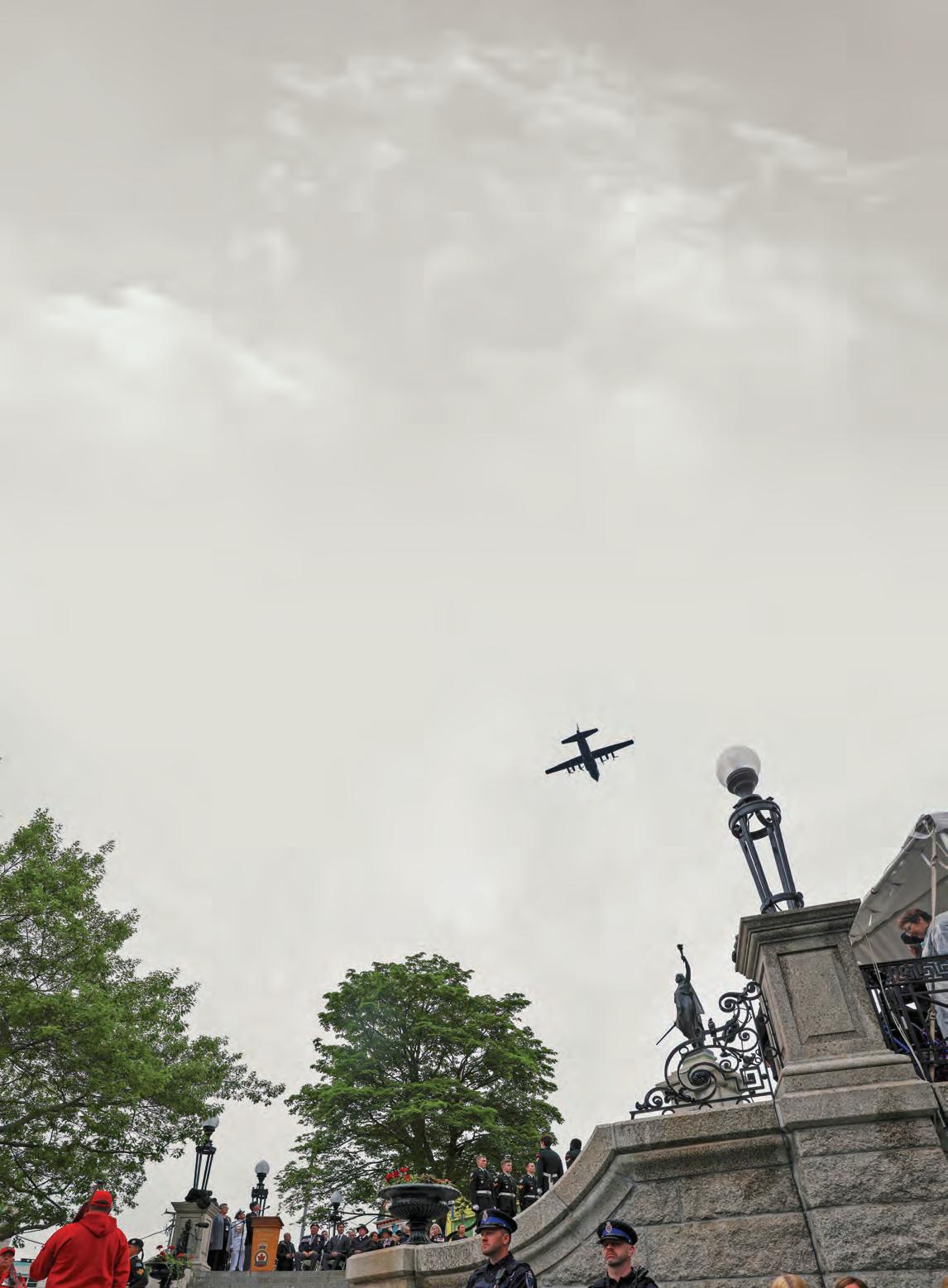
of the province had been waiting 108 years for. The day one of their own brothers, sons, fathers or uncles was brought home and put in his final resting place.
For the second time in Canada’s history, and the last time for a Commonwealth country, an unknown soldier was repatriated and placed in a tomb to represent all its war dead.
To understand the significance of Newfoundland bringing one of its own home, one must appreciate the magnitude the Battle of Beaumont-Hamel played in the history of the former British
dominion and the influence it has on the province’s modern zeitgeist. It is a mythological cloud that hangs over Newfoundlanders, shapes their understanding of who they are as a people, and their place in both British and Canadian history and hierarchy. Not one is spared from the scars that battle brought to the people of Newfoundland, even those generations removed. It has been said that Beaumont-Hamel is where Newfoundlanders learned to die. It may have even been foretelling of the death of a Newfoundland that wrote its own way.
At 7:30 a.m. on July 1, 1916, a co-ordinated attack against German lines began. The 1st Newfoundland Regiment started its attack at 9:15 a.m. By 9:45, the regiment had been almost wiped out. It had gone into battle with 801 men. The next day only 68 men answered roll call—255 had been killed, 386 were wounded and 91 were missing.
From a population of about 240,000, more than 12,000
IN THE NEWS
The Spirit of Newfoundland statue overlooks Memorial Day attendees (opposite). Newfoundland and Labrador Premier Andrew Furey, his wife Dr. Allison Furey and son Mark follow the unknown soldier’s casket after it arrived via government plane in St. John’s, N.L. Members of the Royal Newfoundland Regiment act as pallbearers at the Beaumont-Hamel Newfoundland Memorial in France.
Newfoundlanders enlisted in the First World War, nearly 10 per cent of the dominion’s men, or 35.6 per cent of all males between 19 and 35 years old. Fatalities claimed between 1,2811,305 of them. Another 2,284 were wounded. A generation of men gone—or forever changed. Men who could have raised families and been community leaders. Falling into a deep state of emotional depression postwar, Newfoundland also faced an economic depression, which led to being the only dominion to give up self-governing status in 1934 and eventually joining Canada in 1949.
It was a long journey to fill the marble tomb in St. John’s below the bronzed lady known as the Spirit of Newfoundland. Originally, the idea was championed by Thomas Nangle, the Newfoundland Regiment’s padre during the First World War, in 1920. It was reintroduced seven years ago, when three Royal Canadian Legion members—Dominion First Vice Berkley Lawrence, Newfoundland and Labrador Command’s Second Vice Frank Sullivan and RCL spokesperson and historian Gary Browne—led an effort to refurbish the salt-weathered War Memorial that stands between Duckworth and Water streets in downtown St. John’s. Sullivan, a veteran who served for 42 years in the regular and reserve forces, knew when he first suggested the idea of bringing home an unknown soldier there would be complicated work ahead. He contacted fellow Newfoundlander,
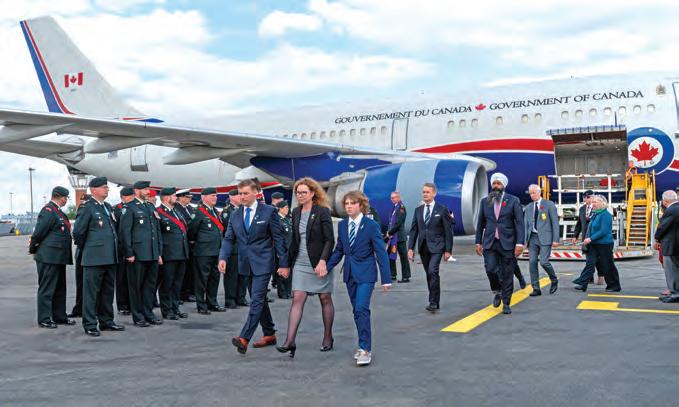
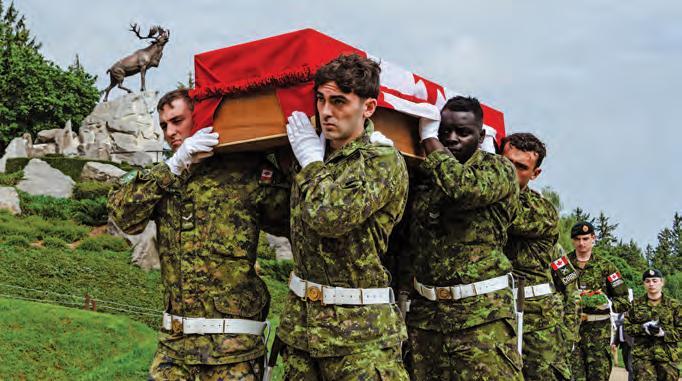
“I cannot identify this person and that’s the whole purpose of forensic anthropology: to return a face and identity to an individual.”

MP Seamus O’Regan, who at the time was minister of veterans affairs. The federal government then worked with the French government and the Commonwealth War Graves Commission to obtain permission to repatriate the remains and plan the logistics of the transfer. It took years to execute, and O’Regan said it was of the utmost importance “to get this done and bring him home with all the pomp and circumstance he deserves.”
So, when the unknown Newfoundland casualty of the Battle of Beaumont-Hamel was transferred from the French to the Canadian government in late May with more grand ceremony than
he could have imagined, Sullivan was hit with a wave of emotions.
“Words fail me right now,” said the navy veteran. “It’s a moment that I’ll die with. What can I say? We’re bringing a son home; somebody’s son is coming home.”
Newfoundland and Labrador Premier Andrew Furey felt similarly. Accompanied by his wife and teenaged son, Furey acted as the soldier’s ceremonial next of kin.
“It’s incredibly moving, special, spiritual,” said Furey after the transfer ceremony. “To see the casket and to stand there with my son, realizing this is someone else’s son is incredibly emotional. I broke down several times.”

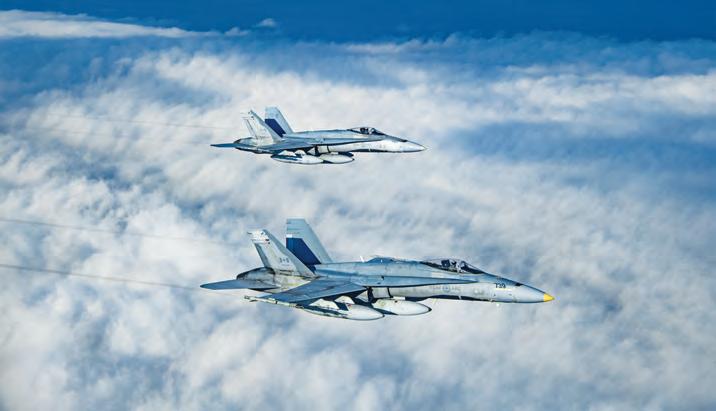
“The unknown soldier is a representation of everybody.”
The first step in bringing home an unknown soldier is deciding which grave to exhume. This work is done by historians who research the possible tombs and find ideal candidates.
“We had to be very careful as to which grave we exhumed to ensure the individual remains unknown,” said Sarah Lockyear, a Defence Department casualty identification co-ordinator. “Some of my colleagues work on projects trying to identify soldiers who are unknown Canadians. The last thing we wanted was to exhume somebody and then someone in the public does a research project and deduces who we chose.”
Still, enough identification work must be done to ensure the soldier was a Newfoundlander. Lockyear said they look at markers originally found with the body, such as cap badges and identification discs. They also match where the remains were found with records of missing soldiers from the same area.
Normally, Lockyear would then conduct genealogical research and analysis of the remains and archeological data to build a biological profile, which would ultimately lead to the individual’s date and place of birth and enough genetic markers to conduct DNA testing to uncover the individual’s exact identity.
However, in this case, she had to do the exact opposite. “There’s been conflicting emotions,” said Lockyear. “I cannot identify this person and that’s the whole purpose of forensic anthropology: to return a face and identity to an individual.”
Evidence found with the remains included a Newfoundland shoulder tab patch, boots and small pieces of textile from a uniform, all of which were where placed in the casket with the soldier.
Essentially, all that’s known about the unknown soldier is that he’s a Newfoundlander who fought and died in northern France while enlisted with the Newfoundland Regiment. His name is likely inscribed beneath the caribou monument at Beaumont-Hamel, alongside hundreds of others who died while fighting for the regiment.
A delegation of dignitaries, including former premier Dwight Ball, provincial and federal politicians, academics, Legion members and military officials, travelled to northern France for the transfer of the remains, which took place at the Beaumont-Hamel Newfoundland Memorial.
Members of the Royal Newfoundland Regiment, chosen by merit, were pallbearers and placed the unknown soldier
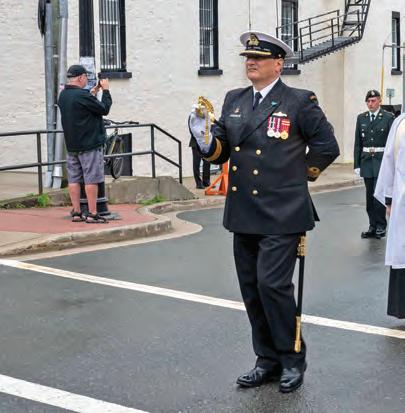
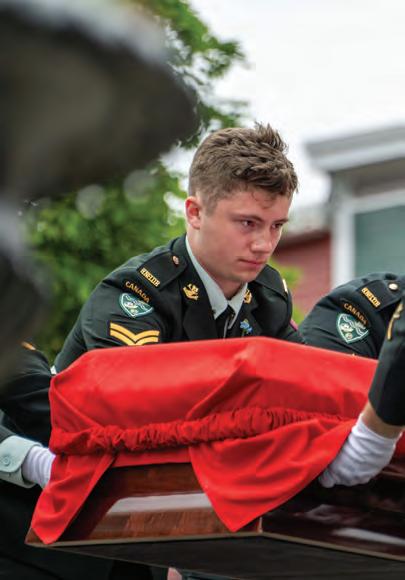
under the caribou monument that stands over the rolling hills of the battlefield where so many men died. After a music- and poetry-filled ceremony, which left the delegation, public attending and some media members in tears, the Canadian flag-draped casket was carried into a hearse where it was driven to a government plane and escorted back to St. John’s by fighter jets. During the journey, people were hugging one another. Crying together. And congratulating each other for finally bringing their boy home. When the unknown soldier was carried off the plane and into the
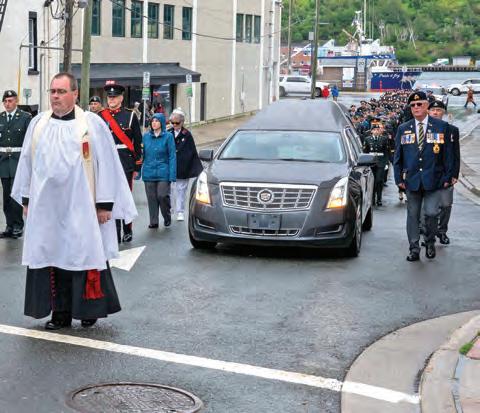
hearse in St. John’s, the public lined the airport’s fences on the border of the runway to catch a glimpse and pay their respects. Others lined the streets as the procession moved past city landmarks.
Berdena Payne was one of those at the airport. Her husband was the military padre with the delegation, but she says she would have been there anyway.
“It’s pretty surreal. We don’t know how old he was, but after a hundred years, he’s finally home,” she said, fighting back tears. “A moment like this really hits home.”
Royal Canadian Air Force CF-18s escort the unknown soldier back to St. John’s, N.L. The Memorial Day procession makes its way to the Newfoundland National War Memorial. Pallbearers lower the unknown soldier into the tomb in downtown St. John’s.
A month later, the casket laid in state at the Confederation Building for three days, where thousands of people paid their respects. Officials had to extend viewing hours because of the numbers. A common question from those visiting the unknown soldier was why would a Canadian Flag be draped on the casket since he served under the Newfoundland Red Ensign and Newfoundland was a self-governing dominion of the British Empire during the First World War.
The military’s answer was that members of the Canadian Armed Forces can carry a casket draped only with a Canadian flag and not one of a specific province. Plus, in 1949, Canada assumed responsibility for all missing Newfoundland soldiers as if they were Canadian service members. Missing soldiers are still considered to be serving until they have been found.
When July 1 finally came and it was time to lay the unknown soldier to rest, the province came out. Humidity and light rain didn’t stop thousands of people from lining Water and Duckworth streets, filling Harbourside Park, standing on rooftops and poking their heads out of nearby windows to fulfil their vow of remembering Newfoundland’s fallen.
The ceremony was attended by Prime Minister Justin
Trudeau, Governor General Mary Simon, Newfoundland and Labrador’s Lieutenant Governor Joan Marie J. Aylward, veterans and other dignitaries. The Royal Newfoundland Regiment’s band played, and The Ennis Sisters, a Legion choir and the Shallaway Youth Choir sang.
It was still early, but by the time Julia Penney, who lives just down the road came out, there was already a large crowd surrounding the memorial. She found a spot in the back of the park where she could watch the ceremony on a big screen.
“It’s a historic event and an important part of Newfoundland history,” said the St. John’s native. “So, I thought it was good to come out and support.”
Though she has no military connection she still felt a duty to attend. “Even if you don’t have a direct family history, everybody has some military connection to a degree,” said Penney. “The unknown soldier is a representation of everybody. Of all of our collective family. Maybe not literally, but symbolically, and I think that’s really important to celebrate.”
Someone who does have a direct connection and was in attendance was Paul Shea. “It’s most important I don’t miss this today,” he said.
Shea comes to the Memorial Day event every year, rain or shine, to honour his great-uncle John Benjamin Ridgley, who served with the Newfoundland Regiment. He enlisted in 1916 shortly after Beaumont-Hamel. He went overseas and after being shot at Monchy-le-Pruex, died of his wounds in April 1917.
Now that the unknown soldier is at the memorial for eternity, said Shea, “we can pay our respects anytime we want.” L

Back in 2014, The Canadian Press obtained records outlining concerns bureaucrats raised to the Conservative government about its efforts to commemorate the 110th anniversary of the end of the Boer War two years earlier. The deliberations noted the “sensitive” nature of several aspects of the conflict.
The 1899-1902 war was waged in South Africa between colonial British Imperial forces and Afrikaners, or Boers, white settlers of Dutch, German and French origin who first arrived in the region in the 17th century. Put simply, it was a struggle over diamond and gold resources. At stake? Boer political and cultural independence in the face of British economic imperialism.
The Empire was at its zenith at the turn of the 20th century, and there was a prevailing belief that its influence was threatened— and that subjects of its dominions should play a role in its defence. Historians have noted that loyalty to the Empire was relatively high at the time, and there would have been much less enthusiasm for an overseas war in the preceding decades. In Canada, the confluence of values related to imperialism, religion and social
Should Canadians continue to pay tribute to the Boer War?
Carla-Jean Stokes says NO
Darwinism created a fervour among many English-speaking Canadians to join the conflict. And while today commemoration of the war is up for debate, support for overseas conflicts has never been universal, and it was certainly politically divisive then.
EFFORTS TO PAY TRIBUTE TO THE BOER WAR REMIND US THAT COMMEMORATION AND EDUCATION ARE TWO DIFFERENT ENDEAVOURS
whom were killed during the war. And, as Afrikaner troops turned to guerrilla tactics later in the conflict, British forces responded with a scorched earth policy, destroying Boer farms and forcing women and children into concentration camps. Some 18,000-28,000 Boers died in the facilities— many of whom were children.
Efforts to pay tribute to the Boer War remind us that commemoration and education are two different endeavours; the former is an emotional process, while the latter is a critical examination of the past.
The 2012 commemoration of the Boer War was considered problematic because of the conflict’s troubling legacy, which stretches beyond linguistic and political divides in Canada. Viewed through a colonial lens, for instance, many ignore, or forget, that the territories of South Africa were already inhabited by Black Africans— an estimated 7,000-20,000 of
Canada achieved several significant milestones during the conflict: the country’s first overseas force; the emergence of women’s involvement in what would become the Canadian Army Medical Corps; and the first Canadian soldier killed in action overseas. But there are also so many troubling elements that demand thought as opposed to mere celebration.
For this reason, the Boer War is rich in research avenues that should be explored but, to do justice to Canada’s history, Canadians should move beyond commemoration to confront the war’s uncomfortable truths, leaving nothing aside. L
> To voice your opinion on this question, go to www.legionmagazine.com/FaceToFace

On
Nov. 11, 2018, numerous countries around the world commemorated 100 years since the First World War armistice. Less than a decade earlier, in 2009, the passing of British veteran Harry Patch—dubbed the “Last Fighting Tommy”—likewise sparked sombre moments of reflection.
Both milestones carried an underlying theme of memory, the passing of batons from soldiers’ first-hand recollections to historians’ often second-hand retellings. Equally, however, both milestones brought an element of debate: should we continue marking the war in the same way a century later?
Any arguments against doing so were quickly refuted once the profound impact of the Great War, coupled with its prevailing implications within modern society, were acknowledged. In the process, the oft-paraphrased words of George Santayana rang through countless heads, that “those who cannot remember the past are condemned to repeat it.”
The phrase, now bordering on cliché, was never truer than in public discourse—or lack thereof—surrounding the Boer War. A conflict long mired in controversy, Canada’s role
CARLA-JEAN STOKES is a historian of First World War photography and gives lectures on, and curates exhibitions of, war photography. In 2015, she won the Photographic Historical Society of Canada thesis prize for her master’s degree paper.
Alex Bowers says YES
will forever be interwoven with the atrocities that now, rightly, characterize the Empire’s threeyear struggle for dominance, greed and imperialism.
British forces, including Canada, were, some would argue, the bad guys, or at least that’s how it would be perceived according to today’s standards. Indeed, both main belligerents—Britain and the Boer republics—laid claim to what were Indigenous lands.
THE COUNTRY CAN ACKNOWLEDGE ITS SHORTCOMINGS, ALL IN THE NAME OF THE BRITISH EMPIRE, THROUGH THE VERY ACT OF REMEMBRANCE
If Canada is perceived to be on the side of the bad guys, should that not serve as the impetus for more, not less, observance? Commemoration is not a synonym for celebration.
ALEX BOWERS is Legion Magazine’s staff writer. A history writer with a passion for Canada’s military, Bowers has also written for U.K. publications, including History of War, All About History and Britain at War, among others.
The country can acknowledge its shortcomings, all in the name of the British Empire, through the very act of remembrance.
Context, of course, is critical. At the war’s outset, Canada was barely 30 years old with a population of some five million—a high proportion of whom boasted British ancestry when support for the so-called mother country was expected among anglophones. The Boer War also posed an opportunity to forge a Canadian identity on the world stage.
Yet there’s another facet of this discussion, too, one that transcends the colonial attitudes of a bygone era. In my office, there hangs a framed poster representing the Canadian contribution to the Boer War. It depicts a woman weeping over the Canadian Red Ensign, while a steamship sails for faraway shores in the background. It is, of course, overtly imperialistic, romanticizing Canadian loss on the Veldt. It’s not that which draws the eye, though. Beneath the draped flag are the words “In Memoriam” and the names of the Canadian dead are listed row by row. It’s a reminder that if it’s deemed unsuitable to commemorate a war, we must still remember those caught in its wake. L
By Aaron Kylie
By Stephen J. Thorne

Out of the minds of babes: winning works of the 2024 Legion Remembrance contests
By Aaron Kylie
hen I was younger,” wrote Antonia
Tannert of Westside Academy in Prince George, B.C., “I often wondered what the purpose of Remembrance Day was, and over the years I’ve been offered various answers. There’s…more to it than simple remembrance. It’s a call to collective introspection, urging us all to look back at history with the intention of learning from it.”



Tannert’s essay, “A day for reflection on the past, present, and future,” garnered first place in the senior essay category of The Royal Canadian Legion’s 2024 National Youth Remembrance Contests. Held for more than 50 years now, the competition celebrates primary- (Kindergarten to Grade 3), junior- (Grades 4-6), intermediate- (Grades 7-9) and senior-level (Grades 10-12)
students’ essays, poetry, artwork and, new this year, videos, all dedicated to the theme of remembrance.
National-level winners receive cash prizes, first-place senior level winners are eligible for a trip to Ottawa for the national Remembrance Day ceremony and the works of select winners are exhibited at the Canadian War Museum in Ottawa. In all, 47 young artists were honoured nationally in 2024.
Joining Tannert atop senior categories was Eden Hazan of Westmount Collegiate Institute in Thornhill, Ont. (video), and a trio of Western Canadians, including Tracy Xie from B.C.’s Burnaby North Secondary School (black and white poster), Chaelyn Han of Vancouver’s Lord Byng Secondary School (colour poster,
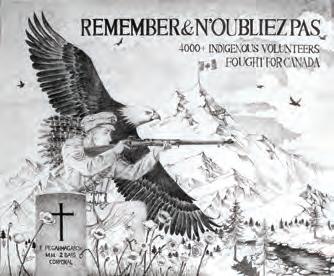

of an aged soldier graveside with the word “Remember” in the winning intermediate black and white poster by Dayou Maya Hou of Queen Elizabeth Secondary School in Surrey, B.C., immediately draws viewers in—who then discover additional details of war’s impact in the background. The judges must have been torn between it and the level’s second-place work by Ella McFarlane from George Street Middle School in Keswick Ridge, N.B.—a powerful artistic rendering of an original photograph, used with permission, of a veteran and his service dog.
NOTICE OF
more on it below) and Jake Soltys from Saskatchewan’s Sturgis Composite School for his poem “A tribute to the brave.”
Poppies were a prominent symbol in Soltys’ piece—“In Flanders Fields, the poppies blow, A symbol of the lives we owe.”—as they were in two other top poems. However, the work of the junior category poet, Nash Hove from Rich Valley Elementary School in Gunn, Alta., stood out with its envisioning of a family awaiting a father’s return from war. “Enlisted” began:
“The man in the uniform came today.
I was told Father had to go far away,
‘Take care of the farm my son’… he trembled holding his green beret.”
And ended with:
“We got a knock on the door and we thought it was him, So I ran to the door with a massive grin.
But…Momma collapsed to the floor and could only pray – when, The man in the uniform came today.”
Hove was joined by junior category winners Jiya Patel of Macville Public School in Brampton, Ont. (essay), Madeline Sanchez from Northlea Elementary and Middle School in Toronto (black and white poster), and Freya Gao of Grace Christian School in Charlottetown (colour poster).
Primary contest participants enter only posters, and Aiden Chui of Ivy Yin Yuk Leung Art Studio in Markham, Ont., took the top place for his colour work—depicting a family placing wreaths at a war monument— in suitably kid-friendly style and colours. Lily Cretney from Alberta’s Onoway Elementary School nabbed first for black and white at the level.
The posters, particularly, have the capacity to instantly grab one’s attention. Chaelyn Han’s senior category winning colour entry, for instance, has stopping power—five poppies surrounding a Canadian flag in the halo of a sunburst catch the eye—but on a closer look the flower stems are each held up by miniscule soldiers. Likewise, the seeming simplicity
ANNUAL MEETING OF THE ROYAL CANADIAN LEGION
The Dominion Executive Council of The Royal Canadian Legion hereby gives notice of an Annual General Meeting of the organization which will take place at 9:00 am on Saturday, 23 November 2024 at Legion House, 86 Aird Place, Ottawa, Ontario.
Agenda for the meeting:
1. Presentation of the audited financial statements
2. Approval of the auditors for 2024-2025
This meeting is being held to fulfill the requirements of the Canada Not-For-Profit Corporations Act. Members wishing to make comment or raise questions on these two items may do so by written submission to Dominion Command, 86 Aird Place, Ottawa, ON K2L 0A1 to be received no later than Oct. 18, 2024.
Documentation pertaining to this annual meeting shall be made available on the Legion website at www.legion.ca at least 21 days prior to the annual meeting or upon written request by a member, enclosing a self-addressed stamped envelope (9” x 12” envelope with $3.19 in postage) received at Dominion Command at least 14 days prior to the annual meeting.
Dayou Maya Hou of Surrey, B.C., won first place in the intermediate black and white poster contest for portraying a soldier’s reflections on service (left). The intermediate colour poster category was taken by Samantha Ropchan Exner of Calgary (right).
SENIOR
Black and white poster—Tracy Xie, North Burnaby, B.C.; Second: Nancy Ge, Waterloo, Ont.; Third: Hannah Shkolny, Bezanson, Alta.
Colour poster—Chaelyn Han, Vancouver; Second: Olivia Felker, Centreville, N.S.; Third: Jacob McGann, Conception Bay South, N.L.
Poetry—Jake Soltys, Sturgis, Sask.; Second: Abby Burton, Springhill, N.S.; Third: Vincent Nadon, Longlac, Ont. Essay—Antonia Tannert, Prince George, B.C.; Second: Deliah Rach, Grand Prairie, Alta.; Third: Adeline Post, Kincaid, Sask.
Video—Eden Hazan, Thornhill, Ont.; Second: Skye Pavo, Lloydminster, Alta.; Third: Gleb Goodkovsky, North Vancouver, B.C.
INTERMEDIATE
Black and white poster—Dayou Maya Hou, Surrey, B.C.; Second: Ella McFarlane, Keswick Ridge, N.B.; Third: Kalei Ross, Spring Valley, P.E.I.
Colour poster—Samantha Ropchan Exner, Calgary; Second: Coco Wei, Charlottetown; Third: Naomi Cheang, Markham, Ont. Poetry—Kate Lagacy, Bathurst, N.B.; Second: McGrace Castillo, Gravelbourg, Sask.; Third: Reagan Matthews, Cobourg, Ont.
Essay—Farida Shadi, Toronto; Second: Matteo Mercer, Elmsdale, N.S.; Third: Letitia Wigglesworth, Canoe, B.C.
Video—Isla Gordon, Vancouver; Second: Taurean Teichroeb, Melfort, Sask.; Third: Leilani Smith, Winnipeg.
JUNIOR
Black and white poster—Madeline Sanchez, Toronto; Second: Alexander Kadian, Meadow Lake, Sask.; Third: Tristan Myers, Morell, P.E.I.
Colour poster—Freya Gao, Charlottetown; Second: Bonnie Li, Onoway, Alta.; Third: Avery Jones, Montreal. Poetry—Nash Hove, Gunn, Alta.; Second: Georgia Morson, Saskatoon; Third: Adèle Arsenault, Wellington, P.E.I. Essay—Jiya Patel, Brampton, Ont.; Second: Mahmoud Atta, Medicine Hat, Alta.; Third: Damaris Kleinsasser, Newton Siding, Man.
PRIMARY
Black and white poster—Lily Cretney, Onoway, Alta.; Second: Evelyn Hayward, Conception Bay South, N.L.; Third: Alyssa Recio, South Freetown, P.E.I.
Colour poster—Aiden Chui, Markham, Ont.; Second: Julie Nasby, Stony Plain, Alta.; Third: Nora Breining, York, P.E.I.
JUNIOR
PRIMARY POSTERS FIRST PLACE
Lily Cretney of Onoway, Alta., took the primary black and white poster category (left), while Aiden Chui of Markham, Ont., won the primary colour poster category (right).
While it was a new category this year, the winning video entries did not disappoint and were as compelling as the text and visual works. The top intermediate-level piece by Isla Gordon of Vancouver’s Mulgrave School was emblematic of the quality visuals, writing and editing across the video board. It featured a young soldier endeavouring to write home, interrupted by the blurred visions and concussive sounds of war repeated each time he got out “Dear Mom, as I sit down to write this letter….” As the soldier seemingly gives up his effort, the video ends poignantly with the text: “We remember because they can’t forget.” Other intermediate category winners included the aforementioned
Dayou Maya Hou (black and white poster), Samantha Ropchan Exner of Calgary’s St. Alphonsus School (colour poster), Kate Lagacy from Superior Middle School in Bathurst, N.B. (poem), and Farida Shadi from Toronto’s Bloorlea Middle School (essay).
The end of Antonia Tannert’s senior winning essay aptly sums up the power of the Legion’s annual Remembrance contests. “Though the path forward seems unclear,” writes Tannert, “the values, strength, empathy, and love, which Remembrance Day represents, can continue to encourage reflection and thought and guide collective efforts toward a more peaceful and just world for everyone.” L
Madeline Sanchez of Toronto depicts a soldier remembering the fallen in her first-place black and white poster (left). Freya Gao of Charlottetown garnered top spot in the junior colour poster category (right).
Darryl Doolittle of Valley City Branch in Dundas, Ont., won the singles title at the 2024 Legion national eight-ball championships in Hartland, N.B.
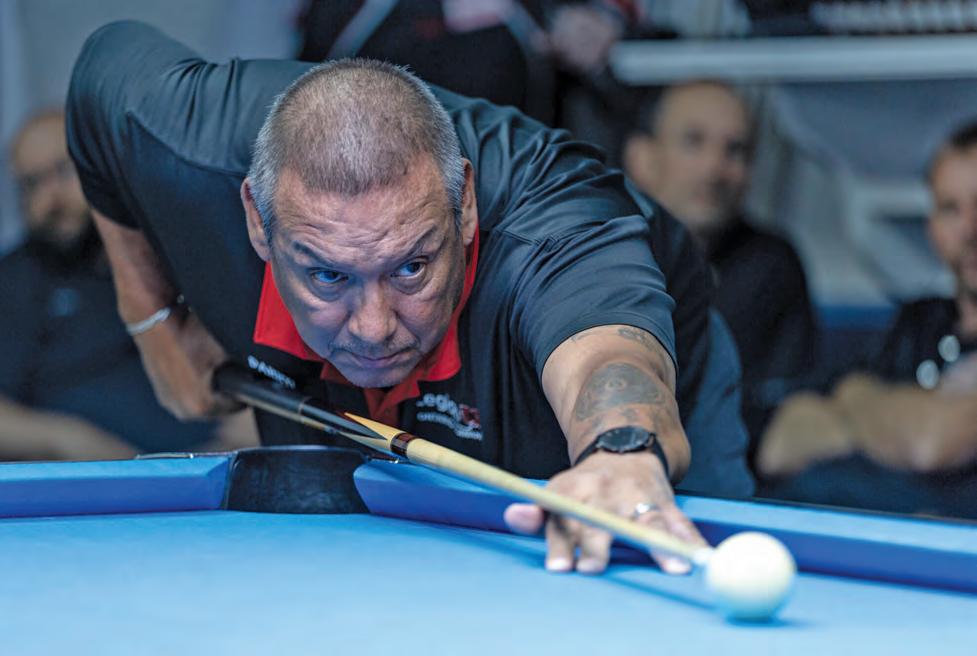
The eyes have it: A pool pictorial
By Stephen J. Thorne
“You got trouble, folks, right here in River City, trouble with a capital ‘T’ And that rhymes with ‘P’ and that stands for pool…” Ya Got Trouble, from The Music Man (1957), by Meredith Wilson
pparently concerned yet unfazed by Robert Preston’s cautionary message, Darryl Doolittle’s mom deposited her eight-year-old son at Jigger’s pool hall in Hagersville, Ont., more than half a century ago and told him to “keep an eye on” his dad.
Darryl Doolittle never looked back.
“Since I picked up that cue, I loved this game,” he said after sweeping all three titles—team, doubles and singles—at the 2024 Legion national eight-ball championships May 24-27 in beautiful Hartland, N.B.
“All my life—that’s 52 years ago. That’s a true story.”
Doolittle, a worker at the Grand River Enterprises cigarette factory on the Six Nations Reserve, ran the table in five of six playoff games while sweeping Carl Ringer of Labrador City, N.L., Branch; Craig Walters of Victoria’s Britannia Branch; and Ontario teammate Mark Johnston of his own Valley City Branch in Dundas.
Doolittle and Johnston took a three-of-five doubles playoff in four games against Ringer and David Locke of Labrador City,
after the two teamed with Brandon Raddatz and Colton Keuhl of Eganville, Ont., to edge the Nova Scotia foursome of Bob Massia, Christopher Marsh, Bruce Lilly and Harry O’Donnell of Centennial Branch in Dartmouth 46-45 to clinch the team event in the round robin.
Champions representing all provinces and territories except Quebec, along with a host team from Hartland, played 360 roundrobin games during two days before Ontario went up against Newfoundland and Labrador in the doubles tiebreaker.
Four players were forced into a tiebreaking finale in singles. They played each other twice. Both Doolittle and Johnston swept Ringer and Walters, winning four games each before facing off for the title. Ringer and Walters settled on a tie for third.
David Locke of Newfoundland and Labrador sets up (above) for what would be a remarkable shot en route to his team’s only win in the doubles final. Andrew Spence of Norwood-St. Boniface Branch in Manitoba (below left) eyes his next shot in early round play. The host branch’s pool chair Carla Orser, a principal organizer, referees a match. Royal Canadian Legion Vice-President Brian Weaver (opposite, left) and host Hartland, N.B., Branch President Gary Bovard with the 2024 team champions, Ontario’s Colton Keuhl, Mark Johnston, Darryl Doolittle and Brandon Raddatz.
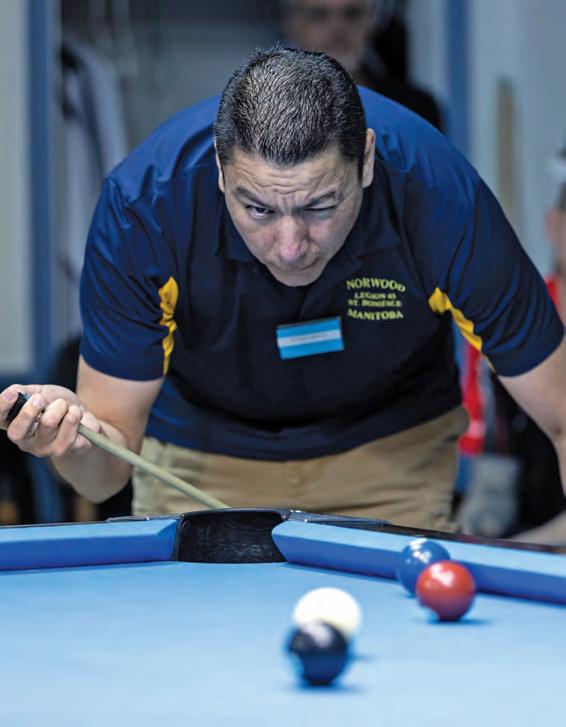
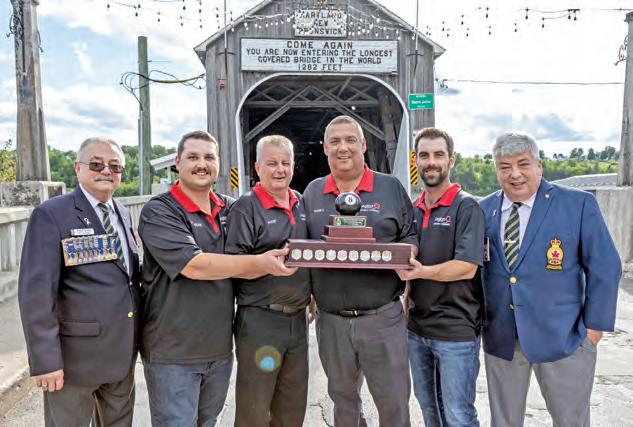
With 40 players and three tables to work with, the host branch’s pool chair, Carla Orser, and tournament director Bob Allison ran a tight ship. An organizing committee of some 20 branch members put the weekend together, complete with steak and
SERVING YOU
moose burger barbecues, a closing turkey dinner, and live music.
Orser, Allison and other branch members, along with a handful of players, refereed the matches and, while there were discussions on a few rulings, there were no significant disputes.
Well-run and well-contested, the event amid the flowing waterways, rolling farmlands and verdant hills of western New Brunswick went off without a hitch.
“We have an outstanding team here and they pulled it off—in spades,” said Branch President Gary Bovard, a Legionnaire since 1979. “I told the executive and pretty well anyone who would listen…I didn’t care if we didn’t make one red cent from it… we were going to show the [124member] branch in its best light.
“Anyone who gets the opportunity to host an event such as this, I would fully encourage them,” he added. “It tightens up your executive, your members, your volunteer base, and it can really make your branch shine.” L
SERVING YOU is written by Legion command service officers. To reach a service officer, call toll-free 1-877-534-4666, or consult a command website. For years of archives, visit www.legionmagazine.com
Changes to VAC benefit policy may concern you
Do
you get partial entitlement (1/5th, 2/5ths, 3/5ths, 4/5ths) for your medical conditions that developed due to service in the military or RCMP? Have you received a monthly pension, a disability award or pain and suffering compensation from Veterans Affairs Canada for a medical condition and not been reassessed in several years? Was your application regarding hearing loss denied? If so, two newer VAC policies may impact you.
The first for partial entitlements, provides guidance in awarding partial or full disability entitlement benefits for:
• disabilities arising from both service- and non-servicerelated injuries or diseases;
• d isabilities arising from non-service-related injuries or diseases, that were aggravated by service;
• a nd disabilities arising from a consequential relationship to service. Previously, partial entitlement was awarded if the disability was the result of both service and nonservice-related factors. Now, full or 4/5ths entitlement is granted based on the criteria above. Typically, 4/5ths is granted if a pre-enrolment, non-service-related medical condition was evident or if a significant injury occurred.
Regarding hearing loss, if it’s determined that it was documented during service or at the time of discharge, and/or if service is found to
have caused or contributed to it, then full entitlement may be awarded.
The new policies aren’t, however, sufficient grounds to reopen cases of partial entitlement, except for hearing loss, even if it was originally denied. And if benefits were granted by the Veterans Review and Appeal Board, a further appeal is necessary.
Members or veterans with partial entitlement for any condition, or who were denied a hearing loss disability, may want to contact a Legion command service officer to review their situation. Call 1-877-534-4666 toll-free to speak with a service officer, email veteransservices@legion.ca or visit www.legion.ca to contact a service officer in your area. L


Volunteering in the community
SNAPSHOTS
Volunteering in the community
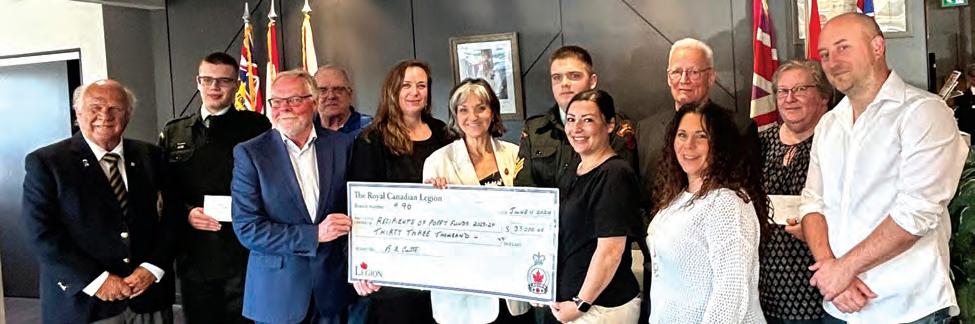
Fort
Branch in Winnipeg disburses a $33,000 donation to several community organizations, including health-care institutions, veteran charities and local cadet groups.
President Katriina Myllymaa (left) of Port Arthur Branch in Thunder Bay, Ont., joins Nancy Singleton in presenting $1,500 from the L.A. to Thunderbird Wildlife Rescue, represented by Ravin Perrier, Jenn Salo and Coco the owl. GEORGE ROMICK
Marathon, Ont., Branch presents $10,000 to the Barrick Care Project’s Families Closer to Home campaign, which aims to address the need for enhanced long-term care facilities in the area. Pictured are John Rose (left), Branch President Michael Hamilton, Mitchel Hatton and Beth Ryan.
Garry
President Rick Pearse of Beausejour, Man., Branch presents a scholarship and bursary to Taylor Sawatzky.
Sgt.-at-Arms Bob Patryluk of Brandon, Man., Branch presents $1,000 to 82 Brandon air cadets squadron representative Dan Fontaine.
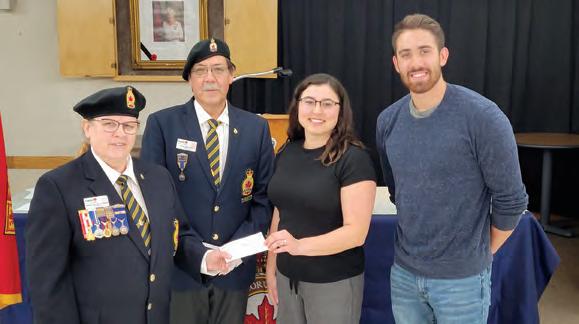
President Katriina Myllymaa (left) of Port Arthur Branch in Thunder Bay, Ont., joins property chair Mike Michon in presenting $200 to Camp Quality Northwestern Ontario, represented by director Samantha Stovel and fundraising co-ordinator Keenan Stager. GEORGE ROMICK
Walter Oates of Corner Brook, N.L., Branch receives a Quilt of Valour.
Brandon, Man., Branch Sgt.-at-Arms Bob Patryluk presents $1,000 to 60 Swiftsure sea cadet corps representative Tyler Pretty.
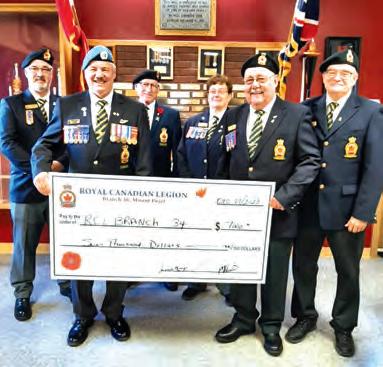
President John Blackwood (right) and members of Mount Pearl Park-Glendale, N.L., Branch present $7,000 to Southern Shore Branch President Bruce Butler (left) of Ferryland, N.L., for a new wheelchair ramp.

Ken Tucker (left), Terry Pynn, Mary Dawe and David Hollett of Carbonear, N.L., Branch present $2,032 to the the Annual Janeway Children’s Miracle Network Telethon, which supports the Janeway Children’s Health and Rehabilitation Centre.
Albert O’Connell of Corner Brook, N.L., Branch receives a Quilt of Valour from fellow Legion members and veterans.
Bill Hickey of Southern Shore Branch in Ferryland, N.L., awards Meredith Parsons second place in the intermediate level poster category in the youth remembrance contest.
Bill Meadus (left) of Clarenville, N.L., Branch presents $1,000 to Larry Reid and John Pickett of the Clarenville Region Extended Seniors’ Transportation (CREST), which provides affordable and accessible bus service for 60-plus-year-olds with moderate mobility impairment.
Montague, P.E.I., Branch presents a $1,000 bursary to Payton MacLean from Montague Senior High School.

President Brian Rector of Montague, P.E.I., Branch presents $1,000 to Alex Johnson and crew members of HMCS Charlottetown for the Run for Wishes fundraiser.
P.E.I. Command First Vice David Doucette awards Kalei Ross, a Grade 8 student at Kensington Intermediate High School, with first place in the provincial black and white poster contest and third place in the National Youth Remembrance contest.
Montague, P.E.I., Branch President Brian Rector, together with branch poppy chair Maxine Evans, pay tribute to the Battle of the Atlantic by placing a wreath at their local cenotaph on May 5, 2024.
P.E.I. Kings Zone Commander Brian Rector presents $2,000 to 327 Southern Kings air cadet squadron. Accepting the cheque is WO2 Bertrand, who also received the Legion Cadet Medal of Excellence.
Montague, P.E.I., Branch President Brian Rector, together with branch member Maxine Evans, presents a $1,000 bursary to Cassie Gordon of Montague Senior High School.
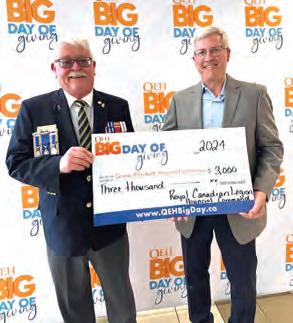
Jack MacIsaac presents $3,000 to the Queen Elizabeth Hospital Foundation in Charlottetown.

President Mike Benson of Belleville, Ont., Branch presents $13,940 to the Belleville General Hospital Foundation, represented by nursing staff.
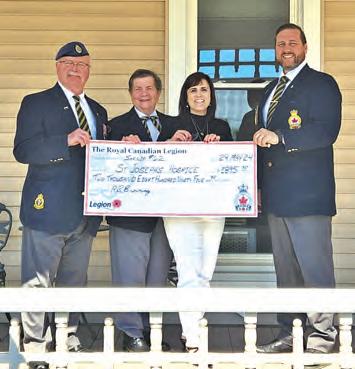
Sarnia, Ont., Branch President Ron Realesmith (right), Bruce Browning and L.A. President Mary Ann Buntrock, present $2,895.70 to St. Joseph’s Hospice, represented by Maria Muscedere.
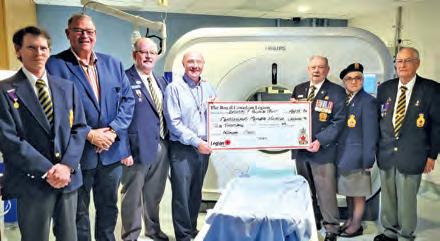
Ontario District F Hospital Trust presents $10,000 to the Campbellford Memorial Hospital. Pictured are Campbellford, Ont., Branch President Scott West, hospital foundation board member Bruce Thompson, F2 Zone Commander John Grozelle, foundation executive director John Russell, Don Ramsey of District F Hospital Trust, F2 L.A. Zone Commander Glenda Trottman and Trenton, Ont., Branch member Neal Green.
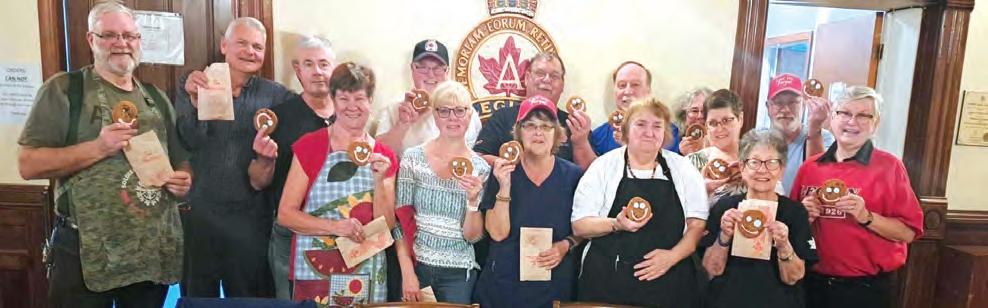
Members of John McMartin Memorial Branch in Cornwall, Ont., take a break from raising funds for BGC Cornwall/SDG.
Dominion Vice-President and P.E.I. Command President
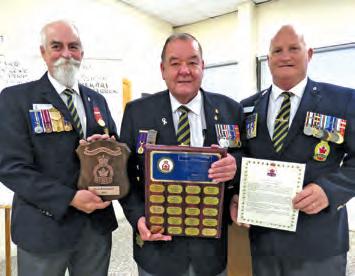
President John Shifflett (left) and Al Plume (right) of Trenton, Ont., Branch present Yves Bouchard with the Legionnaire of the Year award.
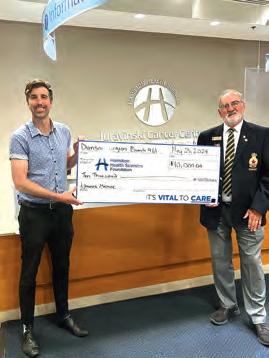
President Ron Butcher of Dunsdon Branch in Brantford, Ont., presents $10,000 to Julius Foreman of the Hamilton Health Science Foundation.
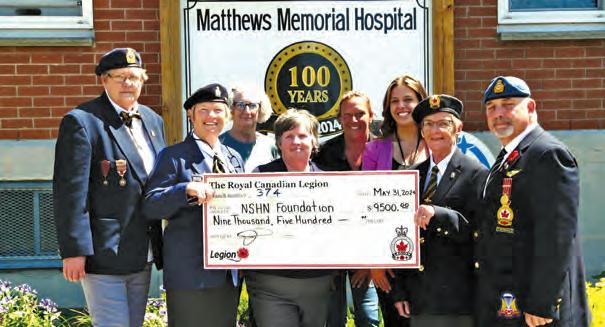
St. Joseph Island Branch in Richards Landing, Ont., presents $9,500 to the Matthews Memorial Hospital, NSHN Foundation. STEVE
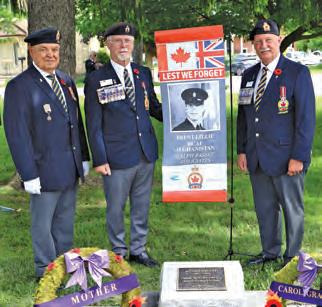
Fergus, Ont., Branch holds a memorial dedication to honour RCAF Master Corporal Brent Lillie who died from wounds suffered in Afghanistan.
Pictured are Branch President John Martin, Ontario Command First Vice Lynn McClellan and Ontario Command President Derek Moore.
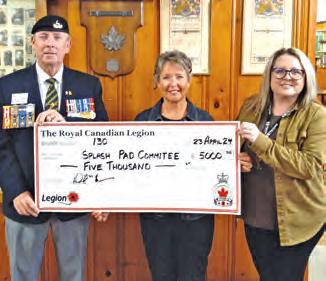
Hanover, Ont., Branch President Dan Haverson presents $5,000 to Splash Pad committee members Annette Haverson and Laura Christen.
St. George Ont., Branch donates $1,615.50 to National Service Dogs, following a fundraising dinner.
First Vice Sam Abdool, Sgt.-at-Arms David Ratcliff, President Paul Gaudet and Beverly Pearson of Mount Dennis Branch in Toronto present $20,000 to the West Park Health Care Centre. The centre is represented by CEO Doug Earle.
Hanover, Ont., Branch Chair Steve Stewart presents $1,000 to Saugeen Hospice, represented by Sylvia Stewart, chair of Hanover’s Hike for Hospice.
FRECH
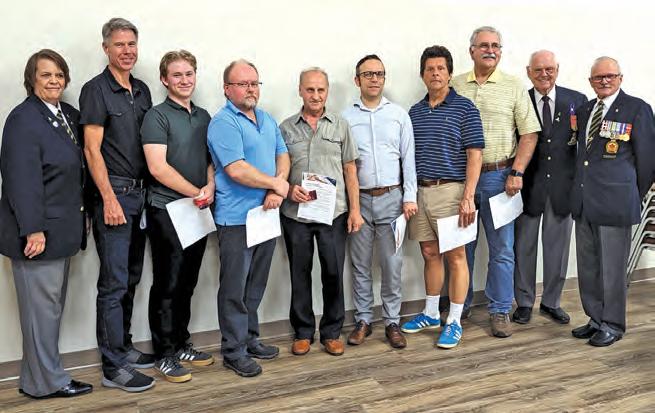
Second Vice Bob Elliott of Pte. Joe Waters Branch in Milton, Ont., presents a donation to Navy League of Canada Milton Branch President Clavy Cuhinha for sea cadet corps Chaudiere as its commanding officer, Lieut. (N) Andrew Townley, looks on.

Tom Marks and Adrian Williams of Lord Elgin Branch in St. Thomas, Ont., present $10,000 to Laren MacKichan and Jeff Yurek of the St. Thomas Elgin General Hospital Foundation.
Cadet liaison officer Bob Elliot of Pte. Joe Waters Branch in Milton, Ont., presents donations to 2990 Lorne Scots army cadet corps, represented by Dr. Sameer Kapar and the corps commander, Capt. Satish Trachandra.
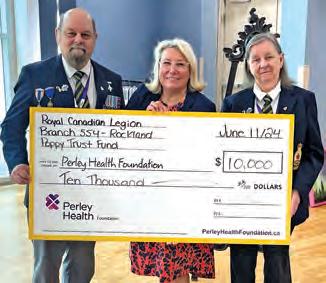
President Donald Ferrera and May Ferrera of Rockland, Ont., Branch present $10,000 to the Perley Health Foundation, represented by its executive director Delphine Haslé.
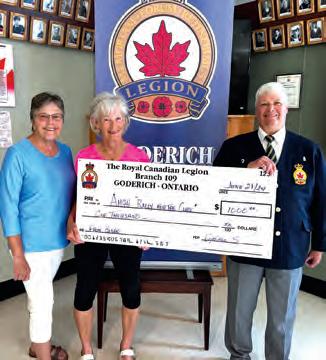
Judy Lajeunesse, Barb Lassaline and Linda Lumley of Goderich, Ont., Branch present $1,000 to the Alexandra Marine and General Hospital.
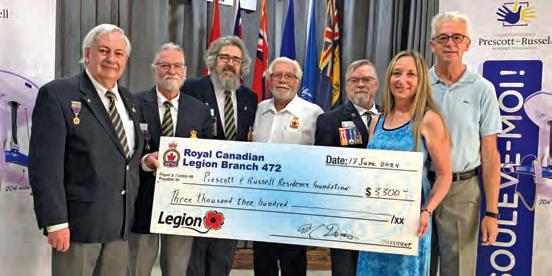
President Michel Denis, Donnie Noble, First Vice Gerry Woodard, Past President Jack Hume and Second Vice Steve Morin of Georges Vanier Branch in Hawkesbury, Ont., present $3,300 to the Prescott Russell Residence Foundation, represented by its president, Denise Robitaille and treasurer Marcel Dicaire.
Polish Veterans Branch in St. Catharines, Ont., installs new members.
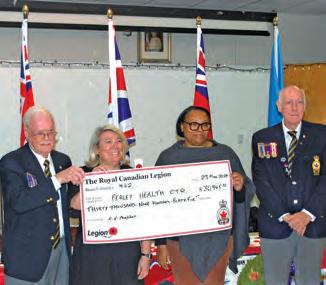
Ray Barker and Richard Campbell of Eastview Branch in Vanier, Ont., donate $30,945 to Perley Health in Ottawa, represented by Delphine Haslé and Alma Cook.

Wingham, Ont., Branch presents $8,000 to Wingham and District Hospital Foundation. Pictured are James Saint, foundation chair Nicole Duquette-Jutzi, Branch President Rose McKague and Andy Rodger.

Centennial Branch in Scarborough, Ont., presents certificates for the Legion’s youth public speaking contest.
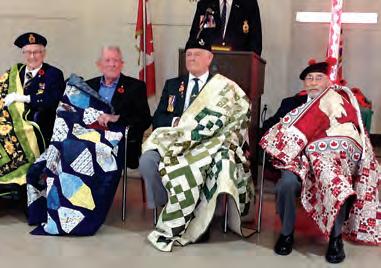
Brockville, Ont., Branch presents Quilts of Valour to veterans Edith MacFarlane, Charles Stickney, John Griffice and Peter Hubert
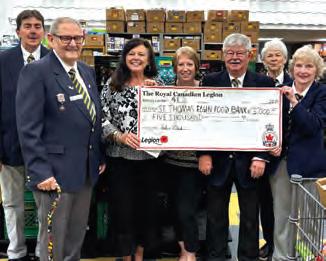
Linda Davis, Dan Gibson, Tom Marks, President Valerie Clark and Lila Pelkey of Lord Elgin Branch in St. Thomas, Ont., present $5,000 to the St. ThomasElgin Food Bank, represented by Karen McDade and Sarah Coleman.
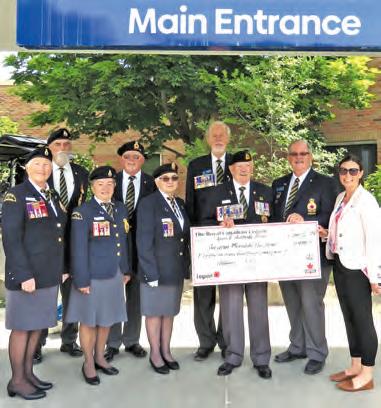
Zone F2 Deputy Commander Don Ramsay presents $11,499 to the Trenton Memorial Hospital Foundation.
Past President Shelly Haycock (right) presents President Valerie Clark of Lord Elgin Branch in St. Thomas, Ont., with the Legionnaire of the Year award.
Richard Guitar of Orleans, Ont., Branch presents $6,000 to 3018 army cadet corps, represented by RSM Alpha Ousamane Barry.
McNamee.
First Vice Raymond Hotte and Treasurer Ray Barker of Eastview Branch in Vanier, Ont., present $5,000 to 51 squadron air cadets, represented by Kathleen Lemire and Capt. Tim Cook.
Merrill Gooderham of Limestone City Branch in Kingston, Ont., presents $5,000 to 2587 PWOR army cadet corps, represented by its outgoing commanding officer, Capt. Clarrissa Parsons.

Wingham, Ont., Branch presents $18,332 to the Wingham and District Hospital Foundation. Pictured are foundation executive director Nicole Duquette-Jutzi, Branch President Rose McKague, Andy Rodger, James Saint and District C Commander Eric Ross.
Sue Riley of Hensall, Ont., Branch presents $1,000 to the 50-year-old 2923 Middlesex Huron army cadet corps, represented by Jessica Crawford and Jeremy Kester.
President Yvonne Glowacki, Third Vice Richard Buckoewly and Stefan Wieclawek welcome new members Nancy Saczkowski, Aleksandra Watson and Erina DeValk to Polish Veterans Branch in St. Catharines, Ont.
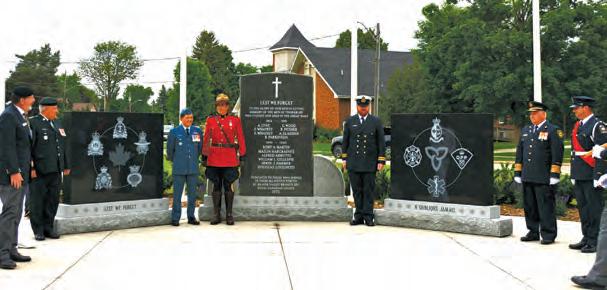
Following a successful fundraising campaign, Beaver Valley Branch in Clarksburg, Ont., completed significant enhancements to the nearby Thornbury cenotaph with the addition of memorial stones honouring all branches of the armed forces and Ontario first responders.
President Ted Davies of Sooke B.C., Branch presents a $1,000 bursary to Dylen Broadbent.

Pender Island, B.C., Branch President John Pender (front, right) and youth chair Colin Denton present $2,000 to a local baseball team.
Past President Gary Bramhill of Delta, B.C., Branch presents first place in the junior and intermediate poem contests to Livia Fedrich (left) and Mila Thomas.
Bowser, B.C., Branch padre Brian Kirby presents $1,650 to CPO1 Mason Pardy of 189 Port Augusta sea cadet corps.
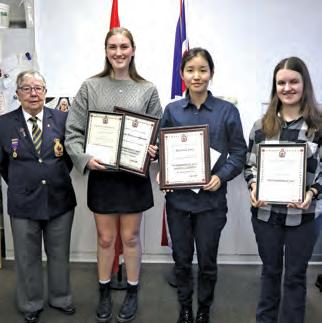
Youth chair Barbara Dyck (left) of Delta, B.C., Branch congratulates Legion poster and literary contest winners Addyson Murray, Sara Yang and Karina Benson.
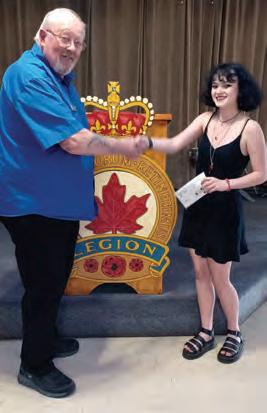
President Ted Davies of Sooke, B.C., Branch presents a $1,000 bursary to Presley Banks.
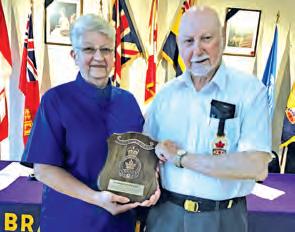
President Vicki Jones of Seaview Centennial Branch in Lantzville, B.C., presents the Legionnaire of the Year award to James McEwan.
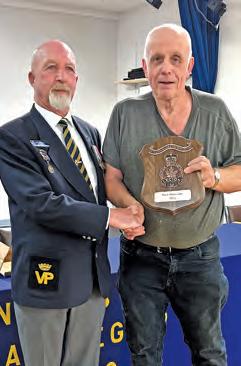
President Roy Buchanan (left) of Alberni Valley Branch in Port Alberni, B.C., presents the Legionnaire of the Year award to Paul Brassard.
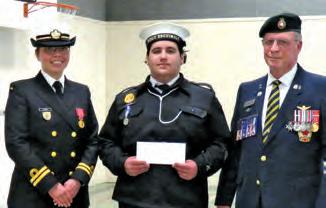
Past President Rick Nickerson of Bowser, B.C., Branch presents $1,650 to 296 Esquimalt sea cadet corps, represented by CPO1 Carlos Morales and Lieut. (N) Rebecca Tyssen.
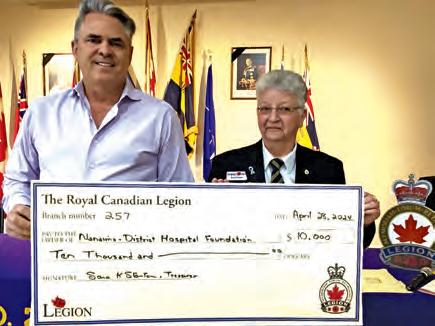
President Vicki Jones of Seaview Centennial Branch in Lantzville, B.C., presents $10,000 to the Nanaimo and District Hospital Foundation, represented by CEO Barney Ellis-Perry.
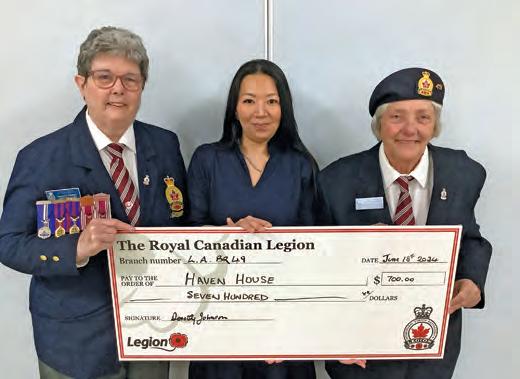
Mount Arrowsmith Branch in Parksville, B.C., presents $700 to Haven House. Represented are L.A. President Dorothy Johnson (left), Haven Society director of operations Camilla Shinohara and L.A. First Vice Yvonne Chartrand.
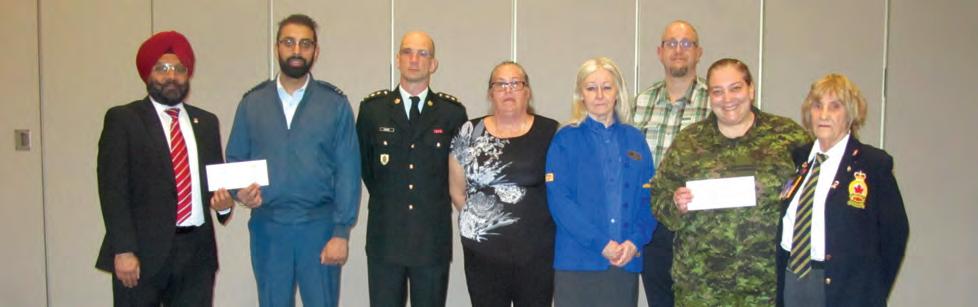
First Vice Jill Bilesky (centre) and Second Vice Brenda Knowles
of
Branch in Surrey,
donate to three local cadet groups. 767 Dearman Squadron air cadet corps received $20,000, while 278 Cormorant Squadron air cadet corps and 2822 The Royal Westminster Regiment army cadets corps received $15,000 each.
First Vice Bill White of Peninsula Branch in Clifton Royal, N.B., and Royal District Commander Kathy Campbell present $500 to the breakfast program at MacDonald Consolidated School, represented by rincipal Ellen Whittacker-Brown.
(right)
Whalley
B.C.,
President Ryan Seguin of Shediac, N.B., Branch presents $500 to Greater Shediac Community Garden, represented by manager Sonya Hebert and president Odette Babineau.

President Brian Eisan of Kennebecasis Branch in Rothesay, N.B., presents $1,000 to Monica Pelletier, whose Rothesay, N.B., home was damaged by fire.
President Ryan Seguin of Shediac, N.B., Branch presents $500 to Able Sail-Handi-Voile Inc., represented by its president, John Emery.
Life member Garry Deeley of Marysville Branch in Fredericton, N.B., receives a Quilt of Valour from Marty Forsythe, accompanied by Capital District Commander Ralph Leblanc and Capital District Chaplain Brian Macdonald.
Heather McGuire, president of the Friday night shuffleboard committee at Herman Good VC Branch in Bathurst, N.B., presents $2,000 raised by shuffleboard players to President Graham Wiseman.
President Graham Wiseman of Herman Good VC Branch in Bathurst, N.B., presents $1,000 to Audrey Ronalds, Anglophone North School District events co-ordinator.
Dalhousie, N.B., Branch presents $103,107.41 in Chase the Ace winnings to Ronald Lavallee.
Verdun, Que., Branch President Darlene Harrison (centre) presents $2,000 to Capt. Robert Ferris and Maude Crevier of 2800 Verdun army cadet corps.
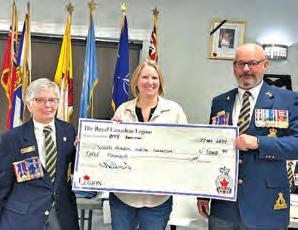
Service officer Connie Bohaker (left) and President Weldon Rideout of A.H. Foster MM Memorial Branch in Kingston, N.S., present $3,000 to a representative from Soldiers Memorial Hospital in Middleton, N.S.
Hudson, Que., Branch Past President Bill Sansom and John Dalgarno (left) present a donation to Capt. Alexandre Grimard Latulippe of 867 Vaudreuil-Dorion air cadets squadron.
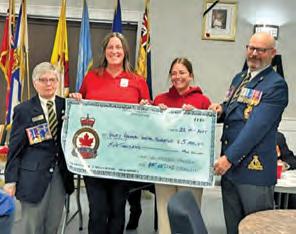
Service officer Connie Bohaker and President Weldon Rideout of A.H. Foster MM Memorial Branch in Kingston, N.S., present $5,000 to Valley Regional Hospital in Kentville, N.S., represented by Karen Theriault and Taylor DeVries.
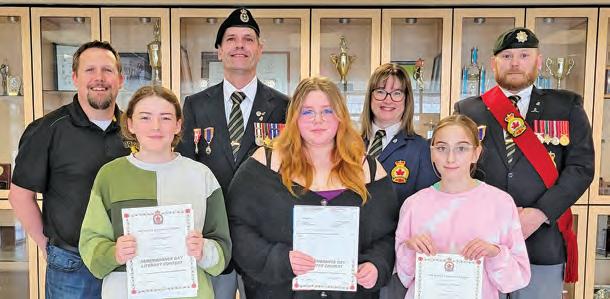
Service officer Jeff Casey (rear, second), treasurer Erin Emmerson, and Sgt.-at-Arms Jeremy Dobson of Oxford Branch in Oxford Junstion, N.S., and principal Duane Starratt present certificates to Oxford Regional Education Centre students Cali Taggart, Kassie Clark and Lauren Stewart, winners in the Legion’s poster and literary contests.
Douglas Lock of California Branch in Manhattan Beach, Calif., in the U.S. Western Zone, presents Naomi Laughlin of Yuba City, Calif., the trophy for winning the Beginners Overall Highland Dance category at the Scottish-Fest Highland games.
Brian Prewitt of Pasadena, Calif., Branch in the U.S. Western Zone, presents Irma Novak of Walnut Creek, Calif., the trophy for winning the Intermediate Overall Highland Dance category at the Scottish-Fest Highland games.
Robert Paddick and President Ricci Hawkins of Calais Branch in Lower Sackville, N.S., present $2,500 to Deanna Paul, CO of RCSCC 305 sea cadet corps.
CORRESPONDENTS’ ADDRESSES
NEWS
BRITISH COLUMBIA
Delta, B.C., Branch presents $25,000 to the Delta Hospital and Community Health Foundation for the purchase of a pressure mapping system.
Past President Gerry Bramhill and Barbara Dyck of Delta, B.C., Branch present $2,500 to executive director Ava Turner and George Derby of the George Derby Centre.
NOVA SCOTIA
The Mud Creek Rotary Club presented Kentville, N.S., Branch with a $5,000 grant to refinish the Legion Hall floor.
A.H. Foster MM Memorial Branch in Kingston, N.S., presents $3,600 to cadet squadron 517 F/Lt Graham Squadron of Greenwood N.S.
ONTARIO
Goderich, Ont., Branch presents $500 to the Gateway Centre of Excellence in Rural Health lecture series.
Goderich, Ont., Branch presents $1,000 to the Alexandra Marine and General Hospital for the “AGMH Rally for the Cure” fundraiser.
Members of the over-50 club at John McMartin Branch in Cornwall, Ont., present $500 to help repair the building.
Mavis Williamson of John McMartin Memorial Branch in Cornwall Ont., presents Sgt. Rayna Timperley of 2403 SD&G Highlanders cadet corps with the Cadet Medal of Excellence
Lisette Saucier of John McMartin Memorial Branch in Cornwall Ont., presents McKenzie Branchaud of 325 Cornwall Kiwanis air cadet squadron with the Cadet Medal of Excellence.
Air cadets 325 squadron CP02 Matthew Antoine receives the Cadet Medal of Excellence from Michael Eamer of John McMartin Memorial Branch in Cornwall, Ont.
South Brant Branch in Oakland, Ont., presents Matthew Peach of the sea cadet corps with the Cadet Medal of Excellence.
South Brant Branch in Oakland, Ont., presents Evan Freeman of 2659 56th Field Regiment cadet corps with the Cadet Medal of Excellence. Byron-Sprinbank Branch in London, Ont., presents S. Eswaran Namboori of 27 air cadet squadron with the Cadet Medal of Excellence.
John McMartin Memorial Branch in Cornwall, Ont., presents $7,500 to St. Joseph Care Foundation.
John McMartin Memorial Branch in Cornwall, Ont., presents $2,000 to three local cadet units.
Send your photos and news of The Royal Canadian Legion in action in your community to your Command Correspondent. Each branch and ladies auxiliary is entitled to two photos in an issue. Any additional items will be published as news only. Material should be sent as soon as possible after an event. We do not accept material that will be more than a year old when published, or photos that are out of focus or lack contrast. The Command Correspondents are:
BRITISH COLUMBIA/YUKON: Graham Fox, 4199 Steede Ave., Port Alberni, BC V9Y 8B6, gra.fox@icloud.com
ALBERTA–NORTHWEST TERRITORIES: Bobbi McCoy, 2020 – 15 St. NW, Calgary, AB T2M 3N8, bobbi-mccoy@shaw.ca
SASKATCHEWAN: Tara Brown, 2267 Albert St., Regina, SK S4P 2V5, admin@sasklegion.ca
MANITOBA: George Romick, 320 Admiral Court, Thunder Bay, ON P7A 8B5, romickg@tbaytel.net
NORTHWESTERN ONTARIO: George Romick, 320 Admiral Court, Thunder Bay, ON P7A 8B5, romickg@tbaytel.net
ONTARIO: Roy Eaton, 567-294B North Channel Dr., Little Current, ON P0P 1K0, reaton@on.legion.ca
QUEBEC: Mary-Ann Latimer, 105-2727 rue St. Patrick, Montreal, QC H3K 0A8, msmarts@bell.net
NEW BRUNSWICK: Harold Wright, 2-299 Main St., Saint John, NB E2K 1J1, foulis20@gmail.com
NOVA SCOTIA/NUNAVUT: James Leadbeater, 4129 New Waterford Highway, New Victoria, NS B1H 5T4, james.leadbeater@hotmail.com
PRINCE EDWARD ISLAND: John Yeo, 657 Rte. 19, Meadow Bank, PE C0E 1H1, islander657@yahoo.ca
NEWFOUNDLAND AND LABRADOR: Brenda Slaney, Box 5745, St. John’s, NL A1C 5X3, bslaney@nfld.net
DOMINION COMMAND ZONES: EASTERN U.S. ZONE, Gord Bennett, 803-190 Cedar St., Cambridge, ON N1S 1W5, Captglbcd@aol.com; WESTERN U.S. ZONE, Douglas Lock, 1531 11th St., Manhattan Beach, CA 90266, douglock@fastmail.com
Submissions for the Honours and Awards page (Palm Leaf, MSM, MSA and Life Membership) should be sent directly to Michael A. Smith, Legion Magazine, 86 Aird Place, Kanata, ON K2L 0A1 or magazine@legion.ca.
TECHNICAL SPECS FOR PHOTO SUBMISSIONS
DIGITAL PHOTOS—Photos submitted to Command Correspondents electronically must have a minimum width of 1,350 pixels, or 4.5 inches. Final resolution must be 300 dots per inch or greater. As a rough guideline, colour JPEGs would be between 0.5 megabytes (MB) and 1 MB.
PHOTO PRINTS—Glossy prints from a photofinishing lab are best because they do not contain the dot pattern that some printers produce. If possible, please submit digital photos electronically.
FRENCH INSERT—To receive a French insert of Legion Magazine content, please contact MagazineSubscriptions@legion.ca or call 613-591-3335.
Swift Current, Sask., Branch’s provincial eight-ball winners
Ward Schultz (left), Wayne Westbury, Bill Lee and Dick Lee. SHARON FORTNEY
LONG SERVICE AWARDS



50 years













JOHN ROCK Trail Br., B.C.
AUREL LEGER Shediac Br., N.B.
WILLIAM GORCSI Coldwater Br., Ont.
DEBBIE LUNDQUIST Penetanguishene Br., Ont.
HAROLD PROVOST Eastview Br., Vanier, Ont.
DOUGLAS ALLAN Whitby Br., Ont.
JUNE PERREAULT Barons Br., Alta.
DONALD SCHMIDT Weyburn Br., Sask.
MELVIN VANDESYPE Weyburn Br., Sask.
LORNE PERKIN Camrose Br., Alta.
LARRY ESKDALE Weyburn Br., Sask.
ROBERT FLOWERS Westboro Br., Ottawa
WILLARD MARR Weyburn Br., Sask.
PEGGY WHELAN Verdun Br., Que.
ALDRIC OUELLETTE Shediac Br., N.B.
RAY BARKER Eastview Br., Vanier, Ont.
ROBERT MORRISON St. Croix Br., St. Stephen, N.B.
AL MORRIS H.T. Church Br., St. Catharines, Ont.
IAN FLOWERS Eastview Br., Vanier, Ont.
WILLIAM MAUCH Whitby Br., Ont.
HARRY HEWITT Lord Elgin Br., St. Thomas, Ont.
MEL MIZZI Sault Ste. Marie Br., Ont.
RON SIMPSON Alberni Valley Br., Port Alberni, B.C.
RAY BERGIE Coldwater Br., Ont.
DONALD FERGUSON St. Croix Br., St. Stephen, N.B.
years
years
PAT THOMAS Tweed Br., Ont.
PALM LEAF
GARNET OLSON Kamsack Br., Sask.
LOWELL CROWE Ashby Br., Sydney, N.S.

LYNN DEERING
Marmora Br., Ont.

MARY-ANN LATIMER Aylmer Br., Que.

BARBARA EARLE H.T. Church Br., St. Catharines, Ont.
LIFE MEMBER AWARDS
BRITISH COLUMBIA
KEITH WILLETT
Lynn Valley Br., North Vancouver
NOVA SCOTIA
RITA M. DOUCETTE
Wedgeport Br.
CLINTON SAULNIER
Wedgeport Br.
CYRILLE LeBLANC
Wedgeport Br.
ONTARIO
MARILYN CRAWFORD
Perth-Upon-Tay Br., Perth
DIANE WARTNABY Lucknow Br.
BOB CRANSTON
Lucknow Br.
HUGH McCALLUM
Hensall Br.
SUE RILEY Hensall Br.
PRINCE EDWARD ISLAND
DAVID REDMOND
Wellington Br.
QUEBEC
DAVE SAVARD
Quebec North Shore Br., Baie-Comeau

SOCK BUNDLE
BUY THE BUNDLE AND SAVE $4.99!
Put your best foot forward with our bright and fun socks. For each pair produced, three pairs are donated to agencies across Canada providing clothing to Canadian veterans.
Adult size: M/L 7-12
Only 34.99/your choice of two pairs + tax and shipping

Socks sold separately for 19.99 each


LOST TRAILS
CANADIAN ALLIANCE OF BRITISH PENSIONERS—Seeking British ex-patriots living in Canada who may qualify for state pension, formerly old age pension, from the U.K. The British government has refused to pay annual increases to residents of Canada, Australia and other Commonwealth countries. There are more than 100,000 recipients of the state pension resident in Canada alone. The annual “uprating” applied in April 2024 to state pensions in the U.K. was 8.5 per cent. In Canada, it was zero. The alliance has, in addition to a comprehensive database, volunteers who can address questions. Details of the legislation and of the efforts of the non-profit alliance can be found at www.britishpensions.com, phone 416-253-6402, or by email to sarah@britishpensions.com.
Vision
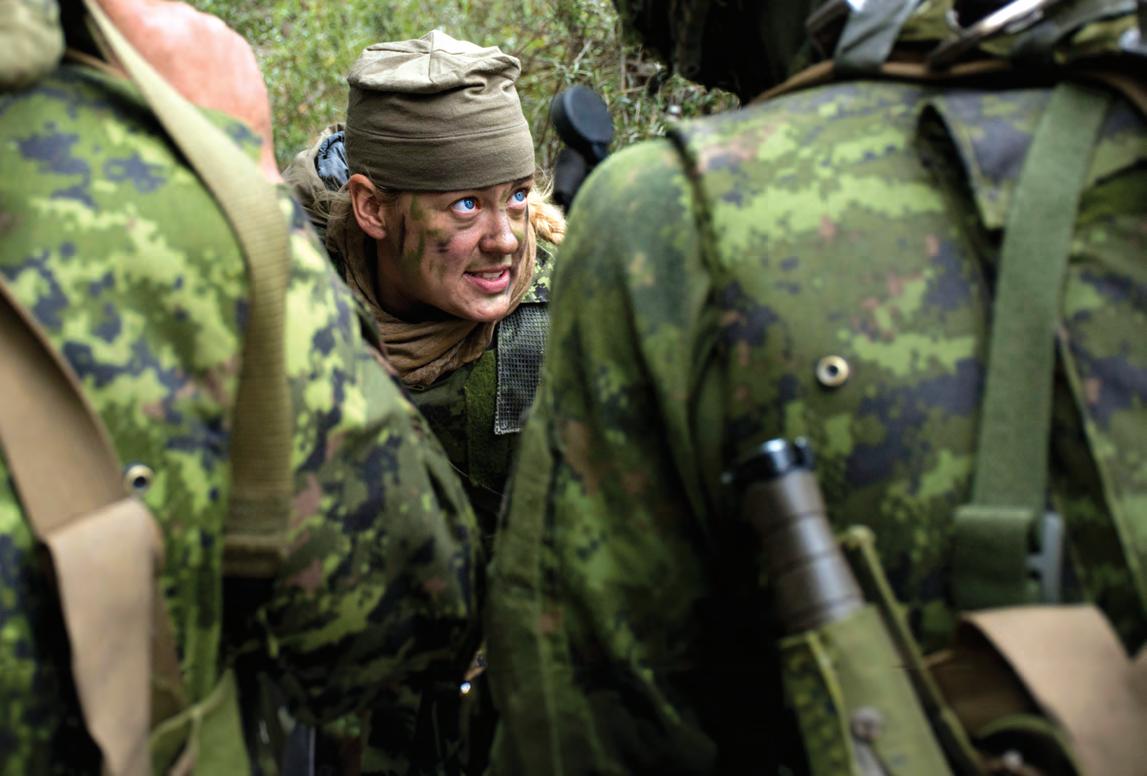
On the state of Canada’s military and the recent defence policy
update quest
The present state of the Canadian Armed Forces is, in a word, pathetic.
There’s a shortage of some 16,000 personnel in the regular and reserve forces combined. The Royal Canadian Navy can scarcely put its ships to sea for lack of sailors, and the Royal Canadian Air Force is running out of pilots for its aging, 1980s-era fighter jets and is outsourcing advanced flight training to other countries. The army’s infantry battalions, meanwhile, are at half strength, specialists are in short supply, and reserve units are under strength and underfunded. Plus, existing equipment is run down and replacements are behind schedules and over budgets.
The procurement system, when it works at all, moves at a glacial pace. The government has been cutting budgets despite its pledge to NATO to spend two per cent of the country’s gross domestic product (GDP) on its military. It’s a mess, but the feds attempted to begin fixing matters with the new defence statement in April.
Here are a few of the major problems Canada’s military is facing and
what, if anything, the defence statement had to say about them.
First, the Trudeau government might have sent a quick, positive message to the troops by reversing its decision to cut almost $1 billion from the annual allocations to the Defence Department in each of the next two years. The cuts will continue, but there’s said to be $8 million in new money coming during the next five years.
Second, the recruiting issue needs to be fixed. A report to Defence Minister Art Eggleton in 2000, “In Service of the Nation: Canada’s Citizen Soldiers for the 21st Century,” noted myriad complaints, including problems with the recruiting process. Twenty-five years later, little has changed. In late 2022, the Defence Department did expand the pool of potential force members to permanent residents and subsequently more than 21,000 applied.
But security screenings, required of all applicants, can take 18 to 24 months, and just some 100 of the applications have since been approved; the remainder still to be concluded when, after months of waiting, the vast majority of those seeking to enlist
Major Chelsea Anne Braybook, 1st Battalion, Princess Patricia’s Canadian Light Infantry, briefs colleagues during a NATO exercise in Latvia in 2017.
moved on to other employment. How can this be fixed? Speed up security clearances, aggressively recruit specialists and offer better conditions for serving personnel. The defence statement said the government would take such steps. It had better do so, or what Defence Minister Bill Blair called the CAF’s “death spiral” will only continue. Third: defence procurement is seemingly in disarray.
The Liberal government’s platform for the 2019 election stated that “to ensure that Canada’s biggest and most complex defence procurement projects are delivered on time and with greater transparency to Parliament, we will move forward with the creation of Defence Procurement Canada.” This was a good idea, one long sought by the Defence Department. But nothing happened, leaving the military’s procurement in the hands of two or more of the three government departments—Defence, Public Services and Procurement Canada, and Innovation, Science and Economic Development Canada—most involved. Cabinet ministers are also always involved, seeking kudos for getting jobs for their constituents. It’s a patronage and public service swamp that has stopped the CAF from getting a new pistol for years and new trucks for a decade, and will likely keep new aircraft and ships on the drawing boards for ages. Canada can’t even produce artillery shells fast enough to replace those given to Ukraine.
This needs to be sorted out now with one minister and one department ultimately responsible and accountable for military procurement. Regrettably, the defence review only promised a study of the procurement system. Leaving a broken system in place at a critical time simply isn’t good enough. Finally, the government needs to state that it will—honestly—meet its pledge to NATO to dedicate two per cent of the country’s gross domestic product (GDP) to defence. This would mean adding some $20 billion to the Defence Department’s present budget, admittedly a difficult task when Ottawa is already running an estimated $40-billion deficit this year. But global security seems tenuous these days with tensions rising between the West and Russia, China, North Korea and Iran. And Canada’s credibility with its allies is
on the line. The increase needn’t happen all at once, but it must be done within, at most, two or three years to support a fullstrength military with modern equipment.
CANADA’S CREDIBILITY WITH ITS ALLIES IS ON THE LINE
And it can’t include (as NATO presently allows in its calculations of members’ spending), military pensions, the costs of Canada’s cryptologic agency, veterans’ benefits, the RCMP’s bills for its personnel participating in peacekeeping, and the expenses borne by other federal departments when they support the Defence Department. The CBC concluded in late 2019 that such expenditures added nearly $5 billion a year to the financial numbers Canada sends to NATO. In other words, while Ottawa reports it currently spends 1.38 per cent of the country’s GDP on defence, it’s actually about 1.1per cent when those costs are removed.
The defence review is replete with promises of major spending on new equipment, more personnel, daycare for children of those serving, better health care, improved infrastructure and more. Unfortunately, all of this is to be done within a 20-year time frame. No government can make such promises, especially one that must call an election by fall 2025. These are nothing but paper pledges by a government that hasn’t been good at keeping its word.
So, what’s in the defence review that’s concrete? Some small amounts of money over the next five years; more personnel to be found through a sound recruiting system; a study of the procurement process; and a wobbly “commitment to reach defence expenditures of 2% of gross domestic product…as agreed by NATO members.”
But global security is increasingly fragile these days, and therefore, so is Canada’s safety. “Nothing was ready for the war which everyone expected,” wrote Leo Tolstoy in War and Peace as Napoleon’s invasion of Russia was coming in 1812. That, regrettably, seems eerily similar to Canada’s current situation: there’s little preparation for conflict that may well be coming. This must change. L
glory? Blaze of
The 1976 Montreal Olympics was a major assignment for the Canadian Armed Forces, with about 9,000 service members involved. Security was a preoccupation for the hosts, with memories of the terrorism attack at the 1972 Munich Games still fresh. While the army had the biggest load, the navy contributed about 1,000 sailors as it handled security for the sailing events of the Games, which were staged on Lake Ontario off Kingston, Ont. The navy contingent included three destroyers, HMC ships Nipigon, Annapolis and Saguenay, along with 70 tow and rescue vessels. In contrast, Canada never had more than three destroyers at a time assigned during the Korean War.
The Games went off without major hitches, although the final day of the sailing regatta offered a few scary moments. As the final races wrapped up, a pillar of black smoke suddenly climbed into the sky out on the lake. Security vessels, ready for anything, dashed for the site where they found one of the competing yachts burning, while several official vessels bobbed nearby. The response was quickly stood down as the story came out.
One of the Olympic competitors was very unhappy with his performance over the week-long regatta, and he blamed his boat. In fact, he developed a hatred for his boat. And wanted no part of it.
But under the rules which allowed him to bring the vessel into Canada free of duty, he couldn’t sell it. He couldn’t give it away. He couldn’t even donate it. He would have to pay to have it freighted back home.
> Do you have a funny and true tale from Canada’s military culture? Send your story to magazine@legion.ca
Air support during the Normandy Campaign apparently could be iffy. According to the Canadians: “When the Luftwaffe came over, we dove for cover. When the RAF came over, the Germans dove for cover. When the Americans came over, everyone dove for cover.
But he found a loophole. After the last race, he waved over a support boat and, as confused officials looked on, he and his crewman stripped his vessel of sails, winches and anything else that could be quickly detached. When that was done, he opened a gas can and slopped fuel all over his racer. He stepped aboard the support vessel, lit a gas-soaked rag and tossed it in. His boat went up with a whoosh of flames and burned merrily.
While the yachtsman had to explain himself to both race officials and security people, as well as the sailors who had sped to the scene, he was said to be grinning the whole time.
During the last few months of the Second World War, the brass in a Canadian division decided that each artillery troop should include an expert on mines and booby traps. In response, a young artilleryman was tabbed for a course on clearing mines. He and his colleagues were taught the tricks of lifting and defusing the sneaky explosive devices. For their final test, they were driven to an open field, where a large sign in German warned of “Minen.” They were told to clear the field.
As they gingerly surveyed the scene, the sergeant-major climbed back in the truck. As he drove off, he leaned out the window: “Go to it boys, but be careful. I’ll wait down the road. I hate messy scenes.”
Eventually, they lifted all the mines they could find. The sergeant-major returned, counted the mines, then casually tossed them into the truck. The onlookers winced at his cavalier treatment of ordnance. He grinned and explained that he and a helper had planted the mines a couple of weeks ago. “They’re duds.”
A Second World War unit was pulled out of line for a brief rest, but was simultaneously chided for the state of its vehicles. They were told their paint was chipped and faded and needed to be retouched. So, someone found drums of grey paint, and everyone set about slapping it on. One bright fellow suggested adding gasoline to the drums. It would dry a lot faster, he said. The gas was duly added and, sure enough, the paint dried in record time, letting everyone get back to the actual important tasks, like scrounging booze. The new paint job passed muster, and all was well. Until the first big rainfall, when all the gasoline-diluted paint washed off.
Illustration by Malcolm Jones
HE LIT A GAS-SOAKED RAG AND TOSSED IT IN. HIS BOAT WENT UP WITH A WHOOSH OF
A Canadian Spitfire squadron operating out of an airfield in Normandy in the summer of 1944 decided it was time to party when it was given a few days off. Teams were dispatched to local towns and farms to rustle food and drink. One group found a nearby farm with a tempting crop of ripe corn and decided a corn roast would be a nice change from rations. When the party started, locals were invited to drop by for a drink and a chat through the language barrier. One of the visitors was the corn farmer. He was all smiles until he came to the food table and found the air force members enjoying fresh corn slathered in Normandy butter. He stared horrified. “Mais non, non, messieurs,” he gasped. “C’est pour les animaux!” L
FLAMES.
HEROES AND VILLAINS
By Mark Zuehlke
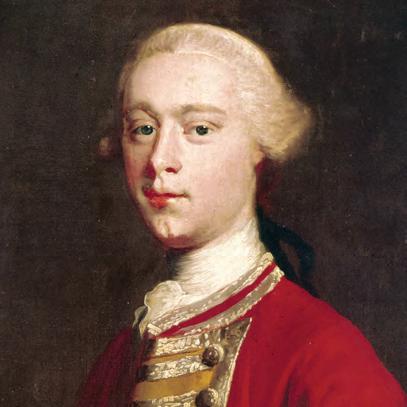
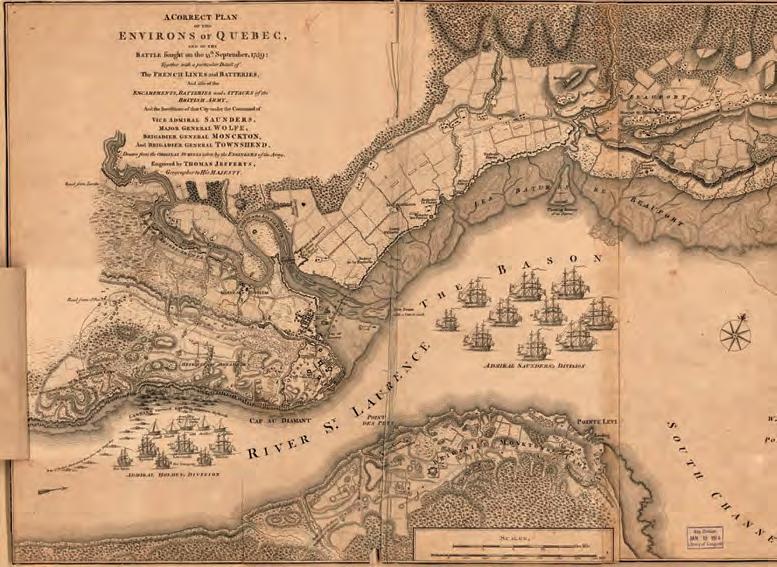
OnSept. 12, 1759, Major-General

WITHIN 15 MINUTES THE FRENCH WERE ROUTED
“Now, God be praised, I will die in peace.”
—Major-General James Wolfe after the French retreat
&WOLFE
James Wolfe had been besieging Quebec since late June. The 32-year-old Wolfe wrote: “The Marquis de Montcalm is at the head of a great number of bad soldiers, and I am at the head of a small number of good ones, that wish for nothing so much as to fight him—but the wary old fellow avoids an action doubtful of the behaviour of his army.”
Now, Wolfe faced a decision. If he didn’t seize Quebec soon, the British must quit the siege and withdraw from New France before the St. Lawrence River froze. It was time to roll the dice.
Bedridden through August, Wolfe was in poor health. This may have led to his proposing an attack virtually identical to one repulsed on July 31 along the shoreline at Beauport, east of the city. When his three brigadiers rejected the plan, Wolfe first accepted their counter proposal for an operation west of Quebec and then abruptly modified it in favour of striking from a beach just three kilometres west of the city walls. From there, Wolfe’s forces would climb a 53-metre cliff in darkness to gain
the Plains of Abraham. Once on the plateau, they could shake out in the famed British thin red line to meet the French. Assuming, of course, that the French would forsake their defensive walls to give battle. Wolfe was betting New France’s military commander Lieutenant-General Louis-Joseph de Montcalm would fight.
On the night of Sept. 12-13, Wolfe moved about 4,400 British regulars by flat boat to the beach. French sentinels were quickly overwhelmed by the leading light infantry who then spearheaded the climb. By dawn, the British infantry faced Quebec with two 6-pound cannon for support.
As Wolfe had hoped, Montcalm emerged at about 10 a.m. with about 4,400 men. Only 2,000, however, were regulars— the rest were militia and First Nations. As the French approached firing, the British waited until they were about 35 metres distant before firing two salvoes that “sounded like a canon shot.” Within 15 minutes the French were routed.
Wolfe had won, but he lived only a few minutes past the victory. Struck in the wrist, groin and chest—the last by a piece of artillery shrapnel—he died. His body repatriated to England, Wolfe was given a hero’s funeral. In 1772, a memorial in his memory was unveiled in Westminster Abbey. L
JAMES WOLFE
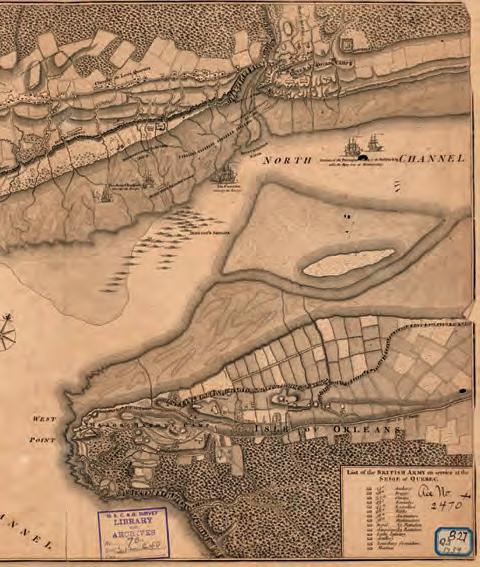
The English and French generals
both die
in a decisive battle for New France
& MONTCALM
When New France’s Governor General Pierre de Rigaud de Vaudreuil suggested reinforcing defences on the cliffs west of Quebec overlooking the beach at Anse-au-Foulon, Major-General Louis-Joseph de Montcalm laughed.

“Only God, sir, can do the impossible…and we cannot believe the enemy to have wings that would allow them in one night to cross water, land, climb rugged slopes, and scale walls.”
He did, however, send an additional 100 men there as a precaution. On the morning of Sept. 13, Montcalm awoke to discover that Major-General James Wolfe’s British regulars had done precisely what he believed only the Lord could achieve. More than 4,000 redcoats stood on the Plains of Abraham formed for battle.
Montcalm’s decision to emerge from behind Quebec’s defensive walls and confront the British remains a source of controversy. On one hand, Wolfe’s troops had severed the French supply lines and Quebec had only a four-day food supply within. Plus, shelling had left the city’s walls badly damaged and easily breached. But, giving battle so quickly meant not waiting for half of his forces—positioned east of the city— and more artillery to reinforce the garrison.
Some historians argue that such a wait would have enabled the British to dig
DE MONTCALM
entrenchments, but French attempts to do so a year earlier had found the ground virtually impenetrable.
Whatever the reason, Montcalm decided to fight and to do so immediately.
He deployed in three lines with regulars in the first, militia the second and more regulars in the third. First Nations provided flank protection. Montcalm rode out with his troops astride a spirited bay, heedless that he presented a clear target.
WHATEVER THE REASON, MONTCALM DECIDED TO FIGHT AND TO DO SO IMMEDIATELY
The French charged, firing muskets as they ran. After discharging their guns, the militia paused to reload, and the three lines fell into disarray. When the British returned fire with muskets and grapeshot from two 6-pound guns, the French attack faltered, then collapsed into a rout.
During the retreat, Montcalm was struck by a shot to the loins. As he lay dying after having surrendered Quebec to Wolfe’s successor, Montcalm said: “It’s nothing. Do not grieve for me, my good friends.”
He died at about 5 a.m. on Sept. 14.
A monument erected at Quebec in his memory reads: “The gallant, good and great Montcalm…at last defeated through no fault of his own.” L
“Only
God, sir, can do the impossible…and we cannot believe the enemy to have wings.” —Major-General Louis-Joseph de Montcalm
LOUIS-JOSEPH
Queen Victoria herself crocheted eight scarves for Boer War veterans—Richard Thompson of The Royal Canadian Regiment was presented one


wrap Royal In
1964, after some eight months of painstaking research for the Defence Department, Canadian Bombardier Kenneth Richardson found what he was looking for. His search had drawn to a close in Cork, Ireland.
Not only had the decades-old scarf been crocheted by the 19-century sovereign in the final years of her life, but it had been gifted to a Canadian veteran for exemplary service in the Boer War.
Known as the Queen’s Scarf of Honour, it was made from khaki-coloured wool and adorned with the monarch’s “VRI” royal cypher and had once belonged to Richard Rowland Thompson. Born in Cork before emigrating to Ottawa, the Irish medical student answered Canada’s call to arms in 1899.
“The thing we must remember,” said historian and Royal Canadian Regiment (RCR) Major Jayson Geroux, “is that the Second Boer War was Canada’s first foreign conflict when we were considered a new, fledgling nation loyal to Britain.”
Thompson was destined to be in the right place at the right time—and with the right spirit—when Canadian forces engaged the Boers at the Battle of Paardeberg on Feb. 18, 1900.
During a charge on enemy positions, Thompson’s comrade, Private James L.H. Bradshaw, had been shot through the neck. In response, Thompson harnessed his medical skills and went to the man’s aid, pressing a bandage against the ruptured jugular for more than seven hours until assistance arrived.
His exploits didn’t end there. On the battle’s last day—Feb. 27—Thompson again disregarded his personal safety to treat another mortally wounded soldier. In the words of his commanding officer, “[He] immediately dropped his rifle, put his pipe in his mouth and coolly walked out...in the face of a hot fire to the assistance of the man who expired just after [Thompson] reached him.”
Although the RCR private was unable to save the soldier’s life, he had nevertheless displayed extraordinary courage that warranted recognition.
By April 1900, Queen Victoria had crocheted four woollen scarves with instructions that they be

Queen Victoria, Richard Thompson and his Scarf of Honour, awarded for his actions at the Battle of Paardeberg in February 1900.
“distributed to the most distinguished soldiers of the Australian, New Zealand, Canadian and South African Forces.” These were followed by four additional scarves awarded to soldiers of British units.
Thompson became the Canadian recipient of the Queen’s Scarf of Honour, which remained a prized possession until his death of acute appendicitis in 1908, aged 31. It subsequently passed to his

family who had remained in Cork—where Richardson’s search came to its fruitful end. By that time, all eight scarves had been the topic of fierce debate following claims that they were equivalent to the Victoria Cross. Documented evidence indicated otherwise, however, and the matter was eventually dropped.
Few, however, could deny their unique prestige. In 1965, Thompson’s Scarf of Honour was permanently loaned to Canada. The royal handcrafted treasure has since been displayed at the Canadian War Museum in Ottawa. L
BY THE NUMBERS

8
Total number of Queen’s Scarves of Honour 152 Length of the scarf in centimetres
50+
Number of years the whereabouts of Thompson’s scarf were unknown
82
Age of Queen Victoria when she crocheted the Scarves of Honour
Thompson went to the man’s aid, pressing a bandage against the ruptured jugular for more than seven hours until assistance arrived.

O CANADA


By Don Gillmor
CONFERENCE THE CHARLOTTETOWN

TDelegates from the legislatures of Canada, New Brunswick, Nova Scotia and Prince Edward Island at the Charlottetown Conference.
he 1864 Charlottetown Conference was initially designed to discuss a union of the three Maritime provinces. But delegates from the Province of Canada heard about the conference and decided to crash the party.
The meeting brought together strange political bedfellows and fiercely opposing viewpoints in an effort to create a country.
They had expected a grand welcome from their Maritime hosts, but when the ship arrived, the harbour was deserted. Everyone was under the tent that held Slaymaker’s and Nichol’s Olympic Circus, the first to visit the island in 20 years.
of Confederation. Someone invoked the words from the Anglican wedding ceremony: If anyone knows any reason why the provinces should not be united in matrimony, let him speak now or forever hold his peace.
There was laughter, but no objections. There were endless negotiations to come, but this was the unofficial beginning of the Dominion of Canada. Historian J.M.S. Careless wrote, “Other states might have a more dramatic start—but few, surely, a more enjoyable one.”



George Brown, a morally upright Liberal who accused John A. Macdonald of being a corruptionist and disliked French Canadianism and its champion, George-Étienne Cartier, agreed to ally with his nemeses for the grand enterprise of Confederation. Another pivotal figure was D’Arcy McGee, a former revolutionary, and an alcoholic who was considered the country’s greatest orator. They travelled to Charlottetown on the same steamer, Queen Victoria. Luckily, there was $13,000 worth of champagne on board.
The political meetings turned into something of a circus as well, with long speeches, lobster dinners, champagne toasts, debates and dances. The maritime leaders weren’t all in favour of uniting the colonies.
But there was a persuasive argument to be made. Britain was tiring of the expense of the territory and, to the south, the U.S. had put together a massive army. What if those troops were turned north? The best defense was in sticking together.
On Sept. 3, there was a champagne lunch aboard Queen Victoria for the delegates. Historian Peter Waite suggested that this was the precise moment of the birth
During the week, Macdonald spoke eloquently about the benefits of union. Brown talked about the legal infrastructure (something Macdonald would end up being the architect of). McGee, who was also a poet, talked about national identity, one that would be celebrated and defined by a robust literature. Alexander Galt, Upper Canada’s finance minister, talked about the financial machinery of the new nation.
On Sept. 8, a grand ball was held in Province House, with the legislative assembly turned into a dance floor and the library converted to a bar. Dinner was served at 1 a.m. and the speeches went on until 5 a.m. A few hours later, delegates staggered back onto Queen Victoria and it was on to Halifax for another party—down several cases of champagne and one step closer to a country. L
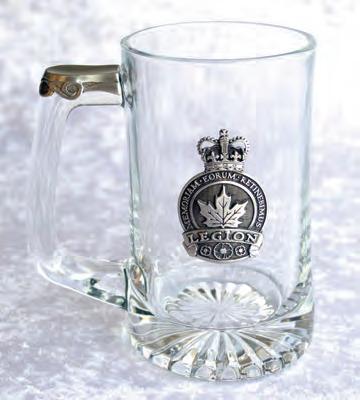





ARUBA, CURACAO AND BONAIRE CARIBBEAN CRUISE
9 Nights onboard Celebrity Eclipse
January 29 - February 8, 2025 , Sailing to Aruba, Curacao, Bonaire and Grand Cayman. Plus, 4 glorious days at Sea relaxing on the Eclipse.
Plus 1 night pre-cruise in Fort Lauderdale, Florida
Pricing based on double occupancy, includes taxes and fees:
For full details on this cruise, visit our website: https://bstvacations.ca/royal-canadian-legion-cruise/
*Please note – included flights depart from
JUNE 13 – 23, 2025
CRUISING ON CELEBRITY ECLIPSE
Amsterdam, The Netherlands * At Sea * Molde, Norway * Olden, Norway * Stavanger, Norway * Kristiansand, Norway * At Sea * Amsterdam, The Netherlands
Pricing based on double occupancy, includes taxes &
Plus 2 nights pre cruise in Amsterdam Contact us today to
Cat.A1–$5,585.00 per person
Cat.C1–$4,385.00 per person
Cat.V1 & V2–$4,295.00 per person
Cat.I1– $3,395.00 per person

September 16 – 29, 2025
CRUISING ON CELEBRITY ASCENT Rome, Italy * Corfu, Greece * Dubrovnik, Croatia * Split, Croatia * Bar, Montenegro * At Sea * Olympia (Katakolon), Greece * Sicily (Messina), Italy * Naples, Italy
Plus 2 nights pre cruise in Rome
Pricing based on double occupancy, includes taxes and port charges:
speaking contact: Bruce McIntosh, 1-800-461-8500 Ext 301/(519) 271-5710 Ext 301 bmcintosh@bstvacations.ca
speaking contact: Debbie Pichette au (418) 525-0540 ou par courriel à dpichette@gvq.ca