


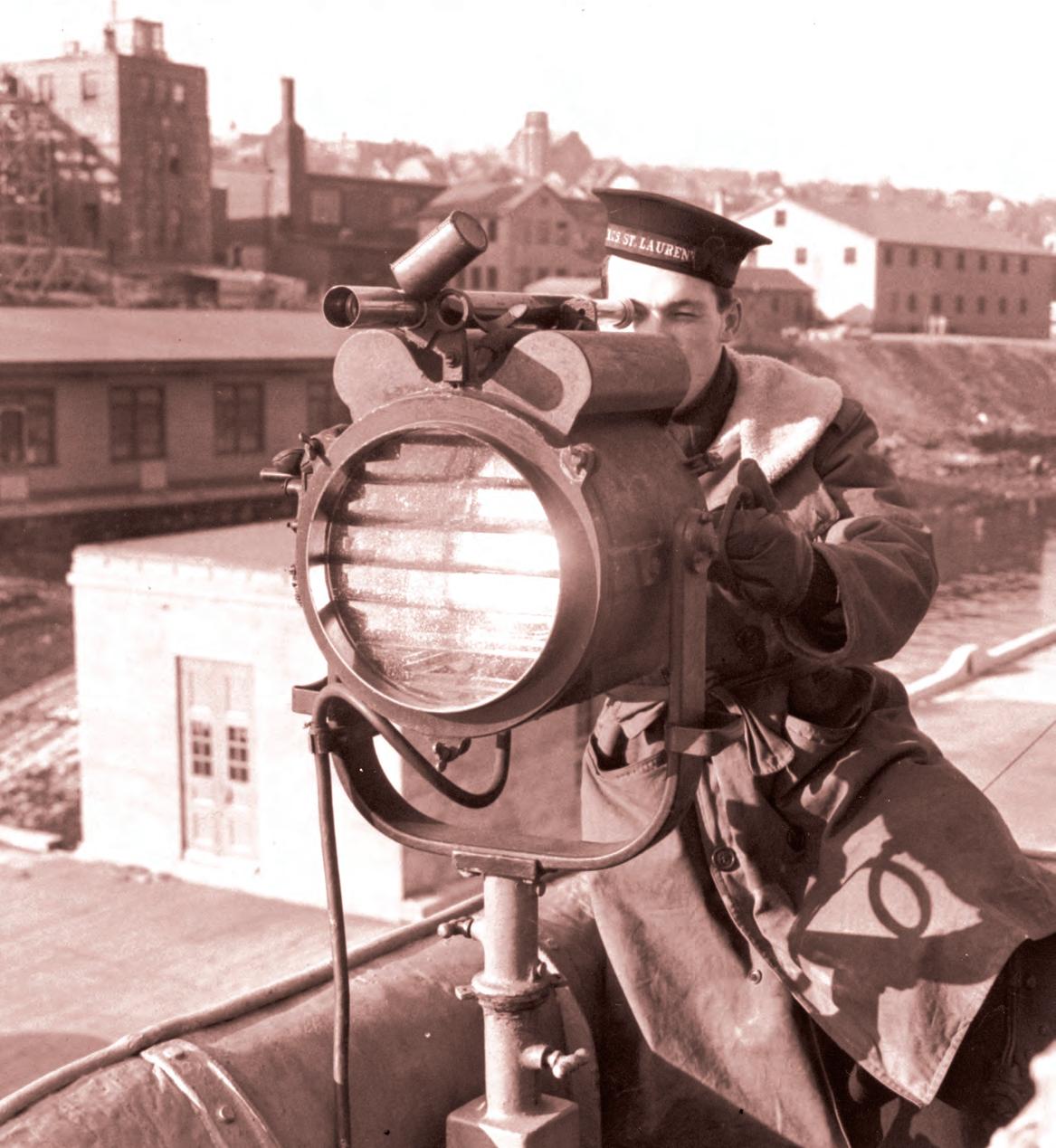
An unidentified sailor operates the signal projector aboard HMCS St. Laurent in 1940.
See page 44
22 THE SHOOTING STAR
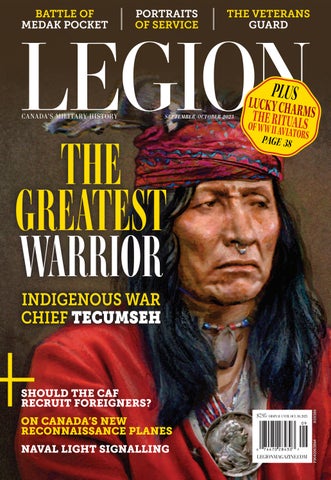
Celebrating the great Shawnee warrior Tecumseh
By Stephen J. Thorne
30 FIGHTING THE MONSTERS OF MEDAK
Canada’s key role in a gamechanging peacekeeping mission
By Paige Jasmine Gilmar
38 CHARMED LIVES
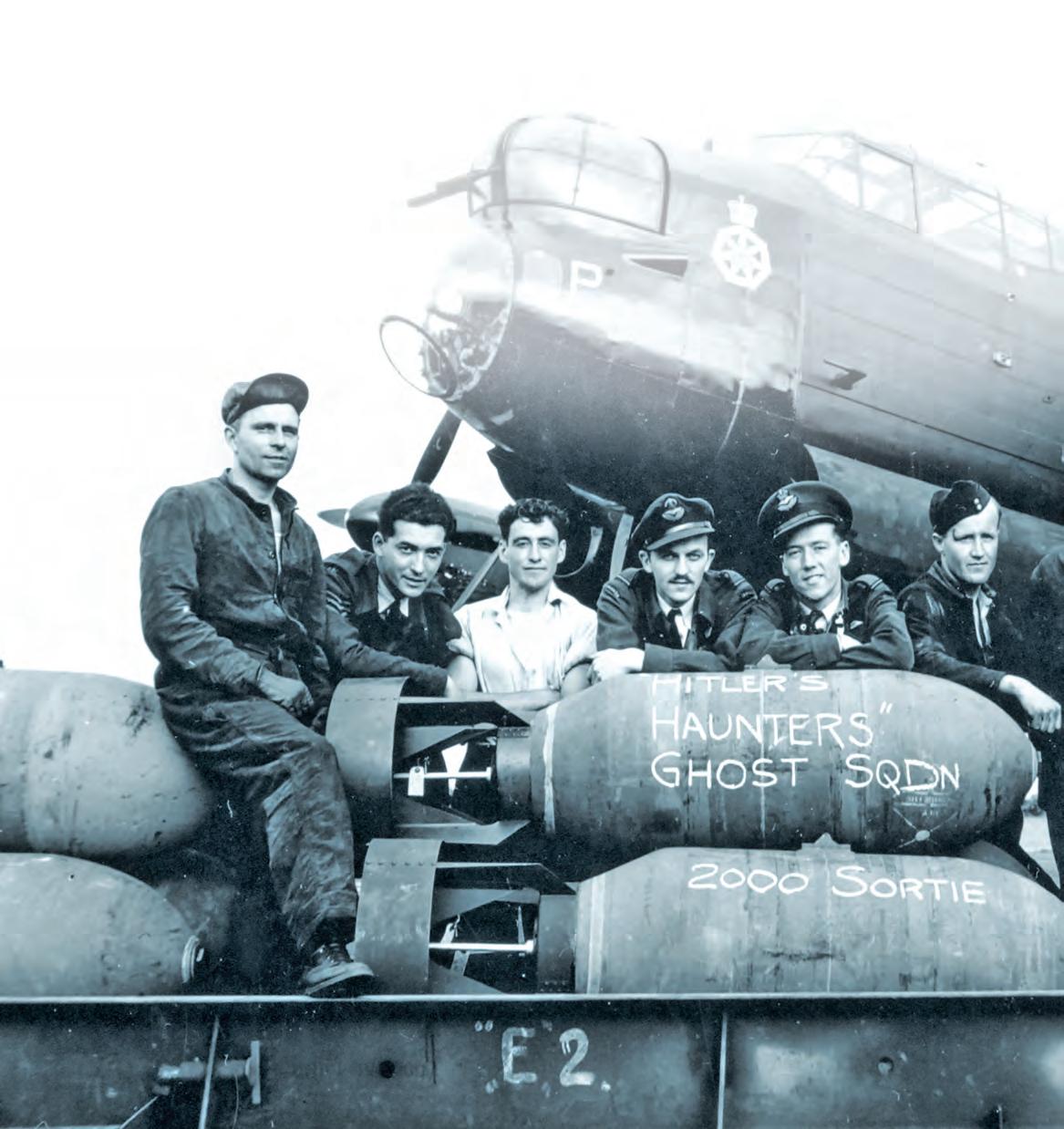
With overwhelming odds against returning safely from a mission, Second World War Bomber Command aircrews resorted to superstition and ritual
By Graham Chandler


44 LIGHT MY WAY
Naval light signalling was an essential form of communication during the Second World War— and it may live on still
By Douglas Theedom
48 OFF TO WAR
A recently unearthed trove of photos captures Canadian men before they embarked to the Great War
By Stephen J. Thorne
54 TO WAR ONCE MORE
The Veterans Guard of Canada enlisted Great War servicemen for critical tasks at home during WW II
By Serge Durflinger

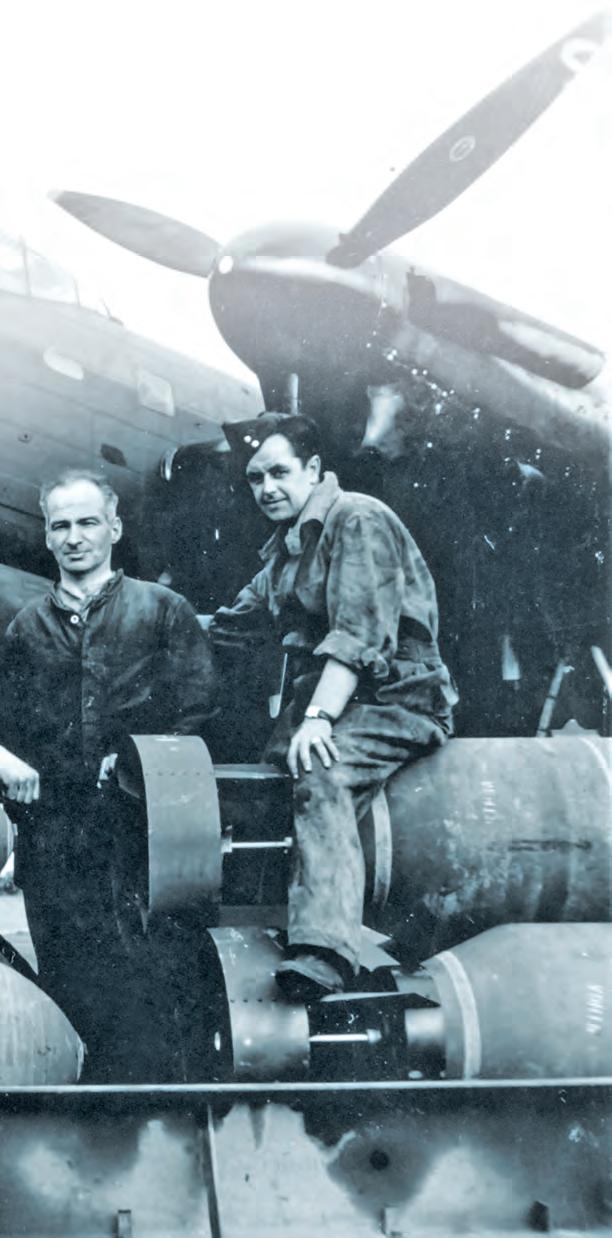
Aircrew and ground crew of No. 428 (Ghost) Squadron, Royal Canadian Air Force, pose with a Lancaster bomber in August 1944. DND/LAC/e005176190
ON THE COVER
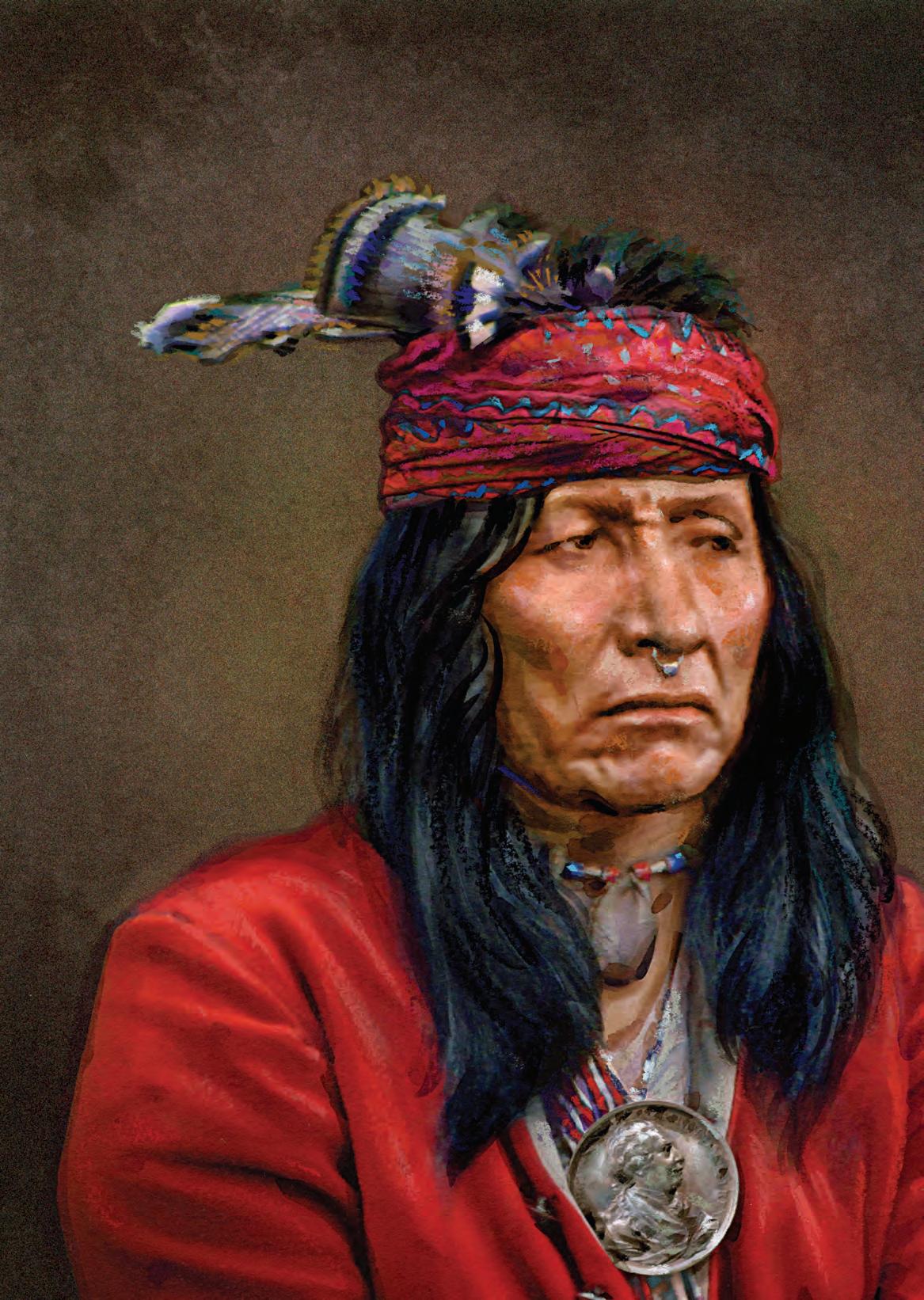
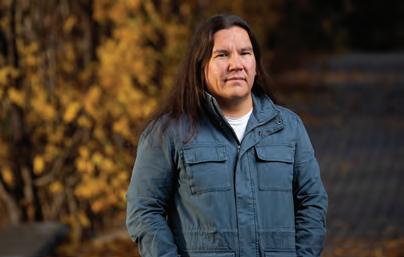
A modern portrait of legendary Indigenous warrior Tecumseh. Sharif Tarabay/LM
Forces?
These socks
Vol. 98, No. 5 | September/October 2023
Board of Directors
BOARD CHAIR Owen Parkhouse BOARD VICE-CHAIR Bruce Julian BOARD SECRETARY Bill Chafe DIRECTORS Tom Bursey, Steven Clark, Thomas Irvine, Berkley Lawrence, Sharon McKeown, Brian Weaver, Irit Weiser
Legion Magazine is published by Canvet Publications Ltd.
GENERAL MANAGER Jason Duprau
EDITOR
INTERIM
ADMINISTRATIVE
SUPERVISOR
Lisa McCoy
INTERIM
ADMINISTRATIVE ASSISTANT
Jonathan Harrison
ADMINISTRATIVE
SUPERVISOR
Stephanie Gorin (on leave)

Sock Rocket. For each pair produced, three pairs are donated to agencies across Canada providing clothing to Canadian veterans.
Adult
Aaron Kylie
ASSISTANT EDITOR
Michael A. Smith
STAFF WRITERS
Paige Jasmine Gilmar
Stephen J. Thorne


ART DIRECTOR, CIRCULATION AND PRODUCTION MANAGER
Jennifer McGill
SENIOR DESIGNER AND PRODUCTION CO-ORDINATOR
Derryn Allebone
DESIGNER
Sophie Jalbert

Advertising Sales
CANIK MARKETING SERVICES
TORONTO advertising@legionmagazine.com
DOVETAIL COMMUNICATIONS INC mmignardi@dvtail.com OR CALL 613-591-0116 FOR MORE INFORMATION

SENIOR DESIGNER AND MARKETING CO-ORDINATOR
Dyann Bernard
WEB DESIGNER AND SOCIAL MEDIA CO-ORDINATOR
Ankush Katoch

Published six times per year, January/February, March/April, May/June, July/August, September/October and November/December. Copyright Canvet Publications Ltd. 2023. ISSN 1209-4331
Subscription Rates
Legion Magazine is $9.96 per year ($19.93 for two years and $29.89 for three years); prices include GST. FOR ADDRESSES IN NS, NB, NL, PE a subscription is $10.91 for one year ($21.83 for two years and $32.74 for three years). FOR ADDRESSES IN ON a subscription is $10.72 for one year ($21.45 for two years and $32.17 for three years).
TO PURCHASE A MAGAZINE SUBSCRIPTION visit www.legionmagazine.com or contact Legion Magazine Subscription Dept., 86 Aird Place, Kanata, ON K2L 0A1 or phone 613-591-0116. The single copy price is $7.95 plus applicable taxes, shipping and handling.
Change of Address
Send new address and current address label. Or, new address and old address, plus all letters and numbers from top line of address label. If label unavailable, enclose member or subscription number. No change can be made without this number. Send to: Legion Magazine Subscription Department, 86 Aird Place, Kanata, ON K2L 0A1. Or visit www.legionmagazine.com. Allow eight weeks.
Opinions expressed are those of the writers. Unless otherwise explicitly stated, articles do not imply endorsement of any product or service. The advertisement of any product or service does not indicate approval by the publisher unless so stated. Reproduction or recreation, in whole or in part, in any form or media, is strictly forbidden and is a violation of copyright. Reprint only with written permission.
PUBLICATIONS MAIL AGREEMENT NO. 40063864
Return undeliverable Canadian addresses to Legion Magazine Subscription Department 86 Aird Place, Kanata, ON K2L 0A1 | magazine@legion.ca
U.S. Postmasters’ Information
United States: Legion Magazine, USPS 000-117, ISSN 1209-4331, published six times per year (January/February, March/April, May/June, July/August, September/October, November/December). Published by Canvet Publications, 866 Humboldt Pkwy., Buffalo, NY 14211-1218. Periodicals postage paid at Buffalo, NY. The annual subscription rate is $9.49 Cdn. The single copy price is $7.95 Cdn. plus shipping and handling. Circulation records are maintained at Adrienne and Associates, 866 Humboldt Pkwy., Buffalo, NY 14211-1218. U.S. Postmasters send covers only and address changes to Legion Magazine, PO Box 55, Niagara Falls, NY 14304.
Member of CCAB, a division of BPA International. Printed in Canada.
We acknowledge the financial support of the Government of Canada. Version française disponible.
On occasion, we make our direct subscriber list available to carefully screened companies whose product or services we feel would be of interest to our subscribers. If you would rather not receive such offers, please state this request, along with your full name and address, and e-mail magazine@legion.ca or write to Legion Magazine, 86 Aird Place, Kanata ON K2L 0A1 or phone 613-591-0116.
As a Legion Member, you take pride in the fact that your membership helps support and honour Canada’s Veterans.
Did you know that it comes with benefits you can use, too? Take advantage of all the benefits that come FREE with your membership.

Renew your membership to get all these benefits and more!
MemberPerks® unlocks $1000s in potential savings on offers and deals at stores and restaurants across Canada, including national chains, local businesses and online stores. Use the MemberPerks® app, print out coupons or shop online to save on electronics, travel, fashion, entertainment and so much more!
Your membership also gives you access to additional benefits, including:
• savings and deals from our Membership Partners
• a paid subscription to Legion Magazine
• exclusive members-only items at PoppyStore.ca



ack in early 2017, a young officer cadet from Royal Military College in Kingston, Ont., confronted the chief of the defence staff at an Ottawa conference and effectively took him to task over a particular challenge facing Canada’s female soldiers.
The ballroom was filled with mostly male academics, diplomats, policy-makers and military brass. They had been considering issues such as world order and the “unravelling” of NATO.
But Officer Cadet Melissa Sanfacon had other concerns on her mind. The future leader got right to the point, informing General Jonathan Vance that the recruitment policies he had just been trumpeting hadn’t been adequately thought through.
“When you speak about getting more women into the force, I’m wondering if at the same time there’s been any thought put to kit that can be actually useful and more suited to women in operations,” said Sanfacon.
She then pointed to the most
fundamental of military gear— body armour and rucksacks. She noted that the U.S. military had started issuing kit specifically designed for women while the Canadian Armed Forces had not.
The frame of her rucksack, she explained, was issued in 1982 for what was then the average soldier: a five-foot, 11-inch, 175-pound male. Sanfacon was four-foot-11 and 100 pounds.
“It’s not quite functional or practical,” she said.
Vance, who later pled guilty to obstruction of justice amid a sexual misconduct scandal, told Sanfacon he agreed with her and arranged a meeting with the army chief.
Six years later, Captain Sanfacon is executive assistant to the director general of Air and Space Force Development, and the issues have not gone away. Vance’s initiative to boost the proportion of women in the military by one per cent a year until it reaches 25 per cent is falling short. It was 14 per cent then; it was 16 in 2022.
And complaints about illfitting body armour for female soldiers have been increasing. But the equipment problems aren’t limited to women.
While its aircraft, ships and vehicles age out and big-money replacements are debated and deferred, even more fundamental equipment is apparently in short supply, or altogether unavailable to deployed Canadian troops, male or female.
In Latvia, Canadian soldiers engaged in live-fire exercises with NATO allies resorted to buying their own ballistic helmets equipped with built-in hearing protection/ headsets along with other personal gear to keep pace. The situation is added humiliation to a country that has fallen short of its NATO spending commitment and is 16,000 members shy of its desired strength.
The government has been justifiably timely and generous in its support for Ukraine’s struggle against Russian invasion—to the tune of more than $8 billion in 19 months. If Ottawa hopes to shore up the ranks and rescue the Canadian military’s reputation, it would do well to afford its own the same consideration. L
early 2023 survey by the Angus Reid Institute indicated that half of Canadians don’t have a will. If you’re one of them, Upper Canada Wills, the newest partner in The Royal Canadian Legion’s exclusive Member Benefits Package (MBP), can help. With offices across the country, local lawyers will walk you through the process of documenting your estate and discussing to whom you would like to leave your personal effects and property. They will ensure your will reflects your wishes. Legion members will receive
50 per cent off standard fees for wills and powers of attorney prepared by Upper Canada. Plus, for every will it arranges, the company will give the Legion a royalty for its veterans-support programs. Visit www.ucwe.ca/legion or call (647) 370-3777 to learn more. The MBP also boasts discounts on electric bikes, adjustable beds and related products, automotive repairs and consultation services, travel packages and specially designed travel insurance, online prescriptions, cellphone plans, eyewear, funerals and much more.
Other MBP partners include Teslica, Ultramatic, PEARL Fleet Vehicle Management, Blowes and Stewart Travel, Pocketpills, IRIS Eyewear, Medipac Travel Insurance, belairdirect car and home insurance, Rogers, HearingLife, Arbor Memorial, Canadian Safe Step Walk-in Tub Company, CHIP Reverse Mortgage and MBNA Canada Bank.
The ever-expanding collection of MBP partners are more than just another benefit of joining the Legion—the exclusive savings they offer can easily add up to cover the membership fee. L

is honoured to partner with the Royal Canadian Legion to provide members with a 50% discount on standard fees for the preparation of Wills and Powers of Attorney
In a recent study published in the Toronto Star it was found that more than half of all Canadian adults did not have a Last Will & Testament or Powers of Attorney.
The operating premise of our national business is that Canadians should have the Peace of Mind in planning their end of life decisions by using the expert advice of lawyers.
It is important that you have Peace of Mind knowing that your Last Will And Testament properly provides the

bequests to your family in accordance with your wishes. It is important that you have Peace of Mind in knowing that with properly drawn Powers of Attorney, decisions to be made for your healthcare and financial needs will be by someone you trust and can depend upon.
Lawyers will take you through the process for your estate documentation every step of the way. You will have person to person discussions on how you would like to leave your personal and real property to your family.
The Directors of Upper Canada WILLS are Legion members too. Our fathers were World War II veterans. As a partner in providing benefits to its members, we will give a royalty to the Royal Canadian Legion for every Last Will & Testament prepared. It is a privilege to contribute to an organization that means so much to us personally.



Legion members and their families can benefit from an exclusive discount on their car, home, condo and tenant’s insurance, on top of any other discounts, savings and benefits customers are already eligible for at belairdirect.
To take advantage of this offer, simply call us and mention you are a Legion member to get your exclusive premium.





















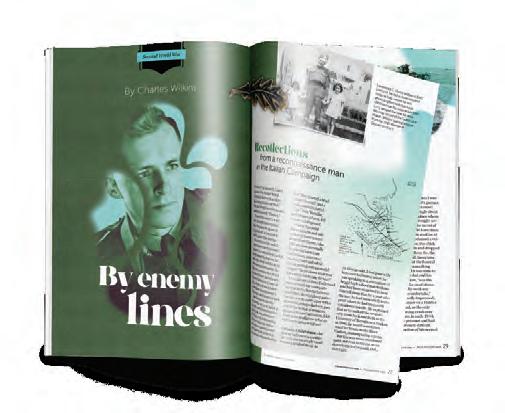
Ijust finished reading the article “By enemy lines” (July/August) by Charles Wilkins. I usually start reading articles a little at a time, but when I started this, I couldn’t stop until I was finished. If there ever was an article about the horrors of war written in honour of a father, this is it. Thank you, Charles, for sharing what your father went through. It’s a lesson of how fortunate we are at the expense of those soldiers who fought for our freedom.
DAVID McBRIDE SOUTH ALGONQUIN, ONT.
Of all things that come in the mail, your magazine is one of the most appreciated. I read it cover to cover and I seldom differ with the information presented. However, I have two comments from the July/August edition. First, on Page 9, you remark that “the RCMP is the only police force in the Commonwealth, if not the world, that is a colour-bearing corps?” I do not believe this is so. The Canadian Heraldic Authority (CHA) has authorized and issued official “Police Colours” to several Canadian police services. I led the project for the Hamilton Police Service to obtain our Colour via the CHA through the Chief Herald more than a dozen years ago, and other police agencies have also done so. As a recognized “Colour,” it is entitled to all the respect and solemnity due any official Colour, military or otherwise.
Secondly, I enjoyed the article (“By enemy lines”) by Charles Wilkins about the story of his father in the Italian theatre during the Second World War. On the first page, though, there is a reference to “Taps” and “Reveille.” Both are
Comments can be sent to: Letters, Legion Magazine , 86 Aird Place, Kanata, ON K2L 0A1
American. The pieces are not like the Commonwealth ones, so it’s not a case of “alternative terminology” for the same thing, although they do serve the same function.
TIM FLETCHER GRIMSBY, ONT.
It was interesting to read staff writer Stephen J. Thorne’s perspective in his “Front lines” column (May/ June) on how Liberal governments “nurtured” Canada’s national identity in the 1960s and 1970s, specifically his reference to replacing the country’s flag. Although the Union
Jack was Canada’s official flag until 1965, it was the Red Ensign that truly embodied the spirit of the country, and accordingly it was universally adopted as our national banner and typically flown not only across the country, but throughout the world. This was the flag under which our military fought and died in both world wars and arguably was a symbol of strong national pride and unity. The “Great Flag Debate,” as the evolution to the Maple Leaf was known, was divisive. I suppose classifying it as a good initiative is a matter of opinion.
C.C. SPARLING CALGARY





The article “U-Boat Man” (May/June) by Stephen J. Thorne really captured my attention. The pictures really helped to tell an interesting story from both the Canadian and German perspective. I’ve been an affiliate Legion
member of the Maj. Hughes Branch in Rainy River, Ont., for eight years. I’m retired from the U.S. Army with a tour in Vietnam. As a member of both the American Legion and the U.S. Veterans of Foreign Wars organization as well, I’m disappointed that their magazines don’t have similar stories to
yours. Knowing your history is important.
JAMES A. HOVDA RICE, MINN.
CORRECTION
Re “On this date” (July/August), Winston Churchill first used the “V” salute on July 19, 1941.
“If it were not for the vicinity of the United States,” said U.S. President William Henry Harrison, then governor of Indiana in 1811, “[he] would perhaps be the founder of an empire that would rival in glory that of Mexico or Peru.”
The man Harrison was referring to was none other than the 18th/19th century visionary and hero Tecumseh. Born in March 1768 in a sprawling settlement of wigwams and bark cabins above present-day Ohio’s Mad River, the Shawnee warrior would come close to forming his own empire, while his very presence stoked fear in enemies and helped stave off intruding Americans.
Get notified of all the latest updates on legionmagazine.com by signing up for our weekly e-newsletter at www.legionmagazine.com /en/newsletter-signup

In Legion Magazine’s latest “Military Milestones” video, listeners are taken back to a pre-confederation era of
instability and hostility in North America. Modern Canada was not yet formed, but the early heroes who helped shape the future country, and North America as it’s currently known, were there, including Tecumseh. His vast, multi-tribal confederacy, ranged from present-day Michigan to Georgia, and fought against colonial settlers.
Listen to journalist, author and storyteller Waubgeshig Rice, as he transports
you to another time and describes the life and influence of Tecumseh. Rice, an Anishinaabe, is from the Wasauksing First Nation near Parry Sound, Ont. His new novel, Moon of the Turning Leaves, will be published in October. It’s a return to the same world explored in his breakout bestselling novel, Moon of the Crusted Snow
You can also read the feature story on Tecumseh in this issue on page 22. L

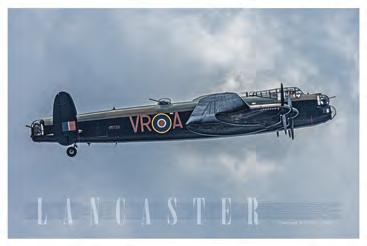
Lancaster, B-25 Mitchell, C-47 Dakota and Canso aircraft just released in the Vintage Warbirds poster series 12" x 18"

2 September 1752
The United Kingdom adopts the Gregorian calendar. The U.K. and its territories had previously used the Julian calendar.
3 September 1894
The first Labour Day is implemented as a national holiday acknowledging workers’ rights.
4 September 2006
Pte. Mark Anthony Graham is killed and three dozen other soldiers wounded after U.S. aircraft mistakenly fire on a Canadian platoon in Afghanistan.
5 September 1979
The first Canadian gold bullion coin, stamped with a maple leaf, goes on sale.
6 September 1953
12 September 1846
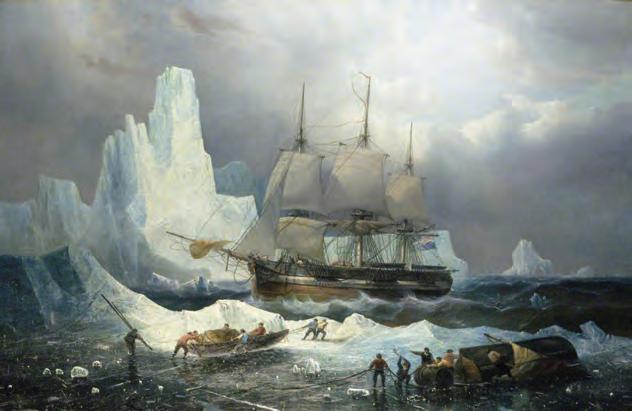
The Franklin expedition ships Erebus and Terror are trapped in ice in Victoria Strait.
13 September 1814
American forces successfully defend Fort McHenry against heavy British naval bombardment in the battle that inspired the lyrics of the U.S. national anthem.
14 September 1857
Canadian surgeon Herbert Taylor Reade earns the Victoria Cross after coming under fire while tending wounded, then leading an attack on Indian rebels in the Siege of Delhi.

The last of 13,444 United Nations prisoners of war are released to the Neutral Nations Repatriation Commission in Korea.
16 September 1974
The Royal Canadian Mounted Police swears in its first female officers.
17 September 1944
Operation Market Garden, a bold but unsuccessful Allied attempt to end the Second World War, begins.
18 September 1941
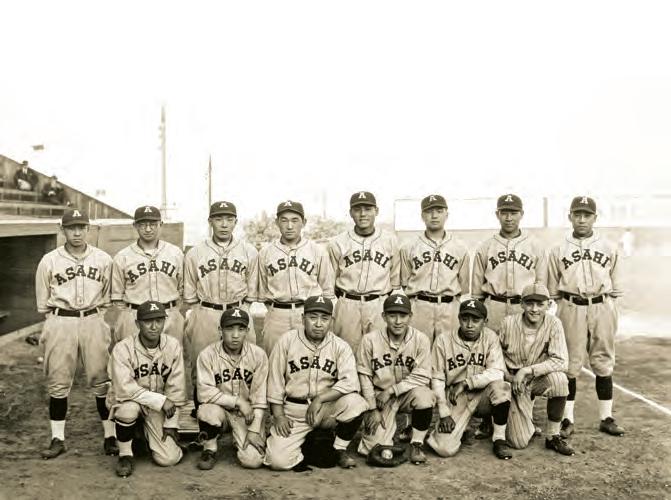
Vancouver’s Asahi baseball club plays its last game as Japanese Canadians are sent into exile or internment camps.
20 September 1943
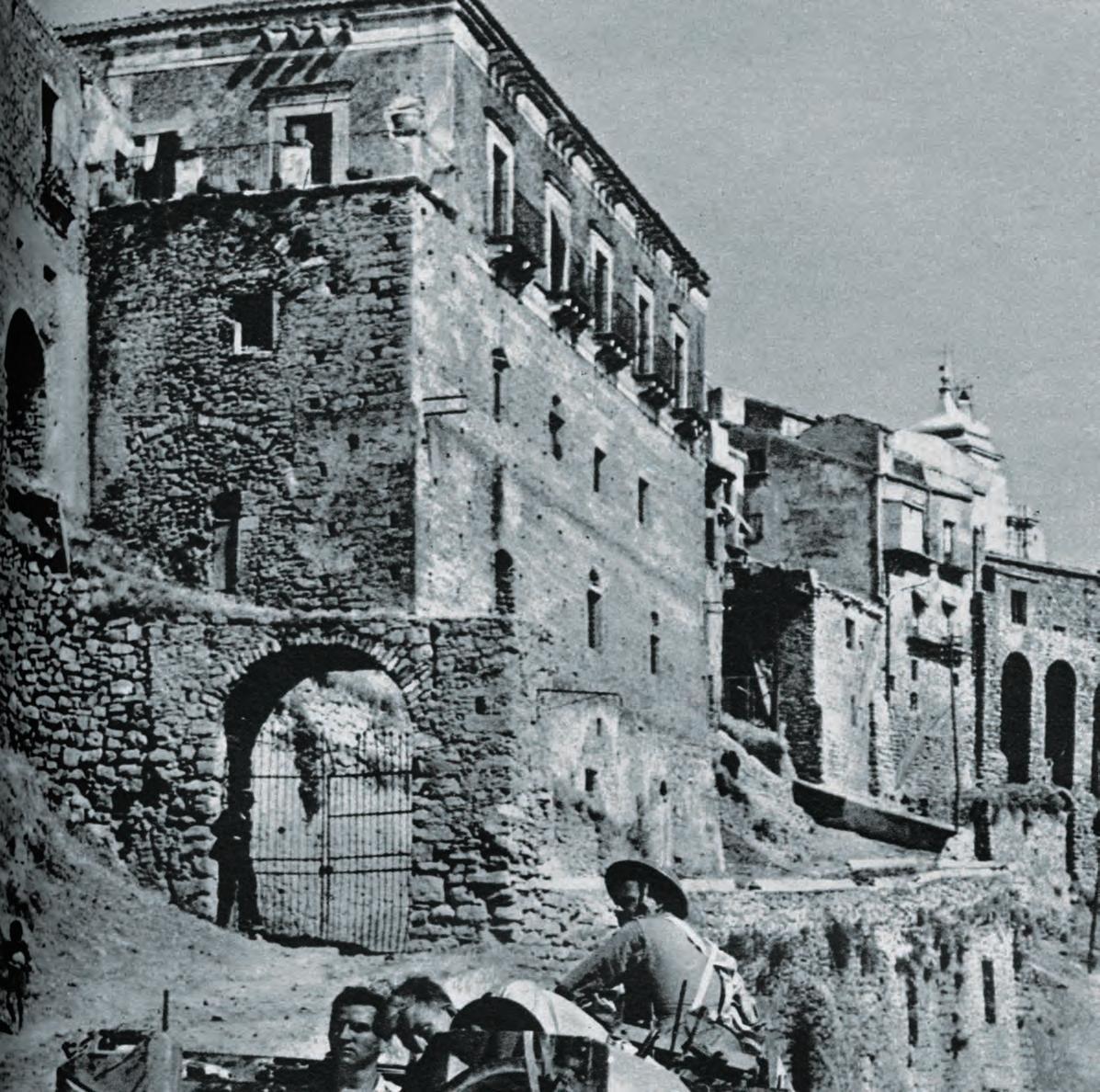
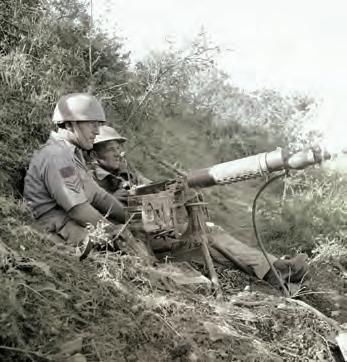
Canadian troops capture Potenza, Italy.
21 September 1902
Alberta’s first oil discovery is made in what is now Waterton Lakes National Park.
24 September 1960
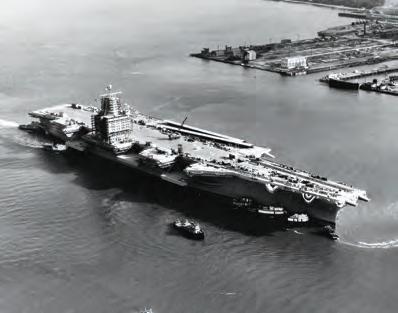
The first nuclear-powered aircraft carrier, Enterprise, is launched by the U.S.
27 September 1973
The Soviet Union performs a nuclear test at Novaya Zemlya in the Arctic Ocean.
28 September 1972
Canada defeats the Soviets in the eighth and final hockey game of the Summit Series.
30 September 1946
Twenty-two Nazi leaders, including Joachim von Ribbentrop and Hermann Goering, are convicted of war crimes at the Nuremberg war trials.

8 October 1992
The modern-day Ottawa Senators play their first game.
9 October 1967
Marxist revolutionary Che Guevara is executed in Bolivia.
10 October 1918

2 October 1535
Jacques Cartier arrives at Hochelaga (now Montreal) on his second voyage to North America.
3 October 1914
The first contingent of the Canadian Expeditionary Force, numbering 30,000, sails from Quebec to join war efforts in Europe.
6 October 1939
Poland surrenders following its defeat at the Battle of Kock. German and Soviet forces gain full control of the country.
7 October 1963
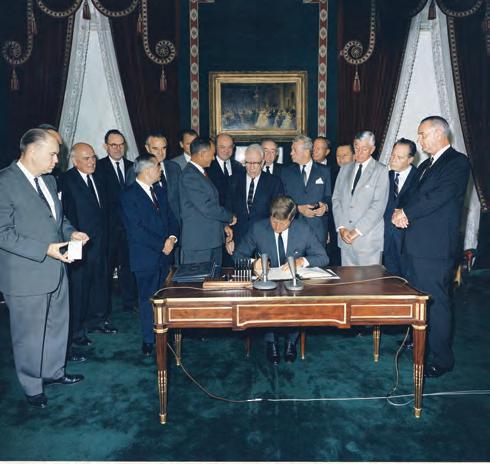
U.S. President John F. Kennedy signs a ratified version of the Limited Test Ban Treaty on nuclear weapons.
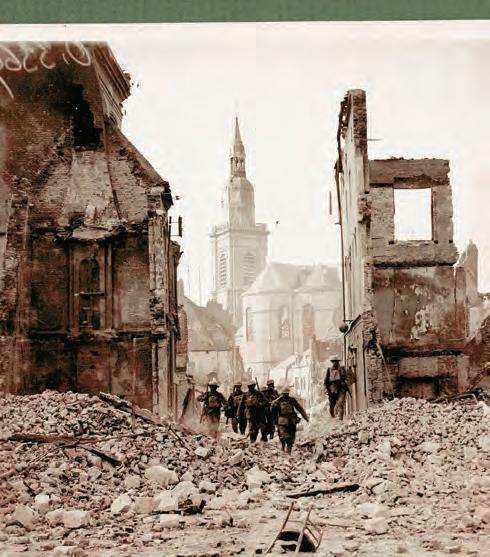
After three days of heavy bombardment, 3rd Canadian Division clears the city of Cambrai, France.
11 October 2000
NASA launches its 100th space shuttle mission.
12 October 1915
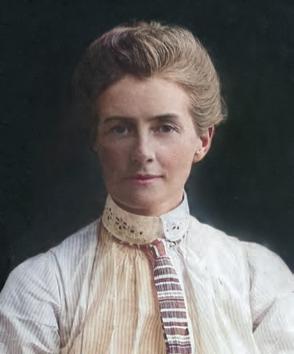
Germans execute British nurse Edith Cavell for helping Allied prisoners escape occupied Brussels.
20 October 1671
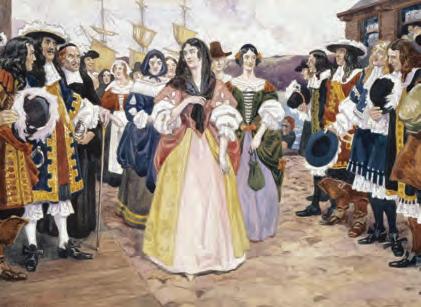
Bachelors in New France are ordered to marry the Filles du roi, immigrant women from France, or lose their hunting, fishing and fur-trading rights.
22 October 1962
U.S. President John F. Kennedy alerts Americans to the Cuban missile crisis and establishes a naval blockade to prevent further weapon shipments to the island country.
23 October 1956
The Hungarian Revolution begins with a massive demonstration in Budapest.
26 October 1917
The Canadian Corps attacks Passchendaele ridge.
27 October 1961
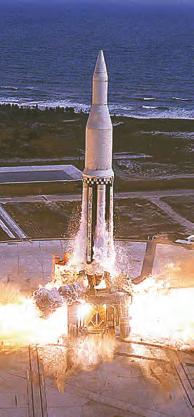
The first Saturn rocket successfully launches.
28 October 1790
14 October 1918
A platoon of The Royal Newfoundland Regiment captures four machine guns, four field guns and eight prisoners during the Battle of Courtrai. Private Thomas Ricketts is awarded the Victoria Cross for his role.
On present-day Vancouver Island, Spain signs the Nootka Convention with Britain, which ends Spanish claims to a monopoly of settlement and trade in the Pacific northwest.
30 October 1995
Quebec citizens narrowly vote in favour of remaining a province of Canada in their second referendum on national sovereignty.
By Paige Jasmine Gilmar
How a pilot team-fitness program showed connections between exercise and veteran mental
ood things come to those who sweat!”
The sentiment has been celebrated by both fitness gurus and health nuts for years, becoming a quote printed on T-shirts, wall decals and bumper stickers.
And while some might get tired of the kitschy cuteness of the “healthy body, healthy mind” tagline, there’s more truth to this trope than you might think. One University of British Columbia researcher decided to capitalize on it for the benefit of Canadian Armed Forces members and veterans, laying the framework for a new type of military health intervention.
Specializing in sport, exercise and performance psychology, Mark Beauchamp ran a pilot study in Vancouver called “Purpose After Service through Sport,” or PASS, from September to March 2020. The program sought to use team sports as a way for active and retired military members to better transition to civilian life and promote social connectivity and healthy lifestyles.
And the sport to do this? Ball hockey.
“It’s just turn up, sweat, socially connect and have fun,” said Beauchamp.
On any given night, self-refereed games of 10-20 players were held in a local armoury. Lasting about 45-60 minutes, the game was followed by refreshments in
the mess, where CAF members bonded over ice-cold drinks.
The program’s design seemed almost too simple. After all, it’s just a game and a hang with a beer—isn’t that what most Canadian weekends consist of? How was this supposed to benefit military members?
Well, beneath PASS’s seeming simplicity, a constellation of scientific fact bears its makeup, showing exercise to be vital to mind-body wellness. For instance, a 2022 review found that out of the nearly 1,300 experimental studies conducted on the effects physical activity has on mental health in the preceding 12 years, 89 per cent of them recorded a significantly positive relationship.
From the studies surveyed, the report surmised that 30-45 minutes of exercise three to five times per week delivered the greatest mental health benefits, with those who engaged in team sports reporting 20 per cent fewer “poor mental health days” each month.
Such scientific phenomena were essential to initiating PASS.
“[The data is] quite consistent now around the benefits of physical activity,” said Beauchamp.
This data came alongside Beauchamp’s team noticing that the transition back to civilian life can be especially difficult for CAF members. Losing military identity and the daily structure
cultivated in basic training and combat, many struggle with their new-found autonomy, leading to a host of mental challenges that are often exacerbated by issues with maintaining social connections and employment.
This is further compounded by a disconnect in the use of government-funded veteran health programs. A survey from 2010 found that a whopping 39 per cent of CAF members with mental health conditions were not receiving available services from Veterans Affairs Canada.
Since substantial evidence indicates that exercise and group identity correlate with boosting mental wellness and providing individuals with a sense of purpose, Beauchamp decided to create a military-specific program, inspired by the veterans he spoke with at his campus.
“After transitioning out of the military…some [veterans] struggle,” said Beauchamp.
A self-described “army brat” whose father served in the British army for 30 years, Beauchamp noted “you have some sense as to what army life is like.”
PASS, however, was one of the first military exercise initiatives open to all veterans, not just those who were wounded or sick. And to Beauchamp, bringing individuals who share the same military experience into a pro-team, pro-military environment—ball
hockey in an armoury—could create a sense of community and camaraderie many CAF members otherwise lacked in their daily lives.
“They come together on a sports field playing ball hockey,” said Beauchamp. “There’s this immediate sense that they’re talking the same language. They understand one another because they know what it’s like to serve in the military.”
The results were promising. PASS participants reported a boost in their mental health, with one telling study interviewers, “you’re doing something collectively and kinda suffering together which helps build/ forge bonds and friendships.”
Many participants really liked the way it simulated military structure, as well, with another commenting, “the army is kinda similar to [PASS], so it’s kind of like a work-hard, play-hard mentality….”
PASS also became a conduit for participants to learn about other veteran health programs and healthy habits.
“I think it sort of destigmatized [access to support],” said Beauchamp.
Seeing the overwhelmingly positive response to PASS, Beauchamp had sought to restart the program after the pandemic and even received monetary support from VAC’s Veteran and Family Well-Being Fund in 2021 to begin a multi-provincial, six-month initiative to bring hundreds of CAF members into sports this year. The fully fleshed out PASS program, taking the form of a multi-phase, randomized study, never reached fruition, however, and the grant was returned.
“We simply weren’t able to reach sufficient numbers to run the study,” said Beauchamp.
Still, those who worked on PASS believe it was worthwhile. Other veteran-health services such as
Soldier On, a similar initiative, have used PASS’s findings to strengthen their own programs.
“There are [sports-based] programs out there,” said Beauchamp, and “these programs can help veterans.”
More importantly, though,
Beauchamp believes there’s plenty left to explore regarding the benefits of physical activity for military wellness.
“We need to be open and listen,” he said. “It’s up to us as a community to see how we can best support [our veterans].” L

Addressing a longstanding bugaboo of one of the country’s most revered institutions headon, a former regional president of The Royal Canadian Legion delivered a firm message to its grassroots membership in May.
Marion Fryday-Cook was Nova Scotia/Nunavut Command president from 2019 through 2021. She’s now a member of the Legion’s national committee on equity, diversity and inclusion. She didn’t mince words when presenting a report on the organization’s draft plan to address what some consider the Legion’s single-biggest challenge.
“We’re moving into a new world,” Fryday-Cook told an all-white convention audience in Sydney, N.S. (also see “Nova Scotia/Nunavut bids farewell to long-time executive director” on page 61). “Somebody once said, we’re all volunteers and the Legion sometimes tends to eat its own and go after its own.
“It’s time, as members of The Royal Canadian Legion, we soften our thoughts; we are kind to each other; we look out for each other; and we look out for the veterans and their families in our communities, regardless
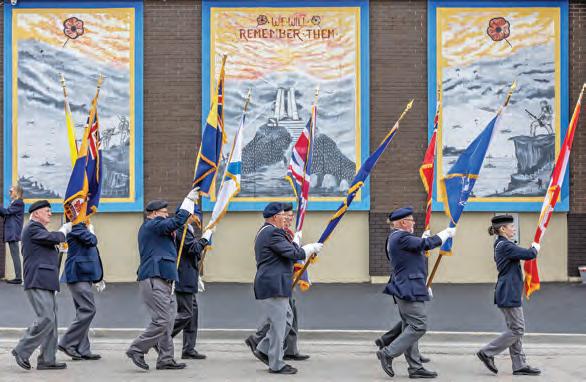
A Legion colour party leads a pre-convention parade past the Ashby Branch in Sydney, N.S., on May 21, 2023. Former command president Marion Fryday-Cook delivered a stern message on the evolving issue of equity, diversity and inclusion within the national service organization.
of our biases—time to throw those out the window.
“We are all Canadians. We are all human beings. We all deserve the dignity and the respect that we want from others.”
The highly respected FrydayCook, the command’s second woman president, received warm, if not rousing, applause for her efforts.
An aging Legion membership has been declining for years. Its rolls, which numbered 604,000 in 1984, had dropped to less than 250,000 by 2022 when membership rose 3.8 per cent, its first increase in three decades.
Yet, as with society at large, old ideas still prevail in some places and the Legion has resolved to address them.
Operation Harmony, aiming to promote a welcoming environment for all at Legions across the country, was formed in September 2021 to address issues surrounding equity, diversity and inclusion (EDI).
The committee’s draft strategic plan was approved by the Dominion Executive Council in April. It spent the summer developing a draft action plan to be presented to the council in September. If approved, it will go before the Dominion Convention in Saint John, N.B., next year.
“By doing these things that we have to do, we will bring in the next generation,” said council member Trevor Jenvenne. “If we don’t take these steps and do it expeditiously, there won’t be anyone to pass the torch to.”
The nine-page draft plan notes the Legion philosophy that a veteran is a veteran is a veteran “must be clearly understood to include the statement ‘regardless of age, ethnicity, race, nationality, disability, economic status, gender identity, sex and sexual orientation.’”
“If we accept this supposition,” it says, “we will give all veterans and non-veterans alike
> Check out the Front lines podcast series! Go to legionmagazine.com/frontlines
a clear indication that they will be supported and served by the Royal Canadian Legion regardless of their association with any equity-deserving group.”
The document acknowledges that, while the Legion has become increasingly diverse, it “has failed to keep pace,” largely due to challenges attracting younger, post-Cold War veterans and other potential members from racialized and LGBTQ+ communities.
Once an exclusively exmilitary organization, veterans and their families still made up about 75 per cent of Legion membership in 2020. Its core principles remain unchanged: service and remembrance.
The annual poppy drive raises about $20 million for veterans—buying hospital beds and equipment, providing meals and home services, and
supplementing the costs of such things as heating, housing, clothing, medicine and medical appliances.
It has advocated on veterans’ behalf since it was founded as The Canadian Legion of the British Empire Service League in Winnipeg in 1925. It was a voice for First World War veterans and helped win them pension and disability benefits.
It remains at the forefront of the continuing struggle for veterans’ rights, including those of the RCMP, and their families.
An RCMP veteran, a member of the Métis Nation and president of the Legion’s operational stress injury (OSI) special section, Jenvenne employed some tough talk when discussing inclusion with the council in Ottawa: Embrace EDI or die, he said. He told them that the organization’s leadership cannot be afraid to
alienate some older or intransigent members if it is to move forward and attract new generations.
“Those ones who feel alienated [by the EDI initiative] are not the ones we need in our organization. We don’t,” emphasized Jenvenne, one of about 23,000 Indigenous vets in Canada. “We as the younger veterans now are really the ones who are most important going forward.
“I hate to say it, but those individuals who are going to block this won’t be around when I’m here 30 years down the road.”
The Op Harmony committee has met with special advisers, hired a consultancy, and spoken to members and veterans. The consultancy sent out 99,000 emails to Legionnaires; 8,881 responded. It held three virtual town halls, conducted focus groups and consulted other veterans’ organizations worldwide. L






By David J. Bercuson
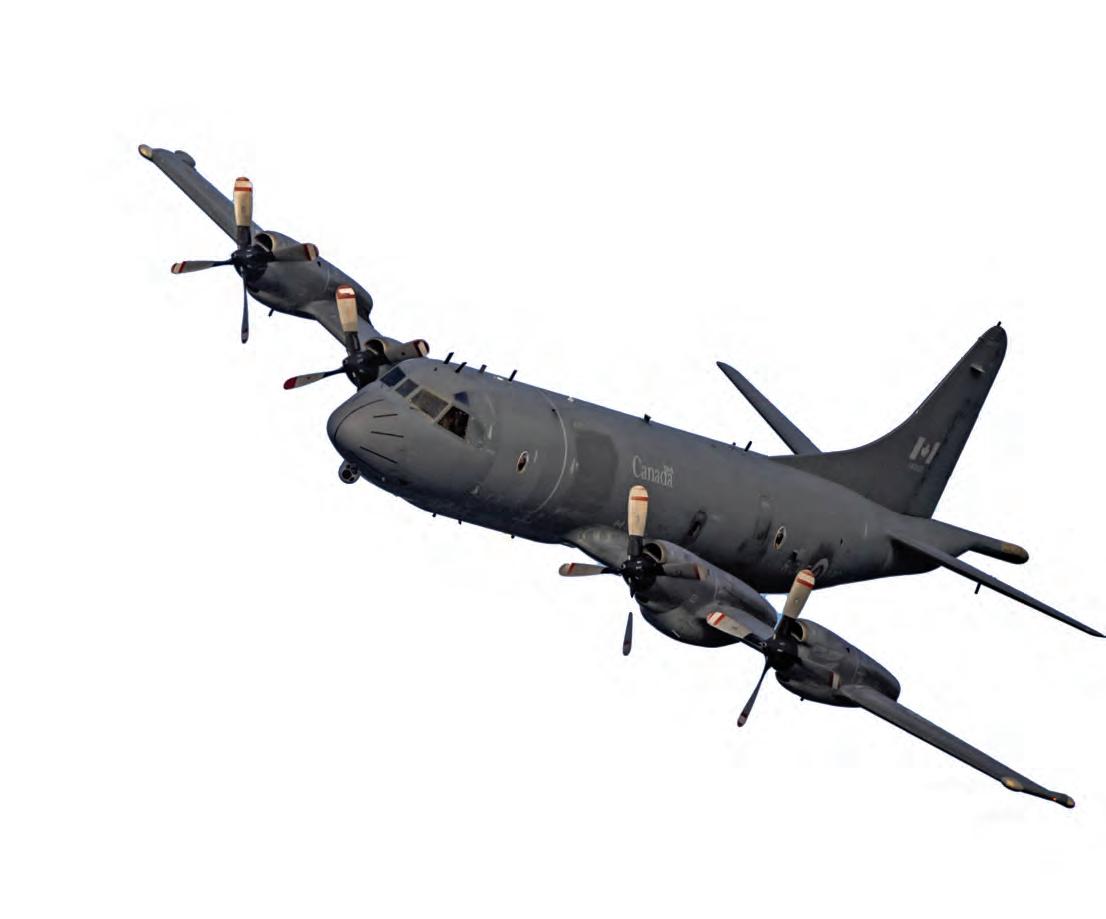
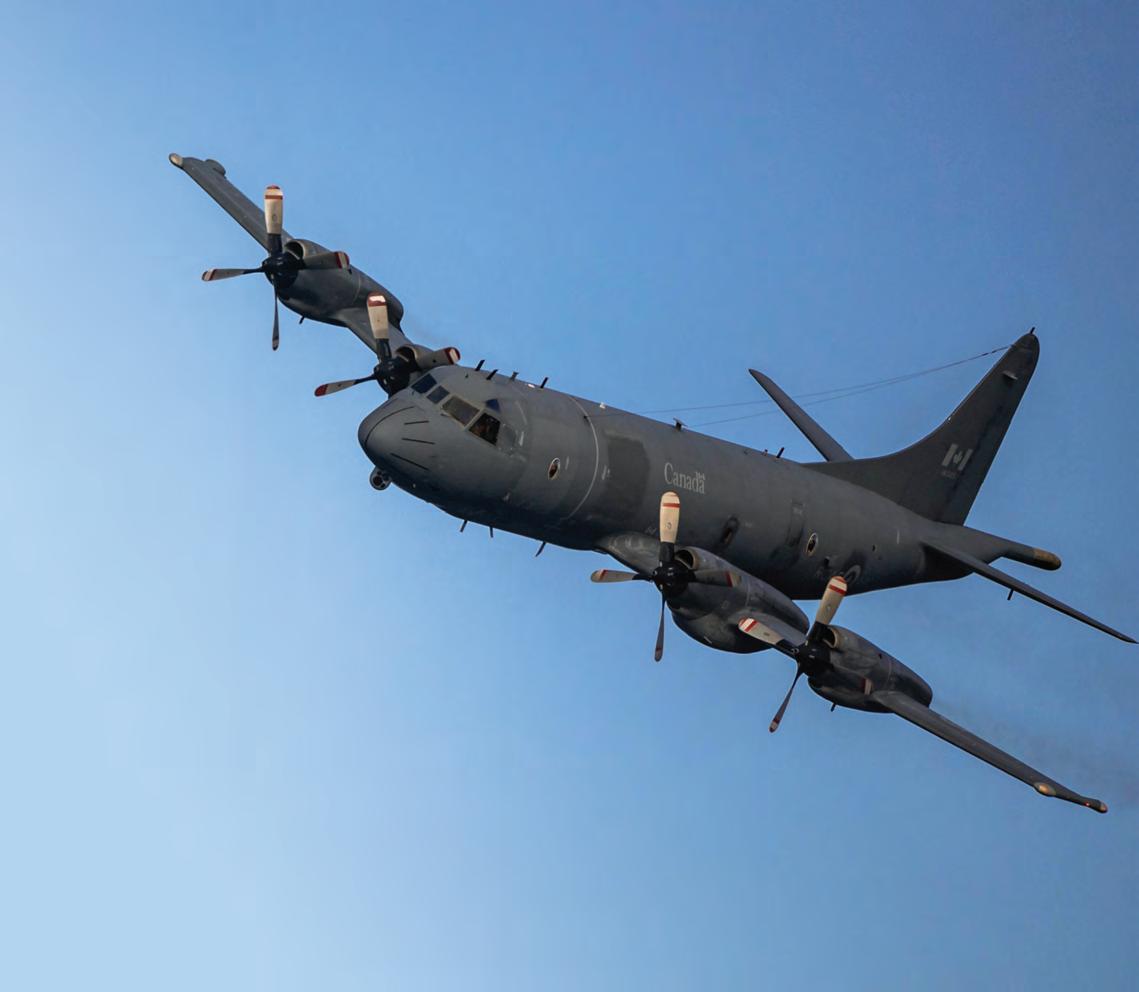
Canada is looking to replace its fleet of CP-140 Aurora aircraft.
Why look any further for a new surveillance-reconnaissance aircraft than the only available option?

M40 years ago, the Canadian Armed Forces acquired a fleet of CP-140 Aurora aircraft. At the time, they were top of the line and have since served the air force and navy well. But now that it’s time for an upgrade, Ottawa must choose between a reputably built aircraft or simply the concept of a model that will create jobs in the country.
The Aurora is a four-engine, maritime-surveillance, reconnaissance and anti-submarine aircraft. Its airframe and engines were designed by Lockheed Martin, and it boasts an electronics suite from the Lockheed S-3Viking. It’s a derivative of the P3 Orion, as the Americans call it, which first flew in the 1960s.
Over the years, the CAF has spent hundreds of millions of dollars upgrading the aircraft to keep it up-to-date, recently spending a final $52 million to ensure the fleet can fly for most of another
initiatives, which have improved the airplane’s surveillance and reconnaissance capabilities and strengthened perceived weaknesses in the airframe, have turned the Aurora into a capable airplane, though still an old one.
As military journalist David Pugliese reported this past May in the Ottawa Citizen, the federal government is now looking at a replacement for the Aurora and has approached Boeing to discuss purchasing 16 P8Poseidon aircraft—a military version of Boeing’s 737-7 airliner—under a provision that allows it to make a sole-source purchase if it deems there’s only one option that suits its needs.
The provision was used several times after Canada joined the war in Afghanistan, including, for example, its acquisition of the BAE Systems M777 towed howitzer in the early 2000s. Since it would take years for the P8s to be delivered, the recent
will allow Canada to deploy an acceptable maritime reconnaissance aircraft until then.
Enter Canadian business jet maker Bombardier, headquartered in Montreal. Knowing that Ottawa has approached Boeing, Bombardier, in partnership with General Dynamics which would supply electronics, is proposing to sell the CAF a maritime and surveillance aircraft based on its Global 6500 business jet.
Bombardier/General Dynamics noted that if Ottawa purchases its plane, the military would get a Canadian aircraft, built in Canada, which would also produce jobs in the country. The duo, as Pugliese reported, is urging Ottawa to “allow a competitive, fair and transparent procurement process.”
Boeing’s P8 is currently used by the U.S and Indian navies, as well as the air forces of Australia, the U.K., Norway and NewZealand.



Plus, the navies of South Korea and Germany have ordered U.S. has had the aircraft in full operation for more than a decade.
Buying the P8 would be a safe option for Canada given that it’s a proven aircraft. Purchasing the Bombardier/ General Dynamics option is riskier because it’s still a concept.
, Bombardier’s jets, now the company’s only line of business after it divested its rail transport unit in early 2021, are a hot commodity, responsible for quadrupling its profits since 2020. And the C-Series airliner it designed in the early 2000s—and for which Bombardier received roughly $1 billion in subsidies from the Quebec and Canadian governments—is considered an outstanding passenger aircraft. (It is now known as
the A220 and built by Airbus in Montreal and Mobile, Ala.)
Regardless, the P8 is already flying with six countries and has been ordered by two more who are certainly capable of choosing an aircraft that best suits their needs. This, of course, points to yet another facet of this complicated story. Whenever Canada orders new equipment for its military that is built to its narrow specifications—such as the CH-148 Cyclone maritime helicopter, which didn’t even exist as a military aircraft until the country ordered it—it seems to result in delays, cost overruns, technical failures and other costly disruptions.
Let’s face it, Canada’s military procurement record is abysmal, and no one seems to be able to fix it. One solution is to buy “off the shelf” as Ottawa did with the aforementioned M777howitzer. Had it purchased ready-made warships, the vessels might have been in harbour by now. When Canada replaces its current fleet of submarines, it will almost certainly have to buy an existing model.
Hopefully the government has learned its lesson. The P8 has been flying for more than a decade. It will certainly suit Canada’s requirements. There’s no need for a competition this time. L

That’s



By Stephen J. Thorne

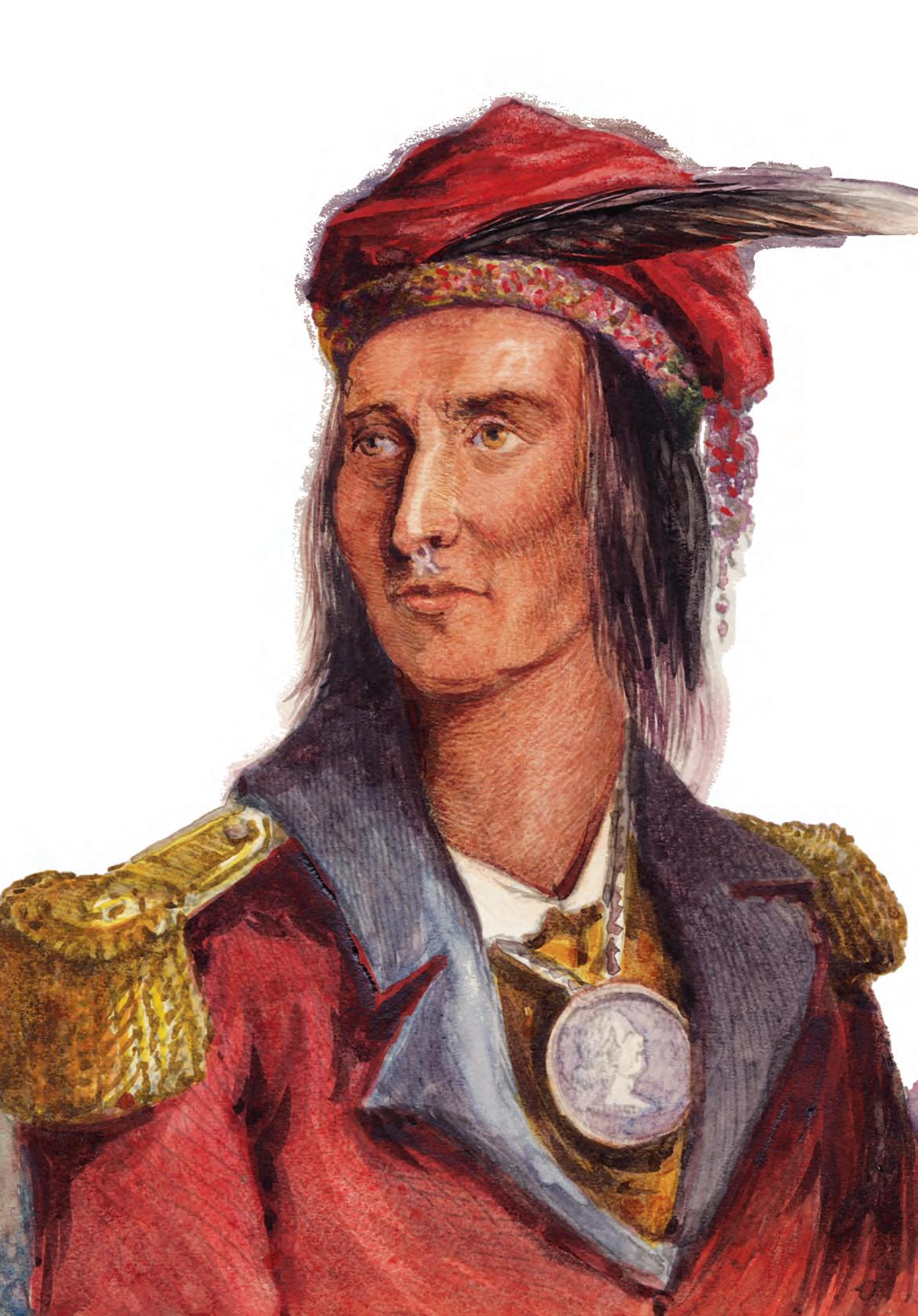
He was a visionary and a pragmatist, a warrior and a diplomat, an enemy and a hero whose legend and likeness penetrated deep and long into the very culture he fought.
“The red men have borne many and great injuries; they ought to suffer them no longer,” declared the Shawnee chief Tecumseh in 1810. “My people will not; they are determined on vengeance; they have taken up the tomahawk; they will make it fat with blood; they will drink the blood of the white people.”
A powerful orator, his speech to the Osage Nation came as he sought to rally fewer than 100,000 Indigenous Peoples in the cause of halting an expanding population
of nearly seven million Americans, some 400,000 of whom were now living in traditional Indigenous territories west of the Appalachian Mountains. His recruitment campaign took him far from his frontier base on the Tippecanoe River in northern Indiana north into Canada and south to the Gulf of Mexico.
“Brothers, if you do not unite with us, they will first destroy us, and then you will fall an easy prey to them,” he warned the Osage three-quarters of a century before the last of the Plains Indians were forced onto reservations and into residential schools—and a way of life disappeared forever. It is now considered one of history’s great genocides.


19th-century


“They have destroyed many nations of red men because they were not united,” said Tecumseh. “They wish to make us enemies, that they may sweep over and desolate our hunting grounds, like devastating winds or rushing waters.”
Word of the Shawnee’s ambitions spread rapidly, leading William Henry Harrison, the governor of the Indiana Territory, to twice negotiate with the dynamic leader face-to-face.
Harrison characterized his adversary as “one of those uncommon geniuses who spring up occasionally to produce revolutions and overturn the established order of things.”
Tecumseh was, as writer Deborah Hufford put it, “one of the greatest Native American chiefs…a man of nearly clairvoyant vision who launched a massive campaign against whites marching west, the first—and last—best hope for Native Americans to save their ancestral lands.”
He would take his confederacy and ally with the British and Canadians in the War of 1812, only to die in battle a year later, his cause destined to be lost but, far short of his aims, his legacy as one of America’s most celebrated military foes and cultural heroes secure.
Tecumseh is believed to have been born in March 1768, possibly during a meteor shower, in a sprawling settlement of wigwams and bark cabins on the bluffs above present-day Ohio’s Mad River, northeast of Dayton. He was given the prescient Shawnee name meaning “shooting star” or “panther crouching for his prey.”
was difficult for young Tecumseh, he had already come to learn the lesson that life is nuanced in greys, not delineated in black and white. He had learned it from his father himself. He would come to envision a gentler society for his people and grew up with a strong sense of justice for all, including his enemies.
“A brilliant orator and warrior and a brave and distinguished patriot of his people, he was intelligent, learned, and wise, and was noted, even among his white enemies, for his integrity and humanity,” Alvin M. Josephy Jr. wrote in American Heritage magazine in 1961.
Tecumseh may have witnessed his first combat at the Battle of Piqua in 1780 near his home on the Mad River. He was 12 years old. At 18, he became a full-fledged warrior. The young man grew to nearly six feet tall, a handsome, imposing and muscular warriorpoet with an arresting presence.
colonial expansion. The whites brought more than guns and plows to the frontier territories. Smallpox and other diseases for which the Indigenous populace had no defence wiped out entire populations.
In the Great Lakes and middle Mississippi River regions, Tecumseh’s Shawnee were joined by Potawatomi, Winnebago, Kickapoo, Menominee, Odawa and Wyandot. Initially, he was met with strong resistance from chiefs who had already signed treaties.
In 1809, Harrison had negotiated the Treaty of Fort Wayne, which ceded more than 12 million hectares of land to the government. Tecumseh, who lived north of the area, maintained the deal was illegal. He met with Harrison in 1810 and 1811 and refused to recognize the treaty.
“The only way to stop this evil [loss of land] is for the red man to unite in claiming a common and equal right in the land, as it was first, and should be now, for it was never divided,” he told Harrison.

The Shawnee were fierce warriors and conflict imposed itself on his life from the beginning. His father, the war chief Pukeshinwau, would die in battle during Lord Dunmore’s War, a 1774 conflict pitting Shawnee and Mingo warriors against white settlers of the Virginia colony.
While dealing with his father’s death at the hands of the British
In 1790, when Tecumseh was 22, he fought alongside Chief Little Turtle against General Josiah Harmar in western Ohio. Fighting under order from then-president Washington, Harmar’s army lost. Nearly two hundred of his troops were killed or wounded in one of the U.S. military’s greatest defeats to an Indigenous force.
For more than a century, colonists had been pushing the Indigenous Peoples of eastern and southern North America west from their ancestral homelands in the regions of the Great Lakes and east of the Mississippi.
As a result, Tecumseh began building a vast, multi-tribal confederacy ranging from presentday Michigan to Georgia to fight
Harrison insisted the agreement was binding. Replied Tecumseh: “Sell a country?!? Why not sell the air, the great sea, as well as the earth? Did not the Great Spirit make them all for the use of his children? How can we have confidence in the white people?”
It’s believed he also reached out to South Appalachian Mississippian tribes, including the Cherokee, Muscogee (Creek), Choctaw, Chickasaw and Seminole.

“Where today are the Pequot?” he asked them. “Where are the Narragansett, the Mohican, the Pocanet and other powerful tribes of our people?
A wood engraving from the mid-19th-century depicts Tecumseh’s brother Tenskwatawa, known as The Prophet, meeting with other First Nations.

“They have vanished before the avarice and oppression of the white man...Sleep not longer, O Choctaws and Chickasaws... Will not the bones of our dead be plowed up, and their graves turned into plowed fields?”
Tecumseh’s cause was aided by his younger brother, Tenskwatawa, a religious visionary known as The Prophet who claimed to have powerful visions decreeing that tribes must unite to fight the evil spirits taking their lands.
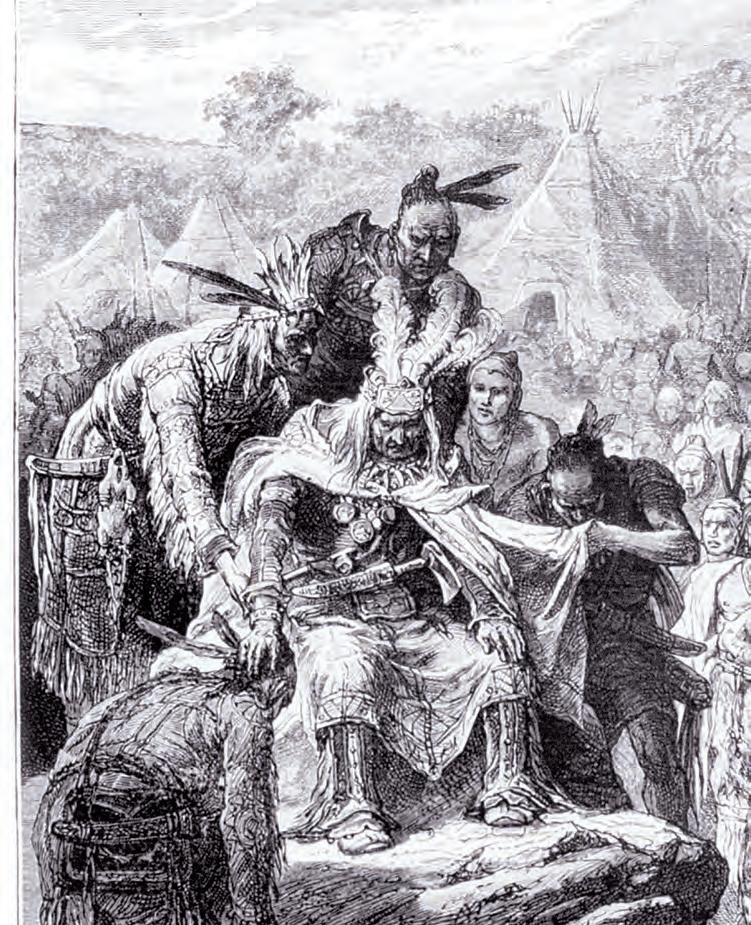

Tenskwatawa then summoned a sunless sky, which was in effect realized in the form of a solar eclipse.
In 1808, the brothers established Prophetstown, where the confederacy would form its base at the confluence of the Wabash and Tippecanoe rivers.

Trying to discredit Tenskwatawa, Harrison issued a challenge, reported by a newspaper of the day: “If he is really a prophet, ask him to cause the Sun to stand still or the Moon to alter its course, the rivers to cease to flow or the dead to rise from their graves.”
Known to the white pioneers as the “yaller devil,” Tecumseh, too, was said to have prophetic powers. Legend has it that when the Muscogee refused to join his alliance, he issued a threat: if they did not join him before he reached Detroit, he would simply stomp
his feet and the earth would shake down the great Mississippi and their villages would be destroyed.
Within days, on Dec. 16, 1811, the region was jolted by a massive earthquake—caused, says today’s U.S. Geological Survey, by the New Madrid fault system that spans five Midwestern states. The shaker was estimated to have been stronger than the one that destroyed San Francisco and killed more than 3,000 people in 1906.
Tecumseh’s confederation fought U.S. forces from August 1810 to October 1813.

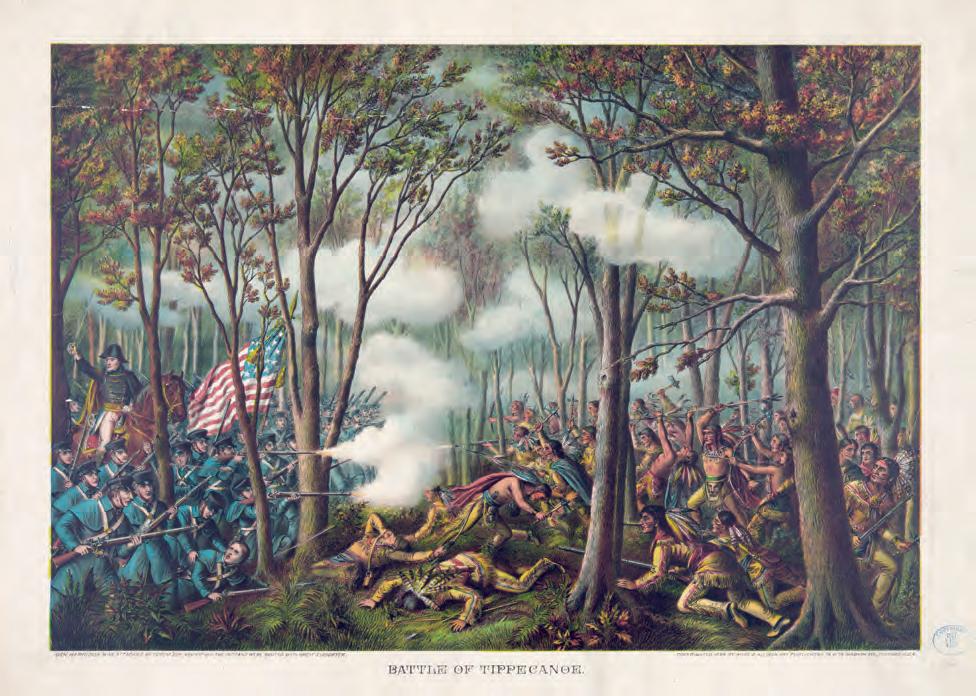
In November 1811, while the chief was away building his coalition among southern tribes, Harrison assembled some 1,000 troops and attacked Prophetstown, dealing the coalition a devastating defeat at the Battle of Tippecanoe.
In what some consider the first engagement of the War of 1812, the American troops burned the encampment to the ground after Tenskwatawa and its residents abandoned it.
The pragmatist in Tecumseh subsequently brought him into an alliance with the British who were likewise at odds with the Americans at the time.
A month after U.S. troops invaded Upper Canada in July 1812, MajorGeneral Isaac Brock travelled to Amherstburg to organize the British response, an attack on Fort Detroit. He met with Indigenous warriors to negotiate an alliance to fight the Americans. Tecumseh stood out among the assembled chiefs.
“I have heard much of your fame, and am happy again to
shake by the hand a brave brother warrior,” the Shawnee leader told him. Brock gave him his sash.
The British general was progressive for his time, saying of his Indigenous brethren in a July 22, 1812, speech: “But they are men, and have equal rights with all other men to defend themselves and their property when invaded.”
Brigadier-General William Hull had just led his forces into Canada. Haunted by Indigenous atrocities, he then withdrew back across the border to Detroit.
On Aug. 16, Tecumseh led a multi-tribal group of warriors and, with a combined force of Canadian militia and British regulars, surrounded the city’s fort. Brock could smell Hull’s fear and so, no doubt, could Tecumseh. The Indigenous warriors paraded past the fort for psychological effect.
Brock sent his adversary a surrender demand.
“The force at my disposal authorizes me to require of you the immediate surrender of Fort Detroit,” he wrote. “It is far from
my intention to join in a war of extermination, but you must be aware, that the numerous body of Indians who have attached themselves to my troops, will be beyond control the moment the contest commences.”
With the prospect of imminent massacre by “hordes of howling savages” hanging over his head, the aging and ailing Hull surrendered the garrison and his 2,500-man army having barely fired a shot. He was rumoured to have been drinking heavily before the capitulation and is reported to have said that the Indigenous warriors were “numerous beyond example” and “more greedy of violence…than the Vikings or Huns.”
The attackers captured 33 cannons, 300 rifles, 2,500 muskets and the brig Adams, the only armed American vessel on the Great Lakes at the time. The British navy put it into service.
Brock sent the 1,600 captured Ohio militiamen south, providing them with an escort until they were
out of danger. Most of the Michigan militia had already deserted. The 582 American regulars taken prisoner were sent to Quebec City.
Hull was court-martialled in 1814 and convicted of cowardice and neglect of duty. He was to be shot but, in deference to his service in the Revolutionary War, President James Madison commuted the sentence and dismissed him from the army instead.
The British victory reinvigorated the beleaguered militia and civil authorities of Upper Canada, boost ing their prospects and morale, and it inspired tribes in Tecumseh’s confederacy to take up arms against U.S. outposts and settlers.
His warriors would go on to strike deep into the United States, attacking forts and sending terri fied settlers fleeing back toward the Ohio River. It wouldn’t be until after Tecumseh’s death that they would at last begin to “realize that a native of soaring greatness had been in their midst,” Josephy wrote. Harrison, recalled to



“IF IT WERE NOT FOR THE VICINITY OF THE UNITED STATES,” TECUMSEH “WOULD PERHAPS BE THE FOUNDER OF AN EMPIRE.”
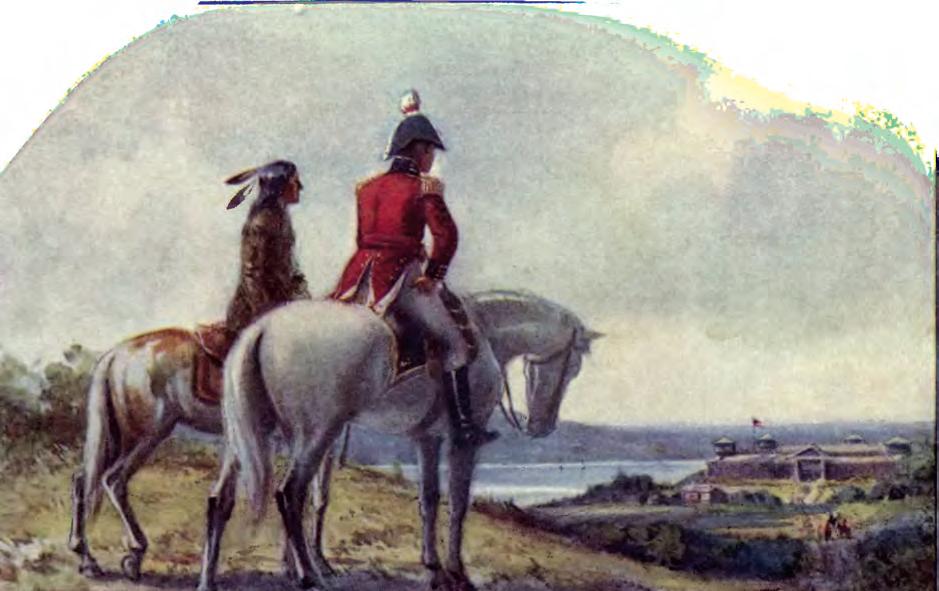
Tecumseh and Major-General Isaac Brock oversee the American surrender of Detroit in August 1812 (left). The pair had exchanged sashes in mutual respect after first meeting earlier that year (above). Tecumseh readily joined the British in the War of 1812 after U.S. forces had razed his village in the November 1811 Battle of Tippecanoe (opposite).
Tecumseh and his exhausted ranks took up positions in a patch of swampy woodland. The chief said he would retreat no farther. Having dispatched with the British, Harrison sent dragoons and infantry into the thickets.
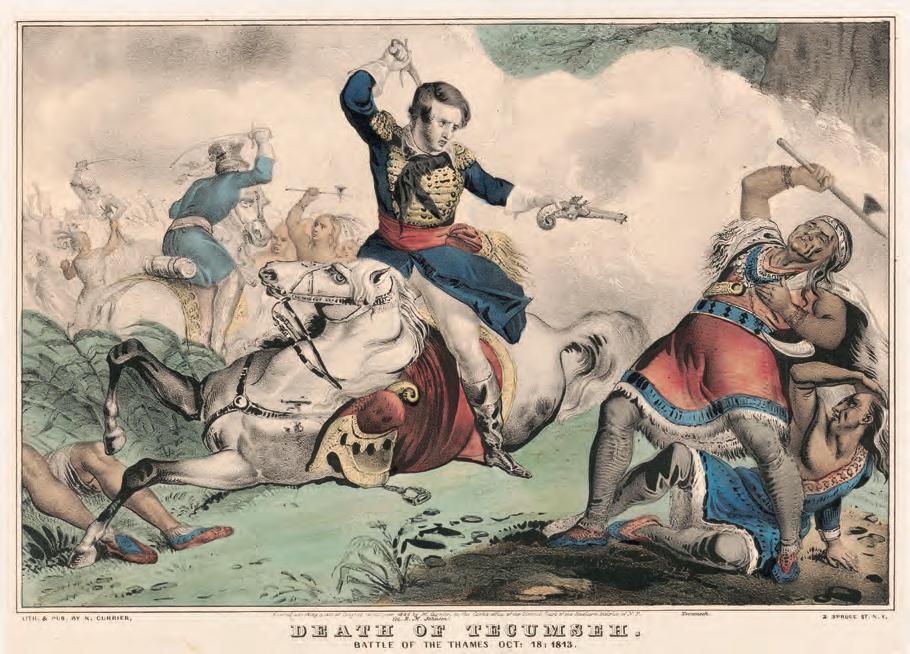
After an hour of fierce fight ing, Tecumseh was killed, or so it is believed. He was never seen alive again—his ultimate fate dependent on which side was telling the story. For all practical purposes, however, his Indigenous resistance died with him.
Hungry for an American vic tory after a humiliating year of losses, the first reports from the Battle of the Thames claimed Harrison’s brave boys had over come 3,000 superb warriors led by the great Tecumseh.
The man who apparently had the most credible claim to killing him, a Kentucky cavalry com mander named Richard Johnson, eventually won a Senate seat, then

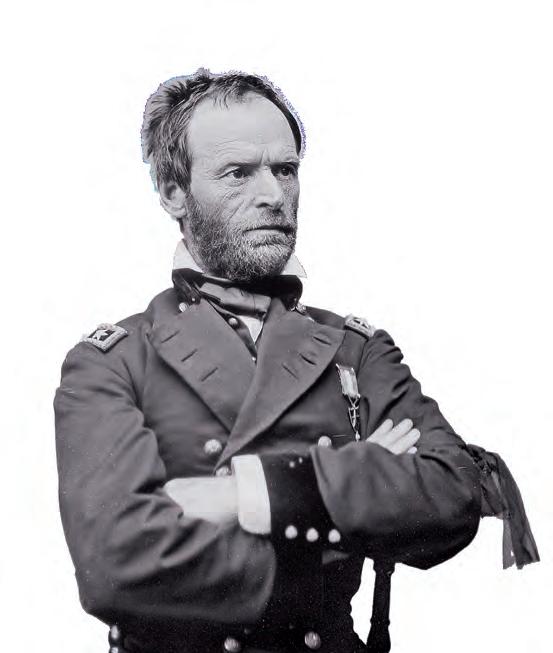
was key to defeating the Confederacy in the 1861-1865 U.S. Civil War, then led the American army against Indigenous nations in the continuing wars once fought by the Shawnee chief for whom he was named.
Sherman, like Tecumseh him self, was born in Ohio. According to the general’s memoirs, his father Charles, justice of the state’s supreme court, “caught a fancy for the great chief of the Shawnees, ‘Tecumseh.’”
Recognizable by his hag gard, battle-worn look in period photographs, Sherman was a

change than their historical areas and are more susceptible to extreme heat and drought.
On Dec. 2, 1820, the Indiana Centinel of Vincennes published a letter singing the praises of the great chief, and hearkening

on what might have been.
“Every schoolboy in the Union now knows that Tecumseh was a great man,” it said. “His greatness was his own, unassisted by science or education. As a statesman, warrior and patriot, we shall not look on his like again.” L

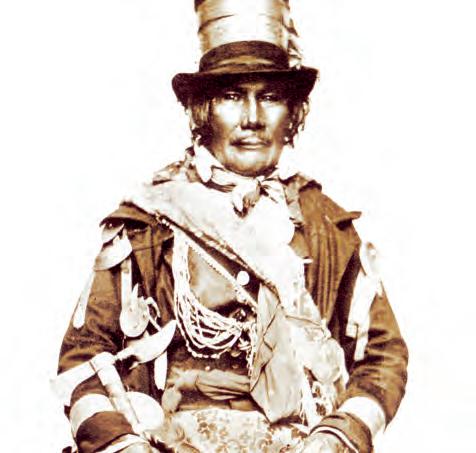
Kentucky cavalry commander Richard Johnson kills Tecumseh during the October 1813 Battle of the Thames (below), where Chief Oshawana (opposite top) served as his lead warrior.
He directed the U.S. Army as it crossed the Great Plains and employed the same destructive tactics in exterminating and relocating the last Indigenous nations. The Lakota, Cheyenne, Comanche and Apache all suffered significantly during Sherman’s 19th century Indian Wars.
“We must act with vindictive earnestness against the Sioux, even to their extermination, men, women and children,” Sherman once said. A year later, he issued an order permitting the Sioux’s “utter annihilation.”
“The more [Indians] we can kill,” said Sherman, “the less will have to be killed in the next war, for the more I see of these Indians, the more convinced
I am that they all have to be killed or to be maintained as a species of paupers.”
In his 1878 annual report to Sherman, General Philip Sheridan, who led American forces in battle against Indigenous warriors, acknowl edged the plight of Native Americans starving on reservations, where they lived on broken promises.

“We took away their country and their means of support, broke up their mode of living, their habits of life, introduced disease and decay among them, and it was for this and against this they made war,” wrote Sheridan, also a Civil War veteran.
“Could anyone expect less? Then, why wonder at Indian difficulties?”

Canada’s key role in a game-changing peacekeeping mission

It was just another companywide “smoker” at Camp Kananaskis in 1993, but Dangerous Dan was up to his old tricks again.
Acting major of Delta Company, 2nd Battalion, Princess Patricia’s Canadian Light Infantry (2 PPCLI ), Dan Drew was at the base camp party in Sveti Rok, a Croatian village home to a defunct Yugoslav National Army base.

With cases of French wine and gallons of German and Croatian beer available, some Canadian troops saw these get-togethers as more than just a way to relax; it was a classic bacchanal, drunken revelry abounding.
“It was a breeding ground for alcoholism,” said Calgary Highlanders Sergeant Kurtis Sanheim.
Nicknamed “Dangerous” by his fellow soldiers, Drew had some madcap tendencies and access to liquor didn’t make those habits any better. Excessive alcohol consumption was already becoming a problem in 2 PPCLI, but Drew’s company was particularly infamous, boasting some of the battalion’s biggest drinkers.
So, during this smoker, the emotional residue accumulated from witnessing the human atrocities of Yugoslavia’s dissolution in the early 1990s surfaced in Drew as the night slowly expired.
His company had known the monsters of the Croatian Medak area all too well—the civilian cries of ethnic genocide, the corpses burnt beyond recognition, the colonies of maggots that left carcasses wriggling with parasitic life. The company’s role in the United Nations Protection Force
was a thankless job that left them bewildered by humanity’s brutality.
“We were on the line too long,” 2 PPCLI Sergeant Sjirk Ruurds (Rudy)
Bajema said. “We were there for months without a break.”
Operation Medak Pocket, as the UN peacekeeping mission was known, would be the most significant combat Canadian forces had participated in since the Korean War—and yet, 2 PPCLI soldiers, reinforced by militias and other units, had received little to no attention from back home.
So, in that moment, Dangerous Dan decided to be the difference.
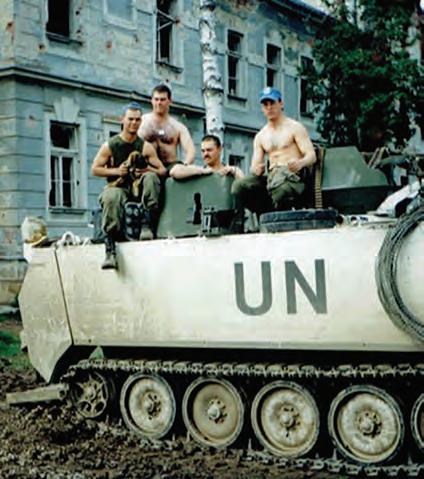
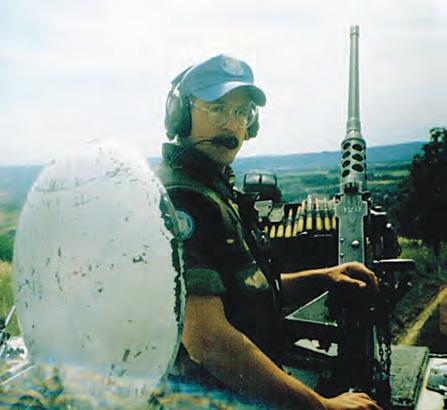
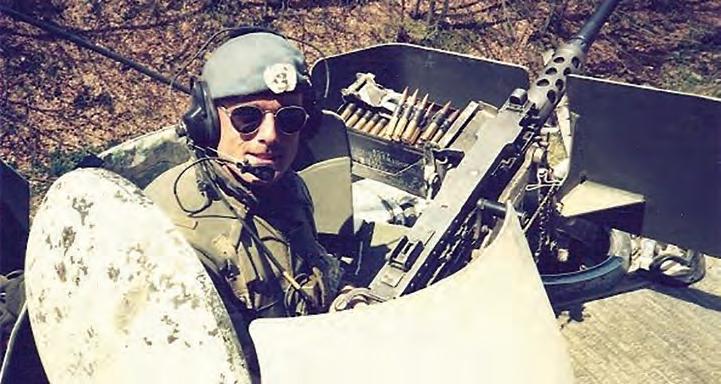
The lush landscape of Medak, a Croatian farming village, is photographed from the rear of an anti-armour platoon house (opposite). Kurtis Sanheim (blue cap) and team members ready an armoured personnel carrier in Croatia (above).
In one swift alcohol-drenched gesture, Drew fired his pistol into the night sky, emptying an entire magazine as a salute to his company. There was emotion in his gunfire, a heartfelt apology for the deafening silence of top brass.
And his soldiers didn’t just cheer, they went wild with loyalty for their company.
Unfortunately for Drew, however, the higher-ups didn’t see it that way, and he was demoted to administration company commander. Drew’s punishment, however, later became symbolic of 2 PPCLI’s post-operation experience: one of censorship, chaos and the failure of a system meant to protect soldiers.
Drew was one of more than 14,000 Canadians contributing to the UN peacekeeping force in the former Yugoslavia. The security group aimed to ensure
stable conditions for peace talks during the breakup of the country’s six republics in 1991. From 1992-1995, Canadians joined personnel from 36 other countries to mediate the messy divorce.
For years, the republics had coexisted peacefully, their similar languages, cultures and customs, along with a centralized communist authority, a binding glue. But the death of Yugoslavian leader Josip Broz Tito in 1980 and the end of the Cold War pushed each republic’s nationalist identity into global politics. The result? A new national order based on blood and religion.
When Serbia, the most powerful of the republics, tried to take the federation’s helm, Croatia, Slovenia and Bosnia fought back with their own declarations of independence, manic with nationalist-separatist sentiment. But Croatia and Bosnia were home to numerous ethnic Serbs, many who weren’t comfortable with the new nations
they found themselves in. They organized military coalitions against the new governments.
As the paramilitary operations formed, the Yugoslav National Army, propped up by Serbia, fought alongside them to keep Croatia and Bosnia in the Socialist federation. From 1992-1995, the combined forces were amateurish at best and homicidal at worst.
“They would go out and exterminate entire families, shoot them in their homes and outside their homes and line them up,” said Bajema. “I’d seen a bit of it before that. But on that scale, [it] was unprecedented.”
The UN entered the fray in 1992. In Croatia, the peacekeepers mediated a ceasefire between Croatia and its Serbian minority, establishing a buffer zone between the territories held by the two groups. The latter’s Republic of Serbian Krajina included the Medak Pocket, a farming region off the Adriatic coast. The agreement, however, was a far cry from a truce; for the Croats and Serbs, it was a temporary break they needed to increase their readiness for a bloodthirsty enterprise of land grabs, destruction and genocide, or ethnic cleansing.
Called to UN action, Canada readied its own operations, which included the full gamut of wartime weaponry. It was a new look when juxtaposed with the symbolic image of early peacekeepers.
“We were the poster boys for the United Nations,” said veteran Mark E. Meincke, a Canadian Armed Forces’ advocate. “They had a certain baby-hugging image of us that they wanted to maintain. They didn’t want us to be portrayed as the warriors that we were.”
So, in March 1993, 2 PPCLI headed to the region.
Initially, 2 PPCLI were given five months of in-theatre training. During that time, the battalion was a particular standout among the UN forces, particularly after Operation Maslenica in January
1993 when French troops were forced to abandon a UN-protected area against heavy Croat fire.
Witnessing the Canadian military’s skill, the UN force commander, French army General Jean Cot, assigned the Patricias to the theatre’s southern sector, supported by French troops.
According to historian Lee Windsor, it was a difficult assignment, not only within the larger mission, but in peacekeeping history.
Still, 2 PPCLI was ordered to establish a crossing line on the main road between the villages of Medak and Gospic and that they could pass it at noon on Sept. 16—until they were delayed by Croat forces.
Something seemed off about the Croatians biding for more time, however. Bombs bursting behind them, the Croats claimed their forces were exploding old mines.
“WE USED TO SAY THAT WE WERE TREATED LIKE USED TOILET PAPER, YOU KNOW, SHAT ON AND THROWN OUT.”
Indeed, on Sept. 9, the Canadians ended up in the middle of open warfare when 2,500 Croat soldiers invaded the Serbianheld Medak Pocket. For 12 hours, 9 Platoon, ‘C’ Company, felt the hellish rain of artillery and mortar fire, sometimes hitting within 50 metres of its location. Heavy shelling continued in the region for days.
Six days later, on Sept. 15, the Croats agreed to pull back to pre-Sept. 9 lines, thanks to UN mediation and international pressure.
But, in working to enforce the new positions, Canadian forces encountered Croat fire, comprised of “small arms, heavy machine gun and in some instances 20 mm cannon fire,” one government report stated. Firefights, up to 90 minutes long sometimes, also occurred during a 15-hour window. At the same time, Serbian forces were sniping at the Croats from behind the peacekeepers.
But as the sounds of rifle fire mixed with the rising smoke from the villages beyond the roadblock, the Canadians imagined what this meant: The Croats were killing Serbs in the communities.
Meanwhile, Lieutenant-Colonel Jim Calvin grew restless as the earth shook from explosions, demanding the Croats let the Canadians pass. Ready to play a “lethal game of chicken,” the
two sides loaded their weapons and locked onto each other.
However, without any supporting tanks or artillery to stand up against the Croatian 9th Brigade, nor the UN mandate to do so, 2 PPCLI were left to wait, forced to listen to the sounds of death that would later transfix decades-long nightmares for some soldiers.
After an hour waiting, Calvin realized that what he couldn’t breach with muscle, he could push with media. Armed with about two dozen reporters, the standoff was documented by the press, the journalists reporting on how Croatian forces were directly interfering with the UN agreement.
In what would be his “finest moment,” Calvin’s wager paid off, and an hour and a half after they were scheduled to
The UN High Commissioner for Refugees had indicated that the battalion’s operation could encounter thousands of Serbs in need of rescue from the wartorn region. That part of the mission could have been the most rewarding, a chance to save thousands of lives and prove that the endless mediations and mortar and artillery fire of midSeptember weren’t for nothing.
But what 2 PPCLI didn’t know, was that on the other side of the Medak-Gospic crossing line was not a rescue operation, but a murder scene.
“Nobody joins the army for medals,” said Sergeant Sanheim. “You join the army because you want to serve, and you want to do some good, and you want to help protect those that can’t protect themselves.”
One scene involved two bodies found in a brick chicken coop, bolted shut and still slowly burning. It looked like one person tried to escape, while the other was tied to a chair; both bodies, however, were so horribly charred and maggot-infested that they were beyond identification.
It was only through subtle context clues—long hair, feminine clothing, a purse—that their discoverers theorized that the duo were women. Moving the bodies proved challenging, too, as the limbs fell off when lifted and the heat radiating from the corpses melted the body bags. One warrant officer cooled the bodies by pouring bottled water on them so they could be more easily handled.
“I don’t think [they] ever really got over it,” said Bajema of the soldiers doing such work.

move in, his company cleared the line. Thereafter, 2 PPCLI’s sweep team would initiate their civilian rescue operation.
Remarked Bajema: “I think the leadership [of 2 PPCLI] was pretty bang-on.” Indeed, Calvin received the Meritorious Service Cross for, as his citation noted, carrying “out one of the most successful military operations in support of the humanitarian effort in this theatre.”
The battalion, however, would end up being required to gather evidence for a potential war-crimes prosecution, a new task the UN force had yet to standardize. This role, coupled with the sweep team’s lack of training in such endeavours and their limited experiences with death, made the smouldering flesh, poisoned wells and slaughtered livestock of Medak a grim reality check for many.
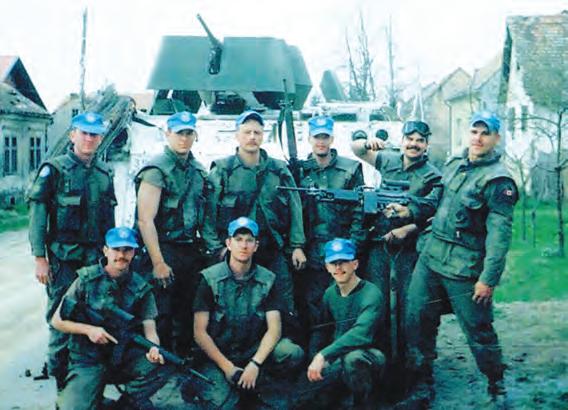
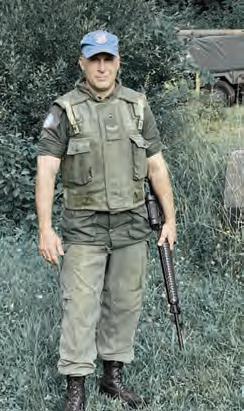
Sanheim in Croatia in 1993 (left). Canadian peacekeepers pause for a photo during their mission (centre). Sanheim, now retired, relives his tour as an actor for the 2022 short film Medak (right).
And, so, the sweep team routinely encountered heinous, cold-blooded war crimes. One elderly female victim had been dragged by a rope, had had her left breast slashed, fingers cut from her hand, legs broken and shot in the head four times, while one dead man appearing to be in his 60s had deceptively looked alive because of the sheer number of maggots on his corpse made it seem like his body was shaking.
The sweep team’s leader, Major Craig King, reported to journalist Carol Off for her book, The Ghosts of Medak Pocket: The Story of Canada’s Secret War on how many times the man had been shot: 24 times. “How many bullets in the back and in the head—shot at close range—does it take to kill a sixty-year-old man?” wrote Off.
Out of all these hellish scenes, none had rattled the sweep team as much as that of a blind elderly woman’s “grave.” Lying on top of a rabbit-fur coat, her body was found in a marsh and had been shot at least six times. The soldiers realized that her vulnerability had not been enough to save her—a disturbing truth for many.
The battalion’s hefty to-do list was compounded by a lack of running water nearby. Showers were out of the question, and since the sweep team was equipped only with kitchen gloves and surgical masks while moving bodies, they were often glazed with mud and bodily fluids.
Soon, UN officers and volunteers alike began finding more and more excuses to avoid going out with the sweep team and instead exercised their right to leave the corpsehunting business behind. Out of the thousands of potential Serbian lives that could have been saved, according to the UN, 2 PPCLI only found 16 bodies and no survivors.
The genocide had pulverized the sweep team’s morale, leaving it surrounded by weapons, war and the overwhelming question of “what if?”
The sense of failure from not finding any survivors, mixed with the guilt from not crossing the Medak-Gospic line sooner, had left a mental scar on the young soldiers, and it was starting to show.
“We felt we could have done more,” confessed Bajema.
While alcohol abuse became an increasing issue in the battalion, spurring such incidents

as Dangerous Dan’s pistol salute, other significant signs of combat stress began to surface, too.
One soldier, for instance, was found threatening a fellow officer with a bayonet and rifle during guard duty, while a Delta Company cook had cut his wrists and grilled his hands to escape the devastation. Other soldiers, however, went from miserable to mutinous. One private pounded a master corporal’s head against a concrete floor during a late-night smoker, while other soldiers exuded a “cowboy mentality,” digging graves for senior personnel and carrying extra rounds in case they might need them.
Later, it was discovered that as many as 12 soldiers had plotted to kill Delta Company members.
These instances weren’t a result of moral delinquency. The actions of 2 PPCLI members in battle and beyond had proven that a finer lot of peacekeepers couldn’t have existed. Instead, it was from the sheer helplessness and hopelessness of their situation—just as invalidated from the zero-survivor count as they were from Ottawa’s complete lack of contact with 2 PPCLI during the posting.
“[But] when they got home,” said Bajema, “they had to fight another battle.”
When some 2 PPCLI members arrived back in Canada in October 1993, their “hero’s welcome” consisted of a box of doughnuts, a coffee urn, and…silence.
“We used to say that we were treated like used toilet paper,” said Meincke, “you know, shat on and thrown out.”
Soldiers soon realized that most Canadians had no idea that the CAF was even in Croatia. And when soldiers tried to tell civilians about what had happened, people would flat-out deny the troops’ experiences.
“[They would say,] ‘well, if that was true, I would have heard about it on the news.’ Okay, narcissist,” Meincke quipped. “If you didn’t hear about it, it didn’t happen. Okay, centre-of-the-universe.”
Some believe that such a hushed homecoming was all strategy, however, aiming to quell military coverage in the wake of the Somalia affair. Earlier that year, media organizations had published graphic details of a Somali teen tortured and killed by Canadian paratroopers on a peacekeeping mission. The utter brutality of the teen’s treatment unravelled the CAF’s reputation for military competence and professionalism. According to historian Windsor, this fuelled a public perception that Canadian soldiers were “poorly trained, incompetently led, badly equipped and quite often racist.”
While the UN declared 2 PPCLI’s work in the former Yugoslavia an exemplary display of modern peacekeeping, the unit still felt tarnished by the Somalia affair. 2 PPCLI was silenced and some members felt shamed.
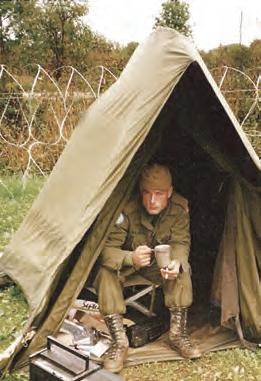
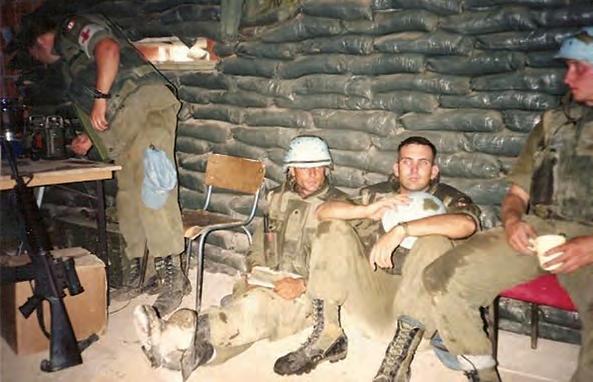
Sergeant Sjirk Ruurds (Rudy) Bajema on patrol in Croatia (left), sitting in his tent outside company headquarters (middle) and helmeted in HQ with fellow peacekeepers during an artillery shelling (right).

“It was a crappy time to be in the army,” noted Bajema.
This blow was compounded by the absence of post-deployment decompression programs for many reservists who had served with the Patricias in the Balkans and needed to move from station to station quickly.
“They kind of went like ghosts into the winds,” said Bajema.
So, unlike the First and Second world wars or even the Korean War, many 2PCCLI members had relatively very little time to transition back into civilian life, leaving them physically in Canada, but mentally still in Medak.
“[None of the soldiers] actually came home,” noted Meincke. “[A] hollowed out version of them came home.”
Without the validation combat soldiers often need to give moral legitimacy to their actions, many experienced broken marriages, homelessness and mental/physical illnesses. One of the most common health issues 2 PPCLI members dealt with was post-traumatic stress disorder, an illness that had, up until that point, largely been defined as such only in clinical circles.
And while veterans tried to bring this to the government’s attention, particularly in a 1998 letter written by Calvin to the head of the army, Parliament was silent on the matter. It was only when one veteran started talking to the media—a bold act given the military’s historically tight-lipped nature—that the government considered the matter. But not in the way veterans had hoped for.
Rather than receiving the longawaited thank-you they expected, 2 PPCLI members faced a vicious series of criminal investigations into leadership oversights and company discipline. Most soldiers deemed the inquiries “witch hunts” and suspected they were another political strategy to deny accountability.
“I felt like the government was abandoning us,” said Bajema.
While 2 PPCLI had received the UN Force Commander’s Commendation in 1993, one of only three such awards ever given to United Nations peacekeeping forces, it wasn’t until 2002—nine years later—that Governor General Adrienne Clarkson awarded the
battalion the Commander-in-Chief Unit Commendation in recognition of its “courageous and professional execution of duty during the Medak Pocket Operation.” Some members also finally received the pensions and health care services they needed, too.
“It [was] bittersweet,” said Bajema.
Additionally, 2 PPCLI’s thorough documentation of genocide, or ethnic cleansing, in the Medak Pocket set an international standard for UN peacekeepers, leaving its mark on how evidence for war crimes trials is recorded and documented.
Most importantly, though, the operation brought the concept of post-traumatic stress disorder and veteran mental health in Canada from fringe medical jargon to mainstream conversation, spurring a mental health awareness campaign that continues to grow.
And while there is still much work to be done on that front, Medak veterans such as Bajema, Meincke and Sanheim are still trying to make a difference. Meincke runs a nationally acclaimed podcast, “Operation Tango Romeo,” on veteran trauma recovery, while Bajema and Sanheim both spread awareness through talks on PTSD and participation in veteran peer support programs.
Said Bajema: “I couldn’t be prouder of all the guys who went through all that.” L
Courtesy Rudy Bajema

When Canadians went to fight in the First World War, they were initially led by two British generals, Edwin Alderson then Julian Byng. It made sense. The country had almost no military then. And it’s hard to develop a professional armed force if a nation doesn’t develop its own.
Fortunately, opportunities struck for Ontario-born militia man Arthur Currie and Byng eventually recommended he take command of the Canadian Corps. Currie led his countrymen to numerous key victories and became renowned for his planning, preparation and leadership.
Canada emerged from the conflict a changed country. Its participation led to many social programs and infrastructure projects that are still hallmarks of Canadian culture, largely, if not entirely, because Canadians themselves, like Currie, had first-hand experiences. That’s why, to start, the country should not allow foreign citizens at large to join the Canadian Armed Forces. Home-grown talent has always been critical to Canada’s development, militarily or otherwise.
To be clear, excluding foreigners from the CAF is NOT about questioning their experience, fortitude, commitment or trustworthiness. As with Currie, Canada long fought
Aaron Kylie says NO
to have its own citizens lead its forces and the country must continue to recruit, train and develop its own military members. The alternative is akin to a private army, like Russia’s Wagner Group or the U.S. Blackwater company, made up of guns-for-hire mercenaries.
THE ALTERNATIVE IS AKIN TO A PRIVATE ARMY, LIKE RUSSIA’S WAGNER GROUP, MADE UP OF GUNS-FOR-HIRE MERCENARIES.
If the goal extends beyond addressing the recruitment crisis to helping diversify the force, the country hardly needs to look beyond its borders. Canada is renowned as one of the most multicultural nations on the planet. Canadians reported more than 450 ethnic or cultural origins in the 2021 census. Some 52 per cent report European origins, while nearly four million Canadians noted Indo-Pacific origins, including 1.7 million from China, 1.3 million from India and nearly one million from the Philippines.
In total, one in four Canadians are part of a racialized group.
Plus, the CAF already admits foreign nationals in exceptional cases such as individuals on military exchanges or for those with high-demand specialized skills. So, there’s little need to expand such a policy. Also, a program introduced in 2014 allows foreigners on exchange, attached to or seconded to the CAF to fast-track their citizenship. More than a hundred such applications, from countries such as Hungary, Singapore, South Africa and the United Arab Emirates, have been approved.
And, while in the recent past many other foreign nationals have applied to the CAF, the majority have been refused as they don’t meet immigration, refugee or citizenship requirements. Should Canada really change those already accommodating rules just to fill out the ranks?
Of course, last year Canada began allowing all permanent residents to apply to the CAF. (It had previously accepted such applicants trained by foreign militaries.) In just one week after the change, half of new CAF applicants were permanent residents. Those were promising early results. The country should stick with the initiative and see what happens before allowing complete outsiders to serve the country. Canadians deserve it. L
> To voice your opinion on this question, go to www.legionmagazine.com/FaceToFace

Since November 2022, immigrants to Canada who have acquired permanent residence but are not yet Canadian citizens are eligible to apply to join the Canadian Armed Forces. This historical policy change was, for years, advocated by many, including myself. Previously, only Canadian citizens could join the CAF, with some exceptions such as the littleknown Skilled Military Foreign Applicant program, designed to recruit small numbers of foreign nationals with specialized skills such as trained pilots or doctors. Due to severe recruiting shortfalls, however, the CAF had no choice but to open its doors to all permanent residents of Canada who qualify. Indeed, the military is short approximately 16,000 members or about 15 per cent of its optimal strength. These recruiting challenges aren’t new, but they are becoming critical as the traditional pool of white men keeps shrinking. To be sure, the CAF does not reflect the ethnocultural and gender diversity of Canada’s workforce. Nor is it meeting its own employment equity goals: 16.1 per cent of the total force are women, compared to the 25.1 per cent goal; racialized Canadians make up 9.6 per cent, versus the 11.8 per cent target; and 2.8 per cent are
AARON KYLIE is the editor of Legion Magazine and the former editor-in-chief and associate publisher of Canadian Geographic. He is also the author of the Biggest and Best of Canada: 1000 Facts and Figures
is a professor in the department of defence studies at the Royal Military College of Canada and co-editor of the book The Power of Diversity in the Armed Forces: International Perspectives on Immigrant Participation in the Military
Indigenous Peoples, while the aim is 3.5 per cent.
In contrast, the Canadian labour market is increasingly diverse and fuelled by immigrants, the majority of whom are from Asia. They are contributing to the growing rates of racialized Canadians, which now make up a quarter of the population. The CAF seemed unaffected by these trends—until now.
IT’S HIGH TIME CANADA ALLOWS NEW IMMIGRANTS THE OPPORTUNITY TO JOIN ITS MILITARY AND GIVE THEM A CHANCE TO SERVE THEIR ADOPTED COUNTRY.
It’s high time Canada allows new immigrants the opportunity to join its military and give them a chance to serve their adopted country as soldiers, aviators and sailors. This has been the case for decades in the U.S., where citizenship is not
required to join the armed forces and, in some cases, immigrants who join the military have their citizenship expedited. In turn, these immigrant soldiers enhance the diversity of the American military, with more than 40 per cent of its members now identifying as belonging to a minority group.
Since the policy change in Canada, thousands of permanent residents have applied to join the CAF. These immigrants can not only fill vacant billets, but also help diversify the force so it better reflects Canada’s multicultural and gender diverse population. Diversity brings strength through different ways of thinking, new perspectives, experiences and skill sets. At the same time, these newcomers can now access fulfilling military careers, with benefits, training and educational opportunities, which in turn facilitates their integration into Canadian society.
Ultimately, to meet the CAF’s mandate to protect Canada, defend North America in collaboration with the U.S. and contribute to international peace and security, the country needs a diverse military that, as was set out in the 2017 defence policy, “looks like Canada.” Allowing permanent residents to join will help the CAF achieve this goal. L
By Graham Chandler

Artist depictions of a chaotic nighttime bombing run over Germany (opposite) and the full flying rig of an Allied airman in the Second World War (below). Forty-five per cent of WW II Allied Bomber Command airmen were killed in action.
With overwhelming odds against returning safely from a mission, Second World War Bomber Command aircrews resorted to superstition and ritual

econd World War Allied casualty rates in air operations were phenomenally high. Despite their vast accomplishments and invaluable contribution to the war effort, the successes of Bomber Command in particular came at a terrible cost.
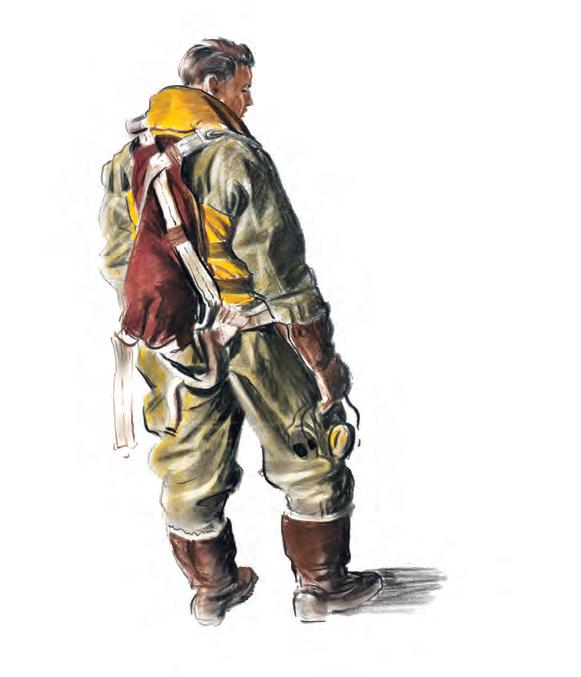
According to the Bomber Command Museum of Canada, of every 100 airmen who joined the unit, 45 were killed, six were seriously wounded, eight became prisoners of war and just 41 escaped unscathed (at least physically). Of the [approximately] 120,000 who served, 55,573 were
killed, including more than 10,000 Canadians—a fatality rate of 46 per cent. Of those flying at the beginning of the war, only 10 percent survived. Such a loss rate is comparable only to the worst slaughter of the First World War trenches. Only the Nazi U-boat force suffered a higher casualty rate. With odds like that, it’s no wonder that superstition and ritual was rife among the fliers. It took various forms, from jinxes to premonitions to amulets or talismans, such as lucky boots, a stuffed toy or a girlfriend’s brooch. Some performed rituals like circling their airplane once before boarding or avoided having a photo taken before a flight. Whatever seemed to work was stuck with, and high-risk sorties usually saw an upsurge in superstitious behaviour.
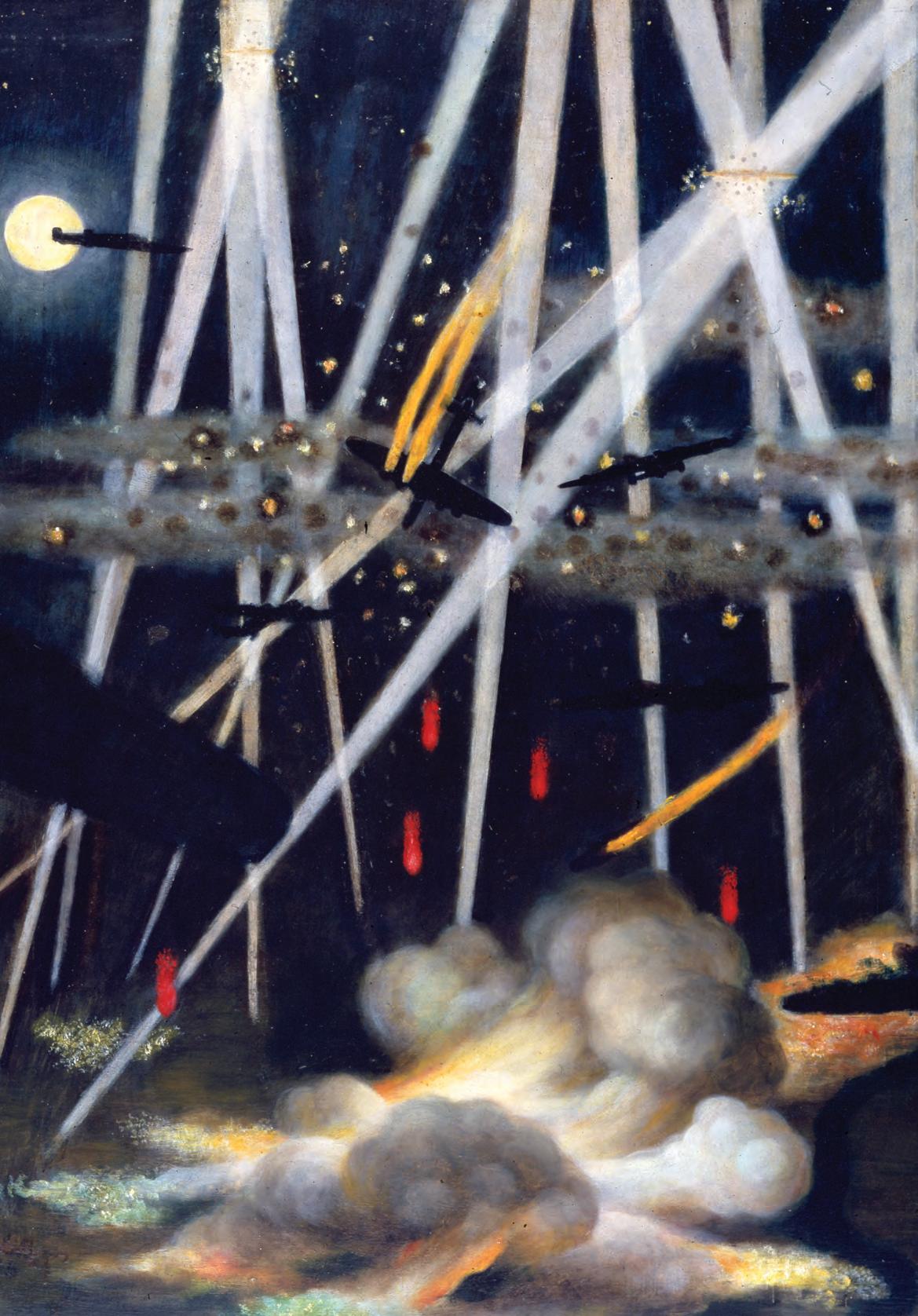
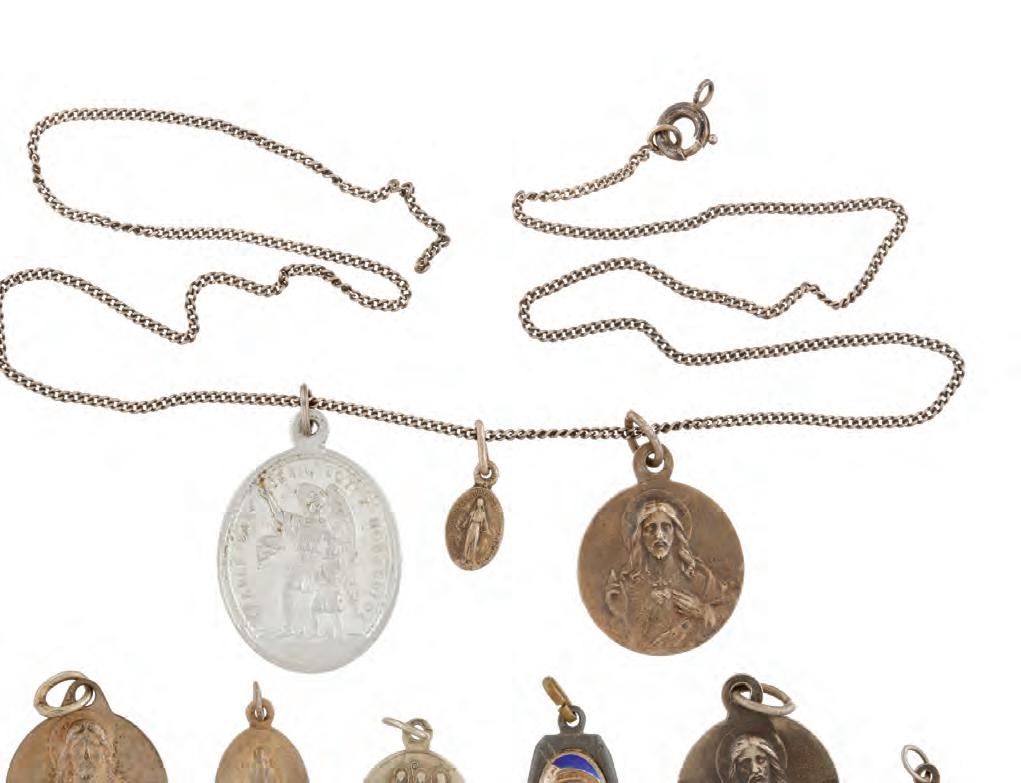
Common religious objects were understandably popular.
“Around my neck I always wore a medal that a Catholic friend had given me,” recalled Canadian bomber pilot Sydney Percival Smith of the Royal Air Force 115 Squadron, in his 2010 book, Lifting the Silence.
The Roman Catholics’ patron saint of travellers was often carried by worshipers and non-Catholics alike. So were rosary beads, bibles, prayer books and sacred heart medals.
Meanwhile, others carried popular traditional
lucky charms, including rabbit’s feet or four-leaf clovers.
Items were often perceived as lucky simply because they were carried on flights that happened to come back safely— dice, pennies, silver dollars, scarves, even a champagne cork in one case.
Some fliers thought that more than just an item was necessary for best effect. With or without a talisman, some believed specific actions done in a particular order were necessary to survive a mission or operational tour. For example, Gilbert McElroy, a gunner in the RAF’s 625 Squadron, always planted the palms of both hands firmly on the ground as a signal of his intent to return to terra firma in one piece before climbing aboard his Lancaster and making his way to the rear turret.
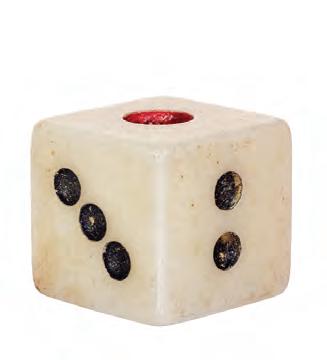
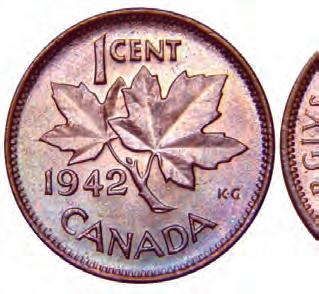
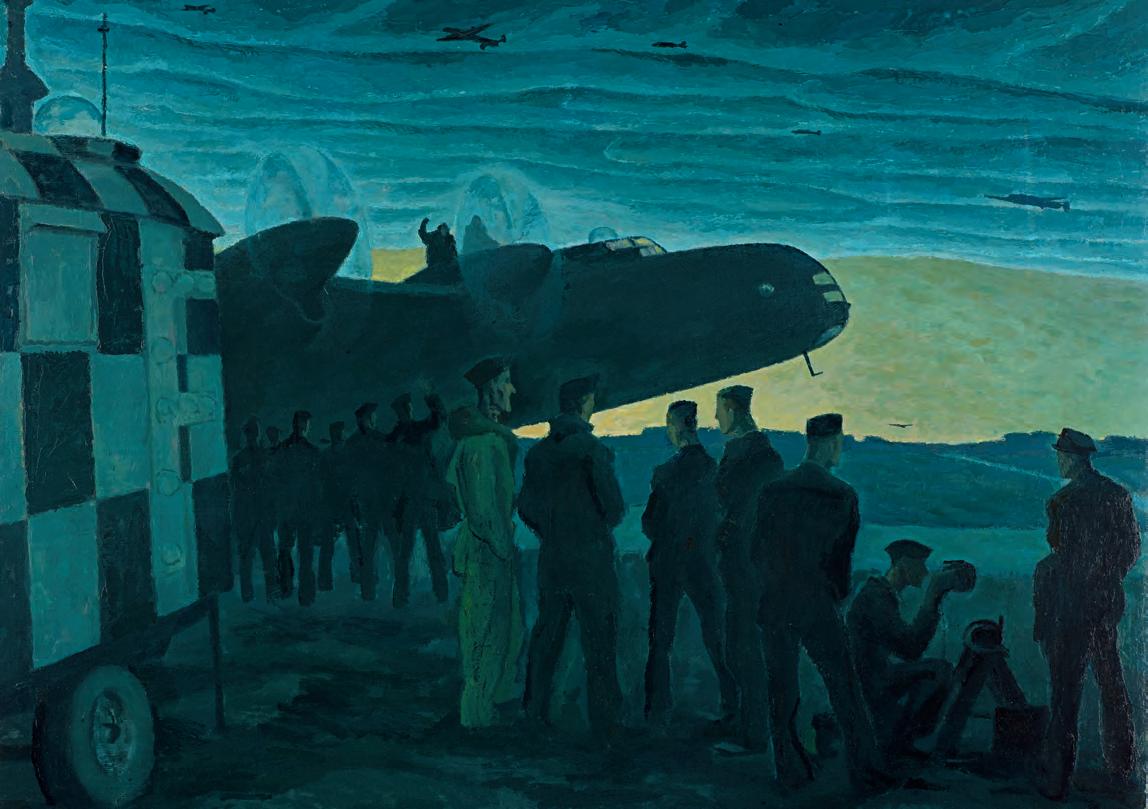
Airmen carried a wide range of lucky charms, from religious medallions and dice and coins (opposite) to homemade dolls and identification tags (right). They also often conducted rituals before takeoff, as shown in this painting by Edwin Holgate (opposite bottom).
It was common for RAF aircrews to ritually urinate against an aircraft’s tire before an operational flight—apparently to the point of causing corrosion problems. Before heading out on a long operation, “to pee was vital,” wrote Lancaster pilot Peter Russell of 625, “to do so on the wheel was for luck.”
One Halifax bomber pilot insisted on stroking the ops room cat before a mission to draw good luck from her. “She has become part of his departure routine,” wrote his navigator. Another ritual was witnessed and reported by a Bomber Command station chaplain: the crew arranging themselves equally spaced around their airplane before each mission. Other crews took to circling their bomber once or twice in single file. Sometimes, the power of a talisman was associated with a specific action. For example, a Typhoon pilot with 609 Squadron named Klaus Adam always turned the signet ring his parents had given him three times before takeoff. He wore it on all operations.
Particular phrases could be important, too. Bert Lester, the mid-upper gunner of an RAF 214 Squadron Stirling bomber, had an especially entertaining ritual as he strapped into his parachute harness. “As he bent and pulled the crotch straps in place,” wrote his Canadian skipper Murray Peden, “he always pulled them too tight and exclaimed in soprano tones: ‘Oooooo, my goodneth;’ then, as he slacked off and clicked the ends home in the quick-release box, he dropped his voice an octave below normal to give a hearty bass, ‘Ah, that’s better.’”
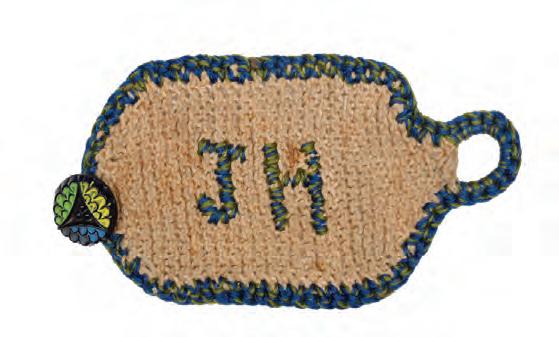
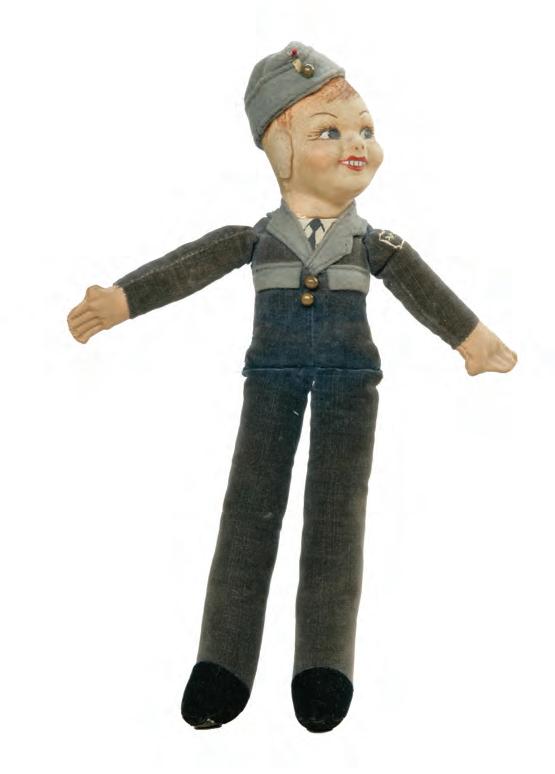
On the other hand, there were things to be avoided so as not to jinx a trip. For instance, volunteering for an operational task in the Fleet Air Arm was thought to be “very unlucky,” indeed “asking for trouble,” wrote Swordfish pilot Charles Lamb in his 1980 memoir, To War in a Stringbag. “If we were told to do something, no matter what, that’s okay; but volunteer—never.”
Captain Denis Boyd, commanding the carrier HMS Illustrious said he could understand that
outlook. And within Bomber Command’s 75 Squadron it was even considered a jinx to wish anyone good luck before setting out on a mission.
Some misogyny entered the picture, too. The women with whom fliers came into contact could sometimes find themselves treated as pariahs. For the RAF in the U.K., especially Bomber Command, they were often seen as a problem, since their presence was said to divert men from the all-consuming business of war.
Married life on or near an operational station was considered a distraction, dangerously splitting the loyalties of the husband between his wife and his crew. So, some station commanders banned wives from living in RAF accommodation and tried to dissuade them from moving into nearby villages. Moreover, some married fliers actually thought it bad luck to have their wives live nearby.
Another common sexist jinx: “any innocent member of the WAAF who happened to have two successive boyfriends who failed to return from operations would be labelled a chop girl and shunned,” an observer at RAF station Marham noted of the Women’s Auxiliary Air Force.
Aircrews generally considered the number 13 unlucky and those that returned successfully (opposite) often considered any small detail, even such as the doll of a soldier onboard, a charm.


Not surprisingly, numerology played a part in crew superstitions just as it does elsewhere in society. Number 13 was generally considered to be unlucky when used in a call sign, an aircraft serial number or a sortie number. The number 7 was deemed the opposite.
Premonitions of disaster weren’t unusual either. Those crew who experienced them said they involved a sudden and overwhelming sense of imminent catastrophe. They usually came without warning, sometimes while asleep, but often when awake, either to the fliers concerned or to observers.
At times they seemed uncomfortably prescient. In May 1942, Bob Horsley, a wireless air gunner with the RAF 50 Squadron, “had the strongest premonition that we would be shot down.” That night his Manchester bomber was hit with flak so badly over Cologne, Germany, they were forced to bail out.
Some crew members simply became fatalists. After all, fate could appear to be so random: “Some got killed on their first mission while others survived a tour of 35 trips or so and some even completed two tours,” reflected Canadian pilot Donald Smith, who flew Halifax bombers with the Royal Canadian Air Force 425 Squadron in 1944.
“Some never encountered enemy fighters or flak,” Smith continued, “while oth ers encountered them every time they went out. Sometimes one or more crew mates were wounded or killed while the rest of the crew returned [unharmed].”
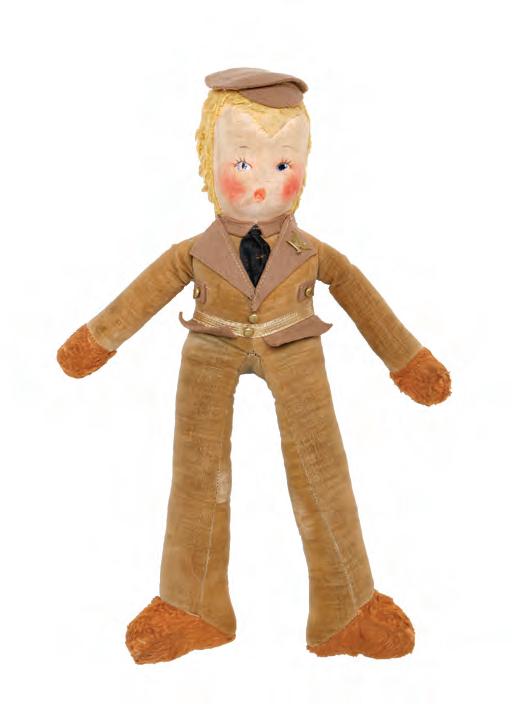
Regardless of the bewitching beliefs, a variety of behavioural studies have demonstrated clearly that when the future seems particularly uncertain, people are much more inclined to engage in magical thinking and superstitious action as a means of trying to impose some control over a situation.
But it’s seldom logical. There’s little plausible explanation that a pilot survives every mission that starts with him kissing the plane’s propeller because it worked the first time. These rituals became the brain’s justification for survival, even if it had no reasonable impact on the result. However, it could influence self-confidence and therefore performance— so, indeed, potentially impacting success, according to several studies.
“In seeking to make sense of and adapt to the external world, the human brain has evolved in such a way that it constantly seeks to detect patterns in perceived events,” wrote military historian
Simon (S.P.) MacKenzie

Flying against Fate: Superstition and Allied aircrews in World War II. This form of natural learning is generally a good thing, but can on occasion cause problems, because if one event happens after another event, it does not necessarily mean that the first produced the second. Having survived their initial forays into hostile skies, fliers might conclude that what they had done, and the order in which they did it, had led fate to smile on them—and that therefore it was vitally important to not deviate from the established pattern, even in small matters.
“If you’d done it last night and came back and then if you didn’t do it tonight,” as RAF 101 Squadron Lancaster pilot Ken Gray explained in an interview, “my God, you might not come back—so you did all these things.”
He may well be right.
Behavioural studies indicate that believing a particular item or action is lucky, actually does—more often than not—translate into better results. And anything that helped bolster the self-control that operational aircrews clearly needed against such overwhelming odds had to have had some charm to it. L
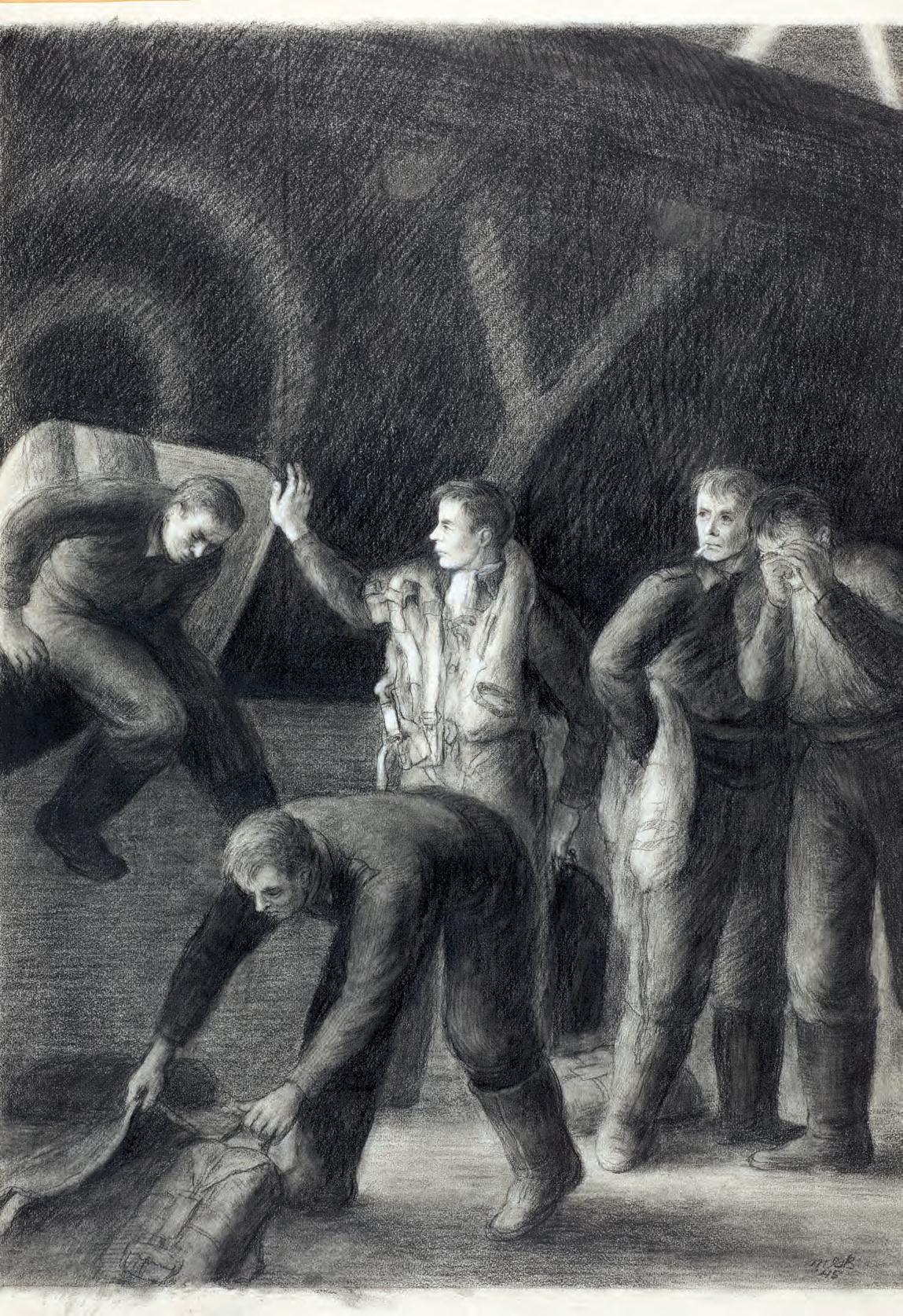
THESE RITUALS BECAME THE BRAIN’S JUSTIFICATION FOR SURVIVAL, EVEN IF THAT RITUAL HAD NO REASONABLE IMPACT ON THE RESULT.
By Douglas Theedom
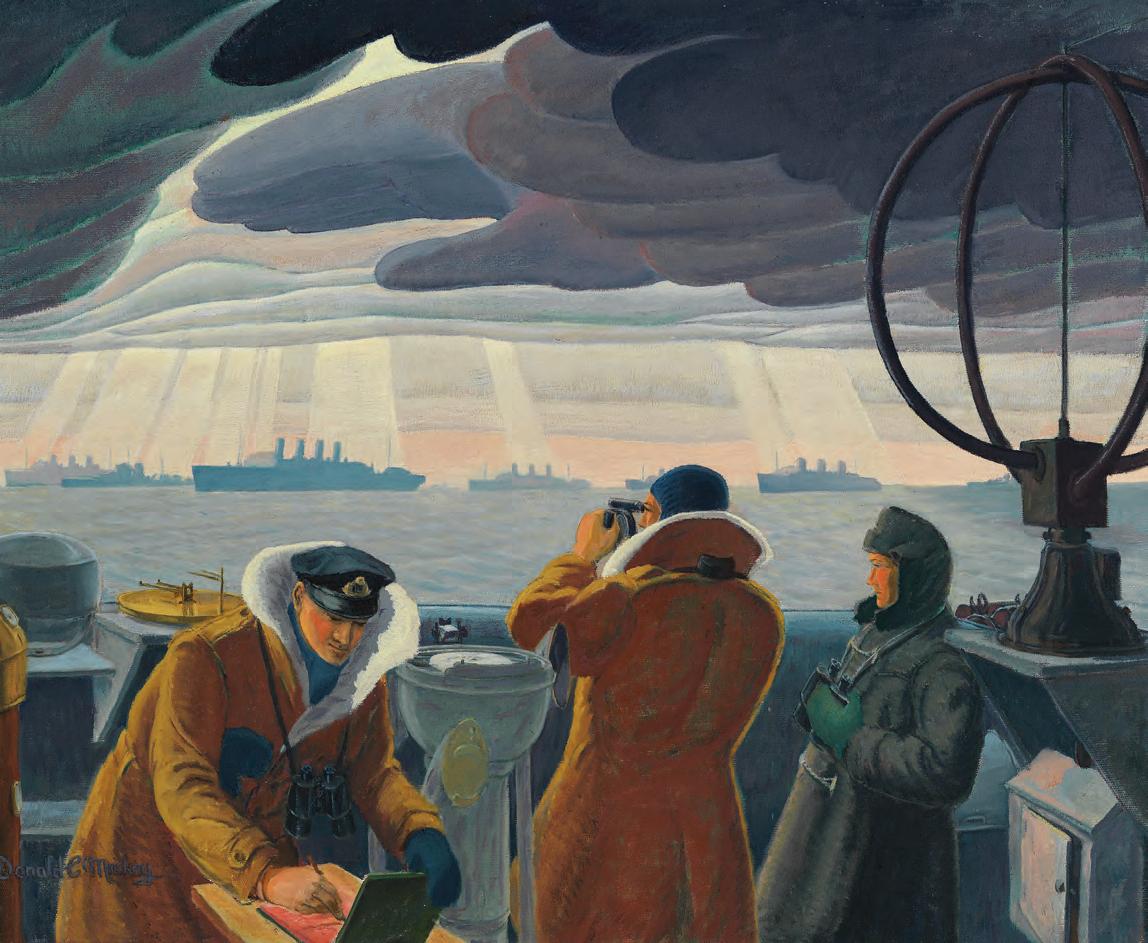
A North Atlantic wolf pack of 13 German U-boats that had stalked convoy ON-115 for days in July 1942, moved in for the kill on August 2-3. The poor weather, however, hampered the submarines’ ability to attack. Still, it was a tense situation.
The U-boats co-ordinated their movements via radio, but the escorts of the convoy lacked the shipboard high-frequency direction-finding equipment, known by the abbreviation HF/DF and nicknamed “huff-duff,” used to pinpoint their locations. The Germans
homed in on their prey using similar technology or by intercepting radio signals between Allied ships.
The convoy’s escort group was Canadian and included the Royal Canadian Navy destroyers Saguenay and Skeena and the corvettes Agassiz, Louisburg, Wetaskiwin and Sackville. To keep the convoy in formation, signals between the escorts and the merchant vessels were transmitted via flashing light. Indeed, most signals pertaining to convoy movements were sent this way as it was harder for U-boats to intercept them.
The convoy ultimately lost only three merchant ships—a larger disaster had been averted because of the bad weather and the inexperience of some of the U-boat crews.
Meanwhile, the U-boats that were sighted, either by vigilant lookouts or radar, were attacked. Sackville targeted three, severely
damaging two and forcing them to withdraw, including U-552, which was so badly damaged that it was, erroneously as it turned out, presumed sunk.
Coincidentally, Sackville, the last surviving corvette of its kind, was used as the model for the corvette in the Tom Hanks movie Greyhound, about a Second World War escort group. At the start of the film, a corvette is depicted communicating with an airplane via flashing light so the Germans can’t locate it.
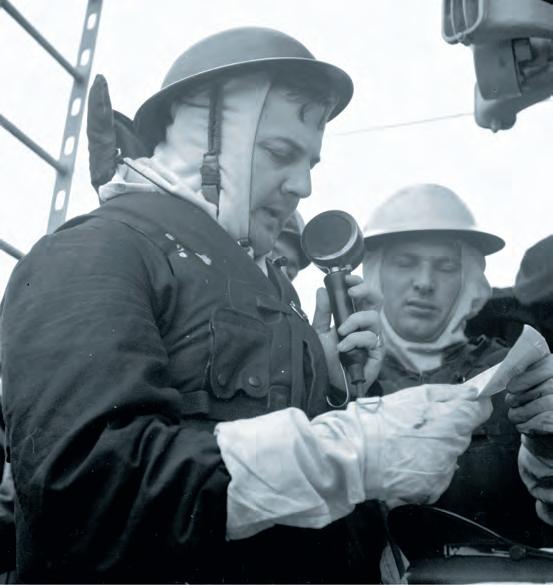
an interesting history—and it may be on the verge of a renaissance.
By using light to communicate instead of radio, countless lives were saved in the Battle of the Atlantic. The signalling system has
BY USING LIGHT TO COMMUNICATE INSTEAD OF RADIO, COUNTLESS LIVES WERE SAVED IN THE BATTLE OF THE ATLANTIC.
Light signalling involves using a lamp with movable shutters so that a series of flashes can be produced. It uses Morse code—long flashes are dashes, shorter ones are dots—to represent the alphabet, numerals and selected punctuation. It can be used day or night and is visible at greater distances than semaphore flag signalling.
The Royal Navy began using light signalling in 1867 and it has largely been a staple of naval communication since. It was used extensively during both world wars, particularly during the Battle of the Atlantic, when it was the primary means of inter-ship signalling.
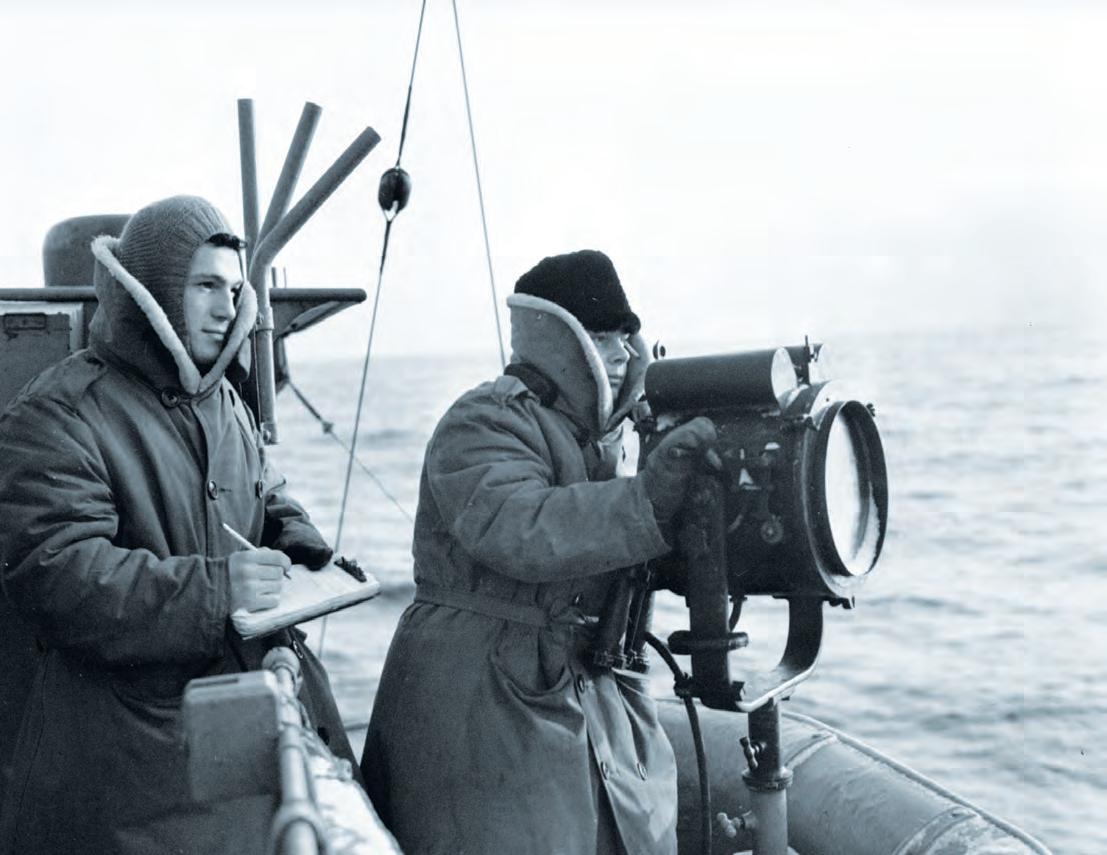
Two signalmen operate a light projector aboard HMCS Assiniboine in 1940 (left). The practice was critical to secret convoy communication during the Second World War, as artist Donald Mackay depicts (opposite).
Lieutenant Stuart Keate reads a signal at sea aboard HMCS Uganda in 1945 (above).
Inter-ship communication was important not just because it shared administrative messages, but because it was also the primary means of controlling the movements of convoys.
The most effective defence against U-boat wolf packs, convoys were kept together by a “screen” of protective naval ships that would stand guard. And grouping merchant ships together also made it harder for German submarines to find them in the first place. But, controlling them was difficult due to a shortage of RCN visual signallers. A humorous tale has it that one senior officer overseeing a convoy exasperatingly asked a corvette in the group by signal, “What are you doing?” The response: “Learning a lot.”
During the Second World War, the RCN also used infrared
non-directional flashing light to communicate. This was the most secure form of signalling using flashing light, but unless the receiving ship had the equipment to read infrared, it couldn’t be seen.
Flashing light in all its forms continued to be used during the Cold War, but by 2007 its use was quickly declining. Technological innovations in radio and satellite communication combined to nearly replace flashing light, although it was still used occasionally for practising inter-ship communication.
Today, an outside visual signalling watch is no longer maintained by the RCN in all weather when sailing in company with other ships. Even during the early 1990s, flashing light skills were not what they once were.
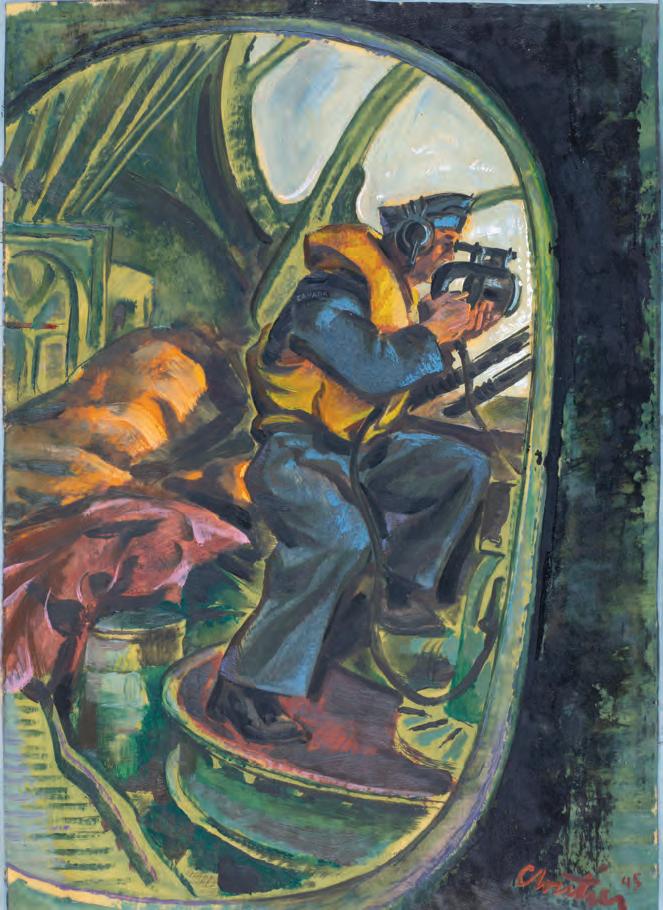
One morning back then at a very early hour, an RCN reservist with light signalling experience was roused from the warmth of his bed to the bridge to read a light message coming from an American ship. None of the naval communicators on watch could read it. The officer, keen as are all of his ilk to demonstrate the efficiency of their watch, was impatient to know what the allies were saying. Half awake, the reservist mumbled that they were wishing the ship “good morning.” Then he went for a coffee. Not the stuff upon which modern naval operations hinge, you might say.
Indeed, practised as it has been for some 150-plus years, flashing light signalling may have outlived its usefulness. Its main drawback is the low speed at which messages can be sent as an operator must send communications at the speed the recipient can read. Each word must be acknowledged by the receiving station via a flash of light before the next can be sent.

Although the NATO standard is eight words per minute, it’s usually sent much slower and never faster than six. Modern satellite communications have good bandwidth and are usually reliable, but they are still vulnerable to being intercepted. Radio messages, while still reliant on good atmospheric conditions and other factors, are now light-years ahead of where they were during the Second World War. And so, flashing light communication seems to have been overtaken by technology.
Still, light signalling continues to have some advantages. It cannot be intercepted unless someone is within its line of sight. And during periods of radio silence, flashing light can still be a relevant means of communication between ships. Could modern technology make it possible to send and receive light signals much faster?
Starting in 2016, the U.S. navy began developing a Flashing Light
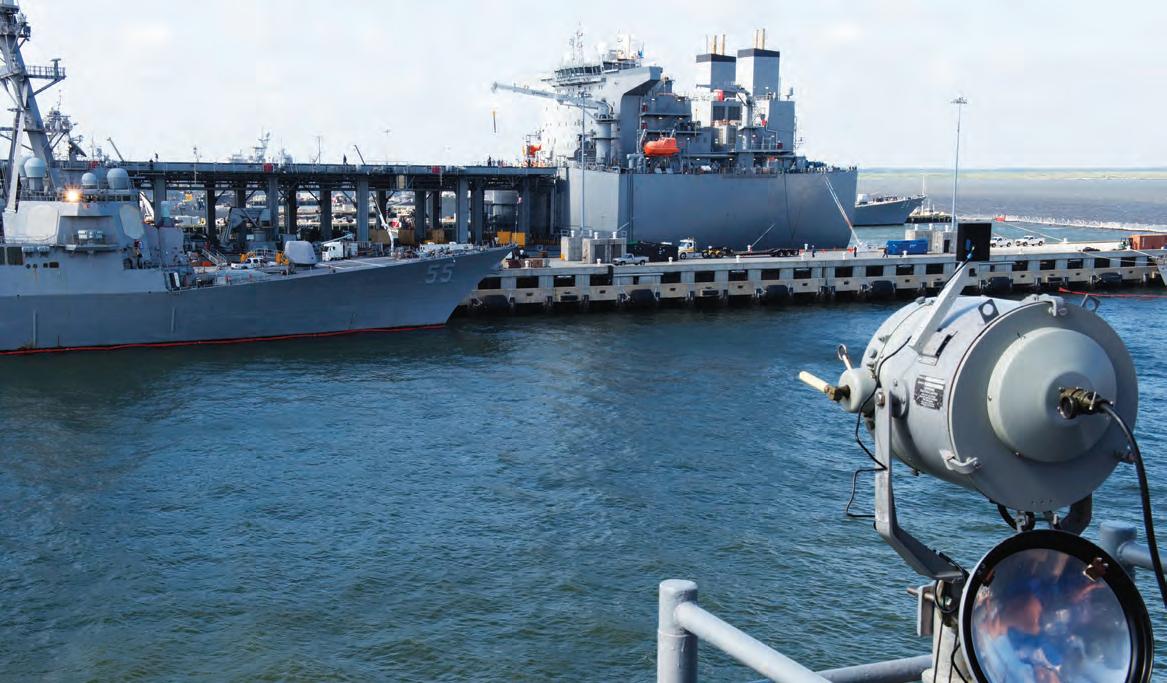
American sailors test the Flashing Light to Text Converter, the latest light-signalling tech (this page), in June 2017. Artist Albert Cloutier depicts a Royal Canadian Air Force crew member signalling an escort vessel during WW II using more basic gear (opposite).
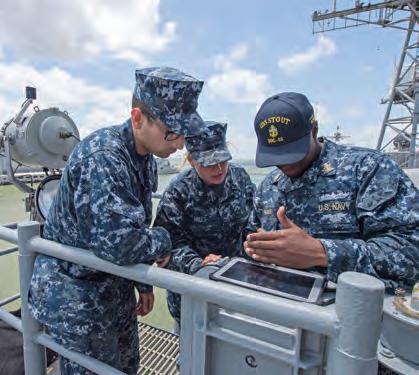
MARCH 2020, A SECOND TRIAL WAS CONDUCTED WITH LED BULBS, WHICH CAN SEND UP TO 1,200 CHARACTERS PER MINUTE.
to Text Converter (FLTC). The device replaces operators and reads messages at much faster speeds. Initially, it used the existing xenon light bulbs in traditional signal lamps and replicated human rates of transmission, but later the bulbs were changed for LED lights that allow messages to be sent much faster. German researcher Harald Haas had first demonstrated the use of LED lights at very high speeds for communications purposes in 2011.
The FLTC system is being developed by the U.S. Office of Naval Research, the Naval Surface Warfare Development Center Panama City Division in Florida and Creative MicroSystems. A small camera captures the messages, which are then processed in real-time on a connected laptop. And an operator sending a signal simply types the message into a laptop—they don’t have to be trained in Morse code.
The first trials of the new system were conducted in June 2017 in
Norfolk, Va., between two vessels using existing lights and a laptop connected to a sensor. This arrangement sent messages at about 120 characters a minute. Pre-drafted routine messages could speed up transmissions even further. In March 2020, a second trial was conducted with LED bulbs, which can send up to 1,200 characters per minute. It’s believed that LED can transmit signals at distances up to 12 nautical miles, or 22 kilometres.
The only way for an enemy to intercept one of these signals would be to position themselves so they could see the ships signalling each other or locate themselves behind one of the ships, in which case they would receive only half the communication. Of course, either would be difficult to accomplish without being visible to the vessels sending the message.
Enemies would also require the technology to read LED lights, which flash so quickly they appear as a
steady beam to the human eye. There is no indication yet when the FLTC system will be installed on U.S. naval vessels, but it clearly works and would be a useful addition to a warship’s communications suite. Modern military communications tools, including radar, radio and satellite, are vulnerable to jamming. The world’s largest militaries have demonstrated significant capability in this area. These measures can seriously degrade the effectiveness of electronic communications or render them useless altogether. An FLTC could be easily installed and would help alleviate inter-ship communications challenges. It would also provide a backup messaging system.
For old-timers of the light signalling era, it’s encouraging to see the original technology being repurposed and improved for current and future operations. Light signalling isn’t dead yet. Will the RCN or other navies see the light? L
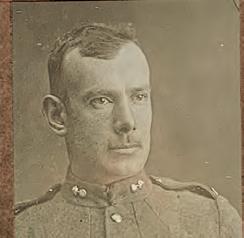
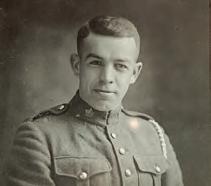
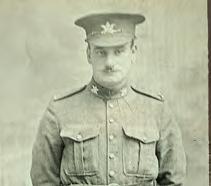
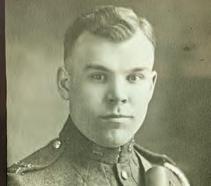
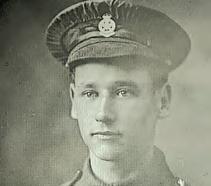
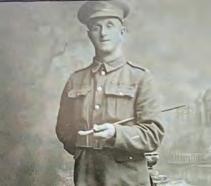
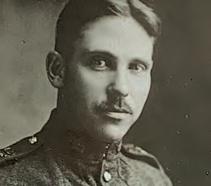
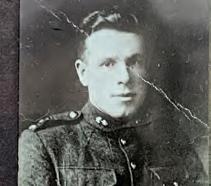
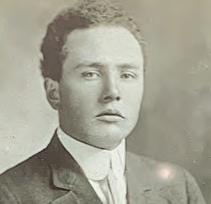
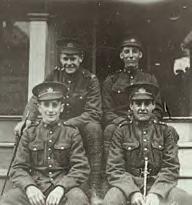
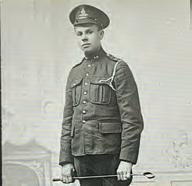
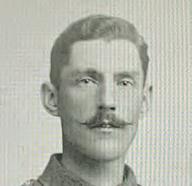
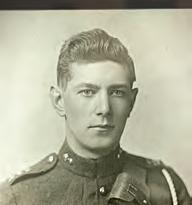
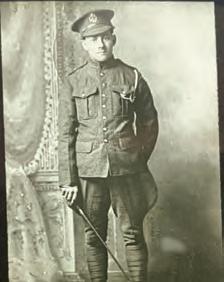
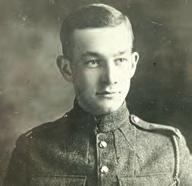
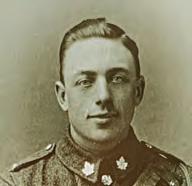
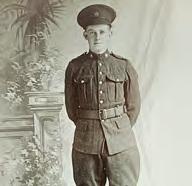
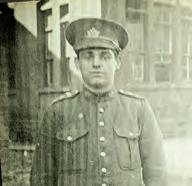
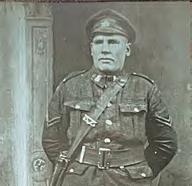
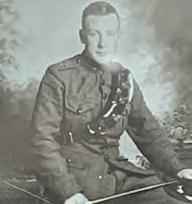
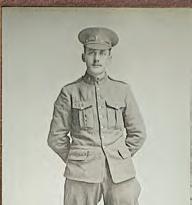
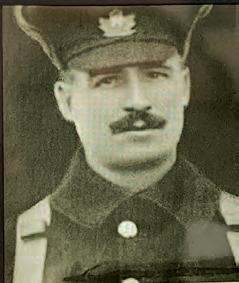
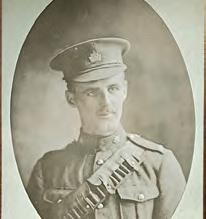
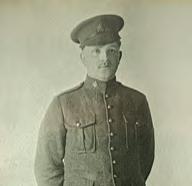
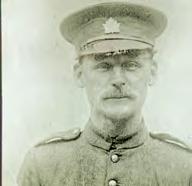
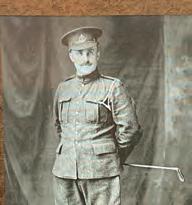
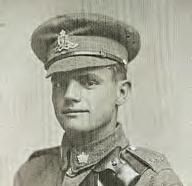
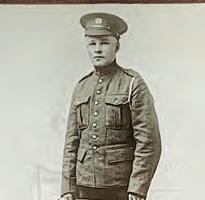
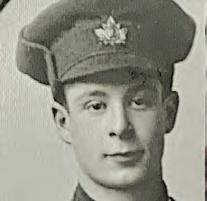
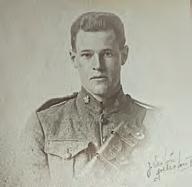
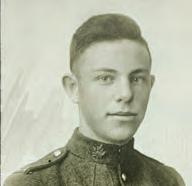
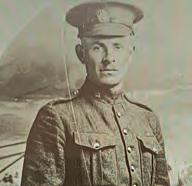
BY
STEPHEN J. THORNE
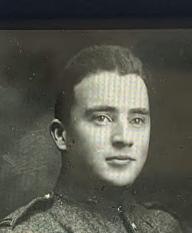
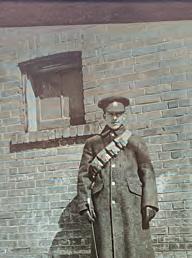
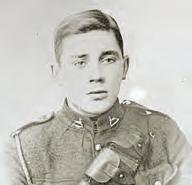
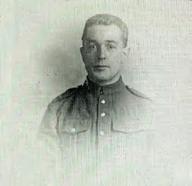
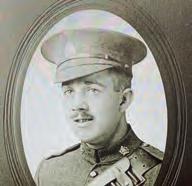
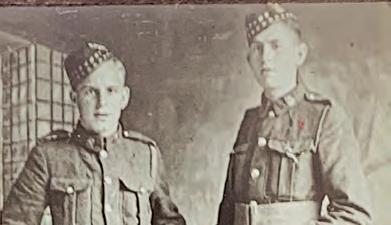
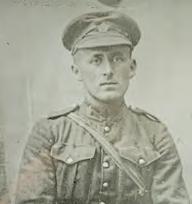
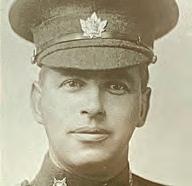
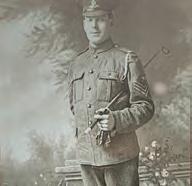
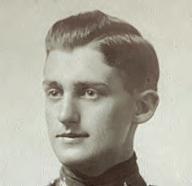
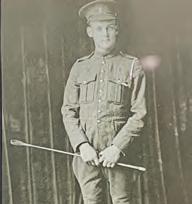

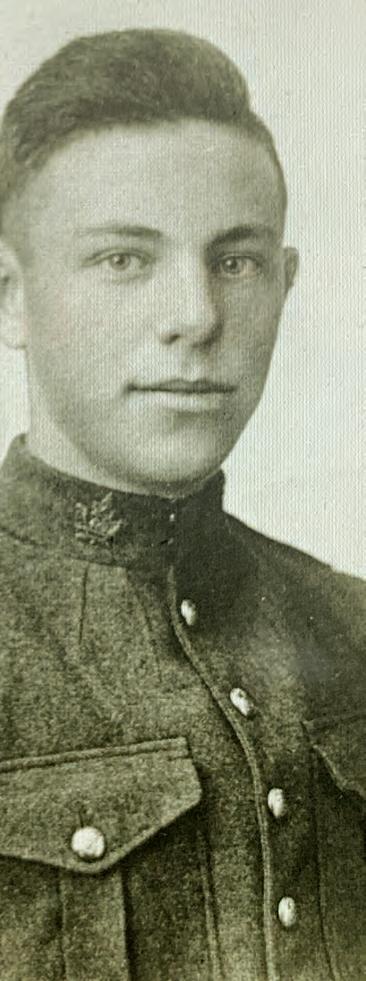
Miraculously by the standards of the day, just over a third made it home physically unscathed.
Canadians, many born in the British Isles, descended on recruiting stations in Toronto, Kingston, Ont., Valcartier, Que., and elsewhere between 1914 and 1916, driven by the call to defend king and country in lands far away. They were bricklayers and electricians, clerks and painters, office workers and locomotive engineers. Most were young recruits, just out of school and living in west-end Toronto. Arthur William Rawlinson was 35.
Sydney Raven was 16. All were photographed before they went off to fight. A memento for loved ones. Rendered on glass plates in faded sepia, their faces reflect a range of pre-combat attitudes and emotions— innocence, confidence, anticipation, apprehension—the grim realities of the new, industrialized warfare yet to be realized. Almost a third didn’t return. More than a third survived debilitating wounds and poison gas.
Some of the photographs have the address of a photo studio once located next to the Elgin and Winter Garden Theatre on Yonge Street in Toronto. They were discovered in the estate of Bob French, a retired corporal of The Queen’s Own Rifles, and consigned to Juan José Besteiro, president of the Canadian Society of Military Medals & Insignia. Short profiles of eight of the men are included with their photos in the following pages. L
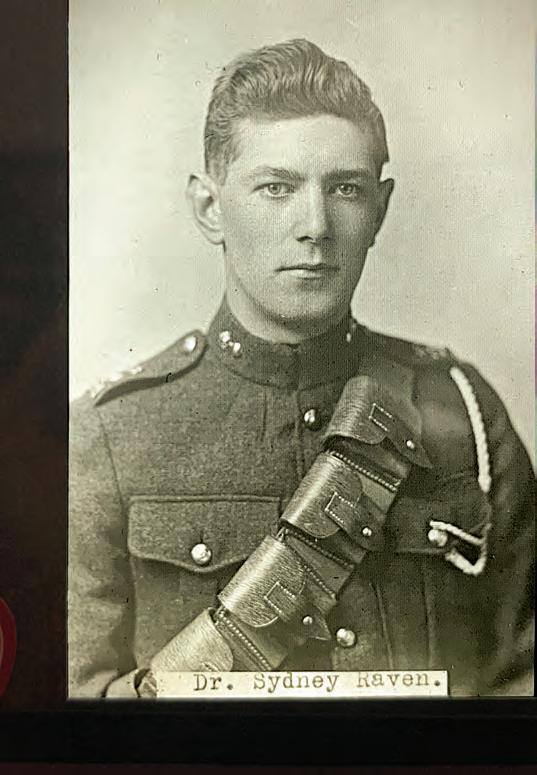
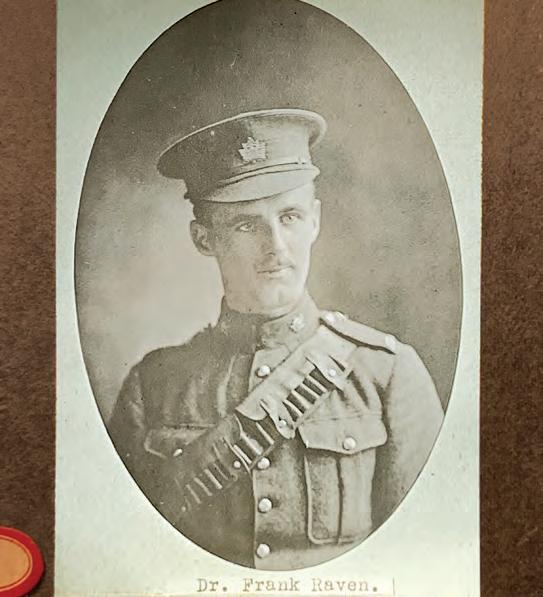
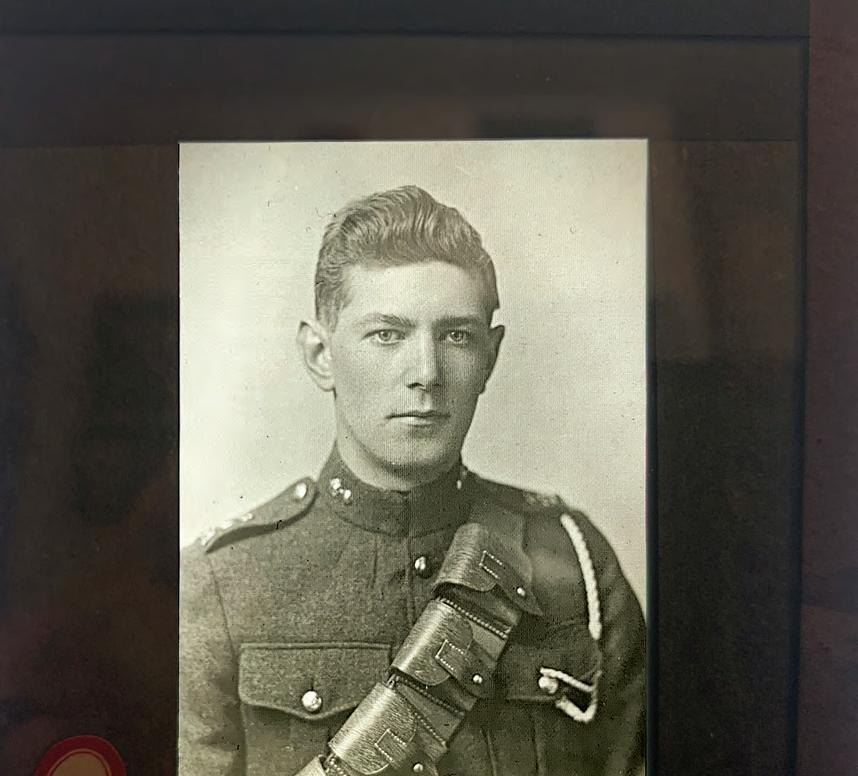
Sydney Vernon Raven of Toronto was just 16 years old when he signed up in March 1916, his complexion described as “fresh” in his attestation documents. His 22-year-old brother, Frank Leonard Raven, had joined in January and served as a driver with No. 35 Field Ambulance before he was sent home in December 1917 with trench fever—a highly contagious, liceborne disease marked by high fevers, severe headaches and soreness of
the legs and back. Pte. Sydney joined the 12th Brigade, Canadian Field Artillery headquarters in England as a driver a few months after he signed up. Less than a year later, he landed in France with the 5th Canadian Divisional Ammunition Column. He was granted permission to marry an English girl, Lillian, in December and given 14 days’ special leave to do so. He served out the war and returned to Canada with his bride in June 1919.
Born in Liverpool, England, Private Arthur William Rawlinson was 35 years old when he enlisted at a Toronto recruiting station in September 1915. He was just five-foot-four, 123 pounds. After sailing out of Halifax with the 74th Battalion aboard the Empress of Britain in March 1916, Rawlinson was reassigned to the 1st Battalion, Canadian Mounted Rifles, after it was overrun in a German attack and suffered 80 per cent casualties at Mount Sorrel. Rawlinson was wounded on Sept. 15, 1916, as his battalion joined the first wave attacking Mouquet Farm on the Somme. He was back in the line five days later, only to be killed in action on Sept. 30. He was 36.
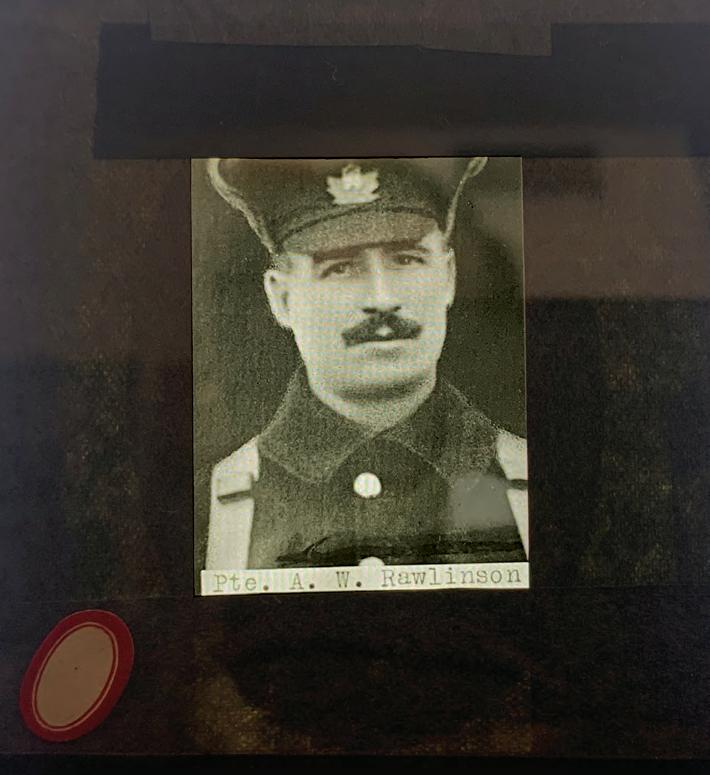
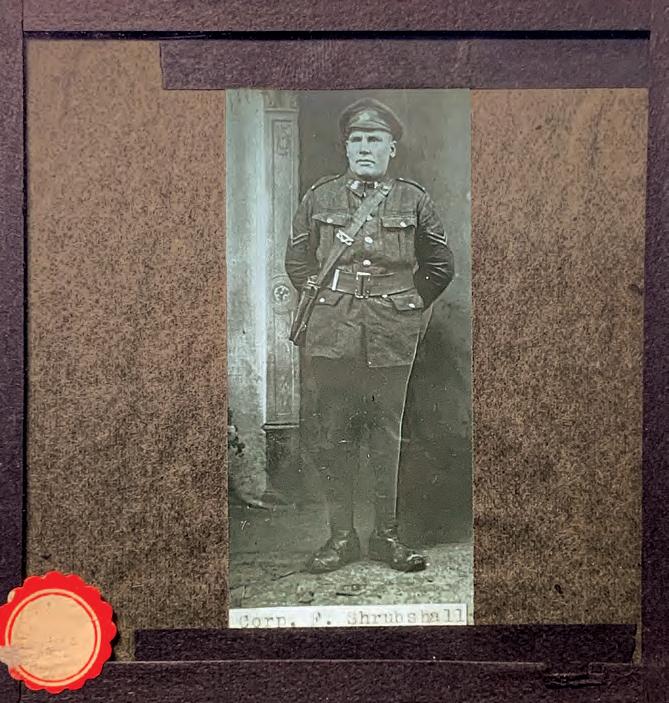
Frank Shrubshall was born in Faversham, England, in 1881 and became a locomotive engineer with the Canadian Pacific Railway before he enlisted at age 34 in Toronto in March 1916. As a member of the 38th (Ottawa) Battalion, he received a field promotion to sergeant in October 1917 and was, according to his records, “killed instantly by a machine gun bullet during the advance on the DrocourtQuéant Line on the morning of September 2, 1918.” He was awarded a posthumous Distinguished Conduct Medal, the second-highest award for valour, almost five months later. He left behind a wife, Edith, and two children.




Sergeant Bertram John Topham, a native of Northwich, England, was an electrician before he signed up for military service at Valcartier, Que., shortly after the war began in September 1914. He was awarded the Distinguished Conduct Medal for his actions with 3 Company, 14th Battalion (Royal Montreal Regiment), at Mount Sorrel on June 3, 1916. According to a unit history, Topham led a party of 14 men and established contact with the enemy at a point on the Allies’ left flank. “When his advance was checked,
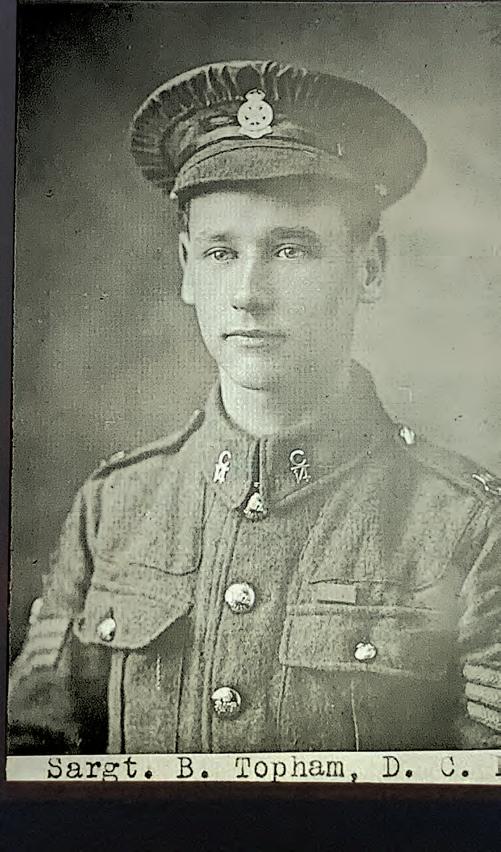
Topham took up a position and for the whole day defied the enemy’s efforts to eject him,” it said. “Casualties he could not avoid; and gradually his little party dwindled. At night, together with some two or three survivors, he retired on the main body of the Battalion.” His medal was awarded by none other than Lieutenant-General Julian Byng a month later. Topham fought through France and Belgium. He was concussed and suffered lifelong hearing loss from an exploding shell before the war ended. He died in 1962 in Toronto, age 67.
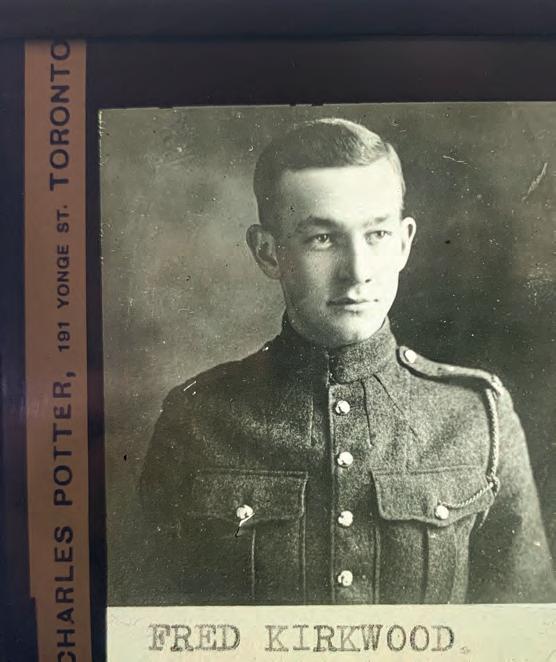
Toronto native Frederick Swebert Kirkwood, a clerk, signed up at Kingston, Ont., in September 1916 and served as a driver with ‘C’ Battery, the Royal Canadian Horse Artillery, for 16 months before he was shot in the thigh at Amiens, France, during the German spring offensive of April 1918. His leg was amputated well above the knee, leaving just a 25-centimetre stump. Twenty-two at the time, he would spend a year in hospitals in France, England and Canada. He endured several operations and would suffer phantom foot pain in wet weather for the rest of his life. He returned to Toronto, resumed work as a clerk, and married Ruby Alexandria Whillier, a 21-year-old stenographer from England, in 1925.

Born in Toronto, George Peter Mallaby was a gunner with the 21st Battery, Canadian Field Artillery, when he was gassed at Passchendaele, Belgium, on Nov. 1, 1917. Artillery shells and heavy rains had turned the battlefield into a wasteland of mud, swamp and water-filled craters. Canadian units took 15,000 casualties, including more than 3,000 men confirmed killed and 1,000 more missing and presumed dead, many of them lost in the mud. Mallaby, a Woolworth employee before signing up at age 21 in March 1916, was back in circulation within a month and survived the war.
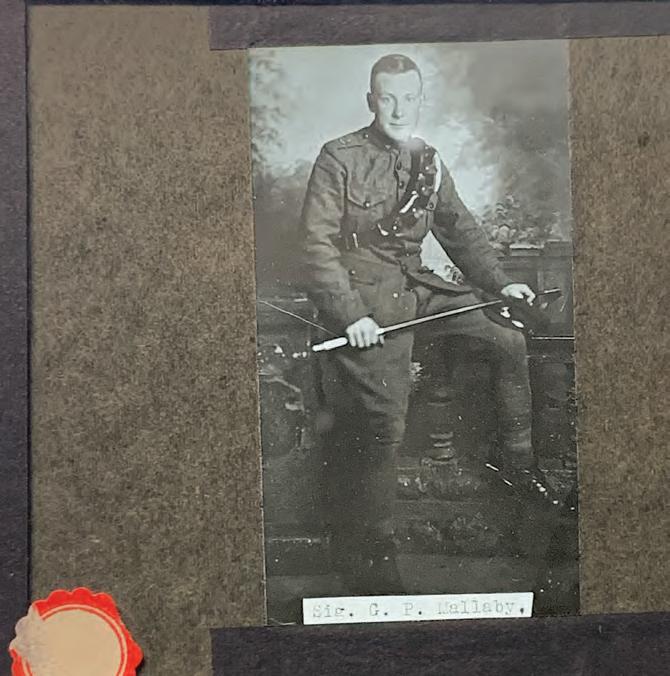
AROUND YPRES ON SEPT. 30, 1917. HE WAS OFFICIALLY DECLARED KILLED IN ACTION IN APRIL 1918.
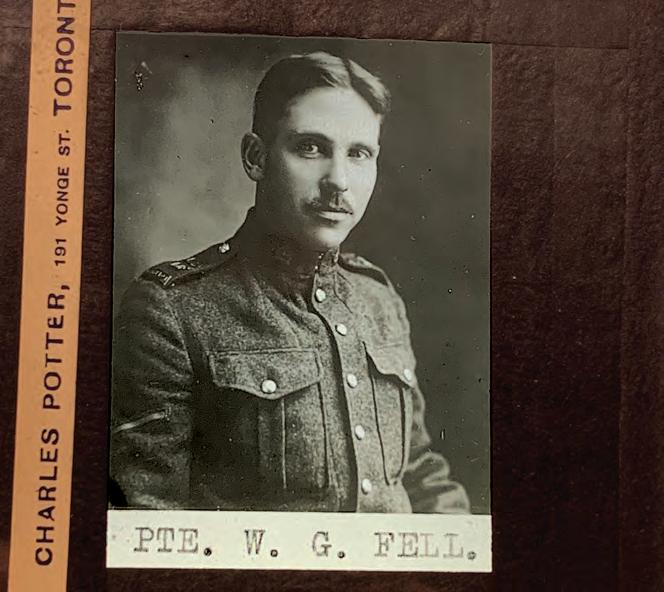
Montreal-born William George Fell was a 32-year-old master painter and decorator when he signed up in Toronto in March 1916. A lance-sergeant in the 116th (Ontario County) Battalion, he was wounded on a raid north of Avion in July 1917, then went missing in action around Ypres on Sept. 30. He was officially declared killed in action in April 1918; his remains were never found. His name is on the Canadian National Vimy Memorial on Hill 145 north of Arras, among 11,285 Canadian soldiers listed who were declared missing and presumed dead in WW I France.
War artist Jack Shadbolt depicts a member of the Veterans Guard of Canada on duty at the German prisonerof-war camp in Petawawa, Ont., in late 1944. The unit was featured on the cover of the September 1943 issue of The Legionary (opposite), this magazine’s previous name.
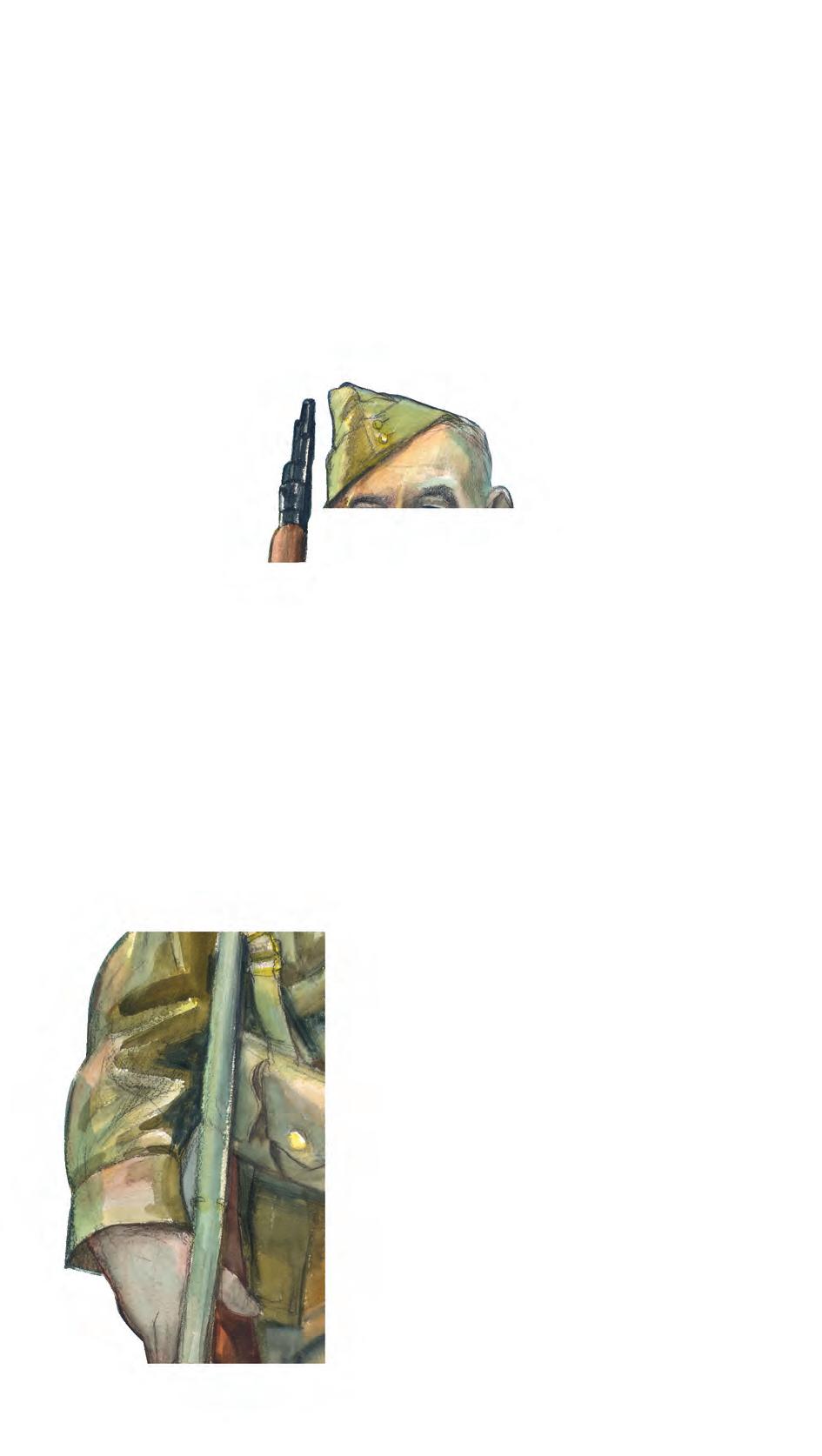
camps. It was never intended that these veterans would see combat.

May 10, 1940, the Germans launched a massive onslaught against western Europe. Shockingly, after two weeks, France was on the verge of collapse and the British Isles themselves seemed imperilled. Every man was needed, and Canada accelerated its military preparations. Under these dire circumstances was born one of the least-known Canadian Army organizations of the Second World War: the Veterans Guard of Canada.
On May 23, Defence Minister Norman Rogers announced the urgent creation of the Veterans Home Guards, a force necessary “for the more adequate protection of military property or for any other purpose that may be found necessary in Canada.” Volunteers were to be exclusively First World War veterans having served in Canadian or British forces. The men needed to be less than 50 years old (later 55), fit and honourably discharged. The war was drawing nearer to Canada and the veteran soldiers would be required to protect key infrastructure and industrial sites, including power stations, bridges, canals, dockyards, government buildings and munitions factories against the presumed threat from saboteurs. The force’s principal task was guarding civilian internment camps and, later, prisoner-of-war
The Department of National Defence originally authorized 12 companies of 250 men, each commanded by a major, consisting of a company headquarters and six platoons of 39 men, all ranks. In September 1940, the force was expanded, and its name was changed to the Veterans Guard of Canada. The guard was not an auxiliary force nor a group of wellmeaning civilian veterans; it was an integral part of the Canadian Army. The men wore battle dress, were issued Ross Rifles or SMLEs, had the same service obligations and received the same pay ($1.30 a day) and allowances as other soldiers.
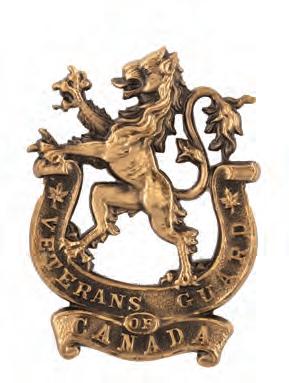
of modern hostilities, however much it may pain him to admit the fact.”
Many veterans had been rejected at recruiting offices and the guard offered healthy vets anxious to do their bit a chance to serve anew.
Thousands of veterans across Canada flooded the special recruiting centres established for the guard in each military district. These were the men of Ypres, the Somme, Vimy and Passchendaele, and included hundreds who had served with British forces. Many wore their campaign medals and gallantry awards, and they came from all backgrounds and walks of life.
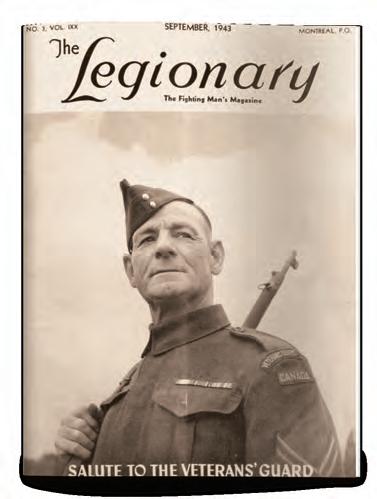
The sudden creation of the guard was partly in response to the vocal demands of veterans’ organizations, especially the Canadian Legion, eager to employ the veterans’ military experience in aid of the war effort. But, as The Legionary magazine noted, “The old soldier is now just a bit too old for the rigours
In Montreal, more than 1,000 veterans queued to enlist. One impressed reporter wrote of the “grizzled ex-servicemen…back in uniform to do their bit once more in the country’s present hour of need.”
Sometimes it was the veterans who were in need. Henry Patry, who had proceeded overseas with the 1st Canadian Division in 1914, had six children, survived on relief and reportedly stated that “he would rather be working with the vets than starving at home.”
While some 25,000 veterans from across the country had volunteered for the guard by the end of 1940, most were rejected based on age or medical reasons.
The training was intensive, and the men had to meet the basic physical standards of the active army, even if many of them stood to lose a few pounds. There was field training and course work covering
Lieutenant-Colonel
Herbert R. Alley (right) took command of the guard in September 1940. The government ran ads such as this one recruiting veterans for the unit.
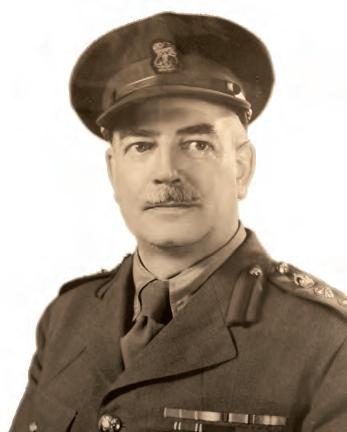
map reading, military law, field engineering, administration and tactics, thereby enabling the men to advance in rank. Of course, this was “refresher” work for many.
Lieutenant-Colonel (later Colonel) Herbert R. Alley of Toronto had taken command of the guard in September 1940. Since guard detachments across Canada were under the direct command of the district officers commanding each military district, Alley was given the bureaucratic title of officer administering (later director). He had formerly served as president of Ontario Command of the Legion.

“ONLY THE HIGHEST SENSE OF DUTY AND RESPONSIBILITY COULD HAVE CAUSED THESE MEN TO FORSAKE THEIR LOVED ONES FOR THE HARDSHIPS OF ACTIVE SERVICE.”
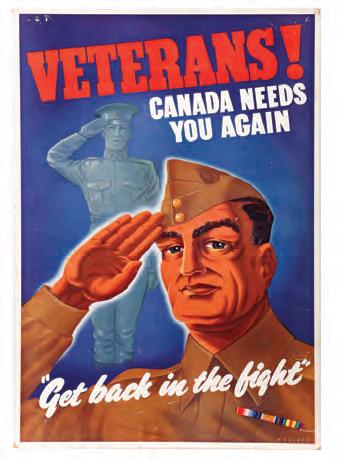
During the First World War, Alley had been wounded at Courcelette in 1916 while serving in the 3rd Battalion. Because the guard’s cap badge was a lion rampant, the men sometimes referred to themselves as the “Alley Cats.”
The officer administering reported to the army adjutantgeneral and was responsible for the guard’s supply and reinforcement needs and personnel matters such as appointments and promotions. In August 1944, Colonel James M. Taylor of Medicine Hat, Alta., replaced Alley. Taylor had received the Military Cross for his action at Amiens, France, in 1918. In civilian life he had been a Calgary police officer.
The guard was headquartered on Rideau Street in Ottawa, and
by March 1941, it boasted, in the words of The Legionary, almost 6,500 “greying but virile” veterans on active service in 29 companies, with another 4,000 part-time volunteers in reserve companies attached to army reserve units across Canada. In June 1943, the guard’s strength peaked at 451 officers and 9,806 other ranks. During the war, more than 15,000 veterans served with 37 regular and three special-duty companies.
In September 1943, the Legion estimated that more than 500 veterans serving in regular or reserve companies were holders of gallantry awards and honours, including two Victoria Cross recipients, Lieutenant George H. Mullin and Lieutenant Charles S. Rutherford.
“Only the highest sense of duty and responsibility could have caused these men to forsake their homes, their loved ones, their hard-won ease, for the hardships and heartaches of Active Service,” wrote The Legionary. “That they have done so is a high tribute to their patriotism and loyalty.”
After Japan’s entry into the war in December 1941, the guard helped operate coastal defences and guarded Royal Canadian Air Force bases in B.C. They also protected the aluminum smelting facilities at Arvida, Que., that were so critical to the Allied war effort.
By far the guard’s most important role, however, was supervising the 26 internment and PoW camps across Canada that eventually housed some 34,000 Germans. At first, the Canadian Provost Corps did the work but, in May 1941, the responsibility passed to the guard. The veteran soldiers manned guard towers, carried out inspections and oversaw all the prisoners’ activities.
Many of these camps were in remote locations, such as Angler, Ont., on Lake Superior, or Ozada, Alta. The weather was harsh and the living conditions basic where the middle-aged men engaged in monotonous and even “soul-stagnating” duties, as The Legionary remarked.
On the guard’s third anniversary, The Globe and Mail reminded readers that, “There is, perhaps, no lessappreciated force in the Canadian armed services than this unit of 11,000 veterans of the last war.”
Admitting that the guard’s formation had been “on a rather loose and hurried basis,” the force had become efficient, “performing quite special functions out of sight of the public.”
These important jobs needed the “experience, stability, [and] selfdiscipline not found in recruits.”
Guarding Canada’s PoW camps was “a thankless chore, the importance of which, not to mention the

drudgery, is constantly minimized. The fact is that we realize there is a Guard only when it is under the adverse publicity of a prison break. Accordingly, the Guards are criticized but seldom blessed.”
The aging soldiers fought one major engagement during the war: the Battle of Bowmanville in October 1942. The three-day riot at the PoW camp in the small town about 75 kilometres east of Toronto on Lake Ontario featured pitched fighting between the vets and much younger Germans with fists, broom handles and hockey sticks.
It resulted in numerous casualties on both sides. One guard officer was captured and beaten. Warning shots were fired, and one prisoner received a ricochet wound in the leg, while two others received bayonet wounds. The fracas ended when 200 reinforcements of officer-cadets arrived from Kingston and stormed the barracks in which the Germans had barricaded themselves.
Despite this violent incident, some former German prisoners recalled the guard with fondness. Horst Braun remembered
that the Canadian veterans took pleasure in teaching him English, while Leo Hoecker stated after the war that “those veteran guards really treated us well.”
Although most of the guard served only in Canada, small detachments were sent abroad. They protected Canadian Military Headquarters in London, garrisoned the Bahamas, protected bauxite-laden ships in British Guiana, defended RCAF installations in Newfoundland and, in 1944-45, even escorted several shipments of mules to India.
In May 1945, an editorial in The Montreal Daily Star said that the men’s service had “directly or indirectly released the equivalent of a full infantry division for combat and other active duty, [and] they have carried out essential war functions requiring a uniformed body of trained, disciplined, and armed men.”
Importantly, more than 1,500 veteran soldiers had transferred into other units of the army, often serving as instructors or specialists.
The Veterans Guard of Canada quickly wound down at war’s end, though some men escorted German PoWs back to Britain. It was disbanded in March 1947. It had lost 336 men from illness or accidents.
An unnamed British-born member of the guard who had mainly served at various PoW camps said 20 years after the war that “all of us who served were pleased to have done something to help, and I for one would not have missed the experience for anything.”
Guard member Alan Horwood, meanwhile, penned “Veterans,” a wartime ode to his comrades’ service that encapsulated the men’s devotion during the war. It read in part:
“…sagging shoulders stiffen in salute
As youth swings by; His martial spirit flames on undiminished They did not shrink from duty when once more ... They vied with youth, eager to do their share.” L
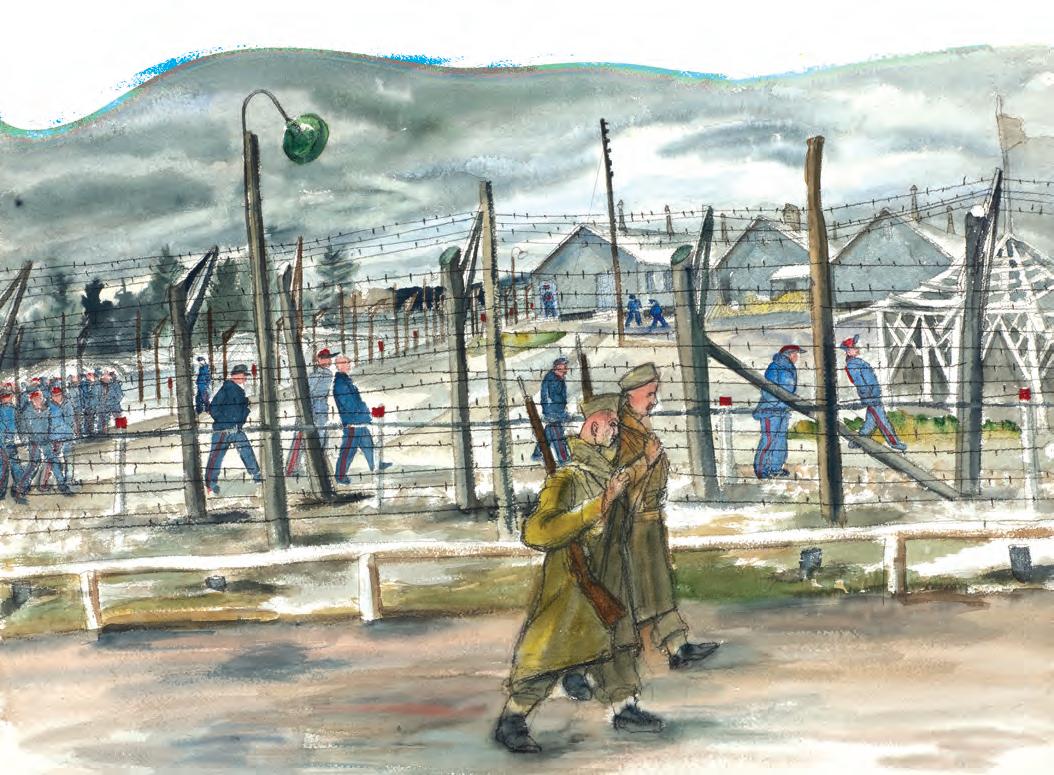
By Paige Jasmine Gilmar
By Paige Jasmine Gilmar
here is nothing wrong with war
So don’t tell me
We should put down our weapons…”
By Stephen J. Thorne
By Paige Jasmine Gilmar

Now, read it again, but switch the first and last line.
These are the first/final lines of “Remembering In Reverse,” a dual-natured poem that can be read from top to bottom or bottom to top. Exploring multiple schools of thought, its author, Miah Denis of Kelowna, B.C., won second place in the senior poem category of The Royal Canadian Legion’s 2023 poster and literary contests. According to Legion program officer Nicole Thomas, Denis isn’t the only one pushing the boundaries of how we think and remember war.
“The artwork, the essays, the poems, they’re really of the highest calibre,” said Thomas. “They surpassed my expectations. The talent is really unbelievable. They’re real artists.”
Many of the winning poets and essayists challenged themselves to bring new life to age-old conflicts such as the First and Second world wars. Ilyas Di Renzo of Toronto, for example, won first place in the intermediate essay category with her epistolary writing, reimagining how a WW II soldier would explain his experiences to his mother.
“I don’t know when I will be able to write again,” Di Renzo wrote in the essay’s character re-enactment. “This war seems to have gone on forever, without an end in sight.”

Nancy Ge of Waterloo, Ont., won first place in the intermediate black and white poster contest for portraying a soldier’s life of service (left). The intermediate colour poster category was taken by Chaelyn Han of Vancouver with a depiction of children playing in a poppy field with clouds forming soldiers above their heads (right).
Norah Adams of Uxbridge, Ont., meanwhile, took second place in the senior essay category with his exploration of the psychology of a 17-year-old soldier who witnessed his young adulthood disintegrate amid the bombardment of Second World War battlefields. “I have lost myself to this war, my boyhood stolen. At the age of 23 I feel like I have lived a million lives, watching my friends die and wither in front of me,” wrote Adams.
“[The students] really put themselves in the shoes of soldiers,” said Thomas. “They do touch on what it would feel like to be there.”
Beverly Blackmore of Creston/ Lister, B.C., took the perspective of a spouse impacted by war on the home front in her poem “You Said You’d Be Alright,” reflecting on what it would be like to have a loved one in battle.
“My eyes filled with tears when I thought of what you meant to me,” wrote Blackmore, in her second-place piece in the intermediate poetry category, “how I wish you could have lived, but I guess it just wasn’t meant to be….”
“They do touch on the mental health aspect of [war],” Thomas said. “A lot of their poems and essays are about some [soldiers] either not coming home or their struggles while they’re there.”
Other standouts include the top finishers in the senior poetry and senior essay categories.
Kathleen Woods of Miramichi, N.B., explored her great grandfather’s experience as a captain in The North Shore (New Brunswick) Regiment in her poem, “The Boy.”
“He felt he was still just a boy; it’s those lost we must remember,” wrote Woods.
“Each day of the year, not just the 11th of November.”
Malek Khaled Al Radi, originally from Syria, but now living in Truro, N.S., penned an essay about what it’s like to be a civilian in a country ravaged by war, fleeing to Jordan, then Canada to live in safety. Such an experience, along with a recent Remembrance Day candlelighting ceremony, shaped the essay’s authorial notion that remembering war is just as important as remembering peace.
Black and white poster—Isabelle Barnes, Corner Brook, N.L.; Second: Georgia Chivers, Aurora, Ont.; Third: Andrew Liu, Calgary
Colour poster—Vlada Pashchenko, Provost, Alta.; Second: Sijia (Linda) Gu, Charlottetown; Third: Emma Olson, Rapid View, Sask. Poetry—Kathleen Woods, Miramichi, N.B.; Second: Miah Denis Kelowna, B.C.; Third: Lyndon Waldner, Margaret, Man. Essay—Malek Khaled Al Radi, Truro, N.S.; Second: Norah Adams, Uxbridge, Ont.; Third: Charles Burtt, Central Blissville, N.B.
Black and white poster—Nancy Ge, Waterloo, Ont.; Second: Mickila Perera, Calgary; Third: Lilah Smith, Oliver, B.C. Colour poster—Chaelyn Han, Vancouver; Second: Katie Eyeon Kim, Rothesay, N.B.; Third: Chantel Mei, Calgary
Poetry—Kieran Watson, Grand Prairie, Alta.; Second: Beverly Blackmore, Creston/Lister, B.C.; Third: Emily Langdon, Blind River, Ont.
Essay—Ilyas Di Renzo, Toronto; Second: Emily Folkerts, Winnipeg; Third: Jack Wang, Surrey, B.C.
Black and white poster—Eric Hu, Calgary; Second: Jayden Lin, Markham, Ont.; Third: Lyndon Samchyk, Grand Coulee, Sask.
Colour poster—Claire Kim, Calgary; Second: Eva Xu, Burnaby, B.C.; Third: Eva Wang, Nepean, Ont. Poetry—Jack Stewart, Napan, N.B.; Second: Maïna Guay, Notre-DameDu-Mont-Carmel, Que.; Third: Dylan Peterson, Wynyard, Sask. Essay—Katie Davies, Falmouth, N.S.; Second: Darrah Ward, New Argyle, P.E.I.; Third: Cheyenne Collins, Ripley, Ont.
Black and white poster—Eira Sharkie, Morell East, P.E.I.; Second: Marcus Ly, East Gwillimbury, Ont.; Third: Brooke Nelson, Mayerthorpe, Alta. Colour—Sicheng Wang, Vancouver; Second: Jennifer Brake, Benoit’s Cove, N.L.; Third: Lily Summers, Meaford, Ont.
predominantly male gaze, the poster included the line “Don’t Forget Us.”
Along with Barnes’ efforts, Vlada Pashchenko of Provost, Alta., took first place for senior colour poster, enchanting the viewer with bursts of red, green and grey, while contemplating a soldier’s memory from war’s best and worst moments, and in bold black capitals, the words “Their Honour Our Remembrance” are written.
“They do an amazing job of proportions and detail.” said Thomas. “They must spend hours, weeks or months working on these paintings.”
The artistic prowess is seen on every level from senior to primary. While Sijia (Linda) Gu of Charlottetown, second-place winner in the senior colour poster category, wowed with an impressionist interpretation of a soldier holding a child against a bloom of poppies, the first-place primary colour poster by Sicheng Wang of Vancouver depicted poppies being dropped from Canadian aircraft with parachuting soldiers on the horizon.
The 2023 competition garnered more than 65,343 entries from across the country. Thomas noted that the judging criteria changed for this year’s contests to include the ideal percentage of what each entry should contain, such as clarity or theme. Thomas also noted that the 2024 competition will include a new video category. Videos should be 30-seconds to two-minutes long and related, naturally, to the theme of remembrance.
“It made me think that we need a light wherever it is dark, and that it is important to remember,” wrote Al Radi.
But contestants don’t just have a way with words; they can also hold their own with pencil or brush.
Isabelle Barnes of Corner Brook, N.L., for instance, garnered first place in the senior black and white poster category with her piece celebrating female military members, such as nurses and ambulance drivers. In tribute to their contributions, often unsung amid war history’s
“It can be a short film, a documentary, an interview, animation, re-enactment, public service announcement, performance or a speech,” said Thomas. “It’s very open.
“Just having all these kids think about remembrance, think about our soldiers, including those who are still in uniform supporting and protecting our country.
“I think it’s just amazing for all of them to not forget.” L
By Stephen J. Thorne
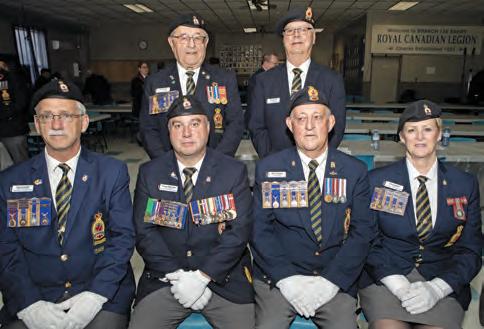
The May holiday weekend marked the last regional convention for the woman who saw Nova Scotia/Nunavut command of The Royal Canadian Legion through some turbulent times over the last dozen years.
Valerie Mitchell-Veinotte was the region’s first woman executive director and served half of those years under NS/NU’s first three female presidents.
The daughter of a former branch president and Ladies Auxilliary president, she’s faced her share of challenges—tumbling membership rolls; multiple hurricanes; a COVID pandemic followed by near-crippling inflation.
Mitchell-Veinotte, who waited tables and washed dishes growing up at the Port Hawkesbury, N.S., Branch, has been a steady, guiding force through all of it.
Membership numbers are recovering (Dominion Vice-President Sharon McKeown reported 2022 yielded the biggest national membership increase in 30 years); hurricane-damaged locations are on the mend; and all 101 NS/NU branches dodged the COVID bullet.
The 2022 financial report released at the 56th annual convention—held
For the first time, the entire Nova Scotia/Nunavut command executive was acclaimed. Harry Jackson (front left) is second vice, George Della Valle is first vice and Don McCumber is president succeeding Donna McRury; Conrad Gilbert (left rear) returns as treasurer, along with Tom Young as chair.
at the Ashby Branch in Sydney after the intended host in Whitney Pier was damaged last fall by Hurricane Fiona—showed “a strong balance sheet,” with an excess of revenue over expenses of nearly $2.6 million and assets surpassing $3.1 million.
An efficient, no-nonsense manager who advised seven presidents, it is nevertheless Mitchell-Veinotte’s kind heart and tireless work on behalf of veterans for which she will likely be most remembered—work that included long, late-night phone calls and spur-of-the-moment trips; persistent advocacy through litanies of meetings, conference calls and emails; and unwavering support and commitment.
Former NS/NU president
Marion Fryday-Cook recalled the time Mitchell-Veinotte got a latenight call from a homeless veteran who was in hospital with his service dog and no dog food. MitchellVeinotte, whose son served two tours in Afghanistan, didn’t hesitate.
“She gives her private phone number out to veterans,” FrydayCook told Legion Magazine “So this veteran called her; he was in hospital. He had his dog and no food for it. Valerie lived in Dartmouth at that time.
“She got up and went down there at three o’clock in the morning, stopped at an open garage, got some dog food and
sat in hospital with that young man for the rest of the night.”
The Legion got him an apartment until he received his government settlement and got his life back on track.
A new man, the veteran approached Fryday-Cook some time
The Dominion Executive Council of The Royal Canadian Legion hereby gives notice of an Annual General Meeting of the organization which will take place at 9:00 am on Saturday, 25 November 2023 at Legion House, 86 Aird Place, Ottawa, Ontario.
Agenda for the meeting:
1. Presentation of the audited financial statements
2. Approval of the auditors for 2023-2024
This meeting is being held to fulfill the requirements of the Canada Not-For-Profit Corporations Act. Members wishing to make comment or raise questions on these two items may do so by written submission to Dominion Command, 86 Aird Place, Ottawa, ON K2L 0A1 to be received no later than 23 October 2023.
Documentation pertaining to this annual meeting shall be made available on the Legion website at www.legion.ca at least 21 days prior to the annual meeting or upon written request by a member, enclosing a self-addressed stamped envelope (9” x 12” envelope with $3.19 in postage) received at Dominion Command at least 14 days prior to the annual meeting.
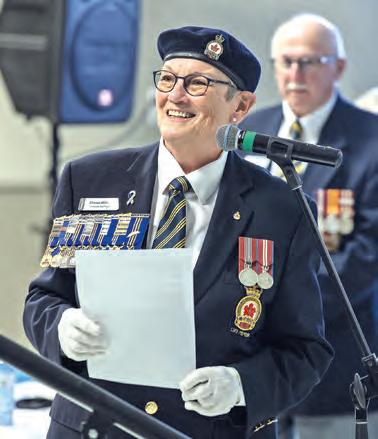
later, told her he would not still be here if it wasn’t for Valerie MitchellVeinotte, and wrote a cheque to the Legion benevolent fund for $10,000.
It was made clear to him he owed the Legion nothing. His reply? “This is me helping out; this is me paying it forward.”
There are many stories like that when it comes to MitchellVeinotte, said Fryday-Cook.
“I’ve never met anybody who advocates for veterans like she does,” NS/NU chair Tom Young told delegates. “And I’ll never ever forget the times I’ve heard her say, ‘I’m the daughter of a veteran; the sister of a veteran; the mother of a veteran.’
“She would crawl to the ends of the earth for the veterans. And, you know what, it’s our organization that benefited by her extreme dedication, her immense intelligence and her attention to detail.”
Mitchell-Veinotte has been a shining example of what the Legion was created to do nearly a century ago—look out for veterans. It was therefore a poignant moment when a debate erupted over the symbol that is most associated with that commitment.
The poppy serves a dual role in the affairs of The Royal Canadian Legion: it is a symbol of remembrance and a vehicle of service.
Each fall, some 18 million poppies are worn across Canada— an act of remembrance for the 116,000 Canadians who have died in wars spanning three centuries.
Dominion Vice-President Sharon McKeown speaks at the convention.
The associated donations raise around $20 million a year for veterans’ services. The carefully scrutinized money buys hospital beds and equipment, provides meals and home services, and supplements the costs of such things as heating, housing, clothing, medicine and medical appliances.
Service and remembrance— the pillars of the organization.
So, it was with no small measure of passion that the 135 registered delegates in Sydney considered a series of resolutions that aimed to expand poppy fund spending into remembering the dead and increasing spending on the living.
A majority approved resolutions to spend poppy money on buglers, flagpoles and portable sound systems for remembrance services and to buy small Canadian flags to place on veterans’ graves. They rejected proposals to use poppy funds to purchase cadet medals of excellence, buy remembrance banners, and reimburse branches for the charges merchants impose on cashless poppy-related sales.
Delegates had a spirited debate over a proposal that would provide poppy monies to veterans who don’t qualify for Veterans Affairs’ Veteran Independence Program.
Jim Hilldebrand of Kingston, N.S., Branch pointed out that the VAC program is intended to help veterans whose abilities are limited due to injuries sustained because of their military service.
“I don’t understand this thing now,” said Hilldebrand. “So we’re saying that just because I’m a veteran and I’m getting old and I have a hard time mowing my grass or I can’t do my driveway that now the Legion is going to be paying for this?
“This means that anyone—anyone who is a veteran and is getting old and is having a problem—would be applying to our Legions to get this service, and I don’t even think we can afford something like that.”
The resolution was defeated by a 59-56 standing vote.
Delegates raised $8,444.55 for the Royal Commonwealth Ex-Services League, which provides meals and other support to Caribbean veterans. They rejected a proposal to cover partial costs of meals for Canadian vets not covered by VAC.
Delegates were about to approve spending on flags for graves when Amos Margeson of Springhill, N.S., Branch took the mic.
“The poppy is a sign of remembrance and the honour that we give to our veterans who have passed,” said Margeson. “The poppy fund is for the service of the living, and I think we should maintain that as our ideal.”
The resolution was nevertheless carried, followed by another which would pay half, up to $100, toward the cost of a Remembrance Day bugler.
The do’s and don’ts of poppy fund spending are outlined in a 58-page manual available on the Legion website. All provincial and territorial convention resolutions will go before the national convention next year in Saint John, N.B.
The 2023 convention was the first in which the entire NS/NU executive was acclaimed.
McKewon swore in Don McCumber, a 50-year member from Wedgeport Branch, as president succeeding Donna McRury; George Della Valle, a retired combat engineer and former Legion zone commander from Sydney, as first vice; and former district commander Harry Jackson as second vice. Delegates returned Conrad Gilbert as treasurer and Tom Young as chair. L
Everything was set at Innisfail, Alta., Branch for the perfect pool tournament, the 2023 Dominion Eight-Ball Championships
Meat draws, horse races, a raffle and 24/7 country radio, accompanied by star performances from local talent, Branch #104 was ready with spirits and sport.
The first evening kicked off with an opening ceremony that included a speech from Innisfail Mayor Jean Barclay and the sounds of Innisfail Legion Pipe Band legend Michael McLetchie. The players were excited for what was to come.
“We’ve got some guys that can really play,” the tournament’s only female player, Leah Carroll of Prince Edward Branch in Victoria, said. “[But] we definitely came in feeling strong and confident.”
“Everybody wants to be competitive. Everybody wants to win,” said Lawrence Borden of Vimy Branch in Halifax.
The dramatic 54-foot-long Starfighter Model 104 F crowning the branch’s exterior, one of only two planes of its kind on display worldwide, the branch had a lengthy list of bragging rights, being the third largest branch in Canada with almost 1,500 members and boasting the largest auditorium in town.
And while the branch had seen Dominion championships before, hosting cribbage in 2012, this was its first time hosting a Dominion pool tournament. And that very fact began to show midday Saturday.
Using a cribbage scoreboard, the volunteer scorekeepers had the hefty task of checking scoresheets, transcribing them onto the board and then setting/announcing matches between 40 players
By Paige Jasmine Gilmar
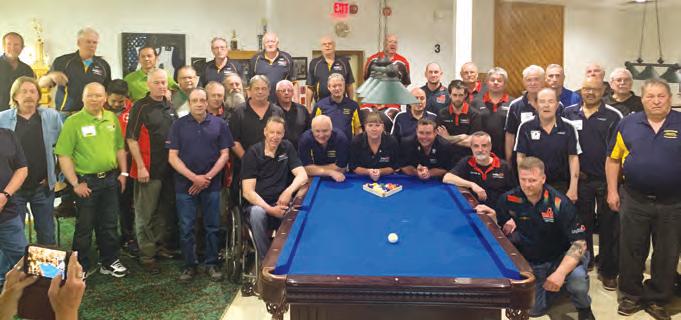
or 10 teams, with each player guaranteed to play 27 games.
This caused confusion for both players and scorekeepers, leaving many as often perplexed by the scoreboard as they were with their scoresheets. Players often filled out their scoresheets incorrectly, causing confusion when they were translated to the scoreboard.
“It wasn’t [the scorekeepers’] fault,” Brian Belobradic of Bowmanville, Ont., Branch said. “Most of the time, it’s just the system they used.”
Belobradic, who has run professional tournaments as well as an Ontario amateur tour before, said, “There [were] a lot of mistakes.”
“I had to go over to the score table probably 10 or 15 times.”
Such a system triggered logistical failures far beyond the table, with some team members playing more games than others.
“They miscalculated,” Borden said. “We’re supposed to stop after five rounds [on Saturday]. Some people played six rounds.
“So that should have never happened.”
Additionally, many players complained about the Dominionapproved tables and cue balls.
The tournament tables, for example, came with a felt-like, pilling-prone fabric that frustrated some.
“The pilling can affect your shot,” Carroll said.
And the tables came with heavierthan-usual cue balls, so players used ones they had brought from home.
Also, because the branch had only three tables and no shot clock, the players would be waiting hours to shoot.
“There was a lot of wasted time,” Borden confessed.
To remedy this, the branch used the billiards table meant to be raffled off on Sunday evening. But this was a mere showcase piece with no overhead lighting, so the table had not been officially approved for play.
“You got to put the seams, the joints, together and then you’ve got to bond it and sand it down to an extremely flat playing surface,” Carroll said. “And they didn’t do that. That’s a bit of a crutch.”
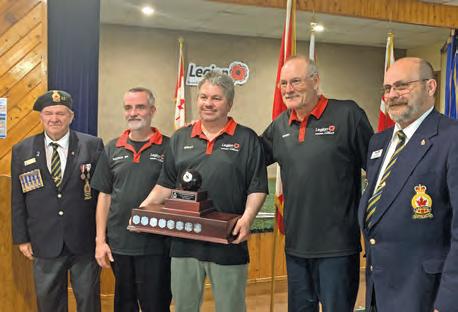
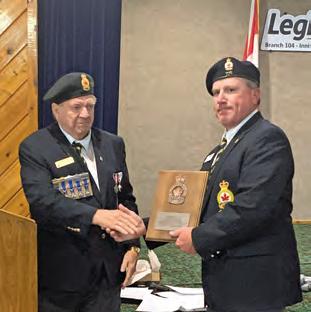
Saskatchewan Command Past President Keith Andrews, representing the Dominion sports committee, and Innisfail Branch Second Vice Lester Nickel give the team trophy to Ontario’s Patrick N. Yarush Sr., Brian Belobradic and Harry Langkraer (left). Andrews presents Branch President Stephen Black with a plaque for hosting the championships.
Still, Carroll preferred the raffle table to the Dominion-approved ones, because of the fabric.
But even with thick fabric and thinning patience, the pool players persevered, with the Ontario team taking first place for teams, followed closely by the B.C./Yukon team.
During the game, Ontario came in with a large lead the first day, with Belobradic undefeated on Saturday. And while there were a couple of lost games the following day, Ontario came out on top.
“We all had winning records,” Belobradic said.
Running out of time, the branch had to rush doubles and singles during the scheduled banquet and award ceremony times.
During doubles, Borden scored three cross-side shots, a sizable feat given the different angles.
“It’s very hard to make those shots,” Borden said, “You got to know what you’re doing.”
Meanwhile, Belobradic and his partner, Patrick D. Yarush Jr., missed crucial shots near the ending
matches when they were right up to win at 2-1.
This led Borden and his teammate, John Dugas, to tie with the Ontario team and eventually bring home the doubles win for Nova Scotia.
Belobradic, however, redeemed himself by winning singles—but even then, he was disappointed in some aspects of his playing.
“I played good,” he said, “but I also missed some shots that normally I shouldn’t miss.”
Given the extra time necessary to complete all the games, an awards ceremony was rushed in the dead quiet, empty auditorium, far past the curfew for the bagpipes and the colour party.
Despite the challenges, the Innisfail Branch still managed to pull off a successful championship weekend. L
SERVING YOU is written by Legion command service officers. To reach a service officer, call toll-free 1-877-534-4666, or consult a command website. For years of archives, visit www.legionmagazine.com
Every day, The Royal Canadian Legion plays a positive role in the lives of many types of veterans, including women. To further veteran programs, the Legion sponsored the July 8, 2023, Stand Up Paddleboarding event; just one of many events organized by the Pepper Pod. Transitioning from the military or RCMP to civilian life can be difficult for any veteran. The Pepper Pod specifically helps women veterans to develop and contribute to a support system, as they face challenges during and after their transition. It was created by retired
major Sandra Perron, the first female infantry officer in the Canadian military, and named after “Pepper Podding,” a military manoeuvre designed to cover one’s comrades in arms while advancing on the enemy. Pepper Pod’s mission is rooted in the belief that women who served have a unique cultural experience that can be valuable when they share it and support other women. It is not a substitute for medical or psychiatric treatment. It is a twoday, two-night retreat of eight to 10 women and one facilitator. The aim is to provide women veterans an opportunity to mutually connect at a deep level and develop
profound friendships, while sharing lessons about life, health, transition and healing. The groups become “tribes” that lean on each other during life’s challenges. The experience includes a program to develop the tribes, Wonder Woman Wednesday, a Work Party-Party-Party, Stand Up Paddleboarding, dragon boat racing and nationally co-ordinated picnics. It can provide a short respite when life becomes overwhelming. Since 2018, more than 250 women from across Canada have graduated from the program.
To learn more about the retreat, visit https://pepperpod.ca/en/ centre/. L
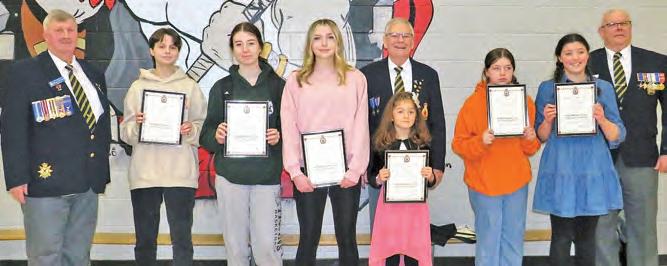
President Gordon Johnson (left) of Habitant Branch in Canning, N.S., along with school liaison Jon VanZoost and Zone 8 Commander Bill Tracey, present certificates and cheques to the poster and literary contest winners from Glooscap Elementary School.
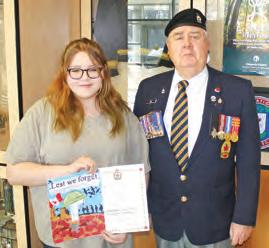
Alfred King of Oxford Branch in Oxford Junction, N.S., presents Kassie Clark with a certificate after she won the N.S./Nunavut intermediate colour poster contest. CAROL KING
President Gerald Burgess of Dieppe Branch in Waverley, N.S., presents the President’s Award to Sheila Pickrem. SHEILA PICKREM
First Vice David Long and Donna Long of Vimy Branch in Halifax present $1,737.50 to the QEII Health Sciences Centre Foundation. DAVID LONG

Store owner Greg Gingras and store administrator Chris Isleifson of Sobeys West End present $806.53 to poppy chairs Linda Wakefield (left) and Cindy Stumme of Brandon, Man., Branch.
President Katriina Myllymaa of Port Arthur Branch in Thunder Bay, Ont., presents $20,000 to senior director Terri Hrkac of the Thunder Bay Regional Health Sciences Foundation to help purchase a positron emission tomography (PET) scan. ROB CUTBUSH
President Katriina Myllymaa and L.A. chair Nancy Singleton of Port Arthur Branch in Thunder Bay, Ont., present $1,500 to executive director Cal Rankin of Shelter House Thunder Bay. GEORGE ROMICK
President Bob McRae (left) and Sgt.-at-Arms
Roland Coutu of Bonnyville, Alta., Branch present $20,500 to long-term care manager Chelsea Martin of the Bonnyville Health Centre to help purchase beds for veterans.
President Gordon Pope of Ryley, Alta., Branch presents $1,200 to Lieut. Ron Cowan, CO of 56 Nootka sea cadet corps.
Poster and literary contest winners Thomas Friessen, Brooklyn Breyer and Brittany Feenstra show their certificates at Coalhurst, Alta., Branch.
Past President Ed Belanger and committee chair Rena Rutledge of Edgerton, Alta., Branch present $1,180 to Lieut. Walter Weir, CO of the 3003 Battle River army cadets. Attending with Weir are Cadet WO J. Hawco (far left) and Cadet WO Lauryn Rutledge.
President Alain Chatigny (left) and Second Vice Rosaire Bernard of Campbell River, B.C., Branch present $5,000 to nurse administrator Pam Mann and veteran Andrew Opray of the Campbell River and District Adult Care Society.
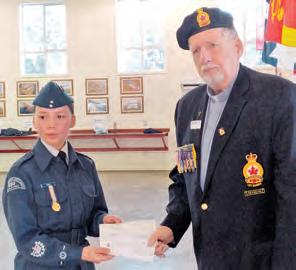
Branch Chaplain South Cadet Liaison Brian Kirby of Bowser, B.C., Branch presents a total of $1,400 to WO Mira Shaw of 893 Beaufort air cadet squadron.

President Stan Granda of Bulkley Valley Branch in Smithers, B.C., presents $17,950 to Floyd Krishan (left) of the Smithers Community Services Christmas Hampers, Neal Rosenberg of the Salvation Army Food Bank, Jenny Rosenburg and Christy Rodger of Scouts Canada, Shelene MacNeil of Bulkley Lodge and Sheryl McCrea of Bulkley Valley Health Foundation.
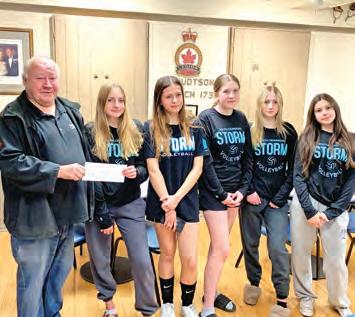
President Lyle Kent of K. Knudtson Branch in Osoyoos, B.C., presents $1,500 to the South Okanagan Volleyball Association.
President Roy Buchanan of Alberni Valley Branch in Port Alberni, B.C., presents $4,000 to Todd Flaro of the Armour Ford Navy League cadet corps.
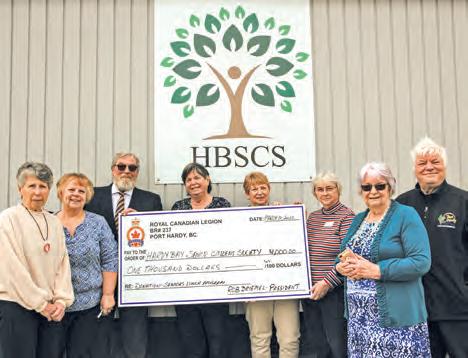
President Rob Driemel of Fort Rupert Branch in Port Hardy, B.C., presents $1,000 to support the Hardy Bay Senior Citizens Society’s weekly hot lunch program.
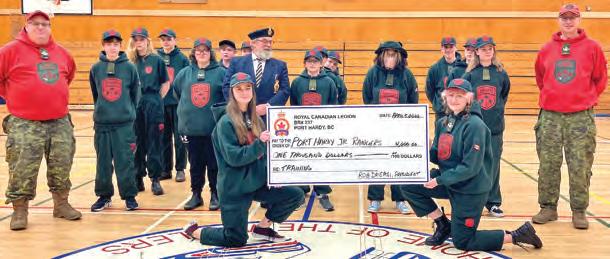
President Rob Driemel of Fort Rupert Branch in Port Hardy, B.C., presents $1,000 to Port Hardy Jr. Rangers to help fund their training events.
President Roy Bunchanan and poppy chair Shannon Dore of Alberni Valley Branch in Port Alberni, B.C., present third place in the junior-level video portion of the poster and literary contest to A.J. Callicum of John Howitt Elementary.
President Harvey P. Truax and poppy chair Cheryl Truax of Nakusp, B.C., Branch present $1,000 to chair Bob Ruttenberg of the Arrow Lakes Hospital Foundation.
President Bill Meadus of Clarenville, N.L., Branch presents $2,000 to board chair Larry Reid of CREST Seniors’ Transportation, accompanied by board members Maisie Caines, Paul Butt, Leo Bonnell and Ed Noseworthy.
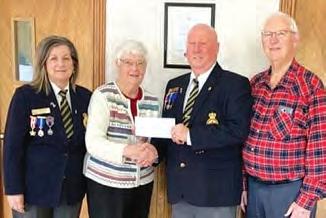
Zone Treasurer Susan Williams and Zone Commander James Williams of Prince Edward Island Command present a $500 cheque to co-ordinators Verna Barlow and Doug LeBlanc of the West Prince Caring Cupboard. J. WILLIAMS
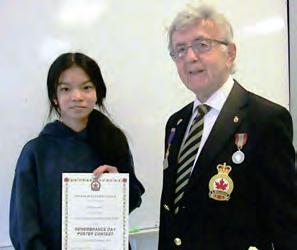
Public relations officer Pieter Valkenburg of Borden-Carleton Branch in Borden, P.E.I., presents Alva Pacatcatin of Amherst Cove Consolidated School with third prize in the intermediate black and white category of the poster contest. D. VALKENBURG
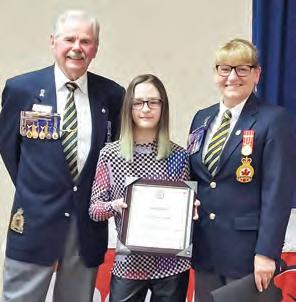
President Bill Meadus and Past President Jackie Vokey of Clarenville, N.L., Branch present second place to Jorja Clarke for the poster and literary contest.
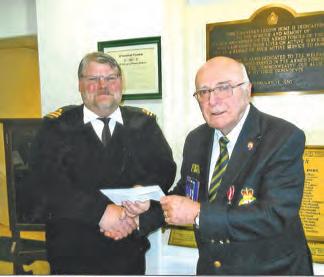
Poppy chair Roy Crozier (right) of George Pearkes VC Branch in Summerside, P.E.I., presents $2,374.75 to the 85 Royal Canadian sea cadet corps, accepted by its commanding officer. K. GAMBLE
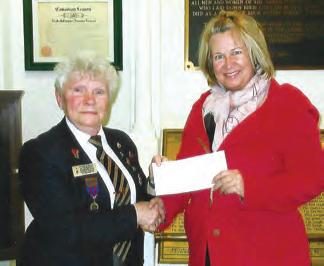
First Vice Gayle Mueller of George Pearkes VC Branch in Summerside, P.E.I., donates $500 to co-ordinator Catherine Gaudet of Hospice P.E.I., East Prince Region. K. GAMBLE
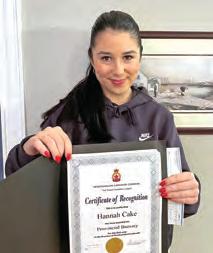
Hannah Cake of St. John’s, N.L., displays her $1,000 bursary, awarded by N.L. Command for students enrolling in their second undergraduate degree.
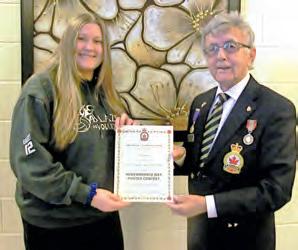
Public relations officer Pieter Valkenburg of Borden-Carleton Branch in Borden, P.E.I., presents second prize in the senior black and white category of the poster contest to Heidi Eggert of Kinkora Regional High School. D. VALKENBURG
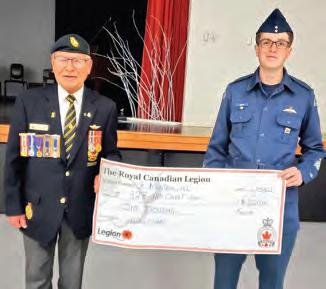
President Brian Rector of Montague, P.E.I., Branch presents $1,000 to WO1 Alex Beck of 327 Southern Kings air cadet squadron.
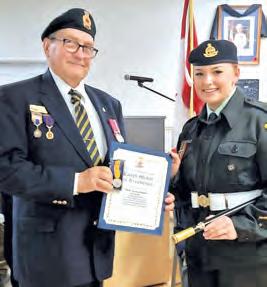
President David Cosh of Kingston Branch in New Haven, P.E.I., presents the Cadet Medal of Excellence to Cadet WO Aurora Ulvstal of the 107 New Haven army cadets.
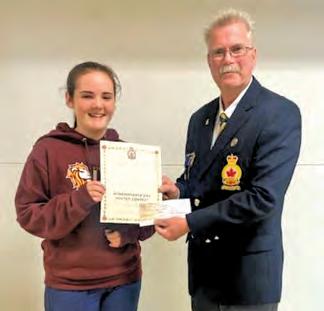
Grant Gay of O’Leary, P.E.I., Branch presents first prize for the poster and literary contest and a $50 cheque to Beth Hierlihy of O’Leary Elementary School. G. GAY
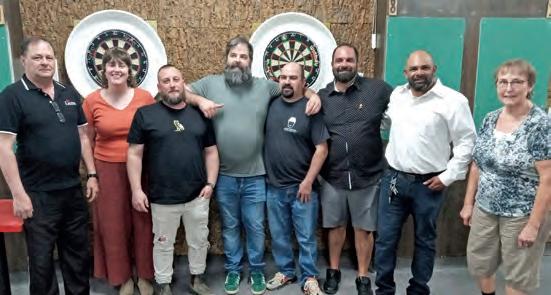
and Lee
Nicole
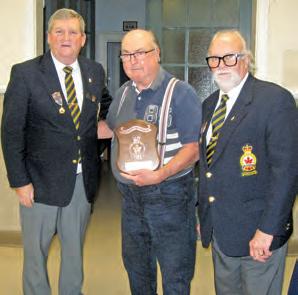
President Alan Haward (left) and Tom Shotton of Bowmanville, Ont., Branch present the Legionnaire of the Year award to Ross Jobe.
Donna-Marie Scott of Reg Lovell Branch in Glencoe, Ont., presents zone-level awards to Leticia Gomes for her black and white poster in the Legion poster contest.
Poppy chair Maxine Evans of Montague, P.E.I., Branch and Zone Commander
Brian Rector of P.E.I. Command present a total of $2,000 to Shaleigh Vessey.
Bryan Melchin (left), Jim Conrad, Stan Howie and Jim Fraser of Polish Veterans Branch in Kitchener, Ont., present $29,714 to St. Mary’s General Hospital Foundation, represented by its business development officer Calvin Carter.
Rich Henry of Walkerton, Ont., Branch presents $1,000 to the new Walkerton District Community School lacrosse team, represented by Josh Bartlett, Matthew Eckert and Travis Gibbons.

First Vice Glenn Irving and President Astrida Chalmers of Brighton, Ont., Branch present $2,000 to food bank volunteers Mike O’Neil (left), Kim O’Neil, Pat Artkin, Alice David, Sue Larkin and Sandy Coe.
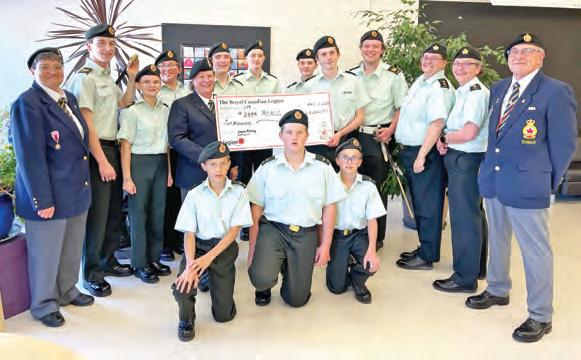
L.A. cadet liaison Cathy Godnell (left), Anna Podebry and President Frank Gosnell of Reg Lovell Branch in Glencoe, Ont., present $2,000 to the 2884 Combat Engineers army cadet corps.
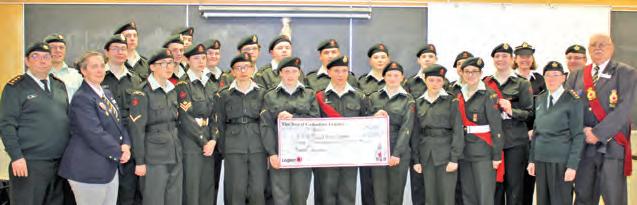
President Laura Depatie and Sgt.-at-Arms Mark Slaughter of Capreol, Ont., Branch present $3,000 to the 2915 army cadet corps.
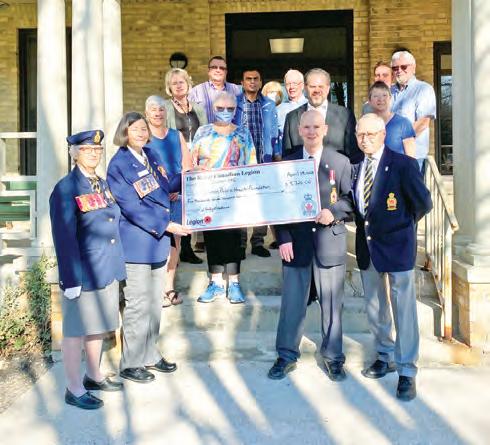
Dee Adair, Ron Adair, Dan Travers and Tim Sweeting of Midland, Ont., Branch present $2,000 to Georgian Bay Food Network, represented by Alexandra Hamelin.
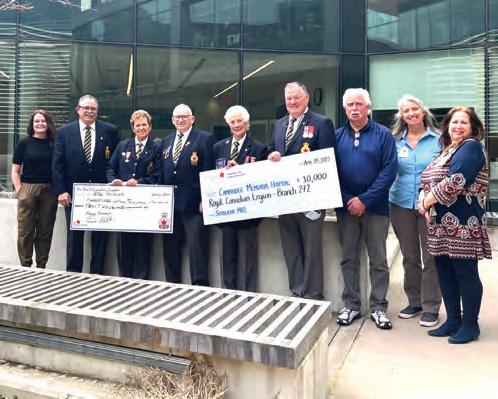
L.A. C-1 Zone Commander Sharon Scruton (left), President Shirley Chalmers and Past President Russ Berry of Harry Miner VC Branch in Clinton, Ont., along with District C Deputy Commander Dennis Schmidt, present $5,720 to the Clinton Public Hospital Foundation on behalf of the Ontario Command Branches and L.A. Charitable Foundation. Hespeler Branch executive members in Cambridge, Ont., present $10,000 to the Cambridge Memorial Hospital Foundation. Accepting the donation from the foundation are development officer Caroline Barker (left), senior development officer Kathy Wilson and development and annual giving officer Ines Sousa-Batista.
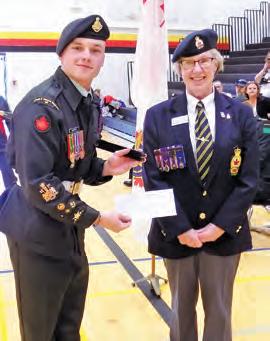
President Trish Gander of Merritton Branch in St. Catharines, Ont., presents $2,000 to the 68 Lincoln and Welland Regiment army cadet corps, represented by CWO Quinton Harriman.
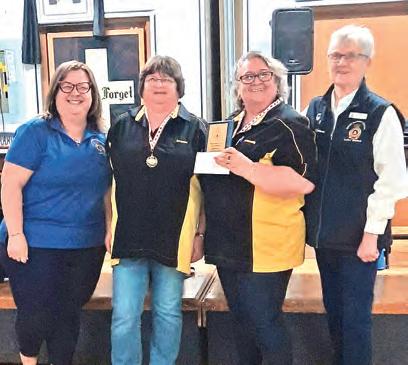
L.A. darts doubles team of Amanda Hiscock and Emma Bennett (centre) from Callander, Ont., Branch win the provincial L.A. tournament. Presenting the awards are sports chair Kelly Scott and provincial L.A. First Vice Sharon Crown.
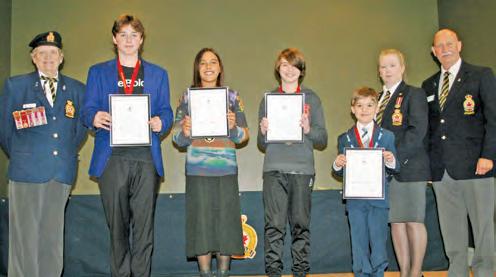
Ontario Command L.A. President Kathy Moggy (left) along with provincial youth ed chair Crystal Cook and President Derek Moore present awards to winners of the provincial public speaking competition, Christian Routenburg-Evans, Aria Thomas, Waylon Gorr and Austin Kurtis.
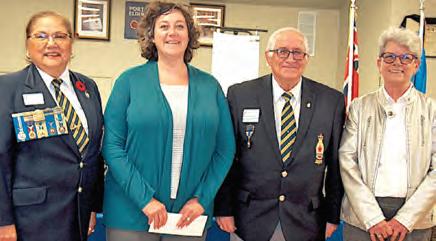
Rhonda Harrison (left), Alex Taylor and L.A. executive Vicky Taylor (far right) of Port Elgin, Ont., Branch present $4,050 to Owen Sound Regional Hospital Foundation, represented by Amy McKinnon.
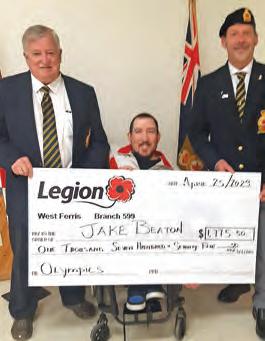
President Jim Russell (left) and First Vice Marti Gerbasi of West Ferris Branch in North Bay, Ont., present $1,775.50 to paralympian Jake Beaton to help with qualifying expenses for the 2024 Paralympic Games in Paris.
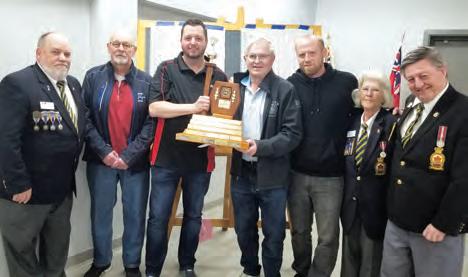
sports chair Walter Stevens (left) along with District E sports chair Nancy Briscoe and deputy chair John Stiff present the top prize in provincial euchre to the team of Griff Manley, Gary Smith, Gary Watt and Bryce McGowan of Fergus, Ont., Branch.
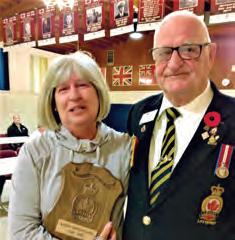
Brockville, Ont., Branch President Ralph McMullen presents the Legionnaire of the Year award to Karen Bond Golden.
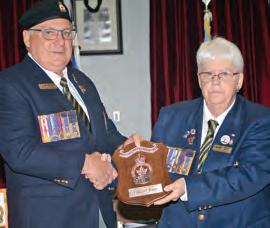
Coldwater, Ont., President Wayne Tutt presents the Legionnaire of the Year award to Cheryll Barr.
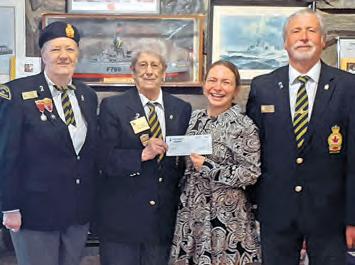
Oakville, Ont., L.A. President Susan Hall (left), First Vice Joan Skrins and President Steve Thomas present $6,579.20 to Acclaim Health on behalf of the Ontario Command Branches and L.A. Charitable Foundation. Accepting the donation is Laura Pizzacalla.

President Graham Noseworthy of H.T. Church Branch in St. Catharines, Ont., presents $3,000 to teacher Erin Medanza for the snack program at Harriet Tubman Public School.
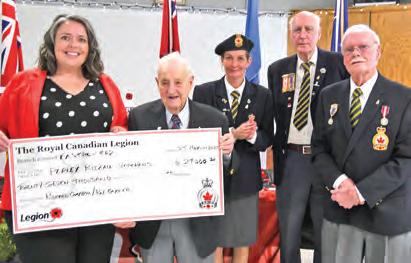
President Angela Bourassa, poppy chair Richard Campbell and treasurer Raymond Barker of Eastview Branch in Vanier, Ont., present $27,000 to Perley Health, represented by development director Courtney Rock and resident Roland Lalond.
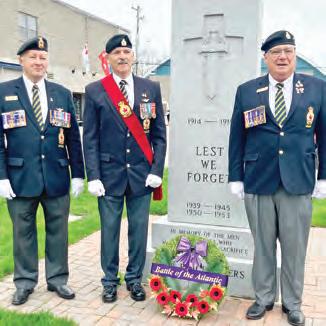
Norm Marion, Rick Morse and Wayne Tutt of Coldwater, Ont., Branch place a wreath to commemorate the Battle of the Atlantic.
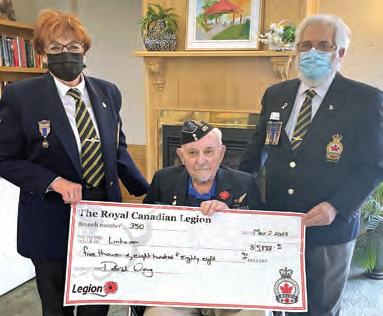
President Jeff Burns and Debra Song of Port Dalhousie Branch in St. Catharines, Ont., present $5,888 to Linhaven long-term care facility, represented by resident John Young.
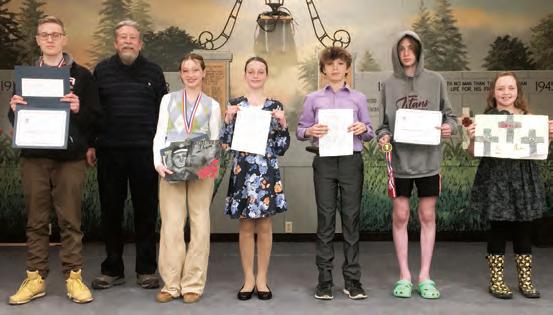
Don Boudreau of Perth-Upon-Tay Branch in Perth, Ont., presents awards to students for their winning entries at branch, zone and district levels of the Legion poster and literary contests.

Alice Dods (left), President Thea Roelevid and Second Vice Carston MacKay of Col. Tom Kennedy Branch in Mississauga, Ont., present $20,710 to Trillium Health Partners Foundation’s Tooba Nasir.
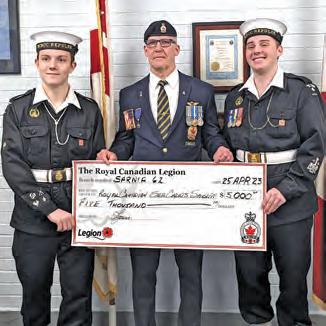
President Les Jones of Sarnia, Ont., Branch presents $5,000 to the Repulse sea cadet corps, represented by PO1 Lukas Kaemph (left) and CPO1 Matthew Marshall.
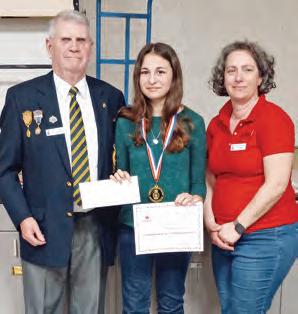
Keir Kitchen (left) and President Laura Depatie of Capreol, Ont., Branch present awards to Alexis Durepeau for her winning entry in the Legion literary contest.
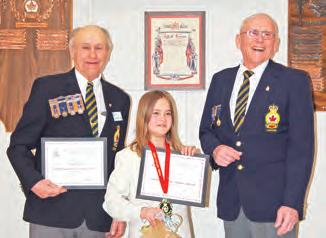
Ripley, Ont., Zone C-1 youth ed chair Keith Vanderhoek (left) and vicepresident John Chatham of RipleyHuron Branch in Ripley, Ont., present Legion literary awards to Cheyenne Collins, who won junior essay at branch, zone, district and provincial levels before placing third nationally.

Bryan Melchin, Jim Conrad, Stan Howie and Jim Fraser of Polish Veterans Branch in Kitchener, Ont., present $21,000 to the Grand River Hospital Foundation, represented by partnerships director Paul Amaral (centre).
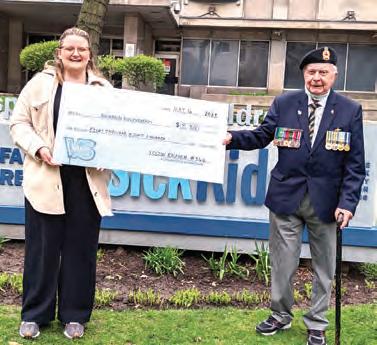
Korea War veteran James Cohen of Queen’s Own Rifles Branch in Toronto presents $18,800 to SickKidsFoundation on behalf of the Ontario Command Branches and L.A. Charitable Foundation. The hospital is represented by Becca Darbyshire.
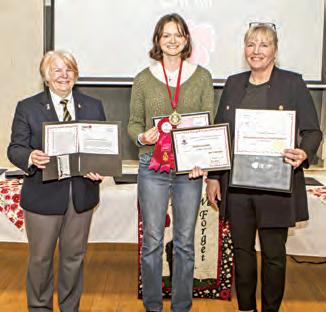
President Sherrill Hodgson and Tish MacDonald of Uxbridge, Ont., Branch present second-place awards to Norah Adams for her senior essay entry in the national literary contest.
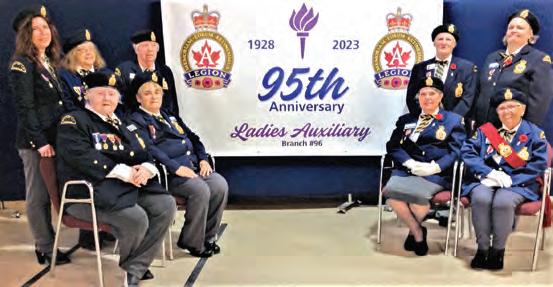
Brockville, Ont., Branch’s L.A. celebrates its 95th anniversary.
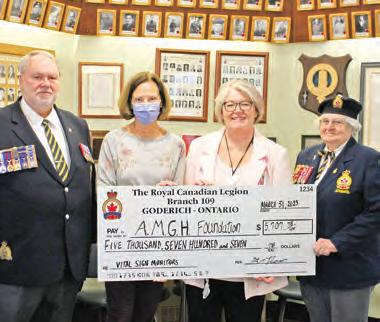
President Paul Thorne and L.A. President Ann Feagan of Goderich, Ont., Branch present $5,707.78 to Alexandra Marine and General Hospital Foundation representatives Sherry Marshall and Kimberley Payneon on behalf of the Ontario Command Branches and L.A. Charitable Foundation.
Jim Byron of Valley City Branch in Dundas, Ont., presents $2,217.45 to Wentworth Lodge retirement home, represented by Kimberly Walker.

L.A. executive member
Vicky Taylor and poppy chair Alex Taylor of Port Elgin, Ont., Branch present $4,500 to Saugeen Memorial Hospital Foundation, represented by chair Stacey Catalano.
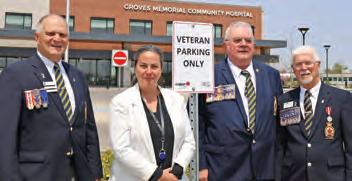
Past President Randy Graham (left) and President Brian Bielby of Fergus, Ont., Branch, along with Ontario Command First Vice Lynn McClellan, accompany Groves Memorial Community Hospital President and CEO Angela Stanley at the dedication of two veterans-only parking spaces.
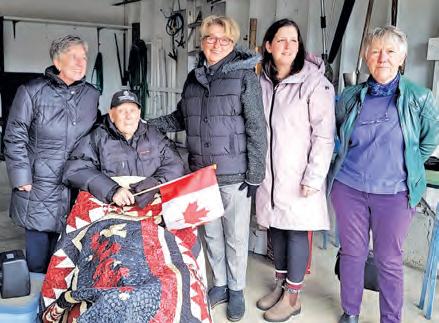
Perth-Upon-Tay Branch veteran Bill McKenzie receives a Quilt of Valour in Perth, Ont., from quilters Joanna Arthurs (left), Donna Ferrill, Janice Trudel and Cait Maloney.
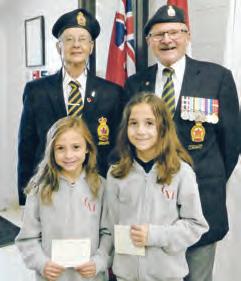
Julia Kubica and Third Vice Richard Bucko of Polish Veterans Branch in St. Catharines, Ont., present awards for the Legion poster and literary contests to Rylee Hollinger and Natalia Marques.

Krista McGregor of Wallaceburg, Ont., Branch presents $2,500 to Wallaceburg District Secondary School drama club student Niki Lane to assist with expenses at a regional competition.

President Elaine Hall (left) and treasurer Malcom Smith of Niagara Falls, Ont., Branch present $1,500 to BMX team members Myles Schaubel (left) and Camden Schaubel to help in qualifying for the world championships.
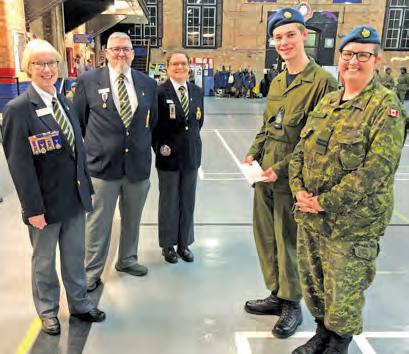
President Trish Gander, Bill Wells and Mati Percival of Merritton Branch in St. Catharines, Ont., present $500 to 23 air cadet squadron, represented by WO1 Joshua Hughes and Commander Capt. Sharlene Wilson.
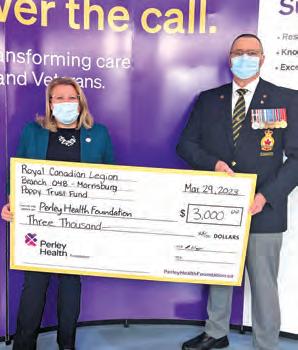
Richard Woolsey of Morrisburg, Ont., Branch presents $3,000 to Perley Health Foundation, represented by executive director Delphine Haslé.
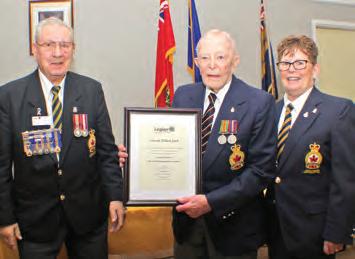
District G commander Ken Heagle (left) and President Peggy Sunstrum of Lt.-Col. Harry Babcock Branch in Napanee, Ont., present the 50-year service award to 102-year-old William Smith.
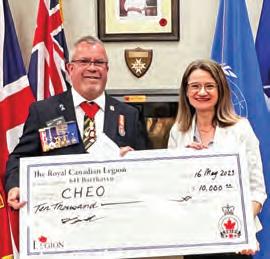
Acting president David Sereda of Barrhaven Branch in Ottawa presents $10,000 to the Children’s Hospital of Eastern Ontario Foundation, represented by philanthropy director Tracy Donahue.
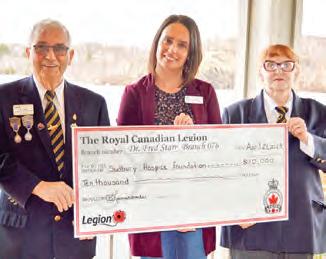
Zone H-3 poppy chair Tom Hewitt and poppy chair Bernadette Lamirande of Dr. Fred Starr Branch in Sudbury, Ont., present $10,000 to Sudbury Hospice Foundation, represented by executive director Julie Aube.
L.A. President Rose LaFont of Renfrew, Ont., Branch presents the Legionnaire of the Year award to Debbie McDermid.

President Trevor Bancarz and poppy chair Brian Morris of Robert Combe VC Branch in Melville, Sask., present $3,500 to Jamie Schlechter, Melissa Manum and Carole Smulan-Michelson of Home Care Melville to purchase continuous vital signs monitors. DIANNE HACK
President Blair Clark and Allan McTaggart of Lancaster Branch in Saint John, N.B., present $5,000 to Greg Boudreau of 250 (Saint John) Wing, RCAFA Inc., toward a new 2024 RCAF 100 air force memorial park at the former British Commonwealth Air Training Plan base in Pennifeld Ridge, N.B. H.E. WRIGHT
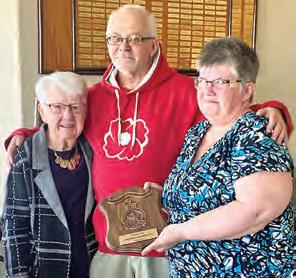
President Harold E. Wright and Donna Buck of Jervis Bay Memorial Branch in Saint John, N.B., present the Legionnaire of the Year award to Deb (Buck) Cyr. JOHN SAVITZSKI
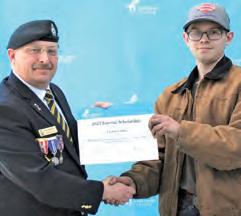
President Trevor Bancarz of Robert Combe VC Branch in Melville, Sask., presents a $1,000 scholarship to Parkland College student Taylor Greba. TREVOR BANCARZ
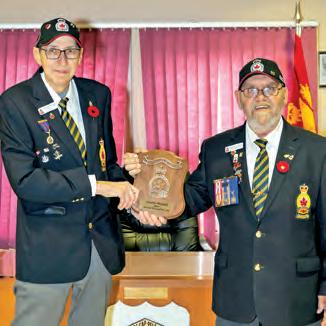
Richard Vautour of Cap Pele, N.B., Branch presents Branch President Charles Richard (left) with the Legionnaire of the Year award.
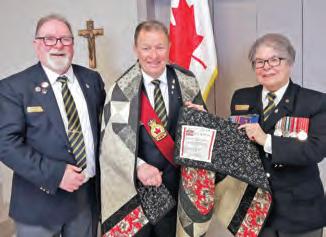
President Jean-Pierre Chenard of Caraquet, N.B., Branch and North Shore District Commander Virginie Dubé present a Quilt of Valour to veteran and Branch Sgt.-at-Arms Roch Lanteigne. ARMEL LANTEIGNE
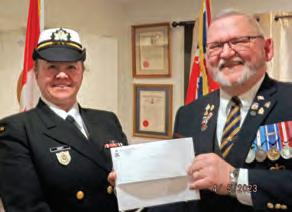
President Eugene Godin of Herman Good VC Branch in Bathurst, N.B., presents $1,000 each to 275 Chaleur sea cadet corps and 640 Chaleur air cadet squadron, represented by Lieut. (N) Derna Henry. GRAHAM WISEMAN
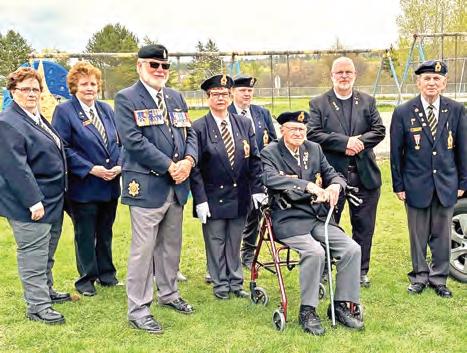
Blackville, N.B., Branch presents the 2022 Legionnaire of the Year award to Boyd Underhill (seated). Attending are Georgie Gallan (left), Pauline Underhill, Tom Daigle of N.B. Command, Aleatha Clarke, Margie Gallan, Underhill, Rev. Gerry Laskey and Branch President Greg Stewart.
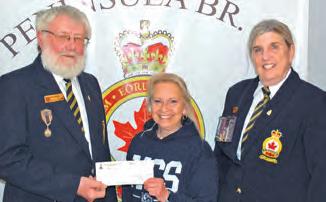
New Brunswick’s Royal District Commander Wayne Makepeace and Deputy District Commander Kathy Campbell present $1,000 from N.B. Command’s Community Service Fund to Ellen Whittaker-Brown at Peninsula Branch in Clifton Royal, N.B.
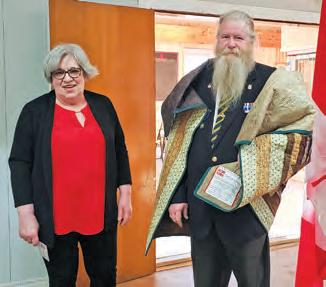
Earle Eastman of St. Croix Branch in St. Stephen, N.B., receives a Quilt of Valour from Catherine Smith of the QOV organization.
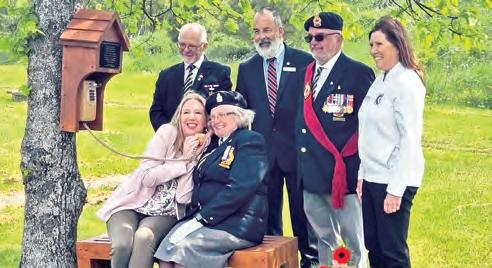
Jervis Bay Memorial Branch in Saint John, N.B., partners with the Compassionate Grief Centre and the Fundy Funeral Home to plant a Vimy Ridge oak tree and install a “wind phone” in Jervis Bay-Ross Memorial Park. Attending the event are Jamie Godfrey, CEO of the Grief Centre (seated left) and Jean Stevens, Saint John District Commander; Branch President Harold E. Wright (rear left); Bruce Hanson of Fundy Funeral Home; Assistant Sgt.-at-Arms John Savitzski and Sandy Maxwell of the Compassionate Grief Centre. COMPASSIONATE GRIEF CENTRE
North/Kent District Commander
Raymond Harding and President Gerald Mullins of Chatham, N.B., Branch present Addyson MacDonald of Dr. Losier Middle School with the second-place prize in the command’s intermediate essay contest. MARIANNE HARRIS
North/Kent District Commander
Raymond Harding and President Gerald Mullins of Chatham, N.B., Branch present Kathleen Woods of James M. Hill High School in Miramichi with the first-place prize in the command’s senior poetry contest. MARIANNE HARRIS
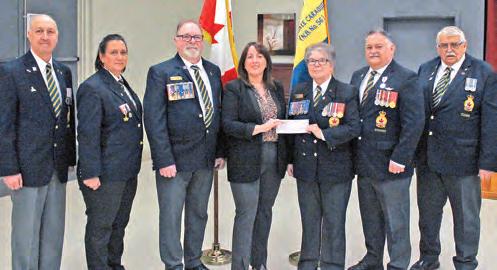
Caraquet, N.B., Branch donates $3,700 from the N.B. Command Community Service Fund to the Acadian Peninsula Breakfast Foundation. Attending are Normand Dugas (left), First Vice Martine Cormier, President Jean-Pierre Chenard, foundation vice-president Louise Robichaud, North Shore District Commander Virginie Dubé, chair Armel Lanteigne and treasurer Gilles Savoie. ARMEL LANTEIGNE
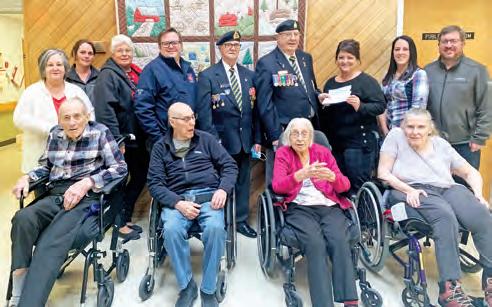
Tabusintac, N.B., Branch made a $1,000 donation from the N.B. Command Community Service Fund with a matching $1,000 from branch funds to the Tabusintac Nursing Home for its palliative care program.
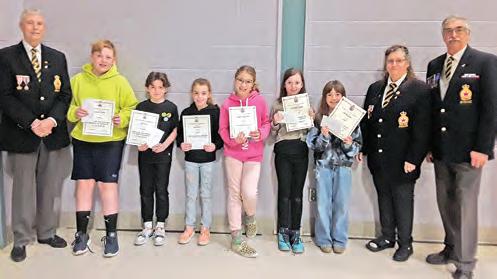
Roger Ruddock, Delia Fairweather and Mel Walker of St. Croix Branch in St. Stephen, N.B., present poster and literary contest awards to St. Stephen Elementary School students Benjamin Christie, Cage Cloney, Mia Parsons, Isabel Nozzolillo, Hannah Leavitt and Finley James.
Send your photos and news of The Royal Canadian Legion in action in your community to your Command Correspondent. Each branch and ladies auxiliary is entitled to two photos in an issue. Any additional items will be published as news only. Material should be sent as soon as possible after an event. We do not accept material that will be more than a year old when published, or photos that are out of focus or lack contrast. The Command Correspondents are:
BRITISH COLUMBIA/YUKON: Graham Fox, 4199 Steede Ave., Port Alberni, BC V9Y 8B6, gra.fox@icloud.com
ALBERTA–NORTHWEST TERRITORIES: Bobbi McCoy, 2020 – 15 St. NW, Calgary, AB T2M 3N8, bobbi-mccoy@shaw.ca
SASKATCHEWAN: Tara Brown, 2267 Albert St., Regina, SK S4P 2V5, admin@sasklegion.ca
MANITOBA: George Romick, 320 Admiral Court, Thunder Bay, ON P7A 8B5, romickg@tbaytel.net
NORTHWESTERN ONTARIO: George Romick, 320 Admiral Court, Thunder Bay, ON P7A 8B5, romickg@tbaytel.net
ONTARIO: Mary Ann Goheen, Box 308, Gravenhurst, ON P1P 1T7, magoheen@sympatico.ca
QUEBEC: Mary-Ann Latimer, 105-2727 rue St. Patrick, Montreal, QC H3K 0A8, msmarts@bell.net
NEW BRUNSWICK: Harold Wright, 2-299 Main St., Saint John, NB E2K 1J1, foulis20@gmail.com
NOVA SCOTIA/NUNAVUT: James Leadbeater, 4129 New Waterford Highway, New Victoria, NS B1H 5T4, james.leadbeater@hotmail.com
PRINCE EDWARD ISLAND: John Yeo, 657 Rte. 19, Meadow Bank, PE C0E 1H1, islander657@yahoo.ca
NEWFOUNDLAND AND LABRADOR: Brenda Slaney, Box 5745, St. John’s, NL A1C 5X3, bslaney@nfld.net
DOMINION COMMAND ZONES: EASTERN U.S. ZONE, Gord Bennett, 803-190 Cedar St., Cambridge, ON NIS 1W5, Captglbcd@aol.com; WESTERN U.S. ZONE, Douglas Lock, 1531 11th St., Manhattan Beach, CA 90266, douglock@fastmail.com
Submissions for the Honours and Awards page (Palm Leaf, MSM, MSA and Life Membership) should be sent directly to Michael A. Smith, Legion Magazine, 86 Aird Place, Kanata, ON K2L 0A1 or magazine@legion.ca.
TECHNICAL SPECS FOR PHOTO SUBMISSIONS
DIGITAL PHOTOS—Photos submitted to Command Correspondents electronically must have a minimum width of 1,350 pixels, or 4.5 inches. Final resolution must be 300 dots per inch or greater. As a rough guideline, colour JPEGs would be between 0.5 megabytes (MB) and 1 MB.
PHOTO PRINTS—Glossy prints from a photofinishing lab are best because they do not contain the dot pattern that some printers produce. If possible, please submit digital photos electronically.
FRENCH INSERT—To receive a French insert of Legion Magazine content, please contact MagazineSubscriptions@legion.ca or call 613-591-3335.
Merritton Br., St. Catharines, Ont.
ROB CLOCHERTY Merritton Br., St. Catharines, Ont.
St.



years
PATRICIA HONEY
Brig-Gen. G.H. Ralston Br., Port Hope
WAYNE STEPHENS
Brig-Gen. G.H. Ralston Br., Port Hope
W. AL WILSON
Brig-Gen. G.H. Ralston Br., Port Hope
STELLA WEBERS Courtenay Br.
Given the lack of meaningful support, it’s easy to appreciate morale issues among the military’s rank and file
The recent troubles of the Canadian Armed Forces, especially the sexual misconduct committed by senior officers, have received significant and continuing media coverage. Stephen M. Saideman, an international relations and defence specialist at Carleton University in Ottawa, noted in The Globe and Mail last March that this contributed to
the military’s morale problem “not because men have been punished for abusing their power and their subordinates—it’s because those men had been allowed to thrive, alienating others. An effective military is impossible if one distrusts one’s commanders.”
Saideman’s conclusion: “Changing the CAF’s culture is aimed at resolving this problem. It means promoting people who treat their subordinates decently, and on merit. It means holding everyone to higher standards. It means refusing to tolerate hate within the forces—getting rid of misogynists, homophobes, white supremacists and other haters—because war is a team sport, and one simply cannot have a good team if some members have contempt for the rest.”
All true, but Canada’s military culture is also shaped by other factors. The men and women of the forces are paid quite reasonably, but those posted in or near large cities cannot afford to buy or rent a house, and the families living on bases often live in substandard dwellings—if they can get them. The waiting lists are long, and the Defence Department, underfunded as it is, cannot get enough housing units built to meet the demand.
Nor, it seems, can National Defence Headquarters pay its soldiers’ bills on time. Consider the case of those stationed in Poland to train Ukrainian troops. DND decided not to dispatch cooks with the troops, a decision justified by the relatively small numbers deployed. Initially, Poland fed the Canadians, but when that ceased, Ottawa told the soldiers to eat at restaurants and submit their bills for reimbursement. That might have worked if the expenses were promptly repaid (and if the soldiers found Polish restaurants close by palatable and reasonably priced). But they
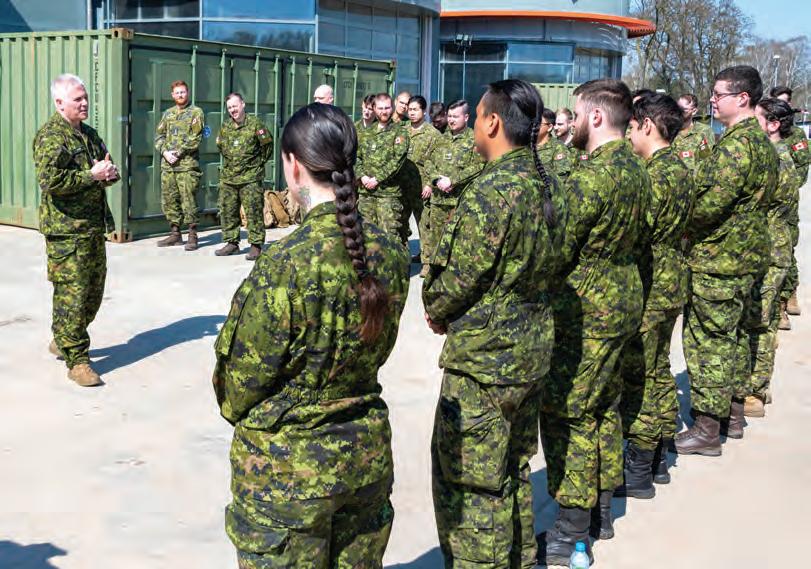
weren’t, which meant that soldiers’ families struggled to cover their bills while waiting months for Ottawa to pay them back. Only when the families complained to the media did HQ commit to fast-tracking a solution. This was, and is, completely unacceptable.
Even more disheartening is the widespread sense among those in uniform that the CAF simply does not matter to the Canadian government. The defence budget is not even close to meeting Canada’s pledge to NATO to devote two per cent of gross domestic product to the military (it spent 1.32 per cent of GDP, about $24 billion, in fiscal 2021-22).
Meanwhile, the 2023 budget promised $13 billion over five years for dental care and $70 billion in subsidies to green energy corporations, leaving little reason for the army, navy and air force to hope for better days. In consequence, military equipment is increasingly obsolescent and new gear, long promised, is almost always delayed by a slow and ineffective procurement system.
Canada’s servicemen and women are competent and well-trained, but they are now simply ill-equipped to meet adversaries on the battlefield. No military culture, however robust, can withstand such a situation.
Not to fear, however. The Canadian Armed Forces devised new dress and deportment regulations in 2022 in part to address the recruiting challenges posed by the sexual misconduct scandals, slumping morale and a shortfall of 16,000 personnel.
What would appeal to the country’s young men and women? The answer, as laid down in the new CAF regulations, was that they “should reflect the changing norms in Canadian society. This will welcome a more diverse group of CAF members, which will benefit the CAF as diversity is a known force multiplier.”
Consider the new rule for hair: “Full or partial shaving of hair on the head is permitted. Colouring of hair is permitted. The wearing of wigs, locks, or hair extensions is permitted. Long hair is permitted but must be secured…in such a manner to prevent hair from falling in or covering the face when leaning forward.”
In other words, personnel can have any colour hair down to their shoulders when in uniform. In addition: “all styles of facial
hair and sideburns are authorized. Facial hair may be braided/pony tail style and coloured.” At the same time, male and female “members may wear coloured nail polish, artificial nails, temporary lashes, and eyelash extensions.” In addition, men may wear skirts if they wish, so long as the hem falls below the knee.
If these new regulations worked to attract new and diverse recruits, they might be justified. Thus far, however, they have had no such effect. Recruitment continues to be slow while retirements increase. This is no surprise to those who have served (or somehow continue to serve).
The Canadian Forces, much like those of its allies, has largely attracted people who appreciate discipline and order, military traditions, appearance and uniforms, and want to master their trades—much more so than those concerned with the individuality inherent in hair styles and the like.
Morale is always difficult to create and maintain, and Saideman has correctly noted some of the factors that have weakened it. But the new dress regulations do nothing to address the problem. Indeed, they make it worse. The CAF has genuine problems—housing, equipment and a growing personnel shortfall—and these new rules won’t address those.
Somehow the defence minister, the defence chief and the committees at National Defence Headquarters that authorized these regulations have lost the plot. By all means, fight against sexual misconduct, discrimination against minority groups, and do more to keep radical ideologists out of the ranks. But do not make the CAF a laughingstock to the country’s population and the militaries of its allies. That, unfortunately, is precisely what the new dress regulations do. L
Chief Warrant Officer James Smith of the Canadian Army speaks with soldiers on a UN training operation in Poland in April 2023.
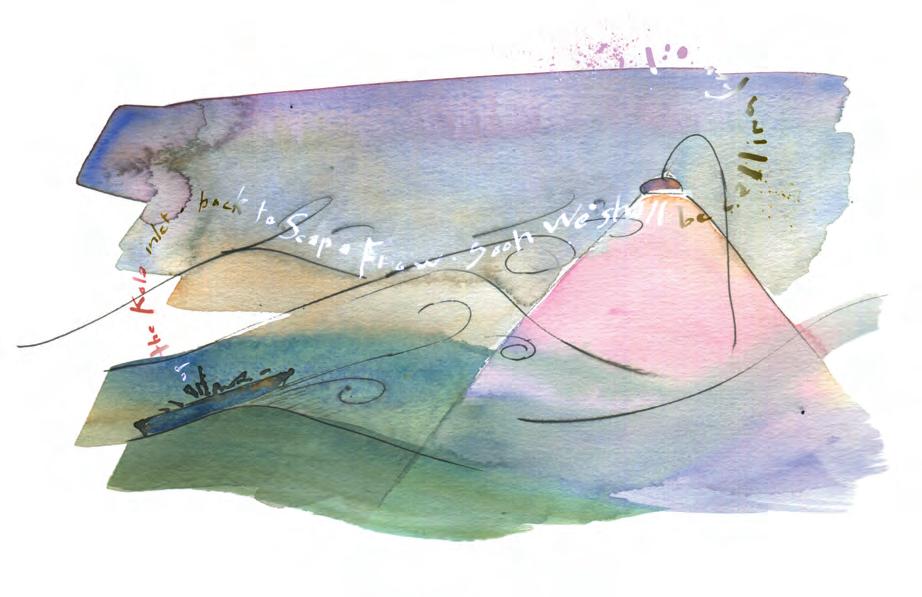
Over the years, soldiers have found that music helps pass the time and keeps spirits up on long marches. Some military songs long outlived the conflicts that inspired them. During the American Civil War, General William Sherman’s men stepped out to the strains of “Marching Through Georgia.” A generation later, British soldiers in South Africa sang “We are Marching to Pretoria.” The First World War had “Mademoiselle from Armentieres,” “Pack up Your Troubles in Your Old Kit Bag” and “It’s a Long Way to Tipperary.” In the Second World War, Canadian soldiers, sailors and air force types produced their own songs. They never hit the top of the charts, but they spoke to Canadian experiences.
Perhaps the worst Second World War assignment for a Canadian warship was the Murmansk Run to the port in the northern Soviet Union. The convoys sailed in winter, using the Arctic darkness and terrible weather as a shield against German forces based in Norway. HMC ships Sioux and Algonquin were part of the 23rd Flotilla that plied those waters. Their crews recounted the experience in a song set to the tune of “Lili Marlene.” The original was loved by both German and Allied troops and its catchy melody was used with the following words for the Canadian version:
Up to Kola inlet, back to Scapa Flow, Soon we shall be calling for oil at Petsamo, Why does it always seem to be?
Flotilla number twenty-three,
Up in the Arctic Ocean,
Up in the Barents Sea.
Battleships and cruisers, lying ’round in state,
Watching poor destroyers passing Switha Gate, Those ships the papers call the fleet, They look so sweet, but have no beat, Up in the Arctic Ocean
Up in the Barents Sea.
The port of Murmansk was on Kola Inlet and Petsamo is a nearby port. Scapa Flow was a major British naval base in northern Scotland and Switha Gate was an entrance to the anchorage. The army, meanwhile, had its own ditties.
> Do you have a funny and true tale from Canada’s military culture? Send your story to magazine@legion.ca
In December 1944, some officers of The Loyal Edmonton Regiment composed “O’er the Hills of Sicily,” recounting their campaign through Italy, clearly with special memories of the corned beef “bully” that was a staple of their rations. They set it to “Waltzing Matilda”:
O’er the hills of Sicily, up the toe of Italy, Came the Loyal Edmontons from over the sea, And they sang as they stuffed the bully in their haversacks, Who’ll come a marching to Berlin with me?
Marching to Berlin, Marching to Berlin, Who’ll come a-marching to Berlin with me? And they sang as they stuffed the bully in their haversacks, Who’ll come a-marching to Berlin with me?
The Royal Canadian Air Force was not to be left out. There was 417 “City of Windsor” Squadron, the only Canadian squadron with what was known as the Desert Air Force, or DAF. Starting in Egypt in 1942, the Canadians helped support the British Eighth Army across North Africa and through the Sicilian and Italian campaigns. The Canadians apparently took pride in ignoring spit and polish and enjoyed the role of riff-raff as is clear in their theme song. It was also set to the tune of “Lili Marlene”:
We are a few Canadians, here in Italy, Working with the RAF boys to win the victory, Going around with a vacant stare, We have no clues, but do we care? We’re the riff-raff of the Air Force, And we’re going home, you see.
The poor old Royal Air Force are getting slightly cheesed, Because we look so scruffy and never try to please,
Buttons never polished, minus caps, We don’t say “Sir” to those dear chaps, We’re the riff-raff of the Air Force, And we’re part of DAF.
“THE POOR OLD ROYAL AIR FORCE ARE GETTING SLIGHTLY CHEESED, BECAUSE WE LOOK SO SCRUFFY AND NEVER TRY TO PLEASE.”
No collection of Canadian wartime songs can leave out “The D-Day Dodgers,” which was an angry retort to Lady Astor, a British member of Parliament. After a tour of the Italian front, she is reported to have described the Eighth Army as a collection of drunken, ill-disciplined louts and “D-Day Dodgers” who were avoiding the real fighting in northwest Europe. The army and the Canadians who were part of it, replied again using the tune of “Lili Marlene”:
We are the D-Day dodgers, out in Italy, Always on the vino, always on a spree, Eighth Army skivers and their tanks, We go to war in ties and slacks, We are the D-Day Dodgers, in sunny Italy.
We landed at Salerno, a holiday with pay, Jerry brought his bands out to cheer us on our way,
Showed us the sights and gave us tea, We all sang songs, the beer was free, We are the D-Day Dodgers, in sunny Italy.
Palermo and Cassino were taken in our stride, We did not go to fight there, we just went for the ride, Anzio and Sangro are just names, We only went to look for dames, We are the D-Day Dodgers, in sunny Italy. L
By Mark Zuehlke
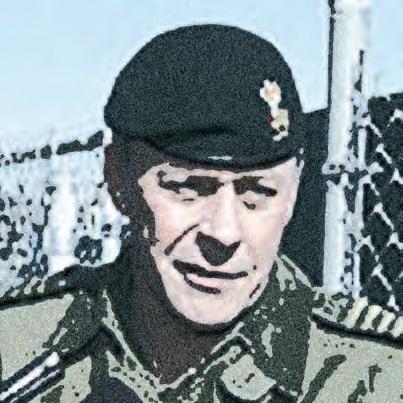
JAMES CALVIN
“
MY
.”
the morning of Sept. 15, 1993, the United Nations Protection Force commander, French army General Jean Cot, cautioned Canadian Lieutenant-Colonel James (Jim) Calvin that about 400 Serbians inside Croatia’s Medak Pocket faced possible slaughter. Cot also believed that the frontline Croatian soldiers were unaware of a newly brokered agreement: their commanders had agreed to pull back to a position they had held on Sept. 9. In just three days, the Croatians had driven Serbian rebels out of the area. On Sept. 14, Calvin’s 2nd Battalion, Princess Patricia’s Canadian Light Infantry (PPCLI), supported by two French mechanized companies, was tasked to oversee the withdrawal.

under fire, while they were…responding and covering themselves with their own fire.”
That evening, in a diplomatically arranged meeting with Croatian acting commander Brigadier Rahim Ademi, Calvin demanded to know why Ademi “was firing at my soldiers for the last six or seven hours.” Although he offered no explanation, Ademi promised to withdraw at noon the following day to the Sept. 9 line.
“We had made a tragic error. It was clear that the Croatian army had started a serious ethnic cleansing.”
—Lieutenant-Colonel
Jim Calvin
At noon on Sept. 15, Calvin advanced one PPCLI company and one French company side-by-side through the Serb lines. The UN force immediately drew scattered fire. When Calvin ordered UN flags deployed on the M-113 armoured personnel carriers, a hail of machine-gun fire resulted. Canadian and French soldiers fired back.
Calvin later described how “for the next 15 hours…a combat situation with the Croatian army [ensued] at ranges of 150 to 800 metres.” Throughout the running engagement, Calvin’s troops were “digging in trenches,
The next morning, however, Calvin realized “we had made a tragic error in allowing them until noon to move, because as we looked out over the kilometre that separated us from the Croatians, we could see nothing but billowing smoke starting to go up from every one of the villages…and we started hearing large explosions and…small arms fire coming from all over…within the pocket itself. It was clear to us…that the Croatian army had now started a serious ethnic cleansing session within the pocket, and we were required to…watch for four hours…before we could actually move to the other side.”
In the evening twilight, Calvin entered a smoking village. “We…began to see bodies,” he reported. Over the next few days, evidence that civilians had been murdered was uncovered. Although unable to prevent this tragedy, the Canadian force proved UN peacekeepers would act to prevent atrocities. Calvin was awarded a Meritorious Service Cross in 1995. L

RAHIM ADEMI
When Rahim Ademi’s 9th “Lika Wolves” Brigade fired on Calvin’s UN force on Sept. 15, the expectation was that the peacekeepers would retreat. When the Croatians had attacked Serbian forces in a Maslenica UN protection zone earlier in the year, that’s exactly what happened: the UN troops withdrew rather than being caught between the two enemies. Believing the peacekeepers would not fight encouraged Ademi’s Medak Pocket incursion.
Approximately five-by-six kilometres in size, the region’s four small villages and other small hamlets contained about 400 Serbian inhabitants. Ademi—as set out in a 2001 International Criminal Tribunal for the Former Yugoslavia indictment— individually “or in concert with others” embarked on the “planning, preparation or execution of persecutions of Serb civilians… on racial, political or religious grounds.”
Civilians were systematically killed, while more than 300 homes and outbuildings were destroyed, rendering the area uninhabitable. The tribunal concluded that at least 38 Serb civilians were killed, more seriously wounded.
“Many…were women and elderly people,” the tribunal reported. At least two Serb soldiers taken prisoner were also murdered. During the Croatian withdrawal, there was a free-for-all looting of anything of value.
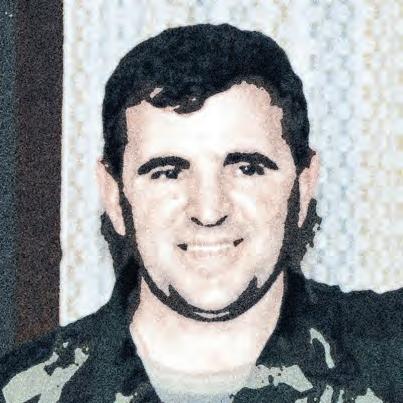
Graduating from Yugoslavia’s military academy in 1976, Ademi had served in the national army until deserting in 1990 to join Croatia’s independence movement. In the summer of 1993, he became Gospić military district’s acting commander. On Sept. 15, the Croatians in the region numbered about 2,500, supported by tanks, artillery and rocket launchers. The UN force of approximately 1,000 soldiers was outgunned, but stood its ground and inflicted 27 casualties, while four Canadians were lightly wounded. That evening, after the UN force chief operations officer, Canadian Colonel J.O.M. (Mike) Maisonneuve met Ademi, he summoned Calvin to negotiate a ceasefire. Ademi said his troops would withdraw at noon the following day. The delay bought Ademi time to finish killing Serbs in the area and attempt to cover it up.
THE DELAY BOUGHT ADEMI TIME TO FINISH KILLING SERBS IN THE AREA AND ATTEMPT TO COVER IT UP.
Sufficient evidence was found, however, to enable the tribunal to indict Ademi on crimes against humanity. Briefly imprisoned in 2001, Ademi was released in February 2002 so he could prepare a defence. In November 2005, the tribunal referred his case to Croatia’s judiciary. The County Court of Zagreb ruled on May 30, 2008, that he was not responsible for any atrocities his troops had committed and, in March 2010, the Supreme Court of the Republic of Croatia upheld the acquittal. L
Ademi embarked on the “planning, preparation or execution of persecutions of Serb civilians…on racial, political or religious grounds.” —indictment of the International Criminal Tribunal for the Former Yugoslavia
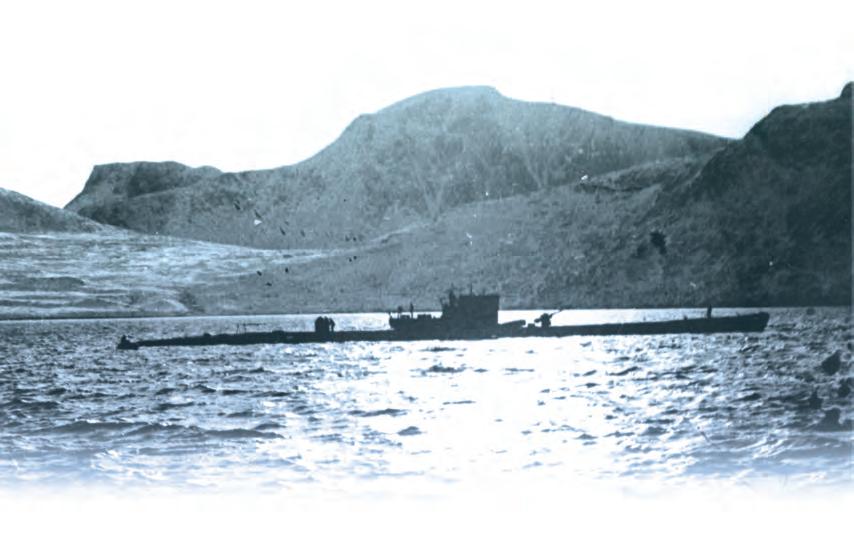
after the Second World War, Canada discovers a Nazi weather station in Labrador
“The Canadians wouldn’t believe me,” retired German engineer Franz Selinger told the Associated Press in 1981. Selinger was, after all, seemingly purporting a quasi-kooky idea. It was absurd, hare-brained and a little too close for comfort: proof the Nazis had operated in Canada during the Second World War.
During the Torngat Archaeological Project in 1977, geomorphologist Peter Johnson had dismissed the idea when he spotted canisters and an antenna in northern Labrador. Giving it no more notice than a Canadian proto-weather station deserves, Johnson called the find “Martin Bay 7” after the nearby geographic feature, issued it an identification number and moved on.
Little did Johnson know, however, that the station already had a name: Wetter-Funkgerät Land-26—the only Second World War Nazi installation on North American soil. But at the time, no one on the continent knew about it.

During the Second World War, the German Kriegsmarine had been challenged by inaccurate weather forecasts. With the Allies often holding northern and western positions, and storms usually known to migrate from west to east, north to south, the unreliable predictions the Germans had would often compromise their operations.
To remedy this, German company Siemens-Schuckertwerke created a new type of automatic
U-537 at anchor in Martin Bay, Nfld., on Oct. 22, 1943. Its crew set up a secret remote weather station there (below), which was discovered by Canadian researchers in 1981 (right).

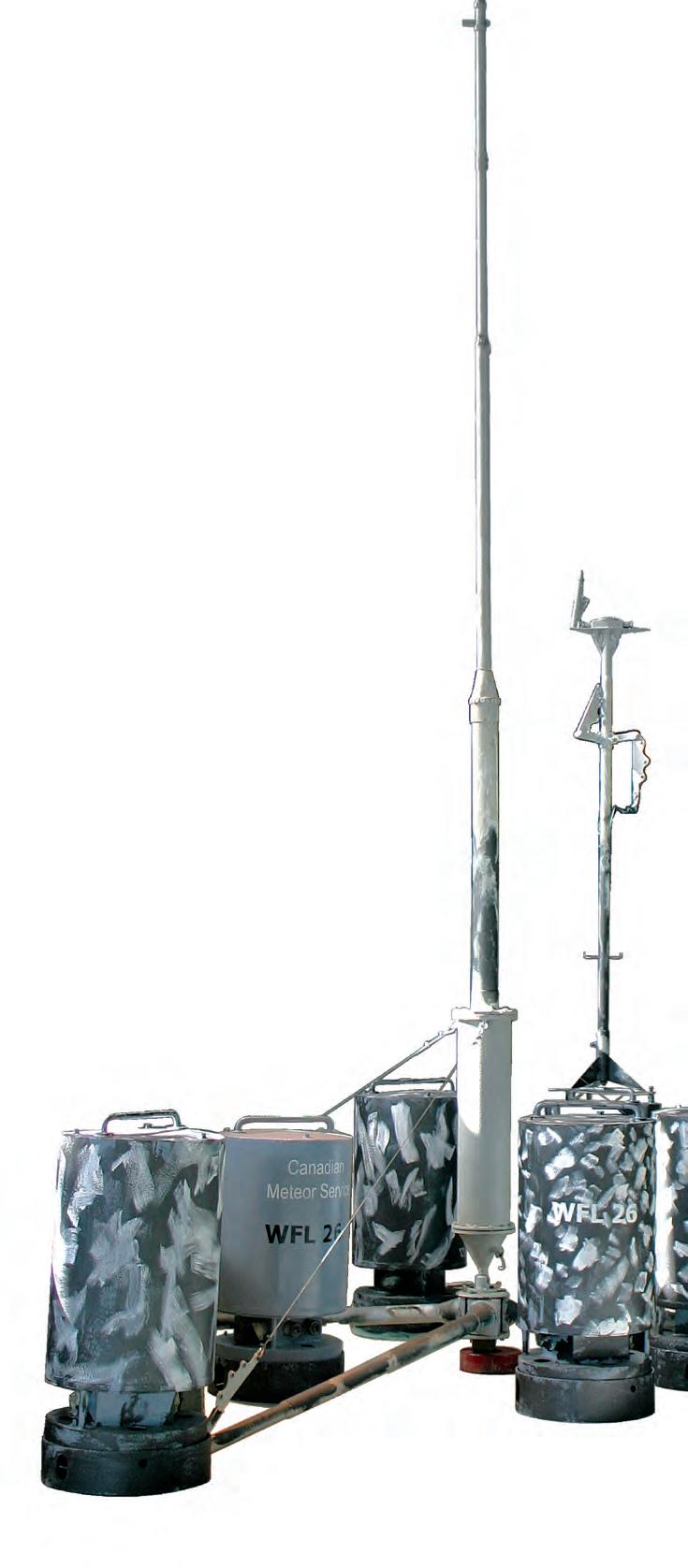

“[German Admiral Karl] Dönitz evidently expected to be making good use of the information beamed from Labrador.” —Alec
Douglas, official historian of the Canadian Armed Forces, 1973-1994
10
Height in metres of Weather Station Kurt’s antenna
150 Watts of the station’s transmitter
100
Weight in kilograms (220 pounds) of each of 10 canisters that were part of the system
14
Number of similar stations deployed in other parts of the Arctic and subarctic

weather observatory. Code-named Kröte, or “toad,” the first couple of installations in Norway were dismantled either by people or alltoo-curious bears. As Germany’s need to maintain a blockade in the North Atlantic remained, the Germans were itching for an ideal forecasting location. Soon they considered remote Labrador.
find: a U-537 logbook accompanied by photographs. The story of the weather station was there. And it wasn’t like the idea of its existence had been groundless. Inuit seal hunters had told the Allies of U-boat sightings during the war and, given the importance of forecast accuracy at the time—the conflict was known as the North Atlantic weather war—you would have thought ears would have perked up.
Selinger teamed up with Alec Douglas, then the official historian for the Defence Department, to locate the station. They travelled to northern Labrador in 1981 to con-
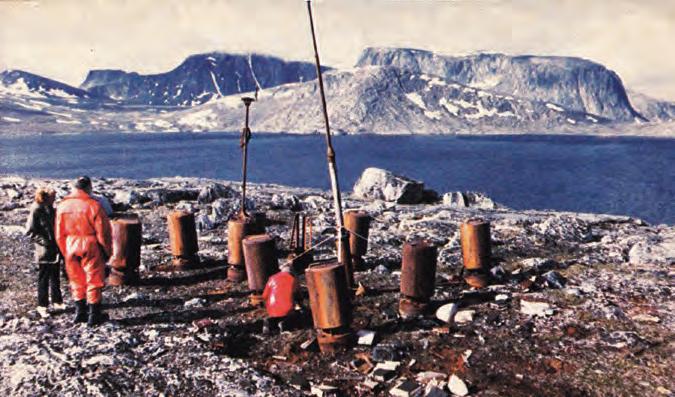
U-537 set sail from Norway with the new tech on Sept. 30, 1943. When its crew, accompanied by meteorologist Kurt Sommermeyer, made landfall, black-capped sailors lugged the 100-kilogram canisters and 10-metre antennae in the fog to the top of a nearby hill.
The installation, today referred to as Weather Station Kurt after its senior technician, was born. Unfortunately for the Germans, the station stopped working after only two weeks, so it had little impact on the war.
Meanwhile, while scavenging for primary sources for a book he was writing in the early 1980s, Selinger obtained a mighty


firm the station’s existence. They found it easily, though the site had clearly been disturbed. The canisters had been opened, electronic parts had been systematically dismantled and wires connecting the works had been cut—though by whom remains a mystery.
A series of logistical battles followed as Douglas fought with many institutions to find Kurt a new home, while also giving it the recognition it deserved. Today, it can be viewed at the Canadian War Museum in Ottawa.
“To my mind, it is important,” said Douglas, “because [it’s] not in the routine interests of Canadian historians.” L



Before Canadian-born director James Cameron (Avatar, Titanic) there was James Freer, Canada’s first filmmaker. Born in Woodstock, Oxfordshire, England, Freer moved to Manitoba in 1888, settling on a farm near Brandon, some 200 kilometres west of Winnipeg. He bought an Edison camera and projector and began making films. The Prairies were still relatively unpopulated and drama was hard to come by. So, Freer shot what was at hand: thousands of hectares of farmland that had the occasional train passing through. Freer’s 1897 movie Ten Years in Manitoba consisted of short scenes introduced with titles such as: “Harvesting Scene, with Trains Passing By;” “Six Binders at Work in Hundred Acre Wheatfield;” “Pacific and Atlantic Mail Trains;” and “Arrival of the CPR Express at Winnipeg.” There was footage of Freer and his family, too, as well as shots of Thomas Greenway, the Manitoba premier, stooking grain on his own farm.

Wishing to attract immigrants to the Prairies, Canadian Pacific Railway augmented advertisements (left) with James Freer’s film Ten Years in Manitoba, promoted on this flyer (below left).
THERE WASN’T MUCH ACTION IN FREER’S FILM, BUT IT CONTAINED
SOMETHING ALLURING:
A SENSE OF POSSIBILITY.
Find many more stories in our O Canada special issues, NOW available in our SHOP!


Ten Years in Manitoba might have had trouble competing with, say, Top Gun: Maverick, but at the time, there wasn’t much in the way of competition. And the Canadian Pacific Railway (CPR) had only been completed in 1885 and was still a novelty, as was film itself. People flocked to Freer’s flick.
The country’s first film produced the first film controversy when Freer was accused of using other people’s footage. A Winnipeg bartender, an American producer and an entertainment editor all claimed they had been showing Kinetographs that included, among other things, the scene of Greenway stooking his grain that appeared in Freer’s movie.
Nevertheless, in 1898, the CPR sponsored a tour through Great Britain where Freer showed his film and delivered lectures. Posters appeared, advertising “animated pictures.” The CPR wanted to attract more immigrants to the Prairies and hoped Freer’s movie would help. Ten Years in Manitoba was a surprise hit, drawing audiences throughout the U.K. There wasn’t much action in Freer’s film, but it contained something that was almost as alluring: a sense of possibility. The sheer scale of Manitoba, with its endless space and wide prairie skies held broad appeal for foreign audiences. England was still a largely agrarian society, and this was farm life on steroids.
In 1902, a second tour of the U.K. was arranged for Freer and his film, this one sponsored by the federal government. Clifford Sifton, the minister of the interior, also wanted to populate the Prairies. He had already sent a million pamphlets around the world extolling the virtues of farm life in Canada—they were a bit misleading, claiming, for instance, that “The Frontier of Manitoba is about the same latitude as Paris”—but they didn’t bring in the numbers Sifton had hoped for. He particularly wanted British farmers and thought an encore of Freer’s earlier trip could help.
This one wasn’t as successful, however. Some of the Brits who had seen Freer’s film four years earlier had actually emigrated, and reported back that Freer had neglected to mention the long, harsh winters and the plague of summer mosquitoes.
The failure of this tour effectively ended Freer’s film career. He returned to his original profession of newspaperman, working for the Manitoba Free Press. L







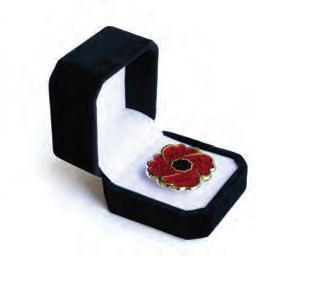
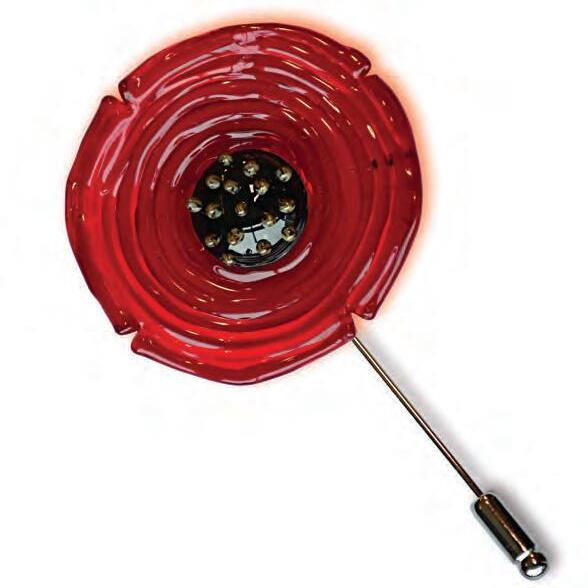





Sailing to St. Maarten, St. Lucia, Tobago, Grenada, & Antigua. Plus, 4 glorious days at Sea relaxing on the Silhouette.
With 1 night pre-cruise in Fort Lauderdale, Florida
February 11- 22, 2024
Join Dominion President Bruce Julian and Darlene Julian, BST Vacations and Royal Canadian Legion members from across Canada on an Ultimate Southern Caribbean Cruise on the innovative Celebrity Silhouette. Set sail on Celebrity Silhouette® and discover amazing enhancements at every turn. You’ll relax in transformed staterooms that are so gorgeous, you may never want to leave your room.
Itinerary: Fort Lauderdale, Florida * At Sea * At Sea * Philipsburg, St. Maarten * Castries, St. Lucia * Scarborough, Tobago * St. George's, Grenada * St. John's, Antigua * At Sea * At Sea * Fort Lauderdale, Florida
Includes:
1 Night pre-cruise in Fort Lauderdale at the
Embassy Suites by Hilton, breakfast included
Transfer from Embassy Suites to the pier at Port Everglades
10 Nights aboard Celebrity Silhouette in your chosen stateroom
Classic Beverage Package
Surf Wi-Fi and Gratuities
All meals, entertainment & services while on board
Celebrity Silhouette as detailed in the Celebrity brochure/website
Hosted private cocktail party
Special group activities
Exclusive hospitality/information desk for our group
Optional private group shore excursions for purchase
All taxes
Hosted by Dominion President Bruce Julian, Darlene
Julian and a Representative from BST Vacations



English speaking contact: Bruce McIntosh - 1-800-461-8500 Ext 301 / (519) 271-5710 Ext 301 bmcintosh@bstvacations.ca
French speaking contact: Debbie Pichette - 418-687-9121
For full details on this cruise, visit our website: https://bstvacations.ca/royal-canadian-legion-cruise/
*Please note – all is subject to change. A minimum number of booked passengers is required. BST Vacations Terms & Conditions apply.