




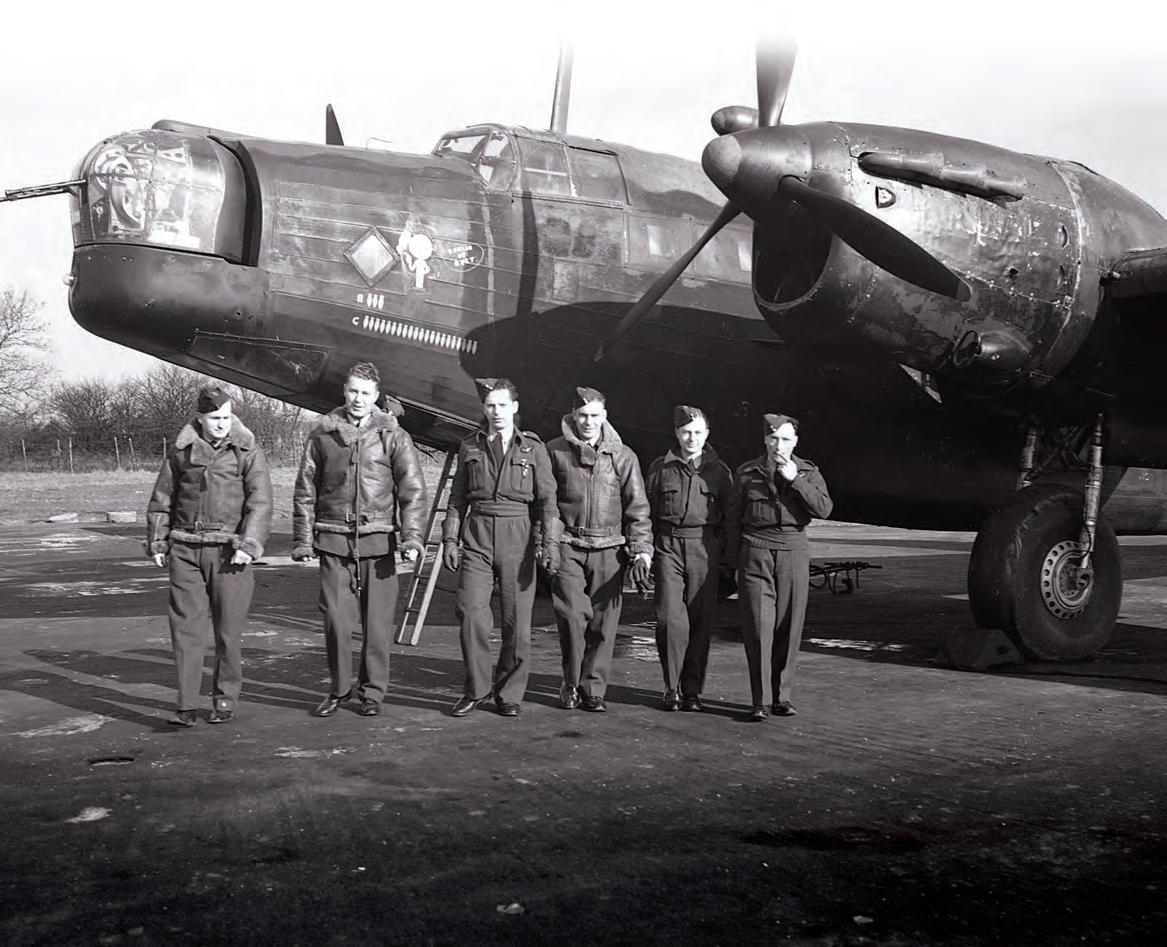
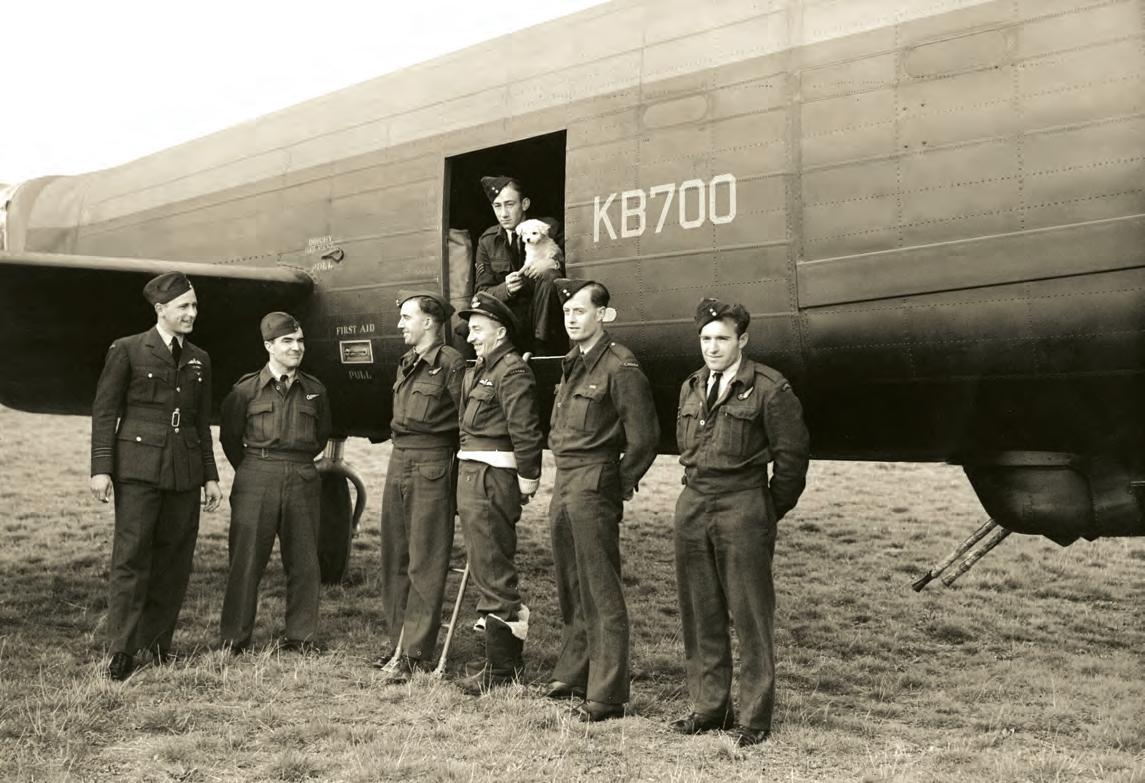
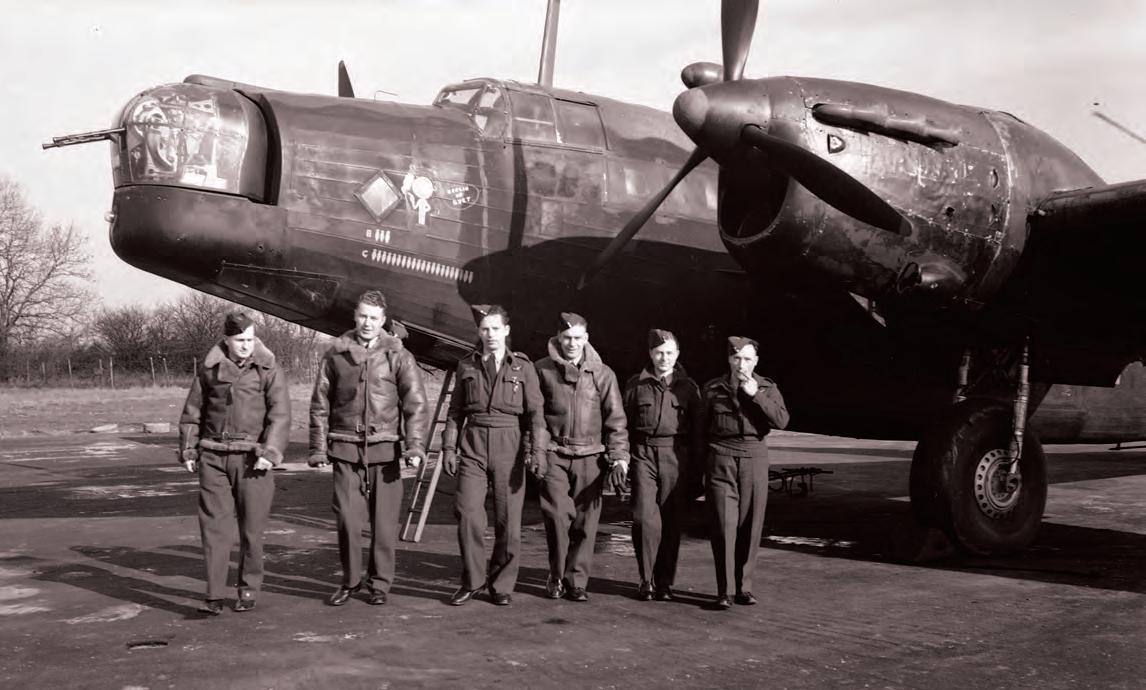
At an airfield in northern England, crew from No. 405 Squadron, RCAF, stand with their Wellington bomber—nicknamed “Berlin or Bust.”
See page 28

16 A GREAT VICTORY
Planned and executed with precision, the attack on Vimy Ridge redefined the Canadian Corps as an elite formation
By J.L. Granatstein
22 ART OF VIMY
War artists of all stripes trekked to the cratered grounds following the iconic battle
By Stephen J. Thorne
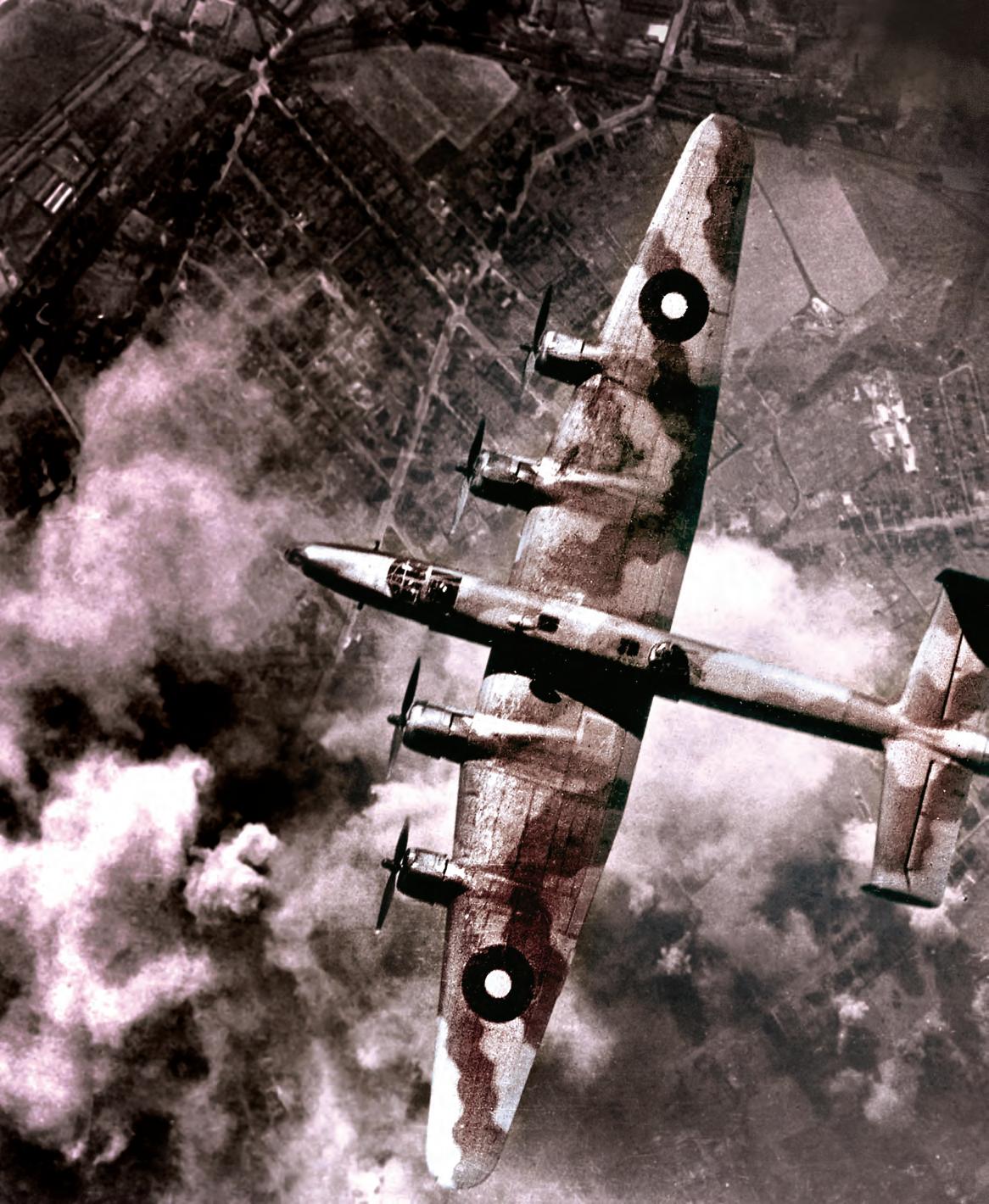
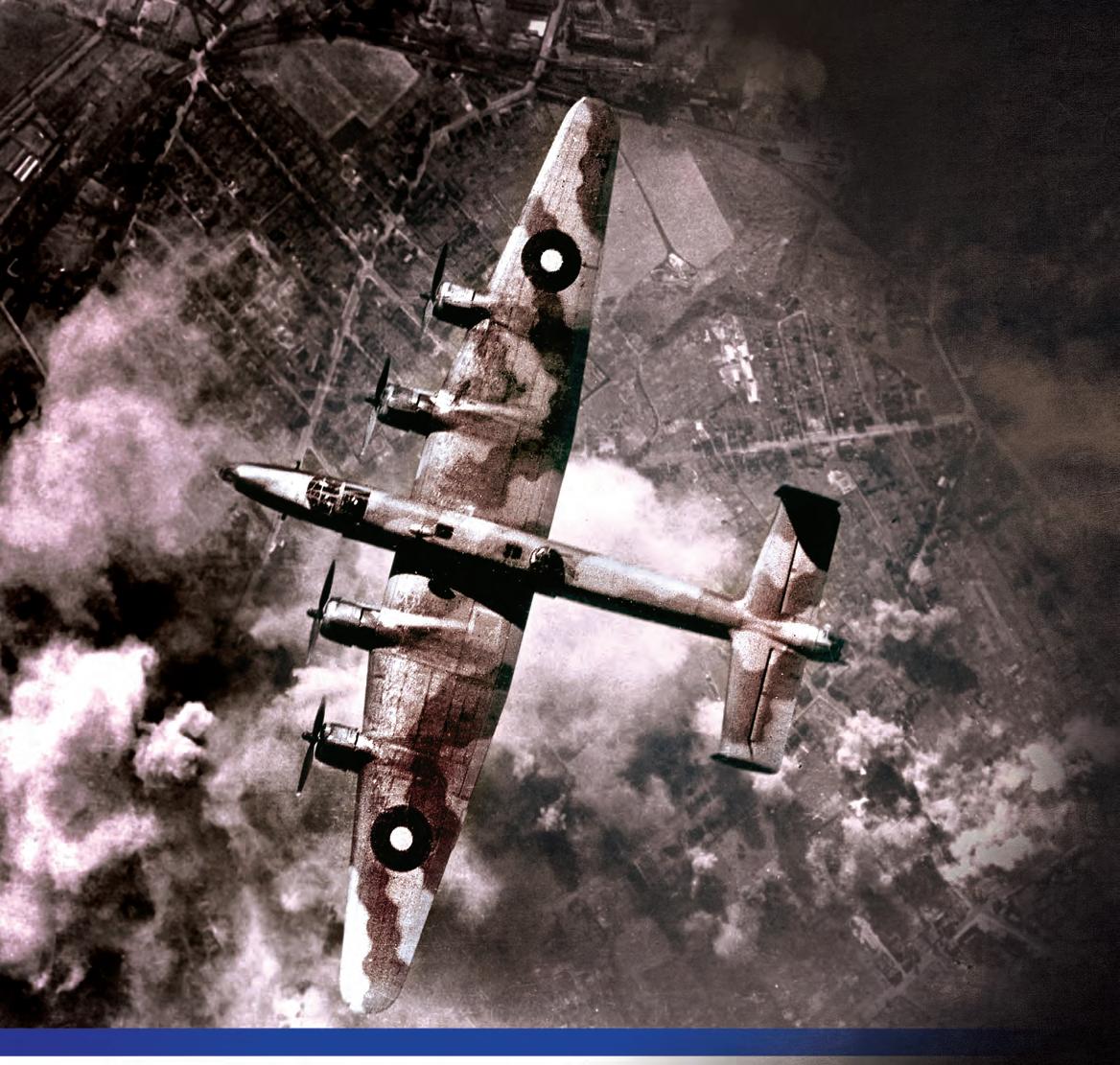
28 FLIGHT OF THE PATHFINDERS
Crack teams of navigators and pilots marked targets from the air, in the dark and under fire
By Sharon Adams

36 SAVIOUR OF CEYLON
Patrolling over the Indian Ocean, pilot Leonard Birchall and his aircrew spotted an approaching Japanese fleet
By John Boileau
46 DANGER CLOSE
Wounded by a rocket-propelled grenade, Private Jess Larochelle fought off Taliban attackers at a strongpoint near Pashmul, Afghanistan
By Stephen J. Thorne
54 PLACING THE DISPLACED
An early refugee support group helped open Canada to victims of Nazi persecution
By Valerie Knowles

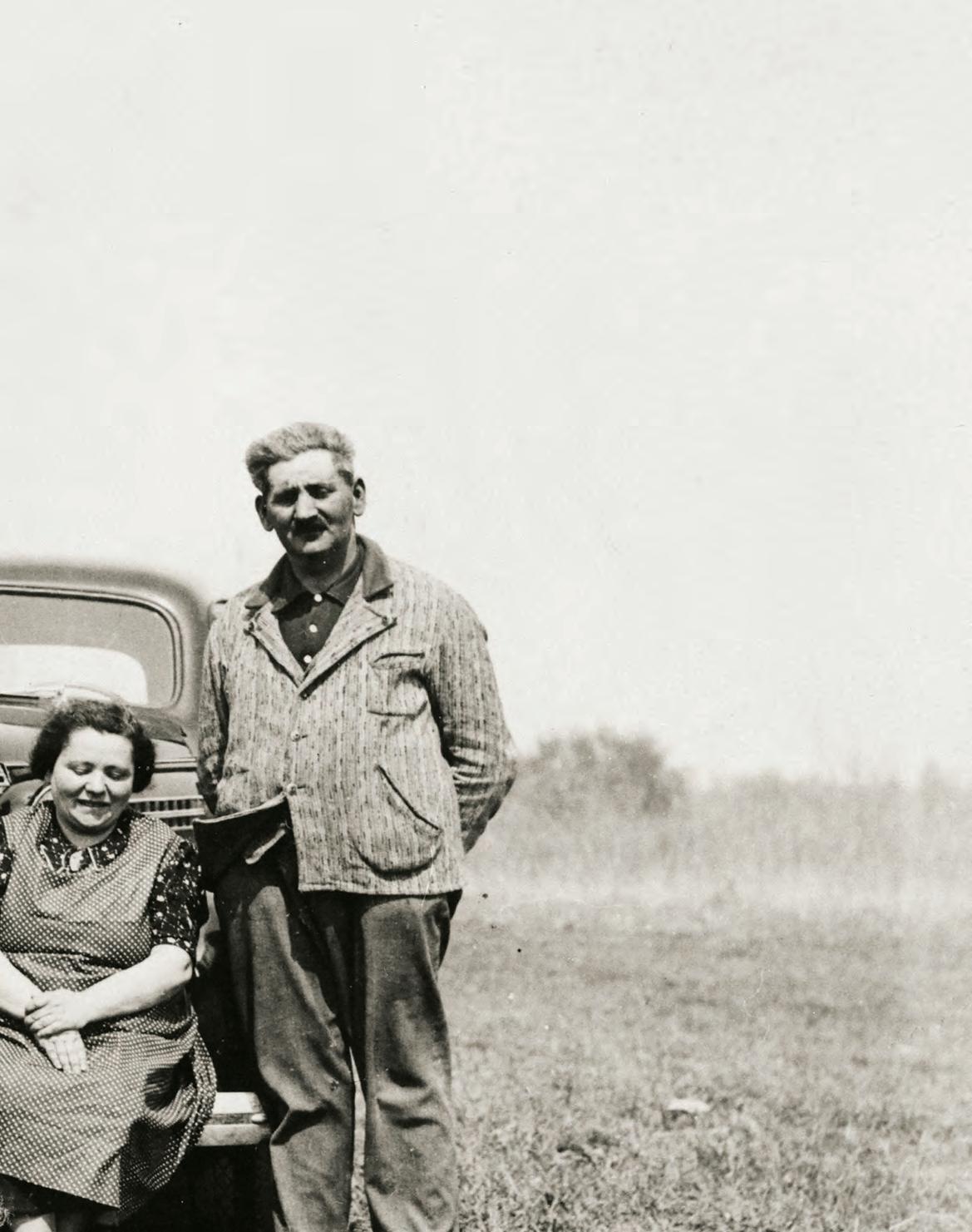
THIS PHOTO
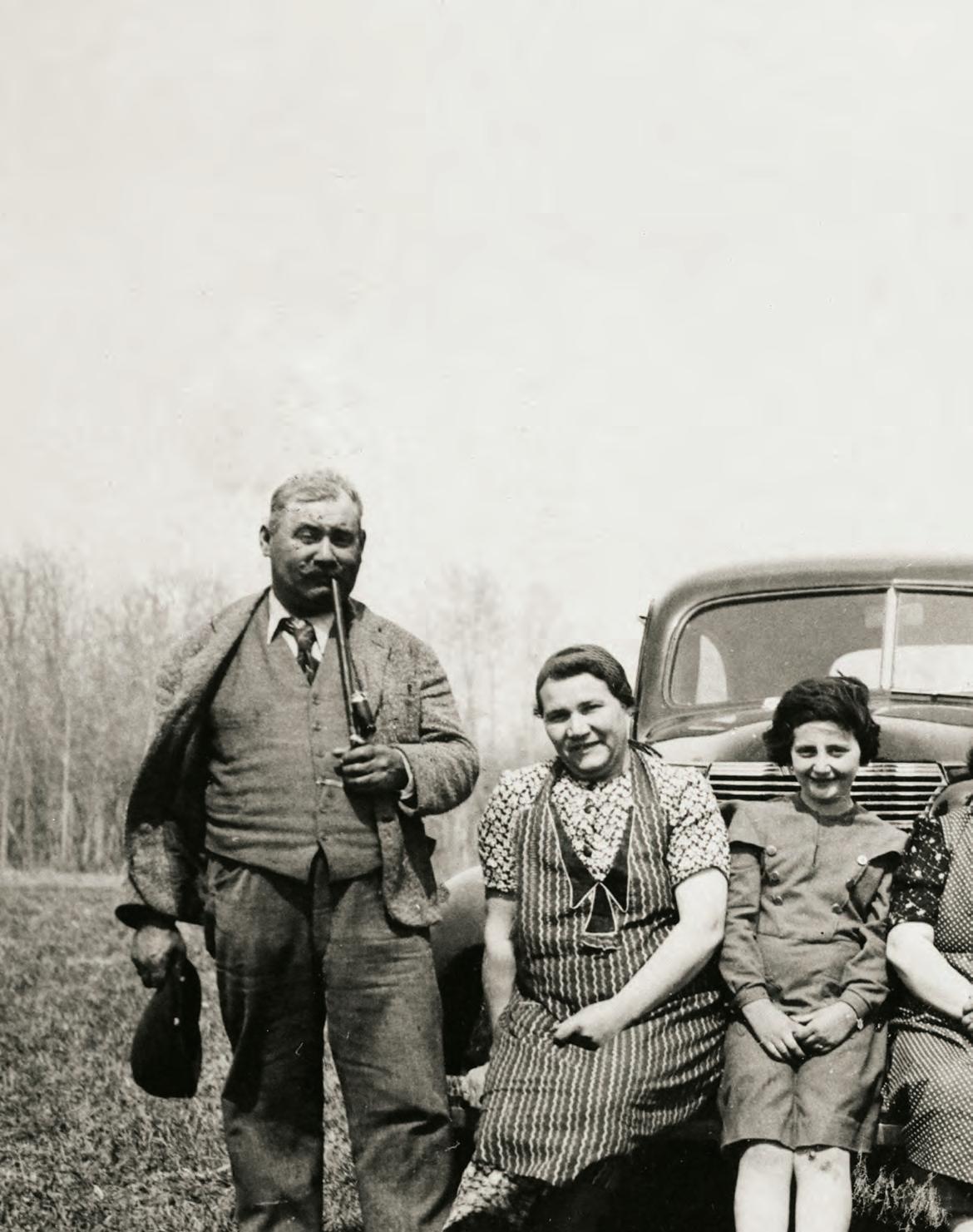
Undeterred by restrictive immigration policies of the time, the refugee Loeffler family, photographed in 1939, homesteaded at Edenbridge Hebrew Colony near Melfort, Sask. LAC/3367859
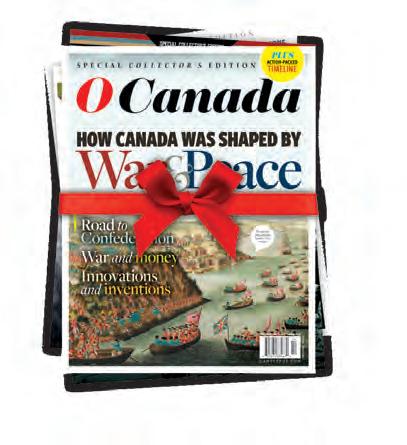
ON THE COVER
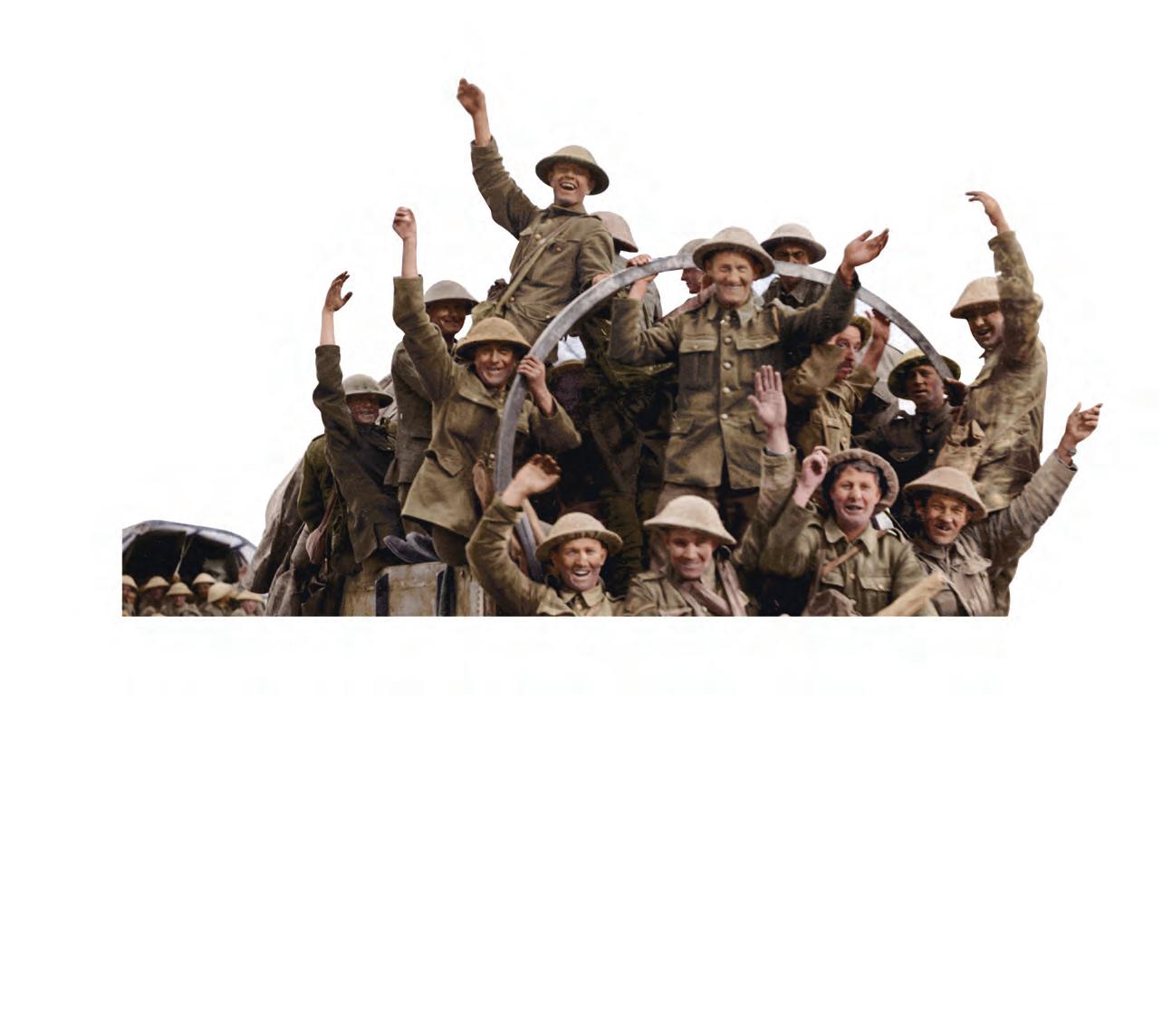
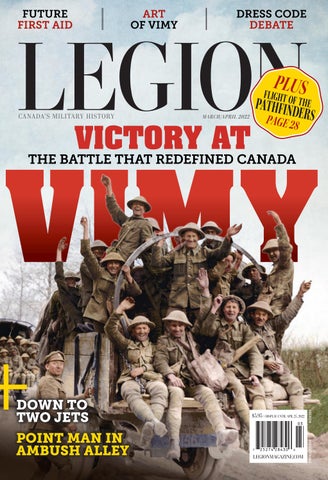
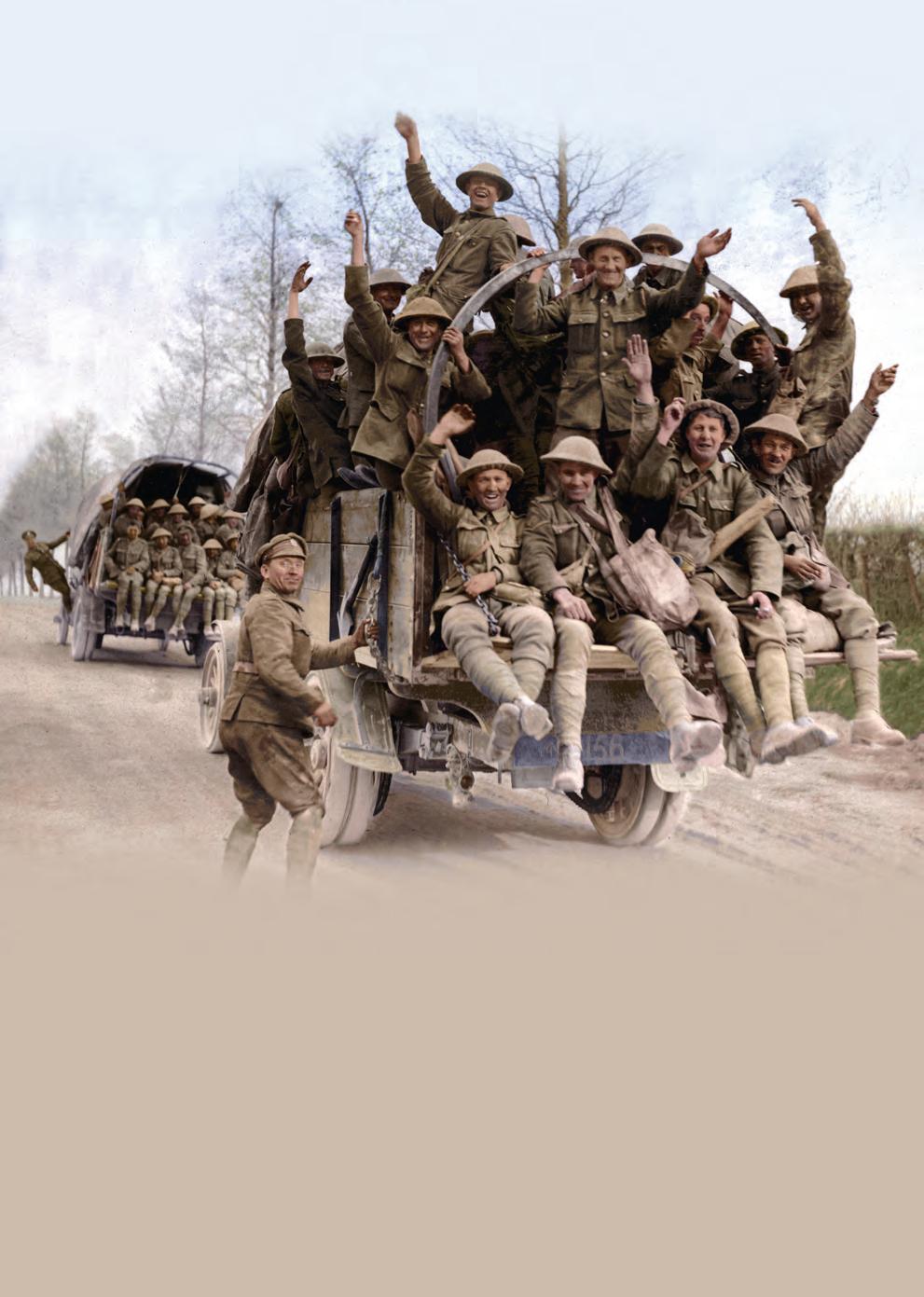
Canadian troops return triumphant from the Vimy front, their celebrations tempered by the loss of comrades.
William Ivor Castle/LAC/3194757/Colourization: The Vimy Foundation
Vol. 97, No. 2 | March/April 2022
Board of Directors
BOARD CHAIR Owen Parkhouse BOARD VICE-CHAIR Bruce Julian BOARD SECRETARY Bill Chafe
DIRECTORS Tom Bursey, Steven Clark, Thomas Irvine, Berkley Lawrence, Sharon McKeown, Louise Tardif, Brian Weaver, Irit Weiser Legion Magazine is published by Canvet Publications Ltd.
GENERAL MANAGER Jennifer Morse
ADMINISTRATIVE
SUPERVISOR
Stephanie Gorin
RESEARCHER/ ADMINISTRATIVE
ASSISTANT
Mike D’Angelo


EDITORS
Eric Harris
Aaron Kylie
ASSISTANT EDITOR
Trevor Oattes
STAFF WRITERS
Sharon Adams
Stephen J. Thorne

ART DIRECTOR, CIRCULATION AND PRODUCTION MANAGER
Jason Duprau
SENIOR DESIGNER AND PRODUCTION CO-ORDINATOR
Jennifer McGill
DESIGNERS
Derryn Allebone
Sophie Jalbert


Advertising Sales
CANIK MARKETING SERVICES
SENIOR DESIGNER AND MARKETING CO-ORDINATOR
Dyann Bernard
WEB DESIGNER
Ankush Katoch
WEB AND SOCIAL MEDIA
CO-ORDINATOR
Mauricio Dimate


TORONTO advertising@legionmagazine.com
DOVETAIL COMMUNICATIONS INC mmignardi@dvtail.com
OR CALL 613-591-0116 FOR MORE INFORMATION
Published six times per year, January/February, March/April, May/June, July/August, September/October and November/December. Copyright Canvet Publications Ltd. 2022. ISSN 1209-4331
Subscription Rates
Legion Magazine is $9.96 per year ($19.93 for two years and $29.89 for three years); prices include GST. FOR ADDRESSES IN NS, NB, NL, PE a subscription is $10.91 for one year ($21.83 for two years and $32.74 for three years). FOR ADDRESSES IN ON a subscription is $10.72 for one year ($21.45 for two years and $32.17 for three years).
TO PURCHASE A MAGAZINE SUBSCRIPTION visit www.legionmagazine.com or contact Legion Magazine Subscription Dept., 86 Aird Place, Kanata, ON K2L 0A1 or phone 613-591-0116. The single copy price is $5.95 plus applicable taxes, shipping and handling.
Send new address and current address label. Or, new address and old address, plus all letters and numbers from top line of address label. If label unavailable, enclose member or subscription number. No change can be made without this number. Send to: Legion Magazine Subscription Department, 86 Aird Place, Kanata, ON K2L 0A1. Or visit www.legionmagazine.com. Allow eight weeks.
Opinions expressed are those of the writers. Unless otherwise explicitly stated, articles do not imply endorsement of any product or service. The advertisement of any product or service does not indicate approval by the publisher unless so stated. Reproduction or recreation, in whole or in part, in any form or media, is strictly forbidden and is a violation of copyright. Reprint only with written permission.
PUBLICATIONS MAIL AGREEMENT NO. 40063864
Return undeliverable Canadian addresses to Legion Magazine Subscription Department 86 Aird Place, Kanata, ON K2L 0A1 | magazine@legion.ca
U.S. Postmasters’ Information
United States: Legion Magazine, USPS 000-117, ISSN 1209-4331, published six times per year (January/February, March/April, May/June, July/August, September/October, November/December). Published by Canvet Publications, 866 Humboldt Pkwy., Buffalo, NY 14211-1218. Periodicals postage paid at Buffalo, NY. The annual subscription rate is $9.49 Cdn. The single copy price is $5.95 Cdn. plus shipping and handling. Circulation records are maintained at Adrienne and Associates, 866 Humboldt Pkwy., Buffalo, NY 14211-1218. U.S. Postmasters send covers only and address changes to Legion Magazine, PO Box 55, Niagara Falls, NY 14304.
Member of CCAB, a division of BPA International. Printed in Canada.
We acknowledge the financial support of the Government of Canada. Version française disponible.
On occasion, we make our direct subscriber list available to carefully screened companies whose product or services we feel would be of interest to our subscribers. If you would rather not receive such offers, please state this request, along with your full name and address, and e-mail magazine@legion.ca or write to Legion Magazine,
613-591-0116.
he federal government is planning to apologize in July for the treatment of Black volunteers who served with the segregated No. 2 Construction Battalion during the First World War.
Black men, some of whom came from the United States and Caribbean to sign up with the Canadian Expeditionary Force, faced racism and often insurmountable obstacles in their efforts to join regular infantry units. While about 700 eventually did, the bulk of Black volunteers were relegated to support duties with No. 2 in France.
DOING SO RINGS HOLLOW, HOWEVER, IF MEANINGFUL AND EFFECTIVE MEASURES AREN’T TAKEN.
It will not be the first military- or war-related apology to be issued. Far from it.
Most recently, on Dec. 13, Ottawa apologized to victims of sexual misconduct in the military (see page 58). Other apologies preceded it:
• on Sept. 22, 1988, the federal government apologized for interning Japanese Canadians during the Second World War;
• on Nov. 7, 2018, Ottawa said sorry for turning away Jews who arrived in Halifax Harbour in 1939 seeking asylum in the face of rising Nazi atrocities;
• on Sept. 10, 2019, it apologized to Métis veterans who had been denied their rightful benefits;
• and on May 27, 2021, the government issued a mea culpa for the internment of Italian Canadians during the Second World War.
For many, such apologies come a day late and a dollar short. Of the 937 Jewish refugees sailing port to port in 1939 aboard MS St. Louis in what became known as “The Voyage of the Damned,” 254 eventually were killed in the Holocaust.
The government’s apology to Japanese Canadian internees and their families included $300 million in compensation and $24 million for a race relations foundation to “ensure such discrimination never happens again.”
But no amount of compensation four decades after the fact could make up for the suffering inflicted on 22,000 Canadians of Japanese descent whose property and belongings were confiscated and sold. To add insult to injury, they had to pay for their own internments; their full citizenship rights were not restored until 1949.
“We cannot change the past,” said Prime Minister Brian Mulroney in 1988. “But we must, as a nation, have the courage to face up to these historical facts.”
Doing so rings hollow, however, if meaningful and effective measures aren’t taken to right what caused the wrong in the first place.
The Canadian military has “faced up” to sexual misconduct on numerous occasions and commissioned two studies into the problem. Scandals at the topmost ranks and a steady stream of courts martial alleging sexual misconduct suggest comprehensive change remains elusive.
Likewise, systemic racism in Canada won’t end with an apology.
Hopefully, by acknowledging the wrongs of the past and making amends, Canadians will cast a more critical eye on events of the present and engineer real and lasting change. There can be no better acknowledgement of the sacrifices Black soldiers made more than a century ago—overseas and at home. L
Comments can be sent to: Letters, Legion Magazine , 86 Aird Place, Kanata, ON K2L 0A1 or e-mailed to: magazine@legion.ca
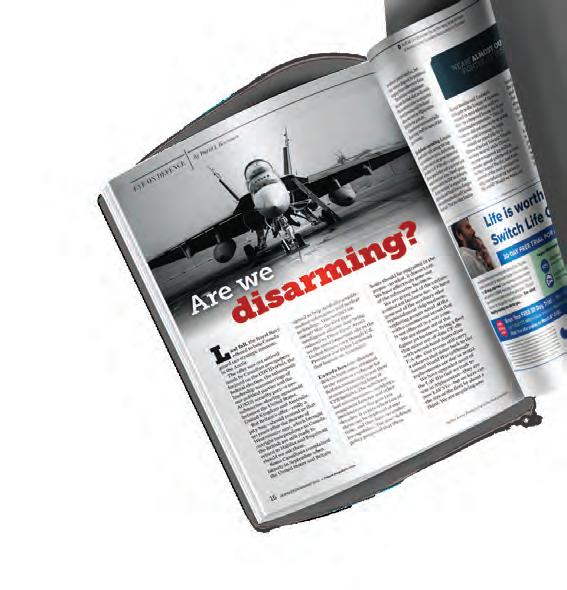
Thank you for the two excellent articles in the January/February edition, “Are we disarming?” and “Defence on the cheap.” As a member of the Legion and having three family members in the Canadian Armed Forces, they sure rang a sour note. Our military situation is sad and depressing and should be to all Canadians. Sadly, it is of little concern to many. You can bet if Canada was an isolated country and did not have the might of the United States military next door to it the situation would be different. We would have an up-to-date and strong military. Having military equipment that is dated and useless can only lead to fatal

results. Then will someone in the government take notice? Probably not. As stated in the article by David J. Bercuson, if we stand by, we are fools.
BILL SHOLDICE, MISSISSAUGA, ONT.
In reading the article regarding the Lytton Branch and its situation (“Lytton Branch destroyed by wildfire,” November/December 2021), a couple of thoughts have occurred to me. I am wondering if thought has been given to helping them by staging (for lack of better wording) a community barn-raising party? I would think that among Legion membership and friends there must be an extensive number of active and retired tradespeople who would be willing to volunteer to help rebuild and others with no particular skill set who would happily be the “grunts” needed to help out. This would dramatically lower their costs and potentially speed up the timing of their rebuild. It also occurs to me that if this could be co-ordinated to happen quickly, the rebuilt building could become the community “command centre” for the larger task ahead of rebuilding the entire town. Much better to change a discouraging situation into a statement of commitment for the whole community of Lytton

and the nearby First Nations as well as demonstrating, once more, the value of the Legion.
BILL AAROE, MAPLE RIDGE, B.C.
“Fujita’s blade” (November/ December 2021) reminded me of a professor I had at Seneca College in 1967, George Suzuki. At the time, he was a reserve officer in Toronto. That year, he had returned a sword surrendered to him by a Japanese officer at the end of the Second World War as his own centennial project. I have wondered about the story, especially as Japanese Canadians, to my knowledge, were not enlisted nor did Canada have much of a presence serving in the Pacific other than those in Hong Kong and a few other areas.
ROBERT TUCKER, OWEN SOUND, ONT.
“Defence on the cheap” (January/ February) is a reminder that there is an old lesson to be re-learned in Canada from the sorry epilogue of the Avro Arrow. National security cannot be procured on the cheap. Political leaders in democratic countries have always tended to shy away from that unpalatable truth. And yet, how many times in recent history have those same politicians, who shrank from asking the electorate to spend money on national security, unhesitatingly asked the country’s youth to lay down their lives to restore it?
Our country seldom recognizes the very people who have provided us the rights and freedoms that so many now take for granted. We must never give up what these brave men and women fought and died for.
JOHN FEFCHAK, VIRDEN, MAN.
Advertisement

In the text with the photo essay on Canada’s participation in the Korean conflict (“Into the fire,” March/April 2021), I was surprised to not see any mention of Lieutenant-Colonel Herbert Fairlie Wood. He produced at least four great books, two dealing with Korea: Strange Battleground: Official History of the Canadian Army in Korea and The Private War of Jacket Coates, a novel about one typical representative soldier and the military experience in general. It helped me understand my father and my stepfather and is still a damned good read.
JOHN WIZNUK, SATURNA ISLAND, B.C. L
The Snapshots caption on page 83 (January/February 2022) incorrectly located Lancaster, N.B., Branch and Portland, N.B., Branch. We apologize for the error.
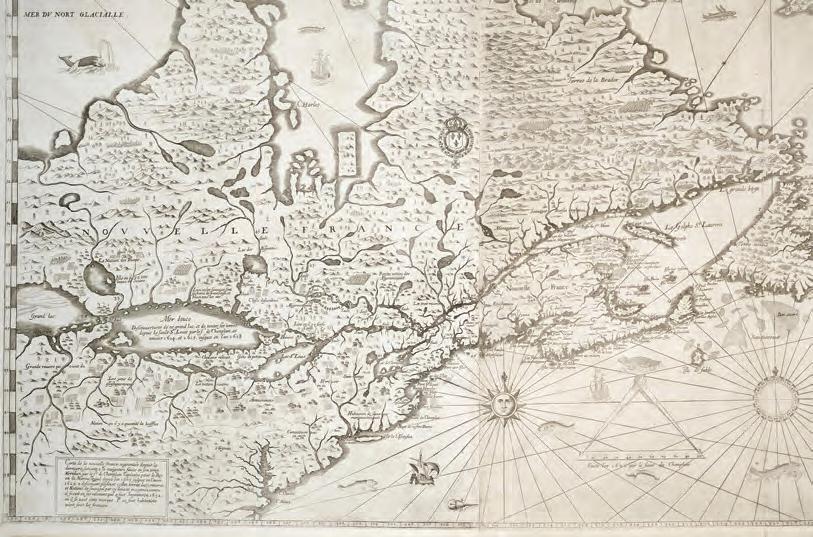

1 March 1633
After three years of English occupation, Samuel de Champlain is reinstated as the commander of New France.
2 March 2011
HMCS Charlottetown heads for Libya to provide humanitarian assistance.
5 March 1891
John A. Macdonald leads the Conservatives to victory in what would be his final general election; he dies just three months later.
6 March 1945
Operation Spring Awakening, the last major German offensive of the Second World War, begins.
7 March 1951
8 March 2001
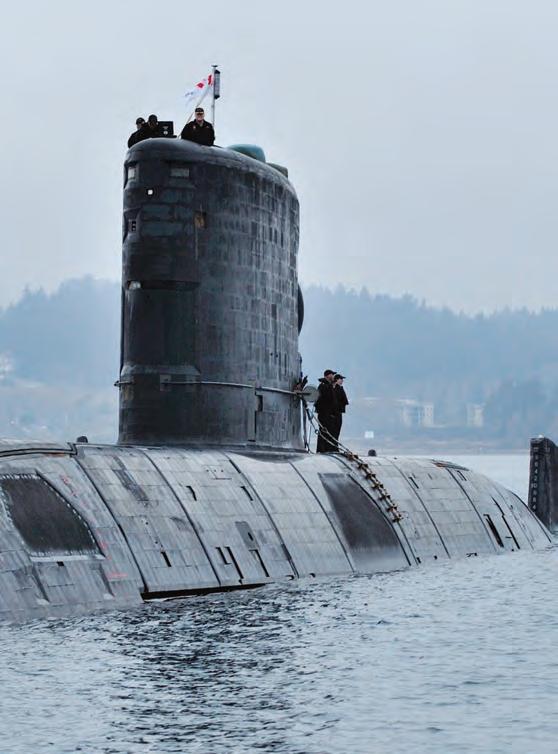
The Royal Canadian Navy begins allowing women to serve on submarines.
9 March 1915
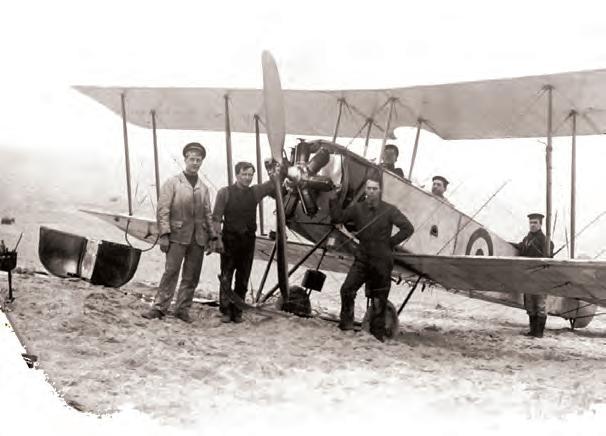
Redford Mulock is the first Canadian to qualify as a pilot in the British Royal Naval Air Service.
10 March 1992
Citing his “unique and historic role,” the House of Commons declares Métis leader Louis Riel a founder of Manitoba.


11 March 1876
North West Mounted Police sub-constable John Nash is accidentally killed while on duty near Fort Macleod, Alta. He is the first person commemorated in the RCMP Honour Roll for those killed in the line of duty.
20 March 2009
Four soldiers are killed, eight wounded in roadside bombings near Kandahar.
21 March 1918
The entire German army attacks the British front between St. Quentin and Arras with a heavy artillery bombardment of explosives and gas.
24 March 1945
The 1st Canadian Parachute Battalion drops behind enemy lines in Germany as part of the crossing of the Rhine River.
28 March 1918
The anti-conscription Easter Riots begin in Quebec City and culminate in Canadian soldiers firing at civilians, killing four and injuring dozens.
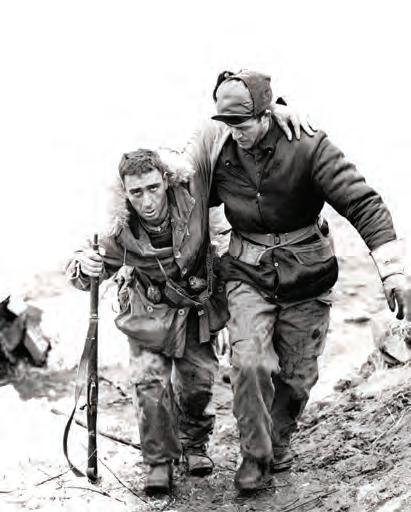
Two companies from 2nd Battalion, Princess Patricia’s Canadian Light Infantry launch an assault on Hill 532 in South Korea.
12 March 1930
First World War ace Billy Barker dies in a plane crash near Ottawa.
13 March 1971
FLQ member Paul Rose is sentenced to life imprisonment for the murder of Quebec politician Pierre Laporte; he is later released after a report reveals he was not present at the crime.
17 March 1945
HMCS Guysborough is torpedoed and sunk by U-868 in the Bay of Biscay off France, resulting in 51 casualties.
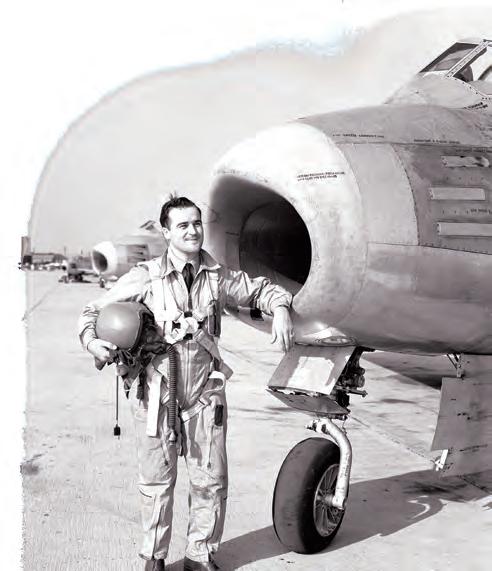
30 March 1951
RCAF Flt. Lt. Omer Lévesque is the first British Commonwealth pilot to shoot down a German Focke-Wulf Fw-190.

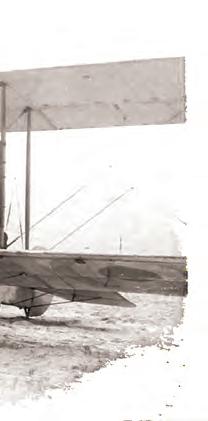
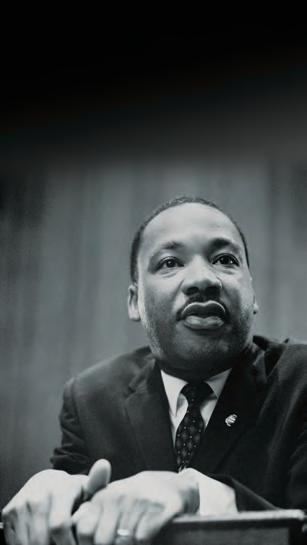
4 April 1968
12 April 1946
Harold Alexander is sworn in as Canada’s 17th governor general.
15 April 1865
U.S. President Abraham Lincoln dies of his wounds hours after he is shot by John Wilkes Booth.
Martin Luther King Jr. is assassinated in Memphis, Tenn.
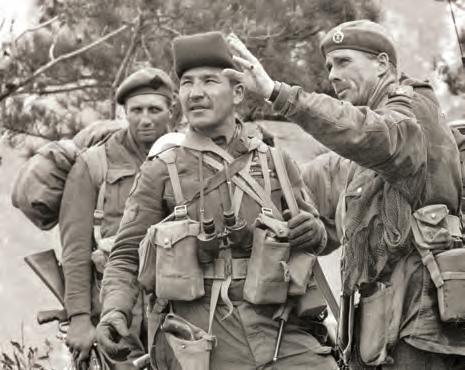
5 April 1958
Ripple Rock is blown up to ease sailing of the Seymour Narrows in British Columbia; the event remains one of the largest non-nuclear explosions in history.

24 April 1945
Indigenous war hero Tommy Prince receives the U.S. Silver Star Medal for leading a two-man reconnaissance mission deep behind enemy lines.
25 April 1967
9 April 2007
Queen Elizabeth II rededicates the refurbished Canadian National Vimy Memorial in France.
10 April 1937
The Foreign Enlistment Act is enacted to prevent Canadians from volunteering for service in the Spanish Civil War.
11 April 1951
Gen. Douglas MacArthur is replaced by Gen. Matthew Ridgway as commander of the United Nations forces in Korea.
16 April 1874
The House of Commons moves for the expulsion of Louis Riel.
18 April 2007
M.Cpl. Anthony Klumpenhouwer becomes the first reported member of Joint Task Force 2 to die in the line of duty.
19 April 2020
The perpetrator of the 2020 Nova Scotia shootings is shot and killed by two RCMP officers.
21 April 1918
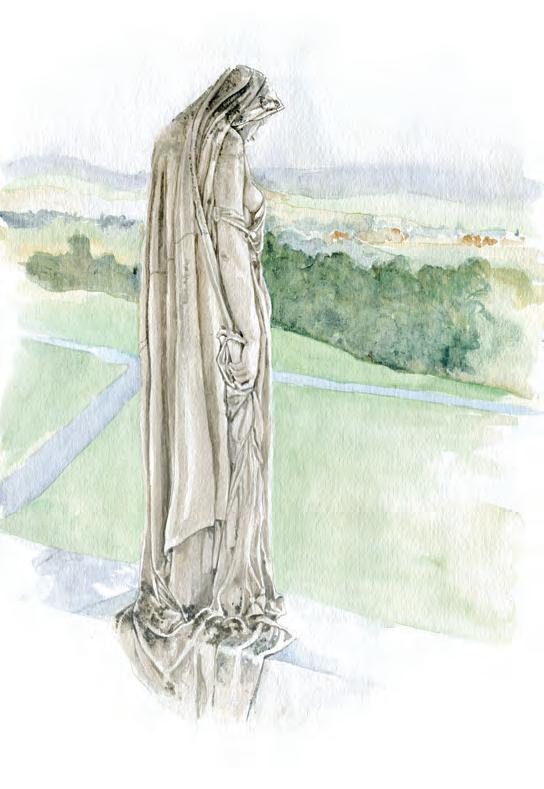
German flying ace Manfred von Richthofen—the Red Baron—is killed in action; the RAF credits Canadian Capt. Roy Brown with the victory.
The Canadian Forces Reorganization Act passes, unifying the army, navy and air force into one service with common uniforms and ranks.
26 April 1860
The Queen’s Own Rifles of Canada regiment is formed in Toronto.
27 April 1945
Benito Mussolini is captured by Italian resistance fighters; he is executed the next day.
28 April 1952
Dwight Eisenhower resigns as NATO commander.
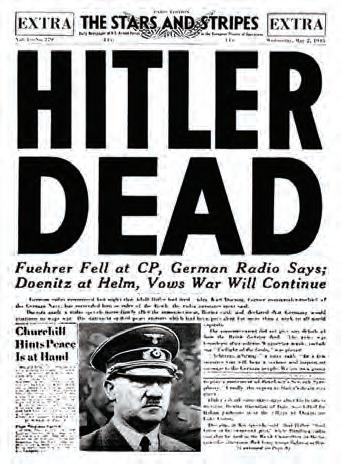
30 April 1945
Adolf Hitler dies by suicide in Berlin.

By Sharon Adams
The challenges of battlefield medicine are about to change for Western allied nations, now that the focus of threats has migrated to China, Russia, Iran and North Korea.
Unlike counterterrorism operations, future battlefields are likely to have larger fronts, see more use of long-range ballistic and cruise missile strikes, and produce more blast and burn casualties.
The United States military is looking for solutions to gaps it sees in providing medical care in future multi-domain operations, which now include space and cyberspace along with land, air and sea theatres.
It anticipates fighting may be dispersed on multiple, perhaps larger and simultaneous, fronts. Personnel could face combat in large cities and remote and hostile environments that are difficult to reach.
The U.S. military also realizes it will not always have air superiority in every situation—and that has medical consequences.
Air superiority in recent conflicts reduced the time to evacuate wounded from battlefield
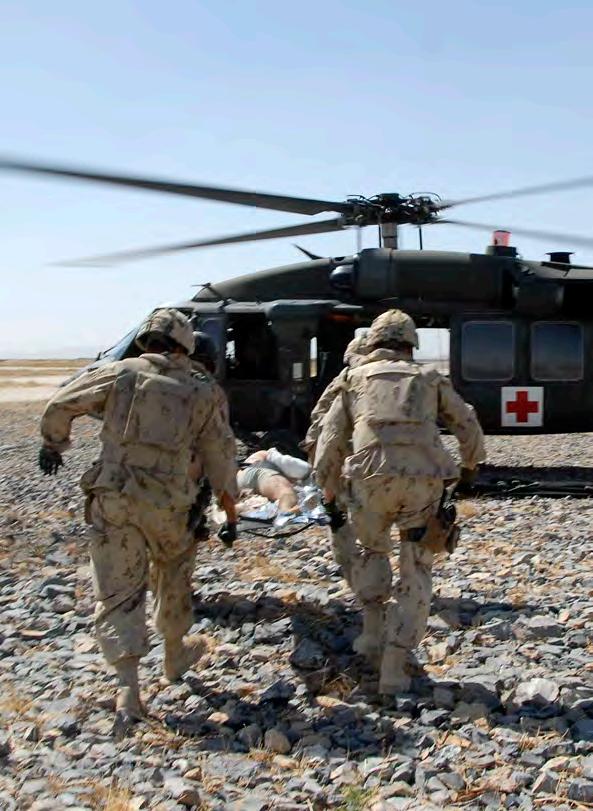
to hospital to between 45 and 90 minutes, said retired Colonel Will Schiek, former brigade commander of the Walter Reed Army Medical Center, in a seminar for the Association of Military Surgeons of the United States titled “Future Readiness: Medical Battlefield Operations and the U.S. Army.” During the Vietnam War, evacuation took anywhere from four to 12 hours, he said, and in the Second World War, often more than 24 hours.
Loss of air superiority means future medical personnel could be spread thin and medical resupply sketchy. For the wounded, it means longer waits for evacuation, longer waits to get to sophisticated medical care and a lower survival rate.
“Force health protection and health services support to the warfighter will be challenging,” said Gary R. Gilbert, medical intelligent systems manager at the Telemedicine and Advanced Technology Research Center (TATRC), in an article on the U.S. army’s website.
Unmanned automated equipment is high on the list of desired support technology for a combat environment, as tasks like delivering essential supplies and transporting wounded can be done in areas far too dangerous for human pilots.
Robots could be deployed to pick up the wounded in dangerous situations and, after treatment by a medic, an unmanned aircraft could carry the wounded to a field hospital. But work is needed on the human-computer interface so medics in the field can easily operate this equipment.
“Unmanned and autonomous platforms have the potential to completely rewrite the medical doctrine for how we conduct emergency resupply of unmanned and autonomous platforms, including whole blood products delivered directly to the point of need,” Colonel Daniel R. Kral, former TATRC commander, said in Gilbert’s article.
To ensure availability of supplies, the U.S. is considering reinstituting a practice from the Cold War, when medical material was pre-positioned in order to be quickly available if needed.
Attacks could come with limited warning and on a larger scale, making it important that “critical medical supplies are in place before the first wave of combat casualties requires treatment,” said Brent Thomas in an article titled “The Future of Combat Casualty Care: Is the Military Health System Ready?” and published by RAND Corp.
Medical stations may be targeted, interrupting the flow of patients from front lines to field hospital to theatre hospital to safe territory. Even if there is a cache of supplies nearby, field hospitals may suddenly need more beds, operating rooms, critical care wards and staff. The military is
looking for innovative ways to provide what’s needed if it can’t be delivered by traditional aircraft.
Since most combat deaths in the field are caused by blood loss and airway obstructions, new methods are needed to slow or stop hemorrhage and support breathing. Front-line troops need to be trained in their use as well as other life-saving interventions that have, until now, been administered by medics or farther from the front.
New methods to store blood and new blood substitutes are also needed.
Canada has mobile surgical resuscitation teams to provide advanced care closer to the front, and they can be seeing to patients within an hour of arrival. In a 2015 article in the Journal of Military, Veteran and Family Health, their biggest logistical concern was cold chain storage for blood products.

Also on the wish list is a small, hand-held device loaded with medical information that can be used in the field to guide people at the front through lifesaving medical procedures.
If casualties need to be held longer near the battle zone, innovative ways to fight infection will also need to be developed.
If wounded need longer for evacuation, they must also be concealed from enemy eyes and ears, both close to the front lines and in field hospitals. The U.S. army is investigating ways for mobile hospital units to move more frequently.
And a final jarring note for families: in case of death, it may not be possible to evacuate remains, requiring a return to burying personnel in theatre and registering their graves for later recovery.
We all have to wrap our heads around what new and different warfare might bring. L
FRONT LINES By Stephen J.Thorne
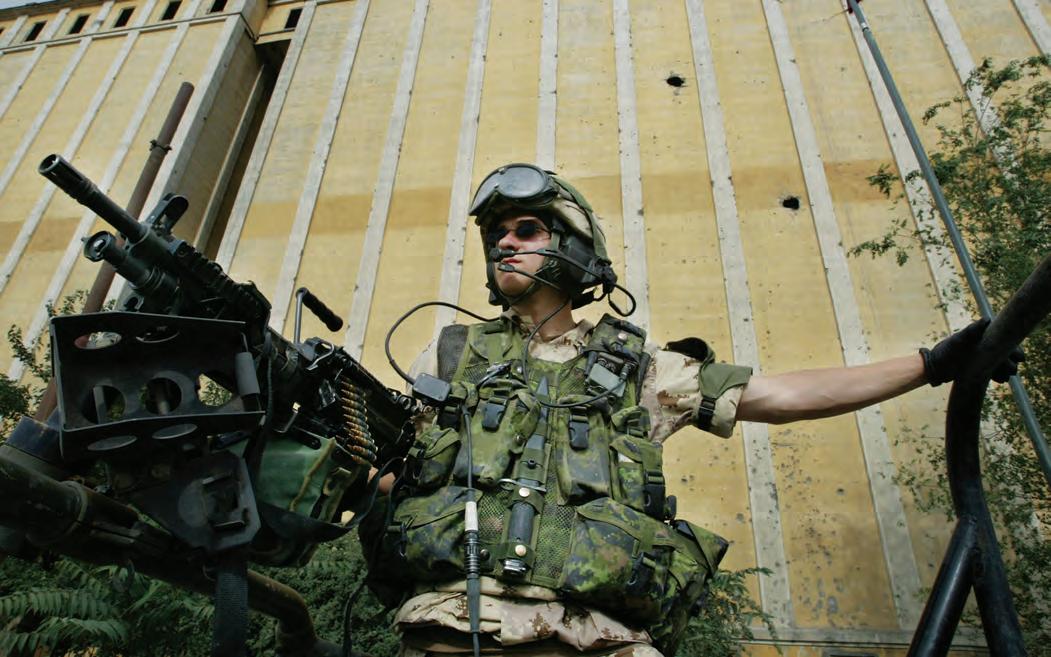
A Canadian soldier on NATO operations alongside the Kabul national bakery, its façade pocked by battle damage.
Eighteen years of alliance operations in Afghanistan were doomed by mission creep, as allied nations poured undue effort and resources into helping rebuild the country rather than focusing on their core objective of defeating terrorism, said the head of the North Atlantic Treaty Organization.
Secretary-General Jens Stoltenberg recently said that NATO went into Afghanistan to prevent terrorists from continuing to use the country as an operations and training base. On that score, it succeeded—at least for now.
But Stoltenberg said it must be recognized that “over the years, the international community set a level of ambition that went well beyond the original aim of fighting terrorism. And, on that, we were not able to deliver.”
U.S.-led forces, including Canadians, entered the country within weeks of the 9/11 attacks in 2001, quickly establishing a foothold and driving surviving Taliban and al-Qaida into the mountains
of neighbouring Pakistan.
Acting on the credo that an attack on one is an attack on all, NATO established the Kabulbased International Security Assistance Force in 2003 as enemy fighters regrouped and battles gradually escalated.
While coalition troops were combating a relentless insurgency, however, they were also helping build and train a national army said to be 300,000-strong. Allied nations were streaming billions of aid dollars into Afghanistan, helping establish democratic institutions and building roads, schools and other infrastructure.
“That broader task proved much more difficult, so we must ensure that our levels of ambition remain realistic,” Stoltenberg said in Latvia on Dec. 1, after chairing a meeting in which foreign ministers discussed a report on lessons learned in Afghanistan.
Afghan army and national police were “hampered by corruption, poor leadership and an inability to sustain their own forces,” he said.
“For the future, we must ensure that NATO training efforts create more self-sustaining forces.”
The Afghan National Army quickly collapsed as the final coalition withdrawal approached and Taliban fighters advanced districtby-district, province-by-province last August. Allied nations evacuated more than 120,000 people in the frantic days after the Afghan capital fell, most borne by the Americans.
Canada, which ceased combat operations in 2011 and withdrew its training mission in 2014, got 3,700 people out before the emergency airlift was abandoned. Most were Canadian citizens or special visa holders.
A co-ordinated suicide attack by Islamic State–Khorasan Province (a Taliban enemy also known as IS–KP or ISIS–K) killed at least 182 people, including 169 Afghan civilians and 13 U.S. military personnel, in mid-evacuation at the Kabul airport on Aug. 26. At least 150 others were wounded.
U.S. forces launched an airstrike the next day that they claimed killed
Stephen J. Thorne
three suspected ISIS–K members in Nangarhar Province. On Aug. 29, a second U.S. drone strike took out a suspected ISIS–K vehicle in Kabul. It turned out to be an Afghan aid worker. Ten Afghan civilians were killed, including seven children.
“We should explore how to strengthen NATO’s ability to conduct short-notice, largescale, non-combatant evacuation efforts,” said Stoltenberg.
Mission creep is defined as “the unintended but almost inexorable tendency of military actions to broaden beyond their original scope,” according to a paper delivered during a 2020 conference at the University of Windsor in Ontario.
“The road to hell may indeed be paved with good intentions but that hardly means we should give up good intentions,” said “The Problem of Mission Creep: Argumentation
Theory Meets Military History,” a paper co-authored by three experts from Oslo and one from Waterville, Maine.
“Rather, it means we should be prepared to look for exit ramps whenever we find ourselves going down that road.”
“WE SHOULD BE
Questions surrounding the NATO coalition’s escalating involvement in Afghanistan began around a 2006 surge in fighting.
“Has NATO, the world’s most powerful military alliance that saw off the Soviet threat and brought two Balkan wars to an end, bitten off more than it can chew in trying to pacify lawless Afghanistan?” wrote

Gareth Harding for United Press International in February 2006.
The somewhat rhetorical question came after the Kabul-based alliance opted to fan out into the unstable south, where U.S.-led forces had their hands full fighting an increasingly aggressive enemy out of Kandahar. The decision boosted NATO’s presence from 9,000 to 15,000.
“A growing number of military experts believe the bloc is sleepwalking to disaster in the mountains of the Hindu Kush,” added Harding.
Details of NATO’s December report on mission creep were not immediately released, although Stoltenberg promised to publicize its main findings.
The document was assembled by NATO’s 30 deputy national envoys, led by several experts and the alliance’s assistant secretary general for operations, John Manza. L

about slipping? With the Safe Step walk-in tub, you just sit down and relax – no more worries about falling. And with luxuries like temperature control and powerful hydrotherapy to soothe away your aches and pains, it’s a whole new bathing experience, like having your own personal spa. Call us right now to find out more, and for a limited time save $1600 – plus get our Exclusive Shower Package with height-adjustable showerhead, free!














By David J. Bercuson
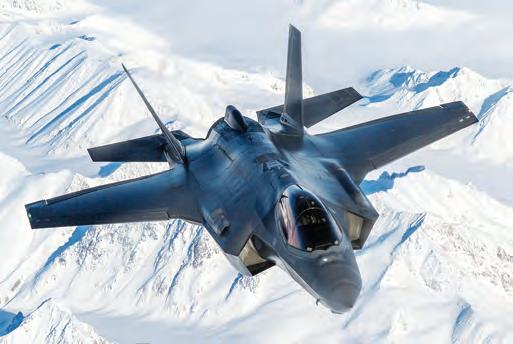
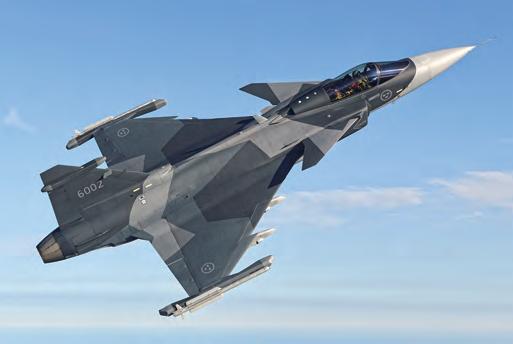
Canada will now decide between Lockheed Martin’s F-35 Lightning II (top) and the Swedish Saab JAS 39 Gripen (above) to replace its CF-18s.
Dec. 1, 2021, the federal government dropped the Boeing Super Hornet from the competition to replace the aging McDonnell Douglas CF-18 Hornet fighters with up to 88 new aircraft beginning in 2025. That left only two contenders in the competition: the Lockheed Martin F-35 Lightning II and the Swedish Saab JAS 39 Gripen. Thus, 11 years after the Stephen Harper government announced that Canada would acquire 65 F-35s and six years after Justin Trudeau announced that, if elected, his government would
never buy the F-35, Canada is back on track to do just that.
Canada’s slow and often confusing effort to replace the Cold War-era CF-18 shows that military procurement in Canada is as mixed up, politically dominated and inefficient as ever, certainly as it was in the hunt to replace the aging Sikorsky CH-124 Sea King helicopters with Sikorsky CH-148 Cyclones. That process took almost 20 years.
Observers appeared to be surprised by the government’s decision that the Boeing Super Hornet was not in compliance with the air force’s requirements for a new fighter. Experts had forecast that the final two fighters in the competition would both be American. The multinational Eurofighter Typhoon never officially entered the competition and France’s Dassault Rafale also declined to take part.
But Boeing long ago blotted its copybook in Ottawa by filing a petition claiming Bombardier had unfairly benefited from Canadian government subsidization of the CSeries jetliner and seeking to have tariffs placed on American airline purchases of the new aircraft. The move forced Bombardier to effectively sell the CSeries to Airbus, which took over the aircraft as the A220 and is making a significant success of it. It marked the beginning of Bombardier’s withdrawal from the passenger aircraft industry, though it still produces business jets.
The F-35 has been controversial from the beginning of the program in the late 1990s, mainly because of inflated costs and problems in the development of new technologies.
But more than 20 years after the aircraft was conceived, it has been purchased by the United States air force, navy and marines, the Royal Air Force, the Royal Australian Air Force, the Israeli Air Force and the air forces of another half dozen countries.
The Gripen is currently flown by Sweden, South Africa, the Czech Republic and will be acquired by Brazil. The basic Gripen design dates to the 1980s, but the aircraft on offer is a beefed-up and modernized version of the original.
The Gripen is probably the better aircraft for Arctic operations, but the current state of CanadaU.S. relations will probably kill any chance of Canada buying it. Despite trade agreements, the administration of President Joe Biden is making a significant effort to keep electric vehicles manufactured in Canada out of the
U.S. market. It has given Canada little relief from Trumpera tariffs, imposed a punishing tariff on Canadian softwood lumber, and made Canada look like a second-rate ally in Washington, compared to Australia and Britain.
Under these circumstances, will Ottawa choose the Gripen over the F-35? Not likely.
To some extent, Canada has deserved Washington’s ire. Canada’s defence expenditure in 2020 was 1.4 per cent of gross domestic product, while other NATO nations have been making serious attempts to reach the longstanding NATO goal of two per cent.
The U.S. government recently chided Canada on its failure to increase its UN peacekeeping operations, which in the Trudeau era have fallen to a single mission in Mali and a current deployment of less than 60 Canadian service personnel on UN missions.
So by 2025, or likely later, expect the first F-35s—in matte gray with low-visibility roundels—to be stationed at one of Canada’s two fighter airfields: at CFB Cold Lake in Alberta and CFB Bagotville in Quebec.
And, over the next decade, expect a similar convoluted replacement process to be repeated for surface combatant ships, submarines and even the trusty old Second World War-era Browning Hi-Power pistol. L

By J.L. Granatstein
PLANNED AND EXECUTED WITH PRECISION, THE ATTACK ON VIMY RIDGE REDEFINED THE CANADIAN CORPS AS AN ELITE FORMATION
The victory at Vimy Ridge in April 1917 is the one military story that most Canadians know. Some of our best writers—journalists and historians alike, from Pierre Berton to Tim Cook—have written books on Vimy and the event has been celebrated in textbooks, in the federal government’s material for new citizens, on our money and in the
stunning Canadian National Vimy Memorial in France. Celebrations on the 90th and 100th anniversaries attracted thousands of high school students who raised money to travel to Vimy, and the CBC devoted hours to broadcasting the event to those at home. After more than a century, Vimy remains firmly set in the Canadian consciousness.
The war was not going well for the Allies in the spring of 1917. The Russians were tottering and the Americans, who had recently joined the war, would take months to train and equip troops and get them to the front. The endless toll of dead and wounded at Verdun and the Somme and the mounting financial costs of total war had left Britain and France—and Canada

too—near the breaking point.
The enemy was also suffering because of food and materiel shortages caused by the British naval blockade, and German casualties were enormous. But if the war had ended on April 1, 1917, the Germans—occupying most of Belgium, large parts of northern France and huge swathes of Russian territory—would certainly have
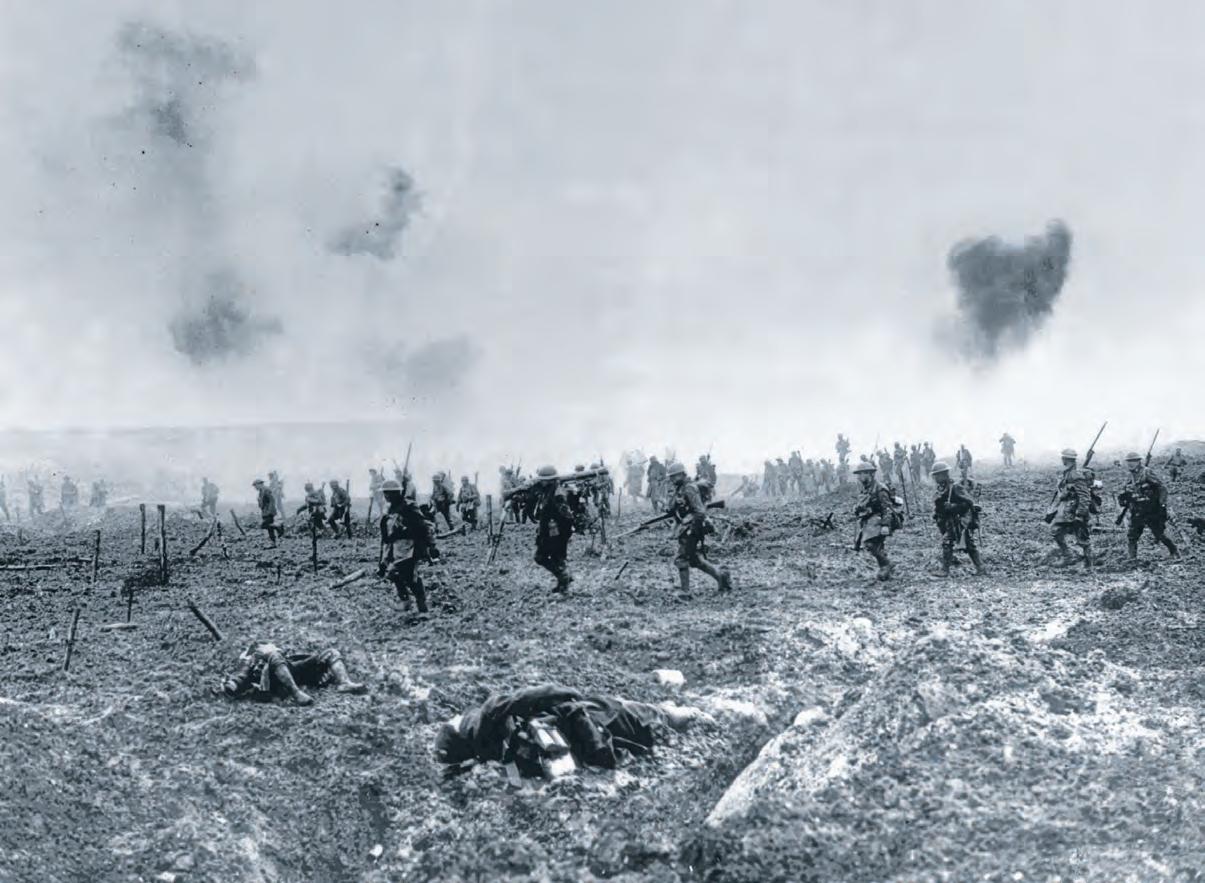
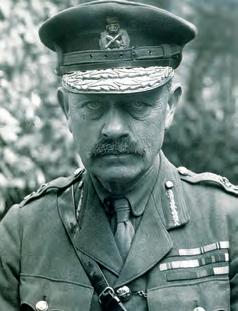
Canadian troops return triumphant from the Vimy front, their celebrations tempered by the loss of 3,598 comrades killed and 7,004 wounded. Their commander, Lieutenant-General Julian Byng (bottom), inspects one of the German guns captured during the battle.
been deemed the victor.
Field Marshal Douglas Haig, commanding the British Expeditionary Force that included the four divisions of the Canadian Corps, planned a big push in the Arras sector for April. The Canadians, commanded by British Lieutenant-General Julian Byng, were ordered to take Vimy Ridge, the long and well-fortified feature that
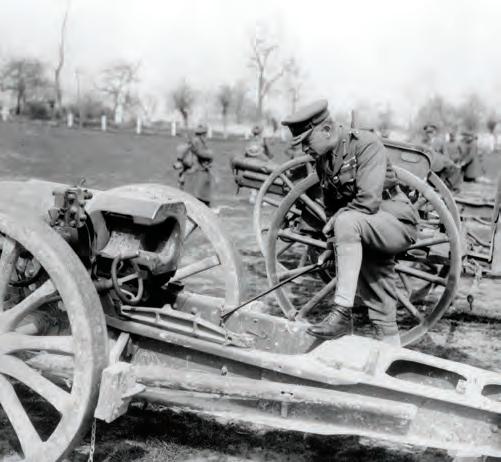


protected much of the industrial and mining industries in German-occupied France.
This was a difficult task— earlier Allied assaults on Vimy had failed with heavy losses and the Germans seemed well prepared to hold on no matter what the Allies could do.
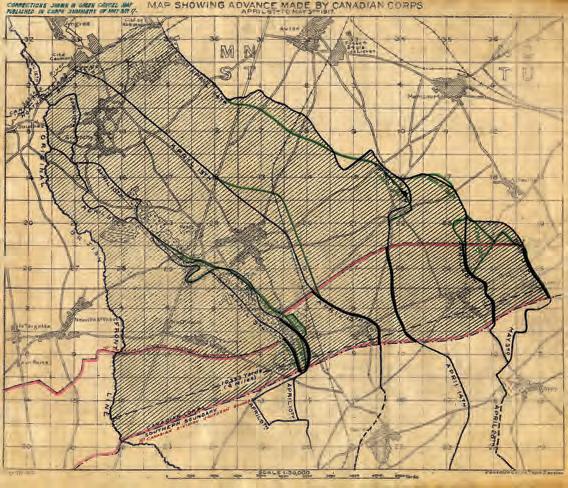
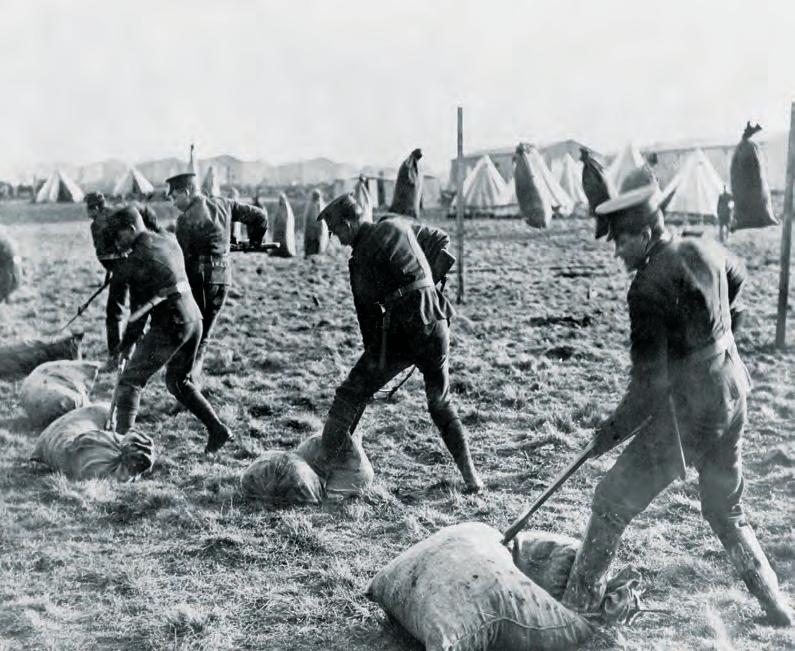
A period map (right) illustrates the boundaries, objectives and strongpoints confronting the Canadians between April 9 and May 3, 1917. Members of the 8th Battalion (90th Winnipeg Rifles) conduct bayonet practice (below) with bags of straw on Salisbury Plain.
But orders were orders, and Byng and his staff began to plan. In January, Byng sent Major-General Arthur Currie, commanding the 1st Canadian Division, as a member of a British delegation that visited the French armies to learn how they had fought at Verdun.
Currie’s report stressed the importance of artillery counter-battery preparation that eliminated the enemy guns, and he noted that the French had perfected the creeping barrage that moved effectively just ahead of the advancing troops. He saw that they had developed platoons capable of independent
manoeuvres with distinct sections of machine-gunners, rifle-grenadiers, bombers and riflemen. Unlike the Canadians, the French no longer attacked in waves; instead, platoons could support their own advance with fire and movement and bypass enemy strongpoints. Currie was also deeply impressed with the rehearsals and reconnaissance that the French conducted prior to an attack, so much so that the soldiers became “as familiar as possible with
the ground over which they were to attack.” He pointed out that the French pulled the assault forces out of the line for special training and ensured that the men were “re-equipped, re-clothed, fed particularly well, had entertainments provided for them, and consequently returned to the line absolutely fresh and highly trained.”
Currie also admired the French practice of distributing maps and photographs widely, not only for senior officers well behind the lines as was the practice in the British Army. Soldiers needed to know where and why they were attacking and what was expected of them. On his return, Currie recommended that the Canadians emulate the French, and Byng listened and acted, changing the training and organization of the infantry platoons, cutting their number of soldiers down to 35 or 40, the most a junior officer could manage to lead.
The attack at Vimy, thanks in part to Currie’s report, was preceded by unheard of training in fire and movement supported by the specialist roles and, as the official history by G.W.L. Nicholson noted, “a
full-scale replica of the battle area was laid out…to the rear” where units from platoons to divisions “rehearsed repeatedly,” so often that some soldiers grumbled about “their officers’ silly games.”
Forty thousand maps were distributed, and a new artillery plan was launched: the guns began their battlefield preparation two weeks before the attack, and the heavy artillery concentrated its fire on the enemy batteries. The Germans certainly knew an attack was coming, but they did not know when. Moreover, tactical surprise would be achieved by moving troops into specially created tunnels dug into the chalky ground very close to the frontline trenches and maintaining the tempo of gunfire until just before the assault.
and horses reached the front through pipelines; signallers buried telephone lines to survive enemy shelling; and the tunnellers carved out large alcoves for battalion and brigade headquarters.

Byng’s plan was ready by March 5. His four divisions, fighting together for the first time, would be positioned in order with the 1st Division on the right and the 4th on the left. There were four objectives, each designated by a coloured line on the map: the entire ridge and the enemy’s second line were to be seized in just under five hours. There were 863 guns in support and the gunners had the new No. 106 fuse that could cut the enemy’s barbed wire. The rolling barrage was to advance in 50-yard steps. Ammunition for the guns came forward in profusion (they would fire more than a million shells between March 20 and the capture of the ridge), much of it hauled by newly laid tramlines. Water for men
“I am a rifle grenadier,” Private Ronald MacKinnon of the Princess Patricia’s Canadian Light Infantry wrote in a letter home. “We have a good bunch of boys to go over with and good artillery support, so we are bound to get our objective alright.” MacKinnon was killed in the battle.
The attack began at 5:30 a.m. on Easter Monday, April 9, with snow and sleet blowing in the Germans’
faces. With what Lieutenant Stuart Kirkland described as “the most wonderful artillery barrage ever known in the history of the world,” the enemy guns and trench lines were hit with high explosives and gas, destroying more than 80 per cent of the German guns and keeping the infantry sheltering in their dugouts.
“The guns all opened at the same moment with a roar like a terrible peal of thunder,” wrote Harold McGill,
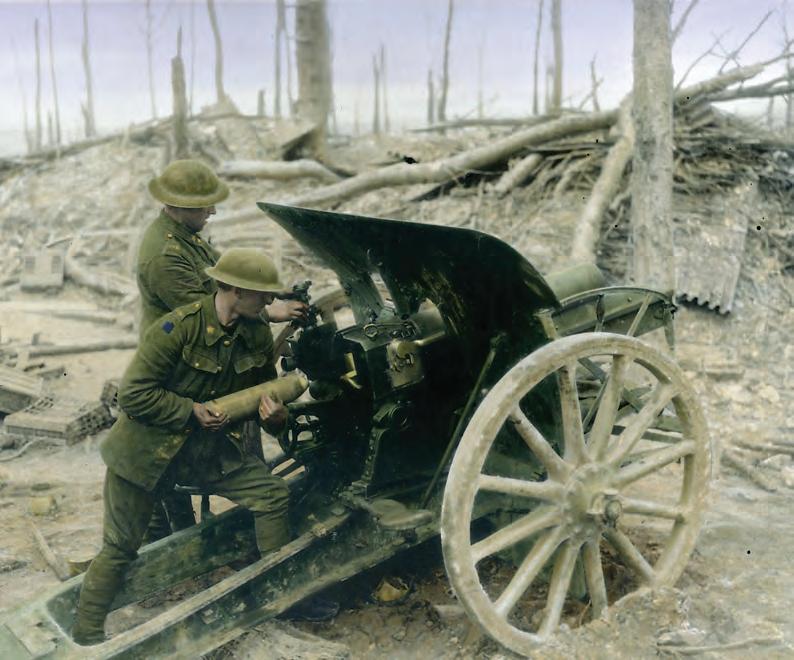
Canadian artillery members fire a captured German 4.2-inch gun at retreating enemy during the battle.
BEEN IN YET.”
The 29th Battalion (Vancouver) advances across no man’s land despite German barbed wire and heavy fire at Vimy.
a medical officer of the 31st Battalion (Alberta), “and for miles all along the German trenches there was the most wonderful display of fireworks caused by our bursting shells.”
The 15,000 infantrymen who led the attack moved steadily forward behind the rolling barrage, their handful of supporting tanks unfortunately unable to move forward because of shell holes and sticky mud.
The 1st Division reached the German front line, held by Bavarians, and found most of the defenders still in their dugouts. Mop-up troops soon arrived, and Currie’s soldiers reached the Red Line, their second objective, by 7 a.m., although enemy snipers and machine-gunners were beginning to exact their toll.
The 2nd Division moved quickly across its first objective, the Black Line, and encountered heavy fire only at its second objective which it controlled by 8 a.m. By 9:30, the reserve brigades of the two divisions were
moving toward the third objective, the Blue Line.
“Our troops advanced as cool and steady as when they had previously practised,” said McGill, but, in fact, it frequently took great courage to take the objectives. Sergeant Ellis Wellwood Sifton of the 18th Battalion (Western Ontario) charged a machine gun that fired on his men, bayoneted its crew, and held off riflemen moving down the trench toward him by using his own rifle as a club. He was awarded a posthumous Victoria Cross.
The 3rd Division had a relatively easy time, taking its first two objectives quickly. Billy Bishop, a young pilot in the Royal Flying Corps whose victories were still to come, watched what to him seemed to be men wandering casually across no man’s land. He could see shells falling among them, but the others continued going forward.
The ground had been torn up by two weeks of shelling, and many of the landmarks intended to help
situate the attackers had been destroyed. Some units, advancing too quickly, were hit by the Canadian barrage. Many had close calls.
“[We] were able to extricate our men without getting hurt ourselves,” wrote Major Percy Menzies of the 3rd Division’s 4th Battalion, Canadian Mounted Rifles. “All this time we were troubled by our own shells bursting short, but I was never touched.”
The 4th Division faced real difficulty. Its main objective was Hill 145, which had four lines of strong defences and deep dugouts on the reverse slope. The attack by the 11th and 12th brigades, each with an additional battalion, took the first line, but the Germans in the heavily manned second line of trenches forced the troops back with repeated counterattacks.
Hill 145 remained in German hands until the newly arrived 85th Battalion (Nova Scotia Highlanders) took it that night. The next day, the 44th and 50th battalions followed the barrage in
a mad charge down the steep eastern slope, and the 4th Division had the Red Line.
Now all that remained was The Pimple, the northern tip of the ridge.
In the early morning of April 12, the 10th Brigade, attacking in the teeth of a gale, surprised the Germans manning the hill. By 6 a.m. after hand-tohand fighting, the brigade had taken The Pimple.
From the crest, the Canadians could see eastward as far as the suburbs of Lens, a coal mining town, and the Canadian artillery, struggling forward through the heavy mud, took up new positions to the east
of Vimy Ridge. The Germans’ supposedly impregnable position had been taken and the Canadian Corps’ success was hailed in Paris, London and at home.
Byng was the first beneficiary of the victory. Promoted to full general, he received command of the British Third Army. His successor, Currie, received a promotion, a knighthood and command of the Canadian Corps in June, a position he would hold until the war’s end.
The battle was a costly but limited success. The ridge had been taken, but the Germans were not routed. There was no breakthrough—no cavalry had been made available to
In Canadian popular history, Vimy is sometimes painted as a war-winning victory. MajorGeneral Arthur Currie’s Canadians had done something that the Allies previously could not: they had scaled the heights of the ridge and defeated the Germans.
Byng to exploit success. In five days of fighting, the Canadians suffered 10,602 casualties, including 3,598 killed—enough that Prime Minister Robert Borden, in London at the time, began to realize that conscription would be needed. Many soldiers were proud of the victory.
Vimy was “the greatest thing the Canadians have been in yet—wonderful,” said Captain William Fingold of the YMCA. “Of course, there have been heavy losses, but it was a great victory.”
Others were just happy to have survived: “It was a hell on earth,” wrote one soldier, “and I am very lucky to be here today.” L
But realists know that Julian Byng, a British general, not Currie, commanded the Canadian Corps in April 1917. We know that most of the ridge the Canadians attacked from the west rose gently with the big drop behind the enemy trenches and on the reverse slope. We understand that there was no breakthrough, no cavalry sweeping through the enemy rear, and that the Germans simply retired several kilometres east to their next defence line. We remember too, that the Canadians suffered 10,602 killed and wounded at Vimy, the greatest losses in any single action in our history, and the killing continued for another year and a half. The myths far outpaced the reality.
But Vimy did matter. The Canadians began the war as amateurs, but at Ypres, Saint-Éloi and the Somme, they had learned how to fight.
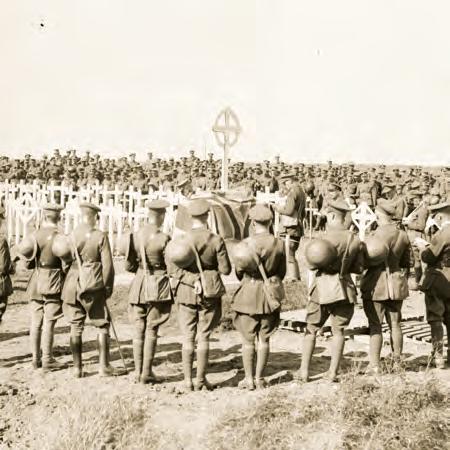
After Vimy, the soldiers understood they had done something great and knew that their battalions, brigades and divisions had come to maturity and made the Corps an elite formation. The war would continue, and the confidence and determination earned at Vimy turned the Canadians into some of the best Allied troops of the Great War. Canadian troops hold a memorial service in September 1917 for the men of the 87th Battalion (Canadian Grenadier Guards) who fell at Vimy. Over the course of the war, impromptu cemeteries sprang up all along the Western Front. Reburials and more elaborate memorials would come later.

By Stephen J.Thorne
wasn’t over yet and already Vimy Ridge was being hailed back home as a seminal battle that could forever change Canada’s place in the world.
The Easter 1917 success where others had failed marked the first time all four Canadian divisions fought together. Ideas of what the battle was—and wasn’t —evolved over the ensuing decades. But it wasn’t until 1967 that BrigadierGeneral Alexander Ross anointed Vimy “the birth of a nation.”
Such declarations moulded Canadians’ perceptions and blurred the lines between the myths and the realities of Vimy Ridge. Speeches, ceremonies and writings tended to reinforce the myths in a country anxious to define its identity.
A nation may not have been born on Vimy Ridge, but Canada did come into its own after the four-day battle. It took on its most significant role of the conflict and earned postwar seats at the Paris Peace Conference and the newly formed League of Nations.
Vimy became, in retrospect, a rite of passage for Canadian soldiers, as well as for war artists of all stripes who trekked to the cratered grounds in the months and years that followed to record their impressions in paint, charcoal and pencil.
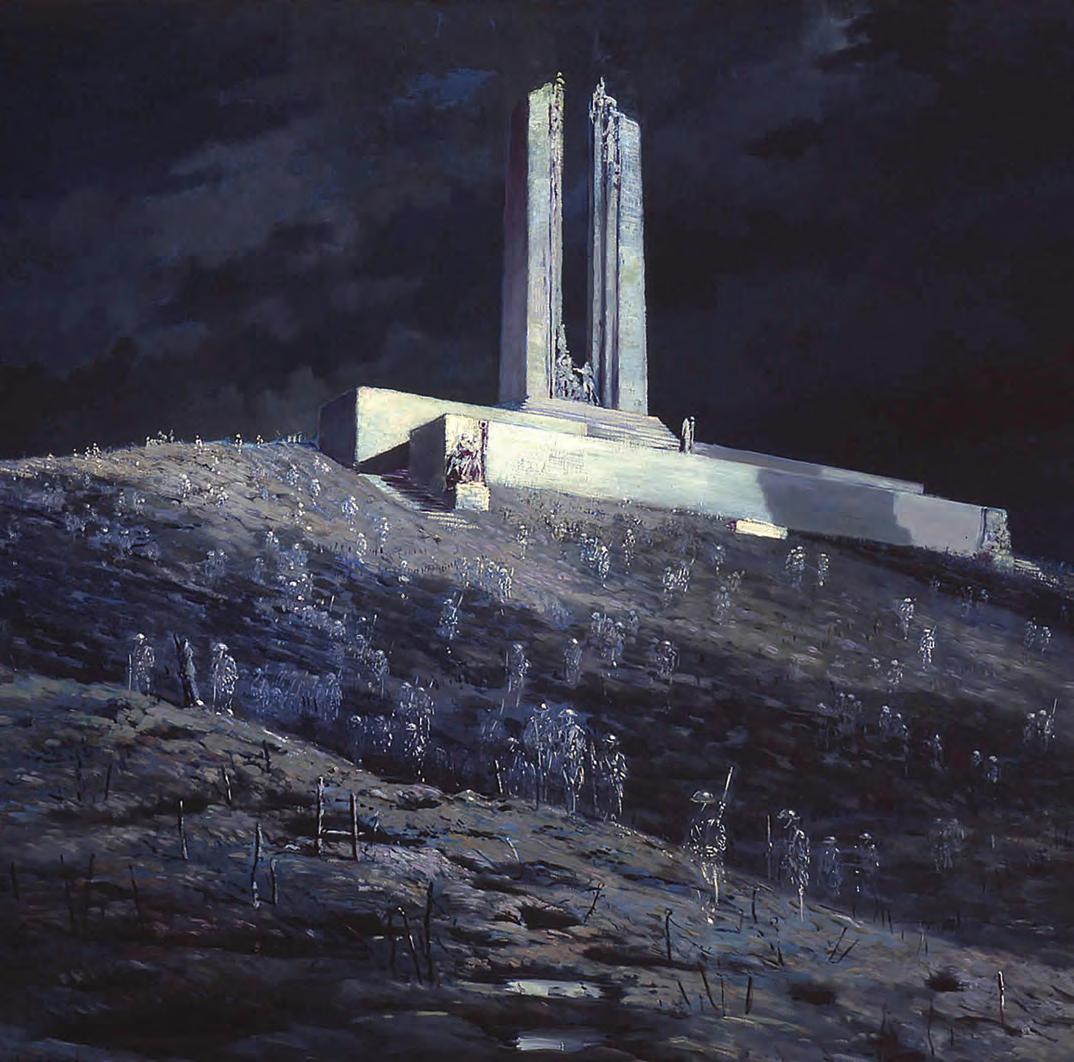
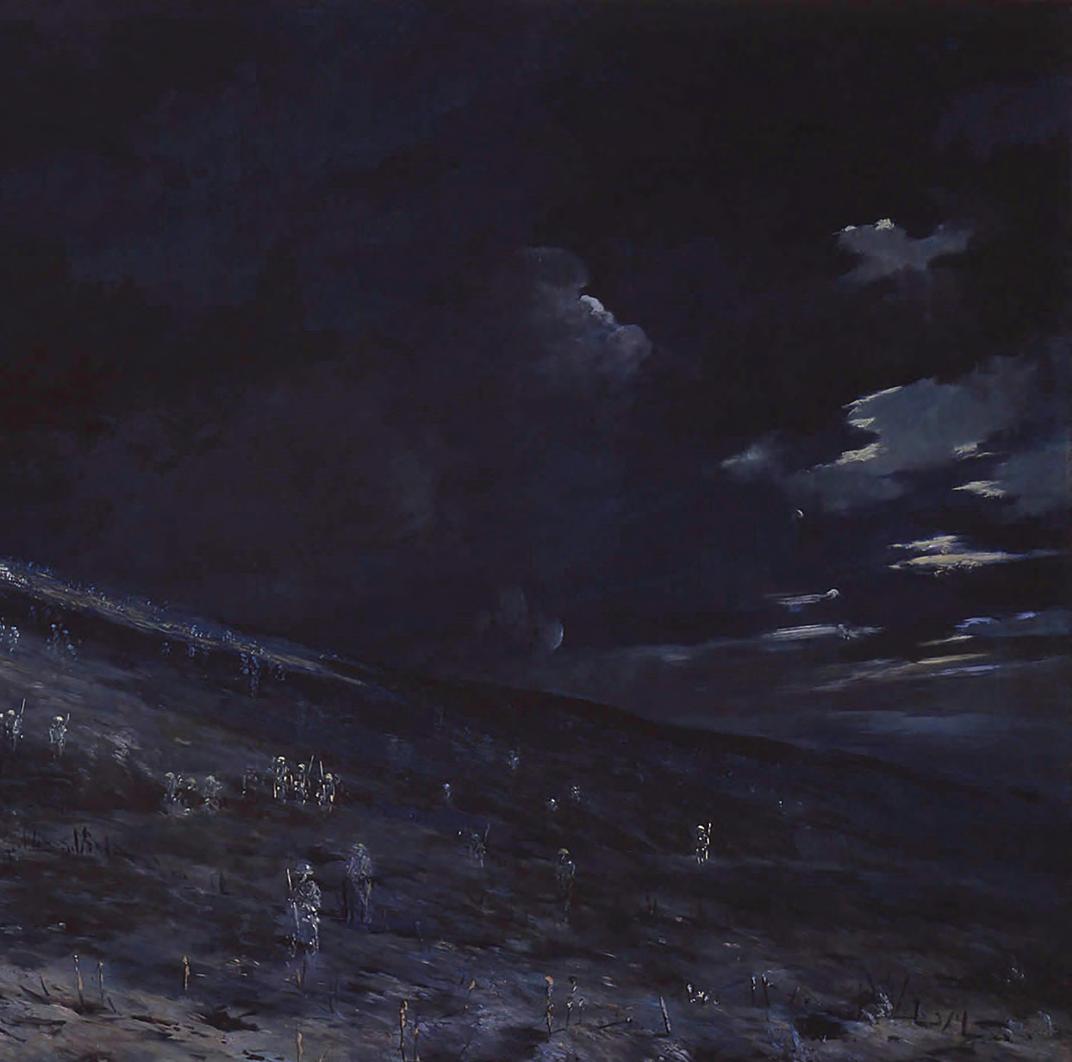
Australian captain and celebrated artist William Longstaff painted “The Ghosts of Vimy Ridge” between 1929 and 1931, depicting the spirits of Canadian Corps soldiers on the ridge, having left their earthly battles, and the soaring memorial, behind.
He drew on the words of the monument’s designer, Walter Allward, who said in 1921 that his work had been inspired by a wartime dream in which dead soldiers “rose in masses, filed silently by and entered the fight to aid the living.”
“Without the dead we were helpless. So I have tried to show this in this monument to Canada’s fallen, what we owed them and we will forever owe them.”
A gift to Canada from John Arthur Dewar of the Dewar distillery family, Longstaff’s painting was made while the memorial was still under construction. Except for periods it was on loan, it has hung in Parliament’s Railway Committee Room since February 1932. L


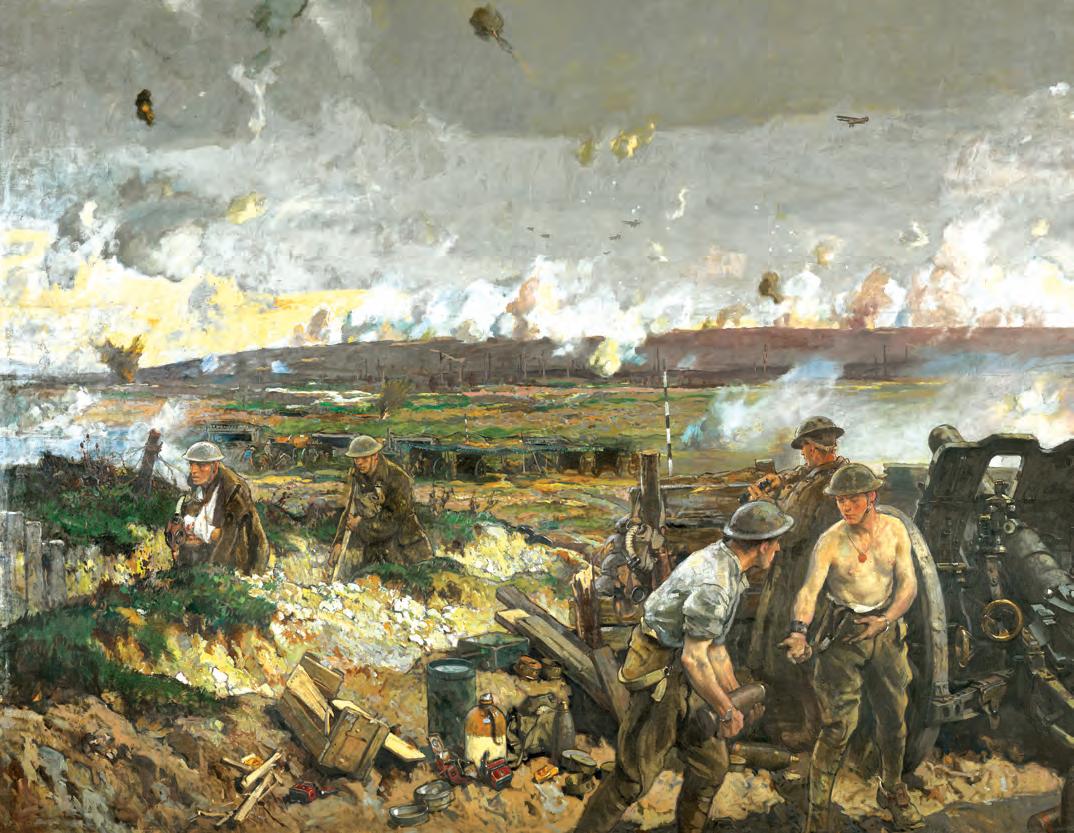
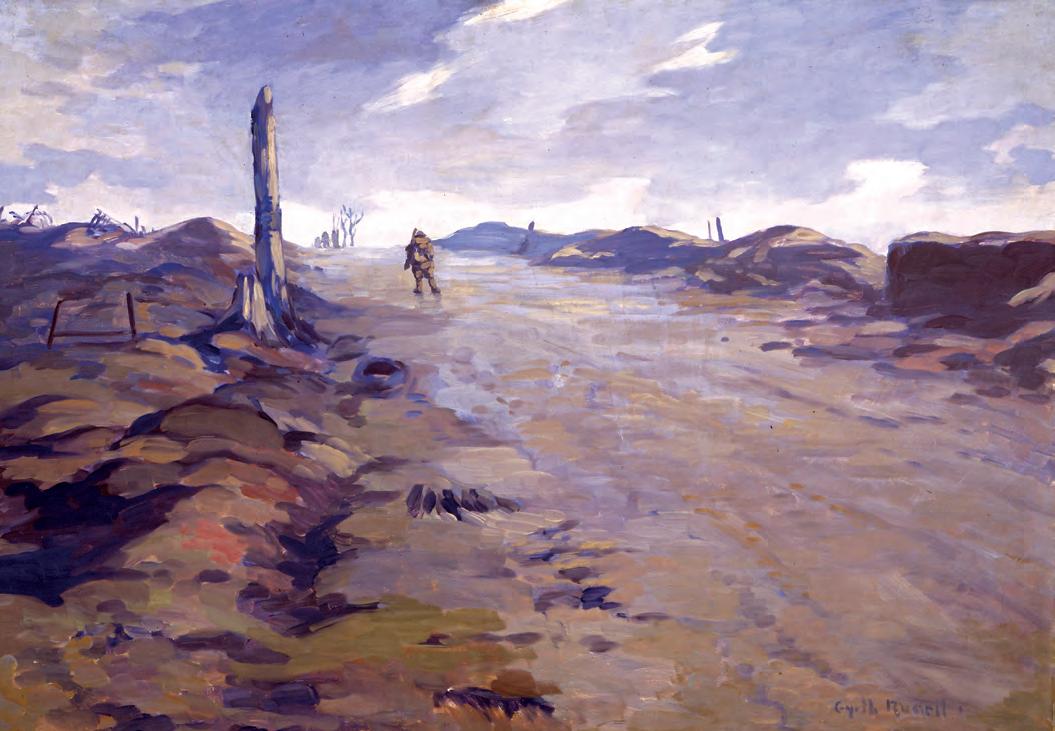

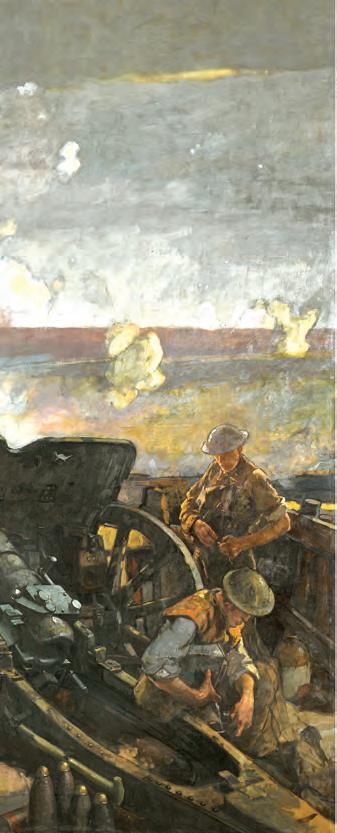
Painted by Richard Jack in 1919, “The Taking of Vimy Ridge, Easter Monday 1917” (top left) depicts the crew of an 18-pounder field gun firing at German positions as the wounded move past toward the rear. The Lens-Arras road along the crest of the embattled ridge (left) is a desolate place as painted by Gyrth Russell in February 1918.
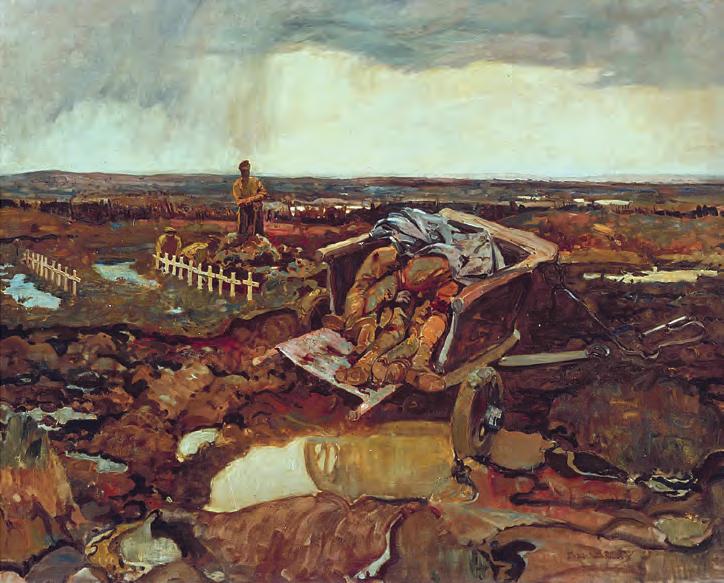
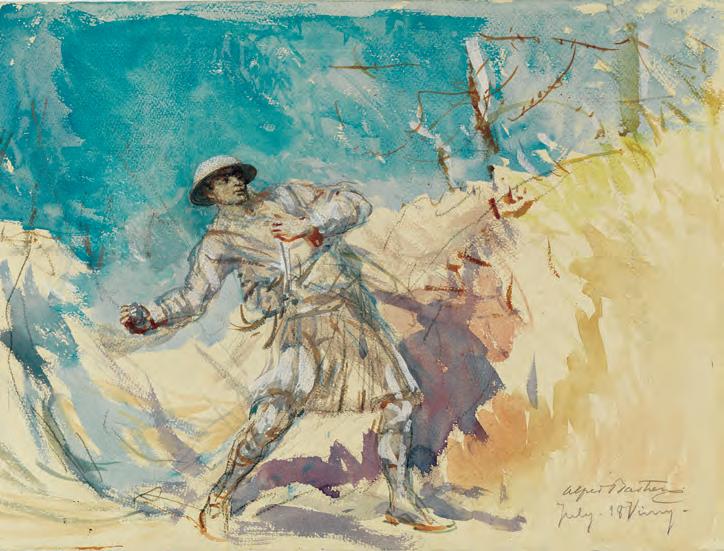
A picture may be worth a thousand words, but Group of Seven artist Frederick Varley told his wife that his art could not say a thousandth of what he saw at Vimy. “We are forever tainted with its abortiveness and its cruel drama,” he wrote to her before painting a burial party at work after the battle in “For What?” (top right). “It is foul and smelly—and heartbreaking. Sometimes I could weep my eyes out when I get despondent.” A Canadian Highlander throws a grenade from the safety of a trench (above right) in a watercolour by Lieutenant Alfred Bastien, one of the more prolific painters of the war.


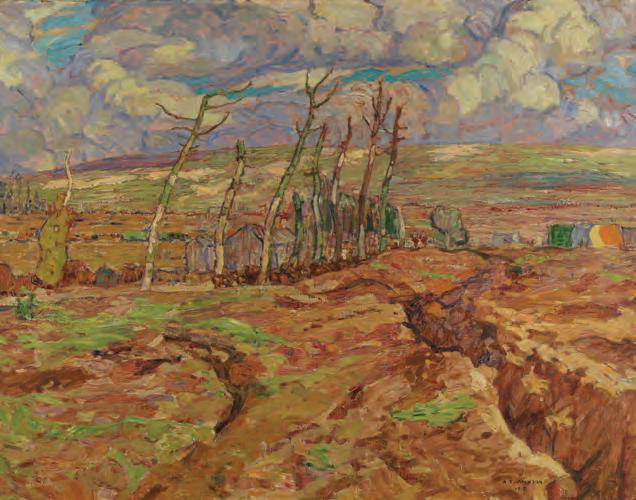
The impressions of the battlefield were still fresh when another Group of Seven artist, A.Y. Jackson, painted “Vimy Ridge from Souchez Valley” (left) in his London studio in 1918. Jackson described his impressionist style, learned in Europe before the war, as “ineffective” for painting conflict.
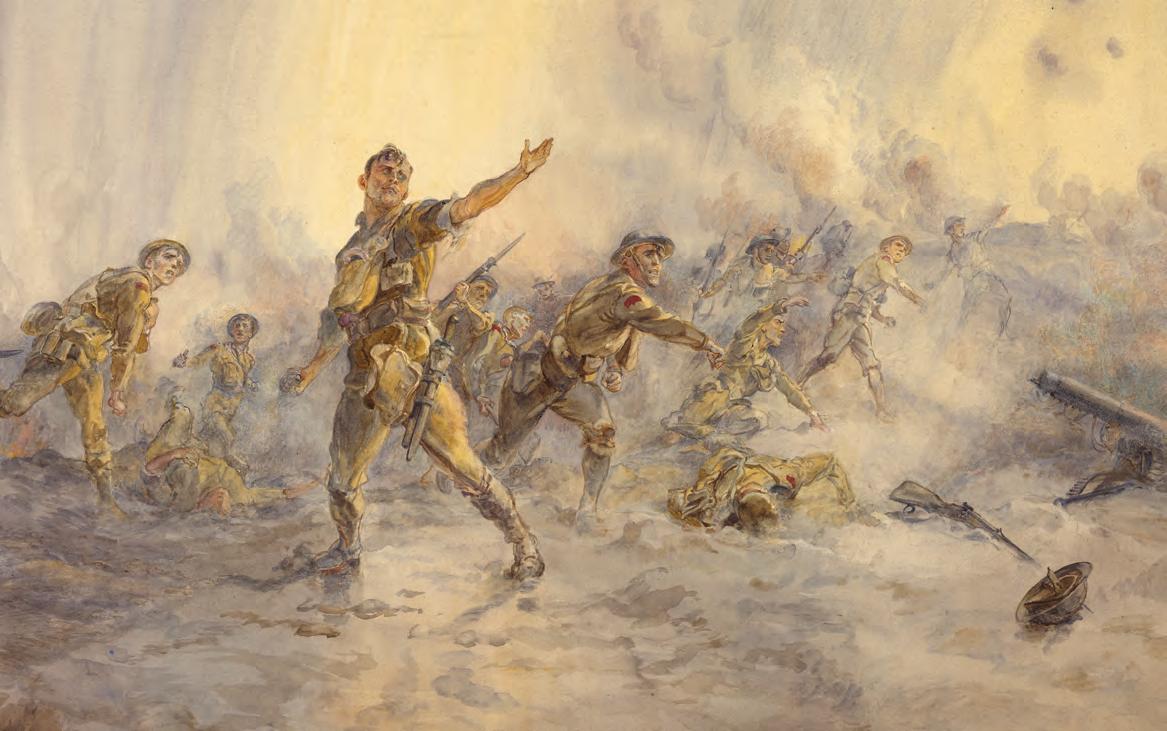
Female war artists were rare but not unheard of. Elizabeth Southerden Thompson—Lady Butler after marrying up—specialized in paintings of British military campaigns and battles dating from the Crimean and Napoleonic wars. In 1918, she rendered the dramatic watercolour “Cede Nullis: Bombers of the 8th Canadian Infantry on Vimy Ridge, 9th April 1917” (below). Cede Nullis is Latin for “yield to no one.”


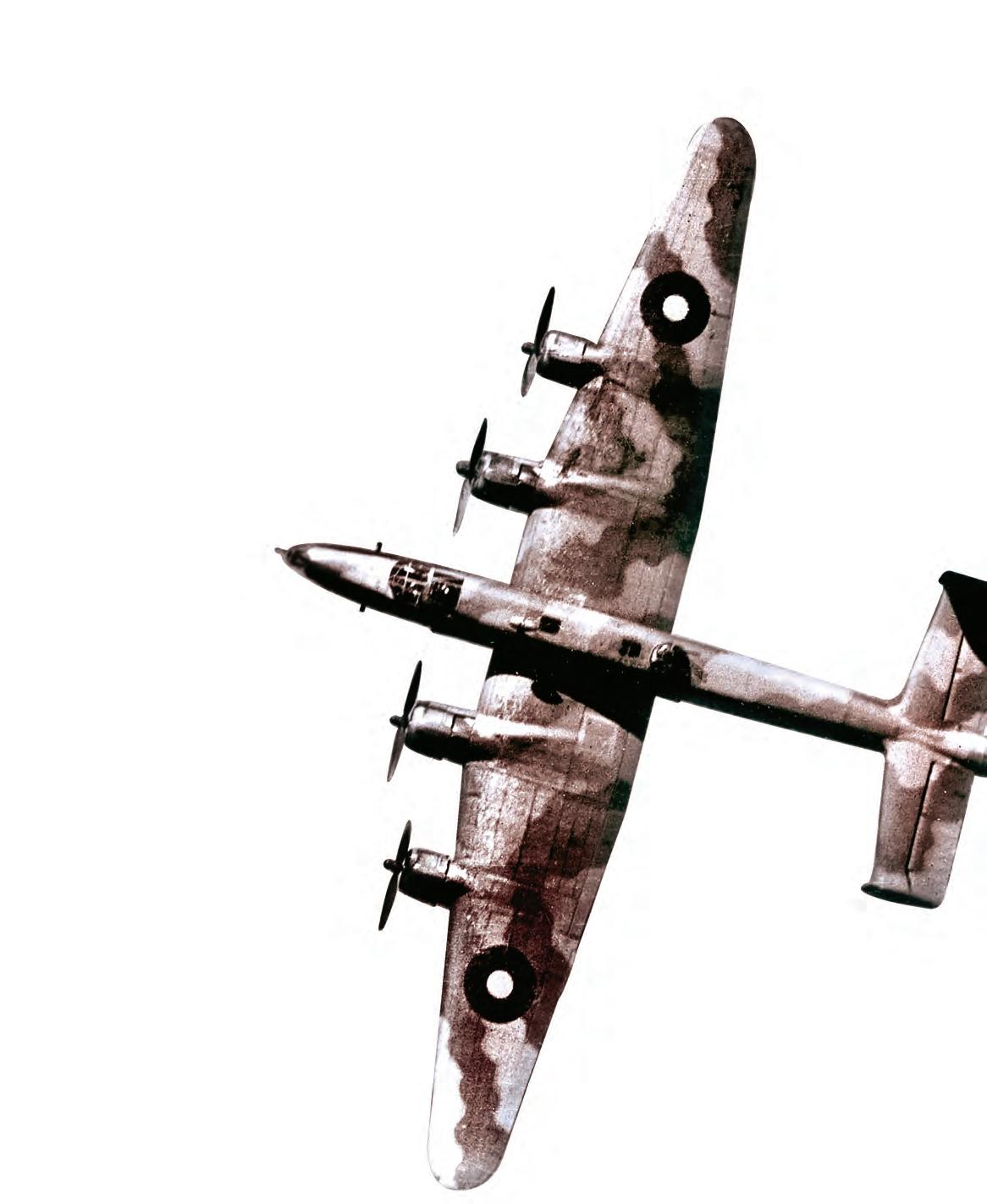

By Sharon Adams
Crack teams of navigators and pilots marked targets from the air, in the dark and under fire
At the beginning of the Second World War, when Germany learned it would never persuade Britain to remain neutral or sign a peace treaty, sterner measures were adopted. The Nazis decided try to bomb and starve Britain into submission.
The Luftwaffe attacked industrial targets while the Kriegsmarine went after the island nation’s supply lines. An army invasion was planned as the next step.

Royal Air Force Bomber Command, Britain’s only means at the time of taking the fight into Germany, was tasked with destroying as much of that as possible.
At first, Britain’s bombing campaign was a dismal failure.
But attacking Britain while fighting the war on other fronts would take all of Germany’s industrial might—coal for industrial furnaces, steel for ships and aircraft, raw materials for munitions and factories to make them, railways, highways and canals to move supplies, troops and materiel, as well as fuel processing facilities to power vehicles.
It began with daylight raids against military targets—warships and airfields. But when the Netherlands capitulated after Rotterdam was reduced to rubble in May 1940, Bomber Command was ordered to attack German targets in the Ruhr valley, Germany’s industrial heartland.
Targets in Europe were well-defended, turning daylight raids into suicide missions, so Bomber Command moved to night attacks. But technology for night navigation was primitive.
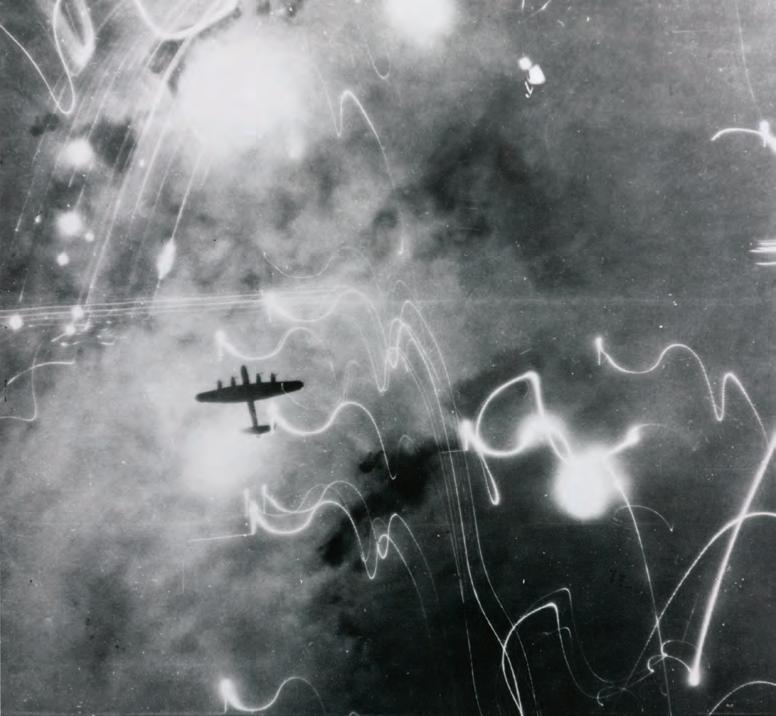
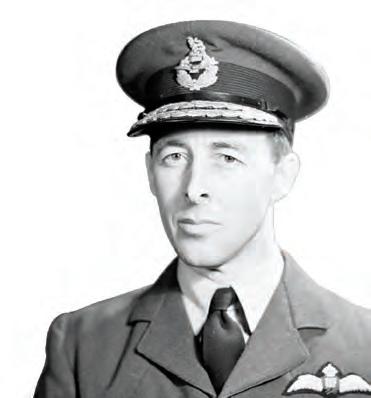
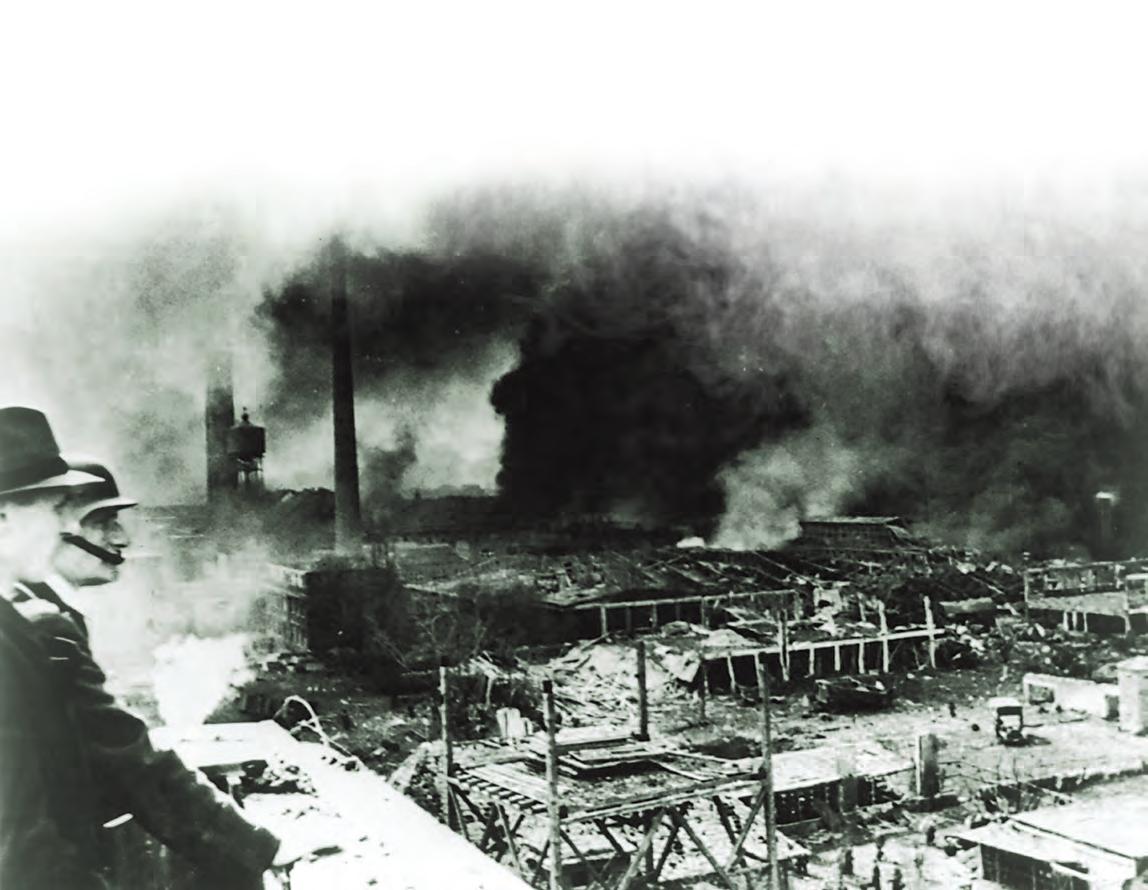
An Avro Lancaster (above) flies through flak tracers in a bombing raid on Hamburg, Germany. Air Vice Marshal Don Bennett (opposite top) commanded the Pathfinders. Fire ravages a German aircraft plant (opposite bottom) bombed late in the war.
Early in the war, navigation for bombing raids was a hit-or-miss affair, the emphasis on miss. While heading for targets on the continent, navigators would climb into a Perspex bubble on top of the aircraft, take a half-dozen timed photos of the stars, then go to the navigation charts to work out where the aircraft was.
“If you were lucky,” said navigator James McCloy in a 2003 documentary, The Men Who Lit Up Germany. It was “the sort of thing that mariners had been doing for years,” but ill-suited for precision bombing by fast-moving aircraft. “On the ground I found the best I could do was fix the position of the aerodrome within five miles [eight kilometres]. In the air, I’d have been lucky if I’d gotten 20.”
Before navigation aids, crews had to rely on dead reckoning—estimating their position by aircraft and wind speed, flying time and compass. Calculations were easily disrupted by wind.
An examination of bombing in June and July 1940 showed only one in three British bombers got within eight kilometres of their targets; over the Ruhr River, it was one in 10. With no moon, the figure dropped to one in 15. In the year ending May 1941, it was found that 49 per cent of bombs had fallen in open country.
It is one thing to navigate over foreign territory during the day and “quite different doing it in a heavy bomber, at night, under total blackout conditions, sitting above 9,000 or more pounds [4,000 kilograms] of bombs and flares, over unfamiliar and hostile territory, while being shot at from the ground or attacked by enemy fighters,” recalled navigator Donald M. Currie of North Vancouver, B.C. Precision bombing was simply impossible given the limitations of technology and lack of experienced crew—in 1940 many navigators didn’t get much time to gain experience. Royal Air Force bomber crews, which included many Canadians, were lost faster than they could be replaced.
Success lay in the development of better technology to help aircraft fix their positions and find their targets—and better attack techniques.
One of those techniques was marking targets from the air.
Bomber Command navigators and pilots with the best records for accuracy were cherry-picked for a crack unit—No. 8 (Pathfinder Force) Group—whose job was to fly ahead of a main bomber formation to drop flares to mark targets and illuminate the way for bombers. The Pathfinder Force, numbering about 20,000 men (and women, in ground jobs) was commanded by Air Vice Marshal Don Bennett, an Australian described as an outstanding pilot and superb navigator equally capable of stripping a wireless set or overhauling an engine.
Pathfinder crews led 51,053 sorties, flying Halifax, Lancaster, Stirling, Wellington and Mosquito aircraft with the best crews and up-to-the-minute technology continually upgraded throughout the war.
Over the course of the conflict, the British pioneered external navigation systems that used precisely timed radio signals to allow navigators to fix their positions and ground-scanning radar to identify targets at night and in bad weather.
Beefed-up fireworks produced brilliant white flares for illumination and target markers with names as colourful as their glow—Red Blob and Pink Pansy. Rear-facing aerials (called Boozers) warned the pilot when aircraft were being monitored by enemy radar.
The Pathfinders’ first operation on Aug. 18-19, 1942, was not a success, as winds caused the aircraft to drift north and targets were incorrectly marked. The second foray was little better.
But at the end of the month, Pathfinders came into their own in a raid on Kassel, Germany, marking targets for 306 bombers that destroyed 144 buildings and damaged more than 300, including three aircraft factories. Their record improved from there.
Led by Pathfinders, bombers came within five kilometres of targets 73 per cent of the
time during the Ruhr campaign in 1943 and by the end of the war that record had improved to 95 per cent, said Will Iredale, author of The Pathfinders: The Elite RAF Force that Turned the Tide of WW II.
“Pathfinders would drop flares and identify the target, then others would drop coloured flares on each side and we would fly between the flares,” recalled Joseph (Jo) Forman in his memoir on the Canadian Letters and Images Project website. “We had three minutes leeway at each turning point and over the target,” said Forman. “Naturally we did a lot of pastoral bombing.”
Currie volunteered for Pathfinder training, attracted by the challenge of navigation. “They used two navigators rather than one and the attrition rate was much higher than the main force, so we might be called earlier.”
about raids was leaked to the enemy and feint raids on nearby towns drew fighters away from main targets. Bits of aluminum and other material (called window or chaff) were dropped in clouds to swamp readings on enemy radar.
The first Pathfinders arrived over targets two to six minutes before the main force, dropping illuminating flares and releasing barometric markers that would go off at different altitudes and drift downwind. But there were other Pathfinders within the mass of aircraft to continue marking the target, as flares and target indicators had short lifespans and could be blown off course.
“It’s a dangerous job,” William Douglas Watson wrote home to his family in May 1944, “but you have all the tops in equipment and crew. Advancement is really fast too.”
The letter did not tell them why— the survival rate was grim.
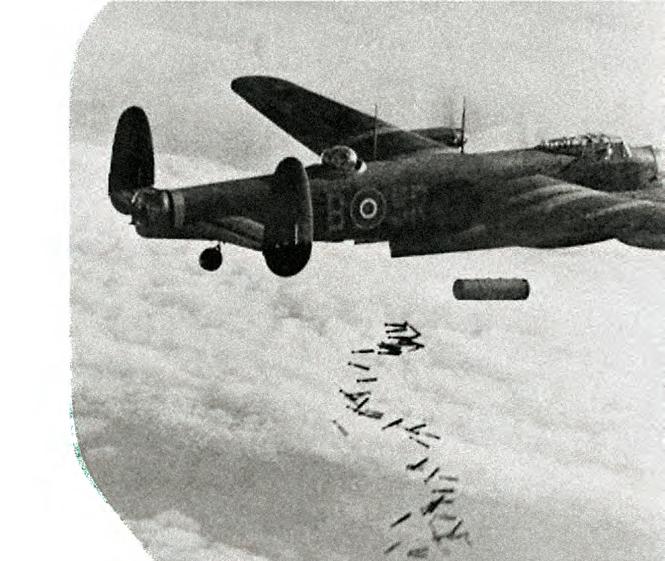
Bombs pour from an Avro Lancaster on a thousandbomber raid over Duisburg, Germany, in October 1944.
Currie was assigned as navigator/observer to No. 635 Squadron, RAF. Five of eight crew on his first operation were Canadians, including the wireless operator, two gunners and the pilot, Len Moore of Niagara Falls, Ont., who had already completed one operational tour with Bomber Command.
Currie was teamed with a British navigator/ plotter. “We operated in a completely blackedout compartment,” working by weak lamplight and the glow of equipment. “We sat side by side on a narrow bench and unless we made an effort to pull the blackout curtain…we saw nothing but our instruments for hours on end.”
New Pathfinder crews were broken in slowly, starting out in a support role carrying the same bomb load as the main force.
“Exceptional standards had to be met before a crew could qualify for the next step,” Currie recalled. Once they had proved themselves, crews undertook more and more demanding marking duties.
In June 1943, Bomber Command tested very-high-frequency radio equipment that allowed communication among aircraft in attack formations. This allowed a lead Pathfinder, which became known as the master bomber, to alert other Pathfinders to re-mark targets when the first flares drifted off course, and to radio corrections to bombers.
It was one of many tweaks to attack techniques. Enemy airfields were attacked prior to raids to dilute the available fighter force. Enemy radar was jammed. False intelligence
Only 16 per cent of Bomber Command crews survived their tour of 30 operations. To make the most of their extra training, Pathfinder crews, many of whom had already completed one Bomber Command tour, signed on for 45 operations (which had been reduced from 60 to encourage volunteers).
“Each man got an immediate promotion in rank and a pay rise—danger money,” wrote Iredale. “And they earned every penny of it. Over the next three years, 3,600 were killed in action. An individual Pathfinder would be lucky to still be alive after 12 sorties. The loss rate was so great that 50 new crews had to be recruited every month.”
Flak and enemy fighters were a constant danger, but so was equipment failure.
“One thing that airmen can never overlook in weighing the scales of survival is Lady Luck,” said Flight Lieutenant Bill Davies, a navigator who settled in Toronto after the war, quoted in Jean Portugal’s We Were There.
On a clear night in February 1945, his crew was off the coast of Sweden, returning from marking a mission to bomb an oil installation.
“The mid-upper gunner shouted there was a Ju 88 sitting out on the starboard beam with his cockpit light on. It was so plain to see and so easily recognized.” It was also a ruse readily recognized by gunner Michael McCrory of Hamilton, Ont.
McCrory started advising the pilot to corkscrew and “warned us to watch out for a Ju 88 friend who would sneak up behind, completely blacked out, and
open fire. And that’s what happened.”
They were hit, “but the discipline of the crew was excellent.” Skill got them to the safety of cloud cover, despite the loss of two engines. Then a third engine failed.
“We had to get back to base on one engine.” They slowly descended to an altitude of 150 metres—and heading down—when they were still 650 kilometres from England. The pilot prepared to ditch the plane in the North Sea, at its most unforgiving in winter. Davies shook hands with his friend, navigator George Blick.
“All we had on was ordinary shoes in the Nav section and a simple sweater and battledress, Mae West [life preserver] and parachute, and a helmet and oxygen gear and two pair of gloves. So we weren’t going to last very long.”
Suddenly the dead engine started on its own and was nursed back to life by the captain and engineer. “We managed to get home on two engines.”
Getting hit by bombs from their own group was another danger.
“We were all supposed to fly at specific height, but many crews decided they would fly higher” to avoid mid-air collisions, recalled Davies, whose crew was horrified to see a Halifax barrelling toward them in January 1945.
“We screamed…and managed to dive, missing this aircraft by a few feet. A huge bomb, possibly a 4,000-pound [1,800-kilogram] cookie, just missed us in front. The
skipper pushed the stick forward and the Halifax skimmed over the top of us. We could only suppose [this pilot] was very, very late and had cut a corner.”
And that wasn’t the only time they saw bombs cascading past them, he said.
It wasn’t unusual for strong winds to blow bombers off course, as happened to Ed Moore’s crew on a raid on Berlin.
“It became obvious when Pathfinder flares went off behind us that the actual winds were very much stronger,” the veteran of 26 missions said in an Edmonton Journal interview in November on his 100th birthday.
“We turned around and dropped our bombs on target about 25 minutes late. Common sense should have dictated the bomb be jettisoned and a course set for home. Nevertheless, we all agreed with our skipper-pilot who said, ‘We have come this far, we will drop the bombs in the right place.’”
Pathfinders were first to arrive at targets, where they were the focus of searchlights of ground defence crews. Master bombers faced the most danger. Their job was to circle the target, co-ordinate the attack, and broadcast instructions to other
Squadron Leader Reg Lane (at left) piloted the first Canadian-built Avro Lancaster bomber to Britain.
Precision bombing was simply impossible.
aircraft. They remained over the target longer and their radio transmissions could be tracked by defences and night fighters.
“It was when the master searchlight got you that you knew you were in trouble,” recalled Wing Commander A.J.L. Craig, who flew 73 operations, 41 as master bomber. “All the other searchlights would point at you, and then every gun in the area would take aim.” It was known as being ‘coned’ and pilots had a devilish time escaping.
“The good side to it was that most of the other bombers nearby would get a free run and thank you later, if you made it back to base. The reality was that most people who were coned were shot down.”
In April 1943, No. 405 (City of Vancouver) Squadron joined the group—the only Royal Canadian Air Force unit in the Pathfinder Force (although Canadians served in every squadron).
Bennett was opposed to differentiation within the force and had already refused a request for the formation of an Australian squadron.
“Each man got an immediate promotion in rank and a pay rise— danger money.”
“I insisted that the crews of this so-called Canadian squadron must not be more than 50 per cent Canadian, [but] I did agree that the CO would always be a Canadian, and it started off under the command of Wing Commander [John] Fauquier, a thoroughly ‘press-on’ type if ever there was one,” wrote Bennett.
John Fauquier of Ottawa had been a bush pilot before the war and had already completed 35 bombing operations before taking command of 405 Squadron in February 1942. He was a hard taskmaster, but many considered him Canada’s greatest bomber pilot.
On Aug. 17, 1943, Fauquier was deputy master bomber during a raid on a German rocket base on the Baltic coast, passing over the target 17 times, guiding bombers. He was awarded the Distinguished Service Order (DSO) for that operation, which delayed the use of the rockets by a year.
When he retired in 1944, after flying 38 sorties as a Pathfinder, he was awarded a Bar to the medal and a promotion to commodore.
Retirement didn’t suit Fauquier. He requested his rank be lowered so he could fly a third tour of operations. He went on to No. 617 Squadron, RAF—known as the Dambusters— where he earned a second Bar to his DSO.
Fauquier was one of many notable Canadian Pathfinders.
Reg Lane of Victoria received a Distinguished Flying Cross (DFC) following 30 sorties on his first Bomber Command tour,
during which he attacked the German battleship Tirpitz at mast height. He remained with No. 35 Squadron, RAF, when it was selected to join the Pathfinders.
On the final run of his second tour in April 1943, Lane was coned over Frankfurt, escaping the searchlights and antiaircraft fire with a steep dive of more than 300 metres. He was awarded the DSO.
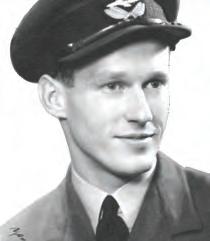
After a four-month break from operations, Lane returned to the sky, taking over command of 405 Squadron from Fauquier. He often served as master bomber, notably circling the city while under fighter attack for 40 minutes during the Battle of Berlin.
In May 1944, Lane was awarded a Bar to his DFC on a raid to Caen, France, as master bomber on his 65th mission just prior to D-Day. After his third tour, Lane went on to operational tactics, rising to lieutenant-general after the war and serving as deputy commander-in-chief at Norad before retiring in 1976.
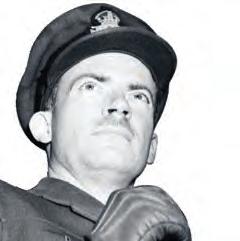
Squadron Leader Ian Bazalgette of Calgary was one of three Pathfinders to earn the Victoria Cross. On Aug. 4, 1944, on his 58th mission, he was master bomber in a daylight raid on a V-1 storage cave near Saint-Maximin, France. His Lancaster was hit by flak before arriving at the target.
The aircraft ablaze, two other master bombers out of commission, Bazalgette continued on to mark the target, then ordered the crew to bail out. He fought to land the burning aircraft in order to save two wounded crew and avoid crashing in the village of Senantes.
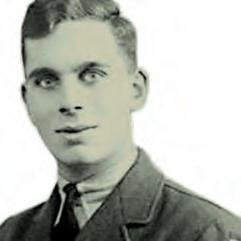
Wireless operator Chuck Godfrey bailed out and watched the bomber go down.
“I could see it all,” said Godfrey, quoted on the Bomber Command Museum of Canada website. “He did get it down in a field…but it was well ablaze and with all the petrol on board it just exploded.” The three still on board were killed.
Bazalgette was one of 10,000 Canadians killed serving with Bomber Command.
Fifty-five thousand Allied men and women lost their lives serving in the bomber forces. Pathfinder crews were well aware of the risks.
“On the walks out to the trucks that used to take us to the pads where the Lancs were sitting, you’d see one or two vomiting like mad,” recalled Davies. “They were the bravest of the lot. They really were so frightened they had almost no control. But they went.
“There was a widespread feeling of pride… morale could not have been higher. The mere thought of going back to the main force was seen as almost the end of the world.”
The Pathfinders’ contribution to the end of the war is incalculable. They improved bombing precision and allowed Bomber Command to increase the intensity of raids and to destroy many targets in a single raid on one city. Raids on the Ruhr valley alone resulted in declines of metal processing by 46.5 per cent in 1943 and 39 per cent in 1944.
More importantly, the bombing campaign opened a second front long before D-Day, said Albert Speer, German minister of armaments and war production.
“Defence against air attacks required the production of thousands of anti-aircraft guns, the stockpiling of tremendous quantities of ammunition all over the country, and holding in readiness hundreds of thousands of soldiers, who in addition had to stay in position by their guns, often totally inactive, for months at a time.”
Not only did the Axis lose factories and war materiel, but huge numbers of troops and labourers were tied up defending against bomber raids and rebuilding afterward. Speer called the air war “the greatest lost battle on the German side.” L
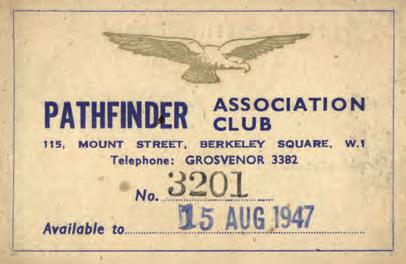
A crew (opposite) of 405 Squadron, RCAF. John Fauquier (above, clockwise) commanded 405 Squadron; Charles Godfrey was issued this membership card when he joined the Pathfinder Association Club after the war; master bomber Ian Willoughby Bazalgette died trying to save fellow crew members.
By John Boileau
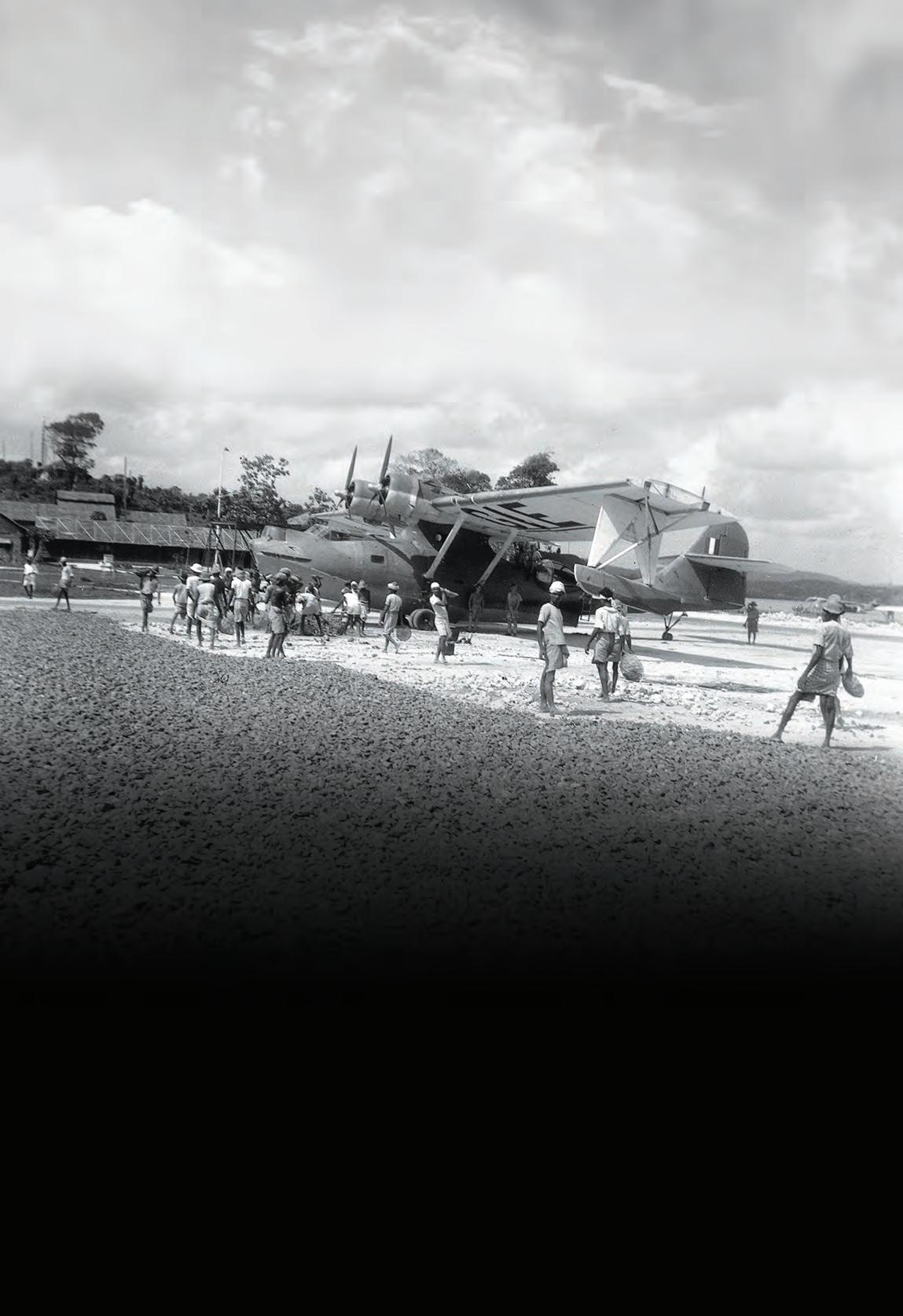
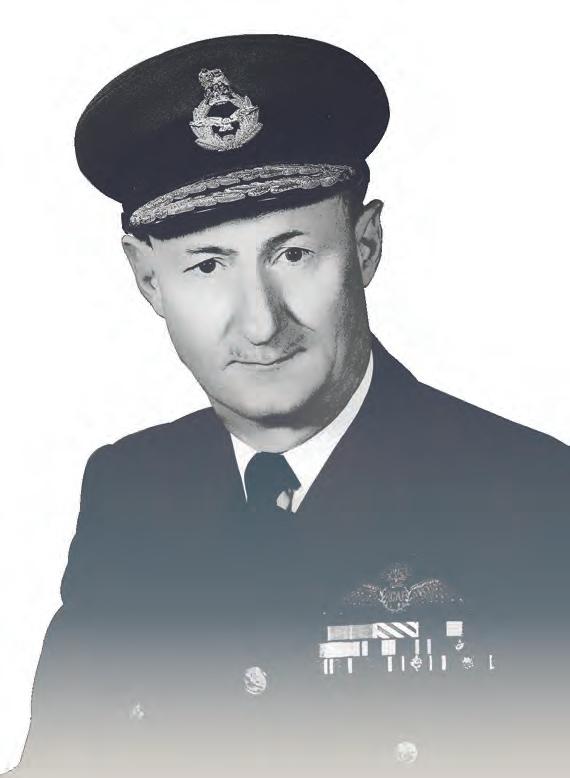
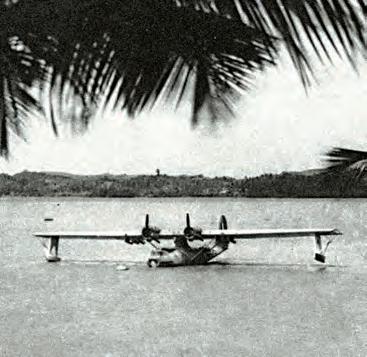
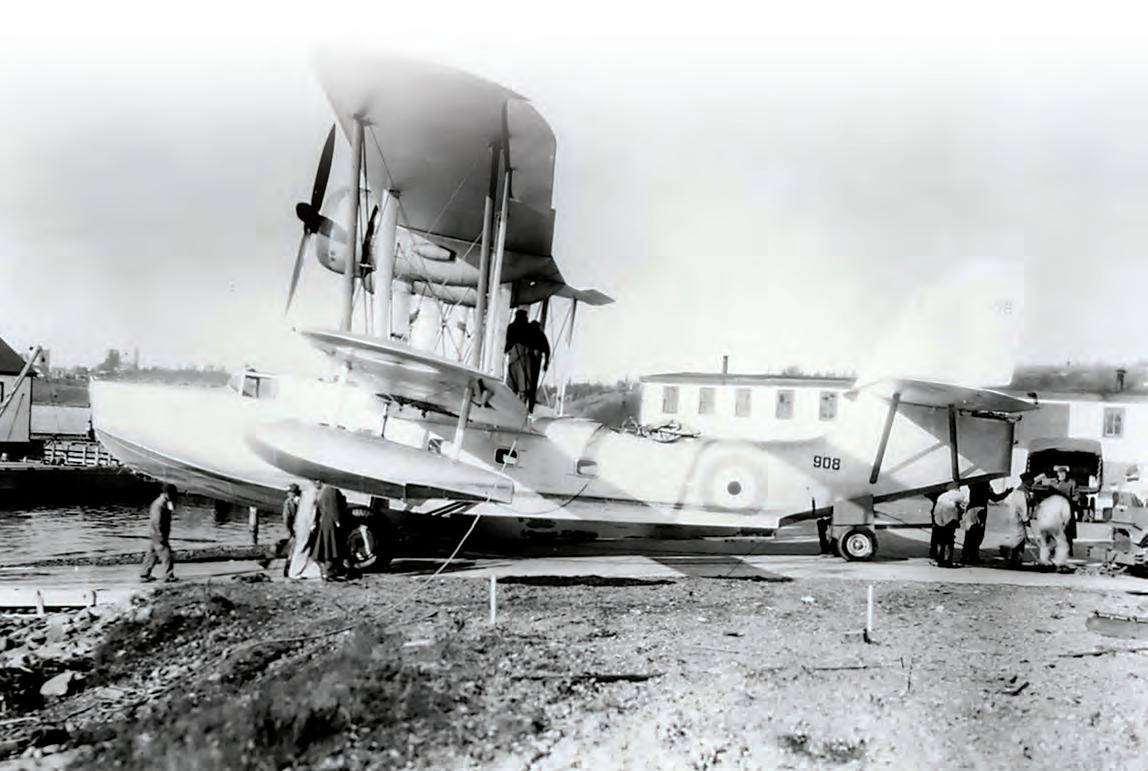
Known as the “Saviour of Ceylon,” Leonard Birchall (opposite) commanded 413 Squadron, RCAF, and its four Consolidated Catalina flying boats (inset and below) at its base in Koggala on Ceylon’s south coast. Birchall piloted the Catalina, ultimately shot down, that warned of an incoming Japanese fleet.
Admiral James Somerville (right), commander-inchief of the British Eastern Fleet, relocated his ships to the Maldives as Japan advanced in the region. Birchall, who had piloted Supermarine Stranraer flying boats (below) on defensive patrols out of Dartmouth, N.S., at the outbreak of the war, was part of a small contingent left on guard in Ceylon.
Ithad been a long, uneventful flight. After 12 hours of scanning the vast Indian Ocean without luck, the pilot of the Royal Canadian Air Force Catalina flying boat decided to return to base. Suddenly, the navigator cried out; he had seen something on the horizon. The pilot banked and headed toward the sighting.
It was a Japanese raiding fleet heading for Ceylon (Sri Lanka). As the radio operator sent a warning message to alert the island, Japanese fighters swarmed the flying boat. Cannon shells tore through the aircraft and set it on fire, forcing the pilot to crash land.
Six of the nine crewmen survived and were picked up by a Japanese ship. Their next three and a half years were spent in the horrors of prisoner of war camps.
But had their warning message gotten through?
At the end of February 1942, No. 413 Squadron, RCAF, was told it was being sent from Scotland to Ceylon. The slow speed and immense endurance of the unit’s Consolidated Catalina flying boats allowed them to stay airborne for 24 hours. The crew consisted of two pilots, flight engineer, navigator, four to six wireless operators/ air gunners and maintenance personnel.
The Catalina’s armament included four to six depth charges on wing mounts (enough for one attack) and four .303 machine guns: one in the nose, one in each of two side “blisters” and a fixed one in the tail. Detection of enemy vessels depended mainly on the time-proven “Mark I eyeball.”
On March 28, the first aircraft reached the squadron’s base at Koggala on Ceylon’s south coast, where a large lake served as a runway and base for the flying boats. The military situation was tense.
British forces were in full retreat in Burma. Attacks on India, Ceylon or the British Eastern Fleet could be next. That was exactly what the Japanese were planning: they had dispatched a large fleet to attack Ceylon.
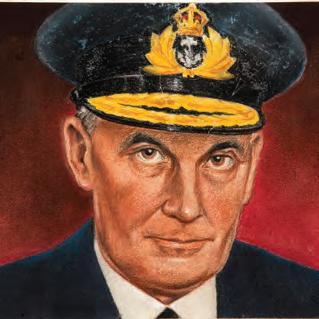
Admiral James Somerville, commander-in-chief of the British Eastern Fleet, wisely withdrew most of his ships from Ceylon on March 30. They sailed to a new secret anchorage in the Maldives, southwest of Ceylon. With all Royal Navy warships and many fighter aircraft far from Ceylon, it left the responsibility for reconnaissance and visual
early warning of a potential Japanese attack to a few RAF Catalinas and the four flying boats of 413 Squadron.
Before dawn on April 4, Catalina A rose into the air and made history. Under the command of Canadian Squadron Leader Leonard Birchall, among its eight crewmen was another Canadian, Warrant Officer Bart Onyette, the aircraft’s navigator.
Birchall, a 26-year-old native of St. Catharines, Ont., had graduated from Kingston’s Royal Military College in 1937 and then trained to be an RCAF pilot. He first served in Dartmouth, N.S., on anti-submarine patrols. By the time he was posted to 413 Squadron in 1942, he was an experienced pilot.
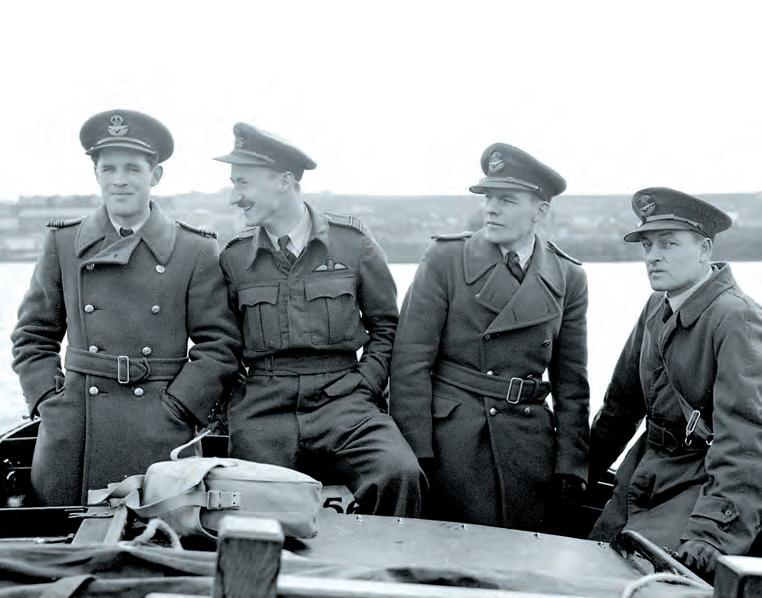
Birchall’s assigned patrol sector was the southernmost one, some 560 kilometres south and east of Koggala. After a dozen unproductive hours of scanning the vast waters stretching in all directions, Birchall was just about to return to base at 4 p.m. when Onyette spotted “specks” on the southern horizon. Birchall immediately headed toward them.
They were Japanese vessels.
Birchall flew directly toward the ships to count and identify them, fully realizing the closer he got, the less chance he had of escape. Slowly, Japan’s 1st Air Fleet came into view.
The fleet consisted of five aircraft carriers, plus battleships, cruisers and destroyers. The carriers had more than 300 modern combat aircraft embarked, including several first-rate Mitsubishi A6M Zero fighters, which could outperform any Allied fighter in Asia at the time.
The enemy’s primary aim was to neutralize British naval and air resources in the Indian Ocean to secure Japan’s western flank. Birchall’s radio operator immediately
began sending a coded transmission to Ceylon, containing details of the fleet.
But by then, with no clouds in which to hide, Birchall had been seen. As many as 12 Zeros swarmed in for the kill. Birchall later noted, “All we could do was to put the nose down and go full out, about 150 knots.”
When the operator was partway through his required third transmission, enemy cannon shells destroyed the radio, blew the operator’s leg off and set the aircraft on fire. The Catalina began to break up. It was too low for the crew to bail out, but Birchall managed to crash land safely on the water—just before the aircraft’s tail fell off.
Everyone but the operator evacuated the aircraft, although two crewmen were seriously wounded. Because they were unconscious, they were floating on the surface and unable to dive when Japanese fighters continued to strafe the Catalina and the airmen struggling in the water.
As the other survivors swam away from burning gasoline and the potential for exploding depth charges, the fighters strafed them and the Catalina, sinking it and killing
A.M. Bell and W.R. Meadows.
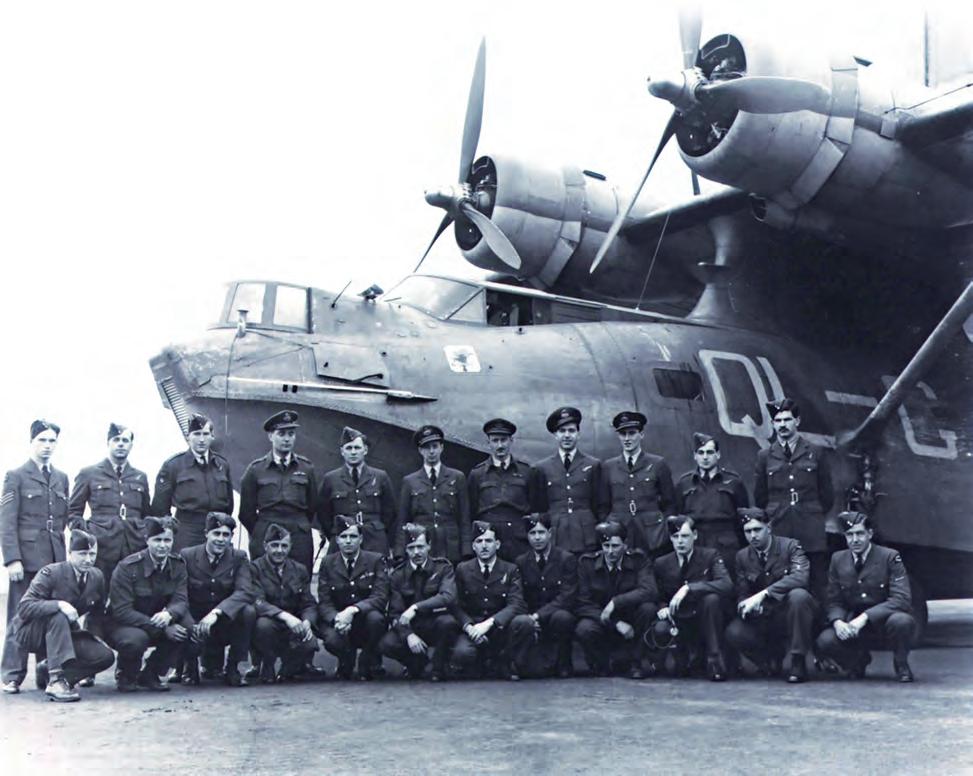
At Pembroke Dock in Pembrokeshire, Wales, in March 1942, members of 413 Squadron pose in front of the Catalina that Birchall (back row, seventh from left) piloted.
the unconscious crewmen. Just as sharks began to approach the remaining six airmen, including the two Canadians, a Japanese destroyer finally fished them out of the water.
Three of the survivors were badly wounded and Birchall himself had shrapnel in a leg.
In response to questions from a Japanese officer, who “spoke perfect English,” Birchall identified himself as the senior officer. He was immediately beaten to the deck.
Every time he got up, he was beaten down again. The Japanese wanted to know if the Catalina’s crew had sent a report about their warships. But Birchall maintained only the wireless operator would know—and he had been killed.
In fact, the operator was one of the badly wounded airmen.
“He immediately became an air gunner,” Birchall later related, “and stayed that way for the entire war.” Just as he thought the Japanese were starting to believe him, they produced a radio intercept from Colombo asking Birchall’s Catalina to repeat its message.
The crew were all beaten and locked up. The message from Birchall’s aircraft had been garbled, but its meaning was clear: a Japanese attack was coming. When Somerville received this news, he ordered Colombo’s large harbour cleared of all shipping.
Unfortunately, the British had grossly underestimated the capabilities of Japanese aircraft—especially the range—and when 91 enemy bombers and 36 escort fighters appeared on the morning of April 5, RAF aircraft were still on the ground.
Forty-two fighters, mostly Hurricanes, scrambled to intercept them. The Japanese lost only seven aircraft to the RAF’s 19, but the aerial dogfights distracted the Japanese attackers from their primary mission and the port was only lightly damaged.
Although the Japanese had sunk some warships and merchant ships at a cost of 17 aircraft, they cancelled further major forays toward the west. The fleet sailed back to the Pacific.
Birchall spent the next three and a half years as a prisoner of war in Japan and moved through four camps. Solitary confinement and daily beatings were routine; limited rations constituted a starvation diet. All prisoners, including sick ones, were forced to work.
Birchall’s natural leadership emerged, and he quickly earned the respect of other prisoners. When it came to food—the most essential commodity of all—he insisted that officers’ meals be displayed for all to see. If anyone thought an officer had been given more or better food, that individual had the right to exchange his ration for the officer’s.
Cigarettes were a valuable commodity, bringing momentary relief to the PoWs. Birchall gave up smoking and convinced the other officers to do the same and donate their cigarette rations to the men.
Birchall was almost tortured to death for attacking a guard who was beating a prisoner, but he did not stop looking after his men. He led them in a sit-down strike and refused to work until the guards agreed not
to beat or otherwise mistreat the very sick. Birchall’s captors could not break his spirit and he was an inspiration to his comrades.
American troops freed Birchall after Japan surrendered. The diaries he kept while a prisoner and his testimony were used as evidence in war crimes trials of Japanese soldiers.
On Feb. 2, 1946, newly promoted Wing Commander Birchall was made an Officer of the Order of the British Empire. His citation noted that as senior Allied officer in PoW camps, he “continually displayed the utmost concern for the welfare of his fellow prisoners…. Birchall continually endeavoured to improve the lot of his fellow prisoners…. The consistent gallantry and glowing devotion to his fellow prisoners of war that this officer displayed throughout his lengthy period of imprisonment are in keeping with the finest traditions of the [RCAF].”
Birchall also received the Distinguished Flying Cross for warning about the Japanese fleet. Prime Minister Winston Churchill later called Birchall’s exploit “one of the most important single contributions to victory” and the courageous pilot became known as the “Saviour of Ceylon.”
It was a term that Birchall never used. L
In early 1942, the seaplane base in Ceylon was home to a number of Consolidated Catalina flying boats, including a few RAF planes and the four of 413 Squadron.
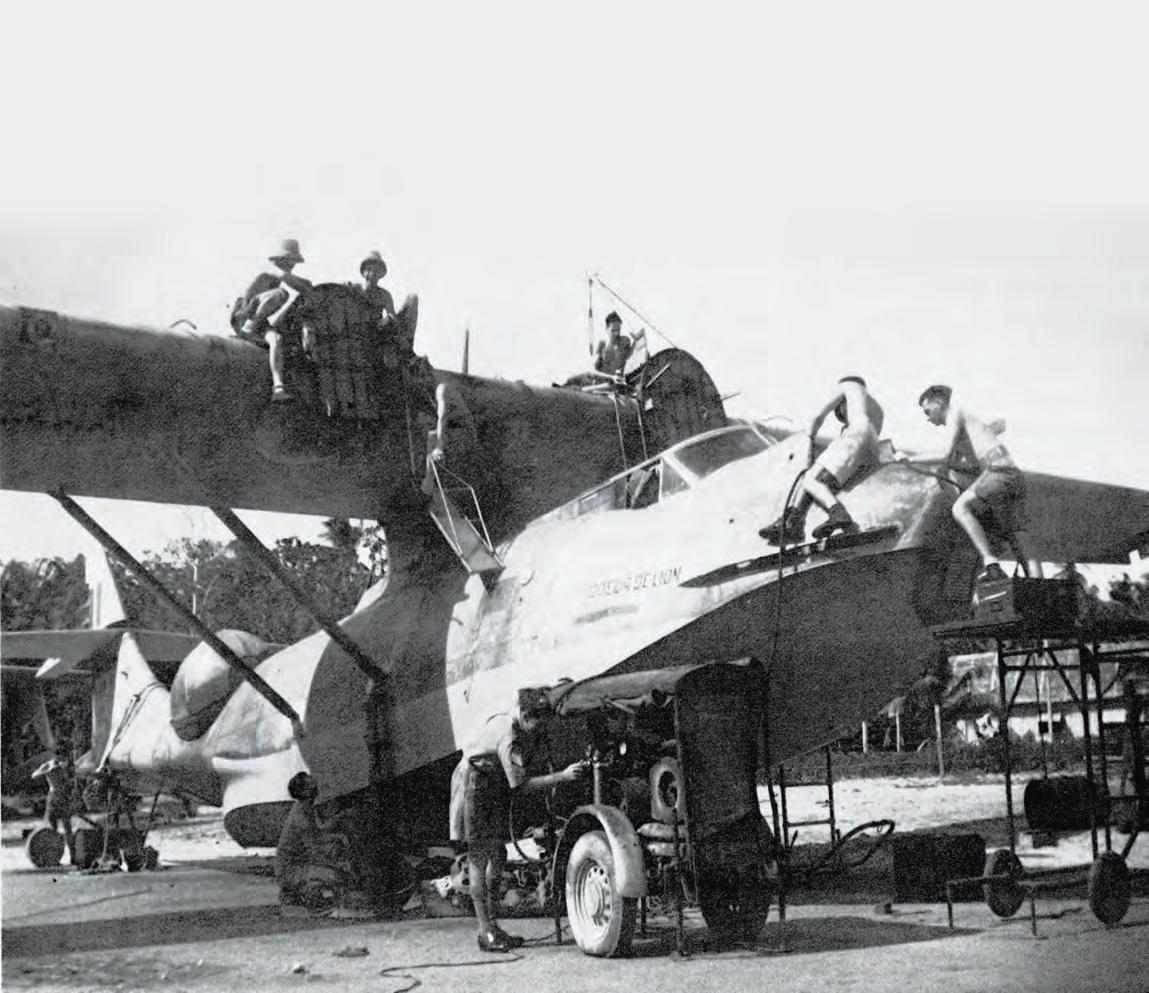
On Nov. 1, 2021, the Canadian Armed Forces in-house newspaper The Maple Leaf published a message from Major-General Lise Bourgon, Acting Chief of Military Personnel, on “diversity, inclusion and culture change short-term initiatives.”
“Canadian Armed Forces members can expect a refreshed Dress Instructions rewrite,” she said, “focused on removing the barriers to members’ choice of clothing and other aspects of appearance. The changes will eliminate binary choices by allowing members the freedom to choose the uniform that makes them most comfortable. Changes to our appearance policies will see a new approach to our look, one that provides a single standard applicable to all which is safe, inclusive and modern. By removing language related to gender, and eliminating separate instructions for men and women, this rewrite allows our Dress Instructions to honour the diversity of our people in uniform, while continuing to prioritize operational effectiveness and safety.”
Dress instructions have often been contentious, and some units and personnel enforce them more rigorously than others. Regulation hair length, highly polished footwear and neatly pressed uniforms have long been the hallmarks of a professional, well-trained military force.
Does the CAF’s current dress code undermine inclusion and diversity?
What those who have never served in uniform may consider to be fussy details is a method of instilling attention to detail and the ability to follow orders properly, two important characteristics in the profession of arms. Dress instructions also establish a baseline for continuity in how military personnel look in uniform.
MANY OF THE STYLES, SUCH AS OPERATIONAL CLOTHING, ARE GENDER NEUTRAL
The current edition of the CAF dress instructions available online is a 2017-dated, 231-page tome (A-DH-265-000/AG-001) that covers the full spectrum of Canadian military clothing and insignia. The document covers all three services, including the Canadian Special Operations Forces Command, with their unique American-inspired uniform, and the Canadian Rangers, who wear a distinctive scarlet hoodie and waterproof jacket. It details the myriad uniforms and badges—from operational to full-dress—and how they are authorized to be worn.
But it also reflects diversity and inclusiveness. Section 3 itemizes religious and spiritual accommodations. Nine headdress types are listed—beret, cap, hat, hijab, toque, turban, winter fur cap, Yukon cap and wedge cap. It goes into detail on allowable hair styles—and there are many.
Military uniform design has evolved with less emphasis on uniqueness. Many of the styles, such as operational clothing, are gender neutral. Other orders of dress are nearly identical except for shape, pocket styles and button positions.
Removing barriers to a members’ choice of clothing and other aspects of appearance may be a challenge in today’s military. The “Royal” moniker, reinstated in 2011, resulted in all three services introducing clothing lines and insignia that are unique to each, something that was discouraged during the unification era. This has the potential to make any meaningful transition to a more inclusive dress system very difficult, as there are now many more items to change.
Canada is a nation with rich diversity. The CAF dress instructions illustrate the extent to which the organization has evolved to meet the needs of service members while reflecting Canadian values more generally. The instructions do not need to be revised at this time. L
> To voice your opinion on this question, go to www.legionmagazine.com/FaceToFace

The Canadian Armed Forces is rewriting its dress instructions to be more inclusive. About time, too.
Through most of history, military uniforms were designed by men, for men, to build group identity and suppress individuality. But not stamp it out.
Humans are humans, after all. Just as important as uniforms are to soldiers, sailors and aviators are the badges, flashes, rank insignia, regimental accoutrements and medals that mark them out as members of groups and as individuals.
The military uniform also symbolizes shared Canadian values. The expectation is that those wearing it will epitomize those values. And they are proud to do so. But values change, and so should the uniform.
The Canadian Armed Forces can, and should, serve as an example to other institutions and businesses across the country in how to create a respectful environment for people, regardless of their differences, including gender.
When all military occupations opened to women in 1989 (except submarine service, which opened in 2001), many female soldiers had to “man up.” For some women, that included donning occupational and operational uniforms
ED STOREY is a retired military geomatics technician with 34 years of service. He also studies and collects Canadian militaria and has written magazine articles and books on military clothing and equipment.
not designed for the size and shape of their bodies and feet.
That is, until it was recognized that effectiveness, not to mention safety, might just be compromised by physical discomfort arising from ill-fitting clothing. Today, it is outdated gender ideas that are discomforting. Current dress instructions say women may choose to wear skirts, blouses and other gender-specific items and, for religious reasons, long trousers, long skirts and shirts and hijabs.
The word ‘may’ is the problem—it gives one group of people access to something denied to another group. The policy itself cites it is for cultural reasons, not operational necessity.
There are also gender restrictions on appearance—among them that men’s hair must be short, but women, along with Indigenous and Sikh men, can opt for hair long enough to be worn in braids. That too, is gender disparity.
SHARON ADAMS has had a long career in journalism, joining when women were expected to wear suits, just like men, if they wanted to get ahead. She has been a Legion Magazine staff writer since 2007.
One easy but unrealistic solution would be to have one uniform and one appearance code for all. Everybody has short hair, and everybody wears a skirt—or nobody does.
Women should have uniforms designed for them to project both strength and femininity. They should not have to give up their identity to serve their country. Can there be true equality, true respect, in any organization that disrespects gender? It is one of the most visible differences among us, and if we can’t respect that, how can we respect other less visible and invisible differences?
Lesbian, gay, bisexual, transgender, queer and two-spirited people are among the invisibly different—but should not have to be. Everyone should have the choice of a uniform appropriate to his or her gender identity. A properly fitting, gender-appropriate uniform is a need, along with respectful language and equal opportunity. It is an important part of self-identity and self-respect. Being allowed through the door is not the same as being welcomed, which is still a step away from belonging. Belonging includes true acceptance of differences and meeting the needs that go along with them. L
WW I: The war that shaped a nation It was supposed to be the war to end all wars but the Great War was the most brutal era in Canadian history.

The fight for Italy
More than 92,000 Canadians served in the Italian Campaign waged by Allied forces from July 1943 to February 1945.

Battle of the Pacific: Courage in the Far East
Canada’s war in the Pacific began on December 7, 1941, when Japanese aircraft attacked the U.S. Navy base at Pearl Harbor, Hawaii.
WW II: The war that had to be won
The cost was high, but the war that had to be won was a decisive victory over the forces of evil.
Battle of the Atlantic
The Royal Canadian Navy played a pivotal role in this critical campaign, which raged on open and treacherous seas from September 1939 to May 1945.

O Canada: The history of our home and native land
O Canada tells our story from our first peoples through to our achievements in space. Intro by Canadian comedian and author Rick Mercer.
*Conditions apply. 40% off back issues expires April 30, 2022.
Korea:
The forgotten war
Korea: The forgotten war sheds light on the third major war of the 20th century. Includes archival images, a timeline and five maps.

Twenty-five great Canadian aviators
From early birds to astronauts, every one of these nationally celebrated and lesser-known flyers has made important contributions to Canada’s aviation heritage.
Vimy: The birth of a nation
The hard-fought WW I Battle of Vimy Ridge is sometimes called “the birth of the nation.” In April 1917, the Canadian Corps fought together for the first time and achieved success where others had failed.
Victoria Cross
The most famous decoration for courage in the Western world, the Victoria Cross has been awarded to dozens of Canadians and the lore behind the VC is sprinkled with strange and heartwrenching stories.
The Somme The Somme examines the role of the Newfoundland Regiment and the Canadian Expeditionary Force in the monumental First World War battle that took place in France from July 1 to Nov. 18, 1916.

The Royals: The fight to rule Canada**
Everything you need to know about Canada’s royal heritage from the earliest kings and queens who dispatched explorers to the New World to the modern British monarchy.
Canada’s Ultimate Story engages readers with captivating stories of Canadian events and fascinating people from our earliest days to present times and editions are filled with little-known facts and trivia relating to our great country.
Liberating
Normandy: The road to victory
The Battle of Normandy was the beginning of the end of the Second World War in Northwest Europe.
War Photos
War Photos showcases the stunning images and rare photos from the men and women who went into battle with only a camera.
World War I: True stories from Vimy to victory
More compelling stories from the First World War are told in memoirs by surviving Canadian soldiers.
Canada and the Great War: The battles From Ypres in April 1915 through to the Hundred Days campaign, Canadian soldiers experienced one fierce ground battle after another.
War Stories: True stories from the First World War
When the First World War started in 1914, Canada’s population was less than 8 million, yet more than 620,000 enlisted. Many of the surviving soldiers share their stories in this special issue.
Canada’s brutal victory
The Canadian Corps was thrust into a battlefield of mud and craters to help Allied forces in the Battle of Passchendaele— Canada’s third major victory of 1917.

Crime:
Canadian style
Take a trip to Canada’s seedy underbelly and meet the perpetrators of some of the country’s most notorious felonies and misdemeanors.

O Canada: The best of everything
Find out what really makes our country tick. Packed with Canadian people, places, wildlife, cities, culture, feats and innovations. Intro by Canadian comedian Ron James.

Canada and the liberation of the Netherlands
From late 1944 to May 5, 1945, Canadian troops focused on the Netherlands, occupied by Germany since 1940. Canada liberated the Dutch, town by town, village by village.
Canada and the Second World War:
The battles
Canadians played pivotal roles in many of the most important and costly conflicts of the Second World War. Includes large battle map.
Battle of Ortona
Late in 1943, Canadian troops attacked the German-held Italian city of Ortona. In fierce fighting, Canada pushed up Italy’s east coast and prevailed.
Canadians in the Battle of Britain
By July 1940, Europe had fallen under Hitler’s advance. Before the Luftwaffe could cross the English Channel, their pilots had to master the skies over Britain. British, Commonwealth and other pilots awaited them. “The Few” included 112 Canadians.
The march to victory: Canada’s final 100 days of the Great War
The Canadian Corps fought several great battles before Germany surrendered, ending “the war to end all wars.”
D-Day: The free world fights back It was the spring of 1944 and the Allies could not wait any longer. British, American and Canadian forces would land on five beaches on France’s Normandy coast in the early hours of June 6, 1944.

Canada and the Victoria Cross
No one ever set out to earn a Victoria Cross, which is awarded for “valour in the face of the enemy.” They were mostly spontaneous acts in the heat of battle. Of 98 Canadian recipients, 36 received their award posthumously.

O Canada: Discover your land Big land, bigger oceans, huge mountains, wide waterways and wildlife wilderness—Canada offers breathtaking vistas in every direction. Intro by Canadian comedian Cathy Jones.
Canada’s great naval battles
The sea brought explorers, colonizers and navies from Europe to North America—as well as rivalries and wars. Join naval historian Marc Milner as he retraces Canada’s history—all from a nautical perspective.

O Canada: How Canada was shaped by war and peace
Since the first people arrived on this continent, the place that would be called Canada has been shaped by conflict and co-operation. The impacts of war and the bounties of friendship echo through the story of Canada.
John McCrae and the Battles of Flanders John McCrae—doctor, gunner and poet—was shaken by the battlefield death of a friend in May 1915, and wrote the poem “In Flanders Fields” in tribute. The poem remains today a renowned symbol of remembrance.

Canada and the brutal battles of the Somme
The Battle of the Somme lasted 141 days, from July 1 to Nov. 18, 1916. For the Canadian Corps, the Somme was a coming of age, setting the stage for their seminal victories to follow.
1945: Canada and the end of the Second World War
The year 1945 started with a massive German bomber attack on Allied airfields. But the Allies soon pushed back and Canadian troops led the advance across Belgium and into the Netherlands.
Canada and the Great War: Liberation
In the final five weeks of the First World War, Canadian soldiers liberated more than 200 cities, towns and villages in France. “They were so glad to see us,” said one Canadian soldier, “they wept with joy.”

By Stephen J. Thorne


Private Jess Randall
Larochelle and the rest of 9 Platoon, Charles Company, 1st Battalion, Royal Canadian Regiment, had just arrived at a remote strongpoint in southern Afghanistan when all hell broke loose.
A Taliban force attacked their position. Two RCR soldiers were killed and several wounded, including Larochelle. The events of Oct. 14, 2006, forever
Paltered the lives of the 24-year-old private and those who fought with him.
In addition to soldierly excellence, Larochelle displayed “moral courage, an overwhelming sense of duty” to his fellow troops, said retired lieutenant-general Omer Lavoie, the battle group commander who was in the firefight that day.
The attackers came so close that when Lavoie, then a lieutenant-colonel, summoned an artillery strike, he called “danger close,” meaning the gap between the enemy and his force was
so small there was a risk that friendly fire would come down on his own troops. It was, in fact, so close that coalition shrapnel embedded itself in Lavoie’s vehicle.
Larochelle’s unit was undermanned before the fighting even started. One of its four light-armoured vehicles, known as LAV IIIs, had run over an improvised explosive device shortly after they left Patrol Base Wilson, some 30 kilometres west of Kandahar in southern Afghanistan’s Zhari district.
Two men suffered concussions, one of their LAV’s eight wheels was blown off, and the
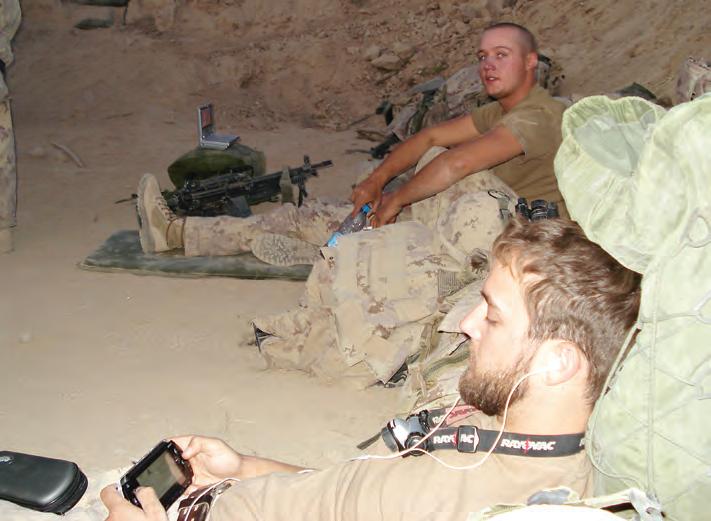
not-so-light 17-tonne vehicle turned back. The rest pushed on to Strong Point Centre near Pashmul, the middle position in the battle group’s defences. They were to provide security for new road construction in a zone known as Ambush Alley.
“The only existing route through the area was a narrow dirt road that snaked its way through closely
directed and restricted (canalizing) terrain that cut through built-up areas and a complex array of compounds,” wrote retired colonel Bernd Horn, an army historian. “As such, it was impossible to secure and a nightmare to traverse. Most armoured vehicles were simply too large to transit it. Moreover, IEDs and ambushes were a constant threat in an environment that favoured attackers.”
Privates Jess Larochelle (background) and Blake Williamson in quieter times. Williamson was killed by an RPG strike at the outset of the Taliban attack. The C6 machine gun (below) is known as a “bullet magnet” because neutralizing it is one of the enemy’s primary objectives.

The new road was to cut straight through marijuana fields and vineyards. It was supposed to ease the military’s job of observation, control and security—and provide local farmers with an efficient route from the fertile Arghandab River valley to the major artery leading into the markets of Kandahar. But first, the Canadians would have to bring some semblance of security to the area. Just how
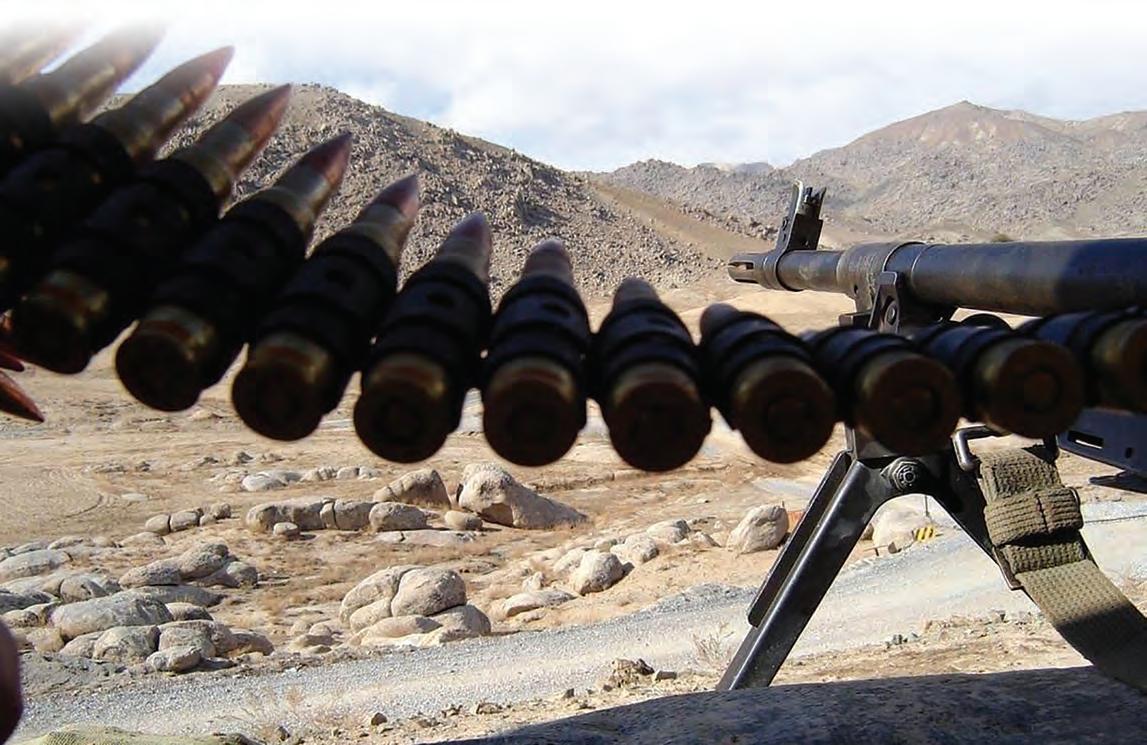

difficult that job would be quickly became evident to the members of 9 Platoon for they had no sooner arrived at the strongpoint when a warning came over the radio that they were about to be attacked.
The battle group was no stranger to combat. Or casualties. Having just come off Operation Medusa, the soldiers of 1RCR were also accustomed to fighting shorthanded.
Assigned to a rambling area of operations of about 60,000 square kilometres, they were stretched thin—a circumstance exacerbated by the fact that 15 task force soldiers had already been killed in action and another 85 wounded.

Lavoie was on a “battlefield circulation” and was just about to move on to his next stop when the call came in. His tactical headquarters—three LAVs and a Nyala mine-resistant vehicle, took
up fighting positions. Larochelle’s platoon mates mounted up and prepared for what, for some, would be the fight of their lives—a frontal attack by a determined enemy.
To the fore stretched 100 metres of sand. Beyond that were marijuana fields, vineyards and scattered mud compounds and grape-drying huts.
“Fields of view were limited,” wrote Horn. “Sheltered behind the large mud building that was the centre point of the defensive position, protected by a natural wall to its other side, [a] LAV III aimed its deadly cannon to the north, providing cover to the road approach.
“Dug into this raised island that constituted Strong Point Centre, were two machine-gun pits. One faced south to control the road, while the other faced east to cover the close terrain, mainly grape vineyards, which extended right up to the defensive
“THEY FIRED TWO
SIMULTANEOUSLY.”
position. The platoon had also augmented the natural fortress with a series of sandbagged walls to provide additional protection and fighting positions.”
The unit needed someone to man the south-facing machine gun, located in an elevated observation post (OP) on the perimeter. The OP was about three metres square, reinforced by sandbags with a corrugated steel plate for a roof.
Given the platoon’s reduced numbers, whoever took the job of defending it would be alone and the most exposed Canadian in the group. It was not a job the secondin-command wanted to order anyone to do. He asked who was willing. Larochelle volunteered.
Originally from Sioux Lookout, Ont., Larochelle had been in-country for two months. He’d taken fire from the enemy but rarely had he gotten a good look at them. Soon, they’d be almost in his face.
He’d been raised in a military family. Both his parents were army veterans. The welltravelled Larochelle grew up fostering a love for the outdoors, camping and fishing, and refining his carpentry skills.
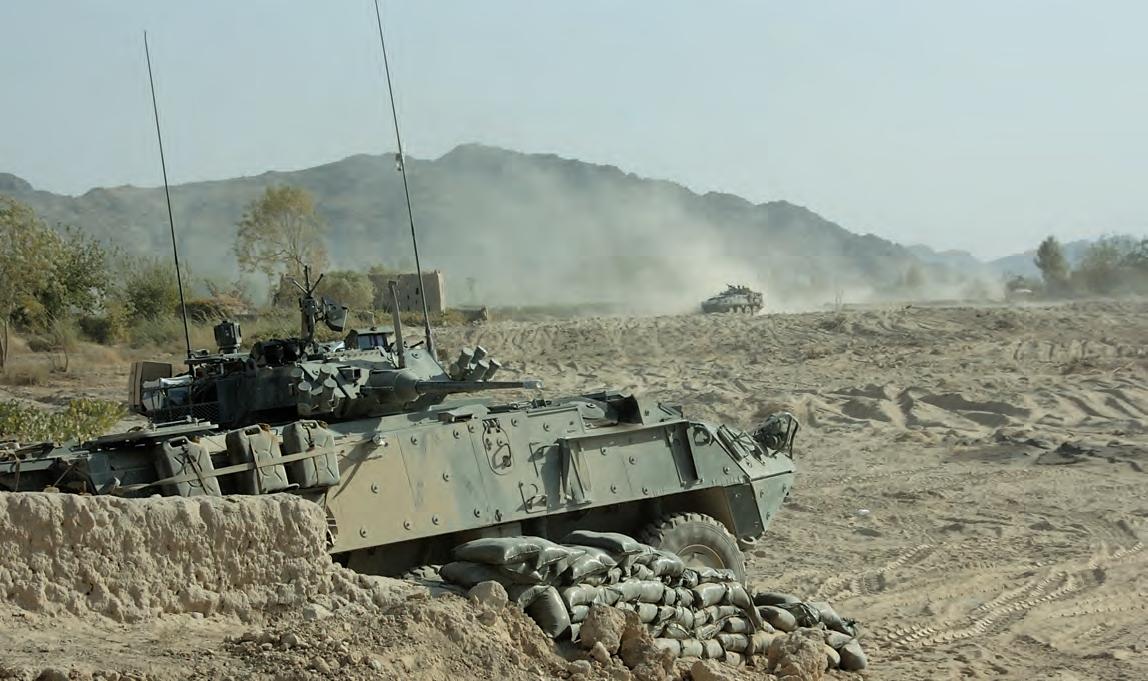
As a soldier, he was a machinegun specialist. The C6 was his baby. He had a pack filled with 600 of the weapon’s belted 7.62mm rounds; two of the guns were already in the observation post, each loaded with 200 more.
Normally, the C6 is manned by two soldiers—one does the firing and the other feeds the ammunition. The weapon is so effective it is known as a “bullet magnet” because it attracts so much unwanted attention from the enemy.
Larochelle also brought along his light machine gun for good measure. He figured it was sometime after 2:30 p.m.
“I wasn’t in the observation post very long and we were fired upon— ambushed—by the Taliban,” he told retired general Rick Hillier in a recorded talk for the advocacy group, Valour in the Presence of the Enemy, obtained by Legion Magazine. “They fired two rockets simultaneously.”
One of the rocket-propelled grenades (RPGs) hit the antenna on the 2 Section LAV adjacent to his OP—Larochelle’s vehicle. It was a freak shot that detonated the rocket directly over the turret and killed two soldiers: Sergeant Darcy Tedford, a Calgary native raised in rural Nova Scotia, and Kemptville, Ont.-born Pte. Blake Williamson, one of Larochelle’s closest buddies. Several others were wounded.
The other RPG hit Larochelle’s position and hurled him in a storm of dirt and debris several metres across the observation post, smashing him into the wall behind him. He estimates he lost consciousness for about eight seconds—“just long enough to realize, ‘crap, I’ve just been knocked out.’”
The concussive blast and the impact had broken his back, fractured two vertebrae in his neck, blown his right eardrum and detached his right retina. His spinal cord was intact, but he was peppered with shrapnel. Bloodied, sorting out the flood of pain and reeling from the
concussion, his training—and adrenaline—kicked in.
Their position was about to be overrun by as many as 40 Taliban. Larochelle had little time and no choice but to fight.
One of the C6s had been destroyed by the blast. Larochelle crawled back to the other weapon and began firing.
“The enemy attack washed over him like a rogue wave,” wrote Horn. “His position erupted in explosions as bullets and shrapnel hissed through the air around him.
“Larochelle thought he was hallucinating when he witnessed what he perceived as mini-explosions going off above his outpost.”
Some of the enemy were using 75mm RPG munitions packed with cluster rounds. When they detonated, they showered the area with deadly shrapnel.
“Despite the weight of fire directed upon him, Larochelle continued to fire back,” noted Horn. He didn’t do so blindly, crouching and raising the gun over the wall as the insurgents often did. He was exposed for much of the fight, aiming, ensuring he got the most he could from each bullet as he shot in bursts of three to five rounds.
“Three to five rounds is most effective,” Larochelle said. “And if you try any more than that, your knuckles are chattering and your gun is bouncing around and you’re not really hitting anything that you’re aiming at any more.”
Red tracers made their deadly, lazy arcs every fourth round, giving him a reference of fire. The downside of tracers is that they also offer the enemy a precise aiming point. Taliban bullets were snapping over his head and all around him. He could see the nearest enemy fighters less than 200 metres away.
His gun barrel was smoking; hundreds of hot casings were bouncing off his hands and body and piling up around him as he fired.
“I was crawling in them,” he said. “I eventually had to put gloves on
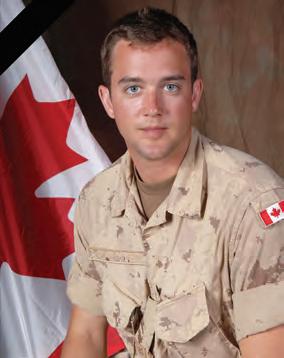

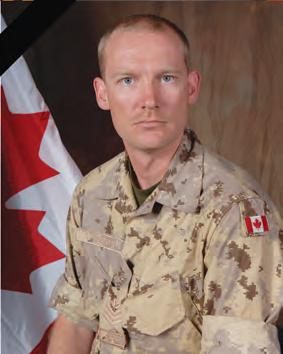

Williamson (top) and Sergeant Darcy Tedford (above) were in a light-armoured vehicle with Larochelle when an RPG exploded directly above the turret, killing the two men. LAV IIIs of 9 Platoon, 1st Battalion, RCR, (opposite) manoeuvre minutes before the fighting broke out at Strong Point Centre.

and scoop the rounds out of my trench when I could get a chance because they were too hot—they were burning my hands and knees.
“After shooting that many rounds, it’s not very fun anymore.”
As the battle progressed, the smoke and dust started to obscure his view. Horn said Larochelle fired “at any movement or weapon signature he could see.”
He “maintained his combat discipline and continued to observe his arcs of fire in order to ensure no enemy was approaching from the east, even though he was taking heavy fire from the west.”


His 2 Section LAV was not firing at all, its turret motionless. He suspected the worst. His ammo was running low. Off to one side was a cache of 15 M72 rocket launchers, scattered by the blast that had knocked him out.
The single-shot weapon is more compact than a bazooka. It consists of a disposable green tube with a trigger, two sights on top and a shoulder mount below. It comes loaded.
There are instructions printed on the side of the extendable tube, but if you must read those in a predicament like Larochelle’s, you’re in real trouble.
Larochelle knew the drill: remove the rubber caps from each end, extend the tube, disengage the safety just in front of the rear sight—and you’re ready to fire. Brace the rubber mount on your shoulder and press the trigger, usually a rubber-encased button.
The shooter must be prepared, because the M72 has a kick. Larochelle described the weapon as “very accurate, if you’re using the sight properly.” Good to about 200 metres, “it makes quite an explosion.”
Trouble was, Larochelle had no idea if the M72s at hand had been damaged by the Taliban rocket blast. Had any been bent or otherwise compromised, he could be killed just firing them.
Ignoring the risk, he started pulling off the rubber stoppers, extending the disposable tubes and taking aim at the nearest enemy.
The weapon was devastatingly effective. Taliban fighters were blown to pieces with each shot, body parts flying in all directions.
The main gun aboard at least one of the remaining LAVs went down twice during the fighting. Another jammed once. Larochelle and his cache of M72s became even more critical to their defence as crews tried to clear their weapons.
Lavoie, meanwhile, had called a counterattack. As his LAV jockeyed into a firing position, it got hung up on a furrow in a grape field. The front end was pointing up and his gunner could not lower the cannon enough to fire effectively. The vehicle’s vulnerable underbelly was exposed to the enemy.
Lavoie crawled out of the turret and manned a machine gun on the crew commander’s side. He fired 2,000-3,000 rounds “just to keep the Taliban from firing an RPG through the belly of our vehicle.” Another LAV pulled them out. Enemy RPGs and mortar rounds were coming in, bracketing the Canadian position and coming especially close to Larochelle’s disabled LAV. Larochelle could see a mortar pit out in front of him. He fired a rocket and took it out, then continued firing M72s until his cache was almost gone.
The surviving enemy fighters didn’t quit. Another RPG hit the wall below the sandbags fortifying Larochelle’s position, spraying dust and dirt in his face.
It did no damage of consequence and, apparently unnerved by the devastation wrought by the M72s and the LAVs’ 25mm chain guns, what was left of the Taliban force began a scattered retreat. Larochelle took up the C6 again and peppered them with 7.62mm fire.
The action had lasted about an hour. Lavoie ordered his
tactical headquarters to evacuate the casualties and resupply the platoon with ammunition.
Larochelle was down to two M72s and the last 100 of his 800 heavy machine-gun rounds. He knew that because he had counted them off.
“As the battle’s going on, you have to count everything,” he said. “You count how many enemies have been killed, how many are alive, where they are, how much ammo you have left, how much water you’ve got.
“You’ve got to be thinking about all of that stuff all of the time. There’s a lot more to it than just shooting back and forth at each other.”
Assuming the Taliban were regrouping, he steeled himself for another attack.
His platoon commander, thenlieutenant Raymond Corby, made his way out to the OP, calling out for confirmation that Larochelle was ok. He said he was.
Corby surveyed the scene.
“Did you fire all these rocket launchers?” he asked. They were scattered everywhere.
“Yes,” replied Larochelle.
“Cover me, I’m coming in,” said Corby, and Larochelle fired off some rounds.
The private briefed his commander on enemy numbers, locations and whatever other intelligence he could muster. He then provided cover fire while the lieutenant made his way the short distance to the disabled 2 Section LAV.
Corby, reported Horn, was “humbled by the young soldier’s valiant efforts.”
News filtered out that the unit had two “VSA,” or vital signs absent. Larochelle knew they had

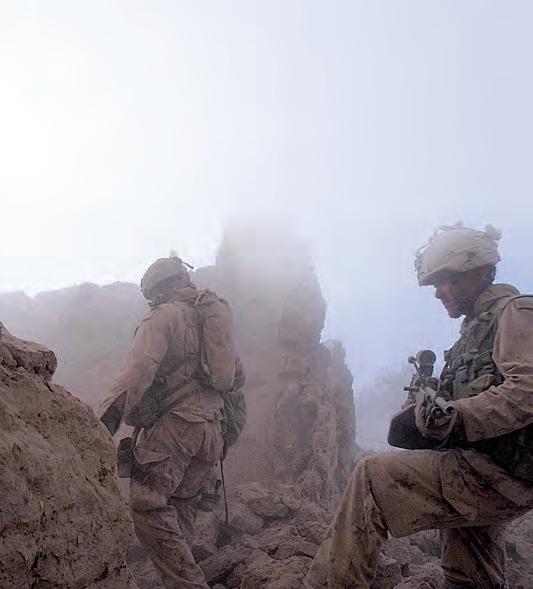

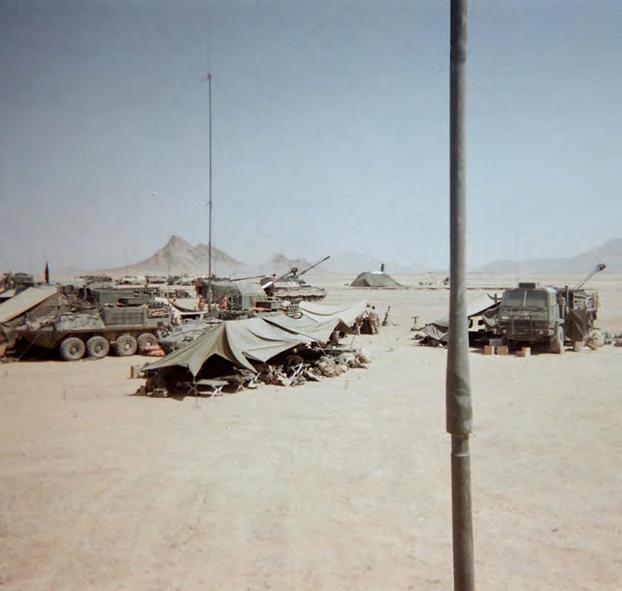
to be in his LAV, which had taken a second round in the battle.
There was still periodic fire. Troops administered first aid to the wounded. All but two in Larochelle’s 10-man section had taken shrapnel, he said. “Everybody had some sort of wound.”
A corporal brought Larochelle a box of ammo and water. His CamelBak water pack had been sucked dry.
“The platoon warrant officer came out and asked me if I wanted to be replaced and I said, ‘no, I’ll stay. I don’t think you want to put somebody through that who hasn’t been through it before. I can handle it if it happens again.’”
So they left him there, and sent him a partner, Corporal Darryl Jones. It was Jones who confirmed that Tedford and Williamson were dead.
The firing gradually subsided. It got quiet. Some units withdrew to Patrol Base Wilson. Larochelle, Jones and Warrant Officer Scott Robertson spent a sleepless night in the OP with only water to sustain them.
In a series of co-ordinated attacks, the Taliban had hit five different locations throughout the operations area on that Saturday.
There were no further attacks on Strong Point Centre, but Larochelle was now feeling intense pain and his equilibrium was shot. He was stumbling around the OP “like a drunk.”
“I was in a lot of pain,” he said. “My neck and back were really hurting and I was bleeding from my right ear. I was having problems with my vision in my right eye. My retina was detached, I found out.”
The rest of the platoon was relieved the next day and headed back to Kandahar airfield, the region’s main coalition military base, stopping at Wilson on the way and arriving at their destination after nightfall. They held the ramp ceremony for Tedford and Williamson almost immediately.
Platoon members carried the flagdraped coffins. Despite his undiagnosed pain, Larochelle helped carry his buddy Williamson’s coffin.
Afterward, Larochelle went straight to a base hospital where, two days after the battle, a doctor informed him that he had broken vertebrae in his back
and fractured vertebrae in his neck. He was going home.
The repatriation process, however, was excruciating. He had trouble finding a flight out. He was put in a bed and told to wait. After a week of inaction, he started complaining. “I was almost being treated like I was a burden for being injured.”
He eventually caught a flight to Dubai, where he languished until, finally, he got two civilian flights home, via London.
He was hospitalized on arrival in Ottawa. There, doctors discovered internal bleeding, torn muscles and other damage. They did what they could, then sent him home to Garrison Petawawa.
Larochelle was awarded the Star of Military Valour, the forces’ second-highest decoration.
“Although he was alone, severely injured, and under sustained enemy fire in his exposed position at the ruined observation post, he aggressively provided covering fire over the otherwise undefended flank of

“I THOUGHT THAT THIS WAS AS CLOSE TO A VC AS YOU’RE GOING TO GET.”
his company’s position,” said his citation. “Private Larochelle’s heroic actions permitted the remainder of the company to defend their battle positions and to successfully fend off the sustained attack of more than 20 insurgents.
“His valiant conduct saved the lives of many members of his company.”
It had been Lavoie’s job to nominate him for a decoration. Other
than to designate “for valour,” which limited Larochelle to one of three possible awards, he could not recommend which one he thought his unassuming private should receive.
But for his own satisfaction, the general compared Larochelle’s actions to those of several historical Victoria Cross recipients. He told Legion Magazine he had no doubt at the time that his private’s citation “met all of the potential ingredients.”
The case for a
At publication time, momentum was growing in a public campaign to formally nominate Jess Larochelle as the first recipient of Canada’s Victoria Cross.
The advocacy group, Valour in the Presence of the Enemy, spearheaded by a former comrade in arms, Bruce Moncur, had been calling for a review of Larochelle’s file to get his Star of Military Valour upgraded to a VC.
In less than 24 hours, a group-sponsored petition garnered the 500 signatures needed to be tabled and presented to the House of Commons. Its signatories soon exceeded 15,000. It was open for signature until March 2.
A spokesperson for
the chief of the defence staff, General Wayne Eyre, confirmed the country’s top soldier was consulting with Commonwealth allies and reviewing Larochelle’s file. The Royal Canadian Legion endorsed the effort.
Ninety-eight Canadians are among 1,358 British Empire and Commonwealth soldiers, sailors and aircrew to have earned the original Victoria Cross, the last of them Lieutenant Robert Hampton Gray in 1945.
In 1993, Canada followed Australia’s precedent and established its own VC. New Zealand did so in 1999. But while Australia has awarded four of the new VCs and New Zealand one, Canada has awarded none.
“When I signed off on that citation, I thought that this was about as close to a VC as you’re going to get.”
Larochelle’s wounds were so severe, military doctors prohibited him from doing his job. They were still pulling shrapnel from his body two years after the fight. He was designated for back surgery, but never got it.
Larochelle felt he had no option but to leave the army. Unable to attend the ceremony at Rideau Hall, he received his award the same day he was released. It was 2008.
Now 39 and living with his parents near North Bay, Ont., wracked by pain and post-traumatic stress disorder, still deaf in his right ear, he has struggled mightily.
“I have,” he said, “no regrets.” L
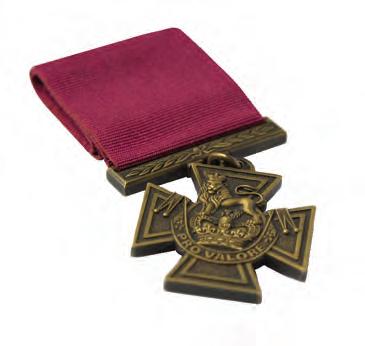
There were 109 actions honoured with intermediate gallantry awards in Afghanistan, including 20 Stars of Military Valour (SMV), said Lieutenant-Colonel Carl Gauthier, the military’s director of honours and recognition, in 2018.
A committee of general officers representing all commands reviewed all the citations and nomination processes, concluding they were fair and consistent throughout. They even compared them with Commonwealth VCs dating to Vietnam.
The awards process is complex. Any witness can nominate a VC candidate, but it must be endorsed by

the nominee’s unit commander and is subject to reviews and revisions before it reaches the honours and recognition panel for a decision.
“I personally witnessed the valour of Jess Larochelle as he continued to fight while wounded and in the midst of his wounded and dead comrades,” said retired lieutenant-general Omer Lavoie, who commanded Larochelle’s 1RCR Battle Group.
“I have always felt that his actions that day in continuing to fight despite being wounded in order to break the enemy attack was worthy and commensurate with the historical awarding of a Victoria Cross.”





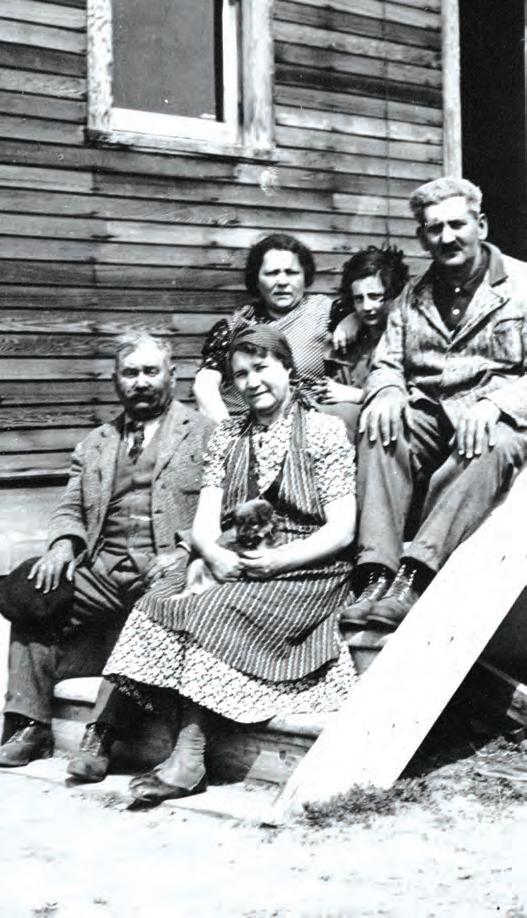
An early refugee support group helped open Canada
Canadians tend to think of Canada as a compassionate, hospitable country that has always welcomed refugees and immigrants. If so, they are wrong.
In the 1930s, for example, Canada closed its doors to thousands of desperate refugees, many of them Jews fleeing persecution and danger at the hands of the Nazis.
One example of such danger was Kristallnacht, the night of broken glass, when the Nazis unleashed their worst pogrom to date. On that infamous night, Nov. 9, 1938, hundreds of synagogues, Jewish shops and homes throughout Germany were torched. Scores of Jewish men, women and children were killed—shot or beaten—while trying to escape death by flames. Following Kristallnacht, some 30,000 Jews were sent to concentration camps while others were required to pay a “compensation” of one billion marks.
One group in Canada did not turn its back on the terror that the Nazis were unleashing against Jews and other minorities, including pacifists, communists and Roma. Members of the League of Nations Society in Canada, after all, were internationally minded Canadians with a conscience.
Over the years, the society had worked to educate Canadians and the federal government about the

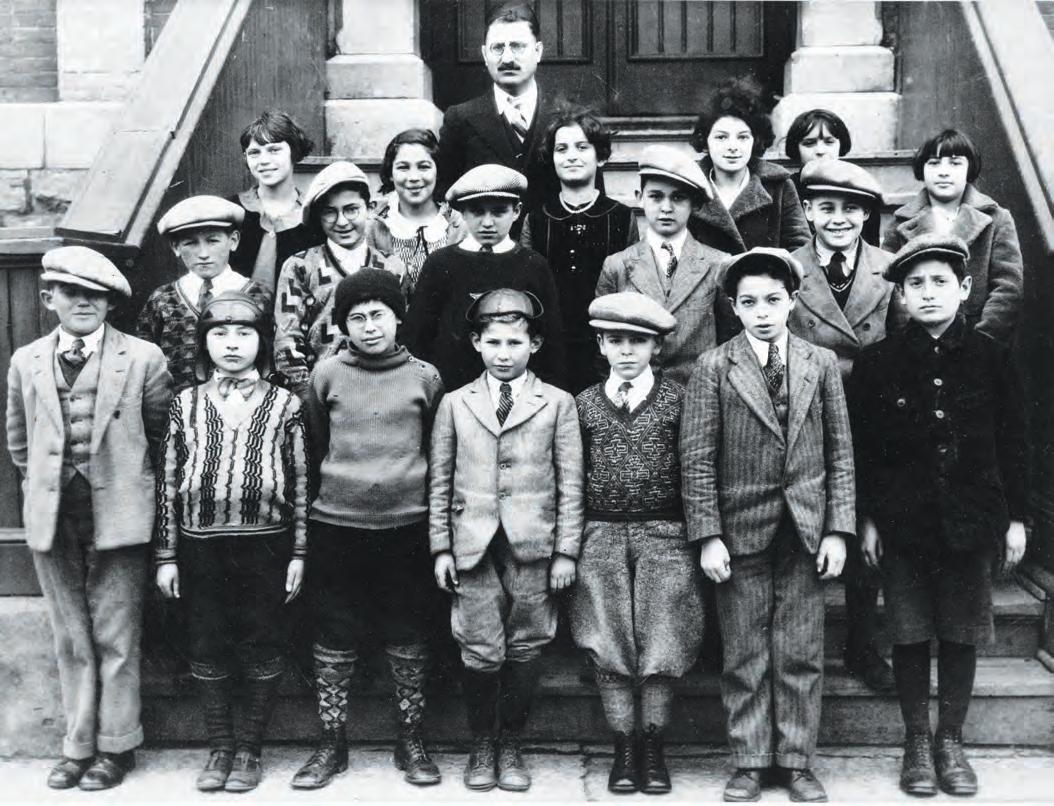
objective of the League of Nations to maintain world peace and to prod Ottawa into adopting a more pro-League stance. But the Canadian branch made little headway in accomplishing its aims and by 1938, it was largely moribund.
What imparted new life to it was Hitler’s incorporation of the Sudetenland into German territory in the fall of 1938. On Oct. 15, in the wake of this development, the society’s executive voted to establish the Canadian National Committee on Refugees and Victims of Political Persecution, later shortened to the Canadian National Committee on Refugees (CNCR).
Its mission was to educate the public about refugees, to co-ordinate efforts on behalf of them, and to lobby the Canadian government to lower immigration barriers to admit more refugees. And since the League recognized that Hitler had singled out Jews as his
primary target, the new organization would focus its initial efforts on rescuing them.
Canada had a highly restrictive immigration policy in the 1930s, and the CNCR faced formidable challenges in carrying out its mission.
This reflected the attitude of many Canadians toward large-scale immigration. Caught in the grip of the Great Depression, they took the view that immigrants and refugees threatened scarce jobs in an economy where, in 1933, a quarter of the labour force was unemployed.
Coupled with this was an unwillingness to get involved in Europe’s quarrels and problems. Like their American neighbours, some Canadians did not wish to be custodian of the world’s conscience.
This reluctance is illustrated by comments made by the minister of justice in Prime Minister Mackenzie King’s cabinet in 1935. As the League of Nations was debating
Despite closing its borders to refugees in the 1930s, some Jews fleeing Nazi persecution did make it to Canada, such as this group of children (above) photographed in Ottawa. A refugee family (opposite) at their homestead in Edenbridge, Sask., in 1939.

Polish refugees disembark from SS Warszawa in London, before heading to Canada in 1939. While refugees could bring badly needed skills and talents, at the time, they were not welcomed by the Canadian government.

measures to be taken against Italy after its invasion of Ethiopia, Ernest Lapointe summed up his government’s position:
“No interest in Ethiopia, of any nature whatsoever, is worth the life of a single Canadian citizen. No consideration could justify participation in such a war.”
In short, even though refugees could bring badly needed skills and talents, they were not welcome, at least not by a large part of the population and certainly not by the federal government, whether Conservative or Liberal.
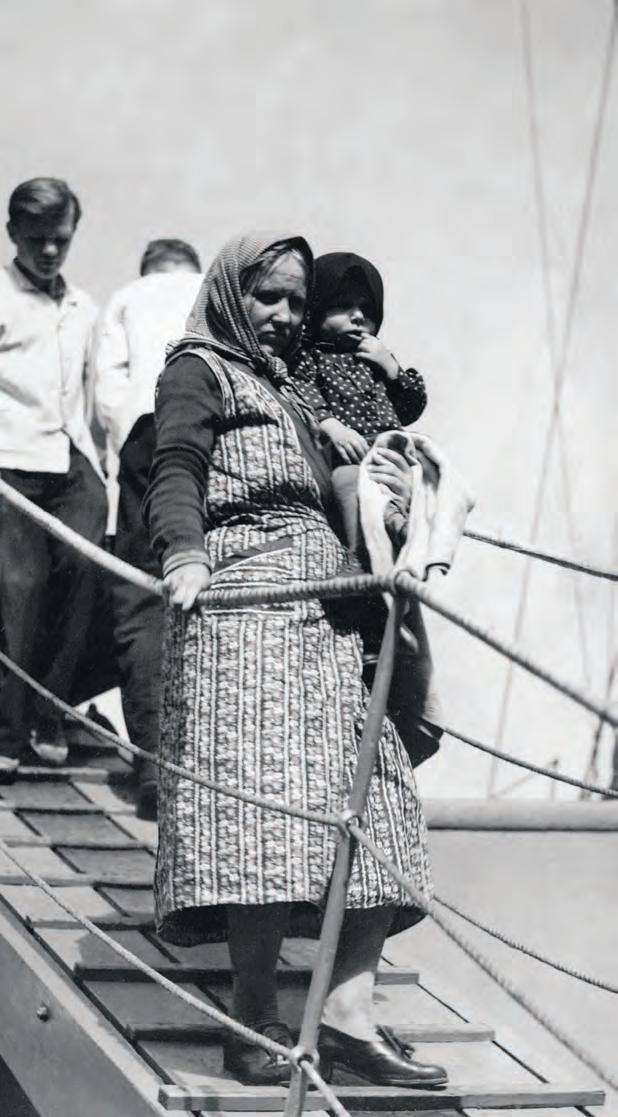
French-Canadian politicians also spoke against allowing Jews to enter Canada, as did various organizations including the Saint-Jean-Baptiste Society which opposed all immigration, but especially Jewish immigration.
King may have wanted to introduce a more humanitarian immigration policy, but he was reluctant to ignore the political reality of Quebec. He and his government steadfastly resisted admitting substantial numbers of Europe’s oppressed.
With the Great Depression underway in 1930, Ottawa passed an order-in-council providing for the admission to Canada of only those immigrants who had enough capital to establish and maintain themselves on farms.
The following year, another order-incouncil effectively banned all non-agricultural immigrants unless they were American or British. As a result, immigration plummeted from 1.17 million in 1921-31 to 140,000 in 1931-41.
The perceived threat to employment and Quebec’s negative attitude toward refugees in general, and Jews in particular, underscored the government’s refusal to lower immigration barriers. Antisemitism existed throughout Canada, but it was most overt and ugly in Quebec, where it was fed by the Catholic Church and a revival of French-Canadian nationalism.
Many French newspapers in Quebec warned the government against admitting Jews. Some of these papers, such as L’Action Nationale and L’Action Catholique, directed decidedly vicious observations against Jews.
Opposing the government’s policy was a small but influential number of Canadians who wanted to see the country admit greater numbers of European refugees. They included prominent members of the Jewish community, leaders of the Protestant churches, newspaper editors and commentators in English-speaking Canada, the Co-operative Commonwealth Federation (forerunner of the New Democratic Party) and various other organizations. The leading non-sectarian refugee group, by far, was the CNCR.
It was headed by Senator Cairine Wilson, Canada’s first woman senator, who had been president of the League of Nations Society in Canada before becoming head of the CNCR. A wealthy pillar of the Canadian establishment, the daughter of a Liberal senator and the mother of eight children, she had worked for numerous community and national organizations before her appointment to the Red Chamber. There, she voiced progressive views on social issues of the day, such as divorce and family allowances.
Perhaps because her ancestors had been driven from their crofts in the Highland Clearances, she felt a particular empathy for refugees. She embraced the cause so zealously that she became known as “Mother of the Refugees.” She was deeply affected by the plight of the first group of Czech refugees to arrive in Canada.
“Their lives have been very difficult and lonely,” she said while addressing the CNCR’s Halifax branch two years after their arrival. “But they have been very courageous.”
The CNCR’s executive secretary, Constance Hayward, was closely associated with Wilson in this work. She had studied at the London School of Economics and worked as a lecturer and organizer for the League of

Nations Society in Canada before becoming involved with the CNCR. She often joined Wilson in pleading the cases of individual refugees before government officials.
Of all the bureaucrats they had to deal with when working to get entry applications approved, one above all imposed the greatest roadblock—Frederick C. Blair, a public servant who headed the Immigration Branch of the Department of Mines and Resources. (The full-fledged Department of Citizenship and Immigration wasn’t formed until 1950.)
Unfortunately for those desperate refugees clamouring to get into Canada, Blair was hostile to immigration, and particularly Jewish immigration. Under the highly restrictive laws, he could recommend the issuance of special permits, but he rarely did.
The CNCR established branches across Canada and conducted a massive public education program to combat antisemitism and educate Canadians about the benefits to this country of an enlightened refugee policy. This program often took the form of “educational” tours by executive committee members and other pro-refugee speakers who fanned out across Canada addressing service clubs and community groups.
In June 1939, Wilson contributed a prorefugee article to The Key, a newsletter issued by the Junior League of Toronto, a women’s service club. She pointed out that League members had been very interested in the local humane society and to good effect. She then shifted to a description of the situation facing refugees, concluding, “Without a belief in the dignity of man, without indignation against arbitrarily created human suffering, there can be no democratic principles.”
Despite its efforts, the CNCR didn’t bring about a dramatic change in government immigration policy during the pre-war and Second World War years. Nevertheless, it performed valuable work in helping settle individuals and families in Canada and in raising public awareness of refugee issues.
Perhaps its greatest contribution, though, was the aid it provided to anti-Nazi Germans, Austrians and Italians, who had been transported from Britain to Canada in the dark days of 1940 and then imprisoned in heavily guarded internment camps.
These prisoners’ living conditions were improved and many were released before the camps closed, thanks to the CNCR and individuals, including Montreal lawyer Saul Hayes, who was executive director of the United Jewish and War Relief Agencies of the Canadian Jewish Congress.
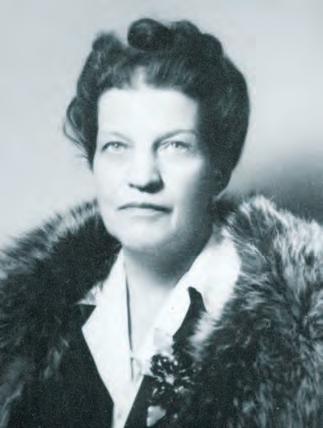
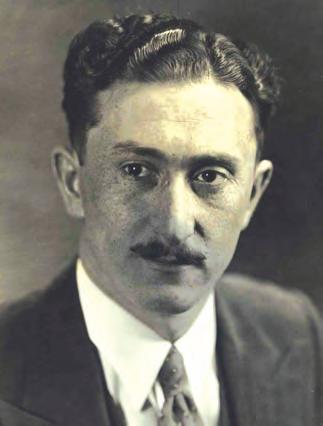
The committee continued to press for liberalization of government immigration policy in the years immediately following the war. By then, conditions were more favourable. The plight of more than a million displaced persons and refugees in European camps had aroused the sympathy of many Canadians. Moreover, many influential members of Canadian society believed the growing economy urgently needed workers for factories and the resource sector. Humanitarian and economic advocates lobbied the government for changes to immigration policy and Ottawa responded by liberalizing the regulations.
Recognizing that the government had finally moved in the right direction, the cash-strapped CNCR disbanded in 1948. It hadn’t accomplished all it set out to do, but it had been one of the few bright lights in a dark chapter of Canadian history. L
Senator Cairine Wilson (top) was head of the Canadian National Committee on Refugees and was known as “Mother of the Refugees.” Montreal lawyer Saul Hayes (above) helped fight to improve living conditions in the camps and get some internees released.

By Sharon Adams
By Stephen J. Thorne
By Trevor Oattes
Nujma Bond
By Sharon Adams
ormal apologies were proffered in December to generations of military members, veterans and civilian employees who suffered military sexual trauma, gender discrimination and lack of response from the institutions charged with their protection.
“We are sorry. I am sorry,” said Minister of National Defence Anita Anand, acknowledging the failure of successive governments to stamp out sexual harassment, assault and gender discrimination in the military.
“Your government did not protect you, nor did we ensure that the right systems were in place to ensure justice and accountability.”

“We are confronting and acknowledging a number of difficult truths,” said General Wayne Eyre, chief of the defence staff. “The harm you suffered happened on our collective watch. On my watch.”
He acknowledged abuses of power behind the behaviour, and its effects on survivors—betrayal, broken trust, crushed careers. “Assaults on your mind and on your spirit. On your dignity and your humanity.
“As someone who has given my entire life to this institution, and who loves it so deeply, it breaks my heart.”
On behalf of the Department of National Defence, Deputy Minister
Jody Thomas, a navy veteran, apologized to a range of others affected—survivors, partners, parents, children and the bystanders who felt powerless to intervene.
“I believe the apologies were sincere,” said Lori Buchart, chair of It’s Not Just 700, a peer support group for survivors of military sexual trauma. But some survivors, she added, will accept nothing less than an apology from the person who harmed them and for others, “nothing will ever fix this for them.”
Strong reactions were elicited online by Thomas’ disclosure of her powerlessness as a witness of misogyny, homophobia, hazing and exclusion in her navy career. It showed “a profound understanding,” wrote one viewer. Another wrote, “Deputy Minister, that was an apology I accept.”
More than 7,600 people watched the apology live on Facebook, with commentary from viewers ranging from, “All apology and no action,” to, “Now THIS is the apology we have all been waiting for.”
But many survivors, such as Harvey Gingras of Winnipeg, wanted to watch it later, when they had emotional support. “Politicians failed veterans, especially those like us,” he said. “Criminal things were done to us.”
The apologies came at the end of a painful year for the Canadian Armed Forces, during which multiple allegations of sexual misbehaviour against senior officers were investigated.
Public attention was first focused on the issue in 2015, when an external review by a former Supreme Court justice found an underlying sexualized culture in the CAF that is hostile to women and LGBTQ+ military members.
General Jonathan Vance, who was then chief of the defence staff, initiated Operation Honour to eliminate harmful and inappropriate behaviour within the CAF.
Survivors of sexual misbehaviour launched class action lawsuits against the government, which ended in a $900-million settlement in 2019. Almost 19,000 claims were submitted by the November 2021 deadline.
Aside from compensation of up to $155,000 depending on severity and effect, the settlement also provided for restorative engagement during which survivors
could tell their stories to senior officials in DND and the CAF.
Operation Honour was called into question when two women alleged Vance was guilty of sexual misconduct. After one told her story in the media, others were emboldened to come forward, resulting in investigations of half a dozen other senior officers and criticism of leaders who supported those under investigation.
Vance was charged with obstruction of justice in July.
Operation Honour culminated amid claims of ineffectiveness and betrayal. Two House of Commons committees launched studies of military sexual misconduct.
In November, Anand transferred investigation and prosecution of military sexual misconduct cases to civilian authorities. Vance’s case was transferred to the civil ian justice system and a trial date was set for May 2023.
The apology marks a turning point, said Eyre, who credited survivors and plaintiffs in the class action suits and advocacy groups for fighting for change.
“We have unfairly placed the onus on those who were harmed to come forward to effect change,” said Eyre. “This should not have been your burden to carry.
“It will take tangible actions to make real and lasting change. This time we will not fail.... This work will be complex and difficult, and it demands a complete unity of purpose.
“It is work that we have already begun.”
“The words were sincere,” said Buchart. “Words matter; actions matter more. There are still people who believe it’s not


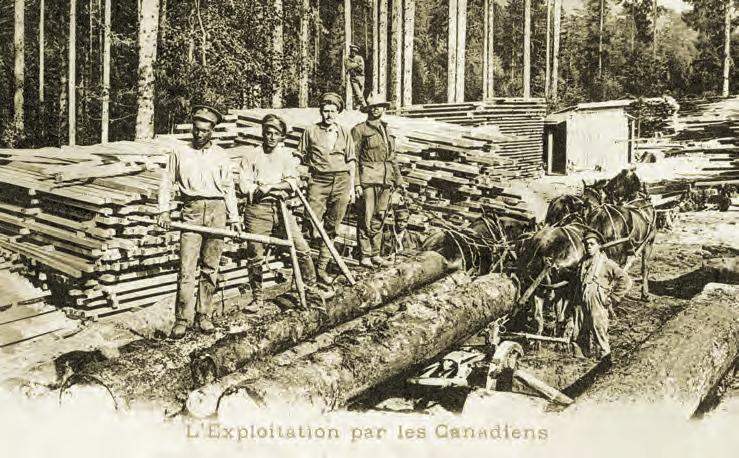
By Stephen J. Thorne
The federal government plans to apologize in July for the mistreatment of Black volunteers more than a century after they were relegated to serve with a segregated Canadian unit during the First World War.
Many of the approximately 800 members of No. 2 Construction Battalion, some of whom came from the Caribbean and United States to sign up, were rejected by infantry units due to the colour of their skin.
Once deployed with the battalion and under the command of white officers, they performed support roles, such as upgrading logging roads, building a logging railroad, cutting and transporting critical supplies of lumber, and operating and maintaining camp water supply systems.
“The members of the battalion, their families, their descendants and their community deserve recognition and acknowledgement from a grateful nation for the sacrifices they made to serve
Canada, sacrifices which were not all on a battlefield,” said a Defence Department statement.
Many militia commanders and much of the military’s top brass— along with some senior politicians—opposed Black enlistment, believing they would not make good soldiers.
“THESE MEN CONDUCTED THEMSELVES WITH HONOUR AND PROFESSIONALISM IN THE FACE OF PREJUDICE.”
In Saint John, N.B., 20 volunteers had no place to serve. “It is a downright shame and an insult to the race,” John Richards, a Black community leader, wrote to federal officials at the time.
The response was unequivocal.
The No. 2 Construction Battalion worked with the Canadian Forestry Corps overseas.
In Halifax, white volunteers withdrew enlistments when rumours circulated they may have to serve with Black men.
“Neither my men nor myself would care to sleep alongside them, or to eat with them, especially in warm weather,” wrote Lieutenant-Colonel W.H. Allan of the 106th Overseas Battalion (Nova Scotia Rifles).
The matter was debated in Parliament before the military chief of staff issued a memorandum on April 13, 1916, citing what he called “the facts.”
“The civilized negro is vain and imitative,” claimed Major-General Willoughby Gwatkin. “In Canada he is not being impelled to enlist by a high sense of duty; in the trenches he is not likely to make a good fighter.”
No. 2 was formed in Pictou, N.S., in July 1916 and sailed the following March. Its only Black officer was the unit chaplain, Reverend William Andrew White, an honorary captain who had been among those leading the campaign to open recruitment to the Black community.
A call went out from the Black Cultural Centre for Nova Scotia in November seeking descendants of those who served in the battalion. An advisory committee, including some descendants, is helping plan a series of events culminating in the official apology on July 9.
“These men conducted themselves with honour and professionalism in the face of prejudice, hate, and an unwillingness of other Canadians to serve shoulder to shoulder with them against a common enemy,” said a DND statement.
About 700 Black men eventually did serve in non-segregated units of the Canadian Expeditionary Force during the war, many of them taken on after conscription was implemented in 1917. More than 100 are believed to have seen frontline action and several received awards for gallantry in battle. L
By Trevor Oattes
On June 28, 2021, the Newfoundland National War Memorial in St. John’s was acknowledged as a national historic site before a small group of dignitaries and onlookers.
Members of The Royal Canadian Legion’s Newfoundland and Labrador Command were joined by Premier Andrew Furey, St. John’s Mayor Danny Breen and MP Seamus O’Regan, among others, as a commemorative plaque officially acknowledging the memorial was unveiled.
The description on the plaque, developed by the Historic Sites and Monuments Board of Canada (HSMBC), recognizes “the service of Newfoundlanders and Labradorians during the First World War” and discusses the creation, design and impact of the monument.
“It just goes to show the rest of Canada the importance of the efforts made by Newfoundland’s government and the people of Newfoundland in the First World War,” said Dominion Vice-President Berkley Lawrence. “Newfoundland being its own country at the time, we recognize that we need to honour those we lost.”
The path to designating the memorial as a historic site was years in the making, after local historians Gary Browne and John FitzGerald penned a nomination letter to the board in 2016.
Unveiled on July 1, 1924, the memorial was developed to commemorate the service and sacrifice of the Dominion of Newfoundland
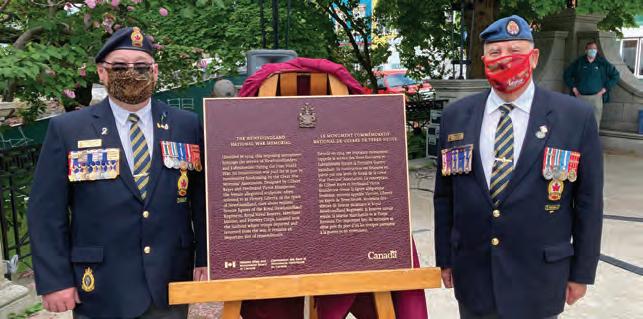
and its people during the Great War. Standing as a dominion within the British Commonwealth, Newfoundland had sent thousands of its sons to fight on the battlefields of Europe, many of whom would never return.
The greatest loss of life suffered by the dominion came on July 1, 1916, when the Newfoundland Regiment was all but wiped out at BeaumontHamel on the first day of the Battle of the Somme. Hundreds of Newfoundlanders lay dead or dying within 30 minutes of their order to charge, and fewer than 70 were able to stand for roll call the next morning.
The losses suffered by the regiment are said to have wiped out a generation of young Newfoundland men, the ripples of which can still be felt today. These losses were one of the key factors in the development of the memorial.
The next milestone for the monument will come in 2024 as it reaches its 100th anniversary. A restoration committee has been put together by the Legion to oversee repairs and detailing. According to Lawrence, who is chairing the committee, a key piece of this will be accessibility repairs, such as the steps and railings. A rededication ceremony is planned for July 1 of that year. L

SERVING YOU SERVING
While many members of the Royal Canadian Mounted Police and their families appreciate the work being done by The Royal Canadian Legion on behalf of military veterans, few RCMP members realize the important work being done on their behalf by the Legion.
Since 1926, the Legion Service Bureau Network has had service officers across the country at Legion branches and provincial commands. The command service officers can assist former and current members of the RCMP and their families by representing their interests in claiming disability benefits under the Pension Act from Veterans Affairs Canada and the Veterans Review and Appeal Board (VRAB).
The Legion’s command service officers provide counselling, assistance and representational services from a first application with VAC to a VRAB appeal free of charge, whether or not you are a Legion member.
Veterans seeking a disability claim often ask if there are any advantages associated with using the services of a command service officer of the Service Bureau Network. While all advocates bring their own qualities and strengths, we would like to think that Legion command service officers are a special breed. We are there to serve those who serve.
Indeed, Legion command service officers are former members of the Canadian Forces, the RCMP and VAC, with extensive time and experience with the Service Bureau Network. We understand
CAF and RCMP terminology, culture and operational practices. This shared background between a Legion command service officer and a veteran promotes a good understanding between the applicant and the Legion advocate.
Next time you consider submitting a disability claim or an appeal, remember that we care and our services are second to none. More than 4,100 veterans with disability claims sought the help of Legion command service officers in 2020.
If you require assistance in gaining access to VAC disability benefits or someone you know needs help, please contact a command service officer at www.legion.ca.or call toll free at 1-877-534-4666 to speak to a service officer. L
By Sharon Adams
The government is struggling with the implementation of recommendations to address inequities and unfair treatment of veterans and their families, says Veterans Ombudsperson Nishika Jardine.
Veterans Affairs Canada has not acted on nearly a third of the 76 recommendations made by the Office of the Veterans Ombudsman (OVO) following 19 investigations into systemic barriers and unfairness
since its inception in 2007. And it has acted on only six of 26 recommendations made since 2017.
“The government is falling behind in taking action to ensure equitable access to VAC benefits and services for veterans and their families,” said Jardine, in releasing the OVO’s annual report card.
Many recommendations have not been implemented, including proposals for more equitable access
to financial assistance for disabled veterans, independent mental health support for veterans’ family members, reducing long wait times on decisions about eligibility for benefits and six of seven proposals regarding long-term care. Wait times are a hot-button issue. VAC had set a service standard of making decisions on 80 per cent of first applications and reassessments within 16 weeks, but in June 2021 reported average processing times of
36.1 weeks for applications in English and 42.9 for French applications. There was a difference by sex, too: 36.1 weeks for men; 42.3 for women.
An increase in applications for benefits began the backlog. Benefit applications to VAC increased 40 per cent between 2015 and 2020, and the backlog grew from 29,000 to 40,000 between 2017 and June 2021.
VAC has reassigned employees and added hundreds of new and temporary staff to address the backlog, which it hopes to clear in 2022.
But it has not acted on the OVO
recommendation that each applicant be supplied with an individualized expected turnaround time and informed if—and why—the decision will be delayed.
“We appreciate that some of our recommendations will require consultation or legislative and/or regulatory change, and that these can take significantly more time,” said Jardine, who also noted the disruption caused by the pandemic.
One such recommendation proposes amending the Veterans Well-Being Act and regulations to permit single Canadian
Armed Forces members with no dependent children to designate a family member to apply for and receive the death benefit.
Other departments and agencies need to be consulted in order to make decisions regarding recommendations on financial outcomes for ill and injured veterans and to harmonize compensation plans with that goal.
Veterans Affairs responded that the government has accepted many OVO recommendations, including one made in June 2021 that VAC fund peer-support programs for survivors of military sexual trauma. L
By Nujma Bond
Royal Canadian Legion members weathered another year of uncertainty with resilience, dedication and focus. Yet the thousands of people who help the Legion fulfil its mission were not deterred in 2021.
Legion service officers demonstrated their commitment to ensure care for veterans. The National Headquarters supported Dominion Command, provincial commands and branches which, in turn, continued serving communities despite reduced hours and varying closures.
The Legion welcomed 25,000 new members and produced new innovations to help carry it through the National Poppy Campaign. Its public relations and advocacy efforts resulted in widespread coverage and interest and helped celebrate the 100th anniversary of the poppy. It managed a virtual convention, a restricted National Remembrance Day Ceremony and thousands of
poppy product orders. All under the cloud of the ongoing pandemic.
At the core of the Legion’s mission is ensuring that veterans and families receive the help they need. Work on this front continued in earnest in 2021.
The Legion’s veterans services department provided its characteristic high degree of support through service officers at all levels of the organization.
Poppy funds donated by Canadians each year make it possible for the Legion to support individual veterans with needs. Grants for essential items such as food, fuel, clothing, prescription medication, medical equipment and emergency shelter helped improve life for those who required assistance
in 2021. The Legion also continued to help many veterans with benefit applications and appeals.
Each year, heartfelt words of thanks are reminders of the importance of the Legion’s mission. After years of having disability benefit applications rejected, many veterans appreciated that the Legion was able to wade through new rules, complete their applications and reverse the outcome—thanks to changes in policies at Veterans Affairs Canada.
After hearing from one concerned family member, service officers helped place a veteran safely in longterm care along with subsidized funding. Another veteran had been denied benefits for years in a case involving service-related sexual assault. The Legion worked to get her disability and treatment benefits. She later revealed that the compassion and support provided a major step forward in her recovery, sharing a letter she had previously written while in the depths of despair.
Research and advocacy
Supporting research is of key importance to the organization, ultimately leading to better outcomes for Canada’s veterans. Each year the Legion offers the Royal Canadian Legion Masters Scholarship through the Canadian Institute for Military and Veteran Health Research (CIMVHR). In 2021, $30,000 went to a master’s student at the University of Manitoba who is investigating the chronic pain profile of Canadian Armed Forces members affected by traumatic brain injury. Support funds were also presented to Concussion Legacy Foundation Canada for additional brain-related research.
The Legion supports organizations that provide healing programs at no cost to veterans and their families and in 2021 it provided financial assistance to Heroes Mending on the Fly Canada. It also supported initiatives designed to help veterans cope with challenges, such as Ways to Wellbeing, a video about healing trauma, and a resiliency training program by the Heroes in Mind Advocacy and Research Consortium which received significant funding in 2021 as part of a three-year commitment.
The Legion actively pursued advocacy efforts in public and behind the scenes. It asked the federal government to do more to save Afghans who helped soldiers during Canada’s Afghanistan mission; it shared its strong views on what needs to be done in the wake of revelations about sexual trauma cases within the Canadian Armed Forces; and it pushed for recognition for veterans deserving of honours such as the Canadian Victoria Cross.
Advocacy efforts with the federal government in 2020 had resulted in the granting of $14 million to help branches stay operational throughout the pandemic. The remaining
funds from that relief package were disbursed via the Legion’s finance department in 2021, helping to stem the closure of any other branches.
As part of its support programming for veterans residing overseas, the Legion provided funding so more than 75 veterans and widows in Caribbean countries could enjoy two meals a day, and to help repair dwellings.
In addition, the Legion distributed assistance to 95 veterans and widows on behalf of several benevolent funds and international entities including the Royal Commonwealth Ex-Services League. The Legion is the North American contact for Allied veterans and widows on this continent.
It took constant vigilance to adhere to pandemic-related rules and modify work requirements accordingly.
The most extreme change came with the planning of the Dominion Convention, which typically takes place in person. Corporate services organized a successful online version of the convention. A new executive team was elected, resolutions were passed and delegates came away armed with new information gleaned during a series of special workshops—from public relations tips to membership processing.
In 2021, the Legion’s national supply department processed thousands of orders and handled 45,000 parcels, delivering a wide range of items from clothing to commemorative pins. Sales helped allow the Legion to operate at all levels and ensure its ability to support veterans across the country. This year, a new poppy-themed lawn sign enabled visible support
during the remembrance period and more than 30,000 were sold.
In 2021, the Legion again had to track down operators of sites selling fraudulent items—products involving the poppy symbol or Legion name. The only legitimate sites are legion.ca and poppystore.ca.
The evolution of the membership experience continued with more than 75 per cent of all Legion memberships being processed online in 2021. A new Veteran Family Welcome Program was launched, offering a free one-year membership to the immediate family of veteran and Royal Canadian Mounted Police Legion members. MemberPerks, which provides complimentary access to thousands of offers and deals at retailers across Canada, grew to more than 23,000 registrants in 2021, its second year.
National marketing and communications efforts generated interest in the Legion’s programs and services and its advocacy work. The Legion website, social posts, media outreach, television and radio spots all helped boost Poppy Store revenues and campaign donations and promoted the 100th anniversary of the poppy along with other elements of the National Poppy Campaign.
Hundreds of national and local media stories were aired, published and shared across the country, fostering awareness of the Legion’s role in supporting Canada’s veterans.
Stories of national interest covered by media in 2021 included the Legion’s public decision to hoist, then lower, the flag during the National Remembrance Day Ceremony, innovations to its National Poppy Campaign and its thoughts about the current backlog in processing veteran benefit claims, among other topics.
The Legion normally provides companionship to hundreds of veterans in long-term care facilities across the country, but that important activity, held in conjunction with VAC, was suspended in 2021 due to COVID-19.
The 100th anniversary of the poppy as Canada’s symbol of remembrance took centre stage in 2021, permeating local and national initiatives and highlighting the National Remembrance Day Ceremony in Ottawa.
The Poppy and Remembrance department developed a limited collection of digital poppy artwork for sale, featuring a 3D reproduction of a genuine flower from Flanders Fields with the names of 118,000 fallen Canadian soldiers on its petals. Other tributes from partners included a commemorative coin by the Royal Canadian Mint and a commemorative stamp by Canada Post.
An unexpected provincial decision meant spectators could attend the National War Memorial on Remembrance Day, forcing some last-minute planning. There was a CF-18 flypast and limited special guests and veteran groups placed wreaths. Canada’s National Memorial (Silver) Cross Mother Josée Simard placed one on behalf of all mothers who have lost a child in military service to Canada. An estimated 15,000 people attended and media commentators remarked how the Legion runs the ceremony like “clockwork.” Numerous comments on social media also reflected Canadians’ appreciation of the Legion’s management of the commemoration.
The pandemic made it harder to plan and execute the Legion’s National Poppy Campaign, but even with restricted communications and steeper learning curves related to new donation technologies, members persevered and pulled it off.
Poppy Trust Funds raised each year are channelled into initiatives for veterans, their families, their communities, and to promote remembrance. The campaign began ceremoniously when Governor General Mary May Simon accepted the first poppy at Rideau Hall
in mid-October. The campaign officially went into full swing on Oct. 29. Generous Canadians participated in several ways.
A thousand upgraded Pay Tribute “tap to give” boxes allowed touchless donation in combinations of $2, $5 or $10. Thousands of traditional poppy boxes were also located across the country. Online donations happened through legion.ca.
To encourage donations, branches and commands executed new ideas, such as drive-through poppy fund events, and corporate partners offered initiatives including Second World War ration samples for delivery. The Digital Poppy presented by the independent Legion National Foundation (LNF) allowed donors to dedicate a poppy online. More than 16,000 people participated in 2021, raising $445,000 for important LNF programs to support veterans and promote remembrance.
The Legion’s sixth annual nightly Virtual Poppy Drop took place with 118,000 virtual poppies cascading onto the Peace Tower and the nearby Senate of Canada building. An on-site tribute video shared the names and pictures of many Canadian veterans who have served our country. Landmarks across Canada, including the Olympic Cauldron in Vancouver and the CN Tower in Toronto, were illuminated to create a visual show of remembrance.
The in-person commemorative Nijmegen Marches in the Netherlands were cancelled again in 2021. However, the Legion’s national representative, Joan Cook, successfully participated in the Canadian Armed Forces’ virtual version of the event.
While the pandemic forced the cancellation of the Legion’s annual National Youth Track and Field Championships, they are slated to resume in 2022 in Sherbrooke, Que. Some 700 young athletes
from around the country compete in track and field events, setting new records and helping to lay the foundation for future greatness in the sporting world.
The Dominion Member Sports Championships normally held to showcase the best in cribbage, darts and eight-ball were also cancelled in 2021. Even so, many branches resumed local play whenever possible, to the delight of local talent.
In 2022, the Legion will continue to advocate for a robust homeless veterans strategy, an end to the VAC benefits application backlog and more clarity on veteran-related programs that were to flow from the latest federal budget. It will keep a close eye on any support initiatives to help survivors of military sexual trauma.
The Legion will continue to invite new members and upgrade the member experience. A new digital Legion membership card will be offered this year when members join or renew online. New products will appear in the Legion’s Poppy Store, and new ideas are welcome. Planning will also get underway for the 2024 Dominion Convention in Saint John, N.B.
In conjunction with the Legion, the LNF has plans for new remembrance-themed gaming platforms to reach young Canadians. Further enhancements to the Pay Tribute box and Digital Poppy are in the works and the annual poster and literary contests and teaching guides will grow to help educate students.
The Legion thanks its members, partners and supporters for guiding it through 2021. This work and devotion reflects what the Legion is all about—caring for veterans, their families and their communities. The Legion looks forward to what will be accomplished together in 2022.
Nujma Bond is the manager of communications at the Legion’s National Headquarters. L
Veterans Affairs Canada raised pensions, awards and allowances paid under the Pension Act by 2.7 per cent in 2022. VAC adjusts the rates for disability pensions and allowances on Jan. 1 each year. This year’s increase is based on the Consumer Price Index in accordance with the Pension Act.
The extent of disability is expressed as a percentage, with a total disability assessed at 100 per cent. When a pensionable disability is assessed at less than 100 per cent, the pension is proportionally less. The following are examples of the 2022 pensions paid monthly.
Payment to a pensioner whose disability is assessed at less than five per cent is made on a one-time-only basis.
Disability awards under the Veterans Well-being Regulations may be paid as a lump sum, annual payments or in a combination of these options.
War veterans allowance paid to low-income clients is adjusted quarterly on Jan. 1, April 1, July 1 and Oct.1. The following are the current rates.
Legion branches donate more than
Shannon Westlake of Chomedey Branch in Laval, Que., donates $500 to the parents’ committee of 100 Laval Squadron air cadets.
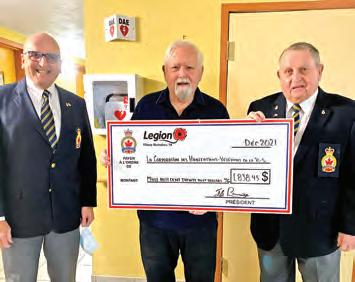
Christian Munger and Frederick Lawrence of Richelieu Branch in Saint-Jean-sur-Richelieu, Que., present $1,838 for a new defibrillator to Nike Perron, board chair of the local veterans’ residence.
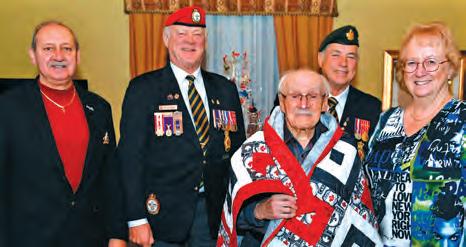
Marcel Delage and Gaston Vadnais of Trois-Rivières, Que., Branch join Bonnie Frapier and Louiseville, Que., Mayor Yvon Deshaies in presenting a Quilt of Valour to Second World War veteran Paul-Emile Beaumier.
ERIC DE WALLENS
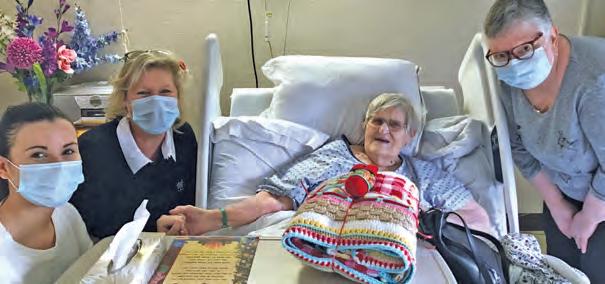
Two members of The Aylmer Happy Knitters group from Gatineau, Que., Branch, co-ordinator Manon Grégoire-Fleury (second from left) and assistant co-ordinator Lyne Leblanc (far right), present a hand-knitted lap blanket with a matching Izzy doll to a resident at the Renaissance Centre in Gatineau. They are accompanied by Janie-Pier Pelletier, a specialized educator at the Outaouais integrated health and social services centre.

Poppy chair Debbie Clavelle of Viscount, Sask., Branch presents her granddaughter Emma Lemky with the Family Scholarship. LOA TITMAN
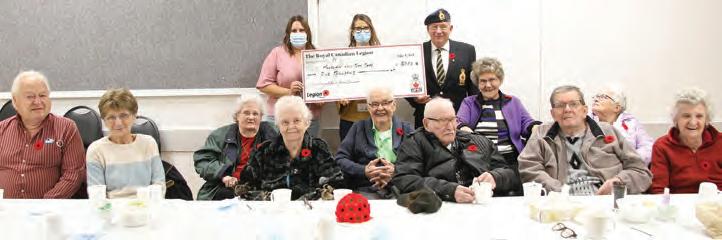
Residents of the Southeast Integrated Care Centre are on hand as Brian Beckett of Moosomin, Sask., Branch presents $5,000 for the long-term care recreation department to Sara Gustafson (left) and Brenda Hanas. THE WORLD SPECTATOR
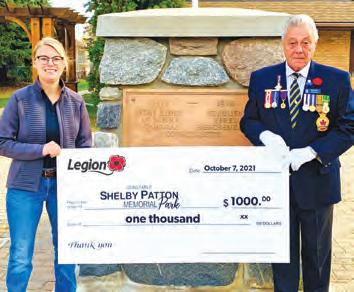
First Vice Matthew Smith of Indian Head, Sask., Branch presents $1,000 for Constable Shelby Patton Memorial Park to Mackenzie Craigie, the town’s facility operations manager. DONNA BAGAMERY
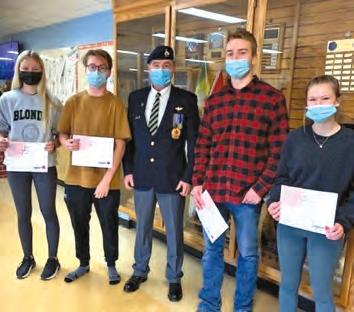
President Gord Kozroski of Gull
congratulates local winners of the senior poster and literary contests (from left) Chase Collier, essay; Janzen Summer, black and white poster; Jesstin Toney, poem; and McKenna Radtke, colour poster. DONNA
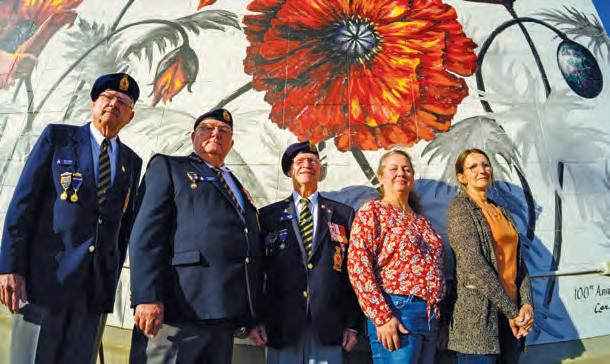
President Jack Jones (from left), Sgt.-at-Arms Ken Downie and service officer Noel Brunanski of Wakaw, Sask., Branch present $5,442 to Michael Lummerding, director of Lakeview Pioneer Lodge. Funds will provide furnishings for veterans’ rooms. JACK
Lions Club representative Terry Oleksyn (second from left) receives $500 for the local food bank from Wakaw, Sask., Branch President Jack Jones (from left), service officer Noel Brunanski and Sgt.-at-Arms Ken Downie. JACK JONES
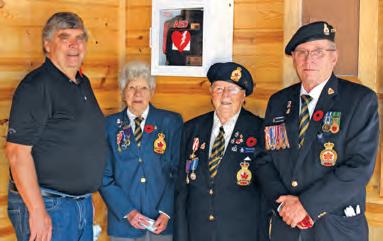
Mayor Bryan Matheson (from left) and Lumsden, Sask., Branch members
Joan McKinnon, Florence Holt and Chris Valgardson pose with the defibrillator the branch bought for Lumsden Centennial Hall. CHRIS VALGARDSON
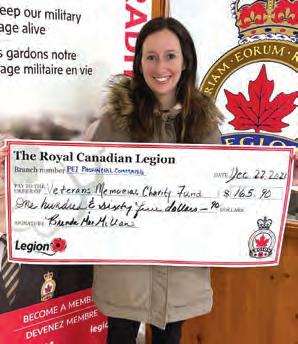
Amanda Neil donated $165.90, her share of profits from a Pampered Chef showing, to Prince Edward Island Command’s Veterans Memorial Fund.
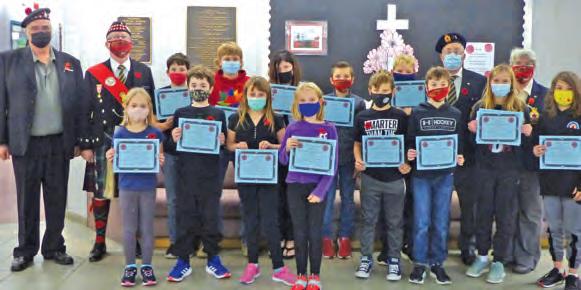
Ken Schwalm (rear left), Sgt.-at-Arms John Methven, Ed Morelli and Loa Titman (rear right) of Viscount, Sask., Branch, congratulate winners of the poster and literary contests from Viscount Central School. LOA TITMAN
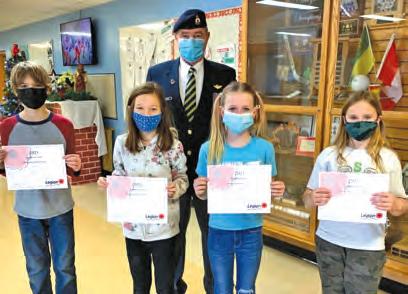
Junior poster and literary contest entrants (from left) Emmett Toney, black and white poster; Kamryn Dietrich, poem; Nikki Shulhan, colour poster; and Alexandra Schofields, essay; are congratulated on their first-place finishes by President Gord Kozroski of Gull Lake, Sask., Branch. DONNA HOLTBY
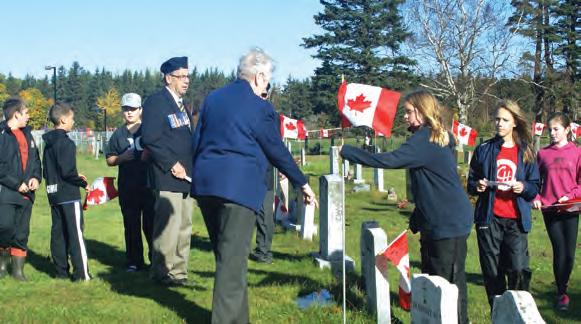
Grade 6 students from Tignish Elementary School, aided by Leo Gaudet and Eleanor Perry of
Branch,
the
President Nedra Clark of Carlyle, Sask., Branch presents Lyle Basken with the 50 Years Long Service Medal. DOUG WALDNER
John Yeo of Charlottetown, P.E.I., Branch congratulates literary contest winners Sarah Abraham, whose poem placed first, and second-place poetry winner Andrew Clow of Charlottetown Rural High School. J. YEO
Maxine Evans (left) and President Brian Rector (right) of Montague, P.E.I., Branch congratulate branch intermediate poster and literary contest winners (from left) Katie Myers, Charley Garrett, Matilda Brothers, Colbie White and Jamie Reid. EASTERN GRAPHIC
Community service officer Bruce Browning of Sarnia, Ont., Branch presents $3,000 to the Inn of the Good Shepherd, represented by executive director Myles Vanni.
Poppy chair Adrian Williams (left) and President Valerie Clark of Lord Elgin Branch in St. Thomas, Ont., present $6,000 to Jacqueline Bloom, CEO of St. Thomas
Gordon Perry
of George
VC Branch in Summerside,
accompanied by Elma Noye, present a donation of $250 for the 72nd Kin Family Christmas Appeal to Kinsmen president Eric Ferrish.
Joel Brisson of Kirkland Lake, Ont., Branch (left) presents $5,000 to the Kirkland Lake Goldminers Junior A hockey team, represented by Spencer Jones, Lucas Renzoni, Ryan Evenhuis, Mike Jones and Curtis Gervais.
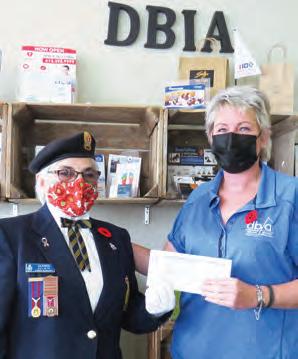
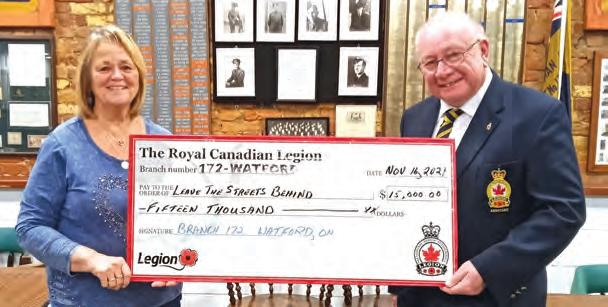
Watford, Ont., poppy chair Joan Westgate and treasurer Robert Alcock present $15,000 to Ontario Command’s Leave the Streets Behind program for homeless veterans.
Acton, Ont., President Wes Kutasienski (right) presents $4,000 to Greg Ferguson of the PPCLI Association’s SW Ontario Branch. The funds will go toward a headstone for First World War veteran John A. Munroe.
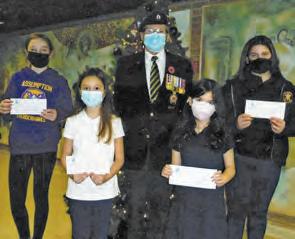
Local students in St. Catharines, Ont., receive awards for the remembrance poster and literary contests from Third Vice Richard Bucko of Polish Veterans Branch.
Stratford, Ont., vice-presidents Steve Zurbrigg (left) and Ken Albert, surrounded by poppy committee members, present $5,000 to St. Joseph’s Hospital Charitable Foundation Parkwood Institute, represented by development director Sue Hardy (centre).
Ontario Command First Vice Derek Moore accepts $2,500 for the Operation Service Dog program and $2,500 for the Joe Sweeney Fund homeless veterans program from Tradition Mutual representative Marg Jordan in Stratford, Ont.
In Sudbury, Ont., Lockerby Branch President Jennifer Huard (left) presents the Legionnaire of the Year award to Eddie Thompson, alongside Zone H-3 commander Sharleen Sissons and Second Vice Ray Young.
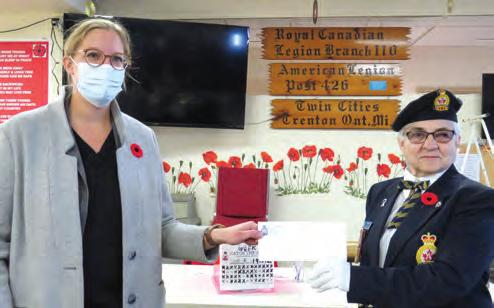
Trenton, Ont., LA President Glenda Trottman presents $500 to Jen Koornneef, general manager of the Trenton Care & Share Food Bank.
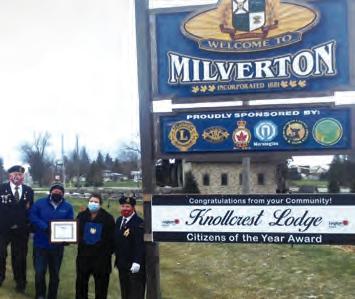
Milverton, Ont., Branch donates a sign recognizing the citizens of the year— Knollcrest Lodge long-term care home staff. Pictured from left are past president Fritz Ryter, Milverton Business Association representative Jeremy Matheson, Knollcrest CEO Jackie Yost and branch President Marilyn Dale.
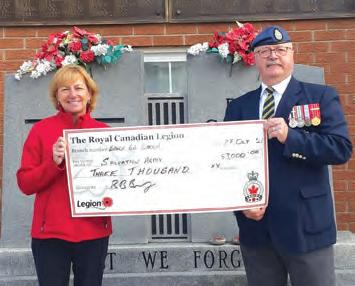
Community service officer Bruce Browning of Sarnia, Ont., Branch presents $3,000 to Brenda Dunn, co-ordinator of the Salvation Army community and family services kettle.
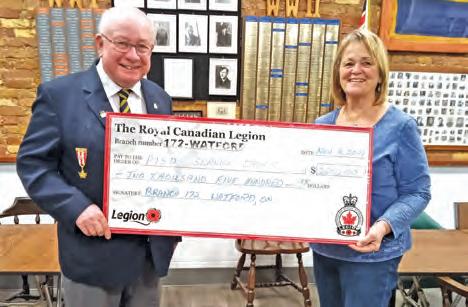
Robert Alcock and Joan Westgate of Watford, Ont., Branch present $2,500 to Ontario Command’s Operation Service Dog program.
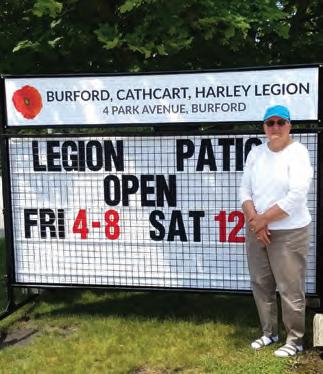
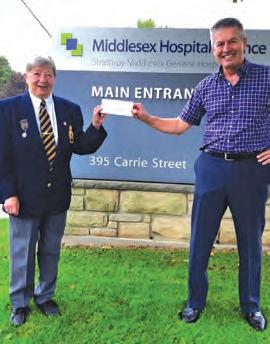
Ontario Zone A-5 hospital chair Gloria Mullin (left) presents $400 from the hospital trust to Ed Wheatley of the Middlesex Hospital Alliance in Strathroy, Ont.
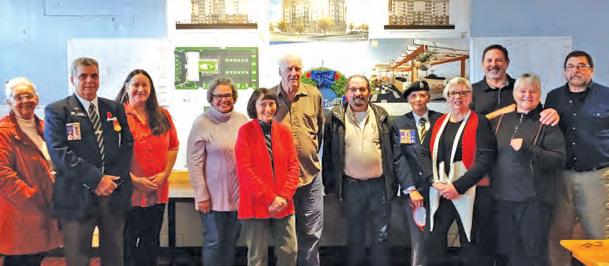
Membership
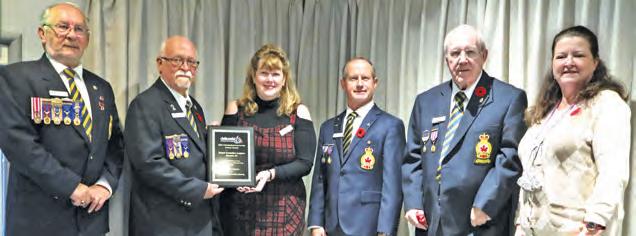
Deltassist Family and Community Services Society presents the Outstanding Community Partner Award to Delta, B.C., Branch. At the presentation are (from left) former branch president Bob Taggart and Immediate Past President Al Ridgway; Deltassist executive director Julie Chadwick; branch executive member Russell Ford and treasurer Tom Easton; and Corrine Harrison, the society’s community services co-ordinator.
Diamond Head Branch in Squamish, B.C., receives $889.85 from Squamish Lions Club, which prepared a free hot lunch after the remembrance ceremony from food donated by a local grocery store. Diners made donations for the meal, and those funds were in turn donated to the branch.
At the presentation of $20,000 each to two local hospitals from White Rock Branch in Surrey, B.C., are (from left) branch poppy chair Chris Voisey, branch President Dave Williams, Surrey Hospital Foundation representative Yolanda Bouwman, Peace Arch Hospital Foundation representative Amy Cross and branch poppy co-chair Carol Voisey.
Central Vancouver Island Zone representatives Rick Nickerson (left) and Norm Anderson hold a $27,326 cheque to be presented to Cockrell House, which provides transitional housing and social services to veterans. Funds were raised at a zone dinner and silent auction.
Louise Miller and Joseph Novak, believed to be the last surviving Second World War veterans in the Yukon, meet and find a common bond at a Whitehorse Branch dinner.

Treasurer Bill Meadus of Clarenville, N.L., Branch presents $1,000 to Larry Reid of Clarenville Region Extended Seniors’ Transportation.
Dominion Vice-President Berkley Lawrence (right) and Hal Evely of Carbonear, N.L., Branch wish Second World War veteran John Pinhorn a happy 100th birthday. Pinhorn has been a Legion member for 77 years.
As team and branch members look on, Vice-President Audrey Pike of Burin, N.L., Branch presents $200 to softball association president Amy Cross.
President John Blackwood of Mount Pearl ParkGlendale Branch in Mount Pearl, N.L., presents $20,000 to Caribou Memorial Veterans Pavilion resident care manager Dawn Haines as branch members look on. The money will go toward refurbishing veterans’ rooms.
Jervis Bay Memorial Branch in Saint John, N.B., unveils its new monument, the Stairway to Service. The ribbon was cut by Second World War air force veterans George Kelly and Glennis Boyce. MIKE ADAMS
Norton, N.B., Branch executive members Bill French and Debbie Saunders, along with branch secretary Irene Sawler, accept a $1,235 cheque from Glen Gray of Midland Meadows Golf Course.
President Gary Hicks of Hampton, N.B., Branch presents $400 to Jacob Huisman, captain of the Hampton Bulldogs hockey team. Branch member Arnold Hopper (right) is the Bulldogs’ general manager.
St. John’s Branch congratulates its longest-serving member, Second World War navy veteran Bill Saunders, on his 100th birthday. Saunders joined the branch in 1949.
First Vice Gerald Mullins of Chatham Branch in Miramichi, N.B., presents $5,000 to Judy Losier, director of Dr. Gerard and Judy Losier Family Foundation Inc. The donation will help fund a new hospice.
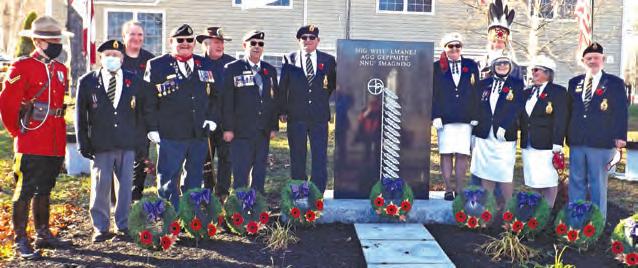
Members of Herman Good VC Branch in Bathurst, N.B., attend the Indigenous Veterans Day ceremony at the Pabineau First Nation in Pabineau Falls, N.B.
Glenn Hubbard, a business agent of the International Brotherhood of Electrical Workers Local 37 (right), presents $2,000 to Rev. Don Shephard, first vice of Jervis Bay Memorial Branch in Saint John, N.B. H.E. WRIGHT
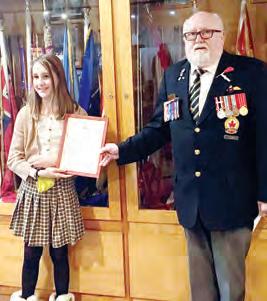
Bob Griffin of Fredericton Branch presents a first-place certificate to junior essay winner Harper Rinehart in the 2021 poster and literary contests.
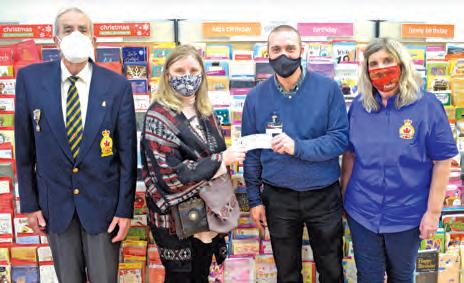
President Kathy Campbell and incoming president Fred Healey of Peninsula, N.B., Branch present $500 to Hazel Clarke of the North End Food Bank in Saint John, N.B. Shawn Wilson, manager of the local Real Atlantic Superstore, also attends. H.E. WRIGHT
Fredericton Branch presents $2,500 to Hospice Fredericton. From left are First Vice Tony Quackenbush, Alyssa Chacan of Hospice Fredericton, secretary-treasurer Kristen Greenier and branch President Don Swain.
Vice-President Laurie Brown of Grand Manan, N.B., Branch and grandson Cooper Bokkers present $500 to Deputy Mayor Roger Fitzsimmons. Cooper, a Grade 6 student at the Grand Manan Community School, spearheaded a campaign to raise money for a skateboard park. New Brunswick Command made a matching $500 grant from the Community Services Fund.
President Kathy Campbell and incoming president Fred Healey of Peninsula, N.B., Branch present $500 to Hazel Clarke of the North End Food Bank in Saint John, N.B. H.E. WRIGHT
New Brunswick Command
President Daryl Alward and First Vice Tony Chevalier present $5,000 to Lindsay Gallagher, executive director of the Military Family Resource Centre at Canadian Forces Base Gagetown in Oromocto, N.B.
New Brunswick Command
Vice-President Harold Defazio presents cheques to Afghanistan veterans Mitch Newell and Patrick Gordon, co-founders of Feed Saint John, which has provided 30,000 meals to area schoolchildren. The cheques are $300 from Kennebecasis Branch in Rothesay, N.B., and $500 from New Brunswick Command’s Community Service Fund.
Bursary chair Ann Pages (right) of Port Arthur L.A. in Thunder Bay, Ont., presents $400 bursaries to (from left)
Sandra Miecznikowski on behalf of her daughter Guinevere, Jennifer Finley on behalf of her daughter Vivian Basque and Grace Perkins. GEORGE ROMICK
President Les Newman of Port Arthur Branch in Thunder Bay, Ont., and L.A. President Audrey McDonagh present $1,000 to Emey Hendricks (right) of the Boys & Girls Club of Thunder Bay. GEORGE ROMICK
Delta, B.C., Branch awarded a Certificate of Appreciation to Legionnaire Hendrick (Dirk) Vanbeek for service to the community. He rescued a family from an overturned vehicle in a water-filled ditch.
Sue Knox received a Certificate of Merit from Moose Jaw, Sask., Branch.
A memorial plaque has been added to the Anniversary Branch building in Britt, Ont., to commemorate local dead from both world wars.
Send your photos and news of The Royal Canadian Legion in action in your community to your Command Correspondent. Each branch and ladies auxiliary is entitled to two photos in an issue. Any additional items will be published as news only. Material should be sent as soon as possible after an event. We do not accept material that will be more than a year old when published, or photos that are out of focus or lack contrast. The Command Correspondents are:
BRITISH COLUMBIA/YUKON: Graham Fox, 4199 Steede Ave., Port Alberni, BC V9Y 8B6, gra.fox@icloud.com
ALBERTA–NORTHWEST TERRITORIES: Bobbi Foulds, Box 5162, Stn Main, Edson, AB T7E 1T4, rfoulds@telus.net
SASKATCHEWAN: Tara Brown, 2267 Albert St., Regina, SK S4P 2V5, admin@sasklegion.ca
MANITOBA: William Trefry, B207 Academy Rd., Winnipeg, MB R3M 0E2, wptrefry@gmail.com
NORTHWESTERN ONTARIO: George Romick, 320 Admiral Court, Thunder Bay, ON P7A 8B5, romickg@tbaytel.net
ONTARIO: Mary Ann Goheen, Box 308, Gravenhurst, ON P1P 1T7, magoheen@sympatico.ca
QUEBEC: Pierre (Pete) Garneau, 105-2727 Saint-Patrick St., Montreal, QC H3K 0A8, webmaster@qc.legion.ca
NEW BRUNSWICK: Harold Wright, 2-299 Main St., Saint John, NB E2K 1J1, foulis20@gmail.com
NOVA SCOTIA/NUNAVUT: Marion Fryday-Cook, 2450 Highway 3, RR #1, Chester, NS B0J 1J0, mfrydaycook@hotmail.com
PRINCE EDWARD ISLAND: John Yeo, 657 Rte. 19, Meadow Bank, PE C0E 1H1, islander657@yahoo.ca
NEWFOUNDLAND AND LABRADOR: Brenda Slaney, Box 5745, St. John’s, NL A1C 5X3, bslaney@nfld.net
DOMINION COMMAND ZONES: EASTERN U.S. ZONE, Gord Bennett, 803-190 Cedar St., Cambridge, ON NIS 1W5, Captglbcd@aol.com; WESTERN U.S. ZONE, Douglas Lock, 1531 11th St., Manhattan Beach, CA 90266, doug.lock@verizon.net.
Submissions for the Honours and Awards page (Palm Leaf, MSM, MSA and Life Membership) should be sent directly to Stephanie Gorin, Legion Magazine, 86 Aird Place, Kanata, ON K2L 0A1 or magazine@legion.ca.
TECHNICAL SPECS FOR PHOTO SUBMISSIONS
DIGITAL PHOTOS—Photos submitted to Command Correspondents electronically must have a minimum width of 1,350 pixels, or 4.5 inches. Final resolution must be 300 dots per inch or greater. As a rough guideline, colour JPEGs would be between 0.5 megabytes (MB) and 1 MB.
PHOTO PRINTS—Glossy prints from a photofinishing lab are best because they do not contain the dot pattern that some printers produce. If possible, please submit digital photos electronically.
FRENCH INSERT—To receive a French insert of Legion Magazine content, please contact MagazineSubscriptions@legion.ca or call 613-591-3335.



DON ANDREW George Pearkes VC Br., Summerside, P.E.I.
BRYCE ALLAN Gladstone Br., Fredericton Junction, N.B.
EVERETT MUIR Perth Regt. Veterans Br., St. Mary’s, Ont.

BC/YUKON
BRIAN RAINBOW
Delta Br.
ALBERTA/ NORTHWEST TERRITORIES
LLOYD DOOL
Camrose Br.
BARB STEINMAN
Camrose Br.
ESTER Mac AULAY
Moose Jaw Br.
DAVID TURLEY
Arnprior Br.
NORMA JEAN
Waterford Br.
QUEBEC
ROMEO GAGNON
Chicoutimi Br.
ALAIN LANGLOIS
Chicoutimi Br.
NEW BRUNSWICK
DEBORAH SEARS
Sackville Br.
MIKE HEDDERSON
Brigus Br.



WAUCAWSH, CHARLIE—Third Division Army Service Corps in Europe during the Second World War. Believed to have come from Northern Ontario, where he was involved in the road construction industry during the 1930s. He was married and my father wrote letters to his wife back in Canada on his behalf. Would like to talk or meet with family or descendants. Grant Chambers, PO Box 1240, Boissevain MB R0K 0E0, 204-534-8169, granthchambers@gmail.com.
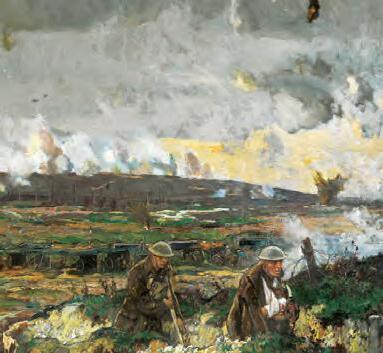


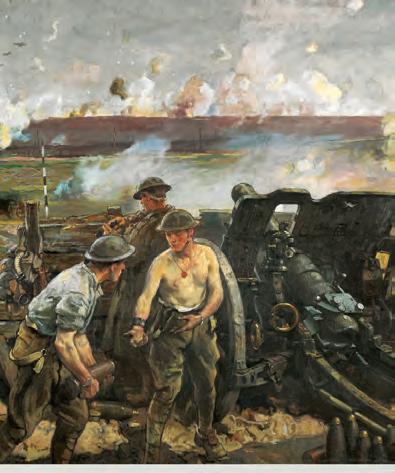

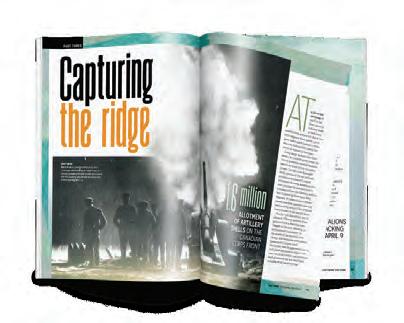
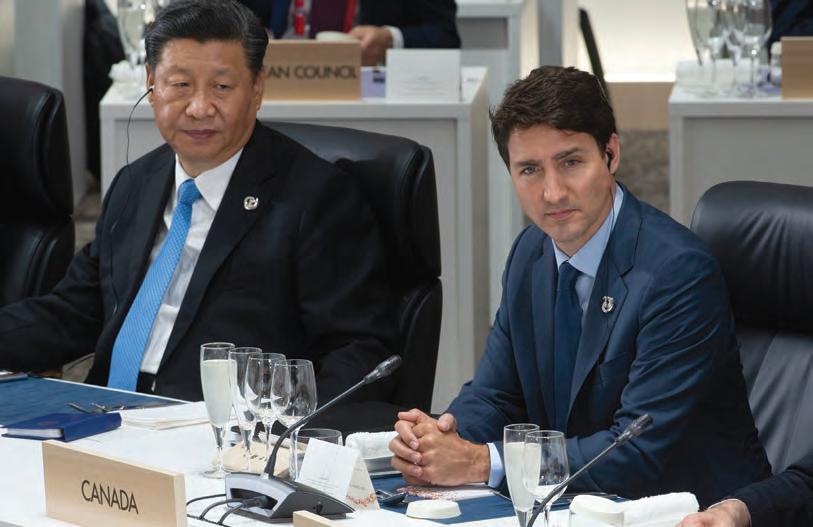
Recent events have led many Canadians to understand that China has become more aggressive in pursuit of its interests.
Prime Minister Justin Trudeau and Chinese President Xi Jinping attend a plenary session at the G20 Summit in Osaka, Japan, in June 2019.
The 33-month detention of Michael Kovrig and Michael Spavor hit home. So has Beijing’s territorial demands on its neighbours, its fishing fleet’s encroachment on other countries’ territorial waters, its illegal construction of artificial islands in the South China Sea, its threats against Taiwan and its hacking of government and corporate computer networks. All are signs of a much more aggressive China.
Recent polling demonstrates that Canadian public opinion has hardened significantly against President Xi Jinping and his government’s policies. Seventy-six per cent of respondents to a Globe and Mail/Nanos poll in October
opposed Canada allowing Huawei to provide equipment for 5G networks. That figure was 53 per cent two years ago. Sixty-nine per cent said Canada should delay seeking a free-trade arrangement with China, up from 47 per cent.
Many corporate leaders used to harbour hope that a free market and an increasingly democratic China would become a big customer open to businesses ranging from manufacturing to banks and insurance companies. Those hopes have largely been dashed.
The Chinese embassy and consulates in Vancouver, Calgary, Toronto and Montreal have denounced followers of Falun Gong and intimidated students and residents who protested the stripping away of Hong Kong’s autonomy
or accused China of genocide in its t reatment of Uyghurs. To shut down Chinese-Canadian dissidents, Chinese officials have threatened punishment against their relatives in the mainland.
Beijing’s United Front Work Department has reportedly targeted international policy-makers, opinion leaders and media in a sophisticated and long-term effort to build support for the Chinese government’s objectives. For example, in 2021, the Conservative party alleged that China influenced federal election ridings with large Chinese populations and smeared Chinese-Canadian candidates, including Conservative MP Kenny Chiu, who claimed to have been targeted for his tough-on-China approach.
The Chinese-language media in Canada appears to be less independent than it used to be. “I cannot find a real independent and non-partisan newspaper here reporting Chinese affairs,” said Victor Ho, former editor-in-chief of the Vancouver edition of Sing Tao, a popular Chinese-language newspaper in Canada.
The United Front is said to have made sustained efforts to ensnare influential politicians, public servants and academics by inviting them to join corporate boards in China or offering financial support to policy think tanks. That is a long-range influence operation.
“Some have benefited directly or indirectly from the Chinese PRC, military-civil party, and state regime,” wrote Charles Burton of the MacdonaldLaurier Institute and a former counsellor at the Embassy of Canada to China. “Thus they become inclined to act on behalf of the regime as there is an expectation that Canadians who engage in lucrative arrangements with China show friendship toward the regime by promoting Chinese aims in Canada.
“We should consider developing an equivalent to the Australian Foreign Influence Transparency Scheme Act,” said Burton, “so that we can determine if people are speaking out in ways that are consistent with the interests of the Chinese state. Canadians should know if politically influential individuals have received benefits that could potentially influence their decision-making ability.”
Chinese intelligence agencies and China-based hackers have also been busy.
David Vigneault, director of the Canadian Security Intelligence Service (CSIS), flatly stated in 2021 that Beijing’s military and intelligence services have gathered sensitive data on Canadians, stolen key technology, and attempted to intimidate Canadians from mainland China. The country, he said, poses a serious strategic threat to Canada.
“Our investigations reveal this threat has unfortunately caused significant harm to Canadian companies,” he said. “When our most innovative technology and know-how is lost, it is our country’s future that is being stolen.”
Vigneault stressed that Beijing is “using all elements of state power to carry out activities that are a direct threat to our national security and sovereignty.”
Predictably, China has denied all charges.
“The relevant remarks of the Canadian side have no factual basis, and China firmly opposes them‚” said Wang Wenbin, spokesperson for China’s Ministry of Foreign Affairs. “We urge some politicians on the Canadian side to abandon Cold War thinking and ideological bias, stop their unwarranted attacks on China, stop spreading alarmist remarks, and do more to benefit China-Canada relations and do more to increase mutual trust between China and Canada.”
What should be done? Canada needs a foreign influence transparency act to prevent China’s further meddling. Canadian intelligence and security needs bolstering. The RCMP and CSIS need to be reorganized to focus more on China and its activities in Canada, and that means training more Chinese linguists with expertise on Chinese Communist Party tactics. And, finally, the government must cease its timid attitude toward China and its activities here and abroad. After the two Michaels affair, espionage and hacking, Ottawa should understand that China is no friend of Canada. L
John Ward
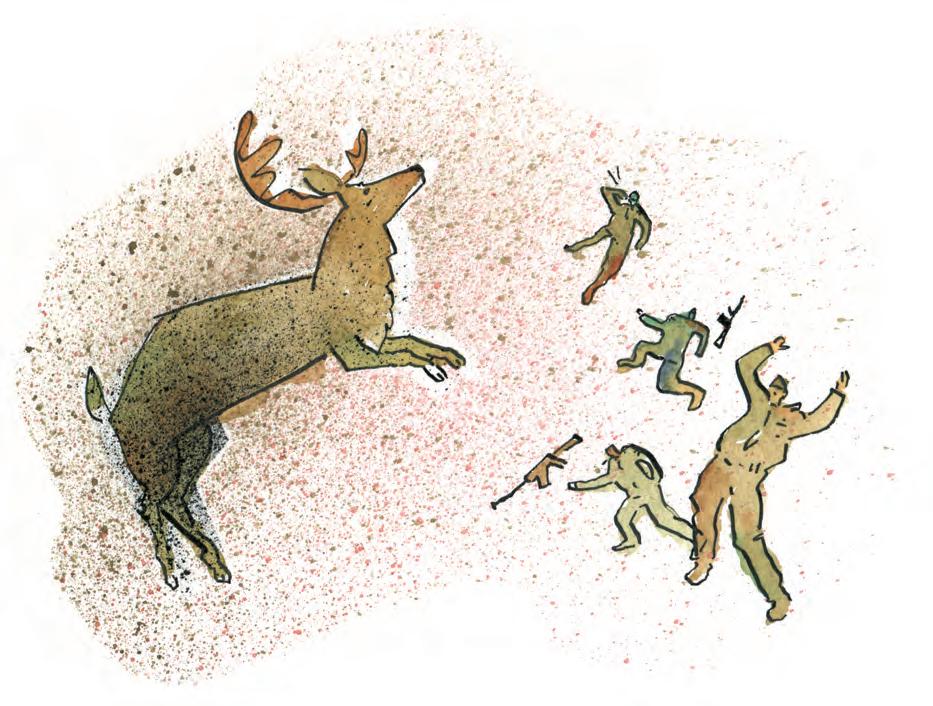
Alex Gauthier, a retired sergeant from the Governor General’s Foot Guards, recalls a reserves exercise at CFB Petawawa in August 1984.
As a corporal with two years of experience, he was surprised to be made a section commander for the two-week exercise.
To start, the troops dug in, rigged concertina wire, dialed in their support weapons and placed trip flares along the perimeter. But days and nights of routine soon faded to boredom.
“I tried to keep the troops motivated by saying: ‘Hey, we’re going to get bumped tonight guys, switch on.’ It never happened.”
Then, one night, a trip flare went off.
Gauthier looked out to see a huge whitetail buck, frozen in place by the bright flare.
“All hell broke loose. I heard FN rifle fire, then bursts of automatic FN C-2 and finally the GPMG [general-purpose machine gun] opening up.
“Somebody threw a thunder flash, then another. The whole company stood to and they were all shooting.
“I yelled: ‘Stop, stop, stop!’ No one heard me.”
He crawled to the command trench and found the platoon warrant on the radio.
“I yelled in his ear that we are throwing a hell of a lot of the Queen’s ordnance on the plain all because of a bloody deer! The handset fell to his side and his mouth went agape. He looked at me for a few seconds and then huddled with the platoon commander.
> Do you have a funny and true tale from Canada’s military culture? Send your story to magazine@legion.ca
“He came back, smiled and said: ‘Alex, let’s treat this as a contact, the guys need to do their job.’”
Eventually, the commander pierced the sporadic rifle fire with a whistle blast and things calmed down.
Despite the mistaken barrage, the incident helped the group bond as a team, which became more aggressive in its patrolling and “The platoon commander and warrant made the right call. They exploited an opportunity to train their team.”
Mascots have long been a part of the military life, although there are times when rules must be bent to accommodate them.
During the Second World War, the Calgary Highlanders were accompanied by an Aberdeen terrier named Heather. When it came time to cross the Atlantic in a troopship, the regimental band stowed Heather in the bass drum, safe from the prying eyes of officialdom.
During the Korean War, HMCS Cayuga had a ship’s dog named Alice. She was apparently fearless and went into the drink several times and had to be rescued.
It is said that the shout “Alice overboard!” drew a quicker response than the traditional “Man overboard.”
During a stint with the UN peacekeeping mission in Cyprus in 1974, the Canadian Airborne Regiment acquired a large white duck, which marched into its camp one morning. Since it was clearly a waterfowl, it was signed on as a naval asset and dubbed Petty Officer Wilbur Duck.
Retired master warrant officer Pete (Rosie) Rosenberg of Pointe-Du-Chêne, N.B., took part in a parachute refresher course at Petawawa in 1988.
The class finished with a jump. As he boarded a Chinook helicopter, a buddy asked for a favour: “Rosie, can you do a pivot exit and watch my exit?”
“No problem,” Rosie replied.
In a pivot exit, the jumper turns back to look at the aircraft.
As Rosie pivoted in the air, his goggles blew off. The slipstream blinded him completely.
On landing, his buddy asked how his jump looked.
“Awesome,” Rosie said. “One of the best dive exits I’ve ever seen.”
He has never told him he never saw a thing.
Louis Gelman of Toronto served in the army during the Second World War. He was wounded and taken prisoner in the closing months of the conflict. He was liberated on April 12, 1945, and sent to a hospital in Birmingham, England.
One day, he saw a young woman walking through the ward, wishing everyone well.
“I said, ‘Nurse, how old is she?’
‘She’s 19,’ she replied.
‘Well, maybe I can make a date with her,’ I said. ‘After all, I’m 21, she’s 19.’
The nurse looked at me and said, ‘Sorry, can’t do that.’
‘What do you mean?’ I said. ‘I fought for your country, I nearly got killed, twice, you know. You’re telling me I can’t even go out with an English girl?’
‘No, you can’t,’ she says.
‘Why not?’ I said.
The nurse replied simply, ‘She’s Princess Elizabeth.’”
More alleged excerpts from fitness reports:
• Since his last report, he has reached rock bottom and has started to dig.
• This officer should go far and the sooner he starts, the better.
• He has delusions of adequacy.
• This officer should not be allowed to reproduce.
• He sets low personal standards and then consistently fails to achieve them.
• This officer reminds me of a gyroscope; always spinning around at a frantic pace but not really going anywhere.
• This officer is really not so much of a hasbeen, but more of a definitely won’t-be. L
By Mark Zuehlke
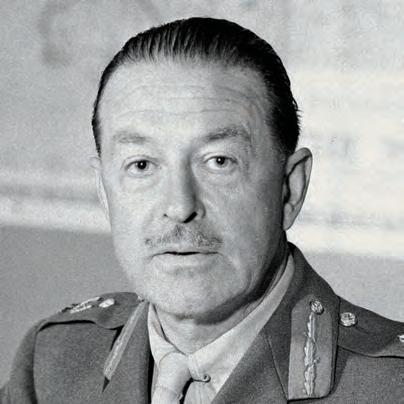

“No other troops in the world but German paratroops could have stood up to such an ordeal and then gone on fighting with such ferocity.”
—Harold Alexander
September 1943, British General Harold Alexander’s 18th Army Group—having conquered Sicily—invaded mainland Italy. The stated intention was to defeat Italy but, more importantly, Alexander was to prevent German forces from reinforcing the Russian front or strengthening defences on the French coast. Alexander had dedicated his life to being a professional soldier, entering Royal Military Academy Sandhurst when he was 19. By 1943, the 52-year-old had earned a Military Cross and Distinguished Service Cross in the First World War, defended British Empire interests in the interwar years, fought at Dunkirk, served in Burma against the Japanese, and played a pivotal role in defeating German and Italian forces in North Africa through to their surrender in Tunisia.
Along with the British Eighth Army under General Bernard Montgomery crossing the Strait of Messina and the U.S. Fifth Army under General Mark Clark landing at Salerno, Alexander hoped to take Rome in a rapid pincer advance up both Italian coasts.
Instead, the Allies slammed head-on into German Field Marshal Albert Kesselring’s 10th Army. The ensuing campaign was a gruelling, protracted and bloody slog across rugged terrain. Rivers crisscrossing the line of advance provided ideal defensive
positions that had to each be taken in turn. As one obstacle fell, Kesselring masterfully pulled his troops back to the next feature— denying the Allies a decisive victory.
Alexander was dogged by a perpetual shortage of manpower and resources. Bogged down before Monte Cassino in early 1944, he scrapped the pincer effort and concentrated both armies on the western coast in order to mount a breakthrough to Rome in May.
For Operation Diadem, Alexander believed the Allies required a three-toone infantry superiority, only to learn the ratio could be no more than oneand-a-quarter times in his favour.
Still, by early June the Allies had shattered German defences and were poised to take Rome. Alexander, however, no longer coveted the Eternal City. He sought instead to cut off Kesselring’s retreating force and destroy it. Such a victory could decide the Italian campaign. The plan was for Clark’s army to trap the Germans by blocking Highway 6 between Valmontone and the Alban Hills. Instead, taking advantage of Alexander’s conciliatory nature—often considered his major failing—Clark turned prematurely north for the distinction of liberating Rome. The Germans escaped to fight on. No decisive victories followed until the German surrender in Italy on April 29, 1945. War over, Alexander served as Canada’s governor general from April 12, 1946, to Feb. 28, 1952. L
> To voice your opinion, go to

hen the Allies invaded Italy in early September 1943, the German response remained undecided with two field marshals—Albert Kesselring in the south and Erwin Rommel in the north—charged with its defence. After Italy’s Sept. 8 surrender, Rommel advocated w ithdrawing to protect Milan’s industrial heartland while Kesselring—having freshly evacuated his troops from Sicily—argued t he Allies could be halted in the south or d rawn into an attritional war by standing on successive defensive lines. Kesselring’s strategy gained sway after the U.S. Fifth A rmy suffered heavy losses during the Salerno landings.
“I wanted to be a soldier. I was set on it a nd…I can say that I was always a soldier heart and soul,” Kesselring later wrote. He joined the army at 18 in 1904. He served on the Western Front for two years before his appointment to the general staff. In the 1930s, under Hermann Göring’s patronage, Kesselring became the Luftwaffe’s chief of air staff. Promoted to field marshal in 1940, he commanded a ir units during the Battle of Britain and t he Siege of Malta before being tasked w ith defending Sicily and then commanding the 10th Army in Italy.
Nicknamed “Smiling Albert,” Kesselring exuded a cheerful, seemingly endless confidence that exacerbated a frequent inability to accept unpleasant realities.
In May 1944, Kesselring almost fatally refused to accept that Monte Cassino a nd the Hitler Line—soon shattered by I Canadian Corps—could fall. Retreating to the Melfa River, he imagined holding t hat precarious line until winter precluded further operations. This delusion was quickly shattered by the unceasing Canadian advance that put his entire army at risk of being cut off—a fate only averted when U.S. G eneral Mark Clark a llowed its escape while he liberated Rome instead.
KESSELRING EXUDED A CHEERFUL, SEEMINGLY ENDLESS CONFIDENCE
Ever agile, Kesselring pulled his forces north in a rapid withdrawal to the Gothic Line—anchored on the Apennine dogleg across the breadth of Italy. Here he frustrated one Allied offensive after a nother—save for the Canadian-led Eighth A rmy breakthrough on the Adriatic coast.
Seriously injured on Oct. 25, Kesselring briefly returned to Italy command in January 1945 before he was appointed C ommander-in-Chief West on March 10. No miracles on the Western Front were possible. War lost, Kesselring was tried and sentenced to death for war crimes against Italian civilians murdered in retaliation for partisan operations. In October 1952, soon a fter his sentence was commuted to life imprisonment, Kesselring was released for health reasons. He died on July 16, 1960. L
“I
was always a soldier heart and soul.”
—Albert Kesselring
By Sharon Adams
Soldiers engraved their stories in the soft metal of shell casings
Supply wagons pass mounds of empty crates and spent shells (opposite top) from the Battle of Vimy
Railway engineer
Patrick Joseph LeBlanc
had a very long war. He enlisted in the 52nd Battalion (New Ontario) in Fort William in January 1915 and spent the year after war’s end in the army of occupation in Germany. During his time overseas he earned the Military Medal and Bar.
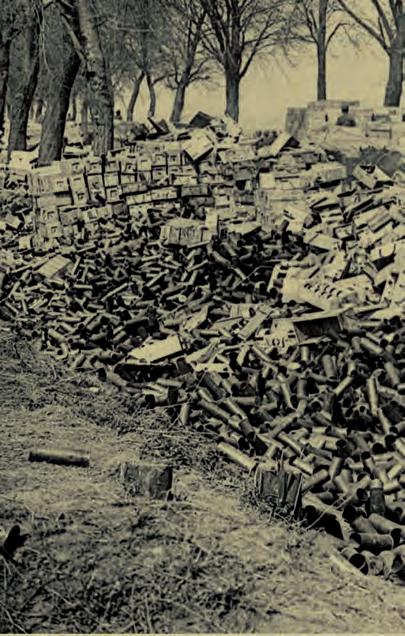

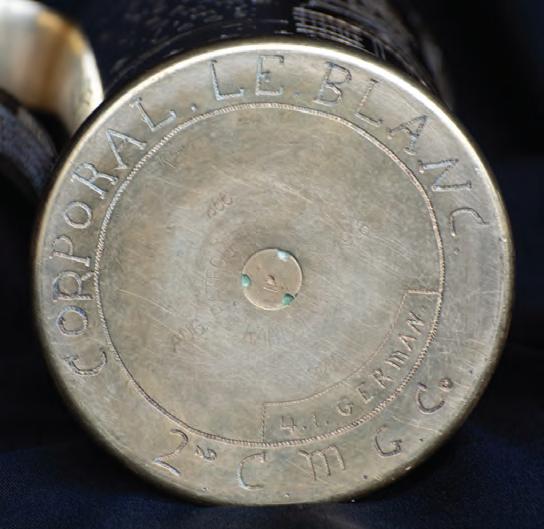
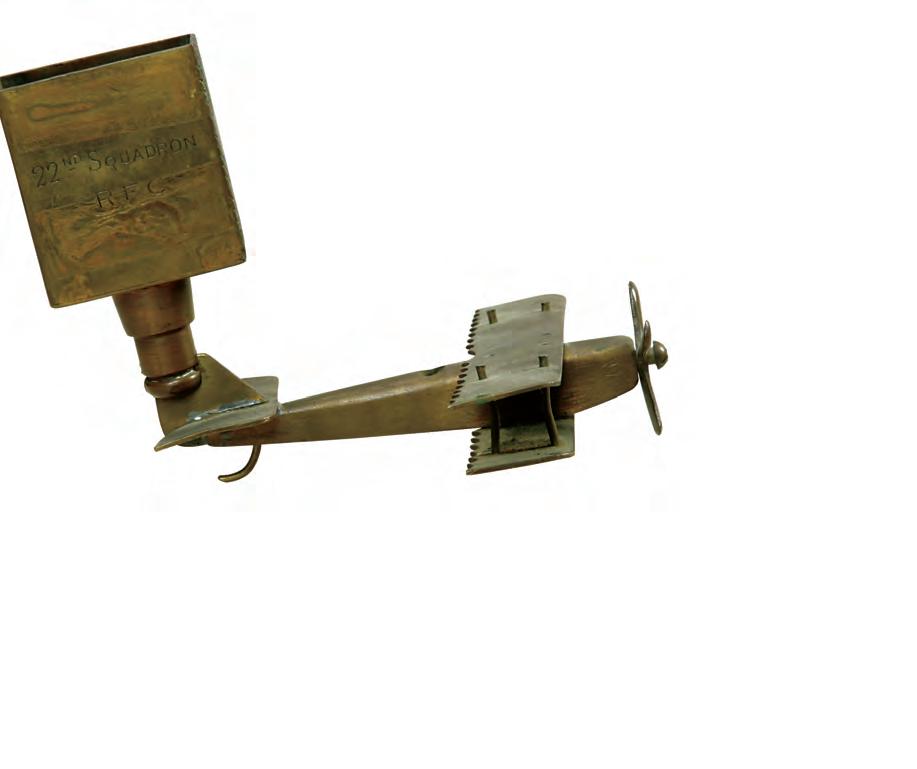
A brass aircraft matchbox holder (above) dating from the Battle of the Somme in 1916. Corporal P.J. LeBlanc documented his war experiences on a jug (right) made from a shell casing.
First World War soldiers had long hours and days to fill between battles. Many turned to creating art from materials at hand and, boy, were there a lot of spent
shell casings littering the landscape. Allied artillery fired more than a million rounds during the Battle of Vimy Ridge alone.
LeBlanc found one shell ideal for what he had in mind to document his service in Belgium and France.
When he returned to Canada and settled in Schreiber, Ont., he brought with him a pitcher standing about 30 centimetres tall and
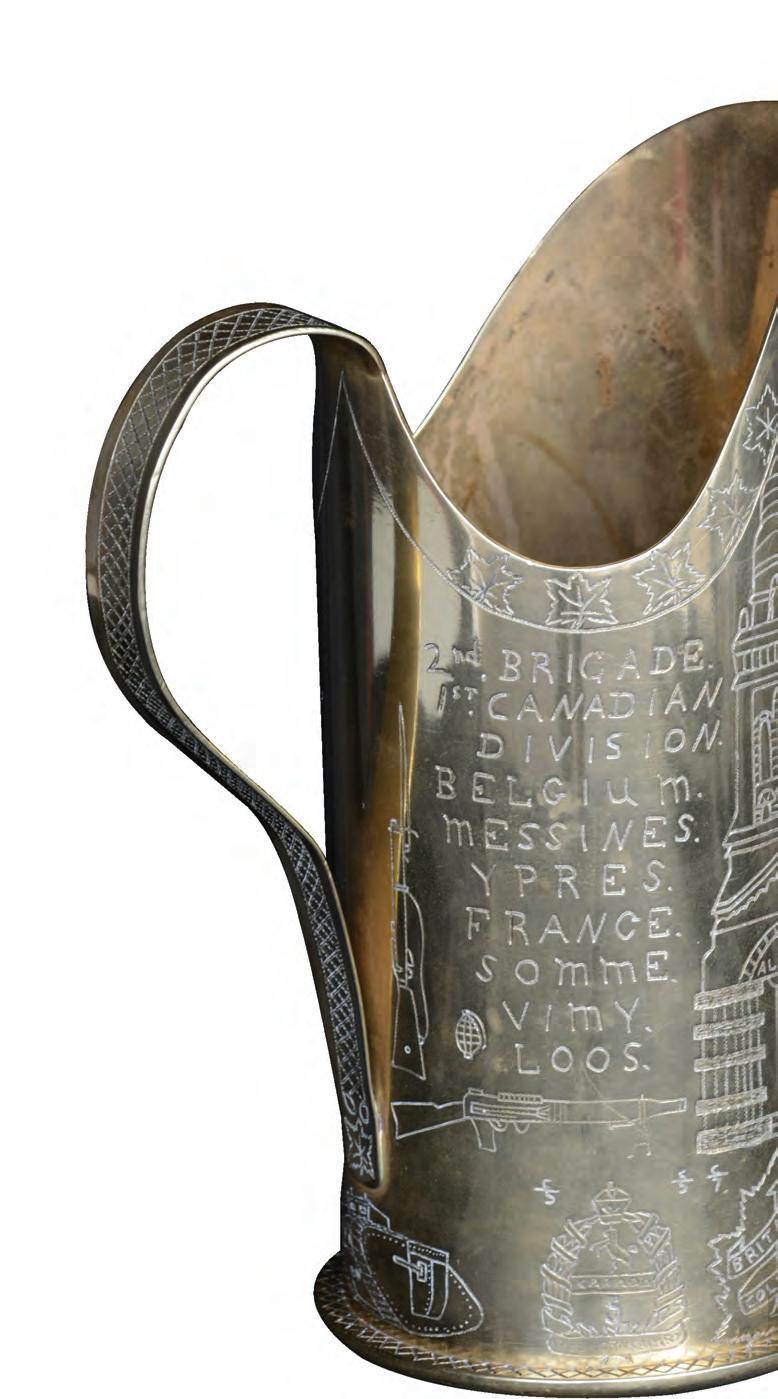

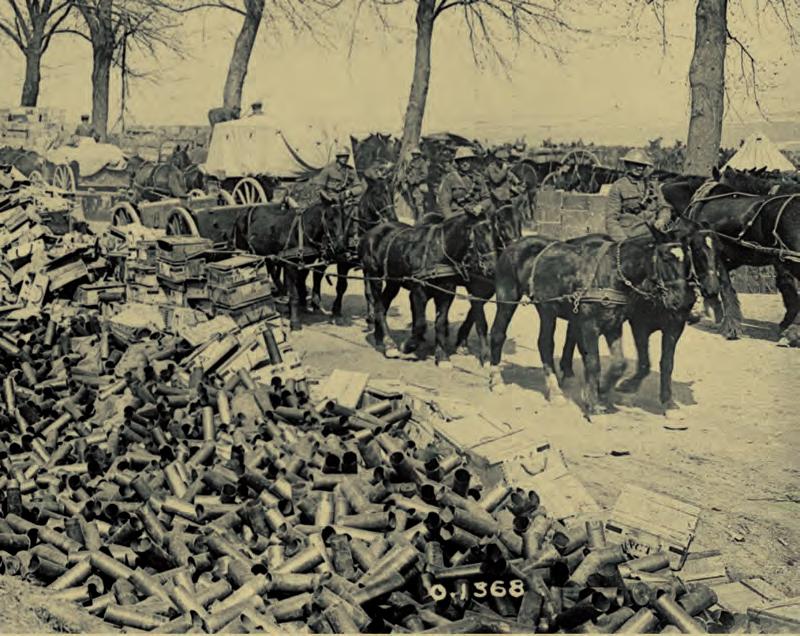
BY



“He carved it using a sharpened darning needle.”
—Margaret Santerre
weighing nearly 15 kilograms, completely covered with images of his time overseas.
There are renderings of iconic buildings, a record of battles fought, images of tanks, grenades, aircraft and field guns, and images of Canada, too— maple leaves and provincial symbols.
The soft metal in the casings—brass, copper and aluminum—was widely used to create and decorate souvenirs, mementoes and presents. Some, like Leblanc’s, trace a soldier’s own history of the war; others commemorate a single battle.
Solders fashioned the metal into jewelry, candlesticks, lamp bases, tobacco jars, cigarette boxes, lighters, matchbox covers, ashtrays, cups, tankards and jugs. The artwork ranged from simple monograms to elaborate art nouveau designs.
It was such a widespread pastime that merchants sold stencils of popular designs. In exchange for a few cigarettes, a soldier could buy a stencil, use iodine to transfer it onto the shell case, then employ whatever was to hand, often a bent nail, to engrave the design in the metal and decorate the background.
Some pieces were made by, or with help from, soldiers with pre-war metalwork or design experience; these crossed the line between folk art and fine art.
After the war, trench art became chic as household decorations. Sadly, since the casings were government
1.5 billion
Shells fired by all armies on the Western Front
170 million
Shells fired by the British army in the war
1.6 million
Shells allotted to artillery on the Canadian Corps front at Vimy Ridge
More than
property and prohibited from personal use, most artists did not sign their work, so it was difficult to tell whether it came from the front or a studio supplying reproductions for mass sale in souvenir shops and department stores.
“The jug meant everything to me,” said Margaret Santerre, LeBlanc’s daughter, who lives in Terrace Bay, Ont. “He carved it using a sharpened darning needle. He had a friend who had been a jeweller [before the war] who showed him how to do it.”
LeBlanc’s jug has now been passed on to Santerre’s grandson. In addition to these objects being treasured by veterans’ descendants, trench art has cachet among collectors. Prices on eBay range upward from about $50 for simple shell casing vases. More elaborate pieces, items made from shells from identifiable battles and those signed by the artist fetch more—such as a lamp with Masonic emblems made from a 1915 artillery shell, advertised for $1,133.
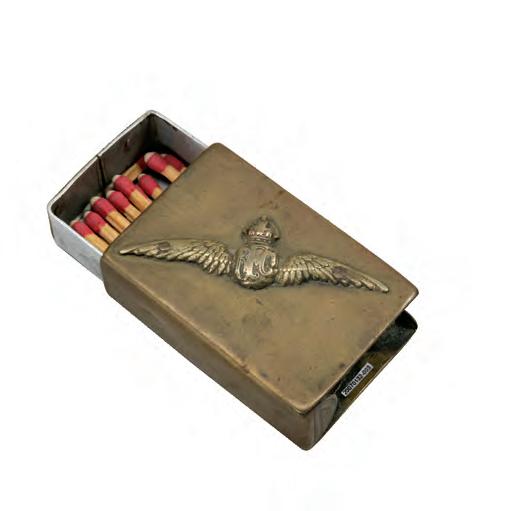
The Canadian War Museum has some fine examples by trench artists, but many First World War displays in museums and Legion branches across the country also have samples of the soldiers’ handiwork. L
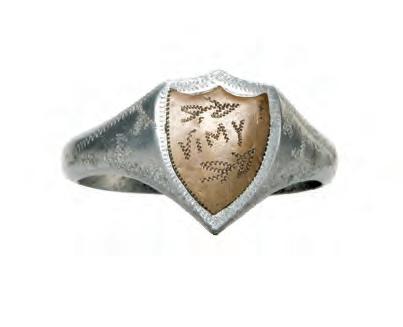

By Don Gillmor
“THE ANNE THAT APPEARED BEFORE ME,” HE NOTED, “ WAS VERY DIFFERENT FROM THE DAUGHTER I HAD LOST.”
of millions and yet, if I look up into the heavens, I think it will all come right, that this cruelty too will end, and that peace and tranquility will return again.”
Three days later, Nazi soldiers who had received a tip discovered the secret annex where she was living. They arrested the group and stole the silverware but left Anne’s diary behind. She and Margot died of typhus in the Bergen-Belsen concentration camp in February or March 1945 and were buried in a mass grave. The British liberated the camp only a few weeks later. Their mother died of starvation in Auschwitz.
Only their father, Otto, survived the ordeal. He was given Anne’s five notebooks and 300 pages of loose notes by Miep Gies, one of the Dutch civilians who had sheltered them. At first, he couldn’t bear to read them. When he finally did, he was surprised by what he found there.
Find many more stories in our O Canada special issues, NOW available in our SHOP!


nne Frank’s first entry into that famous diary came on her 13th birthday in June 1942.
“I hope I shall be able to confide in you completely, as I have never been able to do in anyone before, and I hope that you will be a great support and comfort to me.”
Her diary would eventually provide comfort and illumination for millions.
In the two years she hid in the annex in Amsterdam with her parents, her sister Margot and four others, she filled notebooks with her thoughts, fears and feelings.
She wanted to be a writer or journalist. In March 1944, the Dutch government-in-exile in London broadcast a request for all Dutch people to keep a record of life under German occupation. It gave Anne the idea that her diary might be published, and she began to edit her notebooks, getting a manuscript ready. Her last entry was Aug. 1, 1944.
“I hear the ever approaching thunder, which will destroy us too, I can feel the sufferings
“The Anne that appeared before me,” he noted, “was very different from the daughter I had lost. I had had no idea of the depths of her thoughts and feelings.”
Otto was able to find a publisher for Anne’s diary, fulfilling her dream. It first appeared in Dutch, in 1947 as The Secret Annex, and was published in English in 1952 as The Diary of Anne Frank. It was eventually translated into 70 languages, selling 30 million copies.
Anne’s words still resonate almost 80 years later. “Anne Frank—A History for Today” is a touring exhibit on Anne’s life created by the Anne Frank House in Amsterdam. It was seen in the Canadian War Museum in Ottawa and toured the country. As well as the exhibit, an educational program toured schools in Europe and North America, promoting tolerance and understanding.
From her window in the secret annex, Anne could see a chestnut tree, one of her few links to nature or the outside world. In 2010, a sapling from that tree was planted at the Montreal Holocaust Museum, where it continues to grow. L
Royal Canadian Legion members and their families can benefit from an exclusive discount on their car, home, condo and tenant’s insurance, on top of any other discounts, savings and benefits customers are already eligible for at belairdirect.
To take advantage of this offer, simply call us and mention you are a Royal Canadian Legion member to get your exclusive premium.






















Legion Magazine needs your feedback and as a thank you, respondents will be entered into a draw for cash and prizes.
Every few years, Legion Magazine asks you to tell us what you think about your magazine. Your answers help guide our decisions as we work to improve the magazine and ensure that we serve your needs. The survey responses will also help us learn more about our typical reader’s household so we can strengthen our advertising, a vital part of the economic success of Legion Magazine
Please take a few minutes to complete the survey and return it with your ballot. When you do, your name will be entered into a random draw for nine prizes. The grand prize is an Apple MacBook Air laptop (13.3-inch display and 256 GB). Second prize is an Apple iPad (10.2-inch display and 64 GB). Third prize is an Apple Watch Series 3. There is also one $250 cash prize, two $100 cash prizes and three $50 cash prizes.
To be eligible for the draw, you must be a Canadian resident, 19 years of age or older and your completed survey must be received at Legion Magazine by 4:30 p.m. EST,
April 15, 2022. Return your survey by mail or fill it in online at www.legionmagazine.com/survey. No purchase is necessary and your responses are confidential. One entry per reader. The number of entries received will determine the odds of winning. Salaried employees and officers of Canvet Publications Ltd. are not eligible, nor are members of their immediate families. There is no cash substitute for the grand prize (retail value $1,300) or for the second prize (retail value $430) or for the third prize (retail value $250). Draw prizewinners will be required to correctly answer a time-limited mathematical skill-testing question. All decisions of the judges are final.
Be sure to fill in your name and address in the appropriate box on page 91 to be entered into the draw. For full contest rules, write to: Readership Survey Contest Rules, Legion Magazine, 86 Aird Place, Kanata ON K2L 0A1.
A nd lastly, but very importantly, please consider allowing Legion Magazine the opportunity to include your comments in an upcoming article on the survey results. A list of prizewinners will also appear in that issue.
Good luck and thank you!

Jennifer Morse, General Manager


1. What is your level of interest in these subjects?
5.
6. Have you served in the
7. Which age group are you in?
2. What is your level of interest in these feature topics?
8. Are you? Male 1 Female 2
9. On average, how much time do you spend reading a copy of Legion Magazine ?
10. How many people besides yourself read your copy of Legion Magazine ? 1 2 3 4-6 7-9 10 plus
11. Indicate which action(s) you have taken after reading Legion Magazine .
3. What is your level of interest in these columns?
4. What is your level of
in these sections?
12. Do you visit Legion Magazine online?
1 Yes 2
13. Would you make purchases on the Legion Magazine website?
14. Indicate which other Legion Magazine products you have experienced.
1
2
15. Are you planning to purchase or lease a new vehicle in the next 12 months? Purchase No 1 Yes 2 Lease No 1 Yes 2
17.
After reading Legion Magazine , have you ever Bought a product or service you saw advertised?
27. Do you find advertising in Legion Magazine relevant?
28. How would you rate Legion Magazine overall in terms of serving your needs?
19.
20.
Almost done. Just to make sure we can contact you if you win, please fill in the Draw Entry Form below and return to:
LEGION MAGAZINE
Address:
Telephone: ( )
Please consider my comments (with name) for publication. Yes No
Yes, I would like to keep informed on Canadian military history, veterans’ issues and exclusive deals as a Legion Magazine INSIDER. You can unsubscribe at any time. E-mail: