✓ First walk-in tub available with a customizable shower
✓ Fixed rainfall shower head is adjustable for your height and pivots to offer a seated shower option
✓ High-quality tub complete with a comprehensive lifetime warranty on the entire tub
✓ Top-of-the-line installation and service, all included at one low, affordable price
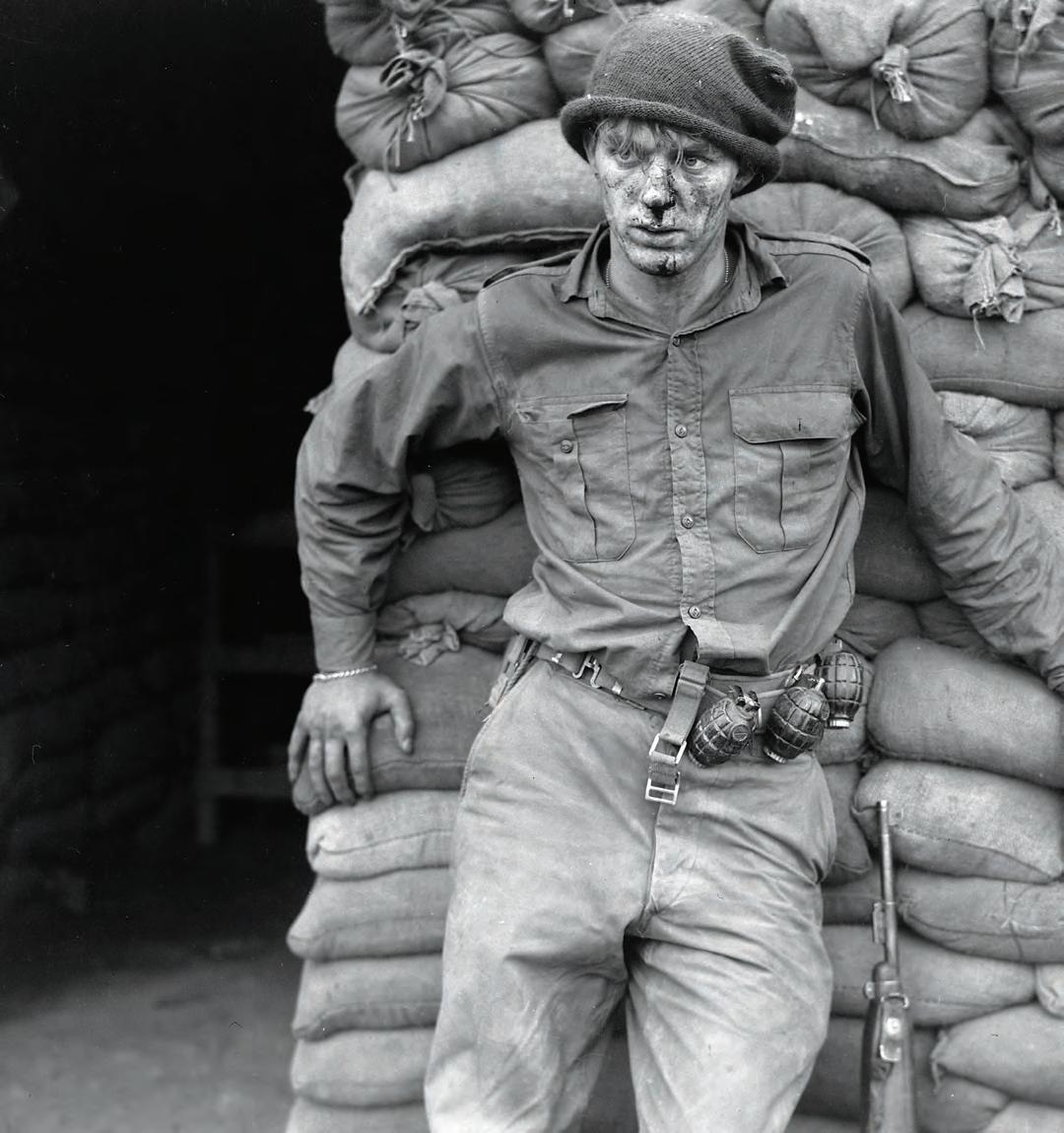
Handsome devil
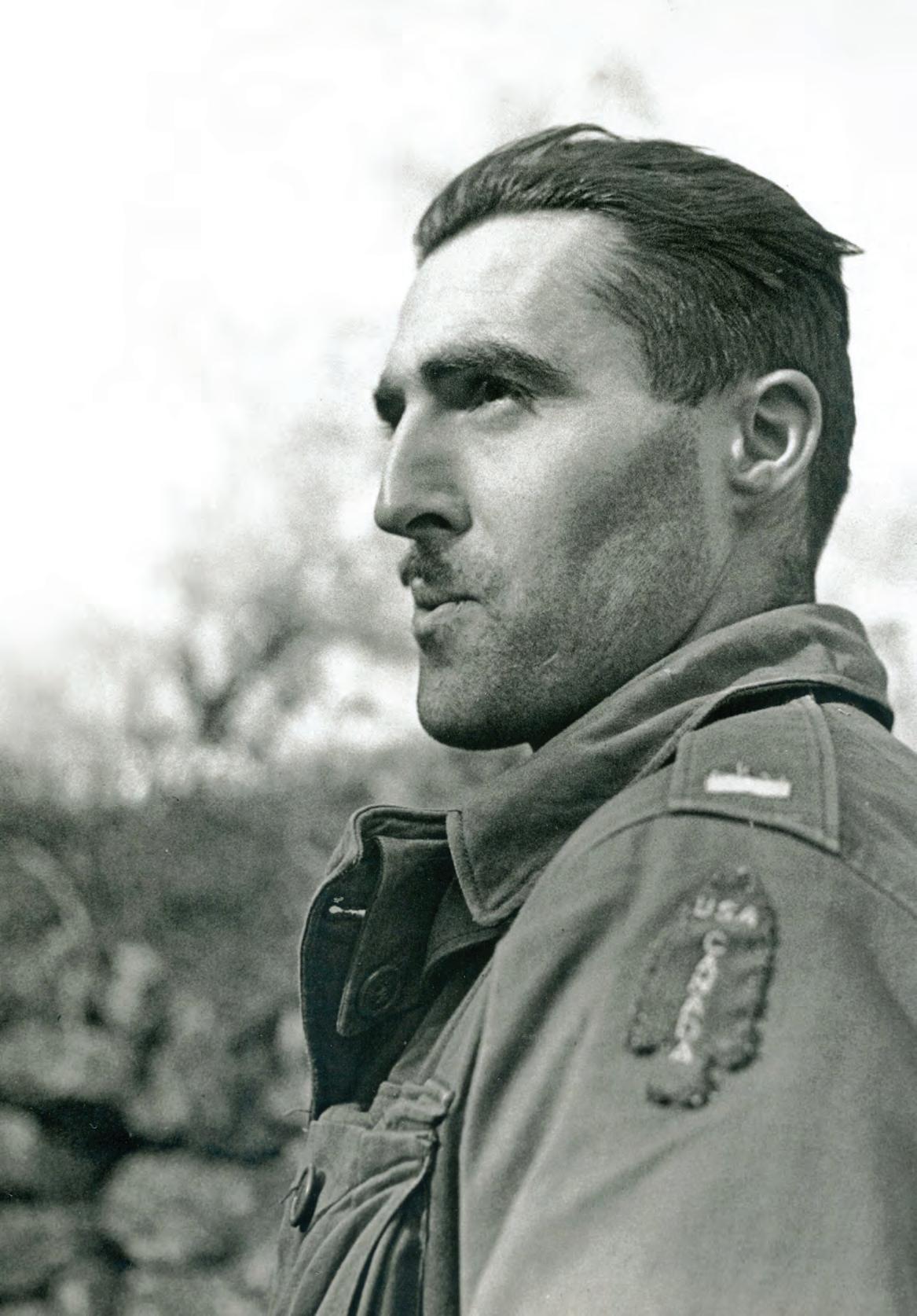
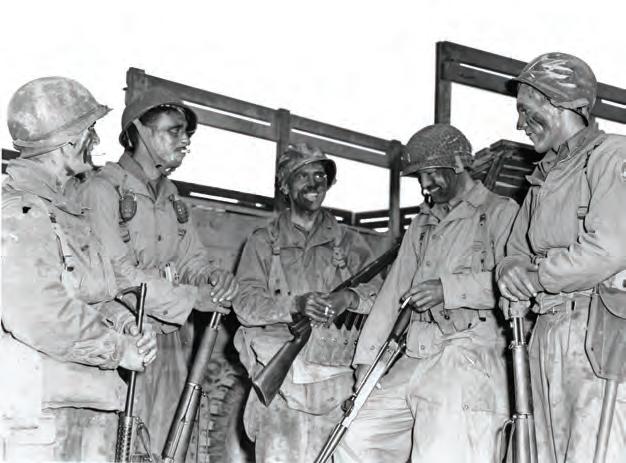
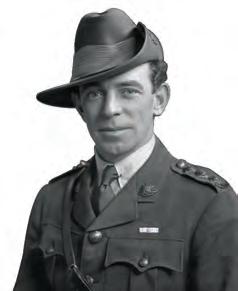
HLieutenant Joseph Kostelec of the U.S.-Canada
First Special Service Force, known as the Devil’s Brigade, takes a pause near Noci, Italy, on Jan. 2, 1944. The 22-year-old was reported missing in action two months later.
See page 18
18 THE DEVIL’S BRIGADE
The Canada-U.S. First Special Service Force earns its stripes— and its moniker By
Stephen J. Thorne
26 BY ENEMY LINES
Recollections from a reconnaissance man in the Italian Campaign By
Charles Wilkins
38 THE EYES OF WAR
Looking back at the best of conflict photography By
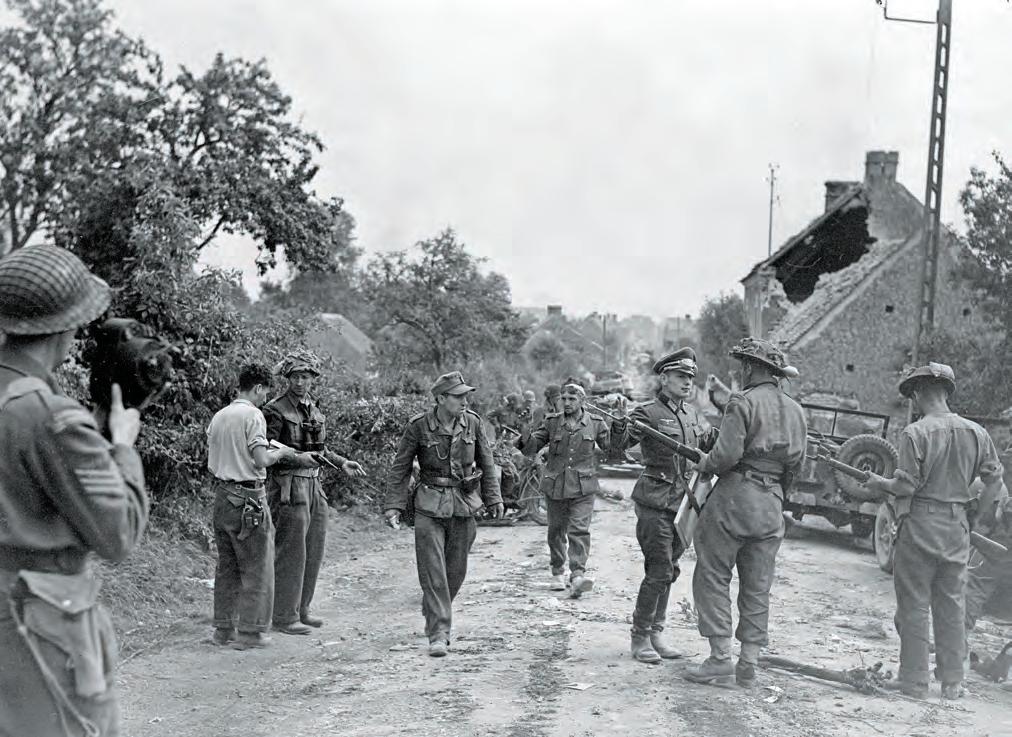
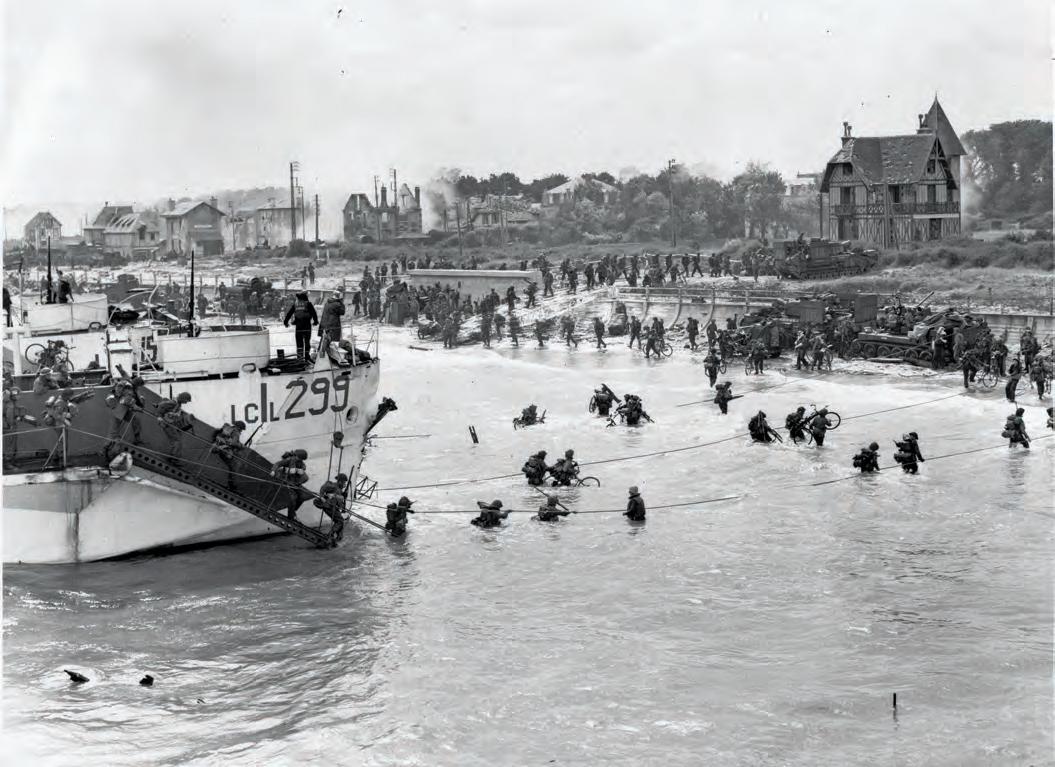
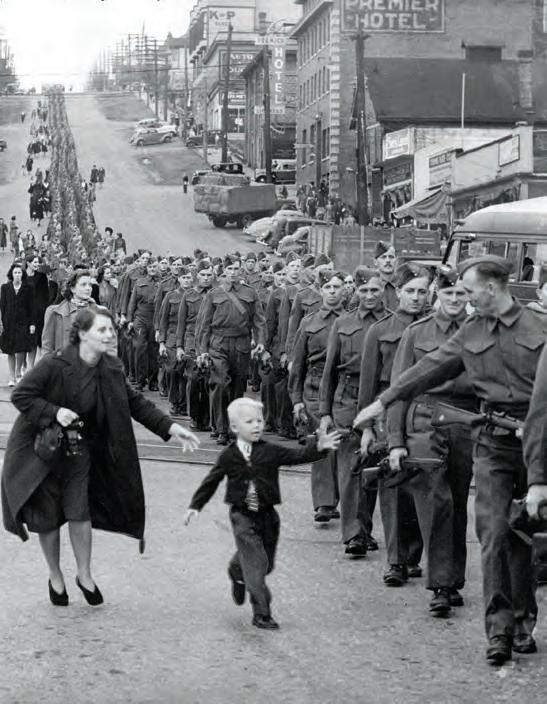
Stephen J. Thorne
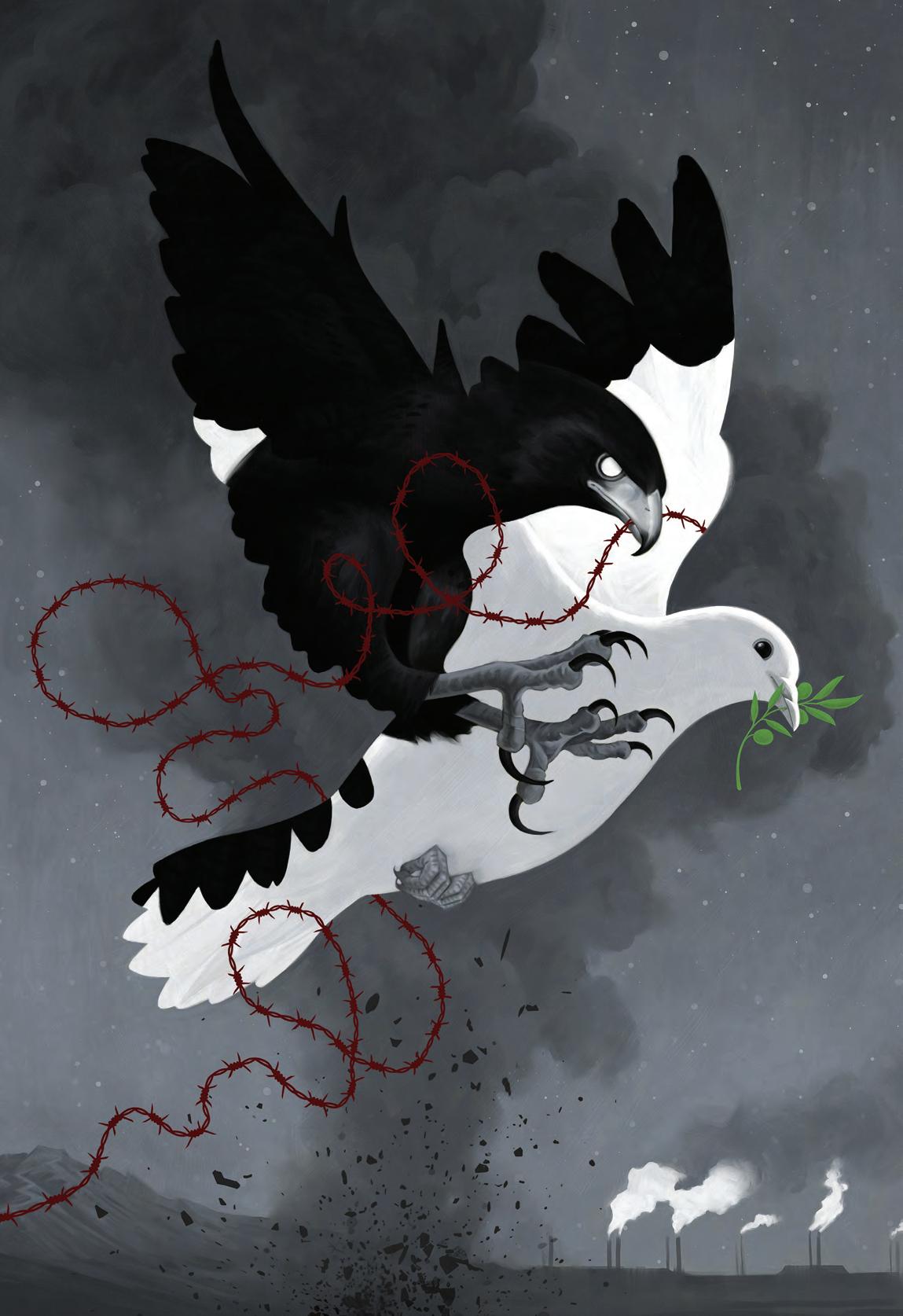
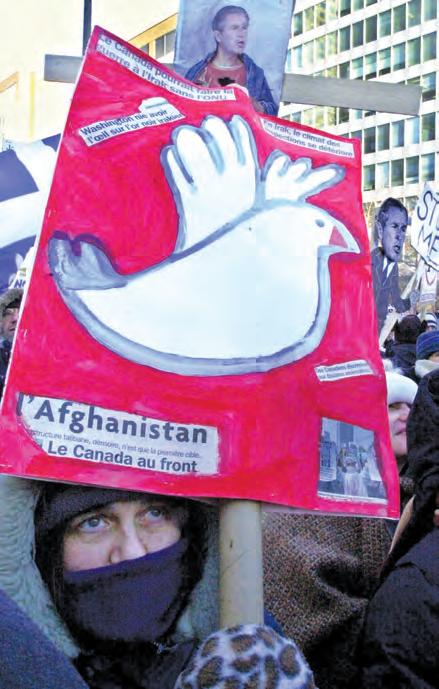
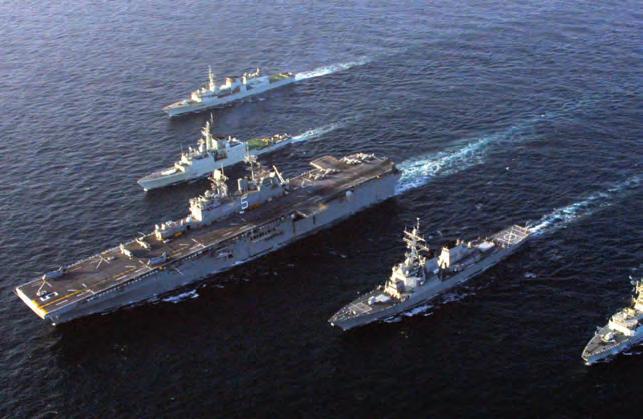
46 WAR AND PEACE
Canada’s complex role in the Iraq War By
Paige Jasmine Gilmar
54 DUE NORTH
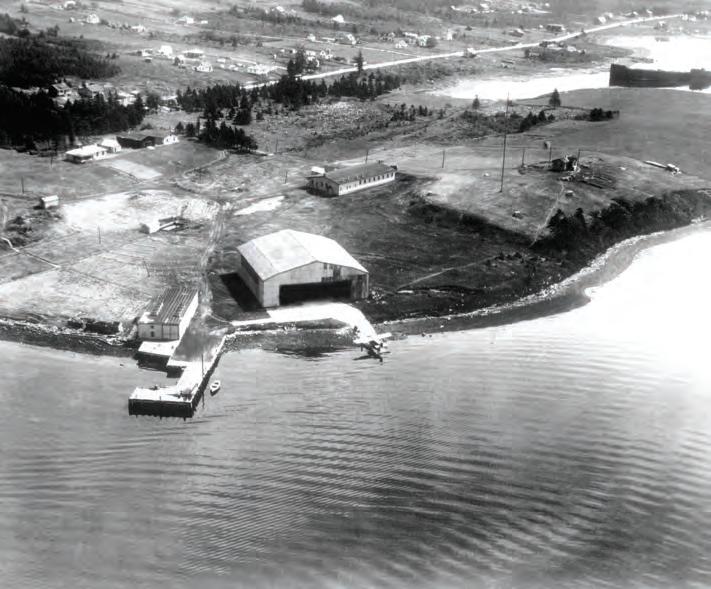
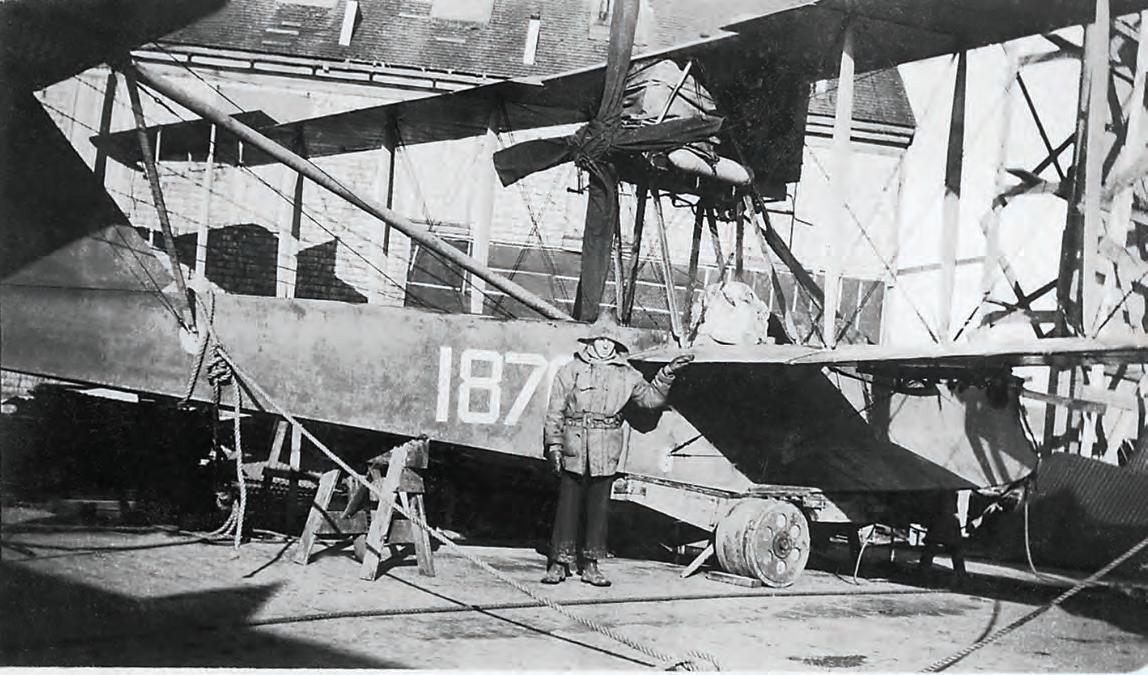
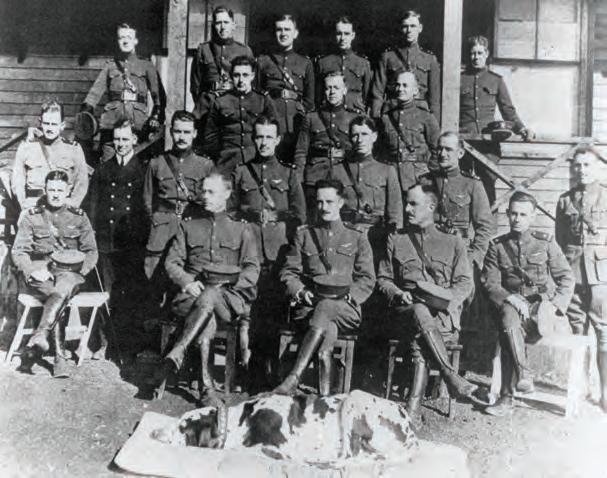
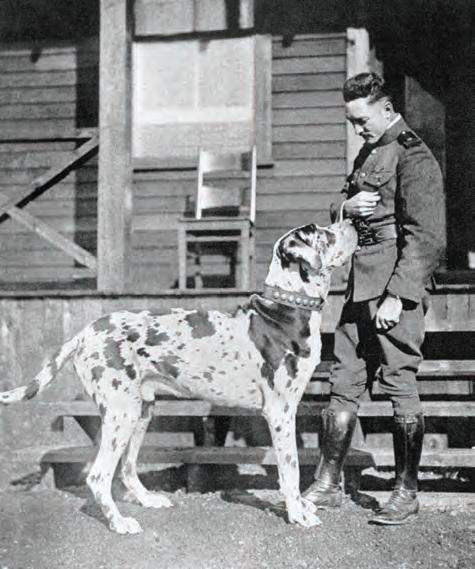
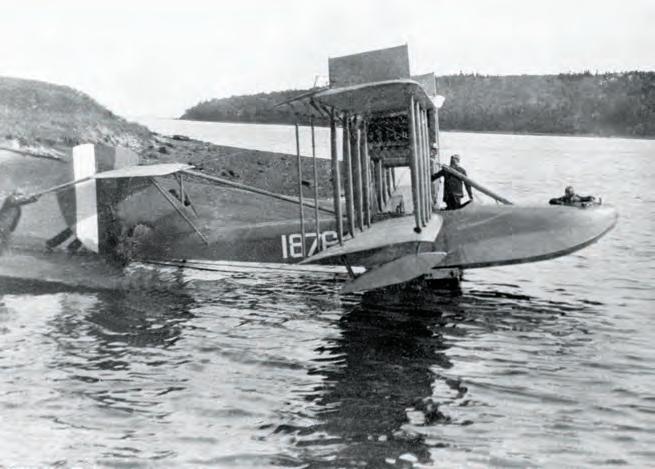
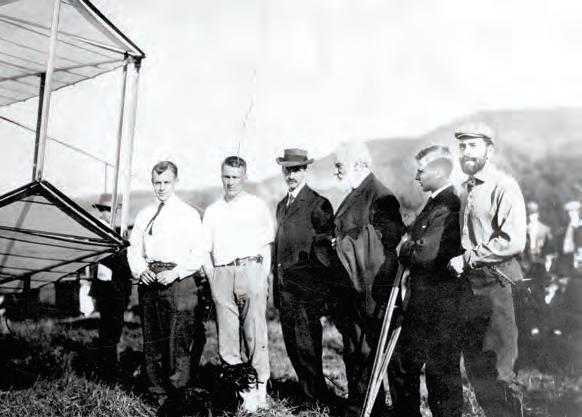
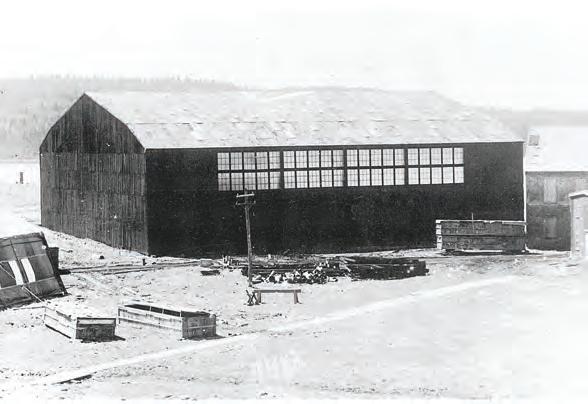
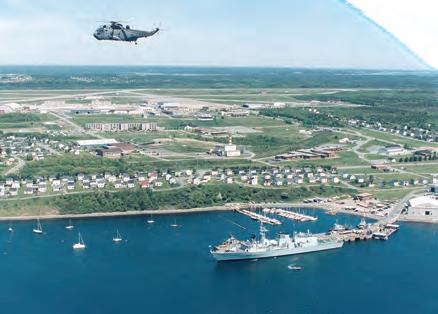
The story of a U.S. First World War naval base in Nova Scotia By
John Boileau
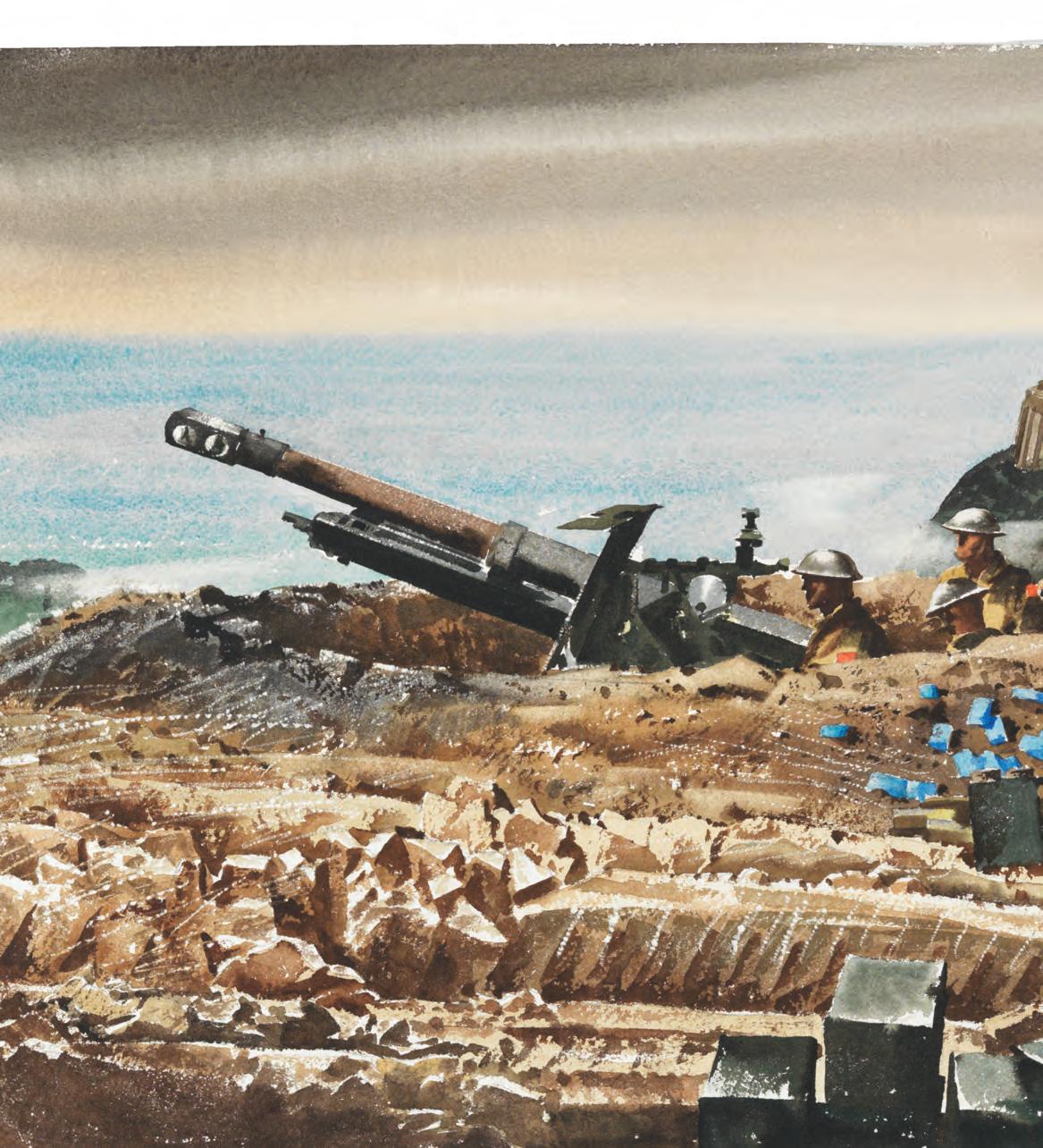
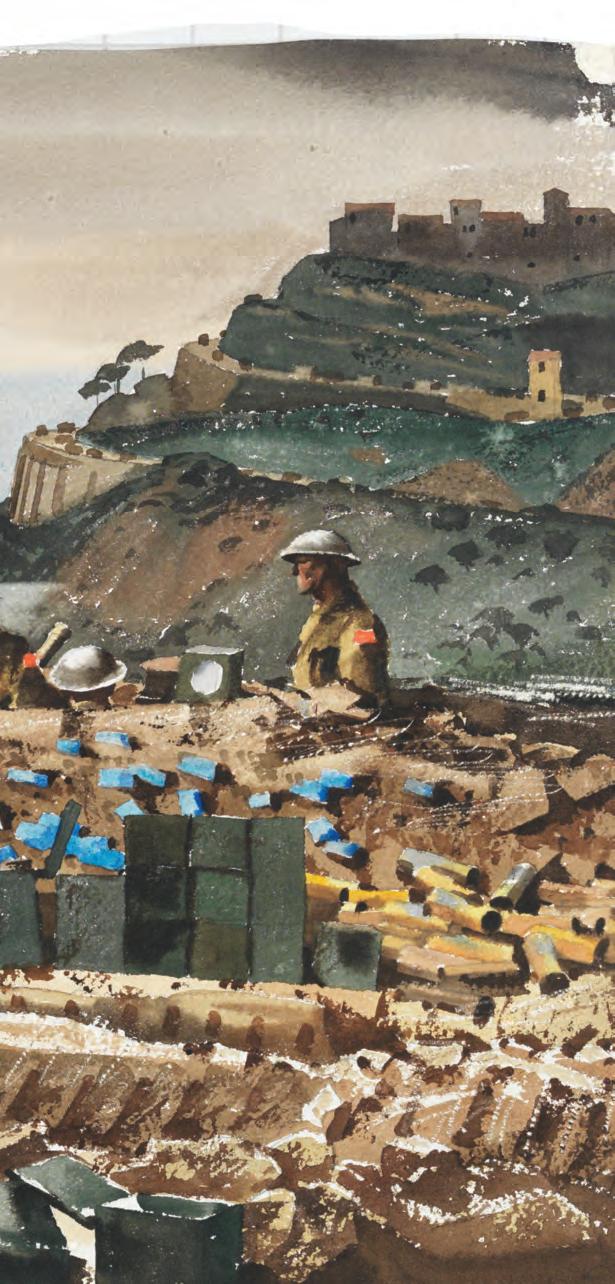
Major Charles Comfort depicts action of the Royal Canadian Horse Artillery near San Vito Chietino in Sicily in December 1943.
Major Charles Comfort/CWM/19710261-2307
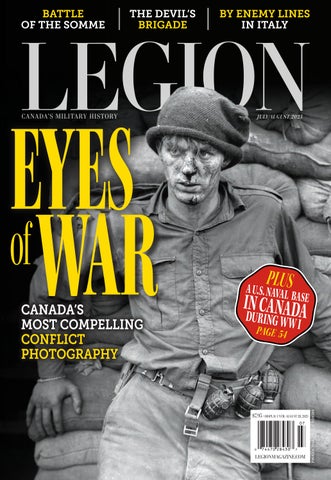
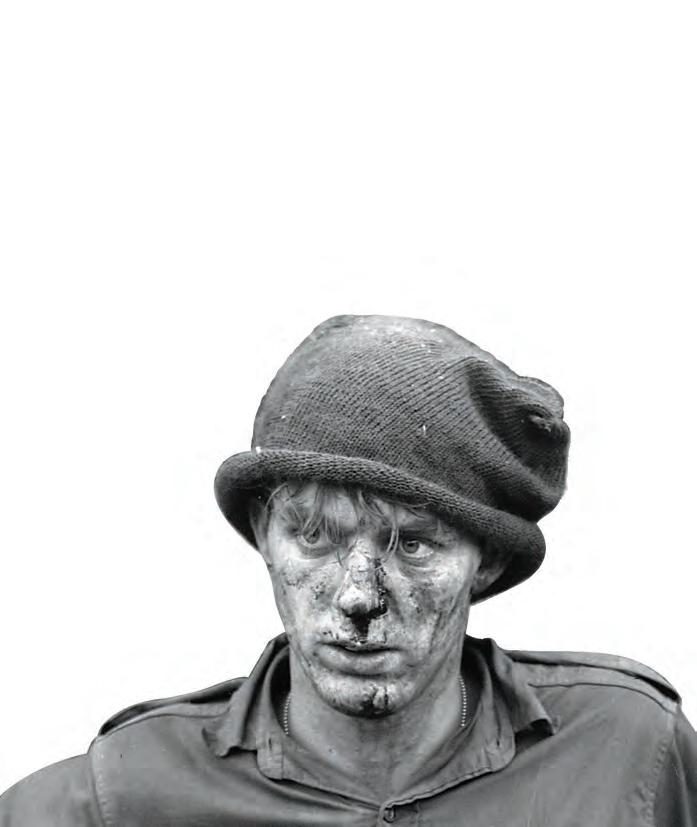
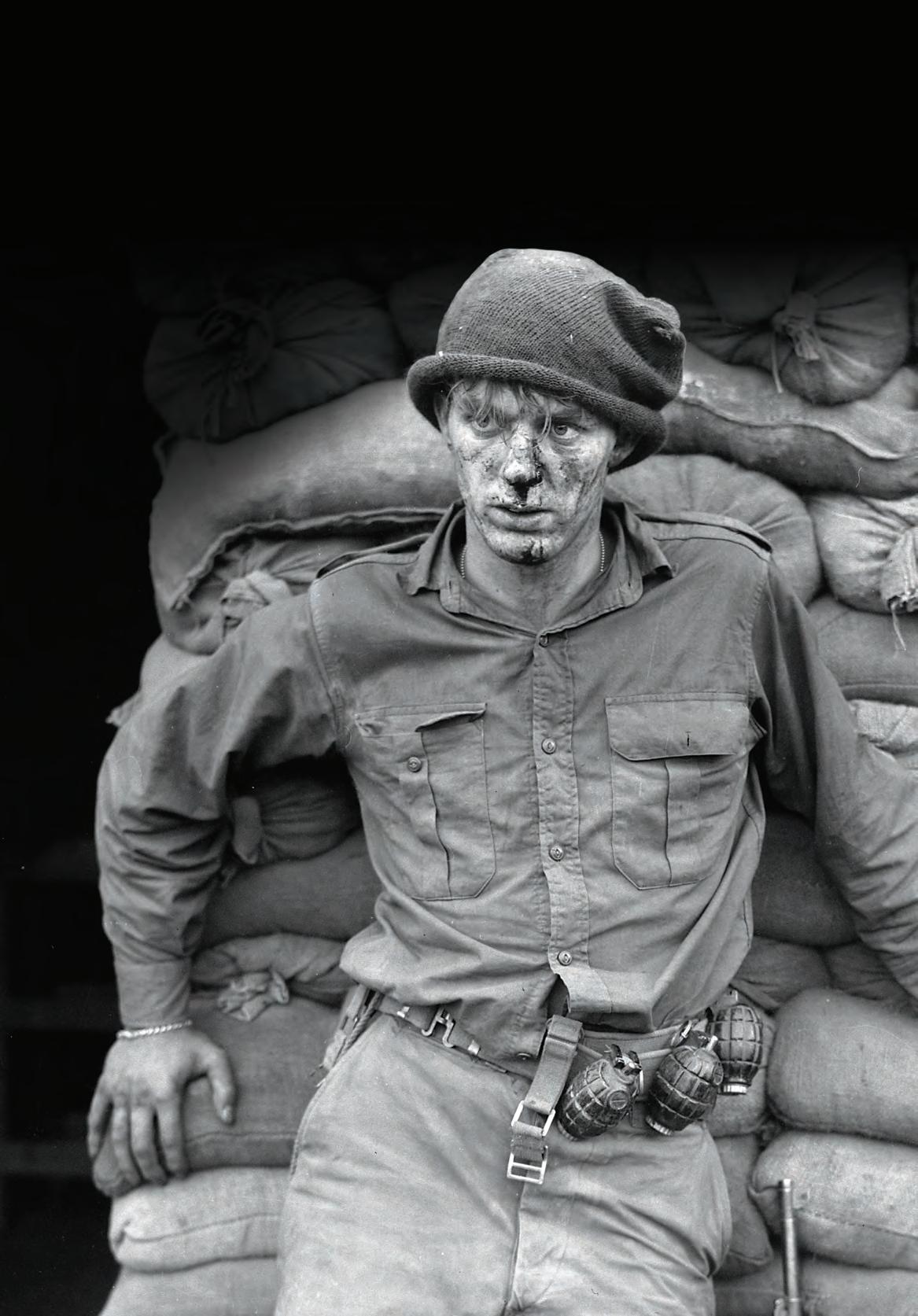
Renowned Canadian war photographer Paul E. Tomelin snapped this image, known as “The Face of War,” of a wounded Private Heath Matthews of The Royal Canadian Regiment near Hill 166 in Korea on June 22, 1952.
Paul E. Tomelin/DND/LAC/PA-128850
Brothers-in-arms
The Canada-U.S. relationship may be imperfect, but it remains one of the world’s great collaborations—scientifically, economically, culturally, militarily. The two countries have lived in relative harmony for more than a century, and evidence of their military interdependence runs, coincidentally, throughout this issue of Legion Magazine—from the former U.S. air base at Baker Point across the harbour from Halifax to Canada’s role supporting U.S. forces in Iraq, from the two-pronged Allied offensive in Second World War Italy to the first binational special forces unit known as the Devil’s Brigade. It was a private of that force, Joe Dauphinais of Starbuck, Man., who encapsulated the bond between the two militaries after it was disbanded on Dec. 5, 1944. The unit had been assembled on parade and the Canadians were ordered to fall out; the Americans were told to stand fast. Dauphinais said tears fell “all over the bloody place. Canadians were
falling out that I thought were Americans and Americans were standing still who I thought were Canadians.
“I didn’t know who was what,” he said. “There was no nationality in that bloody outfit.”
Canada is a country of a little more than 38 million people; the United States checks in at 334 million. The American landmass, however, is only slightly smaller than the Canadian territory, though 40 per cent of the latter is in the vast North, which acts as a buffer between North America and its atomic-era enemies. At more than 243,000 kilometres, Canada’s coastline is the world’s longest, and two-thirds of that crosses the critically strategic Arctic.
It’s the United States, not Canada, that has involved itself in wars big and small the world over, either by invasion and other military intervention or by deploying advisers and operatives and providing arms and money.
For almost 250 years, America has
declared itself the world’s beacon of democracy and, in doing so, it made enemies. If Canada is vulnerable to attack by the adversaries of freedom, it’s because of, and incidental to, their primary target, the U.S. Canada has long provided sanctuary and territory to American military might. It has been, and continues to be, a symbiotic relationship, protection enhanced by the infrastructural legacies left by U.S. combat engineers and Seabees—airports, bases and roadways across the country. No question, Canada should spend more on its military. Defence accounts for a tenth of U.S. federal spending; in Canada, it’s less than 1.4 per cent. By comparison, both countries—federal, provincial and state governments—spend about two-thirds of total tax monies on social programs. Canada’s strategic value is priceless. With just 11.5 per cent of the U.S. populace, however, its monetary resources are necessarily limited. America has embraced the role of world’s police and all that goes with it. To the degree that it is in Canada’s interest, it should back its greatest ally. L
Newest partner will get you movin’
Want extra oomph in your life? Teslica, the latest partner in The Royal Canadian Legion’s exclusive Member Benefits Package (MBP), delivers it with its range of electric bikes. Ebikes are growing in popularity, thanks no doubt in large part to their power-boost function that lets riders control how much assistance they need. Fighting the wind? Facing a climb? Trailing a pal? Not anymore. Ottawa-based Teslica offers 14 Ebike models, including stepthrough, fat-tire and foldable versions, with various frame sizes and colour options. Plus,
all its Ebikes come with a twoyear warranty. And Teslica offers a wide range of accessories.
Legion members and their families get a 10 per cent discount on all Teslica Ebikes—and free shipping. Visit www.teslica. com/legion and use the code TESLICARCL10 at checkout.
The MBP also offers discounts for adjustable beds and related products, automotive repairs and consultation services, travel packages and specially designed travel insurance, online prescriptions, cellphone plans, eyewear, funerals and much more.
Other MBP partners include Ultramatic, PEARL Fleet Vehicle Management, Blowes and Stewart Travel, Pocketpills, IRIS Eyewear, Medipac Travel Insurance, belairdirect car and home insurance, Rogers, HearingLife, Arbor Memorial, Canadian Safe Step Walk-in Tub Company, CHIP Reverse Mortgage and MBNA Canada Bank.
The exclusive savings from the growing group of MBP partners are not only another benefit of joining the Legion, but when combined, they can easily cover the membership fee. L
Teslica Ebikes
Ebikes are changing people’s lives and Canadian owned Teslica electric bikes is doing just that, one happy customer at a time. Imagine cruising along, feeling a warm breeze on your face and exploring new parts of town and new trails. Maybe doing your groceries or running errands? Ebikes allow you to be in “charge”, pun intended. You can control how much power or assist you need, from a little to a lot. Go further and faster on a Teslica Ebike and never worry about headwinds, hills or keeping up with a group.
“Many of our customers have had injuries or surgeries that have limited their ability. Some have put on a few extra pounds over the years, or just don’t have the stamina they used to,” says owner Kory Keogan. Ebike owners find themselves going outdoors more often, getting more exercise, sleeping better and improving their overall health. Ebikes are rewarding on so many levels.
Teslica Ebikes come with many extras including fenders, cargo racks and a 2-year warranty. With
14 different models to choose from and various frame sizes and color options, you are bound to find a perfect fit for your personal needs. Ongoing support is a top priority at Teslica.
As a Royal Canadian Legion member, you and your family can take advantage of a 10% discount on all Ebikes and accessories and receive free shipping in Canada.
Teslica Ebikes is truly honoured to be an endorsed partner of The Royal Canadian Legion and now, to serve you.
If you want to live a life full of health, happiness and freedom… A Teslica Ebike might be right for you.
Let the ride begin.
To learn more and to order: 244 Britannia Road | Ottawa, ON | K2B 5X2 613-627-4285 | www.teslica.com
Vol. 98, No. 4 | July/August 2023
Board of Directors
BOARD CHAIR Owen Parkhouse BOARD VICE-CHAIR Bruce Julian BOARD SECRETARY Bill Chafe DIRECTORS Tom Bursey, Steven Clark, Thomas Irvine, Berkley Lawrence, Sharon McKeown, Brian Weaver, Irit Weiser
Legion Magazine is published by Canvet Publications Ltd.
GENERAL MANAGER Jason Duprau
EDITOR
INTERIM
ADMINISTRATIVE SUPERVISOR
Lisa McCoy
INTERIM
ADMINISTRATIVE ASSISTANT
Jonathan Harrison
ADMINISTRATIVE SUPERVISOR
Stephanie Gorin (on leave)
Aaron Kylie
ASSISTANT EDITOR
Michael A. Smith
STAFF WRITERS
Paige Jasmine Gilmar
Stephen J. Thorne
ART DIRECTOR, CIRCULATION AND PRODUCTION MANAGER
Jennifer McGill
SENIOR DESIGNER AND PRODUCTION CO-ORDINATOR
Derryn Allebone
DESIGNER
Sophie Jalbert
Advertising Sales
CANIK MARKETING SERVICES
TORONTO advertising@legionmagazine.com
DOVETAIL COMMUNICATIONS INC mmignardi@dvtail.com
OR CALL 613-591-0116 FOR MORE INFORMATION
SENIOR DESIGNER AND MARKETING CO-ORDINATOR
Dyann Bernard
WEB DESIGNER AND SOCIAL MEDIA CO-ORDINATOR
Ankush Katoch
Published six times per year, January/February, March/April, May/June, July/August, September/October and November/December. Copyright Canvet Publications Ltd. 2023. ISSN 1209-4331
Subscription Rates
Legion Magazine is $9.96 per year ($19.93 for two years and $29.89 for three years); prices include GST. FOR ADDRESSES IN NS, NB, NL, PE a subscription is $10.91 for one year ($21.83 for two years and $32.74 for three years). FOR ADDRESSES IN ON a subscription is $10.72 for one year ($21.45 for two years and $32.17 for three years).
TO PURCHASE A MAGAZINE SUBSCRIPTION visit www.legionmagazine.com or contact Legion Magazine Subscription Dept., 86 Aird Place, Kanata, ON K2L 0A1 or phone 613-591-0116. The single copy price is $7.95 plus applicable taxes, shipping and handling.
Change of Address
Send new address and current address label. Or, new address and old address, plus all letters and numbers from top line of address label. If label unavailable, enclose member or subscription number. No change can be made without this number. Send to: Legion Magazine Subscription Department, 86 Aird Place, Kanata, ON K2L 0A1. Or visit www.legionmagazine.com. Allow eight weeks.
Editorial and Advertising Policy
Opinions expressed are those of the writers. Unless otherwise explicitly stated, articles do not imply endorsement of any product or service. The advertisement of any product or service does not indicate approval by the publisher unless so stated. Reproduction or recreation, in whole or in part, in any form or media, is strictly forbidden and is a violation of copyright. Reprint only with written permission.
PUBLICATIONS MAIL AGREEMENT NO. 40063864
Return undeliverable Canadian addresses to Legion Magazine Subscription Department 86 Aird Place, Kanata, ON K2L 0A1 | magazine@legion.ca
U.S. Postmasters’ Information
United States: Legion Magazine, USPS 000-117, ISSN 1209-4331, published six times per year (January/February, March/April, May/June, July/August, September/October, November/December). Published by Canvet Publications, 866 Humboldt Pkwy., Buffalo, NY 14211-1218. Periodicals postage paid at Buffalo, NY. The annual subscription rate is $9.49 Cdn. The single copy price is $7.95 Cdn. plus shipping and handling. Circulation records are maintained at Adrienne and Associates, 866 Humboldt Pkwy., Buffalo, NY 14211-1218. U.S. Postmasters send covers only and address changes to Legion Magazine, PO Box 55, Niagara Falls, NY 14304.
Member of CCAB, a division of BPA International. Printed in Canada.
We acknowledge the financial support of the Government of Canada. Version française disponible. On occasion, we make our direct subscriber list available to carefully screened companies whose product or services we feel would be of interest to our subscribers. If you would rather not receive such offers, please state this request, along with your full name and address, and e-mail magazine@legion.ca or write to Legion Magazine, 86 Aird Place, Kanata ON K2L 0A1 or phone 613-591-0116.
have been receiving Legion Magazine with my Legion membership for quite a while now and, to be honest, I haven’t always paid much attention to it. However, I must admit that the May/June edition is truly exceptional. Your team has done a fantastic job, and I hope you will continue to produce such high-quality content. I can hardly wait for the July/August edition to arrive. I am eagerly checking my mailbox every day.
MARK
CHAPMAN HALIFAX
Wine Mug
Lest we forget
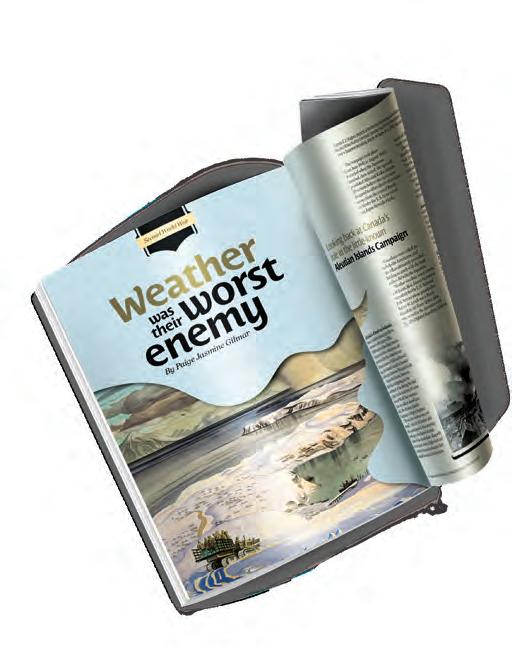
As an ex-service member, I always look forward to receiving Legion Magazine I just received my May/June 2023 issue and was reading about the Aleutian Islands Campaign (“Weather was their worst enemy”) and was shocked that the article said that during the Kiska invasion no Canadians died. Actually, four were killed. Two from enemy booby traps and two others by friendly fire. Lieutenant Sidney Vessey and privates Peter Poshtar, Gerald Desjardins and Gaston Boisclair are buried at Fort Richardson National Cemetery in Alaska. Overall, there were 300 Allied casualties in the invasion.
LARRY BELZAC
KEMPTVILLE, ONT.
, one year earlier than Schönthier. I guess as a thank you to my adopted country, I served for more than 25 years in the Canadian military.
RICHARD BUCKO
ST. CATHARINES, ONT.
Polish position
EDITOR’S NOTE: Legion Magazine sincerely regrets this error.
Déjà vu
I found the memories of “U-boat man” (March/April) very interesting, especially when I got to the last five paragraphs. Suddenly, I had an “aha” moment. Like Kurt Schönthier, my grandfather had been a prisoner of war during the Second World War. He was imprisoned by the Soviets, and my father was a wanted man as a Polish partisan. My mother lost her father, home and birthplace, Dubno, Poland, as it became part of the Soviet Union. My parents came to Canada separately as refugees in April 1949 and January 1950. The ship I came to Canada on
I subscribe to Legion Magazine and find the issues very informative and interesting. I have also purchased numerous special issues in your Canada’s Ultimate Story series. Upon reading The Fight for Italy (2015), specifically the section on the Battle of Monte Cassino, I was disappointed that the author didn’t give the Polish army enough credit for capturing it. My dad was in the Polish forces, and though he did not fight there, he had comrades who did. In total, 923 Polish soldiers died, 2,931 were wounded and 345 were missing in action from the fight.
BILL JAMROZIAK MOOSE JAW, SASK.
Every week in Legion Magazine’s e-newsletter we bring you stories about military milestones from Canadian history. We have recently written about everything from the October Crisis to Amelia Earhart to the navy’s love of rum. This year marks the 150-year anniversary of the Royal Canadian Mounted Police. Their iconic Red Serge uniform is recognized around the world, and their mounted units catch the eyes of people anywhere they go. They are synonymous with Canada and its history. That’s why Legion Magazine wanted to take the opportunity to reflect on the RCMP’s little-known military history. When you think about the force, war may not be the first thing
you associate with it. But the RCMP has long had strong military connections.
Read about its origins in northwestern Canada, and its time in South Africa, France and Serbia. Did you know the RCMP is the only police force in the Commonwealth, if not the world,
Get notified of all the latest updates on legionmagazine.com by signing up for our weekly e-newsletter at www.legionmagazine.com /en/newsletter-signup
that is a colour-bearing corps? Or that this year it will be introducing a new guidon and retiring the old?
The story into its history and its relationship with war is now at www.legionmagazine.com/RCMP150, with insights into these topics and more.
To stay up to date on the weekly Military Milestone and Front Lines blogs, make sure to subscribe to our newsletter so you can get the links straight to your inbox. L
10 July 1940
July
18 July 1925
Mein Kampf, Adolph Hitler’s blueprint for the Third Reich, is published.
19 July 1980
3 July 1931
The first ships built for the Royal Canadian Navy, Saguenay and Skeena, complete their maiden voyages to Halifax.
5 July 1610
John Guy, along with 39 other colonists, sets sail for Newfoundland from Bristol, England.
7 July 1944
Royal Air Force Bomber Command drops more than 2,300 tonnes of bombs on Caen, France, as part of the Allied invasion of Western Europe.
8 July 1892
St. John’s, Nfld., is devastated in the Great Fire of 1892.
9 July 1536
The Battle of Britain begins; No. 1 Squadron of the Royal Canadian Air Force joins the defence.
12 July 1812
U.S. General William Hull invades Canada from Detroit.
French navigator Jacques Cartier returns to Saint-Malo, France, after exploring what is now Canada.
While launching Britain’s “V For Victory” campaign, Prime Minister Winston Churchill flashes his two-fingered salute for the first time.
21 July 1812
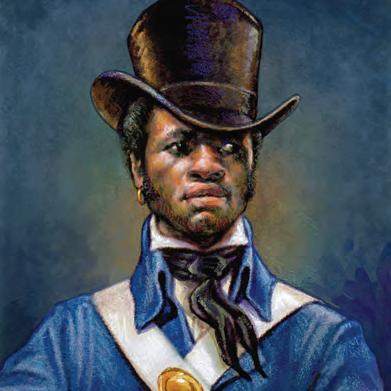
Loyalist Richard Pierpoint persuades the government to raise a company of Black troops to help protect the Niagara frontier.
27 July 1953
The Korean Armistice Agreement is signed, ending three years of fighting.
13 July 1942
The Canadian government announces that three merchant ships have been sunk by U-boats in the St. Lawrence River.
14 July 1896
Indigenous scout, guide and interpreter Jerry Potts dies in Fort Macleod, Alta.
16 July 1945
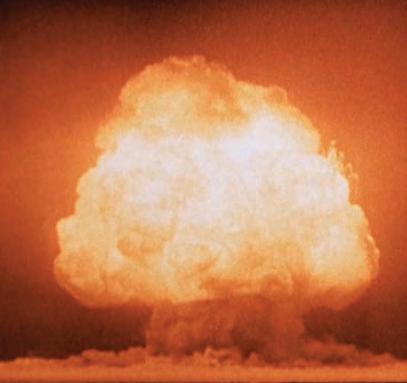
The first atomic bomb is detonated in New Mexico. It used uranium from Canada.
17 July 1976
The opening ceremonies are held for the Olympic Games in Montreal.
30 July 1974
Six army cadets are killed and 54 wounded in an accidental grenade blast at Canadian Forces Base Valcartier.
31 July 1942
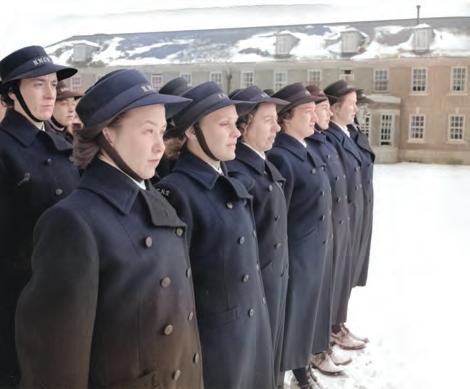
The Women’s Royal Canadian Naval Service is established; by war’s end more than 6,500 join.
August
12 August 1992
1 August 1976
The Olympic Games in Montreal officially close.
3 August 2006
In Afghanistan, Sgt. Patrick Tower leads a medic team under heavy enemy fire to tend casualties, then leads survivors to safety. He is awarded the Star of Military Valour.
Canada, Mexico and the United States announce completion of negotiations for the North American Free Trade Agreement.
14 August 1941
Following a meeting between British Prime Minister Winston Churchill and U.S. President Franklin D. Roosevelt in Newfoundland, details of the Atlantic Charter are released. It set out goals for the world after the end of the Second World War.
15 August 1945
Victory over Japan, or VJ-Day.
17 August 1943
Prime Minister Mackenzie King hosts a conference in Quebec City with Roosevelt and Churchill to discuss the invasion of German-occupied France.
8 August 1944
Canadian, British and Polish forces advance south of Caen, France, intent on breaking the German line at Falaise.
9 August 1974
A Canadian Buffalo aircraft, attached to the United Nations Emergency Force II, is shot down by Syrian surface-to-air missiles. All nine Canadians on board are killed.
10 August 1930
The British airship R-100, which had completed a transatlantic flight, leaves Montreal bound for Ottawa and southern Ontario.
20 August 1915
The Newfoundland Regiment leaves for the Mediterranean.
22 August 2006
A suicide bomber crashes into a Canadian military patrol in southern Afghanistan, killing Cpl. David Braun and a young girl, and wounding three others.
24 August 2007
The Ontario government announces it will name a section of Highway 401 the Highway of Heroes in honour of Canada’s fallen soldiers.
25 August 1944
Canadian, British and Polish forces attack the Gothic Line in Italy.
26 August 1940
A Dornier bomber loaded with 16 bombs crashes in the English Channel; a museum salvages the wreck 73 years later.
29 August 1917
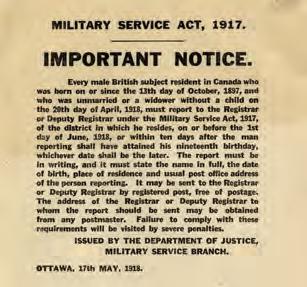
The Military Service Act becomes law in Canada, making men ages 20 to 45 subject to conscription.
31 August 1945
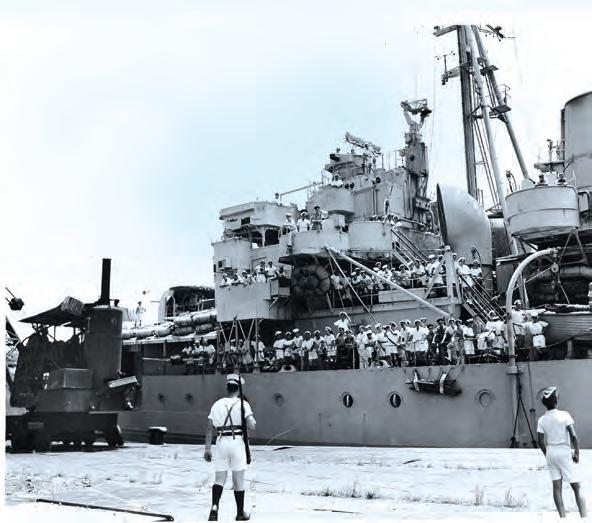
HMCS Prince Robert enters Hong Kong, where its commanding officer represents Canada at the ceremonies for the surrender of Japan.
By Paige Jasmine Gilmar
At the improv
“Ca
·thar·sis (n): purification or purgation of the emotions primarily through art.”
That’s how the MerriamWebster dictionary defines it.
“Catharsis,” descending from the Greek words kathairein and katharos, for “cleanse” and “pure,” was first coined by Aristotle in the third century BC. In On the Art of Poetry, Aristotle posits a third dimension to the meaning of catharsis—and it’s through the realm of drama.
Trusting in tragedy, Aristotle believed that the arts could be a purgation, a catharsis, of unwanted emotion like pity and fear. Drama would thereby have a double-edged effect on the soul, pacifying emotion while provoking it, satiating desire while starving it. And through the many hearts of drama, he believed those who suffered could transcend.
From Korea’s female shamans to the Nigerian masked dancers of the Owuru Festival, dramatic healing is not a new or unusual practice. And while the ancient hospital beneath the Theatre of Dionysus in Athens remains unused and eroded, a plaque still reads of how patients were cured by performing in the Greek chorus.
Today, Canadian veterans are up to four times more likely to die by suicide than civilians, so healing— in any form—matters. That’s why The Roland Gossage Foundation, a charity organization that provides educational development to soldiers, is bringing the ancient art of drama onto the front lines through its Soldiers In The Arts program.
Soldiers In The Arts was founded a year ago and is in its early days compared to its sister program Soldiers In Tech, which helps veterans develop skills in cyber security and web development.
The new program builds off the concept of Aristotelian catharsis and dramatic healing, or therapy, by using theatre to address mental and physical health issues in veterans and their family members. With veterans specifically, the initiative aims to ameliorate operational stress injuries and aid in the often challenging process of transitioning back to civilian life.
A new program uses drama to help veterans deal with trauma
to be that old soldier that couldn’t take his uniform off.”
One of Hawkyard’s mental health professionals recommended drama as a way to reclaim his identity as he moved from a life in service back to civilian. It was only then that he found real freedom.
“I didn’t have to take myself seriously. I didn’t have to prove something to anybody else,” Hawkyard reflected. “I found it to be very cathartic.”
And because it had worked so well for him, Hawkyard wanted to share it with others. But he learned that dramatic healing was something overlooked by the CAF.
A 2019 STUDY FOUND THAT IN-PERSON DRAMA THERAPY SIGNIFICANTLY HELPED CANADIAN VETERANS.
“When I first heard of the Soldiers in the Arts…I knew I had to join in the fun,” said Canadian Armed Forces veteran, actor, musician and current participant Garth Wigle. “It was a great experience.”
Years ago, Ryan Hawkyard, the program co-ordinator, was one of the many veterans left to soldier on through health issues accrued from nearly two decades in uniform and three tours in Afghanistan.
“We participated in what is now known as Operation Medusa to [remove] the Taliban,” said Hawkyard. “It was a very difficult tour…I think we had 19 losses on that rotation.
“[After my service,] I didn’t want
“In the States, there were programs; in the U.K., there were programs, but…Canada didn’t have anything like that,” said Hawkyard.
So, rather than wait for healthcare providers to catch on, Hawkyard met with staff members of the Gossage Foundation to discuss creating such an initiative. They were on board.
But Hawkyard knew he needed help, so the foundation enlisted the assistance of Michael Gellman, a theatre man and jack-of-alltrades with more than 40 years’ experience in improvisation.
A Minnesota native, Gellman spent time in Chicago and Los Angeles as a performer
until the Great White North called him toward what would be his most fulfilling passion: directing and teaching.
“[My students do] way more for me than I could have ever possibly [done] for them,” says Gellman. “And that’s the joy of teaching.”
With a string of awards to later follow, Gellman became a founding member and program head of the Second City Training Centre and artistic director for The Second City Toronto. It was through Soldiers In The Arts, however, that Gellman discovered the power of dramatic healing.
“What I do is give [students] an experience where [they] can teach themselves,” noted Gellman. “And after [that, they] can teach each other. They experience a sense of freedom, a bit of some of the burdens being lifted. And that’s good for therapy.”
Soldiers In The Arts uses a range of improvisational exercises such as monologues, listening and retelling, character/scene development and more to build self-confidence, trust, social skills and the ability to be present.
Science is even backing this form of psychological treatment: a 2019 study found that in-person drama therapy significantly helped Canadian veterans move on from trauma, express more emotion and better integrate into society.
Even when drama therapy was moved to a virtual platform during the COVID-19 pandemic, researchers found the treatment to be just as effective.
“No right, no wrong. Building up rather than tearing down,” says Dianna Neuman, a 20-year veteran of the Royal Canadian Air Force and program participant. “[It was] a freeing environment to explore that part of me…without recriminations.”
The initiative currently offers both in-person and online workshops, with its digital counterpart capped to 12 people to ensure intimacy. Gellman and Hawkyard, however, hope that these workshops can eventually become a full-fledged performance this year.
“It’s when you come together in creative ways that really gives people community,” noted Hawkyard.
Both Gellman and Hawkyard also have lofty hopes for the program and dramatic healing at large.
“My measure of success is a chapter of this in [every] town across Canada,” said Hawkyard. Meanwhile, Gellman declared: “My ultimate purpose is to…increase awareness of the military in Canada and how much they do for us.
“You have the opportunity, as a Canadian citizen, to be of great help to people who are standing on guard for thee.” L
by any other name A war
The
Korean War
was trivialized for decades, to the detriment of those who fought
Some 40 million people died in the First World War; at least 70 million in the Second. By the time Sovietbacked North Korean forces crossed the 38th parallel into South Korea on June 25, 1950, folks didn’t want to hear any more about “war.”
And, so, when a U.S.-led United Nations coalition stepped in on the Korean peninsula, President Harry S. Truman and Prime Minister Louis St-Laurent called it a “police action,” an “intervention.”
The terms didn’t sit well with those who were there.
“There were 516 [Canadian] military guys dead over there,”
Georges Guertin, a radio operator aboard HMCS Huron at the time, recently told Legion Magazine. “I don’t call that a ‘police action.’
Just an ugly little war.”
In fact, no war was ever declared, and for the next 40 years or so the happenings of 1950-53 on the Korean peninsula were officially
referred to as “the Korean Conflict.” There was a Cold War, all right, but God forbid another hot one.
To most all but those who fought it, Korea was “The Forgotten War.”
In Canada, the combatants were not formally recognized as war veterans until the late-1980s, when Ottawa decided the war was, in fact, a war. And it was not until 1991 that veterans were awarded Canadian medals for their service in Korea.
That same year in the U.S., which provided the bulk of resources to the war effort, President Bill Clinton signed Public Law 105-261, Section 1067 of which declared the “Korean Conflict” would henceforth be called the “Korean War.”
Semantics? No. The change had ripple effects throughout the coalition of countries that made up the UN force in Korea. It influenced such things as pensions and compensation for veterans, including the 26,800 Canadians who served.
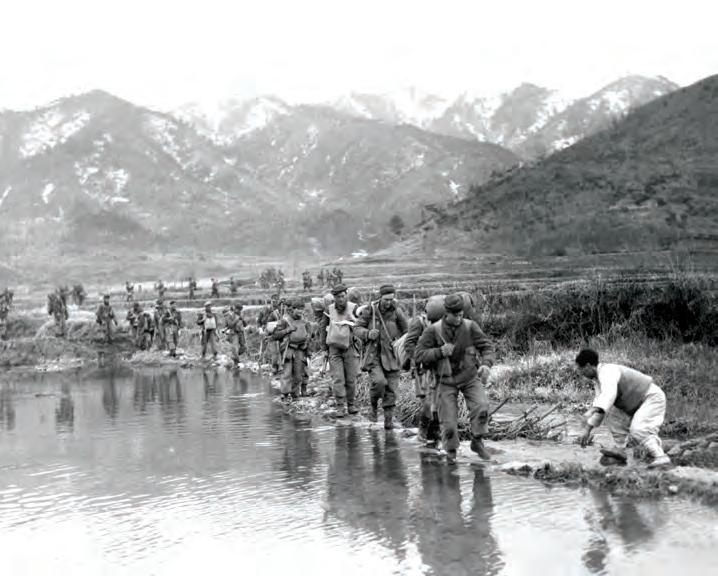
The 2nd Battalion, Princess Patricia’s Canadian Light Infantry on patrol in Korea on March 11, 1951.
> Check out the Front lines podcast series! Go to legionmagazine.com/frontlines
Groups such as the Korea Veterans Association of Canada, which wasn’t formed until the 1980s, stepped up efforts to get vets the support they needed—and deserved.
The recognition deeply affected many who had long felt taken for granted. While American Vietnam veterans would return home to a hostile anti-war welcome in the 1960s and early ’70s, Korean War veterans of the 1950s got no public reception whatsoever.
Korea vets endured passive hostility in the form of veterans’ organizations that refused to recognize their service, resisted incorporating the Korean War on cenotaphs, and generally belittled their contributions.
South Korea, on the other hand, awarded them medals and still hosts pilgrimages and throws annual parties in their honour. South Korean officials unfailingly place wreaths at the National War Memorial in Ottawa, no matter the occasion.
Some 2.5 million Koreans died, disappeared or were wounded during the three-year war, while 10 million families—a third of the population—were separated. Industry and infrastructure were gutted on both sides.
By war’s end, Seoul had been taken and retaken four times. The sprawling city was left a ruin.
South Korea had lost 17,000 businesses, factories and plants, 4,000 schools and 600,000 homes. The gross national product had declined 14 per cent and total property damage was estimated at US$2 billion.
Its air force virtually erased, the North bore the brunt of the fighting after September 1950. The United States Air Force dropped more than 350,000 tonnes of conventional bombs and almost 30,000 tonnes of napalm on North Korean cities; the coalition fired 313,600 rockets and 167 million machine-gun rounds.
THEY MAY NOT HAVE LEFT BEHIND A UNITED KOREA, BUT THEIR WAR GAVE THE SOUTH THE FREEDOM AND, ULTIMATELY, THE MEANS TO PROSPER
The North Korean leader, Kim Il Sung, said the country’s economy had been destroyed. It had lost 8,700 industrial plants, 367,000 hectares of farmland, 600,000 houses, 5,000 schools, 1,000 hospitals and 260 theatres.
Some “conflict.”
Yet, for South Korea at least, the end of the war would mark the gradual beginning of a new age. The country rebuilt and became a cultural phenom, a tech giant, and Seoul a sparkling jewel of southeast Asia.
While South Korea has its problems, too, it is in its triumphs that the veterans of the Korean War
take pride. They may not have left behind a united Korea, but their war gave the South the freedom and, ultimately, the means to prosper.
The North of Kim Jong-Un remains a hostile neighbour— a hoarder of nuclear weapons, a source of regional instability and a continuing threat to world peace.
Some see an armistice as the most efficient means to end the fighting in Ukraine. But in a December 2022 essay, the analysis site NK News said the example set by the Korean armistice doesn’t bode well for success in Eastern Europe.
“The Korean War armistice wasn’t meant to last forever, but an end-of-war declaration, let alone unification, looks less and less likely every year,” wrote James Fretwell.
“And that may be the key lesson to draw from the Korean War precedent: While ending active hostilities, the armistice laid out no clear path for a formal peace or unification. The result has been undying division—whether anyone wants it or not.” L
By David J. Bercuson
The cost to modernize Canada’s military Arms advances
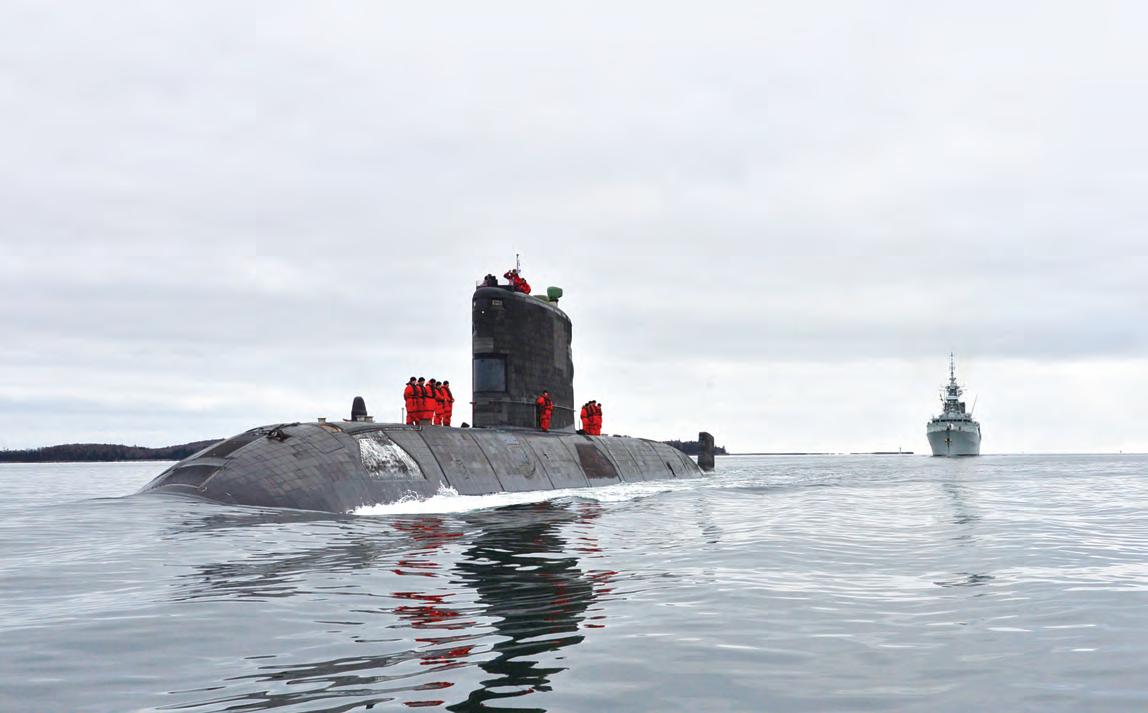
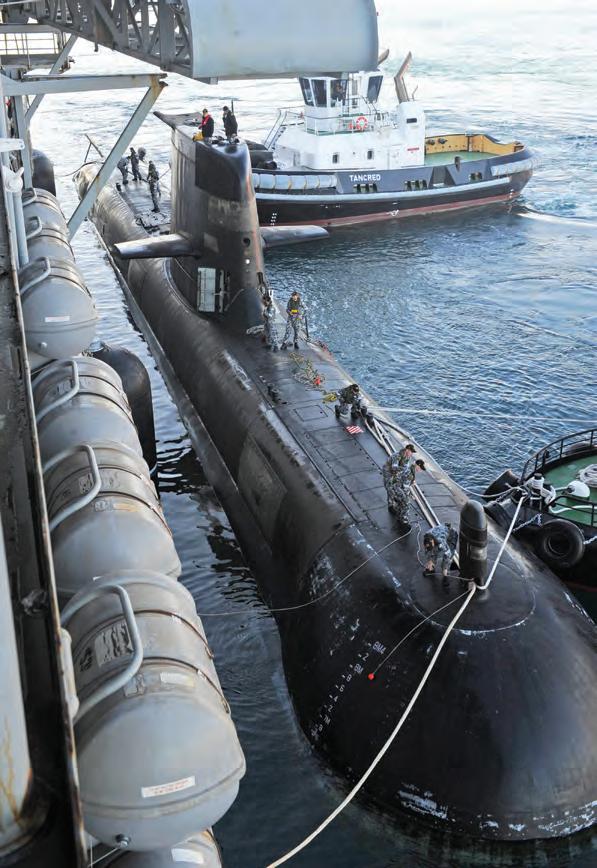
HMCS Windsor returns to Canadian Forces Base Halifax on Dec. 17, 2015, after taking part in NATO exercises.
Canada is slowly, and finally, acquiring the modern equipment needed for a 21st-century military, which is critical as tensions climb throughout the world and the threat of conflict in Canada’s Arctic rises.
Last March, the federal government began initial steps to acquire an up-to-date aircraft to replace the country’s Aurora reconnaissance planes, which entered service in 1980. While money needs to be spent upgrading the current fleet of Aurora aircraft until the replacement is available, it appears that Canada’s next surveillance aircraft will be the Boeing P-8A (a military derivative of Boeing’s 737 passenger jet).
There is still a possibility that Canada might solicit bids for this
purchase, which would allow Bombardier to put forward a smaller, built-in-Canada aircraft option. This past March, Public Services and Procurement Canada confirmed it had issued a letter of request to the U.S. government about the P-8A. But, the deparment made it clear in an article in the Ottawa Citizen that, while the country hasn’t made an outright request to purchase that aircraft, it is “the only aircraft that meets the military’s needs.”
That same month at the annual Ottawa Conference on Security and Defence, General Wayne Eyre, the defence chief, presented a list of equipment needed by the Canadian Armed Forces if it’s to perform at a level expected of a NATO member and a G7 country of nearly
40 million people. Modern submarines were at the top, followed by new tactical helicopters, an airborne early warning and control aircraft, armoured vehicles to fully equip Canada’s six infantry battalions, and HIMARS light multiple rocket launchers, capable of long-range precision strikes. All of these should be on the government’s shopping list, but they’re not. Probably the most important item is a new submarine fleet. The current Victoria-class subs are expected to last at least another decade, even though they have been plagued by all sorts of mishaps ever since they were obtained from the U.K. beginning in the late 1990s. Plus, the dieselelectric powered vessels have no under-ice capability and they can’t be fitted with any modern
air-independent propulsion systems that would address that.
Two years ago, the Royal Canadian Navy announced it was creating a special team to examine what capabilities its new submarines should have, but it seems little progress has been made to convince the government of the priority. This despite a spokesperson for Defence Minister Anita Anand telling The Canadian Press this past March that submarines are “one of Canada’s most strategic assets for conducting surveillance of Canadian and international waters, including the near Arctic.”
Nuclear submarines, of course, are the only current option that can help tell the Canadian government exactly what’s going on in its Arctic waters during the coldest season.
Nuclear subs are not cheap. Australia is expected to spend the
equivalent of roughly $330 billion during a 30-year period to build its own, albeit with extensive technological help promised by the U.S. and U.K. in a trilateral security pact signed, coincidentally, this past March. Can Canada afford that? Over three decades, of course it can. The recent expansion of social program spending alone, for instance, could cover those costs. If only safeguarding Canada’s hold on its Arctic archipelago was as high a priority as fixing the teeth of Canadians with no dental insurance or who can not otherwise afford dentists. What’s needed is an immediate increase of the defence budget from its current 1.32 per cent of gross domestic product to
just 1.5 per cent. Not even the NATO target of two per cent is needed. Were that to happen, then sometime in the next two decades Canada would have protection for its army from air attack, first-rate fighter aircraft, a navy with three (not two) replenishment ships, 15 or so new surface combatants, a permanent force military of more than 100,000 and reconnaissance and surveillance capacity suitable for a maritime nation of its size.
The very first responsibility of a government is to guard the sovereignty of the nation. Given the current lack of resources of its military, Canada is seriously threatening its ability to uphold that responsibility. The only real question is whether Canadians will hold it to account. L
DEVIL’S THE
By Stephen J. Thorne
BRIGADE
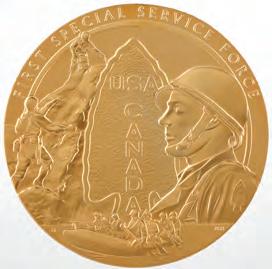
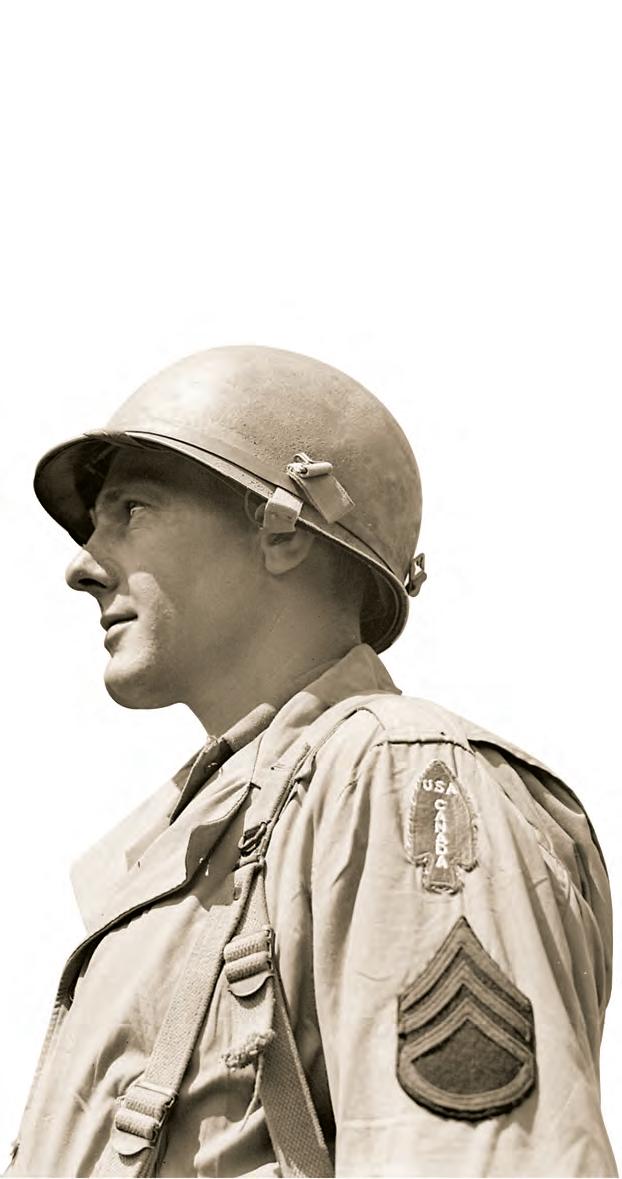
An unidentified sergeant of the First Special Service Force (above) at the Anzio beachhead on April 30, 1944. The Canadian-American unit was awarded a U.S. Congressional Gold Medal (inset) in 2015.
THE CANADA-U.S. FIRST SPECIAL SERVICE FORCE EARNS ITS STRIPES—AND ITS MONIKER
Editor’s note: this story contains graphic descriptions of combat.
The First Special Service Force was still pretty much a secret when its commandos boarded a cruise liner, then First World War-era rail cars known as “forty and eights” (each held 40 men and eight horses) and finally trucks before they made the precarious climb up a Nazi-infested Italian mountain in the late fall of 1943.
It had been 17 months since the ragtag collection of prospectors, miners, steel workers and other improbable Canadians and Americans first set foot in Helena, Mont., for some of the most intensive military training ever undertaken. Now they were about to open the route to Rome—and Allied victory.
Their first operation in August 1943 had been somewhat anticlimactic, taking the Aleutian island of Kiska off Alaska after its 5,400 Japanese occupiers had already left. No one beyond those with an immediate need to know had any idea that this was the first fully integrated, highly trained binational special forces unit in the Allied armies.
Though covered by the Canadian and American press, accounts of the Kiska landings had made no mention of their singular nature. “Canucks Help Retake Kiska,” declared The Globe and Mail; “U.S.-Canadian Forces Take Kiska,” headlined The New York Times Even the force’s name was a secret.
Now the commandos, who would come to be known as “The Black Devils,” were champing at the bit, anxious to bring their hard-earned skills, cohesion and professionalism to bear on the best Hitler had to offer. Italy was a priority, and there would be no hiding the fact—certainly from the Germans—that something entirely different had been added to the equation.
“THESE MEN ARE TRAINED TO FIGHT IN FORESTS, ON MOUNTAINS OR IN SNOW, AND ALWAYS TO ATTACK.”
The U.S. Fifth and the British Eighth armies had been fighting northward on either side of the Apennine Mountains, which extend almost the entire length of mainland Italy. But by November 1943, the American “war of mud mules and mountains” had stalled at the formidable belt of Axis fortifications dubbed the Winter Line. Spanning the breadth of the Italian peninsula, it was commanded by celebrated Generalfeldmarschall Albert Kesselring.
“It was defended by some of the best and most experienced German troops in all of Europe,” wrote Joseph A. Springer in his 2001 oral history The Black Devil Brigade. “From their mountain fortifications, the German panzergrenadier and paratrooper divisions fought a savage, desperate delaying action that had stopped the Allied advance in the Liri Valley.”
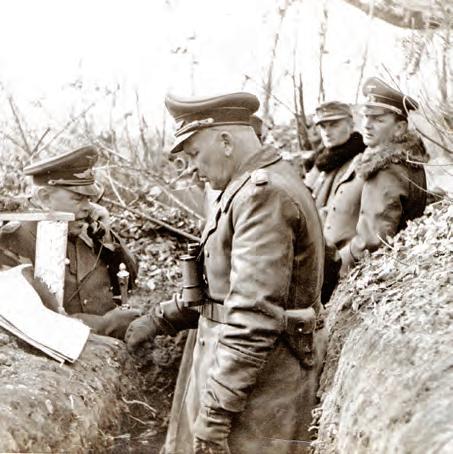
A Devil’s Brigade trainee (above) during a January 1943 exercise in Montana. Generalfeldmarschall Albert Kesselring (right) meets with officers on the Italian front.
THE COMMANDOS WHO WOULD COME TO BE KNOWN AS “THE BLACK DEVILS” WERE CHAMPING AT THE BIT.
The central point of the west side of the defence was Monte la Difensa, a 1,000-metre-high pile of volcanic granite that dominated the Garigliano River valley and, along with its sister peak Monte la Remetanea, was key to opening the Liri Valley and the ancient Highway 6 into the Italian capital.
After months of mountain warfare, a depleted and exhausted U.S. 3rd Infantry Division had fought over the difficult and costly terrain of la Difensa before they were forced to withdraw in midNovember. Subsequent attempts by the British 56th and U.S. 36th divisions also failed to wrest the peak from elements of three panzergrenadier regiments.
All three regiments of the First Special Service Force boarded deuce-and-a-halfs after noon on Dec. 1 and headed north to their forward staging areas, 16 long and rugged kilometres from the mountain. About to face the
bloodied and battle-hardened elite of Hitler’s Wehrmacht, they were still wearing summer uniforms.
The 1st Battalion of the 2nd Regiment, under the command of 28-year-old LieutenantColonel Thomas (Tom) MacWilliam from Cails Mills, N.B., was to lead the attack.
Before the fighting, however, and in advance of the impossible climb that got them to the summit, they had an exhausting, 11-hour forced march through mud and driving rain to the base of la Difensa. They arrived undetected at 3:30 a.m. on Dec. 2.
The battalion’s 1st Company would be the tip of the spear and two scouts of its recon party were to play critical roles in charting the route to the mountain face and up to the top: Corporal Thomas (Tom) Fenton of Montreal and Sergeant Howard Van Ausdale, a 40-something half-Dutch, half-Cherokee from Delaware, Okla., with what his executive officer described as “a superb sense
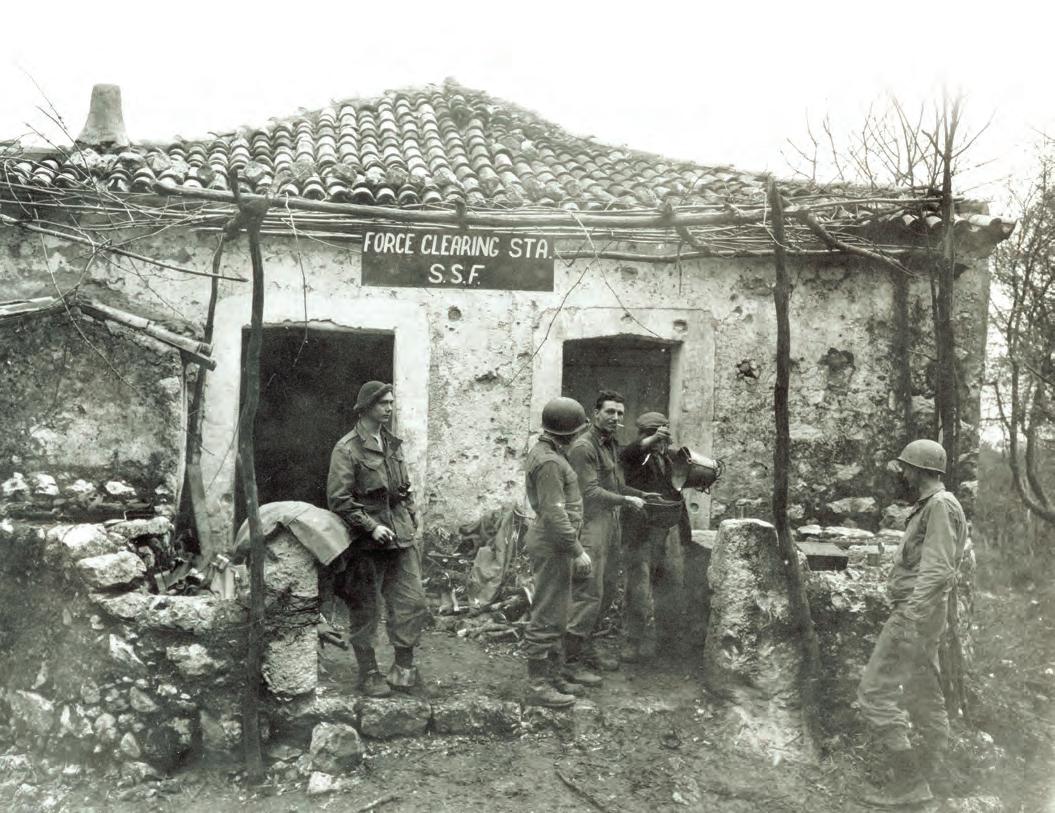
Parachutes at the ready, brigade trainees board a Douglas C-47 in Montana in August 1947. Force commandos (opposite) pause at a clearing station behind the front lines.
of terrain.” Their platoon leader, Sergeant Donald MacKinnon from Saint-Lambert, Que., said they had both been prospectors before the war and were his best scouts, “effective in working their way through rough terrain quickly and quietly.”
“Van was king among scouts,” Private Joe Dauphinais of Starbuck, Man., told Springer, describing how his relatively advanced age was mitigated by the fact he had “tramped around mountains” all his life. “He was a real mountain man; he could read terrain as you could read a book. He found an excellent route for us to reach the front of the cliff without being detected by the Germans.
“I told him, ‘If it wasn’t for you, we’d all be dead.’”
On the way in, they encountered U.S. soldiers leading mules loaded with the bodies of their brethren enshrouded in mattress covers. “That made a very strong impact,” said Major Edward Thomas from Nashville, Tenn.
Staff-Sergeant Bill Story of Winnipeg had witnessed the scene of the earlier fighting while on a scouting mission about a week before the operation.
“I was assigned the area the 3rd and 36th divisions had hit as they tried to get to the top,” he said. “As the fog lifted and I looked around, I could see bodies that had been lying there for a month.
“The survivors were under fire the whole time and couldn’t go out and get the dead. There were enough dead bodies to tell us what route to use.”
And so, unlike those before them, the special force commandos chose to ascend la Difensa’s steep north face, a daunting, two-day climb requiring ropes and other mountaineering paraphernalia. It would nevertheless afford the attackers the element of surprise and the additional advantage, once on top, of fighting downhill against bunkers facing the other way.
The “quiet” part came thanks to the earth-shattering roar of some 925 artillery pieces laying down 64,000 rounds on, and around, the mountain, which had the effect of eliminating almost any chance the heavily laden commandos would be heard as they made their way over the feature’s steep crevices, cliffs and rock faces.
The 1st Battalion started the ascent. Rank-related distinctions gave way to more immediate and practical considerations when it came to equipment and supplies. Everyone carried whatever they could—water, arms, ammunition, first-aid kits.
“There were no officers going without weight,” said Captain Fred Hubbard of Jamaica, N.Y. “We were like the men, packrats. We either carried ammunition or bazookas or whatever. Personally, I was a water boy; I carried a five-gallon Jerry can of water plus my arms.
“You can carry those Jerry cans either full or empty. If you had them half-full, and you moved up a rope, for instance, it would take you right off your feet. It would swish. So you had to carry it full or empty.”
It was wet, cold and arduous. Hands were so stiff from the chill and slippery from the rain that gripping the ropes, especially with all that weight, was difficult. The commandos leaped across a chasm a metre wide that looked and felt like 15.
Sergeant Walter (Pop) Lewis of Butte, Mont., was weighed down with an M1 rifle and a load of rifle grenades. He called the journey up “a hell of a time,” particularly the ropes.
“It was the last section of line and I kept spinning and swinging around and around because of the weight I was carrying,” he said. “It was a rough climb.”
Other than rendering the summit’s occupants unaware of the location and method of the impending attack, the hailstorm of artillery fire, which earned la Difensa the nickname “the MillionDollar Mountain,” had little effect on the Germans. They had taken shelter in caves and bunkers as soon as the barrage began.
Once on top, MacKinnon’s platoon with scouts Fenton and Van Ausdale was assigned the initial attack. The American Cherokee led them single file along a narrow, rocky path. Allied shells were passing overhead like freight trains.
They were almost on top of the Germans when someone kicked a stone. A sentry challenged the two commando scouts. “Someone shot,” said MacKinnon, “and
that’s when machine-gun fire opened up all around us.”
Van Ausdale shot a sentry. The man rolled down the cliff, landing alongside Sergeant Lorin Waling of Helena, Mont. “He was gasping for air,” said Waling. “That was my first initiation in combat. But there was nobody that had bad feelings about killing; it was just the way it was. I found out it was quite the thrill to do it, really.”
Lewis was in the process of unpacking his rifle grenades when he saw a figure rise up in the pre-dawn light about three metres in front of him. A German.
“It was an old-fashioned quick-draw,” he said. “I was really wheeling it, but he beat me to it. He opened up with his machine pistol, sending three slugs into my back. He cut the lumbar muscle about in two and opened up an eight- or nine-inch gash, exposing the fatty tissue around my kidney.
“I went down like an ox that had been hit on the head with an axe. It was… just like a tremendous weight had hit me, or like a damned good punch. They ripped through me— all the way through—clear across the right side of my back. It just missed my backbone by a quarter of an inch. The pain was intense.”
The action was now fast and furious. And close.
The commandos fixed bayonets. American Sergeant Joe Glass started tossing grenades. “I threw them at everybody. There was a Kraut down below me over a ledge shooting tracers straight up in the air. I just dropped one right down on his head. They’re good weapons, if you know how to use them.
“It was pretty hectic and I’m not sure what happened in those first few seconds,” said Glass. “But in no time at all, I didn’t have a grenade left.”
Private Kenneth Betts, an American airborne trooper who had joined the commando unit in Helena, manned a machine gun and exhausted its supply of
ammunition belts within minutes. He grabbed a rifle off a dead comrade and moved forward.
“It was hairy up there for about an hour,” said Betts. “We had never been in combat before, but our training took over. I don’t think I saw anyone sitting there with their hands over their ears. All I saw were guys with their fingers on the triggers. That is unless, of course, they were dead.
“But let me tell you something,” he added, “you have one second— one second—that’s just about all, one second, of being a green soldier and after that first second, you are either a seasoned veteran or a dead rookie; one or the other.”
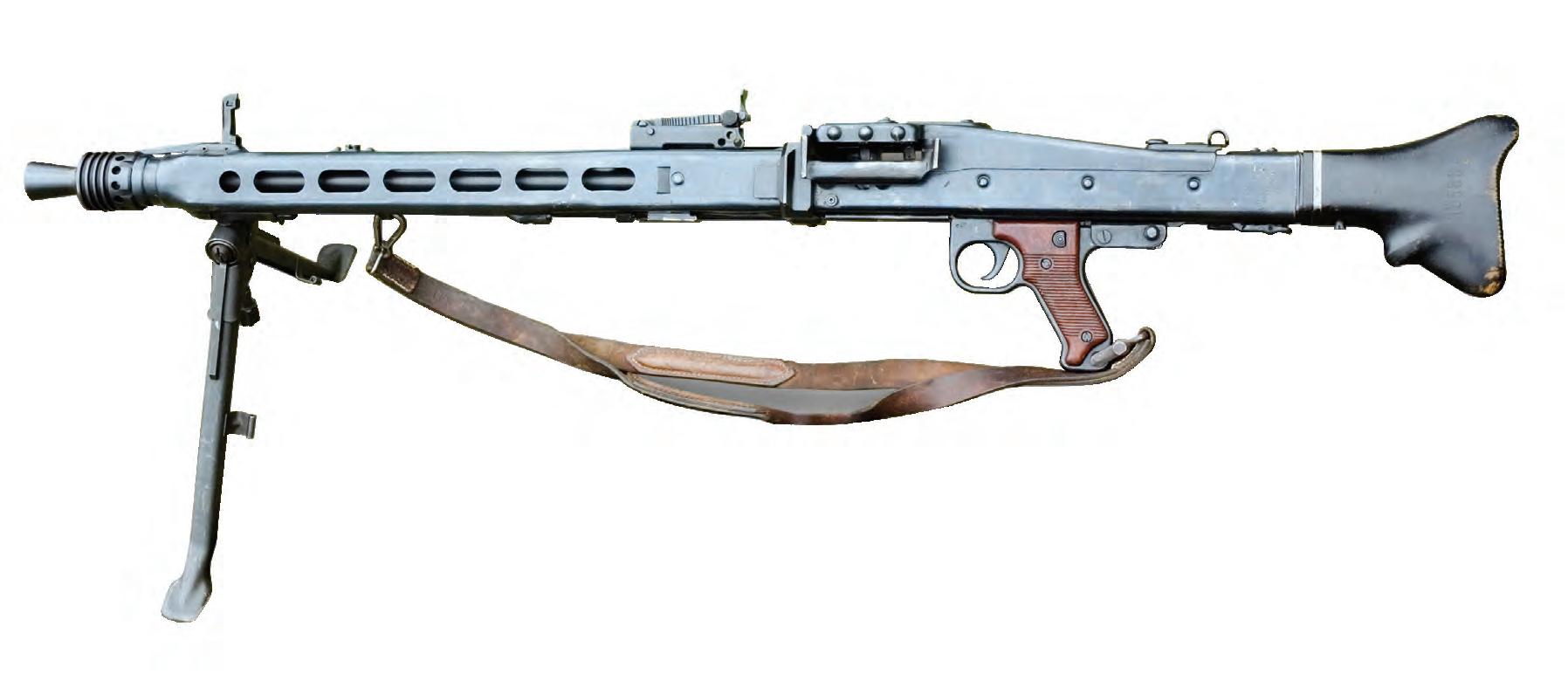
Dauphinais, the private from Manitoba, stepped into the open and immediately got pinned down by an MG-42 machine gun spitting 1,550 rounds of high-velocity, 7.92mm rounds per minute, or about 25 a second.
“THE BLACK DEVILS ARE ALL AROUND US. [THEY ARE ON US] EVERY TIME WE COME INTO THE LINE, AND WE NEVER HEAR THEM COME.”
The German was so close, Dauphinais said, he “could have spit in the bugger’s eye.” But his foe was on high ground and had to shoot down at the Canadian in the dark with the mounted weapon, making the German’s job of taking him out more difficult.
“It was only a matter of time, really, I didn’t have a chance. They plugged me.”
He passed out and when he came to, he had the good sense to stay absolutely still. He attributes his survival to his training, tough as it was.
“I didn’t panic. I didn’t move a muscle and when they raised their fire to take on the guys behind me, I made my move and got the hell out of there.”
Glass may have been out of grenades, but he had plenty of ammunition. He was behind a rock, shooting up a storm, when a German with a Schmeisser MP-40 submachine gun hit him with a 9mm bullet in the pinky finger, knocking the M1 out of his hand. Another round hit the rocks beside him and sprayed his face and right eye with granite chips.
“I backed off and went around to the left,” said Glass. “I got behind another rock when I saw Germans giving up all over the place. To the left of us was a machine-gun crew giving up and I thought, ‘Jesus, we’ve got to get him now.’”
But the German sergeant with the Schmeisser wasn’t surrendering. The company commander, Captain Bill Rothlin of Berkeley, Calif., and Private Syd Gath of Winnipeg arrived and took up positions on either side of Glass.
“I told them both, ‘Whatever you do, don’t look over this rock yet, because this guy really has us zeroed in and he’s not giving up. And if you do, you’re going to get hit!’
“Both Syd and Captain Rothlin looked over the rock at the same time and this Kraut hit them both right through the head. My rifle was covered in brains. God, it was terrible.”
Gath slumped over onto MacKinnon who, unaware he had been hit, admonished him for leaning on him.
“As I said that, he rolled over and I saw the gaping wound to his head,” said MacKinnon. “He had died instantly. It really stunned me. Syd had been a good friend from the beginning, a very likeable guy.”
Glass went over to the dazed MacKinnon and asked him how he was doing. Gath was the first man MacKinnon had seen killed in action. “Well, I’m scared!” he replied. “We’re all scared,” Glass told him. “So have a cigarette!”
smokes and resumed fir ing. Shortly after, Glass directed a buddy with a better angle to the German. “I think he got him finally.”
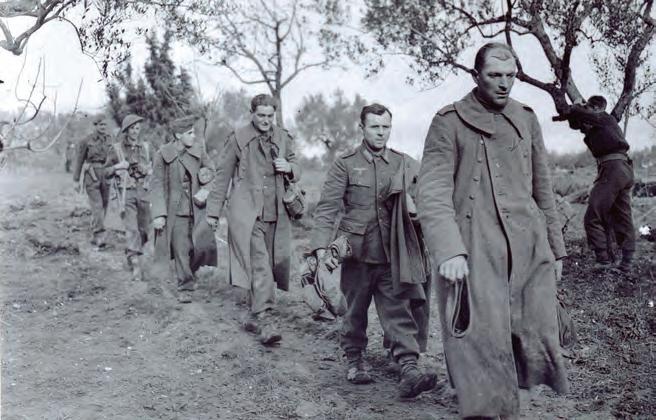
In two hours on Dec. 3, the commandos captured a critical piece of high ground the Germans had held onto since the first week of November despite the best efforts of British and American regulars. Seventy-five elite German soldiers were dead, 43 captured. The commandos counted 20 killed and 160 wounded.
would test the stamina, fortitude, and endurance of the Forceman on Difensa,” wrote Springer.
“In one of the most important battles of the Italian campaign, Allied troops drove their way up and over the highest peaks of the Mount Camino mass.... Monastery Hill, La Maggiore, and La Difensa are in our hands,” correspondent Herbert Matthews declared in a New York Times story the following day.
But the victory, while significant, had not yet been consolidated. The losses were heavy—and continuing to mount. Relief wasn’t immediately forthcoming.
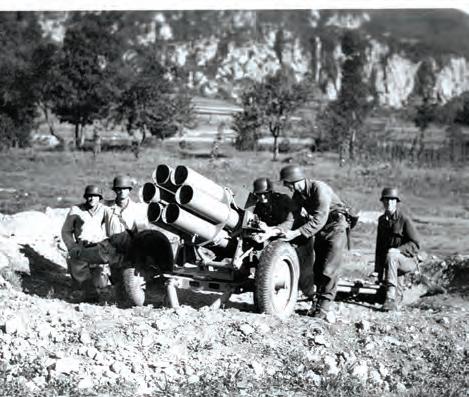
In a violent and confused firefight lasting the next six days, the commandos of the First Special Service Force were all but isolated as they held their hard-won ground against repeated German counterattacks, artillery fire and near-incessant mortar barrages. Then the enemy brought in Nebelwerfers, six-barrelled rocket launchers. The Allied armies called them “screaming meemies.”
“What began as a mountain assault now became a siege that
By the time 3rd Regiment and service battalion men arrived carrying critical ammunition, water, rations and blankets on their backs, the commandos were already succumbing to hypothermia and exhaustion in the rain, snow and falling temperatures. Many of the wounded had been peppered with rock fragments.
Dauphinais began making his way down the line, his arm shot clean through and his rifle reduced to just the barrel by MG-42 fire.
“As I was moving between the rocks, I saw some of my buddies lying together in one area—all dead,” he said. “Their brains were knocked out, all from head shots. The snipers were sniping with Schmeissers and those buggers knew how to use them.
“We had been together for over a year, so you would think that looking at those guys would shock us silly, but we accepted it immediately. We knew it was something that was bound to happen to any of us.”
Some of the officers ditched their signature carbines for the same
German troops pose with a Nebelwerfer rocket launcher (left) on the Italian Front in 1943. A Maschinengewehr 42, or MG-42 (above), could fire up to 1,550 rounds of ammo per minute.
rifles the enlisted men were using. This, they deduced, limited their chances of being targeted by snipers who continued to work well after the main battle ended. Their tracer bullets helped German mortar batteries zero in on their targets.
MacWilliam, the battalion commander from New Brunswick, and several of his aides were killed when he took a direct hit on the head from a mortar round. “I looked back just in time to see them disappear,” said Lewis. “It was just a red mist.”
German prisoners were being led down the mountain; some didn’t make it after word got around that surrendering enemy had duped and shot some commandos.
“Some of the guys didn’t take prisoners unless they were told to,” said Sergeant Gil McNeese of Chicago. “Hell, I shot a few myself.”
Said T4 John Dawson, another Illinois native: “Some would check to see how much ammo the German would have left and if he was clean out of ammo, they would do him in.”
A medic eventually attended to Lewis and his gaping back wound, then told him to lie still. He did, until a German counterattack landed him the middle of the action and “lying still was no longer an option.” He managed to move to a small ledge.
“The Krauts were about fifty yards away, so I pulled out my .45 and
“WHAT BEGAN AS A MOUNTAIN ASSAULT BECAME A SIEGE THAT WOULD TEST THE STAMINA, FORTITUDE, AND ENDURANCE OF THE FORCEMAN.”
started blazing away. I must have been putting them right there because this drew fire, and I mean a lot of fire.
“As I was looking right down the sight, one bullet hit my .45 square on the muzzle. It blew my pistol back into my hand and dislocated my thumb. My knuckle was sheared off and my finger bone went back into my hand. I pulled my thumb out and also pulled my finger bone out of my hand.”
Lewis’s fighting was over. The wounded Dauphinais helped him down to a point on the mountain where medics could pick him up. Lewis’s stretchered descent, punctuated by a particularly dicey encounter with a German mortar crew, would take two days.
During the course of battle, the First Special Service Force took some 511 casualties, or roughly a quarter of its total combat strength.
Meanwhile, la Difensa would be celebrated in the papers back home. Correspondents, including the syndicated American reporter Ernie Pyle, the Montreal Star’s Sholto Watt and Hungarian-American photographer Robert Capa, were sending reports and pictures detailing the exploits of the new force as best as censors would allow.
Writing for the Toronto Daily Star, Clinton Conger eventually alluded to “the Devil’s Brigade” and
the diary entries of a German PoW who, in an apparent reference to their boot-blacked faces, lamented: “The black devils are all around us every time we come into the line. We never hear them come.”
A legend had been born, and not just a fighting one.
“Their reputation as ‘scavengers’ of food also travelled far and wide,” James Wood wrote in “North American Exceptionalism in Wartime: Media Representation of the First Special Service Force,” published in a 2012 edition of the Calgary Papers in Military and Strategic Studies
Wood described how Robert Vermillion of the United Press accompanied the commandos as they returned from a patrol in no man's land with “a wounded German soldier, a wheelbarrow full of sweet potatoes, bushels of peanuts, two dozen eggs and one rabbit.”
Such exploits were many and served as raw material for Bill Mauldin’s wildly popular “Willie and Joe” cartoon series depicting the lives of two fictional American soldiers in the Anzio beachhead, where the brigade would engineer a monumental breakout in the spring of 1944.
“The men of the [Force] take a tremendous pride in their international composition,” wrote Watt, who accompanied them for parts of the Italian Campaign.
“You couldn’t tell whether you were talking to Americans or Canadians in the Force, and indeed the Force gives the impression of having formed something new, a synthesis of North America, but of North America at its best.”
The commandos would fight on at Monte la Remetanea, through the mountains of Italy and up the Liri Valley, suffering 77 per cent casualties.
At Anzio, they fought for 99 days without relief. Here, the unit’s night patrols would distribute their trademark stickers on German corpses and fortifications for the first time. They bore the unit’s signature arrowhead patch and a slogan written in German: “Das dicke Ende kommt noch” or, roughly, “The worst is yet to come,” implying that a larger force was on its way.
Rome would fall on June 4, 1944, where the Devil’s Brigade became the first Allied unit to consolidate its entry into the city, capturing six to eight bridges over the Tiber in a single day.
They moved on and joined in Operation Dragoon, the August 1944 invasion of southern France, and fought the Battle of Port Cros in which they captured five Germanheld forts on the island of Port-Cros.
“Since their dramatic, threemonth performance at Anzio beachhead, everybody knows them,”
reported Conger. “The Allied armies in Italy know the men of the force by their special, baggy-panted mountain uniforms and shoulder patches.
“The public back home knew them during Anzio as the combined Canadian-U.S. combat group. Finally, they completely released their organizational name and history after they landed in France.
“To me, during the fortnight I spent with the force in southern France, the outstanding thing about it is its spirit of offence. These men are trained to fight in forests, on mountains or in snow, and always to attack.”
But the very things that made the First Special Service Force uniquely effective were some of the same things that ensured its political demise—namely, its binational makeup and high casualty rate.
On Oct. 7, 1944—the same day Conger’s tribute was published—the headquarters chief of the Canadian army in England, Lieutenant-General Kenneth Stuart, his hands all but tied by complex
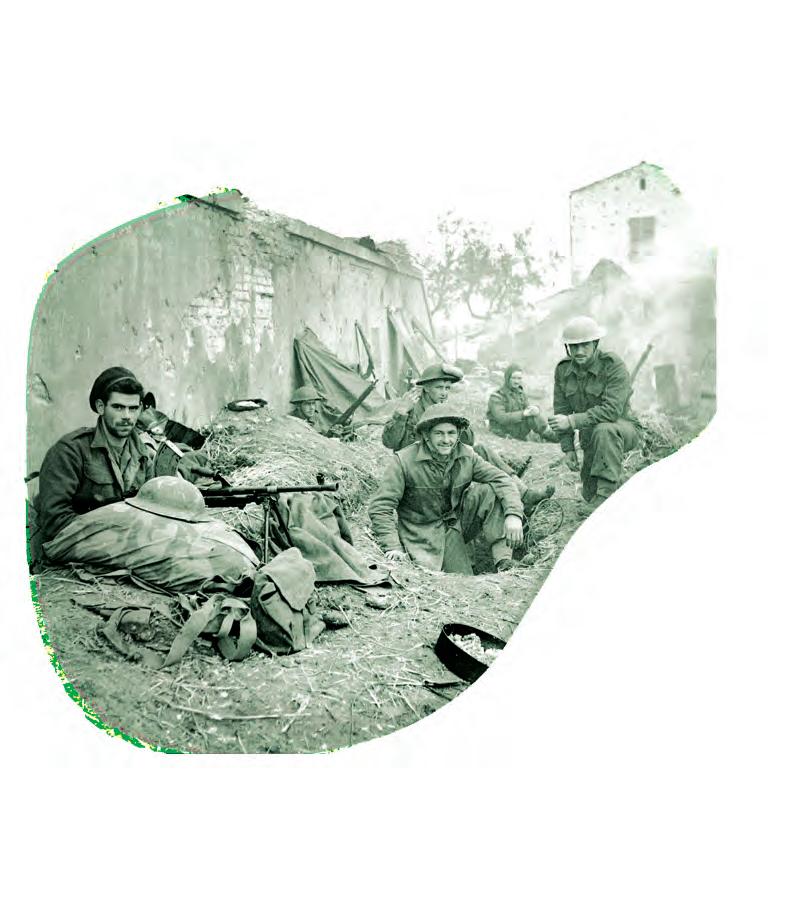
Devil’s Brigade commandos (opposite), their faces blackened for night operations, take a break in Italy.
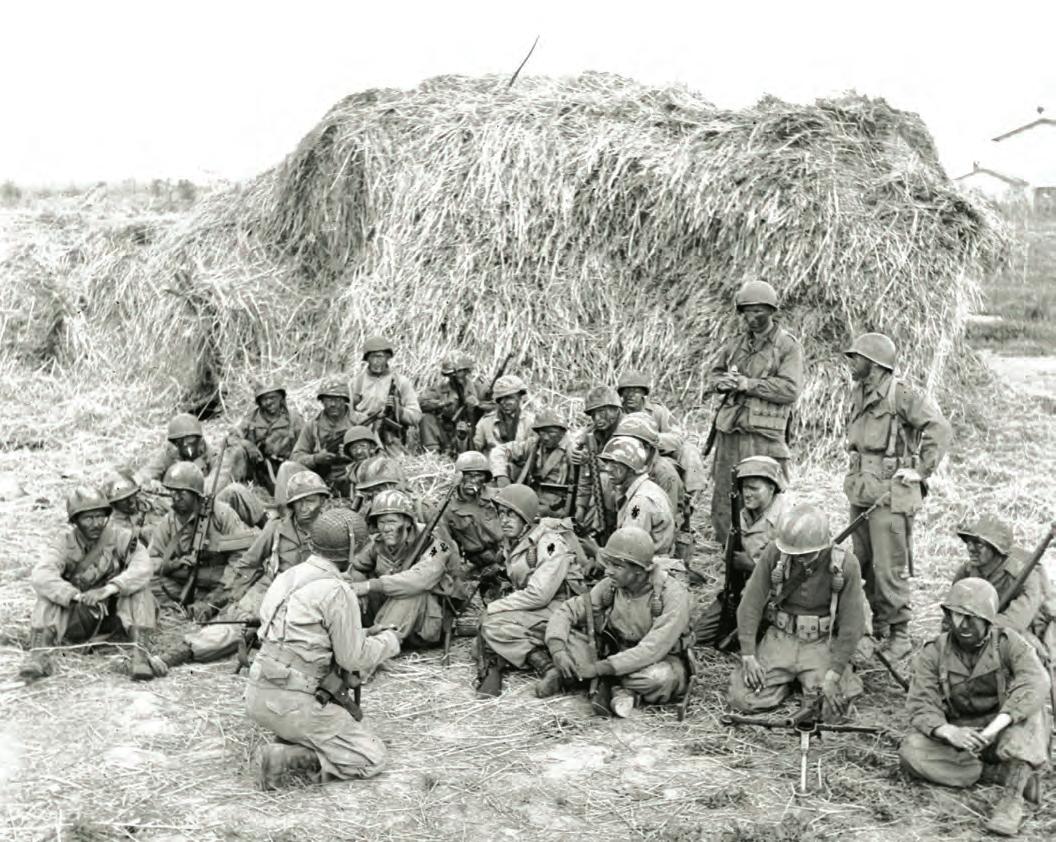
Lieutenant Henry H. Rayner of Toronto (below, foreground) briefs his platoon on April 20, 1944.
administrative challenges and the unit’s irreplaceable Canadian losses, advised disbanding it. Beyond the hundreds of commandos who had died in battle, the unit’s turnover rate was a whopping 600 per cent.
“This unit appears now to be submerged to such an extent with the U.S. forces that the value to Canada of its retention is no longer apparent,” wrote Stuart. “I recommend that the Canadian element of the Special Service Force be disbanded and that the personnel be returned to the U.K. for reallocation.”
And so it was that, after a final parade in Villeneuve-Loubet, France, on Dec. 5, 1944, the First Special Service Force— the Devil’s Brigade—ceased to exist.
“It was the saddest day of my life, I think,” said Dauphinais. “When they ordered ‘Americans stand fast; Canadians fall out in a column of threes,’ there were tears falling all over the bloody place, among all of these tough bastards.
“Canadians were falling out that I thought were Americans and Americans were standing still who I thought were Canadians,” he told Springer. “I didn’t know who was what. There was no nationality in that bloody outfit.”
The Canadians were returned to their own army. Some of the American element were transferred to exhausted U.S. airborne regiments, while the remainder were reorganized to form the 474th Infantry Regiment, complete with its own anti-tank company, heavy machine guns, mortars and vehicles.
The First Special Service Force had lasted just two-and-a-half years, but its exploits were monumental and its doctrine, training and methods would form the basis of future special operations forces, including Canada’s. Just nine commandos of the Devil’s Brigade survive at this writing, two of them Canadian. The popular 1968 movie
The Devil’s Brigade gave the unit’s memory new life, albeit a Hollywood account of its colourful existence through Monte la Difensa, starring the likes of William Holden, Cliff Robertson and Richard Dawson. The film would have done well to have posted a disclaimer like the one that preceded episodes of “SAS: Rogue Heroes,” a recent BBC television series about the first British Special Air Service: “The events depicted which seem most unbelievable...are mostly true.” L
Second World War
By Charles Wilkins
lines By
enemy
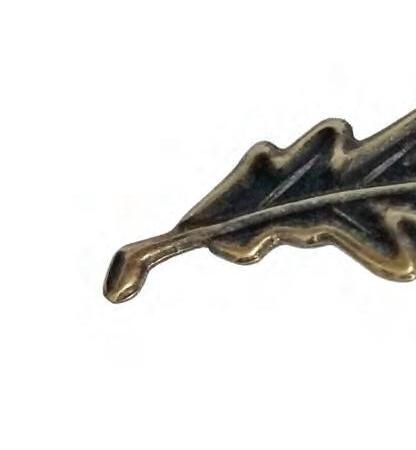
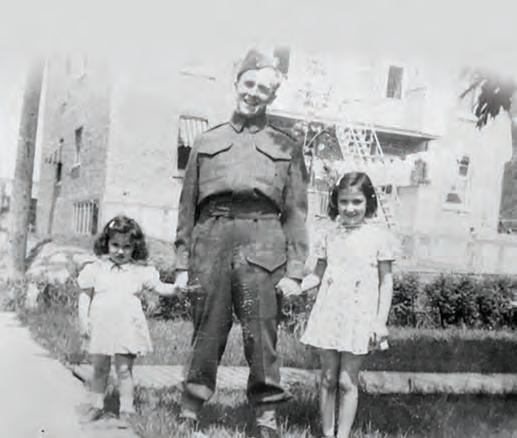
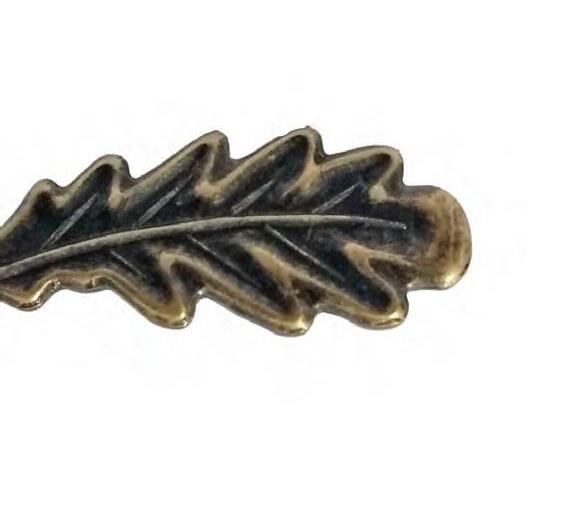
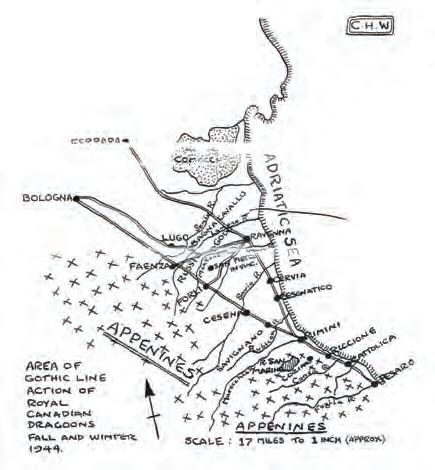
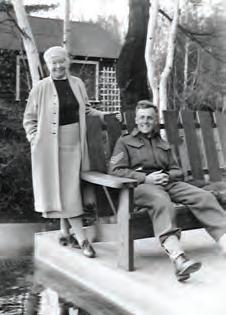
Lieutenant C. Hume Wilkins in 1943 (opposite). He led a reconnaissance troop in Italy, where he was photographed with two local children near Riccione in late 1944 (left), around the time he drew this map (below) of the Gothic Line region. Wilkins’ oak leaf insignia from his 1945 Mention in Dispatches (inset).
Recollections from a reconnaissance man in the Italian Campaign
When at the age of 11, I asked my dad if he thought he had killed any Nazis with artillery fire during the Second World War, he thought for a few seconds and said solemnly, “I hope so.”
It wasn’t the answer I or anyone else might have expected from the peace-loving son of a Quaker and, at that point in his life, a part-time preacher.
Not until years later would I come to appreciate that it wasn’t jingoism or a sense of theatrics that had prompted his response, but rather his refusal to shelter in any sort of personal revisionism. He had gone overseas to do a job and had done that job. And even with the sensibilities of an 11-year-old kid on the line, he was not about to invalidate his commitment by claiming he hadn’t meant any harm.
More than five decades after the end of the war, as my dad lay in his coffin in a little funeral parlour in Plattsville, Ont., a dozen or so WW II vets, each of them wearing his service medals and the beret of his regiment, gathered around their dead comrade, as they do in that community when an old soldier
dies. They enacted a brief military farewell, and a young musician played “Taps,” then “Reveille,” and the men saluted, fell to ease and dispersed.
It was at that point that an amiable and softspoken air force veteran named Gow Harvey, who I did not know personally but who had known my dad for years, came over, shook my hand and asked in a suggestively conspiratorial whisper: “Do you know what your dad actually did during the war?”
It was like one of those Hollywood scenes in which the unsuspecting scion learns that the father or grandfather, the straight-up paterfamilias, was in reality a guy with a mysterious, perhaps shadowy, past. And for the briefest of moments, against all rational inclination, I felt frozen in the headlights—what on earth was he going to tell me?
Certainly, I didn’t know a lot about my dad’s years as a soldier. Life in the trenches simply wasn’t something he talked about. As
Courtesy Charles Wilkins (3); C.H. Wilkins
an 11-year-old, I had gone with him once to Ottawa where he was speaking to a convention of bright high school matriculants and had been surprised to hear him tell them that for a year after the war, he had been adrift to the point where he had frequently considered suicide. He explained that as he walked the severalmile route back and forth to the University of Toronto as a student in 1946, he would sometimes stand for hours on the Bloor Viaduct, contemplating a jump. But this was never mentioned again, not even in the car as we drove home to Cornwall, Ont., that night.
Until then, my impression of the war, or at least of my dad’s part in it, had been shaped by two bravura occurrences, both imparted to me by people other than my dad. The first was that he had accepted a demotion in rank (captain to lieutenant) so that he could get overseas and fight. During a period when my mother felt my dad’s contribution was going unappreciated by other branches of the family, she made a point of speaking up about his voluntary relinquishment of rank and status, as if to show evidence of his selflessness and commitment to the cause.
The second thing was that he had been Mentioned in Dispatches, in other words cited for bravery in field reports to the high command in London. I knew this only because on a visit to my grandparents’ place in Hespeler, Ont., one summer, my grandfather showed me a letter, sent in 1945, advising that Lieutenant C.H. Wilkins had demonstrated “gallant and distinguished service in battle.” The letter (now in my possession) had been hand-signed in (what else?) royal blue ink by King George VI. When Queen Elizabeth died recently, I was reminded that on
a morning in 1952, as my dad shaved in the upstairs bathroom at 16 Parkdale Avenue in Deep River, Ont.—a bathroom in which he kept a little radio so that he could catch the early news from CHOV in Pembroke—my sister Annabel and I, who were still in bed, heard the bathroom door open and a restrained sob, then his plaintive voice: “King George is dead!” As the inspirational leader of the Allied forces, the king had mattered more to him than Churchill or the generals.
My dad, I would learn years later, had fought in France, Belgium, the Netherlands and Germany. However, at the heart of his war record were five largely unspeakable months in late 1944, during which he fought in the famously vicious Italian Campaign, a 22-month death match with the Germans that began in the summer of 1943, when thousands of Allied troops invaded the Italian island of Sicily. By the time those men hit the mainland a couple of months later, two things had happened: Italian Fascists under leader Benito Mussolini who were spread all over Italy had surrendered en masse to the Allies; and some 300,000 German soldiers had poured into Italy from the north as replacements. The Allied plan was to move north up the Italian boot—basically 600,000 Allied soldiers (as many as 300,000 of whom might be active at any one time) pushing 300,000 Nazis back toward Germany. And here I must pause to note that during this year of 2023 we are commemorating the 80th anniversary of the start of that heroic initiative.
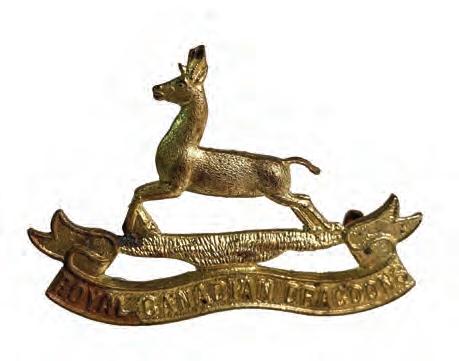
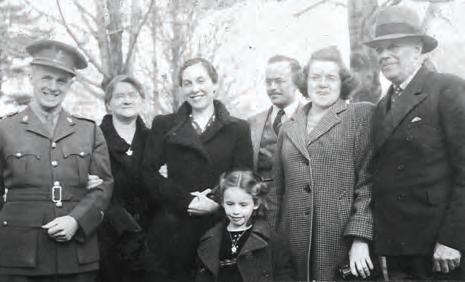
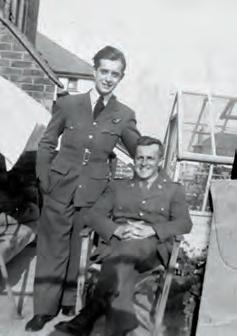
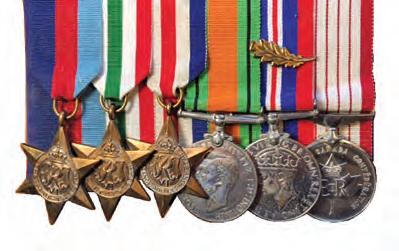
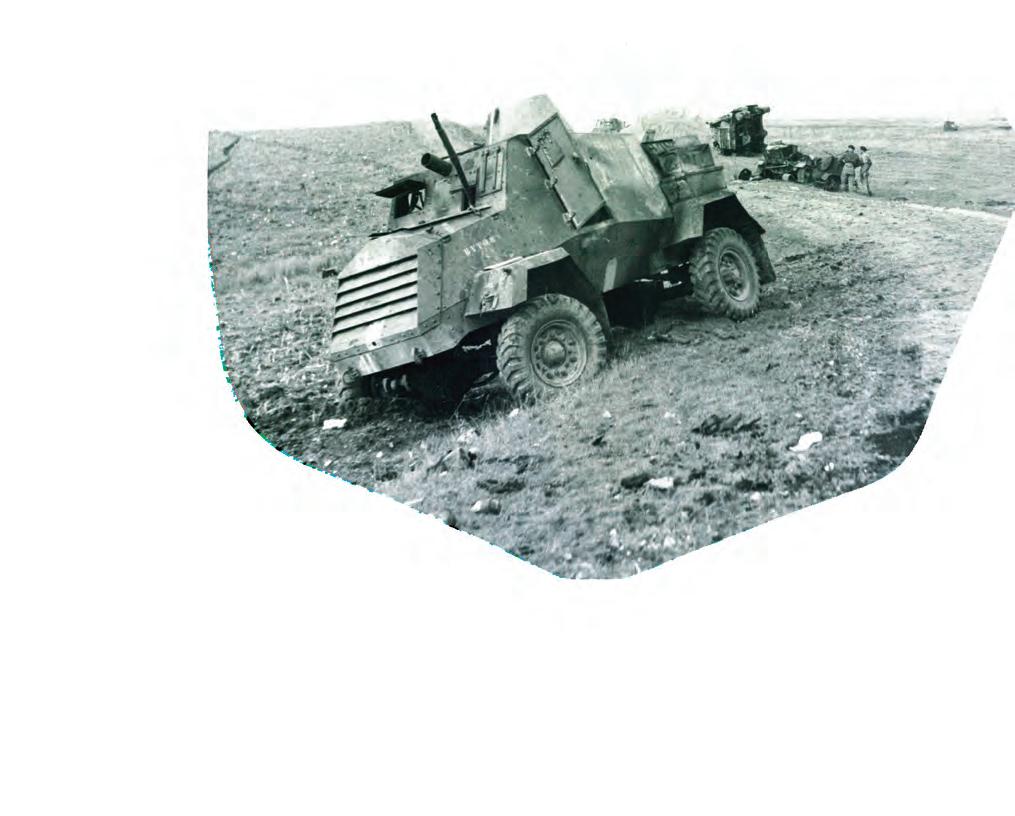
clockwise from top: The cap badge of Wilkins’ Royal Canadian Dragoons; with his Aunt Grace at Clear Lake, Ont., in 1942; Wilkins’ medals; with family before his departure in April 1942; with brother Edgar, who served in the Royal Canadian Air Force, during leave in 1944. opposite: An Otter Light Reconnaissance Car, similar to the vehicles Wilkins used in Italy.
In all, nearly 100,000 Canadians fought in the campaign and more than 5,000 of them lost their lives. They were constantly being replaced or relieved by other soldiers, and when my dad arrived in Italy, some six months after the initial landing on Sicily, he came as reinforcement for the 1st Regiment of The Royal Canadian Dragoons. He had recently completed two months of tank training in Algeria—“blowing up the desert,” as he once characterized the activity.
But he was not a “tank man”— he was in reconnaissance, “recce” as they called it. In that capacity, he led a troop of 15 gunners and drivers—risk-taking swashbucklers trained to prowl the front lines looking for enemy weaknesses, which they did either on foot or on their knees or bellies in the Italian mountains, or when it was possible, in fast armoured cars: either big American Staghounds or “Stags” (14-tonne vehicles, each mounted with a 37mm gun), or smaller Daimler Scouts, “Dingos,” equipped with a Browning machine gun.
“Do you know what your dad actually did during the war?”
By mid-1944 Rome had been liberated from the Nazis and fierce battles, such as the one at Ortona, had been won, bringing both respect and great losses to the Canadian troops, more than 500 of whom died in taking the mountain city from the Germans.
Meanwhile, the focus of the campaign had shifted to what Hitler had named the Gothic Line, an east-west continuum of easily defendable and fiercely defended trenches and gun placements in the area of the Foglia and Marano rivers, near the Adriatic resort cities of Riccione and Rimini, and moving inland into the mountains north of Florence.
The line was really less a “line” than a kind of buffer zone some 15 kilometres wide. Its thousands of concrete gun nests, bunkers and trenches had been built hastily with slave labour and, in effect, represented Hitler’s last stand in Italy. And it would be the job of my dad
and the thousands who fought with him to somehow penetrate this last wall of defences, so that the British Eighth Army and the U.S. Fifth Army could get in behind the Nazis and finish them off.
But on the day I met Gow Harvey at my dad’s funeral, I didn’t know any of this. Through the first 50 years of my existence, my dad had told me exactly one war story, had explained to me one day when I was about 12 how a communications wire he and his men had laid down had been broken by exploding shells. He was attempting to impart a moral principle, and the gist of things was that if he sent one of his men to mend the wire, he would never have been able to live with himself if the man had been killed or seriously injured. So, he went himself, belly-wriggled out across a field into no man’s land, in the dark, as machine-gun fire rattled around him. The moral of the story, as he articulated it, was that you never asked somebody to do a job, particularly a tough one, that you wouldn’t do yourself.
Courtesy Charles Wilkins (5); Terry F. Rowe/LAC/PA-201359
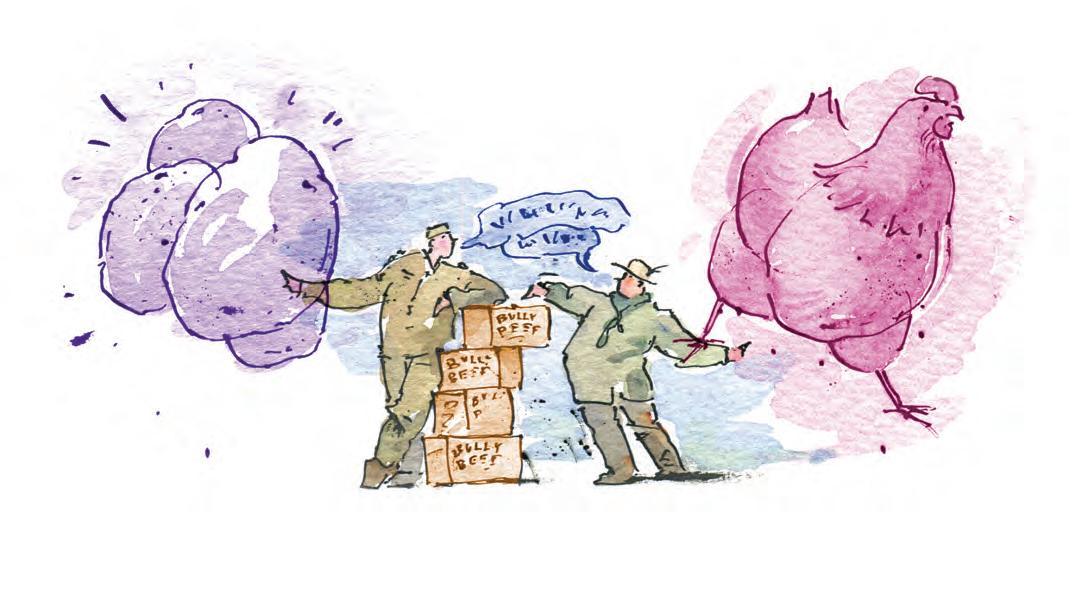
I recall another time when I was perhaps eight, and my dad’s gunner, a trooper-turned-lawyer named Jim Braden, told me jokingly about a vague time in a vague place where and when my dad had brought several live chickens into the turret of their Stag, so they would have them handy for dinner. When another of the vehicle’s gunners released a volley of machine-gun fire, the chickens leapt up in tandem and dropped dead of shock on the floor. So, the men didn’t have to kill them later.
Meanwhile, back at the funeral parlour, if Gow had something to tell me, I guessed it was time to hear it. “What your dad and his men did,” he said now, “was the most dangerous, the most stressful, the most deadly work any soldier ever had to undertake.”
Gow was not easily impressed; he had been a gunner on a Halifax Mk II bomber and, as the only survivor of a flaming crash over Leipzig, Germany, in early 1944, had been taken prisoner and had spent some extremely difficult months, at a fraction of his normal
weight, in Stalag Luft 6, a famously brutal Nazi prisoner-of-war camp in what was then East Prussia.
anybody crawling around under their noses represented a lethal threat not just to the security of a few troops or trenches, but to the whole Gothic Line and, hence, the outcome of the war. Beyond which, Gow concluded, the snooping was an insult to the Jerries’ strategic intelligence.
Gow reported that he had gone to visit my dad one day in about 1995. My dad would have been 83. They had talked for three hours about the war in general, about the Allied command, Churchill, Montgomery, the U.S. forces, Patton, North Africa, Rommel, bully beef, the Fascists, the deaths of Mussolini and Hitler, the Nazis, or “Nazzys” as my dad always called them, until eventually Gow said to him, “Now, Hume, you’ve told me all about everything except yourself. You didn’t get Mentioned in Dispatches by hiding in a trench.”
And with that, my dad had told him how it was, describing, as Gow recalled, how night after night, his little troop of armoured cars, sometimes just one of them, part of ‘C’ Squadron, would patrol the Nazi positions along the Gothic Line, picking up information, firing the odd shell to see who responded, looking for weaknesses—and how at times, when a car was too obvious or cumbersome, they would
leave it several hundred metres to the rear and would go on foot, or on their bellies, sometimes along dried up river or creek beds, attempting if possible to get in among the Nazi encampments and gun placements, or, on rare occasions, even behind the front-most trenches and gun nests, gathering information, sending back radio reports as they were able.
The idea was to tell headquarters how many Jerries were out there, how well they were armed, whether there were reinforcements, supplies, food, proper trenches—did they have tanks, and if so, how many? My dad told Gow how at times, in the middle of the night, he and his gunner, or he alone, would be close enough to Nazi trenches or lookouts that they could hear the Jerries talking, or laughing as they played cards or made tea in the darkness.
“If these reconnaissance guys got caught,” said Gow, “it wasn’t about being taken prisoner.” As far as the German infantry were concerned,
Perhaps understandably (and undoubtedly in violation of the Geneva Conventions) the Nazis discouraged such activity by summarily executing personnel such as my dad if they managed to catch them. In one notable incident, according to Gow, the Germans left a couple of corpses draped over fences—a resonant warning to anyone who might follow.
“Can you imagine,” Gow said, “what this kind of work did to a soldier’s head night after night, week after week, on the front lines?”
As we talked, I glanced several times at the shrunken figure lying in the box, his war medals and decorations laid out on top (including his favourite, the little bronze oak leaf awarded to military personnel Mentioned in Dispatches). One of the things that gives me pride in my dad’s war record is that he was not a warrior at heart, not an athlete nor even particularly a competitor, but rather a poetry-loving, Shakespearequoting intellectual, a guy who by the age of 17, in 1929, had read every novel in the Hespeler library, had
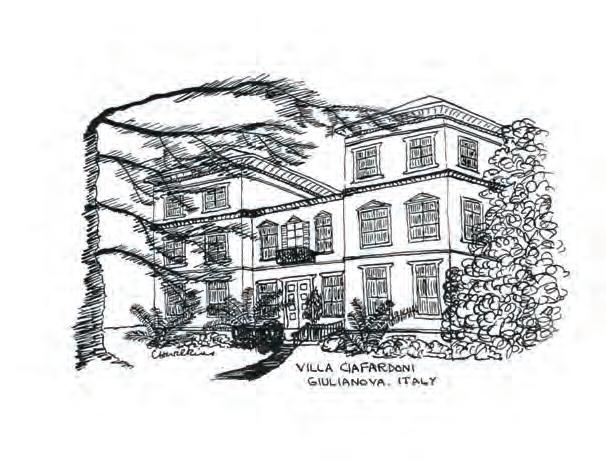
Fighting at the Gothic Line. Wilkins’ sketch of the villa in Giulianova where he and his squadron took leave in 1945 (opposite).
survived spinal meningitis (which he told me once had permanently diminished his co-ordination) and who later in life taught literature and philosophy, loved opera broadcasts on CBC Radio and read a hundred books a year.
And had, of course, fought like a wolverine in Italy.
Gow and I promised to get together, but we never did, and for the next 20 years, my awareness of my dad’s war contribution stayed pretty much as it was that day in the funeral parlour. Around 2010, I came across a sheaf of my dad’s wartime letters to my mom and other family members. But many of the details had been edited out, presumably for security. On Remembrance Day, I would shiver at the cenotaph and think about the things Gow had told me. But despite everything, any sense of my dad’s war remained a sketch.
Then a kind of miracle happened. Out of the blue in early 2022, a Dutch historian named Edwin Meinsma emailed me explaining that he was writing a book about the Canadian army’s role in the liberation of his province of Friesland in the northern Netherlands in 1945. The name of a Canadian lieutenant, C.H. Wilkins, had come up repeatedly in his research—was this person by any chance my father, or a relative? If so, could I tell him more?
The astounding thing was that along with the request came a lightly redacted electronic copy of a 140-page diary in which my dad had documented the roughly nine months from his first action in Italy to his final deployment in Germany, where on May 8, 1945, word came down that the nightmare was over, the Germans had surrendered and Hitler had committed suicide.
Meinsma had acquired the diary, I believe through an archival service of some sort, or perhaps the Canadian War Museum, and my immediate question was why my dad had never shown it to me—or
even mentioned it. I wondered perhaps if the particulars of its contents were in some way uncomfortable for him. Later, it seemed more plausible that he simply didn’t want to think about those contents anymore, or the experiences that had spawned them. The year of suicide fantasies when he had come home, and the inner chaos represented by those fantasies, were pretty good evidence that he no longer wanted to think about the war.
Regardless of what the diary meant to him, it was a gold mine for me—a rich, personal, invariably illuminating account of the role he and his comrades played in the struggle to break through the Gothic Line and end the Nazis’ dominance of northern Italy. More significantly, it offered a great skein of detail that for me had always been missing.
Everything was there—from what the fighting men feared (good marksmen, confusing orders, inadequate maps) to how they fought (relentlessly), to the fine points of their daily diet: the despised bully beef, the hated hardtack, the mystery soup; the chickens and piglets and calves “liberated” from roadside farms; the occasional small treat (a 1944 Christmas parcel from the British YMCA contained an orange and a package of Life Savers for each man). Unfortunately for the troops, they were often unable to harvest the local grapes and apples, because the retreating Nazis had boobytrapped the vines or tree branches, or placed land mines, including the infamous Bouncing Bettys, in the vineyards or orchards.
What is not commonly perceived, but is made clear by the diary, is the degree to which life on the front lines was carried on among the civilians who called the territory home. In some cases, they
were embittered Fascists, Mussolini loyalists who spurned or even spat at the advancing Allies. More often, they were folks who had lost everything except their will to help the Allied infantry and artillery in the slow grind north: 90-year-old women, toothless old men, farmers, teachers, nurses, people quietly overjoyed to see the last of the Nazis and the arrival of the Allied army.
The lot of them, civilians and soldiers, lived knotted up together in the wreckage of what was: houses with no doors, orphanages with no roofs, monasteries and villas with five-metre holes blown in the walls. Headquarters was anywhere it could be established, preferably in a place with at least a smattering of comforts—say, a stove, a few chairs, a mattress or two and, perhaps above all, a windowless subterranean room, where at night the men could light a simple, single candle so they could peruse maps, read books or read one another’s faces without fear of giving away their position.
If no accommodations were available, the troops did the obvious and slept in trenches or foxholes, sometimes in the mud—or, if it was my dad’s troop, slept curled up in the turrets of their armoured cars.
Amid all of this, the diary makes clear, life on the front lines was an emotionally messy, non-stop struggle to stay sane: was the young soldier who, at the first sound of a machine gun, leapt out of the trenches and ran screaming toward the enemy gun nests; was
The diary was a rich, illuminating account of the role he and his comrades played in the struggle to end the Nazis’ dominance of northern Italy.
another man’s night sweats (in the cold); another’s shivering fits in the warmth of the armoured car; was the crazy-making eeriness of the night watch—something moving out there in the shadows and, with it, the temptation to fire off a few rounds, or shine a light, except that in so doing you’d betray your position and would immediately take a shelling from across the lines.
“If you weren’t on watch,” said my dad at one point, “you were on wait.” Waiting until dark; waiting for a signal; waiting for orders; waiting for dawn; waiting out a barrage of machine-gun fire. Waiting for desperately needed reinforcements, or until just the right moment to come roaring up out of the riverbed and onto the German trenches.
At other times, soldiers waited patiently for Red Cross vehicles to go out into no man’s land and fetch
Unidentified Canadian soldiers in Italy in December 1943 (left). German prisoners are escorted by men of the 1st Canadian Division (opposite) around the same time.
a dead comrade and bring him in for burial; or fetch a “quiet” Nazi —which is to say a dead one—for delivery back north across the lines. A favourite deceit of the retreating army was to booby-trap the corpse of a fallen comrade, on the chance that someone from an advancing unit would tire of seeing or smelling it and would come out to bury it and would himself be blown to death.
“Battle is a raid on the senses,” notes the diary: the smell of cordite; the whine of an incoming shell or a “moaning Minnie;” the howl of an approaching bomber; the muffled thud inside the Staghound when a shell is fired. It has been said that the most terrifying sound of war was the click underfoot when an infantry soldier stepped on a Bouncing Betty and was
unable to move without detonating the device and losing his legs.
On a night in October 1944, just north of Riccione, my dad, on reconnaissance, recorded his desperate attempts in the dark to orient himself between the “staccato trill” of the German MG42s and the clattering “rain-on-the-roof” of the Canadians’ Vickers machine guns. He was a subtle writer, so it does not surprise me that the diary’s most understated lines are in his attempts to convey the devastation the troops felt over the loss of a comrade—the report from the front, the torn corpse, the shallow grave and brief committal, the wooden cross inscribed and installed:
“Two days later we stood by the graves of the dead, and gazed at the inscriptions lettered on the crosses over their heads, (K/A, Killed in Action). Padre Cleaverdon read the brief service. It comforted us to know that our friends were lying decently in the dark earth, safe and sheltered, after two long days on the battlefield when we could not reach their bodies because of the enemy snipers who hung about waiting to shoot anyone who exposed himself.”
It was not just the Allied dead who commanded my dad’s attention:
“Late in the afternoon we harboured in a grassy vineyard, where the ripe grapes hung in to easy reach. A pale young German lay at the road junction, his fighting days done. I never quite lost the morbid interest I had then in seeing their quiet bodies. A live German, too, had a little of the fascination of a wild animal; it is not easy to think of your dreadful hidden enemy as a man like yourself. I suppose the Germans had the same idea of us.”
As for living Nazis, when ‘C’ squadron moved into a villa that had recently been inhabited by the Germans, my dad was surprised and, I think, moved, to find the novel Resurrection by Leo Tolstoy left behind by an enemy officer—this at a time when my dad himself was reading Tolstoy’s War and Peace; brothers in literature if not in arms. At other times, there was no such familiarity: “There, in the little town,” he writes in January ’45, “we saw for the first time German prisoners-of-war working under guard; and the old weird feeling of mystery came over us; everyone watched them, fascinated, as if they were men from the moon.”
Given my dad’s temperament, I am not surprised that the diary contains little sense of his personal influence on the advances and small victories he describes, or of his once-vaunted bravery under fire. In reference to the fear he sometimes felt, he recalled a sunrise reconnaissance mission along the banks of the Lamone River in December 1944:
“I crept forward to inspect the pits the Jerries had dug into the bank, and as I turned away another shower of shells came down. All I could do was throw myself down in a shallow ditch, about as deep as a washbasin, and bury my
nose. A piece of shrapnel knocked my helmet off, but I didn’t dare reach for it unless I wanted to lose my arm. For me, looking back, it was one of perhaps a dozen truly bad moments of the war; I couldn’t see how I’d get out alive. But eventually, like the other moments, it passed, and I had a sense of a guardian angel somehow looking out for my wellbeing.”
My dad had an equally pointed sense of the reassurances of a decent shave, a cup of tea, a shot of rum, a word or two of encouragement from the major as his little troop came in off another night of snooping, of whispering, of rumours and camaraderie.
Thus it was that the Italian Campaign pushed north: one riverbed, one canal, one creek bed at a time—the Salto, the Foglia, the Rubicon, each depleted waterway transformed by the Nazis into an all but impenetrable barrier of gun nests and hideouts and landmines, the lot of it backed by tanks and artillery, and if these failed, by thousands of square kilometres of impassable mountains to the northwest.
When at last, during the late winter of 1945, I Canadian Corps broke through the Gothic Line for good, The Royal Canadian
Dragoons, including my dad’s squadron, had been taken off the front lines for a rest, first in the little town of St. Pietro, then in Giulianova overlooking the Adriatic. It was from there, after weeks of rumours and speculation, that they were redeployed to Belgium, Germany and the Netherlands. Near the Dutch town of Leeuwarden on the evening of May 5, 1945, they received word that a ceasefire had been ordered and the war was about to end.
“After so long on the lines,” my dad wrote in his diary that night, “it is hard to know what to do or think having been commanded to refrain from war. Being realists more than philosophers, the men, it seemed, paid minimal attention; a soldier takes everything in stride.
“For some of us there were tears, and that night in darkness I found myself thinking back over the months that had passed... England...North Africa...the hard days under fire in Italy...the outings into the night to discover what needed to be discovered.”
There was evidence in the writing that my dad was already feeling a weight over all that had passed, and by his memories of the campaign. But he said he felt, too, that the troops had:
“done what we came to do—had left the enemy a little weaker, undoubtedly a little closer to surrender.
“It may seem presumptuous, but I think we represented our country and supported our allies as well as possible. And we supported one another.
“Our war is over,” he said in conclusion. “Whatever remains to be done here will be carried out on time borrowed from home—which once again, happily, is a real possibility, and no longer just a dream.” L
The Korean War grew out of the failure of the Soviet Union and the U.S. to unify Korea after defeating Japan in 1945 at the end of the Second World War. The Japanese annexed the peninsula in 1910 and the empire’s WW II loss raised the question of Korea’s future.
The United Nations was supposed to administer an election for the whole peninsula, but one was held only in the south, where the American-backed Syngman Rhee, a noted anti-Communist, was elected president. The Soviets, who ruled in the north, installed Kim Il Sung, a wellknown Communist, to govern. Then Kim received Soviet leader Josef Stalin’s permission to invade the south to unify the peninsula.
On June 25, 1950, North Korean troops, backed and supplied by the Soviets, crossed a temporary demarcation line on the 38th parallel and invaded South Korea. Kim aimed to bring the Koreas together by force with Soviet tanks, Soviet “instructors” and, eventually, Soviet fighter jets (MiG-15s).
When U.S. President Harry S. Truman learned of the invasion, he ordered American troops in Japan to go to Korea to help Rhee. Truman also sent U.S. air force and naval units to strike North Korean columns.
Was the Korean Armistice Agreement a success?
David J. Bercuson says YES
He then appealed to the UN for help. The UN, without a Soviet representative on hand because the country was boycotting the organization until Communist China was allowed to seat an ambassador, voted to seek military help for Rhee from its members.
WHEN THE CHANCE CAME TO STOP THE WAR, IT WAS A MERCIFUL, AND NECESSARY, END TO A THREE-YEAR SLAUGHTER.
The war lasted until an armistice was signed on July 27, 1953, by UN representatives, China and North Korea (Rhee refused to sign). The ceasefire line established then remains today and no political solution to the Korean War has ever been worked out. Was the armistice a success? A brief look at the 70 years since
indicates that although South Korea (officially the Republic of Korea) underwent more than 40 years of dictatorship following the war, it eventually evolved into a democratic country in the mid-1990s and remains a bastion of liberal ideas, with a free press, civil liberties and free elections.
North Korea (officially the Democratic People’s Republic of Korea) remains an autocracy, with nuclear capabilities and a starving population—a testament to its many failures since the armistice.
U.S. and UN intervention defeated Kim and the Chinese who rushed to support him. By autumn 1951, the war had become a stalemate. In the end, some three million people died, most of them civilians. American and UN forces lost some 150,000 troops. Chinese and North Korean losses are still unknown. When the chance came to stop the war, it was a merciful, and necessary, end to a threeyear slaughter. While the peace has been tenuous, it has largely endured. It has undoubtedly saved countless lives and helped South Korea become a thriving economic democracy. While it may not have been perfect, the armistice has prevented more war on the Korean peninsula for going on seven decades. L
> To voice your opinion on this question, go to www.legionmagazine.com/FaceToFace
The Korean War, coming as it did just five years after the Second World War, was not at the time, and for a long while afterward, considered a war by almost anyone except those who fought it.
Despite some three million military and civilian deaths and the devastation of industry and infrastructure, politicians and diplomats seeking to assuage fears of another conflagration dubbed the three years of fighting on the Korean peninsula a “police action.” And in the following decades during the Cold War, it was referred to as the Korean “conflict.”
So, when it came to ending it, no peace treaty was reached, only an acrimonious armistice that South Korean President Syngman Rhee, whose borders and citizenry had been violated, refused to sign.
The talks, rife with Communist intimidation tactics and stalling, took two years and 17 days—some 400 hours of parley in 158 meetings. It was the longest ceasefire negotiation in modern history. And while the diplomats sparred, the real fighting continued, with UN forces suffering thousands of casualties.
But what of peace and stability on the Korean peninsula and beyond? In the 70 years since the armistice was reached, they have proved elusive.
DAVID J. BERCUSON
, author of the “Eye on defence” column in Legion Magazine, is director of the Centre for Military and Strategic Studies at the University of Calgary.
STEPHEN J. THORNE is an award-winning journalist, editor, photographer and Legion Magazine staff writer. He has reported on the downfall of South African apartheid and from war fronts in Kosovo and Afghanistan.
NO
Technically, a state of war has existed in the region ever since Soviet-backed North Korean troops, later reinforced by China, crossed the 38th parallel on June 25, 1950. The subsequent ceasefire has been punctuated by periodic flare-ups, border violations and missile tests.
THE CEASEFIRE HAS BEEN PUNCTUATED BY PERIODIC FLARE-UPS, BORDER VIOLATIONS AND MISSILE TESTS
In other words, the Korean armistice stopped the fighting of the day, and possibly avoided a wider war, but it did not resolve the divide between North and South. Instead, it left in its wake a demilitarized zone and heavily fortified borders separating a Communist country on one side and a capitalist one on the other.
The deal did not address what may be the greatest tragedy of postwar Korea—the separation of 10 million families—and it left a legacy of instability that continues to reverberate around the world.
It set the table for long and costly failures in Vietnam and, arguably, Iraq, Syria and Afghanistan, by creating a precedent in the West that not following through on commitments and coming up short of expectations in war are somehow acceptable.
The North has become a hermit kingdom under cult-like rule by a series of hereditary madmen bent on aggression and the development of nuclear weapons aimed at annihilating a West whose sanctions continue to impose unending misery on the people of North Korea.
So, while South Korea thrived and became a technological giant, North Koreans have languished in poverty, corruption and stigmatization under a harsh and dangerous regime.
“The real problem of course is that despite the claims on each side about victory, the armistice in 1953 was not a victory for anybody,” historian James Hoare wrote in 2004. “At best, three years of war had done nothing more than confirm the division of the peninsula. In reality, both sides lost.” L
Stephen J. Thorne says
THE EYES OF WAR
Looking back at the best of conflict
photography
By Stephen J. Thorne
Paul E. Tomelin’s photograph of a young Canadian private awaiting medical aid after battle stands among the Korean War’s most compelling images, and one of the best war photographs a Canadian has ever taken.
A sergeant in the Canadian Army Film and Photo Unit, Tomelin (above) was deployed to the Korean peninsula for one year in 1951-52. He managed to wrangle another
near Hill 166, the dominant feature on the Chinese side of the Nabu-ri Valley. Canadian units suffered some 131 casualties in the area that May and June, including two killed and several wounded during the Charlie Company raid.
“I noticed a soldier leaning up against the [sandbags outside the] hilltop regimental aid post,” Tomelin recalled in an interview for a unit history three years before he died in 2016. “I wanted to get a photograph of him earlier, but I would have had to do it with a flash and I felt that wouldn’t reproduce the images as well as natural light, so I kept an eye on this soldier as he moved in the lineup.
“He was less injured than many of the others and he was getting close to the entrance. It was getting to be around four o’clock in the morning and daylight and he happened to be at the back entrance to the regimental aid post and I realized that if I didn’t get it now I wouldn’t get it.
“So, I raised my camera to take his photograph and he pushed himself away with disgust that he didn’t want his photograph taken. He was going to leave so I raised both my hands and I said, ‘Please just go back the way you were.’
Known as “The Face of War,” it became an icon in the annals of Canadian photojournalism.
six months in-country, during which he said he did some of his best work. None was better than his June 22, 1952, photograph (left) of a bloodied and battered Private Heath Matthews of Charlie Company, 1st Battalion, The Royal Canadian Regiment, wounded by shrapnel and looking older than his 19 years. Matthews, a signaller, was standing outside a medical tent awaiting his turn with the medical officer after a company-strength raid the night before on an enemy position
“It took no persuasion, he dropped right back against the sandbags and asked, ‘Where do you want me to look?’ I just raised my arms and more or less pointed over my left shoulder the direction in which he was looking generally and got him looking over my shoulder and I raised the camera again, focused and took the photograph.”
Known as “The Face of War,” it became Tomelin’s signature picture and an icon in the annals of Canadian photojournalism.
Roger Fenton (above) photographed
“Valley of the Shadow of Death” (below), replete with cannonballs, in Crimea. Mathew Brady (right) contracted out much of his U.S. Civil War work. The picture of Confederate dead at Fredericksburg, Va., is often credited to Brady, but was actually taken by Andrew J. Russell.
Iconic Canadian war photographs are relatively few and far between, especially compared to the archive of American and British images chronicling conflicts as far back as the Mexican-American War of the 1840s, from which 12 daguerreotypes made by an American photographer, his name lost to history, survive.
Stored in a walnut case, the images depict U.S. army troops, a general and his staff, Lieutenant Abner Doubleday— he of Cooperstown baseball fame—along with military units and scenes around the Mexican town of Saltillo, thenoccupied by U.S. forces. They are the earliest known photographs of war.
More famously, Briton Roger Fenton documented the Crimean War of the 1850s,
during which he took his picture “Valley of the Shadow of Death,” a cannonball-strewn road near Sevastopol. There were actually two pictures, one with cannonballs on the road and one without—graphic evidence that photojournalistic standards were still in their infancy.
And perhaps most famously, New Yorker Mathew Brady blazed a trail in America with his photographs of U.S. Civil War battlefields littered with dead soldiers. In fact, many of the thousands of images credited to Brady were taken by assistants—he had more than 20, several of whom were not above arranging the dead for the sake of a good photograph.
Canada hasn’t been in as many wars as the U.S and Britain and, when it has, its photographers have often faced restrictions.
Brady’s serene portraits of a progressively aging Abraham Lincoln document the toll the four-year war took on the man many consider the country’s greatest president.
Canada hasn’t been in as many wars as the U.S. and Britain and, when it has, its photographers have often faced restrictions foreign to their counterparts.
The country’s foray into war photography began with the First World War, and it was handicapped from the outset.
Canadian operations fell under British command and British commanders were resistant to battlefield photography over concerns that images might provide the enemy with potentially valuable information. Soldiers were forbidden to take photographs, though some did.
Only three “official” photographers, all born in England and all in uniform, were authorized to photograph Canada’s role in the war: Captain Henry Edward Knobel, Captain William Ivor Castle and Lieutenant William Rider Rider—each an experienced photojournalist.
According to the Canadian War Museum, authorities in Ottawa recognized the value in a photographic record of the country’s war effort overseas. In January 1916, newspaper baron Max Aitken, later known as Lord Beaverbrook, received government authorization to establish the Canadian War Records Office. Its mandate: document the war through photographs, artwork and motion pictures.
Brady’s 1864 portrait of U.S. President Abraham Lincoln (above left). Fenton’s wagon (above right) carried the photographer’s tools of the day.
Some 80 years before Photoshop, Australian Frank Hurley (top) made masterpieces out of multiple images.
“A Raid” combined 12 negatives and, printed in two parts, it measured 6.1 by 4.7 metres.
Photography at the time was still a rudimentary exercise involving bulky equipment, primitive technology, limited capabilities and formidable obstacles—not the least of which was getting large cameras, tripods, film plates and, often, highly toxic chemicals to the front and back.
An image from October 1917 shows Rider, his driver and an assistant making their way through a trench near Lens, France, carrying a tripod and two oversized boxes—a far cry from the 35mm cameras that would come to revolutionize the craft.
“A good many people believe that taking pictures at the front is ‘cushy,’” Rider wrote for Canada in Khaki, a short-lived magazine that chronicled the country’s role in the Great War. “I believed so myself—until I tried it, and became suddenly bereft of the illusion.”
Capturing the movement and complexity of battlefield action was all but impossible. As a result, many First World War photographs are static, staged or are composites assembled from multiple images.
Australian Frank Hurley, who famously photographed Ernest Shackleton’s doomed Antarctic expedition in 1914-16, was the acknowledged master of the composite photograph, creating stunning battlefield panoramas that could take up entire walls. His masterpiece, “A Raid,” was made up of 12 negatives and printed in two parts. First shown at Grafton Galleries in London in 1918, it measured 6.1 by 4.7 metres. Size seemed to matter when it came to early war photographs. Billed as “the biggest photo of the First World War,” Castle’s stunning composite “The Taking of Vimy Ridge” was first exhibited with other Canadian war photographs in London in 1917. At 6.1 by 3.35 metres, however, it was not as big as Hurley’s. A phenomenon in its time regardless, the piece was printed in five sections and took five hours to frame. It depicts the scene on the first day of the iconic battle that is said to have marked the birth of the nation: April 9, 1917. Composite, manipulated and staged photographs were at issue for much of the war, with
Castle and British army Second Lieutenant Ernest Brooks accused of faking images.
Indeed, Castle’s photograph “Over the Top,” initially believed to have been taken at the front in October 1916, was proven to have been a composite of rehearsals and shell bursts at a trenchmortar school near Saint Pol, France.
Ethics in photojournalism have been debated since its inception and, just as they were a hot-button issue with the onset of the digital and Photoshop revolution and related image manipulation in the 1990s onward, attempts to outmanoeuvre the limitations of early technology threatened to compromise not only photojournalists of the day, but the craft as a whole.
In 1916, Britain introduced a policy known as “Propaganda of the Facts.” It banned staged or fake images, warning they undermined Allied credibility. Hurley’s composites also came under fire, though their use was limited, not banned outright.
In the Second World War, the Canadian military ensured it would be one step ahead of the popular press by mustering its own photographic corps in the form of the Canadian Army Film and Photo Unit, the Royal Canadian Air Force Press Liaison Section and the Royal Canadian Navy Photographic Section.
“A pictorial record should accompany the compilation of the War Diary,” said the director of naval information, Lieutenant (N) John Farrow. “Men die, ships sink, towns and ports change their contours, and without the aid of the camera their images are left to the uncertain vehicle of memory or to be forgotten in the dry passages of dusty files.”
William Ivor Castle also used composites to overcome the shortcomings of First World War-era equipment. Below is an early rendition of his magnum opus, “The Taking of Vimy Ridge,” a 6.1-by-3.35-metre composite printed in five sections.
“Men die, ships sink, towns and ports change their contours, and without the aid of the camera their images are left to the uncertain vehicle of memory.”
The Donald Grant (below) shot of Major David Currie accepting the surrender of German troops in 1944 France (bottom) is believed to be the only photograph of a Victoria Cross action. Gilbert
Alexander Milne’s D-Day picture of Canadian troops hitting the beach in France (opposite top) is an icon in Canada’s Second World War archive, as is Claude Dettloff’s “Wait for Me, Daddy.”
His guiding principle: “At all times Headquarters could, at will, issue to the Press photographs of events or of persons that might be considered of topical interest.”
Could. At will. Of topical interest.
It would all be in the hands of the military. Freedom of the press took a back seat to what would become known as operational security or, in plain speak, message control.
There would be no independent Canadian photojournalists in the Second World War.
There was, however, Donald Grant—a lieutenant in the film and photo unit who became the only photographer ever to record a soldier in the act of earning a Victoria Cross.
He did so in France, photographing Major David Currie of the South Alberta Regiment accepting the surrender of German troops at St. Lambert-sur-Dive on Aug. 19, 1944.
There was no Canadian photographer with the troops at Dieppe. The only photographic record of the event is German.
Milne’s photographs form a well-executed, technically sound record of one of the most important days in Canadian military history.
Perhaps Canada’s most iconic Second World War photograph wasn’t taken on the battlefield, or even overseas, but at home on 8th Street in New Westminster, B.C.
The photographer was Claude P. Dettloff of The Province newspaper, and his picture was of five-year-old Warren (Whitey) Bernard breaking from his mother’s grasp to reach for the outstretched hand of his father, Private Jack Bernard, a rifleman marching off to war with The British Columbia Regiment (Duke of Connaught’s Own).
Gilbert Alexander Milne’s photograph of troops landing at Bernières-sur-Mer, France, on June 6, 1944, has become the iconic image of Canadians on D-Day. It lacks the drama of famed combat photographer Robert Capa’s textured, actionpacked images of Americans at Omaha Beach, but
It was Oct. 1, 1940. Germany had conquered Europe and was at Britain’s doorstep. In 1944, Bernard landed at Juno Beach and fought all the way to Germany. He survived the war, but his marriage didn’t. The photograph, entitled “Wait for Me, Daddy,” would be one of the last of the Bernard family together.
The image was published all over the world. Warren would go on to appear in victory bond drives, a blond boy in blazer and short pants appealing to the masses to “buy bonds; bring my daddy home.”
The photograph hung in every B.C. school for the war’s duration. It was depicted in a statue, reproduced on a coin and
Canada’s most iconic Second World War photograph wasn’t taken on the battlefield, but at home in New Westminster, B.C.
emblazoned on a stamp. But the Canadian war produced no “Flag Raising on Iwo Jima” picture for the country to immortalize.
“The censorship of the war and the fact, as fellow soldiers they did not take pictures of dead Canadians and were sparing about showing the wounded…means their version of the war was sanitized,” historian Dan Conlin said while promoting his 2015 book, War Through the Lens: The Canadian Army Film and Photo Unit 1941-1945. “However, they captured many grim things about war—starving and frightened civilians, scared and wounded prisoners and war’s terrible destruction.”
The film and photo unit was disbanded after shooting 60,000 still photos and 6,000 newsreel stories. Much of its original, uncensored film was lost in a fire at the National Film Board in 1967.
Tomelin’s Korean War photograph stands with the best produced by the likes of American David Douglas Duncan, the war’s pre-eminent photojournalist.
In the succeeding decades, Canadians such as Larry Towell, Lana Šlezić, Finbarr O’Reilly, Louie Palu and others have distinguished themselves as war photographers, elevating the art and the craft of photography in the most trying of circumstances. L
Frank L. Dubervill/LAC/3524310; Donald I. Grant/DND/LAC/PA-111565; Gilbert Alexander Miline/LAC/3408540; Claude Dettlof/City of Vancouver Archives
WAR PEACE
CANADA’S COMPLEX ROLE IN THE IRAQ WAR
By Paige Jasmine Gilmar Illustration by Robert Carter
“With every day…I thus drew steadily nearer to that truth…that man is not truly one, but truly two,” Robert Louis Stevenson wrote in his novella, Strange Case of Dr Jekyll and Mr Hyde. Steeped in the fiendish Gothicism of the late 19th century, Stevenson’s 1886 masterwork tells the story of two seemingly separate characters: Dr. Jekyll, a well-liked doctor who was prone to occasional scientific quackery, and Mr. Hyde, a devilish proto-human with a lust for immorality and mischief. But when Mr. Hyde takes his crimes to the streets, a discovery is made: the two characters are the same person. Stemming from the Victorian fixation on the bifurcated self of the upper classes, Stevenson’s work wasn’t alone in exploring the idea, with other literary mammoths such as Mary Shelley and Fyodor Dostoevsky writing on
the concept in their own works.
Stevenson splitting one character into two has a greater meaning, of course—that individuals themselves are dual-natured creatures.
Jekyll and Hyde have become an old trope used in everything from movie plots to small talk.
Can this idea of duality be applied to a country? Have Canadian politics and policy ever reflected the opposites of Dr. Jekyll and Mr. Hyde? Is Canada’s global reputation as the well-mannered do-gooder really its reality?
An answer to these questions might come from an unlikely source—the Iraq War.
In March 2003, as the U.S., U.K., Australia and Poland launched a bombing campaign on Iraq, Prime Minister Jean Chrétien declared that Canada would not participate unless the attack was sanctioned
by the UN Security Council.
“It was an illegal invasion,” thendefence minister John McCallum told Legion Magazine, “and we didn’t want to participate.”
Canada’s stance surprised many around the world.
“[We] were very pleased,” said McCallum. “Chrétien made the announcement, and I think it’s really one of my greatest moments in politics to be involved in that.”
In 2013, on the war’s tenth anniversary, Chrétien told CTV’s “Power Play” that “it was a very important decision. It was, in fact, the first time ever that there was a war that the Brits and the Americans were involved and Canada was not there.”
But now, 20 years since the U.S.led invasion of Iraq, more details are emerging about the role Canada’s military played in the conflict despite the country’s political stance. It’s a strange case, indeed.
“While Canada didn’t officially join, it was [one of the] biggest contributors to the Iraq War,” author, academic and political activist Yves Engler told Legion Magazine. Engler helped organize an anti-Iraq War demonstration in Montreal on Feb. 15, 2003, which included 100,000 protesters and was then the country’s largest such protest.
Indeed, the government’s official stance and what it actually did “[was] an incoherent position,” said Eugene Lang, McCallum's chief of staff at the time, of the situation. “[It] was very controversial.”
Persian Gulf War, the two countries had turned to political sparring.
Iraq’s President Saddam Hussein had remained in power after the conflict, though he, like most Iraqis, had a strong distaste for the foreign interference. The UN had imposed economic sanctions and military inspections on Iraq in the hopes of preventing its development of biological, chemical or nuclear weaponry.
By 1998, Iraq’s continuing disregard for the UN bans and inspections led then-U.S. president Bill Clinton to initiate Operation Desert Fox, a four-day bombing campaign of Iraqi military targets in December.
In early 2003, the already tense diplomatic relationship between Iraq and the U.S. turned even more delicate. After the former’s invasion of Kuwait failed, thanks to an American-led coalition response during the 1990-91
On March 17, 2003, he gave Saddam an ultimatum: give up the presidency and leave Iraq within 48 hours or face a “military conflict commenced at the time of our choosing.”
Saddam ignored the threat and the U.S.-led invasion of Iraq, dubbed Operation Iraqi Freedom, began on March 20.
The pressure was mounting, meanwhile, for Canada to join the international “coalition of the willing” as Bush termed it, with the Americans and some 40-plus other countries.
The tension between the two countries continued into 2002 when U.S. President George W. Bush, still reeling from 9/11, claimed Iraq had weapons of mass destruction and long-range missiles. Though no such stockpiles were ever found, the threat of their potential existence stoked fear among many Americans. Still, even after Iraq complied with a subsequent UN Security Council resolution on weapons inspections in November, Bush was adamant in his stance.
But on the same day as Bush’s ultimatum to Hussein, Chrétien remained steadfast: Canada would not be involved in Iraq, he vowed in the House of Commons.
However, just days later, the U.S. ambassador to Canada, Paul Cellucci, told the Economic Club of Toronto: “Ironically, the Canadian naval vessels, aircraft and personnel in the Persian Gulf…will provide more support indirectly to this war in Iraq than most of the 46 countries that are fully supporting our efforts there.”
Indeed, while it would be revealed nearly a decade later, a classified U.S. diplomatic document
“THE CANADIAN PERSONNEL IN THE PERSIAN GULF WILL PROVIDE MORE SUPPORT INDIRECTLY THAN MOST OF THE 46 COUNTRIES THAT ARE FULLY SUPPORTING OUR EFFORTS.”
obtained by the CBC through the whistleblower website Wikileaks confirmed that on the very day Chrétien said Canada would not participate, senior Canadian bureaucrats promised American and British officials that the country would “be discreetly useful to the military effort.” Jekyll, meet Hyde.
At the time, Canada had more than 1,200 naval personnel in the Strait of Hormuz at the mouth of the Persian Gulf and Chrétien had promised they would continue their part in the larger war against terrorism that had commenced after 9/11.
“The two ships in the Straits now are being augmented by two more en route,” the classified document noted, however, “and there are patrol and supply aircraft in the UAE which are also prepared to ‘be useful.’”
While these vessels were to remain part of Operation Enduring Freedom as the battle against terror was known, Lang confessed to CBC that this principle might not have necessarily translated in practice.
“But who knows whether in fact we were doing things indirectly for Iraqi Freedom? It is quite possible,” Lang told the national broadcaster.
Additionally, the classified document detailed that Canadian military personnel who were part of exchange programs with British and American units would remain in their positions: “A very small group of Canadian military personnel who are…not in combat roles…will not be removed.
“The Deputy Foreign Minister stressed that, even though they remain unable to endorse military action…Canada remains a strong friend and ally of both the United States and the U.K.”
“I mean, [the Americans] didn’t like it,” said McCallum. “But they
lived with it. And we went on.”
“It was an attempt to…not be supportive of the Iraq War in a political and legal sense,” Lang told Legion Magazine, “[while] also not doing things that would…further strain Canada-U.S. relations.”
Lang also noted that some of the military personnel who stayed on were involved in military planning and other Iraq military operations. “I never knew exactly how many were involved with military planning and possibly involved in some other operations,” said Lang.
In his research, Todd Gordon, an associate professor of law and society at Wilfrid Laurier University in Waterloo, Ont., asserted that many of these officers fought alongside the U.S. military and even took command positions in occupying forces.
Not only did some exchange officers serve, but Canada's future defence chief Walter Natynczyk served as the deputy
commanding general of 35,000 U.S. soldiers in Iraq in 2004.
“[Natynczyk] was on exchange in the U.S. military, and he was stationed… [at] a planning headquarter[s] in Kuwait,” said Lang. “[This] headquarters, after a little bit of time, moved into Iraq, and he was actually at one point in time on the ground.”
Upon learning of Natynczyk’s role, then NDP leader Jack Layton told the House of Commons: “When it comes to having someone in charge of thousands and thousands of troops in a war which is illegal and should never have happened…this makes us complicit in the unilateral philosophy of George Bush and his administration.”
Lang, meanwhile, also revealed that before Canada had made an official decision on participating in the Iraq War, the government had led the creation of a multinational, multilateral task force to simultaneously advise on both the war on terror and Operation Iraqi Freedom.
“This caused a lot of debate inside the Canadian government about what to do,” said Lang. “Would we have to relinquish command of the task force because we’re not involved in Operation Iraqi Freedom, and this task force is double-hatted?”
While the task force continued, the apparent contradiction of that decision remained.
“It’s hard to imagine…you can have command of a task force that has two commanding theatres of operation, and you’re not involved in one of [them],” said Lang. “We convinced ourselves that this could be done.”
“Our position on Iraq was,” said Lang succinctly, “trying to be ‘half-pregnant.’”
Sean M. Maloney, historical advisor to the chief of the land staff during the war in Afghanistan and a professor of history at Royal Military College in Kingston, Ont., has studied Canada’s involvement in the Iraq War closely.
“Some diplomats and analysts suggest that it is enough that ‘Canada is there,’ that some form of low-risk or minimalist participation in operations should be pursued as policy. This is fallacious reasoning and ignores the realities of alliance politics and national interests,” Maloney wrote in a 2003 working paper for the Institute for Research on Public Policy called “Are We Really Just Peacekeepers? The Perception Versus Reality of Canadian Military Involvement in the Iraq War.”
“Canada…must be able to provide a unique capability that
no other nation can bring to the table,” Maloney continued. “Canadian commitment must be militarily significant…. If it is not, it will be ignored.”
Some scholars and politicians, however, believe this all points to a greater issue, the real writing on the wall: Canadians are not peacekeepers.
“[The] ideology [of peacekeeping] neatly taps into latent feelings of post-colonial insecurity and anti-Americanism lying dormant in the Canadian psyche,” wrote Maloney. “Peacekeeping is altruistic, peaceful and good. War is selfish, violent and bad.”
Lang noted that Canada hasn’t done much feel-good peacekeeping since Lester Pearson was in power, with most operations from that era being Cold War holdovers where support troops or short-term missions with small numbers of soldiers were called for.
Canadians, however, have yet to shift from this mid-20th century mindset, and the past 25 years of Canadian military history have proved how cracked the mythology has become.
“Canada has a sanitized popular culture that reinforces the peacekeeping ideology, not the historical reality of Canada at war,” Maloney told Legion Magazine.
As American troops capture Iraq’s capital on April 9, 2003, a statue of the country’s leader Saddam Hussein is toppled (right). A U.S. F-16 preps for takeoff in Iraq seven years later (opposite)—the American occupation ended in 2011. A Canadian peacekeeper consults with a school official in Haiti in 2013 (above).
Some believe Canadian peacekeepers helped overthrow the Haitian government in 2004.
“CANADA HAS A SANITIZED POPULAR CULTURE THAT REINFORCES THE PEACEKEEPING IDEOLOGY, NOT THE HISTORICAL REALITY OF CANADA AT WAR.”
Maloney noted that Canada participated in three out of the four major wars in the 1990s when the U.S., Britain, Australia or NATO was involved, including six military interventions and 12 combat stabilization operations.
Engler believes that Canada’s alleged involvement in overthrowing the Haitian government in 2004 was the nation’s bloodiest example of its non-peacekeeping nature.
“It was a terrible, brutal coup that killed thousands of people,” said Engler. “And Canada was backing it in so many different ways.
“This whole myth of Canada being a peacekeeping nation, a benevolent international force, is absolutely not founded in historic fact.”
Irrespective of Canada’s war policy, however, U.S. forces invaded Iraq through neighbouring Kuwait and found little resistance to their advances—except from the Fedayeen Saddam. The Iraqi President’s paramilitary “men of sacrifice” fought relentlessly against the attackers in the country’s south.
Meanwhile, in central Iraq, the Republican Guard was set to defend the capital of Baghdad. Despite inclement weather putting a pause on U.S. army and marine battle operations on March 25, the American air force was still able to do enough damage to the Iraqi army’s top unit that it took control of the city’s airport on April 4. The U.S. took the entire city by April 9. That same day, the Brits secured the southern city of Basra as well.
The remaining cities of northern Iraq fell like dominos. By April 13, the Americans had seized Kirkuk, Mosul and Tikrīt, Hussein’s hometown. Less than a month later, Bush addressed his nation from the aircraft carrier USS Abraham Lincoln, recently returned from the Persian Gulf, and, backed by a banner that read “mission accomplished,” he declared an end to major combat in the conflict.
Still, Hussein wasn’t captured until Dec. 13. He was executed a couple of weeks later. The Americans, however, remained in Iraq until 2011.
The fall of Hussein’s regime left Iraq crippled. Looting and crime, particularly against government and public institutions, increased, as did guerilla
“CANADA’S
MILITARY INVOLVEMENT
IN IRAQ, HOWEVER, IS DWARFED BY THE PRESENCE OF CANADIAN PRIVATE INDUSTRY.”
warfare—which the Bush administration termed “sectarian violence”—against U.S. troops.
And despite being home to some of the world’s richest oil reserves, raging debt and economic turmoil gripped Iraq. It didn’t help that the country’s infrastructure had been largely shattered in the invasion.
Canada’s actual role in the Iraq War had fodder from another source, too: private industry.
“Canada’s military involvement in Iraq, however, is dwarfed by the presence of Canadian private industry,” journalist and York University researcher Anthony Fenton wrote for This Magazine in 2009.
“I don’t think [it] gets enough attention,” said Engler of the country’s ties with the militaryindustrial complex.
Fenton noted in his research that Canada’s participation wasn’t just exclusive to military or politics, it was also economic. “Though the war has slipped off the front page of the newspaper,” wrote Fenton, “Canada’s involvement in Iraq hasn’t decreased—in fact, today we’re in it deeper than ever.”
According to several academics including Gordon, Fenton and Engler, dozens of Canadian companies found an easy cash cow after the U.S. invaded Iraq. In 2009 alone, Fenton found at least 15 companies based in Canada had signed varying contracts for exploration, production or production-sharing with Iraqi officials.
Many of these contracts, however, are soaked in the murky tides of big oil, with deals often made behind closed doors without bidding processes. The federal government, however, kept an arm’s distance from such matters.
“We encourage Canadian firms to participate in the economic development of Iraq, while fully respecting Iraqi sovereignty and the jurisdiction of central Iraqi authorities,” a spokesperson from the Department of Foreign Affairs and International Trade told Fenton at the time.
Indeed, shortly after the U.S.-led invasion of Iraq commenced, the department sent a memo to Pierre Pettigrew, minister of international trade, stating how it “anticipate[d] important opportunities for Canadian companies, particularly in the oil and gas sector.”
As it turned out, many Iraqi oil and gas deals were made with Canadian companies such as Talisman Energy, Groundstar Resources, Niko Resources and ShaMaran Petroleum.
“There are no smoking guns here, no conspiracy theories. Oil and politics have always gone hand in hand, and such deals always hinge on tangled networks of privilege and inside knowledge,” noted Fenton.
“It’s the nature of the business.” But oil isn’t the only product flowing through the veins of Iraqi-Canadian private industry. According to Gordon, Canadian
business in Iraq extended to telecommunications, financial services and arms manufacturing.
While telecommunication services such as Nortel made a killing from installing fibre optic networks to rebuild infrastructure destroyed in the invasion, RBC used wartorn areas as a conduit for Iraqis to purchase Canadian goods and services. While such business is indirectly related to the conflict, Gordon made an important point in his research: “Prior to 2003, the foreign corporate presence in Iraq was limited.
“This Iraq opportunity could not have come without the U.S. invasion.”
The arms industry, meanwhile, naturally played a much more active role.
In 2001, Canada was ranked the tenth largest arms exporter in the world, and during the next four years, the country’s exports of military goods and technologies soared to $2.1 billion.
“Canada is…an important global player in an industry that literally trades in death and destruction,” wrote Gordon.
But making money from war is not a new phenomenon. Canada and many other global powers have proven to be particularly skilled at it. “[Canadians believe] that combat is something others do for crass economic motives,” wrote Maloney.
Gordon concurs, noting: “We can continue to cling to the belief that Canada is fundamentally different from the other major capitalist powers only by ignoring all the overwhelming evidence to the contrary.”
Still, activists such as Engler hope for a better future. “We just want less bad foreign policy,” he said. “I think the big picture is that we should have the population be more engaged.” L
Commemorating the 70th anniversary of the Korean Armistice Agreement—July 27, 1953
Korea: The war without end
Communist troops of the North Korean People’s Army attack the South on June 25, 1950. They are in Seoul in less than a week. A United Nations coalition resolves to stop them.
Canada joins what is by any definition a war. For three years, Canadians fight iconic battles on land, sea and in the air; 516 die and when the killing is over, the more than 26,000 survivors spend years fighting for recognition. It was called a “police action” and the “Forgotten War,” but for those Canadians who fought in Korea between 1950 and 1953, neither time nor circumstance can erase the memories of what they saw, smelled and experienced in the hills and valleys around the 38th parallel and beyond.
Available on newsstands across Canada! Pick up your copy today!
Also available at
THE STORY OF A U.S. FIRST WORLD WAR NAVAL BASE IN NOVA SCOTIA
“Considerable excitement has been reported to me arising out of the unexpected appearance of the air service machines yesterday. No information has reached us regarding the addition of this service to the garrison. This I would be glad to get as the fortress is equipped with anti-aircraft defences. Enquiries from the civil population make it apparent that some notification is expected by the public.”
The letter of Aug. 25, 1918, from the Halifax Citadel senior military staff officer to naval authorities was clear: unless they got prior notification of an aircraft flying over the city, it could be shot down as a suspected enemy airplane.
DUE N ORTH
The aircraft that had so startled the civilian and military populace of Halifax were two United States Navy (USN) Curtiss HS-2L flying boats. They were based at Baker’s Point in Eastern Passage, across the harbour from Halifax.
But what were they doing there?
The story of how American naval aircraft came to be at Baker’s Point has its beginnings in Germany’s introduction of an anti-shipping campaign during the First World War. Germany had commenced the first largescale use of subs, or unterseebooten— U-boats to the Allies. Allied shipping losses shot up astronomically.
Germany actually conducted two separate unrestricted anti-shipping campaigns during the war. The first ran from February to September 1915 and met with considerable success, sinking almost a million tons of shipping. It was abandoned only after the outcry in the U.S. over the sinking of the British passenger liner Lusitania on May 7, 1915. The 1,200 dead included 128 Americans. But on Feb. 1, 1917, the German high command instituted another unrestricted U-boat campaign, believing it had enough submarines to force Britain to capitulate. For the campaign to be successful, however, U-boats had to be used ruthlessly; against belligerent and neutral, against warship, merchantman and liner, in British waters or bound for Britain. Although the Germans realized attacking all vessels could bring
“An attack by any one of the new enemy submarines might be expected in Canadian waters any time.”
the U.S. into the war, it was a r isk they were prepared to take.
This declaration greatly concerned the Canadian government and, at a meeting on Feb. 10, an interdepartmental committee recommended the formation of a Royal Canadian Navy air arm for east coast defence. Two days later, the committee established a minimum requirement for seaplane stations at Halifax and Sydney, N.S.
Ottawa requested British assistance in fleshing out the proposal, and the Brits sent an experienced naval aviator to study the idea. In the end, his detailed paper recommending a naval air arm of 300 men and 34 seaplanes, stationed at two bases—at a cost of $1.5 million— was rejected by Canada. It was deemed to cost too much money, men and materiel.
A U.S. navy Curtiss HS-2L flying boat (above) sits on the launching ramp at the American base on Baker’s Point (opposite) in Eastern Passage, N.S.
The hoisting of the Stars and Stripes signalled the commissioning of Byrd’s command as Officer-in-Charge, U.S. Naval Air Force in Canada.
Byrd sits front and centre with his officers at the station in 1918 (above). The base was overseen by Acting LieutenantCommander (N) Richard Byrd, pictured here with its Great Dane mascot (above right).
Meanwhile, to counter the U-boat threat, the Royal Navy reintroduced the convoy system and established other anti-submarine defensive measures, such as decoy vessels (ships with concealed weapons known as “Q-ships”) and putting deck guns on merchants. Still, shipping losses to U-boats continued to mount.
Then, in January 1918, the Royal Navy told Ottawa that “an attack by any one of the new enemy submarines might be expected in Canadian waters any time after March.” A subsequent message on March 11 reiterated the danger and suggested various countermeasures. These included building seaplanes and the establishment of airbases for coastal patrols. But the Canadian government didn’t own any military aircraft nor could the British spare any. Canada’s navy had only been founded
in 1910 and its main efforts were directed to ship procurement rather than naval aviation. At the time, Canada had no air force.
A year earlier, after several American ships were sunk in February and March—coupled with the infamous Zimmermann Telegram (that promised Mexico the return of southwestern states lost during the MexicanAmerican War of 1846-48 if it joined Germany against the U.S.)—the Americans had declared war on Germany on April 6.
With the U.S. now in the conflict, a conference was held in Washington in the spring of 1918 with representatives of the RN, RCN and USN to discuss air patrols over Canadian coastal waters. It resulted in a comprehensive plan to establish air stations in Nova Scotia and Newfoundland.
Halifax and Sydney received top priority— each station would have six seaplanes, three dirigibles and four kite balloons (permanently tethered dirigibles). The specific locations were Baker’s Point in Eastern Passage and Kelly Beach in North Sydney. To augment air patrols, the U.S. also provided six submarine chasers, two torpedo boats and a submarine.
The Americans would provide equipment and pilots until Canadians were trained (in the U.S.) and equipped to take over. The creation of the Royal Canadian Naval Air Service, previously rejected by the government, was now approved. Recruiting for the new 500-man service began on Aug. 8.
At this time, U.S. Lieutenant (N) Richard “Dickie” Byrd entered the picture. Byrd, a naval aviator, was anxious to get to Europe and into the war. He had thoroughly studied the new field of flying and was an expert. When Byrd received orders to report to Washington he was overjoyed, confident the navy had approved his proposal to fly a giant new seaplane to Europe. But when he got there, Byrd was told instead to report to Halifax to command a USN Air Station.
TheOnly the station didn’t exist; he would have to build it. Byrd would be responsible for keeping German subs clear of the coast and escorting convoys in and out of Halifax and Sydney.
In early August 1918, now Acting Lieutenant-Commander Byrd arrived in Halifax with several boxcar loads of equipment. He and his men floated the wingless bodies of their Curtiss HS-2L seaplanes
A Curtiss HS-2L flying boat launches at Baker’s Point in 1918 (below). Members of the Aerial Experiment Association gather in 1909 (bottom).
CU RTISS
connection
Pioneering American aviator
Glenn Curtiss joined the newly formed Aerial Experiment Association at Baddeck, N.S., in 1907 at the invitation of Alexander Graham Bell. The next year, flying an association aircraft, he won
the Scientific American Aeronautical Trophy for the first flight of at least one kilometre. Curtiss later became the father of naval aviation by developing the world’s first flying boat in 1912 and designed several others, including the HS-2L.
It was a general reconnaissance and patrol aircraft designed by Curtiss in 1917 for the U.S. Navy. It was crewed by a pilot and observer and was powered by a 360-horsepower Liberty liquid-cooled V-12 piston engine. The HS-2L had a range of 830 kilometres with a service ceiling of 2,800 metres. Its cruising speed was 105 kilometres per hour, with a maximum speed of 137. After the war, the HS-2L became Canada’s first bush aircraft and established the traditions of bush flying in the country.
A temporary steel seaplane shelter, known as “Y” hangar, was one of the first buildings constructed on the Baker’s Point site (below). Today, the original base location forms part of 12 Wing Shearwater (bottom).
across the harbour to Baker’s Point, where they were reassembled (also see “The Curtiss connection” sidebar on page 57).
A “bare plot of ground” at Baker’s Point was quickly transformed into “a hustling camp,” including a temporary steel seaplane shelter, known as “Y” hangar.
On Aug. 19, the hoisting of the Stars and Stripes signalled the commissioning of Byrd’s command as Officer-in-Charge, U.S. Naval Air Force in Canada.
Byrd’s patrol plans for each site detailed two aircraft for convoy escorts, one for emergency anti-submarine operations and one in reserve. Patrols from Baker’s Point started immediately, but construction delays postponed the North Sydney ones until late September. The two stations quickly
established an impressive log of flying hours in convoy protection, spotting for harbour defence guns and coastal surveillance.
Although Byrd’s aircraft did not spot any German U-boats operating in the northwestern Atlantic, the pilots got plenty of practice in marginal flying conditions. According to Byrd, “The highlands and cliffs of Nova Scotia made the air rough and the fog kept it thick. Changes were sudden and violent.”
With the armistice on Nov. 11, 1918, Byrd was ordered to return to Washington. He was happy the bloodshed of war was finally over, but bitterly disappointed he had failed to achieve his personal goal of bridging the Atlantic by air.
Despite these frustrations, Byrd enjoyed his relations with Canadians. “Never could any people in the world be more tolerant, helpful, cordial and hospitable than were our Canadian neighbours,” he said. “It was there I learned the great truth that knowledge makes for understanding and tolerance.” L
TheFATE of Baker’s Point
When the Americans departed Nova Scotia, they left aircraft, equipment and the temporary hangar to be taken over by the Royal Canadian Naval Air Service, a force that was disbanded shortly afterward, in
December 1918. The airbase at Baker’s Point remained dormant until it became the first east coast station of the new Canadian Air Force in 1920.
Today, Baker’s Point forms part of 12 Wing Shearwater, the centre of naval aviation
in Canada. Byrd’s “temporary” Y hangar is now an historic site and is used by Fleet Diving Unit (Atlantic). In 1995, the Admiral Richard E. Byrd Building was opened by Byrd’s daughter as the new base headquarters.
Shearwater Aviation Museum
IN THE NEWS
By Aaron Kylie
By Stephen J. Thorne
By Paige Jasmine Gilmar
Veterans, digital transformation and culture change take centre stage at DEC
By Aaron Kylie
the Royal Canadian Legion approaches its 100th anniversary in 2026, its Dominion Executive Council (DEC) met in April to share results from the previous year and discuss the future. Three themes stood out: veterans’ health and well-being, the ongoing digital transformation in society and the evolving culture of the RCL. A series of noteworthy guests reinforced those ideas.
Grand President Larry Murray highlighted a significant achievement to start the event. “Our 2022 year-end membership results included an increase of over 9,000 members or plus 3.8 per cent year-over-year— our first membership growth in over three decades,” he noted.
Dominion President Bruce Julian, meanwhile, was excited to be meeting in person again after years of pandemic distancing. “Every time we meet,” he said, “I enjoy it more, no matter the outcomes.”
Julian then presented Murray with Nova Scotia’s Platinum Jubilee Medal on behalf of Lieutenant Governor Arthur J. LeBlanc. The award was established to recognize the 70th anniversary of Queen Elizabeth II’s accession to the throne and honours Nova Scotians who have made a difference in their communities.
Paul Ledwell, deputy minister of Veterans Affairs, followed, the first of several high-profile guests. He provided numerous updates.
The most noteworthy? The backlog of veterans’ disability benefit claims will be significantly reduced by mid-summer, said Ledwell, noting that by then 80 per cent of claims would be dealt with within the service standard 16-week time frame.
“Maintaining that standard is really job number 1,” he asserted. Later, Veterans Ombud Nishika Jardine and members of her team spoke. They shared news on their key priority areas, the majority of which relate to complaints about disability benefits.
“So, if you’re pissed off with VAC, give us a call,” Jardine related of her usual message to veterans. Jardine noted, however, that VAC had “really done a great job” of reducing the benefits backlog, though she’s still concerned about wait times.
Then, the defence chief, General Wayne Eyre, gave a wide-ranging brief on national defence, from the situation in Ukraine to the forces’ modernization plans.
“One of the challenges we have in this country is a lack of appreciation of the true security situation around the world,” said Eyre. “We are blessed by being behind three oceans and with a superpower to the south. And, so, our population has not had to worry about domestic security for, well, forever. But the world is getting increasingly smaller, and our national prosperity is predicated on stability in the international order.”
The council conducted Legion business between the guests. Dominion Treasurer Rick Bennett
Delegates gather in Ottawa for the 2023 Dominion Executive Council meeting.
reported that Dominion Command ended 2022 with a surplus, though it also had an unrealized loss on investments of $1.6 million. Inflation and rapidly rising interest rates had a significantly negative impact on HQ’s dividends and interest from bonds, largely accounting for the loss. It was compounded, too, by the continued drawdown of reserve funds from the $3-million Branch Emergency Fund used during the pandemic.
The Supply Department finished the year with $2,811,833 in sales, six per cent under the budget expectation of $3 million, though sales were up by 43 per cent in early 2023. Committee expenses were over budget by $5,802. Member Services expenses exceeded budget by $80,872, again, as in recent years, due largely to increases in the number of memberships processed online, which have higher processing fees and necessitate longer hours of operation.
The marketing and communications budget was over by $41,586, mostly owing to increases in social media costs. Those expenditures, however, seem to be paying off in new members and significantly more page views on the Legion’s website.
The marketing and communications department also launched three new branch-support initiatives in 2023: a procurement service to help save on food and other business-related items; a payment processing system to reduce related costs; and an email marketing service. Plus, new TV
and radio advertisements have been completed and are airing.
As Grand President Murray noted to start, 2022 was a positive year for membership. It generated $5,668,132 in revenue, up six per cent year-overyear. In total, 242,612 memberships were processed in 2022.
“It’s happy news,” said Dominion First Vice Owen Parkhouse, also Membership Committee chair. “We have turned the corner on membership.”
The Veterans, Services and Seniors Committee chair Julian, meanwhile, provided updates on the group’s important work. The committee continued to press the government on items ranging from the backlog of disability claims and a national homeless veterans strategy to departmental guidelines and policies for psychiatric service dogs and equine therapy.
The committee also sent a letter of support to the minister of Veterans Affairs for The Burns Way initiative, an innovative digital program that, when fully operational, will use a smartphone app to connect Indigenous veterans to individually appropriate peer support. The council approved in theory a partnership with the program once it has received VAC funding.
At the group’s recommendation, DEC also approved $75,000 for the Concussion Legacy Foundation Canada, which does research into, and supports those dealing with, brain injuries.
DEC also approved other monetary distributions, including: $199,900 for the Heroes in Mind, Advocacy and Research Consortium, which supports research to benefit the health and well-being of Canadian veterans, public safety personnel and their families; $100,000 to fund the adaptation, production and distribution of 12 Australian children’s books for military kids in partnership with the Canadian Institute for Military and Veteran Health Research (CIMVHR); $100,000 to the Juno Beach Centre to update its “Faces of Canada Today” gallery in conjunction with the 80th anniversary of D-Day in 2024; $20,000 to facilitate two university students to participate in the 2023 Canadian Battlefields Foundation educational tour; $50,000 to the Canadian War Museum for its Witness to History program, which connects a member or veteran of the Canadian Armed Forces to student groups; and increased its sponsorship of the annual CIMVHR forum from $15,000 to $20,000.
There were two other particularly noteworthy committee reports. Defence and Security Committee chair Andrea Siew shared news of her group’s advocacy efforts. The council also approved its recommendation to have the Legion encourage the minister of Veterans Affairs to immediately end the unfair clawback of disability pension payments to women related
IN THE NEWS
to the Merlo Davidson class-action settlement concerning genderand sexual orientation-based harassment and discrimination while working in the RCMP.
Meanwhile, Murray, chair of the Op Harmony Committee, shared the Legion’s draft strategic plan for equity, diversity and inclusion. He then oversaw a robust and candid discussion about the plan, its potential implementation and related next steps.
Legion Operational Stress Injury Special Section President Trevor Jenvenne spoke particularly passionately on the matter. “By doing these things that we have to do, we will bring in the next generation,” he said. “If we don’t take these steps and do it expeditiously, there won’t be anyone to pass the torch to.”
The council approved the initiative, and the committee will now develop a draft action plan.
In other updates, Sports Committee chair Brian Weaver reported that all Dominion sports championships returned in 2023. The national cribbage event was held April 21-42 at Men of Vision Branch in Cochrane, Alta. (also see page 62), the Aldergrove, B.C., Branch hosted Dominion darts April 28-May 1 (also see page 64), and the eight ball championships cued up May 26-29 at the Innisfail, Alta., Branch.
Meanwhile, as it did in 2022, Sherbrooke, Que., will host the 2023 Legion National Youth Track and Field Championships, scheduled from Aug. 9-15. Calgary will host the event Aug. 7-13, 2024, and again in August 2025, while a bid process for a host city in 2026 and 2027 is set to begin.
The 2024 Dominion Convention will be held Aug. 24-28, 2024, in Saint John, N.B., and the 2026 event will be in Winnipeg and include Legion centenary celebrations.
The council also approved the Legion to host the triennial conference of the Royal Commonwealth Ex-Services League in Ottawa in
June-July 2025. The league includes 56 ex-service organizations from 47 current and former Commonwealth countries that promotes the welfare of veterans and their dependents.
Reports by provincial command presidents, meanwhile, revealed some common themes: business is steadily returning to branches as pandemic-related restrictions have eased; commands and individual branches are facing challenges arising from the pandemic’s impact on costs; the importance of recruiting and training new executive teams; and supporting veterans, notably the homeless.
“Branches managed through the pandemic and are slowly returning to activities and normality,” reported Rosaline LaRose of Alberta-N.W.T.
mental health, as well as mixed medical and rehabilitation services. The $312-million initiative includes 91 affordable housing units with priority occupancy given to veterans.
Quebec Vice President Luc Fortier delivered the report on behalf of command President Thomas Irvine. He boasted of two new provincial committees doing outstanding work: Arbitrator and Stolen Valour. The former “was created as an intermediator when a branch is in trouble with petty in-fighting,” he noted. “Usually, the arbitrator sorts the problem, and no further action is required.”
In a similar vein, Donna McRury of Nova Scotia/Nunavut highlighted some positive changes that have materialized from adapting to the pandemic, particularly cost savings from hosting virtual meetings at
“BRANCHES MANAGED THROUGH THE PANDEMIC AND ARE SLOWLY RETURNING TO ACTIVITIES AND NORMALITY.”
“However, finances and lack of executive and volunteer members is evident. Insurance costs, extreme utility costs and goods in all categories have hit branches very hard.”
LaRose also noted that addressing veteran homelessness is a priority. That issue was similarly mentioned by Carol Pedersen of Saskatchewan, Derek Moore of Ontario and Craig Thomson of B.C./Yukon.
Thomson also reported on the grand opening of the Legion Veterans Village in Surrey, B.C., this past February. The project is a first-of-its-kind integrated centre of excellence for veterans and first responders focusing on post-traumatic stress disorder and
all levels. She also noted the advantage of digital training sessions.
“Thanks to the Leadership and Development Committee for continuing to create videos for training,” said McRury. “There continues to be a need.”
Ontario’s Moore also pointed to pandemic positives. “The quiet spell gave many branches the time to renovate their facilities or to move altogether,” he reported. He concluded by reiterating the challenge of recruiting new executive members: “Succession planning is something we need to work on at all levels if we are to continue as a successful, viable organization well into the future.” L
B.C./Yukon continue dominance in crib
By Stephen J. Thorne
For the sixth time in eight championships, a pair of transplanted Newfoundlanders representing B.C./Yukon won the doubles title at the Royal Canadian Legion’s national Cribbage Championships, held in Cochrane, Alta., in April.
Barry Dillon, a native of St. John’s, and Richard Falle
of Stephenville, N.L., both moved to British Columbia in the 1980s. The West Coast champions from Prince Edward Branch in Victoria won 17 of 18 sets en route to their latest doubles title.
“We’re cribaholics and we watch what’s going on—that’s all,” said Dillon, describing the secrets to their success. “This is our drug of choice, this crib. I betcha I played 3,000 games or more already this year.”
Dillon, an army veteran and retired baker, went on to detail some of their more close-held techniques before Falle, a retired floor-layer and fisherman, interjected with a “don’t tell nobody, though.”
Joe O’Keefe and Lela Veld of Souris, P.E.I., Branch took second in doubles.
Bill Nelligan of Cranbrook, B.C., Branch repeated as singles champion. He won 16 of 18 sets after going a perfect 18-for-18 in Ottawa in 2019, the last time national cribbage was held before the COVID-19 pandemic shut it down.
Harley Brown of Elrose, Sask., Branch was the singles runner-up.
The team event was won by the Standard, Alta., quartet of Phil Gustavsen, Lawrence Wasylyshen, Alan Larsen and Alan Thibodeau. They took it by a tiebreak after both Standard and the Norton, N.B., team of Sharon Graham, Beth Wilson, Anne Reid and Gerard Mills finished the roundrobin with 27 points apiece.
Forty-three players from across Canada met at the Men of Vision Branch, named for the cow-punchers and ranch-hands of the 1880s-era Cochrane Ranche, Alberta’s first large-scale cattle operation. Commemorated by a town-commissioned statue of a horseman on a bluff overlooking
Dominion VP and sports chair Brian Weaver with the 2023 crib team champs: Al Larsen, Lawrence Wasylyshen, Alan Thibodeau and Phil Gustavsen from Standard, Alta., Branch (opposite). Members of the 952 ‘Westjet’ Royal Canadian air cadet squadron take part in opening ceremonies. Weaver presents the singles plaque to Bill Nelligan of Cranbrook, B.C., Branch (right). Barry Dillon and Richard Falle from Prince Edward Branch in Victoria won the doubles.
the ranch site, the Ranche is credited with opening the door to the province’s robust cattle industry.
A half-hour’s drive from downtown Calgary and an hour from Banff, Cochrane is now one of Alberta’s fastest growing municipalities—home to more than 32,000 residents, two lumber mills and the GPS firm Garmin, which recently announced an expansion and hired 300 more workers.
Railways are a prominent feature in Cochrane. Two-kilometre-long trains pass numerous times a day hauling grain, potash and other raw materials destined primarily for Asian markets, while containers of products travel eastbound.
Branch President Steve Jepson said the local Legion endured the pandemic without debilitating attrition. Membership currently stands around 400 and, like other branches across the country, the local executive is looking at ways to attract new blood, especially peacekeepers and Afghanistan veterans, who now form the bulk of ex-military in Cochrane.
Players representing all 10 Legion commands played about 262 sets during the two days. The players averaged 69 years old, said tournament chair Rob Orser. Quebec had the youngest team.
The championships came together with the help of more than 30 volunteers, including 22 kitchen staff who, besides lunches, put on a steak barbecue on the Friday evening and a roast beef dinner
with all the trimmings to close things out on Sunday.
Friday night activities also included a “branding experience” with the help of the Cochrane-based Alberta Stockmen’s Memorial Foundation, which keeps records of the province’s
LIKE OTHER BRANCHES ACROSS THE COUNTRY, THE LOCAL EXECUTIVE IS LOOKING AT WAYS TO ATTRACT NEW BLOOD, ESPECIALLY PEACEKEEPERS AND AFGHANISTAN VETERANS
cattle brands dating to 1885 at its museum on the old Ranche site.
The foundation’s collection includes a vast array of branding irons, samples of which museum staff brought along for Legion participants to apply to their own brand designs. Inspectors reviewed their creations before teams branded their own “tree cookies”—slices of raw lumber a few centimetres thick and about 30 centimetres in diameter.
There was music on Saturday night and singles champ Nelligan, who averages about 5,000 crib
games a year, said the competition was invigorating. He grew up in an air force family of eight kids. “How do you keep kids busy?” he said. “You play cards.”
A retired printer, he now drives a truck in B.C.’s Okanagan region two days a week. He learned to play cribbage at age four and said his dad showed “no mercy,” regardless of age.
“He played cutthroat—you miss a point and he’d take it. Me, I’ll tell you exactly what you’ve got and everything else. I’d rather beat you at your best.” L
Eastern Canada dominates darts
By Paige Jasmine Gilmar
F
or many players in this year’s Dominion Darts National Championships at Aldergrove, B.C., Branch, darts is more than just a game. Based on the deceivingly simple logic of aim-throw-repeat, darts play requires a balance of strategy and laser focus appended to a cool, calm demeanour. It’s a testament to skill, tenacity and pride,
born from months of practice in musty, dimly lit garages. Facing the nation’s best and brightest dart players such as Jim Long, one of the highest-ranking Canadian players today, or Jason Smith, ranked tenth among Canadian men in the World Darts Federation, up-and-coming talent like Shane Sakchekapo of Edwin Switzer Memorial Branch in Sioux Lookout,
Ont., need every one of their senses sharpened to a razor-edged point.
“Ninety per cent is all in your mind…being calm, and you want to be confident,” Long of Newbury, Ont., Branch said. “But you have to have good mechanics.”
“It’s just about not letting the mind get in the way of the body,” said Smith of MacDonald Memorial Branch in Lakeside, N.S. “It’s muscle memory…. You let it flow.”
Friendly competition aside, though, darts is about community, belonging and a sense of purpose. The games create a bond, where players can expect to make fast friends and keep those friendships no matter how many provinces separate them. Some players confessed that it can truly be a shining light in an otherwise dull reality.
“I’m so lucky to be here,” said John Harmidy of Dorval Air Services Branch in Dorval, Que. “I’m so proud to be here.”
On April 29, the opening ceremony began without a moment’s delay on a bright, crisp morning outside of Aldergrove Branch. This was the branch’s
“I SEE ALL THESE [PLAYERS] THE SAME AMOUNT AS I WOULD SEE MY FAMILY MEMBERS.”
first time hosting Legion darts, with Aldergrove not even having a darts team of its own—though Branch President Deb Gray hopes that changes. Many months of planning were necessary to ensure the games went seamlessly, including dart board purchases, meal/bar prep, airport pickups/ drop-offs and hotel reservations.
“We just pulled everybody together and everybody helped each other,” said Gray. “I knew it’d be a great time.”
With the branch’s cenotaph as the opening’s centrepiece, the ceremonial flags were raised along with a wreath placed at the monument’s base. While humorous speeches from Aldergrove sports chair Jack Nicholls, Dominion representative Norm Scott, game host and scorekeeper Doug Hadley and Langley-Aldergrove MP Tako van Popta were given, a sense of nervous anticipation pervaded amongst the teams.
With doubles up first, the players adjusted to some of the Legion-specific quirks of the game, including the “diddle for the middle” method to determine who throws first rather than a coin toss, as well as the “knockout” style of 301 games, leaving little room for error.
“Double-in 301 is insanely hard,” Smith confessed. “Because if you miss your double to get in, and someone hits just a small double, say like a 20, they have another whole three darts ahead of you, plus the 20 that they scored.”
“[There’s] a lot of zeros at the start of Legion darts because people can’t hit the double to get in.”
Still, Smith, and partner Coady Burke, kept even-keeled play, closely tailed by the Newfoundland team. With the British Columbia/Yukon and Alberta-Northwest Territories hot on their heels for the duration of the 10 rounds, it wasn’t until the final round when Nova Scotia was safely declared the winner.
“I had no doubt in my mind [we were] going to win,” Smith said. “Confidence wins the game.”
Players were on the mark that morning with so many scoring 180s—the highest possible tally with three darts—that the Aldergrove sports chair had to make a run to get more honorary pins. By the time the singles game commenced, players were inspired—rather than intimidated—by each other’s level of talent.
“[Darts] brings people together,” Harmidy said.
In singles play, Jim Long
Daniel Auger, Martin Tremblay, Sylvain Bourdeau and John Harmidy of Dorval Air Services Branch in Dorval, Que., receive the first-place trophy for teams (opposite top). Aldergrove, B.C. Branch sports chair Jack Nicholls (far right) stands with the colour party during opening ceremonies (opposite bottom). Jason Smith and Coady Burke of MacDonald Memorial Branch in Lakeside, N.S., won doubles (left), while Jim Long of Newbury, Ont., Branch took the singles.
was neck-and-neck with Wayne Pile of Deer Lake, N.L., Branch throughout the game. Until the final round, the win could’ve gone either way, but ultimately, Long brought the championship home.
“It feels great to win,” Long said. “[Legion darts] is the hardest tournament.”
The next day, however, would be a teeth-grinding, all-day event of team games. In a titillating round robin, a total of five teams were in close contention. In the last couple of rounds, however, it was narrowed down to two: Quebec and Newfoundland.
With the teams tied at the end, an additional round was needed. In a narrow victory, Quebec, with hot-handed Martin Tremblay of Dorval Air Services Branch, emerged triumphant.
“I’m very passionate. I’ve been doing this for 50 years,” Harmidy said. “I kind of put together a team that I thought [would] win.”
The award ceremony, filled with speeches, lots of roast beef and cheery banter, was a strong display of the friendships Legion darts creates.
“[Community is] huge. Everybody’s a family,” Smith said. “I see all these [players] the same amount as I would see my family members.”
And it’s not just about winning.
“We don’t play for money. It’s for camaraderie,” Long asserted. “It’s like a family everywhere [I play].” L
Paige Jasmine Gilmar/LM
Expanding service excellence
Command service officers (CSOs) from across the country attended the biennial service officer professional development conference in Charlottetown in March. Although the event had been delayed for several years, be it from COVID or Mother Nature, it was wonderful to meet in person to share common issues and discuss dedicated service to veterans and their families. This event enabled the CSOs to meet and consult with various veteran stakeholders who play key roles in supporting veterans through disability benefits and programs. During the three-day event,
services officers engaged in important discussions related to veteran-specific topics and tools and collaborating with each other. They met with the new Rehabilitation Services and Vocational Assistance Program leader and other managers at Veterans Affairs Canada to learn more about current trends, gaps in services and how various government initiatives can benefit veterans. The CSOs also had discussions with members of the Veterans Review and Appeal Board and the Veterans Ombud, all in agreement that collaboration is key to ensuring the best care for veterans and their families.
Lastly, the mental health services
unit hosted a seminar on working with different personalities to provide CSOs with news tools and skills to support people who may have complex health or individual needs. The presentation focused on how to adapt to various personality styles. It’s critical that service officers can recognize unique character traits to support veterans in the most effective ways. Legion CSOs emerged from the event armed with lots of new information and tactics to continue to support veterans. If you or a family member could benefit from their assistance, do not hesitate to contact a provincial Command service officer. L
Barbara-Katherine Cavell of St. John’s shows her $1,000 bursary, awarded by N.L. Command for students undertaking their first undergraduate degree.
SNAPSHOTS
Volunteering in the community
Legion branches donate
President Mike Butt of Carbonear, N.L., Branch presents $4,025 in fundraiser proceeds to Geri Cleary of The Society of
Regional representatives Simon MacInnis and Bev McLean present Quilts of Valour to Bruce King, Thomas Skelding, Gaye Skelding, Edward Smith and Edward Mahoney of Conception Bay Central Branch in Holyrood, N.L.
President Glenn Pye of
Branch presents the Legionnaire of the Year award to Past President Derek Hamlyn.
Corner Brook, N.L.,
The Tableland Quilters present a Quilt of Valour to veteran Aaron Crocker of Bonne Bay Branch in Woody Point, N.L., accompanied by his parents Alex and Dorothy Crocker.
Saint Vincent de Paul Carbonear food bank.
President Ron Dunne of Conception Bay Branch in Kelligrews, N.L., presents a $7,000 cheque to CO Stephanie Wold of the Queen Elizabeth
President Wayne Tulk (left) of John R. Dixon Memorial Branch in Fortune, N.L., presents a $1,000 bursary awarded by the N.L. Command to Emma Thornhill for undertaking her first undergraduate degree. Poppy chair Sam Cumby, Emma’s grandfather, also attends.
Veteran Don Neimor (second from right) receives a quilt from the acting president of Quilts of Valour Lisa Compton. At the presentation are president of the Canadian Peacekeeping Veterans Association Newfoundland and Labrador chapter Woodrow French, veteran Wayne Miller and regional Quilt of Valour representative Simon MacInnis.
President LeRoy Gamble of George Pearkes VC Branch in Summerside, P.E.I., presents $3,000 to the Prince County Hospital Foundation, represented by communications and fund development officer Bevan Woodacre. K. GAMBLE
Veteran Eugene Bellows of Bonne Bay Branch in Woody Point, N.L., poses with a Quilt of Valour alongside the quilters of Anglican Parish of Bonne Bay North.
Prince Edward Island Command congratulates Richard Chiasson (from left), Terry Gaudet and Stephen Gallant as the runners-up of the provincial pool championship.
Tatamagouche, N.S., Branch honours 40 years of service by multiple members and 75 years by Gordon Hillier (bottom right). HEATHER FORBES
Membership chair Marjorie Holm-Laursen (left) and President Ricci Hawkins of Calais Branch in Lower Sackville, N.S., welcome new members. CAROL MacDONALD
army cadet corps.
Treasurer and Past President Cindy Stumme of Brandon, Man., Branch presents $6,954.52 to Prairie Mountain Health, represented by its director of operations Scott Kirk.
L.A. bursaries chair Anne Pages of Port Arthur Branch in Thunder Bay, Ont., presents a $400 bursary to Lakehead University student Victoria Gusola, accompanied by her grandmother Julie Ferguson. GEORGE ROMICK
L.A. President Lois Foster (left) and ways and means committee chair Nancy Singleton of Port Arthur Branch in Thunder Bay, Ont., present $1,500 to Michael Quibell, executive director of St. Andrew’s Dew Drop Inn soup kitchen. GEORGE ROMICK
President Katriina Myllymaa (left) and poppy chair Sharon Scott of Port Arthur Branch in Thunder Bay, Ont., present certificates to the 2022 poster and literary contests winners Mia Wright, Kaitlyn Wright, Zakkarey Tiboni, Zack Young and Alexander Thompson. GEORGE ROMICK
President John Austin (left) and First Vice Neil Zebinski of Selkirk, Man., Branch present $5,000 to the Selkirk Navy League, represented by Lieut. K. Martin.
President Leon Savoie of St. Croix Branch in St. Stephen, N.B., and Catherine Smith of Quilts of Valour, present a quilt to Second World War veteran Charlie Reid. GERALDINE LEAVITT
President Fred Pritchard and past president and treasurer Cindy Stumme of Brandon, Man., Branch present $1,000 to Brandon Bear Clan representatives.
District Commander Jean Stevens (seated, right), Ernest Pothier (left, rear), District/ Provincial Sgt.-at-Arms Henry D’Eon and poppy chair Allan McTaggert of Lancaster Branch in Saint John, N.B., present provincial poster and literary awards to Anna Eun Kyu Kim, Abbey Halford and Daria Buriak.
President Mike LeBlanc of Shediac, N.B., Branch presents $1,000 to the Christmas food box program sponsored by Vestiaire St-Joseph Inc. Banque Alimentaire et Magasin, represented by executive director Heather Richards.
MRS. TOSH LeBLANC
Education chair Roger Ruddock, President Leon Savoie and Sgt.-at-Arms Kent Caldwell of St. Croix Branch in St. Stephen, N.B., present poster and literary contest awards to Lawrence Station Elementary School students Carter Essency, Drayden Paquette, Romey Ademolu and Bridgette Lemay. Absent are Ava Bolen and Will Murray. GERALDINE LEAVITT
President Charles Richard, Sgt.-at-Arms
Michel Doiron, treasurer Richard Vautour of Cap Pele, N.B., Branch, accompanied by District Commander Charlene McCulley, present awards to the province’s intermediate poetry winner Noémie Drapeau. GASTON VAUTOUR
Ryan Seguin of Shediac, N.B., Branch presents $1,000 bursaries to Christine Soucy, Janie Goguen and Melanie Breau. MRS. TOSH LeBLANC
Moose Jaw, Sask., Branch congratulates local winners of the poster and literary contests.
NORMA RICHARDSON
Vice-President Dan Ryerson (left) and President Lester Nickel of Maple Creek, Sask., Branch present a $1,000 cheque to physical education teacher Dale Udal and principal Shelly Huck of Sidney Street School for new ice skating helmets. WALTER ARNOLD
President Gord Brown (centre) and Darren Roberts of North Battleford, Sask., Branch present a $2,000 cheque to Brenda Cookman of the North Battleford army cadet corps. LOUISE OSTER
President Bill Parkman of Hudson Bay, Sask., Branch presents $500 to the 1st Hudson Bay troop of Scouts Canada. TEENA JOHNSON
President Ed Schelenz of Barrhaven Branch in Ottawa presents $10,000 to the University of Ottawa Heart Institute Foundation, represented by executive director Lianne Laing.
Ontario Command President Derek Moore and President Ken Thompson of Capt. Fred Campbell VC Branch in Mount Forest, Ont., present $7,072.62 to Louise Marshall Hospital Foundation director Terry Ellison.
President Brian Bielby (left) and Randy Graham of Fergus, Ont., Branch present $3,000 to Groves Hospital Foundation, represented by executive director Lori Arsenault.
Yves Paquette, President Jack Hume and Steve Morin of Georges Vanier Branch in Hawkesbury, Ont., present $350 to the improv class at a local school.
Allan Pollard, President Paul Thorne and First Vice Harold Leddy (right) of Goderich, Ont., Branch present $1,000 to Huron and Area Search and Rescue, represented by Tom Maclean. The money will help build an elevated training platform.
President Jim Russell and L.A. member
Helen Doucette of West Ferris Branch in North Bay, Ont., present $7,195 to Cassellholme Home for the Aged on behalf of the Ontario Command Branches and L.A. Charitable Foundation.
Accepting the donation are Lindsay Dyrda and Angie Punnett.
Polish Veterans Branch in St. Catharines, Ont., presents $6,700 to Hotel Dieu Shaver Health and Rehabilitation Centre.
Third Vice Peter Howard of Valley City Branch in Dundas, Ont., presents $1,000 to Routes Youth Centre, represented by director Amanda Thomassien.
Youth education chair Rob Lague of Ontario Zone B-7 presents first-place awards to zone-level public speaking contest winners Henie Natalia, Anaya Chaudhary, Joseph Micheal Rinaldi and Shanaya Gupta.
Ontario Command First Vice Lynn McClellan and President Derek Moore present $500,000 to the Sunnybrook Cenotaph project, represented by philanthropy director Linda Bryson.
Eric Coles and Janet Coles of Osgoode, Ont., Branch present $2,000 to Perley Health Foundation, represented by development director Courtney Rock.
President Trish Gander and Tom Locke of Merritton Branch in St. Catharines, Ont., accompanied by principal Kevin Timmins and English teacher Albert Venneri, present literary and poster contest awards to Julia Book, Kate Ramirez and Nikki Patterson.
President Diane Kennedy and Tom McCaw of Prince Edward Branch in Picton, Ont., present $8,500 to Prince Edward County Memorial Hospital. Accepting the cheque are nurse Kristie Bilodeau, foundation director Monica Alyea, executive director Shannon Coull and senior development officer Briar Boyce.
The cribbage team of Laurie St. Amant, Violet Tonello, David Spearn and Elsi Ashawasagai from Anniversary Branch in Britt, Ont., receive the provincial cribbage trophy from provincial sports chair Walter Stevens.
In Stirling, Ont., the Ontario Command Branches and L.A. Charitable Fund donates $3,900 to the StirlingRawdon Fire Department. Pictured are Chief Derrick Little (left), Brendan McGlynn, Cath Stewart, Jason Petrie, Branch President Paula Sossi, Deputy Chief Bruce Farquhar, Rich Eady and Doug Stewart.
Richard Guitar and Lucie Goderre of Orleans, Ont., Branch present $20,000 to Perley Health’s development director Courtney Rock and foundation board member Daniel Charron.
Sgt.-at-Arms Gord Smith, Mike Jakymyc and President Michael Choma of Maple Leaf/ Swansea Branch in Toronto present $4,100 to St. Demetrius Church’s Ukrainian Children’s Orphanages, represented by Right Rev. John Tataryn.
President Shirley Spinks and Judy McMillan of South Carleton Branch in Manotick, Ont., present $5,000 to Perley Health Foundation, represented by executive director Delphine Haslé.
Third Vice Peter Howard of Valley City Branch in Dundas, Ont., presents $1,000 to the Dundas Little League, represented by co-ordinator Katie Kearsley.
Don Ramsey (centre), chair of the Ontario District F Hospital Trust is flanked by legionnaires as he presents $11,419 to Hospice Prince Edward, represented by executive director Sandy Barnes (left) and board secretary Annette Gaskin.
First Vice Linda Hautala and President Ted McCarron of Milton Wesley Branch in Newmarket, Ont., along with Zone E2 Commander L.A. June Sweet, present $21,329.69 to Central North DeafBlind Ontario Foundation. The foundation is represented by development co-ordinator Laura Parsonson.
Polish Veterans Branch in St. Catharines, Ont. presents a cheque to Sir Isaac Brock sea cadets. Attending are Stefan Wieclawek, Third Vice Richard Bucko, President Yvonne Glowacki, CPO2 Caitrin Eymann, poppy chair Mira Ananicz, First Vice Anna Ananicz and CO Aaron Bean.
Glen Adam and President Len Maynard of Chatham, Ont., Branch present $3,000 to 294 air cadet squadron, represented by its commanding officer Garnett Eskritt and WO1 Mark Debevc.
Acting president Mike Lescombe of Ajax, Ont., Branch presents $5,737.50 to Ontario Command assistant executive director Juanita Kemp for the homeless veterans program.
Goderich, Ont., Branch members surround veteran Alice Lyons to celebrate her 100th birthday.
President P. Michael Hindmarsh of Wallaceburg, Ont., Branch presents $1,500 to Ed Freeburn, Deb Richardson and Newt Richardson, who provide free instructions for children at the Sydenham Community Curling Club.
Ontario L.A. President Kathy Moggy (left) and sports chair Kelly Scott present the provincial euchre tournament award to the winning team.
Vice-principal Anita Halfpenny of Stirling Public School receives $1,000 for the Food for Learning program from Sterling, Ont., Branch members Doug Stewart, Brendan McGlynn, President Paula Sossi, Jason Petrie and Cathy Stewart.
President Les Jones and L.A. President Mary Buntrock of Sarnia, Ont., Branch present $7,000 to Bluewater Health Foundation. Representing the foundation are Sarah Van Dervloet, Nadine MacKenzie and Samantha Richardson.
Steve Stewart (left) and Donald Butland of Hanover, Ont., Branch present $1,000 to Crime Stoppers of Grey-Bruce, represented by Margaret Visser.
President Donna Bunting and poppy chair Pat Thomas of Tweed, Ont., Branch, along with Zone F3 L.A. Commander Kristine Kettlewell, present $4,450 to the Tweed Fire Department. Accepting the donation is Captain Cory Brown, Fire Prevention Officer Sean Porter, Captain Greg Eagles and Deputy Chief Robert Robinson.
Treasurer Malcolm Smith and President Elaine Hall of Niagara Falls, Ont., Branch present $2,500 to the Niagara Symphony Orchestra Summer Music Camp program, represented by music director Bradley Thachuk, development co-ordinator Lisa Donati and education director Karlie Boyle.
Lakefield, Ont., Branch President Jim Marsden presents the Legionnaire of the Year award to Glenna Hockaday.
Andrew Goegenbeur of Wheatley, Ont., Branch celebrates his 100th birthday with a visit from members Craig Howe, Sarah Stevenson and Tom Brown.
Ontario District B youth education chair
Dianne Hodges, Zone B-5 youth chair Kathy Wetselaar and district commander Jack Gemmell present district public speaking awards to Randall Marsh, Douglas Archer, Joshua Rinaldi and Keith Hjekamp.
Ontario G-7 Deputy Commander Heather Poliquin, Past Commander Dave Cormier and youth education chair Robert Marsh present District G public speaking awards to primary winner Hailey Rickard and junior winner Waylon Gorr.
Veterans living at a local long-term care facility in Wheately, Ont., receive gifts of toques and mittens from Wheately Branch executive members Sarah Stevenson, Tom Brown and Craig Howe.
Dee Adair, President Ron Adair and secretary Tim Sweeting of Midland, Ont., Branch present $4,000 to the Salvation Army, represented by Aimee and John Thomas.
Glen Adam and President Len Maynard of Chatham, Ont., Branch present $3,000 to the 59th Legion Highlander army cadets, represented by Kevin Shaw and CWO Kaylyn Charette.
Sgt.-at-Arms Richard Lewis, membership chair Sharon McKeown and President Sarah Moore of Pte. Joe Waters Branch in Milton, Ont., welcome new members.
Tweed, Ont., Branch presents Chris Rashotte of Rashotte Home Hardware and Tom and Krystal Robins with Legion Friendship Awards.
President Una Golding and members of Peterborough, Ont., Branch present $4,895 to Fairhaven Long-Term Care on behalf of the Ontario Command Branches and L.A. Charitable Foundation. The recipient is represented by executive director Nancy Rooney (centre), resident Grant Smith (front, right) and staff.
Wayne Cyrus and Sgt.-at-Arms Steve Armstrong of Telephone City Branch in Brantford, Ont., present $20,000 to the St. Joseph’s Lifecare Foundation on behalf of the Ontario Command Branches and L.A. Charitable Foundation. The recipient is represented by president and CEO Julie Powell and senior development and events co-ordinator Nicole Clarkson.
Francine Grasley of Thessalon, Ont., Branch presents $6,300 to the Algoma Manor Nursing Home on behalf of the Ontario Command Branches and L.A. Charitable Foundation. The home is represented by administrator Pamela Ficociello (left) and board members Donna Latulippe and Patsy Flukes.
Provinical sports chair Walter Stevens presents the championship plaque to the winning team of Ontario’s Seniors Darts. Jim Donaldson, Paul Barletto, Rob Morre and Chris Reynolds are from Last Post Branch in Port Stanley, Ont.
Merv Allum (left), Past President Louis Depatie and Barrie McWinnie of Capreol, Ont., Branch present $10,000 to the Northern Cancer Foundation, represented by development officer Karley Staskus.
Karen Bond Golden of Brockville, Ont., Branch, accompanied by teacher Denise McCabe, presents Cassandra Howe with awards for her essay in the Legion poster and literary contests.
Jim Stacey, Karen Goncalves and Bill Goncalves of West Elgin Branch in West Lorne, Ont., present $3,400 to Four Counties Health Services Foundation, represented by fundraising co-ordinator Jackie Van Eerd Beatty (left) and Dr. Monica Faria.
Michael Loranger of Creemore, Ont., Branch presents $1,000 to the Borden Family Resource Centre, represented by executive director Line Sorel.
Francine Grasley of Thessalon, Ont., Branch presents $7,100 to the North Shore Health Network Foundation represented by co-ordinator Cynthia Wilton-Koke.
Sault Ste Marie, Ont., Branch welcomes 14 new members.
Ben Murdoch (left), Rejean Levesque, Gary Gillingham and Chuck McBurney pose with their Quilts of Valour presented by Tofield, Alta., Branch.
President Ted Davies of Sooke, B.C., Branch presents $8,000 to Mike Thomas and Kim Kaldal Metzger of the Sooke food bank.
President Lyle Kent of K. Knudtson Branch in Osoyoos, B.C., presents $2,000 to Honour House, a refuge for CAF members, veterans and emergency services personnel.
Al Young of Marwayne, Alta., Branch presents $2,400 to an administrator of Pioneer Lodge in Lloydminster, Alta., for guest washroom upgrades.
President Lew Forth, Joann Walton and Bill Mackenzie of Mount Benson Branch in Nanaimo, B.C., present $2,000 to Nanaimo Search and Rescue, a volunteer-run ground search and rescue team for the province.
First Vice Bob Underhill (left) of B.C./Yukon Command, President Tony Moore (rear) and Randy Watts of Whalley Branch in Surrey, B.C., present $1 million to the Legion Veterans Village Research Foundation, represented by Rowena Rizzotti and Veronica Brown.
Past President Neville Roper of Rimbey, Alta., Branch celebrates his 101st birthday.
Second World War Navy veteran Percival Smith of Crescent Branch in Surrey, B.C., celebrates his 100th birthday.
President Roy Buchanan of Alberni Valley Branch in Port Alberni, B.C., congratulates St. John Paul ll Catholic School students Hannah and Matthew Myrfield, who won the poster and literary contest, accompanied by principal Rachelle Warman.
Delta MP Carla Qualtrough presents the Exemplary Service to Community award to President Al Ridgway on behalf of Delta, B.C., Branch. Russell Ford (from left), Gerry Bramhill, Jacky Hillairet, Tom Easton, Phil Easdown, Bob Taggart and Olwen Demidoff (not shown) received the award for their individual contributions.
John Archer (left) and Bruce Ballingall of Qualicum Beach, B.C., Branch congratulate branch winners of the poster and literary contests.
President Bill Haire (left) and Vice-President John Riesterer of Nelson, B.C., Branch present a total of $10,000 to representatives of Nelson and Area Friends of the Family Foundation, Nelson and District Seniors Coordinating Society, Nelson Community Food Centre and Aimee Beaulieu Transition House.
Burnside Gorge Graffiti Fighters co-ordinator and Legion member Rachelle Westman of Trafalgar/Pro Patria Branch in Victoria stands in front of the branch’s recent mural installation made possible by Westman, branch manager Lorrie Weston and a city grant.
CORRESPONDENTS’ ADDRESSES
Send your photos and news of The Royal Canadian Legion in action in your community to your Command Correspondent. Each branch and ladies auxiliary is entitled to two photos in an issue. Any additional items will be published as news only. Material should be sent as soon as possible after an event. We do not accept material that will be more than a year old when published, or photos that are out of focus or lack contrast. The Command Correspondents are:
BRITISH COLUMBIA/YUKON: Graham Fox, 4199 Steede Ave., Port Alberni, BC V9Y 8B6, gra.fox@icloud.com
ALBERTA–NORTHWEST TERRITORIES: Bobbi McCoy, 2020 – 15 St. NW, Calgary, AB T2M 3N8, bobbi-mccoy@shaw.ca
SASKATCHEWAN: Tara Brown, 2267 Albert St., Regina, SK S4P 2V5, admin@sasklegion.ca
MANITOBA: George Romick, 320 Admiral Court, Thunder Bay, ON P7A 8B5, romickg@tbaytel.net
NORTHWESTERN ONTARIO: George Romick, 320 Admiral Court, Thunder Bay, ON P7A 8B5, romickg@tbaytel.net
ONTARIO: Mary Ann Goheen, Box 308, Gravenhurst, ON P1P 1T7, magoheen@sympatico.ca
QUEBEC: Paulette Cook, 105-2727 rue St. Patrick, Montreal, QC H3K 0A8, pcook@qc.legion.ca
NEW BRUNSWICK: Harold Wright, 2-299 Main St., Saint John, NB E2K 1J1, foulis20@gmail.com
NOVA SCOTIA/NUNAVUT: Marion Fryday-Cook, 2450 Highway 3, RR #1, Chester, NS B0J 1J0, mfrydaycook@hotmail.com
PRINCE EDWARD ISLAND: John Yeo, 657 Rte. 19, Meadow Bank, PE C0E 1H1, islander657@yahoo.ca
NEWFOUNDLAND AND LABRADOR: Brenda Slaney, Box 5745, St. John’s, NL A1C 5X3, bslaney@nfld.net
DOMINION COMMAND ZONES: EASTERN U.S. ZONE, Gord Bennett, 803-190 Cedar St., Cambridge, ON NIS 1W5, Captglbcd@aol.com; WESTERN U.S. ZONE, Douglas Lock, 1531 11th St., Manhattan Beach, CA 90266, doug.lock@verizon.net.
Submissions for the Honours and Awards page (Palm Leaf, MSM, MSA and Life Membership) should be sent directly to Michael A. Smith, Legion Magazine, 86 Aird Place, Kanata, ON K2L 0A1 or magazine@legion.ca.
TECHNICAL SPECS FOR PHOTO SUBMISSIONS
DIGITAL PHOTOS—Photos submitted to Command Correspondents electronically must have a minimum width of 1,350 pixels, or 4.5 inches. Final resolution must be 300 dots per inch or greater. As a rough guideline, colour JPEGs would be between 0.5 megabytes (MB) and 1 MB.
PHOTO PRINTS—Glossy prints from a photofinishing lab are best because they do not contain the dot pattern that some printers produce. If possible, please submit digital photos electronically.
FRENCH INSERT—To receive a French insert of Legion Magazine content, please contact MagazineSubscriptions@legion.ca or call 613-591-3335.
BERT WILCOX
George Pearkes VC Br., Summerside, P.E.I.
ETCHER Bowmanville Br., Ont.
60 years
GEORGE BROWN Milville Br., N.B.
RENE RICHARD
George Pearkes VC Br., Summerside, P.E.I.
OKE Bowmanville Br., Ont.
BILL MURDOCK Wallaceburg Br., Ont.
MERITORIOUS SERVICE MEDALS AND MERITORIOUS SERVICE AWARDS
LONG SERVICE AWARDS
Matthew J. Dawe
Memorial Br., Kingston, Ont.
Bowmanville Br., Ont.
65 years
REUNIONS
50 years
Matthew J. Dawe
Memorial Br., Kingston, Ont.
Ont.
70 years
75 years
Col. John McCrae Memorial Br., Guelph, Ont.
LIFE MEMBER AWARDS
PALM LEAF
ROBERT EDMONDS Covina Br., Pasadena, Calif.
102nd ANNIVERSARY WARRIORS’ DAY PARADE – All veterans, military, first responders and para-military organizations are invited to march in the parade. Aug. 19, 2023, 10:30 a.m. at the Canadian National Exhibition, Toronto. Complete details at www.thewarriorsdayparade.ca. Email wdparade@rogers.com. Contact Maj. Sandra Bullock CD, 96 Chalmers Ave., Barrie ON L4N 8V9.
THE ROYAL HAMILTON LIGHT INFANTRY BAND
– is holding a reunion on Sept. 24, from 2-6 p.m., at the RHLI Veterans Association, 1353 Barton St., Hamilton. Ont., Cash bar, food, merchandise and more. Tickets are $10 per person or $25 for a couple. Contact co-chairs Rick Allen 905-388-8236, rallen8236@gmail.com or LJ Falla 905-393-4221, ronaldfalla@gmail.com. Register on Facebook by searching Royal Hamilton Light Infantry Bugle Band Reunion.
ONTARIO
BARRY KIMBER
Col. Fitzgerald Br., Orangeville
DOUGLAS MacNEIL
Mount Dennis Br., Toronto
LEE MacNEIL
Mount Dennis Br., Toronto
KATHRYN TUCKER
Mount Dennis Br., Toronto
JOHN TUCKER
Mount Dennis Br., Toronto
JEAN COMPEAU
Bob Richardson Br., Sydenham
WILLIAM SEIFRIED
GORDON HILLIER Tatamagouch Br., N.S.
JACK LARSSON Flin Flon Br., Man.
ROBERT COUSINS Perth Regt. Veterans Br., St. Marys, Ont.
RON
STEVE
NORMAN CARR
JOAN MURPHY
ROBERT ARMSTRONG
CECILE BOWERS Bowmanville Br.,
TIM WALTON Bowmanville Br., Ont.
JOHN WESTOVER Bowmanville Br., Ont.
GEORGE CAKE Corner Brook Br., N.L.
I.O.U. U.S.
Can Canada really rely on the Americans to defend the country if it doesn’t prioritize military spending itself?
David L. Cohen, the U.S. ambassador to Canada, was a lobbyist and Democratic Party fundraiser, and he is, perhaps, less diplomatic than some foreign service officers. In a spring 2022 interview soon after he arrived in Ottawa and shortly after the federal budget promised more funding for the Department of National Defence, the ambassador agreed that it was “fair to say that although $8 billion is more money, it was a little disappointing as matched against the rhetoric that we have heard leading into the release of the budget.”
That was a polite, firm rebuke. It was also accurate.
Indeed, foreign politicians and military officers have long complained about Canada’s defence outlays. In the 1950s, when Canada was spending seven per cent of its gross domestic product (GDP) on defence, the Americans wanted more. In 1963, the commander of NATO forces in Europe pressed hard for Ottawa to get its nuclear weapons operational, a stance that contributed to the downfall of the government of John Diefenbaker. Former U.S. president Donald Trump was critical, too, lumping Canada in with the other NATO members who weren’t spending two per cent of GDP on their militaries. Most recently, Washington called on Canada to lead a peacekeeping force to restore order in Haiti. The Trudeau government, clearly reluctant to take on new commitments with substantial numbers of troops deployed overseas, waffled and,
during U.S. President Joe Biden’s March visit to Ottawa, instead committed $100 million for the Haitian National Police.
Given the personnel shortfall in the Canadian Armed Forces—some 16,000 understrength—a Haitian peacekeeping mission is possibly a commitment that would stretch the military too far, similar to how the deployment to Somalia in the mid-1990s impacted the CAF in the early post-Cold War era.
Well, so what? The United States will defend Canada because it’s in its own national interest. Or so say many Canadians. And it’s likely true up to a point. The Yanks will likely pay the lion’s share of upgrades to Norad’s radars and computers because they need information on possible attacks. Given the rhetoric from some potential adversaries, such information seems essential.
But Canadians need to realize that the country’s willingness to spend $30 billion on $10 universal daycare and some $45 billion on health care each year may not sit very well with U.S. politicians and officials who allocate 3.48 per cent of their country’s GDP (more than $800 billion) on defence. And as Canada continues to dither on spending even close to the NATO two per cent standard (in 2022 it spent an estimated 1.33 per cent), it’s fair to say that the Americans sense the country’s unwillingness to prioritize defence.
Think of recent events. U.S. generals have proclaimed that war with China related to Taiwan might occur by 2025, a conflict that will likely involve Canada militarily, economically and diplomatically. But when Britain, Australia and the U.S. created a new Indo-Pacific defence alliance in September 2021, Canada had not been invited to join. Indeed, the federal government reportedly only learned of the agreement when it was publicly announced.
In truth, Canada had little to contribute to the pact. When the government released
its Indo-Pacific Strategy in late 2022, for example, the major addition to Canada’s defence efforts in the region was to increase naval vessel visits from two to three a year. Beijing must have been quaking in its boots…and not surprisingly, the cheering in American defence circles was rather muted.
Canada is also not involved in another defence alliance in the Indo-Pacific, the Quadrilateral Security Dialogue, which includes the U.S., Australia, Japan and India. And before a meeting with thenAustralian prime minister Scott Morrison in September 2021, Biden proclaimed that “the United States has no closer or more reliable ally than Australia.” That comment ought to have stung in Ottawa.
Of course, Canada is closer physically to Washington than Australia, but not more dependable, apparently. Canada didn’t send troops to fight in Vietnam nor did it formally participate in the U.S. invasion of Iraq in 2003—Australia did. And today Australia is boosting its defence spending, acquiring nuclear submarines and is direct about its concerns about human rights issues in China. Washington waxes enthusiastically about Canberra’s stance, which is more impressive because it draws support from both the ruling party and the opposition.
Not in Canada, though. Here, the New Democratic Party, which supports the minority government, prioritizes social programs over investment in defence. Meanwhile, the government’s position on China is circumspect: it took three and a half years to decide to block Chinese company Huawei from the country’s communication systems; it has lagged in establishing a foreign agent registry and preventing China from acquiring research from Canadian academics; and it has done little to stop Chinese diplomats from interfering in the country’s federal elections. Again, Washington noticed.
The Biden administration is also strengthening Washington’s “Buy American” requirements. Unless Ottawa can negotiate exemptions for Canadian exporters, that policy will make it difficult for Canadian lumber or steel companies to export their goods for American federal government projects. If Washington pushes the program hard, then Ottawa is certain to retaliate. A trade war with Canada’s most important ally (even if the U.S. doesn’t see Canada that way, too) will be in neither country’s interest.
“THE UNITED STATES HAS NO CLOSER OR MORE RELIABLE ALLY THAN AUSTRALIA.”
More investment in defence won’t be a magic bullet for Canada-U.S. trade relations, of course. There are likely always going to be trade disputes or differences on foreign-policy questions. But there can be little doubt that U.S. administrations and its military are fed up with Canada not paying a fair share. Canada is a G7 nation, but its spending on defence is substantially less than that of the other members. Yes, Canada has played a major role in galvanizing support for Ukraine and has speedily acquired equipment for Kyiv. Nonetheless, sending only eight Leopard tanks seemed pathetic.
“The Americans are our best friends,” said former Social Credit Party leader Robert Thompson 60 years ago, “whether we like it or not.” While many Canadians like to ridicule American shortcomings—and anti-Americanism is a favoured Canadian pastime—Canadians need to realize that the world will be a rather unfriendly place if the U.S. gets really frustrated with the country.
Strengthening the CAF would be a good way to rebuild trust. L
Australian sub Sheean moors alongside a U.S. tender during bilateral training in the Indo-Pacific region in September 2019.
Like stealing potatoes from a baby
Between the late 1940s and the early 1990s, thousands of Canadians served with NATO in Europe. Early on, there were problems with things as simple as clothing and rations, as Canada adjusted to maintaining a large force far from home supply depots. In some cases, the Canadians were served British rations, which seemed to consist largely of canned corned beef known as “bully beef.” Things were especially tough on field exercises when British hard rations became dreary after four or five days.
One group of Canadians, however, found a solution in what became known as the “potato patrol.” They crept into a German potato field one night and dug up enough spuds for their platoon, replacing the vegetables with cans from the pack rations.
When the farmer turned up the following afternoon, there were some anxious moments—until it turned out he just wanted to swap two freshly killed chickens for more canned rations.
The Canadians soon adapted to European life. Many ended up marrying young women from Germany, the Netherlands and Denmark. It’s said these young brides adapted quickly to the Canadian way of life, although one wife made her origins clear at a hockey game one night when she shouted at the referee and labelled him a “chee-ken sheet bastard.”
During the early days in Germany, the language barrier was a problem. Almost none of the Canadians spoke German and few of the locals spoke English. The troops, however, figured they could muddle through most casual conversation with a smile, frequent nods and an occasional “Ja, ja.” This could cause problems, though. After a night out at the local watering hole with some friendly
> Do you have a funny and true tale from Canada’s military culture? Send your story to magazine@legion.ca
townsfolk, one soldier discovered that he had signed up with the volunteer fire brigade. It worked out for the best, however, and he ended up driving the fire engine.
In 1939, the newly raised 1st Canadian Division arrived in Britain. Its members were the vanguard of an estimated 500,000 Canadians—army, navy, air force—who served in the country for varying lengths of time until the end of the war.
Many of the first arrivals were initially quartered at Aldershot in Hampshire, England. It had been Britain’s largest peacetime military station. By British standards, the accommodations, some dating to Victorian times, were fine. The Canadians, however, were less impressed, particularly since none of the barracks had central heating and the winter of 1939-1940 was the coldest on record since 1894.
The buildings relied on coal- and woodburning stoves for heat and, even though the Canadians were issued a larger allotment of coal than their British counterparts, they still complained of the cold.
Locals soon noticed that park benches and seats at bus stops were disappearing. The wood, chopped up in nocturnal raids, ended up in the Canadian stoves.
The arrival of French-Canadian regiments in England during the Second World War was a concern for some Brits, worried in particular about unilingual francophones. But one woman, at least, welcomed them. She wrote in a letter: “We now have got Canadians, quite the most charming creatures I have met in this war and as for the French ones among them, words fail me to describe their delightfulness.”
THEY CREPT INTO A POTATO FIELD ONE NIGHT AND DUG UP ENOUGH SPUDS FOR THEIR PLATOON, REPLACING THE
VEGETABLES WITH CANS FROM THE PACK RATIONS
After the First World War, Canada had plans for a giant war museum. The army in Europe amassed a collection of captured artillery pieces, vehicles, machine guns, uniforms, flags and other souvenirs that were shipped home for display in the nascent facility. The plan fell victim to troubled national finances, however, so many of the trophies were instead distributed across the country as war memorials in cities, towns and villages. Ottawa’s Hintonburg neighbourhood was allotted a nine-tonne cannon, which was plopped in a little square at the centre of the community.
For years, the Hintonburg Howitzer, as it was known, rusted away in peace. But its welcome eventually wore out. The city wanted to put stoplights in place of the square. An alderman complained the gun was a menace and “merely an attraction for boys.”
A 1934 newspaper editorial described the trophy as “ugly masses of rusty iron less useful than almost anything else in the world, less ornamental than a tree, of not much interest to a anyone.” The editorial went on to say it was a shame the metal couldn’t be turned into ploughshares “but just now, there isn’t much demand for plow-shares (sic) either.”
The howitzer was moved out of sight and ignored until the outbreak of a new war meant a renewed demand for scrap metal. Hundreds of the old trophies across the country were melted down and much of the metal went back to Europe in the form of bombs, shells and bullets. L
Illustration by Malcolm Jones
HEROES AND VILLAINS
By Mark Zuehlke
CURRIE CURRIE
OnAug. 7, 1918, Lieutenant-General
Arthur Currie briefed journalists on the offensive his Canadian Corps would launch at Amiens, France, in the coming early morning hours. “One was struck [by Currie’s] simplicity and his quiet confidence and certainty,” wrote one reporter. “He…knew the Canadian Corps and what it could do. It was a finely tempered weapon.”
WHENEVER THE CANADIANS APPEARED ON THE FRONT, THE GERMANS EXPECTED AN ATTACK WAS IMMINENT
Since being promoted to corps command 14 months earlier, Currie had honed the Canadians into a fighting unit considered by ally and enemy alike as the British army’s best shock troops. Whenever the Canadians appeared on the front, the Germans expected an attack was imminent.
&
diverting infantry from fighting to tasks such as road and trench construction. In July, he had increased each division’s engineer battalion to a brigade size of more than 3,000 men.
The success of the corps in the coming 100 days, wrote Currie later, “was due to the fact that they had sufficient engineers…in those closing battles [that] we did not employ the infantry in that kind of work. We trained the infantry for fighting and used them only for fighting.”
On Aug. 8, the infantry—accompanied by a large number of tanks—struck at 4:20 a.m. Rather than a long bombardment beforehand, the artillery opened fire just as the troops advanced. By the afternoon, with only one exception, “the Canadian Corps had gained all its objectives,” Currie later reported. “The surprise had been complete and overwhelming. The prisoners stated that they had no idea that an attack was impending.”
“The surprise had been complete and overwhelming.”
Arthur Currie
For this reason, the 100,000 troops, with all their equipment and supplies, had secretly moved to an area west of Amiens just days before the assault. In concert with the Australian Corps, the Canadians would spearhead a push that initiated a 100-day campaign that ultimately brought about Germany’s surrender.
Currie’s preparations for the offensive typified his thorough and innovative approach. Previously, he had identified a shortage of engineers, which required
For 14 days the advance continued with the Canadians moving almost 23 kilometres and clearing 174 square kilometres of ground at a cost of nearly 12,000 casualties. “Considering the number of German Divisions [more than two dozen] engaged, and the results achieved, the casualties were very light,” noted Currie. He added that the “moral effect of the most bitter and relentless fighting…was tremendous. The Germans had at last learned and understood that they were beaten.” L
ARTHUR
&
Two commanders face off in the 100-day offensive that would lead to the end of the First World War
LUDENDORFF
ERICH LUDENDORFF
Inthe last days of July 1918, Germany’s chief strategist Erich Ludendorff watched warily for the Canadians. “The Canadian Corps, magnificently equipped and highly trained in storm tactics, may be expected to appear shortly in offensive operations,” a staff report warned.
By Aug. 2, Ludendorff was undecided on strategy. “The situation demands that on one hand we should place ourselves on the defensive, on the other that we should…go into the attack again… In our attacks…it will not be so much a question of conquering further territory as of defeating the enemy and gaining more favourable positions.”
Beginning to realize that winning the war was perhaps beyond Germany’s ability, Ludendorff sought to gain a position of decisive strength from which a suitable peace could be negotiated. While touting offensives, Ludendorff more realistically prepared to meet an Allied attack led by the Canadians. “We should wish for nothing better than to see the enemy launch an offensive, which can but hasten the disintegration of his forces,” he blustered.
Ludendorff’s problem, however, was that he had no idea where the offensive would occur. The Amiens sector was part of German Second Army’s front and Ludendorff was confident that his
strength there was sufficient to meet any threat. But he only expected local attacks there, and to defeat them shifted additional artillery to this sector.
Ludendorff had also reorganized the German defensive systems along most of the Western Front so that an initial area of outposts was supported from behind by the main firepower. A major concern, though, was how German troops had been overwhelmed by Allied tanks in recent fighting. Ludendorff’s general staff had no viable defensive tactic for the tanks. Their primary instruction to infantry was “to keep their heads,” let the tanks pass and focus on “the repulse of the enemy infantry.”
LUDENDORFF’S GENERAL STAFF HAD NO VIABLE DEFENSIVE TACTIC FOR THE TANKS.
On Aug. 8, the Canadian Corps attacked and the Germans reeled back. “A true tank panic had seized on everything,” one German officer wrote. “Where any dark shapes moved, men saw the black monster. ‘Everything is lost’ was the cry.”
Shaken, Ludendorff noted that “whole bodies of men had surrendered to single troopers.” Aug. 8, he admitted, “was the black day of…the German Army in the…war.” Later, he added, “We have reached the limits of our capacity. The war must be terminated.” L
“‘Everything is lost’ was the cry.” —German officer
tank The little
that could
How one tank used by Canada on D-Day survives to this day
“I’ve
The recently refurbished Sherman tank of the 6th (Reserve) Armoured Regiment (1st Hussars). The vehicle was used on D-Day and subsequently served in 13 other major Second World War
wondered whether its mere presence in a city park glorifies war,” wrote journalist Larry Cornies in The London Free Press, “and how the adjective ‘holy’ could possibly be used in the name for an instrument of death and destruction.”
“It” is an M4A2 Sherman tank, a 33-tonne hunk
The tank’s original driver’s seat (above) shows the toll time had taken on the tank, which was first parked in front of the armoury in London, Ont., after its return from Europe.
second wave and survived to serve in 13 other major battles. Many tanks involved in D-Day either sank before they hit the beaches or were disabled on them. The Holy Roller would travel about 4,000 kilometres through France,
the head of the Holy Roller Memorial Preservation Project and a retired lieutenantcolonel in the 1st Hussars.
“It ignited in a lot of students the desire to look back at the history books.”
—Stephen Patterson, dean of Fanshawe College’s faculty of science, trades, and technology
BY THE NUMBERS
$227,928
Amount raised in donations by the Holy Roller Memorial Preservation Project
8,000
Approximate hours of work spent in the preservation of the Holy Roller 2
Surviving Sherman tanks that were used by Canadians on D-Day 60
Mini iron models of the Holy Roller produced from the tank’s old tracks
Centre for Applied Transportation Technology for preservation work.
“It ignited in a lot of students the desire to look back at the history books…which was really quite rewarding,” said Stephen Patterson, dean of Fanshawe’s faculty of science, trades and technology. Coincidentally, Fanshawe was Canada’s first military-connected campus, helping veterans transition into academic and civilian life.
After a year of research, rebuilding and battling for rare parts, the Holy Roller rolled back to the park to mark the regiment’s 150th anniversary.
“You’re always going to get some people who don’t [understand],” said Haley, addressing some critics of the artifact’s home in a city park.
“We’re not glorifying war. We are remembering a group of soldiers… who were ordinary people and went and did extraordinary things.
“[Londoners] want to see it in their park,” he said. “They understand.” L
Hussars Cavalry Fund; Courtesy Ian Haley (2)
By Don Gillmor
DAS BLUTBAD
The Battle of the Somme would become known as one of the bloodiest and most futile military campaigns in history. For two years, there had been a stalemate along the trenches of the Western Front, with both the Allies and Germans firmly dug in. The idea to launch a massive offensive to break the deadlock came from General Douglas Haig, commander of the British troops in France, and Joseph Joffre, commander-in-chief of the French forces. It would prove to be one of the worst decisions of the Great War.
“WE KNOW VERY WELL THAT WE ARE HEADING TO THE SLAUGHTERHOUSE.”
*Find many more stories in our O Canada special issues, NOW available in our SHOP!
On July 1, 1916, 100,000 British troops marched into no man’s land. More than 57,000 were killed or wounded that day, many of them cut down by machine-gun fire. It was the largest single-day loss of life in British military history. The Newfoundland Regiment (still part of the British Expeditionary Force then) suffered catastrophic losses at the village of Beaumont-Hamel at the northern end of the front. Of some 800 soldiers, more than 300 were killed, and only 68 survived unscathed.
The Canadian Corps joined the battle on Aug. 30. Two weeks later, Quebec’s 22nd (French Canadian) Battalion (later named the Royal 22e Régiment) was ordered to capture Courcelette, a village in the Somme River valley that was occupied by Germans. It was a suicide mission. The Van Doos, as they are known (a play on vingt-deux), were the only active francophone regiment at the front.
A depiction of the fight for the town of Courcelette, France, in September 1916, during the Battle of the Somme.
“We know very well that we are heading to the slaughterhouse,” wrote LieutenantColonel Thomas-Louis Tremblay, their commander. “It must succeed, for the honour of all the French Canadians whom we represent in France.” Against great odds, the Van Doos were successful, taking Courcelette and holding it for three days and nights while surrounded by Germans.
Tremblay was right about the cost.
Sergeant Francois-Xavier (Frank) Maheux of the 21st Battalion (Eastern Ontario) wrote afterward to his wife: “All my friends have been either killed or wounded…it is worse than hell here. For miles around, corpses completely cover up the ground… we were walking on dead soldiers.”
The Somme Offensive dragged on for five months, ending on Nov. 18. What stopped it wasn’t a decisive victory, but the weather; the rain and snow made fighting impossible. The ground became a sea of mud that swallowed up tanks and men.
In the end, the Allies had gained 13 kilometres of territory that held no strategic purpose. They lost more than 600,000 men. The Germans lost some 440,000. Of the 100,000 Canadians who took part, 24,000 were dead or wounded. The Germans called the battle das Blutbad—the blood bath.
Joffre lost his command because of the debacle (though it was restored by Georges Clemenceau, president of the French commission on foreign affairs). Haig kept his job, but suffered severe criticism. The Battle of the Somme left a lasting mark on all who were there and changed the way trench warfare was conducted. L
Floral Emblems
Flowers of the 13 Canadian provinces and territories are represented in beautifully illustrated watercolours.
Canadian Wildlife
Three varieties to choose from: grizzly bear, loon and timber wolf.
Winter Birch Birches and saplings cast long shadows across a snowy stage.
Canadian autumn leaves stand out against the bright blue sky. Two varieties to choose from.
Spitfire was the iconic Allied fighter aircraft in Europe during the Second World War.
was adopted as the flower of remembrance by the people of Newfoundland and Labrador. Spring