✓ First walk-in tub available with a customizable shower
✓ Fixed rainfall shower head is adjustable for your height and pivots to offer a seated shower option
✓ High-quality tub complete with a comprehensive lifetime warranty on the entire tub
✓ Top-of-the-line installation and service, all included at one low, affordable price
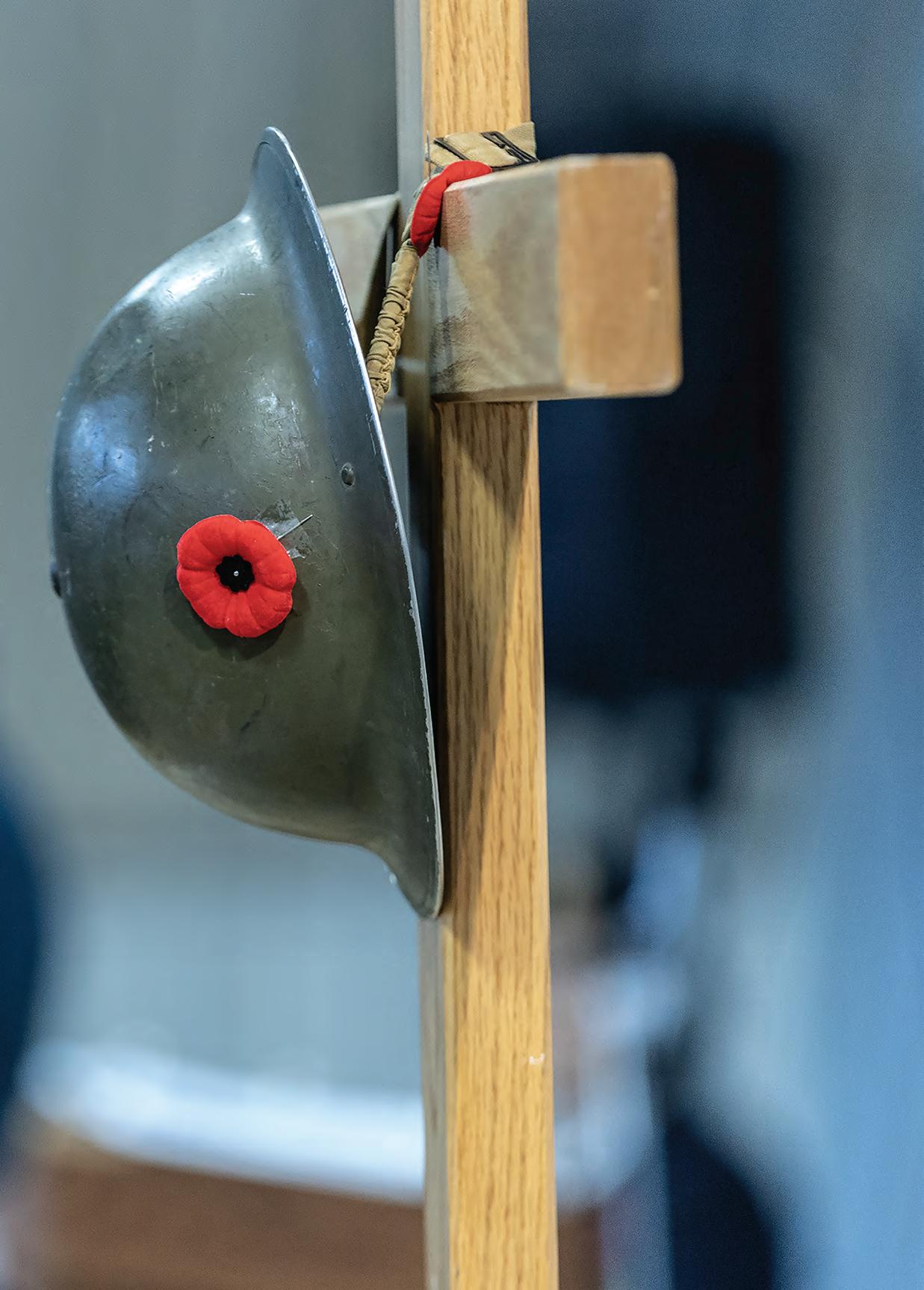
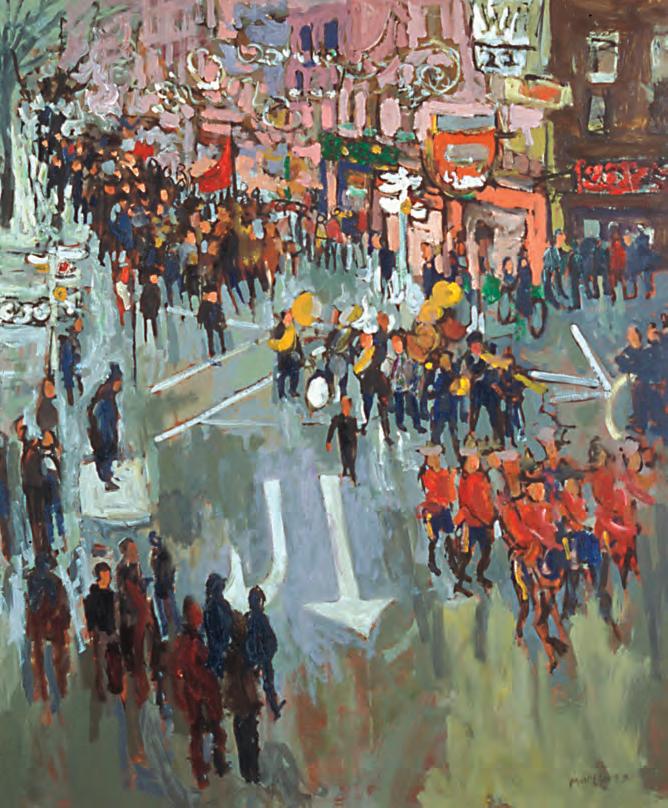
Moment in time
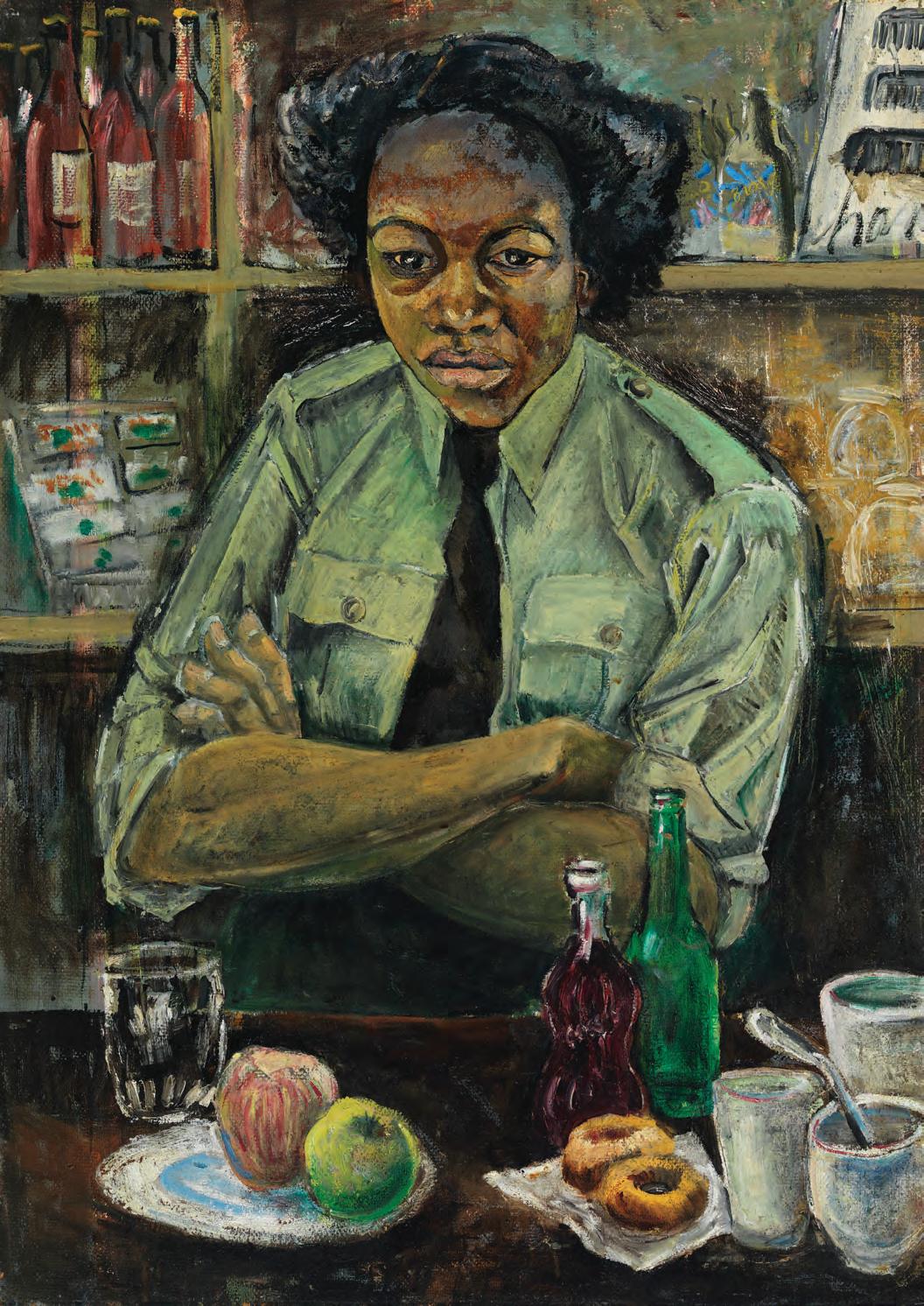
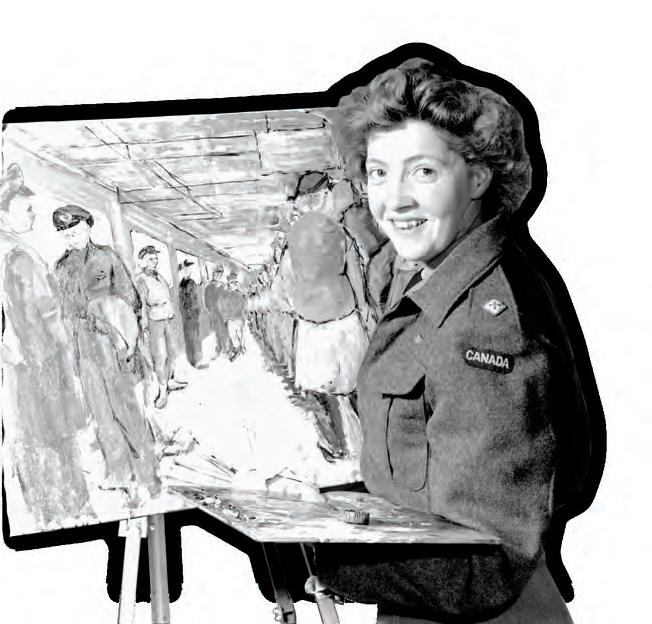
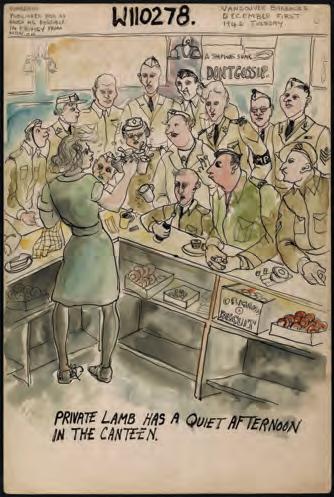
Artist Molly Lamb Bobak
painted this portrait of Private Eva Roy of the Canadian Women’s Army Corps at a canteen in Halifax based on several sketches she made during the Second World War. See page 23
While the number of veterans it serves declines, the Royal Commonwealth Ex-Services League continues
THE SWITCH Canada’s military and armed forces around the world are taking steps to fight climate change by reducing their emissions
By
Sharon Adams
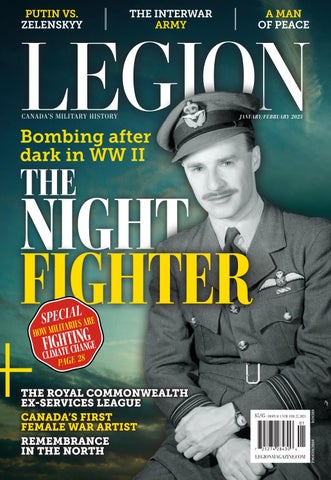
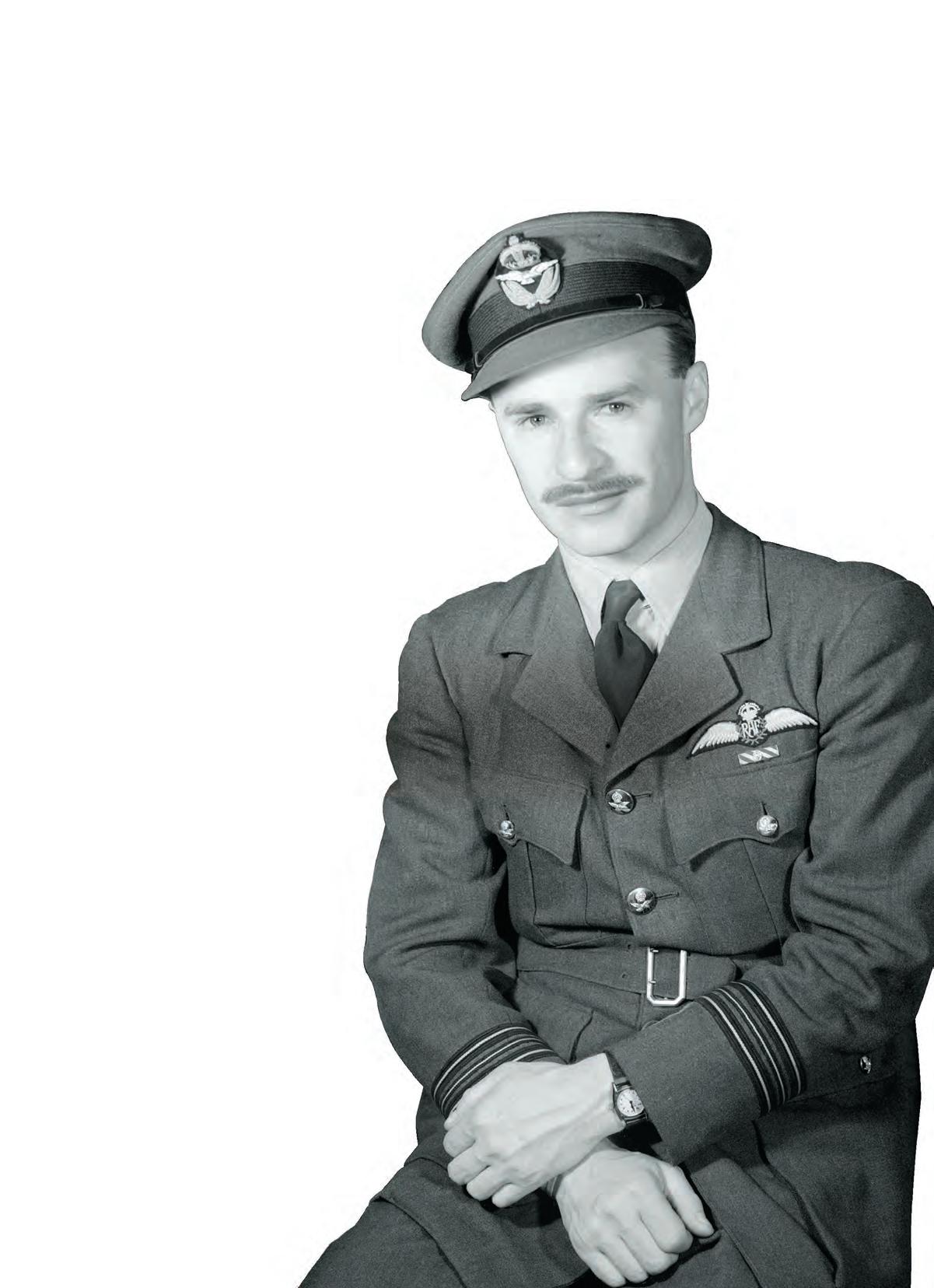
THE NIGHT FIGHTER
How Gordon Learmouth (Raffy) Raphael became a decorated after-dark pilot
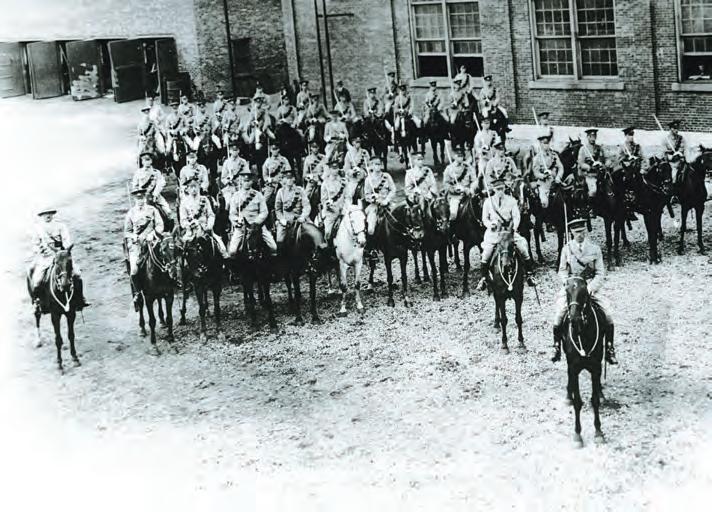
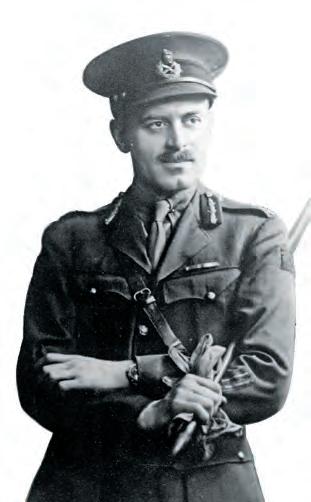
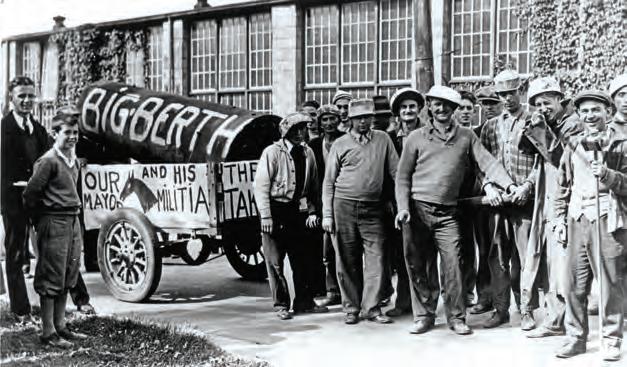
After the Great War and before the Second, Canada’s defence relied on the small Permanent Active Militia
J.L.
Granatstein
48 PASSING THE MANTLE
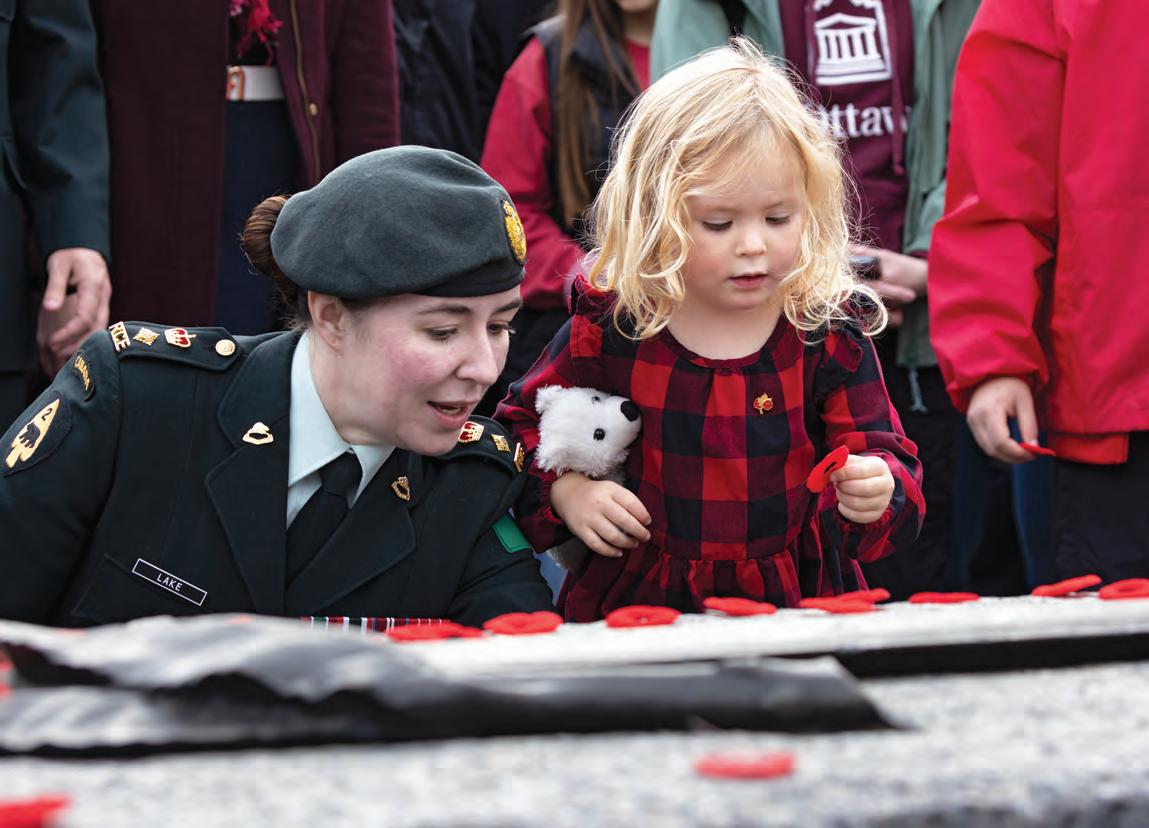
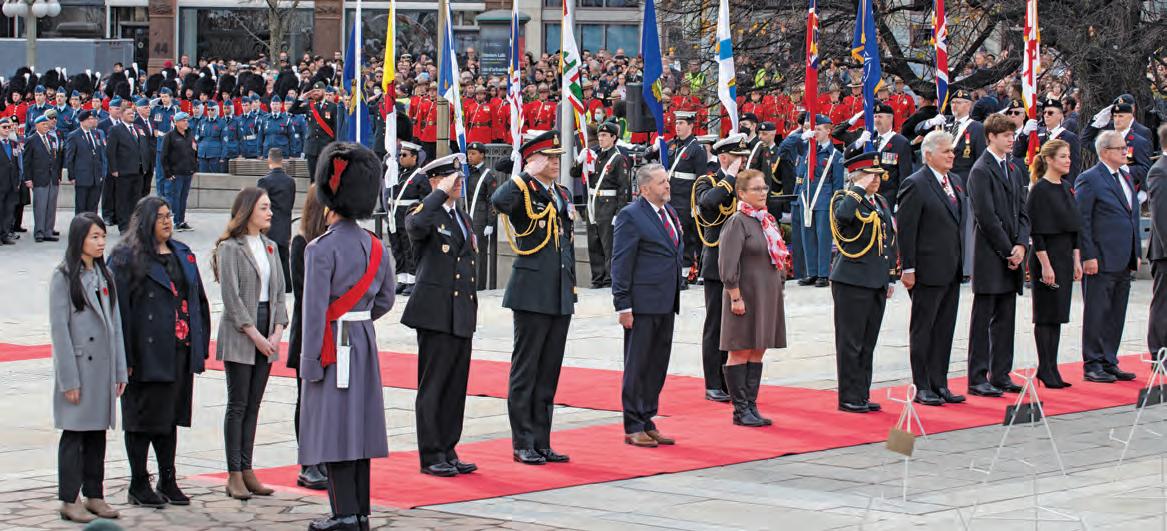
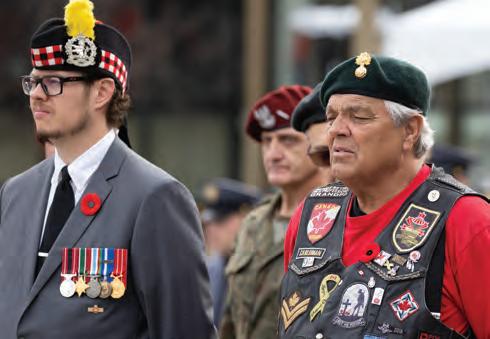
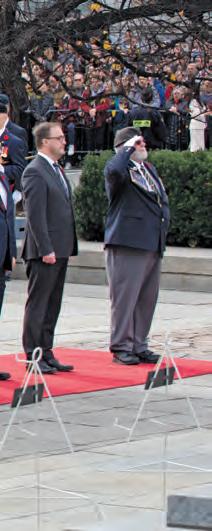
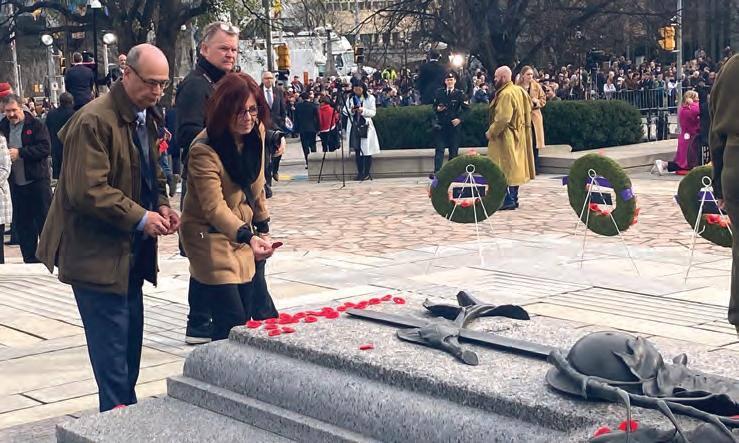
Children and families notable during Remembrance Day in Ottawa
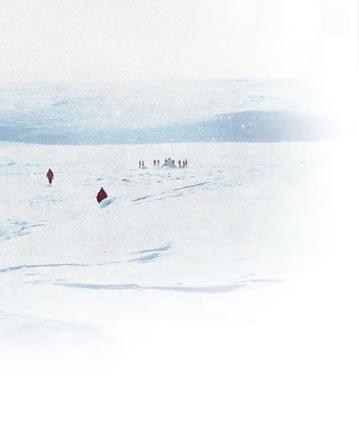
52 NORTHERN REFLECTIONS
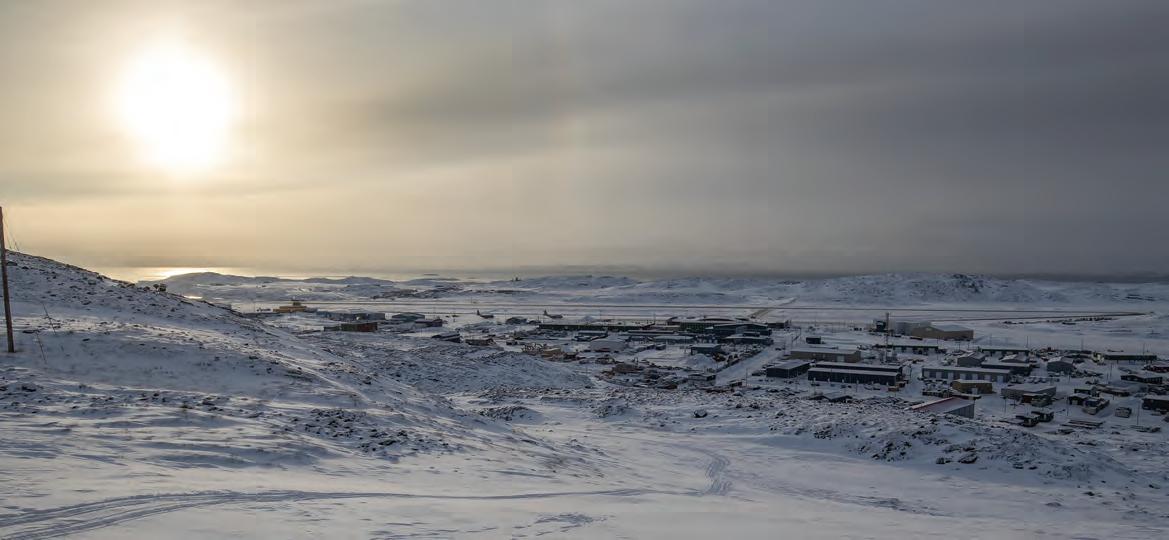
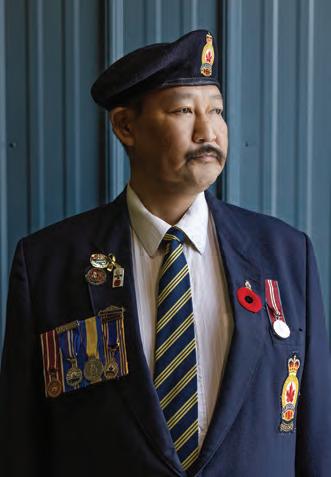
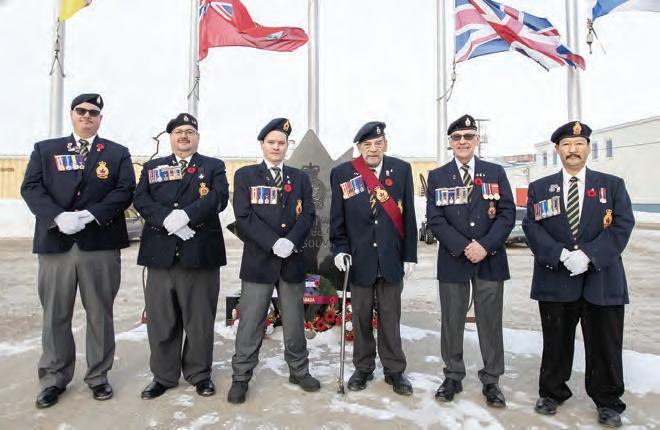
Exploring military connections in Iqaluit on Remembrance Day By
Stephen J. Thorne
10 MILITARY HEALTH MATTERS Sand traps By Sharon Adams
FRONT LINES Liberator revisted By Stephen J. Thorne
14 EYE ON DEFENCE Why Canada’s military matters By David J. Bercuson
46 FACE TO FACE
Was Pierre Trudeau’s peace initiative of 1983-84 a success? By Raymond B. Blake, Penny E. Bryden and J.L. Granatstein
80 CANADA AND THE NEW COLD WAR That sinking feeling By J.L.
Granatstein
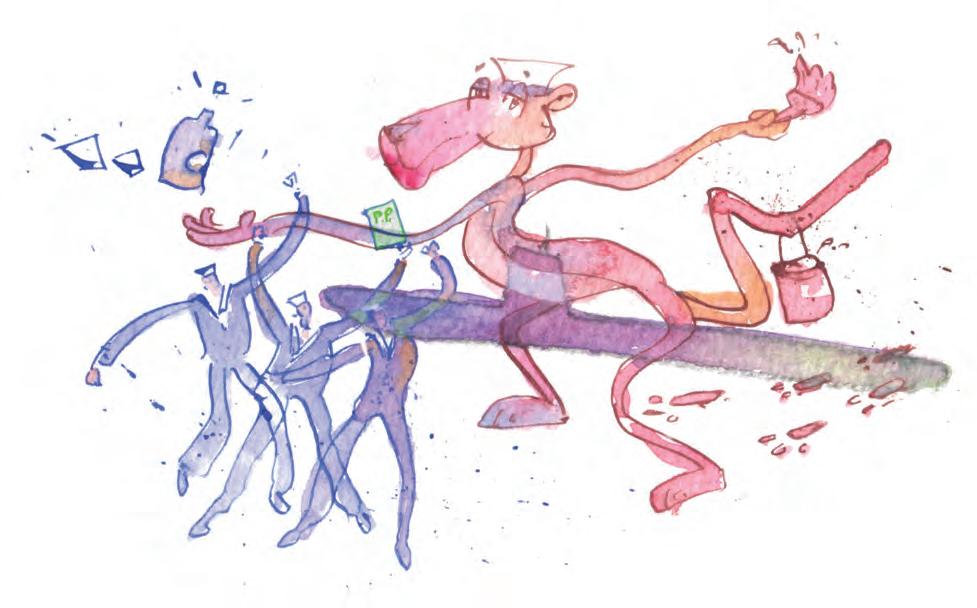
82 HUMOUR HUNT Tickled pink By John Ward
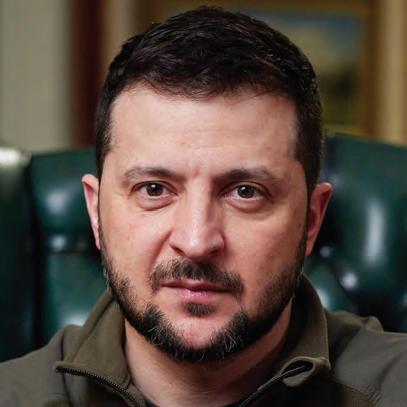
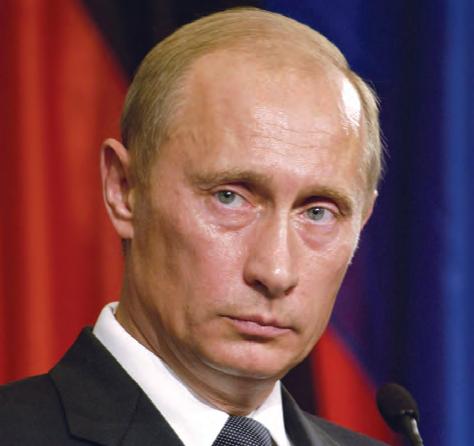
84 HEROES AND VILLAINS Volodymyr Zelenskyy and Vladimir Putin By Mark Zuehlke
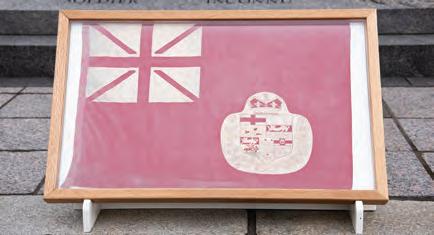
86 ARTIFACTS
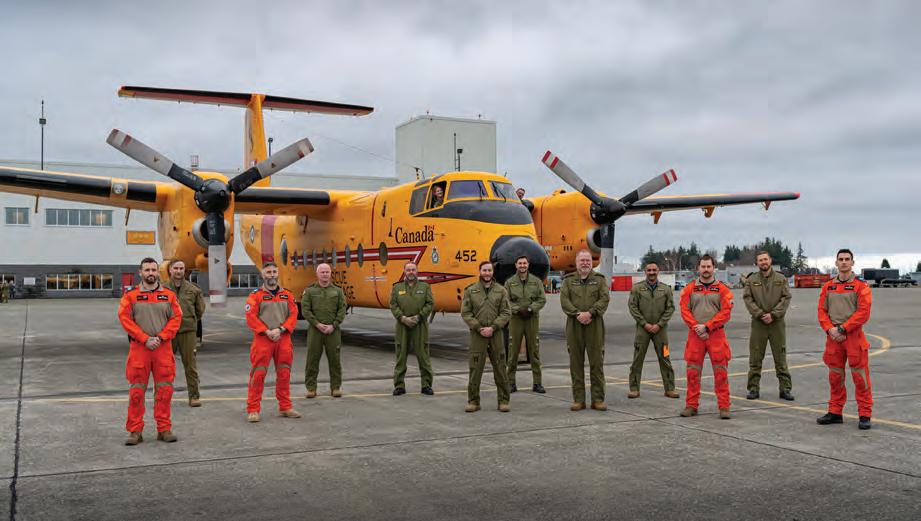
The Buffalo’s last run By Sharon Adams
THIS PHOTO
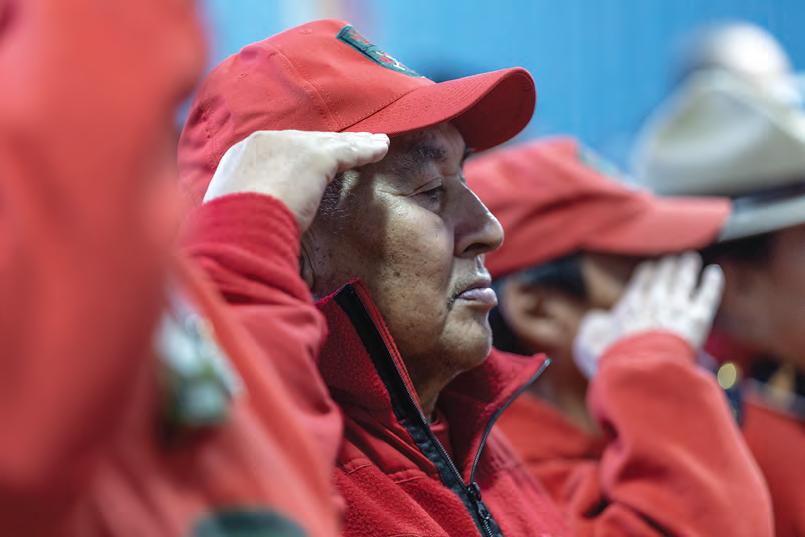
Remembrance Day 2022, Iqaluit. Stephen J. Thorne/LM ON THE COVER Night fighter Gordon Learmouth (Raffy)
Vol. 98, No. 1 | January/February 2023
Board of Directors
BOARD CHAIR Owen Parkhouse BOARD VICE-CHAIR Bruce Julian BOARD SECRETARY Bill Chafe DIRECTORS Tom Bursey, Steven Clark, Thomas Irvine, Berkley Lawrence, Sharon McKeown, Louise Tardif, Brian Weaver, Irit Weiser
Legion Magazine is published by Canvet Publications Ltd.
GENERAL MANAGER Jennifer Morse
INTERIM
ADMINISTRATIVE
SUPERVISOR
Mike D’Angelo
EDITOR
Aaron Kylie
ASSISTANT EDITOR
ART DIRECTOR, CIRCULATION AND PRODUCTION MANAGER
Jason Duprau
SENIOR DESIGNER AND MARKETING CO-ORDINATOR
Dyann Bernard
Michael A. Smith
STAFF WRITERS
Sharon Adams
Stephen J. Thorne
SENIOR DESIGNER AND PRODUCTION CO-ORDINATOR
Jennifer McGill
DESIGNERS
Derryn Allebone
Sophie Jalbert
Advertising Sales CANIK MARKETING SERVICES TORONTO advertising@legionmagazine.com
DOVETAIL COMMUNICATIONS INC mmignardi@dvtail.com OR CALL 613-591-0116 FOR MORE INFORMATION
WEB DESIGNER
Ankush Katoch
WEB AND SOCIAL MEDIA
CO-ORDINATOR
Mauricio Dimate
Published six times per year, January/February, March/April, May/June, July/August, September/October and November/December. Copyright Canvet Publications Ltd. 2023. ISSN 1209-4331
Subscription Rates
is $9.96 per year ($19.93 for two years and $29.89 for three years); prices include GST. FOR ADDRESSES IN NS, NB, NL, PE a subscription is $10.91 for one year ($21.83 for two years and $32.74 for three years). a subscription is $10.72 for one year ($21.45 for two years and $32.17 for three years).
TO PURCHASE A MAGAZINE SUBSCRIPTION visit www.legionmagazine.com or contact Subscription Dept., 86 Aird Place, Kanata, ON K2L 0A1 or phone 613-591-0116. The single copy price is $5.95 plus applicable taxes, shipping and handling.
Change of Address
Send new address and current address label. Or, new address and old address, plus all letters and numbers from top line of address label. If label unavailable, enclose member or subscription number. No change can be made without this number. Send to: Legion Magazine Subscription Department, 86 Aird Place, Kanata, ON K2L 0A1. Or visit www.legionmagazine.com. Allow eight weeks.
Editorial and Advertising Policy
Opinions expressed are those of the writers. Unless otherwise explicitly stated, articles do not imply endorsement of any product or service. The advertisement of any product or service does not indicate approval by the publisher unless so stated. Reproduction or recreation, in whole or in part, in any form or media, is strictly forbidden and is a violation of copyright. Reprint only with written permission.
PUBLICATIONS MAIL AGREEMENT NO. 40063864
Return undeliverable Canadian addresses to Legion Magazine Subscription Department 86 Aird Place, Kanata, ON K2L 0A1 | magazine@legion.ca
U.S. Postmasters’ Information
United States: Legion Magazine, USPS 000-117, ISSN 1209-4331, published six times per year (January/February, March/April, May/June, July/August, September/October, November/December). Published by Canvet Publications, 866 Humboldt Pkwy., Buffalo, NY 14211-1218. Periodicals postage paid at Buffalo, NY. The annual subscription rate is $9.49 Cdn. The single copy price is $5.95 Cdn. plus shipping and handling. Circulation records are maintained at Adrienne and Associates, 866 Humboldt Pkwy., Buffalo, NY 14211-1218. U.S. Postmasters send covers only and address changes to Legion Magazine, PO Box 55, Niagara Falls, NY 14304. Member of CCAB, a division of BPA International. Printed in Canada.
We acknowledge the financial support of the Government of Canada. Version française disponible.
On occasion, we make our direct subscriber list available to carefully screened companies whose product or services we feel would be of interest to our subscribers. If you would rather not receive such offers, please state this request, along with your full name and address, and e-mail magazine@legion.ca or write to Legion Magazine, 86 Aird Place, Kanata ON K2L 0A1 or phone 613-591-0116.
promises Promises,
“
e’re here to defend our way of life, now and into the future,” said the chief of the defence staff, General Wayne Eyre in mid-October 2022. “So we need a whole-of-society effort to help us bring the Armed Forces back to where it needs to be for the dangerous world ahead.”
No argument with that here. But, Eyre’s bosses in the federal government aren’t living up to numerous promises made years ago to ensure that the Canadian Armed Forces are Strong, Secure, Engaged as it titled its 2017 defence policy document.
To be clear, this isn’t a case for bolstering national defence. Nor is it a partisan attack. It’s meant to be a plain and simple accounting of pledges made and their delivery. There are problems. They didn’t just emerge.
TODAY, THERE ARE ABOUT 6,000 FEWER REGULAR CAF MEMBERS THAN FIVE YEARS AGO.
Let’s start with peacekeeping, a role the country has long prided itself on as an international commitment that, theoretically, provided it with a cachet in global safety, security and diplomacy. Canada had just 59 personnel on UN missions according to its latest data.
Still, at a 2017 UN peacekeeping conference in Vancouver, Prime Minister Justin Trudeau promised Canada would “make a range of specialized capabilities available to the UN.” These included a 200-troop quick reaction force (QRF) and related equipment; an aviation task force of armed helicopters; and tactical airlift support to get troops and supplies to missions. While it could be argued the country delivered on the latter two promises—it deployed one helicopter unit to Mali in 2018-19 and provided a single transport plane to UN missions
in Africa—the QRF hadn’t materialized by its original March 2022 deadline. Cabinet subsequently extended that time frame to this coming March. Keep your eyes peeled.
Meanwhile, as noted in this space last issue, CAF members continue to face a significant housing shortage—early last fall, 4,500 service members and their families were on a forces’ housing agency waiting list. Five years ago, that federal body proposed the construction of 1,300 new units over a decade, along with alternative options such as leases and public-private partnerships to cover the remainder of the accommodation shortfall. Since then, 132 units have been built—10 per cent of the proposed goal.
Then there’s the much-reported recruitment shortfall—now, realistically, a crisis. In 2017, the CAF committed to increase the size of the regular force by 3,500, to 71,500, and the reserves by 1,500, to 30,000. Today, there are about 6,000 fewer regular CAF members than five years ago, while the number of reservists has remained stagnant. Plus, the goal of having women represent 25 per cent of the forces by 2026 is woefully off pace. The latest data indicate it’s just 16 per cent.
Of course, add to these the perennial procurement problems (fighter jets, pistols and new special forces vehicles, for instance), delivery delays on new naval vessels and the decade-long postponement of the opening of the Nanisivik Naval Facility (originally slated for 2013, now scheduled for this year) as just some examples, and a clear pattern emerges. Change may by on the horizon, however. The federal government’s 2022 budget announced a new defence policy review to update Strong, Secure, Engaged, noting that “recent events require the government to reassess Canada’s role, priorities, and needs in the face of a changing world.”
Here’s hoping delivering on military related promises makes the cut. L
Marine memories
It
was with great surprise, interest and excitement that I read your article on HMCS Trentonian (“Artifacts,” September/ October 2022). My late father, Maurice E. Cochran, served on Trentonian as a member of a depth-charge team until its sinking in February 1945. Although we were aware of the Trentonian’s sinking in the channel, we did not know it was the last corvette sunk in the war.
Ship towns
The article “The Namesake Navy” (November/December 2022) reminds me of a similar story about HMCS Trentonian, which was adopted by the people of Trenton, Ont. There is a very good two-part documentary film created by veteran Sean Scally about the city of Trenton and HMCS Trentonian entitled “Sons of the Waves.” It can be found on YouTube.
J. EDWARD (ED) ANDERSON PLASTER ROCK, N.B.
Essential service
My answer to the question posed in the November/December 2022
Comments can be sent to: Letters, Legion Magazine , 86 Aird Place, Kanata, ON K2L 0A1 or e-mailed to: magazine@legion.ca
Like many veterans, my dad preferred to speak of the happier times, such as rifle training and swimming practice. Once he tried recounting the sinking. He remembered it like yesterday. One of his memories of the catastrophic event was of an older officer walking up and calmly saying, “I think we better jump boys.” My father never regretted his service because, as he put it, “it had to be done.”
MARLENE (COCHRAN) FEHR, MELFORT, SASK.
“Face to face” (Should Canada institute a period of mandatory military service?) is absolutely. Every Canadian citizen and permanent resident should join a 12-month program that I would call “citizenship military training” (CMT). Exceptions would only be under “exceptional circumstances.” The training would start with a revised basic military training, second language training and, finally, learning a military trade with time attached to a military unit. This enrollment would happen when people graduate high school or when newcomers receive their citizenship or permanent residency.
Completing this training would provide priority for enrollment into higher education facilities and for employment. Such a program would primarily instill respect, discipline, history and good citizenship.
GUY J. BELLAVANCE GATINEAU, QUE.
Honouring the fallen
There was some great coverage of the Victoria Cross recipients of the First World War in the November/December 2022 issue (“The valour nine”). And about the Highway of Heroes story in the same edition (“The way home”), I drove from Fenelon Falls, Ont., down to the Holt Road in Clarington with my flag to stand over the 401 to honour the fallen. I remember one day I had arrived early, and a woman approached me asking about the people who come here. She had a number of questions and stood nearby as the latest convoy went under the bridge. She was the wife of Colonel Geoff Parker who had travelled the route previously. She was overwhelmed by all the support that people showed for her late husband.
MEL GODDARD BLENHEIM, ONT. L
Exclusive HIGHLIGHT
Autumn 1917 was a historic time for Canadians at war. In Belgium, Allied forces struggled to break through the German front, that is, until the Canadians showed up.
On Oct. 26, the Canadian Corps arrived near the village of Passchendaele and helped accomplish in 11 days what the British, Australian and New Zealanders could not do in three months—capture the German controlled ridge on a muddy hill in Passchendaele.
During those 11 days, three stand alone in their significance in Canadian military history. On Oct. 26, Oct. 30 and Nov. 6, the Canadian offensive gained major ground, despite many casualties. On the last day, they finally took the ridge. Those efforts resulted in nine Canadians being awarded the Victoria Cross, the most soldiers to receive the honour in any single Canadian battle.
In the theme of remembrance, Legion Magazine has created an engaging multimedia presentation of the original Victoria Cross citations of each recipient, including the date of their memorable action.
Scroll through stories of each of the nine men who, in abysmal conditions and facing horrific enemy fire, conducted some of the most heroic acts seen in war.
Discover these First World War heroes at https://legionmagazine.com/ features/the-valour-nine/.
Do you have a craving for military war stories, but don’t have time to read?
Legion Magazine has you covered. Staff writer Stephen J. Thorne is back, narrating new episodes of the Front Lines podcast. He brings gripping
Advertisement
Get notified of all the latest updates on legionmagazine.com by signing up for our weekly e-newsletter at www.legionmagazine.com /en/newsletter-signup
stories of past and present military experiences and artifacts to life. Stream Front Lines anywhere you find podcasts L
New hearing aids, new you
Start your journey to better hearing with a FREE hearing test* and collect 150 AIR MILES® Reward Miles™*** (that’s triple the amount of our everyday offer!)
If you could benefit from hearing aids, HearingLife offers a wide variety of hearing aid styles to fit your needs, including fully customized and discreet in-the-ear hearing aids as well as the most advanced behind-the-ear rechargeable hearing aids.
Legion members and family get an EXTRA 10% off hearing aid purchases!** Book your FREE hearing test today!* Use your phone’s camera to scan this code to visit HearingLife.ca/LEGN-FHT OR call 1-888-697-0201 and mention the code MAG-FHT-LEGN.
1 January 1916
In his New Years’ message, Prime Minister Robert Borden announces Canada’s goal to place 500,000 men in uniform.
January
12 January 1919
2 January 1940
PO Selby Roger Henderson and Wing Cmdr. John Francis Griffiths are the first Canadians awarded medals during the Second World War, each earning the Distinguished Flying Cross.
4 January 1945
U-boats claim the Norwegian steamship Polarland and Canadian merchant ship Nipawin Park off the coast of Nova Scotia.
5 January 1971
Bernard Lortie, Francis Simard and brothers Paul and Jacques Rose are charged in the kidnapping and murder of Quebec labour minister Pierre Laporte (pictured) during the 1970 October Crisis.
8 January 1944
German submarine U-757 is sunk in the North Atlantic by HMCS Camrose and HMCS Bayntun. All 49 crew die.
11 January 1957
HMCS Magnificent delivers troops and materiel for the United Nations Emergency Force controlling the Israeli-Egyptian border.
The Paris Peace Conference begins to establish terms of peace following the First World War.
13 January 1944
Canadian secret agent Gustave Bieler is captured by the Gestapo in France.
15 January 1792
Black Loyalists begin leaving Nova Scotia for settlements in Sierra Leone; 1,196 depart, about 1,800 remain.
16 January 1991
The Persian Gulf War begins with an American-led coalition offensive against Iraq. Canadian naval Capt. Duncan Miller becomes commander of the Combined Logistics Force, the only non-American to hold such an important command at sea during the conflict.
18 January 1945
Roughly 13,000 conscripts are en route to Europe. Conscription was controversial: a 1942 plebiscite divided the country with 80 per cent support in anglophone provinces, and 73 per cent disapproval in Quebec.
20 January 1968
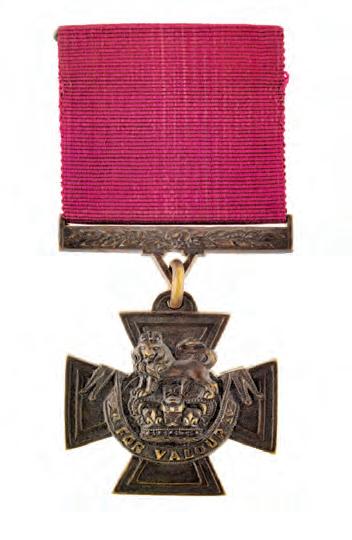
Robert Shankland, awarded the Victoria Cross at the Battle of Passchendaele in 1917, dies.
21 January 1900
A second contingent of 1,281 Canadian troops sails from Halifax for the Boer War.
23 January 1945
RCAF Spitfire pilot Richard Audet, 22, of Lethbridge, Alta., shoots down two jets; three weeks earlier he had scored a record five kills in a five-minute dogfight.
24 January 1946
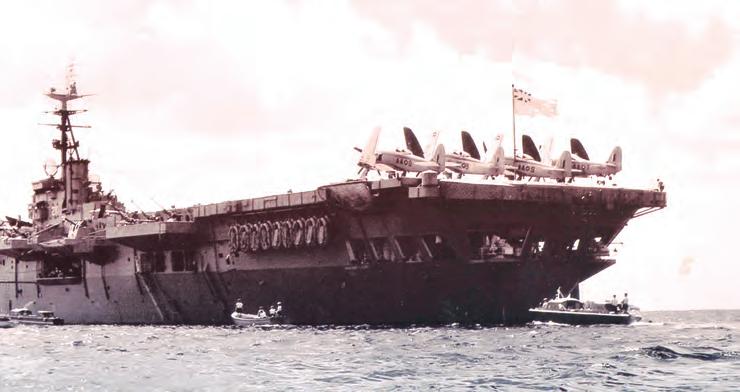
HMCS Warrior, Canada’s first aircraft carrier, is commissioned.
25 January 1919
Canada is among the delegates at the Paris Peace Conference approving the proposal to create the League of Nations.
28 January 1918
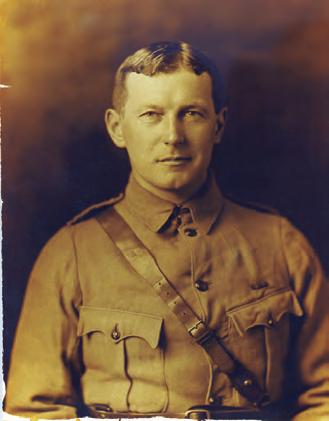
Lt.-Col. John McCrae, author of “In Flanders Fields,” dies of pneumonia and meningitis in Boulogne, France.
29 January 1946
The celebrated schooner Bluenose sinks after hitting a reef off Haiti.
31 January 2006
Canada signs a five-year international commitment to support security, governance and development in Afghanistan.
February
1 February 1944
A Canadian corps operates on the front line, in Italy, for the first time since the Great War.
2 February 1915
A German spy bombs the Saint CroixVanceboro Railway Bridge at the New Brunswick-Maine border. The bomb damages, but fails to destroy, the bridge.
3 February 1945
Almost 1,000 Flying Fortresses drop over 2,700 tonnes of bombs on Berlin.
6 February 1952
While visiting Kenya, Princess Elizabeth ascends to the throne after her father’s death.
7 February 1964
The RCAF Golden Hawks aerobatic flying team is officially disbanded for financial reasons.
9 February 2004
Canadian Lt.-Gen. Rick Hillier assumes command of the NATO-led International Security Assistance Force in Afghanistan.
10 February 1841
The Act of Union creates Canada West from Upper Canada and Canada East from Lower Canada.
12 February 1947
Canada and the United States sign an agreement to collaborate in defence planning. One result was development of a radar system in northern Canada, later dubbed the DEW (Distant Early Warning) Line.
14 February 1945
Spilled fuel starts a conflagration in the port at Ostend, Belgium— 12 vessels burn, killing 61 Canadian and British sailors.
15 February 1923
King George V approves the prefix “Royal” for the Canadian Air Force.
16 February 1945
23 February 1909
Designed and built by Alexander Graham Bell and members of the Aerial Experimental Association, the Silver Dart is the first powered aircraft to fly in Canada. It is flown by John Alexander Douglas McCurdy over Baddeck Bay, N.S.
HMCS Saint John, a frigate, sinks U-309 northeast of Scotland.
17 February 2011
Sgt. Joseph Poulin positions his tank to protect civilians, comrades and Afghan security forces during a road construction project in Afghanistan. He is awarded the Medal of Military Valour.
one day.
21 February 1916
11 February 1944
A Wellington bomber of RCAF 407 Squadron, piloted by FO Peter William Heron, sinks U-283 in the North Atlantic. Heron is awarded the Distinguished Flying Cross for his actions.
The Battle of Verdun begins. There are nearly a million French and German casualties before it ends.
22 February 1943
HMCS Weyburn, a corvette, hits a mine and sinks near Gibraltar.
24 February 1986
Former Saskatchewan Premier Tommy Douglas, best known as the “Father of Medicare,” dies at 81.
25 February 1955
For the first time, women are allowed to become part of the permanent force in the RCN.
26 February 1942
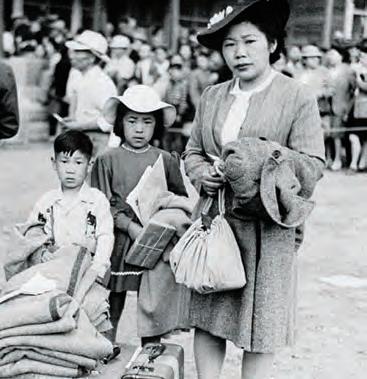
The federal government begins the mass internment of Japanese Canadians. They are relocated inland to labour camps. Some are given only 24 hours notice. Cars, cameras and radios are confiscated for “protective measures,” and a curfew is imposed.
27 February 1930
HMCS Thiepval hits an uncharted rock in Barkley Sound, B.C., and sinks the following day.
28 February 1991
Saddam Hussein accepts a ceasefire after his remaining Iraqi forces in Kuwait collapse and flee home, suffering heavy casualties. The move brings an end to the Persian Gulf War.
By Sharon Adams
Sand traps
Dusty air leaving a bad taste in military lungs
The world is getting dustier and grittier thanks to global warming.
As water supplies dry up, conflicts over resources and a liveable environment are likely to increase, requiring military action or humanitarian aid. And given recent history, it’s a sure bet it will be the grittiest and dustiest places where the Canadian Armed Forces will serve. That could mean more lung problems.
Allied forces had a taste of this issue during the Persian Gulf War in 1990-1991 and again in Afghanistan, when troops inhaled dust from sandstorms, plumes from vehicle traffic and smoke from burn pits and oil wells, among other pollutants. These substances break down into smaller particles— so small, in fact, they bypass the body’s natural defences. These microscopic solids or droplets lodge deep in the lungs, causing inflammation and leading to increased damage.
A 2011 U.S. study found that respiratory illnesses, including chronic bronchitis, emphysema, sinusitis, chronic airway obstruction and chronic obstructive pulmonary disease,
were seven times higher in veterans who served in the Gulf War compared with undeployed veterans. Notably, in some cases, no problems showed up on CT scans, but biopsies revealed lung damage, including scarring of the small airways that leave a person feeling like they are sucking air through a straw during even moderate exertion.
Similar results have been reported by many nations after the war in Afghanistan, but the U.S. has a much larger pool of troops to study—2.7 million served in Iraq and Afghanistan—and proportionally more military medical health researchers than its allies, including Canada.
Many of the more than 5,000 Canadian troops who served in the Gulf War did not return unscathed. It was, retired military nurse Louise Richard told the House of Commons Standing Committee on Veterans Affairs in 2013, “the most toxic battlefield ever known to mankind.”
Sleeping quarters and work areas were drenched in pesticides. And personnel breathed in toxic smoke from 800 oil wells burning in Kuwait and military burn pits, which disposed of plastics, unexploded
ordnance, batteries, medicine, dead animals, and human and medical waste. Richard went into the Gulf War fit and healthy and returned chronically ill.
In response to health problems arising from Gulf War service, the CAF established a health protection directorate to monitor environmental factors posing health risks to deployed members, and to recommend ways to reduce the risks.
Sand and dust, the bane of service in the desert, were determined to be a big source of such health issues.
CAF health hazard assessment teams annually monitored air quality during the war in Afghanistan. One breathable particulate they consistently listed as “a compound of potential concern” was crystalline silica (found in sand and stone) that was 2.5 micrometres or less in size, too small to be seen by the human eye. For comparison, the diameter of a human hair is between 50 and 70 micrometres.
Deserts are expanding, and sand and dust storms are becoming bigger and more common, particularly in the U.S. high plains, central Asia and Australia.
Global annual dust emissions have nearly doubled during the last century.
The leading edge of a dust storm can be 1.6-kilometres high and particles measuring five micrometres or less are carried on the wind thousands of kilometres beyond the clouds. Storms are estimated to carry two billion tonnes of dust into the atmosphere every year.
The Asian and Pacific Centre for the Development of Disaster Information Management has called for regional action plans to reduce risk and strengthen resilience to what it calls “the negative transboundary impact of sand and dust storms.”
Dust from the Sahara Desert is carried to Brazil; dust from the Gobi in Mongolia and China wafts east over western Canada and the U.S.; storms in Australia transport dust and soil to Antarctica; storms in the four U.S. deserts cause the U.S. National Weather Service to broadcast dust-storm warnings regularly in western and southern states.
We are all breathing in more dust, but Australian researchers suggest “factors unique to military service…may increase the vulnerability of military personnel to respiratory health risk.”
Those factors, of course, include the pall from burn pits and plumes raised by military vehicles, but the Australians say physical exertion and high levels of psychological stress may also play a role.
It only makes sense. Members of the military work regardless of the climate or environmental conditions, and exercise causes deeper breathing. Stress and fear, natural responses to conflict, cause hyperventilation, or rapid deep breaths. In both cases more air— and more particulates—are inhaled.
The fog of war is often dust, which on a modern battlefield may be seeded with metallic flakes to foil infrared detection systems.
It’s “dangerous to breathe, requiring troops to wear respirators in combat,” says DARPA, the U.S. Defence Advanced Research Projects Agency.
Scientists have already designed lightweight, pressurized military respirators with powerful
filtration systems that look like the helmets worn by storm troopers in Star Wars They’re designed for troops to wear when they face chemical, biological and nuclear hazards. One day, sand and dust may be added to that list. L
Liberator revisted Divers find WW II bomber in Newfoundland lake
OnSept. 4, 1943, Wing Commander John M. Young of the Royal Canadian Air Force was on the yoke taking off from his base in Gander, Nfld., with three crew when an engine on his Liberator 589D is believed to have failed.
The B-24 aircraft of Young’s No. 10 Squadron made a slow turn and barrel-rolled into Gander Lake. No one survived. After a brief, aborted recovery effort, it was the last anyone saw of Liberator 589D for 79 years.
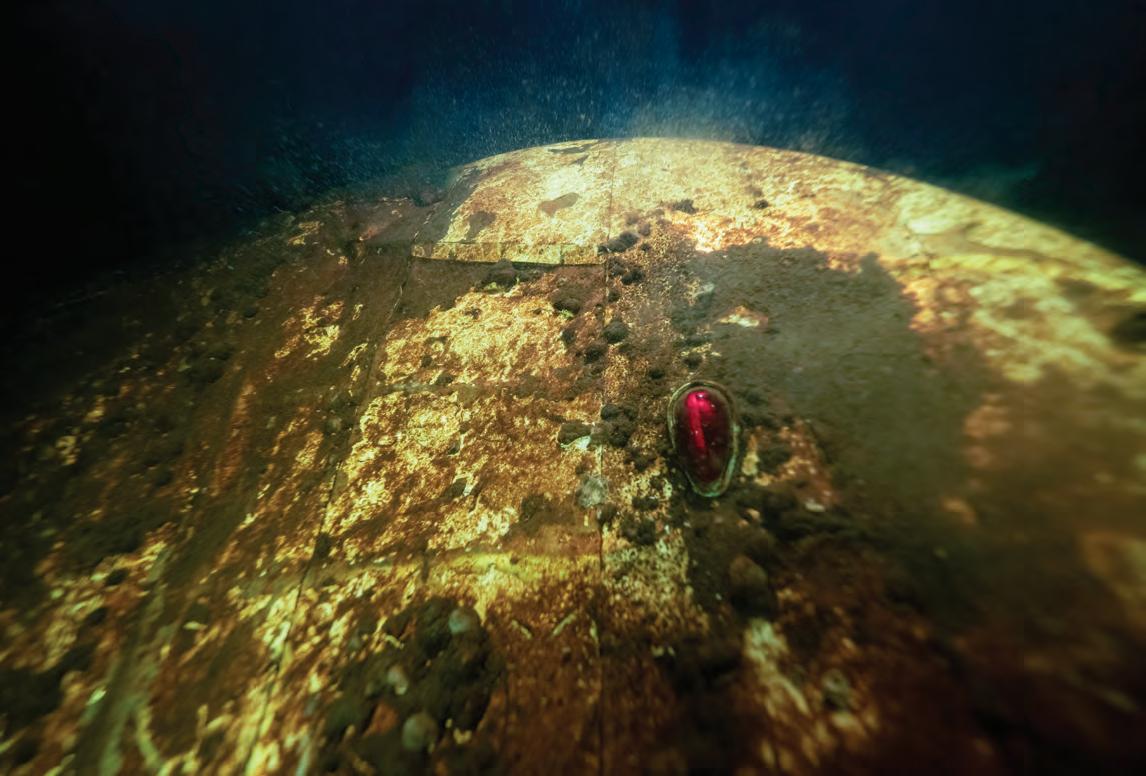
On Sept. 5, 2022, a team of veteran divers from Canada, the United States and France found the wreck lying upside down on a steep ledge nearly 50 metres below the surface, capping a nine-year quest by diver and researcher Tony Merkle.
and since I discovered the site, it means a lot to me to share this part of Newfoundland history.”
The crews of No. 10 Squadron were U-boat hunters. And good ones at that.
The sub hunters of No. 10 set an RCAF record, mounting 22 U-boat attacks during the war. They sank three and earned the nickname, The North Atlantic Squadron.
On that fateful day in 1943, however, the crew of 589D were not U-boat hunting. Squadron Leader John Grant MacKenzie, an ear specialist from the air force medical unit in Toronto, was to test Liberator noise levels. He never got the chance.
Kirk Regular’s multibeam sonar image of Liberator 589D at rest on a ledge 50 metres down in Gander Lake.
“It is a really special dive for me,” said Merkle, part of the 15-member team supported by The Royal Canadian Geographical Society (RCGS), the Shipwreck Preservation Society of Newfoundland and Labrador and Ocean Quest Adventures.
“I’ve never dived on a plane
Shortly after takeoff, the aircraft plunged into the deep, tannic waters of the narrow lake that snakes for some 50 kilometres a few hundred metres from the end of Runway 27. It was suspected at the time that a foreign object, possibly a bird strike, had fouled the flight controls.
Immediately after the accident, military hard-hat divers found the Liberator resting on
> Check out the Front lines podcast series! Go to legionmagazine.com/frontlines
a ledge in Gander Lake. During the course of several dives, they recovered MacKenzie’s body but, while trying to attach cables to the fuselage, the aircraft slipped off the ledge and sunk beyond their reach. They abandoned their efforts after 12 days.
MacKenzie, a native of Lucknow, Ont., was buried in the Gander cemetery. The remains of Young and Leading Aircraftman Gordon Ward, both of Toronto, along with Flying Officer Victor E. Bill of Winnipeg, were never recovered.
Nearly eight decades later in July 2022, Kirk Regular of the Shipwreck Preservation Society was mapping the lake bottom for Memorial University’s School of Ocean Technology when, working off original crash report data, he recorded the plane’s exact
location using multibeam sonar. He made 3D images of the wreck.
Two months later, the dive team conducted six dives to photograph and survey the plane. Water temperatures were at 5 C and visibility was less than a metre in a dark tea-coloured world.
“There is always a bit of nervousness around a dive of this nature,” said diver Jill Heinerth, an RCGS explorer-in-residence. “The safety of our team is always in the front of my mind.
“It is not an easy dive. The water is cold and perpetually a blood-red colour from tannins in the lake. Our mission was to try to find a verifying mark that could prove the identity of the wreck.”
The divers had less than an hour total run time so had to keep things simple. The aircraft was on a precarious ledge, with a drop of more
Legion and Arbor Alliances
than 250 metres to the lake bottom.
“It is in a great state of preservation, but it is quite crumpled from the crash and early efforts to grapple the wreck for recovery,” said Heinerth.
The B-24 was among the most versatile heavy bombers of the war, famous for operations as diverse as U-boat hunting in the North Atlantic to the daring August 1943 low-level raid on the German-held oil refineries at Ploiești, Romania.
No. 10 Squadron lost seven aircraft and 24 aircrew in action; 27 more to operational accidents. RCAF markings, instrumentation and other details confirmed that the hulk was 589D.
Images and video from the dive are being donated to the Shipwreck Preservation Society of Newfoundland and Labrador for future educational outreach. L
By David J. Bercuson
Why Canada’s military matters
AsCanadians prepared for Thanksgiving this past fall, the Chief of the Defence Staff, General Wayne Eyre, issued a dire warning to his troops: for the next several months, possibly even years, the Canadian Armed Forces had to halt all non-essential activities.
The number of Canada’s full time military personnel—air force, navy and army personnel—had fallen 10,000 below peacetime establishment, let alone additional numbers that might be required for Canada to contribute to any international response force.
Eyre’s words echoed those of Richard Fadden, former national security adviser to the House of Commons defence committee shortly after Hurricane Fiona struck Atlantic Canada in the third week of September. The hurricane came directly ashore and wreaked untold damage with high winds, torrential rains and storm surges. Ottawa dispatched about 300 troops to Newfoundland, Nova Scotia and Prince Edward Island to help in the recovery effort. The CAF is the only organization in Canada authorized to provide aid to civil authorities in the event of wildfires,
floods, ice storms, hurricanes or any other public emergency. The reason is simple: the military carries its own communications, reconnaissance and specialized equipment that municipal or provincial governments rarely have. It has its own chain of command, and is trained to deploy quickly and operate effectively with almost no time wasted. That is its nature, whether in times of war or heightened international crises. Plus, Canada has no national guard that provincial premiers might call on to help respond to natural disasters.
The Canadian militia (reserves) answers only to Ottawa. Three provinces have provincial police, but their departments, or fire or forestry services, are too small for major emergencies.
THE FEDERAL GOVERNMENT PAYS ATTENTION TO DENTAL CARE, GUNS, THE CLIMATE, PLASTIC BAGS AND STRAWS, BUT BARELY MENTIONS THE IMPORTANCE OF PREPARING AN ADEQUATE DEFENCE
The dispatch of thousands of trained soldiers over the years has put a significant drain on the military, which focuses on training when it’s not deployed. On average, it takes at least a year to train a Canadian soldier today and more for other military specializations, such as a pilot, combat engineer or communications specialist. Every moment fighting a wildfire takes away from that training. With the current numbers of CAF personnel, it’s no wonder that General Eyre is worried.
Why are CAF numbers so low and recruitment so poor? One reason is unless Canadians are told repeatedly by governments, the press, social media, etc., how important the country’s defence is, young men and women will not
normally join. And since the war in Afghanistan, Canadians at large have basically ignored the need for a strong defence.
For example, a recent conference held by the Globe and Mail listed climate, reconciliation, economic growth and other issues as ones Canadians must pay attention to, but there was no word about defence.
When Russia invaded Ukraine in February 2022, there were a few speeches by government ministers about the need to be vigilant, and help Ukraine, but little else about Canada’s need to mobilize as it did in the days of the Korean War and the early Cold War. Radio talk shows, podcasts, public forums, rallies, newspaper spreads, the internet and social
VETERANS BURSARY PROGRAM
Receive a bursary valued at $2,500*
Who’s eligible
Manuge v. Her Majesty the Queen and Toth v. Her Majesty the Queen class members
Bursary designee
Class member, spouse, child, grandchild, niece, nephew, daughter-in-law, son-in-law
Eligible institutions
All Canadian post-secondary institutions listed on the Canadian Information Centre for International Credentials (CICIC.ca)
*Studies over the last five years
Apply by June 30, 2023 at univcan.ca/veterans
media hardly ever mention the need to strengthen the military.
The federal government pays attention to dental care, guns, the climate, plastic bags and straws, but barely mentions the importance of preparing an adequate defence. It’s no surprise that young Canadians, and Canadians in general, do not have defence on their radars.
As the war in Ukraine drags on, killing thousands of civilians, and the threat of Russian tactical nukes grows, Canadians seem more worried about the cost of gas.
Canada should be playing a major role in preventing the next war by building a credible deterrent with its allies to ensure war does not engulf us all. Canadians, in their complacency, have forgotten that. L
PROGRAMME DE BOURSES POUR ANCIENS COMBATTANTS
Recevez une bourse d’une valeur de 2 500 $*
Personnes admissibles
Les membres du recours collectif Sa Majesté la Reine c. Manuge ou du recours collectif Sa Majesté la Reine c. Toth.
Désignées pour recevoir une bourse
Membres du recours collectif ou leur conjointe ou conjoint, enfant, petit-enfant, nièce ou neveu, bru ou gendre.
Établissements admissibles
Tous les établissements figurant dans la liste du Centre d’information canadien sur les diplômes internationaux (cicdi.ca/).
*Études dans les cinq dernières années
Présentez une demande d’ici le 30 juin 2023 au univcan.ca/fr/veterans
While the number of veterans it serves declines, the Royal Commonwealth Ex-Services League continues to provide critical support
Story and photography
by Stephen J. Thorne
For more than 30 years, Earl Francis has regularly navigated the backroads of Saint Lucia, delivering food, care packages and financial support to aged veterans and widows scattered around the ruggedly beautiful eastern Caribbean island.
A retired police inspector and long-time volunteer with the Royal Commonwealth Ex-Services League (RCEL), he was caring for, during his busiest times, as many as 35 veterans and about an equal number of widows.
He would set out one day a month at 7 a.m. with a carload of goods and a
bagful of cash and his day wouldn’t end until the visits and the stories were all played out, usually about 7 p.m. or later.
“They were all around the island,” Francis said after the league’s 34th conference in London, England, this past September. “I had a Toyota station wagon with all the goods in the back.”
At 84 years old, Francis is still at it. Though the numbers have dwindled—he now cares for two veterans, ages 96 and 101, and eight widows—his devotion hasn’t. He has survived two bouts of COVID and,
until The Royal Canadian Legion recently bought him a laptop, Francis was filing monthly reports from an internet café.
“He is quite amazing,” said Johanna Lewin of Jamaica who, as Caribbean project officer, oversees league operations throughout the region.
“He just keeps going and I have to corral him and tell him to wear a mask, don’t go out, don’t do this, don’t do that. But Earl never stops. It’s been a life of service and he doesn’t complain.”
And, while his age and length of service set him apart, Earl Francis isn’t alone. As they
have for decades, agents of the league fan out all over the farthest reaches of the Commonwealth to bring financial and other relief to veterans who served the Crown before their homelands declared independence from Britain.
Canadian Legionnaires know the RCEL primarily through the contributions they make to the organization at provincial conferences—baskets full of cash and cheques that go to the care and welfare of pre-independence veterans in the Caribbean.
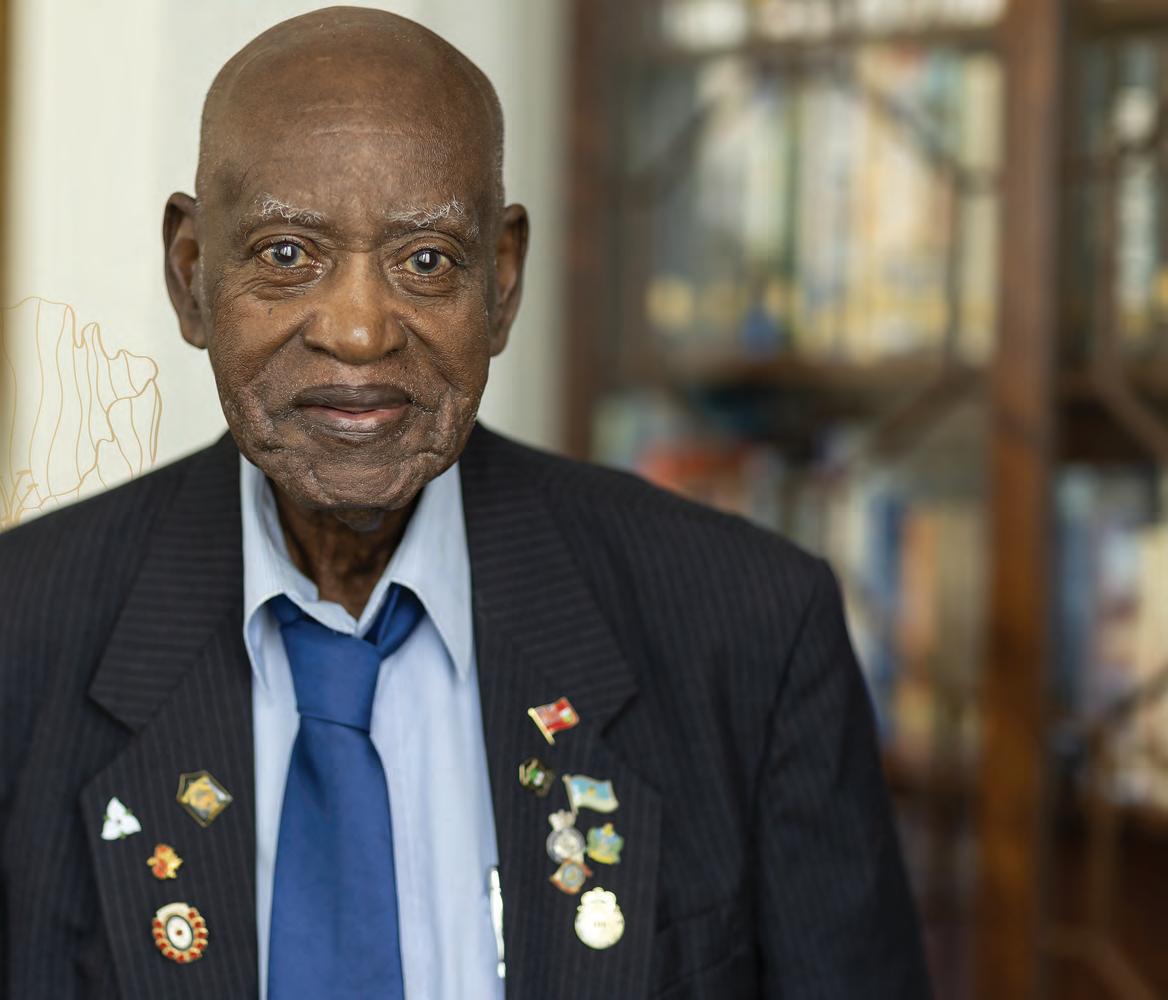
Earl Francis, 84, of Saint Lucia has volunteered for the Royal Commonwealth Ex-Services League for years, delivering food and financial support to preindependence veterans.
Agents of the league are fanning out all over the Commonwealth to bring financial and other relief to veterans.
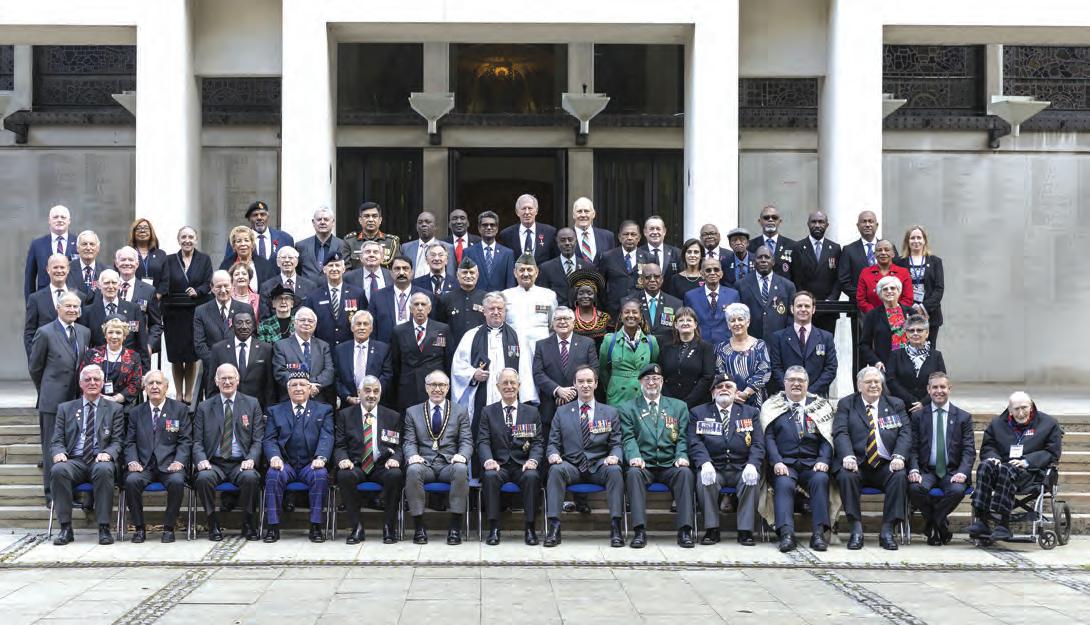
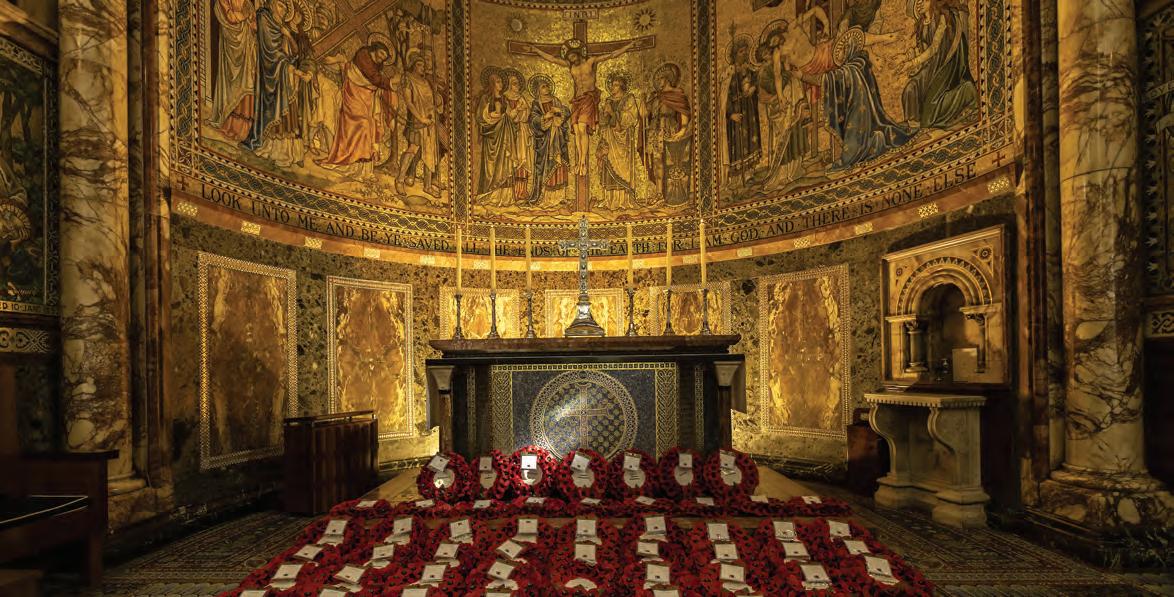
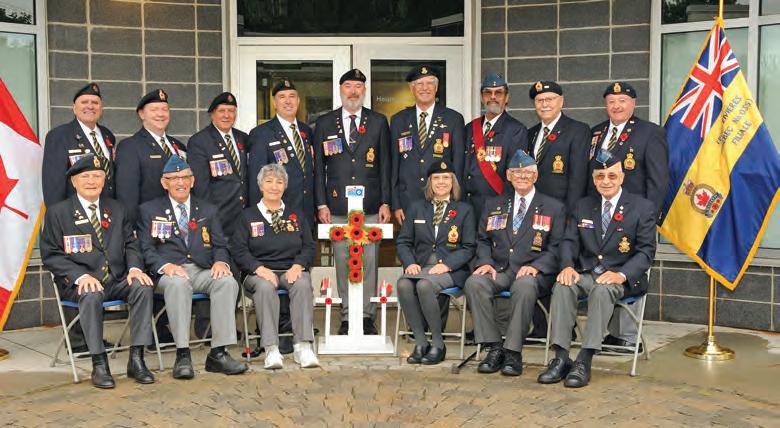
Delegates assemble for a picture following a memorial service at the Royal Military, or Guards’, Chapel, spiritual home of Britain’s Household Division.
Their British and South African counterparts do the same for African veterans; Australia and New Zealand look out for the rest, distributed in such far-flung places as India, Sri Lanka, Malaysia, Bangladesh and Pakistan.
The independence movement among former British Empire countries began in 1947 with the partition of India. The wave swept through Africa and into the Caribbean, spanning the 1960s into the early 1980s. But, for many individuals, the ties remain, often through links to military service.
Volunteers such as Francis were looking out for 4,580 pre-independence veterans and widows in 48 countries in 2021, the bulk of them in Pakistan, Uganda and Zimbabwe.
In 2014, the U.K. government granted the organization almost 12 million pounds (about C$23 million today). As the number of veterans and widows decreases, the RCEL has increased its support to those remaining.
The organization traces its roots to 1921, when it was formed to support former Empire soldiers, some three million of whom
fought for king and country between 1914 and 1918; 440,000 became casualties.
It provided pension advice, assisted with moves to other countries, traced lost relatives and helped with money transfers and disability claims.
Another 4.5 million servicemen and servicewomen from the Indian subcontinent, Africa and the Caribbean joined the fight between 1939 and ’45; 360,000 were killed, wounded or captured. Their governments didn’t always acknowledge their sacrifices and hardships; the Royal Commonwealth Ex-Services League stepped in.
The Royal Family have been strong supporters of the league. Queen Elizabeth II was its patron. Prince Philip was grand president for more than 40 years—and not just in name; he was a regular at working meetings. In 1982, the organization launched the Prince Philip Appeal for Commonwealth Veterans.
The league is now a registered charity with 57 member organizations; it acts as a link for ex-service groups throughout the Commonwealth and the overseas agent for more than 40 U.K.-based service charities; and it provides welfare for those in need—the equivalent of two meals per day, or 1,600 British pounds a year to pre-independence veterans in Antigua and Barbuda and 516 in Bangladesh.
But the demographics and demands are changing, radically and rapidly. Once in the tens of thousands, the league’s beneficiaries are now believed to number fewer
than 4,000. Some 55 per cent are widows, outnumbering veterans for the first time.
Canada trustee Libby Watkins has seen sweeping change in the organization and its work since she started attending conferences with her predecessor, her late husband Brian, in 1993.
“It’s an evolving picture, certainly,” she said, expressing a hope that the league will find new avenues of focus beyond its current mandate. “Even if there aren’t any veterans or widows left, I think it’s a force for good.
“It’s got a message to support veterans of all wars and conflicts, and we seem to be having new conflicts now. I think it should remain, and it’s very important it remain a Commonwealth initiative. It’s the bond that unites.”
Gary (Gaz) Barlow of Eswatini (formerly Swaziland) knows those changes only too well. A former army signaller from Manchester, England, he met his wife Iris while serving in Germany. Her family lived in the tiny country in southeastern Africa, and that’s where the
couple settled after he ended his 32-year military career in 2000. They’ve been doing RCEL work virtually ever since.
The couple used to make deliveries every six months, but since support levels were increased in 2019, they’re on the road every six weeks. They were providing food and funds to 74 veterans when Barlow took over the volunteer work from a friend. Deliveries to the isolated rural areas where most veterans lived took days on dirt roads.
When a league official arrived for a recent inspection, it took 14 hours to visit three beneficiaries. For Barlow, recipient of the RCEL grand president’s meritorious service award, it has been a bittersweet experience caring for a declining population of beloved veterans.
Each delivery is “like Christmas,” said Barlow. “When everybody’s paid, we still have money left. We add to it and make food hampers and take them around.”
By June 2022, however, just 10 Eswatini veterans remained—all of them Second World War servicemen—along with 16 widows. All 10 vets died in the three months
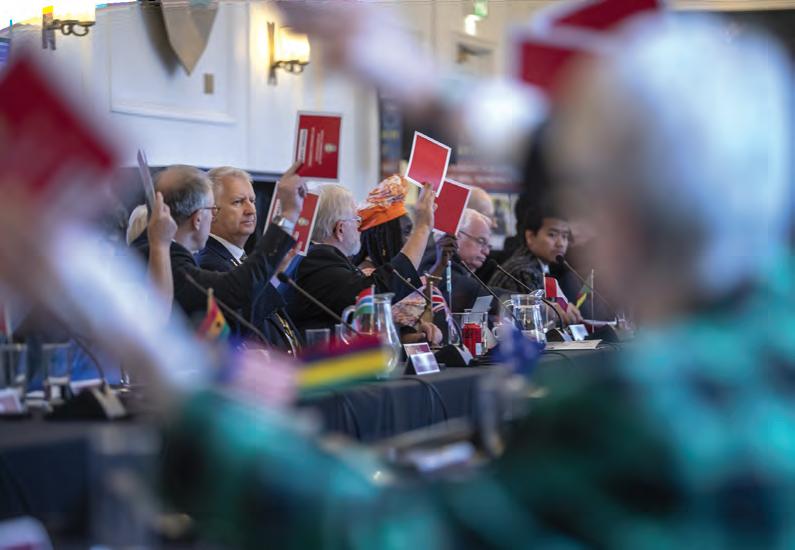
Royal Canadian Legion President Bruce Julian and executive director Steven Clark (top) meet with RCEL Caribbean representatives. Libby Watkins, Canada’s RCEL trustee, says the league must press on in some form. Eswatini’s Gaz Barlow lost his last 10 veterans in three months last summer.
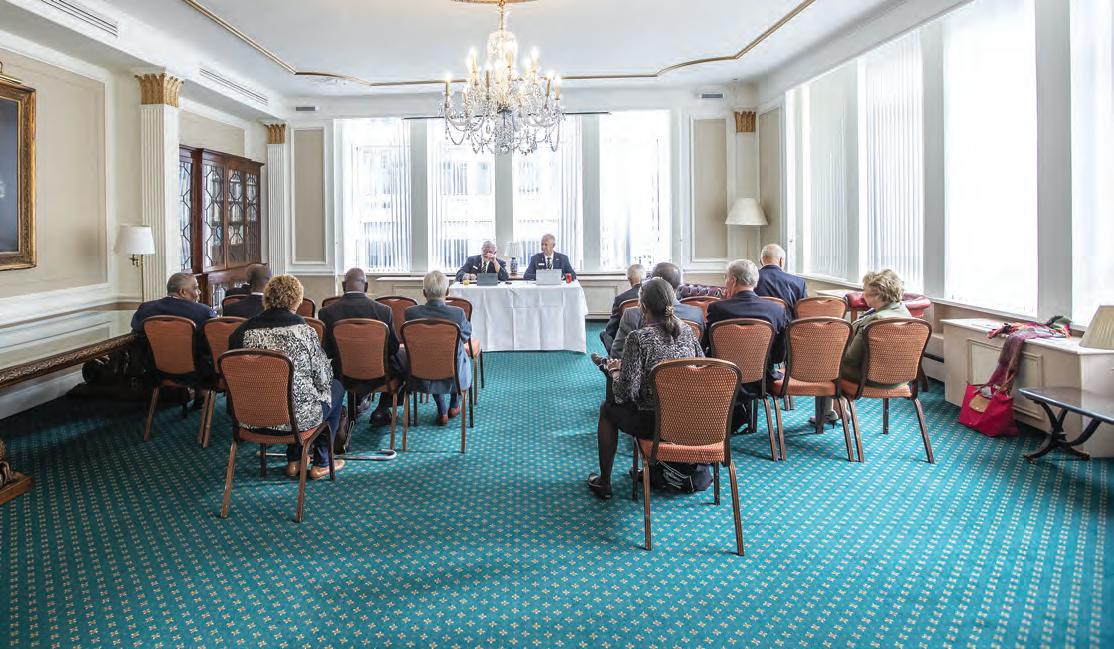
Clark and Julian (below, centre) cast their votes on RCEL resolutions.
leading up to the September conference. The youngest was 101. The paperwork to secure support for their widows was in process the time of the conference.
Current British government funding to the organization, which accounts for 75 per cent of its welfare grants, runs out in March 2024. The league is seeking an extension, but insiders say the group will not disappear, regardless.
“Just because we get an extension of, say, a few years, that doesn’t mean that we’re still not thinking even beyond that,” said a senior league official.
The 2022 conference was to have been held in South Africa in 2021, the organization’s 100th anniversary. But the pandemic prevented that.
The London meetings were hosted by the Army & Navy Club and nearby Canada House, where daily sessions involving about 60 delegates representing some three dozen countries were held.
Royal Canadian Legion President Bruce Julian and national executive director Steven Clark represented Canada, along with Watkins.
RCEL payments are modest but they “are a lot more” than some recipients would otherwise have. “It is more than vital Some of them have almost nothing.”
“We hope that we will morph or merge into a still-recognizable charity or arm of another armed forces charity where we will still be…the Royal Commonwealth Ex-Services League in some way to look after the very last of our veterans and widows up until, let’s say, 2030.”
The Canadian Legion has co-ordinated and assisted member organizations in the Caribbean since 1966. Its RCEL Welfare Fund has assisted veterans throughout the region for years. It also provides an annual grant to the Curphey Home—a Jamaican veterans’ facility—and supplies nine Caribbean countries with poppy materials each year. Its contribution amounts to between $175,000 and $200,000 a year, said Clark. “It varies on the number of veterans and widows, and on the poppy material that each of the island nations requires.”
The Legion president and executive director conduct welfare monitoring of RCEL activities in the Caribbean and make evaluation visits every two years, the most recent of them in the spring of 2022, when Julian and Clark determined six volunteers needed laptops and earmarked $7,500 for them to ensure efficient communications and reporting.
It was Canada, working with input from Caribbean group members, that essentially drove conference discussions about the definition and eligibility of widows for RCEL benefits. It steered policy toward more inclusive and culturally sensitive language—a critical consideration in such a diverse organization in which
sometimes complicated histories linger just below the surface of some relationships.
In particular, the issue centred on the wording of two resolutions, the most significant of them adding “or locally recognized relationships in law” to a requirement for documentary evidence of marriage.
The regional group, which met with the Canadian reps before the main sessions, also advocated deleting the words “so-called” in reference to tribal or village marriages. Echoing the concerns of group members, Julian suggested the contextual reference doesn’t belong in 21st century policy.
“Where it might seem all right to an actuary doing this stuff, it is disrespectful and those words should be dropped,” he said.
The league also altered its age qualifications for widows—a necessity for an organization with a finite amount of money to hand out. Formerly a minimum of 70 years old, with a rolling birthdate, the age qualification was set at a birthdate of no later than Dec. 31, 1950.
Said Christopher Warren, the league’s secretary general: “We want to be inclusive. We want those who are genuine widows to get support.”
The program, noted Warren, is dependent on government, and rules and policies are required. Trust, he said, is hard-earned and easily lost.
“We spent a long time building trust. If there is any suggestion that widows in a particular country, for whatever reason, are given money and they’re not eligible, the program is off. So, we have to be very careful.”
Nevertheless, RCEL scrutineers remain “sympathetic” as they review each case, he said.
There were also discussions about how to keep the organization relevant while veterans’ numbers are falling—including education, social media and marketing strategies—and how to fundraise in a poor economic environment.
Lord Richards of Herstmonceux, the grand president, told the conference that politicians “need reminding of the debt they and the rest of society owe to these people” and, citing some prime candidates for his efforts, he vowed to continue do so.
He pointed out how important the organization has been to the Royal Family over the decades and suggested that he fully expects King Charles to continue supporting the group.
Julian urged a special session to approve any decisions made regarding the league’s
future as it seeks extended funding from the British government. And while there was talk of eventual merger with the Royal British Legion or The Soldiers’ Charity, the Canadian president said it’s critical that the organization, which dropped “British” from its name in 2002, retain its Commonwealth identity and continue to conduct its operations as a legally separate entity.
“That was important to our group, that we retain that identification,” he said.
“Without that, we’re apt to lose something.”
Caribbean representative Johanna Lewin is a retired Jamaica Defence Force major. In 1980, she became the first female helicopter pilot trained by the Canadian military—at Portage la Prairie, Man., where the wind chill, she notes with a shiver, dropped to -70 C.
RCEL payments are modest but they “are a lot more” than some recipients would otherwise have, said Lewin. “It is more than vital,” she said. “Some of them have almost nothing.”
Lord Richards of Herstmonceux (top), former chief of Britain’s defence staff, was acclaimed for a second term as the league’s grand president after succeeding the late Prince Philip. Caribbean RCEL representative Johanna Lewin trained in Canada before becoming a major in the Jamaica Defence Force.
Lewin told the story of Stanley Francis, who was 98 years old when she met him three years ago.
“He was living alone at home. He had no lights or electricity. He had no pension, no income whatsoever. So, what the Royal Air Force Benevolent Fund sends through RCEL for him is like manna from heaven.
“It helps us to be able to take care of him at the Curphey Home. It is very important.”
The Caribbean islands that have militaries tend to provide small to negligible government assistance to veterans. Those with no armed forces have no support programs for those who’ve served. The league and its partners “are saving lives and allowing people to have some dignity,” said Lewin.
For Earl Francis, saving lives and preserving dignity have been a way of life since he was a young boy helping church volunteers support the poor. For years, the former Sea Scout has organized the poppy appeal in Saint Lucia and helped plan Remembrance Day ceremonies. He also sings bass in the church choir.
He says he’ll continue volunteering for the league “as long as I’m able to move.”
“Earl is a treasure,” said Clark. “He is essentially managing the support in Saint Lucia for the veterans and widows on his own. So, when the funds flow down to the organization that he works for (the Saint Lucia Branch of the RCEL), he himself goes out and personally provides the funds to each one of the veterans and the widows.
“And he drives all over the island. It might not sound like a challenge, but
it actually is. It’s a huge responsibility that falls on one individual. Earl is quite aged and he does this on his own. But there’s never been a complaint.”
He contracted COVID at the internet café where he filed the reports and submissions that have ensured the organization’s accountability and transparency.
“It was a real concern because of his advanced age, but it was also his commitment to wanting to make sure that none of the people on the island was disadvantaged,” said Clark. “So, as soon as he was able, he went back at it—and contracted COVID a second time.”
Lewin said she and Francis “quarreled” a fair amount at that time over his apparent inability or unwillingness to ease up and take a rest.
“When you see the joy on the faces of the veterans or the widows when they receive that bag of food or that financial assistance so they’re going to be able to eat for the next month, it is incredibly heartwarming,” said Clark.
“And that is enough to make sure that any personal challenges Francis or others may be facing, it’s minor—they’ll overcome them to make sure the beneficiaries receive the support they need.”
The Royal Canadian Legion and its South African counterpart are both bidding for the next conference, in 2025 or ’26, depending in large part on where it is held (2026 will mark the Canadian Legion’s centenary). Canada has previously hosted six conferences. L
Wreaths lie at the altar of the Guards’ Chapel after an RCEL memorial service.
own A league of her
EXPLORING THE WORK OF WAR ARTIST, MOLLY LAMB BOBAK
During the Second World War, the Canadian government officially appointed 32 war artists—but only one was a woman. Her name was Molly Lamb. Born in British Columbia and the daughter of celebrated photographer Harold Mortimer-Lamb, she was exposed to art and famous artists at an early age. Indeed, she longed to be a painter like family friend A.Y. Jackson, a member of the Group of Seven.
on July 12, 1945.
The war artist was photographed at work in London
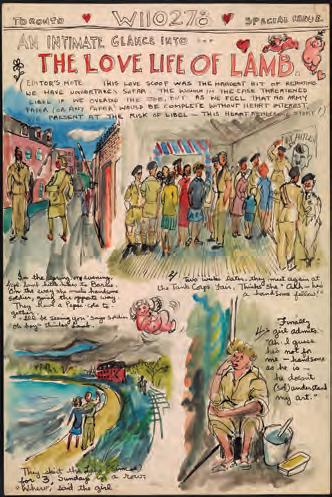
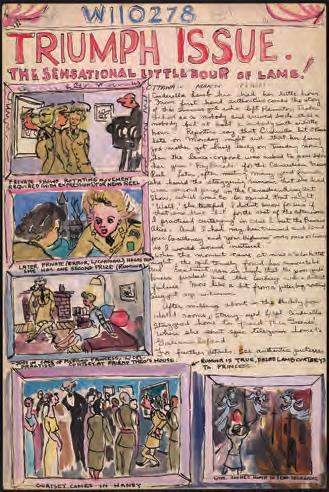
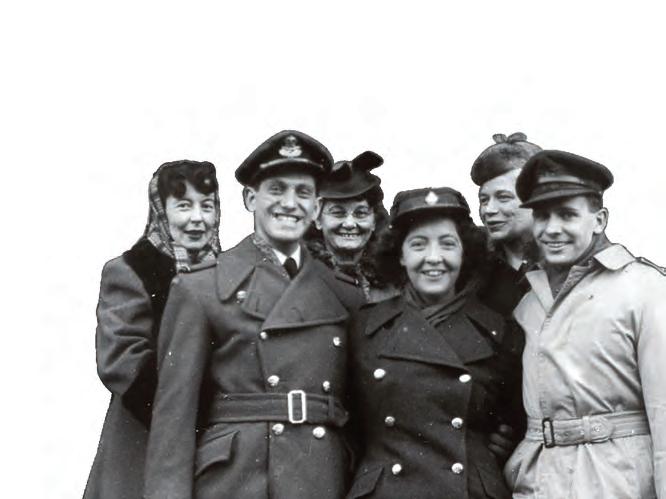
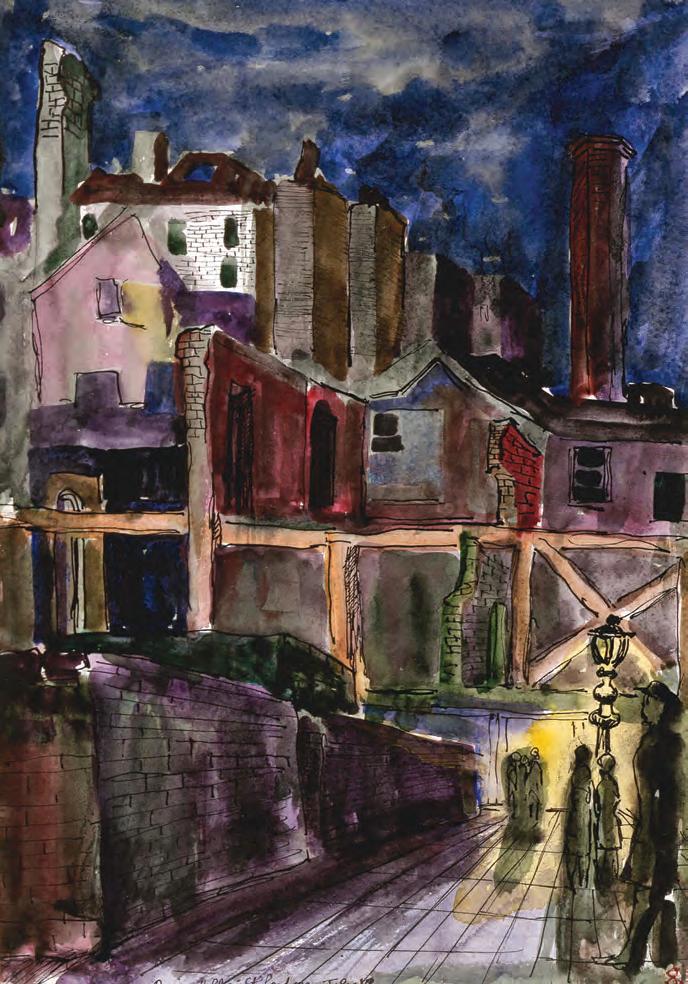
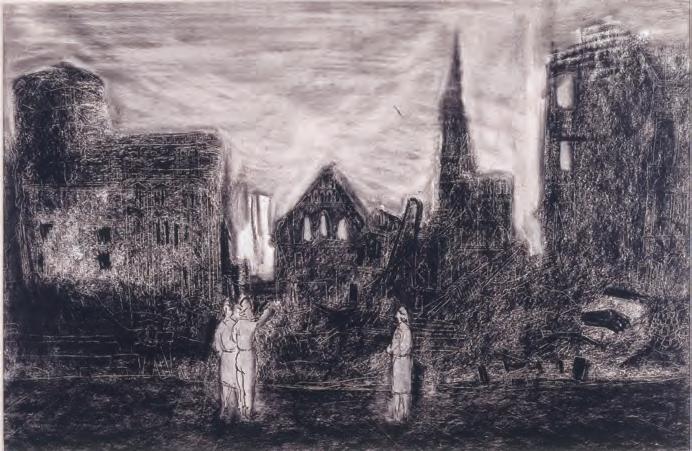
Lamb Bobak and her husband, Bruno (on right), also a war artist, married in December 1945 (right). Lamb Bobak kept a diary after she joined the Canadian Women’s Army Corps (below). As an official war artist, she painted scenes of the conflict’s aftermath, such as Ruins, Holborn Street, London, 1945 (opposite top) and Bremen Ruins at Night, 1945 (opposite bottom).
With that in mind, Lamb studied art under Jack Shadbolt at the Vancouver School of Art, now the Emily Carr University of Art + Design. He encouraged her artistic practice and they became lifelong friends.
After graduating in 1942, Lamb had her first solo exhibition at the Vancouver Art Gallery. That same year she joined the Canadian Women’s Army Corps (CWAC) as a private. During that time, Lamb kept a diary, with illustrations recording the work of servicewomen aiding the war effort in Canada.
At the start of the Second World War, Canada had no official war art program. But by 1943, the Canadian War Artists’ Committee was established, thanks largely
to future governor general Vincent Massey and Harry Orr (H.O.) McCurry, the director of the National Gallery of Canada.
Lamb lobbied to become an official war artist, even hitchhiking from Toronto to Ottawa once to meet with McCurry. In 1945, her push came to fruition and she was promoted to the rank of lieutenant. As a woman, she was not allowed to go to the battlefields like her male counterparts. Instead, she was posted to places in Canada where, through her sometimes humorous paintings, she documented the daily activities of women on the home front.
Six weeks after VE-Day, Lamb was finally sent overseas and she painted scenes of the aftermath of the conflict. She travelled throughout England, the Netherlands, France and Germany, creating paintings such as Ruins, Holborn Street, London, 1945 and Bremen Ruins at Night, 1945
It was during this trip that Lamb met Canada’s youngest war artist, Bruno Bobak, 21, in London. Returning to Canada in 1945, they married, settling briefly in Ottawa. But when Lamb Bobak
became pregnant the following year, the army discharged her for “medical reasons.” The couple moved to B.C. to be closer to Lamb Bobak’s family. They both taught at the Vancouver School of Art.
By the 1960s, the Bobaks had moved to Fredericton. There they both taught art at the University of New Brunswick (UNB). Patricia Roberts-Pichette, a biology professor and the only female in the science faculty at UNB, met the pair and took lessons from them in 1960-61. “I loved their classes,” she said.
In 1979, Lamb Bobak met author Frances Itani and the two became friends. The first book Lamb Bobak illustrated was Itani’s children’s book, Linger by the Sea
“We launched it together at a bookstore in Fredericton,” Itani recalled. “The book pretty much sold out in the first couple of days. Her wonderful illustrations, displayed at the book launch, sold immediately.”
Lamb Bobak also did illustrations for Itani’s third book of poetry, A Season of Mourning
“I was living in Ottawa then,” said Itani. “She was still in Fredericton, but agreed to come to Ottawa by
Creative
conflict
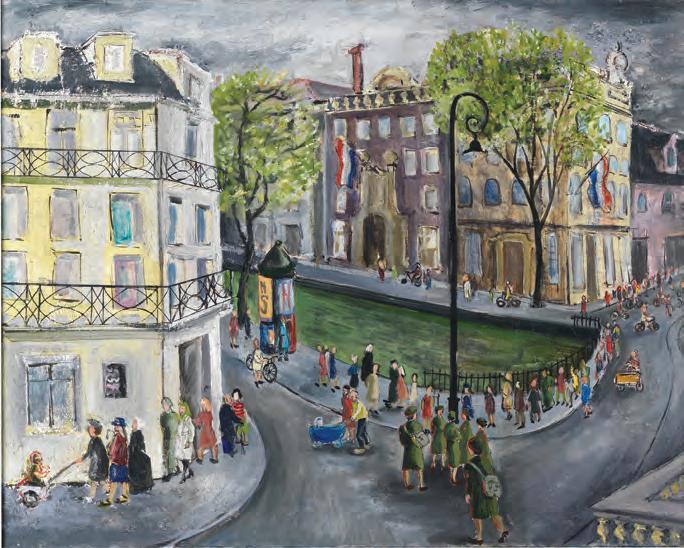
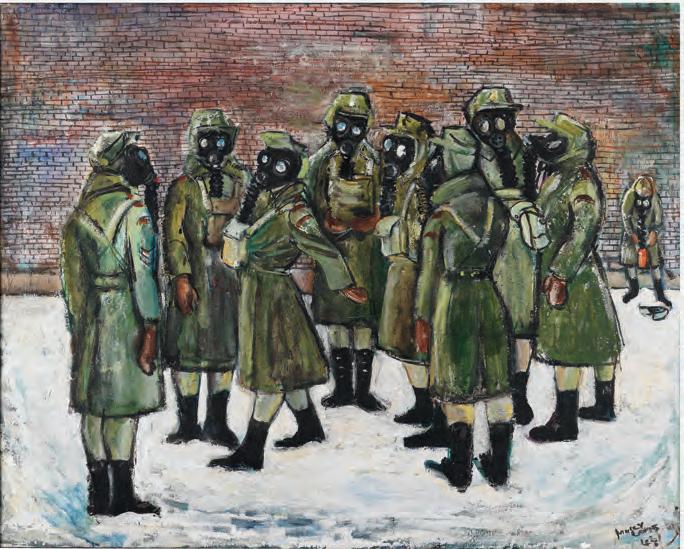
As a war artist, Molly Lamb Bobak’s paintings often documented the destruction war left behind. Others such as Arrival, City Hall, CWACs on Leave in Amsterdam, September, 1945 and Gas Drill, depict crowd scenes.
Lamb Bobak once wrote about her wartime paintings: “The whole structure of my army life is agreeable to a painter and
everywhere you turn there is something terrific to paint. There is endless material in one barracks alone, though one could spend hours at the desk in the main hall, drawing the C.W.A.C.s checking in and out, the new recruits, the fatigue girls in their overalls, the orderly officer.”
In her book, Molly Lamb Bobak: Life & Work, Michelle Gewurtz noted that the artist said her days in Europe were “six of the richest and most exciting weeks of my life.”
bus for a winter launch at Food for Thought Books. People lined up down the street for a block to meet her and get her signature.”
In 2000, Lamb Bobak illustrated the book, A Tale of Merlin the Billy Dog, written by her daughter Anny Scoones, and in 2004 Lamb Bobak and her husband illustrated another of Scoones’ books, Home: A Heritage Farm. Roberts-Pichette received annual Christmas cards created by the Bobaks, as did Itani, who “treasures every one of them.” Both also own some of Lamb Bobaks’
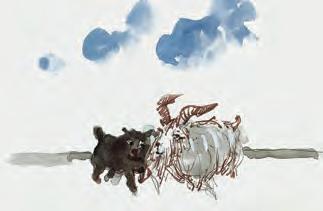
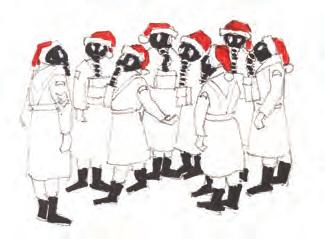
Lamb Bobak’s war art often depicted crowd scenes, such as November 11 (right), CWACS on Leave in Amsterdam, September 1945 (opposite top left) and Gas Drill (opposite bottom left). After the war, she did illustrations for her daughter’s book (opposite top right), Christmas cards for friends and family (opposite bottom right) and painted flowers (bottom left) and landscapes (bottom right).
paintings—cherished artworks from a war-art trailblazer.
There have been numerous exhibitions of Lamb Bobak’s work, and her art appears in galleries and private collections across Canada and around the world.
Bobak died in New Brunswick in 2014 at age 94, the last surviving official Canadian Second World War artist. L
Postwarart
As a private citizen after the war, crowd scenes continued as a theme of Lamb Bobak’s work. One painting, a Prince Edward Island beach scene called Tea Hill, was reproduced on a stamp in 1982. After moving to New Brunswick in 1960, flowers became another theme in her works. Although primarily known for her art, Lamb Bobak was also a teacher, printmaker and author.
SWITCH
By Sharon Adams
Canada’s military and armed forces around the world are taking steps to fight climate change by reducing their emissions
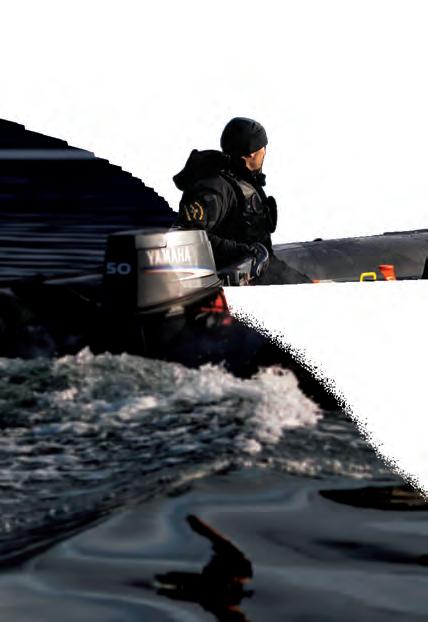
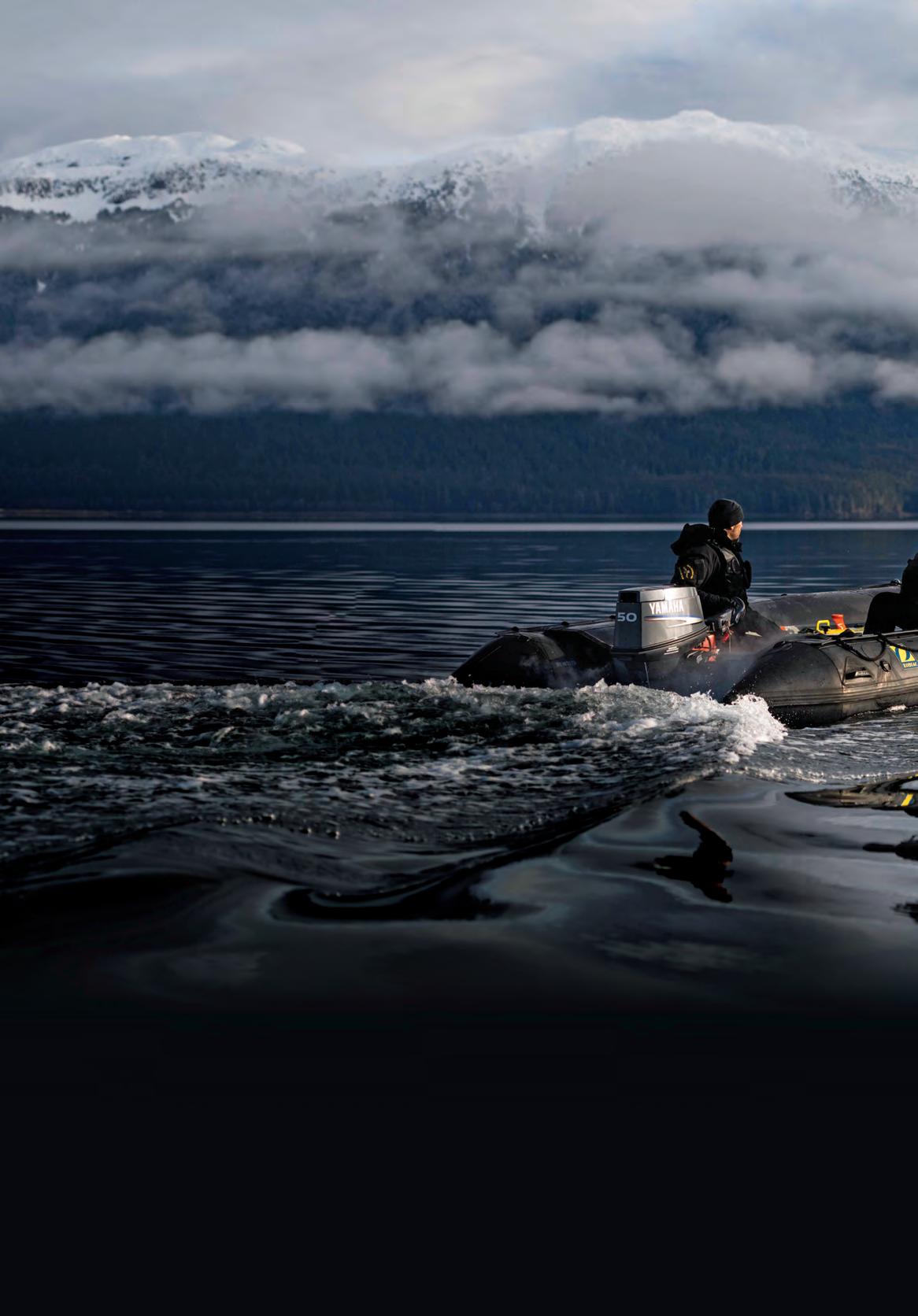
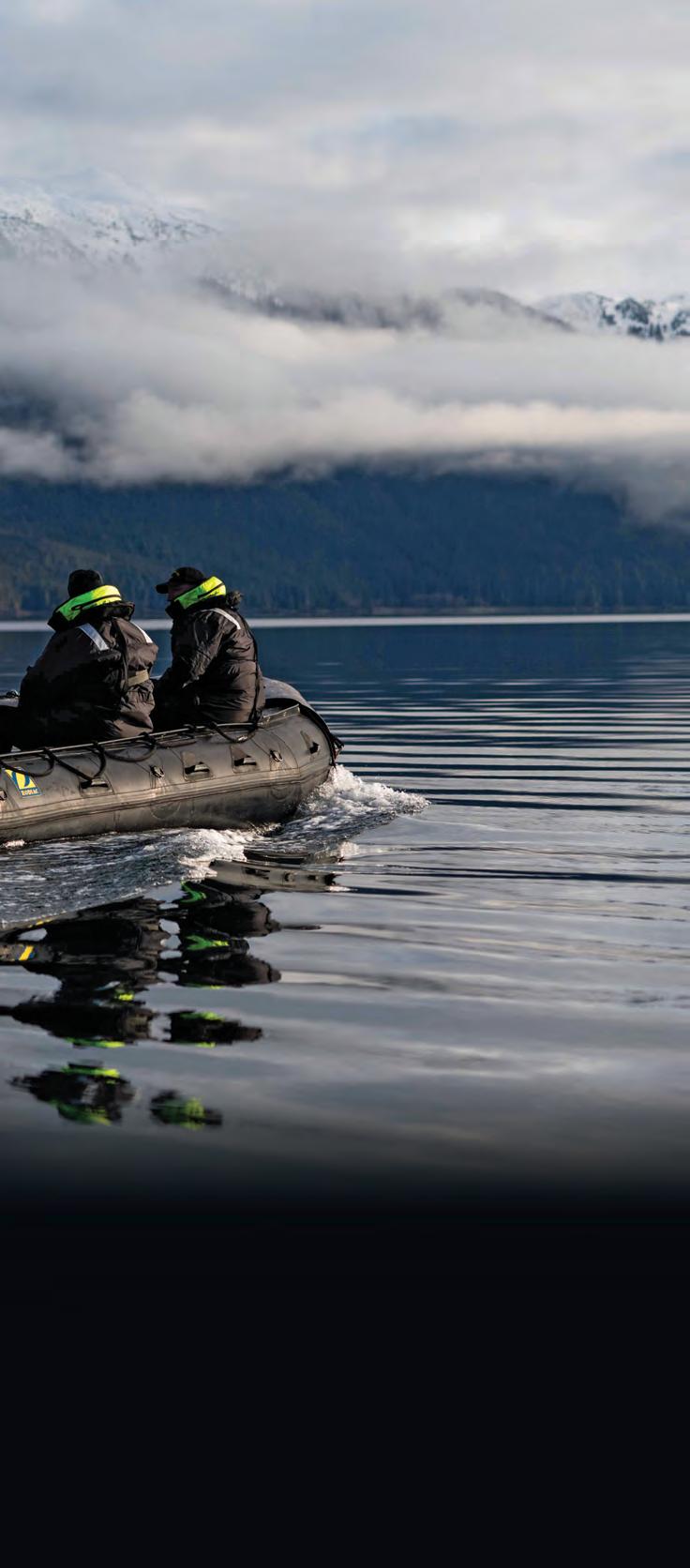
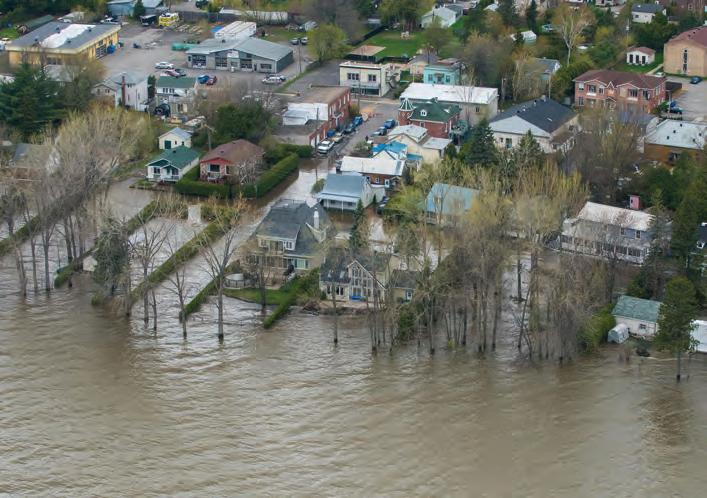
Climate change is causing record-setting floods, such as the one in Rigaud, Que., in the spring of 2017 (above). HMCS Brandon’s fleet diving unit prepares to deploy a remote environmental monitoring device near Juneau, Alaska, in early 2022.
and famine; climate refugees and territorial aggression; new threats to sovereignty (such as that facing Canada as Arctic sea ice melts); humanitarian aid in response to climate-related disasters such as severe floods, massive wildfires; and more on a growing list.
At the same time, fossil-fuel guzzling military jets, ships, vehicles and tens of thousands of energyhungry armed forces’ installations around the world are themselves helping fuel climate change.
The world’s militaries produce about six per cent of global greenhouse gas emissions, according to calculations by Scientists for Global Responsibility. NATO wants to help reduce that.
“We cannot compromise our military effectiveness,” said NATO Secretary General Jens Stoltenberg at the alliance’s 2022 summit.
It is, as the old saying goes, hard to drain the swamp when you’re up to your neck in alligators.
That is the metaphorical challenge facing NATO members, including Canada, in maintaining a robust defence against current
military menaces while dealing with a persistent and growing peril—and one to which they themselves contribute: global warming.
Climate change poses many threats to international peace: conflicts fuelled by water scarcity
“NATO is about preserving peace through a credible deterrence and defence. Nothing is more important. If we fail to preserve peace, we also fail to fight climate change.
“At the same time,” he said, “we also have a responsibility to reduce emissions.”
NATO has committed to cut its greenhouse gas emissions by at least 45 per cent of 2019 levels
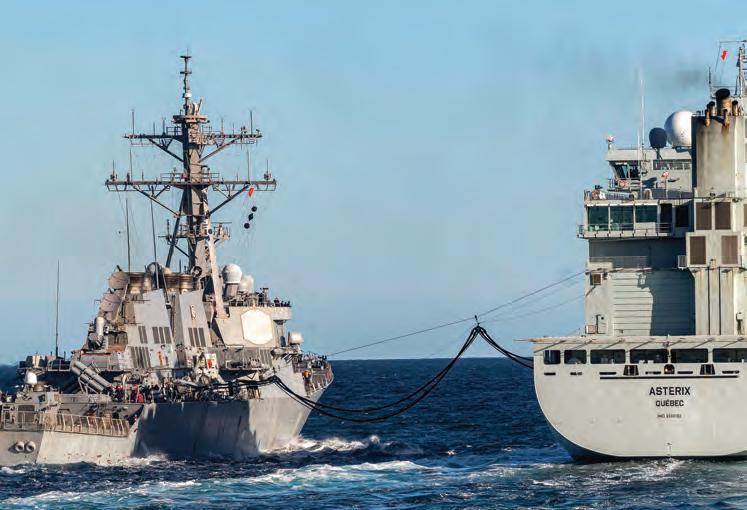
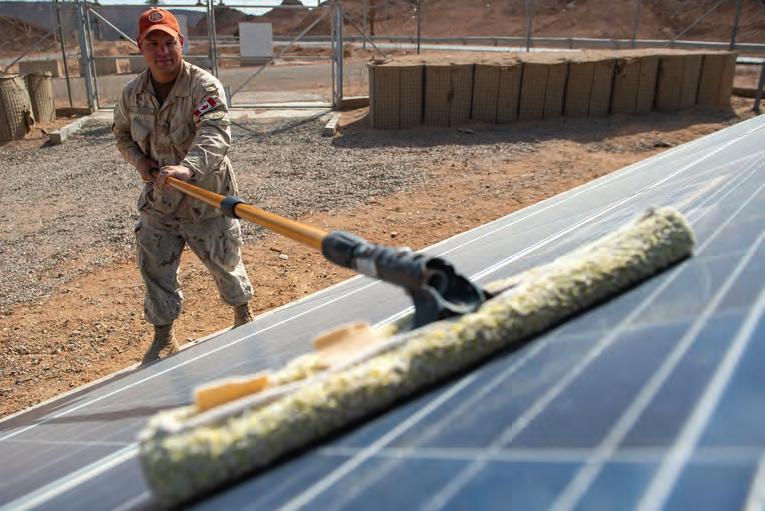
Canada’s MV Asterix, a temporary supply vessel while the navy awaits its new and greener support ships, tops up fuel for the USS Ross in 2020. In Egypt in 2019, Sergeant Daryl Preece removes dust from a solar panel to increase its efficiency.
“Military capability cannot be compromised. However, DND also recognizes the requirement to power our forces should be done as sustainably as possible .”
by 2030 and to be carbon neutral by 2050. It’s also establishing the NATO Climate Change and Centre of Excellence, which will be located in Montreal and is slated to open in 2023. It will have a dual focus—advising its members on threats to global security caused by climate change, as well as how to reduce the impact of military activity on global warming.
For two decades after the planet’s initial international climate action agreements were struck, countries did not have to report military tactical emissions to the agencies co-ordinating the world’s response to global warming, ostensibly for national security reasons. Such reporting has now been voluntary since 2015.
targets for military emissions. Canada is doing so now.
While the Department of National Defence’s non-combat operations have long been counted in federal emissions reduction targets, the emissions of the national safety and security fleets, the Coast Guard, the RCMP and the “armed” part of the Canadian Armed Forces, have not.
In 2022, the national safety and security fleets were added to the federal Greening Government Strategy, which calls for netzero emissions by 2050—when Canada is intent on producing no more greenhouse gases than can be captured or reabsorbed by oceans and forests.
“Military capability cannot be compromised,” said
Today, even the military recognizes that what gets counted, counts.
“This is vital, because only what gets measured can get cut,” said Stoltenberg.
NATO has asked its 30 member states to set their own reduction
Jessica Lamirande, DND/CAF spokesperson. “However, DND also recognizes the requirement to power our forces should be done as sustainably as possible without impacting safety and security.”
DND and CAF infrastructure, light-duty vehicle fleets and
national safety and security emissions accounted for about 59 per cent of federal government emissions in 2019-2020.
“Consequently, we have a critical role to play in helping the government of Canada meet its climate change objectives,” said Lamirande.
Published in 2020, DND’s “Defence Energy and Environment Strategy” addresses ways to cut emissions, reduce energy use and improve energy efficiency across the board. DND committed to reducing emissions from its buildings and light-duty vehicle fleet to 40 per cent of 2005 levels by 2030 and is on track to reach that goal five years sooner.
In 2021, 34 per cent of DND and CAF non-tactical light-duty vehicles were electric or gas-electric
for about 21,000 structures, some in cold and remote locations.
The department is assessing energy use at bases, with a goal of maximizing the efficiency of heating and cooling systems. It will also use automatic lighting in new buildings and is retrofitting older buildings similarly. And electricity on bases will come from renewable sources.
DND’s first net-zero building, at the Explosive Ordnance Disposal Training Facility in Gagetown, N.B., can operate off-grid. It’s powered by a solar field and a battery storage system and uses geothermal heating. Meanwhile, upgrading 81 buildings at 2nd Canadian Division Support Base in Valcartier, Que., “will cut over one-quarter of Valcartier’s
672 megatonnes (Mt) of greenhouse gas emissions in 2020, down from 740 Mt in 2018).
Making vehicles and buildings more energy efficient and selfsufficient is a start, but reducing the carbon impact of activities at the pointy end of the stick—the “armed” part of the Canadian Armed Forces—is a bigger challenge.
Of 844 kilotonnes (kt) of carbon dioxide emissions produced by the national safety and security fleet in 2020-21, DND was the source of 592 kt, 84 per cent from aircraft, 15 per cent from marine vessels and one per cent from tactical land vehicles (a statistic likely to change if Canada were to partake in another combat mission such as the war in Afghanistan).
Getting that to net-zero by 2050 will be some battle itself.
hybrids, and nearly three-quarters of the electricity used on military bases came from renewable sources—the latter is expected to reach 100 per cent by 2025.
Heating buildings accounts for much of the federal government’s emissions, and DND is responsible
emissions,” said Defence Minister Anita Anand in 2022. Since 2015, DND has spent $370 million improving facilities in 13 locations, changes expected to reduce emissions by more than 64,000 tonnes annually. (By comparison, Canada produced
The Royal Canadian Air Force has more than 430 aircraft, including jet fighters and helicopters. The navy operates about 40 vessels, including four submarines, a dozen frigates, a dozen coastal defence vessels, plus patrol vessels. The army’s tactical vehicles include tanks, personnel carriers, reconnaissance and patrol vehicles and multipurpose Humvees.
A Humvee consumes about a litre and a half of gas every five kilometres.
Until recently, operational readiness and safety trumped environmental concerns when ordering replacements, but emissions are now incorporated in planning for a hotter future.
Most of DND’s safety and security emissions “come from the operation of air and sea platforms,” Lamirande said, adding “sustainable and renewable fuels represent the largest opportunity in the near term” for reductions.
Many Canadian aircraft currently in service can operate on a blend of conventional and sustainable aviation fuel (SAF), and Canada is committed to buy more than 300 million litres of SAF, or low-carbonintensity fuels, by 2030-31—if it can. There’s a shortage.
For supplies of alternative fuels to increase, there need to be more feedstock sources, which include algae, food waste, vegetable oils and fats, and large-scale production facilities need to be built and a distribution system developed.
Belonging to an alliance will be helpful.
“Working closely with our allies will allow us to enhance collective buying power, thereby driving innovations in the defence industry,” said Lamirande.
Canada, for instance, may not buy enough aviation fuel to spur development of alternative fuel feedstock, manufacturing and delivery systems, but supplying all 30 NATO members, including the United States, which has the world’s largest military air fleet, would be a powerful incentive for such development.
Another problem is that Canadian vessels and equipment have long lives. The destroyer HMCS Athabaskan served from 1972 to 2017. Canada’s Buffalo aircraft served for five decades.
“The long development times and service lives of many types of military equipment make it particularly critical that suppliers are provided with efficiency guidance far ahead of emissions target dates,” says the Conflict and Environment Observatory in its 2022 report
on military greenhouse gas emission reporting.
The problem is, much of the equipment in the process of being ordered will still be in service in 2050, when Canada aims to achieve net-zero emissions.
“Having a greener fleet must, of course, start with procuring a greener fleet,” said Lamirande.
Energy and fuel efficiency are now factors considered (though not mandatory) when ordering replacement craft and vehicles. The CAF is in the process of building 15 ships to replace navy destroyers and frigates, 28 helicopters and 88 fighter jets to replace the aging fleet of CF-18 Hornets. The Canadian army, meanwhile, is on the brink of replacing its fleet of Humvees with 55-75 high-mobility multipurpose wheeled vehicles.
There have already been technological advances to increase military fuel efficiency. New materials used in military vehicles are lighter, but just as strong as the parts they’re replacing; lighter vehicles greatly improve fuel efficiency. And efficient fuel cells that convert hydrogen gas into electric power for hybrid vehicles have been developed. Plus, alternative fuels are starting to be used to replace or augment petroleum-based gas for aircraft and naval vessels.
As technology improves and research breakthroughs accumulate, there will be more and more options for replacements and retrofitting. The United States, a strong driver of military research and development, is banking on it.
The U.S. has the world’s third largest military force with nearly 1.4 million active personnel; it has the largest air force by a wide margin and its ground forces and navy are among the world’s largest in size. And it has a large and well-established military research community, as do its allies.
In 2021, it identified climate change as a critical threat to U.S. military operations.
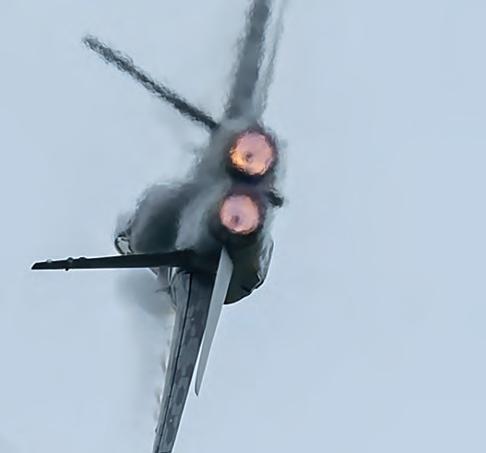
emissions pour off a CF-18. The contrails can stay in the atmosphere for decades.
NATO allies (
“We face all kinds of threats in our line of work,” said U.S. Secretary of the Army Christine Wormuth, “but few of them truly deserve to be called existential. The climate crisis does.”
The U.S. army intends to have a fleet of hybrid-drive tactical vehicles by 2035, and by 2050 it wants to have rechargeable electric combat vehicles. The U.S. navy is aiming for net-zero emissions by 2050, turning from fossil fuels to electric power, better batteries and retrofitting ships’ engines and stor age tanks for alternative fuel use. Canada and the rest of NATO can only benefit from the advances of the Americans.
“NATO can help set the gold standard on understanding, adapting to and mitigating the security impacts of climate change,” said Marilyne Guèvremont, spokesperson for Global Affairs Canada, which with DND proposed the NATO Climate Change and Security Centre of Excellence in 2021.
The centre will help Canada and its other members work co-operatively to find and share best practices. It’s becoming clear that fighting climate change will require global collaboration. L
“ Sustainable and renewable fuels represent the largest oppor tunity in the near term” for reductions.
“Biojet fuel is the quickest, easiest and most effective strategy to meet increasing emission standards in the near future,” said lead researcher David Bressler.
POWER
There is no doubt about it: aviation is contributing to global warming.
Emissions from aircraft fuel are responsible for at least 3.5 per cent of all factors that cause climate change—and that’s not counting military aircraft, the emissions of which are not reported by many countries.
And military aircraft are fuel hogs, particularly combat aircraft that reach supersonic speeds, which need more thrust that requires more fuel. In 2021, the global military fleet exceeded 53,000 aircraft, more than twice the civilian fleet. And the U.S. air force, the world’s largest, uses about nine billion litres of fuel annually.
Whom? A People’s History of the Canadian Military Contrails form a thin layer of cloud that acts like a blanket in the atmosphere, preventing heat from radiating into space. The layer stays in the atmosphere for decades.
But there’s no quick fix to provide alternate energy to power high flight.
powered aircraft is expected to take off in about five years.
But it will likely be a while before we see far-ranging electric military aircraft; CF-18 Hornets have a range of about 3,300 kilometres.
But climate impact from armed aviation isn’t due to fuel alone. Military jets fly higher than passenger and cargo aircraft, leaving contrails that disperse in the high atmosphere.
“Flying is fuel intensive and its climatic impact is generally about twice the CO2 emitted alone,” writes Yves Engler in Stand on Guard for
Civilian airlines are gravitating to electric power, but the technology is still at a prototype stage, limited so far to small planes travelling short distances. Due to weight of the batteries (about five tonnes) these early electric planes carry a handful of passengers and fly about 200 kilometres between charges. Gas-electric hybrid technology can quadruple that distance.
Still, civilian aviation companies are intrigued by the possibilities of the technology. In 2022, a Harbour Air seaplane completed an electric-powered flight from the mainland to Vancouver Island and Air Canada’s new fleet of 30 hybrid battery-
Although Britain’s air force hopes electric plane technology will be available for its new generation of jet fighters in the 2030s, refuelling remains a hurdle. It now takes minutes for mid-air refuelling of military jets, while Air Canada’s hybrid planes need up to 50 minutes to recharge.
Meanwhile, for more than a decade research has proceeded on manufacturing jet fuel from something other than petroleum.
Natural Resources Canada has provided $2.89 million in funding to the Alberta Biojet Initiative at the University of Alberta, among other projects. It is researching the use of biowaste, such as fats, oils and food waste from restaurants or tallow from rendering plants, in the production of jet fuel.
“Currently, depending on the platform, our aircraft can take up to 50 per cent sustainable aviation fuel (SAF) without compromising performance (and) maintenance,” said DND/CAF spokesperson Jessica Lamirande. “While SAF is not net-zero, it may achieve up to 80 per cent carbon emission reductions over its life cycle depending on the feedstock, production and transport methods.” Alternatively, Swiss scientists have developed a method to make jet fuel from carbon dioxide, a chief greenhouse gas. CO2 and water are extracted from the air and split by solar energy into syngas, a mixture of hydrogen and carbon monoxide. Syngas is then processed into kerosene and methanol that can substitute for petroleum-based fuels. Such fuel is carbon-neutral, removing as much CO2 from the air as it produces when burned.
The challenge? Presently, only tiny amounts of these new fuels can be produced. Entire new feedstock and production systems must be designed, financed and built to deliver enough product to fuel the world’s cargo and passenger air fleets alone, which now number more than 25,000. With more than twice as many military aircraft around the globe, fueling the planet’s air forces will be an even bigger challenge.
By Hugh A. Halliday
NIGHT fighter The
Learmouth (Raffy)
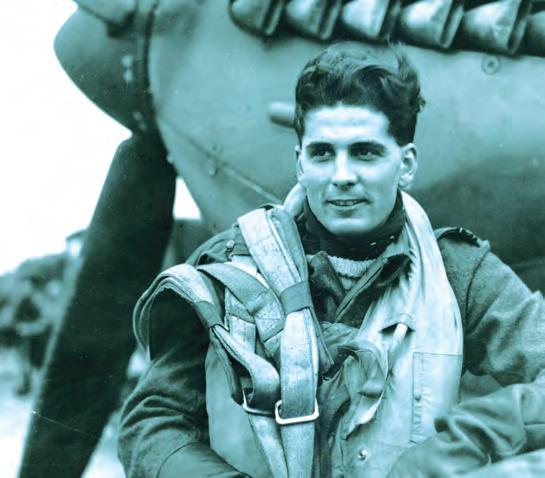
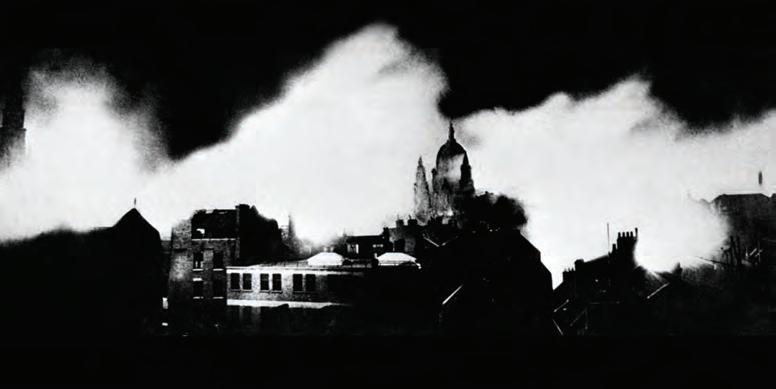
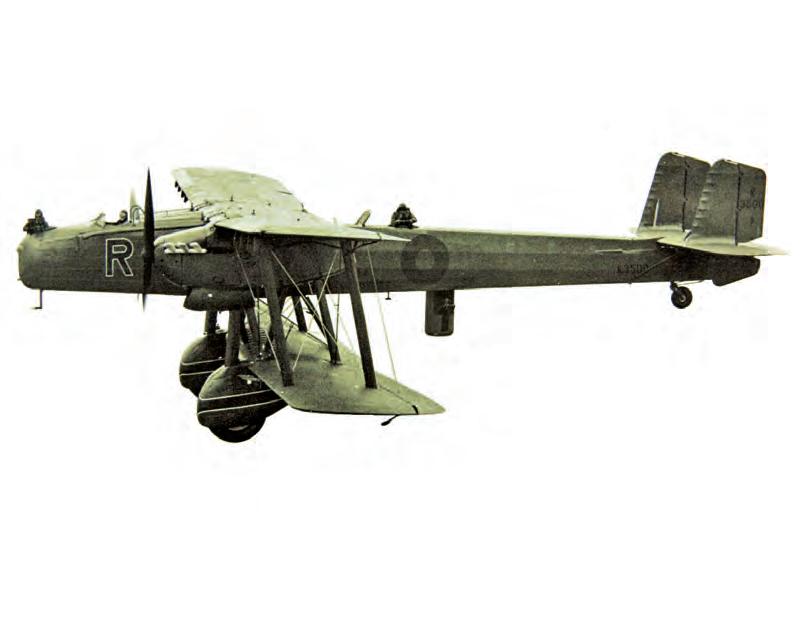
Gordon (Raffy) Raphael got his first kill over London during the Blitz on May 10, 1941 (opposite bottom). Born in Brantford, Ont., he joined the Royal Air Force in 1935 and flew a Handley Page Heyford (below) before the war.
NIGHT
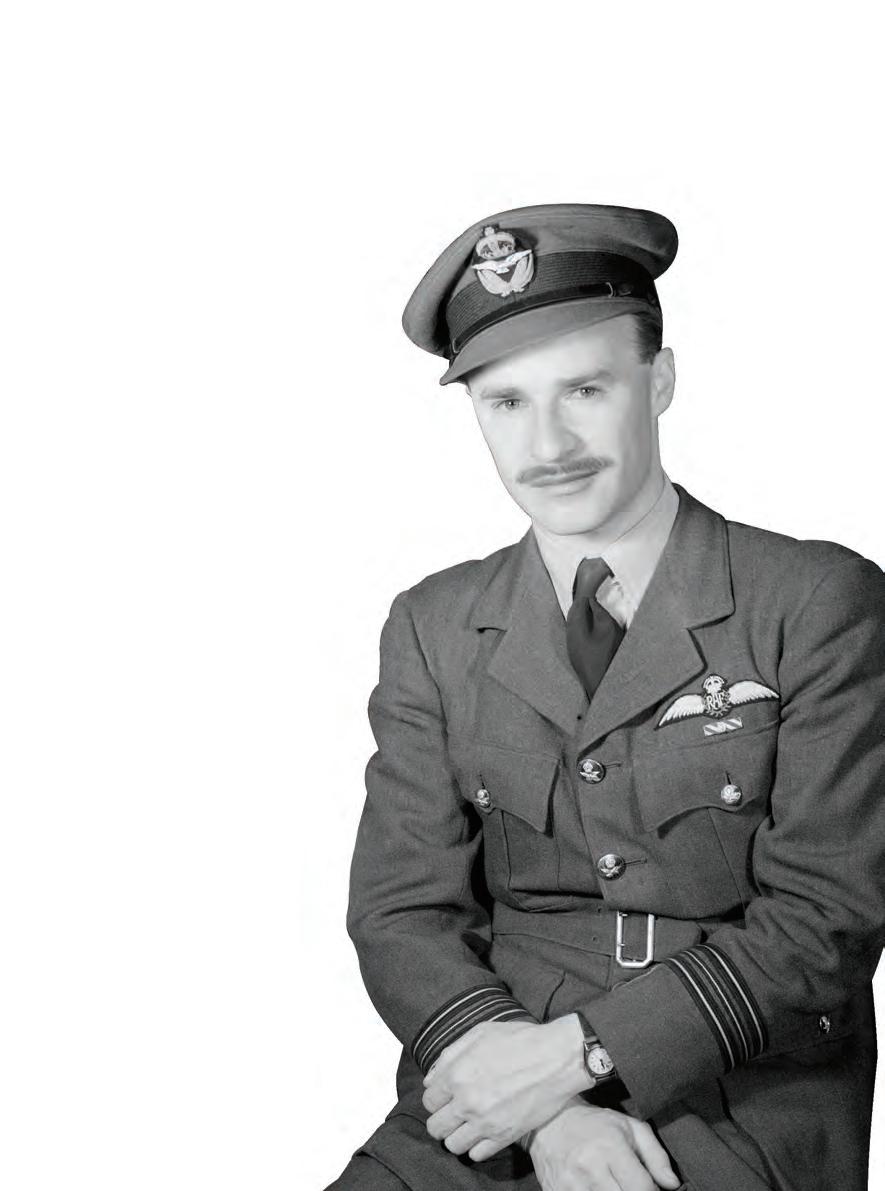
“Raffy.” He was one of some 1,800 Canadians and about 100 Newfoundlanders who enlisted directly in the Royal Air Force before the Second World War or in the first year of the conflict. At least 1,100 were aircrew, outnumbering their Royal Canadian Air Force counterparts at the beginning of the war. Many were engaged in the earliest combat sorties and went on to particularly outstanding careers. Among them was Gordon Learmouth (Raffy) Raphael. Raphael was born in Brantford, Ont., on Aug. 25, 1915, and educated in Quebec City, before going to England in 1934 to attend the Chelsea College of Aeronautical and Automobile Engineering.
“I wanted to design aeroplanes,” he said, “but after a
year I discovered that what I really wanted to do was to fly.
So I took a short service commission in the RAF in 1935.”
He was appointed an acting pilot officer on probation on Jan. 20, 1936. In August, he was posted to No. 7 Squadron, flying Handley Page Heyfords out of Finningley.
“You may remember the Heyford,” he recalled to a wartime press officer of the biplane. “It had a long, gaunt fuselage suspended from the underside of the upper wing. Consequently, it always looked as if it was upside down. But believe it or not, it was lovely to fly.”
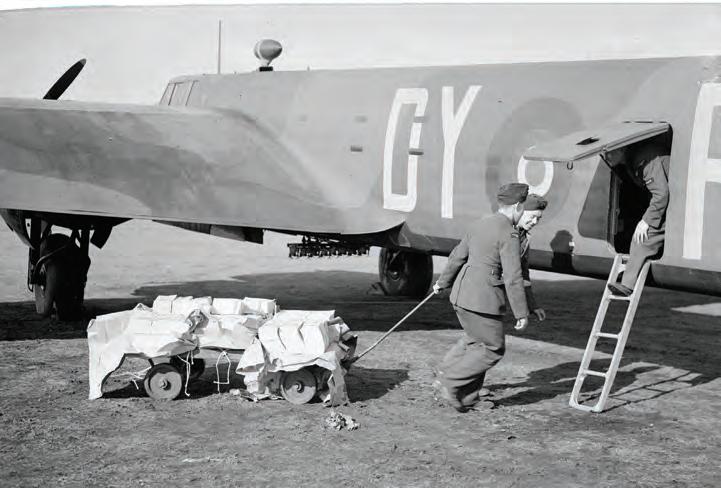
By September 1939, Raphael was with 77 Squadron, based in Driffield, piloting what was then the “heaviest” of Bomber Command’s heavy bombers, the Armstrong
Whitworth Whitley, also known as the “flying barn door.” On the night of Sept. 8-9, Flying Officer Raphael undertook his first operational sortie, a leaflet dropping mission—known as a “Nickeling”— to Essen in western Germany.
Running short of fuel, he force-landed at Buc, France, damaging the aircraft’s undercarriage in the process. It was an inauspicious beginning.
Several night sorties off the German coast followed. On Jan. 9, 1940, Raphael piloted one of two Whitleys engaged in a reconnaissance of western Germany. On more “Nickel” sorties to Bockum and Sylt in the north, his crew fired at searchlights. These operations garnered Raffy a Mention in Dispatches on Feb. 20. He was the first Canadian so honoured during the war.
By September 1939, Raphael was piloting what was then the “heaviest” of Bomber Command’s heavy bombers.
Early in the war, Raphael flew leaflet dropping missions in an Armstrong Whitworth Whitley (opposite). Later, as a night fighter, he regularly teamed up with radar operator William Nathan (Nat) Addison, whom Raffy credited for their kills.
B.J. Daventry/Wikimedia; IWM/C 922; Battle of Britain London Monument
Promoted to squadron leader and appointed a flight commander, Raphael scored again on the night of Sept. 16-17. His victim this time was a Ju-88, shot down into the sea near Clacton. The plane belonged to a German night fighter unit. Three of the crew bailed out and were captured.
Raffy was promoted to wing commander on May 27, 1942, and appointed to take charge of 85 Squadron. “Lean, moustached, 26 years old, Raffy Raphael is the kind of man you would expect one of the RAF’s best night fighter pilots to be,” reported an RCAF press release at the time.
While Raphael was much respected, he was not necessarily loved. He was a strict teetotaller and non-smoker, and frowned on anything that might impinge on crew efficiency. He also lived away from the station, preferring to stay in a cottage with his wife and son. Meanwhile, Raffy strove to model the squadron on its First World War counterpart, when it had been commanded briefly by Billy Bishop. The aircraft were marked with the hexagon symbol that had been worn by SE5 fighters in 1918.
“If the Havoc had been armed with cannon, only one short burst would have been necessary.”
The squadron began converting to Mosquitos that month, with Raphael giving instruction to most crews while maintaining a high level of readiness himself, no mean feat when Luftwaffe activity was so reduced that keeping men sharp was a task in itself.
Raphael scored a number of his kills flying a Douglas Havoc, similar to this American version of the plane (left). His prey was often a Ju-88 (below) or He-111.
Observers at Bradwell Bay confirmed that the Junkers had indeed gone into the sea. He was awarded a Distinguished Service Order on Feb. 2, 1943; the unpublished recommendation paid special tribute to his supervision of the squadron’s conversion from Havocs to Mosquitos. Addison received a DFC on Feb. 19.
That month Raphael also turned over command of 85 Squadron to an illustrious successor, Wing Commander John “Cat’s Eyes” Cunningham, the nickname inspired by his uncanny ability to spot enemy aircraft. Raphael moved on to staff postings, first at Castle Camps, then in April to Manston. He was very much a handson commander—he took off in Mosquitos to shoot down V-1 flying bombs in 1944 on June 29-30 and July 6-7. On Jan. 1, 1945, he was Mentioned in Dispatches again.
On July 30-31, 1942, Raphael claimed a “damaged” Ju-88 near Cambridge, but this was disputed by anti-aircraft gunners. More decisive was an action on August 2-3—he destroyed a Ju-88 (initially identified as a D0-217) near Dengie Flats, a gunnery range off the Essex coast. This was his last victory in a Havoc.
On Jan. 17-18, 1943, with Addison again, Raphael was scrambled after a “bogey” that proved to be a Ju-88 flying at some 1,800 metres (6,000 feet). His first burst of 20mm fire caused a large explosion in its port engine. He followed the burning bomber down through haze and finally pulled out at 100 metres (300 feet), just avoiding a crash in the sea.
Raffy was promoted to group captain on Feb. 15, 1945, and posted to the command of Station Biggin Hill. He was killed on April 10, 1945, while flying a Spitfire. Many accounts say that Raphael collided with a Dakota aircraft, shearing off one wing, however, the other plane was actually an American C-46 Commando returning from a continental freight run with four crewmen aboard. In November 2006, Raphael’s medals were sold at auction for approximately 10,000 pounds ($24,000 Canadian). L
TheThe Permanent Active Militia (or Permanent Force) began the Great War in 1914 with a strength of a little more than 3,100 officers and men. After reorganization at the end of the war, the Permanent Force (PF) was limited to 5,000, though it never reached that figure. In 1939, on the eve of another war, the PF had some 4,260 in all ranks, and many were too old, or too unhealthy, for overseas service. Canada’s regular soldiers were no more ready for the Second World War than they had been for the First. Why? In 1919, the Canadian public perceived that the military was unnecessary, too costly and too much a reminder of the terrible losses overseas from 1915 to 1918. The government
IN-BETWEEN
After the Great War and before the Second, Canada’s defence relied on the small Permanent Active Militia
The Princess Patricia’s Canadian Light Infantry, one of the Permanent Force’s three regiments, conduct kit inspection at Camp Hughes, Man., in 1928 (opposite). The Royal Canadian Dragoons support local law enforcement during the strike at Sydney Mines, N.S., in 1925. General Andrew McNaughton, pictured here in the 1920s, was the PF‘s rising star.
agreed, funding the army to the tune of a mere $11 million in 1921 and reducing that sum yearly to under $9 million by 1934.
Canada barely had a military, but the barebones PF existed nonetheless. Its infantry and artillery units had no modern equipment and little ammunition, its cavalry had begun to lose its horses and it had no tanks at all.
Even so, the PF had its roles. Each year, it provided some 250 officers and non-commissioned officers to assist the Non-Permanent Active Militia units, a difficult task because they were almost completely untrained and had only Great War weapons and uniforms. And Ottawa couldn’t fund much training time either. Plus, the militia officers, many young businessmen, scorned the PF.
A Seaforth Highlander recalled his “poor opinion of the PF in the 1930s. They had too little to do, spending too much time at the bar which upset the ‘working professionals’ in the Seaforths. They were lazy, sloppy and didn’t think or work like militia officers.” Another junior officer in a Toronto regiment said “the PF were seen as poseurs and the Royal Military College graduates were scorned and resented” because they were know-it-alls. For its part, the PF thought little of the “bloody militia,” seeing them as incompetents playing at being soldiers.
The Permanent Force units, however, also played at soldiering. All were understrength and most were only able to muster one or two companies, batteries or squadrons. The infantry had three regiments—the Princess Patricia’s, the Royal Canadian Regiment, and the Royal 22e Régiment—and only
Canada’s regular soldiers were NO MORE READY for the Second World War than they had been for the First.
the artillery, even with obsolete guns, was anything close to efficient.
Artillery officers had technical expertise and some had advanced training. They worked closely with militia units, a few of which were also efficient. Still, the sole interwar field exercise that brought the PF’s
British Army’s Staff College. The school provided advanced training in command over a two-year course and let officers see large units in the field (something impossible in Canada). The PF sent four captains a year—63 between the wars in total—to the program.
There was also the Imperial Defence College (IDC) in London that offered a one-year course on high strategy and international politics to brigadier-generals. Canada sent 20 officers to the IDC, a group that included Andrew McNaughton and Harry Crerar (both army commanders in the coming war), E.L.M. Burns (a corps commander) and Maurice Pope (the military adviser to the Prime Minister).
The PF also ran staff training courses for militia officers, which raised standards. Still, if the Staff College education was equivalent to fourth-year university, the Militia Staff Course was like firstyear, one PF officer said later.
The handful of Permanent Force officers at headquarters in Ottawa, meanwhile, focused on administration and planning. The tiny Directorate of Military Operations and Intelligence was the
This northern role WON THE PF SUBSTANTIAL CREDIT with the government.
hub, drafting plans for contingencies ranging from war with the United States or Japan to sending an expeditionary force to fight with Britain against “a civilized enemy.” In 1920, Colonel J. Sutherland (Buster) Brown’s first task was to create Defence Scheme No. 1.
Brown’s plan set out the army’s role for a war with the U.S. It has usually been portrayed by historians as madness. It wasn’t. The Americans had similar plans to attack Canada, and although Britain and the U.S. had been allied during the Great War, no alliances were permanent.
Brown’s proposal called in part for an advance “into and [to] occupy the strategic points including Spokane, Seattle and Portland,” for forces to “converge towards Fargo in North Dakota,” and to move toward Minneapolis. All this made sense of a sort—if help from Britain was
coming, the army might be able to disrupt American plans long enough for assistance to arrive. But Brown somehow believed that the untrained militia could move into the U.S. and succeed against the almost equally untrained, but larger, National Guard and regular U.S. army. That was madness.
More realistic was the plan to dispatch an expeditionary force to assist Britain in a war in Europe. Brown’s draft, refined and developed during the interwar years, initially called for a seven-division force. By the late 1930s, under pressure from the Liberal government, home defence became the priority, but the plan to dispatch a two-division field force remained intact until the fall of France.
Another PF task in the 1920s and 1930s was to intervene in labour-management disputes.
Lieutenant Guy Simonds, serving in the Royal Canadian Horse Artillery (RCHA), was deployed to Sydney Mines, N.S., in 1925 to provide aid to local authorities in preventing violence during a strike by miners.
Initially, the strikers “were very hostile to the troops,” wrote Simonds later. They hurled stones and insults at the soldiers. But over time, Simonds said the PF was able to convince them “that we were not on anybody’s ‘side’—we didn’t represent the owners, but were there to protect lives and property.”
The RCHA created a soccer team and challenged the miners to a game, which broke the ice. The violence ceased, and when the RCHA left, “the miners and their families lined the streets and cheered us…” said Simonds. His report was likely rosecoloured—company police had killed one striker—but the RCHA had been more even-handed and killed no one.
Nor did anyone die at the hands of the PF in the 1933 general strike by unionized furniture workers
Men work on a relief camp in Wagaming, Ont., in 1935, and break for lunch at a similar facility in Lac Seul, Ont., in 1933. The PF oversaw the program. In 1935, more than 1,000 of the campers went to Ottawa to protest the scheme (below). Strikers in Stratford, Ont., mock the PF’s presence in 1933.
and chicken processors at Swift’s meat plant in Stratford, Ont. The mayor requested military assistance, and Ottawa sent in the Royal Canadian Regiment from nearby London, some riding in Carden-Loyd machine-gun carriers (the PF’s only armoured vehicles) as a show of force.
The carriers saw no action, the soldiers remained in the armoury, the strike ended peacefully and Stratford marked the last time the military was called on to intervene in a labour dispute between the world wars.
The PF also worked in the Canadian North, which in the 1920s was largely disconnected from the rest of the country. In 1923, the Permanent Force’s tiny Royal Canadian Corps of Signals—its strength no more than 150 officers and men—was directed to establish the Northwest Territories and Yukon Radio System to provide reliable communication to the
“outside.” Private William J. Megill, a 16-year-old soldier, went to Mayo, Yukon, in 1924 to help operate the radio station there. Megill recalled enjoying his four years in the North because promotion was rapid (he was soon a staff sergeant) and there was a northern allowance of $1,000 a year, plus a messing allowance of 50 cents a day. That allowed him to save money even though his initial pay was only 75 cents a day.
The radio system soon expanded and, in 1938, set up a radiotelephone service. This northern role won the PF substantial credit with the government.
While a northern posting might have been sought after, “relief stiffs” in government camps for unemployed men during the Depression were not. The concept had been suggested to Prime Minister R.B. Bennett in 1932 by General McNaughton, then Chief of the General Staff. Alarmed by the numbers of homeless men, many of them veterans unable to find work, the opportunistic McNaughton believed the camps could instill some purpose in a restless group and help limit growing revolutionary sentiment.
Provided with lodging, food, clothing and medical care, and paid 20 cents a day for their work, the camp residents could clear ground for airfields, highways and military bases, which McNaughton saw could benefit the massively underfunded Department of National Defence. The PF provided most of the personnel—in civilian clothes—to run the camps.
While well-intentioned, the hastily created camps eventually offered rough, inadequate conditions to some 170,000 men—who dubbed themselves “the Royal Twenty Centers,” a reference to their pay. The PF, meanwhile, suffered for its efforts to manage the men who were unhappy with their lot and their treatment.
After the 1935 On to Ottawa Trek, which was made up of more than 1,000 unemployed men who had ridden boxcars eastward in protest of the camps, the Prime Minister sacked McNaughton as defence chief. Bennett lost the election nonetheless, and the victorious Mackenzie King quickly closed the camps. If the radio system had helped the PF, the relief camps damaged its reputation.
Canada’s army was completely unprepared for war in 1939. Still, there were some capable officers in the Permanent Force, men such as McNaughton, Crerar and Burns, all able Great War veterans, and younger leaders like Simonds. Given how the government and public had scorned defence after 1919, the country was fortunate it had such skilled military men. L
Makes a great gift!
O Canada: The history of our home and native land
O Canada tells our story from First Peoples through to our achievements in space. Intro by Canadian comedian and author Rick Mercer.
Bringing the stories of Canada to life like never before
Vimy: The birth of a nation
The hard-fought WW I Battle of Vimy Ridge is sometimes called “the birth of the nation.”
In April 1917, the Canadian Corps fought together for the first time and achieved success where others had failed.
Victoria Cross
The most famous decoration for courage in the Western world, the Victoria Cross has been awarded to dozens of Canadians and the lore behind the VC is sprinkled with strange and heart-wrenching stories.
The Royal Canadian Navy played a pivotal role in this critical campaign, which raged on open and treacherous seas from September 1939 to May 1945.
True stories from the First World War
When the First World War started in 1914, Canada’s population was less than 8 million, yet more than 620,000 enlisted. Many of the surviving soldiers share their stories in this special issue.
The Royals: The fight to rule Canada**
Everything you need to know about Canada’s royal heritage from the earliest kings and queens who dispatched explorers to the New World to the modern British monarchy.
World War I: True stories from Vimy to victory
More compelling stories from the First World War are told in memoirs by surviving Canadian soldiers.
Twenty-five great Canadian aviators
From early birds to astronauts, every one of these nationally celebrated and lesser-known flyers has made important contributions to Canada’s aviation heritage.
*Conditions apply. 40% off back issues expires February 28, 2023.
Canada’s Ultimate Story engages readers with captivating stories of Canadian events and fascinating people from our earliest days to present times and editions are filled with little-known facts and trivia relating to our great country.
Passchendaele: Canada’s brutal victory
The Canadian Corps was thrust into a battlefield of mud and craters to help Allied forces in the Battle of Passchendaele—Canada’s third major victory of 1917.
Take a trip to Canada’s
and meet the perpetrators of some of the country’s most notorious
and misdemeanors.
Liberating Normandy: The road to victory The Battle of Normandy was the beginning of the end of the Second World War in Northwest Europe.
Battle of the Atlantic
The Somme The Somme examines the role of the Newfoundland Regiment and the Canadian Expeditionary Force in the monumental First World War battle that took place in France from July 1 to Nov. 18, 1916.
War Photos War Photos showcases the stunning images and rare photos from the men and women who went into battle with only a camera.
War Stories:
Battle of the Pacific: Courage in the Far East Canada’s war in the Pacific began on Dec. 7, 1941, when Japanese aircraft attacked the U.S. navy base at Pearl Harbor, Hawaii.
Crime: Canadian style
seedy underbelly
felonies
Canada and the Second World War: The battles Canadians played pivotal roles in many of the most important and costly conflicts of the Second World War. Includes large battle map.
D-Day: The free world fights back
It was the spring of 1944 and the Allies could not wait any longer. British, American and Canadian forces would land on five beaches on France’s Normandy coast in the early hours of June 6, 1944.
Canada’s great naval battles
The sea brought explorers, colonizers and navies from Europe to North America—as well as rivalries and wars. Join naval historian Marc Milner as he retraces Canada’s history—all from a nautical perspective.
The march to victory: Canada’s final 100 days of the Great War
The Canadian Corps fought several great battles before Germany surrendered, ending “the war to end all wars.”
O Canada: Discover your land Big land, bigger oceans, huge mountains, wide waterways and wildlife wilderness— Canada offers breathtaking vistas in every direction. Intro by Canadian comedian Cathy Jones.
Canada and the brutal battles of the Somme
The Battle of the Somme lasted 141 days, from July 1 to Nov. 18, 1916. For the Canadian Corps, the Somme was a coming of age, setting the stage for their seminal victories to follow.
O Canada: The best of everything
Find out what really makes our country tick. Packed with Canadian people, places, wildlife, cities, culture, feats and innovations. Intro by Canadian comedian Ron James.
John McCrae and the Battles of Flanders
John McCrae—doctor, gunner and poet—was shaken by the battlefield death of a friend in May 1915, and wrote the poem “In Flanders Fields” in tribute. The poem remains today a renowned symbol of remembrance.
Canada and the Great War: Liberation
In the final five weeks of the First World War, Canadian soldiers liberated more than 200 cities, towns and villages in France. “They were so glad to see us,” said one Canadian soldier, “they wept with joy.”
Battle of Ortona
Late in 1943, Canadian troops attacked the German-held Italian city of Ortona. In fierce fighting, Canada pushed up Italy’s east coast and prevailed.
1945: Canada and the end of the Second World War
The year 1945 started with a massive German bomber attack on Allied airfields. But the Allies soon pushed back and Canadian troops led the advance across Belgium and into the Netherlands. The end-game was at hand.
O Canada: How Canada was shaped by war and peace Since the First Peoples arrived on this continent, the place that would be called Canada has been shaped by conflict and co-operation. The impacts of war and the bounties of friendship echo through the story of Canada.
Battle of the St. Lawrence: U-boats attack
It is 1942, and the U-boat war that has been raging in the North Atlantic spills into the Gulf of St. Lawrence and onto the river itself. For three years, submarines dispatched by German Admiral Karl Dönitz have been attacking the high-seas convoys that are the lifeline of the war effort overseas.
Now the underwater killers seize on new opportunities to attack ill-defended shipping all along the eastern seaboard into the Caribbean. They include transports sailing down the St. Lawrence and out to the coast from Montreal and Quebec City.
For the first time since the War of 1812, lives are lost to hostile action in Canadian waters.
How Canada conquered Vimy Ridge
The Great War had been raging for nearly three years by the time the Canadian Corps captured Vimy Ridge in April 1917. Many historians consider this important battle a defining moment for Canadian troops and our country.
Experience a piece of Canada in every issue.
Defining Battles of the War of 1812
Early on June 23, 1812, British and American warships exchanged the first shots of the War of 1812. For the next two-and-a-half years, the two sides waged war. The Americans thought taking Canada would be a cakewalk. It wasn’t.
Was Pierre Trudeau’s peace initiative of 1983-84 a success?
Prime Minister Pierre Trudeau’s peace initiative was one of Canada’s most highprofile foreign policy ventures during the Cold War, and it captivated Canadians.
The existential threat posed by the possibility of a nuclear war between the Soviet Union and the United States had, in fact, preoccupied Canadians since the late 1940s, and especially during the so-called “Second Cold War” following the election of American President Ronald Reagan in 1980.
Trudeau had the twin goals of improving East-West relations and reviving arms control negotiations between the Soviets and the West. Canada was a mere bystander in that conflict, having reduced its military spending even as the major powers, notably the U.S. and the Soviet Union, increased theirs. Canada then had little leverage to encourage other countries to adopt a particular diplomatic solution and, certainly, no power to force the U.S. and the USSR to do so. As an issue of international relations, the peace initiative was, indeed, a dismal failure.
But Trudeau’s enterprise was more than global diplomacy: it was an exercise in nation-building that reinforced a particular identity for Canadians. Trudeau believed Canada had an influence more potent than might. It had the
power of ideas that, if marshalled at the appropriate time, and in the proper manner, might save the world from nuclear annihilation.
Canadian prime ministers had long positioned the country as a peace-loving nation, one that engaged in war reluctantly, and only then to rescue others from tyranny. These notions were integral to the national identity and what naturally followed was prioritizing the pursuit of peace over military intervention.
TRUDEAU’S PEACE INITIATIVE WAS REALLY ABOUT THE PROMOTION OF THE IDEA OF CANADA AS A PEACEABLE NATION
National identity is lived daily and deeply embedded in the routines of a country’s existence. More than weapons and armies, it drives policy and is a key determinant of national interests. Trudeau’s peace initiative was really about the promotion of the idea of Canada as a peaceable nation at home and in foreign capitals. It was more of a nation-building strategy
than a foreign-policy gambit. Trudeau was personally committed to the vision of Canada as an international peacemaker. As foreign-policy scholar Greg Donaghy noted, Trudeau’s peace initiative “delighted most Canadians” because it reflected their own ideals and their sense of Canada. The intent was to move away from using military force or threats to coerce states into peace, and an effort to attempt to arrive at peace and security through persuasion and the promotion of ideals. In other words, peace and international security come not from force, but through the dynamics of cooperative principles.
As his tenure as prime minister was ending, Trudeau visited other countries to promote this alternative route to nuclear disarmament and the end of the Cold War and, simultaneously, secure Canada’s own identity. The continuing salience of the idea of Canada as a peacemaking and peacekeeping nation attests to the success of his initiative. L
Raymond B. Blake and Penny E. Bryden say YES
The Cold War became very hot in 1983. The Soviet Air Force shot down an off course Korean Air Lines (KAL) 747 near Sakhalin Island on Sept. 1, killing all 269 people aboard. The incident, claimed by Moscow to have been directed at a spy plane flying in prohibited airspace, was denounced in Western capitals. A senior politburo member soon told a meeting: “Comrades, the international situation is white hot….”
So it was, and in Ottawa, Prime Minister Pierre Trudeau feared that war might break out. But what could he do? Trudeau had been advocating for the need to reduce tensions for some time. He also said that Canada was heading toward “equidistance” between the USSR and the U.S. in a speech at the University of Notre Dame in 1982, a remark that infuriated the Reagan administration. Worse, on Oct. 4, Trudeau stated that the KAL situation was an “accident.” Still, Trudeau was intent on lowering tensions.
The prime minister convened a meeting of ministers and officials to see what he might do. There was little enthusiasm for any initiative, but Trudeau was insistent. Why should he not act while in office and able to achieve something, rather than wait until he was out of power and couldn’t? The result
> To voice your opinion on this question, go to www.legionmagazine.com/FaceToFace
RAYMOND B. BLAKE and PENNY E. BRYDEN are professors of history at the University of Regina and the University of Victoria, respectively. Blake’s forthcoming book is We are Canadians: Prime Ministers Build Canada’s Story, 1943-2015. Bryden’s most recent book is Canada: A Political Biography
was a small working group hastily created to produce ideas in secrecy.
The peace initiative was outlined in a speech in Guelph, Ont., in late October. Trudeau pointed to the shared responsibilities of Washington and Moscow for the crisis and called for “high level political energy to speed the course of agreement.”
THE INITIATIVE’S ARMS CONTROL SUGGESTIONS WERE CALLED “ONE OF THE WORST IDEAS PRODUCED IN MODERN TIMES.”
That energy would be provided by Trudeau. He flew to the capitals of NATO member nations, garnering tepid support in West Germany and Italy. At a Commonwealth conference in India the response was more positive. A visit to Beijing made
J.L. GRANATSTEIN has written dozens of books, including Who Killed Canadian History? and Canada’s Army: Waging War and Keeping the Peace. His is a former director and CEO of the Canadian War Museum.
no headway, nor did a trip to Washington before Christmas, though some thought his telling Reagan that he was a man of peace had some impact— not on U.S. officials, however, including one who called Trudeau a leftist high on pot.
Trudeau then reached out to Warsaw Pact leaders, some of whom expressed interest. The prime minister went to Moscow in early 1984 after Soviet leader Yuri Andropov died. He spoke with his successor Konstantin Chernenko, but with no success.
Realistically, the initiative made little headway, except at home. A public opinion poll at the time found 85 per cent of Canadians supported the initiative. Trudeau claimed success, but there were few signs of it. Hastily cobbled together, the initiative was a non-starter, its arms control suggestions called “one of the worst ideas…produced in modern times” by a senior Canadian ambassador. Another official said Trudeau’s “let’s love one another” pitch left only glazed eyes and diminished him and Canada. Having already decided to step down, Trudeau was unfazed. He later responded to a query on the success of the initiative with: “Well, there was no war.” True, there wasn’t, but his peace initiative had almost nothing to do with it. L
J.L. Granatstein says NO
Passing mantle the
By Michael A. Smith
Children and families notable during Remembrance Day in Ottawa
A military mother and child leave their poppies on the Tomb of the Unknown Soldier following the Remembrance Day ceremony in Ottawa.
For the first time since 2019, large crowds gathered at the National War Memorial in Ottawa on Remembrance Day 2022 to pay respect and remember those who have served and those currently serving.
“[Veteran] sacrifices led to our freedoms, and I do hope people will take time to reflect upon this, today and always,” said Royal Canadian Legion Dominion President Bruce Julian.
That they did. Under overcast skies and in mild weather, thousands of young and old faces surrounded
the iconic memorial arches and stretched down Elgin and Wellington streets. They silently watched and listened to the sound of the parade marching closer as the Colour Party and pipes and drums arrived in formation.
The parade, filled with veterans from all branches of the military, appeared to represent the demographics of the current Canadian Armed Forces: more diverse than previous years and generations. Veteran Tom Riefesel,
All military services were represented at the national ceremony. National Memorial (Silver) Cross Mother Candy Greff whose son, Master Corporal Byron Greff, died on Oct. 29, 2011, places a wreath at the national war memorial. A red ensign from the disastrous Dieppe Raid stood alongside the tomb. RCL President Bruce Julian urged Canadians to remember.
president of the Royal Canadian Naval Benevolent Fund, was pleased to see the return of a larger-scale, in-person ceremony. He placed a wreath at the foot of the memorial and said it’s an honour to be a part of the commemoration.
Busloads of students and parents with infants dotted the crowd, something Riefesel said is nice to see. It’s crucial that remembrance starts in schools and with education he noted.
In her remarks, Governor General Mary Simon also emphasized the importance of remembrance to children. “I urge young people in particular,” she said, “to take on
He made friends easily and, according to his mother, could tell jokes for hours.
the mantle of remembrance and to learn how the sacrifice of veterans has changed the world.”
Not only was this year’s ceremony about remembering the more than 120,000 men and women who have died in service while helping to change the world, it also paid special tribute to the 80th anniversary of the Dieppe Raid, where 916 Canadians and some 200 other Allied soldiers
perished. It’s widely considered the bloodiest day for Canadians during the Second World War. As a nod to the raid’s anniversary, a framed Red Ensign flag, recovered from the beaches of Dieppe in 1942, sat in front of the Tomb of the Unknown Soldier. A Hawker Hurricane, Supermarine Spitfire and a Mustang P-51, all of which played an important role in the raid, flew overhead near the end of the ceremony.
Special guests of the service included Governor General Simon; Minister of Veterans Affairs
Lawrence MacAulay; Usher of the Black Rod Greg Peters; Deputy Minister of Veterans Affairs Paul Ledwell; General Wayne Eyre, chief of the defence staff; and 2022 National Memorial (Silver) Cross Mother Candy Greff. Greff, who according to Julian is the “personification” of sacrifice, was honoured the previous day at a special luncheon at the Fairmont Chateau Laurier in downtown Ottawa.
Marc Fowler and Melody Maloney/Metropolis Studio
The Memorial Cross, often referred to as the Silver Cross, was authorized on Dec. 1, 1919, “as a memento of personal loss and sacrifice on the part of widows and mothers of Canadian sailors, aviators and soldiers who died for their country during the war.”
Greff’s son, Master Corporal Byron Greff, died on Oct. 29, 2011, when the armoured NATO vehicle he was riding in was hit by a suicide bomber driving an explosive-filled car. He was the 158th, and last, Canadian killed in Afghanistan.
Master Corporal Greff, a member of the 3rd Battalion, Princess Patricia’s Canadian Light Infantry, based in Edmonton, was an avid hockey fan. He made friends easily and, according to his mother, could tell jokes for hours and was a bit mischievous, which people found endearing. Stories about a particular April Fools’ Day antic are well known, she said.
But when it was time for work he was all business and always focused, said his mother.
His military dreams started to come to fruition when he joined the cadet program in Red Deer, Alta., where he was honoured with the top recruit award. He went on to basic training in Saint-Jeansur-Richelieu, Que., then to battle school in Wainwright, Alta.
He was driven by a strong sense of duty and service to his country.
Prime Minister Justin Trudeau was not in attendance as he was participating in summits in Asia and Africa. His wife Sophie Grégoire Trudeau and son Xavier accompanied government officials at the ceremony.
In a statement, Trudeau said the act of remembrance is important because Canadian veterans represent what it means to be Canadian and they allow Canadians to practise shared “values of peace, freedom and democracy.”
The ceremony started with the singing of “O Canada” by the Ottawa Children’s Choir, accompanied by the Central Band of the Canadian Armed Forces. The anthem was fol lowed by “Last Post,” performed by bugle player Sergeant Chris Gerdei.
As the clock struck 11 a.m., and the first shot of a 21-gun salute thundered through the air, silence fell over Ottawa. Little could be heard as the next two minutes were spent in quiet reflection.
The silence was broken by the sound of the second gun, which was followed by “The Lament” and “The Rouse,” then a flyover of CF-18 Hornets as the Act of Remembrance was recited in English by Julian, French by RCL Grand President Larry Murray and Innu-aimun by Master Corporal Collavan Penusi-Ishpatao.
Chaplain General Guy Bélisle led the crowd in reflection as he spe cifically recognized those who took part in the Dieppe Raid and wished
Dignitaries attend the national ceremony in Ottawa. Veterans of more recent wars are more prominent among the crowds as WW II and Korean War vets fade away. The Ottawa Children’s Choir sang.
“To be here today is something important.”
dealing with psychological and mental wounds. He also highlighted No. 2 Construction Battalion, whose “contribution is only now being recognized by all.”
No. 2 was comprised of Black soldiers who wanted to serve king and country during the First World War, only to face racism and mistreatment at home and overseas. Their stories went largely untold in history books. The prime minister made an official apology to the descendants of the battalion this past July.
Although unique in their suffering and sacrifice, military personnel are not alone and weren’t the only ones appreciated during the ceremony. “We are forever grateful for the families who have supported and suffered along with service members,” said Captain (N) Bonita Mason, deputy chaplain general. “They are a source of strength and care that is indispensable.”
As the choir sang “In Flanders Fields,” the special guests placed remembrance wreaths at the foot of the memorial. A wreath honouring Queen Elizabeth II’s service as a mechanic in the British military during the Second World War was included among those placed by members of the public.
long before the tomb was covered in a thick red blanket of poppies.
Kevin and Lauren Taylor place their poppies on the Tomb of the Uknown Soldier following the Remembrance ceremony.
In a passionate benediction, Rabbi Idan Scher spoke of the sacrifices made for freedom and duty to veterans. “What had happened? What had we sacrificed? And more importantly, for what purpose? The answer is as simple as it is painful…veterans sacrificed every last bit of themselves.
“We express our commitment to our beloved veterans and their families not by simply saying thank you, not by supporting [them] through words,” said Scher, “but, rather through action, with our time, with our attention and with our resources.”
For the first time in 70 years, “God Save the King” was sung at a Remembrance Day ceremony, the first ceremony since King Charles III’s ascension to the throne two months earlier. The anthem was followed by the flyover of vintage warplanes, which had everyone looking upward.
As per tradition, members of the public, special guests and veterans approached the memorial to place their poppies onto the Tomb of the Unknown Soldier at the end of the ceremony. It wasn’t
Everyone’s reason for remembrance is slightly different. For Kevin and Lauren Taylor, who came from Hamilton, the military is a family affair. Their son, Master Corporal Vernon Taylor, was one of the sentries standing guard of the memorial. Their other son Jeremy is with the Canadian Special Operations Regiment. And Kevin’s uncle Glen was a gunner on a Lancaster during the Second World War. He died serving in the Netherlands.
“To be here today is something important,” said Kevin, who throughout the ceremony couldn’t help but think about his father, and the impact the military played in his life.
“I know that I went on this journey with my family with the loss of my uncle,” he said. “My dad and I went to the Canadian Warplane Heritage Museum where they have a Lancaster. The guy let my dad in to see it. I remember he didn’t speak for the rest of the day.”
It’s emotions and connections like Kevin’s which drew families from all over to the National War Memorial in Ottawa on Remembrance Day 2022.
As for Lauren, she wasn’t just thinking of her own family. “We’re here celebrating and honouring our son who is still here, but there are so many who are honouring their family members who aren’t here,” she said. “I felt so emotional thinking about it.” L
Marc Fowler and Melody Maloney/Metropolis Studio; Michael A. Smith/LM
Story and photography
by Stephen J.
NorthernThorne reflections
Exploring military connections in Iqaluit on Remembrance Day
Ranger Jeetaloo Kakee
during the 2022 Remembrance Day ceremony in Iqaluit.
OOn Remembrance Day 2022, as they have for decades, a diversity of people gathered near the southern tip of Canada’s largest island to pay their respects to Canadians who had fallen on fields of battle over the history of this vast country. It seemed a long way from the politics and conflicts of the world at large, the Air Cadet Hall in Iqaluit where about 200 attendees sheltered from the cold of the territorial
capital of Nunavut, on Baffin Island, at the edge of Frobisher Bay.
We will remember them.
There were Legionnaires—longtime residents, many—who had come here as young men for a time and stayed; dignitaries like Eva Aariak, the new commissioner (the territorial equivalent of a lieutenant governor) and
salutes
As a young Inuk salutes, Mounties march to the 2022 Remembrance Day ceremony in Iqaluit. Assisted by her aide-de-camp, Captain Doug Robert, Nunavut Commissioner Eva Aariak places a wreath during the event. The air cadets are a thriving organization in Iqaluit.
former premier; RCMP and military, whose stay here often somehow manages to extend longer than first intended.
There were workers, both bureaucrats and labourers, who had escaped wars and hardships in as unlikely a place as Africa to carve out a living within 320 kilometres of the Arctic Circle; there were young air cadets harbouring dreams, and Inuit who’d made their way here from all over the Arctic in pursuit of opportunity.
The ceremony was conducted in English, French and Inuktut.
In the populous south, it was fall; winter had settled into
The military connection in this remote place remains strong.
Iqaluit weeks earlier—though not as many weeks as it used to be, before the time when, Inuit Elders say, the axis of the Earth shifted and the climate changed.
Outside, beyond the settlement of some 7,400 people—an incorporated city, by Nunavut standards—boundless whiteness sprawled in every direction over a rugged and ancient land. A land of caribou, muskox, Arctic wolf and polar bear.
The filtered light of an overcast November morning above the treeline cast long, soft shadows from the war memorial outside the Royal Canadian Legion branch next door. The flags of Canada,
Nunavut, Nova Scotia and Britain flapped lazily in a light Arctic breeze coming in off the water, where ice was beginning to form.
Many of those attending the ceremony had set aside their own life challenges for this moment to pause, reflect and remember. Life in Iqaluit, where clean water has been an issue and consumer prices far eclipse those of the south, can be a challenge.
Age shall not weary them, nor the years condemn.
A traditional Inuit fishing port, Iqaluit (“a place of many fish”)
became the capital of the new territory of Nunavut, previously part of the Northwest Territories, in 1999.
Its growth and military connection date to the Second World War, when the U.S. Army Air Forces built a refuelling base in what was then called Frobisher Bay for aircraft being ferried to Europe. Nakasuk, an Inuk guide and ostensibly the area’s first permanent resident, helped planners choose a large flat area for a landing strip in 1941. Dubbed Crystal 2, it was part of the Crimson Route, a set of Canada-U.S. transport routes to Britain that avoided long and vulnerable flights over U-boat-infested waters.
The Crimson project—Crimson was Canada’s codename—was plagued by the extreme darkness and bitter cold of the northern winter. It was cut short in 1943 as the Allies turned the tide of battle in the North Atlantic.
The filtered light of an overcast November morning above the treeline cast long, soft shadows from the war memorial.
A couple of Hercules C-130 military transports sit on the tarmac at the Iqaluit airport.
But the infrastructure that had been completed didn’t go to waste. Seeking to capitalize on the facilities at hand, the Hudson’s Bay Company moved its south Baffin operations to nearby Niaqunngut, known as Apex. The weathered company buildings still stand to this day.
With the ramping up of the Cold War in the mid-1950s came the chain of Norad radar stations known as the Distant Early
Warning Line, or DEW Line. As the centre of the line’s construction, Frobisher Bay was transformed by a relative population explosion. Hundreds of workers, military personnel and administrative staff moved in from the south and, with the accompanying boost in job prospects and benefits such as better medical care, hundreds of Inuit followed.
By 1957, 489 of the town’s 1,200 residents were reportedly Inuit. The Canadian government expanded its presence, brought in full-time doctors, built a school and established social services. More Inuit came.
A Canadian naval radio station
operated for 12 years before it shut down in 1966. The U.S. military left Iqaluit in 1963.
The Canadian Armed Forces still maintain a detachment in Iqaluit, Joint Task Force North Nunavut. It played a key role in overcoming a 2021 water crisis.
Some 40-45 RCMP are stationed here, with Nunavut detachments as far north as Grise Fiord, population 144; RCMP presence, two.
RCMP reservist Allen Jagoe was a Mountie for almost four decades before he retired in 2015 and became a provost, escorting prisoners from all over the territory, accompanying some to federal prisons in the south.
A New Brunswicker who had served in Newfoundland for 29 years, he came to “the big city” of Iqaluit with his family in 2005 and stayed.
“I love it up here,” he says. “The simplicity of the place, it’s wonderful. You get to know people. It’s policing at its grassroots.”
Officers have the option to say no to transfers to Nunavut and a typical stay is two to three years. But Jagoe says many ask for extensions and end up stay ing for two or three rotations.
The North, as they say, gets in your soul.
They served, giving freely of themselves.
The military connection in this remote place remains strong. No. 795 Iqaluit Royal Canadian Air Cadet Squadron is thriving. The Canadian Rangers operate out of Iqaluit, part of 1st Canadian Ranger Patrol Group headquartered in Yellowknife. Hercules military transport aircraft from a variety of countries pass through daily.
At the Remembrance ceremony, a dozen families placed wreaths in memory of veterans, both RCMP and military. The Hanson sisters delivered wreaths in memory of their grandmother Jacqueline, their father Phillip, and their uncle, William; the Thibaudeaus did so for their patriarch Ivan, a Royal Canadian Dragoon; the Mosses for Lieutenant-Commander Michael Stuart Moss, a Royal Navy surgeon.
The Chown and WitzanyChown families placed a wreath in memory of their grandfather and great-grandfather, WW II veteran Alexander McConnachie, who served six years—the entire war— with the Saint John, N.B., Fusiliers. There were the Patons, who
The grandfather for whom Leo Twerdin, secretary-treasurer of the Iqaluit Legion, is named was a member of the 1st Canadian Parachute Battalion during the Second World War and served with the Royal Canadian Regiment in Korea. Twerdin is pictured at the Iqaluit war memorial (below, from left) with fellow branch members Chris Ledger, President Clifford Laurin, Second Vice-President Jarrod Selkirk, Sgt.-at-Arms Bob Worches and Past President John Graham.
Women’s Army Corps veteran. Leo Twerdin, the Legion’s secretarytreasurer, placed a wreath in memory of the grandfather for whom he was named, a Second World War veteran of the 1st Canadian Parachute Battalion who also served with the Royal Canadian Regiment in Korea.
At the going down of the sun.
The sun was already past its peak by the time the ceremony concluded, beginning a tantalizing downward journey that would end in darkness shortly before 3 p.m. It wouldn’t return till almost 8 a.m. the next day. By winter solstice, daylight would be down to just over four hours per day. It was calm enough that Ranger Patrol Sergeant Kevin Kullualik was going to take his boat out for a few hours of seal hunting. The meat would help feed families whose federal assistance fell short of high
housing costs and the exorbitant food prices at local grocery stores, where two litres of almond milk was $14.69, 427 grams of soft margarine was $9.29, and hot house tomatoes were $13.99 a kilo.
Transporting food here is outrageously expensive: $9/kg by sea between June and October; $22/kg by air the rest of the year. Goods are subsidized, but the prices remain staggering: $16.39 for 1.5 litres of orange juice, $27.69 for a dozen halflitre bottles of water, $43.19 for a litre of organic maple syrup.
Yet immigrants come here to make money. A decade ago, the cab drivers were predominantly Lebanese immigrants. Now they’re African from Eritrea, Ethiopia, Sudan and Cameroon. Drivers such as Yonathon, who came to Canada from war-ravaged Eritrea 20 years ago, generally stay for as many as three months at a time, then return to their families in the south—in his case, Calgary—for four weeks.
“You go where the work is,” he said.
We will remember them. L
By Stephen J. Thorne
By Aaron Kylie
Sharon Adams
By Michael A. Smith
Military ombudsman slams lack of action on reservists, Rangers
By Stephen J. Thorne
The Canadian Armed Forces Ombudsman has criticized the military for failing to address shortcomings in its treatment of reservists and Canadian Rangers, saying none of the recommendations made in three reports has been fully implemented.
By Sharon Adams
By Stephen J. Thorne
filling positions and finding recruits have become major challenges.
The situation is so dire that the chief of the defence staff, General Wayne Eyre, issued a sweeping order in October making the recruitment and retention of personnel the military’s top priority.
Lick, who took on the ombudsman’s job in November 2018, suggested the success of military recruitment efforts hinges largely on how it treats its rank-and-file.
“I am disappointed in the lack of concrete steps taken by the Department of National Defence and the (CAF) to improve the well-being and fair-treatment of Canadian Rangers and the Reserve Force,” Ombudsman Gregory Lick wrote in an update published Oct. 25, 2022. “Both are integral components of the CAF.”
The watchdog addressed gaps in the military’s treatment of ill and injured part-time soldiers that were identified in three reports and one study between 2015 and 2017. The reports made nine recommendations.
“Despite progress on some recommendations, none…have been fully implemented,” Lick wrote. “It is clear that the DND and the CAF must do more to ensure longlasting improvements for Canada’s Reserve Force.”
His update comes amid a military recruitment crisis. The Forces are short some 10,000 personnel. Almost nine years after the last Canadian troops left Afghanistan,
“While reconstitution is a high priority for the CAF and the Government of Canada, further concrete progress on our recommendations will build a better foundation for these efforts to succeed,” he wrote.
“We seek to ensure the fair treatment of our constituents in gaining access to the programs, services, and resources which contribute to their well-being.”
The three reports address problems surrounding access to health-care entitlements, related benefits for sick and injured reservists and the northern patrol element known as the Canadian Rangers, a sub-component of the Canadian Army Reserve.
With depleted numbers among the ranks of the regular force, reservists have become an
“IT IS CLEAR THAT THE DND AND THE CAF MUST DO MORE TO ENSURE LONGLASTING IMPROVEMENTS FOR CANADA’S RESERVE FORCE.”
IN THE NEWS
increasingly critical component of Canada’s military. The Rangers are largely comprised of Indigenous Peoples. Their signature red hoodies and camouflage combat pants have become an icon of the North.
A 2017 report on factors affecting Rangers’ access to health-care entitlements and related benefits, for example, made four recommendations. All were accepted; none implemented. It was not the first time the ombudsman addressed the issue.
“We once again recommend that [DND and the CAF] eliminate
ambiguity and inconsistency in language in the policy framework for Reservists, with a focus on health-care entitlements, as soon as possible, and no later than spring 2019,” said the report.
Its call to ensure compliance with the illness and injury reporting process so that Rangers, particularly, “are not inadvertently barred from accessing” their entitlements and benefits has been met with plans and reviews, but no changes. Likewise, a recommendation to document Ranger perspectives on why they aren’t getting what they deserve hasn’t moved past
the “informal consultations” stage. The military, said the ombudsman, “has indicated there is currently no scope to project Canadian Forces Health Services capabilities and capacities into regions where the Canadian Ranger Patrols are located.”
And a recommendation to “take concrete steps” to ensure Rangers clearly understand the importance of reporting injuries and to improve knowledge and awareness of their health-care entitlements and related benefits has fallen short.
Officials say they have identified ways to impart the importance of reporting injuries and accessing compensation, but “this information hasn’t been amalgamated and distributed to Canadian Rangers in various languages and formats.” L
SERVING YOU is written by Legion command service officers. To reach a service officer, call toll-free 1-877-534-4666, or consult a command website. For years of archives, visit www.legionmagazine.com
Financial assistance for pre-independence Commonwealth veterans
Arecent Statistics Canada report indicates the incomes of seniors aren’t rising as quickly as for those under 65. And with inflation at an all-time high, many seniors are struggling to keep up with their basic monthly expenses. This is especially true for immigrants whose Canada Pension Plan payments don’t account for the years they worked outside the country. Plus, those who served the Commonwealth don’t qualify for the same benefits as former members of the Canadian Armed Forces.
The Royal Canadian Legion works in partnership with the Royal Commonwealth Ex-Services League (RCEL) to provide financial assistance to veterans and their widows who served the British Empire or Commonwealth and now live in Canada, the United States and other Allied countries. (Also see “Life of service,” on page 16.)
If you know a Commonwealth veteran who served in army, air force or navy—or their widow—who is finding it difficult to make ends meet, they can contact a Legion service officer to start their application for support.
The documents are compiled and gathered by Dominion Command, then submitted to the RCEL for review. The RCEL may also direct applications to military charities affiliated with the veteran’s service, regiment and unit.
In the event the veteran, or their widow, requires assistance with domestic and/or longterm care costs, quarterly financial assistance may also be considered. Plus, one-time financial assistance is possible toward medical costs, dental treatments, home modifications due to reduced mobility and emergency home repairs.
It should be noted that each case is evaluated individually and depends on personal financial circumstances. A complete assessment of an individual’s needs is conducted.
For inquiries and to determine eligibility, contact Dominion Command at 1-877-534-4666.
The Legion is proud to be a member of the RCEL and to honour the service and sacrifice of Commonwealth veterans. L
59th Quebec Convention
Honours, veterans and language dominate discussions in a one-day affair
By Aaron Kylie
The 59th Quebec Provincial Command Convention was all business. Held solely on Sept. 24, 2022, due to a variety of logistical challenges posed by the pandemic, more than 150 members from across the province gathered at the St-Eustache Branch in Deux-Montagnes, a suburb on the west side of Montreal, to review and vote on resolutions, hear committee reports and to elect and install a new executive. Honours and veterans highlighted the discussions, as did some debate around bilingualism. There was no opening ceremony or parade.
Following a moment of silence to recognize the passing of veterans, Legion members and Queen Elizabeth II, President Ken Ouellet of the Lacolle Branch presented his report in French and English.
Ouellet thanked members for their efforts in attending the abbreviated biennial gathering, and noted that all Quebec branches had been closed between March 2021 and March 2022.
“We’ve just been through two very difficult years due to COVID,” said Ouellet. “We never faced this kind of challenge before. But we survived.”
Ouellet thanked the federal government and Dominion Command for helping Quebec branches withstand the financial difficulties. He noted, too, a number of successes despite the pandemic, including: the introduction of a new commemorative veterans licence plate, which is now on some 30,000 vehicles; 15 municipalities throughout the province are now offering designated parking spots for veterans at shopping centres and businesses; an increase in younger veterans joining; and the creation of a new leadership course designed to share critical elements of Legion business with all members, but notably local and regional executive officers.
“It’s up to you now to go get new members and to bring those people out,” said Ouellet.
The first of several committee reports followed. In the laws and constitution committee update, presented by its chair Susan Donnelly of the host branch, a bylaw change called for branch financials to be posted online after each general meeting. It was met with vocal opposition and a motion was passed to remove that requirement.
In overall finances, Treasurer Norman Shelton of the Chomedey Branch in Laval noted that while provincial revenue exceeded expenses by $56,930, that included $68,000 Quebec Command had received in pandemic-related emergency funding from Dominion Command and the federal government—offsetting what otherwise would have been a loss. He also reported that the provincial headquarters had moved offices to save money and that command had also engaged the services of a contract accountant to limit expenses.
Chairing a number of committees in addition to his responsibilities as treasurer, Shelton also reported the following: poppy sales were down 30 per cent in the last two years due to the pandemic; in August Sherbrooke hosted the first Legion National Youth Track and Field Championships since the pandemic (they will host again next August), provincial cribbage resumed this past October and provincial darts are slated for this coming March; and bursaries have been increased by $1,000 to $3,000.
Quebec Command Chair Christopher Wheatley also provided an update on the Royal Commonwealth Ex-Services League, which supports veterans and widows in the Caribbean. His report garnered two donations from the floor totalling $6,000 and another $439 in on-the-spot cash support.
Dominion First Vice-President Owen Parkhouse provided bilingual updates from national headquarters.
“A lot has happened over the past couple of years, but things are getting better,” said Parkhouse. “Your hard work has ensured our veterans were cared for and that most branches survived.”
Among the Dominion Command initiatives Parkhouse highlighted were: the expansion of the one-year free membership to parents and guardians of veterans; the development of a digital membership card; the launch of 100 per cent biodegradable lapel poppies and wreaths; the growth of the poster and literary contests; and advocacy work to address sexual trauma in the Canadian Armed Forces, clear the backlog of disability claims at Veterans Affairs Canada and secure pandemic-related financial support for branches.
Parkhouse also oversaw the elections. Ouellet ran for a third term as president, but lost to Immediate Past Dominion President Thomas Irvine of the Hemmingford
Branch. Afterward, three members separately objected passionately in French to the position going to an English-only speaker.
William Howe of the Greenfield Park Branch, Luc Fortier of the Chicoutimi Branch, Jean St-Laurent of the Quebec North Shore Branch in Baie-Comeau and Robert Trepanier of the Lt.-Col. Robert Grondin Branch in Shawinigan were all nominated for first vice. The latter two declined the nominations and Howe was elected.
Fortier and St-Laurent did accept nominations for the three vice-president positions, however, and were joined on the ballot by Mary-Ann Latimer of the Aylmer Branch and Terrance Deslage and Gordon Lippiatt of the Greenfield Park Branch. Sylvian Arbour of the Lt.-Col. Charles Forbes Branch in Quebec City declined his nomination. Latimer, Deslage and Fortier were elected.
Trepanier was nominated again as chair, along with Donnelly and incumbent Wheatley of Chomedey Branch, though the latter declined. Donnelly took the seat. Shelton was acclaimed treasurer for another term.
While election ballots were counted, members also voted on 15 resolutions concurred by their respective committees.
Medals and honours were the focus of nine resolutions and much discussion. In the end, just one barely passed (it required a
headcount): a request that Dominion Command produce a 100th anniversary medal for its centenary in 2025. One member seemed to sum up the general opinion regarding the honours’ resolutions: “We need to stop drumming up things to wear and start thinking about the veterans.”
Two other noteworthy resolutions approved at the convention related to the lack of equal treatment of French on Dominion Command products and in Legion Magazine. Both demanded the entities do more to respect French language.
The convention concluded with the installation of new officers. Before the delegates departed, incoming President Irvine addressed them.
“I want to congratulate all of the officers on their elections,” he said. “It’s now time to work. And that’s exactly what we’re going to do. We’re going to build bridges. There won’t be any discussions on race, religion, language. We’re all one member. We’re all one organization. And that’s the way we’re going to build on this.” L
Dominion Command First Vice Owen Parkhouse (opposite) oversees the installation of officers (above). Outgoing president Ken Ouellet speaks with delegates (above right), before ceding his position to new President Thomas Irvine (right).
ONTARIO CONVENTION 51st Saskatchewan Convention
An Poppy funds and veterans initiatives dominate discussions
early snow and power outage
plagued Saskatchewan Command’s 51st convention from Oct. 21-24 in Melfort, but it did not dim delegates’ pleasure in seeing one another following the pandemic hiatus.
The storm began just as delegates left the Kerry Vickar Centre after the first business session. Soon, some highways were closed, and about two hours before the banquet for 155 guests was set to begin, the power went out.
Provincial command staff immediately acted to reassure delegates and give out snacks and drinks. Though alternate supper plans were contemplated, they were not needed as the much-delayed banquet went ahead as planned.
Guests at the previous day’s parade and opening ceremonies included Lieutenant Governor Russ Mirasty, who officially opened the convention, Veterans Ombudsperson Nishika Jardine, Ontario Command President Derek Moore, ManitobaNorthwestern Ontario Command President Ernie Tester, as well as local, provincial and federal government representatives.
The convention came to order on Oct. 22 with 139 in attendance, including 103 accredited delegates.
President Keith Andrews expressed his pleasure that no branches closed due to the pandemic.
“We have gone three years without our sports programs. This has been
By Sharon Adams
the reason that many members became Legion Members and several of them are now non-renewals.”
“The writing is on the wall,” said membership chair and First Vice Carol Pedersen, who reported a loss of more than 10,000 members since 2000. “Our sustainability is being challenged by changing times and by our complacency. We need to act, and we need to act now.”
Falling membership has reduced revenue, but a province-wide 50/50 draw and a partnership with FP Genetics to name new varieties of plant and grain seeds after veterans has brought in new money.
The $25,000 received from FP Genetics helped fund the track-and-field program.
Revenue from sales of the Military Service Recognition Book has dropped about 10 per cent from 2019. “This book has enabled Saskatchewan to go since 2001 without having a per capita increase,” reported Andrews, chair of the ways and means committee.
In 2021, command had $627,392 in revenues and $469,156 in expenses, due to the pandemic. The budget for 2023 projects revenue of $544,500 and expenses of $493,768.
Distribution of funds raised during the poppy campaign raised the most spirited debate.
“We have been drawing down the provincial fund to help veterans across the province,” said Pedersen.
Each branch gives 10 per cent of funds raised in the poppy campaign, to a maximum of $3,000, to Saskatchewan Command’s poppy trust fund. Those funds help offset command’s cost for the poppy campaign.
In 2020, poppy administration fees were $111,362, while the poppy levy contributed $70,481.
After much debate about eliminating the $3,000 cap and adopting a levy of 10 per cent, delegates decided to request provincial bylaws be changed to raise the cap to $5,000.
Only one ballot was needed to determine which of the three candidates would fill the two vice-president positions: Patti Paul of TVS Branch in Saskatoon and Nathan Hofmeister of Fillmore Branch.
President Carol Pedersen of Star City Branch, First Vice Roberta Taylor of Oxbow Branch and Chair Darrell Webster of Robert G. Combe VC Branch in Melville were all acclaimed.
Executive officers will serve a three-year term.
“More branches are opening their doors and regular programs and events are getting online,” after what’s been a hard few years said Dominion Vice-President Brian Weaver. “At the end of the day, it’s what you do in your community to support veterans that gives us focus on our key mission.”
Weaver reported on national initiatives: success of the veterans
and family welcome programs’ one-year free memberships; digital membership cards and biodegradable wreaths and lapel poppies; plans for growing the poster and literary contests; funding for chronic pain research and funding for peer support programs.
Headquarters continues to push Veterans Affairs Canada to address backlogged benefit claims, for the Canadian Armed Forces to better deal with sexual misbehaviour and trauma, and for the federal government to bring in more Afghan refugees who helped Canadian troops. Weaver also noted Dominion had secured $14 million in federal pandemic funding.
He reported, too, that Canada’s contributions to the Royal Commonwealth Ex-Services League (RCEL) supports 57 veterans and 62 widows in Caribbean countries;
Dominion Command Vice-President Brian Weaver welcomes new President Carol Pedersen (below). Pedersen and Saskatchewan First Nations Veterans Association Grand Chief David Gamble agree to work together to address veterans’ mental health issues (above). Pedersen and outgoing president Keith Andrews thank Veterans Ombudsperson Nishika Jardine for speaking.
$11,245 was subsequently raised on the floor in cash and pledges to RCEL.
“I appreciate what you are doing for veterans and their families,” said Jardine. “It means the world to me.”
Jardine said her office will commit to investigating individual veterans’ complaints about VAC benefits claims, to root out systemic problems that affect veterans, and make recommendations to the minister.
Brad Hrycyna, president of the Royal United Services Institute (RUSI), introduced new projects his group is working on. New pedestals placed at the Regina cenotaph tell stories of the world wars and those involved. More will come in 2023. The Decoration Day Sentries project offers people the opportunity to join military personnel in standing sentry duty at the cenotaph during the June ceremony. RUSI also commemorates one of the 15 Victoria Cross recipients from Saskatchewan each year.
Saskatchewan First Nations Veterans Association Grand Chief David Gamble announced the group, along with the Federation of Sovereign Indigenous Nations
and The Royal Canadian Legion, have signed an agreement to work together in the Burns Way Project to address veterans’ mental health needs.
“Indigenous veterans have suffered disproportionately with mental health and substance abuse,” he said. “A union with the Legion could be instrumental in turning tables on this issue… we seek reconciliation and a united approach to reduce suicidal ideation and self-harm.”
The project is named for veteran Earl Burns who, despite mortal wounds, chased the man responsible for killing 11 people of James Smith Cree Nation in September 2022.
When Indigenous veterans returned from the Second World War and asked for help, they were denied and referred to Indian Affairs, but it was not in that department’s purview to deal with mental and physical injuries from service.
“We felt we weren’t included,” Gamble said. “So, we formed our own association…we should have been here with you guys…every colour of face in the crowd.”
“It is without question time to make our Legion more equitable, more diverse and more inclusive,” said Pedersen after being named president. “We will make history together.” L
By Michael A. Smith
U Culture change, equal rights and PTSD treatment highlight the 2022 CIMVHR forum
nder the cover of fog, veterans, military personnel, researchers and advocates met in mid-October for the 2022 Canadian Institute for Military and Veteran Health Research (CIMVHR) forum in historic downtown Halifax.
It was the 12th annual forum and the first in-person one since the pandemic pause. Forum attendees discussed the latest in veteran health research and policy, and ways to address the most pressing health concerns facing veterans today.
The three-day event focused on topics ranging from culture change within the military, creating equality for women and minorities, best practices for treating
needs to be retold so we can set the conditions for the future.”
Presentations followed that examined and discussed the latest research regarding the promising outcomes of treating PTSD with substances such as cannabis and psilocybin, along with the importance of understanding how service members are affected by sexual trauma within the military.
The day concluded with a keynote address from defence scientist Stacey Silins on the importance of conducting research based in lived experience. This type of study allows scientists to find shared experiences through patterns in anecdotal samples. Qualitative research must go hand in hand with quantitative research said Silins.
“SO MANY OF OUR VETERANS ARE KEEN TO STAY AND AGE IN PLACE. SO, WHAT CAN WE DO TO HONOUR THAT?”
post-traumatic stress disorder amongst veterans and the value of research based in lived experience.
The first day’s plenary panel set the tone. “We are not inclusive as an organization” stated Chief Warrant Officer Bob McCann, chief of professional conduct and culture for the Canadian Armed Forces. “So, does it affect our operational effectiveness? It absolutely does.”
Panel member and defence scientist Karen Davis suggested everyone needs to be “critically examining” what is thought to be true. “Let’s re-examine our [military history] and see if that history
The second day’s keynote speaker was Seileen Mullen, the United States Defense Department’s acting assistant secretary of defense for health affairs.
“We need to reinvest in research aimed specifically at women to address the gender differences,” said Mullen. “The return on investment is a healthier and more ready force and has a positive impact on recruitment and retention.”
Coincidentally, recruitment and retention were on the minds of many conference attendees given Canada’s military personnel crisis, which has left one in 10 CAF positions unfilled.
The final keynote speaker spoke about a small cohort of veterans: the elderly. Most Canadian veterans are actually younger than 65. However, Dr. Samir Sinha, director of geriatrics at Sinai Health said that we cannot forget older veterans who have unique medical needs. He said it’s our duty to ensure those who sacrificed for us can live out their lives with dignity.
“So many of our veterans are keen to stay and age in place. So, what can we do to honour that?” he asked rhetorically.
Another forum highlight was the announcement of the recipient of the $30,000 Royal Canadian Legion Scholarship in Veteran Health Research. It’s presented annually to a master’s student who is pursuing research related to veterans’ well-being.
This year’s winner was Martine Southall, a clinical psychology student at the University of Manitoba. Her research focuses on veterans diagnosed with PTSD and how the use of cannabis may affect their treatment. Her work will bolster the evidence available to professionals who prescribe medical marijuana to veterans, allowing them to better balance their treatments.
Dominion President Bruce Julian said the scholarship helps the Legion meet its goals of advocating for and serving veterans and improving their well-being.
“The Legion has been calling for the research into medical cannabis and we are very pleased,” said Julian. “Ultimately, Martine’s findings will improve treatment and the lives of veterans.” L
Class-action suit set to proceed for vet benefits
By Sharon Adams
The Federal Court has ruled a class-action lawsuit involving as many as 10,000 disabled veterans will proceed.
The action alleges Veterans Affairs Canada failed to inform many disabled veterans that they were entitled to the supplementary retirement benefit, or to a higher amount of that assistance.
The supplementary amount was meant to compensate the lower pension and benefits earnings of veterans with service-related injuries who were unable to find gainful employment after leaving the Canadian Armed Forces. It was merged into another program in 2019 and veterans receiving the benefit were given a lump-sum payout.
The suit alleges that some veterans missed out because they did not understand the steps they needed to take to be eligible for the benefit and subsequent payout; and some individuals claim they were told not to access it.
Justice Catherine Kane ruled in October 2022 that the classaction lawsuit could proceed.
Veterans advocate Sean Bruyea filed the suit in 2020 after discovering he had been eligible and could have received a lump-sum payout equal to 69 months of the benefit.
“This class action is… about addressing the overwhelming and discouraging bureaucratic complexity in benefits for Canada’s disabled veterans,” said Bruyea, who served 14 years as an air force intelligence officer before he was medically released in 1996.
In 2020, the veterans
ombudsman released a report concluding “there were possible systemic issues relating to the way that veterans were counselled (or not counselled) regarding Supplementary Retirement Benefit eligibility at the time it was introduced.”
“VAC programs are complex,” said the report, “Supplementary Retirement Benefit Payout.” “A program with such complex and confusing eligibility criteria is difficult for both veterans and VAC staff to understand.”
VAC has argued that it’s the responsibility of veterans to stay informed of their rights, but disabled veterans commonly complain that the eligibility for benefits is hard to understand and there have been numerous changes to such programs since 2005.
A date has been set, however, in a veterans’ class-action suit over a $165-million miscalculation that resulted in lower VAC disability benefits between 2002 and 2010 for an estimated 270,000 CAF and RCMP veterans.
Veterans were not informed when the government realized and corrected the error in 2010; in 2018, it was reported by Veterans Ombudsman Guy Parent.
BY APRIL 2021, VAC HAD MADE MORE THAN 108,000 PAYMENTS TOTALLING MORE THAN $78 MILLION TO THOSE AFFECTED UP TO 2010.
Major benefits changes came in 2006 when the New Veterans Charter (the Canadian Forces Members and Veterans Re-establishment and Compensation Act) started serving modern veterans (the Pension Act still applies to veterans of the Second World and Korean wars). In 2013, changes were made to address deficiencies in the new charter, and in 2018, it was replaced by the Veterans Well-being Act.
Veterans Affairs is reviewing the judge’s decision. No court date has been set.
By April 2021, VAC had made more than 108,000 payments totalling more than $78 million to those affected up to 2010. But there are still unresolved issues, including damages, restitution and the discovery of potential additional errors.
The veterans’ motion for summary judgement or trial was scheduled for Jan. 9-12.
The chief complainant, Dennis Manuge, was also involved in the class action involving some 7,500 disabled veterans seeking an end to the clawback of Service Income Security Insurance Plan (SISIP) pensions.
That suit was settled for $887 million in 2014. L
A Developer abandons planned Juno Beach project
French developer has abandoned plans to build a luxury condominium complex at the site where Canadian troops fought and died on D-Day.
The decision came after the Canadian and French governments formulated a plan to help the local council in Courseulles-sur-Mer purchase the land. Ottawa will contribute about $4 million.
“This is a big day. A big day for Canada. A big day for veterans,” said Veterans Affairs Minister Lawrence MacAulay. “Tens of thousands of people wrote to me—that does not happen every day—on this issue.
“I’m just thankful that we got the resolution that we did. That will help Canada and help France…display to the world what we paid for peace and security in the world.”
The museum had been immersed in a costly two-year legal fight to prevent construction of Domaine des Dunes’ multipleunit condos in two buildings on lands adjacent to the centre.
The court battle focused on the damage the builder’s use of the centre’s only access road would cause the museum and non-profit charitable corporation. The Juno Beach Centre is dedicated to Canada’s role in the invasion of June 6, 1944, and subsequent liberation of Europe.
Some 14,000 Canadian troops landed and 359 died on the 10 kilometres of sand code-named Juno, one of five Normandy beaches where the bulk of 156,000 Allied soldiers launched the invasion of Nazi-occupied Europe.
It was the outset of what the commander of Allied forces in Europe, U.S. General Dwight D. Eisenhower, called “The Great Crusade.” More than 5,000 Canadians would be
By Stephen J. Thorne
killed during two-and-a-halfmonths of fighting in Normandy.
The strongpoint at Courseullessur-Mer, on the estuary of the Seulles River, was the Germans’ most robust defensive position in the Canadian area of operations.
With H-hour delayed until high tide cleared offshore reefs and obstacles, the Canadians landed later than their Allies to the west, thus the German defenders were expecting the assault.
“ THIS IS A BIG DAY A BIG DAY FOR CANADA. A BIG DAY FOR VETERANS.”
The Save Juno Beach campaign rallied centre supporters, veterans and others who wrote 65,000 letters to Canadian and French politicians urging them to protect what is widely considered hallowed ground.
Campaign organizer Cindy Clegg called the condos “a step too far for Canadians.”
“Juno Beach is one of the most sacred places in Canadian military history,” Clegg said in a release, adding the plan by development firm Foncim “threatened the sanctity of the site and the Centre that preserves the story of those who fought at such great cost to secure Juno Beach.”
Federal officials worked with the French government and local administrators for months to find a solution after the pro-development council that negotiated the original deal was ousted in recent elections.
Under the new agreement, two other parcels of land adjacent to the one at issue will form one site as a part of a 99-year lease
protecting it from development.
The Juno Beach Centre has received more than 1.5 million visitors since it opened in 2003, 28 per cent of them Canadian and 36 per cent French citizens.
The half-million-dollar legal battle had centred around the argument that 22 months of construction traffic on its only access road would pose “an existential threat” to the museum and “the Canadian memorial presence in Normandy.”
A judge in nearby Caen upheld the building permit and ordered the road open to the developer last spring.
Les Amis du Centre Juno Beach and residents of Courseullessur-Mer were strident in their opposition to the project. The mayor who approved the permit, Frédéric Pouille, was voted from office. His successor, Anne-Marie Philippeaux, said her government acted to make good on a promise made more than two decades ago.
Ottawa, which helps fund the centre, had been involved in the process since April.
“The story of Juno Beach and the Battle of Normandy, and the brave folks who fought there, represent a vitally important chapter in our history,” said MacAulay. “This agreement will safeguard and preserve this portion of Juno Beach for future generations.”
“I cannot express how grateful we are to learn that our country will help preserve these sacred grounds,” said Royal Canadian Legion President Bruce Julian.
“We thank the Government of Canada and the municipality of Courseulles-sur-Mer for recognizing the sanctity of this territory and taking concrete action to preserve it.
“May we always remember our fallen soldiers.” L
SNAPSHOTS
Volunteering in the community
Tecumseh, Ont., celebrates its 100th anniversary with a mural painted on the exterior of the Col. Paul Poisson Branch, named after the town’s first mayor.
President Dennis Mills and veterans service officer Robert Healey of
Ont.,
welcome Minister of Veterans Affairs Lawrence
to the branch’s honours and awards presentation.
James Hind of Newbury, Ont., Branch wins the provincial washer toss tournament singles event.
Bala,
Branch
MacAulay
Sgt.-at-Arms Will Alden (left) and First Vice Adrian William of Lord Elgin Branch in St. Thomas, Ont., present $5,000 to the 7 St. Thomas army cadets, represented by MWO Kole Koolen.
First Vice Bryan Arseneau and Donna Weber
Oshawa, Ont., Branch deliver backpacks and school supplies to Simcoe Hall Settlement House food bank. Settlement House administrators Chris Parkinson and Tiffany Kift accept the donations.
Ontario Command Sports Officer
Walter Stevens, accompanied by District C Sports Chair Anne McCallum, presents a plaque to the winners of the provincial doubles washer toss championship from Almonte, Ont.
Zone H-3 District Commander
Pharand and President John Goedhuis of Dr. Fred Starr Branch in Sudbury, Ont., present the Legionnaire of the Year award to Bernadette
of
Gisele
Lamirande.
President Wayne Tutt (left) of Coldwater, Ont., Branch presents the Legionnaire of the Year award to Norm Marion.
President Vanessa Leblanc of Oshawa, Ont., Branch presents the Legionnaire of the Year award to Andy Waters.
Past President Ian Smith and membership chair Linda Hautala of Milton Wesley Branch in Newmarket, Ont., welcome new members Gord Bonfini, Jerry Remijos, Ian McKinley and Marilyn McLeod.
President Peggy Graham of Acton, Ont., Branch donates 650 pounds of food and a cheque for $960 to Acton Food Share chair Mike Albano.
President Ed Schelenz of Barrhaven Branch in Ottawa presents $20,000 from the poppy fund to Perley Health Foundation executive director Delphine Haslé for veterans care.
L.A. President Susan Hall (left), President Steve Thomas and poppy chair Joan Skrins of Oakville, Ont., Branch donate $4,588 to St. John Ambulance Halton Region, represented by director Tim Bauer.
President Linda Foster (left) of Dambusters Branch in Scarborough, Ont., and Ontario Command First Vice Lynn McClellan place a wreath at the annual Pine Hill Cemetery memorial service.
Bothwell, Ont., Branch executive members (from left) Jerry Fiddler, Blake Salisbury, secretary-treasurer Hali DeWulf, Third Vice Liz McMaster, President Larry Meadows, First Vice Angela Johnson, Second Vice Bill Wright and Lori Wright-Snake celebrate the branch’s 75th anniversary.
Milverton, Ont., Branch raised $27,000 for renovations that includes new accessibility doors (pictured: Murray Matheson and Branch President Marilyn Dalenuse).
of
Ont.,
President Wayne Tutt
Coldwater,
Branch talks with Laurie Gleadall at the Coldwater Fall Fair. RICK MORSE
President Bob Berg (right) of Waterloo, Ont., Branch presents the Legionnaire of the Year award to Jim Conrad.
Event chair Bryan Bennett (left), Commander Joyce Geddes (right) of Zone D-5, Ont., and walkathon participants raised $3,133 for veterans and residents of the Tony Stacey Centre.
President Ted McCarron, First Vice Linda Hautala, Second Vice Crystal Cook, L.A. executive June Sweet, Emma Cook, L.A. President Linda Haughton, Marj Gavin and Heidi Rigby of Milton Wesley Branch in Newmarket, Ont., celebrate the joint 75th anniversary of the branch and L.A.
Ontario Command Chair Ron Goebel (left), committee organizer Jane Berlin, Ottawa Mayor Jim Watson, Joan Bray, retired rear admiral Jennifer J. Bennett and Ottawa Councillor Jean Cloutier attend the dedication of Wrens Way honouring women who served.
President Jim McDonald (second from right) and treasurer Larry Belanger of MacDonald Branch in Kincardine, Ont., present $15,800 to the Kincardine and Community Health Care Foundation board members Carol Collins (left), Mary Hall, Jack Nancekivell and Dorne Fitzimmons.
Bursary Chair Dave Patterson of H.T. Church Branch in St. Catharines, Ont., presents $1,000 bursaries to recipients Elle Wagg (left), Emma Wagg, Dylan DeFoy and Maggie Saunders.
First Vice Ron Realesmith (left), L.A. president Mary Ann Buntrock and President Les Jones of Sarnia, Ont., Branch present $10,000 to SarniaLambton Rebound executive director Michelle Holbrook.
Richard McClenaghan (left) and donations chair John McCoubrey of Last Post Branch in Port Stanley, Ont., donate $5,000 to Hospice of Elgin represented by director Dr. Bob Jones.
Veteran service co-chair Eileen Ward (left) and Quilts of Valour representative Donna Miner from Callander, Ont., Branch present Bill Wilkins with a quilt made by Anita Simms. MARY ANNE GOHEEN
First Vice Winston Spratt and President Shirley Spinks of Manotick, Ont., Branch present $4,500 to Rural Ottawa South Senior Support Services.
Past presidents Wayne McDonald (left), Charlie Dalgarno, Eric Thomas and Vera Struyk of Woodstock, Ont., Branch celebrate the 100th birthday of Al Badger.
Last Post Branch in Port Stanley, Ont., welcomes veterans from Parkwood Institute and their caregivers to a perch lunch and afternoon entertainment.
First Vice Winston Spratt and President Shirley Spinks of Manotick, Ont., Branch present $4,500 to Perley Health Foundation executive director Delphine Haslé.
Executive member George Bremner (from left), branch administrator Karen Wittich, executive member Damon Bremner, Pastor Kyle Nichols, Teri Bremner and Branch President Dave Lorimerl of George Pearkes Branch in Princeton, B.C., present $104,000 to Susan Herczku of Princeton Baptist Church.
President Terry Leith and operations manager Michelle Lapre of New Westminster, B.C., Branch present $2,518 to Anne Nicholson of Monarch Place Transition House, for women and children rebuilding from domestic abuse.
President Diane Charlton (left), society treasurer Earle Fraser, President Greg Olsen, First Vice Sue Comeau and Second Vice Chris Voisey of White Rock Branch in Surrey, B.C., present $20,000 to the Amos Gordon Ferguson Memorial Society.
Bingo chair Jenny Neuwirth (left) and President Al Mooney of Alberni Valley Branch in Port Alberni, B.C., present $2,500 to Melody Burton of the Alberni District Secondary School Parent Advisory Council Breakfast Club.
Poppy assistant Pat Keeping and poppy chair Earle Fraser of Cloverdale Branch in Surrey, B.C., present the first-place award in the national intermediate black and white poster contest to Si Yan (Sam) Li of Langley Fundamental Middle & Secondary School who is accompanied by his mother Lily and principal Ron Stare.
President Deb Gray of Aldergrove, B.C., Branch and sea cadet CPO1 Jason Shel prepare to place a wreath at a memorial ceremony for Queen Elizabeth II.
CHRISTOPHER LAKUSTA
President Tony Moore (left) and executive member Glen Wilson of Whalley Branch in Surrey, B.C., staff the kiosk in White Rock, B.C., as part of the Canadian Walk for Veterans held in cities across the country.
Angus Stanfield (left), president of the Victoria Remembrance Day Committee Poppy Fund presents $40,000 to the president of Legion Manor Victoria’s board of directors, Rod Hughes.
President Berkley Lawrence of Carbonear, N.L., Branch presents an electric scooter to amputee Bill Laing.
President Valerie Noyes of Saanich Peninsula Branch in Sidney, B.C., presents $15,000 to Legion Manor Victoria retirement home, represented by its president Rod Hughes.
President Patrick Ashton (left) and Past President John Gates of Slocan Valley, B.C., Branch present $500 to Sayre Knight of Columbia Basin Alliance for Literacy for the books for kids program.
A LAV III was dedicated in honour of Afghanistan veterans from Newfoundland and Labrador in Conception Bay South, N.L., by the town and Conception Bay Branch in Kelligrews. Attending the service were (from left) veterans Lt.-Col. Kyle Strong, Darrin Bent and Woodrow French, Kathy LeGrow, Lieutenant Governor Judy Foote and her husband Howard Foote, Brig.-Gen. Stéphane Masson and veteran Wayne Miller.
At the installation ceremony for new members of Carbonear, N.L., Branch are (from left) Sgt.-at-Arms Jim Ash, Dawn Parsons, Sandy Parsons, Roxanne O’Driscoll, Judy Dobbin, Gerald Dobbin, Stephen Homer, Branch President Berkley Lawrence and membership chair Denis Murphy.
President Mike LeBlanc (right) of Shediac, N.B., Branch, along with Ryan Seguin present $1,000 to Able Sail/Handi-Voile president George Richard (right) and director Mark Bridges. TOSH LEBLANC
President Mike LeBlanc of Shediac, N.B., Branch along with Past President Leo Doiron (right) and Deputy Mayor Jean-Claude Bertin officially opened the Veterans Garden at the Shediac veterans’ apartment complex.
JOCELYNE
ROSS
President Marc Comeau of Tracadie, N.B., Branch presents a 100th anniversary poppy coin to Korean War veteran Eymard Noel during a gala in celebration of the branch’s 75th anniversary.
President Doreen Richards (left) and Vice President and poppy chair Victor Sears of the Sackville, N.B., Branch present bursaries to Sophia Estabrooks (left front), Zoe Knight, Bergen Fraser (left rear), Ethan Doherty and Blake Dauvin. ALF WALKER
Sgt.-at-Arms Charles Gabriel (left), First Vice Rev. Don Shephard, executive Blake Palmer, District Commander Jean Stevens (front left) and service officer Jerry Dow of Jervis Bay Memorial Branch in Saint John, N.B., present ten $1,000 bursaries and one $500 bursary to students. HAROLD E. WRIGHT
Saint John, N.B., District Commander Jean Stevens presents a cheque from New Brunswick Command’s Community Services Fund to Diane Fox of the RedHead Strays helping Stray Cats Strut. Also attending are Sylvie Savin and her son Alan. HAROLD E. WRIGHT
District Commander
Charlene McCully (left) of Kent South Branch in the Westmorland-Albert District congratulates President Doreen Richards of the Sackville, N.B., Branch on the branch’s renovations dedicated to the memory of veterans Edward Meredith Shives Fisher and Valda Ellen Fisher. ALF WALKER
Members of Herman Good VC Branch in Bathurst, N.B., attend the Pabineau First Nation Pow-wow. GRAHAM WISEMAN
Michael White (left) and Wilmond Turbide of Herman Good VC Branch in Bathurst, N.B., presents $1,000 scholarships to Kenna Vanderpluijm, Rayne Scott, Marie Eve Lanteigne and Eve Kamille Bourgoin.
GRAHAM
WISEMAN
President Cindy Stumme of Brandon, Man., Branch presents $2,300.58 to the deputy chief of Brandon Fire and Emergency Services, Jason Potter.
Wayne Thorburne of Bridgewater, N.S, Branch and James Parker Davis unveil a banner in honour of Cpl. Paul Davis.
DAN HENNESSY
President Nick Beavington and District Commander Joan Wright of Gladstone, Man., Branch present $50,000 to help build a new swimming pool in the Municipality of WestLake-Gladstone. At the presentation are (from left) Mayor Scott Kinley, Deputy Mayor Dawn Couborough, Councillor Bud Sigurdson and a Neepawa police officer.
Vice-President Olga Dymtro and President Henry Sobchyshyn of Regina Branch present a certificate to Halie Hukee who placed third in the intermediate colour poster contest.
BETTY ESKDALE
President Henry Sobchyshyn and Vice-President Olga Dymtro of Regina Branch present Fynn Gallagher with poster and literary contest certificates.
BETTY ESKDALE
Murray Tallant of Brandon, Man., Branch presents $1,020 to Jodi Webster of St. John Ambulance.
Bruce Hartley poses with a
Veteran
Quilt of Valour that was presented at Moose Jaw, Sask., Branch. JUSTIN EDDISON
First Vice Gale Mueller congratulates Emma Harris upon receipt of a $1,000 bursary from George Pearkes VC Branch in Summerside, P.E.I., which was presented by her great-grandfather, Ellsworth Campbell. KAREN GAMBLE
At the presentation of $10,000 from Wellington, P.E.I., Branch to Evangeline Recreation Centre for an upgraded gym and Legion hospitality room are (from left) Albert Hashie and Herman Marché, arena board member Janice McIsaac, Branch President David Gallant, arena manager Samuel Bernard, Roger Arsenault and Gerald Arsenault.
President Brian Rector and executive members of Montague, P.E.I., Branch place a wreath at a ceremony marking the death of Queen Elizabeth II.
Roy Crozier of George Pearkes VC Branch in Summerside, P.E.I., presents a $500 bursary to Samuel Olscamp. KAREN GAMBLE
Command Chair John Yeo (left) and Past President Duane MacEwen of Lt.-Col. E.W. Johnstone Branch in Kensington, P.E.I., congratulate Blanche Bennett on her 100th birthday. She also received a congratulatory letter from Dominion President Bruce Julian.
Côté of the Alphonse Desjardins Branch in
air
Sergeant
Jean-François
Lévis, Que., presents
cadet
Olivier Laflamme of Sqaudron 776 with the cadet medal of excellence.
Pierre Trottier, President Stéphane Vincent and Second Vice Lucien Desbiens of Trois-Rivières, Que., Branch donate $1,500 to Mylène Davignon of the Centre L’Accalmie. ERIC DE WALLENS
Dominic Bernatchez (left) and Johnny Larouche of Abitibi Branch in Val-d’Or, Que., Branch help refurbish the porch of a member’s home.
Service officer Robin Pelletier of Hudson, Que., Branch presents $1,500 to Serge Lemieux and Pam Masey of the Canadian Veteran Service Dog Unit.
Luce Poulin (left) of Beauce-Dorchester Branch in Saint-Georges, Que., receives a Quilt of Valour from Carole Lussier for her 25 years in the Canadian Armed Forces.
Members of Aylmer, Que., Branch along with community members participate in the 175th anniversary of Aylmer’s incorporation.
Serge Morin (standing) and Lucie Labrecque of Alphonse Desjardins Branch in Lévis, Que., attend a flag-raising ceremony on Canada Day.
Fanny Beaudoin and Robert Contré of De Lanaudière Branch in Joliette, Que., present $1,000 to Lieutenant (N.) Richard Doyle of the the Royal Canadian Sea Cadet Corps Alexandre de Berthier.
Robert Contré (left) and Yves Foisy of De Lanaudière Branch in Joliette, Que., present a $300 scholarship to Véronique Carrière.
Eric Larsen and Jane Robinson of Chomedey Branch in Laval, Que., present a $3,000 donation to La Maison Dalauze represented by Barbara Vézina.
Members of the Trois-Rivières, Que., Branch and the Lt.-Col. Robert Grondin Branch in Shawinigan, Que., attend the Battle of Britain commemorative ceremony. JEAN-YVES PRONOVOST
Members of Greenfield Park, Que., Branch and the Granny Grunt Adventure Group participate in a Canada Day parade. NORMAND SIMARD
Leopold Thibeault of Greenfield Park, Que., Branch in Longueuil celebrates his 103rd birthday.
Robert Contré (left) and Yves Foisy of De Lanaudière Branch in Joliette, Que., present a $300 scholarship to Amélie Fafard.
Marius Desbiens (from left), Jean-Rock Lavoie, Jean Thériault and Hugues Gagné of Joseph Kaeble VC, MM Branch in Rimouski, Que., along with the mayor of Rimouski, Guy Caron and member of Parliament Maxim Blanchette-Joncas celebrate the 100th birthday of Second World War veteran Roland Gaudreau.
ONTARIO
Bothwell, Ont., Branch celebrates its 75th anniversary.
Pte. Joe Walters Branch in Milton, Ont., donated $2,000 each to the Lorne Scots Royal Canadian Army Cadet Corps and 820 Chris Hadfield Squadron, Royal Canadian Air Cadets.
Pte. Joe Walters Branch in Milton, Ont., awarded the cadet medal of excellence and Junior Rangers medals of excellence to Sea Cadet PO1 Casper DeRabie, Air Cadet MWO Ian Castelino and Air Cadet WO2 Yanwanth Gunturi.
MANITOBA-NORTHWESTERN ONTARIO
Souris, Man., Branch has renovated its washrooms to make them more accessible.
CORRESPONDENTS’ ADDRESSES
Send your photos and news of The Royal Canadian Legion in action in your community to your Command Correspondent. Each branch and ladies auxiliary is entitled to two photos in an issue. Any additional items will be published as news only. Material should be sent as soon as possible after an event. We do not accept material that will be more than a year old when published, or photos that are out of focus or lack contrast. The Command Correspondents are:
BRITISH COLUMBIA/YUKON: Graham Fox, 4199 Steede Ave., Port Alberni, BC V9Y 8B6, gra.fox@icloud.com
NEW BRUNSWICK: Harold Wright, 2-299 Main St., Saint John, NB E2K 1J1, foulis20@gmail.com
NOVA SCOTIA/NUNAVUT: Marion Fryday-Cook, 2450 Highway 3, RR #1, Chester, NS B0J 1J0, mfrydaycook@hotmail.com
PRINCE EDWARD ISLAND: John Yeo, 657 Rte. 19, Meadow Bank, PE C0E 1H1, islander657@yahoo.ca
NEWFOUNDLAND AND LABRADOR: Brenda Slaney, Box 5745, St. John’s, NL A1C 5X3, bslaney@nfld.net
DOMINION COMMAND ZONES: EASTERN U.S. ZONE, Gord Bennett, 803-190 Cedar St., Cambridge, ON NIS 1W5, Captglbcd@aol.com; WESTERN U.S. ZONE, Douglas Lock, 1531 11th St., Manhattan Beach, CA 90266, doug.lock@verizon.net.
Submissions for the Honours and Awards page (Palm Leaf, MSM, MSA and Life Membership) should be sent directly to Mike D'Angelo, Legion Magazine, 86 Aird Place, Kanata, ON K2L 0A1 or magazine@legion.ca.
TECHNICAL SPECS FOR PHOTO SUBMISSIONS
DIGITAL PHOTOS—Photos submitted to Command Correspondents electronically must have a minimum width of 1,350 pixels, or 4.5 inches. Final resolution must be 300 dots per inch or greater. As a rough guideline, colour JPEGs would be between 0.5 megabytes (MB) and 1 MB.
PHOTO PRINTS—Glossy prints from a photofinishing lab are best because they do not contain the dot pattern that some printers produce. If possible, please submit digital photos electronically.
FRENCH INSERT—To receive a French insert of Legion Magazine content, please contact MagazineSubscriptions@legion.ca or call 613-591-3335.
JOHN (JACK) PORTER Streetsville Overseas Veterans Br., Mississauga, Ont.
MARGIE HEALEY Bowser Br., B.C.
PALM LEAF
CHERYL A. TRUAX
Nakusp, Br., B.C.
LIFE MEMBER AWARDS
ONTARIO
WAYNE LYONS
Waterford Br.
JEAN E. SILSON East Toronto Br., Toronto
CHARLIE SILSON East Toronto Br., Toronto
JOYCE O. HADEN East Toronto Br., Toronto
GREIG FOORD Bala Br.
DAVID MEWHINNEY
Stratford Br.
JAMES YOUNG
Port Colborne Br.
BRITISH COLUMBIA
JOAN DAHLMAN
Alberni Valley Br., Port Alberni
NOVA SCOTIA
GERALD HALE
Colchester Br., Truro
HARRY MANTLE
Colchester Br., Truro
GRANT O’LANEY
Colchester Br., Truro
https://valourcanada.ca/vr/navalmuseumofalberta
O Canada GREATEST CANADIANS
Whether artists or scientists, athletes or social activists, writers, explorers or innovators, greatness elevates us all. To dream. To inspire. To live better lives. The greatest Canadians have come from all across this vast and beautiful country, their influence spanning its history and reverberating across place and time. Some are household names, forever woven into Canadian lore. Others are little known outside their fields. More than 200 are covered in this lavish issue. All made a difference, leaving their indelible mark on Canada and the world beyond.
By J.L. Granatstein
That sinking feeling
Despite
a huge investment in shipbuilding, Canada’s navy isn’t living up to its historic reputation
TOne of the Royal Canadian Navy’s future joint support ships under construction at the Seaspan Vancouver Shipyards.
he Royal Canadian Navy has had a proud history during the last eight decades. The stellar service of corvettes, destroyers, minesweepers, frigates, supply vessels, and the efforts of tens of thousands of sailors, did Canada proud in the Second World War, Korea, the Cold War and dozens of more recent operations.
Now, however, the RCN is on the verge of metaphorically sinking. Its frigates and submarines are starting to rust out, its supply ships have been replaced by a converted
merchant ship and borrowed vessels, its new Arctic patrol ships are incapable of operating through anything more than new or firstyear ice, and the plans for Canadian surface combatant (CSC) ships and supply vessels are facing steeply rising costs and long delays. How did Canada get into this mess?
The federal government introduced the National Shipbuilding Strategy (NSS) in 2010. The plan included creating two major yards, one on each coast, to build ships for the RCN and the Coast Guard and create thousands of jobs.
Irving Shipbuilding in Halifax was to build 15 CSCs, six Arctic Offshore Patrol ships and some Coast Guard vessels. Seaspan in Vancouver, meanwhile, was to construct Coast Guard ships and noncombatant RCN vessels, notably two joint support ships (JSS) as replacements for the Provider-class replenishment vessels.
This was the largest procurement project since the Korean War, and the initial estimates for the cost to build the CSC ships was $26.2 billion. The other ships added more billions to the total, an amount seen by many critics as wildly extravagant in 2010.
One challenge that became apparent early on was that neither the Irving nor Seaspan shipyards had recent experience in building large naval vessels (nor, in the case of Seaspan, constructing icebreakers for the Coast Guard). Since the last Canadian-built frigate launched in 1996, there was a shortage of skilled workers who had experience crafting such vessels.
A boom-and-bust cycle has historically characterized Canadian shipbuilding. The NSS was the beginning of another boom, but the start dates of construction and delivery were wildly optimistic, and the costs soon exploded. In February 2021, the parliamentary budget officer updated the estimated cost of the 15 CSC vessels to $77.3 billion—nearly triple the original price tag. The other construction projects had similar cost increases.
Even that forecast was off though, as in late 2022 Canada’s economy was facing a recession, the federal government had a massive deficit, interest rates were rising and inflation was increasing by about eight per cent (and up to 10-12 per cent for defence production). Plus, none of the cost estimates included operation and maintenance expenses for the projected 40-year lifespan of the CSCs, which some naval procurement experts predicted would be almost three times higher than the construction costs at more than $200 billion. And the delivery dates for the CSC and support ships were delayed, too.
Deciding what type of ships to build to meet the RCN’s wish list took years, so long in fact, that the two existing Provider-class ships had to be scrapped, and the Davie shipyard at Lévis, Que., was contracted to convert a merchant ship into a support vessel (the MV Asterix), a project that was successfully concluded in 2017 on budget. The two JSS vessels are not expected to be in the water until the mid-2020s.
Much more difficult was the CSC project, in which the RCN settled on building an untested British model with weapons and electronics designed by Lockheed Martin that were interoperable with the latest U.S. navy ships. By 2022, estimates indicated that the weight of the new CSC vessels was 44 per cent higher than the original calculations—and more than the propulsion systems could effectively handle.
So, the costs could continue to escalate, and likely more than any government would
tolerate, which might lead to fewer ships, a reduction in their size and/or trimming weaponry and electronics from them. The government systems for procurement of all projects, and particularly for defence initiatives, seems hopelessly inefficient. More delays, inefficiencies and increasing costs for the NSS seem certain.
Thus, the existing frigates, nearing the end of their third decade of service, require major and expensive refits and repairs to keep operating. They are likely to be hulks before the CSCs are in the water. Canada will soon be unable to meet its own requirements at sea, let alone to work with NATO or the U.S. navy. Indeed, for the first time since 2014, the RCN does not have a warship serving with a NATO task force. Such problems will only escalate.
FOR THE FIRST TIME SINCE 2014, THE RCN DOES NOT HAVE A WARSHIP SERVING WITH A NATO TASK FORCE.
There is no domestic answer to these problems. It’s highly unlikely that any foreign government will order warships from Canada given the high costs of building here and the country’s inability to meet delivery dates. That means that the boom-and-bust shipbuilding cycle will likely continue when the current RCN orders are complete.
The logic of all this is unfortunately clear: Ottawa should consider purchasing warships from abroad. Asian and European shipyards, for instance, seem able to produce effective vessels on time for much lower costs. The government is clearly willing to pay more to build ships in Canada.
Successive federal governments have failed to take defence seriously and have consistently prioritized jobs over national security. The result: the Canadian Armed Forces are under-equipped, understrength and facing ineffectiveness.
The world is in a dangerous state with autocracies pressing democracies hard. If the government’s primary duty is to safeguard Canada and its people, then it’s time for national defence to become a major priority. Indeed, it’s long past time. L
Tickledpink
Inlate 1975, an officer serving aboard HMCS
Okanagan received a stuffed animal from a friend. The critter, a pink panther, soon became a permanent crew member. During a 1976 exercise in the Caribbean, a portrait of the panther was surreptitiously painted on the boat’s fin under cover of darkness. The next morning, the fleet commander, a commodore, paid a visit to Okanagan. He followed a trail of pink paw prints down the jetty, across the brow and along the casing. He noted, without comment, the painting on the conning tower.
From then on, Acting Sub-Lieutenant P. Panther was listed as crew in many official documents. It was reported that he was a fixture at mess parties. Over the years, he suffered several injuries requiring surgery and he was even kidnapped numerous times, although he always returned to his duties.
A regimental padre was back in the mess after a week in the field with the battalion. As the waitress took his order, he looked at her wistfully.
“Could you sprinkle some dirt and pine needles on it and swear at me a bit?
“I miss being on exercise.”
Some years back, a small military convoy was waved down by police officers just short of a highway bridge in the Maritimes. Apparently there had been an explosion at a service station close to the far end of the bridge and the police were worried that the structure might have been damaged. They blocked the highway.
The sergeant in charge of the convoy jumped down and spoke briefly with the police. Clearly in a hurry, he checked his watch, looked at the bridge, squared his
> Do you have a funny and true tale from Canada’s military culture? Send your story to magazine@legion.ca
shoulders and slowly strolled along the span. He inspected the pavement and ran his hand along the railings. He stopped halfway, and jumped several times. He frowned, checked his watch again, then briskly waved the convoy ahead. The lead truck stopped, the sergeant climbed in and the vehicles left, leaving the police scratching their heads.
One of the Royal Canadian Navy’s O-Class submarines was on an exercise in Britain, working with a Royal Navy frigate. The sub practised quiet evasion tactics while the frigate tracked it. As the exercise wound down, the submarine made a practice attack, complete with an exercise torpedo, an unsophisticated, unguided weapon. It was a matter of aim and fire. The fish was set to run under the frigate’s keel and the British lookouts were to signal hit or miss.
The torpedo was fired and began its run. Nothing happened. The frigate signalled a miss and the torpedo, which was supposed to surface after its fuel ran out, disappeared. The British were cocky and the Canadians crestfallen.
The next morning, the frigate was preparing for the final day of the exercise.
A senior petty officer making his routine rounds, opened a magazine hatch and found the compartment completely flooded. He slammed the hatch and sounded the alarm.
After careful checks of the internal systems, the frigate put a diver over the side. His inspection uncovered a circular, 53-centimetre hole in the plating—exactly the size of a Canadian submarine torpedo. But since the exercise torpedo had missed, well, the matter was dealt with quietly.
A description of an argument in a navy mess:
1 Blunt assertion.
2 Categorical contradiction.
3 Mutual recrimination.
4 Physical violence.
5 A micable conclusion.
6 Two gin and bitters.
OVER THE YEARS, HE SUFFERED SEVERAL INJURIES REQUIRING SURGERY AND HE WAS EVEN KIDNAPPED NUMEROUS TIMES, ALTHOUGH HE ALWAYS RETURNED TO RESUME HIS DUTIES.
Officers in the RCN share with the RN the privilege of drinking the loyal toast to the sovereign while seated. Those in other services must stand. It’s said the naval dispensation from standing dates to the days of King William IV. He was apparently dining aboard ship as a cadet and banged his head on an overhead beam when rising for the toast. He promptly exempted naval officers from standing. The tradition continues to this day.
Speaking of submarines, the RCN’s first boats were essentially bootlegged into the service by way of the British Columbia government. In 1914, at the outbreak of the First World War, a squadron of German cruisers was somewhere in the Pacific. This had the people of B.C. on edge and the premier, Richard McBride, looked to calm his constituents. He found his solution in a Seattle shipyard, which was building two submarines for Chile. Either the Chileans reneged on the deal or McBride outbid them; the record is hazy. The two vessels were smuggled to sea and made their way to Esquimalt. There were some nervous moments for McBride, since the province paid $575,000 for each sub, but Ottawa came through and covered the tab. The subs, commissioned as HMCS CC-1 and HMCS CC-2, spent three years on the West Coast before transiting the Panama Canal to Halifax where they remained until they were scrapped in 1920.
As for the threatening German cruisers? They never came near B.C. L
HEROES AND VILLAINS
By Mark Zuehlke
W&ZELENSKYY
VOLODYMYR ZELENSKYY
ithin 24 hours of Russia’s Feb. 24, 2022, invasion, Ukrainian President Volodymyr Zelenskyy addressed his country in his soon-to-be trademark green military-style shirt. The speech reflected Zelenskyy’s belief that he was the nation’s servant. “I am grateful to everyone who saves people right now and helps maintain order in the state.”
Despite evidence that the Russians intended to kill him and his family, Zelenskyy pledged to “stay in the capital.”
ZELENSKYY’S STEADY AND RESOLVED STANCE SURPRISED MANY WORLD LEADERS.
“If they try to take our country away from us, we will defend ourselves.”
—Volodymyr Zelenskyy
“My family is also in Ukraine,” he continued. “My children are…in Ukraine. My family… are…citizens of Ukraine.”
On the morning of Feb. 24, Zelenskyy—still striving then to prevent the attack— had asserted that “we don’t need the war…but if we’ll be attacked by the [enemy] troops, if they try to take our country away from us, our freedom, our lives, the lives of our children, we will defend ourselves. Not attack, but defend ourselves. And when you will be attacking us, you will see our faces, not our backs, but our faces.”
Zelenskyy’s steady and resolved stance surprised many world leaders and media pundits. His election as Ukraine’s sixth president, and its first Jewish one, on April 21, 2019, had likewise amazed many—likely even the 73 per cent of people who voted for him.
From 2015 to 2018, Zelenskyy had starred in the television comedy “Servant of the People,” portraying a high school history teacher unexpectedly elected as Ukraine’s president.
On New Year’s Eve 2018, he interrupted the show to announce a real-life run for president. Zelenskyy would campaign against the incumbent government’s entrenched corruption. Many wondered if the bid was a prank.
Sworn in on May 20, Zelenskyy began delivering on that promise and improving the lot of average Ukrainians. The country struggled economically but, with each year, changes were noted. Perhaps, more importantly, Ukrainians seemed increasingly hopeful about the future of their country.
Ukrainian national identity visibly strengthened. Zelenskyy simultaneously worked to erode the popularity of the nation’s more right-wing nationalist movements while also developing greater ties with the West—with hopes for eventual European Union membership. All these developments angered Russian President Vladimir Putin and undoubtedly hardened his resolve to invade Ukraine.
When the attack began, Zelenskyy ended his speech by recognizing the people of Ukraine as the key to victory. “But now the fate of the country depends entirely on our army, on our heroes, our security forces, all our defenders,” he said. “And on our people.” L
&
One year after Russia invaded
Ukraine, the stark differences between the countries’ leaders are clear
PUTIN
VLADIMIR PUTIN
When Russian President Vladimir Putin announced to the world the invasion of Ukraine, his justification revealed much about the man himself.
“The purpose of the operation is to protect people who, for eight years now, have been facing humiliation and genocide perpetrated by the Kyiv regime,” he said. “To this end, we will seek to demilitarize and de-Nazify Ukraine.”
That Ukraine’s president was Jewish went unacknowledged. “It is not our plan to occupy the Ukrainian territory,” Putin continued. “We do not intend to impose anything on anyone by force. Freedom guides our policy, the freedom to choose independently our future and the future of our children. We believe that all the peoples living in today’s Ukraine, anyone who wants to do this, must be able to enjoy this right to make a free choice.”
of constitutional amendments have allowed Putin to remain Russian president.
Like many dictators, Putin carefully managed his public persona. When Russia annexed Crimea in 2014, Putin’s purpose was described as restoring the glory of the Soviet Union. Seizing Crimea righted a former “outrageous historical injustice.”
From restoration of this “lost province,” a move to conquer all Ukraine followed. Putin had begun portraying himself as historically chosen to restore the Soviet Union, calling its dissolution “the greatest geopolitical tragedy of the 20th century.”
PUTIN HAD BEGUN PORTRAYING HIMSELF AS HISTORICALLY CHOSEN TO RESTORE THE SOVIET UNION
Born in Leningrad in 1952, Putin joined the Soviet KGB security agency in 1985 and served as a case officer, rising to rank of lieutenant-colonel before the USSR’s collapse. Between 1990 and 1996, he was an advisor to the mayor of St. Petersburg. In 1997, Russian President Boris Yeltsin appointed Putin deputy chief of the presidential staff, and a year later he was made head of the country’s Federal Security Service (FSB). Putin quickly consolidated power and became acting president after Yeltsin resigned on Dec. 31, 1999. A series
Through this perspective, Putin justified the Ukrainian invasion because its people were held hostage by a repressive, neo-Nazi government. “All responsibility for the possible bloodshed [ahead] will lie fully and wholly with the Ukrainian regime,” he explained. “No matter who tries to stand in our way…Russia will respond immediately, and the consequences will be such as you have never seen in your entire history. I hope that my words will be heard.”
Putin hoped to bully Zelenskyy’s government. Instead, he unleashed a firestorm of resistance. L
“We
do not intend to impose anything on anyone by force.” —Vladimir Putin
During its last operational flight, a Royal Canadian Air Force Buffalo search-and-rescue aircraft is joined by a Coast Guard vessel and a CH-149 Cormorant (above). The Buffalo’s crew pose for a photo commemorating the occasion (opposite).
T FALLOU SATELLITE
TAn artist depicts one of the Soviets’ 1970s nuclearpowered satellites (top) similar to COSMOS 954, which crashed, leaving debris in Canada’s Far North (above).
*Find many more stories in our O Canada special issues, NOW available in our SHOP!
technology. The Soviets had to steal the plans for the original atomic bomb from the U.S.-led Manhattan Project, so perhaps they were never clear on the concept. Since then, they have left a trail of disasters.
Chernobyl is the first that comes to mind. It was the world’s worst nuclear accident, and the Soviet government tried, unsuccessfully, to conceal it. But 29 years earlier, there was the Kyshtym catastrophe, which contaminated 20,000 square kilometres of land and was covered up for decades.
The Soviet Union and Russia have had eight documented nuclear accidents, and have dumped twice as much nuclear waste into the world’s oceans as all other countries combined. If they’ve been historically inept when it comes to nuclear technology, however, they’ve been world leaders in hiding their mistakes.
One accident the Soviets couldn’t suppress was a nuclear-powered satellite that crashed on Canadian soil.
Early Soviet spy satellites orbited the Earth at a height of about 250 kilometres for a few months, then, when they were no longer operational, they were jettisoned to an orbit of some 1,000 kilometres. But when COSMOS 954, a nuclear-powered satellite that was launched in September 1977 finished its operational life, it started tumbling toward Earth.
The North American Air Defense Command (Norad) in Colorado noticed COSMOS 954 had started to descend and notified President Jimmy Carter. Carter phoned Prime Minister Pierre Trudeau and warned him that Canada was in the satellite’s track.
of Jan. 24, 1978,
Mario Ruman, who ran a janitorial service in Yellowknife, saw lights in the sky.
“There was a main part,” he said, “like a bright light, and lots of small parts trailing behind it. The main part was like a bright fluorescent light, and each part had a long, bright tail. None of them made a sound.”
The remains of COSMOS 954 left a trail of radioactivity across 124,000 square kilometres. The affected area spread into northern Alberta and Saskatchewan.
The cleanup was a joint effort between Canada and the U.S. It took 10 months and resulted in the recovery of an estimated 0.1 per cent of the satellite’s nuclear power source. Twelve large pieces were recovered, 10 of which were radioactive. One piece contained enough radioactivity to kill a person within a few hours of contact. It was hoped that most of the 50 kilograms of uranium, along with the radioactive strontium, cesium and iodine had burned up high in the atmosphere.
The Soviets offered little information on the satellite and minimal co-operation in its recovery. Under the terms of the 1972 Convention on International Liability for Damage Caused by Space Objects, the country that launches an object into space is responsible for any damage it causes. Canada billed the Soviet Union $6,041,174.70 for its cleanup efforts. The Soviets eventually paid $3 million. Ironically, the initial impact was near the Eldorado mine, where uranium used in the original Manhattan Project had been sourced. The nuclear experiment had come full circle. L
Make the most of your Legion Membership
As a Legion Member, you take pride in the fact that your membership helps support and honour Canada’s Veterans.
Did you know that it comes with benefits you can use, too? Take advantage of all the benefits that come FREE with your membership.
Renew your membership to get all these benefits and more!
MemberPerks® unlocks $1000s in potential savings on offers and deals at stores and restaurants across Canada, including national chains, local businesses and online stores. Use the MemberPerks® app, print out coupons or shop online to save on electronics, travel, fashion, entertainment and so much more!
Your membership also gives you access to additional benefits, including: