
Our Aviation programs can help you take flight.
With more than 45 years of aviation training experience, Centennial College’s School of Transportation’s Aviation Technician programs provide students with the opportunity to learn the mechanical, electrical, electronic and other science skills related to aircraft and avionics maintenance. The Aviation Technician programs place an emphasis on various aspects of electrical and mechanical systems within the aircraft.
In option M (maintenance), students study hydraulics, fuels, engines, flight controls, landing gear systems, airframes and structures. In option E (avionics) students perform tasks associated with the maintenance and repair of aircraft communication, navigation and data systems. A large portion of the programs emphasize aviation maintenance practices, procedures and Canadian aviation regulation requirements through hands-on practice in labs at the campus airplane hangar and avionics labs.
Students meeting the Transport Canada (TC) accreditation requirements receive 18 month credit towards the experience requirements for issue of an Aircraft Maintenance Engineer (AME) Licence (M or E rating), and TC technical examination credit. The programs are also accredited by The Canadian Council for Aviation and Aerospace (CCAA) as meeting the national occupational standards for aircraft/avionics maintenance training.
For more information contact: Coordinator, Aviation Programs, Jim Passant 416-289-5000, ext. 7510 jpassant@centennialcollege.ca
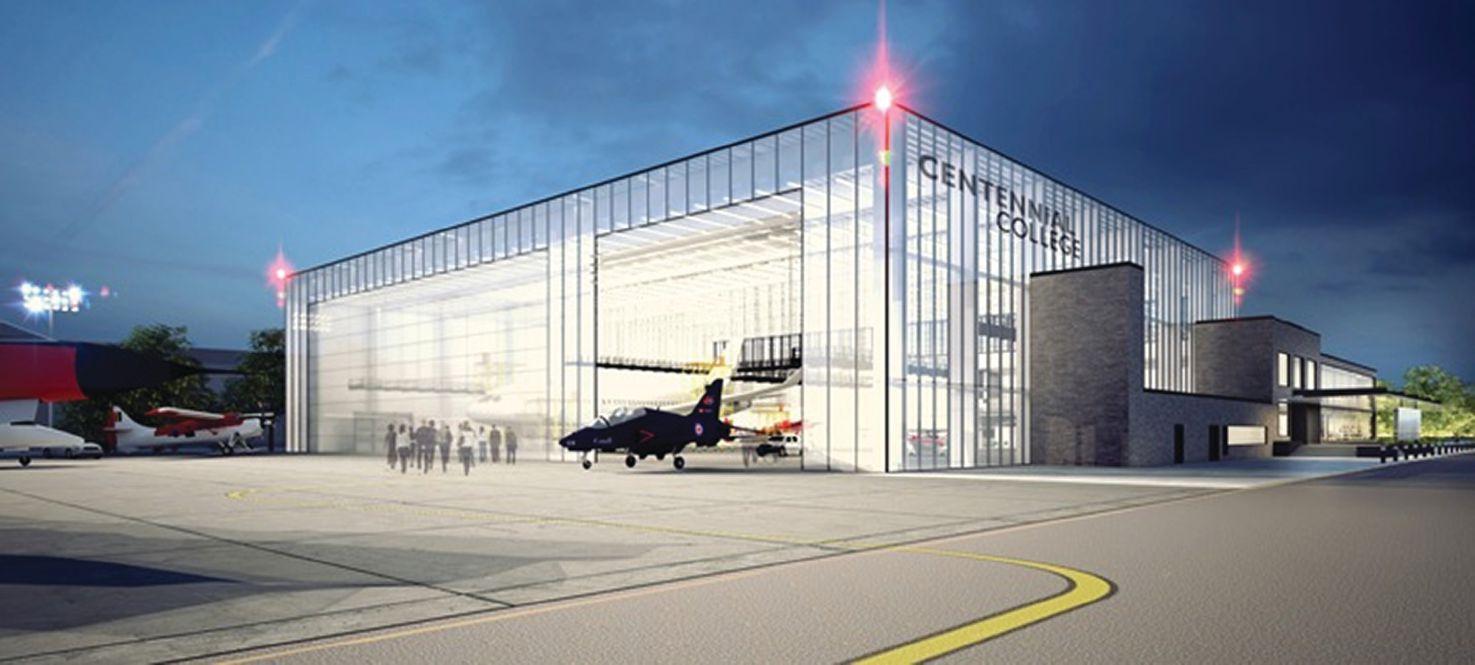
Centennial College’s Downsview Park Aerospace Campus.
See where experience takes you. centennialcollege.ca/transportation
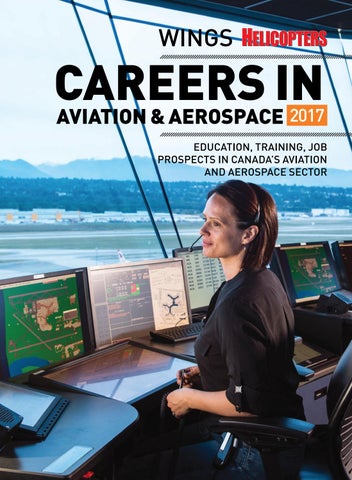
CAREERS IN AVIATION: MORE THAN JUST PILOTS
It can be said that the dullest day in aviation still tops the most interesting day in almost any other industry. There is something about the business of flight. It gets in your blood, and once there it does not leave. The 2017 edition of Wings and Helicopters Careers in Aviation (CIA) guide offers an introduction to a variety of careers in aviation and aerospace. It provides helpful tips for choosing a flight school, and sets expectations for new graduates breaking into the industry.
Canada has one of the most dynamic and diverse aviation and aerospace industries in the world, including a strong airline industry, corporate aviation prospects, the second largest helicopter fleet in the world, and Montreal – the hub of the world’s fifth largest aerospace industry. It is but one of several dynamic aerospace hubs across the country, all offering a variety of maintenance, avionics, software and engineering opportunities in a variety of exciting disciplines.
Canada also has hundreds of first-rate flight schools, colleges (flight and maintenance) and university programs to maintain and support industry growth and help potential new graduates chart a course along one of the many career paths available.
A Canadian licence, trade certificate or diploma also helps punch the ticket for many graduates to work almost anywhere in the world. So, it is sometimes good to take a global perspective when looking at demand for skills. According to the Boeing Airplane Company, the world’s commercial airline industry will need 617,000 new commercial pilots over the next 20 years. That represents approximately 31,000 new pilots a year, not including filling demand for corporate jets, helicopters, military and law enforcement and emergency services. Demand for pilots always grabs the headlines, but it does not tell the entire story. The Aerospace Industries Association of Canada (AIAC) estimates that some 400 aerospace firms employ more than 80,000 Canadians across the country. And while many basic aircraft maintenance, repair and overhaul (MRO) functions have peeled away to lower wage countries, Canada remains a global player in higher end and more sophisticated MRO, with job
opportunities spread across the country. Indeed, the same Boeing survey reports that 679,000 new commercial airline maintenance technicians and 814,000 new cabin crew will be needed by 2035 to keep the airplanes flying and supporting passenger growth. Demand for maintenance technicians has grown 11.3 per cent over the last year. These numbers add up to strong demand for pilots and other skilled professionals in Canada’s aviation and aerospace industry.
Still, while the jobs are available or will be opening up in the near future as older pilots exit the flight deck and technicians lay down their tools, aviation remains a complex and competitive business. Flight school on its own may no longer be sufficient, and a pilot’s licence might need to be linked with a college degree or university diploma.
The 2017 edition of Careers in Aviation is presented in three sections:
• Flying the aircraft (including flight schools, flight colleges and schools that specialize in unmanned aerial vehicles, or UAVs)
• Designing, building and maintaining the aircraft (including maintenance colleges and universities that offer aviation programs)
• Supporting the aircraft, which is an introduction to careers in airport operations, air traffic control and flight services.
The listings directory covering each section are intended as an introductory snapshot of the types of flight schools, colleges (flying and aviation technician) and universities and is by no means a comprehensive list. This guide is meant to be a jumping off point for your research, so please dive in once your path is more focused.
Whether you are looking to fly fixedwing airplanes or helicopters, launch a career in the sky with an airline or corporate operators, or keep your feet planted firmly on the ground in manufacturing and maintenance or industry support, CIA 2017 is an excellent opening reference point. Good luck on your journey!
HEAD OF THE CLASS
Industry associations are ready to aid in your career search
• AeroMontréal www.aeromontreal.ca
• Aerospace Industries Association of Canada www.aiac.ca
• Air Transport Association of Canada www.atac
• Air Line Pilots Association www.alpa.org
• AME Canada www.ame.org
• B.C. Aviation Council www.bcaviationcouncil.org
• Canadian Business Aviation Association www.cbaa-acaa.ca
• Canadian Council for Aviation and Aerospace www.avaerocouncil.ca
• Canadian Owners and Pilots Association www.copanational.org
• National Airlines Council of Canada www.airlinecouncil.org
• Helicopter Association of Canada www.h-a-c.ca
• Unmanned Systems Canada www.unmannedsystems.ca
For expanded listings and career options – and to find out more about Wings and Helicopters 2017 Careers in Aviation Expos – go to www.careersinaviation.ca
PART 1: FLYING THE AIRCRAFT
VARIETY IS THE SPICE OF LIFE FOR ROTARY- AND FIXED-WING PILOTS
Your mind is made up; you have decided to become a pilot. Congratulations, the industry needs you. The next thing you need to think of, even before deciding on a flight training school, is what kind of pilot do you want to be. It is a question that goes deeper than choosing between fixed-wing airplanes or helicopters, although that is also an important consideration.
There are many exciting career options for licenced pilots in Canada outside of the high profile flying for a national or regional airline. Ultra-low cost carriers (ULCC) have the potential to be a high-growth sector for Canadian air transport over the next five years. Students need to first determine what their final career position will be.
Transport Canada estimates there are more than 800 “on-demand” aviation service providers such as charter operators, law enforcement and emergency medical services, and helicopters supporting Canada’s resource industry and engaged in fire suppression. This is a less predictable career than scheduled flying, and often involves being able to fly on short notice. And, of course, there’s also the military option with the Royal Canadian Air Force (RCAF).
While your passion may lean toward piloting the larger commercial jets, Canada’s thriving corporate aviation sector should not be overlooked. Modern corporate jets are every bit as sophisticated as today’s airlines, and the requirement to fly these airplanes is often equivalent and sometimes greater than what is required in the airline business. Corporate aviation is largely “on demand” flying, although there is stability in the flight departments of some companies, especially in the resource sector, which can operate like a regional airline. The corporate sector may also offer greater diversity, with pilots jumping from intercontinental to remote flying.
With approximately 1,700 registered rotary-wing aircraft, Canada has the second largest fleet of helicopters in the world. The backbone of the sector remains resourcebased, although opportunities in the executive sector are available around major urban centres. Helicopter flying can be more physically intense, especially for pilot flying out of
camps in the Canadian north. Still, helicopter pilots are less likely to swap the “handson” flying for a fixed-wing airplane.
In all cases, aviation is a “pay your dues” industry with a large gap between the 100to 200-hours accumulated during flight training, and the 1,000 to 1,500 hours needed to become a commercial helicopter pilot or to earn an Airline Transport Pilot Licence. Most graduates build up time with entrylevel positions such as flight instructor, air taxi operator or general aviation pilot. This route is something else to consider when picking a flight school.
STEP 2: PICKING A FLIGHT SCHOOL
Learning to fly is expensive, so matching a flight school to a potential career as a professional pilot will help reduce the margin for error of starting out on the wrong foot, and may even lower the cost of training overall. This is because Canada’s aviation industry is so diverse, with so many varying job opportunities in both airplanes and helicopters. Canada also has many excellent flying schools and colleges, many of which specialize in specific types of flying. Floatplanes versus a private jet, or turbine-powered rather than piston-driven helicopters, are two extreme examples.
If you have little or no aviation experience, selecting a flying school can be overwhelming and is best not done on impulse, Transport Canada cautions. Canada’s aviation regulator does not rank flight schools or flying colleges, but there are specific steps a student should take to make the right determination.
Start by plotting out a career path, which is not to say there can’t be a detour or two along the way. A switch from airplanes to helicopters, is one example. Industry professionals tend to agree, that when picking the right flight school or graduating up to a flight college, be prepared to ask a lot of questions.
Many factors should go into determining a flight school and program, including location of the school and condition of the facilities, accessibility of the instructors, the number and types of training aircraft available and the quality of maintenance.
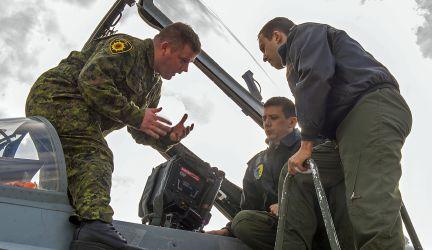
An unwritten industry rule is one training aircraft for every four or five full-time students, although that ratio changes with parttimers. These airplanes clock a lot of hours and are often put through tough paces. Maintenance is an important consideration for both safety and scheduling, and who is on the hook financially if maintenance problems (or weather) cancel a flying lesson.
Flight school is divided between handson airplane training and ground school, where students learn such things as the principles of flight, pilot decision-making, navigation, etc. It might not be the sexiest part of learning to fly, but it is essential and a school’s approach to ground school should not be overlooked.
Nor should other operational issues such as does the school offer progressive flight checks to monitor a student’s progress, how are flight lessons scheduled, what is the insurance coverage of a student pilot (how does the deductible work in case of an accident) and who is responsible for keeping a student’s flight records? Remember, detailed records are a passport to that first job.
STEP 3: COSTS AND FINANCING
Cost will always be a determining factor in picking a flight school. Schools in Canada are cost competitive, but the final bill will depend on what you want to get out of your training. And don’t forget to factor in transport, accommodation and meals when assessing the cost of learning how to fly. Once a flight school has been selected, it is up to the student to make secure a written agreement outlining all costs and payment procedures.
At the very least, picking the right school will help students build up the necessary hours while sticking to a budget. For example, airplanes rent by the hour. Learning to fly in uncontrolled airspace will reduce the amount of time spent on the ground taxiing or idling for takeoff. But students who want to fly for an airline also need to build up the experience of slotting in and out of a controlled airport. Likewise, pre-paying for lessons in “block-time” can reduce costs, but students should be wary of flight schools that insist on covering the cost of the full course upfront.
Most schools are “pay as you go” and some offer financing or have links to financial institutions that offer loans for flight training.



Take the Next Step
Through tireless work and sacrifice, you’re ready to take the next step. A step where time and efficiency are even more important to your success. At Levaero Aviation we understand that a corporate aircraft may be that next step in your evolution.
Whether you are interested in new or pre-owned aircraft, or have a specific interest in the Pilatus PC-12 NG or the new Pilatus PC-24 Super Versatile Jet, our mission is helping you find the right aircraft for your needs. What’s next? Give us a call.
FLIGHT SCHOOLS
SOME TOP OPTIONS TO CONSIDER FOR PILOT TRAINING AND DEVELOPMENT
YUKON
Alkan Air | Whitehorse, Yukon
Alkan Air has been providing charter service throughout the Yukon since 1977. The company has now added professional pilot training to its list of transport and logistic solutions. The flight instructing team has flown many different types of aircraft with collective flight instructing time exceeding 5,000 hours and total flight experience over 10,000 hours.
Whitehorse is an excellent place to learn to fly. It offers unique experiences and challenges that are not found elsewhere in Canada. Students not only experience flying at an international airport with traffic including large airliners, but also fly to gravel strips in more remote areas of the territory.
Alkan Air flight training is also partnered with Yukon College to offer a twoyear Aviation Management diploma program.
Equipment: Cessna 172s and a Piper Seneca multi-engine aircraft
Learn more: alkanair.com
BRITISH COLUMBIA
Glacier Air | Squamish Municipal Airport, B.C.
Located in the beautiful and challenging British Columbia coastal mountain range, Glacier Air describes itself as a mountain flying adventure company with a long history of pioneering the mountain flying experience along the Sea-to-Sky corridor from Vancouver to Whistler.
Glacier Air’s location and facilities provide an exceptional training environment. Their instructors are also active charter pilots, so they are very familiar with “real world” flying outside the training environment. The school offers a wide variety of specialty flight training including aerobatics and mountain flying to understand winds, density altitude, rapidly changing weather and other outside factors to be considered when flying around rugged peaks.
Equipment: Cessna 172, Cessna 206, Bell 206 JetRanger.
Learn more: glacierair.com
Okanagan Mountain Helicopters | Kelowna, B.C.
Okanagan Mountain Helicopters started as a helicopter flight training school in 2003. The company has grown to serve many clients in the energy, agriculture and forestry sectors, as well as continuing to train helicopter pilots from launching their careers to advanced training and recurrent skills review.
Okanagan Mountain Helicopters tailors its course to meet the needs and demands of commercial helicopter companies in Canada, with a focus on developing the best possible flying skills and airmanship, and an introduction to the various types of operational flying that a pilot might encounter.
The training facility at Kelowna International Airport – the 10th busiest in Canada – introduces students to fully controlled radio procedures, multiple training locations for confined areas and mountain flying introduction within a control zone, and the best blend of controlled and uncontrolled practice areas.
Equipment: Primary training aircraft are Robinson R22 and Robinson R44 helicopters. Optional training is available on a Bell 206 JetRanger.
Learn more: okheli.ca
Pacific Flying Club | Boundary Bay, B.C.
The Pacific Flying Club (PFC) was formed in 1965 as the Canadian Pacific Airlines Employees Flying Club. It remains one of the premier flight training and general aviation centres in Western Canada. PFC’s instructors, engineers and administrative staff are committed to ensuring students receive the highest level of customer service and instruction possible.
The club is a not-for-profit organization and is continuously upgrading facilities and equipment. It is accredited by the Private Career Training Institutions Agency of British Columbia, and was the first training centre in Vancouver to hold this distinction.
Students train at Boundary Bay Airport, one of the busiest general aviation airports in Canada. PFC is also partnered with the British Columbia Institute of Technology (BCIT), and together offers the diploma
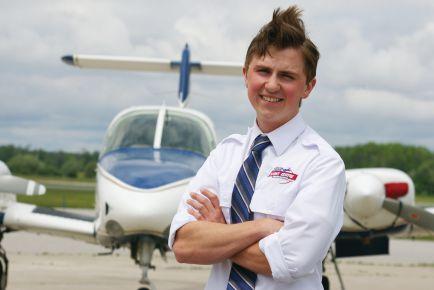
course, Airline & Flight Operations.
Equipment: PFC’s fleet of 27 aircraft includes Cessna 152s, 172s and Piper Seneca multi-engine airplanes. The club also offers the most simulator options of any school in the province.
Learn more: www.pacificflying.com
Southern Interior Flight Centre | Kelowna, B.C.
Southern Interior Flight Centre’s (SIFC) training courses are delivered by industryexperienced instructors who not only ensure students learn the basics, but are also flying in the “real world” of aviation. Located at Kelowna International Airport in the heart of the Okanagan Valley, students spend time flying in mountain valleys, visiting the Rocky Mountains, travelling out over the Canadian prairies and exploring the coast of British Columbia running along the Pacific Ocean.
SIFC’s programs help to steer training towards the needs of both the pilot and the industry. Many of the courses are supplied or augmented by aviation companies, employers and industry pilots.
Kelowna International Airport is busy enough to challenge students and let them become used to a controlled airport with many different operations and aircraft, but quiet enough to prevent training delays. SIFC recently signed a new deal with Jazz Aviation LP that could spell more career opportunities for pilots graduating from Okanagan College’s Commercial Aviation diploma program. The Jazz Aviation Pathways Program (APP) serves as a fast track for the OC pilots to land flying careers with the national airline.
Equipment: Cessna 152, 172s and a Beechcraft Duchess BE-76 multi-engine aircraft.
Learn more: www.flysifc.ca
ALBERTA
Absolute Aviation | Wetaskiwin Regional Airport, Alta.
Absolute Aviation is a flight training and aircraft maintenance facility, largely serving students from Edmonton and central Alberta. The school offers flexible schedules
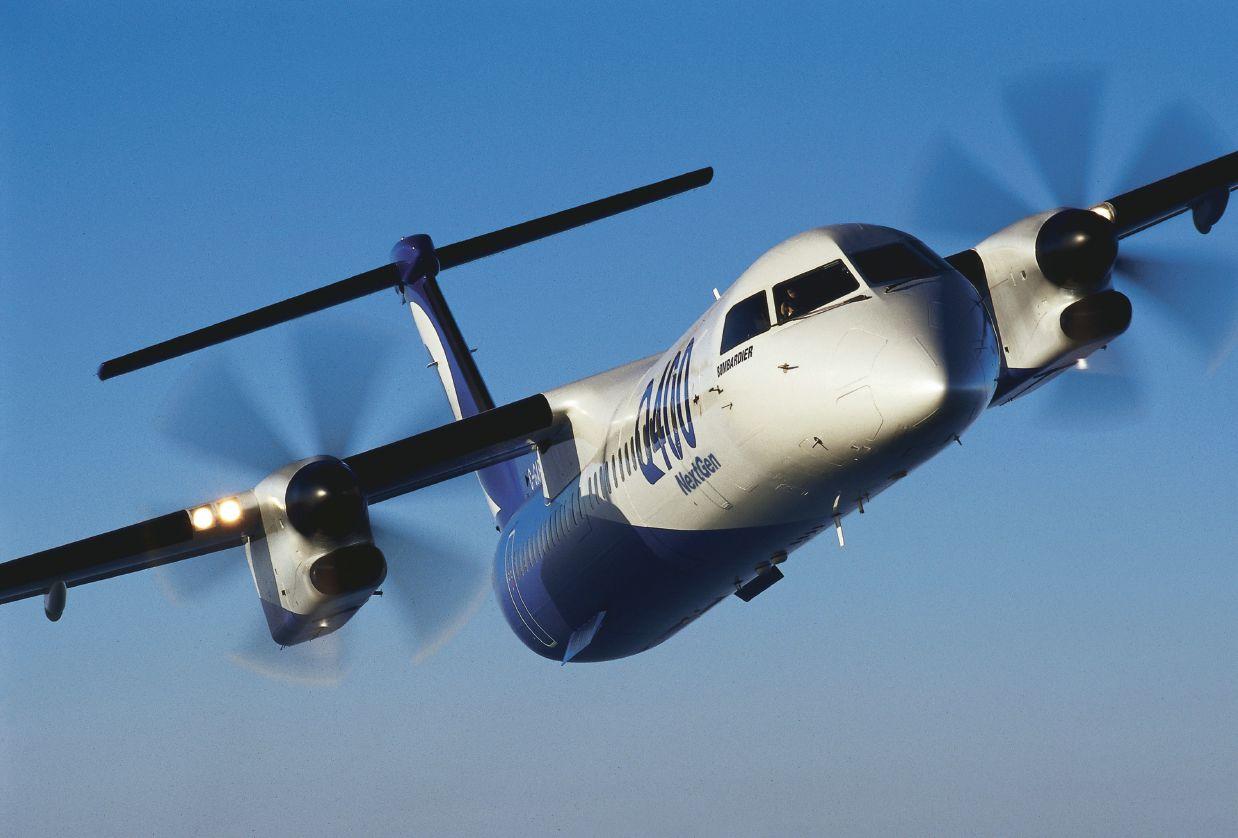
Exceptional Training, Excellent Facilities, Energized Environment
Brampton Flight College (BFC) is recognized as one of the top-flight training schools in Canada. The IATPL program is designed specifically to provide students with the skills required by today’s airlines. It includes over 1000 hours of ground school, flight and simulator instruction, covering basic skills to highly advanced training.
Integrated Airline Transport Pilot Licence (IATPL)18-month program
• Focused on advanced airline operational knowledge
• Experience in a full motion simulator used by airlines
• Includes training by industry experts from AeroCourse
At BFC, we are dedicated to produce qualified pilots, job-ready and familiar with current industry expectations.
Students graduating from the IATPL program are eligible to apply to destination:porter, The Porter Pilot Mentoring Program.
For More Information: Call 905-838-1400 ext 248 admissions@bramfly.com bramptonflightcentre.com

CIA2017
to accommodate various student lifestyles. Ground school can be taken in regular weekly scheduled classes, through an accelerated pace on weekends and even online. Absolute operates out of Wetaskiwin, Alta., with close proximity and access to major airports such as Edmonton International. The school operates in both uncontrolled and controlled airspace, eliminating costly ferrying time to training areas.
Equipment: five Cessna 172Ms, one Piper Twin Comanche and one Piper Aerostar.
Learn more: www.absoluteaviation.ca
Calgary Flight Training Centre | Olds-Disdury Airport, Alta. The Calgary Flight Training Centre (CFTC) is inside hangar 15 of the OldsDisdury Airport, between the cities of Calgary and Red Deer. The school provides training for professional pilots and enthusiasts alike.
Olds-Disdury Airport is uncontrolled airspace. There is no waiting for air traffic controllers to clear students’ take-offs and landings. Students are also able to start up the aircraft, taxi directly to the runway and take-off when safe to do so.
West central Alberta is a great location to learn to fly for a number of reasons,
including flat lands for training, mountains to gain mountain experience and close proximity to Calgary International Airport, Canada’s fourth busiest.
Equipment: A fleet of Diamond DA20 Eclipse aircraft, a DA40 XLS and Piper PA-30 Twin Comanche multi-engine trainers. The company also offers simulator training.
Learn more: www.calgaryflight.com
SASKATCHEWAN
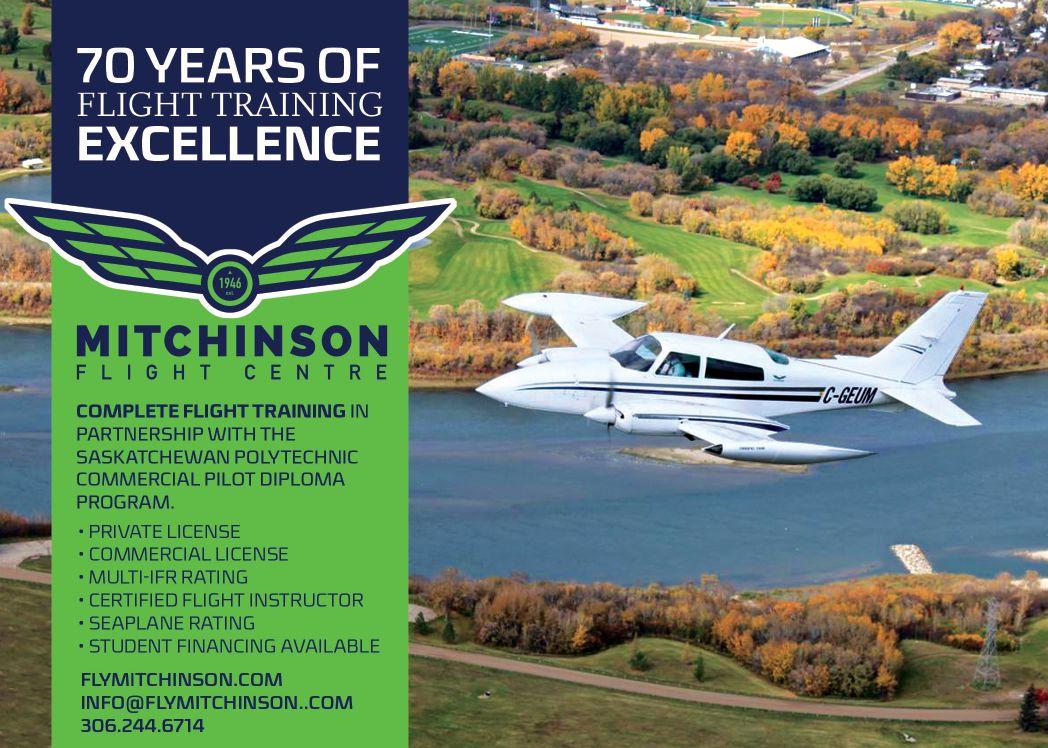
Mitchinson Flying Service| Saskatoon, Sask.
Since 1946, the Mitchinson Flight Centre has been one of Saskatchewan’s leading flight training schools, and has a long history of guiding pilots to their desired careers in aviation. The school is located in its own hangar at the Saskatoon John G. Diefenbaker International Airport. Students learning to fly with Mitchinson train in an ATC controlled environment, providing experience for flying in larger centres, but without the traffic delays and congestion of a larger airport.
Professional airline pilots who have trained at the school and know what it takes to get ahead in today’s competitive aviation industry own Mitchinson. The
ground school classroom is comfortable and equipped with the latest technologies, including SMART board and Apple TV. For students who need greater flexibility, Mitchinson offers ground school DVDs. Mitchinson’s fleet of 13 aircraft are equipped with modern Garmin avionics.
Equipment: Cessna 152s, 172s, 182s, a 185 floatplane, two Cessna 182s and two Cessna 310 multi-engine aircraft. The company also offers simulator training. Learn more: www.mitchinsonflyingservice.com
MANITOBA
Winnipeg Aviation | St. Andrews Airport, Man.
Winnipeg Aviation has been a leading trainer of pilots for more than 20 years. The school’s base at St. Andrews Airport, 15 kilometres outside of the Manitoba capital, offers three runways to maximize training with and without cross winds. The airport has a student-friendly control tower to give learners the valuable experience needed to work and communicate within a busy air traffic control system. Instructors take students into Winnipeg International Airport to get first-hand experience to mix it up with the big players,
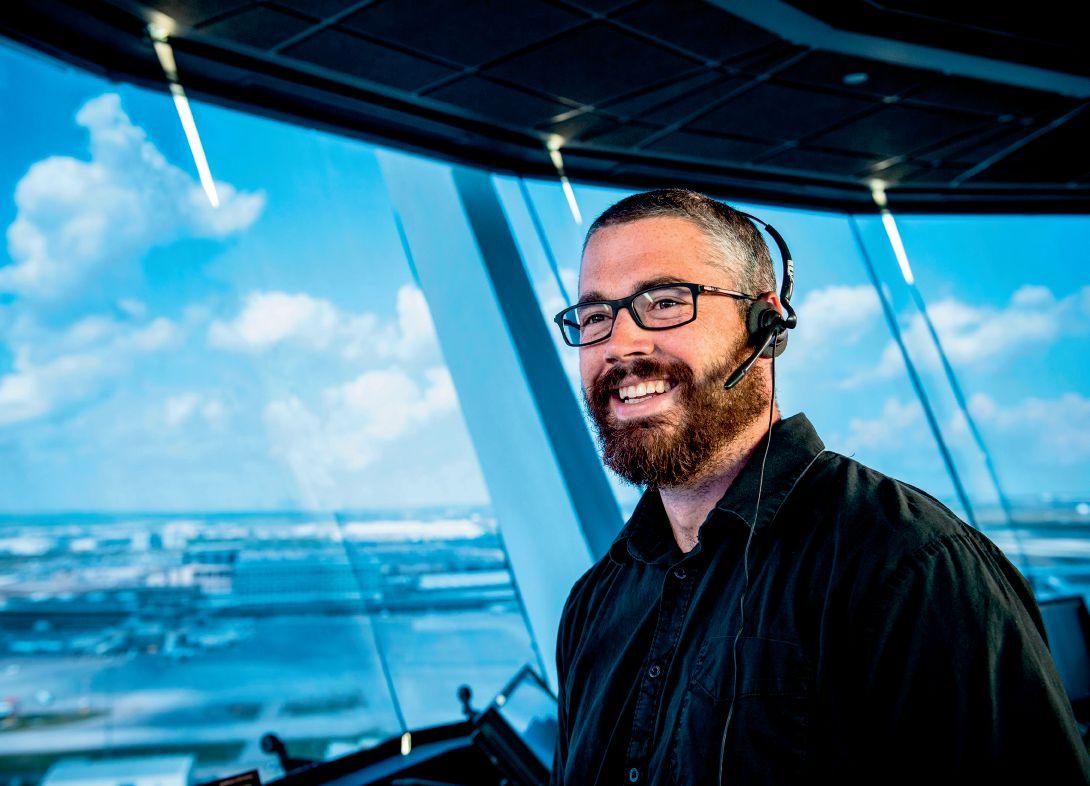

YOUR CAREER FROM A NEW PERSPECTIVE
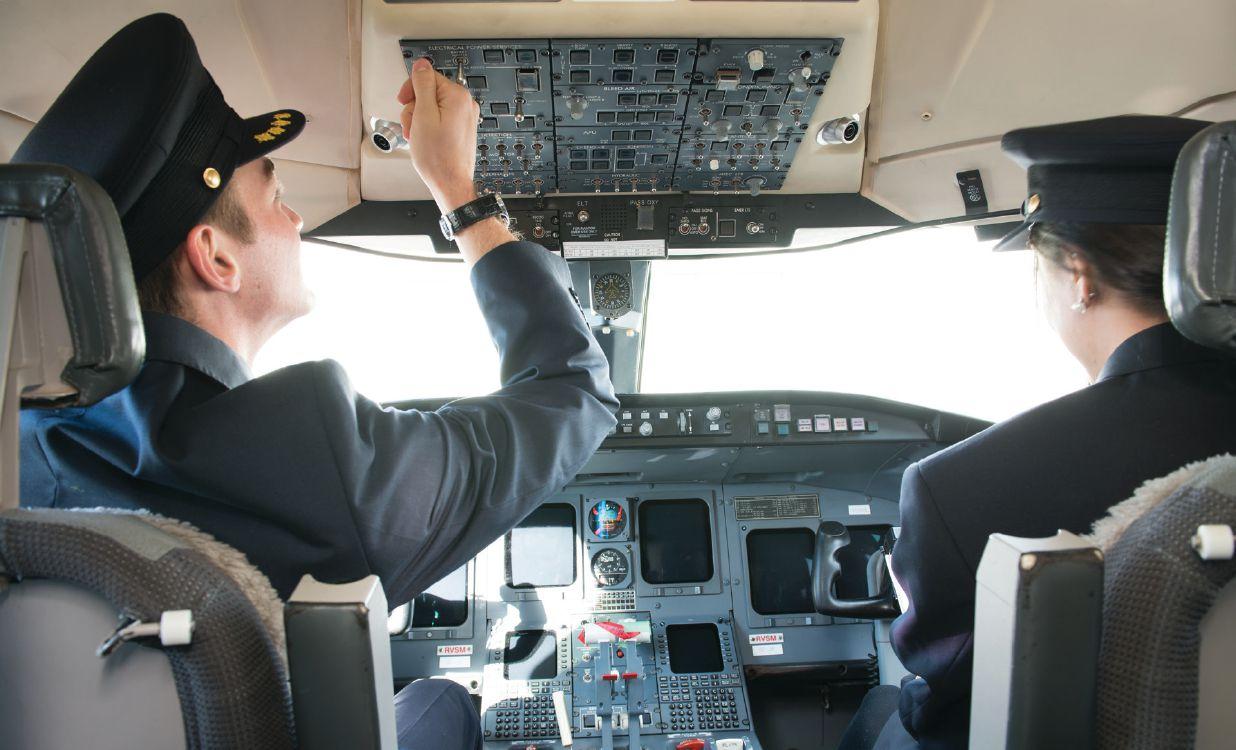
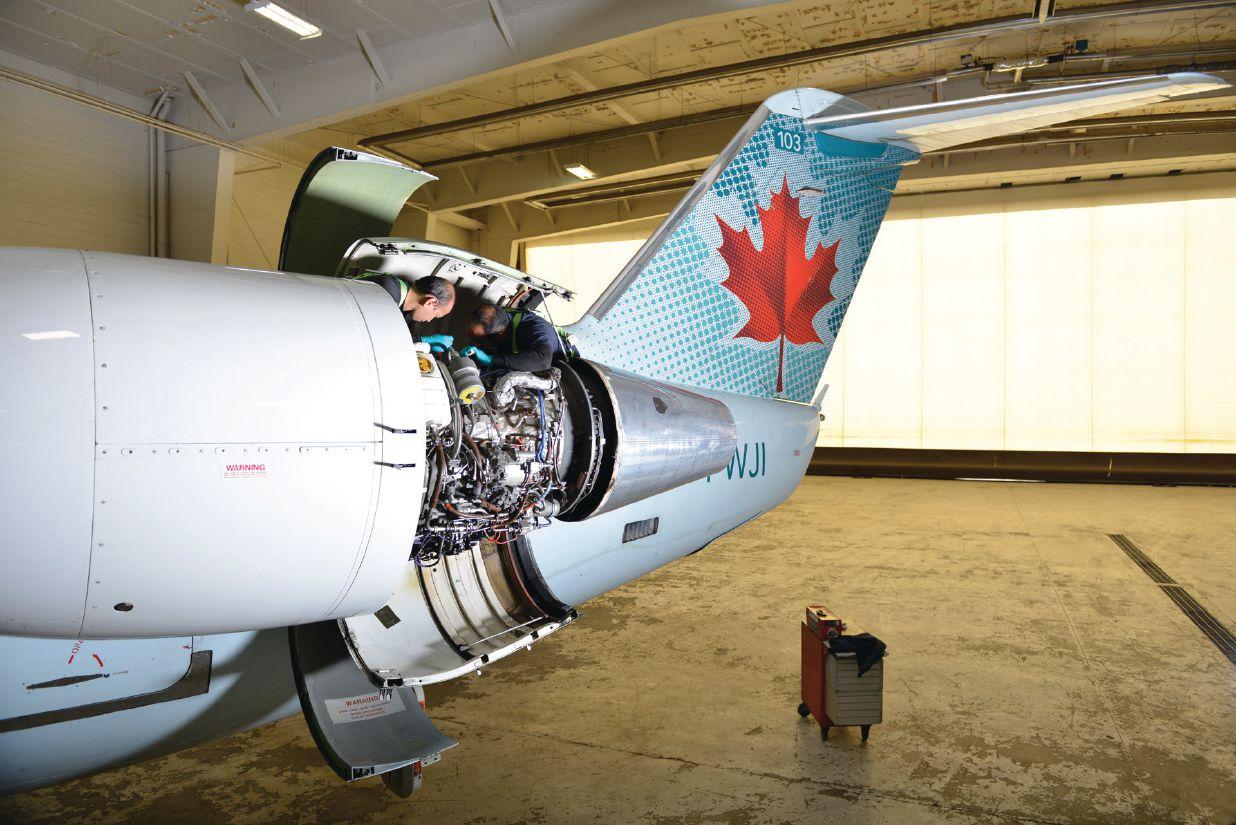
Air Georgian offers the brightest young minds in aviation the opportunity to grow their careers in one of the most hands-on, experience-focused working environments in the Canadian aviation industry.
We look for people that reflect the Air Georgian approach –Innovative, Adaptable And Passionate In Everything We Do.
CIA2017
while also flying to small short, uncontrolled grass strips to learn procedures.
Equipment: Cessna 152s, 172s, 182, Piper 28s and a 34 multi-engine trainer
Learn more: www.winnipegaviation. com
ONTARIO
Brampton Flight Centre | Brampton/Caledon, Ont.
The Brampton Flight Centre (BFC) celebrated its 70th anniversary in 2016, and is recognized as one of Canada’s top-flight training schools. Owned and operated by the membership-based Brampton Flying Club, BFC is located close to Toronto’s Pearson International Airport – Canada’s busiest – and offers students a variety of airspace classifications, experiencing both controlled and uncontrolled environments.
BFC is also the only flying club in Canada to own an airport. This offers students many advantages, including quick access to the student pilot practice area, providing ample opportunity for training. Its winning record in the Webster Memorial Competition exemplifies the excellence of BFC’s training for top amateur pilot in Canada. BFC has produced the winner for
three consecutive years.
Equipment: BFC operates a fleet of 22 aircraft including Cessna 152s, 172s and Piper Seneca multi-engine trainers.
Learn more: www.bramptonflightcentre.com
Central North Airways Limited | North Bay and Sudbury, Ont.
Central North Airways provides flight training and ground school at three locations in Ontario’s north: Coniston (20 minutes from downtown Sudbury), North Bay and the Greater Sudbury Airport. This enables Central North to offer greater flexibility in meeting its students diverse needs.
The private aerodrome in Coniston is an ideal location for flight training. Situated just outside the Greater Sudbury Airport control zone so students do not have to waste precious flying time waiting for aircraft traffic or flying to the practice area. Coniston’s short runways can be difficult, so students complete their licences with the ability to handle almost any takeoff or landing conditions.
Operations are transferred to the Greater Sudbury Airport during winter months. The flight school also frequently flies from the Coniston aerodrome to the
Sudbury airport year-round for practice on longer runways or when busier airspace will be beneficial to students.
Equipment: PA31-350 Piper Navajo Chieftain, C172 Cessna Skyhawk, C150 Cessna aircraft
Learn more: Mike Rocha, chief pilot, 705-694-9000
Diamond Flight Centre | London, Ont.
The Diamond family of aircraft are easy to learn to fly, have an excellent safety record in the industry and utilize the latest technology for students to get the most out of their training. The Diamond Flight Centre (DFC) in London is part of a network of Diamond flight training schools in North America and provides high-quality flight training using Diamond aircraft and Diamond-specific flight training simulators.
DFC is located at the London International Airport. The airport is busy enough that students acquire experience with traffic, yet is generally quiet enough so that students can practice in a relaxed atmosphere without long waits for clearance.
Equipment: Diamond C1, DA40 and DA42 aircraft. Advanced simulator training is also available.
Learn more: www.dfclondon.com/

Essential Helicopters | North Bay, Ont.
Essential Helicopters is a leader in helicopter charters and flight training. Essential has developed an efficient model for providing all levels of service and specialization within the helicopter industry. The school’s flight training and ground school are designed to provide graduates with the skills, knowledge and attitude necessary to operate helicopters efficiently and safely under various flight conditions and remote geographic locations.
Students will be involved in the multiple daily tasks plus all other aspects pertaining to the duties of a pilot, as well as benefiting from the highest level of training delivered by qualified and experienced instructors who have accumulated thousands of flying hours all across Canada. Expect to also participate in strenuous physical activities such as helicopter log pad construction, chain saw operation, underwater egress training, winter survival program and winter helicopter operations.
Essential Helicopters is also aligned with the Canadore College Commercial Helicopter Pilot Licence and Pilot Preparedness program.
Equipment: Robinson R22, R44 and Bell 206 JetRanger turbine helicopters.
Learn more: www.essentialhelicopters. com
Great Lakes Helicopter | Waterloo, Ont.
Great Lakes Helicopter offers both helicopter flight training and charters. The operation is based at the Region of Waterloo International Airport, one of the best training airports in Canada. The region offers a unique blend of modern, energetic urban centres and scenic, rural landscapes creating diverse experiences for helicopter flight training.
Great Lakes offers 3P – a pilot proficiency program – that is the first program of its kind in Canada. 3P is for pilots possessing a valid Private Pilot licence or better, to further advance competence and skillfulness of the fundamentals of helicopter flight deriving from practice and familiarity.
The training school also has a partnership with Conestoga College to provide a two-year Commercial Helicopter Pilot General Art and Science diploma program.
Equipment: Robinson R22, R44 and Bell 206 JetRanger turbine helicopter.
Learn more: www.greatlakeshelicopter.ca
Aircraft
National Helicopters | Bolton, Ont.
National Helicopters is a full-time private career college and one of Canada’s premier helicopter flight training schools. Located just north of Toronto, National has trained and employed commercial helicopters students, including flying for its extensive tourist operation to Niagara Falls. National’s training program guarantees top-level education with both structured classroom and individual sessions. Students will obtain the necessary guidance and education to ensure preparedness for both written and flight exams. National’s operation – including a large staff and training aircraft – with onsite flight test examinations, ensures maximum availability to each student.
Equipment: Primary training is conducted on a fleet of Robinson R22 helicopters. A Bell 206 JetRanger is used for turbine training.
Learn more: www.nationalhelicopters.com
Ottawa Flight College |
Ottawa, Ont.
The Ottawa Flying Club, operating as the Ottawa Flight College (OFC), has been training pilots since 1928, and is

CIA2017
experiences. For undecided students who would like to first experience piloting an aircraft, WWFC offers a special “test the skies,” 30-minute introductory flight in a Cessna 152 or 172 with one of the school’s qualified instructors.
WWFC also offers an unmanned aerial vehicle (UAV) course. This course is designed to introduce people to the range of scope of the two categories of UAV’s (under two kilograms from two to 25 kg.). It will provide participants with sufficient knowledge and resources to operate safely and comply with Transport Canada requirements.
The flight centre has also been offering post-secondary programs for more than a decade, and is partnered with Conestoga College and the University of Waterloo.
Equipment: Six Cessna 152s, 12 172s, one Diamond DA40 and two Piper Seminole multi-engine aircraft.
Learn more: www.wwfc.ca
QUEBEC
Dorval Aviation | Montreal, Que.
Dorval Aviation is the only flight training centre located at the Montreal-Trudeau International Airport, Canada’s third busiest, and at the heart of one of the
country’s main aviation centres. This strategic location provides all experiences required for successful training within controlled airspace.
Dorval offers bilingual services and a complete selection of courses from a simple introduction to aviation to a commercial pilot licence. Specialized recurrent training is also provided. Seaplane instruction is also available during the summer months. Students also have the opportunity to build up real operational experience through the schools Internship program.
Equipment: Cessna 172, 172 float and Piper Navajo multi-engine aircraft.
Learn more: www.dorvalaviation.com
Laurentide Aviation | Greater Montreal Area, Que.
Laurentide Aviation is a family business that has been providing professional flight training for 70 years. Based at Les Cedres Aerodrome, approximately 25 kilometres west of Montreal, Laurentide offers bilingual inflight and ground school instruction to suit any style of learning. The flight school is located at an uncontrolled airport, allowing students to get in the air and into the practice area quickly, reducing the cost and amount
of time spent on the ground taxiing and waiting for clearance at busy controlled airports.
Laurentide is located close to two major Canadian airports, including Montreal-Trudeau to ensure that students receive experience in controlled air space. The large classroom provides an excellent learning environment, including hands on teaching aids and visuals.
Equipment: Cessna 152s, a 172 and a Grumman GA-7 Cougar.
Learn more: laurentideaviation.com
NOVA SCOTIA
Debert Flight Centre | Truro, N.S.
Debert Flight Centre, part of the Truro Flying Club (TFC), operates out of one of the best facilities in Atlantic Canada for flight training. Students learn in uncontrolled airspace that is not crowded with commercial jets and other air traffic. Debert is a compact airport offering students less than five minutes from flight to the training areas. Ground school is held at Debert Airport and Halifax.
Equipment: Cessna 152, 172s. Simulator instruction is also available.
Learn more: www.flytfc.ca
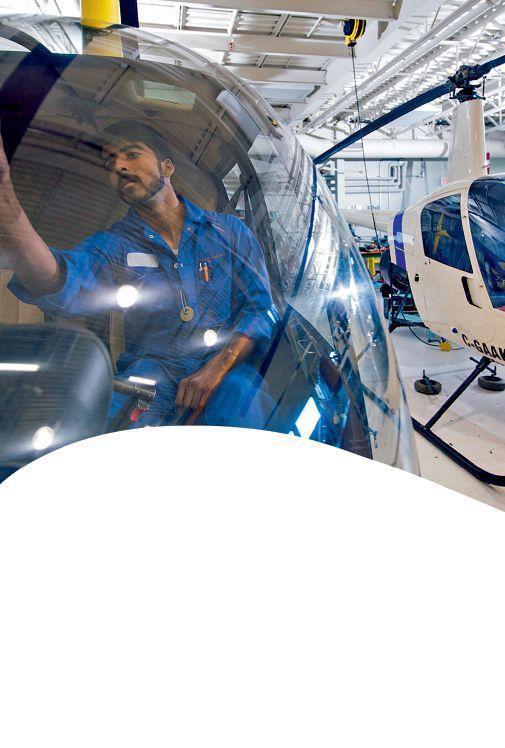
Delivering skills-oriented aviation programs for over 85 years in Canada’s most comprehensive training facility, the Art Smith Aero Centre.
And with a 93% employment rate, our graduates are in demand.
Learn more at sait.ca