






15 Hall of Fame 2025
This year’s inductees, Imran Hasan, Bob Smith and Dan Small, share stories about career trajectory, industry changes and opportunities to give back
By Neil Sutton
Today’s surveillance and analytics, in combination with advanced integration and human oversight, helps terminals stay one step ahead
By Sophie Laplante

Codelocks has launched its Adjustable Gate Latch, giving homeowners, locksmiths and facilities managers a means to control access through perimeter gates where the gate and post spacing exceeds the range of a traditional mortise latch.


WBy Neil Sutton
Our annual Hall of Fame is an opportunity to acknowledge the contributions of some of security’s leaders
ithout a doubt, one of my favourite features in SP&T News is our annual Hall of Fame.
There are numerous individuals who have contributed to the Canadian security industry’s success over the decades and we have been privileged to recognize many of them through the Hall of Fame. Whether it’s business accomplishments, technical innovation or volunteer efforts, we acknowledge what they have brought to the industry over their careers and how they continue to contribute.
“I’ve learned a lot about how the industry has matured and best practices have improved.”
Much of our coverage in SP&T News is focused on the future — mergers and acquisitions; new products and technology; and emerging trends — so it’s gratifying to be able to take stock of what has gone before by focusing on how successful careers are built over time.
Over the years I have been conducting these interviews (the Hall of Fame has been up and running for more than a decade now), I’ve learned a lot about how the industry has matured and how best practices have improved, whether it’s through business acumen or better technology.
You also see what hasn’t changed all that much. For all the technical advancements that have occurred, especially in recent years, core values like customer service, building effective partner relationships, and a commitment to training and education remain timeless.


I am also consistently impressed by how many of the Hall of Famers are able to juggle work responsibilities with volunteer efforts, whether that’s for an organization like the Canadian Security Association (CANASA) as an industry advocate, or donating time and resources to a local charity (or in many cases both). Whenever I feel like I’m getting busy with work, family responsibilities and outside activities, I’m reminded that it’s possible to stretch a little further.
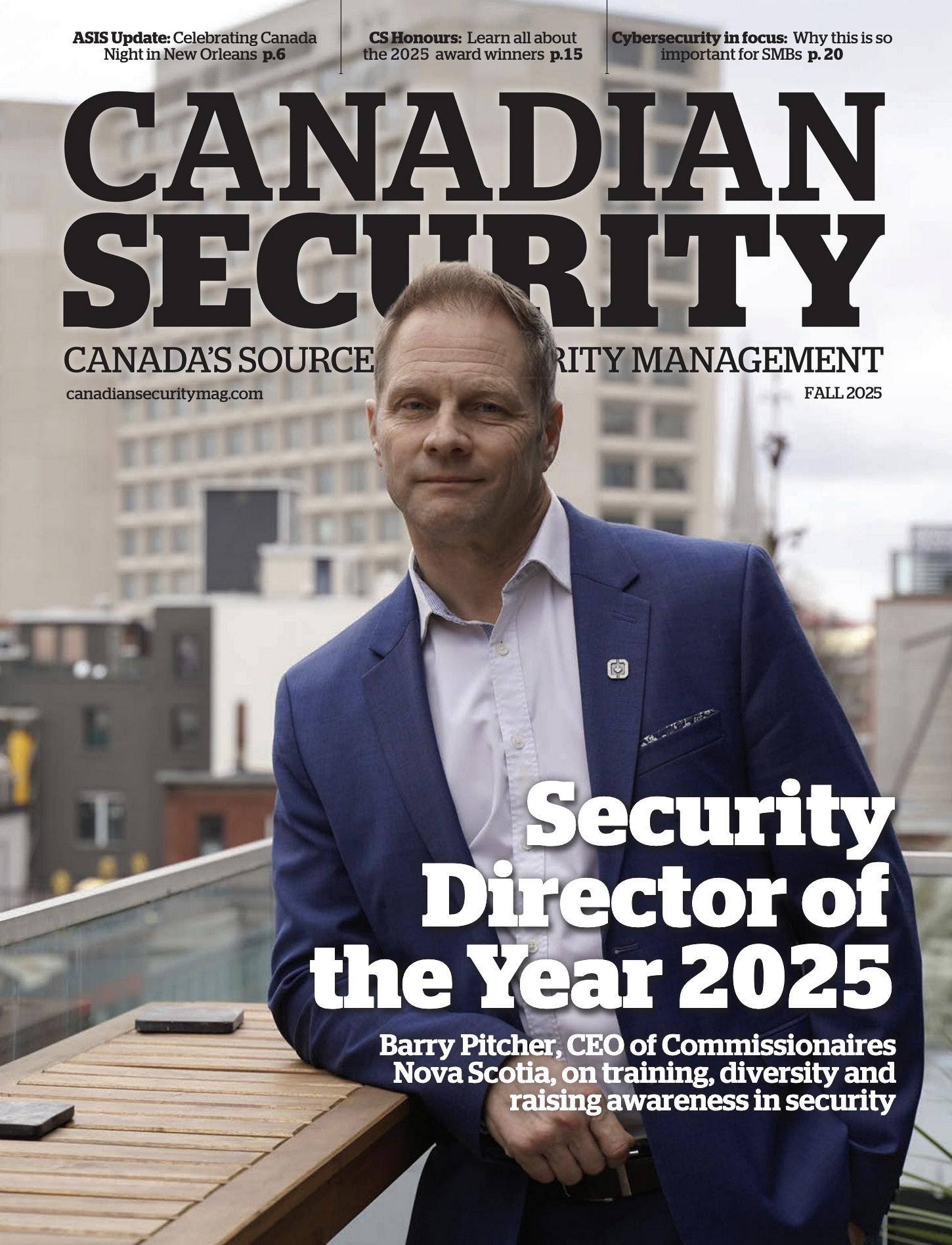
In this issue, we’re acknowledging Dan Small, president of Armstrongs, Imran Hasan, president of TSOC, and Bob Smith, vice-president of security operations at Alliance Security Team. Please take the time to read each of their stories (see p.15-16) and hopefully take away some wisdom or inspiration.
This being our last issue of SP&T News for 2025, we have also provided a round-up of some of the biggest stories of the year, based on readership trends (see p.5).
We have some surprises in store for 2026, as well as the return of some of our regular features. The Hall of Fame will definitely be back next winter. If you have suggestions for other worthy candidates, please reach out and let us know.

READER SERVICE Print and digital subscription inquiries or changes, please contact Shawn Arul, Audience Development Manager Tel: (416) 510-5181 • Fax: (416) 510-6875 Email: sarul@annexbusinessmedia.com Mail: 111 Gordon Baker Rd., Suite 400, Toronto, ON M2H 3R1
Your Partner in Securing Canada Security Products & Technology News is published 5 times in 2025 by Annex Business Media. Its primary purpose is to serve as an information resource to installers, resellers and integrators working within the security and/or related industries. Editorial information is reported in a concise, accurate and unbiased manner on security products, systems and services, as well as on product areas related to the security industry.
Editor, Neil Sutton 416-510-6788 nsutton@annexbusinessmedia.com
Group Publisher, Adam Szpakowski 289-221-6605 aszpakowski@annexbusinessmedia.com
Brand Sales Manager, Trish Sutton 437-995-4651 tsutton@annexbusinessmedia.com
Media Designer, Graham Jeffrey gjeffrey@annexbusinessmedia.com
Account Coordinator, Kim Rossiter 416-510-6794 krossiter@annexbusinessmedia.com
CEO, Scott Jamieson sjamieson@annexbusinessmedia.com
EDITORIAL ADVISORY BOARD Patrick Soo, Alarm.com Floria Chiu, ECAM Stephen Karchut, Alarmtech Frank Pietrobono, Avante
111 Gordon Baker Rd, Suite 400, Toronto, ON M2H 3R1 T: 416-442-5600 F: 416-442-2230







This year brought us a mix of M&A activity, new companies, new Canadian offices, new product launches, and of course, a calendar full of trade shows and networking events. The following articles were among the most popular for SP&T News readers in 2025. They are presented in chronological order (a more complete list appears on our website: www.sptnews.ca).
Canadian security businesses navigate tariff uncertainty
Posted: March 5, 2025
With a trade war with the United States brewing, Canadian security companies are taking stock of their situation and in some cases rethinking market strategies in order to cope with possible economic fallout in the months and years to come.
Convergint acquires Delco Security
Posted: March 5, 2025
Founded in 2006, Delco Security, a division of Delco Automation, is a Master Systems Integrator (MSI) with nine office locations in six provinces. The acquisition adds more than 70 staff to Convergint. According to a press release announcing the deal, Delco has completed more than 600 projects across Canada over the past decade. In 2022, Delco was recognized by SP&T News as Integrator of the Year.
New CANASA executive director charts association’s future
Posted: March 18, 2025

Kim Caron, who took over the role of executive director of the Canadian Security Association (CANASA) earlier this year, says she will spend the next weeks and months gathering information from CANASA members and listening to their ideas.
ISC West recap: news from the show floor
Posted: April 7, 2025
ISC West, the annual Las Vegas security industry trade show and conference, was held March 31 to April 4. SP&T News’ coverage included photos and updates from dozens of exhibiting companies.
Acre hosts Ottawa open house
Posted: May 13, 2025
In early May, acre security welcomed industry professionals to its Ottawa facility for an open house event. Senior executives from acre greeted guests including systems integrators and

technology partners. Guests experienced live demonstrations and interactive sessions featuring acre’s most recent advancements, including new features within acre Access Control such as Gallery and FITS.
GardaWorld launches ECAM
Posted: June 18, 2025
GardaWorld celebrated the official launch of its newest business, ECAM, with a three-day sales kick-off event at its Montreal headquarters. The event brought together more than 170 sales leaders from ECAMSECURE and Stealth Monitoring, now unified as ECAM, marking “a pivotal moment in the company’s evolution,” according to GardaWorld.
SP&T News announces Top 10 Under 40 recipients for 2025
Posted: July 4, 2025
SP&T News announced its annual list of Top 10 Under 40 recipients. Perennially one of the most popular and most-read features that SP&T publishes, this year’s list included nominees from monitoring, security software vendors, integrators, and other branches of the security industry. Profiles of each winner were published in the July/August edition of SP&T News.
Genetec expands Montreal headquarters
Posted: July 17, 2025
The expanded Montreal campus comprises 395,000 square feet, including five buildings which house R&D, commercial and operational teams, as well as an Experience Center and two private bistros for employees and guests. Genetec has also added another floor to its London, U.K., office and has recently opened locations in Sydney, Dubai, Mexico City, and Washington, D.C. In the last five years, the company has grown its global headcount by 65 per cent and current employs more than 2,150 people in 20 offices across four continents.
Axis Communications promotes Keith D’Sa
Posted: July 23, 2025

Axis Communications announced the promotion of Keith D’Sa to director of sales, North America. Previously country manager for Canada, D’Sa will now lead the North American field sales organization, consisting of six U.S. business areas in addition to Canada. D’Sa succeeds Larry Newman who has been with Axis for more than 20 years.
Posted: August 5, 2025
Resideo Technologies announced its intention to separate its ADI Global Distribution business through a tax-free spin-off to Resideo shareholders. Following the completion of the separation, Resideo’s Products & Solutions business will continue to operate as Resideo and ADI will become an independent public company. Resideo will continue to focus on residential controls and sensing solutions. Its professional network includes 100,000 pro installers and over 15 million installations per year.
Integrator of the Year 2025: Houle Electric
Posted: October 7, 2025

In recognition of its commitment to systems integration, customer focus and company culture, Houle Electric was named Integrator of the Year 2025 by the SP&T News editorial advisory board.
Posted: October 21, 2025
Advanced technologies have been used for some time to recognize objects in videos such as suspicious people and vehicles, and in audio for security voice-downs and listening for key sounds such as gunshots or arguing. But more recently, AI has evolved into performing far more complicated tasks in the security monitoring space.
U.S. school district implements emergency response tool

Rogue River School District in Oregon is implementing Motorola Solutions’ SentryERS emergency response system across its school campuses.
The SentryERS system is typically placed on the wall of a classroom, and is activated with the push of a button, the detection of a gunshot or spoken keywords such as “help” or “emergency.” First responders are provided with live location data, video and audio communication only when the system is activated. Teachers and staff also have access to a wearable panic button, which can notify first responders of an emergency, including the user’s location.
“The safety and security of students and staff is our administration’s top priority,” said Tom Bigboy, chief information officer of Southern Oregon Education Service District in a statement. “Integrating SentryERS isn’t just about enhancing security measures, it’s about providing our staff with the tools they need during any type of emergency, whether it’s a medical incident, fight on the playground or a potentially violent individual.”

U.K. racecourse adopts NFC ticketing technology
The Chester Race Company has adopted Near Field Communication (NFC)-based ticketing technology.
With HID’s Event Management Platform and Janam’s rugged XT3 handheld scanners, the organization has updated its guest admissions process at Chester Racecourse.
Founded in 1539, Chester Racecourse welcomes over 200,000 guests annually to its 15-race season. The new system streamlines the ticketing process. Guests now receive encrypted e-tickets, downloadable directly to their smartphones, along with guidance about dress code, race program and directions. On race day, reminders appear on guests’ devices as they approach the venue.
To support the NFC ticketing solution, Chester Race Co. has upgraded its network infrastructure, deploying Wi-Fi 7 access points along with new routers, switches and 10-gigabit Ethernet connections to the internet.



• Barox, a manufacturer of switches, media converters and IP extenders, has appointed Reinhard Florin as vicepresident of sales for North America.
• Blackline Safety appointed

The Port of Barcelona recently implemented an updated security infrastructure.
As a major logistics hub in the Mediterranean, the port has experienced continuous growth and as such, the Port Authority launched a modernization initiative. The Port Authority selected Genetec Security Center for its unified platform that integrates video surveillance, access control, intrusion detection and other security technologies into a single interface. Maintenance and operational efficiency have also improved across the board.
Following a successful pilot using virtual servers, the port migrated its CCTV infrastructure, increasing its camera count from 180 to more than 530, with plans to surpass 800 in the coming years. Alongside this expansion, the port integrated advanced technologies including access control, intercom systems, video analytics, forensic tools, fire detection and realtime occupancy analysis.

Vasi Philomin, executive vice-president, data and AI at Siemens, to its board of directors.
• Floria Chiu has joined ECAM’s Canadian operations as their director of integrated
January 6-9, 2026
International CES Las Vegas, Nev. www.ces.tech
March 12, 2026
Security Summit Canada Online www.sptnews.ca
March 23-27, 2026 ISC West Las Vegas, Nev. www.iscwest.com
April 28-30, 2026
Canadian Technical Security Conference Banff, Alta. www.ctsc-canada.com
April 29, 2026
Security Canada East Laval, Que. www.securitycanada.com
June 1-4, 2026
ESX Irving, Tex. www.esxweb.com
June 3, 2026
Security Canada West Richmond, B.C. www.securitycanada.com
June 15-16, 2026
Security LeadHER Minneapolis, Minn. www.securityleadher.org
September 14-16, 2026
GSX Atlanta, Ga. www.gsx.org


security solutions.
• Sabrina Drigout Stainburn has been appointed CEO of the video systems business at Keenfinity Group.
• Gallagher Security announced the appointment of Matt Butts as executive vice-president for the Americas. He will lead operations across North, Central and South America.
• The Monitoring Association announced the appointment of Whitney A. Doll as CEO.


On Nov. 21, Ukrainebased Ajax Systems hosted its seventh annual “Special Event” new products preview. The main launch was hosted in Frankfurt, Germany, with 34 other countries participating with local events.
A Canadian launch was held at a Cineplex movie theatre in the Toronto area and featured director of sales for Canada Rob Harman, technical director Ron Jagmohan and other Ajax leaders from across the country.


The Toronto event was attended by the company’s distribution partners, dealers and customers, who were treated to a movie-going experience, complete with snacks and popcorn. The Special Event included an almost 90-minute video called “Dare to be first” with new and upcoming products showcased by Ajax managers from around the world.
The presentations included the company’s chairman of the supervisory board Aleksandr Konotopskyi; Jagmohan, representing the company’s Canadian office; and approximately a dozen other global employees.
A total of 55 new devices were announced during the video presentation. Chief among them, Ajax revealed a Grade 3 wireless intrusion protection system, which
includes motion and opening detectors, keypads, sirens, panic buttons, range extenders, integration modules, and Ajax’s control panel, the Superior Hub G3 Jeweller. According to Ajax, its new Superior Jeweller offers a communication range of 3,500m and supports 999 devices per network.
“We are proud to announce another leap forward in our wireless capabilities,” stated Konotopskyi in the Ajax video presentation. “At Ajax, we like to compete and innovate. And we don’t understand why we should do something, unless we can make it better than others. Jeweller was the result of our natural desire to make the best wireless technology in the world… You no longer need to route wires for high security. From now on, wireless Grade 3 is the new standard.”
Ajax also introduced two lines of HLVF surveillance cameras, Baseline and Superior, as well as new NVRs. The devices are expected to be available early next year. Another new suite of products from the Ukrainian company is its EN54 line, a wireless commercial fire detection and alarm system.
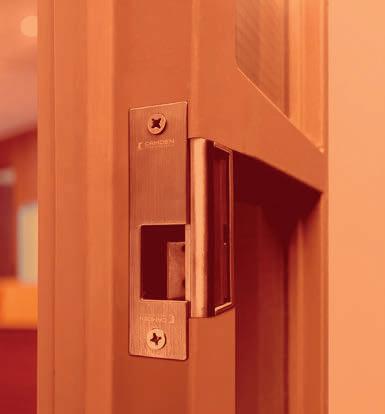
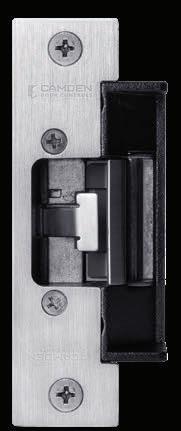
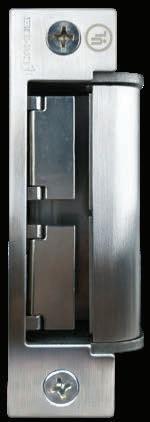
Trust Camden for Electric Strike Solutions!
Camden is continuing its 37-year history of offering the most innovative locking products in the industry. With features like Universal design, preload, latch monitoring, and full compliance with UL Security and ANSI Fire Rating Standards - Camden provides industry-leading product selection, features, warranty, and value.

CX-EPD1289L 3/4” Preload RIM, 3hr Fire, Latch Monitor

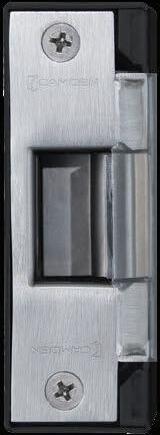
CX-ED1079L Universal, 3 Face Plate, Grade 1 CX-ED1959-MB





A selection of Ajax products were available for viewing immediately following the video presentation at the Toronto launch.
— Neil Sutton


The Canadian Security Association (CANASA) held the final Security Canada show of 2025 in Toronto on Oct. 22-23.
In addition to exhibits and education sessions, CANASA hosted its second annual job fair, enabling job seekers and students enrolled in security programs to connect with potential employers. More than 20 companies and organizations participated in this year’s job fair.
Security Canada will return in 2026 with events in Laval, Que., on April 29; in Richmond, B.C. on June 3; and in Toronto on Oct. 21-22. For additional information, visit www.securitycanada.com.






MBy Roger Miller
Transition planning and business continuity are key for long-term company viability
ost of the people I speak to in the security industry are enthusiastic about its future, however there is common concern: a lack of qualified technical staff.
With key people transitioning out of the industry through retirement (and others who get closer with each passing year), does this exacerbate the knowledge gap that we are experiencing today? It also raises a broader question: what is the transition plan for your organization? Every business, as well as every department within the business, should have an idea of what a transition would look like.
“Don’t overlook the importance of the folks behind the scenes.”
I’ve been involved in two significant transition plans, one as a regional vice-president with a national company and one here at Northeastern Protection. Through those I’ve learned that despite months of planning, there will be unforeseen challenges created by the knowledge gap. For long-term managers, there is almost no way to transfer all of the knowledge you’ve developed during your career. In fact, you don’t even know how much knowledge you have!
Required planning for any family-owned business is to understand the transition from present ownership to the next generation. Will it be a family member (or members), are they interested in running the business, and do they have the necessary skills or knowledge? Are there others within the company who may want to take over the business? Don’t wait until it is too late to have these conversations. Aside from maintaining business operations, there are the financial as well as legal considerations, of changing ownership.
Whether it’s one person or the entire company, a transition in your organization of some sort is unavoidable. There are opportunities to make that transition smoother for you, your employees and maybe most importantly, your customers. In my experience, these five steps will help you prepare for that time.

1. Define the key roles for business continuity.
For many companies, the face of the organization is often the owner or lead manager. Don’t overlook the importance of the folks behind the scenes, like payroll or accounting. In some cases, the owner and/or another family member is all of these. Assess what help will be needed to fill these roles, then start building that knowledge. Create a job description for each key role with input from the person currently filling that role.
2. Determine who will hold redundancy for each role.
This is important, not just for replacing key people, but for vacations and overall business growth. It isn’t difficult to create redundancy, so long as you select the right people who can move up or down the chain when needed. This is about sharing skills.
3. Create a list of tasks or duties that will be transitioned, and when. Identifying the specific tasks that can be spread amongst your team will be important. There will usually be some tasks that can be put on hold during a transition, while there are others (payroll and billing come to mind) that can never be parked. Determining what can be parked versus
4. Use vacations or other absences to test the plan in a normal work environment. Planning for vacations is an opportunity to testrun the redundancy you’ve created. Temporarily reassign tasks during that defined period, then assess the success or failure of that process. Often you will be surprised at the ability of your team to step up when asked.
5. Assess the performance of the tests, then refine the plan to address any steps that were missed.
As you go through each of these phases, it is critical to assess the performance in a real-life scenario. Much like when we help our clientele plan for emergencies through drills, these are drills for business continuity.
There are more formal plans available; depending on the size of your business you may need to consult with a professional service firm to develop a large-scale plan. But however you address the issue of transition planning, you need to make it a priority.
Roger Miller is the president of Northeastern Protection Service Inc. (www.protectionpartner.ca)
By Steve Basnett
For CANASA’s three major Canadian events, this was a record-breaking year for exhibits and attendance
Security Canada trade shows lead the industry with cutting-edge technology, unparalleled education opportunities and access to the most powerful networking opportunities you’ll get all year.

Brought to you by the Canadian Security Association (CANASA), these events are staged in three major centres across Canada, providing an unrivalled national perspective.
The Security Canada shows are the largest, most comprehensive and well-attended events of their kind in the Canadian security industry. Eight out of 10 decision makers you meet at Security Canada will not attend any other major trade show.
Security Canada has been on a roll post-pandemic and has come back even stronger. Last year both East and Central shows sold out and broke attendance records.
“I encourage you to sign up to attend one of our shows.”
All three of our shows sold out this year with Toronto being the largest ever for exhibits.
In April, Montreal hit an all-time attendance high of 1,061 attendees, Vancouver continues to grow and attracted 567 attendees this June (a number not seen since 2016) and Toronto hit two new records with 2,991 attendees and 186 exhibiting companies in October.
Security Canada Central also played host to CANASA’s second annual Job Fair with close to 100 job seekers and 21 recruiting companies in attendance. The show also featured a great keynote address delivered by Lina Dabit, executive
director, office of the CISO, Optiv Canada.
Lina spoke to a room of almost 200 security professionals about “The Convergence of Cyber, Physical, and National Security in the Global Spotlight of FIFA 2026.”
Combined with our nine “flash sessions” on the exhibit floor and 20 education sessions, this year’s show was a perfect combination of new products, networking and education.
As I recuperate from my 20th Security Canada Central, I would like to take this opportunity to thank the sponsors, exhibitors and attendees who make these shows possible with their support.
The revenue generated by Security Canada goes to the Canadian Security Association so that we can continue to represent and support our industry. I encourage you to sign up to attend, at no charge, one of our three shows coming up in 2026.
Steve Basnett is the director of trade shows and events for CANASA (www.canasa.org).






On behalf of the entire team at Keenfinity Inc. representing the Bosch and Radionix brands in Canada, I would like to express our heartfelt appreciation to all our customers, partners, and community members who have continued to support us during our recent transition from Bosch Security Systems to Keenfinity Inc.
Transformations of this magnitude are never easy, and over the past months, our organization has undergone significant operational, technical, and administrative adjustments. These changes ensure we maintain the same level of excellence, reliability, and professionalism our customers have come to expect. This process has required patience, understanding, and collaboration from everyone involved. We are deeply grateful for all who stood by us during this period of change.
Your trust and loyalty have been instrumental in helping us move forward with confidence and renewed purpose. Keenfinity Inc. remains committed to providing innovative high-quality building and security solutions with the same dedication and service that have defined our team for all these years.
As we look ahead, we are excited about the opportunities that lie before us and the upcoming launch of IQSIGHT as the driving force behind our Bosch-branded video systems. We remain steadfast in our promise to deliver dependable and innovative technology solutions that support the greatest in AI technology, efficiency, and integration.
Thank you once again for your continued partnership, your faith in our company, and your commitment to our team.
Have a wonderful holiday season with my sincere appreciation.
Jacquelyn
Your local Keenfinity team:

Jacquelyn Davies VP Canadian Sales and Operations / Managing Director 647-746-1055
jacquelyn.davies@keenfinity-group.com
Solutions Engineering

Don Maxey 647-746-2949 don.maxey@keenfinity-group.com
Inside Sales

Michael Young 416-629-5944 michael.young@keenfinity-group.com

David Heath Key Accounts Manager 647-460-8057 david.heath@keenfinity-group.com


Jamie Carrier 905-299-7318 jamie.carrier@keenfinity-group.com
Supported by our manufacturers’ rep firm partners:
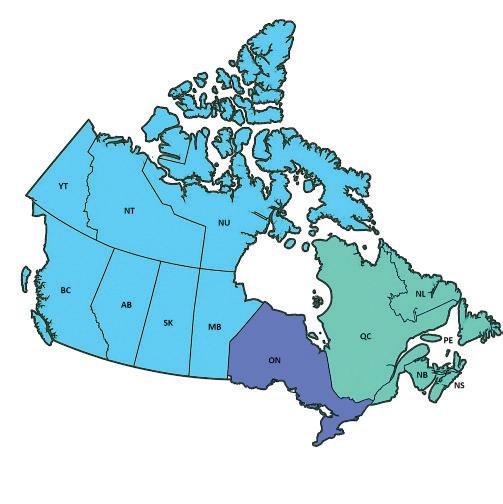
Core Products - YT, NT, NU, BC, AB, SK, MB

Rob Feth rob@coreproducts.ca

Mike Hogg mike@coreproducts.ca
Novytec Marketing - QC, NB, NS, PE, NL, Ottawa (Access and Intrusion Ontario)


Yvon Lebel ylebel@novytec.ca
Gavin Daly gdaly@novytec.ca


Mathieu Racine mracine@novytec.ca support@novytec.ca
Sean Donnachie sdonnachie@novytec.ca support@novytec.ca

MBy Victor Harding
Recurring monthly revenue is an essential part of the equation when valuing alarm and security businesses
ost owners of security and alarm companies these days, particularly those with monitored accounts, know full well that their accounts are valuable and can be sold in the open marketplace at a multiple (number of months) of their total recurring monthly revenue (RMR).
However, if you are an alarm or security company owner looking for a formal valuation to be done, you need to be careful in your choice of who performs that valuation.
Some professional valuators will use the more standard valuation method of a multiple of average adjusted earnings, rather than taking recurring monthly revenue into account, which can grossly undervalue your company.
How can values for the same alarm or security company be so different? The answer lies partly in who is buying the target company.
If the buyer of the target company is another industry player (called a strategic buyer) they can, in the process, achieve significant cost savings after the sale.
If a company is bought by an individual or even a financial institution like private equity, they would probably not value the company as highly as a strategic buyer.
These buyers would need most of the structure of the original company to stay in place.
Over the years, I have seen this same dichotomy of values happen over and over again, particularly with alarm companies.
I have seen buyers who don’t know about the special value of monitoring RMR offer bids significantly under what the company’s accounts are worth.
Why? They are using the wrong valuation method. They are valuing the company using a multiple of adjusted earnings which almost never gets close to what the company is really worth.
I and many others have explained many times why recurring revenue is so valuable and why companies in the security industry should be trying to generate as much RMR as they can. The higher value attached to RMR stems mainly from the fact that RMR, unlike installation and service revenue, recurs year after year, often for many years on end.
For example, I have been with the same

“Companies in the security industry should be trying to generate as much RMR as they can.”
monitoring company protecting my home for 12 years now. This is not unusual in the alarm industry.
It also helps that the monitoring RMR is generally high margin — approximately 70-80 per cent — much higher than the other revenue.
And this warning about making sure you get the right valuation method for your company does not simply apply to alarm companies with monitoring revenue.
For example, companies that offer both security and fire services will generate several different types of recurring revenue. These days, fire inspection revenue is also being treated as RMR.
Although inspection revenue is generally at a lower margin (e.g. 50 per cent) than monitor-
ing revenue and therefore trades at lower multiples of RMR (18-24 months) it would still give a company a much higher value than using a multiple of adjusted earnings.
Anywhere there is RMR — and this applies mostly to alarm and fire companies — you should expect to get higher valuations, i.e. valuing the RMR rather than valuing the earnings.
Interestingly enough, the market does not apply this rule of thumb to guard and integration companies.
Guard company revenue is generally not considered recurring in nature. And in the case of a large integration company, there is usually a far greater proportion of installation revenue, which would, in a valuation, outweigh the value of any recurring revenue.
So, in summary, the message here is to be careful when selecting who should perform a formal valuation of your security company and consult professionals that understand the value of RMR.
Victor Harding is the principal of Harding Security Services (victor@hardingsecurity.ca).
For more than a decade, the SP&T News Hall of Fame has showcased security industry professionals who lead by example through their business excellence, community-focused efforts, and dedication. For 2025, we put the spotlight on three more professionals who

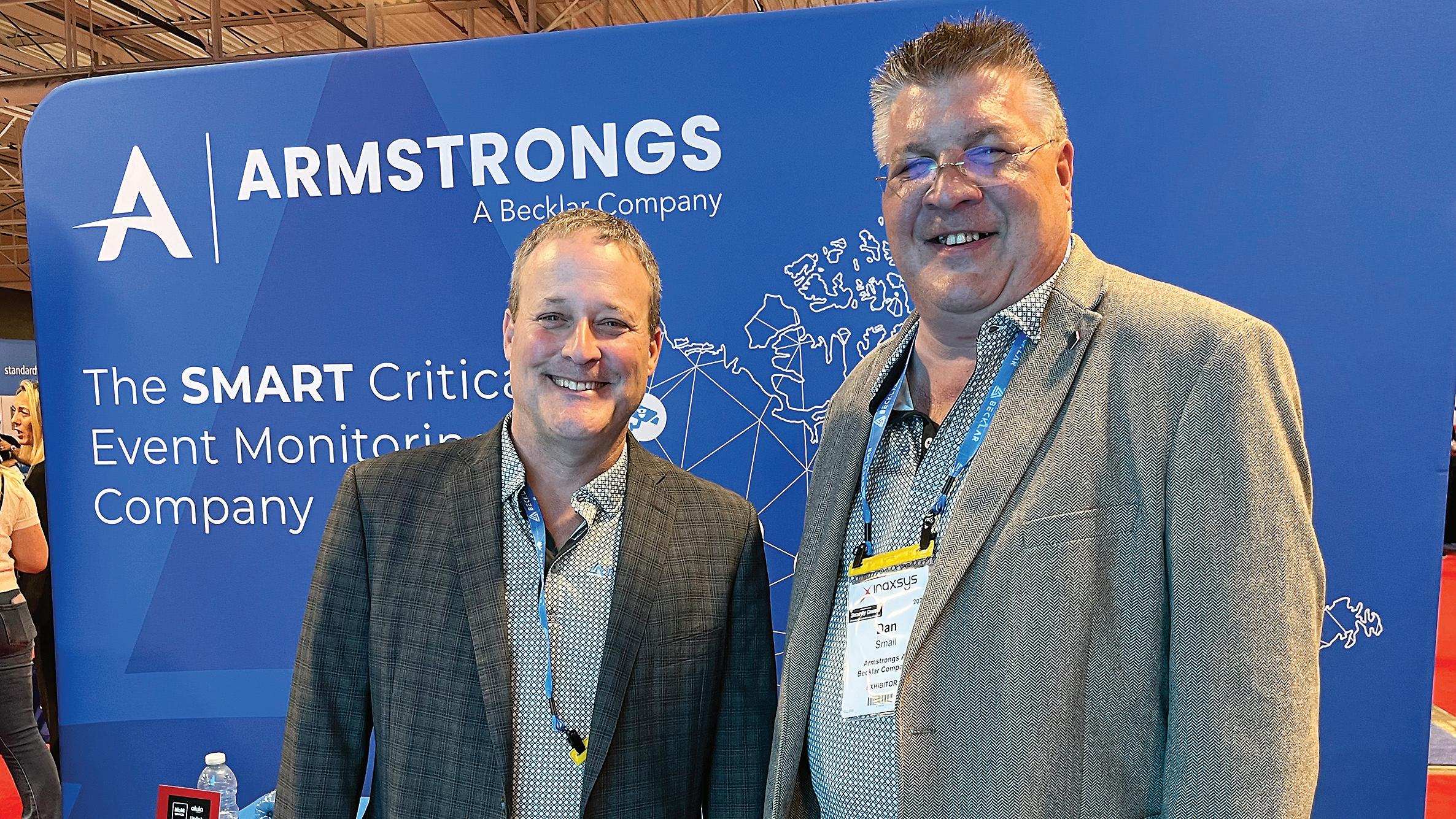
DAN SMALL President, Armstrongs

Dan Small joined the security industry during a period he describes as its “teenage years,” when the technology was experiencing growing pains and the market was relatively immature.
His first exposure to security was the result of serendipity. He applied for a sales manager job at a local New Brunswick satellite company, which sold 10-foot-diameter dishes to local residences so they could receive TV signals.
Company owner Gary Armstrong didn’t hire Small for the manager role, but did offer him a door-to-door sales position. Small started with the company on Canada Day of 1993, and was soon promoted into the manager position he originally sought.
The days of big TV dishes were numbered, however, and Small moved over to one of Armstrong’s other businesses in Fredericton, an answering service that monitored medical PERS devices.
“Gary said, ‘Do you know anything about security?’” recalls Small. He didn’t at the time, but the monitoring industry was ripe for growth.
In 1994, Armstrong’s opened its first ULC-certified alarm monitoring station in Chipman, N.B., about 80 km east of Fredericton, with Small managing all major operations. “If it needed to be done, I did it,” he recalls. “If someone didn’t show up for work, sometimes I was an operator.”
Armstrong’s soon expanded. In 1997, Small
exemplify the qualities that continue to make this industry great. Please join us in congratulating this year’s inductees, Dan Small, Imran Hasan and Bob Smith.
(Profiles by Neil Sutton)
moved from New Brunswick to Nova Scotia (where he still resides) as the company opened a new station in Dartmouth, near Halifax.
“It took off through the rest of the 90s and into the 2000s,” says Small.
Armstrong’s grew its dealer operations in the Atlantic provinces, then, after a brief experiment with a U.S. customer base in New England, focused on Canada. The company expanded westward to Alberta, then across the entire country.
Small credits Gary Armstrong as a mentor, who imparted business wisdom and created an atmosphere of trust for partners, customers and even competitors.
“If you treat everyone with respect, good things will come. There’s something you can learn from everybody,” says Small. “Word of mouth was definitely what grew the business in the beginning. If one dealer is happy with what you’re doing, they express that to their colleagues in the industry.”
As his industry knowledge grew, Small also joined the Canadian Security Association (CANASA), becoming a member of the board at the organization’s Atlantic council and eventually its president for a term.
Small says one of his proudest moments at CANASA was his participation in a group that advocated to make alarm and security technicians a recognized trade in Nova Scotia.
In 2022, Armstrong’s National Alarm Monitoring was acquired by Utah-based Becklar. Small, who had served as general manager for more than two decades, was promoted to president of Armstrongs in 2023. The company noted in an announcement that Small “has dedicated his professional life to making the Canadian security monitoring industry better.”
In a leadership role under a new parent com-
pany, Small has found his responsibilities become more focused in some respects and more expansive in others. “I’ve had to do some learning,” he says. “It’s been good for me.”
He also feels fortunate to have worked with both his long-time mentor Gary Armstrong and now Steve Richards, the CEO of Becklar.
Since the ownership transition, Armstrongs has opened a third monitoring station in Laval, Que., and upgraded much of its equipment. The company now employs more than 200 people in Canada.
Small says that more change is coming, both for Armstrongs and the broader security industry, particularly as AI continues to revolutionize monitoring systems and customer engagement. “I think there’s possibilities of real expansion and growth of our industry in North America,” he says.
Where will Small take his own monitoring career next? “I think there’s still some gas in the tank,” he says. “It’s an exciting time.”

Somehow, Imran Hasan manages to fit more responsibilities into a day than most people manage in a week.
Hasan is the president of Transglobal Systems of Canada (TSOC), a Mississauga, Ont.-based networking infrastructure and communications business that was founded by his father 42 years ago. He also volunteers for a variety of
different charitable, community and industry focused organizations and has run for a municipal council seat on three different occasions. Hasan conducted an interview for this article having just completed the first day of a training course for fibreoptic technicians and installers.
“Technology continues to evolve, and so to stay on top of it and even try to get ahead of it, you’ve got to continue learning,” says Hasan.
Hasan got his start in his family’s business as a teenager working part-time through school.
He joined TSOC full-time in his 20s before ultimately assuming the role of president. His brother Norm is currently vice-president and his father continues to contribute to the company through semi-retirement. (At 87, his father is still very active, says Hasan, and is a role model for how to continue working at all stages of life.)
Hasan has been an active volunteer throughout much of his professional career. He is sometimes reminded by his peers that he has served in multiple volunteer capacities for many years, but he isn’t marking time or looking for acknowledgement.
“I remember serving on a different board for almost 15 years and I never really thought about it. I just did it because it was something I enjoyed doing and I felt it was making a difference,” he says.
“It’s a lot of work but it’s a lot of fun,” he adds. “If I’m going to do anything, I give it 100 per cent. I don’t want to add my name to something for the sake of just seeing my name there. At the end of the day, I want to make sure that if I’m going to be a part of something that I give it my all.”
From a volunteer perspective, he is currently most often recognized as the chair of Peel Crime Stoppers, a non-profit organization dedicated to assisting the local police and community in the fight against crime. He joined the organization in 2019 initially to help with fund-raising efforts and was elected board chair a year later. Since then, he has helped to organize everything from car washes to barbeques to golf tournaments in the name of crime prevention and raising awareness.
He also currently volunteers for the Canadian Security Association (CANASA), serving as a representative on its central Ontario council. Hasan says he first encountered CANASA through its annual trade shows and meetings. When he learned more about the organization and how it supports all aspects of the security systems business — from manufacturer to distributor to installer — he says he wanted to get more involved.
“I learned about the role that CANASA
has in the security industry and how it is really helping connect to all the stakeholders,” he says.
“It was very clear that CANASA was bringing this ecosystem together and what better way to help contribute to the security industry, than through an organization that’s trying to help them all?”
In addition to his industry-focused volunteerism, Hasan currently serves on the board of Eden Food for Change, a food bank with two locations in the Mississauga area. When he spoke with SP&T News, he was gearing up for the organization’s eighth annual “Brunch with Santa,” a fundraiser with proceeds benefitting the food bank.
Hasan says he tries to follow his father’s example to “leave this place better than you found it.” While his volunteer work covers a number of different areas, he sees them all as supporting common community goals.
“Food insecurity and public safety are intertwined and when it comes to community safety and well-being, you have to look out for the people around you,” he says. “For me, it’s always been about creating a safe space for our future generations.”
BOB SMITH Vice-President, Security Operations, Alliance Security Team

Bob Smith didn’t know that working for a security company would lead to a 35-year career when he first started, but the more he learned, the more he “fell in love” with the industry.
When a construction job he took during a university gap year ended, he was recommended to an alarm company and started working as a technician. “I’m still on my year off from university,” says Smith.
As someone who enjoys learning about new technology and equipment, he felt an affinity with security almost immediately, he says.
“I had no previous background experience in electronics or intrusion or any sort of security. I thought, I’ll give it a go and maybe it’s just a job. I certainly did not expect any career to come out of this,” he says. “I like working with my hands. I like being presented with challenges — especially challenges that security installation at the time could present. I like meeting those challenges and being able to show a job well done at the end of the day.”
Shortly after entering the industry, Smith joined Alliance Security Team (then known as Al-
liance Alarms) in 1994, a family-owned business based in Kingston, Ont., and has been with the company ever since.
As a technician, he learned about the security industry from the ground up, which, he says, is an ideal beginning for anyone who’s interested in technology systems.
Alliance is a company that “recognizes the value of promoting and teaching from within,” he says, and he credits its owners with encouraging his advancement.
After serving for several years as an operations manager, he was promoted to vice-president of security operations in 2020.
The company also encouraged him to participate more broadly in the security industry, which led to his increasing involvement with the Canadian Security Association (CANASA).
Smith attended CANASA trade shows and meetings, then joined one of the regional Ontario association boards as a member “to network and develop my resources within the industry,” he says. “One of my favourite things about CANASA events is meeting new people and having the opportunity to hear their experiences and share some of my experiences.”
Smith ultimately joined CANASA’s national board on the advisement and encouragement of his fellow members, and is currently serving his second two-year term as CANASA’s national president.
As a VP at Alliance Security and senior board member at CANASA, Smith has decades of management experience, but he has never lost sight of how important technical knowledge and skilled labour is to the growth of the security industry.
He notes that he was faxing installation documents to clients when he started in the 90s and now he can control entire systems via an app on his phone. Continual advancement has meant the industry must learn and adopt new skillsets, he says, particularly on the networking side, and the onset of cloud-based systems has meant even more recurring revenue opportunities for service providers.
“What we do is very skilled. We have to continue to upskill, to learn new things to stay current,” says Smith. “It’s a good thing. We embrace the newest technology. We try and make sure our clients have the best of whatever’s available to them. Peace of mind is now available at their fingertips and that’s important to us.”
With 35 years in the industry, Smith doesn’t have much left to prove, but he is passionate about having security systems installation gaining much greater recognition as a skilled trade. He says he will continue to lend his voice to this cause and advocate for industry professionalization.
“This industry has given me a career,” he says, “and I want other people to understand that they can have the same opportunity.”

Today’s surveillance and analytics, in combination with advanced integration and human oversight, helps terminals stay one step ahead
By Sophie Laplante
Canada’s busiest transit hubs are essential arteries of movement, but they may also draw the attention of organized crime groups looking to exploit blind spots, stretched resources and operational gaps to move illicit cargo, smuggle goods or traffic people. As these groups adapt, so too must the technologies designed to stop them.
As of December 2024, the Criminal Intelligence Service Canada reported 668 organized crime groups (OCGs) operating across the country. Transit hubs –such as airports, bus terminals and train stations – are among their logical targets. These hubs see massive volumes daily. Their open design keeps traffic moving but also create openings OCGs can exploit.
“These technologies mark the shift from passive monitoring to active intelligence.”
Confronting this challenge starts with visibility and deterrence. Surveillance has always been central to protecting transit hubs, but its role has changed dramatically over the years. Once limited to recording incidents after the fact, surveillance now plays a proactive role: spotting issues as they happen, prompting quicker intervention and strengthening coordinated responses.
Understanding how surveillance has evolved —
from its earlier shortcomings to its modern, intelligence-driven capabilities — provides the foundation for assessing how terminals can better defend against OCGs.
For many years, surveillance in transit hubs was reactive. While cameras supplied strong evidence for investigations, they offered almost no opportunity to act in the moment. This gap in response created openings that OCGs were able to exploit:
• Delayed intervention: Without real-time alerts, security teams often discovered problems only after reviewing footage – by which time contraband was gone, or bad actors had left.
• Reduced deterrence: Criminals knew many cameras were “record-only,” emboldening them to act with little fear of being caught in the moment.
• Missed patterns: Static video couldn’t automatically identify repeat visits, suspicious loitering or baggage anomalies.
• Human overload: Operators responsible for dozens of feeds at once could not realistically track every detail, creating gaps for incidents to slip through.
Terminals could piece together events after the fact but stopping them in the moment was far harder. For OCGs that rely on repetition and stealth, this reactive model made exploitation easier.
Thankfully, surveillance in terminals has moved far beyond simple video recording. Today’s systems bring together a range of tools designed to sharpen visibility, accelerate detection and close security gaps.
Object analytics are among the most transformative, enabling cameras to recognize and classify people, vehicles and items as they appear. Built into this is scene metadata, which tags details such as size, colour, direction and speed. At an airport, analytics can flag an unattended suitcase or detect a car circling a drop-off zone.
A more specialized tool is licence plate recognition (LPR), which automatically logs and analyzes plates as vehicles pass through. In a busy bus terminal, this can mean tracking delivery trucks that enter and exit all day, flagging when the same vehicle shows up without clear authorization, or matching a suspicious plate against an active investigation list. By turning vehicle flow into searchable records, LPR creates accountability where traffic is constant.
Beyond visuals alone, audio analytics provide an added layer of detection by recognizing sounds that suggest trouble, such as glass breaking, raised voices or sudden crowd panic.
In a train station, these alerts can tip off security teams to coordinated disruptions or fights staged by organized groups to divert attention — tactics often used to mask theft, smuggling or other illicit activity.
“Surveillance now plays a proactive role, spotting issues as they happen.”
Radar detection strengthens monitoring in privacy-sensitive terminal areas, such as cargo bays and loading zones, where video may be limited. It tracks motion and distance without capturing identity, helping reduce false positives from glare, shadows and overlapping activity. By filling blind spots between containers and parked service vehicles, radar helps operators maintain reliable coverage in complex environments.
Inside crowded facilities, people counting and crowd analytics help track flow and density in real time. At a subway interchange, these tools can flag when groups linger unusually long near stairwells or platforms, or when movement slows in ways that could conceal hand-offs or unauthorized exchanges. By detecting patterns that deviate from normal commuter flow, operators gain early warning of organized activity and can intervene before escalation.
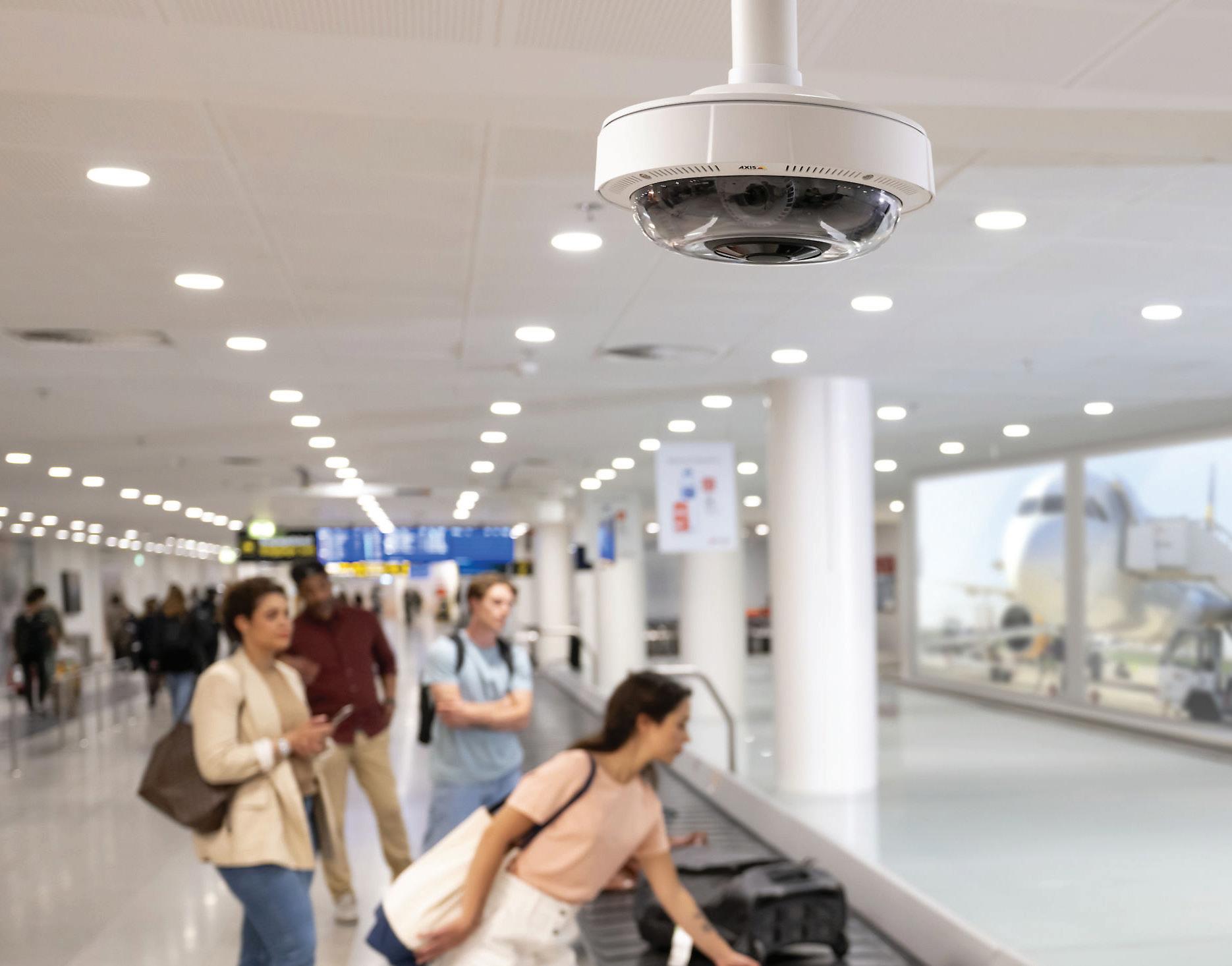
Different environments also demand tailored solutions. Dome cameras provide discreet coverage in passenger waiting areas, making it harder for organized groups to identify and avoid surveillance. Pan-tilt-zoom (PTZ) cameras give operators flexibility to follow individuals across sprawling parking lots, where stolen vehicles or contraband hand-offs often take place. Panoramic cameras reduce blind spots in ticket halls, preventing loitering or distractions used to mask illicit exchanges. Deployed strategically, they close gaps that OCGs exploit.
Together, these technologies mark the shift from passive monitoring to active intelligence. Today’s systems give operators sharper visibility and faster insight into organized crime tactics. Terminals can now anticipate risks, disrupt illicit activity in real time and close the gaps that OCGs have long relied on.
While each of these tools offers valuable protection on its own, their true strength comes when they are connected. Integration turns individual capabilities into a coordinated defence. Integration improves protection in three key ways:
• Cross-verification: When analytics flag suspicious activity, access control systems can check badge data while licence plate recognition confirms vehicle entries.
• Video Management Systems (VMS): Acting as a hub, VMS platforms bring together camera feeds, analytics and access data in one place, so operators don’t have to jump between systems.
• Faster response: Linking video, access and perimeter data ensures that an alert in one system triggers awareness across others, reducing delays and closing gaps.
Maximizing the effectiveness of surveillance
Even the best-integrated systems need to be applied strategically. To maximize the impact of surveillance, operators should focus on a few key practices:
• Map high-risk zones, focusing coverage on cargo bays, restricted areas and passenger staging points.
• Choose interoperable systems that integrate easily with VMS and access control to avoid silos.
• Train staff regularly to interpret analytics, manage alerts and minimize false positives.
• Use analytics for both real-time detection and long-term trend analysis to uncover recurring patterns.
• Balance security with privacy by adopting clear policies that maintain public trust.
The role of human oversight
As powerful as modern surveillance systems have become, they cannot replace human judgement. They can flag anomalies and automate alerts, but it takes trained personnel to decide whether an unattended bag is a real threat or simply misplaced luggage, or whether repeated vehicle entries signal suspicious behaviour or a legitimate delivery.
Keeping people in the loop also strengthens public trust. Travelers and staff are more likely to accept advanced surveillance when they know decisions are ultimately reviewed and acted on by humans, not machines. By pairing the speed and precision of technology with human judgement and accountability, terminals can ensure security measures remain effective and fair.
The path forward is not about choosing between machines or people, but about combining their strengths. By leveraging the speed and accuracy of analytics with the judgement and accountability of trained staff, terminals can stay one step ahead of organized crime while maintaining public trust. This ensures Canada’s airports, bus depots and train stations remain efficient corridors of movement and safe spaces for the millions who rely on them.
Sophie Laplante is the business development manager, public safety, Canada at Axis Communications (www.axis.ca).









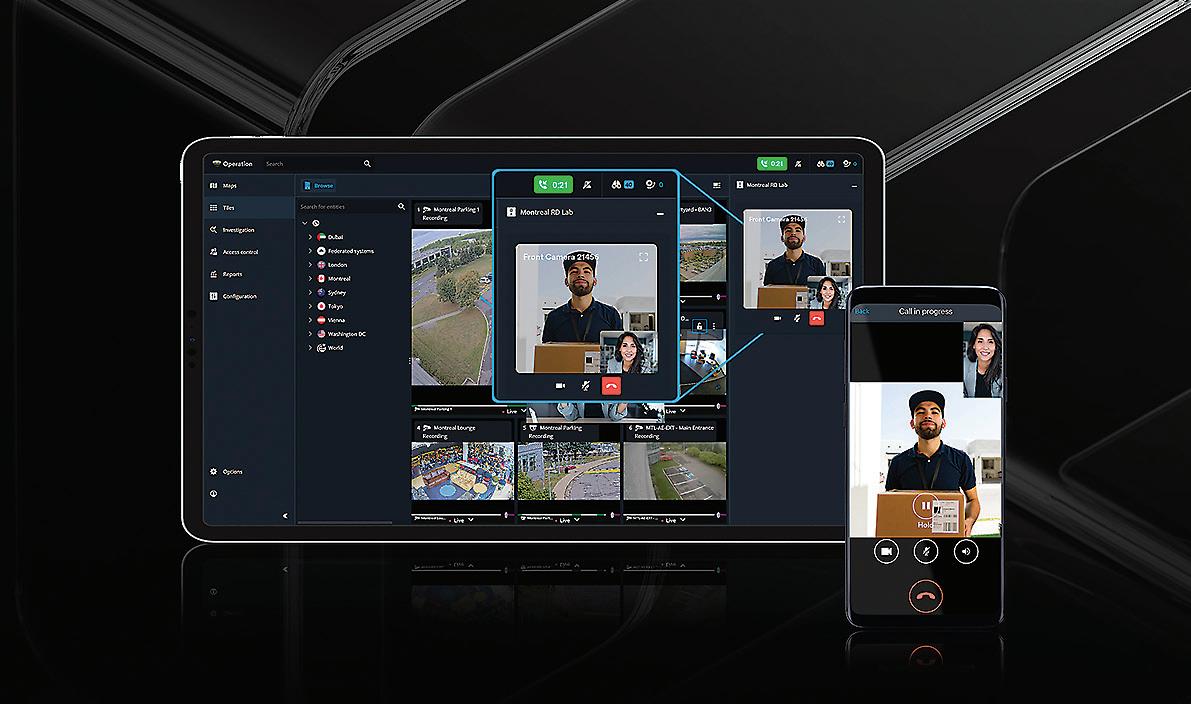
Genetec announced the addition of cloud-native audio communications capabilities to Security Center SaaS. With communications built in directly, operators interact with individuals at entry points and verify identities with live video without having to switch tools. Communications for Security Center SaaS can support anything from a few intercoms to thousands across enterprises. At launch, the feature will support intercom devices from Axis, with plans to add more vendors in future releases. www.genetec.com

i-PRO
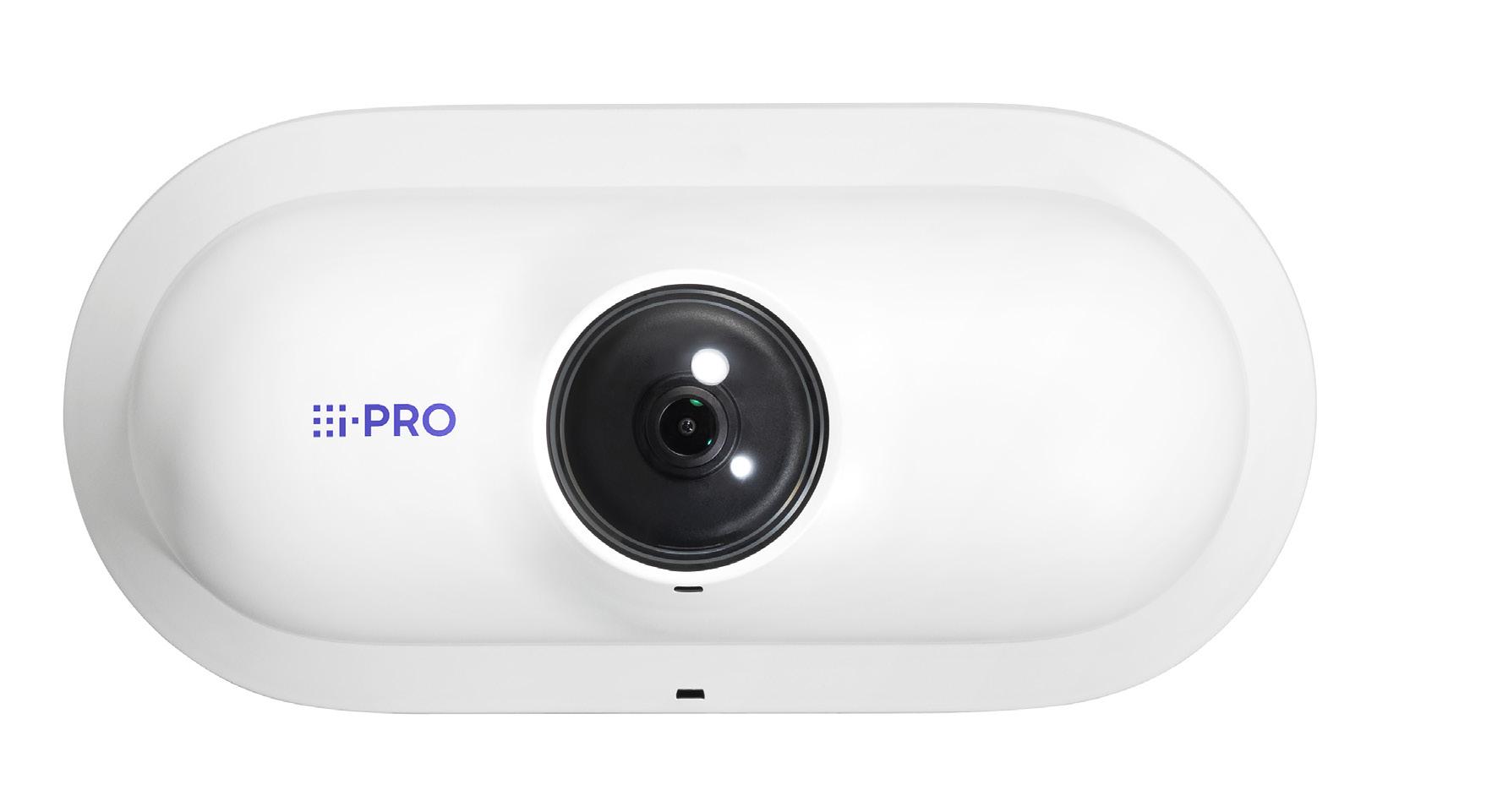
Security Radar is a new category of outdoor video monitoring devices, designed to enhance perimeter protection in mission-critical environments. Operating on advanced 60GHz millimeter wave technology, the Security Radar system supports integration with up to four AI-enabled i-PRO PTZ cameras to deliver detection and real-time visual tracking of people and vehicles. Covering a full 180° field of view, the radar maintains accuracy even in low-light or severe weather, according to the company. The i-PRO Security Radar will be available in January 2026. www.i-pro.com

The Speedlane Compact Platform is designed for the Lifeline Speedlane Compact Optical Turnstile and offers a solution for facilities seeking advanced entry control while preserving existing floors. With a free-standing, modular design, the platform offers an ADA-compliant foundation that provides accessibility in high traffic environments without compromising structural integrity. The platform supports a weight capacity of 500 lbs per square foot.
www.boonedam.com
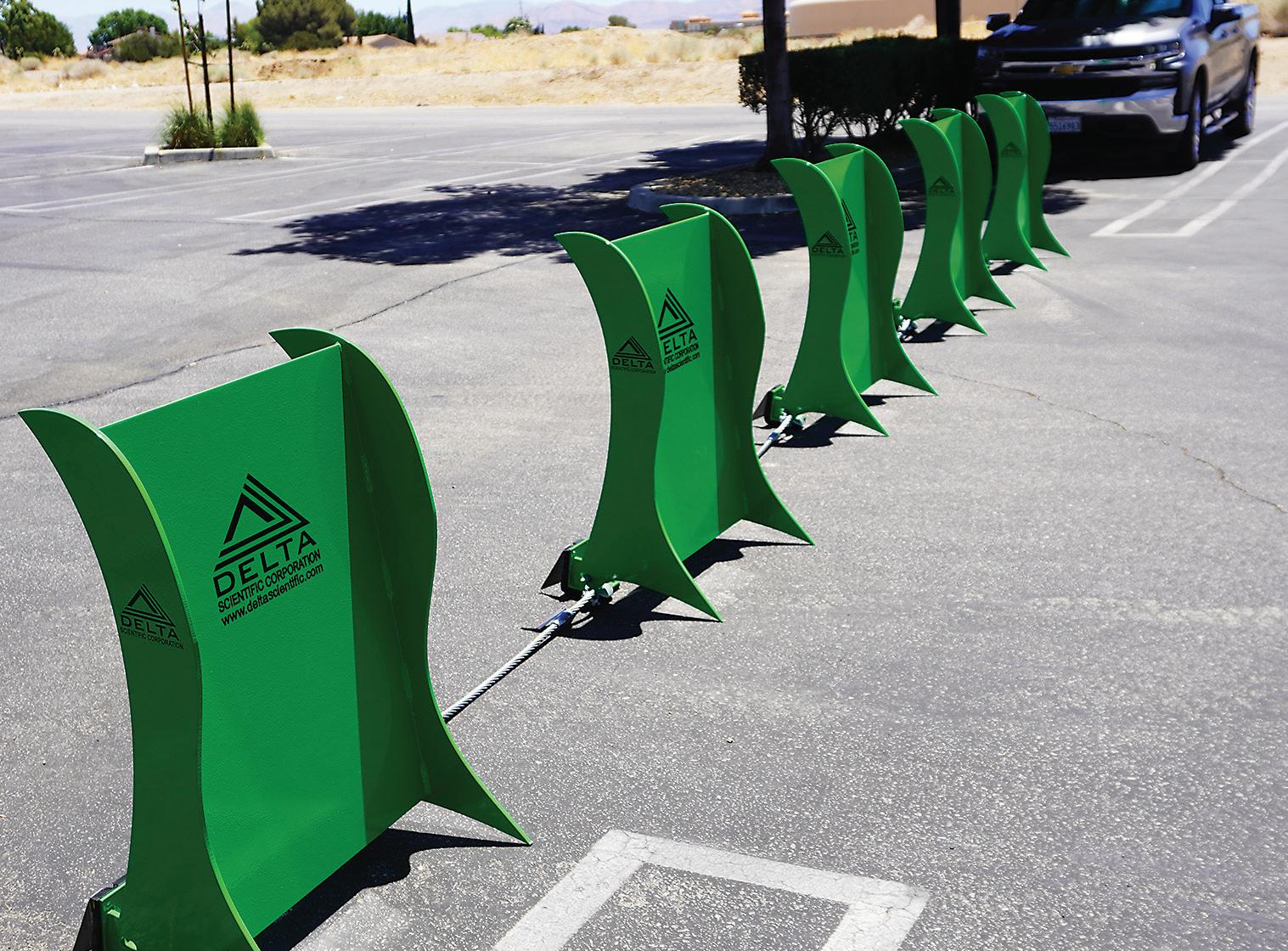
The DSC50 “S” Barrier is a lightweight, crash-rated security solution tailored for temporary deployment across high-traffic urban environments. The DSC50 “S” is a suitable solution for: events, parades and civic celebrations; tourist corridors and pop-up activations; protest areas and emergency crowd control; and short-term construction or traffic redirection zones. Delta’s patented anti-ram technology is now available in a portable format.
www.deltascientific.com

Acoem ATD
Acoem Acoustic Threat Detection technology is designed for security professionals, law enforcement agencies and critical infrastructure operators who require a data-driven gunshot detection solution, according to the company. By processing events on the edge (within the sensor), a single ATD-300 sensor, combined with Acoem’s Cadence software, provides camera slewing toward detected threats, enhancing situational awareness for security teams. The system’s edge-processed AI analytics continuously learn from the environment. www.acoem.com

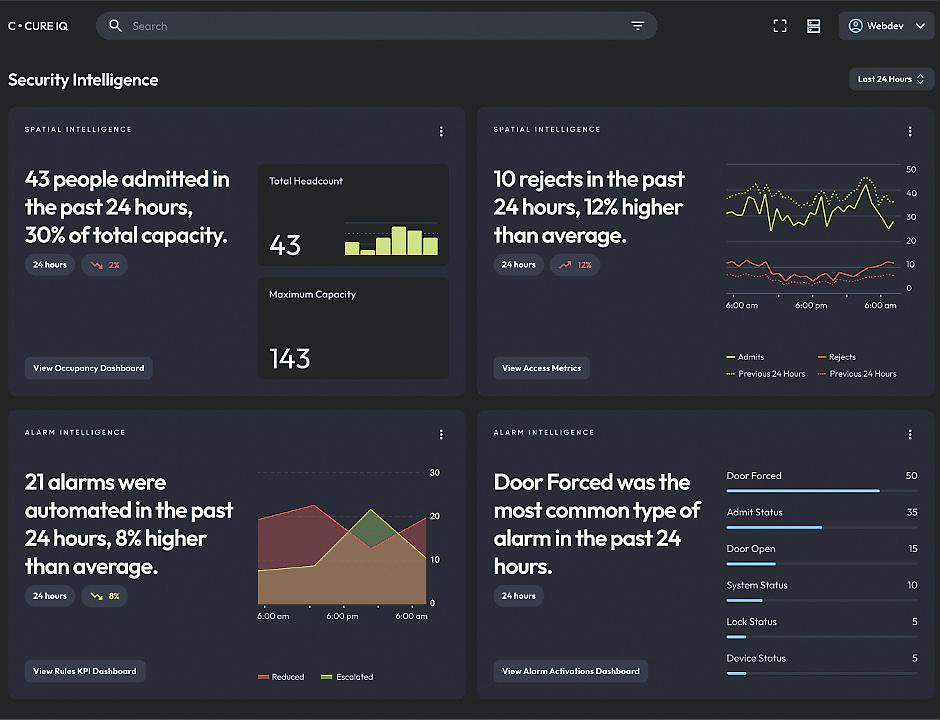
Software House C•CURE IQ v3.10 provides an integrated access control and video surveillance experience through a single browser-based interface, giving the operator dynamic alarm prioritization, spatial and occupancy analytics, and attendance reporting. This version allows operators to monitor outdoor GIS maps and indoor floorplans. Unified health dashboards can monitor device status, storage capacity and system performance. www.swhouse.com

Through a unified monitoring console, administrators can view interactive maps, AI-powered video grids, live alarms, and access logs on a single screen in real-time. Its advanced access control features provide a high level of granularity, allowing administrators to define detailed role-based access levels, zone-based rules, and automated emergency actions such as lockdowns and fire protocols. BioStar X also enhances AI-driven video intelligence by detecting events such as falls, intrusions, loitering and tailgating. www.supremainc.com
Allegion has introduced the Outdoor Defense (OUT) option for 98/99 exit devices, the first Von Duprin product designed to protect device functionality in outdoor conditions. The Outdoor Defense option is designed to safeguard against moisture, temperature variations and corrosion in exterior applications and is available for the 98/99 Series rim and surface vertical rod exit devices. The option is also available for mechanical devices as well as electronic components, such as switches, latch retraction, delayed/controlled egress, alarm kits and more.
www.vonduprin.com

XS4 Sense is a Smart Energy Management System (SMES). Combining wireless technology with a real-time energy monitoring platform, XS4 Sense enables building operators to reduce energy consumption, lower carbon footprints and achieve sustainability goals, according to the company. XS4 Sense integrates real-time energy monitoring, advanced presence detection and HVAC control into a compact device. The wireless solution integrates with Salto’s existing smart access ecosystem. www.saltosystems.com
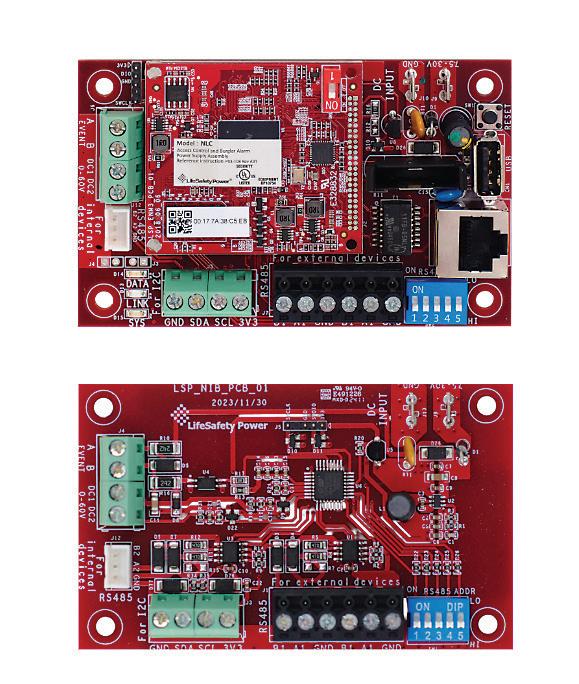
Together, NetLink Connect (NLC) and NetLink Expansion (NXB) simplify installations for managed power systems, according to the company. NetLink Connect modules use a secure Open Supervised Device Protocol (OSDP) connection to communicate with and control power system status through a single network drop. The NXB is an expansion module that extends NLC communication to multiple enclosures, leveraging the same network drop as the NLC.
www.lifesafetypower.com

Command Centre v9.40 introduces new capabilities for the Controller 7000 product range. Command Centre v9.40 now supports the optional licensing expansion of up to 24 doors per controller, more than doubling the previous limit of 10. V9.40 has also boosted the number of HBUS readers supported, from 20 to 40, and increased OSDP readers from 16 to 32. V9.40 also increases the number of supported inter-controller communications from 60 to 100. Also available with v9.40 is Entra ID single sign on. security.gallagher.com
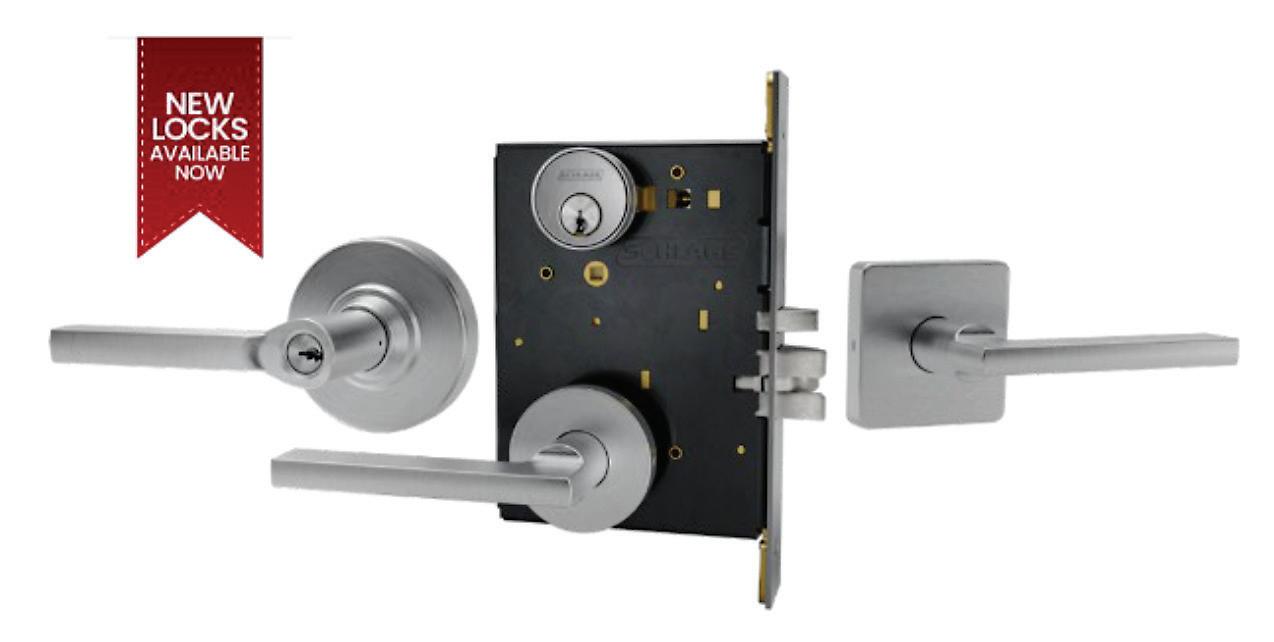
The new Schlage PM Series mortise, PC Series cylindrical, and PT Series tubular locks are now available to order. The range includes: PM Series Grade 1 Mortise Locks (23 mechanical and three electrified functions); PC Series Grade 1 Cylindrical Locks (eight mechanical functions); PT Series Grade 2 Tubular Locks (four mechanical functions). Two new decorative levers - Selena (contoured, round concave) and Playa (bold, rectangular) - plus a square rose (D) on the PM and PT Series, can help create a cohesive look from lobby to unit. www.schlage.com
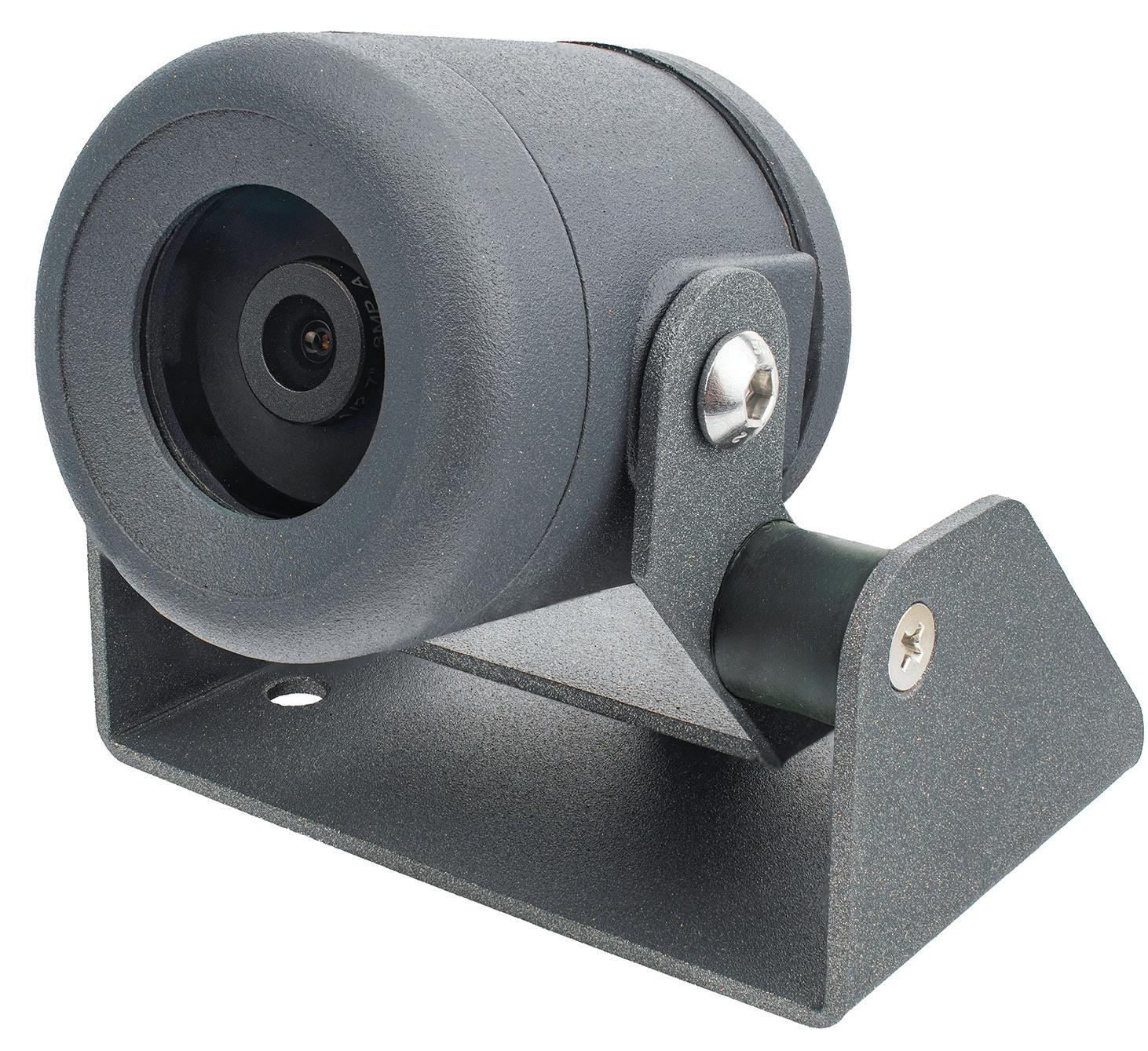
Opticom Tech
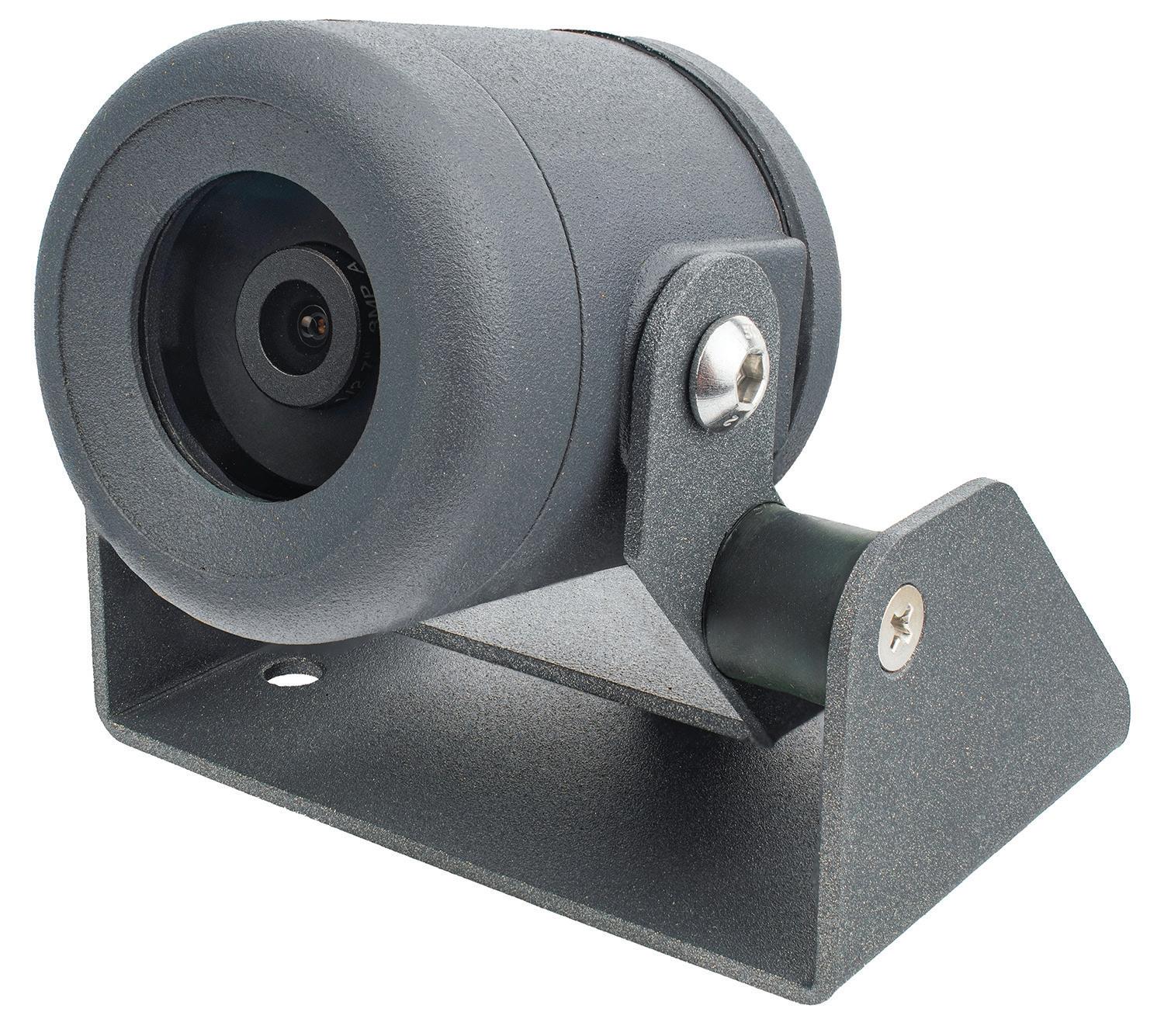
Opticom Tech announced the release of its updated CC02 industrial camera with a more rugged anodized coating, builtin vibration mount and lens options. The new anodized coating provides increased resistance to corrosion and wear. A built-in vibration mount now comes standard, simplifying installation and improving image stability in high-vibration settings. The made-in-the-USA CC02 camera is now available to order through Opticom Tech or its distributors.
www.opticomtech.com


The iCAM TD200 is a next-generation handheld biometric camera designed to simultaneously capture dual iris and face images in real-world environments. It combines portability, an intuitive interface, and imaging capture in a lightweight form factor. The iCAM TD200 captures left and right iris images simultaneously, along with a high-quality face image, in a single session in less than two seconds. Designed to comply with ISO/IEC biometric standards, the device performs in harsh environments. www.irisid.com

The INFINIAS EIDC+, is a next-generation access control single door controller. From a single door at a small business, to large-scale deployments, this compact, scalable device supports single-door and multi-site IP-based access control systems and manages thousands of credentials. With INFINIAS offering both cloudbased and on-premises options, organizations can tailor access control to meet their evolving security needs. The unit offers upgraded memory, NIC and processing power and support for both OSDP and Wiegand readers.
www.3xlogic.com
Codelocks has launched its Adjustable Gate Latch, giving homeowners, locksmiths and facilities managers a means to control access through perimeter gates where the gate and post spacing exceeds the range of a traditional mortise latch. Codelocks’ product bridges these gaps with its manually adjustable bolt that can be extended or shortened by rotating it. Once installed, a locking faceplate prevents further adjustment to create a secure fitting and fastens the bolt at the desired length.
www.codelocks.us

TOA
With the ability to monitor live CCTV footage, initiate voice and video calls, and broadcast messages from a single interface, the CX-1000 series enables users to manage operations. Whether it’s a routine announcement or a critical emergency broadcast, the CX1000 provides clear, intelligible communication, says the company. A standard GUI allows for intuitive control of video, audio, and broadcast functions from any browser. The CX1000 Series includes a full suite of devices to support diverse communication scenarios. www.toacanada.com
Camden Door Controls

Built by Oncam’s engineering teams, the platform brings together AI-enabled cameras, intelligent IoT devices, and cloud-integrated video management software. The system is designed to break down barriers to cloud adoption while maintaining openness and interoperability, according to Oncam. At the heart of the roadmap is Oncam Core, a unified web and mobile platform. Built on open standards and fully ONVIF-compliant, it also integrates with third-party cameras.
www.oncam.net

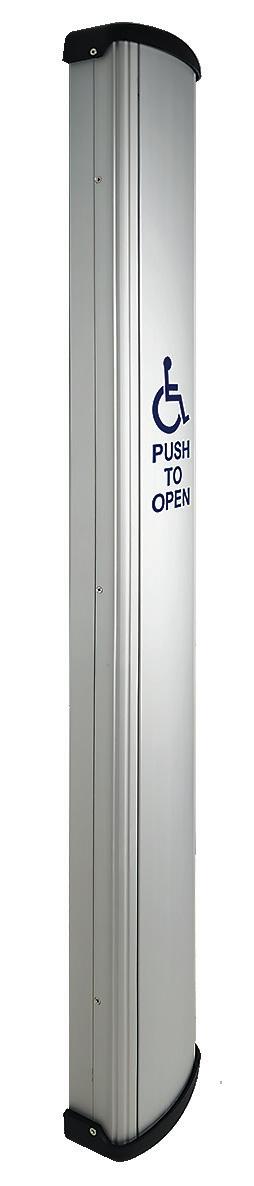
Camden has introduced a new line of ‘Side Load’ Column push plate switches. These switches are installed by mounting the activation plate directly onto the back switch assembly with six screws. They are designed for use when an obstruction above the installed switch prevents the use of a Top Load model. These switches incorporate an enclosed backbox. The CM-84 and CM-85 Series extruded aluminum ColumnT switches are ADA, OBC, NBC, CSA, and CSBC compliant. They have a 3” (75mm) wide activation plate and are available in clear aluminum, black, bronze, and blue architectural finishes. www.camdencontrols.com
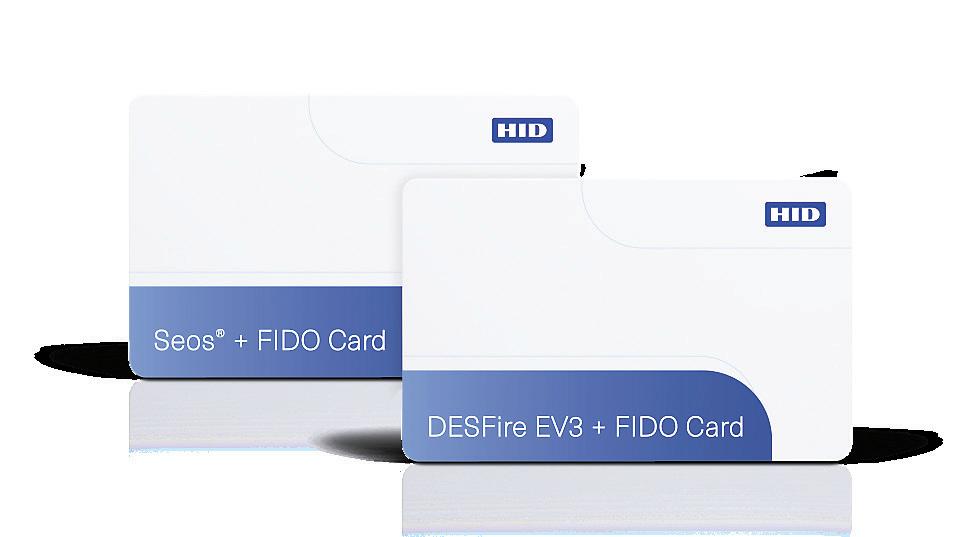
Seos and MIFARE DESFire EV3 FIDO enabled cards offer an allin-one solution for passwordless access to both business applications and physical spaces. Certified to the latest FIDO specifications, this solution stores PKI-based passkeys on the device. The Seos FIDO-enabled card combines physical access technology with strong FIDO2.1 authentication in a single credential, while the MIFARE DESFire EV3 FIDO-enabled card integrates smart card capabilities with unified digital access. www.hidglobal.com
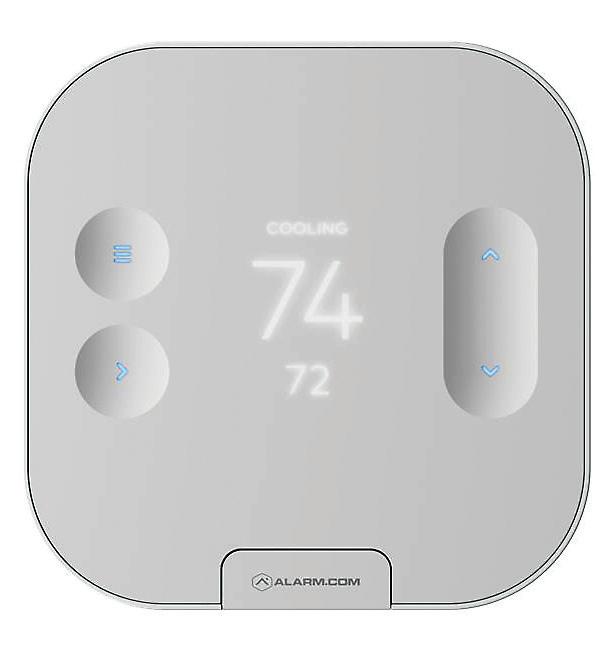
The ADC-T25 smart thermostat is compatible with most common HVAC systems. Designed by Building36, the T25 has flexible wiring options that allow it to operate on battery power if no C-wire is present. This eliminates the need to run wires or use a retrofit kit. It also includes auto-configuration with wire detection. Full integration with the Alarm.com platform enables remote control of the thermostat and customizable automation options. The T25 also enables Pro HVAC Monitoring. www.alarm.com
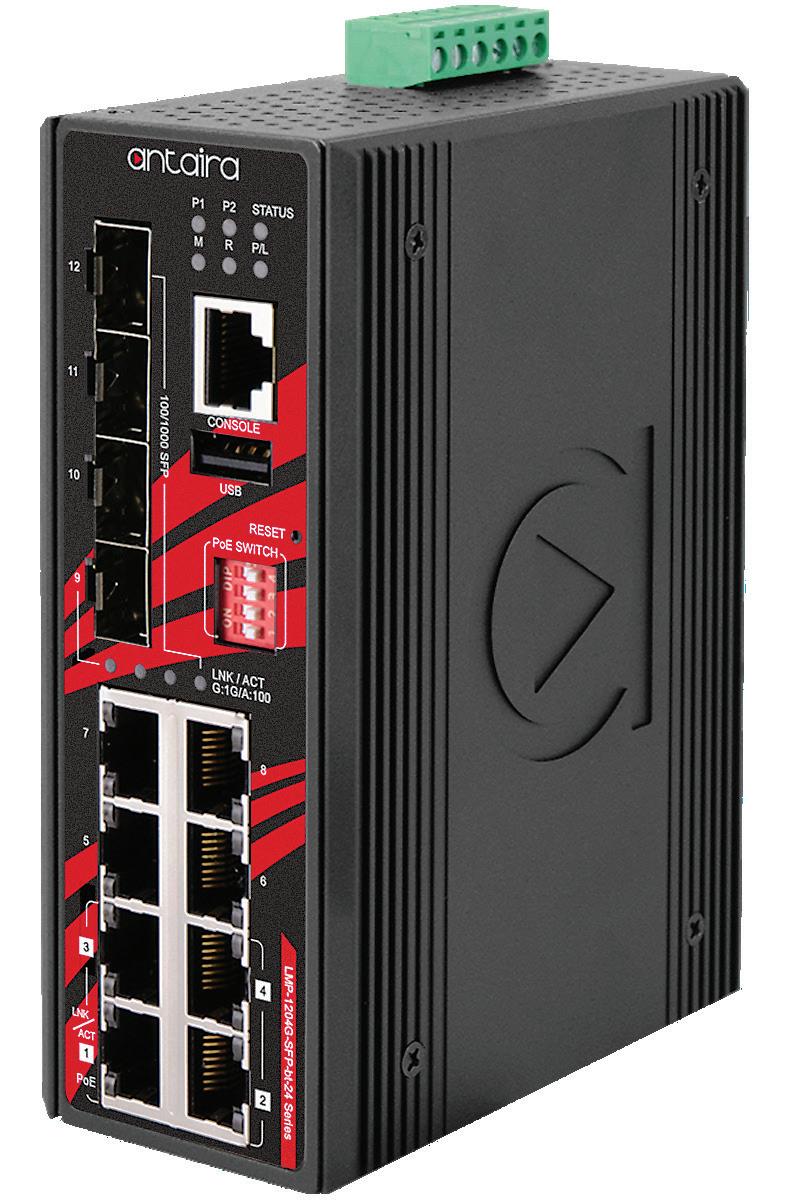
The LMP-1204G-SFP-bt-24 is a fully manageable Light Layer 3 Ethernet switch pre-loaded with a web management console design. It supports the ring network redundancy function using the open standard ITU-T G.8032 ERPS protocol with <50ms network recovery time. Advanced network filtering and security functions — such as IGMP, VLAN, QoS, SNMP, RMON, Modbus TCP, and 802.1X/HTTPS/SSH/ SSL — increase determinism and improve network management for remote SCADA systems or control networks. www.antaira.com
GARDiS Pro Version 3.1 is the latest iteration of GARDiS Access Control Management Software. GARDiS 3.1 introduces expanded biometric support and intelligent credential management, delivering improved hardware reporting capabilities and new third-party integration options. Version 3.1 adds support for the Digitouch Biometric Reader, enabling fingerprint authentication and introduces automatic credential status updates to strengthen access control management. Administrators also benefit from customisable event log retention. www.tdsi.co.uk

Available in multiple head styles, the R4-15 lets manufacturers match existing latches while giving operators a single key for field access. Its versatile design allows it to secure many different types of panels across heavy machinery, and Southco offers a variety of tool-actuated options to match other latches on the vehicle. If manufacturers opt for hand-operated functionality, the R4-15 can also permanently attach its key. The R4-15 offers durability with a combination of sturdy construction, reinforced housing for tool-operated heads, and a zinc-nickel coating. www.southco.com