Are virtual replicas the future of asset management?
A sports analogy for 2026.
EVENT RECAP: MAINTRAIN DELIVERS INSIGHTS ON AI, LEADERSHIP AND RESILIENT OPERATIONS
PEMAC’s annual conference marked its 22nd year with a sold-out event in Calgary.
COVER STORY: UPENDING THE DOWNTIME DILEMMA
Redefining asset management with digital twin technology.
TROUBLESHOOTING AND CONDITION MONITORING OF COMPRESSORS: PART 2
Practical condition monitoring recommendations and troubleshooting guide for common compressor issues.
AI AND THE FUTURE OF MAINTENANCE PLANNING
Explore how AI tools are making it faster and easier to draft detailed maintenance job plans.
THE CONNECTED PLANT’S HIDDEN WEAK SPOT
Why cybersecurity is now a plant-floor priority.
CASE STUDY
How CFM Services increased business growth with Hexagon’s advanced measurement solutions.
Small ball, big impact: Lessons from a year of hits and misses
It’s late November as I write this, roughly three weeks since the Blue Jays’ heartbreaking Game 7 loss to the Dodgers in the World Series.
I think I speak for most of the country when I say we’re still grappling with the details of that game—the explosive three-run homer from Bo Bichette, the game-tying Dodgers homer in the ninth, the out at home plate that would have been the win, the (insert expletive here) ball under the wall.
That loss was like salt in the wounds of what has already been a tough year for Canada. Between the U.S. tariffs, trade tensions, political upheaval and rising inflation rate, 2025 delivered more than a few blows. And the manufacturing industry has felt every single one of them.
So, what does the most historic loss in Canadian sports have to do with these economic and geopolitical disruptions? I think the throughline is that we’re all still recovering—and will be for the unforeseeable future. And while recovery rarely follows a clean, predictable path, it does move us forward. Recovery periods tend to push us to reassess, improve and adapt in ways we wouldn’t have otherwise.
For instance, right now, even as the sting of the Game 7 loss lingers, the Blue Jays are looking ahead, learning from what worked and didn’t and making the necessary adjustments to come back stronger.
Similarly, the manufacturing sector is using this moment to rethink strategies, pivoting and adapting where needed to become stronger, more competitive. As a result, a few silver
linings have emerged, such as emphasis on supply chain diversification and a renewed focus on domestic production and new global markets.
In speaking to industry leaders this year, I’ve also learned that manufacturers are investing in maintenance as a path to resilience. (This issue explores some of the ways IIoT adoption is accelerating, from AI to digital twins.) Increasingly, predictive maintenance is a practical entry point for digital transformation and emerging as a measurable way to reduce downtime, extend asset life and prove ROI before scaling broader initiatives.
As we head into 2026, a few trends seem poised to shape the next phase of that evolution. Some experts I’ve spoken to have pointed to areas like generative design, industrial extended reality and intelligent supply chains. Meanwhile, the conversation around AI is maturing, with the hype giving way to more pragmatic imaginings of how humans and machines actually work together for more efficient, productive plant operations.
To bring it back to baseball, upsets and strikeouts will always be part of the game—it’s how the team shows up to the next inning that matters. If 2025 tested resilience, 2026 will be about building on those lessons to turn today’s challenges into tomorrow’s wins, both on the field and off.
See you in March.
KIRSTYN BROWN Editor kbrown@annexbusinessmedia.com
Print and digital subscription inquiries or changes, please contact Customer Service
Angelita Potal, Customer Service Administrator Tel: 416-510-5113 email: apotal@annexbusinessmedia.com
Mail: 111 Gordon Baker Rd., Suite 400 Toronto, ON M2H 3R1
EDITOR Kirstyn Brown 226-931-4194 kbrown@annexbusinessmedia.com
BRAND SALES MANAGER Pat Lorusso 416-518-5509 PLorusso@annexbusinessmedia.com
AUDIENCE DEVELOPMENT MANAGER Beata Olechnowicz bolechnowicz@annexbusinessmedia.com 416-510-5182
MEDIA DESIGNER Graham Jeffrey
ACCOUNT CO-ORDINATOR Debbie Smith 416-510-5107 dsmith@annexbusinessmedia.com
GROUP PUBLISHER Paul Grossinger 416-510-5240 pgrossinger@annexbusinessmedia.com
CEO Scott Jamieson sjamieson@annexbusinessmedia.com
Machinery and Equipment MRO is published by Annex Business Media, 111 Gordon Baker Rd., Suite 400, Toronto ON M2H 3R1; Tel. 416-442-5600, Fax 416-510-5140. Toll-free: 1-800-268-7742 in Canada, 1-800-387-0273 in the USA.
Printed in Canada
ISSN 0831-8603 (print); ISSN 1923-3698 (digital)
PUBLICATION MAIL AGREEMENT #40065710
Subscription rates.
Canada: 1 year $66.30, 2 years $105.06. United States: 1 year $145.86. Elsewhere: 1 year $167.28. Single copies $10 (Canada), $16.50 (U.S.), $21.50 (other). Add applicable taxes to all rates.
On occasion, our subscription list is made available to organizations whose products or services may be of interest to our readers. If you would prefer not to receive such information, please contact our circulation department in any of the four ways listed above.
NEXTSTAR EXPANDS INTO ENERGY STORAGE AT WINDSOR PLANT
NextStar Energy, a large-scale lithium-ion battery manufacturing facility, is expanding operations to include the production of energy storage system (ESS) batteries. According to a press statement by the company, the Windsor-based plant has begun manufacturing advanced battery cells designed for commercial and grid-scale energy storage solutions.
The company says it will supply ESS batteries and electric vehicle (EV) batteries to its joint venture partners, LG Energy Solution and Stellantis. The expansion includes the addition of Lithium Iron Phosphate (LFP) battery chemistry, which is suitable for ESS applications, alongside the existing Nickel Manganese Cobalt (NMC) chemistry.
“NextStar Energy’s expansion into energy storage reflects the company’s ability to respond and adapt to changing markets,” said Danies Lee, Chief Executive Officer of NextStar Energy.
The ESS market is expected to grow over the next decade, driven by demand from AI data centres and the need for grid stability.
NextStar has reportedly been conducting material testing and equipment calibration in preparation for mass production, which is scheduled to begin in the coming weeks. The company has also hired over 1,000 employees, many of whom have received specialized training through company programs and initiatives such as Battery Boost, developed in partnership with Invest WindsorEssex and Palette Skills.
HITACHI INVESTS $270M IN LARGE POWER TRANSFORMER MFG.
Hitachi Energy announced an additional $270 million (US$195 million) investment to expand its large power transformer manufacturing facility in Que. This investment, which builds on an ongoing expansion announced in 2024, will reportedly increase the site’s annual production capacity.
This effort is part of Hitachi Energy’s reported US$9 billion global investment program. This latest expansion will create approximately 500 new jobs and bring other benefits
to the local economy, according to a press statement by the company.
Transformers are a critical component of the energy value chain, enabling efficient transmission and distribution of electricity. They support applications such as large-scale transmission systems, data centre operations, grid interconnections, integration of renewable energy and the electrification of transportation, all of which are essential to the decarbonization of energy systems.
LOGISTICS
SCHNEIDER ELECTRIC OPENS DISTRIBUTION CENTRE IN ONTARIO
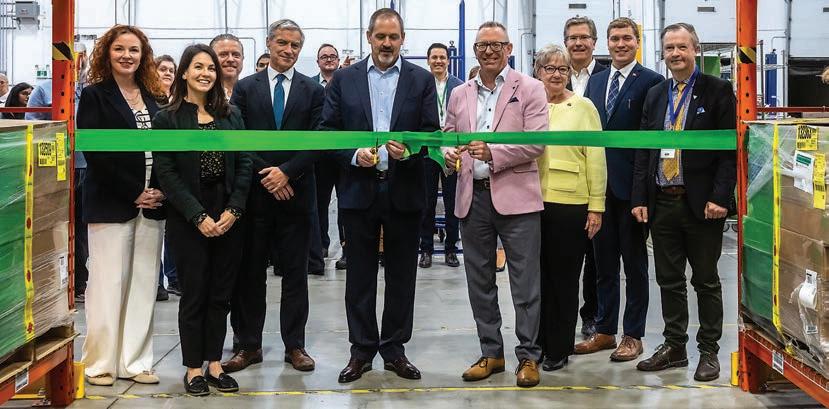
The grand opening of Schneider Electric's new Canadian distrubtion centre in Halton Hills, Ont.
On Oct. 15, Schneider Electric Canada officially opened a new 130,000 square-foot distribution centre in Halton Hills, Ont. In a press statement, the company stated that “the strategic investment strengthens Schneider Electric’s Canadian operations by improving delivery timelines and contributing to national energy sustainability”.
Located at 6 Cleve Court in Georgetown, the facility will aim to serve customers across commercial, industrial, residential and infrastructure sectors.
Operated in partnership with CEVA Logistics, the facility will handle the distribution of electrical components and equipment across Canada, with a focus on improving delivery efficiency and reliability.
CEVA’s Halton Hills facility is also among the first of several global locations deploying Manhattan Associate’s Active® Warehouse Management and Order Management systems. The advanced platforms accelerate the integration of new technologies aimed at improving operational efficiency.
DOWNTIME
UNPLANNED DOWNTIME COSTS UP TO US$852M WEEKLY: REPORT
Fluke Corporation has released new survey results highlighting the impact of downtime in industrial manufacturing. According to Fluke, the data shows that more than six in ten manufacturers experienced unplanned downtime over the past year, costing the industry an estimated US$852 million each week.
The survey found that nearly half (48 per cent) report 6 to 10 downtime incidents weekly; almost one in five (19 per cent) face 11 to 20 incidents
A rendering of the energy storage systems (ESS) NextStar will manufacture.
NEWSWATCH
weekly. Forty-five per cent say outages last up to 12 hours; 15 per cent report incidents stretching to 72 hours.
The survey also found an average cost of US$1.7 million per hour, a single incident can equal up to $42.6 million in losses: the equivalent of powering 2,500 factories for a week.
The research, conducted by Censuswide, surveyed over 600 senior decision-makers and maintenance professionals in the U.S., U.K. and Germany.
On a global level, risks are especially acute for large enterprises. Among organizations with more than 50,000 employees, 40 per cent report experiencing 11 to 20 downtime incidents each week and half say these incidents can last up to 72 hours.
Despite the scale of the risk, the industry remains fragmented in its response to it. The findings show that manufacturers are scattering digital
investments across multiple solutions to build resilience, including predictive maintenance (12 per cent), digital twins (12 per cent) and condition monitoring (13 per cent).
BUSINESS
FLINT ANNOUNCES $320M IN NEW CONTRACTS, RENEWALS
FLINT Corp., an industrial and energy services provider, announced that between July 1, 2025 to Oct. 27, 2025, it has booked new contract awards and renewals that are estimated to generate approximately $320 million in backlog. In a press release, FLINT stated that approximately 13 per cent of the work will be executed in 2025 with the balance scheduled for 2026-2030.
According to Barry Card, Chief Executive Officer, the new and renewed contracts span
STAINLESS STEEL
FLINT’s core service lines: construction, maintenance, turnarounds and environmental services. The contracts are reportedly valued at approximately $320 million.
“Our focus on collaboration with customers, local communities and Indigenous partners continues to drive our success and expand our scope of work. We remain dedicated to delivering safe and reliable, high-quality solutions that support our clients’ long-term needs," he said.
SKILLED TRADES
ONTARIO BROADENS SKILLED TRADES CERTIFICATION
As of Oct. 17, Skilled Trades Ontario (STO) is expanding on-site certification exam delivery to all Training Delivery Agents (TDAs) that offer a final level of in-class apprenticeship training.
The announcement was made by Skilled Trades Ontario CEO Candice White during remarks at the Provincial Building and Construction Trades Council of Ontario’s 66th Annual Convention in Windsor on Oct. 16.
This expansion reportedly builds on a pilot launched under the Ministry of Labour, Immigration, Training and Skills Development (MLITSD), which began with 31 TDA locations across the province. Since assuming responsibility for exam administration on April 2, 2025, Skilled Trades Ontario has broadened on-site delivery to 54 TDA locations.
As of Oct. 17, the program has been made permanent and is now available at all Training Delivery Agents authorized to provide final-level apprenticeship instruction—more than 100 locations across Ontario— allowing eligible candidates to write their certification exams directly at their training site.
Helping workers thrive
Tips for supporting a safe return to work after a mental health
BY CANADIAN CENTRE FOR OCCUPATIONAL HEALTH AND SAFETY (CCOHS)
Just like taking time to recover from a physical injury or illness, there may be situations when a worker needs to go on leave to look after their mental health. When they are ready to return to work, it’s important to help them reintegrate into the workplace and their duties.
Compassionate communication, flexible work arrangements, support and access to mental health resources can help ease the transition while fostering a sense of safety and belonging.
The following tips can help guide you through the returnto-work process for the best possible outcome for both the worker and the organization.
What to do during the absence
When a worker takes leave for a mental injury or illness, you may wonder if it’s okay to check in on them during their absence. In many cases, regular contact can help maintain a connection to the workplace and support an early and safe transition back.
Talk to the worker about how often they would like you to reach out and ask them about their preferred method of communication—whether by phone, text or email. Update them about any changes or news at the workplace, and encourage their co-workers to stay in touch, too.
Also, provide the worker with reassurance that their medical information will be treated with full confidentiality. Workers who experience a mental illness may fear stigma and judgement from their peers. Discuss how they want their absence to be explained to others and what information can be shared with the wider team.
Develop a return-to-work plan
Once a healthcare professional gives the worker the all-clear to come back to work, it’s time to develop a return-to-work plan.
This plan is a written document that should be created in collaboration with the worker, human resources, union representatives and medical professionals.
The plan should lay out the steps that both you (the employer) and the worker will take to help them return to their pre-illness job in a timely manner. The plan should outline roles and responsibilities, set clear goals and timelines and be flexible to adjust as needed.
The return-to-work plan may include accommodations for the worker, such as reducing factors that could cause stress, like heavier workloads or tight deadlines, and extending breaks to give them more time to adapt to the workflow.
The plan may also include modified duties. These are temporary changes to a worker’s
duties that keep them connected to their job while they progress to resuming their full role. Modified duties can include anything from handling paperwork to taking inventory, and should be safe, meaningful, productive and in line with their skills and abilities.
It can be overwhelming to return to work after an absence. Having a clear plan in place that sets out expectations and goals can make the transition smoother for everyone.
Taking the time to check in
Once the worker is back on the job, it’s important to schedule regular check-ins and reviews to see how the transition is going, identify any issues and adjust the return-to-work plan as required. Are they meeting the expectations and timelines set out in the plan? Do they need further accommodations to perform their tasks? Are they ready to assume more responsibilities? Informal check-ins coupled
leave.
with a formal review process can help you evaluate and document the worker’s progress, while keeping them on track for a successful return.
Providing ongoing support
Returning to work doesn’t necessarily mean a worker has fully recovered. It’s important to remember that mental health is a journey, and different for everyone. It often takes time and ongoing support to manage a mental illness and feel well again.
Be sure to make mental health resources, like professional counselling, readily available to the worker—whether through an employee assistance program or services available within the community.
Continue communicating with the worker and wider team. Having open, honest conversations about mental health can help to reduce stigma and break down barriers to care.
Look for opportunities to promote mental health throughout the organization. Implement a wellness program that includes team-building activities, mindfulness workshops and fitness reimbursements and encourage workers to take health breaks to help boost their mood. Taking measures to support a mentally healthy workplace not only benefits the individual returning to work, but it also contributes to a psychologically healthier workplace for everyone.
The Canadian Centre for Occupational Health and Safety (CCOHS) promotes the total well-being — physical, psychosocial, and mental health — of workers in Canada by providing information, advice, education, and management systems and solutions that support the prevention of injury and illness.
Visit www.ccohs.ca for more safety tips.
MainTrain delivers insights on AI, leadership and resilient operations
PEMAC’s annual conference marked its 22nd year with a sold-out event in Calgary.
BY KIRSTYN BROWN
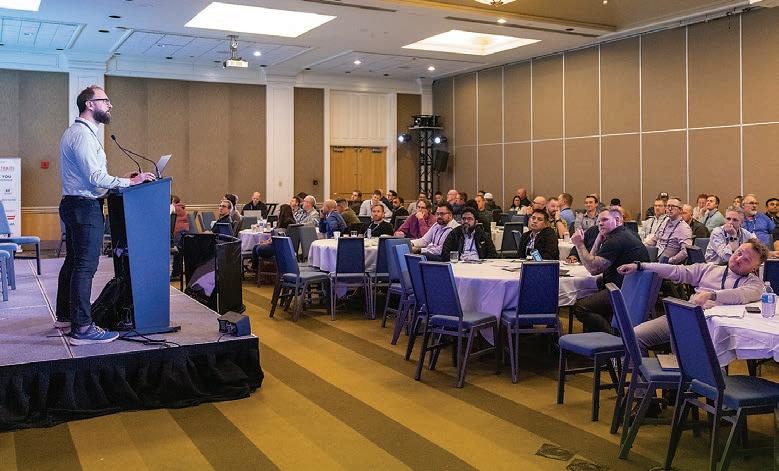
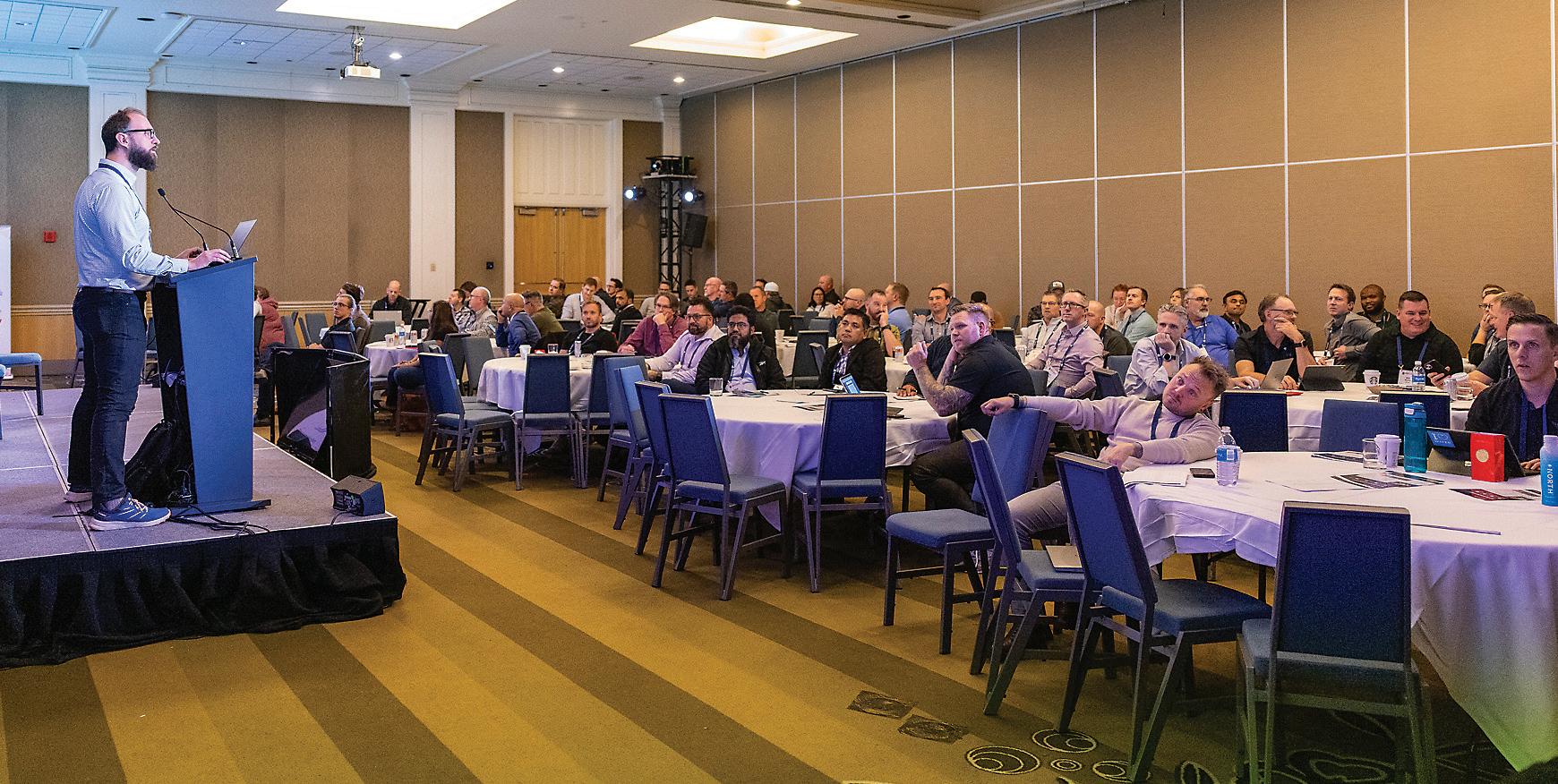
From Oct. 27 to 29, the Westin Hotel in Calgary was the site of MainTrain 2025, Canada’s largest conference dedicated to maintenance, reliability and asset management. Organized by the PEMAC Asset Management Association of Canada, the event marked its 22nd year with its highest-ever turnout— over 400 attendees, with registration selling out in advance.
Each year, the conference takes place in a different host city. Calgary made an ideal location due to its expanding industry and concentration of organizations that are involved in asset management.
“The city and surrounding area host a diverse mix of companies across energy, mining, utilities and infrastructure, making it highly relevant for attendees looking to connect and learn from peers,” said Patrick Chan, a PEMAC board director.
This year’s agenda highlighted the technologies and strategies that are defining the current state of asset management and its future. Throughout the conference, participants engaged in workshops and presentations covering a wide range of topics, including decision intelligence frameworks, predictive maintenance, cybersecurity, data quality and digital transformation. In addition to technology, the conference emphasized the human side of reliability and asset management. For example, “The Human Factor: Rethinking How We Build Asset Management Programs,” presented by Michael Bell, asset management supervisor, Regional Municipality of Wood Buffalo, explored strategies for workforce development, change management and building resilient teams. Attendees discussed practical approaches for engaging people in asset management initiatives and
This year's PEMAC MainTrain conference was the largest ever, with more than 400 attendees.
adapting programs to meet evolving organizational needs.
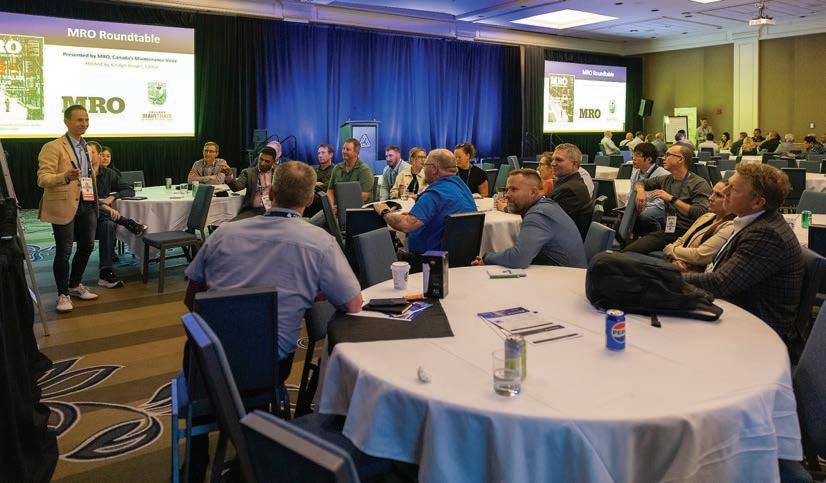
The popular MRO Roundtable event returned, bringing together a diverse mix of professioals for interactive group discussions and real-world problem solving.
Offsite tours to the Glenmore Water Treatment Plant and WestJet’s maintenance facilities provided a firsthand look at operational best practices. Meanwhile, the exhibitor hall was a hub for networking and exploring new products and solutions between and after sessions.
“As awareness of asset management grows, many organizations are recognizing the significant gaps they still need to address,” said Patrick Chan. “While technology such as AI will play a key role in advancing asset management, lasting success will ultimately depend on strong leadership, skilled people and relationships.”
Here are more highlights from the week.
Keynotes strike a chord
Each morning, attendees packed the ballroom for keynote presentations that addressed the sector’s most pressing challenges, from the evolution of facility management in the city of Calgary to the true meaning of an asset and asset value.
A conference highlight was the keynote address on Day 3 by Dr. Karina Pillay, the former mayor of the Slave Lake, on the recovery and rebuilding of the community after one of the most devastating wildfires in Canada’s history.
Dr. Karina Pillay gives the keynote address on Day 3.
Spotlight on AI
Artificial intelligence was a recurring theme across several presentations and discussions. One of the most well-attended sessions was “Artificial Intelligence in Maintenance Planning,” presented by industry veteran James Reyes-Picknell of Conscious Asset.
Held on the opening morning, the session was standing room only, reflecting strong interest in the practical applications of AI. Reyes-Picknell introduced basic maintenance planning concepts and demonstrated a Canadian-developed Gen AI tool capable of generating draft maintenance plans using live audience input. The presentation focused on how generative AI can streamline planning and improve maintenance efficiency, with attendees actively participating in the demonstration.
MRO facilitates collaboration and dialogue
A popular event at MainTrain, the annual MRO Roundtable drew a large and engaged crowd. This highly interactive session featured small, facilitated roundtables where
attendees tackled key challenges, shared insights and explored new approaches. Topics included setting up storerooms for success, building business cases for improvement, the skills crisis in maintenance and reliability, technology’s role in human connection, developing AM and M&R competencies, managing supply chain risks and balancing change
with industry fundamentals.
The depth of expertise in the room was evident, with participants learning not only from facilitators but also from one another.
Facilitators included Danaka Porter, James Reyes-Picknell, James Kovacevic, Kari Goebel, Susan Lubell, Michael Bell, Patrick Chan and Justyna Krzysiak.
The MRO roundtable session inspired dialogue and idea sharing on industry topics.
PEMAC HONORS EXCELLENCE IN THE FIELD
PEMAC president Nigel D’Souza presents Bill Mercer, senior advisor at Capital Power, with the Sergio Guy Memorial Award.
Tuesday night’s awards dinner at Heritage Park celebrated excellence in the maintenance and asset management sectors. Nine individuals and teams were honored for their contributions to the field, with categories like Maintenance Management Leadership, Asset Management Leadership and the Sergio Guy Memorial Award.
Awards included:
• MMP Capstone Award (Business Process Focus): Max Linnell
• Maintenance Management Leadership Award: Abrar Ahmad
• Asset Management Leadership Award: Tony Vollmers
• Maintenance Management Team of the Year: Halton Region
• AMP Capstone Award: Amie Cybulski and Kyle Kellar
• Asset Management Team of the Year: Regional Municipality of Wood Buffalo
Sergio Guy Memorial Award: Bill Mercer
“This year’s award recipients exemplify excellence in maintenance, reliability and asset management,” said Alan Cox, chair of the PEMAC Awards committee. “Their achievements inspire others and reflect the journey towards excellence across the country. As nominations for the 2026 Awards open soon, we encourage members to recognize and celebrate those making a meaningful impact.”
As the conference wrapped up, PEMAC president Nigel D’Souza announced that next year’s MainTrain will take place in Montreal, Que., Oct. 5-7.
Upending the downtime dilemma
Redefining asset management with digital twin technology.
BY MARI-LEN DE GUZMAN
In asset maintenance, every unscheduled downtime tells a familiar story of lost productivity, mounting costs and a scramble to get production back online. While it’s a challenge that has historically been the reality for most MRO professionals, the solution could lie in virtual reality.
Advancements in building information modelling (BIM) have paved the way for the digital twin technology. Beyond static 3D models, digital twins are living, data-rich, real-time replicas of physical assets. Think: predictive maintenance on steroids—because the possibilities of a fully functioning digital twin go far beyond simply scheduling proactive repairs. It redefines how organizations plan, monitor and sustain asset performance throughout its lifecycle.
“You have to make sure the data being produced is in a standardized form so it can speak to each other. Real-time data integration must be happening. Without a solid data foundation, you can’t build a true digital twin.”
– Love Kinger, BIM lead, Metrolinx
Beyond the buzzword
Despite its growing popularity, “digital twin” is often misunderstood or misrepresented, says Love Kinger, a BIM professional and currently the BIM lead at Metrolinx , an agency of the Ontario government that manages and integrates public transportation systems in the Greater Toronto and Hamilton areas.
“There is a lot of ambiguity when (companies) use ‘digital twin,’” Kinger explains. “Digital twin is
basically the digital interface of your built asset—not your design asset.”
A true digital twin, according to Kinger, exists only when there is real-time data flowing from a physical asset into a digital interface. He describes the twin as a digital interface of the physical world, connecting sensor data, maintenance records and other operational information in one integrated environment. But achieving that level of integration isn’t simple. The first step, he says,
is getting the data right.
“You have to make sure the data being produced is in a standardized form so it can speak to each other,” Kinger says. “Real-time data integration must be happening. Without a solid data foundation, you can’t build a true digital twin.”
Real-world applications
Although widespread adoption of digital twin technology in maintenance, repair and operations may still be in its early stages, there seems to be no shortage of real-world examples and case studies of successful application in certain industries. Oil and gas, automotive, aerospace and transportation are among the early adopters of the technology.
Multinational oil and gas company BP, for example, uses digital twin to create an accurate, virtual model of its offshore oil platforms in the Gulf of Mexico for remote monitoring and real-time operational support. At its Argos platform, for example, the digital twin is being used for corrosion inspections.
“The inspections are a critical task for all operations… and typically require lots of manual work. But the digital twin uses laser scan
technology and machine learning to collect data and help prioritize areas that need attention,” a post on the BP website states.
Global mining firm Rio Tinto announced in 2022 its deployment of a digital twin for its Gudai-Darri mine in Western Australia, a first for the company at the time. The technology uses a digital replica of the mine to analyze different scenarios and enable predictive maintenance and optimize equipment performance.
Some companies are opting to deploy digital assets at the beginning of the product development, where the digital twin is built simultaneously with the product, and integrated throughout the entire product lifecycle, from design and production to deployment and maintenance.
“All of the information that is required to define the product in the real world, you're doing it in the digital world, and so you're able to create a complete representation of the product in the engineering world,” explains Dale Tutt, VP of industry strategy at Siemens Digital Industries Software.
Aircraft manufacturer Bombardier has adopted Siemens’ Xcelerator platform to digitally transform its aircraft engineering process, from design to
production. According to a Siemens’ press release, Bombardier is replacing its legacy system to create a seamless, integrated digital thread, to bring mechanical and electrical design together for product lifecycle management.
“Our concept of digital twin is really about fusing the digital world with the real world and use that to… actually improve your decision-making throughout the entire process, because you have better information to make those decisions,” Tutt says.
From reactive
to predictive In MRO applications, that real-time connection between the physical and digital worlds is where the technology’s real value lies. Digital twins allow maintenance teams to use data from the field to continuously refine and predict equipment performance, explains Tutt.
“Because you have that continuity and you understand the configuration, you’re able to use real-world data and drive it back into your digital-twin model to do further analysis,” he says. “And now maybe you can start to optimize maintenance cycles. You can do more predictive maintenance. You can help reduce your cost of operations.”
Tutt says this predictive capability can virtually eliminate the guesswork that often drives reactive maintenance.
“Maintenance is easy when you can schedule it,” he says. “It’s when it’s an unscheduled downtime that you’re stranded in an airport (for example) and waiting for the mechanic to fix the airplane. And so that’s another area of benefit with the digital twin.”
By mirroring real-world assets, digital twins can also simulate repair procedures before they’re performed, ensuring technicians have the right tools and sequence before ever touching the physical equipment.
“You do this virtual commissioning where you’re simulating in the digital world with the digital twin that that tool is going to work,” Tutt says. “So, in those applications you’re demonstrating the processes that those technicians might use to do the maintenance.”
For large-scale operations, this simulation capability is complemented by data integration at every level. Metrolinx’s Kinger points out that standardizing data across all aspects of an asset is key and should
KEY STEPS TO SUCCESSFUL DIGITAL TWIN DELIVERY
Think holistically. Align technology with people, processes and data strategy.
Start small. Tackle your biggest challenge first and show quick ROI.
Establish data continuity and trust. Accurate, up-to-date data builds user trust.
Train and empower your workforce. Train teams and design workflows that make data easy to use on the job.
Scale gradually. Use early wins to scale adoption across assets and sites.
Keep the human element central. Digital twins should amplify human expertise, enabling safer, smarter maintenance.
be the first step in rolling out a digital twin.
“We are producing this requirement documents so that over the course of construction, the data is being captured in the right way,” Kinger says of a major project currently underway at Metrolinx, which will have a digital twin component.
Holistic approach
Implementing a digital-twin strategy is not a plug-and-play exercise. Kinger says one of the biggest hurdles is integrating data from projects launched before digital standards were in place.
Many organizations, he notes, can’t simply swap out legacy
systems. Instead, his team looks for ways to connect the old and new, linking asset-management, document-management and GIS platforms so they can “speak to each other.”
Tutt says organizations looking to digitize their assets should “think holistically.”
“It’s not just (about buying) digital tools and start implementing them. It’s really about thinking about your people, how you train them and the processes you use.”
The best place to start, Tutt advises, is by identifying a single pressing problem that needs solution.
“Start there and show the benefits (from) there. Create the digital twin that you need to solve that problem, that shows some return on investment and it also shows other people what can be done,” Tutt explains.
Once others see the results, he says, the enthusiasm spreads,
and buy-in from users and across the organization follows.
The human factor
Both Kinger and Tutt emphasize that people are central to successful adoption. “As they are going to be the end user of the product,” Kinger says of asset maintenance personnel and field crew. “They should understand the workflow and follow the protocol… If your field guy doesn’t know how to use it, then it’s of no use.”
His team plans training programs and simple mobile interfaces so technicians can access data from a phone or tablet in the field.
Tutt agrees that trust in the system is key. “It’s really about getting people comfortable that they’re getting the right answer (from the digital asset) every time. And when you can show them that, they’re going to adopt it a lot faster.”
Troubleshooting and condition monitoring of compressors: Part 2
Practical condition monitoring recommendations and troubleshooting guide for common compressor issues.
BY L. “TEX” LEUGNER
In the previous issue, we explored compressor types, lubrication strategies and predictive maintenance technologies. Part two of this series explores practical condition monitoring recommendations and a streamlined troubleshooting guide for common compressor issues. Use these insights to strengthen your maintenance program, minimize downtime and keep your compressors running efficiently.
Condition monitoring recommendations
1. If the compressor is electric motor driven, determine and record full load electric motor current at a specific voltage. This is the baseline. If the compressor has its own receiver, allow the compressor to fill this reservoir from zero to the cutout pressure. Record the cutout pressure
and the time it takes to fill the reservoir.
2. Determine the acceptable discharge temperature. Normally, the high air temperature switch on water cooled, dual stage reciprocating compressors is set at 150–165°C (302–328°F). This temperature should be recorded and monitored as part of the condition monitoring program. The higher the discharge temperature, the greater the possibility of corrosion, varnish and carbon deposits, lubricant oxidation and discharge line explosions.
3. In rotar y compressors, the high air temperature switch is set at 110°C (230°F) and is intended to shut the compressor down if the temperature rises. As a guide, discharge temperature should be about 38°C (100°F) higher than the temperature of the inlet air.
4. Maintain oil temperatures at
about 65°C (150°F).This ensures that oil temperatures are 15 to 20 degrees higher than the pressure dew point that helps reduce the formation of condensate, carbon and varnish deposits. (Pressure dew point is the lowest temperature to which compressed air can be exposed without causing condensation).
Example: In a two-stage air compressor taking in air at atmospheric pressure with a relative humidity of 75 per cent, with a discharge pressure of 120 psi (758 kPa), 14L (3 ¾ gallon) of water per hour may be condensed for each 1000 CFM of free air compressed. Any increase in the recorded oil temperature should be immediately investigated.
5. Quality of oil, bearing and inlet air filters must all be capable of
removing contaminants in the 10-micrometer absolute range or smaller. In flooded rotary compressors, the oil separator is also a critical component. It is a large sub-micronic filter and its quality of operation is far more important than its initial cost. It should be replaced or cleaned when differential pressure reaches about 10 psi.
6. Determine the normal, expected discharge pressure and record it for reference and comparison if problems arise. Due to the potential for corrosion, rust and varnish deposits, intercoolers, cylinder water jackets, aftercoolers or heat exchangers should be inspected and/or cleaned at least annually, as part of the PM program.
7. Air reser voirs, drains, condensate traps and air line filters should be visually inspected and drained at least
once each week to ensure clean, moisture free instrument or tool system control air. (This is a frequently neglected PM activity and recommended practice is to inspect and drain these components once a day. Automatic drain valves are of absolutely no use if they are not working properly.)
8. Inspect and clean lubr icators regularly. In pneumatic systems, the lubricant is carried in the air stream and the amount of oil metered, whether as a fog or mist, is determined by adjusting the oil feed rate. This oil drip feed rate must be recorded for maintenance reference and monitored regularly. If plastic or polycarbonate lubricator bowls are used, inspect these for leakage daily.
9. Determine the cylinder lubrication feed rates for reciprocating compressors and record this information in the maintenance files. It is recommended that new or rebuilt compressor cylinders should be run in for 5 to 10 hours of operation at no load conditions using at least double the oil feed rate.
This process will establish normal wear patterns and eliminate the possibility of scoring a new cylinder or its associated components. In general, the larger the bore and the higher the pressure, the longer the run in time required. Once run in is completed, the proper lubricator oil feed rate can be determined using the following formula:
Q = B×S×N×62.8
10,000,000
Where:
B = Bore (in inches)
S = Stroke (in inches)
N = Compressor RPM
Q = Quarts of oil per 24 hours
Once the proper rate has been established, the oil drops should be counted and this information recorded in the maintenance files. If the oil type or
specifications are changed, this process should be repeated. A typical example is a 12-inch (30.5 cm) compressor cylinder compressing air at a discharge pressure of 10 bar (145 psi) would require a lubricating oil feed rate of 12 drops per minute after run in. If the cylinder has two (2) lubrication points, each point should receive 6 drops per minute.
10. Inspect piping and drain valves. In North America, leaking compressed air systems cost industrial plants hundreds of thousands of dollars annually. Piping systems tend to corrode and form deposits Best maintenance practices suggest that when repairing or replacing piping, smooth bore pipe such as aluminum or plastic should be used.
Interior pipe corrosion, poor piping system configuration and contaminated air or gas can cause inefficient energy use. (A 15 psi pressure drop uses about 10 per cent additional energy and over a 10 to 12 year period, the cost of energy may exceed all other maintenance costs.
Troubleshooting guide: Common compressor problems
Note: This troubleshooting guide is general in nature. Depending upon the compressor type, operating conditions or application, some of these symptoms and their possible causes may not apply. It is essential that operating personnel be completely familiar with their compressor type, its processes and operating conditions.
L. (Tex) Leugner, author of Practical handbook of Machinery Lubrication, is a 15-year veteran of the Royal Canadian Electrical Mechanical Engineers, where he served as a technical specialist. He was the founder and operations manager of Maintenance Technology International Inc. for 30 years. Tex holds an STLE lubricant specialist certification and is a millwright and heavy-duty mechanic. Ask him your questions at lloydleugner@ gmail.com.
Symptom Possible Cause
Failure to deliver output
Insufficient output or low pressure
Compressor overheats
Compressor vibrates
Excessive intercooler pressure
Low intercooler pressure
Excessive receiver pressure
High discharge temperature
- Excessive clearance between vanes, lobes or screws (rotary compressors).
- Worn, broken valves or defective unloader(s) (reciprocating compressors).
- Restricted or dirty inlet filter. Excessive leakage (air system).
- Inadequate speed.
- Worn or damaged piston rings (vanes, lobes or screws on rotary systems).
- System demand exceeds capacity.
- Worn valves or defective unloader(s).
- Carbon deposits on discharge valves.
- Excessive discharge pressure.
- Worn or broken valves.
- Excessive speed.
- Inadequate cooling.
- Dirty cylinder water jackets.
- Inadequate cylinder lubrication.
- Defective unloader(s).
- Piping improperly supported causing resonance.
- Misalignment at coupling.
- Loose flywheel or pulleys (where used).
- Defective unloader(s).
- Unbalanced motor or defective motor bearings.
- Loose base plate mounting bolts or soft foot.
- Incorrect speed.
- Damaged foundation or grouting.
- Excessive discharge pressure.
- Worn or damaged rotating components (rotary compressors).
- Worn or broken valves, defective unloader, second stage.
- Worn or broken valves, defective unloader, first stage.
- Dirty or restricted inlet filter or suction line.
- Worn piston rings on low pressure (first stage) piston.
- Worn rotating components (rotary compressors).
- Defective unloader(s).
- Excessive discharge pressure
- Carbon deposits on discharge valves.
- Worn or broken valves.
- Defective unloader(s).
- Excessive discharge pressure.
- Inadequate cooling.
- Dirty water jackets (or plugged or dirty fins on air cooled compressors).
- Dirty or plugged intercooler.
- Abnormal (high) intercooler pressure.
- Inadequate cylinder lubrication.
Cooling water discharge temperature too high
Valves overheat
High levels of condensate
Premature oil thickening or discoloration
Compressor seals fail prematurely
- Low level of coolant.
- Dirty water jackets.
- Worn or broken valves.
- Defective unloader(s).
- Excessive discharge pressure.
- Dirty or corroded intercooler.
- Abnormal intercooler pressure.
- Excessive discharge pressure.
- Long unloaded cycles (inlet valves).
- Damaged or carbonized valves.
- Defective unloader(s).
- Excessive discharge pressure.
- Excessive discharge temperature.
- Inoperative intercooler.
- Plugged or inoperative heat exchanger or water separator.
- Excessive lubricant operating temperature.
- Compressor operating temperature to high.
- Inadequate lubricant type
- Worn or faulty piston rings.
- Excessive discharge temperature.
- Lubricant oxidation.
- Excessive operating temperatures.
- Lubricant incompatible with seal materials.
- Misalignment at coupling.
- Excessive crank case pressure.
- Seal material incompatible with the gas being processed.
AI and the future of maintenance planning
AI tools are making it faster and easier to draft detailed maintenance job plans, helping planners spend less time on paperwork and more time on improvement.
BY JAMES REYES-PICKNELL
Maintenance planning has always been one of the most important—and most overlooked—parts of work management. A well-built plan answers the essential questions: What needs to be done and how? By whom? With what tools? And for how long? Effective planning enables efficient scheduling, reduces wasted time and supports safe, predictable execution.
Yet in many plants, planners spend much of their time chasing data, responding to emergencies, or filling out forms. They rarely get the uninterrupted focus needed to create detailed, reusable job plans—and that limits workforce productivity. The good news? Artificial Intelligence is beginning to change that.
From data analysis to content creation
Traditional AI has been used for years in maintenance analytics: spotting failure patterns, predicting breakdowns, or optimizing spare parts. These systems are powerful but limited I in that they analyze existing data according to pre-defined rules and offer recommendations, not new material.
Generative AI (GenAI) takes things further. Trained on vast datasets, it can create new content: text, drawings, even code. When applied to maintenance, that means it can write—generating job plans, procedures, or task lists from plain-language prompts. Planning is a creative exercise and GenAI’s creativity is exactly what makes it useful.
AI in action: A Canadian innovation
A good example is AIJobPlanner™, a Canadian-developed tool designed specifically for maintenance planning. It allows users to describe a
job—such as “replace a pump seal on a vertical centrifugal pump”— and instantly generates a detailed draft plan complete with sequence of tasks, required tools, materials, safety notes, and timing.
In live demonstrations, the tool produced full, structured plans— often eight or more steps—in under two minutes. At PEMAC’s recent MainTrain conference in Calgary, I facilitated creation of a job plan for troubleshooting electrical trips on a Solar gas turbine genset. It took about 30 minutes to produce a reasonable draft and used inputs from about half a dozen in the audience. In a real operation that would probably need another 20 or 30 minutes to clean up so it could be used. He then
showed how the AIJobPlanner™ tool could do it. It generated more detail and what the audience agreed was an excellent draft plan, in less than two minutes. It’s easily edited, still needs expert review and when exported it can used right away. That plan and those from other early adopters, compares favourably with manually written plans. The AI versions were not only faster but surprisingly accurate. In practice they are capturing more detail than the live planners. While planners still need to verify and fine-tune details, often with a field visit, the initial draft quality is impressive. Early users report dramatic productivity gains: moving from five or eight plans per week to forty or more.
If you're a planner, don’t worry; AI won’t take your job, it will make you better at it. If you are an executive reading this, you’ll benefit from substantially less chaos and cost in maintaining your operations.
The planner’s role shifts from writing to reviewing, ensuring accuracy, adding site-specific detail, and validating safety and quality requirements.
Advantages and practical limits
Generative AI offers several clear benefits:
• Speed: Job plans are created in seconds, freeing planners to focus on validation and improvement.
• Consistency: Every plan follows a structured format.
• Accessibility: Skilled tradespeople or junior engineers can produce quality plans across multiple trades.
• Knowledge capture: AI models can embed best-practice procedures, technical manuals, etc., preserving organizational know-how.
Of course, AI is not a silver bullet. It relies on good inputs— accurate equipment description, a good description outlining what work is to be planned, plus any available equipment data, technical manuals, unique safety requirements for the plant and finally human review. And as with any new technology, some organizations face hurdles such as limited IT access to cloud tools, poorly defined work management processes, or simple fear of change.
But those who’ve tested these tools see the potential: they don’t eliminate planning roles; they elevate them. A planner armed with AI becomes a force multiplier—able to plan more work, reduce backlog and contribute directly to higher equipment availability.
If you're a planner, don’t worry; AI won’t take your job, it will make you better at it. If you are an executive reading this, you’ll benefit from substantially less chaos and cost in maintaining your operations.
A step toward uptime 4.0
Generative AI in planning is still new, only a few EAM / CMMS systems have anything like this
capability built in, but the trajectory is clear. It complements human expertise, streamlines tedious work and supports the shift from reactive to proactive maintenance.
It does not replace craftsmanship or judgment, but it does accelerate the path to what I call Uptime 4.0 — an era of intelligent, information-enabled reliability where maintenance professionals can focus on value, not paperwork.
James Reyes-Picknell, BASc, PEng, CMC,is principal consultant at Conscious Asset and author of several books on reliability and maintenance management, including</i> Uptime –Strategies for Excellence in Maintenance Management (2015), Reliability Centered Maintenance – Reengineered (2017), and Uptime for Executives (2024). <i>He is widely recognized as a subject-matter expert in asset management and reliability.</
INDUSTRY
The connected plant’s hidden weak spot
Why cybersecurity is now a plantfloor priority.
BY JACK KAZMIERSKI
If you think that cybersecurity is an issue that only affects your IT department, think again. While that’s still a legitimate target, crafty cybercriminals are wreaking havoc by hacking into all types of connected equipment, including those found on the plant floor.
On Oct. 29, 2025, the Canadian Centre for Cyber Security issued an alert about the threat of “hacktivists” who are exploiting internet-accessible industrial control systems (ICS). According to the alert, “exposed ICS components, including Programmable Logic Controllers (PLCs), Remote Terminal Units (RTUs), Human-Machine Interfaces (HMIs), Supervisory Control and Data Acquisition (SCADA) systems, Safety Instrumented Systems (SIS), Building Management Systems (BMS), and Industrial Internet of Things (IIoT) devices,” are all at risk.
A cyberattack can shut down a plant, resulting in lost business, or worse. Typically, hackers lock organizations out of their systems, or they hold data hostage until a ransom is paid. Some might even sabotage a plant’s equipment remotely in order to disable an assembly line and stop production entirely.
As cyber threats evolve beyond traditional IT systems, now is the moment to identify where your organization's vulnerabilities exist.
Assessing your risk
When assessing an organization’s level of risk, Kenrick
Bagnall, cybersecurity consultant, RCMP contractor/ instructor and CEO & Founder of cybersecurity firm KONCYBER says that three key factors need to be considered: system susceptibility, system accessibility and threat capability (how good the bad guys are). While the last factor is beyond the control of any organization, the first two aren’t and can be fortified against an attack.
Bagnall explains that although system susceptibility and accessibility can be reinforced with layers of protection, including firewalls, multi-factor authentication and by limiting employee access to systems or data, there’s always a trade-off.
“You’re going to lose some functionality and ease-of-use, from an operational perspective,” he says.
Even if you go to extremes with your cybersecurity initiatives, Bagnall says that there’s always a chance that determined hackers will get through all the layers of protection.
“If the National Security Agency can be compromised, anyone can be.”
He recommends that organizations do what they can to protect themselves, but notes that there’s always a risk that hackers will get through.
“That’s what we call residual risk,” says Bagnall, “and that’s what cyber insurance is for.”
The problem: Modernized maintenance
According to Mohid Hasan, Solution Consultant at Belden, a global provider of connection
solutions, cybersecurity has become a growing concern not simply because maintenance systems are no longer mechanical, but because modernization has tightly interconnected digital and operational domains.
Hasan notes that the integration of IT and operational technology (OT) networks—once isolated systems—has created new vulnerabilities.
“Remote access, cloud integration and smart-grid infrastructure have blurred traditional security boundaries, meaning that even one weak device, outdated component or unsecured vendor connection can compromise critical operations,” he says. “The consequences are tangible: production halts, safety risks, reputational damage and compliance challenges now accompany every cyber incident.”
A major issue is the fact that legacy control systems on the plant floor often lack modern security features such as patching, encryption and network segmentation, leaving them exposed to exploitation.
“At the same time, IoT devices and CMMS platforms introduce a multitude of new access points that connect operational technology with corporate networks,” says Hasan. “This combination expands the overall attack surface and creates inconsistencies in security monitoring and control. Weak authentication, outdated firmware, and unmanaged endpoints can allow attackers to move laterally across systems, turning even a minor breach into a large-scale disruption. As a result, organizations operating such mixed environments face
“If the National Security Agency can be compromised, anyone can be.”
– Kenrick Bagnall, cybersecurity consultant
higher vulnerability and greater complexity in maintaining effective cybersecurity defences.”
Best practices
Hasan points to the National Institute of Standards and Technology (NIST), which has outlined risk reduction in OT environments through defence-in-depth and segmentation and isolation.
“It instructs organizations to place IT and OT assets into defined levels, tiers or zones and enforce boundaries using network isolation devices, including switches, routers, firewalls
and unidirectional gateways or data diodes,” he says. “Traffic between zones should be based on mapped data flows, with policies that permit only explicitly authorized communication, following a deny-all, permit-by-exception approach wherever possible.”
A key consideration is physical access to control rooms, cabinets and remote sites, which are an essential part of cybersecurity, “because physical access to OT components often provides direct access to system functionality,” says Hasan.
Regular security audits are a
procedures, and training to prevent the issue from recurring,” he says.
AI-driven systems
One area that might be overlooked when assessing cyber risk is AI-driven OT systems. “Many organizations are deploying AI tools without applying the same security principles they use for traditional IT,” says Hasan. “This creates entirely new attack surfaces. For example, many AI chatbots and AI-powered business tools are launched with no authentication, no rate limiting, no input validation, and no logging—despite being connected to sensitive data. This means an attacker can interact with the AI system directly, issue crafted prompts, extract internal information, or overwhelm the model with automated requests.”
The key point is that AI systems are now part of the operational environment, Hasan adds, and require the same rigour as any other asset: access controls, monitoring, logging, abuse detection, clear data-handling rules and limits on what the model is allowed to retrieve or generate.
must, and Hasan explains that if an audit uncovers a weakness, the first step is to assess its risk level and determine whether immediate containment is required. “High-risk issues should be addressed quickly, while a structured remediation plan is created with clear ownership, deadlines, and defined actions,” he says. “When a full fix cannot be implemented immediately, temporary compensating controls—such as tighter access, enhanced monitoring, or procedural safeguards—should be applied to reduce exposure.”
Once remediation begins, Hasan adds, the organization must verify that the corrective actions are effective, often through targeted testing or a follow-up review. “The final step is to incorporate lessons learned into updated policies,
Cybersecurity is evolving, Hasan explains, and traditional controls are not enough on their own.
“Attackers are already taking advantage of unsecured AI endpoints,” he says, “and organizations need to start treating these systems with the same discipline they apply to applications, databases, and networks.”
While cybercrime is everyone’s concern, Bagnall notes that smaller organizations may be particularly vulnerable.
“You almost never hear about the Microsofts or Apples of the world [getting hacked] because they throw a lot of capital at it,” he says. “Vulnerability lies in the small and medium-sized business space. The widget makers of the world are focused on their core competence, and tech isn’t necessarily top of mind.”
Case Study: CFM Services increases business growth with Hexagon’s advanced measurement solutions
Founded in the 1980s, CFM Services originated as a specialized survey company supporting the urban shipbuilding industry in Saint John, New Brunswick. As the shipbuilding industry evolved, CFM diversified its services, leveraging its expertise to support various sectors across Atlantic Canada, including pulp and paper mills.
Today, as part of the J.D. Irving group of companies, CFM provides manufacturing, repair and overhaul and technical services to clients throughout Eastern Canada, the Northeastern United States and globally.
Challenge: Limitations of traditional surveying methods
surveys and measurements in industrial settings, particularly during short shutdown periods.
Many of its projects involved complex equipment alignments and required extensive setup time using conventional methods.
“Our typical shutdown required at least a few days or a week for us to provide any real value,” said Matthew Savoy, survey superintendent at CFM Services. “We needed a way to accurately measure multiple pieces of equipment much faster, even during brief shutdowns.”
CFM also struggled with collecting and analyzing large amounts of data efficiently.Traditional methods often resulted in limited datasets, making it challenging for the team to provide comprehensive preventive maintenance and planning insights.
Solution: Implementing Hexagon’s advanced measurement systems
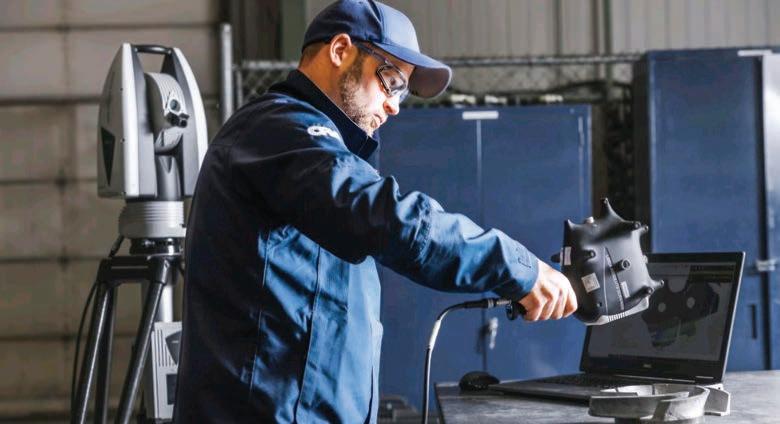
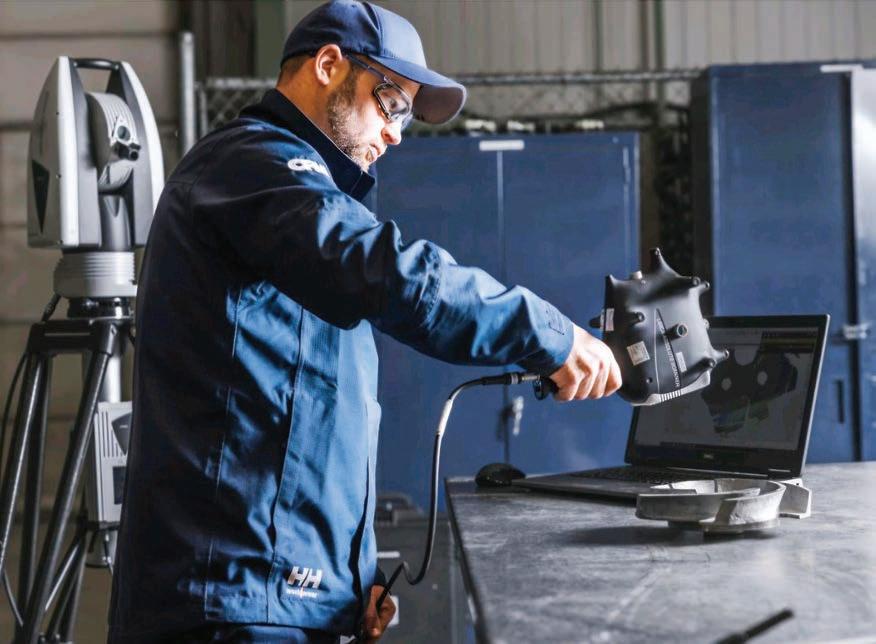
CFM implemented a range of Hexagon’s metrology solutions, starting with the Leica Absolute Tracker AT403. The company later added Hexagon’s flagship 6DoF laser tracker, the Leica Absolute Tracker AT960 to its toolkit, augmented the Leica Absolute Scanner LAS and LAS-XL and Leica T-probe accessories, as well as the unique Leica Absolute Tracker ATS600 3D laser tracker, which supports direct scanning processes. Additionally, CFM acquired an Absolute Arm with an Absolute Scanner AS1 for its machine shop quality control processes. These advanced systems, coupled with Innovmetric’s PolyWorks software, with which all Hexagon’s portable measurement devices
are well integrated, allowed the company to perform highspeed, high-precision measurements and 3D scanning across various industrial applications.
The Absolute Tracker systems offer CFM the flexibility to conduct measurements in diverse environments, from shipyards to pulp and paper mills. The ATS600’s reflectorless direct scanning capabilities have proven valuable for hard-to-reach areas and large-scale measurements, with a range of 60 meters.
CFM Services especially appreciated the versatility of Hexagon’s equipment.
“The ATS600 has become our most frequently used instrument over the past year. We’re using it for various applications, including leveling pads for machinery, motors and gearboxes in shipyards,” said James Brown, mechanical lead at CFM Services.
Brown also credited Hexagon’s responsive team with providing crucial assistance to CFM with training and troubleshooting.
Results: Implementing Hexagon’s advanced measurement systems
By adopting Hexagon’s metrology solutions, CFM has enhanced its measurement capabilities, improving efficiency, accuracy and business growth. Specifically, the partnership has:
• Increased productivity: CFM can now complete measurements during brief shutdowns—sometimes as short as half a day— compared to the weeklong processes required previously. This ability is particularly beneficial in the pulp and paper industry, where minimizing downtime is crucial.
• Enhanced data collection
Photo: Hexagon
The company can collect vastly more data in less time, providing more comprehensive insights for clients. This wealth of data allows for better preventive maintenance planning, significantly improving the reliability of machines in the mills CFM services.
• Improved accuracy: Hexagon’s advanced systems allow for highly precise measurements, enhancing thequality of CFM’s services.
• Business growth: Since implementing Hexagon’s solutions, CFM has significantly increased its business in the mechanical measurement sector.
• Expanded capabilities: The technology has opened new opportunities for CFM, allowing it to offer services in sectors it previously couldn’t serve effectively. For example, CFM has expanded its work in the marine Industry.
A notable example of CFM’s enhanced capabilities was a project involving a new flange installation inside a dam.
Using the AT960 and LAS, CFM scanned the existing structure and the new flange and then used this data to guide precise machining and installation. The result was a perfect fit that impressed the client and showcased the power of Hexagon’s solutions.
The improved measurement processes have also contributed to CFM Services’ growing reputation as a leading provider of technical services in Atlantic Canada.
Future possibilities
Looking ahead, CFM is excited about future possibilities with Hexagon’s technology.
“We’re constructing a new facility with a dedicated tracker room, which will allow us to bring clients in and showcase our capabilities,” Savoy said. The new facility will include a clean, calibrated equipment room for scanning with the arm and other equipment, further enhancing CFM’s service offerings.
WHAT’S NEW IN PRODUCTS
SENSOLUS NEXTGEN INDUSTRIAL IOT TRACKING SOLUTION
Sensolus, a provider of industrial-grade IoT tracking technology, has expanded its operations to Canada with the launch of its NextGen asset-tracking hardware, platform and mobile application.
According to Sensolus, the new offering includes the TRACK 1105 device, which features IP69k and IP68 durability ratings, embedded condition sensors, and a battery life of up to seven years. It supports multiple low-power networks, including NB-IoT and LTE-M, to improve connectivity and redundancy. The software platform aims to support digitalization efforts in industrial manufacturing, logistics and environmental sectors.
The new solutions are designed to help companies monitor assets in transit or in the field, reduce inventory inefficiencies and detect anomalies such as incorrect delivery locations or prolonged dwell times. The system is compatible with reusable packaging, trailers and containers, and integrates with ERP systems via API. www.www.sensolus.com
EMERSON FISHER ARMOR
Emerson has introduced the Fisher ARMOR solution, a digital monitoring device designed for natural gas utility grid systems.
The Fisher ARMOR is a remote monitoring device that is configurable to serve as a regulator monitoring solution or a station monitoring solution. The Armor unit offers flexible measurement
options, including two or three pressure points, remote travel monitoring and discrete monitoring. It communicates through various channels, such as cellular connectivity with DeltaV SaaS, Ethernet, and Bluetooth® connectivity with a dedicated app.
The solution aims to reduce manual field visits, streamline data gathering and enhance monitoring at regulator stations and end-of-line points. www.Emerson.com/FisherARMOR
FESTO AX MOTION INSIGHTS PNEUMATIC
Festo AX Motion Insights Pneumatic is an AI-enabled monitoring solution designed to predict wear and detect anomalies in pneumatic cylinders.
The system uses AI models to analyze cylinder behavior without additional sensors, providing a “Health Score” as an indicator of failure risk. It connects via PLC function blocks and supports controllers from Siemens, Rockwell and Beckhoff.
The platform enables predictive maintenance by allowing tasks to be scheduled in advance, reducing unplanned downtime. It offers on-premises deployment for full data control and works with both Festo and third-party components.
Integration with Festo’s Smartenance maintenance management system creates a workflow from insight to action www.festo.com
EXAIR ULTRA DUTY LINE VAC
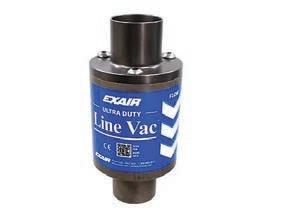
New from EXAIR, the Ultra Duty Line Vac is a pneumatic conveyor designed for abrasive material handling.
Constructed with a hardened
alloy and ceramic insert, the unit offers enhanced wear resistance for applications involving sand, glass, powders and other abrasive media. It uses compressed air to generate a vacuum with throughput up to 50 per cent higher than standard Line Vac models, enabling long vertical and horizontal conveying runs.
The Ultra Duty Line Vac is available in 1-1/4", 1-1/2" and 2" sizes to fit standard hose or tube diameters. It has no moving parts, requires no electricity and is maintenance-free. Optional mounting brackets simplify installation, and flow can be controlled with a pressure regulator. The product is CE compliant and meets OSHA pressure requirements. www.exair.com
DANFOSS LEVEL 1 AXISPR
The next generation Level 1 AxisPro valve from Danfoss Power Solutions is a digitally controlled proportional hydraulic valve designed for industrial equipment that requires precise motion control. It uses a built-in digital amplifier and communicates over common industrial networks, including Profinet, EtherCAT, Ethernet/IP, and CANopen.
The valve provides stable flow control and smooth actuator movement through features such as flow linearization and adjustable dither and deadband settings. Models are available in single-stage and two-stage configurations covering NG06 to NG32 sizes.
The unit is built for demanding environments, with IP65/IP67 protection, high vibration resistance options, and operation up to 70 °C. Configuration and tuning are completed through Danfoss’ Pro-FX Configure v2 software via USB, Ethernet, or CAN. Integrated diagnostics and LED status indicators support troubleshooting. www.www.danfoss.com
Extending belt pulley life
BY DOUG MARTIN
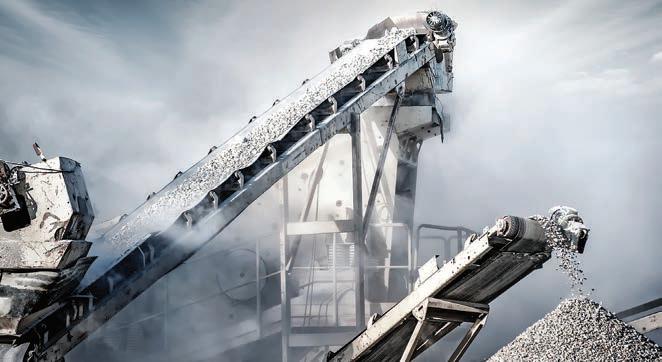
Belt pulleys are the arteries of an operation that depend on the transfer of bulk materials. Whether it’s ore for a mine, chips for a pulp mill or gravel for a quarry, the breakdown of a conveyor belt pulley can shut down production for hours or days. As such, the cost savings that can be gained from extending pulley life is significantly greater than the cost of the pulley itself.
The two components that have the greatest influence on pulley life are lagging and bearings. Considering these two components, how can life be extended?
Ceramic lagging
Traditionally, conveyor belt drive pulley assemblies have been supplied with rubber lagging in a diamond pattern. Several decades ago, an improvement was made to durability and traction of lagging by incorporating ceramic tiles into the rubber lagging. Direct Bond Ceramic Lagging (DBCL) takes this a step further by using dimpled ceramic tiles that are bonded directly to the pulley face, significantly enhancing both durability and traction.
Developed by Multotec in South Africa, DBCL has delivered exceptional lagging reliability for more than 40 years. It can be supplied with new pulleys or installed as an upgrade on refurbished pulleys.
Features:
• High tensile bond with installed shear strength greater than 25MPa
• Superior abrasion resistance
• Highest coefficient of friction for drive pulleys
Benefits of using DBCL:
• Reduced degradation of the lagging during storage
• Prevention of material buildup on the pulley face
• Better transmission of power through drive pulleys
• Longer lasting lagging and this less frequent pulley replacements (pulley downtime)
Bearings
Traditional thinking has held that extending bearing life requires increasing bearing capacity. This can be done by changing the bearing’s envelope
dimensions (bore, outer diameter, and width), but altering these dimensions usually means modifying the shaft, bearing seat width, and/or housing diameter—changes that are often far from simple.
Capacity can also be increased by adjusting the internal bearing design at both the macro and micro levels. Macro-level changes typically involve increasing the diameter of the rolling elements, as seen in the “E” design bearings introduced in the late 1980s.
Micro-level improvements include enhancing surface finish, increasing rolling-element and raceway accuracy, and optimizing raceway curvature. While these refinements do not change the published capacity, they can deliver service life improvements equivalent to a 10 per cent or greater capacity increase. As a result, catalogue ratings are not always a reliable indicator of real-world bearing life, since micro design details and material cleanliness aren’t directly reflected in those capacity values. To better communicate these enhancements, major manufacturers now use branding such as “Explorer,” “X-Life,” or “Spexx” to identify bearings produced to higher standards, even when traditional life calculations don’t reflect the improved performance.
More modern thinking recognizes that maintaining bearing cleanliness can provide equal or greater benefit than increasing capacity. The most common method of keeping a bearing clean is through proper greasing, with the required quantity depending on contamination levels. Mining environments are highly contaminated,
which led to the development of the taconite seal. Often assumed to be a standard design, it is not; the defining feature of a taconite seal is that it must be grease-purgeable and continuously purged. Unfortunately, ideal greasing practices are not always followed. The most frequent issue is insufficient or inconsistent greasing of the taconite seals themselves.
Although not new, sealed spherical roller bearings have become more widely available. Their integral seals act as a final barrier to contamination that may pass the housing seals, while also retaining high-quality factory grease. Clean factory grease provides a greater increase in bearing life than simply increasing bearing capacity when contamination remains moderate to high.
Beyond improving contamination control, sealed spherical bearings also reduce assembly cost compared with an open-bearing arrangement paired with taconite seals.
By combining extended-life lagging with an extended-life bearing arrangement, the overall reliability and performance of a pulley assembly— and therefore the entire bulk-material conveyor—can be significantly improved.
Douglas Martin is a heavy-duty machinery engineer based in Vancouver. He specializes in the design of rotating equipment, failure analysis and lubrication. Reach him at mro. whats.up.doug@gmail.com.
This article was written with input from Roy Wilks from Luff Industries, who provided information on pulleys.
Lubriplate’s ultra-high-performance, 100% synthetic lubricants have been engineered to provide unsurpassed performance in the most demanding plant environments. They provide a wide range of benefits designed to make your plant run better. Benefits include: extended lubrication intervals, lubrication consolidation through multiple application capability, reduced friction, extended machinery life and reduced downtime. Products include...