Understanding interaction and community structure is key PG. 28
WEED CONTROL GUIDE & KOCHIA POSTER
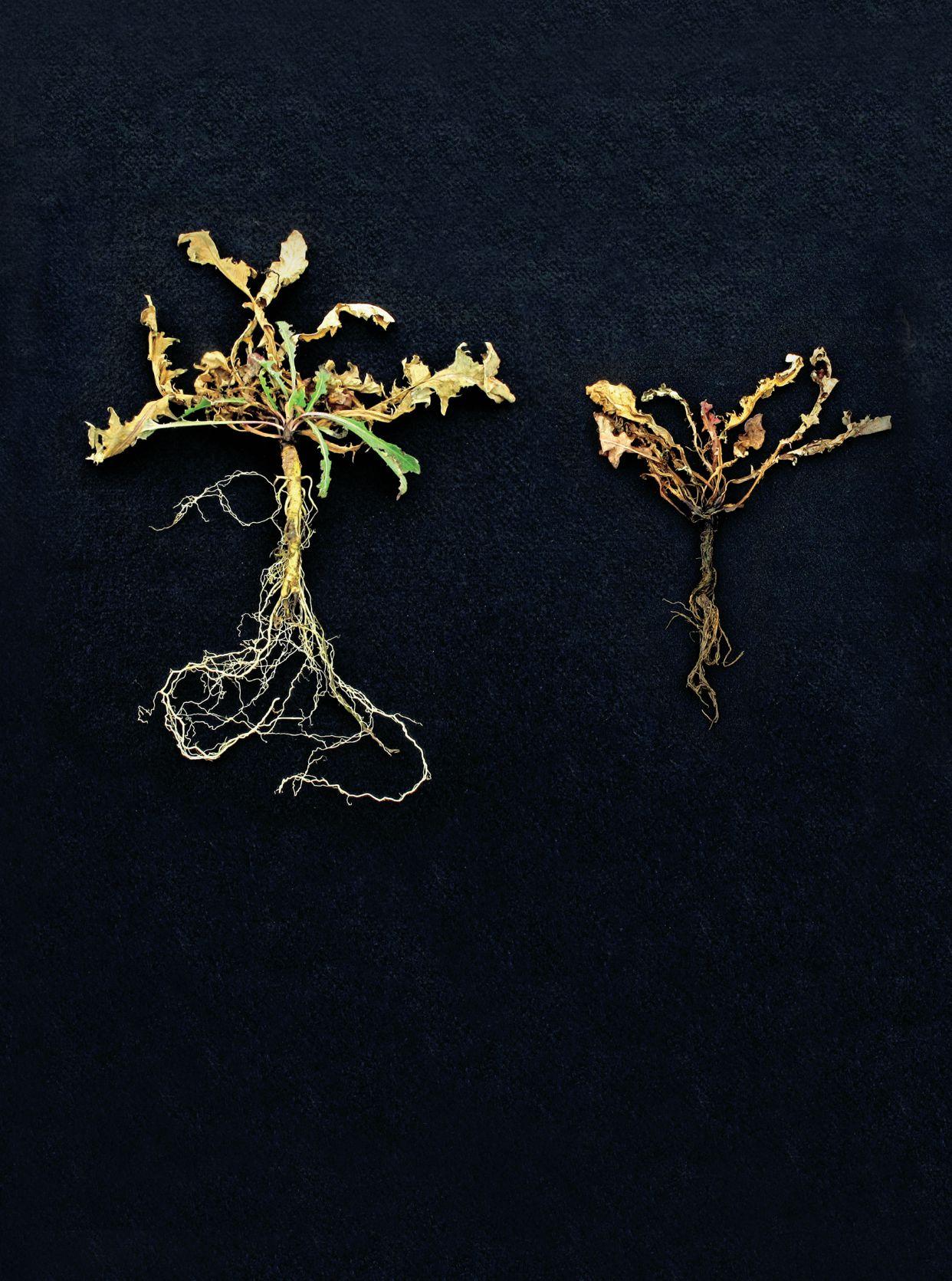
THE END IS HERE FOR FOXTAIL BARLEY
Introducing the Olympus System, the first step in controlling foxtail barley and wild oats. Simply apply Olympus® with your pre-seed application of Roundup® and follow in-season with Varro® or Velocity m3 for season-long control of foxtail barley and other tough grass weeds.
WHEN YOU PURCHASE MATCHING ACRES OF VARRO OR VELOCITY M3
Ask your retail for details
TOP CROP
MANAGER
6 | Reducing cleavers seed viability in canola
Improve management of cleavers by targeting the seedbank.
By Donna Fleury
22 | Crushing seed to prevent weeds Research continues on the Harrington Seed Destructor’s ability to help manage herbicide-resistant weeds.
By Donna Fleury
PESTS
AND
DISEASES
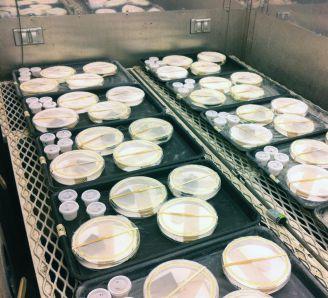
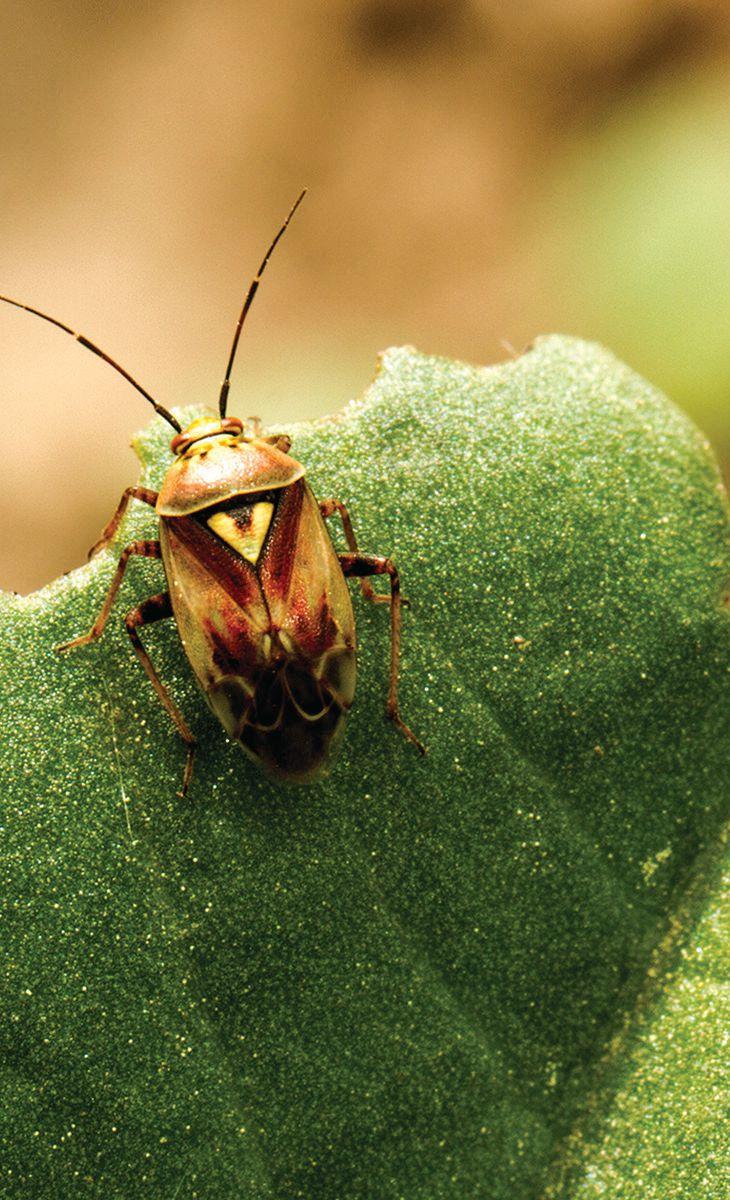
28 | Developing IPM strategies for cutworm
Understanding crop-pest interaction and moth community structure in prairie agroecosystems.
by Donna Fleury
PHOTO COURTESY OF RONALD BATALLAS.
STEFANIE CROLEY | EDITOR
ACCESSING INFORMATION
An interesting article landed in my inbox one day in mid-February, just as southern Ontario was getting hit with yet another winter storm. On first glance, the title – “Why do we need to keep breeding new crop varieties?” – seemed a bit, well, redundant. I already know several reasons why plant breeding is important; surely this article won’t tell me anything new.
I nearly deleted the email, but decided to click through when I realized it was actually a featured post from the Sustainable, Secure Food Blog, which is sponsored and written by members of the American Society of Agronomy and the Crop Science Society of America. The website’s “About Us” page says the blog aims to build the story of how food is grown, both in the United States and worldwide, and the general tone of it speaks to consumers and members of the agriculture industry alike. Much like the rest of the blog, the particular article I read was written in plain, factual terms and was easy to understand and digest for those; one worth passing along to someone with or without a background in agriculture.
I’ve always taken interest in how other people like to consume information. As a writer, I do have loyalty to the written word on paper, whether in a book, newspaper or magazine. But it’s 2019, and digital platforms like Twitter, blogs and websites are becoming greater sources of information than ever. Blogs and online articles take up a mere fraction of the Internet’s real estate, and yet they are so easy to read, access and share with the click of a button.
Now, you’ll be able to do this even more easily with the launch of our new website, TopCropManager.com. Not to worry – all of your favourite parts, including agronomy news, feature stories and our webinar archive are still prominent. You’ll still find the latest industry news on the homepage, but our new “Features” category will make it easier than ever to find our cover stories and web exclusive features. A drop-down menu lists topics and categories so you can read content about one specific topic, and the webinar and digital edition archives are still handy along the top of the homepage. Want to read the blog post I referenced above, or an article from a past issue? Simply begin typing the headline into the search bar and related results will show up as a preview. What’s particularly exciting is the site’s mobile optimization, so its even easier for you to find resources and content while you’re on the go.
For our team, an important part of this redesign was making the website easier to navigate, with a clean, fresh look. We’re thrilled with the result, and we hope you are too. In the coming weeks and months, we’ll be making small tweaks and adjustments. If you spot something you love – or something doesn’t look right – send an email to topcrop@annexweb.com. We’d love to hear from you!
rthava@annexbusinessmedia.com
416.442.5600 ext. 3555 Fax: 416.510.6875 or 416.442.2191 Mail: 111 Gordon Baker Rd., Suite 400, Toronto, ON M2H 3R1
SUBSCRIPTION RATES
Top Crop Manager West – 9 issues Feb, Mar, Mid-Mar, Apr, June, Sept, Oct, Nov and Dec – 1 Year - $48.50 Cdn. plus tax
Top Crop Manager East – 6 issues Feb, Mar, Apr, Oct, Nov and Dec – 1 Year - $48.50 Cdn. plus tax
Potatoes in Canada – 1 issue Spring – 1 Year $17.50 Cdn. plus tax
Occasionally, Top Crop Manager will mail information on behalf of industry related groups whose products and services we believe may be of interest to you. If you prefer not to receive this information, please contact our circulation department in any of the four ways listed above.
Annex Privacy Office
privacy@annexbusinessmedia.com
BECAUSE CHANGE HAPPEN FAST
we believe in a world where change happens fast.
A world where industries are agile and able to adapt.
A world where growers have choice, and those who act boldly reap the highest rewards.
Stop waiting for innovation to happen. It’s already here.
REDUCING CLEAVERS SEED VIABILITY IN CANOLA
Improve cleavers management by targeting the seedbank.
by Donna Fleury
Cleavers, which are difficult to manage in many crops, can reduce yield and quality and interfere with harvest operations. As well, recent weed surveys showed that about 20 per cent of cleavers in Saskatchewan have evolved resistance to ALS-inhibitor herbicides, and cleavers are also considered a high-risk weed for evolved glyphosate resistance. Therefore, a better understanding of the weed biology and development of alternative management strategies is critical.
“In our research program, and others, there is starting to be more of an emphasis on seed shed management and managing the weed seedbank as part of an integrated weed management program,” explains Christian Willenborg, associate professor in the department of plant sciences at the University of Saskatchewan. “Seedbank management, which includes managing seed returns to the seedbank, is a critical component of managing herbicideresistant weeds. Why do we wait until weeds have two, three or four leaves before we exercise weed control? Although we can and do a very good job of control with post-emergent herbicides, we wondered if should start looking earlier in the cycle at factors such as seed shed management and managing weed seed bank as well.”
In a recent project, Willenborg and his team were interested in learning more about cleavers weed biology, first by identifying which species of cleavers are found in crop fields in Western Canada and then determining if there are differences in their emergence patterns. A second objective was to determine if a pre-harvest herbicide application could help influence the seed characteristics and reduce seed returns to the seedbank. As more growers are wanting to move to straight cut harvest of canola, researchers were interested in finding out if pre-harvest herbicides could help reduce the viability of the large number of seeds, up to 10,000 seeds per acre, produced by cleavers plants.
The two main cleavers species researchers expected to find included Galium aparine (cleavers or catchweed bedstraw) and Galium spurium (false cleavers), which are problematic weed species in canola. A large number of seed samples were collected from seed cleaners and growers across a large area. Researchers were surprised by the results of the molecular work, which showed that all of the populations collected were actually G. spurium
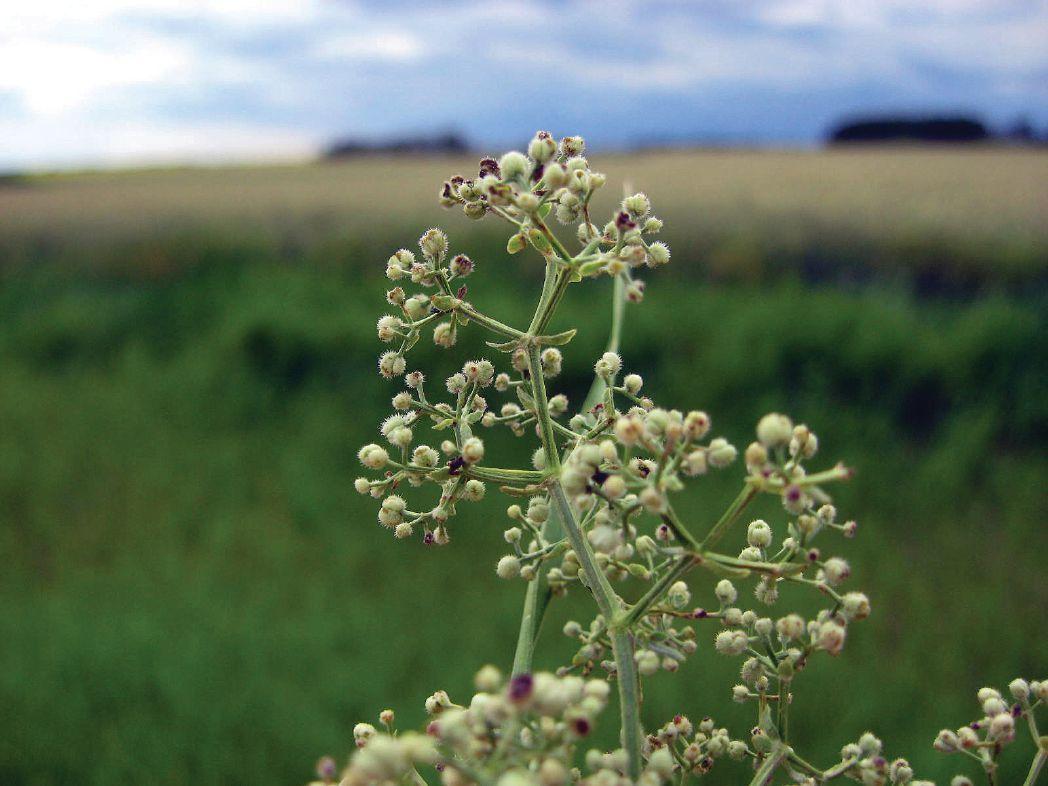
ABOVE: Seed head of cleavers in the field.
Hard-to-kill grassy weeds are no match for EVEREST® 3.0. An advanced, easier-to-use formulation delivers superior Flush after flush™ control of wild oats and green foxtail. In addition, EVEREST 3.0 is now registered for use on yellow foxtail*, barnyard grass*, Japanese brome and key broadleaf weeds that can invade your wheat and rob your yields. You’ll still get best-in-class crop safety and unmatched application flexibility. Talk to your retailer or visit everest3-0.ca to learn more.
G. aparine, which tends to prefer wetter, shadier more hedgerow type habitats, may also found in some locations in Western Canada, although none of the samples processed by the team were G. aparine
“We took the project a step further to try to develop a predictive model that could accurately predict emergence timing for cleavers,” Willenborg says. “However, we were missing one of the key variables for developing a model, which is base temperature. Each species has its own base temperature, or the minimum temperature that will allow for biological activity (germination) in a plant. Although there is information from other locations like Australia on base temperature for G. aparine, we were unable to find any available information on G. spurium.”
To determine the base temperature, all of the populations were screened using a thermogradient plate technology located at Agriculture and Agri-Food Canada, which includes a number of individual cells that can each be individually controlled to a precise temperature set at 1 C increments. This allows for properly replicated experiments, as well as the ability to sample and compare a number of populations at the same time.
“Our results showed that all of the western Canadian accessions of G. spurium have a base temperature of 2 C and can germinate at very low temperatures. The base temperature for G. aparine is similar at 4 C, while some weeds are closer to 0 C base temperature. This also confirms what we saw in the field and shows that this weed is capable of germinating as early as April and as late in the season as November. Traditionally, cleavers have been considered an obligate winter annual that only germinates in the fall. However, we have confirmed cleavers is a facultative winter annual and can germinate in both fall and spring, likely due to the base temperature and other factors that control germination. This has implications for weed management, and producers should scout fields late into the fall and early in the spring after the snow has melted to ensure identification of early emerging or overwintering cleavers populations.”
In the second part of the project, a twoyear field study was conducted in 2016 and 2017 at two sites, including Saskatoon and Scott, to evaluate the effect of pre-harvest herbicides on cleavers contamination in canola crops, as well as mature cleavers seed viability and vigour. In the study for research purposes, several herbicides were
Cleavers can reduce crop yield and quality and can interfere with harvest operations.
PHOTO BY BRUCE BARKER.
evaluated including saflufenacil, diquat, glufosinate, saflufenacil plus glyphosate, diquat plus glyphosate, and glufosinate plus glyphosate. The researchers faced some of the same challenges growers will face in applying the pre-harvest herbicides and getting them through the canola crop canopy onto the cleavers, as well as cleavers establishment in some of the plots. However, overall the results did show a clear trend.
The study showed that the glufosinate plus glyphosate and saflufenacil plus glyphosate applications resulted in significantly lower cleavers contamination and seed viability than most other treatments. These treatments allow the herbicide time to be translocated into the seeds, as compared to true desiccants that act extremely rapidly and kill the seeds they contact but don’t move in the plants. The other treatments did result in a small reduction in viability as compared to the control, but not as significant as the others. The study also showed that pre-harvest herbicides have the potential to manage cleavers seed production and reduce competition with canola by increasing seed mortality, and by
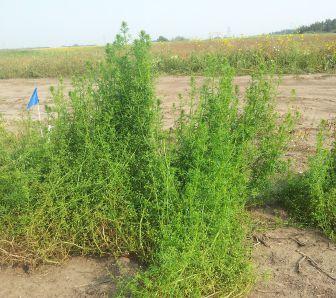
Large cleavers plant in the field trials.
PHOTO COURTESY OF ANDREA DEROO.
The study showed that the glufosinate plus glyphosate and salflufenacil plus glyphosate applications resulted in significantly lower cleavers contamination and seed viability than most other treatments.
reducing seed viability and vigour. Willenborg notes that for the research project, they did not test for pesticide residues. However, growers are cautioned to follow label directions for pre-harvest intervals and be aware of maximum residue limits (MRLs) and market requirements before application.
“Our results show that seed shed management and managing the weed seedbank as part of an integrated weed management program is a good strategy to consider,” Willenborg says. “Producers should be scouting fields late in the fall and early spring for cleavers, and controlling these populations early,” Willenborg adds. “There
are some good post-emergent products in cereals, but in some other crops there are less options for cleavers that are large in size. The best strategy for crops such as peas and lentils with more limited cleavers control options is to manage it the year before in cereals in-crop or including some sort of harvest aid. Herbicide options are getting better in canola with the registration of clomazone and quinclorac, but cleavers can still be problematic depending on their size. With the increasing incidence of cleavers across the Prairies coupled with the increasing acres of glyphosate and glufosinate-resistant canola, an opportunity exists to improve cleavers management by targeting the seedbank.”
Visit topcropmanager.com for more on weed management research.
Clean fields lead to higher yields. That’s why growers trust Simplicity™ GoDRI™ herbicide to get the job done right. For convenience, performance and outstanding wild oat control in wheat, the choice is Simplicity.
For more information, call the Solutions Center at 1-800-667-3852 or visit corteva.ca
by March 15, 2019 and save
with
MORE COMPETITIVE SOYBEANS = LESS SPRAYING
Cultural weed control can reduce the risk of developing herbicide resistance
by Carolyn King
If you want to reduce your risk of developing herbicideresistant weeds in your soybean crop, focus on faster canopy closure. That’s one finding from a recently completed Manitoba project.
“We have learned from the soybean growing areas to the south and the east of Manitoba that some soybean production systems are highly likely to develop weeds with herbicide resistance, particularly resistance to glyphosate,” explains Rob Gulden, an associate professor at the University of Manitoba who led the project.
“Soybean is not a terribly competitive crop, and in those longerseason growing areas, multiple in-crop applications are often needed to keep the soybean crops weed-free to the point where yield losses are zero or tolerable. Those multiple in-crop applications – particularly if they use the same herbicide mode of action over and over again – put the producer in the highest risk category for selection for herbicide-resistant weed biotypes.”
So this project looked at ways to reduce the need for additional in-crop herbicide applications by increasing the crop’s competitiveness with weeds. This is an especially important issue in Western Canada where soybean is a relatively new crop because researchers are still working to understand how soybean interacts with Prairie weed communities.
“The weed communities in Manitoba are generally very different than the weed communities in regions where soybeans have been commonly grown for many years,” says Gulden, who specializes in weed and crop ecology and management.
He explains that the dominant weeds in any region are a function of the area’s cropping history. For example, wild oat has been a major weed in Western Canada for many decades because it is so well suited to the Prairies’ spring-seeded, early emerging, annual cereal and oilseed production systems. “But in some of the regions where soybeans have been grown for a long time, they have a whole suite of different weeds that are adapted to the warmer conditions in those regions and to later-emerging or slower-growing crops, like corn and soybean.”
In this project, Gulden and his team used the concept of the “critical period of weed control” (CPWC). He defines the CPWC as “that period in a crop’s life cycle where the crop has to be essentially weed-free to avoid unacceptable yield losses at the end of the season. Any weeds that come up after the end of that period really have no effect on the crop’s yield. They might influence harvestability, but they don’t affect yield directly.”
Using the CPWC, they evaluated the effects of three cultural factors: the spacing between soybean rows; the spacing between soybean plants in a row; and the soybean variety. These three factors can each influence how quickly a crop’s canopy closes. Faster canopy closure makes the crop more competitive. A more competitive crop has a shorter CPWC. And a shorter CPWC means fewer in-crop
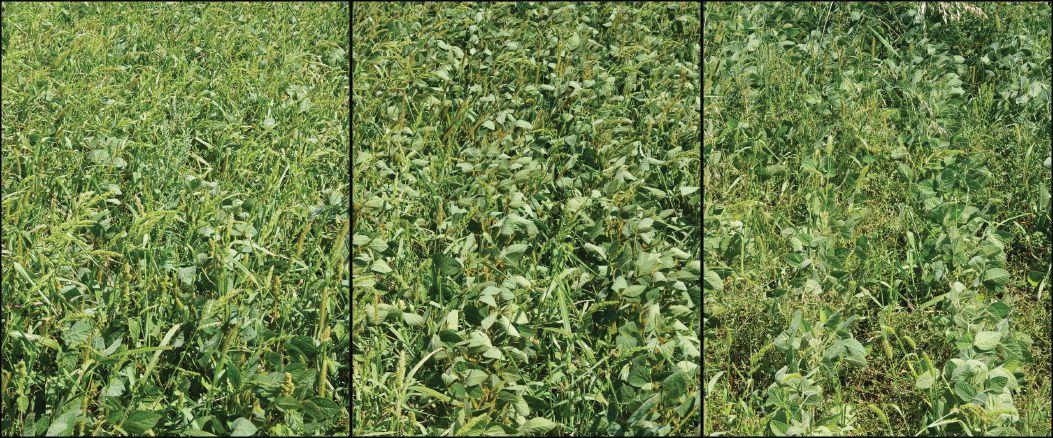
ABOVE: One of the project’s studies compared the competitiveness of three soybean varieties. In this example, showing plants at the R2 stage, the plots were kept weed-free until the VC stage.
herbicide applications are needed to avoid a yield penalty.
The replicated field trials took place in 2016 and 2017 at sites in Manitoba near Carman, St-Adolphe and Whitemouth. The natural weed community was used at each location so the weed species and densities differed from site to site. For each site, the trials took place at different fields each year, but the project team chose similar fields from year to year. So the dominant weed species for any given site were very similar from year to year, but the weed densities may have varied. Sites with stronger competition from weeds had a longer CPWC.
In the trials, sub-plots were kept weed-free using herbicides until selected soybean development stages were reached including: VE (emergence), VC (cotyledon), V1 (first trifoliate), V2, V4, and R1 (beginning of bloom). The trials also included weedy and weed-free control plots.
Jonathan Rosset, one of Gulden’s graduate students, worked on the project under Gulden’s supervision. The project’s funding was from the Manitoba Pulse and Soybean Growers and Western Grains Research Foundation, with in-kind support from Richardson International and Monsanto.
Narrow
rows were better
“For row spacing, we compared two extremes: a narrow 7.5-inch, and a wide 30-inch. All our other trials were planted at 15 inches, which is a recommendation from North Dakota as a good row spacing for all-round soybean performance,” Gulden says. “North Dakota has its fair share of glyphosate-resistant weeds so 15 inches might not be the best row spacing from a weed control perspective,” he adds. In the row spacing trials, the soybean variety Dekalb 23-60 was seeded at 180,000 plants per acre.
The results showed that, of the three cultural factors evaluated in the project, row spacing had the biggest and most consistent effect on the CPWC.
The narrow rows were clearly more competitive than the wide rows. “As we expected, the narrow rows had an earlier end to the critical period of weed control than the wide rows; in about half the cases, this result was statistically significant and in the other half it trended in this direction,” he says.
“The narrow-row treatment equated, on average, to the need for
at least one less in-crop herbicide application. So narrow rows resulted in a pretty dramatic reduction in the selection pressure for herbicide resistance and in the cost to the producer for that extra herbicide application.” In a situation where yield losses up to 10 per cent would be considered acceptable, none of the narrow-row treatments would have required more than one in-crop application, and most would not have needed any in-crop herbicide.
The narrow-row soybeans also tended to yield better under weedfree conditions than the wide-row soybeans. “We would expect that under Manitoba growing conditions. We have a very short season, and soybeans are very slow to develop. A narrow-row soybean crop is much more able to capture more of the available sunlight because there is less soil to be seen throughout the season,” he explains. In Manitoba’s short growing season, soybean plants in wide rows can’t compensate as much or may never achieve full row closure. “Yield is built by how much sunlight the crop intercepts, and if a large part of the field has no crop cover for most of the season then there is a lot of sunlight that is not being converted into yield.”
So avoiding wide rows is better for both soybean yields and weed management. Gulden suggests row widths somewhere from 7.5 to 15 inches. “I’m not sure exactly where the magic spot is between those two spacings and there may be a variety effect as well.”
Standard plant density was best
The project’s plant density treatments were: 180,000 plants per acre; 270,000 plants per acre (1.5 times 180,000); and 135,000 plants per acre (0.75 times 180,000). In these trials, Dekalb 23-60 was planted at a 15-inch row spacing.
The 180,000 treatment is based on Manitoba Agriculture’s recommendation of a plant density of 180,000 to 210,000 plants per acre for soybean. Gulden notes, “The 0.75X treatment is based on some research from Yvonne Lawley’s lab at the University of Manitoba. That research showed that under weed-free conditions – so situations with frequent herbicide applications – soybean population densities around 130,000 to 140,000 were optimal for yield.”
As expected, the 0.75X treatment was much less competitive with weeds than the 1X and 1.5X treatments. The low plant density significantly lengthened the CPWC in most instances.
However, the results for the 1.5X treatment were a surprise. “We
The project found narrow-row soybeans tended to yield better than wide-row soybeans under weed-free conditions.
Hot, cold, big, small, early, late?
Just GO with Pixxaro™ herbicide, the total annual broadleaf weed control that won’t slow you down. Only Pixxaro includes maximum crop, weed, weather and tank mix flexibility. PLUS the proven power of Group 4 resistance management.
For more information call the Solutions Center at 1-800-667-3852 or visit corteva.ca
“The narrow-row treatment equated, on average, to the need for at least one less in-crop herbicide application. So narrow rows resulted in a pretty dramatic reduction in the selection pressure for herbicide resistance and in the cost to the producer for that extra herbicide application.”
had expected that the higher plant numbers in the 1.5X treatment would suppress weeds better or shorten the critical period compared to the 1X treatment, but the 1.5X treatment generally had the same critical period of weed control as the 1X,” Gulden says.
He suspects the 1.5X results might reflect the particular weed species and densities in the project’s plots. “For example, we have done research on soybean plant density responses with Chris Willenborg [of the University of Saskatchewan] using volunteer canola as the weed. We had to go well beyond the recommended plant density for soybean to even come close to maximizing the yield potential under competition with a highly competitive weed like volunteer canola.”
The yield results in the plant density trials also held some surprises. At each location, the 0.75X treatment had the lowest yield as expected, but the yields for the 1X and 1.5X treatments were usually about equal to each other.
The easy way to manage your farm
Analyze your data. Plan your strategy. Then track your performance. AgExpert Field gives you the details you need to know to make the best business decisions.
It’s all new. And seriously easy to use. Get it now and see.
fcc.ca/AgExpertField
“I know that research shows lower plant densities work under ideal weed-free conditions with lots of herbicides, but as a weed scientist, I’d say that 180,000 plants per acre seems to be a decent density from what we’ve seen in these experiments,” he says.
“There certainly was an advantage with 180,000 compared to 0.75X for reducing selection pressure for herbicide resistance. But going from 1X to 1.5X didn’t seem to pay off; it didn’t shorten the critical period of weed control and it didn’t increase soybean yields.
“Now, these results are just for two years at those three locations, and 2017 was pretty dry, which may have affected our results a little. Perhaps if we were to do this trial over 20 years and many more locations, we might find an advantage to the 1.5X treatment.”
Variety complexities
Another important factor in canopy closure can be the crop variety. Gulden notes, “We know from other crops that some varieties close the canopy more quickly than others. And we know that some soybean varieties are more bushy and branched while others are more erect, but we are not sure how that affects their ability to compete.”
The project compared Dekalb 23-60, Dekalb 22-60 and Dekalb 24-10. “They were different maturity types, and my thought was that faster-maturing varieties might close their canopies faster,” he says. The three varieties were planted in a 15-inch row spacing at 180,000 plants per acre.
There was no clear variety winner in terms of shortening the CPWC. The results depended on the location and the year.
“It was a surprise that there wasn’t one variety that did better everywhere. Based on what we’ve seen in these experiments, I can’t draw any definite conclusions on the variety side of things other than we found that there is relatively consistent behaviour of certain varieties at certain locations,” he says. “It’s hard to say whether that has more to do with the soil type and/or the specific weather at that location or with the location’s weed community because all of those things varied somewhat from year to year.”
Looking ahead
The project’s results show that using narrower rows and adequate plant densities can help reduce the number of herbicide applications needed in soybean, helping to lower the risk for developing herbicide-resistant weeds.
To follow up on some of the project’s findings, Gulden has developed a soybean research proposal with Charles Geddes, a research scientist with Agriculture and Agri-Food Canada. “One objective of our proposed study is to examine some of the variety effects more closely,” Gulden says. “We also want to better understand the plant density effect with respect to weed-free versus weedy conditions because the yield response curves under weedy conditions and weedfree conditions are very different.”
He adds, “Given the risk of glyphosate-resistant weeds, I’m not sure how valid it is to aim for a pristine, weed-free field. We need a much better understanding of how some crops perform [under varying levels of weed competition] and what we can do when we have weeds that we either can’t control or have a very difficult time controlling with herbicides. So some of our practices may have to be tweaked to maximize production.”
INTEGRATED WEED MANAGEMENT IN FLAX
Improving competitiveness in crops so weeds don’t matter.
by Bruce Barker
Can flax help manage herbicide-resistant weeds and be an alternative cropping choice? Moria Kurtenbach, a research assistant in the department of plant sciences at the University of Saskatchewan thinks so. She researched weed control in flax as part of her master of science postgraduate degree over three years from 2014 through 2016 with Dr. Christian Willenborg and his team.
“Flax is a relatively low-maintenance crop without a lot of insect or disease problems. The one drawback is that it is a poor competitor with weeds and there are a limited number of herbicides registered for safe, in-crop use,” Kurtenbach says.
As part of Kurtenbach’s research to find new weed control options for flax, she screened existing chemistries not registered on flax for crop safety and impacts on yield, and compared them to three industry standards and an untreated check. The herbicide screening trials were conducted in 2015 and 2016 at two sites near Saskatoon, one at Indian Head, Sask., and one at Carman, Man., for a total of seven site years.
The unregistered flax herbicides included fluthiacet-methyl (Group 14), fluthiacet-methyl plus MCPA, pyroxasulfone (Group 15), pyroxasulfone plus sulfentrazone (Group 14), flumioxazin (Group 14), topramazone (Group 27), and topramazone plus bromoxynil (Group 6). The herbicides were applied pre-plant and post-emergent depending on the herbicide, and at one and two times the label rates.
Industry standards were bromoxynil plus MCPA, MCPA (Group 4), and sulfentrazone, all applied according to label directions.
Crop injury was assessed at seven, 21 and 56 days after treatment. Ten per cent crop damage was considered acceptable, 10 to 30 per cent as unacceptable and more than 30 per cent as severe.
Kurtenbach says that crop injury varied by location and year, depending on environmental conditions. Flumioxazin was the least promising because of severe crop injury that resulted in lower yield compared to the untreated control treatment.
The most promising herbicides with acceptable crop tolerance were fluthiacet-methyl (post-emergent) and topramezone (post-emergent) applied alone, and when pyroxasulfone (preemergent) was applied alone or in combination with sulfentrazone (pre-emergent).
“There were some chemistries that yielded better than the in-
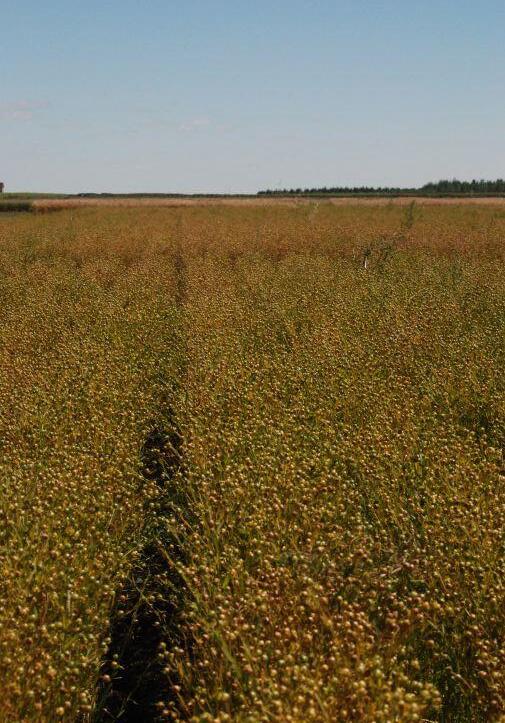
ABOVE Factors that improved flax stand establishment increased competitiveness with weeds.
dustry standards. Pyroxasulfone plus sulfentrazone at the 1x rate yielded the highest,” Kurtenbach says.
Improving flax competitiveness
A major part of integrated weed control is diversity in crop production practices that help to make crops more competitive with weeds. Seeding rates, seeding dates, variety selection, row spac-
PHOTO BY BRUCE BARKER.
ing, and herbicide choices influence how competitive a crop is with weeds. Kurtenbach investigated some of these integrated weed management practices in flax.
“Diversity is the design of nature,” Kurtenbach says. “We need more diversity in cropping systems. The goal is to improve crop competitive ability and improve weed management.”
To investigate integrated weed management practices in flax, Kurtenbach conducted field experiments at several locations across the Prairies from 2014 through 2016 at Ellerslie, Alta., two sites near Saskatoon, and Carman and Morden, Man. for a total of 11 site years. Short (Prairie Grande) and tall (CDC Sorrel) flax varieties were seeded at 400 or 800 seeds per square metre in early or late May. An in-crop herbicide at the recommended rate was also compared to a no-herbicide treatment.
Crop establishment, crop height, weed biomass, yield, and thousand kernel weight were measured. When seeding rate was increased or when the tall variety was grown with an herbicide application, weed biomass decreased significantly.
When an herbicide was used, differences in seeding rate and seeding date didn’t impact yield. However, combining all best practices did produce the highest yield. The tall variety seeded in early May at 800 seeds per square metre with an herbicide application yielded 1,407 kilograms per hectare (kg/ha). Conversely, growing a short variety seeded in late May at 400 seeds per square metre without an herbicide yielded 640 kg/ha. Combining all best practices resulted in 2.20 times greater (or 220 per cent higher) yield.
“Any factor that improved stand establishment increased weed
control, and they were additive,” Kurtenbach says. “Stacking multiple factors helped to improve the crop’s competitive ability.”
On-going research
To further test the benefits of stacking multiple production practices to improve weed competitiveness and increase yield, Kurtenbach is involved in two additional research studies being conducted by Willenborg’s lab. The first looking at the effect of row spacing, seeding rate, nitrogen fertilization and fungicide application on flax yield. This three-year trial ended in 2018.
Based on preliminary results from the first two years with five site years, the narrow row, high seeding rate, high fertility and fungicide application produced the highest yield. This highest yielding combination increased yield by eight bushels per acre across all sites.
A second research trial started in 2017 is looking at 17 different cropping systems with diverse crop rotations, two seeding rates and a comparison of no herbicide with an herbicide application. The results won’t be available until after the 2019 growing season.
Kurtenbach says that a farmer doesn’t have to grow flax to be able to implement integrated weed management (IWM) practices. IWM has been widely researched in other crops with benefits of increased weed competition and weed management.
“We need to break out of old rhythms, take a step back and look at what we can do different or better,” Kurtenbach says. “Production practices need to shift from weed eradication to weed management. Instead, we need to manage the crop so that weeds don’t matter.”
SEED EVERYTHING AND THE KITCHEN SINK.
Get a more complete and faster burnoff when adding Aim® EC herbicide to your glyphosate. This unique Group 14 chemistry delivers fast-acting control of your toughest weeds. Aim® EC herbicide also provides the ultimate flexibility, allowing you to tank-mix with your partner of choice and no fear of cropping restrictions. Fire up your pre-seed burnoff with Aim® EC herbicide.
CANOLA I LENTILS I WHEAT I BARLEY I & MORE
Save up to $5.50/acre with FMC Grower CashBack.
Before
Narrow-leaved
CRUSHING SEED TO PREVENT WEEDS
Research continues on the Harrington Seed Destructor’s ability to help manage herbicide-resistant weeds.
by Donna Fleury
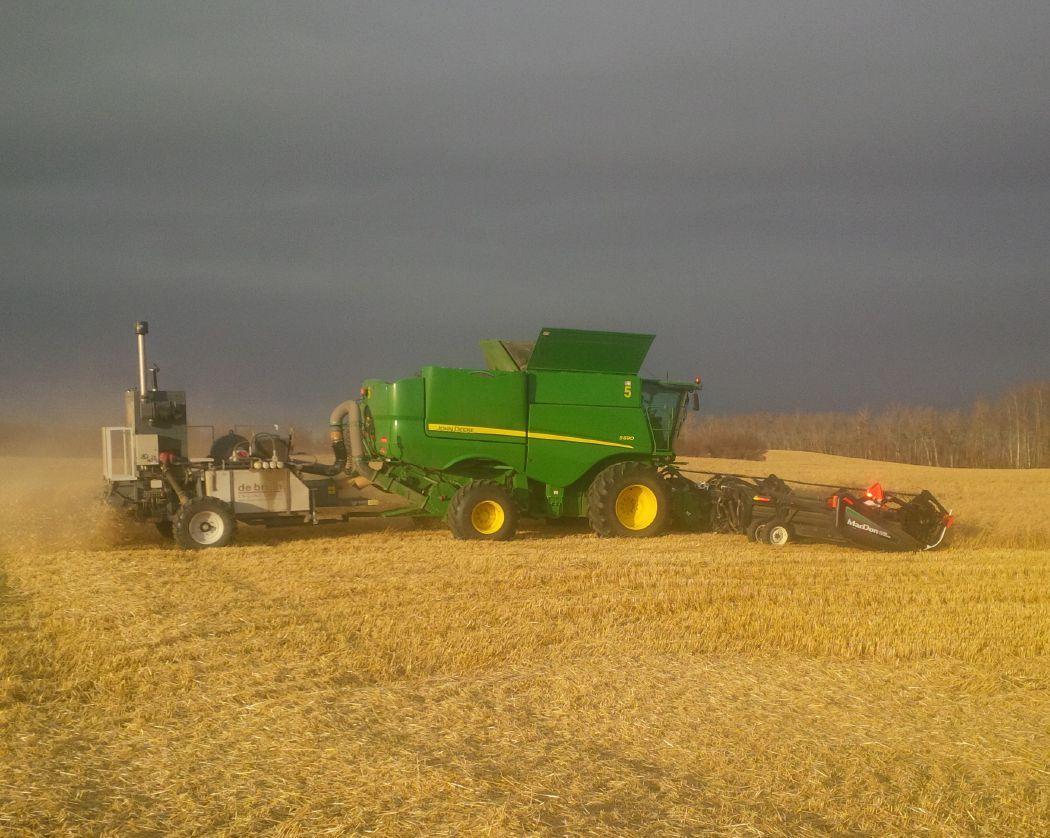
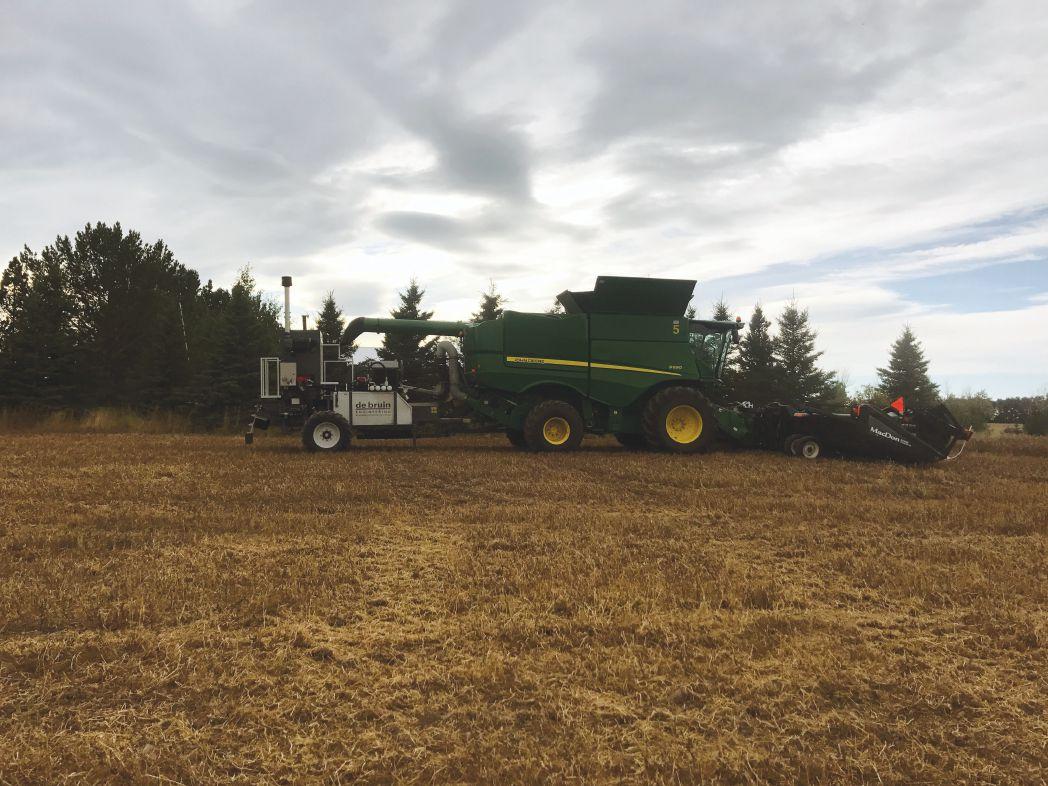
As part of an integrated weed management strategy to manage problem and herbicide-resistant weeds and protect working herbicides from losing their effectiveness, researchers are looking at various strategies including harvest weed seed management. Researchers at Agriculture and Agri-Food Canada (AAFC) in Lacombe, Atla. are conducting a field scale evaluation of the Harrington Seed Destructor (HSD) to evaluate the tool’s efficacy on weeds in Alberta and to determine if efficacy varies by cropping system and management choices.
The project began in the fall 2017, with the first field scale harvest with the Harrington Seed Destructor completed on 20 producer fields. “We conducted the trials on both swathed and straight cut systems and a range of crops including wheat, canola and peas,” explains Breanne Tidemann, field agronomy and weed science research scientist with AAFC. “We went into the fields prior to harvest and marked out areas with more weedy patches.
We were interested in how the seed destructor would work, as some of those patches were probably resistant weeds that producers were having trouble controlling. Some of the main weeds included wild oat, cleavers, hemp nettle, sow thistle and others that we could find that were causing issues in and around the Lacombe area.”
The project will run for three years, and includes replicated harvest trials comparing untreated plots with a regular combine operation and plots with the combine and seed destructor in combination. In the spring of 2018, weed counts were conducted in each plot. The harvest operations were repeated in the fall of 2018 on exactly the same plots in each of the 20 producer fields, and will be repeated again in the fall of 2019. The spring weed counts will be repeated in the spring of 2019 and 2020.
“One of the challenges with trying to reduce the seedbank is
PHOTO
with persistent weeds like wild oat that often shed their seeds prior to combining,” Tidemann says. “By going back to exactly the same spot over three years, we can better quantify the seedbank and hope that even with something like wild oat, this treatment will start driving those weed numbers down. Although we don’t have full results available yet, our preliminary results are similar to research done in Australia and the U.S. showing that the seed destructor provides greater than 95 per cent control of weed seeds that pass through the combine. The technology pulverizes the seeds and then puts the material back as a fine dust on to the field, which helps keep the organic matter and nutrients in the field. The equipment works well with a range of seed sizes, even with small weed seeds such as kochia we still had better than 95 per cent control.”
Tidemann notes that since the start of the project, the seed destruction technology has advanced rapidly in Australia. Her team purchased an original HSD in 2016 from Australia, which is a larger tow-behind unit that is now no longer available. The new integrated Harrington Seed Destructor (iHSD) units have been redesigned and are an integrated cage mill system mounted directly on the back of a combine. “Each year has seen improvements with the most recent iteration of the iHSD moving away from a hydraulically driven system that created some challenges with power draw and extra heat, to a mechanically driven system that has overcome those challenges and is also less expensive.
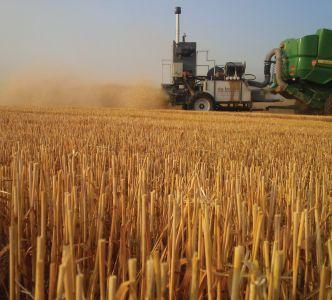
A combine with HSD tow-behind unit for field harvest trials in 2017.
PHOTO COURTESY OF NEIL HARKER.
Field-scale harvest trial in 2017 using HSD tow-behind unit.
PHOTO COURTESY OF BREANNE TIDEMANN.
Other improvements such as a built-in rock trap are helping reduce the wear issues on the cage mill and strategies to manage the fine dust produced by the mills. Only 10 of these new units were released in 2018, with scale-up and planning for release of up to 100 units in 2019. There is also a new competitor in the market, with a second company now commercializing the Seed Terminator. There are also a couple of other systems being developed, but they are not yet commercialized.”
Researchers are encouraged to see how fast the technology is improving and addressing the challenges, and that competition in the market, has also brought the cost of purchasing this equipment down. Tidemann adds they expected that the price might come down as competition entered the market. Compared to the original HSD tow-behind unit cost at $200,000 AUD, the latest iHSD system is now priced at about $85,000 AUD, while the Seed Terminator is listed at $100,000 AUD. “Recent testing done by Michael Walsh, director of weed research at the University of Sydney in Australia recently compared the efficiency of the original tow-behind and the integrated unit, which showed they are equivalent in terms of control. Therefore, the results from our research will still be relevant and transferrable to the newer systems.”
Tidemann’s research project wraps up in 2020, and at that time she will be able to provide more final results of how successful the technology was in reducing weed numbers and seedbank persistence. As a strategy for helping to manage resistance, researchers hope that as the technology becomes more readily
available that more producers would consider adopting this type of technology. “We prefer producers would consider adopting the technology before they have significant weed resistance issues because it will allow their herbicides to work for a longer period of time. Although it may seem hard to justify the expense in the short term when herbicide tools are still working, adding equipment tools in as part of an integrated weed management system will help our existing herbicide tools continue to work over the longer term.”
Other harvest seed control methods may also be a consideration and may be less costly to adopt. For example, chaff lining is being trialed in Australia where chaff and weed seeds are dropped in a narrow line behind the combine. The chaff, including the weed seeds, can then compost or rot in the narrow row. However, whether or not there would be the same effect under Canadian weather conditions is not known. Either way this type of strategy would limit those weeds to a smaller area and a more targeted herbicide application could be made.
“Adding non-chemical weed control tools to our integrated weed management systems, whether for weed resistance considerations or for organic production or other management systems, we look forward to more options such as the iHSD that are usable and feasible for producers in Alberta and Western Canada,” Tidemann adds. “As research time and funding allows, we will continue to evaluate other opportunities and options for harvest weed seed management to add to the integrated weed management toolbox.” By the time you hit the fields, you’re too busy to hit the books. Complete your CCGA Cash Advance application now online or over the phone and give yourself a boost this April. Our experienced team makes it easy. Call 1-866-745-2256 or visit ccga.ca/cash
MANAGING WILD OAT RESISTANCE WITH DIVERSITY
Short-term perennial crop reduces occurrence to near zero.
by Bruce Barker
In a journal article, retired Agriculture and Agri-Food Canada (AAFC) weed scientist Neil Harker in Lacombe, Alta., and colleague Hugh Beckie, formerly with AAFC in Saskatoon and now at the University of Western Australia, wrote a paper recommending their top 10 herbicide-resistant management practices. Their number one practice was crop diversity.
“What we did find interesting in grower surveys was that [regarding] growers specifically dealing with resistance, there were four practices that they do preferentially, more so than growers without resistance: crop rotation, herbicide site of action rotation, tank mixing, and a burndown,” Beckie said at the 2018 Herbicide Resistance Summit in Saskatoon.
While growers are implementing crop rotation as part of their management strategy, are their rotations diverse enough? A research study that supported crop diversity as an herbicide resistance management tool was conducted at AAFC Scott Research Farm in Saskatchewan. The long-term study was established in 1995 and compared different crop rotations, some including forages, in high, reduced and organic systems. After 18 years, the plots were analyzed for wild oat density and the percentage of wild oats that had Group 1 (ACC-inhibitor) resistance.
Three different input types were compared. High-input systems used pesticides and fertilizers based on accepted agronomic recommendations. Reduced input systems used an integrated pest management and nutrient approach, supplemented by chemicals. The third system was an organic system based on non-chemical pest control and nutrient management. Crop rotations included diversified annual grain crops and diversified annual and perennial crops.
The first six-year crop sequence cycle was conducted from 1995 to 2000, the second cycle from 2001 to 2006, and the third cycle from 2007 to 2012.
Over the 18-year period covering the three rotation cycles, the number of applications of Group 1 herbicides ranged from zero (organic: ORG systems) to 10 (high input, diversified annual grains: HIGH-DAG system). The high selection pressure in diversified annual grain rotations resulted in high levels of Group 1 wild oat resistance. Reduced input diversified annual grain was at 60 per cent incidence and High Input Diversified Annual Grain had 42 per cent incidence of wild oat resistance to Group 1.
“Even with a diverse annual grain crop rotation, herbicide selection pressure was still high enough to have 40 to 60 per cent of the wild oat population resistant to Group 1 herbicides. It took including a perennial forage in the rotation to keep wild oat resistance at a level basically the same as organic systems,” says weed scientist Eric Johnson,
NINE ALTERNATIVE CROPPING SYSTEMS IN A LONG-TERM EXPERIMENT AT SCOTT, SASK.
formerly at AAFC Scott when the research was conducted, and now with the University of Saskatchewan.
Organic systems did not have any wild oat resistance, which was expected because of the lack of herbicide selection pressure.
The good news in the study was that when a crop rotation included three consecutive years of alfalfa, wild oat resistance was negligible despite having up to six applications of a Group 1 herbicide over the 18 years.
The lack of resistance in the RED-DAP system, and low level of resistance in the HIGH-DAP system (three per cent) reaffirms the importance of short-term forage crop stands in the rotation for resistance management.
“Crop diversity helps, but rotations need to be really diverse and include forages to keep resistance levels low,” Johnson says.
Unfortunately, the results show that annual cropping system diversity by itself is not enough to slow the evolution of ACC-inhibitor resistance in wild oat. Cropping diversity must also be linked with herbicide-mode-of-action diversity and herbicide-use reduction that can be achieved with perennial forages.
Start the season stronger than ever with squeaky clean fields.
• Powerful pre-seed control: Clean out Group 2 resistant cleavers and hemp-nettle plus other tough broadleaf weeds with the most powerful pre-seed option for your wheat and barley.
• Just GO: Spray when you need – on big or small weeds or in cool, damp spring conditions.
• SoilActive™ technology: Controls the weeds you see and the weeds you don’t see for up to two weeks after application.
• GoDRI™: Paradigm confi dence after four years of fast mixing, complete clean-out and in-sprayer performance.
For more information call our Solutions Center at 1-888-667-3852 or visit corteva.ca
DEVELOPING IPM STRATEGIES FOR CUTWORM
Understanding crop-pest interaction and moth community structure in prairie agro-ecosystems.
by Donna Fleury
Cutworms can be serious pests in a broad range of crops across the Prairies, with population outbreaks leading to crop destruction. However, tools for monitoring cutworm populations are still being developed. Over the past few years, various graduate student projects in Maya Evenden’s lab at the University of Alberta have been focused on increasing the understanding of crop-pest interaction and the moth community structure in prairie eco-systems of both cutworm and bertha armyworm.
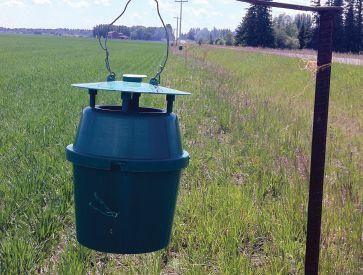
“One of the recent projects focused on developing tools for monitoring cutworms in prairie crops including a comparison of conventional monitoring tools of sex pheromone baited traps with newer food-bait lures,” explains Evenden, a professor and researcher. “The two main approaches of this research included investigating the chemical ecology of adult feeding behavior and testing the effect of host plant species and plant nutrition
on larval performance and feeding preference for two common cutworm pest species. We know from the literature and previous experience of amateur entomologists and naturalists that sugar fermentation products have been used as food-bait lures, however they had never been tested in prairie field crops. We set out to learn more about the feeding behavior and chemical cues or attractants of adult cutworms and to develop a semiochemicalbased monitoring tool.”
One of the challenges of using pheromone traps is they are very specific to one moth species and they only attract males, which doesn’t often reflect the actual population in the field. This also does not provide any indication of the more important female egg-laying population. The cutworm family Noctuidae is
TOP: Food bait trials in the field.
INSET: Foot bait trap used in the field trials.
PHOTOS
Because you work in acres, not hours.
That’s the way growers, like you, live. You keep pushing, day after day, without ever punching in or out. All with one thing on your mind. Getting more out of every seed, row and field. So, if you’re in the business of higher yields, get there with Bayer fungicides. Especially when your best harvest is yet to come.
Find out more about Bayer fungicides at ItsGrowTime.ca
There were some interesting findings from the study, showing for the first-time evidence of a host crop preference, and that cutworms are not necessarily generalists as prevfiously assumed.
also a very large family, with only a few species of concern to agriculture crops. Pheromone traps can also attract moths from quite a large distance, so total numbers may not reflect what is in an individual field. For example, a very high trap catch doesn’t necessarily mean that a field will experience a severe infestation.
“On the other hand, food bait traps attract both males and females, but from a wider range of species,” Evenden says. “Although this gives a better understanding of biodiversity in a field, the challenge is being able to identify and tell the various species apart, making this approach mostly suited for experienced entomologists. Another benefit of food bait traps is they provide a better localized assessment of what is in a field as they don’t attract moths from such a long distance. In the experiments, a number of different semiochemical formulation products were tested separately and in combination, and at different release rates. The result was the development of a semiochemical-based food bait tool that can be used for field study. The food bait traps are useful for both pest management and from the biodiversity monitoring
perspective. They can be used for biodiversity monitoring to provide a much better understanding of the insect community in an area and what might be impacted by agriculture.”
A second component of the project tried to answer the question of whether or not cutworms are crop generalist species as generally assumed, and how well larvae do on different types of crops. Feeding assays were conducted in the lab and included redbacked cutworm, pale western cutworm, true armyworm and bertha armyworm. The trials compared wheat and canola crops, in both fertilized and unfertilized trials. Larvae crop preference, as well as feeding data on weight gain and other metrics, were collected.
“There were some interesting findings from the study, showing for the first-time evidence of a host crop preference, and that cutworms are not necessarily generalists as previously assumed,” Evenden explains. “With fertilized crops, the cutworm larvae did not show a preference and fed equally on wheat and canola. Fertilization also increased the susceptibility of the crop to larval feeding. However, the study showed that with unfertilized crops, the redbacked cutworms preferred to feed and did better on canola, while pale western cutworm preferred to feed and did better on wheat. These findings could have implications for cultural management of those cutworms because lower levels of fertilization could lead to a less healthy cutworm population. However,
Arylex™ Active
target wild oats
for barley
we did not look at the impact on crop yield – something that producers of course would be interested in.”
Building on this research work, another graduate study project was conducted taking a closer look at moth bait trapping and the impact on bumblebees. “One of the known problems of mothpheromone baited traps is they also attract bees, and bumblebees in particular,” Evenden notes. “In the Peace region, typically only one pheromone trap instead of the recommended two traps is used to monitor Bertha armyworm in order to reduce pollinator bycatch, which seems to be a bigger problem in this area. A comparison of pheromone-baited traps and food bait traps placed in the same field showed that bees were not attracted to the food bait traps. However, depending on the year, between 11 and 16 different species of bumblebees were caught in the pheromone bait traps, with the majority being one species, Bombus rufocinctus.”
Some of these bees were captured and brought into the lab to measure their response to various pheromone trapping compounds, because it was unclear why these distantly related insects would be orienting to a moth pheromone. Surprisingly, researchers discovered that the bee antennae do actually have receptors for these compounds or closely related compounds. Although it is still unclear why, the results show that this species of bee in particular is being attracted to the moth pheromones, it is not an accidental bycatch.
“One of the other things we looked at were landscape variables around the traps,” Evenden adds. “For example, more for-
ested habitat around the trapping site would result in higher catch of B. rufocinctus bees. This may be why areas like the Peace region are having more challenges with bee bycatch because they have by far the most forested landscape. From the study, we were able to define some variables that seem to be contributing to bee bycatch, which will hopefully help with trap placement at various field sites. Strategies to reduce bee and pollinator bycatch remains an important priority.”
The trap comparison project and food-bait lure method have been completed and publications are expected to be released this summer. The field work has been completed on the bee bycatch study, and final results will be published later in the year. “We have made some positive steps forward in the development of an integrated pest management strategy for cutworms,” Evenden says. “Cutworms are a very large and difficult group of insects to work with, they are very strong fliers, are not very host specific and move all over the place. As well, the damage by some species occurs before they are at the moth stage, which is when we are able to monitor populations with semiochemical-baited traps. Our research has resulted in some new information and the development of a new food-bait trapping method that will contribute to both pest management and biodiversity management strategies.”
For more on crop pests and management strategies, please visit www.topcropmanager.com.
Licence to spray.
This season, elite growers are being briefed on a new secret weapon for barley in the fight against the prairie’s toughest weeds.
• Cross Spectrum Performance
Get leading Group 1 grass control plus unparalleled broadleaf control of cleavers, hemp-nettle, wild buckwheat, kochia and many more.
• Total Flexibility
With Arylex™ active fl exibility, you can apply on your own terms. Early, late, big or small.
• Easy Tank Mixing
Tank mixed with MCPA, count on 3 chemical families in the Group 4 mode of action for e ective resistance management.
Get briefed at OperationRezuvant.Corteva.ca.
Book by March 15, 2019 and save up to 18% with Flex+ Rewards
The NEW rewards program from Corteva Agriscience™
INTER-ROW SPRAYING HOLDS POTENTIAL
With Group 2-resistant wild mustard a continuous problem in Saskatchewan lentil fields, growers are looking at new ways to control the weeds. Now new research is examining whether inter-row spraying is a viable option for weed control in lentil crops.
BY Bruce Barker
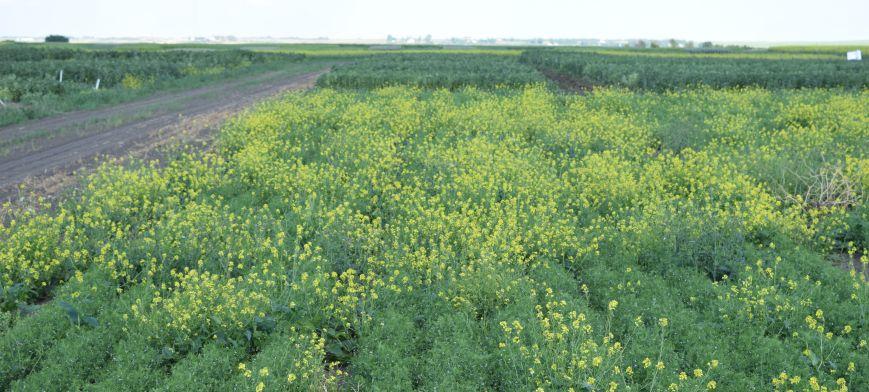
Saskatchewan lentil growers continue to struggle with Group 2-resistant wild mustard to the extent that in central Saskatchewan, lentil fields bloom yellow during the summer. Clearfield lentil varieties were to be the answer to weed control in lentils, but with Group 2 resistance, limited options are available to control these resistant weeds.
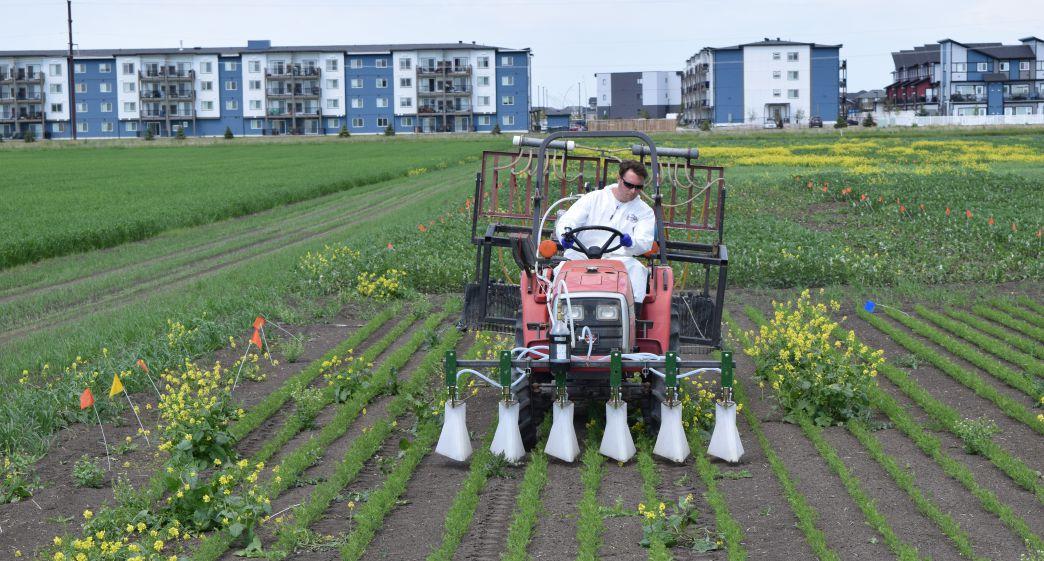
New research by Chris Willenborg, an associate professor with the College of Agriculture’s department of plant sciences at the University of Saskatchewan, is hoping to provide a new option: spraying non-selective and other herbicides between the seed rows to control weeds while avoiding contact with the lentil plants.
“The idea came from a grower three or four years ago and we thought that there might be potential,” Willenborg says.
Willenborg’s group started working on the research last year, building a shrouded-boom plot sprayer and working out the kinks in calibration and sprayer operation. The parts came from Garford Farm Machinery Ltd. in the U.K. Garford manufactures band and hooded sprayers and camera-guided inter-row tillage weeders.
“If the concept works, we could get to the point where a grower could even spray weeds later into the growing season. Critics would argue that there is a loss of yield when spraying later, but these late-emerging
University of Saskatchewan researchers are investigating inter-row spraying of lentils.
KOCHIA NEVER RIDES ALONE. GET THE WHOLE POSSE.
When you apply pre-emergent Authority® 480 herbicide, you’re after kochia and you mean business. But it’s not like the other weeds can jump out of the way. Yes: Authority® 480 herbicide controls kochia with powerful, extended Group 14 activity to protect peas, flax and other crops. It also targets redroot pigweed, lamb’s-quarters, cleavers* and wild buckwheat.
Authority® 480 herbicide. Gets more than kochia. But man, does it get kochia.
FIELD PEAS | FLAX | CHICKPEAS | SOYBEANS | SUNFLOWERS
Save up to $5.50/acre with FMC Grower CashBack.
Wild mustard produces up to 3,500 seeds per plant, and its seeds can remain viable for a decade – or even longer. The weed’s yellow flowers are often mistaken for other plants in the mustard family, so growers must be vigilant when scouting.
weeds and weeds that are not controlled by the post-emergence application can have a large impact on the spread of resistant weeds,” Willenborg says.
PROVEN IN AUSTRALIA
Herbicide-resistant rigid ryegrass is a serious problem in Australia. Multiple resistance to seven sites of action has been identified. Growers have had to resort to many different weed control practices, and one is inter-row, shrouded spraying with non-selective herbicides.
Southern Precision in Naracoorte, South Australia, manufactures a shielded sprayer called the Crop Stalker. It can spray between rows as narrow as 10 inches. Crop Stalker uses a video-based sensor to shift the spray boom side to side by as much as two inches to keep the shielded boom between the seed rows. A nozzle kit can also be added to spray a separate herbicide over the seed row.
In Western Canada, researcher Eric Johnson conducted interrow spraying trials as part of a Mustard 21 research project when he was with Agriculture and Agri-Food Canada in Scott, Sask. This trial didn’t use shielded spray nozzles, but rather, the sprayer used drop nozzles that ran between the crop rows with large droplet size to minimize drift. Spray application was done under very calm conditions. Various selective and non-selective herbicides were applied.
“We had variable results. For the most part, we were able to spray between the rows without shrouds, but I think using shrouds are a much better system,” Johnson says.
Johnson says what they learned from his involvement in both the Mustard 21 project and the University of Saskatchewan lentil project was that there are benefits and risks to using systemic
herbicides such as glyphosate, and contact herbicides such as glufosinate. A systemic herbicide provides benefits of being able to control weeds that are partially hit with glyphosate, such as when the weed is growing out from the seed row. The downside is that a partial hit on a crop plant could mean severe crop damage from systemic movement of glyphosate.
On the flip side, glufosinate would be safer on the crop if spray contacts only part of a crop plant because it doesn’t translocate, but glufosinate would only control weeds with uniform spray coverage because it is a contact herbicide.
In addition to investigating herbicide effectiveness, Willenborg’s research will also help to identify spray timing, yield benefits and how much yield loss occurs due to the weeds growing within the seed row.
“My hope is that if the concept works in lentils, that we have another tool for growers to use. There are many ways it could be implemented with RTK guidance, sensors that only spray when a weed is detected, and incorporating on-row spraying with registered herbicides,” Willenborg says.
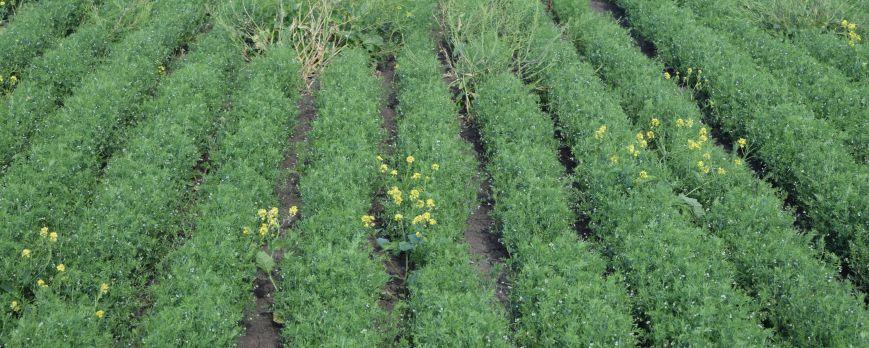
TOP: Untreated. ABOVE: Inter-row sprayed with glyphosate + glufosinate.
HERBICIDE UPDATE FOR PULSE CROPS
Don’t hold your breath waiting for a silver bullet.
by Bruce Barker
Some old, some new and some maybe coming – sometime. That’s the state of pulse herbicides in Western Canada. Very few new herbicides have been registered in the last decade.
“There’s still an attitude that a silver bullet is coming. There may be new herbicide actives coming, but not very soon,” says Eric Johnson, weed scientist at the University of Saskatchewan. “Nobody develops herbicides for pulses. Most new registrations come after the active has been registered in corn, cotton, rice or soybeans.”
A historical perspective
As pulse crops such as pea, lentil, and chickpea became more common across the Prairies, so did registrations for weed control in those crops. Prior to the Group 2 imi-chemistries being registered in 1990, a group of herbicides formed the foundation of weed control. Some were pre-emergent and others post-emergent.
Trifluralin, ethalfluralin (Group 3), metribuzin (Group 5), MCPA amine/sodium salt (Group 4), Tropotox Plus (Group 4), Basagran (Group 6), Pea Pack (Sencor/MCPA) (Group 5 plus 4) were the mainstays in what was mostly pea production in the era from 1970 to 1990.
Use of these herbicides faded as the Group 2 imi-herbicides Pursuit, Odyssey, Solo and Ares were registered in the early 1990s, followed up with the introduction of Clearfield lentil in 2007.
In 2002, the Pesticide Minor Use Program was introduced, and research at Agriculture and Agri-Food Canada and the University of Saskatchewan provided data for new herbicide registrations in pulse crops. These included the Group 14s carfentrazone (Aim), sulfentrazone (Authority), flumioxazin (Valtera); and Group 15 pyroxasulfone (Focus, Zidua).
At the time, BASF also introduced Group 14 saflufenacil (Heat); Viper (imazamox plus bentazon; Group 2 plus 6). Nufarm also introduced pyraflufen plus MCPA (Goldwing; Group 14 plus 4).
“A lot of these chemistries were old modes of action, but new to Western Canada,” Johnson says.
The biggest challenge that growers now face is widespread Group 2 resistance with all kochia found on the Prairies considered Group 2 resistant. Other emerging threats include Group 2 cleavers in the Black and Dark Brown soil zones, wild mustard resistance in central Saskatchewan around Kindersley, and resistant stinkweed in western Saskatchewan.
Johnson says quite a few of the most recent pulse herbicides are soil active and require moisture to be effective. They tend to be less consistent because of environmental interactions, and are generally not as broad spectrum as some of the older chemistries. Crop toler-
ance, especially lentil, is also a concern with the soil active chemistries.
“Clearfield lentil changed grower expectations of weed control and crop safety – both were very good. Those expectations can’t be as high with these new soil active chemistries as they were when Odyssey first came out,” Johnson says.
A new registration on chickpea and lentil is the registration of Goldwing (pyraflufen plus MCPA ester; Group 4 plus 14). Already registered on field pea, Goldwing is a pre-seed burndown herbicide that controls a range of broadleaf weed herbicides through contact and systemic action. It can also be tank-mixed with glyphosate for enhanced control and improved herbicide resistance management.
“With multiple modes of action, Goldwing gives farmers more options to control resistant weeds like Group 2 and 9 resistant kochia, or
ABOVE Herbicide-resistant weeds have weed scientists searching for new options.
PHOTO BY BRUCE
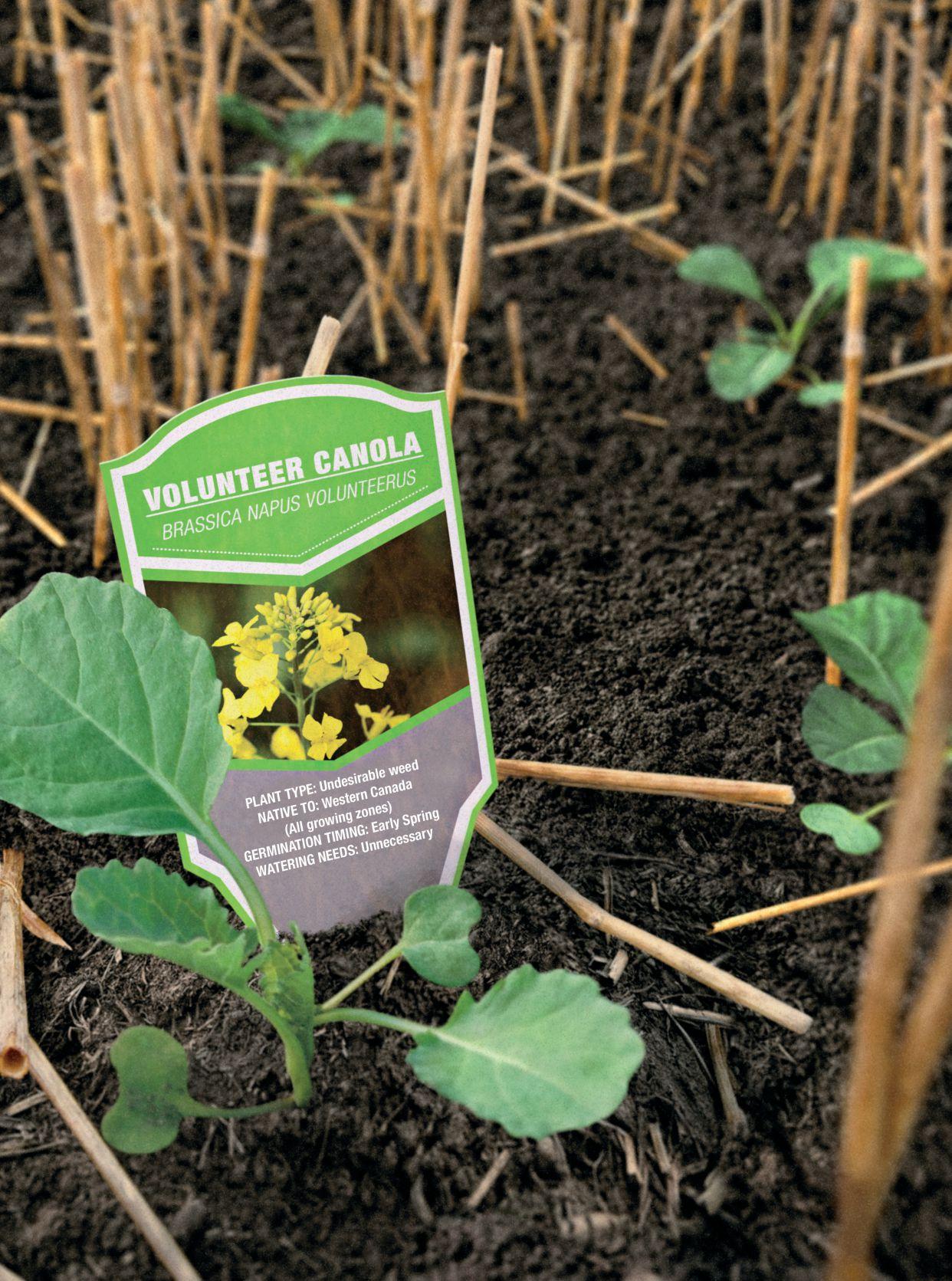
You’ve identified volunteer canola as a weed. Now it’s time to deal with it.
For control of all volunteer canola, tank mix Pardner® herbicide with your pre-season application of Roundup®. Make Pardner your first choice.
Group 2 and Group 5 resistant redroot pigweed,” says Graham Collier, Nufarm technical services manager for Western Canada in Alliance, Alta.
Nufarm is also working on registration of Fierce (flumioxazin plus pyroxasulfone; Group 14 plus 15) for application prior to seeding pulse crops. Fierce is already registered on soybeans, spring wheat (not durum) and field corn for residual control of broadleaf and grass weeds including Groups 1, 2, 4, 5 and 9 biotypes.
Chickpea developments
Chickpea weed control will be less challenging with the development of IMI-tolerant varieties, although the herbicides won’t control Group 2 resistant weeds. The first IMI-tolerant chickpeas developed were CDC Alma (kabuli) and CEC Cory (desi). The Prairie Pesticide Minor Use Consortium has submitted the application for Solo herbicide use on IMI-tolerant chickpea to the Pest Management Regulatory Agency (PMRA). Once Solo is registered, the IMI-tolerant chickpea varieties will be released. All future chickpea varieties developed at the Crop Development Centre will carry the IMI-resistant technology.
A potential new chickpea herbicide is a Group 6 active pyridate. It is an older chemistry that was investigated in the 1990s by Syngenta and is now with Engage Agro, which is working on a new formulation. The trade name is Tough 5EC, and it is a post-emergent product with a contact mode of action and no residual.
More recently, pyridate was re-evaluated as part of a large pulse weed control research led by Dr. Chris Willenborg at the University of Saskatchewan and funded by the Saskatchewan Pulse Growers. Chickpea tolerance was very good to pyridate and provided acceptable control of wild mustard at a rate of 900 grams of active ingredient per ha-1. It works on a number of broadleaf weeds and is strong on kochia, pigweeds, and lambs-quarters. Engage Agro is working on a submission for registration.
Lentil update
Several recent registrations have given lentil growers more options for weed control. Focus (pyroxasulfone plus carfentrazone; Group 15 plus 14) controls some grassy and broadleaf weeds. It is applied preplant or pre-emergent in the early spring or fall.
Johnson says some crop injury showing distorted lentil growth from Focus application has been observed. However, he says the lentils usually recover. More injury is noticed with shallow-seeded lentils but research found that it takes an application of three-times the
rate before a major yield loss. “Lentils can take a more injury than you would expect.”
Valtera, a Group 14 herbicide, is another pre-emergent residual herbicide registered on chickpea, field pea, and lentil. It provides re sidual control of some broadleaf weeds including redroot pigweed, lamb’s quarters, dandelion, kochia and Canada fleabane.
Johnson says growers should understand that Valtera and Focus are not Edge substitutes in lentil. Valtera is fall-applied and pro vides good control of winter-annual weeds (including narrow-leaved hawk’s beard), and the first major flush of kochia. However, there isn’t enough residual to provide season-long control of kochia flushes.
Focus can be very effective on cleavers if soil organic matter is less than six per cent. Focus is also very good on downy and Japanese brome. Other weed control is environment dependent.
Johnson cautions to not overuse Group 14 herbicides because of weed resistance selection pressure. He says Valtera in the fall fol lowed up by Heat in the spring will exert more selection pressure for weed resistance.
A recent registration in November 2018 on lentil, field pea, soy bean and corn was Heat Complete (saflufenacil + pyroxasulfone). In a tank-mix with glyphosate, the pre-seed burndown will control a wide range of broadleaf and grass weeds, for the control or suppres sion of Group 1, 2 and 9 resistant weeds.
“Heat Complete combines the advantages of a Heat LQ and glyphosate burndown along with extended residual activity on toughto-control weeds. The real drivers are residual suppression of kochia and wild oat,” says Dan Packer, pulse crop manager with BASF in Mis sissauga, Ont.
Managing herbicide resistance in pulses is also more and more dependent upon herbicide layering. Herbicide layering is a concept using both pre- and post-emergent modes of action. A pre-emergent herbicide provides short to mid-term residual control and reduces weed populations for post-emergent control.
“Heat Complete works well in a herbicide layering system with a pre-seed burndown and residual control or suppression of some weeds, followed up with an in-crop treatment with herbicides like Solo, Odyssey or Viper,” Packer says. “The idea is to take some of the selection pressure off of the post-emergent herbicide.”
Pea options
In field pea, managing Group 2 herbicide resistance is becoming in creasingly important. An example of herbicide layering to manage Group 2 resistant cleavers in field pea would be to use a pre-emergent herbicide like Edge (fall-applied and heavy harrowed) or Authority or a Heat herbicide. This application would be followed up with an in-crop post-emergent application of Viper or Basagran. Two years of research in Rosthern, Sask., on soils with organic matter greater than six per cent found Edge fall-applied plus Heat pre-emergent followed up by Viper post-emergent produced around 90 per cent control of Group 2-resistant cleavers.
Expanding fababean options
Screening for potential Minor Use applications has been conducted on several herbicides. These include Heat, Authority, Viper, Valtera and Focus. Data is being generated to support potential applications, but none are registered on fababean at this time.
Johnson says for most pulse crops, herbicide options will continue to be few and far between. “Weed control will likely require other integrated practices to provide broad-spectrum control.”
Wild mustard control in chickpea with pyridate: untreated on left (plot 1); pyridate applied at 450 g ai/ha (plot 2), 900 g ai/ ha (plot 3), and 1800 g ai/ha (plot 4).