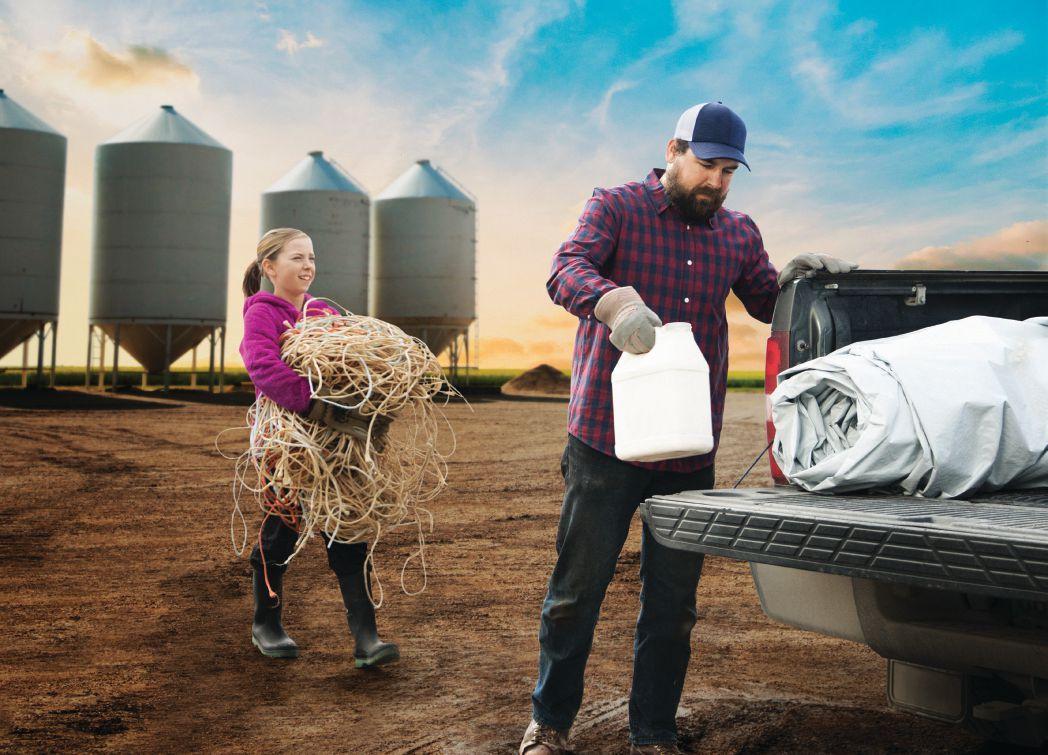
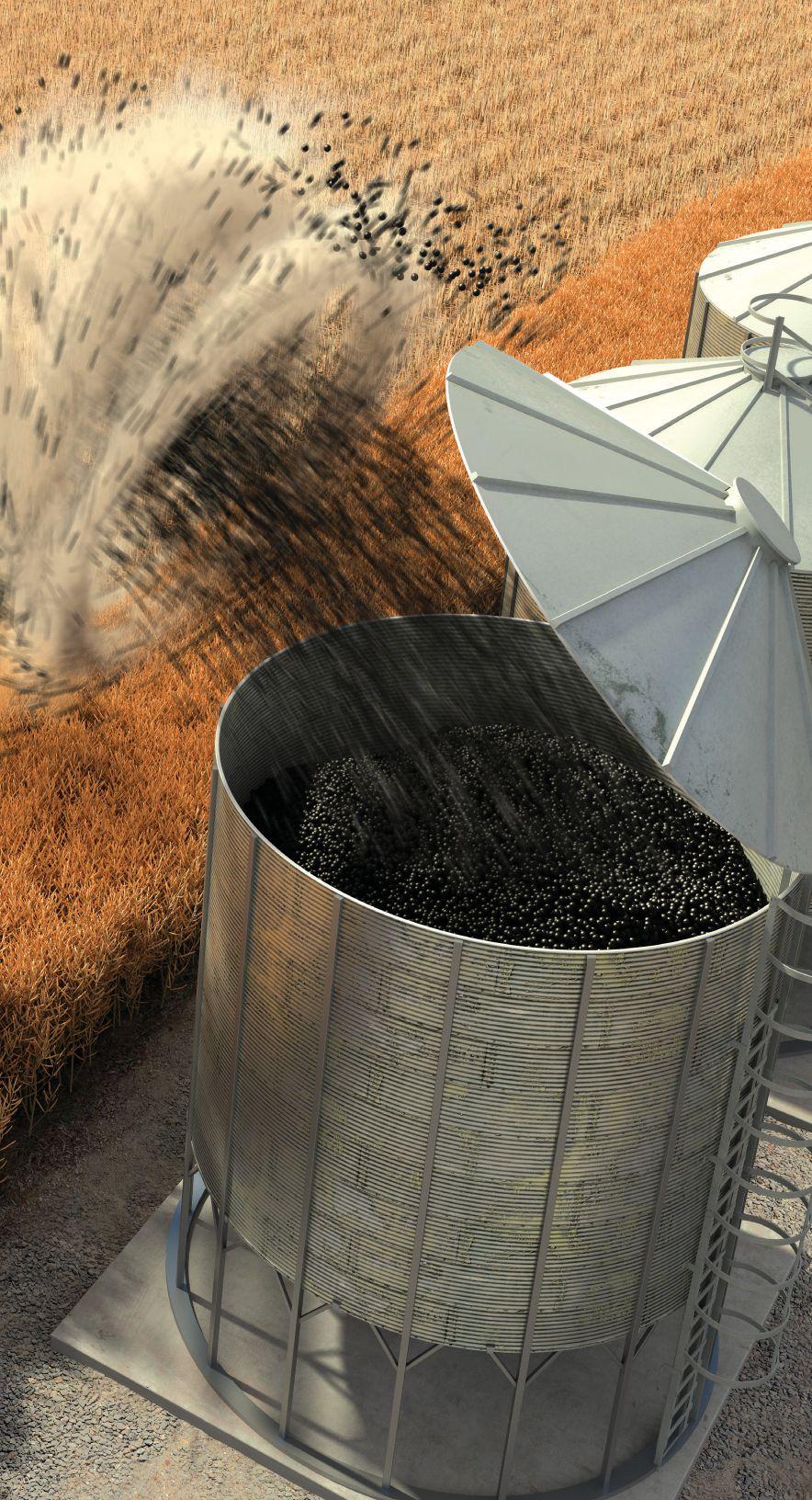
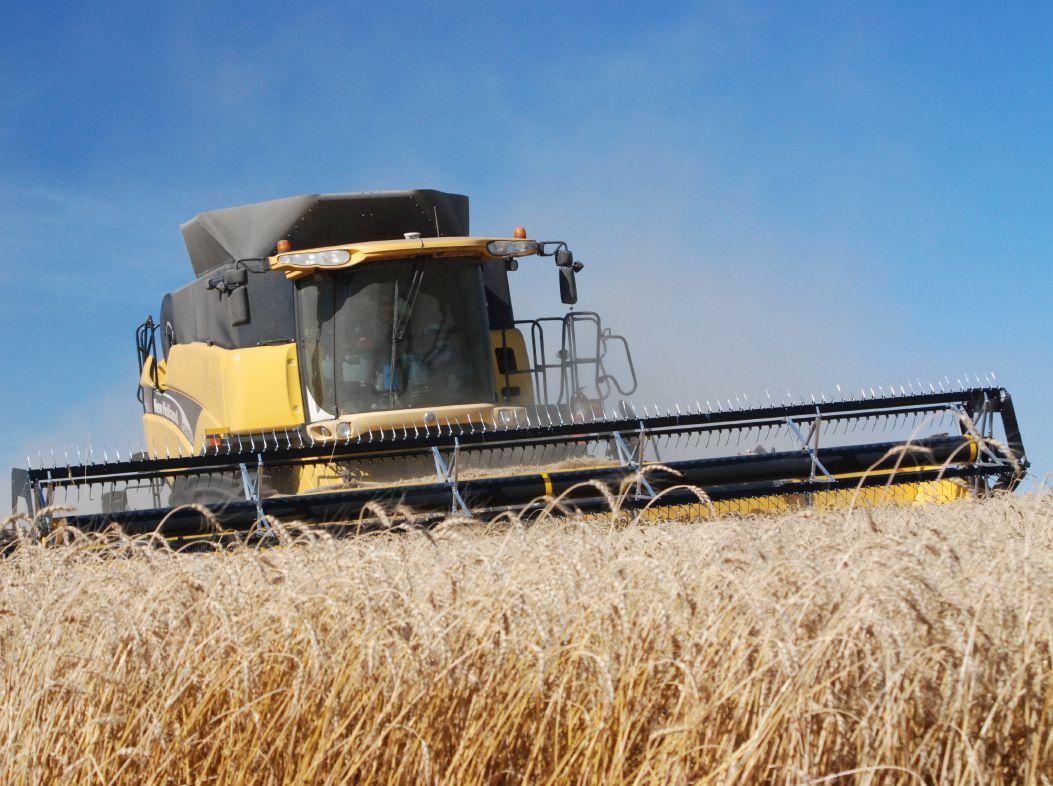
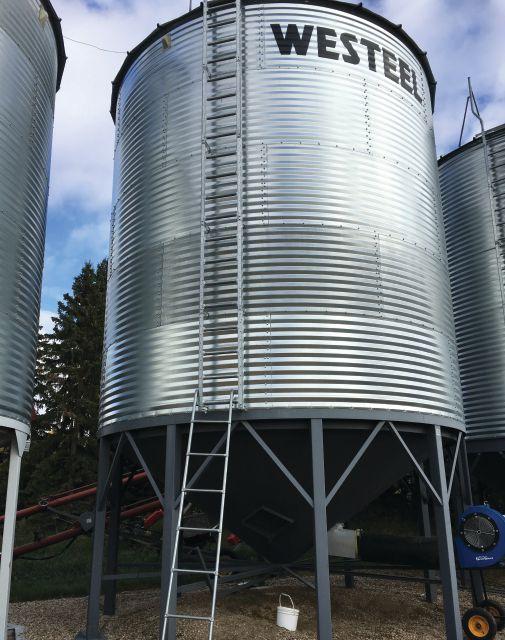
Enhanced efficiency fertilizers provide more choices.
PG. 12
FORECASTING SOIL MOISTURE
Using real-time tech to make decisions.
PG. 6
FLAX STORAGE
Updating information and tools for in-bin drying.
PG. 18
For the best soil movement
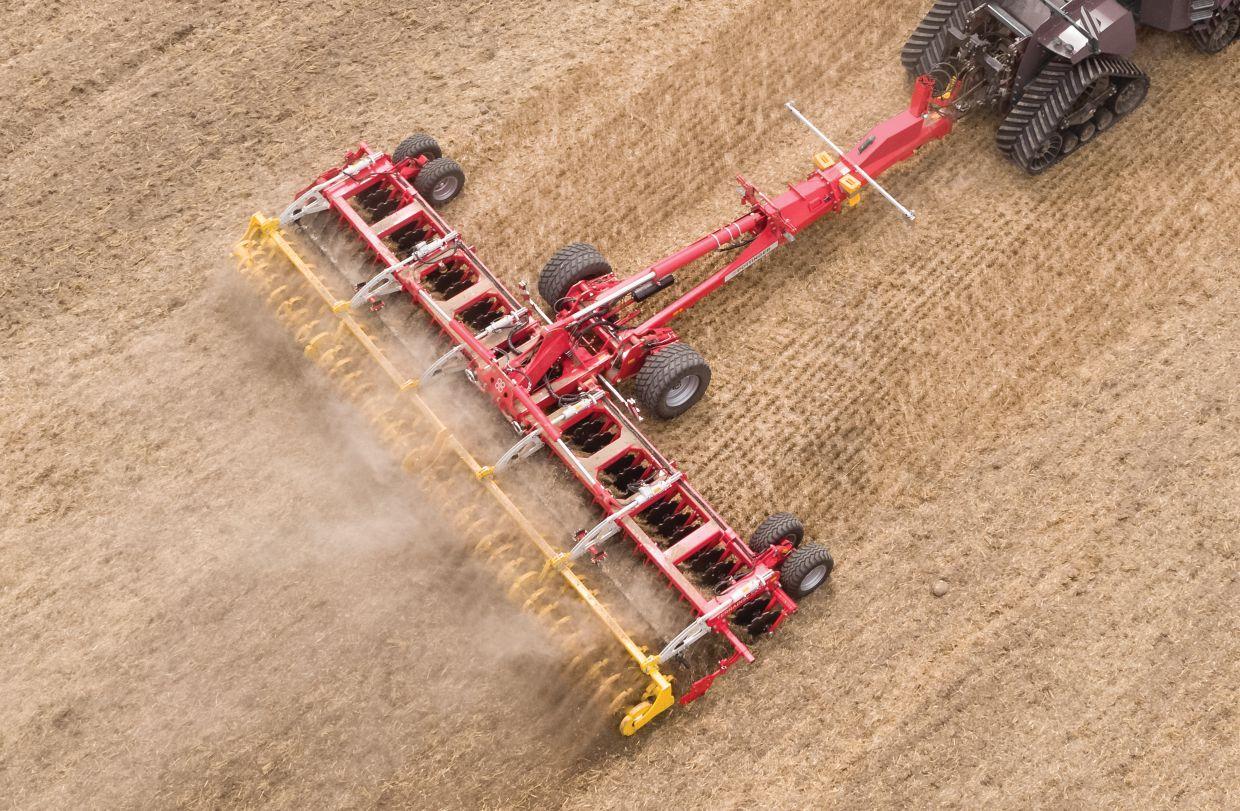
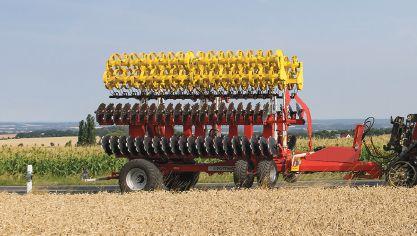
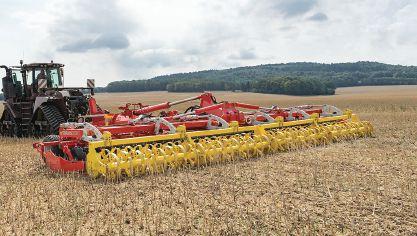
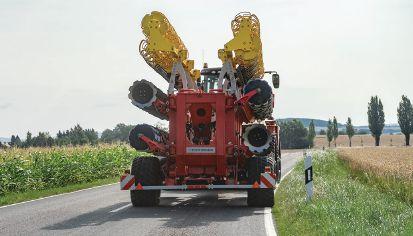
TERRADISC 8001 T / 10001 T disc harrows with working widths of 8 and 10 meters
Perfect incorporation and intensive mixing even in hard and dry conditions thanks to the solid TWIN ARM system.
High output - speeds of up to 11 mph are possible.
Straightforward operation without leaving the cab - folding, adjusting working depth and ground tracking.
Perfect ground tracking up and down - thanks to jockey wheels and adaptable frame sections.
Ideal utilization of the tractor's pulling power – saves fuel by correcting lateral forces.
For more information, please call 888-943-3009.
TOP CROP
MANAGER
SOIL AND WATER
6 | Forecasting soil moisture
Real-time technology can impact decision making.
By Donna Fleury
CEREALS
JUNE 2019 • WESTERN EDITION
12 | N fertilizer options for winter wheat Enhanced efficiency fertilizers provide additional ways to put down N. by Bruce Barker
FROM THE EDITOR
4 Slow and steady by Stefanie Croley
SPONSORED CONTENT
10 Evaluating elemental sulphur
CEREALS
16 Updating high-yield spring wheat nitrogen strategies by Bruce Barker
FOCUS ON: PRECISION FARMING
20 Lost in translation By Donna Fleury
ON THE WEB
FOCUS ON: SOIL MANAGEMENT AND SUSTAINABILITY
Did you miss the 2019 Soil Management and Sustainability Summit? Not to worry: our first Focus On digital edition of the summer is our Soil Summit digital wrap-up, with exclusive stories, photos and videos. Visit TopCropManager.com/digital to view.
FLAX
18 | A fresh look at flax storage
Updating information and tools for in-bin drying of flaxseed.
By Carolyn King
FOCUS ON: PRECISION FARMING
22 Sorting out precision planter benefits by Bruce Barker
PLANT BREEDING
24 How might consumer attitudes against GM foods be shifted? by Carolyn King
Readers will find numerous references to pesticide and fertility applications, methods, timing and rates in the pages of Top Crop Manager. We encourage growers to check product registration status and consult with provincial recommendations and product labels for complete instructions.
STEFANIE CROLEY | EDITOR
SLOW AND STEADY
Ilike to think I’m a pretty well-rounded person, but one skill I’m lacking is the ability to read minds. In fact, I shockingly don’t have any superpowers (although, wrangling a fouryear-old and twin two-year olds into their car seats in my minivan every morning should count for something). But if I had to venture a guess at two of the most popular topics on the minds of producers in Western Canada right now, I’d select canola and moisture. To be fair, I suppose these are hot topics to producers across the country at any time of year. But the current climate – meteorological and otherwise – is particularly tense at the moment.
As of April 30, the Canadian Drought Monitor reported much of southern Alberta and Saskatchewan were experiencing at least abnormally dry conditions, with moderate to severe drought occurring in several areas. This is especially concerning after a particularly dry 2018, but seeding in Saskatchewan kicked off on a high note nonetheless. In Manitoba, cooler temperatures slowed down seeding in the Eastern and Interlake regions. It was a challenging start, but progress is being made.
On the other hand, there’s been little development to the ongoing canola seed trade dispute between Canada and China as of the time of this writing, which is arguably a larger concern. The Canadian government is working toward more support for canola growers. Announced by Minister of Agriculture and Agri-Food Marie-Claude Bibeau and Minister of International Trade Diversification Jim Carr on May 1, loan limits under the Advance Payments Program will increase to $1 million (from the previous limit of $400,000). Furthermore, canola advances will be eligible for up to $500,000 interest free, and the first $100,000 will remain interest free on all other commodities. Beyond this, the AgriStability deadline has been extended to July 2, 2019, for all provinces. Minister Carr also announced he will be leading a canola trade mission to Japan and South Korea this month, continuing his work to engage other high-potential countries, including the Mexico, UAE, Germany, France and other Asian markets. The much-needed support was welcomed by industry, but in a press release, the Canola Council of Canada (CCC) reiterated the need to do more. “While producer support and market diversification are important, regaining access to the Chinese market remains a priority,” the CCC said in perhaps the most impactful statement of the release.
Though very different, both situations are discouraging and frustrating, leaving many feeling as though their hands are tied during time of year when time really is of the essence. My crystal ball isn’t providing much in terms of sage wisdom to offer. What I do know is this isn’t the first dry or cool spring on record, and it surely won’t be the last. And on the same note, this isn’t the first trade dispute Canada has experienced, and though I hope I’m wrong, I suspect it won’t be the last either.
In the meantime, if you’re affected by drought conditions, the canola trade dispute, or any other issue that might hinder your operation this year, we’re with you, and we encourage you to press on. It may feel like an uphill climb, but progress is progress, no matter how small.
Editor’s note: In the Mid-March issue of Top Crop Manager West, we mistakenly attributed the story, “The factors of soybean planting decisions” on page 54 to Donna Fleury. The story was written by Julienne Isaacs. We regret the error.
rthava@annexbusinessmedia.com Tel: 416.442.5600 ext. 3555 Fax: 416.510.6875 or 416.442.2191 Mail: 111 Gordon Baker Rd., Suite 400, Toronto, ON M2H 3R1
SUBSCRIPTION RATES Top Crop Manager West – 9 issues Feb, Mar, Mid-Mar, Apr, June, Sept, Oct, Nov and Dec – 1 Year - $48.50 Cdn. plus tax Top Crop Manager East – 6 issues Feb, Mar, Apr, Oct, Nov and Dec – 1 Year - $48.50 Cdn. plus tax
Potatoes in Canada – 1 issue Spring – 1 Year $17.50 Cdn. plus tax
Occasionally,
BIGGER PICTURE SEE
MONITORING AND FORECASTING SOIL MOISTURE
Real-time technology can impact decision making on-farm and across regional landscapes.
by Donna Fleury
Soil moisture is not only important for crop production, input decisions and yield outcomes – it is an important determinant of runoff volume, flood risk and greenhouse gas emissions from agriculture soil, such as nitrous oxide (N2O). Advancements in moisture monitoring and forecasting, along with the rapid advancement of digital sensors and other technologies, allow for soil moisture and many other components to be measured in real-time at various scales including on-farm.
“The ability to monitor and assess soil moisture has changed over time, however there are many challenges to consider,” says Paul Bullock, professor with the department of soil science at the University of Manitoba. “Fall soil moisture mapping continues to provide a good, broad-scale picture at a regional, provincial or national level. These maps provide a broad snapshot of soil moisture and an indication of the amount of stored moisture that will be available for the crop yield across a wide area,” he says.
“Fall soil moisture does not disappear over the winter and will still be there for the crops the next spring in Western Canada. It is also starting to become clear that subsurface replenishment of soil water is another important factor affecting crop yield in dry years. A good example was the excellent crop yields under the drought conditions of 2017. Subsurface replenishment of soil moisture by high water tables over the growing season were likely a significant factor contributing to the higher-than-expected yields.”
Various soil moisture monitoring networks have been established recently, including a research network managed by Agriculture and Agri-Food Canada (AAFC) and provincial networks. Through the Drought Watch Program, AAFC makes soil moisture, precipitation and other weather information available across Canada, and individual provinces in Western Canada also produce various weather maps, which are updated frequently during the growing season. These tools provide good general information, but for farmers who may live a
distance from the stations where these measurements are made, they do not provide soil moisture conditions specific to their farm.
“Soil moisture monitoring using satellite imagery can also provide an assessment of surface moisture conditions in real-time across the entire surface, rather than for a single point like the soil moisture and weather sensors. Typically, the satellites are sensitive to moisture in the top five centimetres or a bit deeper,” Bullock explains. “We have collaborated with others working on ways to help monitor soil moisture from various satellites, including one launched by the European Space Agency in 2009 and another by NASA in the U.S. in 2015. The U.S. SMAP (Soil Moisture Active Passive) satellite was a very interesting advancement, providing information from both passive microwave signals and active radar on the same satellite. This provided much higher spatial resolution for the soil moisture maps, not high enough for individual fields but more than the 30- to 40-kilometre resolution from passive sensors alone. Unfortunately, the active radar system quit a few months after launch, which is disappointing for everyone. But the project continues using passive satellite data and researchers are working on combining active radar from other satellites to replace the non-functional radar on SMAP.”
Bullock is collaborating on another project with AAFC, the Canadian Space Agency and NASA to improve the quality of the data collected under various conditions and the delivery of timely and reliable soil moisture estimates from SMAP. After reviewing results from global core satellite validation sites, the AAFC test site near Winnipeg ranked the lowest in accuracy compared to the SMAP sensor, with a site in Iowa only slightly better. The big question was why the correlation of the satellite sensor data and the actual soil moisture data was
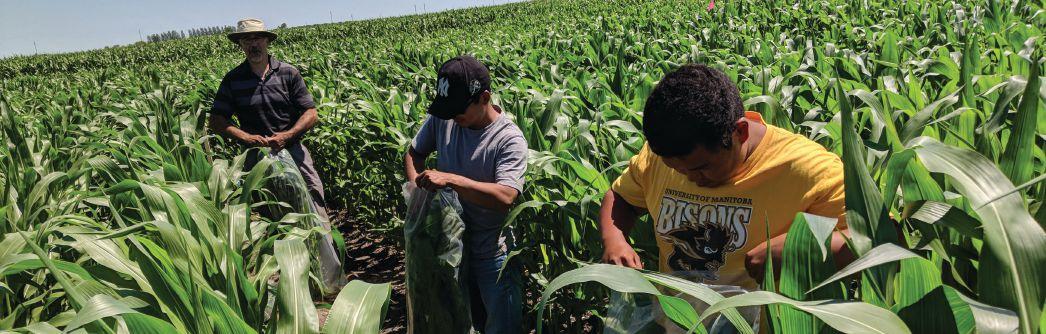
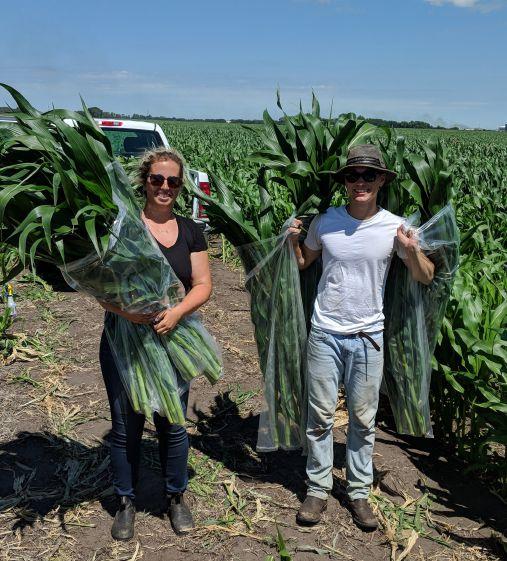
ABOVE: Collecting physical crop vegetation samples for Vegetation Water Content (VCW) determination in the field trials at the University of Manitoba.
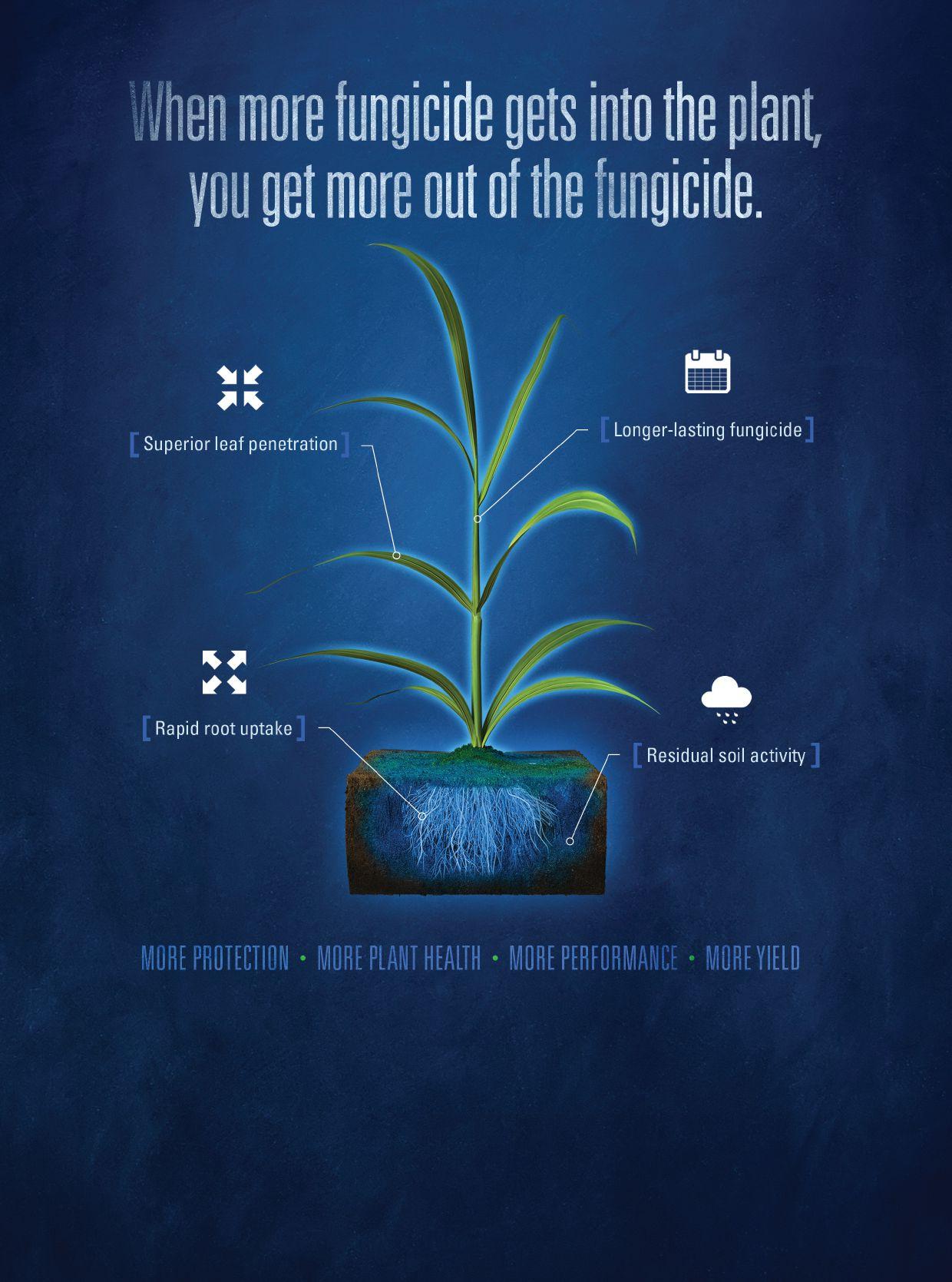
The same highly systemic action that makes EVITO® Fungicide get into the plant fast also makes EVITO longer lasting. Because even product that falls onto the soil will be taken up through the root system. And with its residual soil activity, rain or irrigation will give it a second boost for even longer-lasting protection. Fast acting. Long lasting EVITO. To find out more, visit evito.ca.
After collection, the physical crop vegetation samples are taken to the lab, cut and weighed and then put into a drying room to determine the moisture content at the University of Manitoba.
so poor in these agricultural areas. After a major effort using a combination of aircraft imagery, satellite imagery and several people on the ground physically measuring soil moisture levels, researchers identified that the SMAP soil moisture program algorithm was developed using long-term average vegetation estimates, which failed to capture the large seasonal variation in crop biomass and vegetation water content (VWC) of annual field crops.
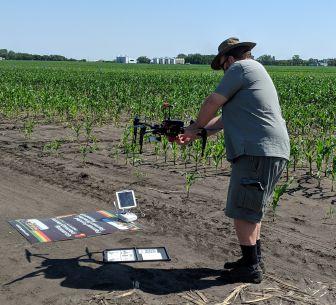
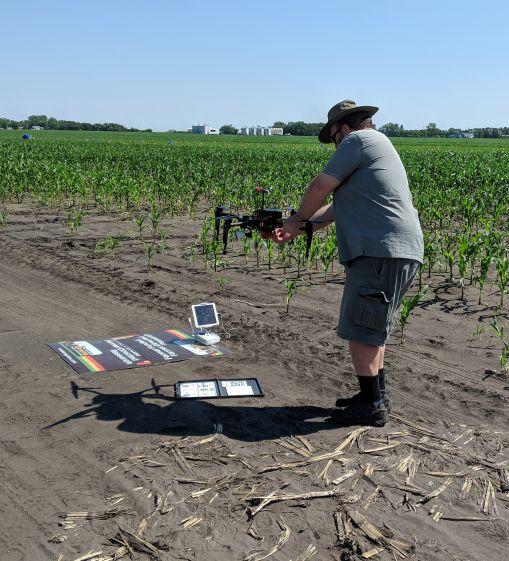
“We initiated a project in 2016 to determine the actual VWC from various crops including canola, corn, oats, wheat and soybean in the Carman-Elm Creek, Man., area test site,” Bullock says. “VWC affects the signals received by both passive and active microwave sensors on satellite platforms and a quantified value for VWC is an essential component of the algorithms that derive soil moisture content from their signals. We used various instruments including drone-mounted cameras and imagery to estimate VWC, biomass and crop yield information.”
Bullock says early results show better information and more accurate soil moisture estimates can be made in agriculture crop areas. However, this study was conducted on one small area, so it will take some time to upscale the results across a larger area.
Bullock’s research program is also focusing on soil moisture forecasting through the development of a hydrological forecasting model that would incorporate several variables to be able to forecast changes in surface and subsurface water conditions at a watershed scale. He is working with Aquanty Inc. in Waterloo, Ont., the developers of 3-D flexible grid hydrological models for several watersheds in Canada. Bullock has a new project proposal to develop a model for the Red River area, a substantially different watershed than some of the others they’ve made. Model development and proof of concept testing, including the addition of high performance computing capability for forecasting future soil moisture ahead one or two weeks will take some time. However, accurate output for soil moisture from this type of model will have significant value for agriculture, municipalities and other watershed stakeholders. The soil moisture estimates from the model can be used to forecast crop yield potential, pest risk and flood risk.
A drone with a special multi-spectral camera is used to capture high resolution images of the vegetation before it is cut, so the the image data can be related to the measurements from the vegetation samples in the field trials at the University of Manitoba.
“Some farmers are starting to install real-time sensor technology on their own farms, building on precision farming systems and understanding variability on individual fields including soil moisture,” Bullock says. “The key is understanding the root zone soil moisture because the root zone is really the water container that keeps the crop watered.
“In order to interpret and understand the data collected, it is important to build a time series of soil moisture data for individual fields or soil management areas. Soil type and texture affect the soil physics of moisture movement and storage, and this varies significantly by location. Real-time monitoring can help provide timely soil moisture information specific to a field location, which can help inform crop management decisions, such as nitrogen fertilizer inputs, yield opportunities and pest risk. Soil scientists and agronomists can help with interpretation, but once you spend time monitoring in your own fields, you will become the expert in soil moisture on your own farm.”
Making in-season decisions
As technology advances, monitoring and assessment tools are moving beyond provincial and regional levels to cost-effective on-farm and infield options. “With the advancing internet of things and digital and smart farming, we are really looking at the next revolution of driving decisions made off of very informed actionable tools at the farm level that influence ROI,” says Guy Ash, global training manager with Pessl Instruments in Winnipeg. “As technology continues to improve, we see sensors playing a very important role to help know what is happening in real-time for in-field applications of nutrients, diseases, pests and field planting.”
Being able to track soil moisture in real time, and knowing the total amount of available water at freeze up or at seeding, and the targeted yield and probability of precipitation over the growing season, helps to target yields, which in turn assists with timely management decisions for fertility or other inputs. “With infield real-time soil moisture information, you are now able to develop different scenarios and equate potential yields for each soil type and target the amount of nutrients needed for each,” Ash adds.
“For example, with the low costs and the ability to collect data at the field level with sensors for moisture, temperature and volumetric ion content (VIC) every 10 centimetres (cm) down to a depths of 120 cm in 15 minute time steps, soil type specific data can be collected and translated into exactly where you are at in terms of soil moisture in a water driven crop yield and provide a very good answer to a particular problem, such as nutrition. If you know you only have five inches of stored water versus nine inches of stored water in a different soil profile, you are going to manage nutrients and the crop differently.”
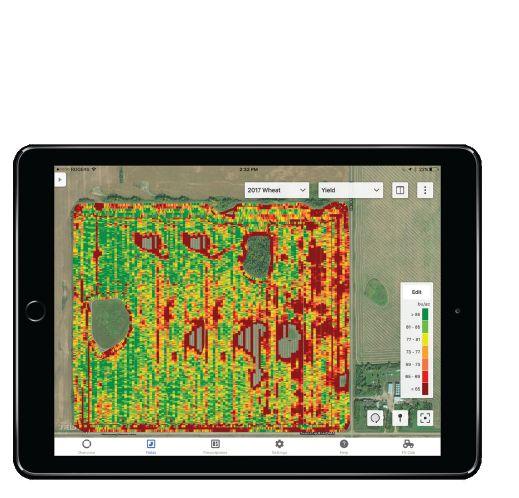
Ryan Hutchison, integrated solutions manager with South Country Equipment in Regina, is a co-founder and developer of the Crop Intelligence app. After more than 20 years in precision ag, Hutchison has learned there are three key relationships to making real-time soil moisture and other data collection and analysis work for growers. “The first is the hardware, which requires someone knowledgeable to help get the equipment installed, configured and running properly for the rest of the system to work,” Hutchison explains. “We have several equipment dealer partners across Western Canada and Australia, with the two approved platforms, the John Deere Weather Station and Pessl Instruments, which measure soil moisture, rainfall, and potentially other environmental sensors such as air temperature, humidity and leaf wetness. The soil capacitance moisture probes, which are a 20year old trusted technology, are used to record continuous soil moisture by crops to a depth of one metre.”
The second part is the CropIntel app, which takes the data from a sophisticated piece of equipment and turns it into a proactive tool for growers and agronomists to make decisions. The third part is taking the CropIntel data analysis of the soil moisture, root activity and water
driven yield potential and sending it to the farmer and their agronomy partner to make decisions. “We are not the agronomist, we are just providing the data and the agronomic knowledge to support what the data is telling us. It is the local boots on the ground that makes it successful,” Hutchison emphasizes. “From the time the equipment is installed after seeding between seed rows, the CropIntel system allows growers to see in real-time how much water is in the ground, where it is along that metre-deep probe, amount of precipitation captured, comparisons to normal and average conditions and what the root activity and crop health is like. This gives growers a snapshot or daily report card through the season of the amount of water they have to grow the crop and adjust agronomic practices.” The minimum requirements are a digital rain gauge and an approved moisture probe, with the investment ranging from $3,000 to about $10,000, depending on how many sensors are added to an individual weather station.
“We have 90 per cent of the John Deere dealer groups trained as partners with CropIntelligence, and we also have a growing number of independent input retailers and agronomists that want to support the project agronomically. Our partnership with Pessl Instruments extends the system to be used with John Deere and customers with other brands of farm equipment. We also have a fairly large network of independent agronomists that are working with growers who want assistance with understanding the data, assessing risk and making agronomic decisions. This true collaboration from across industry is unique from what has been in the past, so makes it super exciting.”
The overall goal is to continue to help producers collect timely, accurate, usable data for their operation and optimize production and return on investment.
EVALUATING ELEMENTAL SULPHUR
Fitting this macronutrient into a long-term fertility and soil nutrient plan.
Sulphur (S) is an important macronutrient for crop production. While canola is most often recognized in Western Canada as a crop that requires the largest amount of S, most crops benefit from proper S fertilization. Like other macronutrients, sulphur helps optimize yield and quality. However, it is only in understanding how sulphur does this, can the reason for its necessity be fully realized.
“In crops, sulphur is particularly important for protein synthesis and is a key component of two essential amino acids, cysteine and methionine, which are needed for that process,” explains Elston Solberg, research agronomist with Sun Mountain Inc. in Edmonton.
“These amino acids are the mediators of the efficient creation of the 18 other amino acids involved in protein synthesis, secondary plant compounds, and protein enzymes required by crops to regulate photosynthesis and nitrogen fixation,” Solberg says. “Sulphur enhances the utilization of every other nutrient. Interestingly, the Mulder chart, which shows synergistic or antagonistic interactions between plant nutrients, does not include S because it plays well with all others.”
Thanks to current research, growers and agronomists can better understand the complexity and functionality of these S-based compounds. A plant loaded with S is able to synthesize and create glutathione, which is an important antioxidant or stress fighter within the plant. Another group of secondary plant S compounds are the glucosinolates, which help plants (brassica species in particular) defend against certain insects and diseases. To support all these functions, adequate S needs to be available to the crop.
Sulphur levels are usually extremely variable across a field, making it challenging to get a representative soil sample,
which often results in misleading numbers. It only takes one sample in an overabundant area to totally skew the sulphur test.
“One of the complications with S deficiency is that applying N fertilizer without S in deficient areas will actually decrease yields,” Solberg says. “Therefore, the most important factor to look at is a balanced N:S ratio in plant tissue, which is typically 10:1 for cereal crops and grass forages, 8:1 for pulse crops and 6:1 for canola crops.”
Solberg says this is how he bases sulphur recommendations, regardless of soil test sulphur levels. “How much nitrogen does it take to grow this crop yield? Then I use the appropriate ratio to come up with the sulphur recommendation. The best indicator of adequate S levels in the crop is a tissue test of newer leaves. We take the newer leaves because sulphur is immobile in the plant and can’t be remobilized from older to new tissue, so this is where sulphur deficiency shows up first.”
To ensure crops have adequate S available every year, Solberg recommends including elemental sulphur (ES) as part of a long-term fertility management plan. Plants utilize S in the sulphate (SO4-S) form, and through a biological process, ES is converted to the available form. The key to success with ES is broadcasting and leaving the ES on top of the soil, increasing surface contact and allowing soil microorganisms to find the ES faster and easier. Broadcasting produces the best results, with a 20 to 30 per cent conversion in the first year. Incorporating ES into the soil through banding or tillage, slows the conversion to less than 10 per cent.
Because only a portion of the ES is converted to sulphate every year, the remaining ES stays in the soil until it is converted, acting like a slow-release fertilizer. This, in combination with the large amounts applied once every few
years, enables growers to remove a huge amount of fertilizer bulk out of the air seeder tanks and improve logistics. By applying elemental sulphur in fall or early spring, removing the sulphur typically placed at seeding time, seeding efficiency increases by roughly 20 per cent.
Solberg adds, “Because the conversion to SO4-S is a biological process done by the soil microorganisms, soil acidity does not change immediately. The acid added by agronomic rates of ES application will not increase soil pH by significant amounts, and the small amount of biologically produced acid helps release other nutrients that have become crop unavailable. We have lots of research tissue test results since the mid-90s to prove this. On the other hand, he adds, all fertilizers applied, except for potash, create acid extremely rapidly in a chemical process, depending on the product being used, at much higher levels than ES. Ammonium sulphate also has a very high salt index, whereas ES is almost zero.”
Bio-Sul Premium Plus is an ES amended granular compost product that is applied at a variable rate, depending on farm needs. It maintains effectiveness for multiple years, eliminating the need for annual application. “The product is comprised of 70 per cent ES from recovered industrial ES sources and 30 per cent compost from diverted food waste streams,” Solberg explains. “It is custom broadcast by a spin spreader for proper application.”
Solberg adds the biggest consideration when determining application rates is really whether the land is owned or rented. Many growers try to negotiate rental agreements of three to five years, so may back off application rates slightly to fit within those timelines. Overall, using ES, especially Bio-Sul, on a per pound basis is much cheaper than other ES and sulphate products available. “By blanketing fields with higher recommended rates, depending on which product is being used, you are avoiding a yield and/or quality penalty
in areas where the N:S ratio would, otherwise, be too wide.”
“For us, one of the main benefits of using elemental S is it takes a lot of product out of the seed drill, which significantly speeds up seeding. It also reduces the amount of fertilizer hauled to the farm and field, wear and tear, as well as the amount of storage space required to handle our annual supply,” says Richard Limoges of Limoges Seed Farms near McLennan, Alta. “If S is no longer in the blend, we can seed a lot more acres per fill, or use the space to apply higher rates of other nutrients. Ensuring proper S fertilization is needed to maintain the correct N:S ratios and is very important in our area in the Peace region for improving nutrient use efficiency and crop performance, in particular crop
maturity. Other factors such as oil content and protein levels are also improved by proper S nutrition. In our area, S is generally underapplied, so many growers see a bit of a yield bump when they apply ES at these high rates.”
Nikki Olson, an agronomist with Exactly Ag and farmer near Red Deer, Alta., agrees. She notes taking S out of the blend increases the feasibility of getting the fertilizer blends through the drill. “For growers using variable rate (VR) precision applications, they don’t need as many tanks either. One of the benefits we have seen on our farm and with other growers I work with is that using ES balances out some of our nutrient ratios and helps the crop be more efficient. For example, we have been able to decrease some of our N applications as we have improved the N:S ratio balances, which, in turn, helps to improve the protein and grain quality as well.”
Another benefit, notes Olson, is using elemental S has helped the whole management program on the farm. She’s found that the crop has the required nutrients when needed, even in those sulphur-heavy years with canola crops. “We have done intensive soil and tissue testing, and since using Bio-Sul, the efficiency on some of our client farms has really improved.”
Limoges adds that the majority of elemental sulphur in the Peace Region is applied in the fall because the application window is typically wider. “In our area, there are many other things farmers prefer to do in the fall, such as anhydrous ammonia application, harrowing or drainage projects. Some growers will apply elemental S to their whole farm upfront, while others, for example those using a three-year rotation, may apply the elemental sulphur in the fall prior to the areas planned for canola the following spring, and do that every year until the whole farm has been covered. That takes the S out of the canola fertilizer blend and breaks up the payments on the elemental S. And most importantly, products like Bio-Sul and other ES sources help growers address the need for S in long-term fertility and soil nutrient programs.”
Bio-Cycle Solutions is driving sustainability through innovative fertility products. For more information on our research and development, and how we are creating the next generation of crop fertility products for farmers to deliver more food to the world, visit www.bio-cycle.ca.
CEREALS
NITROGEN FERTILIZER OPTIONS FOR WINTER WHEAT
Enhanced efficiency fertilizers provide additional ways to put down N.
by Bruce Barker
Back in the days of ammonium nitrate (34-0-0) fertilizer, most winter wheat growers broadcast all of their N requirements in the spring, but with the banning of the product growers were left looking for other options. Some tried to manage urea (46-0-0) broadcast in the spring but were at risk of volatilization losses. Others moved to fall sideband or broadcast urea, but risked denitrification and leaching losses under waterlogged conditions. Enhanced efficiency fertilizers (EEF) are helping to improve N-use efficiency and reduce N losses.
“Enhanced efficiency fertilizers give farmers more N management options,” says research scientist Brian Beres with Agriculture and Agri-Food Canada in Lethbridge, Alta. “Our research suggests that split applications of N when combined with enhanced efficiency urea products with a urease or urease plus nitrification inhibitors can provide the highest yield and protein levels.”
Beres led a three-year study at five sites across Western Canada: Brandon, Man., Hallonquist (south of Swift Current), Sask., and Lethbridge and Lacombe, Alta. Two experiments were conducted to assess the impact of N fertilizer type and time of application on yield and protein content.
In the first experiment, urea, urea plus urease inhibitor (Agrotain), urea plus urease and nitrification inhibitor (Super U),
polymer-coated urea (Environmentally Smart Nitrogen; ESN), and urea ammonium nitrate (28-0-0; UAN) were applied. Time of application treatments included 100 per cent side-band, 100 per cent spring-broadcast, and 50 per cent side-band plus 50 per cent spring-broadcast. Varieties compared included AC Radiant hard red winter wheat and CDC Ptarmigan soft white winter wheat.
The Agrotain and CDC Ptarmigan treatments were removed in Experiment 2 to allow for additional application methods of 100 per cent fall side-band, 50 per cent side-band plus 50 per cent late fall broadcast, 50 per cent side-band plus 50 per cent early spring broadcast, 50 per cent side-band plus 50 per cent mid-spring broadcast, and 50 per cent side-band plus 50 per cent late spring broadcast.
Beres says the split applications of N usually provided the maximum yield and protein, particularly with Agrotain or SuperU. Results with these products were similar whether all applied with the seed, in a split application, or broadcast in-crop in the spring. The results were also consistent across all soil zones. Beres also adds their work indicates that yield benefits from split applications
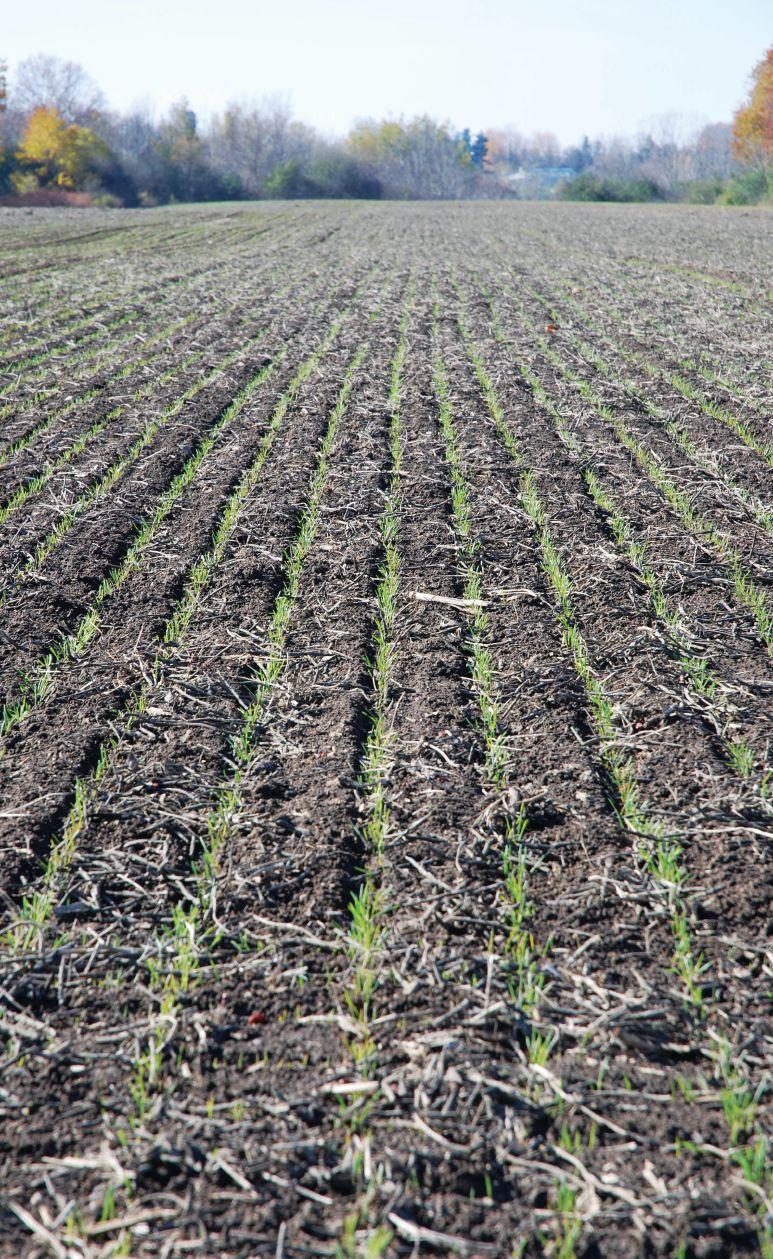
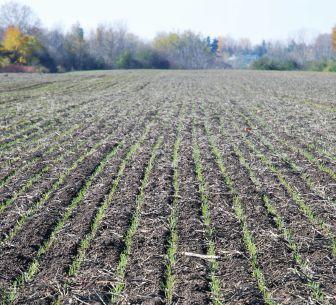
ABOVE: Enhanced efficiency fertilizers pay for themselves in fall application of N fertilizer.
PHOTO
improve with moderate to high-yielding production environments. “In moderate to low-yielding environments, split applications would provide similar yield to all N side-banded at planting.”
Untreated UAN had the poorest yield. Urea and ESN also produced lower yield compared to Agrotain and SuperU treatments.
“To be fair, the ESN treatments where it is 100 per cent broadcast wouldn’t be recommended, because we know that the polymer coating doesn’t break down fast enough, or not at all, if stranded high in the thatch layer when applied late fall or in spring treatment timings; that means the N isn’t available early enough – we had to include those placement and timing options with ESN because it was a factorial study,” Beres says. “And if you are side-banding all the N at seeding, it doesn’t make sense to use 100 per cent ESN because our previous research established a 1:1 blend with urea will produce the same results. By far, ESN provides the greatest benefit for farmers in terms of seedling safety with high rates of seedrow N. You can apply ESN, up to 90 kilograms N per hectare in the seed run, when singleshooting and not worry about seedling toxicity injury.”
EEF fertilizers provide options for individual farm management
The choice of how and when to apply fertilizer N comes down to individual farmer preference and risk. Ken Gross, Ducks Unlimited agronomist in Brandon, Man., says that in his area, more and more farmers are applying N in a split application, and a growing number are banding all their N in the fall.
“The message is getting out there that producers should have
nitrogen available to the crop very early in the spring in order to maximize the yield potential. It can be hard to get on the land to broadcast urea because it is too wet and you miss that early application window, or it can be too dry and the urea just sits there on the surface,” Gross says. “The seed head is developed early in spring so having the nutrients available to grow as big and healthy a seed head as possible is a great strategy to maximize yield. Not all the N has to be down in spring, but some N must be available to the plant so it can grow the seed head to its max potential.”
Based on his research, Beres thinks that applying 50 per cent of N as urea or a blend of urea:ESN in a side-band at seeding, followed up with a spring broadcast of Agrotain or SuperU is a good option for growers. For some growers, the advantage of splitting applications is that it reduces the amount of N that needs to be handled and applied at seeding, when upwards of 200 pounds of product per acre is needed. That can speed seeding at a time when farmers are also trying to harvest other crops.
“Band a percentage you are comfortable with in the fall using urea or an enhanced efficiency form to mitigate over-winter losses, and then go in the spring with Agrotain or SuperU to top-dress the balance based on your expectations for yield that year as driven by precipitation to date. That gives you a little more flexibility in application methods and risk management,” Beres explains. “The final question would be the economics of EEF fertilizers and our analysis indicated split-applications with SuperU and Agrotain, or ESN in a seed row or banded in an equal ratio with urea all appear to pay for themselves.” Let’s make it
Out of the field and into the bin – FASTER
Take control of your straight-cut canola harvest and optimize desiccation. Reglone® Ion is a true desiccant that works on contact for faster dry down than other harvest aids. A desiccated canola crop can be cut and threshed more easily, so you can start combining sooner, run faster, and get more acres done in a day.
UPDATING SPRING WHEAT N STRATEGIES
Yields of 80 bushels per acre or more call for new strategies.
by Bruce Barker
The average wheat yield in Manitoba has come a long way since the 1970s when yields were around 30 bushels per acre (bu/ac). Today, wheat yields sometimes top 100. Provincial fertilizer guidelines haven’t kept up, though. The Manitoba Soil Fertility Guide provides nitrogen (N) recommendations for spring wheat yields up to 50 bu/ac based on University of Manitoba (U of M) research conducted in the 1970s.
“The standard recommendation for spring wheat is 2.5 pounds of N per bushel target yield. At those recommendations, an 80-bushel wheat crop would require 200 pounds of soil and fertilizer N,” says Don Flaten, professor of soil science at the University of Manitoba.
Flaten and Amy Mangin, also with the department of plant science at the U of M, conducted research in 2016 and 2017 to see if those recommendations from the 1970s still held up with today’s high-yielding wheat varieties.
“There is a large financial risk for wheat growers when using those kinds of rates, as well as agronomic and environmental risk such as lodging, leaching, or nitrous oxide emissions,” Mangin says. “High
yields can also mean that protein content may be below the 13.5 per cent threshold for protein premiums without high enough N fertility.”
Eight site-years of field trials were conducted with high yielding wheat varieties AAC Brandon (Canadian Western Red Spring class, CWRS) and Prosper (Canadian Northern Hard Red class, CNHR).
High-intensity Gold-level experiments were conducted at Carman and Brunkild during both seasons (four site-years), and Silver-level experiments were conducted at Melita in both seasons, Carberry in 2016 and Grosse Isle in 2017 (four site-years).
Nitrogen treatments included zero, 50, 80, 110, 140, 170 and 200 pounds per acre at Gold-level sites and zero to 170 pounds per acre at Silver-level sites. Nitrogen was midrow banded at planting as conventional urea at Gold-level sites. At Silver sites, N was applied by hand broadcast shortly after seeding as Agrotain-treated urea.
A blanket application of seed-placed MAP (11-52-0) was applied
ABOVE: The average total N supply for high yielding wheat was two pounds of nitrogen per bushel, which is less than the current recommendation of 2.5 pounds of nitrogen.
PHOTO
at 40 lbs. P2O5 per acre across all treatments at each site. Seeding rate targeted 250 plants per square meter. Herbicides were applied as required. Twinline fungicide (200 mL/ac) was applied at flag leaf for leaf disease control, and Caramba (400 mL/ac) was applied at anthesis for Fusarium head blight control at all sites.
Prosper consistently out-yielded AAC Brandon, while AAC Brandon consistently had higher grain protein content across all N rates. AAC Brandon yields ranged up to an exceptionally high yield of 114 bushels per acre at Brunkild, Man., in 2017 and Prosper up to 129 bushels per acre at the same location. At Gold-level sites, the minimum fertilizer N rate for maximum yield for Prosper was 110 pounds of N per acre and 140 pounds per acre for AAC Brandon. Pre-seeding residual soil nitrate N on the plots was 40 to 47 pounds N per acre across the four site years.
Economic optimum rates were determined using a five-year average price for urea of $0.43 per pound of N and wheat prices in southern Manitoba on Jan. 8, 2017. Fertilizer rates that hit maximum yield were not always the most economic. For example, at Melita, Man., in 2016, Mangin says that the maximum yield was hit with 110 pounds of fertilizer N plus 43 pounds of soil N, but the maximum economic yield was with 80 pounds of fertilizer N per acre.
For the best economic yield, the total N supply (soil test NO3N plus fertilizer N) varied from 1.5 to 2.3 lbs. N/bu at Silver-level sites and 1.7 to 3.0 lbs. N/bu at Gold-level sites.
“Excluding the hail-damaged site at Carman 2016, the average total N supply at the optimum yield and protein content was two pounds of nitrogen per bushel, which is less than the current recommendation of 2.5 pounds of nitrogen,” Mangin says.
In addition to the right rate of nutrients, the three other pillars of 4R nutrient planning are timing, placement and source. The research also looked into these variables. In-season N application timing compared a base rate of 80 pounds per acre N at planting with an additional 30 or 60 pounds N applied at stem elongation or flag leaf timing as broadcast Agrotain-treated urea.
Mangin says in-season application is a strategy used to try to match fertilizer uptake with crop demand in the hopes of improving fertilizer use efficiency and minimize risk of losses. She says that there weren’t any decreases in yield from delaying a portion of N application to stem elongation or flag leaf stages compared to equivalent N rates applied entirely at planting.
“Stem elongation and flag leaf split applications yielded at least as well as applications at planting,” Mangin says.
At Gold-level sites, grain protein content increased with stem elongation split applications, compared to when N was applied entirely at planting. Flag leaf split applications consistently increased grain protein content compared to equivalent rates of N applied at planting and stem elongation split applications (0.3 to 0.7 per cent).
“These results indicate that it is possible in Manitoba growing conditions to delay a portion of total N applied into the growing season without detrimental effects to final grain yield or protein,” Mangin says. “Additionally, applying N as late as the flag leaf stage may allow for increased grain protein content compared to when N is applied entirely at or near planting.”
Mangin cautions that rainfall after application is necessary for split applications to be successful. In the two years of this study, a rainfall event of at least five millimetres occurred within one week of N application. Also, the split application utilized Agrotain-treated urea to minimize volatilization losses.
“Rainfall after application is likely a major contributing factor to the success of the midseason N applications in this study. If we hadn’t had the rainfall, we might have had different results,” Mangin says.
Other research supports the need for rainfall shortly after a split application in order to maintain or increase yield and protein content compared to all fertilizer applied at planting. Research published by Chris Holzapfel at Indian Head, Sask. in 2007 evaluated delayed N fertilizer application in Saskatchewan for canola and spring wheat. The research found no effect on spring wheat grain protein content, but measured reduced yield in one of three years due to very dry conditions following the midseason application.
Post-anthesis (post-flowering) N application of 30 pounds N per acre was also applied in addition to a base rate of 80 pounds that had been applied at planting. The post-anthesis N applications were foliar-applied using flat fan herbicide nozzles as diluted UAN (diluted 50:50 with water to 14 per cent N solution) at both Gold and Silver sites, while Gold sites had an additional treatment using dissolved urea solution (nine per cent N solution). Post-anthesis, foliar applications of N are typically used as a method to increase grain protein content rather than yield due to the application timing being so late in the season.
At Gold-level sites, yield with the base rate of 80 pounds N was similar to the 80 plus 30 pounds at post-anthesis split. However, at Silver-level sites, yield was decreased by 3.3 bu/ac by post-anthesis application compared to the base rate. At Gold-level sites, post-anthesis applications increased protein content by 1.8 per cent and at Silver sites 1.1 per cent compared the base rate of N applied at planting.
“We saw higher protein and yield with the urea solution. It appeared to be easier on the crop. Urea solution did result in lower levels of leaf burn compared to UAN, but it was applied at a slightly higher water volume, which could have contributed to crop safety,” Mangin says, adding while post-anthesis foliar N application did increase protein content, the strategy is difficult to implement because it is hard to predict if protein content would have been high enough for protein premiums if adequate N fertility had been applied at seeding. Additionally, post-anthesis applications may still not help the protein content meet premium levels, depending on environmental growing conditions.
Gold-level trials also had additional treatments to examine ESN blended with conventional urea applied as midrow bands at seeding. Two rates of ESN:Urea blends were tested, a suboptimal rate of 80 lbs. N/ac (50:50, ESN:Urea) and a higher rate of 140 lbs. N/ ac (100:40, ESN:Urea).
ESN blends produced grain yield, protein, N uptake, and N removals that were similar to those for conventional urea when applied midrow banded at seeding. Mangin says conditions at seeding were generally dry, and that if conditions had been wetter and more favorable for early season losses, there may have been an advantage to using ESN fertilizer.
Flaten says that the research provides agronomists and farmers with additional strategies to help meet 4R nitrogen management. Along with identifying right rate, source, timing and placement strategies for high yield wheat, the research also shows that N fertilizer use efficiency has also improved.
“At two pounds of N per bushel of wheat produced, compared to the former rate of 2.5 pounds, we see that along with an increase in yield potential comes an increase in nitrogen use efficiency,” Flaten says.
A FRESH LOOK AT FLAX STORAGE
Updating information and tools for in-bin drying of flaxseed.
By Carolyn King
Spoilage during storage can take a big bite out of the returns for any crop, and flax crops can be at special risk of storage problems. So the Prairie Agricultural Machinery Institute (PAMI) has completed a two-year project to make sure growers have tools and information for effective in-bin drying of flax.
“Flax is typically harvested in late fall and the harvest window is narrow, so the crop often ends up being tough or damp as it’s coming off the field. As a result, flax usually needs to be dried down so it is safe to store in bins,” says Charley Sprenger, an agricultural research project leader with PAMI in Manitoba.
“PAMI has done a lot of work with natural drying and aeration for different types of grains, but there were some gaps in the available information specific for flaxseed. Because each commodity behaves a little differently, we wanted specifically to look at the effect of the airflow rate and the amount of moisture that can be removed from the flaxseed. Essentially, we wanted to better define some management practices for on-farm flax storage.”
The project was led by Joy Agnew, who recently moved from PAMI to Olds College. The impetus for the project came from the Saskatchewan Flax Development Commission (SaskFlax). SaskFlax and Saskatchewan’s Agriculture Development Fund funded the project.
“We wanted to assess the effect of airflow rate on the drying rate of flaxseed. And we wanted to verify the equilibrium moisture content equations for Saskatchewan flax varieties. Producers can use those equations to see if the ambient air conditions are suitable for drying in-bin. So we wanted to make sure that those equations are still valid.
“We also wanted to look at the models and charts for airflow resistance that producers use for selecting their fans for aeration to see if those tools are still valid for flaxseed.”
Several considerations prompted PAMI to take a fresh look at these three issues. “It’s been a while since some of the research was done. A lot of those tools are based on theoretical equations based on grain moisture relationships, and there hasn’t been a lot of validation on an actual bin scale,” she says. “Also, as bins are getting bigger, there is more impact of pressure drops from ducting systems, so we wanted to see if the resistance-to-airflow charts were still valid.”
The project took place in the falls of 2017 and 2018. The main component of the project was conducted at PAMI’s Humboldt, Sask. location, which has a set of six 15-bushel test bins. “We can continually monitor the weight of these bins with load cells. And the moisture content and relative humidity sensors in the bins allow us to measure in real-time what the drying conditions are in the bins and how much moisture is being lost,” Sprenger notes.
Each fall, the project team loaded the six bins with flaxseed and
ran the trial for about a month, tracking the conditions in each bin. They compared three airflow rates – 0.2, 0.5 and 1 cubic feet per minute per bushel – so they had two replicates. The bins were randomly assigned one of the airflow rate treatments each year.
For the other part of the project, the team worked with six producers in and around the Humboldt area to take some measurements of static pressure (resistance to airflow) in various on-farm flax bins.
“We found that the airflow rate definitely has a large impact on drying rate, especially with high moisture content grain,” Sprenger says. “And we determined that there might be some benefits in using higher airflow rates for flaxseed, particularly later in the season when the number of drying days are limited; you can get a faster drying rate with the higher airflow.”
The researchers also found that ambient conditions have a strong influence on the capacity to dry grain in a bin; as the
PHOTO COURTESY OF PAMI.
PAMI researchers have completed a two-year project on managing in-bin drying of flax.
weather gets colder, grain drying is slower.
“In Year One, we had really good drying weather and we saw up to three per cent moisture removal over the three to four weeks of the trial. The grain went from a moisture content of 14 per cent right down to almost 10, which is safe to store. But in Year Two, we had an unusual fall and winter with some early snow, so the ambient conditions were very poor. And even with the high airflow rate, we only got a one per cent reduction in the grain’s moisture content,” she explains.
“So the ambient air conditions are just as important for whether or not growers will be able to dry their grain in-bin or whether they will have to go to a dedicated dryer to make sure the grain is safe to store.”
The researchers confirmed that the equilibrium moisture content charts are suitable for flax and don’t need to be updated at this time; the charts are available on PAMI’s website. “Producers can go ahead and use those charts along with their in-bin moisture and temperature sensors to predict grain moisture and monitor drying.”
However, they found that the airflow resistance charts slightly underestimate static pressure in flax. “The theoretical equations don’t take into account pressure losses from the fan ducting,” Sprenger says. “We might look at updating those charts, but for the time being, producers should understand that the charts underestimate static pressure and that they may need to increase the size of their fan to ensure they have adequate airflow for natural air drying.”
Based on the project’s findings, Sprenger offers some storage management tips. “The big thing we encourage with drying in bins for any commodity is to make sure you are measuring the static pressure in your bins to make sure your fan is sized correctly for the depth of grain so that you are actually getting the airflow rate that you need.
That really makes a difference between whether you are moving the moisture all the way through the bin and actually drying, rather than just blowing some air in the bin and not achieving anything,” she says.
“And that is especially important with flax because the seed’s shape and small size mean that airflow resistance is a lot higher than in crops like wheat and corn, so you need to make sure that you achieve an effective airflow rate.”
Sprenger explains that it is easy to measure static pressure. “You can get gauges that you install on your fan inlet. Then, as you’re filling your bin, you turn on your fan, and take a measurement of the static pressure. You can then calculate the airflow using the manufacturer’s fan curve for your specific fan. Keep in mind that you may not be able to fill your bins to the top if your fan isn’t big enough.”
The Canadian Grain Commission’s website has charts for each grain type showing the temperature and moisture combinations for safe storage. “Typically for flax, you aim for a moisture content below 10 per cent and a temperature below 10 to 15 C. If the moisture is less than three per cent above dry, then you can probably dry the grain in-bin. But if the moisture content is higher than that, you’ll want to dry it separately,” Sprenger says. “Since flax is usually harvested later in the season, the temperature tends not to be as much of a concern as long as you can get the moisture down a fair amount so you don’t get some hot spots occurring from spoilage; that said, colder weather is less suitable for natural air drying.”
Higher moisture flax requires careful management to ensure safe storage. With the results from the PAMI project, growers can be confident that they have the appropriate tools and information for effectively managing in-bin drying of flax.
Power through the toughest grass and broadleaf weeds in wheat.
• Engineered for the Brown Soil Zones. Designed from the ground up to provide unmatched annual and perennial broadleaf weed and Group 2 grass control.
• Full Re-Crop Freedom Get Canada thistle and other perennials with peace of mind to rotate to lentils and chickpeas next year.
• Combat Resistance. Tank mixed with 2,4-D Ester, count on Tridem to provide true Multi-Mode of Action control of many tough broadleaf weeds.
For more information, call the Solutions Center at 1-800-667-3852 or visit corteva.ca.
Contact your local retail to purchase Tridem™.
Learn how you can save big with
visit flexrewards.corteva.ca
LOST IN TRANSLATION
Although new technology and tools continue to advance in many aspects of farming, grain loss monitoring has seen minimal improvements since its introduction in the mid-’70s.
BY Donna Fleury
Current loss monitoring technology displays bar graphs or numerical values without a unit of measurement, making it difficult for the operator to adequately quantify the losses. Improvements to grain loss sensor signal presentation to meaningful units of absolute grain loss would help operators and farm managers make improved economic decisions and better manage grain loss during harvest.
“We initiated a project in 2017 to investigate the feasibility of converting a combine’s grain loss signal into a grain loss rate to determine if harvest losses could be decreased across all Saskatchewan crops through improved harvest loss feedback,” says Zach Kendel, project lead with Prairie Agricultural Machinery Institute (PAMI) in Humboldt, Sask. “Our main objective was to determine the correlation between existing harvester loss sensor output with actual grain loss by putting the harvester loss signal and the actual grain loss rate in relation. Using a combination of lab testing and field tests with farmer cooperators using full-scale harvest and test equipment, the project also evaluated existing technology to determine if it is adequate to support a grain loss rate, as well as efforts for optimization of the harvest loss sensors.”
Three crops, including peas, wheat and canola, were compared in both lab and field testing. In the lab tests, grain kernels of varying size and frequency (simulating high and low loss scenarios) were dropped on to combine loss sensors to determine the loss signal characteristics such as amplitude, impact signal frequency and signal resolution. These lab characteristics were then translated into methods of properly recording the loss signal during field testing.
In the field testing, both actual grain loss and the loss sensor signal information (cleaning shoe and separator) were collected from a combine in the three crops over a range of feed rates to create loss curves. The test equipment included a collector that was pulled behind the combine to capture all the material (straw, chaff, and grain) discharged from the rear of the combine over a set distance, and a processor used to clean the grain from the captured material to determine the actual grain loss from multiple test collections. Relationship equations were used to graphically compare the grain loss curve and loss sensor signal curve.
“In our final analysis of the data collected in 2017, we found that although existing grain loss sensors on combines are a good indicator of grain loss, there still wasn’t any way to currently correlate that to actual grain loss numbers,” Kendel explains. “However, we were surprised at how good the correlation to actual loss was for larger sized grain crops like peas, but for smaller grains like canola and wheat, it was not as great. In small grain crops, design improvements would need to be made to the grain loss sensor system, to accurately indicate actual grain loss rate, especially on the cleaning shoe loss sensor.
“Overall, the results showed that under most conditions, the grain loss monitor system tested did provide a reliable indication of when actual loss was increasing or decreasing, and therefore, is still an important tool for farmers to use when they are in the field at harvest to manage grain losses.”
As part of the project, a variety of other sensing technologies were investigated including accelerometers, microphones, microwave, photoelectric, and ultrasonic sensors to determine if any could be implemented to better support a grain loss rate. Although some of these technologies showed promise in their ability to detect grain loss, further research, development and testing would be required to determine their full capabilities.
“Our results confirm that grain loss monitors are still a good tool for providing an indication of grain loss even if they can’t be correlated to specific measures,” Kendel notes. “Although it takes a bit of time, we recommend that farmers take the time to calibrate and adjust settings, and to get out and drop a pan to see what the losses are
LEAD THE FIELD.
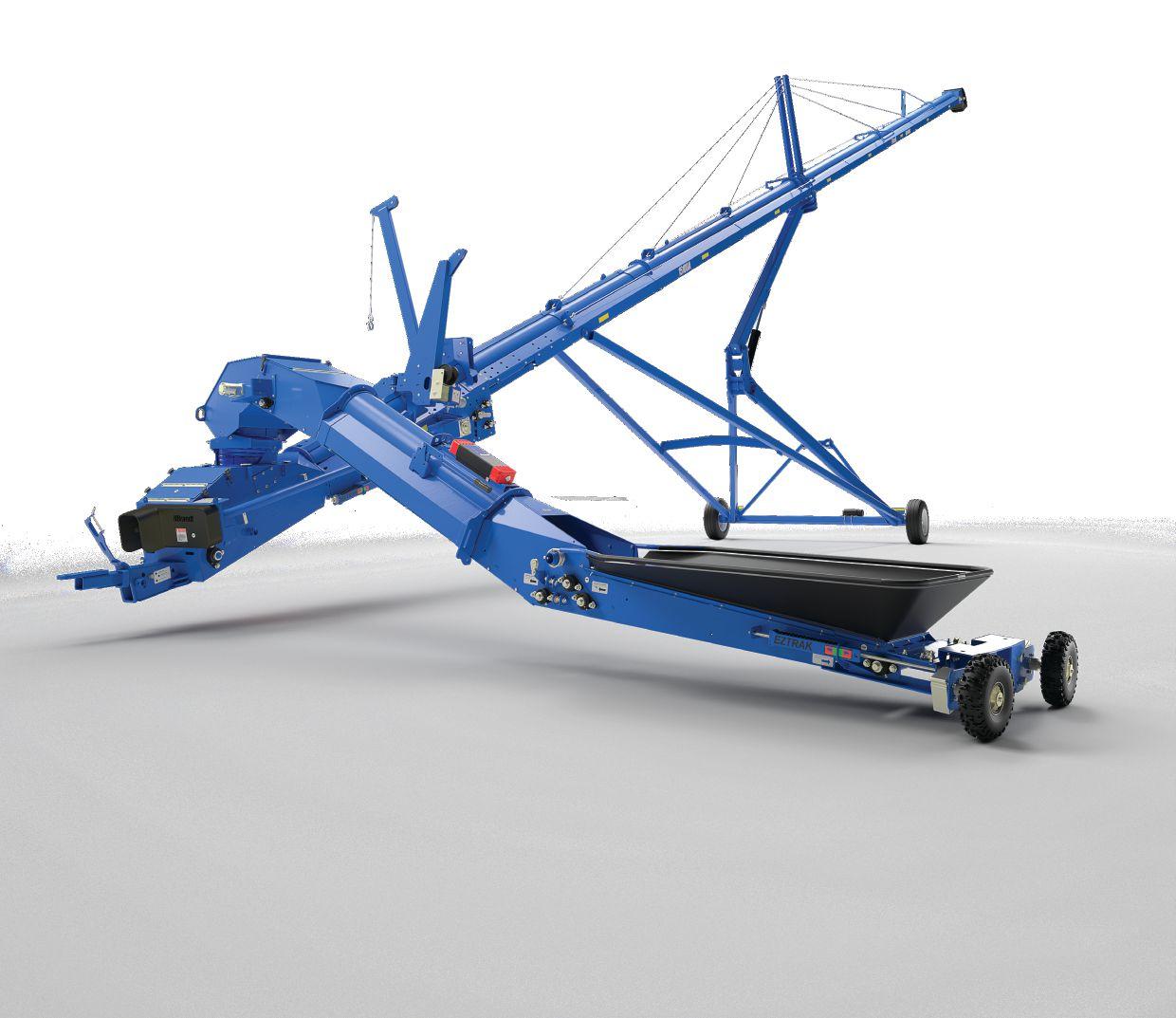
Farming is a competitive business. You’ve got to have tough, highperformance equipment like Brandt’s new Swing Away Harvest Grainbelts if you want to run at the front of the pack. These new models deliver unmatched capacity in a 15” conveyor and offer total versatility with multiple lengths, intake styles, drive options and optional EZMOVE system. And, as always, nothing handles your crop more gently than a Brandt GrainBelt.
The result? You get the hardest-working conveyor in the industry and enjoy years of worry-free productivity from Brandt. That’s Powerful Value. Delivered.
FOCUS ON: PRECISION FARMING
SORTING OUT PRECISION PLANTER BENEFITS
A three-year project conducted by Farming Smarter in Lethbridge, Alta., set out to determine whether seedrow uniformity on 12-inch row spacing resulted in greater yields.
This is one of many planter research projects Farming Smarter plans to continue, with more studies happening through 2019 and beyond.
BY Bruce Barker
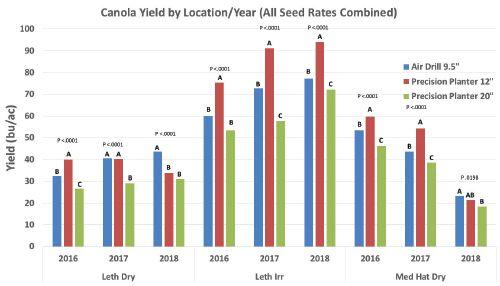
Can vacuum planters that precisely place and separate seed uniformly be made to work in no-till and provide yield advantages over conventional air drills? That’s the question that a three-year Farming Smarter project in Lethbridge, Alta., tried to answer. After three years, planters on 12-inch row spacing are showing a yield advantage over an air drill on 9.5-inch row spacing in some cases and the planter on 20-inch row spacing almost all of the time.
“There were some advantages to the planter on 12-inch row spacing. Under irrigation, the planter had significantly higher yield over the three years. Under low yield conditions at some of the dryland sites in 2018, the conventional air drill had a slight advantage,” says Ken Coles, general manager with Farming Smarter.
The planter project ran in Medicine Hat, Atla., and at dryland and irrigated Lethbridge sites. In addition to exploring the yield impacts, the project also looked at determining the optimum seeding rate, and the maximum safe seedrow rate of liquid phosphate fertilizer.
To set up the planter for no-till seeding, residue managers were added ahead of the seedrow opener. A side-band coulter was used to apply granular urea N, and liquid 10-34-0 P fertilizer was dribbled on top of the seedrow before soil closure.
“There is still some work to be done to improve performance in no-till. We switched from a rigid-mounted residue manager to a floating mount, and that helped with seedbed preparation. I think a pneumatic residue manager that maintains a certain down pressure would be a good system,” Coles says.
Since planters traditionally only have seed boxes, another challenge for no-till is to get all the seed and fertilizer product efficiently into the ground. Adapting the product delivery system with an air cart for granular fertilizer and seed, and a liquid delivery system, would improve efficiencies.
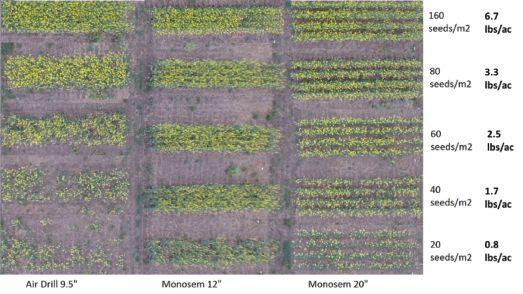
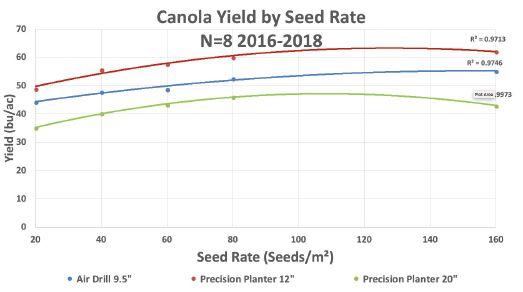
Five seeding rates were assessed: at 20, 40, 60, 80, 160 seeds per square metre. This equated to actual seeding rates of 0.8, 1.7, 2.5, 3.3 and 6.7 pounds per acre of canola seed.
STAND ESTABLISHMENT AND SEEDING RATE
Canola Council of Canada recommends an established plant stand density of five to eight plants per square foot. In
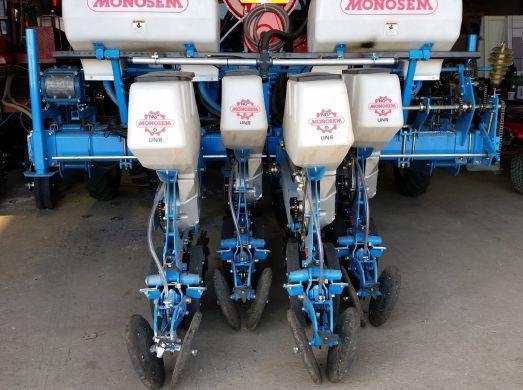
The Monosem planter set up for no-till seeding provided some advantages over a conventional air drill.
the Farming Smarter project, canola emergence as a percentage declined as seeding rate increased. While that seems counter-intuitive, Coles says that as more seeds are placed in the seedrow, there is more self-competition resulting in higher seedling mortality. This is part of the reason planters were originally developed for corn; corn doesn’t like competition from weeds or other corn plants.
“I think the real story is that emergence and stand density didn’t improve yield as much as we expected. When we looked at our data, there wasn’t any correlation between final plant density and yield,” says Coles. “What was more important was the distribution of the established plants, both horizontally and vertically. The 12-inch planter row spacing had the advantage in uniformity.”
For the air drill, seed placement was scattered with concentrations of seed in some areas and bare patches in others. The planter produced more uniform plant stands, but the 20” row spacing was slow to close canopy, resulting in delayed maturity and greater green seed. The 9.5-inch canopy closure only improved at higher seeding rates.
The seeding rate impact on yield was also relative low. Yield did increase when moving from 20 to 80 seeds per square metre, but Coles says the increase was relatively flat for all three row spacings.
“We’ve been so focused on reducing seeding rates to cut costs with planters, but what was more important in our project was the condition of the seedbed at planting. At Medicine Hat, there was almost always an increase in yield with higher seeding rates and the air drill had an advantage. At site-years with good yield potential, the planter often had a yield advantage at 12-inch row spacing. Under irrigation, the 12-inch planter row spacing produced higher yield in each year.
“I would feel comfortable lowering the seeding rate with a planter on 12-inch row spacing to around the 40 seeds per square metre range when seedbed conditions are good,” Coles says. “For the air seeder, I think you need to be in the 60 to 80 seeds per square metre seeding rate range.”
SEED-PLACED PHOSPHATE SAFETY
The project also assessed seed-placed P applied as liquid 10-340 fertilizer. Rates applied were 0, 5, 10, 20, 40, and 60 kg actual P per ha. Seedling emergence was unaffected except at the 60 kg/ha rate.
“I was happy to see that there wasn’t any injury up to 40 kg/ ha on the narrower row spacings. That’s higher than current recommendations, and growers need to be cautious because seedrow safety is dependent on environment, soil type, and seedbed utilization,” Coles says. “With higher canola yields, we may need to put on more phosphate to maintain soil P fertility.”
Farming Smarter is carrying on with planter research in 2019 using a planter for on-farm research. They will also begin a three-year planter project on seeding pulses.
Guttino
KWS
Daniello
KWS
Propower
HOW MIGHT CONSUMER ATTITUDES AGAINST GM FOODS BE SHIFTED?
Marketing research shows changes to industry’s approaches could help.
By Carolyn King
For people in agriculture, there are some compelling arguments in support of growing genetically modified (GM) crops. For instance, research shows GM crops have resulted in substantial production increases, and those increases have made a significant contribution to improving global food security. GM crops also have environmental advantages, such as decreased use of chemical insecticides and herbicides and reduced tillage. But how can consumers be convinced to buy GM foods?
To help answer this question, David Zhang and his research group at the University of Saskatchewan have recently been working on a series of connected studies looking at different aspects of this issue. These studies have been funded through the Social Sciences and Humanities Research Council of Canada, Genome Canada, and the Saskatchewan Ministry of Agriculture’s Alliance for Food and Bioproducts Innovation program.
“A lot of people from the scientific community – in food science, plant science, and so on – are all saying that GM foods are a good thing. But report after report says that consumers are very lukewarm at best and resistant at worst toward this kind of product offering. So I started looking into it,” says Zhang, an associate professor of management and marketing at the Edwards School of Business in Saskatoon.
One of his first studies on this issue investigated the presentation and communication of marketing information about GM foods. “We found that most of the current communication [in favour of GM foods] is focusing on the benefits for producers and the public good, not benefits for consumers,” he says.
“However, when you look at the dynamics of the consumption of GM foods, you start to realize that the people who bear the risk – the perceived risk, or unsubstantiated potential risk, or whatever that risk might be – are the consumers. And they are the ones paying for the product.” So in effect, the marketing messaging is indicating an imbalance: the producers get the benefits of GM technology, and the consumers bear the risk.
So Zhang’s team conducted a study to look at the effects of different marketing messages on consumers’ acceptance of and willingness to pay for GM foods. They surveyed 750 Canadian consumers, splitting them into three groups.
One group saw advertisements promoting benefits of GM foods that might indirectly appeal to consumers, such as eradicating hunger and increasing farmers’ profitability – messages similar to those
Research indicates pro-GM food messages to consumers are more effective if they highlight the direct consumer benefits of these foods.
currently used by GM food proponents. The second group saw ads for non-GM foods focusing on direct consumer benefits, like better taste and enhanced nutrition. And the third group saw ads for GM foods that promoted both direct and indirect benefits to consumers.
Then the team asked the participants in each group if they would be willing to accept the food products in the ads, whether they would be willing to buy the products, and how much would they be willing to pay for the products.
As expected, participants in the second group were willing to buy and pay more for the non-GM products with direct benefits to them. Participants in the first group were less inclined to buy GM foods.
PHOTO BY STEPHANIE GORDON.
About 40 per cent said they would not buy GM foods at all, no matter what the price. And about 60 per cent said they would buy GM foods but only if the GM foods cost less than comparable non-GM foods.
“People would usually interpret this negative willingness to pay as a rejection, but I would look at that differently. I interpret the negative willingness to pay as a consumer demand for a share of the value that is created by the technology,” Zhang notes. “For example, in other industries that are using more efficient technologies for production of goods, like the electronics industry, the production and profitability increase for the industry, and then over time the cost to consumers is reduced as well. I think the value creation of the new technology should be shared.”
Interestingly, participants in the third group were more willing to accept GM foods and were even willing to pay more for such products. “When we presented messages that this GMO [genetically modified organism] product would benefit you the consumer directly by better nutrition or whatever, and it would also at the same time increase yields and provide additional food security for the all humankind, then the response was very positive.” In fact this group’s responses were similar to the responses for the group shown the ads for non-GM foods with direct consumer benefits.
When Zhang made public presentations about this study’s results, some audience members commented that they felt consumers were being ‘selfish’ by putting personal concerns over societal concerns like feeding the hungry. So one of Zhang’s graduate students conducted a study to see whether responses to the GM food ads might depend on a person’s own value system and cultural beliefs.
For example, perhaps a person with a more individualistic outlook
might care more about a product’s direct personal benefits, while a person with a more collective perspective might care more about the product’s societal benefits. Or perhaps a person who doesn’t like to take risks might be less likely to purchase GM foods than a person who likes to try new things.
Surprisingly, the researchers did not find many significant differences between people with different values and beliefs. As you might expect, participants who said they were very individualistic, with a strong focus on their individual wellbeing, were looking for direct personal benefits from the food products. But equally, participants who said they had a strongly collective perspective, with a focus on the group over the individual, were also looking for direct personal benefits when it came to buying food for their own consumption.
This additional information reinforces the earlier finding: proGM food messages to consumers are likely to be more effective if they highlight the direct consumer benefits of these foods.
In another intriguing study, Zhang and his research group conducted a meta-analysis – an examination of data from many different studies conducted by other researchers – that examined the attitudes of Chinese consumers to GM foods. The Chinese studies had been conducted over the past 20 years, and Zhang’s group looked for trends in consumer acceptance of GM foods over the two decades.
Zhang notes, “One model that has been put forward as a logical flow of progress over time is that we educate people about the different attributes and benefits [of GM food], then we educate them that there is not a lot of risk associated with it, and eventually their attitude will improve. And once their attitude improves, then their purchase intentions will improve.”
But when Zhang and his group looked at the Chinese data, they found one critical difference from this model.
“We found that yes, over the past 20 years, the level of knowledge has improved: Chinese consumers now know more about GMOs. And there has been a reduction of the differences in knowledge between the big cities and the rural communities, so the information is spreading. We also found that attitudes have improved somewhat and people are more open to the idea that GMOs are okay,” he says.
“But what is interesting is that the intention to purchase GMOs has not increased. In fact it has decreased dramatically over the past 20 years. People are more aware of it and they are okay with it, but they won’t buy it.”
More research needs to be done to determine the reason for this trend, but Zhang proposes a couple of possible reasons. “One is that consumers are not always rational. Sometimes we as consumers process information, but we focus on one thing and forget about the other factors. For example, the risk might become the hot-button issue, and once that idea is initiated, nothing else matters,” he says.
“The other possibility is that as income increases, and hunger is no longer the primary concern and a few cents don’t really matter much in the equation, then risk aversion becomes more important in choosing between different food options. Again, we know this occurs and we know Chinese people’s incomes have increased over the past 20 years. So perhaps hunger is no longer the primary concern and other concerns have risen to the top of the agenda, and that has contributed to the reduction of willingness to pay for GM foods.”
Zhang is working with another one of his graduate students on research to explore how pro-GM food messaging might be enhanced.
“We’ve found that the anti-GMO camp have used creative and, I would argue, very effective ways to get their message across. One example is their use of metaphors to grab people’s attention and make people elevate their perceived connectedness to the information that is provided.”
He explains, “GM food is a complicated issue, but by using metaphors, they don’t need to say a lot. For instance, when they call a GM food ‘Frankenfood’, they don’t have to say what a Frankenfood is, and they don’t have to make arguments about why you shouldn’t buy GM foods, which possibly could lead to counterarguments. Instead, just by the mere mention of this kind of metaphor, they plant a seed in your mind. Then you start filling in the blanks about why GMOs are a bad thing. And you will feel strongly about your interpretation of the metaphor because of your pleasure in solving the puzzle about
LOST IN TRANSLATION
Continued from page 20
and how that equates to the loss signal on the combine monitor. Depending how much is thrown over by the combine, this can have a significant economic impact on the final harvest profits. Slower speeds are still recommended, and a good rule of thumb is that faster speeds will result in higher losses.”
Although PAMI does not currently have any new projects planned in this area, some future research and development opportunities were identified in the project. For example, determining how the relationship equations between the loss sensor signal and actual loss rate change depending on combine make/model and/or crop type and condition, is important.
what that metaphor means to you. That is a very strong persuasion technique.”
Zhang also points out, “The current pro-GM marketing strategy for many in the industry involves literally going down the list of reasons why consumers should choose GM foods. And sometimes that can be boring, and sometimes people may start to lose interest halfway down the laundry list. So perhaps pro-GM messages could sometimes use a metaphorical approach, presenting GMOs as something that people can relate to positively. And then maybe people will have a more positive reaction to GM foods.”
As a result, Zhang and his student are investigating the potential to use these types of communication methods for pro-GM messages.
Based on what he has learned so far, Zhang has two suggestions for the agriculture industry. The first is aimed at the plant scientists, food scientists and other researchers working on developing GM foods. “I would like to see more work on creating new variations of products that have direct, tangible benefits for consumers. We have seen many advances like crop varieties that are more nutritious, fruit that is sweeter, veggies that are bigger or better tasting, but not necessarily in a GMO context. I would like to see more of those types of end-user benefits in the context of GM foods,” he says.
His second suggestion is for the people involved in advertising and communication about existing GM foods. “You should be highlighting the direct benefits that the product would potentially bring to consumers.”
Zhang gives the example of a GM fruit variety that doesn’t go brown. In the usual industry-centric advertising about GM foods, the messages about this product would focus on benefits like a longer shelf life and less shrinkage during transportation. “Those are good attributes, but they primarily benefit the industry – the producers, distributors, wholesalers, retailers – not the consumers directly. Why would I as a consumer want to buy fruit that has been sitting there for a very long time?”
Instead, he recommends that the marketing messages showcase the consumer benefits of non-browning fruit. For instance, an ad might compare three alternatives: an ugly brown fruit salad; a nonbrown fruit salad loaded with chemical preservatives; and a beautiful, preservative-free fruit salad made with always-fresh fruit.
So, one key to changing negative consumer attitudes towards GM foods is to put more emphasis on direct consumer benefits right from the product development stage through to the marketing of the final product.
“With existing technology, some advancements to consider could be altering the position of the sensors on the cleaning shoe or on the rotor to get more accurate numbers,” Kendel says. “Another important area of further investigation is real-time monitoring of feed rate during harvesting operations because we need to know this rate for the relationship equations to accurately display a grain loss rate. Advancements and improvements in the technology will provide more meaningful feedback and information to enable farmers make economic decisions and maximize profits.”
STUBBORN CLEAVERS IN YOUR CANOLA? CALL FOR BACKUP.
Enhance cleavers control by tank mixing new Facet L with Liberty herbicide.
For years, you’ve trusted Liberty® herbicide to manage tough weeds in your InVigor® hybrid canola, including glyphosateresistant biotypes. But when you’re also facing increasing pressure from cleavers, now you can call for backup. That’s where new Facet™ L herbicide comes in. When tank mixed with Liberty at 160 ac/case, it enhances cleavers control to protect the quality and yield potential of your InVigor canola. Visit agsolutions.ca/canola/weedmanagement to learn more.
“I always want to be the best I can be.”
– Larry Woolliams
Larry Woolliams is a fifth-generation farmer and relies heavily on technology to run his 9,000-acre farm.
“Ag is not just tractors and plows, it’s technology now – it’s automation. I’ve really targeted trying to stay on the cutting edge of technology, and it’s proving to be a major benefit,” Woolliams says. He uses technology to analyze his data to help him make decisions and to keep his equipment running, even when he’s not there.
“I love the fact that from my phone, from my laptop, wherever I am, I can send something to one of these pieces of equipment, even log in to one of my monitors if one of the guys is having trouble,” he said.
During the next year, we’ll share his story and show how technology guides nearly every decision he makes for his operation. JohnDeere.com/techatwork