TOP CROP MANAGER
NEW INDUSTRIAL OILSEED
Another rotation option for Ontario fields
PG. 12
MALT BARLEY IN THE MARITIMES
Focusing on improving grain quality out east PG. 16
FOCUSING ON FINANCE
Today’s farms demand a different skill set
PG. 22
Another rotation option for Ontario fields
PG. 12
Focusing on improving grain quality out east PG. 16
Today’s farms demand a different skill set
PG. 22


12 | Looking into a new industrial oilseed Euphorbialagascae might offer another rotation option in Ontario fields. by Julienne Isaacs
5 Expanding weed control options for seed corn by Julienne Isaacs
16 | Malt barley for the Maritimes
When it comes to malt barley agronomics, the focus is on grain quality. by Carolyn King
8 Dr y bean production tips By Mark Halsall
WEBINAR: TERMINATING COVER CROPS
Have questions about proper termination of cover crops? Join us on Nov. 8 for an interactive webinar with Kris McNaughton from the University of Guelph.
FINANCIAL MANAGEMENT
22 | Focusing on finance –not just the farm
The farming operations of today demand a different skill set from the farms of yesterday. by Stephanie Gordon

FOCUS ON:
FINANCIAL MANAGEMENT
24 No successor? No problem. by Stephanie Gordon
Cover crops can be a great soil health strategy, but proper termination of cover crops is just as important when it comes to weed management. During this free, interactive 60-minute session, Kris McNaughton of the University of Guelph will discuss timing and methods of cover crop termination. You’ll walk away with strategies to help you make the right decisions for your crop.
Readers will find numerous references to pesticide and fertility applications, methods, timing and rates in the pages of Top Crop Manager. We encourage growers to check product registration status and consult with provincial recommendations and product labels for complete instructions.

STEFANIE CROLEY | EDITOR
When the news broke that the United States and Canada came to a last-minute agreement on a trade deal to replace NAFTA, a collective sigh of relief could be heard from coast to coast to coast
At first glance, the United States-Mexico-Canada Agreement, or USMCA, seems like an overall win for Canada. The new agreement preserves the trade dispute settlement mechanism and safeguards Canadian auto plants.
Despite mixed reactions from Canada’s agriculture industry, USMCA seems to benefit a large majority of the group. Most significantly for export-oriented producers, the new deal will secure continued access for Canadian wheat and barley to the U.S. market – the largest export market for Canadian wheat and the second largest market for Canadian barley. Canada’s canola producers will also benefit, as open trade for canola will continue and margarine has been added to the list of canola processed products (which currently includes canola seed, oil and meal) that will remain tariff-free. And more modernizations are expected to be announced, including chapters on biotechnology, plant breeding techniques and adjustments to the wheat grading system.
But when American President Donald Trump began threatening the disbanding of NAFTA a year ago, he made it clear that concessions would have to be made, and other sectors of Canadian agriculture are less than thrilled with the negotiations. If the deal is approved, farmers in the United States will have greater access to Canada’s dairy industry, worth about 3.6 per cent of Canada’s current dairy market, according to the Dairy Farmers of Canada. The new agreement would also mean additional access to the Canadian chicken, turkey and egg farming sectors.
Allowing world leaders (who possess more power than they know what to do with) to wait until the eleventh hour to make a decision that will impact the economies and livelihoods of three countries seems like a recipe for disaster. Regardless, it’s impossible to please everyone – especially when negotiating a deal that will collectively affect 579 million North Americans in some way. But while USMCA overall appears to be a beneficial agreement for Canada and specifically Canadian grain producers, our close ties to the dairy, poultry and egg industries mean the win is bittersweet.
This isn’t the end, though. Although the negotiations are complete, all three countries must now vet and approve the agreement. Trump, Prime Minister Justin Trudeau and outgoing Mexican President Enrique Peña Nieto could technically sign the deal by the end of November (before Mexico’s new president takes office on Dec. 1). But legislatures of each member country must introduce legislation to ratify and implement the deal, pushing the timeline to the second half of 2019 thanks to elections in Canada and the United States. Only time will tell how this plays out.
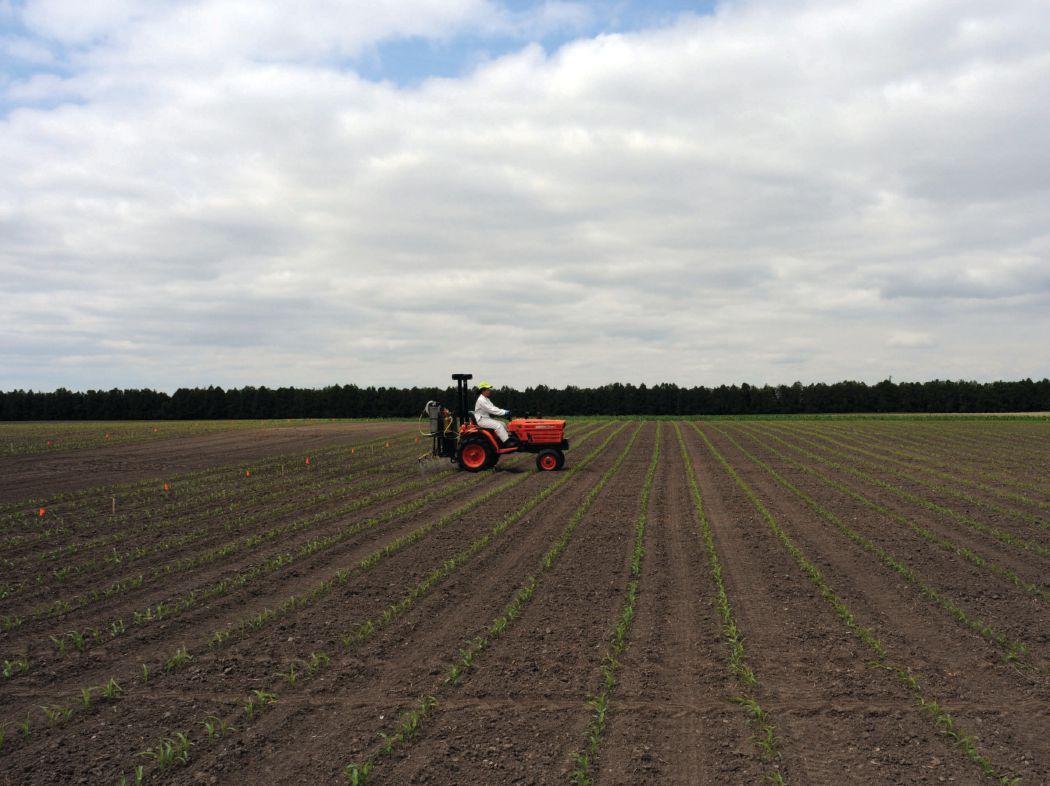
Researchers are reaching into the herbicide toolbox for field corn and testing on seed corn inbreds.
by Julienne Isaacs
Ontario seed corn acreage was down this year, at about 15,000 acres, according to Chris Nanni, administrative manager of the Seed Corn Growers of Ontario.
Last year Ontario producers planted about 17,500 acres, but a few years ago acreage reached a peak of 33,000 acres in the province. It’s partly due to that level of production that acres are down now, according to Nanni. “Low prices with lots of seed in the larder, so to speak, leads to decreased acres,” he says.
No crop is without its problems, whether those are related to weather, markets or agronomics, but things have never looked better for seed corn producers in Ontario.
Despite provincial restrictions on the use of neonicotinoids, seed corn producers can still use these insecticides due to the crop’s sensitivity to pest pressure, according to Nanni. Historically, it’s weed pressure that’s troubled seed corn producers due to the lack of herbicides registered on the crop, but research is gradually overcoming this problem.
Robert Nurse is an Agriculture and Agri-Food Canada weed
scientist based at the Harrow Research and Development Centre. He’s been involved with annual herbicide registration trials for seed corn since 2006.
“When we started this research, there were very few herbicides registered for seed corn versus field corn,” Nurse says. “Field corn has a whole toolbox of herbicides available. But the seed corn industry didn’t have many options available – maybe five.”
Nurse’s program is aimed at increasing the number of options, and it’s been successful. Since 2006, eight new herbicides have been registered for seed corn production: Converge for pre-emergence; Callisto for pre-emergence and post-emergence; Lumax; Peak Plus; Pardner; Shieldex; Impact; and Permit.
“And we currently have about three or four others that are about to go in for registration,” Nurse says.
ABOVE: Herbicide application across seed corn inbreds; each row of corn is a different inbred.
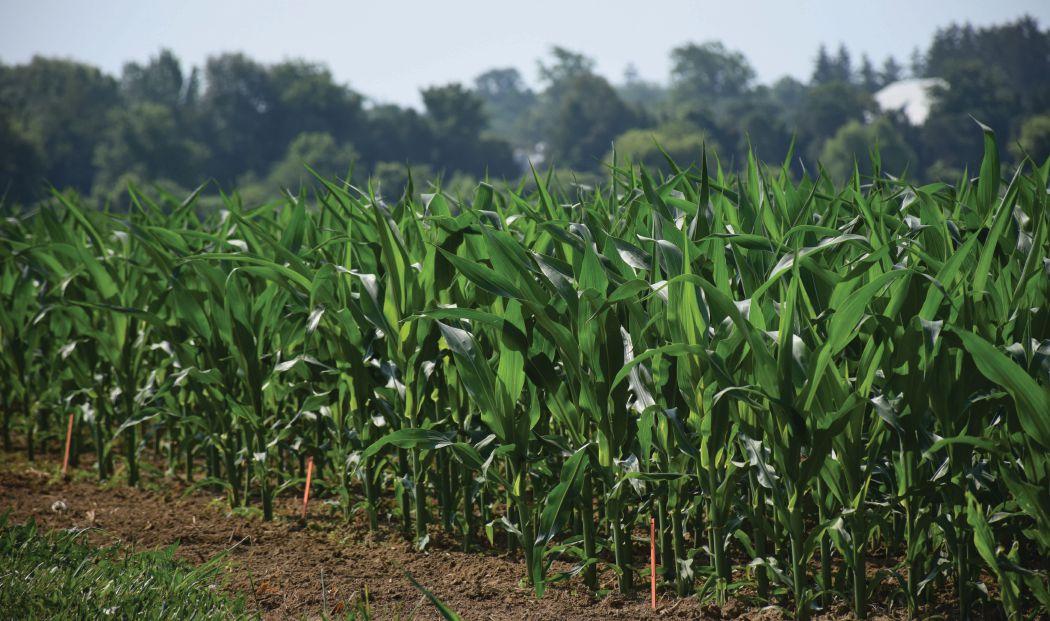
a yield reduction.
Producers should take an integrated weed management approach which includes herbicide use along with early season tillage, the use of cover crops and diversified rotations.
Seed corn inbreds are more sensitive to herbicides than typical corn hybrids, says Nurse, so herbicides must be screened to prevent injury.
Nurse’s program accepts up to 24 distinct inbreds per company annually from seed corn companies in Canada. Even though Nurse only tests inbreds from a couple of companies, several companies fund his research. This system works for everyone – even those companies not submitting inbreds – because, quite often, the knowledge and registrations Nurse’s program generates is useful to these companies because their inbreds will react the same way.
Once planted, Nurse’s team screens each inbred for herbicide injury, poor emergence, bleaching, leaf burn, stunting and reductions in yield after treatment.
“We compare the seed corn’s reaction to what we know doesn’t cause very much injury in the corn – Primextra-II-Magnum is our control,” he explains. “For most of the herbicides, we collect data for two to three years at a one-time rate, the proposed label rate registered in field corn, and we also do it at an overlap rate – two times the label rate. We compile that data and submit that package to Health Canada’s Pest Management Regulatory Agency for a userrequested label expansion.”



Nurse says that, so far, he and his colleagues have observed that the majority of herbicides registered in field corn can be tested in seed corn inbreds and are safe to use. There are some exceptions, particularly with Group 4 growth regulators such as 2-4,D or Banvel, which can cause severe injury in seed corn.
“We also see a lot of bleaching from the HPPD herbicides such as Callisto and Converge, but at the doses we’re applying, the corn is able to grow out of it quickly enough that it doesn’t cause a yield reduction. So the benefit in weed control outweighs the risk of injury,” he says.
Nurse says that new weed problems pop up all the time – for example, the spread of glyphosate-resistant weeds in the province.
One of the biggest weed problems facing seed corn growers is crabgrass. Large crabgrass has been found in Ontario. But Nurse’s program has improved the herbicide options (Converge, Callisto for post-emergence and Impact are some examples) against large crabgrass for seed corn producers.
Producers should take an integrated weed management approach to tackling weed pressure in seed corn, says Nurse, which includes herbicide use along with early season tillage, the use of cover crops and diversified rotations.
Nurse suggests tackling weeds with a pre-emergent herbicide while they’re small so they’re not competing with the seed corn crop, and follow that up with post-emergent herbicides later in the season if there are any escapes.
He stresses producers should practice herbicide rotation and tank-mixing whenever possible to prolong their use and slow the development of herbicide resistance.






FARMING HAS ALWAYS BEEN A SERIES OF RISKS. LOSING HALF YOUR NITROGEN DOESN’T HAVE TO BE ONE OF THEM. When commodity prices decline, making smart decisions about your nitrogen investment is more critical than ever. AGROTAIN® nitrogen stabilizer protects your nitrogen, keeping it available to your plants to maximize performance and optimize yield potential. In fact, in corn trials conducted over a three-year period, AGROTAIN stabilizer increased yield an average of 20 bushels per acre compared to untreated urea.* Grow smarter with AGROTAIN. Consult with your retailer or visit AGROTAIN.com for additional information.
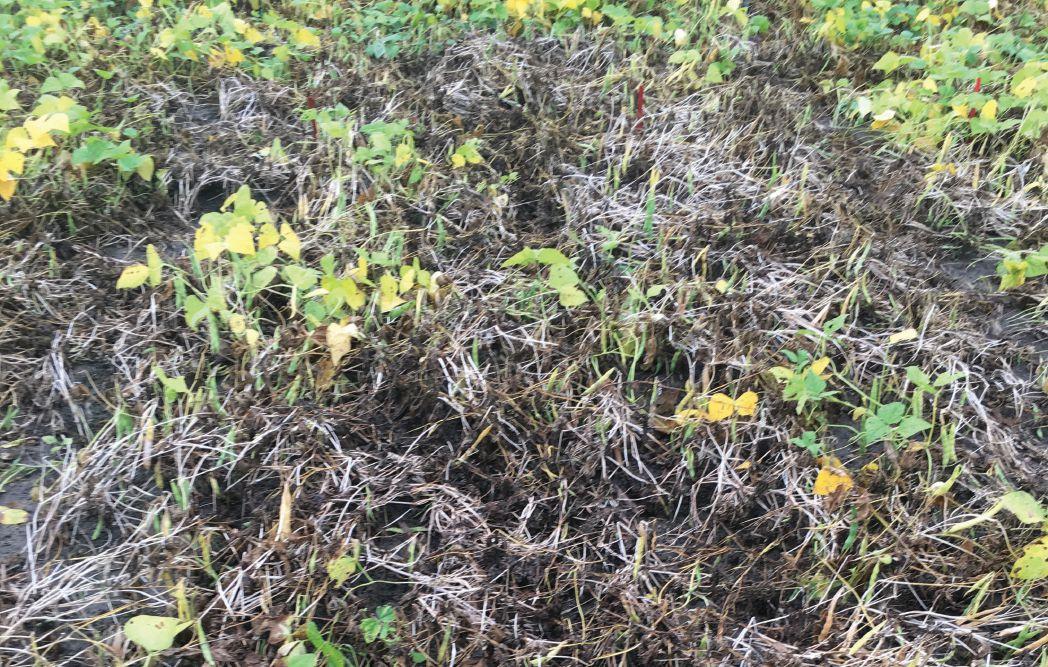
Two experts in Ontario offer their advice for a successful dry bean crop.
by Mark Halsall
Dry beans have been grown in Ontario for decades as a successful niche crop. While production has been moving to other parts of country like southern Manitoba, the province still accounts for close to half of Canada’s annual dry bean crop.
Chris Gillard is an associate professor in dry bean agronomy and pest management at Ontario’s University of Guelph Ridgetown campus and has been studying the crop for 26 years. He describes dry beans as a “high-value, high-management crop” that growers usually aren’t afraid to spend money on in order to optimize returns that can run as high as $1,000 an acre.
“It’s great to work with in a lot of ways, but there are problems to deal with,” Gillard says. “You’ve got to manage it at a higher level to get a good crop.”
Gillard and Meghan Moran, a canola and edible bean specialist with the Ontario Ministry of Agriculture, Food and Rural Affairs, teamed up to provide some valuable production advice for dry bean growers at the Southwest Agricultural Conference held at the University of Guelph last January. They share some of their top tips.



Nov. 8, 2018 @ 3 p.m. EDT
Kris McNaughton, University of Guelph
Dec. 12, 2018 @ 3 p.m. EDT
Ben Rosser, OMAFRA Corn Specialist, and Morgan Cott, Manitoba Corn Growers Association
Jan. 16, 2019 @ 3 p.m. EDT
Brian Beres, AAFC Lethbridge, and Graham Collier, University of Alberta
Feb. 6, 2019 @ 3 p.m. EDT
Gary Peng, AAFC Saskatoon

Just like in corn and soybeans, growers should strive to select the right varieties of dry beans every year because it can mean significant yield increases, sometimes as much as five to 10 per cent.
“I think it’s important to always look at what’s available and to try new varieties,” Gillard says. “I think particularly in dry beans, because they tend to be quite sensitive to stresses, it’s important to have one or two good reliable varieties and then spread your acres over other varieties so you’re not putting all your eggs in one basket.”
Gillard, who conducts dry bean variety trials at various sites every year, notes there a number of excellent online resources that growers in Ontario can use to investigate new varieties, including gobeans.ca and beanyieldtrials.ca.
Dry beans are among the most difficult crops to achieve good weed control in, according to Gillard, with some growers experiencing yield losses of 50 per cent or more due to weed interference. One possible answer, he says, is narrower row widths.
Gillard has performed a number of studies with different market classes of dry beans that showed when row widths were reduced from the traditional 30 inches to 15 inches, there was either no significant yield difference or there was an upsurge in yield.
“What people typically will see with narrow rows is that there’ll be a yield increase,” says Gillard, adding his research indicates the yield increase could be “anywhere from five to 10 per cent.”
As Gillard points, narrower rows tend to fill in faster. Quicker canopy closure not only reduces weed pressure but also enables plants to maximize sunlight capture earlier, which also helps boosts yields.
Dry bean growers looking for ways to cut down on seed expenses and also lower disease risk might want to consider reducing seeding rates, especially in the most productive areas of their fields.
Gillard maintains that by reducing seeding rates, dry bean growers can save up to five per cent on their seed costs — without sacrificing yield.
Gillard’s dry bean studies indicated that a 20 per cent reduction in seeding rates can result in minimal yield loss, as long as the crop is planted early or on time. Planting later than normal in traditional wide rows will result in smaller plants and an insufficient canopy cover that limits yield, Gillard says.
Lower seeding rates can also act to combat white mould, which is the most widespread foliar disease in dry beans in Ontario and can yield losses in excess of 50 per cent, according to Gillard..
Gillard notes that high-producing parts of a dry bean field which could be prone to white mould infections may benefit from less seed.
“Lower plant populations [in those areas] will allow you to get better air movement through the canopy and you’ll get less foliar disease as a result,” Gillard says.
Meghan Moran, who’s currently leading a three-year dry bean seeding rate study that’s funded by Ontario Bean Growers and the Canadian Agricultural Partnership, agrees.
“Where you usually have lots of vegetative growth, it’s possible that having fewer plants will decrease issues with white mould,” she says.
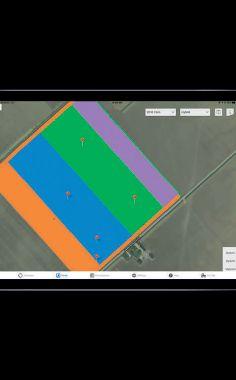
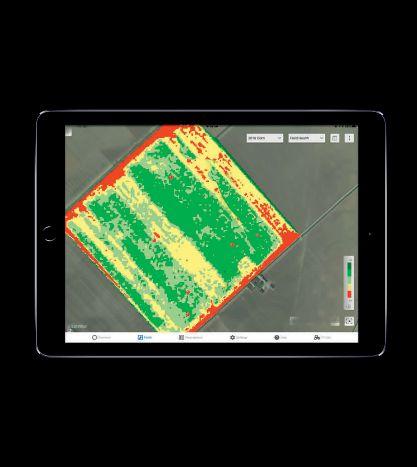
Moran says an increasing number of Ontario dry bean growers are practicing variable rate seeding, reducing rates in high growth areas and increasing rates in low-yielding areas.
Gillard notes that fungicides are routinely used to fight white mould in dry bean fields in Ontario. Before deciding to spray, he says, growers need to know their field histories “because if you’ve had white mould there before, your risk is much higher.”
Gillard stresses that application timing is also key: “If you’re putting a fungicide on, you want to put it on early to stop the disease from starting. These products are protectants, not eradicants.”
He adds that high water volumes are necessary to maximize the effectiveness of chemical controls for white mould. “Coverage is critical,” Gillard says. “You’re trying to protect everything down to the base of the plant.”
According to Gillard, growers should pay attention to cool, wet weather during the flowering period of their dry bean crop because it increases disease risk. Growers who encounter these conditions during flowering may want to apply a second fungicide application 12 to 14 days later, he adds.
Gillard performs product comparison trials every year to help dry bean growers assess the efficacy of different chemical controls for white mould.
“With some of these products, we can reduce disease levels by 30 or 40 per cent and we can increase yields by at least 50 per cent or more,” he says. “There are new products that come into the marketplace all the time that need to be tested and compared to existing standards.”
Western bean cutworm (WBC) is a common pest in corn and dry beans, that’s increasing in numbers and in geographical spread across Ontario, according to Moran. In dry beans, the cutworms feed on seed pods, which lead to losses in quality and the price farmers can expect to get for their crop.
Moran says cultural practices are largely ineffective against WBC
because field infestations are normally caused by the pest flying in from somewhere else. She notes that Matador, Coragen and Voliam Xpress are the three insecticides registered for dry bean control in Ontario.
Moran recommends growers install WBC pheromone traps in their beans fields and look for feeding damage on pods before applying insecticides. She says growers should also make sure that it’s WBC and not some other pest that’s causing the crop injury.
Moran stresses that good pod coverage is required when spraying, and that chemical control is most effective during early pod feeding, which typically starts 10 to 20 days after peak flight of WBC moths.
The cutworm larvae are usually in the soil during the day and travel up the plants to feed at night, Moran says, so it’s important to spray in the evening. It’s also essential to rotate chemistries to avoid resistance development.
“This is our number one pest of corn in the province at this time, so we don’t want to get ourselves in a situation where we have resistance,” Moran says.
The number one pest of soybeans worldwide, soybean cyst nematode (SCN) also poses a serious threat to dry bean growers in Ontario.
“Dry beans are an alternate host to this pest,” Gillard says. “The problem in Ontario is that most dry bean growers are also soybean growers, so they’ve got two susceptible crops in their rotation.
“With this pest, once you get it in your soil you never get rid of it. You can only manage it,” he adds. “The first thing is to test your soils to see if you have [SCN] and if so, at what level . . . If you have it and it’s bad, you need to know learn how to manage it quickly.”
Gillard notes that chemical control isn’t an option since there aren’t any registered SCN products in Ontario. Therefore, “crop rotation is your number one method for managing it.”
Gillard recommends rotating to corn, wheat or canola after dry beans, since they are all non-host crops to SCN. And if you have soybeans in your rotation, he says, it’s also a good idea to plant a variety with some SCN resistance.
ADVANCED CONTINUOUS ROOF ANGLE
15" ROUND GALVANIZED ROOF VENTS
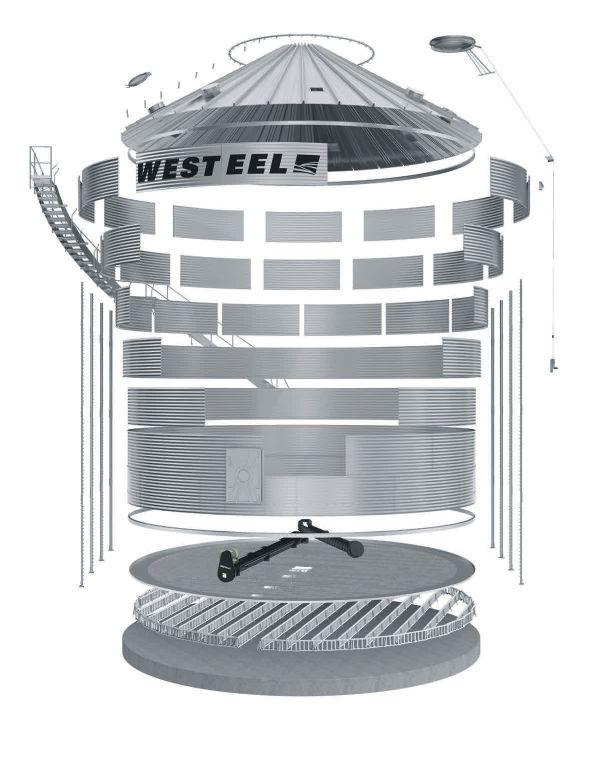
24" - 36" WIDE FILL CAP WITH REMOTE OPENER
4" WIDE CORRUGATION WITH G115 GALVANIZED STEEL
VARIABLE SECTION STIFFENERS (VSS)
CONTINUOUS BOTTOM RING ANGLE
LOCK-N-LOAD FLOOR SYSTEM
Euphorbia lagascae might offer another rotation option in Ontario fields.
by Julienne Isaacs
Euphorbia lagascae is an annual Mediterranean plant that naturally produces vernolic oil, a rich source of the common plasticizer vernolic acid, which is used in a range of industrial applications, from paints to PVC to blown polyurethane foam.
E. lagascae is one of two novel oilseed crops recently tested by a joint Ontario Ministry of Agriculture, Food and Rural Affairs (OMAFRA)/University of Guelph research team for commercial production in Ontario; the other is Centrapalus pauciflorus, a crop native to Africa.
According to Jim Todd, industrial crops specialist for the Ontario Ministry of Agriculture, Food and Rural Affairs (OMAFRA), common sources of vernolic acid are soybean oil, linseed oil and petroleum, but for each of these, the acid must be synthesized from the oil via a series of chemical reactions. By contrast, the two novel oilseed crops produce vernolic acid naturally; it only has to be extruded from the oil.
One aspect of Todd’s job involves looking for alternatives to petroleum. In 2013, E. lagascae and C. pauciflorus piqued his interest. While both crops had been tested in the United States, neither had been tested under Canadian growing conditions.
Between 2014 and 2016, Todd and his collaborator, Rene Van Acker, dean and professor at the Ontario Agriculture College at Guelph University, ran basic agronomic field tests on both crops to assess whether the plants would grow in southwestern Ontario, and evaluate germination and flowering rates, seed yield and seed oil content.
They found that both crops grew and produced seed, but exhibited low germination rates, such that transplants had to be used to ensure the researchers could collect complete field season data.
Both crops produced a large amount of vernolic oil – about 45 per cent oil content in the case of E. lagascae, and between roughly 28 and 35 per cent oil content in the case of C. pauciflorus. About 50 per cent of the oil was vernolic acid in the case of E. lagascae, compared to about 70 per cent in the case of C. pauciflorus
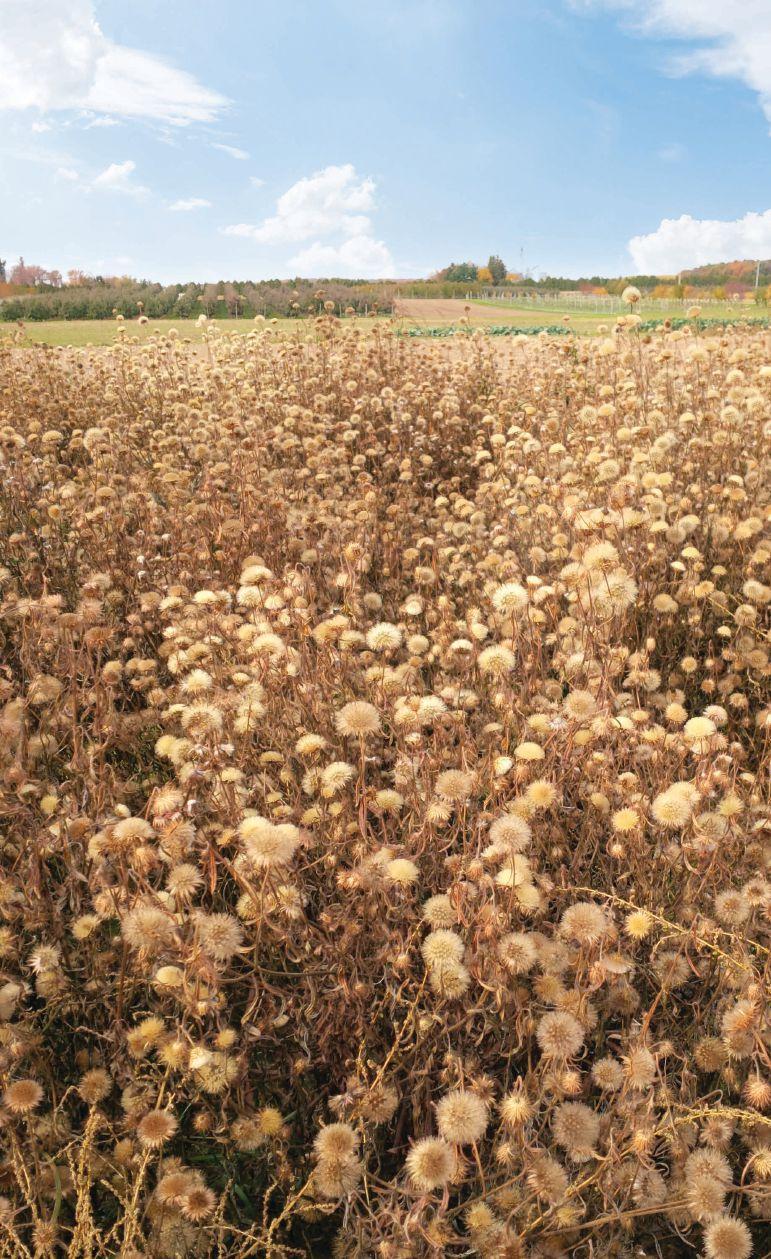
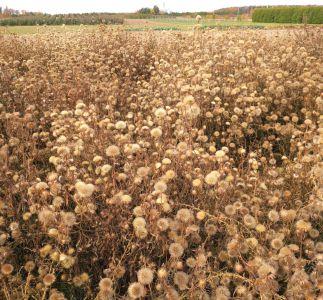
But E. lagascae emerged as the favourite due to a very basic advantage: the plant produces three-lobed capsule-like seeds, making it relatively easy to harvest. The crop produces a lot of latex, Todd says, but if a drying agent is used prior to harvest the crop can be combined. On the other hand, C. pauciflorus produces dandelion-
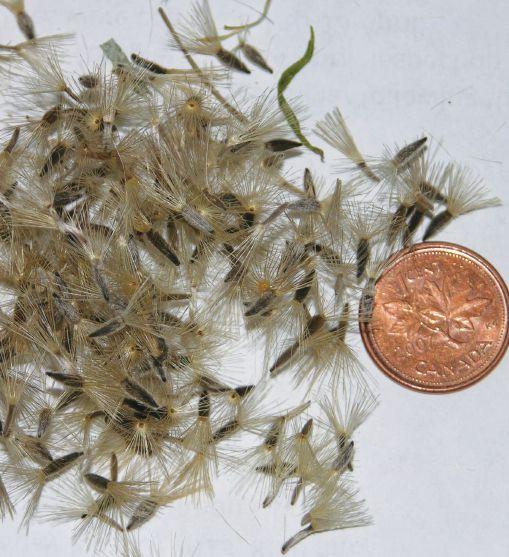
ABOVE: C. pauciflorus produces dandelion-like flowers with an abundance of fluffy seed.
like flowers with an abundance of fluffy seed, which makes harvesting a “huge challenge” with standard equipment, says Todd.
“You can’t use a standard combine,” he explains. “And if it’s ready to go and you get a heavy rainstorm or windstorm your seed ends up on the ground. The challenge of harvesting it made us lean more to Euphorbia [lagascae] as the crop to go with.”
Although E. lagascae shows promise in terms of its high vernolic oil and acid content and harvestability, there are several obstacles that must be overcome before the crop can be introduced to commercial field production in Ontario.
One key problem that emerged from the three-year trial was the germination rate of E. lagascae.
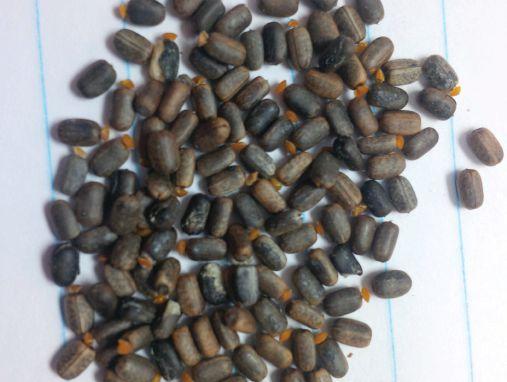
“The economics are much more favourable if you can directly seed versus producing transplants,” Todd says. “It’s probably a no go if it’s a transplanted crop.”
Over the three years of the trial, germination was highly variable, but typically lower than 30 per cent. Interestingly, seed that had been planted in May or overwintered would sometimes undergo germination six to eight weeks after sowing, which indicated to Todd’s team that the seed might contain a dormancy factor that inhibits germination until certain conditions are met.
Along with Van Acker’s lab, Todd’s team has enlisted the help of Istvan Rajcan, a soybean breeder at Guelph University, in a three-
year project to analyze the reasons for E. lagascae seed dormancy and potentially breed an improved variety. This project, which is funded by OMAFRA and the University of Guelph, is now in its second year.
A secondary goal of the breeding project is to produce a large amount of seed that can be sent to the United States Department of Agriculture’s pilot scale oilseed extraction facility in Illinois, where several hundred litres of oil can be extracted and sent out to research labs and interested industry members for testing.
Another major hurdle to overcome is the crop’s competitiveness in the field. E. lagascae is not competitive to weed pressure early on, and because no herbicides are registered on the crop, Todd’s team has also begun a herbicide tolerance trial to investigate options for weed control.
E. lagascae is more resilient when it comes to insect pressure; the plant’s latex deters insects. But the crop is susceptible to root disease pressure, Todd says.
“There’s a ways to go,” he says.
Despite these obstacles, Todd sees E. lagascae as a potential competitor to epoxidized linseed oil, which is a higher-value product than soybean oil. Vernolic acid produced from the novel oilseed plant can be used in a wider variety of processes than that produced from linseed oil.
But apart from the premium growers might expect from the new crop, one of its chief advantages may be its utility as another cropping option they can use to diversify rotations.
“It would be a commodity crop like any other oilseed, and another crop in the rotation,” he says.


When it comes to malt barley agronomics, the focus is on grain quality.
by Carolyn King
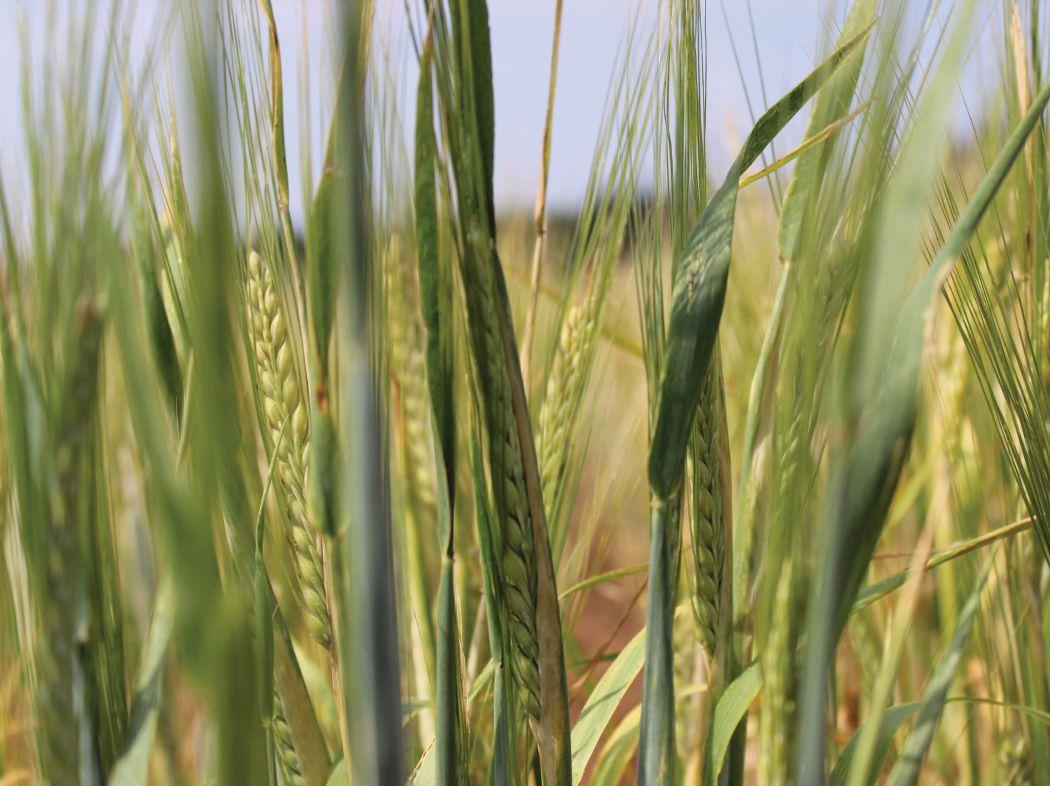
Malt barley production offers both opportunities and challenges in the Maritimes. Agronomic research, varietal testing and educational activities are underway to help growers capture the opportunities and meet the challenges.
“Looking at the opportunities, malt barley tends to be a slightly higher value crop than feed barley. The malt varieties, for the most part, are higher yielding than the feed varieties. And some local opportunities are opening up for malt barley use in the craft sector, although those opportunities are small compared to the export opportunities with commodity barley,” says Aaron Mills, a research scientist with Agriculture and Agri-Food Canada (AAFC) in Charlottetown.
“Also, barley is really important to keep as a rotation crop in the Maritimes to break some of the disease and pest cycles. For instance, barley is not susceptible to sclerotinia and some other non-grass diseases.”
The main challenge for Maritime malt barley growers is meeting
the strict specifications for grain quality. That requires luck with the weather, along with proper production practices and good storage conditions.
“To make a high quality malt, you have to start with high quality barley,” says Aaron MacLeod, the director of the Hartwick College Center for Craft Food and Beverage in Oneonta, N.Y. The Center is a resource for testing, technical support, and education for small and mid-sized breweries, malt houses, farms, and other craft food and beverage producers.
“Brewers are using the malt as a source of fermentable carbohydrate, which ultimately becomes the alcohol, and the malt also has to provide the enzymes to convert that starch to sugar and all of the nutrients for the yeast,” he explains. “Because the brewers require so
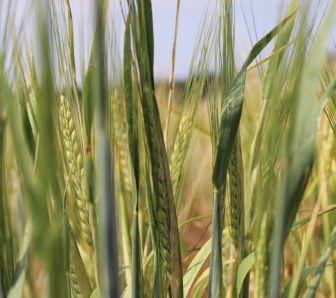
ABOVE: Malt barley production offers opportunities and challenges in the Maritimes.

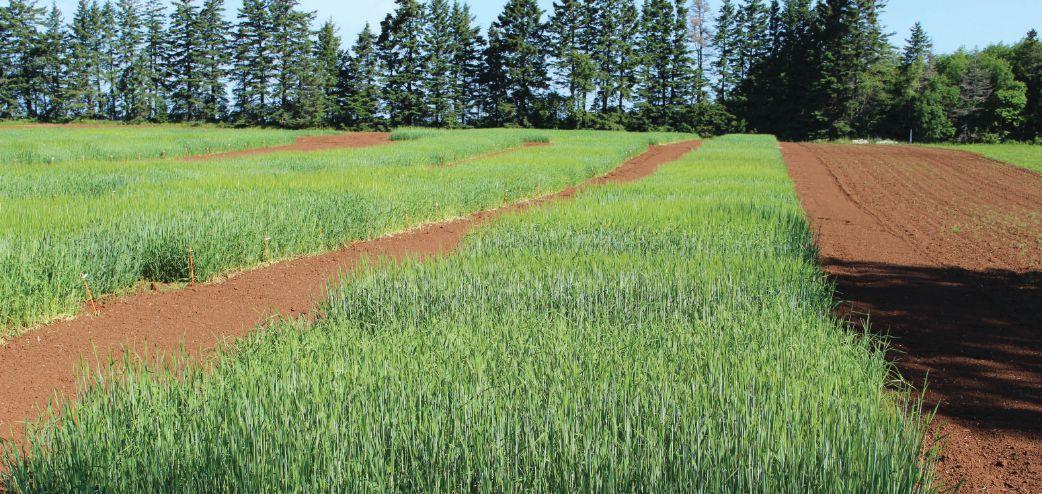
much from the malt, the maltsters have to find grain that meets very strict criteria to ensure good performance. So it really comes down on the grower to provide grain that meets the quality standards of the malt house.”
Three of the main quality factors are protein content, germination and disease.
“The protein content of the grain has to be in a very specific range, usually between nine and 12.5 per cent. That’s because the more protein you have, the less starch and therefore the less alcohol. So the protein content can’t be too high,” MacLeod says.
“Ensuring that the protein content is not too high means holding back on nitrogen fertilizer. While you will have a lower yield, you make up for that with the price premium you get for meeting the low protein standard.”
Preserving the grain’s germination ability is extremely important because malting is a natural process of sprouting the grain where the only added ingredient is water, MacLeod explains.
One factor in preserving germination is to prevent preharvest sprouting. “In the Maritimes, preharvest sprout damage is a big challenge in reaching malt quality,” Mills notes. “Our dews, our proximity to the ocean and our increased likelihood of rain later in the season add up to a greater risk of damage.”
MacLeod says, “One of the best strategies for mitigating sprout damage is harvesting the grain early at a high moisture content. Then the grain must be carefully dried, using low heat, in order to preserve the germination.”
Maintaining cool, dry storage conditions for the grain is also important for preserving germination. MacLeod adds, “Most malt houses expect the grower to have on-farm grain storage. So you need the storage infrastructure to maintain the grain’s quality, including aeration fans and the know-how to use them, and depending on the climate, in-bin drying systems.”
The grain should also be disease-free. “Malt barley must be free of fungal diseases and must have very low levels of fungal toxins, not only because the barley is going into a food product, but also for the barley to perform well in the malt house and the brewery,” MacLeod notes.
Mills adds, “DON, or deoxynivalenol, is a fungal toxin produced by Fusarium head blight, a cereal disease favoured by moist conditions. DON is another huge challenge for malt barley in the Maritimes.”
MacLeod says, “You need an intensive, integrated approach to disease management [for malt barley production] that includes: using a robust rotational strategy, avoiding barley after corn to minimize Fusarium head blight, applying timely fungicide applications, and timely planting and harvest.”
Until Mills started his malt barley research a few years ago, very little agronomic research had been done on malt barley production in the Maritimes and the rest of eastern Canada.
From 2013 to 2018, Mills led a malt barley agronomics project that took place at five sites in northeastern North America, including locations in Prince Edward Island, southern Quebec, eastern Ontario, northern Ontario and upstate New York. Funding for the project came from the Brewing and Malting Barley Research Institute, AAFC under the National Barley Research Cluster, and the Alberta Barley Commission.
The project evaluated five nitrogen fertilizer rates (zero, 30, 60, 90, and 120 kilograms per hectare), two seeding rates (200 and 400 seeds per square metre), and two western Canadian malt barley varieties (Newdale and Cerveza).
“Although there were differences with variety and seeding rate, the nitrogen rate overall had a much stronger effect on barley quality,” he says.
Finding the optimal nitrogen rate can be tricky. You want enough nitrogen for reasonable test weights, thousand-seed weights and yields, but not so much nitrogen that the grain’s protein content and other quality characteristics are outside of their acceptable ranges for malting and brewing.
“We found that the lower fertility rate was better for quality all around. It’s certainly a challenge to hit higher yields if you’re going with a lower fertility rate, but if you are targeting the malt quality then you’re going to have to go with a little lower nitrogen,” Mills notes.
“We found around 50 to 60 kilograms of nitrogen per hectare was usually optimal, although the previous crop influenced that. We found that following red clover and fertilizing at this rate could result in protein levels as high as 15 to 16 per cent. My recommendation would be [for malt barley] to follow a crop that will not leave a lot of nitrogen in the soil and stay away from corn.”

“Quality is the most important issue for malt barley. If the grain quality is poor, then the quality will be poor all the way along [in the malting and beer making processes], and then you will have bad beer.”
The seeding rate effects were complex, with the lower rate and the higher rate each providing some quality benefits. “Generally, if barley is seeded early then we saw a higher yield, thousand-seed weight and percentage of plump kernels at 200 seeds per square metre; there were a few qualitative aspects that were better at the lower seeding rate too.”
Mills is participating in two multi-agency, multi-site efforts to test malt barley varieties in eastern North America. One is the Eastern Spring Barley Nursery project, led by Richard Horsley with North Dakota State University. This project is evaluating the performance of modern spring barley varieties from around the world.
Mills is finding that, in the Maritimes, European varieties tend to perform better than western Canadian varieties. “Western Canadian varieties are selected and developed under dry growing conditions; in particular, the Prairies don’t have the fall moisture that we have in Eastern Canada. With many of the western Canadian varieties, the preharvest sprout damage is through the roof when we grow them in eastern Canada. Varieties from places like England, parts of
Monsanto Company is a member of Excellence Through Stewardship® (ETS). Monsanto products are commercialized in accordance with ETS Product Launch Stewardship Guidance, and in compliance with Monsanto’s Policy for Commercialization of Biotechnology-Derived Plant Products in Commodity Crops. These products have been approved for import into key export markets with functioning regulatory systems. Any crop or material produced from these products can only be exported to, or used, processed or sold in countries where all necessary regulatory approvals have been granted. It is a violation of national and international law to move material containing biotech traits across boundaries into nations where import is not permitted. Growers should talk to their grain handler or product purchaser to confirm their buying position for these products. Excellence Through Stewardship® is a registered trademark of Excellence Through Stewardship.
ALWAYS READ AND FOLLOW PESTICIDE LABEL DIRECTIONS. Roundup Ready 2 Xtend® soybeans contain genes that confer tolerance to glyphosate and dicamba. Agricultural herbicides containing glyphosate will kill crops that are not tolerant to glyphosate, and those containing dicamba will kill crops that are not tolerant to dicamba. Contact your Monsanto dealer or call the Monsanto technical support line at 1-800-667-4944 for recommended Roundup Ready® Xtend Crop System weed control programs. Roundup Ready® technology contains genes that confer tolerance to glyphosate, an active ingredient in Roundup® brand agricultural herbicides. Agricultural herbicides containing glyphosate will kill crops that are not tolerant to glyphosate.
Acceleron® seed applied solutions for corn (fungicides only) is a combination of three separate individually-registered products, which together contain the active ingredients metalaxyl, prothioconazole and fluoxystrobin. Acceleron® seed applied solutions for corn (fungicides and insecticide) is a combination of four separate individually-registered products, which together contain the active ingredients metalaxyl, prothioconazole, fluoxystrobin, and clothianidin. Acceleron® seed applied solutions for corn plus Poncho®/VOTiVO™ (fungicides, insecticide and nematicide) is a combination of five separate individually-registered products, which together contain the active ingredients metalaxyl, prothioconazole, fluoxystrobin, clothianidin and Bacillus firmus strain I-1582. Acceleron® Seed Applied Solutions for corn plus DuPont™ Lumivia® Seed Treatment (fungicides plus an insecticide) is a combination of four separate individually-registered products, which together contain the active ingredients metalaxyl, prothioconazole, fluoxastrobin and chlorantraniliprole. Acceleron® seed applied solutions for soybeans (fungicides and insecticide) is a combination of four separate individually registered products, which together contain the active ingredients fluxapyroxad, pyraclostrobin, metalaxyl and imidacloprid. Acceleron® seed applied solutions for soybeans (fungicides only) is a combination of three separate individually registered products, which together contain the active ingredients fluxapyroxad, pyraclostrobin and metalaxyl. Fortenza® contains the active ingredient cyantraniliprole. Visivio™ contains the active ingredients difenoconazole, metalaxyl (M and S isomers), fludioxonil, thiamethoxam, sedaxane and sulfoxaflor. Acceleron®, Acceleron BioAg , Acceleron BioAg and Design , Cell-Tech®, DEKALB and Design®, DEKALB®, Genuity®, JumpStart®, Optimize®, QuickRoots®, Real Farm Rewards™, RIB Complete®, Roundup Ready 2 Xtend®, Roundup Ready 2 Yield®, Roundup Ready®, Roundup Transorb®, Roundup WeatherMAX®, Roundup Xtend®, Roundup® SmartStax®, TagTeam®, Transorb®, TruFlex™ VaporGrip®, VT Double PRO®, VT Triple PRO® and XtendiMax® are trademarks of Bayer Group, Monsanto Canada ULC licensee. BlackHawk®, Conquer® and GoldWing® are registered trademarks of Nufarm Agriculture Inc. Valtera™ is a trademark of Valent U.S.A. Corporation. Fortenza®, Helix®, Vibrance® and Visivio™ are trademarks of a Syngenta group company. DuPont™ and Lumivia® are trademarks of E.I. du Pont de Nemours and Company. Used under license. LibertyLink® and the Water Droplet Design are trademarks of BASF. Used under license. Herculex® is a registered trademark of Dow AgroSciences LLC. Used under license. Poncho® and VOTiVO™ are trademarks of BASF. Used under license. All other trademarks are the property of their respective owners.
France, and Germany are selected under higher moisture conditions that are more similar to the Maritimes, and we’re finding that they tend to hold their germination better.”
He adds, “We’re also finding that the European varieties tend to have lower protein no matter how you manage them.”
The germination difference between the European and western Canadian varieties also shows up in the malt analysis. The western Canadian varieties germinate very quickly, while the European varieties take a little longer.
The other variety testing initiative is in partnership with the John Innes Centre in the United Kingdom. Mills and other researchers have been testing 80 heritage varieties at sites in eastern North America.
“For the most part, the heritage varieties don’t have preharvest sprouting problems, but they do have other issues,” Mills says. “A lot of them are higher in beta-glucan, which can be problematic in the malt house, and also many of the heritage lines are lower yielding.”
Both of these variety evaluation efforts are continuing in 2018. “We’re maintaining all of our Eastern Spring Barley Nursery lines. As well, we’ve pared down from 80 heritage varieties to 40, and we are testing those in our DON nurseries in P.E.I. and Manitoba and doing agronomy trials in P.E.I. and Michigan,” Mills says.
He notes, “We’re generating all the numbers about how each variety performs in the field and in the malt house, to try and find the best qualities of each variety when we grow them in the East.” That way, maltsters, growers and brewers can make more informed decisions.
Mills believes brewers, maltsters and barley growers need a shared understanding of malt barley quality specifications for the value chain to be successful. So he is working closely with the Atlantic Grains Council on this issue for the Maritimes. “This fall, we’re hosting a farmer-maltster-brewer workshop to help get everybody on the same page, to improve communication between the maltsters and the brewers and the growers.”
MacLeod says, “Because [producing malt barley] is so risky, there has to be very good transparency throughout the value chain at each step of the process.”
The Center for Craft Food and Beverage suggests that growers in the East have a contract in place with a malt house before growing malt barley. MacLeod explains that the contract will specify which barley variety to grow because every variety performs differently in the malt house and the brewery. The contract will also cover the malt house’s quality specifications, like limits for protein and DON, and the price for the grain.
MacLeod also suggests a consideration of what will happen if the quality specifications are not met. “Although farmers can use a number of agronomic practices to help put them in the best position for meeting the quality specifications, there are factors like the weather that are outside of their control. So if the crop won’t be used for malting, is there a secondary market like a feed market or a straw market, and what price would they get on that market?”
Mills emphasizes, “Quality is the most important issue for malt barley. If the grain quality is poor, then the quality will be poor all the way along [in the malting and beer making processes], and then you will have bad beer.” And nobody wants that.

The farming operations of today demand a different skillset from the farms of yesterday. Management and finance skills are becoming a must-have and the lack of interest in the finance side can make or break a successor’s future achievements.
BY Stephanie Gordon
The plan was all set – the 7,000-acre grain farm would transition from father to son, as would two other enterprises, each earning about one million dollars in revenue annually. Out of everyone in the family, only one son was interested in farming.
During a meeting with their financial advisor, his interest in farming was apparent: “I don’t want my butt glued to that chair.” But for that size of farming operation, that’s exactly where he needed to be. He wanted to farm – but he didn’t want to manage a business.
Terry Betker, president of Backswath Management, shares this story to highlight the concern that for some farms, the attention isn’t where it needs to be. Backswath Management provides consulting to farms about business management and succession planning. Failed successions are usually the result of a lack of management training.
“That whole part of the business often gets less attention than looking after the agronomy or the production side of the business,” Betker says.
The lack of interest in the finance side of farming remains a hurdle during succession planning. A majority of farms are reluctant to mentor on the financial side of the business because they’re not interested in it either and it’s easy to set aside. “Other stuff is pretty important, and it’s what their passion is, so it’s easier to speak to the next generation about the agronomy, or the livestock, than it is the finance,” Betker explains. Some farmers may not understand the details themselves so they delay teaching it to their successors. “If their children ask them questions, or maybe the balance sheet doesn’t look that strong . . . it’s easier to push it off.”
Passing along the financial side of the business is usually the final step in a succession. For owners, once the financial side of the business has transitioned, it becomes real that they’re passing along the farm. This element adds to the reluctance to mentor on the financial side of the business.
Without crops, there isn’t cash, but finance and management skills are increasingly important for today’s farming operations. Weather fluctuations, trade uncertainties, higher capital investments, debt financing, narrowing margins and higher risk – to name a few – make management acumen a must-have skill for any successor.
In his role as a consultant, Betker talks quite a bit with lenders. “I’ve listened to lenders speak often about wishing that farmers would come to them with a better understanding of their financial position,” he says. The lenders want to invest in farmers who are confident about understanding their financial situation and can discuss it. “Then [the lenders] are going to use that more purposefully in deciding whether or not to lend the money and at what cost.”
As investments increase, debt financing becomes a necessary option. Future successors will benefit from having a basic level of financial acumen because it’s tied to whether or not they will be able to finance future investments.
In addition to higher risk and narrowing margins, “I can’t think of very many farms that are going to transition from mom and dad to the next generation, where those farms look like where their parents started,” Betker says. As operations grow, so does the demand for skills off the field. The family in the opening example did not start with a 7,000-acre grain farm, so current successors are jumping into management roles within large operations without the gradual learning opportunity their parents had. Successors need to pair a passion for farming with proper preparation and mentorship on the management side.
Barry McBlain took over his family’s cash crop farm in Brant, Ont., and his son is taking over for him. They farm about 3,000 acres of soybeans, wheat and corn. For an operation of that size, McBlain says having management skills

are hugely important. “And it’s probably the harder part because it can be pretty dry sometimes. Everybody wants to go plant . . . or dig up plants and look at the roots, but when the sun is shining not many people want to sit in the office and go over numbers with the banker.”
Both McBlain and his son completed diplomas in agriculture at the University of Guelph and continue to learn more about the finance and succession side of the business through ongoing events and courses.
“You don’t go from playing peewee hockey to the NHL, and same for business, you can’t go from grade eight to running a farm like the farms are set up today. You have to pay your dues whether that means going to school [or] going out working somewhere else,” McBlain says.
Garrett Sawatzky is entering into his fifth year teaching at the University of Manitoba School of Agriculture’s diploma program. The agricultural finance diploma spans two years and covers topics like financial management, marketing, economics, tax, succession planning and human resource management, among others. Sawatzky teaches financial management and is involved with the management planning project, a two-year project where students develop a business plan for their own farm or a case study farm.
The project culminates with a presentation in front of a panel of professors, agronomists, bankers, and farm leaders where the student explains and defends their projected plan. “For most of them, it’s literally the most applicable thing they can ever do if they want to return to the farm,” Sawatzky says. Past students look back on the project as a rewarding experience and feedback has always been very positive.
As to whether or not a formal education is necessary, it is recommended. “The way I see it, it really ramps up what you’ll know at an earlier age, and I’m not saying you won’t learn this stuff eventually as you farm…[but] the earlier the better,” Sawatzky says. He also adds in the benefit of being able to network with your classmates also in the agriculture industry.
Betker also teaches within the diploma program, and while he still recommends formal education, he acknowledges its shortcomings. “[It’s] challenging for someone coming right out of high school to go into a diploma program and learn about farm management when they haven’t practically done much farm management, and really have an appreciation for the importance of what it is they’re learning,” Betker says. As a professor, he sees the difference among
students fresh out of high school and those who have worked on a farm for a couple of years and then decide to take the diploma program.
Even though the skills might not be put to use right away, an education lays a solid foundation, and exposure through programs like 4-H (a non-profit youth development organization that, depending on the area, runs monthly classes to learn and develop new skills such as farm safety) can help. McBlain takes it back to his 4-H days and the crops club. “You didn’t realize at the time what that was ingraining in you . . . the importance of keeping track of your cost of production and financials.
“You get an education so when you’re sitting in a meeting, you’re not wasting anybody’s time and you can accomplish something,” McBlain says.
Like succession planning, comfort with every financial aspect of the business is not going to happen overnight. Sawatzky encourages successors to keep on learning and talk to people who know more than them. There are resources and seminars available through Farm Credit Canada, Farm Management Canada, banks and other institutions. The most important thing for Sawatzky is “just know where you are financially at any given time.”
Accounting, management and human resources can be outsourced, but it’s important to know where you stand and understand the recommendations given and implications of each decision.
For successors looking to go beyond just maintaining an existing operation, “try and anticipate what [your] future skills are going to be. Not just finance, agronomy, marketing, but things like leadership, negotiations, governance and [conflict] resolution,” Betker adds.
Every year Betker asks his class a question – how many of you are from a farm? This past year, in a classroom of about 80 students, Betker saw the largest number of hands go up that said they weren’t from a farm. These students didn’t come from a farming background but wanted to manage a farm. The farms of today are different from the farms of yesterday, and now, a viable career option for those who didn’t grow up on a farm. For some successors, or outside parties, ensuring success means focusing on finance and not just the farm.
FAILED SUCCESSIONS ARE USUALLY THE RESULT OF A LACK OF MANAGEMENT TRAINING, BUT WHY?
1 Passing along the financial side of the business is one of the final steps in a succession – this emotional aspect adds to the owner’s reluctance to mentor on the finances and finalize the transition.
2 Operations are growing, and so is the demand for skills off the field. Incoming successors are inheriting large operations without the same gradual learning opportunity their parents had.
3 Lenders want to work with farmers who know their operation’s finances. Future successors will benefit from having a basic level of financial acumen because it’s tied to whether they can finance future investments.
For farm owners without an obvious successor, selling your farm is not the only option. There are several ways to navigate through this issue, including negotiating with potential buyers and using recruiting firms to find a suitable successor.
BY Stephanie Gordon

Succession planning can be a daunting task for farm owners, especially for those who don’t have any qualified successors to take over over the operation – an increasingly occuring problem.
The next generation is often encouraged to leave the farm and gain an education. Some become more intrigued by life outside the rural landscape and never return. Others just want a more stable work-life balance than what they saw their parents have on the farm. In some cases, other farm employees in key leadership positions that could be successors are also nearing retirement age.
Lori Culler is the founder and owner of AgHires, a job board and recruiting firm for farms and agribusinesses across Canada and the United States. She receives one to two requests to help find a successor per year, and she’s noticed the question about finding a successor come up more during the past three or four years than in her entire recruiting career.
“That’s what we’re seeing, where the next generation maybe isn’t interested in that farming operation, but that farmer or business wants to see it continue on. They don’t want to just sell it off, they have a passion to see it continue,” Culler says.
On the other side of the equation, she hears about candidates looking for these opportunities but aren’t sure where to look because opportunities for ownership don’t become available often.
Jeff Noble, director of business and wealth transition at BDO Canada, works closely with agriculture clients in Ontario on succession planning. He too has noticed a decreased interest in taking on the risk and responsibility of running the family farm.
Even when there are qualified successors, farmers on average, delay the succession planning process. With farms, there are multi-generational concerns and strong attachments to the land. When there isn’t an obvious choice for a successor, it’s even easier to delay the process because there’s more confusion surrounding next steps. But putting succession planning off isn’t doing a farmer any favours, Noble says. His first step when working with farmers is to help them understand one day they’re going to leave the farm.
“It’s as certain as death and taxes. You’re going to leave your farm on your own terms, whether that’s handoff to the kids or [through a] sale to the kids or sale to your neighbour, or sale to a land developer, . . . one way or another, you’re going to leave the farm,” Noble says, acknowledging it’s a hard concept to come to terms with.
Starting early allows for one to explore more options. “The longer they wait the fewer options they have, and secondly the longer they wait, they may find themselves at a point when someone else is making decisions for them,” says Noble.
There are recruiting services for the agriculture industry, such as AgHires, Agristaffing.com, AgStep, as well as local recruiters, depending on the area. While AgStep focuses on recruiting for agribusinesses, both AgHires and Agristaffing.com advertise on-farm jobs and agribusiness roles and have helped farms find a successor in the past.
Finding a successor is not any easy task and both firms take the time to vet candidates and their long-term goals. For Culler at AgHires, cultural fit is key.

NOT HAVING A SUCCESSOR DOESN’T MEAN YOU HAVE TO STOP FARMING BUT STARTING EARLY ALLOWS FOR MORE OPTIONS.
1. There are recruiting services for the ag industry, such as AgHires, Agristaffing.com, AgStep, as well as local recruiters, depending on the area. These firms can help find a successor to continue to grow your farming operation.
2. If you’re selling the farm, there’s always an opportunity to negotiate with your buyer so the deal aligns with your own goals. For any land transaction, there’s flexibility to negotiate to stay on the land.
3. Before searching for a successor it’s the owner’s responsibility to come to terms with what they’re looking for in the handoff of the farm. An active role? A passive role? No role? Write a wish list and plan with the end in mind.
“You can have someone with a great looking resume but if they don’t match on leadership style, or how to manage employees, their take on customers and their customer interaction, if that’s not in alignment and a fit, the successorship won’t work for either side,” Culler says. “We’re very selective with our submissions, and with a successor you really just can’t get it wrong.”
However, it’s the owner’s responsibility to come to terms with what they are looking for in the handoff of the farm. What role do they want to play after it happens? Culler has seen some farmers continue to stay active within their operation, while others have a firm deadline of when they want to complete the transition. It’s important that farm owners come prepared with a wish list so there’s less confusion for the successor candidate about what to expect.
Culler has noticed that some of the best fits usually bring something extra to the table. Clients are looking for someone to take what they’ve built and grow it, instead of just maintain their operation. Candidates that stand out have experience in other areas or partnerships in other industries so there’s potential to diversify the existing operation, but the proper fit is also important. If a potential successor loves the livestock aspect of farming, but the owner wants the operation to remain focused on grain farming, there’s a misalignment in the farming they’re passionate about.
“We’re trying to really figure out what does that candidate want to do with their career and just make sure we’re not forcing a fit . . . That’s the worst thing you can do; ignore the signs or what the candidate is saying or what the client is saying. Those small details matter,” Culler says.
Keith Stoltz, owner of Agristaffing.com, has recently connected a 700-acre cash crop farm in Ontario with a potential successor. In this particular case, they advertised for a general operations manager with the opportunity for ownership after five years. Stoltz acknowledges it’s a difficult process: “Everyone is afraid that there won’t be a great fit.” It’s important for all involved to understand ownership isn’t going to happen overnight and finding out the long-term goals is crucial to ensuring benefit among both parties.
In another case Jeff Noble has worked on, the farm’s owners are parents in their early eighties with three adult children who haven’t farmed since high school. The farm has been in the family for five generations and the decision to sell the farm is wrapped up in emotion. However, Dad is starting to have some health issues and the family is feeling forced into making a decision.
“Mum and Dad have received probably, in the last 36 months, half a dozen offers to buy the farm - some from other farmers, some from real estate developers – but they just can’t bring themselves to sell it,” Noble shares. “Nobody likes that, because when you’re feeling under duress or being forced to do something, you typically feel like you’re not going to make the best decision possible.”
However, Noble says they have more options than they think. There are many different kinds of sales and there’s always an opportunity to negotiate with your buyer so the deal aligns with
your own goals.
There are two ways to sell the land: An inside sale involves selling to one or more family members, employee(s), or a combination, and an outside sale means selling to another farmer, real estate developer or land bankers.
For this particular family, Noble is working on an outside sale and arrangement with the purchaser to let the parents stay in the farmhouse for as long as they’re able to stay. For any transaction, there’s flexibility to negotiate to stay on the land.
“That’s more likely to happen if it’s a real estate developer buying the land . . . they may buy up a farm today that they’re hoping to develop in a generation from now,” Noble says. “But if the farmer down the road or across the road buys the farm, it’s probably less likely, but not impossible, that that sort of thing can be negotiated, because they typically want the farm and the land because they’re going to farm it themselves.”
In this case, the family is feeling under pressure to make a decision and the conversation among the family has shifted toward weighing the available options. Noble shares that while they know they can get more money from the real estate developer, they want to see it remain a farm and would rather sell to a neighbour they know.
Knowing that the family wants to see the farm remain a farm solves a big part of the succession puzzle. When it comes to succession planning, it’s about planning with the end in mind.
“Without having those conversations, you probably think you have two choices: either you’ll drop dead one day on your farm, which leaves a mess for everybody, or you’ll sell the farm and have to leave,” Noble says. “There’s probably any number of things in between those two extreme options that might work out better.”
Noble advocates for strong, early and frequent communication among families in order to determine the best outcome for all involved and ensure a smooth transition. Even without a successor, there are plenty of options available that will see the farming operation continue, but it’s important to start exploring them sooner rather than later.

• Protects against key early season insect pests, such as wireworm, white grub, cutworm and seedcorn maggot*
• Provides seedling protection to develop uniform and healthy stands that maximize yield potential
• Simplifies your seed treatment decisions
• Offers a favourable environmental profile
Lumivia™: Make every seed count. Questions? Ask your seed provider, call our agronomists at the Solution Center at 1-800-667-3852 or visit lumivia.dupont.ca
*Suppression