TOP CROP MANAGER

When I hear farmers and industry members discussing solutions and strategies for their crop production woes, the term “silver bullet” – and more specifically, the idea that there’s no such thing as one – comes up more often than not.
Indeed, it’s been long known that the most successful years require a perfect storm of choosing the right variety, working under ideal weather conditions, using the correct products to combat any weeds, insect pests or diseases that crop up and executing all the right best practices. And unfortunately, as you well know, what might be the best combination for you this season may not work next year.
Farmers have an incredible number of resources at their disposal to help them make decisions, but there’s always room for more tools in the toolbox. Fortunately, as you’ll read in this special digital edition, the agriculture industry across Canada is continually working to improve and develop tools and strategies to help you protect your crops.
In addition to new information about pest and weed control in issue, you’ll read about new developments in the world of canola disease, including sclerotinia management strategies on pages 4 and 22, a clubroot map for the Prairies on page 6 and blackleg resistance on page 10.
Although perfect weather or growing conditions are never guaranteed, one thing’s for certain: innovation is a constant in the agriculture industry. We hope the articles you read in this digital edition are an encouraging reminder of that.
Stay tuned for our next summer digital edition, Top Crop Manager Focus On: Crop Nutrition, coming in July.
Editorial
Associate
Western
National Account Manager: Quinton Moorehead
Publisher: Michelle Allison
Group Publisher: Diane Kleer
Media
Brooke Shaw
THE COVER
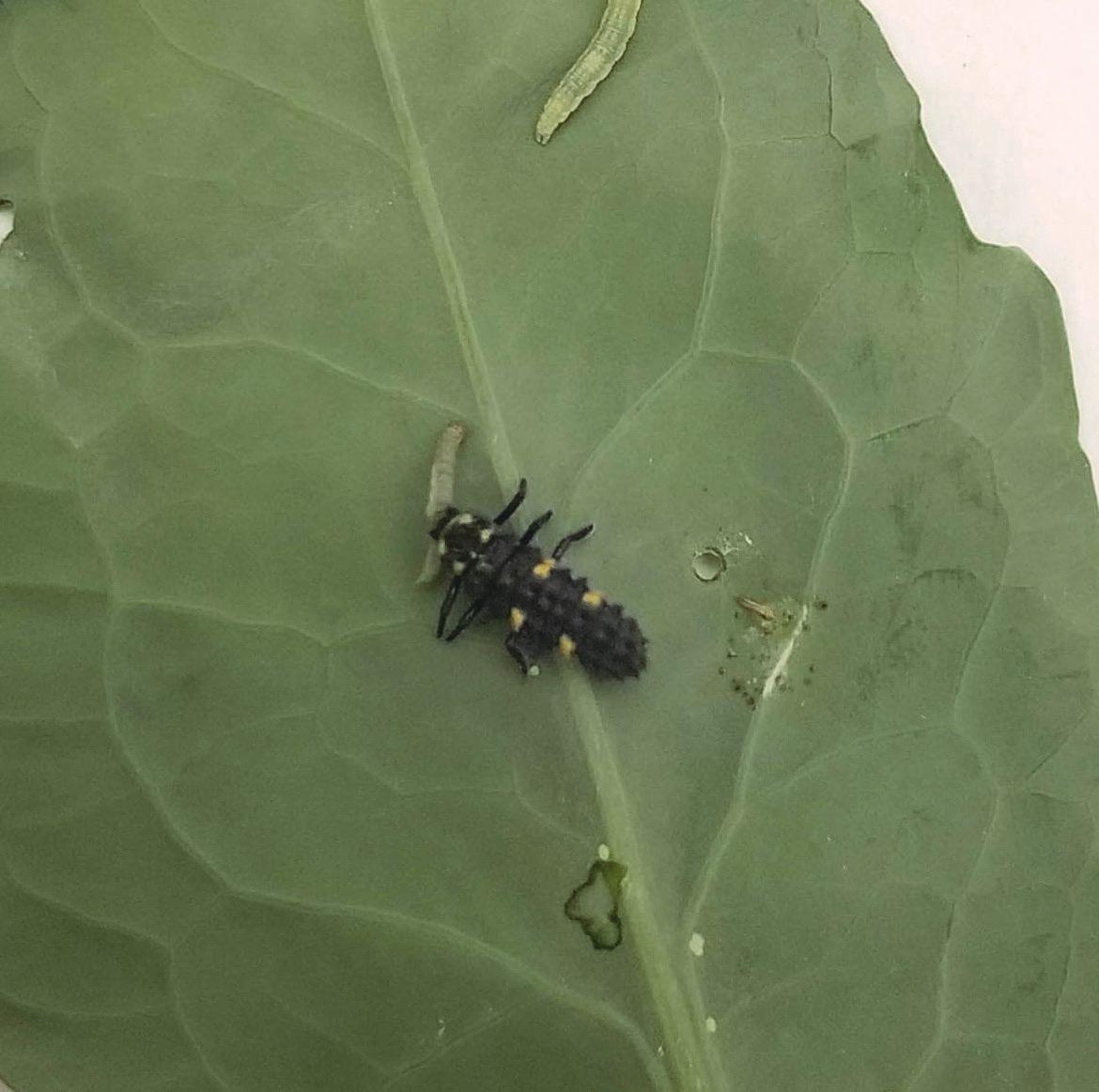
ladybird beetle larvae (fourth instar) consuming diamondback moth larvae on canola. PHOTO COURTESY OF OF SHARAVARI KULKARNI.
by Donna Fleury
Sclerotinia stem rot, caused by the pathogen Sclerotinia sclerotiorum, is one of the most destructive diseases of canola. The severity of sclerotinia stem rot is extremely variable from year to year, region to region and even from field to field depending on weather conditions, and can be challenging to manage. If warranted, timely chemical foliar fungicides can be used, but there are currently no resistant cultivars available. Researchers are developing and evaluating biopesticides as another control option for this disease.
“The S. sclerotiorum pathogen can cause disease on a wide range of over 400 plants and is a major economic problem worldwide,” says Susan Boyetchko, research scientist with Agriculture and Agri-Food Canada in Saskatoon. “This is a very successful pathogen and it is tricky to find the best way to control sclerotinia disease.
“In collaboration with other researchers, we have a five-year research project underway to screen and evaluate the biopesticide potential of selected bacterial strains and determine their ability to control disease development and growth of S. sclerotiorum in canola.”
Boyetchko’s research program focuses on biopesticides, which use living organisms and/or their natural products to biologically control weeds, plant diseases, and insect pests. They are environmentally friendly and contribute to the endurance and environmental performance of the ecosystem. In her lab, she has assembled a diverse cul-
ture collection of almost 3,000 bacterial strains, all selected from the Canadian Prairies. Through her program, she has successfully released a bioherbicide for grassy weeds and has recently developed a biopesticide to control late blight in potatoes, which is currently being commercialized by an industry partner. Sclerotinia stem rot is a new priority in her program.
“We have already identified a few bacterial isolates that are inhibiting sclerotinia in different ways,” Boyetchko explains. “This project is taking a multifaceted approach to test these promising bacterial strains to help explain how they can be responsible for biological control of sclerotinia in terms of microbial and plant genomic studies, as well as plant defence systems.
“We want to characterize the different bacterial strains of the biopesticide and look genetically at what causes the improvement of canola to sclerotinia. We also want to understand how a plant uses the biopesticide as a defense against the pathogen.”
Researchers have found that not all biopesticides have the same
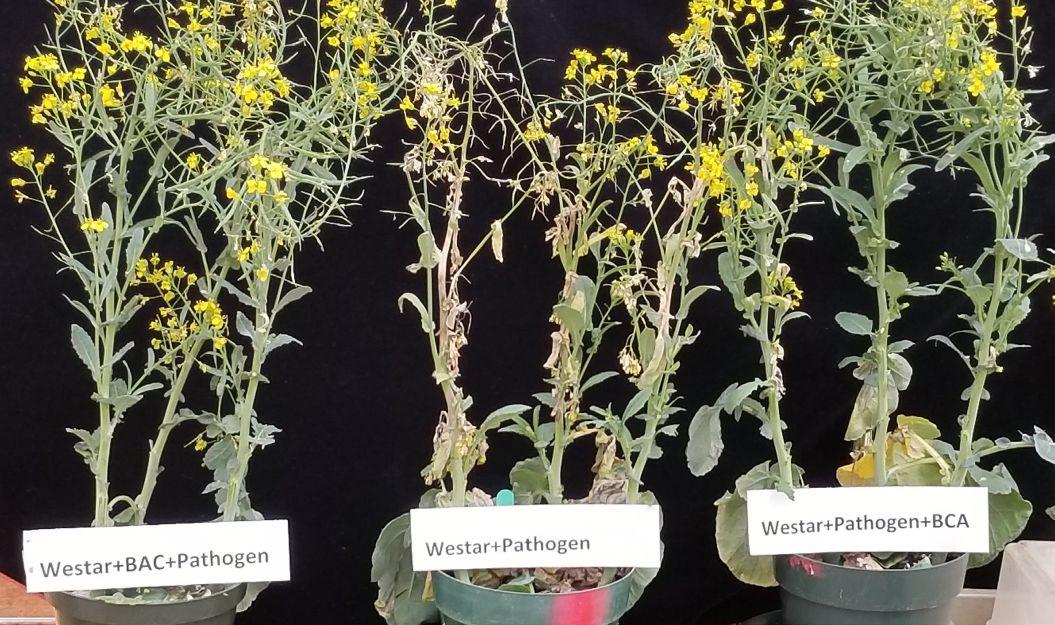
ABOVE: Three treatments compared in biopesticide evaluation trial: canola sprayed with the biopesticide 24 hours after the pathogen (sclerotinia) (left), canola sprayed with the pathogen alone (middle), and biopesticide sprayed 24 hours prior to the pathogen on canola (right).
modes of actions. One mode of action induces resistance by triggering a key enzyme or compound, such as protein or phytoalexins, which are antimicrobial and antioxidative substances. These are broad spectrum inhibitors and are chemically diverse, with different types characteristic of particular plant species. Similar to developing antibodies, plants are able to synthesize these compounds and rapidly accumulate them at areas of pathogen infection.
“Therefore, we want to understand if these selected bacterial strains behave differently in different parts of the S. sclerotiorum pathogen lifecycle and what their mode of action is,” she adds. “In particular, we are focusing our approach on the ascospores, or airborne sexual spores, that are the primary inoculum causing disease in the growing canola crop. Because they are airborne, ascospores can move in the wind for several kilometres and, under the right conditions, infect new and neighboring fields. Other previous research approaches have looked at controlling the overwintering sclerotia using soilborne strategies.”
In the first two years of the project, a few bacterial strains have been identified and evaluated. Boyetchko notes that much of the testing is being conducted in the lab and in greenhouses. In the trials, conditions are set for the sclerotinia pathogen to develop optimum inoculum levels, followed by biopesticide application under both good and harsh or stressful conditions to see how the biopesticide organism behaves. All of the bacterial strains in Boyetchko’s collection have been isolated from very cool Prairie conditions and are able to grow at 10 to 15 C or higher, and hopefully under any environmental conditions that are more optimal for biopesticides.
“We have selected and tested five bacterial strains to date as a foliar biopesticide application, and all were found to inhibit ascospore ger-
mination, mycelial growth and sclerotial formation of S. sclerotiorum,” Boyetchko explains. “In one trial, all plants sprayed with the bacterial strain PENSV20 in the presence of the pathogen had no symptoms of the disease, and plant defence genes were triggered when sprayed 24 hours before and 24 hours after the pathogen.
“We will continue the biopesticide evaluation research for the next three years of the project, with plans to move testing out of the greenhouse and into field trials in the final year. The next step for this study will be the development of a foliar-applied bacterial biopesticide to be used in integrated pest management.”
Boyetchko’s research team is following a biopesticides innovation roadmap they developed a few years ago. This is a step-by-step approach to evaluating and understanding both the biopesticide organisms and the pathogen.
“We don’t want to rush the process and we want to make sure we fully understand the potential of the biopesticide – how to best produce and formulate it, what the application requirements are and overall what is the best approach,” she says. “We want to make sure we understand the safety of all aspects of the biopesticide – to the crop, to the environment and to the growers – before we put it into growers’ hands. Similar to any new pesticide product, chemical or biological, this includes the product registration process under the Pest Management Regulatory Agency.
“Should we be successful in registering a new product and getting it into the integrated management toolbox, then we could look at potential label expansions and testing on other crops. We are ultimately looking for the best of the best, and hopefully in the future we’ll be able to commercialize a new biopesticide for sclerotinia in canola.”


Presenting clubroot distribution data in a more consistent and informative way to improve disease management.
by Donna Fleury
Clubroot in canola continues to spread across the Canadian Prairies, with its distribution and intensity across many areas of Alberta, and more recently in fields in Saskatchewan and Manitoba. Clubroot was first identified in Alberta canola fields in 2003. As of the end of 2019, more than 3,300 clubroot-infested fields have been confirmed in Western Canada, the majority of which are located in central Alberta.
Research, surveillance and monitoring data continue to be collected on this challenging and costly disease, but researchers and industry are still trying to determine the most effective way to present and utilize this data in management plans.
“We are working on a project funded by the canola grower associations across the Prairies to try to determine new ways to present clubroot distribution data,” explains Stephen Strelkov, professor of plant pathology at the University of Alberta. “It is important to understand not only the distribution of clubroot disease, but also to be able to track and monitor the disease severity and intensity across the growing areas.
“We also know that clubroot doesn’t stop at a county or provincial border, so finding a way to present the information more consistently will be helpful for managing the disease.”
The objective of this two-year project is to examine the feasibility of a harmonized clubroot map and to determine what such a map will look like. A number of different strategies are currently being used to present data on clubroot across Western Canada, which can be challenging and may cause confusion. Some maps present data on clubroot occurrence and distribution by showing field locations where diseased canola plants have been found, while other maps show soil testing results and spore density. Map colouring schemes can also vary across provinces, potentially causing confusion.
“We are exploring different ways to present the data in the clearest and most informative ways on the occurrence and distribution of clubroot, intensity, and also in formats that can show and track dynamic changes in the disease data over time,” Strelkov says. “For example, a map showing cases as discrete points at a highlevel scale can show disease occurrence. However, we also have to consider the sensitivity to the level of detail that is made available.
“Some maps show the location of fields with confirmed clubroot as one colour, while fields where clubroot was not found are shown as another. Other maps have been designed in which clubroot distribution is illustrated based on the total number of confirmed infestations in a municipality. A more recent map we
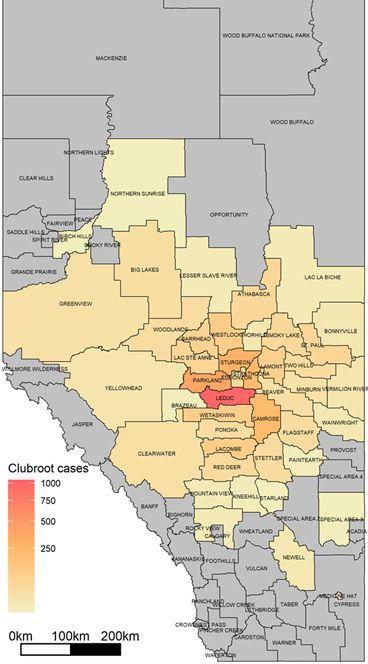
ABOVE: This variant of the Alberta clubroot map shows the number of confirmed cases across counties as a continuous gradient, with color becoming darker as cases increase. No clubroot has been confirmed in areas shown in grey.
developed expresses infestation as a percentage of total farmed acreage in a county or municipality in order to compare the degree of infestation across regions. Some maps use a scale or gradient for total number of fields or infestations, but the data can get blurred at county or provincial boundary changes, adding to confusion,” Strelkov explains.
“We aren’t sure which strategy is best, but a more consistent presentation and one that provides an easily interpreted scale or gradation would likely be more informative.”
Strelkov would also like to find ways to track over time how the disease and Plasmodiophora brassicae pathogen distribution may change. A map may be able to show the most common pathotypes in an area, and perhaps areas where new pathotypes are being confirmed. For example, pathotypes 3A, 3D and 3H are currently the most common and each could be highlighted with specific colours, while other rarer pathotypes could be identified as “other” with a different colour. This would provide a quick visual of the more common pathotypes in an area and an awareness of the distribution of other pathotypes or new pathotypes if they develop.
One of the tools to help with tracking the pathogen distribution is the Canadian Clubroot Differential (CCD) Set recently developed by Strelkov and his colleagues. The CCD Set represents an improved system for the identification of new virulence profiles of P. brassicae and their classification into pathotypes. The resulting CCD Set has a greater differentiating capacity than the systems that were previously in use, and has allowed the identification of many new pathotypes of P. brassicae that would have otherwise gone undetected.
From 2014 to 2016, for example, the virulence of 151 P. brassicae populations was tested on a suite of clubroot-resistant (CR) canola cultivars, representing one club from each field in which clubroot was found on a CR canola crop. Surveys conducted from 2014 to 2016 identified a total of 17 known pathotypes in Canada, including at least 11 of which can break resistance in CR canola (and five of which are the original “old” ones).
“We have shared preliminary results with the Clubroot Steering Committee and other stakeholders and are using their feedback to further refine the maps,” Strelkov says. “The maps will be developed for Western Canada as we move forward, but implementation may vary depending on stakeholder needs. We expect that a more standard way of reporting the range, severity and distribution will help in developing management strategies.
“Growers are encouraged to continue to use best practices, best cultivars and recommended rotations of at least two years of other crops between canola. Although clubroot resistance is still highly effective in the majority of fields, recent surveys show that there are more than 300 fields, nearly all in Alberta, where resistance issues have been observed,” Strelkov notes.
“Growers should continue to deploy resistant varieties and use resistance stewardship best practices as we try to balance clubroot resistance with evolving pathogen strains and virulence. This integrated approach, combined with a more consistent mapping strategy and dynamic disease and pathogen tracking methods, will help growers and industry implement a more sustainable clubroot management strategy.”

Understanding the contributions of natural enemies when determining pest density thresholds.
by Donna Fleury
Diamondback moth is a significant canola pest that can be a challenge to manage and control in outbreak years. It can cause heavy economic losses in years with higher infestations levels and has developed resistance to a variety of insecticides.
Natural predators and parasitoids are known to have a role in biological control, however their contributions are not fully understood. More detailed functional response studies are required to understand ways to strengthen biological control programs for pests like diamondback moth and better appreciate the contributions provided by natural enemies in canola agro-ecosystems.
Researchers at the University of Alberta initiated a project in 2018 to develop insights into biological control of diamondback moth. “We are conducting a series of laboratory and field studies to learn more about the various natural pests providing biological control of canola,” explains Sharavari Kulkarni, postdoctoral fellow in biological sciences at the University of Alberta in Maya Evenden’s lab. “The objective of this project is to quantify the rates of predation or parasitism of the major natural enemies of diamondback moth.
“Our main objective is to estimate functional responses of the
major natural enemies and to calculate their feeding potential on various life stages of diamondback moth to understand the contribution of the ‘free’ biological control service they provide. This information will help us develop an economic threshold for diamondback moth, including the contribution of natural enemies.”
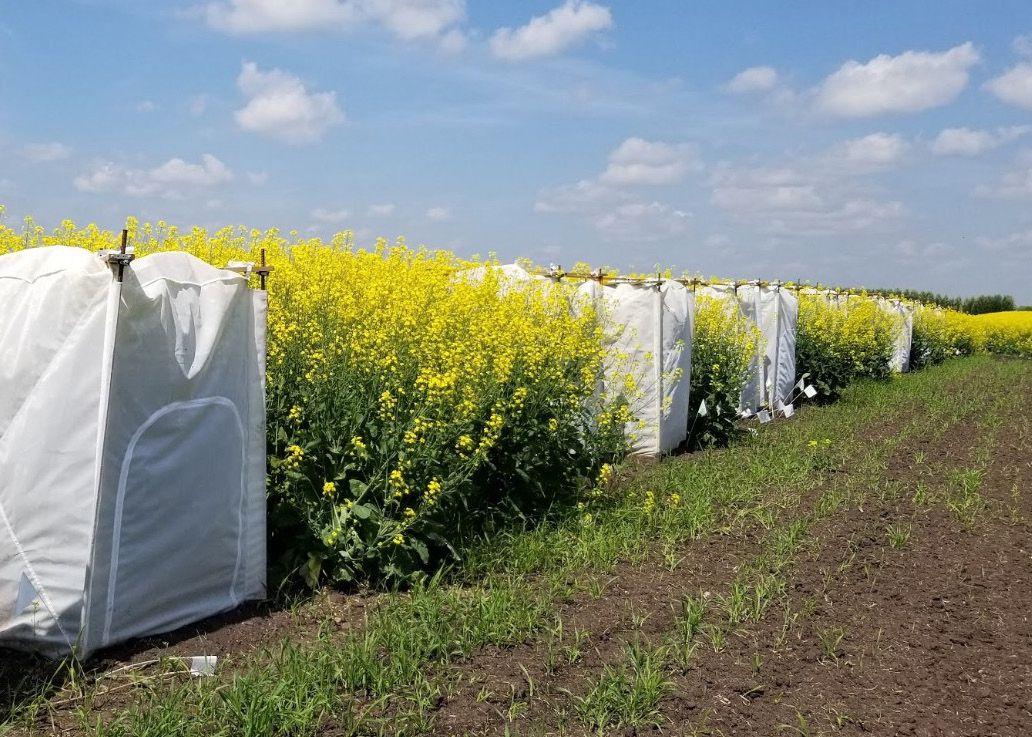
Kulkarni is conducting cage studies in the field in St. Albert, which includes rearing diamondback larvae in the lab and then adding different densities of larvae per plant at different crop stages to simulate various larval densities on canola plants within cages. At each stage, plant growth, larval damage and crop yield are measured and compared.
A second component of the study is focused specifically on different predators and parasitoids to diamondback moth larvae, to quantify their predation/parasitism and functional responses. The study includes important parasitoid species and generalist predators, such as the seven-spotted ladybird beetle ( Coccinella septumpunctata), carabid beetles, damsel bugs and spiders, and
ABOVE: Field cage studies in St. Albert, Alta., quantify the various natural pests providing biological control of diamondback moth larvae in canola.
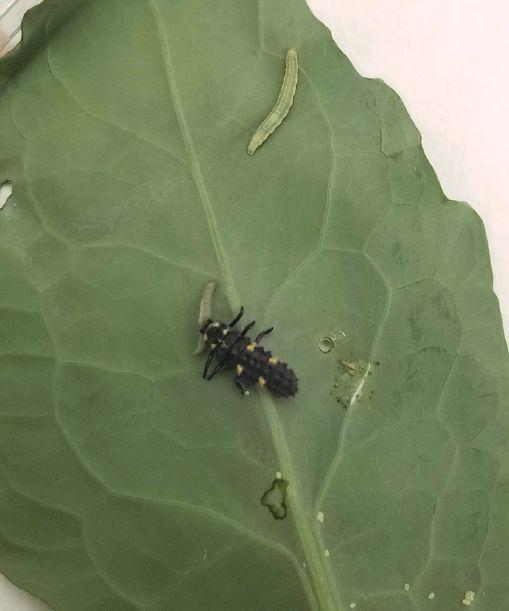
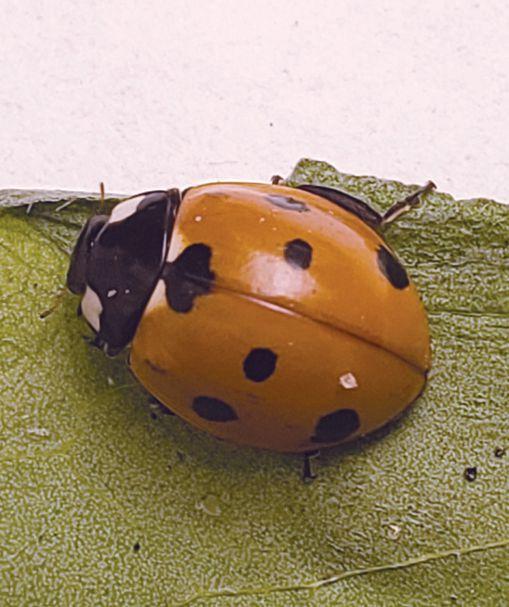
their effects on diamondback moth larvae at different stages.
“The diamondback moth larvae and natural enemies were collected in the field, and then brought back to the laboratory to conduct the larval predation studies,” Kulkarni says. “Because diamondback moth is not always present in the Edmonton area, we started our collections in the Lethbridge area, although diamondback moth populations were low in the first two years of this study.
“We also collected natural predators at the University of Alberta’s south campus research farm and in nearby canola fields. Generalist predators, including ladybird beetles, carabid beetles, damsel bugs and spiders, were collected using pitfall traps or sweep nets in canola fields. Ground beetles are hard to rear in the lab, so our studies were conducted on field-collected populations. For the ladybird beetles, studies were conducted on field-collected populations as well as a colony raised in the laboratory. This allowed us to evaluate the contributions of ladybird beetle adults as well as larval stages on predation, which is often neglected.”
Preliminary study results from the first two years show some promise. Early indications are that an adult carabid beetle will consume up to 25 diamondback moth larvae per day. Although ground beetles are generalists and will eat both eggs and larvae, given a choice they prefer larvae. Similarly, adult seven-spotted ladybird beetles also consumed 20 larvae per day. However, early results also showed that the predation preference based on the pest stage of diamondback moth larvae, which has four larval instar stages, ranged from eggs to fourth instar larvae and changed for each predator species.
“We found that ladybird beetle adults are not that specific and will consume both eggs and larvae; however, the ladybird beetle larvae prefer second instar diamondback moth larvae,” Kulkarni
notes. “We did not study each of the four instars of ladybird beetle larvae, only the final fourth instar stage, when larvae are bigger and do the most predation.
“Because diamondback moth lays its eggs on the leaves, the ladybird beetles are a more relevant natural predator than ground beetles, since they are more mobile. However, ground beetles will readily consume any larvae or eggs that fall to the ground due to rainfall or wind, also reducing overall pest populations. We are measuring the impact these natural enemies make in the lab trials, and at the end of the project we will estimate how much impact overall these natural enemies can make.”
The project will continue for another year, with a field cage study planned for the 2020 crop year near St. Albert. The predator studies will continue in the greenhouse and growth chamber labs at the University of Alberta. The yield assessment is in progress and future work will build on laboratory and field studies to develop functional response models.
“We are very interested in the results so far that show the high numbers of larvae consumed by individuals of different predatory species,” Kulkarni adds. “This underlines the importance of biological control in pest management and the need to consider their contributions in developing action thresholds.
“At the end of the study, we plan to calculate economic threshold levels for diamondback larvae based on the results from the field cage studies. This information can be used to develop future ‘dynamic action thresholds,’ which factor in the mortality caused by natural enemies in developing pest density thresholds to guide pest management decisions.”
The project is expected to wrap up in March 2021. This project is sponsored by the Canola Agronomic Research Program, administered by Canola Council of Canada.
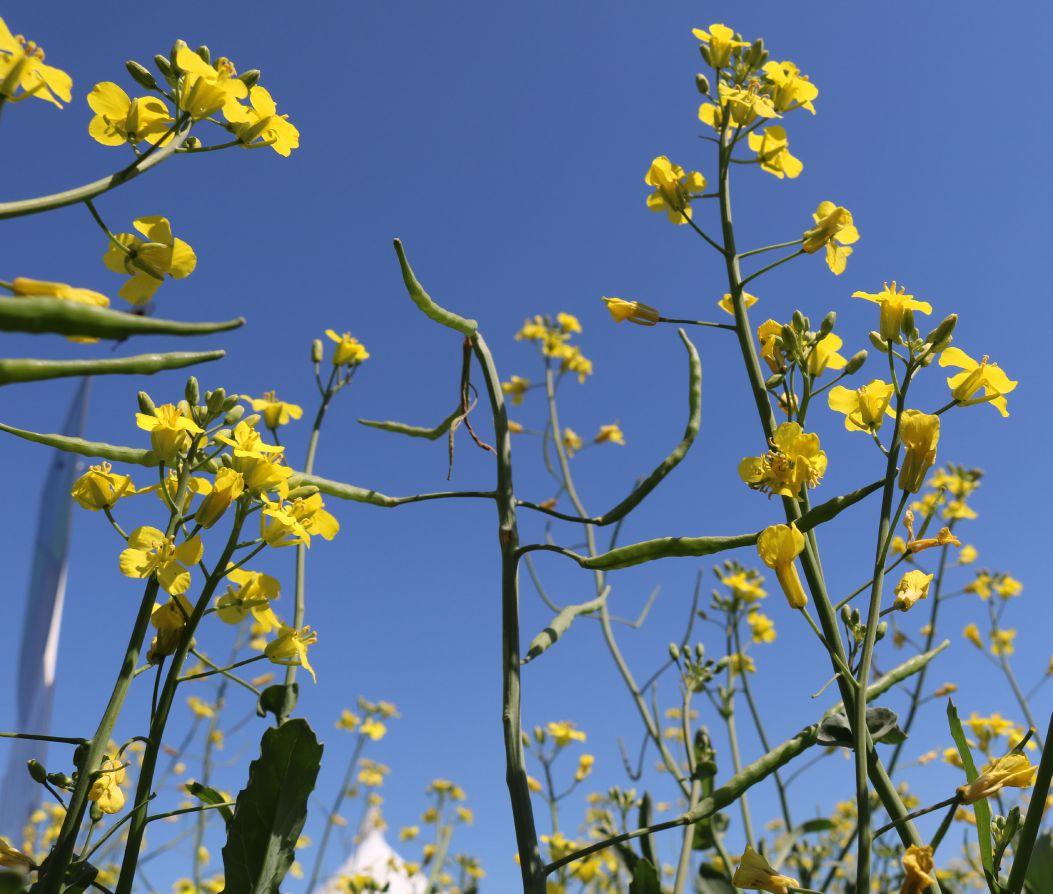
New blackleg research efforts aim to give R genes greater longevity.
by Julienne Isaacs
Blackleg incidence is on a slow but apparently stable increase on the Prairies, based on Agriculture and AgriFood Canada’s (AAFC) provincial canola disease surveys, says AAFC research scientist Gary Peng.
“The disease started creeping up around 2010 and we were expecting the trend would be a continuous increase. But in the last four or five years it seems to be in a bit of a stable trend, rather than shooting up,” Peng says.
But new research shows that shortening rotations and overreliance on the same resistance (R) genes have put heavy selection pressure on blackleg pathogen populations in Western Canada, which means R gene rotation may be essential to keep blackleg to manageable levels.
Blackleg is caused by the fungal pathogen Leptosphaeria macu-
lans. Race-specific resistance genes against L. maculans populations have been available in commercial cultivars since the 1990s.
After blackleg resistance breakdown was noted in the late 90s, a concerted effort by the western Canadian research community resulted in characterization of the R genes in Canadian canola germplasm and cultivars, explains Dilantha Fernando, a professor in the University of Manitoba’s department of plant sciences. At the same time, another project helped characterize the L. maculans pathogen avirulence (Avr) population.
The research showed that most Canadian cultivars contain the single resistance gene Rlm3, Fernando says. By 2017, the Western
ABOVE: Years of selection in the canola breeding effort have resulted in strong background, or quantitative, resistance in most varieties.
Canada Canola/Rapeseed Recommending Committee (WCC/RRC) was recommending the use of R-gene labelling so producers could find out which resistance genes were at play in which cultivars – and so they could select the right seed for their fields.
“Now, the growers have more authority and the opportunity to make a more informed decision if they grew Rlm3 last time,” Fernando says. “This allows the pathogen to depressurize.”
Contrary to some expectations, Rlm3 is still useful and should be retained in breeders’ arsenal, Fernando says.
Virulence sometimes comes with a fitness cost for the pathogen, Fernando explains, so the pathogen actually “wants” to revert to its avirulent form – it just needs a break to do so. “Basically, when you remove the Rlm3 gene from the field for a few years, the Avrlm3 isolate population increases. Now you can bring it back once again, this time with the knowledge that you can’t grow it year-on-year,” he says.
Researchers are on the hunt for new and novel resistance genes, however, to increase breeders’ arsenal. Fernando is the lead on a project that began in 2017 to look for novel resistance genes that haven’t previously been used in canola breeding programs.
It’s a lengthy process to then bring those novel R genes into new cultivars, Fernando says, because blackleg resistance is just one trait of the many that are already built into existing germplasm. “Yield, oil content, protein – when a company has all these goodies in one basket, they need to still bring the new gene into that background,” he says.
Other resistance genes, such as Rlm7, have been used in other countries’ breeding programs, Fernando says; Canadian companies simply have to do the work to breed them into varieties here. He adds that genes Rlm4, Rlm S and LepR3 are already available to Canadian canola growers through seed companies, and Rlm2, Rlm5 and Rlm6 are currently being incorporated into commercial varieties in Canada.
In some senses the fight against blackleg is global, and collaboration can speed breeding efforts. The Canola Council of Canada (CCC) has funded the Canadian

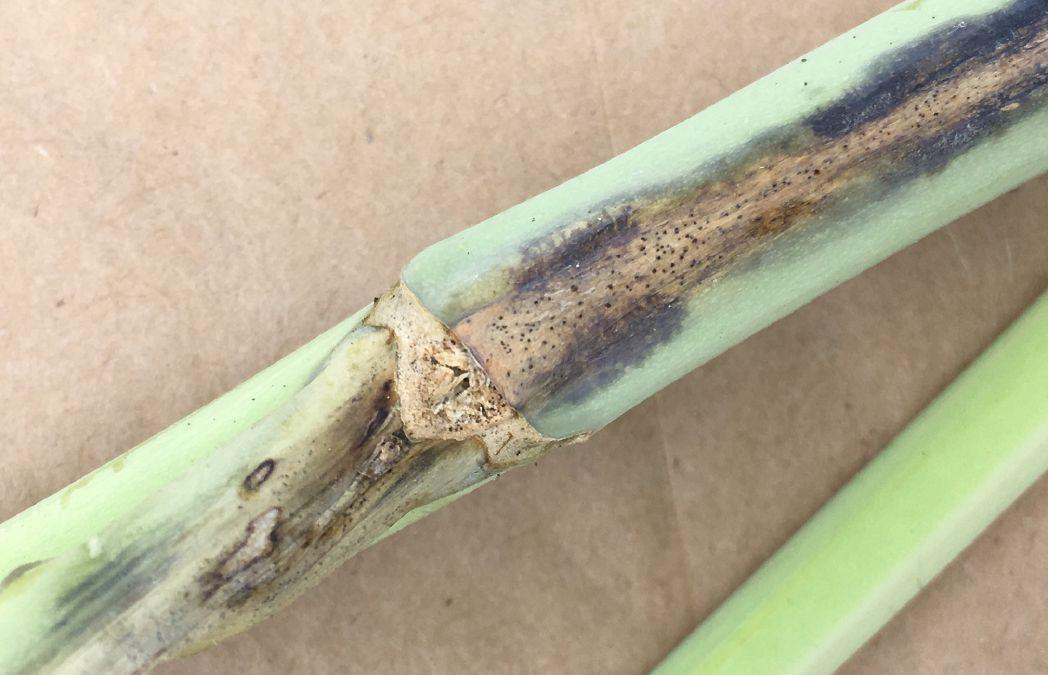
Initially, Peng says, researchers believed rising blackleg incidence to be a classic case of resistance breakdown, but now they believe the situation is a little more complicated than that.
chapter of a collaborative project between Australia, Canada, the U.S., France, the U.K. and Germany to identify and characterize single R genes as well as isolates that carry single Avr genes. Once each country completes the work, the information will be pooled to ensure consensus in R gene-naming and to make breeding efforts easier for the entire industry.
Gary Peng says his lab’s blackleg research efforts are focused in two main areas: monitoring pathogen races on the Prairies and investigating the role of quantitative, or background, resistance.
“Quantitative resistance potentially has quite different and complementary mechanisms to specific resistance genes,” he explains.
Initially, Peng says, researchers believed rising blackleg incidence to be a classic case of resistance breakdown, but now they believe the situation is a little more complicated than that. Years of selection in the canola breeding effort have resulted in strong background, or quantitative, resistance in most varieties, he says, which means varieties have some tolerance to the disease in many cases.
“What we found is that the quantitative resistance is closely related to the speed of pathogen movement and increase in the canola tissue,” he says. “The more the pathogen can grow or the more rapidly it can move, a lower level of quantitative resistance exists in the germplasm.” Increased levels of quantitative resistance
will also reduce pathogen inoculum in a field. Peng’s lab is attempting to use droplet digital PCR to quantify the background resistance of breeding lines before heading to field trials, hopefully making the process considerably more efficient.
Fernando is currently heading another major project in collaboration with Peng and InnoTech Alberta’s Ralph Lange that will work directly with farmers to look at how R gene rotation can work in farmers’ favour.
Twenty to 25 farmers in each of the Prairie provinces volunteered for the project, which began in 2018 and will run until 2023. The farmers are not being asked to change management practices; instead, researchers, led by Fernando’s master’s student and CCC agronomist Justine Cornelson, will simply note their R gene selections and collect data on pathogen race background and agronomic practices.
In additional study locations, the researchers will decide which R genes are planted and which genes will be “stacked,” determining whether stacking genes prolongs resistance or leads to quicker resistance breakdown due to the presence of pathogen “super races.”
Researchers will also investigate whether agronomic practices have any bearing on blackleg severity, Fernando says. “We’ll have a variety of rotations to study and look at what is happening in real field situations.”
Peng and Fernando are also working with seed companies to develop seed treatments that will protect canola seedlings against early infection. Tied to this work is an ongoing investigation into spray timing windows, as well as a project led by Peng that will look at whether flea beetle damage makes blackleg infection more probable.

Sustainable organic crop production alternatives for disease control.
by Donna Fleury
Under the right conditions, Fusarium head blight (FHB) can be a serious problem in cereal crops, reducing germination, seedling vigour and grain yield, and causing quality downgrading and accumulation of mycotoxins. The pathogens can produce deoxynivalenol (DON) and other mycotoxins in grains, reducing feed consumption and weight gain by livestock, degrading baking quality of flour, and causing food safety concerns.
“FHB is part of a disease complex and there are several different Fusarium spp. that can cause FHB, as well as root and crown rot in cereal and non-cereal crops,” explains Myriam Fernandez, research scientist with Agriculture and Agri-Food Canada
(AAFC) and Organic Research Program lead at the Swift Current Research and Development Centre in Saskatchewan.
“This disease complex varies with different types of crops, and the composition of fungal species also differs under organic cropping systems. Although generally it was thought that FHB would be present at higher levels under organic production because fungicides are not used, various research projects in Europe conclud-
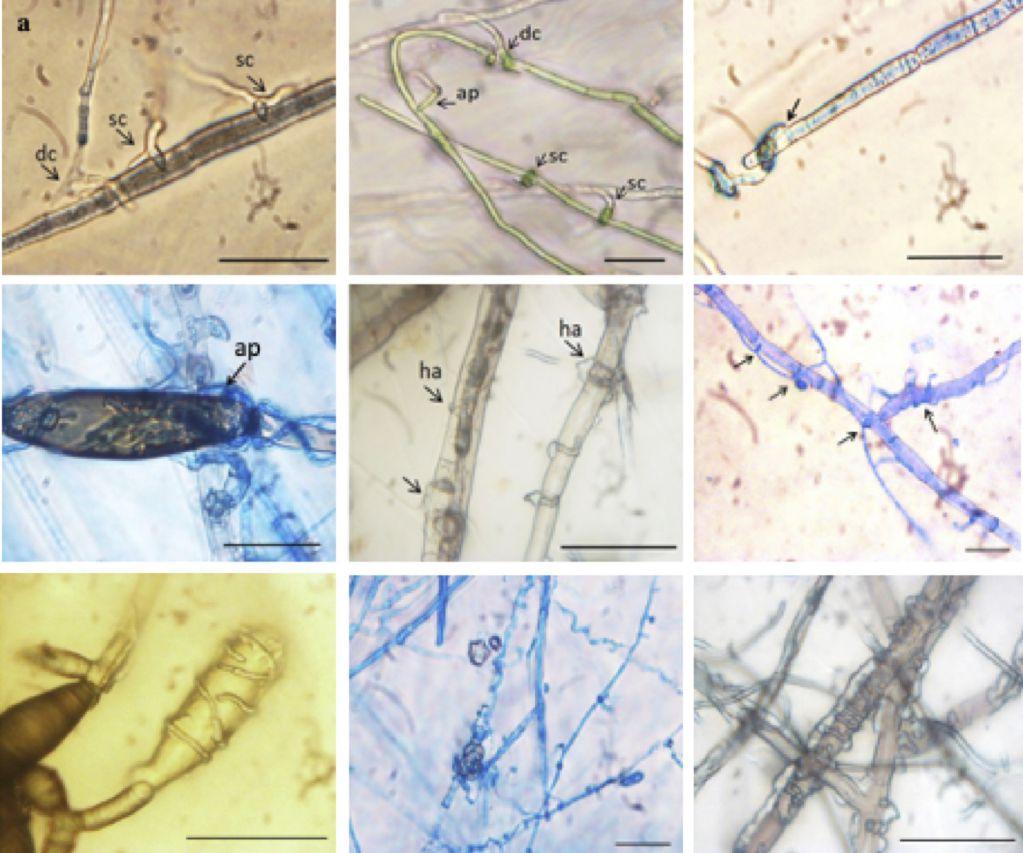
ABOVE: Microscopic observations of different attachment structures and coiling of biotrophic mycoparasites on their host target fungi in dual culture test. (a, b, c) Fusarium avenaceum (d, e, f, i) Cochliobolus sativus and (h) F. equiseti. All bar scales were 100 micrometre.
ed that in most cases it was the other way around. FHB levels in organic crops were lower than conventional in different cereal crops.”
Fernandez continues, “We launched a project in 2017 to look at the association between FHB levels and pathogens involved under different agronomic practices, including the potential of FHB development after a legume green manure, which is a common organic cropping practice.” AAFC collaborators in the FHB study are Allen Xue and Barbara Blackwell from the Ottawa Research and Development Centre.
To better understand the Fusarium disease complex, Fernandez outlines the various Fusarium pathogens that are most commonly found in Western Canada. The species that can cause FHB differ in their host ranges, mycotoxin profiles and climatic preferences, among other factors. The main FHB pathogen in the most affected regions, Fusarium graminearum, can produce DON, the most widespread mycotoxin associated with FHB in cereals. F. culmorum can also produce DON in cereals, particularly in oat.
Another common FHB pathogen, F. avenaceum, generally causes less visual damage on heads and kernels than F. graminearum and does not produce DON, but does produce other harmful mycotoxins. F. avenaceum has a wide host range and is the most common species in roots and crowns of cereals and their residues, as well as the highest levels in non-cereal roots and crop residues, particularly pulses. In pulses, root rot is most commonly associated with F. acuminatum, F. avenaceum, F. oxysporum, and F. solani. Inoculum from roots and crowns infected with Fusarium species can cause FHB to develop in those crops or subsequent crops in rotation under the right environmental conditions.
“Leading up to our project, the growing conditions prior to and in 2016 were quite wet and FHB levels were quite high in many areas,” Fernandez says. “Although FHB levels were lower in organic crops, the 2016 Saskatchewan Crop Insurance data indicated that some organic fields did have high levels of FHB in various cereal crops, including Kamut, durum wheat, Canada Prairie Spring wheat, hard red spring wheat, barley, as well as in oat.
“As well, disease surveys and other research in 2016 also found high levels of root rot in pea and lentil crops, caused mainly by Fusarium spp. Although the conditions in 2017 were drier, the levels of Fusarium root rot in pea and lentil crops were higher than expected, and might have resulted from good subsoil moisture reserves, and ample amounts of pathogen inoculum derived from the 2016 infections.”
Fernandez adds, “The high levels of inoculum were very concerning, as organic producers tend to rely on legume green manures in rotation for nitrogen, which may not be sustainable over the long run due to the increasing Fusarium disease complex.”
Although growing conditions were overall quite dry when the project was initiated in 2017, and also in 2018 and 2019, and levels of FHB have been low, the inoculum
Another component of a larger study investigating Fusarium head blight (FHB) and root rot in organic cereal crops is a series of trials evaluating potential biocontrol agents to suppress Fusarium spp. The main objective of the project is to determine the potential of biocontrol agents to combat root rot and kernel pathogens, and maximize crop productivity and quality in organic cereal rotation systems.
“Thus far we have identified three biocontrol agents that have very good pathogen suppression ability in the lab, and are now in the process of testing others,” says Myriam Fernandez, research scientist with Agriculture and Agri-Food Canada (AAFC) and Organic Research Program lead at the Swift Current Research and Development Centre in Saskatchewan. “So far, the potential biocontrol agents were tested in vitro against several target fungi, including F. acuminatum, F. avenaceum, F. equiseti, F. graminearum and Cochliobolus sativus
“F. avenaceum and F. graminearum are among the main pathogens causing FHB in Western Canada, and F. avenaceum is among the main pathogens responsible for root and crown rot of cereals, and F. avenaceum in pulse and oilseed crops. C. sativus appears to be more prevalent than Fusarium spp. in roots and crowns, given that the latter species are generally present at lower levels under organic than nonorganic management.”
Fernandez notes that one of the biocontrol agents isolated is actually a different species of the same genus discovered and registered by her colleague and AAFC research scientist Allen Xue in Ottawa. He discovered a mycoparasite fungus isolated from field pea leaves in Manitoba, Clonostachys rosea strain ACM 941, which provides protection against a number of plant pathogens including F. graminearum. AAFC completed a licensing agreement in 2014 and commercialization efforts of this biocontrol product for FHB are moving forward with industry.
“In our project in the lab, two types of in vitro inhibition assays were conducted to investigate the ability of the biocontrol agents to suppress the growth of the target fungi and to produce metabolites with antifungal properties,” Fernandez explains. “The in vitro dual assay showed that the biocontrol agents were able to inhibit the mycelial growth of most of the target fungi, and that they acted as mycoparasites establishing an aggressive relationship toward their hosts. Within 10 days of incubation, the biocontrol agents started to damage the host cells.”
In another in vitro assay, the results showed that metabolites of the biocontrol agents were capable of inhibiting the growth of some of the target fungi. Researchers observed that one of the greatest adverse effects of one of the biocontrol agents was against C. sativus, which inhibited growth of this pathogen by 62.3 per cent compared to the control.
Fernandez adds that they also tested the biocontrol agents already identified and tested in vitro in growth chamber trials, confirming their suppression ability against Fusarium spp.“These trials involved inoculation of roots/crowns of wheat plants and of crop residues with the biocontrol agents and the main pathogens responsible for FHB and root/crown rot in Western Canada.
“Two of the most promising biocontrol agents have been selected and will be tested under field conditions in 2020. Hopefully we will be able to confirm their suppression activity in the field. If successful, this would then allow us to move forward on steps to commercialization of a biocontrol for Fusarium pathogens for organic and conventional growers in the future.”
This biocontrol study is being funded by PHS Organics, SaskWheat, Alberta Wheat Commission and AAFC through the Organic Science Cluster III. AAFC collaborators in this project are Lobna Abdellatif and Prabhath Lokuruge from the Swift Current Research and Development Centre.
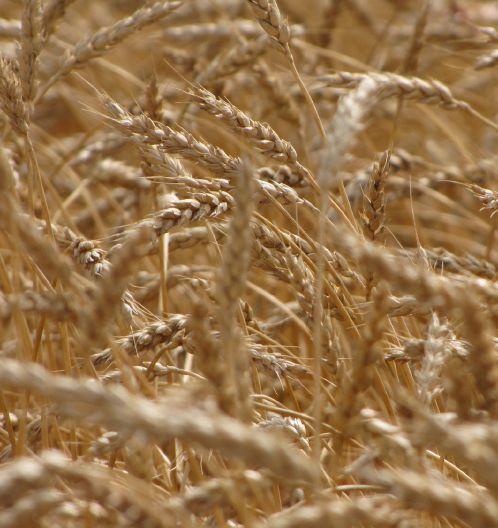
is still present and under the right conditions could increase disease risk.
“We continue to work on collecting grain samples of wheat and Kamut from areas in 2019 that received higher levels of precipitation and continue to welcome samples from organic growers,” Fernandez notes. “In return, fungal and mycotoxin analyses will be provided to those growers free of charge.”
Please contact Fernandez if you could provide grain samples for this project. This study is being funded by PHS Organics, SaskWheat, Alberta Wheat and AAFC through the Organic Science Cluster III.
“Our preliminary results, along with some other previous projects or projects underway, have helped to provide some information for organic growers to consider for managing FHB,” Fernandez explains. “Our studies on Fusarium populations in roots and crowns in non-organic compared to organic cereals showed similar results to the European studies.
“Some of the agronomic factors that help reduce Fusarium infections in cereals in most non-organic systems, such as less no-till, no synthetic inputs, lower N availability and fewer cereal-intense rotations, characterize organic cereal production and may be why FHB disease levels tend to be lower in organic cereals.”
Results from various projects show that crop rotations and crop diversity, including intercropping and cover cropping strategies, are better for disease control for Fusarium and other diseases. To control FHB caused by F. graminearum in non-organic systems, avoid growing wheat after another cereal, including barley and oat, or especially corn. A rotation with non-cereal crops for at least two years allows for decomposition of infected residues, likely reducing the inoculum of F. graminearum
However, a rotation with non-cereals, especially pulse crops, would not work for reducing levels of F. avenaceum. Although infections of F. avenaceum and F. culmorum in roots and crowns of wheat were reduced in organic systems, even when wheat followed a pulse, the prevalence of F. equiseti, a common saprophyte/weak pathogen, and of the “common root rot” pathogen (Cochliobolus sativus) increased in roots/crowns of wheat.
Cultivar selection is also very important, and under organic con-
ditions growers should avoid growing cultivars with high susceptibility to common root rot due to the expected presence of disease in most fields and environments. A previous three-year study under organic production showed that C. sativus was less common in Kamut than in durum and spelt wheat, and it was more frequently isolated from durum than common wheat.
However, there were few differences in Fusarium spp. among wheat species, with at least 12 different Fusarium spp. detected on average, with the most common being F. equiseti, F. avenaceum, F. acuminatum and F. oxysporum. For FHB, there are several varieties of hard red spring wheat with moderately resistant ratings, however durum and Kamut are susceptible with little resistance available so far.
“We have some other projects underway comparing strategies that may help manage Fusarium and other diseases in organic crops, including options for replacing single legume green manures,” Fernandez says. “One of the projects is comparing mixes with several crop species, such as Brassicas, grasses and legumes, with monocrops.
“The mixtures are showing some positive results in controlling disease. Brassicas in particular are well known for producing allelopathic compounds that can inhibit plant pathogens, such as Fusarium spp. and Aphanomyces spp., as well as providing weed control and other benefits. Similar to the cover cropping trials, intercrops including lentil and pea grown with other crops like a Brassica or oat, also appear to have lower levels of root rot than monocrops,” Fernandez continues.
“We are also looking at the use of legume living mulches, such as growing crimson and other clovers with oat or wheat, as another strategy to increase crop production and control diseases.”
One of the more interesting observations has been with oat in the various organic trials that Fernandez is continuing to study in ongoing and new projects.
“As we were pulling together the data from the intercropping and cover cropping trials under organic production, we started to see that growing oat (AAC Oravena) may be as good for the soil and the growth of the subsequent cash crop as a legume green manure or a pulse crop,” Fernandez adds.
“However, it isn’t entirely clear why we are seeing these results, so new projects have been launched with funding from the Western Grains Research Foundation (WGRF) and the Prairie Oat Growers Association to better understand alternative practices, such as intercropping and living mulch, in addition to cover cropping. This is the focus of an ongoing study being funded by WGRF and AAFC through the Organic Science Cluster III that may help decrease Fusarium and Aphanomyces root rot diseases and provide more sustainable organic crop production alternatives.”
Fernandez adds, further insights in this regard will be obtained as they finish the analysis of more data while wrapping up an intercropping project funded by WGRF, SaskWheat and SaskPulse that is coming to an end this year. AAFC collaborators in the cover crop and intercropping studies are Prabhath Lokuruge, Mike Schellenberg and Lobna Abdellatif from the Swift Current Research and Development Centre, and Julia Leeson from the Saskatoon Research and Development Centre.
To read more about the latest in organic cereal crop research, visit topcropmanager.com.
Lots of insects show up to the dining table, but only two main culprits take the cake.

By Jennifer Bogdan
Five-year olds may turn up their noses at the sight of quinoa on their dinner plates, but for creatures with six legs and a hardy set of mandibles, quinoa is the cream of the crops.
While traditionally grown in South America, quinoa (Chenopodium quinoa) has expanded its presence in the Prairie provinces since it was first grown in Saskatchewan in the early nineties. Recognized as a pseudo-cereal (a non-grass plant that can be used as a cereal), quinoa is increasingly consumed for its high protein and mineral content, as well as its gluten-free and antioxidant properties. The Prairies now produce more quinoa than anywhere else in North America, with approximately 13,000 acres contracted for 2020.
One of the challenges that growers started experiencing in 2016 and 2017 was extensive unidentified insect damage in the new fields of quinoa now dotting the landscape. Boyd Mori, assistant professor of agricultural and ecological entomology at the University of Alberta, led the first study to investigate and develop monitoring tools for insect pests of quinoa on the Prairies.
“As quinoa is a relatively new crop to Western Canada, little information was known on the insects that attack it. Determining the life cycle and damage caused by insect pests were the first steps in creating an integrated pest management (IPM) program for quinoa growers,” Mori says.
For this study, Mori collaborated with the Farm Services team at NorQuin, including Marc Vincent, Kaila Hamilton and Derek Flad, as well as Tyler Wist, research scientist with Agriculture and Agri-Food Canada in Saskatoon, and Kirk Hillier, professor of chemical ecology at Acadia University in Nova Scotia. The research took place during the 2018 and 2019 growing seasons at four research sites and eight to 10 commercial quinoa fields in Saskatchewan.
Table for 18, with two VIPs (Very Important Pests)
In total, 18 insect species have been identified as pests of quinoa. Of greatest concern are the goosefoot groundling moth (Scrobipalpa atriplicella) and the stem-boring fly Amauromyza karli, which together can cause upwards of 100 per cent yield loss in severely infested stands.
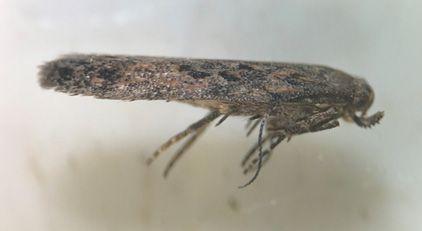
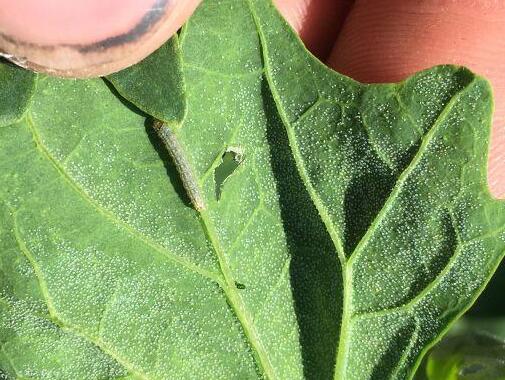
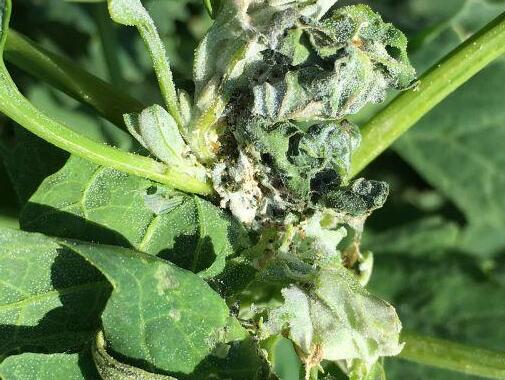
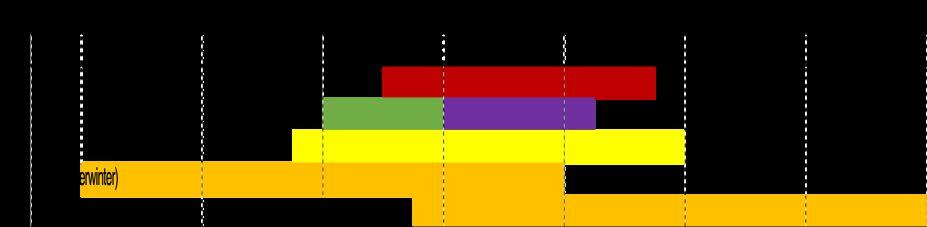
The goosefoot groundling moth is a species introduced to North America that is now widespread. Its other host plants include lamb’s quarters (Chenopodium album), sugar beet, and saltbush or orache (Atriplex spp.), all of which belong to the same Amaranth family as quinoa. The researchers discovered that goosefoot groundling moth has two generations in Saskatchewan (Figure 1). The small, browngrey adult moths appear in mid-May and lay eggs on quinoa plants (Figure 2). The first-generation larvae initially mine through leaves but later larval stages migrate to the growing points, where they web leaves together and feed on the developing panicles (Figures 3 and 4). The second-generation larvae appear in early August and continue to feed on the panicles. It is suspected that full-grown larvae then drop to the soil to pupate over the winter.
The other main insect pest of quinoa is stem-boring fly (A. karli),
TOP: Figure 1: Estimated phenological development of the various goosefoot groundling moth (S.atriplicella) life stages based off emergence cage, plant and sweep net samples conducted at four experimental plots and several commercial quinoa fields throughout Saskatchewan. The length of the pupal and egg stages are estimates, as no pupae or eggs were found in samples collected from the field. Purple bars indicate extensions of the particular life stages based on 2019 observations. ABOVE: Figure 2: Goosefoot groundling moth adult.
Estimated phenological development of the various stem-boring fly (A. karli) life stages based off yellow sticky card, plant and sweep net samples conducted at 4 experimental plots and several commercial quinoa fields throughout Saskatchewan. Purple represents the 2019 extension of the egg-laying period by five weeks into the first week of August.
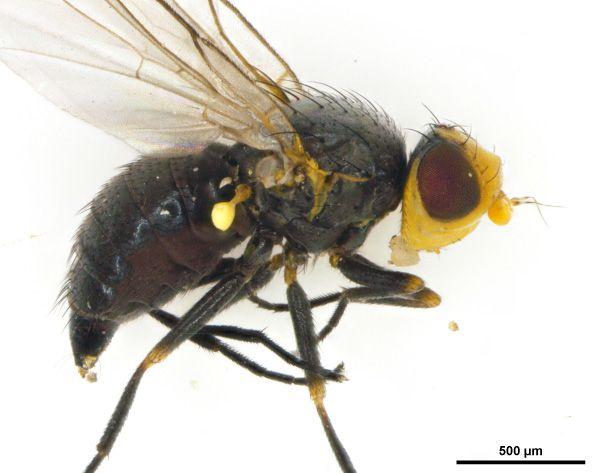
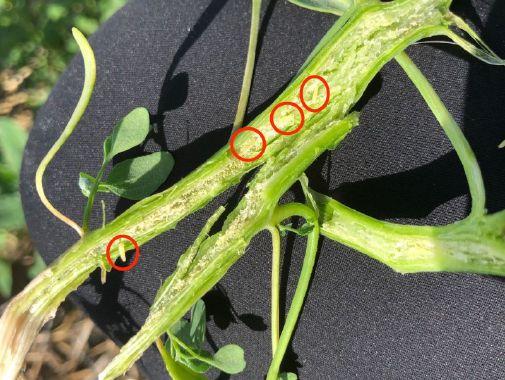
part of a family of flies whose larvae are leaf miners. One prolonged generation is produced in Saskatchewan each year (Figure 5). Adult flies are present from late May to the end of August (Figures 6 and 7). Small larvae hatch from eggs, then enter the leaves where they feed between the upper and lower cell layers of the leaf, creating visible “mines.” Eventually, the larvae mine their way down the petiole of the leaf and into the main stem, where feeding reduces the flow of water and nutrients to the developing seeds, and also makes the plants more susceptible to lodging (Figure 8).
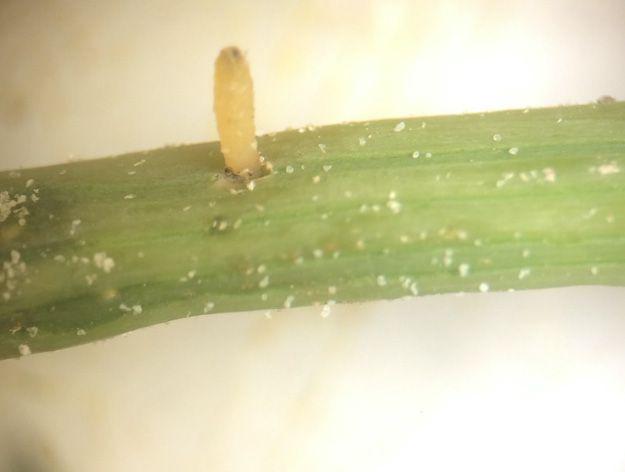
Early stem feeding (i.e. at the four- to six-leaf stages) will cause extensive damage, whereas later stem feeding (at panicle emergence) is much less severe and plants will still be able to set seed. Mature larvae chew their way out through the stems, producing characteristic
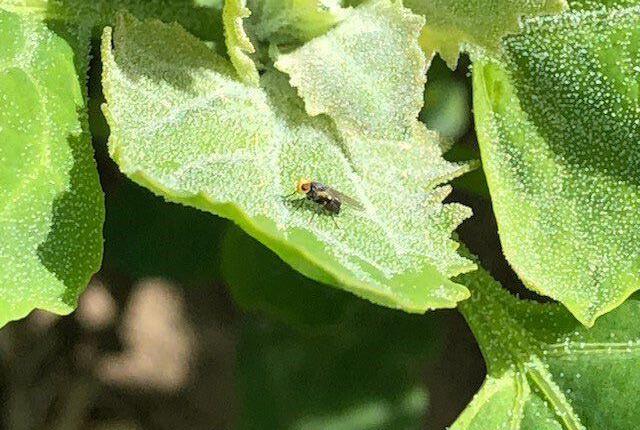
“pin-holes” through which they exit and drop to the soil to pupate for the winter (Figure 9).
Cutworms and flea beetles can also severely reduce quinoa plant stands. In addition, a complex of plant bugs can cause feeding damage due to their piercing-sucking mouthparts, although their impact on yield is unknown at this point (Figure 10). Later in the season, Bertha armyworm can cause economic damage to the panicles; Bertha armyworm larvae have been observed moving from canola fields into adjacent quinoa fields.
Scouting is a critical part of a well-balanced IPM diet
NorQuin agronomists strongly recommend that growers adopt a set scouting schedule to assess insect numbers in their quinoa fields.
“Someone should be in the field every two to three days to monitor pest pressure. While the agronomics and economics of this crop are attractive to skilled growers in Western Canada, quinoa is still a specialty crop that requires specialty attention,” they say.
The research project has led to the development of a pheromone monitoring tool for goosefoot groundling moth that will help determine population densities. For the stem-boring fly, yellow sticky cards were found to be more effective than sweeping in measuring the adult fly population.
Mori emphasizes that proper insect identification is important. “Initially, there were cases of goosefoot groundling moth larvae being confused for diamondback moth larvae, as they wriggle like diamondback moth larvae and can drop from a silk thread like diamondback moth larvae. Diamondback moths are very host-specific and their main host crop in the Prairies is canola,” he says.
The researchers also remind growers that although the stem boring fly is a leaf miner, not all leaf miners are A. karli. If leaf-mining is observed, growers should automatically be examining stems for evidence of larval feeding.
Consistent and continuous scouting is especially critical for monitoring goosefoot groundling moth. The damage caused later in the season by the second-generation larvae is typically worse than that of the first-generation larvae. “It’s harder to see the larvae on the yellowish-brown plants and panicles at this time, compared to green plants with emerging panicles earlier on. Also, growers are typically beginning harvest in pulse crops and potentially cereals when this second generation appears, and scouting is not always in the forefront of their minds at the time,” Hamilton explains.
Control options are currently limited
FMC has received an emergency use registration for beet webworm control in quinoa with Coragen insecticide for the 2020 growing season. Otherwise, there are no insecticides registered for use on quinoa. Vincent says that NorQuin is utilizing the Minor Use Program and funding private trials to pursue label expansions to include quinoa on common products used in Western Canada. They are also quantifying damage in these trials to help develop economic thresholds for insect pests in quinoa for when products become available.
Over the course of the research project, Mori said several generalist natural enemies of insect pests were found, including green lacewings, ground beetles, ladybird beetles, damsel bugs, and minute pirate bugs, but their impact on goosefoot groundling moth and the stem-boring fly populations have not been studied. More hope may lie in the two parasitoids found – a Braconid wasp in the goosefoot groundling moth larvae and a yet-to-be identified parasitoid in the stem-boring fly larvae.
Despite the insect challenges, NorQuin’s experience has shown that growing quinoa can provide economic and agronomic benefits to the farm. “Growers that commit to intensive management in terms of field selection, scouting, and harvest timing will see positive returns on a five-year average,” Flad says. “Quinoa is not susceptible to clubroot like canola is, or Aphanomyces root rot like pulses are. Therefore, it can be a profitable addition to crop rotations in Western Canada, both in terms of net returns as well as a farm-wide IPM strategy to reduce pathogen load for subsequent canola or pulse crops.”
WG biological may help.
by Bruce Barker
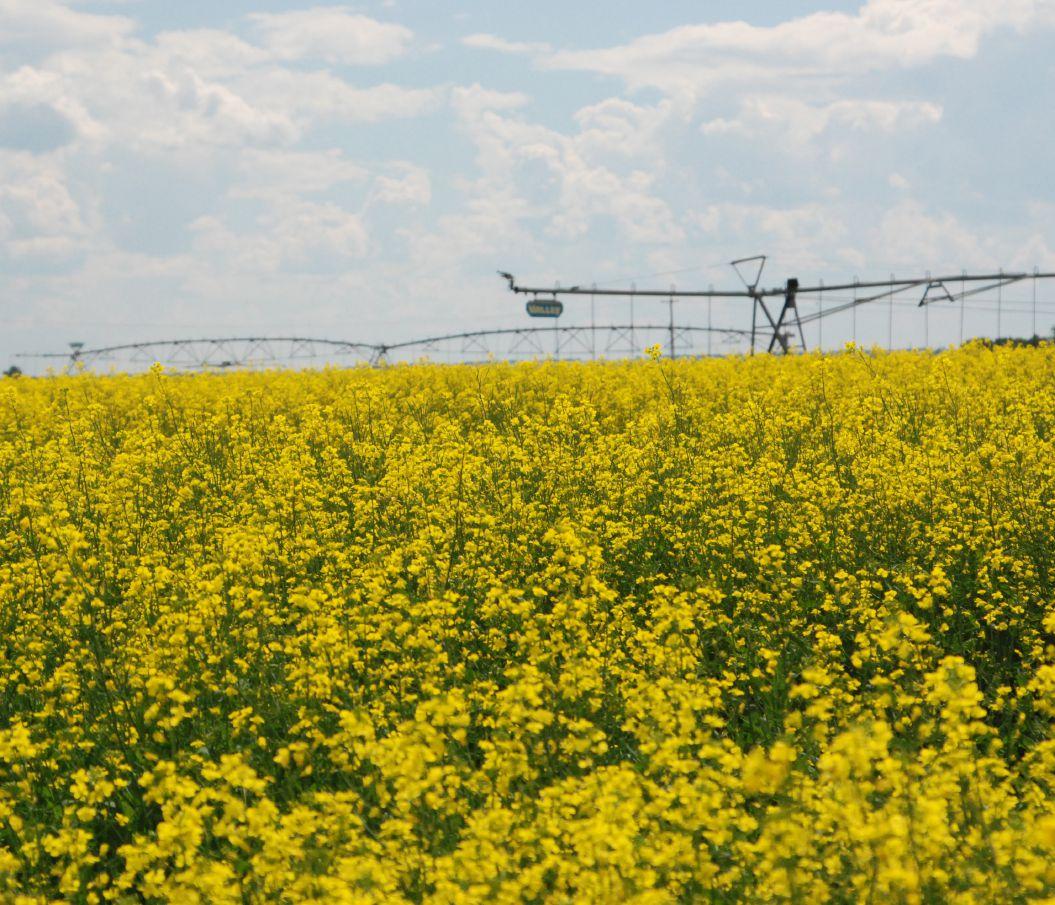
Managing sclerotinia disease on irrigated land is difficult, as over 50 per cent of the crops grown are usually hosts for the disease. Additionally, the favourable disease environment under irrigation and tight rotations often means sclerotinia stem rot and white mould, caused by Sclerotinia sclerotiorum, are a challenge whenever a favourable host like canola or dry beans is grown.
“In the push to pay the costs of irrigation development and operation as well as to maximize profits, sclerotinia-susceptible crops are commonly grown on irrigated land without an intervening cereal break crop,” says Gary Kruger, irrigation agrologist with the Saskatchewan Ministry of Agriculture in Outlook. “That can mean that reliance on foliar fungicides alone to control this disease in irrigated fields can fail.”
Kruger says that the use of the biological control product Contans WG, Coniothyrium minitans, can be helpful in reducing sclerotinia outbreaks. It controls the accumulation of sclerotia bodies in the soil in a crop rotation with high frequencies of sclerotiniasensitive crops.
Under the right temperature and moisture conditions, sclerotia will germinate to produce apothecia or soil mycelium. Mycelium can infect roots of certain crops like sunflowers. Apothecia will produce millions of ascopores, releasing them into the crop canopy to infect host plant tissue. Contans WG prevents any sclerotia it infects from germinating; however, it must come in
ABOVE: Sclerotinia-susceptible crops under irrigation could benefit from Contans WG suppression.
contact with the sclerotia, which has left some skeptical of the product.
“Irrigation farmers have had a hard time buying into Contans because proving its efficacy is difficult on a field-scale basis,” Kruger says.
Recently, Kruger conducted an Irrigation Crop Diversification Corporation strip demonstration with Contans WG on an irrigated field near Riverhurst, Sask., in the Lake Diefenbaker area. In the spring of 2016, Contans WG was applied at a rate of 0.6 kg per acre (kg/ac) and incorporated with a light harrowing, and subsequently seeded to wheat. Contans WG was applied at 0.8 kg/ac in the spring to land seeded to canola in 2016. In the spring of 2017, an additional 0.6 kg/ac was applied to the wheat stubble, and an additional 0.2 kg/ac was applied to the canola stubble.
In 2017, Maxim red lentil was seeded on the wheat stubble and pinto dry beans were seeded on the canola stubble. The lentils were irrigated with 3.5 inches of water over the growing season, while the pinto beans were irrigated with eight inches of water in addition to the 2.5 inches of growing season precipitation.
Even though 2017 had low sclerotinia pressure, Kruger says that, in the demonstration trial, the treated strips showed modest yield response for both lentil and dry bean. Lentil had a yield increase of five per cent and dry bean had a seven per cent increase.
“What makes this result more remarkable is that the yield response occurred even though the grower applied a blanket treatment of foliar fungicide for sclerotinia control on both fields,” Kruger says.
Dale Ziprick, manager of agronomic services with UAP, the Canadian distributor of Contans WG, says the rates Kruger used in his demonstration are typical of the options recommended for sclerotinia control. In the spring, when seeding a susceptible crop, the rate is 0.8 kg/ac, and a minimum of 0.4 kg/ac when seeding a non-susceptible crop. For a fall application after harvest, the rate for seeding a sclerotinia-susceptible crop the next spring is 0.6 to 0.8 kg/ac, and 0.4 kg/ac for seeding a non-susceptible crop in the following spring. These rates are assuming the field has had scler-
otinia/white mould infections in the past. Each option should be followed by a yearly maintenance application of 0.2 to 0.4 kg/ac.
The cost of the 0.8 kg rate is $33 an acre and the annual maintenance rate of 0.2 kg is about $8 an acre.
Ziprick says that Contans WG should be applied at least three months prior to an anticipated sclerotinia outbreak to allow the natural soil fungus active ingredient to destroy the sclerotia bodies. The mycelium of C. minitans attacks the resting survival structures (sclerotia) of the pathogens sclerotinia spp. in the soil and destroys them typically in 90 days with soil temperatures between 5 C and 30 C.
In Canada, Contans WG is registered on canola, sunflower, safflower, dry edible beans, soybeans and alfalfa, in addition to some vegetable crops and ornamental flowers.
Contans WG can be applied by spraying the soil surface or crop residues using conventional ground spray equipment. It should be applied alone, as the active ingredient contains viable spores that can be rendered inactive if mixed with pesticides or fertilizers. To ensure good coverage to the soil, use minimum water volumes of 10 U.S. gallons.
The spores of C. minitans have to get in contact with the sclerotia or the mycelium of sclerotinia, so incorporation shortly after application is essential. Ziprick says the most common incorporation method is with a heavy harrow or light cultivator set no deeper than two inches.
“Incorporation serves two purposes. The first is to protect the fungus from the damaging effect of the sun’s rays and UV light. The other is to distribute it uniformly so that the fungus has a better chance of encountering the sclerotia bodies in the soil,” Ziprick says.
In the United States, Contans WG can be incorporated with 0.5 to one inch of rainfall or irrigation. That method is not currently registered in Canada.
Kruger says once growers get over the high $33/ac cost of the initial application rate, the cost of the $8/ac maintenance rate can make the fall application of 0.2 kg/acre more reasonable.
“The $8 per acre rate is low enough that it could be justifiable for irrigation farmers to use annually,” Kruger says.
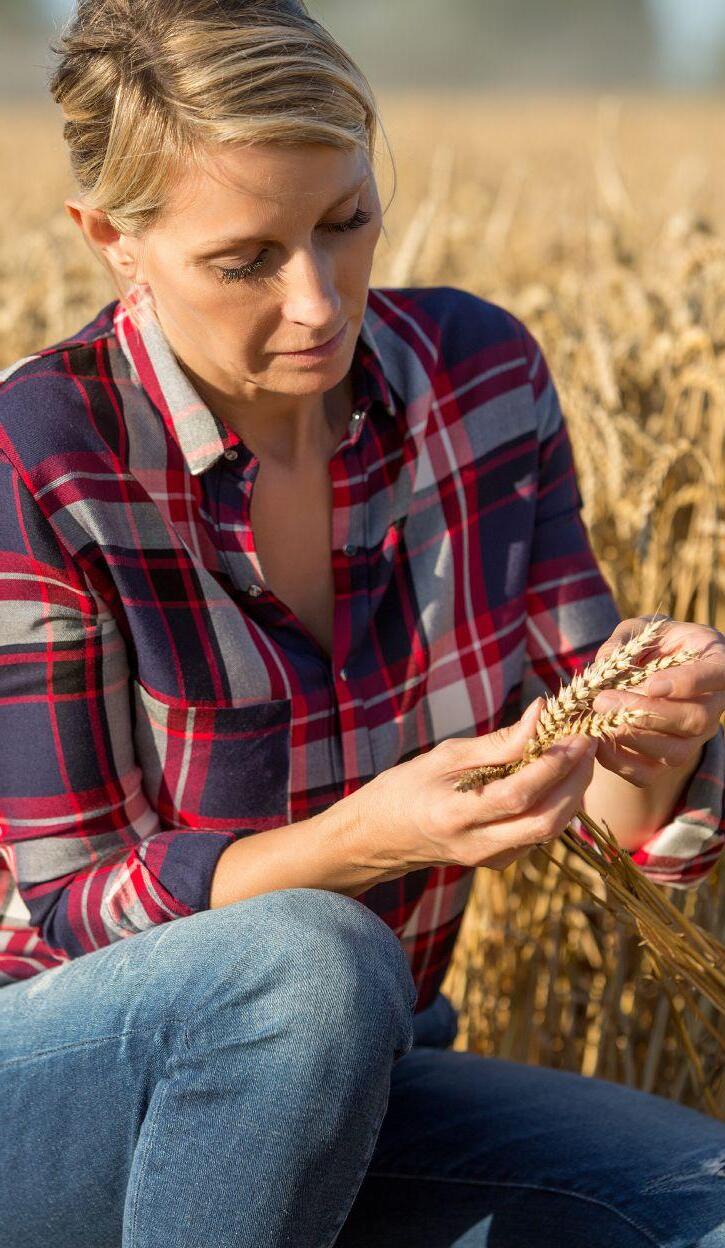


Six women who are making a difference to Canada’s agriculture industry have been chosen and will be highlighted through podcast interviews on AgAnnex Talks starting June 15.
Stay updated by visiting AgWomen.ca or subscribing to the podcast at AgAnnex.com