

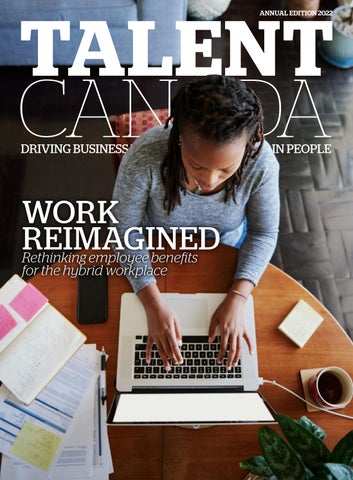
Rethinking employee benefits for the hybrid workplace


4 From the Editor In a VUCA world, reimagining work has become a necessity
6 News Briefs
The latest industry news and trends
7 Work Behaviour
Finding your life’s passion shouldn’t cost you a job
8 Work Leadership A better way: Leadership nudges through COVID-19, and beyond
20 HR Corner
Communication is key to healthy futures
22 Office Oddities
The stranger side of the modern workplace
Solving the puzzle: How to facilitate psychological safety at work
This new web-exclusive series is published monthly, in partnership with Dr. Bill Howatt. Read more at TalentCanada.ca.
While leaders rethink physical workspaces, time should also be spent on more holistic changes. See page 10.



Exclusive roundtable deconstructs benefits plans, and unveils strategies on rebuilding them for the future.
By Marcel Vander Wier

Strategies and considerations from The Canadian Centre for Occupational Health and Safety (CCOHS).
Many adjustments made by employers in response to COVID-19 have evolved into a new status quo. By
Jack Burton

BY MARCEL VANDER WIER
Today, perhaps more than ever before in our lifetimes, the world seems to be in chaos, with health crises, protests and ever-shifting restrictions on society causing upheaval in nearly every facet of our lives.
VUCA: volatile, uncertain, complex and ambiguous.
The term — first introduced to me four years ago by Michael Clark, one of the faces of Toronto’s SCNetwork — broadly encompasses the issues across the globe these days.
Two years into a global coronavirus pandemic, demoralized citizens are no longer in “this” together. And with political leaders coming undone, COVID-19 policies across the land are also becoming overly complex and ambiguous, with some being dropped all together following extended protests by citizens.
It’s quite the time to be alive.
For those of us in workplace leadership, the various on-again, off-again restrictions have become just one of a myriad of worries and pressures when it comes to the future of work.
Remote work is now commonplace. Burnout and mental health have become mainstream issues. Employee requests have become individualized and progressive employers are redesigning their workplace strategies as a result.
The world of work is undergoing a full and complete reimagination.
After two years of upheaval, workplace leaders are picking up the pieces, and putting them together again. The reimagination extends first to the creation of hybrid workplaces, but from there seeps into all functions of work, right down to benefits, compensation and culture.
As our cover story alludes, it’s not simply physical workspaces that leaders should be rethinking, but even the likes of benefits plans require a potential rebuild in light of the newlook hybrid workplace.
Our recent roundtable in partnership with TELUS Health saw four experts come together to discuss just that, and you can find these mus-
ings on pages 10 to 13 of this issue, including a nod towards virtual care as one benefit of high value in the changing world of work.
Beyond benefits, the way forward also includes increased flexibility as a new workplace standard, and expanded employee value propositions amidst a perfect storm that includes a labour shortage and a talent migration by way of the “Great Resignation.”
Freelancer Jack Burton digs deeper into exactly which pandemic-induced workplace changes are set to become building blocks for the future on pages 16 and 17.
The reimagination extends first to the creation of hybrid workplaces, but from there seeps into all functions of work, right down to benefits, compensation and culture.
And CPHR Canada president and CEO Anthony Ariganello caps the discussion in his “HR Corner” commentary (pages 20 and 21), where he states: “With many employees still working remotely, but effectively, for the past two years, any forced ‘return to work’ needs to be predicated by a rethink and redefinition of both talent and work itself.”
It’s the topic of the day — and perhaps the year. Talent Canada’s 2022 annual issue serves as the beginning of what will be a lengthy discussion on the reimagination of work, even as the earth continues to shift beneath our feet.
Our team will continue to push this discussion ahead through 2022 — and beyond. Via web-exclusive stories, virtual events and expert commentaries, we plan to reimagine all areas of work, in an effort to deconstruct them and then build them back properly to face a more assured future.
Stay tuned to TalentCanada.ca and our social media channels to stay on top of this critical conversation as it unfolds. | TC
Annual Edition 2022, Vol. 3, No. 1
Reader Service
Print and digital subscription inquiries or changes, please contact
Beata Olechnowicz, Audience Development Manager
Tel: (416) 510-5182
Fax: (416) 510-6875
Email:
bolechnowicz@annexbusinessmedia.com
Mail: 111 Gordon Baker Rd., Suite 400, Toronto, ON M2H 3R1
EDITOR
Marcel Vander Wier
mvanderwier@annexbusinessmedia.com
ACCOUNT MANAGER
Wendy Serrao wserrao@annexbusinessmedia.com
647-628-3610
ACCOUNT COORDINATOR
Trish Ramsay tramsay@annexbusinessmedia.com
MEDIA DESIGNER
Curtis Martin
GROUP PUBLISHER
Todd Humber
thumber@annexbusinessmedia.com
COO
Scott Jamieson
sjamieson@annexbusinessmedia.com
MAILING ADDRESS
111 Gordon Baker Road, Suite 400, Toronto, ON M2H 3R1
Publication Mail Agreement #40065710
Printed in Canada
ISSN 2563-0164 (Print)
ISSN 2563-0172 (Online)
Published annually by Annex Business Media
SUBSCRIPTION RATES
Canada – 1 Year $ 26.50 (+ applicable tax) Best pricing (Can/USA/foreign) available online at talentcanada.ca
Occasionally, Talent Canada magazine will mail information on behalf of industry-related groups whose products and services we believe may be of interest to you. If you prefer not to receive this information, please contact our circulation department in any of the four ways listed above.
ANNEX PRIVACY OFFICER
privacy@annexbusinessmedia.com Tel: 800-668-2374
No part of the editorial content of this publication may be reprinted without the publisher’s written permission. ©2022 Annex Business Media. All rights reserved. Opinions expressed in this magazine are not necessarily those of the editor or the publisher. No liability is assumed for errors or omissions. All advertising is subject to the publisher’s approval. Such approval does not imply any endorsement of the products or services advertised. Publisher reserves the right to refuse advertising that does not meet the standards of the publication.
It’s been a rough two years, and mental health is in the spotlight more than ever.
What if there was a way to measure the mental health of your employees, giving them practical advice while at the same time providing your leaders with a powerful dashboard?
That’s what the Psychologically Safe Workplace Awards do, powered by Howatt HR’s Mental Fitness Index (MFI).
This program is far more than a competition – they provide leaders with credible data, insights to make a real difference. Partnered with:
FIND OUT MORE AT WWW.PSYCHOLOGICALLYSAFEWORKPLACE.COM Presented by: Sponsored by:

Premier Scott Moe says Saskatchewan’s proof of vaccination against COVID-19 has run its course, but he wouldn’t commit Jan. 31 to removing the requirement before the public health order expires at the end of February, The Canadian Press reports. Moe said the government doesn’t make decisions overnight, but discusses them with health officials who provide input. Factors to be considered in whether to keep the measure include hospitalization rates and whether the wave pushed by the Omicron variant has peaked, Moe said.
Quebec Premier Francois Legault said Feb. 1 he is abandoning his threat to tax the unvaccinated because he is worried about how much the idea has divided Quebecers. “When we see what’s happening in our society and on social media, I have a certain worry about seeing Quebecers divided,” Legault told reporters in Quebec City, The Canadian Press reports. Legault said his role is to ensure a climate of “social peace” in the province.
The Biden administration has officially withdrawn a rule that would have required workers at big companies to get vaccinated or face regular COVID testing requirements, The Associated Press reports. The Occupational Safety and Health Administration (OSHA) confirmed the withdrawal Jan. 25. But the agency said it still strongly encourages workers to get vaccinated. In early November, OSHA announced a vaccine-or-test mandate for companies with at least 100 staff. But numerous states and business groups challenged the rule in court. On Jan. 13, the Supreme Court halted the plan. In a 6-3 ruling, the court’s conservative majority concluded that OSHA had overstepped its authority.
Workers in British Columbia are now eligible for five paid sick days as the provincial government brings in changes to the policy affecting workers. The government says eligible employees will be guaranteed those sick days, provided they’ve worked for their employer for at least 90 days. Jobs Minister Harry Bains
said the change will help lower-paid workers who can least afford to miss a day of paid work, according to The Canadian Press. The province says more than one million workers in B.C. did not have access to any paid sick leave before the new policy went into effect on Jan. 1.
Ontario intends to develop a “portable benefits” system for workers who don’t have health, dental or vision coverage, with the package intended to move with the individuals if they change jobs, The Canadian Press reports. The concept was recommended in a recent report from an expert committee tasked by the government with addressing labour disruptions from the pandemic. It’s intended to cover workers in the gig economy, retail and hospitality jobs who don’t have benefits, and accommodate people who may change careers throughout their lives. Specifics of how the program will work are going to be researched in the months ahead.
TD Bank Group says it plans to hire more than 2,000 people to fill new technology roles this year, The Canadian Press reports. The bank says the new positions will focus on technologies and processes to drive investments and power “the future of banking.” TD’s plans come amid an industry-wide focus on attracting and retaining technology talent.
Attracting skilled workers is critical to the company’s technology transformation and development of new capabilities, including engineering, automation tools, artificial intelligence, cloud technology, and advancing cybersecurity defences.

As widespread labour shortages force Canadian companies to re-evaluate their employee recruitment and retention practices, experts say pay transparency is increasingly in the spotlight. Outside of the public sector and unionized shops, salaries in North America have long been considered a private matter between employer and employee. Job postings generally don’t disclose compensation. But, The Canadian Press reports a growing number of advocates say that needs to change, in part to address problems of gender and racial equity, but also to keep talented employees in the workforce.
Will your organization be implementing a COVID-19 vaccine mandate for employees? • Yes

BY MINA MOVASSELI
It has been normalized that if someone is going to be hired, they should show their commitment to working for the company for the next five to 10 years, minimum.
But in recent years — especially in tech companies — it has become popular to switch jobs every few years. So how can someone who is trying to figure out their passion and purpose outside of work prove that they can be a great candidate?
Well, first let’s clear up that finding your passion and purpose is not about figuring out your whole life. It’s more about trying to be selfaware so that you can do things that feel more aligned with what you like or what brings you joy.
This is not a destination but a process which one may have to revisit throughout their life as they continue to grow and gain wisdom.
It must be noted that this also is not about the enjoyment of things like drinking and partying, but about finding one’s self-identity through the decoding of conditioning that has happened throughout education, childhood trauma(s) and general upbringing.
So why would a company want to encourage and hire someone who is trying to identify their passion or purpose and may leave their new company after two years?
Well, this candidate might have characteristics of someone who is trying to be a better version of themselves. This does not mean they are perfect — rather that they are trying to grow emotionally which results in behaviours with boundaries that they are working on.
Perhaps it is important to look at the resumes of people who are wanting to find their passion and/ or purpose outside of work...
Boundaries are a way to protect ourselves; it is an awareness of one’s capacity mentally, emotionally and physically — such as learning to stand up for oneself and not be a “people pleaser” in order to function at work, thus allowing one to show up as themselves rather than pretending to be someone else. But yes, it is a process that can take courage to complete.
As a byproduct, this can create a healthy space — internally and externally — for themselves and inevitably the people around them who might want to do the same, as long as it is well received, of course.
This also has the effect of people feeling they are heard and seen at work by not suppressing who they are (which after many years of people doing so, we now know can make them feel confused and possibly lead to depression from the silencing of their true identity.)
And yes, companies with people who may not have these characteristics (yet) can do great work as well. But imagine when workers have the freedom to not be afraid to speak up? The mind will allow a bigger stream of creativity as more blood flows to certain areas of the brain.
Many of these people end up going within to discover themselves, but in that process they might also stumble upon yoga, meditation and mindfulness.
But what are the similarities of these and how does that further support hiring these candidates?
As we go within, we might start to listen more to our inner critic and confuse it with ourselves. But,
if we have access to good mentors or information, we can see that those that relate to this experience usually promote mindfulness and meditation as a tool and habit throughout their journey, to identify thoughts and feelings and know when to release them.
People who practise mindfulness are able to acknowledge the feelings that arise within and try to understand where that feeling(s) is coming from, and if it is a pattern or negative critic that they should let go of or deal with. Yes, it is a process to get to this point of self-awareness, but it’s a tool that can help you with every aspect of your life.
Furthermore, the combination of boundaries and mindfulness of candidates who are trying to find their passion and/or purpose can be seen as a recipe for someone helping the company to not steer away from their values, allowing freedom in the workspace (leading to creativity), whilst reducing work exhaustion and increasing job satisfaction through their mindfulness practices.
This is important as many companies may not have the funds to be able to give allowances for yoga or mindfulness workshops, but if the employee already lives this type of lifestyle outside the company then it will be brought into the organization.
So, perhaps it is important to look at the resumes of people who are wanting to find their passion and/or purpose outside of work, and who have these characteristics and values, rather than looking at them as not committed.
If the company is uninterested in offering tools that help oneself to decompress mentally and doesn’t want to bring people into the organization that can help, then they shouldn’t be allowed to overwork and exhaust the mental resource of the employee and not take responsibility for their mind’s health. |

BY AARON LAURITO

Since the pandemic began, leaders across all levels and industries have had to change and adapt their mindsets and behaviours. Never have leaders been asked to navigate so much uncertainty, while managing themselves and their teams to deliver consistently on business goals and outcomes.
It seems clichéd, but as leaders, we often forget to put on our own proverbial oxygen masks before we support others who depend on us professionally.
The “always-on’’ leadership expectation is a byproduct of the pandemic that continues to blur the lines between home and work for home-office based workers. Many leaders feel they are always at home, always at work, always on their computers, and always on their phones. There is no “off button.”
The ‘always-on’ leadership expectation is a byproduct of the pandemic.
When we think back to pre-pandemic times, many would go into meetings within offices without any technology to distract them.
Voicemails, emails, and pings were delivered and would go unanswered until the meeting was over. There were formal and informal faceto-face interactions and impromptu check-ins where body language was relatively easy to observe.
Emotionally adept leaders would read non-verbal cues and spend extra time with those that needed it by scheduling coffee chats, meals, and team celebrations.
Everyone would go home at the end of the day and would occasionally need to log in to complete more work, but leadership wasn’t always something that needed additional thought or attention. It was a more natural part of the flow of everyday work life.
Nearly two years into the pandemic, this is no longer the case. A significant percentage of the workforce has changed companies throughout the pandemic. Many employers have plans to work remotely for the long haul as a strategic advantage because it is viewed as an attractive option by many in the workforce and is the “future of work.” As a result, leaders have had to adapt by becoming much more intentional about leading, so that relationship and rapport building become early areas of focus. When this is done well, trust with a direct report starts to grow upon hiring and continues to blossom over time.
Leaders have needed to adjust to this new need and upskill by training and finding periodic opportunities to meet with their teams in person to keep up with the dynamic demands of leading individuals and teams effectively in a virtual environment.
As the world of work continues to evolve to these new ways of working, below are some helpful nudges to inspire a healthy, sustainable style that will serve you well for successful virtual leadership moving forward:
Find ways to switch off from the “always on” culture. Create rules of engagement for yourself. Having healthy routines around when we eat, drink, walk, and take breaks helps keep us grounded and focused on what’s a priority and what’s not. Cut off phone time.
Involve your team to maintain a healthy virtual culture. Great leaders are not trying to do it all themselves. They’re involving others to help carry the culture and engagement at work. By involving others, you multiply the impact of your team and give others a chance to shine. If building an off-site agenda is not your strength, lean on a team member or hire someone who excels at it. Recognizing your weaknesses helps create opportunities for better organizational outcomes.
Be purposefully human with your teams. Be open with your teams about life’s routines. Share some of your positive personal practices to inspire and encourage your team. Be vocal about when you need to step away from the screen. Humanizing yourself creates balance and structure around what’s expected of the team. Time spent now on creating new and positive mindsets and well-being-first workplace habits will help build resilience to endure future uncertainties.
Go back to basics. Focus on trust building with your team to lead effectively while being remote. Ask your direct reports how they are. Find ways to replicate in-office experiences. Daily “good morning” chats could be one way to connect and focus on what the priorities are for that day.
Remember that people still think most about their relationship with their direct leader when considering their engagement. Be there in the moments that matter. For example, if a team member has a dependent fighting COVID-19 who needs support, be compassionate. If you have concerns about truth telling, address them. Role model taking time off. Be clear about taking breaks and vacation. Encourage informal talking time and getting to know each other. This is how virtual teams thrive.
Keep the communication flowing both ways. To effectively communicate organizational policies on
comes a reality for most leaders who lack a group to bounce ideas off or who do not have the ability to discuss issues in an informal setting with peers. It’s important to be intentional about staying connected to other leaders to share best practices and provide support, even when it feels like it’s just another thing to do.
Be deliberate about diversity, equity, and inclusion. While the pandemic has taken up most of our bandwidth, remember that civil unrest and social injustice are just as impactful to an organizational bottom line. The pandemic has disproportionately impacted Indigenous peoples, minority
Virtual and pandemic leadership is a craft that needs to be constantly honed and adapted, and we’re all learning together.
return-to-office or in-person meetings, organizations should be getting and giving feedback from the bottom up and top down. Provide options where possible. The pandemic has shown that there is no one-size-fits-all approach to defining work settings.
A July 2021 Angus Reid poll of more than 2,000 Canadians found that 44 per cent prefer to work from home and would consider searching for work if this no longer was an option. As such, it is critical to consider an agile strategy that’s open to customization.
Find your community. There is not much infrastructure in place in most organizations for leaders to speak with other supportive leaders. The idea of starting up a peer forum is often regarded as unappealing or time-consuming. However, in the medium to long term, isolation be -
groups, and people of colour — who have undergone greater hardships than others in terms of accessibility to medical care and workplace opportunities. As a leader, how are you showing up for those in your organization who represent marginalized communities? A sound COVID-19 response is intricately linked to understanding the diversity of employees’ cultures and lived experiences.
As we move through the next phase of the pandemic, utilize these leadership nudges, but only after you have put on your own oxygen mask. Resiliency, flexibility, and self-awareness are key tools for your leadership toolkit and will differentiate great virtual leaders from mediocre ones over time. Virtual and pandemic leadership is a craft that needs to be constantly honed and adapted, and we’re all learning together. | TC

As leaders rethink physical workspaces, time must also be spent on deconstructing benefits plans and rebuilding them for the future of work.
BY MARCEL VANDER WIER
The past two years of the COVID-19 pandemic have been long and difficult.
After much reflection, workplaces are beginning to piece together the future, and the way forward appears to be in a hybrid format.
While leaders rethink physical workspaces, time should be spent on more holistic changes as well, including reimagining employee benefits for the hybrid workplace.
In January, Talent Canada hosted an exclusive roundtable in partnership with TELUS Health to explore the future of health benefits in a hybrid world.
The COVID-19 pandemic continues to wreak havoc on the world of work as we previously knew it, but a bright
spot for many has been the advancement of virtual health opportunities.
With assistance by way of digital solutions, employers have begun to transform their focus to one of “whole health” — including mental health, said Jason Kennedy, RPh, general manager, Virtual Pharmacy at TELUS Health in Toronto.
“We’ve seen a significant uptake in the adoption of virtual care throughout this timeline,” he said, noting anecdotal and survey feedback from employees has been positive to this change.
“The market was starting to move there anyway, and we saw COVID really accelerate that.”
Similar to a newfound familiarity with Zoom video conferencing, employees have also become more comfortable using telehealth options, added Norm Sabapathy, executive vice-president of people at Cadillac Fairview in Toronto.

“We’re more comfortable with virtual health — being more self-directed, informing ourselves and playing a more active role in our health,” he said.
“We’re seeing this empowerment,” said Kennedy. “It’s not just the comfort, but ‘I want to be a little more in control, on my terms.’ As everything else is on-demand, health care… and some of these benefits offerings are turning into that as well.”
And while traditional benefits usage has declined at FleetCor during the pandemic, when virtual care was added as an option, usage went back up, said Crystal Williams, CHRO at the company in Atlanta, Ga.
“We had a big spike in people

taking stress leave, just trying to deal with working remotely, dealing with homeschooling children, the demands of work, etcetera.”
As employers reimagine workplaces, benefits plans, and the importance of employee health in the postCOVID world, providing employees with access to modernized health care could be the preventative medicine needed to help keep employees and businesses healthy.
Unique benefits implementations have occurred as a result of pandemic-style work conditions, said Kennedy.
“(At TELUS Health), we have implemented flex benefits — this idea of allowing employees to really prioritize what is important to them within that benefits plan, whether it be mental health needs or physical health needs, or work-remote or work-from-home accommodations,” he said.
Kennedy explained that on-demand solutions such as Spotify, a popular music streaming service, have altered users’ expectations in all industries, and that has become the basis for building more “elegant” health and wellness experiences.
Flex opportunities and the advancement of health-care spending accounts (HCSAs) continue to em-
power employees, he said.
“There’s more base offerings now than ever before. Virtual health care is starting to become an integrated part of the benefits plan.”
When it comes to shifting employee agreements to reflect new-look hybrid benefits packages, it is wise for employers to consider potential legal issues, including the possibility of having these contractual changes being considered as constructive dismissal.
Constructive dismissal is triggered by a “unilateral and substantial change to a fundamental term or
SURVEY SAYS…
There is a need for virtual pharmacy services in Canada.
• 1/3 of Canadians say they have missed picking up their prescription medications.
• Almost 60% say it’s because it slipped their mind.
• Nearly 50% say it’s because they were busy due to work and family commitments.
• Only 4 in 10 Canadians are already using a digital pharmacy to access their medications.
• 25% of Canadians didn’t know that digital/ virtual pharmacy services exist.
Based on a Sept. 2021 Leger independent survey of 876 Canadians who have picked up a prescription medicine for themselves or a loved one in the past year, and are either partially or fully covered.
condition of employment,” explained Brittany Taylor, partner at Rudner Law in Markham, Ont.
Employee buy-in on changes is the best course of action in this instance, she said. “If an employee is agreeing to the changes, you’re avoiding the risk of constructive dismissal entirely.”
Ensuring changes are beneficial to employees — given the changes to the workplace environment — is information that can be achieved by speaking with workers or issuing a survey, said Taylor.
If changes are substantial and unilateral, however, giving appropriate advance notice could insulate employers from legal action, she said.
“It is important to do that frontend work to save the back-end headache,” noted Williams.
Employee morale is another consideration employers should consider, in an effort to retain workers, said Taylor.
Accommodation to the point of undue hardship is also an important point to contemplate, as remote workers may require different needs, she said.
As COVID-19 restrictions begin to recede slightly in some areas and employees begin returning to the office, new health services such as virtual pharmacies are becoming a highly beneficial option within Canada’s health-care system.
“From our point of view (at TELUS Health, virtual pharmacies) do a real great job of convenience and ease of use, helping to empower patients to better understand their therapies,” said Kennedy.
TELUS Health launched its digital Virtual Pharmacy service in January to help improve medication adherence by offering Canadians the opportunity to set up automatic refill reminders for prescription medications that are shipped directly to their doorstep.

Importantly, Virtual Pharmacy allows users to have unlimited one-onone video or phone consultations with experienced and licensed Canadian pharmacists from the comfort of their home, while also providing them with tools to keep track of their family’s medications through an online dashboard.
As always, communicating the value of benefits plans to remote workers is critical in terms of garnering a solid return on investment (ROI), while reducing turnover and driving productivity.
Communication is much more than simply talking to people — it’s ensuring the message has also been understood and received, noted
Many employees still do not understand their personal company benefits offerings, she said.
Getting marketing or communications specialists involved in the process is critical to combating this issue.
“Stale, boring documents that go through the legalities of everything is not the way to go, at all. ‘Death by PowerPoint’ is also not the way to go,” according to Williams. “It’s small bits of pieces of information that are in nice infographics, and bite-sized pieces that the employees can digest.”
TELUS Health encourages an opendoor policy for managers, so employees can ask questions and maximize benefits usage, noted Kennedy.
“It’s there to use,” he said. “We don’t want this to be something that you should be embarrassed talking about
or asking about: ‘How do I optimize my RRSPs?’ or ‘How do I log on to this virtual meditation app that I have?’”
With hybrid workplaces as the new norm, the world of work is expected to shift in many ways, with many office workers now able to “work from anywhere.” Employers may need to consider more personalized and flexible workplace benefits plans that allow for choice.
“Flexible working” has been a new standard at FleetCor through the pandemic, said Williams.
“That doesn’t mean working hybrid or working remotely — that means flexible working,” she said, allowing workers to integrate personal matters into their day. “The ‘flexible’ means it’s not 9-to-5 anymore — it can be anytime during the day… to get your work done.”
Remote work is becoming standard operating procedure, she noted. “This hybrid thing, and remote thing, is here to stay — for sure.”
Remote work has accelerated through COVID-19, and can lead to more inclusion in the workplace, if done right, Sabapathy claimed.
“We can really foresee this being, not only a benefit to employees, but a benefit to the company in terms of the talent we can attract and retain.”
Appropriate benefits packages will continue to play a key factor in recruitment and retention of diverse talent, he said.
“Health care and benefits programs are going to be a big part of that. We need to consider how we adapt those programs for remote work, for various family arrangements, and the multigenerational workforce.”
Practically, the workplace has changed, and employers need to seek to understand what their workforce requires as a result, said Taylor.
“The word of the day that we’ve all been using is flexibility — having something that allows choice to employees, in terms of putting their benefits to use where they need it.”
By Jason Kennedy, RPh, general manager, Virtual Pharmacy at TELUS Health
Virtual health care is booming in Canada and quickly becoming a lasting and positive outcome of the uncertainty and disruption of the global coronavirus pandemic. By March 2021, more than 5 million virtual health-care appointments had been conducted across the country and while virtual health care has been around since the 1950s, social disruption seems to be what was needed to push its proliferation.
As we observe people across Canada embracing virtual physician visits that save them time and generally improve their overall access to primary and specialist care, we remain hopeful that more areas of the health-care continuum will adopt virtual modalities to improve patient access, experience, and health outcomes.
One particular area of health care that has been slow to move virtual is community pharmacy services.
Most people know that a trip to the local pharmacy can be time consuming, especially during the rolling lockdowns of the pandemic period, when lines were long and pharmacies co-located inside of retail settings were limited in their capacity to adequately consult with their patients.
The good news: like virtual visits to a family doctor, a virtual pharmacy visit is simple to manage, convenient, and often less costly — as individuals avoid the allure of retail purchases while they wait. It can also support improved medication adherence and provides more privacy for pharmacist consults.
Consider this: A recent internal study conducted by Leger on behalf of TELUS Health found that a full one-third of respondents said they often missed picking up their prescriptions, which translates into a lot of missed medications and the risk of compromised health.
In fact, 60 per cent of respondents said they simply “forgot” to pick up their prescriptions, with 50 per cent citing they were too busy with work or personal activities to do so.
And so, a convenient, predictable, and reliable virtual health service could be a game-changer for many managing their own health, the health of their family members, and other loved ones.
Virtual Pharmacy is the latest offering from the TELUS Health suite of digital health and medical services. It is available to anyone in Canada (except in Quebec), including employees through their workplace benefits plan. This is just one of the company’s recent innovations helping to improve the health-care experience for us all.
For employers, Virtual Pharmacy adds value to employees’ workplace benefits, providing pharmacist care for the entire family. In addition, it can be part of a business strategy to reduce costs through lower drug markups and dispensing fees, and can contribute to a healthier and more productive workforce.
Those workers who live with chronic conditions, such as diabetes, hypertension, or depression will benefit as they can speak directly to a pharmacist to discuss new and changing medications. They can also have medications delivered to their doorstep to avoid disruption to their prescribed care protocol which could result in a medical incident.
Information is power, and being in control of one’s circumstances will only help with following medication protocols — for employers that means reduced absenteeism.
COVID-19 has been with us now for two years and while we have all experienced challenges, every day we are learning new ways to live in this new normal. It has been disruptive but not all the disruption has been negative.
Changing our behaviour in the way in which we live our lives, such as using virtual primary care, has proven successful. The logical extension of this is an evolution to virtual pharmacy — a reliable, secure, and convenient service that not only helps to improve health outcomes for those in Canada’s workforce, but also saves them time.
The Canadian Centre for Occupational Health and Safety (CCOHS) promotes the total well-being — physical, psychosocial, and mental health — of workers in Canada by providing information, advice, education, and management systems and solutions that support the prevention of injury and illness.
As people in Canada contend with COVID-19 and its variants, plans for returning to work are evolving along with public health measures.
As much as we’d like to imagine a near-future without COVID-19, experts suggest it is something we’ll be dealing with — and adapting to — for some time.
When planning for a return to work during the pandemic, employers must consider not only workers’ physical safety from COVID-19, but their psychological safety as well.
Since each workplace is unique, employers should consider the personal risk factors and the needs of their workers when thinking about how to prepare them for a safe return to the workplace.
People in Canada are experiencing increased stress, fear, anxiety, isolation, and other challenges during the COVID-19 pandemic, which may increase as people return to the workplace.
Work factors that might impact mental health include concerns about the risk of being exposed to the virus at work, taking care of personal and family needs while working, managing a changed workload, or adapting to a different workspace or schedule.
Understanding the true concerns about returning to the workplace can help you set up appropriate controls. Creating a psychologically safe workplace can help your staff work through these concerns.
Surveys can be helpful in identifying concerns that can be addressed before workers return to the workplace.
Educate and train managers, supervisors, and workers to recognize when someone needs additional support. Ensure managers and supervisors are well-informed on how to support workers. Regular check-ins can make a world of difference.
One way to increase workers’ comfort level with returning to work is to conduct a risk assessment and communicate a detailed COVID-19 safety plan that considers and addresses the identified hazards. Employers should work with their health and safety committee
or representative to identify activities where workers are in close contact with others (less than two metres apart), in crowded places, in indoor closed spaces with poor ventilation, and in activities requiring forceful exhalation (like heavy labour or speaking loudly) and with objects touched by others.
Don’t forget to include services provided by third parties and interaction with external customers or the public.
Consider the personal risk factors of your workers and how they might impact the risk and potential control measures when returning to the workplace.
• Do any have known pre-existing medical conditions that put them at higher risk for severe disease or outcomes?
• Are there workers who live together, carpool or take public transit to work?
• Are there language, socio-economic, or other accessibility barriers to assess?
These personal risk factors may increase the likelihood of a severe outcome or increase the risk of transmission outside of work; therefore, additional precautions may be required.
Follow the guidance provided by your local public health authorities, the Public Health Agency of Canada (PHAC), and your jurisdictional occupational health and safety regulator.
Once the hazards and risks of COVID-19 have been identified and evaluated, implement appropriate preventative measures using the hierarchy of controls: elimination, substitution, engineering controls, administrative controls, and personal protective equipment.
Use a layered approach that includes multiple individual public health measures in your safety plan, adjusting the plan as local public health measures change.
A layered approach is sometimes referred to as a “Swiss cheese model” — although a single measure may have holes in it, the barrier becomes stronger with each slice (layer) of protection added.
No single control measure is 100 per cent effective on its own, but with each added layer of control, the risk of exposure gets lower.
Monitor the public health measures required in your setting and discuss the benefits of the COVID-19 vaccination with your workers.
Make sure that no new hazards will be created as a result of any new control measures. Continue to evaluate how effective your workplace COVID-19 safety plan and controls are, and make changes as needed.
According to Statistics Canada, approximately four in 10 workers in Canada are in jobs that can likely be done remotely under normal circumstances. Does this include your workplace?
Many workers want the flexibility of continuing to work remotely. In a survey conducted by PwC Canada in July 2020, just one in five Canadian workers indicated they want to return to their workplace full time once COVID-19 restrictions are lifted.
Employers may want to consider a hybrid workplace model, which combines the flexibility of working from home with the advantages provided by having workers together in a workplace.
A hybrid workplace model can result in higher job satisfaction due to the flexibility it offers. It helps employees reclaim some of the time they would otherwise spend commuting, and work with less distractions from co-workers.
Being in a physical workplace part of the time can provide more opportunities for collaboration, innovation, brainstorming and sharing ideas and information with co-workers. It can encourage team-building through face-to-face meetings and fostering personal connections, which builds trust.
If the hybrid model is an option for your workplace, you’ll want
to consider scheduling, locations for specific tasks, workplace configuration, ergonomics, technology to keep workers connected while working remotely, and how to encourage disconnecting from work at the end of the day.
How many days per week do workers need to report to the workplace? Once a week? Three or four days? You may prefer a monthly schedule where the entire team is on site on certain days to collaborate.
When developing your return-to-work plan, thoroughness is key to ensuring workers’ physical and psychological safety.
Take the time to consider all the risks, adjust the workplace, and organize training on new procedures. Communicate clearly and consistently, understanding that some employees are likely to need more time and support to transition back to the workplace.
Leaders have the opportunity to foster a psychologically safe and healthy workplace. Be vigilant in looking for signs of worker burnout and fatigue.
COVID-19 has changed the way we work and live. Workers require empathy and compassion as they return to the workplace. | TC
Jacques Goulet, President of Sun Life Canada, is pleased to announce the appointment of Dave Jones as President, Sun Life Health
We’re pleased to announce a change to the way we deliver health solutions to our Clients by launching a new business unit called Sun Life Health. This new business unit will strengthen our health focus across all of Sun Life Canada, enabling us to deliver innovation to Canadians faster. This exciting change brings together our Group Benefits and Lumino Health businesses.
Dave will be responsible for ensuring that Sun Life continues to shape the Canadian health solutions market. Through Sun Life Health’s actions and innovations, he’ll deliver on our commitment to helping Canadians live healthier lives.
Group Benefits are provided by Sun Life Assurance Company of Canada, a member of the Sun Life group of companies.
BY JACK BURTON
Two years after the abrupt and uncertain changes brought to workplaces by COVID-19, many employers are still wondering when these challenges will begin to subside, and perhaps more importantly, how to move forward through the pandemic and beyond.
Since March 2020, many adjustments and accommodations initially made by employers in response to COVID-19 have evolved into an entirely new status quo for the workplace that the Conference Board of Canada’s director of human capital and workplace health, Erin Mills, along with research associate Lindsay Coffin, believe is here to stay.
They believe “the shift of remote or hybrid work from being an option to the norm or expectation of employees is one of the most obvious yet radical long-term changes moving forward through the pandemic.”
From this change comes an entirely new, more dynamic set of expectations for employees, according to Mills and Coffin, in Ottawa.
“Employers have had to give employees more flexibility around work-

Two years into COVID-19, employers across Canada are looking for ways to move forward through the pandemic, and beyond.
ing hours so that they can get their work done while balancing many other priorities,” they said.
And much like remote work, the two see this flexibility as not just a reaction to present circumstances, but a new standard moving forward in how employers engage and support workers.
Showing that these new expectations signal a more permanent shift is a Conference Board of Canada report on attrition published in January, which concluded employers are increasingly adopting “a holistic
approach to health benefits and increased corporate social responsibility,” noted Mills and Coffin, including increased salaries and employee value propositions.
This supportive approach becomes more important amongst the labour shortages posing another growing threat to employers as the pandemic continues.
A poll from RBC Thought Leadership in November of 2021 found
that over a third of businesses are struggling with staffing shortages across more than 870,000 vacant jobs across Canada.
While these circumstances largely come from the two-year stress test that the pandemic has been for both employees’ well-being and organizational talent management, Norm Keith, partner at KPMG Canada in Toronto, is concerned that this trend is set to worsen, even if the pandemic subsides.
“The Great Resignation will continue, in other words,” he said. “There is, even in a recovery, however long and bumpy that is, a year or two of adjustment coming that will make talent retention, motivation, and productivity, I think, probably the No. 1 issue for most organizations.”
For employers looking to mitigate this issue, especially as it threatens to intensify, Keith recommended taking a “back-to-basics” approach that communicates company values and expectations in a way that can be clearly understood and met by workers.
“I think some employers who are smart will return to the basics of who they are, what their organizational direction is, and seek to motivate employees to be aligned with that direction,” he said.
A key element in accomplishing this — and one that Keith believes employers have been approaching incorrectly — is not getting too far ahead of oneself in terms of goals or company initiatives.
“It kind of goes back to the Maslow’s hierarchy of needs. If your organization, or an employee’s relationship to it, is not meeting their basic needs, then self-actualization is probably not what you should be thinking about,” he said.
The dangers of a health crisis such as COVID-19 has reframed workplace safety as a top priority, but by taking
the initiative to strengthen organizational workplace health and safety programs, employers can beneficially impact the employee morale or disconnect affecting current retention and recruitment problems.
“I think that it’s a challenging thing for employers, but a solution — and it helps morale — is to be invested in an ongoing basis in workplace safety and health,” said Keith. “Yes, that means COVID, but hopefully we get beyond COVID, and it means a lot more.”
This investment is wide-ranging, he said.
“It means having employee assistance support for both physical and mental health risks; it means being a compassionate employer; but it also means being constructive, engaging through joint health safety committees, listening to employees, and putting in programs and taking steps that employees actually want and make sense to them.”
Looming over the organizational and health and safety challenges posed by COVID-19 is the increasing economic toll that it has brought to numerous industries, especially as the pandemic continues.
“I mean, I don’t really have to tell you, it’s been really difficult for businesses,” said Brendan Rolfe, senior manager of business resources at the Canadian Federation of Independent Business in Penticton, B.C.
“Before the pandemic, most small business owners were barely making minimum wage given all the hours they invest over the week in their business.”
After the last two years, however, Rolfe said that “now what we’re seeing is 70 per cent of businesses owe more than $100,000 in debt. That’s a tough cliff to be looking up at, in terms of having to scale that.”
Rolfe mentioned lockdown-
diminished spending patterns, paying staff, higher safety overhead, and increasingly complex or inaccessible subsidies and governmental assistance as challenges to organizations’ futures, bringing with them uncertainty — and increasingly bankruptcy.
“I’ve personally spoken to a number of business owners who now have to face the real possibility of closing their doors, even though they were thriving before the pandemic,” said Rolfe.
No choice that employers and business owners have made during the pandemic has been easy, though as the economic burden grows heavier, some organizations may be facing their most difficult decision yet: how to survive, and whether that survival is even worth pursuing.
“First and foremost, I’ve recommended our members think about their own mental health,” said Rolfe. “Nothing is more important than somebody’s own personal health, and if you’ve reached the limits of what you can take, then it’s a matter of realizing that maybe it’s time to get out.”
For struggling organizations looking to weather the storm, Rolfe believes that re-evaluation is key, recommending that businesses look to consolidate their services to optimize returns and seek to cut expenses through options such as digitization.
It all starts, however, with a return to the main goals of the company itself, he said.
“Businesses who are struggling and looking to survive might consider things like revising their business plans, or writing one in the first place if they don’t have one,” which Rolfe said should serve “to remind themselves of the core things that they did best, that made them successful in the first place.” | TC
BY JACK BURTON
The uncertainty of the COVID-19 pandemic has made it more important, not just to develop robust mental well-being plans on the organizational level, but also to recognize the strategies and solutions that employers have developed to support mental health since this global health crisis began.
Highlighting these developments was the inaugural Psychologically Safe Workplace Awards, put on by Talent Canada in partnership with OHS Canada and Howatt HR Consulting on Oct. 20, 2021.
The online event took place in partnership with the Mental Health Commission of Canada, and was sponsored by LifeWorks’ AbilitiCBT and Ontario’s Workplace Safety & Prevention Services.
The Psychologically Safe Workplace Awards recognized six organizations across the country for innovative workplace mental health initiatives, with candidates selected through an evidence-based approach in collaboration with Howatt HR.
This process involved organizations participating in Howatt’s Mental Fitness Index — a system that quantifies employee well-being based on four key pillars of physical health, coping skills, work, and life, as well as a variety of factors such as leadership expectations and employee recognition.
Achieving gold-level honours for their psychologically safe workplace was Dejero, an Internet connectivity company in Waterloo, Ont.
PointClickCare, a cloud-based health-care software provider in Mississauga, Ont.; Associated Engineering, an engineering consultant in Markham, Ont.; and the St. Catharines Fire Department in southern Ontario all received silver awards, while bronze-levels awards were given to Servus Credit Union in Edmonton; and BASF Canada, a chemicals company headquartered in Mississauga, Ont.
Beyond providing the quantitative model for which candidates were evaluated, Howatt HR president Dr. Bill Howatt also kicked off the event with a keynote speech, delivering insights from his more than 30 years’ experience in mental health, human resources, and leadership.
Howatt believes that data is a game-changing tool in creating more psychologically safe workplaces, as it allows workplaces to develop an effective long-term strategy, malleable to the changes and needs that the information reveals.
The future of psychologically safe workplaces “is not just about buying a bunch of programs to say ‘we have 20 programs,’” he said.
Instead, “we need to be thinking about: What are the right programs? Are the programs working? When are employees accessing them?”
Data, Howatt believes, provides the answers to these questions, and in turn helps employers excel at creating a work environment that genuinely prioritizes the well-being of its workforce.
Properly using data to this end means treating it not as just information, but also an actionable tool that shows employers where they currently stand, and the steps necessary to improvement.
“So, if I say I want to reduce mental harm and promote mental health, I get all my data,” explained Howatt. “And then off of that data, I’m going to make some informed decisions on what I’m going to do. I’m going to do that over some distance, and then I’m going to re-measure.”
That last step, of developing and interpreting one’s data with patience and flexibility, is what Howatt feels is paramount in building a strong foundation of well-being.
It transparently communicates to employees that: “We’re committed to psychological safety and we don’t just want to talk about it, we want to facilitate it knowing there is no goal line, we know there’s no perfect, and we know that this takes time.”
The awards ceremony also included a panel discussion featuring workplace well-being experts and employers speaking first-hand of their experience consulting on, and developing their own cutting-edge mental health programs.
WestJet’s manager of organizational well-being, Lisa Dodwell-Grieves, pointed out signs employers can look for to indicate a team member may be struggling with their own psychological safety.
Despite the complexity of the issue, potential warning signs may be as simple as any uncharacteristic behaviour changes, such as a drop off in attendance or productivity, she said.
As the range of potential factors that could be influencing these changes is wide, Dodwell-Grieves recommended opening up a discussion before concluding anything.
“Never assume that these indicators are meaning something is definitely up,” she said, “You don’t know until you start that conversation.”
As an employer, having said conversations help communicate support, while also providing an opportunity to highlight to the individual their unique emotional needs and the possible actions to overcome their situation.
“Something we like to use at WestJet is: ‘What does mental health
look like for you?’” said Dodwell-Grieves. “When asking what help looks like for you, it keeps the accountability on them, but also opens them up to think about all the different ways they might be able to get support.”
Central to evolving mental health in the workplace, on both an organizational and individual level, is a shift toward meeting these struggles with openness, rather than stigma or silence, according to the Mental Health Commission of Canada’s director of mental health advancement, Sandra Koppert.
“Mental illness isn’t the problem that we’re trying to solve,” Koppert reminded attendees.
“Really, stigma towards mental illness and mental problems is what were tackling here, and fortunately, there are a number of resources that support reducing stigma in workplaces and building mental health literacy.”
Koppert highlighted a number of mental health literacy programs, including the commission’s own Mental Health First Aid Training, along with the Working Mind Program — a mental health literacy initiative with modules available for both the staff and leadership levels.

By targeting attitudes toward emotional well-being within the overall company culture, Koppert sees these programs as key in “really leveling the playing field of understanding mental illness and mental health, so that we know what we’re talking about.”
Operating on this new playing field of psychological safety is PointClickCare, one of this year’s silver-level award winners.
Kareen Clattenburg, the company’s vice-president of Total Rewards and People Strategy, shared with the panel what an award-winning well-being strategy looks like.
Clattenburg recommended quality over quantity as a guiding philosophy when developing wellness programs.
“It’s not about the number of programs that you put out there. If you put too much stuff out, people are going to be overwhelmed and not know where to go to get the right support.”
The Psychologically Safe Workplace Awards will return in 2022, culminating with a live gala at the Globe and Mail Centre in Toronto, on Sept. 15.
For more, visit www.psychologicallysafeworkplace.com. | TC
We’re pleased to announce Marie-Chantal Côté as our new Senior Vice-President of Group Benefits.
Marie-Chantal joined Sun Life in 1998 and has held progressively senior roles across Sun Life’s businesses. She’s a well-known champion of employee benefits. Under her leadership, Sun Life has brought many innovations to market, including Sun Life’s Mental Health Coach and Lumino Health Virtual Care. She’s also a vocal advocate for diversity, equity and inclusion and mental health in the workplace.
In her new role, Marie-Chantal will retain her strong focus on building innovative solutions to meet Client needs. Her passion and commitment will continue to strengthen Sun Life’s focus on supporting the health of Canadians.
Group Benefits are provided by Sun Life Assurance Company of Canada, a member of the Sun Life group of companies.

BY ANTHONY ARIGANELLO
Anthony Ariganello,
CPHR, is the president and CEO of CPHR Canada, with headquarters in Vancouver.

At this point, all roads leading to any return to “business as usual” have been severed.
After more than two years of pandemic living, the working world as we knew it has not merely been transformed, but has been forced to reevaluate its greatest asset — people.
For those in human resources, it has been a great challenge, and an even greater validation of a profession that has long been grounded in the precepts of keeping people first in the minds of decision-makers.
Given that the issues facing leaders across industries have been almost entirely people-focused since March 2020, HR has become a key driver in maintaining the health and hope of organizations and individuals alike.
From managing the seismic shift of remote work to navigating the impacts of overnight industry lockdowns, vaccine passports and labour shortages — all while fostering employee safety, culture and professional development — HR has risen to the challenge and been
recognized as integral to the changing equation of business success.
Given the ongoing impact of the Omicron variant of COVID-19, and the very real possibility of another mutation at any time, HR professionals will need to not only maintain, but also build upon, the lessons learned in 2022.
With full expectation of the unexpected, the challenges of the year ahead are familiar to
all businesses, but acerbated by the pandemic forces and mixed communications in play across the globe — including here in Canada.
As is widely recognized, with miscommunication comes mistrust and that sentiment is one on the rise in 2022 due to a confounding lack of leadership at federal and provincial levels of government alike.
With policies changing not only overnight, but even more widely and wildly from province to territory to province, one thing has become apparent
— organizations will need to lead from within.
As was perhaps inevitable and happened first and worst in our neighbour to the south, our pandemic efforts have swerved from the science and become politicized.
The result? A patchwork of provincial policies ranging from iron to ham-fisted with a large side of waffling guaranteed to keep HR’s plate full.
With no clear mandates or policies applying across the country — and provinces left to selectively apply or ignore the available science — that need for internal leadership has made truly strategic HR input essential.
For some C-suites, this marks the first time they have quite literally been forced to move HR out of its transactional role to make full use of the strategic skill set.
In fact, if there is a single silver lining to the pandemic that will only continue to increase in value in years to come, it is the commitment and impact of people-first thinking at all levels of business — particularly amongst previously resistant leadership.
As HR professionals, we need to acknowledge the evolution of this mindset, while continuing to lead with future uncertainties and current challenges in mind.
Where those uncertainties lay may vary from industry to industry — just as the possible solutions may vary across our provinces and territories — but there are common hurdles to be met in these uncommon times.
Case in point, with concerns around mental health continuing to rise as uncertainties prevail, HR needs to play a visible role in reaching out to their teams and promoting open-door discussions between employers and employees alike.
Mental health issues, much like COVID-19 and its mutated cousins, can afflict any one of us, regardless of title. Moreover, while less visible symptomatically, it can have an equal or greater impact on individuals and organizations.
This is where HR has a key role to play, not just in ensuring the health and safety of employees within a given workplace, but wherever they might be.
Given the studies that have proven the devastating effects of longterm stress, the random, chronic uncertainty with which we have all lived poses an even more pervasive threat.
The latter might seem self-evident, but an October 2021 Leger online survey showed that while two-thirds of the country believe the mental health of Canadians has declined, almost half admitted they did not know where to turn for access to mental health care.
Mitigating that stress with regular communications is key, as is sharing any help available to employees through the various EAPs.
Most importantly, getting leadership on board to share their own stories of mental health can be invaluable, with the added benefit of added retention in an open culture built on communication and trust.
Without doubt, retention will continue to be a priority.
For many in the hospitality industry, the struggle to simply retain their workforce in the face of cyclical closures has proven near insurmountable, but their visible trials speak silent volumes of what is happening across every industry.
Alternatively, with many employees still working remotely, but effectively, for the past two years, any forced “return to work” needs to be predicated by a rethink and
redefinition of both talent and work itself.
The challenge for employers is getting their heads around the fact that the power dynamic has shifted.
Flexibility is now paramount in the emergent paradigm, wherein hunter has become the hunted.
The challenge for HR lies in developing hybrid models of communications that foster the connective tissue needed to not only retain, but grow the existing talent and thereby help ensure the health of the greater organizational body.
Given the recruitment, training and development costs involved with sourcing and bringing new talent up to speed, retention is essential.
It also hinges entirely upon our profession’s ability to not only maintain existing communications in a virtual setting, but to evolve models that will thrive regardless of setting.
From fostering meaningful, virtual moments to crafting genuine gatherings in a new era, the role of HR as the key connector remains essentially unchanged — except for the suite of tools at our fingertips and the genuine support of leaders engaging with a whole new mindset.
Combining software with soft skills had already shown hard results prior to the pandemic, but has exponentially evolved since.
That elemental need and desire to connect is something we have long been aware of in our profession, both in terms of its potential when prioritized, as well as the impacts on mental health in its absence.
Moving forward, we need to acknowledge that ours has always been a profession grounded in adaptation and we have proven able to pivot and innovate as never before.
Now, with leaders turning to HR in our people-focused future, we need to step into our true role as the people architects of tomorrow — today. | TC
SIDE
The emirate of Ajman is warning its government employees that they will be penalized for coming into contact for a second time with anyone who has contracted COVID-19, state-linked media in the United Arab Emirates reported in January. Local media outlets said federal employees in Ajman will not receive paid sick leave for quarantine if they come into close contact with infected people outside the workplace or home for a second time, The Associated Press reported. To limit the spread of the virus, Ajman’s human resources department issued a circular with a list of no-nos that would lead to salary deductions, ranging from a one-day pay cut to a 10-day pay cut for repeat offenders. Offenses listed include failure to wear masks, being in crowded areas, shaking hands with others and going to the office after being in contact with someone who’s contracted the coronavirus. Supervisors will also be slapped with salary deductions if they fail to ensure employees comply.
While many companies are offering bonuses or higher pay as a way to lure and keep workers, a central Florida business is offering a drawing for two brand-new and mortgage-free houses, the Associated Press reported in December. Mechanical One, which provides air conditioning and plumbing for new developments, is planning to hold the draw in Dec. 2022. To qualify for the draw, employees must be with the company for a full year and take a financial literacy class, paid for by the company. They also must perform 20 hours of community service at a non-profit of the employee’s choosing. The home giveaway is another in a series of steps companies have taken to fight against what the “Great Resignation.”

Women who were planning to give birth at a hospital in Fort Saskatchewan, Alta., were being told to have their babies elsewhere as of Dec. 31, 2021. Alberta Health Services reported that due to a staffing shortage, the Fort Saskatchewan Community Hospital’s Women’s Health Program will temporarily suspend labour and delivery services. The city of 27,000 people is about 25 kilometres northeast of Edmonton. The provincial health authority said in a release that pregnant patients will need to speak with their midwife or physician to change their birth plan to deliver at the Sturgeon Community Hospital in St. Albert instead, according to The Canadian Press. The hospital’s labour and delivery unit reopened last March after having to close for three months to make room for COVID-19 patients.
The United Arab Emirates said in December that its official workweek will move to Monday to Friday, a significant change that brings the Islamic nation — home to major financial institutions — in line with Western schedules. The decision makes the Gulf Arab federation one of the few countries in the Middle East to operate on Western hours instead of on a Sunday through Thursday week. Lebanon and Turkey also follow a Monday-Friday workweek. The long-rumoured shift comes as the UAE, home to the coastal emirates of Dubai and Abu Dhabi, seeks to bolster its business and tourist appeal while emerging from the crisis of the coronavirus pandemic and facing stiffer regional competition, particularly with Saudi Arabia.

The former facilities manager at the British Columbia legislature told a trial on Feb. 2 that a wood splitter bought for emergency preparedness was being stored at the clerk’s home while a parking spot was sorted out for it. The purchase of the splitter and a trailer are key elements in the case against former legislature clerk Craig James, who’s accused of misspending public money. The Crown has said the case against James rests on three main areas: the purchase of the trailer and wood splitter with public funds; his claim to a retirement allowance of more than $250,000; and certain expenses claimed while in the job. James has pleaded not guilty to two counts of fraud over $5,000 and three counts of breach of trust by a public officer, according to The Canadian Press.
San Jose State University has agreed to pay US$1.6 million to 13 female student-athletes whose complaints about being sexually assaulted by an athletic trainer were mishandled by the university, federal prosecutors announced in September, as reported by The Associated Press. An investigation found the university failed to adequately respond to reports of sexual harassment and assault that started in 2009, exposing additional student-athletes to harm for over a decade. Federal investigators also found the university retaliated against two employees, including one who repeatedly alerted school officials about the trainer. Female swimmers said he subjected them to repeated, unwelcome sexual touching during treatment in the campus training facilities, federal prosecutors said. | TC
Talent Canada has partnered with Annex Bookstore to bring you industry-leading titles designed to help busy professionals become more effective leaders.
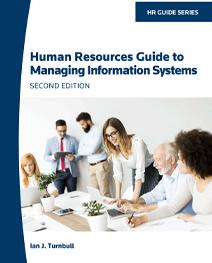
This book provides a detailed outline of human resource information management systems (HRMS) as used for human resource management, payroll management, and time management. Includes a discussion of new and emerging tools and technologies such as mobile devices, the cloud, virtual reality, chatbots, gamification, Bitcoin, artificial intelligence (AI), social media tools, big data and business intelligence, and analytics.
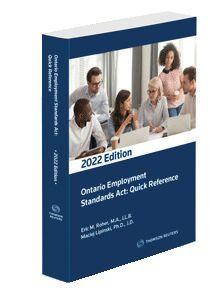
The Ontario Employment Standards Act: Quick Reference 2022 focuses on the key obligations for employers under this broad piece of legislation. This new edition includes information about major employment standards developments over the past 12 months, plus expanded sections including significant changes in the legislation made in response to COVID-19.
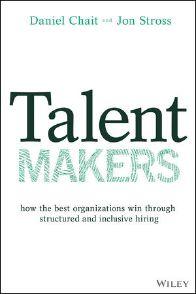
Essential reading for every leader who knows that hiring is crucial to their organization and wants to compete for top talent, diversify their organization, and build winning teams. Talent Makers will provide a step-by-step plan and actionable advice to help leaders assess their talent practice (or lack thereof) and transform hiring into a measurable competitive advantage. This is the book that CEOs, hiring managers, talent practitioners, and human resources leaders must read to transform their hiring and propel their organization to new heights.

Hi, we’re Salesforce. We help companies unify marketing, sales, service, commerce, and IT on the #1 CRM platform, so you can give every customer the personal experiences they love. Visit salesforce.com/360.