HEALTH: 6 avian influenza lessons from the U.S. What producers can learn from the ongoing saga stateside. by Treena Hein
28
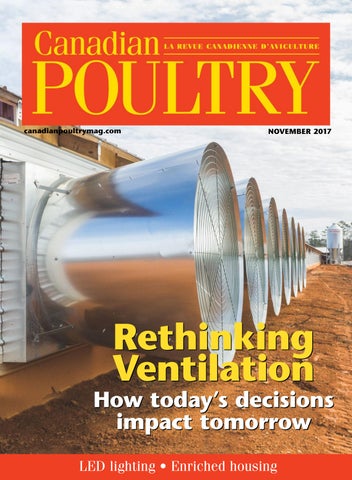
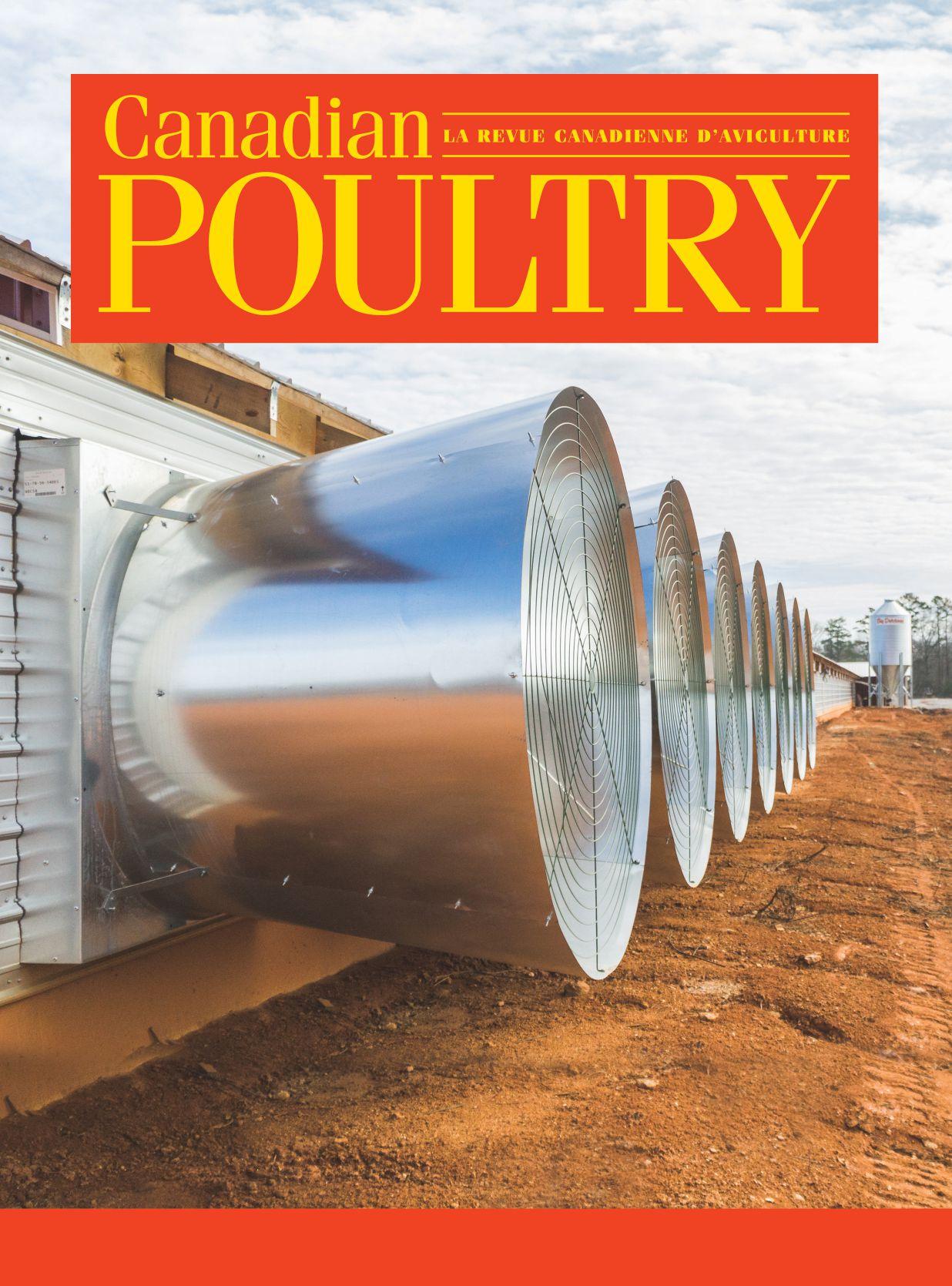
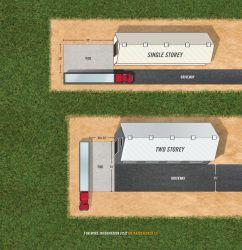
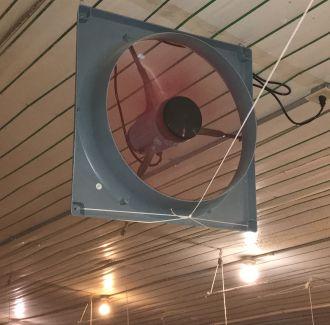
Rethinking ventilation
NUTRITION: Precision layer feeding
An approach for increased profits and sustainability. by Greg Page, Ph.D.
32
RESEARCH: Injurious pecking in turkeys Researchers look for underlying causes. by Lilian
Schaer
Farmer turned inventor
FROM THE EDITOR
BY BRETT RUFFELL
Helping to empower you
Aviary or enriched? Build a new barn or retrofit an older one? These are two huge decisions most egg producers face as conventional cages are phased out.
To help you arrive at the best answers for your business, we included a special supplement with the last issue of Canadian Poultry. Those stories, and other valuable content on the topic, can be found in the new Alternative Housing section of canadianpoultrymag.com.
Now, we’re partnering with Big Dutchman to bring you even more valuable information to consider before deciding which direction to take your layer operation in. On November 15th from 12:00 p.m. to 1:00 p.m. (EST), we’re hosting a webinar titled, “Phasing Out Conventional Cage Systems – What to Consider and How to Prepare”.
We’ll be joined by two of Big Dutchman’s leading experts on alternative housing, Bill Snow and Ron Wardrop. They’ll weigh in on the burning issues and also answer your questions. “Many don’t know where to start,” says Wardrop, the company’s Canadian sales rep. “So we’re trying to give them context – an outline of what each system does and the positives and negatives.”
He says the webinar will be purely educational. They won’t be promoting any one line of equipment. Rather, they want to ensure producers are committing their capital to a system that best suits their needs and their farms’ goals.
The process is farm-specific, Wardrop says. “With cage-free and fully enriched, you’re going to fit less birds into your barn. So now we look at how much quota you have, what are you looking at in the future for growth, how many birds you can fit into your barns now – those are some of the things that drive those conversations.”
His parting tip to producers before
November’s webinar: take in as much information as possible to make the best decision for your business. On that note, make sure you register for this can’t-miss webinar at bit.ly/BigDutchman to help prepare yourself for one of the biggest decisions of your career.
On the other end, Egg Farmers of Ontario (EFO) has been busy educating consumers about alternative housing. It recently rolled out a YouTube video series profiling family farms using different types of systems.
Bill Mitchell, EFO’s director of public affairs, acknowledges that many retailers and food service companies have already committed to sourcing cage-free eggs. Still, he says the organization wants consumers to see the different housing options for themselves.
That’s why they put a particular emphasis on explaining enriched colony housing. “Since it’s the ‘new system’, it’s the one talked about the least,” Mitchell explains. “That’s a story that hasn’t really been told.”
Thus, a handful of families explain what about the enriched system appealed to them, how it works and what type of management is involved. “It’s probably the best match you’re going to find between the hen’s welfare, egg quality and the farmer’s own health as well,” says a member of the Mulder family while explaining the benefits of furnished cages.
This type of feedback is the reason some experts are bullish on the future of enriched housing in Canada, which you can read more about on page 16. This despite retailers’ pledge to go cage-free. Wardrop’s forecast: “We see enriched pulling ahead of free-run because it seems to be better accepted by the farmers.” n
Occasionally, Canadian Poultry Magazine will mail information on behalf of industry-related groups whose products and services we believe may be of interest to you. If you prefer not to receive this information, please contact our circulation department in any of the four ways listed above.
As the egg laying industry continues to evolve, equipment manufacturing companies must do the same. At LUBING we are fully aware of our need to progress with the changing industry and that is why our culture of innovation is the reason for our success. LUBING is leading the way by offering a wide variety of products for today’s Cage-Free housing demands as well as bio-security concerns.
Nipple Drinking Systems
Pullets / Layers with and without LitterGuard Cups
Egg Conveying Systems
Curve conveyors customizable to nearly any application Belt Conveyors ranging from 18, 24, 36, and 48 inches (capable of delivering up 600 cases/hr)
Accumulator Tables
Custom-made, all-stainless tables for all situations
Perch Systems
Ergonomic design allows birds to perch comfortably Reduces stress and helps create a calm environment
Glass-Pac Canada
St. Jacobs, Ontario
Tel: (519) 664.3811
Fax: (519) 664.3003
Carstairs, Alberta
Tel: (403) 337-3767
Fax: (403) 337-3590
Les Equipments Avipor
Cowansville, Quebec
Tel: (450) 263.6222
Fax: (450) 263.9021
Specht-Canada Inc.
Stony Plain, Alberta
Tel: (780) 963.4795
Fax: (780) 963.5034
New executive director at CFC WHAT’S HATCHING HATCHING
C
Michael Laliberté will replace CFC executive director
Mike Dungate, who has held the role for over 20 years.
hicken Farmers of Canada (CFC) has announced that Michael Laliberté has been selected as the incoming executive director, replacing Mike Dungate, who has held the role for over 20 years.
Laliberté will assume the position on October 2nd with Dungate remaining in an advisory capacity until the end of December 2017.
With 26 years of experience at CFC, most recently as director of operations, Laliberté brings a wealth of corporate knowledge and experience.
In his most recent role, he managed the finance unit, the human resources and administration unit, and the information systems within the market information and systems unit.
He has been serving as the
second-in-command to the executive director and has provided leadership and strategy on the financial affairs to support the executive management team, the finance committee and the board of directors as well.
A graduate of the Queen’s University executive management program, who also holds a management certificate from the Sprott School of Business, Laliberté will be the chief staff person reporting to the board of directors, and serve the same role with the executive committee and the governance committee.
A 15-member board of directors comprised of farmers appointed by the provincial chicken marketing boards determines CFC directions and policies.
Non-farmer directors — one from the restaurant industry, another from the further processing industry
and two representing the processing industry — are appointed by their respective national associations. This way, CFC and its stakeholders work together on behalf of Canada’s chicken industry, from farmer to consumer.
In addition, Laliberté will oversee a 25-member staff complement that promotes the consumption of chicken, develops and audits on-farm food safety, animal care and specialty production programs on 2,800 farms across Canada and has an active government and public relations program.
“The board of directors undertook a robust, external recruitment process to find the right candidate,” chair Benoît Fontaine explained in a press release.
“We are pleased that Michael Laliberté will be bringing his vast experience to the role and we look forward to working with him.”
COMING EVENTS
London Poultry Show rebranded
NOVEMBER 2017
November 7, 2017
Following the 60th edition of the London Poultry Show, organizers have rebranded the annual event the Canadian Poultry Expo for 2018.
The show, a partnership between the Western Fair District and Poultry Industry Council, has gained international recognition and support with exhibitors and industry attendees coming from across North America and from overseas.
“We are proud of the success and the size of this show, which just keeps getting bigger each year,” PIC executive
director Keith Robbins said in a press release.
“The location is perfectly situated to draw attendees from Northeastern United States and from all across Canada. You owe it to yourself
CFO rolls-out modular loading engagement series
ONTARIO ONTARIO
The Ontario chicken industry continues to experience significant growth. At the same time, the sector is embarking on some of the largest transformational shifts in its history. Ontario’s recent shift towards modular loading enables safe handling and transportation of birds and has many animal welfare, worker safety and operational efficiency benefits.
In July, Chicken Farmers of Ontario (CFO) enacted a new modular loading regulation that was designed in consultation with industry, and is intended to support this shift.
Over the past few weeks, the CFO board of directors, district committee representatives and staff has been educating farmer-members and industry stakeholders through a series of meetings that took place across the province.
The meetings were held to ensure that the farmer-member and processor communities have a comprehensive understanding of the new regulation.
The information that was communicated at these meetings is now available on ontariochicken.ca and farmermembers are encouraged to
to make it to the April show if you want to evaluate new technology, attend the education sessions or network with others in the poultry sector.”
The 61st edition of the event goes April 4 and 5, 2018.
visit the website to learn more about the new regulation and this transformational shift.
Bernier drops push to end supply management
Maxime Bernier, former conservative leadership candidate, says he intends to drop his signature leadership campaign promise – the end of supply management – from his efforts to shape Conservative policy on the innovation file, where he’s now the critic.
While it remains his personal belief, party members didn’t vote for it and whether
it goes forward as policy also rests with next year’s convention, he says.
For now, he’ll push for inclusion of another key idea from his platform: the end to any federal support for corporations. “We’ll have these discussions at the shadow cabinet and after that we’ll take a position in the House,” Bernier says.
Poultry Innovations Conference and Banquet London, Ont.
For more information, visit: poultryindustrycouncil.ca/education-extensionevents/innovations-conference
For more information, visit: fmc-gac.com/programs-services/agriculturalexcellence-conference
November 29, 2017
Eastern Ontario Poultry Conference St. Isidore, Ont.
For more information, visit: poultryindustrycouncil.ca/education-extensionevents/eastern-ontariopoultry-conference
JANUARY 2018
January 25-27, 2018
Pacific Agriculture Show Abbotsford, B.C.
For more information, visit: agricultureshow.net
January 29-30, 2018
International Poultry Scientific Forum Atlanta, Ga.
For more information, visit: ippexpo.com/ipsf
January 30-February 1, 2018
International Production and Processing Expo Atlanta, Ga.
For more information, visit: ippexpo.com
HATCHING HATCHING
McDonald’s expands its move away from antibiotics I
n August, McDonald’s announced it is broadening its move away from serving chicken fed with certain antibiotics.The fast-food titan said it would no longer buy chicken raised in other countries that has been treated with antibiotics also used by humans and deemed important to fighting serious infection. Two years ago, it announced a similar policy for its U.S. suppliers.
Routinely feeding antibiotics to animals raised for food has been linked to the surge in resistant strains of bacteria that cause serious human illnesses and are blamed for about 23,000 deaths annually and $20 billion in healthcare costs, according to the U.S. Centers for Disease Control and Prevention.
Under the new blueprint, McDonald’s will stop purchasing poultry treated with a small number of antibiotics that the World Health Organization has said often are the only drugs available to fight serious infections in humans.
Earlier in 2017, McDonald’s released an update to its Global Vision for Antibiotic Stewardship in Food Animals (VAS), which seeks to preserve antibiotic effectiveness. As a framework for antibiotic stewardship, the VAS seeks animal production practices that reduce and, where possible, eliminate the need for antibiotic therapies in food animals.
With that said, McDonald’s understands that animals, like people, get sick and require treatment. Caring for sick animals is consistent with the company’s long-standing commitment to animal health and welfare and to improving the lives of animals in its supply chain. Engaging farmers, producers and veterinarians in the responsible use of antibiotics is key to its vision of preserving antibiotic effectiveness through ethical practices.
With the VAS as the guiding principle, McDonald’s will develop species specific policies outlining the requirements and implementation timelines for suppliers providing chicken, beef, dairy cows, pork and laying hens for use in McDonald’s restaurants.
Poultry Industry Council: CELEBRATING 20 YEARS OF SERVICE TO THE INDUSTRY
What are the most significant changes you’ve seen in the Canadian poultry industry during the past 20 years?
“The biggest one has been the change in genetics for all breeds. Egg production has gone from an average of about 315 eggs per leghorn layer to over 330 eggs. Both broilers and turkeys have had increased growth rates and dramatically reduced feed conversions. There have also been significant improvements in nutrition to help facilitate these increases in productivity, with denser feed rations and higher fortification. Another change has been the increased awareness of animal welfare, resulting in better climate control in the barn. Today’s facilities not only monitor barn static pressure and temperature but also regulate humidity, ammonia and daily water and feed intake. Increased knowledge of animal behaviour has also led to more spacious enriched cage or freerun barn housing systems that allow for natural hen behaviours.
There has also been a reduction in the number of primary poultry breeding companies in the world. This has led to concerns that we may be losing some genetics, and there have been some efforts by universities and individuals to try and retain heritage strains. Also, interest in antibiotic-free production has led to more use of vaccines, probiotics and other natural compounds.”
What do you see ahead for Canada’s poultry industry?
“I think the future looks very bright with increased consumer acceptance and consumption. I look for increases in productivity to continue with better genetic selectivity and further nutritional research. I think consumers will want to be even more informed of how poultry is farmed. I believe there will also be a greater emphasis put on reducing antibiotic use in poultry. Lastly, I also expect the technology used to raise poultry to continue to develop to give producers more control over the flock environment.”
Charlie Elliott, Ontario poultry business manager at Masterfeeds.
GAME CHANGER
Cobb MV Male
• More efficient breeder
• Tested globally for 3 years (Asia, Africa, Middle East, North America and South America)
• Performs well in all environments and nutritional programs
• More efficient broiler
• Better FCR at lighter weights (advantage increases as broiler reaches heavier weights)
• Better livability for life of flock
PROVEN PERFORMANCE IN THE FIELD
Health Rethinking ventilation Decisions have long-term impact.
by Melanie Epp
As the elimination of the preventative use of antimicrobials in poultry production fast approaches, it’s time to take a closer look at ways to prevent stress and illness in the barn. One approach is by providing the optimum environment for the birds – proper ventilation is a key component of that environment.
In July, Chicken Farmers of Canada announced the second phase of its antimicrobial use strategy. Since the successful elimination of Category I antibiotics for disease prevention in production, the farmer-led organization has established timelines to eliminate the preventative use of antimicrobials of human importance. Preventative use of Category II antimicrobials will be eliminated by the end of 2018 with preventative use of Category III being eliminated by the end of 2020. The decision will require producers to reevaluate and tighten on-farm management practices to prevent disease from occurring.
OLD DEVICE, NEW APPROACH
University of Georgia’s Brian Fairchild is applying for a research grant to see if higher volume circulation fans can be used to dry out floors and remove excess moisture from the air.
When it comes to broiler production, it’s all about providing the optimum environment for the birds, ventilation expert Brian Fairchild explains. Fairchild is a professor of poultry science at the University of Georgia.
“What you’re trying to do in the simplest terms is you’re just trying to prevent stress,” Fairchild says. “When you go into a program where you’re not going to use any type of products to help with gut health or to give those birds a little bit of help fending off various parasitic organisms such as coccidiosis or necrotic enteritis, your environmental control is really going to be your first line of defence.”
As producers move away from the preventative use of antimicrobials, Fairchild says they will likely rely more on vaccinations,
as well as probiotic and prebiotic treatments that help build and maintain gut health. The environment the birds are kept in is just as important to maintain, he adds. “You want to try to make it as inhospitable to organisms as possible and a lot of that’s just moisture control,” he says.
In housing, there are several sources of moisture. The first is the watering system itself. “They’re designed to minimize water wastage, but even on the best managed water line, when those birds hit those drinkers not all of it goes in their beaks,” Fairchild explains.
To make matters more complicated, birds only retain 20 per cent of what they drink. The other 80 per cent is either excreted or lost to the environment through respiration. “It’s that water that you really need to get rid of to make sure we’re ventilating adequately to remove that moisture,” Fairchild says.
He adds that producers who move to antibiotic-free programs tend to see wetter houses. “The manure’s got a little bit higher moisture content to it, so you’ve got to be aggressive with your ventilation to keep that moisture out,” he says. “That’s why we feel like we should be trying maintain a relative humidity between 40 and 60 per cent.”
Currently, Fairchild is applying for a research grant to see if circulation fans can be used to dry out floors and remove excess moisture from the air. “Circulation fans are not new,” he says. “We traditionally put them in houses to help break up that temperature stratification from ceiling to floor, and to move air from warmer parts of the house to cooler parts of the house.”
The plan, he explains, is to look at how higher volume circulation fans can be used to keep relative humidity between 40 and 60 per cent. “We’re going to be evaluating coccidiosis sporulation rates. We’re going to look at litter moisture. We’re
going to look at footpad dermatitis, which is an animal welfare indicator. And then we’ll look at scoring the system,” Fairchild concludes. “We’ll see where it leads from there.”
BUILDING A NEW BARN? DO YOUR HOMEWORK
Mike Czarick, a poultry science specialist from the University of Georgia, cautions Canadian producers to really do their homework before building new barns. Czarick says U.S. producers are more knowledgeable when it comes to building new housing, simply because they operate in an integrated system. “Most of our poultry companies in the U.S. are very knowledgeable on how to design what’s coming down the road because they’re always building new houses,” Czarick explains.
“The challenge I’ve seen in Canada is that each grower is essentially making their own decision,” he continues. “And since they only build a house every 10 or 20 years, they don’t stay up on things. As a result, they rely too much on other people, especially equipment people, to say what they should build.
“I’ve gone to a number of farms in Canada where people are building brand-new 30-year-old houses,” Czarick says. He suggests that instead of relying on equipment dealers, producers look to universities and extension programs, both in Canada and the U.S. A good resource, he says, is the University of Georgia website poultryventilation.com.
“Get feedback from other people once you’ve come up with a design of what you think you’re going to do,” he recommends. “Look at the advantages and disadvantages before you make that jump.”
Kevin Thompson, eastern and central Ontario territory manager for Weeden Environments, knows the challenge of switching to antibiotic-free production well, as his family broiler operation converted in 2011. “We in Ontario are actually at a
“Your environmental control is really going to be your first line of defence.”
pivotal time in our industry, particularly in broilers,” Thompson says. “It is entirely possible that we will lose all antibiotics around 2020.
“It’s relevant to this conversation because antibiotics are really quite helpful in mitigating the effects of stress on birds,” he continues. “A stressed bird – their immune system functions less optimally than a bird that’s not stressed.”
Thompson is particularly concerned about introducing new technology that could be more hype than help. What matters now, he says, is creating an environment that minimizes stress in birds. Producers should compare technology, he says, to find what is most fitting for their farm.
“Farmers need to keep that paradigm front and centre in their mind about evaluating any new technology,” he says. “If they’re going to buy a technology because it makes their life easier, that’s okay, but that needs to be a conscious decision.
“They have to be aware of the trade-offs they might be making because the decisions that cost them a couple points of feed conversion here and there over the last few years – those are going to become flock health decisions,” he continues.
“The financial and bird welfare impact of those decisions are going to change as antibiotics are used less and less,” Thompson concludes. “I feel quite strongly about that.” n
CPRC Update Management and footpad dermatitis
Footpad dermatitis (FPD) in broiler chickens is characterized by ulcerated lesions on the underside of the foot, and is associated with poor litter conditions – typically characterized by high moisture and ammonia levels. Broiler FPD presents itself within the first two weeks of age and increases in severity as bird body weight and footpad (FP) contact with litter increases.
Severe lesions are associated with inflammation and pain, thus making FPD a welfare concern. Literature estimates 11-82 per cent of broilers have varying forms of FPD, with FP quality decreasing during winter months as barn moisture levels increase. This is of particular concern in cold weather climates such as those experienced in Alberta and across much of Canada.
Most studies investigating FP quality have concentrated on the impacts of stocking density. These studies have been performed in countries that differ climatically from that of Canada, particularly that of the Canadian Prairies. In addition, litter materials used in these studies differ from those that are practically available in Alberta.
As both climate and litter materials are potential factors that contribute to higher litter moisture levels, there is a need to evaluate poultry litter and flooring materials used within the Prairies climate to determine whether there are strategies that can be employed to improve FP quality in Alberta’s broiler barns.
THE APPROACH
Dr. Clover Bench from the University of Alberta aimed to determine on-farm management practices that influence FP quality. Eight commercial broiler producers, representative of geographical regions
throughout the Alberta broiler industry, were invited to participate in this project. Producers were chosen based on their history of FP dermatitis prevalence with both high and low FPD prevalence represented amongst the producers.
THE EXPERIMENTS
On-farm management survey data was collected from four flocks at each producer facility. Survey questions were chosen based on a thorough review of risk factors that contribute to the development of FPD in the scientific literature, and specifically focused on litter moisture and environmental mitigation strategies of Alberta broiler producers in FPD management and prevention. On-farm management surveys were completed during both winter and summer season flock cycles to capture any differences in management practices during both seasons. Broilers were assessed for FPD. Litter was also assessed for moisture content in addition to completion of the on-farm management survey. The relationship between on-farm management practices and on-farm prevalence of FPD was analyzed for each flock.
THE FINDINGS
Management practices, such as ventilation, barn age, lighting system and intensity, were not associated with significant differences in FP dermatitis prevalence. Additionally, no significant differences in prevalence of FPD between winter and summer months were observed in the current study. However, other factors in the summer may not have been accounted for in the survey such as misting, which may have resulted in wet litter conditions similar to that which is experienced in the winter. Survey results
showed that the majority of Alberta’s broiler flocks are reared on wheat straw, as it is locally available and can be grown on-farm at a low cost. However, a correlation was found between the use of wheat straw bedding and FPD prevalence on-farm. Additionally, litter depth was correlated with FPD on-farm.
THE NEXT STEPS
Bench and her research colleagues plan to continue their research and specifically focus on the effects of litter materials, flooring types and litter management on the prevalence of FPD within the Canadian climate. In addition to this, she has recently been focusing her research on investigating genomic markers (SNPs) associated with FPD, to better understand the complex interplay between management practices on farm and broiler genetics. n
This research is funded by CPRC/AAFC under the Poultry Science Cluster Program, Alberta Chicken Producers and Lillydale Inc.
CPRC, its board of directors and member organizations are committed to supporting and enhancing Canada’s poultry sector through research and related activities. For more details on these or any other CPRC activities, please contact The Canadian Poultry Research Council, 350 Sparks Street, Suite 1007, Ottawa, Ontario, K1R 7S8, phone: 613-566-5916, fax: 613-241-5999, email: info@cp-rc.ca or visit us at www.cp-rc.ca.
The membership of the CPRC consists of Chicken Farmers of Canada, Canadian Hatching Egg Producers, Turkey Farmers of Canada, Egg Farmers of Canada and the Canadian Poultry and Egg Processors’ Council. CPRC’s mission is to address its members’ needs through dynamic leadership in the creation and implementation of programs for poultry research in Canada.
Canadians want fresh, high-quality, Canadian chicken and our farmers are proud to raise it to some of the highest standards for food safety, animal care and sustainability.
That’s what “Raised by a Canadian Farmer” means.
Production Lighting the way New insights into the role of LEDs.
by Melanie Epp
In caged housing, laying hens respond well to artificial lighting. But as producers transition from traditional cages to aviaries, enriched colonies and free-range systems, questions about lighting will surface.
Why is lighting important for poultry? And how do you choose the right lighting for each system? Two poultry specialists, Dr. Ian Rubinoff, European account manager and technical services veterinarian at Hy-Line International, and Karen Schwean-Lardner, professor at the University of Saskatchewan in the department of animal and poultry science, share their expertise.
LIGHTING PRIMER
LIGHTING FOR BROILERS
Research on both pullets and broilers has shown that blue and green LED lights enhance growth.
In understanding the role of lighting in poultry production, it’s important to first know a bit about their biological makeup. In humans, light reaches the brain through the eyes. In chickens, light penetrates not only through the eyes, but also through the top of the skull in the pineal gland and through the pituitary gland in the hypothalamus. While we have just three cones (red, blue and green), chickens have four: red, blue and green, as well as a cone for ultraviolet light.
There are several different components to light. The first component is wavelength, which gives us colour. Chickens have the ability to see different wavelengths, and each one of those wavelengths has the ability to penetrate slightly different from the others.
Schwean-Lardner says that some of the research that’s just come out in the last few years is really looking to take advantage of how light penetrates into the brain.
The second component has to do with intensity – how light and how bright light appears. Light intensity impacts birds in a variety of ways. Darkness, for example, can be used to control aggressive behaviour.
DAY-NIGHT CYCLE
The third component of light is day length – how many hours of light and dark there are in a given lighting program for birds. This is Schwean-Lardner’s area of expertise.
“Years ago, it was not uncommon for producers to have 23 hours of light in the barn, and some of the reasons were good reasons,” she says. “They thought if birds can see in their environment, they can go where they want all day long. They can feed. They can drink. They can be involved in social behaviours. But the research we did here a couple of years ago shows that that’s not what happens.”
Like humans, poultry need a daynight cycle. When birds have a regular day-night schedule, they develop the proper diurnal rhythms, explains Schwean-Lardner. This is important for functions like melatonin production.
“It is a normal cycle that is so important for birds because it drives things like immune function and growth rate and reproductive hormones,” she says. “By giving that day and night cycle, you improve the health of the birds, you improve the immune status, you improve mobility and you improve alertness.
“Birds tend to be more active when they have a day-night cycle,” she continues. “They’ll actually grow better, which is really interesting and totally opposite of what was thought 10 years ago.”
LED LIGHTING
Another area of research that is of interest to Schwean-Lardner is the impact of using LED lighting in broiler barns. Earlier this year, the University of Saskatchewan received a $45,000 grant from the fast food burger chain A&W to help study just that. The study will examine mobility, behavior and physiological welfare of poultry living under LED lighting. Part of the work
will also look at the impact of using different coloured lights.
Dr. Ian Rubinoff, Hy-Line International, spoke at the International Egg Commission’s Global Leadership conference in Bruges, Belgium in mid-September, sharing general observations, as well as recent findings in LED lighting. Generally, he said, it’s best to use cooler lights for pullets. “There’s a fair amount of research out there that says more green and blue spectrum helps to stimulate body growth,” he said.
“The exciting thing we’ve found also on the practical side is what impact light intensity has for pullets and what type of bulbs we should be using, especially as more and more people start using infrared heat treatment,” he continued.
Research shows that access to feed and water during the early stages of life is critical to the growth and success of that pullet flock. “The more light you can have inside the cage the better,” Rubinoff said. “So we really like to have bulbs that have very broad stretch into the cage or we want to have bulbs that are inside the rearing cage.”
In flat deck or flooring systems, he said producers want to make sure that their bulbs reach all the way down to the floor at minimum 30 lux, although 50 lux is better. “We also like to use dimmable bulbs, especially for the pullet area,” he said. “This is really essential because after the initial period we really like to decrease the light intensity to help the pullets grow and help stimulate them to eat.”
Laying hens, he continued, need to have enough red spectrum light. “We really want to make sure that whatever bulbs we’re buying, we buy the warm bulbs or the ones that are less than 3000k,” he said. “This can range from lights that have enhanced red spectrum or ones that are white or yellow.”
For traditional stacked deck or belted houses, for both cages
and colony, the goal is even light distribution at all levels, said Rubinoff. “One thing that always interested me is that in modern chicken houses we try really hard to make things consistent, regarding food, ventilation and water,” he said. “And then we put lights in every four metres where we see this huge change in light environment by cage or by colony, without any consideration for what impact it may have on the chicken.
“For anyone who’s considering putting in a new caged facility or colony facility, I would encourage trying to go for a consistent lighting profile where either you have a bulb that evenly lights all the levels or you have a linear light that gives no gaps in light intensity between the different areas,” he continued.
For those moving into aviary or free-range systems, lighting gets a little trickier. Rubinoff believes that using LED lighting in these types of systems will provide more consistency, especially for birds with access to the outdoors.
“In some internal research we have noticed that when you move birds from an LED environment into a florescent environment that there is a scare response in those birds because they really are frightened by the difference and change in that light environment,” Rubinoff said. “Consistency is key.”
Hy-Line has also conducted some cost benefit studies to investigate how long it takes to make a return on investment when switching to LED lighting. At an average cost of US $0.10 per kw of energy, when incandescent lights are replaced with a standard LED, the return on investment was less than a month, Rubinoff said.
“The fastest I found was in 17 days your savings in energy paid for the LED bulb when you were using one of the less expensive LED bulbs,” he explained. “This is something I would encourage you to look at.” n
Hy-Line International’s Dr. Ian Rubinoff says it’s important that laying hens have enough red spectrum light.
Housing
The outlook for enriched
The future of furnished cages in Canada.
BY TREENA HEIN
Numerous major North American food makers, restaurants and retailers have formed a united front committed to sourcing only cage-free eggs by 2025. That being the case, it seems inevitable that most producers will shy away from enriched housing as the industry phases out conventional cages.
South of the border, the transition so far to free-run housing has been rapid and widespread, but “the problem is that the market currently doesn’t want this many cage-free eggs,” according to Terrence O’Keefe, content director of agri-business for WATT Poultry USA. In a July editorial blog post entitled “U.S. shift to cage-free eggs causing market disruption,” O’Keefe stated that “it will continue to be a bumpy transition for the cage-free egg market, unless major egg purchasers set and stick to interim goals for cage-free egg purchases.”
Canadian Poultry asked Egg Farmers of Canada (EFC) how much demand there would be for free-run eggs versus enriched colony eggs here in Canada in the coming years. CEO Tim Lambert says only that “we continue to see growth across all egg varieties. Our farmers strive to meet and respond to changes in market demand, and strive for balance – that is, avoiding supply shortages and/or the production of eggs for which there is no market.”
As conventional cages are phased out, Lambert refuses to speculate about which factors will drive a farmer’s decision to switch to either an enriched or free-run
Poultry housing maker Big Dutchman reports seeing an equal split between free-run and enriched cage installations in Canada.
housing system (the two most common options). He says producers “will make decisions based on their unique set of circumstances. The trade-offs between enriched housing, free-run, aviary andfree-range production systems are well documented and widely available.”
Canadian Poultry contacted two major Canadian egg companies, but they are also unwilling to give information about the current status and future use of free-run barn housing versus enriched colony cage housing. Both Gray Ridge Egg Farms, based in Strathroy, Ont., and Burnbrae Farms, sole egg supplier to McDonald’s Canada, say the information is confidential. Burnbrae leadership does
say “we and the farmers who supply us with eggs are building hen barns according to what consumers are buying and the trend hasn’t changed. We have seen slight increases in purchases of specialty eggs like organic and free-run, but the slight increases have stayed consistent over the years. There has been growth in other housing types. However, the vast majority of eggs sold in Canada are still from hens in conventional and enriched housing systems.”
Burnbrae adds that it is following the industry-wide commitment presented by EFC in early 2016 to cease the installation of new conventional housing and move all egg production to enriched
Housing
housing, free-run, aviary or free-range by 2036, assuming the current market conditions prevail. At that point in time almost two years ago, EFC stated that about 90 per cent of egg production was in conventional housing. EFC also stated that it expects the Canadian egg industry to achieve about a 50/50 mix of conventional and non-conventional housing by 2024, and will reach about 85 per cent of hens housed in nonconventional housing in 2030.
MANUFACTURER PERSPECTIVE
For its part, poultry housing maker Big Dutchman is presently seeing a 50/50 split on free-run versus enriched cage installation in Canada, but Canadian sales lead Ron Wardrop adds, “As the regulations have become clear, we are seeing more interest in enriched cages. We see enriched pulling ahead of free-run because it seems to be better accepted by the farmers. Ultimately, the market will drive the changes. Whether we have more free-run [installations] will depend if the market demand continues for the eggs.”
Poultry housing company Chore-Time had no comment about what percentage of its recent installations were free-run versus enriched on Canadian eggs farms. As to the future, layer
manager Frank Luttels says, “We see that the cage farmers are losing their fear for real cage-free systems and are stepping away from the combi-style systems – on the one hand because of the better results in European Union-style aviaries, and on the other hand, because public opinion doesn’t favor systems that are related to a cage. Also, management in EU-style aviaries is easier. More and more farmers are realizing that fact.”
Wardrop agrees that the level of management required to operate either system differs and can be a factor for some farmers. “The free-run can require more management time,” he says. “But the largest driving force is the market requirements and is the market willing to pay the extra costs associated with free-run.” He notes that among the many factors that go into making the decision on cage-free or free-run are the premiums currently being offered by the grading companies long-term for free-run eggs as demanded by the market.
In Luttel’s view, of all the important factors involved in the housing transition decision, farmers should look at systems in terms of what’s good for both the birds and for the farmer. “You are the one who has to work with the system, so if possible, work with it for a day with someone else to experience it for yourself,” he suggests. “That’s important, because you don’t buy just a truckload of steel, you buy an expensive piece of equipment that you have to work with every day for a long time.” He adds, “Price is secondary. The joy of a low price is for weeks, and the joy of a good system is there for many years. Buy from an experienced company that talks chickens and not metal. Also, buy at a company that can help you afterwards with bird husbandry recommendations, which could be very helpful to prevent beginner mistakes.”
Luttels also advises producers to start looking for possible systems early because when you are in a hurry, you can easily make mistakes. Circling back to egg demand, he adds that farmers should also try to get a long-term commitment for the sale of the eggs before they make a housing decision. “It is important to be sure,” he says, “that your investment is also secured for a long time.” n
product
Some experts see enriched eventually pulling ahead of freerun because it seems to be better accepted by producers.
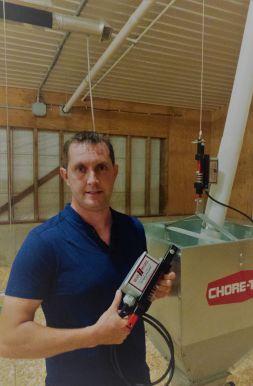
Necessity is the mother of invention, as we all know, but Wayne McCauley knows this better than most. He’s nothing less than the inventor and commercializer of a new disruptive poultry-feeding technology.
McCauley has had a lifetime of poultry farming, having been raised on an Ontario turkey farm and working as the manager at Schlegel Poultry since it began operations 10 years ago. During his 30 years of farming poultry, he’s obviously seen a lot of different products and techniques for daily operations – and, of course, he’s also experienced the frustrations and aggravations of equipment failures.
When Schlegel’s Ailsa Craig, Ont. operation was just getting going and McCauley was picking out equipment for the barn, he “was delighted to find out we were using a spring style, weight-activated feeder control – an alternative to the challengeplagued flap design of hopper control.”
HELPING HAND
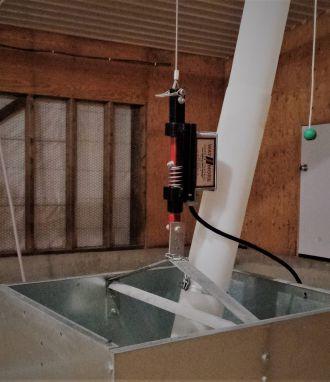
The device attaches to the hopper suspension cable and the other end is affixed directly to the hopper box hanger. It successfully eliminates feed outage situations that occur when using feeders with control switch failure points.
However, it wasn’t long before the feeder control began to break down. “Some problems were similar to the flap-style switches, in relation to micro-switch failures and causes, and others were unique to its own design,” McCauley says. “I recognized some areas where these problems could be rectified, and also [how the problems] highlighted the importance of protecting the micro-switch, without compromise.”
A BETTER FEEDER CONTROL
It wasn’t long before McCauley had a vision in his mind of what
a better feeder control needed to do, and took the plunge. First, he thought the entire design through. Then he created a prototype that allowed for testing of not only its function but also its performance in a real barn, under dusty and warm conditions, during cleaning and so on. After the prototype proved itself, McCauley began work on a more compact design, and with that the Way-More Hopper Control was born.
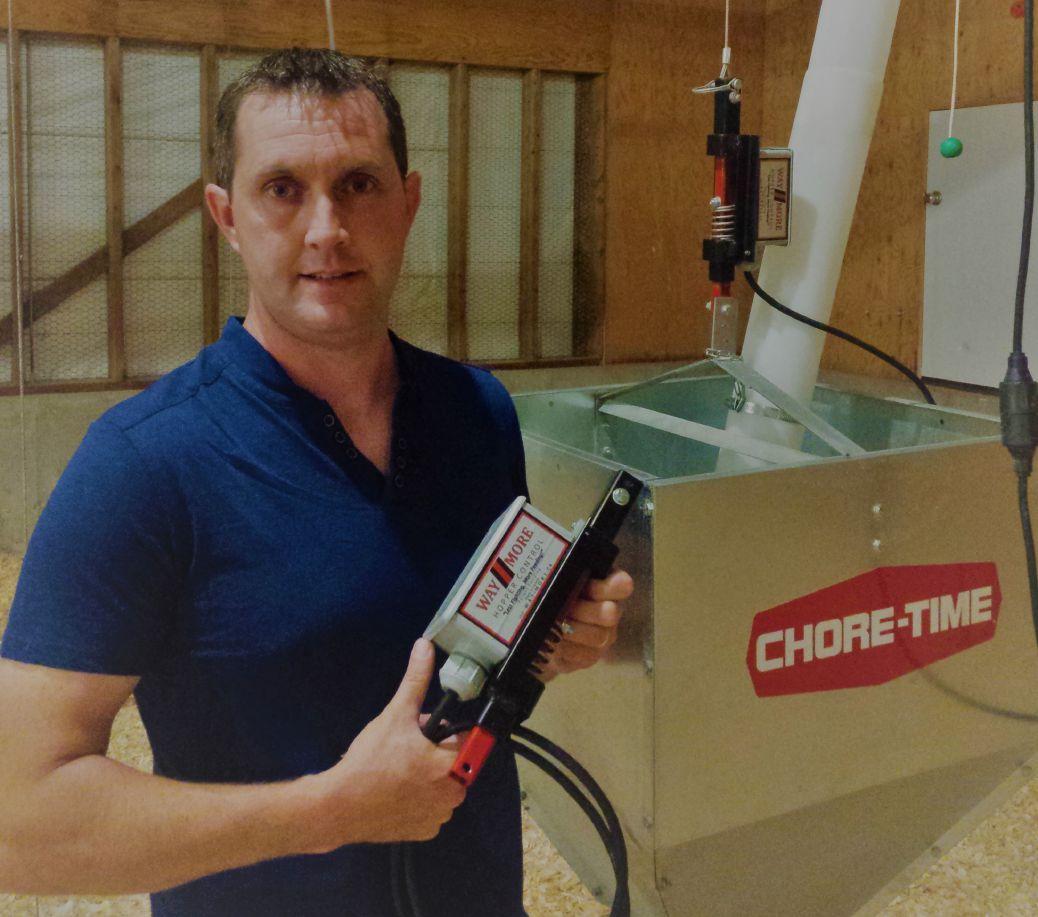
The device successfully and continuously operates feed fill systems, eliminating outages that occur when using feeders with control switch failure points. The Way-More attaches to the hopper suspension cable and the other end is affixed directly to the hopper box hanger. When the hopper fills with feed and its weight increases, the Way-More extends. Once it reaches beyond a certain point, it will turn off the switch and stop the fill auger.
There are no sensitive electronics or proximity sensors in the design – technology that McCauley says is sensitive to handling and various conditions and can also fail at random. “With its square tubular design, when affixed to the hopper as required, my device is not permitted to rotate,” he adds. “This overcomes a challenge where rotation causes a micro-switch to fail to contact, or contrarily causes excess pressure and damage to a micro-switch and its protective covers, causing a failure.”
McCauley also designed the Way-More with a greatly overrated micro-switch electrical load, one that will easily absorb current and will not burn out prematurely or even in the event of motor shorts or short cycling of the motor (which can be
caused in other manufacturers’ designs by slight bumps or due to dust or moisture holding a micro-switch in the closed/run position). “It’s a reality that dust, water, flies, other insects and clearance holes required for the micro-switch operation affects reliable operation of feeding systems,” McCauley explains.
“I am using a micro-switch design that requires a contacting force to apply pressure to the lever and turn on the circuit, so you would expect something somewhere must penetrate the enclosure and contact the lever. To make this coupling of force, I utilized the help of magnets and their specific force of repelling. It provides an invisible medium to apply pressure/ force on the micro-switch lever, throwing the switch without ever having to penetrate the enclosure. Very securely bonding a magnet to a micro-switch lever, enclosed within a sealed electrical environment, restricts any contaminants from affecting the operation of the micro-switch.”
On the device, there is another magnet on a sliding tube. When positioned in the empty state of the hopper, the magnet’s close relation holds the micro-switch in a closed/run position. As the feeding system is filling the hopper, the mass of the feed is increasing in the hopper and the magnet’s interacting forces become weaker, causing the spring action in the micro-
switch to snap open the circuit to stop the filling process.
And the cycle continues when the feed is pulled through the system, causing the hopper to become lighter in mass and the spring pulls it up tight, bringing the magnet’s interacting force into a range overpowering a spring force in the micro-switch, causing it to close and run the fill system again. McCauley has patented his switch design and the entire process by which the Way-More fills and controls a hopper fill system.
THE ROAD TO MARKET
Along the way, there were challenges with sourcing readily available materials that would work within the design constraints, as well as finding the most compatible magnets. All in all, McCauley built and trialled over 40 devices. “I tried destructive testing and abusive testing well above its normal day-to-day experiences and I was unable to get it to fail,” McCauley recalls.
“After pressure-washing it and seeing an instance where the device and hopper box blew across a driveway and into a field like tumbleweed on a windy day, I picked it up and plugged it in and it ran perfectly. These units are now over six years old
After a lifetime of poultry farming, Wayne McCauley invented the Way-More Hopper Control partly out of frustration with feed equipment failures.
and still running perfectly. They have passed the testing phase with excellent results and ready for marketing.”
On the way to commercialization, additional challenges awaited him, as is normal. To bring the device to market meant McCauley had to cultivate confidence that the product he had developed “has a justified place in the industry to fit in and work, but it also has the potential to seriously disrupt the current products available.” Time was always scarce with his full-time job and the rest of his life, and he had to fit in various tasks during the weeks and weekends whenever he could, including more recently working on the Way-More branding, marketing strategies and planning the roll-out and production process.
“I currently market the product through the website and through word of mouth… [and] I have had the chance to talk about my device at a local producer update
Technology
meeting and throughout the trade shows or other networking events,” he notes. “I hear of Way-More’s feeding device coming up in discussions from long distances away.” McCauley has sold over 100 units throughout Ontario and he has a steady stream of orders.
“To have developed a capable component for the industry and commercialized it on my own is a great feeling,” he says. “I am very proud of my progress and success so far, and looking forward to directing it into the mainstream competition. I am confident that my device will excel in the industry and I would put it up against anything out there.” McCauley plans to establish a manufacturing facility and set up distributorship across Canada and into the U.S., so that Way-More becomes a country-wide recognized company, “finally,” he says, “putting an end to the problems with feeding systems, forever.” n
Electricity Independence
Featuring YANMAR continuously run combined heat and power units
Faromor CNG Corp. have introduced electricity independence for today’s farm operations. As electricity prices continue to increase operators can gain significant utility cost savings. With ease of installation and high reliability these units deliver an energy balance by continuously monitoring power demand and output. By utilizing a highly efficient engine and capturing nearly all the remaining heat, the YANMAR micro CHP system is up to 2.6 times as efficient as current centralized power. They are able to generate the right amount of power at the right time. At Faromor, we strive to provide sustainable solutions.
Pathway to invention
The steps, some famous Canadian examples and what’s to come.
There are five general steps to inventing any new product:
1. A need is identified for something that doesn’t exist, or something better than what currently exists
2. The idea
3. Development of the idea, which can include patent application and securing of funding at this point
4. Creation and testing of prototypes and iterations
5. Commercialization, including marketing and manufacturing
Of step 4, poultry farmer Wayne McCauley, inventor of the Way-More feeding device, says exposing his product to extreme barn conditions was key for him to be sure it was worth bringing to market. “It was a long process, and exposure to repeated washing, maximum dust, maximum flies and so on proved that the microswitch was completely insulated from the environment,” he says.
Some notable made in Canada inventions include insulin, peanut butter, Superman, the snowmobile, IMAX and more. On the farming front, groundbreaking Canadian creations include canola, the CracklessEgg wireless sensor, the BIOvator composter and Be Seen, Be Safe biosecurity technology. A very new innovation from Saskatchewan is DOT, a precision ag equipment platform that can be run by remote control or in completely autonomous mode.
Canadian agricultural innovation is recognized every year through competitions such as the Premier’s Award for Agri-Food Innovation Excellence in Ontario and the national Farm Credit Canada Innovation Awards.
And stay tuned. In the next issue of Canadian Poultry, you will get the latest details on the extraordinary new Canadian invention that identifies the gender and fertility of chick embryos.
Health
6 avian influenza lessons from the U.S.
What the Canadian poultry industry can learn from the ongoing saga stateside.
BY TREENA HEIN
According to the U.S. Department of Agriculture (USDA), a total of 50.4 million birds were affected by highly pathogenic avian influenza (HPAI) in the U.S. in 2015. It was significantly less in 2016 – only 43,000 – but the disease has not gone away. This year, AI has continued to rear its ugly head several times.
In early January, one hunter-harvested duck tested positive in Montana with a strain that appeared to match one of those involved in the major 2014/2015 outbreaks (but USDA Wildlife Services routine surveillance did not uncover any other cases). In early March, the USDA confirmed H7 HPAI wild bird strain in a commercial broiler breeder flock in Tennessee.
In May, low-pathogenic (LPAI) H5 was detected on a turkey farm in Wisconsin. On August 30th, the presence of HPAI H5N2 was detected in a wild duck in Alaska, the same strain that caused enormous losses in the U.S. poultry industry in spring 2015.
“We’re not out of the woods yet,” says Emily Lhamon, an avian health extension educator at Penn State University in Lewistown, Penn.
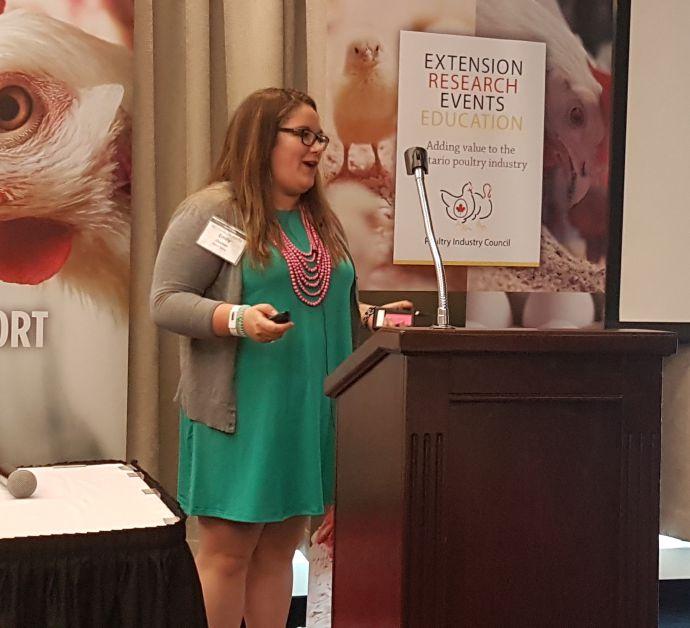
Lhamon recently presented at the Poultry Industry Council’s Health Day about the U.S. AI experience, and she expands here on key lessons the industry stateside has learned.
LESSONS SHARED
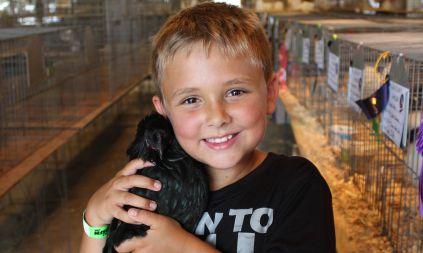
(Top): Penn State’s Emily Lhamon at the Poultry Industry Council’s Health Day. (Right): A child at Lhamon’s local poultry fair holding a Black Sumatra chicken.
1. BIOSECURITY WORKS
In 2014/2015, an immediate increase in biosecurity protocols (including pulling free-range and backyard birds inside buildings) prevented disease from becoming much more widespread in later 2015 and 2016 (and prohibitions placed on swaps, sales and poultry shows
in many states also helped). Breaks in biosecurity were shown to result in small outbreaks of some strains. “Designated footwear and clothing is still the easiest and most important protocol,” the educator notes. “For commercial folks, that means utilizing a separate set of boots per house or disinfectant footbaths for the growers. Sales and service people
need to use disposable booties and coveralls for each house. For backyard folks, it can be as simple as having a set of barn clothes and shoes.”
She adds that “we also don’t recommend going out to parks, ponds and rivers where wild waterfowl hang out if you have poultry at home. If you do, at least change clothes and shoes before working with your own birds.
“Sharing of equipment can also be a vector. Making sure lawn tractors, skid loaders and other equipment is thoroughly cleaned and disinfected before someone borrows it and before it is returned.”
2. BUT BIOSECURITY IS NOT ENOUGH
“The outbreak on the broiler breeder facility in Tennessee in March this year was significant, as we typically consider these facilities to be the gold standard for biosecurity,” Lhamon explains. “This suggests that biosecurity may not be enough.” Early detection is also key, she notes.
In terms of vaccines, there is no effective option commercially available as of yet. Viruses that cause AI rapidly change and mutate, so it’s hard to derive a vaccine and mass-produce it in a timely manner.
Helpful information for producers
Here are some AI resources from Penn State University.
What is highly pathogenic avian influenza (HPAI)? This video explains both the causes of avian influenza and associated concerns. extension.psu.edu/what-is-highly-pathogenic-avian-influenza
Protecting your birds from disease
This PDF outlines biosecurity measures producers can take both to protect their birds by preventing disease from entering the farm and to protect others by preventing disease from leaving the barn. extension.psu.edu/biosecurity-protecting-your-birds-from-disease
Creating a farm plan for HPAI
This article outlines critical steps farms should take to be prepared for an HPAI outbreak and includes a video on how to create a flock plan. extension.psu.edu/creating-a-farm-plan-for-highly-pathogenicavian-influenza
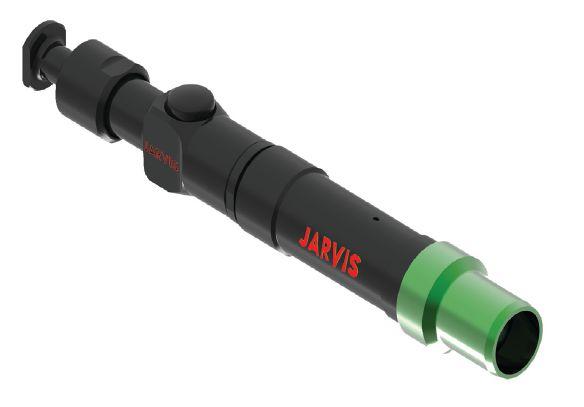
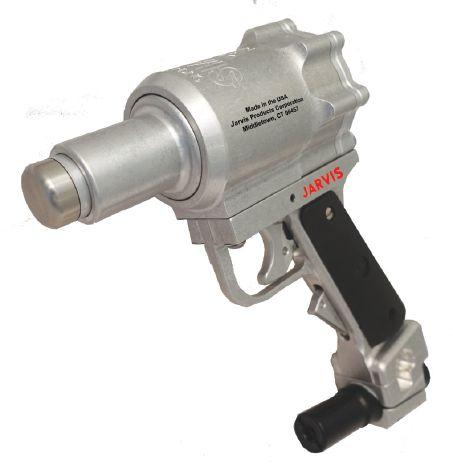
Jarvis Canada has New Tools for Poultry Stunning & Euthanizing Jarvis Canada has New Tools for Poultry Stunning & Euthanizing
There has been an increase in requests for National Poultry Improvement Plan (NPIP) certification across the country. NPIP is a national program initiated by state and federal departments of agri-
Health
culture in partnership with industry in the 1930s to test for several diseases and provide certification that poultry and poultry products to be shipped within and outside the U.S. are disease-free. In addition, some poultry shows are requiring that potential exhibitors prove their birds are 30 days AI-free. “I think
the backyard folks are more aware than they are given credit for,” Lhamon adds. “They may not have millions of dollars invested in their flocks, but they do have an incredible amount of time and care that would go to waste if their flock were to break with disease.”
4. WATERFOWL MUST BE MANAGED
Lhamon notes that in most wild waterfowl flocks, LPAI or non-H5/H7 HPAI strains are almost endemic. Many producers over the past two years have started to critically evaluate their ponds and surface water usage, and even more began taking measures to kill waterfowl in season in the vicinity of their flocks. But Lhamon notes “the things growers have been doing for years, like using pond surface water, are now against protocol. Folks have to get creative and invest some money to circumvent disease vectors by doing things such as digging wells and hooking up to municipal water systems.” Sparrows and other nesting birds can serve as AI vectors as well, so preventing any and all birds near the chicken houses should be a priority, as should be controlling other possible vectors such as rodents, snakes and others.
5. CONSUMER PERCEPTION OF CHICKEN TOOK A HIT
Despite no proven human health risk from North American AI strains, some consumers still feel that poultry is not safe to eat. “I can’t tell you how many friends I had to correct on Facebook this year for saying ‘Guess we can’t eat chicken anymore,’ ” Lhamon notes. “It’s a by-product of the incredible distrust of the food system, U.S. government and media.” However, while consumption of chicken dropped slightly following the big outbreaks, Lhamon says it has picked back up and will continue to climb.
6. THERE ARE GAPS IN RESPONSE AND SUPPORT
It’s become apparent, says Lhamon, that
some states do not have the network of laboratories equipped to deal with the long hours and immense sample testing that is required during a widespread outbreak, or in some cases, even a marginal AI threat. These states don’t have as much poultry production as other states, and therefore don’t have the economic incentive to create more labs. While it’s positive that most states are willing to help others, gaps in lab availability could be an issue during future outbreaks.
Lhamon also sees a gap in support for front-line staff. “I think we’re doing great on the educational aspect of depopulation. States across the country have invested in training their companies in proper techniques and machine operations. Financially, the USDA will indemnify flocks that have an approved biosecurity plan. Penn State Extension has a template for that plan that can help growers and managers wrap their heads around every small detail that goes into planning for a catastrophic disease event.”
But other supports are missing. “I have a friend who was called in to help depopulate one of the first outbreaks in Tennessee,” Lhamon explains. “I know the job took an emotional toll on him. As a service technician for a broiler operation, he sees mortality in chickens every day. However, on a massive scale, it’s an incredible weight that we are asking our growers, their families and those who help manage and service to bear. I would like to see the USDA work with these farm families and company representatives after the trucks pull away. Financial compensation and medical check-ins are great, but making sure that poultry producers really are fine is important to me. The stress of losing your livelihood, having to watch it happen and then regrouping and starting again – it all needs to be discussed.” n
CLEAN
CLEAN
CLEAN
Nutrition Precision layer feeding
An approach for increased profits and sustainability.
BY GREG PAGE, PH.D.
Laying hen nutrition, while relatively complex, has seen little major innovation in the past 20 years or more. The majority of new developments have largely been refinements to precision on nutrient levels in response to differing production systems (e.g., cages versus aviary/free-run) or to specialty eggs (e.g., omega-3 enrichment). However, an innovative new split feeding program bucks this trend.
Split feeding is a novel precision nutrition alternative feeding program for layers. It provides nutritionally tailored separate morning and afternoon diets to the hens that respond to the bird’s natural physiological feeding behaviour and nutrient intake in relation to the different requirements throughout the day. This results in numerous benefits including cost savings, greater profits and increased egg quality, in addition to enhanced sustainability as a result of improved nutrient efficiency.
Laying hens lay the majority of their eggs during the morning, with the interval between two successive ovipositions being about 24 hours or slightly greater. The hen’s requirements for amino acids, energy, calcium and phosphorous do not remain constant, but vary throughout the day in accordance with their physiological needs for the formation of the various components of the egg.
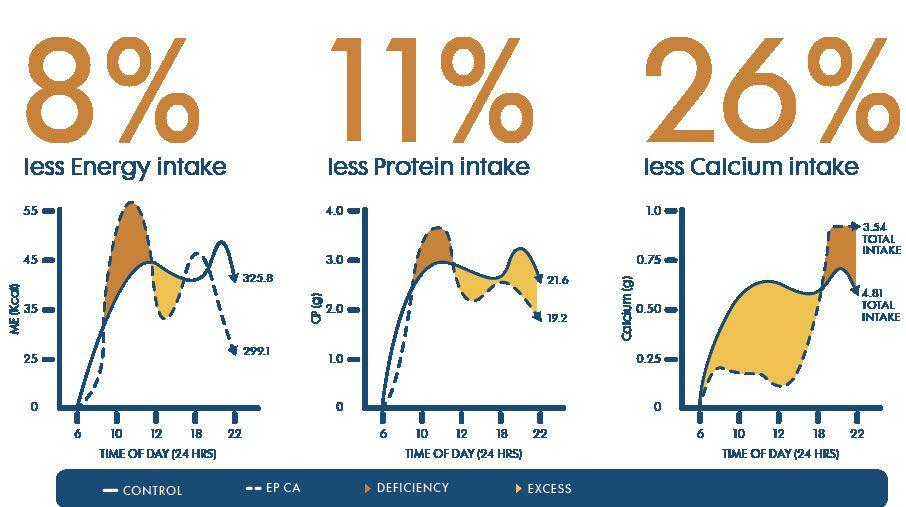
Literature evidence from over 40 years ago suggests that when birds are offered diets that allow self-selection of nutrients, intakes of protein, energy and calcium were found to vary around the phase of egg component production (see figure 1).
new feeding approach provides nutritionally tailored separate morning and afternoon diets to hens.
As a result, animals may consume fewer nutrients when they were able to choose the nutrients throughout the day using a two-feed approach relative to a single complete feed.
This suggests that the hen is using the energy, amino acids, calcium and phosphorous more efficiently by consuming these nutrients at moments in the day when the requirements are higher. This evidence questions the standard practice of providing hens with only one diet, as it indicates it might not be the ideal approach for optimal utilization of nutrients.
The development of a new laying hen feeding program in 2005 was designed to feed hens according to the specific nutrient
requirement for egg formation that varies throughout the day. The findings of this research resulted in the development of the split feeding program, where two diets are used to meet the dynamic requirements for egg formation.
The morning diet is designed to meet requirements during albumen production/deposition, and the ovulation and oviposition occur. The afternoon diet is designed to meet requirements for eggshell formation. As a result of extensive research, new requirements for energy, amino acids, calcium and phosphorous were obtained for the morning and afternoon diets. While the total intake of these nutrients can be reduced, performance was maintained relative to when
A
SPLIT FEEDING
Nutrition
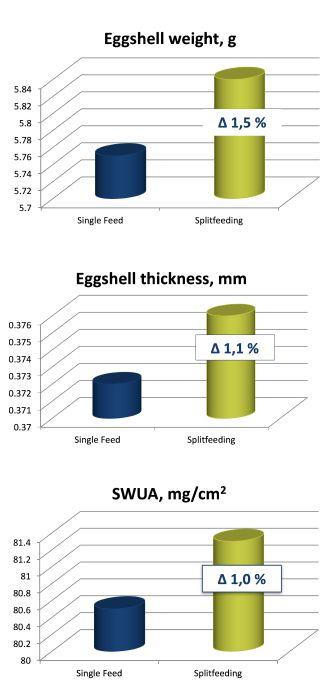
a single feed is fed (see table 1). In addition, researchers observed a number of additional benefits, including improved eggshell quality (see figure 2).
After the successful launch of the split feeding program, field performance data was collected from flocks using complete feed to validate research. The table below shows the overall results of flocks with the same Lohman LSL white genetics in Manitoba from 2014 to 2015:
While the nutritional elements of the feeding program are a significant factor to the success of split feeding, it should be noted that it might not be suitable for all production situations. Management factors play a significant role, as not all
facilities can be successfully adapted to accommodate the unique requirements of the feeding program (feed allocations, equipment limitations). In addition, the scale of the operation plays a factor, as there are additional infrastructure needs (e.g., second bin, control systems, scales) that affect the economic benefits of the program.
As Trouw Nutrition is committed to improving the sustainability of the agricultural sector, it completed a life-cycle assessment (LCA) of the split feeding system to assess the environmental impacts of this novel feeding strategy. Based on global results, it was estimated that split feeding can lead to a 10 per cent reduction
in greenhouse gas emissions, in addition to a 12 per cent reduction in ammonia production and > 20 per cent reduction in P excretion, making this a significant advancement in the area of sustainability.
Over 10 million layers are on the program globally and over 500,000 layers in Canada, consistently delivering strong performance with lower production costs. n
Greg Page, Ph.D., is director of poultry technology application for Trouw Nutrition R&D in North America. Page, along with global counterparts, led the development and launch of Ecolay Tandem, an innovative layer feeding program that translates the split feeding science into feeding and management recommendations on-farm.
Trouw Nutrition R&D, Poultry Research Centre, PPI-38, 2011.
Source: Field performance of complete feed flocks with same genetics only. Manitoba 2014- 2015. * standardized to 365 days
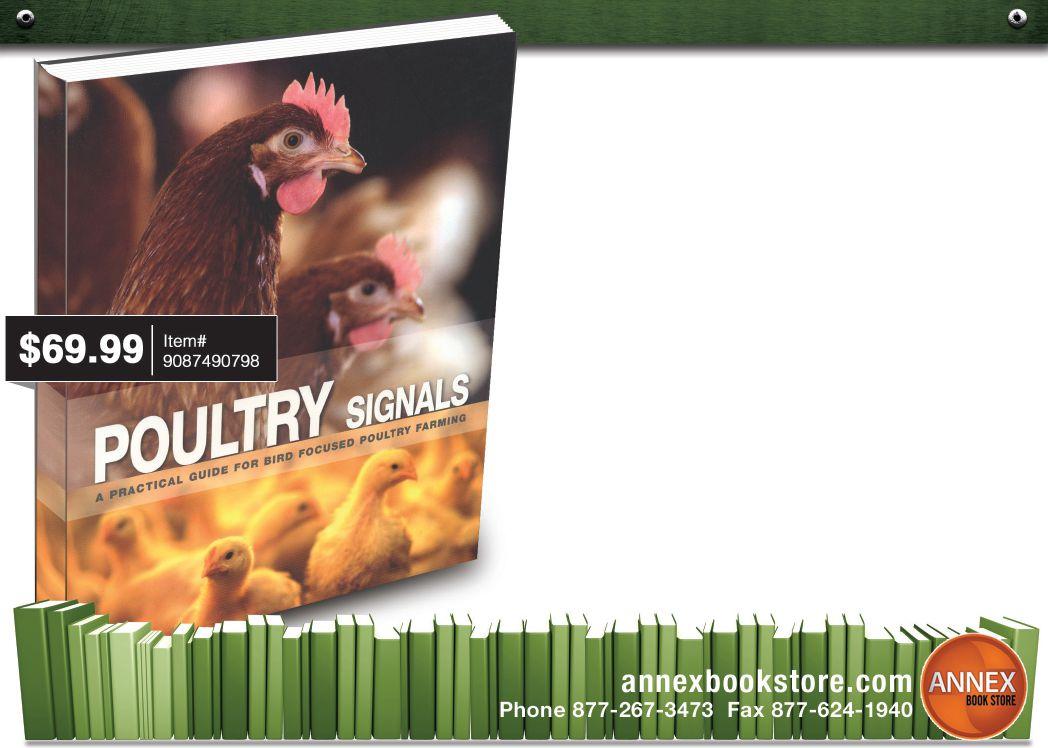
Proper management starts with recognising signals in practice.
For poultry-keepers, this means being alert when in the hen house, watching and listening to the animals, and paying attention to their behaviour as a group as well as their individual behaviour. This usually provides much information about animals’ health, well-being and production for poultry-keepers to use for improving economic results and the well-being of the animals, as well as their own.
Poultry Signals is a practical guide that shows you how to pick up the signals by your animals at an early stage, how to interpret them, and which action to take.
Research Injurious pecking in turkeys
Researchers look for underlying causes.
BY LILIAN SCHAER FOR LRIC
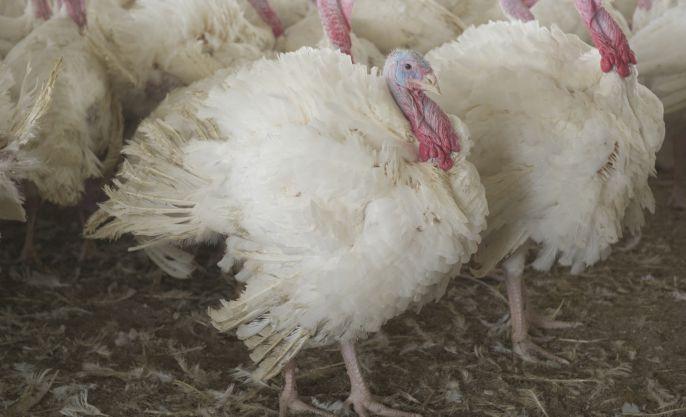
Pecking often occurs in commercially raised turkeys that are bred for their large size. It can result in significant losses if the behaviour is not controlled, as affected birds often have to be culled or their carcasses are downgraded at processing.
But in order to control it, more needs to be known about the behaviour, which led to research involving Ph.D. candidate Hillary Dalton and her advisor Dr. Stephanie Torrey, both from the University of Guelph, and Dr. Ben Wood of Hybrid Turkeys. “As male turkeys reach sexual maturity, they become more aggressive and fight for dominance in the flock’s hierarchy,” Torrey says. “There haven’t been a lot of studies on prevalence, but we know prevalence increases as the birds age, especially in tom flocks.”
Injurious pecking is a combination of behaviours that includes head pecking, severe feather pecking and cannibalism. Pecking is often directed downward onto the head with force, causing injury.
“We were looking at relationships between injurious pecking and other behavioural and physical traits in domestic turkeys to see if there are any correlations and to understand the causation of injurious pecking,” Torrey says, adding that a large study also looked at the differences in beak shape.
The aim was to identify phenotypic differences that could later be used to study genetic differences in beak shape, and whether beak shape influences injurious pecking.
According to Torrey, the first couple of
A GROWING CONCERN
As the industry moves towards a higher percentage of heavy toms in production, the risk of aggressive pecking will continue to increase.
studies did not find any clear cut relationships between activity levels, bird body weight, snood length or sexual maturation and injurious pecking behaviour.
The research team did find differences in the types of pecks that were performed by turkeys and some differences in turkey behaviour immediately before and after head pecking. Head pecking is particularly problematic because the head doesn’t offer much protection and beaks can inflict considerable damage, Torrey says.
“We did find there were significant differences in male and female beak shapes, including the hook and angle of the beak,” she says. “We are still continuing work on genetic analysis to look at heritability of beak shape and if you could you select for it if it does play a role.”
As the North American turkey industry continues to move towards a higher per-
centage of heavy toms in production, the risk of aggressive pecking will continue to increase. This means the industry will need to look for ways to improve turkey welfare, whether by reducing injurious pecking, increasing environmental enrichment or changing management practices.
“As birds get older, there will be more and more injurious pecking so perhaps there needs to be more attention paid to older birds to ensure that any damage that is done is caught quickly before it becomes a welfare concern,” Torrey says, adding that more work needs to be done to determine the causative factors of the behaviour.
The research was funded by Livestock Research Innovation Corporation, Poultry Industry Council, Campbell Centre for the Study of Animal Welfare, Canadian Poultry Research Council and Hybrid Turkeys. n
EQUIPMENT FOR SALE
Yamasa 100cs per hr Egg Grader 9 yrs old, all Stainless Steel construction, includes Modern Matic Egg washer ,pre accumulator for inline use, Egg loader,4 automatic packers with Denesters. Domino A200+ inkjet system (for egg coding). Runs perfect, we are upsizing. Available early 2018. Please contact Marcel at 613-806-2847 for viewing or any questions. Can be seen in operation on appointment. Call for pricing
INSECT CONTROL
EQUIPMENT FOR SALE
PERSPECTIVES
BY CRYSTAL MACKAY
Join in on the conversation
More than ever, Canadians are talking about what’s on their plate and how it gets there. That being the case, the rally cries for producers to speak up and join these conversations are growing. But why and what does it mean for you if you are so far removed from consumers?
If your business depends on a healthy and vibrant poultry sector in the future, regardless of where you fit in the supply chain, these discussions affect you directly because they can make or break public trust in your industry.
Thus, the poultry sector should no longer view these communications as small marketing budget line items. Instead, they should be treated as investments in the future viability of the food system.
If you’re spending a significant amount of money on areas such as research, innovation, new technology or equipment, as examples, how much are you devoting to telling people about those investments?
The trend lines on food system issues from the United Kingdom to the European Union to North America are solid. What can we learn from other jurisdictions on earning trust and understanding social license? One quote stands out to me.
In speaking to a Canadian audience of food industry executives in 2015, Dr. Sandra Edwards, chair of agriculture at the University of Newcastle, said, “Canada is exactly where the U.K. was 20 years ago on public trust. U.K. agriculture was arrogant and ignored the importance of public trust, thinking everyone has to eat and people like farmers. We took public trust for granted until it was too late and the demands on farmers quickly made the U.K. farmer uncompetitive with other jurisdictions on many fronts.”
understanding of trust to benefit the whole agri-food sector –from poultry to vegetables.
The public trust in food model developed in the U.S. was tested in Canada and applies here, too. At its core, the model is centred on connecting with consumers and earning trust through shared values. In fact, shared values are proven to be three to five times more important for building trust than sharing facts or technical expertise.
In other words, it’s not just about giving the public more science, research and information on topics you think they need to know about. It’s about demonstrating to consumers that you share their values when it comes to topics that matter to them the most.
In this “post-truth” era, celebrity spokespeople like Gwyneth Paltrow and the Food Babe blogger prove this time and time again. They have tremendous volume, reach and influence but very little technical knowledge. Think about it. Who are consumers hearing in the media or finding online when it comes to questions about their food? (Hint: it’s probably not veterinarians, farmers or scientists.)
“It’s about demonstrating to consumers that you share their values.”
So what’s the good news? Canadians are more interested in knowing where their food comes from than ever and they value healthy, affordable food. They still hold farmers in high regard overall, with warm impressions and trust in most areas. They view experts like veterinarians and scientists as credible. And the efforts to turn up the volume on credible information on food and farming continue to multiply.
This perspective in mind, we can learn a lot by asking Canadian consumers directly what they think. We need just apply some well thought out social science. That’s what the Canadian Centre for Food Integrity (CCFI) is here for.
The organization was created to help Canada’s food system win over consumers. The 2016 CCFI public trust research reveals where the public goes for information on food, who they trust or find credible and who they hold responsible for a number of key food system issues such as food safety and animal welfare.
Unlike traditional usage and attitude studies by sector or specific companies, this work is meant to help provide a deeper
Taking all this into account, it’s important that you speak up on whatever channel you prefer – online, in person or at events like open farm days, exhibitions and farm tours. For those of you who chose your profession because you don’t like talking to people – step up where you can and invest in efforts to support others who do!
Take the opportunity to connect with anyone who eats. And remember: shared values before technical information. It’s a conversation, not a lecture, and it’s one that’s going to continue well into the foreseeable future. n
Crystal Mackay is president of the Canadian Centre for Food Integrity, which represents a coalition of farmers and food and agribusinesses working together to provide credible information on food and farming.Visit www.foodintegrity.ca for more information.
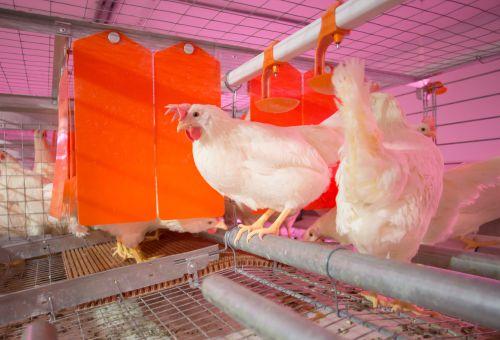
Flexible Rearing: Birds can be reared for either conventional, enriched, or aviary housing
Multiple perch diameter and heights
Multi-level perches and floors promote muscle development and increase bone density