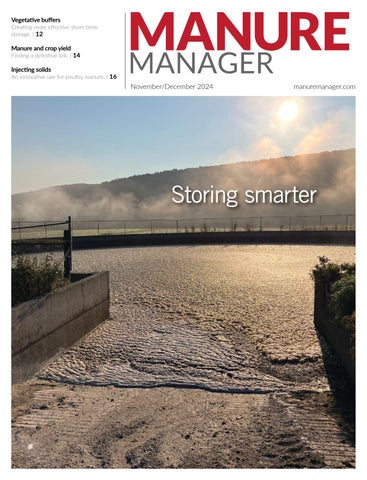
Manure management planning is crucial for efficacy and for the environment. Our deep dive showcases various approaches.
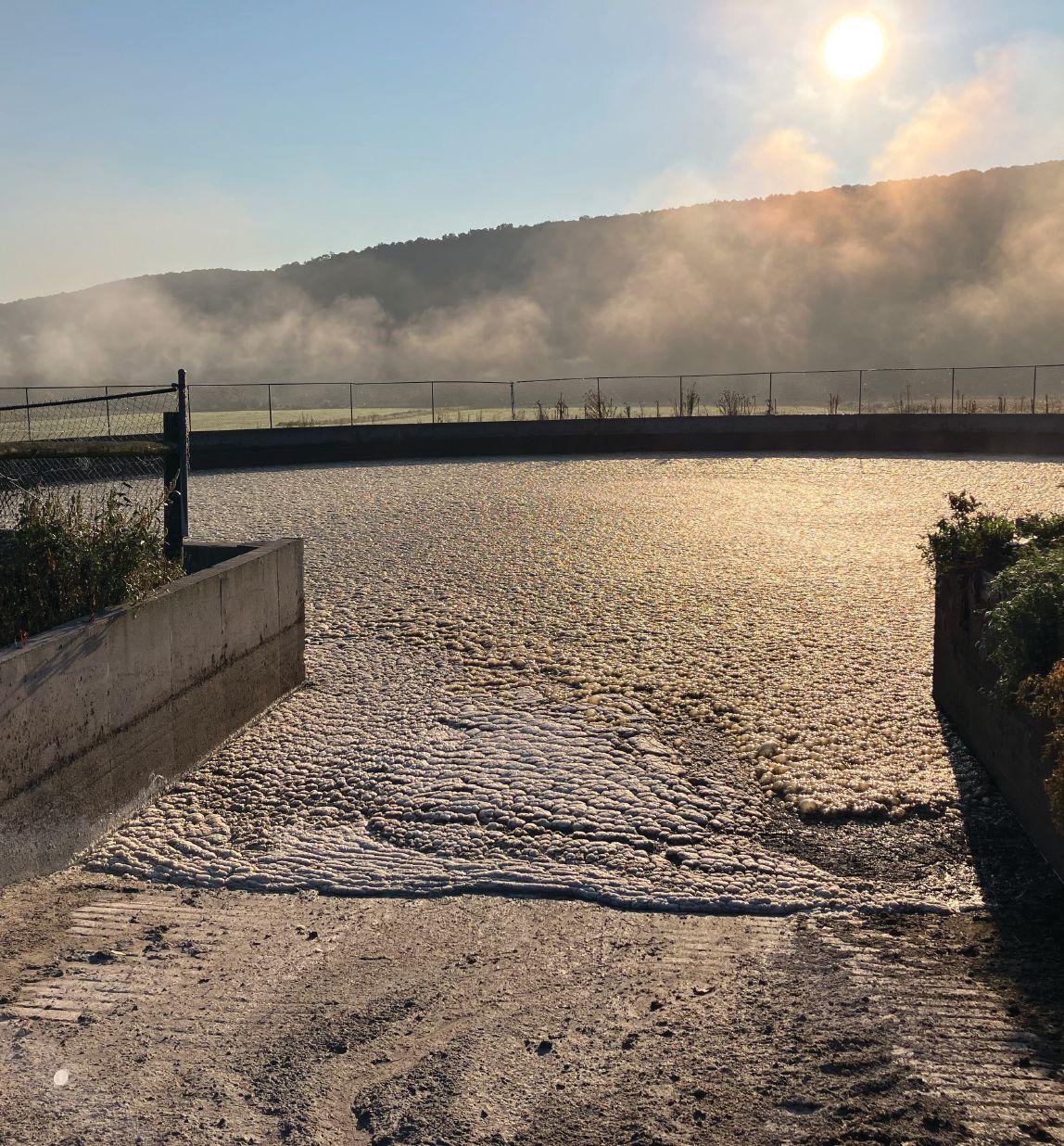
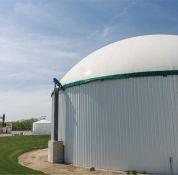
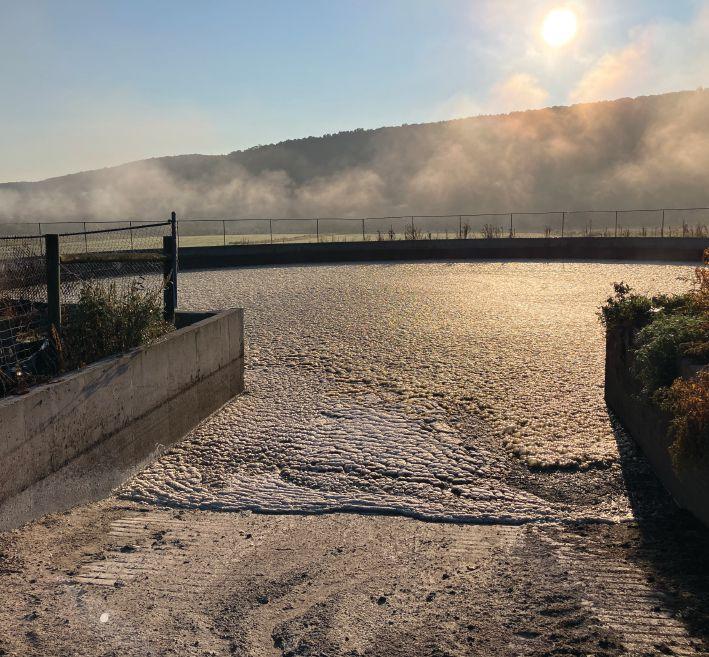
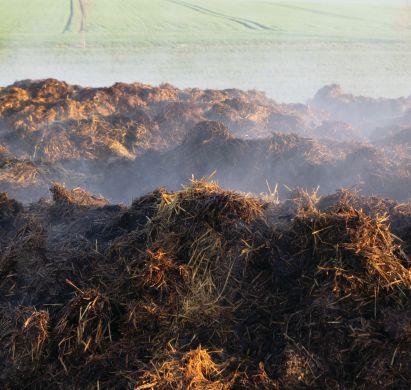
Manure storage in the morning. See page 8. Photo courtesy of Jason Oliver.
12 14 16
Vegetative buffers
A unique solution for mitigating runoff from storage, and keeping neighbors happy.
BY RONDA PAYNE
Proving its worth
A new study out of New York State finds even more positive links between manure and crop yield.
BY ROSALIE TENNISON
Injecting solids
Yes, it’s posisble – and if injecting poultry manure goes mainstream, there could be big benefits for producers.
BY JACK KAZMIERSKI
Manure management is for everyone!
The paradox of farming – and producing a farming magazine – is that although we have a goal to guide farm decision-makers in their purchases, the most important purchases tend to be fairly rare occurrences. In these days of fast fashion, mobile phone upgrades every year and instant gratification, the majority of key farm purchases aren’t decisions one can afford to make lightly. Of course, you already know this – you’re (probably) the one signing the cheques.
When innovations are made in fields like storage, as interesting as they are, it’s sometimes difficult to read stories about new and exciting developments in this area without thinking, “How does this fit my operation?” When you’ve already invested significant time and money in your systems, what good will it do reading about a system that doesn’t exist on your farm?
That’s why I’m glad that our feature on Page 8 takes a holistic approach to issues like GHG emissions. Yes, an anaerobic digester is a great solution
mind. In a lot of cases, it’s not as much about the infrastructure but rather the practices. For example, storing less manure in the summertime is better, whether you store it in a pit, a pond or in temporary storage. Modeling tools can help farmers set benchmarks for themselves, and being aware of cost-sharing initiatives in your area can also help remove those barriers. Regardless of the size and scale of your farm, remember that the best manure management plan is the one for the storage and infrastructure you have – not that you would have in an ideal world.
As you are reading this, it is likely that harvest and, by extension, the whole growing season, have entered the rear-view mirror, which means it might be time to update your plans. As you look at the amount of manure stored for this season, perhaps you can find ways to spread more this spring –on your field or on someone else’s.
Of course, if you’re reading this, you also already know the value of manure management, but it’s nevertheless important to remember
“Your goals and conditions as a producer will likely change.”
in an ideal world – no, we don’t live in an ideal world! As this feature details, anaerobic digestion systems tend to be most effective for farms with at least 500 cattle, and costs around operation, design and construction can vary. A cover and flare system is also great, but can cost up to $1M to implement, and may require separation as a step.
So, this feature discusses the various approaches one can take to reduce methane emissions through manure management, with various systems in
that a manure management plan could always use a tune-up! Just as climate variability is increasingly our reality, your goals and conditions as a producer will likely change. Storage is a big part of optimizing your manure management plan – and one of the priciest – which is why we have a storage issue in the first place!.
Congratulations on your growing season. Now comes the conferences, workshops, networking and planning, planning, planning! •
BIG PUMPS TO HANDLE BIG JOBS
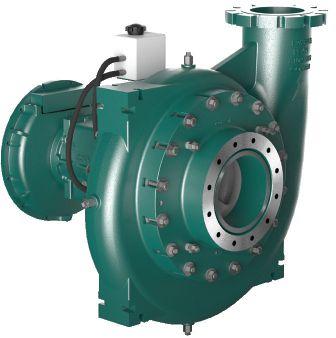
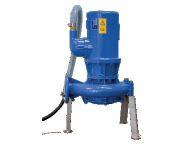
Cornell’s White Iron 81022MPL with the robust, yet compact EM19DBK Frame and Run-Dry™ Option tackles the toughest manure slurries. Featuring:
6000 GPM / 420’ TDH at BEP at 1800 RPM
7500 GPM max flow
High Efficiency
Low NPSHr
Proven Cornell construction for handling sand laden manure
Hard face seal with run-dry seal protection
With an 8” discharge, 10” suction and 3.5” solids handing, and built for high-operating pressures, MP pumps are specifically designed for coarseabrasive slurry applications. Constructed of high chrome iron, with a Brinell hardness rating above 650.
Talk with your authorized Cornell dealer about finding the best model for your application. Cornell
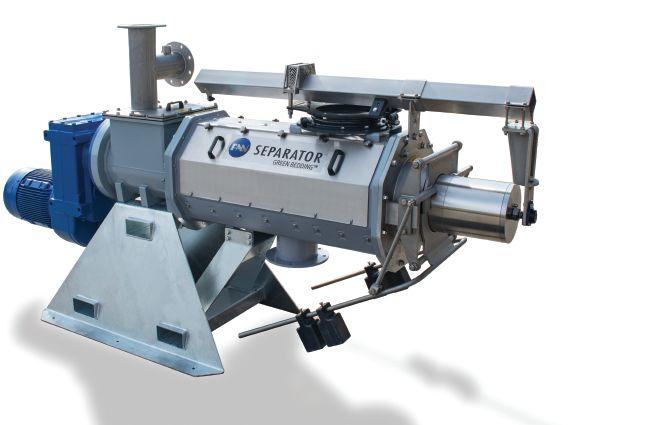
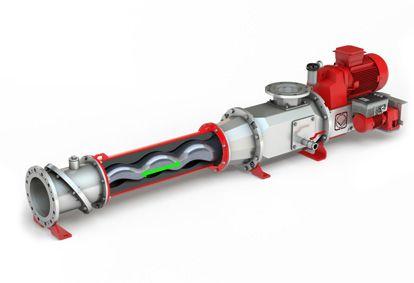
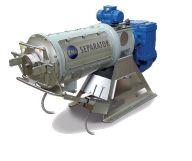
PSS8 is an innovative solution for large-scale dairy and biogas production.
• Ecological Efficiency
• High Capacity
• Lower energy consumption and operational costs
• Durability, long service life with easy maintenance
• Robust Design: Heavy-duty auger with sturdy bearing head
• Powerful Operation: 30 kW electric motor, compatible with
• The PSS8 enhances productivity while minimizing environmental impact
Ontario expands mental health services for farm workers
The governments of Canada and Ontario have pledged close to $1.8 million over two years to provide international agricultural workers in Ontario with enhanced access to mental health supports in English and French, as well as Spanish and Tagalog. The funding is delivered by the Canadian Mental Health Association (CMHA), Ontario Division, in close partnership with its branches in Windsor-Essex and Brant-Haldimand-Norfolk.
The International Agricultural Worker Wellness Program will support workers with managing issues such as stress, homesickness and isolation by providing referrals to free, local services including primary care, counselling, support groups, workshops and recreational activities. It is delivered through the Sustainable Canadian Agricultural Partnership (Sustainable CAP).
The program will launch in early 2025 and be delivered over two years. The second year will include the expansion of service into Tagalog. The program
will focus on the Windsor-Essex region first and then expand to Brant-Haldimand-Norfolk in year two. In the second year, the program will also offer support to farm operators with workshops on how to create safer workplaces.
Nearly 900,000 international agriculture workers reside and work in Ontario. Despite recent changes to Canada’s temporary foreign worker program, the primary agricultural sector will continue to employ a significant number of temporary foreign workers in order to maintain the output required of the industry.
“Working far from home can be tough, and it’s so important that our international agricultural workers have access to the mental health supports they need,” said the Honourable Lawrence MacAulay, federal Minister of Agriculture and Agri-Food. “Through the IAW Wellness Program, we can better support these workers with tailored programs and services so they can continue to help us deliver top-quality products to Canadians, and the world.”
CHEVRON SETS SIGHTS ON MICHIGAN FOR DIGESTERS
Chevron Corporation is planning on building four facilities in western Michigan to establish large-scale biodigesters, and a fifth one in eastern Michigan.
The facilities are planned for Greenville (Montcalm County), Hartford (Van Buren County), Orleans Township (Ionia County) and Coopersville (Ottawa
County) in the west, and Monrenci in the east. Biodigesters are increasingly common throughout the U.S. and exist at various scales. The fuel produced from digesters, which is derived from animal waste, can be used to fuel trucks, buses and other vehicles. Some digesters also provide energy to on-farm “microgrids.”
Chevron is not the only corporation planning for biodigesters in Michigan; BerQ is planning digester projects in Monterey Township and Wakeshma Township. The Michigan Strategic Fund board approved a financing plan in October, which would authorize the companies to seek private activity
bond financing to cover the cost of the projects. Chevron first partnered with Brightmark in 2023 to create Brightmark RNG Holdings, a joint venture specializing in renewable natural gas. The partnership is part of a larger system spanning 11 states, as Chevron moves to push forward in broader sustainability initiatives.
Canada pledges $13M for livestock health and welfare
Canada has announced CAD $13.3 million (approximately USD $9.6M) over five years pledged to Animal Health Canada for three projects through the AgriAssurance Program, aimed to enhance animal health and welfare in the livestock industry. This includes improvements to disease surveillance, emergency management and animal care standards.
Federal minister of agriculture Lawrence MacAulay said in a statement, “This investment…
shows our commitment to animal welfare and management, and to the well-being of Canadians.”
Animal Health Canada will receive $3.5M to expand its animal health surveillance networks, shifting the current system to a One Health approach. It will also receive up to $5M to improve emergency management practices, and $4.8M to update, amend and review several current codes of practice.
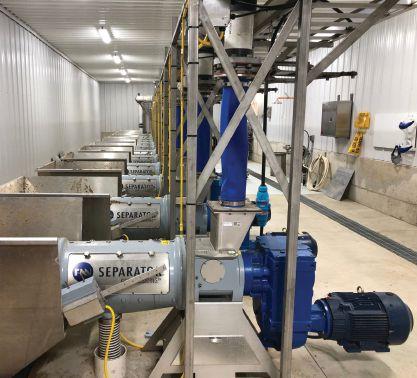
Bauer’s FAN launches new separator system
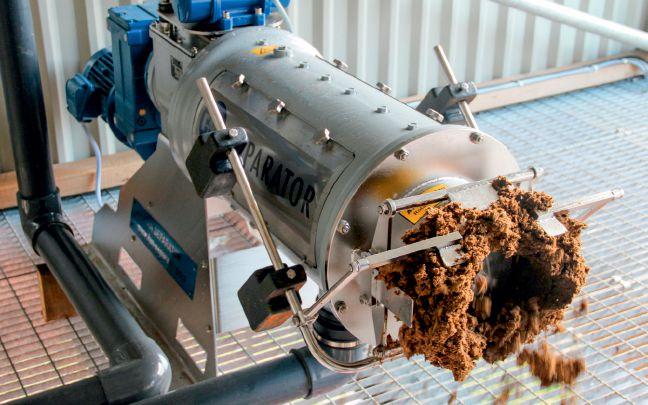
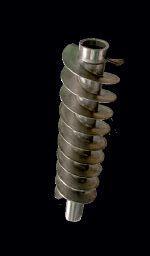
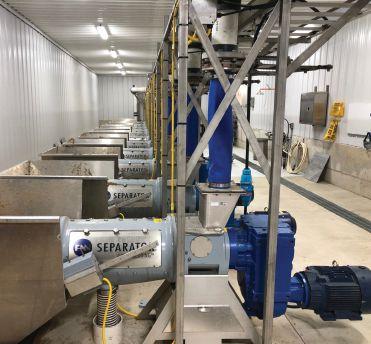
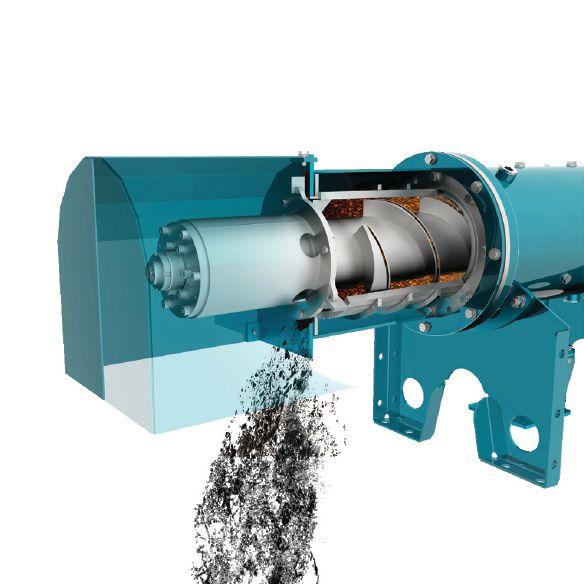
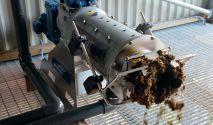
Bauer Group subsidiary FAN has launched the new PSS 8 screw press separator system. Designed primarily for larger farms such as dairy farming or biogas production, the PSS 8 stands at 1.3 metres high up to the inlet and was developed for continuous operation. Its press screw concept has been retained, while components such as the auger have been enlarged to 2200 mm long and 350 kg heavy. The sieve is also generously tied at 400 mm.
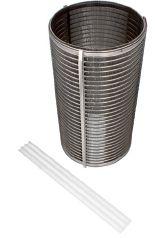
According to its own estimates, with cattle manure with a dry matter content of seven to nine percent, the PSS 8 achieves a throughput of up to 65 m³ per hour. The dryness of the solid obtained can be varied by the number and position of counterweights using a patented output regulator. Up to 36 percent dry matter content in the solids can be achieved consistently with the PSS 8. It is possible to use sieve baskets with five different gap widths from 0.25 to 1.00 mm.
For more information, visit https://www.fan-separator.de/en/
AGRICULTURAL AND DAIRY
SOLUTIONS
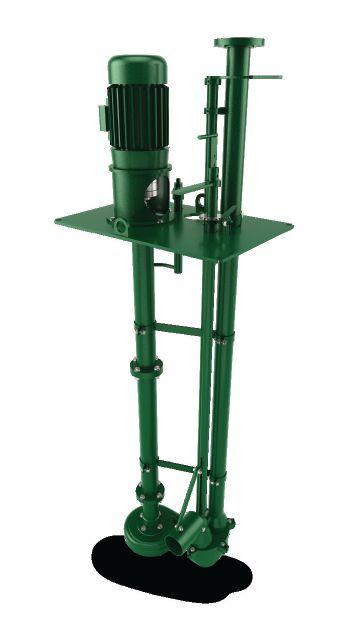
When the going gets tough, turn to the toughest pumps in the field. Vaughan has unique configurations for: • Barn Finish Pits
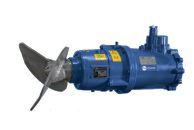
Digester Mixing
Fort Equipment introduces the Pig Pen
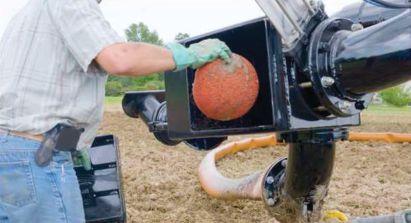
Fort Equipment’s latest product offering might be called the Pig Pen, but it will get plenty of use on the field.
The Pig Pen is a cleanout ball catcher, making it a handy addition to a manure dragline crew. Cleanout balls, known sometimes as “pigs,” help keep lines clean and running smoothly. However, if not contained properly, they can end up far from the equipment they clean. The Pig Pen catches the cleanout balls at every hose cleanout, and complements equipment from Puck, Bambauer, Nuhn, GEA Houle and Bazooka Farmstar.
Separator Feeds
Lagoons
Scraped Manure
And More!
PLANNING for the future
Manure management plans, including storage plans, for reducing emissions.
BY JAMES CARELESS
BELOW
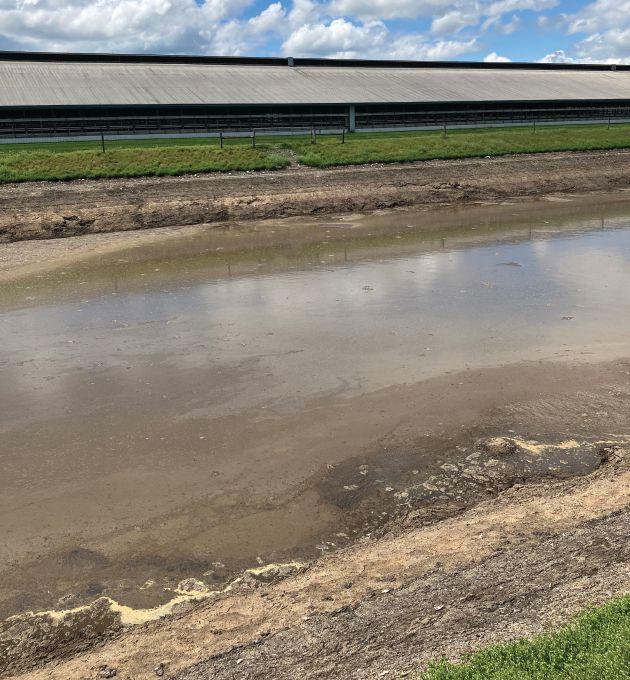
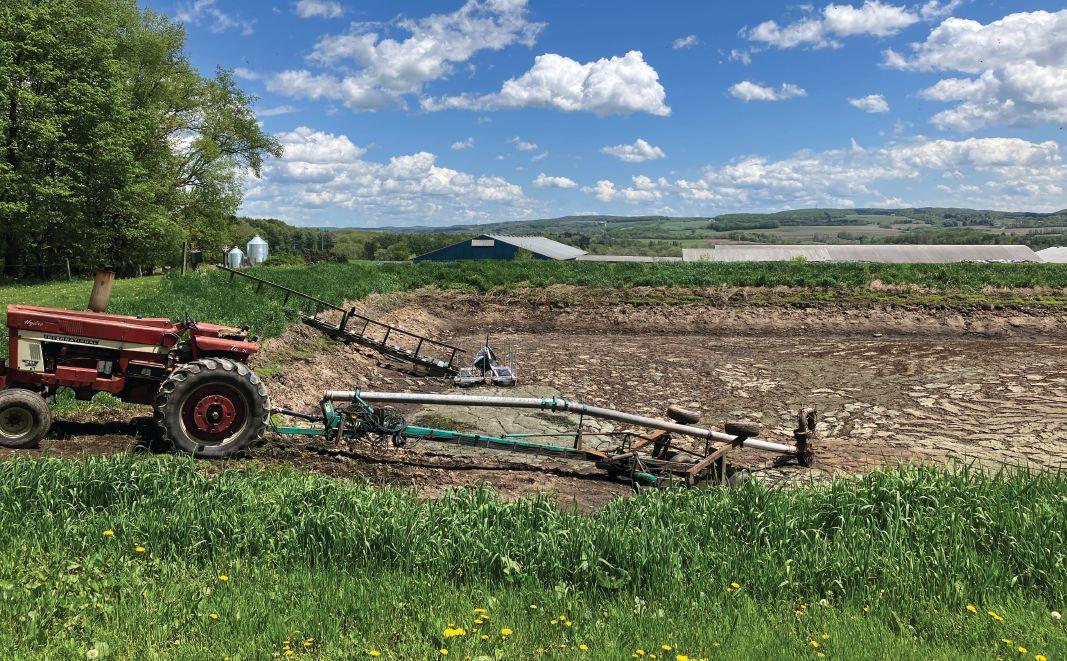
Manure storage drawn down in the summertime, with some visible crust.
Livestock emissions are the subject of increasingly intense scrutiny. But with livestock agriculture still a vital part of feeding the world, it is possible for farmers to make a difference – and that difference can lie in their manure management and storage.
According to the University of Maryland Extension document, Reducing Greenhouse Gas Emissions through Improved Manure Management, “between 1961 and 2010, global livestock GHG emissions grew by 51 [percent], driven by a 54 [percent] rise in methane and nitrous oxide emissions from manure management.”
There is no doubt that manure-related GHG emissions are a serious issue for the livestock industry, and the world in general. But what can realistically be done to reduce them, without hurting the industry?
To find out, Manure Manager spoke with Jason Oliver and Lauren Ray, both with Cornell University’s PRO-DAIRY program. Oliver is a dairy environmental systems engineer, while Ray is an agricultural sustainability and energy engineer.
Here is what they had to say, integrated into a Manure Manager virtual roundtable discussion.
Manure Manager: When it comes to reducing GHG emissions while still using manure in the most efficient way, what are some of the different things to consider when coming up with a manure management plan?
Jason Oliver: Manure management is a key aspect of whole farm operations, and as such any alteration or improvement must be thought of on a systems level with careful consideration to how it integrates or impacts the farm.
Climate smart practices can include both management and infrastructure changes. A simple solution might be to store less manure in the summer, but one must think about how that works with cropping systems or if there are ways to work with or export manure to neighboring farms.
Some climate solutions can be big changes to a farm’s manure systems [like] separation, digestion, storage covers [and] may require substantial capital and operating expenditures. All of these changes have impacts beyond methane reductions, so one must also think about additional benefits [such as] water exclusion, nutrient retention, odor reduction; and consequences – electricity usage, nutrient loss, generation of ammonia or nitrous oxide. Safety should also be an important consideration.
Lauren Ray: Be sure to consider how to minimize the anaerobic storage of excreted manure as a liquid or slurry
during the warmer periods of the year, when the highest rate of solids conversion to methane takes place. This may involve manure application on hay, grain, and cover croplands throughout the growing season.
Consider pasturing youngstock to reduce manure storage volume in the warmer months. Practices that allow for some or all manure to be managed as a solid, such as separation and composting, can result in lower GHG emissions. Biogas control systems, including anaerobic digesters and cover and flare storages, may be attractive options to evaluate.
MM: What are the major causes of GHG emissions in the storage and processing phases?
Ray: From what we understand, substantial methane is emitted from the anaerobic [without oxygen] storage of manure, especially in a liquid or slurry form. Methane comes from the conversion of the degradable volatile solids by microbes in the anaerobic environment, and that rate of conversion increases with increasing temperature, because the microbes prefer a warmer environment.
A true anaerobic lagoon for manure treatment has the highest methane emission
LEFT
Uncovered manure storage with some methane bubbles visible.
potential, but even the long-term storage of liquid/slurry manure that farms in the Northeast or Upper Midwest employ emits methane as well.
Nitrous oxide, another potent GHG that is mainly emitted from nitrogen fertilizer application on agricultural lands, can also be emitted from manure systems especially from natural storage crusts and other more aerobic solid or liquid manure systems.
Oliver: Methane is generated when organic material is stored in the absence of oxygen. Certain processes like anaerobic digestion may harvest methane, but if incomplete or if commingled with undigested manure, they may generate unintended methane emissions in post anaerobic digestion storage. Ammonia emissions can also be elevated in digestate vs. raw manure. Nitrous oxide emissions are less predictable but can be associated with slurry and solid manure systems.
Separation and solid manure management can reduce the carbon in slurry storage that can be converted to methane, but solid-liquid separation and solids management can have GHGs and ammonia emissions. Composting conditions such as C:N, aerations, and mixing can have variable impacts on GHGs.
MM: What steps can be taken to reduce GHG emissions in both the storage and processing stages, such as aerobic composting, cover manure storage, anaerobic digestion, and methane gas harvesting, and other approaches?
Oliver: Storing less manure in the summer is key. This could be through manure utilization during the growing season, getting some animals onto well managed pasture, or through separation. Other pretreatments that convert organic matter to methane where emissions can be controlled, like anaerobic digestion or covers, can be used to manage methane emissions.
Manure can also be treated with additives like acids, to inhibit methane generating microbes and to keep more NH4-N in the manure. Solid management
can be used to reduce GHG emissions, though more needs to be understood to guarantee this form of manure management minimizes GHGs.
Ray: The steps to reduce GHG emissions from manure should involve strategies and practices that reduce solids, especially volatile solids that are retained in long-term liquid (slurry) storages, particularly at warmer ambient temperatures.
Anaerobic digester vessels do this most efficiently because they continuously take in the excreted manure scraped or flushed from the barns and retain it at an ideal temperature, usually around 36 degrees C, for a period of 20 to 30 days, which reduces degradable volatile solids content by 70 to 80 percent or more. Solid-liquid separation also reduces volatile solids in the excreted manure by removing solid fibers, but less is known about the true impact of separation on degradable volatile solids remaining in the separated liquid that still converts to methane in long-term storage.
Once manure fibers have been separated out, an impermeable cover can be
installed over the liquid storage to capture the methane gases that will be variably generated based on the ambient and instorage temperature fluctuations and need to be routed to a flare that will effectively combust the methane into carbon dioxide, a less potent GHG. The covers also exclude rainwater, improving climate resiliency and reducing manure application costs.
Alternative low-cost routes to consider are strategies and practices that maintain effective nutrient management planning while reducing the amount of liquid/slurry manure that is stored long-term.
MM: What are the barriers to implementing these GHG-reducing strategies?
Ray: The main barriers to implementing the more technological solutions that we know reduce GHGs from liquid/ slurry manure storage are the capital and operating costs. Solid-liquid separation systems can easily be a half a million investment and then require ongoing maintenance costs to keep the equipment performing well. A cover and flare system for your manure storage may reach $1
million and also requires separation of sand bedding and/or manure solids as a pre-step.
Meanwhile, anaerobic digestion to energy systems are generally only economical for dairies with 500 cows or more and are multi-million dollar projects. Operating costs can be even more challenging than capital costs though since there are less incentives available that support the operating period. Another barrier can be the availability of design and construction services in your area.
Oliver: Barriers include some solutions making it difficult to apply manure to growing crops, plus the cost of some climate smart practices and scalability. For instance, farms need three-phase power to utilize separation, which is a needed precursor to many advanced treatments and covers.
There’s also a lack of carbon markets, due to consumers and food companies not putting value on lower carbon foods. It is expensive to attain carbon reduction accreditation, while there is a shortage of agricultural engineers and equipment suppliers. Biogas flare systems are also
difficult to maintain, and there’s a need to better assess the actual GHG reductions associated with climate smart practices.
MM: How can farmers ensure that they are storing and processing manure in ways that mitigate their contributions to GHG emissions, while maintaining viable and profitable operations?
Oliver: Farms should start to benchmark themselves with nutrient and carbon whole farm balances.
Ray: There are useful modeling tools available that can provide an assessment of a farm’s current GHG emission profile. This can be benchmarked against other similar farms in the region or across the U.S. in both the total GHG and, more importantly, the GHG intensity on a unit of fat and protein-corrected milk produced. Milk cooperatives may have access to and assistance with using these tools, which can also allow for estimating GHG reduction impact from implementing various practices.
Once there is some perspective of where the farm’s GHG footprint stands today and what practices align with the farm’s operations and future planning that could reduce that GHG footprint, the next step is to perform a detailed financial analysis of the practice(s) and the due diligence to select the implementation partners.
MM: Are there grants or initiatives in place to help manure managers to this?
Ray: There are several grants and incentives available for agricultural practices that reduce GHG and improve environmental quality through the USDA. Programs include NRCS EQIP, USDA REAP, and the Partnerships for ClimateSmart Commodities funding. State and local programs or policies may also offer incentives or cost-share for certain practices.
Oliver: As well, there are various private-public funds supported by the Climate-Smart Commodities federal funding.
MM: Are there any GHG-reduction success stories that you can point to?
Oliver: Yes. Some great examples include dairy farms in New York where the climate is conducive to cropping that are operating in NPK balance and have implemented technologies and management strategies to minimize their carbon footprint per production of
nutritious milk.
All told, we are in a place now where the farm community is ready to make changes while resources are coming in, but there is still a lack of science to support some of the decision making. As well, I think some climate smart practices and the value that may come to low carbon foods will further drive farm consolidation.
There is also a need for support beyond cost share of capital investments, as some of these practices are inevitably going
GEA
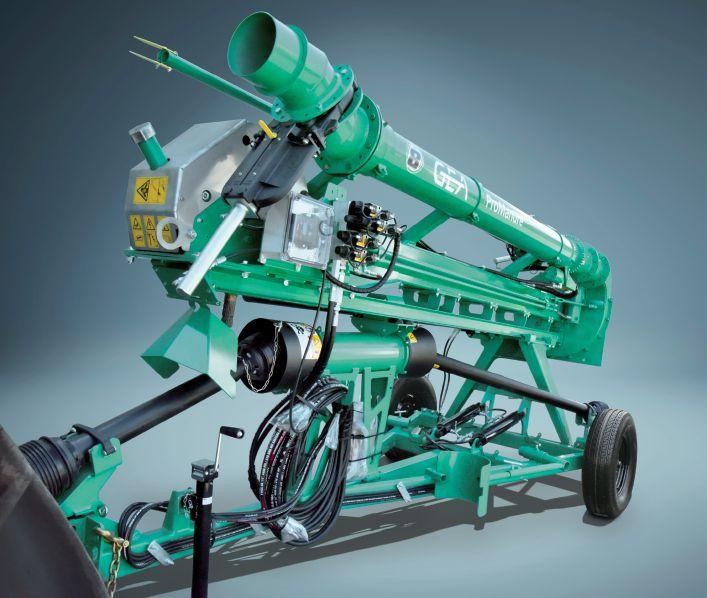
Super Pump on trailer or on 3-point hitch
That’s what needs to be hitched to your tractor.
to increase the cost of production and require maintenance to achieve the goals. For example, a manure storage cover and flare projects can easily be over a million dollars for the farm, and if the flare isn’t maintained, no carbon reduction is achieved. The farm may realize the benefits of the cover (no odor, rainwater exclusion), yet they will have no incentive to maintain the flare until a global food company wants to implement the value of this carbon reduction. •
• Reinforced pump head
• Gate valves all around
• Twin short agitation nozzle with position indicator
• Stainless steel nozzle ball joint
• Thicker sprocket and motor mount
• Inline cooling pump (no more belt)
• New oil cooling reservoir bolted on the housing
• Remote control
• Can reach up to 4’ in pit depth difference
• PTO stays connected on the trailer
• Transport mode locking mechanism on trailer
Holding back
Vegetative buffers improve manure storage issues.
BY RONDA PAYNE
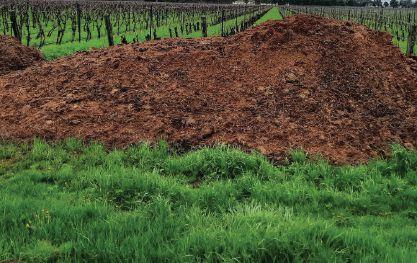
Vegetation and manure go hand in hand. Not only do plants thrive on taking up excess nutrients before they have the opportunity to reach water courses, but they also improve soil infiltration, trap sediment and slow runoff.
MIX IT UP
Ryan Prosser, associate professor with the School of Environmental Sciences at the University of Guelph, says a mixture of vegetation is generally the best way to create a buffer.
“You want grasses, trees, bushes,” he says. “They are going to be the most effective in preventing the runoff or leaching. You want a mixed buffer. A grass buffer or simply a treed buffer is not going to be as good as what’s called a mixed vegetative buffer.”
The mix will ensure a long-term buffer that remains effective as the plants mature, which slows runoff and encouraging it to percolate through the grasses and absorb into the soil.
Before running out to buy plants, Prosser advises to be clear on what the buffer needs to do. If there is a desire for aesthetic improvement (it’s good to give neighbors a view of greenery rather than a manure pile) that will drive the types of plants needed. It’s also important to consider if there is a desire for a
ABOVE
windbreak – and this windbreak comes with added benefits. “If you have a treed buffer, it might act as a wind barrier to neighbors,” says Prosser. “You’re not going to get as much odor… reaching neighboring properties.”
Having varying heights of trees, shrubs and grasses in separate rows helps disburse the odor according to Amy Millmier Schmidt, professor and livestock management engineer with the Departments of Biological Systems Engineering and Animal Science at University of Nebraska- Lincoln.
“Dust is filtered from the air at multiple heights above the ground and air is mixed more effectively for odor dispersion,” she says. “In terms of plant types to use, it is best to use trees and shrubs that maintain their foliage year-round and perennial grasses that are hardy for a given geographical area.”
She has found that while the buffers may not necessarily be ideal for controlling odors, keeping manure piles “out of sight and out of mind” eliminates the very human response of detecting the odor because the storage is visible. “I also find any plantings that improve the curb appeal of a farm lend themselves to improving perceptions of the farm overall,” says Millmier Schmidt.
An example of an on-farm vegetative buffer, which can act as a barrier for some natural elements.
IF IT GROWS HERE, IT GOES HERE
Plants naturally benefit from the nutrients coming off the manure and can generally handle large amounts. Because of plant growth, and improved fertility of the land in the buffer, additional plants will colonize the area, contributing to an evolving landscape.
Prosser adds that native plants are always the preference. “I don’t think the species is as important as having that mixed composition,” he says. “Though, there will be some differences. Some trees will be more effective than others.”
If the pile is temporary, grass needs to be in place before starting the stockpile, says Jim Collins Jr., a retired environmental scientist from the North Dakota Department of Environmental Quality.
“Grasses are great,” he says. “Alfalfa is a deep-rooted crop. You typically want some type of solid deep-seeded grass to increase the trapping power of that vegetation.”
SIZE REALLY DOES MATTER
Temporary piles take planning as the vegetation needs to be established first. This year’s pile can be underway, but where will next year’s go? The width of the buffer needs to be considered along with the size of the stockpile itself.
“I don’t think there’s a specific number of meters that [the buffer] should be away from [the manure storage],” Prosser says. “Some of it is logistics. If you need to move around that manure storage space, that is a factor. The bigger question is how big should the manure buffer be.” The buffer should be within less than 50 meters of the storage area and wider piles tend to absorb nutrients better.
Collins agrees. “If you know you’re going to have a significant manure pile, a good 25-foot buffer of vegetation is ideal,” he says. “If you can have more, great.”
MANURE IS MANURE
The type of manure doesn’t change the logistics. As Collins says, “All manure is the same. If you’re stockpiling it, then the rules come into effect. A mix of practices is best.”
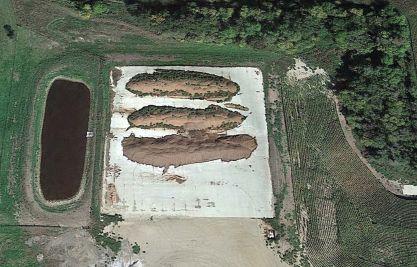
Terrain also needs to be considered. Many farms will have a pond by a manure pile to capture runoff, but vegetative buffers are still an important consideration.
“[If] you have a slope, you can get more runoff,” says Prosser. “That’s where the buffer comes in: slows it down, absorbs it.”
Science proves vegetative buffers work, mitigating movement of excess nutrients and improving neighborly relations. •
PROVING ITS WORTH
The link between manure and crop yield.
BY ROSALIE TENNISON
Ever since humans began tilling soil, they have been using manure to restore its health. Modern research has proven that manure is a good source of nitrogen, phosphorus, and other essential nutrients and can also offer organic matter to improve soil tilth. Research at Cornell University now also shows a link between manure and crop yield.
While manure’s nutrient qualities can offset the need for commercial fertilizer, different types of manure with the same level of nutrients may not provide the same results. The researchers at Cornell are trying to identify the link between soil microbial biomass, yield, and nitrogen needs.
“We know there are essential nutrients in manure, which is wellestablished information,” says Dr. Quirine Ketterings, who leads the Cornell Nutrient Management Spear Program. “We are finding that fields that have had manure applied for multiple years have benefits over fields with less or no manure history. Some fields show a yield bump when manure is applied, others don’t. Some fields need extra nitrogen, others don’t. We are curious what is causing the yield bumps and whether microbes working in the soil can be used to identify when extra nitrogen is needed.”
Much of the Cornell team’s work has centered on corn production with the help of grower partnerships throughout New York state. The invitation to join the research stated the nitrogen fertilizer replacement value would be evaluated and the resulting yield differences occurring as a result of the manure application would be determined. Field trials were implemented using a design where there are six crop strips with three receiving manure and three without manure prior to planting of the corn. At side dress time, when the corn is about six to 12 inches tall, the strips are divided into sections that are side dressed with nitrogen fertilizer at different rates. This method identifies the most economic rate of nitrogen fertilizer for plants that received the manure and for plants that did not get manure earlier that season.
organic matter, soil nutrients, and so on – and we determine microbial biomass at each of these time steps.”
The team takes soil samples at different depths as well. The four-inch depth is analyzed for total carbon and soil respiration. Collected sub-samples were frozen and will be processed for DNA sequencing. Samples taken at a depth of zero to eight inches are analyzed for soil fertility parameters similar to what a farmer would do to determine soil fertility status in a field.
Ultimately, the team hopes to identify the link between microbes, their composition and their activities in the soil, and corn management in terms of manure and fertilizer allocation.
“We want to understand what is causing the yield bumps,” says Ketterings. “We also want to know if we can use soil microbial indicators such as microbial biomass and soil respiration to determine where best to allocate manure and fertilizer resources.”
It is possible, according to the researchers, that understanding how the microbiology works could make applying manure to improve crop production a more exacting science. Currently, they don’t understand what drives the yield increase in some cases and not in others.
“Manure is a tremendous resource that already exists on most farms and this work is aimed at trying to understand how to best harness its value,” says Ketterings.
According to PhD candidate Gurpreet Kaur, for each farm trial, the team tests the soil before planting, confirms the level of nutrients in the manure, and then calculates the amount of fertilizer that is expected to be needed for optimal corn production at the test field.
“We collect soil samples at planting, before side dressing, and at harvest,” explains Kaur. “We test for many qualities – soil pH,
Results from the first trials conducted in 2022 and analyzed in 2023 showed “a range of possible responses” to the combination of manure and nitrogen fertilizer applied under the parameters of the study. One trial did not show a yield increase or any nitrogen benefit from the manure application. Another test area showed a yield increase when manure was applied that could not be attributed to the addition of nitrogen. A third plot had both a yield and nitrogen benefit from the inclusion of manure in the crop. Besides indicating that more research is needed to understand these varied results, the team expects to determine by the end of the study where manure application can be targeted to provide the greatest gain.
The research program continued to focus on corn production following the same protocols through the 2024 crop year. The team expects to have answers, and possibly some concrete recommendations, by the end of 2026. But different types of manure could have different microbial properties and might react
differently in other crops, so additional work might be needed.
“Many farmers already recognize the benefits of manure application,” says Ketterings. “Our main goal is to develop guidance for manure use that will benefit dairy producers who already manage manure, but also those who grow crops but don’t have animals on the farm.”
The research is creating a picture for growers to see what is happening below the surface of the field. If they can understand what is happening in the soil, they might be able to adjust their crop management to benefit from and enhance what is living beneath the surface. Asked if the team believes that, in the future, microbial additives could be created to boost the effectiveness of the manure, they agree that anything is possible. But, for now, they just want to understand how the system works because even that will give producers useful information to aid in crop production.
The research has attracted the attention and support of a diverse group of stakeholders. The Towards Sustainability Foundation, which sponsored the soil sampling in 2023, sees the potential results as adding to the preservation of the environment by helping farmers manage manure and soil health. The New York Farm Viability Institute, Northern New York Agricultural Development program, and various state agriculture and conservation departments view the research as beneficial to their many stakeholders as well.
Ketterings agrees that this examination of manure, and how microbes within it contribute to improve crop development, could possibly guide manure and fertilizer management decisions. The understanding of the interactions between soil, manure, and fertilizer rates and application may be an important aspect of sustaining agricultural production.
According to Ketterings: “Our goal is to determine which fields will benefit from manure and how much nitrogen could be saved with the ultimate objective of achieving better yields with a lower environmental footprint.”
For some farmers, who apply manure knowing it offers nutrition but who also think spreading it on a field is a way to deal with waste, learning how it can increase yield could change their farming practices. Understanding microbial action in the soil and how it could signal whether additional nitrogen is needed may help growers use manure more judiciously. •
A LONG WAY TOGETHER
FORESTLAND
Designed for the most demanding applications, FORESTLAND is BKT’s most recent and innovative bias tire for the agro-forestry sector, but it can also be employed in some agricultural operations such as landscaping and light mulching. Its polyester carcass and specific tread compound make it particularly cut-and-chip resistant, while the robust sidewall ensures a long product life cycle. FORESTLAND’s key features are excellent traction on soft terrain, good grip on any ground thanks to stiff and reinforced tread lugs, a high level of stability thanks to the strong bead construction and top self-cleaning properties.
Reinventing solid manure use
Injecting poultry litter below the surface.
BY JACK KAZMIERSKI
Although the idea of using poultry litter as a fertilizer isn’t new, injecting it below the surface of the soil is, even though the concept has been discussed for many years. The benefits of getting the poultry litter below the surface of the soil are clear, but injecting dry poultry litter is a technical challenge. Subsurfers have been employed to get the job done, but they suffer from a variety of problems included overheating and bending and/ or breaking of augers.
Despite these setbacks, a group of industry pioneers are working on the challenge as they look forward to a future where injecting solid poultry manure becomes more mainstream.
ABOVE
Currently, dry poultry litter is spread on the soil surface as a fertilizer. The problem with this approach is that valuable nutrients can be lost in the process. Volatilization is an issue, the nutrients can be washed off the soil surface by rain, potentially resulting in water quality issues if waterways are nearby, and fine poultry litter dust can be carried off by the wind. Surface application also results in odor issues, which can annoy nearby neighbors.
All these problems disappear when you inject the dry poultry litter below the surface. The only question, of course, is how to do so effectively, and that’s a question Kristen Hughes Evans, executive
Dry poultry litter, pictured, has benefits if injected, but there are still challenges to be overcome.
director, Sustainable Chesapeake has been working on for a long time.
“Going back more than 15 years,” she says, “our land grant university nutrient management specialists were really interested in trying to make poultry litter injection work, because we know that when we inject manure, we capture more of the nitrogen, we capture more of the phosphorus, and we have a better nitrogen phosphorus balance. So it’s good for crops. It’s good for the environment.”
While the benefits are clear, Hughes Evans knows that injecting dry poultry litter is easier said than done. “What the team found is that it’s very difficult to do,” she says. “Poultry litter doesn’t flow well, it’s not homogenous, it’s chunky, and it often has trash in it.”
REINVENTING THE WHEEL
Clearly, traditional liquid manure injection methods won’t work, which is why it has been necessary to reinvent the proverbial wheel and figure out how to overcome this challenge. “There has been a significant investment in trying to make the poultry litter injection equipment work well,” says Hughes Evans. “There were a number of different designs and redesigns, and my sense is that the team was not able to overcome some of the technical and engineering challenges.”
Naturally, if the dry poultry litter could be processed in advance in order to clean it up, remove the debris and make it more homogenous, then some – but not all – of the challenges could be overcome. However, this would simply complicate the process, which is something that proponents of injecting dry poultry litter are trying to avoid.
The question some may ask is, “Why not stick with liquid manure injection?” Dr. Wesley Porter, associate professor and extension specialist covering precision agriculture and irrigation at the University of Georgia explains that it all comes down to time and money.
“The benefits of the solid is we’re taking litter from a poultry house, into trucks, and taking it out to apply it,” he says. “If we’re going to turn it into liquid, we’re going to have to put money and time and effort into processing it. If we invest money into processing it, then we’re taking what was an affordable fertilizer source and making it equivalent to that of processed fertilizer, and so it’s not as attractive anymore.”
Porter and his team have been working on ways to inject the solid poultry litter beneath the soil surface, and they’ve been experimenting with a machine that can process the material and send it out to four rows at a time.
“With pretty good success, we were able to get over the non-uniformity of the materials,” he says, “but if we found a rock, then the machine would get stopped-up. There was no way to crush some of that material.”
This is definitely a work in progress,
Solid litter is loaded onto trucks like the one pictured here to be applied.
and Porter says that they also need to figure out a way to measure the amount of manure that’s being injected. “I’ve had a grad student working on it for a few years,” he says. “We’re working on designing a system that will capture the litter that’s moved to the four-row unit, and we’re developing a metering system for that too.”
While that may sound like a big job, Porter says that the pieces of the puzzle seem to be coming together. “We’re labtesting a system that we hope we can take
to the field in the very near future, within a year or less, and test at the field level,” he says.
SLOW PROGRESS
Once the material handling system can be perfected, Porter says that injecting dry poultry litter would work well with any row crop. “We’re assuming that it’s good for all major row crops,” he says. “We apply poultry litter to almost all of our major row crops in the state of Georgia.”
One of the pioneers spearheading this effort is Mike Phillips, owner and operator of two farms in Rockingham County, Virginia. Phillips also works with the USDA’s Natural Resources Conservation Service (NRCS).
“My heart is in this,” he says, “And I know it can work. The way I see it, it’s the mechanical part of it that’s problematic, but I have an idea of how we can do this, and I’d like to try to have an application where it will work very efficiently.”
Phillips is already experimenting with injecting dry poultry litter into his fields using a subsurfer, and believes wholeheartedly that with the right equipment and methodology, this approach could be successful. “I know it will work,” he says. “We just gotta give it some time. We gotta just put our nose to the grindstone, put our egos aside, you might say, and let’s get this thing done, because it can be done.”
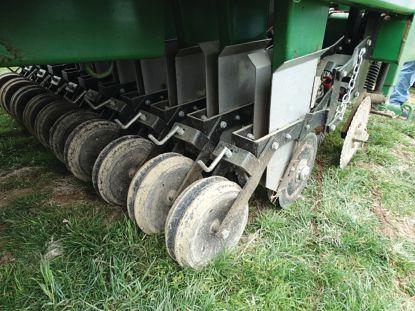
Not only is Phillips convinced, he’s also thinking outside the box as he comes up with innovative ways to save time and money. “We mixed poultry manure with rye, triticale and barley in different plots, and subsurfaced it,” he says. “It was successful, to a certain degree, which excited me because people said that the grain would be burned up, but it wasn’t. And I’m excited because you could plant your seeds and add manure in one pass, and you’re done. How do you like that idea?”
While all these possibilities are truly exciting, and could potentially save a lot of time, money and effort, Hughes Evans paints a clear picture of how far manure injection technology has come, and how far the industry still has to go. “Liquid manure injection equipment has come a long way,” she says, “but when it comes to poultry litter injection, we’re still stuck in the R&D phase.”
SAFETY MATTERS
SARAH FRONCZAK AND M. CHARLES GOULD
Child safety on farms
When Sarah was a child, she was fascinated with the dry poultry litter storage area on her family’s farm. From the outside they looked like a fun place to ride her bike. She was warned away by her father, who told stories of rodents of “unusual size” that lived in the storage areas – like the rodents that lived in the Fire Swamp of The Princess Bride. This was enough of a deterrent that she only tried to ride her bike once in the storage pit when she didn’t see the rodents, but once could have been enough for disastrous consequences.
According to the National Ag Safety Database, 300 people under age 19 die and approximately 24,000 (65 every day) are seriously hurt on U.S. farms each year. The same risks that can hurt or kill an adult will also hurt or kill a child. Below are questions about risks common on livestock farms:
TRACTORS AND MACHINERY
• Are there shields on augers/power take-off units?
• Are keys removed from the ignition and kept out of reach of children?
• Do you look around before moving/backing up machinery to make sure kids are in a safe place?
• Are unused tires flat on the ground, not propped up against a building or tree?
LIVESTOCK
• Are children under eight supervised around livestock?
• When do you teach your children about livestock handling? It is recommended to teach children rules about livestock starting at age five, but don’t expect them to follow the rules until age eight.
• Do children wear hard shoes to handle livestock?
MANURE STORAGES
• When do you teach your children about manure storage structures? Supervise children around manure storages. It is recommended to teach them rules about manure storages, but don’t expect them to follow them until age eight.
• Are your manure pits fenced off?
• Have you had an honest conversation with your children about the dangers of invisible gases? If you lie and tell them it is something they can see they will still try to get in when they can’t see the danger you described.
GRAIN AND SILAGE STORAGE
• Are your silos and bins locked, and ladders
inaccessible?
• If you must enter a grain bin, do you have the proper equipment to ensure you come out? Showing good examples of safety is important to keeping children safe.
• Do you have a grain bin emergency rescue plan?
PESTICIDES
• Do you read the label before mixing and application? This is where information about re-entry time, signage, and toxicity is located.
• Are pesticides stored in a locked building?
• Do you wear the recommended PPE when mixing and applying pesticides?
ELECTRICITY
• Is all wiring grounded?
• Is wiring up to code?
• Are lockouts routinely used when working on electrical equipment?
There are three important things every grownup can do to help children understand how to reduce the risk of injury on the farm.
First, lead by example. Children do what they see their grown-ups do. Don’t take shortcuts; time is not always money.
Second, empower them to take educational programs designed to teach safe practices on the farm. For example, enroll them in a tractor safety workshop through 4H or a tractor dealer or bring them with you to a grain bin or manure pit safety workshop. Afterward, talk about what they learned.
Third, teach them why to do things right. Teach them the ‘how’ and the ‘why’. Communicate clearly in an age-appropriate way. Be patient, and be prepared to repeat yourself. Communicate from a place of love, not anger and frustration. Embellishing, as Sarah’s father did, is not a good strategy either. Telling the truth is best.
Lead, Empower, Teach. We know not everything can be controlled. However, doing all we can to teach children how to be safe on the farm will help them make choices that preserve their lives and leave you with no regrets. •
Sarah and Charles are extension educators with Michigan State University Extension. On Jan. 22, the 2025 Michigan Manure Summit will feature manure scenarios to help participants think through potentially life-threatening situations.
MANURE MINUTE
CHRYSEID MODDERMAN | University of Minnesota Extension
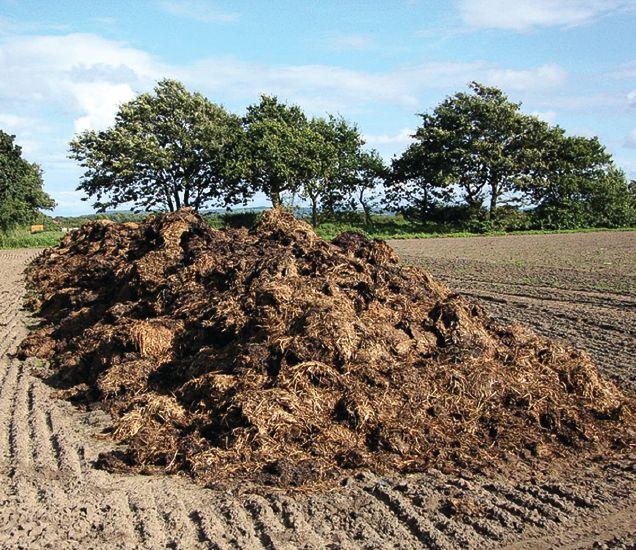
Manure compost siting and sizing
Composting is as much an art as it is a science. When we think of composting, we often jump to the main components of temperature, moisture, particle size, oxygen, and carbon to nitrogen ratio. Certainly, those are important, but let’s back up a step and look at choosing a site and size to put the art and science of composting to work.
WHERE IS BEST?
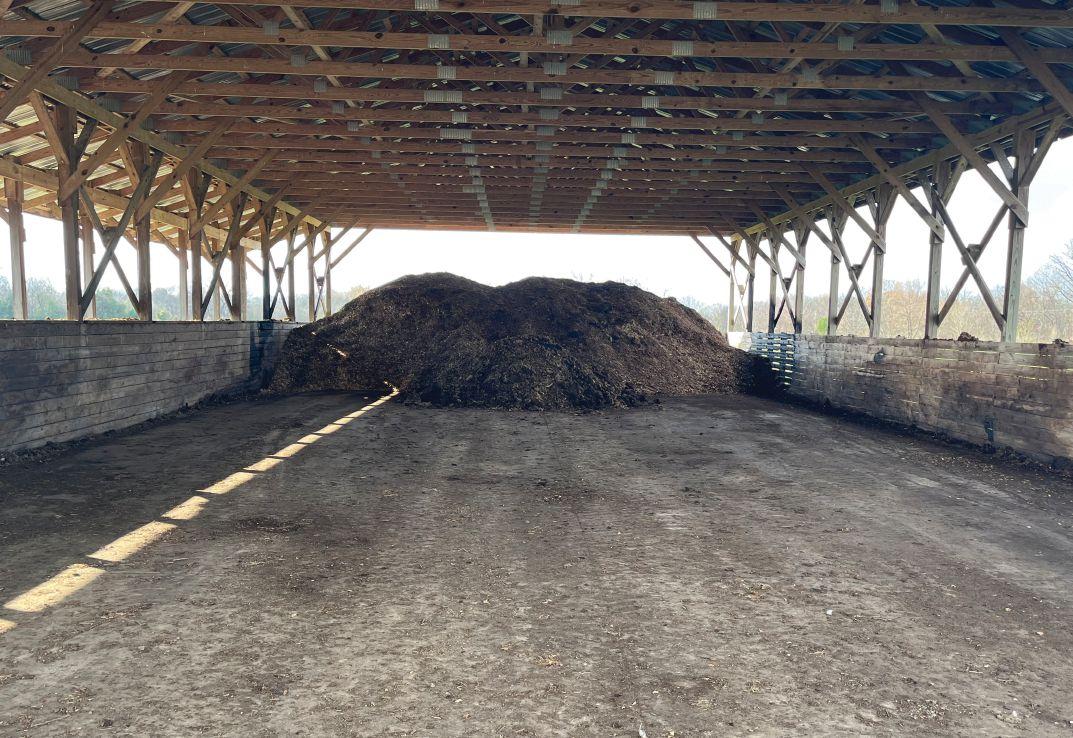
As in real estate, it’s all about location, location, location. The ideal composting location is out of the way and can be accessed with hauling and turning equipment. Know your local setback requirements to avoid runoff into sensitive features. Look for a flat area, outside of areas that flood, with a nonpermeable base to avoid leaching. Some areas have rules about what needs to be used for a base, so make sure you check your local regulations. Also, try to be considerate of your down-wind neighbors; a colleague recently told me his neighbor is building a “Mt. Vesuvius of Crap” too close to his house. While composted manure becomes a nearlyodorless product, it still starts out as raw manure with all its splendid aroma.
Clean water diversion is important as well because any water that encounters the manure will carry away pollutants. Soil berms may be built to divert rain and uphill water, and gutters and downspouts can be added to barns and buildings to divert water. Placing compost near rain barrels
It’s all about location, location, location.
or other water access will be helpful for when water needs to be added to the piles.
DO YOU NEED A ROOF?
Roofing over the compost is often not necessary but may be a worthwhile investment to control moisture. This is especially true if you live in an area with high annual precipitation as excess water limits room for the oxygen necessary for the decomposition process; and once you have soggy compost with a strong ammonia smell, it’s hard to course-correct. I’ve seen success using tarps for large rain events, though that is a bit more labor-intensive. The drawback of a roof is you get no help from rainfall to add moisture to
the compost, and you will have to add water to bring moisture levels up to the minimum 40 percent. Even raw manure with high starting water content will dry out with turning throughout the composting process and need water added. The most common issue I see with compost not breaking down properly is that it’s too dry.
HOW BIG?
The size of a compost pile will be determined by the size and needs of an operation. Some will have one large pile, while others will have multiple, smaller piles that may be at different decomposition stages. A compost pile should, at minimum, be three feet square by three feet deep. Anything smaller than that won’t be able to generate the internal heat necessary for composting. If you’re composting in winter, that minimum size should be 5 ft x 5 ft x 5 ft. As for maximum size, you should not exceed the size that your machinery can effectively turn and mix. If your turning equipment is the neighbor kid with a pitchfork, you may want to avoid a 50 ft pile (depending on how much you like the neighbor kid). To determine how much space is needed, ask yourself the following questions:
• Is this your only manure storage system? Or will you have a raw manure pile as well?
• How much, and what kind of bedding will be in the manure?
• How long will the compost pile remain before being hauled away? Three months would be a very fast turnaround on composting with the most meticulous daily management, so probably plan for longer than that.
Remember that composting reduces manure volume by around 50 percent, so piles may be combined or moved to more-confined storage as they break down. But you will still need the space for the full starting volume of the raw manure; don’t plan for space based on completed size. Make sure actual space allotted for storage accounts for some variability. It’s always best to err on the side of having too much space for manure, rather than cutting it close. That way, if you change bedding or add animals, you won’t need to expand your storage size. •