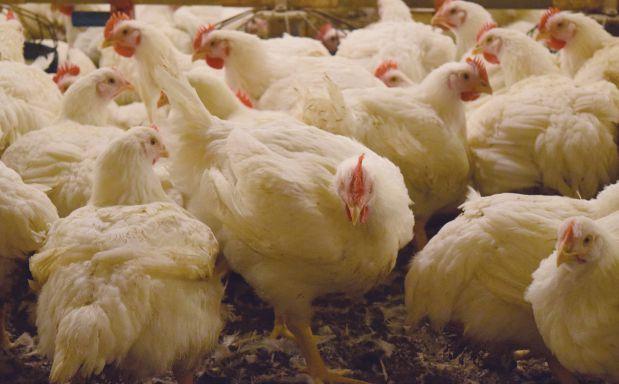
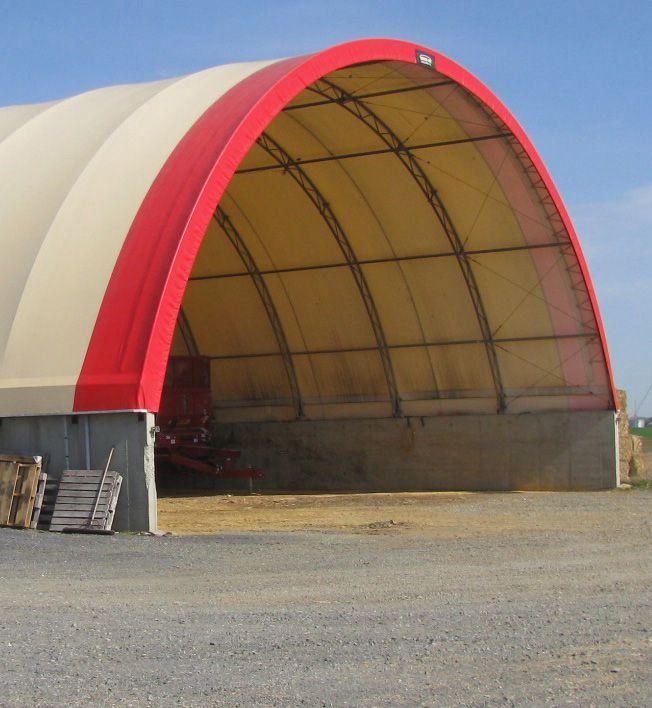
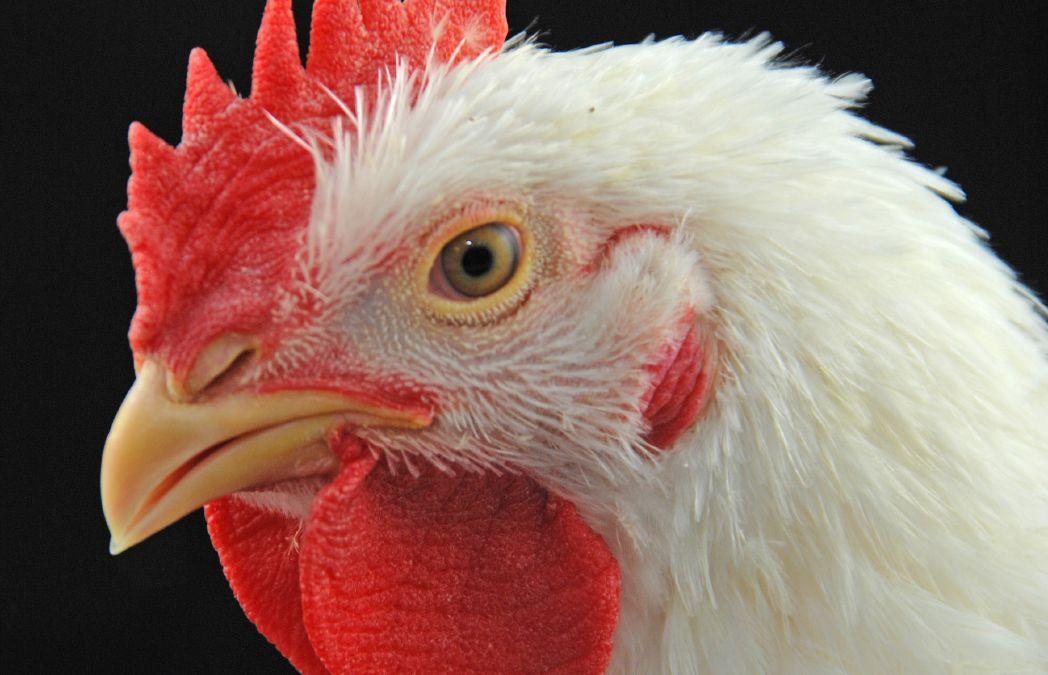
Turning litter into profits Company receives $1.2 million grant to use pyrolysis technology | 14
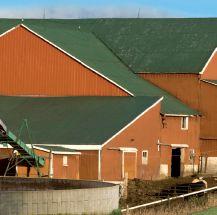
Feeding the grid with biogas New Brunswick biogas plant using manure of 90 dairy cows | 20
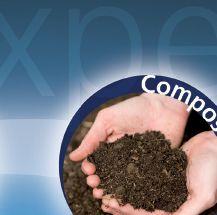
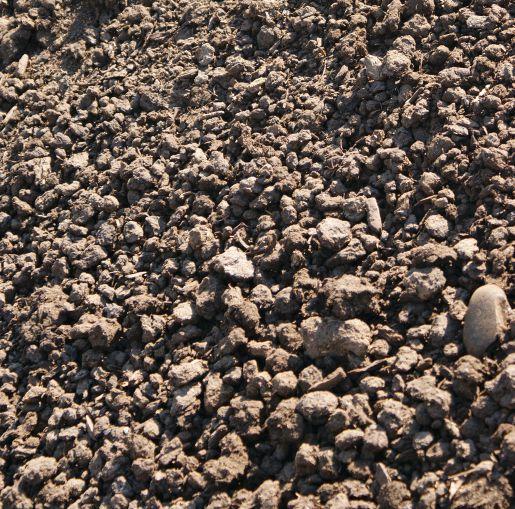
Compost increases water capacity Not all compost is created equal | 24
This
How We Innovate
Benefits
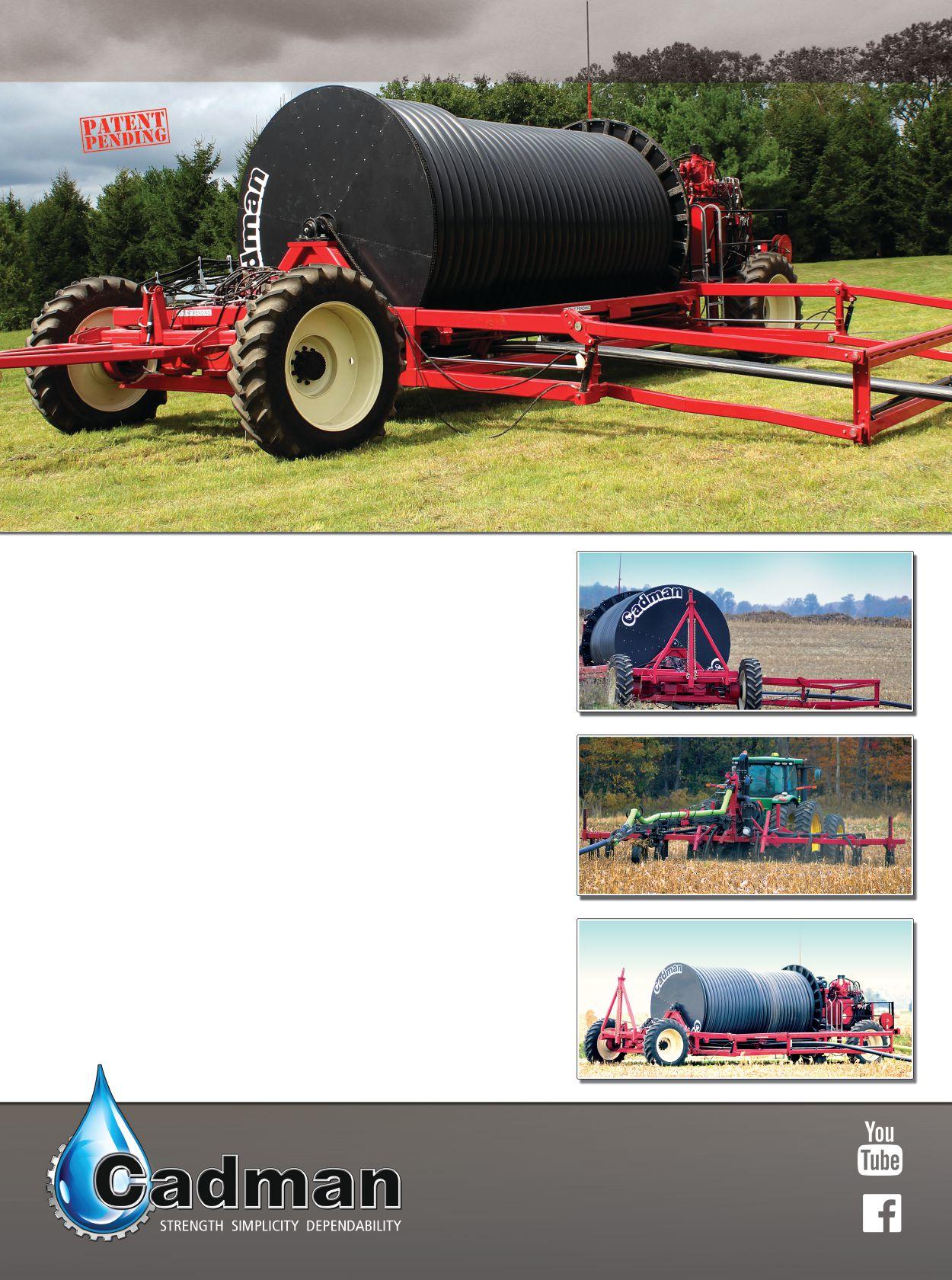
- One person operation
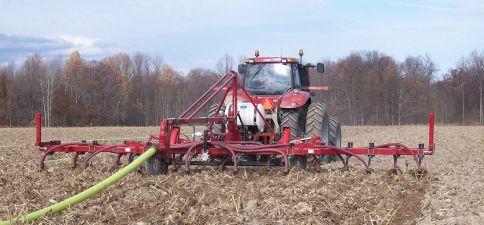
- Get the most nutrients from your manure and side-dress your crop up to 4 feet tall.
- Hose deployment and retrieval is controlled remotely from applicator tractor.
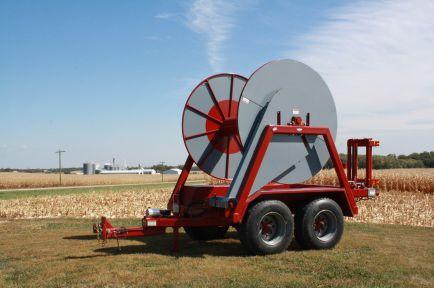
- Pull the Cadman Hard Hose (CHH) out as far as one half mile.
- Using CHH and a row crop applicator compacts the soil much less than a tanker
- Put the manure nutrients in the soil when the crop can utilize it the most.
- Decrease use of expensive fertilizers
Injector Options:
- Choose from 30, 40 or 60’ wide
- Galvanized wings and frame
- AerWay®, Dietrich, VTI and Yetter Avenger tooling available. For other tooling, please call
- Vogelsang Dribble-Bar BackPac also available
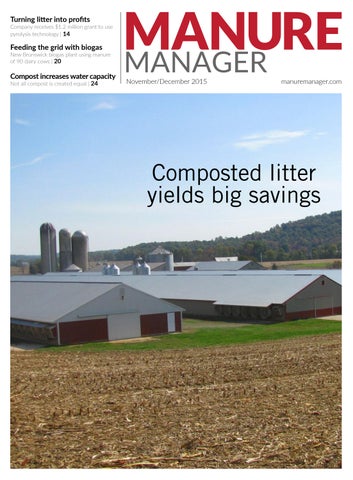
Compost poultry bedding yields big savings
Wen-Crest Farms of Lebanon, Pa., reuses its litter for a year without adding fresh material
DIANE METTLER
Feeding the grid with biogas
Biogas plant in New Brunswick operates two digesters using manure of 90 dairy cows plus regional food waste
ANDREW SNOOK
Compost increases waterholding capacity of droughty soils
Not all compost is created equal BY
M. CHARLES GOULD
Wen-Crest Farms raises
Lessons learned
It’s been almost six months since the last new case of highly pathogenic avian influenza (HPAI) was reported in North America (knock on wood). And now that the dust and feathers have settled from the destructive outbreak – more than 49 million chickens and turkeys destroyed plus almost $1 billion in tax payer costs – the poultry industry and government officials are taking time to gather and discuss lessons learned from the “worst animal disease in U.S. history.” And prepare for something even more catastrophic.
In mid-September, the U.S. Department of Agriculture released its Fall 2015 HPAI Preparedness and Response Plan (available at aphis.usda. gov). This document builds from the department’s experiences during the spring 2015 outbreak and assumes a worst-case scenario involving 500 or more commercial operations infected across a wide geographical area.
Mortalities, Products, By-Products and Associated Health Risks, held in Lancaster, Pa., this past fall. During the spring outbreak, Van Oort was given the unenviable task of guiding Center Fresh through large-scale euthanasia of more than seven million laying hens plus disposal of carcasses, manure and feed. During his presentation, he described, in detail, his frustration discovering what he could legally do to dispose of the operation’s growing pile of dead birds and manure. Eventually, he was given the go ahead to compost the carcasses.
As a result of Van Oort’s and other stakeholders’ experiences, APHIS reviewed federal and state regulations pertaining to carcass disposal in order to identify potential challenges and solutions to overcome them.
MANURE MANAGER
November/December 2015
Volume 13, No. 6
Published by:
Annex Business Media P.O. Box 530 Simcoe, Ontario N3Y 4N5
Editor MARGARET LAND (519) 429-5190, (888) 599-2228, ext 269 mland@annexweb.com
Contributing Editors Tony Kryzanowski, Diane Mettler, Lukie Pieterse
SUBSCRIPTION RATES Canadian Subscriptions $35.24 Cdn, one year (with GST $37.00, with HST/QST $39.82)
“APHIS (Animal and Plant Health Inspection Service) focused considerable effort in the area of depopulation and disposal during our fall planning activities,” the document states. “The size of the [spring 2015] outbreak clearly outstripped the capacity to depopulate flocks and dispose of carcasses. Additionally, a number of hurdles further delayed our ability to quickly use landfills and incinerators for carcass disposal, such as concerns over liability, environmental impacts, and public acceptance.”
And not just the USDA is looking at this issue. The U.S. Poultry and Egg Association recently circulated a request for research proposals on how best to dispose of poultry carcasses as rapidly as possible. Pre-proposals were due in by early November. It should be interesting to see what technologies make it through for further investigation.
U.S. Poultry also plans on hold-
It should be interesting to see what technologies make it through.
ing a one-day “Lessons Learned” program discussing HPAI on Jan. 28, 2016, during the International Production and Processing Expo in Atlanta, Ga. Visit ippexpo.org for a full schedule.
No one understands those hurdles better than Mark Van Oort, complex manager for Center Fresh Egg Farm – an Iowa-based egg laying facility. He shared his HPAI experience during the Fifth International Symposium on Managing Animal
For those interested in learning more about the Fifth International Symposium on Managing Animal Mortalities, Products, By-Products and Associated Health Risks, proceedings from the event were recently posted online. Visit animalmortmgmt.org to access them.
US Subscriptions $47.00 USD, one year
Occasionally, Manure Manager magazine will mail information on behalf of industry-related groups whose products and services we believe may be of interest to you. If you prefer not to receive this information, please contact our circulation department in any of the four ways listed above. Annex Privacy Officer privacy@annexbizmedia.com Tel: 800-668-2374
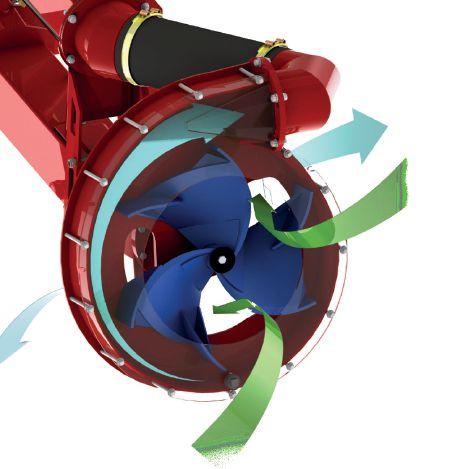
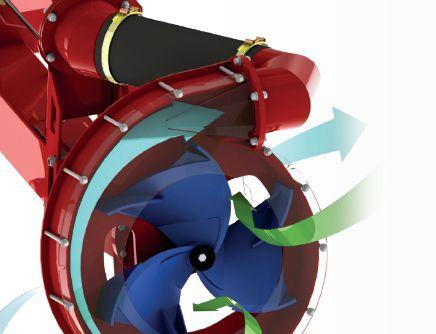
e PUMPELLER® Hybrid Turbine revolutionizes nure pump performance. Incredible intake ction pulls solids into the cutter knives, ucing the toughest crust to nothing in t seconds. The turbine combines the h-volume mixing of a propeller agitator h the power and reach of a lagoon mp, the resulting hybrid design radically operforms both.
OFB, USDA-NRCS establish demonstration farms
Protecting Ohio’s water resources through innovative agricultural practices is the goal of a new partnership between the Ohio Farm Bureau Federation (OFBF) and the U.S. Department of Agriculture Natural Resources Conservation Service (NRCS).
Through 2020, OFBF will create two to four demonstration farms as models for new innovations that reduce and prevent agricultural nutrient runoff, then share those discoveries with local farmers, land management agencies and the public. The demonstration farms are a key component of OFBF’s Water Quality Action Plan, a comprehensive initiative to help farmers proactively improve and protect water quality.
Ohio Farm Bureau will be appointing a local advisory committee to assist in developing the criteria in which the demonstration farm sites will be selected. Diversity will be important so that the
farms reflect the makeup of agriculture in the watershed regarding crops and livestock, farm sizes, soil types, topography and current farming practices. It’s expected the demonstration farms will be identified in early 2016.
Farm Bureau will also contract landowners and farmers to install demonstration conservation systems to monitor farm inputs and outputs including nutrient levels, annual application rates and the methods and timing of applications. Ohio Farm Bureau also will develop strategies in which to share the innovative practices that are identified.
NRCS will provide eligible farm operators with financial assistance through conservation program contracts for conservation system implementation and will provide technical guidance to the advisory committee.
PROF RECEIVES INNOVATION AWARD
Morgan State University professor and lab director for the School of Engineering’s Industrial and Systems Engineering department, Dr. Seong W. Lee, and his research team are the recipients of a $100,000 Phase 1 award from the Maryland Innovation Initiative (MII) to transition his CycloBurn Combustion System from prototype to commercialization.
The innovative new system uses a proprietary methodology to produce energy from waste biomass, particularly poultry litter, while protecting the environment. This marks the third Phase 1 MII Award Morgan has received to-date.
“We are very pleased to receive this award, which will allow us to
The next step for Dr. Lee and his research team will be to validate a lab-scale prototype and provide a full-scale design for the CycloBurn system. After the fuel characterization, systematic tests, and data analysis are complete, production will begin.
continue our research on the conversion of waste biomass to energy while mitigating any negative effects on the environment,” said Dr. Lee. “Given that Maryland’s poultry farmers produce approximately 393 tons of waste per year, the Maryland Innovation Initiative recognized the potential commercial application of a full-scale system and provided us with the resources to assist in bringing it to market.”
Vermeer names new president, CEO
Effective Nov. 1, 2015, Jason Andringa will serve as Vermeer’s president and CEO, an announcement originally made in August 2014 as part of the company’s family succession planning process.
“I’m excited, honored and humbled to have the opportunity to continue my family’s legacy of leadership at Vermeer into the third generation,” said Jason.
Prior to becoming president and CEO, Andringa served as president and COO, in addition to a number of other roles at Vermeer. Before joining Vermeer in 2005, he was a staff engineer at NASA’s Jet Propulsion Laboratory.
Andringa graduated with a Bachelor of Science
in Mechanical Engineering from Calvin College and later completed advanced degrees including a Master of Science in Aeronautics and Astronautics from Massachusetts Institute of Technology and a Master of Business Administration from the University of Southern California.
Mary Andringa, current CEO and chair of the board, will assume the role of chair of the board exclusively Nov. 1, 2015.
“It’s been a great honor and privilege to be CEO,” said Mary. “I am confident in Jason and the entire team who will continue the work that’s been happening here for the last 68 years as they lead this company into a bright future.”
Manure Management
At every level, in every environment, GEA’s technical expertise has made a difference in manure management. Our solutions have enabled livestock farmers to grow their primary business and expand beyond their traditional practices by getting the most out of their manure.
From raw manure, to effective separation and decanter centrifuge systems, we have the process know-how to create value with your progressive manure and nutrient management practices.
Bion files patent on process to recover nitrogen from waste Online options for IA Certified Manure Applicators
Bion Environmental Technologies, Inc. recently announced it filed a new patent application for a process that recovers a nitrogen-rich, natural, non-synthetic fertilizer product from a livestock waste stream.
The product is produced by Bion’s next-generation livestock waste treatment technology platform without the use of chemical additives. Bion has retained consultants and is preparing a filing with the Organic Materials Review Institute (OMRI) for product certification as a natural non-synthetic that can be used in organic production.
The fertilizer contains 12 to 15 percent nitrogen in a solid crystalline form that is water-soluble and provides readily available nitrogen.
Based on initial market assessments, Bion projects the product will have market applicability in crop production, horticulture, greenhouse and hydroponic production, and potentially in the retail markets.
“By isolating the volatile nitrogen and incorporating it into a solid state that will be water soluble and therefore readily available, it can now be precision-applied more effectively and efficiently than broadcasting manure,” said Craig Scott, Bion’s communications director. “Besides the economic implications for Bion, the livestock producer and the agriculture industry, this is especially important in the many watersheds in the U.S. where land-application of livestock waste contributes to excess nutrient runoff and harmful algal blooms.”
BY THE NUMBERS
New online options make training and fee payment easier than ever for more than 4,500 certified Iowa manure applicators.
“Applicators can still complete training in person, watch a video at a county Extension office or take a test at a DNR field office, and mail a check in to pay their certification fees, just as they always have,” said Gene Tinker, DNR animal feeding operations coordinator. “But, we’ve added the convenience of training at home or in the office.
Online training is available to anyone interested in manure application, but is specifically designed to help manure applicators meet state requirements to become certified.
Applicators can take training with any device that has Internet access, but may find a personal computer provides the best performance.
Online training modules cover topics like biosecurity for human and animal safety, and managing nutrients to improve water quality. Each module is followed by a short activity. Online is similar to in-person or video training, however it’s self-paced and applicators may complete one topic at a time or all
topics in one sitting. Online training is also limited to one applicator per computer.
A major advantage of the online option is the convenience of paying fees online.
“We think that’s a great benefit for those who spend the winter out of state or applicators from neighboring states who apply manure in Iowa,” Tinker added.
Find a link to online training at www.iowadnr.gov/manureapplicator. This is also where applicators and business managers can check their own records for renewals, expiration dates and fees.
PRODUCING STATES
COMPOSTED POULTRY bedding yields big savings
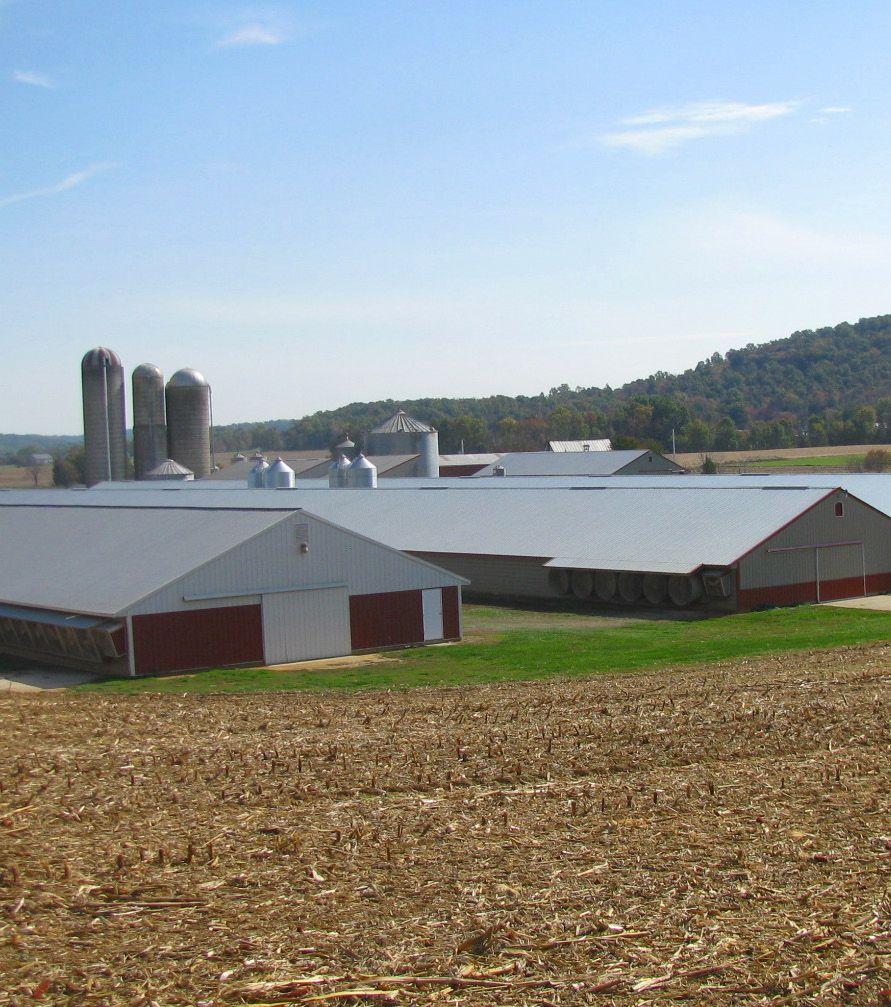
AUsing wood chips as litter, WenCrest Farms has perfected how to reuse its litter for an entire year without adding any fresh material. The piling and turning process to create compost takes place in the barns between flocks.
BY TONY KRYZANOWSKI
sk any poultry or dairy farmer, and they will say that bedding is one of their highest input costs, with kiln dried wood shavings a common choice for both these operations. However, some have found ways to minimize bedding costs, while also making better use of the manure generated by their livestock as organic fertilizer.
Consider the litter management practices at the large, Pennsylvania-based, poultry operation, WenCrest Farms. Using wood chips as their litter, they have learned how
ABOVE
to repeatedly compost and reuse their litter for an entire year without adding any fresh material. The piling and turning process to create compost takes place right in their barns between the time that their mature broilers rotate out and new chicks are brought in. This practice puts an extra $10,000 in litter savings per flock back into their pocket. Many dairy farms have adopted this same practice, using the compost and reuse method for cow bedding, with similar financial benefits. As far as addressing health concerns, the heat generated in properly composted
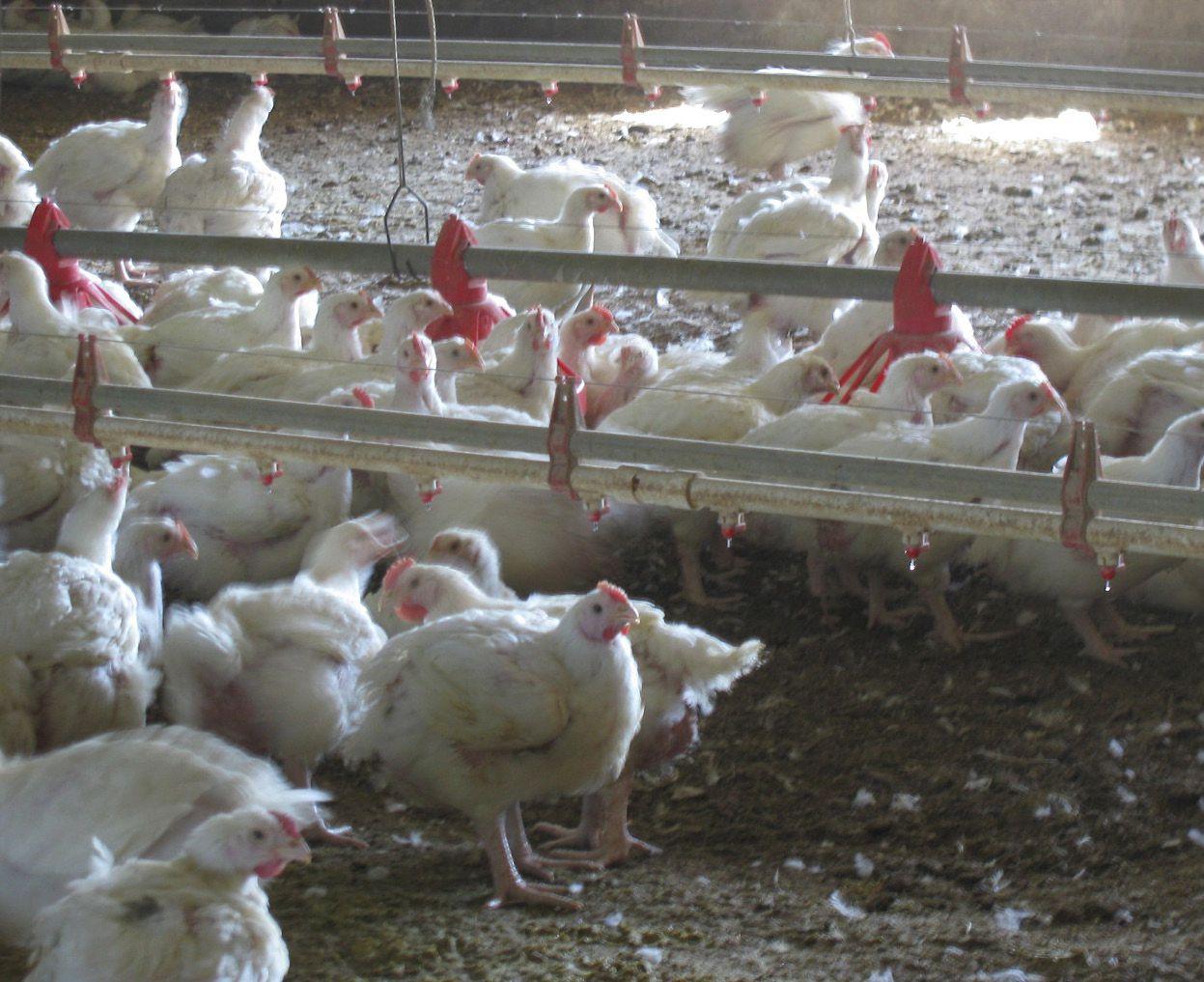
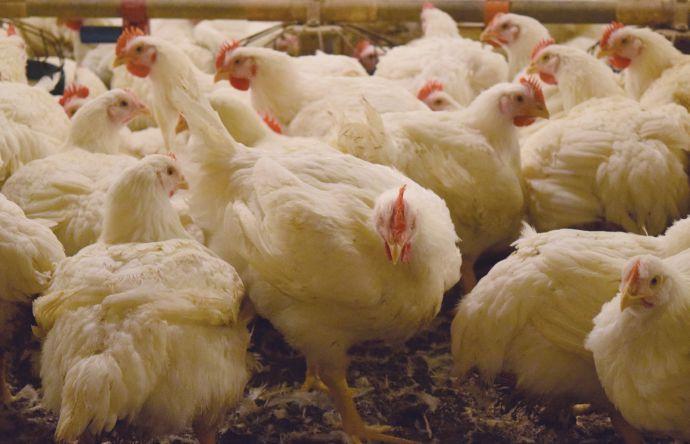
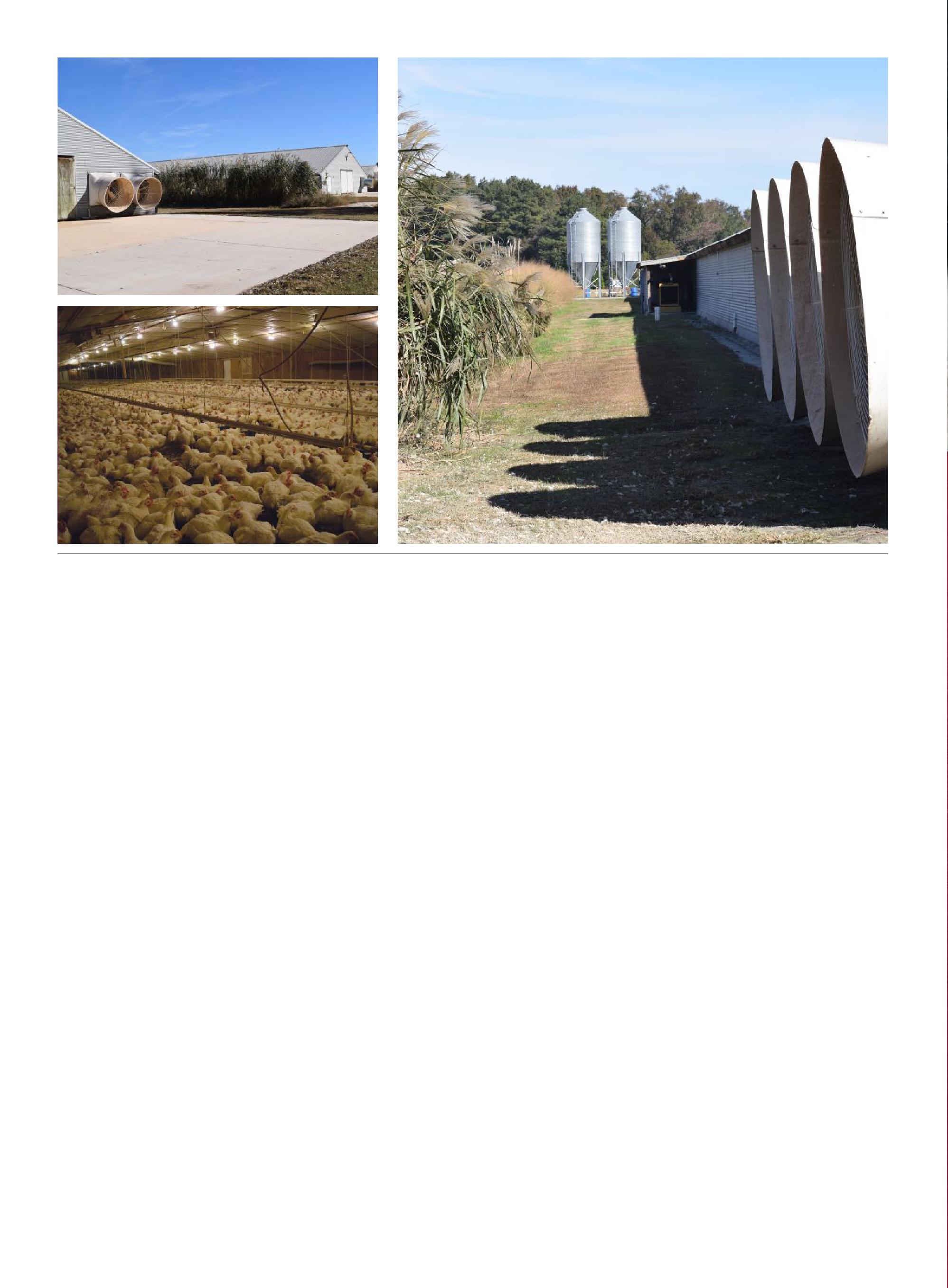
Poultry raised at Wen-Crest Farms grow on a bed of compost that is reused each time a flock moves in and out. The compost is removed once a year and land applied as fertilizer.
bedding destroys pathogens, making it safe to reuse.
As if these financial benefits weren’t enough incentive, Wen-Crest Farms then realizes the benefits of using the approximate 2,500 tons of composted litter that the farm accumulates annually as an organic fertilizer on their cropland, which farm co-owner, Steve Wenger, says delivers an additional savings of about $95,000 they don’t have to spend purchasing commercial fertilizer.
So with 11 barns, the poultry farm has saved well over $150,000 a year simply by thinking through the problem and using Mother Nature’s solution for both poultry litter and organic fertilizer.
Coupled with the farm’s practice of leaving buffers around waterways on their 2,500 acres of cropland to minimize the potential for nutrients to leach into watercourses, composting of their mortalities, as well as their practice of leaving some crop for wildlife to feed on in winter, it comes as no surprise that Wen-Crest Farms was recognized for exemplary environmental stewardship this year by the US Poultry & Egg Association.
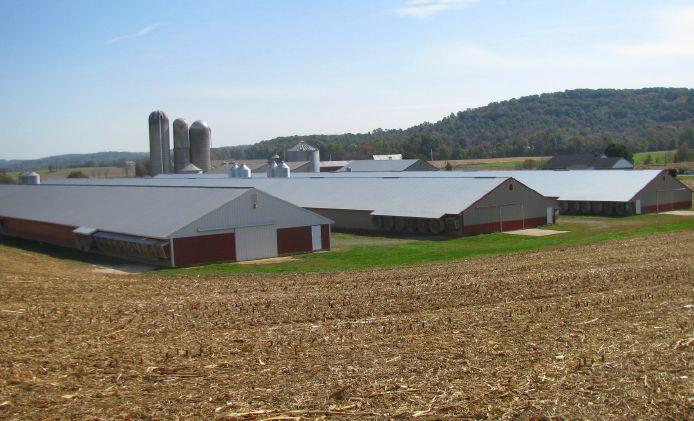
Wen-Crest Farms is owned by Steve and Bonnie Wenger and is located outside of Lebanon, Penn., about 30 minutes from Hershey. They manage a total of 11 barns on three, closely situated farm sites, capable of housing 370,000 chickens at a time for a total annual production of about two million broilers. They raise the broilers for Tyson Foods and have done so for about six years.
Their home location is where Steve’s grandfather established the family farm in 1944. Raising poultry was a part of that
operation but on a much smaller scale. Steve started out in the poultry business in partnership with his father raising turkeys in 1986 with two barns. Over time, the business grew into 11 barns on three locations.
“In 2008, corn prices went through the roof and our company found itself in financial trouble,” Steve says. “Our turkey company was sold to another company, and the buyer also cut turkey production for everybody in this division by half. We decided we weren’t going to hang around for that.”
Tyson Foods arrived on the scene and provided the opportunity to raise chickens instead. The Wengers took advantage of that opportunity and have been raising broilers for Tyson ever since.
When they switched to chickens, they invested about $1.4 million to upgrade and customize their barns, installing the most advanced systems for keeping chickens cool and comfortable, while also adopting their litter composting and reuse method.
Each broiler brood is raised in the barns over about six weeks, followed by two weeks of downtime. During this time, the manure-laden, wood chip litter is piled into windrows using a low-profile poultry tractor, turned twice every three to four days using a LVI litter turner supplied by an American company called Binkley & Hurst LP, placed back into position and pulverized to remove any lumps before a new brood of chicks arrives. The windrows heat up because of the biological activity taking place within the piles between each turning, which essentially is the process of the wood shavings and animal waste being converted
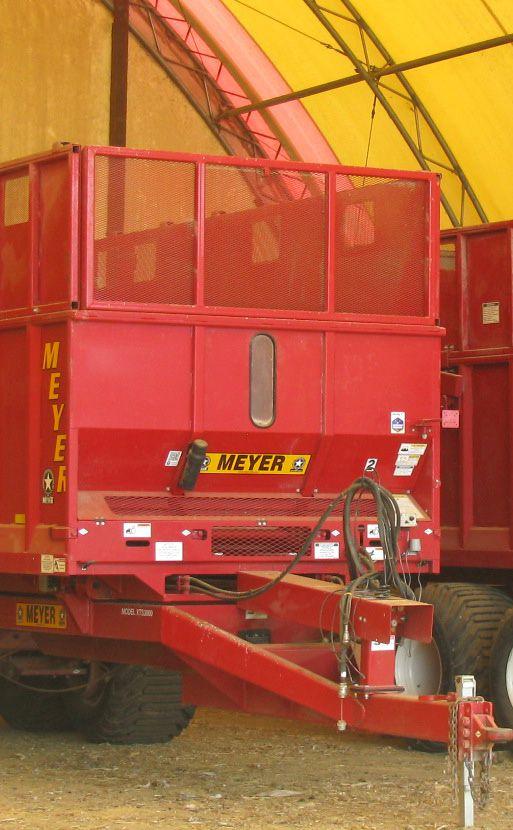
LEFT Wen-Crest Farms recently purchased two Meyer manure spreaders that provide them with precise compost application on their farmland as an alternative to commercial fertilizer.
RIGHT Wen-Crest Farms has three poultry compost storage facilities. The dry compost collected in the storage sites is used primarily on their corn cropland.
into compost. The heat and biological activity destroys pathogens in the litter.
“This composted litter works really well and it is more absorbent than regular wood shavings,” Steve says.
The litter will be piled and turned to produce compost five or six times before it is removed entirely from the barns and replaced with fresh wood shavings once a year.
He says composting the litter is a new practice within the poultry industry, but it is becoming more common all the time.
“There are more and more companies now actually requiring their growers to do it because it saves a lot on wood
Prior to field application, the compost in each storage facility is tested for its nutrient composition. Soil samples are also taken from each field every two years. Based on these findings, the farm calculates how much compost to apply per acre in the spring.
Wen-Crest Farms avoids winter manure application because of the nitrogen loss that can occur during that time of year and the danger of potential leaching away from the farms into area streams and eventually in the Chesapeake Bay when the snow melts. A number of on-farm initiatives have been launched throughout the Cheseapeake Bay watershed to
ABOVE
Wen-Crest Farms raises more than two million chickens annually in 11 barns on three farm sites. They recently received a national award for their environmental stewardship.
shavings and trees,” Steve says. Because wood shavings are also commonly used as bedding in the dairy industry, “it’s getting harder to get and much more expensive.”
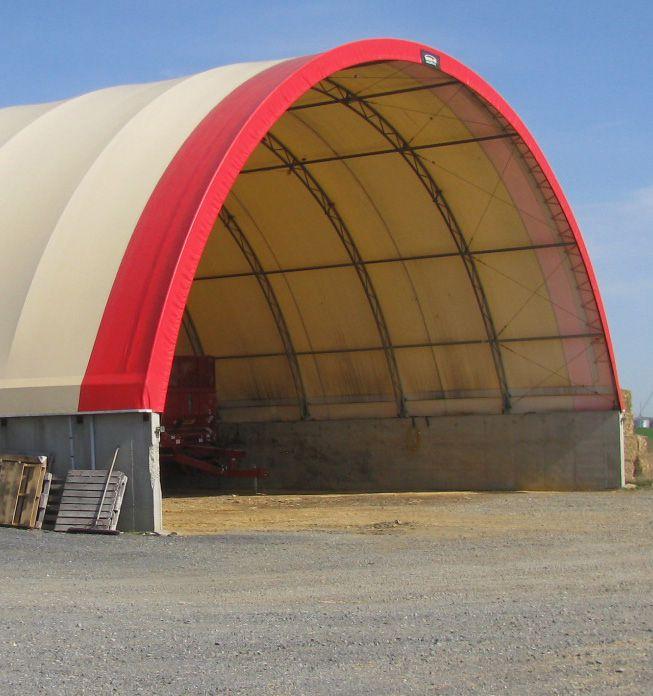
The litter compost is removed completely from each barn in February and placed in storage in one of three manure storage buildings. They are constructed with concrete slab floors and walls, with a fabric covering them for protection against moisture and to minimize odor. The compost is land applied in spring just prior to planting. While the farm grows soybean, wheat and corn, the compost is applied almost exclusively on their corn ground.
Wen-Crest Farms also has a composting and storage building for its mortalities. The mortalities are mixed and covered with litter. In a matter of two weeks, they have decomposed into compost.
minimize nutrient leaching from farmland, as this is having a noticeable impact on the health of this area, which is also one of the largest poultry and egg producing regions of the United States.
Manure spreading at Wen-Crest Farms starts about the middle of March. Last spring, the farm made a major investment of more than $100,000 each for two new 9524 Meyers manure spreaders pulled by 350 horsepower, auto-steer, New Holland tractors. The manure application system is controlled by two computer programs in the tractor – a global positioning system (GPS) and speed sensing software. The programs ensure there is no nutrient application overlap in the field and the correct amount of manure is applied per acre based on the application rate punched into the control panel and according to each field’s nutrient management plan, no
matter what speed the tractor operator is driving. The GPS software is tied into the tractor’s auto-steer system to avoid overlap. Additionally, mechanisms on the manure spreader have the ability to automatically adjust the application rate based on the tractor’s speed.
Tom Wagner, a precision farming specialist at Messicks Equipment, where Wen-Crest Farms purchased the manure application system, says the farm uses the ISOBUS display supplied by Raven Industries (headquartered in Sioux Falls, SD) and installed in the factory with the tractor.
“With this controller, the operator is able to monitor and adjust the application rate coming out of the spreader,” he says. “Having that control over the application rate system is beneficial because it allows the operator to have equal distribution throughout the entire application, which reduces inconsistencies and allows for a proper manure application.”
He adds that the other benefit of using this type of technology is that the farm can collect data of when they were in the field, what they were spreading, and how much was spread.
A day or two after the manure is applied, Wen-Crest Farms follows up with a Case vertical turbo till system to incorporate the manure into the soil.
“You are not disturbing a lot of the soil, yet you can incorporate that manure into the top two inches of the ground,” Steve says. “This provides odor control because the nitrogen doesn’t volatize and the manure doesn’t leach away. We have zero problems with any neighbors because the manure is incorporated. Prior to incorporation, the manure is kept dry in the buildings.”
The farm is careful about how much phosphorus it applies on its cropland. The application rate is typically about three tons per acre. Because of this control, they still do purchase some commercial fertilizer to fulfill their nitrogen needs.
“We apply based on how much phosphorus we want to put in the soil, and not on the amount of nitrogen,” Steve says. “If I was applying based on the nitrogen needs, I would be way over applying. We have enough land base that we are able to manage it very well.”
They also maintain 30 to 50 foot grass and tree buffers between their cropland and any creeks and streams on their land to avoid nutrient leaching from their land into the water system – something they have done for over a decade.
Maryland pilot project turns poultry litter into profits
Company has received $1.2 million grant to construct a pilot project on Chesnik farm
BY DIANE METTLER
Michelle and Paul Chesnik are impassioned poultry farmers. They have eight houses on two adjacent pieces of land in Wicomico County, Md. in the Chesapeake Bay watershed, on the Delmarva Peninsula. Like many of their fellow farmers, they are facing big changes up ahead, and they’ve decided to do something about it.
The recent implementation of the PMT (phosphorous management tool) restricts the spreading of poultry litter based on the FIV (Fertility Index Value) of the soil. Michelle says it’s anticipated there will be an excess of at least 228,000 tons of poultry litter annually. At least for the short term, Governor Larry Hogan has implement regulatory changes to allow an implementation phase over five to seven years.
“It’s been a bloody battle that I’ve been involved in since 2013, when the legislature tried to push through regulation under an emergency hearing
ABOVE
to automatically stop the spread of poultry litter, without a clue as to not only the financial detriment, but also the environmental detriment it would have caused,” she says. “The previous Governor O’Malley’s plan was to stockpile it in undisclosed locations. And the previous Secretary of Agriculture thought it could be used to fertilize the forests in the state parks. Another plan was to have large storage facilities in (again) undisclosed locations until an alternative use could be found.
LOOKING FOR ANSWERS
The Chesnik farms produce approximately 800 to 1,000 tons of litter each year and like approximately 75 percent of the farms in the area, are considered a “No Land” operation with 27 acres.
“This means that we do not have the land to spread it on and, per our CAFO permits, cannot spread it. We use a small portion to compost our
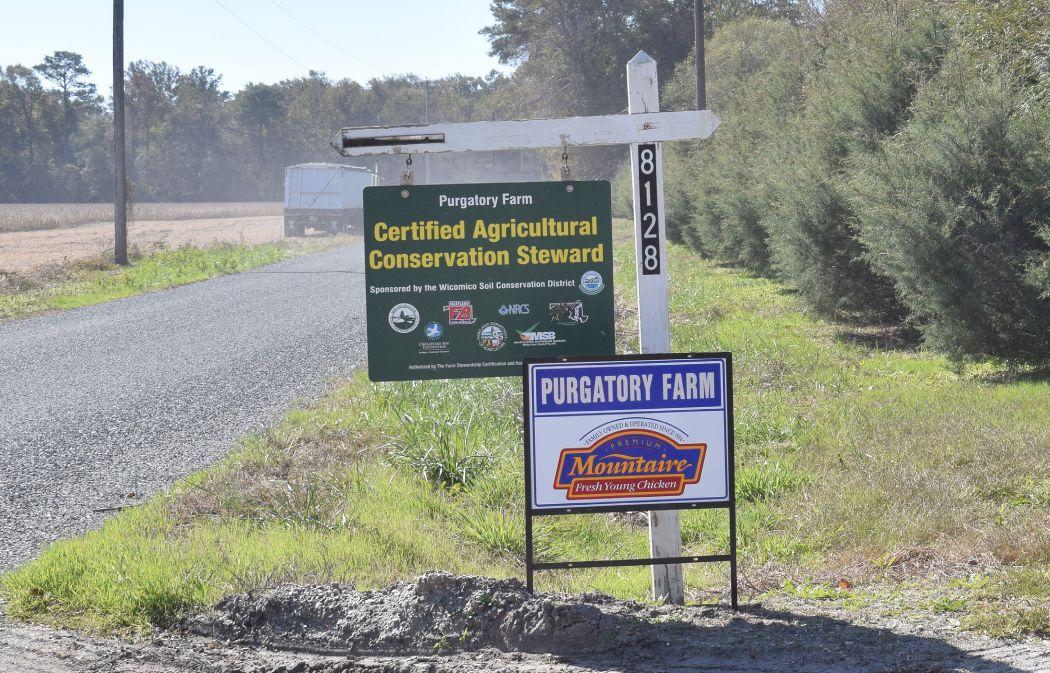
The Chesnik operation is a conservation farm – part of the Farm Stewardship Certification and Assessment Program (FSCAP). They hope to use their new pyrolysis unit as a learning tool and allow universities and environmental groups to come see it in action.
farm mortality, and the rest of the litter is dependent on the Maryland Manure transport program, which is done through a manure broker such as Ellis Farms. Some farmers depend on neighboring farms,” Michelle explains.
This year alone, in the three lower counties on the shore – Somerset, Wicomico, and Worcester – because of the implementation of phosphorus risk restrictions, any crop soils that have over a 500 phosphorus Fertility Index Value will not be able to utilize litter, according to Michelle.
“That’s why I’ve been looking for a long time to find alternative technology that
Luckily, they ran into a small Renewable Oil International (ROI) demonstration. The Maryland company uses a pyrolysis technology different from others. The litter is baked in a thermal processing unit under high heat in air-less containers, reducing the volume by 50 to 60 percent. What remains are three products:
• bio oil, which can be used as an asphalt extender or fuel additive;
• bio char, a charcoal-like product that can improve compost;
• and a synthetic gas
“We process the biomass in less than a second and thermally break it down –
ABOVE
Chesnik farms produce approximately 800 to 1,000 tons of litter each year and like approximately 75 percent of the farms in the area, are considered a “No Land” operation with 27 acres.
would keep the industry viable,” she says. “Not just for my farm, but something that we could do into these densely populated poultry areas on the Delmarva Peninsula.”
THE TECHNOLOGY
The Chesniks saw all types of technology during their search, much of it great, but not ideal for their situations. One system Michelle recalls looked promising. The hitch? All the farms on the peninsula would have to change their bedding from wood to straw.
“We use finely ground pine shavings or sawdust for bedding. We don’t produce much straw around here. Our poultry litter is a combination of manure and shavings, and the moisture content of that is normally around 30 to 35 percent, so whatever system you use is going to have to be able to accept that.”
vaporize it,” explains Keith Cowin, chief operating officer of ROI. “It doesn’t combust because it’s in a non-oxidizing environment. Then we take that vapor and re-condense it in less than two seconds into about 40 percent bio oil and about 45 percent bio char. A non-condensable gas comes off, and that’s the third product. That gas is combustible and we use that to heat up our process.”
Conversations began between ROI and the Chesniks. Both parties could see the benefits of such technology in the area and that led to a pilot project on the Chesnik’s farm.
PILOT FUNDING
To get funds to build the pilot, ROI applied for a state grant with the Maryland Department of Agriculture. In August 2015, ROI was awarded a $1.2 million
grant to get the project underway.
Louise Lawrence, resource conservation chief for the Maryland Department of Agriculture, heads up the grant program and is excited to see the pilot up and running. She’s also looking forward to seeing the results.
“It’s a two-year contract, anticipating it will take one year to construct,” she says. “Once it’s operational we look at both the efficiency of the technology, and the results in terms of manure management.
“We also subcontract the Environmental Finance Center to look at our projects and do an economic analysis in a couple veins,” she adds. “One will be to look at, with the state subsidizing the construction of these technologies, what the cost benefit is. Then they will look at what a cost benefit would be if a farmer had to look for outside funding sources, the loans, what the payback period might be, if they would save money on fertilizer inputs or transport inputs if they’re not using the fertilizer and having to haul it some place. And they will look at all the different business components to see how that changes the economics and whether in the end it would pan out for other operations to adopt it on their own.”
BIGGER THINGS AHEAD
Construction will begin soon at the Chesnik farm and, if all goes well, there will be bigger construction ahead.
“The business plan is to move forward with processing units that will handle maybe 30 to 50 farms as opposed to one farm and ROI would have them centrally located in the high density markets,” Keith says.
And although ROI technology can process any carbon-rich material, the company wants to focus on a big need as opposed to being too generalized.
“Right now in the Eastern Shore, there’s a specific need – an enormous amount of biomass sitting there that they really don’t have answers for right now. This gives us a huge opportunity to move in and help convert that into other products.”
END USERS
One of the benefits of ROI’s technology is that it creates several products with a variety of end users, which ROI is currently developing.
Bio char – Keith says 50 percent of the carbon that’s in chicken litter comes out in bio char, “and that [bio char] is an excellent way of sequestering carbon, because now you’re not throwing it up
BEDDING MAKER
ALL THE PERFORMANCE YOU NEED, NONE OF THE HASSLES.
COMPLETELY 304 STAINLESS STEEL CONSTRUCTION. HEAVY DUTY PLANETARY DRIVE, NO GEAR BOX WOES. CASTED STAINLESS STEEL HARDENED AUGER FOR PRECISION AND SUPERIOR PERFORMANCE. HEAVY DUTY SCREENS STANDARD, IN A VARIETY OF SIZES.
EIGHT CUTTER BLADES TO DESTROY FOREIGN MATERIAL. REVERSIBLE WEAR RINGS AND SPECIAL TUNGSTEN CARBIDE SEAL SYSTEM.
SELF ADJUSTING VOLUME CONTROL ELIMINATES LOSING SOLIDS PLUG AND PROVIDES EVEN HEAD PRESSURE. ADJUSTABLE MOISTURE CONTENT, PERFECT FOR BEDDING.
TOP LEFT The Chesniks have eight houses on two properties in Wicomico County, Md., in the Chesapeake Bay watershed.
RIGHT The Chesniks don’t have the land needed to spread the operation’s poultry litter. Instead, a small portion is used to compost mortalities and the rest of the litter is dependent on the Maryland Manure transport program.
BOTTOM LEFT The recent implementation of the PMT (phosphorous management tool) in Maryland restricts the spreading of poultry litter based on the FIV (Fertility Index Value) of the soil.
in the atmosphere; you have carbon in a form you can use.”
The bio char is also absorbent and works well as a fertilizer or a soil amendment for garden centers and landscapers.
Bio oil – The heavy bio oil resulting from the process is used by asphalt manufacturer (in fact one is already on line to take the bio oil from the Chesnik farm.
“The light end we’re actually separating and selling as chemicals,” Keith says. “There are about five or six really valuable ones that we’re pulling off and the balance of the material can be refined back into fuel.
“What we’re trying to do with this pilot is to develop those markets even further and develop contracts and expand on the project of developing a unit that will handle a lot greater volume of the litter and take care of a bigger volume of the excess litter than one farm.”
LEARNING AND PROFITS
Construction will begin soon, with the collaborative efforts of ROI MD technology, engineering firm KCI, the Chesniks, poultry litter broker Ray Ellis, and the Maryland Department of Agriculture.
Once completed, all eyes will be on Chesnik’s farm because it will be a learning tool for many.
The Chesnik farm is a conservation farm – part of the Farm Stewardship Certification and Assessment Program (FSCAP).
“My offer to the Maryland Department of Agriculture was to basically keep this unit up here as a learning tool,” says Michelle. “If it works, universities and environmental groups and such can come in and see what we do, how we do it, and learn and see what it does. I think it’s important that both communities – environmental and agriculture – have a meeting place.”
Louise Lawrence says the Maryland Department of Agriculture would like to see this as a tool for other farmers.
“We don’t believe there’s a silver bullet,” she says. “Manure management, because animal production is somewhat concentrated in this country, is a big deal. There is a lot of manure generated and we need to have a lot of opportunities available to help farmers manage it in a way that doesn’t treat it as a waste. If it can’t be used for fertilizer, there needs to be viable ways to use it for other things. We think it’s important to pursue those ways.
It could be that there’s a large regional thing, or it could be there’s some smaller farm scale things that work.
“Our view is that it’ll probably be a combination of many of those scales and many technologies. One size does not fit all. It does play into some of the ingenuity of the farm community to adapt to their particular needs or their farm operation, the different things that are out there. So we hope to offer them a menu of things that they can look at, and they can see how well they work and be informed from thereon.”
PAY ITS OWN WAY
But this pilot project is definitely all business.
“We’re doing it as a joint venture with ROI,” Michelle says. “The real hope with this is that there will be a market for the bio char and there will be some income. There has to be some kind of income stream from this in order to put these things up and have them functional on a large scale. You can’t just depend on the state to pay to run them or have a large fee to the growers to run them, that’s why the income stream will be critical.”
FEEDING THE Grid with Biogas
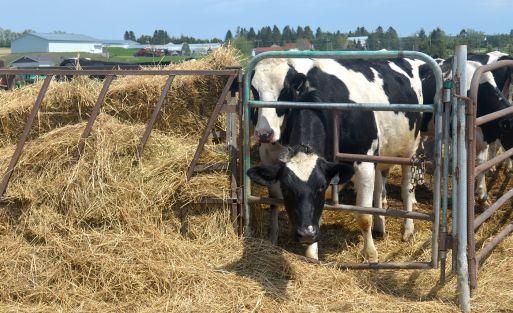
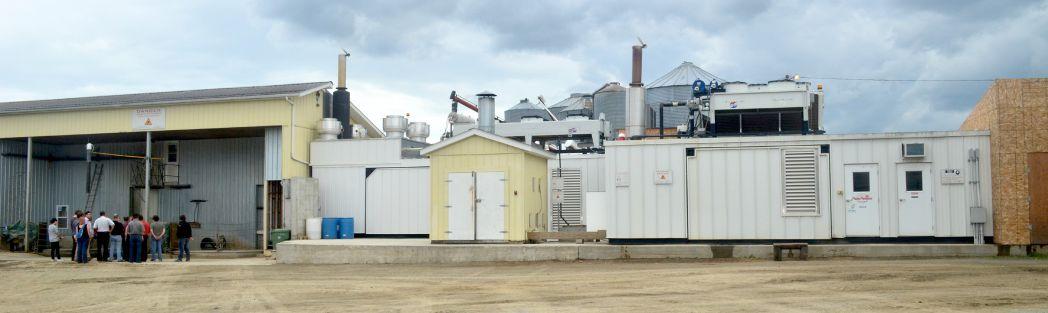
Laforge Bioenvironmental’s commercial biogas production plant in Saint-André, N.B., operates two anaerobic digesters on a dairy farm with approximately 90 cows, and is fuelled by a combination of cow manure and organic waste from regional food processors.
BY ANDREW SNOOK
BELOW
Laforge Bioenvironmental’s digesters fuel a biogas engine capable of producing 250,000 kilowatts of electricity a month.
Reduced carbon emissions, green energy production and other environmentally friendly initiatives are hot topics for all levels of government these days. So it comes as little surprise that a variety of green energy projects are popping up across Canada. One of those projects is Laforge Bioenvironmental’s commercial biogas production plant in Saint-André, N.B.
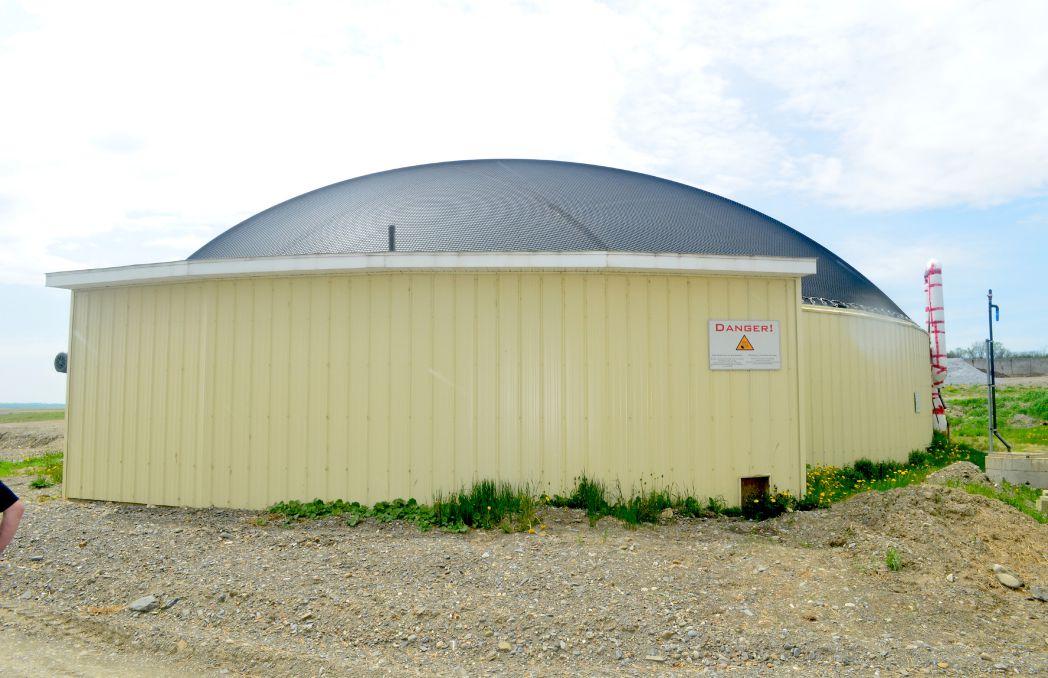
The facility operates two anaerobic digesters on a dairy farm with approximately 90 cows, and is fuelled by a combination of cow manure and organic waste from regional food processors.
The digesters are 12,000 m3 and 1,500 m3 in size. The overall energy production capacity of the site is 1.4 MWh, which is the amount of power that Laforge Bioenvironmental is allowed to put on the grid under its contract with NB Power (also a function of local power demand). However, the site has the potential to produce 2 MWh with the available feedstock in the region.
The site currently process about 30 to 40,000 metric tonnes of waste per year.
The $7-million project was completed in two phases with 80 percent of the financing coming through Farm Credit and the remaining funds coming from a combination of a few green energy grants and a zero-interest loan from the provincial government.
The project is expected to pay for itself within the next six years through electrical generation and tipping fees, according to Kevin Shiell, business
PHOTOS BY ANDREW SNOOK
development and sales manager for Complete Senergy Systems, the consulting firm that worked on the second phase of the project’s construction.
The expected lifespan of the anaerobic digesters is between 20 to 25 years.
“But like any infrastructure, if you maintain it, replace parts when needed, you can probably make it last longer than that,” says Shiell.
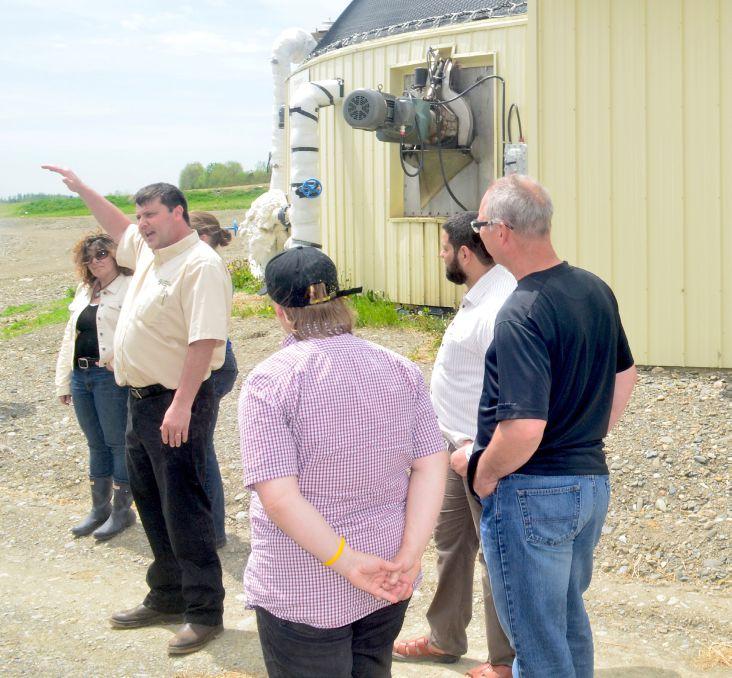
LEFT Kevin Shiell, manager of business development and sales for technical support digester operations at Complete Senergy Systems, discusses the breakdown process within the anaerobic digester during a tour of the biogas facility.
“It’s almost all just cellulose. There’s not a lot of biogas value to it, but it’s good organic material.”
The raw materials used to create the sediment sent to the anaerobic digesters is a combination of manure from the 90 cows at the dairy farm; French fries and potato skins from local food processors; slaughterhouse waste and sugar beets.
“The peels from the potatoes are all steam peeled so the starch is mostly washed off of them. It’s almost all just cellulose,” explains Shiell. “There’s not a lot of biogas value to it, but it’s good organic material. The French fries have a lot of energy in them.”
Fifty acres of sugar beets were grown on the farm last year and are used as an energy crop for the sediment. However, other projects are being considered for the sugar
beets, such as the creation of sugar and ethanol.
Two tankers haul dissolved air floatation sludge (DAF) that comes from the slaughterhouse that comes off primary waste.
“The liquid DAF sludge has a lot of fat, it’s actually really good stuff,” says Shiell. “It’s over 115,000 COD, so there’s a lot of gas that comes out of it.”
The liquid DAF is mixed with all the dry materials to create a 10 per cent total solids mix, which is then pumped into the anaerobic digesters. The digesters run between five and eight per cent total solids.
Manure is only a small part of the mix, mainly used as a dilutant.
“If the pH of the digester or the buffering capacity of the digester is a little low, we’ll shovel a little manure into it,” says Shiell. “We’re only putting about 30 tons of manure in a day, and about 150 to 180 tons of other materials.”
All of the ingredients are fed into the facility’s two 100-ton receiving tanks that fuel the anaerobic digester system. The floors of the tanks are heated at about 10°C except during the wintertime, when it is heated to same temperature as the anaerobic digesters.
“In the wintertime, all this material is frozen,” says Shiell. “When you mix it up and pump it into your digester at 5°C it’s hard to keep your digester at 40°C.”
The cow manure is collected under the holding pen before it is pumped over to the receiving tanks in measured amounts where it is mixed with other organic waste and churned into sediment. French fries and other organic waste are then added to the mix. The sediment is then pumped over to the anaerobic digester, where it fills the base of the dome.
The sediment in the dome is constantly turned by a motorized mixer and heated to 40°C. This process
TOP LEFT Laforge Bioenvironmental’s anaerobic digesters operate on a dairy farm with approximately 90 cows near SaintAndré, N.B.
TOP RIGHT French fries from a nearby processing plant are a key ingredient in the sediment used to generate biogases.
BOTTOM The Laforge digesters are fuelled by a combination of cow manure and organic waste from regional food processors. The process converts these feedstocks into electrical energy, heat and liquid organic fertilizer.
makes the biogases rise up out of the sediment, inflating the dome.
The biogases include carbon dioxide, methane and hydrogen sulfide. The hydrogen sulfide crystallizes during the process and drops back into the sediment, leaving only the carbon dioxide and methane in the air. Those two gases are removed from the anaerobic digesters and fed into nearby biogas engines. The leftover sediment is then transferred to a nearby reservoir, where it is stores for future use as fertilizer.
The biogas engines – a Guascor 600 Kwh engine and a Jenbacher 1.2 MWh engine – generate outputs upwards of 650 kW per hour or 250,000 kW a month. The electricity is fed into the NB Power Grid where it can power upwards of 300 homes, while generating approximately 4.5 million BTUs, which is used to heat an on-site farmhouse, the anaerobic digesters, hot water tanks, the shop and the dairy barn through the use of an infloor hydronics system installed underneath the cement floor.
“We have lots of extra heat in the summer but not a lot of extra heat in the
winter,” Shiell says. “This is because it takes all the heat to heat the digesters in the winter.”
Martin Machinery out of Missouri assembled both containerized generation systems. Complete Senergy works with them to assemble custom units that meet the CSA Biogas code required by New Brunswick and Nova Scotia. Complete Senergy Systems also manufactured the mixers, hydronic heater and feed pumps.
The biosolids generated in the electricity generating process are spread out over 1,500 acres of land.
“You apply about 2,000 gallons per acre,” Shiell says. “We take about two or three months in the spring and pretty much spread it all summer. We’ll stop for a couple months during haying season. Then once the grass has been cut, we’ll put some on afterwards and then we’ll keep spreading until November to get the digester down as low as we can because we have nowhere to put it during the winter.”
One challenge with producing large amounts of biosolids is that it the company has to go upwards of 20 kilometres away from the biogas plant to spread it on
land, which can become relatively costly.
One challenge the operation has experienced is a problem with birds where the organic waste is being stored. To counter this issue, the company is installing tarp curtain doors to keep them out. They come at a cost of approximately $1,000 per unit.
“They work really well to keep the birds out,” Shiell says.
Since the amount that is paid per kilowatt of electricity varies from province to province, this type of operation is typically more worthwhile in areas where higher per kilowatt rates exist.
“We only make 10 cents per kilowatt, so 50 per cent of the revenues from this facility come from tipping fees – so McCain pays per ton to drop off material here, for example,” Shiell says.
Although the paid kilowatt rate in New Brunswick isn’t as high as in provinces such as Nova Scotia or Ontario, between electricity generation, tipping fees, operations using the excess heat in the summer and the future pelletizing of fertilizer, Laforge stands to have a bright future in the biowaste business.
For sales and service of biogas power generation systems, W.W.Williams is your go-to resource.
A global leader in combined heat and power systems for biogas applications, we can guarantee electrical efficiencies based on fuel consumption and power output. And it’s all backed by one of the industry’s most experienced and knowledgeable service teams.
MTU Onsite Energy is a member of the American Biogas Council
Compost increases water-holding capacity of droughty soils
Not all compost is created equal. Farmers need to understand how to produce and/or choose composts that increase soil’s water holding capacity.
BY M. CHARLES GOULD
Compost is an earthy-smelling, humus-like material that is a product of the controlled aerobic decay of organic nitrogen (such as manure) and carbon (such as sawdust, straw or leaves). One advantage of compost is its ability to hold moisture. The focus of this article is to understand how to choose composts that increase the soil’s water holding capacity.
It is important to understand at the outset that not all composts are alike. For example, composts made from manure are not the same as composts made from leaves. The nutrient content, microorganism diversity and population, cation exchange capacity and water holding capacity of compost can be different based on the feedstocks used to make the compost, the process used to make the compost and the maturity of the compost at the time of application. Therefore, it is important to understand the quality of compost before using
it to ensure you get the intended benefit you are seeking.
Soil scientists report that for every one percent of organic matter content, the soil can hold 16,500 gallons of plant-available water per acre of soil down to one foot deep. That is roughly 1.5 quarts of water per cubic foot of soil for each percent of organic matter, according to Sullivan in “Drought Resistant Soil. Agronomy Technical Note. Appropriate Technology Transfer for Rural Areas” at the National Center for Appropriate Technologies in 2002. Increasing the organic matter content from one to two percent would increase the volume of water to three quarts per cubic foot of soil. Rodale Institute presenters, on the other hand, assume that one pound of carbon can hold up to 40 pounds of water. That calculates out to be approximately 38,445 gallons of total water per acre six inches deep. The point here is that organic matter
ABOVE It is important to understand at the outset that not all composts are alike. For example, composts made from manure are not the same as composts made from leaves.
holds a lot of water, thus, the amount of organic matter in a soil directly influences the availability of water to a crop over time. However, organic matter in droughty soils breaks down so rapidly that getting above two or three percent is difficult to do, but getting to two to three percent can have major positive impacts.
A 1994 study by A. Maynard found that a three-inch layer of leaf compost rototilled to a six-inch depth increased water holding capacity 2.5 times that of a native sandy soil and provided almost a seven day supply of plant available water. In a 2000 study, Maynard found that increasing the water holding capacity of the soil by adding compost helped all crops during summer droughts by reducing periods of water stress. The amount of water in a plow layer (eight inches) of the compost amended soil increased to 1.9 inches compared with 1.3 inches in unamended soil. Since vegetables require one inch of water a week, at field capacity, the compost amended soil held a twoweek supply of water.
The U.S. Compost Council (2008) has stated that the frequency and intensity of irrigation may be reduced because of the drought resistance and efficient water use characteristics of compost. Compost reduces soil crusting, which helps with water absorption and penetration into the soil. Recent research suggests that the addition of compost in sandy soils can facilitate moisture dispersion by allowing water to more readily move laterally from its point of application.
The limiting factor for compost application in Michigan is soil phosphorus levels. In the Generally Accepted Agricultural and Management Practices for Nutrient Utilization (Nutrient GAAMPs) it states when soil phosphorus levels exceed 300
pounds per acre, no source of phosphorus can be applied. That means no compost can be applied to soils that exceed 300 pounds per acre. When soil phosphorus levels are between 150 and 299 pounds per acre, compost is to be applied based on the phosphorus removal rate of the crop. When soil phosphorus levels are less than 150 pounds per acre, compost is to be applied based on the nitrogen requirements of the crop.
For most cropland in Michigan, this means that low amounts of compost will be applied, so choosing composts high in organic matter is critical if increasing soil water holding capacity is your goal.
Used Boats in Stock
According to the U.S. Compost Council’s Field Guide to Compost Use, farmers should choose composts that have an organic matter content between 50 to 60 percent and a water holding capacity of 100 percent or higher.
When purchasing compost, ask to see an analysis to verify organic matter content and water holding capacity. Commercial sources of compost in Michigan can be found at the FindAComposter.com website.
Soil organic matter is built up over time with continuous applications of compost. Some farmers in Michigan’s Thumb area have found that applying one to two tons of compost/acre/ year on field crops makes a difference in the soil’s ability to grow a crop. It is estimated that applying a ton of compost to the acre on a soil with one percent organic matter can increase that soil’s organic matter content by 10 percent. Compost spread evenly over one acre at a depth of one inch equals about 135 cubic yards or 54 tons, assuming the compost has 60 percent organic matter and a bulk density of 800 lbs./cubic yard at 30 percent moisture.
M. Charles Gould is with Michigan State University Extension.
Patz Tundra Pro II
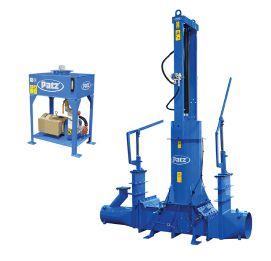
Patz Corporation recently announced the Tundra Pro II Hydraulic Pump and Hydraulic Power Unit. Designed for the long-distance transfer of slurry manures that include sand, sawdust, or chopped straw beddings, the Tundra Pro II offers a maximum pumping distance of 600 feet and pumping capacities up to 150 GPM. Redesigned for improved access and serviceability, a new Automatic Reciprocating Valve has been added to operate the main hydraulic cylinder with fewer maintenance requirements. The new Hydraulic Power Unit is available with choice of 5 or 7.5 HP, single- or three-phase motor. patzcorp.com
Kioti CK10 Series
Kioti Tractor recently released four new models to its CK10 Series. Built with a Tier 4 compliant Daedong eco-friendly diesel engine, the new CK10 models include two gear and two hydrostatic transmission (HST) models ranging from 25.4 to 40 horsepower (HP). New CK10 models include CK3510 – engine power of 34.9 HP (26 KW), 9F/3R manual transmission; CK3510H – engine power of 34.9 HP (26 KW), three-range hydrostatic transmission; CK4010 –engine power of 39.6 HP (29.5 KW), 9F/3R manual transmission; CK4010H – engine power of 39.6 HP (29.5 KW); three-range hydrostatic transmission. kioti.com
John Deere, Climate Corporation expand options
Deere & Company and The Climate Corporation have signed agreements to enable exclusive near real-time data connectivity between certain John Deere farm equipment and the Climate FieldView platform. The companies said customers will have the option to share their current and historical agronomic data between the John Deere Operations Center and the Climate FieldView platform and seamlessly execute agronomic prescriptions with John Deere equipment.
johndeere.com or climate.com
MANURE MANAGER 2016 BUYERS GUIDE
5ELEM USA INC.
10060 W. Sam Houston Parkway S. Houston, TX 77099 USA
201 Edgewater Dr., Suite 285 Wakefield, MA 01880 USA
Tel: 781-321-3910
Toll-Free: 1-800-343-3276
e-mail: atamarketing@atgtire.com www.atgtire.com
Alliance Agricultural Tires are manufactured by Alliance Tire Group, one of the fastest growing tire manufacturers globally. With world-class manufacturing and Research & Development, Alliance has been an innovator in ag and flotation tires for decades, and has a full line-up of premium quality farm (and Skid steer & Backhoe) tires at prices that deliver more value and lower total cost of ownership. Call us at 781-321-3910 or 800-3433276 for more information.
ARTEX MANUFACTURING
36419 US Hwy. 71, PO Box 88 Redwood Falls, MN 56283 USA
Tel: 507-644-2893 Fax: 507-644-7000
Toll-Free: 1-888-644-2893
e-mail: sguetter@artexmfg.com www.artexmfg.com
ATD WASTE SYSTEMS INC.
3099 West 24th Ave.
Vancouver, BC V6L 1R7 Canada
Tel: 604-736-4474 Fax: 604-736-4493
e-mail: 1cleanfarm@hogmanure.com www.hogmanure.com and www. dairymanure.com
Karcher Professional Wash Systems, Div. of Connect Equipment Corp.
Udder Tech, Inc.
COMMERCIAL MANURE APPLICATION
Bazooka Farmstar
DODA USA INC.
Hydro Engineering
Puck Custom Enterprises, Inc.
Redhand Ltd.
Suma America, Inc.
Sundstrom Pit Pumping LLC
Sunova Worx Inc.
VTI LLC
Zoske’s MFG Inc.
COMPOSTING
Airmax, Inc.
Bauer North America
HCL Machine Works
Midwest Bio-Systems
Mighty Grow Organics
Milinator Technologies Inc.
Patz Corporation
Press Technology & Mfg., Inc.
U.S. Screen Company
CONSULTANTS
Design Consultants
Manure Systems Inc.
Yunker Plastics, Inc.
Engineering Consultants
Agriment Services Inc.
DVO, Inc.
Kifco, Inc.
Manure Systems Inc.
Management Consultants
Manure Systems Inc.
Midwest Bio-Systems VTI LLC
CONTROL SYSTEMS
Bazooka Farmstar
Kunafin - The Insectary
Manure Systems Inc.
Sunova Worx Inc.
DRAINAGE MANAGEMENT SYSTEMS
U.S. Screen Company
DRYING SYSTEMS
U.S. Screen Company
DUMP BOXES
Nuhn Industries Ltd.
EDUCATION
Technical Publication Associates, Inc.
World Pork Expo
GAS PURIFICATION SYSTEMS
BIOFerm Energy Systems
GOVERNMENT REGULATIONS
Canadian Biogas Association
INJECTION EQUIPMENT
Bazooka Farmstar
Cadman Power Equipment Ltd.
GEA North America
Hydro Engineering
Jim Hodel Inc.
Metal 360
Nuhn Industries Ltd.
Redhand Ltd.
Sioux Automation Center, Inc.
Veenhuis Machines B.V.
Zoske’s MFG Inc.
IRRIGATION EQUIPMENT
Hose Reels & Caddies
Bauer North America
Bazooka Farmstar
Cadman Power Equipment Ltd.
Hydro Engineering
Jim Hodel Inc.
Kifco, Inc.
Veenhuis Machines B.V.
Zoske’s MFG Inc.
Hoses
5ELEM USA Inc.
Bazooka Farmstar
Cadman Power Equipment Ltd.
Hydro Engineering
Jim Hodel Inc.
Kifco, Inc.
Metal 360
Zoske’s MFG Inc.
Pivot Irrigation
Cadman Power Equipment Ltd.
Cornell Pump Company
LAGOONS
Lagoon Covers
Agriment Services Inc.
Industrial & Environmental Concepts, Inc.
Yunker Plastics, Inc.
Lagoon Liners
Agriment Services Inc.
Industrial & Environmental Concepts, Inc.
Yunker Plastics, Inc.
LOADERS & ACCESSORIES
Airmax, Inc.
Allegheny Ag LLC
Sunova Worx Inc.
LUBRICANTS & FUEL ADDITIVES
Schaeffer Lubricants & Fuel Additives / Dan Miller
MANAGEMENT
Municipal Waste Management
Agriment Services Inc.
Airmax, Inc.
Bazooka Farmstar
Cadman Power Equipment Ltd.
DODA USA Inc.
DVO, Inc.
Hydro Engineering
Industrial & Environmental Concepts, Inc.
LSC Pre-Cast Systems Ltd.
Nutrient Control Systems, Inc.
Patz Corporation
Solutions 4Earth, LLC
Yunker Plastics, Inc.
Zoske’s MFG Inc.
Nutrient Management
Agriment Services Inc.
Airmax, Inc.
Axter Agroscience Inc.
Bambauer Equipment LLC
Bauer North America
Bazooka Farmstar
Cadman Power Equipment Ltd.
Digi-Star LLC
DVO, Inc.
GEA North America
Homestead Nutrition
Midwest Bio-Systems
Mighty Grow Organics
Nutrient Control Systems, Inc.
Patz Corporation
Solutions 4Earth, LLC
Verdesian Life Sciences
Ward Laboratories Inc.
Zoske’s MFG Inc.
MANURE CONVEYOR SYSTEMS
Manure Systems Inc.
Patz Corporation
Press Technology & Mfg., Inc.
MANURE TANKERS
Allegheny Ag LLC
Bambauer Equipment LLC
Bauer North America
Geneva Logistics, Inc.
Jim Hodel Inc.
Nuhn Industries Ltd.
Sioux Automation Center, Inc.
Sunova Worx Inc.
Veenhuis Machines B.V.
VTI LLC
Zoske’s MFG Inc.
MEASUREMENT SYSTEMS
Digi-Star LLC
METHANE COLLECTION
BIOFerm Energy Systems
DVO, Inc.
Industrial & Environmental Concepts, Inc.
POLYMERS
Agriment Services Inc.
Airmax, Inc.
Boerger, LLC
Manure Systems Inc.
Warner Plastics and Liners, Inc.
PUBLICATIONS
Technical Publication Associates, Inc.
PUMPS
Allegheny Ag LLC
Bambauer Equipment LLC
Bauer North America
Bazooka Farmstar
Boerger, LLC
Cadman Power Equipment Ltd.
Cornell Pump Company
DODA USA Inc.
Gator Pump, Inc.
GEA North America
Hydro Engineering
Jamesway Farm Equipment
Jim Hodel Inc.
Kifco, Inc.
Koolmees Industrial Sales, Service (Irrigation)
Metal 360
Nuhn Industries Ltd.
Patz Corporation
Puck Custom Enterprises, Inc.
Sioux Automation Center, Inc.
Smart Turner Pumps
SRS Crisafulli Inc.
Sunova Worx Inc.
Vaughan Company Inc.
Zoske’s MFG Inc.
SCRAPERS
Allegheny Ag LLC
GEA North America
Patz Corporation
SEPARATORS
Agriment Services Inc.
Bambauer Equipment LLC
Bauer North America
Boerger, LLC
DODA USA Inc.
GEA North America
Kyte Centrifuge LLC
Manure Systems Inc.
Patz Corporation
Press Technology & Mfg., Inc.
U.S. Screen Company
SPREADERS
Liquid
Agriment Services Inc.
Allegheny Ag LLC
Bazooka Farmstar
Cadman Power Equipment Ltd.
GEA North America
Jim Hodel Inc.
Pichon S.A.
Sioux Automation Center, Inc.
Veenhuis Machines B.V.
VTI LLC
Zoske’s MFG Inc.
Solid
Agriment Services Inc.
Allegheny Ag LLC
Artex Manufacturing
Brochard North America
Pichon S.A.
Pik Rite Inc.
Sioux Automation Center, Inc.
Tubeline Manufacturing Ltd.
Zoske’s MFG Inc.
STORAGE
Portable/Temporary Manure Storage
Bambauer Equipment LLC
Bazooka Farmstar
Cadman Power Equipment Ltd.
ClearSpan Fabric Structures
Husky Farm Equipment Ltd.
Jim Hodel Inc.
LSC Pre-Cast Systems Ltd.
Zoske’s MFG Inc.
Storage Lagoons
Agriment Services Inc.
Industrial & Environmental Concepts, Inc.
LSC Pre-Cast Systems Ltd.
Yunker Plastics, Inc.
TANK SYSTEMS
Bambauer Equipment LLC
Bazooka Farmstar
CST Industries, Inc.
F.S.R.C. Tanks Inc.
Geneva Logistics, Inc.
Industrial & Environmental Concepts, Inc.
Jamesway Farm Equipment
Nuhn Industries Ltd.
Zoske’s MFG Inc.
TILLAGE
Allegheny Ag LLC
TIRES
Allegheny Ag LLC
Alliance Tire Americas, Inc.
McCarthy Tire Service
TRAILERS
Allegheny Ag LLC
Artex Manufacturing
Circle R Side Dump
Geneva Logistics, Inc.
Husky Farm Equipment Ltd.
Jim Hodel Inc.
Koolmees Industrial Sales, Service (Irrigation)
Nuhn Industries Ltd.
Veenhuis Machines B.V.
Zoske’s MFG Inc.
WATER TREATMENT
Waste Water Treatment
Agriment Services Inc.
Airmax, Inc.
ATD Waste Systems Inc.
Bauer North America
BIOFerm Energy Systems
Boerger, LLC
ClearSpan Fabric Structures
CST Industries, Inc.
DVO, Inc.
Industrial & Environmental Concepts, Inc.
Kifco, Inc.
LSC Pre-Cast Systems Ltd.
Manure Systems Inc.
MGD Process Technology Inc.
Omni Enviro Water Systems
Press Technology & Mfg., Inc.
Suma America, Inc.
Water Treatment
Airmax, Inc.
Boerger, LLC
ClearSpan Fabric Structures
CST Industries, Inc.
Manure Systems Inc.
Omni Enviro Water Systems
Penergetic Canada
Press Technology & Mfg., Inc.
UGA releases app to help ventilate poultry houses during cold weather
BY MERRITT MELANCON
University of Georgia poultry housing experts have released the state’s first app to help poultry farmers determine how much they should ventilate their houses during cold weather.
With thousands of birds living in a single house, keeping the air warm and fresh without spending a fortune on fuel during the winter can be one of the toughest challenges for broiler producers. The new app – called CHKMINVENT – is meant to simplify this process, said Mike Czarick, a poultry housing engineer at UGA’s Department of Poultry Science.
“In the summertime, ventilation is fairly straightforward,” he said. “The more air they can move through the house, the better off their birds will be. In the winter, there is so much more at stake. Ventilate too much and you will have excessive energy costs and stressed birds. Ventilate too little you will have poor air quality and wet litter, which can lead to poor performance and health.”
The app, available through Apple’s App Store, allows farmers to enter variables, such as the out-
ABOVE
side temperature, the amount of water the chickens consume, the temperature inside the house and the size of the poultry house’s fans. It then calculates how long farmers need to run their fans in order to remove excess moisture from the house and keep the chickens at a comfortable temperature.
“The app gives people a starting point as to how much fresh air they need to bring in to control house air quality and litter moisture,” Czarick said. “It’s not intended to provide a precise minimum ventilation rate. It’s going to take adjusting, but this at least gives a scientifically based place to start.”
For more information about the CHKMINVENT app, search for it on Apple’s App Store. For now, the app is only available for iPhone, but the team may develop versions for other operating systems based on demand for this initial version.
Merritt Melancon is a news editor with the University of Georgia College of Agricultural and Environmental Sciences.
UGA poultry science developed the Chkminvent app, a poultry house moisture removal and ventilation calculator intended to provide users with an estimated minimum ventilation rate required to remove the specified daily amount of moisture from a poultry house.