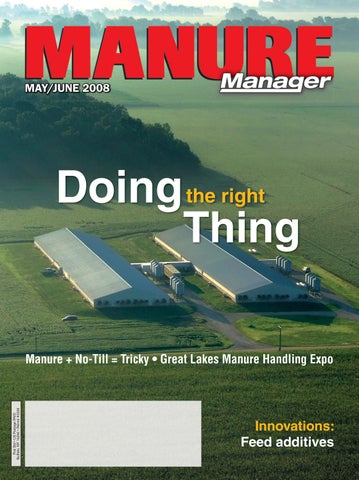
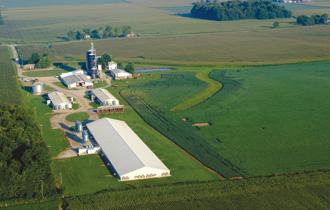
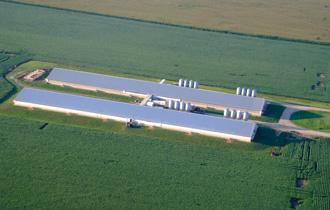
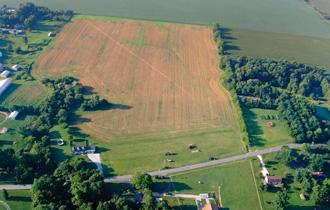
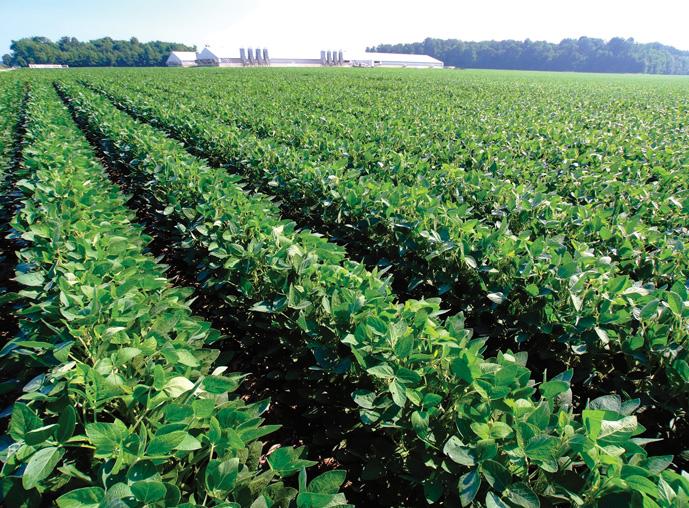
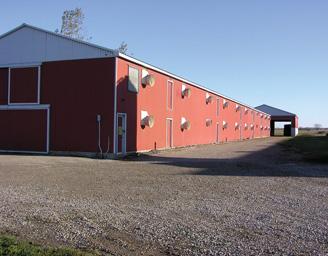
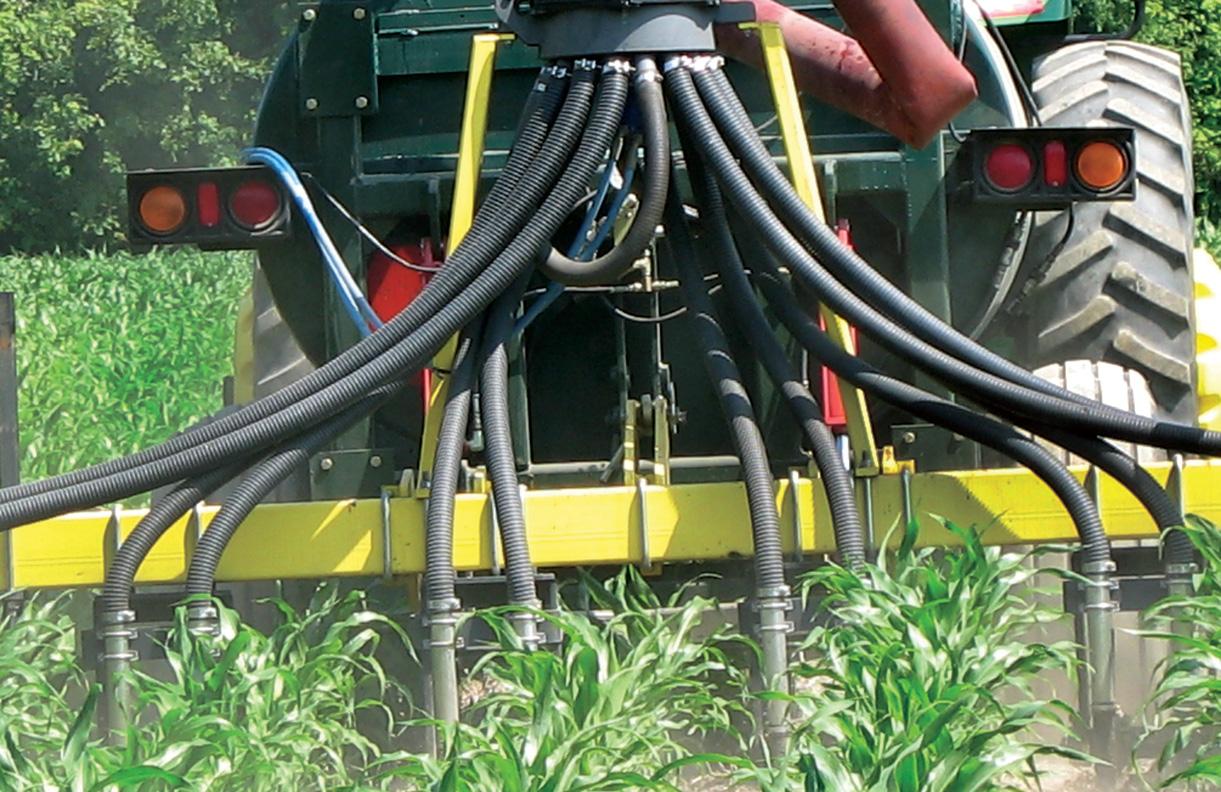
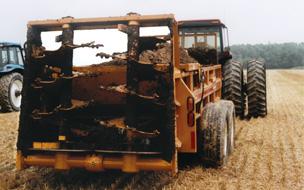
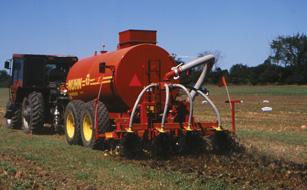
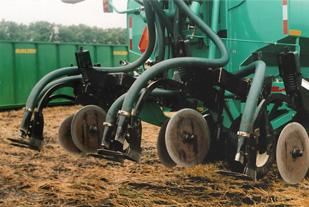
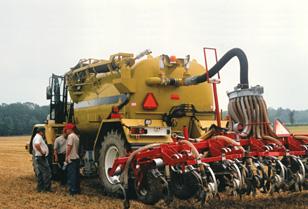
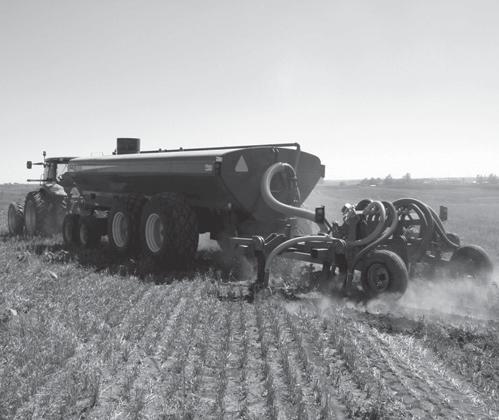
Meadowlane Farms of Frankfort, Indiana, is a well-run CAFO that’s added a waste application business to its environmentally responsible portfolio. 10
Manure bio-gas developer ready for round two
Grant Meikle’s first attempt at developing a manure-to-electricity project may not have gone exactly according to plan, but he’s not ready to throw in the towel.
14
Ammonia emissions from CFOs: Control and mitigation
A new fact sheet intended to provide producers and farm managers with information on how to reduce ammonia emissions from livestock housing and manure storage facilities.
Time for 2008 Great Lakes Manure Handling Expo almost here
Planning is pretty much complete for the 2008 edition of the Great Lakes Manure Handling Expo, scheduled for July 9 at the Molly Caren Agricultural Center, located just north of London, Ohio.
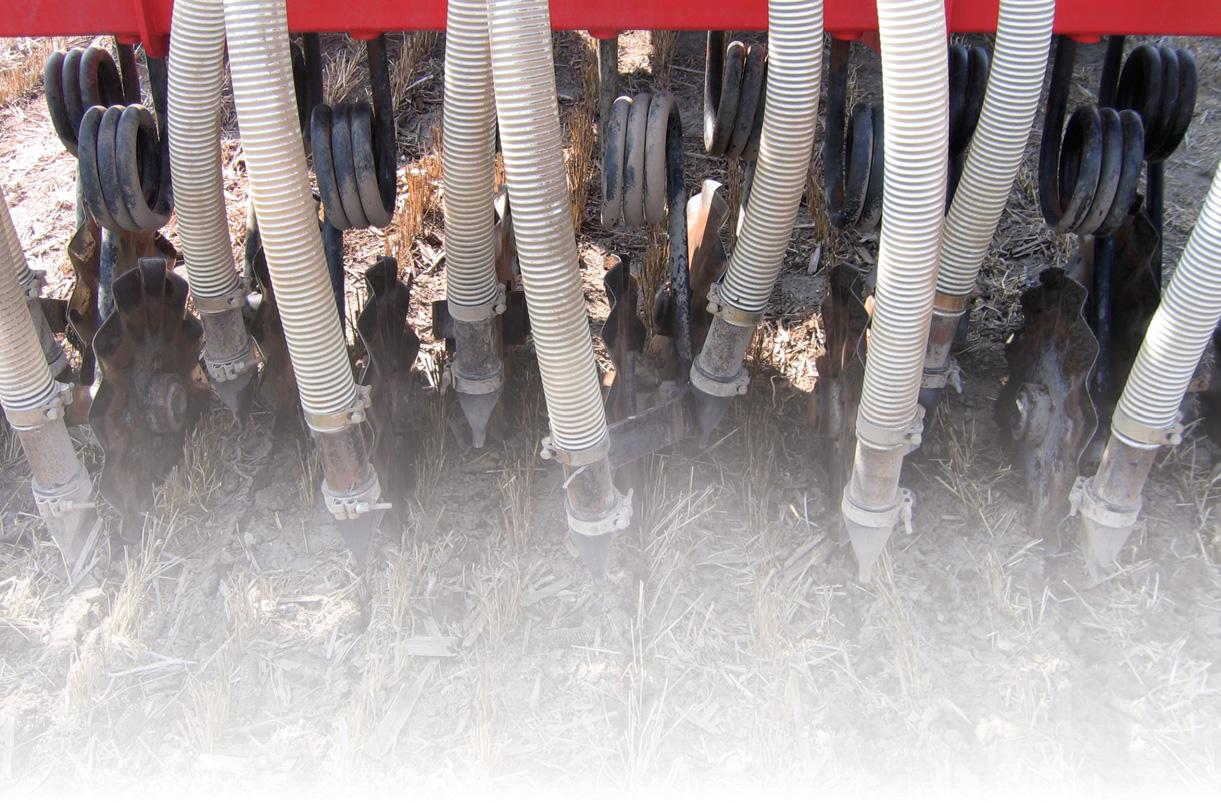
Mixing manure with no-till a tricky practise
The notion of applying manure in a no-till situation might cause some growers to ask ‘Why?’ For innovative types, the question becomes ‘Why not?’
Manure Manager takes a look at what’s out there in the market for: Feed additives.
Guest column: Liability on the horizon from Air Consent Orders
William M. Barnes is a partner in the Litigation Department at the law firm of Wildman Harrold (Chicago).
Cover: Meadowlane Farms of Frankfort, Indiana, is a family operation that evolved from dairy cattle to a 15,000 hog contract finishing operation with 1700 acres of corn and soybeans.
Published by:
Annex Publishing & Printing Inc. P.O. Box 530 Simcoe, Ontario N3Y 4N5 (800) 265-2827 or (519) 429-3966 Fax: (519) 429-3094
Editor
Margaret Land • (519) 429-5190, (888) 599-2228, ext 269 mland@annexweb.com
Contributing Editors
Dr. Atta Atia, William M. Barnes, Tony Kryzanowski, Diane Mettler, Ralph Pearce,
Advertising Manager
Laura Cofell • (519) 429-5188, (888) 599-2228, ext 275 lcofell@annexweb.com
Annex Publishing & Printing Inc. P.O. Box 530, Simcoe, ON N3Y 4N5
Reproduction prohibited without permission of the publisher.
Printed in Canada
May/June 2008
Volume 6 • No. 3
By Margaret Land
Start SPREADING the news
I’ve been accused of being stuck in the 1980s, but no one can say that about magazine! Or North American farmers! According to the U.S. Department of Agriculture’s National Agricultural Statistics Service (NASS), 62 percent of livestock producers in the U.S. have access to or own a computer and 55 percent are cultivating the internet. This is up significantly from 1997 data, which showed only 31 percent of U.S. farmers had a computer and 13 percent were online. It was with this information in mind that recently launched a new and improved website, http://www.manuremanager.com. The new site features up-to-the minute information on the latest manure management and regulation news. Opportunities have been incorporated to allow readers to blog, take part in industry-oriented visitor polls, contribute news items, learn about upcoming events, view the latest New Products, and search through a database of archived
articles. As well, web-exclusive features have been added to make the content more user-accessible, including a digital version of the magazine.
Visitors are urged to dig in! View the latest news! Contribute to an on-line poll! Participate in a blog discussion! Start a new topic! Add a thought or an idea! Readers are invited to take full advantage of the website to stay informed, involved and connected to the industry. is also interested in reader involvement and participation in the print version of the publication. Send in your comments. Send in your story ideas. If you know someone in the industry who could benefit from receiving a subscription to this publication, please tell him or her about will be taking part in the 2008 Great Lakes Manure Handling Expo, being held July 9 at the Molly Caren Agricultural Center near London, Ohio. Be sure to visit the magazine’s show booth and say hello. Just look for the black and red ball caps.
By Diane Mettler
Doing the right thing
The biggest manure application challenge faced by Meadowlane Farms is the weather, since Indiana regulations require that ground be dry for application.
Meadowlane Farms adds a waste application business to its environmentally responsible portfolio.
Meadowlane Farms in Frankfort, Indiana, is a shining example of a wellrun CAFO. Students, politicians and county officials have come to tour the facility and see first-hand what environmentally responsible farming is all about.
Meadowlane is a family operation with a 15,000 hog contract finishing operation and 1700 acres of corn and soybeans.
In fact, the farm has received two recent awards – the National Pork Checkoff Board’s 2007 award as well as the Governor’s Award for Environmental Excellence. When you ask owner Mike Beard why he works so hard to be environmentally friendly, he says it’s simple. “Protecting the environment is the right thing to do, and that’s what we’re about today in agriculture. We need to earn the public’s trust and prove to them that we deserve their trust.”
Lay
of the land
Meadowlane is a family operation. In the 1980s, Mike and his wife, Pamela, used to milk cows alongside Mike’s father, Robert. As the years went by, the farm
The family has built and converted various finishing barns on the property. Each barn has a slat floor/ deep pit with enough capacity for once-a-year manure removal.
evolved from cattle to swine. By 2002, the one-time dairy had fully transformed into a 15,000 hog contract finishing operation with 1700 acres of corn and soybean. Pamela is no longer working on the farm, but their son David, son-in-law Chris Pearson, and Mike’s stepbrothers, Mike and Don Burkhalter, have come on board. Mike says they built three 4000 head contracted finishing barns and converted three 1000 head barns. Each barn has a slat floor/deep pit and the 4000 head buildings can store approximately two million gallons of waste, while the 1000 head buildings hold approximately 500,000 gallons. “That’s enough capacity for once-a-year removal,” he says.
Many of Meadowlane Farms’ manure application customers share a boundary with close neighbors –sometimes a subdivision – meaning odors have to be kept to a minimum.
Mike Beard has created wildlife habitat and installed grass buffers around many of the waterways while also establishing buffers around woodlands.
It became apparent early on that they were going to have to move a lot of waste in a hurry. They found the technology that suited their situation, but it was not cheap. So, in addition to a significant personal investment, they also secured grants from the Indiana Department of Environmental Management and the Natural Resources Conservation Services (NRCS) equipment program.
Efficient and odor free
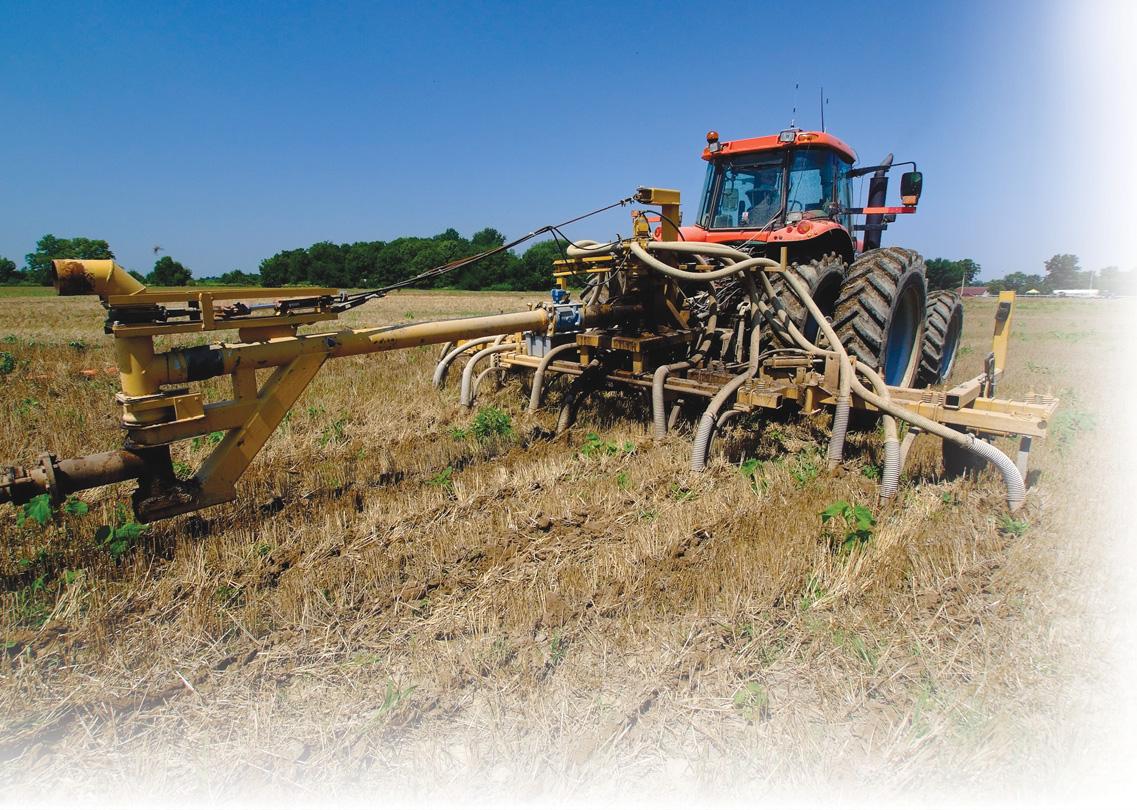
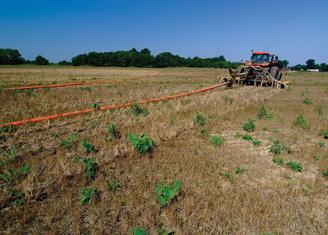
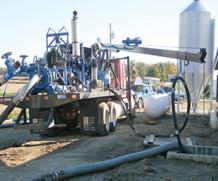
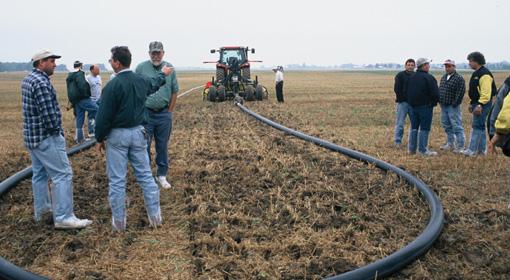
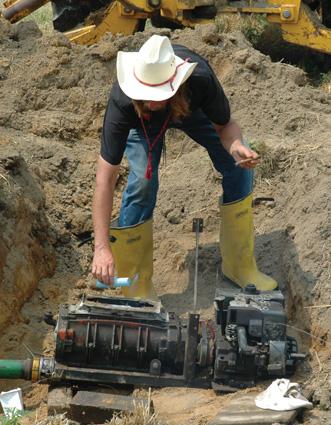
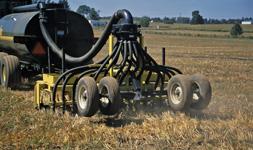
Today, the application system is quick, efficient and high-tech. Meadowlane starts by agitating the waste in the pits. The waste is then pumped from the pits with a hand-built 855 Cummins pump, through a drag hose and out to the field. “As long as we’re within 1.5 miles, we have enough hose to reach that applicator, which is mounted on a tractor in the field,” says Mike. The nutrients are then injected approximately four inches below the soil surface.
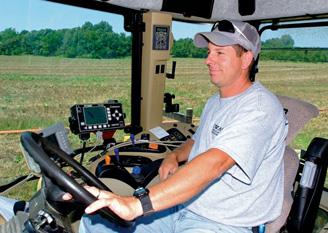
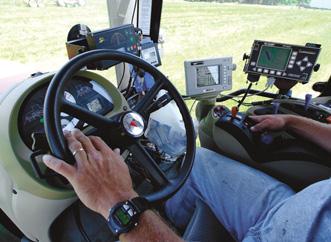
The tractors are the high-tech component. The AGCO DT240A and a New Holland TG 305 are both fully equipped with satellite-based steering, variable speed transmissions, data collection, yield mapping and flow meters. With a one-year crop rotation, Meadowlane fertilizes about half of its 1700 acres annually. They can access approximately 600 to 700 acres with this closed loop system. For the remaining acreage, they use semi tankers.
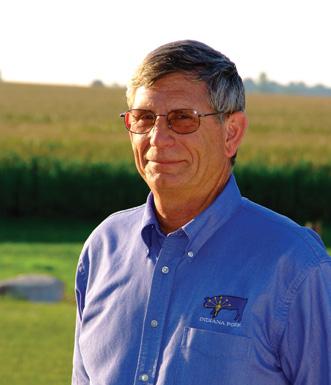
Indiana pork producer, Mike Beard takes the term ‘involvement’ to a whole new level, opening his farm to government and international visitors, serving as an ambassador to the industry, being one of the National Pork Checkoff Board’s 2007 award winners and receiving a Governor’s Award for Environmental Excellence.
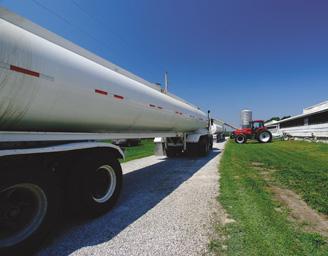
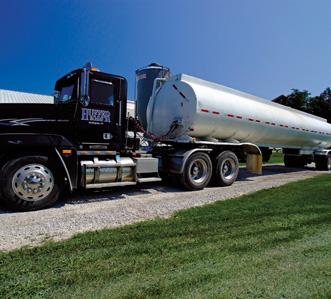
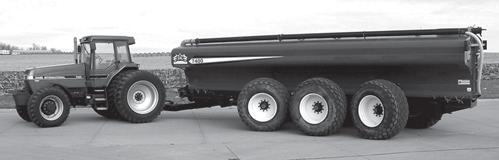
The farm’s tankers are approximately 8500 gallons each. “Using one of our six pumps, we can fill each tanker in about three to five minutes,” says Mike. “In the field, we draw off the tanker and through a hose to supply the tractor.” Mike says he saves approximately $150 per acre on commercial fertilizer and feels the manure is better for the crops as well. “Our soils aren’t the best soils in Indiana. So, the addition of the phosphorous and potash is welcome. We’re also getting organic matter that we don’t get with a commercial fertilizer. And the nitrogen is, I believe, more effective in the form that the manure supplies it.”
Inadvertently creating a new business
Once the farm got the system up and running, it was faster than they expected. “We pumped the first barn in four days,” recalls Mike. It wasn’t long before neighbors started asking if Mike could do the same for them and Meadowlane’s manure application business was born.
“The first year (2002), we applied two million gallons,” says Mike. “Last year, we helped the neighbors do about 30 million
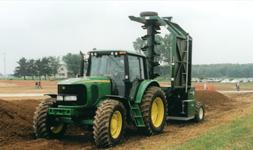
Tractors at Meadowlane Farms are fully equipped with satellite-based steering, variable speed transmissions, data collection, yield mapping and flow meters.
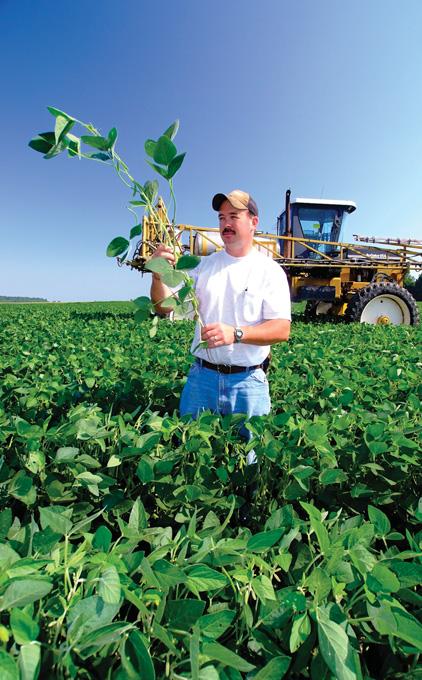
Chris Pearson examines a soybean plant growing on Meadowlane Farms.
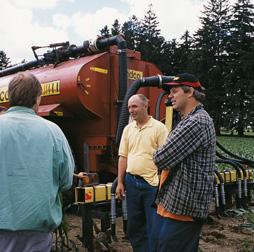
David Beard (above) and his brother-in-law Chris Pearson handle Meadowlane Farms manure application business.
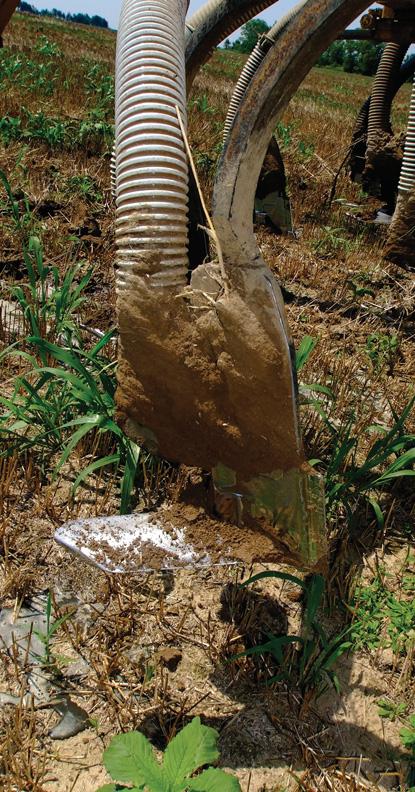
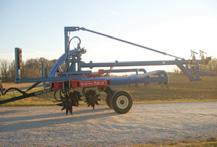
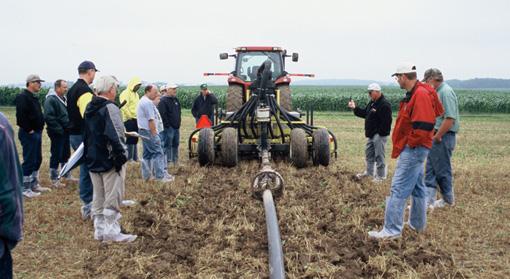
On soils that don’t absorb the manure readily when injected, the Beards used the Gen-Till system to build an injector that pokes holes in the ground and lifts the soil so the manure can soak in easily.
gallons.” Their customers are all within a 20 mile radius. And they transport the equipment on planter trailers. “Our equipment isn’t very long,” says Mike. “I can back up to the planter trailer and put the equipment on, lift it back up, and then roll down the road quite easily. It’s pretty narrow – maybe nine feet.”
Waste from Meadowlane’s operation is agitated in the pits before it is pumped – using a hand-built 855 Cummins pump – into tankers or through a drag hose out to the field.
Mike’s son, David, and son-in-law, Chris Pearson, handle the application business and will soon add a couple of part-time employees. They find the biggest challenge is the weather since Indiana regulations require that ground be dry for application.
David and Chris also run into soils on customers’ land that do not absorb the manure when injected, which can provide an opportunity for the waste to get down to the drainage tile. “For those cases, we built an injection system using the GenTill system,” explains Mike. “It pokes holes in the ground and lifts the soil. Then we spray the manure behind it. The manure then soaks into the ground easily. It doesn’t go deep and stays in the top surface layers of the soil. We also use the Gen-Till system when we’re applying low nutrient waste out of customers’ lagoons,” he adds.
One challenge they have not had to deal with is odor. “Some of our customers share a boundary with close neighbors –sometimes a subdivision,” says Mike. “When we tanker that manure to those farms, the neighbors are impressed that they don’t smell anything. If they do smell anything, that smell is gone in 12 hours and it’s not strong.”
Keeping up
The manure application business is doing so well, they have actually had to turn some customers away. Part of the reason for their booming business is the expense for other farmers to purchase a similar system.
“When we started out, we had grants and we remodeled pieces of equipment,” says Mike. “As we’ve grown, we have purchased better equipment. And it’s usually been higher volume equipment. But to just go out today, bare bones, and buy this stuff. You would to have to have pretty deep pockets.”
The responsible farmer
Mike, a self-proclaimed environmental advocate, sees a bigger picture when it comes to responsible farming than just good manure management practises. On the farm, Mike has:
• created wildlife habitat,
• installed grass buffers around many of the waterways to conserve soil,
• established buffers around State of Indiana woodlands,
• used trees to keep odors down,
• maintained the buildings and sited in areas less visible to the public.
“I’ve had the feeling for many years that my neighbors were getting further and further away from the farm – being exposed to them,” Mike says. “In Indiana, we began to see opposition to CAFOs (Concentrated Animal Feeding Operations) and I became involved with the local farm bureau.”
Mike took ‘involvement’ to the next level. Here are just a few of the projects he has been involved in.
• Farming the Courthouse – This County Farm Bureau and State project brought county officials to Meadowlane to educate them about the value of CAFOs, dispel myths and answer questions. It won national recognition from the American Farm Bureau Federation.
• Pork Advocacy Coalition – This voluntary group lobbies the state and national legislators on behalf of the pork industry. Mike has been on the board since its inception and has also chaired it.
• Farm Visits – When the governor, an advocate of Indiana pork production, ran for office, Mike invited him out. “He came and toured the barn. He got close enough to one of the hogs that he claims it bit him. Whether it did or not, it made one whale of a good sound bite for his run for election.” Mike has also had visitors from China, the NRCS Secretary, and a young agriculture aide
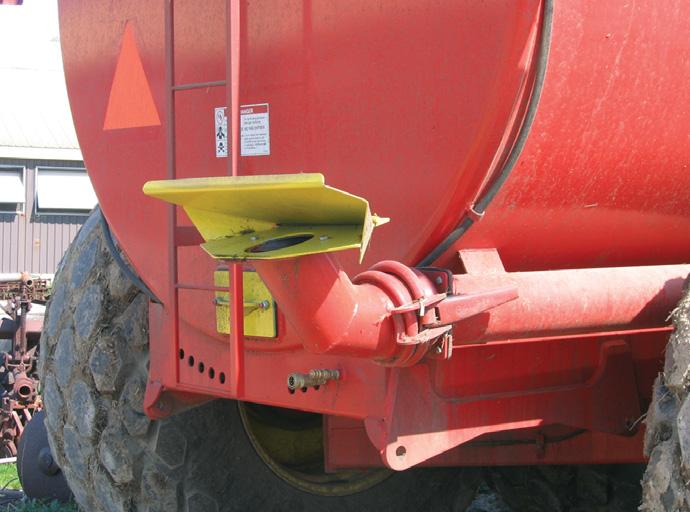
Each of Meadowlane’s semi tankers can haul approximately 8500 gallons of liquid manure.
Meadowlane Farms fertilizes about half of its 1700 acres annually. A closed-loop system, which uses a drag hose injector system fed direct from the barn pits, can access approximately 600 to 700 acres.
from Washington who went on to be a State legislator.
• Pork Ambassador – Mike has been invited to Central America to represent the pork industry. Last fall, Mike accompanied the governor to Japan, trying to encourage the Japanese to invest in Indiana agriculture.
Mike believes environmentally conscious involvement is vital to the industry. “CAFOs are coming under fire in different areas of the state,” he says, “and if we can trot out an award for protecting the environment, it lessens the sting of the rhetoric. We’ve got to convince our neighbors who are scared of this stuff that comes out from under the buildings, that what we’re doing is the right thing to do with it,” he adds. “We’re capable. And we’re responsible.”
Even David and Chris get into the act when they go out to pump at a facility. They talk to the operator or owner about soil maps, help determine how much of the waste needs to be applied, and work to mitigate the loss of the nitrogen through the air and the water.
Future goals
Mike says he would like to build more barns in the future – if he can pair them with a methane generation site. But there
Meadowlane Farms produces about 1700 acres of corn and soybeans in a one-year crop rotation.
are engineering logistics and economic issues yet to work out and, since Meadowlane does not have an odor issue, Mike doesn’t see a lot of return from the odor mitigation that methane would afford.
“I’m not one of these people that wants to see long-term results,” he adds.
“I want to see something returned fairly quickly. I’m not satisfied with a four percent return.”
Until then, Mike will have to just continue being a true advocate of exceptional farming practises – a man who walks the walk.
Manure biogas developer ready for round two as GREEN POWER TREND GROWS
By Tony Kryzanowski
Grant Meikle’s first attempt, in 2001, at developing a project to produce electricity from burning biogas generated from the anaerobic digestion of manure may not have gone exactly according to plan, but he is far from ready to throw in the towel on this technology. He says a lot has changed in seven years.
“It’s a huge industry and we plan to be a small part of it,” he says from his office in Salmon Arm, British Columbia, where he operates Open Energy Inc., a company currently specializing in alternative energy project consultation. “I’ve noticed that there’s a lot more activity by others getting involved in the biogas industry and that’s great.”
He is pleased that legislators now seem more willing to take action to remove hurdles for independent power producers to tie into existing power grids and are encouraging investment in projects like anaerobic digestion of manure to produce biogas.
For example, Alberta has just announced new micro-generation regulations that came into effect on February 1, 2008. A leader in de-regulation of power generation and distribution, the new regulations will allow Alberta residents to generate their own power and gain credit for any power they do not use by sending it to the provincial power grid. “I think it is a very positive thing from the point of view of a promoter of independent power,” says Meikle. “Any barriers you can bring down certainly increase the viability of power generation plants as well as creating interest in the overall industry.”
His company is close to completing a feasibility study on a second agriculturebased biogas power generation project, with Meikle feeling that the timing for such a project is a lot better this time around than in 2001. Back then, he was based in Ponoka, Alberta, working as an electrical contractor for the agriculture industry, primarily designing systems, organizing site preparation and wiring large intensive livestock barns.
Manure management was an issue on just about every project because objections voiced by the public to projects proposed for their immediate area often delayed the issuance of development permits. Even when intensive livestock operators were able to provide an
acceptable manure management plan, it did not seem to be enough for surrounding residents, who were primarily concerned with odor issues. So Meikle started looking for better manure management solutions for intensive livestock operations
At the time, Alberta had two million hogs, six million cattle and 255,000 sheep, so he felt there was a well-established potential customer base for a ‘greener’ approach to managing manure.
“We thought the biogas concept was one way that allowed producers to either build or expand without having the odor impact on the community at large,” says Meikle, “as well as giving the producer the opportunity to have an additional revenue stream from use of the manure.”
The solution presented itself by adapting Europeandeveloped anaerobic digestion technology specifically from the tiny principality of Luxembourg to North American conditions. To market the technology, a group of investors founded BioGem Power Systems, with Meikle working as vice-president of marketing and sales. What became obvious from the company’s research into anaerobic digestion was just how much more advanced Europe was in terms of actual, proven anaerobic digestion installations and biogas generation facilities attached to intensive livestock operations. For example, the Luxembourg technology developer already had more than 100 of its systems installed mainly in Europe. Today, that number is more than 130.
Meikle believes that the Europeans are at least 20 to 25 years ahead of North America when it comes to
Grant Meikle of Open Energy admits his first attempt at developing a manure-to-electricity project did not turn out exactly as he planned, but he is not ready to throw in the towel on the technology.
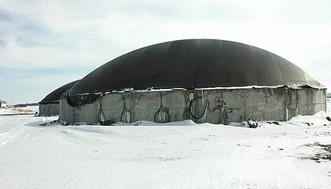
The technology to capture biogas from hog manure, imported to North America from Luxembourg by BioGem Power Systems, creates a pathogenfree dry compost as one by-product. It has been used as organic manure or dairy barn bedding.
power generation from biogas produced from anaerobic digestion. Three factors spurred the growth of biogas generation technology in Europe. These were high energy costs, coupled with government subsidization of technology and project development, and an established market for green power through legislated targets mandated by government.
When BioGem Power Systems opened for business, it was nearly the only company offering this technology in North America to a public that was still hesitant to embrace what was still a little understood manure management method. Venture capital was very hard to find because so many people were sitting on the fence on the whole issue of green power, whereas now, Meikle says there are many more individuals investigating the actual viability of various green power options.
The company experienced a breakthrough when it convinced the Iron Creek Hutterite Colony near Viking, Alberta, to invest in a BioGem biogas system. The BioGem anaerobic digestion system would produce enough biogas to fuel an eight cylinder piston engine that would in turn drive a 350 kilowatt (kW) generator around the clock. Enough power would be generated to supply the needs of the 60 member colony as well as surplus power sold on the provincial power grid to offset the cost of installation.
The Iron Creek Colony represented an excellent launch point for this anaerobic digestion project because it had an established pork production business, managing 600 breeding sows that averaged about 30 offspring in two to three litters per year. The average manure output from the barn was about 12 million liters per year. The hog operation was producing about 88 cubic meters of manure slurry per day – well within the minimum requirement of about
70 to 80 cubic meters per day for the project to be feasible. As a general rule, higher energy rates reduce the minimum daily manure slurry output needed for a project to be economically feasible.
Once operational, the colony was saving about $250,000 annually on its power bill and $100,000 to truck the manure for land spreading. It also took care of the odor problem, which was a main issue with the colony at the time.
When the project came on line in 2002, power rates in Alberta were heading upward toward an all-time high, driven largely by record natural gas prices. In 2005, natural gas prices peaked and then began a steady decline. At about the same time, the provincial government decided to slow down and phase in the transition to complete power deregulation, reacting to a strong public outcry concerning the high cost of power. Since then, the province has become a fully deregulated energy market.
With power rates coming down and the colony’s need to truck water to the site to maintain the anaerobic digestion process, they decided to decommission the operation after three years. They are now using the digestion vessels for storage and are once again land spreading the manure. Meikle says the technology is still intact, and with a bit of maintenance and updates, the colony could quite easily be in the power generation business again at some future date. From BioGem’s standpoint, it benefited because the Iron Creek project succeeded as a proving ground for the application of this technology to a North American intensive livestock operation. “The technology worked well for us,” says Meikle. “We will make some changes when we build our next plant, but the basic technology as far as the digesters, the engine and electronics, there’s no problem at all.”
The Luxembourg design promoted by Open Energy is a low temperature system, meaning that the temperature within the anaerobic digesters needs to be between 37 and 45 degrees C to maintain a healthy bacteria culture, which is key to the biological process of converting the manure slurry into methane gas, as well as pathogen-free liquids and solids. A high temperature system operates at between 45 and 50 degrees C and produces more gas per liter of waste, but is less forgiving and more unstable as far as maintaining a healthy bacteria culture. It is a flow-through process, meaning that a raw manure slurry is consistently being added at one end while biogas is
being generated from the digesters and transported to fuel the engine that drives the electric generator at the other end. The entire conversion process takes 30 to 35 days for the maximum value of methane gas to be extracted from a liter of manure slurry.
Biogas production begins when the raw manure passes through a pre-processing stage where grinding and mastication occurs to reduce the particle size so that it can be mixed with water and inputted into the system as slurry. It then undergoes secondary grinding before being pumped into the digester. A computer program controls the input rate.
As the biological process occurs, the biogas rises and collects in a large collection bladder above the digester, where it cools, and is then transported to power the engine. The remaining liquid by-product is typically recreation grade, meaning that it can be used for land irrigation, wash water, or can be re-introduced into the biogas production process. The solid byproduct is a pathogen-free compost that can be used as an organic fertilizer. Some farmers are also using it as bedding in dairy operations. Open Energy is currently investigating the possible manufacture of pellets from the solid by-product by mixing it with a binder.
The Iron Creek Hutterite Colony was the first to apply the BioGem Power Systems anaerobic digester technology in North America, but low power rates and internal water supply issues made the project difficult to justify after three years in operation. These vessels are now used for manure storage.
BioGem Systems was wound down as a company, as lower energy prices and the slow pace of government support for green power made it hard to build a strong business case to move forward with the venture. However, Meikle and his Open Energy partners now feel re-energized given the current state of public interest and a number of groundbreaking recent government initiatives that they believe are rekindling growth potential in such alternative energy projects as manure conversion to biogas.
Ammonia emissions from confined feeding operations (CFOs): CONTROL AND MITIGATION
By Dr. Atta Atia*
Ammonia poses a threat to both animals and agricultural workers in livestock facilities. It is a significant respiratory hazard for workers who experience continuous, long-term exposure to the gas at concentrations greater than 25 parts per million (ppm). In addition to respiratory effects, ammonia can cause skin and eye irritation and displace oxygen in the bloodstream. Long-term exposure to ammonia can cause pneumonia.
Ammonia control technologies and best management practises
Ammonia is emitted from manure in livestock buildings, manure storage facilities and during manure application to soils; therefore, several technologies or beneficial management practises (BMPs) are needed to control ammonia emitted from the various sources or CFOs. A whole spectrum of suppressive, inhibitive, capture-and-control technologies and BMPs are available for the elimination and/or reduction of ammonia emissions from livestock operations.
Within agricultural activities, ammonia emissions into the atmosphere occur primarily from livestock buildings, open feedlots, manure storage facilities, during manure handling and treatment, and when manure is applied on land.
This article is intended to provide producers and farm managers with information on how to reduce ammonia emissions from livestock housing and manure storage facilities. By reducing ammonia emissions, producers can maintain the quality of the environment, prevent losses of significant portions of nutrients and improve the health and safety of animals and workers.
Although there is no direct relationship between ammonia emissions and odor, practises to reduce ammonia emissions can have a corresponding mitigating effect on odor generation.
Sources of ammonia
Agricultural activities (livestock production and fertilizer application) are identified as the major sources of atmospheric ammonia emissions in Alberta, followed by biomass burning. Within agricultural activities, ammonia emissions into the atmosphere occur primarily from livestock buildings, open
feedlots, manure storage facilities, during manure handling and treatment, and when manure is applied on land.
Ammonia in livestock facilities results primarily from the breakdown of urea by the enzyme urease. In most livestock, urea is only present in the urine while urease is present in the feces. In poultry, urease is excreted with uric acid in the feces.
Why control ammonia emissions?
Ammonia emissions decrease the nutrient value of manure and represent a significant loss of fertilizer value. The emissions have a negative effect on the environment such as soil acidification and eutrophication of surface water (water is nutrient-rich, supporting plant life that kills animal life by depriving it of oxygen).
Ammonia that is lost to the atmosphere combines with nitric acid to form aerosol nitrate, which contributes significantly to total particulate matter. These particles have serious effects on human health and cause air quality impairment.
To-date, no technology or BMP emerges as a clear choice for industry to use to mitigate ammonia emissions due, in part, to the associated cost (real and perceived) of implementation and the required long-term implementation of the technology or BMP. A technology that can completely prevent ammonia emissions or remove ammonia from the air either does not yet exist or is prohibitively expensive to install and/or manage.
The effectiveness of a particular technology or BMP depends on three factors: efficiency, applicability and cost. Producers are advised to implement efficient but less costly technologies or BMPs or combinations of both. Producers should seek the advice of appropriate professionals and experts regarding ammonia emissions mitigation and control techniques that suit the needs of their livestock operations.
Suppression methods
Impermeable covers – Rigid, impermeable covers include concrete or wood lids placed on the top of liquid storage units and lightweight roofs made of fiberglass. Rigid covers are usually more expensive than other types of covers, but often last longer, 10 to 15 years depending on the material, according to Dr. Jose Bicudo – former assistant extension professor in the Department of Biosystems and Agricultural Engineering at the University of Kentucky – and others. Impermeable
Nitrogen Costs Adding Up?
Feed MicroSource® S.
Keep more nitrogen in the manure for a better N:P ratio by using MicroSource S. That’s because the microbes in MicroSource S help keep nitrogen in liquid solution instead of turning it into ammonia gas. The result: less commercial fertilizer will need to be purchased from outside suppliers.
Lower fertilizer costs. Just one of the benefits MicroSource S brings to your operation. To learn more, contact your feed supplier or go to www.nutraaccess.com
covers are capable of reducing 80 to 95 percent ammonia emissions from manure storage facilities.
Permeable covers – Permeable covers, or biocovers, act as biofilters on the top of manure storage areas. They physically limit the emissions of ammonia and other gases from the surface of storage lagoons and create a biologically active zone where the emitted ammonia and other gases will be aerobically decomposed by micro-organisms.
Permeable covers and biocovers include chopped barley, wheat, oats or brome straw (eight to 12 inches thick). The effectiveness of ammonia emissions control is lower than with impermeable covers. Permeable covers are cost effective, but they require replacement over time, and they are vulnerable to extreme weather conditions.
For more information on permeable and impermeable manure storage covers, refer to (website http://agbiopubs.sdstate.edu/articles/ FS925-D.pdf).
Acidification – Research in Europe has proven that acidification of manure just before application reduced ammonia volatilization depending on the degree of acidification and the application technique. Because acidification is a suppression technique, the potential exists for ammonia to be volatilized in downstream processes (e.g., storage or land application) if the pH increases above 4.5.
Furthermore, using acidifying agents to suppress the ammonia emissions from manure may favor conditions for the
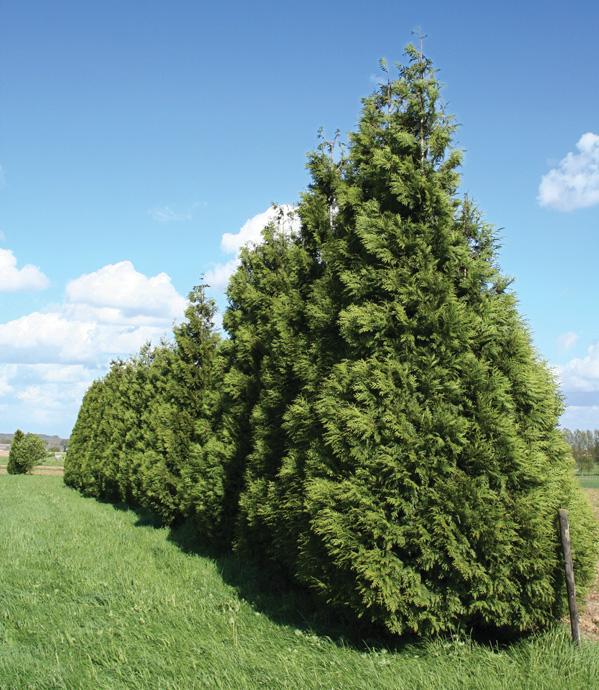
Trees, shrubs and other vegetative barriers planted around livestock buildings have the potential to reduce ammonia emissions as they act as a type of biofilter for odorous compounds attached to fine dust particles.
release of more hydrogen sulfide into the environment. Finally, the cost of chemical additives varies widely and can be costprohibitive for smaller operations.
Inhibition methods
Manure management in barns
Ammonia emissions from a liquid manure surface are proportional to the surface area of the manure. Therefore, decreasing manure surface area by changing the shape and dimensions of a manure storage facility will reduce ammonia emissions from the barn.
The type of floor area exposed to manure in animal housing facilities can have a significant effect on the emissions rate of ammonia. Emissions of ammonia from the solid part of the floor can be reduced by using a smoothly finished inclined or convex surface.
Decreasing the length of time manure remains in a livestock building is an important factor in reducing ammonia emissions, which can be achieved by the frequent removal of manure from livestock buildings or pens and the daily flushing of manure from barn alleys.
Using ventilation techniques that create low air velocities around surfaces exposed to manure will also help reduce ammonia emissions. Air speeds across manure-covered surfaces should be minimized since the amount of ammonia gas given off by manure is increased with air speed. Keeping buildings and animals clean and dry is essential for reducing ammonia emissions.
Separating manure from urine may slow the rate of reaction that leads to ammonia generation and may help minimize ammonia volatilization. Most systems employ a separator or a belt conveyor whereby feces containing urease are captured on the belt and urine is stored below. As much as 80 percent reduction in ammonia emissions is expected using this system but the practise has not yet been implemented commercially. According to an Iowa State University extension publication,
, several urine/feces segregation systems are under development at this time.
Manure pH has an important effect on the ammonia release. A lower pH value results in less ammonia being emitted. As pH increases above 7.0, the concentration of ammonia increases as does the rate of ammonia volatilization. The pH of manures handled as solids can be in the range of 7.5 to 8.5, which results in rapid ammonia volatilization. Manure handled as liquids or semi-solids tends to have lower pH. According to Dr. T.T. Lim from the University of Singapore, and others, adding a layer of water to the bottom of manure pits prior to manure collection helps reduce initial ammonia emissions from the pits.
Diet manipulation
Nitrogen fed in excess of the requirements of livestock animals is not retained by the animal’s body but is simply passed out in the urine and feces. Matching feed to the nutritional requirements of animals reduces nitrogen excretion without affecting productivity. Production can be significantly affected if protein levels are reduced excessively.
Research found that ammonia emissions could be reduced in dairy cows by up to 20 to 30 percent by manipulating dietary crude protein types and levels. Feeding a reduced crude protein amino acid-supplemented diet is also an effective tool for reducing ammonia emissions from growing-finishing swine housing.
Phase feeding is a commonly used practise for meeting livestock nutrient needs without exceeding them. No cost information for diet manipulation was found in a literature
Feed MicroSource® S.
Retain your pit capacity and reduce the number of pump-outs required with MicroSource S. That’s because MicroSource S improves digestion of manure solids by working to decompose solids from the moment they pass out of the pig through handling and storage.
Improved solids management. Just one of the benefits MicroSource S brings to your operation. To learn more, contact your feed supplier or go to www.nutraaccess.com
Using ventilation techniques that create low air velocities around surfaces exposed to manure can help reduce ammonia emissions.
review; however, dietary manipulation has the potential to reduce feed costs. Producers should consult with extension personnel or certified livestock nutritionists for more information on diet manipulation.
Capture-and-control methods
Filtration and biofilteration
Biofilters are usually comprised of ventilation fans that exhaust air from buildings through ducts and into a plenum below the biofilter media. The air passes through the biofilter media where micro-organisms treat it before it is emitted into the atmosphere.
Although biofilters have the potential to effectively reduce substances in the air, such as ammonia, implementation of this
Liquid Manure
Impermeable Covers
$ - $$ %: 50 - 70
40 - 50
%: up to 20%
Diet Manipulation
$ %: 12 - 50
Urine-feces Segregation
$$ - $$$ %: up to 80
Landscaping
$$ - $$$ %: Delayed effectiveness, not documented to date
Permeable Covers
$ - $$ %: 50 - 70
Urine-feces Segregation
$$ - $$$ %: up to 80
Acidification
$ - $$ %: up to 40 Manure Additives
$ - $$ %: 8 - 30
Landscaping
$$ - $$$ %: Delayed effectiveness, not documented to date
Diet Manipulation
technology is not guaranteed to be effective in every application. Several factors determine the effectiveness of biofilters and their practicality. Experiences with pig farms in Alberta indicate that these filters can be costly to install, operate and maintain. In addition, biofilters require close, frequent monitoring and intensive management to ensure optimum operational conditions are achieved continuously.
Bioscrubbing and ammonia stripping
The concept of bioscrubbing is similar to biofiltration. Both methods rely on the microbial degradation of ammonia. The difference between bioscrubbing and biofiltration is that the bioscrubber is housed in a closed tower containing water. When ammonia passes through the tower, it will be captured and absorbed by the water and then oxidized by the micro-organisms. A high reduction of ammonia emissions by scrubbing has been reported in numerous research publications. However, the cost and applicability to Alberta situations have not been established.
Ammonia stripping is a process for removing ammonia from manure. Air stripping in combination with absorption can be used to remove and recover ammonia from manure. Ammonia is transferred from the manure stream into the air and then absorbed from the air into a strong acid solution (typically sulfuric acid), thereby generating an
ammonium-salt, which can be crystallized and used as fertilizer. Values of pH from 10.5 to 11.8 are generally considered to be required for effective ammonia stripping processes.
Landscaping
Trees, shrubs and other vegetative barriers planted around livestock buildings have the potential to reduce ammonia emissions. Trees and shrubs act as a type of biofilter for odorous compounds attached to fine dust particles. They also offer visual protection for livestock buildings.
A demonstration site on the Delmarva Peninsula has shown up to a 67 percent reduction in ammonia levels downwind of vegetative filter belts planted on commercial broiler farms.
Summary
Practises to control ammonia emissions associated with livestock can be applied to animal housing areas, manure storage areas and land where manure is applied (see Figure 1).
*Dr. Atta Atia is a livestock air quality specialist with Alberta Agriculture and Rural Development (AARD). This article is taken from a fact sheet produced by AARD, Ammonia Emissions from Confined Feeding Operations (CFOs): Control and Mitigation, Agdex 729-4)
$ %: 50 -60
$ - $$ %: 8 - 30
$ %: 12 - 50 Injection
Landscaping
$$ - $$$ %: Delayed effectiveness, not documented to date
Storage practices Application practices Additives
Impermeable Covers
$ - $$ %: 50 - 80
Composting
$$$ %: up to 45 Dry Manure
Diet Manipulation
$ %: 12 - 50
Landscaping
$$ - $$$ %: Delayed effectiveness, not documented to date
Additives
$ - $$ %: 8 - 30
Cost (capital investment plus operational cost): $ = low cost, $$ = moderate cost, $$$ = high cost
% = Estimated effectiveness in odor reduction (conservative estimates recognizing that observed reductions will vary from site to site)
Figure 1. Practises to reduce ammonia emissions from livestock operations flowchart.
REPRODUCED WITH THE PERMISSION OF IOWA
Incorporation
$ %: 30
$ - $$ %: 8 - 30
• ALL THE PERFORMANCE YOU NEED, NONE OF THE HASSLES.
• COMPLETELY 304 STAINLESS STEEL CONSTRUCTION.
• HEAVY DUTY PLANETARY DRIVE, NO GEAR BOX WOES.
• CAST AND HARDENED AUGER FOR PRECISION AND SUPERIOR PERFORMANCE.
• HEAVY DUTY SCREENS STANDARD, IN A VARIETY OF SIZES.
• CUTTER BLADES TO DESTROY FOREIGN MATERIAL.
• REVERSIBLE WEAR RINGS AND SPECIAL TUNGSTEN CARBIDE SEAL SYSTEM.
• SELF ADJUSTING VOLUME CONTROL ELIMINATES LOOSING SOLIDS PLUG AND PROVIDES EVEN HEAD PRESSURE.
• ADJUSTABLE MOISTURE CONTENT.
• SELF GREASING FEATURE.
• VERY LITTLE MAINTENANCE.
• TWO SIZES AVAILABLE.
• REALISTIC PRICING, NO HASSLE DEMOS FOR SERIOUS CONSUMERS.
INNOVATIVE, DEDICATED, & DRIVEN!!
DRAG HOSE INJECTION EQUIPMENT
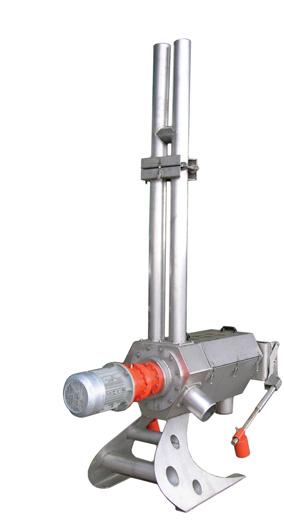
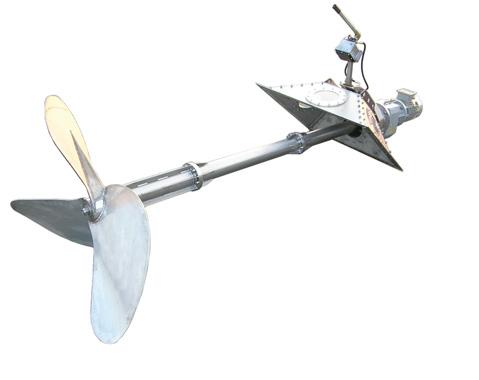
DODA’S ALL NEW BIO GAS MIXERS
• CONSTRUCTED
COMPLETELY OF 304 STAINLESS STEEL.
• DESIGNED FOR ROOF OR SIDE MOUNT.
• VERTICAL AND HORIZONTAL MIXING DIRECTION IS ADJUSTABLE FROM OUTSIDE OF TANK.
• MAINTENANCE FREE DESIGN UP TO 30,000 HOURS.
• VARIOUS PROPELLER AND MOTOR SIZES AVAILABLE.
• UNBELIEVABLE PERFORMANCE.
• OIL BATH DRIVELINE AND TUNGSTEN CARBIDE SEAL SYSTEM.
DODA has served the waste handling industry since 1960 providing the highest quality, innovative products available worldwide:
• Vertical and horizontal chopper pumps with “patented chopping system” PTO and electric models available, with a wide variety of executions to t every need.
• Vertical and horizontal agitators, PTO and electric models.
• Separators: two models available screw press and roller press designs.
• Aeration equipment.
• Bio gas equipment: agitators, pumps, and new “Back Flush and Diverter System”. DODA “DELIVERING TOMORROWS TECHNOLOGY TODAY!!”
Time for GREAT LAKES MANURE HANDLING EXPO almost here 2008
The 2008 Great Lakes Manure Handling Expo will also feature a case study highlighting Extending the Application Window using liquid manure in a side dress application.
Planning is pretty much complete for the 2008 edition of the Great Lakes Manure Handling Expo, scheduled for July 9 at the Molly Caren Agricultural Center, located just north of London, Ohio.
With a theme of ‘The Economics of Recycling’, the one-day event features educational and commercial field demonstrations, educational sessions and commercial vendor displays.
As fertilizer prices continue to soar, crop producers are becoming more and more interested in what manure can provide for their soil fertility needs. In light of this, managing manure to get the most from it as environmentally soundly and as safely as possible is becoming even more important. Events being held at the expo will help livestock and crop producers do just that.
The educational sessions available at the event include:
• Manure 101: The Superior Fertilizer –Understanding how the application rate and timing affect utilization of nutrients is key to maximizing the value of manure. Learn to calculate the value of manure nutrients as well as the role of calibration.
• Records: What? Why? How? – Good documentation of manure application can save time and money. Records are important in determining nutrient needs and essential evidence in the event of an accidental spill.
• Growing a Management Team – Good communication between producers and applicators is the key to a successful team. What key pieces of information do producers and applicators need to ask and tell each other?
• Safety Concerns – Livestock buildings and other spaces where manure is confined may create safety issues such as high emissions of gasses or particulates. How can these emissions be reduced and what safety measures should workers follow?
Case studies will also be presented at the Great Lakes Manure Handling Expo. These will include:
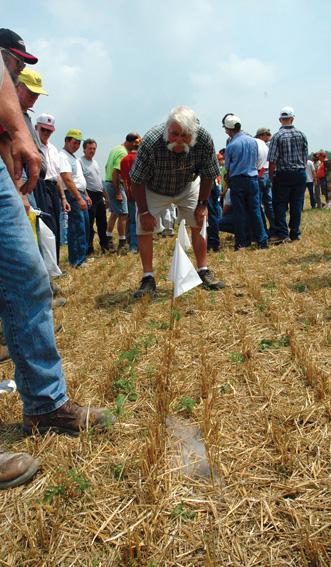
The smoke from the smoke machine wafts up from cracks in the soil, showing where liquid manure can easily gain access to a field tile.
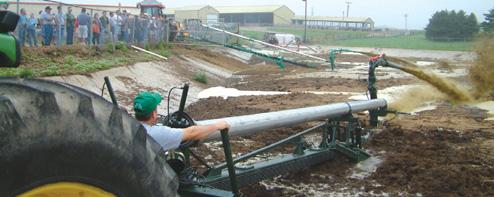
Visitors to the Great Lakes Manure Handling Expo will have an opportunity to see manure application equipment at work, weather permitting.
• Using Liquids on Crops – How do manure application rates and timing affect crop production, the environment and the bottom line? Experiences from two farms will be shared.
• Brokering and Custom Application of Poultry Manure – Excess manure nutrients can provide an additional source of income. How can a third party help market those nutrients? What are the potential risks and liabilities?
• Environmental Management – The role of the custom applicator is expanding to include assessing the whole farm nutrient balance and recommending application practises. How can the producer and applicator ensure quality control to enhance economic and environmental goals?
• Extending the Application Window –Management of manure storage is important to maximizing value and minimizing risks. How can practises such as side dressing help?
Educational demonstrations will round out the Great Lakes Manure Handling Expo.
R Frank Gibbs, a resource soil scientist with the U.S. Department of Agriculture-Natural Resources Conservation Service in Ohio, demonstrates his smoke machine. Visitors to the 2008 Great Lakes Manure Handling Expo will have an opportunity to see this first hand during an educational demonstration of liquid manure application.
Great Lakes Manure Handling Expo – The Details
When: July 9, 2008.
Where: Molly Caren Agricultural Center, 135 State Road (SR) 38 NE, London, Ohio.
Directions:
• East – Take Interstate 70 to State Road (SR) 29 south and follow US 40 west.
• North – Take State Road (SR) 56 to US 40 east or State Road (SR) 42 to US 40 west.
• South Take State Road (SR) 38 to the site.
• West – Exit Interstate 70 at State Road (SR) 56 south to US 40 and take US 40 east to the site.
Where to stay:
For those coming from farther a field and out-of-state, please visit http://fsr. osu.edu/lodging.html for a map highlighting some of the area hotels
and motels. Some of the facilities close to the expo site include:
• Holiday Inn Express, 1-70 & US 42, exit 79, London, Ohio. 1-800-HOLIDAY.
• Knights Inn, 870 US 42 NE, London, Ohio. 740-852-9415.
• Days Inn, 11 West Leffle Lane, Springfield, Ohio. 937-322-4942.
• Hampton Inn, 101 West Leffel Lane, Springfield, Ohio. 937-325-8480.
• Holiday Inn – Holidome, 383 East Leffel Lane, Springfield, Ohio. 937-328-8631.
• Ramada Limited, 319 East Leffel Lane, Springfield, Ohio. 937-328-0123.
Demonstrations:
• Liquid manure application.
• Solid manure application.
• Slurry seeding.
• BMP for stockpiling manure.
• Managing soil compaction.
• Equipment safety.
Educational sessions:
• Manure 101.
• Application records.
• Growing a management team.
• Safety concerns.
Case studies:
• Using liquids on crops.
• Brokering and custom application of poultry manure.
• Environmental management.
• Extending the application window.
For more information: Contact Tami Combs at: (614) 292-6625 or combs.155@osu.edu.
You can also visit the Ohio Environmental Management in Agriculture web site for updates at: http://oema.osu.edu
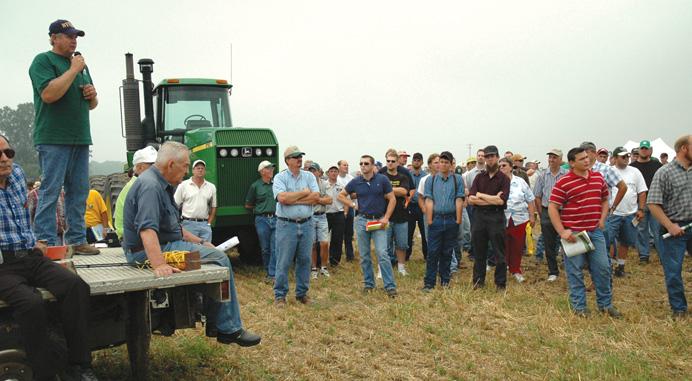
A crowd of participants watches the demonstrations held during the last Great Lakes Manure Handling Expo, held in 2006 in Michigan.
Topics to be covered include:
• Calibration of manure handling equipment and application rates for solid manure;
• Liquid manure application;
• Best management practises for stockpiling manure;
• Managing soil compaction;
• Slurry seeding application; and
• Maintenance and proper handling of equipment to ensure safety.
The 2008 Great Lakes Manure Handling Expo, held as a sister event to the Upper Midwest Manure Handling Expo, is sponsored
by Ohio State University Extension, the Ohio Agricultural Research and Development Center, Michigan State University, Purdue University, Penn State University, Cornell University, Ohio Composting and Manure Management, and the Midwest Professional Nutrient Applicators Association.
To obtain more information about the Great Lakes Manure Handling Expo and learn about any last minute details, visit http://oema.osu.edu, or contact Tami Combs at (614) 292-6625 or combs.155@osu.edu
The Great Lakes Manure Handling Expo allows participants to learn first hand about manure management issues.
2008 Great Lakes Manure Handling Expo Schedule
8:30am – Gates Open and Exhibits Open
9:00am – Educational Sessions (all four run concurrently)
1. Manure 101
2. Records: What? Why? How?
3. Growing a Management Team
4. Safety Concerns
9:45am – Educational Demonstrations (concurrent)
1. Liquid Manure Application
2. Solid Manure Application
10:30am – Exhibitor Demonstrations
11:45am – Case Studies (all four run concurrently)
1. Using Liquids on Crops
2. Brokering and Custom Application of Poultry Manure
3. Environmental Management
4. Extending the Application Window
12:30pm – Educational Sessions (all four run concurrently)
1. Manure 101
2. Records: What? Why? How?
3. Growing a Management Team
4. Safety Concerns
1:15pm – Case Studies (all four run concurrently)
1. Using Liquids on Crops
2. Brokering and Custom Application of Poultry Manure
3. Environmental Management
4. Extending the Application Window
Also concurrent Educational Demonstrations
1. Slurry Seeding
2. Stockpiling BMPs
3. Equipment Safety
2:00pm – Exhibitor Demonstrations
Mixing manure with NO-TILL a tricky practise
By Ralph Pearce
The notion of applying manure in a no-till situation might cause some growers to ask ‘Why?’ For innovative types, the question becomes ‘Why not?’ provided there are some caveats or considerations in place.
With prices for nitrogen-based fertilizer and other inputs continuing to spiral upwards, the need to maximize manure value from available sources is also increasing. Furthermore is the realization that those on the farm are being watched, not just by environmental authorities but by neighbours and consumers.
At a recent gathering of innovative farmers in Ontario, Canada, a panel discussion on the merits of manure in notill highlighted the efforts of three producers. Each discussed his own unique operation, including manure types, crop rotations and equipment, always stressing the need for increased diligence in combining manure applications with no-till management systems.
Cornelissen Farm
George Cornelissen has a 1600 acre operation near Watford, Ontario. He grows corn, soybeans, wheat, alfalfa and edible beans, with a combination of manure from 60,000 broilers, liquid manure from neighboring hog finishing and isolation barns, and pack manure from another neighbor’s 400 cow dairy operation.
Cornelissen’s has a lot of experience in manure management, particularly working and modifying the various equipment models he has used for spreading on his operation. With a
reliance on so much broiler manure, Cornelissen concedes it spreads like a powder depending on the bedding being used and the dry matter content. Speed across the field and spots where concentrations were spread heavier posed additional challenges, including millipede damage to planted seed. “But the most challenging thing of all is where to set the nitrogen,” says Cornelissen.
▲ Martin VanRaay used a 12.5 foot wide injector toolbar with 7.5 inch spacings.
Configurations on the manure spreader, depending on the design, could leave a producer having to apply more than 100 pounds of nitrogen, in spite of any manure applied to the soil. As a result, he began working with different brand names, gauging the response from
Sizes from 16 to 34 cu. yds.
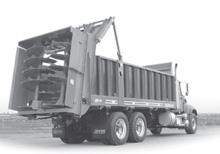
various types of manure as well as some of the modifications. Using a Meyer spreader for instance, he found it worked better with higher moisture manure but not with broiler manure, which effectively burned emerged soybeans. Using a Bergman spreader however, he modified the square plates on the bottom to allow the petals to interlock a little better than with the circular plates, and found it
helped break up larger particles for more even distribution.
VanRaay Farm
Farming as he does in proximity to Lake Huron, Martin VanRaay stresses the need to properly manage manure in a no-till system. The Dashwood, Ontario, area producer works a 500 sow farrow-tofinish operation, with 650 acres of high moisture corn used for feed, plus soybeans and wheat.
VanRaay cited the variable soil types in his fields – including sandier parts among tough clay hills – as the primary reason for no-tilling on his
operation. Labour, with one person working the field and two people in the barn, was another consideration.
VanRaay has worked with many tankers and spray applicators and irrigation units over the years. From 1974 to 1986, he used a 2000 gallon Husky tanker with small tires and splash plates, adding fertilizer to the fields as needed. In 1986, he began using irrigation pipes to move some of his manure. In 1997, he incorporated a narrow row tanker with 11.5 inch wheels to accommodate his 20 inch row spacings.
During the same time period, the farm expansions began. In 1982, VanRaay grew to a 180 sow farrow-to-finish operation while managing his crops conventionally. He began experimenting with no-till eight years after that. In 1994, he expanded the hog operation to 500 sows, then further expanded his land base and built a 3500 pig finishing barn a year later. He also built a two million gallon earthen storage unit in 1995.
From 1997 to 2003, VanRaay eliminated the use of phosphorous and potassium, and reduced his 28 percent side dress applications from 100 pounds to 75, and then from 50 pounds to zero. Starting in 2002, he began side dressing manure between his crop rows. Starting in 2004, he applied 50 percent of his manure application preplant and the remainder post, resulting in a trend toward earlier manure application.
In 2005, VanRaay decided to use drag hoses to apply his operation’s two
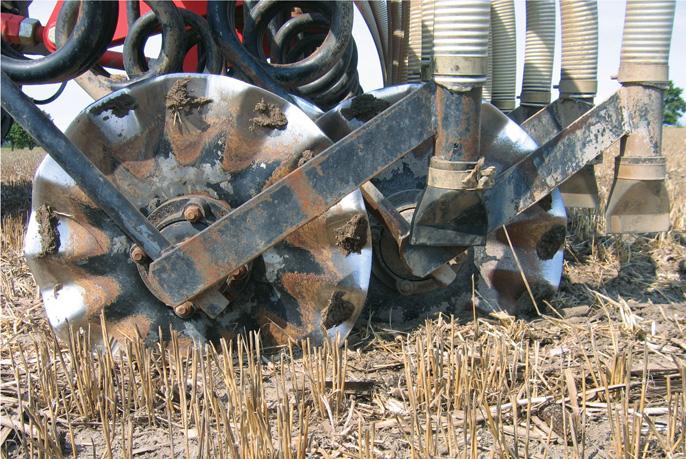
The toolbar is also equipped with two inch wavy coulters.
In 2006, Martin VanRaay experimented with
40 foot splash plate.
million gallons of manure and found many pros and cons. Labour was a pro since he used custom workers to apply the manure. However that also delayed planting on some fields. “But we did plant our soybeans while they were putting the manure on that year,” says VanRaay. “And most of my land is near my manure so the drag hose did work.”
On the con side was the cost. At $22,500, VanRaay thought it was an expensive lesson, and the custom applicator missed some of the corners and headlands. There was also one million gallons of manure that still needed to be side dressed later.
In 2006, VanRaay decided to experiment with other modes of manure
application. That season, he used a tanker equipped with a 40 foot splash plate. With a goal of applying 10,000 gallons of manure per acre, he applied 5000 gallons preplant and 5000 gallons as a post. In fields near his operation, he was able to apply 50,000 gallons of manure per hour. For off-farm sites, that rate dropped to 25,000 gallons of manure
R Martin and Teresa VanRaay operate a 500 sow farrow-tofinish operation in close proximity to Lake Huron near Dashwood, Ontario, Canada.
In 1994, VanRaay built a two million gallon earthen manure storage unit to accommodate his expanded hog operation.
per hour. While this resulted in less hours needed to move the manure, there were still problems, including tracks left in the wheat field.
In 2007, VanRaay moved to a 10,000 gallon injector, 12.5 feet wide with 7.5 inch spacings. He also opted for a single manure application at a rate of 10,000 gallons of manure per acre, injected in to the soil four inches and applied at a speed of about six to eight miles per hour. “At that rate and depth, no manure was visible after application,” he says.
“On the plus side, manure application was much timelier with this system,” VanRaay says, adding that the injection system helped to provide some pre-tillage, making planting a bit easier. On the minus side, the depth of the injectors was variable and there were issues with some of his farm’s clay soils being compacted.
Eisses Farm
Not afraid of new ideas, Kevin Eisses utilizes various methods for maximizing no-till cropping, while experimenting with manure applications as well as composting on the family farm. He is a second generation producer from Innisfil, located near Barrie, Ontario, with 110 dairy cows at one site and heifers at another farm. As for land base, he has more than 2000 acres planted to corn, soybeans and alfalfa, as well as some sunflowers and canola.
The liquid manure he applies is collected from the 110 dairy cows and supplemented with pack manure from the heifers and dry cows located about a mile away. Eisses also takes liquid manure from his uncle’s 40,000 layer operation. Like VanRaay’s farm, Eisses faces the challenge of farming in close proximity to Lake Simcoe and dealing with residents along the lakeshore.
Working with no-till and managing manure have been a focus for Eisses since the late 1980s when his family first attempted no-till wheat using a John Shearer hoe drill. “We wanted to sow winter wheat after hay because the hay ground is travelled over quite often during the year,” explains Eisses, adding it made no sense to plow up the hay field and then level it with a disc or cultivator.
They switched to a Great Plains planter a few years later, first, to help cut through the tougher hay residue and second, to further the no-till management to soybeans. By 1995, they had added a Kinze corn planter for no-till corn.
In 2007, Eisses purchased a Salford Residue Tillage Specialist (RTS) unit to address volatilization and odor issues
during manure application. He was uncertain whether it helped to run the Salford unit before or after applying manure, yet he acknowledged the coulters on the unit did a better job of cutting residue and working a shallow depth of soil. “So far, we’re satisfied with the job of incorporation the Salford does,” says Eisses, conceding there have been some problems penetrating wheat stubble.
With the farm’s dry manure, Eisses has turned to composting, adding a Sittler compost windrow turner. Two sources of dry manure are used, each
with varying concentrations of bedding, and blended into a windrow in the field using a modified haylage truck. They run the turner once daily the first week, every-other-day the second and every third day by the third week.
Keeping the temperature at a constant 140 degrees F is a challenge, but one that yields an actual market from nearby residents. “It’s very satisfying to take something that is treated as a waste product and make it into something desirable that people actually drive into your farm and say they want,” Eisses says.
In the NEWS
New fact sheet on ammonia loss
Alberta Agriculture and Rural Development recently released a new fact sheet called
(Agdex #729-4). This fact sheet aims to help farmers quantify the amount of ammonia loss that occurs while applying manure to land. Farmers can also learn about the factors that positively and negatively affect ammonia losses, and learn best management practises to control ammonia losses from the land application of manure. It can be viewed by visiting www1.agric.gov.ab.ca/$department/ deptdocs.nsf/all/agdex12072 or can be ordered by calling 1-800-292-5697.
Bion plans installation at Pennsylvania dairy
A large dairy in Lancaster County, Pennsylvania, is to be the newest location for Bion Environmental Technologies’ Nutrient Management System, designed to reduce ammonia emissions and nutrients in the effluent.
Bion recently announced it has signed a memorandum of understanding with the dairy to retrofit its existing operation. The installation will initially treat the manure from the main 1400 head dairy barn, with follow-on expansions designed to capture the remaining manure from the milk house, heifers, dry cows, calves and potentially the manure from a poultry facility also on the farm.
Bion hopes the project will fall under Pennsylvania’s nutrient credit trading program, which was established to provide cost-effective reductions of the excess flow of nutrients (nitrogen and phosphorus) into the Chesapeake Bay watershed, including the Susquehanna River. The program is similar to the U.S. acid rain ‘cap and trade’ program that achieved 100 percent compliance in reducing sulfur dioxide emissions in the
1990s at a fraction of the cost that was originally anticipated.
Although nutrient credits have not been previously certified for ammonia reductions, based on discussions with the Pennsylvania DEP, Bion anticipates that more than 40 percent of the nutrient credits it generates at the Lancaster County installation will come from the reduction of ammonia emissions. The balance of credits will be generated from the reduction of soluble form nitrogen and phosphorus in the effluent. www.biontech.com
Stronger embankments start in the laboratory
The safety of earthen embankments, including those found in some manure lagoons, depends in large part on how resistant they are to erosion. That resistance can hinge on the soil materials used in their construction.
Hydraulic engineers Gregory J. Hanson and Sherry L. Hunt work at the Agricultural Research Service (ARS) Hydraulic Engineering Research Unit in Stillwater, Oklahoma. They have refined methods for estimating the erodibility of large embankment structures with a lab-scale version of the Jet Erosion Test (JET). Hanson developed JET to evaluate the condition of streams and dam embankments. In the field, JET applies stresses to soil beds with a water jet that can be pumped at various flow rates.
The team studied the roles of compaction effort – the mechanical force needed to increase soil density – and water content in soil erosion. They measured compaction effort using standard engineering tests, which involve dropping a hammer onto soil samples from a specific distance for a specified number of times. As part of their evaluation of compaction effort, they also varied the soil water content, which affects soil plasticity, in their samples.
The engineers observed that the erodibility of their laboratory samples varied significantly between the two soil
types they tested, which were a silty sand and a silty clay. Both soil types also exhibited a large range of erosion, depending on compaction effort and water content. For instance, laboratory soil samples that were compacted while containing optimum levels of water showed a significantly stronger resistance to erosion. Higher compaction efforts also increased erosion resistance, and soil texture and plasticity influenced erosion resistance as much, or sometimes even more, than compaction factors.
The team compared these results with large-scale field controls and found that the lab-scale JET tests accurately assessed soil erodibility in samples as small as 10cm in diameter. Overall, these results indicate that soil type and compaction factors can be used to make soil at least 1000 times more resistant to erosion. These findings can help engineers factor in soil type and other variables to predict embankment failure rates.
Michigan manure research receives funding
Seven research projects at Michigan State University – including four involving manure management –received more than $350,000 in state funding from the Animal Agriculture Initiative Coalition (AIC).
The projects were selected from approximately 20 proposals submitted to the AIC addressing challenges identified by livestock industry leaders as affecting livestock producers and their industries in the state. Proposals were ranked on the basis of the issues identified as high priority by industry leaders, MSU extension area of expertise teams and the AIC. Manure management projects funded for 2008-09 include:
• Utilizing Wetlands for the Diversion, Retention and Natural Treatment of TileLine Effluent from Manured Cropland –Tim Harrigan.
• Developing an Integrated Animal Manure Operation to Produce a
High-Quality and Large Quantity Lignocellulosic Feedstock for Bio-Ethanol Refinery – Wei Liao.
• The Scoop Newsletter on Animal Agriculture and the Environment – Wendy Powers.
• Boron Treatment of Stored Swine Manure Slurry to Reduce Hydrogen Sulfide and Conserve Ammonia Nitrogen and Sulfur on a Commercial Swine Farm – Mel Yokoyama.
Cornell WMI honored
The Cornell Waste Management Institute at Cornell University was recently honored with a 2007 Research and Extension (R&E) Award from the university’s College of Agriculture and Life Science. The institute – which includes team members Ellen Harrison, Jean Bonhotal, Mary Schwarz, and Lauri Wellin – develops and conducts integrated research and extension projects focused on managing organic residuals. With active stakeholder engagement, including the New York Department of Transportation and other agencies, CWMI has influenced recent policy issues, including the adoption of new fertilizer rules in New York that address composts, national, and state standards for composting livestock
2008Great
mortalities, regulations for use of sewage sludge, and standards for soil clean-up.
More than 125 colleagues, family, and friends gathered to honor CWMI staff plus the other award recipients, who were nominated by their peers for their accomplishments in the field and laboratory.
“The colleagues we recognize today exemplify the ideals of our land-grant mission and our quest for discovery,” says Susan A. Henry, the dean of agriculture and life sciences. “We are grateful for their contributions to the people of New York, the nation and the world.”
ManureNet documents find new online home
A server at the University of Guelph in Guelph, Ontario, Canada is now the new online home of a set of agricultureenvironment documents dating back more than 12 years.
ManureNet, a national information resource and co-ordination centre for manure and nutrient management issues in Canada, was originally launched by Dr. Bruce Bowman, a soil chemist with Agriculture and Agri-Food Canada’s (AAFC) research branch in London, Ontario, in April 1998 as a pilot project funded by the Hog Environmental
Management Strategy (HEMS). By 2006, the website contained more than 200 environmental reports from a range of government funded projects and programs plus thousands of links.
In August 2006, Dr. Bowman retired and with him went AAFC’s interest in maintaining the site, which was ultimately taken off-line in September 2007. Dr. Bowman donated the entire website archive to the University of Guelph’s library in June 2007 with the understanding the archive would be placed online through its website. The library has been delayed in uploading the information so instead, a server maintained by Dr. Chris Duke, a researcher with the Ontario Ministry of Agriculture, Food and Rural Affairs’ (OMAFRA) environmental management unit, will be housing the archive.
“I hope that these archives can continue to be useful to the public, as they are probably the last remaining traces of these valuable environmental programs in existence,” said Dr. Bowman. “They represent an investment of more than $100 million by the federal government in Ontario environmental initiatives over the 1970 to 1997 period.” The archives can be viewed at http://gis. lrs.uoguelph.ca/AgriEnvArchives/
Lakes Manure Handling Expo
Ag-Chem realigns sales and service network
AGCO Corporation’s application equipment division is completely realigning its sales and service network for the Ag-Chem brand. These changes mean large commercial producers who own and operate Ag-Chem application equipment can turn to their local Caterpillar dealer as the one source for their application equipment sales and service needs.
Across the country, 22 dealers, many of whom hold AGCO’s Challenger contract, have assumed responsibility for new machinery sales of Ag-Chem’s RoGator high clearance sprayers and TerraGator flotation applicators. In addition, these dealers will continue to provide mobile maintenance and repair service for existing Ag-Chem equipment. When completed –about the end of September 2008 – the new sales and service network will include 38 dealers with a total of 323 locations.
Built as a new approach to business, this network combines experience in service to large commercial operators and retailers with an approach to service developed through working with leading commercial construction operations. www.agchem.com
Sonim Tech introduces ‘indestructible’ mobile phone
Sonim Technologies, a U.S. based mobile telecom company, recently launched the new Sonim XP1, billing it as the toughest phone in the world. Engineered to meet the needs of people who work outside the office, the Sonim XP1 works perfectly in harsh environments. Certified to withstand shock, water, wind, dust, dirt and extreme temperatures, the Sonim XP1 is the only certified phone designed specifically for the lives of people who work and play in demanding conditions.
“If you’re standing on a construction site with a welding tool in your hand, or sitting in a catamaran with a hard wind in
your face, you really don’t need a fashion accessory nor a multimedia monster,” says Bob Plaschke, CEO of Sonim. “You need a dependable working tool like the new XP1, built for extreme conditions. The Sonim XP1 doesn’t die when exposed to the elements, can be dropped, kicked, tossed into a toolbox or backpack, seen and heard in bright/ dark and noisy conditions, and provides reliable voice, push-to-talk and data services.”
As well as being very shock and water resistant, the Sonim XP1 is backed by an unconditional three year warranty, and a lifetime warranty for the phone housing with immediate in-store replacement if needed. “Research commissioned by us indicated that 70 percent of outdoor workers refrain from using their phones in the workplace because the phone might break, and 40 percent have broken their mobile phone in the last year,” says Joakim Wiklund, co-founder of Sonim Technologies. “Common reasons are damage from humidity, dropping and crushing the phone. We are aiming to provide a solution to this problem.” www.toughestphone.com
New manure management system launched by TyraTech
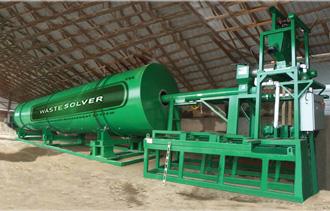
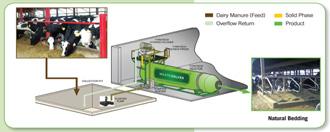
TyraTech launched its new WasteSolver automated manure management system in mid February during the 2008 World Ag Expo in Tulare, California. This automated system involves a two-stage process:
Stage one uses hydro-cyclone separation technology to separate the liquids and salts from the solids. The nutrient-rich liquid is returned to the lagoon while the solids are used for compost. Stage two uses in-vessel composting technology to create a clean, composted bedding
that is odor free, dry and with reduced pathogens, weed seeds and insects.
Additional benefits include:
• Continuous availability of clean bedding,
• additional income from the sale of excess bedding,
• reduction of odor and pollution concerns,
• better community relations through less odor and improved manure management.
TyraTech is marketing the system through a unique partnership program being introduced in the Midwest first, followed by southern and western states and then nationally. When a dairy producer purchases a WasteSolver system from TyraTech, they will also contract with the company to sell back two-thirds of the compost they produce, keeping the remaining one-third for their own use. TyraTech will routinely pick up the compost for use in horticultural products.
Steve Conkling, general manager of TyraTech’s sustainable solutions business unit, says the system should pay for itself within 24 months, depending on local variables. www.tyratech.com
Send your product items to: Manure Manager welcomes submissions from all manufacturers/ dealers of new manure management-related products. All submissions will be considered for inclusion in On Track. For electronic submissions, please send digital photos as a TIFF file or maximum quality JPG file, along with product copy and contact information to: mland@annexweb.com
If the material is being sent by mail, please send it to: On Track Editor Manure Manager Magazine 105 Donly Drive South Simcoe, ON, N3Y 4N5 Canada
➤ Manure Pits,Channels & Covers
➤ Suspended Slabs - up to 40’ clearspan
➤ Hog & Cattle Slats - up to 25’ clearspan
➤ Weeping Walls - manure separation
➤ Milking Parlors
➤ Strainer Boxes
➤ Commodity Storage
➤ Bridges
➤ Bunker Silos (8 types)
➤ Syloguard Concrete repair
➤ Retaining Walls
➤ L & T Walls up to 16’ high
• Built to engineers’ specifications
• All sections are high strength, pre-stressed,reinforcedconcrete for longer life
• Quick & easy to build
• Air-tight seals and protectant using Syloguard products
FEED ADDITIVES
Aova Technologies
Today’s agricultural feed ingredient market is more competitive than ever. From growers of beef to swine to birds and fish, everyone is looking for an advantage. With more than one million growers and producers, the demand on feed ingredient manufacturers to deliver big results is no surprise.
Headquartered in Madison, Wisconsin, Aova Technologies is an agricultural biotechnology company utilizing proprietary technologies and products to offer producers and feed nutritionists a different strategy in animal nutrition.
Aova-branded products are naturally produced dietary additives that, when added to the animals’ best diet, results in enhanced gut health and nutritional performance. Utilizing hyper-immunized eggs proves to be the catalyst for Aova’s initial product lines – BIG PIG, BIG FISH, BIG BEEF and BIG BIRD. Through a patented process, the company is able to generate a concentrated level of specific, naturally occurring antibodies in the laying hen that are then deposited in the eggs they produce. This dried egg spray product, utilizing a unique mode of action, has led to enhanced nutritional performance as demonstrated in many research and performance trials. These trials have shown improved animal health with greater feed efficiency, average daily gain and uniformity.
Aova is committed to research and strives to be as transparent as possible in its efforts to demonstrate the capabilities of product lines. The company operates on a platform of existing patented and proprietary technologies in place and continual work with major academic research institutions and commercial organizations. www.aovatech.com
INNO ATIONS
BFI Innovations
Natural is an adjective being used to describe a number of products in both the food and feed industries. Natural also describes a specific blend of plant extracts that comprise the product Apex.
The proprietary blend of botanicals found in Apex Calf: for starter and grower feeds; Apex CMR: for calf milk replacers, and Apex WME: for whole milk enhancer, has shown improved performance with an estimated profit per calf increase from $4.34 to $10.99 and improved weight gain by 12 percent.
In trials available from BFI Innovations, calves fed an Apex feeding program grew 14 percent faster from days zero to 42 and days zero to 56 than non-Apex calves, calves grew 17 percent faster from days 43 to 56 than non-Apex calves, and Apex calves were 5.5lb heavier at 42 days and 9.9lb heavier at 56 days.
Just as certain herbs are known to provide antiseptic, antioxidant and digestion-enhancing properties for humans, studies also show benefits in livestock. Providing a natural approach to increased health and profitability is the answer to one of the main challenges facing the veal industry.
Natural and botanical additives react differently in each species and in conjunction with one another. Many in vitro and in vivo trials have been conducted to assure that the Apex Calf, CMR and WME lines have proper formulation to promote feed intake and show improved animal performance in calves. As producers strive to produce high quality food products and maintain optimum performance and profitability levels, Apex products provide the overall boost necessary to all aspects of a veal operation.
www.appliednature.com
Arm & Hammer
Arm & Hammer Animal Nutrition has a rich history of improving cow performance and producer profitability by raising the bar on feed ingredient performance and quality. In the company’s drive to deliver safe, effective products, Arm & Hammer has achieved certifications from the American Feed Industry Association Safe Feed/Safe Food program and the Facility
CORNELL PUMP COMPANY
Certification Institute. All Arm & Hammer Animal Nutrition feed ingredients are research-proven and rely heavily on extensive research to deliver high quality feed ingredients and ensure maximum performance.
The Arm & Hammer Animal Nutrition product portfolio is designed to improve dairy cow efficiency, which means a greater percentage of what the cow eats leads to a healthier herd, and more energy is provided to increase milk and component production. Benefits include: greater efficiency in converting feed to milk, increased milk production and dairy producer profitability, and less nitrogen excretion by the cow that would otherwise end up in the dairy waste stream.
www.AHDairy.com
Danisco Animal Nutrition
Broiler producers looking for lower feed costs with distillers dried grains with solubles (DDGS) can save money without risking bird performance, according to results from trials at Auburn University and Purdue University. Two trials conducted at the two universities show that adding a new generation phytase (Phyzyme XP), and xylanase, amylase, and protease enzymes (Avizyme 1502) to corn soy broiler diets containing 10 percent corn DDGS improved body weight gain and feed efficiency.
Body weight gain was improved by about five to eight percent and feed conversion improved by six percent. In the trial conducted at Auburn, the enzyme combination was also added to a lower cost diet reduced in energy by 80cals/kg of feed and containing 0.1 percent lower available phosphorous and lower calcium. At 56 days, broiler live-weight gain was eight percent higher and feed conversion improved by four points, compared to broilers fed a standard corn soy diet containing 10 percent corn DDGS. Gross feed cost savings of more than $9.0 per tonne were achieved.
Phyzyme XP is an efficient phytase feed enzyme that improves the digestibility of phosphorous and other nutrients contained in cereal grains, oil seed meals and their by-products. The product reduces the amount of inorganic phosphorous that must be added to the feed and allows the diet to be reformulated to take account of improvements in energy and amino acid digestibility. Phyzyme XP also improves
INNO ATIONS
www.danisco.com
Nuvac
the environment by reducing the amount of phosphorous excreted by the animal.
MaxiPlex is a microbial feed product for swine that can increase weight gain, increase digestibility of vegetal components and reduce ammonia emissions caused by the digesting process. This feed complement is a complete biological product that contains bacteria, yeasts extracts, wheat and calcium carbonate. Through the action of the bacteria, the intestinal florae of the swine are reinforced and the immune system is stimulated. The conversion of food into compounds capable of being metabolized is improved, which increases weight gain. The environment of the barn is also improved as the ammonia emissions caused by digestion are reduced.
Research studies in the U.S. and Canada have shown: better feed conversion, lower mortality rate, better stress resistance, diminution of diarrheas, reduction of time in growth stage, and better loin premiums at slaughter. The recommended dosage of MaxiPlex is 500g per ton of finished feed. Some producers have seen results at dosage rates as low as 300g.
www.nuvac-enviro.com
DPI Global
Micro-Aid is an all natural, environmentally safe feed additive that research has shown will control unpleasant odors originating from ammonia and other noxious gases. According to commercial studies and research performed at more than 200
INNO ATIONS
universities, Micro-Aid reduces aerial ammonia concentrations by up to 40 percent and can reduce other odor causing gases, such as sulfurs and phenols. It can promote a healthier gut environment through a reduction in intestinal ammonia, mucosa tissue turnover rate and maintenance energy demands. MicroAid can also improve solids breakdown, pen clean up and pit pump out. The feed additive has been manufactured and dried onto a granular carrier to reduce dust and improve handling and mixing ability, ensuring a uniform product mix at the lowest inclusion rate.
www.dpiglobal.com
St. Cloud Mining
Dairies are under increasingly intensive pressure from state and federal regulators to control air and water emissions. St. Cloud Zeolite is a unique, naturally occurring, low clay, low sodium mineral product that offers the dairy industry a cost effective solution to one of its most pressing regulatory problems. Natural clinoptilolite zeolite is a proven, low cost, low impact solution that effectively binds ammonia and creates improved, stable nitrogen and phosphorous ratios in the manure.
Numerous research efforts conducted worldwide have shown the benefit of zeolite in selectively capturing ammonia and preventing its release into the atmosphere. The ammoniarich manure minimizes phosphorous runoff in groundwater systems and allows a higher application rate. In addition, St. Cloud Zeolite absorbs moisture, resulting in lower fly populations and reduces heat and ventilation requirements in confinement barns. Because of its unique properties, St. Cloud Zeolite can be used as a feed additive where it has been shown to improve animal health, increase feed efficiency, enhance the uptake of nutrients and beneficial minerals, and performs as an effective rumen buffer.
www.stcloudmining.com
While Manure Manager editors make every effort to be objective when reporting on new products, they cannot be held responsible for claims made by companies. Readers are encouraged to contact the companies for more details.
FOR SALE
2005 McLanahan 20”X20’ sand manure separator and 144’ long horizontal cross auger both with 480 volt control panels.
Today’s $100 billion a year farming industry in America includes 238,000 farms that are considered confined animal feeding operations (CAFOs) – and that number is growing. As such operations expand, so do the emissions they generate from animal housing structures and manure storage areas.
The U.S. Environmental Protection Agency (EPA) has said that CAFOs, regardless of their size, “can have a negative impact on nearby residences, particularly with respect to objectionable odors... other nuisance problems... [and] possible health effects.” A 2008 Congressional report singled out particulate matter, ammonia, hydrogen sulfide and methane as farming emissions linked to health problems in extremely elevated doses. The impetus for increased regulatory scrutiny on commercial agriculture is unclear, but negative public perception, fueled largely by misinformation and urban sprawl, likely plays a role. The result is that the EPA is pushing to monitor, quantify and model CAFO air emissions, which will impose obvious regulatory burdens on commercial agriculture. A second, and less obvious, burden to be shouldered by America’s farmers will be the costs associated with increased civil litigation. First, let’s look at the regulatory oversight. With CAFO air emissions on its radar screen, the EPA seeks to limit their sources. Ultimately, the government intends to subject CAFOs to the limitations and reporting requirements imposed by the Clean Air Act (CAA), the Comprehensive Environmental Response, Compensation and Liability Act (CERCLA) and the Emergency Planning and Community Right-To-Know Act (EPCRA). Such regulation is unachievable without the identification and quantification of actual CAFO air emissions. With the determination of baseline emissions, mathematical models will allow commercial farmers to estimate their annual emissions for reporting purposes. Enter the Air Compliance Agreements, through which the EPA and certain livestock, swine and poultry farmers have commenced a nationwide emissions monitoring study. The EPA believes this
route to be “the quickest and most efficient way to address the current uncertainty” regarding emissions from CAFOs and to bring all participating CAFOs into compliance with “all applicable regulatory requirements.”
How will the proposed regulatory scheme impact CAFOs in the future? Take, for example, the CAA which regulates certain types of air emissions, including some directly linked to CAFOs. CAFOs emit particulate matter and nitrogen dioxide, which are classified as criteria pollutants, volatile organic compounds that are considered Hazardous Air Pollutants, and ammonia, which is a regulated air pollutant. Generally speaking, the CAA regulates “major sources” that exceed threshold quantities of regulated pollutants, and does not exempt livestock producers and other agricultural sources. The CAA assumes that most agricultural operations are “minor sources.” However, the EPA’s proposed air modeling may ultimately label some facilities as “major sources” and subject them to federal regulation, permitting and reporting requirements. Regardless of whether a CAFO is ultimately considered “major” or “minor” for CAA purposes, today’s farmer must also be aware of certain notice requirements triggered by both CERCLA and EPCRA.
CERCLA is best known for the remediation of abandoned hazardous waste sites. It also imposes criminal penalties for a failure to immediately notify the National Response Center when a reportable quantity of certain hazardous substances (including hydrogen sulfide and ammonia) is released into any part of the environment. EPCRA serves to inform communities and citizens of chemical hazards in their areas. A reportable CERCLA release triggers EPCRA notification as well, which go to both the state and the local emergency planning committees for any area likely to be impacted by the release. Local emergency planning committees consist of members of the community –including neighbors of CAFOs – as well as representatives from environmental groups and the media.
When the EPA establishes baseline air emissions, some CAFOs, depending on their size and emissions level, may be required to file annual Toxic Release Inventories, which detail the types and amounts of chemicals released into the environment. Such reports will be publicly accessible to anyone with an internet connection, and serve to empower citizens to hold companies and local governments accountable in terms of how toxic chemicals are managed.
Everyone generally agrees that disclosure makes for good public relations in any industry. A public armed with facts is less prone to speculation, rumor and exaggeration. As an added benefit, knowing that one’s operations are open to public scrutiny also serves to push owners to operate more efficiently, reduce emissions and comply with applicable laws, statutes and regulations. However, no good deed goes unpunished. A likely (and unintended) effect of regulatory-driven public disclosure is the arming of potential plaintiffs (or their lawyers) with the information needed to attack farming operations. This phenomenon is nothing new to those industries already subject to these laws, as regulatory submissions are routinely used against manufacturers to prove wrongdoing. While CAFOs may already face complaints concerning odors and dust, future reporting requirements will likely raise the bar by putting farms in the direct path of litigation.
Luckily, time is on the farmer’s side, as the air monitoring efforts are just underway. It will be some time until the models are available and statutory reporting becomes a reality. Knowing that the EPA intends to reduce emissions, farmers should capitalize on this lull by identifying and resolving emissions that could cause future compliance issues and fuel unwanted litigation. To that end, farmers should treat the EPA’s current study as an early warning of things to come.
William M. Barnes is a partner in the Litigation Department at the law firm of Wildman Harrold (Chicago). He can be reached at barnesw@wildman.com