New anaerobic digester project in California creates farm clusters | 10
More of a good thing
Statz Bros. dairy in Wisconsin invests in second manure digester | 14
Saddle up for manure ideas
Two made-in-Canada solutions for managing horse manure | 20
March/April 2018
MARCH/APRIL 2018 Vol.16, Issue 2
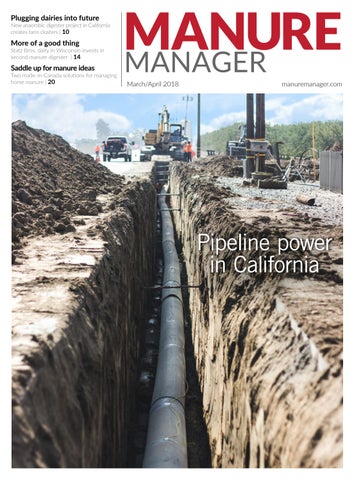
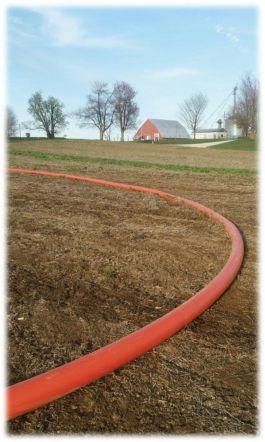
California’s pipeline power project
Calgren Dairy Fuels embarks on an ambitious anaerobic digester and biogas pipeline project in California.
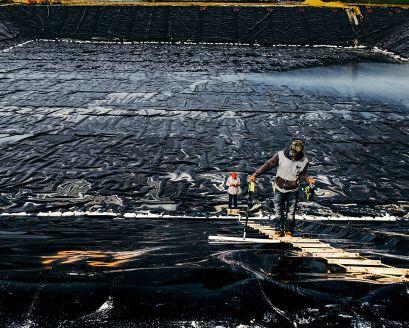
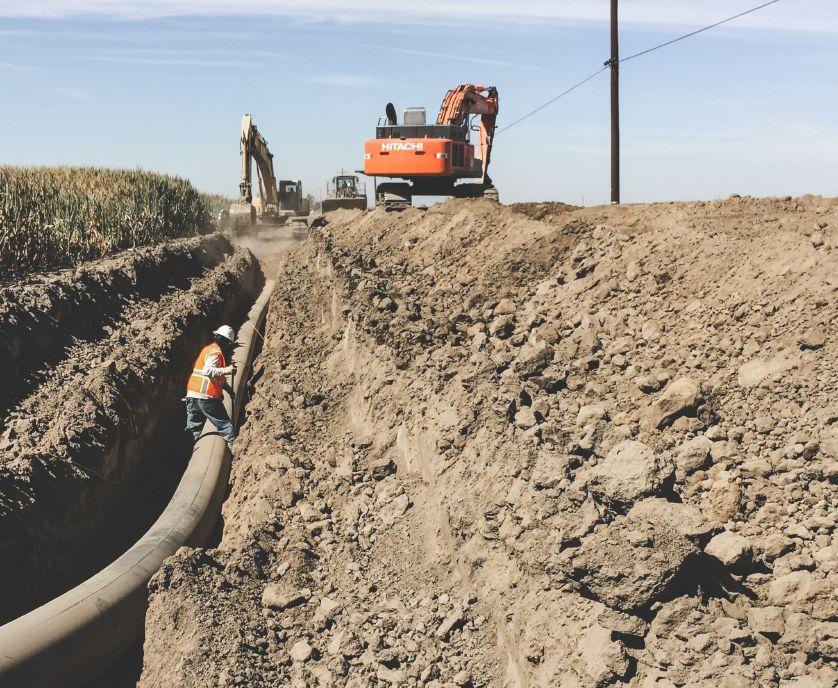
Laying Calgren’s main trunk biogas pipeline. See page 24. Submitted photo
10 14 20
Plugging dairies into renewable future
New project in California creates farm clusters to produce electricity, vehicle fuel.
BY DIANE METTLER
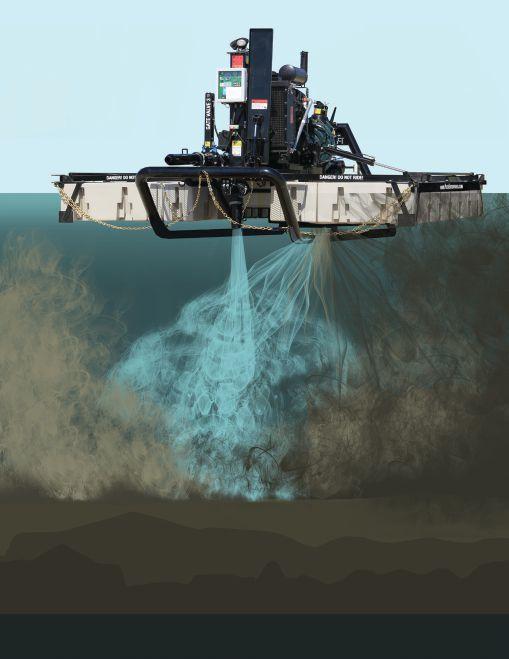
More of a good thing
Statz Bros. dairy in Wisconsin invests in a second manure digester after achieving success with its first unit.
BY TONY KRYZANOWSKI
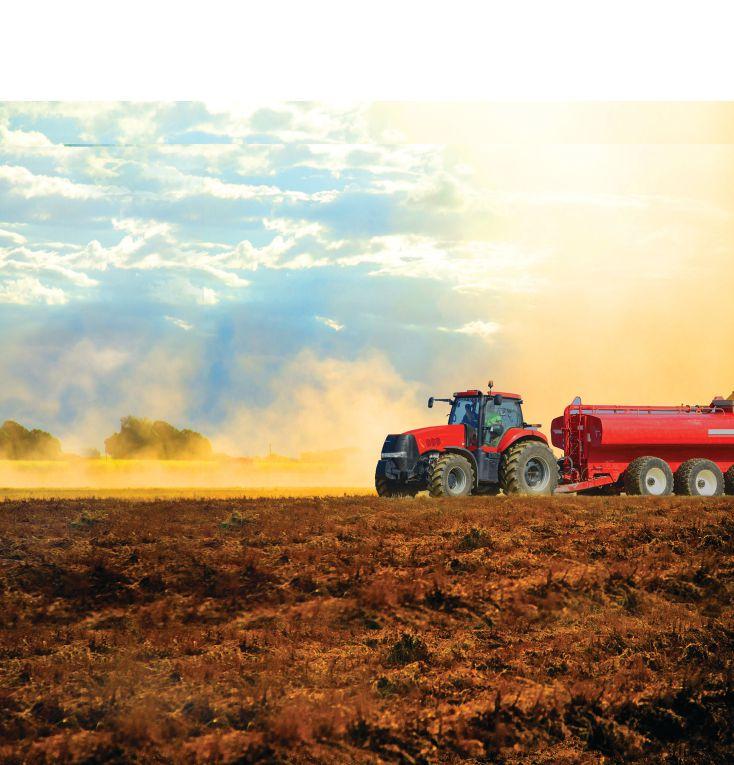
Saddle up for manure ideas
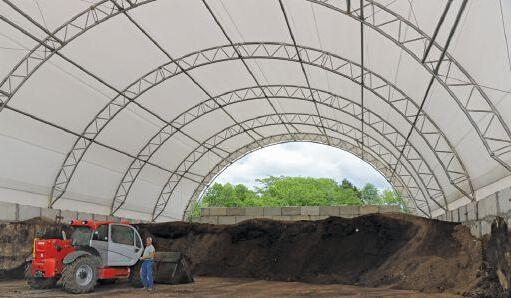
Two made-inCanada solutions for managing horse manure are doing the trick.
BY TREENA HEIN
Clearing the air
I can feel my breakfast rising in my throat.
“31-year-old worker died from exposure to manure gases, OSHA finds,” states the accident report on my computer screen. “Decapitation by manure spreader,” reads another.
I gag a little bit.
How did I find myself here, down this internet-based rabbit hole of misery?
It started with a news report in the Sioux City Journal. A 54-yearold man from Alton, Iowa, was recently awarded $1.19 million by an O’Brien County jury following a 13-day trial. He had sued his employer plus the owner of the hog barn he worked in after being seriously injured by gas build-up in the building. As a result of the October 2014 incident, the man is unable to work and has permanent partial short-term memory loss.
Reading a description of the lead-up to the injury made me flinch. The employee had been power washing the interior of the confinement barn. On the same day, the barn owner began agitating and pumping manure from the pit beneath the confinement.
able to live independently.
The jury found that the owner of the barn – who had been doing the manure agitation and pumping – should have known the barn’s unventilated conditions could result in the injury or possible death of the employee. The barn owner was found 50 percent at fault, while the owner of the hogs was 35 percent responsible. The employee was considered 15 percent at fault for his own injuries.
I sigh. Another life altered by the effects of hydrogen sulfide. And it could have been prevented. A jury in O’Brien County, Iowa, easily realized that. It took them only three hours to find for the employee.
A basic search on the internet finds you page after page after page of safety bulletins, all involving hydrogen sulfide and manure gas. And one of the first safety rules is: “Whenever a pit that is under a confinement house is being agitated, people should stay out of the building, ventilation of the house should be maximized and animals should be removed.”
It’s common sense. Ventilate the
“Another life altered by the effects of hydrogen sulfide.”
When the employee returned the next morning to finish the cleaning job, he was overcome by hydrogen sulfide and other gases that had built up overnight in the unventilated barn. He lay unconscious on the floor of the barn’s office – he hadn’t even made it into the production area – for 15 to 30 minutes before being discovered. He wasn’t breathing at the time. According to his lawyer, he suffered two strokes, which resulted in brain damage, and it took him two years of physical therapy to be
building. Don’t let gas build up. Keep people and critters away until the potential for gas accumulation up is over. Simple stuff.
Of course, when it comes to life, nothing is ever simple, especially on the farm. Pressures build, corners are cut, time ticks away. But stop and think. Someone’s life may depend on it, including your own.
I’m tired of reading accident reports, horror stories filled with what-ifs and might-have-been. Stay safe out there in 2018. •
MANURE MANAGER
March/April 2018 Volume 16, No. 2
Published by: Annex Business Media, P.O. Box 530 Simcoe, ON N3Y 4N5
Editor MARGARET LAND (519) 429-5190, (888) 599-2228, ext 269 mland@annexweb.com
Mail: 111 Gordon Baker Rd., Suite 400, Toronto, ON M2H 3R1
Occasionally, Manure Manager will mail information on behalf of industry-related groups whose products and services we believe may be of interest to you. If you prefer not to receive this information, please contact our circulation department in any of the four ways listed above.
All advertising is subject to the publisher’s approval. Such approval does not imply any endorsement of the products or services advertisted. Publisher reserves the right to refuse advertising that does not meet the standards of the publication.
manuremanager.com
Lawsuit challenges California county
Conservation groups are suing California’s Tulare County for approving a climate action plan for giant feedlots that would allegedly worsen air quality and undercut greenhouse gas reduction goals. The lawsuit is asking the court to set aside the county’s climate-action plan and animalconfinement facilities plan until officials identify steps to cut pollution from industrial dairies and feedlots and disclose the true environmental and
financial costs of those emissions.
According to the lawsuit, cattle operations in the county produce the equivalent of 7.5 million metric tons of carbon dioxide per year. By 2023, that number is expected to grow to the equivalent of almost 9 million metric tons of carbon dioxide per year.
Tulare County is home to more than one million cattle.
BROILER PRODUCERS RECEIVE AWARD
Poultry farmers Randy and Jordan McCloskey were recently recognized for their efforts to improve water quality and reduce nutrient runoff with the 2017 Delaware Environmental Stewardship Award. The McCloskey’s farm is located in Houston, where they grow broilers for Allen Harim Foods. On top of the four poultry houses, with a capacity of 136,800 birds per flock, they also farm 500 acres of grain.
The McCloskey’s have utilized diverse road-side plantings to help reduce dust, control odors, and increase aesthetics; a storm water pond on the farm is fed by swales; and they follow a nutrient management plan that utilizes poultry litter. Runners-up were:
• Josh Parker of Bridgeville who grows for Perdue Farms with a capacity of 100,500 roasters per flock. Parker has planted a diverse assortment
of flowering native shrubs and trees as visual buffers, windbreaks and to help take up nutrients Storm water drains into a farm pond for treatment.
• Norris and Phyllis West of Laurel, who grow for Mountaire Farms, have six poultry houses with a capacity of 168,000 broilers per flock.
The West’s utilize three manure sheds and two composters.
They have created a drainage pond and planted the banks in trees as a buffer.
• Brian Kunkowski of Laurel, who grows for Amick, raises 144,000 broilers per flock in his four poultry houses. Along with a manure shed, the storm water engineering includes stone beds along the houses, grass swales draining to a pond lined with giant trees and a screened drain.
BY THE NUMBERS - CALIFORNIA DAIRY MANURE FUNDING
Source: California Department of Food & Agriculture
amount allocated to DDRDP for:
amount allocated to AMMP for:
number of projects that received funding in 2017
number of projects that received funding in 2017
California Department & Food and Agriculture for methane emissions reductions from dairy and livestock operations. funding available in:
Research finding ways to inject manure Carbon coating gives biochar its power
For more than 100 years, biochar – a carbon-rich, charcoal-like substance made from oxygen-deprived plant or other organic matter – has both delighted and puzzled scientists. As a soil additive, biochar can store carbon and thus reduce greenhouse gas emissions, and it can slow-release nutrients to act as a non-toxic fertilizer. But the precise chemistry by which biochar stores nutrients and promotes plant growth has remained a mystery, so its commercial potential has been severely limited.
Now, an international team of researchers has illuminated new details and understanding of biochar’s properties. The study, led by Germany’s University of Tuebingen, demonstrated how composting of biochar creates a very thin organic coating that significantly improves the biochar’s fertilizing capabilities. A combination of advanced analytical techniques
confirmed that the coating strengthens the biochar’s interactions with water and its ability to store soil nitrates and other nutrients.
The study was led by Andreas Kappler, of the Center for Applied Geoscience at the University of Tuebingen, and geo-ecologist Nikola Hagemann. The authors set out to investigate biochar before and after composting with mixed manure. Using a combination of microscopic and spectroscopic analyses, the researchers found that dissolved organic substances played a key role in the composting of biochar and created the thin organic coating.
“This organic coating makes the difference between fresh and composted biochar,” Kappler said. “The coating improves the biochar’s properties of storing nutrients and forming further organic soil substances.”
Hagemann added that the coating also developed when untreated biochar was introduced into the soil – only much more slowly. Composting experiments were carried out on a small commercial scale using infrastructure and expertise of the Ithaka Institute in Switzerland. This improved understanding of biochar’s properties could trigger more widespread commercialization of biochar fertilizers. Such a change could reduce global dependence on inorganic nitrogen fertilizers.
Phosphorus removal demonstration under way in Ontario
The Thames River Phosphorus Reduction Collaborative (PRC) recently announced that it is testing a commercial product that absorbs phosphorus from tile water at the edge of a field on a farm operation in the Chatham-Kent region of Ontario. The test got under way in Fall 2017 and will continue into the future.
Gillier Drainage Contractors and ADS Pipe supplied the drainage work and materials.
Gillier adjusted the current field tile system by connecting field tile laterals to a main drain. Tile water will flow to the edge of the field and into a tank filled with the commercial sorption product before being released into the municipal drain. Kevin McKague of the Ontario Ministry of Agriculture, Food and Rural Affairs and Colin Little of the Lower Thames Valley Conservation Authority (LTVCA) supervised the tank installation and oversaw the project. The LTVCA will monitor water quality improvements. The materials needed for the test were supplied by ADS Pipe. In-kind support to the project was essential since the partners involved in the Thames River PRC have limited funding.
What’s a responsible farmer to do? Manure injection is an important soil management practice that reduces the chance of manure runoff. But recent studies by Carol Adair and colleagues at the University of Vermont show manure injection can increase the release of greenhouse gases.
Traditionally, manure has been spread, or broadcast, onto the fields. However, with changing weather patterns, some areas have had heavier rains and more flooding. Many farmers are taking steps to avoid manure runoff that can affect the quality of lakes and streams nearby. One such step is manure injection, which helps keep the manure on the crops and on the fields. Manure injectors insert narrow troughs of liquid manure six to eight inches deep into the soil.
“Unfortunately, at that depth conditions are just right for producing nitrous oxide,” said Adair.
The soils are often wet and there is little oxygen. This leads microbes in the soil to change the way they convert organic matter into energy. This alternative process changes nitrogen into nitrous oxide as a byproduct.
Adair and her colleagues have been studying the potential of tillage and manure application methods to reduce nitrous oxide emissions. They are comparing conventional tilling versus no-till systems, and broadcast versus manure injection.
Through several farm and laboratory experiments, they have found the tillage method has little impact on nitrous oxide emissions. However, manure injection significantly increases nitrous oxide emissions compared to the broadcast method. This is especially true soon after injection. Warming soil in the spring and more winter thaw/freeze cycles in winters also seem to increase emissions. And when warmer winters are combined with manure injection, this multiplies the effect, leading to even more nitrous oxide emissions.
Adair says ongoing research may show the cause of winter and spring emissions and whether there are steps that can reduce them. Perhaps cover crops grown between main-crop seasons will be able to reduce wintertime nitrous oxide emissions. And perhaps the timing of manure injection is important.
“Injecting during dry periods seem to reduce emissions, and it may be that fall injection results in smaller emission pulses, but we don’t have enough evidence of the latter yet,” Adair explains. “Our work continues so we can find better answers for growers, and protect the environment.”
EVERY THING PIG
PLUGGING DAIRIES into a renewable future
A new anaerobic digester project in California hopes to create farm clusters across the San Joaquin Valley to produce electricity and compressed natural gas for vehicle fuel.
BY DIANE METTLER
This February was the celebration of a great partnership of California dairies and California Bioenergy (CalBio).
The ribbon cutting ceremony involving three new Kern County dairy digester projects was attended by not only those from CalBio and the California dairies – Lakeview Farms Dairy, West Star North Dairy, Carlos Echeverria & Sons Dairy – but also Secretary Karen Ross of the California Department of Food and Agriculture; State Assembly Member, Rudy Salas; Laurie ten Hope, deputy director for the California Energy Commission’s Research & Development Division; plus CalBio’s CEO, Ross Buckenham, and president, Neil Black.
The digester projects are just a start for what lies ahead for California dairies and renewable energy.
“On February 2nd, we commissioned three new dairy digesters,” Black says. “We are constructing three new digesters in the Kern cluster this year. These three new projects recently won grants from the California Department of Food and Agriculture. We plan on adding the other dairies in the cluster in the near future.”
are anaerobic environments that naturally break down the manure, but they also produce methane – a potential liability for California dairies, since they are being asked to reduce those methane emissions by 40 percent by 2030.
The CalBio digester projects provide an answer for farmers. They reduce methane emissions and at the same time provide a stream of revenue to the farm, explains Black.
The process is fairly straightforward. The manure water from each of the cluster’s dairies is diverted to a double-lined, covered digester.
The Kern Cluster includes 15 modern dairies southwest of Bakersfield. The first three projects will produce both electricity (roughly two-thirds) and inject the balance of the biogas into the pipeline for use as a vehicle fuel. The 12 future projects are planned for pipeline injection, with the biomethane being used as renewable compressed natural gas (R-CNG) in trucks and buses.
Most dairy farms in California move their manure with water, which eventually ends up in a lagoon. The lagoons
ABOVE
“In the digester, we capture the biogas that now goes in the atmosphere. This biogas is approximately 60 percent methane,” says Black. “We then clean it. For electricity generation, it is scrubbed of hydrogen sulfide. For pipeline injection, it is cleaned to nearly pure methane. In addition to capturing the gas, we capture the manure water effluent coming out of the digester, which we hand back to the dairy to apply to its farmland for fertilization and irrigation, just as they do today.”
Black adds that the farmers are finding that the manure water coming out of the digester has advantages over open lagoon water.
“There are less solids since under the lagoon cover there is additional digestion,” he says. “Fewer solids improves its use in the irrigation system. We’re also finding an increased percentage of plant-available nitrogen, which helps improves its value to the farm. We’re at the early stages of learning and evaluating these findings, but the dairies are saying the water is more consistent and easier to use in farming operations.”
Before the manure water enters CalBio’s line and travels to the covered lagoon digester, it is put through a slope screen separator to remove solids that are then dried and used for bedding.
ABOVE
As part of the project, CalBio builds a covered lagoon digester at each dairy. It then moves the biogas from each dairy to a central location. At this one location, the biogas is upgraded to meet pipeline standards.
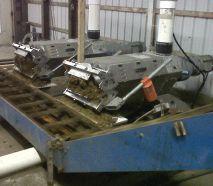
Before the manure water enters CalBio’s line and travels to the covered lagoon digester, CalBio puts it through a slope screen separator to remove solids that are put out in the hot California sun and then used for bedding.
“A separator either already exists on the dairy or we add that,” says Black. “We also add a sand lane, and take other steps to decrease sand and the buildup of sludge in the covered lagoon digester.
“Almost all the bedding at California dairies is a form of dried manure solids, whether it comes from a separator, a weeping wall or from a settling pond,” he adds. “For our digester projects, we put in place a slope screen separator. This adds consistency across the dairies and provides a controllable stream going into the digester. The separated solids become the bedding source for most of our partner dairies.”
CalBio has six clusters in development across the San Joaquin Valley in California and is working to develop more. Each cluster is a group of dairies that are near to each other and also near a pipeline. CalBio builds a covered lagoon digester at each dairy. It then moves the biogas from each dairy to a central location. At this one location, the biogas is upgraded to meet pipeline standards.
At San Joaquin Valley dairies, there are approximately 1.3 million milk cows. The close proximity of the farms to each other and a pipeline enable pipeline-to-fuel projects. Projects further from a pipeline are better suited for electricity generation.
The key to project success is sound economics, says Black. The California Department of Food and Agriculture provides valuable grant awards to dairy digester projects. CDFA’s funding comes from the California Climate Investments. This is “a statewide initiative that puts billions of cap-and-trade dollars to work reducing greenhouse gas emissions, while strengthening the economy and improving public health and the environment – particularly in disadvantaged communities,” according to the California government. The California Energy Commission has also provided grant funding, which offered initial investments in digester projects in the state.
The other key to economic success is ongoing revenue sources. For electricity generation, this comes from the BioMAT, a 250 MW bioenergy feed-in tariff program in California.
“The BioMAT is a must-take program in which the investor owned utility, based on which region you’re in, provides a contract to take the generated electricity at an economically acceptable price,” explains Black. “In addition, a digester projects generates revenue from carbon credits.
“The BioMAT is a 250 MW program,” he adds. “Ninety MW are for dairy and other agriculture. The balance of 160 MW is for other bioenergy feedstocks. A project can’t be more than three megawatts in size, and the three projects for the ribbon cutting are each one megawatt.”
In fact, the first three projects at the Lakeview Dairy, West Star North Dairy, and Carlos Echeverria & Sons Dairy digesters
are the first three projects that have used the BioMAT for dairy biogas in California.
Pipeline injection projects contract to sell the natural gas as vehicle fuel. For these projects, the key factors for success are the federal Renewable Fuel Standard RIN program and California’s Low Carbon Fuel Standard (LCFS) Program, developed and overseen by the Air Resources Board.
Black adds that when CalBio generates electricity, roughly 80 percent of the revenue comes from electricity sales and 20 percent comes from the carbon credit.
“The alternative is to clean it up and put it into the pipeline,” he says. “If you put it in the pipeline, you could sell that natural gas for use at a power plant somewhere else, because once it’s cleaned up and its natural gas, it’s chemically indistinguishable from what’s in the pipeline.”
The gas can also be sold as a vehicle fuel.
“When we generate vehicle fuel, a very small percentage of revenue actually comes from the value of natural gas,” Black says. “It’s about five percent in the market today. The balance of the value comes from the Federal RIN credit, initially developed for ethanol, and the LCFS credit, developed to reduce carbon emissions from the transportation sector.”
CalBio is also focused on expanding the use of the dairies’ biomethane in vehicles.
“It’s the responsibility of companies like ours to get the dairy methane into a California vehicle,” Black says. “We’re
working together on the vehicle fuel side, seeking to expand the number of natural gas vehicles.”
The state of California encourages projects that create vehicle fuel because they don’t emit any NOx, and they actually help reduce NOx by using natural gas in trucks and buses instead of diesel.
“The natural gas trucks and buses create about 90 percent less NOx, so it’s a great step in improving air pollution,” Black says.
“I’d like to see that we’ve helped dairies benefit from this significant new revenue stream.” – Neil Black
He adds this doesn’t mean electric production isn’t important – and it is a great option for dairies not near pipelines. And there is significant headway being made in limiting NOx output from electric generation.
“We’re making significant strides with how to make the electricity projects environmentally friendly, locally,” Black says.
Using the dairy’s biogas as a vehicle fuel in California, although more profitable than electricity, is also a riskier investment.
“There are no long-term contracts. Also there aren’t many natural gas cars. The green cars of the future are mostly
LEFT
By covering the lagoons, CalBio hopes to reduce methane emissions and provide a stream of revenue to the dairy farm.
electric. But there are substantial buses and trucks that are currently or have the potential to convert to natural gas.”
Black is focused on the prospect of using dairy methane as a renewable resource in the Central Valley, because not only is it the home of the vast number of world class dairies, but the valley is a severe non-attainment zone (an area considered to have air quality worse than the National Ambient Air Quality Standards as defined in the Clean Air Act Amendments). Because the air gets trapped between the Coastal mountains and the Sierras, air pollution builds in the valley, and therefore, along with the LA Basin, it is more heavily regulated than any other part of the country.
In converting cow waste into a renewable resource, dairy farming considerations are one of CalBio’s highest priorities.
“We formed CalBio with a dairy farm partner,” Black says. “We also work very closely with 4Creeks, one of the leading engineering firms that helps build and design dairies. We have a great deal of expertise in how to help design and engineer covered lagoon digesters that work well and actually help enhance day-to-day dairy operations.“
CalBio’s goal is to create a partnership that allows dairy farmers to focus on producing milk, while they focus on developing new and efficient ways to capture dairy biogas and use the methane for energy generation, while maximizing the profitability of that gas. And, together, they share the profits.
When asked if he could look 10 years into the future, what would he like to see, Black responded, “I’d like to see that we’ve helped dairies benefit from this significant new revenue stream. We’ve also improved their manure management operations saving them money, and we’ve helped the dairies deliver on California’s environmental goals. I want us to look back and see that we had a win-win opportunity and that we were successful together.” •
CONTRIBUTED PHOTO
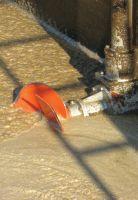
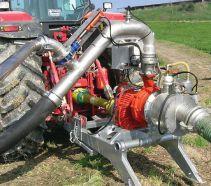
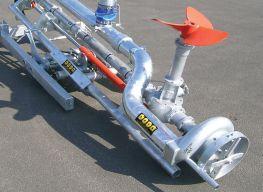
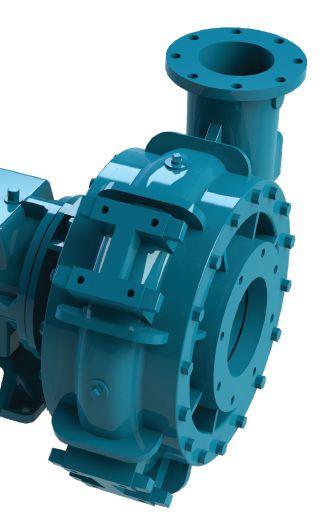
Patented Chopper Pumps
Dual chopping system to prevent clogging
Open design high speed impeller with adjustable pressure plate for unsurpassed performance with mechanical seals
Electric/PTO models, 4ft to 20ft
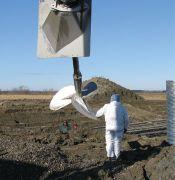
Manure Separators
NEW Stainless casted augers with super hard coating for 40% dry bedding
NEW DODA self-adjusting weights
Heavy duty planetary gearbox with 15HP USA electric motor
Sales - Service - Install
More of a good thing
Statz Bros. dairy in Wisconsin invests in a second DVO manure digester after achieving success with its first unit.
BY TONY KRYZANOWSKI
Nutrient management plans are all but required on most large farms these days in the United States, which is why it is not so uncommon anymore for dairy farms with multiple locations to have more than one anaerobic digester to treat their raw manure.
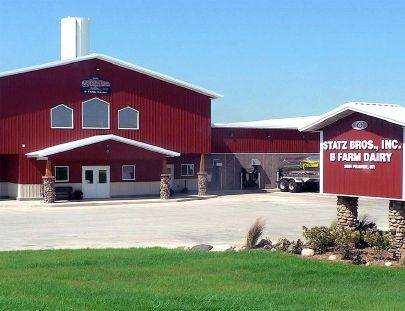
A good example of that is the Statz Bros. Inc. dairy farm, located near Sun Prairie, Wisconsin. The family-owned dairy milks 4,000 cows on two sites. It also manages the manure generated by another 1,500 dry and replacement cows, housed on five smaller sites located in close proximity to the home site.
Based on 35 gallons of manure generated per
ABOVE
cow per day, the entire operation produces about 68 million gallons of manure annually.
Their first, two-stage, mixed plug-flow mesophilic digester – supplied by Wisconsin-based DVO Inc. – was installed in 2008 with the help of some grant money, and was operational by January 2009. Their second DVO mesophilic digester was installed on a renovated and expanded dairy site about 1.5 miles from home in 2015.
Mesophilic means that the digester works at a lower temperature of between 98 and 102 degrees Fahrenheit versus a thermophilic digester, which works in the range of about 120 to 140 degrees Fahrenheit. The material retention time in the Statz
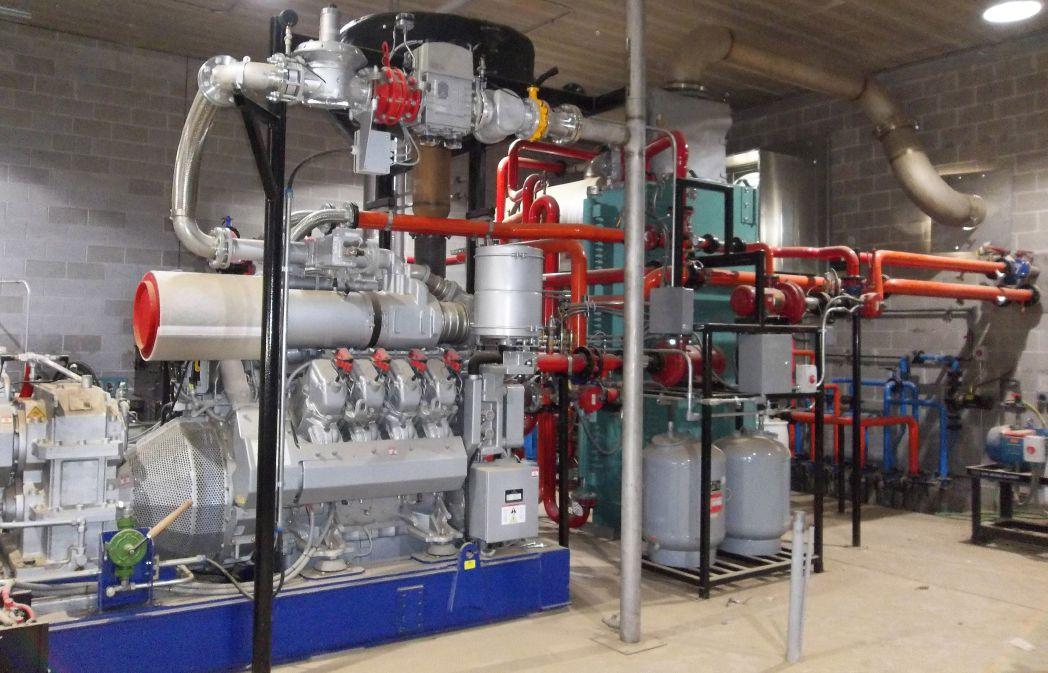
Most of the biogas produced from anaerobic digestion of barn waste at the Statz Bros. dairy is used as fuel in two power generators for sale or for on farm use.
RIGHT
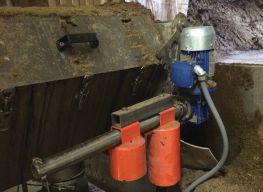
One of six screw presses at the Statz Bros. dairy produces the digestate solids used on a just-in-time basis as fresh bedding in the barns.
Bros. dairy digesters is about 20 days.
Raw manure enters and treated digestate exits the digesters fairly consistently. There is a collection pit at the front end of each digester and once the raw, manure-laden liquid within the collection pit reaches a certain height based – on waste flow from the barns – it triggers the pumping of material into the digester. At the same time, digestate exits from the other end. The system stops pumping when the collection pit has dropped to a set level.
What occurs during the anaerobic digestion process is the production of biogas, and nutrient-rich liquid that also contains a certain percentage of largely benign solids. Bacteria working within this enclosed, oxygen-free environment are what produce the biogas and destroy many of the pathogens within the raw
manure, while keeping the valuable organic nutrients intact.
It has become common practice by many dairies using digesters for manure management to separate the treated solids from the liquid stream, reusing them for bedding, which has brought about significant cost savings to the industry. The key is to ensure that the digester is working properly to create a benign form of treated digestate so that there is no impact on milk quality. This practice has also created an organic form of liquid
fertilizer that reduces commercial fertilizer costs and has considerably less odor. The biogas produced by the bacteria rises to the top of the digester and can be used as fuel to generate power and/or heat. By using this manure management method, many dairies have also been able to make money selling carbon credits.
“We chose DVO because it is a simple and effective system,” says Troy Statz, one of three Statz Bros. dairy managing partners. He works primarily in the area of project development. Today, the
managing partners of the dairy are Wes and Troy Statz and their cousin, Joe Statz.
“DVO’s mixed plug-flow design has been a proven system for us,” Troy says. “If you manage the fiber off the tail end correctly, that can be a great attribute. We see it in the health of the animals. They are very comfortable. It’s been a great part of the success at our dairy.”
The new digester site includes a commercialized nitrogen and sulfur capture system that, according to DVO Vice President Doug VanOrnum, the company is evaluating for application in a dairy environment. But DVO is keeping any further comment
LEFT
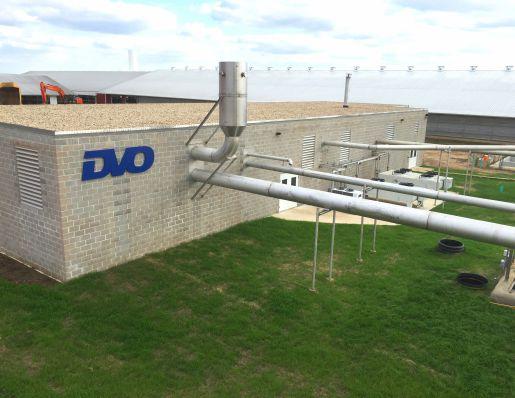
The new DVO anaerobic digester at the newly refurbished Statz Bros. dairy includes a nitrogen and sulfur capture system that DVO is testing for dairy farm application.
about it under wraps until the company is ready to bring a version of this technology to market for the dairy industry.
DVO designed and constructed the digesters but they are owned and operated by the dairy, with several individuals playing a part to ensure that they function well.
Statz says that the nutrient management team is responsible to maintain consistent flow of the liquid manure to the digesters, monitor digester outflow to ensure that there is proper solid and liquid separation, and then organize timely land application of the liquid nutrients. Staff working at the farm shop keep an eye on such mechanical items as the engines running their biogasfuelled power generators.
“You need to maintain proper residency time in the digester and separator maintenance is essential,” Troy says. “It’s not hard stuff, but it is stuff that needs to be done.”
Once the digestate exits the digesters, it undergoes a separation process through Bauer screw presses, leaving about three percent solids in the liquid stream and a pile of solids. The majority of the solids are used for bedding stalls and the remainder is land applied. There are a total of six screw presses between the two sites.
What’s interesting about the Statz operation is they use their recycled bedding material on a just-in-time basis. Stall maintenance occurs five to six days a week. The stalls are lightly groomed and a fresh layer of solids is applied to the bed. Statz says they do not hesitate to use the separated solids produced from their two digesters as fresh bedding. No composting is necessary. It has about 68 percent moisture content and they use the solids to bed all animals that have access to a free stall. They know that using the digestate solids this way works because the herd has stayed healthy and their somatic cell count (SCC) has remained steady at about 130,000.
“It’s not 100 percent pathogen reduced, but it is close to it,” Troy says. “Fresh digestate solids are used for stall bedding. Old solids inventory is stacked with other solid waste streams and land applied seasonally.”
Manure from the satellite dry and replacement cow barns is also scraped regularly and loaded for treatment in the digester at the home dairy site.
“That’s created an avenue for all that waste into one waste stream to produce bedding back for those non-lactating animals,” Troy says.
Runoff from the feed storage areas is also funneled into the digesters.
The digesters provide the dairy with multiple benefits, not the least of which is liquid organic nutrients in their lagoons for injection on their cropland. The lagoon liquids supply about 60 percent of their nitrogen fertilizer requirements. In addition to milking cows to supply milk to Dairy Farmers of America, the farm also manages about 5,800 acres of cropland consisting of corn, alfalfa, wheat and soybeans. There are a total of 6,600 acres within the Statz Nutrient Management Plan, with 800 acres in the plan included from neighboring landowners.
“We land apply liquid in spring, and then in summer on some alfalfa, after the wheat comes off, and then in fall after the silage, beans and grain are off,”
Troy says.
The biogas generated from the older digester on the home farm fuels a power generator, which produces about twice as much power as the dairy consumes. Renewable power production has been sold on contract for the past nine years to Alliant Energy. Statz Bros uses the biogas from their second digester primarily for their water boiler, to heat the digester, and ancillary needs at the dairy center and separation facility. During the months of the year when electrical demand is high, biogas is used to power a generator to offset demand from the utility. Excess biogas is flared and earns a carbon credit. Troy says the economics of selling the potential power this system could generate doesn’t make financial sense right now, which is why they have chosen to handle the biogas generated from the second digester in this way for the moment.
“You need to maintain proper residency time in the digester and separator maintenance is essential. It’s not hard stuff, but it is stuff that needs to be done.”
– Troy Statz
Statz says that using up to 70 percent of the treated solids generated by the digesters for bedding really makes a difference from a cow comfort standpoint and is a considerable savings to the dairy. In the past, they have used sand bedding, and then sawdust and rice hulls on mattresses before taking the treated solid digestate route with the completion of their first digester in 2009.
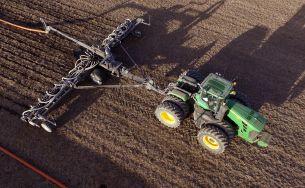
To land apply the liquid nutrients from their lagoons in spring, summer and fall, Statz Bros. dairy uses their own drag hose systems for land within two miles of the farms. The toolbar they use
has a minimal disturbance shank where the liquid nutrients are placed in the soil opening behind the shank.
“For corn silage and bean stubble, that field pass meets our primary tillage needs,” Troy says.
For cropland further away, nutrient application is handled by a custom manure application contractor. Statz describes the treated effluent in their lagoons as being more consistent in nutrient content compared to the raw
liquid manure previously collected and land applied, and also easier to handle.
Established in the 1950s, the Statz Bros. dairy has grown significantly over the years, more than doubling in size from 300 to 800 cows in 1992. The farm continued to acquire nearby dairy farms and cows, along with renovating and expanding their second dairy in 2015, to reach today’s production level. Adding the new dairy increased the number of milk cows from 2,500 to 4,000. •
HARNESSING Nebraska’s cow power
Turning cow manure into biogas would be boon to Nebraska public power and the state’s agriculture industry.
BY KARL VOGEL
For a team of University of Nebraska-Lincoln chemical and biomolecular engineering students, biogas refining isn’t just a senior design capstone project, it’s a potential means of supplying Nebraska’s rural communities with a renewable source of energy that comes from resources that are both local and plentiful.
Tasked with helping Nebraska Public Power District (NPPD) turn biogas into a more-refined form of natural gas, the team of Meryl Bloomfield, Heather Newell, K.J. Hafer and Dave Hansen saw that the state was among the nation’s leaders in not only cattle population but in manure production.
Using an anaerobic digestion process, the team proposes turning that manure not only into fertilizer for crops but natural gas that NPPD could also use to create electricity that powers farms and rural communities across the state.
“Compared to other renewable energy sources – like wind and solar – biogas is more consistent,” said Bloomfield. “Cows are always going to produce manure. You don’t have to rely on having a sunny day or a windy day, especially in Nebraska, where wind and solar plants might not be as reliable as in Arizona and California.”
According to The Cattle Network, Nebraska ranked second nationally in 2015 with approximately 6.3 million cattle or about seven percent of the U.S. population. One of the biggest uses of the manure produced by the cattle is the production of fertilizer.
would be strategically located near Broken Bow.
The refined natural gas from the Nebraska Biogas Upgrading Refinery would then be piped to NPPD’s Canaday Station southeast of Lexington, where it could be used to create electricity.
“It would be centralized to where the cows are,” Hansen said. “After designing the plant, we determined we’d need about a quarter of a million head of cattle to achieve the manure supply sufficient to reach the capacity NPPD is looking for.
The natural gas that would be similar to the gas used in homes across the country, Hansen said, except it would be collected as part of a natural process rather than relying on traditional means of extracting the gas – such as fracking or refining fossil fuels.
Newell also said the process would be more beneficial to the ecology.
“In doing this, we’re reducing greenhouse gases from the cow manure that sits out and naturally becomes fertilizer,” Newell said. “We’re reducing the carbon dioxide and creating something useful from it.”
Though their proposal isn’t guaranteed to be implemented, Bloomfield said thinking about the human impact made this senior capstone experience valuable for the entire team.
The student team worked to develop a method that would allow the production of natural gas and still maintain a viable supply for fertilizer production. But that led to it expanding on its goal by proposing a solution that could be an economic boost to the rural community – a biogas upgrade refinery that
ABOVE
“Knowing that it could be even a stepping stone to something for NPPD changed how we approached it,” Bloomfield said. “When you’re thinking theoretically, you can go a lot of different directions. When you’re thinking about how it affects people and their lives, that’s when it gets real.” •
Karl Vogel is with the University of Nebraska.
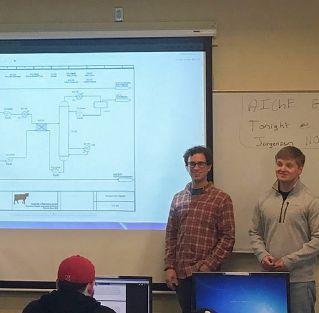
A team of chemical and biomolecular engineering students, including Dave Hansen (left) and KJ Hafer (right), present their proposed Nebraska Biogas Upgrading Refinery during a senior design class.
Saddle up for equine manure management ideas
Two made-in-Canada solutions for managing horse manure are doing the trick in areas of high horse populations.
BY TREENA HEIN
I Have Manure. I Want Manure.
Those are the two prominent buttons on the front page of the website for Manure Link, a program created by Langley Environmental Partners Society (LEPS) in Langley, BC.
Manure Link does just what you’d think – it links horse owners with gardeners or landscapers, helping farmers being good neighbors by managing their manure appropriately – and helping urban neighbors appreciate the value of having farms in their communities.
The program has been running for seven years, and both it and the website have recently received an update. The website is now easier to navigate, with new information added along with an interactive calculator to help people design a compost system for their particular volume of manure.
ABOVE
The first step for gardeners and landscapers is to consider what kind of composted manure they want and how much. LEPS agriculture program coordinator Ava Reeve says the manure in the program mostly comes from horses because there are such a significant number of them in the area, but that manure is also available from hobby farms with small numbers of sheep or chickens.
“Different types of manure have different qualities for soil amendment,” she says. “We recommend that people do the research on which type suits their needs best.”
The next step is to consult the Manure Link list and choose a nearby farm location with the volume and type of composted manure desired. The last step is to make contact with the farmer and arrange a time for pickup or
Manure Link links horse owners with gardeners or landscapers, helping farmers being good neighbors by managing their manure appropriately and helping urban neighbors appreciate the value of having farms in their communities.
delivery. For their part, farmers must compost their manure following the LEPS recommended practices, keep their Manure Link information updated (age, type and amount of compost available) and respond to inquiries.
While the interest in manure exchange is strong both from livestock owners and gardeners, Reeve says the big barrier seems to be with proper composting. She says horse owners and hobby farmers are groups that tend not
to have manure management plans in place because they aren’t necessarily treating their operations as a serious business.
“In fact, large farms are often in better compliance with manure regulations,” she notes, “probably because they’re more intentional about their management.”
Reeve says Langley has a lot of horse owners, and while horse manure is a great candidate for home-scale
WORLD’S FIRST VF FLOTATION TIRE HAUL MORE, COMPACT LESS
The new, all-steel Alliance Agriflex+ 389 flotation radial is the world’s first VF (very high flexion) flotation tire, purpose-built for manure handlers. 30% less inflation pressure means significantly less soil compaction. That’s thanks to extra-flexible sidewalls that help create a 25% larger footprint. Then there’s the tread—stable on the road, sure-footed in the field, with non-directional bars for traction and a dense center rib for long life…so you’ll haul more and compact less.
composting, they “don’t seem to want to deal with it. I think a significant number of horse owners are either paying to have their manure hauled away or are just piling it up in a back corner – which of course is not the same as composting.”
She advises farmers to set up a system and incorporate manure management into their daily tasks. Piles of manure need to be covered with a tarp in rainy months and kept away from water. They must also have a balanced carbon-tonitrogen ratio.
“With horse manure, this actually means not putting clean bedding material in the compost, because the manure itself is already balanced,” says Reeve. “And it needs to be turned regularly, which can be done with a tractor every few weeks for fast composting or at least once a month. Those are the bare-bone basics. You can monitor the moisture levels, or even get fancy with a long thermometer to track the stages, but balancing inputs and incorporating air are key.”
She says those with untended piles may or may not see them as a wasted resource, but very often don’t see how manure can cause serious environmental impact.
“We
can handle 50,000 tons of used wood shavings manure from equestrian stalls per year or handle the manure used bedding from around 3,000 to 4,000 horses.” – Paul Cross
“It can leach runoff that gets washed into waterways and damages our streams and the wildlife that live there,” she notes. “Landscapers…want large quantities at multiple points in the year, and they have the trucks and trailers to haul it away. Now it’s up to horse owners and small farmers to meet the demand with quality, composted manure.”
Closed-loop horse bedding service
HiPoint Agro Bedding based in Guelph,
Ontario, is busy currently building its first three facilities in Guelph, Calgary, and West Palm Beach Florida; facilities that will receive used horse bedding, separate the bedding from the manure, sterilize and treat the bedding, and send it back to the same farm it came from. The manure will be composted and can then be spread on fields.
The cost of HiPoint’s recycled bedding, says Paul Cross, the firm’s head designer, will be the same as that of quality used shavings sold in the same geographical area.
“As we build facilities under 50 miles of the stalls we are taking from and returning to, the manure hauling and trucking are reduced, reducing emissions and cost,” he explains. “We are seen as the environmental solution to solving a global crisis without asking farms to pay more.”
HiPoint anticipates opening its Florida facility in late summer 2018.
“We can handle 50,000 tons of used wood shavings manure from equestrian stalls per year or handle the manure used bedding from around 3,000 to 4,000 horses,” Cross says. “In our Calgary and Ontario facilities that we are preparing for the end of 2018, we will handle 35,000 tons each, but it can be ramped up for more.”
Indeed, in horse hotspots like West Palm Beach, Chesapeake Bay, New York, North Carolina, Calgary and California, managing bedding is a big issue. HiPoint says horse populations in many counties across the U.S. number 20,000 or more, and typically horse bedding/manure is not permitted to be spread on fields because the manure is raw and the shavings don’t break down easily. The U.S. Environmental Protection Agency and provincial governments in Canada, Cross adds, have also disallowed manure and used shavings to enter landfill sites.
“The only options are burning or composting, and … composting, if not treated and covered correctly, could cause environmental hazards to raw crops,” he explains. “Recycling is the most efficient, economical, and environmentallyfriendly option, done right. Our process was created to be more energy efficient and have low-to-no emissions output. The small organic fines and manure buns are composted underground with
biosecurity measures in place to create a fantastic soil amendment.”
The HiPoint system is proprietary, but involves a flat-bed drying unit that uses both heat and steam for sterilization. There are processes in place to remove all dust. In addition, the bedding is treated with the firm’s proprietary natural aromaceutical, which Cross says makes them “healthier for the horse, the rider and stable hands, which helps heal horses’ hoofs, while being antiviral,
antibacterial and antimould within the stable environment.”
When asked how many times bedding can be put through the HiPoint recycling process, Cross explains that their process removes smaller fibers that have broken down, to the level desired by each customers. Larger shavings can be reused indefinitely.
“By adding a small percentage of new shavings, we can continue to recycle the used bedding,” he says. •
CALIFORNIA’S Pipeline Power Project
Calgren Dairy Fuels embarks on an ambitious anaerobic digester and biogas pipeline project in California.
BY TREENA HEIN
Calgren Dairy Fuels is becoming known as a world leader in biogas production and utilization, with good reason. Of the 18 dairy digester projects that were recently awarded more than $35 million in funding by the California Department of Food and Agriculture, seven of them involve Calgren. These projects fall under the state’s Dairy Digester Research and Development Program, which aims to reduce greenhouse gas emissions from manure generated at state dairy farms.
ABOVE
Each Calgren project (including five others for which Calgren is also seeking funding) all involve covered lagoon digesters being built at 12 dairy farms in Tulare County, as well as pipelines being installed to take the biogas from each digester to Calgren’s ethanol refinery in Pixley. It’s all located within California’s San Joaquin Valley, where air pollution has been labelled some of the United States’s worst by the California Energy Commission. “California dairies are under
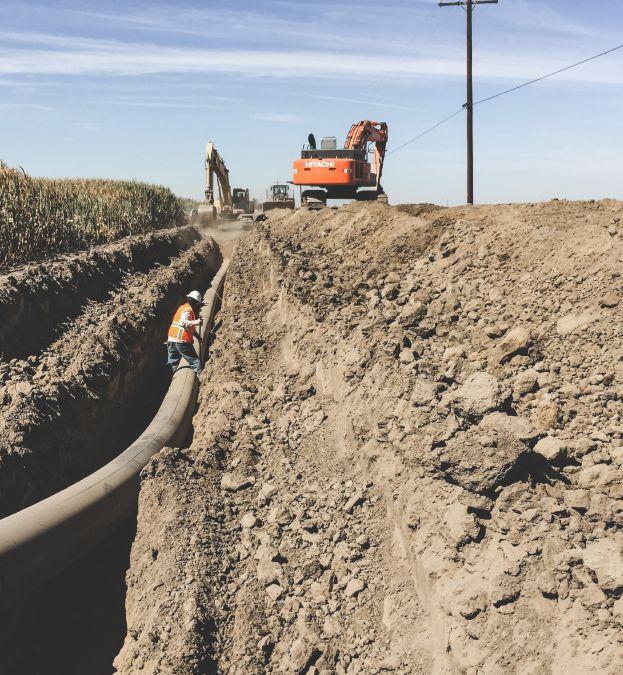
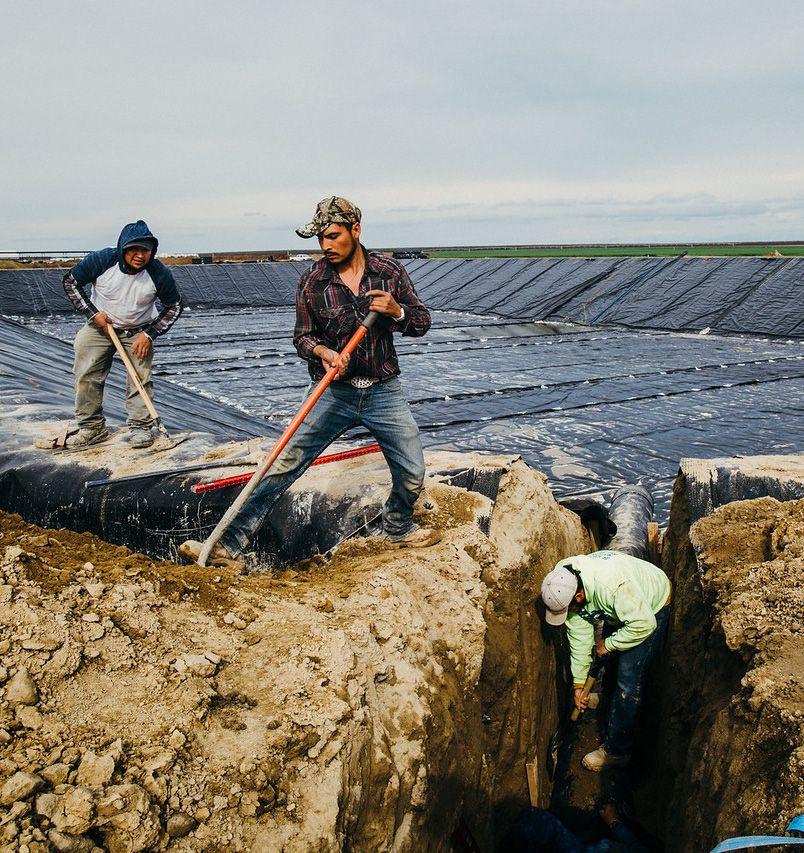
The main trunk pipeline of the system is already installed, and by the time all the farms are connected, more than 30 miles of biogas pipeline will be in place.
CONTRIBUTED
pressure to minimize the release of methane from manure,” notes Lyle Schlyer, president of Calgren Renewable Fuels, parent company to Calgren Dairy Fuels. “This project, called the Calgren Dairy Fuels Cluster, will help address that issue.”
When asked about how this ambitious pipeline project came to be, Schlyer says “it was a natural follow up” to the successful (and ground-breaking) digester that Calgren built at its refinery in 2014 (see sidebar). He adds that the local dairies “have been deluged with offers from digester developers and that we sincerely appreciate their willingness to sign on with us.”
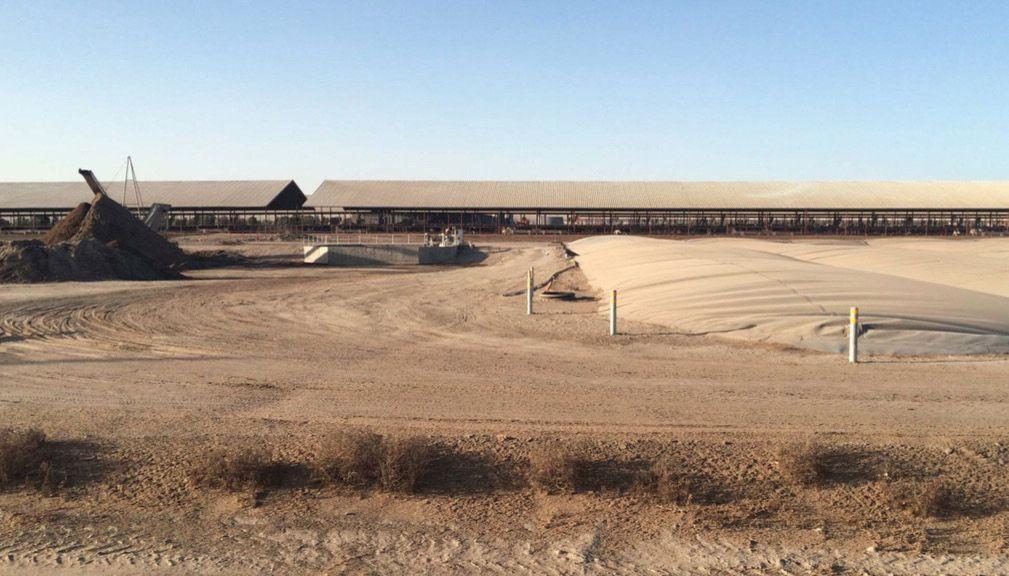
Calgren plans to have the first wave of the twelve lagoon cover digesters built and connected via pipeline by mid2018, with the remainder online by the middle of next year. The digesters will be built by Maas Energy Works. These types of digesters take advantage of the high ambient temperature of California’s Central Valley, notes Mass Energy Works CEO Daryl Maas. Gas production is highest in the summer, but still remains steady in the winter.
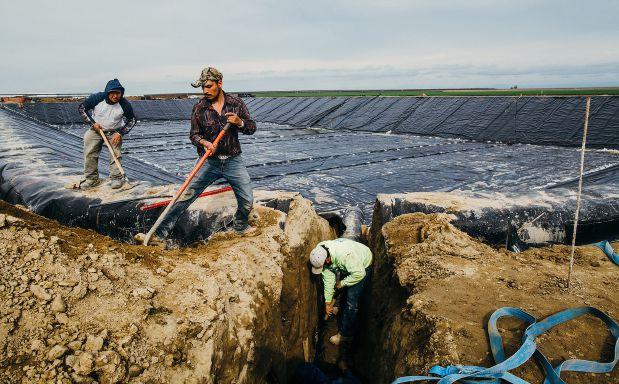
Each lagoon will be covered with high-density polyethylene fabric anchored in the ground around the perimeter of the lagoon to create a very tight seal.
“The ponds are always full, so when one gallon of manure enters the inlet, it displaces another gallon at the outlet,” Maas explains. “The ponds are designed with greater than 30 days retention time to give the bacteria time to maximize biogas production.”
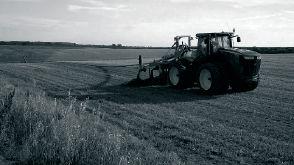
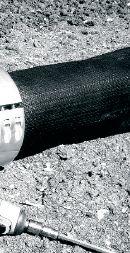
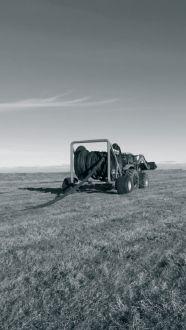
The main trunk pipeline of the system is already installed, and by the time all the farms are connected, more than 30 miles of biogas pipeline will be in place. The pipe diameter varies from four to 20 inches, and the pipe material is SDR21 HPDE, suitable for low-pressure biogas transport because of its durability and ease of installation. The depth varies, with some pipe as shallow as four feet and other sections as deep as 11 feet. Schlyer says most of the installation challenges – such as roadway easements, encroachment permits and irrigation ditch crossings – have already been addressed. However, he adds that as with any excavation project, temporary storage of dirt is always a challenge because the pipeline route runs close by both public roadways and farm fields.
The biogas will be pre-treated at each farm before it enters the pipeline to remove material such as water, and will be given another cleaning upon arrival at the refinery. At that point, some of it will be used to fuel two 5-MW gas co-gen units, which produce both electricity and steam. Another portion will be injected into the local gas pipeline and transported to refueling facilities owned by gas company CNG. Lastly, some of the biogas (as well as biogas from the onsite digester) will also be used to produce both electricity and heat for a new biodiesel plant that will come online midyear. In all, biogas will make up about 80 percent of total fuel used at the refinery, providing tens of thousands of dollars in savings on the facility’s natural gas bill every month.
All the dairy farms will all receive guaranteed payments for their digester biogas for 20 years. For Calgren’s part, Schlyer prefers not to discuss when cost return is expected to be reached (when the cost of the pipelines will be paid for
by natural gas savings at the refinery), but says he and his colleagues “are pleased with the projected financial return on the project.”
The Pixley Biogas Project
The Pixley Biogas Project began operation in October 2015. It is the first anaerobic biodigester in the U.S. to power another renewable energy facility (Calgren Renewable Fuels’ ethanol plant). It cost Calgren $10 million to build, with $4.6 million of that granted from the California Energy Commission’s surcharge on vehicle registration fees (a fund that produces about $100 million year for California to support the use of low-carbon fuels such as ethanol).
The manure for the Pixley digestor comes from nearby Four J Farm Dairy, where 2,000 dairy cows produce 55,000 gallons of solid and liquid manure daily. The manure travels from the farm through about a mile of eight-inch diameter PVC pipe to the Pixley digester, a manner of manure transport that many consider more environmentally-friendly and more convenient than trucking. Added to the Pixley digester every day is 10,000 gallons of food waste, trucked in from local food processors, renderers and companies that pump grease-traps for restaurants, food processors and other food service outlets. It was the first digester project in California to use the state’s streamlined permitting process for co-digestion of manure and other materials.
Since 2008, Calgren’s ethanol plant has been producing about 58 million gallons of ethanol each year from corn and sorghum. The company also sells CO2 gas it collects from the ethanol production process to a firm that compresses the gas on site and then transports it by truck and by rail to customers for soda pop and other commercial uses. •
Summary of funded Calgren Dairy Fuels Cluster pipeline and digester projects
These projects are located in Pixley and Tulare County. Calgren has received the following funding:
$1.5 million to support the $4.02 million Williams Family Dairy Digester Fuel Pipeline Project
$1.5 million to support the $3.29 million K&M Visser Dairy Digester Fuel Pipeline Project
$2.02 million to support the $4.03 million Bosman Dairy Digester Fuel Pipeline Project
$1.6 million to support the $3.45 million Pixley Dairy Digester Fuel Pipeline Project
$1.55 million to support the $3.28 million Legacy Dairy Digester Fuel Pipeline Project
$1 million to support the $2.5 million R Vander Eyk Dairy Digester Fuel Pipeline Project
$1.05 million to support the $2.35 million Circle A Dairy Digester Fuel Pipeline Project
PCE Engine Offerings
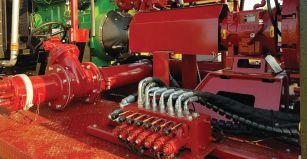
Puck Custom Enterprises (PCE) is now offering Caterpillar Tier 4 Final, Stage IV engines in its pump units. While the move to the decreased emissions of Tier 4 engines is government mandated, PCE leaders said the new offerings make its machinery run even better for applicators that use it. The Cat Tier 4 Final, Stage IV engines have a strong selling point – they boost engine power while saving fuel and reducing emissions. Pre-cisely engineered injection timing and an innovative air management sys-tem result in an efficient fuel burn that enhances power and is better for the environment. PCE is offering several different Cat engine styles throughout its products: C7.1 L 300 horsepower, C 9.3B 456 horsepow-er, 13L 543 horsepower and 18L 755 horsepower.
puckenterprises.com
Full Throttle Outlaw
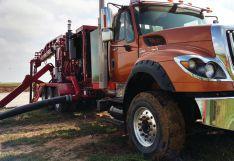
Bazooka Farmstar recently announced the extension of its Full Throttle Series trailer line. The Full Throttle Outlaw is a triple section force-feeding boom with optional agitation features that allows for a quick, convenient set-up and easy travel to and from sites. The Outlaw has retained key features of the Full Throttle booster trailer with a 500-gallon capacity fuel tank for longer runtime, as well as a reinforced front deck with integrated tie-down locations for ATV or parts storage. In addition, a 35-foot, triple section force-feeding boom has been mounted to the rear of the trailer and reaches a maximum depth of 19-feet. Its heavy-duty slew ring allows 270 degrees of boom rotation for simple maneuverability and the flexibility to pump out of those “hard to reach” places. This trailer is available in gooseneck or bumper style hitches and can accommodate 13.5 L (500 HP – 600 HP) engines with a clutch and drive train. The Outlaw’s engine/ main and knife gate hydraulic functions are regulated via Bazooka Farmstar’s Electronic Control System (ECS).
bazookafarmstar.com
Skinner AgSolutions
E&R Sales, LLC, which is involved in the sale and distribution of agricultural waste management equipment, recently announced its name has changed to Skinner AgSolutions LLC. The rebranded Skinner AgSolutions and its founder, Ron Skinner, have more than
Bauer Pull-Type Applicator
Puck Custom Enterprises, a manure application equipment manufacturer in Manning, Iowa, has teamed up with Bauer Built Manufacturing of Paton, Iowa, to produce an innovative new toolbar. The technology, available Spring 2018, was developed using Bauer’s years of experience manufacturing the DB planter line combined with PCE’s expertise in manure application. The Bauer PullType Ap-plicator is PCE’s first front-fold, 45-foot applicator, which makes the process faster and more efficient. The toolbar allows for easier turns while in the ground and on the end rows, more travel per row and less maintenance. Some notable features include 800 series flotation tires, a coulter-style tillage tool called the New Torsion Flex Injector, and closers that contain a greaseless high-speed hub. It also offers 30-inch and 24-inch row spacings, along with the same eight-inch Swing Pipe used on PCE’s 4WD systems for better flow. The row unit can pivot up to 35 degrees, resulting in less stress when turning around in the ground. PCE is encouraging customers to call now (712-653-3045) to get their order placed.
bauerbuilt.com
John Deere is updating its 5E Series tractor, improving visibility to the tractor’s loader and repositioning controls to further enhance operator comfort and reduce fatigue. The four updated models are the 5045E, 5055E, 5065E and 5075E Utility Tractors, ranging from 50- to 73-engine horsepower. There are 2WD, MFWD, open operator station and cab versions to choose from. Each is powered by a 3-cylinder, turbocharged John Deere PowerTech diesel engine.
JohnDeere.com/ag
four decades of experience in serving the agricultural waste marketplace. A long-time supplier of pumps, mixers, valves and other equipment, Skinner AgSolutions began to specialize in the agriculture waste/biogas industry in 2009. Since that time, the company has become a provider of equipment systems for dairy and hog waste
management across the country. To complement the company’s current OEM supplier relationships, Skinner AgSolutions also announced they have become an authorized distributor of Godwin-Xylem rental pumps and equipment to the agricultural market.
skinneragsolutions.com
•
•
NEW! 3” SOLIDS HANDLING ON 6NHTC19 & 6819MPC PUMPS
Talk to your dealer about the superior solids handling and high head capabilities.
Hard Metal or White Iron materials available for abrasion resistance (MP Series) Low head transfer to high head booster pumps High efficiency — Lower HP required
Heavy duty construction — Low maintenance
50+ years’ experience in manure handling
i
reduce construction costs, monthly utilities and maintenance requirements.
PHOSPHORUS LOAD? Blame it on the rain
Study
ties phosphorus loading in lakes to extreme precipitation events.
BY CHERYL DYBAS AND ADAM HINTERTHUER
While April showers might bring May flowers, they also contribute to toxic algae blooms, dead zones and declining water quality in U.S. lakes, reservoirs and coastal waters, a new study shows.
In the Midwest, the problem is largely due to phosphorus, a key element in fertilizers that is carried off the land and into the water, where it grows algae as easily as it grows corn and soybeans.
Previous research had found that waterways receive most of their annual phosphorus load in only a dozen or two events each year, reported Steve Carpenter, director emeritus of the University of Wisconsin-Madison’s Center for Limnology and lead author of a new paper published online in the journal Limnology and Oceanography.
The paper ties those phosphorus pulses to extreme rain events. In fact, Carpenter said, the bigger the rainstorm, the more phosphorus is flushed downstream.
Carpenter and his colleagues used daily records of stream discharge to measure the amount of phosphorus running into Lake Mendota in Madison, Wisconsin, from two of its main tributaries.
The dataset spanned a period from the early 1990s to 2015. The scientists then looked at long-term weather data and found that big rainstorms were followed immediately by big pulses of phosphorus.
The researchers reviewed stream data from the same period, when seven of the 11 largest rain storms since 1901 occurred.
“This study’s findings, which depend on long-term data, are important to maintaining water quality not only today, but into the future,” added David Garrison, chair of NSF’s LTER Working Group.
Carpenter agreed.
“Without long-term data, this research would never have happened,” he said, adding the next steps need to include new strategies for managing nutrient runoff.
Farmers and conservation groups now use several strategies to try to slow water down and capture some of the sediment and fertilizer it carries as it runs off a field. “But we’re not going to solve the problem with buffer strips or contour plowing or winter cover crops,” said Carpenter.
Although those practices all help, he said, “eventually a really big storm will overwhelm them.”
The best available option for protecting water quality is to keep excess phosphorus off the landscape, Carpenter said.
“This is an important example of how changes in one aspect of the environment, in this case precipitation, can lead to changes in other aspects, such as phosphorus load,” said Tom Torgersen, director of the National Science Foundation’s (NSF) Water, Sustainability and Climate program, which, along with NSF’s Long-Term Ecological Research (LTER) program, funded the research.
ABOVE
“A rainstorm can’t wash fertilizer or manure downstream if it isn’t there.”
Carpenter noted that while there are countless acres in the Midwest that are oversaturated with phosphorus, there are also places that aren’t. And that, he said, “is an encouraging sign. Some farmers are having success in decreasing their soil phosphorus, and we could learn from them.”
“This analysis clearly shows that extreme rainfall is responsible for a large amount of the phosphorus that flows into inland waters,” added John Schade, an NSF LTER program director. “Now, we need to develop nutrient management strategies to meet the challenge. Without long-term data like those presented here, the impact of these events would be difficult to assess.” •
Cheryl Dybas is with the National Science Foundation. Adam Hinterthuer is with the University of Wisconsin-Madison.
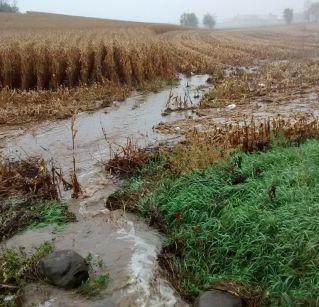
Runoff during an autumn storm flows out of a harvested cornfield.
PHOTO BY ERIC BOOTH
Widen Your Horizons
The road to more efficient manure transport is now wide open with the STR Series Manure Semi-Tanker from GEA.
GEA’s STR Series Manure Semi-Tanker streamlines manure transportation for faster, farther hauling. From farm to field, this first-class manure hauling system saves time, fuel and equipment wear and tear. The STR Series SemiTanker can also haul and apply slurry directly on hard soils after harvesting, giving you flexibility in hauling times.
The GEA STR Series Semi-Tank meets all traffic safety regulations for vehicle weight and width for increased safety for you and everyone on the roads.
Don’t let distance slow you down. Hit the road with GEA’s STR Series Manure Semi-Tanker.