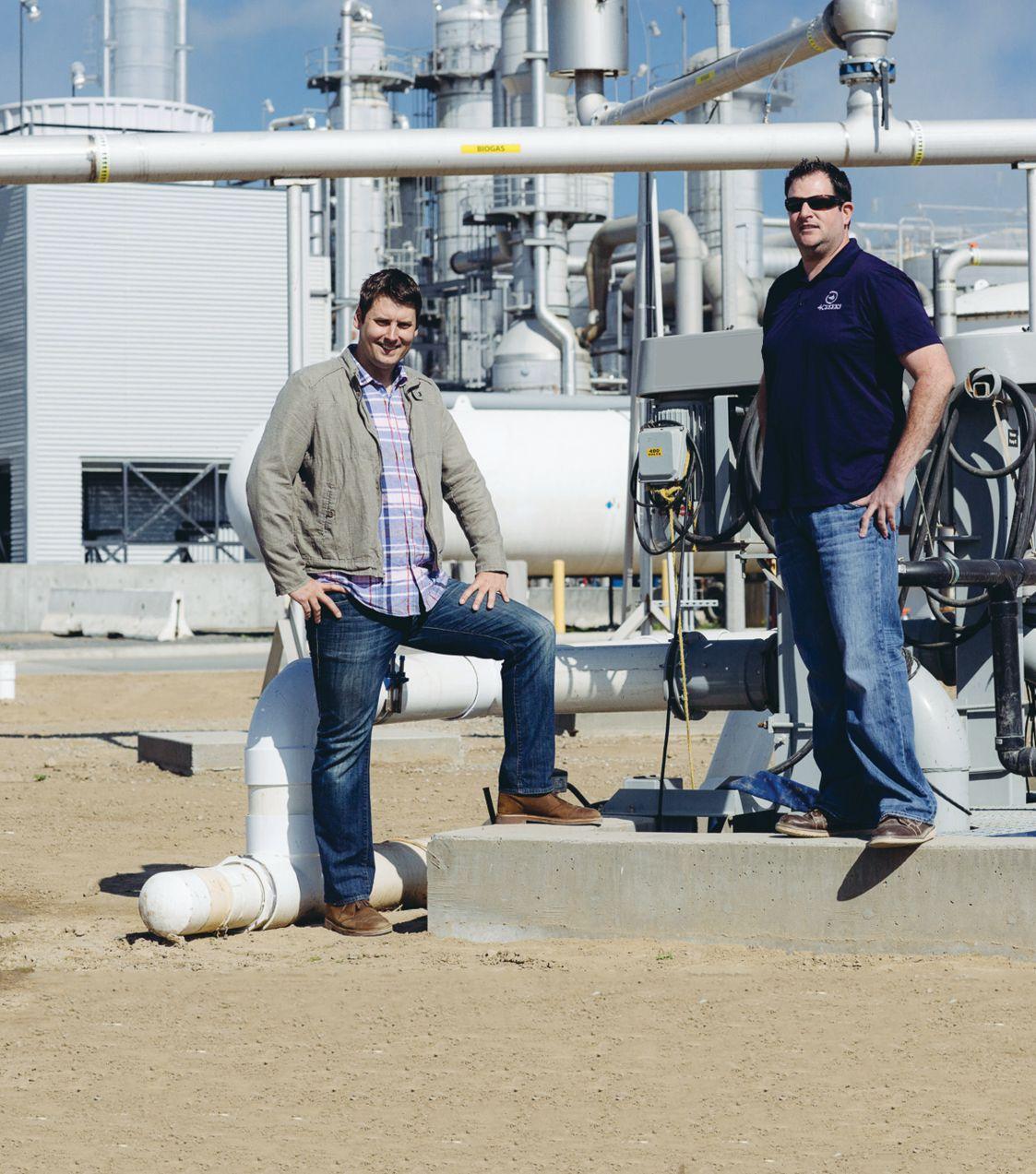
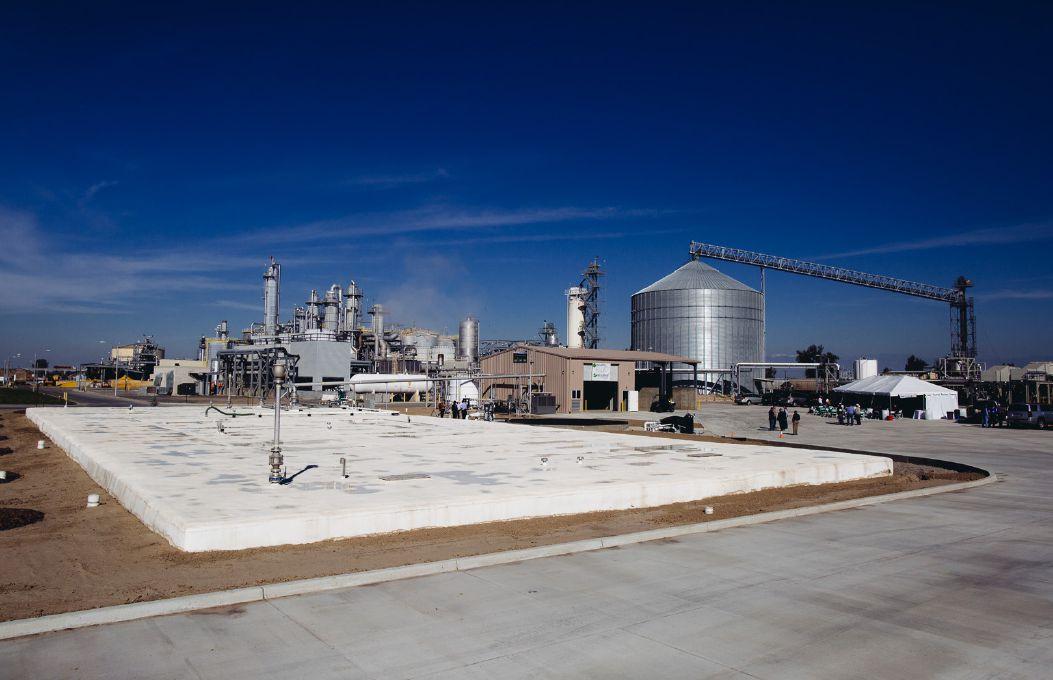
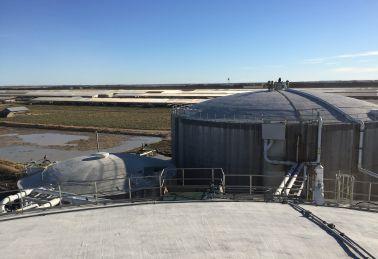
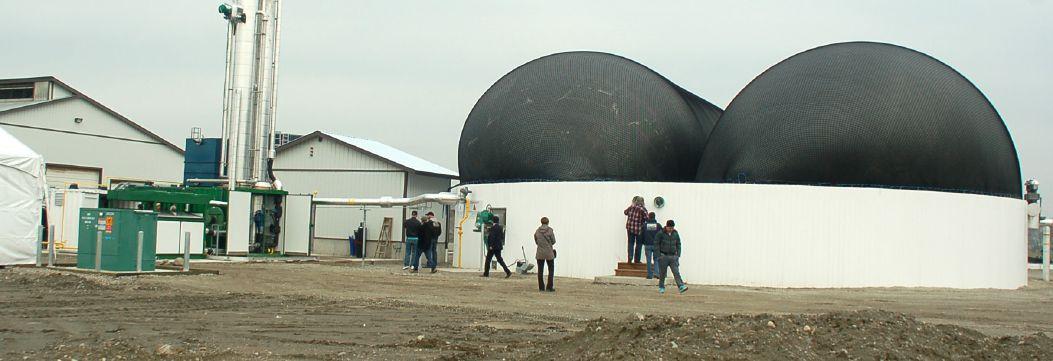
Power produced from Alliance Dairies’ digester generates between $65,000 to $70,000 per month in revenue for the operation. Editorial 4
8
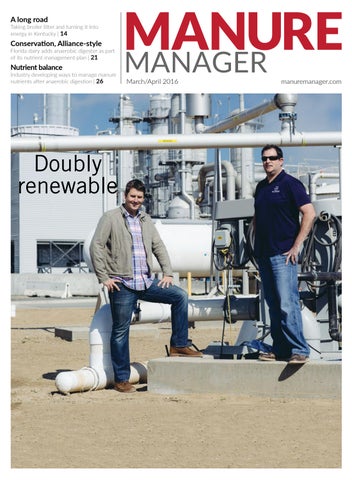
Doubly renewable 10
Innovative anaerobic digester project in California supports another renewable energy facility: ethanol By
Treena Hein
A Long Road 14 Kentucky’s MAC Farms takes litter from 1.6 million broilers and turns it into energy –By Diane Mettler
Conservation Alliance 21 Florida dairy adds anaerobic digester as part of its overall nutrient management plan –By Tony Kryzanowski
Pixley Digester is doubly renewable. See page 10. Photo by Ryan Krauter
28 Which treatment’s best?
Research finds estrogen, antibiotics persist in treated dairy waste, even after anaerobic digestion BY
CHARLOTTE HSU
Nutrient balance
Industry developing ways to manage manure nutrients after anaerobic digestion BY
DAVID SCHMIDT
Air filtration in transport
Prototype filtration system for swine trailer shown to effectively address biosecurity issues BY TREENA HEIN
Improving water quality
In late February, the U.S. Department of Agriculture announced an investment of $25 million in watersheds across the country to help improve water quality.
According to the press release accompanying the announcement, the funding will help agriculture producers apply conservation measures in 187 high-priority watersheds – including 17 new ones – in hopes of improving water quality downstream.
The funding is available through the USDA’s Natural Resources Conservation Service (NRCS) National Water Quality Initiative (NWQI), which works with farmers and landowners to implement voluntary practices, such as constructing filter strips, implementing nutrient management plans, and building terraces and buffers. The program has been in place since 2012.
Successful initiatives to date include Ohio’s East Branch South Fork Sugar Creek, one of the state’s most degraded watersheds. Eight farms own 75 per cent of the agricultural land
to help producers assess how their farm is operating, the value of the conservation projects currently in place and how they can improve their efforts.
Earlier in February, the NRCS also announced $720 million in funding through the Regional Conservation Partnership Program (RCPP) for 84 projects across the country. Many of the projects involve providing assistance for livestock operators to help improve water quality, enhance soil health and protect agricultural viability.
Maryland and Delaware will be receiving $4.5 million for a joint project aimed at meeting TMDL goals within the Chesapeake Bay region. Conservation district staff in Maryland will be working with dairy farmers to install modern liquid separation technologies, reduce barnyard runoff and improve animal waste storage.
A separate project in Delaware is aimed at helping new poultry farmers gain access to composters or mortality freezers plus construct poultry waste structures and protect heavy use
Financial assistance is available to manage your manure issues.
within the watershed and have been working with their local soil and water conservation district to implement changes, including building waste storage facilities and covering animal feedlots plus manure storage areas. In Iowa, agricultural producers have been working to reduce phosphorus runoff into Walk Lake Inlet, part of Black Hawk Lake. So far, sediment runoff has been reduced by 1.630 tons annually and phosphorus by 3,544 pounds annually.
The NRCS plans to improve its water quality efforts in 2016 by introducing a new evaluation tool – resource stewardship evaluation –
areas in a bid to reduce nitrogen and phosphorus leaching and runoff.
Minnesota plans to use part of its funding to assist feedlots under 300 animal units in meeting state and local ordinances in the areas of feedlot runoff and land application of manure.
If you’re interested in taking part in any of these projects or possibly gaining access to some of the funding available, I’d strongly suggest you contact your local soil and water conservation district or your state’s branch of the NRCS. Financial and professional assistance is available to manage your manure issues.
MANURE MANAGER
March/April 2016 Volume 14, No. 2
Published by: Annex Business Media, P.O. Box 530 Simcoe, ON N3Y 4N5
Editor MARGARET LAND (519) 429-5190, (888) 599-2228, ext 269 mland@annexweb.com
Contributing Editors Treena Hein, Charlotte Hsu, Tony Kryzanowski, Diane Mettler and David Schmidt.
Mail: 80 Valleybrook Drive, Toronto, ON M3B 2S9 Occasionally, Manure Manager will mail information on behalf of industry-related groups whose products and services we believe may be of interest to you. If you prefer not to receive this information, please contact our circulation department in any of the four ways listed above. Annex Privacy Officer privacy@annexbizmedia.com
THE PERFECT COMBINATION
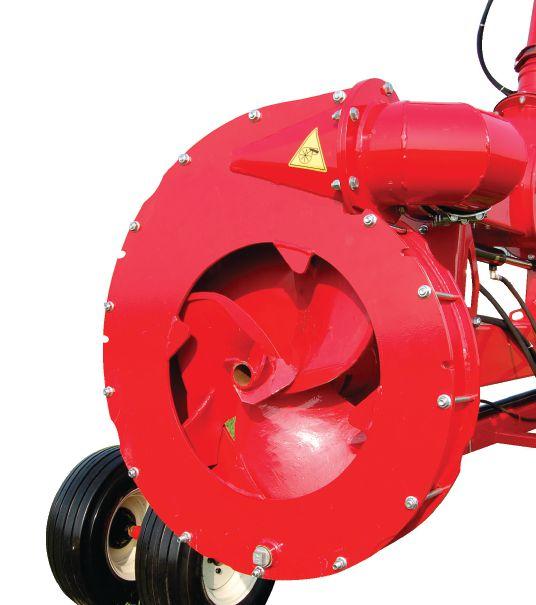
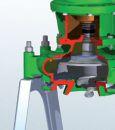
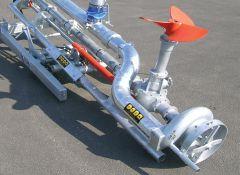
The PUMPELLER® Hybrid Turbine revolutionizes manure pump performance. Incredible intake suction pulls solids into the cutter knives, reducing the toughest crust to nothing in just seconds. The turbine combines the high-volume mixing of a propeller agitator with the power and reach of a lagoon pump, the resulting hybrid design radically outperforms both.
for professional
Jamesway’s new MAXX-TRAC tankers deliver maximum performance.
Patented Turbine Impeller
New advisor at AgSource Laboratories
AgSource Laboratories recently announced Dr. James Friedericks has accepted the position of outreach and education advisor with the company.
In this new role, Friedericks will provide direction and support for the AgSource education program. He will also be supplying technical information, serving as liaison to the agricultural industry and making agronomic presentations to clients and audiences throughout the country.
“Jim is a perfect candidate for this position,” said Steve Frack, AgSource Laboratories vice-president of laboratory operations. “His past
experience in agronomy education, his knowledge of the industry and his hands-on experience in the laboratory make him well qualified to lead this new specialty area for AgSource.”
Friedericks holds a bachelor’s degree in agronomy from the University of Kentucky and a PhD in agronomy from Virginia Tech. He has worked in the soil science field since his college days, including three years as a technician in Kentucky and Virginia, seven years as a supervisor of the Virginia Soil Testing and Plant Analysis Lab and four years as manager of Servi-Tech Laboratories in Hastings, Neb.
INNOVATION WINNERS ANNOUNCED AT 2016 BANFF PORK SEMINAR
The 2016 F. X. Aherne award for Innovative Pork Production is being shared by two winners. They received their awards in mid-January during the Banff Pork Seminar in Banff, Alta. Sam Gelowitz of the Prairie Swine Centre in Saskatoon, Sask. received the award for an innovative carcass removal cart designed for safety and ease of removal of dead sows and large grow finish pigs from buildings. Previous carts use a
vertical manual winch system to hoist the carcass, which became top heavy when transporting animals to the disposal site, and took a lot of manual labor.
The new design transports animals safely with a minimal amount of lifting by employees. The design uses a 2,000 pallet jack, a parcel and product rolling system and a 12-volt electric 2,000 lb. winch.
The pallet jack has excellent maneuverability
allowing access to areas 30-inches wide and has zero turn radius to maneuver around sharp corners. The roller system eases the strain of moving animals onto the platform. The battery system is housed in an RV or marine storage unit for protection from the elements. A charger system keeps the battery charged at all times.
The other winner of the F. X. Aherne award is Steve’s Livestock Transport, who designed a hydraulic lift deck
trailer in conjunction with Wilson Trailer Company, Sioux City, Ia. “Innovation is the lifeblood of any industry and this prize recognizes individuals who have developed either original solutions to pork production challenges or creative uses of known technology,” said Michael Dyck of the University of Alberta, chair of the F.X. Aherne prize committee. “With the quality of applicants it is not hard to see why this award is popular.”
New research on beef’s environmental footprint
A new study has found that Canada’s beef industry continues to improve efficiencies that lessen its environmental impacts, with production of one kilogram of Canadian beef creating 15 percent fewer greenhouse gas emissions in 2011 than 1981.
Continual improvements in production and feed efficiencies, crop yields and management strategies, resulting in reduced emissions and resource requirements, were largely responsible for the significant decrease in environmental impact, according to the first results of a comprehensive fiveyear (2013-2018) study examining the Canadian beef industry’s environmental footprint.
Conducted by researchers at the University
of Manitoba, Agriculture and Agri-Food Canada (AAFC) Lethbridge and Environment Canada, the study found there has been a 15 percent decrease in methane, 16 percent decrease in nitrous dioxide and 13 percent decrease in carbon dioxide from beef production in Canada over the recent 30 year period. Comparing the same time periods, it took 29 percent fewer cattle in the breeding herd and 24 percent less land to produce the same amount of beef. This study explored the entire production system – from cow-calf to feedlot. Future phases of the study will assess the impact of Canadian beef production in areas such as water use, biodiversity and provision of ecosystems services.
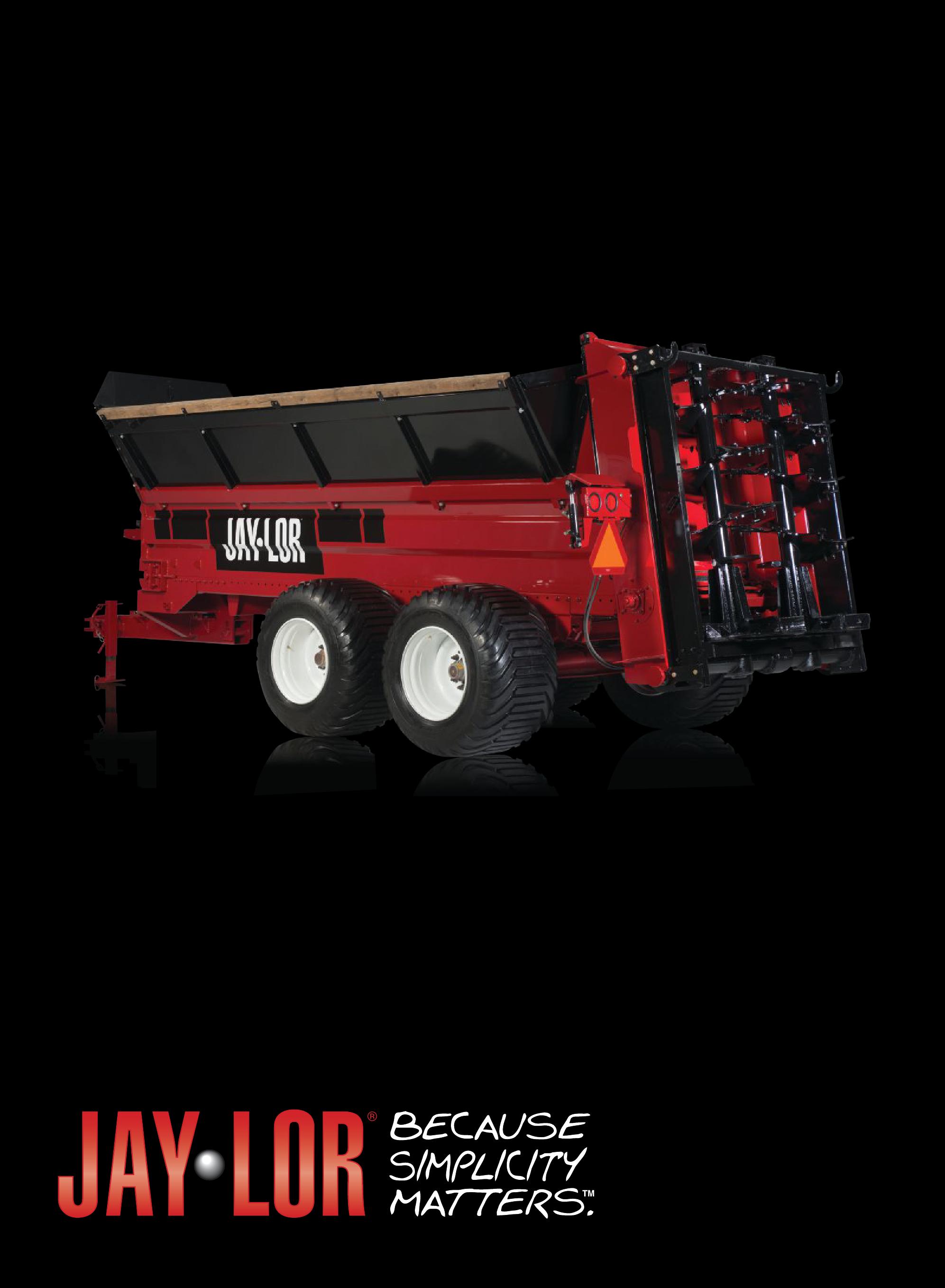
Jaylor’s new manure spreader is engineered to be simple and robust, providing years of trouble free performance. Cambered commercial-grade highway axles and brakes are standard equipment along with oil bath hubs, making the chassis virtually maintenance-free. The optional hydraulic slide axle on the HD models allows for operation in the muddiest conditions, as dynamic load balancing provides on-the-fly tongue weight ratio adjustments from 0.5%-10%.
The quick-attach vertical beaters and hydraulic guillotine door, provide a full 40’ of consistent spread both from front to back of the load and across the width of the spread. Paired
with our optional rear canopy, material can be precisely applied over 50’ and from 4-15 Tons/Acre. The beaters are held by reinforced 2-1/4” bearings which withstand the abuse from large stones and frozen chunks. Six paddles on the beater base, allow for a fine spread of fibrous and liquid material.
Our warehouses on both sides of the US/CDN. border stock a full complement of spare parts inventory, and most items can be shipped next day, to support our network of dealers. Once you see Jaylor’s new simple manure spreader, you’ll understand why we say: “Because Simplicity Matters”.
Biofilter made from peanut shell degrades air pollutants
In order to clean the air, biotechnology expert Raul Pineda Olmedo, from the National University of Mexico (UNAM), designed a biofilter that uses microorganisms living in the shell of the peanut.
The research from the department of environmental technology noted that microorganisms grow naturally on peanut shell, which can be used to clean the air. Furthermore, in Mexico this material is generated in large amounts and is considered a worthless agricultural residue.
The idea is a prototype filter with peanut shells, which cultivates the microorganisms to degrade toxic pollutants into carbon dioxide and water,
BY
thereby achieving clean air.
“The peanut shell is special for these applications because it is naturally hollow and has an area of contact with air, which favors the development of microorganisms,” Pineda Olmedo said.
The prototype is similar to a bell or kitchen extractor, but it not only absorbs and stores polluting vapors, it degrades pollutants and purifies the air.
Olmedo explained the filter takes, on average, 28 days to synthesize microorganisms such as Fusarium and Brevibacterium. Bacteria and fungi take the carbon from pollution to reproduce and breathe.
FLIEGL TRACKER WINS BLUETOOTH AWARD
Fliegl Tracker has won the 2016 Bluetooth Breakthrough Awards.
The award ceremony took place in early January in Las Vegas. During the final round, the Tracker took first in its product category and was also announced as the overall winner of the Bluetooth Breakthrough Awards for 2016.
THE NUMBERS
Anaerobic Digesters
“Of course we are happy and proud of such outstanding success,” said Franz Höpfinger, development manager at Fliegl Agrartechnik.
“Being the world’s number one, out of more than 300 submitted Bluetooth innovations that received an award, represents a great recognition for the
Anaerobic Digesters End Use
research work that is done at Fliegl. At the same time, receiving such an award motivates us to continue to be actively involved in the technological future.”
The Tracker is Fliegl’s beacon-based vehicle detection system. Mounted on agriculture equipment, the beacons allow producers to clearly identify each piece of equipment. It can be used during field manure application to document liquid manure rates and nutrient data.
The Fliegl Tracker also received a silver medal from the German Agricultural Society (DLG) at the 2015 Agritechnica trade fair.
948
DOUBLY RENEWABLE
Innovative anaerobic digester project in California supports another renewable energy facility: ethanol.
BY TREENA HEIN BELOW
Pixley Biogas uses a two-stage, mixed plug flow digester, designed by Wisconsin-based DVO and built by Washington-based Regenis.
Like most areas of California, Tulare County –located in the world-renowned San Joaquin Valley – is pulled in many directions recreationally, socially and environmentally. Air pollution in the valley has publicly been called “some of the country’s worst” by the California Energy Commission (CEC). Within Tulare, which is inland roughly halfway between San Francisco and Los Angeles, there are six largescale cheese and dairy producers that need lots of power and inherently produce waste. And, like most of California, Tulare is packed with people; people who generally expect effective environmental protection and progressive thinking.
It’s no great surprise then that Tulare is home to the innovative and doubly renewable Pixley Biogas Project, which just finished its first year in operation in October 2015. Pixley Biogas is the state’s first anaerobic biodigester to power another renewable energy facility. It cost $10 million to build, including $4.6 million granted by the CEC from a surcharge on vehicle registration fees (a fund that produces about $100 million each year for California to support the use of low-carbon fuels such as ethanol). Twenty-three construction jobs were created and there are two full-time ongoing operational jobs. Pixley Biogas is owned by Pixley Cogen Partners (an affiliate of an ethanol company called Calgren). It’s a two-stage, mixed plug flow digester, designed by Wisconsin-based DVO and built by Washingtonbased Regenis.
The entire process begins at Four J Farm Dairy,
PHOTO BY RYAN KRAUTER/4CREEKS CREATIVE
where 2,000 dairy cows produce 55,000 gallons of solid and liquid manure every day. This manure is pumped through a mile of eightinch diameter PVC pipe to the Pixley digester. Insiders note that while the pipeline wasn’t cheap, it’s considered more environmentally friendly than trucking and more convenient as well, allowing the farm to send manure along at any time.
LEFT
For its ongoing manure contributions, nearby Four J Dairy receives digester solids to use as cow bedding for its 2,000 head.
“It’s the first digester project in California to use the state’s streamlined permitting process for co-digestion.”
– Craig Hartman
Added to the Pixley digester every day is 10,000 gallons of food waste, trucked in from local food processors, renderers and companies that pump grease-traps for restaurants, food processors and other food service outlets.
“The food waste is very important for gas production,” says Pixley project engineer Craig Hartman. He works for 4Creeks Inc., an engineering, planning and surveying firm in nearby Visalia, Calif. “It was easier to get the permits for food waste and the other parts of the project than it’s been before. It wasn’t a big deal, but there were lots of questions to answer. It’s the first digester project in California to use the state’s streamlined permitting process for co-digestion.”
Holding time in the 1.2 million
gallon digester tank is about three weeks. Bacteria work on the raw manure (solids content about three percent) and food waste (solids content up to 20 percent) to produce about 21,000 cubic feet of biogas every hour. That biogas is then used at the adjacent Calgren Renewable Fuels ethanol plant, which has been producing approximately 58 million gallons of ethanol each year from corn and sorghum since 2008. The firm has another ethanol plant in Kansas as well.
The biogas is used to heat the hot water needed for ethanol creation, allowing the plant to shave down its use of natural gas by about five percent. Media reports say the eventual goal is to use 10 percent biogas, which would provide tens of thousands of dollars in savings on natural gas bills every month.
For its ongoing manure contributions, Four J Dairy receives digester solids to use as cow bedding and effluent for its fields, saving money on both fronts. The effluent is pasteurized first using waste heat from the Calgren plant, and waste heat from ethanol production is also used to heat the digester when required. Hartman notes that Calgren also collects carbon dioxide from the ethanol production process, which is transported by rail to a customer company that makes soda pop.
“It’s an energy company fully vested in the future and it’s awesome in my opinion,” Hartman observes.
“It’s good forethought for Calgren to diversify and invest in things that haven’t been done. It’s the first in the area that I know of, and it’s excellent energy and resource management.”
He explains that, while a sitespecific Environmental Impact Report was requested by neighbors, it worked out well and there have been no complaints.
“I think it’s a very good demonstration that helps people
see the mitigation that can be done. It mitigates emissions from the cows, prevents food waste from going into landfill, reduces the need for fertilizer, reduces waste management efforts at the dairy and makes the production of ethanol even more renewable.”
According to CEC, carbon dioxide reductions from Pixley are equivalent to removing 4,200 cars from the road. Hydrogen sulfide is also removed from the biogas, helping improve air quality. The biogas produced from the Pixley project results in 17 percent less greenhouse gases than what is released by other California ethanol manufacturers. Pixley Biogas reclaims millions of gallons of odor-free water from the manure, which is re-used on the farm.
“The Pixley project demonstrates that waste-based feedstocks – dairy manures in this case – can be integrated into
existing commercial-scale biorefineries to displace the fossil natural gas used to fire the boilers, which in turn reduces the carbon footprint of the final ethanol product,” says Jim McKinney, program manager of the CEC’s Alternative and Renewable Fuel and Vehicle Technology Program.
“The Calgren biorefinery connected to the digester now has the lowest carbon intensity score among California ethanol producers,” McKinney says.
In addition to four ethanol plants, California has eight biodiesel plants and two renewable diesel plants. McKinney believes they could all “presumably” follow Pixley’s lead.
“We have about 14.6 billion cubic feet per year in manure resources, which could be converted to biogas for transportation use and displace over 100 million dge [diesel gallon equivalents] per year.”
about 21,000 cubic feet of
He notes that while this is a large number, it’s important to point out that California’s total diesel consumption is about 3.6 billion dge per year.
Several initiatives are underway in California to try to develop more dairy digester projects for transportation fuels.
“The main challenge in California to convert waste manures to transportation fuels has been cost,” McKinney explains. “Large-scale anaerobic digestion projects using diverted municipal organic waste or wastewater treatment plant sludge are more economically competitive because the feedstock transportation costs are already incorporated into the system.”
One of these projects is already running in Tulare. A city biodigester handles the industrial wastewater produced by several large dairy product plants, including Nestlé, Saputo and Land O’Lakes. The city recently called on Geomembrane Technologies to install a floating gas collection system over the digester, and about 600,000 cubic feet of biogas is used daily to generate what’s considered a “significant” portion of the plant’s electricity requirement.
ABOVE Ted Thompson, Electrical Innovations, (left) and Craig Hartman, vice president of QSD/QSP. LEFT The Pixley digester produces
biogas every hour, which is used at the Calgren Renewable Fuels ethanol plant.
A Long Road
Kentucky’s MAC Farms takes litter from 1.6 million broilers and turns it into energy
BY DIANE METTLER
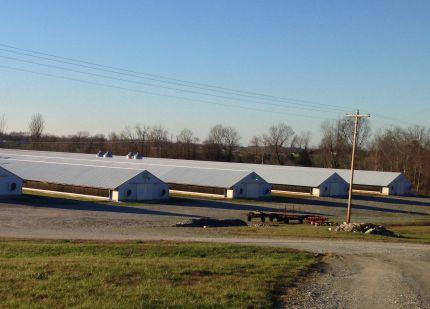
In 2005, John McLean went out looking for a digester to handle the chicken litter generated from the 1.6 million broilers raised annually at MAC Farms in Campbellsville, Ky. Unfortunately, McLean was a little ahead of the curve. Emerging digesters couldn’t handle the dry chicken litter.
Technology eventually caught up and around 2010, McLean started communications with Eagle Green Energy and John Logan.
“They’re really the first ones in the country that started using anaerobic digestion on poultry litter for broilers,” McLean says. “There have been some digesters for layers because that manure falls through the grates and has a higher moisture
ABOVE
content, but broiler litter has more variables.”
In 2011, McLean officially started his journey toward installing a large-scale anaerobic digester next to his then six chicken houses. Together with Eagle Green Energy, plans were drawn for the plant and the first tank was constructed. However, that’s also when McLean hit the first major obstacle: financing.
McLean had applied for every state and federal grant he could find. In the end, only one grant came through – a $10,000 grant from the state of Kentucky, which was far from covering the cost of the nearly $2 million project.
“What I thought would happen in two years
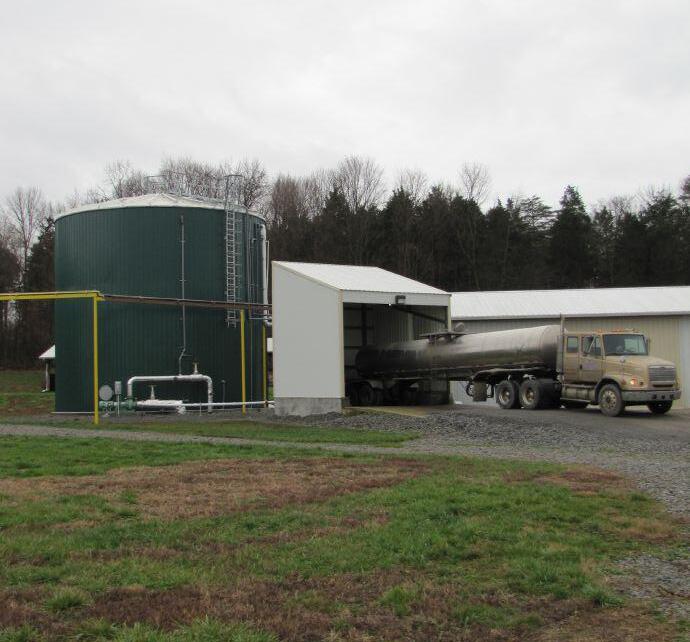
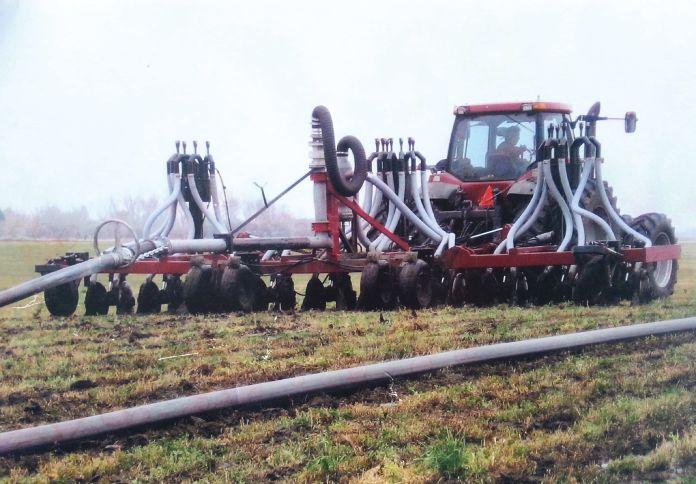
The leftover digestate – a black, thin liquid – is spread on portions of MAC Farm’s 750 managed acres. In Fall 2015, they spread about a million gallons to have plenty of room in the digester this winter. This spring, they will probably apply an additional one million gallons.
ABOVE The three million gallon bladder collects the biogas before it is routed to a reciprocating engine to generate electricity. The generator is currently producing 250 kW an hour, but is capable of 400 kW an hour.
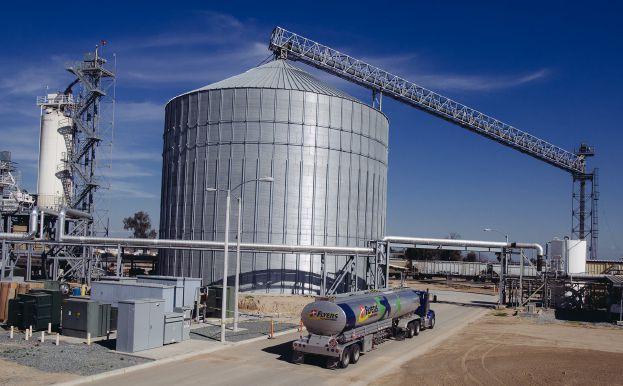
BELOW MAC Farms also takes off-farm feedstock to help boost biogas production, primarily from food waste companies working to avoid landfills. The companies bring the feedstock by truck or tanker and the material is deposited onto an auger where it’s then taken to the digester.
has turned into a six year project,” McLean says. “When we didn’t get the grants we stopped for about a year and then started back up in 2013. I got full financing through Wells Fargo.”
Even though Wells Fargo had never lent money on such a project, McLean said they understood the issue that the East Coast faced of keeping phosphorous
from spreading into the waters.
“They have customers dealing with the litter situation, so they were excited about trying this. And they’ve been great to work with.”
PERMITTING
If there was a bright side, the permitting took about a year, but went smoothly.
MAC Farms needed two permits from the state Environmental Protection Agency (EPA): an air quality permit and a waste permit to allow the farm to accept the waste food. The Division of Compliance assisted McLean through the process.
“In Kentucky, the Division of Compliance is basically a liaison between the farmer and the EPA. They help us with the permitting – getting the applications filled out properly, and submitting it to the EPA.”
When the EPA made its visits, Mclean says the system was new to them.
“But, once we walked them through everything, we had tremendous cooperation. They were excited about what we were doing.”
“What I thought would happen in two years has turned into a six year project.” - John McLean
BUILDING THE PLANT
In 2013, McLean and his employees built the bulk of the plant and an electrical contractor was hired, along with other contractors to build some of the new buildings. And in 2014, MAC Farms also added two more boiler houses.
Today, a 270,000-gallon tank (thermophilic anaerobic digester) operates at a high temperature, while the mesophilic anaerobic digester (a three million gallon bladder) operates at a lower temperature.
The two tanks work in conjunction. The mix tank and bladder are heated with a boiler that can use natural gas or biogas. The digester gas, collected in the bladder, is routed to a reciprocating engine to generate electricity. Electricity generated is then fed to the power grid and sold. In fact, the first electricity went onto the grid in October 2015.
“The digester was operating prior to October, but we just weren’t on the grid until then,” McLean explains. “We didn’t run the generator very much until we got everything in line and we had our power purchase agreement.”
The three-way power purchase agreement (PPA) is between MAC Farms, East Kentucky Power and Taylor County RECC (Rural Electric Co-operative). Mac
Farms produces the electricity, it goes through the co-op’s lines and out onto the co-op’s grid, and then East Kentucky Power pays MAC Farms.
FEEDSTOCKS
The road to an efficient and profitable digester has been slow and steady, and part of that is due to the generator.
The generator is producing 250 kW an hour, but it’s capable of 400 kW an hour. More energy will be produced as the farm continues to create contracts with other
feedstock providers – primarily food waste companies working to avoid landfills. The companies bring the feedstock by truck or tanker and the material is deposited onto an auger where it’s then taken to the digester.
“We intend to get there [400 kw], but with an anaerobic digester you can’t make big jumps,” McLean explains. “You have to start climbing and multiply the bugs appropriately. In fact, we think we have the capability to double that if we get the appropriate feedstocks.”
The feedstocks do, however, bring their own set of variables. Every day MAC Farms feeds both digesters a base of manure. The feedstocks aren’t consistent like the manure. Temperatures can range from 50ºF to 150ºF, and the amount of solids varies too in the food waste feedstocks.
DIGESTED MATERIALS
At the end of the process, MAC Farms spreads the final digestate – a black, thin liquid – on portions of its 750 managed acres. This past November, they spread about a million gallons to have plenty of room in the digester this winter and in the spring they will probably apply an additional one million gallons.
McLean is optimistic that the digestate will have value as an organic fertilizer.
“The phosphorus and the nitrogen are more stable and more consistent than in manure – at least our manure, which can fluctuate depending on how long the litter has been in the house, or whether it’s a complete clean out or if it’s a de-cake. But with digestate, you’ve got a consistent product that’s going to act the same way every time. Also, the digestate breaks down to such a primitive state that it’s completely available to the plant. You’re not getting any waste of your macronutrients and it’s loaded with micronutrients as well.”
McLean sees the digestate product having a broader appeal than to just farmers fertilizing crops. In Europe, the high micronutrient level and microbial activity make it ideal for land reclamation.
HANDLING THE VARIABLES
MAC Farms averages about six flocks a year and that requires de-caking or clean out every couple of months. They store the litter and it composts until it’s ready to be used. At the moment, MAC Farms is using about half the litter generated in the boiler houses to feed the digester and the rest is either sold or spread on the farm.
There have been times when they have
needed to use all their manure, but McLean says that’s not ideal because they can’t control the moisture content. More solids mean more gas.
“I’d rather have a dry product and then add moisture the way we want to versus putting something in that has a high moisture content and you don’t have any control over it.”
When it comes down to it, McLean says everything about running a digester is dealing with variables.
“In my opinion, there are so many variables in having a successful digester that if you’re not willing to intensively manage them – weather, feed stocks, humidity, solids, pH, machinery issues, and more – it’s not going to work.”
LEARNING PROCESS
McLean says it’s been a long road with plenty of obstacles and setbacks since they started down this path, but it’s also been an education-filled journey.
“We learn something every day,” he says. He’s speaking for himself and manager Brian Hayes, who has been with McLean for almost 12 years and manages the digester and the chicken houses. “Even when we think we’ve got the tiger by the tail, something crazy happens and we think, wow, that’s a new one on us. It’s just amazing. Again, there are just so many variables.”
The journey may have been rocky, but the future looks bright. As more feedstock contracts are signed, expansion is planned. In fact, McLean has plans to add an additional bladder.
“If I do that, I’m going to stockpile daily our feedstock and then just feed it once. But that’s probably a year or two away.”
McLean says if someone is considering an anaerobic digester they have to be passionate.
“Obviously, it has to make monetary sense, but every system is a little bit different. Because of all the variables, you
LEFT John McLean of MAC Farms, based in Campbellsville, Ky., uses an anaerobic digester to handle the chicken litter generated from the 1.6 million broilers raised annually on his farm.
have to be 100 percent on board for all the right reasons, not just one. It’s like a child. There will be times when it will drive you bonkers, but it also has to be important to you that you’re doing something positive.”
McLean has gotten some kudos for his efforts. He received the 2015 Ag Person of the Year award from the Taylor County Cooperative Extension Service. McLean gives some of the credit to an “old timer” who took him aside when he got into the chicken business in 2003.
“He said, ‘I’m just going to give you one piece of advice, and if you remember this you’ll be okay. People smell with their eyes.’ And we’ve always strived to do that,” McLean says. “We want our neighbors to look at us as an asset.”
Precision Applicators
APPLICATORS
• Heavy duty frame with 18” disc spacings, 2 discs per independent unit
• Minimum disturbance design
• Capable of more than 2000 US gal/min
• 5,000-20,000 gal per acre
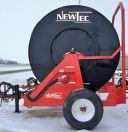
HOSE REELS
• Soft and hard hose configurations, both available with walking axles
• Soft
•
PUMPS
• Fully self contained
• Iveco engines
• Cornell Pumps
• Capable of 2100 US gal/min
and
Get your manure to where it does the most good with NewTec precision placement manure applicators Contact us today to find out how the NewTec precision placement system will get the most out of your manure.
ANAEROBIC DIGESTER
AltEn LLC
Located on a beef feedlot near Mead, Neb.
Seabreeze
Located on a dairy operation near Delta, B.C.
MARCH/APRIL 2016
The future of anaerobic digestion
Welcome to Manure Manager magazine’s second annual Anaerobic Digester Supplement. This special addition to our regular March/April issue features case studies of anaerobic digester installations on farm operations across North America.
From electricity generation to bedding production, these examples showcase the latest trends within the industry relating to digester technology and manure management.
On farm anaerobic digestion continues to grow with more than 250 sites operational across the U.S. and more being added each month. And there’s lots of
room for growth. According to the U.S. Environmental Protection Agency’s AgStar program, there are about 8,000 farm operations across the country with the potential to support an on-farm methane digester.
The U.S. government is also committed to supporting the industry with the release of President Obama’s Climate Action Plan in March 2014 and the unveiling of the Biogas Opportunities Roadmap in August 2014. Both of these documents highlight the administration’s commitment to methane reduction and utilization of the greenhouse gas as an energy source.
ANAEROBIC DIGESTER
Type of farm
AltEn LLC
28,000 beef feeder with a 20 million gallon/yr ethanol plant
Location Mead, NE
AD operator AltEn LLC
AD installer
E3 Biofuels, Nebraska Bioclean, Design by RCM Digesters
Construction start date 2005
Date operational 2006, closed 2008-2014, restart 2014
Number of animals
Type of barn
28,000 feeder cattle
20 mg/yr ethanol plant
Open front sheds
Manure handling system Slatted floors with pit underneath
Recovered heat utilization Plant hot water and steam, ethanol distillation column
Power Purchase Agreement Not applicable
Current status Operational
Project costs
Lessons learned
$12 million
• Choose the right team; digester succeeded due to expert design and installation
• Startup required experts
• A proper digester holds heat well
• Gas production fluctuates with feed quality
• Steer manure is viable feedstock
• Whole stillage digestion is challenging
• Nutrient recovery is expensive to install and operate
• Onsite lab is essential.
Would you do it again? Yes, the plant operates as designed
What would you do differently?
Extra information, details re: project
• Plan nutrient management first
• Carefully review contractor scope to avoid gaps
• Spend a little more money on contractor qualifying
• Avoid investing just before a recession
Digester project mixes thin stillage with cattle manure. The mixture is pumped to two, 4,000,000 gallon digesters with concrete top. Digesters produce gas for combustion boilers. Digester effluent is pumped to a nutrient recovery process with gravity belt thickener and belt press to recover solids. Post solids recovery, phosphorus is removed with a clarifier. Nitrogen recovery equipment will be implemented in 2016.
The Next Generation of Green Bedding Separators from BAUER! The PSS3.3-780 HD produces high-quality bedding material with a dry matter content of up to 38% in solids.
Please contact:
Jim DeWitt, (630) 750-3482, j.dewitt@bauer-at,com Michigan City Office, (800) 922-8375, www.bauer-at.com
Patented Chopper Pumps
Dual chopping system to prevent clogging
Open design high speed impeller with adjustable pressure plate for unsurpassed
Mixers and Aerators
Unique self cleaning three blade propellers
Oil bath transmission driveline with
Entirely hot galvanized or stainless steel
Casted pump housing with mechanical speed Sales - Service - Install
ANAEROBIC DIGESTER Greenholm Farms
Type of farm Dairy
Location Embro, ON
AD operator Greenholm Power Limited
AD installer PlanET Biogas Solutions
Construction start date Spring 2012
Date operational November 12, 2012
Number of animals 500
Type of barn Freestall straw bedding
Manure handling system Alley scraped into cross flow gutter
Type of bedding Straw
Type of digester
• CSTR – 250kW
• 2078 m3 digester
Digester cover PlanET eco Cover
Digester temperature
38 Celsius
Biogas use(s) Runs engine to generate power onto electric grid
Biogas utilization equipment Biogas engine genset
Recovered heat utilization Heating house, shop, parts of barn, hot water
Power Purchase Agreement Small FIT contract
Current status Operational
Project costs
Lessons learned
Would you do it again?
What would you do differently?
$2 million
• Needed extra protection for cold weather
• Off farm organics can sometimes be difficult to source
Yes
• Be more involved in design and intervene if the design does not make sense
• Use external driven agitator on digester tank
MTU Onsite Energy is a member of the American Biogas Council
Green Mountain Dairy
Type of farm Dairy
Location Sheldon, VT
AD operator Bill Rowell
AD installer DVO, Inc.
Construction start date Summer 2006
Date operational March 2007
Number of animals
950 milking, 150 dry, 600 heifers, 100 calves
Type of barn Free stall
Manure handling system Scrape
Type of bedding
Type of digester
Digester cover
Digester temperature
Separated digested solids, except for transition animals (calf and maternity barns)
Heat is used to maintain digester temperature, as well as heat the parlor milk room, farm house and maintenance facility
Power Purchase Agreement Green Mountain Power
Current status
Project costs
Lessons learned
Operational. Averaging 97.6 percent run time. Export 2 MkW to the grid annually
The public talks about how important the environment is. Everyone says how digesters are good for the environment, good for air quality, good for water quality. And they are. However, if the public wants a safe and healthy environment, with quality air and water, they need to vote with their wallets. Vote with your wallet or be still.
Would you do it again? Absolutely. I tell everyone.
What would you do differently?
I would locate the digester vessel further away from the engine building. The site has physical constraints. I wouldn’t change much.
Extra information, details re: project The digester receives 500,000 gallons/year of ice cream waste from Ben & Jerry’s.
Seabreeze
Type of farm Dairy
Location Delta, BC
AD operator Keulen Family
AD installer CH Four Biogas Inc.
Construction start date June 2014
Date operational January 2015
Number of animals • 250 • Off-farm feedstocks – up to 49 percent
Type of barn
Manure handling system Flush
Type of bedding Fiber fraction from digester, nutrient recovery system at back end
Type of digester Completely mixed
Digester cover Flexible
Digester temperature Mesophillic
Biogas use(s) Upgraded to biomethane for injection to existing natural gas pipeline
Biogas utilization equipment
Recovered heat utilization Future CHP to use heat for AD
Power Purchase Agreement Yes
Current status
Project costs
Lessons learned
Operational
$4 million
We were very pleased to have the opportunity to integrate our anaerobic digester (AD) biogas production capabilities with a biogas upgrading unit (BUU) that cleans biogas to produce biomethane. Further, a novel nutrient recovery system (NRS), post anaerobic digestion, provided an opportunity to generate bedding as well as to create a phosphorus rich mulch material. Nutrient management requirements dictated the implementation of both systems simultaneously. Several challenges were encountered during the start-up of both downstream pieces of equipment as changes in one area impacted the tuning of the other piece of equipment.
A few lessons were learned regarding the different needs of biogas upgraders versus combined heat and power generators. Also, the NRS required significant monitoring during start up.
Would you do it again? Yes, the Keulen family was a joy to work with on this project.
Understanding the connectedness between the NRS and the BUU would lead to different integration considerations while incorporating these technologies together. Communication and understanding the links between all phases of the project is key to integrating the three phases of this system.
What would you do differently?
Specific nutrient overloading issues in this area of Canada required all three phases of this project to be implemented together; but if it could be done differently we would implement the AD with the BUU and bedding recovery. Once this system was at steady state, the NRS would be implemented.
DAIRY PRODUCTION conservation, Alliance-style
Authorities recently removed the Florida manatee from the endangered species list. Farm businesses like Trenton-based Alliance Dairies may have played a small but important part in this success story because of its mission to control its water usage and nutrient runoff.
BY TONY KRYZANOWSKI
The United States Fish and Wildlife Department says that preservation of habitat is largely responsible for a 500 percent increase in the manatee population since 1972. Alliance Dairies manages a herd of 6,100 milking and dry cows and 6,500 replacement heifers. It is located in the highly sensitive Suwannee River Basin and Manatee Springs region.
ABOVE
The milking and dry cows are housed in barns while the replacement heifers are raised on pasture. The dairy has partnered with the Suwannee River Water Management District’s water conservation program to ensure that its water use and nutrient drainage from cropland have a minimal impact on the local environment. Groundwater wells on and surrounding the dairy are constantly monitored to ensure that it is not having an adverse impact on this resource.
Recently, Alliance Dairies installed an $8.5 million anaerobic digester, which has significantly reduced its fresh water usage, reduced the
Alliance Dairies treats all the manure generated at its large, Trenton, Florida-based dairy in a DVO anaerobic digester prior to land application.
Large Florida dairy adds anaerobic digester as part of its overall nutrient management plan
ABOVE LEFT Alliance Dairies in Trenton, Florida, has worked hard to minimize its water use and potential nutrient runoff into sensitive area waterways.
ABOVE RIGHT Alliance Dairies flushes its barn floors three times a day using recycled water from its DVO anaerobic digester as a water saving measure and scrapes the floor once a day.
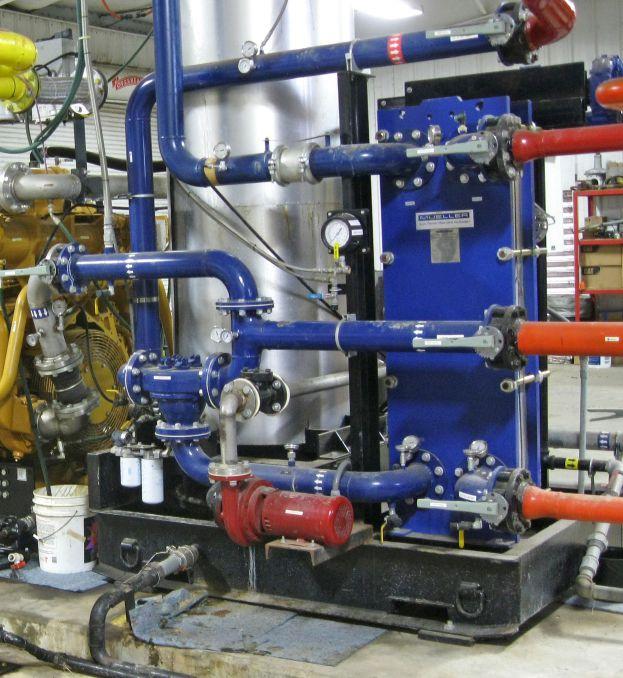
RIGHT The power produced from biogas collected at Alliance Dairies generates between $65,000 to $70,000 per month for the dairy, which offsets its power bill from the local utility.
amount of raw manure applied on its cropland, allowed it to capture biogas for the production of green power, and reduced odor coming from the farm.
Alliance Dairies’ office manager, Charles Smith, says the dairy installed an anaerobic digester to treat its manure mainly because it felt that the technology had advanced sufficiently to prove its worth.
“Our digester is designed by DVO in Wisconsin and they had about 100 of these in operation,” Smith says. “We felt like we weren’t going to be a guinea pig and with the rising cost of electricity, we felt that this was a good way to go.”
He praised the availability of cost-share and green energy grants at the time of the digester’s construction because it made the installation costs more palatable. The dairy received a $2.1 million green energy grant to build the digester, “and that made it really work for us.”
As far as benefits to the environment, he adds that runoff from the dairy is tightly
monitored with groundwater compliance wells because of the sandy soil in that area.
“I like to say that it is kind of like farming at the beach,” he says. “It is kind of like hydroponic gardening because the sand has very little inherent capacity and we are growing 23 ton per acre corn fertilized exclusively with manure.”
More than the installation of the digester, he credits their crop rotation method, both pre- and post-digester construction, as their main nutrient control method on their land base because the nutrients are taken up quickly by the crops.
Alliance Dairies was established in 1990 and is owned by Ron St. John and Sandy McArthur. It is the largest free-stall dairy in Florida. The dairy manages 13 barns in one general area. St. John is a transplanted New Yorker who moved to Florida in the mid-1980s while McArthur is a significant
Florida landowner. The two formed a business partnership and established the dairy from scratch. The dairy has grown substantially over the years, and the recent acquisition of another dairy across the road from the main farm has created an opportunity to expand to as many as 8,750 milking and dry cows. There is a plan in place to build a rotary parlor over the next few years. This acquisition has also provided the dairy with additional cropland to apply its high nutrient liquid and treated solid byproducts from the digester as organic fertilizer. They use sand bedding in their barns.
Alliance Dairies plants crops on about 2,100 acres on sprayfield largely for cattle feed. The dairy triple crops corn, sorghum and a winter crop of ryegrass, oats, or triticale.
The dairy’s DVO, two-stage, mixed
plug flow methane anaerobic digester was installed in 2012. The use of biogas from the digester to produce power has helped the dairy reduce its electricity costs, and because the system allows the dairy to recycle a high percentage of its water, the only fresh water used on the farm is for cooling, drinking and cleaning.
The power from the dairy’s onemegawatt-per-hour generator provides it with about 70 percent of its daily needs and is the equivalent of providing the annual power needs of about 425 homes. It is wheeled through the local utility, Central Florida Electric, which then provides them with a credit on their power bill. The dairy estimates that it produces between $65,000 and $70,000 worth of power per month.
“The energy savings are only a portion of the benefits we’ve seen from the digester, and after approximately eight years, those savings alone will pay for the entire project,” says Jan Henderson, chief financial officer at Alliance Dairies.
The farm’s dry cows are situated in five of the 13 barns, located at the recently acquired dairy across the road. Until recently, the manure in these barns was scraped, collected and land applied, but Alliance Dairies has launched an improvement project to convert those barns from a manure scraping system to a flush system, while installing a pipeline over the 1.5 mile distance to transport the manure from this site to the anaerobic digester at the main farm site.
Smith says prior to installation of the anaerobic digester, the manure from the dairy was collected in two, huge, dewatering cells. The liquid traveled
through a weeping wall and solids were collected in the concrete-lined cells then land applied. The liquid was applied to crops using an overhead sprinkler irrigation system.
“We have always used the nutrients to grow crops,” he says. “That’s part of our comprehensive nutrient management plan that allows us to milk this number of cows because we have the land base to spread those nutrients out in an agronomically acceptable manner.”
Although the digester tanks take up a large area, capable of holding seven million gallons of manure at one time, they aren’t particularly noticeable because most of the installation is underground. The two insulated tanks are 16-feet deep, 464-feet long and 165-feet wide in total. They contain 14-feet of manure slurry, with the biogas collected and captured from the top two feet of the tank.
The manure collection and treatment process starts with recycled water from the digester used to flush the one percent slope barn floors three times a day. The liquid manure flows into a “main street” collection system attached to all the milking barns. For extra cleanliness, the barn floors are scraped about once a day into the collection system using a scraper attached to a skid steer.
As the sand-laden manure flows down main street, it traverses across a large, concrete slab where most of the sand settles out. The manure continues down what the dairy calls the one-quarter percent slope “sand lane” where more of the sand settles out and is collected from the lane with a frontend loader. The recycled sand undergoes a rigorous monitoring and turning process before it is reused as bedding.
“We recycle about 80 percent of our sand,” Smith says. “Clean, dry sand is the gold standard for dairy cows. They love it.”
The sand that ends up in the digester tends to be very fine material that so far does not seem to be settling to the bottom of the digester tanks.
Once past the sand lane, the manureladen effluent passes through two U.S. Farm Systems separation screens to capture solids, which are discharged into a mixing pit. A high percentage of the liquid stream is recycled through the barn cleaning process. The mixing pit contains some liquids for mixing with the solids for consistent flow through. It is equipped with a Vaughn agitator to create a consistent slurry prior to it entering the digester tank. Probes within the mixing
tank measure the volume and once it reaches a specified height, it discharges into the digester. The process is continuous.
After treatment for 21 days in the digester, the treated effluent is discharged into a common pit and undergoes a fine screening through four U.S. Farm Systems screen separators to remove a high percentage of the treated solids. The liquid effluent is land applied almost immediately through an irrigation system as organic fertilizer. The treated solids are also collected and land applied as fertilizer. Part of the old dewatering system is now used as the solids collection pit. The solids are land applied a couple days a week using Kuhn Knight and Artex manure spreaders.
The collected biogas is cleaned through a scrubber to remove the hydrogen sulfide and is burned in a Caterpillar engine driving a power turbine. It is a recent replacement for the original Spanishmanufactured engine installed with the system that had performance issues burning the biogas fuel.
Smith says the dairy is unique in how it processes its treated effluent through fine screens before it is land applied. Rather than the liquid stream being land applied through a typical broadcast-type pivot head on the irrigation system, they have installed what he described as, “drops on the pivots. The drops have a much smaller orifice and require us to clean up all the solids. They use less electric power and they water the crop more evenly than broadcasttype sprinklers. The screen separators are pressure washed once a day.”
He believes they are the only dairy in the United States land applying the treated effluent in this way.
Whether in liquid or solid form, the dairy’s land is constantly being fertilized with the digester byproducts because the land is constantly producing a crop. The dairy works with a consultant who monitors the application rate and makes recommendations on adjustments as needed.
“I think it [digester] is a technology that more dairy farms will pick up on,” Smith says.
He says once the system is in place, it works quite well.
The dairy is recording the number of carbon credits that the system is generating and is close to monetizing them as another income stream. Alliance Dairies already has a contract signed with BP to purchase the carbon credits once it clears all the hoops with the California Air Resource Board to qualify the credits.
WHICH MANURE treatments are best?
University at Buffalo research finds that estrogen and antibiotics persist in treated dairy waste, even using an advanced anaerobic digestion system.
BY CHARLOTTE HSU
When University at Buffalo chemists began studying waste disposal at a dairy farm in New York State, they thought the farm’s advanced system for processing manure would help remove estrogens and antibiotics from the excrement.
Instead, the scientists found the chemicals largely persisted in the treated materials, which are typically reused as fertilizer and animal bedding on the farm.
The waste management process – an advanced anaerobic digestion system – also converted a less harmful form of estrogen in the manure into a form that may pose a greater ecological threat.
ABOVE
The study underscores how far waste treatment techniques have fallen behind the times.
Hormones and antibiotics, if not removed from waste, can migrate into the environment and threaten wildlife. Estrogens, for example, can enter rivers and lakes, causing male fish to develop female traits – a phenomenon that can harm reproduction. Rogue antibiotics pose a different kind of challenge, encouraging the spread of antibiotic resistance, in which disease-causing bacteria stop responding to drugs.
Even waste treatment systems that are considered to be
Researchers thought advanced manure treatment systems, such as anaerobic digestion, would remove estrogens and antibiotics. They didn’t.
state-of-the-art often fail to account for chemicals used routinely in modern society, says University at Buffalo (UB) researcher Diana Aga, who led the new study. She is a professor of chemistry in the UB College of Arts and Sciences and a member of UB RENEW (Research and Education in eNergy, Environment and Water), an institute that addresses complex environmental issues.
“The chemicals we are studying are not exotic,” Aga says. “Antibiotics are used to treat sick animals, and the cows on a dairy farm are females, so they produce a lot of estrogens.
“One of the messages of our work is that even anaerobic digestion, an advanced treatment, doesn’t totally remove these chemicals which may pose a danger to the environment. We need to start looking closely at additional treatment techniques to identify better practices.”
The research, funded by the New York State Pollution Prevention Institute, was published in two recent papers. The first, on antibiotics, appeared Jan. 22 in the Journal of Environmental Quality . The second, on estrogens, was published Feb. 2 in the journal Science of the Total Environment
The farm where Aga and her colleagues conducted their research is a commercial dairy farm with about 2,000 cows.
The facility uses two techniques to treat manure: pasteurization, which uses heat to remove pathogens, and anaerobic digestion, which employs microorganisms to break down and convert biodegradable matter into products that include biogas, liquid fertilizer and solid matter that is repurposed as bedding for the animals.
Aga’s team measured levels of veterinary antibiotics and estrogens in the waste at various points during the treatment process.
The results for antibiotics were mixed: the scientists found that the concentration of tetracyclines, the most used antibiotics in animal agriculture, was lower in the liquid fertilizer than in the original raw manure. But the reduction was largely due to the tetracyclines migrating into the solid matter, which had higher levels of the drugs at the end of the treatment than the raw manure had at the start. Macrolides and sulfonamides, two other types of antibiotics the scientists
analyzed, were found only at low levels in raw manure and were not detected in the treated manure.
“We need to start looking closely at additional treatment techniques to identify better practices.”
When it came to estrogens, “we had hypothesized that the digestion process would remove the hormones, but it didn’t,” Aga said.
Instead, the total concentration of estrogens remained relatively steady.
In addition, the treatment process appeared to convert a less harmful form of estrogen into one with greater potential for disrupting the function of animals’ endocrine systems, which produce hormones that regulate growth, reproduction and other
biological functions. Prior to anaerobic digestion, most of the estrogens in the manure (65 percent) were in a form with lower endocrine-disrupting potential. After the process, 72 percent of the estrogens were in a form with higher endocrine-disrupting potential.
Aga notes that each farm has a unique system for processing waste, so it’s possible that a different anaerobic digestion technique or a completely different treatment method could yield better results. The next step in the research will be to explore various treatment techniques to identify best practices.
“When it comes to manure treatment, there are a lot of variables to explore – how much time the manure is treated for during anaerobic digestion, whether the manure is mixed with food waste or not, or whether the digested product is further composted or treated by other means. For farms using longterm storage, it may also matter if the lagoons are covered up or not,” Aga said. “We need to do more research to find out.”
Best Storage for Maximum Nutrient Value!
Consistent Nutrient ValueAgitation Makes the Difference
• Center agitation system evenly blends nutrients.
• Better utilization of “waste” translates into less purchased fertilizer.
Environmentally Sound
• Designed and constructed using bolted glass-fused-to-steel panels for secure storage and high corrosion resistance.
• Above ground - minimizes the danger of run-off, leaching and ground water contamination.
• Environment-friendly odor control - releases odors above ground level into higher air currents.
345 Harvestore Drive DeKalb, IL 60115
Visit www.cstindustries.com to find your local dealer, or call 815-756-1551.
Nutrient balance
Researchers and industry professionals are developing ways to manage manure nutrients, particularly phosphate, after anaerobic digestion to maximize value while minimizing environmental impacts.
BY DAVID SCHMIDT
In 2013, the Canadian Biogas Association issued a study identifying the opportunities in biogas production so provinces could develop policies to support this budding industry. It also developed farm-to-fuel guides to help farmers decide whether biogas production makes sense for them.
The study determined biogas could make up three percent of Canada’s natural gas supply, Canadian Biogas Association executive director Jennifer Green told the 2016 Agricultural and Municipal Biogas Forum, held recently in Abbotsford, B.C.
She calls biogas an “overwhelming” opportunity for agriculture, saying agriculture could produce about two-thirds of the biogas, or about 1.65 million cubic meters per year.
While there are a growing number of anaerobic digesters on Ontario farms, there are only three in B.C., with one more under construction. The province’s first anaerobic digester began operation
ABOVE TOP LEFT TO RIGHT
in rural Abbotsford about five years ago and is now producing gas from cull potatoes and other organic waste. Not long after, as part of its demonstration farm, Bakerview Dairy in Abbotsford put in a demonstration digester that utilizes manure from its tiny 50-cow herd to produce electricity for the farm.
In early 2015, Seabreeze Farms in Delta fired up B.C.’s second large-scale digester, using manure from its 350 milking cowherd and cooking fats and oils.
While one purpose of an anaerobic digester is to manage and create value from farm waste, it produces its own waste (digestate). The digestate includes most of the nutrients from the inputs, as they are not absorbed by the gas production process. This is a concern for both regulators and farmers as high livestock concentrations are already leading to nutrient overloading on many fields. Bringing in off-farm inputs only exacerbates the issue, leading to potentially serious environmental consequences.
As a result, the digester “is only one piece of the
Industry experts Dave Melnychuk, Henno Haaring, Jennifer Green and Victor Lo discussed developing new ways of managing manure nutrients after anaerobic digestion.
equation,” says Chris Bush, who built the Sumas Prairie anaerobic digester, located outside of Abbotsford.
That’s why researchers and industry are working on ways to manage the nutrients, particularly phosphate, to maximize their value while minimizing any detrimental environmental impacts.
There are a number of ways to do that, says Henno Haaring of Dorset Green Machines, based in the Netherlands. The first step is to separate the liquid and solid digestate so each can be applied separately or, in the case of the liquid, re-circulated. Cheapest is a press screen, which provides good dry matter content in the solids but has poor nutrient recovery. Another low cost option, a drum filter, provides good phosphate recovery but is not very efficient, has highly variable results and requires a lot of filter maintenance.
A decanter has high phosphate recovery and leaves little dry matter in the liquid but is expensive to buy and costly to operate.
A belt press is very good at separating solids and liquids, removing enough dry matter to make the liquid treatable by filtration or reverse osmosis. However, it requires additives and a knowledgeable operator.
Haaring says Dorset’s solution is to dry the digestate, which not only reduces the volume but creates a good final product.
“We generate a product with 85 to 95 percent dry matter that is 10 to 25 percent of its original weight,” he says. Its nutrient content depends on whether the drying is done with or without first separating the digestate.
“The dry product can be used as fertilizer, bedding or even fuel,” Haaring says.
One of Dorset’s installations dries 100,000 tonnes of hog manure, producing 25,000 tonnes of solids. The solids go into a “phosphate factory” which further compresses them into 6,500 tonnes of pellets with a nutrient content of 2.1 percent N, 6.5 percent P and 1.5 percent K. The pellets are then exported from the intensive hog production area in the Netherlands to the north of France.
Trident Processes of Abbotsford has integrated some of these technologies with ideas of their own to develop a complete nutrient recovery system, which it is now being tested at Seabreeze.
The system first separates the fiber and conditions it for reuse as bedding in the barns, leaving four percent solids in the remaining wastewater. A second press removes most of the remaining water, creating a “sludge” with double the solids content and 85 to 90 percent of the phosphate, 54 percent of the nitrogen and 17 percent of the potassium, says Bush, now Trident’s operating manager. It then uses polymers to concentrate the sludge, complete with its nutrients, into a “cake” which contains 25 percent solids.
The cake can be pelletized and sold off-farm as a nutrient-rich fertilizer. The remaining wastewater, which Langley environmental farm plan advisor and consultant Dave Melnychuk calls a “digestate tea,” contains very few nutrients.
The Seabreeze dairy slurry generally contains 0.25 percent nitrogen, 0.05 percent phosphorus and 0.21 percent potassium. Once through the Trident process, the tea contains 0.16 percent N, less than 0.01 percent P and 0.12 percent K. In contrast, the bedding contains 0.40 percent N, 0.13 percent P and 0.11 percent K while the cake contains 0.68 percent N, 0.22 percent P and 0.12 percent K.
Melnychuk believes the tea offers tremendous potential as it still includes some nitrogen but almost no phosphorus. Noting many farmers “have too much phosphorus but not enough nitrogen in their fields,” Melnychuk has started a
three-year trial to find out how corn and grass respond to the tea. Even a low application rate produced a wet yield of 29 tonnes/ hectare, higher than the 25 to 28 tonne average in B.C. fields.
“We are very pleased with the initial results,” Melnychuk says. He notes there was less phosphorus in both the corn and grass fields at the end of the season than at the beginning. “If we can validate that for the next two years, it provides an option for phosphate rich soils.”
University of B.C. civil engineering professor Victor Lo is trying a different approach: treating the manure before it even gets to the digester. He has spent the past few years developing a microwaveenhanced advanced oxidation system to reduce solids in the manure by 85 percent and extract the phosphorus and crystallize it as struvite, which is 95 percent pure phosphorus.
Lo says nutrients can be captured more easily when the solids are broken down and microwave technology is the only way to do that. The system “reduces the amount of disposable solids and number of nutrients which need to be applied to the land.”
Lo says the resulting largely liquid product “reduces the processing time in the AD.”
He is now building demonstration units and conducting feasibility studies at both the UBC Dairy Education & Research Centre in Agassiz, B.C., and the James Wastewater Treatment Program in Abbotsford
Although the system may not be a money-maker because of its high capital and operating costs, Lo believes it could solve some of the environmental issues farmers and waste treatment plants face.
Air filtration in transport
New prototype filtration system for a swine transport trailer shown to effectively address biosecurity issues
BY TREENA HEIN
The on-going spread of porcine reproductive and respiratory syndrome (PRRS) is a major concern in pork production areas of Canada, the U.S. and beyond. It’s a very serious swine disease that can be transmitted up to six miles through airborne means, originating in manure, saliva, urine, blood, semen and milk. Only a small amount of virus is needed to infect a herd, and it mutates easily, making vaccination effectiveness inconsistent.
The PRRS virus can survive up to six days in warmer temperatures and for years in frozen form. It particularly loves cold and damp, which means fall and early winter are the most dangerous
seasons for it to spread. Advanced filtration technology is used in hog barns to protect animals from being infected by airborne diseases, but protecting animals during transport is also crucial.
“The risk of exposure to infectious pathogens of high-value stock during transport from breeding facilities to commercial farms can be significant, particularly during passage through pig-dense areas known to have outbreaks of airborne diseases,” notes Bernardo Predicala (PhD).
Predicala, who manages the Engineering Research Program at the Prairie Swine Centre in Saskatoon and is also an adjunct professor in the department of chemical and biological engineering
ABOVE A goose-neck trailer retrofitted with the filtration system. All existing openings and leaks were sealed and then inlets and exhaust were installed.
INSET The filter housing (with MERV-16 filter) installed in the goose-neck compartment, which was partitioned from the rest of the trailer.
at the University of Saskatchewan, has been working with colleagues to design, develop, and evaluate an air filtration system for a swine transport trailer. With his research assistants, Alvin Alvarado and Samantha Ekanayake, Predicala has fabricated, installed and evaluated a prototype filter system, with funding for the research partially provided by the Saskatchewan Pork Development Board, Alberta Pork, Manitoba Pork Council, and Ontario Pork. Funding was also provided by the Saskatchewan Ministry of Agriculture through the Canadian Agricultural Adaptation Program from Agriculture and Agri-Food Canada.
To design their filtration system, the researchers first surveyed the individual main components of existing filtered trailer systems in North America and Europe. These include temperature control (for animal comfort), filtration capacity, ventilation and air distribution.
“We looked at various options available for each,” Predicala recalls. “There are at least two options for each component – for example, it’s possible to use either axial fans or centrifugal fans for ventilation – so there’s a large number of possible combinations and therefore a wide variety of possible designs.”
He notes that it’s hard to describe the differences and compare the strengths and weaknesses of each design as any particular setup would be attractive to specific clients, but the same features could be considered a weakness for other clients.
“For example, a fully air conditioned trailer will be suitable for genetic companies that do long-range transport of high-value genetic stock,” he says, “but it will be too costly for producers who only need to do mainly short-haul transport of weanlings from their nursery units to their finisher barns.”
After gathering all the information they could from a literature review, as well as from companies and other research organizations, the team formed an advisory panel composed of swine veterinarians, engineers, researchers, and producers to evaluate the various available options. Evaluation criteria included robustness, air quality, airflow, heat issues, power requirement and cost.
The final design (composed of an axial fan, pre-filter combined with highefficiency filter, air inlets, and air exhaust vents with shutter) was installed on a commercial swine goose-neck transport trailer, and testing then commenced
to determine the effectiveness of the system in maintaining a pathogen-free environment. Both MERV 16 filters (with pre-filters) and antimicrobial fabric filter were tested. Air samples were collected upstream (inlet side) and downstream the filtration system (inside the trailer) using a three-piece sampling cassette with mixed cellulose filter and a vacuum pump.
Predicala says testing was the biggest challenge of the project. This was mainly because it involved devising a way to challenge the effectiveness of the installed filtration system by actually generating bioaerosols outside of the trailer, and then trying to detect if any of this bioaerosol made it into the trailer compartment.
“All this had to be done in a biosecure way – that is, without actually using microorganisms that can cause diseases – so a benign bacteriophage was employed,” he explains. “This bacteriophage mimics the behaviour of representative pathogens, and is often used as a surrogate for pathogenic microorganisms in filtration studies.”
RESULTS
Statistically, the two types of filters did not show a significantly different performance, but Predicala says that in terms of actual percentage reduction of bioaerosols, the fabric bag filters performed better than the MERV 16 filters. However, MERV 16 filters are much less expensive than fabric bag filters. In Predicala’s view, “there would be situations wherein MERV 16 filters are sufficient [e.g. short-haul trips, low risk of airborne infection along the route, relatively low potential losses], but for
situations where higher risk is involved and the loss potential is large [e.g., transporting high-value breeding stock through routes with high pig density], fabric bag filters would be more suitable.”
With regard to the trailer filtration system in general, the research team recommends the installation of an environmental controller for better regulation of the temperature inside the trailer (for animal comfort), and also having a temperature-monitoring/carbon dioxide detection system with alarm function detectable in the truck cab.
“You also want to avoid high fan static pressure,” Predicala adds, “because it leads to more work by the fan motor to deliver the needed airflow, and consequently uses more power.”
One way to reduce fan static pressure is to provide larger openings for the air to flow through such as the inlet, the filter area as well as the exhaust vents.
Predicala and his team have not yet determined how often filters should be replaced, but he says the main parameter for this is the static pressure drop across the filter. If the filter gets too clogged up, it causes high static pressure for the fan, so the filter must be replaced before pressure drop reaches a pre-determined level. This could be anywhere from several months to a year, depending on whether the trailer is driven mostly on clean highways or dusty roads.
The filtration system Predicala and his colleagues have developed may also be used in dairy and beef cattle transport trailers.
“At least in terms of the aspect that deals with controlling the thermal environment in the trailer,” he notes.
Bioaerosol sampling was set-up upstream of the filter used during trailer testing.
Börger AgrarTec offers a diverse line of agricultural liquid handling products including rotary lobe pumps, macerators, digester feed equipment and solid liquid separators. Börger specializes in custom-built solutions for farmers and biogas plants.
BIOSELECT RC
The Bioselect RC is fitted with a feed pump and a control unit for consistent solid liquid separation.
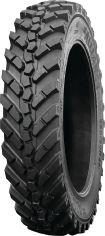
Alliance VF tire
Alliance Tire Group increased its selection of steel-belted VF (very high flexion) tires with four new sizes. VF tire technology – which allows for greater flex in the sidewall – has been incorporated into the Alliance Agriflex 354 and 363 lines, which can now can carry up to 40 percent greater load at the same level of inflation as their conventional radial counterparts, or carry the same load with 30 percent less inflation pressure. atgtire.com
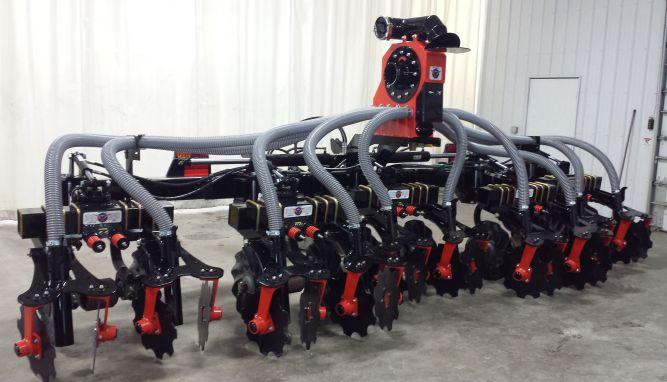
Most Durable, Simplest Design, Lowest Maintenance, Manure Injection System On The Market Today.
Manure Injection System
Minimize Soil Disturbance
a High Speed - 3-12 MPH with excellent performance a High Residue - Heavy corn stalks without clogging a Low Draft Manure Injection - up to 15,000 gal per acre and up to 50% less draft than prior technology
• Adaptable to different bar sizes & drag hose systems a Built for Commercial and Custom Pumping Use a Custom Drag Hose Bars & High Flow, Even Flow Manifold Available
A
The T6 Methane Power tractor is a second-generation prototype based on New Holland’s T6 tractor. What makes it different? It’s powered by a natural gas engine manufactured by FPT International. The tractor is currently undergoing field-testing at La Bellotta farm in Venaria, Italy. The T6 Methane Power tractor can bring fuel cost savings of 20 to 40 percent. In terms of environmental performance, it has 80 percent lower polluting emissions than a standard diesel tractor. Carbon dioxide emissions can be further reduced by using biomethane, methane derived from biomass. The only changes to a standard tractor are those associated with the biomethane fuel, all other areas remain unaffected.
newholland.com
JD XUV590i Gator
John Deere recently introduced the Gator XUV590i and XUV590i S4 Crossover Utility Vehicles, designed for livestock producers. Equipped with a twin-cylinder engine, independent four-wheel suspension and availability of more than 75 attachments, the XUV590i provides performance and work capability. The XUV590i offers operators 10.5-inch minimum ground clearance, 800 lb. load capacity and 1,100 lb. towing capacity. Likewise, the XUV590i S4 has a 9.3-inch minimum ground clearance, 1,200 lb. load capacity and is capable of towing up to 1,100 lb. The Gator XUV590i and XUV590i S4 also come standard with an 875 watt, 65 ampere alternator to run auxiliary attachments, such as lights, winches and sprayers, without the fear of discharging the battery. johndeere.com/gator
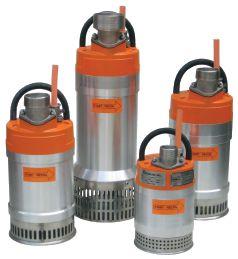
Stancor pumps
Wajax Industrial Components recently added Stancor Pumps L.P. to its product portfolio across Canada. A designer and manufacturer of electric submersible pumps and controls, Stancor Pumps offers a variety of pumps designed for some of the harshest operating conditions that exist.
These applications include heavyduty slurry pumps, sump pumps, low-suction drainage pumps, multipurpose sump pumps, stainless steel centerline dewatering pumps and non-clog effluent pumps. Models are constructed of lighter weight alloy or in cast iron or stainless steel construction. Semi-recessed vortex impellers on the SE and SV pumps plus the SEW vortex series handle solids up to two-inches. The SC version is the “cutter” design for sewage applications. They are available as freestanding pumps or with guiderail assemblies for quick removal. stancorpumps.com
Team Biogas
In an effort to build upon its reputation as the “go to” company for lab test equipment, consumables, and consulting services relating to renewable energy, Team Biogas recently launched the Anaerobic Digestion Lab Test Network (ADLTN), specializing in BMP (Biomethane Potential) laboratory assays. A select group of private, commercial and accredited university labs have been brought together with an emphasis on applied research strategically located in the United States and Canada. These specially selected labs are equipped, trained and managed to provide standard single or continuous feed lab tests or custom lab tests to meet customer needs in the areas of analyses, elemental analysis, bio-solid packages, biogas production, pre/post consumer waste and food production for anaerobic digestion. teambiogas.com
NH RTK+ correction
New Holland is now offering a proprietary cellular RTK correction network. PLM RTK+ provides a cellular-delivered RTK correction signal, and is available to producers in the United States and Canada through a subscription at participating NH dealers. The new PLM RTK+ signal is available and consistent with sub-inch accuracy anywhere within the network. There are no line shifts between bases as with traditional single base or stand-alone stations. And, there are no line-ofsight limitations that occur with radio correction. Trees, valleys, hills, buildings and other obstructions are not a problem. The PLM RTK+ system is compatible with both NH and competitive modems, and supports most common correction types, such as RTCM and CMR. newholland.com
Agitation boats can be used to help dairymen recycle waste
BY CLINT THOMPSON
Remote-controlled boats could be a valuable tool for helping dairymen recycle waste on their farms, according to University of Georgia (UGA) scientists.
Every day, dairy farmers must clean and maintain cattle barns, which includes washing out the manure that accumulates daily. This manure is sent to a lagoon located on-site, where it is stored before it is spread on fields as fertilizer.
Over time, solids in the waste settle to the bottom of the lagoon. This waste cannot be used as nutrientrich fertilizer if the lagoon isn’t stirred or agitated periodically. The remote-controlled boats contain high-volume pumps that can stir up that water before it’s transferred to a field.
“The agitation boats can suspend the solid manure at the bottom of your lagoon up into the liquid, so you can get the nutrients that are stored in the bottom of your lagoon up into suspension and delivered out onto your soils,” says Melony Wilson, a UGA animal waste management specialist based in Athens, Ga.
She says a properly maintained lagoon is designed to accumulate solids for five to 10 years before
agitation. Farmers need to agitate the solids from the bottom in order to achieve better success with their lagoon and to increase storage capacity.
“When the solids build up, you lose your storage capacity. Once you’re losing your storage capacity, you have to go in and get those solids stirred up and get them out of your lagoon,” she says.
UGA animal and dairy scientist John Bernard says agitation boats are more effective at stirring up solids at the bottom of lagoons than standard static pumps.
“These boats will get out to all areas of the lagoon. They have high-capacity pumps to agitate the solids and get them in suspension. Then, we can pump them out and have a more uniform product when it’s being applied out on land,” Bernard says.
“Our goal with nutrient management is to get those nutrients into the soil profile to grow the crops. It doesn’t do any good to put it out here and let a rainstorm cause the nutrients to run off into the nearest ditch,” Wilson says.
Clint Thompson is a news editor with the University of Georgia College of Agricultural and Environmental Sciences based in Tifton.
PHOTO
THE BACK END
Investment in California dairy digesters pays off
ABOVE
A new study shows dairy digesters - such as the Pixley digester - are among the most cost efficient investments California can make to reduce greenhouse gas emissions and achieve climate change prevention goals.
Dairy methane digesters are among the most cost-effective investments the state can make to reduce greenhouse gas emissions and help achieve California’s climate change prevention goals, according to a new study by Ramboll Environ.
The study examines how cap-and-trade auction proceeds are being invested by the California Air Resources Board.
“Dairy anaerobic digesters are a proven and highly effective method of reducing greenhouse gases, particularly methane, from agriculture,” said Dawn Chianese, the study’s primary author. “As such, dairy digesters are a smart investment of auction proceeds, particularly in light of their ability to substantially reduce short-lived climate pollutants and their potential to provide significant criteria pollutant reductions and benefits to disadvantaged communities.”
According to the study, projects currently funded by the state provide a return on investment ranging from as low as $2 to as much as $1,250 per metric ton of carbon dioxide equivalents reduced. Dairy digesters represent one of the most
cost effective investments of state funds with a rateof-return of just $7 per ton of reduction. Equally important, because dairy digesters destroy methane, the value to the state’s efforts to address climate change is much greater because climate-forcing emissions reductions can be realized sooner. When these short-term investments are factored in, the cost per ton of reduction is closer to $2.
“Dairy digesters provide great bang-for-the-buck when compared to other investments,” said Michael Boccadoro, executive director of Dairy Cares.
“California and Governor Brown need to make a five-year commitment of at least $100 million per year to help the state address dairy methane emissions and make major progress toward the state’s ambitious climate protection efforts.”
Speaking at the United Nations Climate Summit in Paris in December, Governor Brown said tackling short-lived climate pollutants (SLCPs) “is probably the most immediate challenge, and the most important thing to do leaving this conference.” The report can be read by visiting dairycares.com.
PHOTO BY RYAN
Year after year, just like the first day it was installed
GEA offers you a brand new and improved range of drive units that will make your life easier more freedom in installation location, effective operation, and minimum maintenance. This unique design allows lateral movement of the drive as the cable is being wrapped around the rotating drum. The coiling is made without stress and without excessive friction which is usually the cause of premature wear of the equipment and cable. The SW Drive Unit is another piece of well thought out equipment that will work for you through the years, just like the first day it was installed.
SW Series Cable Drive Unit for Free Stall Alley Cleaning