President Mike Fredericks mfredericks@annexweb.com
Publication Mail Agreement #40065710
RETURN UNDELIVERABLE CANADIAN ADDRESSES TO CIRCULATION DEPARTMENT, P.O. BOX 530, SIMCOE, ON N3Y 4N5
e-mail: subscribe@manuremanager.com
Printed in Canada
Circulation
e-mail: subscribe@manuremanager.com
Tel: 866-790-6070 ext. 211
Fax: 877-624-1940
Mail: P.O. Box 530 Simcoe, ON N3Y 4N5
subscription Rates
Canadian subscriptions
$35.24 Cdn, one year (with GST $37.00, with HST/QST $39.82)
U.s subscriptions: $47.00 USD, one year
Occasionally, Manure Manager will mail information on behalf of industry-related groups whose products and services we believe may be of interest to you. If you prefer not to receive this information, please contact our circulation department in any of the four ways listed above.
All advertising is subject to the publisher's approval. Such approval does not imply any endorsement of the products or services advertisted. Publisher reserves the right to refuse advertising that does not meet the standards of the publication.
website: www.manuremanager.com
By Margaret Land
Big biogas potential
All biogas sources across Canada, not counting energy crops, have the potential to meet three percent of the country’s natural gas demand and provide an economic spin-off to the economy of about $21 billion.
those were just some of the findings of a study commissioned by the Biogas association and released late in 2013. association executive director, Jennifer green, presented parts of the study during the recent growing Sustainable Bioeconomies Conference & exhibition, held in london, Ont.
“to give you some background to the study itself, the seed was planted to help identify and quantify the opportunities for biogas beyond what we all know, energy or electricity,” green explained. “We took on this study to quantify the potential benefits of biogas across Canada. We wanted to understand more fully the environmental benefits, the benefits that come forward both from a social and community context, and, as well, the economic benefits.” the report, entitled Canadian Biogas Study: Benefits to the Economy, Environment and Energy, looked at more than 100 different sources of data.
wthe study examined five separate biogas sources – agriculture organics (such as manure), residential source separated organics (green Box waste), commercial source separated organics (restaurant waste), landfill gas, and wastewater treatment residuals. Of the five, agriculture had the largest potential, estimated at 60 percent.
according to the report, the total energy potential from biogas, as referenced from the five sources, can generate more than 800 mw of electricity or 2420 million cubic metres per year of renewable natural gas.
“to put it into context, this is really the equivalent of over one or two percent of Canada’s electricity demand or three percent of its natural gas demand,” said green, adding the potential environmental benefits show that 37.5 million tonnes of CO2 per year of greenhouse gas (ghg) could be removed. this is equal to taking 7.5 million cars off the roads. the potential economic benefits of biogas are also impressive.
“We’re looking at about a $7 billion capital investment in biogas in Canada, which can generate over $21 billion in spin-offs and create close to 16,700 construction jobs,” said green, adding she is pleased with the study’s findings.
“We are very much in a position to use the unique features of our gas as a renewable energy source, knowing that is reliable, flexible, distributable energy. So it’s there for you 24/7 regardless of the weather, and can be stored and has the ability to be used in many ways. We can use it to for heat, electricity or as fuel. they can even be used in vehicles.
“it’s important for us to understand the value added that biogas provides not just from an energy or an electricity perspective but from the other facets.”
the Biogas association is currently developing policy recommendations in light of the results.
“Our policy recommendations are really very much in development but have been looking at some of these particular elements of incentives that are currently there and how they could potentially be modified, understanding that feedstock is extremely critical and how we can get a handle on that as we develop and continue to grow the sector.”
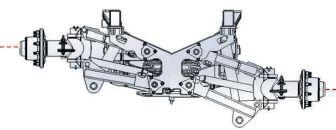
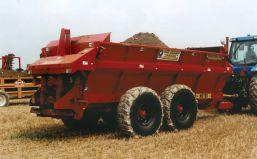
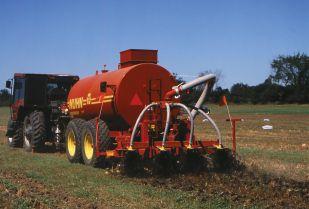
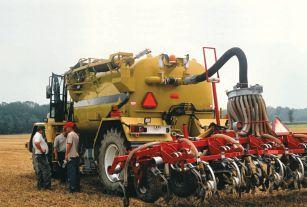
Engineered for professional haulers, Jamesway’s new MAXX-TRAC tankers deliver maximum performance.
MAXX-TRAC Steering is gentle on your fields and on your equipment.
country. The left and right sides of the PARALLEL-LINK suspension move completely independently.
Tandem models4000450050005700US Gal Tridem models5600620066007400US Gal Quad models8500960010 200US Gal
Loaded with features for professional users:
• High Output impeller with 6” or 8” discharge
• Automatic Industrial brakes
• High-speed steering
• Oil-filled hubs
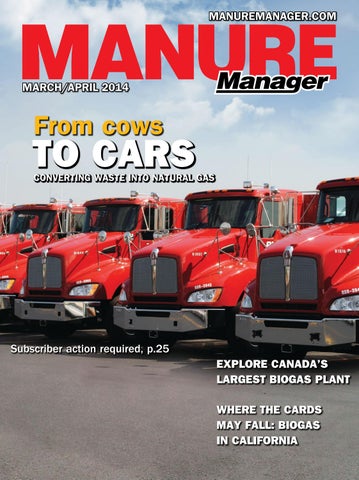
to car From cow
By Diane Mettler
using their 6.2 million gallon dige ster, Fair Oaks Farms has converted waste into enough compressed natural gas (C n g) to run their fleet of milk trucks
At Fair Oak Farm in Fair Oaks, ind., they get a lot more out of their cows than just milk. not long ago, the farm began using compressed natural gas (C n g) to run their fleet, the same C n g produced from their digester. Because Fair Oaks is a large farm — 32,000 cows — they can produce enough C n g to fuel their fleet of 42 milk tankers. in fact, the fuel they are using is replacing more than two million gallons of diesel fuel a year and significantly reducing the farm’s carbon footprint.
mark Stoermann, project manager at Fair Oaks and director of operations for ampC n g — a transportation logistics company that operates the vehicles for Fair Oaks — has been there from the start.
discussions regarding the $12 million project began about four years ago. Stoermann said it was a decision based on economics.
Fair Oaks case has a large, centralized dvO digester, which is 275 feet by 300 feet and hold 6.2 million gallons. to get a sense of it s size, imagine three football fields lying side by side. manure is brought in from the farm’s dairies, which adds up to about 500,000 gallons of liquid manure a day.
typic ally, farms with digesters produce energy to run the farm and then sell the rest back onto the grid. Stoermann says creating solely electricity wasn’t feasible for Fair Oaks. the farm was using about one third to power its 10 barns, cheese factory, café, gift shop and movie theater, but that still left two thirds.
“ i t would have to be sold to the grid, and that actually would have lost us money.”
CNG as an option
the farm looked for other oppor tunities for using that extra energy and C n g started making sense. to make it work
though, it would require multiple par tners. in this case, they were ampC n g, Kroger, indiana’s Office of energy development, the u.S. department of energy’s national Clean Cities program, among others.
“We had all of this milk that we were hauling every day, so we were able to put together an agreement with Kroger that they would take milk on C n g to reduce the carbon footprint,” explains Stoermann. “So, we started to work with truck suppliers and working with Kenworth and Palmer trucking and the ruan trucking Company. We were able to put together a structure where am P leased the trucks and then am P leased them to ruan who runs them for the dairy to the Kroger plant and buys the fuel from the am P st ations that Clean energy built.”
the trucks weren’t your ordinary trucks. they were 42 new Kenworth t440 tractors powered by Cummins Westport i S l-g compressed natural gas engines.
From barn to digester the proce ss for creating the C n g to fuel these trucks is very similar to creating power. it begins with manure being
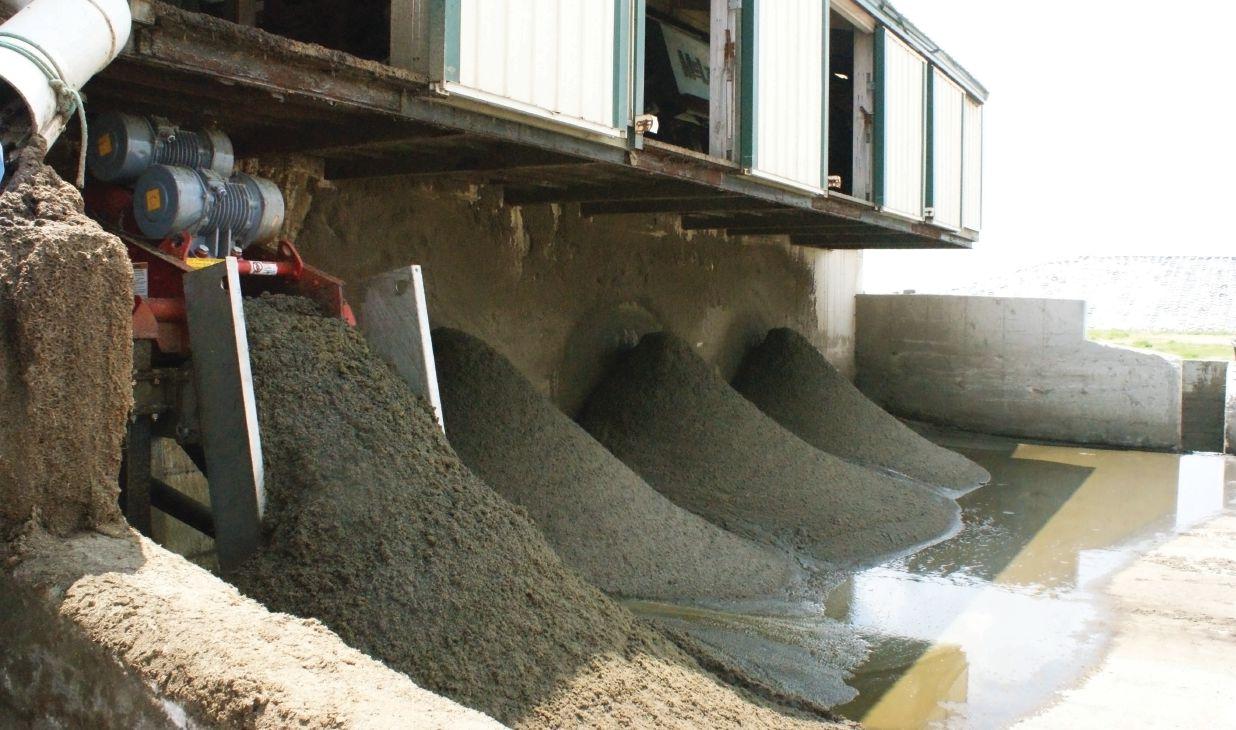
Using the three-stage systems Fair Oaks can remove 98 percent of the sand from the manure; the last two percent is so fine that it can make its way through the digester. Photo by Margaret Land
collected, screened and fed into the digester.
Collection at Fair Oaks entails vacuuming the manure and delivering via tanker to the digester.
“We don’t pump the manure very much at all,” says Stoermann. “We do however pump the flush water from the back of the holding area, and we pump that up to three miles.”
the next phase is screening. in Fair Oaks case, they use sand as bedding and that’s not ideal for digesters. But cows come first.
“the vet s told us sand is the best bedding and that’s what Fair Oaks wanted to use. the cows needs come before the manure system,” s ays Stoermann. “ We were one of the first [farms] working with Steve dvorak and his group at dvO and andrew Wedel with the mclanahan Corporation to get the kinks out of s and removal before it got to the digester.”
today, Fair Oaks uses a threephrase system to prepare manure for the digester. the first step, the s and laden manure goes to a pit with mclanahan s and manure separators in it. the flush water from the barn is pumped into the s and manure separator and as it’s mixed, the sand drops to the bottom.
next, the liquid is pumped to a mclanahan hydroc yclone.
“that hydroc yclone takes a finer cut of sand and, from the hydrocyclone, the liquid drops into a gravity settling lane that gets the last two percent,” explains Stoermann. “With those three systems — mclanahan s and manure separator, mclanahan hydroc yclone and gravity settling lane — we can remove 98 percent of the sand and the last two percent is so fine that it actually makes its way all the way through the digester.”
the s and that’s recovered is reused for bedding. With this system in place, Fair Oakes purchases only five to eight percent of the bedding sand it uses each year.
Digester to pump to turn the dige ster into a C n g producer instead of an energy producer requires a biogas cleaning system. that system was purchased from anaergia.
“the manure is broken down into biogas,” explains Stoermann. “in our case, it’s about 60 percent methane
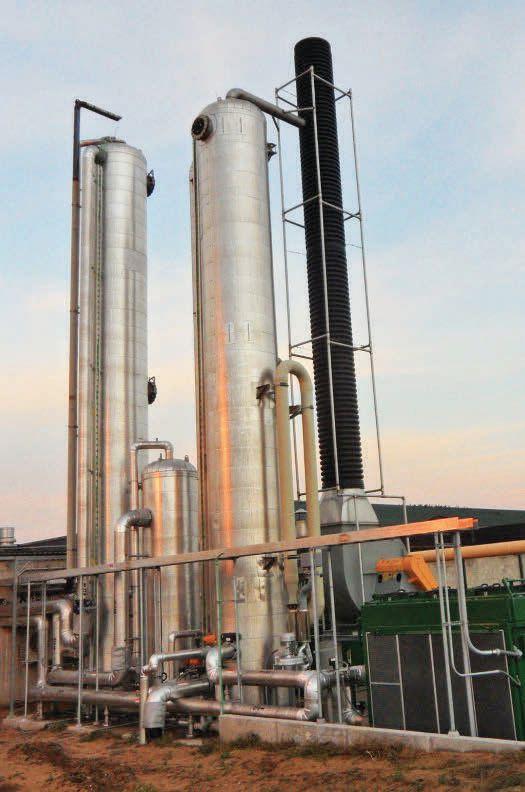
The methane produced by the anaerobic digester goes through a gas upgrading system that removes the CO2 and the H2S to form biomethane, which is 99 percent pure methane from a biological source. Contributed photo
and about 39 percent CO2 and that last percent of others includes h2S all the other things. the methane goe s through a gas upgrading system and removes the CO2 and the h2S to form biomethane, which is 99 percent pure methane from a biological source.
“Once you add an odorant to it — a mercaptan, just like they add to natural gas in the oil fields — then it’s a renewable natural gas. When people use ln g (liquefied natural gas), there’s no
odor. You can’t smell it if there’s a leak in the fuel system on the truck.”
Fair Oaks’ dvO digester produces in C n g the equivalent of 2,500 gallons of diesel fuel a day, which is necessary to run the Fair Oaks fleet. and that C n g is then piped about three miles to the nearest fueling station.
a year ago. it was pretty much just Fair Oaks trucks fueling up at the station, but now Stoermann says you see multiple trucks every day.
Fertilizing afterwards
Power and fuel are only a piece of the digestion process. manure that is left after the process is now ready for application, as it still contains all its nitrogen, phosphorus and potassium.
“the only difference is that after digestion process, it’s stable and it doesn’t generate the free fatty acids that raw manure does that causes all of the smell,” says Stoermann.
Fair Oaks applies the manure to its own land, but because it buys its corn locally, some of the famers also receive digested manure solids to replenish their fields.
Digester
even if a farm isn’t as big as Fair Oaks, digesters can still be an answer. Stoermann says he sees farms with 500 and 700 cows with digesters and they are an excellent return on investment for electric generation. they are also easier to use without the extra cleaning system.
harrison Clay, president of Clean energy’s renewable fuels division, says that usually digesters that he sees used for energy or biomethane vehicle fuel projects are of commercial scale — around 60,000 tons per year.
“usually what you see happen is that one farm will put a digester in and they’ll collect waste from all the surrounding communities, because one digester is big enough to handle typically more than one farm.”
For those who are interested in pursuing biomethane, but are worried their location may not be ideal, harrison adds: “if they can get into the pipeline, almost all the pipes connect, and we’re able to move the gas around and get it to our stations. So the key is really not so much to be close to one of our facilities as it is to be close to a natural gas pipeline.”
Truck on the road
Fair Oaks has now had C n g tankers on the road for more than 16 months. the project has reduced emissions from c arbon dioxide by more than 20 percent, carbon monoxide by up to 75 percent and particular matter by up to 95 percent. Fair Oaks has shown that manure to C n g not only works, it works well.
Fair Oaks has a large, centralized DVO digester, which is 275 feet by 300 feet and hold 6.2 million gallons. Manure is brought in from the farm’s nearby dairies, which adds up to about 500,000 gallons of liquid manure a day. Contributed photo
Fair Oaks uses a three-phrase system to prepare manure for the digester. During the first step, the sand laden manure goes to a pit with McLanahan sand manure separators in it. The flush water from the barn is pumped into the sand manure separator and as it’s mixed, the sand drops to the bottom. Contributed photo For
Companies talk about sustainability, but rarely do they go to quite the level Fair Oaks has taken it. it’s getting attention too. hundreds of people have come to the farm to visit the site and the farm, including folks from the e Pa, agStar, dmi and the innovation Center for u S dairy.
“We support them in their work on digesters and provide them any information we can,” says Stoermann.
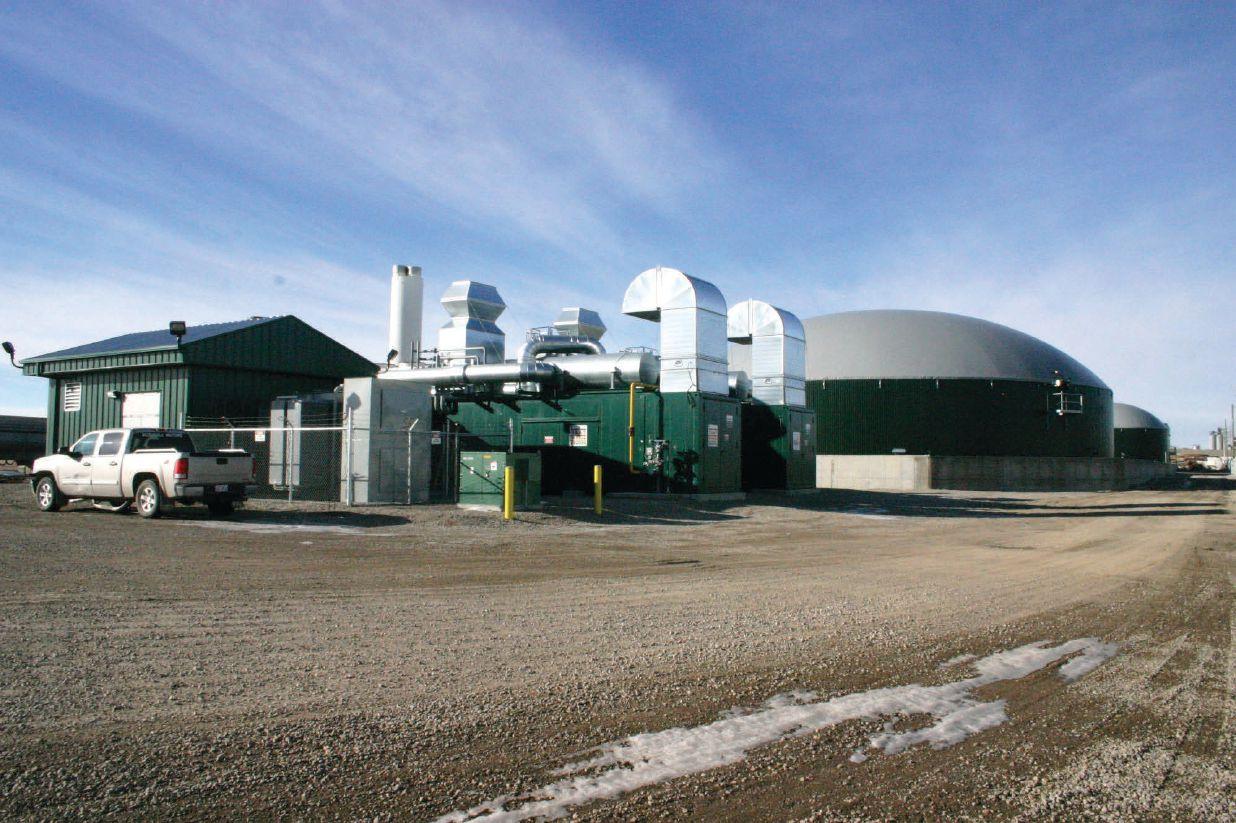
The Lethbridge Biogas installation has been constructed to minimize odor coming from the facility, where it processes manure and commercial organic waste to produce biogas. Contributed photo
canada’s largest
biogas plant
By Tony Kryzanowski
digester depending on steady stream of liquid manure from southern alberta farms
An abundance of manure in the vicinity of Canada’s largest anaerobic digester made the $30-million project viable but fees collected from a lberta’s largest greenhouse gas emitters made construction of this new, state-of-the art co-generation facility near lethbridge possible.
Biogas is produced from three digesters operating at the facility, which is used as fuel to produce electricity. the project is owned jointly by St. Catharines, Ont.-based, Plan et Biogas and a lberta-based, e CB e nviro n orth a merica i nc. the joint venture is operating as lethbridge Biogas l P. Plan et Biogas Solutions, a biogas
design and construction company is a subsidiary Plan et Biogastecknik headquartered in vreden, g ermany. i t has constructed over 300 biogas plants worldwide. the lethbridge facility is the largest Plan et Biogas has built in the world.
“ i t’s potentially the most technologically advanced, privately held biogas plant in the world today,” says thane h urlburt, president of lethbridge Biogas. “We can operate the entire plant with an iPhone.”
the co-generation equipment supplier for the facility was g ermanybased 2 g energY ag
i t will produce about 2.8 megawatts ( m W) of power, which is being sold on the province’s open market. the owners already plan to expand the facility by 50 percent over the next two years to produce 4.2 m W the plant also generates about 100,000 gigajoules of thermal energy, with hot water used to heat their internal systems of 12 million liters of digestate.
the biogas produced from the digesters is burned as fuel in two
engines that power two electrical generators hooked into the power grid. a third engine will bring production up to 4.2 m W
the dige sters will process over 100,000 tonnes of raw material annually. m ore than 50 percent will come from manure collected from southern a lberta farms. Of that, the majority will come from dairy farms, with additional inputs from hog and poultry operations. the technology chosen for the project is geared toward processing liquid manure, with the ability to process a certain percentage of solid matter in suspension along with it. the goal is to achieve 95 percent consistency of the mix of digester inputs over time so that biogas production is predictable and constant.
“ the vast majority (of input s) is manure from dairy because we have a wet anaerobic digestion system,” says h urlburt. “So we want our total solid content to be about 10 percent through our digesters.”
h e says with on average solids content of six to 10 percent in the dairy
GEA Farm Technologies offers you a brand new and improved range of drive units that will make your life easier – more freedom in installation location, effective operation, and minimum maintenance. This unique design allows lateral movement of the drive as the cable is being wrapped around the rotating drum. The coiling is made without stress and without excessive friction – which is usually the cause of premature wear of the equipment and cable. The SW Drive Unit is another piece of well thought out equipment that will work for you through the years, just like the first day it was installed.
SW Series Cable Drive Unit
GEA Farm Equipment | Houle
GEA Farm Technologies Canada Inc.
Tel. 1.800.563.4685 / Fax. 1.819.477.0486
www.gea.com / www.geahoule.com
engineering for a better world
GEA Farming SW Serie Drive Unit IVRpro Houle EN
annually produce more than 100,000 tonnes of greenhouse gas emissions are required to reduce their greenhouse gas intensity by 12 percent relative to an historic baseline. Paying $15 into the CC e m C management fund for every tonne over the reduction limit is one compliance option industry has. d espite its reputation as a greenhouse gas generator, which contributes to global warming, a lberta is the only jurisdiction in n orth a merica that requires its large emitters to pay a fee should they emit greenhouse gases above an established threshold, with the funds going toward greenhouse gas reduction projects. Some of those funds were used to support the lethbridge biogas project. the project also received $6.4 million from the a lberta e nergy d epartment, and a $5-million loan from a lberta’s a griculture Financial Services Corporation.
a t power output of 2.8 m W, the project will provide enough power for 2,800 homes and is expected to reduce greenhouse gas emissions by more than 224,000 tonnes of greenhouse gas equivalent by 2020.
g iven his local knowledge, h urlburt says that southern a lberta was a natural choice for the location of the digester because of the large number of confined animal feeding operations (C a F Os) located in that part of Canada.
“ the County of lethbridge is the cattle feeding capital of the country. i believe that 4 0 to 50 percent of the fed cattle are fed in this county,” h urlburt says. “ that, along with other C a F Os being centered in the County, there is no question that there is a plethora of input materials on the manure and agricultural side.”
manure, this provides the opportunity to add some poultry manure, hog manure, plus other organic waste to the input mix.
to finance the project, the owners received $8.2 million from an organization called Climate Change and e missions m anagement Corporation (CC e m C).
h urlburt, a southern a lberta rancher, researched and developed the project over more than a decade
and says it could not have gone ahead without support from organizations like CC em C.
u nique to a lberta, which is noted for its extensive greenhouse gas contributing fossil fuel industry, CC e m C is a not-for-profit corporation with a mandate to fund projects that reduce greenhouse gas emissions and help a lberta adapt to climate change. Funding for the organization is collected from industry. Since 2007, facilities that
the area also has a large number of farm produce-type agriculture businesses and food processing facilities. For example, a number of area farms produce potatoes on contract for companies like m cCain Foods, lamb Weston and Frito lay, there are a number of canola processing plants, and even a distillery. the combination of the C a F Os, produce farms and food processing facilities generates a large amount of organic waste material that breakdown well for biogas production in an anaerobic digester.
A load of liquid manure from a local dairy arrives for processing at the $30-million Lethbridge Biogas anaerobic digester. Contributed photo
The $30-million Lethbridge Biogas anaerobic digestion system, which processes high volumes of manure, has begun producing electricity for sale on Alberta’s open power market. Contributed photo
“ there is great potential for partnerships with county producers to use agricultural byproducts to generate sustainable energy,” says lorne h ickey, lethbridge County r eeve.
g iven his local knowledge of the amount of organic waste being generated in the area, and then his involvement in the concrete industry, which was looking for new ways to use concrete in agricultural applications, that’s what led h urlburt down the path of researching the development of a biogas production facility in his part of the world. h e made a number of trips to g ermany, which is a leading developer of this technology. that put him in contact with Stefan m ichalski, a g erman engineer employed within the biogas production industry. m ichalski moved to Canada, has been instrumental in advancing the lethbridge biogas project, and is now a director on lethbridge Biogas.
the company collect s liquid manure from area dairy farms and processes it through the three digesters. the high nutrient, liquid byproduct stream is returned to the lagoons and land applied as organic fertilizer.
i n addition to selecting the appropriate digestion technology and investigating ways to dispose of the byproducts, h urlburt says lining up sources of raw materials has been among the biggest challenges to making the project a reality, and it has required a lot of patience among potential local suppliers.
“We had a bit of a ‘Field of d reams’ ideology – if you build it, they will come,” says h urlburt. “a nd that’s finally starting to happen. a fter approaching people for 13 years, they start to wonder if you are ever going to do what you say you are going to do.”
What’s helped lethbridge Biogas secure consistent sources of raw material is that many of their suppliers like the idea of supplying their organic waste to a renewable green energy plant in a complete closed loop rather than, in some cases, taking it to a landfill.
lethbridge Biogas has signed five-year agreements with its manure suppliers and does not pay for the raw material. i t generally does charge a
Affordable 5 ton or less Turn-Key Pellet Solutions
systems from Vecoplan Midwest are the complete, turn-key solution for small pelletizing runs. Visit VecoplanMidwest.com today and download the “Pellet Mill Start-Up” brochure to discover how easy it can be to turn your manure into profits!
Phone: (812) 200-2122
vecoplanmidwest.com
Best Storage for Maximum Nutrient Value!
Consistent Nutrient ValueAgitation Makes the Difference
• Center agitation system evenly blends nutrients.
• Better utilization of “waste” translates into less purchased fertilizer.
Environmentally Sound
• Designed and constructed using bolted glass-fused-to-steel panels for secure storage and high corrosion resistance.
• Above ground - minimizes the danger of run-off, leaching and ground water contamination.
• Environment-friendly odor control - releases odors above ground level into higher air currents.
Visit www.cstindustries.com to find your local dealer, or call 815-756-1551.
Power Pellet ™
tipping fee for collection of inputs from commercial suppliers. the company uses a fleet of trucks to pick up the raw inputs and deliver the liquid byproduct from the digesters back to the dairy lagoons.
the dige stion process is continuous, with a retention time in the tanks of about 35 days. e ach tank has a four million liter holding capacity. the temperature in the tanks is maintained at between 35 and 40 Celsius to ensure quality biological activity and biogas production. the system has been designed to maintain that temperature despite outside temperatures in the lethbridge area typic ally reaching minus 40 Celsius numerous times in winter. the bacteria working in the tanks are the same bacteria that work in a cow’s rumen.
there is onsite storage c apacity for raw solid inputs and three tanks capable of storing over two million liters. When picking up the liquid manure from dairies, the goal is to collect it when it is as fresh as possible. to accommodate the biogas facility, many dairy suppliers have installed a plug within their liquid manure pipelines leading to their lagoons. a biogas plant vacuum truck comes by, typically once a day, picks up a load of liquid manure, delivers it to a storage tank, and then takes a load of processed liquid manure from the 5.8 million litre post-storage tank back to the pipeline plug for deposit in the dairy lagoon.
“Where the big plus comes for the dairy farmer is when we install a thermo-hydrolysis unit at the end of this year,” says h urlbur t. “ i t is a Canadian Food i nspection a gency (CF i a ) approved technology for the destruction of specified risk material such as prions that cause bovine spongiform encephalopathy (BS e ).”
this is also known as mad cow disease. What this means is that this facility will be able to dispose of all cattle mortalities, including those cattle or cattle parts that are suspected of carrying BS e , and this ground up material will be digested to produce biogas. the benefit to lethbridge Biogas is that it produce s about 10 times the amount of biogas
Funds collected from large greenhouse gas emitters in Alberta helped to pay for the $30 Lethbridge Biogas installation, the largest privately held biogas power facility in Canada. Contributed photo
per cubic metre as standard inputs, but processing of the material must be monitored very closely.
Because the system is designed for liquid manure, the company avoids receiving manure from dry feedlots because of its high solids content. h urlburt says there is better pre-processing technology for that type of manure, which has been developed right in a lberta, specifically by a company called h imark Biogas,
operating as h ighland Feeders in vegreville, a lberta.
a s one of several investments planned for the facility, lethbridge Biogas intends to install a pelleting plant in 2015 to process separated solids captured from the digestion process, which can be used as a solid, pathogen free, organic fertilizer.
Maximize your yield potential with More Than Manure® (MTM®) Nutrient Manager. MTM features the SFP® patented polymer technology, proven to reduce phosphorus lock-up and nitrogen loss in manure. So you’ll see healthier crops and stronger performance throughout the growing season. That’s turning waste into potential. Visit us at sfp.com to request a free MTM kit. |
The almost 1,500 dairy cows at New Hope Dairy near Galt, Calif., help feed this anaerobic digester, which supplies the Sacramento Municipal Utility District with enough electricity to power 250 homes.
Where the
cards may fall
By Treena Hein
the future use of manure biodige sters in California depends on many factors
California is the largest dairy state in the u nited States, with $4 billion generated in annual revenue. there is a concentration of dairy farms in the Central valley area, with more than one million cows producing about 25 million tons of manure each year.
d igesters, therefore, make good
sense, and there are about 15 currently operational. California regulations do allow for the addition of organic material and grease to the manure, as long as permits are in place. the land application of digester sludge fits under existing manure land application regulations.
But getting more manure digesters up and running in the state is currently a challenge, due to a number of thorny factors.
First and foremost is straightforward economic feasibility, says d r. d eanne m eyer, an extension specialist in the d epartment of a nimal Science at the u niversity of California,
d avis. m aking a digester work financially is tied in to the state’s air quality regulations.
“Farmers do not run their generators at full capacity in order to meet statewide n Ox emissions standards based on the Clean a ir a ct,” she says. “Because of this, to achieve adequate electricity production, you need to oversize your generator. that’s expensive.”
the larger generators required also mean that maintenance and parts replacement costs are higher. a separate issue in some locations is the cost to interconnect to the grid. m eyer says it can be as high as or
Photo courtesy of The Dolphin Group
High Quality Bedding Material Produced Fresh Daily
higher than installing the digester itself.
“ i f you are far away from a substation or the nearest substation doesn’t have even close to the technology required, it’s just not financially feasible,” she explains. “California has an incredibly outdated electricity transmission system.”
d uring mid-2013, m eyer surveyed state dairy producers who received funding to a build digester sometime during the last 10 years. Only some of these farmers have digesters that are currently operational.
farmers aren’t getting enough for the electricity they produce,” she notes. “a nd so the more you sell into the grid, the more you basically lose financially.” m eyer adds, “Of course, time-of-use rate differences play into this also, as does location. i n some areas the utility will put money into getting digesters going.”
California Bioenergy is one company having success – in partnership with dairies – to get biodigesters constructed, particularly in the Bakersfield and Sacramento areas.
At this point, most of the focus of biodigester operation in California is to collect gas, clean it and use it for electricity production.
“We wanted to find out the hurdles facing them, and how to overcome these hurdles,” she says. “ the primary messages were that there needs to be more money available to get digesters built, that maintenance and part replacement costs were very high and that electricity production/value has not been as high as anticipated.”
m eyer does not see the model of a farmer owned-and-operated biodigester continuing in California, and believes third-party operation is more feasible going forward.
“ i f a dairy farm with a digester used more electricity, it would make more sense, because as it stands, the
the company has recently negotiated Power Purchase a greements for the provision of three digester projects with electricity generation to go forward in those two regions. President n eil Black says his firm supports the idea of cleaned biogas from digesters being used for electricity generation, input into the natural gas pipeline system or vehicular fuel production.
“With all three options, you have to obtain financing through grants and loans,” he explains. “ r ight now only electricity projects can obtain longterm contracts, which are required for debt financing. We are also interested in similar contracts for fuel and/or
pipeline injection.”
h e notes that the digester costs and the energy generation technology –whether gas clean-up, fuel production or pipeline injection – costs millions of dollars.
Electricity generation or vehicular fuel
a t this point, most of the focus of biodigester operation in California is to collect gas, clean it and use it for electricity production, but m eyer says it is anyone’s guess if that will remain the future of biodigester use in the state.
“ i t’s doable if things shift,” she asserts. “ the payment to farmers for their electricity needs to be higher, and there needs to be adequate grant money in place for them to build the digesters. i t could be that in the future, however, we will see more digesters with the gas being scrubbed to create compressed natural gas to be used in vehicles. We already have one digester doing this and more are sure to follow.”
m eyer also points out that there is advantage in producing vehicular gas from biodigester gas, in that the process doesn’t require a generator on the farm.
“ i t wipes all that out – the expense, the feasibility of connecting to the grid,” she observes. “For that reason and a variety of other reasons, i think that the future of digesters use will be in vehicular renewable natural gas.” h owever, m eyer notes that a
Speak up. Speak positively.
Our industry needs more agvocates
To reach its full potential, agriculture needs everyone in the industry to speak up and speak positively.
Agriculture More Than Ever is an industry-driven cause to improve perceptions and create positive dialogue about Canadian ag. Together we can share the facts and stories about this vibrant and modern industry, and tell the world why we love what we do.
It’s up to all of us to be agvocates and it’s easier than you think –visit AgMoreThanEver.ca and find out how you can get involved.
tremendous amount of infrastructure development needs to be put in place for that to occur, as well the development of better technologies for treatment of fuel.
Other factors may also come into play in terms of the future of digester gas use.
“ the number of electric c ars is increasing, and the demand for electricity may increase a great deal because of that,” m eyer explains. “ d ry years with low amounts of snowmelt could affect the capacity of our hydro-electric dams. i t’s quite a complex picture.”
She also notes that California has fairly clean energy sources such as hydro electric and natural gas (compared to coal), and that it’s important to the citizens and legislators that this not change.
“We need power with low greenhouse gas emissions and n O x emissions, but how do you get that cost-effectively using digesters?” she asks. “You don’t. We don’t want to create unintended detrimental consequences while creating new sources of energy. i t would seem that it’s most cost-effective and better for the environment not to make electricity on farm.”
i n the opinion of J.P. Cativiela, generating electricity is the best opportunity for California digester owners in the short-term, but he agrees that “in the longer term, producing renewable natural gas for vehicle fuel may be an even better opportunity.” the senior account executive with consulting firm the d olphin g roup says that either way, the key to building a digester these days is to be able to finance it with a combination of debt and equity.
“ d ebt requires a lender and lenders like to see that you will receive income that is predictable over the life of the loan,” he notes.
long-term electricity s ales contracts are provided for in California under law SB 1122, and Cativiela explains that although it’s not yet fully implemented, it ensures that utilities will purchase at least 90 megawatts of renewable electricity from agricultural waste, with long-term contracts at
decent rates.
“ i f implemented correctly, this should help many projects get financing,” he says.
Cativiela notes that the same is not yet true for renewable natural gas that could be used to power vehicles.
“ though the st ate and the federal government have plans in place to offer renewable fuel credits and low-carbon fuel credits, these so far have very unpredictable value and are not guaranteed over the long-term,” he explains, “making it very difficult to secure financing for projects that intend to produce fuels.”
h owever, Cativiela believes that in the long run, fuels may provide more revenue than electricity, and could become the primary driver for dairy digester development.
Cativiela also notes that a program that provided up to 30 percent of digester construction costs (federal 1603 grants) has now expired.
“We are interested in locating new
sources of revenue, possibly from funds collected by the state for greenhouse gas emissions allowances from large polluters, to replace these lost revenue sources,” he says.
“We are working hard to get statewide grants, and we are cautiously optimistic,” echoes Cal Bioenergy’s n eil Black. “ things move slowly, but there is currently more interest than there has been in years.”
There are about 15 anaerobic digesters operating in the state of California, including this one located at Castelanelli Brothers Dairy near Lodi, Calif. Photo courtesy of The Dolphin Group
monitoring very important Weather impacts make manure storage
By Shelby Bollwahn & Jerry May
Given the snowfall and temperatures farmers have been experiencing in the east and midwest this winter, it is crucial that livestock producers keep a close eye on their manure storage structures and pumping equipment.
Farmers need to monitor the condition of manure storage structures as well as all manure transfer pipes pumps and valves to ensure they are performing as expected under unexpected and severe weather conditions. michigan State university extension recommends that all farms develop a regular schedule to inspect each component of manure storage and pumping equipment.
Farm size and complexity of the manure storage system, mechanical devices (pumps and valves), relative distance to water, type of storage structure and occurrence of rainfall or snowmelt – should all be considered
when determining inspection frequency. regular checks and maintenance of all pumps, agitators, piping, valves and other mechanical and electrical equipment will ensure everything is in good operating condition and minimize the risk of any spills or leaks. Permitted farms are required to check all manure transfer equipment and manure storage structures weekly. the extreme cold may nece ssitate checking more often. Small and medium livestock farms should initiate a monitoring process if they haven’t already. developing a checklist of items to be inspected, including dates and times of inspection, may be a useful tool to ensure a thorough, timely and regular process.
g iven the recent rain and snowmelt, farms should confirm there is adequate freeboard in their liquid or slurry storage structures.
the heavy snowfall this winter may make it difficult for livestock producers to check the integrity of earthen or concrete storage structures but that makes it all the more crucial they be monitored. it
has been an unusually long, cold winter and the weather will be taking its toll on the equipment depended upon to move manure from collection points to longterm storage structures. Spills may be caused by burst or ruptured piping, or by leaking joints.
Farms should also have an emergency plan in place in the event of an overflow, breach, leak or need for emergency land application. emergency plans should contain phone numbers for appropriate first responders: fire departments, police, hospitals and other emergency contacts. emergency plan templates can be found on the michigan agriculture environmental a ssurance Program website. i t is important to discuss the emergency plan, location of the emergency phone list and the expected responses with the entire farm crew.
Shelby Bollwahn and Jerry May are with Michigan State University Extension. For more information, visit http://www. msue.msu.edu.
neW center to explore
solutions for nutrient pollution
Amulti-pronged, systems approach to solving water pollution caused by nutrients in the environment is the focus of a new center housed in Penn State’s College of agricultural Sciences.
With a $2.2 million Science to achieve results grant from the u.S. environmental Protection agency (e Pa), researchers will launch the Center for integrated multi-scale nutrient Pollution Solutions. the center is one of four new national Centers for innovative and Sustainable Water research announced by the e Pa Jan. 30.
the Penn State-led center – known by its short title, the Center for nutrient Solutions – will encompass seven teams that will combine existing research efforts with new studies and programs to tackle the vexing problem of nutrient pollution and its effects on watersheds, particularly the Chesapeake Bay basin.
the three-year project will look at nutrient flows from agricultural, rural, urban, municipal and atmospheric sources, noted principal investigator James Shortle, distinguished professor of agricultural and environmental economics, who also directs the Penn State environment and natural resources institute.
nonpoint source nutrient losses –primarily nitrogen and phosphorus – from agriculture and other land uses cause significant water pollution in many regions of the country, including the SusquehannaChesapeake watershed, which is home to more than 17 million people. Population growth and resource development are placing increased demands on the region’s water resources and aquatic ecosystems.
“Previous research has led to the implementation of best management practices that have helped to reduce nutrient runoff into streams and rivers,” said Shortle. “But Bm P selection and location are important factors determining effectiveness. We need more science to be sure we select the right practices that can be implemented in the right places in a cost-effective manner.”
Shortle pointed out, however,
Photo by G.L. Kohuth
that best management practices by themselves might not do enough in light of larger, systemic challenges.
“One of our major goals is to determine how far enterprise-level best management practices can go in solving problems and when we instead must begin to strategically address system-wide mass-balance issues.”
he explained that much farm-related nutrient pollution in Pennsylvania results from the importation of nutrients, mostly midwestern corn and other livestock feed ingredients, leading to an imbalance in the environment. an estimated 30 percent of these nutrients pass through undigested in manure and end up in bodies of water via runoff or atmospheric deposition. excess nitrogen and phosphorus in the Chesapeake Bay, much of which comes from the Susquehanna r iver and it s tributaries, are blamed for algal blooms and related “dead zones” where many aquatic species can’t survive due to a lack of oxygen. State and federal governments for decades have pursued policy options and voluntary measures aimed at restoring water quality in the bay – the nation’s largest freshwater estuary – with mixed success.
the new Center for nutrient Solutions will focus on four Chesapeake Bay tributary
watersheds: Conewago Creek, mahantango Creek and Spring Creek in Pennsylvania and the manokin river in maryland. efforts in the Conewago Creek watershed will build on an existing Penn State extension initiative – featured in a recently released video – that already has achieved measurable results.
“Our team will use a ‘shared discovery’ approach that will engage researchers with community partners to identify the drivers that control nutrient inputs and outputs within a study area and apply the best watershed science to develop a realistic and scalable set of interventions,” Shortle said. “the objective is to provide advanced decision-support tools that will help farmers, government planners, land and water managers, water quality agencies and others to achieve societal, economic and ecological benefits from nutrient pollution reductions.”
Shortle maintained that decisions about agricultural nutrients must be made in the context of their relative contribution compared to the overall food production and consumption system, storm water runoff from other land uses, wastewater treatment and atmospheric deposition. and he acknowledged that any solutions will require trade-offs.
MSU’s South Campus Anaerobic Digester will utilize about 17,000 tons of organic waste to generate 2.8 million kilowatt-hours of electricity per year.
World pork expo make plans to attend
The 2014 World Pork expo comes to the iowa State Fairgrounds in des moines, iowa, June 4-6, 2014. Sponsored by the national Pork Producers Council (n PPC), World Pork expo features the world’s largest porkspecific trade show, educational seminars, swine shows and sales, and so much more.
“if you’re shopping for new products and technologies; want the latest information on production management, legislative issues and markets; or are looking to exchange ideas with pork producers and other professionals, World Pork expo is the event for you,” says alicia newman, World Pork expo’s general manager. “But don’t delay. hotels fill up quickly, so start making plans today.” in 2013, nearly 20,000 pork producers, their employees and other professionals from 39 countries attended expo, and organizers expect similar attendance this year. Online registration is already open; simply go to www.worldpork.org. register early to secure the discounted admission fee of $5 for an adult (ages 12 and up), which provides entry for the entire expo — a $10-per-person savings over the on-site fee. the world’s largest pork-specific trade show, featuring more than 400 exhibitors from around the globe, is always a highlight
of expo. attendees can stroll through more than 310,000 square feet of exhibit space to view the newest products, services and technologies available to pork production businesses today. the trade show is open from 8 a.m. to 5 p.m. on Wednesday, June 4, and thursday, June 5. On Friday, June 6, trade show hours run from 8 a.m. to 1 p.m.
Free educational seminars are offered on Wednesday and thursday and will present updates on current management issues and research. experts will be discussing topics ranging from animal health and well-being to production management to legislative updates to feeding strategies and more — all designed to provide practical information to take back home. Business seminars, also scheduled for Wednesday and thursday, address a range of marketing and business strategies and present an opportunity for questions and dialogue.
live hogs will be on display in the swine barn from June 3 to 7. the evergrowing World Pork expo Junior national, hosted by the national Junior Swine association (nJSa) and team Purebred, now ranks among the premier youth shows in the united States. in 2013, a record 1,600 pigs were exhibited by 678 juniors from 26 states. more details about show rules and entries
are available at nJSa’s website. also at expo, swine breeding stock from throughout the nation will compete in the purebred, open shows. last year, more than 200 exhibitors competed for top honors with nearly 600 hogs. Breeding stock sales are held Saturday, June 7, from 8 a.m. until completion (at approximately noon). musicFest, scheduled for thursday afternoon, has evolved into the social highlight of expo. it’s a time when attendees can relax, listen to music, connect with colleagues, and enjoy some delicious pork and refreshments.
it wouldn’t be World Pork expo without the Big grill, and during each of event’s three days attendees can stop by for a free lunch of succulent pork. manned by the tama County Pork Producers association from iowa, the Big grill serves up some 10,000 pork lunches each year.
to learn more about the 2014 World Pork expo, check out www.worldpork.org. it has schedules and event details. even more information is available by connecting with World Pork expo on Facebook, following expo on twitter (#nPPCWPX), and downloading the free mobile app by searching for “World Pork” in the apple Store, android market or Blackberry’s app World.
The world’s largest pork-specific trade show, World Pork Expo will take place June 4-6 at the Iowa State Fairgrounds in Des Moines, Iowa. The World Pork Expo attracts nearly 20,000 pork producers and other professionals each year to investigate the newest products, attend seminars and network with peers. Contributed photo
$21 millon for dairy farmers nY governor announces
Governor andrew m. Cuomo recently announced nearly $21 million is being made available to create new economic opportunities for new York’s dairy farmers by helping them to produce renewable energy and improve their business operations.
the funding will help dairy farmers convert farm waste to energy and develop individualized business and environmental plans to reduce operating costs and increase profitability.
Starting January 17, $20 million has been made available through the new York State energy research and development authority (nYS e rda) to install anaerobic digester technology that produces renewable biogas used to produce electricity and heat from organic wastes. Farms, food processing manufacturers or municipal wastewater sites would be eligible for up to $2 million per project.
Biogas-to-power technology has several steps. dairy manure and other organic wastes are pumped into digestion tanks where bacteria break down the waste, creating a methane-rich gas called biogas and a nutrient-rich effluent that can be applied to crops as fertilizer. the biogas is burned in engines to produce electricity and heat. through this process, farmers can often eliminate a significant portion of the electricity they would otherwise purchase from the utility grid, and periodically export surplus electricity onto the electrical grid in exchange for credits. Furthermore, farmers can realize operational savings in other areas as well.
Over the past 10 years, nYS e rda and the new York Power authority have awarded nearly $30 million toward anaerobic digestion projects and related technology, resulting in significant energy savings to new York-based businesses while reducing the use of fossil fuel. Currently, this funding supports 20 operational digester projects. the dige ster technology funding will be available on a first-come, firstserved basis for eligible projects.
New York Governor Andrew Cuomo recently announced nearly $21 million is being made available to New York’s dairy farmers to help convert farm waste to energy using anaerobic digestion or related technologies. Photo by Margaret Land
“the anaerobic digester funding coupled with the dairy acceleration Program funding is another step the state is taking ... to assist farmers in reducing their operating costs and in generating clean energy,” said John B. rhodes, president and CeO of nYSerda. “Farmers that utilize anaerobic digester technology are able to produce renewable energy and lower their costs while providing a number of environmental benefits to their local communities.”
Funding for n Y’s d airy a cceleration Program ( da P) will be increased by $850,000, which is in addition to the $1 million announced this past a ugust. da P is jointly funded by the d epartment of a griculture and m arkets and de C. da P is re sonating very positively with dairy farmers across the state, most with herds under 300 cows. Combined with some funding still available under the current program, this new funding will serve at least 100 more dairy farms across n ew York. Payments under daP may include: up
to $5,000 per farm to write a business plan or develop a combination of a business and facility growth plan; and up to $4,500 to update an existing Comprehensive nutrient management Plan (Cn m P) or $6,000 to develop a new one. additional funds also will be available to design farm practices described in Cn m Ps. Cn m Ps are a conservation system for animal feeding operations designed to address soil erosion and water quality concerns. the Cn m P encompasses the storage and handling of manure as well as using and applying manure nutrients on farmland. through daP, the state awarded dozens of projects already for farms with an average herd of about 140 cows. to be eligible for daP, a dairy farm must have complete financial records. Preference will be given to farms with under 300 cows. daP funding will cover up to 80 percent of a project’s cost. to apply for da P, visit http:// ansci.cornell.edu/prodairy/dairy_ acceleration/.
manure storage gets makeover with USDa help Illinois dairy’s
By Pattie Thomas
a dairy cow can produce up to 14 0 pounds of manure in a day.
So for James “Jim” Johnson, who owns 150 dairy cows on his Boone County, i ll. ranch, that means 7.7 million pounds of manure per year. Where does this manure go?
On many ranches, manure is stored and filtrated in a waste lagoon. But after a heavy rain in 2011 caused Johnson’s waste lagoon to overflow onto a nearby road, Johnson sought help to prevent it from happening
again. i n an effort to protect the quality of water and soil, he worked with the i llinois e nvironmental Protection a gency and u S da’s n atural r esources Conservation Service ( nr C S) to find a solution.
n r C S assessed his operation and developed a comprehensive nutrient management plan. the asse ssment and plan helped Johnson to change his barns to properly handle the storage and flow of manure.
“ i found out that i needed five months of storage for a (manure) pit for my barn,” Johnson said.
By paying a portion of the project
costs, nr C S partnered with him through the e nvironmental q uality i ncentives Program ( eqi P) to inst all a concrete manure facility and the accessories to make it work, such as access roads and gutters.
h is gravity flow system from the barn pulls liquid manure into the concrete pit. With gravel access roads, the system provides a travel way for equipment, vehicles and livestock. a lso, the roads helped to protect the soil and other natural resources in handling heavy farm vehicles. Johnson’s gutters improved rainwater to flow away from the cows for better control.
An underground gravity waste flow system helps manage manure on James “Jim” Johnson’s Boone County, Ill. ranch. Photo courtesy of USDA
i n fiscal 2012 and 2013, nr C S provided more than $1.9 billion in eqi P financial assistance to farmers and ranchers to implement practices as part of comprehensive nutrient management plans.
“With producers’ abilities to take advantage of programs such as eqi P, it enables them to install conservation practices that provide environmental benefits,” nr C S d istrict Conservationist lewis n ichols said.
n ow, Johnson’s dairy operation runs more efficiently and his cows’ health and land show improvement. i n addition, he enjoys that organic manure saves money because he no longer has to spray commercial fertilizer on his fields, and he even shares it with his neighbor. Organic fertilizer is better than buying commercial, he said.
“Being a producer can be rewarding sometimes,” Johnson said, “ n ow my improvements have made other farmers notice a difference in handling animal waste.”
Pattie Thomas is with the Natural Resources Conservation Service.
As part of James “Jim” Johnson’s comprehensive nutrient management plan, NRCS helped them build a dairy waste storage facility. Photo courtesy of USDA
into money Spinning manure
By Tara Roberts
ui professor’s project turns cow manure into biodegradable plastic
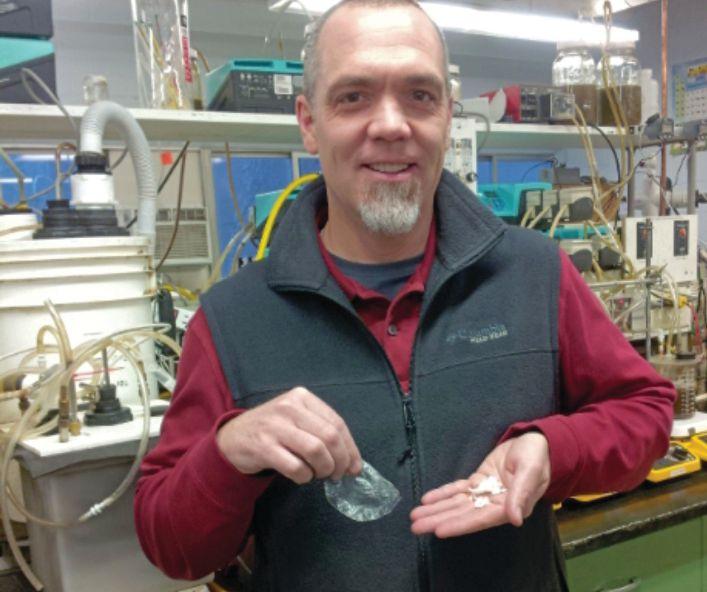
Apiece of plastic made by e rik Coats’ research team doesn’t look particularly special.
in some ways, it’s not. it’s clear and flexible like a piece of sandwich bag. Chemically, it’s similar to the plastics in everyday products like garbage bags or packaging material.
But unlike the usual petroleum-based plastics, this is made from cow manure.
Coats is an associate professor of civil engineering at the u niversity of i daho. h is research team has developed
Erik Coats, an associate professor of civil engineering at the University of Idaho, and his research team have developed a system to transform manure into a biodegradable plastic. Photo courtesy of University of Idaho Photo Services.
a unique system to transform manure into polyhydroxyalkanoate, or P h a , a biodegradable plastic.
“We are the only research group looking to advance this technology in the u nited States,” Coats says.
the project is par t of Coats’ overall goal to find valuable uses for municipal and agricultural waste streams – like the 250 million tons of manure a merica’s dairy cows produce every year.
“ i t’s all about developing better technologies that really move us forward in society in our use of organic waste,” he says.
a pilot-scale model of the manureto-plastic system is now operating at the u niversity of i daho dairy. i t can turn
10 to 12 gallons of wet manure into up to five pounds of plastic a day. the system begins by fermenting the carbohydrate-rich manure, which produces organic acids including acetic acid – better known as vinegar. the acids become food for a tank full of naturally occurring soil bacteria, which Coats’ team harvests from the local wastewater treatment plant. like humans who store fat if they overeat, the bacteria store excess organic acids as P h a . When the bacteria are killed and dried, the researchers can separate out the P h a , a crumbly, white, raw plastic. With processing, P h a can be used in myriad products. Coats envisions
it applied to single-use materials like packaging, as well as products for which biodegradability comes in handy, like planter pots or erosion-control mats.
P h a is currently produced on a small scale elsewhere, but it’s mostly made from corn sugar – meaning corn is diverted from the human and livestock food supply – and the process requires pure bacterial cultures, all of which creates a large carbon and energy footprint.
Coats’ system, on the other hand, leaves a relatively small carbon footprint, uses natural materials and relies on a resource farmers are happy to be rid of.
“ the great thing about manure is it’s free,” Coats says with a laugh.
Cow manure also is abundant in i daho, which is home to a $2.4 billion dairy industry. Coats works closely
with the i daho d airymen’s a ssociation, which has helped support the pilot system’s development along with the n ational Science Foundation, the u .S. d epartment of a griculture, i daho’s Center for a dvanced e nergy Studies and i daho n ational laboratory
“ i believe in the commitment of the land-grant university to serving industries in the region, so dairy fits that very well,” Coats says.
the manure-to-plastic system also can dovetail with anaerobic digesters, which convert manure to electricity and are rising in popularity in i daho and beyond. Fermented manure can be split into solids and liquids, with the liquids used for plastic production and the solids used for electricity.
a fter Coats’ team collects data from the pilot system at the u niversity of i daho diary, they plan to move it to a dairy complex in southern i daho and install it alongside a digester.
Coats’ system could apply to waste streams beyond dairy manure, too. his team is studying ways to make plastic from other animals’ manure, waste from tomato canneries and municipal wastewater.
Coats credits the u niversity of i daho’s support and his research team for the success – and exciting future –of his project.
“ the university has provided
me the opportunity to grow my own research program, to really identify the path i want to go down,” he says.
the re search team includes nick guho, a doctoral student from Boise who has been working with Coats since he was an undergraduate and handles dayto-day operations of the pilot system.
“ the project has provided me with real-life experience,” g uho says. “ i t’s provided me the opportunity to interact with an important industry.”
Coats’ other graduate students work to refine the manure-to-plastic system. a ndrea h anson, a doctoral student in biochemistry, investigates the mechanisms behind the bacteria’s ability to convert organic acids into plastic.
Ben Watson, a master’s student in civil engineering, focuses on optimizing the system to improve efficiency.
“Without question, the research doesn’t go anywhere without students,” Coats says. “Smart people, curious people, motivated people – they’re really key to getting this work done.”
A video of Erik Coats discussing his research can be found here: http://www. youtube.com/watch?v=_wyE7C_j0cs
Tara Roberts is a science and research writer with the University of Idaho’s communications and marketing department.
Erik Coats holding a sample of the plastic he and his team have developed.
Photo courtesy of University of Idaho Photo Services
In the NEWS
AgSTAR partners with BioCycle for AgSTAR 2014 National Workshop
agStar is partnering with BioCycle for the 14th annual BioCycle Conference on renewable energy From Organics recycling (BioCycle re FOr14 West).
a one-day workshop will be held in conjunction with BioCycle re FOr14 West on monday, april 7, 2014 in San diego, Ca the theme for the event is navigating the Biogas maze: learning from the leaders. attendees will hear experiences and insights shared by members of the biogas and livestock industries, policy makers, and others.
For more information, visit the BioCycle r e FOr14 West website. registration for the agStar 2014 national Workshop is free. attendees have the option of having lunch on their own or participating in an optional luncheon for $25.
Digi Star has new director of engineering
Steven gorseth was recently appointed director of engineering of digi Star, llC, a Wisconsin based manufacturer of advanced measuring systems and software used in the precision agriculture sector.
“Steve brings an extensive background in agricultural engineering as well as international experience that will be critical to our continued success,” said Kevin Klubertanz, general manager of digi-Star.
gorseth most recently served as north american agriculture engineering manager for topcon Positioning Systems, based in livermore, Calif. Prior to this assignment he served as global engineering manager with the tS d (a topcon/ Sauer danfoss Joint venture) in Plymouth, minn.
earlier in his career, gorseth served as a group design engineer at Sauer danfoss in Plymouth, minn, and as software design group leader at Phoenix international, a John deere company. gorseth holds a BS e ee with computer option from north dakota State university and will be based in the Fort atkinson, Wisc., office of digi Star.
New FAO report assesses environmental impact of livestock sector
the international dairy Federation (idF) recently welcomed a new report released by the Food and agriculture Organization of the united nations (FaO) entitled Tackling Climate Change through Livestock, a Global Assessment of Emissions and Mitigation Opportunities, an update of the organization’s 2006 report. the report reveals a reduced contribution by the global livestock sector to greenhouse gas (ghg) emissions: 14.5 percent of global emissions, compared to 18 percent, the figure published in the 2006 report. it also assesses the environmental impact of the dairy sector, currently estimated to be less than three percent.
“this new study is based on the same methodology developed by FaO at idF request when the interim report Greenhouse Gas Emissions from the Dairy Sector, a Lifecycle Assessment was produced in 2010,” said Sophie Bertrand, chair of the idF’s Standing Committee on environment. “as we did in 2010, we submitted comments to FaO as we recognize the importance of collecting statistical data to improve the performance of our sector. We value the fact that this new study identifies the share of the different livestock sectors in the total g hg emissions, and highlights the high
variability of emissions intensities between regions and farming systems. more importantly, this report provides a lot of information on the different mitigation strategies possible.”
in recent years, idF has placed environment and sustainability among its top priorities.
“Our sector is responsibly focused on providing consumers with the nutritious dairy products they want, in a way that is economically viable, environmentally sound and socially responsible,” said Jeremy hill, idF president. “that’s why idF has been involved in key initiatives such as the global agenda of action and the leaP – livestock environmental assessment and Performance – Project driven by FaO. given the important contribution of the nutrients from dairy to a balanced diet, it is instrumental for us to continue to work with FaO and stakeholders of the dairy chain to build consensus on the path towards sustainable food security through dialogue, consultation and joint concerted global action programs.”
the dairy sector has already implemented a signific ant number of initiatives to mitigate ghg emissions through the global dairy agenda for action. the id F dairy Sustainability website features the green paper that captures best practices and actions taken by the global dairy sector in a number of key areas to address the environmental impact on climate change.
the re sults of this new FaO study provide the global dairy sector with a robust benchmark for future targeted actions.
“the FaO recommendations will guide the continuous improvement of our sector practices towards more efficient, safe and responsible use of natural resources,” said Bertrand. “the live stock
sector is extremely diverse and the path to sustainability requires different solutions across production systems, climatic areas and species.”
improving the environmental impact of the dairy sector goes beyond mitigating g hg emissions. the Common Carbon Footprint methodology developed by i d F has been updated with the late st life Cycle analysis (lCa) science and feedback from users. using the same methodology, a guide on water footprinting was developed. By providing harmonized metrics and methodologies, results are globally comparable, mitigation options more easily identified and progress more easily measured. Both the update of the carbon footprint guide and the new water guide were presented at the id F World dairy Summit in late October.
USDA announces REAP awards for farm digesters
the u.S. department of agriculture (u S da) recently announced funding for 631 projects across the nation that will help agricultural producers and rural small businesses reduce their energy consumption and costs, use renewable energy technologies in their operations, and conduct feasibility studies for renewable energy projects.
grant and loan funding is made available through u S da’s rural energy for america Program (reaP), which is authorized by the 2008 Farm Bill.
r eaP helps producers reduce energy costs and increase production efficiency. under the terms of reaP, up to 25 percent of an eligible energy production or conservation project can be funded through a grant, and additional support can be provided in the form of a loan. Since the start of the Obama administration, reaP has helped fund nearly 7,000 renewable energy and energy efficiency projects nationwide. With today’s announcement, u S da is making investments of more than $21 million in energy projects nationwide.
r eaP offers financial assistance to farmers, ranchers and rural small businesses to purchase and install renewable energy systems and make energy efficiency improvements. these federal funds leverage other private funding sources for businesses. reaP also
helps the conservation of natural resources and the development of new forms of energy that reduce america’s dependence on fossil fuels and create a stronger rural economy.
Four reaP grant recipients are using funds to construct or install anaerobic digesters at their sites:
• dovetail energy, llC (Ohio) –Construction of an anaerobic digester
• green lane energy, inc. (Oregon) –Construction of an anaerobic digester
• Statz Brothers (Wisconsin) – Purchase
and installation of an additional anaerobic digester
• Butler Farms (north Carolina) –improvements for an anaerobic digester
view the current list of recipients for reaP grants and loans, or visit www. rurdev.usda.gov/ r d grants.html for more information about the reaP program.
Please note that some states are still in the process of finalizing reaP awards and another message will be distributed when those awards have been announced.
Jamesway Farm Equipment introduces Maxx-Trac
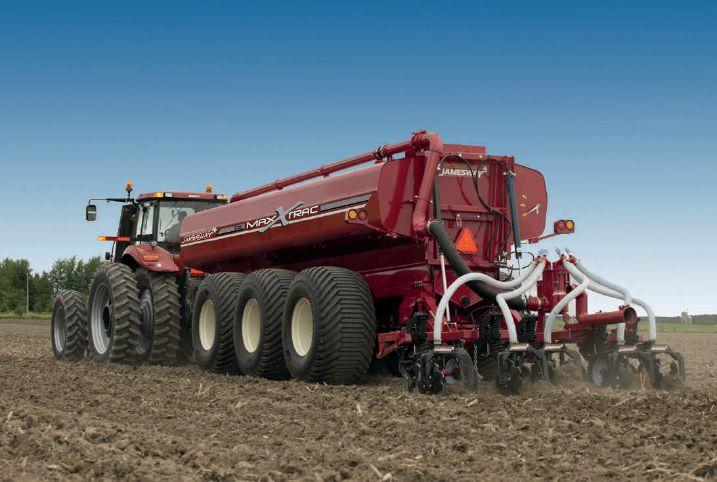
Farmers and custom applicators can take on the toughest manure hauling jobs with Jamesway’s new maxx-trac high performance spreader tank.
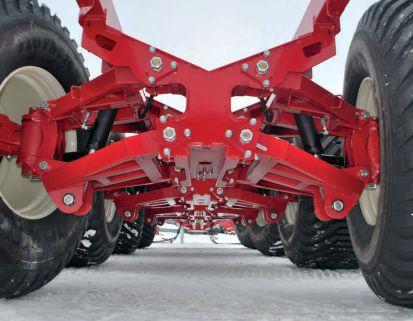
independent-link suspension is the key feature in the Jamesway maxx-trac tanker, allowing the spreader to carry the heaviest loads with ease. Perfect load distribution and maximum freedom of movement takes the stress and strain off equipment.
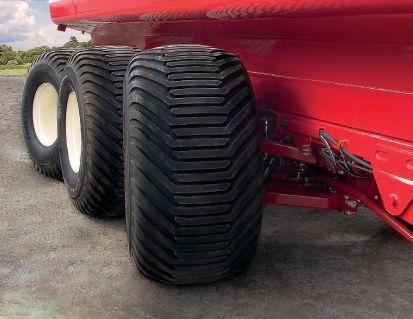
manure hauling is all about getting the job done fast so Jamesway maxxtrac spreader tanks deliver maximum performance and minimum downtime. the new high-output impellers unload in record time, with a choice of six- or eight-inch discharge. road travel is faster and safer with Jamesway’s high speed steering system and industrial brakes keeping you in control. heavy-duty users will appreciate the low maintenance and easy servicing of maxxtrac tankers. Choose from a wide range of options, such as oil-filled hubs and night travel safety markings designed with custom haulers in mind. there are 11 models between 4,000 and 10,200 gallons to choose from, ensuring the perfect match for tractors and conditions. www.JameswayFarmEq.com
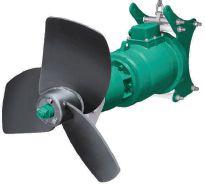
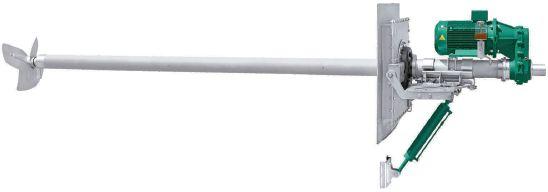
Optimix Submersible Mixers
High
SimpleSteer Tablet wins AE50 Award
novariant, inc has been honored with the 2014 ae50 Outstanding innovations award for its SimpleSteer tablet-based autosteering solution.
Presentation of the award took place at the recent american Society of agricultural and Biological engineers (aSaBe) agricultural equipment technology Conference in louisville, Kty deemed one of the year’s most innovative designs in engineering products or systems for the food and agriculture industries sector, SimpleSteer is an auto-steering display solution for precision agriculture that runs on a consumer tablet device. the SimpleSteer software from novariant converts a consumer tablet into a wireless command post for advanced auto-steering operation of tractors, combines, and other farm vehicles. SimpleSteer supports novariant’s controllers, such as geoSteer and eCu-S1 and provides interface support for hydraulic, Can, mechanical and steerready vehicles. novariant offers SimpleSteer as an easy-to-use auto-steer display alternative to complement its current suite of precision steering solutions available through select var Partners.
the SimpleSteer tablet auto-Steering Solution is featured in the January/February
2014 special ae50 issue of aSaBe’s magazine resource: engineering & technology for a Sustainable World.
Connectivity between equipment, data platforms creates efficiency
agri-trend data Corp and John deere are creating connectivity conduits between myJohndeere and the agri-data Solution.
using John deere’s Wireless data transfer technology, the firms are linking data from field equipment into the agridata Solution platform to save growers time and let them analyze their data to make decisions more efficiently.
the two firms have signed agreements enabling the sharing of data between the two data systems, which will create efficiencies for farmers.
the agri-data Solution is among the first to complete integration with myJohndeere. a fundamental component of the FarmSight Strategy introduced in 2012, myJohndeere is an open platform that provides customers with a complete and comprehensive solution for their data management needs. the deere strategy of collaboration with products like the agri-data Solution will enable data to be available when and where needed, as determined by the customer, all while maintaining John deere’s core principles surrounding data management.
nUtrient management Bill ohio Senate approves agricultural
By Peggy Kirk Hall
The Ohio Senate has approved a bill directing the Ohio department of agriculture (Oda) to establish a fertilizer applicator certification program in Ohio.
the sponsors of Senate Bill 150 designed the legislation to address agricultural nutrient runoff into Ohio waterways and the algae problems in grand lake St. marys and lake erie. the bill hinges on a new education and certification program that will give farmers additional information about fertilizer and nutrient use best practices.
here are answers to a few basic questions farmers might have about the proposed program:
When would the program begin?
if the bill is passed by the Ohio house of representatives, the fertilizer application certification program would begin on Sept. 30 and would need to be renewed every three years following the law’s effective date.
Who would have to be certified?
Someone who applies “fertilizer” for agricultural production on land more than 50 acres in size would have to be certified by Oda as a fertilizer applicator, or would have to be acting under the instruction of a certified fertilizer applicator.
Would there be any exemptions from the program?
those who would make applications of fertilizer on land parcels of 50 acres or less would be exempt from the certification requirement. the bill would also allow the Oda director to establish additional exemptions for certain persons or certain “types of cultivation.”
What fertilizers would the program cover?
under the bill, “fertilizer” means any substance containing nitrogen, phosphorus,
or potassium, or any recognized plant nutrient element or compound that is used for its plant nutrient content or for compounding mixed fertilizers. the definition of fertilizer does not include lime, manure and residual farm products such as bedding, wash waters, waste feed, silage drainage and certain dead animal composts, unless those are mixed with fertilizer materials or distributed with a guaranteed analysis.
What would the certification program involve?
the Senate’s bill directs that the program must educate applicants on the time, place, form, amount, handling, and application of fertilizer—commonly referred to as the 4-rs of nutrient stewardship (right fertilizer source at the right rate, at the right time and in the right place). the bill also states that the program must “serve as a component of a comprehensive state nutrient reduction strategy addressing all sources of relevant nutrients” and must “support generally practical and economically feasible best management practices.”
Would there be a certification fee?
the bill allows the Oda to establish a fee for applicants who seek certification, but the fee may not exceed the fee charged for the state’s pesticide applicator certification program. additionally, the bill exempts persons who hold an Ohio commercial or private pesticide applicator’s license from paying an additional application fee if they also seek fertilizer application certification. Other important provisions in Senate Bill 150 include:
Recordkeeping requirements
Certified applicators would have to maintain fertilizer application records for at least three years from the date of a fertilizer application. the records must include the date, place and rate of application, an analysis of the fertilizer and the name of the person applying the fertilizer. applicators would not be required to submit the records to Oda on a regular basis, but would have to make the records available upon a request by the agency.
Emergency revocation and suspension powers
the bill would allow the Oda director to immediately deny, suspend, revoke, refuse to renew or modify a fertilizer applicator certificate if there is “substantial reason to believe the certificate holder recklessly applied fertilizer in such a manner that an emergency exists that presents a clear and present danger to human or animal health.”
Voluntary Nutrient Management Plans
the bill would allow a person who owns or operates agricultural land to develop a voluntary nutrient management plan in collaboration with Ohio State university, the Soil and Water Conservation district or the natural resource Conservation Service or its certified providers and submit the plan for approval by the Soil and Water Conservation district. a voluntary nutrient management plan would be important criteria for immunity from civil liability, discussed below.
Legal Defense against Civil Actions
under the bill, a person sued in a claim involving liability for an application of fertilizer would have a legal defense that would prevent liability upon showing these three criteria:
• the person is a certified fertilizer applicator or under the control of a certified applicator;
• the person properly maintained fertilizer application records as required by the certification program;
• the fertilizer was applied according to and in substantial compliance with an approved voluntary nutrient management plan.
Watch now for the agricultural nutrient management bill to be introduced in the Ohio house of representatives for final approval.
Peggy Kirk Hall is an assistant professor in the department of Agricultural & Resource Law at Ohio State University. She can be reached at hall.673@osu.edu or 614 247-7898.
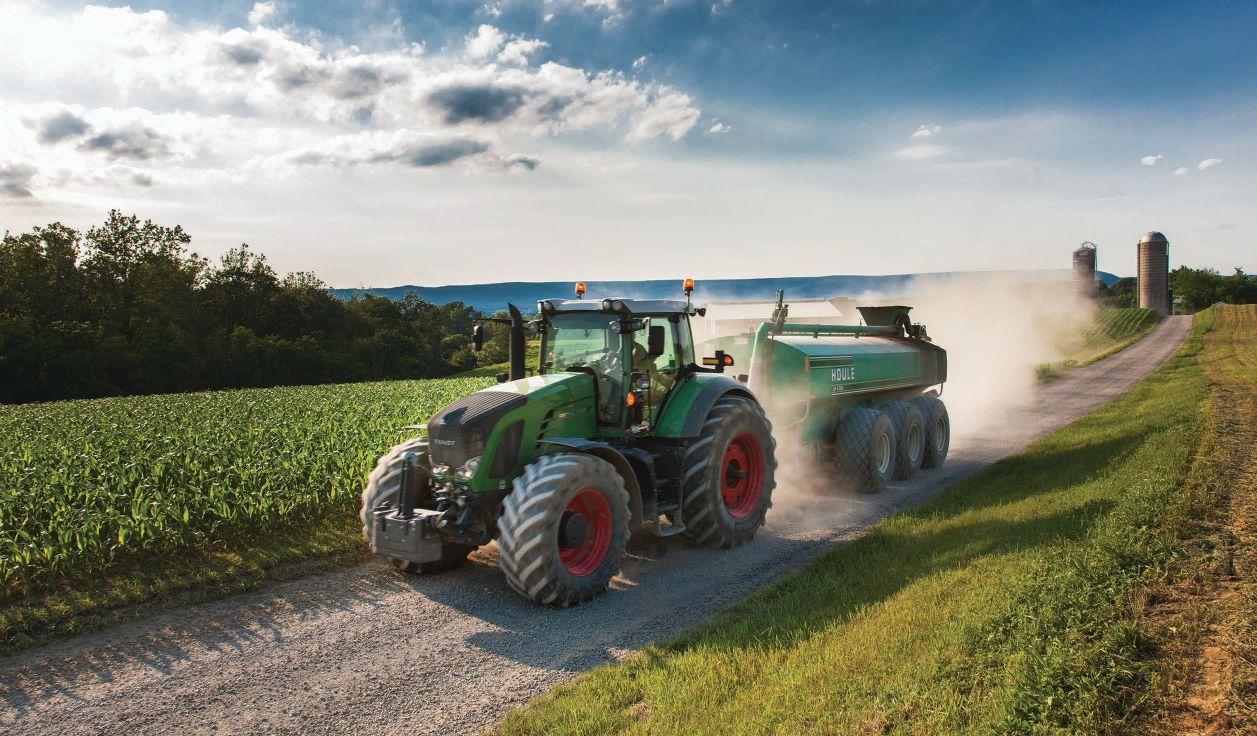
Other tractors say they can measure up to a Fendt. Guess what that’s a load of?
It’s no wonder why so many tractor companies want to compare themselves to Fendt. When you introduce the CVT transmission, front axle suspension and cab suspension to tractors, you tend to have plenty of imitators.
And if the scores of items only available from Fendt aren’t enough, we also back it up with our Fendt Gold Star Customer Care program that gives you 3-years or 3,000 hours of comprehensive warranty with included routine maintenancethe best in the industry.
In the hauling business, you need a tractor that’s capable and dependable.
That’s why the best run operations run Fendt.
2014 Hydro Agitation Pontoons
Hydro Agitation Pontoons are able to reach depths where no other agitation product has gone before. Utilizing low maintenance 17” hydraulic props these pontoons send an intense cyclone of destruction to the bottom of your lagoon. Now you can reach even the deepest parts of the lagoon to get all the nutrients your crops need.
HYDRO F1 FEATURES:
60 HP Engine
1 - 17” Hydraulically Driven Prop for Agitation.
Hand Held Control
Cable and Winch Steering System
120 Gallon Fuel Tank
HID Spot Lights
HYDRO F4 FEATURES:
200 HP John Deere Engine
4 - 17” Hydraulically Driven Props for Agitation and steering.