MARCH/APRIL 2008 MARCH/APRIL 2008




MARCH/APRIL 2008 MARCH/APRIL 2008
CHICKENS dieting • GREAT LAKES Manure Handling Expo
INNOVATIONS: Lagoon Agitation & Aeration
M-Series Reels
• 3500 M 3.5” x 1200’ - 28,000
G.P.H. up to 60 acres per setup
• 3750 M 3.75” x 925’ - 30,000
G.P.H. up to 35 acres per setup
• 4000 M 4” x 1550’ - 46,000
G.P.H. up to 104 acres per setup
• 4500 M 4.5” x 1320’ - 65,000
G.P.H. up to 75 acres per setup
• 4600 M 4.6” x 1550’ - 60,000
G.P.H. up to 104 acres per setup
• 5100 M 5.1” x 1400’ - 80,000
G.P.H. up to 80 acres per setup
• 5500 M 5.5” x 1550’ - 108,000
G.P.H. up to 104 acres per setup



Manure gas safety – Be aware, be safe
Study out of Purdue University provides noteworthy data for manure haul contractors and farmers.
California launches new manure technology review
Panel reviewing the latest manure treatment technologies.
The fate of anti-parasitics in manure, soil
German researchers study antiparasitics in manure and manure-applied soils.
Higher yields, cost savings with liquid manure
Great Lakes Manure Handling Expo features latest research and newest equipment.
First covers for methane reduction project installed
Dairy in New York State receives lagoon covers to capture methane and reduce emissions.
Canadian bio-digester report
Increasing support and a variety of technologies are resulting in more digesters.
Bigger, faster, safer
A new generation of tires helps manure tanks achieve new heights.
Chickens dieting to help Delaware’s waterways
Chickens in Delaware are digesting more phosphorus, thanks to phytase.
Manure Manager takes a look at what’s out there in the market for: Lagoon Agitation and Aeration.
Guest column: Adding value to your custom business
Sarah Roth is a senior extension associate in farm business management with Penn State University. Cover: Storage safety is your affair. See story on page 6.

Published by:
Annex Publishing & Printing Inc.
145 Thames Road West Exeter, Ontario N0M 1S3 (519) 235-2400, Fax: (519) 235-0798
Editor
Margaret Land • (519) 429-5190, (888) 599-2228, ext 269 mland@annexweb.com
Contributing Editors
Sarah Roth, Candace Pollock, Tony Kryzanowski, Tracey Bryant, Treena Hein
Sales Manager
Laura Cofell • (519) 429-5188, (888) 599-2228, ext 275 lcofell@annexweb.com
Production Manager
Julie Turkheim • (519) 235-2400, ext 225
Production Co-ordinator
Colleen Brennan • (519) 235-2400, ext 226
Circulation Supervisor
Amy Penninga (519) 235-2400, ext 233 apenninga@annexweb.com
Vice-President/Group Publisher
Diane Kleer • (519) 429-3966 dkleer@annexweb.com
Website: www.manuremanager.com
US Subscriptions:
$37 US one year
$64 US two years
International Subscriptions
$70 US one year
Canadian Subscriptions (GST included)
$37 Cdn one year
$64 Cdn two years
Canadian Publications Agreement #40065543
Return undeliverable addresses to:
Annex Publishing & Printing Inc.
145 Thames Rd. W., Exeter, ON N0M 1S3
Reproduction prohibited without permission of the publisher.
Printed in Canada
March/April 2008
Volume 6 • No. 2

By Margaret Land
By Margaret Land

My mom always tells me that as a young girl, I was very well behaved. But I know the truth – I had a bit of a devilish streak. There was nothing I enjoyed more than exploring the barn and the surrounding yard, including balancing precariously along the edge of the manure pit behind our small pig barn. It wasn’t a deep pit by any means since my father didn’t have many sows or growers – 50 at the most – but it was still intimidating to look down into that slurry. I had a few close calls, including almost breaking through the ice covering in winter, but I always managed to escape unmuddied.
One summer day, a city friend of my father’s came to visit the farm, bringing along his two urbanized children. The three of us were all about the same age, between seven and 10, and were soon busy playing in the farmyard. Ever the show-off, I had to demonstrate my balancing prowess along the edge of that manure pit. The visiting little girl was suitably impressed but her younger brother thought he could do better. He couldn’t. With a resounding splat, he landed waist deep in the pit. It took both his sister and me to pull him out. He went home in pink track pants and I was banned from the back of the barn.
Not long after meeting my husband, I told him that story. He recounted the
time that he, on a dare, ran across the crust on the top of the manure pit at his brother-in-law’s hog farm. His escapade ended with him naked in the front yard being hosed off by his mother.
We can smile about these incidents now but behind the smile is the knowledge we were lucky – lucky we weren’t seriously hurt or killed.
Proper manure management and storage are not child’s play. According to a recent study conducted by researchers at Purdue University, 77 people in the U.S. died between 1975 and 2004 as a result of being overcome by toxic gases in livestock manure handling or storage facilities. In one incident in Virginia during 2007, five people on a dairy operation were killed – the farmer, 34, his wife, 33, two daughters, ages 11 and nine, plus a 24 year old farm worker. According to media reports, the farmer had entered the manure pit to clear a clog, “probably something he had done at least 100 times” before. This time there was toxic gas.
According to the Purdue report, the peak period for incidences involving manure gas deaths is during the heat of summer and is usually associated with the transferring of manure for field application. As farmers prepare to enter this time of the season, please think, act and be safe.


At one time, coal miners working underground used canaries to warn them of the presence of toxic gases. Farm workers and manure haul contractors laboring in confined spaces where similar dangers involving toxic gases exist should be equally mindful of taking precautions to protect themselves against personal injury and even death.
Between 1975 and 2004, 77 people died in the U.S. as a result of being overcome by toxic gases in livestock manure handling or storage facilities, according to a groundbreaking study conducted at Indiana’s Purdue University. There were also 21 documented cases of severe injuries and 14 international fatality cases. While many believed that the greatest number of fatalities occurred within the pork industry, in fact more than half of the fatalities involved dairy operations.
An article summarizing the study’s findings was recently published in the , produced by the U.S. National Farm Medicine Center. “In my opinion, there is never any good reason for anyone to enter a manure storage pit,” says study and article co-author, Dr. William E. Field, yet he knows that in practical terms it will happen. He co-authored the study with Randy L. Beaver.
What Field would like workers to consider before they enter a manure pit is whether that piglet or broom stick that has fallen into the manure pit is worth the potential for permanent brain damage or the loss of life. Hydrogen sulfide, methane, carbon dioxide and ammonia pose a significant risk that can be avoided through properly designed manure handling facilities, properly ventilated intensive livestock structures, safety gear like portable air quality

By Tony Kryzanowski

monitoring devices, signage in areas warning individuals about the potential danger of asphyxiation, installing fences to restrict access to dangerous sites and in extreme cases, using respirators to avoid asphyxiation. The cost of equipping workers with portable air quality monitors has been calculated at about $1.00 per day per worker.
What the study discovered is that fatality figures being used by some professionals in verbally reported incidents were vastly overstated, which did not earn the study’s authors any popularity contests in some quarters, particularly with some organizations that were receiving significant funding to operate certain farm safety programs. However, the study has painted a more realistic picture of what has occurred in terms of documented manure gas related injuries and fatalities. While these cases have been documented, the authors have no doubt that there have also been many undocumented near-misses or mis-reported fatalities related to manure gas exposure.
Farm workers and manure handlers need to be alert to telltale signs of a potentially hazardous environment. Firstly, animal behavior is a good indicator. If animals are quiet and sluggish, this can indicate the presence of toxic manure gases and the facility should be ventilated immediately. Secondly, if workers experience dizziness and disorientation, they should seek fresh air immediately. In cases where an individual is disoriented and remains in that state after exposure to manure gases, medical attention should be called upon immediately because more serious side effects could follow, such as permanent brain injury.
In addition to pinpointing the actual number of deaths that can be blamed on
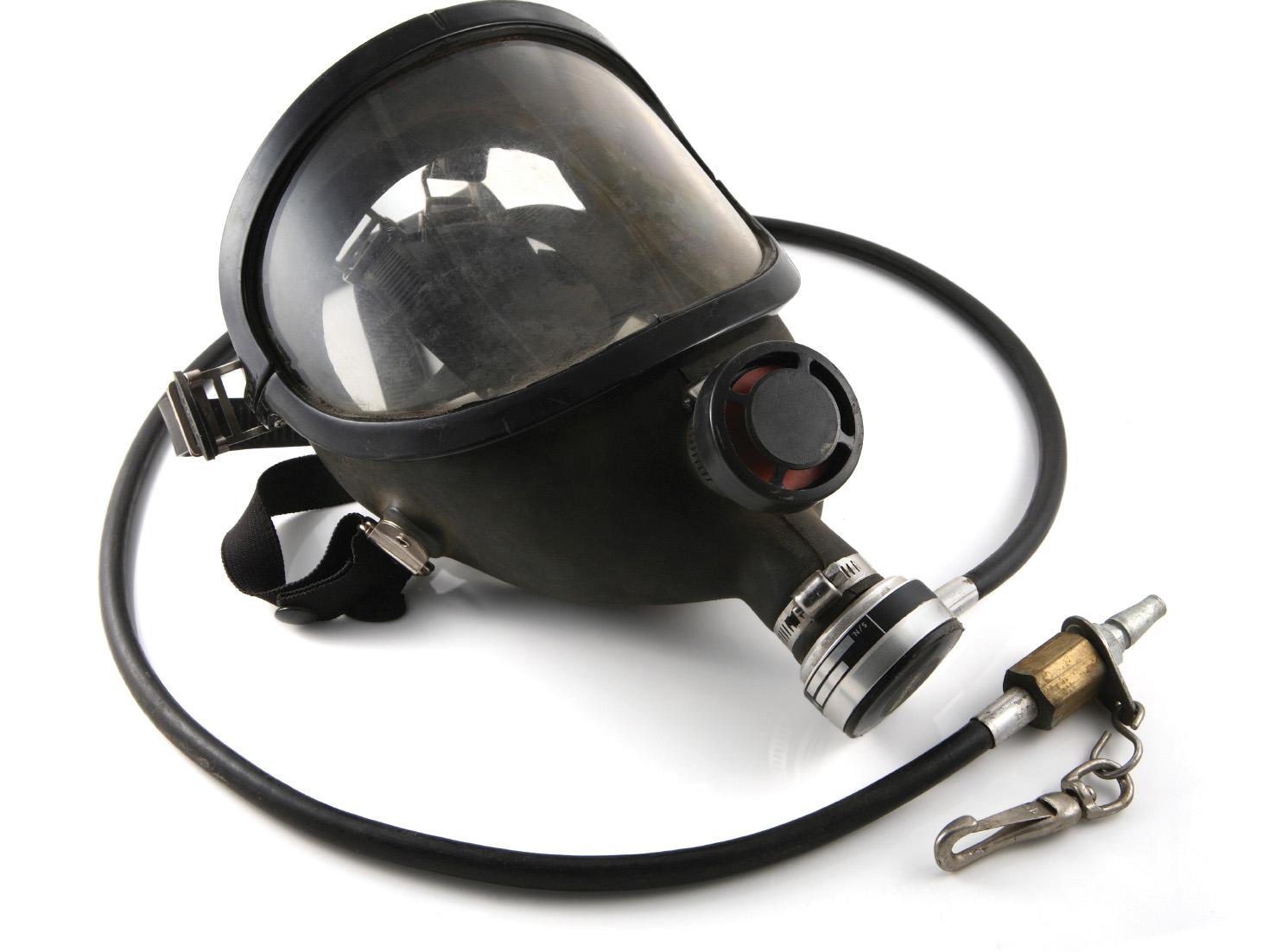
Q Authors of a study conducted at Purdue University suggest no one should enter a manure storage container or pit unless absolutely necessary and farm employees must be instructed never to enter a manure pit to attempt a rescue without being outfitted with the appropriate equipment to conduct the rescue, which includes a self-contained breathing apparatus, or SCBA, similar to those worn by firefighters.

The cost of equipping workers with portable air quality monitors, similar to this model marketed through Dräger Safety, has been calculated at about $1.00 per day per worker.
manure gas asphyxiation, the study provides some noteworthy data for manure haul contractors and farmers on where these deaths occurred. Belowground manure storage structures and sump pits accounted for 65 or 84 percent of the 77 fatalities while open lagoons only accounted for eight of the documented cases. A total of 22 percent of total fatalities occurred during a rescue attempt. At the time of death, most of the victims were unclogging, cleaning, repairing, moving, retrieving, fixing and checking equipment and facility components.
Of particular concern is that 17 of the victims were under the age of 16, an age group that – according to the Fair Labor Standards Act and Hazardous Occupations for Agriculture – is
prohibited from working for hire in agricultural confined spaces.
Time of year also factored into the highest occurrence of fatalities as, according to the authors, “the peak period of incidents were during the hottest part of the summer and often associated with transferring of manure for application to crop ground.”
Part of the problem with challenging the farm community to identify and take preventative action to avoid contact with toxic manure gases, says Field, is that so much of the research as it relates to the potential dangers of manure gases is focused on maximizing animal health rather than on protecting farm workers. That is because the industry is so focused on production. There is a trend toward leniency as it relates to applying the
Avoid entering manure storage areas if at all possible. Many deaths have occurred when people entered manure storage areas without proper safety precautions. If you must enter a manure storage area, the following confined space entry procedures will minimize, but not eliminate the risks.
• Never enter a manure pit during or just after agitation because there is always the possibility of deadly concentration of this gas. Plumbing and pumping equipment should be installed so that it can be easily removed for repairs. Before agitation, take steps to ensure the welfare of the animals and people working in the area.
• Remove all people and animals if possible. If animals cannot be removed, maximize ventilation and agitate slurry very slowly at first. Monitor the condition of the animals. If the animals act restless, agitated or abnormal, stop the agitation immediately and ventilate the area.
• Always keep at least one foot of space between the highest manure level and the slats. This protects animals which are on the slats and inhale the gases that accumulate at the surface of the pit.
• Do not enter manure pits without either a self-contained air supply like those that fire fighters use, dust masks or other cartridge respirators will not filter out the toxic gases nor
will they provide the oxygen requirement to work in confined spaces such as manure pits, or test before entering. Test the oxygen level to make sure that adequate oxygen is available. Also test for hydrogen sulfide, a particularly toxic gas, to be sure that concentrations are safe –less than 10ppm.
• Provide additional forced ventilation. Additional ventilation will increase oxygen and decrease hydrogen sulfide and other toxic gases.
• Monitor conditions while working. Agitation from working can increase the toxic gas levels. When someone collapses in a pit, gases are so concentrated that it is suicidal for anyone else to enter without a selfcontained breathing apparatus. The only reasonable immediate action is to ventilate the storage area and notify rescue personnel who can bring the proper equipment.
• Barn fans may be activated to provide ventilation, but do not lower fans into the pit because this could cause a methane explosion.
• Use a safety line. A worker in a confined space or manure storage area should wear a body harness with a safety line. Enough people and/or a winch should hold the safety line so that the worker can be pulled out of the area if a problem develops.
• Wear a supplied air respirator. Never enter a pit without one. The person using a respirator should be trained on the use of the mask. It is
same standards to farm operations as compared to industrial facilities. For example, safety regulations related to confined spaces for industry do not apply to farm facilities. Field is concerned that it may take a major farm tragedy before legislators hear a wake-up call as to the importance of applying these safety measures equally for farm-based confined spaces such as manure storage pits. He also points out that there are standards specifying how municipal waste facilities must be designed so that workers can properly maintain the facilities without putting themselves in mortal danger from sewage gas. Yet no such standards exist for the construction of manure storage and handling facilities on farms. He notes that when conducting
particularly important that the mask form a tight seal around the face.
• Provide a clear escape path. Make it as easy as possible for the worker to exit the manure storage area quickly. Do not block the path with tools or objects.
• Keep fire away. Methane gas is a byproduct of manure degradation and it is flammable. Keep fire and other ignition sources such as electrical tools away from the manure storage area. Test the methane level with an explosion meter.
• Know first aid. Someone on the site should be trained in CPR and first aid.
• Recognize that conditions are of greatest risk when manure is agitated or moved. Movement and agitation increase the release of dangerous gases, sometimes several fold. When agitating, pumping, or moving manure, take precautions to be sure that extra ventilation is provided to nearby areas (e.g., buildings over or near the manure storage).
Due to the equipment requirements and inherent risks associated with entering an area where there may be toxic gases or insufficient oxygen, you should consider hiring a professional trained in working in these areas to perform maintenance tasks. If hiring a professional or using a SCBA is not possible, the best advice is to stay out of the pit.
Information courtesy of Farm Safety Association Incorporated.
research for the study, researchers witnessed many examples of older farm manure storage and handling facilities where piping was located in dangerous cramped quarters and constructed with steel components in regular contact with manure that were in advanced stages of corrosion.
Nor is there any data as to the dangers of long-term exposure to toxic manure gases. Only now is money being spent to establish a baseline to determine the quantity of manure gases within typical farm operations. All that is known, so far, is sows that live in an environment of prolonged exposure to manure gases tend to experience more aborted births. Therefore, Field says common sense would suggest that women in their child bearing years may want to avoid exposure to confined livestock areas where manure gases could be a concern.
The study makes several recommendations as to how fatalities may be avoided in the future. What is noteworthy is the number of deaths per year is increasing, largely due to changing manure storage practices over the past 30 years. Many suggestions relate to how incidents can be prevented in the first place through engineering controls in manure handling and storage
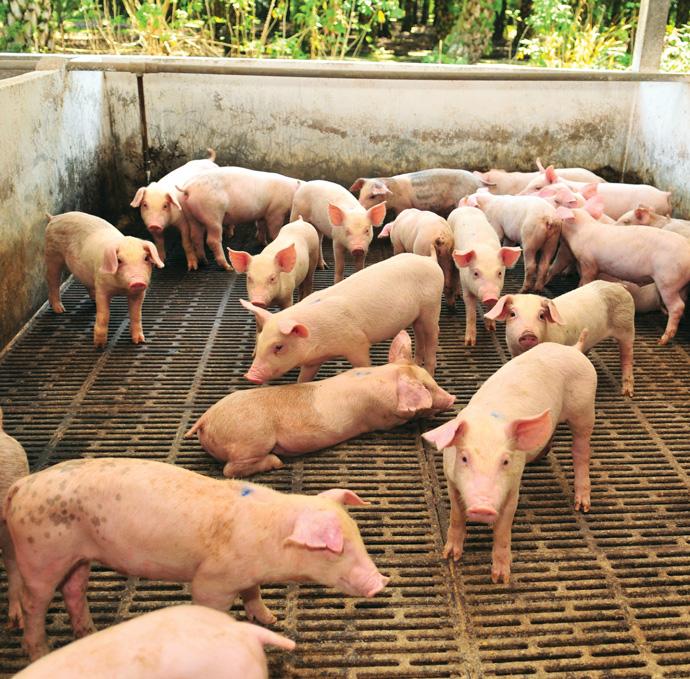

Animal behavior is a good indicator of the possibility of manure gas build up. If animals are quiet and sluggish, this can indicate the presence of toxic manure gases and the facility should be ventilated immediately.








facility designs as well as through worker safety education.
The authors suggest that manure and waste pits should be identified as confined spaces; manure and waste systems should be constructed in a manner that would allow maintenance to be performed on all serviceable components from outside the pits; manure waste systems should be equipped with some type of power ventilation system; manure storage or pits should never be entered unless absolutely necessary; entrances to waste pits should be covered by a grate-like cover; farm employees must be instructed never to enter a manure pit, or any other confined space to attempt a rescue operation, without proper consideration of their own safety and the appropriate equipment to conduct the rescue; and, manufacturers of equipment designed for manure waste pit systems should include warnings on the hazards associated with these systems.
Other suggestions include limiting or restricting access through fencing, placing sufficient ‘danger’ or ‘warning’ signage in the vicinity of confined spaces, using air monitoring equipment and maintaining adequate ventilation.



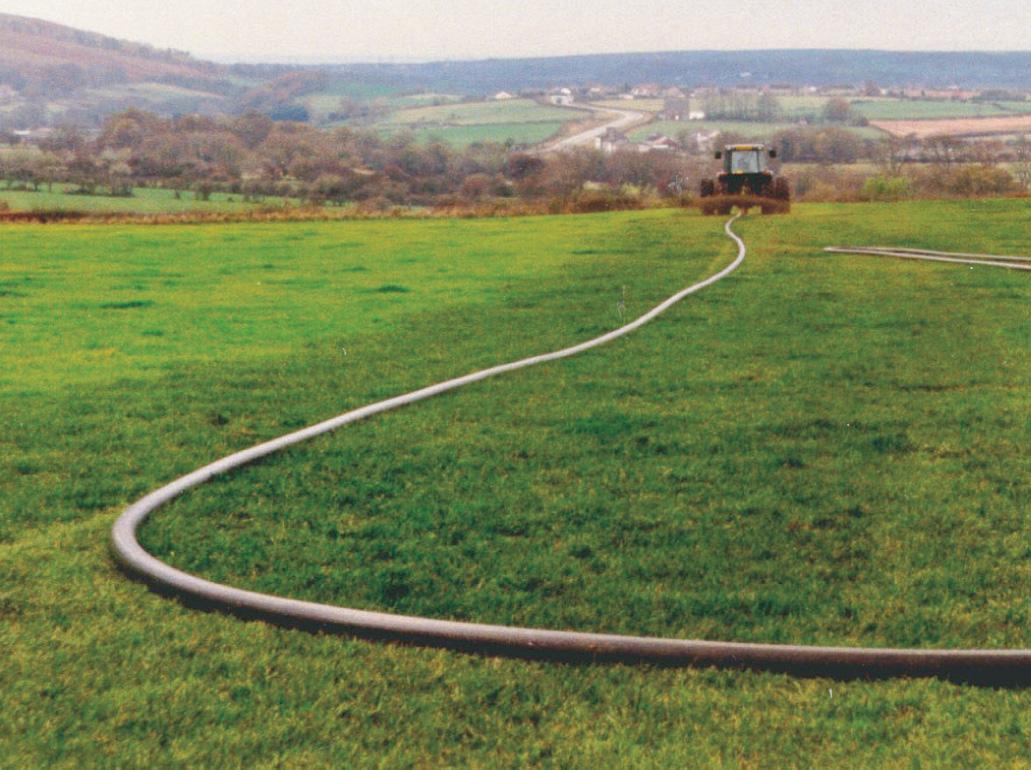
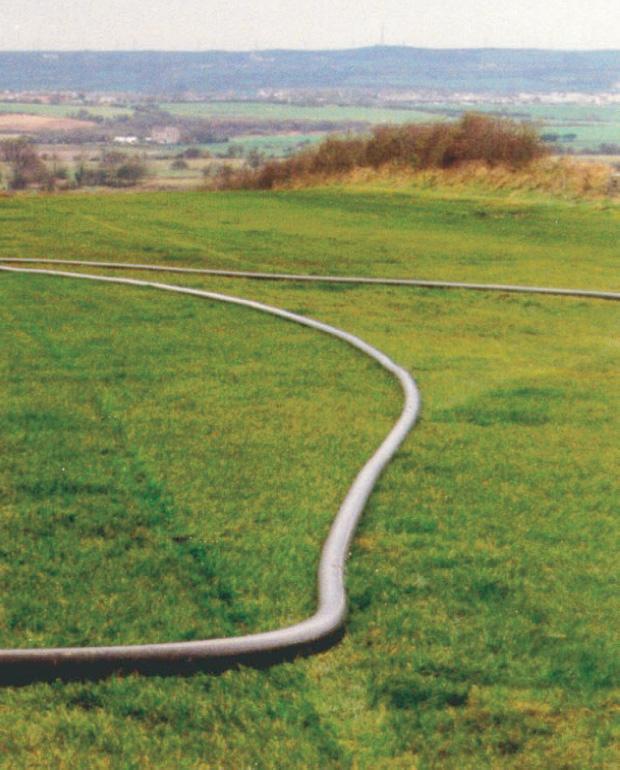
For over 25 years Angus has been a pioneer in the manufacture of high performance agricultural hose products. You have come to trust the Angus name and reputation for quality products, dependable service, and honest warranties. Angus proudly manufactures right here in the United States in rural North Carolina where many of our employees live on farms or grew up on farms. So, when it comes to agricultural hose products, Angus understands your needs.
New Stocking Program
- Angus now pre-builds hose before each growing season to assure product availability when you need it.
New Products
- Super 220, 8” supply hose – 220 psi w.p.
- Armour Guard 250, 6” supply hose – 250 psi w.p.
- Dragon Hose, 4-½“ & 5” sludge injection drag hose – 200 psi w.p.
The new products above join our existing family of agricultural hose products:
Armour Guard Supply Hose:
- Sizes: 1-½”, 2”, 2-½”, 3”, 4”, 6”
- Standard lengths: 100’, 330’, 660’
Premium 200 Irrigation Hose:
- Sizes: 2-½”, 3”, 3-½”, 4”, 4-½”, 5”
- Standard lengths: 660’



The California Dairy Manure Technology Review is inviting vendors to submit information on their manure treatment technologies for an objective assessment by a panel of experts pulled from government, industry, academia and environmental groups. The panel will serve as a clearinghouse for information on technologies that are most likely to work, given California’s climate, economic factors and regulatory requirements.
As the nation’s leading dairy state, California provides 21 percent of the U.S. milk supply. However, as the numbers of milk cows and people continue to grow, particularly in the state’s dairyrich San Joaquin Valley, managing and treating dairy manure to prevent air and water pollution is a major concern.
Intent on identifying the most effective manure treatment processes and equipment, University of California – Davis Campus is collaborating on a technology review project with the California Air Resources Board (CARB), as well as other regulatory and industry organizations. The California Dairy Manure Technology Review, funded by the U.S. Environmental Protection Agency, is inviting vendors to submit information on their manure treatment technologies for objective assessment by a panel of experts from government, industry, academia and environmental groups.
It is hoped this second round of review will build on information shared during the first technology assessment, held in 2005. The new panel has refined the review’s request form and intends to consider the multimedia impacts of various
dairy management strategies plus make a broader impact analysis of technologies, focusing not just on manure management but other emission sources as well.
While not endorsing any specific technologies, the panel will serve as a clearinghouse for information on technologies that are most likely to work, given California’s climate, economic factors and regulatory requirements. “We are asking vendors to provide us with scientific data on what their technology accomplishes and how it works, as well as how much it costs and whether it has already been certified for use,” says Deanne Meyer, a Co-operative Extension livestock waste management specialist, University of California, in Davis’ animal science department.
“We hope that this review process will identify technologies that provide dairy farmers with options that protect the environment and meet all regulatory requirements,” Meyer says. “We also hope this database will help dairy operators, researchers and industry groups find locations and partners for technology demonstration projects.”
Interested vendors can submit information on their technologies
using forms available at: www.manureproducts.info. The deadline for submissions was March 27, 2008 but late submissions will be accepted and reviewed based on available resources. It is hoped the information gathered during the review will be shared with the industry during a mini-symposia, scheduled for later in 2008.
This latest technology review is the second for the state of California. In 2005, the CARB hosted a San Joaquin Valley Dairy Manure Technology Feasibility Assessment Panel to help determine which technologies and management techniques were most likely to improve the management and treatment of dairy manure in the San Joaquin Valley. Panel members were drawn from government, industry, academia, plus environmental and conservation groups. They evaluated material submitted from 44 technologies to assess performance claims. In December 2005, a report was released from the panel, entitled:
. The report is available at: www.arb.ca.gov/ag/caf/dairypnl/ dmtfaprprt.pdf.

Data covering the fate and behavior of veterinary medicinal products (VMP) in manure and manure-applied soils has been significantly enhanced, thanks to recent research out of Germany. Robert Kreuzig, with the Braunschweig University of Technology’s Institute of Ecological Chemistry and Waste Analysis in Germany, and a team of researchers have been investigating the fate and behavior of benzimidazole anti-parasitics in manure and manure-applied soils under laboratory and field conditions.
An innovative experimental design for laboratory tests on VMP was developed in order to simulate the real entry route of VMP into soil environments already under laboratory conditions. Degradation tests of VMP as 14C labeled radio-tracers in manures were conducted. Test manures containing seven-day aged VMP residues were prepared and then applied in laboratory batch tests to study degradation and absorption of VMP in soils containing manure. In further tests, the differentiation of microbial, chemical and photo-induced degradation were taken into account. Finally, test plot experiments were performed under field conditions to monitor the transferability of the laboratory data to field conditions.
The benzimidazole anti-parasitics flubendazole and fenbendazole remained mostly extractable in pig manure and soil samples. In contrast, antibiotics, such as sulfonamides, rapidly formed nonextractable residues. Flubendazole was found unchanged while fenbendazole was accompanied by corresponding metabolites. Due to their slow degradation in pig manure, manure storage is not considered to reduce substantially the environmental exposure. As shown by the absorption tests, both benzimidazoles did not fulfill the criteria of potential leachers.
Finally, the degradation tests show the dependence of the metabolic fate on the microbial activity in the soil and on the test manure application. These aspects emphasize that the consideration of manure effects already under
laboratory conditions support a better understanding of the environmental fate of VMP under field conditions.
Results from this research project were published in the November 2007
issue of the journal (A Journal of Sustainability and Environmental Safety). The full research article can be viewed at www.clean-journal.com
By Candace Pollock

Learn more at the Great Lakes Manure Handling Expo, July 9.
Manure may be a cheaper alternative to high-priced commercial fertilizers, but management is the key to profit and crop performance. Jon Rausch, Ohio State University Extension environmental management program director, says that more Ohio farmers are turning to manure for corn production because of the higher prices of nitrogen, potassium and phosphorus. However, they face the challenge of proper nutrient utilization to maximize results.

“When manure is treated like a nutrient resource, it can be a cost-effective asset to crop production,” he says. “To maximize manure’s value, it must replace other nutrient inputs and be placed where a crop response is expected. Adding nutrients above recommended levels would decrease its value and increase the potential of those nutrients being lost to the environment.”
Existing nutrient levels in the soil, how much manure is applied, how well manure is spread, and how well soil nutrients are maintained with manure application are just some of the variables that can influence the value of manure as a fertilizer resource.
Ohio State University Extension researchers are conducting studies that demonstrate how the value of manure, specifically from swine, depends upon the need for supplemental nutrients, proper manure handling and thorough application practices.


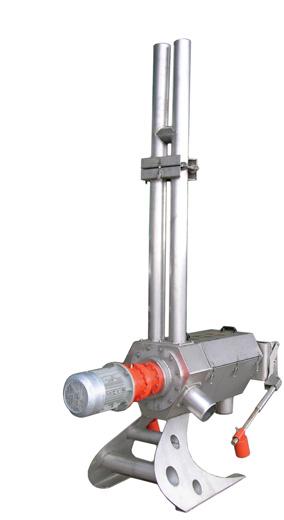
• ALL THE PERFORMANCE YOU NEED, NONE OF THE HASSLES.
• COMPLETELY 304 STAINLESS STEEL CONSTRUCTION.
• HEAVY DUTY PLANETARY DRIVE, NO GEAR BOX WOES.
• CAST AND HARDENED AUGER FOR PRECISION AND SUPERIOR PERFORMANCE.
• HEAVY DUTY SCREENS STANDARD, IN A VARIETY OF SIZES.
• CUTTER BLADES TO DESTROY FOREIGN MATERIAL.
• REVERSIBLE WEAR RINGS AND SPECIAL TUNGSTEN CARBIDE SEAL SYSTEM.
• SELF ADJUSTING VOLUME CONTROL ELIMINATES LOOSING SOLIDS PLUG AND PROVIDES EVEN HEAD PRESSURE.
• ADJUSTABLE MOISTURE CONTENT.
• SELF GREASING FEATURE.
• VERY LITTLE MAINTENANCE.
• TWO SIZES AVAILABLE.
• REALISTIC PRICING, NO HASSLE DEMOS FOR SERIOUS CONSUMERS.

INNOVATIVE, DEDICATED, & DRIVEN!!


• CONSTRUCTED COMPLETELY OF 304 STAINLESS STEEL.
• DESIGNED FOR ROOF OR SIDE MOUNT.
• VERTICAL AND HORIZONTAL MIXING DIRECTION IS ADJUSTABLE FROM OUTSIDE OF TANK.
• MAINTENANCE FREE DESIGN UP TO 30,000 HOURS.
• VARIOUS PROPELLER AND MOTOR SIZES AVAILABLE.
• UNBELIEVABLE PERFORMANCE.
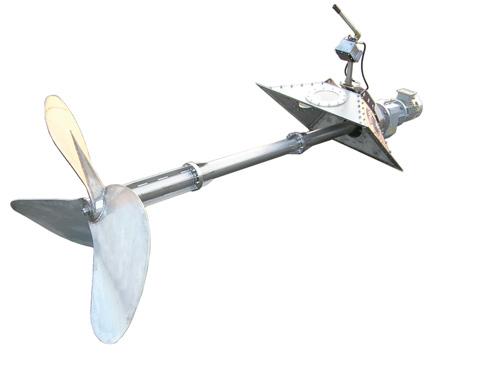
• OIL BATH DRIVELINE AND TUNGSTEN CARBIDE SEAL SYSTEM.
DODA has served the waste handling industry since 1960 providing the highest quality, innovative products available worldwide:
• Vertical and horizontal chopper pumps with “patented chopping system” PTO and electric models available, with a wide variety of executions to t every need.
• Vertical and horizontal agitators, PTO and electric models.
• Separators: two models available screw press and roller press designs.
• Aeration equipment.
• Bio gas equipment: agitators, pumps, and new “Back Flush and Diverter System”. DODA “DELIVERING TOMORROWS TECHNOLOGY TODAY!!”


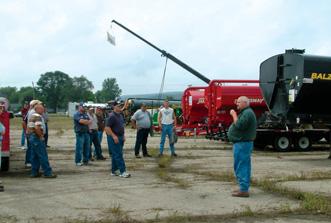

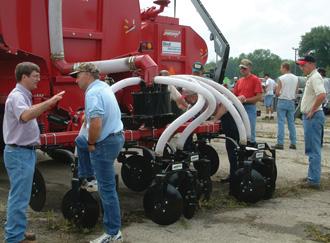

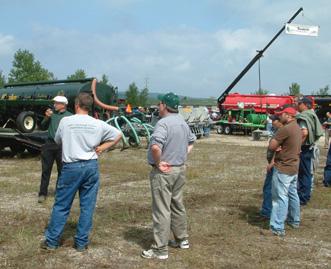
Glen Arnold, an OSU Extension educator for Putnam County, has been working on research that shows side dressing pre-emergence corn in the spring with swine manure produces yields comparable to applying commercial fertilizer. Coming off several years of research which showed that applying swine manure to post-emergence corn produced comparable or higher yields to commercial urea, OSU Extension educators in Putnam and Hancock counties hope to find the same results in treating pre-emergence corn.
“We want to find out if a farmer can plant corn and then use a dragline manure application system to side dress before the corn even comes up out of the ground,” explains Arnold. “In 2007, we completed research on three preemergence corn plots using liquid swine manure as the primary nitrogen source. Two of the three plots yielded the same or higher compared to urea.”
Arnold, who has been leading the research since 2004, will present the latest findings during the Great Lakes Manure Handling Expo being held July 9, 2008 at the Molly Caren Agricultural Center in London, Ohio. He hopes to show farmers that manure application, which is generally practiced in the fall, can be just as valuable in the spring and it could save farmers money, as well. “At today’s fertilizer prices, using manure from livestock could easily save farmers $75 to $100 per acre in purchased fertilizer,” he says.
Not only can springtime manure application potentially fatten a farmer’s wallet, but it can also benefit the environment. “There is less chance for nutrient loss in the spring as opposed to the fall, because the manure is actually going to a growing crop that will utilize its nutrients,” says Arnold. “We’ve always known that manure provides good nutrients for the soil. The idea is to find a way to make better use of it than applying it to bare fields in the fall.”

He adds that farmers could potentially be throwing away an economically valuable resource if a spring or early summer application to growing crops is not a consideration. In Putnam County, for example, if farmers fully utilize the ammonia nitrogen in their liquid swine manure, they could save more than $500,000 annually through reductions in purchased nitrogen, Arnold says. Putnam County is the fourth largest swine producing county in Ohio.
OSU Extension researchers have also found that when potassium and
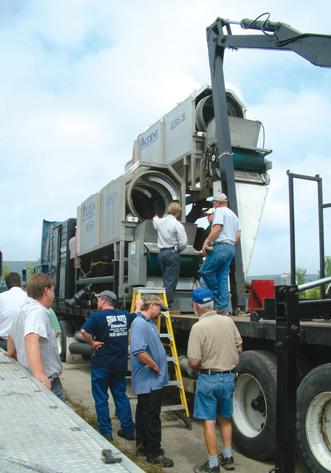
anure management issues, such as those discussed by Ohio State University Extension researchers Glen Arnold and Jon Rausch, will be comprehensively covered during the 2008 Great Lakes Manure Handling Expo, taking place July 9 at the Molly Caren Agricultural Center – home of Farm Science Review – in London, Ohio.
The expo is being sponsored by Ohio State University Extension, the Ohio Agricultural Research and Development Center, Michigan State University, Purdue University, Penn State University and Cornell University. Additional sponsors include Ohio Composting and Manure Management and the Midwest Professional Nutrient Applicators Association.
The theme of the Great Lakes Manure Handling Expo is ‘The Economics of Recycling’ and will include commercial field demonstrations, educational demonstrations, educational sessions, and commercial vendor displays.
Session topics that participants can look forward to include: calculating the value of manure nutrients; the benefits of proper equipment calibration; the importance of accurate record-keeping; how communication among applicator, producer and regulatory agency can improve application and the bottom line; safety precautions in manure application and storage; and case studies of farmers who will share their stories about manure management.
Educational demonstrations taking place during the event include: solid manure application rates; liquid manure application rates; preferential flow; calibration of manure application equipment; stockpiling best management practices; compaction; slurry seeding; and equipment safety.
To learn more, log on to http://ohio-environmental.org or http://oema.osu.edu or contact Tami Combs at (614) 292-6625, Jon Rausch at (614) 292-4504; or Mary Wicks at (330) 202-3533.

phosphorus have already reached soil saturation levels, the additional potassium and phosphorus from manure would not be utilized, nor would yields increase. “As a result, farmers are losing the economic value of potassium and phosphorus – to the tune of nearly $58 per acre – and both would be better utilized on acres that need those nutrients,” says Rausch. “Ideal conditions of using manure nutrients to its fullest include soil tests that indicate addition of potassium and phosphorus are necessary, an even and uniform process of manure application, and minimizing those nitrogen losses.”
Not only does manure add nutrient value to a crop, it also adds environmental benefits including micronutrients, organics and biologicals –those organisms that make up the ‘living soil’. Though difficult to quantify with direct economic value, manure has been shown to improve soil quality and soil health, increase organic matter content and build water-holding capacities, among other benefits. “When a farmer is looking at 60 cents per pound of commercial nitrogen as fertilizer, using manure not only for the nutrient value, but also for the secondary benefits, might be an alternative to consider,” suggests Rausch.
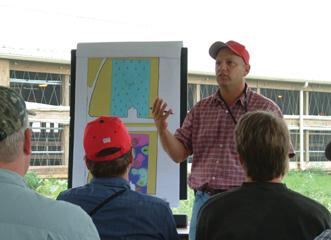

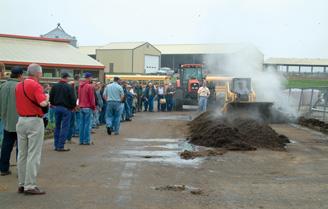
Educational sessions are a learning experience.
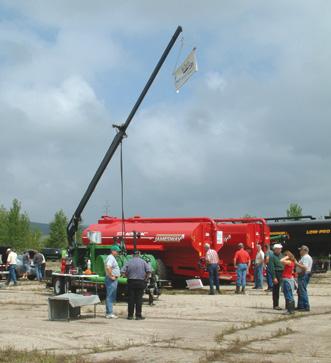


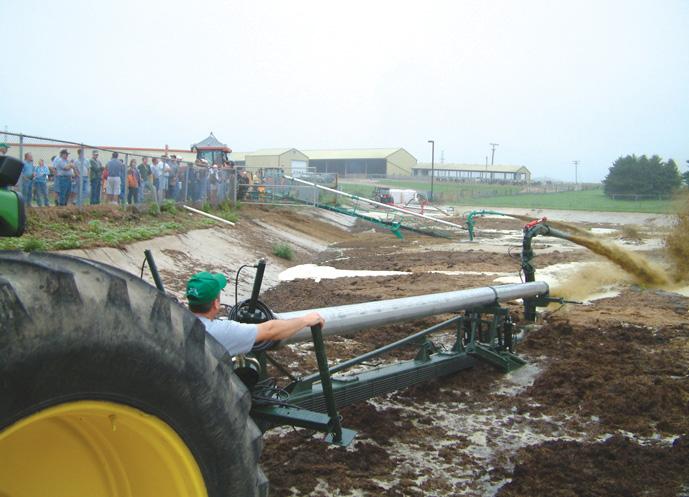
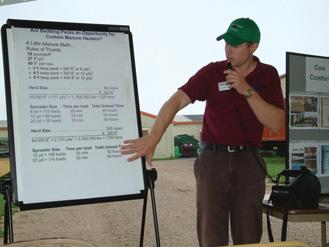
Displays provide opportunities to compare features.

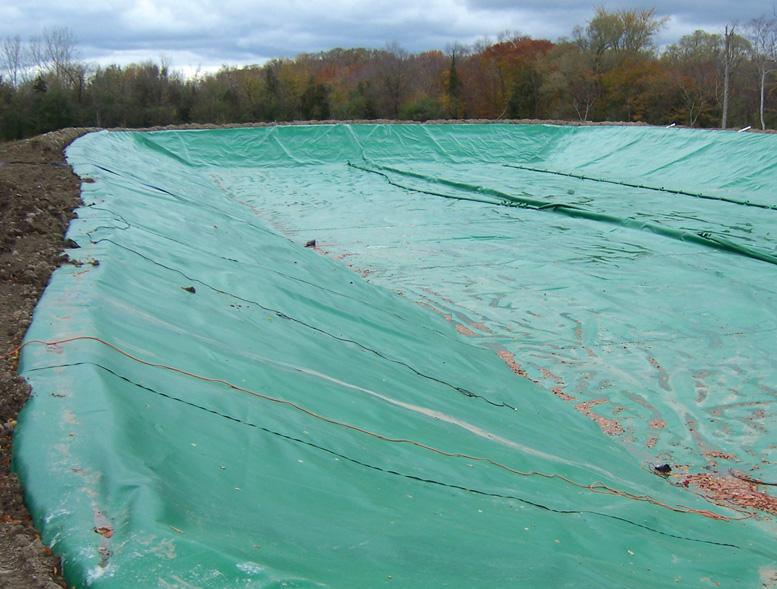
Fessenden Dairy in the Finger Lakes district of New York State is the first of about 200 hog and dairy operations across the U.S. to receive manure lagoon covers from Environmental Credit Corporation (ECC). The installation is part of a project aimed at reducing greenhouse gas emissions on livestock operations.
At Fessenden Dairy in New York State’s Finger Lakes region, Environmental Credit Corporation (ECC) has installed the first of 200 manure lagoon covers the company is providing as part of a methane reduction project to hog farms and dairies across the U.S. over the next several years.
The two lagoon covers at Fessenden Dairy will capture and flare methane emitted by manure, converting it to carbon dioxide and dramatically reducing the greenhouse gas (GHG) emissions from the dairy’s 1100 cows. By capturing and converting the methane, the project will reduce carbon dioxide emissions comparable to the GHGs produced in one year by 693 cars.
“By covering the lagoon, we can reduce emissions, help control the odors and do the best job we can for our neighbors,” says dairy owner Tim Fessenden. “And we can keep the rainfall out, which helps control the volumes in the lagoon. Last year, the rainfall added water to the lagoon, which carried into the cropland – and that’s not a good situation. I believe this lagoon cover will have a positive impact
in improving the situation with greenhouse gases and in controlling the lagoon volumes.”
Fessenden Dairy was chosen for this project based on its herd size, the dimensions of the lagoon and its location in upstate New York, an area specified for attention by a Conservation Innovation grant ECC received from the U.S. Department of Agriculture in June 2007.
“The funds will allow us to extend our new lagoon cover and methane capture program to include several New York dairies that would otherwise be ineligible for our program at this early stage,” says Scott Subler, president of ECC. “It also will demonstrate how implementing market based approaches for attaining environmental benefits works.”
By adding the lagoon covers, it is hoped dairy producers will register the reduction in emissions as carbon credits on the Chicago Climate Exchange, giving each ton of greenhouse gas reduction a monetary value that can be sold to bring income to the farmers.
Farmer participation in the methane reduction project is expected to continue for more than 10 years. During that time, ECC will supervise the project, providing ongoing monitoring, documentation, verification and carbon credit registration. Funding for the project comes from the USDA Natural Resources Conservation Service’s (NRCS) Conservation Innovation Grants (CIG) Program.
By Treena Hein


Increasing support and a variety of technologies are resulting in increasing numbers of digesters across Canada.
Manure bio-digesters are increasing in number across Canada due to increasing interest in the benefits, rising electricity costs, and technology adaptable to different environments and purposes. Farming operations are using digesters both for manure management and electricity production. Many predict that once digester cost-returns are achieved and electricity production provides muchneeded farm income, a new rural ‘green’ economic boom will result.
Of all provinces, Ontario leads the way in terms of total number of manure digesters, with five so far. This is due to two major factors, says Bruce Bowman, a retired Agriculture and Agri-food Canada (AAFC) scientist who created the AAFC’s web site, Manure Net. One factor is the release of Ontario Power Authority’s unique Renewable Energy Standard Offer Program Contract and Option Agreement in late 2006, available to anyone generating renewable energy.
Bowman says the other factor pushing bio-digesters forward in Ontario is a recent funding program for biogas projects from the Ontario Ministry of Agriculture, Food and Rural Affairs (OMAFRA), which will fund construction for about 20 digesters. Don Hilborn, OMAFRA’s agricultural by-product management specialist, says that while it’s hard to estimate how many digesters will eventually be constructed throughout the province, “Germany has 4000, so we could have 500 to 1000 here.”
What will accelerate bio-digesters even more in Ontario, says Hilborn, is the on-going evolution of the technology used to physically ‘hook-up’ a digester to the electricity grid so that it is both safe and affordable to do so. However, probably most significant of all in the spread of digesters, notes Hilborn, is the streaming of off-farm food sector resources (mostly
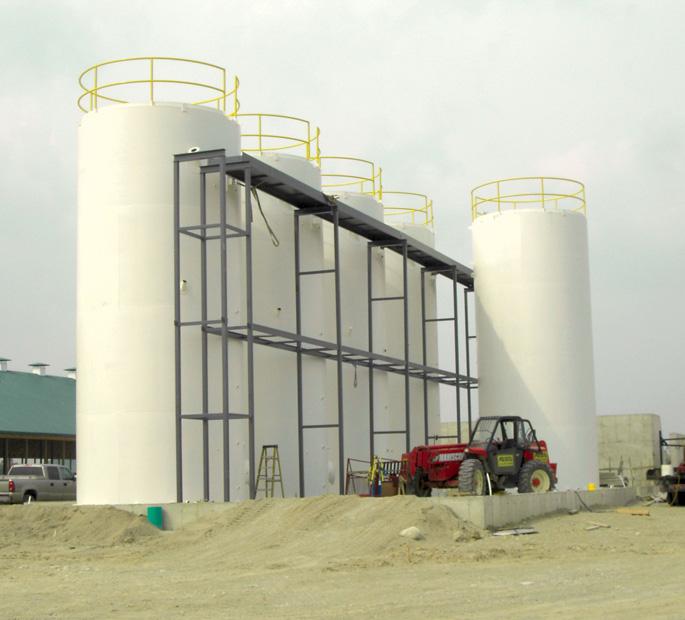


Dairylane Systems is putting the finishing touches on an Induced Blanket Reactor (IBR) digester – designed by Andigen – at Stanton Farms, located near London, Ontario. Manure from the farm’s 2000 dairy cows will be separated and solids pumped into the bottom of the digester, working its way through the eight tanks in as little as five days.







Systems Inc.
Ontario4 plus several under construction Dairy, beefDairylane Systems, Andigen, Gensis Biogas, Keller Engineering Associates Inc., RENTEC Renewable Technologies Inc., EEC Energy, Powerbase Automation Systems Inc., PlanET Biogas Solutions Inc.
Manitoba3, all under construction or retrofit hogMaple Leaf
Saskatchewan1, currently non-operationalhogClear-Green Environmental Inc., Kriegfischer
Alberta1 operational, 2 under retrofit, several more under construction
ColumbiaNone but feasibility studies are underway
fats and oils from restaurants) into digesters, which boosts electricity output considerably.
Recently, the Klaesi families, who share a digester between their dairy farms near Cobden, Ontario – northwest of Ottawa – finally received a certificate of approval from Ontario’s Ministry of the Environment, which allows them to accept off-farm food wastes into their digester. Receiving the permit took more than a year and a half, although that process is
Beef, mixed farm waste, hog
currently being streamlined. The Klaesi digester inputs electricity into the grid during part of the day, and the farm draws from the grid at other parts of the day (during milking), so that the farm is billed only for net power used. The heat from the generator also provides supplemental winter heat to buildings on both farms.
St. Eugene, Ontario dairy farmers George and Linda Heinzle, whose digester became operational in August,
Highmark Renewables, Peace Pork, ECB Enviro North America
Technologies Inc. (Quebec), PlanET Biogas Solutions Inc.
are still waiting on their certificate of approval. George says their unit can power about 30 homes plus the farm using manure from the farm’s 260 cattle, but that the addition of off-farm wastes will result in power production for 100 homes. Linda says they currently accept corn syrup from an ethanol plant into their digester, but this does not require approval as the material is food-grade and not considered waste.


Used throughout the life cycle, MicroSource S reduces the solids, ammonia and volatile fatty acids that contribute to swine odor problems. That’s because it contains microbes that consume the undigested feed in manure, leaving odorless water and carbon dioxide behind. And MicroSource S begins to act as soon as the manure hits the floor, continuing to work in manure handling and storage areas.
Odor reduction. Just one of the benefits MicroSource S brings to your operation. To learn more, contact your feed supplier or go to www.nutraaccess.com
“We’ve signed a 20 year Standard Offer Program contract, locked in to receive 11 cents per kilowatt,” she says, adding the family hopes the government will change the contract and offer more in the future. Pressure is mounting in the province for this to occur. The attachment of their digester to the grid was delayed, Linda adds, due to a dispute with Hydro One (the company which distributes electricity in Ontario) over the electrical transferring equipment. The issue was eventually cleared up in March 2007.
Powerbase Automation Systems Inc. of Carleton Place, Ontario, has developed a fully automated, modular technology for monitoring, generating and interfacing with the grid from digesters and other renewable power generation systems for dairy, hog and cash crop farming operations. Sales and marketing manager Dave Robinson says they are involved in the construction of three new digesters in Eastern Ontario.
In Thunder Bay, Ontario, EEC Energy designed and constructed a digester at a dairy farm in spring 2003. EEC engineer Keith Wilson says because the farm recently switched to beef, they are currently rebuilding the manure feed system. It is a thermophilic, horizontal plug-flow digester that accepts high amounts of solids. The generator produces hot water heating for both the farm and the digester during the winter.
“If we can make it work here in Thunder Bay, we can make it work anywhere,” Wilson says.
In Ilderton – near London, Ontario – Dairylane Systems is putting the finishing touches on a digester for Stanton Farms, which is operated by Laurie and Sandy Stanton and their children. The digester’s Induced Blanket Reactor (IBR) design is the brain child of Andigen, a company based in Utah. Garry Fortune, Stanton Farm’s renewable energy consultant, says manure from the farm’s 2000 dairy cows is separated and solids are pumped into the bottom of the digester. This material works its way through the eight tanks in as little as five days, in comparison to many other digesters which take 30 days to break down material. Fortune says this acceleration is due to the bacterial culture being boosted at the start of digester operation.
“Plans to manage the biogas produced by the Stanton Farms digester operation include electricity generation, on-site heat use and natural gas upgrading,” Fortune adds.
The Stanton digester will also be using other on-farm waste (and eventually, off-farm waste) in addition to manure in order to optimize gas output. “Part of the key is to get the right recipe,” says Fortune. He says that in addition to input flexibility and accelerated speed, another benefit of the Andigen digester design is its modularity; additional tanks can be added, and it is not necessary to shut down digester operation to do maintenance on any given tank.
In Quebec, Bio-Terre Systems Inc. has installed hog manure digesters on two farms, one in St-Edwidge-de-Clifton in 2001 and the other one in St-Odilon-de-Cranbourne in 2004. Steve Boivin, project manager, says the digester’s low temperature technology helps promote sustainable agriculture by providing optimum use of wastes on the farm, and of the nutrients and biogas produced. Bio-Terre Systems digesters use batch operation with a 14 day cycle and give methane yield similar to higher temperature technology.
There are no digesters as of yet in British Columbia, but Electrigaz Technologies Inc. of Harrington, Quebec, has completed a digester feasibility study in the Fraser Valley, sponsored by B.C. Bio-products. PlanET Biogas Solutions, poised to construct several advanced high biogas yield digesters in Ontario, has also done a feasibility study in British Columbia.
Doug Jackson, an agri-energy specialist with Manitoba Agriculture Food and Rural Initiatives, says his agency is providing partial funding for three digesters projects on three
private pig farms in that province. Two digesters – one thermophilic and one mesophilic – will begin construction this fall. A third low temperature Bio-Terre Systems digester in Teulon, constructed in 2004, is undergoing modifications to allow the future operation of a co-generation unit. Jackson stresses that the operation of all three digesters is focused on manure management and providing heat for producing pigs rather than electricity production, and that there are plans for only one to produce electricity.
Jackson explains that digesters accepting pig manure must be both designed and handled differently than cow manure digesters. “Pig manure has less solids content [and more water] which impacts gas production, meaning less gas,” he says. “Dairy manure has more of an optimum solids content, so a plug-flow system, in and out, can be used. Pig manure requires automatic mixing.”
This difference in digester design and operation with regard to manure type has created some challenges in Falher, Alberta, for Peace Pork Inc. However, the company has decided to move ahead with retrofit of their digester which has a 500 kilowatt generator and will process 20 million gallons of pig manure a year, says controller Wes Anderson.
Also in Alberta, the Iron Creek Hutterite Colony in Viking has operated a vertical, wet digester since 2001 that accepts hog manure and other feedstocks, says Josh Meikle, marketing manager for Adam Integrated Industries Inc., the current affiliated company.
In Vegreville, Alberta, Highmark Renewables constructed an IMUS-1 digester over two years ago, designed to process approximately 15 percent of the manure from a 36,000 head feedlot. It has been processing nearly 100 tonnes of manure daily. The digester is a 1MW co-generation facility fuelled by ‘polished’ biogas, which is raw biogas cleaned of moisture and hydrogen sulfide, containing only high proportions of methane and some carbon dioxide. Trevor Nickel, Highmark’s technology commercialization manager, says the moisture and hydrogen sulfide in raw biogas shortens the life of generators.
“A lot of generators are at risk for higher maintenance costs because of this,” he notes.
The Highmark design is also unique in that it features a mechanical separation system that removes debris from the feedlot manure, which Nickel says is a cause of failure for a lot of feedlot digesters. This design is thus suitable to handle materials such as food processing wastes and municipal solid wastes.
Highmark is currently quadrupling the size of the Vegreville facility, and will be coupling it with an ethanol plant. Nickel says ethanol plant operation is one of the best ways to use the large amounts of excess heat from a digester. They have immediate plans for several more digesters across U.S. and Canada.
In Saskatchewan, Clear-Green Environmental Inc. constructed a mixer digester of concrete and steel designed by Kriegfischer for Cudworth Pork in Saskatoon in 2003, although it is currently non-operational.
Anna Crolla, a researcher at University of Guelph’s Alfred campus – located east of Ottawa – continues to investigate various aspects of digesters with federal and provincial funding. She and her colleagues are studying energy production from on-farm anaerobic digesters, gas production performance of different substrates, and the environmental impacts on air, soil and water associated with the land application of digested versus raw manure (odor, greenhouse gas emissions, pathogens). This research, along with that conducted by private companies and individuals, will support further expansion of bio-digesters in Canada.

Retain your pit capacity and reduce the number of pump-outs required with MicroSource S. That’s because MicroSource S improves digestion of manure solids by working to decompose solids from the moment they pass out of the pig through handling and storage.
Improved solids management. Just one of the benefits MicroSource S brings to your operation. To learn more, contact your feed supplier or go to www.nutraaccess.com

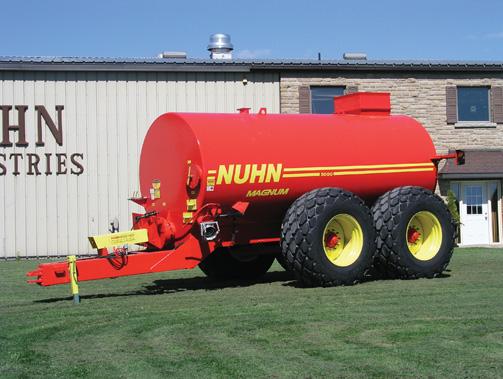
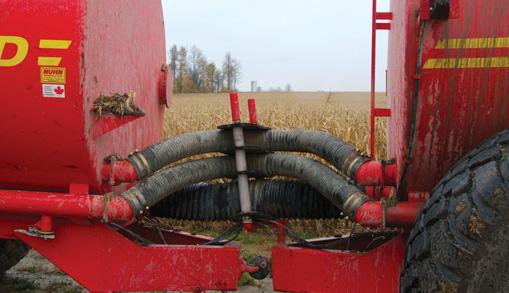
It is hard not to notice the scale of today’s top-flight manure spreaders, and there is a considerable degree of engineering required on every element of the equipment, from the shapes of the tanks to the tires they ride on. When a grower or custom applicator is hauling 10,000 to 12,000 gallons of manure down a public highway, everything on that trailer has to work flawlessly.
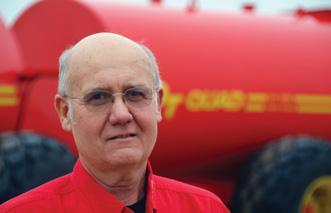
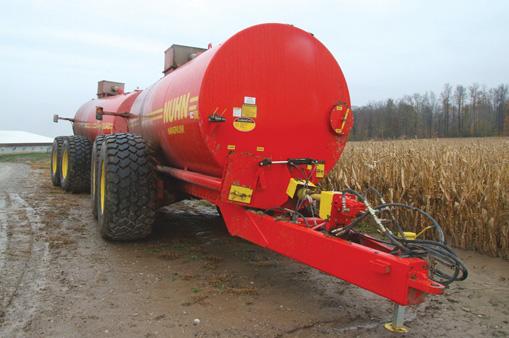
“Farmers are taking manure farther and farther,” says Dennis Nuhn, president of Nuhn Industries in Sebringville, Ontario. “Load is important. Speed is important. Ride is important.” Not only are they important, they are more challenging than ever as equipment has bulked up in recent years. In fact, Nuhn points out that his latest Quad Train liquid manure spreader carries more than twice the capacity of his first big tank, which he introduced nearly two

CONTRIBUTED PHOTOS
decades ago. To deliver that performance – over more road miles, and at higher speeds, than ever – the company relies on design.
Rather than designing a complicated frame to manage a high center of gravity, Nuhn contoured his 0.25 inch steel tanks to keep their load low to the ground. The in-tank agitation pump has no moving parts, and does double duty by circulating material through both tanks at once for thorough agitation and even application of nutrients.
And rather than multi-axle trailers with hydraulic kingpin steering systems, the tanks are mounted on big tires and a stronger, simpler walking tandem suspension. As a result, it is not hydraulics that turn the Quad Train on a dime, it is geometry. The tongue system transfers 10,000 pounds of load to the tractor, to transfer weight and improves traction as a result. Each tank has just two axles that oscillate independently. Pivot points and axles are placed precisely on each tank, balancing the weight evenly among the tires and allowing rear wheels to follow in the tracks of the front ones.
The results include a great ride, controlled compaction and less lateral force that can twist and torture the last tire on the inside position of a multi-axle arrangement. Dragging tires through a turn is tough on roads and tough on tires. Tires are something of a secret weapon for designers of manure tanks and spreaders. The ideal tire does not just handle a big load. Big loads become staggering when full manure tanks drop

into ditches or culverts; swing around corners, shifting weight to one side, then another; or when the unit is running along the side of a hill, the lower tires carry more than their fair share.
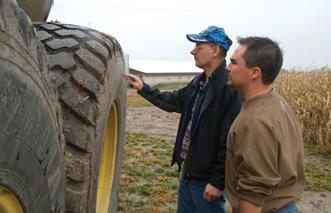
“Off-road, severe conditions really beat a tire up,” says Nuhn. “They take a tremendous amount of abuse off-road. And when you add in inertia when the tire goes into a ditch, you could be looking at two, three, or four times the designed load.” Even running on decent roads can be tough on tires.
“Higher load and higher speed exert tremendous forces on every aspect of a tire, from strain in the bead area around the rim to heat buildup around the shoulders,” says Dr. George Ronai, head of research and development for Alliance Tire, a leader in flotation tire technology. “Tire development must take into account


all of those stresses and result in a tire that performs and lasts.”
An under-engineered tire can break down under the demands of moving manure, notes Darren Dietz, territory manager for Carlisle Tire in Waterloo, Ontario. High stress causes some tires to lose air around the bead, break down in the stressed area where the bead holds onto the rim, or loss of carrying capacity as sidewalls weaken. “Some farmers can get by for a while by putting in natural rubber tubes, which flex with the radial sidewalls without scuffing inside the carcass,” Dietz says. “But that’s just a temporary fix. The tubes insulate the rim, so the metal can’t draw heat out of the tire. Eventually, the tire overheats and loses its capacity to carry the load it’s rated for.”
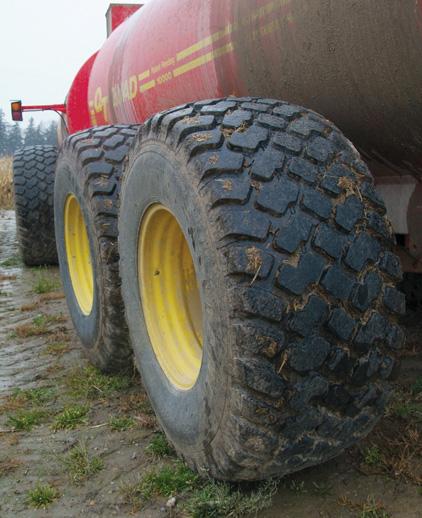
Designers like Nuhn seek out special features that most users might not even notice – features like wear bars on the corners of the tires, which allow them to turn more easily and minimize the chance of digging grooves into the road, or rim guards, which protect the bead of the tire. When he set his sights on developing a 10,000 to 12,000 gallon tandem, Nuhn realized that the project demanded that someone design him a new tire. Instead of the 28LR26 that is typically used on big manure equipment, he wanted a
30.5LR32 tire, one with rounded corners that turn better and a more open tread to clean itself in muddy conditions. The larger size also offers a huge platform with two metric tons more capacity than the smaller tire. It also fits on standard North American rims, so he could offer buyers a choice of radial or bias-ply tires without having to change rims.
To begin building a better tire, Nuhn called Don Wagner, technical director for Carlisle, which has long supplied him with tires. Wagner called the R&D team at Alliance Tire, whose expertise in radial flotation tires has made them a market leader in high load, high performance tires around the world. Alliance’s A-390 design combines the aggressiveness and self-cleaning of lug tires with the massive footprint of turf tires. It has a steel belted 30.5LR32 that can support 1500 gallons of manure per tire and carry it down the road at 31mph (50km/h).
Nuhn has a strong preference for steel belted radials over bias-ply flotation tires. “Those big tires are your suspension,” he says, pointing out that the more flexible sidewall of a radial tire absorbs shock while spreading out the tire’s footprint to improve handling and reduce compaction. “As far as I’m concerned, you’ll get a far flatter, better


After about 800 loads – about eight million gallons of manure hauled over gravel and pavement at speeds up to 31mph (50km/h) – the tires showed minimal tread wear and no evidence of bead chafing.
distributed footprint with steel belts, plus the puncture resistance from the steel.”
An Ontario farmer agreed to put the new tires to the test under his 10,000 gallon Quad Train last year. He says he saw performance differences right away. “I’m seeing them sitting down flatter,” reports the grower. “They’re not twisting and bucking like the other tires used on the unit, so the turning is better. With our other tires, we were buying new pavement every year – when the pavement got hot in July or August, those other tires just chewed it up. And they stay clean – we’re not stopping to clean up mud on the road. We’re going to get by better with the township with these tires.”
After about 800 loads – about eight million gallons of manure, often hauled at up to six kilometers (four miles) at 50km/ h (3 mph) over gravel and pavement –Wagner’s team at Carlisle dismounted the tires and pored over them with a fine-tooth comb. “The tire showed very minimal amount of tread wear, we estimated under 10 percent,” Wagner reports. “The tire also showed no evidence of bead chafing, proving to us that Alliance engineers have done their homework during the development of this tire. We consider this tire a ‘home run’,” Wagner adds. “We are very impressed with the tire and its importance.”
When 10,000 or 12,000 gallons of manure heads down the road in a hurry, keeping busy producers productive, it is good to know that the load is on a strong foundation.
By Tracey Bryant

Dieting to lose weight and improve your health?
Millions of chickens in Delaware – one of the top US poultry producers – have been on a diet to reduce their impact on the environment and improve the health of the state’s waterways, and it appears to be working.
Extensive research led by Dr. William Saylor, professor of animal and food sciences at the University of Delaware,
Q University of Delaware researchers formulated various phytase-modified diets for the study which involving thousands of broiler chickens. The birds were examined for bone health and growth, as well as the phosphorus content of their manure, beginning as chicks up to market-size birds.
has confirmed that Delaware chickens now digest more of the phosphorus, an essential nutrient, in their feed, thanks to the addition of a natural enzyme called phytase. As a result, about 23 percent less phosphorus is output in chicken manure.
So now when poultry litter is used to fertilize a farm field, a lot less phosphorus is available to potentially be carried off in storm water to a river or bay.
And that’s good news for waterways like Delaware’s Inland Bays, where overloads of nutrients, particularly phosphorus and nitrogen, have contributed to serious water quality problems, such as massive blooms of algae and fish kills.
To put it in perspective, in 2006, Delaware farmers produced more than 269 million broiler chickens – 1.8 billion pounds of poultry – valued at more than $739 million, according to the Delmarva




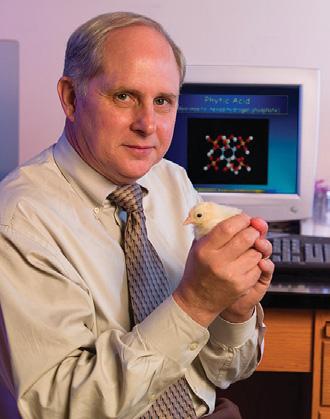

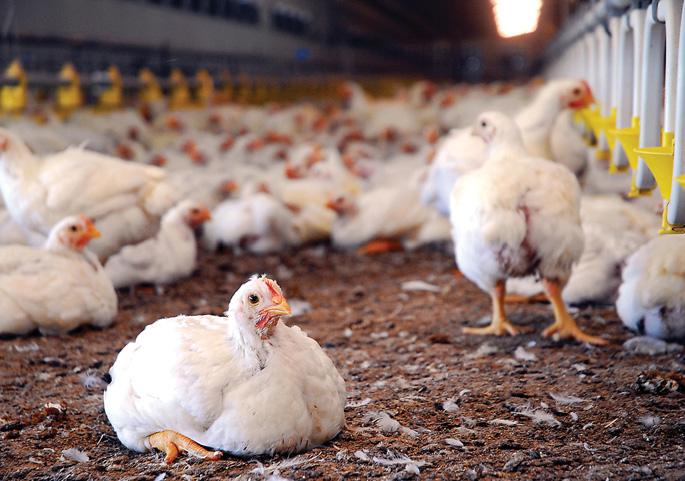
Extensive research led by Dr. William Saylor, University of Delaware professor of animal and food sciences, has confirmed that Delaware chickens now digest more of the phosphorus, an essential nutrient, in their feed, thanks to the addition of a natural enzyme called phytase.
PHOTO BY KATHY F. ATKINSON
Poultry Industry. Those chickens produced more than 280,000 tons of waste.
According to recent analyses by Dr. David Hansen, University of Delaware assistant professor of soil and environmental quality, there are now about 19 pounds of phosphorus in a ton of Delaware poultry litter compared to 25 to 30 pounds of phosphorus per ton of litter just five years ago. The 30 to 40 percent reduction is credited to phytasemodified diets and other nutrient management practices being adopted by poultry farmers under Delaware’s Nutrient Management Law of 1999. That reduction means the phosphorus load to the environment has been reduced by some two million to three million pounds per year.
Addressing a weighty problem
“Phosphorus is essential to all life,” says Dr. Saylor. “Livestock, particularly poultry and swine, are fed a diet of seeds and grains. However, two-thirds of the phosphorus in this food is phytic acid or phytate, which is a form of phosphorus that poultry and pigs can’t digest, so it goes right through them,” he notes.
“Phytase is an enzyme that is added to poultry feed at the mill that helps broilers and other poultry utilize more indigestible phosphorus,” says Dr. Saylor.
Over the past several years, Dr. Saylor and colleague Dr. J. Thomas Sims,
the Thomas A. Baker, Professor of Plant and Soil Sciences and associate dean of the University of Delaware’s College of Agriculture and Natural Resources, have led a team of experts in analyzing the nutritional requirements of poultry and swine and the effects of phytase-modified diets on the livestock and the environment as part of a ‘feed-to-field’ approach to nutrient management. The research was funded by an $821,000 grant from the U.S. Department of Agriculture’s Initiatives for Future Agriculture and Food Systems.
The scientific team included poultry nutritionists Dr. Roselina Angel from the University of Maryland and Dr. Todd Applegate from Purdue University; plus Dr. Wendy Powers, a swine nutritionist, formerly at Iowa State University and now at Michigan State University.
At the University of Delaware, Dr. Saylor and his students formulated various phytase-modified diets for a series of studies involving thousands of broiler chickens. The birds were examined for bone health and growth, as well as the phosphorus content of their manure, beginning as chicks up to market-size birds.
The painstaking research defined the boundary at which the total phosphorus levels in a broiler chicken’s corn-soybean meal diet can be reduced without
detriment to the birds’ health, as well as the percentage of phytase that can be added to the feed to allow the birds to digest more phosphorus, leaving less to literally ‘go to waste’.
The data have been shared with a nutrient management partnership involving the poultry industry, environmental regulators and the academic community.
Phytase at ‘nucleus’ of nutrient management
Millions of chickens in Delaware have been on a diet to reduce their impact on the environment and improve the health of the state’s waterways.
“It certainly factors into our decisionmaking process,” says Dr. Ted Miller, director of nutrition and research at Mountaire Farms Inc., in Selbyville, of the University of Delaware’s phytase research.
The company has 600 growers across the Eastern Shore, who produce 150 million broiler chickens a year.
Dr. Miller serves on an advisory committee in the University of Delaware’s College of Agriculture and Natural Resources and meets regularly with Delaware and Maryland scientists as an industry co-operator.
“Phytase has been at the nucleus of industry co-operation and regulations to deal with nutrients,” says William Rohrer
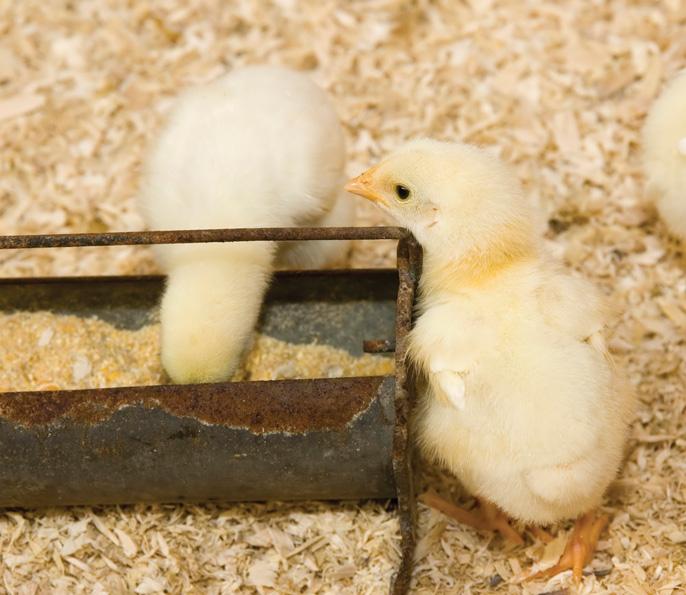

Research at the University of Delaware has confirmed that Delaware chickens digest more of the phosphorus in their feed with the addition of phytase. As a result, about 23 percent less phosphorus is output in chicken manure.
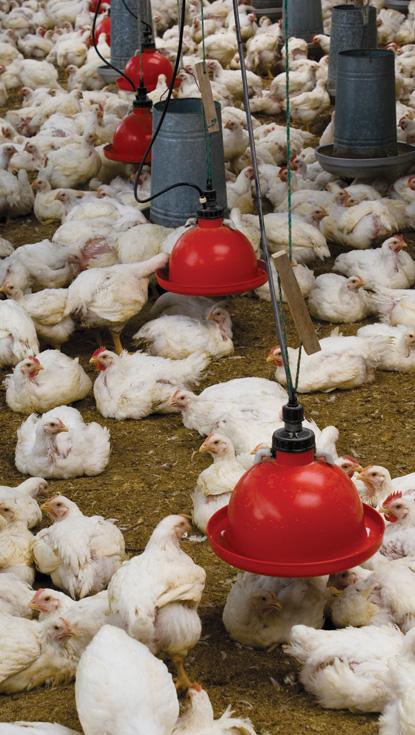

Dr. Saylor’s research shows the boundary at which the total phosphorus levels in a broiler chicken’s corn-soybean meal diet can be reduced without detriment to the birds’ health, as well as the percentage of phytase that can be added to the feed to allow the birds to digest more phosphorus, leaving less to go to waste.
Jr., administrator of the Delaware Nutrient Management Program. “It has significantly reduced the phosphorus going into our waterways.
“The university’s phytase research has provided two critical things,” Rohrer notes. “It’s brought the science to the table and helped industry take advantage of the enzyme. It’s also helped us to quantify the reduction of phosphorus to the environment.”
William Vanderwende, chairperson of the state’s Nutrient Management Commission, says he has been contacted by several states that want to model their nutrient management program after Delaware’s. While he does not raise poultry, Vanderwende operates a dairy farm near Bridgeville, with 700 dairy cows and 3000 acres of crops. “All in all, these phytase diets are doing the job,”
Vanderwende says. “And I know these scientists are working to see if they can get the phosphorus numbers even lower.”
Dr. Saylor has been interested in animal nutrition since he was a boy growing up in Butler County, Pennsylvania. He “always had animals,” including rabbits, sheep and chickens. After high school, he headed to Penn State, where he received his bachelor’s degree in dairy science, master’s degree in animal nutrition and then a doctorate in poultry nutrition. “There are a lot of good people working in poultry to address the phosphorus issue,” Dr. Saylor

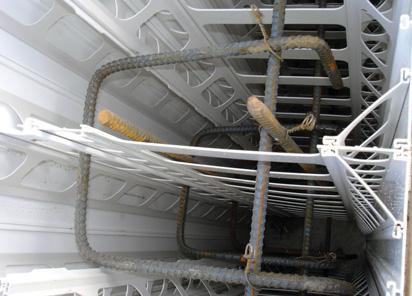
Engineered stay-in-place forming system that provides architectural versatility and flexibility. Octaform’s finished PVC forms let you form your imagination to achieve superior construction.
Can be used for walls, tanks, tilt-up, pre-cast and barriers.
says. “Our poultry industry in Delaware is basically surrounded by water, and because of its size and concentration, environmental issues are of great concern,” he says.
“Phytase is definitely a positive piece of the water quality puzzle,” says John Schneider, manager of the Watershed Assessment Section in the Division of Water Resources at the Delaware Department of Natural Resources and Environmental Control. “We are seeing less phosphorus in water samples from all over the state,” Schneider notes. “Clearly, we’re doing a lot of things right.”
“We built our hog barn with Octaform and we can’t wait to see our next energy bill. We believe that the thermal mass will help reduce heating costs.”
™
• Finished surface when formed
• Easy to incorporate mechanical
• Sanitary and easy to clean; minimizing bacteria
• Solid walls allow for equipment mounting
• Straight and curved configurations
• Variable wall thicknesses
By Candace Pollock

Anyone who handles, applies or transports manure and/or fertilizer in Indiana will soon have to get a permit under a new Fertilizer Certification Program currently in development. According to information shared with farmers during the Mid America Ag Show, held in early February in Indianapolis, anyone who buys, hauls and applies crop nutrients in the state will have to receive educational training and be certified. The program, which is expected to be phased in within the next two years, will apply to all large confined animal feeding operations (CAFOs) plus farmers and custom applicators that apply manure to more than 100 acres of land per year. The program will be handled by Indiana’s State Chemist office and will operate similar to the state’s Chemical Applicators Certification program.
Professor Murray McBride has become the director and Jean Bonhotal the associate director of the Cornell Waste Management Institute at Cornell University in New York state.
Both changes were effective January 1, 2008 in response to the phased retirement of past CWMI director, Ellen Harrison. Other CWMI staff members –Lauri Wellin and Mary Schwarz – will continue in their current positions.
Harrison will continue working parttime for a couple of months to finish up several projects. Her official retirement occurs this spring. “I have been very fortunate to be a part of CWMI since its creation in 1987 and I have tremendous
confidence in its future,” says Harrison. “I have thoroughly enjoyed these 20-plus years. Although I know I will miss CWMI and my wonderful colleagues at Cornell and throughout the world, I am looking forward to the next chapter.”
McBride has worked closely with CWMI for many years and brings a tremendous knowledge of soils, chemistry and the impact of pollutants and their fate in soils. He is a professor in the department of crop and soil sciences at Cornell. For more information, visit the CWMI web site (cwmi.css.cornell.edu) or contact CWMI at cwmi@cornell.edu
Underground phosphorus deposits around the world are mined for use as a much-valued fertilizer. Now U.S. Department of Agriculture soil scientists have found a way to ‘mine’ the phosphorus in poultry manure.
In 2006, the U.S. produced 8.9 billion broilers – and piles and piles of residual litter rich in phosphorus and nitrogen. Although poultry litter is typically used by farmers to fertilize field crops, it usually contains more phosphorus than the crops need. The excess phosphorus has the potential to wash away and pollute nearby rivers and lakes.
Ariel Szogi, Matias Vanotti and Patrick Hunt have developed a method to obtain the phosphorus in poultry litter –consisting of a rapid removal and recovery of phosphorus in solid form –which they have dubbed ‘Quick Wash’. The Agriculture Research Service has applied for a patent on this process. The process selectively removes up to 80 percent of the phosphorus from poultry litter while leaving the nitrogen. The washed poultry litter can be safely applied to farm fields as a balanced fertilizer or used again as a bedding
material. It can also serve as a feedstock for bioenergy production.
U.S. farmers use some 3.7 billion pounds of phosphorus in annual crop production. But poultry and other livestock produce about one billion pounds more phosphorus than livestock producers can use. This innovation provides an environmentally sound phosphorus recovery system that livestock producers can use to manage the excess phosphorus in manure. Poultry producers also benefit by producing a concentrated phosphorus product that can be moved easily off farms and reused as fertilizer.
Szogi, Vanotti and Hunt work at the ARS Coastal Plains Soil, Water and Plant Research Center in Florence, South Carolina.
The Livestock and Poultry Environmental (LPE) Learning Center has a new information and educational portal on the National eXtension (pronounced eextension) Initiative website, located at www.extension.org. The LPE Learning Center is one of several eXtension communities featured on the site, which helps connect researchers and experts from land-grant universities across the U.S. to students, professors, farmers and the general public. Visitors to the LPE Learning Center portal can gain access to all of the center’s educational resources, including live webcast information, the LPELC monthly newsletter, and continuing education units. Visitors can also ask questions of the center’s experts, which are then posted online. The eXtension initiative, which was officially launched during February’s Ag Outlook Forum in Virginia, also offers content on dairy cattle, horses, and cotton in addition to family and community resources. Visit: www.extension.org









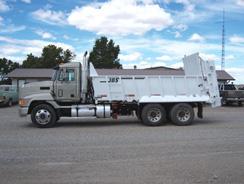

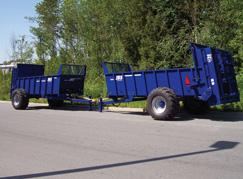

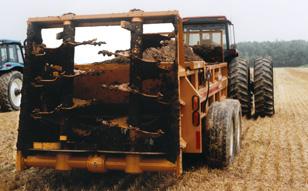
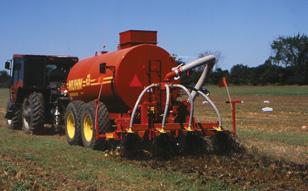
Leons Manufacturing stands behind all of its manure management products but in the case of its Silver Spreader line, company representatives stand a little further back.
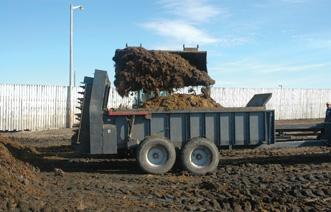

Manure is a valuable resource for providing plant nutrients and for building strong organic soil. A farm that makes use of this natural commodity can save thousands of dollars per year on fertilizer costs. The Leon Silver Spreader can help farmers get that manure from the barn and/or feedlot onto the field in a fine textured, uniform spread.
The Silver Spreader, available with either vertical or horizontal beaters, gives farmers and applicators the control of unloading as well as being able to set the spread width from 20ft to 40ft. The spreader comes with a standard flow control valve, a solid poly box, an Autogate and 0.5in thick beater paddles for longer life. The beaters are reversible and replaceable and, when combined with the Quick on-Quick off assembly, allow the spreader to be used as a utility trailer. The spreaders also have a heavyduty hydraulic end gate, a convenient quick attach-detach slurry pan, a rear push-off cylinder, triple lip sealed bearings with locking collars plus a baked-on powder paint finish.
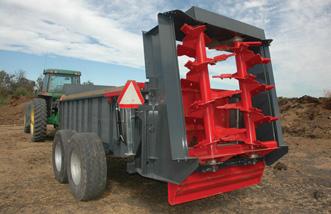

The Silver Spreader comes in four different vertical and horizontal models: 425, 575, 655 and 755 bushels. www.leonsmfg.com
Oregon’s 320 dairy farms could become power generators through a new program being offered by Energy Trust of Oregon. Under the company’s Dairy Power Initiative, dairy farms in the state that install anaerobic digesters can receive cash incentives to turn manure into biogas, and generate climate-safe electricity. Funding may also be provided for feasibility studies.
“Generating renewable power on dairies provides a good opportunity to build the urban/rural relationship, and it could allow dairy farmers to operate in some areas where urban development has encroached,” says Jim Krahn, executive director, Oregon Dairy Farmers Association (ODFA).
To make it easier for dairy farmers to estimate what incentive might be available to them, Energy Trust has developed an on-line calculator tool. To be eligible for a standard incentive, a digester project must be located on an Oregon dairy farm with a herd of at least 250 animals, use manure only from that farm and be owned by the dairy, not an outside investor. The power generated from the digester must be sold to the local utility. The digester should employ either standard complete-mix or plugflow technology to create the biogas. All projects must be pre-approved to receive Energy Trust incentives. Existing projects are not eligible.
“To make sure our first projects are the best possible demonstrations of this concept, we are open to proposals from anywhere in Oregon’s dairy country,” says Adam Serchuk, bio-power program manager with Energy Trust.
Expert guidance to help dairies evaluate potential projects is available from the ODFA or Oregon State University extension dairy specialists. “Dairies may
also need help in analyzing the financial arrangement for installing the digester, as well as their operational responsibilities,” says Mike Gamroth, professor and extension dairy specialist at OSU. www.energytrust.org
Now there is a new way for swine and poultry operators to maintain high levels of surface hygiene. Engage Animal Health has launched Vir-Kil, a broad spectrum disinfectant offering safety, convenience and value.
Vir-Kil’s two active ingredients –potassium peroxymonosulfate and sodium dichloroisocyanurate – work synergistically to ‘recycle’ the product’s chlorine molecules to repeatedly regenerate active chlorine for sustained antimicrobial action. The product is available in two sizes – five and 20kg formats – providing 500 to 2000 liters of product for both small and large facilities. It will be available at farm supply retail stores and veterinary clinics. www.engageah.com
Send your product items to: Manure Manager welcomes submissions from all manufacturers/dealers of new manure management-related products. All submissions will be considered for inclusion in On Track. For electronic submissions, please send digital photos as a TIFF file or maximum quality JPG file, along with product copy and contact information to: mland@annexweb.com
If the material is being sent by mail, please send it to: On Track Editor
Manure Manager Magazine
105 Donly Drive South Simcoe, ON, N3Y 4N5 Canada





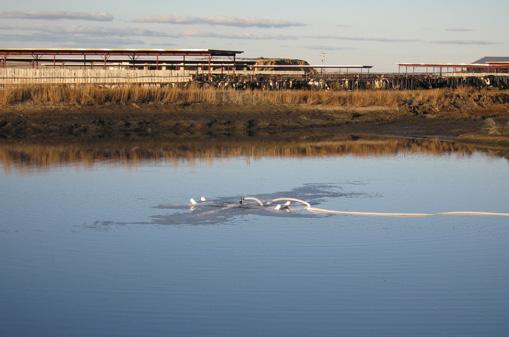
Pro-Act Microbial provides biotech waste treatment systems with a patented surface air diffuser as a key component. The goal of the company’s energy-efficient diffuser is to oxygenate the surface layer of the lagoon, which creates an odor cap. But Pro-Act’s system goes even further by including naturally occurring microbes and growth factors that help the farm manage the manure and its nutrients. From there, the farm also has options to expand the system to enhance nutrient management and/or collect and use biogas.
A healthy waste lagoon or wastewater storage tank will naturally stratify in layers, with the bottom layer remaining anaerobic (without oxygen). Pro-Act’s patented surface air diffuser is the only one on the market that can retain the stratified layers. The company’s diffuser adds fine bubbles of oxygen only to the top layer without causing the layers to mix. In doing so, Pro-Act’s system allows the anaerobic microbial waste treatment to proceed while adding an odor cap to minimize odors commonly associated with anaerobic treatment. What’s more, the solids at the bottom of a treated lagoon are much looser, requiring little or no agitation when pumping. This saves customers time, money and general wear and tear on their equipment.


customers find they no longer need to purchase as much chemical fertilizer. www.ProActMicrobial.com


In ponds and lagoons, manure managers rely on Crisafulli trailer-mounted Slurry Pump to agitate, mix and pump viscous, solidified manure sludge. Crisafulli’s high capacity pumps effectively slurry and clean ponds as large as 200ft by 200ft by 8.0ft in as little as six to eight hours.
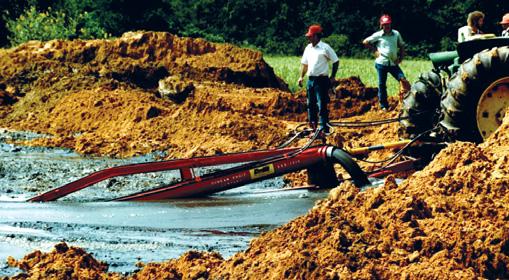

Using this powerful agitation tool is easy. Back your trailer pump into the lagoon and engage your tractor’s PTO or connect your power unit. The hydraulic axle lowers the pump through the solids to the bottom. Open the slurry gate to agitate and mix, drawing solids and liquids in, blending and injecting through the gate into unmixed material. The pump will draw, agitate and blend even heavily crusted ponds, mixing from top to bottom. Close the slurry gate to pump the slurry away at high volume.
Agitate, mix and pump – Crisafulli’s Slurry Pump does it all. The pumps are available with discharge sizes of 4.0in to 16in. Other Crisafulli solutions for manure mixing and pumping include floating pumps for lagoons and vertical pumps for stationary installation in sumps. www.crisafulli.com
The new Jamesway commercial series family of lagoon pumps, the Ultra-Pump, is designed for the heavy demand of large farms and custom operators. The commercial series pumps are built to order – just the way customers want. Choose a 32ft, 42ft or 50ft base and then pick the pump kit (impeller and prop for 160hp, Impeller-only for 120hp or for 225hp) and wheel kit (standard, heavy-duty or over-wall kit).
The discharge choices include bipod loading pipe or loading cart, but the new Power-Boom discharge option offers clean and fast set up and high speed filling with less foam.
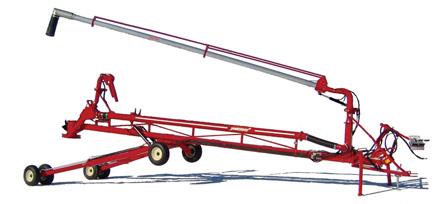
Custom operators may choose the over-wall wheel kit and Power Boom so they are ready for anything. Larger farms may want the powerful 8000 Impeller for big lagoons or the 5000 Prop Impeller to chop up tough bedding. There are more than 100 ways to build an Ultra-Pump and Jamesway lets the customer get what they want. www.JameswayFarmEq.com
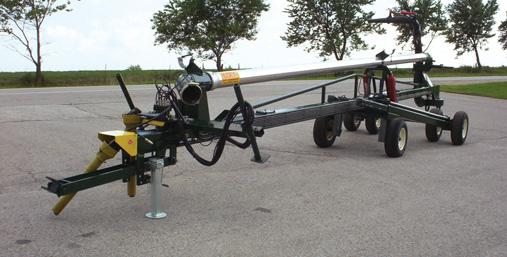

The Husky PL490 lagoon liquid manure pump is a wall walking lagoon and pit pump featuring walking legs for a 14ft straight wall pit. Standard legs are also available and stabilizers are adjustable to 12ft and come standard. The PL490 can handle a pump volume of 7000 GPM to 10,000 GPM and a maximum pit depth of 14ft. The discharge pipe is 20ft long and 8.0in or 10in pipe sizes are available. The pump features an adjustable height (40in to 72in) agitator with 300 degree swivel; a high-efficiency, 18in, four-blade impeller, and a shear protected PTO shaft. Valve controls are hydraulic and the tandem-axle trailer can be tilted using hydraulic cylinders. An optional discharge pipe cart is also available. www.huskyfarm.ca
DeLaval International expanded its manure system equipment line in 2007. Part of that expansion included the introduction of the TP65 and TP65H lagoon pumps. These pumps enable users to agitate liquid manure in any vertical or sloped wall manure storage pit quickly, at up to 5000gal (19,000L) per minute. The TP65 is trailer mounted, providing stability for working sloped wall storage pits. Adjustable twin stabilizer legs and wide stance tires counterbalance the sideways thrust of the agitation nozzle.

The TP65H is a tractor pump with a three-point hitch. Its short length – 18ft to 25ft (5.5m to 7.5m) – makes it easy to maneuver. Hydraulic controls are available for the horizontal and vertical nozzle movement, the agitate/fill valve and to maneuver the TP65 trailer, making the equipment easy to operate from the tractor seat. A unique double-jointed drive shaft provides maximum performance at pumping angles up to 60-degrees.
www.delaval.com
The lagoon Agi-Pompe is available in 32ft, 42ft, 52ft and 72ft lengths. The pump rapidly homogenizes liquid manure and can be outfitted with an abrasion resistant pump housing and bottom plate to accommodate manure containing sand. It is available as a 540rpm or 1000rpm and features:
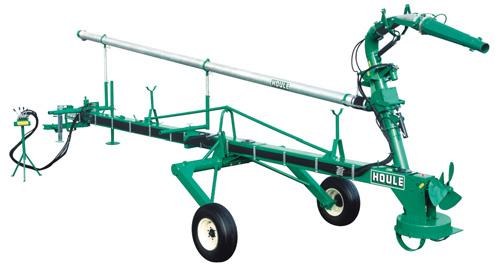
• undercarriage with flotation tires,
• heavy-duty driveline with #55 PTO available on all models,
• 8.0in discharge with directional valve and loading pipe available for faster loading,
• high velocity nozzle with double hinged articulation,
• 25ft aluminum loading pipe on a tripod,
• solenoid valves available to operate two functions per tractor hydraulic port, and
• optional side articulated stabilizer wheels are available. www.jhoule.com
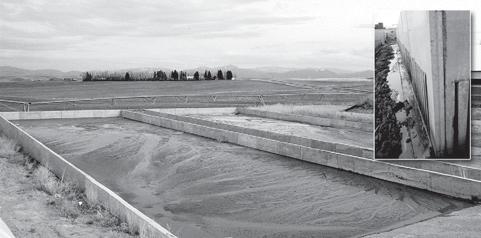
➤ Manure Pits,Channels & Covers
➤ Suspended Slabs - up to 40’ clearspan
➤ Hog & Cattle Slats - up to 25’ clearspan
➤ Weeping Walls - manure separation
➤ Milking Parlors
➤ Strainer Boxes
➤ Commodity Storage
➤ Bridges
➤ Bunker Silos (8 types)
➤ Syloguard Concrete repair
➤ Retaining Walls
➤ L & T Walls up to 16’ high

• Built to engineers’ specifications
• All sections are high strength, pre-stressed,reinforcedconcrete for longer life
• Quick & easy to build
• Air-tight seals and protectant using Syloguard products
604• 823•4245 Fax: 604•823•4249 or Call Toll-Free 1•888•796•2323
The ADS fine bubble aeration system duplicates the action of a river, providing circulation of the liquid in the same way as a natural stream. The diffuser tubing is composed of a low density, polyethylene. An encapsulated wire keel is located at the bottom of the tubing to keep it in an upright position and provide the necessary ballast to keep the tubing submerged at full airflow. Surgically produced air cuts are located on the top and both sides of the tubing at a spacing of 38mm to 610mm or 1.5in to 24in. These air cuts provide the bubble action plus work as a check valve to prevent the entry of foreign material to the inside of the tubing. The diffusers emit a uniform air pattern even if the lagoon bottom is not perfectly level, due to sludge accumulation or slope.
ADS also produces an Aeration Disk Module for intense aeration requirements. Each Disk Module (1.2m or 4.0ft diameter) comes with 30m of aeration tubing on a stainless steel frame. Unique features include:


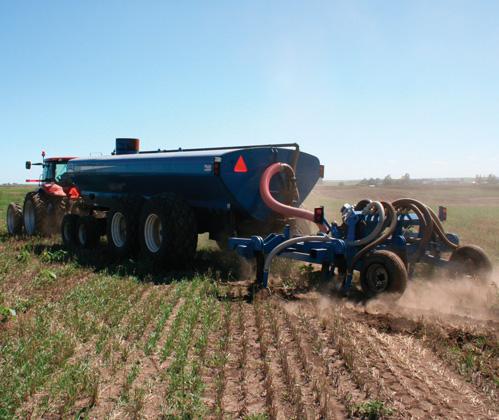
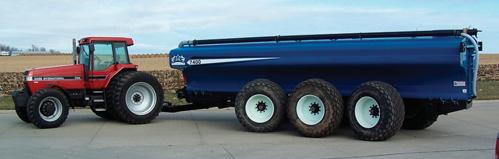




• Certified standard oxygen transfer efficiency rate of 10 percent per meter of clean water in accordance with ASCE testing procedures.
• Outstanding mixing rate of 1068m3/d per meter of single cut and 3204m3/d per meter of triple cut tubing at 3 meters WD.
• Minimum air cut pressure drop of 2.0psi ensures uniform air flow.
• Virgin polyethylene resins with two percent carbon to prevent sunlight UV degradation provides outstanding longevity. www.airdiffusion.com
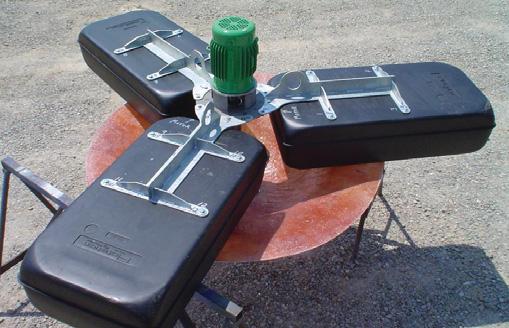

For many livestock operations, manure has become a valuable resource when used as a fertilizer in the field. Turning that manure into fertilizer via liquid composting is a common practice in many operations. Without proper aeration and circulation, liquid composting practices produce excessive odors without thoroughly liquefying the manure. The Centirator III can help producers improve the quality and usability of manure as a fertilizer and assist with odors. The Centirator III is a specially
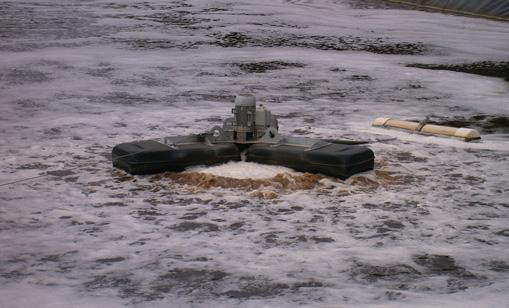

designed down-draft type aeration unit. Its 5.0hp, three phase motor mechanically mixes and aerates the manure in lagoons, promoting aerobic decomposition of the waste. The Centirator III’s unique impeller design thoroughly mixes the manure, raising the pH into the alkaline range and reducing the viscosity so the resulting fertilizer is easier to pump for spreading. www.agproUSA.com
The Little River Pond Mill Enviro 210 series circulator is a four legged, four pontoon, electrically powered machine that helps to stimulate microbial growth in liquid manure and wastewater
systems. The circulation provides an environment that enhances the rate and the efficiency at which the microbial populations in the lagoon work.
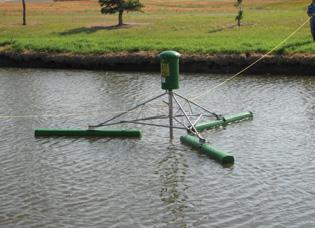

Circulators can be used to promote anaerobic or aerobic digestion and can be a useful addition to any greenhouse gas emissions reduction program. The circulatory action of the 0.5hp motor can create a flow in excess of seven million Imperial gallons per hour. This circulation stimulates an increase in population of the lagoon micro-organisms and these micro-organisms then work to decrease odours/gases, solids, and covert nutrients to usable and stable forms.
The electrically driven circulators (Enviro 205, 210 and 700), which may be hooked up to onshore solar power, are gear reduced to typically operate within the range of 107rpm to 130rpm on single or three phase power, however, any of the electrical or solar units can be operated at lower speeds/gear ratios to accommodate special circumstances. The Enviro 220 circulator, the solar powered unit, has solar equipment mounted directly on the machine. The Enviro 600 series, also powered via a renewable energy source, is powered by the wind. www.pondmill.com
The Balzer newly designed, Magnum Express Lagoon Pump features two pump choices: Balzer V-6 AR steel pump housing or the Veneroni Super 150 modular cast pump housing. A 19.5in horizontal prop and 350 degree rotating orbit motor-driven swept back agitation nozzle allow for maximum agitation. The 7x7 square discharge pipe allows for great discharge volumes as well as providing
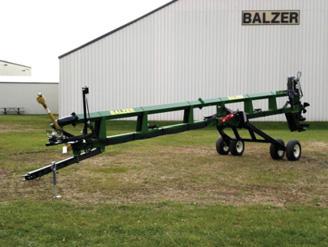

structural integrity for the pump. Impeller positioning combined with a larger and heavier foot plate allow for powerful agitation and pump out closer to the bottom of the pit. A durable, 4.0in drive shaft comes with heavy-duty bearings and U-joints every 5.0ft or 10ft (depending on the model) to help minimize shaft vibration for smoother, more efficient operation.
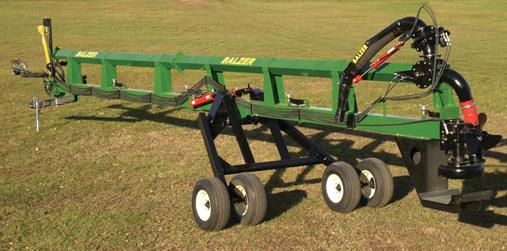

The Magnum Express is available in 38ft, 43ft, 48ft and 58ft lengths with a 540rpm or 1000rpm PTO. The pump raises or lowers hydraulically from the tractor with a 96in maximum lift via the trailer tires. These legs also act as stabilizers when the pump is in operation. Increased bracing and struts for stability and strength are found on the 48ft and 58ft models. These models also feature two cylinders on the pump undercarriage to raise and lower the pump.
Hydraulic controls for the agitation nozzle control and load valve are standard. It can be operated from the tractor cab or the side of the lagoon. The Magnum is available with a raised agitation gun, designed especially for crusty lagoons, or a bottom agitation gun, for lagoons with heavy bottom solids. www.balzerinc.com
While Manure Manager editors make every effort to be objective when reporting on new products, they cannot be held responsible for claims made by companies. Readers are encouraged to contact the companies for more details.


2005 McLanahan 20”X20’ sand manure separator and 144’ long horizontal cross auger both with 480 volt control panels.
Excellent condition PH: 315-364-7069


Applicator, Hose and Carts
2002 Hydro 30 ft. Applicator. Double Swivel, Equalizer Manifold, Quick Tach Hookup. 4 inch Krone Flow Meter.
2002 Mainline Unisource Hose. 250 psi. Hydro Couplers. 3 Miles Available.
2002 Hydro 8 – Reel Level Wind. Tandems, Brakes, Running Lights. Hydraulic Drive. 3 Hose Carts Available.

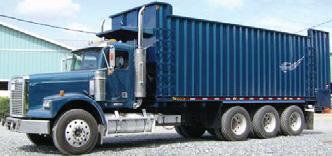

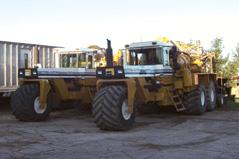







By Sarah Roth
Are you looking for ways to improve and enhance the service you provide to your clients? This is referred to as adding value and it can have a number of beneficial effects for your custom business. Client loyalty can be improved, new clients gained and profitability increased. This article will discuss several options for adding value to your custom business’ services. Perhaps you will choose to integrate one or more into your business.
Websites – Having a website for your custom business is an excellent opportunity for adding value to your business. Websites allow you to share information with both current and potential clients without having to spend time on phone calls or e-mails. A website also allows clients to find the information they are looking for at times that are convenient for them.
A website can be as simple or sophisticated as you wish. It may only describe the services you offer and provide contact information. Or, you may decide to post photos of your equipment and employees, pricing details, weather information, or a log of your work progress. You may even decide to integrate a customer service area into your website where clients can access personal account information such as a detailed work history or billing information. Payment plans – Cash flow is a concern for most producers. Producers want to pay the custom operators that they hire, however when cash flow becomes an issue those payments may not rank high on their list of priorities. If possible, you may want to consider offering two or more payment plans for clients to choose from. There are several types of payment plans available. For instance, you may want clients to pay half up front and the remainder when the work is complete, a percentage when you are hired with the remainder paid on a regular schedule, or you may allow clients to make payments on a regular schedule throughout the year. Producers will appreciate the ability to choose a payment plan that fits their cash flow.
If you are considering offering different payment plans to your clients, make sure those that you do offer will result in a
cash flow that will be good for your business. This is particularly important for seasonal work, such as planting or harvesting. The majority of your expenses will be incurred while performing your services and you need to be able to pay for or cover those expenses at that time.
Also, you may want to offer different payment plans to clients based on the length of your working relationship with them. During the first year or two, you may want to test their credit worthiness and protect yourself from performing work, and incurring expenses, that you do not get paid for. This can be accomplished by requiring new clients to pay the majority of service costs up front and over time allowing them to move to more flexible payment plans as they demonstrate their ability to make payments.
Discounts can also be used to your benefit when applied appropriately. It can be employed to reward clients for paying on time, to contract for your services by a certain time of the year, or to reward long-term clients. For example, you may decide to offer a five percent discount to clients who contract for your service by February 1. Or perhaps, after a client has hired you for five years you discount your service fee by five percent and after 10 years discount by seven percent. Using discounts can differentiate your business from competitors. There are many different types of discounts available for use.
What would improve the businesses and lives of the producers you work for?
Service offerings – Being a custom operator, by definition, means that you specialize in the services that you perform and offer. However, you can use diversification to your advantage if done correctly. The more client needs you can fulfill, the more likely you are to be hired or re-hired.
When adding to the services that you offer, choose those that complement your core service offering. For example, if your
core service is manure hauling and application, you may want to offer to serve on the producer’s advisory committee and offer input on the farm’s nutrient management plan or assist in finding locations where manure can be applied if the producer lacks the acreage needed. By serving in this capacity, you may gain greater understanding of your client’s business goals, challenges facing him in other areas of the business, or opportunities available. You will also have the opportunity to provide your input as to how the services you are providing the client can be altered to improve impact in other areas of the business.
Since you will likely be unable to serve on advisory committees for all your clients, you may, for instance, consider offering this service to long-term clients, those you feel would benefit from your expertise, or those who show great potential for improving their business in the future.
Going the extra mile – Sometimes accidents happen or things out of your control work against you. When these things happen, you should have back-up plans in place to guarantee that the work is completed. For instance, is there another custom operator that you respect that can complete the work? Perhaps going the extra mile means that you are willing to work overnight or drive to a parts dealer further away than the one you normally deal with to secure a needed part for your equipment.
While all these things seem like simply good business management, going the extra mile to ensure that the work gets done and your clients are happy is indeed adding value to your business.
Features or choices, beyond the basic, that improve the quality or impact of your services for the clients you do work for can be considered value-added. Any additional service that you offer your clients can only be considered value-added if it is something that your clients, or potential clients, want and value. Those described in this article may be only the beginning.
Sarah Roth is a senior extension associate in farm business management with Penn State University. She can be contacted at sarahroth@psu.edu