A case for side-dressing
When is it needed most? | 8
Staying put in storage
How ammonia is lost to the atmosphere in storage. | 18
Passing the smell test
Reducing odor in pig manure. | 20
July/August 2024

A case for side-dressing
When is it needed most? | 8
Staying put in storage
How ammonia is lost to the atmosphere in storage. | 18
Passing the smell test
Reducing odor in pig manure. | 20
July/August 2024
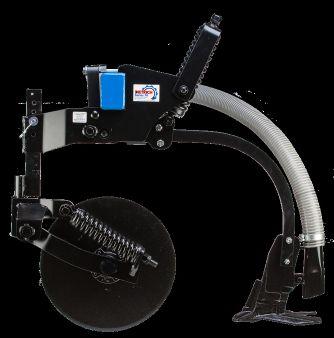
• DSI’s signature injector
• 840 lb. coulter down pressure spring assembly
• 3 Sweep options for lower rates to 20,000+ GPA
• Liquid stays where you inject it
• 30° left & right pivot angle to accomodate contours & end row turning on dragline

• Same time-proven Series 70 reliability
• Special design for tank or dragline toolbars
• Non-grease bearings in all hubs for maintenance free operation
• Adaptable to any toolbar
• Swivel coulters reduce side loads
• Rugged design
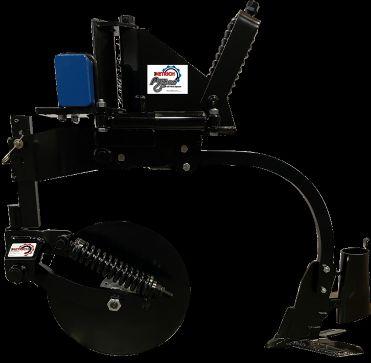
• Patented conical blade creates a wider furrow for higher GPA than conventional rotary injection
• Patented cupped covering blades move more soil to cover excess liquid
• Heavy down pressure on covering blades
• Combination of rotary injector & disc incorporator
• 24” – 30” spacing
• 18” – 30” spacing
• 18” spacing and 2 Clozr blades result in higher GPA
• Low horsepower



2024 Vol.22, Issue 4
Cover crops have been hailed by some as an alternative to manure, because of their benefits. But they just might work best when combined.
BY JACK KAZMIERSKI
Passing the smell test
A Pennsylvania team looks at solutions to reduce odor in pig manure.
BY RICHARD KAMCHEN
BY JAMES CARELESS

Although this is our July-August issue, I am writing this editorial on June 10 in order to get everything into our production department on time. That means a few things that might change the context of what I’m about to say. For one thing, it is still, in the most technical of terms, spring. I would say it doesn’t feel like spring – it rarely does in mid-June – but conditions here in southern Ontario have been very spring-like. Aside from a few scorchers in May with minimal cloud coverage, we’ve had some blessedly mild weather with some welcome breezes. We’ve also caught up in our precipitation. After many growing regions in Ontario reported below-average precipitation for March and April, many were far above the 10-year average in May. And although we only have 10 days of data and mostly anecdotes to go off of for June so far, I must say, it’s been just wet enough that I haven’t had to take the hose to my own garden that much this month.
Although this spring has felt more
business isn’t still busy. As researchers uncover more about extending the application window and applying manure in-season to standing crops, these innovations are paying off for growers. You can learn more about these subjects at the education tents at the 2024 North American Manure Expo in Auburn, NY.
That’s the other contextual difference from writing this editorial note in June. While things are certainly heating up a month out from the show, we’re still very much in a “final touches” stage. By the time you read this – maybe even strolling through the Expo grounds – these days will seem downright laid-back. Taking the Expo to a new location (yes, it’s our first New York show; how did no one submit a slogan to the tune of “start spreading the manure?”) brings with it a lot of excitement and many unknowns. Those of us here at Annex Business Media will surely be a little more high alert a month from now as we ensure that all the fine details are
“Seize the window of opportunity before it slams shut.”
drawn out, weather-wise, that doesn’t mean spring spreading was any less of a sprint; when you have no idea how long your field will remain dry, it means you seize that window of opportunity before it slams shut. The smell of spreading – which I’ve come to like very much! – lingered in our county for only a few short weeks. Now, the crops and the growers are in the spotlight.
But that doesn’t mean the manure
ironed out to deliver you the best possible show experience. It’s crazy to think that you might be reading this editorial at that very show!
Much like spring spreading, the Expo is more track meet than marathon; it’s over before we know it, so it’s up to us to seize the opportunity. Make the connections, shake the hands, share the knowledge and take the chances.
Happy summer spreading!


DAY ONE I JULY 17

AM - Register for one of our tours:
1) Patterson Farms
2) Water quality protection at Sunnyside Farms
3) Energy from manure at Aurora Ridge Dairy and Lincoln Dairy
4) Soil health systems with DuMond Grain Farms and Spruce Haven Dairy
PM – Visit with exhibitors, view agitation demo’s, separator demo’s, in-field safety training and be sure to source a ticket for the evening’s sponsored BBQ.
DAY TWO I JULY 18

15+ education sessions, expo networking, solid, liquid, dragline, grassland injection demo’s and more! TOURS $35 USD (includes 2-day pass & meal voucher) 2-DAY EXPO PASS ONLY $15 USD 1-DAY EXPO PASS ONLY $10 USD Buy tickets online to save and expedite show entry.










The USDA’s Agricultural Research Service (ARS) and the University of Wisconsin-Madison’s College of Agricultural and Life Sciences (CALS) hosted a groundbreaking ceremony for the construction of a new dairy research facility that will expand on the longstanding partnership between the two organizations, tackling key issues affecting America’s dairy farmers.
Scheduled for completion in 2027, the new facility and its associated buildings will host a number of innovative features including robotic milking systems, chambers for measuring GHG emissions, an advanced animal
nutrition unit and state-of-the-art laboratories for both agronomy and dairy science, as well as offices and a visitor center.
“The construction of this new facility represents a continuum of cooperative research between ARS and UW–Madison CALS that builds on achievements of the past to meet the evolving needs of our dairy producers now and in the future,” said ARS administrator Simon Liu in a statement.
“Wisconsin is America’s Dairyland, and we take very seriously our responsibility to conduct relevant research that can be put to use by our dairy
farmers” said Glenda Gillaspy, dean of the UW–Madison CALS. “The partnership between UW–Madison and USDA has allowed us to amplify our collaborations with the state’s dairy industry, and we look forward to that continuing with this new facility.”
Located on a 42-acre site outside the city of Madison, the new facility will help bolster the organizations’ capabilities in both laboratory and field research on soil health, forage production, forage quality, dairy nutrition, nutrient-use efficiency, ecosystem services, milk production and resiliency in the face of climate change.
A human case of highly pathogenic avian influenza (HPAI), commonly known among laypeople as “bird flu,” has been confirmed in Michigan, marking the second human case since the recent multistage outbreak of the infection
began. The first case occurred in Texas, and both were tied to dairy farms.
According to the Center for Diseases Control (CDC), both infected persons reported only eye symptoms. Human health risk assessment
from the CDC remains low, but the CDC continues to recommend precautions to those interacting with agricultural livestock.
The cases were both tied to farms where the outbreak, initially confined to poultry, had spread to dairy cattle.

A recent Senate report on Canada’s soils raised concerns about Canada’s food production and biodiversity based on current soil health. However, a team of scientists from University of Guelph’s Soils at Guelph team say there are “many options available” to farmers to protect soils.
“The the key is finding ones that fit with the farm operation, the cropping system and the soil – that’s the challenge,” says Laura Van Eerd, one of the co-executive directors of Soils at Guelph. She leads the program with Kari Dunfield and
Claudia Wagner-Riddle.
The Soil Interpretive Health Centre site has 18 lysimeters for taking soil core samples. “The lysimeters we have at the Soil Health Interpretive Centre are innovative as they compare different soils under the same conditions,” said WagnerRiddle. “This is instrumental in evaluating and improving soil health based on the farm’s soil type.”
The team advocates for farmers to find the right solution for their unique situations, as there is no one-size-fits-all aprproach. For example, all farms widely adopting
Michigan State University recently announced that a team will study the outbreak in dairy cattle, specifically its effects on reproduction and milk production, as well as transmission of the disease and ways to mitigate it.
a no-tillage system could introduce new risks for operators
“We collaborate with research teams to identify the most effective ways to incentivize these practices,” said Dunfield, who is the Canada Research Chair in Environmental Microbiology of Agro-ecosystems. “It’s crucial for society to understand the significant environmental benefits of these on-farm decisions. We understand that agricultural soils need to be managed in such a way that they maintain their functions and continue to provide the key services that we rely on.”
There’s still time to take the Manure Manager training, talent and operations survey.
Manure Manager has launched a summertime survey to help better understand the current state of the industry, especially as it relates to how business owners spend their money, time and energy improving their enterprise.
“With multiple stresses from inflation, climate challenges and high demand –coupled with high turnover which we’ve seen in agriculture and ag-adjacent industries – it was imperative that we understand how these outside stressors are affecting those in the manure application industry, and how they do business,” says Manure Manager editor Bree Rody.
The 25-question survey is intended to take no more than 20 minutes to fill out. Questions focus on training (what kind of training is prioritized, what is easily accessible, what topics are most in-demand), talent (how businesses are attracting and retaining talent) and succession planning.
The purpose of the survey is twofold: one, it will help Manure Manager better content in the long run, informing our editorial and sales teams on the priorities
of the modern manure applicator; and two, it will be used to inform a comprehensive feature in the September-October issue of Manure Manager, featuring input from around the industry.
In order to get this information into the September-October issue, that means we need
to hear from your voices soon! Take the survey before Aug. 30 to ensure your input is accounted for – and enter in for a chance to win one of three gift cards!

Percentage of Canadian farms that have liquid manure storage systems.*
14 85.7 93.9
Percentage of Canada’s farmed hog population that uses a liquid manure storage system.*
Percentage of Canada’s farmed beef cattle that use a solid manure storage system.*

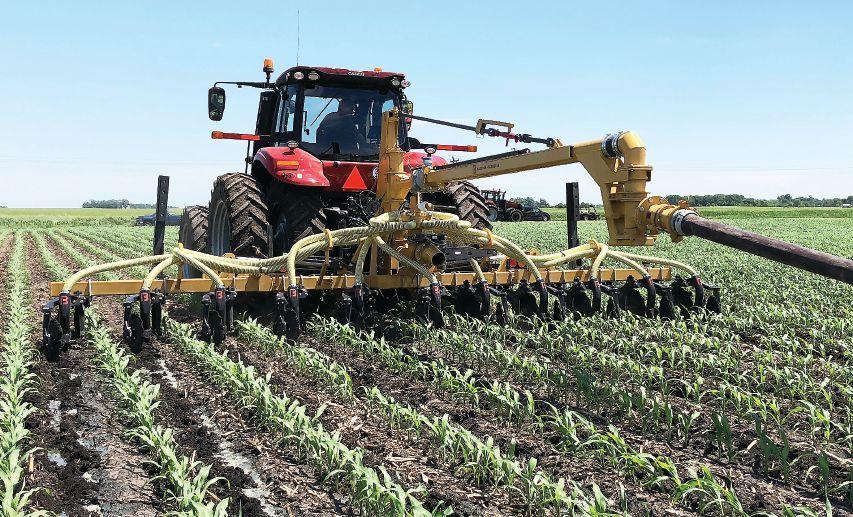
Side dressing crops is all about getting the right nutrients to the right place in the right amount and at the right time.
That’s how Glen Arnold, field specialist, manure nutrient management systems and professor at Ohio State University Extension explains it. More specifically, it’s about using liquid manure to get nitrogen to a crop when it’s needed the most— while the plants are growing.
BY JACK KAZMIERSKI
“With side dressing, you’re applying manure alongside standing rows of corn, or whatever crop you’re growing,” explains Melissa Wilson, associate professor and extension specialist with the University of Minnesota. “If you have a manure with a higher ammonium content, like swine manure, for instance, applying it during the growing season can be really beneficial. If you have that high ammonium content manure, you have these plantavailable nutrients right when the corn is really ready to take up those nutrients.”
While side dressing is used most commonly on corn crops, some work is being done with other types of crops, including soybean. “From my previous county extension research and personal experience, I have only ever side dressed a corn crop,” admits Eric Richer, field specialist in farm management with Ohio State University Extension and Certified Crop Advisor (CCA).
He adds: “We have found that the nutrients available in liquid beef and swine manure to be especially well suited to meet the needs of a crop rotation of corn and soybeans. We recommend applying to the corn crop so that the corn can utilize the nitrogen and all nutrients in the first year, whereas soybeans don’t have the demand for the nitrogen in the second year.”
Besides getting valuable nutrients to the plants as they grow, side dressing offers other benefits. “Applying a product with immediately available nitrogen to a corn crop makes the maximum use
of manure nutrients, saves money on purchased fertilizer, and improves water quality,” explains Arnold.
Applying manure to plants that are already growing can be a challenge. After all, you don’t want to risk harming the plants.
“Methods of application can include a drag hose, Cadman technology or the newest innovation: Rain-360,” says Arnold.
The drag hose method has limitations, since it needs to be used early enough that it won’t permanently damage growing plants. Timing is key. “If you’re using the drag host system, you want do it before the corn gets to the V4 growth stage,” explains Wilson. “That’s because the drag hose is being pulled over parts of the field, and parts of the corn. As long as you do that before the growing point comes above the soil level, then the plants will recover. They’ll bounce right back. It might take a day or two, of course, but they’ll actually just continue growing.”
Cadman and Rain-360 systems, on the other hand, can be employed even later in the growing season, but require an investment in the right equipment. Regardless of the method used, preparation is key. “Your equipment needs to be set up properly for side dressing,” explains Wilson. “You will also need narrower tires for you tractor, so you can drive between the rows.”
She explains that side dressing is a complex process that requires a bit of know-how. While some growers invest in the needed equipment and are happy to do the work themselves, others prefer to hire professionals who already have the right equipment for the job.
If you’re planning on hiring a commercial manure applicator, Arnold recommends planning ahead. “Some corn fields are planted at a 45-degree angle to help out the drag hose operator,” he explains. “Other times, a hose humper is used to help position the drag hose. We can side dress corn fields that are a halfmile in length.”
Those who prefer to do the job themselves, should expect a bit of trial and error, explains Richer. “There is definitely a learning curve,” he says. “I encourage growers to evaluate the
equipment they have, to ensure manure is being placed well, and when soil conditions are dry enough to avoid compaction.”
That last part about the proper soil conditions is critical. “You definitely want to make sure your soils aren’t too wet, because you want to reduce the risk of compaction,” says Wilson. “You also don’t want to muck up your fields or get stuck out there. And make sure that if you’re pulling a drag hose, you want conditions
where the soil can hold up that hose and not get gouged down too much as it’s going across the field.”
Side dressing can be used in both Canada and the United States. However, timing is critical, and there are a few caveats to consider. “From a geographical perspective, side dressing corn seems to work well in the U.S. Midwest where the fall and spring temperatures can be



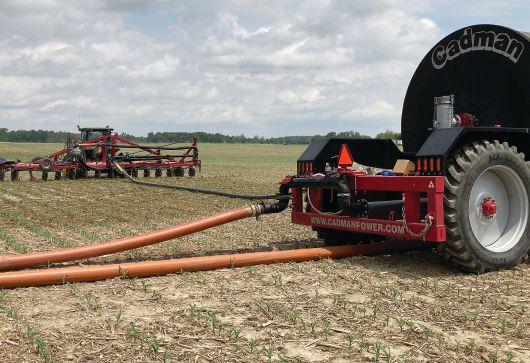
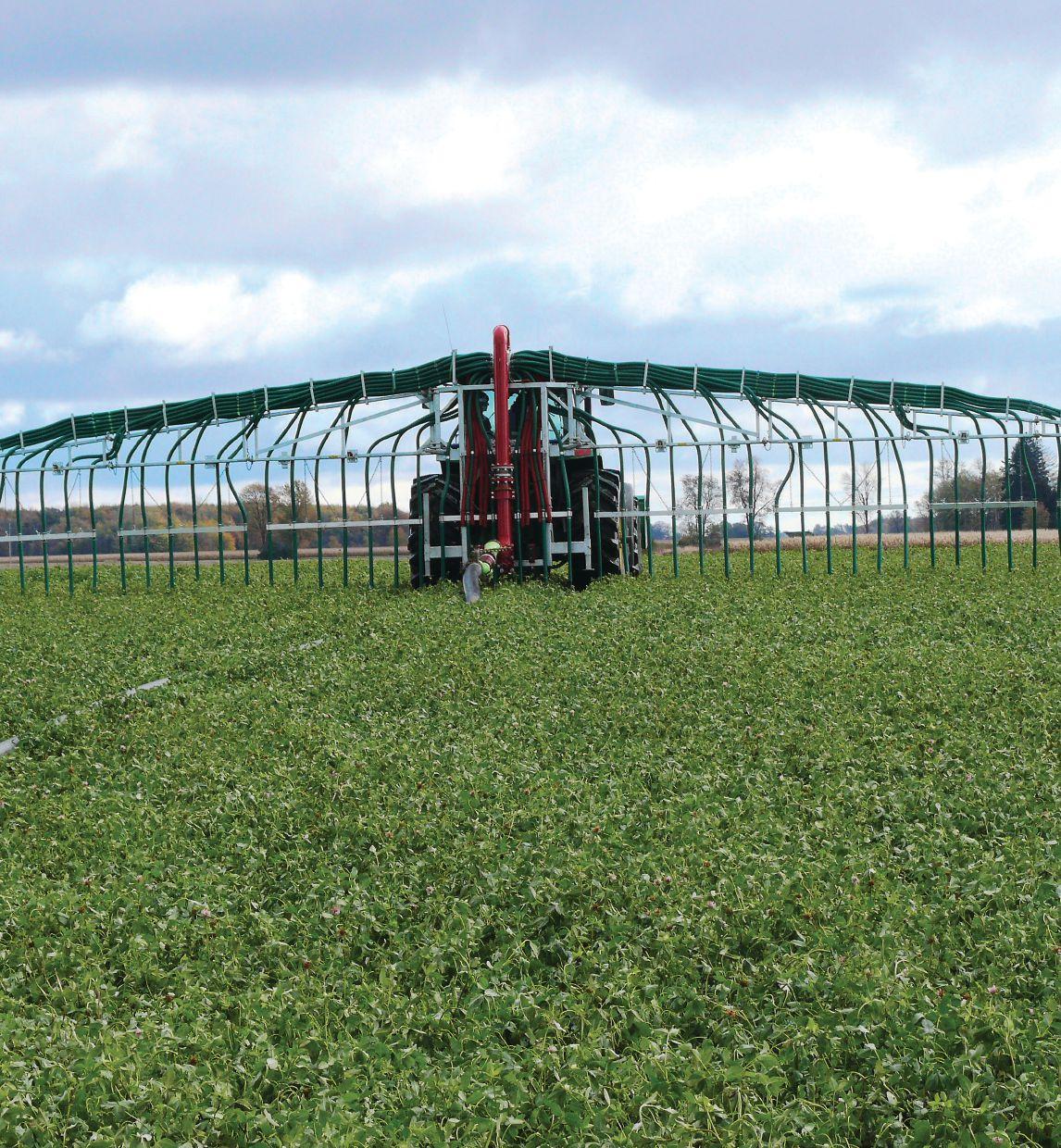
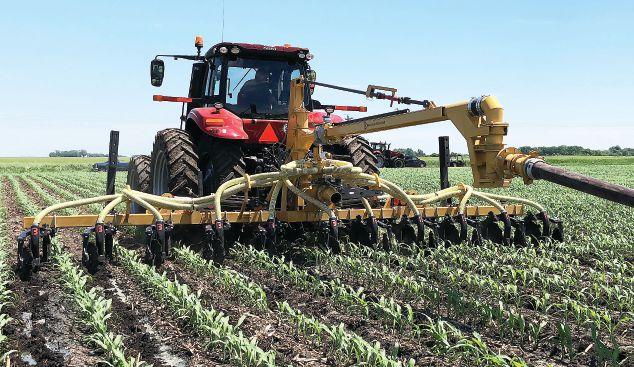
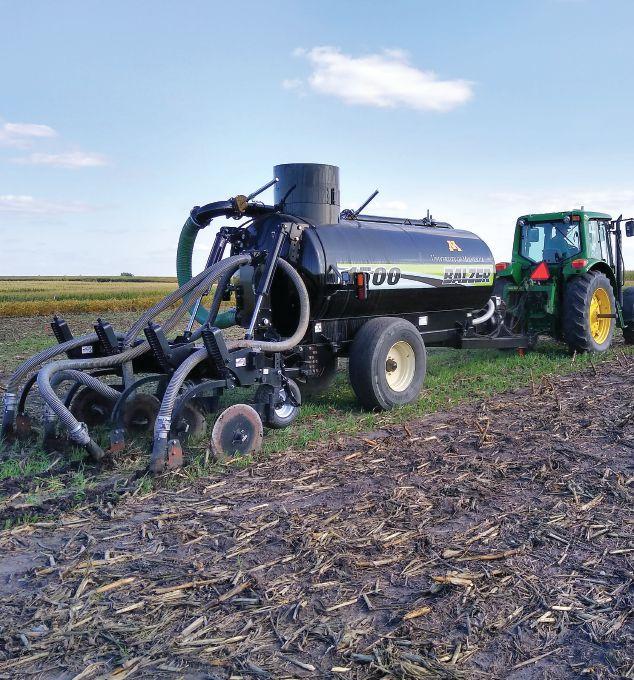
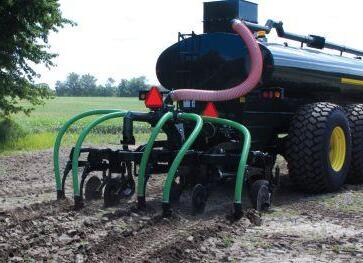
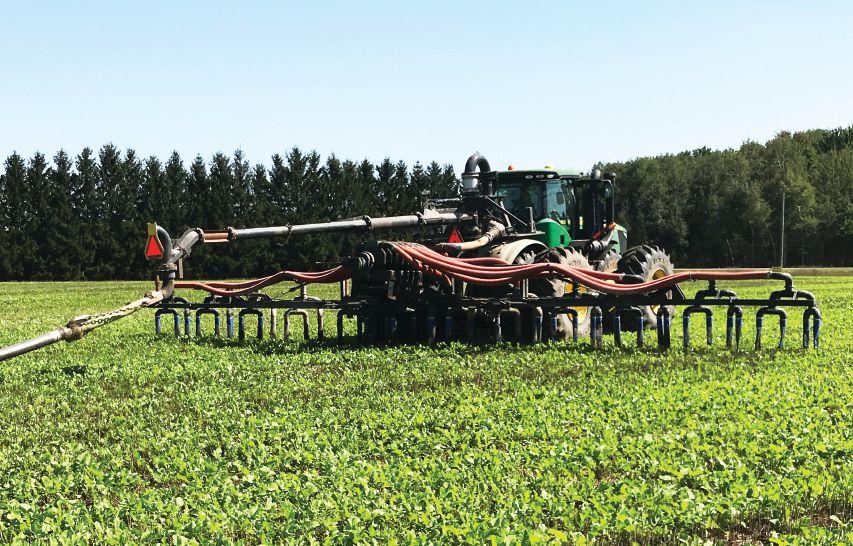
Different views of side dressing liquid manure in various Ohio fields.
a bit warmer, and another window for manure application is needed,” explains Richer. “In the Upper Midwest, and in Canada, I would expect late fall manure applications—because it’s cooler—to result in similar yields as side dressing, simply because less nitrogen is mineralized at cooler temperatures.
“However, if another manure application window is needed, I would expect side dress liquid manure to have very positive results, or yield better than fall-applied situations. Growers who have liquid livestock manure have found this strategy to be one of several effective strategies to meet the nutrient needs of their corn crop. In the future, I would expect this manure side dressing strategy to be used more as water quality and carbon intensity scores come into focus.”
When it comes to choosing the best type of manure for side dressing, Arnold offers the following advice: “Swine manure has three times more N than dairy manure. Liquid beef manure can work. Manure than has a 2:1 ratio of N to P for a zero P growth in the soil over a two-year cornsoybean rotation.”
He adds: “The ammonium nitrogen in the manure is what we are interested in. Swine finishing manure is the best liquid source for side dressing corn. It is immediately available for any growing crop, as opposed to organic nitrogen, which takes much longer to become available. More than 90 percent of the nitrogen in swine manure is typically in the ammonium form.”
Naturally, for best results, growers should test their soils and manure prior to application in order to determine how much manure needs to be applied, and where.
Rick Alig, along with his brothers Dave and Greg, are owners of Alig Farms in Fort Recovery, Ohio. They grow corn and soybeans, and they also raise livestock. The brothers started side dressing their crops more than a dozen years ago.
“We have a lot of liquid manure, and my brother Dave has a lot of liquid cattle manure,” explains Rick Alig. “Instead of putting it on in the fall, where you lose most of your nitrogen, we decided to put it on the crop when it needs it.”
Alig says that the results are well worth the effort. “We get about a 10 percent increase in yield with both our corn and soy crops,” he adds.
Rather than using a drag hose, Alig and his brothers invested in a Cadman CMA, because they found that using a drag hose dramatically reduces the window of opportunity they would have to side dress their crops before the corn gets to the V4 stage.
“Some guys drag a line over their corn, knocking it over, and their window is really short,” explains Alig. “The CMA does not knock the corn over, the hose stays in the row, and we can apply side dressing to as tall a corn or soybean plant that the tractor can drive through.”
Rather than hire a commercial manure applicator, the Alig brothers do the side dressing themselves. “If you’re big enough
to own your own equipment, it makes sense. If you’re not, you can get together with your neighbours and cut the costs.”
Besides the increase in yield, side dressing also saves them money. “We’re not buying commercial fertilizers,” he says. “We have to pump our manure anyhow, so we might as well do it when the crops need it.”
Alig touches on an important reason why side dressing makes sense, especially if you have lots of liquid manure, and are dealing with storage challenges. Wilson explains how this issue has impacted her part of the country: “What we’re starting to see in Minnesota, at least with some of our older-style hog barns, is they don’t have a full year’s worth of manure storage anymore. Whether that’s because the genetics of the pigs have changed, the pigs are getting bigger than they used to, or because we’re turning the pigs a little faster through the barns... Whatever the reason, they just don’t have enough manure storage. So having a field or two where you can side dress manure in the summer can be beneficial, because you’ll have an outlet for that manure to get you through the summer and into the fall.”
Of course, the most notable advantage to side dressing is the benefit to the crops. “Applying in-season, especially when you are trying to utilize the nutrients most efficiently can be beneficial, just because that’s when the corn is taking up the nutrients most rapidly—right at that beginning, when it’s about a foot tall, or a little bit higher,” concludes Wilson. “It just makes sense.” •

CO M M I T T E D TO
Q UA L I T Y YO U C A N
D E P E N D O N
For more info visit huskyfarm.ca or call 1-800-349-1122
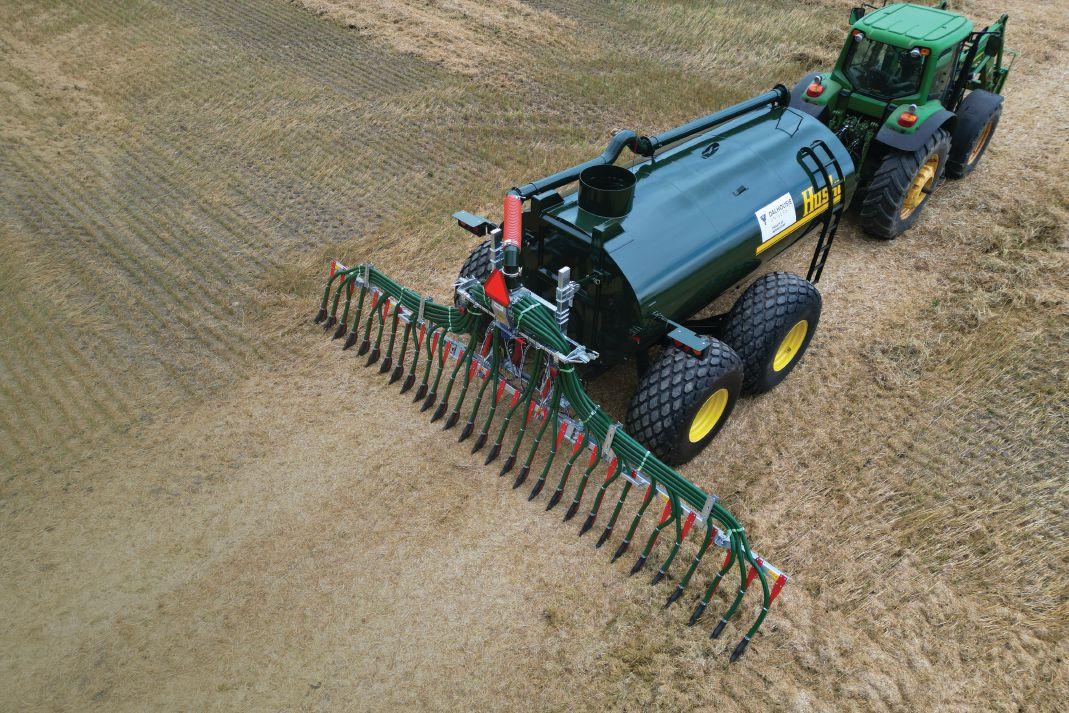
Trailing shoe booms from 6m to 30m in width. BlackBird trailing shoe booms in stock Summer 2024. Various incorporation options available. Contact us for more info on tank sizing options.
MM_Husky_March/April_SVA.indd 1

Sometimes one plus one equals more than two.
A case in point is combining cover crops with manure.
Cover crops are good. Manure is good. At times, however, cover cropping as a practice has been presented as a sort of alternative to manure; some even refer to cover crops as “green manure” because of the nutrient benefits to soil.
BY JIM TIMLICK
But it doesn’t have to be either-or. In fact, combine the two and you get something that is more than the sum of its parts, experts say.
“There are a couple of benefits to me, but the biggest one is when you put manure and cover crops together you get this sort of synergy,” says Christine Brown, a field crop sustainability specialist with the Ontario Ministry of Agriculture, Food and Rural Affairs (OMAFRA).
“First, the cover crops are using the manure nutrients during the growing
ABOVE
season when you’ve got the maximum amount of microbial activity in the soil and they all congregate around the root systems. What you get is more biomass and bigger root systems. And when you apply manure during the growing season, you’re not getting (leaching) … and you’re potentially reducing greenhouse gas emissions from nitrous oxide. Basically, it gives you that extra organic matter, water holding capacity and root development a little more quickly when you combine manure with cover crops.”
Another major benefit of combining manure with cover crops is that it can prevent soil degradation or erosion, says Matthew Ruark, a professor of soil science at the University of Wisconsin-Madison. That is especially important with a crop such as corn is harvested for silage leaving the soil exposed and a cover crop combined with manure
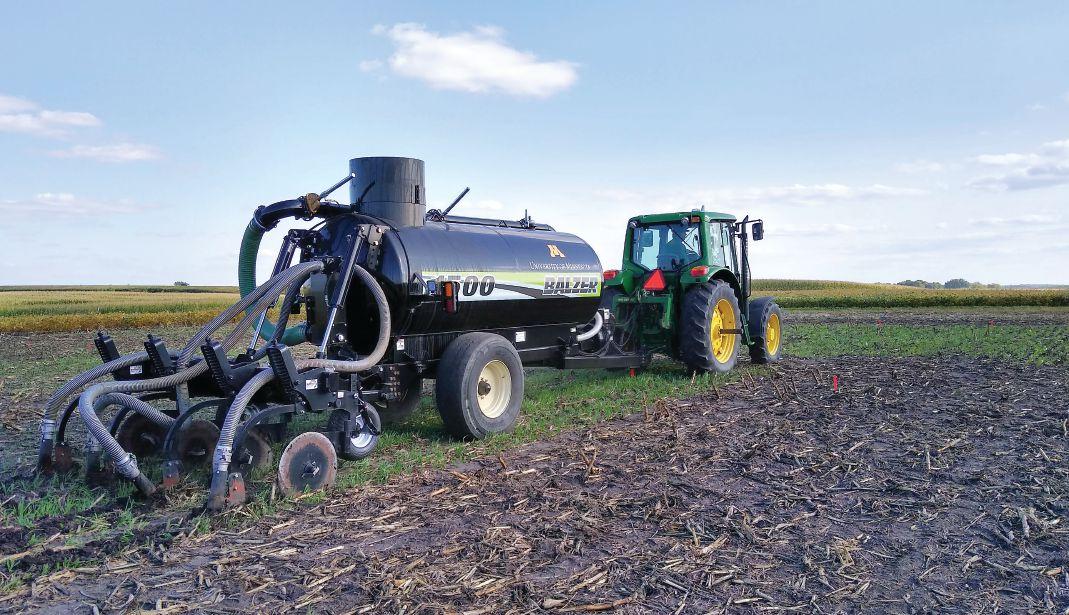
A modified dribble bar applying into standing radish cover crop in early September.
ABOVE
A close-up view of manure being injected into a cover crop.
can greatly reduce the chances soil erosion, he explains.
Combining cover crops with manure is hardly a new idea. In fact, it’s been around for generations. However, the idea appears to be gaining traction in some agricultural communities across North America of late.
It’s a trend Melissa Wilson has witnessed firsthand. Wilson is an associate professor and extension specialist in manure nutrient management at the University of Minnesota. Lately, she has been fielding a lot more questions from producers about how to best combine the two practices.
Wilson thinks there’s a couple of reasons for the increased interest. First, more and more farmers have become interested in using cover crops as they learn about the benefits they provide such as boosting soil health and preventing erosion. Secondly, tighter regulations are being introduced to govern the application of manure, especially earlier in the fall. That means growers in some locations must now have a best management practice in place, such as the use of cover crops, in order to apply manure.
So, what does a grower need to know if









ABOVE
of any application in relation to the development of the cover crop. Brown says farmers should avoid applying manure when a cover crop has just started to emerge and is still in a fragile state because any kind of wheel traffic may negatively impact the plant’s stand. It’s also important not to use any form of highly concentrated manure until after a cover crop is well established since it is likely has a high level of salts that can damage the top growth of a plant or even burn its roots, she explains.

Matthew Ruark says growers may need to supplement the amount of nitrogen they apply to a field once a cover crop grows to be very large.
they are considering combining cover crops with a manure application on their farm?
Brown says one of the most common questions she gets from growers is whether its better to plant the cover crop first and then apply manure or apply manure first and the cover crop second. The simple answer is it depends on the type of manure and the conditions on an individual farm.
In a case where the cover crop seed is being planted with a device like a drill, she suggests it is often better to seed after manure has been applied and incorporated into the soil. The benefit to applying manure before seeding is it helps reduce the risk of soil or nutrient movement once the cover crop has emerged from the ground. Post-seeding application can work when good moisture conditions are present in the soil, or when liquid manure can be applied below the crop canopy with equipment like dribble bars or drop hoses, she adds.
Another consideration for growers is to be aware of when the conditions are right for applying manure to a cover crop. In the case of a fall application, Wilson says it’s generally recommended that the soil temperature should be 50 F (10 C) or cooler when manure is applied. That’s because the microbes in the soil have slowed down and they’re not converting nitrogen into a form that is more easily lost, meaning it will stay in place in the soil longer and be more effective.
“Soil microbes convert it into nitrate and that is a form of nitrogen than
can leach and can move with ground water,” Wilson says. “In wet years, it’s particularly important to not let it get to the point where it’s in nitrate form. Cooler temperatures really help with that.”
Another consideration is the timing
Both solid and liquid manure can be used in conjunction with cover crops. The choice of which form to use often comes down to what a farmer has available to them, Brown says. One potential upside to liquid manure is that it generally has a higher ammonia content meaning nitrogen is more readily available for the crop, she adds.
If solid manure is being used, Wilson cautions growers to use a light application and make sure the cover crop is still visible once the manure has been applied.
smother the cover crops that’s obviously going to be a problem,” she says.

A field demonstrating the difference in cover crop growth with and without manure.
Ruark says something growers should be conscious of is the fact that they may need to supplement the amount of nitrogen they apply to a field once a cover crop “gets really big.” A recent study his university conducted showed that once a cover crop produces more than 2,000 pounds of biomass it begins to take up a lot more nitrogen, meaning growers will likely need to add more nitrogen to their soil than they originally planned.
“If you were planning on a certain amount of nitrogen being there for the next crop, that’s going to be less and you’re going to have to supplement it if the cover crop gets above 2,000 pounds,” he says.
Ruark’s advice to farmers who are considering combining cover crops and manure for the first time is to be careful about which type of cover crop they choose. He says the safe choices are grasses that will succumb to winter kill and won’t require any chemical termination in the spring.
“Stick with the core ones, maybe some clovers if you have time, or maybe go with the brassicas such as a mustard or a radish. Stick to the ones that are wellknown and we know how to manage.”
One of the most popular cover crops to use in combination with manure is winter rye. Ruark says the reason for that is it provides “really nice cover crop growth,”
but does require chemical termination or tillage to kill the cover crop in the spring.
Ruark says another popular cover crop choice in northern climates like Wisconsin is spring barley or oats, especially if they can be planted in early September. But unlike winter rye, they don’t require any chemical termination in the spring, as they typically die off in winter.
Wilson agrees that winter rye is generally a safe choice in northern climates like Minnesota, especially in combination with rye grass. She says a recent study conducted by her school showed that rye grass tends to do better in shaded conditions like when it’s planted into a standing crop. Another project conducted by the school showed a winter rye/oat/ radish mix did really well with a manure application as long as there was minimal disturbance during the manure application.
Brown is a strong supporter of using oats as a cover crop. In addition to providing a lot of fibrous roots, oats will winter kill by itself and is also a great natural weed suppressant. The only caveat with oats, she says, is that it needs to be planted relatively early in the fall. If you aren’t planning to plant a cover crop until mid-October, you should probably consider another option. She also likes cereal rye as a cover crop since the cost of seed is relatively inexpensive and it grows
well in most situations.
She advises growers to think twice about choosing straight tillage radish as a cover crop. One drawback is if it’s planted too early it can end up plugging up drainage tiles. It can also create a noticeable odour when it winter kills. She recommends anyone planting radishes as a cover crop to mix it with oats which can help it take up nitrogen from manure.
Brown also urges growers to do their homework when it comes to applying manure and using eight-way cover crop mixes as they might not be the most economical choice in some cases.
“With the eight-way mix, the nutrients generally are picked up by the oats or the oilseed radish or cereal rye and they outgrow some of those other species. You’re generally better off to just stay with a relatively simple cover crop mix.”
One of the trends in cover crops Brown has noted is an increasing number of farmers turning to harvestable options such as cereal rye and oats. Several recent studies, including one conducted by the On-Farm Applied Research and Monitoring (ONFARM) project, have shown that harvestable cover crops are beneficial because they don’t leave as much residue and provide another source of feed or additional revenue.
A recent three-year study conducted by the University of Minnesota looked at the best ways manure and cover crops can be used in combination. The study’s results showed the earlier a cover crop is planted, the more biomass it will produce, and later is better when it comes to the fall placement of manure.
Still, Wilson says growers need to be patient when it comes to using cover crops in combination with manure. In some cases, it can take four or five years for a farmer to see the benefits from it.
“It does seem with cover crops you really need to kind of wait for the new normal to establish,” she says.
“(Cover crops and manure) changes the dynamics of the nutrient cycling in your soil when you have that added cover crop and residue in there. Just be patient. It may take a few years for you to figure things out but don’t be discouraged. Some of the longer-term yield benefits and nutrient cycling benefits will (take time) to shift.” •
Bazooka Farmstar has unveiled a new product offering, Applied PTO air compressors. The products are the result of a partnership with Applied Concepts, out of Ireland, to offer the products exclusively to the North American market.
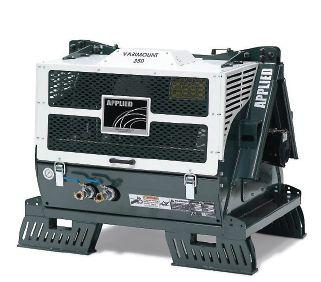
Applied PTO air compressors are designed to tackle tough manure pumping applications. The patented VariMount 350 PTO Air Compressor offers an output of 350 CFM. As a tractor PTO-powered unit, it provides cost and environmental benefits by utilizing the tractor’s engine instead of a dedicated diesel engine. Key features include:
• Superior output of 350 CFM;
• Fully air-driven with no electrics;
• Easily mounted onto the rear or front linkage of your tractor; and
• Ability to navigate any terrain.

On top of its recent air compressor addition, Bazooka Farmstar has also launched two new trailers – the 32′ Outlaw Forcefeed Trailer and the 32′ Renegade 2 Agitation Trailer.
The 32′ Outlaw is a purpose-built system for slurry and boasts flow rates of 2500-3750 GPM. The goal of the 32′ Outlaw is to deliver the performance and convenience of its larger Outlaw counterpart, in a smaller package. Its features include high flow and increased efficiency; easy-to-maneuver boom with integrated plumbing; high ground clearance trailer with rear operator station; optional agitation and boom remote; and more.
The 32′ Renegade 2 eliminates the hassles of traditional setups thanks to its loadstone option. The remote fill system allows users to transfer liquid manure from stores or pit pump-outs. Features include an easy-to-maneuver boom with integrated plumbing; high ground clearance trailer with rear operator station; optional fully integrated loadstone; and more.
Farm manufacturing giant Valmetal has entered a new frontier: video games.
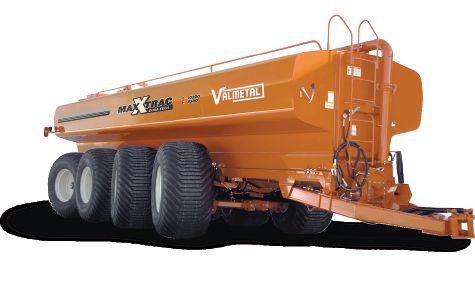
Starting this year, Valmetal’s Maxx-Trac Manure Spreader has become available for use in the Farming Simulator video games Farming Simulator is a bestselling simulation game by Giants Software. Players of Farming Simulator are tasked with managing and developing a virtual farm, which includes manure spreading. The team added the Maxx-Trac manure spreader recently, reproducing it with input from Valmetal,


BY RICHARD KAMCHEN
Storage is obviously a good way to keep manure on the farm, but that doesn’t mean all the nutrients are staying put.
Storing manure provides opportunities for dairy farms to maximize manure’s value as a fertilizer, reduce handling costs, and minimize its potential to pollute the environment.
However, it also presents the potential to lose the nitrogen in manure to the atmosphere through volatilization as ammonia.
“Knowing the quantities of nitrogen lost is critical to inform the decision-making process related to developing mitigation strategies,” according to research published by Virginia Tech on an on-farm dairy manure storage structure and supported by the United States Department of Agriculture NIFA (grant no. 2017-67019-26399).
The study quantified the nitrogen lost to the atmosphere during manure storage on small dairy farms as influenced by management and meteorological parameters.
The study identified wind speed as the
meteorological factor with the greatest effect on ammonia loss. It also found that 25 percent of ammonia loss occurred during the agitation process to break the crust and homogenize manure before pumping it out for land application..
“The data from our study area suggested wind speeds were higher during the late winter and early spring months,” says Jactone Ogejo. Ojego, an associate professor in Virginia Tech’s department of biological engineering and an extension specialist, is the lead author on the study. “This period, incidentally, is about when the manure storages are full, and farmers are getting ready to apply manure to their fields.”
Ogejo, an associate professor and extension specialist with Virginia Tech’s Department of Biological Systems Engineering, says that crusting is an eventuality in dairy farms manure storages. How does crusting happen? The formation of crust on dairy manure slurry during storage
is influenced by various factors. These include high levels of organic matter, solids content, and additional fibrous bedding materials. These components contribute to crust formation as they float and accumulate on the surface. Microbial activity, driven by temperature and nutrient content, produces gases that move lighter materials upwards toward the surface, further promoting crust development. When there is no agitation or slurry mixing, material stratification occurs, leading to the formation of a distinct crust layer. Storage conditions, such as open versus covered structures, also play a significant role; open storage is more prone to crusting due to increased evaporation.
Crusting is one factor that plays a significant role in reducing ammonia emissions.
“Ammonia emissions were markedly reduced during periods with substantial crust coverage – 80 to 100 percent of the surface – such as late summer to early fall,” says Ogejo.
He explains that the crust acts as a physical barrier, inhibiting the volatilization of ammonia by limiting its exposure to air.
“The wind speeds may not have much impact on ammonia loss until it is agitated and pumped out for land application,” says Ogejo.
“However, the high wind speeds may accelerate loss during mixing and when the manure is applied on fields, depending on the method used.” As an example, he points out that if the manure is spread by broadcasting, more losses may be experienced than if injected.
He also notes that the correlation analysis shows a strong negative correlation between crust thickness and ammonia flux: “So, the thicker the crust, the less ammonia is volatilized.”
Using the data from the study, farmers can inform their manure management strategies, specifically when to schedule their manure applications, such as picking times when wind speeds are relatively low to minimize ammonia loss and associated odor nuisance that may arise because of manure application, Ogejo says.
There are a number of management steps
farmers can take to reduce ammonia loss.
For example, applying manure when conditions are less conducive to ammonia volatilization -- during cooler temperatures and low wind speeds -- can reduce the losses, Ogejo says.
He adds that covering the surface of stored manure can also reduce ammonia loss.
“Our study showed low ammonia losses when the crust was on the surface. One conclusion we can draw from this finding is that if manure can be removed from storage with minimal disruption of the crust, that may be beneficial,” says Ogejo.
It is not clear, however, whether that approach is practical, he notes.
But nevertheless, it does present an interesting engineering challenge of maintaining the crust and mixing the contents beneath it to get homogenous nutrient distribution in the bulk of manure to be used as fertilizer, says Ojego.
Agitating the manure during cooler, cloudy, and less windy days may also be helpful management. As well, avoiding over agitation will help to minimize the ammonia losses.

There are other management steps to consider given that it’s no longer common for small farms to spread manure daily.
For these farmers, they will have to invest in some short-term storage, and devise a plan to reduce the frequency of application, says Ogejo.
Farmers are also advised to consider designing manure storages that are deep rather than wide in order to minimize the surface area of exposed manure where ammonia is lost.
They may also wish to consider adjusting the protein content in their animals’ diet.
“Optimizing the protein content in the diet will minimize the nitrogen lost in the manure and, therefore, ammonia lost,” he says.
Another of Ogejo’s management tips is controlled aeration to promote microbial activity that converts ammonia to forms of nitrogen that are less volatile.
He adds that some people are also in favour of adding chemicals that acidify manure. •




As urban areas encroach onto formerly remote rural areas, livestock operators are frequently targeted with complaints about manure odors.
A recent demonstration project staged by researchers at the Pennsylvania State University (Penn State) to take a proactive approach to the problems of pig manure odor by trying to reduce it at the source; namely the livestock buildings where the manure originates.
BY JAMES CARELESS
The good news: Based on the results, as published in an online Penn State Extension article entitled, Manure Additive Shows Swine Odor Reduction, it is possible to reduce pig odor levels by using a humic-based additive; one that cuts odors emanating from barn ventilation systems and treated pig manure surface-applied to fields.
Pig manure is odoriferous for a reason. “Odor generation results from by-products of microbial degradation of molecular components found in the manure,” says Robert Meinen, an assistant research professor at Penn State.
“Some specific classes of compounds are rated as more offensive by most people, including volatile fatty acids, sulfur compounds, and aromatic rings. Put simply, it’s the smell of decomposition. It is hard to measure the offensiveness of manure with a single molecule because the manure is expected to emit a mixture of molecules that most people would find unfavorable. Anaerobic conditions found in liquid manure are considered to create more offensive odors than those found in aerobic conditions.”
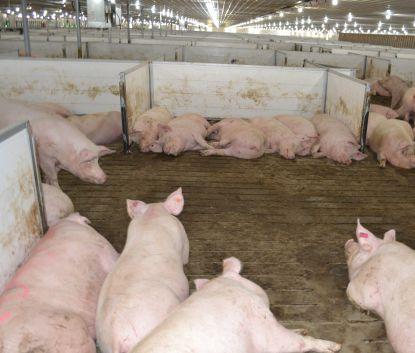
Manure quickly falls through slats and is stored underneath the floor at this sow farm with open pen management. Compared to outdoor systems, the underfloor storage reduces odor because the manure surface is not exposed to the outdoor air stream.
To make matters worse, “Swine manure is very low in solid content and fiber, so the formation of a crust on manure storage surfaces is not typical,” continued Meinen. “A thick manure crust can provide a microbial media where odor compounds formed deeper in liquid manure can be captured and degraded to less odorous compounds in aerobic conditions. Lack of a crust in swine manure allows gasses to escape the manure as they are generated.”
The Penn State demonstration project was created with one idea in mind: “The goal is to reduce neighborhood odor complaints from new and expanded large-scale livestock farms, buildings and manure storage structures only,” says Robert (Bob) Mikesell, a teaching professor with the Penn State department of animal science and one of the article’s authors. “We made no attempt to regulate odors from manure application.”
To find out if odor reduction was actually possible, the Penn State team mixed a commercial humic-based additive to liquid swine manure. “Humic additives

are extract solutions from partially decomposed stable organic matter,” explained the Penn State article. “This microbially resistant solution of dark brown colloidal organic decomposition products is characterized by large complex molecules with high chemical reactivity. Humic materials are incompletely understood, but are known to act as a biostimulant.”
In line with accepted research practices, two similarly operated, 2,250pig, tunnel-ventilated finishing barns on one farm were used in the project. They were both occupied by pigs of similar ages, while being separated by 1,800 feet of fields and forests.
During the project, the five-foot-deep underfloor manure storage pit of one barn received monthly doses of humic-based additives, over a period of five months, while the other did not.
“After 20 weeks when hogs were finished for market and barns cleaned for restocking, treatments were switched so the previously untreated barn received the amendment,” the Penn State article said.
The treatment protocol consisted of
Big challenges call for bigger answers. Meet the Kubota M8 Series, with up to 200 HP and a dependable Kubota engine to take care of business and then some. Plus, with the corner office view from the comfortable spacious all-season cabin, you’ll be in full control of your work—for seasons to come.
pouring ‘shock-treatment applications’ of humic-based additives through the centeraisle slotted floor, using seven equallyspaced locations in each of two rooms of the finishing barn. The dose was 3.3 gallons of additive per 1,000 square feet of barn.
To scientifically assess the impact of the humic-based additive on reducing pig manure odors, measurements were taken of the odors coming out of the barn’s ventilation tunnel fan, and from treated pig manure that was surface-applied to nearby fields.
The outdoor manure samples were laid down in a 20-foot wide swath (at a rate of 7,000 gallons per acre) within a 200-foot diameter ring.
For the record, “A four-person odor assessment team was located 30-feet away facing the barn exhaust fan,” said the article.
“Each assessor was equipped with a Nasal Ranger Field Olfactometer (NRO) unit and collected four separate observations each (16 total observations). Whole-air samples were also collected in odor-free Tedlar® bags during NRO observations and transported to campus


for laboratory olfactometry. Exhaust fan output for each barn observation set was also measured to enable calculation of odor emission rates for both field and laboratory olfactometry assessment methods.”
Outdoors, “The odor assessment panel, stationed in the middle of the manure ring, gathered D/T [Dilutions-toThreshold, aka the volume of odor-free air/ volume of odorous air ratio] data using field olfactometer units,” the article said. “Surface isolation flux chamber whole-air
samples from manure-spread areas were collected in odor-free Tedlar bags and transported to the olfactometry laboratory for evaluation.
According to Penn State’s research data – quoting the article for utmost accuracy – “Barn exhaust fan odor flux rates were reduced by 21 [percent] (OU/min, P < 0.001) for both field & laboratory odor assessment methods. Land

application manure-ring odor D/T and DT concentration levels were reduced by 21 percent (P = 0.15) and 60 percent (P < 0.001) for field and laboratory assessment methods, respectively.”
In plain language, “Under the controlled conditions of this demonstration project, the humic manure additive demonstrated a statistically significant ≥21 percent odor reduction for both the barn ventilation exhaust and land-applied manure using field and laboratory odor assessment methods.
“This odor reduction level may not be readily discernible at the source by many people. However, dilution at distance from the source (e.g. at the property line) could make a significant difference when it comes to nuisance odor complaints, especially when combined with other odor mitigation practices, such as land application via shallow disk injection.”
As for the time and money required to achieve this measurable reduction in pig manure odor emissions? “The monthly manure storage shock treatments involved less than eight hours labor over a full 20-week hog finishing-cycle. The total estimated cost for the humic amendment including labor was $0.70/hog. Product farm delivery costs would be in addition to this and vary by location.”
Do you want a uniform weight distribution while improving tractor traction? Have you ever wished for a superior suspension? The GEA XT suspension is what you have always wished for, to respond to extreme terrain conditions.
• Wider axles for next level stability
• Three independent hydraulic circuits
• Extended drawbar travel for independent movement of the tractor and spreader (Patent pending).
You want the best. You need the GEA XT suspension.

Scan this QR code to see in action the new GEA XT suspension.
The research conducted by Penn State shows that pig manure odors can be significantly reduced by 21 percent by adding humic-based additives to liquid manure on a monthly basis.
To put it mildly, this is tremendously good news for pig farmers; particularly in areas where housing developments are getting close to their operations.
This is certainly the case in Pennsylvania, which “has unique odor programming that focuses on proper siting of livestock and poultry farms,” says Meinen.
Specifically, “Pennsylvania has a statedefined category titled Concentrated Animal Operations (CAO), which are farms that have high livestock or poultry density of total farm animal weight per harvested crop or pasture acre,” he notes. “Since 2006, farms in the CAO program that propose new animal housing or
manure storages, or plan to expand housing or manure storage capacity must have a certified specialist develop an Odor Management Plan (OMP) for the new facility. The OMP considers many factors and uses a tool called the Odor Site Index (OSI) to assign numeric values that indicate risk of potential odor conflict. Starting with the map location of the new facility, the number of neighbors, distance to the neighbors, and direction the neighboring house is in relation to the facility are plotted.
“Since Pennsylvania’s prevailing winds are fairly predictable, houses to the east of the proposed facility are more heavily weighted than houses the same distance away in another direction.”
Animal factors also play a key role in CAO calculations. “The OSI considers the number of animals, and more animals increase potential odor conflict,” says Meinen. “The species of animal is important and hog farms are in the highest category of potential odor conflict because we know odor from swine farms can be more offensive than odor generated from some other species. Social factors are considered too, such as if the proposed site is in an area zoned for agriculture or if there are other animal farms close to the site.”
Fortunately, “The OSI can be applied to multiple sites on a property before commencement of construction, with the goal of identifying a favorable, low-scoring site with low potential for odors to affect neighbors,” adds Mikesell.
As well, Penn State offers a nonregulatory, voluntary site evaluation service for any proposed animal farm in Pennsylvania. “The site evaluation service considers the risk of odor conflict with neighbors after an animal barn receives inventory,” says Meinen. “The service began in 1999 and has evaluated over 250 locations where swine farms were proposed.
Beyond the OSI measurements cited above, all regulated farms in this state are required to address odor sources through (generally routine) management practices, designated as Level I BMPs (Best Management Practices).
According to Mikesell, these BMPs include reducing dust and feed accumulation in pens, aisles, and on animals; sufficient ventilation to keep
animals and facility surfaces clean and dry, and the minimization of damp, exposed manure that contributes to odor generation.
The BMPs also include the daily removal and sanitary disposal of dead animals in the barn, matching feed nutrients to animal nutrient requirements to avoid excess manure production, and management of the manure storage facility to reduce exposed surface area and off-site odor transfer.
Taken as a whole, the 21 percent odor
reduction process defined by Penn State’s researchers and Pennsylvania’s sensible BMPs for pig manure management are worth consideration by pig farmers everywhere.
“It is difficult to measure the benefits of reduced odor generation, but it is worth pursuing,” says Meinen. “The social benefits of avoided odor conflict should pay off from increased neighborhood perception of the farm to increased consumer confidence at the local supermarket.” •
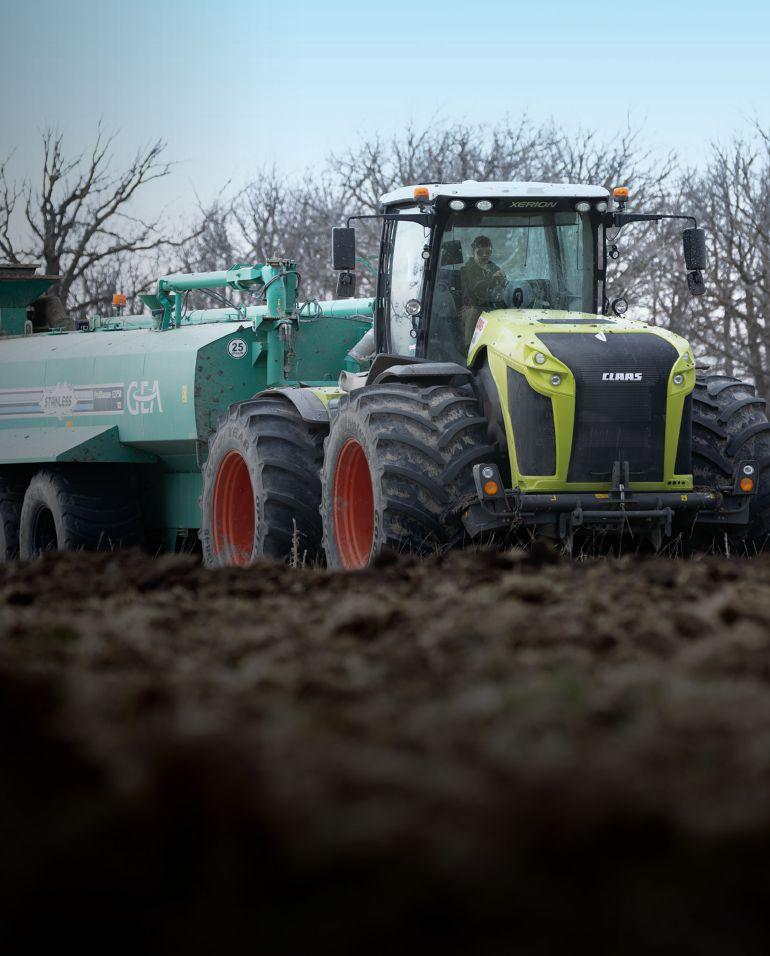
Discover the unparalleled power and innovation of CLAAS tractors, engineered for superior manure handling with CVT technology for efficiency, whisper-quiet cabs for comfort, and multiple steering modes for precise handling.
For those who demand more from their equipment, upgrade to CLAAS today and experience the ease of tackling even the toughest hauling tasks with precision and efficiency.













CHRYSEIS MODDERMAN | University of Minnesota Extension
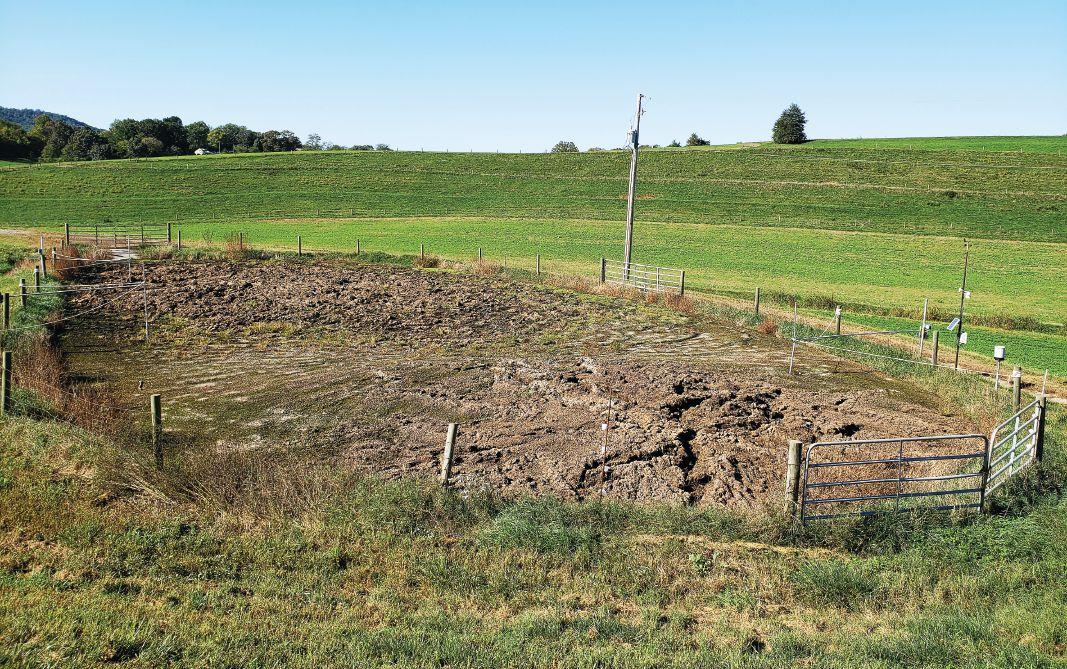
Working with manure presents some special safety challenges beyond the basic farm dangers of working with large machinery, stress, and fatigue. One of those challenges is harmful manure gases.
The first step to manure gas safety is to understand the risks. In most operations, hydrogen sulfide and methane are of the biggest concern. Other gases such as ammonia, carbon dioxide, and carbon monoxide can also cause health concerns but can be more easily managed through ventilation and equipment upkeep.
Hydrogen sulfide is a colorless gas created during anaerobic (low/no oxygen) decomposition of manure which is most commonly found in liquid storage pits. It accumulates in the manure and is then released during agitation and pumping. Though it can smell like rotten eggs, you can’t solely trust your nose since your sense of smell becomes dulled to persistent odors. Levels as low as 0.1 ppm can cause eye irritation, and death can occur at just 200 ppm if there is extended exposure. Hydrogen sulfide is also dangerous because it can cause unconsciousness that can lead to drowning if near the pit, fall injury, and prolonged exposure that can cause lung damage and even death. Keep in mind that high levels of this gas don’t just occur in deep pits or in confinement; open pits can also accumulate high hydrogen sulfide levels since it tends to hang near the ground.
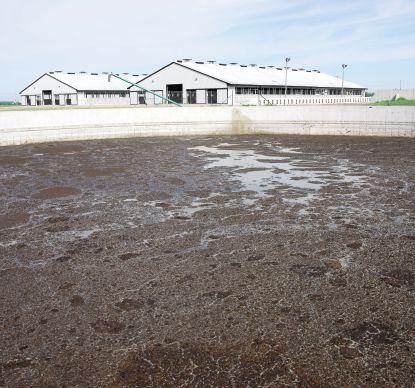
ABOVE
Manure stored in an open pit – open pits can also accumulate high hydrogen sulfide levels.
To avoid the above risks, develop safety protocols for your farm or operation when it comes to handling manure, especially activities like agitation and pumping. When working with manure, ask yourself the following questions:
Agitation and pumping:
• Are livestock and personnel removed from the manure basin area where they might inhale dangerous gases?
• Is the pit or basin well-ventilated?
High levels of gas don’t just occur in deep pits or in confinement.
Methane is also a colorless gas that is heavier than air and is created by manure decomposition. While the gas itself is not typically toxic, it can cause asphyxiation as it displaces oxygen and breathable air. The other concern with methane is that it’s highly flammable. When levels reach five to 15 percent by volume, fires and explosions become a hazard. It is also quite mobile and can accumulate in unexpected areas, so ignition points far across the barn from the agitated manure can still pose a threat.
• Have you disconnected any electrical equipment that may cause a spark?
• Do you have the proper personal protective equipment (self-contained breathing apparatus and harness with lifeline) on hand in case you need to enter the pit or basin?
• Do you have personal gas monitors?
• Do you have an Emergency Response Plan with updated phone numbers and contacts?
• Do you have signage or other communication measures in place to inform others that agitation and pumping are occurring?
• Have all employees and personnel been trained to follow your safety protocols and plans? •
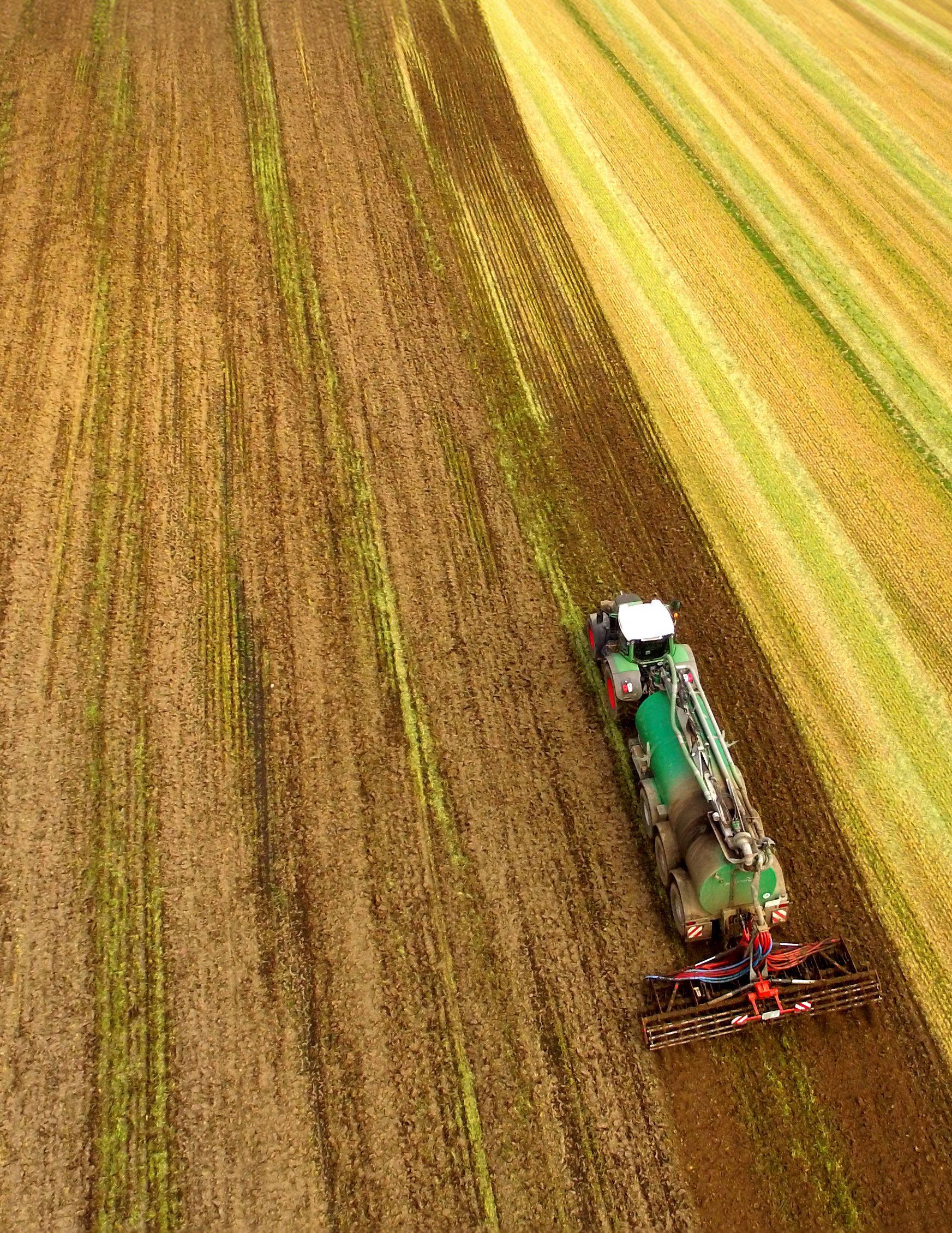
Manure Manager is conducting a comprehensive industry survey to delve into the realm of training, talent and operations within the manure application sector.
We invite your valuable insights to shed light on how the industry is attracting, retaining and training talent.