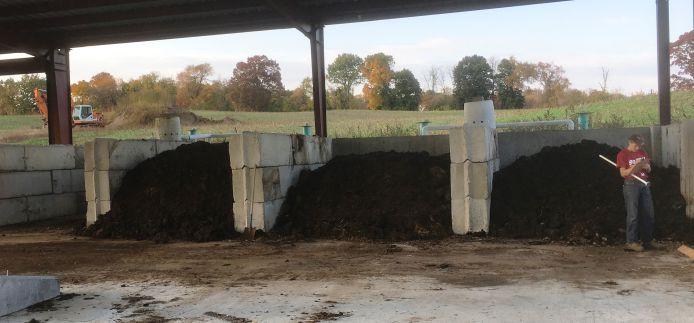
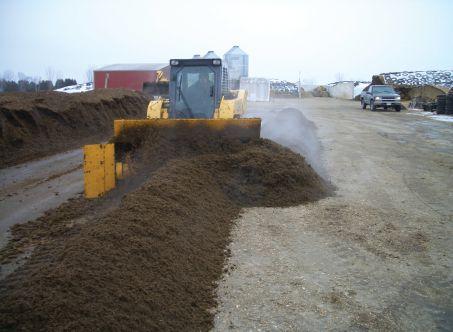
Retired educator partners with Texas ranchers to convert feedlot manure to compost | 10
Creating compost with bull Innovation and dedication pay off at thriving Ohio cattle manure compost business | 14
Manure Expo is coming
The 2017 North American Manure Expo is returning to its roots in Wisconsin | 34
July/August 2017
JULY/AUGUST 2017 Vol.15, Issue 4
Exploring composting options Veteran Compost and O2Compost receive grant to develop project in Maryland.
BY TONY KRYZANOWSKI
Spread the word –Manure Expo is coming
The 2017 North American Manure Expo is returning to its roots in the state of Wisconsin.
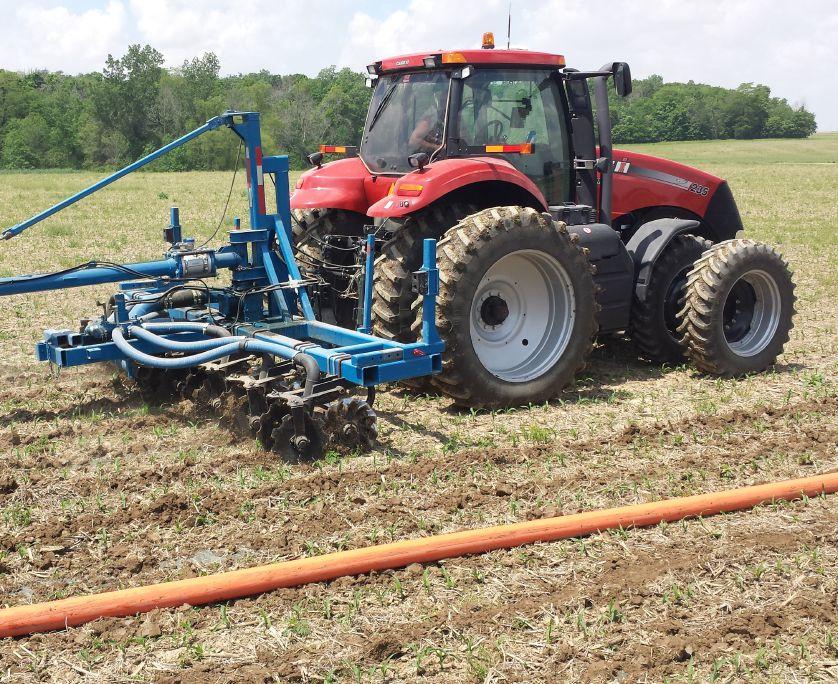
Side dressing growing crops with manure Ohio research results recommend manure application during the growing season.
BY TREENA HEIN
HUGH MCELHONE
There’s money in horse honey Many people take management of horse manure for granted – until there’s a problem with water quality. BY
Locally grown branding success in Quebec. See page 22. Photo by André Dumont
Quick composting lessons
Livestock producers in California received a crash course in composting earlier this summer.
Nine consecutive days of temperatures above 100 degrees in the Central Valley area of the state resulted in a large jump in cattle deaths. According to an agricultural official in Fresno County, between 4,000 and 6,000 head of livestock died in the month of June due to the heat. Adding to the problem was the temporary shutdown, due to a mechanical problem, of the local rendering plant. As a result, a state of emergency was called in at least three counties and the California Dairy Quality Assurance Program (CDQAP) released an emergency mortality disposal advisory. Under the plan, producers were provided with three options to dispose of mortalities: directly transport the carcasses to an alternate rendering facility or permitted landfill; temporarily store mortalities on farm in compost piles until they could be permanently disposed of; or, as a last resort, bury the carcasses in an emergency landfill on farm, which still required a mountain load of paperwork and possibly thousands of dollars in fees.
According to the five-page advisory, producers were encouraged to put down a waterproof liner and use dairy manure solids as a composting agent, placing each adult carcass on a three foot bed of manure and then covering with a second layer of manure three feet deep. By doing this, farmers could buy themselves an extra six months of time before the carcasses needed to be disposed of permanently off farm.
“Staff will be looking for evidence of bones and carcasses that have been left more than six months,” the advisory warned, adding the number and identity of the animals
composted plus documentation they had been properly disposed of would also be required.
While this isn’t the first time California has dealt with largescale livestock deaths due to heat, it will be interesting to see how the agriculture and landfill industry deals with the added pressure to the carcass disposal system. With the threat of animal disease outbreaks, such as bird flu or foot and mouth disease, always in the background, this negative situation provides an opportunity to test-drive the official response. Heaven forbid it would be required on a state- or nation-wide scale but it’s always prudent to be prepared.
I look forward to any lessons learned which come after the debrief.
Speaking of composting, producers and custom manure applicators can learn more about the management practice and see relevant equipment in action during the North American Manure Expo, taking place in late August at the Arlington Agricultural Research Station near Arlington, Wisc. [see the article on page 34]. I consider Expo one of my favorite industry events of the year. What isn’t there to enjoy? Farmers, family, food, friends, farm equipment, information, demonstrations, community: the important things in life.
This Manure-a-palooza takes a year or more of planning to bring to fruition, including hours of committee meetings and conference calls. As a frequent participant in these morning gatherings, I can attest to the time and effort by industry volunteers that goes into preparing for this event. Be sure to check out the event website – manureexpo.org – and consider taking part.
Editor MARGARET LAND (519) 429-5190, (888) 599-2228, ext 269 mland@annexweb.com
Associate Editor JENNIFER PAIGE 416-305-4840 jpaige@annexweb.com
Occasionally, Manure Manager will mail information on behalf of industry-related groups whose products and services we believe may be of interest to you. If you prefer not to receive this information, please contact our circulation department in any of the four ways listed above.
All advertising is subject to the publisher’s approval. Such approval does not imply any endorsement of the products or services advertisted. Publisher reserves the right to refuse advertising that does not meet the standards of the publication.
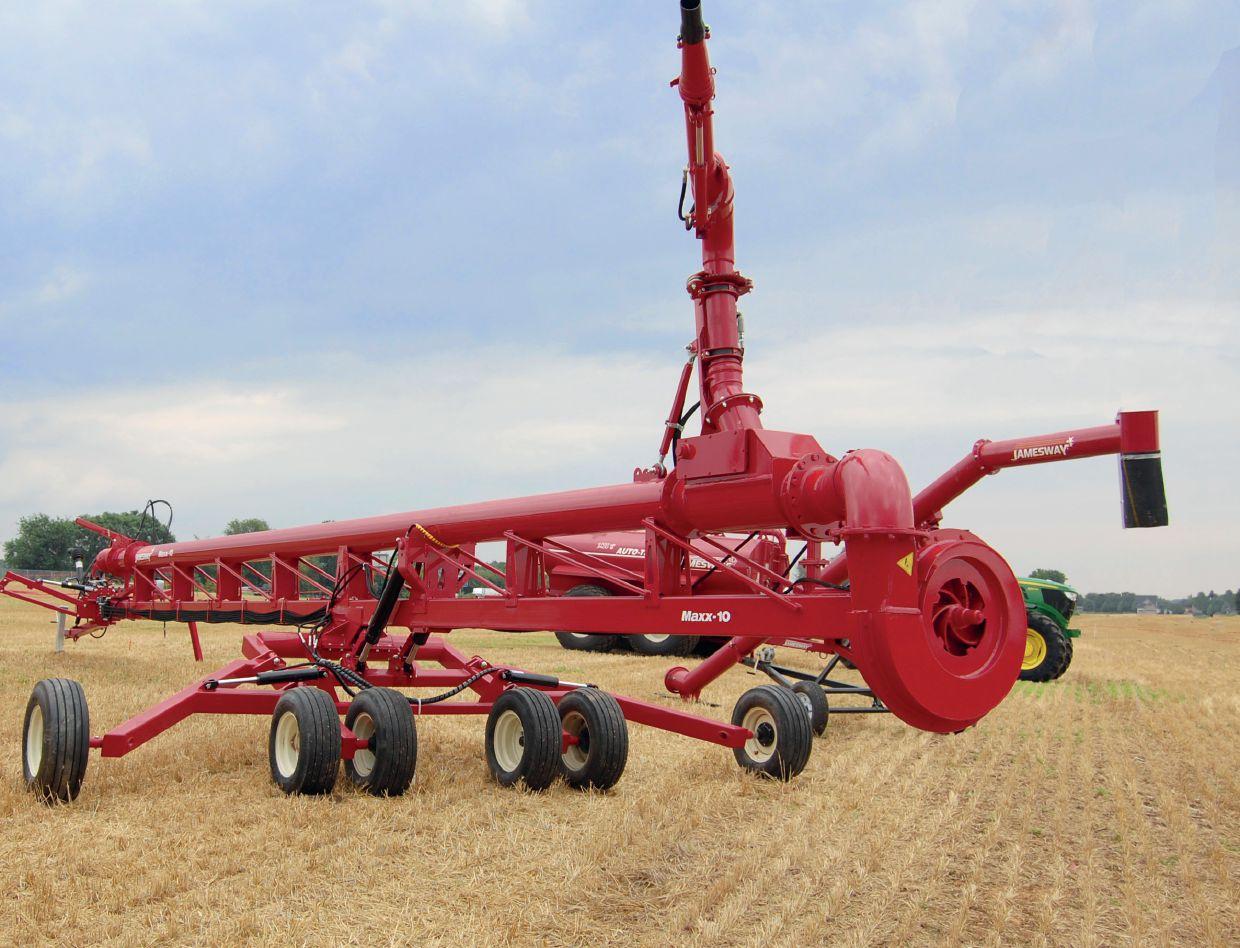
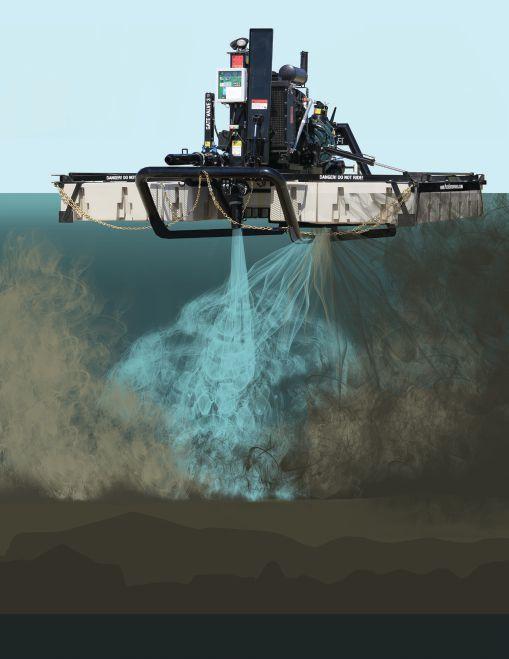
TIME
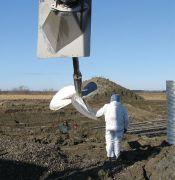
Hydraulic Stabilizers & PowerBoom for fastest set-up. Incredible load-out speed and time-saving remote controls make more loads per day.
CRUST
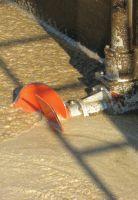
Choose the patented PUMPELLER™ Hybrid Turbine to reduce the toughest crust to nothing in just seconds.
SAND
Hardox-450™ and Ni-Hard steel last the longest in tough sand lagoons.
SIZE
Large lagoons are no problem with models up to 72 ft long and high-pressure, long-distance agitation cannons.
COST
Jamesway lets you build your pump exactly your way at the budget that suits you, while the high-flow pumps get the job done with less fuel.
Kansas company recognized in Biotech Showcase
A Kansas company in the midst of developing a system that will convert manure into useful products has been recognized with an entrepreneurial showcase award. PrairieChar was recently awarded $10,000 and $3,500 worth of legal and financial advice at the North Carolina Biotechnology Center’s 2017 Ag Biotech Entrepreneurial Showcase. The company is currently working to engineer
a scalable, cost-efficient machine capable of turning cattle manure into two sterile products –an organic fertilizer and a sustainable, renewable coal substitute. The machine is the size of a cargo container and can be placed next to the manure pile, creating the opportunity to eliminate transportation requirements, emissions and remove soil and water hazards.
CALIFORNIA DAIRY ISSUED $75,600 PENALTY
The Central Valley Regional Water Quality Control Board (CVRWQCB) has issued a penalty of $75,600 against a Visalia-area dairy for failing to file its 2015 annual report on the impacts of its dairy operations on water quality. The board also adopted a cease and desist order against the operation for failure to comply with requirements set forth in the Dairy General Order. The cease and desist
BY THE NUMBERS
order requires the owners to resume compliance with all the requirements of the Dairy General Order or face the possibility of additional civil penalties and/or judicial enforcement from the California Office of the Attorney General. “Fully complying with all requirements of the Dairy General Order is needed to protect water quality,” said Clay Rodgers, assistant executive officer for the Central Valley Water
Board. “Annual reports are a vital component of the Dairy General Order because they inform the board about manure handling activities at dairies, and nutrient management planning on dairy cropland.” According to the CVRWQCB, the owners of the dairy have failed to file annual reports since 2009. Further site inspections have determined the owners have failed to implement many other requirements of the Dairy General Order. The Dairy General Order requires dairies to handle waste in ways that preserve and protect water quality. The order contains a number of requirements, including standards for manure and dairy wastewater storage, and criteria for the application of manure and dairy wastewater to cropland.
9.2 10 MILES
MILLION estimated number of horses in U.S. how high the pile of manure would be if a football stadium was filled with the amount of manure the U.S. horse population produces per year
1
167 9
MILLION
50
volume of manure produced per horse per day volume of manure produced per month by all horses in U.S., enough to fill the average football stadium 22 times
22x
TECH SPREAD
New Dairy FARM Program manual released
The National Dairy FARM Program and the Innovation Centre for U.S. Dairy recently released the Environmental Stewardship Continuous Improvement Reference Manual.
The manual is a detailed explanation of the FARM Environmental Stewardship (ES) module, a voluntary, farm-driven tool that helps producers expand their sustainability efforts. The module is based on a life-cycle assessment of fluid milk conducted by the Applied Sustainability Center at the University of Arkansas, incorporating existing data from more than 500 dairy farms across the U.S.
It provides practical strategies to reduce GHG emissions in various management areas, including feed, manure, energy, forage, and animal health. The manual can be found online at: http://www.nationaldairyfarm.com/sites/default/ files/ES-Reference-Manual.pdf.
Michigan releases new nutrient management tool
Farmers handling and applying livestock manure in Michigan now have a new online, mobile-friendly tool to assist in determining how environmentally risky it will be to spread manure on their fields at any time of the year. Using the latest weather forecasting technology, the MSU EnviroImact Tool takes into account precipitation, temperature, soil moisture, and landscape characteristics to provide maps and short-term risks to producers while developing manure spreading schedules.
The tool is part of a multi-state regional effort to improve runoff risk decision support tools in an effort to improve local water quality. The MSU EnviroImact Tool can be found online at: www.enviroimpact.iwr.msu.edu#sthash. FVVhxwK9.dpuf.
Illinois Pork Producers Association launches new manure app
Dr. Ted Funk, an agricultural engineering consultant for the Illinois Pork Producers Association, has been charged with developing an Illinois Manure Calculator to help producers efficiently calculate their manure usage.
“The Illinois Manure Calculator is built for the Illinois-specific manure plan rules, enabling a livestock producer to quickly balance manure applications with field crop nutrient needs,” explains Funk.
The app automates the nutrient management planning worksheet that Illinois livestock producers are already required to understand in their Certified Livestock Manager Training workshops coordinated by University of Illinois Extension.
The app calculates a manure
application rate, based on the choice of nitrogen or phosphorus limits, and the N, P, and K that will be applied to the field. It also allows the user to enter a trial application rate, to see the effect on the nutrient balance. Completed calculations can be emailed directly to the user for entry into the farm’s main manure nutrient management plan.
“This free manure rate calculator will give producers another tool in the tool box for carefully developing their manure management plans while utilizing best management practices,” says Jennifer Tirey, executive director of the Illinois Pork Producers Association.
The mobile app is available for iPhone and Android users. To download, visit the app store and search for “Illinois Manure Calculator.”
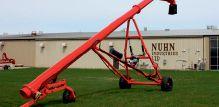
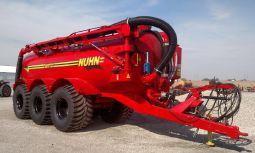
Nuhn Electra-Steer manure tank rolls on Alliance tires
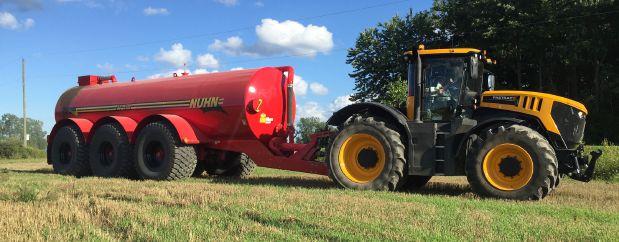
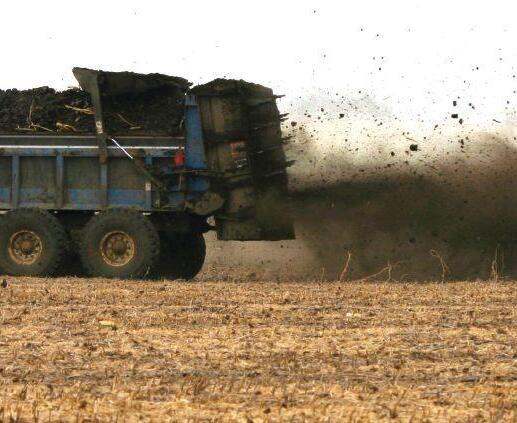
When Nuhn Industries set out to build its most advanced manure spreaders – which carry 71,000 to 80,000 pounds of manure at a time – company engineers knew how much of the new models’ success would come down to their tires.
Nuhn found its solution with the Alliance 393 Agri-Transport flotation radial 35.5R32 tires. The tough,
versatile Alliance tires are engineered to operate with heavy loads in all conditions – muddy fields, stubble, pasture, gravel and pavement –making them the perfect counterpart for the Nuhn Electra-Steer 8500 and 9500, which are equipped to load independently with an onboard vacuum pump and discharge manure efficiently with a high-volume pump.
Giving nature a hand conserving the land
Retired educator partners with Texas ranchers to convert feedlot manure to compost
BY TONY KRYZANOWSKI
Texan Jack Moreman, owner of Rolling Plains Ag Compost, is proof positive that those who teach can also do. In fact, he has parlayed his extensive feedlot and manure management knowledge into a highly successful organic fertilizer and soil amendment business.
Moreman, a retired vocational agriculture teacher with an animal husbandry degree from Texas Tech University, began his career by managing a cattle feedlot. He then spent over 25 years teaching at Texas Christian University and Clarendon Community College, where he developed and taught a two-year program in ranch and feedlot management.
Six years ago, this 81-year-old launched a successful turnkey manure composting and organic fertilizer application business headquartered in Clarendon, Texas, that has since doubled in size with 15 employees. Clarendon is about 65 miles southeast of Amarillo.
The company’s motto is, “Giving nature a hand and conserving the land.”
“I feel very strongly about conserving our resources,” says Moreman. “I think composting is one of the better things that we do, and the area that we are in, you could have three different soil types in one field, from sandy loam, to dark clay, to caliche. Compost improves the soil structure and the ability for the carbon molecules to hold the nutrients in place till the plant can get hold of it.”
A group of eight feedlot owners, who together raise about 200,000 head of cattle, annually supply Moreman with the manure he needs to make compost. The company uses its compost turning equipment on land dedicated by each feedlot to convert over 720,000 tons of raw feedlot manure annually into about 300,000 tons of compost. It then sells the compost to farmers as organic fertilizer and a soil amendment, providing the equipment and personnel to land apply it for them.
that income paid to the feedlot owners for supplying the raw manure.
Moreman says that there are two main reasons why the feedlots are eager to work with Rolling Plains Ag Compost. Firstly, when the feedlot cleans its pens and stockpiles the manure, it typically is compacted in large chunks, which makes it very difficult to land apply. Its nutrient content is also highly variable in this form and it often is full of weed seeds. Because the raw manure is in larger chunks, it usually takes a couple of years to break down in the field, which is why farmers tend to not see any value from it until the second year after application. However, by providing the raw manure to a composter, the large chunks are broken down, it is easier to land apply, and the nutrients are available immediately upon incorporation. Also, farmers who have applied raw manure on their fields have found that this material tends to have unwanted debris like pipes and cables mixed in with it.
Secondly, working with a composter like Rolling Plains Ag Compost, reduces the feedlots’ potential liability concerning land applying of raw manure. Moreman says based on feedback from his feedlot suppliers, the decision to compost the manure rather than land apply it has made a big difference when it comes to dealing with organizations like the Environmental Protection Agency (EPA).
Rolling Plains Ag Compost makes its money from the sale and application of the compost, with a percentage of
ABOVE
“Our feedlot operators tell us that if an inspector from the EPA or Texas Water Quality Board comes by and they see that they are composting that manure and hauling it out, the inspectors don’t ever bother them because that’s what they want to see done with it,” says Moreman. “But if the inspectors go in there and they have a huge pile that’s so big that it interferes with TV reception, then they get concerned.”
The composting processes gets rid of many of the pathogens and weed seeds in raw manure, and reduces the volume. Moreman says that it reduces the manure volume by as much as 5-to-1. So there is a lot less material to land apply and it tends
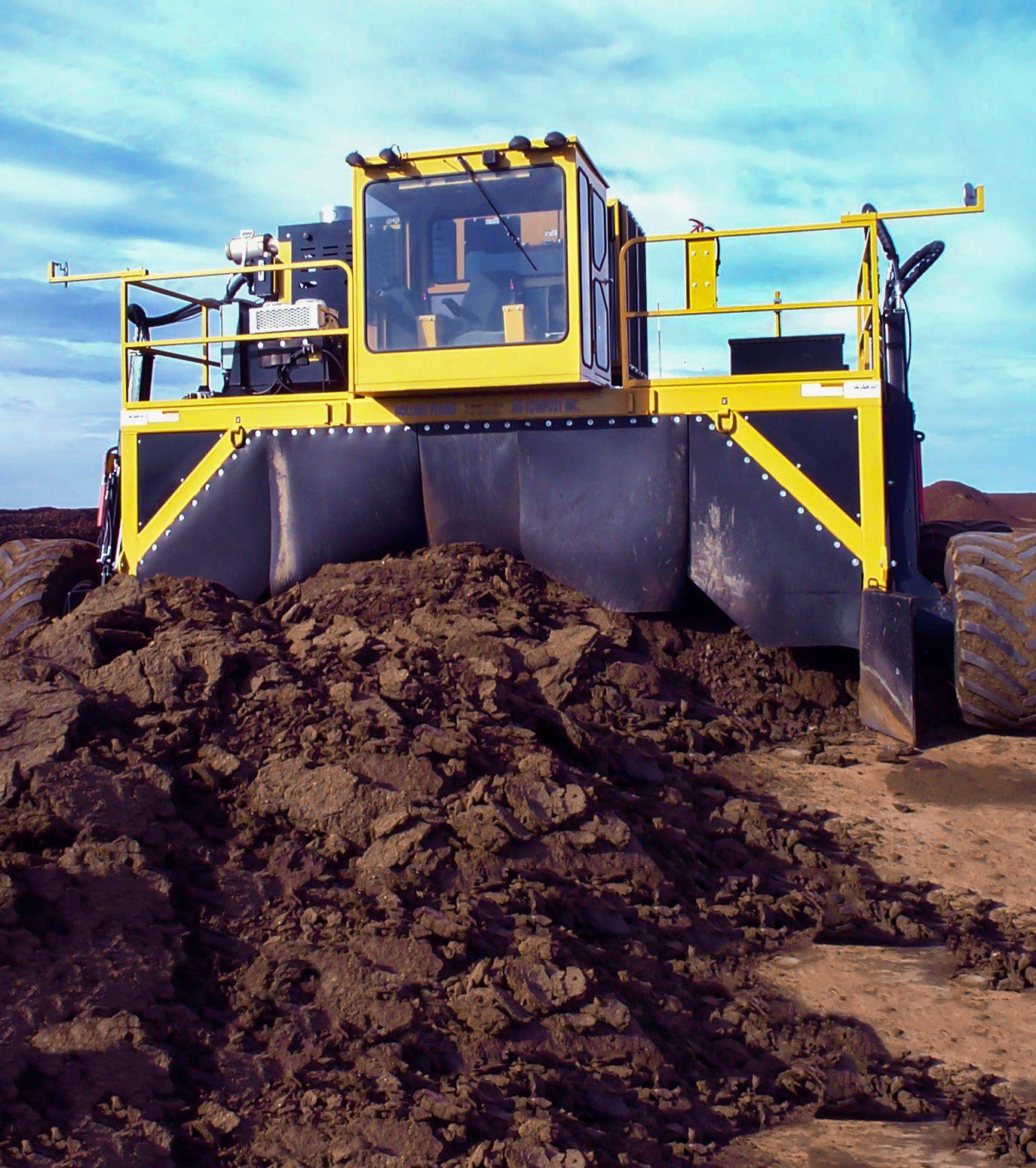
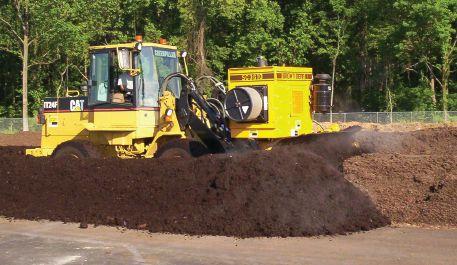
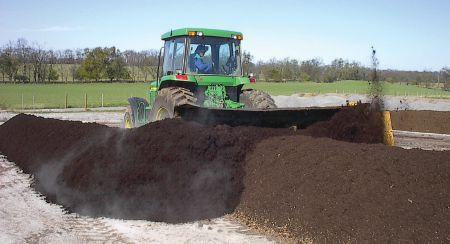
A 500 horsepower Caterpillar engine makes it possible for this Wildcat 718 compost turner to sift and turn raw feedlot manure into compost. CONTRIBUTED PHOTO
ABOVE
to have more consistent nutrient content.
Because the feedlots feed their cattle concentrated rations, there is little, if any, roughage like hay or bedding material like straw mixed in with the manure, which actually makes it more valuable as a raw material for making compost because there is little to no filler.
“Dairy manure is probably worth about half as much as cattle feedlot manure because a dairy operation will typically feed a lot of hay and silage to their cattle,” says Moreman. “These beef cattle are on a high grain ration and they are not subjected to a lot of roughage, because these feedlot owners want their cattle to eat a lot of grain and convert that to beef. That’s kind of the name of the game.”
Moreman’s business operates year round. Employees are either creating the windrows, turning the windrows, or land applying the compost for farm customers.
“We are either putting compost on cotton, peanuts, corn, wheat or irrigated pasture,” says Jack. “There is a crop coming off at all times, so they need compost pretty much all the time.”
While there is year-round demand, there are times of greater and lesser demand. May to July tends to be the slowest time of year, after spring crops are planted.
An important selling point to marketing the compost to farm customers is its ability to improve the water holding capacity of the soils where it is applied. Water is a valuable commodity to farmers in that part of Texas. Adding compost to dense soils increases their aeration and drainage capacity, and increases the water holding capacity of sandy soils. Most of Rolling Plains Ag Compost’s customers participate in a program where they
land-apply compost on each parcel of land on a two-to-three year rotation.
The company has worked hard to build its farm customer base, and Moreman’s background as an educator has helped. He spends considerable time hosting seminars and speaking to individual farmers about the benefits of using compost. His effort has paid off.
“You can be assured of one thing that if they try it, we are going to make a sale next time around,” says Moreman.
While compost has significant nutrient value, it does not necessarily fulfil all the farmer’s nutrient needs but represents only part of the overall puzzle. The company’s customers understand that. Most will need to add some commercial fertilizer, depending on the crop they are growing.
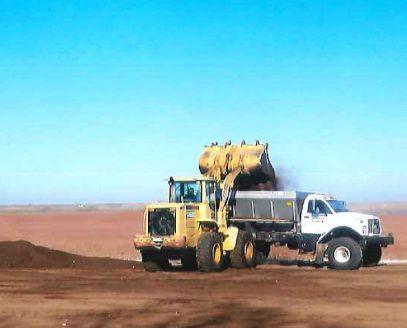
Typically, a feedlot will stockpile its raw manure as it cleans its pens and then Rolling Plains Ag Compost will bring in their own loaders and trucks to transport the manure to a drainagecontrolled parcel of land that the feedlot has designated as its composting area. This can measure anywhere from 20 to 40 acres. The company will create a compost windrow that measures approximately six-feet tall by up to 16-feet wide. The windrow will be as long as required by the amount of raw manure being converted. In the past, they have measured anywhere from a quarter-mile to a mile long.
The composting process consists of windrow turning, temperature measurement and moisture measure to ensure that the microorganisms responsible for the biological conversion process within the windrows are doing their job. Part of the reason for the turning process is to ensure that the windrows
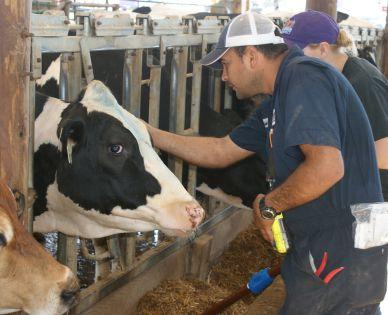
Rolling Plains Ag Compost owner Jack Moreman checks the internal temperature of a compost pile derived from raw feedlot manure. The Clarendon, Texas, business converts about 720,000 tons of feedlot manure into compost annually.
are well oxygenated to support the microorganisms. As the conversion process takes place, the windrows can heat up to as much as 160 degrees Fahrenheit.
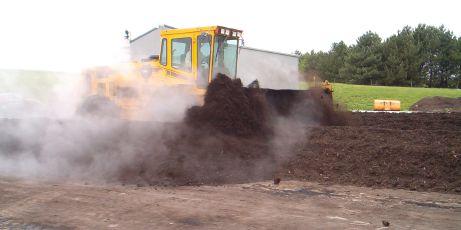
To turn the windrows, Rolling Plains Ag Compost uses a CT718 compost turner by Wildcat, which is a Vermeer company. With a 44-inch diameter drum to turn, mix and aerate the material, it can process up to 5,000 tons of manure per hour. The turning takes place typically once a week. After about six weeks, the raw manure has been converted to compost and it is ready for land application. Moreman says the compost turner is a large and powerful piece of equipment with a 500 hp Caterpillar engine. He adds that it is sturdy enough to break down the chunks in the manure pile.
Rolling Plains Ag Compost has its own fleet of semi-trailer trucks to deliver the compost to farm customers. At all stages of the pen cleaning, composting, and land application process, the company depends on a large fleet of John Deere loaders to move the material as needed. Once the compost is delivered to the farm, the compost is temporarily stockpiled beside the field and then loaded into New Leader spreaders to land apply the compost. Rolling Plains Ag Compost owns four of them. New Leader is a type of nutrient applicator manufactured by Highway Equipment Company (HECO) located in Cedar Rapids, Iowa. In the Rolling Plains Ag Compost operation, the applicators are mounted on either Chevrolet or International trucks.
Moreman says that these New Leader nutrient applicators are large and purpose-built. The box consists of a stainless steel bed with a conveyor on the bottom. The conveyor propels
the compost to the back of the box, where spinners broadcast the material onto the land. The company will deploy as many nutrient applicators as needed for each job, but when all four are working, their customers are amazed at how quickly the job gets done.
If the inspectors go in there and they have a huge pile that’s so big that it interferes with TV reception, then they get concerned
– Jack Moreman
“They are also very accurate,” says Jack. “There is a GPS unit on them to ensure that you don’t leave any part of the field out, and if you do, it will tell you.”
In terms of application amounts, Rolling Plains Ag Compost recommends four tons per acre on irrigated land and two-tothree tons on dry land. Once the farmer has some experience using the compost, they usually make adjustments on future applications based on the responses that they have experienced.
CREATING compost with lots of bull
Innovation and dedication pay off at thriving Ohio cattle manure compost business
BY TREENA HEIN BELOW
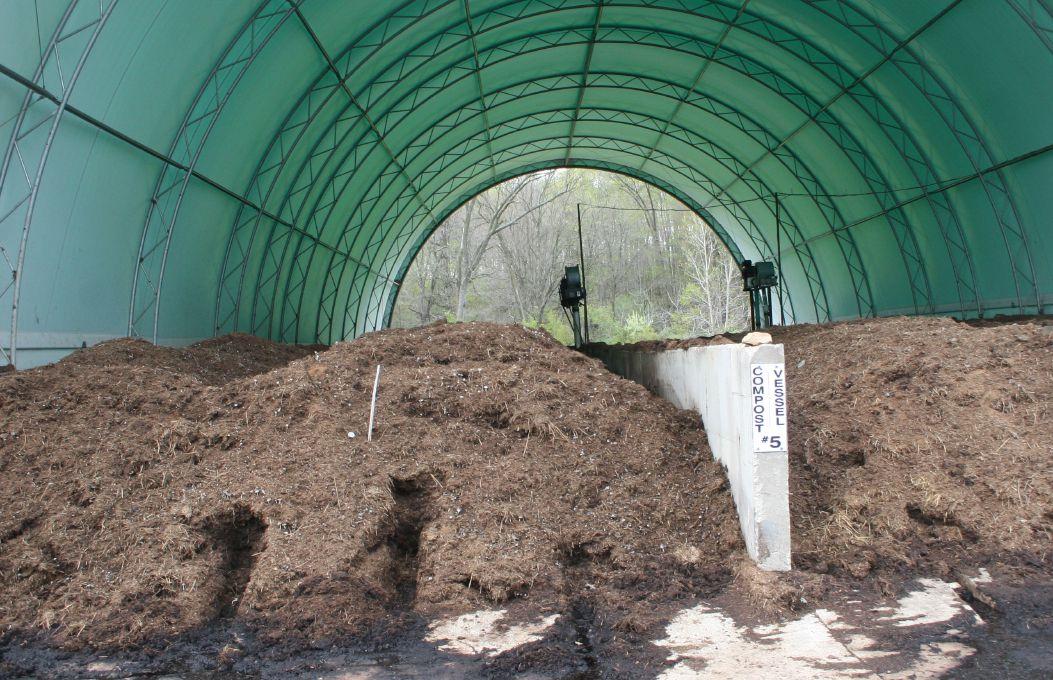
Bull Country Compost has eight vessels with 3,000 yards of material continually being processed by about nine employees, some full-time and some part-time/seasonal.
When Tim Sigrist came back to the family farm in Dundee, Ohio, after college, his father John told him he needed to find a new revenue stream. Eventually that would be a booming composted manure business, but first Tim drove a canned milk route.
“Not long after, we learned that the soil surrounding the farm where we had been spreading liquid manure was completely saturated with nutrients,” he remembers. “At the time, in the early 1990s, we had over 350 dairy cattle. Our extension agent suggested composting our solid manure and we decided to try it as a way to deal with the excess manure. The idea of selling the compost came later.”
There were no best practices available for manure composting – let alone much basic research – so Tim was left to experiment with different methods (more on that later). But success was achieved and by 1994, Bull Country Compost was born. Demand was strong right away – Sigrist made the product attractive by offering delivery – but as word spread, demand started to outstrip supply. They needed more manure, and about three years in, another revenue stream was born through taking horse manure from their Amish neighbors along with manure from other area farms.
Nowadays, Bull Country Compost is one of
the largest Class III EPA-inspected composting facilities in Northeast Ohio.
“In 2016, we sold over 45,000 bags of compost, up from 36,000 in 2014,” Sigrist says proudly. “But we actually sell more product in bulk cubic yards than in bagged form to both consumer and retail markets.”
LEFT
Although Bull Country Compost is available in bagged form, the operation currently sells more in bulk deliveries.
“From finding new markets and keeping up with growth to creating vessels and streamlining the process, we had to develop our own model as there weren’t any of its kind at the time.”
– Tim Sigrist
Ten per cent of the manure currently comes from their farm (Tim’s parents John and Linda sold the dairy cows in 2013 but continue to raise about 120 dairy heifers), with the remaining from other farms, auction barns and seasonal fairs.
“We have farms where we haul out once a year and others where we do pick-up every week,” says Sigrist. “All locations pay us to take it away and there is a monthly fee to have a dumpster placed. Due to wear and tear on the dumpsters and the extensive cost of trucking – and the fact that some locations are up to 100 miles away – we can’t haul it for free.”
Indeed, it was early on that
Sigrist realized it would be easier to provide large manure collection bins at farms, and that number of bins continues to grow.
“They’re 30-yard roll-off dumpsters made by a nearby manufacturer,” he says. “Because manure is so corrosive, we have to continually repair and replace them.”
Back when he started, Tim knew the basics of composting. Factors such as the type of manure, composting method (oxygenation) and weather would all affect timelines and quality of the final product. He first tried windrows turned by tractor, but it was labor intensive and the Ohio rains kept the material too wet. He researched various types of vessel structures and built one of his own with a concrete base.
“It was 150-by-80 feet with a homemade top supported by wood beams,” Sigrist explains. “There were two rows of material 10-feet wide.”
Over time, he added more vessels, making them wider to accommodate larger equipment, better aerated and better able deal with excess water. Older vessels were aerated using pipes running through the manure, and newer vessels have aeration constructed into the concrete floor through ditches with perforated pipes. This arrangement allows liquid to flow out as composting proceeds.
“The liquid is captured in a drainage system that empties into our manure lagoon,” Sigrist explains. “There is a small fan in each vessel that feeds into the perforated pipes to aid air flow, and this significantly increases the temperature as well.”
Newer vessels also sport a higher hoop roof, which also
The manure is composted for six to eight weeks being moved to one of three curing sheds for six to eight months. Screening is next, then bagging in the bagging shed or placement in piles for bulk sale. Sigrist created the bagging system using auger equipment and a homemade conveyor, with which four employees can bag and stack almost five tons of compost an hour.
In total, Bull Country Compost has eight vessels, with 3,000 yards of material continually being processed by about nine employees, some full-time and some part-time/seasonal (Sigrist says that similarly to many industries, finding people willing to do manual labor like bagging can be difficult). The entire operation stretches over three acres. Multiple groups from both Ohio State University and various local soil and water conservation districts have toured the site, and Sigrist has hosted curious visitors from as far away as Alaska.
While years ago people were generally unsure about composted manure, that has changed.
“It’s been 25 years and we have many loyal customers,” Sigrist says. “Word of mouth is the best advertisement there is. Also, many of our retail locations have an open bag of compost beside the pallet of bags for sale, and this helps people to ‘see, smell and feel’ the compost. Also, through the media and internet, people’s general awareness of soil and environmental health has risen and many consumers have learned the difference between raw manure and compost on
their own.”
The farm is still active, with the heifers and 500 acres of crops. Sigrist says the manure composting and farm activities support each other in unique ways, making the entire operation able to support multiple generations of his family. The composting business has also allowed the family to branch out into offering other services such as custom litter spreader application and custom harvesting. No specific new markets or products are being pursued, but Sigrist says they are always keen to gain a larger share of the soil amendment market at garden centers (see sidebar), and always listen to feedback from customers and garden professionals.
“The entire journey has been a big learning experience,” he reflects. “From finding new markets and keeping up with growth to creating vessels and streamlining the process, we had to develop our own model as there weren’t any of its kind at the time.”
One project Sigrist hopes finish in the future is to pipe heat generated by the compost to the bagging shed.
“That way, bagging can start earlier in the year in more comfort,” he says. “I haven’t gotten to it yet, but in the meantime, we bought the employees nice insulated jackets!”
INTERESTED IN MORE INFO ON COMPOSTING MANURE? VISIT MANUREMANAGER.COM
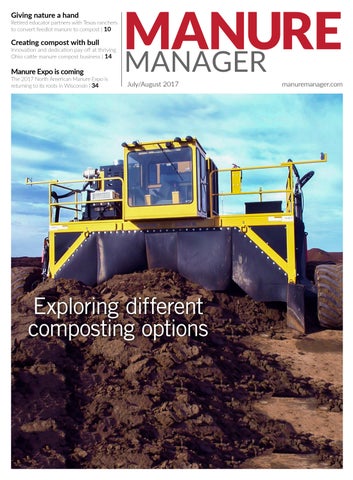
Exploring different composting options
Veteran Compost of Harford County and O2Compost of Washington State receive grant to develop a compost demonstration project in Maryland county for livestock farmers.
BY DIANE METTLER
The Maryland Department of Agriculture’s (MDA) Animal Waste Technology Fund provides grants to companies demonstrating new technologies on farms and providing alternative strategies for managing animal manure.
These technologies can cover a range of innovations – generate energy from animal manure, reduce on-farm waste streams, and repurpose manure by creating marketable fertilizer and other value added products such as compost.
In October, MDA awarded Veteran Compost of Harford County, Maryland, and O2Compost of Washington State a grant for $350,300 to develop a compost demonstration project plus a public education and training facility in Anne Arundel County for livestock farmers.
The project will demonstrate aerated static pile (ASP) composting technology systems at three levels: small scale (one to four horses or livestock equivalents); medium scale: (five to 20); and large
ABOVE
scale: (20 to 40).
All three compost systems will be solar powered to demonstrate off-grid sustainability. The medium and large systems will include storage tanks to retain roof water for use in the composting process.
The project will also include formal classes and hands-on workshops, public tours for students in kindergarten through college, and alliances with government agencies and non-profit environmental organizations. In addition, a compost cooperative website will be developed to bring together producers and end users of the finished compost products.
The compost systems that are displayed will be ones that have been in use since 2001. Peter Moon, owner of O2Compost, says he started out in the composting industry in 1989, designing and permitting large-scale municipal green waste systems. Then, in the mid-1990s, he started applying some of the industrial ideas to compost
O2Compost officials stress they didn’t invent the concept of aerated composting reconfigured the system into an aerated bin system.
dairy and chicken manure.
After seeing a chicken farm that was composting mortalities that looked tidy but suffered from terrible odor issues, he decided that an aerated bin system was what was needed. It took him a few months to figure out the answer and was convinced that it would work.
“I ended up building a prototype in my back yard because I had to prove to myself that it would work, and it worked way better than I had hoped,” he says.
Today, O2Compost offers what they call Compost Operator Training Programs. They include four basic components –the design of the system, the aeration equipment package, a detailed training manual written in layman’s terms, and unlimited technical support – for a fixed fee.
“It’s this system and three stages of bins that will be on display,” he says. “Although I don’t know of any other company that is offering anything like it, I want to make clear I didn’t invent the concept of aerated composting. Aerated static pile (ASP) composting was first developed in the mid-1970s in Beltsville, Maryland. I just
reconfigured it into an aerated bin system.”
When the MDA put out the RFP in 2016, Peter immediately thought of his client and good friend, Justen Garrity, owner of Veteran Company based out of Aberdeen, Maryland. The two had known and worked with each other since 2010 when Justen took Peter’s training program.
Veteran Compost has a 30-acre farm in Aberdeen and is dedicated to employing veterans and their family members and turning food scraps into high-quality compost. The crown jewel of Veteran Compost is its vermicomposting operation –it’s one of the only commercial worm composting operations in Maryland.
Peter approached Justen and suggested that, since the company was located in Maryland, why didn’t they set up a demonstration site with bins and a larger open aerated static pile system and use it to instruct farmers in Maryland and neighboring states. They could come to them, participate in a half-day workshop and then come out to the site and see it, sense it, understand it and learn.
Justen could immediately see the value in this partnership, and so did MDA. In
2016, O2Compost and Veteran Compost received the grant.
The project would already be operational today, except for one snag. Justen and Peter had challenges finding a good site, because people in the area have been reluctant to have a composting site near them because of potential odor issues. This is despite the fact that Justen’s composting facility in Aberdeen has received zero odor complaints from neighbors in the six years that it’s been operating.
“Justen has also had to go through a process with Anne Arundel County to allow for composting on agricultural zone property,” says Peter.
It has taken a long time and numerous public hearings, but recently the county commissioners voted unanimously to allow this activity on agricultural zoned land.
Ironically, these systems will demonstrate why compost doesn’t have to generate offensive odors for several reasons: the ASP compost piles are not turned; airflow is induced into the piles resulting in aerobic conditions throughout the pile; and a biofilter cover is used for
in-situ treatment of off-gases.
“It has been my experience that most people think that compost piles need to be turned to get oxygen into it,” says Peter. “What they don’t understand is that when a biologically active pile is turned, the oxygen that is introduced into the compost is then consumed by the microorganisms and depleted within 30 to 45 minutes.”
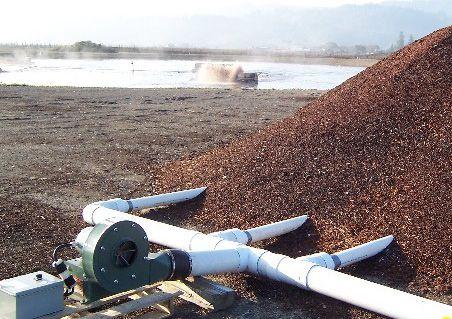
With regard to composting at the training facility, Peter and Justen will induce airflow using a high pressure, high volume electric blower and push air into the pile to replenish the oxygen and displace CO2, heat and water out of the pile.
In short, ASP composting results in aerobic composting versus turned windrow composting, which results in anaerobic composting.
LEFT
For larger systems, aeration pipes can be laid directly on the ground with the pile constructed directly on top. The pipe can then be pulled out from underneath the pile and reused.
Drainage isn’t a factor for the smaller systems because the bins are covered with roof structures. However, for municipal scale compost facilities managing storm water, it is always an important consideration.
“For the larger systems, municipal-type scale, yes, typically we’ll construct a pond of some kind to handle any surface water run-off.”
The liquid collected is then re-introduce back into the compost pile as process water, or in some cases directed to a sanitary sewer for processing at the local wastewater treatment plant.
“Our goal with composting is to get the pile temperature throughout the pile to exceed 55oC (equivalent to 131oF) for a minimum of three days. Meeting these time-temperature conditions effectively destroys pathogens, parasites and weed seeds in the finished compost,” says Peter.
The objective is to produce a high quality compost product that is safe to use on pastures or in vegetable and landscape gardens.
Moisture is always an important factor when composting, and will be one of the things farmers will learn more about at the site.
“Our goal is to have the moisture content somewhere between 60 and 65 percent, going into the pile,” says Peter. “At that moisture content, it will feel quite wet and you can squeeze a handful and get a drop or two to come out. At this moisture content, it won’t drain free-water that could impact surface and ground water resources.”
Peter says with dairy and pig manure, even if it’s run through a separator and the fibrous material is stacked, the base can get saturated because the water just continues to drain out. It can fill the pipes under the stack with water. To avoid this, some type of dry “bulking” material can be added. Peter often encourages dairies to look to horse stables in their area or even equine events.
“Horse farms always have that same problem, but it tends to be very carbon rich and very dry, which is exactly what you want to marry-up with wet substrates.”
Flexibility is built into the system.
“For example, companies may accumulate their food waste in batches and then mix it up to compost out. Or you can build a pile over a 30-day period as you would on a horse farm,” says Peter. “The idea with the MDA grant is to teach people what is possible, and that there is a method that’s simple and effective and an excellent investment on their farm with an ROI of two to five years.”
There is also flexibility in the use of pipes. With small, aerated bin systems, the air is delivered by an air-floor and there are no pipes to work around.
For larger systems, aeration pipes can be laid directly on the ground with the pile constructed directly on top. Some farms sacrifice the pipe when they bring in their frontend loaders. Others choose a thick-walled HDPE pipe.
“That pipe can literally be pulled out from underneath the pile and reused.”
One of the key features of the system is low maintenance. Once the compost pile has been built, it’s pretty much hands off. The
Companies may accumulate their waste in batches and then mix it up to compost out they can build a pile over a 30-day period.
blower and timer to do all of the work.
“You monitor the composting process, but you don’t need the big windrow turner and someone out there driving it,” says Peter. “You’re not paying for fuel, maintenance or repairs and you are able to greatly reduce air emissions. ASP Composting requires about 25 percent of the space when compared to turned windrow composting, and it can be operated at less than 50 percent of the cost.”
“The idea with the MDA grant is to teach people what is possible, and that there is a method that’s simple and effective and an excellent investment on their farm with an ROI of two to five years.”
– Peter Moon
Both Peter and Justen feel that once the training facility is in operation, which looks to be late summer of 2017, farmers will be excited to discover that aerated static pile composting yields too many benefits to ignore. It speeds up the process, reduces odors and basically eliminates neighbor issues. It also destroys parasites, pathogens and weed seeds in the mix, has a small footprint, reduces the cost of operation, can handle any organic waste material and is simple to operate.
“The question I get a lot is, ‘If this is all so easy and it’s everything you say it is, why isn’t everybody already doing it?’” asks Peter. “For some reason everybody is just locked onto the idea you need to turn the pile, but you don’t. We have over 1,200 systems in operation in 21 countries. It is a simple technology that is easy to learn –and it works.”
SIDE DRESSING growing crops with liquid manure
Ohio research results recommend manure application during the growing season for excellent yields and better prevention of nutrient loss.
BY TREENA HEIN
All farmers strive to be good stewards of the soil in their fields and the surrounding environment, but they need both solid research and the right tools to optimize their success.
Phosphorus is obviously of particular concern to crop farmers.
“The harmful algae blooms occurring in Lake Erie appear to be from increasing amounts of dissolved phosphorus reaching the lake,” says Glen Arnold, associate professor and field specialist in Manure Nutrient Management Systems at Ohio State University Extension. “The phosphorus in livestock manure is less likely to reach surface waters than the phosphorus in commercial fertilizer, as
the phosphorus in livestock manure is slower to become soluble once applied to fields.”
However, Arnold notes that the over-application of livestock manure can raise soil phosphorus to very high levels and result in the element being lost through both surface runoff and through subsurface drainage tiles.
Arnold believes finding new ways of applying manure to growing crops and incorporating the manure more effectively could better assure the phosphorus stays put. His research on the application of manure to growing crops first started with topdressing wheat plots in Putnam County, Ohio, in 2004.
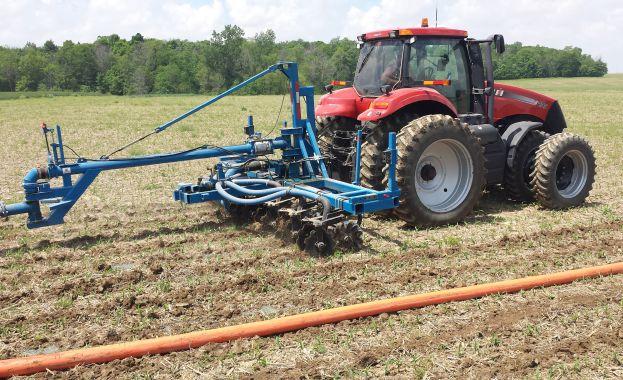
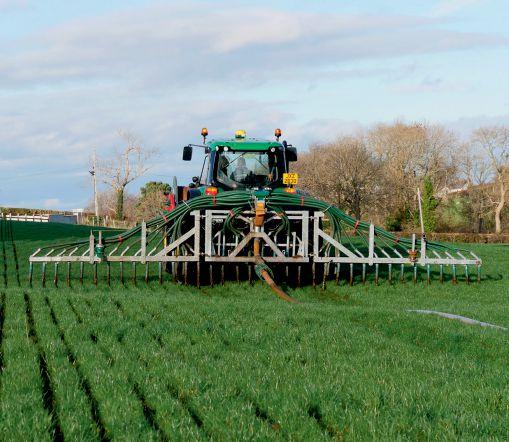
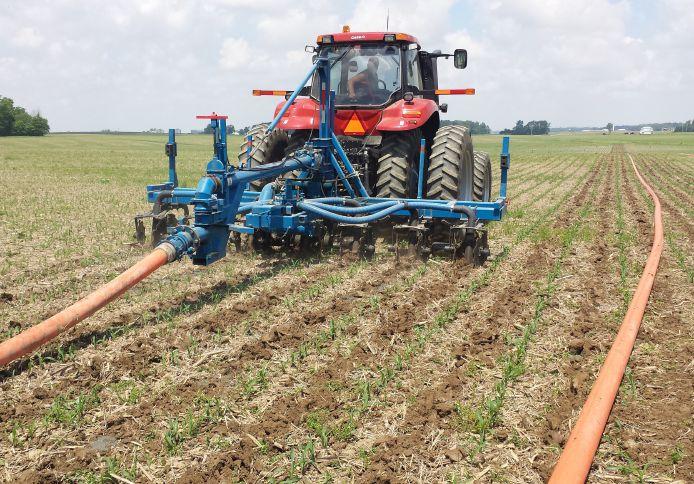
ABOVE A research team in Ohio is working on in-field trials side dressing emerged corn with swine manure using a drag hose system during the V3 stage of growth.
“We wanted to capture value from the nitrogen in manure and open up new windows of application for farmers, instead of them usually applying large amounts of manure in the fall after harvest,” he explains.
Arnold and his team approached swine farmers with finishing buildings for the wheat plot experiments, as swine manure has more nitrogen per gallon than dairy or beef manure. The Putnam County Extension Office and Soil & Water Conservation District collaborated on planning, flagging the replicated plots, field application and harvesting, with plots either receiving urea fertilizer or swine manure. When the results were analyzed, wheat yields under the manure treatments were equal to or greater than the urea treatment most of the time.
By 2009, Arnold, his colleagues and county extension educators in nearby counties were using swine manure to side dress corn plots.
“We removed the flotation wheels from a manure tanker and replaced them with narrow wheels so the manure tanker could follow the tractor down the cornrows,” he says. “The yield results were very positive as the manure treatments were similar to the commercial fertilizer treatments. During unusually dry growing seasons, the manure treatments out-yielded the commercial manure treatments. The same occurred during unusually wet growing seasons as well.”
In addition to the swine-finishing manure side dress plots, during the past year the team tried liquid beef manure and liquid dairy manure, enhanced with commercial nitrogen, to side dress corn plots.
“We used a manure tanker and Dietrich toolbar,” Arnold says. “The beef manure plots performed as well as the swine manure plots. The dairy manure plots also preformed very well, which opens many possibilities for dairy producers to sidedress corn in the years ahead.”
At this point, the team has also completed a third year of side dressing emerged corn with swine manure in Darke County, Ohio, using a drag hose. The drag hose was pulled across the emerged corn through the V3 stage of growth, and the manure incorporated during application using a seven-row VIT unit. Over three years, the corn side dressed with manure averaged 13 bushels per acre more than corn side dressed with urea ammonium nitrate.
In terms of cost differences between urea and manure, Arnold notes that farmers have to eventually land-apply the manure regardless of whether it’s applied to a growing crop or not.
“Capturing the nitrogen value pays for the cost of applying the manure,” he says.
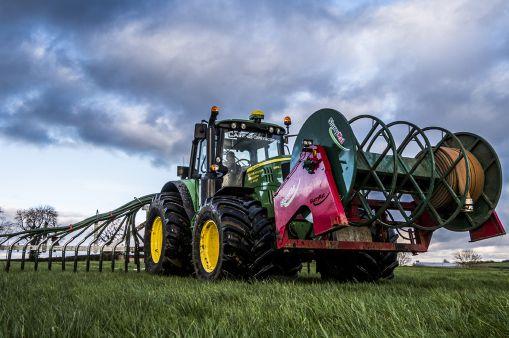
He also believes a drag hose is faster, more efficient and alleviates soil compaction concerns compared to using a manure tanker. Drag hoses also provide flexibility in that the manure can be applied anytime from the day the crop is planted through the V3 stage of corn growth, a six-week window in Ohio if the corn is planted in late April.
In these experiments on application of manure during the growing season, Arnold and his colleagues never measured phosphorus runoff, but he says that if manure is applied in the fall, more than 50 percent of the nitrogen is generally lost, and the tillage to incorporate the manure at that time causes more soil erosion than application during crop growth.
Farmers do have to watch over-application of manure to growing wheat as it will lead to the wheat field blowing flat in June in Ohio. On corn, Arnold says there is nothing to stop a person from overapplying but the extra nitrogen would be wasted.
Researchers believe the drag hose is faster, more efficient and alleviates soil compaction concerns compared to using a manure tanker and also provides flexibility in that the manure can be applied anytime from the day the crop is planted through the V3 stage of corn growth.
All-in-all, Arnold believes the application of manure to growing crops works very well. He says the farmers who have participated in the on-farm plots have been pleasantly surprised at how well livestock manure has worked as a sidedress nitrogen source for corn and as a top dress to wheat.
“In addition to providing nitrogen for the corn crop, the manure can also provide the phosphorus and potash needed for a two-year corn-soybean rotation without applying excess nutrients,” he says.
In order to convince as many livestock producers as possible of the economic and environmental advantages of applying more manure to growing crops and applying
less manure after the fall harvest season, Arnold and his team will allow farmers to see results first-hand. Because he’s found that farmers who participated in the sidedress plots using a manure tanker are very interested in using a drag hose, Arnold has obtained funds from several companies to build two 12-row drag hose sidedress
toolbars. He expects to have them available for loan during the 2017 growing season.
“The plan is to loan the toolbars to both livestock producers and commercial applicators,” he says. “We hope to loan them out to more than a dozen participants this summer.”
THERE’S MONEY in horse honey
Many people take management of horse manure for granted –until there’s a problem with water quality or neighbor complaints.
BY HUGH MCELHONE
Horses tend to fall under the radar when we think of manure management, says Les Ober, certified crop advisor with Ohio State University Extension in Geauga County.
“That is until somebody makes a mistake and pollutes someone else’s water, or they offend their neighbors with flies or odor,” he says. “That’s when the neighbor calls up the water conservation district and says, ‘Hey, this guy is piling manure up and he isn’t doing anything with it.’ Most of the cases in our county, where the guys (inspectors) have been called out, have not been on dairy farms or
livestock farms, they’ve been on horse farms.”
Ober’s county, just east of Cleveland, has the second-highest horse population in Ohio, and he has worked extensively with equine professionals. His clients generally have small farms, small lots, with a relatively small number of animals. He advises them on hay quality, pasture management, and manure and nutrient management.
In his work, he has found that there are some common problems in the industry.
“When I talk to horse owners, of course the first thing they’re looking
ABOVE
People today just don’t know how to manage horse manure. They can haul it to landfill sites or they can get it back out to the farm where it can do some good. It is a good product and full of nitrogen, potassium and phosphorus.
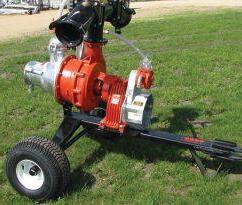
Patented Chopper Pumps
Dual chopping system to prevent clogging
Open design high speed impeller with adjustable pressure plate for unsurpassed performance with mechanical seals
Electric/PTO models, 4ft to 20ft
Manure Separators
NEW Stainless casted augers with super hard coating for 40% dry bedding
NEW DODA self-adjusting weights
Heavy duty planetary gearbox with 15HP USA electric motor
Sales - Service - Install
at is a nice new arena, or increasing the number of stalls. But what are you going to do with the manure?” he asks. “You have to think of that problem before you move ahead or move horses into the stalls. You can’t just pile it up at the back door and hope it goes away. Manure is a problem, it can offend the neighbors and it can definitely compromise water quality.”
The two areas of environmental concern are the manure produced inside the stable, and also the manure that is produced outside.
“In our area we normally have guys with four or five acres trying to keep six horses. That’s bad business, you can’t do that, especially if you’ve got a boarding stable. You’ve got to turn them out year round. What are you going to do with those horses when you turn them out? If you’re lucky the ground will be frozen but most often it’s just covered with snow and you’re going to turn it into a quagmire.”
“Here’s two things you have to look at; first, the manure inside the stable. What are you going to do with that?” he asks.
Of the manure produced outside, “what about the water quality issues outside that barn?”
“The first thing we’re going to look at is grazing, which is the traditional pastime of horses. They are just like sheep. They will graze right to the ground. Eventually, they will graze it down till everything is gone and then they will go after the grass under the fences. That is when you know you have hungry horses,” he says.
“One thing you have to understand about horses is that they are pretty much like a conveyor belt – food goes in, poop comes out and it’s continuous. Horses graze 22 hours out of 24.”
Artificial measures can be taken to protect pastures from excessive erosion due to weather, grazing or turnout.
“It is part of the real solution to all weather turnout. This has been a real boon for the horse industry, it’s not cheap but it is definitely part of the solution,” Ober says.
He explains that they take a pasture area that has been cordoned off and make sure it drains well, tiling it as needed. Then they bring in geodesic cloth and put it down as a ground cover to provide some support and so gravel is not lost. Then they cover it, first with a very coarse limestone, working up to a very fine limestone cover.
“This creates a pad that the horses follow and that solves the turnout problem,” he says. “They don’t need to be out on pastures in the middle of December punching the pasture up, then there’s a good rain and all the manure and soil that’s out there washes into the creek. That’s a problem you’ll have to deal with.”
The choice of bedding can be another issue.
“The big problem is that the majority of that bedding that is choosen is sawdust and wood chips,” he says. “It takes too long to break down, so you’ll need more microbial activity and that will suck up all the available nitrogen in the soil to break down the carbon in the shavings and bedding and you’ll have stunted grass.”
Ober notes that nitrogen ratios for wood chips, sawdust bedding are 200 to 750 to one.
“For straw bedding it’s 50 to 150 to one, which is not too bad to have to break down,” he says.
“You need to source the right bedding; straw is about $4 per bale, shavings $4 to $8. Overall cost is going to be about $45 to $46 for straw and $35 to $40 for wood shavings. Another factor to consider is that cleaning sawdust and wood shavings out of a stall is labor intensive and expensive.”
Ober points to an OSU fact sheet on nitrogen enhancement and says that if you are going to haul manure on a daily basis, you
will want to add about a half cup of ammonium sulfate into your wheelbarrow load.
“This should give you enough nitrogen to start that break down process,” he says. “I would like to see maybe half to a full cup added, and I will tell you that it does work very, very well.”
Another option that people have used is the dumpster.
“This is a popular way because people today just don’t know how to get rid of horse manure. In one situation there is one dumpster for six horses that is picked up and emptied every three weeks. That works out to about $3,000 per year. If you are boarding horses, you have to consider the $250 to $300 a month for manure. That’s a major cost.
“You have to think of that problem before you move ahead or move horses into the stalls. You can’t just pile it up at the back door and hope it goes away.” – Les Ober
“Many farmers are using this system simply because their backs are against the wall,” Ober says. “You will save money during the summer months (when turned out) as opposed to winter but this is still not a good system for dealing with manure.”
Composting is another solid option for manure.
“We don’t see it used that much but there are definite advantages,” he says.
Make a pile about three feet high and seven feet wide, and aim for the optimal temperature of 160 degrees Fahrenheit.
“We want to maintain the moisture so that when you grab that material you feel the moisture. Too much water kills the bacterial action. You need to keep rotating the pile and aerating it. You will end up with a product that is very, very good and you’ll be able to save most of the nitrogen. If you bring it into a nitrate form it will not leave the ground as fast. This is another sound management tool.”
Ober explains that the reason composting is not yet popular in the horse industry is due to the carbon to nitrogen ratio.
“If you can get ahold of some other materials to get in there, some green materials, some other animal material, source all the green clippings or straw then bring it all together and bring it into a compost pile,” he says.
When it is done, the compost has been through a complete cycle and the product is very good and can be used in landscaping and throughout parks.
“The process kills pathogens, flies and bacteria,” Ober explains. “The difficulty is the high carbon to nitrogen ratios, and if you use just saw dust it could take up to two to three years to get that pile of compost down just right.
“We’re talking about horse manure. And, we can haul it to landfill sites or we can get it back out to the farm where it can do some good. It is a good product and full of nitrogen, potassium and phosphorus.”
The first thing you have to do if spreading horse manure on the field is to take a soil test.
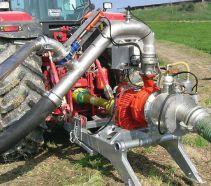
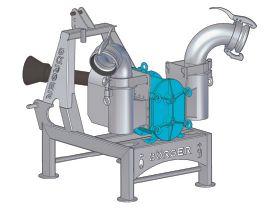
3-POINT HITCH PUMPS
+ Solids Liquid Separation + With Structure + Without Chemicals
+ Feeding and Transfer of Organic Waste + Closed Loop System
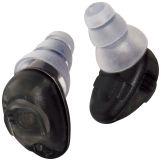
Etymotic earplugs
Patz Tundra LTX Hydraulic Pump
The Tundra LTX hydraulic pump is designed to pump slurry manure with a liquid content of 95 percent or more up to distances of 2000 feet. Slurry can include a small amount of bedding made from sand, sawdust, or wood shavings. The LTX pump is powered by either a 5 or 7.5 HP hydraulic power pack system and is able to sit above or below ground, allowing for more mounting options. An 8-inch suction pipe is used to draw manure into the pump. The maximum draw up from the reception pit is 10-feet. Manure is discharged through a 6- or 8-inch plastic pipe to final storage. The Tundra LTX features an automatic reciprocating valve (ARV) for reversing action. This replaces the mechanical valve with a hydraulic switch on previous models. The ARV switches directions of the ram without electricity or any external moving parts, which is a safer alternative. patzcorp.com
•
•
•
Modern farmers deal with a plethora of occupational hazards that affect their hearing, including loud machinery. Etymotic, a research, development and manufacturing company from Elk Grove Village, IL, recently launched a line of safety earplugs and earphones to assist producers in reducing noise-induced hearing loss and tinnitus (ringing in the ears). The HD-Safety earplugs are the world’s highest fidelity, ready-fit earplugs. They are low cost and designed to reduce sound levels while preserving clarity. The HD-15 electronic earplugs are specifically created for protection from sudden loud impacts or sustained loud sounds yet allow natural hearing when sound levels are safe. etymotic.com
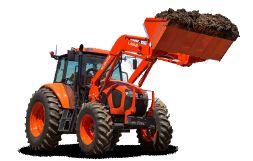
Kubota M6S-111
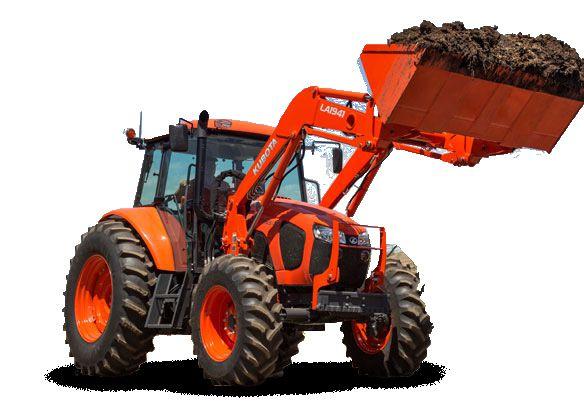
Kubota Tractor Corp. recently welcomed a new member to its M-Series. The latest M6S-111 is a diesel tractor suited for a full range of operations, loader work and mowing. Designed for the small to mid-size producer, the diesel tractor is powered by the Kubotabuilt V-3800-Tier IV diesel engine, which features a common rail fuel system, intercooler and exhaust gas recirculation. And, with the Kubota Swing Shift, which provides easy shifting with multiple speeds controlled by a single lever, the M6S-111 is flexible enough for any job in the hayfield. The operator station has been ergonomically designed to make the operator more comfortable during long days of hay applications. kubota.com
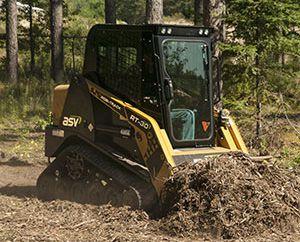
ASV RT-30
ASV offers the Posi-Track RT-30 compact track loader as a heavy-duty commercial machine in a small package. The radial lift loader includes efficient hydraulics and cooling systems as well as best-in-class low ground pressure. In addition, the RT-30 provides a safe, productive alternative to walk-behind and sit-on mini skidsteer loaders. The 3,600-pound RT-30 is 48 inches wide and has an 8.4-foot lift height. Its compact size and 10 inches of ground clearance minimize risk of property damage to the machine while working in hard-to-reach areas. The RT-30 comes standard with 11-inch-wide tracks, resulting in a ground pressure of three psi. The RT-30 features a 32.7-horsepower Perkins 1.5-liter diesel engine that produces 64.39 foot-pounds of torque. asvllc.com
Xylem pump website
Xylem Inc. launched a website to provide customers the option of purchasing certified, pre-owned Godwin pumps. The site features specs and pricing for more than 100 pumps from Xylem’s rental fleet. Products are sold “as is” with an option for a 500-hour extended warranty. sales.xyleminc.com
i
c
F
Spread the word – Manure Expo is coming
The 2017 North American Manure Expo is returning to its roots in the state of Wisconsin
BY MARGARET LAND
Time to clear the calendar and scrub off the rubber boots. The North American Manure Expo is coming.
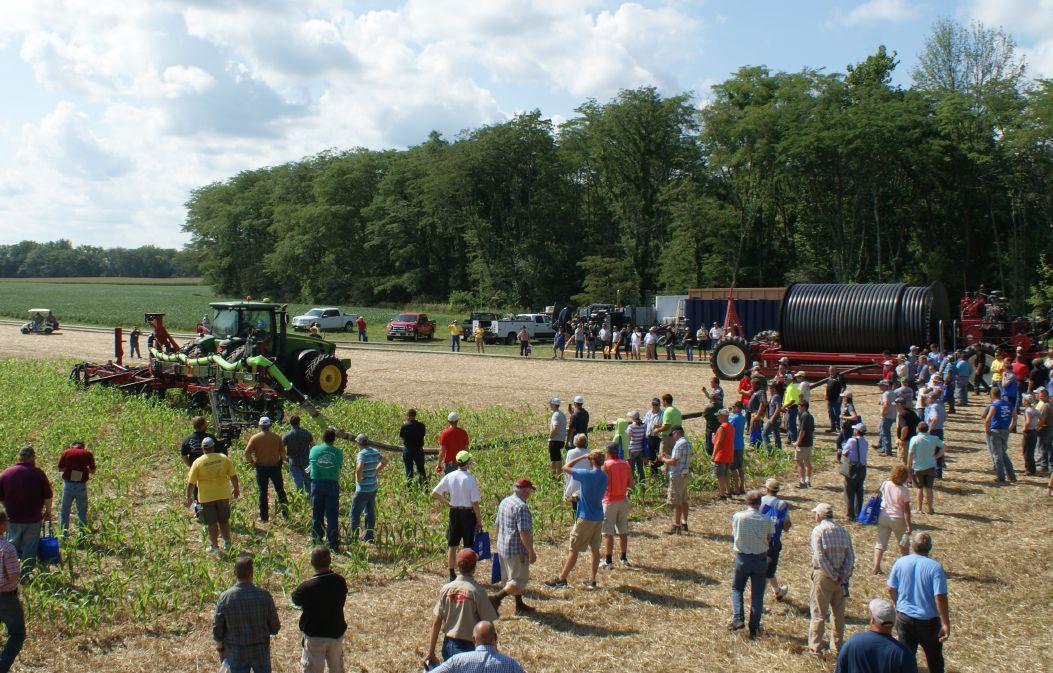
The 2017 edition of the annual show celebrating all things manure-related is being held August 22 and 23, 2017, at the University of Wisconsin’s Arlington Agricultural Research Station, located about 20 miles north of Madison near Arlington, WI.
“Wisconsin is very excited to be able to host the 2017 North American Manure Expo,” said 2017 expo chairs George Koepp and Richard Halopka. “The theme for this expo is ‘Innovation, Research, and Solutions’ and it is driving our focus to showcase how manure application professionals, researchers, and industry are all working together to apply manure nutrients to our fields and crops in environmentally safe, efficient, and financially productive ways.”
Two action-packed days have been planned for the expo. On August 22, attendees can choose from one of three tours featuring visits to a local dairy-based anaerobic digester, examples of swine and dairy manure processing, plus composting and low disturbance manure application. Pit agitation demos will also be held at the research center in the
afternoon. The trade show will open at noon and industry sessions, including Puck’s Pump School, will be held later in the evening.
On August 23, the grounds will open at 7:30 a.m. and feature a full day of educational sessions covering everything from atmospheric emissions to soil health. Manure application demonstrations, including solid and liquid manure spreaders, plus compost turners are also planned.
“This is a great opportunity for farmers, manure applicators, equipment manufacturers, and researchers to gather, share information, and develop even more environmentally friendly and effective ways to apply manure nutrients to our cropland,” added Koepp and Halopka.
The 2017 North American Manure Expo is being hosted by the University of Wisconsin, UWExtension, and the Professional Nutrient Applicators’ Association of Wisconsin, which also owns the event. Annex Business Media, publisher of Manure Manager magazine, serves as the show manager.
Registration is free [tours are $20] and available online at manureexpo.org.
Use your time wisely
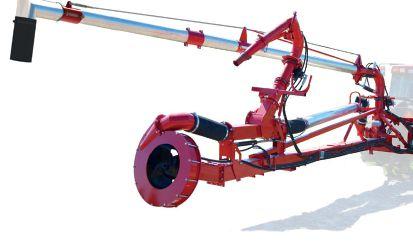
Be more efficient with the Super Slider Pump and give yourself the freedom to do more!
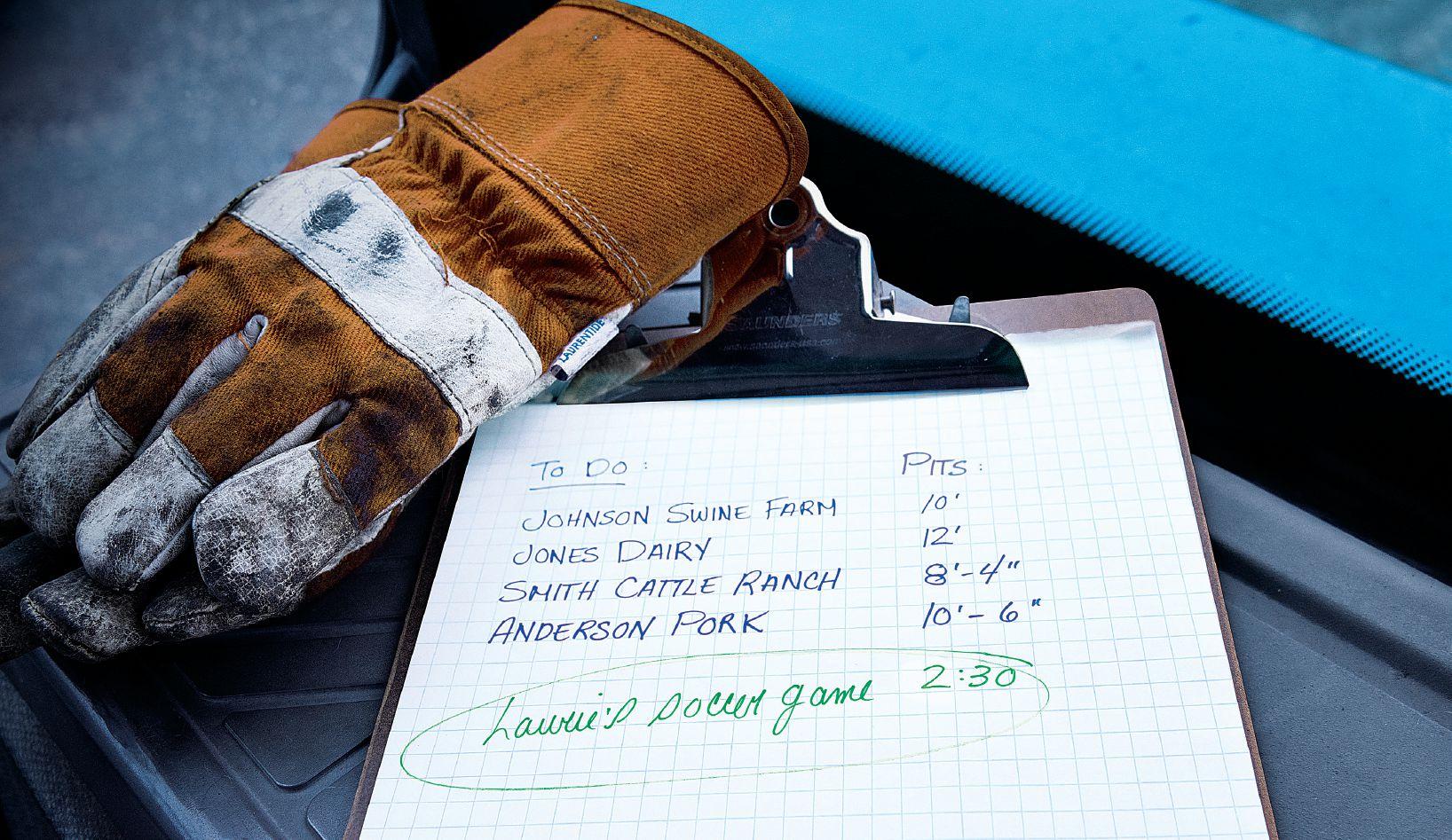
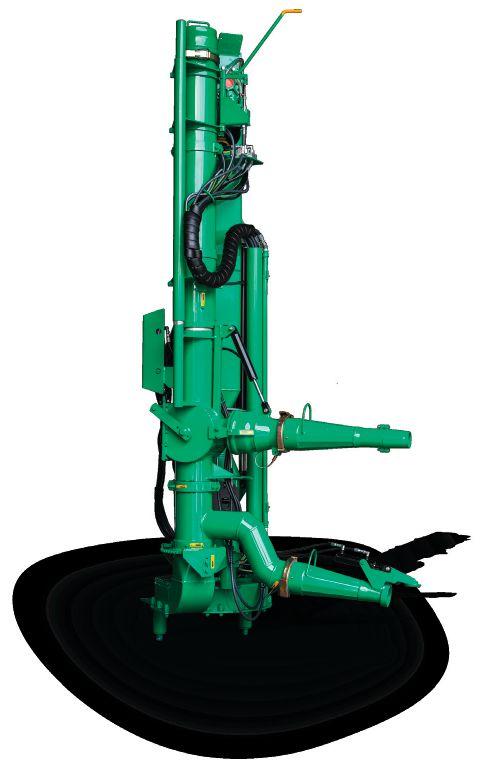
You can complete your to-do list in record time by investing in one pump that can handle manure pits of various depths. The Super Slider Pump adjusts to different lengths and is easy to maneuver, allowing operators to move quickly from one pit to the next. Its dual-nozzle design and visual indicators provide superior agitation performance and greater convenience for the operator.
Your time is valuable. Use it wisely with the Super Slider Pump — just one pump to get the work done!