Innovative company knows how to make the most from manure | 14
Bedding pack out pro
There’s no substitute for experience when spreading feedlot manure | 18
A legal precedent in Ohio Lawsuit could have repercussions | 22
January/February 2016
kids on the block
Mauricio Espinoza
BY TREENA HEIN
BY TONY KRYZANOWSKI
BY TREENA HEIN
FROM THE EDITOR
Grassroots problem solving
Back in mid-November, the U.S. Environmental Protection Agency (EPA) plus 20 business and association partners made an exciting announcement. They launched a challenge – the Nutrient Recycling Challenge – a competition aimed at developing affordable technologies that can recycle nutrients from livestock manure.
The main idea behind the challenge is to encourage participants to develop affordable and useable technologies that can extract nutrients from manure and generate products that can benefit the environment and be sold or used by farmers.
“Scientists and engineers are already building technologies that can recover nutrients but further development is needed to make them more effective and affordable,” stated Gina McCarthy, EPA administrator, when the challenge was launched. “The Nutrient Recycling Challenge will harness the power of competition to find solutions that are a win/win for farmers, the environment, and the economy.”
in cash prizes will be split between up to four winning concepts. As well, according to the challenge website (nutrientrecyclingchallenge.org), promising applicants will also be invited to an exclusive two-day partnering and investor summit in Washington, DC, being held in March 2016. They can also gain entry into further phases of the challenge, which will include potential awards such as further funding, incubation support, connection to investors, media and publicity plus the opportunity to have the technology demonstrated on an operational farm.
Since the project was launched, discussion about the challenge has been quiet with the event website’s discussion area posting links to articles announcing the competition. As of the end of December 2016, only seven people were following the challenge on its website.
Even many of the event partners have been mute about the competition, except for Smithfield Foods, which released a press release promoting its involvement in the challenge.
“I look
forward to the announcement of Phase I winners in March.”
The competition has been organized into four stages. Phase I (January 15, 2016) calls for concept papers outlining the idea behind the technology. Phase II (Spring 2016) will involve designing the technology. Phase III (Summer 2016) involves the development of prototypes and proof of concept. Final submissions are due by Fall 2016 with an awards ceremony expected January 2017. Phase IV (Spring 2017) will involve placing the final participants’ technologies on pilot farm operations.
Already, the first phase of the multiyear competition has been completed. During Phase I, as much as $20,000
“Our goal in partnering in this competition is to encourage innovation and identify additional opportunities for continuous improvement in management of livestock manure,” said Kraig Westerbeek, vice president of environmental compliance and support operations of Smithfield’s hog production division.
I look forward to the announcement of Phase I winners in March and will be following the competition through all of its phases. Be sure to check back with Manure Manager for updates.
Publication Mail Agreement #40065710 RETURN UNDELIVERABLE CANADIAN ADDRESSES TO CIRCULATION DEPARTMENT, P.O. BOX 530, SIMCOE, ON N3Y 4N5 e-mail: subscribe@manuremanager.com Printed in Canada
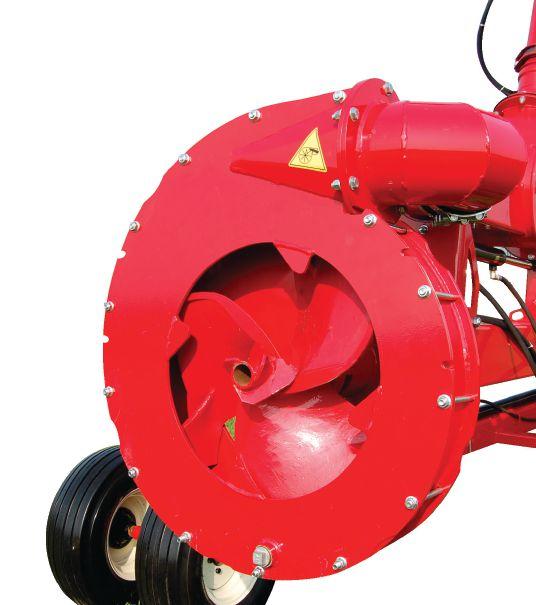
The PUMPELLER® Hybrid Turbine revolutionizes manure pump performance. Incredible intake suction pulls solids into the cutter knives, reducing the toughest crust to nothing in just seconds. The turbine combines the high-volume mixing of a propeller agitator with the power and reach of a lagoon pump, the resulting hybrid design radically outperforms both.
for professional
Patented Turbine Impeller
$120 million manure-to-energy project underway
Roeslein Alternative Energy recently announced a turnkey facility to create and inject Renewable Natural Gas (RNG) into the national grid system will be operational by mid-2016.
The announcement took place during an event at Ruckman Farm, one of the nine Smithfield Foods Missouri hog production facilities involved in the project.
Roeslein Alternative Energy will capture biogas created during the anaerobic digestion of manure from nearly two million hogs annually and begin placing it into a national pipeline in Summer 2016. When complete, the project will produce
approximately 2.2 billion cubic feet of pipeline quality RNG annually.
Phase One, which is nearly 50 percent complete, involves installation of impermeable covers and flare systems on the 88 existing manure lagoons at Smithfield Foods hog finishing farms in Northern Missouri.
Phase Two involves fabricating and installing technology to purify the biogas captured by the impermeable covers and developing an interconnection to a natural gas pipeline operated by ANR, which transverses Ruckman Farm. RNG is projected to enter the pipeline in summer 2016.
AMINO ACIDS BENEFIT ENVIRONMENT
In human nutrition, amino acids are considered the good guys. As the building blocks for protein, they are a key ingredient in improving muscle.
Similarly, Kansas State University researchers have been learning more about how adding amino acids to swine feed helps improve animal muscle safely while reducing a farm’s environmental impact.
“It’s an area that people have worked on for a lot of years and we are continuing to refine the use of amino acids
in swine feed through our research program,” said Mike Tokach, Kansas State University distinguished professor of animal sciences and industry.
Soybean meal and corn are good sources of amino acids for swine, Tokach said, but typically the amino acids are not in a perfect balance to meet the animals’ needs. Researchers can essentially “stack” amino acids in the formulation of swine diets so that the pig receives the correct amino acid, in the right proportion, just when its
body needs it.
There are millions of proteins, all made of amino acids, but there are only 20 known amino acids and just 10 that can be made by swine. The other 10 amino acids must be provided in an animal’s diet.
Kansas State University’s research focuses on five amino acids: lysine, threonine, methionine, tryptophan and valine. They are formulated in grainbased diets, reducing the amount of soybean meal or other protein sources.
Through various trials, Kansas State University scientists and graduate students have found that feeding fewer plant proteins translates to less nitrogen and ammonia from the farm. Plus, Tokach said farmers use less water because pigs drink and urinate less when they are eating lower protein diets, further reducing pollutants. One study showed that a one percent reduction in dietary protein reduces ammonia emissions from swine manure slurry by 10 to 12 percent.
Animal Agriculture Alliance Stakeholders’ Summit
After taking its annual Stakeholders’ Summit on the road last year, the Animal Agriculture Alliance recently announced the event will return to the Washington, DC area for 2016.
The 2016 Stakeholders Summit – themed “Securing Animal Agriculture’s Future: Action, Please!” – is set for May 5 and 6 at the Westin Arlington Gateway in Arlington, Va.
This year’s event will focus on securing a bright future for animal agriculture by finding solutions to the challenges facing the industry today. Attendees will hear from speakers, participate in engaging discussions and leave with ideas they can immediately implement on their operations or in their businesses.
“Following a very successful 2015 summit in Kansas City, we are excited to bring that positive momentum into 2016,” said Kay Johnson Smith, Animal Agriculture Alliance president and CEO.
The Stakeholders’ Summit is attended by a diverse group of decision makers, including representatives from farms, ranches, food processors, restaurants, grocery stores, legislatures, universities and government agencies.
Check the alliance website for the most up-to-date summit information. For general questions about the summit, contact summit@animalagalliance.org or call (703) 562-5160.
Manure Management
At every level, in every environment, GEA’s technical expertise has made a difference in manure management. Our solutions have enabled livestock farmers to grow their primary business and expand beyond their traditional practices by getting the most out of their manure.
From raw manure, to effective separation and decanter centrifuge systems, we have the process know-how to create value with your progressive manure and nutrient management practices.
Fliegl Tracker wins silver TECHSPREAD
Fliegl was recently awarded a silver medal for its beacon-based vehicle detection system – the Fliegl Tracker – by an expert’s commission set up by the DLG (Deutsche Landwirtschafts-Gesellschaft – the German Agricultural Society).
Fliegl describes the beacon system as “relatively simple.” A small Bluetooth transmitter is housed in a box and mounted on a piece of agriculture equipment. The beacon sends out its ID, which can be received
and detected by antennas at close range.
The benefits of the Fliegl Tracker are wide ranging. In fact, it is rather a universal system that can gather information and document gaps of different kinds. It can be used during field manure application to document liquid manure rates and nutrient data.
The Fliegl Tracker is also in the finals of the 2016 Bluetooth Breakthrough Awards, which are being awarded in January in Las Vegas, Nev.
DVO LAUNCHES TWO DIGESTERS IN INDIANA
Green Cow Power, a large digester facility, is now converting off-farm organic wastes and dairy manure into energy with two DVO, Inc. (DVO) Two-Stage Mixed Plug Flow digesters. Located in Goshen, Ind., it is the largest waste-to-energy facility in Elkhart County and the eighth largest digester operation in Indiana. It was also recently awarded the American Biogas
BY THE NUMBERS
All cattle and calves operations
(2015)
1. Texas - 11.8 million
2. Nebraska - 6.3 million
3. Kansas - 6 million
4. California - 5.2 million
5. Oklahoma - 4.6 million
N
Council’s 2015 Agricultural Biogas Project of the Year award.
Green Cow Power is located on a former gravel-mining site in rural southwest Goshen. Eighty percent of the waste going into the digester is off-farm organic waste such as food processing and biodiesel processing waste, while the other 20 percent is dairy manure collected from
Number of BEEF CATTLE IN THE U.S. 89.8 MILLION HEAD (Jan 1, 2015) NUMBER OF CATTLE & CALF OPERATIONS (2012) 915,000
five dairies within a three-mile radius. The digesters have a total combined capacity of five million gallons, and they accept three semitrailers full of manure each day. The digesters produce enough biogas to power three-1050 kW engines (or 3.15 MW). The leftover liquid from the digester is sent to a lagoon to be stored until used as fertilizer for crops, while
the digested solids are used as cow bedding.
Green Cow Power is owned by the Martin and Furrer families. Brian Furrer also owns and operates BioTown Ag in Reynolds, Ind., a facility with three DVO digesters. BioTown generates more than 6 MW of electricity from food processing and animal wastes, enough to power the entire town of Reynolds.
Cattle in feedlots with capacity more than 1000 head (Oct. 2015)
1. Nebraska - 2.27 million
2. Texas - 2.49 million
3. Kansas - 2.02 million
4. Colorado – 830,000
5. Iowa - 600,000
One ton of cattle manure contains approximately 12 lbs of nitrogen (University of Nebraska) Rhode Island has the smallest number of beef cattle with 5,000 head. Second is Alaska with 10,000 head.
64 lbs
Amount of manure average beef cow produces per day (University of Iowa)
NEW KIDS on the block
Recent entries to the custom manure application business in the central north region of the U.S. share their experiences with issues such as finding and keeping employees plus balancing the seasonality of the business.
BY TONY KRYZANOWSKI
BELOW
Buying quality equipment and keeping it in top condition can make or break a manure business.
Because farms are growing larger and more landowners have discovered the nutrient value of manure as a valuable source of organic fertilizer, there are many new business opportunities throughout North America in custom manure application.
However, there are certain unique aspects to custom manure application that new entries to this industry should consider prior to taking the plunge. Among the biggest challenges is the seasonality of this service as well as finding and keeping employees because of its seasonality.
Two new North Dakota custom manure application business owners offer their suggestions on these, and other hurdles faced in this growing industry. Both serve primarily the cattle industry and provide both pen cleaning and manure application services.
Nic and Ben Beach, owners of Beach Custom Hauling, have learned a lot in the seven years they have been in the custom manure application business, headquartered in Carrington, N.D. The brothers started the business from scratch, and while it took a few years to get on their feet, Nic says that it does get easier once a regular clientele is established. But first and foremost, when it gets busy, their equipment has to be in peak working condition and staff need to be in place once the phone starts ringing.
Nic says the key to Beach Custom Hauling earning repeat business is their efficiency and the use of quality equipment.
“We’re really mobile,” Nic says. “We can be in one area and move to another area 60 to 100 miles away the same day, and still get something done when we get there.”
He adds that people entering the industry without
reliable equipment don’t stand much chance of success because there is a short window of opportunity and if equipment breaks down for a couple of weeks, this could have serious financial and customer service consequences for the business.
Nic, 30, and his brother Ben, 27, offer their services primarily to cattle producers within about a 150 mile radius of Carrington, generally north of the I-94 highway corridor. There are a lot of cow-calf ranches and feedlots in that area as well as grain farmers, with ranches ranging from 300 to 6,000 head of cattle. There are also some buffalo ranches located in the area.
LEFT
Some equipment options are truck-mounted manure spreaders or pull-type manure spreaders. Each offer their own advantages, often determined by availability of employees.
to have their manure hauled out in spring so that they have all summer to let the pens dry and firm up. And it’s good for fly and disease control to remove it then as well.”
The challenge, Nic says is how to maintain cash flow during the slower periods. Their solution has been to diversify their business to include scrap metal reclamation as well as hauling cattle feed and propane. This helps to keep employees year round, maintain cash flow, and makes more efficient use of their truck fleet.
“It’s tough to get that money train rolling and then when things freeze up, it just stops,” Nic says. “If you are going to be a year-round operation, you have to be able to generate income some way.”
“It’s tough to get that money train rolling and then when things freeze up, it just stops.”
Beach Custom Hauling applies between 180,000 to 200,000 tons of manure annually and it is all surface applied, with landowners following up usually within a day or two to incorporate the nutrients into the soil. Sometimes, they are right behind the manure spreader. Because the area is primarily farm country, Nic says they are lucky not to have to deal with odor issues.
Most of their business occurs in spring and fall, with fall being the busiest. It’s not uncommon during that time for the brothers and their four staff members to work 15 to 18 hour days, six days a week, usually as soon as crops start coming off in August till close to Christmas in a typical year. The spring season is extremely busy just before the cropping season.
“Spring time is a mad dash to stay ahead of the guys with their planting,” Nic says. “Some feedlot customers like
Since starting in the custom manure application business, they have found that keeping employees is a significant challenge that limits business growth. So to overcome this issue, Beach Custom Hauling has tried a new approach this year – working with a manure spreader owner/ operator. He is a local landowner who is supplementing his income, and this removes the risk for the Beach brothers of having equipment potentially sitting idle for lack of an operator. The owner/ operator is responsible for his own equipment and staffing. They simply dispatch him to jobs and provide him with a loader. Should the company choose to expand, Nic says they likely will look at adding more owner/ operators.
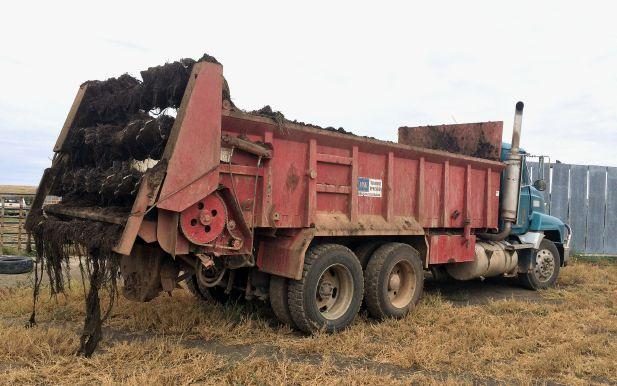
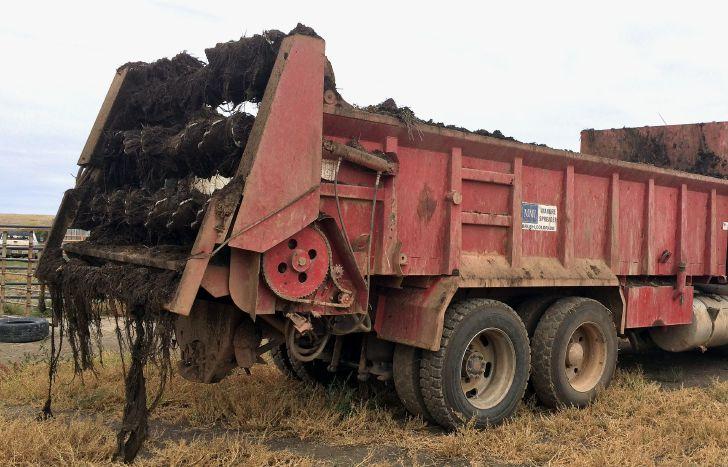
Their fleet consists of two Cat 928 wheel loaders, three double frame and heavy suspension 357 Peterbilt trucks, and a heavy-duty Kenworth truck. The trucks are all in the 500 horsepower range. Three MMI International manure spreaders and a Spread-All manure spreader are mounted on these trucks. They chose these specific truckmounted manure spreaders because the direct drive on the MMI International unit provides the beaters with enough power to chew through bedding pack
ABOVE
material. The Spread-All has a simple set up with bigger shanks on the beaters, which again helps with breaking down bedding pack material.
The manure spreaders are 20-ton boxes with moving floor aprons and horizontal beaters. They come equipped with variable speed controls within the cab so that the operator can adjust the application rate by adjusting the speed of the apron and adjusting the speed of the truck. Typically a grain crop will have between 15 and 20 tons of manure applied per acre. To minimize field compaction, the trucks are equipped with single Michelin radial flotation tires instead of the standard dual tires on the back of the truck chassis.
Custom manure applicator Jonathan Hofland, owner of Hofland Agricultural Services LLC with his father, Ray, has encountered similar challenges as far as attracting employees willing to work the type of hours required by a custom manure application business. They are headquartered south of Dickinson, N.D. – an area with plenty of oil activity and competition for employees. They offer their services within about a 150-mile radius of home base.
Two years ago, the Hoflands purchased a custom manure application business and recently sold their cattle herd to dedicate themselves fully to custom manure application. Jon says there was more stability by way of predictable cash flow with the custom manure application business versus the financial peaks and valleys of raising cattle.
“No matter what the prices are for cattle, the manure still has to be hauled,” Jon says. The business they purchased had two
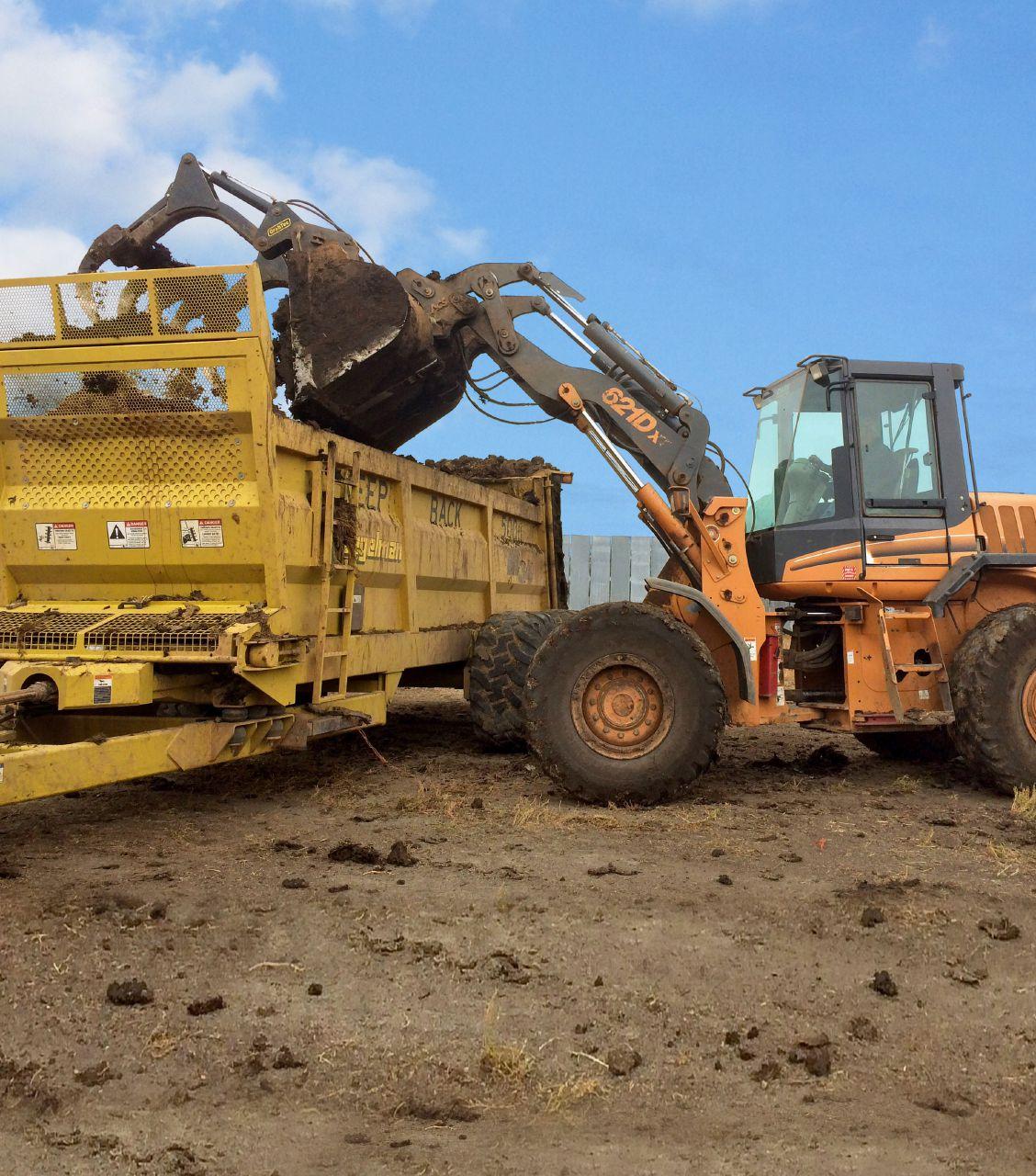
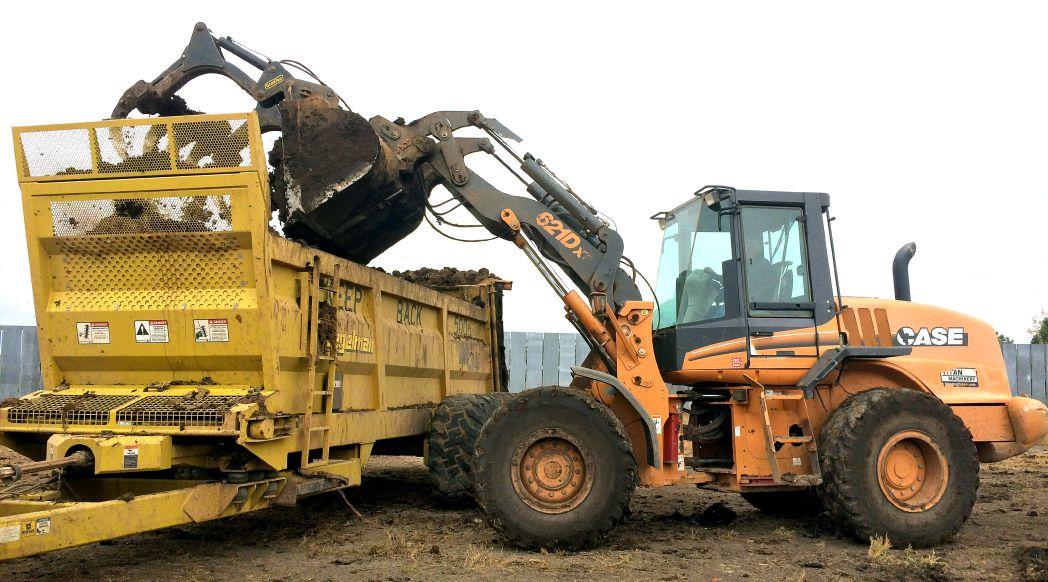
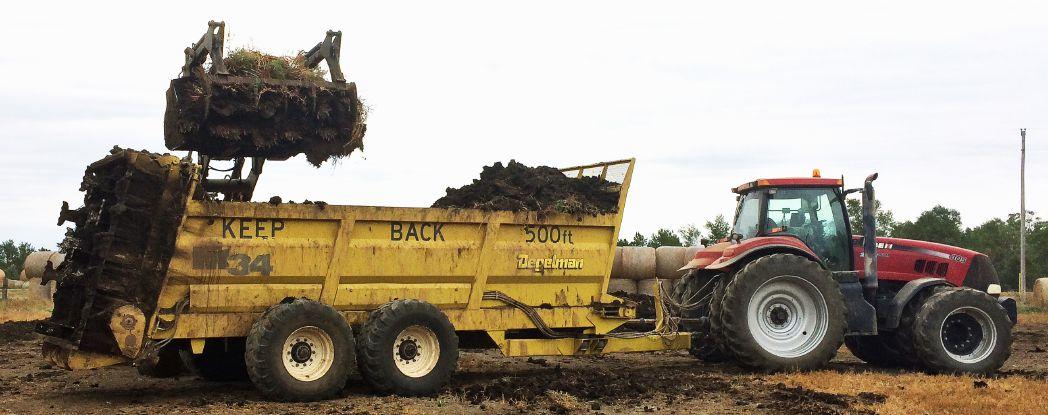
truck-mounted manure spreaders, a Case 621D front end loader, and a Case skid steer. The challenges of keeping seasonal employees as well as servicing customers caused Jon to look at other manure spreader options, which led him to invest in a large volume, pull-type manure spreader. They purchased a Degelman M34 manure spreader with vertical beaters pulled by a Case Magnum 305, front-wheel-assist tractor to complement their two existing, truck-mounted manure spreaders.
Jon says with the pull-type manure spreader, they are able to carry twice as much manure as a truck-mounted manure spreader and can broadcast the manure more than twice as wide.
“Heaped full, we’re about one bucket short of two truckloads in it,” Jon says.
While the weight of the loaded, pull-type manure spreader is a concern with some customers at about 40 tons per load, the wide tires on it compensate for the extra weight, plus with a wider spread pattern with the vertical beaters, they are making fewer passes in the field, resulting in less compaction.
Also, he is able to apply the same amount of manure in about three-quarters the amount of time as a truck-mounted manure spreader operation, can load and spread the manure with half as many employees, and operate year round because of the durability of the spreader.
“This past year, we ran all the way through the winter as long as our front end loader could dig into the manure piles,” Jon says. “I didn’t have more than two months where we weren’t actually spreading manure somewhere.”
Hofland Agricultural Services LLC is
planning to purchase a second pull-type manure spreader this fall. In doing so, Jon can work the long hours required during the busiest fall season with one spreader and tractor while his father can work with a second spreader and tractor. They have one employee and he only works 40 hours a week. The only challenge with this lean employee approach is when moving from one location to another, as more than one person is required on site to help with the move. In this case, they hire part time help, as needed.
Jon says that in addition to good customer service, their technology is a big advantage because their customers are amazed at the results. In one instance, the company was able to surface apply manure on steep ground where Jon says he wouldn’t even think of taking a truck-mounted manure spreader.
“That customer is in the coffee shop just about every day talking about how amazed he is with the results,” Jon says. Positive word of mouth like that is money in the bank for new custom manure application businesses. At present, they apply about 150,000 tons of manure annually, but Jon expects that to increase to as much as 250,000 tons once they purchase their second pull-type manure spreader.
He says based on his experience, taking the time to do some advance research on equipment performance can definitely influence how successful new entries to custom manure application will be.
“Do your research on any equipment, whether you are buying it used or new,” Jon says. “Know what you are getting into as far as how much maintenance you are going to have to put into it.”
Hofland Agricultural Services prefers pull-type manure spreaders because of the wider spread pattern and bigger payload.
Creative composting
With two agriculture innovation awards under his belt, Paul Bechtel of Advanced Compost knows how to make the most of manure
BY TREENA HEIN
Manure can be a valuable commodity, if the distance to haul it isn’t too large and if it’s composted. Composted manure has very little odor and the weed seeds have been killed. However, if you can substantially boost the N, P and K content, your composted manure is going to be that much more in demand – and the profits will be that much better.
Paul Bechtel of Baden, located near Kitchener, Ont., has accomplished just that, by adding a very inexpensive additive and a little innovation along the way.
The small Bechtel family farm, started by Paul’s grandfather Pete decades ago, is 12 acres. Bechtel runs a feedlot there for about 320 head of cattle, which produce about 9,000 pounds of manure a day. Bechtel won his first Ontario Premier’s Award for Agri-Food Innovation Excellence in 2009 for the high-temperature composting system first
ABOVE
created by his father Robert.
“We obviously have a limited land base, and we had to do something to make the manure more attractive and in order to satisfy environmental requirements,” he explains. “After neighbours hauled manure out of here, they couldn’t pay anything for it because of their time and the fuel involved. If you compost it, it’s worth something.”
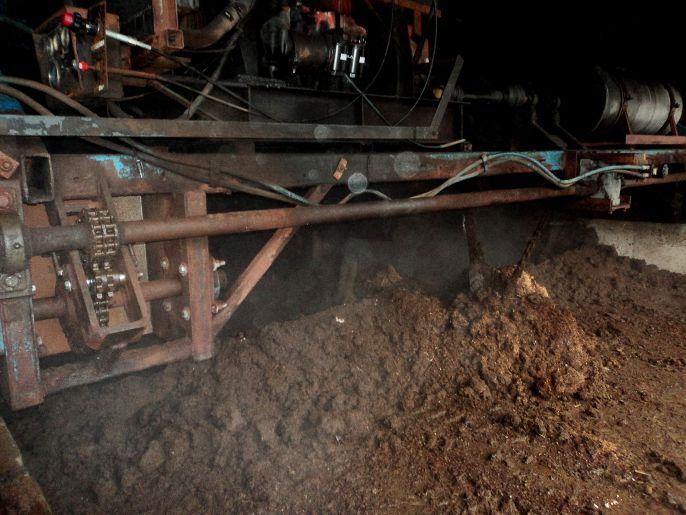
Robert had first started researching composting back in the 1970s, and built a big flailing mixer machine to which Paul later made tweaks. The machine runs along the manure pile, which is 24 feet wide, three feet deep and 100 feet long, mixing it and blowing air through it, allowing it to reach high temperatures.
“After two weeks, it’s done and every day we pull the finished product off one end and add fresh manure to the other end,” Bechtel says. “It kills the weed seed off completely, has little odor
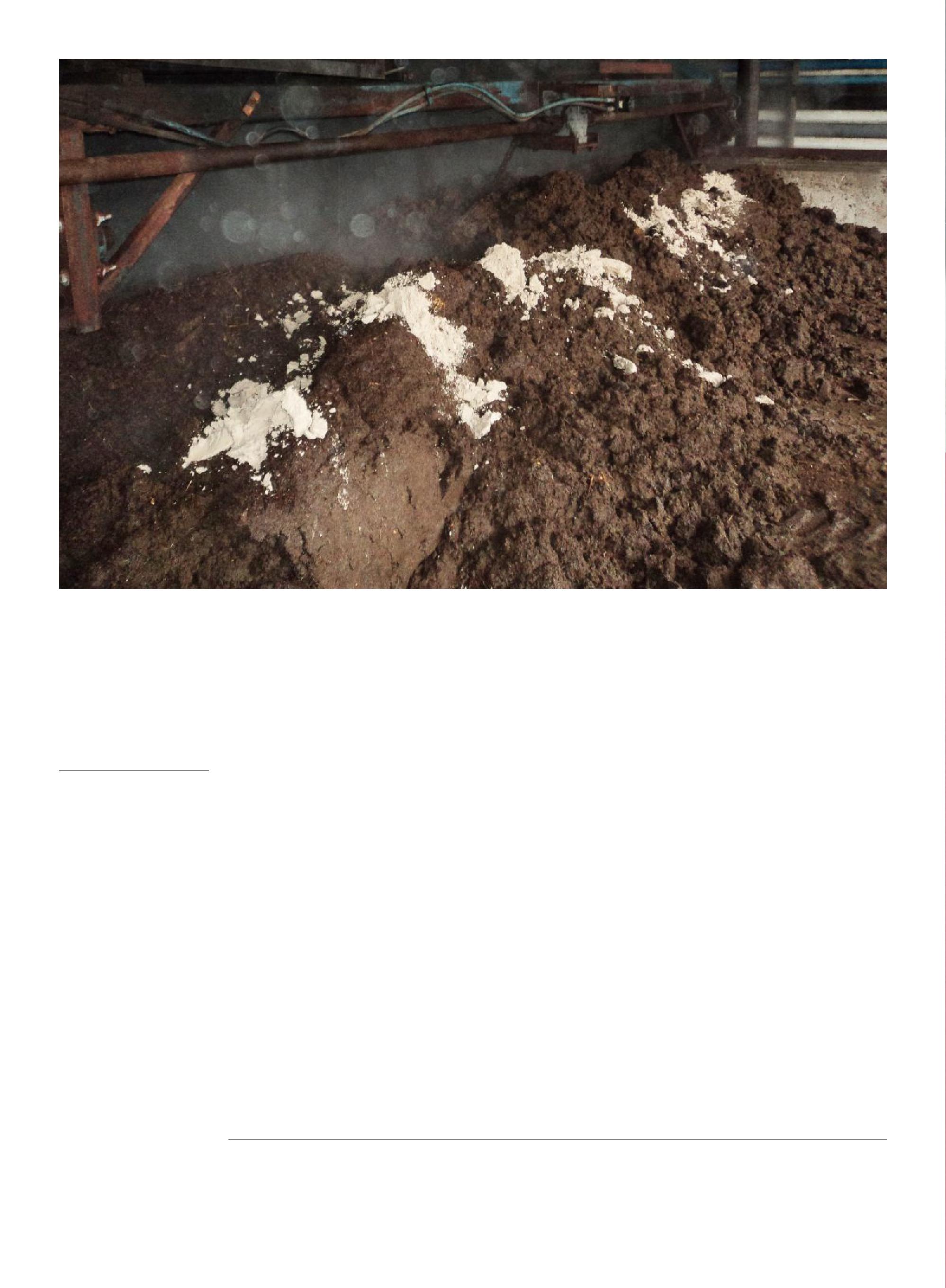
Zeolite is a really fine powder marketed as a horse stall freshener and cat litter additive that sucks up ammonia. Paul Bechtel adds zeolite to his compost every day before adding fresh manure, and it easily gets mixed in.
PHOTOS
ABOVE
Advanced Compost uses a flailing mixer machine that runs along the manure pile –which is 24 feet wide, three feet deep and 100 feet long – mixing and blowing air through it, allowing it to reach high temperatures.
and won’t attract flies. It was even used in flowerbeds in Waterloo region and surrounding counties.”
The greenhouse gases are also much lower in composted manure, which Paul says emits no methane, ammonia or nitrogen oxides.
The flail unit originally ran on steel wheels on railway tracks, but the tracks couldn’t deal with all the moisture from the steam, so Paul built a new cogwheel drive to replace it. The chains that held the spinning hammers (which mix the manure at 150 RPM for less than an hour each day) would wear out every two years, but with adjustments, they now last about five.
“We also switched from electric motors,” says Bechtel. “They were burning out every two or three years, and you had to have one in reserve when the other was being rebuilt. Now, we run it off a diesel engine and it works well.”
However, Bechtel wasn’t satisfied.
“We were always getting tests done, and we had a really nice composted product that everyone was happy with, but we knew we were losing a lot of nitrogen through ammonia leakage,” he explains. “We wanted to try and keep that, so we started knocking around ideas and finally came up with zeolite [see sidebar]. It’s marketed as a horse stall freshener and cat litter additive because it sucks up ammonia.”
Zeolite is also used as a feed additive for cattle in feedlots (it helps prevent acidosis and bloat from the cattle ingesting high-energy feed rations), and so Bechtel had about four tons of it lying around the farm he could easily experiment with. Bechtel says it’s a really fine powder that he adds every day before adding fresh manure, and it easily gets completely mixed in.
But arriving at the right amount was not a fast process.
“Yes, we experimented a lot with how much to add,” Bechtel says. “It took a lot of tweaking and testing. We had to get a deep freeze in the barn for holding samples because we had so many of them. If you add too much zeolite, you’ll starve the bacteria of nitrogen. If you add too little, you don’t get the results. You also have to run things on each try for long enough to get a good measure of what’s happening, so it was about two and a half years before we had it right.”
Cost-effectiveness was also a small part of the experimentation. There was an amount of zeolite (admittedly only a dollar a ton) that Bechtel found where it didn’t profit him to add a little more because that little more gave no better result.
Advanced Compost was officially opened in 2015, offering what Bechtel calls ‘zeolite manure,’ nabbing him another Premier’s Award.
“Manure is $11 a ton for its N, P and
All about ZEOLITES
Zeolites are microporous aluminosilicate solids known as ‘molecular sieves,’ a group of molecules than can selectively sort other molecules and atoms based primarily on size. They are able to do this because of their very regular pore structure. In addition, the zeolite structure can also hold a wide variety of positive ions, which can readily be exchanged for others in a liquid solution.
Natural zeolites form where volcanic rocks and ash layers react with alkaline groundwater. They also form over epochs of time in shallow marine basins. Naturallyoccurring zeolites are rarely pure and usually contain other minerals, metals, quartz or other zeolites. For this reason, naturally-occurring zeolites are excluded from many important commercial applications where uniformity and purity are essential.
Adapted from Wikipedia
K,” he says. “It’s worth $27.50 a ton for composted manure, and zeolite manure is worth $55.30, based on 2014 prices for N, P and K (the value of organic carbon, calcium and magnesium are not priced in). The tests show that the nitrogen in zeolite manure is 1.78 percent, compared to 0.96 for composted manure. The P and K are more than double as well.”
Profits from manure sales have doubled. It’s going to neighboring farms, being used in local ‘Triple Mix,’ and golf courses have also shown interest. Bechtel says he never has to worry about not selling it. Other farmers have contacted him about how much to use, and he’s getting a zeolite distribution contract set up with a local farm supply business.
Bechtel believes innovation and learning to be critical in farming.
“If you stop learning, you might as well file for bankruptcy on the spot,” he says. “There are always new things coming down the pipe and if you don’t keep learning, you’ll never catch up. There’s also good personal satisfaction in innovating. It always feels good to know things are working out better every time you go to work.”
- Bigger Vacuum Pump - New Gate Valves seal on both sides
ALL THE PERFORMANCE YOU NEED, NONE OF THE HASSLES.
COMPLETELY 304 STAINLESS STEEL CONSTRUCTION.
HEAVY DUTY PLANETARY DRIVE, NO GEAR BOX WOES. CASTED STAINLESS STEEL HARDENED AUGER FOR PRECISION AND SUPERIOR PERFORMANCE. HEAVY DUTY SCREENS STANDARD, IN A VARIETY OF SIZES.
EIGHT CUTTER BLADES TO DESTROY FOREIGN MATERIAL. REVERSIBLE WEAR RINGS AND SPECIAL TUNGSTEN CARBIDE SEAL SYSTEM.
SELF ADJUSTING VOLUME CONTROL ELIMINATES LOSING SOLIDS PLUG AND PROVIDES EVEN HEAD PRESSURE. ADJUSTABLE MOISTURE CONTENT, PERFECT FOR BEDDING. SELF GREASING FEATURE. REALISTIC PRICING. EASY INSTALLATION.
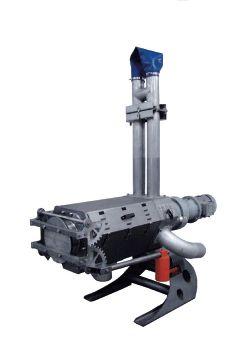
SCREW PRESS SEPARATOR
BEDDING Pack Out Pro
There’s no substitute for experience when spreading bedding pack manure from beef feedlots. But it can be a feast or famine business requiring careful management.
BY TONY KRYZANOWSKI
North Dakota is noted for its wide-open spaces. So it should come as no surprise that the cattle feedlot industry is big business in the state. Ranchers in the Medina area, west of Bismarck, have come to depend on custom corral cleaning and manure spreading companies like Randy’s Barnyard Service, but it’s a feast or famine business that requires careful management.
The Medina-based business is owned by Randy and Sherry Everding. They typically work within a 100-mile radius of Medina.
“I have cow-calf customers that only have five loads of manure and others have 400 loads,” says Everding. “It really varies.”
He says he spreads in the neighborhood of 75,000 tons of manure annually.
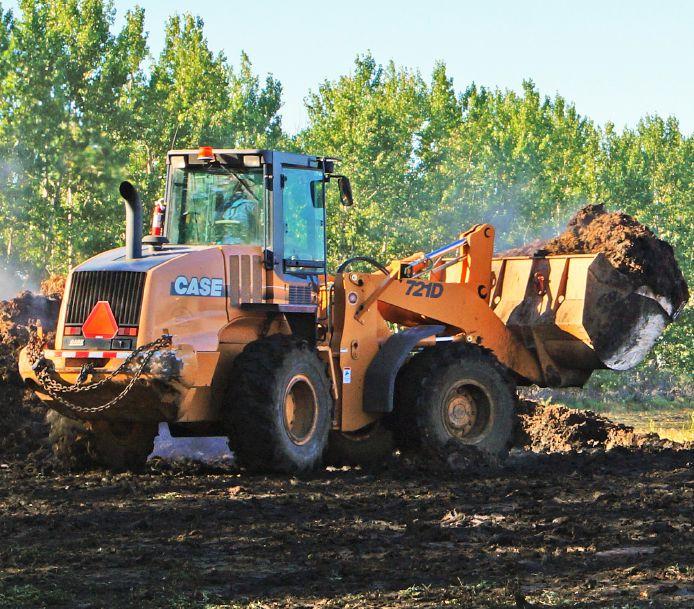
All of Everding’s equipment is geared toward surface manure application. The fleet at Randy’s Barnyard Service consists of three model 379 Peterbilt trucks, and one model 378 Peterbilt truck, as well as four MMI International manure spreaders. They vary from 17-foot, 18-foot and 19-foot, triple beater designs. He also has one 721 and two 621 Case loaders.
Everding says he has had experience with this brand of manure spreader since he started out in the business nearly 25 years ago. Trying to spread bedding pack manure properly, especially considering what some of the local ranchers mix in with it, can be a challenge. Some not only mix straw into the bedding pack, but corn stalks. What Everding likes about this brand is that the beaters are mechanical and direct-driven versus hydraulically-driven. They seem to handle the bedding pack manure better with fewer mechanical breakdowns.
method, so a finer spread is a good match for this style of farming. The amount of manure applied per acre is controlled by the manure spreader apron control mechanism in the truck cab.
“A lot of them want it spread thin and then they seed right through it,” says Everding. “According to the people at North Dakota State University, you lose some nitrogen, but after a while it balances out so that the farmers get the same benefit as if it was incorporated.”
Typically, Randy’s Barnyard Service will spread about 30 tons per acre, but essentially they will spread whatever the customer requests. Considerable work is being done by North Dakota State University to determine optimum applications rates depending on the crop being planted.
Everding brings considerable experience to custom corral cleaning and manure spreading as he bought out his dad’s partner in 1991, then his dad in about 2000. What attracted him to the business was the chance to make some decent money, given the demand.
He says that feedlots in his area tend to be smaller than other areas of the country and operate more on a seasonal basis. Most are family operations ranging from about 100 head to as many as 2,000 head. They typically raise cattle from fall to spring, and empty out the feedlot in summer.
There is also a fair amount of grain farming in that area around Medina of primarily soybean, corn and cereal grain crops, where a lot of the feedlot manure from Randy’s Barnyard Service finds a home. There are even some dairies in the region ranging from 300 to 1500 milk cows. Randy’s Barnyard Service has attracted some business from this agriculture sector as well.
In fact, Everding’s ability to reduce and spread the bedding pack manure with this technology has brought business back to him.
“I run triple beaters on my manure spreaders, which gives a finer spread,” he says. “Our farmers seem to like that.”
Many of his customers use the no-till field management
Everding understands that downtime can be a nasty, eightletter word for custom manure applicators, and given the seasonal nature of the feedlot industry in his part of the world, dealing with downtime is necessary. So he has developed a business model where he offers multiple services to the farming community, as there always seems to be an assortment of farm
jobs that require an implement of some sort. During the slow season, his backhoe keeps him busy helping farmers install waterlines and sewer systems. North Dakota is also noted for its winters, so there is no lack of snow removal opportunities.
Everding also supplements his custom manure application business making his belly dump gravel trucks available to road construction and gravel contractors. He says that being diversified has been critical to his business’s health.
“I call it feast or famine up here,” he says. “You give ‘er heck and wait; give ‘er heck and wait. To keep employees around, you have to diversify.”
The critical time for pen cleaning and manure spreading is right before seeding and after harvest where he will sometimes work long hours for several months straight.
After the spring rush, it stays quiet for a while, but by midsummer, he starts to pile a lot of the manure from feedlot corrals in anticipation of the busy fall spreading season. By moving and piling the manure-laden bedding pack in the corrals in advance of spreading, it allows the bedding to break down a bit so it is easier to apply later in fall. Often the manure is piled right in the corral because as is typical in that part of the country, the feedlot owners don’t keep cattle through the summer anyway.
“By that time of year, you can work six days a week, as many hours as you want,” Everding says. “My busiest time will be the end of July through to the end of November, depending on when Mother Nature decides to lower the temperature. We’re burned out by then anyway, running 70 hours a week all fall.”
They take December off, except for snow removal. By the
middle of January, staff returns to the shop and starts to prepare equipment for the coming spring application season, which can start by about the first week of March.
Everding says the biggest challenge to growing his business is not lack of opportunity, but finding employees willing to work within the ebb and flow that occur in this line of work. He employs five people. He’s adopted a couple of strategies to encourage employees to stick around and return between the busy seasons. One is to voluntarily contribute to the government unemployment insurance program so that employees can make an insurance claim during the slow season and pay the bills. The company also provides medical insurance. As a further financial incentive, Randy’s Barnyard Service pays employees time and a half after 40 hours of work, which can amount to a substantial boost to individual income, considering the long hours worked during the busy seasons.
“Sometimes, that amounts to 30 hours of overtime, which is a hit on my pocketbook, but the employees smile when they get their checks,” says Everding. “We have oilfields in Western North Dakota and everybody would be running over there to get $35 per hour. But now the oilfield has slowed up big time. This is the first year that I haven’t actually had to scream and holler all over the United States for help.”
He has noticed a number of changes in how the business operates now compared to when he started in 1991. There were more small dairies in the area as Medina had a cheese plant, there was more manure spreading in the spring, and more farmland available for manure spreading in the summer. Back
LEFT On a clear day, you can see forever in North Dakota, which makes it excellent cattle country and a prosperous area for custom corral cleaning and manure spreading companies like Randy’s Barnyard Service. ABOVE The triple beater design with mechanical, direct drive on MMI International’s surface manure spreaders keep mechanical breakdowns to a minimum when spreading bedding pack manure.
PHOTOS
ABOVE Many farm customers at Randy’s Barnyard Service use the no-till farming method, meaning that the company must lay down a thin layer of manure that farmers can seed right through.
BELOW Randy’s Barnyard Service owner, Randy Everding, spends most of his time in the loader to ensure that production keeps moving on each job, as he is paid per load applied.
in the early 1990s, it was almost possible to operate year round because summer fallowing was still being done on some cropland. That’s no longer the case with the big focus now on intensive farming, where as many acres as possible are seeded. Consequently, Everding faces a lot more stress to apply manure within a shorter fall application season.
Also the manure spreading technology and methodology has improved quite substantially. Everding says in the early days, he’d do both the loading and the spreading and he’d be lucky to spread 40 to 50 loads a day. Now, if he doesn’t get 120 loads a day, “I’m hurting. What I’m getting paid per load is probably double what it was in 1991, but my parts and labor costs are way up. It seems that what used to cost $100 is now $1000.”
However, he says he has learned from experience that it pays to encourage his drivers to slow down, take their time, and
“This is the first year that I haven’t actually had to scream and holler all over the United States for help.”
avoid any issues with messes left behind in yards and on roads.
He started out with two trucks but that has grown to four trucks, and for efficiency, Everding says he spends more time operating the loader now to make sure production moves ahead smoothly, rather than behind the wheel of a spreader truck.
“I look after the loading and the piling because I get paid by the load, so it’s important to keep the trucks humping,” he says.
While the days are long, it’s a more tolerable way to work with one person looking after the piling and loading, while workers spend most of their time transporting and applying the manure in air-conditioned trucks.
Everding says he’d like to expand his fleet, and while more workers now seem to be available because of layoffs in the oilpatch, it’s still a difficult financial decision to make, wondering if there will be enough warm bodies behind the wheel over the long term if the oilpatch picks up again.
Manure haulage lawsuit could set legal precedent in Ohio
How a lawsuit relating to manure haulage could have repercussions across the U.S.
BY TREENA HEIN
A legal dispute in Ohio that has gained widespread attention over the last two years could have repercussions for custom manure applicators in the state and beyond.
In 2006, a manure-hauling company called LandTech signed a 10-year deal with Ohio Fresh Eggs to remove chicken manure from farms in Hardin County. In 2013, Trillium Farm (which had begun leasing the farms in question) terminated the contract and went with a lowercost hauler. LandTech sued the two egg companies for the income it would have received from services rendered during the last three years of the contract.
For their part, Ohio Fresh Eggs and Trillium Farm claimed the contract expired in 2011. Trillium also contended that since it was only leasing the farms, it was not a legal ‘successor’ to Ohio Fresh Eggs and should not be subject to any agreements made before the leases began. The jury,
however, ruled in favour of the manure-hauler and, in November 2014, it unanimously awarded $5.1 million to LandTech (exactly the amount sought), half to be paid by each defendant.
Trillium and Ohio Fresh Eggs weren’t ready to give up. The companies appealed the ruling and won their appeal in October 2015.
The Appeals Court of Ohio reversed the 2014 jury verdict based on the premise that since the contract did not specify an exact quantity of manure LandTech was to have removed, the contract was not enforceable.
“I can tell you, there is no manure hauling business in the U.S. that specifies exactly how much manure will be hauled in a given time period,” stated Harry Landberg, co-owner of LandTech, in a press release at the time. “We agreed in our contract to haul everything from specific barns…However, if there were any issues such as diseases, fires or other things, obviously
ABOVE In 2006, a manure-hauling company called LandTech signed a 10-year deal with Ohio Fresh Eggs to remove chicken manure from farms in Hardin County.
ABOVE
I can tell you, there is no manure hauling business in the U.S. that specifies exactly how much manure will be hauled in a given time period – Harry Landberg, co-owner of LandTech.
the quantity would change. The entire industry operates this way.”
Connor Kinsey represents LandTech, along with his colleagues at Thompson, Dunlop & Haydinger, a law firm in Bellefontaine, Ohio. He describes the Appeals Court decision to reverse the jury verdict as a big surprise to both his firm and his client. In terms of the implications, “common sense would tell you that it is impossible to predict exactly how much manure will be produced by millions of birds over a specific time period,” he says. “If manure-hauling contracts without specific quantity terms are unenforceable, this could have dire consequences for both producers and haulers.”
Kinsey explains that in Ohio, something called the ‘predominant purpose test’ is applied to analyze contracts that include both the provision of services (in this case manure removal) and sale of goods (purchase of the manure).
“We believe the Third District Court of Appeals incorrectly concluded the predominant purpose of manure removal contracts is the purchase of the manure, rather than the provision of manure removal services,” he says.
Putting things in the larger legal and environmental context, Kinsey explains that in Ohio and elsewhere, regulations require poultry and livestock producers to dispose of manure in accordance with certain standards.
“This is crucial to protect neighbors from nuisances related to the manure
odors and insects, and perhaps more importantly, to protect lakes, river and streams from the catastrophic dangers manure runoff can present,” he says.
“In order to operate in accordance with current regulations, haulers must invest hundreds of thousands
of dollars in equipment, labor and facilities. If manure-hauling contracts are unenforceable without a specific quantity term, and producers have the ability to terminate a contractor if another hauler is willing to pay more per ton for the manure, it’s difficult to imagine any
2000 Western Star semi tractor, 72” sleeper, with 20” Pioneer rear-mount pump driven off truck engine, rear-mount accessories including 1,300 gal. fuel tank
2000 Freightliner FLD120, mid-roof 51” sleeper, with 20” Pioneer rear-mount pump driven off truck, rear 1,000 gal. fuel tank, 85 gal. gas tank, 50 gal. oil tank
MANURE HOSE
Balzer hose: 2,000’ of 6” drag hose; (31) 660’ lengths of 8” hose
Baumbauer hose: 990’ of 7” drag hose (2) 330’ lengths of 12” hose
Misc. lengths of 6” drag hose
Misc. lengths of 8” main line hose
HOSE REELS
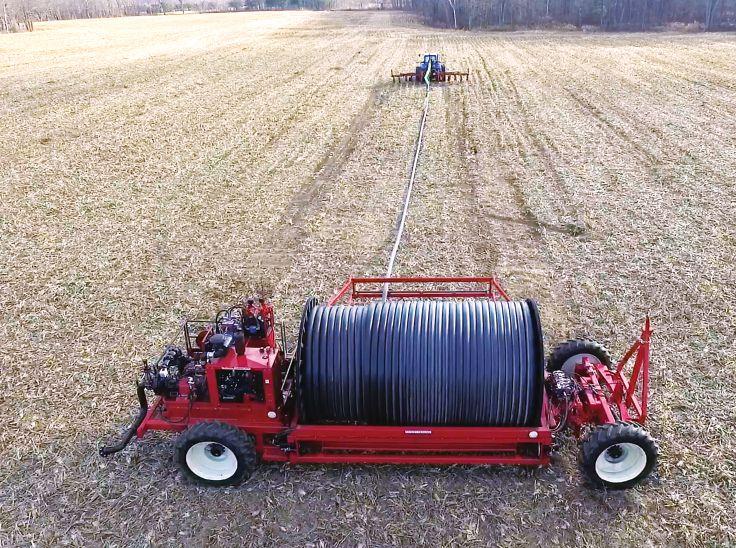
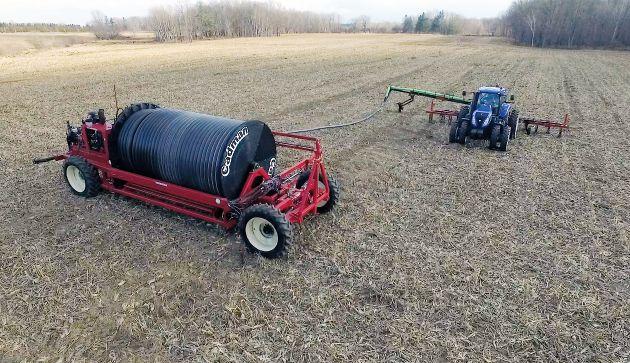
Heavy duty tandem truck axle, PTO/hyd. drive, holds approx. 2 miles of 8” hose
Heavy duty tandem truck axle, PTO/hyd. drive, holds approx. 1-1/2 miles of 8” hose
2011 Arctic Cat 700 ATV, 4x4 AIR COMPRESSOR & PARTS
1993 IR 825XP portable air compressor
3.9L Cummins engine
Many pallets of truck parts
hauler would be willing to invest in the capital necessary to responsibly haul and dispose of the huge quantities of manure produced by commercial livestock operations.”
Kinsey also observes that in the opposite scenario – if fertilizer prices fall to the point where haulers are not making money selling collected manure to farmers for their fields – haulers in such contracts could walk away from their obligations to remove and dispose of the manure. This could effectively shut down
large producers.
“The egg farms at issue in our case sought out LandTech to provide these services because the State of Ohio required them to do so as a condition of continued operations,” Kinsey explains. “Without LandTech providing these services, as we believe LandTech was contractually bound to do, the egg farms seeking to tear up this contract for a better deal would be out of business.”
Kinsey and his colleagues are preparing to file a petition with the Ohio
Supreme Court for a new and definitive ruling, but that’s no guarantee that the court will choose to hear the case.
“Assuming the Court grants our petition, we are still crafting our strategy at this time,” he says.
What will happen if the Ohio Supreme Court chooses not to hear the case, or if it finds in favor of the arguments presented by Ohio Fresh Eggs and Trillium Farm? What would this outcome mean for LandTech, for other custom manure applicators in Ohio, and for custom applicators in 48 of the other 49 states where contract law involving sales of goods is followed?
“The implication could be that all manure contracts currently in place which do not set out a specific quantity term are unenforceable,” Kinsey states. “For haulers, this could be terrible, as it would void any long-term supply stream if a higher bidder comes along. This
“For haulers, this would be terrible, as it would void any long-term supply stream” – Kinsey
means that investments in equipment, labor or facilities that rely on long-term contracts could be lost.”
He also notes the implications could also reach outside the world of manure hauling. For example, commodity recycling contracts operate similarly to manure hauling agreements, in that the service (recycling in this case) is provided by one party, and that the consideration for that service is also legally considered a good (the commodity to be recycled).
“Because the good has value, money changes hands, but the essence of the transaction is that services are being provided,” Kinsey says. “In exchange for providing the services, the recycler gets the commodity at an agreed-upon price. When a large grocery store enters into a recycling contract, it agrees with the hauler/recycler on a price based on what the food scraps, cardboard and so on is worth, but the predominant purpose of the transaction still is the provision of recycling services.”
Anyone interested in contacting Connor Kinsey about this case can reach him at ckinsey@tdhlaw.com or 937-593-6065.
Börger AgrarTec offers a diverse line of agricultural liquid handling products including rotary lobe pumps, macerators, digester feed equipment and solid liquid separators. Börger specializes in custom-built solutions for farmers and biogas plants.
BIOSELECT RC
The Bioselect RC is fitted with a feed pump and a control unit for consistent solid liquid separation.
visit www.boerger.com or call 1.844.BOERGER or find us
Alliance Tire 380 VF Flotation Radial
Alliance Tire Group recently released the world’s first VF flotation tire. The 380 VF (very high flexion) can carry up to 40 percent more load at the same level of inflation as its conventional radial counterparts, or carry the same load with 30 percent less pressure. At the lower inflation pressure, the footprint is 25 percent larger than its counterparts. Lowered inflation pressure and larger footprint are key factors in reducing soil compaction. The 380 VF has been released in 650/55R26.5 and 560/55R22.5 sizes. atgtire.com
Circle R Side Dump Trailers have the industry’s Largest Capacity and utilize a Rounded Vee design to maximize payload and minimize material hang ups even with sticky materials.
Canarm AgSystems (Ontario) and Intelia (Quebec) have joined forces to develop innovative solutions for barn ventilation systems. The partnership was formed to create precision solutions for livestock farmers. The two companies are integrating technology to create new barn environment control options using Canarm’s ventilation products and Intelia’s three levels of controllers. Both companies are committed to long-term customer service that farmers can rely on to keep their barns monitored and working efficiently. canarm.ca & intelia.com
John Deere is offering a new special edition Gator utility vehicle geared towards livestock producers who work long days and nights, and require additional storage. The XUV 825i Special Edition Gator features two integrated cargo toolboxes plus LED roof lights for added visibility. The heavy-duty 50 hp., 812 cc, model has power steering, a deluxe cargo box with polyurea liner, integrated brake and taillights, and an operator protective structure with nets. The vehicle is also equipped with yellow alloy rims and Maxxis Bighorn tires. A power and front protection package includes power lift, a heavy-duty front brush guard and fender guard. johndeere.com/gator
a
How to compost 150,000 chickens
BY MAURICIO ESPINOZA
One of the main challenges posed by the avian flu outbreak that has impacted the U.S. poultry industry in the past year is how to safely and effectively dispose of potentially hundreds of thousands of birds killed as a result of infection and eradication efforts.
Michel said there are four ways to dispose of such large numbers of dead animals at a time: incineration, onsite burial, landfilling and composting.
“For composting to be done right, you need a carbon-rich, dry feedstock”
“The U.S. strategy is to quickly identify the infected premises, depopulate, properly dispose of carcasses and manure, clean and disinfect the premises, and have 21 days of down time after cleaning before re-population can take place,” said Mohamed El-Gazzar, Ohio State University Extension’s poultry veterinarian. “As you might imagine, the logistics of depopulation and disposal are very challenging, particularly with the large-scale layer complexes, some of which have a capacity of more than 5 million birds.”
While the avian flu outbreak did not impacted Ohio poultry, experts with the College of Food, Agricultural, and Environmental Sciences at The Ohio State University have been helping poultry producers learn about the disease, boost biosecurity measures on the farm, and prepare to minimize the flu’s impact if it were to reach the state.
To address the challenge of safe disposal in the event of an outbreak, El-Gazzar sought the collaboration of Fred Michel, a biosystems engineer with the Ohio Agricultural Research and Development Center OSU Extension composting specialist. OARDC and OSU Extension are the research and outreach arms, respectively, of the college.
“Incineration is difficult and expensive and there is not sufficient capacity,” he said. “Onsite burial is a possibility, but the areas where many Ohio poultry farms are located have high water tables and there may be issues with ground water contamination.
“Landfilling can be effective, but it increases the risk of spreading the disease to other areas during transportation. So, onsite composting seems to be the best option, as it would prevent contamination of water, effectively destroy the pathogen and eliminate the risk of spreading the disease to other farms.”
However, Michel said, there were some issues that needed to be addressed when he started considering a plan for on-farm composting of large numbers of birds.
“Fact sheets on composting birds currently available around the country only address the process of composting a few birds at a time, not the large number involved in a catastrophic event,” he said. “So we had to come up with the right formula and method to make this type of composting work.”
Additionally, composting hundreds of thousands of birds at commercial farms would require a large amount of carbon-rich amendment material, such as sawdust, wood chips, yard trimmings or straw.
“For composting to be done right, you need a carbon-rich, dry feedstock,” Michel said. “Birds are low in carbon and too wet. So an amendment material is needed to compost them.”
For egg-laying operations, Michel designed a slab
composting method that includes a one to two foot base of wood chips or mulch, followed by layers of chickens, finished compost and mulch. The top and sides of the slab are covered with amendment material, which insulates the slab and helps prevent leakage and odors.
A pile measuring seven feet high, 100 feet long and 100 feet wide – approximately one-fourth of an acre – would be needed to compost 150,000 birds at the same time, Michel said. Such a pile would require approximately 2,600 cubic yards of amendment material.
“The pile is left without mixing for at least two weeks,” Michel said. “The temperature generated by the composting process will kill the virus. After this, the pile could be left to further degrade or be turned.”
For broilers and turkeys, the method of composting would vary because of different production practices.
“You could just use the bedding material that’s already in the broiler or turkey houses and mix the dead birds in. Then you make a windrow (a long, low heap of composted material) inside the facility,” Michel said.
In addition to developing a spreadsheet for the design of large-scale poultry composting based on the slab method, Michel created an online map that includes the location and contact information for businesses that sell amendment materials. All of this information is available on the Ohio Composting and Manure Management (OCAMM) program’s website, www.oardc. ohio-state.edu/ocamm/.
Mauricio Espinoza is a writer with the Ohio State University College of Food, Agriculture & Environmental Science