and takes a proactive and science-based approach that helps neighbors, the environment and the company’s bottom line
Dribble bar manure application European equipment poised to make manure application much more consistent across Ontario and beyond
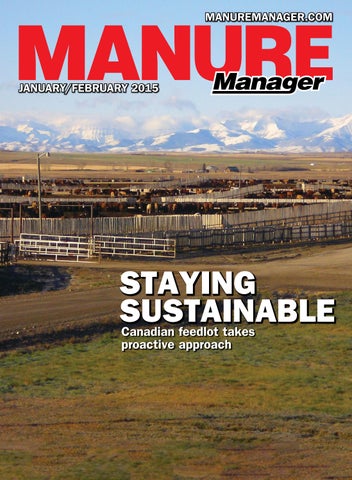
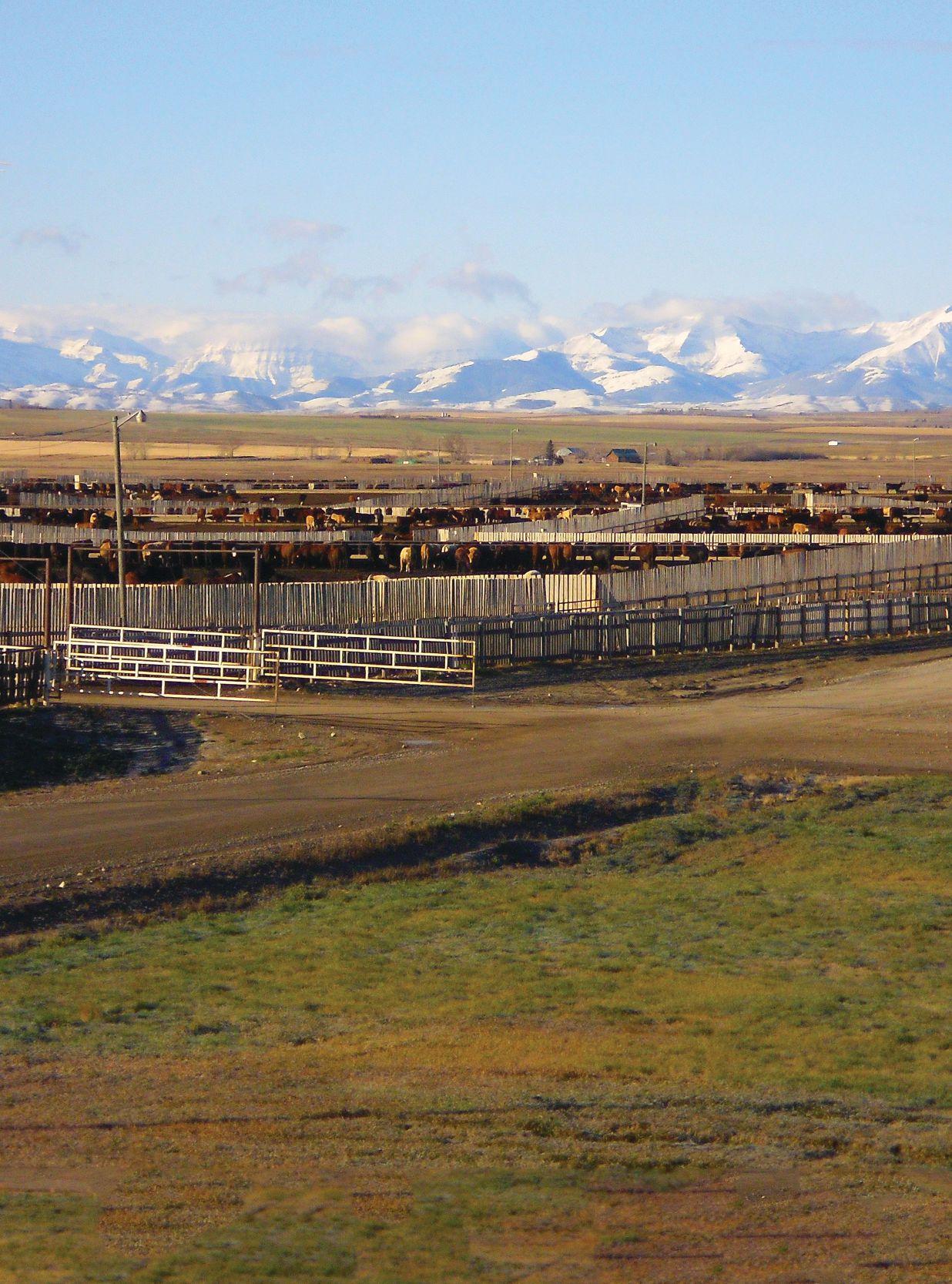
Cover: Alberta-based Western Feedlots Ltd., which has 100,000 head capacity on three sites, is being proactive when it comes to tackling the issues of today – and tomorrow.
January/February 2015
Volume 13 • No. 1
Published by:
Annex Publishing & Printing Inc.
P.O. Box 530 Simcoe, Ontario N3Y 4N5
Editor
Margaret Land • (519) 429-5190, (888) 599-2228, ext 269 mland@annexweb.com
Contributing Editors
Tony Kryzanowski, Diane Mettler, Treena Hein, Lilian Schaer, Jay Harmon & Angela Rieck-Hinz.
President Mike Fredericks mfredericks@annexweb.com
Publication Mail Agreement #40065710
RETURN UNDELIVERABLE CANADIAN ADDRESSES TO CIRCULATION DEPARTMENT, P.O. BOX 530, SIMCOE, ON N3Y 4N5
e-mail: subscribe@manuremanager.com
Printed in Canada
Circulation
e-mail: subscribe@manuremanager.com
Tel: 866-790-6070 ext. 211
Fax: 877-624-1940
Mail: P.O. Box 530
Simcoe, ON N3Y 4N5
Subscription Rates
Canadian Subscriptions
$35.24 Cdn, one year (with GST $37.00, with HST/QST $39.82)
U.S. Subscriptions: $47.00 USD, one year
Occasionally, Manure Manager will mail information on behalf of industry-related groups whose products and services we believe may be of interest to you. If you prefer not to receive this information, please contact our circulation department in any of the four ways listed above.
All advertising is subject to the publisher's approval. Such approval does not imply any endorsement of the products or services advertisted. Publisher reserves the right to refuse advertising that does not meet the standards of the publication.
Website: www.manuremanager.com
By Margaret Land
Wrestling with the future
Ask most teenagers these days what they want to do when they get older, they’ll either look at you vacantly or rhyme off a high-paying “professional” career, like a doctor or lawyer. My oldest has the vacant stare thing down to a fine art.
It would seem very few are interested in becoming farmers or taking over the family operation.
Rangelands, a journal published by the Society for Range Management, recently published a report that studied U.S. demographic data focusing on the High Plains area, specifically Wyoming. The writers reviewed decades of census data, sorting the results into classes based on worker age. They then mapped the results to track state and county trends.
They found that more than half of current farmers are older than 55 and that the way of life is attracting fewer and fewer people 34 years of age or younger. As a result, the average age of farmers has been increasing steadily in Wyoming since the 1920s.
Based on their results, the outlook for agriculture is rather bleak – no operators younger than 35 by 2033 and an average farm operator age of 60 by 2050.
And, while they studied Wyoming specifically, the authors believe the trend is occurring throughout the U.S.
“The authors conclude the loss of farmers, ranchers and their land is compounded by the loss of local wisdom,” stated a press release. “They argue for a new approach that turns young heads away from the lucrative oil and coal industries. Teaching and internship programs, government incentives, and conservation easements that preserve farming and ranch estates are among the tools already in use. They suggest that if young state residents learn more about their local environment and agricultural heritage, these programs could be even more successful in attracting the next generation of farmers and ranchers.”
The Livestock and Poultry Environmental Learning Center recently held a webcast aimed at engaging young people on the subject of manure, air quality and sustainability. Entitled “Reaching the Next Generation Through Fun and Interactive Activities,” the 70-minute session featured presentations from staff at South Dakota State University, Purdue University, Montana State University, University of Arkansas Extension plus the Iowa Pork Producers Association.
Those interested in learning more about the ideas and activities discussed can watch a recording of the webcast at https://learn.extension.org/events/1856#. VK6gtyfEFO2.
Full text of the Rangelands article, including graphs and references, is available at www.srmjournals.org/doi/full/10.2111/Rangelands-D-14-00035.1.
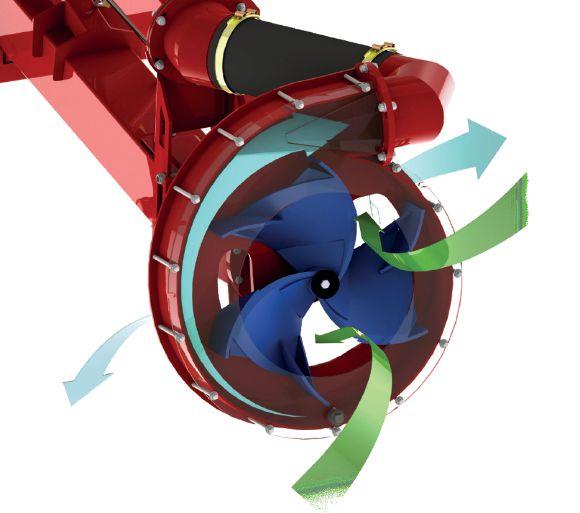
The PUMPELLER® Hybrid Turbine revolutionizes manure pump performance. Incredible intake suction pulls solids into the cutter knives, reducing the toughest crust to nothing in just seconds. The turbine combines the high-volume mixing of a propeller agitator with the power and reach of a lagoon pump, the resulting hybrid design radically outperforms both.
Economically Sustainable
By Diane Mettler
Western Feedlots Ltd. focuses on sustainability, and takes a proactive and science-based approach that helps neighbors, the environment and the company’s bottom line.
By 2030, it’s estimated that there will be more than eight billion people on Earth (United Nations 2011). Food production will have to increase by at least 60 percent to keep pace. This illustrates the importance of not only improved farming methods, but also the need for
better soil health and more focus on environmental sustainability.
The above statement isn’t just a stat, but the all-encompassing science-based approach of Alberta-based, Western Feedlots Ltd. The company, which has 100,000 head capacity on three sites, is being proactive when it comes to tackling the issues of today – and tomorrow.
Phosphorous levels
Currently, Alberta only regulates manure applications based on nitrogen limits in the soil, but Western Feedlots wanted to take a closer look at phosphorus levels in the manure from various rations.
“We were trying to avoid overapplying phosphorus,” says Melissa McWilliam, farming and resources manager for Western Feedlots. “Typically the nitrogen to phosphorous ratio in manure is about one to one, but the crop actually needs a ration of about eight to one. If you apply manure based on
nitrogen, you’re going to get an excess of phosphorous in the soil.”
The results may not be an issue today, but they could down the road.
“If you keep over applying manure, phosphorous tends to accumulate in the top six inches of the soil and that’s where it’s more susceptible to running off,” says McWilliam. “When you get a snow and melt event it might run off into the water systems.”
One example of Western’s proactive approach is a relatively recent phosphorous study they conducted. Western began hearing complaints when they were using corn DDGS (dried distillers grains) in the ration that the manure smelled worse and there was more volume because of the DDGS.
“We thought, let’s take a sciencebased approach and look at what’s actually happening,” says McWilliam. “We didn’t find a difference in the volume of manure, but we did find that
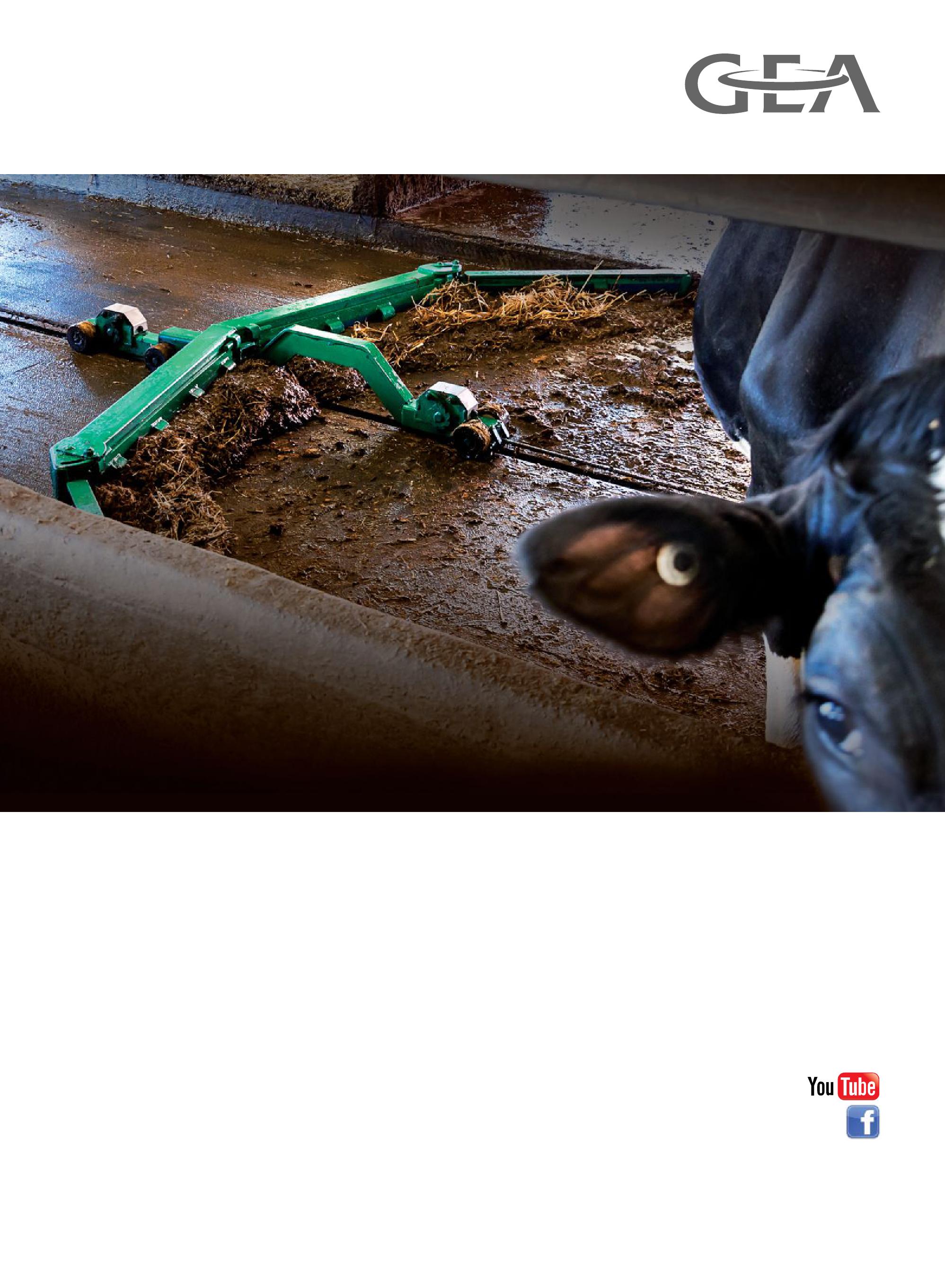
GEA Farm Technologies has always made its mark by developing efficient and long-lasting free stall manure cleaner systems. Whatever your barn condition is we have the solution to meet your highest expectations. 16°, Straight or V-Shape Scrapers. Adapted for rubber mats or concrete alleys. Pulled by galvanized or stainless steel cable, nylon rope, 1/2’’, 7/8’’ or pintle chains or hydraulically operated. It can be floor mounted, standard or deep groove guided or installed with an under floor channel. For alley lengths up to 2,585’ and between 73’’ and 204’’ wide... You have a farm. We have a solution.
A comprehensive line of products for free stall manure cleaning
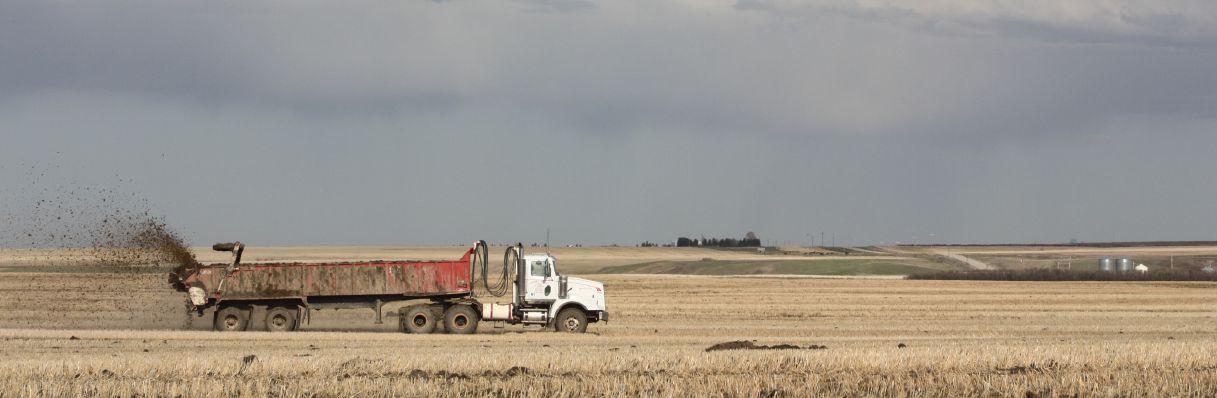
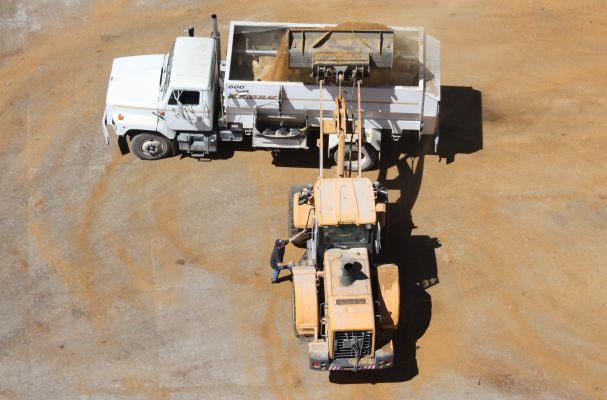
Western hires contractors to scrape the manure, haul it to its 7,000 acres of cultivated fields or to neighboring farm fields, where it’s stockpiled until it’s time to spread.
because there was a higher phosphorus concentration in the corn DDGS, when the cattle ate it, they weren’t using that phosphorus and excreted it in the manure. This meant that the phosphorus content of manure from cattle fed corn DDGS versus our other rations was actually significantly higher.”
Even when Western uncovers specific information, it’s sometimes difficult to know how to proceed. “If we fed those [corn] rations that would impact our strategy of minimizing excessive phosphorus applications in fields, and would mean that we would have to potentially haul the manure farther. So how does it all fit in the picture of economics and being environmentally sustainable? It is kind of a messy jigsaw puzzle,” says McWilliam.
Sulfur levels
The company’s science-based approach has also helped feedlot adjust their fertilizer management strategies. Agronomists had told Western there wasn’t enough sulfur in the manure and a supplement was needed to meet crop needs.
“To see if that was true we did a large scale field trial where we had four different treatments and we did five replicates at each of our three sites,” explains McWilliam. “We tested different levels of sulfur applications on three fields that had been manured over a number of
A small-scale compost pilot was run last year and after just two turns, the volume was reduced between
20 and 29 percent. Contributed photo
years. We found that applying sulfur made no significant difference to yield or quality because there was enough sulfur in the soil from the manure applications.”
Western had also been told that the nitrogen to sulfur ratio needed to be optimum for plants but found from its study that it appeared the plant was able to figure that ratio out itself. “It can find the sulfur,” says McWilliam. “Today we don’t put any sulfur down when we plant our crops. We save money and don’t have excess nutrients in the soil. It’s more sustainable for the environment and for our business.”
Sharing data and resources
Western believes in sharing its findings. The company holds annual farmer meetings at all three of its sites. Western shares not only information to those neighboring farmers that they sell their manure to for fertilizer, but they also offer their extensive soil-testing program through its contract agronomist. The company calls that the “full package.”
“We charge by the metric ton and we base it on dry matter. Spring manure tends to be wetter, and the farmers get
spring manure at a discount so they’re not paying for water,” explains McWilliam. “The charge helps cover the spreading costs and some of the haul costs, but it doesn’t cover it all by any means. That’s part of the reason we do the education workshops. We want farmers to see the value in the manure versus seeing it as a waste.”
Currently that base charge covers the “full package”, whereby Western hires their contract agronomist, Agri-Trend to do soil testing.
“The soil is tested before manure goes on. Then we do an analysis of the manure. Based on that, we can do a specifically nutrient-tailored plan to that field,” says McWilliam. “Then the manure is applied. We stockpile it [on the farmer’s field] or we spread it direct. The year after the first crop comes off, post manure, we do another soil test just to see what changes have happened in the soil. Typically we see phosphorus and nitrogen levels go up, and the organic matter goes up too.”
In addition, Western keeps all the records for the farmers – even though they aren’t required to. “It just makes it
Composting could yield the feedlot great benefits, including decreasing volume and weight, so that the manure could economically be shipped out further to farmers who have a need.
easier for the farmers if we keep all their soil test records,” says McWilliam. “They have access to them, but that way when our government asks to see any of the manure application records, we’ve got a record of all the areas that have received manure and what the soil tests look like.”
This entire “full package” program is beyond what is required by current regulations, and it does cost the company money, but Western feels the service is just one of the costs of doing business.
Not all of the manure goes to neighboring farms though. Western has been able to save on commercial fertilizers by using the manure on their own 7,000 acres.
“We do a full rotation of wheat, barley, silage and canola, all with very little fertilizer inputs because we have such a great fertilizer resource right in our yard here,” says McWilliam.
Individual animal management
Computers are a big part of Western’s science-based approach. The company has long been a leader in IAM, (individual animal management) and the company-developed software, ParaDIAM, allows Western to track every animal in its feedlots.
Each animal has a CFIA chip that can be read with a wand each time its run through the chutes. Western can track which animal it is, where it came from, what it’s been eating, and how much it gains per day. They can also tell what manure came from which pens and which cattle were in those pens.
“This software is giving us the ability to see where we’re doing well and where we can improve. This information allows us to make adjustments in our rations or our management strategies in the pens themselves,” explains McWilliam.
Looking ahead
Currently Western hires contractors to scrape the manure, haul it to its 7,000 acres of cultivated fields or to neighboring farm fields, where it’s stockpiled until it’s time to spread in the spring and fall. Western is constantly looking, however, for alternative methods for manure handling, including composting.
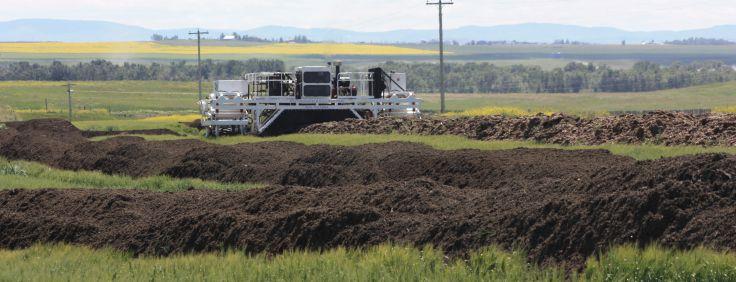
Composting could yield the feedlot great benefits, including decreasing volume and weight, so that the manure could economically be shipped out further to farmers who have a need.
A small-scale compost pilot was run last year and after just two turns (the manure wasn’t fully composted) the volume was reduced between 20 and 29 percent.
“If we can do that economically, then we would be able to potentially haul it further,” says McWilliam. That would be better for the farmers outside of our haul radius because they would be getting manure in fields that need it and it would be better for the environment as well.
Point of pride
McWilliam is proud to see the company getting its manure management up and running.
“I think we still have a long ways to go, but I’m happy with the all encompassing approach that we’ve taken, which includes educating famers on the best management practices. It’s all fine and dandy if we’re doing things properly at the feedlot, but then if it gets out into the field and the farmer isn’t incorporating it or is not handling it properly, then it can create environmental concerns.”
She adds, “My way of thinking is that manure is just another tool in your toolbox that you can use to help create a healthy soil and sustain it.”
Western Feedlots hopes it is helping lead the way for other feedlots in the Alberta area. If there is going to be eight billion people on this planet by 2030, there will need to be every tool at the world’s disposal.
For more on Applications, visit www.manuremanager.com
Western is constantly looking for alternative methods for manure handling, including composting. Contributed photo
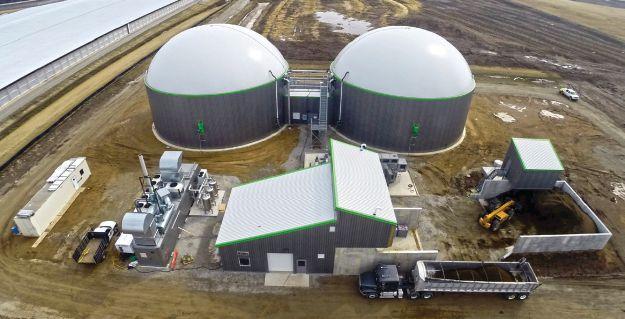
A total of $7.1 million was spent to build this PlanET Biogas designed, biogas-fueled, renewable power plant on the Perry farm near Chin, Alberta. Contributed photo
Fact over fiction
By Tony Kryzanowski
Feedlot manure helping Alberta farm “Grow the Energy Circle.”
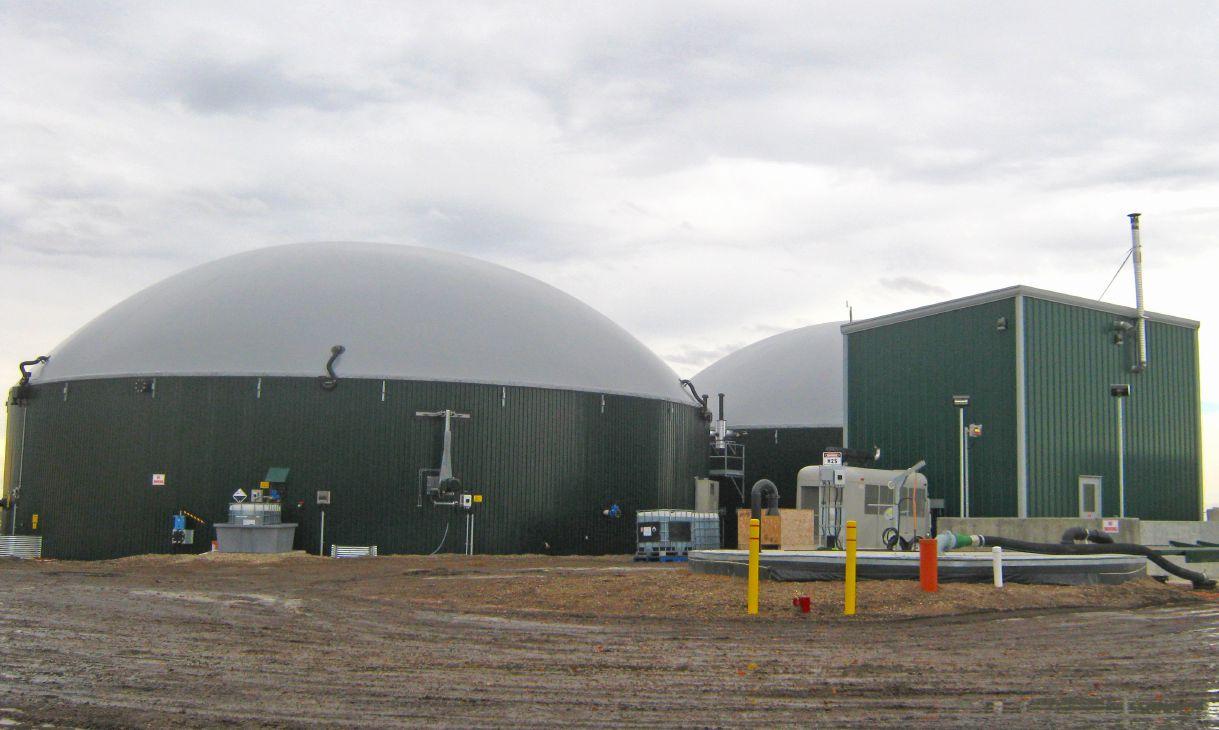
It has a futuristic feel to it – two domed anaerobic digester tanks converting feedlot manure and potatoes to biogas and organic fertilizer. Add to that the use of solar power, geothermal power, and composting of cattle manure for use as organic fertilizer and the picture is complete.
But southern Alberta farmers Chris and Harold Perry are more interested in science fact than science fiction and take sustainable farm practices very seriously. Their 20/20 vision is to reduce farm inputs such as water, fuel, electricity and synthetic fertilizer by 20 percent, while increasing net yields by 20 percent. They began to implement that vision in 2011 and the commissioning of their anaerobic digesters is a major piece of the puzzle.
In November, they commissioned a $7.1 million anaerobic digester installation on their farm near Chin, Alberta, that will continuously generate biogas as fuel
to produce about 630 kilowatts (kWs) of green power. The two digesters will process about 25,000 tonnes of organic waste annually, which will include at least 13,000 tonnes of open-pen feedlot manure.
The production of renewable power from biogas and diverting manure from the nearby KCL Cattle Company and Kasko Cattle Company feedlots will reduce greenhouse gas (GHG) emissions by more than 10,000 tonnes of carbon dioxide per year.
of irrigated land producing potatoes, sunflowers, green peas, seed canola and a range of cereals for clients such as Frito Lay, McCain Foods, Lucerne Foods, Hytech Production, and Spitz.
“The Perry’s are very progressive farmers,” says Seth Clark, GrowTEC’s biogas facility production manager. “They really see themselves as stewards of their land. For instance, they were composting manure for quite some time prior to even considering the anaerobic digester just as
“The reason we went with PlanET Biogas as our supplier is that they provide a turnkey operation for
biogas.
So essentially, you tell them what feedstock you will be using, what your volumes are, what you want for an output, and they will design a system around those parameters,”
The anaerobic digester system and renewable power facility is owned by a company called GrowTEC Ltd., which is a division of Perry Produce Ltd. Chris Perry is the company’s co-founder, president and chief executive officer (CEO). The name GrowTEC is an acronym for Grow the Energy Circle Ltd.
The Perry family has a history of innovation and stewardship that spans four generations. Today, they operate a diverse farm comprising 4000 acres
a way to reduce the amount of synthetic fertilizers they needed for their land.”
The manure used in the composting program will not be disrupted by redirecting that manure to the anaerobic digesters. That operation will continue as before. In recent years, the Perry’s have been manufacturing about 7,500 tonnes of compost from raw manure gathered from area feedlots.
“Here in Southern Alberta, we have a number of feedlots that are manure rich
and land poor,” says Clark. “There’s lots of manure out there, and in some cases, there is more manure than the producers can actually apply to their land base. So the project is a win-win for both of us, because we are getting the manure for our digesters from operations that had an overabundance of manure already.”
A major supporter of the GrowTEC renewable energy project was Alberta’s Climate Change and Emissions Management Corporation (CCEMC), which provided over $3.5 million toward the project. Clark says the project would not have been economically feasible without CCEMC’s support. CCEMC is an independent organization created by the Alberta government to channel funds collected from large greenhouse gas emitters toward projects that will help the province reach its GHG emission reduction targets.
“With current energy prices and market the way it is for electricity in this province, it is very difficult to justify putting a project like this together, purely on the economics,” says Clark.
As part of GrowTEC’s license to operate with the Alberta government, at least 50 percent of the raw feedstock fed into the digester must be feedlot manure, and Clark says at the present time, it is much higher than that.
In addition to the production of renewable power from biogas, the Perry operation is also generating 105 kWs of geothermal power for use in both cooling and heating of their potato storage operation, and 20 kWs of solar power.
The food companies the Perry’s supply have very high quality standards and previously, all potatoes that didn’t make the grade were sent to area feedlots for animal feed or spread back on the land, which involved a fair amount of trucking and transportation.
“Potatoes are a very good feedstock for an anaerobic digester, so it got them thinking about how they could utilize this waste material and add some value to it,” says Clark.
Originally, the plan was to only use potatoes as the digester feedstock, but it was necessary to include manure for the active microbes present in it. Capturing the biogas from digesting these two waste streams will reduce transportation costs and create value added products - biogas
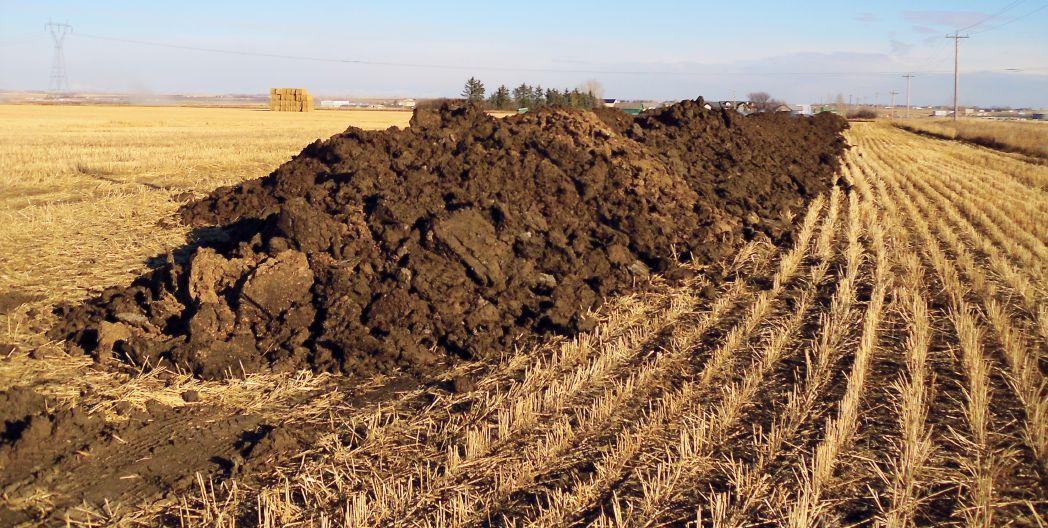
Separated solids from the GrowTEC digesters are stockpiled for storage. Later in the year, they will be land applied as organic fertilizer, primarily on potato crops. Contributed photo
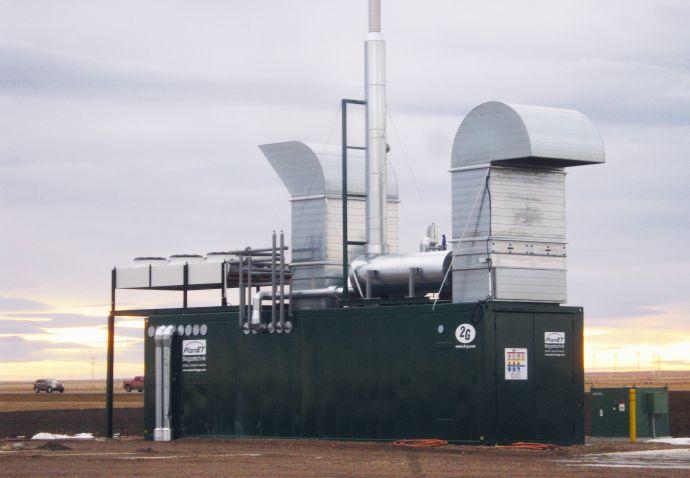
The Jenbacher combined heat and power engine is housed along with the power generator and control systems. Contributed photo
for fuel to produce renewable power and high nutrient organic fertilizer.
Clark adds that the Perry’s were interested in taking advantage of both the high nutrient liquid and solid byproduct streams from the digester – two advantages being that the digestate comes out essentially weed and pathogen free.
“Digested manure is actually better for land application than raw product and once you have digested the potato material, any hazards that may have been
associated with it, such as diseases and microbes, you have also destroyed those,” says Clark. “So the output is very good, high quality, nutrient-rich fertilizer.” They have included a pasteurization option at the outfeed of the digesters to further ensure that there is no possible transfer of microbes from the feedstock to the digestate before it is land applied. It is pasteurized at 70 degrees Celsius for one hour once it leaves the digesters.
The power generated by their biogas
Cattlemen by nature are cautious when it comes to new ideas about what they know works. That’s because for years they have been subjected to all sorts of products and methods that have promised to grow hair or double their bank accounts.
So it comes as no surprise that Les Wall, KCL Cattle Company owner, is cautiously optimistic about the chances of the GrowTEC renewable power installation working as advertised, although he strongly supports the overall concept. KCL Cattle, located near the Alberta town of Coaldale is a major supplier of raw manure to the installation that features two anaerobic digesters that produce biogas and high nutrient organic fertilizer from the manure.
“I think it’s a win-win for both parties,” says Wall. “It makes you feel good to promote some green energy, they are making good use of our manure, and they are generating energy which helps to run their farms while they sell the excess. I’m pretty happy to be a partner with them. They are good people, and I am pretty excited to see where it will all grow.”
KCL Cattle manages two open-pen feedlots. The one where the manure for the digester is collected holds 7,000 head. It generates between 15,000 and 20,000 tonnes of manure annually, which has traditionally been spread on the three quarters of land owned by the cattle operation and on neighboring farms.
At the present time, the feedlot has stockpiled some manure for GrowTEC’s use as it commissions its two anaerobic
digesters. Wall says he’d like to watch it perform for at least six months before giving it the full thumbs up. In future, rather than stockpiling, they hope to clean their pens on a regular basis and deliver the raw manure to the digesters for processing. That concept appeals to him because their pens will be cleaned on a regular basis rather than the pressure of doing it all within a couple months in fall in advance of land application.
“That yard there is not land rich, so it is always good to have another avenue to make better use of your manure, because obviously we can’t use all of it on our land,” he says. Not all the manure that the feedlot generates will be sent to the GrowTEC installation. He expects that some will still be land applied.
One of their main challenges as a raw manure supplier to the digesters is to provide as clean material as possible, with a minimal amount of clay. Wall says that is a challenge, especially in wet years, but they are making a very concerted effort to respond to GrowTEC’s needs.
At the present time, KCL Cattle is not compensated for its manure but the plan is to pay them at least to truck the manure to the site, and perhaps at some future time, they may be compensated per tonne delivered.
“I’m willing to work with them to get started, as long as it doesn’t incur me a lot of extra costs to get it out of my pen,” says Wall. “If I’m covered for that and a little a little bit for trucking, I’m pretty happy for now.”
FLEXIBLE, DURABLE & COST EFFECTIVE
SOLID LIQUID SEPARATION
BIOSELECT RC
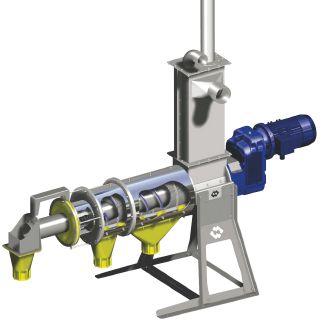
The Bioselect RC is fitted with a feed pump and a control unit for consistent solid liquid separation.
Börger AgrarTec offers a diverse line of agricultural liquid handling products including rotary lobe pumps, macerators, digester feed equipment and solid liquid separators. Börger specializes in custom-built solutions for farmers and biogas plants.
learn more about Börger products, download a free QR code app on your smartphone and then scan this code.
learn more visit www.boerger.com or call 1.844.BOERGER or find us on:
energy system is currently sold to the electricity market in Alberta through the Alberta Electric System Operator (AESO) at market prices. However, down the road, GrowTEC would like to sell the power directly to an industrial user. Chris Perry says that the goal is for the anaerobic digestion system to produce enough income from the sale of renewable power so that the farm operation is essentially, “off the grid.”
GrowTEC contracted a biogas system marketer headquartered in Germany called PlanET Biogas Solutions to build the entire biogas and renewable power system.
“The reason we went with PlanET Biogas as our supplier is that they provide a turnkey operation for biogas. So essentially, you tell them what feedstock you will be using, what your volumes are, what you want for an output, and they will design a system around those parameters,” says Clark. They offer the construction, installation, training, and ongoing support for that system.
PlanET Biogas Solutions is the same company that built Canada’s largest anaerobic digester in nearby Lethbridge last year. It has been actively involved in marketing its technology in North America for a number of years.
The open-pen, bed pack, feedlot manure delivered to the digester site is deposited on a concrete pad.
GrowTEC uses an automated, pre-programmed feeding system to add the required amount of raw material to meet their biogas production target. The raw material is fed once per hour into one of two 2100 cubic metre anaerobic digestion tanks.
PlanET Biogas Solutions worked with MPE Engineering on the project, with Jenbacher being the supplier of the dual-fuel engine that burns the biogas to generate power. Börger supplied the digestate separator, which separates the liquid and solid byproduct streams. The liquid stream is piped to a retention pond,
which has enough holding capacity from an entire year of digester production, for eventual land application as fertilizer. The solid material is stockpiled in a bin till land applied.
The temperature within the digester is maintained at 35 to 40 degrees Celsius, with the raw material retained in the tanks for 30 days. Heat generated by the Jenbacher dual-fuel, combined heat and power (CHP) engine is used to heat liquid in a heat exchanger. The hot liquid is then pumped through piping in the walls and floors of the digester tanks to maintain a constant temperature, which is a challenge given that temperatures in the Chin area can sometimes drop to as low as minus 40 Celsius in winter. The engine is capable of burning either biogas or natural gas.
As to the recipe of raw material, PlanET Biogas provided biological support to GrowTEC to make this determination by analyzing their feedstocks. The blend can be adjusted depending on gas production and quality data, and samples are sent to PlanET Biogas on a regular basis to monitor biology and bacterial content.
Construction began in August 2013, with completion about one year later. The facility was fully operation in late November 2014.
The Vario brand solid feeder at the GrowTEC installation has a walking floor mechanism. Contributed photo
MANURE ApplicAtioN Dribble bar
By Treena Hein
European equipment poised to make manure application much more consistent across Ontario and beyond
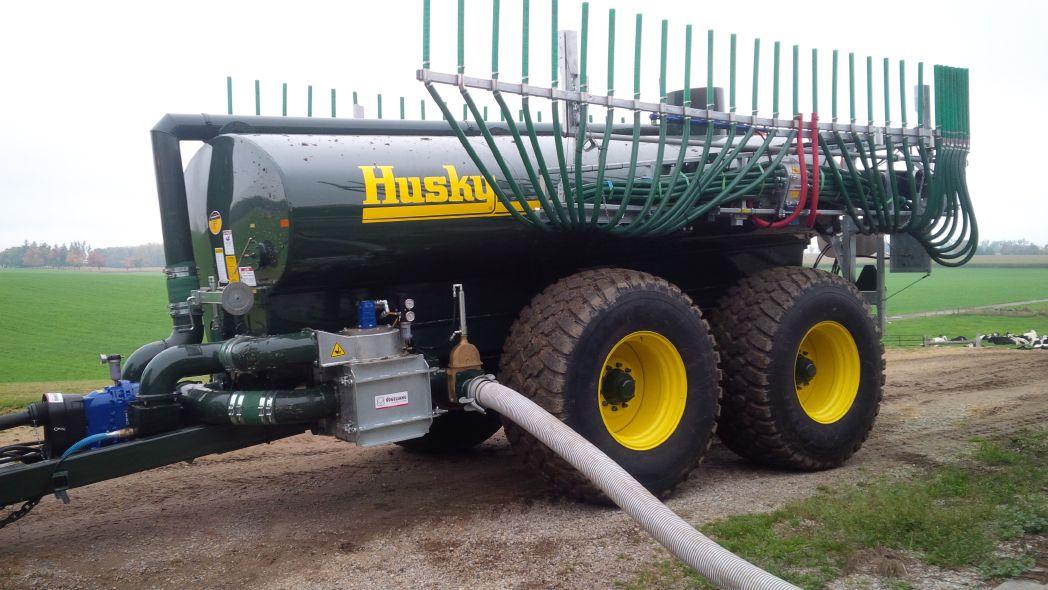
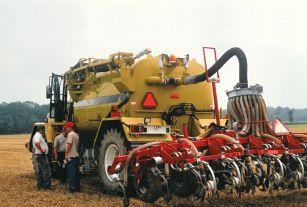
Spreading liquid manure has always been challenging for farmers. Spraying it on fields is smelly and not terribly consistent. This spreading method can also cause crop damage and excessive run-off. Now however, much improved spreading for liquid manure is now available to Ontario farmers, thanks to Alma-based Husky Farm Equipment. In cooperation with Germany-based Vogelsang, the company has introduced the dribble bar, along with its many benefits.
The dribble bar spreader originates in Europe, where there is widespread
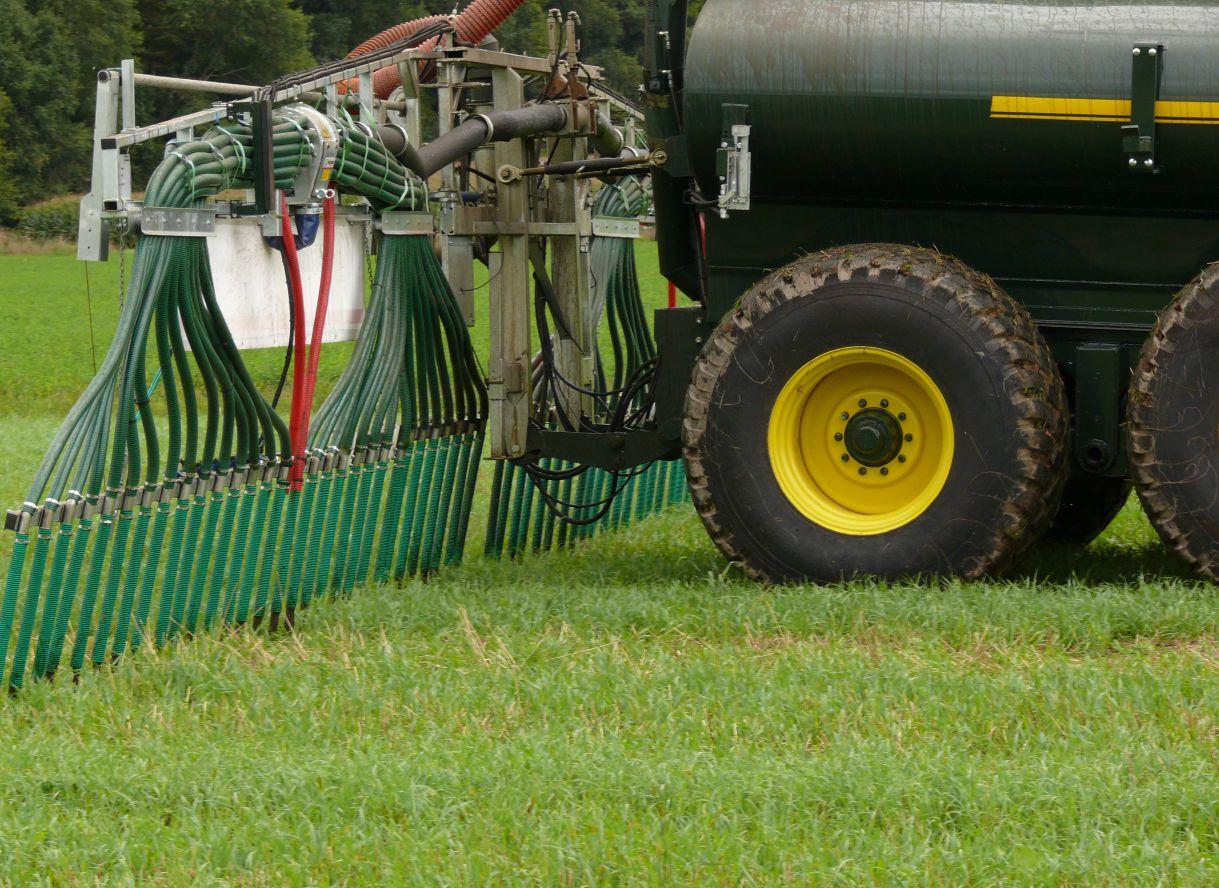
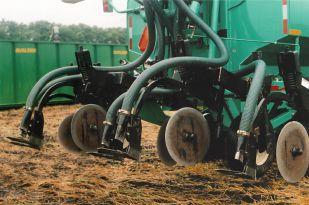
restriction of manure application outside the growing season. This spurred the development of new technology such as dribble bars. A dribble bar is just as it sounds – a bar-like system that dribbles manure at low pressure onto the ground below the plant leaves, allowing a greater amount to be applied with more accuracy, less runoff and less crop injury and less odour. “As application accuracy improves and environmental issues continue, combined with opportunities with GIS/ GPS, there is more interest in dribble bar and other in-crop application technology,” notes Christine Brown, who has recently studied the dribble bar in her position as the Ontario Ministry of Agriculture, Food and Rural Affairs (OMAFRA) field crops program lead.
Vogelsang dribble bar technology for dragline units was demonstrated at the North American Manure Expo in 2012. In 2013, Walter and Sharon Grose (owners of Husky Farm Equipment) decided to investigate it further, traveling to Germany
to meet with Vogelsang and tour its factory. “This tour assured the fact that the tanker-mounted units could work on Canadian tankers,” Walter Grose says. “These units are widely used in Europe because of legislation and Ontario is cultivating an interest to pre-empt any legislation.”
Benefits abound
Brown explains that the dribble bar (as well as other European equipment such as Veenhuis shallow injection technology) offers a tool bar with more rows, which allows for application at ground level in seven to 10-inch spacings with no splash.
“At 10-inch row spacing, there are about 60 dribble hoses on the toolbar which means that at 4,000 gallons per acre, there would be about 70 to 75 gallons/row/acre,” she explains. “Less volume per row means less risk of runoff, and when applied in forage or pasture –assuming soil conditions are fit – there would be faster infiltration.”
A PLACE FOR WASTE
Superior Agitation
NRCS Pre-Approved
Ramp Accessible
Unlimited Storage Capacity
No Maintenance
Can Be Placed In or Out of Ground
FEED STORAGE THAT LASTS
The Cadillac of Bunker Silos
Strongest Bunker on the Market
Professionally Engineered Walls
Will Serve Your Needs for Generations
We
Bid Source for Digester Companies
Experienced with Many Designs and Technologies
19 Digesters Constructed to Date
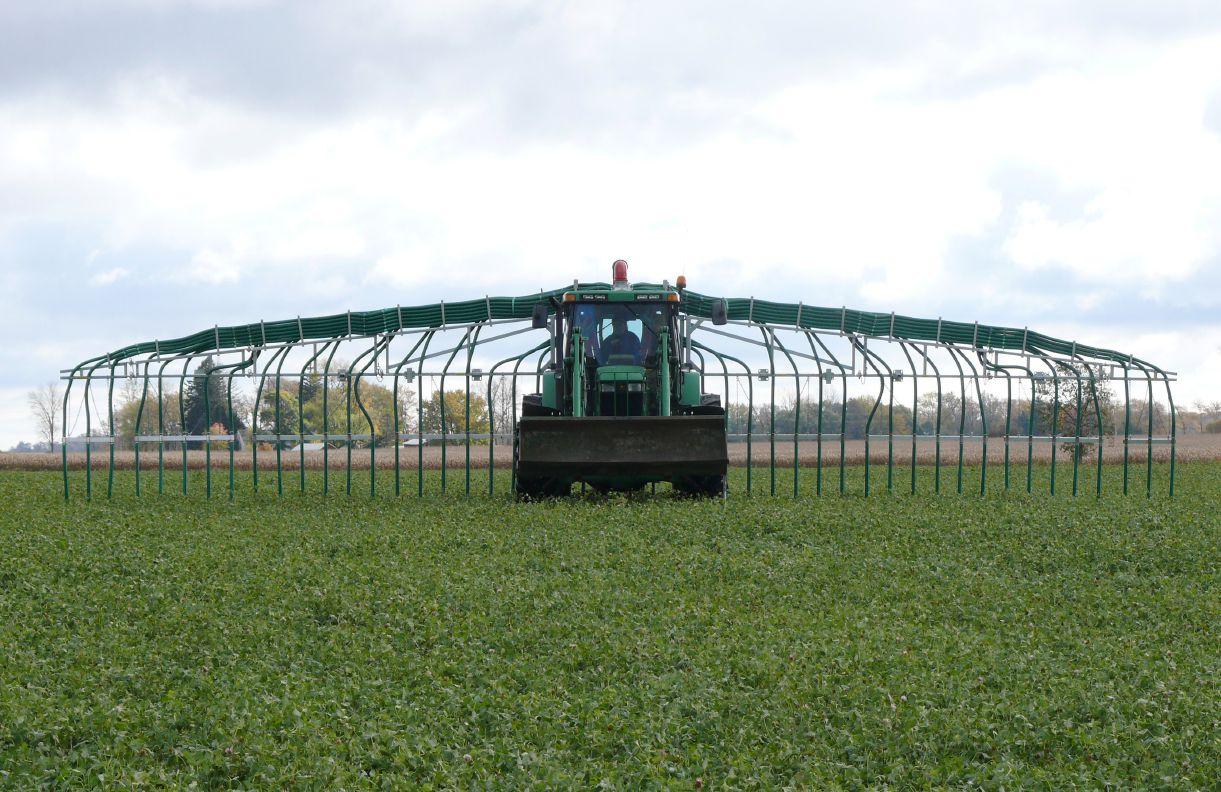
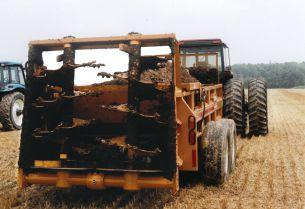
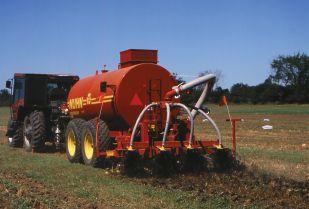
(Above) A dribble bar is a system that dribbles manure at low pressure onto the ground below the plant leaves. (Right) This allows a greater amount to be applied with more accuracy, less runoff, less crop injury and less odour. Contributed photos
The dribble bar also offers greater nutrient application accuracy.
“The distribution system is finetuned, so that the amount from each row is more consistent than current splash plate technology,” Brown says. “This makes the manure application more like fertilizer (although there will still be some variation in manure nutrient concentration), but the nutrients are placed closer to where a growing crop can utilize them.”
Although injection into the soil would be even better, Brown notes that it take more time and more horsepower. She also states that if manure is applied to forages or to other growing crops, the system that works best is one that gets many acres covered in a day with less wheel track (similar to sprayer technology). She says a dribble bar could be used to apply manure in many situations, such as into a wheat crop at the same time that commercial nitrogen is applied, or before planting in canola, corn or soybeans. Brown says a dribble bar would also be
effective in applying manure to ground with planted canola, corn (up to about the six leaf stage) or soybeans. She believes it would also be very suitable in edible beans before or just after planting, forage crops after harvest (with potentially up to three application opportunities) and in pastures (especially where rotational grazing has been established).
Lastly, Brown believes dribble bars would also work well after cereal harvest, where manure could be slurry-seeded with cover crops (or the cover crops could be established after application).
“Where large fields in corn/soy rotation have erosion concerns, grassed
tram lines could be established for less compaction damage and more frequent in-crop application opportunities,” she adds. “For custom applicators, technology that allows manure application to occur during the growing season will allow more days for application in a year and will help to reduce the stress associated with full manure storage when the weather doesn’t cooperate, such as late harvest or wet conditions or early winter conditions.”
Having the manure dribbled at low pressure into the soil a little at a time (and not sprayed in the air) obviously means substantially lower odor levels, but this has not been studied in Ontario at this
point. However, Grose notes Vogelsang has done extensive research on how the dribble bar reduces odor, as well as how it boosts crop yield with its improved placement of nutrients and application timing.
The way the dribble bar prevents manure from touching the plant canopy also means reduced crop burn and ammonia loss.
“We have done ammonia loss studies in forages with dosimeter tubes that consistently show the ammonia loss is highest where the application rate is high (where manure puddles) and takes longer to infiltrate [which is something that tend not to happen with a dribble bar],” Brown explains. “There still could be ammonia burn [with a dribble bar] if the manure applied is a concentrated liquid poultry or hog manure applied at a high rate. But generally this type of manure is not recommended for forage crops that would be the most susceptible to ammonia burn.”
She adds that salt/ammonia injury could be an issue with slurry-seeded cover crops, especially when planted into dry soils.
Attachment and use
The Vogelsang dribble bar can be mounted on any manure spreader, notes Grose, although small modifications may be needed. The amount of modification needed for spreaders over 10 years old would not be cost-effective. In terms of speed, Grose confirms the Vogelsang dribble bar is faster than an injector unit.
“Most injectors are 12 feet wide to fit road width and must travel many times up and down the field,” he explains. “The dribble bar is much wider and can cover more ground.”
The time it takes to fold out the boom might be 20 seconds out and 30 seconds in, and Grose adds the dribble bar does not allow any manure to dribble on the road as it tips up for road travel.
During application, the Vogelsang dribble bar uses a rotary distributor to pulse distribute the manure across the width of the unit.
“When a triangle field is encountered, one side can be shut off or retracted to transport position to eliminate double coverage,” Grose says. “When an area in
the field is encountered that has enough nitrogen, the booms can be turned on or off for precision coverage. Each nozzle gets the same amount of coverage whether one side is turned on or off.”
Husky Farm Equipment Limited and Farm and Food Care will be using a tanker with a 50-foot Vogelsang dribble all over Ontario.
“It will have demo days and farm show exposure,” Grose says. “The highlight of the year will be the demonstration at the North American Manure Expo in Chambersburg, Pennsylvania, in July 2015.”
In terms of studies, Brown is hopeful she may be able to initiate some, but that depends on time and funding opportunities.”
See the dribble bar applicator in action here: http://youtu.be/ZSXdf0LQY1o
A dribble bar could be used to apply manure in many situations, such as into a wheat crop at the same time that commercial nitrogen is applied, or before planting in canola, corn or soybeans. Contributed photo
The Next Generation of Green Bedding Separators from BAUER! The PSS3.3-780 HD produces high-quality bedding material with a dry matter content of up to 38% in solids.
Please contact:
Jim DeWitt, (630) 750-3482, j.dewitt@bauer-at,com
Troy Burns, (219) 229-4046, t.burns@bauer-at.com
Michigan City Office, (800) 922-8375, www.bauer-at.com
The new PSS3.3-780 HD Separator from the BAUER Group
New poultry barn ventilation system
By Lilian Schaer
The new system improves bird health and reduces energy costs
An innovative minimum ventilation system for poultry barns is improving bird health and reducing energy costs for farmers in the process. And it comes with some environmental benefits too – lower ammonia levels and better dust control.
In 2013, Jack Van Ham and his son, Jerry, were able to secure cost-share funding from the Implementation Funding Assistance Program under Growing Forward 2 (GF2) to become the first poultry farmers in Ontario to install an air-air heat exchanger developed in the Netherlands specifically for the poultry industry.
The Van Hams are based in Oxford County, Ontario, where they have two farms with identical broiler barns built between 1999 and 2003, and grow 2.3 kg birds in an eight-week cycle.
“We knew this technology was available in the Netherlands, where farmers can recoup heat from dry manure in layer barns, and they are seeing overall savings of about 50 per cent in energy costs,” says Jack Van Ham.
The system evolved out of a European Union regulation that restricted ammonia output from poultry barns.
It uses the energy of the warm air from the barn to heat the cold, fresh air
coming in from the outside, replacing the propane or natural gas farmers traditionally use to heat poultry barns, and reducing on-farm energy costs.
Warm air from the barn enters the heat exchanger, passing through tubes where the cold outside air absorbs the heat before being circulated into the barn.
A computerized control system manages airflow and fan speeds, adjusting for fluctuating outside temperatures according to the season.
The bigger the differential between inside and outside temperature, the more heat the system will recoup, says Jack.
The minimum ventilation system
improves the air circulation to rid barns of humidity, allowing manure to dry more quickly. This minimizes ammonia production and reduces its output into the environment from the barn by fans.
The drier inside air also means a better environment for both barn workers and the birds, with the Van Hams, for example, noticing fewer foot lesions due to better quality litter and improved overall bird health. This has meant a reduction in health-related expenses on the farm.
The Van Hams made some changes to their systems to adapt them to the Canadian environment, such as switching the electrical work to Canadian standards,
Jack Van Ham (left) and his son, Jerry Van Ham, broiler producers in Oxford County, Ontario, became the first poultry farmers in Ontario to install an air-air heat exchanger developed in the Netherlands specifically for the poultry industry.
Contributed photo
and adjusting the computer software to account for Canada’s winter temperatures, which are much colder than they are in the Netherlands.
Due to its unique status of being the first of its kind in Ontario, the project qualified for additional funding under GF2’s innovation designation.
“We might not have done this project without the grant as it’s a big investment,” admits Jerry Van Ham, but adds that it has yielded a lot of environmental benefit, as well as decreasing their natural gas costs.
“The air quality is tremendous. We saved a lot on energy last winter, but the air quality for the chickens has really improved,” adds Jack, explaining that although the system has raised their electricity costs, the natural gas savings more than make up for that increase.
Industry interest in the system has been high, and the Van Hams are no longer the only farmers in Ontario using the technology.
They’ve shared what they’ve learned with poultry specialists from the University of Guelph and the Ontario Ministry of Agriculture, Food and Rural Affairs (OMAFRA), as well as with fellow producers.
“This system would be especially ideal for barns with birds in them all year long, like broiler breeders, as it can be hard to get the dampness out,” says Jack.
GF2 is a federal-provincial-territorial initiative aimed at
The Van Ham’s new ventilation system uses the energy of the warm air from the barn to heat the cold, fresh air coming in from the outside, replacing the propane or natural gas farmers traditionally use to heat poultry barns, and reducing on-farm energy costs. Contributed photo
encouraging innovation, competitiveness, market development, adaptability, and industry capacity in Canada’s agri-food and agri-products sector.
Lilian Schaer is a writer for the Ontario Soil and Crop Improvement Association.
the NEWS
For the past four years, Cintas & Carhartt have partnered to recognize individuals who withstand tough working conditions. This year, they’ve launched the Tough Crew Contest, a new program designed to pay tribute to hard-working crews throughout North America.
Contestants are encouraged to share how their teams outwork them all and explain why they rely on Carhartt, a brand designed for hard-working people, to help them get the job done.
The Cintas & Carhartt Tough Crew Contest is accepting entries now. The first four finalist crews were selected and announced on Jan. 5, 2015. Four additional finalists will be selected bi-monthly in March and May, and the 12 will compete for public votes at the contest website in June 2015. All finalist crews will be eligible to win free Carhartt merchandise, and the grand prize winner will receive $2,500 in credit to outfit their team in Carhartt work wear.
“We’re excited to be doing something
different this year by recognizing crews of workers,” said John Rudy, senior marketing and strategy manager for Cintas Corporation, a North American uniform supplier. “We’ve heard great stories about North America’s workforce through our previous contests with Carhartt, and we look forward to opening it up to groups that work in tough conditions year round and in all types of climates.”
Last year’s Cintas & Carhartt Cold Crew Contest, which focused on winter workers, spurred more than 15,000 entries from throughout the U.S. and Canada.
“We really enjoy hearing stories from our consumers about how Carhartt helps them get the job done,” said Tony Ambroza, senior vice president of marketing at Carhartt.
www.carhartt.com
Andgar to separate AD division under new name, expand territory
Having already established itself as a builder of anaerobic digesters in the Western United States, leaders of the Ferndale-based company, Andgar, announced recently they are splitting off their digester division under the new name Regenis and expanding their project reach into California.
“We live in a time when it’s more important than ever to reimagine our reusable resources,” said Regenis president Todd Kunzman to an audience of 300 at the fifth-annual Washington Future Energy Conference. “Digester technology is a prime example of how to turn waste into a virtuous cycle of products from clean electricity to reusable water to compost and bio-fertilizers – all of which help reduce our environmental footprint while giving rural farming communities new sources of revenue.”
Andgar has been in Northwest Washington for decades, providing general contracting, metal fabrication, plumbing and residential heating and cooling systems from Seattle to the Canadian border. In 2004, the company leveraged its knowledge of various trades to build the Northwest’s first anaerobic digester, which is still in operation. Since then, Andgar completed 12 digester projects for dairy farms in Washington, Oregon and Idaho, capturing
enough clean biogas from methane emissions to power over 10,000 homes.
“As we continued to build digesters, it became apparent in addition to different geographic territories we serve, this part of the company has a fundamentally different mission from our other core elements,” Kunzman said. “Regenis is in the business of stewardship. In fact, the name Regenis is a hybrid symbolizing both the rebirth of our planet’s reusable organic resources, and the new
generation of leadership propelling the company with a continued ethic to leave our land better for the next generation.”
Regenis also announced at the conference they are completing their first anaerobic digester in California, which will have a public unveiling in February 2015.
“We’ve expanded our partnership with DVO, Inc. to build California’s first and only rugged and reliable 100 percent American made digester,” Kunzman said.
www.Regenis.net
Research study
examined fertilizer produced from LWR system
The Olds College Centre for Innovation (OCCI) recently concluded a crop growth trial with nutrient fertilizers produced by the LWR Manure Treatment System.
This latest research project evaluated the LWR fertilizer through a series of grow-tests in the OCCI greenhouse facility using outputs collected at a dairy site in Michigan.
The study, concluded last fall, confirms that the LWR liquid fertilizer contains adequate amounts of nitrogen and trace minerals suitable for growing plants. The results also confirm that the liquid fertilizer produced through the LWR manure treatment system is free of phosphorus, with lab analysis showing phosphorus levels at 0.0000%. The phosphorus that is removed from the liquid nutrient is captured in the dry solid fertilizer that can be easily transported and applied to phosphorus deficient land.
In the dry solid growth test, it was found that when mixed at 25 percent with soil, corn had the highest recorded heights of all treatments when compared to commonly used all-purpose plant food. This indicates that under the correct mixing ratio, the LWR dry solid fertilizer supports the growth of corn.
The study also determined the nitrogen and potassium in the 50 percent LWR liquid solution is more easily adsorbed by corn when compared to a commonly used all-purpose plant food. Corn that was fed the all-purpose fertilizer absorbed 7.958 percent of input nitrogen and 9.105 percent of input potassium. When given the 50 percent LWR liquid solution, percentages of absorption increased to 22.87 percent and 24.98 percent, respectively.
“This study builds a very good foundation for further research and will help us with future development of the LWR technology” said Dr. Sudong Yin, head of LWR’s research and development department. “It is important to verify the system’s ability to successfully produce nutrient rich fertilizers that can be used effectively for growing crops. We are extremely pleased with these results.”
This is the second study completed by the OCCI after previously confirming the potability of the LWR water output.
Nanoparticle technology triples the production of biogas
Researchers of the Catalan Institute of Nanoscience and Nanotechnology (ICN2), a Severo Ochoa Centre of Excellence, and the Universitat Autònoma de Barcelona (UAB) have developed the new BiogàsPlus, a technology that allows increasing the production of biogas by 200 percent with a controlled introduction of iron oxide nanoparticles to the process of organic waste treatment.
The development of BiogàsPlus was carried out by the ICN2’s Inorganic Nanoparticle group, led by ICREA researcher Víctor Puntes, and by the Group of Organic Solid Waste Composting of the UAB School of Engineering, directed by Antoni Sánchez.
The system is based on the use of iron oxide nanoparticles as an additive that “feeds” the bacteria in charge of breaking down organic matter. This additive substantially increases the production of biogas and at the same time transforms the iron nanoparticles into innocuous salt.
According to researchers, today’s biogas production is not very efficient –only 30 to 40 percent of organic matter is converted into biogas – when compared to other energy sources. “The first tests conducted with BiogàsPlus demonstrated that product increases up to 200 percent the production of this combustible gas. This translates into a profitable and sustainable solution to the processing of organic waste, thus favoring the use of this renewable source of energy,” affirms Eudald Casals, ICN2 researcher participating in the project.
At the moment, BiogàsPlus has been successfully applied in cellulose and mud found in urban treatment plants, but it also can be used in different anaerobic digestions, such as agricultural, industrial or urban waste treatments.
“Now the challenge lies in extrapolating the technology to digesters with capacity for hundreds of cubic
meters. This would allow using it in large-scale anaerobic digestion processes around the world, thereby greatly increasing the production of biogas, a renewable energy which is growing steadily and is accessible to everyone,” Antoni Sánchez explains.
Mitas aims to test agriculture tires made of dandelion rubber
Mitas is planning to test the first agriculture tire made from agricultural cultivated crops.
Rubber extracted from the Kazakh dandelion will complement rubber tree latex in the compound of agriculture tires produced by Mitas. The goal is to have the first prototype of the dandelion tire during 2015. Mitas is also currently involved in the Drive4EU project researching the possibilities of using rubber from the Kazakh dandelion.
“We are examining different ways to use natural and renewable materials to produce our tires,” said Andrew Mabin, Mitas’ sales and marketing director. “Our research and development department is actively seeking new ways of improving our manufacturing process which includes researching new raw materials or substitutes. We are one of several tire manufacturers researching the benefits of the Kazakh dandelion in producing a more sustainable rubber for our tires.”
As part of the Drive4EU project, Mitas is responsible for testing the characteristics and features of rubber derived from Taraxacum koksaghyz. The objective is to find a new source of rubber with the same or better characteristics than those of the rubber tree.
John Deere expands features, models of six tractors for 2015
Building on the proven performance and versatility of its 6 Family of tractors for the farm and ranch, John Deere has made improvements to the 6D and 6R Series Tractors for 2015.
These changes are designed to further enhance the performance and operational capabilities of these popular models across a broad 105 to 215 horsepower range.
The four 6D Series Tractors (6105D, 6115D, 6130D and 6140D) come with two new transmissions: a 12/12 PowrReverser or optional 24/12 PowrReverser Hi/ Lo to provide more speeds within each working range. According to Brad Tolbert, marketing manager for 6 Family Tractors for John Deere, these new transmission options allow operators to shift on the fly to match changing field conditions and keep engine RPMs constant for PTOdriven equipment such as rotary cutters and balers.
For 2015, the 6D Series Tractors will continue to be offered with an single fluid Interim Tier 4 engine.
John Deere also has made improvements to its 6R Series lineup by adding five extra horsepower to the current 6R models (the 6170R, 6190R, and 6210R) to create three new higher horsepower models – 6175R, 6195R and 6215R. These higher spec machines feature Final Tier 4-compliant engines with Intelligent Power Management,
which automatically provides up to a 40 HP boost when the load calls for it, especially during transport and PTOdriven implements.
Other enhancements include a new hydraulic valve stack with up to six SCVs for increased hydraulic capabilities; improved visibility to rear SCVs; new remote rear couplers like those found on the 7R and 8R Tractors to make it easier to attach and detach implements; and an IVT transmission with new overdrive that maintains transport speeds at lower RPMs to reduce fuel costs and noise.
Inside the cab, customers will notice a new CommandARM with a standard 7-inch (10-inch optional) Generation 4 CommandCenter touch-screen display consistent with that used in the 7R and 8R models. A 30-degree right hand swivel seat also has been added to increase operator comfort, especially when using rear implements.
“We’ve given the 6Rs many of the same features and platforms as our larger tractors to make it easier when switching between different machines. That way operators don’t have to relearn the controls or adjust implement hookups,” Tolbert explains. “With its full frame design and largest tires of any tractor in its class, the higher horsepower 6Rs deliver exceptional power and productivity in the field.”
www.JohnDeere.com/ag
MagneGas deploys manure sterilization system to IN hog farm
MagneGas Corporation recently announced that it has completed construction of its latest Venturi sterilization system and it has been deployed to a major hog farm in Indiana. The sterilization system is expected to process hog manure, resulting in a high quality, low- odor fertilizer that the company believes can be safely used on
crops. In addition, MagneGas fuel will be produced as a byproduct that can be co-fired with propane or natural gas to reduce other fuel needs. Following a successful demonstration, the Indiana farm owner has indicated he plans to purchase the system to use for his manure sterilization needs and partner with MagneGas to launch the market for the use of MagneGas systems in the agricultural industry world-wide.
MagneGas Corp and its partners have demonstrated that a wide variety of liquids wastes can be sterilized such as blood, sewage, manures, leachates and a variety of sludges. As recently as July 2014, MagneGas confirmed that it meets EPA 503.32 by sterilizing hog manures taking coliform bacteria counts to undetectable levels.
“I am excited that MagneGas has achieved this significant milestone. Having the ability to test our new high flow Venturi system in a real world environment with such a highly respected stakeholder in the agricultural industry speaks volumes as to how far we have come as a company,” commented Ermanno Santilli, CEO of MagneGas. “We are looking forward to working with such a cutting edge farm on a system that we believe will change the way the world looks at liquid wastes.”
Patz introduces SEPCOM separators
Patz Corporation recently announced the addition of SEPCOM bedding and standard duty separators to their manure handling equipment lineup.
SEPCOM separators are designed to extract liquid from slurry manures, yielding both a nutrient-rich liquid and fibrous solid materials, while also alleviating many concerns related to manure transportation, storage, odors, and biosecurity.
The resulting solids are odorless, can
be used for livestock bedding or marketed as natural fertilizer, and are easy to shovel, store, and convey. The separated liquid can be spread, mixed, pumped, and stored with no crusting.
SEPCOM bedding separators feature the largest dewatering screen surface area on the market, and are capable of producing separated solids with a +35 percent dry matter. Unlike other separators, the SEPCOM units do not require continuous 24-hour operation –material can be processed on-demand, as needed.
Patz also offers SEPCOM standard duty separators. With the ability to produce solids with a dry matter content of 25 to 30 percent, standard duty
separators can be used for a variety of applications including the separation of cattle and hog manure, waste/byproducts of the food/nut/wine industries, paper pulp, and more.
A variety of options, including choice of reversible dewatering screens and optional sint polymer or FDA-approved food-grade screws are available for both SEPCOM separator units, allowing customization for many applications.
www.patzcorp.com
Mustang 250Z Compact Excavator
The all-new Mustang 250Z compact excavator goes above and beyond the size class expectations with its new performance features and technology.
This new model incorporates features that enhance productivity, operator comfort, efficiency, and cost savings on the jobsite. This compact powerhouse brings 8 inches (203 mm) deeper dig depth and 8.3 inches (211 mm) additional reach at ground level compared to the
previous model, the 270Z.
The new 250Z is equipped with a 20.4 hp (15.2 kW) electronically controlled Yanmar Tier IV emissions-certified diesel engine. No engine regeneration is required on the 250Z, reducing downtime on the jobsite. Low exhaust position on the machine reduces noise, increases safety and improves visibility. Coldweather starting is easy with an electric glow plug starting aid, reducing the need for block heaters or starting fluid.
The operator’s station on the 250Z compact excavator is built for optimal productivity and controllability. Joystick controls, operated by simple wrist movements, reduce fatigue during a long workday. The controls on the 250Z include a proportional auxiliary hydraulic rocker switch with detent on the joystick. This allows the operator to adjust the hydraulic flow for precise attachment performance while keeping his/her hands on the joysticks. The operator can select standard ISO or an optional backhoe control pattern with a turn of a mechanical lever. The two-position,
Faster to Transport
Easy to Set-Up
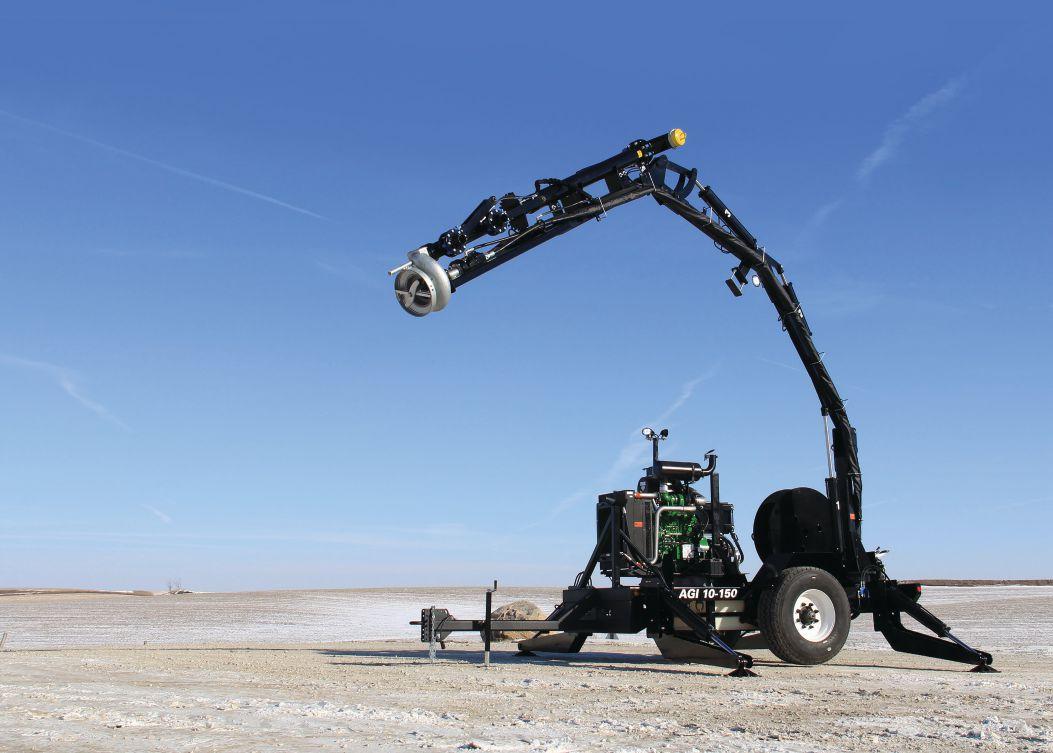
Hydrostatic Powered Chopper Pump More agitation solutions from PCE
Quickly move from site to site with a compact, highspeed agitation trailer. An easy-to-operate remote controlled boom sets a DODA chopper pump into various storage units for aggressive agitation.
high-speed travel switch is conveniently integrated in the blade control lever for easy accessibility.
A digital operator interface features an hour meter and clock, recordable maintenance history with adjustable time intervals and reminders, fluid levels, fluid temperature, and more. Machine hours can be reviewed for the past 90 days without starting the engine. Multiple language selections are also available.
The operator’s compartment is designed with comfort in mind. A four-way adjustable seat offers custom height, weight and backrest positions with a retractable belt. Elevated, folding travel pedals allow for additional foot room when performing stationary work. An optional cab enclosure with heat provides
comfort and protection in extreme weather conditions.
Auxiliary hydraulic flow rate up to 13.6 gpm (51.3 L/min), paired with high system pressure up to 2,987 psi (206 bar), deliver more hydraulic muscle to power demanding attachments and deliver superior digging and breakout forces. The two-way and one-way auxiliary flow valve allows for direct- to-tank bypass, while return flow selection is standard equipment. Two variable and two gear pumps bring simultaneous operation without loss of power.
Serviceability is made easy on the 250Z compact excavator. Tool-free access panels give quick and easy access to the hydraulic tank, engine compartment, control valve, air cleaner and control pattern valve. A standard track drive system (compared to an offset track drive on the 270Z) provides long life and allows for easy aftermarket track replacement.
The 250Z, along with the other Mustang compact excavators, feature a Zero-Tail-Swing design to maximize productivity in confined spaces. The cast side protectors add armor at the base of the upper structure. Other important performance features include a high-strength boom with sliding cylinder guards that protect the rods from damage. The Power-a-Tach hydraulic quick coupler enables attachment changes by the flip of a switch inside the cab. www.mustangmfg.com
Stainless Wear Rings and Sleeves
NEW tool EvaluatEs optioNs For rEDuciNg oDors iN livEstock opEratioNs
By Jay Harmon & Angela Rieck-Hinz
Ateam of Iowa State University Extension and Outreach specialists has developed an online tool to help livestock and poultry producers compare odor mitigation techniques that could be useful on their farms.
Air Management Practices Assessment Tool, AMPAT for short, is web-based and available at no charge at www.agronext.iastate.edu/ampat.
“The website was developed to help livestock and poultry producers identify practices to reduce odors, and emissions of gases and dust on their farms caused by animal production,” said Angie RieckHinz, an ISU Extension and Outreach field agronomist and member of the project team.
“The database lists options to be used from three core sources of odor and emissions in their operations – animal housing, manure storage and handling, and land application.”
Other members of the team include Jay Harmon, Steven Hoff and Dan Andersen, professors of agricultural and biosystems engineering at Iowa State.
Producers can select a specific mitigation practice and learn more about its effectiveness and relative cost. RieckHinz said producers can use AMPAT in conjunction with the National Air Quality Site Assessment Tool (http://naqsat. tamu.edu/) to identify opportunities to make changes, find best practices for improving air quality and evaluate their effectiveness.
To evaluate practices on AMPAT, the producer can select from one of the three core odor source areas. Each category provides access to resources that are specific to a particular pollutant. Once a pollutant is selected, a variety of resources are listed. This list includes a research-based publication on the recommended practice, pros and cons of using the recommended practice and a short video. Additional information and related links also are provided.
“Our goal was to develop a tool that is easy to use and provides relevant and useful information for livestock producers across the state,” Harmon said. “AMPAT helps producers see which technologies have the highest impact. The scorecard is color-coded for quick reference.”
The AMPAT website shows a colorcoded listing of technologies to address
pollutants. A green color indicates the selected technology has a high impact on that particular pollutant; yellow and red indicate medium and low impact, respectively. No color indicates there is insufficient data available to classify the effectiveness.
“For example, if a producer was concerned about a potential odor problem from animal housing, he would scan down the list under the ‘odor’ column at the top,” Harmon said. “From the list, he would find that ‘Siting,’ ‘Scrubbers,’ ‘Urine/Feces Segregation’ and ‘Biofilters’ have green bars, meaning they have high impact on odors. With that information, the producer could then investigate options for implementing those technologies and evaluate their selection based on relative cost or investigate all four options for their farm.
“It’s not uncommon for producers to identify best practices and implement them in their operation,” he said. “They want to be good neighbors and this tool helps them to achieve that goal.”
Jay Harmon is with Iowa State University’s Department of Agricultural and Biosystems engineering. Angela Rieck-Hinz is a field agronomist with Iowa State University Extension.
Quality Systems, Quality Solutions
We’ve proudly provided agricultural solutions for over 44 years and with dealers all over the world there is an expert near you.
For more information on system solutions, products, or locations, visit our website.