January/February 2011
January/February 2011

6 Getting creative
Couser Cattle Company demonstrates that effective manure management just takes some creativity, a few engineers and a lot of ingenuity
Nutrient record keeping proves important for all producers
Large and small producers need to keep records as proof of what's been done
12
Stoney Point AgriCorp
The National Cattlemen’s Beef Association Region IV 2009 Environmental Stewardship Award winner demonstrates manure management, Texas style 14
Quality Nutrient Spreading LLC
Quality, speed and mobility is this Iowa custom applicator’s aim 18
Hogtied
Why is the swine industry slow to incorporate anaerobic digestion?
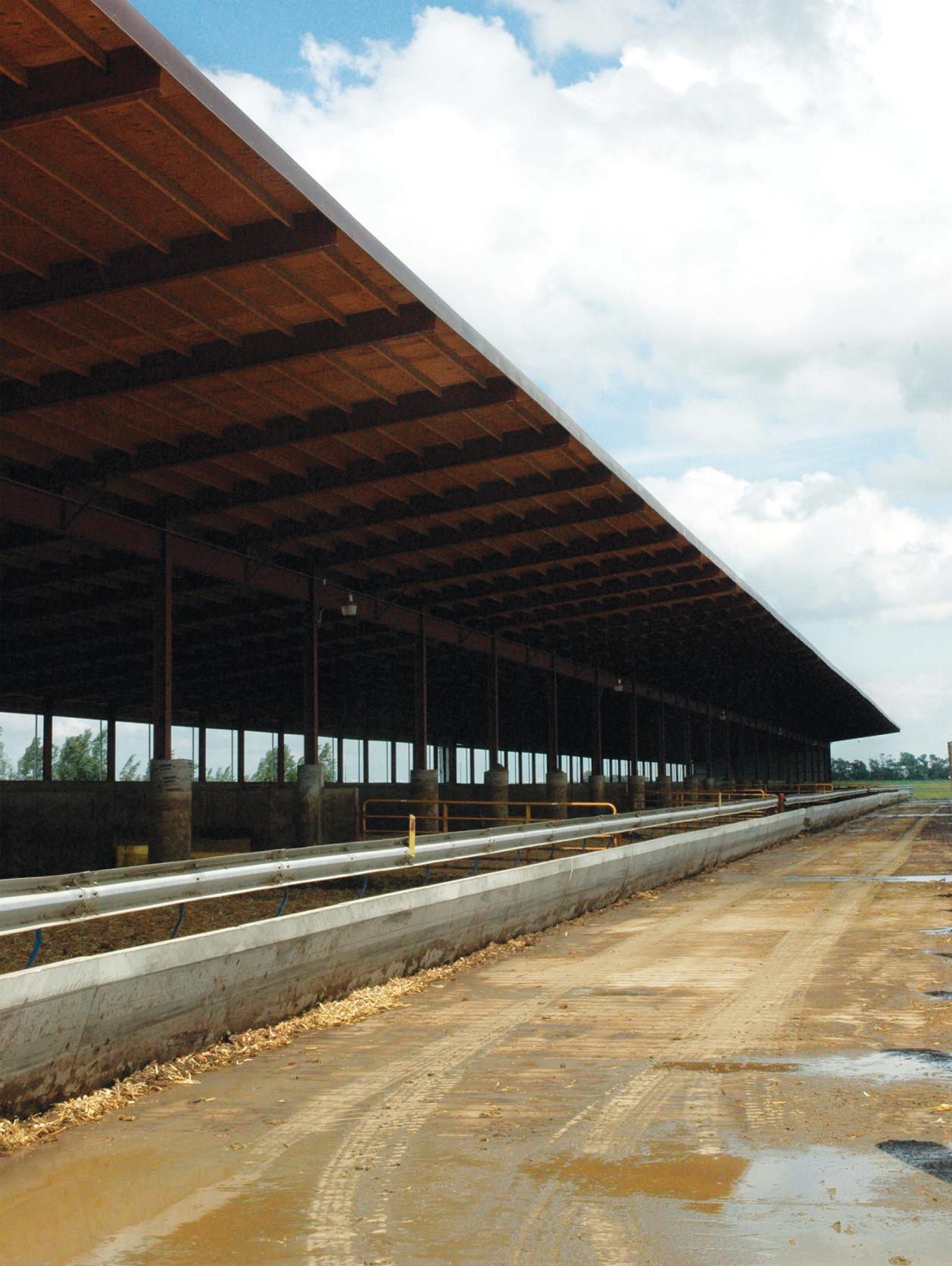
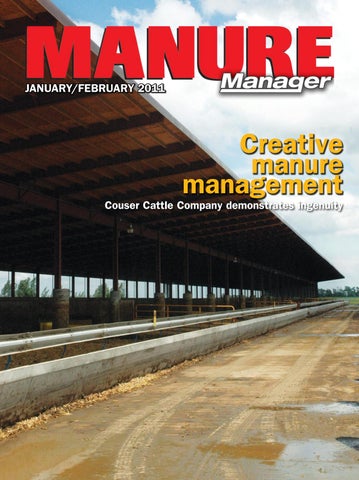
Cover: Couser Cattle Company partnered with the Iowa department of Natural Resources and Iowa State University and built a 1,000-head monoslope-style feeding building that directs rainfall away from a new pen without compromising the farm's VTA system. Contributed photo
Volume 8 • no. 6
Published by:
Published by:
Annex Publishing & Printing Inc. P.O. Box 530 Simcoe, Ontario N3Y 4N5
Annex Publishing & Printing Inc. P.O. Box 530 Simcoe, Ontario N3Y 4N5

editor
editor
Margaret Land • (519) 429-5190, (888) 599-2228, ext 269 mland@annexweb.com
Margaret Land • (519) 429-5190, (888) 599-2228, ext 269 mland@annexweb.com
By Margaret Land
Contributing editors
Contributing editors
Tony Kryzanowski, Diane Mettler, Lukie Pieterse
James Careless, Darlene C. Florence, Tony Kryzanowski, Diane Mettler, Robert Mullen advertising Manager (888) 599-2228, ext 242 skauk@annexweb.com
advertising Manager
Sharon Kauk • (519) 429-5189, (888) 599-2228, ext 242 skauk@annexweb.com
Sales assistant
Sales assistant
Mary Burnie • (519) 429-5175, (888) 599-2228, ext 234 mburnie@annexweb.com
Mary Burnie • (519) 429-5175, (888) 599-2228, ext 234 mburnie@annexweb.com
Recently, the innovation Center for u.S. dairy released its first progress report, entitled the u S. dairy Sustainability Commitment Progress report, updating the public on what advances the dairy industry has made toward reducing its environmental impact.
and, while the group has a bit further to go to meet its goals, a strong start has been made.
Production artist Kate Patchell
Production Manager
Angela Simon
VP Production/Group Publisher Diane Kleer
VP Production/Group Publisher Diane Kleer dkleer@annexweb.com
the 62-page report highlights the work that has been done in the time between the launch of the dairy industry’s Sustainability Commitment in 2007 and august 2010, focusing primarily on greenhouse gas (g hg) emissions and energy impacts. although the commitment contains a number of goals for 2020, the main focus for the industry is reducing g hg emissions by 25 percent by 2020.
President Mike Fredericks mfredericks@annexweb.com
President Mike Fredericks mfredericks@annexweb.com
Publication Mail Agreement #40065710
RETURN UNDELIVERABLE CANADIAN ADDRESSES TO CIRCULATION DEPARTMENT, P.O. BOX 530, SIMCOE, ON N3Y 4N5
Publication Mail Agreement #40065710 RETURN UNDELIVERABLE CANADIAN ADDRESSES TO CIRCULATION DEPARTMENT, P.O. BOX 530, SIMCOE, ON N3Y 4N5
e-mail: mweiler@annexweb.com
e-mail: mweiler@annexweb.com
Printed in Canada
Printed in Canada
Circulation
Circulation
e-mail: mweiler@annexweb.com
e-mail: mweiler@annexweb.com
Tel: 866-790-6070 ext. 211
Tel: 866-790-6070 ext. 211
Fax: 877-624-1940
Fax: 877-624-1940
according to the report, 500 dairy stakeholders, including environmental, scientific and academic experts, are working on 10 projects that will help the dairy industry reduce emissions and “build business value.” Some of those projects involve reducing emissions through innovative manure management, mainly harnessing the methane released by the manure through anaerobic digestion.
“there are approximately 124 anaerobic digesters on u S. dairy farms, out of a total of approximately 55,000 dairy farms,” the report states. “an e Pa agStar analysis shows the potential for 2,600 additional digesters on dairy farms. While methane digesters hold great environmental and economic potential, their adoption in the united States is currently challenged by technology application, high capital outlays, regulatory barriers, low renewable energy prices and limited financing program.”
Mail: P.O. Box 530 Simcoe, ON N3Y 4N5
Mail: P.O. Box 530 Simcoe, ON N3Y 4N5
Subscription rates
Subscription rates
Canadian Subscriptions
Canadian Subscriptions
$35.24 Cdn, one year (with GST $37.00, with HST/QST $39.82)
$35.24 Cdn, one year (with GST $37.00, with HST/QST $39.82)
u.S. Subscriptions:
u.S. Subscriptions:
$47.00 USD, one year
$47.00 USD, one year
Occasionally, Manure Manager will mail information on behalf of industry-related groups whose products and services we believe may be of interest to you. If you prefer not to receive this information, please contact our circulation department in any of the four ways listed above.
Occasionally, Manure Manager will mail information on behalf of industry-related groups whose products and services we believe may be of interest to you. If you prefer not to receive this information, please contact our circulation department in any of the four ways listed above.
to address these barriers, the innovation Center has set up a dairy Power project team – captained by mark Stoermann of fair oak farms, michael flint of flint group, Bill Jorgenson of agreen energy llC, and Shonodeep modak of g e energy – with the goal of constructing 1,300 digesters and reducing g hg emissions for fluid milk by 1.8 million metric tons by 2020. according to the project update, a stakeholder meeting in 2009 resulted in an action plan to accelerate adoption of anaerobic digestion in new York. attendees at a dairy Power summit held in the state set a goal that by 2020, 40 percent of all manure from new York dairy operations will have gone through the anaerobic digestion process. the team is also working with the u S. department of agriculture (u S da) to connect farmers with resources, such as agStar, and explore financing, such as loan guarantees and tax-exempt bonds. on the energy side, the group is also working with rural electrical co-operatives and dairy co-operatives to explore models that support digester-generated electricity and simplify connections to the power grid.
No part of the editorial content of this publication may be reprinted without the publisher's written permission. ©2011 Annex Publishing & Printing Inc. All rights reserved. Opinions expressed in this magazine are not necessarily those of the editor or the publisher. No liability is assumed for errors or omissions.
No part of the editorial content of this publication may be reprinted without the publisher's written permission. ©2010 Annex Publishing & Printing Inc. All rights reserved. Opinions expressed in this magazine are not necessarily those of the editor or the publisher. No liability is assumed for errors or omissions.
All advertising is subject to the publisher's approval. Such approval does not imply any endorsement of the products or services advertisted. Publisher reserves the right to refuse advertising that does not meet the standards of the publication.
All advertising is subject to the publisher's approval. Such approval does not imply any endorsement of the products or services advertisted. Publisher reserves the right to refuse advertising that does not meet the standards of the publication.
Website: www.manuremanager.com
Website: www.manuremanager.com
the innovation Center has also formed a Biogas Capture and transport team to investigate the viability of creating a pipeline to send digester-generated methane to a central facility for processing and sale. Currently the group is analyzing the economics of pipeline construction and biogas distribution to determine which technology and seller market is best. in the future, the team hopes to develop a biogas pipeline project among multiple neighboring dairies, each with a minimum of 500 head, and then share the resulting information with farmers, utility regulators, state governments and electrical companies.
Based on these two projects, plus eight others being conducted by the innovation Center, “we anticipate that our projects will reduce g hg emissions by approximately 11 percent by 2020,” the progress report states. the innovation Center for u S. dairy is interested in hearing from stakeholders and the public about its work to date. the u S. dairy Sustainability Commitment Progress report is available for download by visiting www.usdairy.com/sustainability. feedback is also welcome: e-mail innovationcenter@usdairy.com.


Trimble’s EZ-Guide 250 and EZ-Guide 500 lightbars can now provide record-keeping, tracking and feature mapping of your liquid and dry manure applications. Combine this new technology with Trimble’s proven guidance capability in order to more easily fulfill EPA and DNR manure handling record-keeping requirements. Increase efficiency by using colorful on-screen maps to eliminate gaps or overlaps, and avoid restricted application zones or tile lines. To find a Trimble dealer, visit www.trimble.com/agriculture or call 800-865-7438. Trimble Agriculture. The line everyone follows.
By Diane Mettler
Couser Cattle Company demonstrates that effective manure management just takes some creativity, a few engineers and a lot of ingenuity
Bill Couser is the owner of Couser Cattle Co., a multi-faceted operation that annually feeds and finishes 5,000 to 6,000 head of cattle, and produces both corn and soybean seed.
Couser says when you feed and finish that many head it’s the smell that people notice first, making your manure management a key piece of your business plan. Creativity is essential and he doesn’t let a little thing like “it’s never been done like that before” stand in his way.
for example, run-off from feedlot s into water systems is an ongoing issue in iowa. in 2002, Couser and a handful of other cattle producers came up with a novel idea. they would create veget ative treatment areas (vtas) that would naturally filter run-off.
“We thought it was something that might work,” recalls Couser. “So, some engineers from iowa State university and i and the i dnr (iowa department of natural resources) came up with a system.”
it’s simple in its design. the effluent runs off the feedlot into a cement settling basin. from there, the solids settle out. the remaining liquid is released to a vi B (vegetative infiltration basin), which is a series of tiles with grasses growing on top. as the liquid passes through the vi B, it’s filtered naturally through grasse s (brome and canary grasses) and approximately 50 percent of the nutrients are absorbed. the liquid is then picked up again by the tile s and pumped out to a v ta, where the balance of the nutrients is captured in another grassy area.
if the season allows it, the grass is harvested twice a year and fed back to
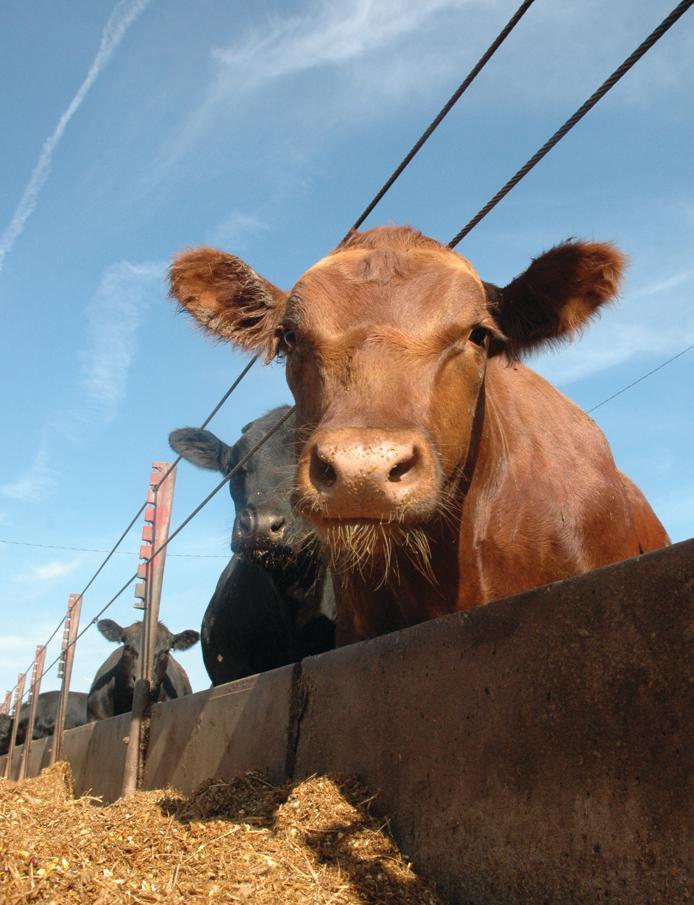
Couser Cattle Co. of Nevada, Iowa, is a multi-faceted operation that feeds and finishes 5,000 to 6,000 head of cattle a year and produces both corn and soybean seed. Contributed photo
the livestock. in essence, the filtration system becomes a renewable source.
“We have been in a testing phase for three years,” says Couser. “it was so successful that we were recently granted five-year permits.”
this system, as simple as it may seem, requires engineering up front because no two farms are alike. the elements – topography, soil, number of cattle, etc. –vary from farm to farm, requiring each vta to be designed a little differently.
“our feedlot was very challenging because it’s so flat here,” says Couser. “We had to move some dirt here and there to make sure the water ran in the right direction.
“and where we placed the vi Bs, we had to dig them a little deeper and put tile in, making sure the tile went in the right place. to distribute the effluent evenly across the vtas, we had to get some old irrigation pipe from nebraska because we don’t irrigate here in iowa. But we were
able to make it work — and succeed.”
v tas aren’t the only answer, he adds, but another alternative for producers. “each producer needs to sit down with his engineer, look at the site and see if it’s feasible.”
and although the vtas are cheaper than other systems to install, they aren’t maintenance free. “any time you’re dealing with grasses, tiles and pumps, there is always something that has to be tweaked or fixed,” says Couser. “and there is also a certain amount of record keeping that needs to be kept so that you can stay within the guidelines of your permit.”
the vta system made sense to Couser because he’s not an advocate of lagoons and large storage pits. “i live along a major highway and in a county where there isn’t a high population of cattle producers. i’m always looking for ways to blend in with the surrounding neighborhood and be accepted by the neighbors. Who wants a huge lagoon full
of manure next to them?”
But the vtas aren’t just neighbor friendly, they also work well with afo (animal feeding operations) under 1,000 head. and they are extremely economical. v tas run anywhere from $100 to $200 a head, compared to a deep-bedded barn, which is $600 to $700 a head, or a slatted floor barn that can run $1,000 a head. Because of the success of the v ta, the iowa Cattlemen’s association sponsored Couser Cattle Co. for an environmental Stewardship award. Couser Cattle not only won at the st ate level, but also at the regional level and will find out in february if it will win the national award.
“it’s very humbling to be on the stage with the other producers, like diversified cow/calf operations. We’re just a feedlot plunked down in the middle of iowa. it’s pretty hard to make a feedlot look pretty when it’s wet,” he says with a smile. this is hardly the first unique idea Couser has embraced. he’s driven to make a positive change in the iowa ag industry. in 2009, Couser partnered with iowa dnr and iowa State university and built a 1,000-head monoslope-style feeding building that directs rainfall away from a new pen without compromising the vta system.
Couser also helped develop a 50-million-gallon local investor-owned ethanol plant in 2006 and was an advocate in Washington to help change legislation that allowed producers with deep-bedded barns to stockpile manure outside, like feedlots, rather than requiring them to store it under cover.
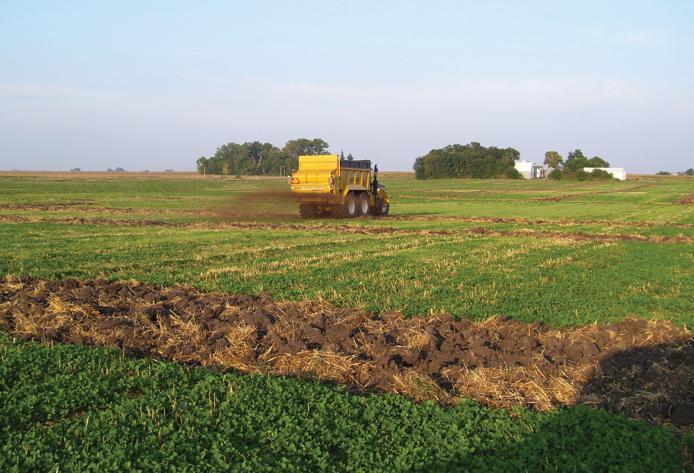
“it was costing hundreds of thousands of dollars to build the manure storage to hold something that’s solid,” says Couser. “now we stockpile the manure in our cornfields for up to six months. When there’s a rain event, the run-off goes into the corn. the corn use s the fertilizer and it’s a win/win.” handling manure in a deep-bedded barn is a unique technology in itself. dry bedding is continually added to the center of the barn where the cattle lay. the c attle work the bedding toward the sides and twice a week three of the sides are scraped 10 feet in.
“We never completely clean the whole building out,” explains Couser. “We’re always cleaning the 10 feet around three sides. We keep adding bedding — corn stalks — in the center and the cattle continue to work the manure pack down. it’s no different than a hill.”
Couser likes that the manure is always consistent and not wet, like it
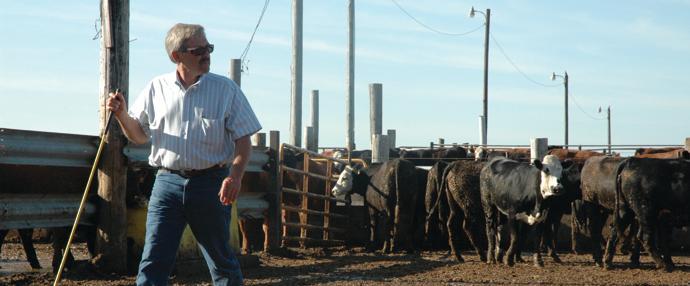
Bill Couser says when you feed and finish 5,000 to 6,000 head of cattle per year, it’s the smell that people notice first, making your manure management a key piece of your business plan. Contributed photo
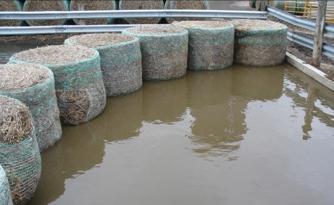
Effluent at Couser Cattle Co. runs off the feedlot into a cement settling basin where the solids settle out. Contributed photo

As the liquid passes through the VIB, it’s filtered naturally through grasses (brome and canary grasses) and approximately 50 percent of the nutrients are absorbed. Contributed photo
would be if it had gone into a pit. and although there’s no breaking technology in spreading equipment, Couser doe s make good use of what’s available — such as g P S.
“it really helps in the wintertime. in iowa, we can spread on frozen and snowcovered land. When you get a snow and you go back out to the field, a lot of times where you went last is covered and gone. So, you got out, poke the g P S in, see your last coordinate and ‘boom.’ You’re rolling.”
Because Couser Cattle is implementing many new ideas, it’s hosting one to four tours a week. “We’ve had tours from 49 different countries. and probably every state in the union,” Couser says. this t akes time, but Couser is an advocate of getting out there, talking and telling the story of the farmer. “When i give talks at a community level, we talk about feed, fuel food and fertilizer and how they all go together. and that we can do it all.
“We’re trying to get away from this negativity that develops. We try to do a good job and are wide open to anyone. We figure if people want to drive by and talk bad about the feedlot, let them come
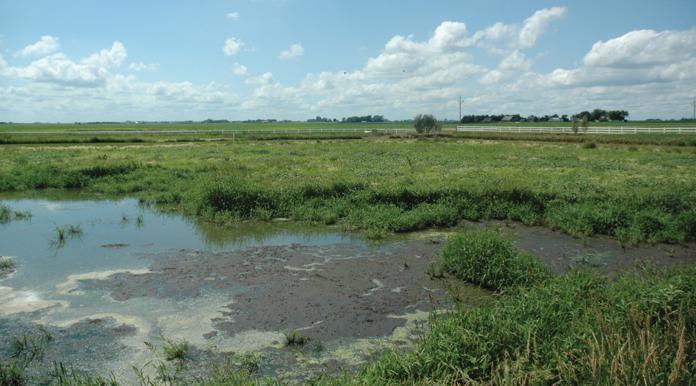
The liquid from the settling basin is released to a VIB (vegetative infiltration basin), which is a series of tiles with grasses growing on top. Contributed photo
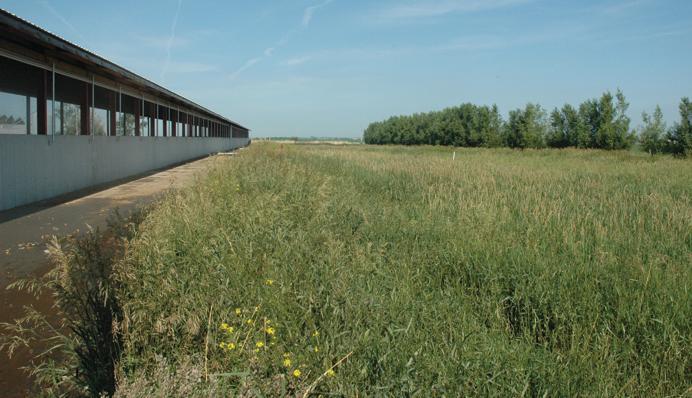
The liquid is then picked up again by the tiles and pumped out to a VTA, where the balance of the nutrients is captured in another grassy area. Contributed photo
in and ask me the question first, and then you can make up your mind.”
Couser can’t do it all though, and says it’s important that producers get out in front of the media – the television cameras and the radio stations – and tell the story. “We can pay lobbyists to do all this stuff, but when the local producer gets up and tells this story, it brings credibility to everything, because he lives and breathes it. and that’s what his family is all about.”
it’s hard to imagine Couser ever retiring or resting on his laurels, in part because he still has some lofty goals, like someday being permitted for 5,000 head. he knows it will take technology that doesn’t yet exist, and he’s hatching new plans with his engineer friends.
“i really do have some interesting ideas (and maybe they’re crazy) when it comes to containing and spreading manure,” he says. “i’m looking at how we
can incorporate manure like they do with the liquid manure today. Can we push that through a tube? how can we get that incorporated in a one-time pass?”
it’s not possible now, but Couser is working on the answer. he says look how far they’ve come in just the last couple of years. “We’ve gone from open lots, to mounds, to sheds, to vta systems, to monoslope. and now we’re looking at slatted barns.
“i just love this industry. and it’s not the cattle, it’s the people,” he adds. “it’s been exciting and it’s been a fun journey. and we’ve got a great story to tell.”
Couser does have one ultimate goal though. “it’s the one where i never have to work again,” he says. “it’s to find something that takes the stink out of shit. Because no matter what you do, you’re always noticed by smell first.”
it’s an open challenge. “Bill gates, knock yourself out!”
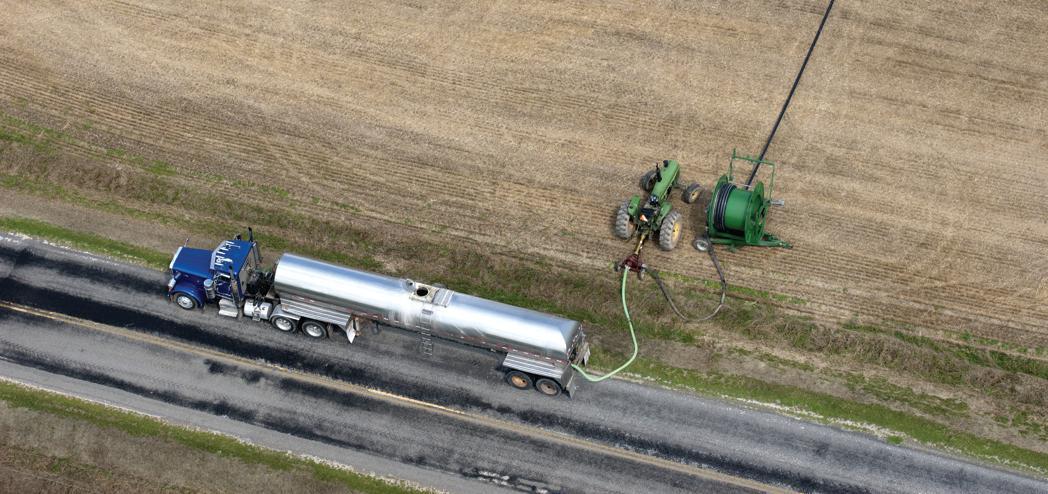
large and small producers need to keep records as proof of what’s been done
Livestock producers large and small need not only to manage nutrients properly but also to keep detailed records of their nutrient management practices, says Purdue extension animal scientist tamilee nennich.
Smaller producers often think nutrient management record keeping is necessary only for large producers. But nennich says that’s not the case.
“every producer needs to have detailed records, especially regarding manure issues, because those records are the only proof of what’s been done,” she says.
one example she gives is that of a producer who has applied manure and gets an unexpected heavy rainfall the next day, causing runoff. that farmer can prove there was no over-application only by keeping detailed records.
Purdue e x tension, the i n diana Soybean a l liance and the i n diana Corn m a rketing Council have once again teamed up to make the process
simpler for livestock producers by providing free nutrient management record-keeping calendars.
the calendars are designed for all species and provide inspection reminders and space for producers to write daily, weekly, monthly and annual records.
nennich says the calendar is designed so that if producers fill out most of what’s in it, they will have all of the major records they need for the year.
included are sections for recording rainfall and waterline inspections, and reminders to check lagoon marker readings, inspect manure storage facilities for damage and make sure manure equipment is in good shape. the calendar also provides space to record the type and amount of crops harvested from each field so farmers can assess how much manure they need to apply to their fields.
“the main goal of record keeping is to help calculate what’s been done and to help with planning for the future,”
Every producer needs to have detailed records, especially regarding manure issues. Those records are often the only proof of what’s been done.
nennich says. “records help to make sure nutrients are properly managed and applied at the correct rates so they stay on the fields and are utilized by crops.”
Before feb. 15 of each year, permitted operations must provide an annual nutrient management report to the indiana department of environmental management. the calendar not only will house the records to make the report easier but also will help producers remember the important deadline. even though the report is not a requirement for small, unpermitted operations, record keeping can keep those smaller farms from running into trouble should a problem occur.
“While smaller producers might not carry a permit, they still need to manage their manure correctly because if they don't, they too can be fined or required to get a permit,” nennich says.
Copies of the free calendar are available by contacting nennich at 765-494-4823, tnennich@purdue.edu.

By James Careless
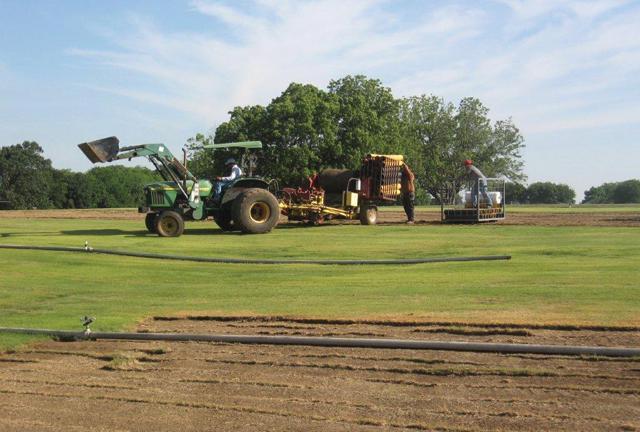
In the most basic sense, everything within the farm feeds into everything else. this is the objective of Stoney Point agriCorp, a family-owned cattle-raising farm in texas that was founded in 19 88. it currently raises about 8,000 cattle annually for the state’s beef and dairy industries. the c attle are bred and born at the company’s Stoney Point feedyard in melissa, texas. it has 330 acres, 96 open pens – and a lot of manure to contend with.
Stoney Point agriCorp has not shied away from manure management. in fact, it has taken such a proactive, positive approach that the national Cattlemen’s Beef association region iv gave this company a 2009 environmental Stewardship award.
“Stoney Point has been able to improve the environment and become successful through their commitment to doing the right thing,” says dave Petty, chairman of the environmental Stewardship award selection committee. “in doing so, they have made it a
priority to develop an extensive conservation plan to protect water quality, increase soil health, improve animal husbandry practices and wildlife habitat.”
at the heart of Stoney Point agriCorp’s manure management success is its use of waste to grow Zoysia turf grass for lawns. this practice, which provide s turf for use at golf courses and sports facilities, provides an environmentally sound way to consume the manure and to replenish the land the grass is grown upon.
“We have got about 35 acres of turf grass growing at our melissa farm,” says mark quinn, a doctor of veterinary medicine and president of Stoney Point agriCorp. “We feed the grass with irrigation water from our run-off lagoons, and manure-based compost taken from our feedlot. the tur f is grown so rich in nutrients that it has enough phosphorus in its soil to last up to a decade. and because we are adding manure to the fields, the soil is not depleted when we cut and roll the turf.”
Stoney Point agriCorp began looking for ways to use its manure back in the 1990s. this led the company to a multi-par ty taskforce with texas a & m university and others in 1998.
“We did a joint venture with gardner tur f grass, with texas a & m serving as an advisor,” quinn says. “they provided us with the know-how and the specialized equipment to st art a turf grass farm. We provided the land, the manpower and the manure.”
in this operation, 17 to 20 acres of turf are harvest annually. the lagoon water is used for irrigation and sprayed onto fields throughout the growing season, with the grass regrowth coming from harve sted runners.
“it was vital to set up a good irrigation system, to ensure that the lagoon water is spread evenly,” quinn says. “even then, we are still at the merc y of the weather, because our lagoons may not have enough water during the dry season to irrigate the fields.”
as any suburban homeowner will tell you, it isn’t easy growing turf. the s ame is true for Stoney Point agriCorp.
“it involves a lot of headaches and challenges,” says quinn. “there’s always the issue of weed control: We have to keep locally occurring Bermuda grass –which is not turf quality – from choking out the Zoysia. We have to watch out for other weeds, and we have to keep the turf mowed regularly. if you don’t, you don’t get lawn-quality turf. and finally we have to remove the clippings, because you can’t leave them on the turf.”
quinn credits company general manager robert airhart and his entire crew for their dedication to making this process work.
this area’s low summer rainfall and hot temperature s can make turf farming a dicey business.
“Well water is very deep down here, so it is not practical to irrigate the fields
At the heart of Stoney Point AgriCorp’s manure management success is its use of manure to grow Zoysia turf grass. Contributed photo
The grass is fed with irrigation water from the operation’s run-off lagoons and manure-based compost taken from Stoney Point’s feedlot. Contributed photo
in this way,” quinn says. “as a result, we have to rely on our wastewater lagoons, and if they are low, we don’t have enough to go around.”
Part of an integrated strategy
“mark and Stoney Point’s collective experience, leadership, initiative and co-operative spirit have been invaluable to our development and evaluation of sustainable nutrient management systems and practices,” says donald vietor, a professor, with texas a & m university and agrilife research. “to that effor t, mark and Stoney Point have implemented a number of practices aimed at protecting and improving the land upon which they make a living.”
Stoney Point agriCorp’s turf operation is just part of its “whole farm” approach to waste. for inst ance, the company collects and then sells about 10,000 tons of manure annually from its feed yards. the manure is bagged and distributed through a joint venture with hope agri-Products and is then retailed through mainstream vendors such as Walmart, home depot and lowe’s.
in the same vein, Stoney Point agriCorp has launched a subsidiary called alternative feeds to use human food waste to feed c attle; both to lower costs and to reduce diversion to landfills.
a case in point: milk that has passed its expiry date is used to feed calves at the company’s roswell Calf r anch c alfraising operation. (for s afety’s sake, this already-pasteurized milk is pasteurized a second time before being fed to calves.) also used are byproducts from pinto bean processing and “cotton burrs” discarded during cotton milling.
all of these elements tie into Stoney Point agriCorp’s “whole farm” concept, which includes raising both beef and dairy cattle for the market and other farms. in the most basic sense, everything within the farm feeds into everything else. the c attle waste feeds into the turf grass and compost, which earns money and disposes of waste in an environmentally sound manner. the waste from expired milk and plant proce ssing is brought in to
help supplement the cattle’s food stock; reducing costs and landfill usage. finally, the run-off lagoons protect local water sources, irrigate the turf farm and provide habitat for local wildlife.
“We are a cattle operation, first and foremost,” quinn says. “But because we want to take care of the land we’re on, we have branched into turf and compost as ways to deal with waste sensibly, safely and economically. it is not always easy –taking care of the turf can be challenging at times! – but our approach has allowed us to continue raising cattle while maintaining the health and quality of our local environment.”
to learn more about Stoney Point agriCorp and its waste management techniques, visit www.stoneypoint agricorp.com.
Supporting the renewal of the agricultural sector and enabling co-operatives to better seize market opportunities
The Canadian Agricultural Loans Act (CALA) program is a financial loan guarantee program that gives farmers easier access to credit. Farmers, including beginning farmers, can use these loans to establish, improve, and develop farms. Agricultural co-operatives may also access loans to process, distribute, or market the products of farming.
CALA features:
Up to $500,000 in loans for land and buildings
Up to $350,000 for all other loan purposes
Eligible applicants include:
•
Established farmers
Beginning/start-up farmers (i.e. less than 6 years of farming) •
Farmers taking over the family farm •
• (50% + 1) farmer membership
Agricultural co-operatives with a majority
For more information:
Contact your financial institution
Call 1-888-346-2511
Visit www.agr.gc.ca/cala
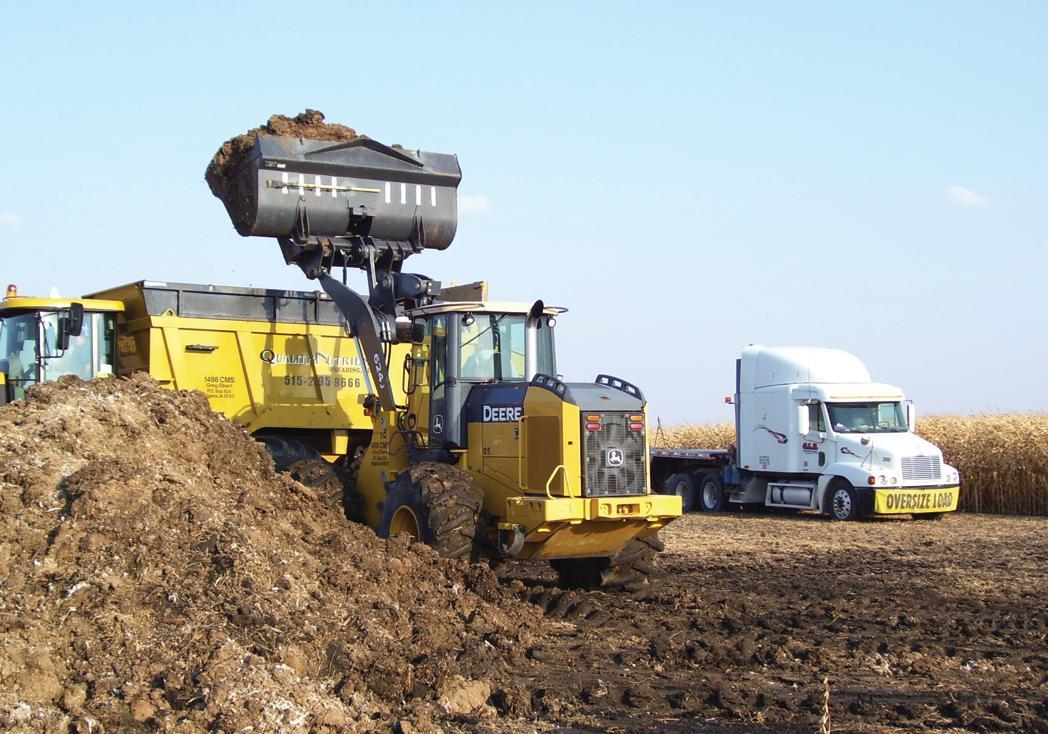
Iowa-based Quality Nutrient Spreading applies about 90,000 tons of mostly poultry manure on about 45,000 acres annually. Contributed photo
By Tony Kryzanowski
Eggs are big business in iowa with farms producing anything from shelled eggs to liquid eggs to even dehydrated eggs. the challenge is what to do with the manure generated by all those egg factories – namely, chickens. Custom manure applicators like quality nutrient Spreading llC play a critic al role in this industry. owned by greg and Janice elbert and located in algona, iowa, about two hours from des moines, the company is literally in the thick of things when it comes to the poultry egg layer industry, with about 30 million birds within an 80-mile radius of their home base. the company has been in busine ss since 2004, starting out by trucking manure, then advancing to cleaning out manure from poultry barns, and now offering a complete service of trucking, barn
cleaning, and manure application.
When quality nutrient Spreading moved into manure spreading, the company opted for some of the most advanced manure application equipment available. its fleet consists of two, 9205 terragator nutrient applic ators and one 9105 terragator, equipped with european designed tebbe dry boxe s. the company is in the proce ss of adding a pull-type tebbe manure spreader.
“i have watched other people over the years use other types of equipment, and they all have their place,” says elbert. “however, in the custom application business, you need to be able to spread all kind of product. the se machines will spread the whole spectrum of what needs to be done.”
he adds that whether the manure is really wet or really dry, the terragators
deliver a very consistent spread pattern, and they are highly productive in an industry that demands productivity bec ause of the volume of manure that needs to be applied during a short application season. this year alone, elbert expects to apply about 90,000 tons of poultry manure on 45,000 acres. the volume has been growing steadily in addition to poultry manure, elbert says he is also able to use his terragators with the tebbe boxe s to apply cattle manure, wet lime, and eggshells. the company also applie s some liquid hog manure using a nuhn 6750-gallon tank pulled by a farm tractor: however, about 85 percent of its business is applying dry poultry manure.
the company’s busie st season is from the middle of September to december, until the ground freezes up in




www.gtmconference.ca
that part of the united States. operations will also run about two to three weeks in the spring, after the ground has thawed.
“With environmental issues becoming a bigger concern, the manure needs to be tilled into the soil,” says elbert. “that is our main goal. We have to do some on frozen ground, but we try to minimize it. it is extremely important to me to give the farmers the opportunity to till this product into the soil. for one thing, they are going to get more nutrient value out of it, and secondly, it’s going to be more friendly to the environment.”
the company is able to extend it s season somewhat onto frozen ground because it is applying dry poultry manure. liquid manure is prohibited from applic ation on frozen ground. elbert says he foresees the day when there will be restrictions on applying dry poultry manure on frozen ground as well, which is why it is important to train his farm customers now to till the manure into the soil before it is frozen.
the company has gone as far as nor th as minnesota and southwest as missouri to provide its custom manure application service, but mostly within about a 200-mile radius from home. most of the business it does is with corporately
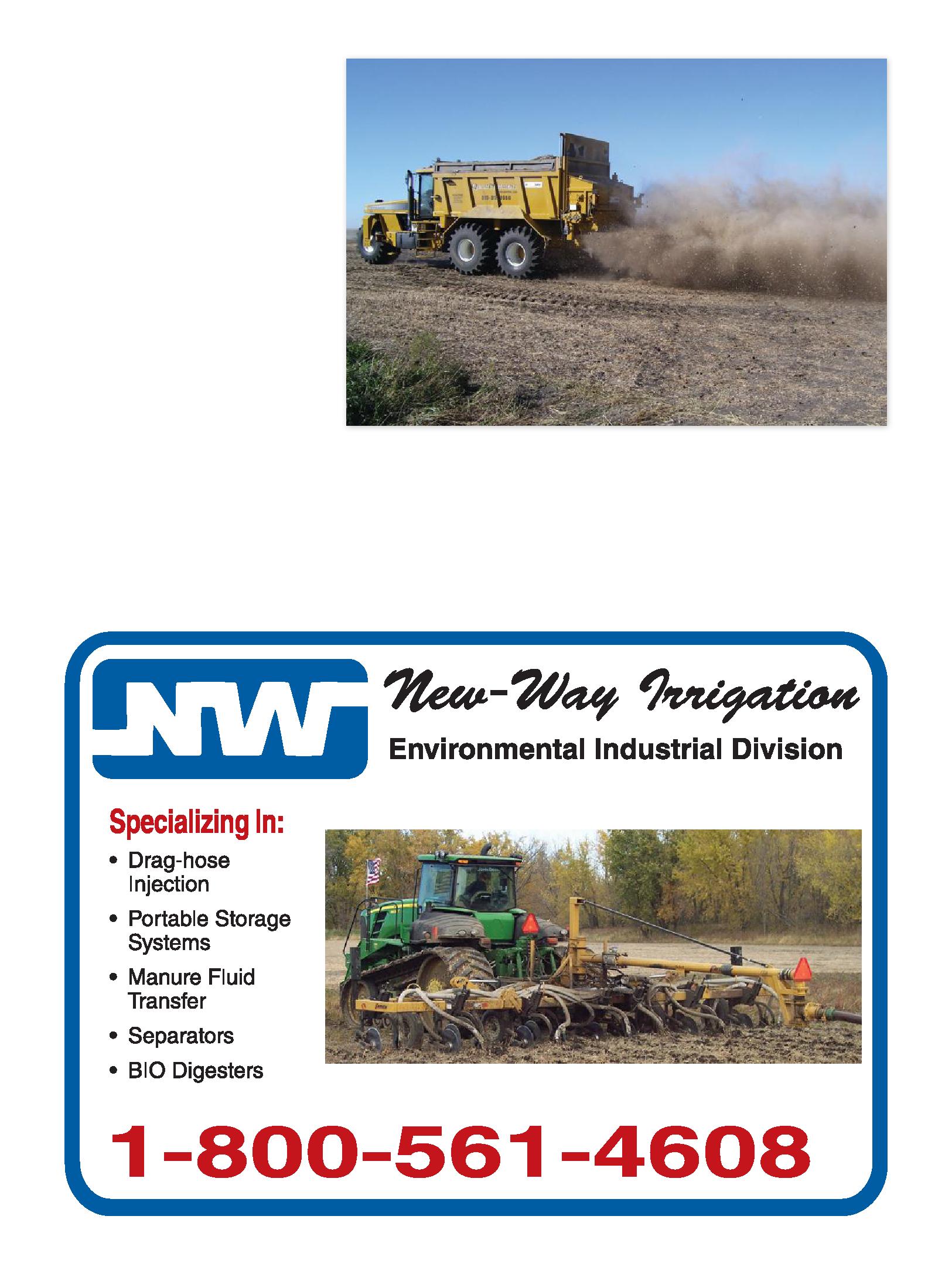
Quality Nutrient Spreading’s objective is to apply manure in such a way that it delivers as close to the same or better nutrient value to the soil as commercial fertilizer. Contributed photo
owned farms. elbert has plans to offer his services further south because there is an opportunity to extend his season as the ground within 300 to 400 miles doesn’t freeze for as long as near his home in
iowa. also, because that area produces a greater variety of crops than just corn and soybeans, the manure application windows are different, which means that the company achieves greater use of and
Advanced technology has helped many custom manure applicators provide a much more accurate service to customers. Contributed photo
demand for its equipment.
quality nutrient Spreading has eight full-time employees, and keeps them busy by also hauling bulk animal feed for the local hog industry when the poultry manure application side of the business is slow.
among the biggest challenges when land applying dry poultry manure is the variability of the product, which is why nutrient testing in advance is so critical for farmers to gain full value from it.
“my belief is that manure is just manure until you weigh it, te st it for nutrients and then apply it to the land evenly,” says elbert. “then it become s a fertilizer. the se people who go out and just load it up in a spreader and spread it, they really don’t know what they have.” he adds that he tries to apply the manure in such a way that it delivers as consistent performance as commercial fertilizer.
Quality Nutrient Spreading has three Terragator nutrient applicators equipped with Tebbe boxes to apply manure for its growing list of customers. Contributed photo
the value of the poultry manure as an organic source of fer tilizer is not lost on the local farming community. So it is critically important that elbert and his team of nutrient specialists provide the knowledge and experience required to deliver the type of crop response that farmers expect, depending on the crop they are planting.
“interest in using the manure among farmers is really high,” says elbert. “We could sell more, but there isn’t enough of it. You are feeding the soil. they want to get the microbe s going in the soil. they are learning that it works better, and you are seeing yield boosts over conventional fertilizer. the manure is sent to a cer tified lab and then we apply it according to what the crop removal would be.”
quality nutrient Spreading’s client list includes about 5,000 acres of organic corn, soybeans and wheat.
“the accurac y is really important particularly to the organic farmers because they get one shot,” says elbert. “Chicken manure is all they get for fertilizer.” one interesting aspect of custom manure application, he says, is that the contenders are quickly weeded out from the pretenders when it comes to quality, because the proof of proper application is obvious once the crop grows.
using purpose-built custom manure applicators like the terragators and tebbe boxe s has really helped elbert deliver
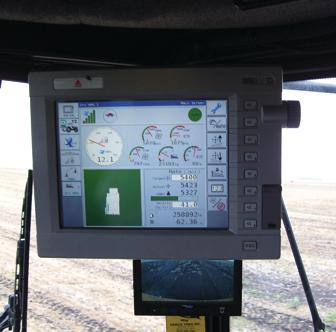
quality to his customers. he says all the machines come equipped with weigh bars. So they know how much manure is loaded into the box. using the electronics in the cab, they are able to type in an application rate of a set number of pounds per acre, and the machine is designed to spread the manure in the proper width consistently based on the prescribed volume.
“it’s as close to putting on commercial fertilizers as you can get,” says elbert. “manure is still a variable product but we try to get it evenly spread over the entire field. With all the farmers having yield monitors on their combines, they can tell where the mistakes are, right to the row.”
the company’s goal is to apply manure with a par ticle size no larger than a couple of fingers wide, which can sometimes be a challenge when they encounter heavier, wet litter. the european-designed tebbe boxe s on the terragators are largely re sponsible for helping quality nutrient Spreading maintain consistency, because they are designed to process and apply manure with a wide range of characteristics.
“Basically, i want to be able to drive by the field after my guys have spread it, and for the most part, you can’t even see that we have been there,” says elbert. “at that point, i feel that we have done the best job that we can do.”
the terragators come equipped with auto-steer a more advanced service that the units are able to provide is called “as-applied” mapping. this is where a computer c ard is inserted into the machine’s electronic controls dictating a certain volume application per acre, and the terragator will actually record where the manure is applied, to verify exactly how much manure has been applied on each acre.
“in a year or so, we are going to try to do as-applied maps for all of the farms we cover,” says elbert.
Complementing its desire for delivering quality manure application is quality nutrient Spreading’s ability to tackle a contract in a hurry because it has the support equipment to be able to move its manure application equipment around, which provides the company with a business advantage.
elbert concludes that consistent application, speed and equipment will only take a business so far. a key element of quality nutrient Spreading’s success is its employees, who understand that customer satisfaction is their main objective.
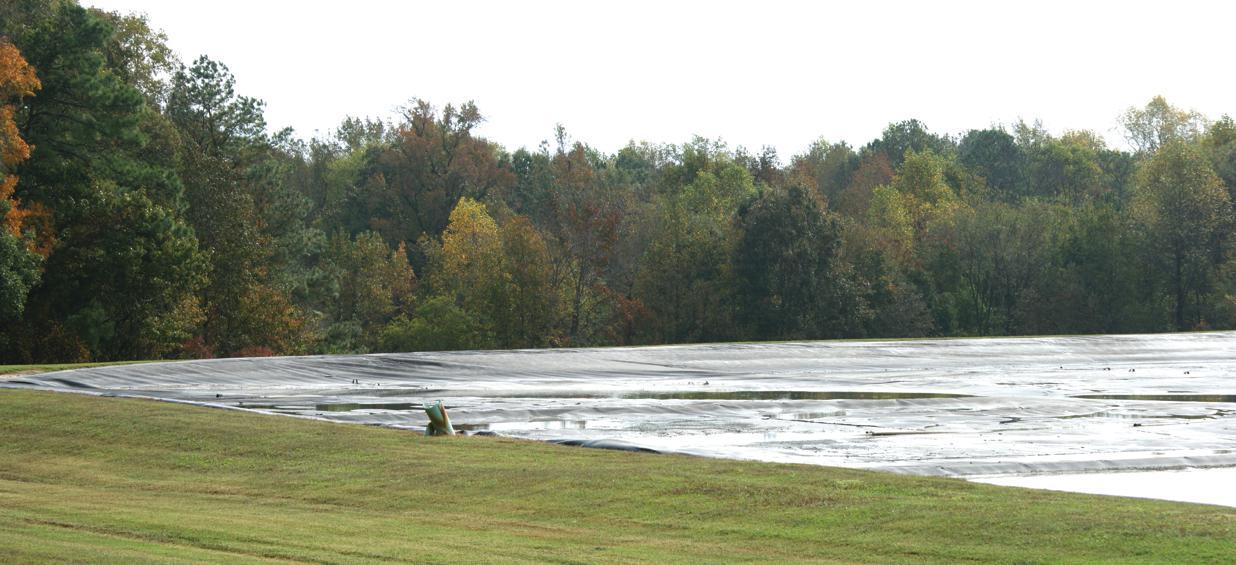
In order to incorporate a digester into a deep pit manure management system, some hog producers have used the deep pit as an initial collection area before pumping the manure into the anaerobic digester. They then built a separate external storage facility for the digested effluent.
By Margaret Land
Think of an anaerobic digester. imagine the raised tank, covered lagoon or buried vessel. Where would it be located? near a hog operation or a dairy? if you answered dairy, based on today’s statistics, you would probably be right.
according to data from the united States department of environmental Protection (e Pa) agStar program, more than 150 anaerobic digesters are currently operating on farms across the united States and dozens more are in the planning and construction stages. of those currently in operation, more than 80 percent are based on dairy farms.
“if we take a look at the number of digesters, right now probably 15 percent of u.S. manure digesters are on a swine system,” explains dr. robert Burns, current assistant dean of extension with the university of tenne ssee and past professor of agricultural and biosystems engineering at iowa State university. “We’re not penetrating that market very far. We’re less than one half percent of the
total swine manure.”
What makes these numbers even more startling is the fact the electricity generation potential for both swine and dairy cattle currently housed across the u.S. is almost identical, 3.184 million megawatt-hours per year for swine and 3.148 million megawatt-hours per year for dairy.
“We have the potential to be as large as the dairy in anaerobic digestion but our penetration is very, very small: less than one percent,” says dr. Burns. “Why have we seen far more digesters go in on dairies and fewer digesters on swine systems?”
he attempted to answer that question during the 2010 agStar Conference, held last year in green Bay, Wis.
While issues such as low energy prices, high capital investment, low return on investment and lack of a wellestablished support system in the swinebased anaerobic digester industry are all factors contributing to hog producers not embracing anaerobic digestion
technology, dr. Burns believes one of the key challenges is traditional hog barn design, particularly in swine finishing operations, “the segment that’s not really in the game of anaerobic digestion right now.”
in a typical midwestern u.S. swine finishing barn, somewhere between 1,000 and 1,200 head of pigs are raised per barn on a slatted floor system above a deep pit storage facility, usually about eight feet in depth, explains dr. Burns.
“this is different from a dairy system where we have an external manure storage system and we either pump or gravity feed the manure into that system. We have the opportunity there to add a digester as a processing step on that dairy. We have existing external storage to hold that digested effluent.
“in [the deep pit system], we have a challenge because there is no external storage. our storage is underneath these animals.”
in order to incorporate a digester into a deep pit manure management system, some hog producers have used the deep
pit as an initial collection area before pumping the manure into the anaerobic digester. they then built a separate external storage facility for the digested effluent.
“this make s it far more capital intensive to bring deep pit systems into the anaerobic digestion system because now, not only do you have to build a digester, you also have to build this external storage pit,” says dr. Burns.
But recent happenings within the swine industry have led him to believe that some deep pits are already functioning as anaerobic digesters. over the past few years, dozens of swine operations across the midwest have experienced flash fires and explosions, apparently connected to foaming issues occurring in the deep pits.
researchers at land grant universities in the midwest have started to investigate the issue.
“[it’s been] determined it’s a biological foam in nature but when we go and sample the air that is trapped in that foam, we found out it was 70 percent methane,” explains dr. Burns. “it’s biogas.
“We have deep pits that are functioning as digesters and i think they always have, to some degree.”
instead of venting the methane through the use of ventilation, as has traditionally been done in a deep pit system, the biological foam has been trapping the biogas and retaining it within the pit.
“the common scenario is that something breaks the foam – you’re washing the building, you get feed spilled through the slat s – and when the ventilation fans pull [up the gas] and reduce that 70 percent methane down between the lower explosive limit and the upper explosive limit – somewhere between five and 15 percent in air – and move it by a heater in the building with an open flame, we have an ignition source and we end up with an explosion and a flash fire.”
Swine groups across the midwest have been working to control the dangerous issue, but dr. Burns has taken on “a completely different vision.
“i certainly want to think about how we control these fires but instead of thinking about how we stop the methane production, i’d like to think about how do we capture this methane,” he says. “Perhaps we’re not looking at this in the right direction. Perhaps we have mini digesters all over the midwest and perhaps there’s an opportunity to capture this methane and use it for renewable
energy and to sell carbon credits.”
he is challenging researchers, manufacturers and others involved in the swine industry to think about how the swine finishing operation sector can move toward integrating anaerobic digestion on their operations.
“how do we put digesters on these deep pit operations considering the fact those deep pits themselves might already be functioning in some degree as digesters?” he asks.
there has been discussion around creating some form of membrane to cover
the deep pit under the barns slat s. “the trick is how do we collect the gas and still allow the manure that’s dropped from the slat s above to get into that deep pit?” asks dr. Burns. “it could open a big market.
“if you look at a state specifically like iowa, where we’re number one in swine production and we finish 30 million pigs a year, we currently have one swine digester in the state. there’s cer tainly a tremendous market there to be tapped if we can figure out how to do it in a smart way.”

alberta beef environmental awar d announced
alberta Beef Producers (aBP) recently presented the 2011 environmental Stewardship award at the group’s annual general meeting.
the Kidd Bros., a beef producer near mayerthorpe, was the selected recipient.
the brothers, Bob and larry Kidd, work closely with their uncle, ron Kidd, one of the original partners, to run a viable mixed operation that focuses on cattle and crop production. the family recognize s the importance of the environment but is first to admit the majority of their environmental practices were brought forth by production and profitability concerns.
the Kidd brothers have worked closely with groups like the West Central forage association, Cows and fish, and were instrumental in the development of the Paddle r iver Stewardship group. through the se groups, the brothers have hosted countless tours and demonstrations on their property spreading the message of environmental sustainability.
“Bob and larry have put a lot of effort into working with a number of environmental groups so others can benefit from their actions,” said greg Bowie, e Sa chair. “Protecting the river and the land and plant life around it is a very obvious priority to the brothers.”
it is the Kidds’ constant efforts to improve their management practices while minimizing the impact of the environment that make them worthy recipients of the 2011 environmental Stewardship award.
“it’s nice to be recognized for moving agriculture in a positive direction. the environment is constantly playing a larger role in the decision-making of the initiatives we take on,” said larry.
Catnip, the plant that attracts domestic cats like an irresistible force, has proven 99 per cent effective in repelling the bloodsucking flies that attack horses and cows, causing $2 billion in annual losses to the cattle industry.

that’s the word from a repor t published in american Chemical Society’s Journal of agricultural and food Chemistry
Junwei Zhu and colleagues note that stable flies not only inflict painful bites, but also transmit multiple diseases. Cattle harried by these bloodsuckers may produce less meat and milk, have trouble reproducing and develop diseases that can be fatal. all traditional methods for controlling stable flies – even heavy applications of powerful insecticides – have proven less than effective. the scientist s thus turned to catnip oil, already known to repel more than a dozen families of insects, including
houseflies, mosquitoes and cockroaches.
they made pellet s of catnip oil, soy, and paraffin wax, and spread them in a cattle feedlot. Within minutes, the pellets shooed the flies away, with the repellent action lasting for about three hours. Pellets without catnip oil, in contrast, had no effect. the scientist s now are working on making the repellent action last longer, which they say is the key to putting catnip to use in protecting livestock both in feedlots and pastures.
new Holland launches youTube channel there’s a new Youtube channel devoted to all things farming www.youtube.com/ newhollandna
new holland’s new Youtube channel has been launched as a re source for a wide variety of farm equipment-related information. the channel currently has 3 6 videos covering topics ranging from making great hay and equipment at work in the fields, to how-to tips and animated videos that reveal the inner workings of farm equipment.
the new holland Youtube channel showc ases videos on six playlists:
• featured video
• Product overviews
• Products in action
• how-to’s
• how it works
• te stimonials
the manitoba live stock manure management initiative recently approved a project to study the chemistry and biology of ground water below a mass burial site.
dr. terrance fonst ad, a researcher and associate professor with the College of agriculture and Bioresource engineering at the university of Saskatchewan, will lead the project, entitled groundwater Chemistry and Biology Below mortalities disposal Sites.
the objective of the study is to determine the fate of cont aminants from an existing burial site. this will help to asse ss the transport potential of those contaminants into groundwater supplies over time.
groundwater models will then be developed to assist federal and provincial regulators in determining the risks associated with burial site use. the models will also assist in preparing protocols to govern future e stablishment of burial sites.
for this project, dr. fonst ad and his colleagues will study a Saskatchewan-based site that was used to bury elk euthanized during a chronic wasting disease control measure in 2000.
to st ay updated on the progress of this project, please visit the manure initiative’s website at www.manure.mb.ca/projects.
uSDa announces online tool for GHG emissions
the u S. department of agriculture’s natural resources Conservation Service (n rCS) chief dave White recently announced the release of an enhanced and expanded online tool developed in collaboration with Colorado State university (CS u) the tool helps producers estimate carbon sequestration and greenhouse gas emissions associated with a variety of onfarm management practices.
the tool, officially known as Cometvr 2.0, is housed on the CS u website at www.comet2.colostate.edu/. Similar to
the first version, Comet-vr, version 2.0 is easy-to-use and connected to stateof-the-art models that help farmers and ranchers evaluate on-farm greenhouse gas emissions and sequestration options. the online tool estimates carbon sequestration and greenhouse gas emission reductions associated with the implementation of conservation practices for cropland, pasture, rangeland, orchards and agroforestry. in addition, the user-friendly evaluation tool includes estimates for biomass and soil carbon stock changes, and carbon dioxide emissions from on-farm energy use.
the latest version of the tool also
expands the evaluation of greenhouse gases beyond carbon dioxide by estimating reductions in nitrous oxide emissions from agricultural practices that improve the efficiency of fertilizer and manure applications. in addition, Comet-vr 2.0 is compatible with national and international standards, including the environmental Protection agency’s u S. greenhouse gas annual inventory that documents greenhouse gas emissions nationwide.
Comet-vr 2.0 is applicable to all agricultural lands in the conterminous 48 states. information necessary to evaluate land use and energy changes includes state, county, parcel size, surface soil texture, approximate historic land use changes, tillage and fertilization practices, future land management and carbon storage practices, and current fossil fuel electricity consumption.
dane County’s first “cow power” facility officially st arted operating late last year as county executive Kathleen falk, repre sentatives of Clear horizons and the three farm families partnering on the project pushed a button to start filling the first manure digester tank.
the facility is expected to begin producing electricity for s ale to alliant energy in february.
the dane County “cow power” facility is expected to generate about $2-million worth of electricity each year – enough to run 2,500 dane County homes. it also includes first-of-its-kind equipment slated to remove much of the algae producing phosphorus from the manure.
dane County and Clear horizons are partnering on this project along with three family farms in the towns of vienna and dane – the ripps, the endres and the maiers. the digester is the first in the state to be shared by a cluster of several farmers.
“all our manure will now go to the digester and most of the phosphorus will be exported out of the watershed to help clean up our lakes and streams,” said r ichard maier, of White gold dairy, a multi-generational, family-owned and operated dairy.
in addition to this first digester, dane County recently announced that four farm families in the near Springfield, Wis., have expressed interest in partnering with the county on construction of a second “cow power” facility. under the proposal, electricity from that digester would be sold to madison gas and electric. it’s hoped construction of that digester will begin northwest of middleton late next summer.

baleen
Baleen filters was chosen by the artemis Project as a winner of the 2010 top 5 0 Water Companies Competition.
the award distinguishes Baleen filters as a leading company in the water industry.
Baleen filters was selected by an international panel of advanced industry experts based on four criteria:
• technology
• intellectual proper ty and know-how
• team quality
• market potential
“the artemis Project’s top 5 0 Water Companies Competition winners have excelled in key areas of the emerging advanced water technology sector,” said laura Shenkar, principal of the artemis Project. “We are excited to showcase these innovative companies and congratulate them for their achievements in creating solutions that will reinvent the water landscape.”
the artemis Project top 5 0 winners were honored at the Bluetech innovation forum in San francisco. www.baleen.com
the Climate action reserve, a north american carbon offset registry, has released version 3.0 of the live stock Project Protocol, providing updated guidelines for livestock operations to participate in the carbon market.
With the updated protocol, operations have more opportunities to reduce their methane emissions and earn offset credits that can be sold in the carbon market. With this protocol, operations that capture and destroy methane from livestock manure before it is released into the atmosphere receive carbon-offset credits that can be traded in the carbon market
“the protocol ensure s that livestock operations can effectively reduce greenhouse gases and thrive while earning offset credits in a carbon
market,” said linda adams, secretary of the California environmental Protection agency and chair of the Climate action reserve’s board of directors.
version 3.0 of the protocol include s revised guidance on determining the greenhouse gas (ghg) assessment boundary of projects. this include s details on the standard stocking rates and new options for complying with the reporting period and verification requirements to reduce verification costs. all offset projects registered with the Climate action reserve are required to undergo independent, third-party verification.
“live stock manure management provides a key opportunity to reduce significant methane emissions, while at the same time generating revenue for the livestock operator,” said gary gero, president of the Climate action reserve. “version 3.0 of the live stock Project Protocol recognizes that opportunity and ensures that livestock manure management projects are developed, quantified and verified with the highest level of integrity.”
the Climate action reserve also released version 2.0 of the mexico livestock Project Protocol, which provides guidance for livestock offset projects in mexico. to date, live stock projects registered with the Climate action reserve have reduced 151,903 metric tons of C o2e from the atmosphere, equivalent to taking more than 29,000 passenger vehicles off the road annually.
www.climateactionreserve.org
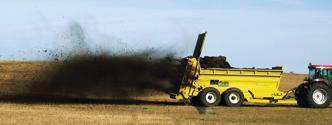
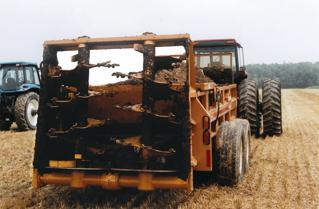
Degelman Industries introduces M Series after five years of design, development and te sting, degelman industries introduces its new series of manure spreaders, the m Series. Both the m28 (28-cubic-yard capacity) and the m34 (34-cubic-yard capacity) have been
designed with rocks in mind, featuring retractable free-swing flails, super duty gearboxes, smooth sidewalls, and clean gate opening. the degelman rock Bypass System (r B S) comprises five rows of free-swinging flails that collapse upon stone impact. the spreader cut s and tears material, dropping heavier crumbled material to the next lower set of paddles for final processing. Paddles on the m Series are made from 0.75-inch abrasion resistant 400 material and are interchangeable and reversible, and can be replaced without cutting or welding using a 1.75-inch pin. the m Series produces a 60-foot spread pattern using a chain floor drag system made from 100,000 lb.-plus marine grade drag chain. the entire drive and beater system c an be lifted from the machine in minutes to assist in clearing any blockages or to convert the spreader to a dump wagon. operation of the m28 requires 180 horsepower or more while the m34 requires a minimum of 225 horsepower. www.degelman.com
When it comes to precision agriculture, accuracy equals efficiency. that’s why John deere has introduced two new applications that help producers better manage surface water movement and improve implement guidance in their fields.
the se two John deere ag management Solution (am S) product s are:
• igrade™ is a g P S-based system that enables operators to easily build and maintain their own field surface water management structures, using many of the same components as they use during crop production.
• i Steer™ provide s active implement guidance to increase accuracy and repeatability in straight-track field applications.
i grade automates the control of the tractor’s scraper blade to enable basic grade and slope design; distance-based hydraulic commands; and Surface Water
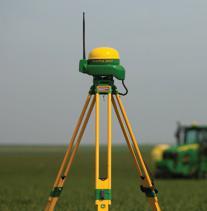
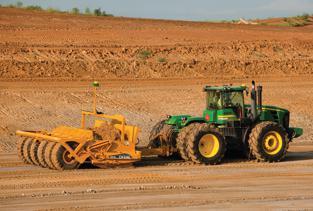
Pro™ Plus automation. By automating the blade’s position, operators are able to more efficiently and effectively manage surface water issues in the field.
Because it uses an rtK correction signal, operators spend more time grading and less time setting up and moving laser components. igrade is accurate up to one mile, compared to just 1,000 feet for lasers. also, unlike lasers, rtK accuracy is not affected by wind, dust or heat.
i Steer consist s of a receiver and a hydraulic steering system, both attached to an implement, that enables the implement to automatically correct its position in the field independently of the tractor’s guidance line. it is completely integrated with approved John deere tractors and requires a Starfire rtK system to operate. the implement must also have it s own steering system. the iSteer system is ideal for strip-till operations, with standing row crops and bedded crops (such as potatoes), and other applications that require precise implement positioning. i Steer reduces overall input costs and improves productivity when cropping practices require multiple passes through the field. www.JohnDeere.com

larson electronics llC has added a new dimmable le d spotlight for work applications to its magnalight line.
drawing less than one amp on 12 volts and 0.5 amps on 24 volts, the hl-85-10W1-d led spotlight offers a familiar pistol grip, hand-held style and a dial for dimming the led light output. operators can use this dimmable led spotlight to create the light intensity that best allows them to see their target work area without sacrificing their eyes’ ability to adjust to the area around them.
the hl-85-10W1-d features a magnetic base, 16-foot detachable coil cord, cigarette plug and an inline PW m for dimming the led light output. the spotlight operate s on 9-42 volts d C and draws le ss than one amp. Weighing less than one pound, the pistol grip style spotlight enables operators in hunting or work applications to adjust the intensity of the led light output to best suit their requirements.
“Whether someone is hunting or working, this dimmable le d spotlight enables the operator to find the light output that doesn’t just illuminate the immediate area, but also allows their eyes to continue to adjust to the darkness around them,” said rob Bresnahan with larson electronics. “Sometimes you need power and distance to identify objects at distance, but if you use that intense light on a nearby work area, your eyes lose their ability to see anything around you. So the key to this dimmable le d spotlight is that the operator can adjust the output to the level that allows their eyes to adjust to the immediate work area and the surroundings. the time of night, cloud cover, the operator’s eye condition and other factors make the level of led light dimming vary all the time. the operator c an simply adjust the dial to create the appropriate level of light for their particular needs. many operators use red filters or red light to achieve this same effect, but they lose intensity, distance and color correct object identification.”
www.magnalight.com
most air tool and pneumatic control users are unaware that air line s can freeze up at 40 f as the pressure drops from 100 psi down to atmosphere through the tool or valve, the compressed air – which is always at 100 percent humidity – supercools rapidly and can freeze up the equipment.
Polar lube technology simply replace s regular lubricant in the filter-regulator-lubricator (frl) unit and prevents this from occurring. in fact it will protect air lines down to -60 f adding it to a frozen tool inlet it will unfreeze the tool.
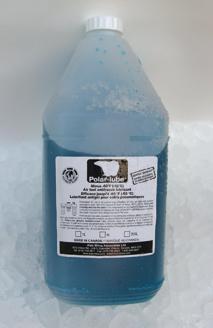
Polar lube lubric ates and will not affect o-rings, seals, rotor blades, bowls or hoses and is compatible with all manufacturers’ drop, mist or automatic lubricators.
www.roessel.com
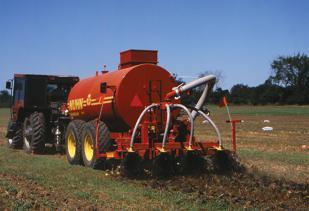
new holland’s duratank™ side-delivery spreaders have been redesigned with more capacity and more heavy-duty strength. these spreaders feature a right-side discharge and easily handle a wide variety of material, including sand-laden slurry, pen pack, biosolids and poultry litter. the overshot expeller
provides a fine spread pattern with precise application control – from light top-dressing to heavy spreading – for optimal utilization of nutrients reducing fertilization costs.
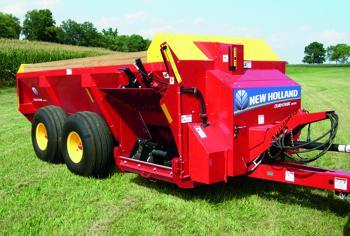
new holland’s duratank spreaders provide material breakup and broadc ast a uniform spread pattern. they feature a round core auger to reduce power consumption. the heavy-duty overshot expeller feature s a quick- release poly lined pan for less power consumption and paddle wear, especially in sticky or freezing conditions. the expeller top shielding is adjust able to control the spread pattern, while preventing drift of manure to keep the tractor and spreader cleaner. the expeller, protected by a shear-bolt, is easy to maintain. Shroud adjustments aren’t necessary for a uniform spread pattern and the bolt-on expeller paddles wear longer plus, the paddles are faster and less expensive to replace than hammers. With just the pull of a handle, the expeller trough swings open to allow built-up material to fall out or precipitation to drain away.
the duratank spreaders feature a 40/60 front-to-rear split tandem axle that allows for increased wheel spindle and longer tire life during tight turns, as well as providing a smoother ride in the field.
the optional digi-Star® nutrient tracker™ gives livestock producers a way to document manure application for
management plans. the advanced scale system displays the actual tons per acre spread and provides record-keeping files of manure application in compliance with the natural re sources Conservation Service’s Ca fo animal waste regulations. this information can be utilized to calculate applied nutrient values, as well as, generate application rate maps.
there are three duratank models: the 2000S, 2600S and 3400S, with 2,000, 2,600 and 3,400 gallon capacities respectively. all models feature heavy-duty gusseted tank supports to endure the heaviest loads for years to come, along with hardened flighting auger segments that provide strength when spreading dense or frozen materials.
www.newholland.com
the revolution Series drives were born out of an idea to develop a product that would better fit the needs of Pengo’s customers. the previous product line’s strengths and weakne sses were evaluated and a partnership with a new gearbox supplier was formed. it is hoped the revolution Series drives will become the premier attachment choice.
this new product include s drives for use with compact skid steers, compact excavators, skid steer loaders, backhoes and excavators. the size s range from the m S-100 all the way up to the rv-200.
the new de sign of the revolution drives offers a two-piece bail housing for easier customization, a crossover pressure relief system to protect the drive and larger, more efficient gearboxes. the new serie s is available in single speed, two-speed and variable speed configurations. all two-speed units have automatic shift and an added cooling feature. www.pengoattachments.com




By Robert Mullen and Darlene C. Florence
Afundamental question often asked by agricultural producers is how do i value my manure as a nutrient resource? this e ssential question should be asked by those who have access to manure because it allows a way to quantify the economic value of that material. if this question were directed at commercially produced materials, the answer would be straightforward. With manure, however, a number of parameters need to be considered, including the composition of manure, the source variability, and the need for the nutrients based upon soil test information.
make it plant available. the environmentdependent nature of this biologic al process makes it difficult to ascertain its precise agronomic value. What we typically recommend is to use a lower cost n source (typically anhydrous ammonia) to calculate the value of organic-n based on the plant available estimate.
Phosphorus (P) and potassium (K) contained in manure are considered approximately as available as their commercial counterparts are (actually, they are slightly less available, but currently we do not have plant available estimates for the different manure types). therefore, the value of phosphorus
Manure is considered a complete nutrient source because it contains everything a growing plant requires, and analysis will likely provide you with additional nutritional information.
the first step in valuing manure as a nutrient supplement is to have the material analyzed to determine which nutrient s are present and in what amounts. this information, combined with a recent soil analysis, c an tell you how much manure should be supplied to meet the nutritional needs of a crop. let us examine the manure analysis first. value s of total n are not particularly valuable to the producer because they do not inform of the amount that is available to the crop. of greater importance is determining the ammonia-n (or ammonium-n) and organic-n content. ammonia-n contained in manure is similar to any form of commercial fertilizer; it is readily available the day of application. therefore, valuing ammonia-n much as you would a commercially available form is certainly a fair assessment. organic-n, however, is a slower release form of nitrogen (n) because it requires a biological process to
and pot assium from manure could be calculated by comparing them to a commercially available form.
manure is considered a complete nutrient source because it contains everything a growing plant requires, and the analysis will likely provide you with additional nutritional information. however, it is not necessary to determine an economic value for all of the nutrients. this is especially true for those nutrients that do not necessarily require supplementation to ensure an adequate plant supply (i.e., micronutrients on soils that typically do not exhibit deficiency symptoms). organic matter contained in the manure does have some redeeming value, but it would be extremely difficult to assign an economic value to it, and it is not something we currently recommend.
one of the challenges in using manure as a fertilizer source is the unbalanced nature of the nutrients.
applying enough manure to reach sufficient n and K levels usually results in the over-application of P, which can have negative economic (from a sense that it would be more beneficial on other fields) and environmental outcomes. however, applying manure based on a sufficient P level usually results in an under-application of n, which can lead to a reduction in yield.
this brings us to soil analysis. in a system where P is rarely limiting (especially a field that has a history of receiving manure applications), balancing phosphorus, nitrogen, and potassium requirements can certainly be a challenge if relying solely on a manure source. if a field has a soil test level above the maintenance range for producing a crop, does it make sense to calculate the economic value for that nutrient? for example, assuming a field has a soil test P level well above the established critical level, we would not recommend calculating the economic value of the P contained in the manure when attempting to determine its economic value or recommend applying the manure to this field.
Conducting soil testing and manure analysis will help you determine how best to utilize your manure nutrient resources and get the maximum economic benefit from their use. additionally, you will be able to do so in an environmental responsible manner.
a spreadsheet has been developed to assist in the determination of manure application rates based on the manure analysis and field information. the manure allocation Spreadsheet is available at http://agcrops.osu.edu/ specialists/fertility.
Robert Mullen is a specialist in soil fertility with Ohio State University Extension. He is based in Wooster, Ohio. Darlene C. Florence is a soil science graduate student in the Department of Environment and Natural Resources at Ohio State University. This article was previously published in OSU Extension’s CORN Newsletter.