$100 million invested in bio-energy expansion and ethanol plant
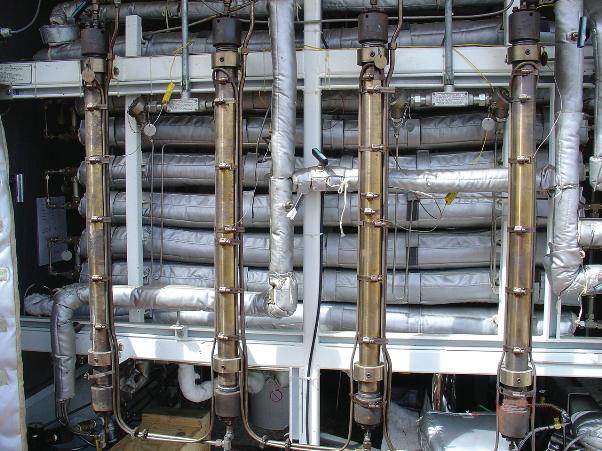
Albertans band together to construct one of the most energy efficient ethanol production plants in the world with the energy input coming from beef cattle. 12
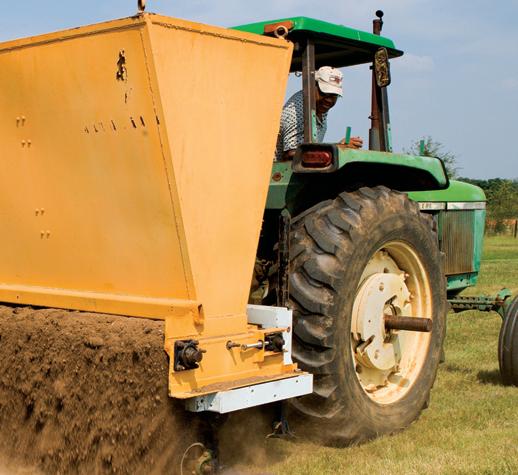
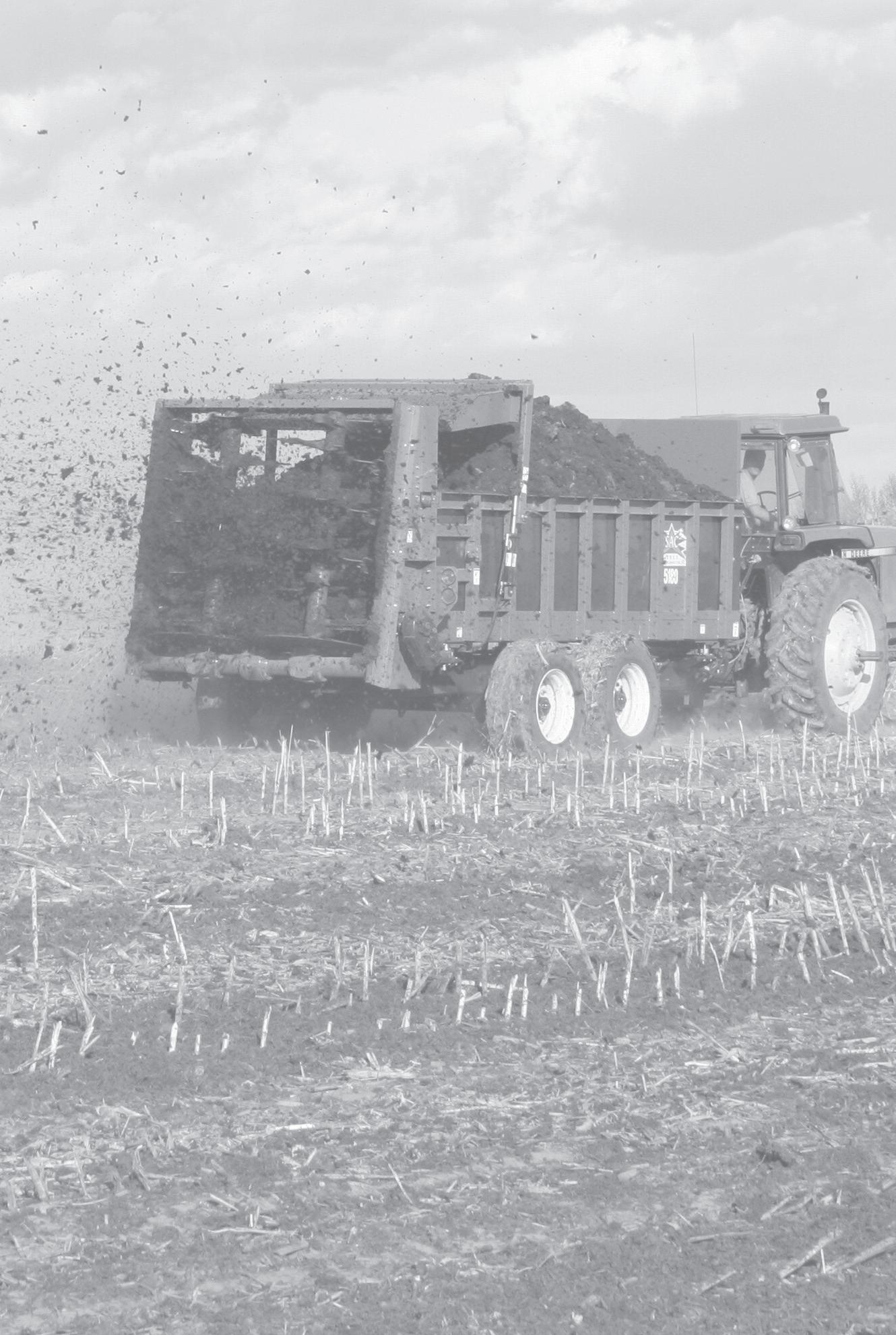
Novel solid manure injection technology shows great promise
Researchers in Saskatchewan are working to develop a solid manure injector. 16
Filter strip works for feedlot
Settling basin and filter strip are working well at Brent Wilson’s Iowa beef operation.
Designing for ventilation
A new low profile cross ventilation (LPCV) barn design could mean significant improvements for dairy cows
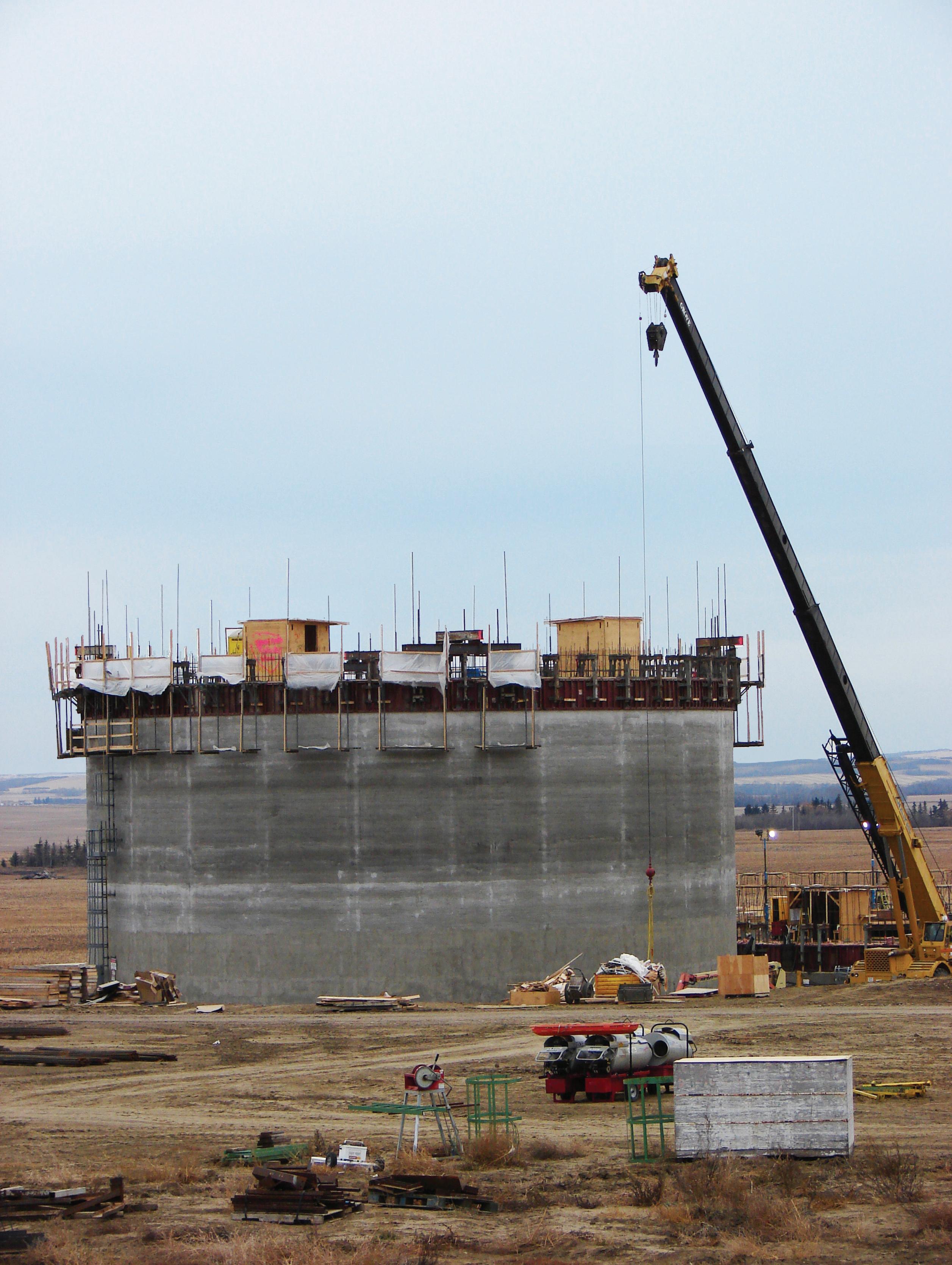
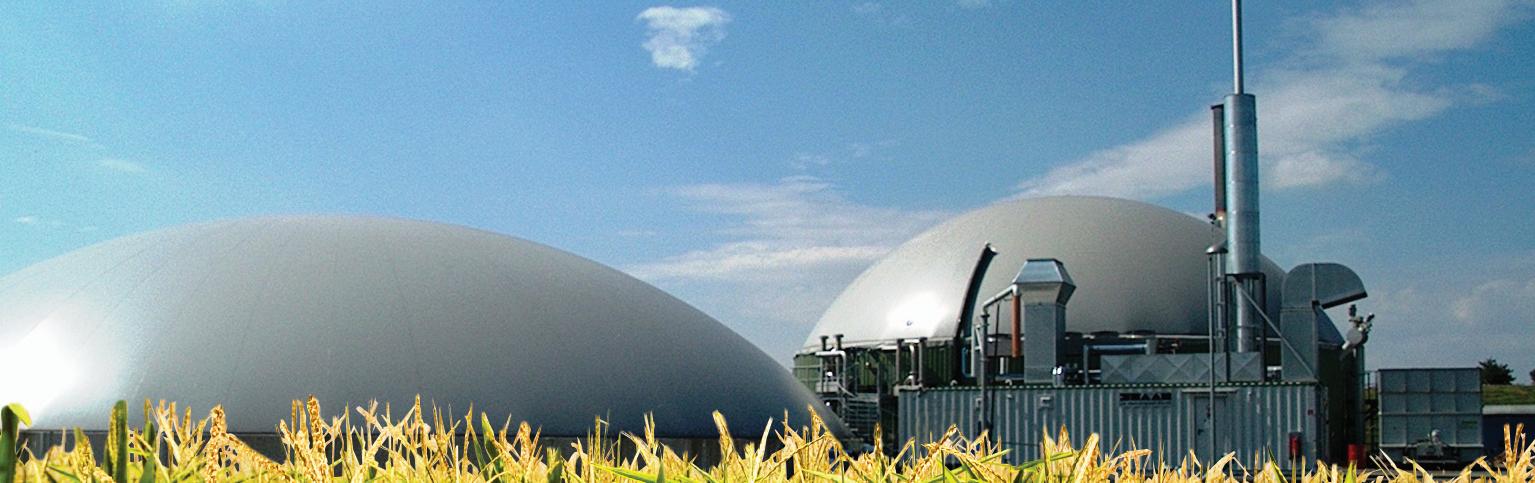
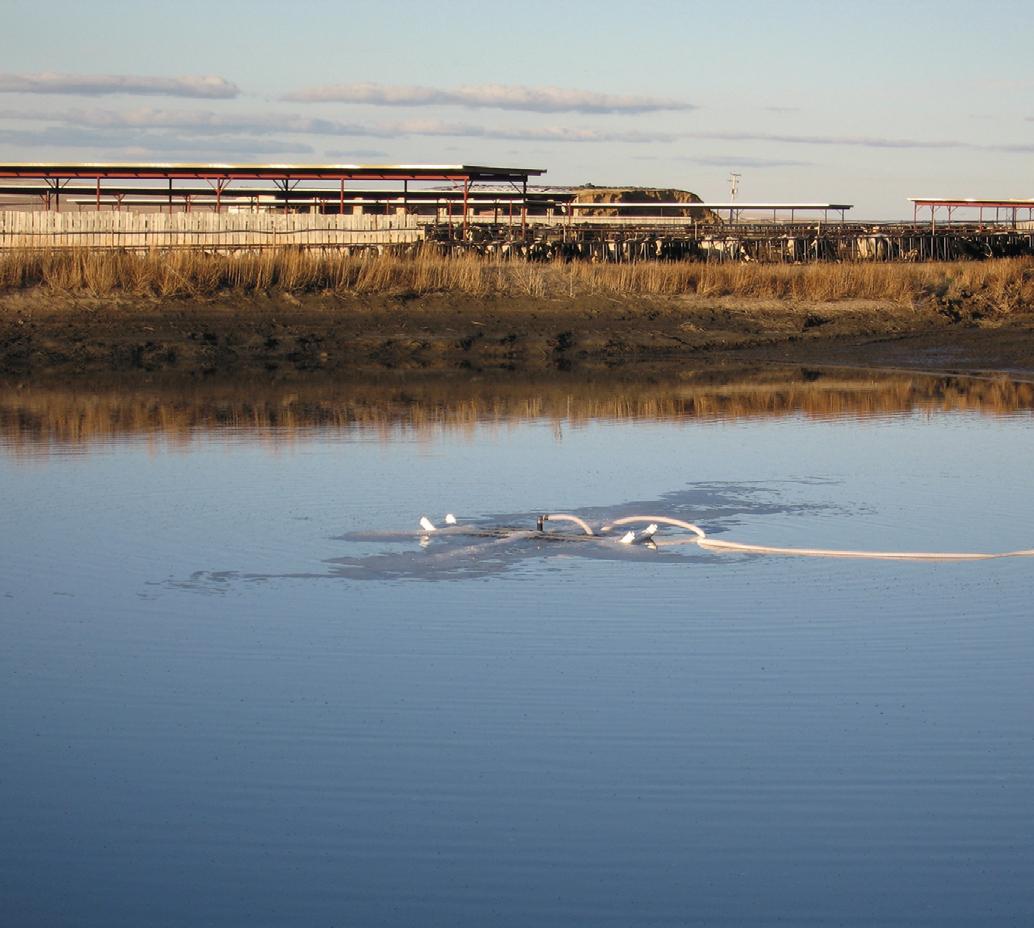
Cover: To accommodate the energy needs of a proposed ethanol plant, the Highmark Renewable anaerobic digester, located near Vegreville, Alberta, Canada, is being expanded to process 80 percent of the manure generated at an adjacent feedlot, which raises more than 70, 000 head of cattle annually.
Published by:
Annex Publishing & Printing Inc. P.O. Box 530
Simcoe, Ontario N3Y 4N5
(800) 265-2827 or (519) 429-3966
Fax: (519) 429-3094
Editor
Margaret Land • (519) 429-5190, (888) 599-2228, ext 269 mland@annexweb.com
Contributing Editors
Tony Kryzanowski, Diane Mettler, Lukie Pieterse
Advertising Manager
Laura Cofell • (519) 429-5188, (888) 599-2228, ext 275 lcofell@annexweb.com
Production Manager Angela Simon
Circulation Coordinator
Marie Weiler mweiler@annexweb.com
Vice-President/Group Publisher
Diane Kleer • (519) 429-5177 dkleer@annexweb.com
Website: www.manuremanager.com
US Subscriptions:
$37 US one year
$64 US two years
International Subscriptions
$70 US one year
Canadian Subscriptions (GST included)
$37 Cdn one year
$64 Cdn two years
Canadian Publications Agreement #40065710
Return undeliverable addresses to: Annex Publishing & Printing Inc. P.O. Box 530, Simcoe, ON N3Y 4N5
Reproduction prohibited without permission of the publisher.
Printed in Canada
January/February 2009
Volume 7 • No. 1
By Margaret Land
cow tax a hot topic Rumored
The Environmental Protection Agency may be back-pedaling like mad as it stresses the agency isn’t proposing a cow tax but the issue continues to be top-of-mind for people within the livestock industry.
Weeks after the EPA released a prepared statement in early December 2008 denying the government agency is proposing a tax on methane emissions from dairy and beef cattle plus hogs, ag news industry publications, columns and blogs from across North America and the world continue to discuss and debate the issue.
According to a recent article in the Peoria (Illinois) Journal Star, the Illinois Farm Bureau (IFB) is warning its 80,000plus members to be vigilant of the issue and voice opposition to any possible plans to extend fee and permit systems for greenhouse gas emissions from cattle, hog and poultry operations.
“What we want to do is draw attention to the EPA rulemaking,” Chuck Spenser, director of national legislation and policy development with the IFB is quoted as saying. “Be careful how you set the fee structures and who you impact.”
“This dark cloud of taxation reeks of disrespect for our farmers and has them asking: ‘What kind of ass would do this?’” states Bob Confer, a columnist with the Tonawanda News, in his Dec. 23 article “The cow fart tax really stinks.”
Iowa Congressman Steve King has also weighed in on the issue, stating: “The last thing our federal government needs to address is gas produced by farm animals. Imposing a livestock ‘gas tax’ will increase operating costs for farm producers and drive up prices for consumers. This tax is a cow pie in the face of the livestock industry.”
The New York Farm Bureau (NYFB) recently released calculations of what
kind of impact the cow tax might have on U.S. livestock producers: $175 tax per cow for dairy, $87.50 for each head of beef cattle, and $20 per pig.
“Any operation with more than 25 dairy cows, 50 beef cattle or 200 hogs would have to obtain permits,” states a press release from the NYFB, adding these numbers would encompass 99 percent of dairy operations, 90 percent of beef producers and 95 percent of hog operations in New York state alone. “The EPA would force small mom-and-pop dairy operations to seek a permit similar in class to municipal waste incinerators, chemical manufacturers and cement factories.”
“If you place these requirements on … farmers, you will make it virtually impossible to run a viable farm operation,” said NYFB president John Lincoln. “Then, unregulated, large agriculture from China and other countries will step in to fill the void.”
It’s a concern shared by many agriculture officials and farmers who say such a tax will drive most, if not all, U.S. livestock producers out of business without actually doing anything to reduce greenhouse gas emissions.
“Reduction of a ton of greenhouse gases anywhere will make a difference, but if a ton is removed in Iowa and replaced by a ton in China, then no net effect occurred,” said Mark Maslyn, executive director of public policy for the American Farm Bureau Federation. “A livestock tax and regulation of greenhouse gases under the Clean Air Act will impose restrictions and added costs on the U.S. economy without reducing greenhouse gases in the atmosphere.”
Time will tell if the EPA goes ahead with its cow tax. With the current stink that’s been raised on this issue, it may be time the agency pops a few Beano tablets and tries to control its own hot air.
...There’s MicroSource® S.
Now, more than ever, pork producers recognize the impact their operations can have on the world around them. Proactive eco-management with MicroSource S can help reduce environmental burdens. By feeding MicroSource S, producers benefit from:
• Reduction in noxious manure gases, like ammonia and VFAs, for less odor — resulting in better community relationships
• Increased nitrogen retention in manure — resulting in an improved N:P ratio
• Lower manure viscosity — resulting in less power required for pump outs and the ability to pump out more manure
• Decreased stickiness of manure — resulting in reduced labor requirements due to easier/less cleaning.
MicroSource S contains selected microbes that digest the solids in hog manure. It begins to work even before the manure hits the floor and continues to act on manure during handling and storage. Fed throughout the pig’s lifecycle, MicroSource S can help you better balance the challenges of efficient pork production with environmental stewardship.
To learn more, contact your feed supplier or go to www.unlimitednutrition-na.dsm.com.
NEWS HIGHLIGHTS
• Oklahoma speeding up appeal of poultry litter ruling
• CAFO permit renewal in New York
• EPA, Perdue sign agreement
• ISU publishes new guide for manure management
• International symposium on management of animal carcasses
• Get the facts on selling, buying manure in Iowa
• Registration open for 2009 AgStar conference
• Researchers help manure smell better
WEB EXCLUSIVES
Could manure heat and power farms?
Manure from confined livestock could someday be used as a valueadded bioenergy fuel for on-farm heating and power, according to the U.S. Department of Agriculture’s Agricultural Research Service (ARS). Scientists studying this approach say this could benefit U.S. livestock producers, who need environmentally friendly ways to manage the manure from about 96.7 million cattle and 67.7 million hogs and pigs.
ARS engineers at the ARS Coastal Plains Soil, Water and Plant Research Center in South Carolina are studying how to use a technique called wet gasification to turn wet manure slurry into energy-rich gases and produce water.
Read the full story at www.manuremanager.com
NEW PRODUCTS
New tool fertilizes fields, reduces runoff
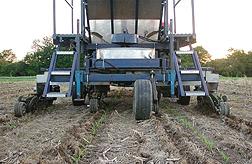
A new field tool developed by Agricultural Research Service (ARS) scientists applies poultry litter to fields in shallow bands, reducing runoff of excess nutrients like phosphorus and nitrogen.
Poultry litter – a combination of poultry manure and bedding material, such as pine shavings or peanut or rice hulls – is a natural fertilizer. The conventional method of applying it to fields utilizes a broadcast spreader, which scatters the litter across the soil surface. Because it rests on top of the soil, the litter is vulnerable to runoff in heavy rains.
A new tool developed by ARS agricultural engineer Thomas R. Way and his colleagues at the agency’s National Soil Dynamics Laboratory in Auburn, Ala., offers a solution. The tool digs shallow trenches about two to three inches deep in the soil. It then places the poultry litter in the trenches and covers it with soil. Burying the litter significantly reduces the risk of runoff. Designed to attach to a tractor, the litter applicator can dig four trenches as it is pulled through the field.
BUYERS GUIDE
The 2009 Manure Manager Buyers Guide is your key reference tool to bring the entire industry together in just one directory.
DIGITAL MAGAZINE
To sign up for a free trial of Manure Manager’s digital version, go to www.manuremanager.com.
$100 million invested in bio-energy expansion and ethanol plant
By Tony Kryzanowski
Some of Alberta’s sharpest minds have banded together to construct one of the most energy efficient ethanol production plants in the world, and given beef’s prominence in this Western Canadian province, it should come as no surprise that the energy input solution starts with a cow.
Burning biogas generated from anaerobic digestion of feedlot manure exclusively to provide energy and steam to the ethanol plant is what makes this project so efficient. However, it took a breakthrough in manure separation technology to give the developers’ ethanol plant concept a serious chance for success.
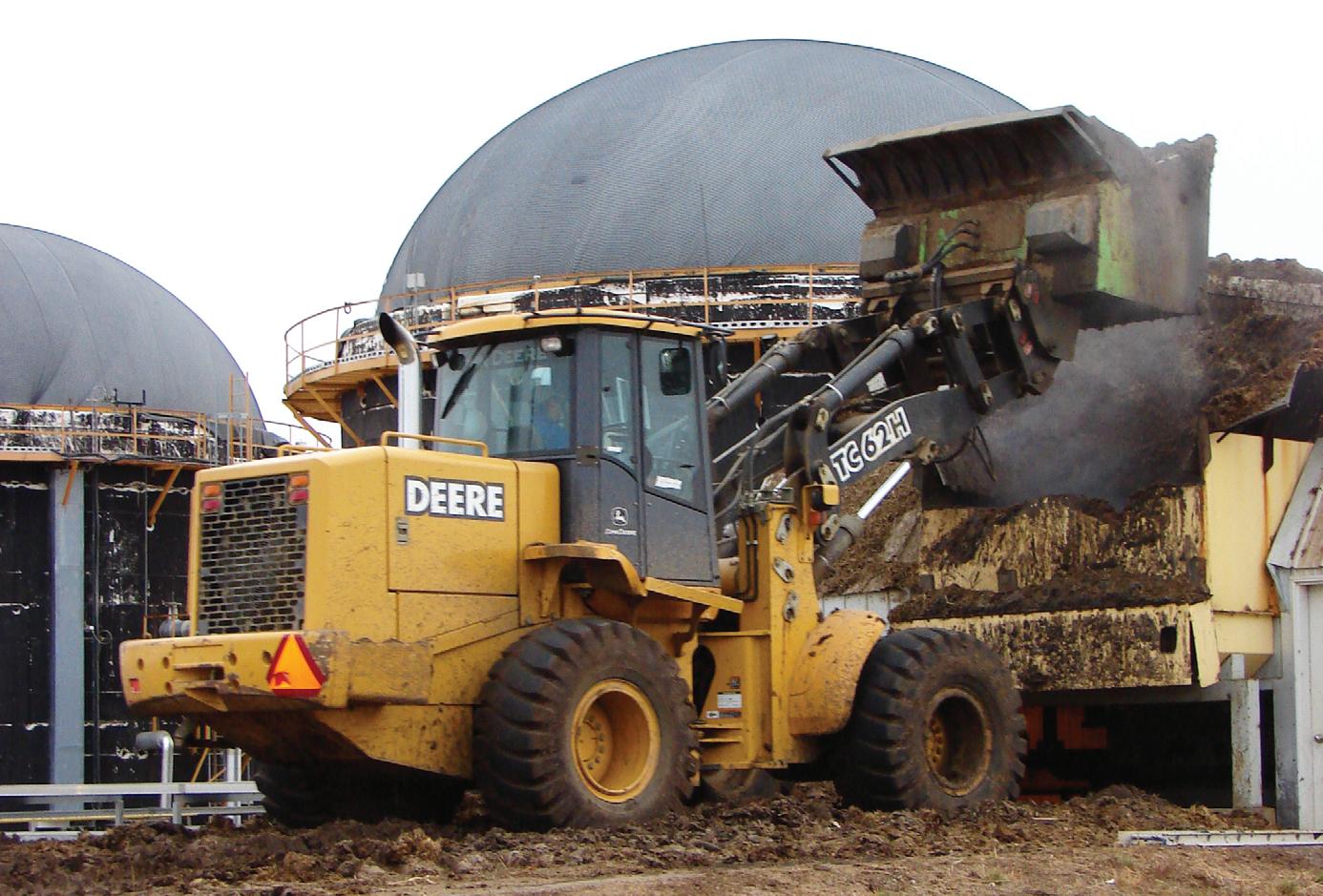
Here’s how the concept works. Cattle manure generated from one of Canada’s largest feedlots will be processed through an anaerobic digester, which will produce the biogas that will be used as fuel in a power plant. Electricity and steam produced by the power plant will then be used in ethanol production, while grain byproducts from ethanol production will be fed back to the cattle. The process works in a continuous loop, and the dividend to the cattle industry is that two new products are manufactured in the process – power and ethanol.
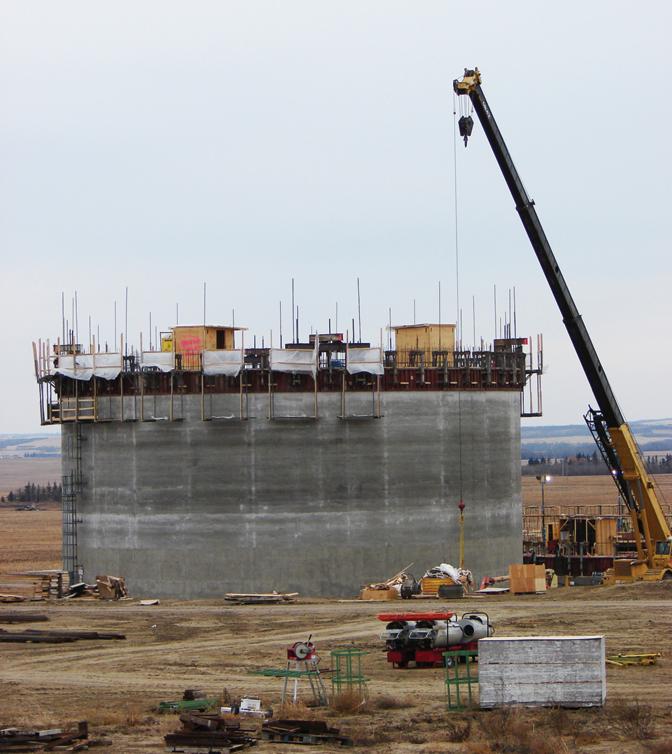
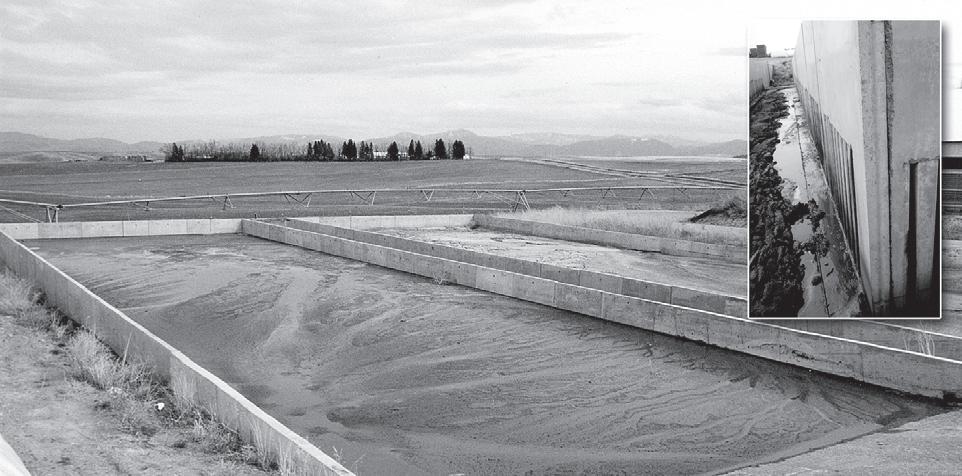
For this entire production loop to work efficiently, it was necessary to first overcome the problem of sand buildup in the anaerobic digester. Sand is part of the raw manure mix because the digester feedstock is gathered from outdoor cattle feedlot pens. New separation technology
has been developed so that there is no sand buildup in the digester, making it possible for other cattle feedlots to buy into this concept. Processing manure in this way also overcomes the problem of how to manage the millions of tons of waste products generated by cattle feedlots every year.
The site of the $100 million bio-energy expansion and ethanol plant project is where a company called Highmark Renewables has already constructed its Integrated Manure Utilization System (IMUS) pilot plant. The IMUS plant is situated next to a large feedlot located near Vegreville, Alta., about an hour and a half east of Edmonton. Launched in 2004, research at the IMUS facility has advanced the technology to use feedlot-based cattle manure as the feedstock to produce biogas.
In addition to managing their feedlot for more than 20 years, Highmark Renewables owners Bern and Mike Kotelko have long believed in the extra value inherent in manure.
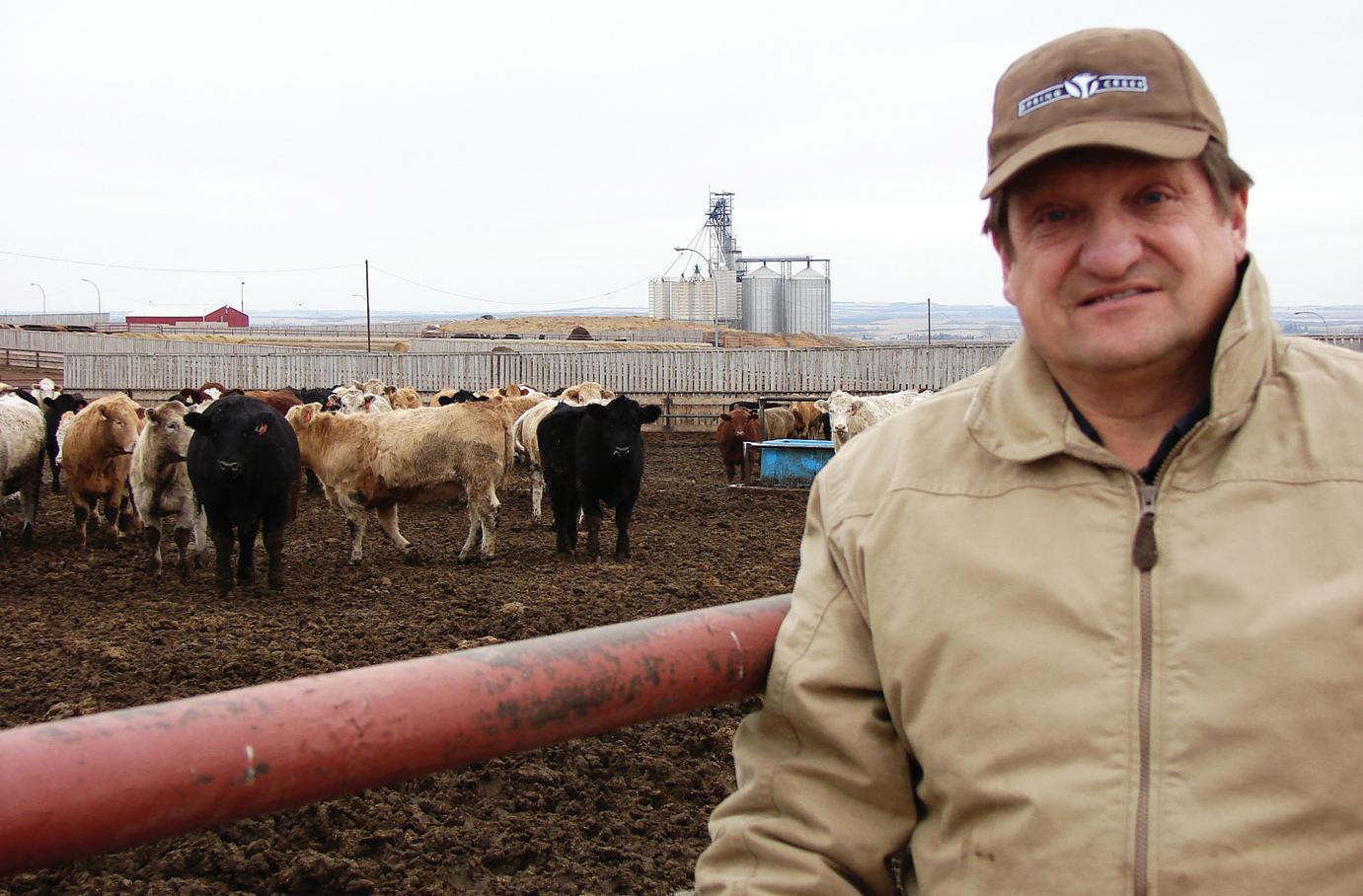
“We knew we had to add more value and we knew manure wasn’t waste,” says Bern. A professional agrologist, he and his brother, Mike, helped to develop the feedlot adjacent to the IMUS project from a small mixed farming operation to an agribusiness with about $60 million in annual revenue. This consists of a branded beef operation called Spring Creek Ranch, where cattle are raised without hormones or antibiotics, and a large commercial feedlot operating as Highland Feeders. Mike has taken a strong leadership role in the Highmark Renewables
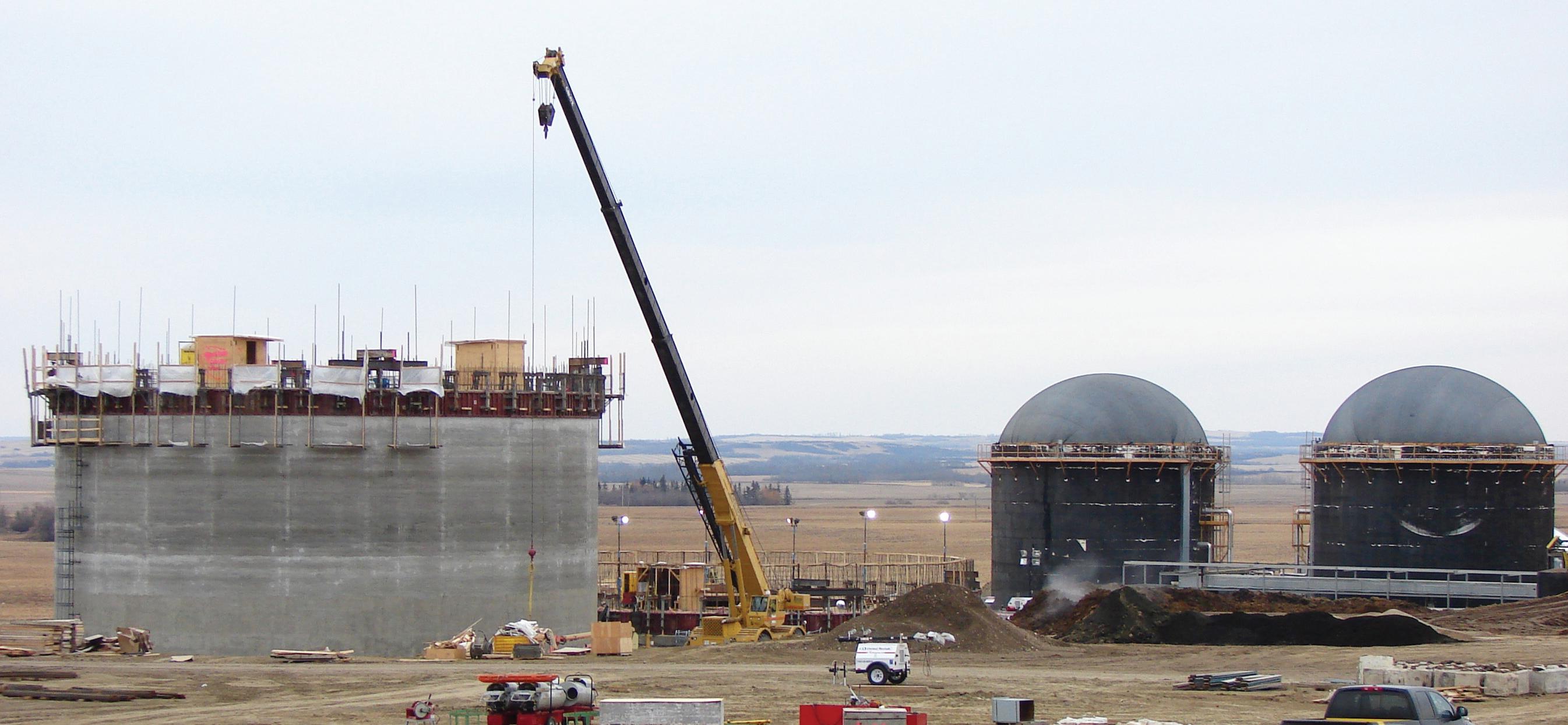
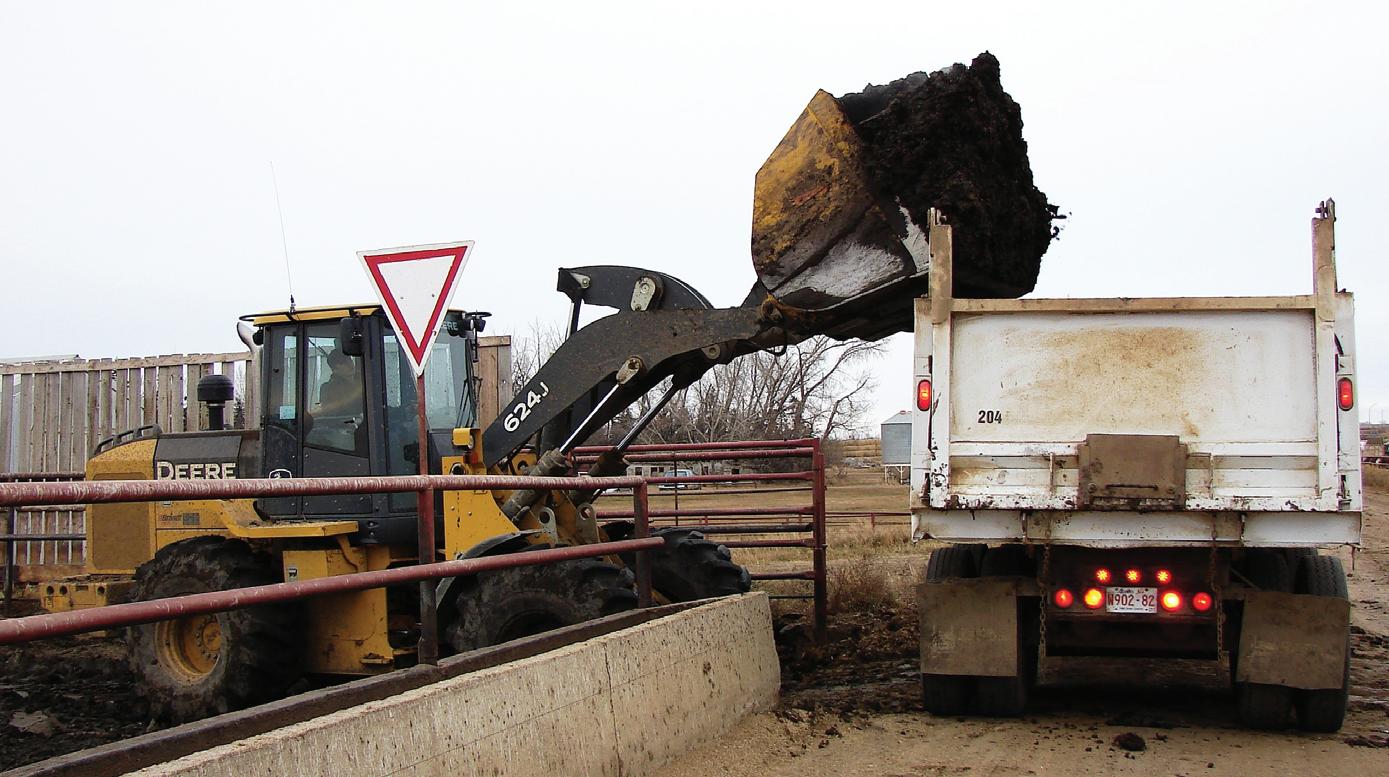
Above: To accommodate the energy needs of a proposed ethanol plant, Highmark Renewable’s anaerobic digester is being expanded so that it can process 80 percent of the manure generated at an adjacent feedlot, which raises more than 70,000 head of cattle annually.
branch operation, holds a diploma in agriculture engineering, and is co-inventor of the IMUS technology. He continues to oversee its development and marketing.
The unique aspect to IMUS is its ability to process high solids, high fibre, organic wastes from outdoor feedlots. All other digesters in Europe and in Canada are tied into hog and dairy operations where livestock are housed on slatted or concrete floors.
“There aren’t any other feedlots in the world that will harvest manure for biogas production out of open pens and where the cattle aren’t on concrete,” says Bern. The problem is that manure collected from open, earthen pens has up to 40 percent sand, silt and mud. While the lighter material floats to the top and can be sucked out of the anaerobic digester, the sand settles to the bottom.
“There is not very much sand in the manure and it takes a whole year to fill up the digester,” Bern says. “But when it’s full, it’s no fun. There’s only one way to get it out and that’s with a shovel.”
So there was a need for new separation technology to overcome this problem. Highmark Renewables has developed several proprietary technologies, which greatly improve the efficiency of its anaerobic digestion systems. Now proven on a pilot and commercial scale, the company’s technology is moving into the integrated bio-refinery realm, which involves biofuel and bio-fertilizer production.
In doing so, the Kotelko’s partnered with Evan and Shane Chrapko, who are probably best known for launching, building and selling a technology company called The DocSpace Company for $568 million over a span of 30 months. Shane holds a bachelor of science degree in agriculture from the University of Alberta, and Evan holds a bachelor of commerce degree, also from the University of Alberta. He is also a lifetime member of American MENSA.
Full utilization of the energy potential from biogas is essential to build a commercially viable anaerobic digestion system and this is what really got the partners thinking about the integration of ethanol production into their first biorefinery operation.
“Ethanol production uses all the heat year round,” says Kotelko. “Now you have full utilization from your biogas production because you are using both the electricity and the heat, producing ethanol with zero added energy. The only energy needed is to haul the wheat here and to take the ethanol to market.”
Because this bio-refinery integration is designed from the ground up, many new innovations were developed and built into the system resulting in far superior energy and water efficiencies along with greenhouse gas (GHG) reductions reaching just over 143,000 tons annually.
Once in production, the ethanol plant will consume about 120,000 tons of wheat to produce about 10.5 million gallons of ethanol annually. The wet distillers grains (WDGs) produced as a
At present, the IMUS plant uses 20 percent of the feedlot’s manure and produces enough biogas to generate 1 megawatt of power, selling most of it to the provincial power grid.
byproduct from the ethanol production process will be used as cattle feed, eliminating 30 percent of the feedlot’s barley requirements. Given the IMUS plant’s close proximity to grain sources, using the waste heat to generate steam needed in ethanol production, as well as expanding anaerobic digestion capacity, seemed like the next most logical step.
Waste heat is generated by the V20 engine that burns the biogas and drives the power generator. It is estimated that 40 percent of the energy emanating from the engine is in the form of heat, making an ideal fit for the ethanol process.
More strategic partners have been added to the ethanol plant development. It now is a four-member consortium. The members are Highmark Renewables Research LP, Growing Power Hairy Hill LP, FWS Group of Companies, and Providence Grain Corp.
The IMUS anaerobic digester, with its patented digestion method, is a critical element to this value-adding loop. To accommodate the needs of the ethanol plant, the digester is being expanded so that it can process 80 percent of the manure generated at the feedlot, which raises more than 70,000 head of cattle annually. This amounts to about 550 tons of raw manure per day or 198,000 tons annually. At present, the IMUS plant uses 20 percent of the feedlot’s manure and produces enough biogas to generate 1 megawatt of power, selling most of it to the provincial power grid. Once expansion is complete at the beginning of 2010, the digester will produce enough biogas for a 5-megawatt power plant. Since the bio-refinery needs more steam than power, 2.4 megawatts of electrical production is all that is needed. The remaining biogas will fuel a
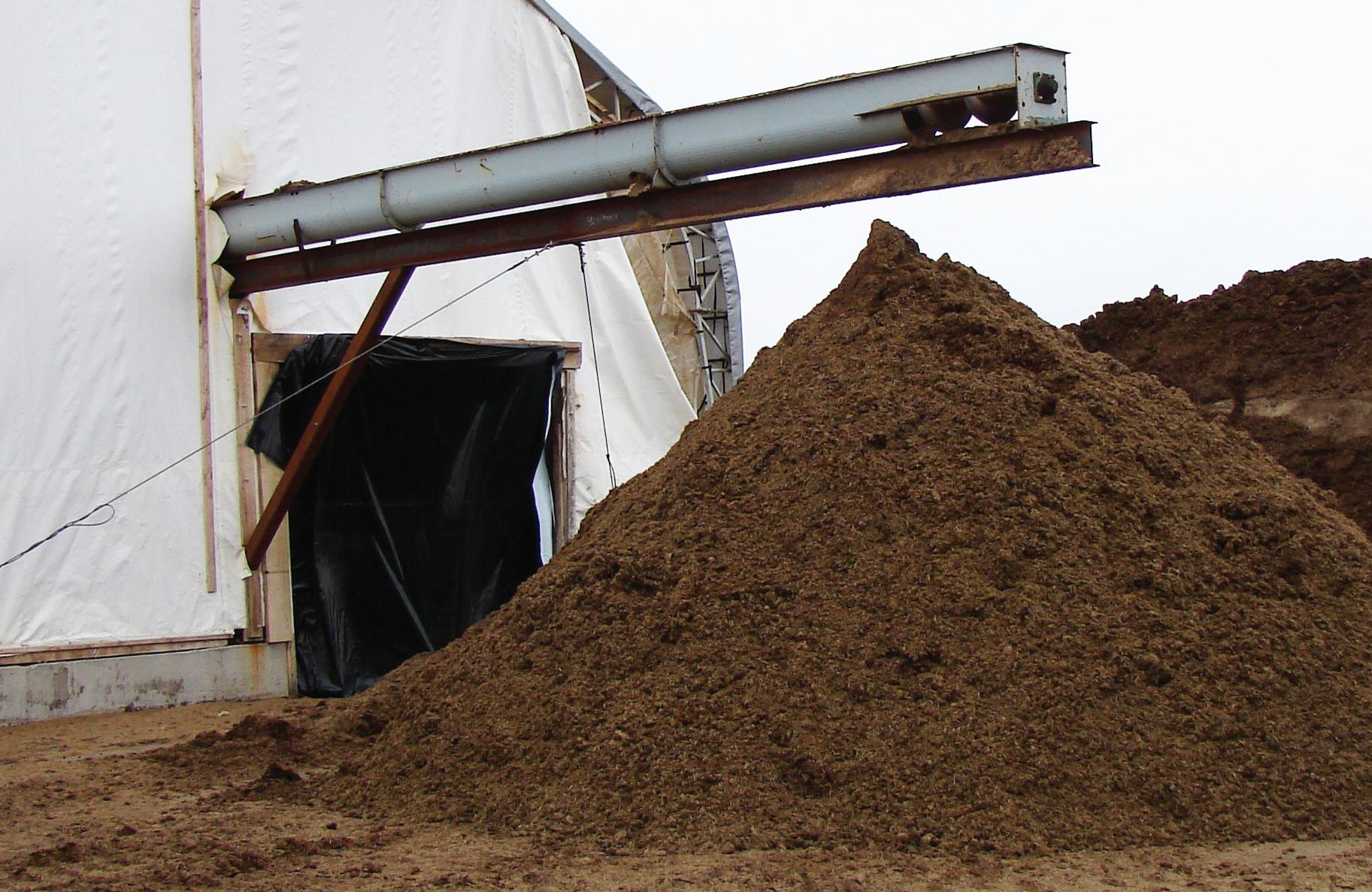
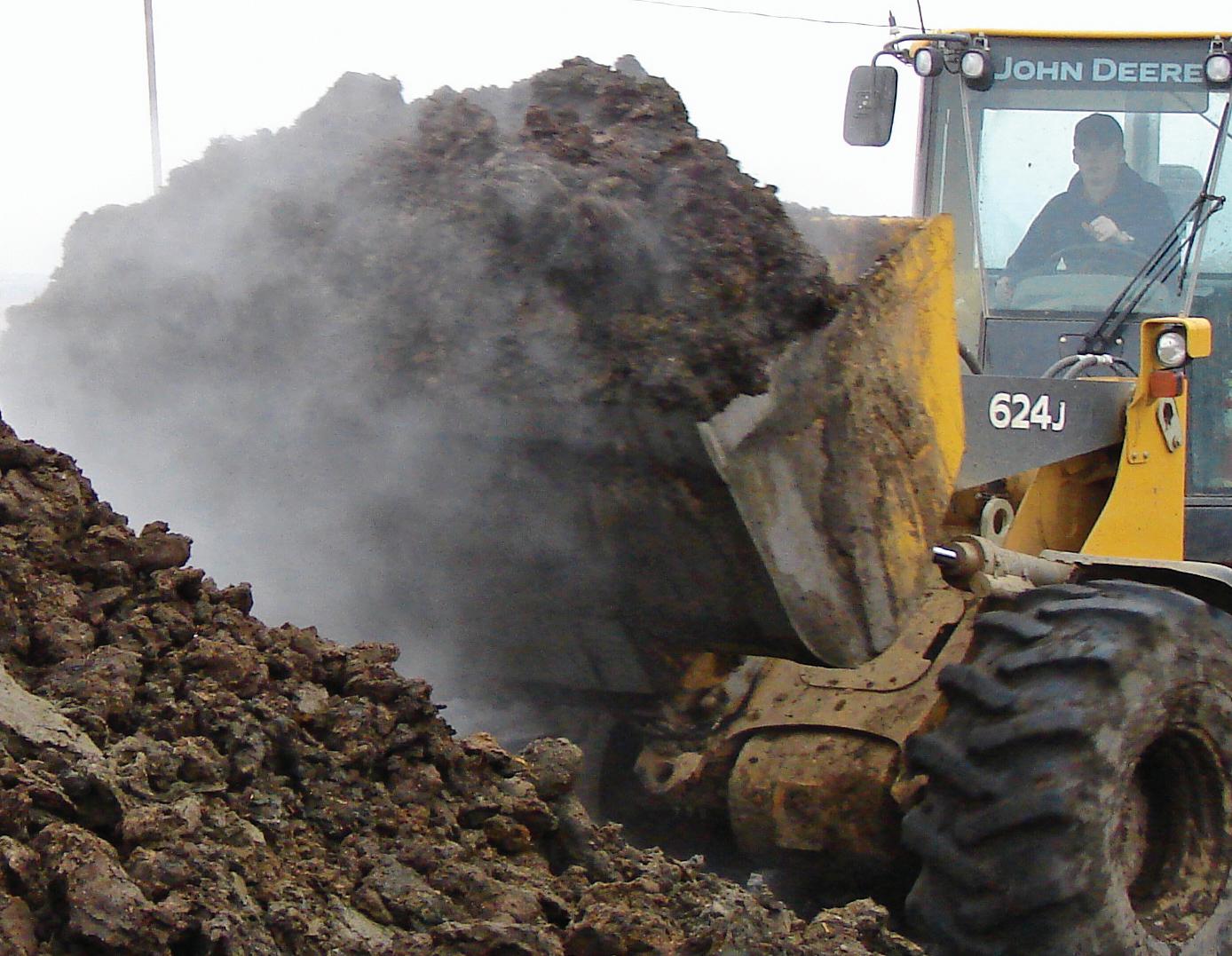
Top: The unique aspect to IMUS is its ability to process high-solids, highfibre, organic wastes from outdoor feedlots. New separation technology has been developed so that there is no sand buildup in the digester. Middle: Bern Kotelko, a professional agrologist, and his brother, Mike, helped to develop the feedlot adjacent to the IMUS project from a small mixed farming operation to an agribusiness with about $60 million in annual revenue. This consists of a branded beef operation called Spring Creek Ranch and a large commercial feedlot operating as Highland Feeders. Bottom: Cattle manure generated from one of Canada’s largest feedlots is being used to feed Highmark Renewables’ Integrated Manure Utilization System (IMUS) anaerobic digester.
large steam boiler. About 400 kilowatts of electricity will continue to flow to the provincial grid, while the remainder will be used within the bio-refinery. The new digester will also generate about 33,000 tons of premium bio-fertilizer as a byproduct of the digestion process. This bio-fertilizer is odorless, weed-, seedand pathogen-free, and works well as a soil revitalizer.
This integrated approach to ethanol production addresses many of the public’s concerns about using a food product to manufacture an energy additive, says Kotelko, who is also president of GPHH. A food product is not being used to produce a fuel additive, as the WDGs generated as a byproduct of the ethanol manufacturing process will be fed to the feedlot cattle, which eventually head to a meat packing plant and become a variety of food products.
Because it uses energy and steam derived from the burning of biogas produced from cattle manure, this method of ethanol production delivers four units of ethanol energy for every one fossil energy unit consumed, versus the 1.25 to 1 ratio in many existing ethanol plants. The reduction in greenhouse gas emissions also makes it possible of GPHH to market carbon credits.
From an environmental standpoint, it means that a lot less untreated manure will be spread on adjacent farmland.
“That is why this system works so well,” says Kotelko, “because it mitigates all those issues that intensive livestock operations have with local residents.”
With the advances it has made, particularly in material separation, Highmark Renewables is actively marketing IMUS around the world. Inquiries are coming from as far away as South Africa.
Novel solid manure injection technology shows great promise
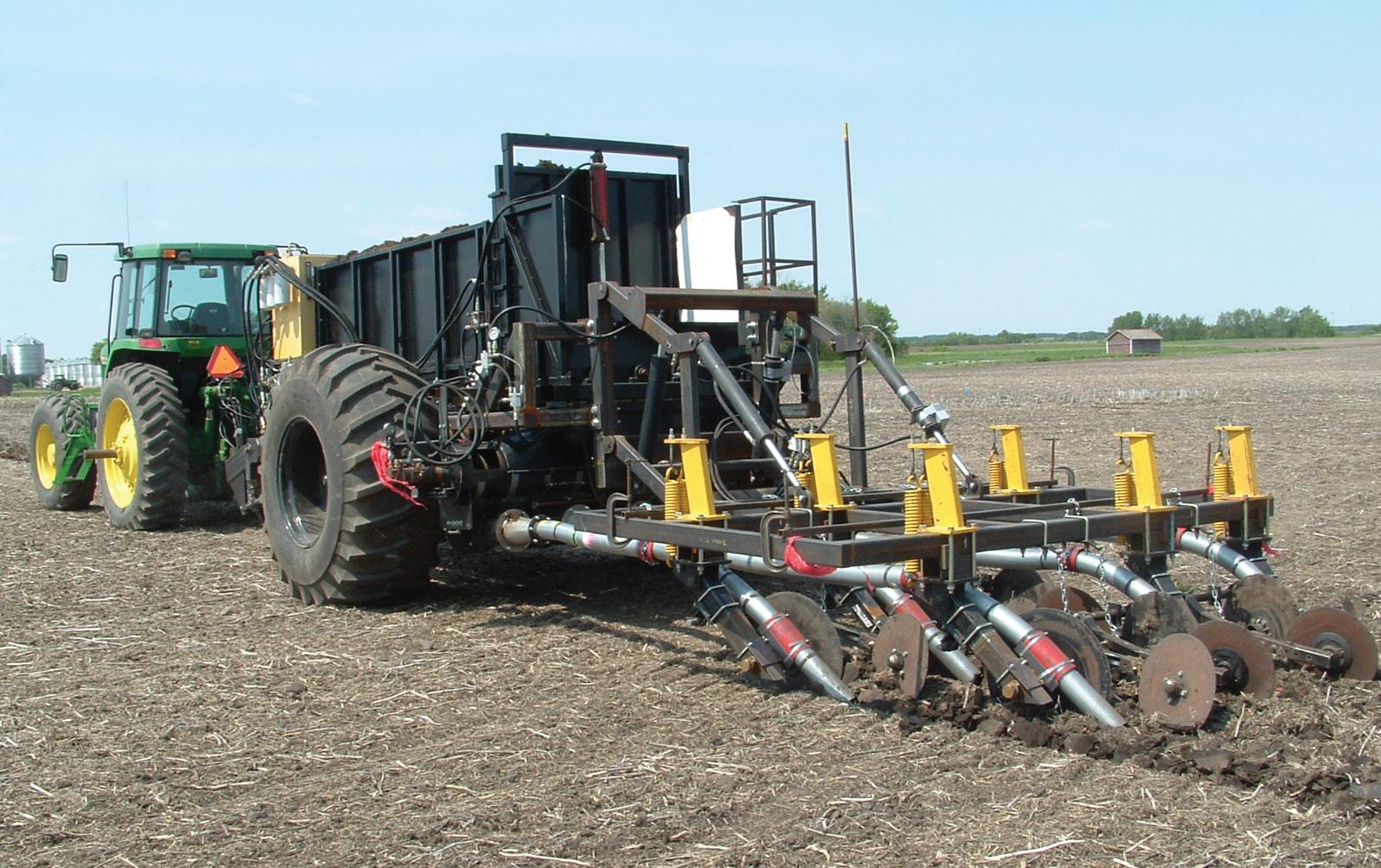
Researchers at the Prairie Agricultural Machinery Institute (PAMI) in Humboldt, Sask., have developed a solid manure injector system that is showing great promise. Submitted photo
By Lukie Pieterse
In 2001, work started at the University of Saskatchewan’s department of agricultural and bioresource engineering to develop a prototype, field-scale, precision manure applicator. But it wouldn’t be injecting liquid manure, a fairly common practice among manure applicators; instead, this new technology was aimed at injecting solid and semi-solid manure.
Eventually, the project would be moved to the Prairie Agricultural Machinery Institute (PAMI) in Humboldt, Sask. for further development of the injection system. The aim of the research is to develop a commercially viable piece of equipment that can be used successfully by farmers. There have been technological challenges in the past to deal with solid manure injection. It’s hoped this research might bring an answer to that problem in the near future.
But why this interest in solid manure injection?
According to researchers involved in the project, solid manure injection technology promises to drastically reduce odors associated with traditional broadcasting methods. They are also looking at the potential of solid manure injection to reduce volatilization losses of nitrogen and losses of phosphorous and other nutrients due to run-off. By injecting the manure, the nutrients are locked into the soil, ready for use by plants.
The technology is also very versatile.
“The system was designed to work with anything that can not be pumped,” says PAMI project leader Dr. Hubert Landry. “Typically we’ve been working with beef cattle manure but really, the product could come from any type of livestock production or even other byproducts like municipal sludge.”
He adds that if the technology can be developed to the same level as existing liquid injection systems, it will mean potentially huge savings on transportation
costs for farmers since liquid manure is much heavier to move than solid manure due to its high water content.
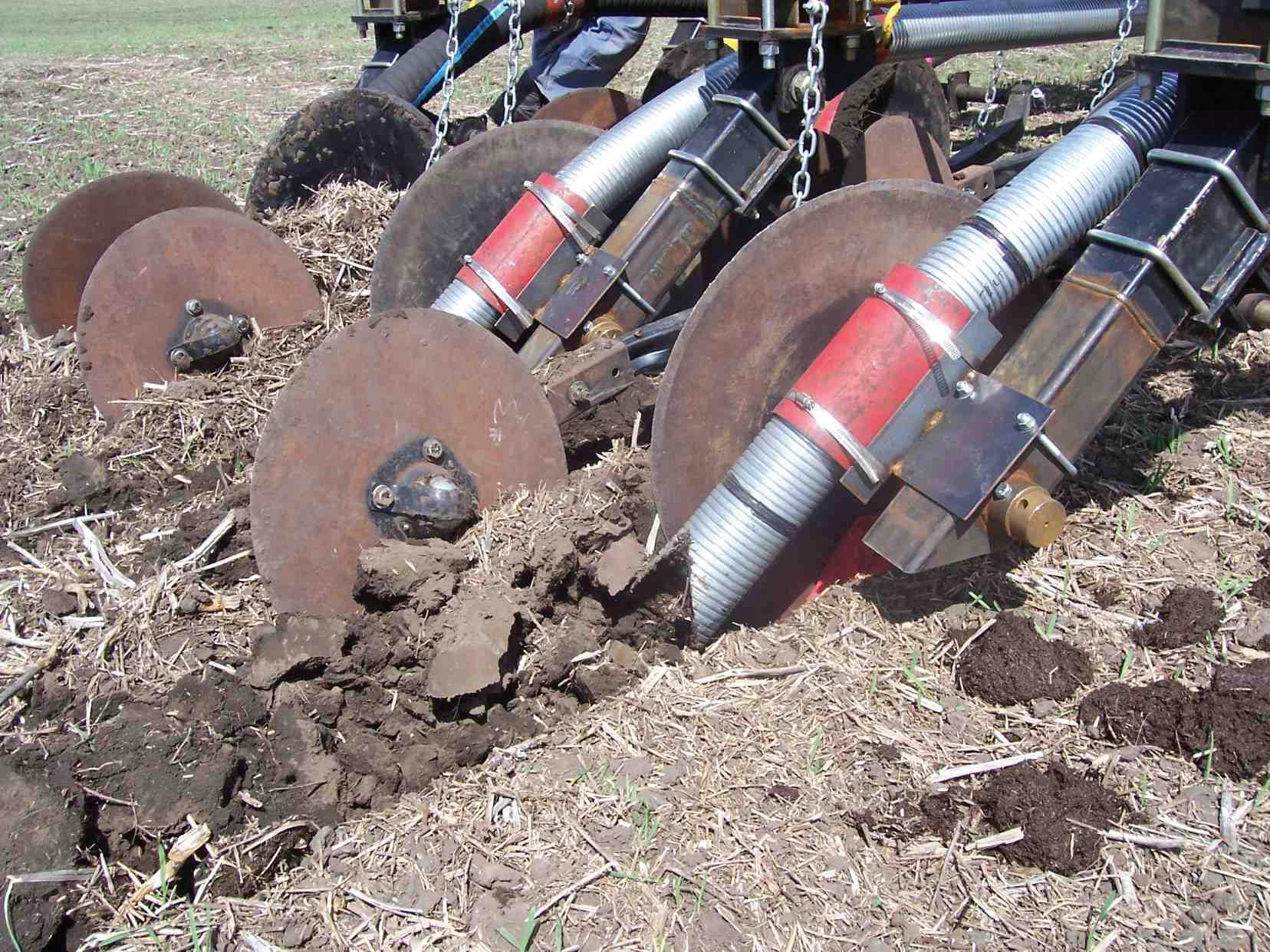
How does the solid manure injector work? The implement is basically a trailer with a large hopper containing the manure to be land applied, explains Dr. Landry. At the bottom of the hopper are four discharge screw conveyers. The screw conveyers move the manure to the rear of the machine where it falls into a transverse distribution conveyer for distribution along the width of application. From the transverse distribution conveyor, the manure is moved to coulter openers by flexible screw conveyors. The coulters open a trench into which the material is deposited and the trench is then closed. Although the term “injection” is used, and although a fair amount of force is used to move the manure towards it eventual exit point, Dr. Landry points out that it might be
technically more correct to call it “subsurface application” of the manure. In a nutshell, the machine makes six trenches, the manure is dropped into them and covered right away.
It’s the injection aspect of the applicator that makes it so novel, says Dr. Landry.
The equipment also brings uniformity of distribution plus good control of the rate of application of manure. “This is a great improvement over what is commercially available as far as equipment,” he says.
Meanwhile the research team is hard at work to test the machine under different scenarios and on different crops. Two years of studies have been completed so far.
One of the studies, started in 2007 and being conducted near Humboldt, involves the research team comparing a variety of manure treatments to an unfertilized check. According to Dr. Jeff Schoenau, a research scientist with the University of Saskatchewan’s department
of soil science, the scientists are looking at three different rates of solid cattle manure plus three different application methods – injection, broadcast and incorporated. They are also examining broadcast only. The effect of the different rates, as well as placements and combinations, are being evaluated for their effects on crop yield, crop nutrient uptake, soil nutrient levels and distribution and nutrient runoff potential.
“We’re not seeing really much difference between the different placements of the manure in terms of effects on yield or whether it was broadcast, broadcast-incorporated or injected,” says Dr. Schoenau, adding this isn’t too surprising considering the cattle manure used in the study didn’t have a lot of readily available nutrients in it.
The research team did see some response in yield to the manure additions in both 2007 and 2008, but not a great effect from placement, Dr. Schoenau says. “We found our highest yields were when we combined urea
fertilizer with the manure that was injected,” he says. “I think that can be attributed to the fact that the solid cattle manure has pretty low nitrogen availability in the year of application.”
Dr. Landry is upbeat about the future viability of the injection technology. “From a mechanical point of view, we would be fairly close to being able to go to market,” says Dr. Landry, adding the technology is not fully proven in the areas of agronomic and environmental benefits. “The market uptake is not under our control. We have to demonstrate the technology and generate enough interest to make sure that we have successful marketed uptake.”
The study still has one more season to go and a final report is expected in about a year.
Further information about the solid manure injector project can be obtained from Dr. Hubert Landry at 306.682. 5033 or HLandry@pami.ca. Visit the PAMI website at www.pami.ca.
The injector system works by carving six trenches in the soil and dropping manure into each of them. As the machine passes, the trenches are covered. Submitted photo
Filter strip works for feedlot Settling basin and filter strip work well at beef operation
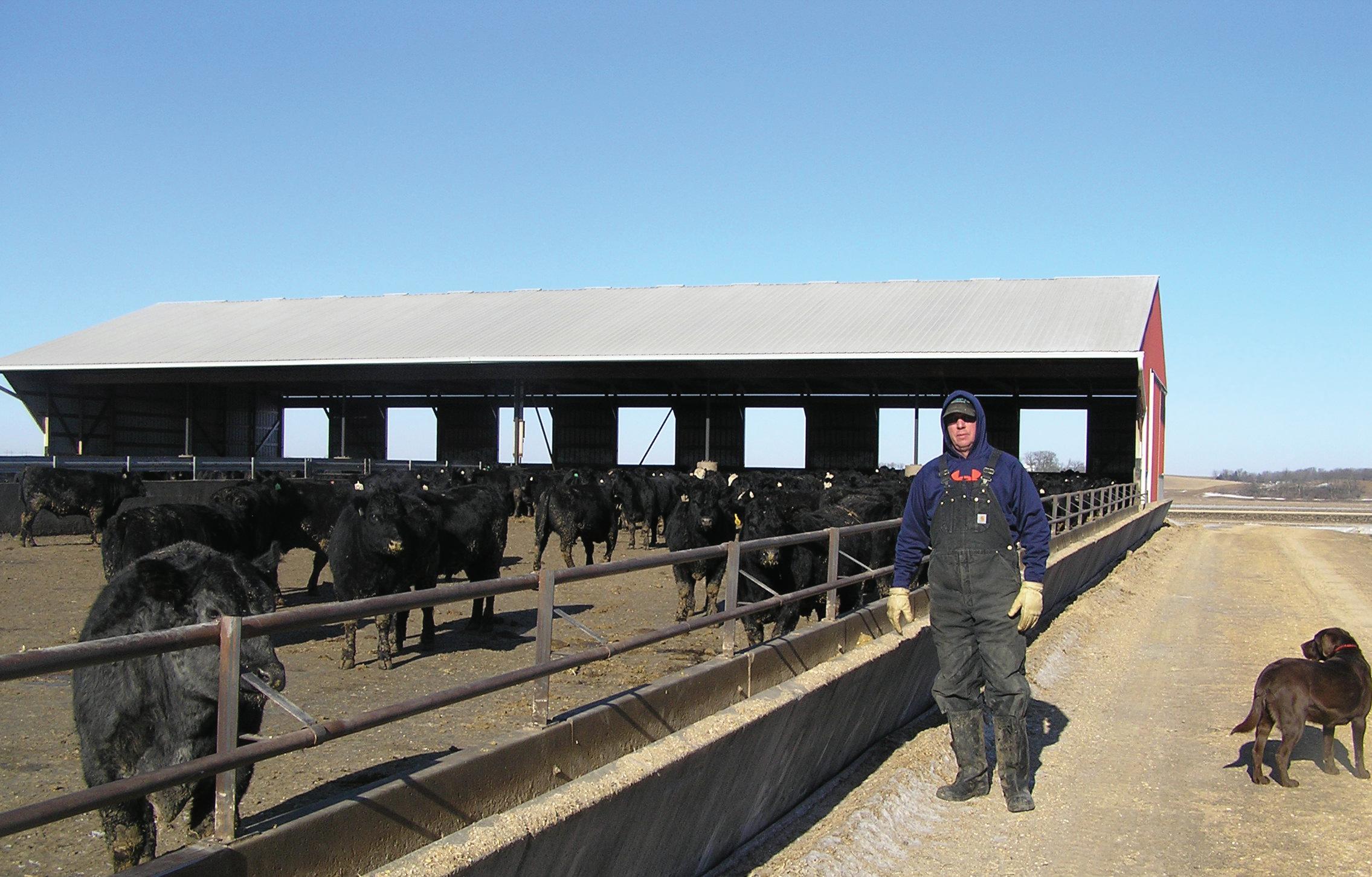
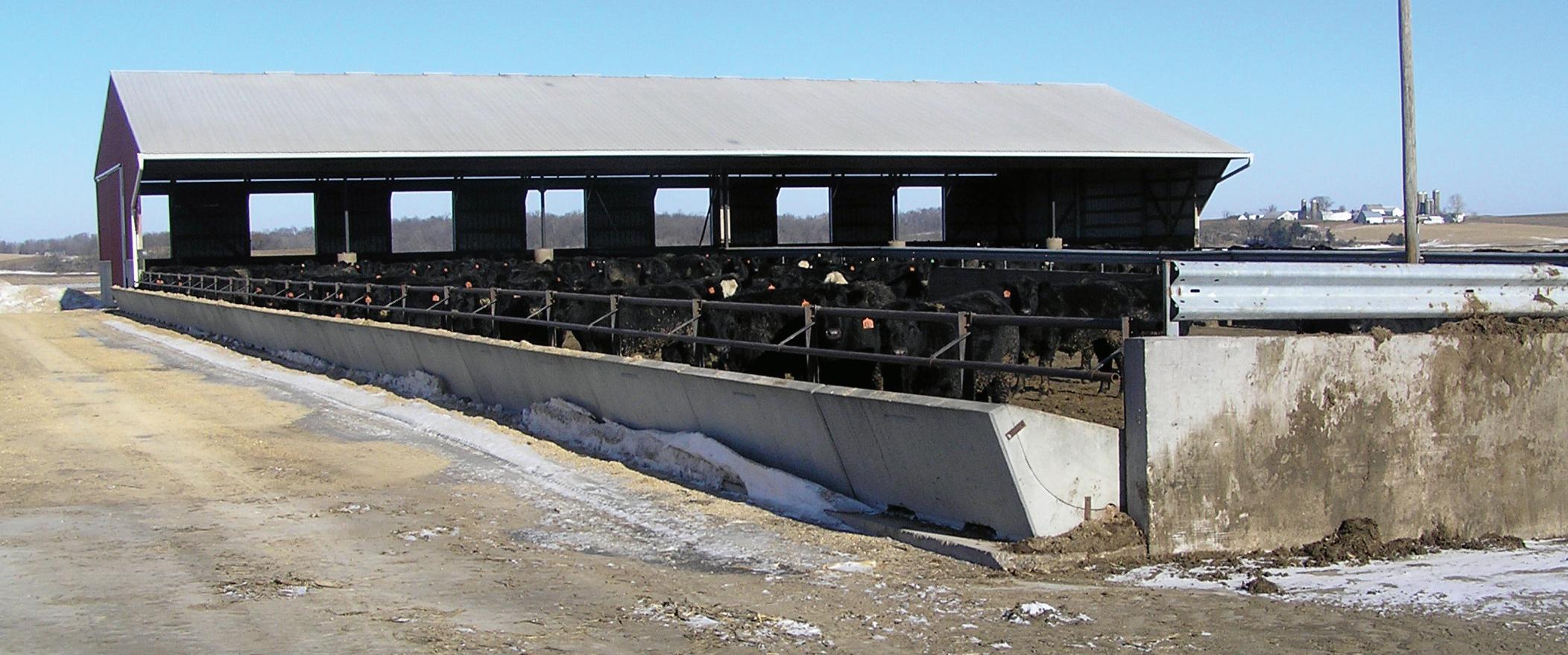
Six years ago, Brent expanded his beef feedlot by adding three yards — each holding between 240 and 260 head. A fourth yard holds 160 cattle and the receiving yard holds about 80 head. Submitted photo
By Diane Mettler
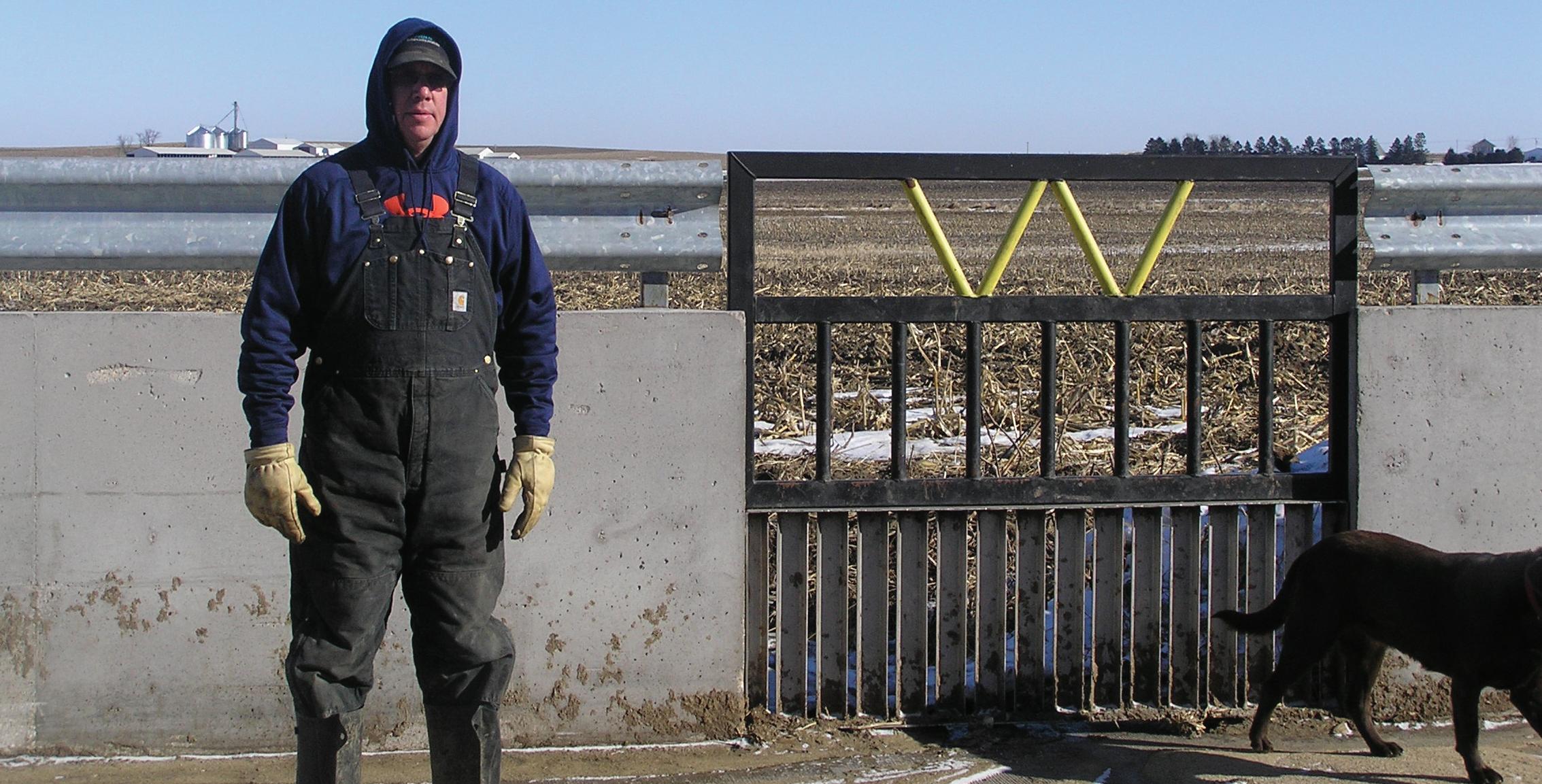
Brent Wilson’s filter strip, which feeds off his settling basin, isn’t easy to spot. It runs into a field and is almost camouflaged amongst the cornstalks. But it’s as effective as it is easy on the eyes.
Brent’s farm in Andover, Iowa, comprises two parts – a grain operation, where he rotates hundreds of acres of corn and beans, as well as a feedlot. Six years ago, he expanded the feedlot adding three yards — each holding between 240 and 260 head. Another yard holds 160 and the receiving yard holds approximately 80 head.
“It’s enough to keep three guys busy,” says Brent, who runs the farm along with two full-time employees.
The Wilson farm is definitely familyoriented. “I’m third generation, a second generation on this farm,” says Brent. “I followed in my father’s footsteps. He’s 84 and retired but still active. Not in the wintertime — he winters in Florida.”
Settling basin design
When Brent expanded to add the new yards, he also incorporated a 50-foot by 50-foot cement settling basin and a filter strip.
He was able to secure some funding through the Natural Resources Conservation Service (NRCS). The service also helped with the design, as did Brent’s wife, Sonya, an engineer.
The NRCS also assisted with the funding of the manure spreader. But as far as building the structures and the new feed yard, “that was my own undertaking,” says Brent.
With the Wilsons doing a lot of the work themselves, the entire project took a good part of a year to complete.
The yards, the settling basin and the filter strip are all located on a relatively flat piece of land. It’s a gravity fed system that takes advantage of the rainfall in the area. The yards have a one percent slope into the cement settling basin, which then feeds into
a filter that runs out in the corn field about 200 yards.
The system is fairly simple. “We generally scrape (the pens) twice a week, and we always try to scrape just before a rain event. When it rains, a picket fence holds back the solids from settling basin. We don’t try to hold any water.”
Brent says although the system works well, it isn’t perfect. “(Manure) is running fairly slow and the solids will settle out as it rains, for the most part. But there is a little bit that does go out.”
Solids and spreading
The solids that are scraped from the yards and collected from the settling basin are stockpiled outside.
“We stockpile all summer long and that summer stockpile will cover about 70 acres — which we’re doing now (early December),” says Brent. “Then our winter, spring and fall manure we’ll use to try to cover another 300 acres.”
Brent says he can spread nearly
half the year. “We quit spreading around the first of May when the corn crops go in. Then we’ll stockpile until approximately September 15th when we do our silage. And then from 15th of September to around May 1st we’ll be putting it out on the field.”
He rotates the acres and tries to spread manure on a parcel every third year. Luckily, the Wilsons have enough acreage and they don’t need to find other farms to spread on. But even so, spreading is kept within a 10-mile radius.
The Wilsons use two Kuhn Knight spreaders — an 8132 and an 8142.
“They will handle liquids to solids. And one is mounted on a truck so we can speed up the process,” says Brent. “We can unload a load in about 10 minutes.
Improvements to the system
Brent says the settling basin works well, but he would like it even better if manure could settle one more time so he could capture even more of the solids.
“I’ve been talking with the NRCS on this and they don’t think it’s necessary but I would like to have a little bit more settling,” he says. “I could scrape up outside my settling basin,
have a cement pad . . . to have a little more time to settle out more yet.”
If he did it again
Although he’s pleased with the system, if he had it to do over again, Brent might choose different barns, in particular the monoslope buildings that were coming out at the time he built his barns. The monoslope is designed to be approximately 100 feet wide and several hundred feet long — basically a one-sided shed. In this way, everything is under a roof.
“I would have looked very heavily
The filter strip on Brent Wilson’s beef operation isn’t easy to spot. It feeds off his settling basin and runs into a field and is easily camouflaged amongst the cornstalks. Submitted photo
If he had it to do over again, Brent would choose a monoslope barn with everything under one roof. Submitted photo
this fall and our ground is frozen now so we’re kind of backed up against the wall and we’re top dressing it at this point. We’re hoping we get a warm spell so that we can incorporate it, but it’s not an ideal situation.”
Brent says this isn’t a normal situation for them — in 10 years they haven’t had this kind of trouble spreading. “Mother Nature just dealt us some different cards,” he says.
Water quality
The Wilson farm is about five miles from the Mississippi, at the very eastern tip of Iowa, near Clinton. Because they’re so close to the river, water quality is a big issue. But the news is good in their region.
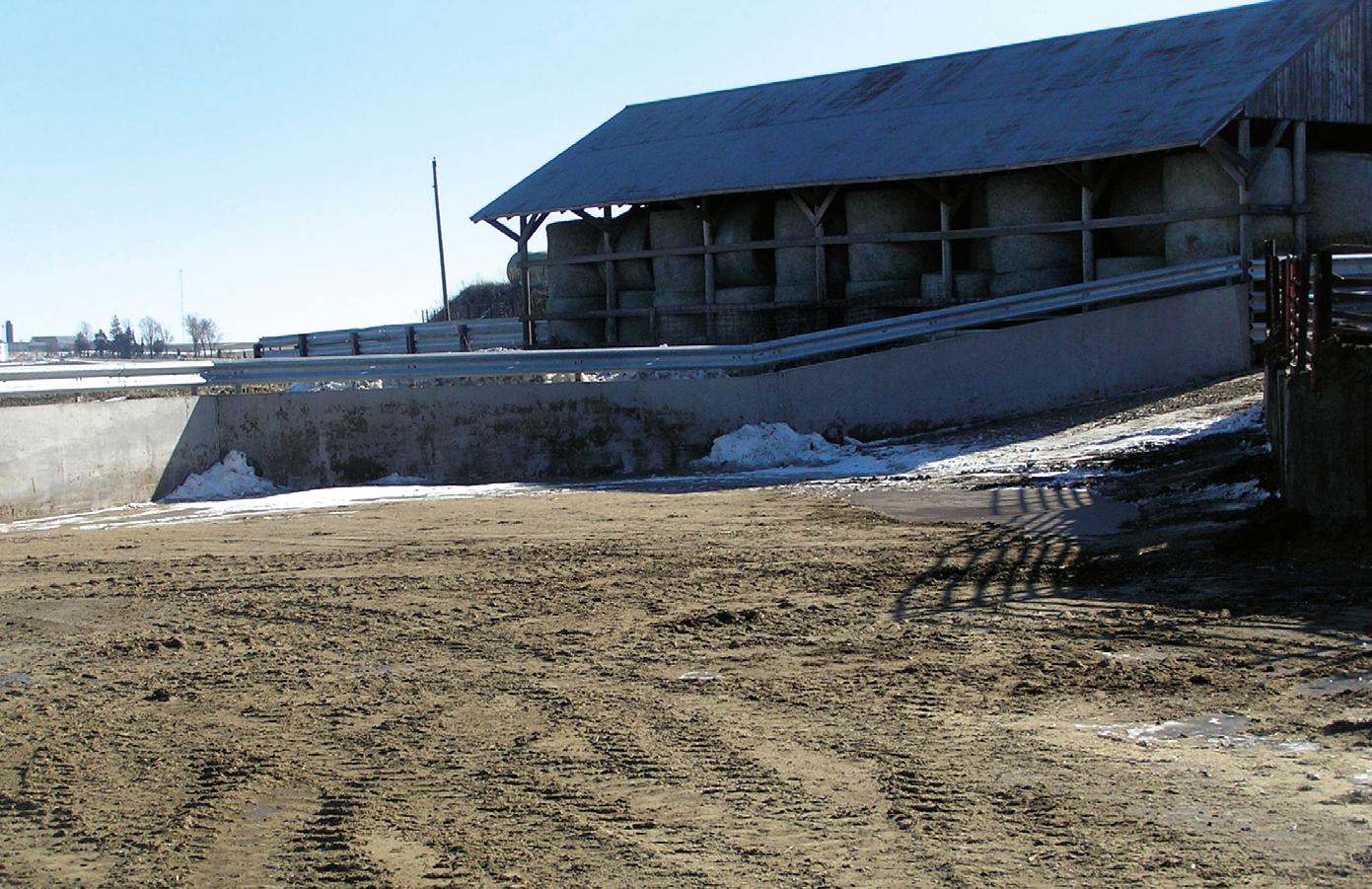
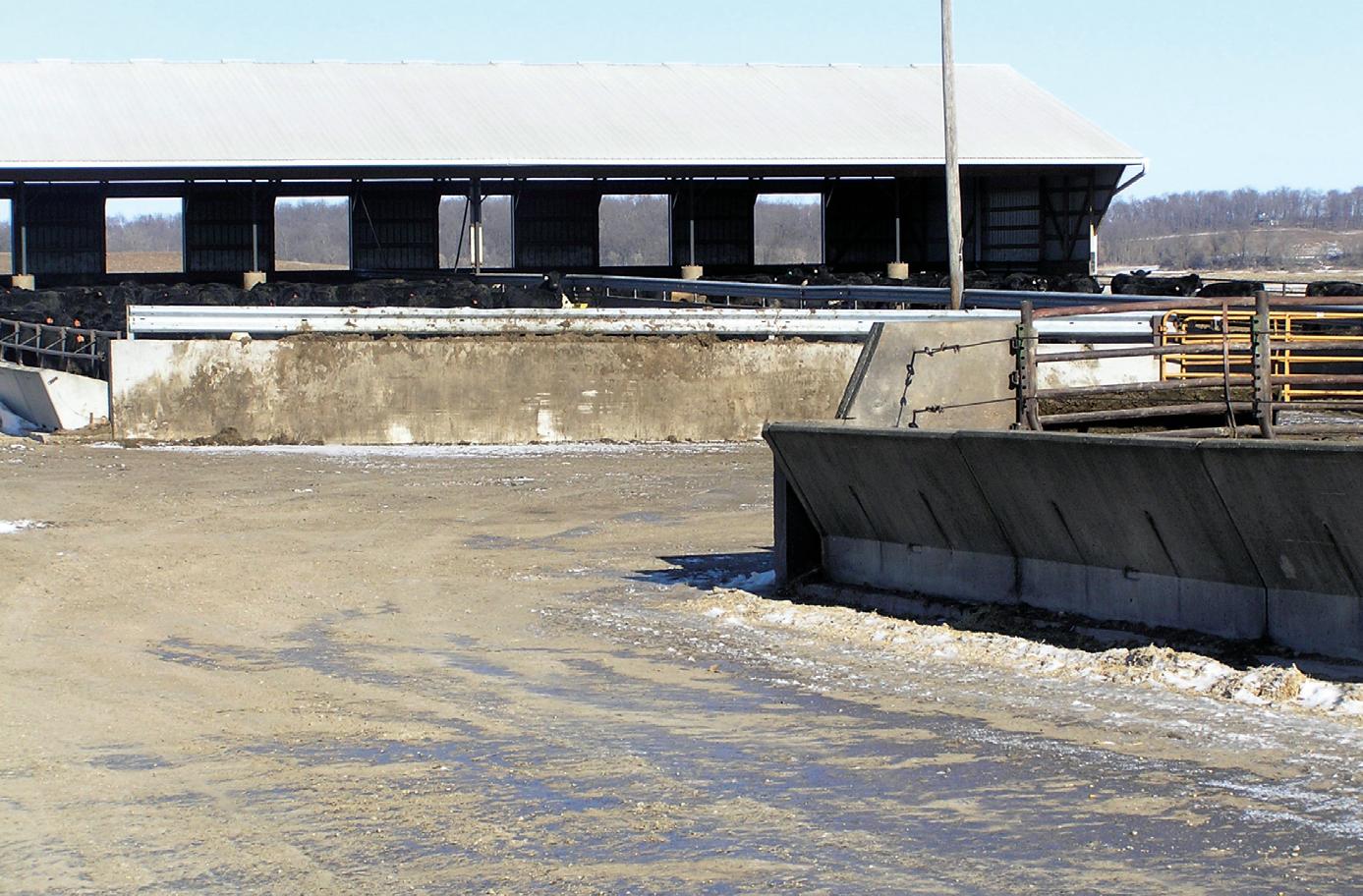
The yards, settling basin and fi lter strip are all located on a relatively fl at piece of land. Gravity powers the system, which also takes advantage of the rainfall in the area. The yards have a one percent slope into the cement settling basin, which then feeds into a fi lter that runs out in the corn fi eld about 200 yards.
into possibly putting up a monoslope at the time we did this, but what I did was what was available then. And a total confinement system was too expensive,” says Brent.
Odors
The farm is located near a small community and Brent says odor is a concern that they “deal with all the time.
“The biggest thing we can do to keep odor down is to keep things scraped clean,” he says. In the summertime, they also haul their manure farther out where it’s at least
three-quarters of a mile from any homes.
The stockpiled manure isn’t the Wilsons’ biggest concern when it comes to odor. “Our stockpile manure will crust over and you normally don’t have much odor after that except a little bit after a rain and then it seals over again,” says Brent. “The only time when odor on the stockpile becomes a concern is when we’re hauling it out. There is odor then.
“Normally we try to incorporate (the manure) within 48 hours,” Brent adds. “But it depends on the weather. For example, we got our crops out late
“The water quality was checked and we’re gaining,” says Brent. “The last I heard, the Elk River watershed, where our farm is located, has seen improvements. Everybody is trying to do their part and it’s working. Everyone’s a better steward.”
He adds that local water gains are especially significant considering the large number of cattle in the immediate area.
Recommendation
After using the settling basin system for more than six years, Brent would definitely recommend it to other farmers with open lots.
He’s seen a couple more systems like his go in since they built theirs, and he attributes it to the smaller cattle operations.
“Anything over 1,000 head in one location has to be permitted. And there are very few in our local area that are over 1,000 head in one location,” says Brent.
When a farm is larger than 1,000 head, it must be permitted. Filter strips aren’t allowed and the runoff from the manure system must be 100 percent controlled.
“We get a fair amount of rain here. In fact, there’s no irrigated ground in our area at all. All our crops are raised non-irrigated — except for some irrigation along the river in some sandy areas,” says Brent, adding that means they deal with a lot of runoff.
In fact, rains this year were extreme and the flooding hit national news. With that kind of rainfall, a solid settling basin won’t work for more than 1,000 head and a lagoon must be installed.
A lagoon may very well be in Brent’s future. He has visions of expanding someday, but not now with the economy struggling.
“We’re just kind of drawing in our horns right now, seeing what happens,” he says. “But someday…”
When Brent added the new yards in 2002-2003, he also incorporated a 50-foot by 50-foot cement settling basin along with the filter strip. Submitted photo
Designing for ventilation
By Diane Mettler
A new low profile cross ventilation (LPCV) barn design could mean significant improvements
for dairy cows
If the next barn you see has a flattened roof and looks more like a warehouse, it’s likely to be a LPCV (low profile cross ventilation) barn. The first barn of this design was stocked with cows in November of 2005 and, because the improved atmosphere is helping to improve productivity, LPCV barns are starting to take hold.
The inspiration
The idea started with Rick Milner out of Veblen, South Dakota, who had been working with John Smith, the Extension dairy specialist from the Kansas State University (KSU), on cross ventilating a proposed four or six row freestall building as part of an expansion project. Previously, Milner was operating a dairy where cross ventilation was used on an existing freestall building. Their discussion lead to the question: What would happen if two buildings were side by side? Could cross ventilation still work?
They contacted Joe Harner, the Extension engineer for livestock and grain systems at KSU to help answer the questions. “The normal barn would have four to six rows, but side-by-side the building would have eight to 12 rows and would be 200 feet wide,” he says. “Nobody had ever really built a
dairy building more than about 120 feet wide. So the question was, when you start expanding to 200, 300, 400 feet wide, how do you make sure the ventilation is adequate?”
The answers to these questions resulted in the conceptual idea of a LPCV freestall facility. The design objectives were to maintain desirable air velocities in the cow freestall space and prevent accumulation of gases and heat in the housing area.
New design
The layout didn’t change much. The space between the two buildings was removed, but the manure handling and other elements remained the same. What did change was the roof line. It was lowered substantially.
“We changed the roof slope from a 3/12 or 4/12 pitch to a 0.5/12 pitch,”
explains Harner. “That allowed us to have a 400-foot wide building that’s not as tall as a naturally ventilated 100-foot wide building.” And all the ventilation is mechanical, using 50- to 54-inch diameter fans.
Harner explains that with tunnel ventilation barns, fans are often placed on one end of a 400-foot long building and air is pulled across the cows. In addition, fans are also placed at the outlets around the end wall doors.
This is not ideal, he says. “The stalls are where you want the airflow, but (in a regular barn) the air will take a path of least resistance. There will be higher air velocities in the feed lane and cow alleys rather than in the freestall area. The optimum environment may not be where the cows are hopefully resting 12 to 14 hours per day.
“In a cross ventilation system, we go ahead and enclose the ends. But we use one side of the building as the inlet and the other side as the outlet or where the fans are placed,” he says. “So, in a 400-foot wide building, we’re only pulling that air across a maximum of 16 cows, and it’s parallel to the cow’s body.”
With head-to-head stalls, baffles were also placed between the front of two rows of stalls, resulting in an increase in air speed in the stall space.
“So now in the stall space where the cow’s laying, air speed is five to six mph; in the alley, it may only be two to three mph. In a conventional tunnel where the cows are laying, it may be two to three mph and in the alleys it may be five to six mph,” says Harner.
Benefits of the LPCV
The benefits of the LPCV are many:
• In the winter the building is 20 to 30 degrees warmer. As far as manure management, that means alleyways aren’t freezing —except possibly the ones near the inlet side of the building where cold air enters.
• The cows have a more consistent environment year round. “Wind speed is never more than about two miles an hour in the winter and yet, in the summertime, in the stall area where the cow’s resting, it can be five to six miles an hour,” says Harner. “In the summertime, we’re using an evaporative cooling system so we’re dropping the air temperature anywhere from 10 to 20 degrees or more, depending on location in the United States.”
• Reducing the heat and cold stress
Figure 1 shows an end view of an eight-row LPCV building. An evaporative cooling system is located along one side of the building and fans are placed on the opposite side. More space is available for fan placement and the cooling system parallel to the ridge rather than perpendicular because the equipment doors are located in the end walls.
Figure 2 shows a layout of an eight-row LPCV building with tail-to-tail freestalls. From a top view, this design simply places two four-row freestall buildings sideby-side and eliminates the space between the buildings, necessary with natural ventilation. One potential advantage of the LPCV, or tunnel ventilated, buildings is that cows are exposed to near-constant wind speeds. Inside the building, the air velocity, or wind speed, is normally less than eight miles per hour (mph) during peak airflow. The ventilation rate is reduced during cold weather with the wind speed decreasing to less than two mph.
significantly decreases income over feed cost. Reports have shown that when temperatures exceed the 70 to 80°F range, cows begin to pant, sweat and eat less. One study, by J. F. Smith, J. P. Harner, and B. J. Bradford of Kansas State University, and M. Overton of the University of Georgia, states that when this happens, it increases the cows’ energy costs, “resulting in up to 35 percent more feed necessary for maintenance. When dry matter intake decreases during heat stress, milk production also decreases. A dairy cow in a 100°F environment decreases productivity by 50 percent or more, relative to thermoneutral conditions.”
• LPCV barns can improve pregnancy rates and reduce abortions because they reduce
the impact of heat stress on reproductive performance.
• Improving a cow’s environment greatly reduces the impact of heat stress on present and future milk production.
• Odor is extremely low in these LPCV barns. Measurements were taken from the first building and in a study produced by R.E. Sheffield and a team of scientists, it was stated that:
• Gaseous emissions were found to be dominated by nitrogen-based compounds. Hydrogen sulfide was not detected inside the barn using an open-path ultraviolet spectrometer at R2 ≥ 0.75 of library prediction. Indoor ammonia concentrations were found to be considerably less than those reported in naturally ventilated
freestall barns during previous studies. Lastly, emission rates from the 800-cow barn were lower than 100 lb/day CE RCLA/EPCRA reporting limits, but would likely be exceeded if more than 1100 cows were housed together.
Costs incurred
Harner says there is some added costs involved in running a LPCV barn — specifically, the electrical costs will be higher on a cow-per-day basis.
“When comparing costs, we have to make sure we compare equivalent barns,” he says. “If we’re talking about a natural barn with no heat abatement, that’s the cheapest. But if you put the fans in a naturally ventilated barn, fan horsepower is pretty much a wash. However, you will have fan costs October to May that you might not have in a natural barn.
“The big utility or electrical cost difference is the lighting, because inside we have basically 100 percent artificial lighting,” he adds.
Farmers give it the thumbs up
The added electrical costs are obviously worth it. Dairy producers, once they
caught wind of the project, wanted to see the first LPCV up close.
“Rick and his colleagues were gracious enough to allow literally hundreds of people to go through those first two buildings the first couple of years,” says Harner. “Now, I think we have six or seven of the barns in different states — North Dakota, South Dakota, Minnesota, Iowa, Wisconsin, New York, and Texas. Producers in other states have also inquired about the potential of LPCV housing.”
When asked if a farmer can retrofit his barn to work like this, Harner wasn’t sure. “There aren’t any retrofitted barns right now, that may be something in the future. We’ve got some people looking at it. And I’ve had a lot of requests and sent lots of information out, but nobody has called back and said, ‘I’ve done it’ yet.”
Continuous improvement
No design is perfect and there is some concern about the need for artificial lighting in LPCV barns.
“Employees are in pretty much the same artificial lighting that you would find in a grocery or departmental store type of atmosphere,” says Harner. And it’s something they are looking into.
FISHER PUMPS
For now, there is always room for improvement and Harner and Smith, along with allied industry partners, are continuing to fine-tune the ventilation system.
“Right now, we’re focusing on winter ventilation, including optimum inlet location and air exchanges per hour,” says Harner. “We’re also working with managers of these facilities to help them understand how the static pressure is influenced by open inlet area and the number of fans operating.”
To get more information on the LPCV barns, log onto http://www.asi.ksu. edu/DesktopDefault.aspx?tabid=1264. There you will find at least a dozen reports about the LPCV freestall facilities, from air quality to design considerations.
Fisher Pumps is a low maintenance, submersible centrifugal
The University of Nebraska-Lincoln Extension and the Nebraska Cooperative Extension Association recently presented annual awards to a number of Extension faculty and staff.
Raymond Ward of Ward Laboratories Inc. received the Outstanding Service by an Individual Award in honor of his 20 years of service to Nebraska agriculture through his business, which analyzes feed, crops, soil and manure. Ward helps producers, consultants and extension troubleshoot production problems and recently has teamed with extension and the Natural Resources Conservation Service to promote soil improvement through the use of reduced tillage.
How predictable is nitrogen from manure?
How much nitrogen is the corn crop getting from fall-applied manure? That question was tested in on-farm trials conducted by the University of Minnesota in co-operation with 13 farm operators.
It turns out that with liquid swine or dairy manure, the question is easier to answer if the manure was injected than if it was broadcast and later incorporated. Nitrogen availability as measured by corn yield response to manure rate was much closer to published University predictions (University of Minnesota Extension Bulletin 03553 – Manure Management in Minnesota) for injected than for broadcast-incorporated manure on an individual field basis.
Research scientist Michael Russelle indicated that the greater variability for broadcast-incorporated manure was likely due to ammonia losses from manure that were higher or lower than average due to weather conditions (rainfall, temperature, and windspeed) after application and before incorporation. The conclusion is that direct injection by knives or sweeps is recommended to get the best and most predictable value from manure nitrogen.
Results from the field trials are described in a new Extension publication – Nitrogen Availability from Liquid Swine and Dairy Manure: Results of On-Farm Trials in Minnesota – available in print and online (www.extension.umn.edu/ distribution/livestocksystems/DI8583.html). The publication includes methods, results and conclusions from the trials regarding nitrogen availability, as well as three stand-alone single-page fact sheets that summarize the results from the yield trials, compare small-plot versus large-strip-plot results, and present results of the use of chlorophyll meters in determining needs for additional nitrogen when manure was the primary nitrogen source.
ORMI announces supply agreement
Organic Resource Management Inc. (ORMI) recently announced it has signed an exclusive, 20-year agreement to supply organic residuals to a farm-based anaerobic digester at Donnandale Farms Inc., located north of Belleville at Stirling, Ont.
This is the third Ontario farm-based anaerobic digester to contract with ORMI to receive off-farm organic residuals for conversion into energy.
During the term of the agreement ORMI will deliver a minimum of 5,000 cubic meters per year of organic residuals.
“It’s like ordering high quality feed for my cows, only ORMI feeds my anaerobic digester,” said Mark Donnan, who with his wife Jane and three sons (Tyler and his wife Heidi, Aaron and Eric), his father Keith and his brother Shawn plus Shawn’s wife Sandra and their children, Jessica and Jacob, are the fifth generation operating Donnandale since 1914.
The digester is scheduled to be operational in the spring of 2009. Once fully functional, the digester is expected to generate about 500 kilwatts, 24 hours per day, seven days per week – enough energy to supply roughly 400 households. Donnandale will be energy self-sufficient and sell electricity to the distribution grid.
The Donnan anaerobic digester will be integrated into their 670 animal unit dairy farm operation. The organic residual feedstock will generate in excess of 75 per cent of the energy produced.
Poultry litter valuable source of nitrogen, phosphorus
The high cost of fertilizer nutrients is convincing some producers to go to the birds – poultry, that is. More specifically, they are turning to poultry litter.
Poultry litter can provide a significant and important supply of nutrients for crop production in areas where a supply of litter is available, says Doug Shoup, Kansas State University Research and Extension southeast crops and soils specialist.
“Although Kansas is not a major producer of poultry, there is an abundant supply of litter from the nearby states of Arkansas and Oklahoma, which rank among the largest producers of poultry in the U.S.,” Shoup said.
Poultry litter can serve as an excellent complement to commercial nitrogen fertilizer but should not be seen as a complete replacement, says Dorivar Ruiz Diaz, Kansas State Research and Extension nutrient management specialist.
“Poultry litter has a high phosphorus concentration relative to nitrogen,” he says. “Poultry litter application rates should be based on phosphorus levels, not nitrogen levels, to avoid potential water contamination problems.”
Applications in excess of agronomic needs can lead to high concentrations of phosphorus in surface runoff, leading in turn, to potential contamination of surface water bodies, says Bill Hargrove, director of the Kansas Center for Agricultural Resources and the Environment (KCARE). High nutrient loading into lakes contributes to unwanted algal blooms and eutrophication, he adds.
When storing litter, producers should place piles in areas farthest from ditches,
Manure $ense: Making the Most of Your Manure, Zeeland, Michigan. Visit www. animalagteam.msu.edu/Manureense/ tabid/257/Default.aspx.
February 26-27, 2009
Agricultural Outlook Forum 2009, Arlington, Virginia. Visit www.usda.gov/ oce/forum/index.htm.
waterways, and streams to minimize the potential for runoff into surface waters. Incorporation of litter immediately after application will reduce the potential for volatilization losses and potential loss caused by water runoff in case of a rainfall event.
Nutrient concentration in poultry litter can be highly variable and depends mainly upon production conditions, and storage and handling methods. Therefore, laboratory analysis is the best way to determine the level of nitrogen and phosphorus in the litter, says Ruiz Diaz.
Nitrogen and phosphorus crop availability shortly after application is a common question. “Field and laboratory studies suggest that the fraction of total nitrogen that becomes plant available the first year of application is approximately 45 to 55 percent, depending upon components in the litter, and the method of handling and application,” he says.
Phosphorus availability from poultry litter is considered similar to commercial fertilizers, therefore supplemental phosphorus fertilization after application of poultry litter is unnecessary when litter application rates provide sufficient amounts of phosphorus.
“However, it is important to remember that supplemental nitrogen may be required when application rates are based on the phosphorus content of the litter,” says Ruiz Diaz.
More information is available in the K State Extension publication MF-2562 – Estimating Manure Nutrient Availability – at http://www.oznet.ksu.edu/library/ crpsl2/mf2562.pdf.
Updated spreadsheet provides manure values
What’s manure worth?
Answering that question can be complicated since many variables will greatly influence manure value in different situations. However, with increasing commercial fertilizer costs, the need and interest in valuing manure as a fertilizer replacement is high. Crop and livestock producers, and their consultants, are seeking appropriate values for manure sales situations and livestock cash-flow analysis.
A spreadsheet tool – MANURWKST. XLS – written to determine manure value, has recently been redesigned to be more user-friendly for novice users. Bill Lazarus, University of Minnesota Extension agricultural economist, Will Meland, applied economics department, University of Minnesota, and Bob Koehler, former educator with University of Minnesota Extension, have added features that will simplify input and allow for economic comparisons of manure application options.
Many questions regarding manure value that are influenced by commercial fertilizer prices, field selection and crop need, application rate, application method, application cost, manure nutrient content and other management decisions can be answered specific to individual situations by the spreadsheet.
In addition to the manure value calculations an FAQ section can help to answer common manure value questions and assists the user in using the spreadsheet to deal with their questions.
MANURWKST.X LS, a downloadable spreadsheet (1.05 MB) is available at http://www.apec.umn.edu/faculty/ wlazarus/interests_manureworth.html.
The new version was sponsored by and will be distributed to producers and agricultural professionals as part of a Manure Economics Extension program from University of Minnesota Extension and the Water Resources Center beginning this winter. Contact Les Everett at evere003@umn.edu or 612625-6751 for more information on this series of workshops.
Correction
On page 26 of the November/December 2008 issue of Manure Manager, the website listed for accessing more information on the Willmar Wrangler 4550 was incorrect. As a service to the magazine’s readers and the product manufacturer, Manure Manager is repeating the listing with the correct information included. We apologize for the error and any confusion it may have caused.
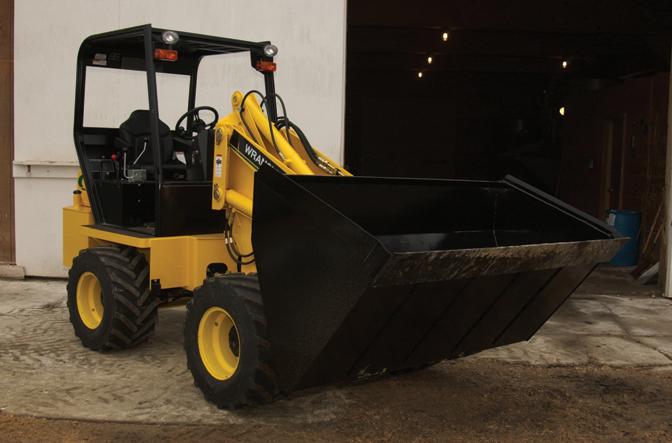
Willmar Wrangler 4550
The Willmar Wrangler 4550 Loader is engineered to deliver the power, maneuverability and performance that operators demand, perfect for farmers who expect their tractor to be a jack-of-all-trades.
Four-bucket capacities from 20 to 45 cubic feet let operators move all types of materials – up to 2,450 pounds – quickly and effectively.
The articulating loader features an 83 hp, 178 cu. in., Deutz diesel engine; single-speed, hydrostatic four-wheel drive; and joystick control for easy lift and tilt operation. In rough terrain, the 16-degree frame oscillation keeps all four wheels on the ground. The universal tool carrier accommodates most existing skid steer attachments from pallet forks and buckets to grapple forks and sweepers. Electronic shuttle-shift and precise foot pedal speed control mean the Wrangler loader will be a reliable, productive addition to any farming operation. www.willmarloader.com
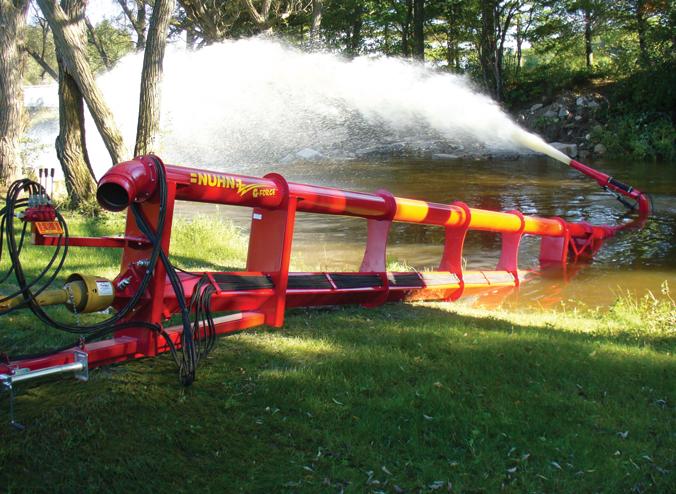
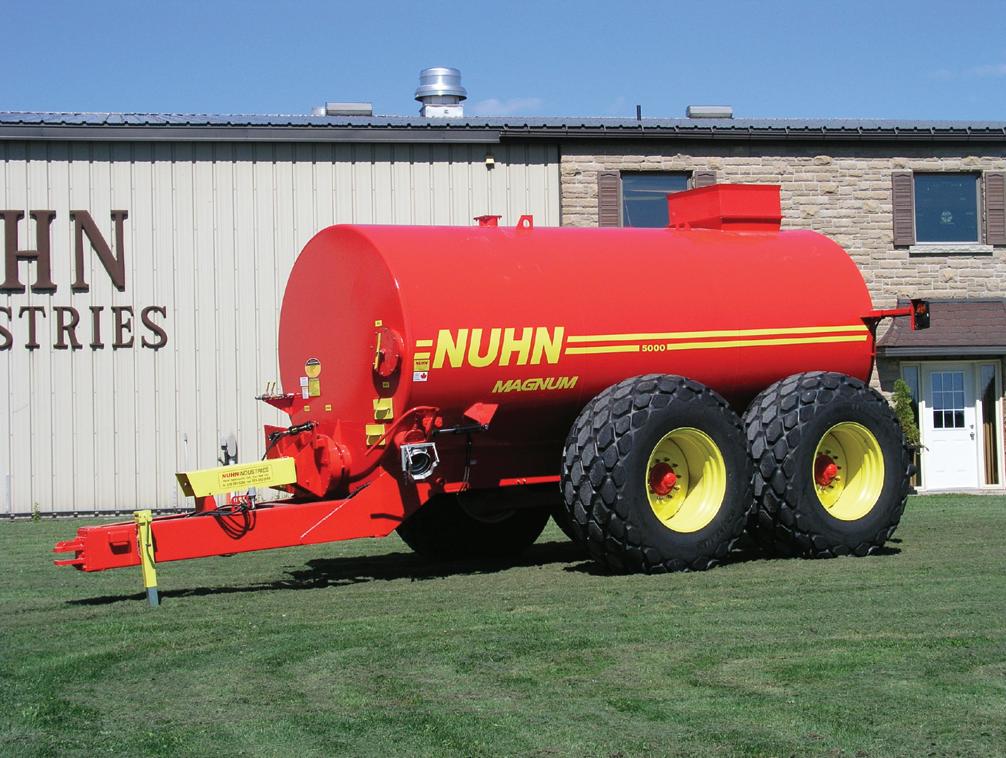
New Nuhn lagoon pump
The Nuhn G-Force Lagoon Pump is a new high-volume, high-performance
pump designed for commercial, and large farm, use.
The clean and rugged design ensures low maintenance, and long life. With the Nuhn design, all of the energy from the tractor is directed into pumping, as opposed to wasting half of the energy on turning a prop. This results in massive agitation capacities and faster loading speeds.
To allow for longer life, the bearings are completely enclosed. Pressurized grease from a spring-loaded cup purges the unit of grit, like a wheel hub, which results in the most comprehensive lubrication system and seal in the industry.
To find out more information and to see a video clip of the Nuhn G-Force Lagoon Pump in action, please visit www.nuhn.ca
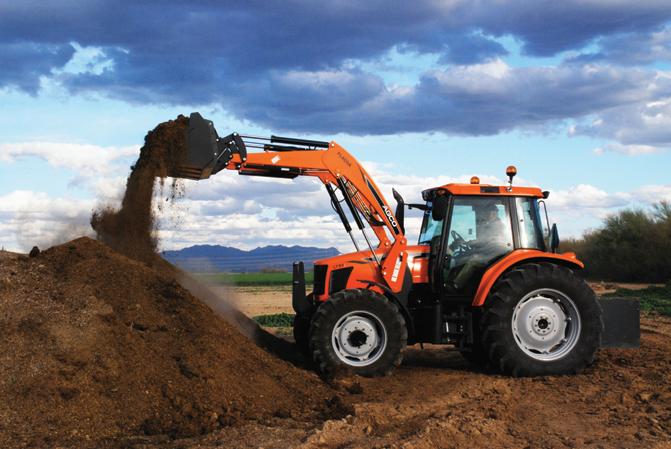
New AGCO LTs power up
Heavy-duty, mid-range AGCO® LT Series tractors are now Tier III compliant with more power, even better fuel efficiency and B100 use approved.
The AGCO LT85A and LT95A tractors combine the versatility of utility tractors and the rugged engineering of high-horsepower row crop tractors. The new models are also equipped with an advanced semi-powershift transmission,
high flow hydraulics and a rear end built to handle one of the highest hitch lift capacities in the mid-range market. In addition to more power, the tractors feature a new look with a single piece hood that can be raised up and out of the way for easier servicing.
The heart of the new tractors is the B100 approved, 4.4L SisuDiesel engine with its common rail fuel injection system and electronic engine management. It delivers 85 PTO hp to the LT85A and 95 PTO hp to the LT95A. The four-cylinder engine with its four valve per cylinder design produces improved control of air and fuel mix for a better burn. Fuel consumption is lowered with high efficiency even at high power. The engine block itself has been designed to improve temperature equalization for less stress on components and longer engine life.
The new LTs are equipped with the Auto 4 semi-powershift transmission with 16 speeds forward and reverse. The multifunction shuttle allows the operator to change direction, declutch and powershift speeds with his left hand, keeping the right hand free for implement control.
The new LTs also come with 26 gpm open center hydraulics as standard equipment. This high flow rate for an open center system is more than adequate for quick loader response. Higher output and increased flow control for live third function loader attachments or for rear attachments like those using hydraulic motors can be achieved with the optional 29 gpm closed center load sensing system. If hydraulic flow isn't a concern an economical 15 gpm system is another option.
Lower link sensing on the threept. hitch with lift capacity of 7,817 lbs. standard and 9,189 lbs. optional also sets the LT Series apart from the competition.
Customers can select from open platform or cab models and two- or four-wheel drive.
www.agcoiron.com
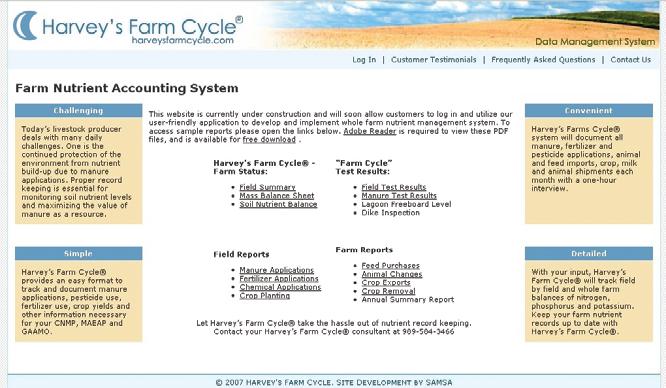
New manure recordkeeping program
Harvey’s Farm Cycle, Inc. has a new solution to the headaches of manure
recordkeeping. The company has developed a complete farm nutrient accounting system that was designed to track all forms of nutrient movement on the farm. The system records manure, fertilizer, and pesticide applications and detail areas where nutrient buildup is occurring, improving management decisions and helping ease the burden of regulatory reporting.
The main goal of the program is to help producers record and maximize the benefits of nutrients applied to their cropland. The program also helps to keep farms in compliance with the requirements set forth by the National Pollutant Discharge Elimination System (NPDES) permit and requirements outlined in the Generally Accepted Agricultural Management Practices (GAAMPS).
Harvey’s Farm Cycle program is Internet based and offers options that fit into most management systems. Information can be entered online by the producer or by a Harvey’s Farm Cycle consultant. The online availability gives the producer the opportunity to manage and view their farm records at anytime.
The Harvey’s Farm Cycle program helps streamline the information and record-keeping process in a user-friendly and highly efficient way. Through the ongoing record keeping reports that Harvey’s Farm Cycle has designed, the hassle is taken out of record keeping. www.harveysfarmcycle.com
OtterBox protective case for BlackBerry smartphones
Exclusive to the Defender™ Series line, Otter Products has introduced the slim-fit OtterBox 1936 case to protect the new BlackBerry® Pearl™ 8120 and BlackBerry® Pearl™ 8130 smartphones from Research In Motion (RIM).
Allowing complete access to the trackball, sync/charge USB port, camera and self-portrait mirror, the OtterBox provides an ideal solution for on-the-go protection with style.
Similar to existing BlackBerry smartphone cases in the OtterBox Defender™ Series line, the OtterBox 1936 case offers three layers to safeguard the BlackBerry Pearl 8120 and BlackBerry Pearl 8130 from bumps, scratches and drops.
Additionally, three acoustically
approved, semi-permeable membrane vents protect the headset and speakerphone openings, while still allowing clear sound transmission. Cases include a holster-style, swivel belt clip for convenient carrying. BlackBerry smartphones also feature a magnet proximity sensor to automatically shut off the display to maximize battery life when stored in a holster or case, and this feature is supported with the OtterBox.
OtterBox also offers the Defender™
Series cases for the BlackBerry® 8800, BlackBerry® Curve™ series and original BlackBerry Pearl™ 8100 series smartphones. www.otterbox.com
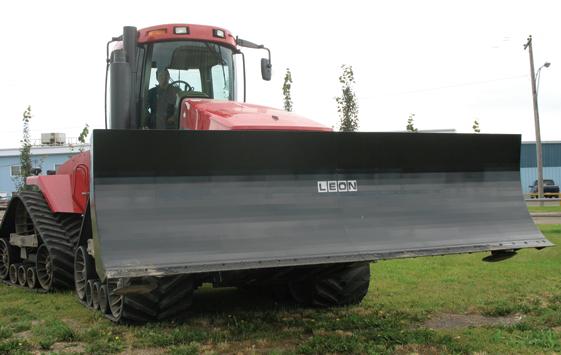
Leon dozer blades available for Case tractors
Leon is offering complete dozer blade packages for four-wheel-drive and track drive-tractors.
These packages include: quick-on, quick-off mounting; unique blade contouring to ensure clean rolloff for easy pushing; powerful hydraulic right and left angling; adjustable skid shoes; full tractor service accessibility; extra high tractor under frame clearance, and hydraulic bulk head breakaway.
Options include: hydraulic vertical tilt, blade tops, width extensions, and side plates.
Available packages include:
* Q440 for Case IH STX375, STX440, STX425, STX450, STX500
* Q480T for Case IH 480, 485, 530, 535 Track Model
* Q485W and Q480W for Case IH 480, 485, 530, 535 Wheel Model
* Q440T for Case Quadtrac STX375, STX425, STX440 (30-inch track width only)
* Q9350 for Case IH 9240, 9250, 9260, 9350
* Q9380 for Case IH 9270, 9280, 9290, 9370, 9380, 9390 Quadtrac www.leonsmfg.com
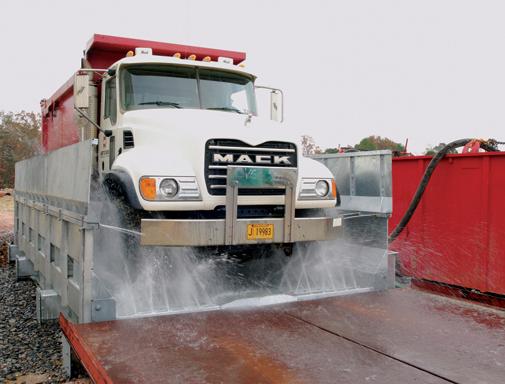
Neptune wheel wash systems now available in Canada
The Neptune series of stationary and portable automated wheel wash systems, manufactured by Innovative Equipment Solutions (IES), is now available in Canada.
Calgary-based Neptune Northern has been named the Canadian sales, rental and service dealership for the product line, which is designed to eliminate facility and jobsite track-out in a variety of markets, including waste management and agriculture. Featuring concrete- or galvanized-steel-sidewall construction, the Neptune system is highly suitable to either permanent or temporary installations. All models are engineered with a fully automated, closed-loop water recycling and solids separation process – so that water present at the site entrance does not create any additional issues. For the permanent installation, its concrete construction allows for the highest level of water retention, thereby lowering operating costs.
The Neptune series is constructed to withstand heavy truck traffic and features a high volume/low pressure water design, which prevents overspray and the knocking of oil and grease from the truck chassis. Its extra-wide, 42-inch wash elements flex the tire tread open to allow the high water volume flow to flush the tires clean. A highly focused spray is easily achieved with adjustable nozzle assemblies.
The sales and engineering team at Neptune Northern will be available to guide clients through system selection, customization and turnkey installation. They will also provide valuable education and training on the cost-efficient use of wheel wash systems and the importance of compliance with environmental, air quality and clean road regulations. www.neptunenorthern.ca www.innovativeequipment.org
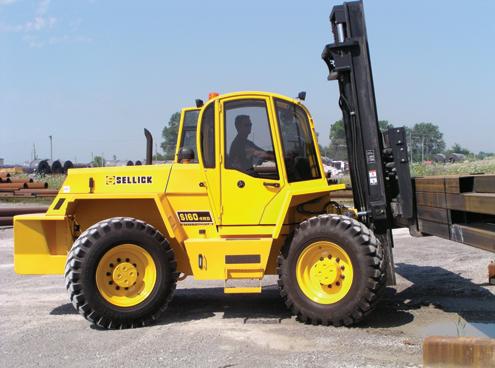
Sellick Equipment expands S-Series
Sellick Equipment Limited of Harrow, Ont., has expanded its S-Series product line by adding a 16,000-lb. capacity model.
The new S160-4 has full-time four-wheel drive and four equal sized wheels. By steering both axles, the S160-4 has a tight turning radius of 150-inches.
The S160-4 is powered by the Dieselmax 444 Turbocharged Tier III diesel engine, producing 114 hp, and is coupled to a fully automatic power-shift transmission for efficient operation. Axles feature enclosed wet disc brakes for extended life, and limited slip differentials for maximum traction and maneuverability. Consistent with the S-Series product line, the operator platform of the S160-4 is mounted to frame on isolators which dramatically reduce noise and vibration for the operator. Standard features include frame leveling, tilt steering column with full instrumentation, light package, and back-up alarm. Options include full cab, air conditioning, side shift and fork positioning carriages, and a variety of lift heights and fork lengths. www.sellickequipment.com
INNO ATIONS
PUMPS
Pit and manure additives
Agtech Products Inc./Danisco
Accelerator™ PLUS was developed to help reduce the crust that can accumulate in manure storage systems. The product contains enzymes selected for their ability to digest the outer layer of corn kernels and other hard-to-digest feed components, limiting the formation of pit crust on manure storages. By decreasing pit crust, livestock producers can reduce fly and rodent populations, reduce ammonia levels, and improve the worker environment.
According to Agtech Products, Accelerator PLUS is easy to use, inexpensive and technically supported. www.agtechproducts.com
Alken-Murray Corp.
Alken Enz-Odor® 5 is a concentrated dry blend of grampositive Bacillus strains and vegetative, gram-negative strains of naturally-occurring non-pathogenic bacteria and other ingredients designed to liquefy, metabolize, deodorize and balance the nutritive value of swine manure. The product is suited for use in holding tanks, manure pits, drainage systems and lagoons. According to Alken-Murray, Alken Enz-Odor 5 has been specially balanced for the carbon:nitrogen ratio of swine and poultry manure to produce more usable fertilizer that will be better utilized by plants, resulting in reduced runoff. The company reports that Alken Enz-Odor degrades cellulose fibers, xylan, proteins, fats and residual carbohydrates in swine manure; retards odor generation by oxidizing compounds, such as hydrogen sulfide; is effective over a wide temperature and pH range, and is non-toxic and safe to handle and store. www.alken-murray.com
AquaServe Technologies
AquaServe Technologies provide products aimed at reducing odors by increasing the population of beneficial populations of specific strains of bacteria.
The company’s manure treatment product reduces manure volumes by converting the waste into simple compounds.
Bacteria strains are custom blended based on the needs of the customer and the company reports it is harmless to the environment, humans and animals. According to AquaServe, benefits of the product include reduced manure volume, reduction of odors, a drier manure, making it easier to handle the sludge and more efficient for composting.
AquaServe also produces a lagoon treatment product that controls pond scum and odor. The product is a blend of selected bacteria chosen for their ability to remove nitrogen from the water and to degrade organic compounds. The program does not include algaecides and consists of single regular treatments during the algae season.
www.aquaserve.ca
Boss Technology
Agri-Boss™ is a bactericide additive used in the management of stored manure to help eliminate odors, liquefy solids and improve effluent quality.
According to Boss Technology, Agri-Boss works by blocking the anaerobic bacteria responsible for ammonia gas production and by lifting and suspending solids in the aerobic zone at the surface of the tank, stimulating the aerobic bacteria responsible for liquefaction of the waste material.
Agri-Boss increases the fertilizer value of the manure by preventing losses of nitrogen as ammonia gases and reduces fly populations by eliminating the solids needed for larvae development, the company claims.
www.bosstechnology.com
General Environmental Science
General Environmental Science (GES) began developing and marketing bacterial products for water quality improvement in 1974. The company’s product line has since expanded to include a liquid product line, a gel-based product line, a series of specialty products, and automatic bacterial injection (ABI) delivery systems.
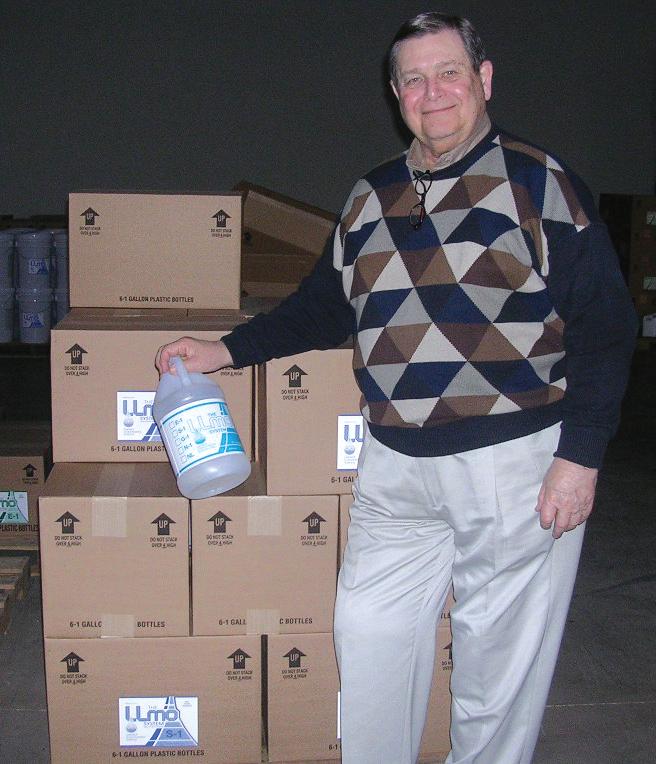
General Environmental Science's Liquid Live Micro
Organisms (LLMO) product line includes six specialized bacterial formulations, each designed to degrade certain types of waste. A mixture of bacterial species is included in each product to provide optimum treatment efficiency. LLMO products can be poured directly into the waste to be treated or can be used with an ABI delivery system.
LLMO S-1 bacteria are specially selected to reduce organic solids, such as those found in hog manure pits and dairy and hog lagoons. These bacteria produce enzymes that convert organic solids into carbon dioxide and water. According to GES literature, within four weeks of initial application, the scum layer on the pit will begin to break up and the solids in the pit will be broken down to a level where the material can be easily pumped out. The company also claims pit odor can be decreased through use of the product.
GES’ GelPac of technology involves immobilizing bacteria in a slow release gel. When it’s added to the liquid, the gel slowly dissolves, releasing the GelPac bacteria to the waste stream. GelPacs are generally replaced once per month and must be used with an ABI delivery system. www.generalenvironmentalscience.com
Global Repair
Humicbloom™ is the newest product from Global Repair. According to the company, this natural concentrate helps to improve nutrient value and locks in ammonia in slurry tanks, liquid manure storage systems, and compost piles, reducing and eliminating odors. .
When Humicbloom is applied to soil, it allows plants to access nutrients already in the soil and intensify applied manure and fertilizer, states Global Repair literature, adding the product has been naturally processed. It can be added to other applications or used on its own. www.globalrepair.ca
Dealer inquiries welcome.
INNO ATIONS
Midwest Bio-Systems
Midwest Bio-Systems markets numerous additives for use in composting systems, including ACS N-Converter (helps break down organic matter and converts ammonia to nitrites and then nitrates), ACS Humifier (helps break down organic matter), and ACS Finisher (stabilizes any remaining volatile compounds).
Midwest Bio-Systems also supplies ActPak Extracted Compost Tea Activator. According to the company, ActPak helps to stimulate the microbes in the compost tea to become active and multiply, which benefits the crop on which the compost tea will be applied.
www.midwestbiosystems.com
Penergetic
Penergetic products, such as Penergetic-g slurry treatment and Penergetic-k dry manure/composting treatment, can help to restore valuable organic fertilizers.
Penegetic-g optimizes slurry and liquid manure with the addition of oxygen, minerals, trace elements and herbs. This renders the slurry homogeneous and free flowing. The aerobic conversion process reduces floating and sedimentation layers and leads to a reduction in odor emissions. The incidence of scorching during application is reduced and the rotting effect is optimized.
Penergetic-k for dry manure and compost uses oxygen, saccharose, and fungi to promote the degradation of organic matter and accelerate the rotting process. The use of Penergetic-k reduces the unpleasant odor from compost and manure to a natural level. The actual composting process is accelerated and the end product (humus) is more valuable as a result of aerobic rotting.
Penergetic products are marketed and distributed in North America through Penergetic Canada. www.penergetic.ca
Pit Boss®
Pit Boss® pit and lagoon treatment is a unique, pH controlled product, not an enzyme or a bacteria. It interacts chemically with waste constituents to boost the aerobic manure digestion process, resulting in accelerated solids breakdown and lower gas production. According to Tramfloc Inc., less gas and faster suspension of solids leads to reduced odor and highly liquefied waste, meaning efficient pump-out. Tramfloc recommends Pit Boss for more than just hog manure. The company claims the product can be sprayed on dairy bedding and poultry litter to help control fly larvae and deplete odor. In composting, Tramfloc states Pit Boss can help with odor and progress decomposition. www.tramfloc.com
Pro-Act Biotech
Fertilizer costs, odor, solids, environmental restrictions – these are big concerns for farms when it comes to manure management. Pro-Act Biotech’s manure treatment system has been providing solutions to these problems for close to a decade.
With Pro-Act, the farm is left with better fertilizer, less odor, less solids requiring less agitation, and easily manageable nutrients that are stratified into accessible layers for use on growing crops. Increasing nitrogen fertilizer value while complying with nutrient management. Pro-Act’s system converts organic nitrogen to inorganic nitrogen for easy plant uptake while
allowing much of the phosphorus to settle to the bottom. The top water in Pro-Act treated lagoons contains less than two pounds of phosphorus per thousand gallons. This allows farms to irrigate at least three times as much, supplying their crops nitrogen needs with manure water without the risk of burning their crops or going beyond phosphorus limitations.
Pro-Act Biotech’s microbes degrade the organic solids in the manure, keeping the lagoon in a healthy state that is more manageable.
Odor from a microbially-active lagoon is reduced dramatically, not only making farm life more pleasant, but keeping the neighbors happy.
Microbially-active flush water has less solids and odor than untreated water, leaving the farm with cleaner and less slippery barn floors, meaning better smelling barns and safer animals. www.proactbiotech.com
Roebic Laboratories
Roebic Manure Liquefier (RML) is intended for use in hog, dairy and beef cattle operations, including barns, confinement areas and feedlots. Specific applications include manure pits, slotted floor areas and any piping, drains, traps, pumps or equipment used for handling, moving and storing livestock manure. According to Roebic, RML helps to digest manure solids, reduce ammonia and sulfide odors, and improve manure liquidity while retaining the manure’s nutrient values.
Roebic also produces Roebic Manure Deodorizer (RMD), a concentrated liquid enzyme product used for reducing and controlling odors from animal waste. According to Roebic, RMD helps to eliminate odors in livestock buildings and wastewater lagoons, reduces ammonia and sulfides, and improves manure liquidity. It does not act as a perfume or masking agent.
Other Roebic products include Roetech 106, a concentrated mixture of six Bacillus bacteria used to liquify solids and reduce odors in livestock manure ponds and lagoons; and Roetech 106 PS, a combination of Bacillus bacteria plus Pseudomonas that provides a multiple enzyme producing culture for controlling ammonia and hydrogen sulfide while liquefying solids and reducing odors in livestock manure ponds. www.roebic.com
INNO ATIONS
Selective Inc.
Start Fresh is an organic, bio-degradable product that introduces an oxygen source to organic, anaerobic environments, such as livestock manure pits, poultry facilities, and compost piles.
According to Selective Inc., Start Fresh stimulates aerobic activity, creating a natural aerator effect through the entire body of water and lowers the total suspended solids, meaning less maintenance and replacement of filters and screens. The company adds that when the product is sprayed on compost piles, the material heats up faster and stays hotter longer, resulting in thorough heat penetration.
When applied in the barn, Selective claims Start Fresh will help in the removal of dried, encrusted manure in alleys, bed stalls, free stalls, curbs and flush lanes. www.selective-inc.com
SHAC Environmental Products Inc.
According to the company, SHAC Manure Digester decreases odors and gases from manure pits and lagoons and loosens, liquefies and reduces solids for easier pumping. The product also aids in removing and preventing crusts and reduces overall volume to minimize hauling, spreading and the frequency of pumping, the company added.
SHAC Manure Digester is designed for use in both shallow and deep pit systems, straw packs, dry mounds, slurry storages and lagoons, solid separation systems,
shallow gutters with scrapers, open fields and pens and may also be used in various compost systems.
According to trial results cited by SHAC Environmental from Iowa State University, the product reduced odor by an average of 83 percent and reduced ammonia gas within barns by an average of 63 percent. Trial results from the Agricultural Utilization Research Institute (AURI) showed a nearly 100 percent reduction in the depth of organic solids in manure pits. www.shac.ca
Spartan Chemical Company
Consume® FWD Farm Waste Digester is a concentrated blend of natural digesters allegedly formulated to eliminate foul odors, reduce build-up of solids and gases, increase storage pit capacity, make pumping easier and faster, plus increase fertilizer value.
According to Spartan Chemical, laboratory and field-testing have shown that the digesters in Consume FWD have the ability to degrade urea into carbon dioxide and ammonia as a sole source of nitrogen for digester growth. The company adds that through the production of enzymes such as cellulase and protease, Consume FWD will reduce lagoon solids and help maintain tank material in a semi-liquid form to facilitate flushing and cleanout.
The product can be used in hog, cattle and chicken manure pits, feedlots, lagoon systems and compost heaps. www.spartanchemical.com
Growing the Margins conference “growing”
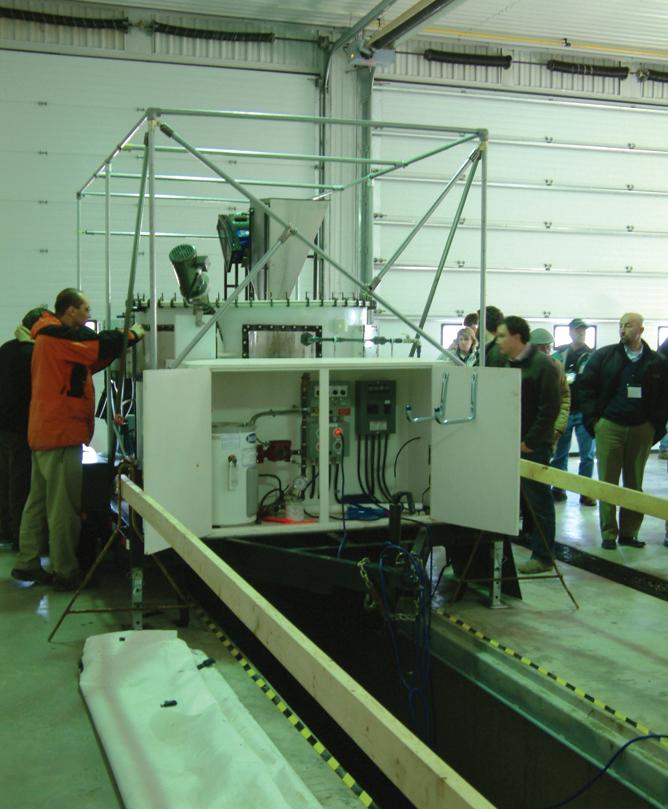
In keeping with its name, the Growing the Margins conference and exhibition continues to grow.
For 2009, the annual event will feature two distinct sessions – the Third Annual Growing the Margins: Energy, Bioproducts and Byproducts from Farm and Food Sectors Conference and Exhibition plus the First Annual Canadian Farm and Food Biogas Conference and Exhibition. Both sessions will be held in conjunction with one another from March 10 to 13, 2009, at the London Convention Centre in London, Ontario, Canada. Registration in one conference will provide full access to the plenary and technical sessions of both conferences.
•
The agenda for the week includes:
March 10 – European Union/ Ontario Biogas Networking Forum (Developing knowledge and business relationships in the agriculture and food processing sectors)
March 10 – Biomass Heat Networking Forum (Growing the value chain in agriculture and rural
biomass heat businesses)
March 10 – Building Your Biogas System Workshop (Introduction and basic training for biogas projects)
March 11-12 – Third Annual Growing the Margins conference
March 11-12 – First Annual Canadian Farm and Food Biogas Conference and Exhibition
March 13 – Technology tours
As an added bonus, an all-day workshop discussing air quality in rural Ontario will be held March 9.
Growing the Margins explores the technological, operating, policy, regulatory, financial and other challenges and opportunities facing farms and other related food processing and rural industries as they strive to improve their energy efficiency and better utilize byproducts.
The Canadian Farm and Food Biogas Conference will focus on issues such as connecting to the grid, economics and policy, energy crops, feedstocks, green natural gas, and greenhouse gas credits. It will involve discussion of case studies
Participants in the Second Annual Growing the Margins conference technology tour, held in April 2008, view a portable anaerobic digestion unit at one of the stops on the all-day tour.
and research findings from Canada and around the world.
Both events will share an exhibitor area showcasing leading-edge technologies, processes and programs.
For more information or to register, please visit www.gtmconference.ca and/ or www.biogasconference.ca.
Manure summit coming to the Midwest
Dealing with manure is a challenge for any farming operation and with increased government and environmental regulations, public scrutiny, plus a rise in the value of the resource as a soil amendment, many livestock producers are interested in learning more about new technologies to better utilize and manage manure.
In light of this, the University of Wisconsin Extension is presenting the 2009 Midwest Manure Summit March 24 and 25 at Lambeau Field in Green Bay, Wisconsin. The two-day event features speakers from around the world and involves discussion on all things pertaining to manure handling and storage.
The agenda includes presentations involving farm scale composting, manure digestion in Europe, controlling phosphorous levels, air emissions, treating
manure as a cash crop, biosecurity issues, safe handling and transportation of manure, the use of sand settling lanes, sand separation from manure, biogas, electricity generation from manure, anaerobic digesters for small farms, clean water issues, converting manure into building materials, and carbon credits.
Guest presenters include Manfred Faatz with EBA – GmbH, based in Triesdorf, Germany; Dr. Joe Harner of Kansas State University; Dr. Frank M. Mitloehner from the University of California – Davis; John Ferguson with Conestoga-Rovers & Associates; Andrew W. Wedel with McLanahan Corporation; Dr. Jactone Arogo Ogejo of Virginia Tech; Dr. Frederick C. Michel, Jr. of Ohio State University; Dr. Jerrold Winandy from the University of Minnesota; Jeffrey Arnold with Integrated Separation Solutions; Paul Schneider of Ecocombustion Energy Systems; Ryan De Broux with
the Professional Nutrient Applicators Association of Wisconsin, plus several representatives with the University of Wisconsin Extension and land conservation organizations.
Attendees will also have an opportunity to tour historic Lambeau Field, the home of the Green Bay Packers.
Those interested in attending the summit can register online at www. midwestmanure.com or print off the registration sheet and mail it to Kathy DeChamps, Brown County UW-Extension, 1150 Bellvue Street, Green Bay, WI 54302. Kathy can also be contacted at 920-2034610. The full conference costs $180, which includes all printed materials, lunch both days, breakfast on the second day, all refreshments and the Lambeau Field tour. Participants can also register for only one day at a rate of $100.
For more information or to register, visit www.midwestmanure.com.