Feed components required to optimize poultry performance By Lisa Hodgins M.Sc. Monogastric Nutritionist and Megan DeVisser, M.Sc. Candidate, Monogastric Nutrition Associate
New Life Mills, A Division of Parrish and Heimbecker, Limited
14
TECHNOLOGY: Liquid Composting of Poultry Manure
It could help feed humanity in future By
Tony Kryzanowski
18
PIC UPDATE: Poultry Health Day Returns
A one-day education and extension event to be held for producers in Ontario By Poultry Industry Council Staff
20
TRAINING: Making an IMPACT
Practical educational and training resources have been developed to improve animal care By Karen Dallimore
28
ENERGY: Unvented Heaters
The story behind the Ontario fuel safety program advisory By Karen Dallimore
FROM THE EDITOR
BY KRISTY NUDDS
Times Have Changed
Here’s an example in consumer and farmer disparity for you: at the recent 50th anniversary Egg Farmers of Ontario (EFO) annual meeting, its first general manager, Brian Ellsworth, noted how in the early years, the focus was on fair pricing for farmers and increasing consumption; 50 years later, the organization is giving $50,000 to the Farm and Food Care Foundation to enhance public trust in food.
Consumer mistrust of food and food production wasn’t a reality faced by EFO and it’s provincial and national counterparts in the early 1960s and into the early 1970s, when the primary issues facing the poultry industry were farm economics and controlling production levels.
In the early years of orderly marketing, consumer engagement consisted solely on the promotion of eggs, chicken and turkey. There wasn’t any need to place farmers or farming into the limelight; what they do and how they do it was never questioned. Fifty years ago, people weren’t as removed from farming as they are now.
But all of this has changed dramatically since then. The EFO presented this disparity very well during its meeting, beginning with a “respecting our past” session followed by “embracing our present” and “building our future” sessions. It served to educate producers on how the industry has evolved and shared several key lessons that are applicable across the industry nationwide.
Lawyers involved in upholding the legislation behind the supply management system discussed its origins and how the legislation – a “fusion” of national and provincial authority, has stood the test of time and numerous legal challenges. Despite this, it is not a system to be taken for granted, said speaker Pierre
Brousseau, a Montreal-based lawyer who’s made a career out of working with supply-managed commodities. “The younger generation needs to realize that supply management is not written in marble.”
Lawyer Herman Turkstra noted that the “world outside” of supply management wonders about it and said the steps the industry has taken in recent years to communicate with the public and be more transparent is key, and needs to continue with greater effort in future.
This is particularly important with an upcoming federal election and the push from the United States for Canada to sacrifice supply management in order to allow the Trans-Pacific Talks to move ahead. Although one of the “embracing our present” speakers, Chad Gregory, president of the United Egg Producers (UEP), praised the system, he acknowledged that without it, “it would be a matter of months” before U.S. producers moved in.
The reality for our forefathers was setting up a system that worked for both producers and consumers. But it’s not just about stability and profitability anymore. Now, farmers are faced with not only protecting the system in which they operate, but defending what they do and how they do it every day.
It’s not fun having to be on the defense at every turn, but it’s necessary in today’s world. As “building our future” speaker Jim Carroll – a futurist, trend and innovation expert – noted, seven out of 10 children today will be working in jobs that aren’t even in existence yet. Their world is social, immediate and online, and they are bombarded with messages at every turn. The industry needs to embrace this, and ensure that the messages they receive are factual – the future depends on it. n
Canada – 1 Year $30.00 per year (with GST $31.50, with HST/QST $33.90)
GST – #867172652RT0001
USA – 1 Year $ 66.00 USD Foreign – $75.00 per year
Occasionally, Canadian Poultry Magazine will mail information on behalf of industry-related groups whose products and services we believe may be of interest to you. If you prefer not to receive this information, please contact our circulation department in any of the four ways listed above.
and still maintaining exceptional litter conditions.
1 2 3
Got Lubing? Contact your local Lubing Distributor for more detailed information.
Glass-Pac Canada
St. Jacobs, Ontario
Tel: (519) 664.3811
Fax: (519) 664.3003
Carstairs, Alberta
Tel: (403) 337-3767
Fax: (403) 337-3590
J. Dean Williamson Ltd.
London, Ontario
Tel: (519) 657.5231
Fax: (519) 657.4092
As easy as
1, 2, 3.
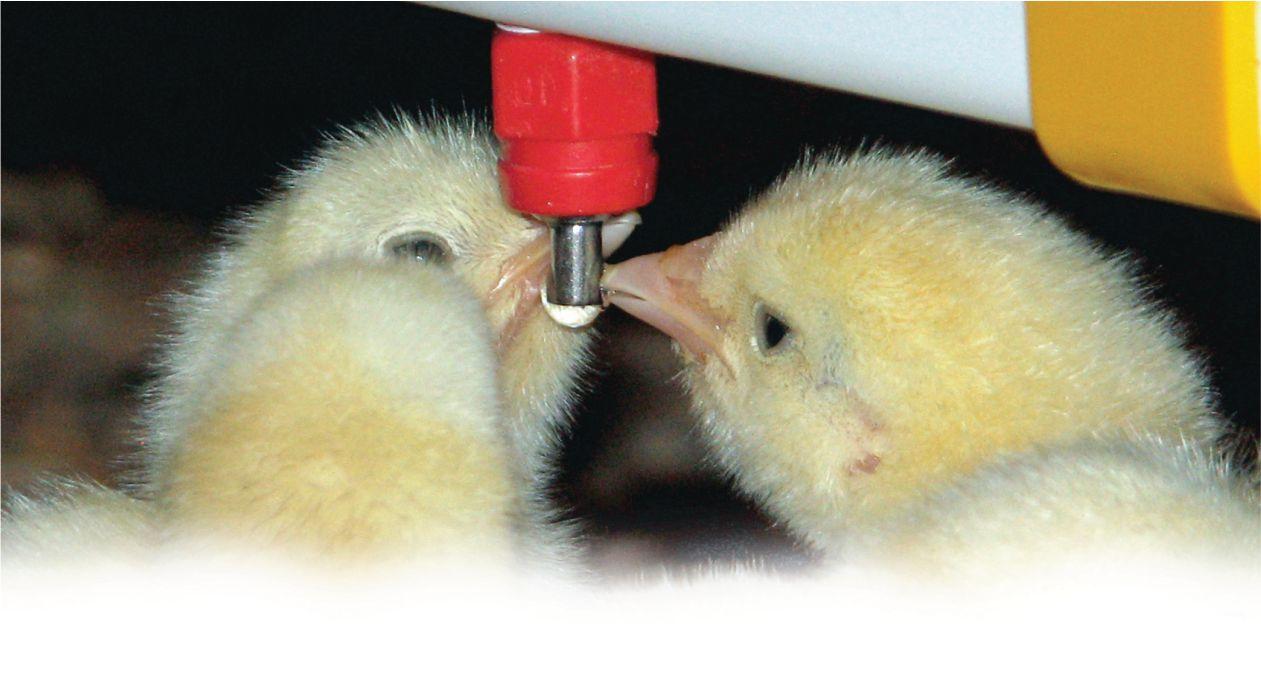
1) Large bottom pin that holds a drop of water to attract day old birds to nipple / great starts / average first week mortality below 1%.
2) Greater side flow with minimal triggering force allows all birds to easily trigger the nipple and get off to a great start. Great Starts = Fantastic Finishes!
3) Both, vertical and side action, deliver the Opti-mum flow rates and ability to grow a 4 lb small bird up to a 10 lb Jumbo bird with the same nipple. After hundreds of house updates, customers are consistently seeing improved weight gains of up to 1/2 lbs/bird with dry litter conditions!
Les Equipments Avipor
Cowansville, Quebec
Tel: (450) 263.6222
Fax: (450) 263.9021
Inc. Stony Plain, Alberta
Tel: (780) 963.4795
Fax: (780) 963.5034
Food Safety Investment WHAT’S HATCHING HATCHING
The Government of Canada recently announced an investment of $30.7 million for the establishment of the Food Safety Information Network (FSIN).
The FSIN will help connect federal and provincial food safety laboratories and regulators across the country. This new network will help rapidly identify, mobilize and coordinate laboratory surge capacity and capabilities during complex food safety incidents and emergencies; allow near-real time sharing, organization and analysis of food safety information across the country to inform more preventive and timely risk management decisions; and improve Canada’s ability to effectively anticipate and detect routine foodborne threats.
The FSIN is a collaborative
initiative developed by the federal government with the provinces and territories. Federal partners include the Canadian Food Inspection Agency (CFIA), Health Canada and the Public Health Agency of Canada (PHAC). The FSIN will be implemented incrementally over five years, linking federal and provincial food safety establishments and accredited laboratories across the country. According to a Government of Canada news release, Canadian consumers will benefit from the new Network through:
• Faster, more proactive food safety interventions;
• More preventive food safety programs and inspections to better protect consumers;
• Strengthened laboratory emergency response during food safety incidents and emergencies (which should speed-up recalls, for example); and
• Improved guidance on reducing food safety risks.
The FSIN will standardize food safety testing and leverage existing laboratory capacity and enhance Canada’s ability to provide evidence of the integrity of Canada’s food supply to trading partners.
The investment is part of the 2014 Economic Action Plan, where the federal govenrment stated it planned on investing $390 million over five years to strengthen Canada’s food safety system. In addition to the FSIN, the funding has been earmarked for hiring more than 200 additional inspectors and other staff; establishing a national information system to enable authorities to move quickly to detect and respond to food safety risks; and continuing BSE-related programming aimed at safeguarding human and animal health. The federal government says it will also pursue legislative amendments as needed to facilitate the implementation of food safety program improvements.
EFO Donates $50,000 to enhance public trust
both organizations.
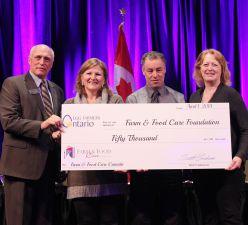
To celebrate its 50th anniversary, the Egg Farmers of Ontario (EFO) has donated $50,000 to the Farm & Food Care Foundation. The money will help the Farm & Food Care Foundation expand its work nationally with the goal to build public trust in food and farming.
The presentation was made as part of EFO’s annual convention which celebrated the organization and egg farmers’ achievements. In making the donation, Scott Graham, chair of Egg Farmers of Ontario said that the donation holds a lot of significance to
Schafers
Susan Schafers, Chair of the Egg Farmers of Alberta (EFA) Board of Directors, has been named the 2015 recipient of the Alberta Farm Animal Care (AFAC) Award of Distinction for Communication. Susan was presented with the award at AFAC’s annual Livestock Care Conference in Calgary, on March 27th.
According to AFAC, their Awards of Distinction were initiated in 2001 to recognize individuals or groups who have made exceptional contributions
Said Graham, “It was Jim Johnstone, an egg farmer and former EFO chair that had the vision to help establish the Ontario Farm Animal Council
(OFAC) in 1987. He saw the value in the coalition approach that expanded even broader with the formation of Farm & Food Care Ontario in 2012.”
Graham continued, “Jim
in the field of livestock welfare. The Communication award honors those that take an active role in effectively getting the message out about livestock issues, and informing the public and agri-food industry about farm animal care in a factual and honest way, to build trust and credibility.
Susan Schafers is a second generation egg farmer who became Chair of the EFA Board in 2014 and, in a relatively short period of time, Susan has dedicated herself to being the public face of EFA and Alberta’s egg industry. Susan has also been the Alberta representative for the Pullet Growers of Canada, the egg industry representative for AFAC, and the leader of the 4-H club in Spruce Grove.
According to the EFA, farming has always been in her blood, and it has become
Johnstone was passionate about the need for all types of farmers to tell their stories to the public and he saw enormous value in a coalitionapproach to communicating about food and farming long before many others did. He was a true leader and a trail blazer.”
Ian McKillop, an egg farmer and vice chairman of the Farm & Food Care Foundation, accepted the cheque and said that the donation was an excellent demonstration of the EFO meeting’s theme of “Past, Present and Future”.
The national charity will provide a proactive, coalition approach for building public trust in food and farming in Canada, and extend the provincial efforts of groups like Farm & Food Care Ontario and Farm & Food Care Saskatchewan.
her life and livelihood. Even though she feels most at peace when she’s alone in the barn collecting eggs from ‘her girls’, sharing her story has become second nature to her. Communicating about farming is not what she does; it’s who she is. Susan is immediately likable and trustworthy, as her authenticity and passion comes bubbling through; traits she undoubtedly inherited from her father Manfred, who started the family farm and also played an important role in the founding of AFAC.
The EFA says Susan Schafers’ dedication to animal welfare and passion for sharing her story is what makes her such a remarkable communicator, who is able to make a personal connection and leave a lasting impression with everyone she comes in contact with.
MAY 2015
May 6, 2015
PIC Research Day hosted by the Poultry Industry Council (PIC), OMAFRA Building, 1 Stone Rd. Guelph, Ont. For more information, visit: www. poultryindustrycouncil.ca
JUNE 2015
June 18, 2015
Poultry Health Day hosted by the Poultry Industry Council (PIC), Stratford, Ont. For more information, visit: www. poultryindustrycouncil.ca
June 17-19, 2015
Canada’s Farm Progress Show
Evraz Place, Regina, Sask. For more information, visit: www.myfarmshow.com
JULY 2015
July 14, 2015
North American Manure Expo
Chambersburg, Pa. For more information, visit: www.agannex.com/manuremanager/manure-expo
July 27-30, 2015
Poultry Science Association annual meeting
Louisville, Ky. For more information, visit: www. poultryscience.org/psa15
SEPTEMBER 2015
September 15-17, 2015
Canada’s Outdoor Farm Show
Canada’s Outdoor Park, Woodstock, Ont. For more information, visit: www. outdoorfarmshow.com
WHAT’S
HATCHING HATCHING
Canada Addressing AMR
Leaders representing human and animal health organizations held a roundtable to discuss Canada’s plan for combatting antimicrobial resistance (AMR). Both human and animal health stakeholders shared their priorities and discussed roles and responsibilities in addressing AMR. Several announcements were also made: The Government of Canada’s has a new Federal Action Plan on Antimicrobial
Resistance and Use, building on the previously released Federal Framework for Action; an investment of $250,000 (US) to support a World Bank study of the economic impacts of AMR; and the launch of the Canadian Antimicrobial Resistance Surveillance System (CARSS), a new surveillance approach that will provide an integrated, national picture of antimicrobial use and resistance across Canada.
LED Water Lights
AHPharma, Inc. has introduced a new series of high-intensity AviLighting™ LED Water Lights designed to enhance the consumption of water by poultry, especially during the first week of life.
The company says its research has shown that lights placed over the feeder, in conjunction with drinker LED strip-lights, will significantly improve both feed and water consumption. This extensive research tried to determine the effect of light intensity on “bird attraction” at both feeding and watering areas (both separate and together). This
research to date indicates that >8 fc of light at the feeder, with less light toward water nipples, attracts the majority of birds to feed troughs, not the water nipple areas. To correct this initial water consumption issue, the company has found that LED strip-lights employed directly next to water nipples will inexpensively yield a highly significant >90 per cent bird presence around this area during the first 24 hours post placement.
For more information, contact Eddy Slick e-mail: Eddy. slick@keith-smith.com or tel: 501-547-8261
COMING EVENTS
OCTOBER 2015
October 6-8, 2015 Poultry Service Industry Workshop
The Banff Centre, Banff, Alta. For more information, visit: www.poultryworkshop.com
NOVEMBER
November 18, 2015
Canadian Poultry Sustainability Symposium
Best Western Plus Lamplighter Inn and Conference Centre, London, Ont. For more information, visit: www. cpsustainability.com
November 19, 2015 Poultry Innovations Conference
Best Western Plus Lamplighter Inn and Conference Centre, London, Ont. For more information, visit: www. poultryindustrycouncil.ca
We welcome additions to our Coming Events section. To ensure publication at least one month prior to the event, please send your event information at least eight to 12 weeks in advance to: Canadian Poultry, Annex Business Media, P.O. Box 530, 105 Donly Dr. S., Simcoe, ON N3Y 4N5; email knudds@annexweb.com; or fax 519-429-3094. Please write ‘Event Submission’ in the subject line.
Cover Story
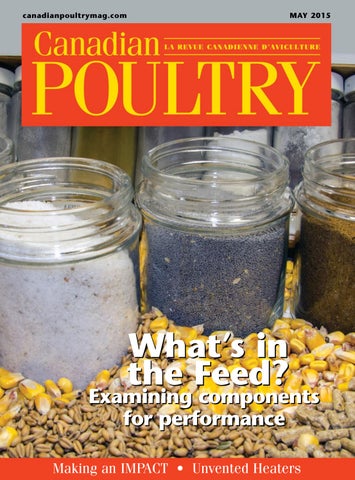
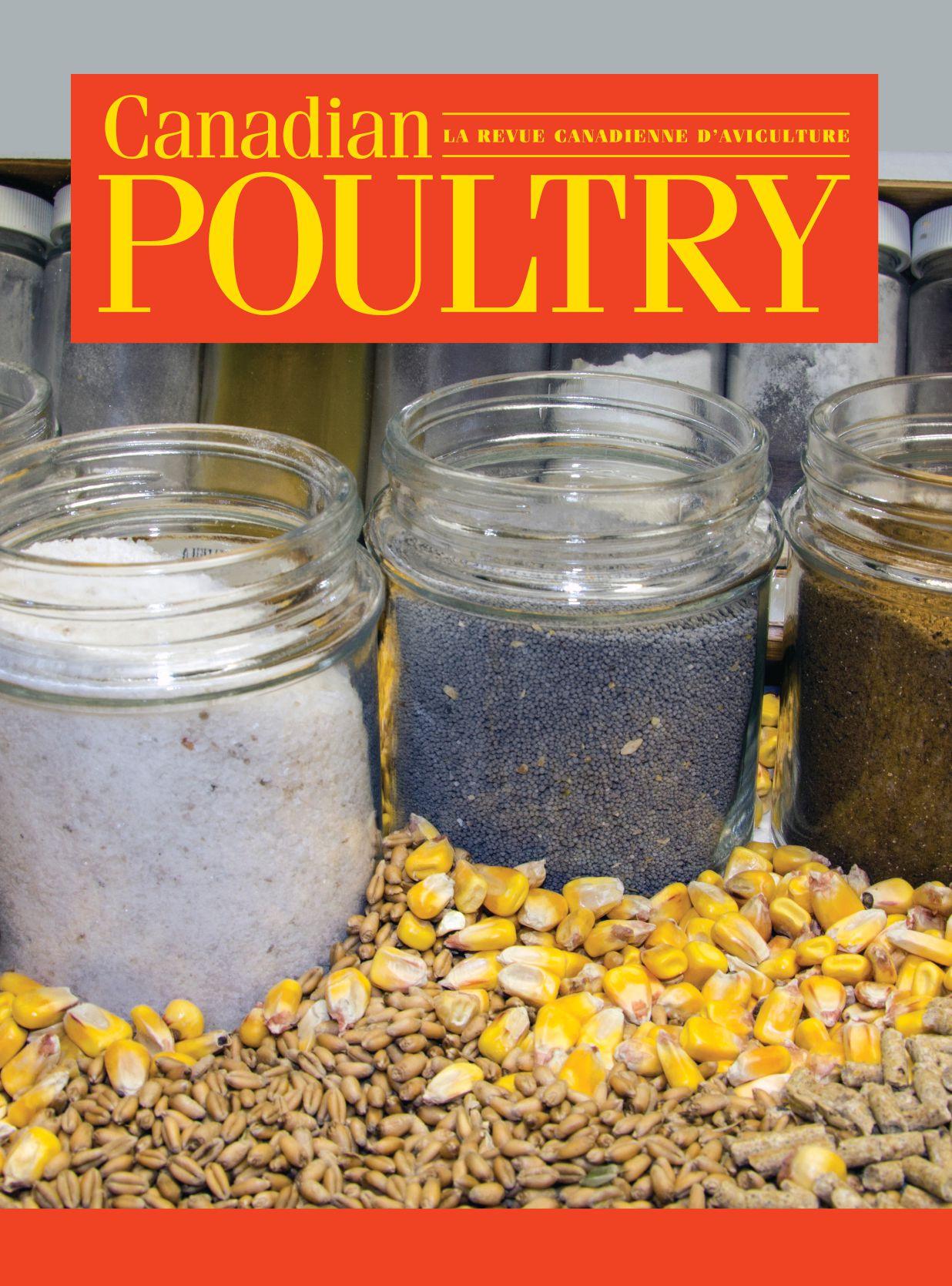
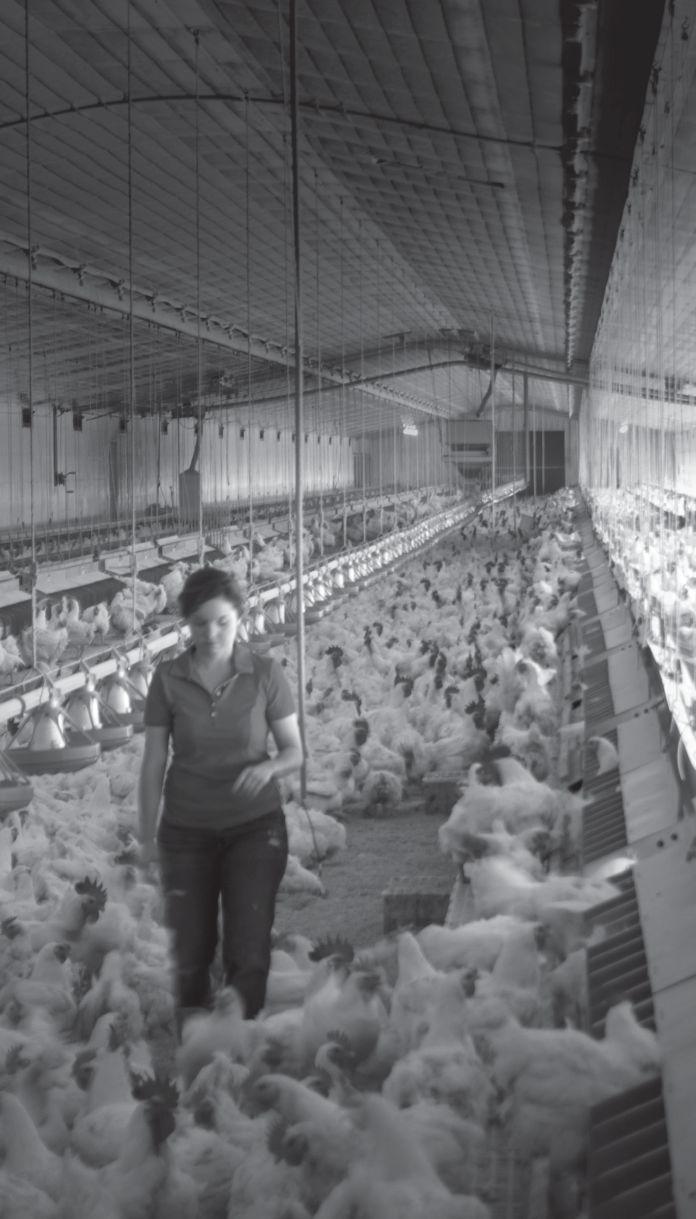
What’s in Feed? Explaining components required to optimize poultry performance
by Lisa Hodgins M.Sc. and Megan DeVisser, M.Sc. Candidate New Life Mills, A Division of Parrish
and Heimbecker, Limited
Producers have very clearly defined goals and objectives when it comes to growth and production in commercial poultry operations. Fortunately, nutritionists also have a very clear knowledge and understanding of the nutrient requirements essential for growing birds and managing egg production economically and efficiently. The balance between efficient growth and production, as well as maximizing the economic potential usually leads to the question: “What’s in the Feed”? As nutritionists, it is our job to analyze and determine the best ingredients possible to be used in feeds in order to meet the nutritional requirements and optimize performance, while at the same time achieving the goals and expectations of the processing plants or grading stations. Since feed represents the biggest input cost in any poultry operation it is also important to maintain a balance between optimizing performance at a reasonable cost.
INGREDIENTS
It’s the job of nutritionists to analyze and determine the best ingredients possible to be used in feeds in order to meet the nutritional requirements and optimize performance, while at the same time achieving the goals and expectations of the processing plants or grading stations.
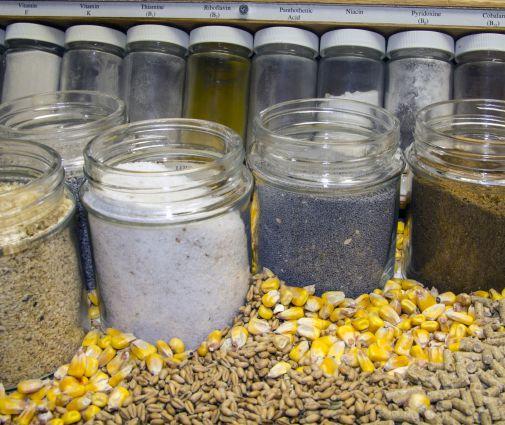
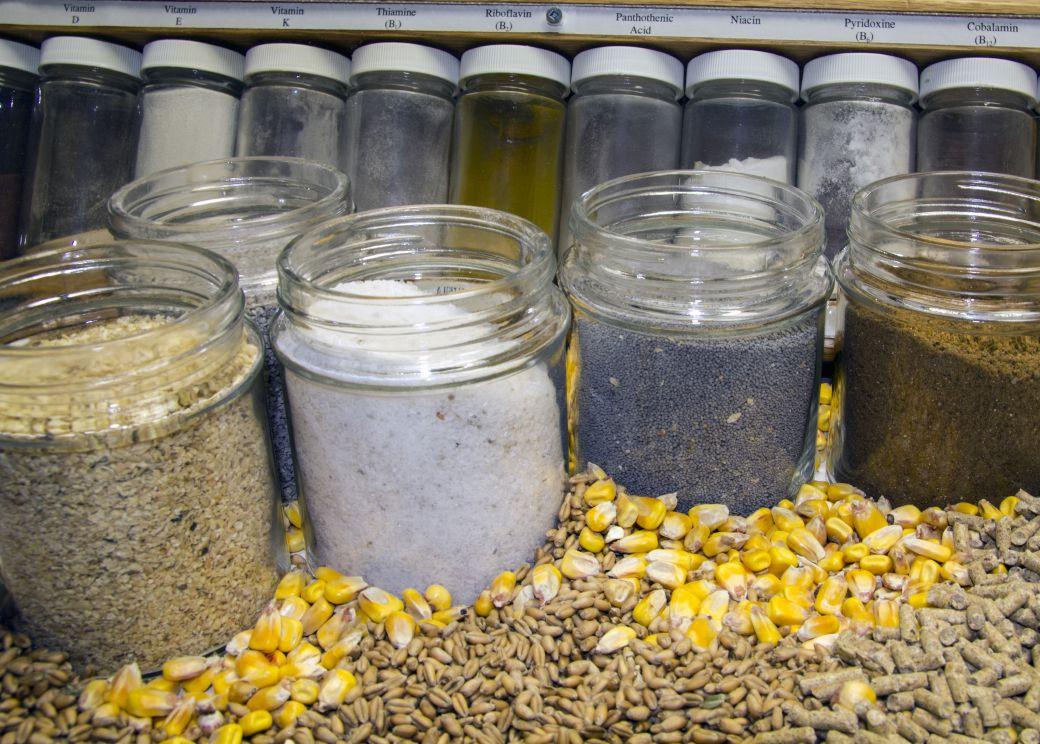
As commodity prices change and alternative ingredients become more available, one may begin to think about reevaluating the ingredients going into feed. Poultry feed generally contains the following categories of main ingredients: grains, animal proteins, fat, macro minerals, vitamins/ trace minerals and amino acids. The proportions of each of these ingredients in a feed will vary depending on the type of bird, stage of production and the performance goals being targeted.
Energy is derived from organic matter and is required to fuel all life processes. This means that chickens cannot
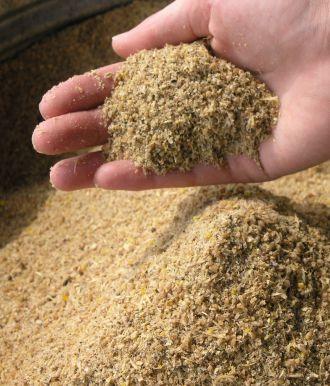
survive without adequate energy. Grains represent the biggest part of poultry feeds, with approximately 85 per cent of the feed being made up of vegetable grain sources. While corn and wheat are the two most dominant grains used in Canadian poultry feeds, other grain based ingredients used in poultry feeds include: wheat shorts, wheat midds, canola products, flaxseed, corn distillers and barley. Carbohydrate sources are the main contributors to the overall energy in a feed with approximately 50 per cent of the total energy in a feed coming from carbohydrates. Fat sources also supply energy to the bird and are used for specific metabolic functions in the body. Fat can be supplied from plant sources, such as canola and soybean oil, and animal sources, such as tallow. Additionally, fat can be provided in the feed as a blend of animal and vegetable fat. Fat also serves a functional role in that it is known to enhance palatability and feed quality.
Proteins play a key role in poultry production and are an expensive component of poultry feeds. Proteins are composed of chains of amino acids, which are broken down in the digestive process and go on to contribute to many processes within the body. Protein is a major component of muscles, tissues and feathers, as well as being involved in various metabolic reactions. For this reason, poultry have a high protein requirement, whether for muscle production in broiler chickens and turkeys or egg production in laying hens. Some common protein ingredients used in Canadian poultry feeds include: soybean meal, full fat soybean meal, canola meal and animal proteins. Quality of protein sources is an important aspect for nutritionists to understand and consider. Because different protein sources
Vitamins and trace minerals are used for various metabolic processes in the chicken. They are required in very small amounts, but any deficiency in these nutrients can lead to a dramatic loss in performance.
have differing levels of availability to the chicken, nutritionists ensure that the proteins being used in the feed are of high enough quality and balanced in such a way that the chickens are being provided with the correct protein levels required to maximize performance.
Another category of feed ingredients are macro minerals. This category of ingredients includes limestone which supplies calcium, dicalcium phosphorus which supplies phosphorus, and salt which supplies sodium and chloride. Macro minerals are involved in many different pathways within the chicken however; the skeleton is the key user of minerals within the body. As the skeleton is the base of a high producing bird, it is essential that these macro minerals are supplied at adequate levels to support the development, as well as subsequent strength, of the bones. Additionally, in laying hens, macro minerals are an important component of egg shells, so nutritionists ensure that these nutrients are being supplied at high enough levels to support egg shell formation.
Micro premixes supply essential nutrients, including vitamins A, D, E, and the B-vitamins as well as the trace minerals copper, manganese and zinc. Vitamins and trace minerals are used for various metabolic processes in the chicken. They are required in very small amounts, but any deficiency in these nutrients can lead to a dramatic loss in performance.
Synthetic amino acids are important feed ingredients because they allow nutritionists to precisely balance for any deficiencies. These deficiencies occur because the amino acids being contributed by the organic protein sources in the feed will not match exactly what the bird requires to maximize growth and production. While supplying multiple protein
sources with different amino acids profiles will increase the likelihood of reaching the required levels of each amino acid, there is typically still a need for specific synthetic amino acids. Synthetic amino acids that are available for use in poultry feed include lysine, methionine, threonine and tryptophan. Using these synthetic amino acids in feed formulation allows nutritionists to ensure that the amino acids required are present at the correct level in the feed.
CONTINUOUS MONITORING
Chickens grown on commercial poultry farms rely entirely on the feed provided to them to supply all of the nutrients they need to grow and thrive. As a result, it is the role of a nutritionist to ensure that the specific ingredients and nutrients being provided in the feed will optimize the performance of the bird, while still being profitable for the producer. Since feed represents the greatest cost associated with raising poultry there continues to be a need to evaluate new ingredients and continually monitor the quality of the more common grains like corn, wheat and soybean meal. The feed provided to the birds will be completely balanced for energy, protein, amino acids, macro nutrients, vitamins and trace minerals, as nutritionists understand that a shortage of any these nutrients could lead to lost performance and profits for the producer. Feed is only as good as the ingredients that go into it, which is why we ask ourselves “What’s in the Feed”? Nutritionists will always strive for quality, consistency, efficacy and economics while maintaining profitability for producers when formulating feeds used in today’s market. n
CPRC Update DDGS May Prove More Useful
Nutritious feed is one of the most significant components of raising poultry and the right feed contributes to maintaining bird health and promoting growth.
It is estimated that feed costs make up 50 to 70 per cent of expenses in poultry production. Feed costs are based on the availability of ingredients (e.g.: corn, wheat), which can fluctuate significantly in price. Feed suppliers must balance proper nutrition with available ingredients while complying with safety and legislative guidelines and processing requirements. Finding alternative ways to reduce feed costs, while maintaining nutrition, has been a priority of the poultry industry for many years.
There are a number of ways in which new ingredients can be incorporated into poultry feeds and there has been an increased focus on the inclusion of by-products from fermentation processes, known as “distillers’ grains”. The biofuel industry has grown immensely in recent years and has significantly increased the amount of fermentation by-products available but that have few uses. Harnessing this resource in poultry feeds has the potential to reduce feed ingredient while offering a practical end-use for bioethanol and biodiesel processing by-products.
A DIFFERENT APPROACH
Dr. Tom Scott and his team, based at the University of Saskatchewan, set out to determine the nutritional value of these alternative feed ingredients by evaluating the impact of various nutritional processes on feed value. The project was conducted at the Canadian Feed Research Centre, a new world-class facility that was built to enable innovative research, development, and commercialization of new and highvalue feeds derived from low-value crops
or by-products. Utilizing this new facility, Dr. Scott and his team examined the effects of including fermentation by-products in turkey feed and how processing during feed formulation might increase the nutritional value of these low-value by-products.
In order to use these low-value byproduct ingredients in turkey feed, they must undergo processing in order to unleash their nutritional value. Scott and the team further assessed the benefit of adding enzymes to the feed, which react with the ingredient compounds, exposing the available nutrients for turkeys to absorb.
Secondly, the available protein within the ingredients was evaluated with the use of these commercial enzymes. Obtaining higher levels of protein from this lowvalue source could help reduce feed costs while lowering the amount of nitrogen that is excreted, improving environmental impacts and industry sustainability.
THE EXPERIMENTS
A control feed without wheat distillers’ dried grains with solubles (wDDGS) and an experimental feed with 30 per cent wDDGS were fed to young turkeys. Each feed type was balanced to meet the minimum requirements for a turkey starter. Trials evaluated the effect of adding protease, an enzyme that reacts with protein, and beta-mannanase, to effectively degrade the complex carbohydrates in distillers’ grains to liberate additional nutrients. The young turkeys showed no differences in feed intake between the feed trials, but birds fed the 30 per cent distillers’ grain diet were significantly heavier, with a lower feed-to-gain ratio, as compared to birds fed the diet without distillers’ grain. In addition, higher levels of distillers’ grains resulted in larger gizzards
and intestinal tracts, which may indicate greater demand to digest the high fibre ingredient.
Though the addition of enzymes showed little effect on performance, this study clearly showed that distillers’ grains, thought to have poor nutritional value, can be incorporated into carefully balanced turkey feeds, allowing better performance and the effective use of a low-cost feed ingredient.
FINDINGS
The study’s findings showed that adding enzymes to further break down the lowvalue ingredients has little effect on freeing up available nutrients. It is believed that the enzyme action may not have the predicted effect due to the previous enzyme action that occurred during the initial fermentation in the biofuel process, but further study in this area is required.
However, the study determined wDDGS is a potential source of valuable nutrients and can be included in a turkey starter diet at levels up to 30 per cent, much higher than the traditionally recommended five to 10 per cent in poultry diets. Dr. Scott’s research indicates that the low-value ingredients can prove nutritionally adequate and cost-effective when incorporated into feed that is properly formulated and energy-balanced.
Scott’s research was funded by the Natural Sciences Research Council of Canada, Saskatchewan Turkey Producers Marketing Board and CPRC.
For more details on any CPRC activities, please contact The Canadian Poultry Research Council, 350 Sparks Street, Suite 1007, Ottawa, Ontario K1R 7S8, phone: (613) 566-5916, fax: (613) 2415999, email: info@cp-rc.ca, or visit us at www.cp-rc.ca. n
2015 CHICKEN FARMERS OF CANADA EXECUTIVE COMMITTEE
DAVE JANZEN, re-elected as Chair, has represented British Columbia as an alternate since 2006 and has been their director since 2008. He joined the Executive committee in 2010 and first became the Chair in 2012. His family farm in Abbotsford that he and wife Jeannie started from scratch in 1981 has been home to four Janzen kids, and is right next door to the Fraser Valley dairy farm where he grew up. Dave and his family produce nearly 1 million kg each year.
YVON CYR, re-elected as 1st Vice-Chair, has been a chicken farmer since 1987 and also serves on the Policy Committee. He produces approximately 3.3 million kg of chicken each year on his farm near Saint-François-de-Madawaska in New Brunswick. He is part of the Westco Group, which produces 16.5 million kg of chicken per year, 1.5 million kg of turkey, 80,000 breeders, 70,000 commercial laying hens and operates one hatchery. Yvon and his wife Linda have four boys.
BENOÎT FONTAINE, from Stanbridge Station, Quebec, was re-elected as 2nd Vice-Chair. He also participates on both the Production and the Policy Committees. He farms in the Lac Champlain area and raises 3 million kg of chicken, 100,000 ducks and 85,000 turkeys each year. A 2nd generation chicken farmer, Benoît has also been heavily involved in the Union des producteurs agricoles, the Quebec farmer organization, since 1999.
MURRAY BOOY from Aylmer, Ontario has been elected as the new Executive Member. He recently served five years as Chair of Chicken Farmers of Ontario, and is a member of the new Governance Committee. Murray is a 3rd generation chicken farmer, and with his wife Sherry and three kids, has worked their farm in the Aylmer area where he grew up for over 20 years. He has been involved with his provincial board since 1999, and has been a member of the CFO Executive Committee since 2004.
Technology
Liquid Composting Of Poultry Manure
It could help feed humanity in future
BY TONY KRYZANOWSKI
The fact is that if we don’t learn how to recycle nutrients and water, we are doomed. We will start dying off from hunger. This is just one approach to prolong our existence on this planet.”
That ominous warning comes from Nick Savidov, senior research scientist at the Bio-Industrial Opportunities Branch of Alberta Agriculture and Rural Development (AARD).
By recycling nutrients and water, he means extracting the valuable nutrients from waste streams like poultry manure by using microorganisms in an oxygenrich environment within a device called a bioreactor to mineralize and dissolve the nutrients in a liquid solution. The nutrients can then be re-used as plant food. Savidov describes this as a sustainable approach to agriculture that could help save humanity from starvation down the road.
Tapping into this source of organic fertilizer from aerobic bioreaction is critical to continued human life on Earth, says Savidov, because current synthetic fertilizer sources are non-renewable. For example, he says that according to the most recent survey by the International Fertilizer Development Centre (IFDC), 85 per cent of all phosphorus rock reserves on the planet, which are used to produce phosphorus fertilizers are located in just one area - in Morocco and the Western Sahara. Also, current nitrogen synthetic fertilizers can only be produced using non-renewable fossil
IN-DEPTH ANALYSIS
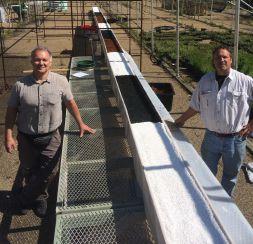
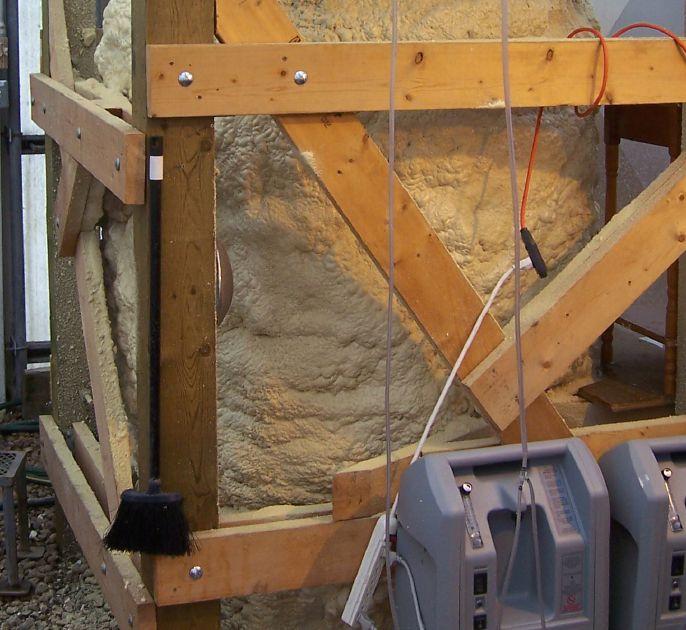
Researchers at AARD designed an insulated bioreactor that successfully converted raw poultry manure in an oxygen-rich environment to mineralized plant food within three weeks.
fuels. Sources of synthetic fertilizers now in widespread use are a finite resource that will eventually run out. Nutrient and water recycling to capture these same nutrients from animal waste streams offers hope to feeding humanity in future.
He is working with an AARD research team, which includes engineer and system designer, Marc Legault, to demonstrate the use of an aerobic bioreactor to mineralize nutrients from raw poultry manure. They used the dissolved
organic fertilizer, called “digestate” to grow market garden vegetables and tree seedlings in a soil-less growing environment. So far, the results have been highly successful.
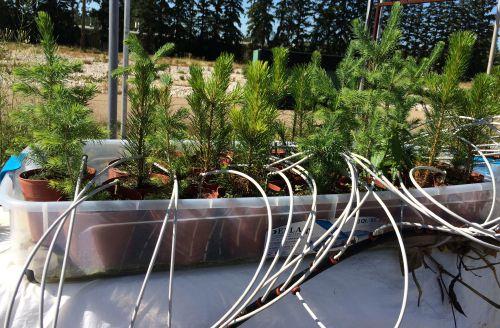
For example, seedlings of lodgepole pine and white spruce fed with this mineralized organic nutrient stream, “doubled in height after two months. The results exceeded all our expectations,” says Savidov.
The organic fertilizer was also used to grow greenhouse tomatoes, and a 15
per cent higher yield was achieved versus use of synthetic fertilizer because of enhanced nutrient uptake by the plants.
“We demonstrated that we can produce vigorous growth of major nursery crops grown in Alberta and B.C., using poultry manure digestate,” says Savidov.
It is common practice right now to grow market garden vegetables and tree seedlings in greenhouses that use no soil, where the plant roots are immersed in liquid environments and fed computer-controlled, metered amounts of synthetic fertilizers to promote growth. But these Alberta researchers want growers to consider using mineralized organic fertilizers extracted from animal waste instead of synthetic fertilizers because it is a more sustainable form of agriculture.
What’s different and proving more beneficial by using recycled organic fertilizers instead of synthetics is that they are biologically active with beneficial microorganisms. In addition to exceptional growth over a short period of time, the tree seedlings also experienced enhanced root biomass development, robust health such as better resistance to root pathogens, and improved nutrient uptake, meaning that they experienced exceptional growth in low nutrient solutions. In other words, growers can use small amounts to achieve big results, which could be a huge economic benefit. Furthermore, the water used in these soil-less growing systems is recycled so that there is less pollution released to the environment, and the grower achieves greater water use and nutrient uptake efficiencies.
Researchers chose to work with poultry manure as their raw material because it was readily available, rich in nitrogen, and less fibrous than cattle manure, which because of its fibre content, takes longer to ferment. The processed poultry manure resulted in organic fertilizer with low sodium content, which can be toxic to plants in higher concentrations, and pH within the tolerable range for plants.
Savidov emphasizes that whether it is synthetic fertilizers or this type of
Technology
organic fertilizer, the nutrients have to be mineralized so they can be used as plant food. He adds that what’s new about this process versus the common practice of creating organic fertilizer by composting manure is that this aerobic bioreaction conversion process is much faster -- taking two to three weeks versus three months to a year with composting. Also, this method results in 100 per cent conversion of the raw manure to valuable, liquid plant food versus composting or the other commonly known method of converting animal manure to organic fertilizer — anaerobic digestion. This is the process of converting manure to organic fertilizer and biogas in an oxygen-free environment.
The researchers’ goals were to prove that it is possible to create a liquid,
biologically-active, organic fertilizer from raw animal manure using their aerobic fermentation method and that plant response from this organic fertilizer in a soil-less growing environment is as good as or better than the use of synthetic fertilizers.
Savidov says it is possible to extract valuable nutrients using their bioreactor system from all forms of animal manure or other food and agriculture by-products but they started with poultry manure. Ultimately, converting manure to a liquid nutrient stream using their bioreactor technology could represent a new income stream for farmers like poultry producers, as well as a non-synthetic, biologically active, fertilizer source for growers. The conversion process also produces heat, which can
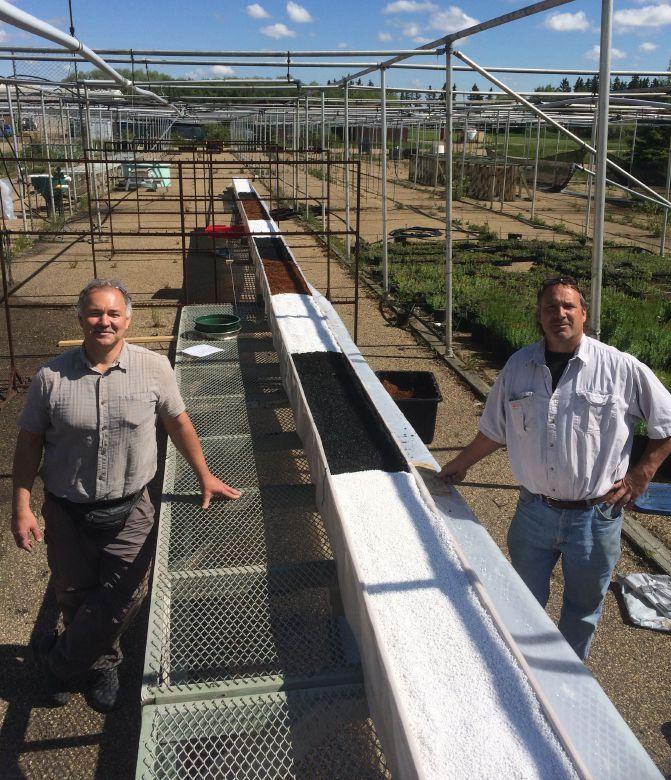
Researcher Nick Savidov (left) and engineer, Marc Legault, took ideas from aquaponics to produce mineralized organics from poultry manure to use to grow market garden vegetables and tree seedlings.
Technology
be used to heat poultry barns.
An aerobic bioreactor is not expensive, space-age technology. It is easily achievable, relatively inexpensive technology. The bioreactor is simply a septic tank with a built-in agitator. Oxygen and water is added to the tank along with the manure to create a slurry. Intense mixing within the tank is critical
to maintain consistent fermentation. Savidov says there is no odor during the reaction process, except when the raw manure is added because oxygen reacts with common odor-causing compounds like hydrogen sulfide. Because all components within the raw manure will completely mineralize over different time intervals, there will be some solid material left in the liquid outfeed stream after three weeks. After about three weeks, the bioreactor is stopped and the processed liquid is removed to a filtration tank. The solids are separated from the liquid and returned to the bioreactor for further fermentation, while the liquid stream is ready for use as organic fertilizer.
“To be honest, it’s not really an absolutely new system,” says Savidov. “It’s using bits and pieces of what is already used in the agriculture industry for manure treatment.” He adds that greenhouses and nurseries would have to change very little to convert from synthetic fertilizer use to this type of organic fertilizer.
The researchers hope that aerobic fermentation of animal manure into organic fertilizer will become a common practice, either on farms, by commercial organic fertilizer producers, or directly at greenhouses or tree nurseries. It is currently used in some parts of Europe to treat cattle manure. n
Lodgepole pine tree seedlings fed with mineralized poultry manure nutrients doubled in height in just two months.
TD is committed to helping farmers build for the future.
Dave Jeffries and his sons, Roland and Ernie, know a thing or two about farming. So, when it was time to expand the business, they naturally chose a bank that knew how to help. At TD, they found Agriculture Specialist Vince Puchailo, who helped implement a succession plan that involved Dave’s brother. Vince’s understanding of the complex process even impressed the lawyers handling the sale. A personalized approach to agriculture finance, like Vince’s, is something all TD Agriculture Specialists bring. Maybe it’s time you brought one to your farm.
PIC Update
Poultry Health Day Returns
A one-day education and extension event to be held for producers in Ontario
BY POULTRY INDUSTRY COUNCIL STAFF
The Poultry Industry Council (PIC) is partnering with Zoetis to deliver a one-day education and extension event for Ontario poultry producers in Stratford on June 18, 2015.
Poultry Health Day offers producers an in-depth analysis of current and emerging poultry health issues, together with practical advice that can be applied in the barn.
The event is something that PIC hosted in the past, and the organization felt its resurrection would be valuable. Given the recent outbreaks of Avian Influenza in British Columbia and Ontario, the event will provide a good opportunity for producers to hear about some of the lessons learned from these outbreaks, and think critically about the systems and practices being used — for example, the realities of dealing with a disease outbreak and what it really takes to be prepared for disease.
The PIC holds annual Producer Updates in the fall and early winter, and each update begins with a one-hour presentation on regional health issues by a poultry veterinarian. These presentations often generate a lot of questions, but often there is not adequate time to address them. Having a day specifically devoted to health issues will thus be beneficial.
“Our goal in hosting this event is to
ANALYSIS
Poultry Health Day offers producers an in-depth analysis of current and emerging poultry health issues, together with practical advice that can be applied in the barn.
raise the overall level of poultry health in Ontario,” says Keith Robbins, Executive Director of the Poultry Industry Council.
In the morning, producers will learn about emerging diseases being tracked both in the lab and in the field, examine the cost of disease on the farm, and catch up on the latest findings from Reovirus researchers.
Dr. Raja Krishnan, Senior Director with the Swine and Poultry Biologicals division of Zoetis, is the day’s featured guest speaker. Using examples such as the company’s new vaccine for Georgia 2008 infectious bronchitis virus (GA 08 IBV), Dr. Krishnan will explain how the company develops solutions to emerging and re-emerging animal health issues and diseases. The GA 08 IBV vaccine, developed by Zoetis in collaboration with the USDA and the
University of Georgia, has performed well against the disease in affected states in the southwestern US.
The afternoon’s presentations look at the practical implications of disease on the farm. Topics include lessons learned from the recent avian influenza outbreaks, high early chick mortality, and challenges and strategies related to growing birds without antibiotics. The session will wrap up with a producer’s perspective on disease and a talk on the role of biosecurity on the farm.
To register for Poultry Health Day, click on the Education, Extension and Events tab at poultryindustrycouncil.ca. n
Training Making an IMPACT
Practical educational and training resources have been developed to improve animal care
BY KAREN DALLIMORE
Good, better, best: never let them rest, until the good is better and the better is best.” While it’s not clear who said this originally, it certainly applies to a new initiative that has been developing in the livestock industry in Ontario.
It’s called IMPACT - Innovative Management and Practical Animal Care Training – a $2 million Growing Forward II program being administered through Farm and Food Care Ontario that promises to develop practical educational and training resources to help improve farm animal care.
Taking the good, making it better, striving to be the best: in other words, making an IMPACT.
“Everyone is sick of acronyms but this one actually tells what we’re doing,” project Lead and poultry veterinarian Mike Petrik told delegates at a two-day kick off event in Cambridge, Ont. in February 2015. At 10 months into the two-year project, Petrik was there to explain the IMPACT program to industry leaders from all animal agriculture sectors, from dairy, poultry, swine, sheep, goats and rabbits to alternative livestock.
“Anyone who is in contact with animals can improve welfare,” said Petrik, who also holds a master’s degree in Animal Welfare. The IMPACT program is being developed in answer to public concerns, to pro-actively offer standardized training in animal care that will recognize livestock caregivers as professionals in their fields while keeping everyone
ANYONE
CAN IMPROVE WELFARE
Project Lead and poultry veterinarian Mike Petrik says the IMPACT program is being developed in answer to public concerns and to pro-actively offer standardized training in animal care.
from veterinarians and farmers to truckers and handlers up to date with the latest standards and developments.
DEVELOPING IMPACT
Jackie Wepruk is the general manager with the National Farm Animal Care Council. Since all IMPACT materials will be developed with information based upon available National Codes of Practice, Wepruk sees the IMPACT program as a great way to get the National Codes into Provincial hands.
Wepruk said, “A lot of blood, sweat and tears go into developing the Codes,”
which were originally designed in the early ‘80s as extension tools and are now used as reference material for regulations and as a foundation for on-farm assessment programs.
The Codes of Practice are all developed by consensus, bringing groups to the table that may not normally talk to each other. Wepruk is often asked why humane societies join producers and researchers in discussions? “Diverse groups feel like they’re on opposite sides of the table,” Wepruk explained, but she finds that, as talks unfold, they find common ground and build trust and
find resolutions. “It’s far better to have everyone in the room,” she says, “and the learning goes both ways.”
The code for chicken, turkeys and broiler breeders (generally referred to as the “meat” bird code) is currently being updated, as is the code for laying hens. Both are expected in 2016. The IMPACT program funding will have run out by that time but Petrik projects that opportunities will be created for program templates to be incorporated into future resources.
TEACHING ADULT LEARNERS
It’s been a long time since many of us sat in a classroom or took a course, and teaching adults poses it’s own challenges. Sarah Probst-Miller is a veterinarian and training specialist. As president of AgCreate Solutions Inc. she has been developing IMPACT lessons on pain control and procedures for pig, dairy, and cattle so far and
Training
will possibly do so for sheep and goats.
Probst-Miller explained that around the age of 25 the learning brain shifts to the adult world, where everything is questioned and needs direct application to be relevant. “What’s important changes,” she told conference delegates, and that makes adults more difficult to teach, something that had to be kept in mind when developing programs.
The delivery format of the program is also important. When we read something we may retain 10 per cent of the information. We retain 20 per cent of what we hear, and 30 per cent of what we see. If we see it and hear it, then we retain half, but if we talk to someone about it, that shoots up to 70 per cent retention. Actually doing something helps us to retain 80 per cent of the information, but the best retention – up to 95 per cent - is when we have to show someone, to teach it. A teacher needs to be able to read what the other
person wants and needs to present the information in a way that matters.
With this in mind, various delivery methods are being explored, from videos that explain common procedures such as castration, euthanasia or dehorning, to classroom and hands-on sessions, to a smart phone app that can tell a stockman practical information such as how many pigs should be loaded for transport on a hot day.
REGARDING AGRICULTURE AS A PROFESSION
Probst-Miller sees IMPACT as an opportunity to promote working on a farm as a profession, even a calling. As she says, we need people to understand the importance of their daily activity or it’s just a job, not a profession.
Why is that distinction important? David Fraser is a Member of the Order
NEW ANTIBIOTIC VIDEOS FROM CHICKEN FARMERS OF CANADA!
ANTIBIOTIC USE AND RESISTANCE ARE HOT TOPICS WITHIN AGRICULTURE, GOVERNMENT AND MEDIA CIRCLES.
Farmers and all stakeholders need to be aware of the issues and concerns, and to participate in the industry strategy to reduce use where possible in order to maintain effective treatment options.
Chicken Farmers of Canada has created a series of videos entitled “Antibiotics and the Chicken Industry” – this four part series is designed to communicate the issues of antibiotic use and resistance while discussing the role of each stakeholder as part of the industry strategy.
Find these new videos on your provincial board website.
• Chapter 1: Antibiotic Use
• Chapter 2: Antibiotic Resistance
• Chapter 3: Industry’s Strategy
• Chapter 4: Everyone Should be Involved
Canada’s chicken industry’s Antibiotic Use Strategy focusses on the importance of responsible use, and being able to demonstrate responsible use to consumers and to government. These videos help to reinforce the need to use antibiotics responsibly and to reduce use where possible.
•
•
•
•
•
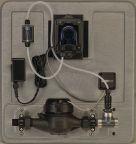
SELECT DOSER
• Select Doser dispenses products accurately into low and high pressure watering systems through it’s tubing via compression and peristalic action.
• Aggressive products and powders never pass through the pumps mechanism that can cause premature wear and maintenance.
• New improved Model 640 is now simple to use with one tube size
• New Select Doser Max can now operate in high pressure and volumes
circular Recirculation Unit
• 16” and 20” diameters
• 3600 coverage using directional wind vanes
• Superb alternative to race tracking
• With Multifan or Performa+ Leeson motors circulating fan
• 12” – 24” diameters • Polyethelyne housing
• with Multifan or Performa+ Leeson motors
Genius picture Ge-430
• Genius 430LS Livestock climate control
• User friendly Interface (hot Keys)
• Large Display Screen for easy viewing
• Up to four variable stages and 30 off/on relays
• Expandable to 50 relays with relay module
• Up to 12 temperature sensors , one Humidity sensor
• Up to 12 heat zones, 12 cool stages, 2 light programs
• Up to 5 water metering, 2- 0-10volt outputs for dampers
• can operate Dual, natural and tunnel ventilation
of Canada and a professor of animal welfare at the University of British Columbia. He has watched as attitudes towards animals have changed during our lifetimes, and draws comparison to the historical debates surrounding the industrial revolution, when workers at home could no longer compete with large factories.
RECOV-AIRE HEAT EXCHANGERS
• Recovers wasted heat from exhaust and transfers to incoming air
• Reduces humidity and improves air quality for improved livestock performance
• Large tube type heat exchange core vs plate type stays cleaner longer and is fully accessible for easy cleaning
• Many installations in poultry, swine and commercial applications have proven these models are cost efficient and effective
• Recovers in excess of 50% of wasted exhaust heat
• Multiple applications Genius controls from 3 – 10 stages
• Genius 420 Series control , up to 4 variable, 20 off/on
• New Genius Dimmable Light control
• New feed Bin monitoring control
• New Genius 420LS control system – larger screen and capacity
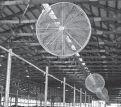
72” fan
• Heavy Duty fiberglass housing
• Heavy Duty 6 blade alum. Propeller
• Twin gates Size A belts with Auto tensioner
• 3 hp , single or 3 phase motor
• Optional cone for max air flow
LIGHt traP/ Dark OUt
• High light reduction
• Low resistance to air flow
• Simple Installation
• Easy to clean
• Uses P.V.c. snap release spacers
He suggests that what we are seeing today is a replay of the industrialization debate, where the “workers” are now the animals. But “very different welfare outcomes occur in the same type of physical environment,” Fraser said, depending on the skill and knowledge and attentiveness of the staff. In animal welfare, the standards focus on the physical environment; welfare depends on management. Unlike industrialization, animals are in their barns 24 hours a day, not just for the duration of their work shift. This creates a complex set of demands requiring a high level of skill.
Fraser sees that animal production can evolve to be considered a profession, much like nursing, which was given the same consideration as prostitution and acting before Florence Nightingale led the way for it to become a registered profession.
It’s not there yet though, said Fraser. It will take a level of animal welfare that exceeds regulations, an increase in public trust, and an increase in the sense of ownership over the whole process. Fraser predicts that production producers will achieve that trust by being professional and that’s where IMPACT will play a role.
POULTRY RESOURCES
For poultry, the top three areas of concern identified through industry surveys were euthanasia, animal handling and housing. Since housing wasn’t something that IMPACT would address, transportation moved up to be the third area of concern.
Petrik was surprised by the focus on euthanasia, revealed as the number one concern in the field. In his practice
Clean, Disinfect & Medica te
Stenner Manufactures Reliable Peristaltic Pumps
• Inject straight into the water line
• Unaffected by water quality, scale or solids
• Effortless tube replacement with patented pump head
Water Meter Activated, Compact and Self-Priming
Stenner’s medicator, the Econ Stennicator, injects livestock supplements at a fixed ratio of 1:128. The adjustable potentiometer has contact rates of 1 pulse per liter or 1 or 10 pulses per gallon For disinfectants and acids, the Econ Integrator™ injects a fixed amount of solution per water volume as determined by the water meter. The operating times are digitally adjusted from 0.1 to 60 seconds.
Additional Meter NOT Required
Both pumps can adapt to the farm’s existing water meter and/or a house controller. Without interrupting the meter signal, either pump can accurately inject or can be placed in standby Multiple pumps can be activated by one meter
Stenner Pump Company FL • NY • KS
Metering Pumps | Tank Systems | Meter Systems 904 641 1666 www stenner com international@stenner com Made In The USA
Econ Stennicator
Econ Integrator™
Econ Meter System
Training
he does see lots of people who don’t want to kill birds, or where hospital pens become hospice pens when people can’t give up on an animal. Despite its finality, euthanasia promotes animal welfare, said Petrik. People need to be confident in the process and the decision.
As part of the IMPACT program, a euthanasia decision tree poster that is already available for poultry, developed by the Poultry Industry Council (PIC), will join a manual of approved euthanasia methods that is nearing completion. Petrik says that while the manual won’t be an exhaustive list of euthanasia methods it will be heavy on pictures, giving lots of advice on avoiding mistakes. “We have had great industry support and input,” and while Petrik acknowledges that this has slowed down the process a bit, it has helped to create a much better document.
Once these euthanasia resources are in place the PIC will develop a classroom style course for farmers and co-ordinate instructors to teach it. That course may be three to four hours in length. Petrik expects this phase to be completed by May 2015. Delivery of the classroom portion is still in negotiation but Petrik anticipates the commodity boards will “make it work” since neither PIC nor IMPACT are expected to have funding for delivery.
When farmers have completed the classroom training they are eligible to have on-farm training, available by the end of June, possibly delivered by trainers who may be veterinarians, feed or hatchery representatives, grader representatives or board staff. “Each commodity is different,” said Petrik. The trainer will evaluate the current euthanasia techniques on each individual farm, reviewing important aspects on an individual basis. Upon completion of the training the farmer will receive recognition of demonstrated competency through a certificate that can then be kept on file for use in quality assurance programs.
WORKING WITH PARTNERS
A good example of how IMPACT has been able to work with industry is through a partnership with the Poultry Service Association (PSA). Susan Fitzgerald is the executive director of the PSA and as she explained, they had already identified the gap in training from their industry meetings in 2013; they knew what they wanted to do but with a limited budget they did not have funding to make it happen.
On their horizon are changes to the Meat Hygiene Manual of Procedureswhat Fitzgerald called the “Chapter 12” changes – that come into effect in March 2016. At that time anyone handling or transporting poultry must have training in humane handling, although no specific training program is prescribed. As Fitzgerald explained, current Canadian Livestock Training (CLT) is light on poultry welfare and not a specific industry requirement.
OMAFRA provincial poultry specialist Al Dam has been offering training with catching courses and the Poultry Industry Council’s “Should this bird be loaded?” poultry decision tree training but they are fairly narrow in scope and not sustainable under the present structure.
“The IMPACT funding allowed us to move forward and also challenged us to go over and above what we had initially envisioned for the poultry welfare piece,” said Fitzgerald. “We did not originally plan on writing a new manual but there was no one existing resource that was either a) applicable to Ontario in its entirety, or b) comprehensive enough to cover farm to live receiving.”
IMPACT has allowed the development of that one manual that covers poultry welfare practices right from the hatchery to lairage and live receiving. The complete package is based on the American Poultry Handling and Transportation Quality Assurance (PHTQA) Certification Program and accompanying training material, with permission from Eva Wallner-Pendleton on behalf of Pennsylvania State University and Rafael Riveria on behalf of the U.S. Poultry and Egg Association.
“We ended up revising, rewriting, deleting or adding to at least 65 per
Training
cent of the original content but it is certainly much easier to start with an existing document than from a blank page,” said Fitzgerald. They also drew on other available resources such as the National Codes of Practice and Dam’s current training material to develop the new Ontario Handling and Transportation Manual.
PSA members wanted a composite training program; “The missing piece is the on the ground training and information transfer which is what this project [IMPACT] is all about rather than just creating and distributing a print resource,” said Fitzgerald.
The new manual will have a section called “Preparing Poultry for Transport” that will be delivered along with euthanasia training in an effort to integrate the responsibility for poultry welfare from the farm to the processing plant. Other sections of the manual will cover biosecurity, vaccinations, preparing market birds for transport, dealing with end of lay hens and emergencies, and live receiving at processing plants.
The new manual will meet the requirements of three-year CLT certification and provide a certificate of completion for Ontario Poultry Handling and transportation training. In three years, at the end of the current cycle of training, recertification resources are expected to be online. The training manual will be available in English, Thai and Spanish. IMPACT funding is also able to subsidize the regular cost for the three-year
CLT certification, which is normally $375. During the IMPACT funding term the cost is only $175 per person, for up to 300 participants. “After the funding term, PSA will look at offering just the poultry welfare training (and not the CLT component),” said Fitzgerald. “The cost of that is yet to be determined.”
MOVING FORWARD
The commodity boards will roll out IMPACT as it fits their needs. Egg Farmers of Canada has already mandated euthanasia training this year. Other commodities may start now or wait a while. For IMPACT to work, Petrik acknowledges that industry needs to be motivated to form partnerships with the program.
By the end of the two-year IMPACT funding in May 2016, Petrik is aiming to have practical resources developed that can be accessed online and potentially shared with other provinces. For example, even though the Poultry Service Association is a provincial organization the new Ontario Poultry Handling and Transportation manual will be made available in electronic format to anyone across Canada.
While Petrik holds out a gold standard of animal care, success will include improvement at any level of husbandry, making the good better and better, the best. “We want to be ‘welfare central’ –the first place you look when you have questions,” he said. n
IMPACT has allowed the Poultry Service Association to update it’s manual to cover welfare right from the hatchery to lairage and live receiving.
Energy
Unvented Heaters
The Story Behind The Ontario Fuel Safety Program Advisory
BY KAREN DALLIMORE
Have you gotten a notice about unvented heaters in your poultry barns and wondered what it meant?
Dan Ward is an Ontario Ministry of Agriculture, Food and Rural Affairs (OMAFRA) engineer out of the Stratford, Ont. office. Because of what he called a “random” inspection at a job site, Ward says flags were raised about how the unvented heating systems were being operated in barns.
The Technical Standards and Safety Authority (TSSA) is a private company delegated by the province of Ontario to enforce Natural Gas and Propane Installation Code. One day in 2011 a TSSA inspector happened to drop by a jobsite for an impromptu visit but was allowed look around a turkey barn under construction where unvented gas heating equipment was being installed. A few deficiencies with the equipment and the installation were identified that needed to be addressed to bring them into compliance with Gas Code or the inspector could shut off the gas to the barn.
The farmer was irate, said Ward. He had birds coming in; there were timelines, but four months later he was still trying to negotiate a solution. What’s wrong with my heaters, he was asking? He had three types of unvented heaters in his various barns and these were the same type of heaters commonly used
A “random” inspection at a job site, Ward says that flags were raised about how the unvented heating systems were being operated in barns.
in the Ontario poultry industry, so why were they not good enough now?
It turns out his question opened a can of worms.
But first, a bit of background: the Natural Gas and Propane Installation Code CSA-B149.1 is the technical document describing requirements for the safe installation and operation of gas appliances. It’s a national document that is adapted by each province and addresses details like the separation distance between a heating appliance and combustibles, the venting of the products of combustion, gas shutoffs, etc.
Only approved appliances - those bearing the required certification sticker from the Canadian Standards Authority (CSA) or Underwriter Laboratories of Canada (ULC) - may be installed under the Gas Code.
The code also states that unvented infrared heaters shall be provided with mechanical ventilation to remove the products of combustion outdoors, primarily CO2 and water vapour, with a ventilation volume of at least 300 cfm per 100,000 Btuh of heater capacity. The ventilation system also needs to be interlocked with the heater(s) so that
A CAN OF WORMS
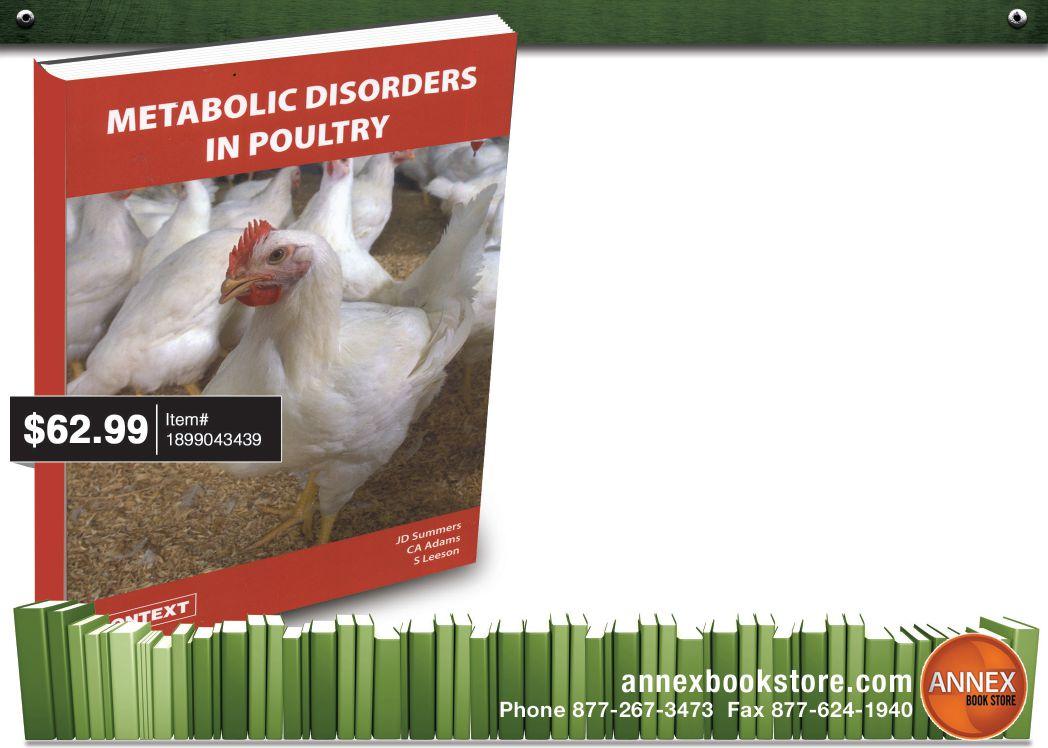
Metabolic Disor D ers in Poultry
This book addresses the problems of all the significant metabolic disorders such as ascites, sudden death syndrome, liver and kidney problems and skeletal disorders. In some instances, methods of treatment or prevention are indicated.
Metabolic disorders by their very nature are a perennial challenge to efficient modern poultry production. Their control requires astute management and a nutritional strategy geared towards health maintenance and general disease avoidance in poultry.
Modern poultry production now has the ability to control most infectious diseases and it is evident that the economically significant issues relating to poultry health and welfare worldwide are noninfectious, most commonly referred to as metabolic disorders.
the heater(s) automatically shuts off or won’t start unless the fan is running.
Where it is not possible to interlock heaters, section 7.22.2 describes the use of a carbon dioxide detector equipped with an audible and visual alarm. While Ward says this is possible, in his experience it is neither common nor necessarily reliable inside the challenging barn environment.
Energy
When located in a large and adequately ventilated space, section 8.24.5 states that an appliance may be operated by discharging the combustion products directly into the space, subject to the approval of the authority having jurisdiction (this is the TSSA in Ontario) and provided the maximum input of the appliance does not exceed 20 Btuh/cubic foot of the space in which the appliance
is located. This clause attempts to put an upper limit of the size of the heater for the space.
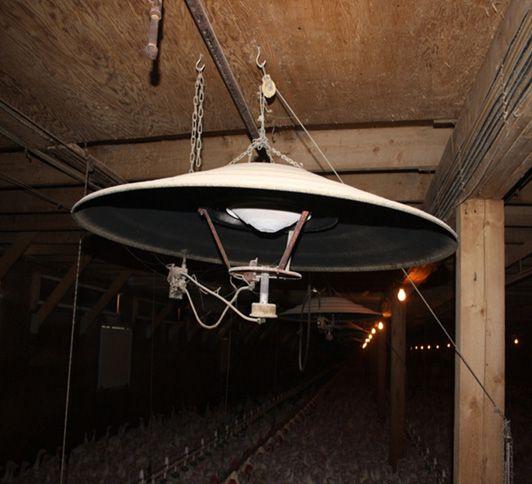
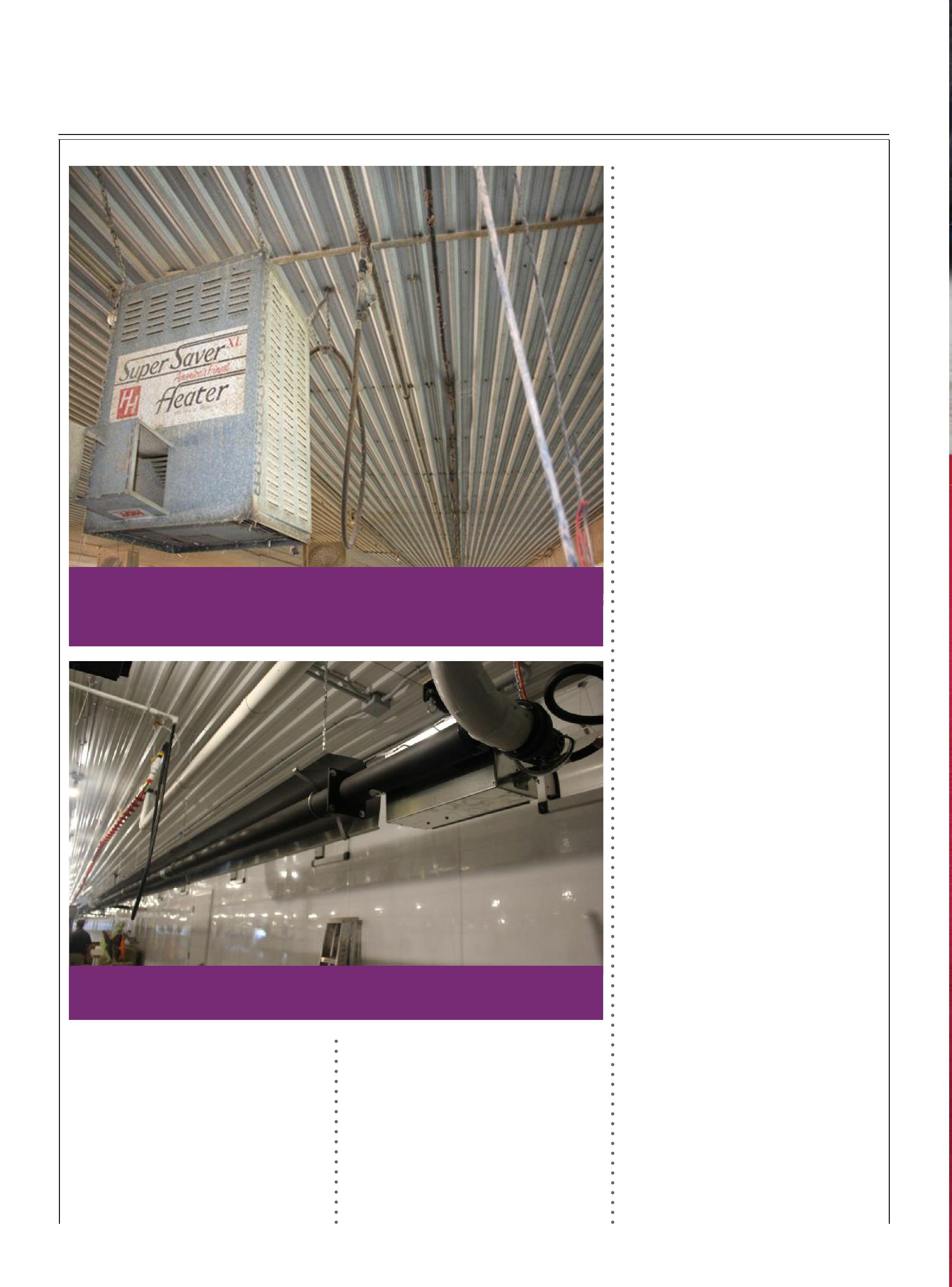
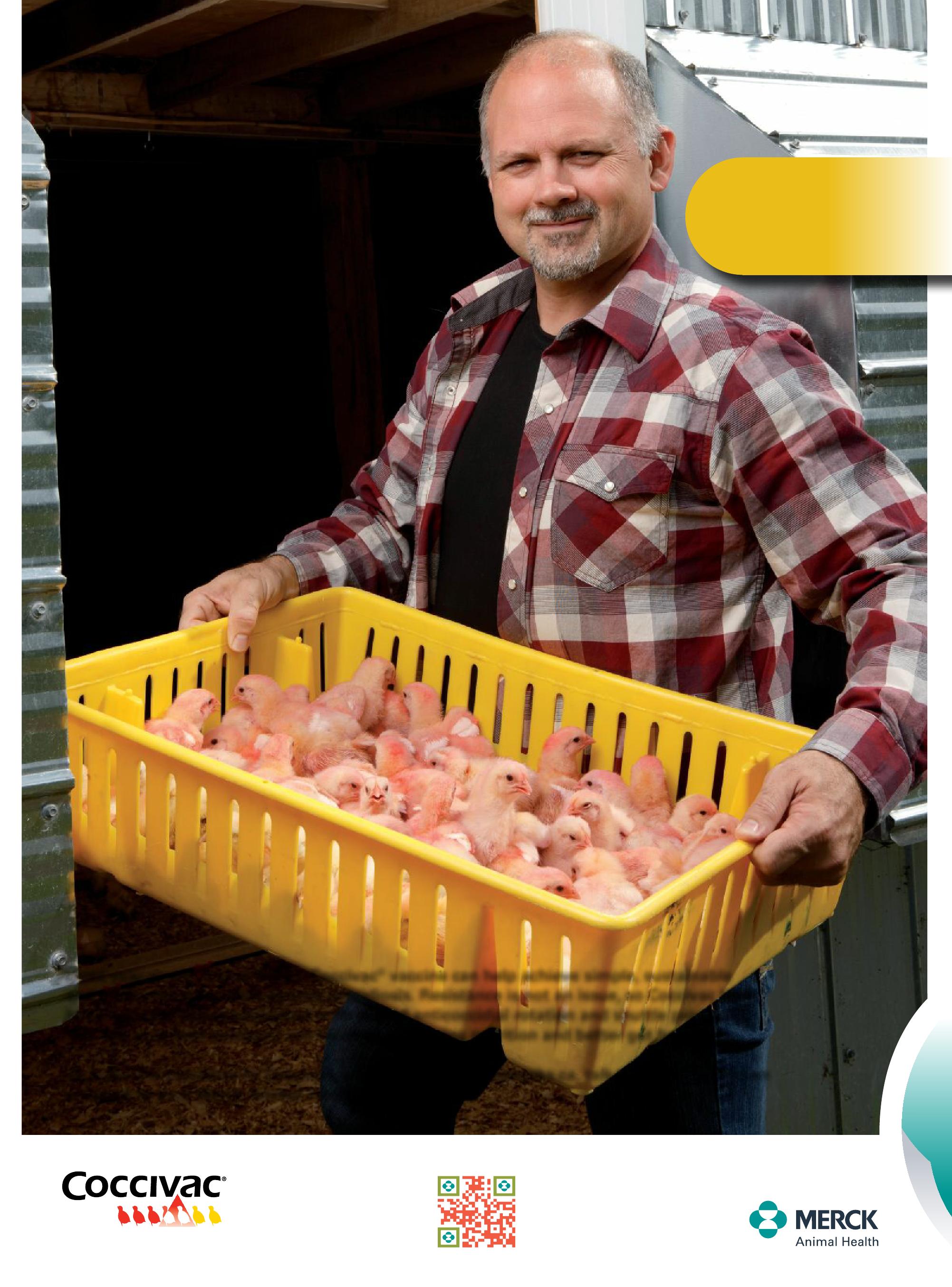
There are three types of unvented heating appliances commonly used in poultry barns and none are interlocked with the ventilation system as per the code requirements. The unvented infrared brooder heater does not vent outdoors and is common in poultry barns. The direct-fired box heater, common in both poultry and swine barns, draws air for combustion from either inside or outside the building and discharges all products of combustion into the barn. The stationary infrared tube heater pulls air for combustion from outdoors and could be vented outside but many are not.
The 2011 site visit incident uncovered several unvented heater infractions. The first problem was that there was no mandatory interlock between heaters and ventilation fans. The second issue was that the minimum ventilation rate would not be met during the initial brooding period due to ventilation settings. Some of the heaters were also missing the proper certification stickers.
A meeting was held with the TSSA to discuss a number of possible solutions to the unvented heater issue for this farmer and the agriculture industry as a whole since it was estimated there could be up to 2,000 barns with this type of equipment in Ontario, mostly for poultry and swine.
The first solution to be brought forward was to vent all heaters outside the barn, which would work for radiant tube heaters but not the box heater or pancake-style brooder heaters, which meant that these would have to be replaced.
A second solution would be to continue to use unvented heaters but that would require each farm to undertake a costly paperwork process to apply for a variance from the TSSA.
A third solution was to actually seek changes to the Gas Code for unvented heaters in livestock and poultry barns. Similar exemptions have been made for the greenhouse industry in the past to allow the use of carbon dioxide generators inside these structures with specific
Three types of unvented heating appliances commonly used in poultry barns are often not interlocked with the ventilation system as per Code requirements. Shown here is a dropbox heater.
Stationary infrared tube heaters pull air for combustion from outdoors and could be vented outside, but many are not.
operating requirements.
Energy
The focus was on the third solution – an amendment to specifically address the use of unvented heaters inside livestock and poultry barns. Ward says that five commodity groups (Chicken Farmers of Ontario, Egg Farmers of Ontario, Ontario Broiler Hatching Egg & Chick Commission, Ontario Pork and Turkey Farmers of Ontario) came together to hire David Stainrod, a private Gas Code expert, to draft a Gas Code amendment. This document was presented in May 2014 to the Ontario technical committee for review and then taken to the National Gas Code Review committee meeting in Calgary in June 2014.
The amendment was well received at the Ontario technical group, where most discussions are usually around residential applications of the Gas Code, not agricultural. But nationally, the support wasn’t there for the adoption of the amendment. “It put us in a bit of a lurch,” said Ward. On the provincial level though the TSSA was in agreement, they proposed to add the amendment to the Code Adoption Document each province uses to implement the latest version of the National Gas Code.
On Aug. 25, 2014 the TSSA issued a Fuel Safety Program Advisory (FS-212-14) that outlines specific requirements for
the use of unvented natural gas or propane heaters in livestock and poultry barns. The requirements came into effect for new heater installations as of Oct. 1, 2014; existing barns have until Jan. 1, 2016 to comply with the new requirements. This is a notice that farmers would likely have received from their commodity boards, said Ward.
If you have an unvented heater, TSSA basically wants third party verification by a licensed Ontario engineer to sign off on barn ventilation system design. Two calculations are required to be posted in a prominent place at the entrance to each barn:
1. Minimum ventilation rate of the barn (mechanical or natural ventilation) when the heaters are operating is not less than 300 CFM/100,000 BTUH (0.003 CFM/ BTUH) of heaters input (clause 7.36.1c)
2. Maximum input of the heating appliances does not exceed 20 BTUH/ft3 of the space in which the appliance is located (clause 7.36.1d)
These calculations will continue to be valid as long as no equipment changes are made to the ventilation system, said Ward, and will affect any barn with unvented heaters.
If farmer hires an engineer to verify the ventilation system as per amendment 7.36.1 for an unvented heater then the farmer is exempt from the requirement of having the mandatory interlock.
The TSSA does have the authority to enter private property to inspect if a safety issue with the gas equipment is suspected, but it is more likely that farmers will be asked by a licensed gas mechanic who may be installing or servicing gas equipment or the fuel supplier to provide the signed calculation sheet for each barn.
The specified ventilation rates are not hard to meet, said Ward, since the minimum ventilation rates to control humidity levels is usually higher than the above rate. The exception maybe in the first day or two of brooding in broiler or turkey barns but this can be addressed by increasing the ventilation rates.
Your other options are to vent your heaters outside if you are using radiant tube style heaters, or hook up a CO2 sensor to your ventilation system.
And what about the farmer at the core of all of this? He was granted a two-year variance to continue operating his barns, said Ward, while an industry solution was developed. He now has the same options as everybody else if he wants to continue to use unvented heaters in his existing barns after Jan.1, 2016. n
EQUIPMENT FOR SALE
Used 2008 Yamasa Egg Grader 4 packing lanes, 50 case/hr., computer weighing, Kuhl egg washer and candler $25,000 USD or OBO – Jaffrey, NH
Contact: Archie Coll, 603-355-7579 or e-mail - hvcoll@msn.com
HERE’S THE
POINT
BY LESLIE BALLENTINE, BALLENTINE COMMUNICATION GROUP
Are We Doing Enough?
Generally speaking, agriculture is pretty good at talking among ourselves. We have loads of newsletters, magazines such as Canadian Poultry, videos, symposiums, trade shows and alike where we relay new information on products, initiatives and practices. But how much of that “shop talk” ever gets out to the general public? Do we even know?
Certainly we solicit the public on their attitudes and issues about farming and farming practices. But we don’t seem to gage public knowledge about what we do and why we do it.
In a recent discussion with some of my cohorts, I asked how many of them had ever heard about the Recommended Codes of Practice. None of the group of nine urban dwellers knew such things even existed. Similarly they had never heard of Environmental Farm Plans or on-farm food safety programs. Did they know that the farm and primary production sectors invest substantial money and resources into research or what the findings of such research mean and have led to? The short answer is no. Did they know what the farm sector is doing to alleviate the problems that we have created? Although they assumed these things are “being taken care of” they had no specifics they could draw on to affirm that assumption.
The home cooks in the group knew where to get recipes and cooking techniques and some even had bookmarked commodity group websites. But they didn’t seem to realize the other information such websites contain. When it comes to developments in farming and primary industry they seemed to rely on the mainstream media as their source of our information. Being of an older, and perhaps more skeptical, generation most didn’t rely much on social media. But search engines were well-used when they wanted answers to a question. In all cases they were much more aware of the one-sided sensationalized issues around farming and poorly informed about what we are doing about it.
would replace much needed antibiotics.
All were oblivious to agriculture’s contributions to sustainable energy, even the visible products such as ethanol didn’t connect to agriculture in their minds. And they were certainly unaware of the findings and applications of industry-backed research by Ag colleges and groups such as the Canadian Poultry Research Council.
While most were aware of “bird flu” and “swine flu” through sensationalized media reports they had no clue about the preventative measures in place such as bio-security and animal health surveillance. Nor were they aware of the successes in addressing these and other crop and livestock diseases.
It has been my observation that even the more significant breakthroughs in agricultural discoveries and practices, which are heralded within the farming community, rarely make it onto the public radar. At best their knowledge is lacking and at worst misinformed.
We don’t seem to gage public knowledge about what we do and why we do it
We all agreed that food is constantly in the news, and the production level news is missing the boat. And the reason, they thought, was because agriculture doesn’t make our news their news.
For example, while all were very aware of antibiotics resistance in our food supply, even the doctor in the group was unaware of the progress being made on probiotics and animal vaccines that
This got me to thinking about more ways to share our news beyond the farm gate. I now read my daily flood of industry news with one eye on how to let the public know what’s going on. I came up with a list of “show me” ideas to turn our news into news that would hold the attention of the masses. Tapping into the current popularity of “reality shows” and science and history shows is working for other sectors. Specialty channels such as food and life-style networks seems a logical place to expand our “foodie news” efforts to include well packaged (meaning entertaining) information about new developments and successes in agriculture. Weaving farm practices into food safety information would help consumers make the connection. Injecting attention-grabbing accomplishments into producer profile campaigns or even expanding profiles to include innovators, ag researchers, crop advisors and alike are all worthy of consideration. The beauty here is that these are all ways to reach wider audiences and make our news relevant to them. Certainly the public doesn’t want the technologicalise that dominates industry news. Much in the same way most producers don’t want the academic reports that researchers generate. But building in specific “show me” evidence to help supplement our other public outreach activities, can only benefit these efforts.
Here’s the point: Awareness is the first step in informing. And there are ways to distill our shop talk into this awareness. n
For long-term aid in prevention of coccidiosis. We use Coccivac® year-round.
The New Coccivac® Live Coccidial Vaccines Guide is available now at www.becauseitworks.ca
Used year-round in your flocks, Coccivac® vaccine can help achieve simple, sustainable and profitable prevention against coccidiosis. Resistance is not an issue, so Coccivac frees birds from the stress associated with in-feed anticoccidial rotation and shuttle programs. You and your feed company can focus on improving nutrition and better gut health.
To make the transition to Coccivac, go to www.becauseitworks.ca, talk to your veterinarian or speak to your Merck Animal Health representative.
Because it works.
Eco II - The Next Generation
The Innovative Combi II
• NEW Colony size to optimize building space/bird population - multiple sizes available
• NEW Innovative center feed trough increases feed space per bird and provides second feed access point
• NEW Pro Swing Elevator or Finger Elevator egg collection systems available
• Easily converts from enrichable to fully enriched
SYSTEM HIGHLIGHTS
• Easily converts from enriched to cage-free
• Covered egg belts with inspection flap
• Nest, water and feed on each level
• No new equipment required to convert
• Optimizes bird numbers when enriched
• Better welfare and efficiency for overall flock performance