Canada’s first poultry meat board marks milestone in Abbotsford
By David Schmidt
18
PIC uPdATE: dnA-based Vaccine to Prevent AI university of Manitoba researchers are evaluating the efficacy of a new dnA vaccine for a highly pathogenic avian influenza
By Kimberly Sheppard, Research Co-ordinator
and
Tim Nelson, Executive Director
24
MAnAgEMEnT: Learning Curve
Rosalind Colony poultry boss Mike stahl was given the task of managing an aviary, and has enjoyed the challenge
By Kristy Nudds
28
ConsuMERs: It’s All About Trust
Farmers need to respect the “social licence” by operating in a way that is consistent with consumers’ values, says expert
By Jim Knisley
34
LABouR: Changing Landscape
Examining the impacts of being able to draw workers from dozens of countries, high Canadian unemployment rates, moves to change work permit restrictions, and more
By Treena Hein
FROM THE EDITOR
by KRIsTy nudds
The loudest voice
In media, it’s no longer about how many papers you sell, but how many clicks an article or publication receives, how many people retweet or talk about an issue on Twitter, and how many people like it on Facebook.
It’s also no longer about quality. stripped of staff and resources, newspapers are no longer King of the media world. sure, you can find just about any newspaper online, but the content is too often one-sided, the result of years of resource degradation due to dwindling profits. Journalists with years of knowledge and contacts are let go, and fresh-out-of-school journalism grads who lack the experience – and time – to flesh out a subject are overworked and burn out quickly.
What’s replaced professional journalism is citizen journalism — the everyday person disseminating information on blogs, websites, and social media platforms. And more often than not, these people are influenced by special interest groups and individuals who want to see significant changes in the way that food is produced.
The result has been a significant decline in the availability of unbiased content. In a world where presence on the Internet counts, the loudest voice gets the highest Klout score (a measurement of how influential a Twitter and/or Facebook account is), the greatest number of retweets and mentions, and the most website hits.
I think it’s fair to say that some traditional media (newspapers) are also under the influence of interest groups. Take a recent report issued by the World society for the Protection of Animals (WsPA) entitled “What’s on your Plate?” Released in late April, its focus was the “hidden costs” of animal agriculture, and how farming impacts animal welfare, public health and the environment. Before a press conference was held and the report was broadly released, it was first released to a publishing
company that owns multiple daily newspapers in Canada. so, the message was out before anyone – including agricultural media, farm groups or other media outlets – had a chance to view it. The result was a controlled message that favoured the interests of the WsPA, and the damage was done before others had a chance to respond.
As another example, take the issue of supply management and trade. Currently, and for the past 10 months, when rumblings of Canada’s participation in the Pacific Trade Talks are heard, suddenly there is a flurry of opinion pieces on how supply management is holding our country back and raising the price of food. These columns tend to be unoriginal, and regurgitate the same ideas, but what is distressing is that few of the authors take the time to provide information from economic studies that support supply management or provide a wider perspective on why food prices are rising.
What’s clear is that food is a trendy topic, and how it is produced will continue to be debated via social media and traditional media outlets. Agricultural groups need to be more visible in this discussion.
As Charlie Arnot, the CEo of the Center for Food Integrity (see page 28) says, the public wants to know farmers, and it is in their interest to be part of the dialogue.
This requires being able to engage instantaneously and being prepared to respond in a day and age when anyone can take a video on a cellphone and post it on youtube, says Arnot. When the WsPA report came out, those supporting it were the loudest voice on Twitter. Although it may have seemed prudent for animal agriculture groups and farmers to ignore the report and not to respond, consumers are left with only one voice to listen to. n
JUNE 2012
Vol. 99, No. 6
Editor Kristy Nudds – knudds@annexweb.com
888-599-2228 ext. 266
Associate Editor
Jim Knisley – jknisley@kwic.com
Publisher/Sales Manager
Marilyn White – mwhite@annexweb.com 519-429-5193
888-599-2228 ext 237 • fax: 888-404-1129
Sales Assistant
Mary Burnie – mburnie@annexweb.com 519-429-5175 • 888-599-2228 ext 234
Media Designer
Gerry Wiebe
Group Publisher
Diane Kleer – dkleer@annexweb.com
President Mike Fredericks – mfredericks@annexweb.com
Mailing Address
P.O. Box 530, 105 Donly Dr. S., Simcoe, ON N3Y 4N5
Publication Mail Agreement #40065710
REtURN UNDEliVERABlE CANADiAN ADDRESSES tO CiRCUlAtiON DEPt., P.O. BOx 530, SiMCOE, ON N3Y 4N5. e-mail: jmatheusik@annexweb.com.
Canada – 1 Year $ 24.00 (with GSt $25.20, with HSt/QSt $27.12) GSt – #867172652Rt0001
USA – 1 Year $ 60.00 USD
Occasionally, Canadian Poultry Magazine will mail information on behalf of industry-related groups whose products and services we believe may be of interest to you. If you prefer not to receive this information, please contact our circulation department in any of the four ways listed above.
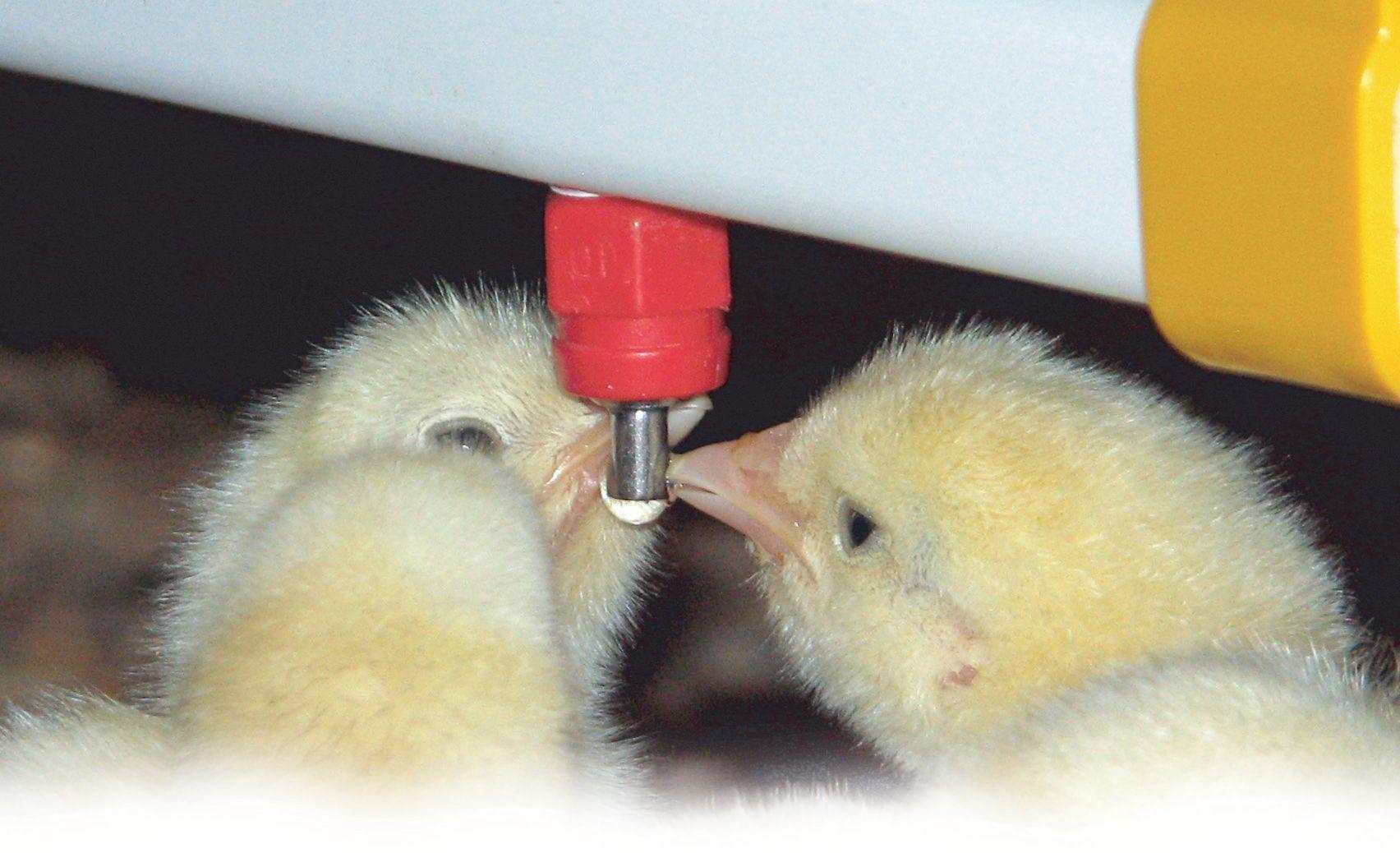
Lubing's all-new OptiGROW Nipple is designed to work in today's challenging broiler environment. Because the nipple has been optimized for growth, you will be amazed by the first-week performance and explosive bird growth. OptiGROW offers:
Large body and pin
Acid resistant design
Easy triggering for day-old birds
Low mortality
Increased side-action flow
Larger flow range for jumbo birds
Increased weight gains
Improved feed conversions
Les Equipments Avipor
Cowansville, Quebec
Tel: (450) 263.6222
Fax: (450) 263.9021
Specht-Canada Inc.
Stony Plain, Alberta
Tel: (780) 963.4795
Fax: (780) 963.5034
low-path AI Added to list of reportable Diseases WhAt’s HATCHING HATCHING
The government of Canada has strengthened its approach to controlling avian influenza in domestic poultry by adding low pathogenicity H5 and H7 avian influenza viruses to the list of reportable diseases.
Most avian influenza viruses are low pathogenicity and typically cause few or no visible signs of illness in infected birds. However, H5 and H7 viruses have the potential to mutate into a highly pathogenic form and cause high mortality in domestic poultry.
All suspected or confirmed cases of low pathogenicity H5 and H7, as well as all highly pathogenic avian influenza viruses, must be reported to the Canadian Food Inspection Agency (CFIA).
“This amendment underscores the government of Canada’s commitment to protecting animal health, public health and the economic viability of our poultry industry,” said Canada’s Chief Veterinary officer, dr. Brian Evans. “We remain vigilant in our efforts to prevent, prepare for and respond to avian influenza.”
The amended Reportable diseases Regulations formalize Canada’s current approach to controlling avian influenza in domestic poultry but do not significantly change what the CFIA does to respond to disease outbreaks.
When reportable avian influenza viruses are found in domestic poultry, the CFIA works with industry and provincial and territo-
rial government partners to contain and eradicate the disease, and to re-establish Canada’s disease-free status as soon as possible.
The CFIA monitors domestic poultry for highly pathogenic avian influenza, as well as low pathogenicity H5 and H7 viruses, under the Canadian notifiable Avian Influenza surveillance system (CannAIss).
CannAIss is a joint initiative of the government, industry and farmers, and meets World organisation for Animal Health (oIE) standards. In addition, the CFIA participates in Canada’s Inter-Agency Wild Bird Influenza survey, which tracks avian influenza viruses circulating in the wild that could be of concern to the poultry industry.
Janzen New CFC Chair
years ago as the Member at Large, and was the 1st Vicechair of CFC in 2011.
david Janzen has been elected as the new chair of Chicken Farmers of Canada, replacing david Fuller of nova scotia.
Janzen has represented British Columbia at CFC meetings since 2006, first as an alternate, then as a director. He joined CFC’s Executive Committee two
Food & Farm Care Champion Award
Jeff Robinson of osgoode, ontario, has been named the recipient of the inaugural Farm & Food Care Champion Award.
The award was presented at Farm & Food Care’s first annual meeting on April 17. Robinson, an attendee at the meeting, was a surprised recipient of the honour bestowed upon him by Bruce Christie, a Farm & Food Care board member, and Minister Ted McMeekin, ontario Minister of Agriculture, Food and Rural Affairs. Robinson was nominated for the award by the ottawa Federation of Agriculture and ontario Pork.
He is well known throughout Eastern ontario as the “Travellin’ Farmer.” Each year, he and his team of family members and enthusiastic farm students work as agricultural ambassadors at many fall fairs and programs, talking
His family farms in Abbotsford, producing nearly one million kilograms of chicken annually.
CFC’s Executive Committee is made up of Adrian Rehorst as the 1st Vice-chair, Martin dufresne as the 2nd Vice-chair, and yvon Cyr as the Member at Large.
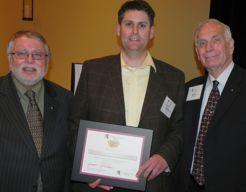
ontario minister of Agriculture ted mcmeekin (l) and Farm & Food Care board member bruce Christie presented the Champion award to Jeff robinson (C).
to the public about food and farming. Jeff has co-ordinated and managed exhibits in eastern ontario on behalf of a number of ontario commodity groups including ontario Pork, Chicken Farmers of
ontario, dairy Farmers of ontario, Turkey Farmers of ontario, Farm & Food Care ontario and others.
He and his wife Eleanor operate Tilecroft Farms, a third generation family dairy farm. Each summer, Tilecroft Farms hires students to work both on the farm and at the road show events. Jeff believes that agriculture is an exciting, diverse and challenging industry with many opportunities which is why he gives his students a diverse summer employment experience – both working on the farm and off, talking to the public about farming. Jeff and Eleanor were finalists in the ontario outstanding young Farmer competition in 2008.
Ag Department Moving
The province has announced that it will be moving its agriculture department headquarters from Halifax to Truro-Bible Hill by the end of the year.
Thirty-four head office positions will be relocated, joining the 141 department of
June
June 10-12, 2012
CPEPC Convention, Fairmont le Manoir Richelieu, La Malbaie, Charlevoix, Que. For more information, visit: www.cpepc.ca
June 20-22, 2012
Canada’s Farm Progress Show
The co-operator’s centre, regina, sask. For more information, visit: www. myfarmshow.com
JuLy
July 9-12, 2012
Poultry Science Association (PSA) Annual Meeting georgia center, athens, ga. For more information, visit: www.poultryscience.org
AuGusT
August 5-9, 2012
XXIV World’s Poultry Congress salvador, Bahia, Brazil. For more information, visit: www.wpc2012.com
sepTembeR
september 11-13, 2012
Canada’s Outdoor Farm Show
canada’s outdoor park, woodstock, ont. For more information, visit: www. outdoorfarmshow.com
september 25-27, 2012
Agriculture staff already located in Truro-Bible Hill. The town is the home of the province’s agricultural college and numerous commodity groups, as well as federal agricultural agencies.
The nova scotia Federation of Agriculture said move will improve accessibility for farmer and improve dialogue among industry stakeholders.
Poultry Service Industry Workshop (psiw), The Banff centre, Banff, alta. For more information, visit: www. poultryworkshop.com
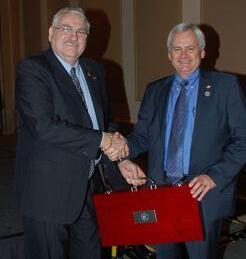
David Janzen (right) has taken over as chair of CFC from David Fuller (left). oNtArIo brItIsh ColUmbIA
NoVA sCotIA
HATCHING HATCHING
Burger King Pledges Cage-Free
burger King Corp. (BKC) announced that it will transition its u s. supply chain to 100 per cent cagefree eggs by 2017 and only purchase pork from suppliers that can demonstrate documented plans to end their use of gestation crates for breeding pigs.
since 2007, BKC incorporated more cage-free eggs and purchasing gestation stall-free pork into its supply chain.
However, some experts think the move is too ambitious. The company reported in 2010 that nine per cent of its eggs and 20 per cent of its pork were sourced from cagefree farms.
In 2010, only four per cent of laying hens in the u.s. were raised in cage-free facilities.
Whether or not this corporate policy will apply to Canadian Burger King restaurants is not known.
NsAC receives Funding
TNew research funding will help further feed and health research at the NsAC. shown here is the Chute Animal Nutrition Centre.
he government of Canada recently announced an investment of more than $600,000 in the Atlantic Poultry Research Institute (APRI).
The investments are being made in six different projects to further research into better nutrients and improved disease resistance for the region’s poultry sector, while benefiting consumers across the country. The funding includes support for projects that will identify ways to increase omega-3 fatty acids and antioxidants in chickens and eggs, as well as assess ways to improve flock health and reduce disease.
JAnuARy 2013
January 28-31, 2013
International Poultry Exposition (IPE), International Feed Exposition (IFE) and American Meat Institute (AMI) trade show georgia world congress center, atlanta, ga. For more information, visit: www.ipe11.org
febRuARy
February 5-7, 2013 Canadian International Farm Show international centre mississauga, ont. For more information, visit: www.masterpromotions.ca
mARCH
March 6-8, 2013 London Farm Show western Fair district, london, ont. For more information, visit: www.westernfairdistrict.com
nova scotia is contributing $220,000 for these projects from its Technology development Program, which supports the development and adaptation of new and leading agricultural technologies and knowledge that will enhance the competitive position of nova scotia’s agriculture and agri-food industry. “The government of nova scotia is investing in these projects to support scientific research that will improve the poultry sector’s adaptability, competitiveness and innovation,” said John Macdonell, nova scotia’s Minister of Agriculture.
We welcome additions to our Coming Events section. To ensure publication at least one month prior to the event, please send your event information at least eight to 12 weeks in advance to: Canadian Poultry, Annex Business Media, P.O. Box 530, 105 Donly Dr. S., Simcoe, ON N3Y 4N5; e-mail knudds@annexweb.com; or fax 519-429-3094.
TDiscommittedtohelpingfarmersbuildforthefuture.
Whenthe Martinfamilywantedtoraise theproductivity of their dairy business, they turnedtoDaltonPotter for guidance.DaltonisaseasonedTD Canada Trust Agriculture Specialist andafarmerhimself, andwithhis help,the Martinswere able to buy anewfarm in a primelocation.Our understanding of agricultureand nancing,combinedwithapersonalizedapproach,ishowwe’rehelpingfamiliesliketheMartinsgetexactly what they’re lookingfor.
For more information, visit a branch or go to www.tdcanadatrust.com/agriculture
MatthewMartin DairyFarmer
Biosecurity
Are We too Clean? researchers weigh in on the issue
by Kristy Nudds
the Poultry Industry Council recently held a “s cience in the Pub” seminar that aimed to challenge current knowledge about cleaning and disinfecting poultry barns, and how these processes may be affecting the birds’ immunity and ability to handle pathogens.
d r. shayan sharif, an immunologist with the d epartment of Pathobiology at the university of guelph’s o ntario Veterinary College, began the evening meeting with a discussion on how the environment influences a chicken’s immune system.
Too CLeAn
The immune system of a chicken or turkey is affected by the presence of pathogens (bacteria, protozoa, fungi, viruses), how the birds are managed, and the genetics of the bird (host). To manage the health of the chicken’s immune system, an equilibrium must be achieved between the host, the environment and a disease-causing pathogen, he said. If anything tips the balance of this equilibrium, infection and disease are the result.
Just how clean the environment should be before birds are placed is highly dependent on a country’s view of cleaning and disinfection protocols. how these processes are performed is also key, as perceived failures in removing pathogens from the barn are often the result of cleaning failures.
He believes the environment the birds are raised in is having a significant impact on the virulence of pathogens and how they impact health.
He used two well-known poultry diseases as examples. When it was first described in the 1940s, Marek’s d isease (caused by a virus) had rather mild symptoms, said sharif. However, by the 1960s, the disease had become much more serious – its virulence had increased – and the disease began affecting different biological systems within the bird. He believes the cause of this is the change in the environment the birds were raised in over this time period.
sharif noted that Jungle Fowl can harbour a lot of coccidia (the protozoa that cause coccidiosis) without getting very sick or dying. He said these birds can also harbour multiple strains of coccidia, and that some of these strains are not found here in north America. He said that this is evidence that Jungle Fowl and coccidia have evolved together, and that there may be some benefit to the bird from this relationship. He argued that some protozoa and bacterial species may actually assist the bird by enhancing its immune system.
He said that the immune system of modern chickens is actually shrinking, as research has shown a reduction in the quantity of immune cells, such as T cells and B cells, produced in the thymus and bursa respectively. It’s known that this decrease has something to do with the birds’ diet, but genetics is also likely playing a role, he said. The environment is also key –although some growth in the immune system occurs pre-hatch, much of the development takes place in the four to eight weeks following hatch.
sharif pointed to the “hygiene hypothesis” of how, in western societies, there has been an increase in autoimmune diseases because people living in these countries are living in too clean an environment, thus reducing their exposure to potential pathogens early in life, which weakens their immune system. sharif questions whether or not the poultry industry is causing the same issues with the birds by placing them in too clean an environment.
By not exposing them to pathogens early on, he feels that this may be causing immunosuppression, reducing a chick’s ability to handle the stressors (such as suboptimal brooding,
transport to the farm, nutritional challenges, temperature fluctuations, etc.) that it will be exposed to.
He also pointed out that the chick’s early immunity can be influenced by the use of ionophores, probiotics and antibiotics, which all impact the microflora of the gut, where immune cells are also produced. Probiotics have been shown to have a positive influence on this microflora, he said.
d r. Jean-Pierre Vaillancourt from the university of Montreal was the second speaker of the evening. He said that many researchers around the world believe that keeping a barn too clean isn’t necessarily a good thing, and that it’s probably a good idea for birds to be challenged early to enhance their immunity.
However, he noted that just how clean the environment should be before birds are placed is highly dependent on the country involved and its view on cleaning and disinfection protocols. How these processes are performed is also key, he said. Perceived failures in removing pathogens from the barn are often the result of cleaning failures.
Vaillancourt gave an overview of his experience consulting in France, where the protocol is to be “super clean.” In France, there is a total down time of two weeks from shipping to chick placement. This includes a thorough cleaning and disinfection of the barn and equipment, a period of time to let the barn dry, and then a second disinfection.
This protocol is more extreme than what is used in the u. s ., where the strategy is “different situations require different tools,” he said. The u s . also considers the cost-benefit of certain practices, he said. Although performing a second disinfection is a good idea scientifically, it may not be economical, he said. Canada is somewhere “in between” France and the u s ., he said.
Having worked in north Carolina, Vaillancourt said when he was first asked to go to France to consult on sanitation, he wasn’t sure he would be of benefit. However, he said that
although they were “super clean,” it did not necessarily correlate with a reduction or a decrease in the persistence of a pathogen in the barn. “I’m not saying it’s not worth cleaning and disinfecting, but we do not necessarily need to imitate others,” he said.
He pointed to a research study conducted in France examining the persistence of salmonella in barns. He said that when no disinfection took place, the risk of salmonella in a subsequent flock was eight times greater than if two disinfections had taken place, and if only one had been performed, the risk was six times greater. The use of antibiotics in the previous flock resulted in a threefold increase, and if rodents were not controlled, the risk was nine times greater.
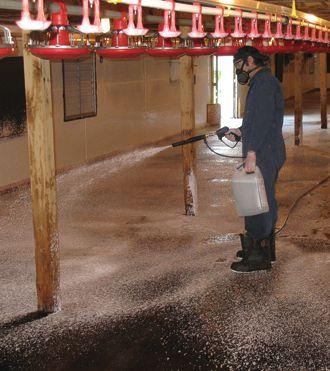
What’s important is how the barn is cleaned prior to disinfection, and keeping the barn dry during the down time, he said. o ptimal cleaning requires mechanical action, pressure, a detergent used at the right concentration, and adequate contact time. Temperature of the water is also important, he said. Between 45 and 60 C is ideal, anything over 60 C, and “you are just baking the organic material and providing any potential pathogens with a coating,” he said.
In France, microbial monitoring is used to measure how “clean” a barn is. Vaillancourt said a researcher decided to compare a visual assessment of organic matter present after cleaning
to microbial counts measured on swabs of the barn environment. Vaillancourt said that interestingly, there was very little relationship between how clean a barn “looked” and how clean it really was.
“ d ryness is your friend, it’s the enemy of pathogens,” he said. If there is going to be a longer down time between flocks, as long as the barn is dry, this shouldn’t be a problem. If the barn is humid, pathogens start to multiply. “ use ventilation and heat to ensure that the barn is dry,” he said.
The importance of cleaning can also be seen in a 2006 study performed in Canada. Vaillancourt said the study, which looked at different building materials (wood, plastic and metal) and the type of cleaner used (water, iodine, or a foam or gel detergent) showed that the type of surface didn’t matter when it came to cleaning, but the method used was important. Iodine did not perform well, and the gel detergent resulted in a lower bacterial count than that of the foam because it increased contact time, he said. d ry cleaning (removal of dust and dirt without water) was best for wood, and wet cleaning was best for plastic and metal.
“What’s important is how the surface you are dealing with is cleaned, and how dry it is,” he said. “ you may be surprised to see that what you have been doing may not be working as well as you think.” n
CPRC Update our Continuing Evolution
the board of directors of the Canadian Poultry Research Council (CPRC) continues to make changes as part of its efforts to make CPRC the most efficient and effective organization possible. For example, research grant procedures have undergone changes that the board believes will better align research activities with industry’s goals.
The New SySTem
The new system of receiving and reviewing research grant proposals uses a twostep process: 1) an industry review of Letter of Intent (LoI); and 2) a scientific review of methodology. In the LoI, the applicant is asked for an overview of the proposed research as well as an account of how the research will impact the poultry industry. For example, how will the proposed work help industry reach its Research Target outcomes? The applicant is asked to think about where the proposed research fits in to the socalled “innovation continuum”; is it primary research directed at a fundamental understanding of how something works, or is it of a more applied nature? Who are the ultimate end-users of the research and what would it take to bring it to the adoption stage? Answers to these questions will help CPRC assess the potential benefits of the proposed research.
The completed LoIs, due June 1, will be evaluated by the CPRC board and support staff with help from additional scientific experts.
successful applicants will be invited to submit a detailed Proposal (step 2 of the process) that provides particulars on experimental design and proposed methodology. The proposal will list members
of the research team and describe their expertise and the roles each will play in the proposed work. Training of highly qualified personnel (students, research technicians, etc.) will also be described, as will specifics of proposed expenditures and funding sources.
The detailed Proposals will be reviewed by CPRC’s scientific Advisory Committee (sAC), the members of which represent a breadth of knowledge and expertise that can accurately assess the intricacies of the proposed methodology. Applicants will have an opportunity to address issues or concerns raised during the sAC review before a final funding decision is made by the CPRC board.
CPRC’s funding commitment is contingent on the proposal securing matching funds from another source(s). The preference is that funds from the poultry sector (CPRC and other sources) be matched at least 1:1 with funds from outside the poultry sector (e.g., other agricultural sectors, the private sector, the government, etc.). Part of CPRC’s service is to help researchers identify and secure matching funds. Matching the poultry sector’s investment in research with funds from other sources maximizes the impact of that investment and encourages collaboration with organizations that might not otherwise directly support poultry research.
Although it will increase the time between LoI submission and final approval, the CPRC board believes the new system will benefit both industry and researchers by improving communication and ensuring research is targeted at industry goals. The new process will be monitored and assessed on an ongoing basis to ensure it continues to increase CPRC’s effectiveness.
The ‘New’ Board
The new granting procedures were approved in principle by CPRC’s board of directors at the March 23, 2012, annual general meeting. CPRC is pleased to announce that all directors, who represent each of the organization’s five members, were re-elected without change to positions. Jacob Middelkamp, representing Chicken Farmers of Canada, returns as CPRC chairman. Middelkamp is a broiler chicken producer in Alberta. Roelof Meijer, representing Turkey Farmers of Canada, returns as vice-chairman. Meijer is a turkey producer also from Alberta. The Canadian Poultry and Egg Processors’ Council (CPEPC) is represented by Erica Charlton, CPEPC’s technical director. Cheryl Firby, director of agricultural operations at Maple Leaf Foods, represents the Canadian Hatching Egg Producers, and Helen Anne Hudson, director of corporate social responsibility for Burnbrae Farms, represents Egg Farmers of Canada. CPRC would like to take this opportunity to thank these individuals and their respective organizations for their past efforts and continuing support. The continuity of the CPRC board will facilitate ongoing efforts to enhance poultry research in Canada. n
The membership of CPRC consists of the Chicken Farmers of Canada, the Canadian Hatching Egg Producers, the Turkey Farmers of Canada, the Egg Farmers of Canada and the Canadian Poultry and Egg Processors’ Council. CPRC’s mission is to address its members’ needs through dynamic leadership in the creation and implementation of programs for poultry research in Canada, which may also include societal concerns. CPRC’s contact information is available at www. cp-rc.ca.
Industry bCCmb Celebrates 50 Years
canada’s first poultry meat board marks milestone in abbotsford
It has now been 50 years since regulated marketing began in the Canadian chicken industry. In March, several hundred people gathered in Abbotsford, B.C., to celebrate the 50th anniversary of the B.C. Chicken Marketing Board (BCCMB), which until 1980 was known as the B.C. Broiler Marketing Board.
Although it was the first meat poultry board in Canada, it was not the first case of regulated marketing in the province, having been preceded by both the B.C. Milk Board and the B.C. Egg Marketing Board.
A host of dignitaries congratulated the BCCMB on its accomplishments, including retiring Chicken Farmers of Canada (CFC) chair david Fuller and sen. gerry st. germain, a former chicken grower and BCCMB chair.
“The chicken marketing board has always had a special place in my heart,” st. germain said, insisting it has done a “world of good” for the industry.
“you set a high bar for the rest of us,” Fuller added.
Current BCCMB board member and new CFC chair david Janzen spent most of the evening recounting highlights of the board’s history, beginning with the first board of chair Bob Blair and members Ken nelson and Bill Vanden Born. They noted how far the industry has come since the BCCMB issued its first pricing order on dec. 28, 1961, setting
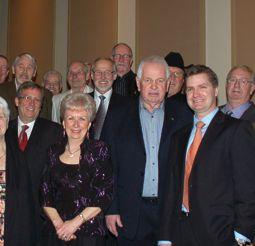
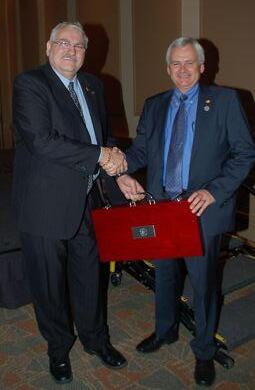
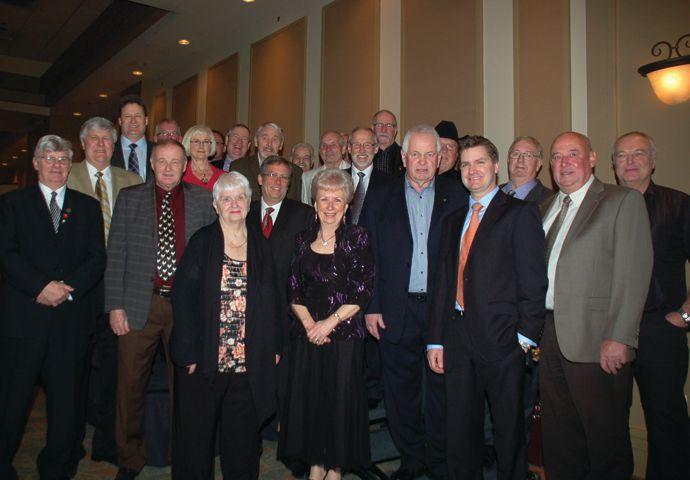
Those in attendance who had served on the BccmB board over the last 50 years were asked to come on stage for a group photo.
the live price at 18.5 cents/pound (40 cents/kilogram). At $1.63333/kilogram, the current price is more than four times that. Production has increased even more dramatically. B.C. now grows about 150 million kilograms/year, an increase of over 1,000 per cent from 1961.
Although the board was formed to smooth out production and increase returns to growers, it has had a checkered history. despite and sometimes because of its own efforts, history shows the board and the industry has had a series of ups and downs on both the provincial and the national level over the past 50 years.
As early as 1965, the B.C. board indicated a willingness to co-operate with other provinces in implementing regulated
pricing and production but stated it would be just as prepared “to compete where competition has been offered.”
The dramatic production increase has not been an orderly climb. The board was forced to make its first quota cut in 1967 when “too many broilers were produced to maintain a stable and profitable market demand.”
This also caused the processors of the day to form an advisory committee to the board to improve relations between growers and processors. Like the industry as a whole, that relationship has been up and down ever since.
By 1972, all provinces had instituted their own marketing boards but this was not enough to manage interprovincial movement of chicken. Although
oVEr thE YEArs
B.C. had initially floated the idea of a national chicken plan to deal with the issue, it ended up opposing the proposed plan, saying it did not adequately address market growth within a province.
After years of discussion, the Canadian Chicken Marketing Agency (CCMA – now CFC) was proclaimed on dec. 29, 1978. B.C. was an original member but withdrew in 1990 to protest what it felt were insufficient quota allocations. Almost immediately thereafter, the BCCMB agreed to co-operate with the CCMA. By 1994, old wounds had healed and growers voted overwhelmingly in favour of rejoining the national agency. However, that was stymied by the B.C. government and it was not until 2001 that B.C. actually re-entered the national system.
Industry
Although the BCCMB had been an elected grower board since its inception, that ended in 2000. As a result of another period of friction between growers and processors, the B.C. government decided to terminate the five-person elected board and replace it with a three-person appointed board. While it has maintained three appointees, including an appointed inde-
pendent chair, the government has since added two elected grower positions, bringing the board back to a complement of five members. one of the appointed positions is currently vacant.
Current CFC chair david Janzen is the third B.C. grower to serve in that capacity. He was preceded on the national stage by Bruce McAninch and Arne Mykle.
He faces some difficult tasks, as processors in B.C., like their counterparts in Alberta and ontario, want more production despite the fact there is only marginal growth in Canadian chicken demand.
That was reaffirmed by two of B.C.’s three major processors.
“our hope is that the B.C. supply will increase,” says sunrise Farms chief financial officer scott Cummings, noting his company continues to develop new products in its Abbotsford further processing plant. superior Poultry could soon also be requesting more chicken. It has embarked on a $7-million expansion that will result in a 35 per cent increase in the capacity of its Coquitlam processing plant. n
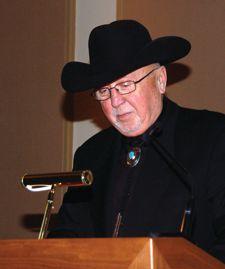
sen. gerry st. germain, a former chair of the BccmB, said the organization holds a special place in his heart.
Marc Lalonde
Eastern Canada
Biosecurity Technician
Vétoquinol Canada
Phone : 514 714-8398
Fax : 450 338-0770
mlalonde@vetoquinol.ca
Biosecurity is a concern for every producer and their consultants. Maintaining high biosecurity standards demands discipline from everyone involved.
The objective is to prevent the introduction of infectious agents that could affect the health of the animals, whatever they may be. It may not be one of the most spectacular aspects of production, but if we can avoid an outbreak within the herd, the potential savings of time and money may well be.
In addition to offering you a complete line of well known products (detergents, disinfectants, insecticides and rodenticides), Vétoquinol also offers the expertise of a specialized technician to help you optimize your investment in biosecurity.
Added Value services offered by your biosecurity technician
• Revision and optimization of your current program
• Calculation of product dilution rates
• Equipment calibration, injector ratio calculation
• Optimal application demonstration
• Personalized reference manual
• Inspection and training on rodent control
• Training on :
- biosecurity procedures
- insect and pest biology
- cleaning and disinfecting products
- insecticides and rodenticides
• On-farm demonstrations, individual or in a group
These services are intended for producers, representatives/retailers, animal production programs or any other industry member with animal health concerns.
Contact Marc Lalonde
PIC Update
DNA-based Vaccine Against AI
university of manitoba researchers are evaluating the efficacy of a new dna vaccine for a highly pathogenic avian influenza
B Y K IMBERLY S HEPPARD , R ESEARCH C O -
ORDINATOR
Avian influenza has caused the deaths of millions of birds that were either infected with the disease or culled because they were potentially exposed to the influenza virus. This disease has devastated the poultry industry, particularly in Asian countries. The administration of efficacious vaccines remains the primary means of controlling losses due to most pathogens. With the possibility of an influenza pandemic, there is a critical need for a vaccine that will recognize and protect against any influenza pathogen.
one feasible approach is a vaccine containing conserved immunogenic protein sequences that represent the genotypic diversity of all current and future avian and human influenza viruses, as an alternative to present vaccines that address only the known circulating virus strains. Therefore, current recombinant dnA technology promises to provide new classes of more efficient poultry vaccines. dnA vaccines are considered the next-generation vaccines because of their promising results from both experimental and clinical trials.
The main advantages of dnA vaccines include: speed of vaccine development, simplicity of administration, ability to elicit immune responses against native protein antigens with complex structures, and the
Featured r esearcher
Juan Carlos RodriguezLecompte holds a dvm degree and m sc. degree in immunomodulation, and a phd in immunovirology from the atlantic veterinary college. he was a post-doctoral fellow at the department of pathology, and molecular medicine, mcmaster university, where he worked on immunology and cancer therapy. he has many years of clinical and practical experience in poultry diseases and in 2007, he was appointed assistant professor and director of the poultry research unit at the department of animal science,
Dr. Juan Carlos rodriguez-lecompte (C) with graduate student Alexander Yitbarek (l) and Dr. harold Echeverr (r).
university of manitoba, and became an associate professor in 2011. he heads the nutritional immunology laboratory, which focuses on nutritional immunological factors regulating immune responses and animal health, including nutrients, bioactive supply, and disease states such as immune-suppressive diseases. he has extended his research to study the stimulation of intestinal innate immunity in avian species to determine their effect on intestinal colonization by micro-organisms and investigating immune-related effects on gut and health status.
ability to induce both humoral and cellular immune responses. dnA vaccines have also been shown to be compatible with in ovo vaccination, amenable to lower-cost automated procedures, and effective in producing protective immune responses.
dr. Juan Carlos Rodriguez-Lecompte and Alexander yitbarek, M.sc., have been working to evaluate the efficacy of a new dnA vaccine for a highly pathogenic avian influenza (AI) and, more specifically, to determine the formulation of the vaccine that provides poultry with the highest protection. The long-term goal of this study is to develop dnA-vaccines carrying the AI-HA glycoprotein gene, which can act as a stimulus and provide required protection against the disease without a risk of pathotype-reversion and side-effects by the vaccine. In addition, the main aim of the study includes attempts at influencing the encoded HA gene expression using a nutritionally inducible promoter.
Their findings? The researchers were successful in characterizing the hemagglutinin gene of the highly virulent avian influenza H5n2 and H7n3 strains, a construct with the potential to induce highly cross-reactive cellular immune responses. This is the first critical step in developing dnA-vaccines that can provide optimal protection. However, more information is needed on vaccine promoters and enhancers before the actual vaccine can be optimized. The researchers are working on the generation of recombinant protein to be used in a challenge study in parallel to the dnA vector challenge to see if there is any differential response to the two antigens. Future work will also assess the possible nutritional induction of the promoter associated with the dnA vaccine in order to be able to turn the gene on or off at certain stages of development or in a particular tissue. To read more, please visit www.poultryindustrycouncil.ca. n
PIC Update
restriction of broiler breeder body Composition
a new management paradigm to support growth and yield potential of broiler offspring
F EATURED R ESEARCHERS :
R OB R ENEMA ET AL .,
U NI v ERSITY OF A LBERTA
modern broiler breeder strains are simply too good at depositing breast muscle. Because they have a higher propensity to deposit muscle rather than fat, they may not have enough energy stored in the body to mobilize in times of energetic debt, and as a result these hens may have difficulty with early chick quality and long-term maintenance of lay. While the bird may still be able to transfer the necessary nutrients to the egg, with less energy available in storage, it will rely much more heavily on the feed it consumes each day to meet this need. The concern is that the bird may carry additional breast muscle throughout life and, in order to maintain this high energydemanding tissue, the hen will have to divert nutrients it might otherwise have been able to use to support egg production. In order to support egg production in broiler breeder stocks in the coming years, it may be time to question if current feed restriction methods and weight targets are as adequate now as when they were designed over 30 years ago.
dr. Rob Renema and his research team at the university of Alberta have been exploring the concept of “composition restriction.” By manipulating the delivery of dietary energy and protein throughout the life of the bird, they hope to identify methods of feeding birds to a specific carcass composition rather than
what breeders are fed during the growing phase has a greater effect on final carcass composition at the end of egg production.
just to a target body weight. They theorize that this approach could discourage breast muscle deposition while providing for the energetic requirements of final maturation and early egg production. Their findings? What you feed the birds during the growing phase has a greater effect on final carcass composition at the end of egg production than the diets fed during the egg production period do. Why? Primarily because muscle deposition is “set” when they are young, and this has a carry-over effect into the breeder phase. Feeding
programs during the rearing or laying phase must not be designed in isolation. Furthermore, growth was tied more closely to energy intake than to protein intake. despite fairly similar energy intakes, however, energy was still one of the main factors affecting rate of lay. While maternal protein intake had very little effect on egg production, it did have the potential to affect broiler offspring yield and breast muscling – particularly in the males. To read more about this research project, please visit www.poultryindustrycouncil.ca. n
recent events have shown us that people are so important to the poultry industry.
our Research day this year featured poultry health research. The focus was not only on disease research, but on the cost of disease to producers and industry as
B Y T IM N ELSON , Ex ECUTI v E D IRECTOR
well. This was emphasized by having one ontario producer tell attendees about his personal experience of managing a serious disease outbreak on his farm.
during the Research day we recognized three eminent poultry researchers from the university of guelph – drs. steve Leeson,
Healthy Birds, Healthy Profits
Don’t hand them over to necrotic enteritis-The Profit Killer!
BMD® Helps Improve Your Bottom Line By:
Reducing subclinical and clinical disease, resulting in greater productivity and decreased morbidity/mortality
Ensuring the absorption of nutrients from feed through preserving the integrity of the gut wall and controlling necrotic enteritis1
Ian duncan and the late dr. Bruce Hunter – who dedicated their careers to poultry research.
The Poultry Industry Conference and Exhibition (known as the London Poultry show) musters a veritable who’s who of the poultry service industry in ontario and beyond. The mood that huge group brings for two days each year to the Western Fair district in London, ont., to work (and play) together is palpable. What an intense and stimulating two days it is. The PIC brought a few guests in this year and they were blown away by the friendly, welcoming, open reception and hospitality they received at every booth. great job, industry! so, it was disappointing halfway through day 1 of the show to receive an e-mail from dr. Fred silversides, who conducts research into poultry genetics in B.C. (and whose research PIC supports), which said, “In August, my position will be cut as a result of the current round of deficit reductions, and
PIC Update
AAFC (Agriculture and Agri-food Canada), is getting out of research in poultry genetic resources when it happens.”
We understand the federal and provincial governments are going through tough times. But this was the only centre where this type of research was being undertaken, and it had only one researcher and one student.
not long after receiving this e-mail, the Agricultural Adaptation Council (AAC) informed me that the current Canadian Agricultural Adaptation Program (CAAP) will expire in March 2014, removing the need for regional councils (such as the AAC) in the delivery of any future federally funded programs.
Who made these decisions? Who knows – but they were made. How did we (industry) let it happen? Reading the e-mail made me reflect on how lucky we are to have the people at oMAFRA and AAFC here in ontario who continue to support our pro-
grams of research and extension in an effort to ensure our industry’s sustainability. The Poultry Loading decision Tree, Biosecurity outreach Program, growing Forward costshare program and the upcoming PAACo (welfare auditing) course would not be possible without their support and that of industry and the university of guelph.
Competition and risk management drives us to continue to develop new technologies, tools and management techniques. But what will keep this industry sustainable are the very visible personal connections, relationships, networks and collaborations that bind it together and make it successful.
somehow in B.C. the industry lost a connection. We have great connections in ontario, but we need to work at them. Make sure your connections extend to our government and university partners and at every opportunity thank them for the funds and people they provide. n
Used year-round in your flocks, Coccivac® vaccine can help achieve simple, sustainable and profitable prevention against coccidiosis. Resistance is not an issue, so Coccivac frees birds from the stress associated with in-feed anticoccidial rotation and shuttle programs. You and your feed company can focus on improving nutrition and better gut health.
To make the transition to Coccivac, go to www.becauseitworks.ca, talk to your veterinarian or speak to your Merck Animal Health representative.
Management learning Curve
rosalind colony poultry boss mike stahl was given the task of managing an aviary, and has enjoyed the challenge
BY KRISTY NUDDS
mike stahl says that egg producers shouldn’t be scared to try an aviary system.
But then the poultry boss of the Rosalind Colony near Camrose, Alta., has proven that he isn’t afraid to take on a challenge.
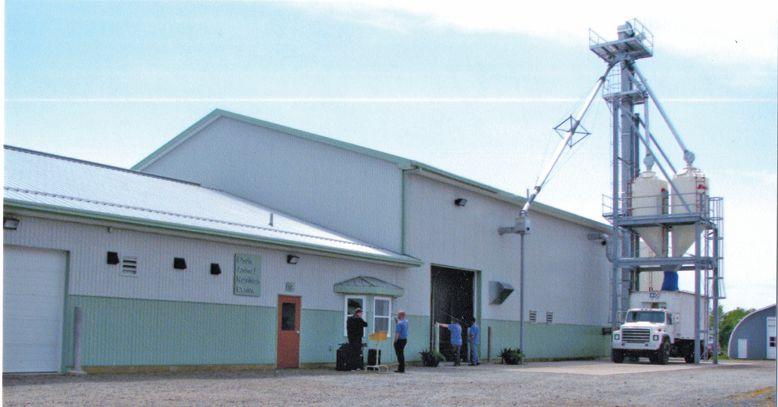
Formerly a plumber at the Byemoor Colony – located about 130 kilometres south of Rosalind – stahl was chosen to manage a new organic free-run egg operation that the colony had been planning to build. But during the planning phase, the colony made the decision to split, purchasing land around Rosalind, and it was determined that the new egg operation would be built there instead of at Byemoor.
The initial planning for the barn was completed by Byemoor resident and current Alberta Egg Farmers chair Ben Waldner, who consulted with Meb gilani, owner of the colony’s grader, sparks Eggs. At the time, gilani was planning to build his own free-run operation (see our november 2011 cover feature) and had visited numerous free-run aviary operations in Montana for ideas.
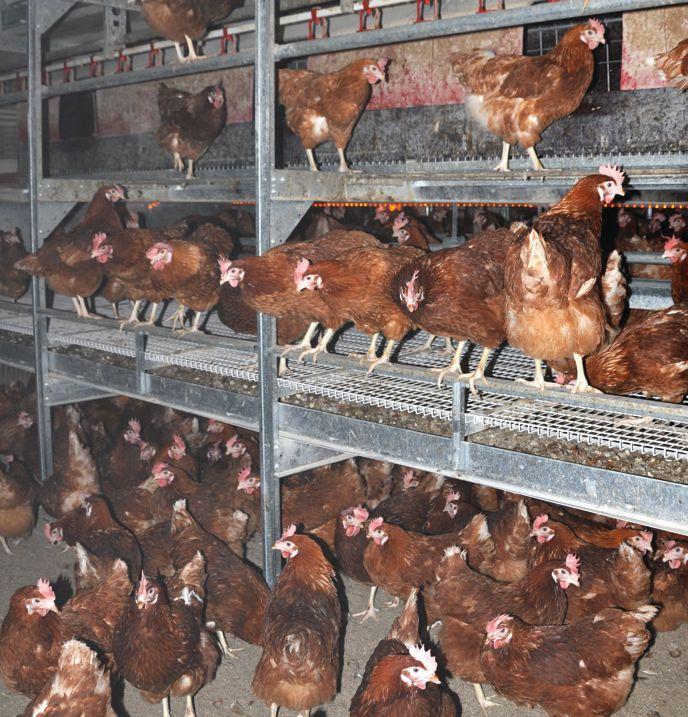
The barn has three separate housing “units” – two for the layers, and one for pullets. The pullets are housed in the centre of the barn, with the layers on either side. An office, shower, washroom, and egg collection and storage rooms complete the space, dividing the barn into “bird” and “people” areas.
mike stahl says egg producers shouldn’t be afraid to try employing an aviary system. despite the challenges, he has enjoyed learning about the system and the birds.
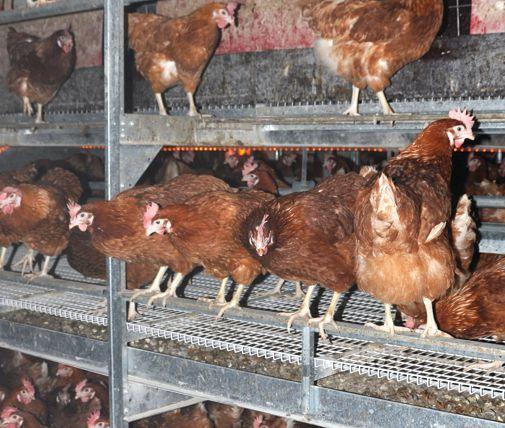
The birds are raised in an aviary and pullet-rearing system, both manufactured by Farmer Automatic. Each layer aviary and the pullet system can house 10,000 birds, but only 7,000 birds are raised in each unit to fulfill the lower density requirements of organic production. The set-up is “all-in, all-out” – the pullet room is its own structure and is fully enclosed and separated from each of the layer areas. doors near the floor of the pullet room connect to each layer aviary, allowing the pullets to be moved to one of the aviaries
when they reach maturity. Each of the layer sections and the pullet section has it’s own ventilation.
The walls of the barn are not only energy-efficient, they were manufactured on-site. The colony manufactures a prefabricated wall system known as Energard for greenland Building systems (www. gogreenland.ca). The walls are constructed using an I joist instead of 2x6” or 2x4” studs, and are filled with a polystyrene infil. The result is an energy efficient wall where “the barn won’t get wet, and there’s
DoN’t bE AFrAID
PLeASe cHecK ONe:
❑ Poultry Producer or Employee
❑ Government, Libraries, Schools, Universities
❑ Hatchery, Hatchery Employees
❑ Fancy or Show Poultry
❑ Wholesale Produce and Processors, Further Processing
❑ Equipment Manufacturers
❑ Drugs, Laboratories, Vaccine Companies, Chemical
❑ Veterinary and Lab Technicians
❑ Feed Manufacturers, Feed Additives, Distributors and their Salespeople
❑ Other (please specify)
Cheque - Payable to Annex Publishing & Printing Inc.
Visa MC AMEX Account #: Expiry: Signature: Date:
TO SubScribe:
Tel: 866-790-6070, ext. 201 Fax: 877-624-1940
Mail: canadian Poultry Magazine c/o Annex business Media P.O. box 530, 105 Donly Dr. S. Simcoe, Ontario N3Y 4N5
More than 800 Merlo sold throughout Canada sinCe 2004
Merlo redefines standards in agriCulture: Designed and built to outperform the loader tractor Discover the amazing use and versatility of the frontal reach Increase of your productivity by 20% to 50% Incredible pulling and pushing capacity Drastic diesel savings, up to 50%
I don’t know how I ever farmed without Merlo. − Every farmer owning a Merlo
less carry-through of air,” says stahl. The walls are also sprayed with a fire retardant –required by provincial building code – as well as a mold and moisture inhibitor.
The walls of the barn are 12 feet high, with the first two feet comprised of concrete, and the other ten feet is Energard. The walls of every house on the colony were also constructed using Energard.
Rosalind has two large manufacturing shops that could rival a small factory, where the walls are produced. In addition to the layers, it’s an important source of revenue for the colony, because stahl says the 4,500 acres of land at the colony is too good for cattle, so it has been cultivated and seeded to canola and wheat.
Although Rosalind has plans in future to build a feed mill, they don’t plan on growing their own organic crops. “The transition is too long – it takes three years of being sterile, and it just doesn’t pay,” says stahl. The reason for building a feed mill is “consistency and quality control,” he says. He also wants to use a best cost formulation instead of least cost, and having his own mill will allow him to do this. The grass outside the barn that the birds can access in the warmer months is organic.
Heating the bird rooms is very cost efficient, not only because of the walls but also because of stahl’s previous plumbing experience. stahl installed two condensing boilers (one 400,000 BTu, the other 150,000 BTu) to heat the pullet room and aviaries. “This has resulted in big savings,” he says. The pullet room has infloor heating, and being in-between the two aviaries, only has one outside wall so very little supplemental heat is required. The aviaries also require little heat, as the adult birds produce enough heat on their own.
The first flock of pullets entered the barn in January 2011, and moved to one of the aviaries in May 2011, and the second flock of layers went in June 2011. The first flock was a learning curve for stahl, and he admits to having problems with floor and system eggs. He credits Farmer Automatic, who sent staff from its headquarters in germany to give him some help. “This help was paramount in the beginning,” he says.
Although he still has floor eggs from his first flock, he’s proud of the fact that he has only had five floor eggs and two system eggs with the second flock. He says you need “chicken savvy” to understand how to combat potential and existing issues in the aviary. He spends a lot of time in the barn, observing behaviour, which has led to a few alterations, he says. Although he won’t give up all of his secrets, he says he has made some adjustments over time and slowly figured out what works, and what doesn’t.
one thing he tried with the second flock is to mount artificial eggs in the nest boxes, thinking that it might help prevent system and floor eggs. “I can’t say for sure that it works, but this flock has been much better,” he says. one thing he knows that does work is to help spread out the birds with respect to nesting space. Having noticed that the last nest box in the row on the system would get crowded, he installed wood partitions every 10 feet on the walkway in front of the nest boxes to help spread out the birds.
Like many other producers raising layers in an aviary, stahl realizes that lighting and feeding are key. Lights are dimmed from the outside walls first, then the centre lights are dimmed to indicate to the hens that it’s time to roost. He feeds four times a day, and
some feed must be left in the trough before the lights go out, because midnight feedings can’t be given in an aviary. Three hours after the lights come back on, he does the first feeding, giving the birds enough time to lay and not get distracted by the feeder.
As for dust, stahl admits to having to wear a mask inside the aviary and that the dust is worse in the afternoon, particularly in winter when the air is dry. He’s been consulting with dr. Tina Widowski at the university of guelph on this, and says he is going to start using a sprinkler system to reduce the dust levels.
stahl is also experimenting with the type of light bulbs used. The first flock was reared using incandescent lights, and the second was reared using compact fluorescents. He has been measuring both with a power meter to compare the cost difference, but thinks that he will likely be replacing at least one of the aviaries with LEds.
For his first two flocks, stahl says he has achieved about a 91 per cent production rate, which is pretty good for an organic free-run operation, but it’s not good enough for him. “I want to do better than the manual,” he says. For his third flock, he’s set himself a goal of 94 per cent. With his attention to detail and tenacity, he has a good chance of achieving it. n
stAhl hAs mADE sEVErAl moDIFICAtIoNs to thE sYstEm, thE PrImArY ChANgE bEINg thE ADDItIoN oF WooDEN PANEls EVErY 10 FEEt so thAt thE bIrDs DoN’t CroWD thE NEsts AloNg thE roW
Consumers
It’s All About trust
Farmers need to operate in a way that is consistent with consumers’ values, says expert
BY J IM K NISLEY
For today’s consumer and today’s public it’s all about values. They not only want food to be affordable and safe, but they also want to know the people producing that food aren’t in it just for the money and are doing more than meeting the minimum regulatory requirements. They want to know the animals are well treated and the environment is being protected.
s peaking at the Egg Farmers of ontario (EFo) annual meeting Charlie Arnot, CEo of the Kansas City-based Center for Food Integrity, said: “Being good at producing eggs is not adequate; it is not enough to be successful in today’s environment and it certainly won’t be enough going forward.”
It’s also not enough to trot out surveys that show the public likes farmers. The problem is that they may like farmers, but today’s agriculture is so different from farms of the past the public isn’t sure that you’re the farmers they have in mind.
The public is leaning towards seeing agriculture purely as a business and, if this perception is reinforced by farmers focusing solely on profitability, that creates a trust problem. People are more likely to place their trust in those that operate under a clear set of principles rather than those who act in certain ways because it’s profitable, he said. saying “we take care of the animals and the land because if we’re more productive, we’re more profitable” sends the wrong message. He said he has used
charlie arnot, ceo of the center for Food integrity, says that if the public trusts you to do what is right, they will grant you a “social licence” and they won’t feel the need to restrict your freedom to operate.
that type of response in the past but by doing so producers are giving consumers the idea that they are not caring for animals and the land because it’s the right thing to do, but because it will help their bottom line.
Research has shown that argument and ones like it put agriculture on the same level as business in terms of most people’s moral hierarchy. Business ranks lower than environmental groups and many activist
organizations in the minds of consumers because those groups’ values are based on a set of moral principles, and doing what they believe is the right thing.
Social l ice N ce
Agriculture operates under what Arnot calls a “social licence.” under a social licence farmers are given the privilege of producing food with limited restrictions on how they operate.
PUblIC trUst
Beat beetles. Darkling beetles are evil little creatures. They wreak havoc on your facilities, spread bacteria and disease and irritate the most important part of your business. Your birds. So don’t hold back, hit them with Tempo®. A fast and powerful way to control darkling beetles. With rapid knockdown and prolonged residual activity, Tempo® boosts the comfort of your birds. And your bottom line. Learn more at BayerLivestock.ca.
® Bayer, Bayer Cross and Tempo are registered trademarks of Bayer AG, used under license by Bayer Inc.
Consumers
“If the public trusts you to do what is right, they will grant you that social licence. They won’t feel the need to restrict your freedom to operate.”
But the social licence is a fragile thing. one bad incident, one significant breach of trust and it can be gone. This happened in the u s. after the Iowa contaminated egg situation a couple of years ago. It was a single, albeit very large, operator but he operated in ways that threatened public safety and breached the public trust. The result is new legislation, new regulations and litigation. And this doesn’t affect just the one bad player – it affects everyone.
A social licence “is an opportunity to demonstrate that you are operating in a way that is consistent with a consumer’s values.”
Farmers sometimes believe they have the right to operate as they see fit. That may be true, he said, “but it is your customer’s right not to buy your product and it is the consumer’s right not to eat your product.”
This is particularly true when it comes to brands. Big brands like Wal-Mart and the restaurant chains have recognized the need to show consumers that they share values. Wal-Mart, for example, was recently cited as the greenest company on the planet.
The brands also know that their suppliers must also live
up to consumers’ values and expectations. Activist groups have learned that one of the most effective ways to initiate change is to go after the weakest link in the supply chain. If they find farms that are supplying a brand aren’t living up to the brand’s stated principles, they will go after it. If the supplier doesn’t change its ways and meet the brand’s requirements and activists’ demands they will no longer be a supplier.
In effect, the brands say: “We believe what you are doing on your farm puts our brand at risk so we are going to mandate how you actually produce,” he said.
It’s all about trust, Arnot said. Trust is fundamental to the social licence and essential for today’s agriculture.
Building trust wasn’t even on agriculture’s radar until 2007 when the Center for Food Integrity (CFI) was formed. Traditionally, agriculture fought off attacks by citing science or by attacking the activists. science is still essential, but it isn’t enough, and fighting fire with fire might make farmers feel good, but it has proven ineffective.
The CFI is a not-for-profit organization whose goal is to promote dialogue, model best practices, address issues
Tru ST
One Solution Clean Water Peace Of Mind
The power of O2 and acidification combined.
Waterline Cleaner
• removes biofilm
• removes scale
• is equipment friendly
• “the greatest reduction in microbial presence”*
Courtesy of Dr. Brian Fairchild
This ground supports your farm’s growth.
While farming and banking might seem far apart, the two are intertwined. We both thrive on opportunities and share a desire to see farming succeed.
To help your farm prosper, Scotiabank offers revolving loans, flexible repayment terms, and funds for capital expansion.
We’ve been financing Canada’s farms for over 175 years, and have the experience and the products to do it right.
Visit us at scotiabank.com/agriculturalservices or drop by your local branch to talk today.
that are important to consumers and serve as a resource for accurate, balanced information about the food system.
Public trust means what you are doing is consistent with public expectations. But it is a moving target, he said. Meanwhile maintaining a social licence isn’t altruism. It is enlightened self-interest. “There is significant economic value in maintaining a social licence. If you lose the social licence, if people and regulators learn to no longer trust you to do the right thing, the response can be increased regulation that forces you to act responsibly and in the public interest and that inevitably costs more and may make you uncompetitive.”
once you transition from social licence to social control it’s all about “regulation, legislation, litigation and compliance,” he said.
“It is also wrong to assume the loss of social licence will only impact the bad actors – it doesn’t.” It impacts the entire industry. “you not only have an interest in what happens on your farm, you have an interest in what happens on all farms.”
you have to show that as an industry, as well as an individual, you share the values of those in the community. People aren’t sure you still care. The scale and technology has changed things, he said.
And you must recognize that the public sees the difference between can and should. The science may say you can use that feed, but should you? should you have cages? “you need a good “should” answer,” he said.
“you have to stress that you are interested in the same thing they are – the well-being of the animals.”
Egg Farmers of ontario are on the right track with their “Who made your eggs today?” campaign, he said. It brings to the forefront farmers and shows that they care and share the public’s values.
It is genuine people telling genuine stories and that is what the public wants and needs, he said. It gives the
public the sense that they know these farmers and that is essential.
But there is always more to be done. The public wants to know you and it is in your self-interest to get to know as many of them as possible. Join community groups, answer questions and be open. “We need a dialogue telling people who we are and what we do.”
“The world will no longer leave you alone. you need to be engaged in the conversation or someone else will be making the decisions for you,” he said.
“People will continue to give him (a farmer) the benefit of the doubt even if they may not like his production system because they like him.”
eN gageme NT
Farmers must also recognize that the world is now fundamentally different than it was. “Are you prepared to engage at the speed of Twitter?” he asked. Anyone, anywhere can go on Twitter and the message is around the world immediately. Anyone with a cellphone can make a video and post it on you Tube. you have to be ready for that and prepared to respond to it.
“you need to be prepared to engage instantaneously. It is incredibly hard but you must be ready,” he said.
you must also be prepared to take politically difficult actions. “If there are farmers who are putting the industry’s social licence at risk you need a strategy to deal with that. If you don’t they can bring the whole industry down.”
you have to be willing to hold one another accountable and deal with those who cut corners and who are jeopardizing the collective social licence, he said.
Egg farmers got into egg farming because they have a passion for egg farming. They didn’t go into egg production because they wanted to be engaged in issue management or public relations, but they must because simply being good at producing eggs is no longer enough, he said.
More information on CFI can be found on the organization’s website: www.foodintegrity.org. n
Labour
Changing landscape
examining the impacts of being able to draw workers from dozens of countries, high canadian unemployment rates, moves to change work permit restrictions, and more
B Y T REENA H EIN
the landscape of the agricultural workforce is changing in Canada, affecting Canadian workers, workers from other countries and employers as well. More than 300,000 temporary foreign workers are employed in Canada each year and about 40,000 of those are in the agriculture sector, says dr. Kerry Preibisch, a sociologist in the department of sociology and anthropology at the university of guelph. Preibisch’s look at changes in the Canadian farm labour market over the past decade was recently published in the International Journal of Sociology of Agriculture and Food – and one major change she’s noticed relates to how many countries foreign farm workers now hail from.
“People from an increasingly wide range of countries are finding jobs as temporary workers in Canada’s food system due to government policy changes in 2002,” notes Preibisch. Back in 1966, Canada instituted the seasonal Agricultural Workers Program, a temporary migration program based on bilateral agreements with 13 different countries, with most from Mexico and Jamaica. since 2002, however, the government has allowed employers who could
people from an increasingly wide range of countries are finding jobs as temporary workers in canada’s food system.
demonstrate they are facing a labour shortage for any low-skilled occupation – including agriculture – to hire migrants on temporary visas from anywhere in the world. Preibisch notes that by 2008, the Canadian agricultural sector employed foreign workers from almost 80 countries. And the types of work they are hired for, she observes, has also broadened, from picking bait worms to vaccinating chickens.
This ability of Canadian employers to pull from a ballooning number of countries hasn’t had a positive impact on temporary
workers in many cases. While workers in processing plants are, for the most part, in unionized environments with standardized working conditions, overtime pay and so on, those on farms are more vulnerable. simply put, the increased competition from workers from many other countries puts pressure on people to accept unreasonable working conditions. “If they don’t agree to working longer hours for example, workers can be threatened with being replaced with those from other places,” observes Preibisch. “Many Mexicans are now being
ChANgINg WorkForCE
Labour
replaced with guatemalan people, not so much because they’ll take less pay, but because guatemalans are perceived as willing to work longer hours and work harder in comparison.” While most of Canada’s temporary foreign agricultural workers still come from Mexico followed by Jamaica, guatemala is now in third place. Migrants from many areas of the globe are more desperate than previous groups of workers, Preibisch asserts. “They face less political freedom and more marginalization and are willing to work very hard here,” she notes.
In her study, Preibisch also observes a significant lack of regulation and monitoring of migrant recruitment and employment in Canada. “This can and does result in abusive practices by employers, and some conditions which could be considered close to slavery,” she states. While employment standards are provincial –employees in ontario for example, must be given two 15-minute breaks and a 30-minute lunch period within an eight-hour shift – Preibisch says there needs to be more co-operation between federal and provincial labour agencies to ensure all workers are treated according to legal requirements.
Human Resources and skills development Canada (HRsdC) has all foreign workers and their employers sign a contract that “provides details about the worker’s job and conditions of employment, including the maximum number of hours of work per week, the wage rate for those hours, and the amount of money that will be deducted from the worker’s pay.” Also on the HRsdC website is information about “government liaison officers of source countries in Canada,” who can intervene on a foreign worker’s behalf, and “confirm that workers have acceptable housing, ensure that workers have health insurance and Workers’ Compensation coverage, gather details of worker injuries, collect pay records from employers, approve worker transfers, and consult with employers who wish to terminate a worker’s contract.”
However, Preibisch notes that one of the most urgent issues in the eyes of many with regard to work contracts and permits is that they are employer-specific. This means that a person coming to Canada is
only permitted to work for one employer. If such an employee wants to leave his or her employer for any reason, Preibisch says a process does exist to have the permit applied to another employer, but it is too lengthy to have any impact. “Therefore, some are calling for sector-specific permits,” she notes, “so workers are able to work at any employer in the sector within the time-frame of the work permit.”
neither Chicken Farmers of Canada (CFC) nor Egg Farmers of Canada (EFC) collects data on farm worker demand or on the number of foreign workers employed on chicken or egg farms. CFC would not provide a comment on the topic of sectorspecific permits nor whether more specific guidelines are needed for chicken farmers with regards to the conditions provided for foreign workers; CFC senior communications manager Marty Brett says that CFC provides guidelines relating to biosecurity and more, which all farm workers and visitors should follow. EFC Chair Peter Clarke says he can’t provide a comment about whether EFC supports sector-specific permits as it is not a topic that has been discussed at any meetings so far. Like CFC, EFC provide guidelines that all farm visitors and workers should adhere to. With regard to whether egg farmers need more specific guidelines about how to treat foreign workers, Clarke says, “I don’t see extra requirements as necessary, and I believe all Canadian egg farmers provide good working conditions.” The Poultry services Association did not choose to respond to questions on these issues.
Canadian Poultry and Egg Processors Council (CPEPC) president Robin Horel canvassed his members about their general need for workers, and says that the need appears to be mostly in Western Canada. “Three to four years ago, the need was very strong in B.C. and Alberta, particularly in Alberta, and to some extent saskatchewan,” Horel notes. “The need subsided to some degree, but within the past year, labour has again become a critical issue.”
The companies that responded ranged from having no temporary foreign workers at present to having about five per cent. geographically, Horel notes that
from the responses, there appear to be many foreign workers in Alberta’s processing industry, with an increase occurring in saskatchewan and somewhat of a decrease occurring in British Columbia. no CPEPC members east of saskatchewan who responded reported using any temporary foreign workers.
Horel also reports that responding members see the approval process for foreign workers as “very difficult and cumbersome.” In addition, he points out that foreign workers employed by his members enjoy the same wages, benefits and working conditions as Canadian workers. CPEPC members who responded to the questions did not support the notion of sector-specific permits. one noted that “if we live up to the commitments we have to the employees we bring in, we do not want them leaving for another employer after we have gone through all the hoops. It would be oK after a certain
Labour
time.” Another noted, “I think employerspecific should remain in place, unless the employers themselves approve the change. We spend time and resources sourcing and then training employees at our plants.”
As unemployment stays high or worsens in some areas of Canada, the question arises as to whether as many temporary foreign workers will be needed in the country’s agricultural sector. Preibisch asserts that even though unemployment here has risen, Canadians avoid many agricultural labour jobs as they are difficult and seasonal. “Many employers do want to hire Canadians but migrants can become a preferred source of labour,” she notes. “They also find it hard to retain Canadians in some cases.” To be able to hire foreign workers, employers currently have to advertise and show they can’t fill the positions with Canadians, but Preibisch notes that there are ways
around this requirement. “The employer might do limited advertising, and it’s also plausible that some Canadians are hired, but the first day of work is made so hard and unpleasant that they quit, and word spreads.”
However, on April 19, the Canadian government announced that preparations are being made to link the federal Employment Insurance program to the Temporary Foreign Worker program. This could mean employment insurance benefits could be restricted or denied to people in areas where foreign workers have been hired in the past, thereby encouraging them to take the jobs. In addition, it could mean that employers in these areas could be denied access to foreign workers. Response from agricultural employers has been mixed; the thought of hiring Canadians to take jobs under duress seems rife with difficulty to some.
There are also regions in Canada where workers are hard to find, and in these areas – particularly in Alberta where the oil patch continues to attract labourers – Horel says the availability of foreign workers is imperative for Canada’s poultry and egg processors. He says his members need skilled workers as well: “These trade skills are not recognized by Canadian regulators in a timely fashion, and a serious shortage will hurt the economy.”
skilled labourers usually seek to emigrate permanently to Canada instead of applying as temporary workers –tens of thousands do so annually. This huge number of applications has led to a seven-year processing backlog, and Citizenship and Immigration Canada has decided to deal with it by destroying applications from over 280,000 people. The $130 million in fees paid by these applicants will be refunded and they will be able to re-apply under new criteria. In addition, and which will hopefully benefit CPEPC members a great deal, there will likely be a pilot project that will allow provincial/territorial governments to go through current applications and highlight those that match their needs. n
QUAIL FARM
by JIm KnIsLey
ALL THINGS CONSIDERED doing less with less
there was a whole lot of “eff”ing going on in the recent federal budget. “Eff”ing in the sense of “efficiency.”
There was also some mention of another “eff” word – effectiveness – but it was put in terms of “cost-effective.” “streamlining “ was another word that got a lot of play.
A section of the budget papers dedicated to the Agriculture and Agri-Food Portfolio captures all of this very succinctly: “Agriculture and Agri-Food portfolio organizations will streamline their operations and reduce operating costs, while making sure services are provided to farmers and the agriculture industry in the most cost-effective and efficient way.”
surely no one can be opposed to this. But given the dearth of details, it will be months or perhaps years before the reality of streamlining, efficiency and cost-effectiveness plays out at the barn and kitchen table level.
But a skeptical or perhaps cynical view of the agriculture portion of the budget is that it proposes doing more – or at least all that is necessary – with less. Having some practical experience in working for a company that after a takeover proudly stated its plan was to do more with less before slashing budgets, it quickly became clear that wasn’t much of a plan. We did less with less, and customers noticed. The company succeeded in bringing operating costs down, but it also devalued its franchise and had to resume hiring and spending in an attempt to rebuild its customer base.
doing more with less is a bumper sticker with great appeal. doing less with less doesn’t have the same resonance except perhaps for adherents of Ayn Rand, who seem to believe a return to a form of governance popular in Europe in the late 18th and early 19th centuries is desirable.
hadn’t reported on a municipal council for several decades, but took on the job because I thought it would be an interesting add-on to my responsibilities at this magazine. It proved more than that.
That council was struggling with its added responsibilities. It faced added health and welfare costs, its property tax base was being eroded as long-established companies closed their doors and its ratepayers would rise en masse at even the hint of anything more than a nominal increase in residential property taxes.
It was juggling live grenades while riding an unstable unicycle. A severe winter blew up its snow-clearing budget. An epidemic of potholes destroyed its road maintenance budget. Police costs kept rising. But those problems were almost normal.
What wasn’t normal was the appearance of non-governmental organizations (ngos) at council meetings. These ngos provided health and welfare services to the most disadvantaged in the community. They provided counselling, rudimentary job training and job placement, and operated food banks. They were collapsing. The little bit of money they had received from the federal and provincial governments had dried up. Private donations had slowed. Volunteers were burning out. The council quickly recognized that if the ngos folded, some of the tasks they were performing would be passed on to the municipality. It also recognized that it had neither the staff nor the money to do what the ngos were doing.
Doing more with less is a bumper sticker with great appeal
Canadians also have some experience in doing less with less. Late in the last century the Liberal government faced chronic deficits. It opted to do less with less and succeeded in eliminating the deficits at the federal level. Much of this was done, more than is commonly appreciated, by reforming the unemployment Insurance Program and capturing money from the program for general revenues. Another portion of federal spending was eliminated by employing trickle-down responsibility. In effect the federal government did less and the provinces were made responsible for more. The provinces employed their own version of trickle-down by passing responsibility down to municipalities.
This has continued in recent years and I watched some of it play out while covering a local council for a weekly newspaper. I
it did strain the budget.
The municipality opted for the most humane and rational option and dipped into its shallow pool of funds and started writing fairly substantial cheques. They managed to keep the ngos afloat. But
It is that kind of trickle-down I worry about with the current federal budget. Take, for example, food safety. If the CFIA cuts do affect food safety, the provinces, many of which are also cutting, are unlikely to pick up the slack. It could fall onto the shoulders of local health officers to carry more of the load and they don’t have the resources or, in many cases, the ability.
streamlining, efficiency and effectiveness are all terrific, getting rid of ineffective programs and wiping away inefficiency are good things. But if the programs are essential, if streamlining eliminates checks on those trying to game the system for personal profit and if cost effectiveness means passing the buck down to others less well equipped then it is neither effective nor efficient. n