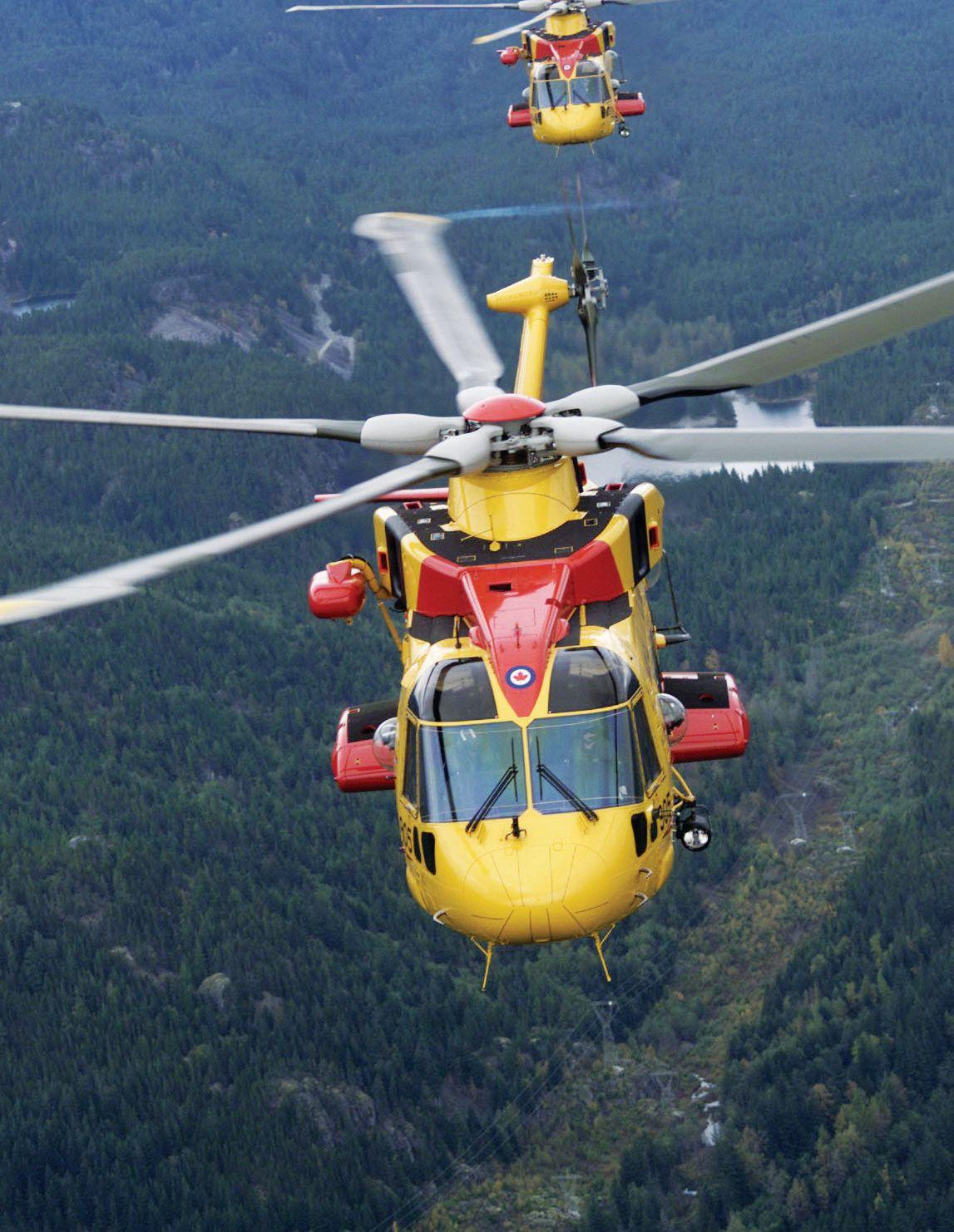
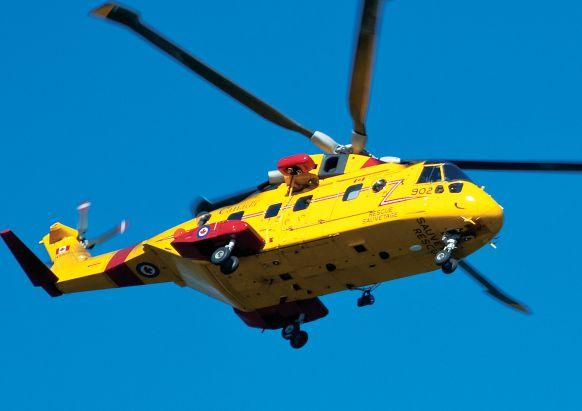
Introduced into the Canadian Forces in 2002, the Leonardo-led Cormorant is now expected to serve beyond 2042. (Photo: Royal Canadian Air Force) Cover Story – Key developments in Canadian helicopters over 40 years pg 12
12 Forty Years of Helicopters in Canada
As HELICOPTERS magazine celebrates its 40th year, we look at some of the operational and technological developments to shape the Canadian industry over four decades
By
Jon Robinson
18 Thermal Engines Versus Electric Motors
How new propulsion technologies are influencing the next generation of air vehicles
By Heather Couthaud with contribution from Luca Cossetti 21 2019 MRO Directory
A coast-to-coast breakdown of leading Maintenance, Repair and Overhaul facilities serving Canada’s helicopter industry
growth of electrification pg 10
On the fly Blackcomb Helicopters world first, Rotor Maxx Sea Kings, and more
Kincade Rocky Mountain Ride
Jones
The FlyNYON Preliminary Accident Report
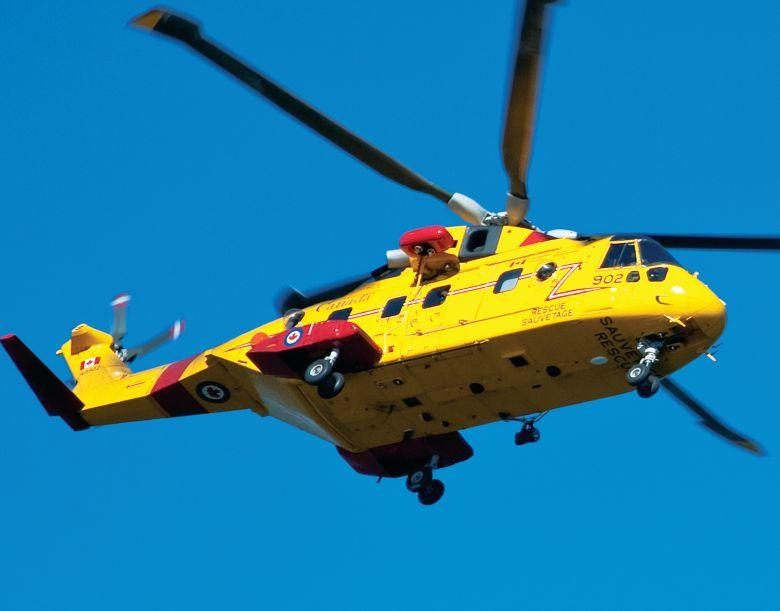
The Cormorant may serve Canadian SAR needs for close to 50 years. (Photo: John Davies)
JON ROBINSON, editor
ew reports from Boeing and Honeywell illustrate the growing call of aviation companies for new hires is as equally prevalent in the rotary-wing world as it is in fixedwing. The Boeing Pilot & Technician Outlook, released in late-July 2019, projects that 769,000 new maintenance technicians will be needed to fly and maintain the world aircraft fleet by 2038. Inclusive of commercial aviation, business aviation and civil helicopter industries, Boeing’s 20-year forecast is based on fleet growth, aircraft utilization, attrition rates and regional differences in crewing specific to aircraft type.
The 769,000 new technicians mark in 2019 represents an increase relative to last year’s forecast of 754,000 from Boeing. The projected demand for technicians in North America is expected to reach 193,000 by 2038, up two per cent from last year.
In terms of the global market, Boeing forecasts a need for 61,000 helicopter pilots by 2038 – amid a total demand for 804,000 pilots across all aviation sectors, with Asia Pacific having the highest demand at 266,000 pilots. Asia Pacific was also forecast to have the highest need for technicians at 266,000. The global helicopter industry demand for technicians was 44,000. In terms of North America’s civil helicopter personnel demand, Boeing forecasts the region will require 14,000 new technicians and 21,000 new pilots by 2038.
Boeing also forecasts that the tasks and services associated with upgrading, maintaining and restoring airworthiness of aircraft make up
Civil Helicopter Forecasts
the delivery of civil helicopters over the next five years, Honeywell Aerospace in March 2019 projected 4,000 new civilian-use helicopters will be delivered from 2019 to 2023, marginally lower than the 4,200 cited in its five-year forecast in 2018.
The company’s 21st annual Turbine-Powered Civil Helicopter Purchase Outlook comes from a survey of more than 1,000 chief pilots and flight department managers of companies operating 3,334 turbine and 321 piston helicopters worldwide. The survey excludes large-fleet operators, which were addressed separately, and details the types of aircraft operated to assesses specific plans to replace or add new helicopters.
“Despite positive impacts of U.S. tax reform on new helicopter purchase plans in North America, an inconsistent economic outlook for international markets has resulted in lower purchase plans worldwide from fleet managers when compared with a year ago,” stated Heath Patrick, president, Honeywell Americas Aftermarket.
Honeywell explains one of the key survey findings from its 2019 survey shows that about 20 per cent of survey respondents in North America said their helicopter fleet utilization is expected to increase over the next 12 months – much higher than the global rate of 14 per cent. Honeywell also forecasts that, based on the 2019 survey, purchase plans are stronger from law enforcement and oil-and-gas operators relative to last year, but significantly lower from corporate operators.
Honeywell projects a greater proportion of planned new helicopter purchases are for intermediate/medium twin-engine models based on this year’s survey when compared with 2018. The proportion is lower for light twin-engine, according to Honeywell; and the proportion of light single-engine and heavy twinengine planned purchases are about the same as last year.
About 20% of North American operators expect fleet utilization to increase in the next 12 months.
approximately 70 per cent of a $3.1 trillion service market, growing at 3.5 per cent annually. This forecast is based on a 10-year horizon, with North America holding the dollar value to 2028 at $1.4 trillion.
The company estimates the commercial services market will continue to hold a slight edge over the government services market in terms of revenue growth. Asia Pacific is forecast to see a major growth in services at 39 per cent to 2028, representing an annual growth rate of 5.1 per cent. Europe came second in this category at 22 per cent overall growth and North America was third at 20 per cent.
In another important annual forecast designed specifically around
When choosing make and model for a new aircraft, Honeywell explains the top three factors that operators consider are brand, aircraft performance and cabin size.
In North America, Honeywell notes purchase plans have risen by five percentage points from over a year ago, with 18 per cent of respondents saying they would either replace or expand their fleet with a new helicopter over the next five years. The company points to the fact that North America is home to more than 40 per cent of the world’s helicopter fleet. Close to 65 per cent of planned North American purchases, according to the survey, were identified as light single-engine models and roughly 22 per cent of new planned purchases were for intermediate and medium-twin product classes. | H
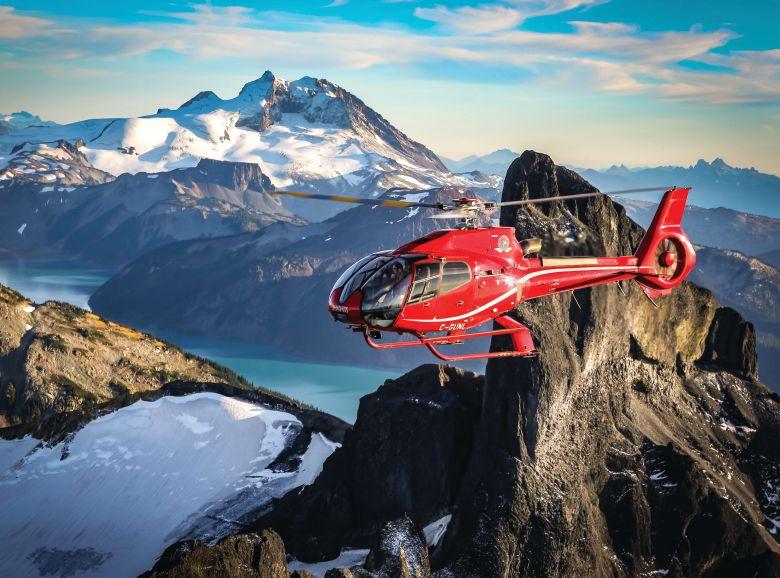
Blackcomb Helicopters became the first full-service helicopter operator in the world to offset 100 per cent of its carbon footprint. Initiating the transition in 2018 by first focusing on its tourism program, the Whistler, British Columbia-based operator then began its move to full carbon offsetting in January 2019. It has now offset the entirety of the business, including employee commuting, facility emissions, waste, and fuel-burn.
Blackcomb Helicopters (BH), a McLean Group company, is a civil and utility services provider for southwestern BC, and nationwide as required. It operates 22 aircraft and six base locations. In addition to serving as the exclusive helicopter provider for Whistler-Blackcomb Resort, BH is also well known for its expertise in search-and-rescue, wildfire suppression, medical evacuations and avalanche control. The oper-
ation holds a presence in the construction and maintenance of utility infrastructure, such as hydro-electric power, as well as resource development, such as forestry and mining. Blackcomb Helicopters also serves as an essential mountain-access provider for areas within the rugged terrain of Western Canada.
HELIJET GOES PRIVATE
Helijet International Inc. based in Richmond, BC, completed its previously announced transaction to go private, in which company president and CEO Danny Sitnam acquires all outstanding common shares. This transaction does not include shares held by insiders or their extended family, as well as one other extended family that is defined as a non-participating shareholder.
The transaction was approved by the Supreme Court of British Columbia. It includes conditions set out in the initial arrangement agreement signed on May 15, 2019. The corporation also applied to
“In my 40 years in the industry, burning jet fuel has been a constant and there are really no near-term alternatives to gas turbines for the missions expected of us,” said John Morris, GM and director of BH.
The company is offsetting its carbon footprint through a significant contribution to a forest
conservation project on Quadra Island, as well as local green technology and travel initiatives. The company notes how its program helps to remove greenhouses gases and encourage greener travel options. The company has also incorporated projects for energy savings and lower emissions in its building design.
have its common shares de-listed from the TSX Venture Exchange.
Helijet is described as the world’s largest scheduled helicopter airline carrying more than 2.5 million passengers over the past 33 years. It also operates medically equipped helicopters and, in April 2019, renewed an air-medical contract with British Columbia Emergency Health Service for another four years – a contract valued at $60 million. Helijet also controls Pacific Heliport Services, which manages the Vancouver Harbour Heliport on the city’s downtown waterfront.
Blackcomb Helicopters operates 22 aircraft and six base locations with a major presence across British Columbia’s Sea-to-Sky region. (Photo: Blackcomb Helicopters)
Airbus delivers 1,000th Super Puma
HELICOPTERS MAGAZINE P.O. Box 530 105 Donly Drive South Simcoe ON N3Y 4N5 Tel.: 519-428-3471 Fax: 519-429-3094
EDITOR JON ROBINSON jrobinson@annexbusinessmedia.com
MEDIA DESIGNER EMILY SUN
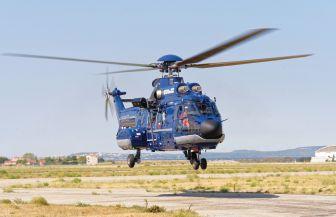
Airbus Helicopters 1,000th Super Puma, an H215, is delivered to the German Federal Police, Bundespolizei. (Photo: Airbus)
Airbus Helicopters delivered its 1,000th Super Puma helicopter. Assembled in Marignane, France, the twin-engine, multi-role H215 was handed over to the German Federal Police (Bundespolizei,) to support the German Havarie Command, which manages maritime emergencies off of Germany’s coast. This delivery completes a Bundespolizei order for four H215s, the first three of which were delivered in December 2018. It increases the police force’s Super Puma fleet to 23, including 19 AS332 L1s. Airbus notes this makes Bundespolizei one of the largest operators of Super Pumas in the world today.
“The Super Puma family of civil and military helicopters has consistently performed well thanks to its ability to appeal to many different mission segments, whether you’re fighting fires, building power lines, transporting troops, or saving lives in extreme environments,” said Bruno Even, CEO of Airbus Helicopters.
Today, the Super Puma is operated by nearly 100 customers in 59 countries. The Super Puma family is composed of the H215 and H225 for the civil market, primarily, and the H215M and H225M for search and rescue, troop transport, special ops and utility missions, among other missions.
Metro Aviation orders five Kopter SH09s
Metro Aviation and Kopter signed a Memorandum of Agreement outlining Metro Aviation’s intent to purchase and take delivery of five SH09 helicopters following certification by the Federal Aviation Administration (FAA). This contract brings the total number of orders for the SH09 to 70 units, to which another 100 letters of intent are to be added.
Kopter expects to begin certification flights of the SH09 next year. In March 2019, Kopter Group AG marked its full-scale
entry into North America with a ribbon-cutting ceremony at its new 84,700-square-foot facility at Lafayette Airport in Louisiana. At the time, the aircraft manufacturer expected the Lafayette facility to create 120 jobs by 2025 for the annual production of around 100 aircraft, targeting assembly of its SH09 helicopters.
In June 2019, Kopter completed 34 test flights in Sicily with the third prototype (P3) of its SH09 helicopter, opening the aircraft’s flight envelope beyond 10,000 feet and hitting an air-
speed of 135 knots. The next phase of the flight test campaign, according to Kopter, after implementing some aerodynamic refinements further improving P3 handling qualities and a retrofit of the main gear box housing, will see P3 going higher, faster and further. Kopter explains its cooperation with Metro Aviation began in 2018, when the two companies worked on the design and completion of several interiors for the SH09, which were then presented at helicopter exhibitions in North America.
Bell APT 70 first autonomous flight
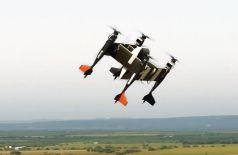
Bell Textron completed the first autonomous flight of its Autonomous Pod Transport (APT) 70 at a site near Fort Worth, Texas. Bell plans to continue to test the vehicle under an experimental type certificate throughout the remainder of the year. “The APT is designed to be capable of various mission sets, from package delivery to critical medical transport to disaster relief. We believe this capability will change the way unmanned aerial systems are used commercially in the future,” said Bell VP Scott Drennan.
APT 70 is part of the eVTOL family of vehicles Bell is developing and can reach speeds of more than 100 mph. It has a baseline payload capability of 70 pounds. Bell states its APT vehicles are capable of twice the speed and range of a conventional multirotor, while also being designed for rapid deployment, quick reconfiguration, and nimble battery swap and recharge.
Through the NASA Systems Integration and Operationalization (SIO) activity, Bell will use the APT 70 to demonstrate a simulated commercial mission in the
The APT 70’s entry into service is anticipated by the early 2020s. (Photo: Bell/Youtube)
national airspace system and conduct beyond visual line of sight flight operations. The demonstration is expected to be held in mid2020. Bell is also in collaboration with logistics provider Yamato.
CONTRIBUTING WRITERS
RICK ADAMS, DAVID CARR, WALTER HENEGHAN, FRED JONES, KENDRA KINCADE, JAMES MARASA, CARROLL MCCORMICK, COREY TAYLOR
NATIONAL ADVERTISING MANAGER MENA MIU mmiu@annexbusinessmedia.com 416-510-6749
CIRCULATION MANAGER JAY DOSHI jdoshi@annexbusinessmedia.com 416-442-5600 ext. 5124
GROUP PUBLISHER, VP SALES MARTIN MCANULTY mmcanulty@annexbusinessmedia.com
COO SCOTT JAMIESON
RETURN UNDELIVERABLE CANADIAN ADDRESSES TO ANNEX PUBLISHING & PRINTING INC., 111 Gordon Baker Rd., Suite 400, Toronto ON M2H 3R1 subscribe@helicoptersmagazine.com
Published four times a year by Annex Publishing & Printing Inc.
Helicopters Magazine is an associate member of the following Canadian aviation associations:
Second five-bladed H145 prototype
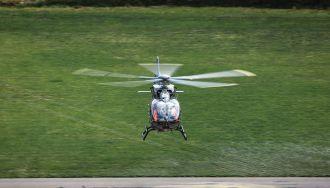
The second prototype of the new fivebladed H145 took off in August for its maiden flight at Airbus Helicopters’ site in Donauwörth, Germany. The company explains the helicopter will be used for additional flight tests to achieve EASA certification of the new five-bladed H145 in early 2020.
Introduced in early-2017, the five-bladed aircraft introduces a wireless Airborne Communication System (wACS) for real-time transmission of data, including in-flight. It offers 150 kg of additional useful load and a new take-off weight raised to 3,800 kg.
The first prototype of the five-bladed H145 has spent much of 2019 in a high-altitude test campaign in South America. It arrived in Chile in July to be put through its paces in the Andes, with altitudes of up to 20,000 feet above sea level. In late September, the five-bladed H145 set its skids down near the summit of Aconcagua, the highest mountain in the Southern Hemisphere, culminating
The second prototype of the five-bladed H145 takes its maiden flight at the Airbus Helicopters site in Donauwörth, Germany. (Photo:
at 6,962 metres (22,840 feet) in Argentina. Airbus Helicopters states this is the first time that a twin-engine helicopter has landed at this altitude, The aircraft performed some altitude tests in the French Pyrenees during the summer of 2018.
The second five-bladed H145 prototype will mainly be used for autopilot testing, performance and airframe structural validation.
LET US BE YOUR SMS MANAGER!
Annex 19 SMS, Regulatory SMS, Customer Based SMS
Concierge SMS:
• Monitors all Safety Reports
• Facilitates all Risk Assessments
• Facilitates all Root cause Analysis
• Monitors all Corrective Actions
• Much more
Get all that was promised from your SMS at 50% or less than it is costing you now!
Rotor Maxx acquires CH-124 Sea Kings
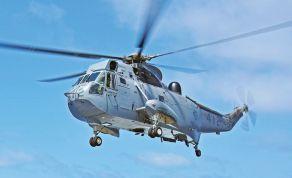
Rotor Maxx Support Limited is the successful bidder in the Canadian CH-124 Sea King (Sikorsky SH3) competitive sales process. Headquartered in Parksville, British Columbia, the company purchased 15 CH-124s through the bidding process. Rotor Maxx Support (RMS) explains it will upgrade/modernize the aircraft in order to improve flight safety, increase performance, and enhance operational reliability before making them available to both military and non-military customers. RMS is well established in the global market for its support of the S61/H-3 series helicopter.
Let us tell you how?
DTI has been developing and working with governments and private enterprises for years and has found a way to eliminate all the obstacles!
Some questions we have been asked!
Q: Do I need to buy expensive software or anything else?
A: No, we wor k using your existing system.
Q: Who will talk to our regulator when they have questions?
A: We will. Think of us as your SMS manager!
We know what it takes!
SMS, when deployed and worked properly is the golden ticket to achieving the safest, most predictable service or product you can. Unfortunately, many enterprises cannot find the “expertise” needed to accomplish this. Contact us and we’ll explain it all to you!
“After years of working with hundreds of enterprises we have come to realize that the constant meeting and endless paperwork often associated with SMS have caused it to lose its effectiveness. We’ve figured a way to get great results, cut the work load of the enterprise and saved a ton of money…”
-Dennis Taboada, CEO
The 15 CH-124 aircraft will complement RMS’s current fleet of eight civilian S61s. The new aircraft to RMS will also allow for expansion of its aircraft leasing/sale and Total Aircraft Support (TAS) programs. The acquisition includes a large inventory of parts, tooling and equipment which, when added to RMS’s existing stock, will contribute to the TAS program included with each aircraft delivery.
RMS explains that it recognizes many Canadian companies have equipment, systems and modifications already available, or nearing availability to the global aerospace market, that could be applied to its modernization program. RMS plans to focus on working with companies that add Canadian content to the finished product. The S61/H-3, explains RMS, is popular with both military and civilian operations worldwide, which has already lead to it receiving interest from eligible foreign parties.
Rotor Maxx’ 15 CH-124 aircraft will complement its current fleet of eight civilian S61s. (Photo: U.S. Navy, Mass Communication Specialist 1st Class Joseph M. Buliavac).
Patrick Heinz/Airbus)
Bell delivers 200th 505 Jet Ranger X
Bell Textron in August marked two significant milestones surrounding the Bell 505 Jet Ranger X, including the delivery of the 200th such aircraft to Austria-based operator Hubi-fly Helikopter GmbH, where it will be used for corporate transport. Just weeks later, the Bell 505 Jet Ranger X fleet surpassed more than 20,000 flight hours, which the company describes as one of its fastest growing accumulation of flight hours for any current commercial platform.
The first delivery of the Bell 505 occurred in March 2017 to Pylon Aviation. The global fleet of 200 aircraft are flying across six continents. Bell explains the 505 Jet Ranger X was developed with the support of a customer advisory panel focused on the legacy of the Bell 206 Jet Ranger while enhancing performance, technology and cost of operations. The aircraft is leveraged by operators in a variety of segments including electronic news gathering, law enforcement, helicopter emergency medical services, corporate transportation and utility missions.
“Our Bell 505 operators rely on the aircraft to perform from the beginning of each day to when their mission is complete,” said
COMING THIS SPRING
PHI completes Chapter 11 debt restructuring
PHI Inc. of Lafayette, Louisiana, along with its main U.S. subsidiaries, including PHI Air Medical, emerged from Chapter 11 bankruptcy protection. This completes the company’s debt restructuring process after implementing a reorganization plan confirmed by a U.S. Bankruptcy Court on July 30, 2019. PHI is one of the world’s largest helicopter services companies, operating more than 240 aircraft in over 70 locations around the world. The company employs approximately 2,200 people globally.
LaShan Bonaparte, program director, Bell 505 and Bell 429. “Logging more than 20,000 flight hours is very impressive for an aircraft in service less than three years.”
With a speed of 125 knots (232 km/h) and useful load of 1,500 pounds (680 kg), the Bell 505 is a five-seat aircraft that incorporates proven dynamic components, advanced aerodynamic design, a dual channel FADEC Turbomeca Arrius 2R engine and best-in-class value.
As a result of completing the bankruptcy process, the company states it has reduced its debt by approximately US$500 million, with PHI’s former unsecured creditors now owning 100 per cent of the company’s equity. The company also closed a new US$225 million, five-year term loan and received new equity capital from certain, former unsecured creditors. Upon closing, Al Gonsoulin retired from the role of CEO and chairman of the Board of PHI, with Lance Bospflug transitioning from president and COO to become PHI’s new CEO.
Presented by
Aerial Fire Fighting Conference
Greater Vancouver
A one-day conference designed to provide rotary-wing and fixed-wing operators with critical business information on aerial fire fighting
Conference topics will include, but are not limited to:
• New products impacting the aerial fire-fighting sector
• Available support services
• Aircraft innovations
• Crew Resource Management
• Governmental regulations and procedures
• Opportunities and challenges, domestic and international
For more information about event sponsorship or exhibiting, contact Mena Miu, National Account Manager, WINGS and HELICOPTERS 416-510-6749 | MMiu@annexbusinessmedia.com
Bell’s newest five-seat aircraft is powered by a dual channel FADEC Turbomeca Arrius 2R engine. (Photo: Bell)
COLUMN
Rocky Mountain Ride
A day with the Royal Canadian Air Force practising mountain flying
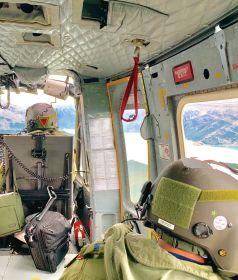
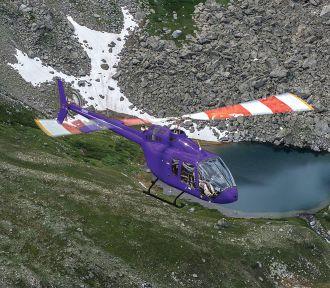
How often do you really think about what goes on with people who preform search and rescue duties? I have a such strong admiration for the fearless men and women who put their lives on the line to rescue others. I had the opportunity to follow one such team, the 417 Squadron out of Cold Lake, Alberta, as they flew their helicopter to train the pilots in mountain flying. Working in the mountains is a very different kind of flying and landing because of the rough terrain and strong winds. Having the chance to watch these professional rescuers was an incredible opportunity.
This mission included a Commanding Officer by the name of Maj. Alexia Hannam who took two of her pilots out to train as part of their semi-annual currency requirements. The mission was to fly around the Rocky Mountains and find a place to set the helicopter down. This is not as easy as it sounds. I though that you just look for a spot to land and well… land. It’s not quite that easy. You actually have to make a number of fly-by passes first to do some prep work. On these passes you look at your landing spot from different angles. You fly above the spot to see if it’s a good location. Then you do a pass 50 feet below the intended landing spot to check the winds. More passes are done at eye level to make sure it is flat enough to land. A couple more passes, closer and closer, allow the pilots to really assess the situation and check the winds.
The first pilot in the hot seat was Capt. Matt Rowe. He found his first
The second pilot to try his hand at landing in the mountains was Capt. Andrew Johnson. It was his first time flying in larger mountains and he seemed to be very comfortable and had us flying very close to the rocks. He scouted his landing location, made his passes and landed successfully.
The final location of landing was one where Maj. Alexia Hannam took the controls herself. It took me a few minutes to realize that she was actually going to land us on a tip of a mountain that didn’t look possible to land on. We did the passes and all around the small landing location were the long, steep walls of the mountain.
Now would be a good time to say that the pilots are not alone in the landing. They are heavily supported by a Flight Engineer in the back. The Flight Engineer in this case was Cpl. Aaron Devost.
As Maj. Hannam did her passes, Cpl. Devost was scoping out the area and giving feedback on what he could see from his vantage point out the side door. When both of them agreed it was going to be a good place to land, or as they call it, ‘An approach with the option to land’ so that they don’t get convinced to land at a spot when they should abort the mission, they started the passes.
We were getting closer and closer to the landing spot. Cpl. Devost slid open the door to the helicopter and I was blessed with the most amazing view, wide open right in front of me. Closer and closer we stepped toward our target. Maj. Hannam at the front controlling the helicopter with Cpl. Devost in the back, laying on the floor of the helicopter looking underneath and calling out how many feet remained before touch down. It was exhilarating as I watched out the side and could see straight down the mountain. I am pretty sure I held my breath for most of it.
On the third pass, we were close enough to feel the winds were too strong and the area was not flat.
location and it looked great. The spot had a small area that jutted out and, from my uneducated landing a helicopter point of view, it looked like the perfect spot. The first pass from high above looked great. We passed from the east side and got into some really bad winds. Manoeuvring to the west side found calmer winds and the passes started. After about the third pass we were close enough to feel that the winds were too strong and the area was not as flat as it first appeared, we moved on to train in another location where we made a successful landing and jumped out of the helicopter to take some pictures and take in the sites.
We landed one skid on the ground because the area wasn’t large enough to put both skids down. Then the wind picked up and suddenly we were flying vertical, safe and sound, and with an experience I will never forget.
To round out our trip, we did a search and rescue training in an area where a civilian search had just ended. We didn’t spot anything, but we did have MCpl. Brendan Collins on board as a Medical Technician who can be hoisted down to a rescue. When a Med Tech is on board, they have a call sign of “Joker”and they use “Jester” without a Med Tech for Air Traffic Control to know if the team is fully equipped. | H
KENDRA KINCADE
WE DELIVER on what you value the most. For over a century, customers have relied on StandardAero to provide best-in-class rotary wing support with excellent operational efficiency and innovative custom MRO solutions. We’ve significantly expanded our industry-leading helicopter support capabilities to include new turboshaft engines and new airframes on civil & military rotary wing aircraft – capabilities that are backed by certified technicians and experienced aerospace professionals who have a passion for delivering awardwinning customer service. Contact us today to learn how we can support you!
Engines
• GE T700/CT7
• Pratt & Whitney Canada PT6T
• Rolls-Royce M250 and RR300
• Safran Arriel 1 & 2
Airframes
• Airbus AS350/EC130 series & AS332/H225 Super Puma
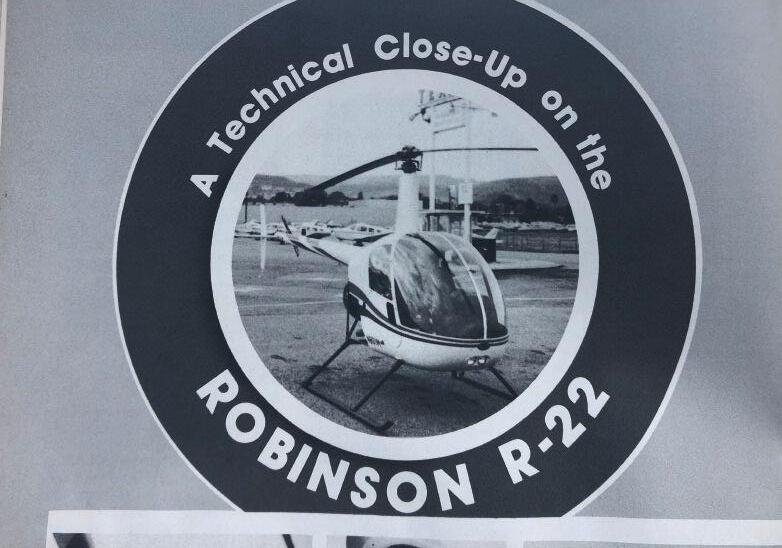
An early report on the gamechanging R22 (left). Okanagan Helicopters is one of Canada's pioneering operators (below)
Forty Years of Canadian Helicopters
A
look back at the development of rotary-wing operations and suppliers in Canada since the founding of HELICOPTERS
BY JON ROBINSON
The creation of Helicopters in Canada traces its roots back 40 years when Corvus Publishing recognized the maturity of the domestic helicopter market required content catered to the rotary-wing world. As publishers of WINGS magazine, itself 20 years old at the time, Corvus developed what would become Canada’s first helicopter journal, later renamed HELICOPTERS. Here, we pick up the story of the country’s rotorcraft industry in 1979 with a fitting milestone helicopter delivery to Okanagan Helicopters.
Initially founded as a fixed-wing charter company called Okanagan Air Services, the company purchased a Bell 47-B3 in 1947 and became a driving force behind the rise of commercial helicopter operations in Canada. The company changed its name to Okanagan Helicopters in 1949 and within approximately five years became one of the world’s largest helicopter operators, an incubator of new Canadian rotarywing companies for decades to come.
1979 – Okanagan Helicopters in March 1979 receives Canada’s first production delivery of a Sikorsky S-76. Founded by three former RCAF officers, Carl Agar, Barney Bent and Alf Stringer, Okanagan is
widely regarded as the first commercial helicopter operation in Canada. The S-76 flew as a prototype in 1977 and was certified – with the name Spirit – for IFR flight in February 1979. The twin-engine S-76 was regarded as a third-generation helicopter with a maximum speed of 155 knots and a range above 400 nautical miles. By the summer of 1980, Spirit sales reached 354 with 60 deliveries.
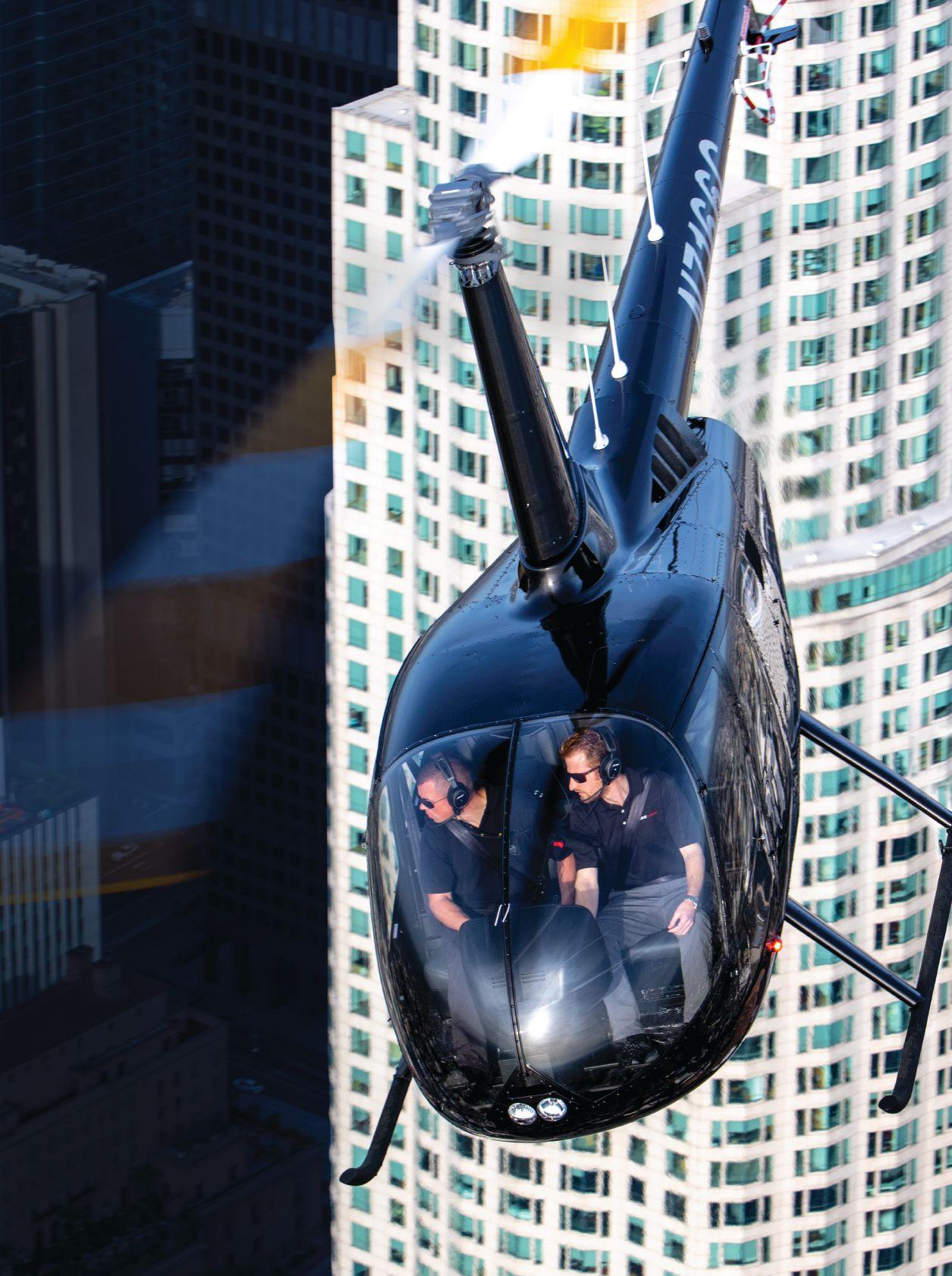
1981 – Ranger Helicopter of Sault Ste. Marie becomes the Canadian distributor of the Robinson R22, holding a list price of $25,000 (not to mention direct operating costs of $1.51 per hour and a fixed operating cost of $6.95 over 500 hours), which the FAA issued a Type Certificate for in 1979. Ranger became involved with the R22 shortly after its first prototype flight in 1975 at Torrance Airport. By the time the first production R22 helicopter was delivered in October 1979, Robinson held an order backlog of 587. The 100th R22 was delivered in 1981 and the 500th in 1985. By 1988, Robinson had become the world’s largest producer of light helicopters, with the 2,000th R22s delivered in 1991.
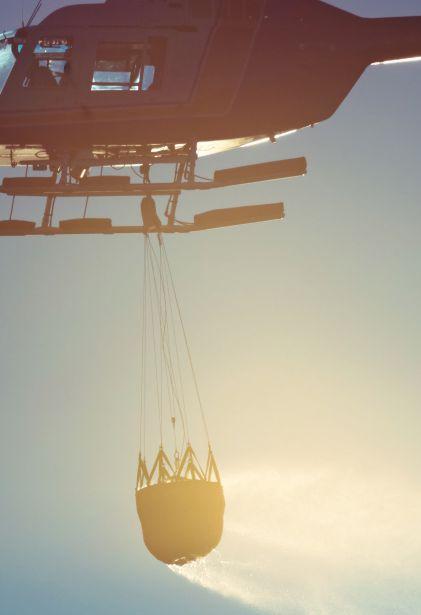
1982 – SEI Industries Ltd. of Delta, BC, first provided the Bambi Bucket – invented by Don Arney, who founded SEI in 1978 – to the
COVER STORY
firefighting community in 1982. With a relatively low-cost, plug-nplay capability, this lightweight, strong, flexible firefighting bucket found immediate success and promoted the use of helicopters to fight wildfires. SEI by 2017 was servicing more than 90 per cent of the world’s aerial firefighting water-bucket market, used in more than 115 countries by more than 1,000 helicopter operators. Bambi Buckets are now made in 20 different sizes ranging from the smallest 270-litre bucket to the 9,840-litre version.
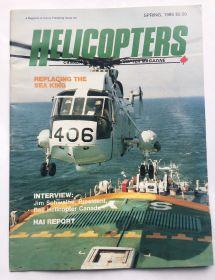
1983 – The Department of National Defence in 1983, according to a CASR report, began issuing contracts for the Sea King Replacement Project. Originally purchased to thwart the sudden Cold War development of nuclear-capable submarines, the Sea King entered Canadian Forces service in 1963. With a series of political delays, the Sea King was reassigned in its role and continued to serve in Canada’s military until retirement in December 2018 – as the longest serving aircraft in Canadian military history, with a storied career in international peacekeeping missions and critical domestic services.
1984 – Messerschmitt-Bölkow-Blohm (MBB) Helicopter Canada Limited is founded in Fort Erie, ON, which would eventually become known as Airbus Helicopters Canada. The German aerospace company MBB established its presence in Canada through agreements with Fleet Aviation and both Federal and Provincial governments wanting to establish a more robust domestic rotary-wing manufacturing sector.
1985 – STARS Air Ambulance, initially named Lions Air Ambulance Service by founder Gregory Powell, is established in Alberta and flew
Powered by three engines, the SAR-dedicated CH-149 Cormorant can fly for more than 1,000 km without refuelling. The helicopter can also hold up to 12 stretchers or a load of 5,000 kg. (Photo: John Davies).
its first Calgary-area mission in December 1985. The operation rose to prominence in 1988 as part of the integrated emergency plan for the Calgary Olympic Winter Games. STARS established its second base in Edmonton in 1991 and now also operates 24/7 from bases in Calgary, Grande Prairie, Regina, Saskatoon and Winnipeg. STARS surpassed its 10,000-mission milestone in 2002
1986 – Helijet based in Richmond, BC, launches Canada’s first scheduled helicopter service between Vancouver and Victoria in November 1986. From its early beginnings, with a leased Bell 412 making the 32-minute flight from Lower Mainland to Vancouver Island about eight times a day, Helijet today is regarded as the world’s largest scheduled helicopter airline having carried more than 2.5 million passengers. The company, which was privatized in 2019, now holds operations in Richmond, Vancouver, Victoria, Nanaimo, Prince Rupert and Haida Gwaii, in addition to its Pacific Heliport Services subsidiary, which is Canada’s largest operator of designated heliports.
1986 – Bell Helicopter Textron Canada Ltd. opens its key facility in Mirabel, Québec, which would eventually produce a majority of the parent company’s commercial helicopter lines, such as the 206, 505, 429, 412EPI and 407GXP. By late 2017, the operation celebrated the 5,000th delivery of a helicopter – a 407GXP – to be manufactured in Mirabel. The facility is now known around the world for its expertise in airframe design, product development, flight testing, certification, sub- and final assembly and parts manufacturing in composites.
1987 – Canadian Holding Corporation (CHC) is created largely under the direction of Craig Dobbin, who started Sealand Helicopters in Newfoundland back in 1976. Sealand in 1987 was combined with Toronto Helicopters and the 40-year-old pioneering brand of Okanagan Helicopters. By 1995, with the purchase of British International Helicopters one year earlier, CHC revenues exceeded $1 billion. Before the end of the decade, CHC would acquire Norway’s Helikopter Services Group and Australia’s Lloyd Helicopters.
1991 – VIH Logging Ltd. is founded by Ken Norie, who is instrumental in obtaining the Canadian certification of Kamov KA32 helicopters for use in heli-logging. Norie had joined VIH Helicopters as a pilot in 1973 and subsequently served in base, marketing and operations management roles until founding VIH Logging. In 1999, Norie became the sole owner of VIH Helicopters, which consolidated and rebranded as VIH Aviation Group Ltd.
1992 – The R44 helicopter receives FAA certification. With a base price of US$235,000, the first production R44 Astro is delivered in
1993. The 1000th R44 helicopter was delivered by the start of 2001, just after the 4,000th Robinson helicopter was received by a customer, including more than 3,100 R22s. The 3,000th R44 was delivered by 2006.
1993 – Panalpina, the Swiss logistics and freight forwarding company, establishes Heliship in Vancouver, BC. The operation was created after Panalpina in October 1993 transported three Bell 205 helicopters from Abbotsford, BC, to Rancagua, Chile. Heliship has since shipped thousands of helicopters around the world.
1994 – West Coast Helicopters is co-founded in Port McNeill, BC, by Peter Barratt. Today, the operation is a fully certified Robinson service centre and an industrial paint shop. With a fleet of Airbus AStars, Bell Jet Rangers, and a McDonnell Douglas 500D, West Coast today has four hangars located on Vancouver Island and the mid coast, including bases in Port McNeil, Bella Coola, Campbell River and Nanaimo.
1995 – DART Aerospace, founded in 1975, made its manufacturing debut of a Helicopter STC in 1993 for landing gear and in 1995 stamped its position as a worldwide leader in the development of flotation devices. With a line-up of more than 700 STCs and 5,000 helicopter products, DART offers a comprehensive portfolio of aftermarket products and accessories to the worldwide market. The company moved its manufacturing to Port Hawkesbury, ON, in 1998.
1997 – Canada in 1997 receives delivery of its final CH-146 Griffon, which first entered service in 1995 after a massive commitment to purchase 100 such aircraft built by Bell Helicopter. Occasionally criticized for its lack of power in certain conflicts zones, the
Department of Defence points to its multi-role capabilities to provide aerial firepower, reconnaissance, search and rescue, and aero-mobility. In early 2019, the Canadian Forces set out objectives to extend the life of what is now a fleet of 85 Griffons to at least 2031.
1998 – The Sikorsky S-92, a twin-engine medium-lift helicopter, makes its first flight with its introduction to come in 2004. The CH-148 Cyclone is the shipboard maritime helicopter variant of the S-92 earmarked for the Canadian Forces to eventually replace the Sea King in 2018.
2000 – Canadian Helicopters is formed in the year 2000 through a management buyout after CHC moves to divest itself of certain Canadian assets. In 2005, Canadian Helicopters became a public company and CHC divested all of its equity interest. After going private 2017, Canadian Helicopters is now one of the country’s largest helicopter transport companies with more than 110 aircraft. In addition to its flight school growth, Canadian Helicopters also developed its MRO interests, which included purchasing 49 per cent of airframe repair operation Heli-Welders Canada (Langley, BC) in 2009 – with ownership increasing to 80 per cent by 2010. In 2011, Canadian Helicopters Group purchased Helicopters New Zealand for NZ$154 million and in 2012 changed the name of the combined company to HNZ Group.
2002
– The CH-149 Cormorant performs its first mission for Canadian Forces, after its first flight in 2000. The Canadian government committed to add 15 helicopters from the AgustaWestland AW101 platform, which is now controlled by Leonardo after its 2016 merger with AgustaWestland. In 2019, Canada announces plans to purchase at least two more
Cormorant search-and-rescue helicopters and upgrade the remaining 14 helicopters in the fleet to meet operational availability requirements to support domestic SAR service to 2042 and beyond. The Cormorant Mid-Life Upgrade project is valued at up to $1.39 billion, with Leonardo serving as the CH-149 Cormorant’s OEM and IMP Aerospace as the in-service support contractor.
2003
– Safran Helicopter Engines Canada is established in Mirabel, Quebec, to support Arriel and Arrius engines across North America, while also providing a range of MRO engine and module services. More than 600 of the facility’s engines fly in Canada. It also supports more than 160 operators. Since 2007, this Canadian operation has held the worldwide mandate for the purchasing and distribution of tooling for its turbines’ aftersales service. In 2013, the Arrius 2R was selected to power the new Bell 505 Jet Ranger X, which would be built nearby. It was the first Bell product to be powered by a Safran engine.
2003 – Cougar Helicopters becomes part of the VIH Aviation Group. Cougar was founded 1984 by Ingo Strackenjan and Earl MacFarland to provide shuttle service from St. John’s International Airport to downtown. The company would become a key player in the growing Newfoundland and Labrador – and global – offshore market and by 2012 develop a dedicated SAR facility in St. John’s, which is now leveraged by Canada to improve response times.
2004 – Heli-One is established in Richmond, BC, as a separate business under parent company CHC to focus on third-party work. Today, Heli-One has MRO operations in Richmond and Delta, BC; Stavanger, Norway; and Rzeszow, Poland.
The Sea King prepares for a ship landing leveraging the Canadian-developed bear trap.
Transport Canada issues a Type Certificate for the Robinson R66 Turbine in 2012.
Helijet would develop into the world’s largest scheduled helicopter airline.
By 2008, Eurocopter Canada employs more than 200 people.
COVER STORY
2005 – The Ontario government contracts a not-for-profit corporation called Ontario Air Ambulance Corporation to manage its air ambulance operations. The corporation’s name in 2007 was changed to Ornge Air. Now operating out of 12 bases across Ontario, Ornge owns a fleet of eight Pilatus NG PC-12 airplanes and 11 Leonardo AW139 helicopters, as well as 13 Crestline land ambulances. To put its aviation demands into perspective, Ornge serves more than 13 million people over one million square kilometres of land, which is equivalent to the size of France, Spain and the Netherlands combined. The operation now performs approximately 20,000 patient-related transports per year.
2010 – This year marks the entrance of the 600th Eurocopter Helicopter into the Canadian market. Renamed Eurocopter Canada back in 1992, Airbus Helicopters’ portfolio in the country expanded as a result of a merger between the rotorcraft divisions of AS350-giant Aerospatiale (France) and Deutsche Aerospace (Germany) to create the Eurocopter Group. A year earlier, the operation reported having greater than 50 per cent market share in Canada in terms of new aircraft deliveries over the past decade.
2011 – Pratt & Whitney Canada’s PW200 turboshaft engine fleet by the end of 2011 reached its 5 millionth flight hour, confirming the engine series’ leadership position in the global light-twin helicopter market. Introduced in the 1990s to address multi-role rotorcraft, the PW200 powers aircraft like the H135, AW109E Power, AW109 Grand, Bell 427 and 429, Kazan Ansat and MD Explorer 900 series. Competing in the 500- to 800-shp
class, the engine series leverages the experience of P&WC’s legendary PT6 engine family to offer operators unprecedented levels of reliability and economy. The PW200’s modular design – with only three major rotating components – makes it one of the simplest turboshaft engines in its class, while introducing electronic control, advanced materials and coatings, and a one-engine inoperative pilot training feature. By 2016, there are approximately 3,500 PW200 engines flying in 80 countries.
2012 – Transport Canada issues a Type Certificate for the Robinson R66, with almost 400 such aircraft already operating worldwide. Robinson Helicopter in 2019 announced the R66 Turbine fleet, powered by the Rolls-Royce RR300 engine, had surpassed one million flight hours without a reported in-flight engine failure.
2013 – Universal Helicopters Newfoundland Ltd. in 2013 entered into an agreement to sell its operations to a limited partnership formed by Nunatsiavut Group of Companies, Tasiujatsoak Trust and CAPE Fund. Maintaining a version of the Universal Helicopters name, the operation is a majority-owned Inuit company and was one of the first operators in the world to incorporate the Bell 407. In 2018, it purchased Lakelse Air of Terrace, BC, to become Canada’s only coastto-coast Indigenous-owned helicopter services company.
2014 – Eurocopter rebrands as Airbus Helicopters as its Canadian operation turns 30 years old. By its 35th year in Canada, in 2019, Airbus is supporting approximately 200 customers operating more than 700 aircraft in the country. Airbus Helicopters Canada is known internationally for the manufacture of composite parts for approximately seven helicopter models. This key segment runs in a dedicated 50,000-squarefoot space within its 138,000-square-foot Fort Erie, ON, facility. The operation now employs more than 240 people.
2016 – On the last day of 2015, AgustaWestland merges into Leonardo to form the Italian company’s helicopter division. Leonardo has been active in Canada for approximately 50 years – today, holding around 400 employees at five operating sites. At the start of 2015, Leonardo had some 90 civil and military helicopter variants operating in Canada – in addition to close to 5,000 in operation around the world. This included prominent AW139 deployments with the likes of STARS and Ornge, as well as
the Canadian Forces’ CH-149 Cormorant. In 2019, Leonardo Canada was established in Ottawa to prepare for the new Canadian Defence Investment plan.
2016 – Vector Aerospace generates revenues of approximately $930 million in 2016, employing around 2,200 people in 22 locations. Purchased by Airbus (via Eurocopter) in 2011, Vector was established in 1998 when CHC consolidated its MRO assets and sold 80 per cent of the entity through an IPO offering out of Toronto – before divesting itself of the asset completely by the following year. In 2017, StandardAero completed the purchase of Vector in large part to extend its reach into the helicopter MRO market with the M250, PT6T, and Arriel 1 and 2, among other engines. This boosted work for StandardAero’s key facility in Winnipeg, where the company was founded in 1937 – with roots tracing back to 1911 as Standard Machine Works. The Carlyle Group in April 2019 purchased StandardAero, which at the time had 6,000 employees at 38 primary locations.
2017 – The Bell 505 Jet Ranger X begins production in Mirabel, QC. By 2019, the Bell 505 Jet Ranger X fleet would surpass more than 20,000 flight hours just weeks after the delivery of the 200th 505 Jet Ranger X to Austria-based operator Hubi-fly Helikopter GmbH. The first delivery of the Bell 505 occurred in March 2017 to Pylon Aviation and today the global fleet is flying across six continents. The company describes the 505 as one of the fastest-growing current commercial models to accumulate flight hours.
2018 – The Sikorsky CH-148 Cyclone is introduced into the Canadian Forces in July 2018 as a twin-engine, maritime helicopter. A military variant of the Lockheed Martin Sikorsky S-92, the CH-148 is designed for shipboard operations to replace the CH-124 Sea King, in operation from 1963 to 2018.
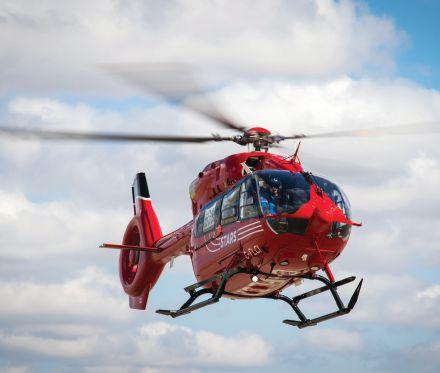
2019 – STARS Air Ambulance in mid-2019 takes delivery of its first two Airbus H145 aircraft as part of a plan to replace its entire fleet in Western Canada. STARS in June 2018 unveiled a multi-year map to renew its fleet of BK117 and AW139 helicopters with nine Airbus H145 aircraft, holding an estimated cost of $13 million each, medically equipped. STARS’ fleet renewal program initially received financial support from both Federal and Alberta governments. The most-recent Federal budget unveiled in March 2019 earmarked $65 million for the program, which also relies on funding campaigns. | H
One of STARS’ new Airbus H145 helicopters, replacing BK 117 and AW139 aircraft, arrives at the air ambulance’s operational base in Calgary. (Photo: Lyle Aspinall/STARS)
Thermal Versus Electric
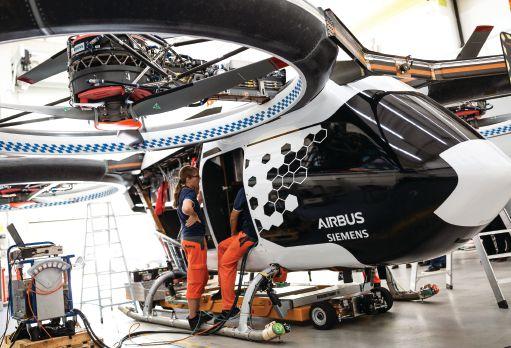
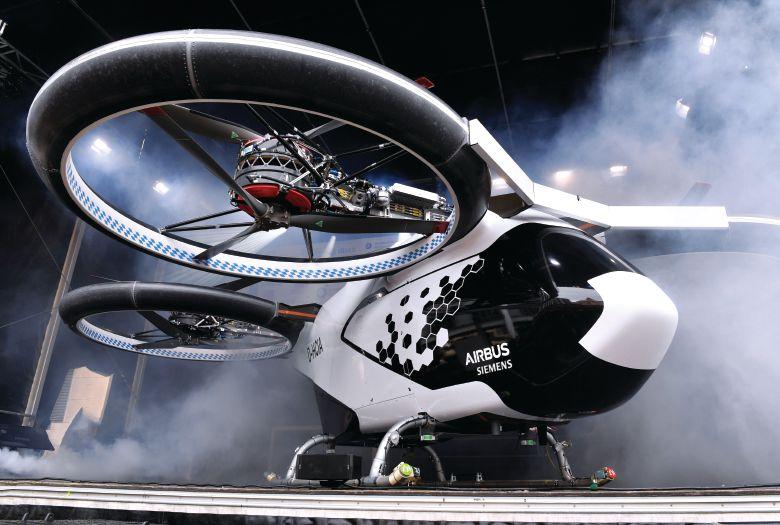
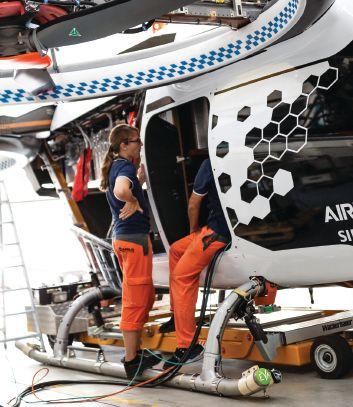
Targetting a cruise speed of approximately 120 Km/h on fixed routes, CityAirbus’ eight propellers are driven by electric motors at around 950 rpm to ensure a low acoustic footprint. (Photos: Airbus)
How new propulsion technologies are influencing the next generation of air vehicles
BY HEATHER COUTHAUD WITH CONTRIBUTION FROM LUCA COSSETTI
The transition to electric propulsion is underway on a global scale, evidenced by the growing number of hybrid/ electric cars and electric drones in the streets and in the skies. But how does electric propulsion, which uses electrical energy supplied by a battery pack or hydrogen fuel cell, compare to fossil-fuel-powered thermal propulsion?
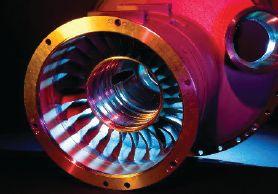
Depending on the machine, combustion engines can appear very different. In large planes and helicopters, the combustion engine takes the form of a turbine. In the turbine, fuel burns in an oxygen-rich environment, creating hot air and high pressure in a confined chamber, and employing that energy to power the aircraft.
In electric-powered vehicles, the motor is composed of a rotor and a stator. With pulses of electricity from a power electronics device, the stator produces a magnetic field around the rotor which rotates and then turns a vehicle’s drive train, rotor shaft, etc. The energy is supplied by a hydrogen fuel cell or a battery pack, which is generally powered by lithium-ion cells. These are similar to the batteries in a laptop, but multiplied by several thousand.
Combustion engines are ideal for long-range travel because fossil fuels produce a lot of power and energy per kilogram of fuel (power and energy density, respectively). In other words, they enable long-range
missions with a limited mass of fuel. And fossil fuel tanks are quite lightweight, considering the fuel mass they contain.
The main drawback is the emissions they produce, such as NOx, CO2 and other negative particles. In addition, a lot of fuel is consumed in heat through traditional thermal engines. In fact, three-quarters to two-thirds of fuel energy transforms into heat or is lost via the exhaust. Advances are being made to counter these negatives, like drawing off some of the lost energy from the hot exhaust (to warm up the air before combustion), but these improvements will eventually reach a plateau.
Is electric propulsion the answer? The performance of electric motors and power electronics has vastly improved: Today, they achieve a better degree of power density than that of combustion engines. In addition to their light weight, electric motors have a greater range of speed than combustion engines, which reduces the need for gearboxes.
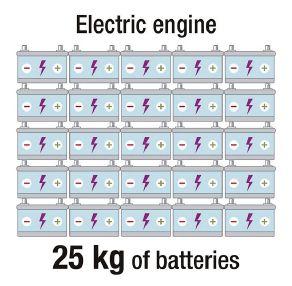
The primary challenge of electric energy is that it cannot be stored efficiently (from the perspective of both mass and volume) with today’s technology. A large quantity of batteries is required to equal the performance of fuel. This means that the battery in an electric car can represent approximately a third of its empty weight. Compared to ground vehicles, the mass and volume needed to store energy are more critical on aircraft and rotorcraft because they may directly impact payload and/or perfor-
mance. And unlike a car’s fuel tank, a battery does not become lighter during the trip. Mass and volume storage also are problematic for hydrogen fuel cells. This is because the chemical hydrogen must either be stored at high pressure, as in a gas state, or as saturated liquid hydrogen, which needs to be kept at around -253°C and requires heavily insulated tanks.
Another option is to combine the best of both worlds. Hybrid-electric propulsion uses a combination of conventional internal combustion engine with an electric-propulsion
system. “Hybridization enables us to optimize,” says Luca Cossetti, Innovative Power Solutions at Airbus Helicopters, who is a part of a team developing hybrid-propulsion. “You could use the thermal engine in certain phases of flight, thereby optimizing its efficiency and consumption for that specific situation,” continues Cossetti, “and compensate with electrical power when the power demand is higher, such as during take-off and landing for a rotorcraft.”
So what might propulsion look like in
future aircraft? For commercial airplanes and helicopters, combustion engines powered by cleaner fuels is already possible: Airbus has delivered wide-body A350 XWB aircraft that use a blend of sustainable jet fuel.
In parallel, hybrid-electric propulsion systems are showing great potential for use in mid-sized airplanes and helicopters. Consider Airbus’ E-Fan X. In this complex hybridelectric aircraft demonstrator, one of the four jet engines will be replaced by an electric motor. This power is roughly the equivalent to that of 10 medium-sized cars. The electric propulsion unit is powered by a generatorfuelled battery and during descent, the engine blades work like small windmills to generate power and recharge the battery.
Such a scenario is already in development for urban transport, where the journey from an airport to a city centre is short, and the payload is comparable to the needs of a taxi. Today, more than 150 urban air mobility (UAM) vehicles – steered by start-ups, automotive manufacturers, established aerospace companies, and others – are in various stages of development worldwide.
These future urban air vehicles are designed to be fully-electric and zero-emission. Airbus is addressing this market by developing the Vahana and CityAirbus, both of which are advancing electric vertical take-off and landing (eVTOL) flight ideally suited for intra-city transport.
No matter the route taken, it is clear that the methods and materials to produce batteries, cells and hydrogen will be of paramount importance in the years to come. | H
ADVANCED COMPOSITE STRUCTURES INC.
43 Muir Rd. Winnipeg, MB, R2X 2X7
Tel: 204-982-6565
www.acs-composites.com
acs@acs-composites.com
Personnel: James Anning, President; Bruce Anning, VP of Technical Operations; Slobodan Oravec, General Manager
AIRBUS HELICOPTERS CANADA
1100 Gilmore Rd. Fort Erie, ON L2A 5M9 Tel: 905-871-7772
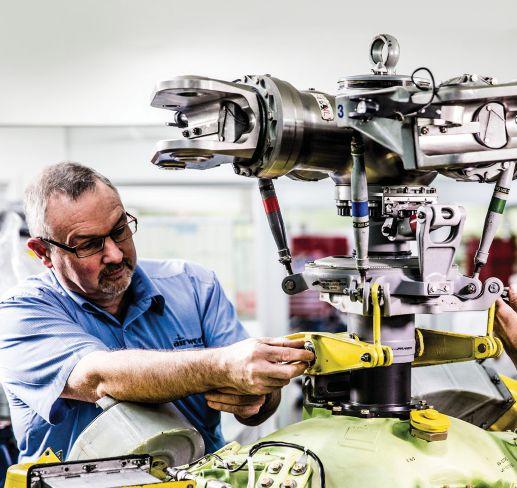
n For 30 years Advanced Composite Structures (ACS) has been a world leader in Rotor Blade and Composite Structure repairs. ACS’s success can be attributed to a comprehensive and ongoing research and development program resulting in new and enhanced repair procedures. ACS strives to provide customers with Sound-SolidSolutions and focuses on fixing problems not symptoms. ACS provides repairs on components such as: helicopter rotor blades, cowlings, fairings, door and floor panels, radomes, ailerons, elevators, rudders, flaps, flight controls, engine nacelles, landing gear doors and interior panels.
With over 35 years of experience supporting rotary wing aircraft across Canada, Airbus’ dedicated team of licensed Technical Experts, Customer Service Representatives and MRO Specialists are committed to guaranteeing the highest level of service. At Airbus we work tirelessly to ensure that our customers enjoy a seamless transition from the acquisition of their helicopter, through to years of hassle-free flying. We are dedicated to ensuring the best interests of our operators, including maximizing flight revenues, public safety and saving lives.
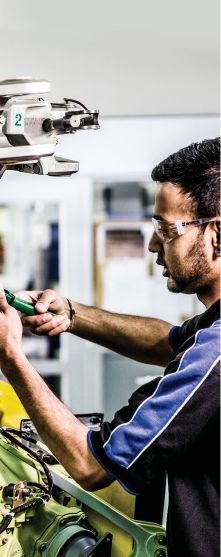
n n n n n n An innovative, industry-leading helicopter engineering, sales and leasing company providing in-house expertise, world-class technology and certifications within the global aviation market. Airwork is an approved service center for Airbus, Honeywell and Breeze Eastern, with workshops for turbine and dynamic component overhaul, repairs and inspections, non-destructive testing, avionics, design and manufacturing, as well as parts supply, sales and leasing.
n n Alpine Aerotech is a repair, maintenance, and overhaul facility for Bell Helicopters that was founded in 1991. Based in the Okanagan, we also have an additional hangar in the Lower Mainland. At Alpine Aerotech we are committed to providing exceptional customer service, technical expertise, quality of workmanship, and delivering what we promise. We have established a reputation as a high-quality service provider to helicopter operators and have achieved a high level of customer loyalty and referrals. We support our employees and believe that Experience has no Substitute.
n n With more than 90 years of combined expertise, AOG prides themselves on their in depth knowledge of the Aviation industry and their beyond comparable efficiencies in helicopter MRO. Our Aircraft Maintenance Engineers are Bell Factory Trained and Certified to ensure the highest quality standards are met. Consistently recognized for their industry leading overhaul capabilities, maintenance and repairs. AOG' is confident in their ability to exceed expectations each and every time without compromise. Whether it be a straight forward repair or the most complex overhaul, AOG Heliservices Inc. is known for their quality of work and respected among the industry for their Integrity and ability to execute with urgency. Getting in the air is your passion, keeping you there is ours.
Canadian Helicopters provides comprehensive helicopter support solutions – repair and overhaul for components and structures, avionics, and night vision goggles. We service private, commercial and military helicopters and operators within Canada and internationally. With over 65 years of experience, Canadian Helicopters is an industry leader in refining maintenance practices. We offer cost effective, flexible maintenance solutions. Canadian Helicopters is a Bell CSF.
Canada Custom Helicopters is a top-notch Maintenance, Repair and Overhaul facility located in Winnipeg, Manitoba. Our services include: aircraft modifications and refurbishing; sheet metal work and structural repairs; engine repairs; component overhauls and repairs (transmissions, tail rotor gearboxes, freewheel units, rotor heads). Custom Helicopters is an authorized Bell Helicopter CSF for the Bell 206A/B, 206L, 407, 205 and 212 series helicopters, including the distribution of parts and accessories.
Specialists in starter generator overhauls, repairs and modifications. We work with our Customers professionally and personally, to help them achieve their goals of reliability and economy. Centrally located in Edmonton Alberta since 1997. AMO 90-97.
n With three locations across Canada, Helitrades Inc. has been proving quality workmanship and outstanding customer service to the aviation industry for more than 40 years. The Helitrades Vankleek Hill, Ontario, facility is a Bell approved Customer Service Facility for Structural Repair, Field Maintenance and Dynamic Component repair/overhaul. Both of the Helitrades’ locations in Ontario are Authorized Service Centers for Robinson Helicopters. Helitrades is also a Woodward HRT approved Licensed Repair Facility in North America for the hydraulic component repair/overhaul and spare parts sales.
Personnel: Eric Hicks, Executive V.P., Sales & Marketing nnnnnnnnnn
Heliwelders is a Transport Canada, FAA, & EASA regulatory approved facility. In addition, we are a fully Authorized AIRBUS "D Level", maintenance facility. We carry out maintenance, structural repairs, composite repair, avionics, and paint for Airbus, Sikorsky and Bell Aircraft. We specialize in major inspections, and structural repairs to Airbus AS350/H125, AS355, EC130/H130, Bell 205, 206, 212, 412, and 407, and Sikorsky S61 and S92 Helicopters. This includes full Interior refurbishments, and in-house paint capabilities. Heliwelders is also an OEM approved SAFRAN Certified Maintenance Center (CMC) for Arriel & Arrius Level 1&2 engine support. Our wholly owned subsidiary, Nampa Valley Helicopters, located in Boise, Idaho, is a fully authorized AIRBUS "D Level" Dynamic Components overhaul facility. Nampa carries a large inventory of rental and exchange Dynamic Components to support both the Global Helicopter markets, including Canada.
ISERVICE CENTRE
6500 Chemin de la Savane
St Hubert, QC, J3Y 8Y9
Tel: 450-550-2024
1-877-468-3431 ext 261
www.iservicecenter.ca info@iservicecenter.ca
Personnel: Jacques Laflamme, Service Center Director
nnnnnnnn
The iService Center is a Robinson and Bell approved maintenance organization that provides maintenance and overhaul solutions to private owners, commercial operators, industry and government. The iService Center has an unparralled experience on Airbus Helicopters. Major repairs, 12 years inspection, aircraft painting, composite and hot bonding, canopy repairs, harness replacement and avionics package are an integral part of the iService Center.
MID-CANADA MOD CENTRE
2450 Derry Road East, Hangar 9 Mississauga, ON, L5S 1B2
Tel: 905-673-9918
1-888-428-4669
www.midcanadamod.com
info@midcanadamod.com
NAMPA VALLEY HELICOPTERS INC.
1870 West Franklin Road Meridian, ID, 83642
Tel: 208-362-9726
www.nvhelicopters.com
eric@nvhelicopters.com
Personnel: Eric Hicks, Executive VP, Sales & Marketing; Chris Rekemeyer, Sales, Marketing, Customer Support
n
Mid-Canada Mod Center (MC2) is focused on providing industry leading avionics expertise to the corporate and 2nd tier commercial aviation markets. Our business emphasis is on avionics sales, service, repair, design, certification and installation. In business since 1996 (AMO #5997)our recent successes include ADS-B, other NextGen systems and integration, FANS, SBAS FMS with LPV, cabin entertainment and communications systems including the latest satcom and Wi-Fi applications. Located at both CYYZ and CYKF with full mobile service anywhere you need us.
n Nampa Valley Helicopters Inc. (NVH), is a wholly owned subsidiary of Heliwelders Canada Ltd. NVH is a fully authorized Airbus "D Level" MRO facility, specializing in the Repair & Overhaul of the AIRBUS AS350/H125, AS355, & EC130/H130 Series Dynamic Components. NVH also carries a large inventory of rental and exchange Components to support our customers. NVH certifications include FAA, and EASA regulatory approvals.
Canadian Defence Supplement
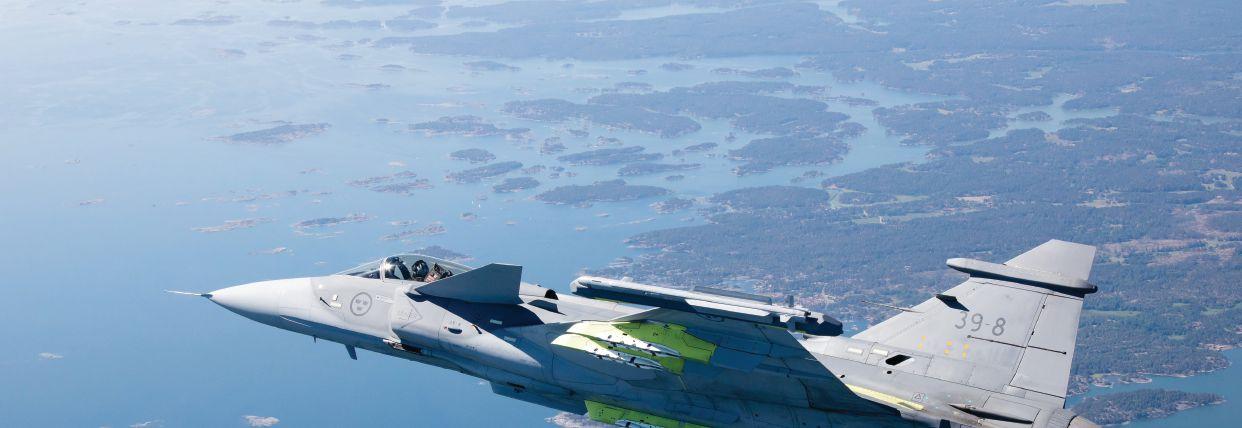
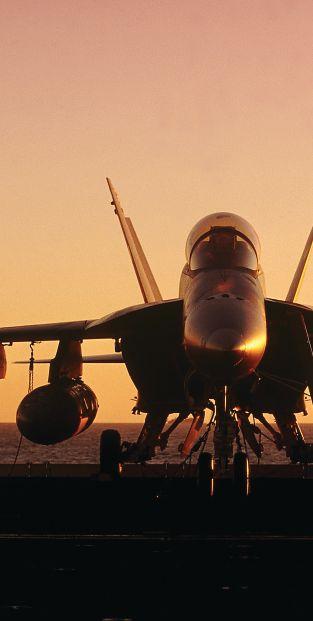
A comprehensive report on the primary aviation and aerospace objectives of Canada’s generational Defence Investment Plan under the Strong, Secure, Engage policy.
Providing the industry with critical business information about the technologies and strategies to shape the future of Canadian aviation and defence.
Project coverage will include, but is not limited to:
• Future Fighter Capability
• Future Fighter Lead-in Training (FLIT)
• Future Aircrew Training (FAcT)
• Strategic Tanker Transport Capability
• Utility Transport Aircraft
• Remotely Piloted Aircraft System
• Cormorant Mid-Life Upgrade Modernization
• Maritime Helicopter Replacement
• In-service support contracts
• Professional services contracts
Showcase how your company is leading the future of Canadian aviation and aerospace.
Sponsored Content Packages available:
• A commissioned article written by a WINGS or HELICOPTERS freelancer on a chosen topic
• Provide your own Sponsored Content at a lessor advertising rate
• Repurpose your Sponsored Content as a digest-size brochure
• Sponsored Content packages include a 4-week presence on the homepage of Wingsmagazine.com or Helicoptersmagazine.com, as well as social media, eblast and enewsletter distribution (with full CASL compliance)
The Canadian Defence Supplement will be polybagged to reach the full readership of WINGS and HELICOPTERS magazines in time for CANSEC.
Photo: Saab
Photo: Boeing
Photo Maj. Eskil Amdal
SELECT HELICOPTER SERVICES LTD.
105-151 Commercial Drive
Kelowna, BC, V1X 7W2
Tel: 250-765-3317
www.selecthelicopter.com
info@selecthelicopter.com
Personnel: Marty Luksts, General Manager, PRM; Dana Washington, Quality Assurance Manager; Dell Luksts, Production Manager; Jeff Havard, Stores Manager
STANDARDAERO
33 Allen Dyne Road
Winnipeg, MB, R3H 1A1
Tel: 204-291-0502
www.standardaero.com
helicopters@standardaero.com
Personnel: Brian Hughes, Director of Sales and Marketing
USA BORESCOPES
2061 Bearden Rd
Clarksville, TN, 37043
Tel: 931-362-3304
www.USABorescopes.com
bill@usaborescopes.com
Personnel: Mike Costello
n Canada Select Helicopter Services specializes in the overhaul and maintenance of hydraulic components and cargo hooks. Support provided for components installed on Bell 204, 205, 206, 206L, 212, 214, 407, 412, 427, UH-1 and Airbus H125 (AS350); and cargo hooks manufactured by Onboard Systems, Dart Aerospace, Cargo Aids, and Mechanical Specialties. As a Transport Canada AMO and EASA Part-145 Repair Station, Select provides support to a global customer base, focusing on lasting quality and value.
StandardAero is one of the world's largest independent providers of aftermarket services including helicopter engine and airframe maintenance, repair and overhaul, engine component repair, dynamic component repair, engineering services, STC development, interior completions and paint applications. StandardAero serves a diverse array of customers in business and general aviation, airline, military, helicopter, components and energy markets.
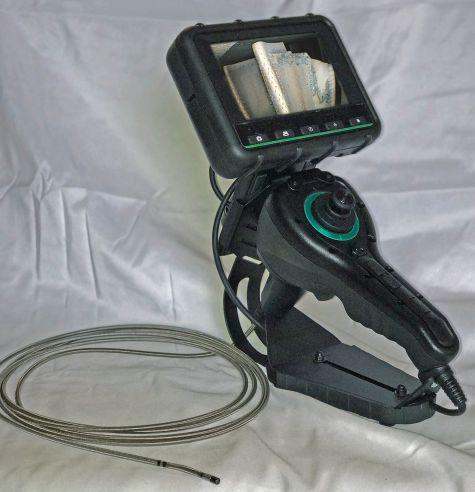
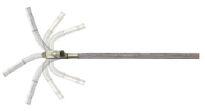
n USA Borescopes is a global supplier of world class remote visual inspection equipment. We offer a wide selection of borescopes and videoscope systems that are designed for today’s aviation, rotorcraft and aerospace professionals. . In addition, we can perform borescope repairs on any make or model borescope with free repair estimates. All work is guaranteed to meet OEM standards.
• Helicopter and Fixed-wing complete avionic services
COLUMN
A Cautionary Tale
Findings from the NTSB FlyNYON preliminary accident report
Inside the preliminary report NTSB on the March 2018 FlyNYON accident is a fascinating and terrifying examination of the circumstances that may have contributed to five fatalities. It focuses on what potentially happened onboard the AS350B2 as it crashed into New York’s East River.
The opening words emphasis it is not final, but the report can be used by operators to examine if their current procedures might expose them to risks. The preliminary report seems to suggest:
1. Shortly after the pilot realized that an engine failure had occurred, he noticed that a tether used to secure the front seat passenger was underneath the emergency fuel shutoff lever – and the lever was in the “off” position;
2. By the time the pilot moved the lever back to the “on” position, he was unable to successfully complete the re-start sequence, before completing the autorotation to the surface of the water;
3. The five passengers on board the aircraft were provided with airframe manufacturer-installed restraints, as well as full-body harnesses. The harness system was not installed by the helicopter manufacturer and comprised of off-the-shelf components consisting of a nylon fall-protection harness that was attached at the occupants’ back by a locking carabiner to a lanyard. The lanyard was secured by another locking carabiner to a hard point on the helicopter;
4. The accident flight was being conducted “doors off” and there
accident, there are some questions we should be asking ourselves, including:
1. What safeguards are in place to ensure that all passengers (but particularly sightseeing passengers) are not intoxicated by drugs or alcohol when they board a helicopter? Is this part of your company policy, which is made clear to both employees and passengers?
2. Are harness and attachment systems approved; and can they be quickly removed by passengers under emergency circumstances?
3. Are there any potential that items from inside or outside the aircraft (including headsets, cameras or shoes) could be removed by the slipstream – and contact the tail rotor or cause harm to persons on the ground?
4. How do multiple risks and safeguards combine to create risks of their own. For example, the requirement to use special restraints for passengers and equipment while operating doors-off, but at the same time ensure that they have access to floatation devices, and protection from cold water. How can passengers communicate with the pilot without access to a headset and microphone? How can the pilot control uncertain activity in the back of the aircraft?
5. Considered together, how does the experience and training of the passengers/crew members combine with the specialized nature of the operation to contribute to the risk level for the operation as a whole? For example, how does a doors-off operation using an Aerial Ignition Device or Drip Torch compare to a doors-off sightseeing flight with in-experienced passengers, from a risk perspective?
To what extent have operators been subjected to an risk assessment to ensure all risks have been mitigated.
was a practice of taking “foot selfie” photos against the NYC backdrop; and
5. Shortly after the floats were inflated, and the aircraft autorotated to the surface of the water, it listed steeply to one side (owing to incomplete inflation on one side) and rolled inverted.
Often in our industry we second-guess the actions of flight crew members. Instead, I would argue that we should focus on how we can prevent any potential preconditions for an accident from occurring in our operations. Without suggesting for a moment that any of the events de-scribed below, were relevant to the New York City
6. To what extend have operations been subjected to a Risk Assessment to ensure that all risks have been assessed and adequately mitigated?
’’
HAC will examine closely the final NTSB report to see what lessons can be learned from the NYC accident, in a Canadian context. Tragically, sometimes the lessons learned from serious accidents can provide the rest of the industry with valuable information that will guide the positive evolution of the Canadian industry. This particular accident seems ripe to help inform the entire commercial helicopter community on how we can go about improving our safety experience in Canada. Doors-off flight is a reality in helicopter operations. The OEMs contemplate that it can occur. Should our industry practices prescribe when, and under what circumstances, it can occur? | H Fred Jones is CEO of the Helicopter Association of Canada.
FRED JONES
Rugged and Reliable
Leonardo Helicopters are renowned for performance, versatility and safety.
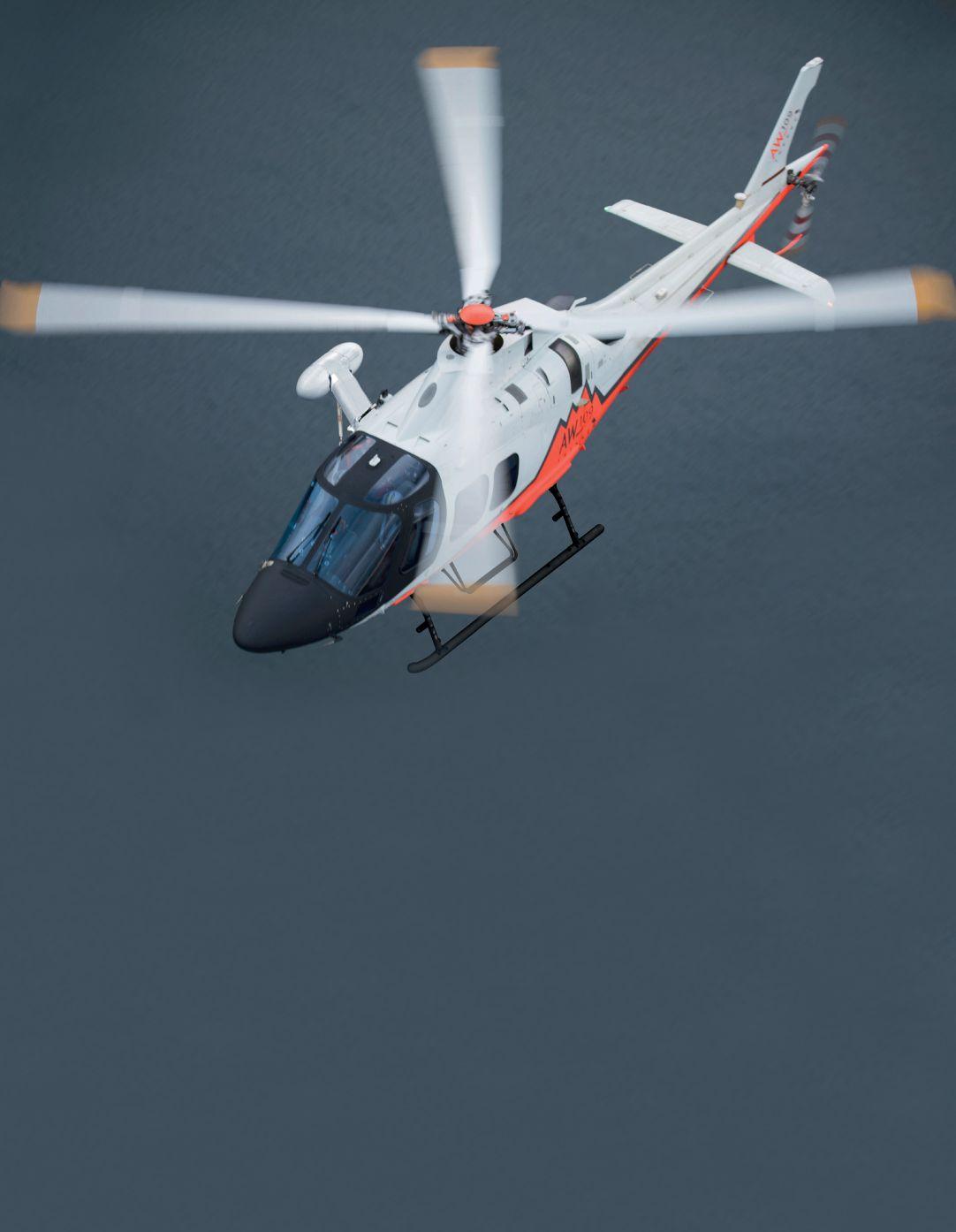
The AW109 Trekker - an evolution of the proven AW109 platform - is the newest light twin, designed for demanding utility and aerial work operations.
Equipped with robust skid landing gear, a latest-generation glass cockpit and advanced avionics, the Trekker provides the excellent handling qualities, high productivity and operational flexibility you demand.
Inspired by the vision, curiosity and creativity of the great master inventor –Leonardo is designing the technology of tomorrow.
TRAINING.
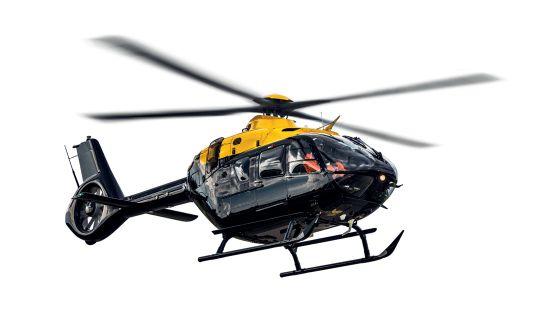
The H135 & H145 are the helicopters of choice for military pilot training around the world. Exceptional safety and efficiency make them ideal for both basic and advanced training. There’s a reason we call it future aircrew training. Packed with technology such as the HELIONIX® flight control system, today’s new pilots will be armed with the skills needed for tomorrow.