







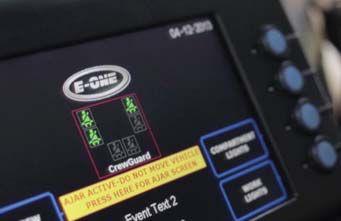

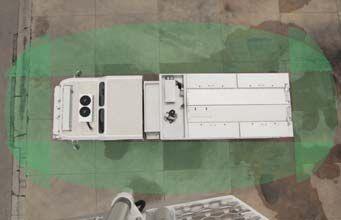

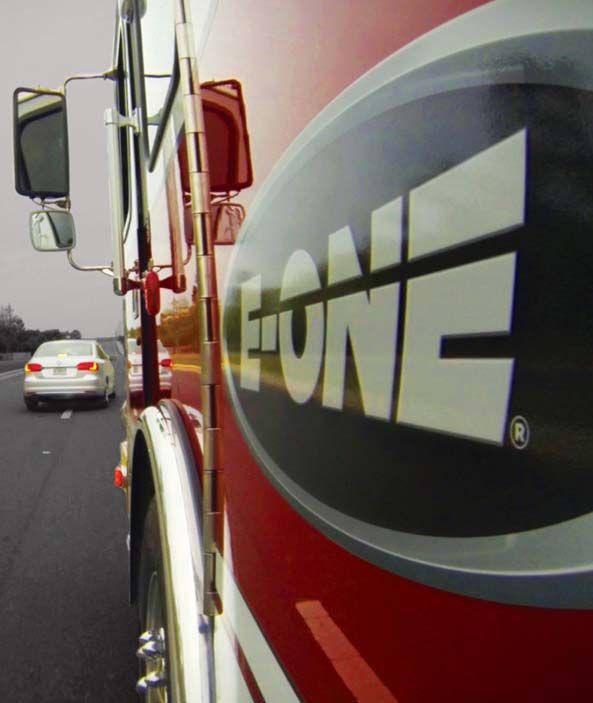
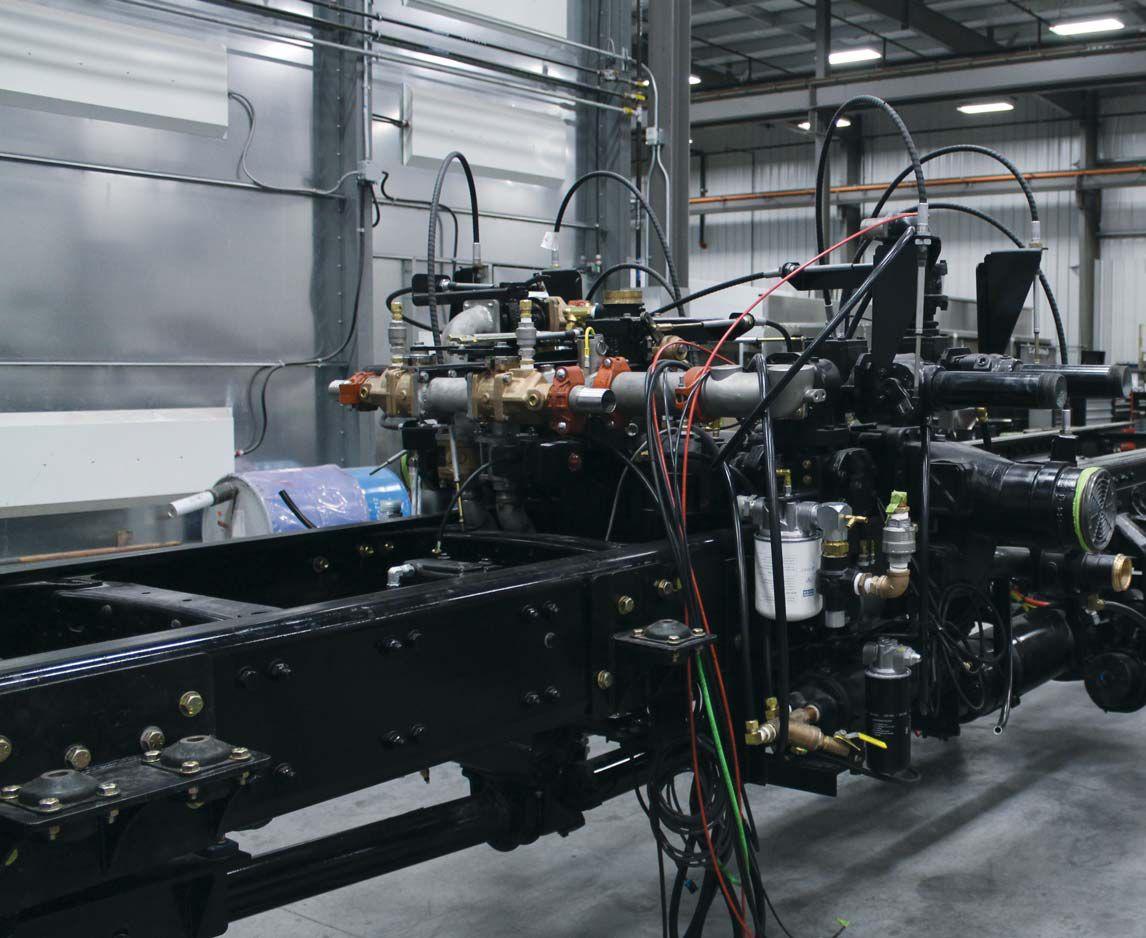
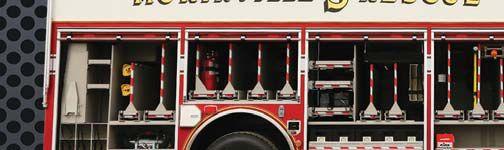
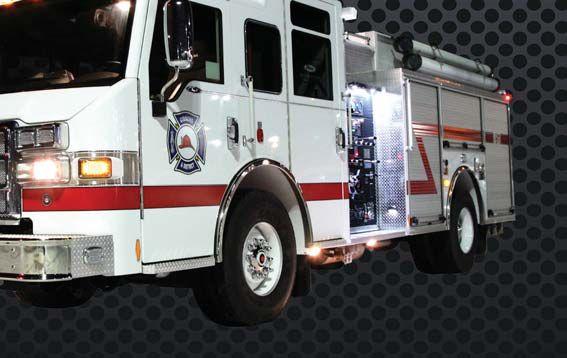
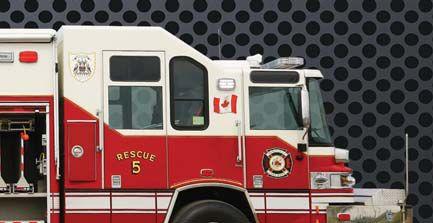
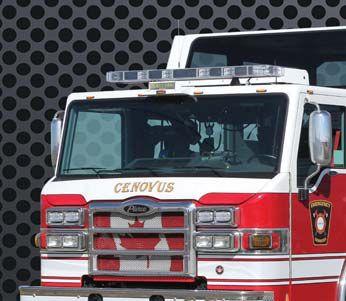
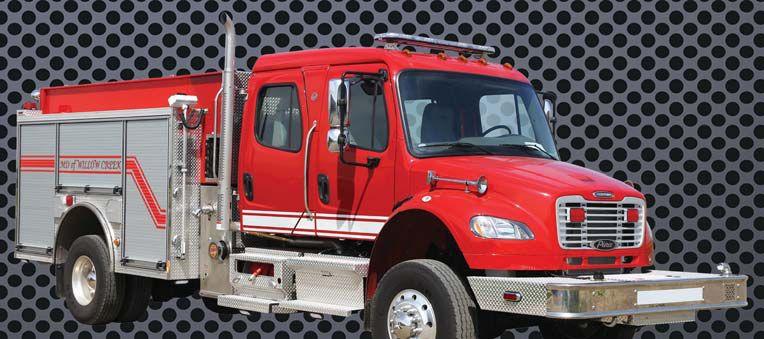
Driving a fire truck at high speeds can be dangerous. That’s why avoiding the accident is the best way to protect your crew and community. E-ONE’s ProTech™ system features OnGuard® for audible collision warning and accident mitigation, G4® (electronic stability control) for added stability, CrewGuard™ for occupant detection, and a 360-degree camera system for perimeter protection.
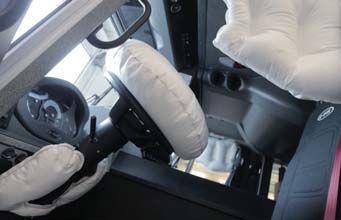
But, if an accident does occur, the impact is cushioned with a steering wheel airbag, driver and officer knee bags, as well as side roll protection. Additionally, every E-ONE cab is designed with a roll cage structure to offer maximum protection for your crew.
E-ONE is committed to safety.

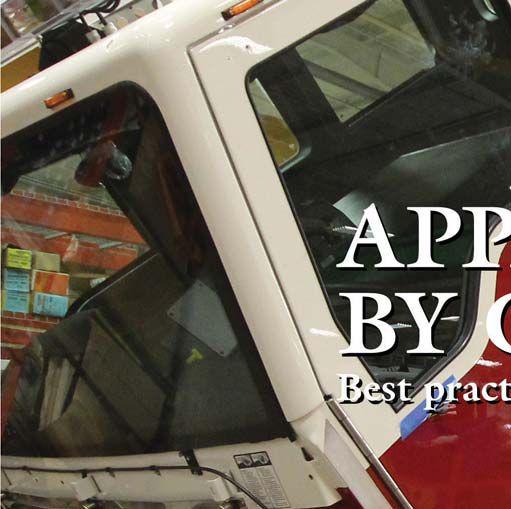
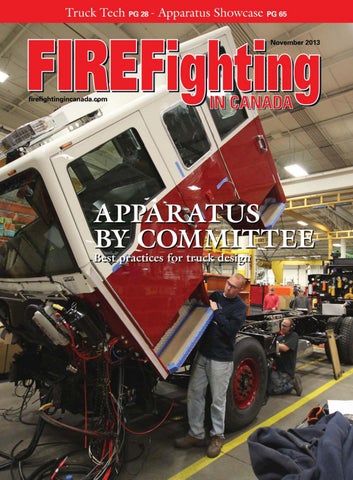
APPARATUS BY COMMITTEE
Designing a fire truck requires the utmost care and attention; and who better to offer advice than the people who use the apparatus every day? Laura King and Ryan Pennington gather advice from chiefs and firefighters across the country to determine the best practices to consider when designing a truck – from selecting a committee to bringing new ideas to the table.
Editor Laura King sat down with Matt Pegg shortly after he became president of the Ontario Association of Fire Chiefs in the spring to discuss fire-service issues and solutions, strategies and the vision of the association’s 2013-2014 board, which Pegg says is focused on firefighter safety and member services.
65
APPARATUS SHOWCASE
Pumpers, rescues, tankers, aerials, command vehicles – our compilation of trucks delivered to fire departments across Canada in the last year provides an overview of what’s new in apparatus design and what options might work for your region.

BY LAURA KING Editor lking@annexweb.com
ow many trucks do you have?
In the seven years I have been in this job, those six words have become a bit of an icebreaker for me when meeting men and women of the Canadian fire service. Sometimes people don’t quite have a measure of me and I don’t quite know what makes a particular department tick. All firefighters like to talk about trucks, and once that conversation starts, usually everything else follows naturally.
This issue of Fire Fighting in Canada is our annual apparatus edition. Starting on page 65, you’ll find our showcase of trucks delivered by manufacturers to departments across Canada, and the information about the engines, pumps and options that are so vital to each department’s needs.


and is a good reminder for veterans and a great primer for recruits.



If you stand in a truck bay next to a 10-year-old apparatus, you vividly understand that the technology and the demands of the service will continue to evolve. There will be more efficient pumps, better aerial technology and new construction materials. Lighter, faster, more mobile European-style vehicles are becoming popular alternatives as departments search for the resource balance needed to respond efficiently without having to dispatch a mammoth piece of apparatus to every call.

Collecting input from department members can help to create the best-possible truck for your hall. See story page 10.
Most fire departments in Canada are small and most fire chiefs will lead the purchase of one, maybe two, trucks during their tenure; all chiefs want to get it right, and for good reason.
Prices of larger apparatuses can easily top $500,000 and your department will have to live with its decision for years to come – at that price, there are no do overs.
Rescue trucks, tankers, aerials, pumpers, command vehicles – the wish list within a department can be as varied as the number of opinions about what is needed.
On that point, we have a great piece on page 10 about best practices for including the input of firefighters when assessing your department’s needs and how firefighters can best contribute to the process. Chris Dennis’s Truck Tech column on apparatus safety on page 28 complements that story,
Even if your department is not looking to buy right now, this issue will help you keep up with what is happening in the market.
To finish where I started, there’s a reason people in the fire service like to talk about trucks.
Each truck is unique, customized to reflect the needs of a particular department, and, as such, it becomes a source of pride.
Aside from the people wearing the uniforms, trucks are the most important symbols of a department in the community – symbols of authority and trust.
For some they are inspirational and, figuratively, drive dreams of future firefighters. So, how many trucks do you have?
ESTABLISHED 1957 November 2013 VOL. 57 NO. 7
EDITOR LAURA KING lking@annexweb.com 289-259-8077
ASSISTANT EDITOR OLIVIA D’ORAZIO odorazio@annexweb.com 905-713-4338
EDITOR EMERITUS DON GLENDINNING
ADVERTISING MANAGER CATHERINE CONNOLLY cconnolly@annexweb.com 888-599-2228 ext. 253
SALES ASSISTANT BARB COMER bcomer@annexweb.com 519-429-5176 888-599-2228 ext. 235
MEDIA DESIGNER BROOKE SHAW bshaw@annexweb.com
GROUP PUBLISHER MARTIN MCANULTY fire@annexweb.com
PRESIDENT MIKE FREDERICKS mfredericks@annexweb.com
PUBLICATION MAIL AGREEMENT #40065710 RETURN UNDELIVERABLE CANADIAN ADDRESSES TO CIRCULATION DEPT.
P.O. Box 530, SIMCOE, ON N3Y 4N5
e-mail: subscribe@firefightingincanada.com Printed in Canada ISSN 0015–2595
CIRCULATION
e-mail: subscribe@firefightingincanada.com
Tel: 866-790-6070 ext. 206
Fax: 877-624-1940
Mail: P.O. Box 530 Simcoe, ON N3Y 4N5
SUBSCRIPTION RATES
Canada – 1 Year - $24.00
(with GST $25.20, with HST/QST $27.12) (GST - #867172652RT0001)
USA – 1 Year $40.00 USD
We acknowledge the financial support of the Government of Canada through the Canada Periodical Fund of the Department of Canadian Heritage.


Occasionally, Fire Fighting in Canada will mail information on behalf of industry-related groups whose products and services we believe may be of interest to you. If you prefer not to receive this information, please contact our circulation department in any of the four ways listed above.
No part of the editorial content of this publication may be reprinted without the publisher’s written permission ©2013 Annex Publishing and Printing Inc. All rights reserved. Opinions expressed in this magazine are not necessarily those of the editor or the publisher. No liability is assumed for errors or omissions.
All advertising is subject to the publisher’s approval. Such approval does not imply any endorsement of the products or services advertised. Publisher reserves the right to refuse advertising that does not meet the standards of the publication. www.firefightingincanada.com
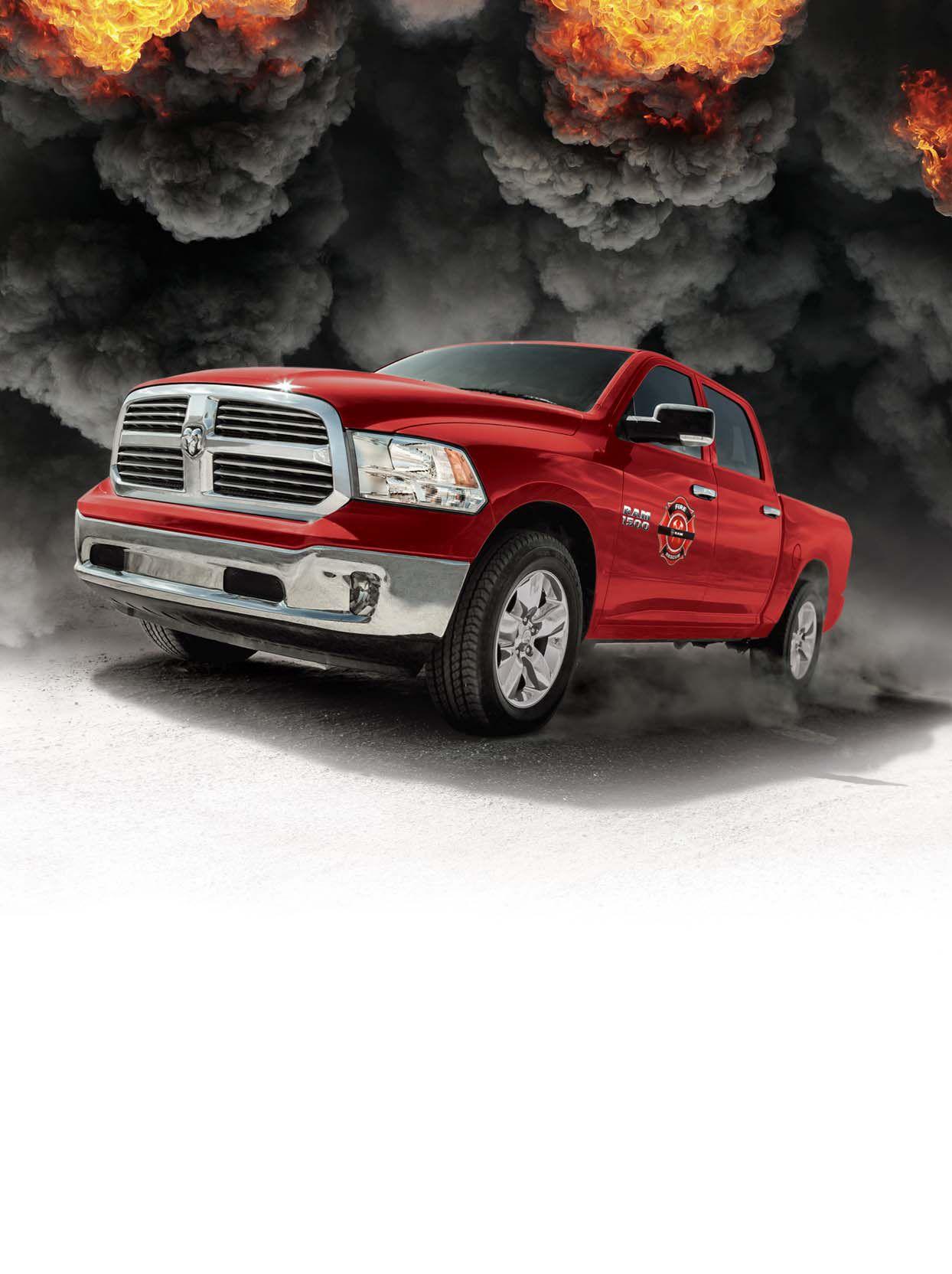
Reporting for duty is the powerful new 2014 Ram 1500 Special Service* Vehicle. Built specifically for Firefighters, EMS and First Responders, it offers a 5.7 L HEMI V8 engine that delivers 395 HP and 407 lb-ft of torque. Yet it’s also Canada’s most fuel-efficient full-size pickup.¤ With its Electronic Control System including All-Speed Traction Control, Hill Start Assist and Ready Alert Braking, Canada’s longest lasting» line of pickups is the perfect partner for any situation.

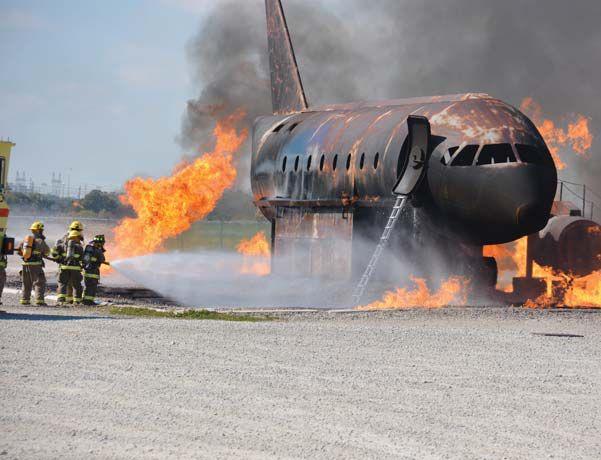
More than 115 firefighters from across southwestern Ontario took advantage of a day of free training offered by Fire Fighting in Canada, the Fire and Emergency Services Training Institute, and sponsors A.J. Stone, M&L Supply and Fort Garry Fire Trucks in Toronto on Sept. 28.
Career and volunteer firefighters from across southwestern Ontario, and potential firefighter recruits, enjoyed a day of free training and expert information on Sept. 28 at Fire Fighting in Canada/ Canadian Firefighter/ Firehall.com’s combined Training Day/Career Expo at the Fire and Emergency Services Training Institute (FESTI) at the Toronto Pearson International Airport.
PHIL DAWSON, a 24-year veteran of the fire service, assumed the role of fire chief in East Gwillimbury, Ont., on Aug. 30. Dawson joined the Markham Fire Department in Ontario in 1989. He was appointed deputy chief in Richmond Hill, Ont., in 2008, before becoming deputy chief for East Gwillimbury Emergency Services in 2012.
MATT PEGG has been appointed deputy chief with Toronto Fire Services. Pegg, who was the deputy chief in Brampton, Ont., for five years, started his new job Oct. 3. He is the president of the Ontario Association of Fire Chiefs and is known in the Ontario fire service for his work on the Ministry of Labour’s Section 21 occupational health and safety committee. Pegg chaired the committee for
More than 120 firefighters participated in five training sessions – firefighter survival, auto extrication, command and control, live fire, and aircraft rescue – while 50 prospective firefighter candidates heard what it takes to become a firefighter from fire chiefs and author Kory Pearn, a firefighter who wrote the book Becoming a Firefighter.
Participants attended the training at no charge, thanks to sponsors A.J. Stone, M&L Supply and Fort Garry Fire Trucks.
The firefighter survival course trained participants to avoid and escape from dangerous situations, such as becoming stuck, trapped or entangled. The auto extrication course helped participants to develop their rescue skills in a variety of staged accidents, including multi-vehicle collisions. Command and control offered firefighters the leadership and incident command training that is often reserved for those in the officer ranks.
two years and was a member for eight years.
DARRELL REID was appointed deputy fire chief of communications and technology for Toronto Fire Services on Sept. 19. Reid, whose first day in Toronto is Nov. 18, was previously fire chief and director with the Strathcona County Emergency Services in Sherwood Park, Alta. He joined the Strathcona department in 1992, holding a variety of posi-
Live fire served as an introduction – or as a refresher – for firefighters’ structural firefighting skills, while the aircraft rescue course provided firefighters with the skills needed to deal with a major aircraft emergency.
Meanwhile, inside the lecture hall at FESTI, 50 firefighter hopefuls listened to speakers and learned about minimum requirements, resumes and interviews. Fire chiefs at the expo said leadership is the quality they look for the most when hiring new recruits.
“Whether you’re a chief or the newest firefighter, you need to be a leader,” said Acting Fire Chief Dwayne MacIntosh of the Greater Toronto Airports Authority.
MacIntosh explained that new firefighters should begin to display their leadership skills on their first day on the job.
“We’re looking for leaders,” MacIntosh continued, “for people who are responsible and can be accountable.”
– Olivia D’Orazio
tions, including deputy fire chief of operations and firefighter/ paramedic.
DES WEBSTER was promoted to director of protective services and fire in Williams Lake, B.C., on Sept. 6. Webster joined the Williams Lake Fire Department in 1994 as a paid on-call firefighter and later became a fulltime fire inspector with the rank of captain. He was promoted to assistant chief in 2006, and to deputy chief in 2008.
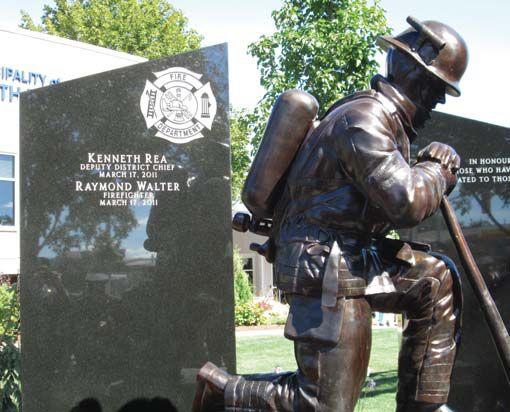
PHOTO BY LINDA CARRUTHERS
A monument honouring fallen firefighters Raymond Walter and Kenneth Rea was unveiled in Listowel, Ont., on Sept. 14. The monument was funded almost entirely by donations. Walter and Rea were killed when the roof of a burning dollar store collapsed on top of them on March 17, 2011.
Hundreds of people gathered in Listowel, Ont., on Sept. 14 for a memorial service for fallen firefighter Raymond Walter and Deputy District Chief Kenneth Rea, who were killed in the line of duty on March 17, 2011, when the roof of a burning store collapsed on top of them.
During the service, which included an honour guard from New Tecumseth Fire Rescue, the North Perth Fire Department’s new platform truck unveiled a monument that commemorates Rea and Walter. Those who spoke at the service focused on the community’s gratitude for their volunteer firefighters.
“The sacrifice our fallen heroes made while protecting this community will never be forgotten,” North Perth Mayor Julie Behrns said. “To our North Perth firefighters . . . we dedicate this to you.”
The monument, which cost about $80,000, was funded primarily through donations from residents and businesses. It features a bronze, life-sized statue of a firefighter in full gear. Behind the statue are two black granite slabs, one bearing the names and ranks of Walter and Rea, the other, an inscription: “In honour of those who have fallen, dedicated to those who serve.”
– Cynthia Bigrigg
The threatening clouds on the southwest coast of Vancouver Island in British Columbia cleared away as the Municipal District of Sooke celebrated the centennial of its fire service on Aug. 24.
The town’s name, which was taken from the language of the Coast Salish First Nations, is the name that the people gave themselves. It was adopted by the colonists who arrived under the auspices of the Hudson’s Bay Company in the late 1800s.
Local folklore holds that a firefighting bucket brigade had been organized in 1910. The Canadian Pipe Company provided the first fire apparatus to the community in 1913. The apparatus included a manual hose reel with a warning bell, a pry bar, an axe and 152 metres (500 feet) of twoand-a-half-inch hose. The Canadian Pipe Company set up a temporary plant on the shore of Sooke Inlet to make sections of concrete pipe, 1.2 metres (four feet) in diameter, for a water system that would draw from the lakes in the surrounding hills and supply water to the City of Victoria, some 48 kilometres away.
Since then, the hose reel has been restored and is
proudly displayed at the apparatus muster on the grounds of the municipal hall.
After the First World War, there was no organized fire service. At the beginning of the Second World War, a civil protection committee convened and an air-raid precautions unit was instituted. The government supplied portable pumps, hose, steel helmets and other gear.
The citizens bought an old Hudson touring car, had the body altered by local workers and provided Sooke with its first motorized fire apparatus.
Sooke Fire Rescue Service trains for a full range of duties, including fire suppression, structural and wildland/urban interface, emergency medical response, motor-vehicle extrication, technical rescue, and hazmat. There are five full-time staff, 30 volunteer firefighters and six public education members, working out of two fire halls. Combined, the halls run two structural pumpers, a 30.5-metre (100-foot) aerial unit, a wildland fire truck, a 1,400-gallon water tender and five utility vehicles, with a pumper and water tender held in reserve. Visit the department at www.sooke.ca.
- Fire Chief Steve Sorensen
BRIAN WILSON was appointed deputy fire chief in Moose Jaw, Sask., on Oct. 1. Wilson, who has 15 years of experience in the fire service, most recently served as deputy fire chief of operations and training with the North Battleford Fire Department in Saskatchewan. He was also recently appointed the international director for the International Society of Fire Service Instructors.
ALBERT HEADRICK started work as fire chief for the North Battleford Fire Department in Saskatchewan on Aug. 15. Headrick, a 37-year veteran of the fire service, most recently served as director of community services, overseeing fire and EMS, in Crowsnest Pass, Alta. Prior to that, he served as fire marshal and deputy chief of public safety and planning and prevention in Regina. He has also held the position of fire chief in Yellowknife
and deputy fire chief in Swift Current, Sask.
KEN BECKETT, fire chief in the Town of East Gwillimbury in Ontario, retired Aug. 30. Beckett had been a member of the fire service for 52 years. He spent 11 years as the fire chief for the Markham Fire and Emergency Services in Markham, Ont., and 17 years as chief for the East Gwillimbury Emergency Services.

DAVID ROSS died suddenly on Aug. 17 at Sunnybrook Hospital in Toronto. Ross was a district fire chief in charge of health and safety for Toronto Fire Services and was a member of the NFPA 1500 standard committee. He was also a well-respected teacher at Centennial College in Toronto.
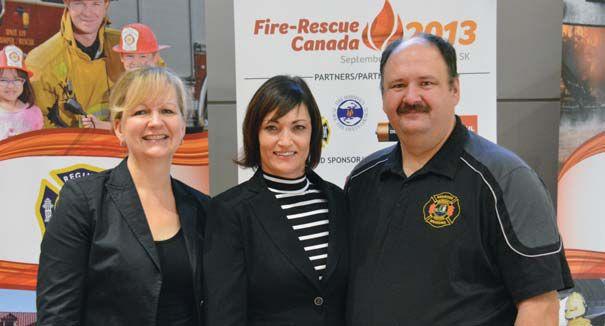
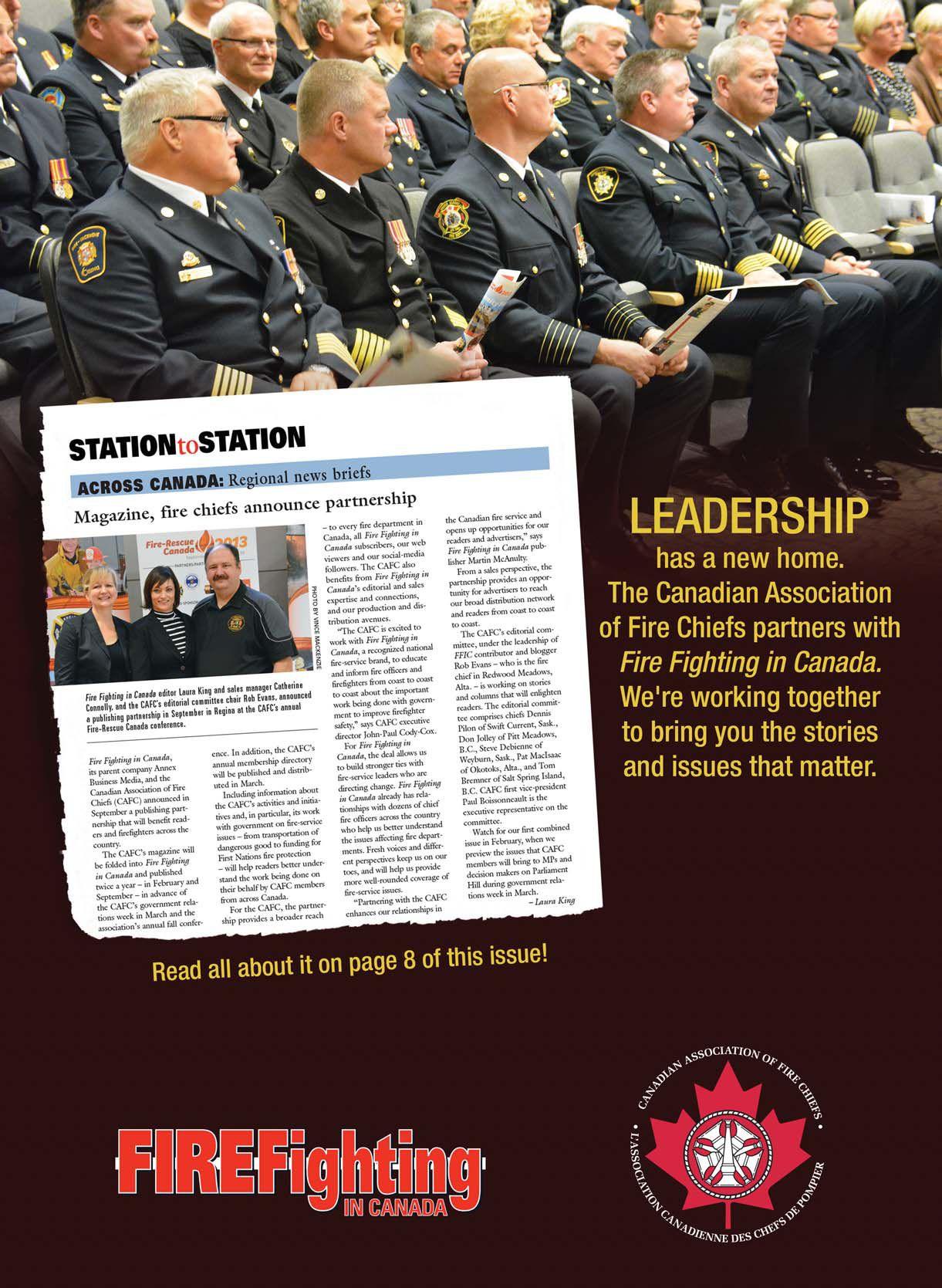
publishing partnership in September in Regina at the CAFC’s annual Fire-Rescue Canada conference.
Fire Fighting in Canada, its parent company Annex Business Media, and the Canadian Association of Fire Chiefs (CAFC) announced in September a publishing partnership that will benefit readers and firefighters across the country.
The CAFC’s magazine will be folded into Fire Fighting in Canada and published twice a year – in February and September – in advance of the CAFC’s government relations week in March and the association’s annual fall confer-
ence. In addition, the CAFC’s annual membership directory will be published and distributed in March.
Including information about the CAFC’s activities and initiatives and, in particular, its work with government on fire-service issues – from transportation of dangerous good to funding for First Nations fire protection – will help readers better understand the work being done on their behalf by CAFC members from across Canada.
For the CAFC, the partnership provides a broader reach
– to every fire department in Canada, all Fire Fighting in Canada subscribers, our web viewers and our social-media followers. The CAFC also benefits from Fire Fighting in Canada’s editorial and sales expertise and connections, and our production and distribution avenues.
“The CAFC is excited to work with Fire Fighting in Canada, a recognized national fire-service brand, to educate and inform fire officers and firefighters from coast to coast to coast about the important work being done with government to improve firefighter safety,” says CAFC executive director John-Paul Cody-Cox.
For Fire Fighting in Canada, the deal allows us to build stronger ties with fire-service leaders who are directing change. Fire Fighting in Canada already has relationships with dozens of chief fire officers across the country who help us better understand the issues affecting fire departments. Fresh voices and different perspectives keep us on our toes, and will help us provide more well-rounded coverage of fire-service issues.
“Partnering with the CAFC enhances our relationships in
the Canadian fire service and opens up opportunities for our readers and advertisers,” says Fire Fighting in Canada publisher Martin McAnulty.
From a sales perspective, the partnership provides an opportunity for advertisers to reach our broad distribution network and readers from coast to coast to coast.
The CAFC’s editorial committee, under the leadership of FFIC contributor and blogger Rob Evans – who is the fire chief in Redwood Meadows, Alta. – is working on stories and columns that will enlighten readers. The editorial committee comprises chiefs Dennis Pilon of Swift Current, Sask., Don Jolley of Pitt Meadows, B.C., Steve Debienne of Weyburn, Sask., Pat MacIsaac of Okotoks, Alta., and Tom Bremner of Salt Spring Island, B.C. CAFC first vice-president Paul Boissonneault is the executive representative on the committee.
Watch for our first combined issue in February, when we preview the issues that CAFC members will bring to MPs and decision makers on Parliament Hill during government relations week in March.
– Laura King
Fire chiefs Ken Block of Edmonton Fire Rescue Services and Jerrold Lemko of Vegreville, Alta., were honoured by their peers as fire chiefs of the year at the Canadian Association of Fire Chiefs (CAFC) annual conference in Regina in September. Block was named full-time chief of the year; Lemko is the volunteer chief of the year.
The awards were announced during the closing ceremonies at the CAFC’s Fire-Rescue Canada conference.
CAFC president Stephen Gamble said both chiefs were honoured mainly for their dedication to training and innovation.
Gamble said that to effectively protect lives and property, the chiefs must be com-
mitted to training, public education, purchasing appropriate equipment and maintaining a constant drive to find better ways of doing things.
“More than anything else,” Gamble said, “they have equally shown themselves to be true leaders.”
Chief Block, was “instrumental in uniting a fractured labour-management relation-
ship . . . eventually developing one of the most progressive, highly regarded firefighters unions in North America,” said nominator Linda Cochrane, Edmonton’s director of community services.
Lemko has inspired firefighters to live up to his “better to best” motto, nominators said.
– Laura King
Best practices for designing trucks with input from management, firefighters
BY RYAN PENNINGTON AND LAURA KING
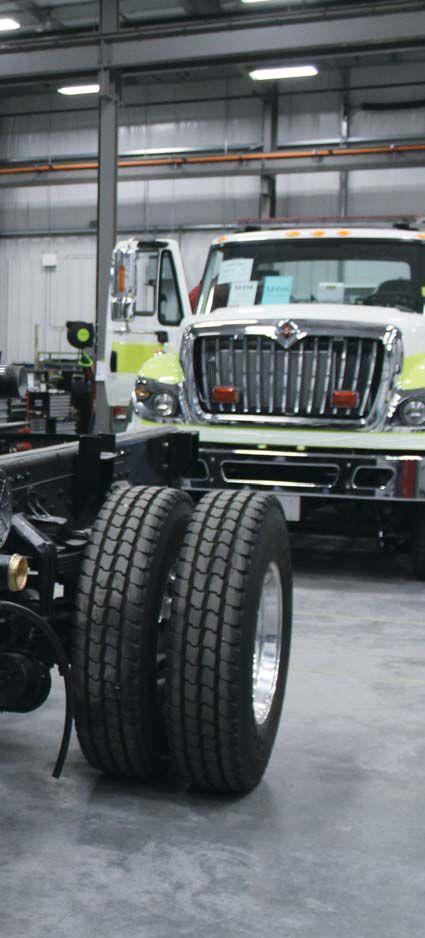
All firefighters have opinions about the trucks (and everything else!) in their departments. So how do firefighters share their thoughts about new truck purchases without sounding critical? And how can management best involve crews in the truck-specing process to get their street-level perspectives?
With more and more options available on today’s trucks, and fewer municipal dollars for big budget items, the specing process is crucial: these decisions can affect your department for years to come.
For firefighters, being given an opportunity to provide opinions and ideas means offering solutions rather than complaints: taking time to research ideas and offer suggestions in a non-threating way will ensure that their voices are heard.
For management, involving firefighters in the purchasing plan can boost morale, and requesting input from those who use the equipment daily can result in a more well-rounded plan of action.
“On a small department likes ours,” says Fire Chief Rob Evans of Redwood Meadows Emergency Services (RMES) in Alberta, “everybody’s opinion can be worth its weight in gold.”
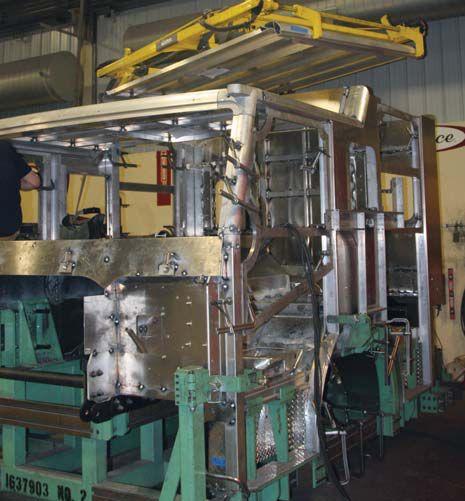
Including a rookie on the apparatus committee forces other members to explain all their ideas, says one fire chief. However, it is also important to stay on budget and make sure the department’s needs are put ahead of individual preferences.
Evans is a volunteer chief of a busy volunteer department, where keeping members engaged is crucial.
“I believe it’s important to recruitment and retention efforts as well,” Evans says. “If your members have been a part of designing apparatus, there’s more pride and ownership and a desire to stick around.”
But there can be risks when management brings firefighters into the buying process: potential backlash against firefighters perceived to be too close to management, for example, or lack of consensus when there are too many voices.
Fire Chief Tom DeSorcy in Hope, B.C., has participated in the purchase of seven trucks over several years – both as a firefighter and as a chief.
Years ago, a department that is now part of the District of Hope needed a new tanker. Or so its members thought.
“We formed a committee,” DeSorcy says, “consisting of a few of us and the fire chief. With no experience and $150,000 in
our back pocket we went shopping. We soon realized that a tanker was not what we needed but a new pumper, so we went back to council and secured the necessary funding. That was when the entire hall got involved. The ensuing situation wasn’t pretty and centred around two issues: the placement of the pump panel and the logo on the door.”
A new truck with a transverse-mounted pump control would have been too long to fit in the hall, so the committee proposed a side-mounted pump.
“In those days, DeSorcy says, “incident command was non-existent and the pump operator liked to run the scene from the top of the truck.”
With a side-mounted pump panel, the operator wouldn’t be able to see the fire scene.
“It became quite an argument,” DeSorcy said, “with all members of the department involved to the point at which I said, let’s settle this once and for all and vote.”
A transverse-mounted pump was chosen, the chief resigned, and the builder had to fabricate a retractable tailboard so the truck would fit into the hall.
So, what’s the best way to get quality input from firefighters?
Fire chiefs say it’s important that the chief define the department’s needs and determine the type of truck that is needed before soliciting input from others. And, they say, it’s crucial that the department’s needs come before individual preferences.
“In our department,” says Fire Chief Gord Schreiner of Comox, B.C., “the fire chief sets the overall goal and then we put together a truck committee to design the finer details on a new rig.”
The committee consists of an assistant chief, a captain, a lieutenant, two firefighters and a brand-new recruit.
“We feel by having a broad-based committee like this that most issues are addressed in terms of how the rig will function,” Schreiner says.
“By adding a new recruit to the mix, the committee is forced to explain things as they go. The thought is if they can explain to the recruit why we need what we are asking for, then we will have a better chance of explaining these things to politicians and other citizens.”
In addition, Schreiner says, having a recruit on board demonstrates the department’s commitment to its members and the equipment they will use.
Chief Lyle Quan of Waterloo, Ont., agrees that rank-and-file firefighters have a lot to offer the purchasing committee.
“I believe in letting the people who use
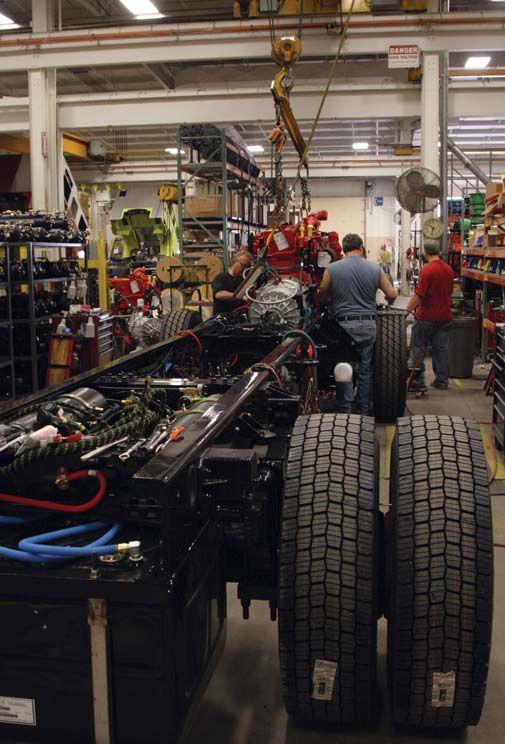
For firefighters, offering solutions rather than complaints is the best way to have input on new truck purchases taken seriously.
the equipment build the truck and look at how it needs to be designed to be user friendly for all,” he says.
“As for the fire chief’s role, it’s more about getting the right piece of apparatus for the right job at the right price. When I’m told that we have a certain amount to spend on the apparatus, then I ensure that the truck committee understands that these are the financial parameters that they must work under.
“Our firefighters are very smart and creative people and they get that there isn’t a bottomless well of money, so create the best of equipment you can with the funds available and design it so it will last.”
Brad Petrie, internal sales manager with Fort Garry Fire Trucks, says working with an apparatus committee of the Winnipeg Fire and Paramedic Service over the last two years on the purchase of eight trucks was the most positive experience he has had as a salesperson.
“We dealt with Winnipeg seven or eight years ago on two smaller trucks,” Petrie says. “There were management people from different areas – the union, maintenance, a deputy chief; we had guys in a room who couldn’t make a decision on the colour of a truck.”
Overall, says Petrie, buying trucks by committee can be a challenge; having a committee leader who understands best practices is a big help.
“We’d get a contract, guys would come in and discuss the truck; it’s hard to get a decision made – guys from each different area were trying to get their point across and to get a decision made was very difficult to do. There was a lot of internal politics.”
This time, Petrie says, Winnipeg Capt. Don Enns approached the committee and the $3.6 million purchase from a project-management perspective.
“With Don’s committee, everything was prepared; they knew what they wanted to do.”
Enns’ committee included three captains, one lieutenant, three firefighters, one training officer and one heavy duty fire apparatus mechanic.
Enns says the committee’s mandate was to be on time, within scope and under budget.
“It was a phenomenal opportunity and turned out to be a delightful experience and that was because we managed to develop a phenomenal rapport,” Enns says. “We also had two firefighters there from the United Fire Fighters of Winnipeg join us to observe – wanted the union’s input on it. And the project sponsor was deputy chief, who I reported to directly.”
In addition, Enns says, the committee brought in subject-matter experts from Winnipeg’s fleet management team.
Enns says the key to the committee’s success was involving firefighters who use the equipment every day.
“The trick,” he says, “is to give the guys something that they’re proud of and they’ll take better care of it. When they take pride in it and ownership of it, that’s the greatest feeling in the world – machines designed by firefighters, for firefighters, being used by firefighters.”
For example, Enns says, on the eight new trucks, the attack lines were lowered to about 42 inches.
“Now instead of having firefighters reaching up and pulling, they are now pulling at waist height.”
Backboards, stretchers, and the rear hosebeds were also lowered for easier access, and the truck’s ladders were enclosed.
“Winnipeg has one of worst, most physically demanding climates in the country,” Enns says. So to have the ladders enclosed helps with access and safety. “These ideas came from the firefighters,” he said.
Petrie says departments preparing to buy trucks should talk to others that have had successful buying experiences.
“There are a lot of guys coming into this that aren’t used to buying a fire truck,” he says. “They don’t understand that it’s not like going out and buying a car at a dealership. Each truck is different in each different region – in B.C. you’ve got hills and mountains, versus Winnipeg, where it can be -40. It’s like building a house – there’s a lot of customization going into it. That’s why Winnipeg got the truck they ultimately







wanted – because they got the guys who use the equipment, instead of the higher ups that don’t use the equipment – and that was the biggest difference.”
The higher ups, of course, had a say in the matter, Enns notes but says the committee was not micro managed.
“The senior management team were our advocates,” Enns says. “Our chiefs at the time were our biggest fans. They set us up for success. They allowed us to do our jobs.”
For firefighters, then, what are the dos and don’ts of getting involved? And how can firefighters best offer input in a constructive way?
Firefighters are always searching for the perfect configuration for a fire truck. Whether it’s the turning radius or the hose-bed configuration, firefighters need to be prepared to offer well-researched options. If you show up with solutions, your opinion will be heard. If you produce a list of complaints without resolutions, you will quickly find yourself outside cleaning the tar off the bottom of the antique fire truck. Maybe not, but you get the point.
If you determine that a change is needed on your next truck, take the time to make your concern known to your fellow firefighters and ask their opinions. Is your issue truly a problem area or is it just your pet peeve? Firefighters have strong opinions on just about every topic around the fire hall. Heck, firefighters can argue over what type of floor soap is the best, never mind improvements to apparatus design. Identification of these issues should be handled tactfully. Emotions can run high if the firefighter or apparatus committee member who chose the option that you find frustrating perceives your idea to be a negative response to his work. Simple questions can help you understand the reasons behind your area of concern.
Say you find it difficult to retrieve the six-foot hook from its place in the apparatus compartment because the hook is mounted quite high up. If you explain to others that you find it challenging to retrieve the hook at fire scenes, you can then ask why the hook is mounted so high. You may be surprised to find out that this is because there is no other compartment long enough to fully enclose the hook.
If you are non-confrontational about the inquiry, you will be able to find out why things are as they are and understand without offending anyone. This is also the point at which you can start an investigation into or conversation about a better place to mount the hook. This
type of language works well: “Firefighter Joe, I understand why you placed the hook up so high, but we are having problems retrieving it. Can we look into another mounting choice for our next rig?”
In this simple statement you have identified a problem, showed that you understand why the current configuration was chosen, and invited your colleagues to collaborate on a solution. This shows your genuine interest in a finding common solution, and does not involve finger pointing.
Now that you have identified an area for improvement, it’s time to focus in on the solution. Start searching the Internet to find out how other departments have handled your area of concern. Your research should include North America, the United Kingdom, Europe and Australia – all areas in which you will find fire departments that are leaders in firefighter safety.
If you find a fire department that seems to have an answer to your issue, reach out to its members: their research and opinions could prove invaluable. Most departments, manufacturers and designers love to share their design successes and are often are the first ones to admit when an area needs improvement. Be sure to document everything – particularly whom you spoke to and when, so you can follow up if need be – and ask for additional contact information so you can verify your findings if you are pressed to do so by your department’s truck committee or your chief.
It is also a good idea to have a standard set of questions ready when you call so that you’re asking the same questions all the time. Keeping good records of these conversations will help to bolster your position should you be seeking a change.
RMES Chief Evans says research should be started well in advance of any truck purchase.
“Research for our new rescue started over two years before the truck was ordered,” Evans says. “This allowed time for our crews to research and where possible test different equipment we were looking at for the truck.”
For Chief Tom Bremner on Salt Spring Island in British Columbia, firefighter input is a necessary part of the design process.
“I have personally used the combined apparatus committee concept, from coast to coast, on four occasions with a positive outcome,” says Bremner, who was the chief in Truro, N.S., before moving west.
He says the combined committee structure allows for multiple
For more information, call your local Globe dealer or Safedesign.
BRITISH COLUMBIA AND ALBERTA Guillevin
Coquitlam, British Columbia 800-667-3362
Calgary, Alberta 800-661-9227
Campbell River, British Columbia 250-287-2186
Edmonton, Alberta 800-222-6473
Fort St. John, British Columbia 250-785-3375
Kamloops, British Columbia 250-374-0044
Prince George, British Columbia 250-960-4300
Trail, British Columbia 250-364-2526
QUEBEC
H.Q. Distribution
LaSalle, Quebec 800-905-0821
Boivin & Gauvin
Saint-Laurent, Quebec 418-872-6552
ATLANTIC PROVINCES
K&D Pratt Ltd.
St. John’s, Newfoundland 800-563-9595
Dartmouth, Nova Scotia 800-567-1955
MANITOBA AND SASKATCHEWAN Trak Ventures
204-724-2281
Firefighters who want to participate in truck-buying decisions need to do their homework and make well-rounded presentations in writing, or even through videos, to prove that their ideas are valid.
levels of experience; majority buy-in from the membership, the community and council; and a well-researched truck proposal.
“It is absolutely wrong to think one person or a few well-meaning people without any expertise can understand, design, or manage a modern-day fire apparatus draft,” Bremner says.
Fire Chief Les Karpluk of Prince Alberta, Sask., found that a firefighter on his laddertruck committee provided a fresh perspective and saved the department money.
“When we put out our tender for our ladder truck, I created a truck committee, which included one firefighter,” Karpluk says. “The intention was to have a firefighter with the floor experience to give input into how we designed our new ladder truck.
“We travelled to three different manufacturing facilities – Sutphen, Pierce and Rosenbauer – in the United States, and took extensive notes and photos.”
The firefighter, Karpluk says, took it upon himself to “drill down” into each of the three manufacturers and how they built their trucks.
“He spent an extensive amount of time looking at compartment configurations, interior design of the cabs, and how each ladder operated. By the time we were getting into the details of how the compartments were laid out, I just let him run with it. Yes, there were times when what he suggested would cost us money but I will never forget his words: ‘Chief, this is something that will work well for the guys.’
“And, based upon his experience and focus on our ladder truck, I approved his requests, because they made sense. There was not one occasion when he requested something because it was bling. He was totally focused on changes that would make it easier and safer to perform duties as a
firefighter.”
Karpluk says that although involving the firefighter on the committee cost the department some extra travel and overtime dollars, the firefighter’s ideas actually resulted in a less pricey apparatus.
“He actually saved us money in the long run and I am extremely grateful for his foresight,” Karpluk says. “He came up with ideas that I would never have thought of because I am too busy behind the desk, working to get the money for these big rigs.”
“Without a doubt,” Karpluk says, “the input from our firefighter helped my department get a ladder truck that will be serving the city for the next 20 years.”
Now that you have identified a problem, done you homework, and come up with a solution, it’s time to prepare your proposal. You need to organize your solution in a form that can be presented to the leadership of the department or the truck committee. You must arrange the proposal in writing with direct quotes and the suggestions from the departments from which you gathered the information; this increases your credibility and provides the committee with an opportunity to reach out to those from whom you got your information to further investigate. Hearing the solutions directly from the departments you contacted will help to validate your claims. If your proposal seems valid, well researched and reasonable, the committee might just take your word for it.
If you are not good with a written delivery, gather photos or provide audio recordings of your conversations (with the permission of the other departments, of course). Videos are worth a million words and the little bit of extra work will show your chief or the committee your commitment to problem solving. Also, showing the solution in action can go a long way to making your proposal a reality.
By MARK VAN DER FEYST
One of the functions of a truck company is to ventilate and force openings within a structure. Some fire departments have rotary saws on their apparatuses to complement the equipment needed to ventilate buildings and to force different types of openings. This valuable tool, which has many benefits, such as portability and power, should be used more often.
The rotary saw can be carried anywhere on the fire ground, including to the roof of a building and up and down ladders. The rotary saw weighs between nine and 16 kilograms (20 and 35 pounds) without fuel. One firefighter can carry the saw either with the handles or using a strap attached to the saw. The strap can be made from webbing or even a used seatbelt. Having a strap frees the firefighter’s hands so that he or she can carry other tools or have both hands available for climbing a ladder. The rotary saw is portable enough that it can be used in small spaces, such as a trench for auto extrication purposes, provided there are no explosive gases present.
All rotary saws are powered by internal combustion engines –two-stroke, small gas engines. The small engines can range from 74 cubic centimetres (cc) to 119 cc in displacement with horsepower ranging from five horsepower (hp) to 8 hp. Due to this high output of power, the saw produces blade speeds from 4,700 revolutions per minute (r.p.m.) to 5,400 r.p.m. This allows the saw to cut through almost any type of material for which the blade is designed and rated. The blade size also varies from 30.5 to 40.5 centimetres (12 to 16 inches).
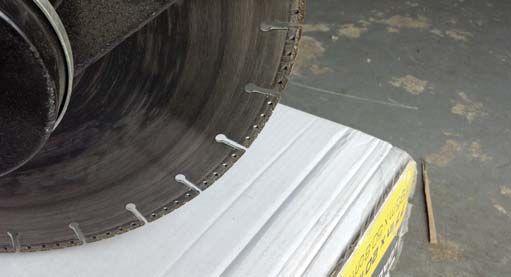
There are many types of blades on the market; when purchasing a blade, a department should consider its own needs. A multipurpose blade with a diamond cutting edge is most common. It can cut through a wide range of materials with just one blade (see photo 1). Small diamonds are embedded into the edge of the blade to create an abrasive cutting surface. Over time and with consistent use, the edge of the blade can gum up with material that is being cut. This prevents the blade from cutting effectively. When this happens, momentarily bury the blade into new or clean material while it is running for about 20 seconds so that the cutting edge is cleaned. The blade can then be re-applied to the previous cutting operation; you will see a noticeable change in the cutting effectiveness.
Over time, the small diamonds of the blade disappear due to wear from cutting operations. Those small diamonds that fall off or disappear are replaced with newer diamonds that are embedded below the surface of the previous layer.
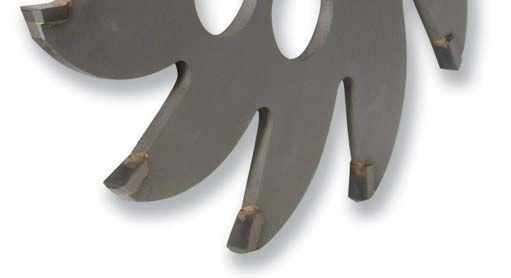
In photo 2, you can see another version of a rotary blade. This blade is known as a Warthog blade. You will notice the long teeth that protrude from the blade’s centre – this blade resembles the blade used for a table saw or a skill saw. This type of blade is great for cutting wood roofs and some siding products. At high speeds or revolutions, this blade can be dangerous for those near the cutting operation: the blade will quickly rip through bunker gear and
flesh. Also, these blades are not designed for a specific brand of rotary saw, so be sure to check with the manufacturer to see if this blade is compatible with your department’s rotary saw.
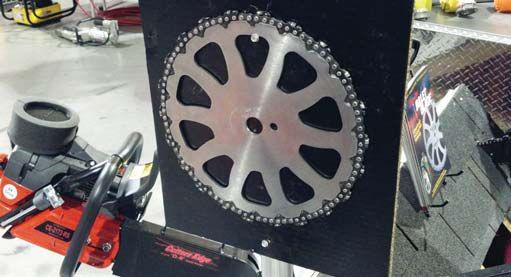
A new blade that will be on the market soon, pictured in photo 3, is called the Bullet Blade (to learn more about the Bullet Blade, see the TechSmart supplement in the September issue of Fire Fighting in Canada). It is a hybrid version of a chain used for a vent saw and a rotary blade. It has, so far, proven itself to be a true multi-purpose blade. The chain that is wrapped around the outside of the round blade is the same chain used along the bar of a vent saw. Having the chain wrapped around a rotary blade enables it to spin three times faster. This increase in speed allows the chain to more effectively cut through more types of materials. In several video demonstrations of the new blade on YouTube, it is used to cut through vehicles, concrete, 2.5-centimetre (one-inch) metal pipes, shingled roofs, metal roofs, sheet metal ventilation hoods, cement blocks, glass windshields, and a host of other materials. The video shows the effectiveness and versatility of this blade under duress – the blade even maintains cutting precision with teeth missing.
Another advantage of the Bullet Blade is that it can be sharpened, the teeth can be replaced and the blade can be used over and over again. As opposed to a regular diamond-tipped blade, which will
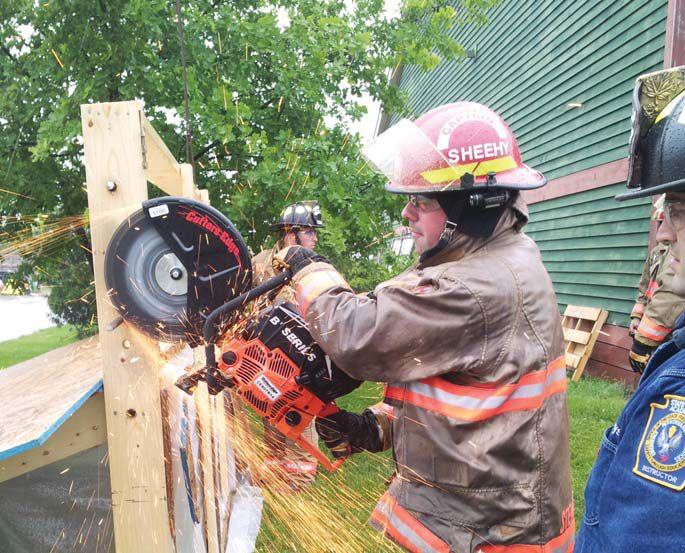
last only as long as the diamonds are present, the Bullet Blade extends the blade’s life; it also produces minimal sparks when cutting through metal objects. As shown in photo 4, when using a diamond-tipped blade, a rooster tail of sparks is generated quite easily; this is hazardous to the person using the saw and any others standing nearby. The sparks are a source of ignition if there are gases present or flammable objects nearby.
The rotary saw is a valuable piece of equipment on the fire ground and should be used more often. If your department is considering buying a rotary saw, know that it will be a more effective tool than a vent saw, especially when the Bullet Blade comes on the market.
Next month, we will look at operating the rotary saw, particularly with respect to different positions in which to hold the saw while cutting, as well as some safety points to keep in mind.

Mark van der Feyst is a 14-year veteran of the fire service. He works for the City of Woodstock Fire Department in Ontario. Mark instructs in Canada, the United States and India and is a local-level suppression instructor for the Pennsylvania State Fire Academy and an instructor for the Justice Institute of British Columbia. E-mail Mark at Mark@FireStarTraining.com

BY KEVIN FOSTER Fire Chief, Midland, Ont.
firmly believe that there is no glory in putting out a fire that could have been prevented in the first place.
We hear plenty about suppression and rescue, but these activities focus on the situation once a fire has started – how best to control the fire or mitigate the damage that it may cause.
Smoke alarms and fire sprinklers are about early detection, warning and responding to the fire after it has started. We can do more to make those systems more effective: we can work hard to reduce the likelihood of a fire starting in the first place; we can be more proactive rather than being reactive.
To prevent something means to stop it from occurring, so I find the use of the phrase fire prevention to be incongruent, because obviously fire prevention should mean to stop a fire from happening, yet it is generally interpreted to mean code development and enforcement to provide – to the greatest level possible – occupant safety and to ensure structural performance after a fire has started.
The main focus of codes and standards is items such as automatic fire-sprinkler systems, fire-alarm systems, fire separations, and safety and evacuation plans, which, again, are protective measures that come into play after the fire starts. There are, however, some code components that actually address preventing a fire. For example, requirements for cleaning and maintenance of commercial cooking systems are intended to reduce the potential of a fire starting in the hood system due to the buildup of grease. The number of similar items, though, is relatively small.
A report correlating fire sprinklers and their financial impact to burn-injury heath-care costs was recently released in the United States, and a similar study for Canada started a little more than a year ago through Sunnybrook Health Sciences Centre in Toronto. The Canadian study will also consider the value of fire sprinklers in residential occupancies from a health-care system perspective, and other impacts. Projects are also underway to establish a common data collection system that could be used in Canada to compile fire cause and related information. There is no need to wait for the results of the study to recognize that reducing burn injuries would lower
some of the financial strain on Canada’s health-care system; the fire service can have an impact right now, and we need to start today to not only reduce these injuries but also strive to eliminate fire-related injuries and deaths. A comprehensive, effective fire-safety system must include safety codes and standards, the enforcement of those, and also fire suppression, and cannot rely solely on automatic fire sprinklers. Fires will continue to happen so we must continue to prepare for them.
To truly deliver on fire prevention, the fire service needs to expand its efforts to change the mindset and prevent the fire from starting in the first place. Many organizations and corporations say they have a safety culture in the workplace to eliminate work-related injuries. That concept must carry over into all aspects of everyday life, and fire safety should be a natural extension of that.
Unfortunately, not all communities have access to the same number of personnel resources or the financial capacity to deliver fire-safety education. That means that each fire department should assess and establish a plan based on the available resources in its particular community, which, in many situations, means only a Fire Prevention Week program. Those limitations do not preclude
To truly deliver on fire prevention, the fire service needs to expand its efforts to change the mindset. . . ‘‘ ’’
fire departments from working together with various partners to expand the penetration of fire-safety information into our communities and to build a stronger safety culture. To do this, first I would recommend determining which fire safety concerns you wish to address in your community, keeping in mind that this year’s Fire Prevention Week campaign is Prevent Kitchen Fires; after that, all that departments need to do is ask and, if asked, share.
Kevin Foster is in his 25th year in the fire service, having begun as a volunteer firefighter in East Gwillimbury in 1987. For 11 years, Foster was a firefighter with the Richmond Hill Fire Department and in June 1999 he became the first full-time fire chief of the North Kawartha Fire Department. Foster was appointed to his current position as the chief with the Midland Fire Department in November 2001 and is Midland’s community emergency management co-ordinator. Foster is a past president of the Ontario Association of Fire Chiefs. Contact him at kfoster@midland.ca and follow him on twitter at @midlanddfsem
Call on your neighbouring departments to see if there are opportunities to work co-operatively. Are there departments around you that have personnel and financial resources to provide a sustained, year-round effort to prevent fires? If you are one such department, or if you have a successful program or initiative, please share it.
Of course, there are also many resources available through the fire marshals’ and fire commissioners’ offices and your provincial fire chiefs/services associations. Again, all you need to do is ask.
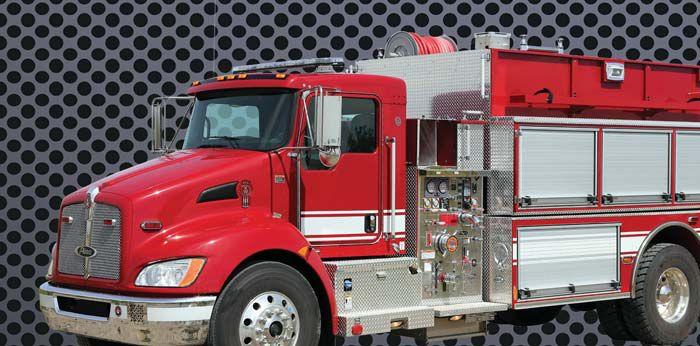










u er tanker aerial rescue co ercial custo the choices don t end there. here s also ulti le chassis con gurations and o tions to choose fro . he uality erfor ance and service that goes beyond the delivery date are always included.
Fro ada ters and wyes to aerial and wildland a aratus WFR has the e ui ent you need.







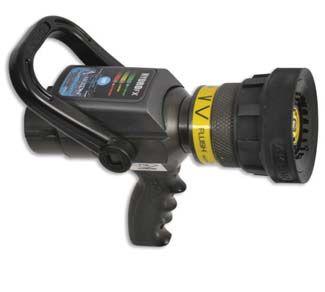
Akron Brass has launched its new flow indicator, the HydroFX. The device is mounted on the top of a handline nozzle and visually warns the nozzle firefighter of low water pressure.
The HydroFX uses bright LED lights that flash green if the flow is at the desired pressure, yellow if the flow is below the desired levels, and red if water pressure is low.
For more information visit www.akronbrass.com.
Honeywell Power has released a firealarm communications panel that allows users to select IP or cellular, or both, for fire-alarm reporting to a central station.
The IPGSM-4GC connects to both the IP and GSM, or cellular, ports on the panel’s digital alarm communications transmitter. This eliminates the need for two phone lines, traditionally used for fire-alarm communications.
Additionally, the panel is able to operate over 2G, 3G or 4G networks, and automatically selects the best available cellular signal. It is compatible with almost any fire alarm control panel.
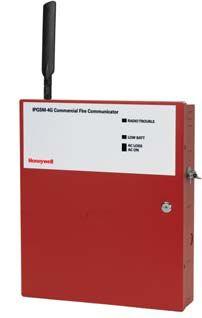
For details visit www.honeywellpower.com.
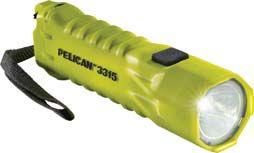
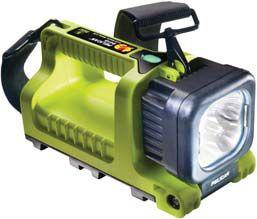
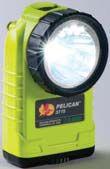
Pelican (www.pelican.com) has released a new lantern it says is its most powerful handheld lighting tool.
The 9415 LED Lantern features four LED lights that offer 413 lumens at peak beam intensity. The lantern offers three lighting modes – high, low and flashing –and is water-resistant and lightweight. It also has an integrated battery level indicator and can run on its highest setting for 4.5 hours on a full battery.
Pelican’s new compact and lightweight LED flashlight, the 3315 LED flashlight, can run for nine hours and 45 minutes on just three AA batteries, which are included. The light has an output of 113 lumens and features a beam distance of 153 metres. It is also water resistant.
Continued on page 34
By CHRIS DENNIS
The number of firefighters killed while riding to and from calls in apparatuses has dropped over the last five years, as have the number of those who have become physically disabled and unable to return to work because of injuries from collisions. This decrease is largely due to the safety features now found in fire trucks.
Today’s custom-built apparatuses are manufactured to NFPA standards and have a plethora of safety features suggested by experts in the Canadian fire service. The one thing the trucks can’t do is make firefighters abide by the rules.
In Ontario, the Ministry of Labour’s Section 21 advisory committee on firefighter occupational health and safety recommends that firefighters stay seated when in the truck and wear their seatbelts.
There is an exemption under the Highway Traffic Act for firefighters occupying the seat behind the driver’s cab “where the performance of work activities make it impracticable to wear a seat belt assembly.” But the Section 21 Committee recommends that seatbelts always be worn while the vehicle is in motion.
The seatbelt is a certified, engineered and well-tested piece of safety equipment. Seatbelt placement and design in fire trucks is unique because of SCBA and bulky PPE. While three-point harnesses are the most common type of seatbelt for fire trucks, lap belts can still be found; under NFPA 1901, which applies to all apparatuses ordered on or after Jan. 1, 2009, the lap portion of a seatbelt must be a minimum of 1.5 metres (60 inches) long to fit over bunker gear.
In addition, seatbelt webbing for apparatuses is brightly coloured so that it can be identified as a seatbelt and not be mistaken for a strap for breathing apparatus. Also, in the event of collision, the brightly coloured seatbelt can be easily distinguished from SCBA webbing if it needs to be cut off.
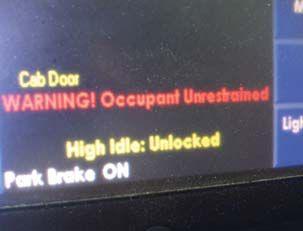
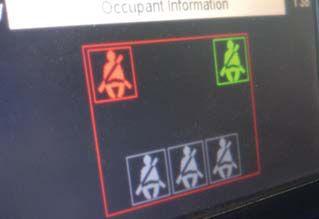
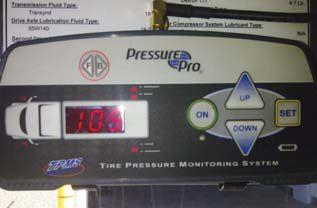
Another important fire-truck safety feature is the sensor that sounds an audible alarm and lights up an icon when the seat is occupied and the seatbelt is not secured. The system will also recognize when the belt has been cheated, for example, if the belt is buckled up before the occupant is seated, as in photo 1. This will trigger a red light on the dash or on the multi-plex screen indicating that the occupant is not buckled up (see photos 2 and 3). Depending on how the system is specified for the vehicle, a data recorder or little black box records the events in the order with which they are completed.
Changes to the NFPA seatbelt standard include a minimum lengthof 1.5 metres (60 inches) for a two-point belt and 2.8 metres (110 inches) for a three-point harness. The longer lengths will help to eliminate complaints that the belts are too short to be comfortably fastened while wearing full turnout gear. A seatbelt extension is not permitted or accepted.
Seatbelts also are now designed such that, in the event of a roll-over, a firing mechanism will discharge and will wind the buckle end of a seat toward the floor, pulling the occupant into the seat. However, this happens only in response to the body-control module’s programming,
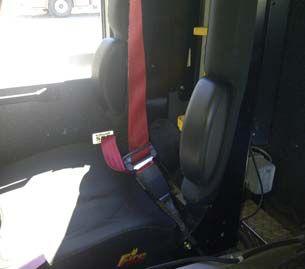
The safety system in modern fire trucks will not only detect when a passenger is not wearing a seatbelt, but will also recognize when the belt has been cheated, for example, if the belt is buckled up before the occupant is seated.
Neglecting to wear a seatbelt will trigger a red light on the dash or on the multi-plex screen indicating that an occupant is not buckled up.
The system can also determine where the unrestrained passenger is seated, making it easy for the officer to determine who is not wearing a seatbelt. Each tire on the truck must have a visual indicator or monitoring system to show when the air pressure is low.
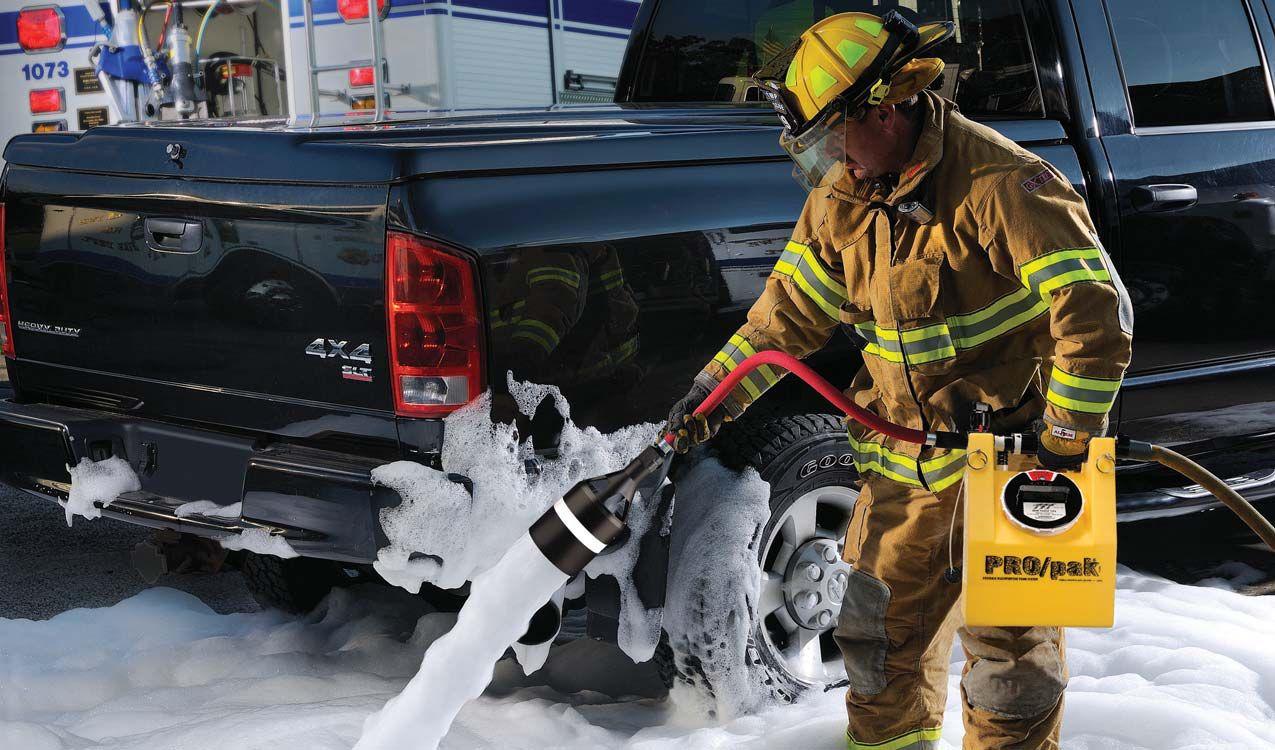
TFT’s compact PRO/pak foam injection and application system is the ideal choice for rapid vapor suppression with any Class A, AFFF or Alcohol Resistant foam concentrate.
Offering nozzle choices for low or medium expansion finished foam, the PRO/pak operates at low inlet pressures, is easily flushed, and provides injection ratios from 0.1% to 6%.
To learn more about how you can improve and simplify your foam operations, contact your local TFT dealer today.
Protect your connections with the best patented coatings,
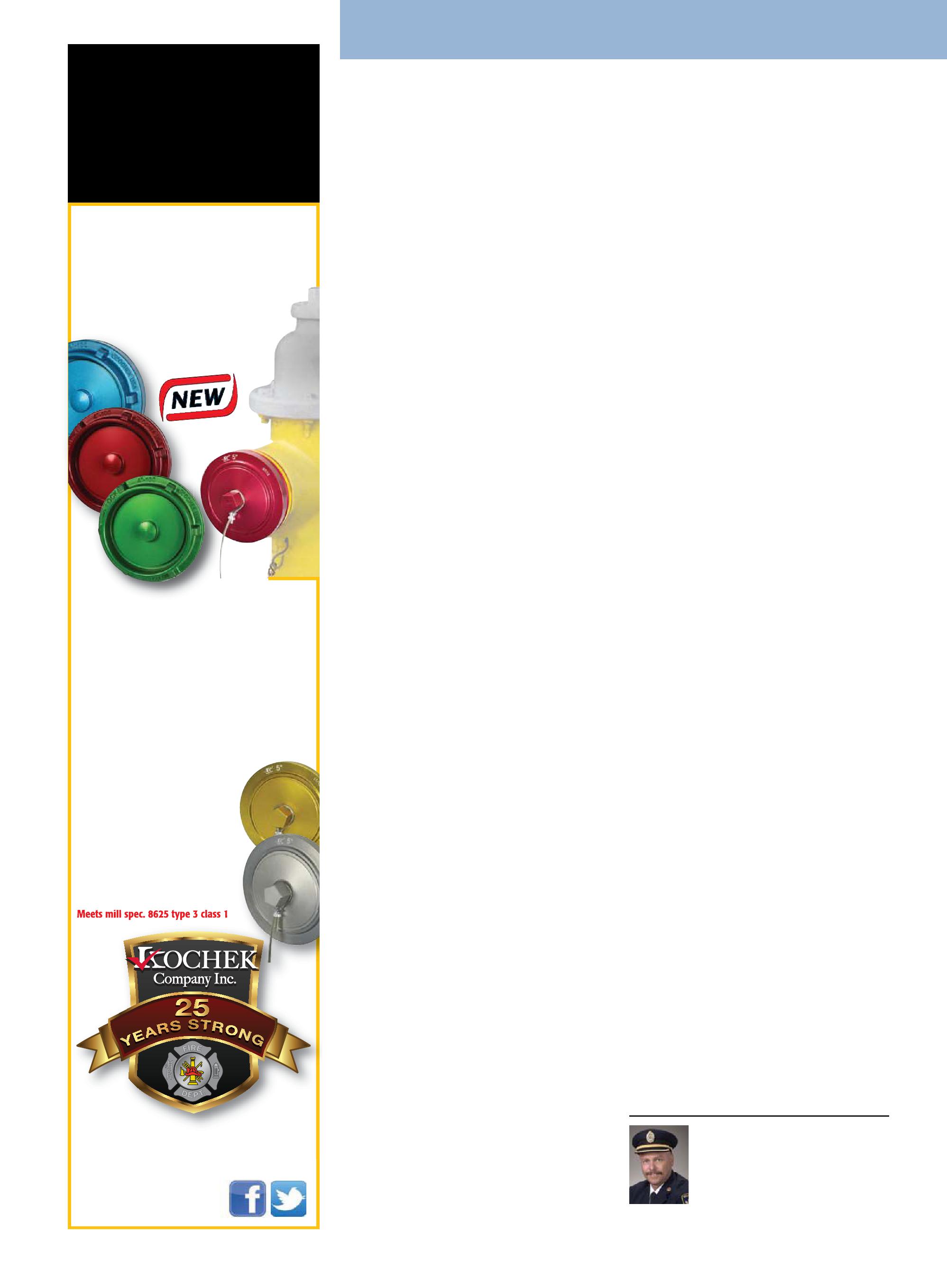
MICRALOX Micro-Crystalline
MICRALOX a patented process, will extend the life of your aluminum parts up to 10 Times compared to conventional aluminum anodic coatings; more effectively resists salt, and chemical corrosionand attack.
15,000 hrs of salt spray without any degradation to finish compared to standard anodic coatings.
Meets mill spec. 8625 type 3 class 2
• High quality durable hardcoat
• Vibrant anodized color
• Great for color coding
Meets mill spec. 8625 type 3 class 2
NATURAL Hardcoat
• High quality durable hardcoat
• Most often specified by design andmanufacturing engineers
Meets mill spec. 8625 type 3 class 1
Buckle up, buckle up, buckle up! If not for your own safety, then for the safety of your brother or sister sitting with you.
Tire-pressure indicators (see photo 4) come in many different makes and models. This is one of two systems that we at Vaughan Fire & Rescue Services in Ontario use. Each tire must have a visual indicator or monitoring system to show when the air pressure is low.
A simplified tire-pressure indicator can be a valve stem cap with a red/green indicator built into the end. Green indicates good pressure and red indicates low pressure. However, I suggest you still manually check tire pressures with a pressure gauge, as per your department’s SOGs. Low tire pressure increases the chance of early tire failure, impacts the tire’s longevity, decreases fuel economy, makes steering stiffer and increases the possibility of rolling tire failures.
It was not all that long ago that a tachograph was found in fire trucks. The tachograph senses and records road speed, starting and stopping, sudden braking and emergency lights or sirens when activated.
Today, the vehicle data recorder or little black box, much like those found in an aircraft, can be used as a driver training tool. This device keeps a second-by-second record of the vehicle’s speed, acceleration and deceleration, engine speed, throttle position, antilock braking system events, master warning light switch position, date and time, and other conditions on a running 48-hour timeline. It also keeps a minute-by-minute summary of this data on a running 100-hour timeline.
The primary purpose of this vehicle data recorder is to provide accurate evidence of the operating conditions of the vehicle in case of an accident. Departments should set up a formal operating procedure to take vehicles out of service immediately after an accident and have a qualified third party download the information from the vehicle data recorder. Don’t let your shops do it, and don’t alter or erase the information – this can be considered tampering with evidence in a court of law.
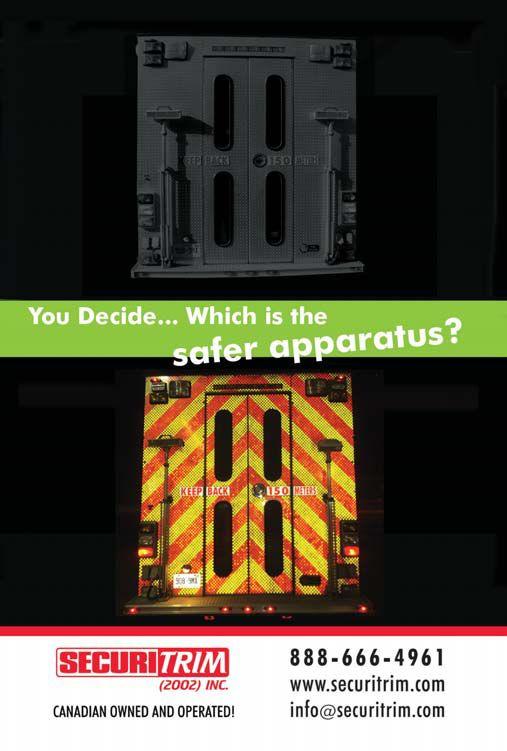
Fifty per cent of the rear-facing vertical surface of all fire trucks must now be covered with reflective red and yellow, green or orange stripes in a chevron pattern sloping downward from the centre of the vehicle at a 45-degree angle. The stripes must be 15 centimetres (six inches) wide, but can be 10 centimetres wide (four inches) in conjunction with the side graphics.
Although there is some variance on the
exact shade of yellow, green or orange that can be used, other colours may not be substituted. Be sure you use NFPA ULC compliant colours and patterns.
Trucks and trailers have been equipped with roll stability control (RSC), including crash testing and roll-over collisions, for more than 10 years. However, only recently has the RSC been offered on fire trucks. The system is simple but requires certain accessories to make it all come together. I will speak now to Spartan Emergency Vehicle’s system.
RSC is designed to reduce the risk of rollover by electronically slowing the vehicle down during unsafe turns or quick lane changes. It will apply transmission-retarding ABS brakes and take throttle control away from the driver. A turn as simple as one through an intersection or on a ramp with too much list to one side will disable the accelerator pedal so even if the driver is pushing the pedal there will be no response until the onboard computer for this function can determine that it is safe to continue acceleration.
Electronic stability control (ESC) detects skidding and will help to improve the truck’s stability by automatically apply or decelerating the engine’s drive function by way of the gas pedal. It will also engage or disengage the brakes until the driver is able to steer clear and safe.
The safety restraint system (SRS) continually monitors vehicle acceleration and angle in conjunction with RCS and ESC. It will electronically detect the potential for rollover and will apply components as necessary.
For more technical information on the RCS, the ESC and the SRS, perform a basic web search. There is a lot of information out there.
Side-curtain airbags are now available in many shapes and sizes, depending on the fire truck builder and the system being used. When activated, a large cushion-like bag inflates between the occupant and the outboard position or the doors in 0.234 seconds.
When you are building your next piece of apparatus, inquire about these safety items, because you are your own first line of defence. Be safe, be protected and, as always, rubber side down.
Chris Dennis is the chief mechanical officer for Vaughan Fire & Rescue Services in Ontario. He can be reached at Chris.Dennis@ vaughan.ca.
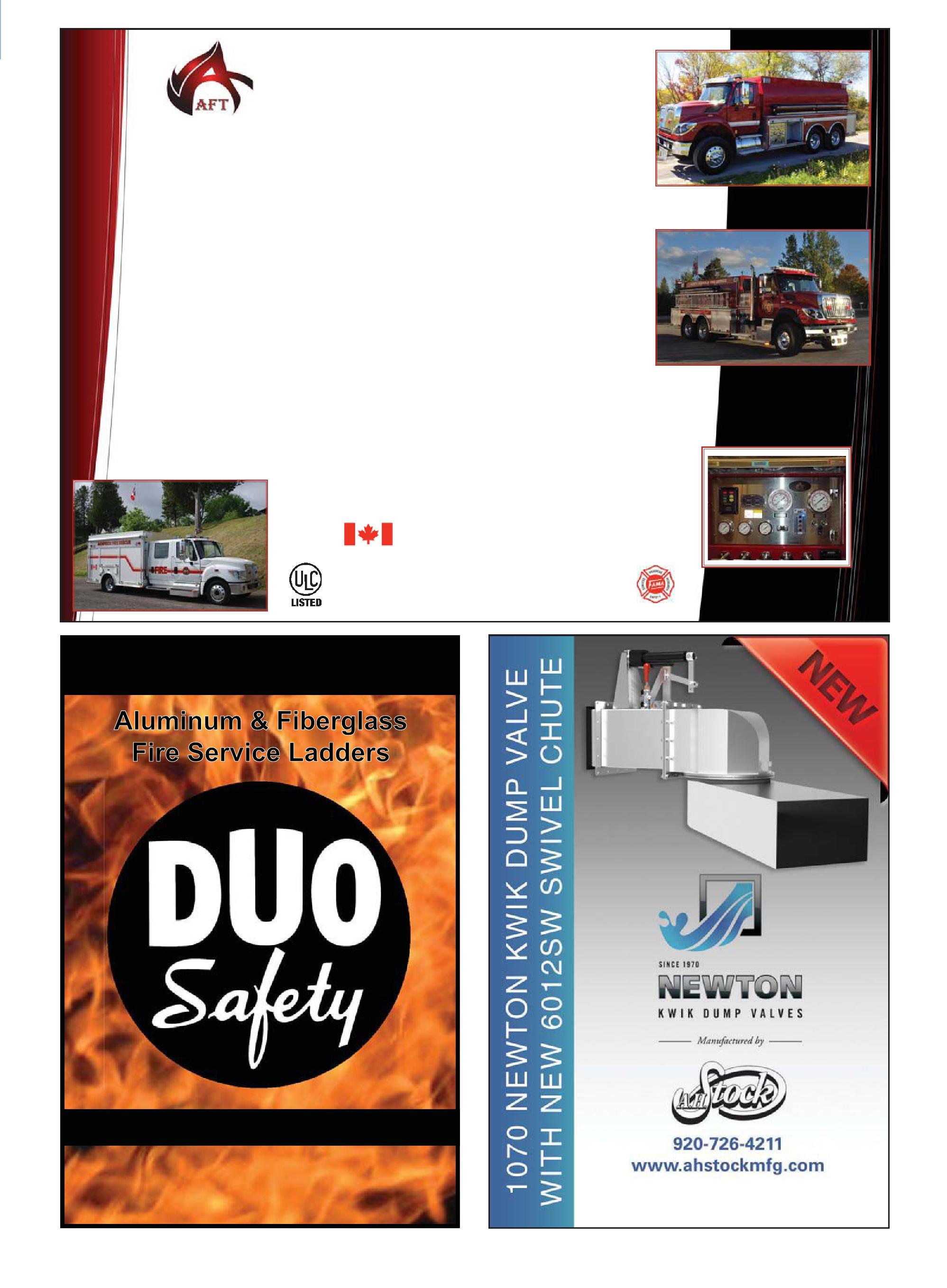
“Arnprior Fire Trucks brings decades of building experience to the table. Our team is entirely staffed with talent that learned the trade with Almonte firetrucks and then Seagrave,” said David Watson, CEO of the parent company Plaintree Systems Inc.
We guarantee customer service, open, honest communication at every step and a price that your department can work with.
Semi-elliptical tanks are the tried and true way of constructing a tanker. The tank is built in such a way that the body is welded directly to the tank and the rear of the side compartments form to the shape of the tank. Custom made
BY TOM BREMNER Fire Chief, Salt Spring Island, B.C.
often overhear my colleagues express concerns about the non-fire/rescue situations to which we respond as fire/rescue services. More often than not, I hear complaints about the time it takes and the costs we incur – personally and professionally – to provide these support services to other response agencies. How did we get to this level of multi-faceted response? Were we pressured into it? Was it the lack of any other agency to do it? Or was it just because we wanted to help?
Everything we do has a cost: personal, financial, work-related or a combination of all of these things. Did we do a cost-benefit analysis before we took on these new responsibilities? Did we think about the savings or benefits we would provide to other organizations by doing more? Today, taxpayers are the decision makers, but they speak via their elected officials. So, who should be making the decisions about which calls we respond to – the citizens we serve or the municipal officials to whom we answer? Of course, the argument is that the taxpayers don’t know what they are talking about or that they don’t know the community’s needs as well as the politicians do. In some cases, that might be a fair statement; in other cases, it is not. In many instances, I believe, we may have jumped the gun and created our own challenges by providing these additional services and maintaining response personnel to handle day-to-day operations in mid- to small-sized communities.
The refrain is familiar: “I joined the department to fight fires, not to respond to all these other types of calls for assistance.” Fair enough. However, to my mind, the chiefs are the real victims of these circumstances in which we find ourselves as fire/ rescue/medical/specialized departments. In smaller, or non-governed communities in particular, the chief may reason that there is no other agency in the community to attend certain types of calls for assistance, and so the fire department needs to respond. (Salt Spring Island, for example, does not have municipal councils, rather it is an improvement district under the jurisdiction of the British Columbia government, with a board of fire trustees). Communities need to understand the value of their human resources – their firefighters – and the commitment they make to being first responders, and then decide which services the municipality needs.
have true volunteers; paid on-call or auxiliary response models are becoming more popular given what is being asked of the responders.
Are we afraid to hear what the public has to say about us in terms of how we operate? In several studies over the last decade, respondents indicated that they love firefighters: firefighters always do their best to reduce losses due to fire, they don’t create discomfort or carry weapons, and they try not to bring negative news to people’s doors. Yet, in contrast to this apparent support, career firefighters, in particular, are an easy target for complaints about work hours and conditions, and media pundits have been critical of firefighters for earning good wages.
Would it be a step backward to revisit the types of responses that fire/rescue services attend within the community? Would it be a loss to reduce demands on responders? Would it be a poor choice to lessen the pressures on chiefs and others who struggle to maintain a professional level of response, knowing that, realistically, their departments can’t withstand this service level because of resources or funding? Are we being realistic in terms of the services we provide? Someone – the responsible governing body or the authority having jurisdiction – needs to more frequently review and revisit what we do, and why. To my mind, the status quo is not working; with
In contrast to being so loved, we seem to be an easy target for complaints or are challenged for earning good wages. ‘‘ ’’
increased call volume comes an increase in medical and psychological issues because our firefighters are, in some cases, being pushed to the limit.
Overtaxing resources or overworking personnel can negatively affect a well-running service. The costs of wages and benefits in larger communities with career departments are quickly becoming a concern and a challenge (see Peter Sells’ Flashpoint column on page 94). But collective bargaining agreements that are negotiated must be understood by residents and the media, and respected – that is why they are called collective bargaining agreements. Fewer departments these days
Tom Bremner is the fire chief for Salt Spring Island, B.C. Contact him at tbremner@saltspringfire.com
It’s OK to feel nervous about how to discuss this issue with your CAO, mayor or other governing body, or your community. Look around you: there will be a neighbouring community that is facing the same issue and can provide you with support and suggestions to consider. Failure to do anything, failure even to simply consider the challenges we face, will bite us, and that will hurt us badly. Often the best defence is a well-planned offence; being up front and direct regarding our in-house and external challenges can work out for the better for the entire organization in the long run. It’s up to us as fireservice leaders to review our departments’ roles in our communities, communicate with our elected officials and or look for positive ways to resolve our own challenges. If we’re’ not willing to do that, then why complain?

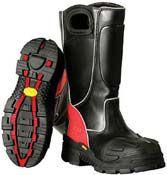
Fire-Dex (www.firedex.com) has released a new leather boot for structural fire fighting that offers lightweight comfort and protection.
The FDXL-50 boot features a rubber reinforced toe and heel guard, padded shin guards and integrated pull-on loops. The boot’s liner offers thermal and moisture protection and is treated with an antimicrobial technology that stops the spread of odorcausing bacteria.
The boot is also NFPA 1971 and CSA compliant.
Haix’s new Special Fighter USAR boot uses a fast-lacing fit system, which enables the wearer to tighten the upper and lower laces of the boot independently.
The boot’s leather upper is breathable but waterproof, and the Crosstech inner liner offers protection from chemicals and bloodborne pathogens. The boot is also embedded with a lightweight, flexible steel sole for puncture protection, as well as a steel toe.
For more information visit www.haix.com.
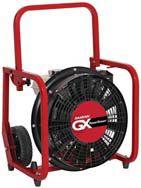
Ventry fans are now available with wheels and skids. The wheels are 15 centimetres (six inches) in diameter and five centimetres (two inches) wide. They roll easily over rough or unpacked terrain, and are made from solid polyurethane foam, so that they never go flat. The skids are made of powder-coated steel and enable the fan to be easily manoeuvred over stairs, curbs and other obstacles.
For more information, visit www.ventry.com.
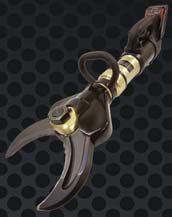
Ziamatic Corp. (www.ziamatic.com) introduced its Quic-Mount double extrication tool holder. The adjustable upright mount is constructed of heavy-duty aluminum and can accommodate two tools at one time. The device also features independently adjustable components, such as tilt angle. It can also accommodate several makes and models of cutters, spreaders, and combination tools.
BY GORD SCHREINER Fire Chief, Comox, B.C.
e all know the fire service is constantly changing. Twenty-five years ago, we had few portable radios; when we sent firefighters into a burning structure we could not contact them other than by yelling at them. Now, we do not think of sending a team into a burning structure without portable radios for each member. This change suggests that we should use a call-sign system that allows us to talk to individual members of that team, if necessary. Why? What happens if one team member is separated from the others? How do you call that one member? Calling by name could work, but there might be two or more firefighters with the same name. Also, confidentiality disappears when a given name is used over the radio. If a firefighter is lost or trapped and a real name is spoken, it is likely that many others, even those outside of your department, will know right away what is going on and who is affected.
Some departments use their engine-company assignments as their call signs while on the fire ground. So, Engine 1 remains Engine 1 when it is doing an interior attack or search. If two teams are needed (assuming a four-person engine company) from Engine 1, the crew is further split into Engine 1 Alpha and Engine 1 Bravo. This, again, does not provide individual call signs and does not take advantage of having more than one radio on the team. If one member from Engine 1 Alpha gets separated from the others, it becomes difficult to communicate with that person without using real names.
Some departments use task-orientated call signs. An interior attack team would be called Attack 1, and an interior search team is Search 1, and so on. Again, this does not take advantage of all the radios on the team. And, using this system can lead to other problems. A firefighter who is using a task-oriented call sign might have his call sign changed several times during the same incident, and will certainly have a different call sign at the next incident to which he responds. Firefighters need to remember their latest call signs and must try not to respond to call signs that they may have used at a previous incident.
search on the first floor, would be called Search 2. So Search 1 is on floor two and Search 2 is on floor one. What happens if Attack 1 finds the victim and Search 1 is then asked to confine the fire? Attack 1 would be rescuing and Search 1 would be confining. If we add divisions and groups, a call sign system can unravel and, still, there is no way to contact individual firefighters without using real names.
The solution is call signs for life. In the call-signs-for-life system, firefighters are assigned call signs when they join the department and they use the same call signs for their entire careers, at every incident, no matter what task they are doing. This system is safe and effective. Just as we don’t change the names on our rigs when they are assigned to different tasks, we should not change our firefighters’ call signs. Firefighters and incident commanders have enough to think about without having to remember different call signs.
Call signs for life works extremely well. Firefighters working on individual tasks, such as traffic, use their individual call signs. When working in teams, the team leader’s call sign is used to contact the team. After calling a team lead and getting no response, the incident commander can always try to call another member on the team. Team members who become separated can contact command using their
Call signs for life can make your fire ground safer and more effective. ‘‘ ’’
Task-oriented call signs can be confusing, even at simple incidents. The first-in confinment team might be called Attack 1 while the first-in search team going to the second-floor bedrooms for a primary search might be called Search 1. The second-in confinment team might be called Attack 2 and the second-in search team, conducting a primary
Gord Schreiner joined the fire service in 1975 and is a full-time fire chief in Comox, B.C., where he also manages the Comox Fire Training Centre. He is a structural protection specialist with the Office of the Fire Commissioner and worked at the 2010 Winter Olympics as a venue commander. Chief Schreiner also serves as the educational chair for the Fire Chiefs’ Association of British Columbia. Contact him at firehall@ comox.ca and follow him on Twitter at @comoxfire
individual call signs. Don’t overthink this: the system is simple and works great. My department and many other departments have been using this system for quite some time; in fact, all 10 departments in our region use call signs for life. Dozens of departments across Canada use call signs for life because it makes sense and is safer and more effective than other systems. Firefighters don’t need to remember everyone’s call signs, just their own. Passport tags include the firefighters’ names and call-sign numbers. Firefighters love this system as it makes their jobs easier and safer.
In my department, we display all firefighters’ call signs on their PPE, kind of like putting numbers on your rigs for easier indentification. Individual call signs are on helmet patches, decals, the rear of helmets, and are Velcroed on the jackets and pants. We can see your call sign and you can see your call sign; you will never forget your call sign. What will your call sign be at the next incident you attend? If you are using call signs for life, you know right now!
By ED BROUWER
During our fight with the fire dragon this past summer, our Hot Shot crew frequently took a few moments to reflect on the 19 LODDs in Prescott, Ariz. The speed at which things can go wrong on the fire line had a sobering effect on all of us. July 16 marked the 10-year anniversary of British Columbia’s worst wildland urban interface fires. It also marked the 10th anniversary of the line-of-duty deaths of Capt. Ian MacKay, 41, of Rossland, B.C., and Eric Ebert, his 36-year-old co-pilot. MacKay and Ebert were killed fighting a forest fire in eastern British Columbia when their plane struck high ground near Cranbrook. One month later, Ben von Hardenberg died fighting a forest fire in central British Columbia. He was killed when his helicopter crashed during a routine suppression operation. Ben was 33 years old and engaged to be married just days later.
The very nature of wildland fire suppression demands continuous size-up and hazard evaluation. Wildland firefighter and academic Paul Gleason developed a system known as LCES in 1991 as a direct response to firefighter fatalities during the Dude fire in Arizona in 1990. There is a good training clip online (Search YouTube for Dude Fire Fatality Case Study).
LCES stands for lookout(s), communication(s), escape routes and safety zone(s). Gleason determined that firefighters were overloaded with all they had to remember about personal safety. His solution was LCES, which is used by many firefighters worldwide. Some firefighters add the letter A to the acronym but there is confusion about whether the A stands for attitude, anchor points or accountability – which are all good safety points. For the sake of clarity we will stick to the original LCES. These original points encompass the 18 watchout situations and the 10 fire orders, of which most wildland firefighters are aware. In light of recent events, I encourage every fire department to review the LCES system.
Lookout(s): This individual must be trained to observe the wildland fire environment and to recognize and anticipate wildland fire behaviour changes. The lookout(s) must: Be experienced, competent and trusted; Be at a good vantage point(s); Have knowledge of crew locations; Have knowledge of escape and safety locations; Have knowledge of trigger and/or decision points.
Communication(s): Whether by radio, voice, air horn or even hand signals, communication must be prompt and clear. The following four points are key: Confirm radio frequencies; Establish check-in times; Provide updates on any situation change; Sound alarms early, not late.
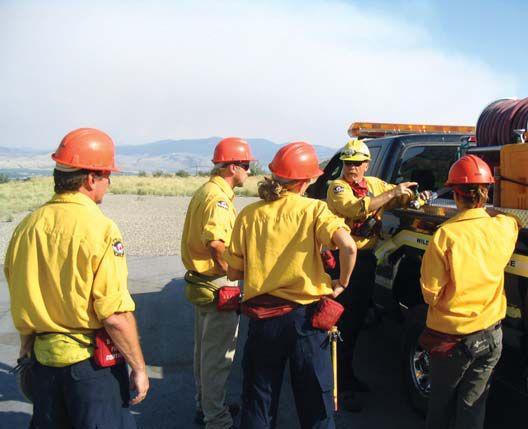
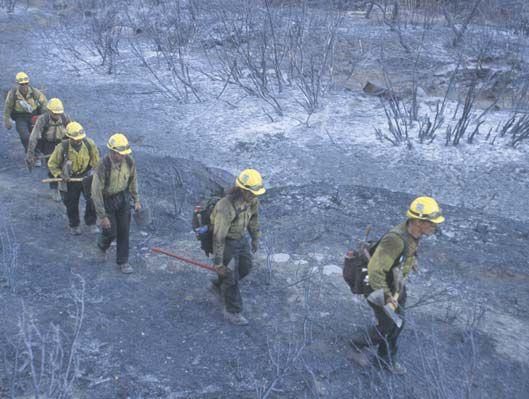
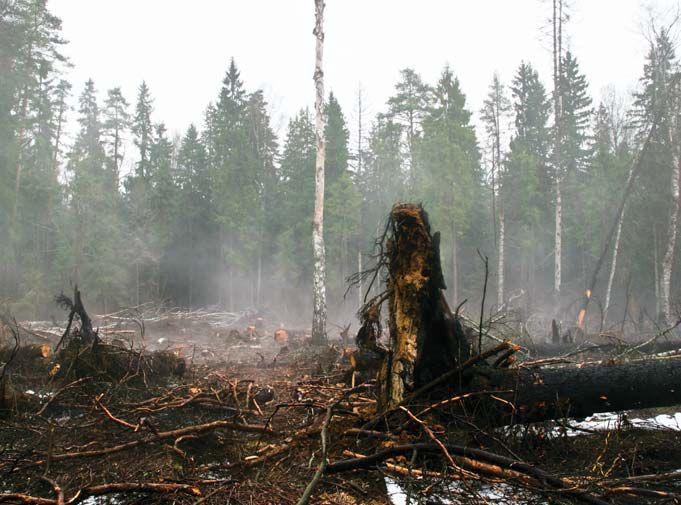
Escape routes: There must be more than one escape route. An escape route is the path firefighters take to go from a dangerous situation to a danger-free area. Each escape route must lead to a safety zone. These routes must be tested before they are flagged as escape routes. Remember the following: Have more than one escape route; Avoid steep uphill routes; Scout the route for loose soil, rocks and vegetation;
Time the route to consider fatigue and heat factors;
Flag the route for day or night; Evaluate escape time versus the rate of fire spread;
Park vehicles nearby for quick escape. Attempting to outrun an advancing
flame front has too often ended in tragedy. As examples, research the Pepper Hill fire in Pennsylvania, the 1949 Mann Gulch fire in Montana, and the South Canyon fire in Colorado. Unfortunately, there is no shortage of examples. In the Dude fire video clip, you hear how crew members who were trying to outrun the fire front still carried their packs, hand tools and chainsaws. When it comes to fire entrapment, we emphasize avoidance, but perhaps it would be prudent for us to include survival skills.
Safety zone(s): These are locations where firefighters may take refuge from the wildfire danger. The best safety zone is of no value if your escape route does not offer you timely access when needed. Remember:

Scout a safety zone for size and hazards.
Do not avoid the most obvious place; just taking a few steps into the recently burned-over ground may be all that is required, though you may have to burn out an area first.
Look for rocky areas, water and meadows, but remember, rocks will hold the heat long after the fire has passed. Also look for man-made areas, such as clear cuts, roads and helicopter landing pads.
Avoid upslope areas. Fire behaviour shows us that the rate of spread triples when it reaches a 25 per cent increase in slope. Trying to outpace a fire for any significant distance, especially uphill, is a losing battle. Study the 1949 Mann Gulch and the 1994 South Canyon fires, and you will soon discover that firefighters are not able to outrun a rapidly advancing flame front, even on a moderately steep slope.
Avoid smoky areas – protect your airway at all costs.
Avoid regions with heavy fuel loads. Be sure to select an area that won’t burn, or that has the least amount of combustible material.
For historical reference, consider the Great Porcupine Fire of 1911. It was one of the most devastating forest fires ever to strike northern Ontario. Porcupine, a community on the north side of Porcupine Lake, in Timmins, was the site of a huge gold discovery in 1907. On July 11, 1911, when the Porcupine Gold Rush was at its height, a gale from the southwest whipped some small bush fires into flames. The front of the fire was more than 36 kilometres wide with flames shooting 30 metres into the air. The fire laid waste to about 200,000 hectares of forest and killed at least 70 people. Many people drowned as they fled into Porcupine Lake to escape the flames, while others suffocated as they sought refuge in the mines.
Before we do anything at a fire, no matter the size of the fire or the rank of the firefighter, we have a crew briefing. Each firefighter should be informed of the LCES system during this briefing. We identify escape routes and safety zones. We discuss strategy, weather and dangers. We give clear fire suppression directions, addressing crew members specifically by name. We do a radio check and then ask for comments or questions from the crew.
Along with LCES, we continually teach survival skills to our firefighters. The danger of being trapped or burned over and possibly
One Step™ CAFSystem provides one-step simplicity, perfect foam, no wasted concentrate, lower flow rates, repeatable performance and more. But don’t just read about the One Step™ CAFSystem, see it in person. We are hitting the road from coast to coast and may be coming to a city near you. Contact Jim Fazekas at jafazekas@waterousco.com to find out more information on a demonstration near you. waterousco.com
killed or seriously injured by a wildfire is a very real threat. Remember: victory loves preparation. Teach your firefighters survival skills and pray they never have to use them.
Teach them how to burn out fuels to create an area of safety or to enlarge an existing burned area. As Australian bushfire research pioneers Harry Luke and Alan McArthur noted in 1978, “Carrying a box of matches is part of survival planning.” We used to carry fusees (or flares), which are much more reliable and effective than matches, but they are hard to find now.
When caught in the open, survival may depend on taking advantage of every possible source of cover or protection from radiant and convective heat, for example, depressions in the ground, large rocks or logs. However, four firefighters died on a rockslide during the 2001 Thirty Mile fire in north-central Washington due in part to the accumulation of duff and rotting wood lodged in the rock crevices that ignited from airborne firebrands.
Taking refuge in a natural body of water, such as a pond, lake or river, must be done with caution. In 1986, three firefighters in Quebec drowned as a result of being forced to
enter a lake with a steep drop-off when their camp location was overrun by fire.
Last, but certainly not least, once you are in a safe zone, stay there until the threat that forced you into the safety zone is over. Firefighters die when they feel they have to do something. In the Thirty Mile fire, firefighters left the safe zone because they felt they should be doing something – and were forced back to its safety within 15 minutes. Unfortunately not everyone made it back safely. Those caught by the sudden fire behaviour change were forced to deploy their fire shelters. Tragically, four firefighters were killed.
The report looking into the 19 LODDs at the Yarnell Hill fire (available at www. azcentral.com/ic/pdf/yarnell-hill-fire-report. pdf) suggests quite a few similarities to the Thirty Mile fire.
The big question is why did the Granite Mountain Hot Shots leave the safe area in the already burned out region and hike through the thick, unburned fuels – some three metres high – down into the steep canyon as a powerful thunderstorm pushed flames directly at them.
I am baffled by that senseless decision,
which in the end forced the Granite Mountain Hot Shots to deploy their fire shelters. Every crew leader knows that deployment of a fire shelter is a last-ditch effort in a life-and-death situation. It speaks to the fact that they should never have been in that area to begin with.
There are times when the phrase, “Don’t just stand there, do something,” should be “Don’t just do something, stand there.” When fighting a particularly risky fire, we have to trust that sometimes the best thing to do is nothing.
Until next time, train like lives depend on it, because they do. Let no firefighter’s ghost say that his training let him down!
Ed Brouwer is the chief instructor for Canwest Fire in Osoyoos, B.C., and Greenwood Fire Rescue. The 24-year veteran of the fire service is also a fire warden with the B.C. Ministry of Forests, a Wildland Urban Interface fire suppression instructor/evaluator and an ordained disaster-response chaplain. Contact Ed at ebrouwer@canwestfire.org

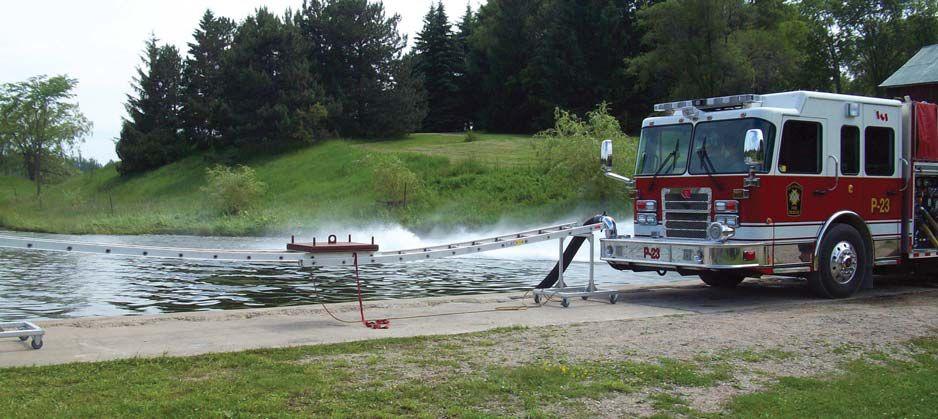






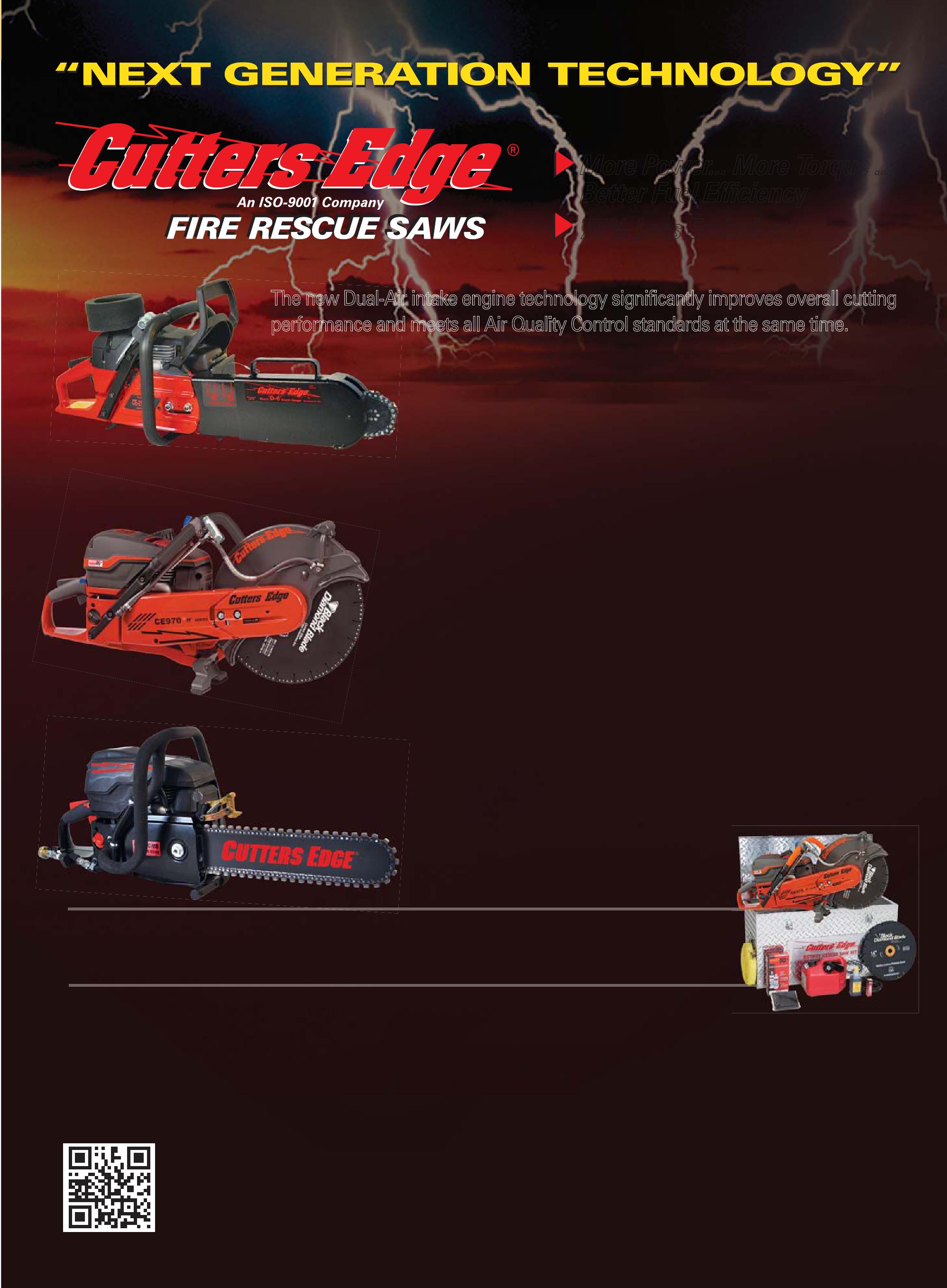
More Power... More Torque ... Better Fuel Efficiency
More Power... More Torque ... Better Fuel Efficiency
75% Less Emissions
75% Less Emissions
The new Dual-Air intake engine technology significantly improves overall cutting performance and meets all Air Quality Control standards at the same time.
New 2100 Series includes two engine sizes: 70.7cc and 87.9cc. Each engine is designed for use with Cutters Edge Carbide
Tipped BULLET Chain® to cut the widest range of materials found at fireground and rescue scenes.
New H Series is engineered and powered to work harder and operate longer in the most extreme fire and rescue conditions anywhere. The new technology engine is available in three sizes: 74cc, 94cc and 119cc. The Cutters Edge Black Star and Black Diamond Blades offer long cutting life and high speed cutting of virtually all materials.
New BULLET BLADE TM is now available - see video on website.
A new technology 94cc engine and a new style Diamond chain cuts reinforced concrete up to 16-inches thick. Features a lighter weight power head and full-wrap handle for high performance concrete cutting in any position.
All Cutters Edge NEXT GENERATION TECHNOLOGY Fire Rescue Saws are available in fully-equipped Field Kits designed for Rescue Cutting anywhere.
Contact Your Local Cutters Edge DealerSee New Engine Technology Video Now
WESTERN CANADA
WFR Wholesale Fire & Rescue Ltd. Calgary AB - Ph 403-279-0400
1-800-561-0400
Web: www.wfrfire.com
QUEBEC
Areo-Fire
5205 J-Armand Bombardier
Longueuil QC, J3Z 1G4
1-800-469-1963
E-Mail: info@areo-feu.com
NEW BRUNSWICK
Micmac Fire & Safety Source 518 St. Mary's Street, Unit 1 Fredericton, NB E3A 8H5
1-800-561-1995 or (506) 453-1995
E-Mail: r.henderson@mmfss.ca
NEWFOUNDLAND
Medical West Supplies 13 Rowsell St., Corner Brook, NF
709-632-7852
E-Mail: jkenny@nf.sympatico.ca
ONTARIO
M&L Supply Ingleside, ON 1-866-445-3473
Email: markp@mnlsupply.com Web: www.mnlsupply.com
NOVA SCOTIA
Cumings Fire & Safety Equipment Ltd. Bridgewater, NS Ph 902-543-9839 1-800-440-3442
E-Mail: kylej@cumings.ca
Web: www.cumings.ca
BY LES KARPLUK AND LYLE QUAN
lthough Les and I have known each other for only about 10 years, we have the same passion and drive to make things better; this became clear during our university studies and joint speaking engagements, and is evident today in our leadership columns. Our goal has been and will always be to share freely of our experiences and understanding of what leadership is and should be in our profession.
The words in these columns flow naturally for us; we seem to be hardwired to each other’s ways of thinking, and neither of us can turn our backs when we know we need to do the right thing – even if it means enduring the wrath and anger of the few naysayers among us. If these naysayers become vocal, we ask why? Have we missed the mark; have we presented an idea about change that is pushes them too far out of their comfort zones?
Recently, I shared a story with Les about a father and daughter I met at a conference. At this conference, I spoke about building highly efficient teams. During a break, I went out to look at some of the displays when I saw a father with his little girl. The girl was four or five years old and was wearing a firefighter’s costume – a plastic firefighter helmet, rubber boots and turnout coat – and held a little stuffed bear in her hand. This bear was pretty beat up but the girl had a strong grip on it and wasn’t about to let it go anytime soon.
I introduced myself and asked the girl if she wanted to be a firefighter. She immediately responded, “Yes, I want to be a fire girl; they saved my house.” I was at a loss for words and asked her father if this was true. He said yes, and told me the story.
Les thought we needed to share this story because it highlights the reason most of us became firefighters – to help others – and it demonstrates how simple it can be to do the right thing and make someone’s bad day a bit better.
There is no magic potion when it comes to being a good leader. We see true leaders at all ranks in our departments. The essence of leadership is based on some simple truisms:
Doing the right thing is always the right thing.
When you help others, the return is self-satisfaction and personal growth. You should look for nothing else in return.
Leadership does not equate to leading a group into battle; it’s about creating such a high level of support that when you go into battle, the team is there to support you.
Leadership is about sharing your dreams, hopes and, yes, even your doubts. To be human is sometimes about failure, and it is how you and your team bounce back that will strengthen you and better prepare you for the next challenge.
Leadership is about knowing who and what you are, and what you stand for.
Les and I have talked endlessly over the phone, via Skype and, when-
The true essence of leadership is based on some simple truisms. . . ‘‘ ’’
The family had a small fire in the kitchen; everyone got out and the fire department was called. Thanks to the quick response and efficient knockdown of the fire, damage was minimal. But as the family stood outside, the little girl – Chrissy – started crying and saying, “He’s still in there.” The incident commander heard Chrissy and wanted to know who was in the home. She said, “Stanley is in there.” The father quickly told the officer that Stanley is Chrissy’s stuffed bear and her best friend. Since the fire was out and the crews were in the overhaul stage, the officer got two firefighters to go in and find the bear.
The firefighters – one man and one woman – came out and gave Stanley to Chrissy. At that second, Chrissy decided she wanted to be a fire girl.
Les Karpluk is the fire chief of the Prince Albert Fire Department in Saskatchewan. Lyle Quan is the fire chief of Waterloo Fire Rescue in Ontario. Both are graduates of the Lakeland College Bachelor of Business in Emergency Services program and Dalhousie University’s Fire Service Leadership and Administration program. Contact Les at l.karpluk@sasktel.net and Lyle at lyle.quan@waterloo.ca. Follow Les on twitter at @GenesisLes and Lyle at @LyleQuan
ever possible, in person about our vision of the fire service; we have wondered who will step up to be there as leaders. The good news is that we see a wealth of talent and desire out there, and this pleases us to no end. If we were scouts, we would both be drooling to pick from the myriad talented players in our profession right now. It’s encouraging and exciting, but we do have some simple advice for this upcoming talent.
To excel in the game of leadership, you must be willing to test yourself regularly. You must decide beforehand that you are willing to pay the price in your leadership quest – and there will be a price.
Keep the faith, don’t back down from the fight, and do the right thing just as the firefighters did for little Chrissy. As a leader, ask yourself when you leave the room if is everyone clapping because you are leaving, or because of what you did while you were there? Take the road less travelled and, every so often, look behind you to see if there is someone following in support. If there is, then you are becoming the leader we keep talking about and know that it is well worth the effort.
And they choose Physio-Control to help make it happen.
Today’s responsive emergency team is always looking to elevate the level of care they deliver, and they rely on evidence and data to get them there. With the CPR Solution from Physio-Control, they have the science-based, guidelines-consistent tools they need to respond better to patients—and the demands of constant performance improvement.
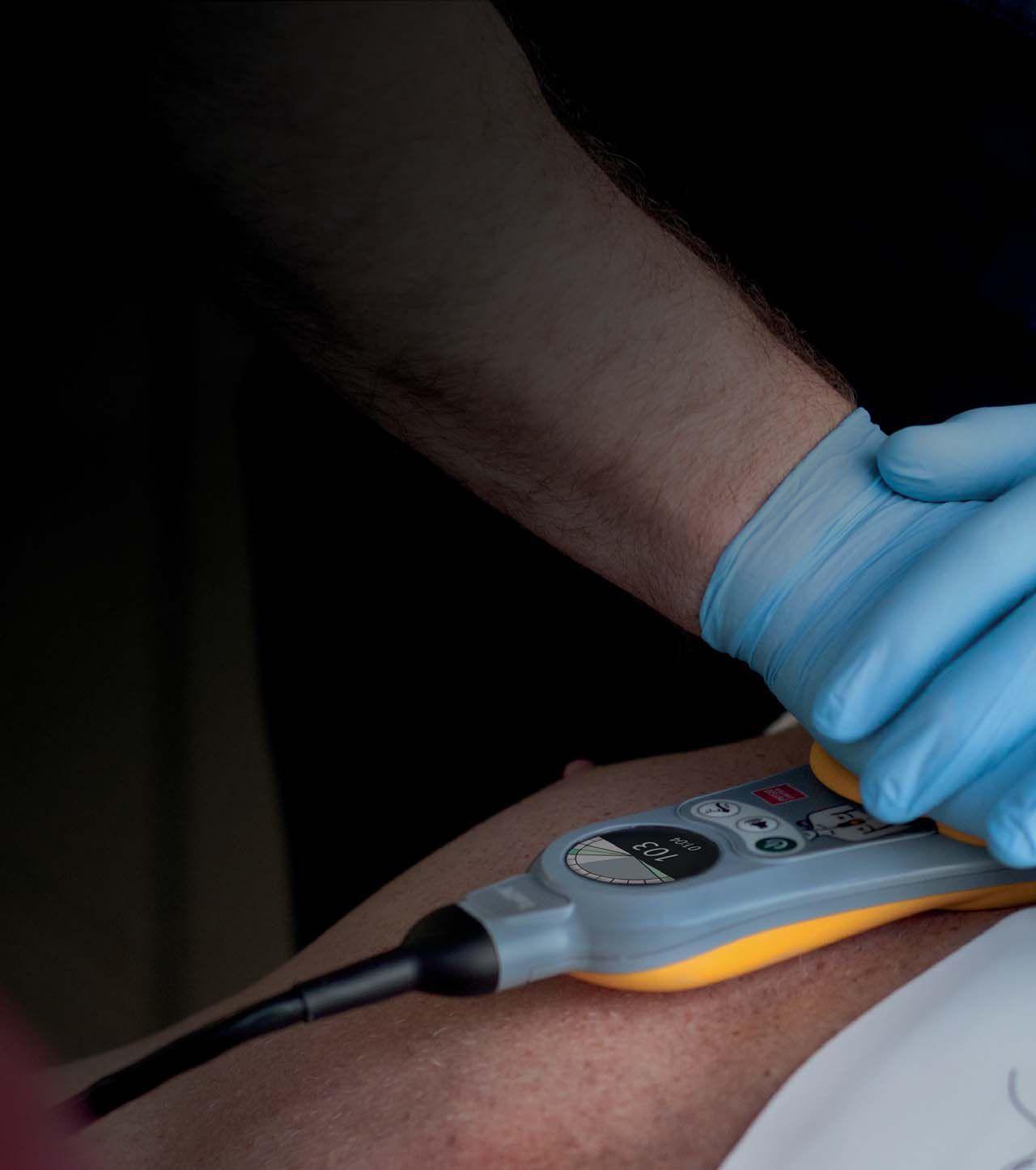
Optimize manual CPR performance and quality through true depth measurement even on soft surfaces, in addition to guidelines-consistent rate, recoil and pause feedback. Only available in Canada.
The LIFEPAK 15 monitor/defibrillator with capnography and CPR Metronome provides effective rate control and true physiological measurement of CPR performance.
The rugged LIFEPAK 1000 defibrillator features cprMAX™ Technology which minimizes CPR interruptions by allowing compressions to continue during AED charging.
Provide uninterrupted hands-free compressions at Guidelines-recommended rate and depth, while ensuring personnel safety during transport. Features comprehensive CPR analytics for post-incident quality assurance and performance development.
Editor Laura King sat down with newly installed OAFC president Matt Pegg in the spring to talk about issues, challenges and changes. Pegg, the former deputy chief in Brampton, Ont., is now a deputy chief with Toronto Fire Services.
QThe Ontario Association of Fire Chiefs had a number of issues on the table at its annual conference in May. Is there a new direction now with a new president and a new board?
AWe have a number of ongoing initiatives and projects that we need to drive through to completion. The integrated risk management tool was very well received at the [conference] and that process needs to be continued, and we know that the fire marshal’s office is committed to doing that, so our part will simply be to continue in the partnership and ensure that it gets rolled out across the province.
We have the completion of the transition to the NFPA professional qualification standards. A lot of that work is underway and it will continue over the course of this year.
We have the development of an OAFC line-of-duty death protocol that has been under development for some time; our urban committee is being revitalized; there is more attention being put into labour relations aspect of the fire service. Those things will continue.
There are a number of things on our radar that have already become priorities for us; we now have developed a sense of our high-level initiatives and strategic plans for this term. The completion of the initiatives we just talked about are some of those; the mid-rise construction issues are going to take some significant time for the OAFC and, obviously, we’re committed to being there – that will stream out through our fire-prevention group.
The position of the OAFC on midrise is actually fairly succinct; we recognize that our areas of concern are occupant safety and firefighter safety; outside of that the OAFC doesn’t have a stake in
OAFC refines role to serve members, respond to issues
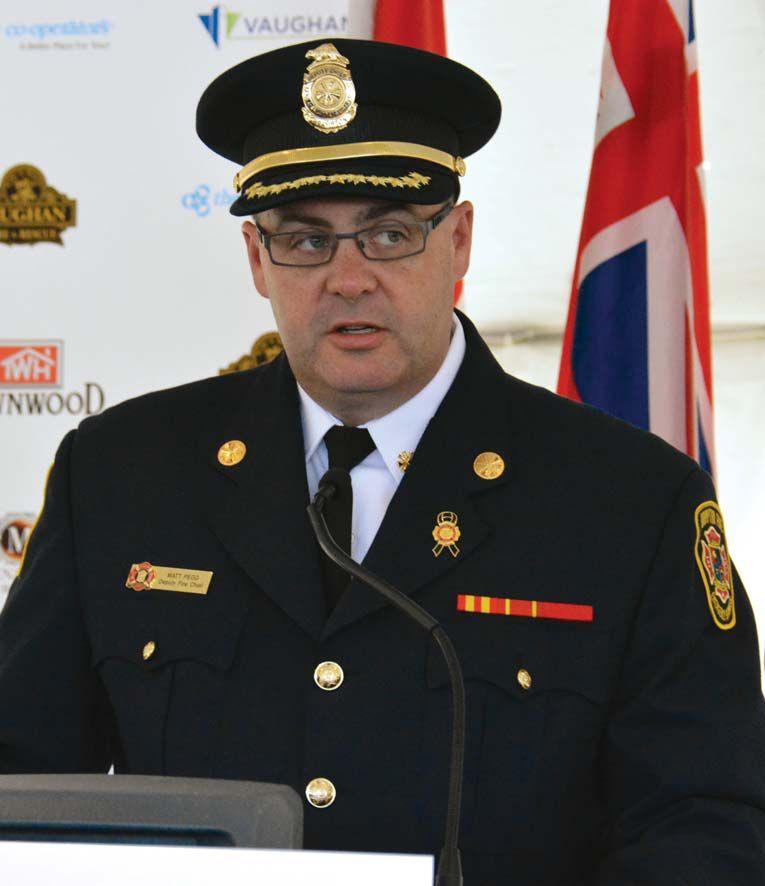
the game. We’ve had the opportunity to meet with the homebuilders and the OPFFA and the minister of municipal affairs and housing, Linda Jeffery, and Madeleine Meilleur, the minister of community safety and correctional services. All those groups now know very clearly what the position of the OAFC is – those are the only two areas that we will vest in. The other position that we’ve taken
OAFC president Matt Pegg speaks at a press conference in June in Vaughan, Ont., at which Townwood Homes announced its sprinklered housing development. Pegg, the former deputy chief in Brampton and now a deputy with Toronto Fire Services, says the announcement has changed the landscape in residential construction by demonstrating that residential sprinklers are viable and affordable.
BY




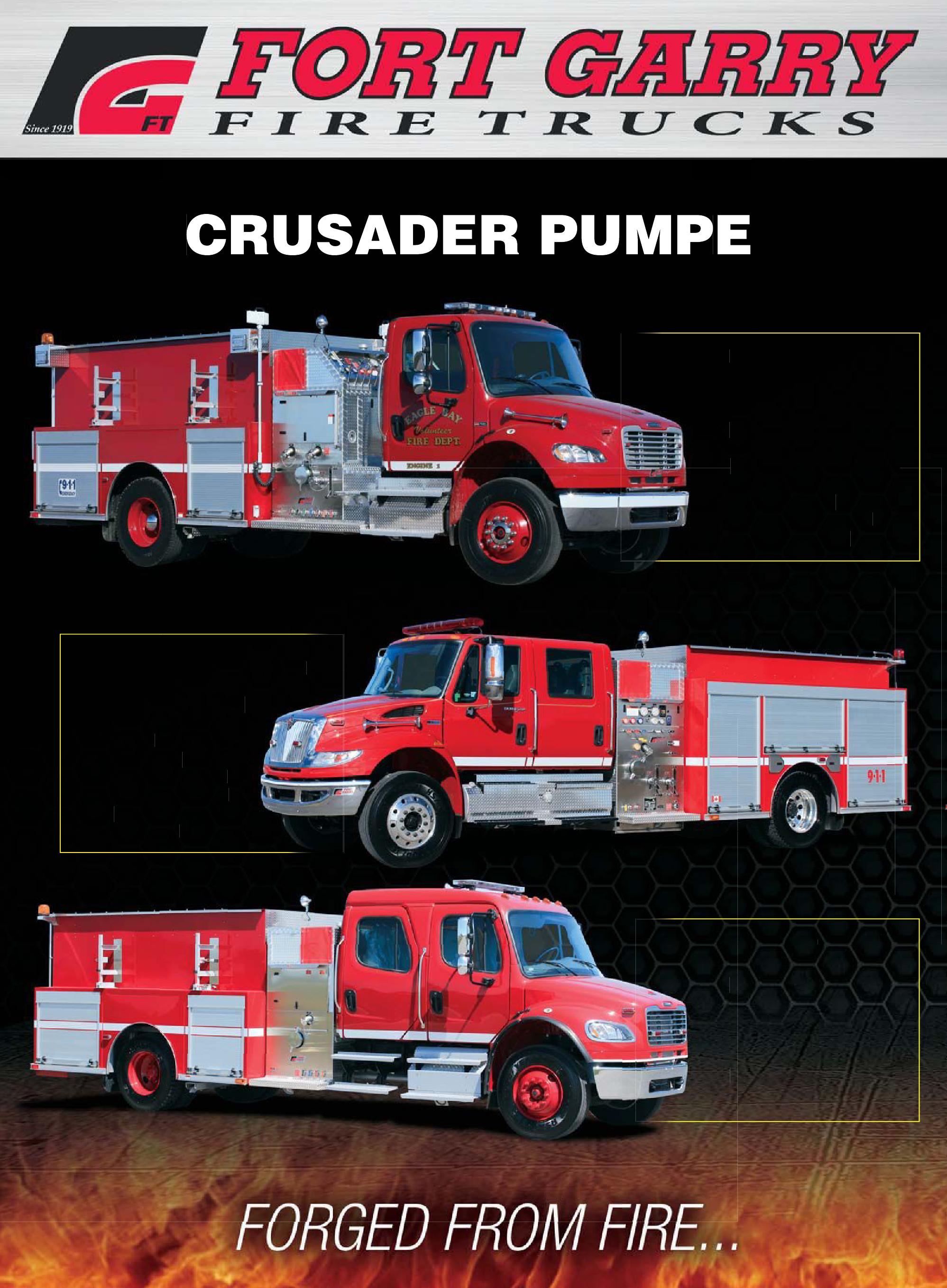
Aluminum Formed Body – 5052 Freshwater Marine Grade
10 Year Body Warranty w/ Undercoated Body (Optional)
Hale Pumps Internal Suction Hose Storage
Side
SideorCross
Low/High
Countless Variety of Custom Options
Aluminum Formed
Body – 5052
Freshwater Marine
Grade
10 Year Body
Warranty w/ Undercoated Body (Optional)
Hale Pumps
Suction Hose
Storage
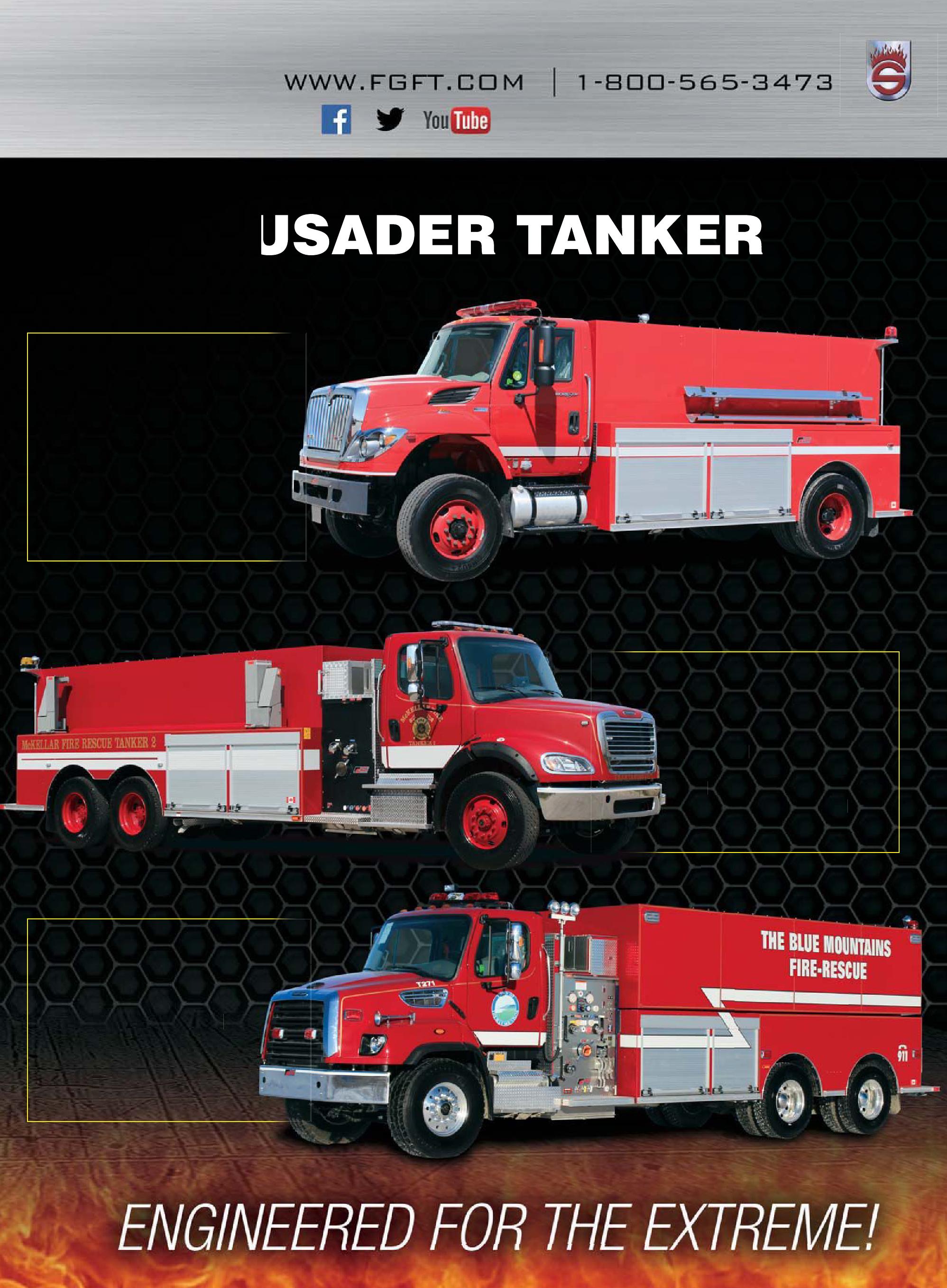
Low/Low Compartments
Amdor Roll Up
Doors
LED Emergency
Lighting
Countless Variety of Custom Options
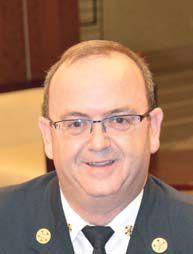
BY VINCE MACKENZIE Fire Chief Grand Falls-Windsor, N.L.
he past summer seems to have been rife with disaster and conflagrations. Newscasts and social media sites were filled with details of events and suffering, with floods in Alberta, forest fires in every province from British Columbia to Newfoundland, and the tragedy in Lac-Megantic, Que. Surely these incidents made every Canadian firefighter wonder how similar situations would play out in their communities and fire departments.
These disasters have highlighted the efforts of local emergency responders and the myriad issues that affected their respective communities. While some of these incidents occurred in larger centres, many, including the Lac-Megantic train derailment and subsequent explosions that killed 47 people, occurred within the jurisdictions of volunteer fire departments.
The same newscasts that featured these incidents captured the ever-present images of politicians singing the praises of local emergency responders and pledging support from Ottawa. I saw Prime Minister Stephen Harper comment on these tragedies, praise the work of emergency services, and speak highly of the federal government’s commitment to responders and the work they do.
But those words, to me, have become tainted, as I wonder if this is the same federal government that quietly cut its portion of the funding for emergency-service and disaster-preparedness programs in Canada. The recent termination of funding for the Joint Emergency Preparedness Program (JEPP) and the closing of the federal emergency preparedness college signify the continuation of Ottawa’s retreat from support for emergency preparedness and the downloading of responsibility to the provinces. That JEPP funding financed the Heavy Urban Search and Rescue (HUSAR) teams in larger Canadian cities. Sure, Ottawa has pledged lots of rebuilding for fire and flood victims and for Lac-Megantic, but who dares to call out the prime minister or other politicians on funding issues when lives have been lost and communities are in peril?
jump in front of the cameras when tragedy affects our towns and cities, but it’s clear to me they should be preparing for the largerscale events by strengthening Canada’s fire services, not eroding specialized programs through funding cuts.
The fire service is a community’s first response when disaster strikes, yet most federal funding provided to public safety is allocated to police forces. Perhaps the problem is that most Canadian fire services are volunteer. The thousands of volunteer fire departments, and the dedicated men and women who staff them, often look to charity and fundraisers to improve their training and equipment and are used to doing the best with what they have.
Municipalities are responsible for fire services, and dealing with large-scale emergencies would undoubtedly require after-the-fact assistance from provincial and federal governments, so shouldn’t the government provide ongoing financial support to fire departments so that they are ready should disaster strike?
Governments of all levels have looked upon police forces as necessary services to be funded and staffed exclusively with career personnel. Firefighters, on the other hand, pass the boot at community events to fund training and equipment. Smaller communi-
Federal support for fire services must catch up with the realities of our increasingly dangerous times and environments.
’’
ties can’t afford full-time fire services and do not have the incident volume of larger communities, but is that a good reason to not fund their training or provide equipment assistance?
Federal funding for emergency preparedness, public safety, and first-responder equipment and training is and has been woefully inadequate in this country. In the United States, federal grants and initiatives for fire are much more plentiful. Of course, the arguments are made that fire services are a municipal concern, and emergency preparedness is a provincial issue, but our federal government bears responsibility, in my view, when disaster strikes. Certainly the feds
Vince MacKenzie is the fire chief in Grand Falls-Windsor, N.L. He is the president of the Newfoundland and Labrador Association of Fire Service and a director of the Canadian Association of Fire Chiefs. E-mail him at firechief@grandfallswindsor.com and follow him on Twitter at @FirechiefVince
We have to demand more of our associations and politicians. Federal support for fire services must catch up with the realities of our increasingly dangerous times and environments. It is high time Canada’s fire departments organized comprehensive actions so voters and politicians take notice. As fire-service leaders, we need to take a page from our friends in the United States and prepare comprehensive, well-researched reports and arguments full of statistics and examples so Ottawa will understand our issues and concerns. Voters drive change, so it’s up to us to convince our residents and taxpayers of the need for federal support.
If our federal politicians were challenged about the emergency preparedness cuts, perhaps they wouldn’t be so quick to jump in front of the cameras.

from page 46
is the OAFC supports the initiation of a technical consultation to drive that; we don’t support the mid-rise issue being dealt with on a political agenda. Clearly the TAC [technical advisory committee] process that recently resulted in the sprinkler amendments [for seniors homes] is a model of excellence and that’s the message that we’ve relayed to both ministers and we’re encouraging them to take the same approach with the mid-rise issue. At the point when the appropriate minister commissions the TAC, we’ve committed to be there – and we will work beside the industry experts to ensure that whatever code amendments, building code or fire code, need to happen to protect occupant safety and firefighter safety – will happen.
It’s not the mandate of the OAFC, nor do we have an interest in building materials; it’s not our area of expertise. We are only interested in firefighter and occupant safety.
In terms of the OAFC, we’ve committed to some business-cycle enhancements. We will be undertaking a full review of the OAFC constitution; it’s dated and it’s due. We need to make sure the constitution of the OAFC sets us up to be responsive to what the realities are today, and enables us to be reasonably nimble from a business perspective.
We don’t want to be in a position where the association is hampered by its own process. But at the same time, we need to make sure that the constitution affords the men and women of the Ontario fire service who stand up to [volunteer on the board] – they need to know that their efforts are recognized, that they have a reasonable expectation of being successful and, quite frankly, that they are being adequately protected when they execute their duties in this association.
I’m not aware of there being any issues but the not-for-profit legislation is changing and that is necessitating a full review of our constitution to make sure it’s consistent with where we are today and where we need to go.
QOver the last few years there have been legal situations in Ontario – trials and inquests, for example – that have necessitated the OAFC expanding its services to its members. What is the OAFC doing to support its member chief officers?
AMembers services is one of our four major streams; the business of the OAFC is divided into four streams: legislative, which includes fire prevention, health and safety and will also
build in things like mid-rise construction and the constitutional review; members services, under which we will drive the completion of the line-of-duty-death protocol and to continue to work on some things we’re doing in candidate testing, and continue to drive member-services initiatives; fire services, which includes candidate testing and tanker-shuttle accreditation; and treasury and education, which includes the transition to NFPA standards.
We’re really trying to get a better understanding of and chart the course in terms of what members are really looking for from the OAFC and of those requests, which are we really able to consider given our constitutional framework? We’re really taking a forensic look at some of the mandates of the OAFC, recognizing that we are not constituted as a labour organization; the OAFC is not a union, we are not a bargaining unit for fire chiefs and we are not, by constitution, put together to act as a representative for fire chiefs in local or employment matters.
Having said that, there is a demand for those services. We’re trying to find the right balance between overstepping our constitutional bounds and being able to provide fire chiefs with some advice and guidance and expertise; we’ve seen some of that over the past number of terms with some work on understanding how employment contracts work, a better understanding with respect to the Fire Protection and Prevention Act, assisting chiefs in navigating the Ministry of Labour. And we’re obviously going to be playing an active role in the Elliot Lake inquiry, in which . . . we have a vested interest.
All too often, today’s fire chiefs find themselves in the middle of very difficult and complicated issues such as arbitrations and things like the Elliot Lake disaster. When you look at all of the entities that are involved, often times it’s the fire chief who finds himself or herself surrounded by a number of organizations that he or she may not have ever dealt with before. So that’s really the focus that we’re taking from a member-services environment, trying to offer some advice and guidance without trying to inappropriately inject ourselves into an employment-relationship world.
I’ve had a conversation with OPFFA president Mark MacKinnon about the things that make our two groups fundamentally different; Mark’s primary mandate is the delivery members services as a trade union. The primary mandate of the OAFC is to be a champion of public safety, so our constitutional expectation is
We are committed to the safety of those who endure smoke, flames, heat and falling debris to save others. Again and again and again.
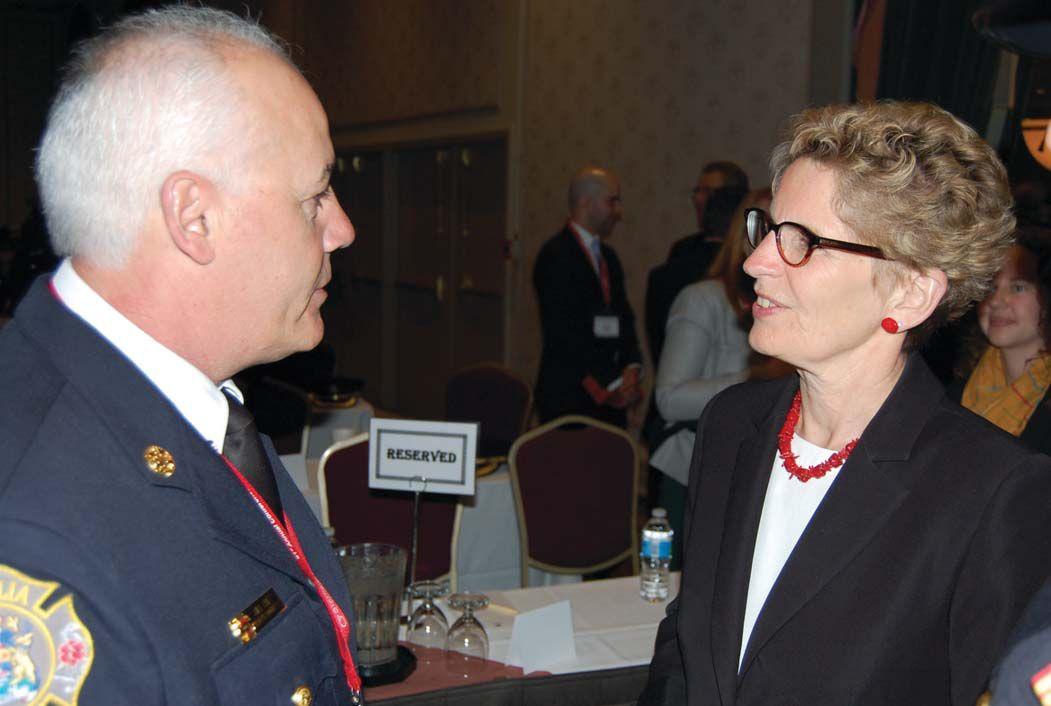
the relentless pursuit of fire safety. These other things that we’re doing in the form of member services are enhancements, but they’re not our primary objective.
QSo are you looking at changing the constitution to change direction to reflect the demand for those services?
AI don’t think so. I think the constitution enables us to do things like create the member services committee and drive members services. It would be a fundamental shift for the OAFC to leave the public-safety realm and enter the labour-relations realm. The sense I’m getting from the board is that we’re on the right path; we provide a lot of member services in the form of education and training – the labour relations seminar is testimony to that, the health and safety seminar is testimony to that and so is the mid-term and our conference. The best advantage we can give the fire chiefs is one of education and training and then support and guidance. Having full-time staff with the OAFC, under the leadership of Richard Boyes now – by virtue of the fact that he is
not employed by a municipality, he inherits a little more latitude than the rest of us do, so he has more latitude to reach out and engage with fire chiefs who are going through tough times. He can do that far more freely than I can, even though as the president of the OAFC I would like to, but it puts any of us in a potentially precarious position with our local employers.
And that’s the meat in the sandwich; fire chiefs often find themselves wedged between the position of a municipal council versus [the Association of Municipalities of Ontario], or AMO versus the province, or AMO and council versus the association. We would be doing a disservice to fire chiefs by trying to insert another player in that mix; I think the right answer is to continue with supportive education and training and make our staff, such as Richard, available from an advice and guidance position.
QRichard Boyes was hired as a chief operations officer and became executive director when Barry Malmsten retired. Is there a plan to fill the COO position?

These courses provide the same engaging, interactive learning experience that made the Computer Based Training (CBT) so popular. The video content of the DVDs and streamed video titles is combined with interactive formative assessment to create an unmatched student learning environment that can be delivered on a PC or Mac.
OR

The video content is identical to the traditional Action Training DVDs, but you can stream to any computer (PC or Mac) or mobile device (eg. iPad) with a broadband connection.
Available for:
- Firefighter I Series
- Firefighter II Series
- Aerial Apparatus Series
- Pumping Apparatus Series
- Fire Service Rescue Series
- Rapid Intervention Series
- Vehicle Extrication Series
- Fire Officer I Series
- And more….
Contact the Firehall Bookstore for details and pricing.



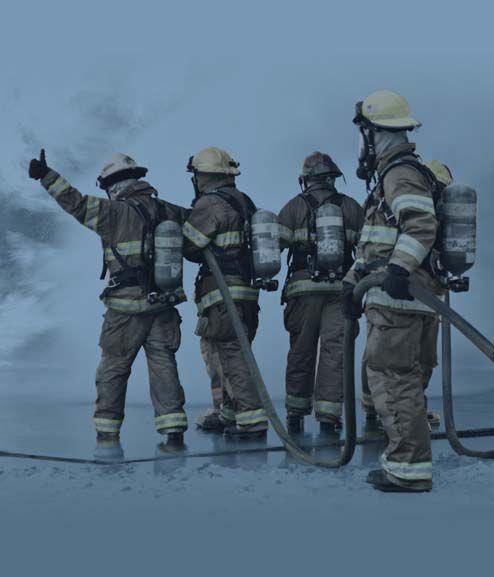
For your cleaning, decontamination, inspection, testing, repair and record keeping of your firefighter’s protective clothing... we have you covered!
24/7 access to FIRETRACK®, the online data base that provides you with complete details of your C&M Program with FSM. We do the work for you!
ETL Verified
ISO 9001 Registered Fast turnaround
Complete Bunker Gear Rental Program – Toronto Location

Ontario (Toronto) 1-888-731-7377

It still technically exists. I think the safest answer is that it’s on hold pending the determination of whether we can create a sustainable funding model for it. Will it happen again in the future? It may. Richard needs some time to look at the business of the OAFC. We engage a lot of people on somewhat of an ad-hoc basis. That’s a business model that has worked for the OAFC, so as issues arise we can engage them on a short-term basis to drive pressing issues. We like that model. It gives us the ability to be nimble and react to situations that are going on instead of trying to find someone who fits all of those skill sets that we can’t define in advance.
QThe OAFC has had some successes lately, particularly the announcement by the provincial government that seniors homes will be retrofitted to include sprinklers, and support from a developer in Vaughan that is voluntarily installing sprinklers in its new development. Where do you go from here?
AWe have had a lot of success. The opportunity to be part of the TAC announcement was very special and, from our perspective, we believe that is likely the biggest improvement in fire safety that we’ve seen in many years.
Are we done yet? No. We’re certainly appreciative of all of the work that happened and the government’s willingness to retroactively implement sprinklers in vulnerable occupancies, but when I have the chance to stand on a stage like . . . at Townwood Homes, that represents what we see to be the next model of success.
There are improvements we can continue make by working with elected officials in the government to enact legislative change, and certainly the OAFC is committed to being at the table until the day comes when everything residence is sprinklered – that’s what needs to happen to be in the best position for public safety – but the solution with Townwood Homes, The Co-operators Insurance and the City of Vaughan is a very visible example of what can happen without waiting for the legislative change.
A lot of credit and kudos go to Larry Bentley, the fire chief in Vaughan, and all of his team for that – taking that leadership and making it happen – but I don’t think it can be stated enough the value and the contribution that Townwood is making not only to that one development in Vaughan, but they have fundamentally changed the landscape in residential construction by clearly demonstrating that residential sprinklers are viable, they’re affordable and they’re not a scary thing, and that’s what we stood at that podium and acknowledged –that this can be done and it is being done.
With air bags in cars, the real push for those safety enchantments came from consumer demand; the implementation of sprinkler protection in residential construction will be an unstoppable train if the residents of this province demand it.
All of the people who have been working so hard behind the scenes – our fire prevention committee – Jim Jessop, Brian Maltby, Frank Lamie – to see it done voluntarily in an atmosphere that’s very celebratory, is cool. We can be a lot more timely in producing those kinds of results than we can be trying to get through the regulatory process. When the City of Vaughan and Townwood homes shake hands and agree to sprinkler that development, we didn’t have to rely on any regulatory process, it was a handshake and it results in people being safe; it doesn’t get any better than that.
QDescribe the relationship between the OAFC and the Canadian Association of Fire Chiefs (CAFC) and explain the key issues that are on the table.
Western Canada (Calgary) 1-403-279-5095
Mid-West USA (Detroit, MI) 1-866-877-6688
AThe OAFC shares a strong history and relationship with the CAFC. We have an automatic seat on the board of directors. My first face to face meeting will be at their conference. I’ve had the opportunity to be in fairly regular contact with [CAFC president] Steve Gamble. I’ve certainly spent a significant amount of time speaking with Steve about the position that the OAFC took on mid-rise construction and making sure that he
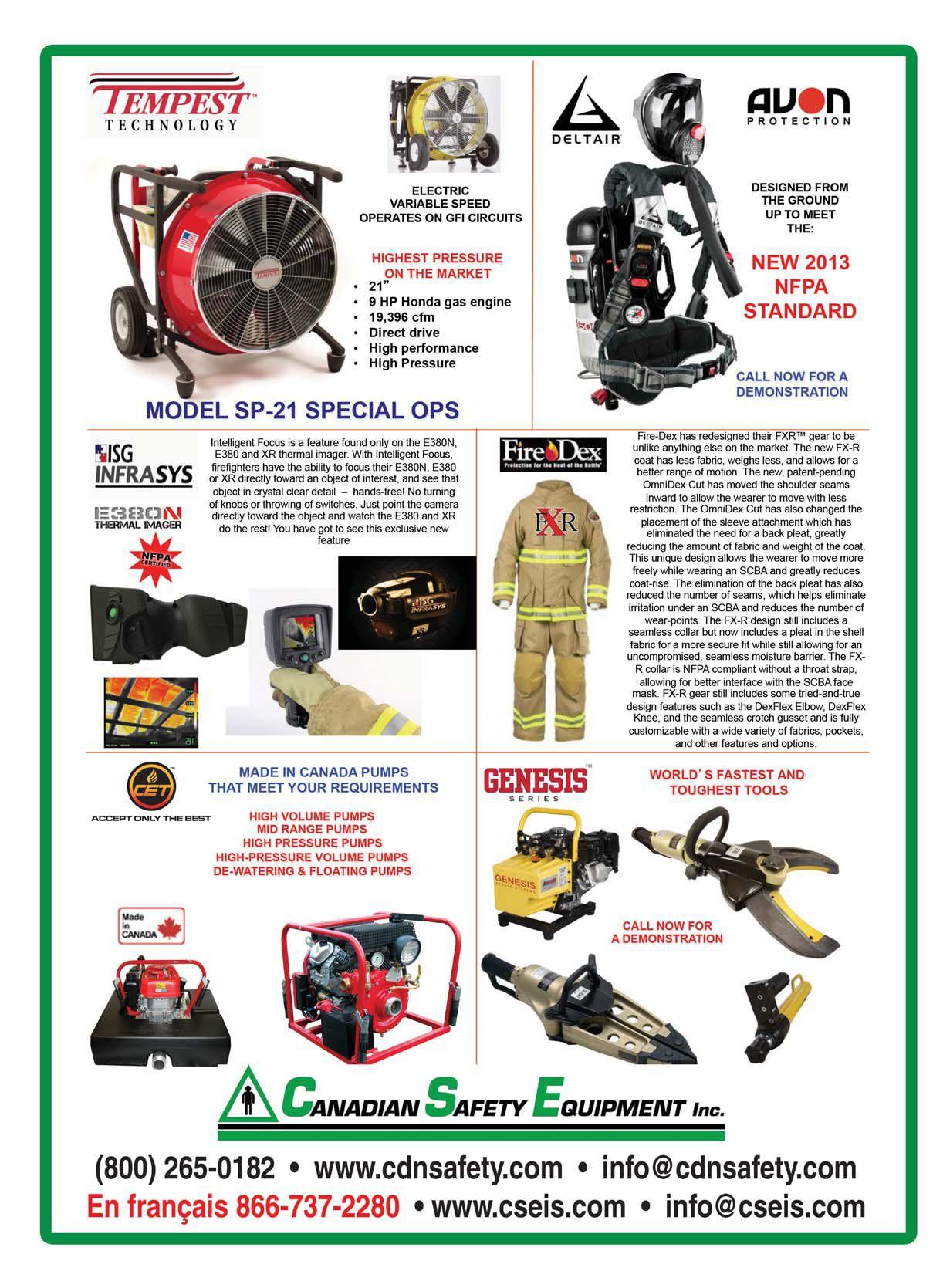


and his group are up to speed on what’s going on in Ontario and what prompted the OAFC to come out with it’s position. There’s no doubt that the position of the OAFC is consistent with what the CAFC is trying to do.
We have a strong partnership in Ontario with a lot of groups, certainly the CAFC is one of them. We’ve enjoyed a long and supportive partnership with the Newfoundland and Labrador Association of Fire Services and it will be my pleasure to go and reciprocate Fire Chief Vince MacKenzie’s attendance at our annual conference.
The medical marijuana issue is a concern with the OAFC – that formed a lot of discussion and debate on our resolution floor this year. It’s an urban/rural mix but a lot of our rural communities are seeing a lot of extremely large legalized marijuana grows –even though they’ve been legalized, we’re still concerned that the same fire safety hazards that exist in an illegal grow exist in a legal grow; there are still major hydro issues, entanglement and trap hazards, hazardous materials issues.
We still need to achieve some resolution to the outstanding safety issues, and the issue of medical marijuana grow ops to us is as much as a firefighter safety issue as anything else. So obviously the OAFC isn’t in a position to have a position on whether medical marijuana should be legal; my concern is that once it’s legal and becomes installed in communities, how do a local fire service and fire chief and firefighters responds to that without compromising health and safety? I know that Steve Gamble and the CAFC share that concern. That’s the message that I will take back – that the focus needs to be on responder safety.
Obviously the new regulations on medical marijuana are big step, the issue continues to drive the point that the OAFC is committed to in Ontario, which is the understanding of the three lines of defence, and the fact that with the public safety model in Ontario, the first line of that defence is public education, and it all starts there; after that code and standard enforcement and prevention; and when those two lines aren’t enough to prevent that fire from happening, we need to be able to rely fully on our third line of defence and emergency response.
But whether its fire-service professionals or government, I’m not convinced there’s a deep enough appreciation for public education and code enforcement. Medical marijuana, mid-rise construction, everything we deal with – it really is all about occupant safety and firefighters safety. We can deal with the structure fire but my goal
is that every time we pull up to a structure fire that family is standing safely on the front lawn because they’ve been adequately educated and, in addition, their home was sprinklered, allowing them to escape. It’s unfortunate in our business that there’s still a lot of angst around the sprinkler movement. My holistic belief is that that’s unnecessary. There has never been, nor will there be, a sprinkler system that replaces the need for proper response by firefighters. But what an effective sprinklers system does is buy time for the occupants to escape, and in circumstances where the occupants can’t escape, it gives our firefighters a chance of performing an effective rescue while minimizing the risk that they’re taking to do that. When someone explains it to me like that, I can’t see the negative. It becomes painfully obvious where we need to go. Unfortunately there was some belief in the past that sprinklers would be the panacea and would reduce or eliminate the need for effective fire suppression. That’s sadly uninformed, and that’s not the case, and it’s not the position of the OAFC.
QLast question. The OAFC has been involved with the Canadian Governmental Committee. The committee’s mandate was to garner federal support for the Canadian fire service. Where does the OAFC stand on approaching Ottawa for fire-services support and funding?
AThere’s no doubt that funding continues to be a challenge for all of us, whether you’re the very largest in the City of Toronto or the very smallest in rural Ontario. One of the positions that I’m most interested in is, I believe, and I believe that our board would concur, is that the next course of action and the one that needs to be pushed, is that we need a national fire adviser. If you follow the models of success that have happened south of the border and in some of the more progressive jurisdictions, that is clearly the model of success.
No municipality would expect a fire service to operate efficiently and effectively, and no council would expect to get good recommendations from its fire service, if they didn’t install a fire chief. We clearly need the same level of leadership nationally in a national fire adviser. There needs to be a person or series of people who are dedicated to advising the federal government about fire-and-emergencyservices issues from a national perspective, singular in purpose, and I don’t see how we’re going to achieve that without a national fire adviser.
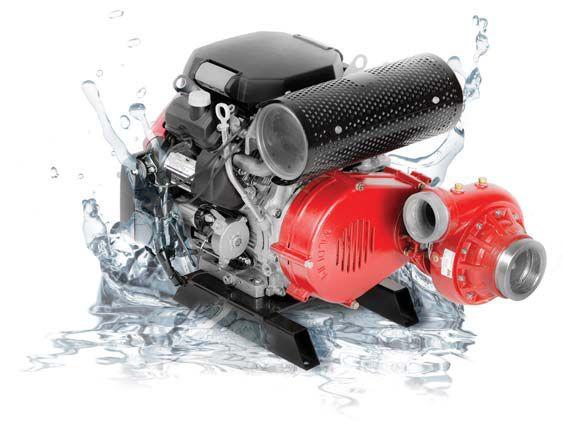
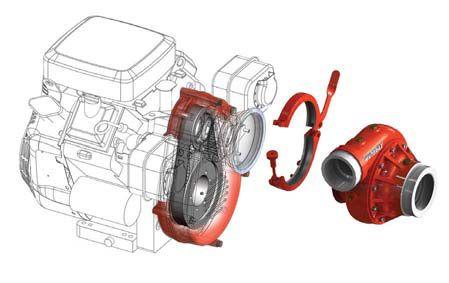
WATERAX , maker of high pressure, portable, centrifugal pumps is proud to introduce the new B2X Series, a full line of versatile mid-range portable pumps that produces an unmatched 215 US GPM (814 L/Min) @ 100 PSI (7 BAR), making it a weapon of choice for dual attack lines for municipal and wildland urban interface operations.
WATERAX ’s innovative pump end quick release clamp provides ease of maintenance without having to disassemble the complete unit, thus significantly reducing equipment downtime.
In addition, the B2X Series features a low maintenance drive belt system that provides efficient and dependable performance.
The WATERAX B2X comes in portable & vehicle mounted configurations and is powered by 4-stroke Briggs and Stratton Vanguard (18HP & 23HP) or Honda (21HP) engine.
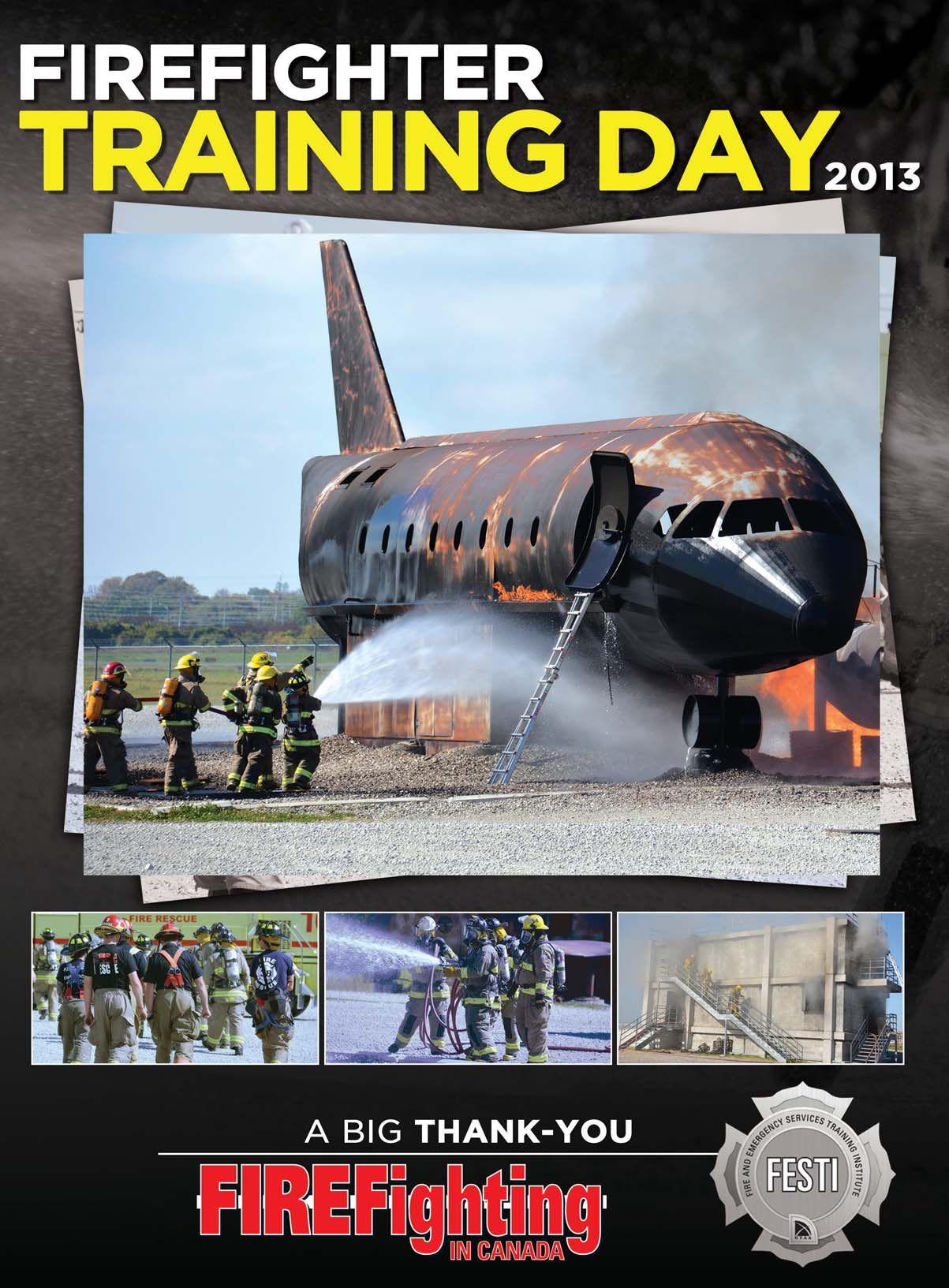
BY MICHAEL LANGFORD
On Sept. 20, at about 12:43 p.m., Toronto Fire Services (TFS) was called to a trench rescue in the city’s North York neighbourhood. Twelve apparatuses were originally dispatched to the incident, including three heavy rescue trucks. Five apparatuses were later added; a total of 53 firefighters were on scene.
On arrival, TFS encountered three construction workers in the trench, which measured 2.4 metres (eight feet) deep, 2.1 metres (seven feet) wide and 7.6 metres (25 feet) long. The workers were in the front yard of a home under construction.
One worker was feverishly trying to dig out the two other workers who were trapped. The first trapped worker was buried in the dirt up to his head – only his forehead was exposed – and oxygen was immediately applied to his face below grade. The second trapped worker was buried up to his waist; he was about one metre (three feet) away from the first trapped worker.
TFS crews initiated trench-rescue protocols, placing ground pads at the edge of the trench and securing a mini hoe, which was on the north edge of the trench. Shoring was placed around the workers in the hole and pneumatic rams were set, giving crews a defendable work area. Additional crews were dispatched to remove a 2.4 metres by 4.6 metres by 6.1 metres (eight feet by 15 feet by 20 feet) pile of spoil that was located adjacent to southwest edge of trench and imposed an immediate threat of additional collapse.
The location of the first worker was problematic, as he was trapped against the wall of trench. This necessitated the modification of our shoring pads, which were set before TFS personnel entered the trench and before the third worker left.
Just as TFS crews were clearing dirt using buckets and ropes, the Badger Daylighting vacuum truck arrived and was placed into service to remove the dirt from around the trapped workers. It took approximately 36 minutes to remove the two workers using the vacuum truck.
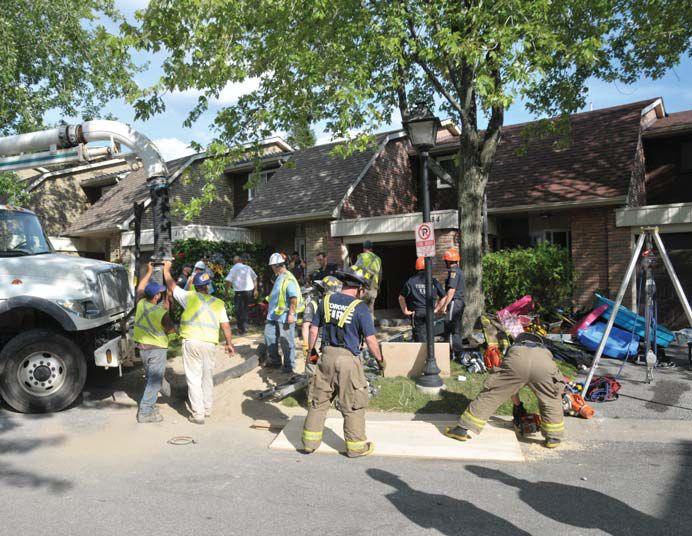
which trains for trench rescue, among other specialties, responded to a similar incident last fall.
TORONTO, ONTARIO
FIRE HALLS: 83
STAFF: 3,170 (2,778 in operations)
CALLS: 120,512 incidents in 2012 with 289,460 vehicle runs
VEHICLES: 59 pumpers, 27 rescue/pumpers, 30 aerials (3 towers and 2 platforms), 5 heavy rescues, 2 heavy hazmats, 15 district chief vans, 4 airlight, 2 fireboats, 1 highrise unit
The workers were transported to hospital by EMS immediately after extrication.
This incident was truly remarkable. On first glance, it looked to be a recovery but through training and quick initial actions, TFS crews turned this into a successful rescue of three workers.
A special thank you to the Badger Daylighting crew members for their rapid response and expertise.
Michael Langford is a 22-year veteran of Toronto Fire Services, currently in the position of acting captain. He holds a variety of certifications, including confined space, high-angle, swift water, hazmat and ice water rescue, and is an instructor with Firestar Ser vices.
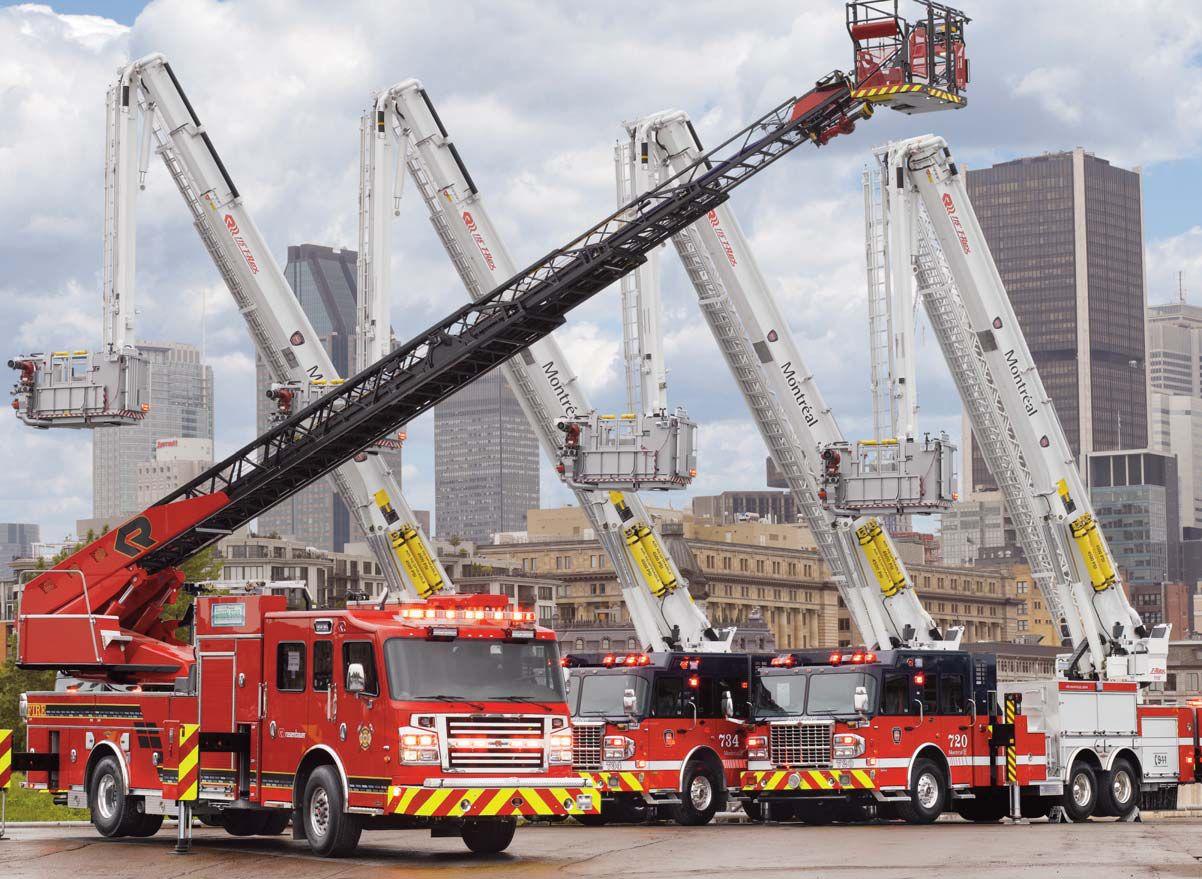
A.J. STONE COMPANY LTD.
141 Bentworth Ave., Toronto, ON M6A 1P6
Tel: 416-785-3752
Fax: 416-781-2827
Toll Free: 1-800-205-3473
e-mail: firesafety@ajstone.com website: www.ajstone.com
Joyce, Tyler, Dan, Robin
A.J. Stone Co. Ltd. has proudly served the needs of the Fire/Rescue and First Responder Services of Canada since 1972, featuring quality products, knowledgeable sales reps, and training support. A.J. Stone supplies equipment from MSA, TNT Rescue, Paratech Rescue, Akron, Kochek, Angus Fire, Marsars Ice/Water Rescue, Innotex Bunker Gear, Pro-Tech Gloves, E.S. Safety Systems, CET, Fort Garry Fire Trucks, and much more. We service what we sell!
47 Faircrest Blvd., Kingston, ON K7L 4V1
Tel: 613-546-4567
Fax: 613-546-5031
e-mail: info@actionmeals.com website: www.actionmeals.com
Mark Hutchings
Self-Heating Action Meals® - nutritious MRE meals for isolated responders. The lightweight kit contains precooked meal + heater, providing hot food in minutes without matches, fire, stove, electricity. A favorite for use at Emergencies or Fires.
251 Queen St. S., Ste. 512, Mississauga, ON L5M 1L7
Tel: 905-826-6682
Fax: 866-511-6904
Toll Free: 1-866-735-1480
e-mail: info@airmation.ca website: www.airmation.ca
Randall Weber, VP Marketing & Sales, Canada Air Technology Solutions is dedicated to our Clients, offering updated, timely, full service Indoor Air Quality (IAQ) solutions. Air quality concerns are mitigated using a unique combination of professional indoor air quality assessment coupled with solutions. Off the shelf or customized site specific air cleaning equipment is available to resolve IAQ issues. Our technical experts review client requirements and budgetary availability. The finest appropriate air cleaning systems are provided. Air Technology Solutions is a leader in Diesel Exhaust Remediation. Building and facility managers, business owners, contractors, architects, and engineers have been working with Air Technology Solutions since 1986 to resolve IAQ needs. Employee and personnel safety and health are key issues. Breathing safe air in the workplace is of utmost importance. We provide global customized solutions to control contaminants, pollutants and odours in your facility. We look forward to servicing your requirements.
343 Venture Blvd., Wooster, OH 44691
Tel: 330-264-5678
Fax: 330-264-2944
e-mail: srobertson@akronbrass.com website: www.akronbrass.com
Steve Robertson
Akron Brass Company is a leading global manufacturer of high performance firefighting products engineered and tested for superior fire suppression and emergency response. Products include nozzles, monitors, valves, scene and vehicle lighting, vehicle electronics, reels, hand tools, engineered solutions, and other firefighting equipment. Leading the industry for over 95 years!
Head Office: 5205 J.A. Bombardier
Longueuil, QC J3Z 1G4
Tel: 450-651-2240
Fax: 450-651-1970
e-mail: info@areo-fire.com
website: www.areo-fire.com
Dominic Miller (Technical support for fire trucks and sales of Rosenbauer trucks & Daniel Renaud (Sales Director)
Committed to meeting our customers’ needs, we are proud to offer a wide range of top-of-the-line tools, clothing and accessories for fire fighting and emergency interventions and fire truck. For almost 50 years, we have continued to add new, high-quality products so that you can find everything you require under one roof. New online purchasing website at www.aero-fire.com
Repair services on: SCBA, extrication tools, gas detection, portable pump, pumper trucks, aerial ladder, etc. Authorized parts and service center for: Hale, Waterous, Darley, KOEHLER Major product lines: MSA, HURST, CET FIRE PUMP, KOCHEK, RED HEAD, AWG, PROTEK, NAFH, GROUPE LEADER, MAXXERA, RES-Q-JACK, STREAMLIGHT, ERGODYNE, MUSTANG, FRC, FOAMPRO, NAUTIC & ART, INNOTEX, ROSBOROUGH BOAT, KOEHLER BRIGHT STAR, HALE, WATEROUS. Areo-Fire now has a Canadian distribution network which supplies products such as Cosmas fire boots, Leader Group products (FANS, SEARCH & RESCUE, TRAINING), Acton fire boots, Protek Nozzles, Rabbit P-555 portable pump and Maxxera’s hose reel and unroller.
BECOMING A FIREFIGHTER
PO Box 530, 105 Donly Drive S., Simcoe, ON N3Y 4N5
Tel: 519-429-3966
Fax: 1-866-810-8111
Toll Free: 1-888-599-2228 ext. 235
e-mail: bcomer@annexweb.com website: www.becomingafirefighter.com
Barb Comer, Sales Assistant
PUMPER/TANKER – DARCH FIRE/PIERCE MANUFACTURING
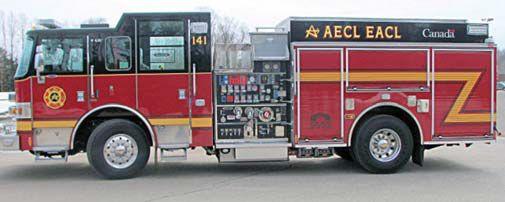
Built on an Arrow-XT chassis, and powered by a Cummins 450-hp engine and an Allison 3000 transmission, this unit features a 1,500-gpm Waterous pump, a 450-gallon water tank and a CAFS foam system.
DEPARTMENT: Atomic Energy Canada, Ontario
TANKER – FORT GARRY FIRE TRUCKS
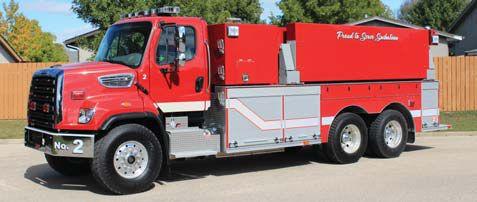
Built on a Freightliner M2-108 chassis, and powered by a Cummins 380-hp engine and an Allison 3000 transmission, this unit features a 420-igpm Hale pump, a 2,500-imperial-gallon water tank, and dual hydraulic Porta-Tank storage.
DEPARTMENT: Saskatoon Fire and Protective Services, Saskatchewan
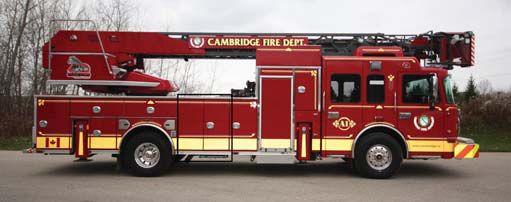
Built on a Spartan Gladiator chassis, and powered by a 500-hp Cummins engine and an Allison 4000 transmission, this unit features a 31-metre (102-foot) aerial ladder, a 1,500-gpm Hale pump, a 180-gallon water tank, a FoamPro foam system, an Akron monitor, Akron electric valves, driver and officer vista screens, an Onan six-kilowatt generator and a 61-metre (200-foot) electric cord reel.
DEPARTMENT: Cambridge Fire Department, Ontario
AERIAL – CARRIER CENTERS EMERGENCY VEHICLES/E-ONE
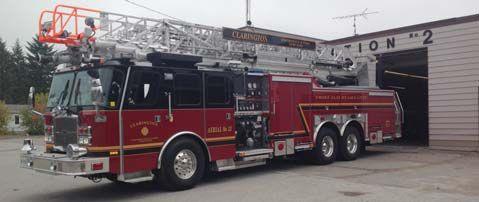
Built on a Cyclone II chassis, and powered by a 500-hp Cummins engine and an Allison 4000 transmission, this unit features a 2,000-gpm Hale pump, a FoamPro foam 2001 system, a 420-gallon water tank, and a 30.5-metre (100foot) four-section aluminum ladder.
DEPARTMENT: Clarington Emergency and Fire Services, Ontario
RESCUE – ARNPRIOR FIRE TRUCKS
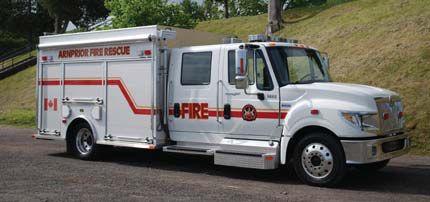
Built on an International TerraStar chassis, and powered by a 300-hp MaxxForce engine and an Allison transmission, this unit features a 175-igpm CET pump, a CET compressed-air foam system, a 150-imperial-gallon water tank, a custom command desk, and roll-out tool boards.
DEPARTMENT: Arnprior Fire Service, Ontario
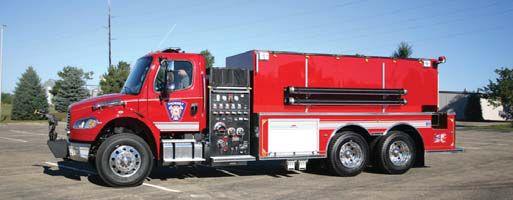
Built on a Freightliner M2-106 chassis, and powered by a 350-hp Cummins engine and an Allison 3000 transmission, this unit features a Darley pump, a 3,000-gallon water tank, a 25-centimetre (10-inch) Newton sump, and a tipdown drop tank carrier.
DEPARTMENT: Thorsby Fire Department, Alberta
–
&
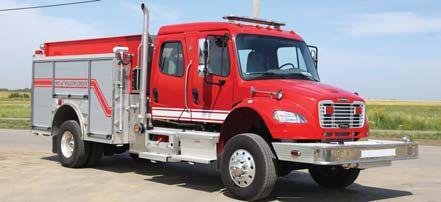
Built on a Freightliner M2-106 chassis, and powered by a 350-hp Cummins engine and an Allison 3000 transmission, this unit features a 1,000-gpm Waterous pump, a Husky 3 foam system, a 1,000-gallon water tank, an enclosed pump operator panel, two hose reels with 30.5 feet (100 feet) of 2.5-centimetre (one-inch) hose, and a TFT Tornado remote control monitor.
DEPARTMENT: Municipal District of Willow Creek Fire Department, Alberta
PUMPER/TANKER – AREO-FIRE LTD./ARÉO-FEU LTÉE/ROSENBAUER
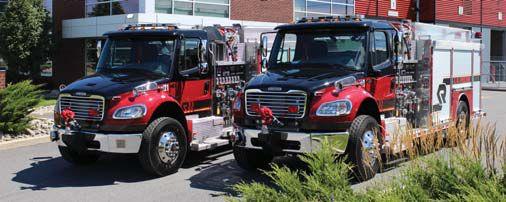
Built on a Freightliner M2-106 chassis, and powered by a Cummins 330-hp engine and an Allison 3000 transmission, this unit features a 1,050-igpm Rosenbauer pump, a Rosenbauer EZ-Foam system, a 1,500-imperial-gallon water tank and Whelen LED emergency lights and a high pressure monitor and hose reel.
DEPARTMENT: Service Des Incendies de La Pêche, Québec
BIERNAT FIRE INC.
1080 34e Ave., Lasalle, QC H8P 3A2
Tel: 514-595-1142
Fax: 514-595-0511
Toll Free: 1-866-595-1142
e-mail: mbiernat@ican.net
Mark Biernat, President Fire Research Corp. - www.fireresearch.com
FoamPro - www.foampro.com
Darley Pumps - www.darley.com
Will-Burt - www.willburt.com
Trident - www.tridentdirect.com
PhosChek - www.phoschek.com
Thuemling - www.thuemling.com
ROM - www.romcorp.com
Pyrolance - www.pyrolance.com
Harrison - www.harrisonhydragen.com
C-MAX FIRE SOLUTIONS
3044 Sawmill Rd., St. Jacobs, ON N0B 2N0
Tel: 519-664-3796
Fax: 519-664-3624
e-mail: fireinfo@c-max.ca
website: www.c-max.ca
Kathy Brookes, Sales & Service
Canadian family owned and operated business that offers a higher standard of service and sales for all your Fire Apparatus needs. C-Max Fire Solutions offers 24 Hour service from EVT Technicians with fully stocked service trucks. We offer Pump testing and repairs to all makes and models. We offer ground ladder testing as per NFPA 1932. We are also Ontario’s Factory Sales and Service Centre for KME Fire Apparatus.
2465 Cawthra Rd., Unit 114, Mississauga, ON L5A 3P2
Tel: 905-949-2741
Fax: 905-272-1866
Toll Free: 1-800-265-0182
e-mail: info@cdnsafety.com website: www.cdnsafety.com
Ross Humphry, Nick Desmier, Scott Gamble, Chris Hamilton, Chris Moore, Steve Shelton
We supply SCBA’s, Thermal Cameras, Auto Extrication, CAF Systems, Fall Protection, Bunker Gear, Fire Hose, Communications Equipment, Nozzles, Fittings, Hazmat Suits, Ventilation Fans, Gas Detectors, Confined Space Rescue Equipment, High Angle Rescue Equipment, Boots and Gloves. Everything for Fire Fighting and Confined Space Rescue.
75, rue Hector, C.P. 90, Pierreville, QC J0G 1J0
Tel: 450-568-2719
Fax: 450-568-2613
Toll Free: 1-888-844-2285
e-mail: sales@fire-pump.com
website: www.fire-pump.com
Stephan Thibault
Accept Only The BestPortable Pumps, Skid Units, CAFS, Foam Trailer, Glider Kit, Water Tank, Brush Truck and Fire Apparatus.A Century of Engineering for the Bravest!
38 Thibault (Street), Box 540, Pierreville, QC J0G 1J0
Tel: 450-568-7020
Fax: 450-568-3049
e-mail: info@thibaultfiretrucks.com
website: www.thibaultfiretrucks.com
Carl Thibault, Maricarl Thibault
We are a Canadian based company and we manufacture a full line of fire apparatus which includes aerial ladders, pumpers, tankers, rescue units and vacuum tankers. We provide parts and other related products.
350 Pfingsten Rd., Ste. 105, Northbrook, IL 60062
Tel: 847-480-9600
Fax: 847-480-9900
Toll Free: 1-800-795-1150
e-mail: circulair@circul-air-corp.com
website: www.circul-air-corp.com
Circul-Air Corp. has been manufacturing hose washers, hose and turnout gear dryers and hose storage racks since 1940. Check out our new low-cost Hose Drying and Storage Racks designed for smaller stations.
6 Edmondson Street, Brantford, ON N3R 7J3
Tel: 519-720-1099
Fax: 519-752-0370
Toll Free: 1-866-896-3588
e-mail: evinfo@carriercenters.ca website: www.carriercenters.ca
John Mackinnon
Carrier Centers Emergency Vehicles Division is proud to be the E-ONE fire apparatus dealer for Ontario. When you need full-service for all makes and models of mission critical vehicles including parts, mobile on-site pump testing, ground ladder testing, aerial inspections, refurbishing, collision repair and more, make Carrier Centers your first choice to help your department keep your community safe. For sales, parts, and service inquiries please call 1-866-8963588. For information regarding additional offerings including heavy trucks, walk-in vans, lease and rental, reefers and air conditioning, and body shop services, visit us online at www.carriercenters.ca
CODE 4 FIRE & RESCUE INC.
26 Oneida St., PO Box 1297, Hagersv ille, ON N0A 1H0
Tel: 905-768-9254
Fax: 905-487-1517
Toll Free: 1-800-387-2286
e-mail: chris@code4.com website: www.code4.com
Chris Christie
Call 1-800-665-4900 for all your “Hurst’’ Extrication needs! Service, Sales and Training. HME Fire Trucks now available - see www.firetrucks.com
Proudly Serving Those Who Serve Others
PUMPER/TANKER – CARL THIBAULT FIRE TRUCKS
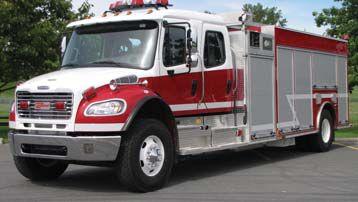
– FORT GARRY FIRE TRUCKS
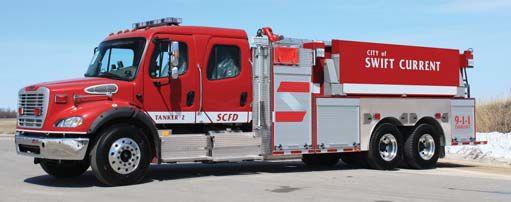
Built on a Freightliner M2-106 chassis, and powered by a 350-hp Cummins engine and an Allison 3000 transmission, this unit features a 1,250-igpm Hale pump, a Pneumax compressed-air foam system, a FoamPro foam system, a 1,500-imperial-gallon water tank and a VMUX multiplex system.
DEPARTMENT: Service de Sécurité Incendie Lac-aux-Sables, Québec
– WFR WHOLESALE FIRE & RESCUE/PIERCE
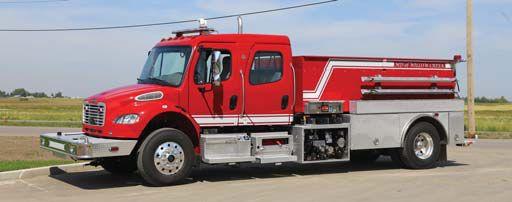
Built on a Freightliner M2-106 chassis, and powered by a 350-hp Cummins engine and an Allison 3000 transmission, this unit features a 1,000-gpm Darley pump, a 1,800-gallon water tank, a three-foot (10-foot) manual-control rear dump valve, two hose reels with 30.5 metres (100 feet) of 2.5-centimetre (oneinch) hose, and a TFT Tornado remote control monitor and nozzle.
DEPARTMENT: Municipal District of Willow Creek Fire Department, Alberta
TANKER/PUMPER – MIDWEST FIRE
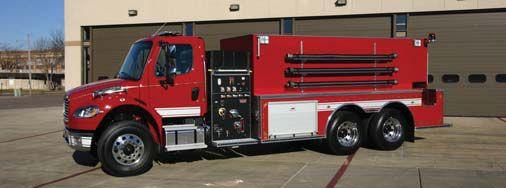
Built on a Frieghtliner M2-106 chassis, and powered by a 350-hp Cummins engine and an Allison 3000 transmission, this unit features a Darley pump, a 3,000-gallon water tank, 25-centimetre (10-inch) Newton dubs, and a ZICO electric portable drop tank carrier.
DEPARTMENT: Worsley Fire Department, Alberta
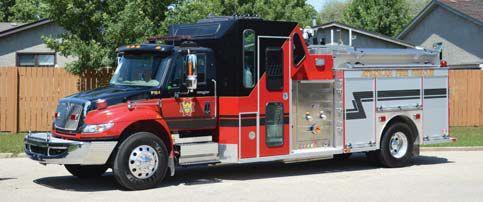
Built on an International chassis, and powered by a 300-hp MaxxForce engine and an Allison 3000 transmission, this unit features a 1,050-igpm Hale pump, a Foam Pro foam system, a 1,000-imperial-gallon water tank, a command centre crew area with two SCBA seats, and an overhead electric ladder rack.
DEPARTMENT: Atikokan Fire Rescue, Ontario
This unit was built on a Freightliner M2-112 engine, and is powered by a 450hp Detroit engine and an Allison 4000 transmission. It features a 1,050-igpm Hale pump and a 2,000-imperial-gallon water tank.
DEPARTMENT: Swift Current Fire Department, Saskatchewan
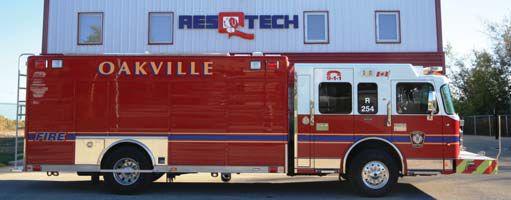
Built on a Spartan Gladiator chassis, this unit features roll-up doors, an SCBA slide-out storage rack, pull-out tool boards, roll-out trays, Whelen LED emergency lighting, a traffic advisor, a back-up camera, a Wil-Burt light tower, a Warn winch, and a 61-metre (200-foot) electric cord reel.
DEPARTMENT: Oakville Fire Department, Ontario
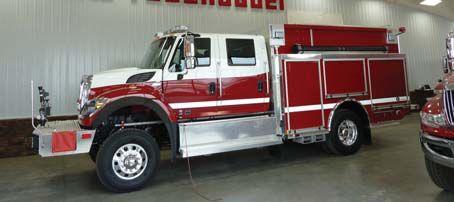
Built on an International 7400 chassis, and powered by a 330-hp MaxxForce engine and an EVS-3500 transmission, this unit features a 1,100-gpm Rosenbauer pump, a Rosenbauer FixMix foam system, a 750-gallon water tank, a Federal Signal siren and speaker, and a Whelen light package.
DEPARTMENT: Grand Cache Fire Department, Alberta

Built on a Freightliner chassis, and powered by a Cummins 360-hp engine and an Allison 3000 transmission, this unit features a 1,250-gpm Waterous pump and a 1,000-gallon water tank.
DEPARTMENT: Clearview Fire and Emergency Services, Ontario
5990 Vanden Abeele, St. Laurent, QC H4S 1R9
Tel: 514-737-2280
Fax: 514-737-2751
Toll Free: 1-866-737-2280
e-mail: info@cseis.com website: www.cseis.com
Henry Paintin
We supply SCBAs, Thermal Imaging Cameras, Auto Extrication Tools, CAF Systems foam, Bunker Gear, Fire Hose and accessories, nozzles, fall protection communications equipment, fittings, hazmat suits, ventilation fans, rescue saws, ice and water rescue gear, high angle rescue gear, boots, helmets and gloves.
9-402 Harmony Rd., Ayr, ON N0B 1E0
Tel: 519-622-6110
Fax: 519-622-7705
Toll Free: 1-800-254-2049
e-mail: sales@darchfire.com
website: www.darchfire.com
John Darch, Susan Miller, Todd Finnie
The goal at Darch is to provide the best fire and first responder vehicles, equipment and technical service so that emergency services personnel can work safely and protect the citizens of their community. Darch partners with leading industry manufacturers including Pierce Manufacturing, Holmatro, Draeger, Elkhart, Geargrid, Key Fire Hose, Blowhard Fans and Code 3 as well as many, many more. The parts department at Darch has all of the everyday and hard to find parts needed to keep your emergency vehicles in top form. Darch’s professional fleet service team with fully licensed and EVT master certified technicians is ready to respond to all of your fire truck maintenance and service needs including pump testing and scheduled fleet service.
275 Clarence St., Brampton, ON L6W 3R3
Tel: 905-453-6724
Fax: 905-453-7716
Toll Free: 1-800-268-0871
e-mail: sales@dependable.ca website: www.dependable.ca
Pino Natale
Design & manufacture custom fire pumpers, rescues, tankers, aerials, haz-mat, air-lighting units, minis, EMS & police support vehicles & equipment. Collision and restoration estimates, complete on-site vehicle collision and restoration, large custom paint shop. Apparatus repairs and MTO certification. Spartan Dealer, Freightliner, Sterling, International, Kenworth, Peterbilt, Mack, Ford, General Motors chassis. Sales. Service and parts for Hale, Darley and Waterous pumps. Extensive parts inventory. Sales and repairs of all makes of Emergency lighting, hose, nozzles and fire related equipment. Friendly, courteous and knowledgeable one stop shopping for fire apparatus and related equipment since 1975.
CANADIAN DEALER FOR:
Spartan ERV, A Spartan Company 907 7th Avenue North, Brandon, SD 57005
Tel: 605-582-4000
Fax: 605-582-4001 website: www.spartanerv.com
1601 S.W. 37th Ave., Ocala, FL 34474
Tel: 352-237-1122
Fax: 352-237-1151
e-mail: info@e-one.com website: www.e-one.com
CANADIAN DEALERS
Carrier Emergency Equipment 6 Edmondson St., Brantford, ON N3T 5N3
Phone: 519-752-5431
Territory: Ontario, Atlantic Provinces First Truck Specialty Vehicles 18688 96th Avenue Surrey, BC V4N 3P9
Phone: 604-888-1424
Territory: British Columbia, Alberta, Yukon, Northwest Territories
Techno Feu Apparatus Maintenance
105 Marie-Victorin, St. Francois-Du-Lac, PQ J0G 1M0
Phone: 450-568-2777
Territory: Quebec
EASTWAY EMERGENCY VEHICLES
7 Industrial Ave., Carleton Place, ON K7C 3V7
Tel: 613-257-8197
Fax: 613-257-8517
Toll Free: 1-888-571-6842
e-mail: gmills@eastway911.com
website: www.eastway911.com
Gord Mills, Director of Sales; Mike Lovely, Tech Support
DIXON NORTHLINE
6350-4/5 Netherhart Road, Mississauga, ON L5T 1B8
Tel: 905-564-5680
Fax: 905-564-8822
Toll Free: 1-800-786-9697
e-mail: dlester@dixonvalve.com website: www.dixonvalve.com
Dean Lester
Dixon Valve is a world leader in manufacturing with stocking locations worldwide. We have now combined our Aluminum Northline product line with our Brass Powhatan product line and are proud to issue the new Dixon Fire Catalogue. Please contact a Northline sales representative at 1-800-786-9697 to have a new catalogue sent to you. As always, we value your commitment supporting a Canadian based manufacturer and look forward to working with you.
Eastway Emergency Vehicles designs and manufactures Fire Apparatus for major urban centers to small volunteer Fire Departments. Each truck is built with the same attention to detail, ensuring quality, strength and durability. Complete product lines of Pumpers, Tankers, Rescues, Wildlands and HazMat vehicles are available. Design work is completed with 3D modeling to ensure the tightest tolerances. All manufacturing is completed at our Carleton Place Ontario facility. Used fire trucks are available, each with factory certification and warranty. Collision repairs and refurbs are performed with quick turnaround time, thus minimizing vehicle downtime. Financing is available with competitive rates and flexible payment terms. Short term and long term leasing also available. Eastway is proudly Canadian and celebrating 45 years as a 100% family owned and operated business. Built by Canadians, for Canadians.
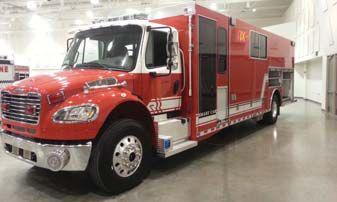
Built on a Freightliner M2-106 chassis, and powered by a Cummins 350-hp engine and an Allison 3000 transmission, this unit features a Smart Cab fourman crew cab, Green Star idle reduction technology, and a 6.7-metre (22-foot) walk-in rescue space.
DEPARTMENT: Service de Sécurité Incendie St-Félix-de-Valois, Québec
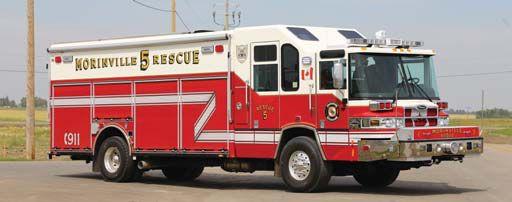
Built on a Pierce chassis, and powered by a 500-hp Detroit engine and an Allison 4000 transmission, this unit features a TAK-4 independent front suspension, a side-roll and front-impact protection package, a Pierce Command Zone multiplex system, an Onan 30-kilowatt generator, a Wil-Burt light tower, a portable winch, and two hydraulic hose reels.
DEPARTMENT: Morinville Fire Department, Alberta
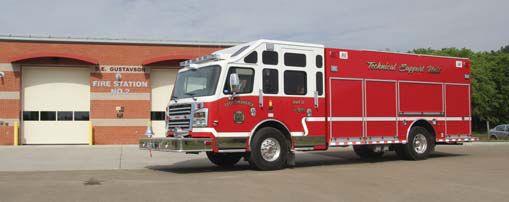
Built on a Rosenbauer chassis, and powered by a 400-hp Cummins engine and an EVS-3000 transmission, this unit features a Whelen light package, a pull-up command desk, four roof-top compartments, a 20-kilowatt Onan generator, a Command Light light tower, an electric cord reel, four hydraulic reels, a front winch, and a rear Rosenbauer EZ-Climb ladder.
DEPARTMENT: Lloydminster Fire Department, Saskatchewan
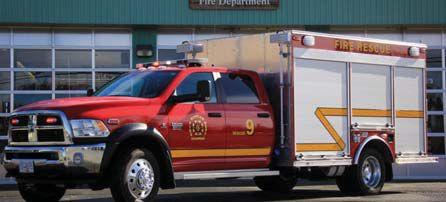
This unit was built on a Dodge Ram chassis, and is powered by a diesel engine and a six-speed automatic transmission. It features Holmatro hydraulic core connections, a Warn winch, and FRC Spectra LED lights.
DEPARTMENT: Duncan Volunteer Fire Department, British Columbia
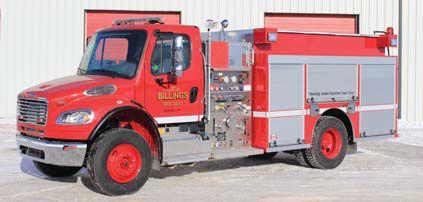
Built on a Freightliner M2 chassis, and powered by a 300-hp Cummins engine and an Allison 3000 transmission, this unit features a 1,100-igpm Hale pump, a Hale Foam Logix foam system, an 800-imperial-gallon water tank, a manual fold-down ladder rack and a cold weather package.
DEPARTMENT: Billings Fire Department, Ontario
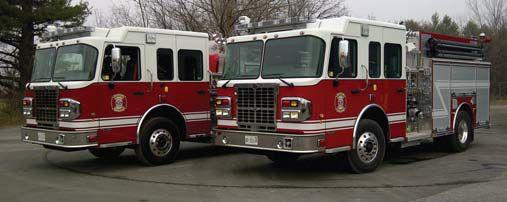
Built on a Spartan MetroStar chassis, and powered by a 380-hp Cummins engine and an Allison 3000 transmission, this unit features a 1,100-gpm Hale pump, a FoamPro foam system, a 1,000-imperial-gallon water tank, Amdor rollup doors, a Zico Quic-Lift ladder rack, a Whelen LED emergency light package, a Go Light Stryker spotlight, and Akron monitors.
DEPARTMENT: Chatham-Kent Fire Department, Ontario
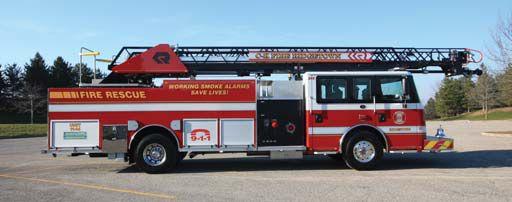
Built on a Rosenbauer Commander chassis, and powered by a 400-hp Cummins engine and an Allison 3000 transmission, this unit features a 24-metre (78-foot) aerial ladder, a 1,500-gpm Darley pump, a 400-gallon water tank, a TFT Master stream monitor and a deep-cycle battery Greenstar system.
DEPARTMENT: Chatham-Kent Fire Department, Ontario
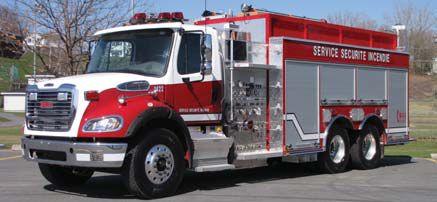
Built on a Freightliner M2-112, and powered by a 450-hp Detroit engine and an Allison 4000 transmission, this unit features a 1,050-igpm Hale pump, a FoamPro foam system, a 2,500-imperial-gallon water tank and a VMUX multiplex system.
DEPARTMENT: Service de Sécurité Incendie Sainte-Sophie, Québec
113 - 949 West 3rd St., North Vancouver, BC V7P 3P7
Tel: 604-986-9941
Fax: 604-986-7130
Toll Free: 1-800-986-9941
e-mail: sales@fdmsoft.com
website: www.fdmsoftware.com
Lynne Boucher, Acct. Mgr.
FDM Software helps Heroes to the rescue – and after: Our fully integrated CAD, RMS, and GIS Analyst solutions give First Responders immediate access to shared data. Seamless access to critical information including best route and hazmat details makes for a faster, more comprehensive response. Reporting is simplified with easy to use reporting tools plus real-time dashboarding and Business Intelligence technology. Our scalable solutions are cost effective, our implementation and support is second to none –and we have almost 25 years proven experience in 450+ North American jurisdictions.
PO Box 530, 105 Donly Dr. S., Simcoe, ON N3Y 4N5
Fax: 1-888-404-1129
Toll Free: 1-888-599-2228 Ext. 253
e-mail: cconnolly@annexweb.com website: www.firehall.com
Catherine Connolly, Advertising Manager Firehall.com provides an excellent forum for exchange among firefighters and others involved in the fire service. Advertising options include banner ads and e-blasts and offer extensive exposure to the rank and file.
53 Bergen Cutoff Rd., Winnipeg, MB R3C 2E6
Tel: 204-594-3473
Fax: 204-694-3230
Toll Free: 1-800-565-3473
e-mail: bnash@fgft.ca
website: www.fgft.com
Brian Nash- National Sales Manager
Fort Garry Fire Trucks offers a complete line of Quality Fire Apparatus, including Pumpers, Tankers, Rescues and Aerial Ladders.
34 Torlake Cres., Toronto, ON M8Z 1B3
Tel: 416-251-3552
Fax: 416-253-0437
Toll Free: 1-888-731-7377
e-mail: tanja@fireservicemanagement.com website: www.fireservicemanagement.com
Peter Hill, Tanja Wleklinski
FIGHTING IN CANADA/ CANADIAN FIREFIGHTER/EMS QUARTERLY
PO Box 530, 105 Donly Dr. S., Simcoe, ON N3Y 4N5
Tel: 519-429-5178
Fax: 888-404-1129
Toll Free: 1-888-599-2228 ext. 252
e-mail: fire@annexweb.com
website: www.firefightingincanada.com
Publisher, Martin McAnulty
Advertising Manager, Catherine Connolly Editor, Laura King
PO Box 530, 105 Donly Drive S., Simcoe, ON N3Y 4N5
Tel: 519-429-3006
Fax: 1-877-624-1940
Toll Free: 1-877-267-3473
e-mail: firehallbookstore@annexweb.com
website: www.firehallbookstore.com
Becky Atkinson
Canadian distributors for education and training products. Product lines include NFPA, IFSTA, PennWell, Brady, Action Training, Emergency Film Group & Jones & Bartlett.
Canada’s Premier facility dedicated exclusively to providing the best in bunker gear cleaning, assessing, decontamination and repair. NFPA 1851:2008 compliant, ISO 9001: 2008 registered, ETL verified for all fabric repairs and all moisture barrier repairs. Locations: Calgary, Toronto, Detroit.
37 Loudon Rd., Pittsfield, NH 03263
Tel: 603-435-8323
Fax: 603-435-6388
Toll Free: 1-800-232-8323
e-mail: info@globefiresuits.com website: www.globefiresuits.com
Stephanie McQuade
Problem: Your current turnout gear restricts your performance. It’s physiology. When you move your arms to work in front of you or raise them up to work above you, you need more length across your back and more length under your arms or else your movements will be restricted. Our AXTION™ back with full-length expansion pleats and AXTION™ sleeve with pleats and darts on the front and back of each sleeve allows unrestricted movement with or without an SCBA and produces minimum coat rise when you reach up. Globe Firefighter Suits - Turning out the world’s best.
1-54 Audia Crt., Vaughan, ON L4K 3N4
Tel: 905-695-9900
Fax: 905-695-8874
Toll Free: 1-888-737-3668
e-mail: df@footage.ca website: www.footagetools.com
Dan Ferguson, President
Footage Tools is a distributor for Champion Rescue Tools, Sava Air Lift Bags and Hazmat Products, HJR Autobrace2 System and Packexe Smash.
236 Clark Dr., Vancouver, BC V5L 3H3
Tel: 604-253-2811
Fax: 604-253-3133
e-mail: hasbra@telus.net website: www.hasbra.com
Robert Worner, Sales Mgr. HASBRA FIREFIGHTING EQUIPMENT - Serving the Firefighting Community Through Quality Distributors Since 1916. ISO 9001-2008
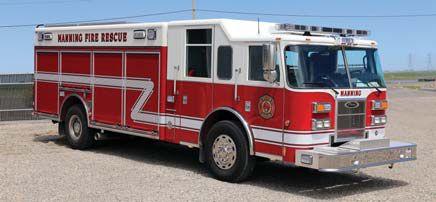
Built on a Saber chassis, and powered by a 450-hp Cummins engine and an Allison 3000 transmission, this unit features a portable winch, three hitch receivers, an Onan 30-kilowatt generator, roof storage hatch compartments, and a Wil-Burt light tower.
DEPARTMENT: Manning & District Fire Department, Alberta
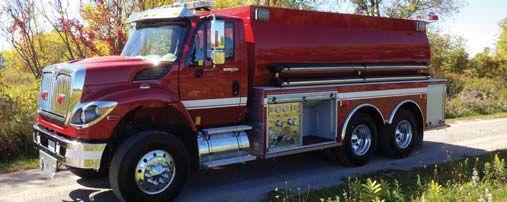
Built on an International 7500 chassis, and powered by a 350-hp MaxxForce engine and an Allison 3000 transmission, this unit features a 750-gpm Hale pump and a 3,000-imperial-gallon water tank.
DEPARTMENT: Edwardsburgh Cardinal Fire Department, Ontario
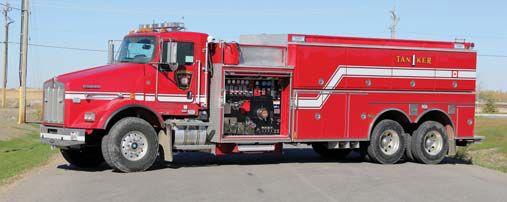
This unit was built on a Kenworth chassis, and is powered by a 500-hp Cummins engine and an Allison 4000 transmission. It features a 750-gpm Hale pump, a Husky 300 foam system, a 3,000-gallon water tank, a slide-out pump operator platform and a Warn portable winch.
DEPARTMENT: Cenovus Energy, Alberta
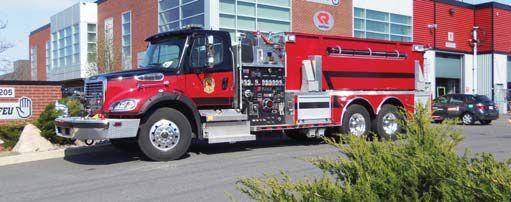
Built on a Freightliner M2-112 chassis, and powered by a Detroit Diesel 450hp engine and an Allison 4000 transmission, this unit features a 1,050-igpm Rosenbauer pump, a Rosenbauer EZ-Foam system, a 2,000-imperial-gallon water tank, and a high-pressure monitor and hose reel.
DEPARTMENT: Hemmingford Fire Service, Québec
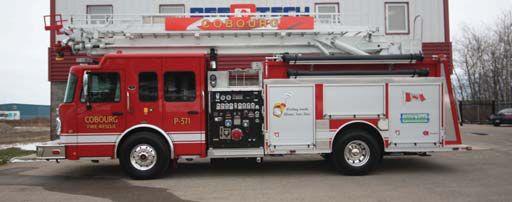
Built on a Spartan MetroStar chassis, and powered by a 450-hp Cummins engine and an Allison 3000 transmission, this unit features a 1,500-gpm Hale pumper, a 633-gallon water tank, a Marathon 13,000-watt generator, and a Vulcan wireless monitor.
DEPARTMENT: Cobourg Fire Department, Ontario
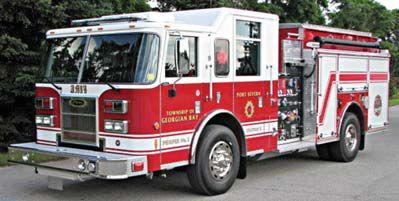
Built on a Saber chassis, and powered by a Cummins 450-hp engine and an Allison 3000 transmission, this unit features a 1,500-gpm Waterous pump, a Husky foam system and a 1,000-gallon water tank.
DEPARTMENT: The Township of Georgian Bay Fire Department, Ontario
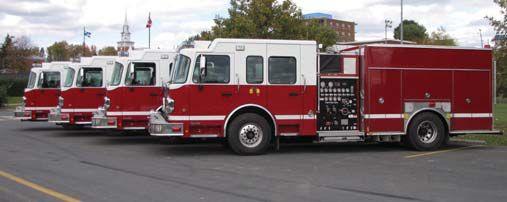
Built on a Spartan MetroStar chassis, and powered by a 450-hp Cummins engine and an Allison 3000 transmission, this unit features a 1,250-igpm Waterous pump, a 750-imperial-gallon water tank, and a VMUX multiplex system.
DEPARTMENT: Halifax Regional Fire & Emergency, Nova Scotia
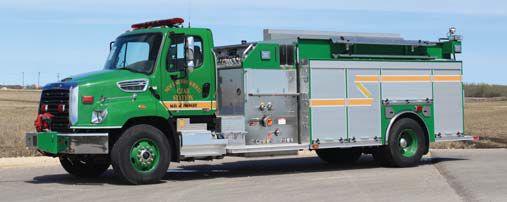
Built on a Freightliner 114 chassis, and powered by a 450-hp Detroit engine and an Allison 4000 transmission, this unit features a 1,320-gpm Darley pump, a 1,500-imperial-gallon water tank, a secondary 350-igpm pump, a front 12-volt bumper turret, a 12-volt, 61-metre (200-foot) hose reel, and an electric PortaTank rack.
DEPARTMENT: Czar Fire Department, Alberta
HUB FIRE ENGINES & EQUIPMENT LTD.
PO Box 10, 3175 McCallum Rd., Abbotsford, BC V2T 6Z4
Tel: 604-859-3124
Fax: 604-859-5821
Toll Free: 1-888-611-2896
e-mail: info@hubfire.com website: www.hubfire.com
Sales: Harvey Goodwin Parts: Linda Welsh and Joe Sward
Canada’s oldest fire apparatus manufacturer with a full parts facility and on site mobile service.

275 Gouin St., PO Box 2980, Richmond, QC J0B 2H0
Tel: 819-826-5971
Fax: 819-826-5195
Toll Free: 1-888-821-3121
e-mail: info@innotexprotection.com
website: www.innotexprotection.com
Kerin Sparks, Director of Sales - North America
INNOTEX® INC. is a North American leader in the development, manufacturing and distribution of high quality firefighter suits certified to NFPA 1971 and CGSB 155.1. INNOTEX® also manufactures NFPA 1971 compliant gloves and hoods.

JORDAIR COMPRESSORS INC.
101-7950 Huston Road, Delta, BC V4G 1C2
Tel: 604-940-8101
Fax: 604-940-8131
Toll Free: 1-800-940-8101
e-mail: info@jordair.ca
website: www.jordair.ca
Sean Rowand
Jordair is an ISO 9001-2008 accredited company founded in 1973 for the production of compression systems. Jordair offers a diverse range of standard and engineered compressed air and gas systems for specialized applications. Proudly Canadian, Jordair has supplied over 5,000 breathing air and gas compressors to a variety of Canadian and global clients. Jordair is the exclusive Canadian agent for Bauer Kompressoren GmbH of Munich, Germany. Jordair products set the industry standard in safety and reliability. Jordair/Bauer compressor systems are the number one choice for the Fire Departments, Diving and the Military in Canada.
CANADA INC. – Angus Fire Division
340 Four Valley Drive, Vaughan, ON L4K 5Z1
Tel: 905-695-6060
Fax: 905-660-4670
Toll Free: 1-800-667-0423
website: www.kiddecanada.com
Contact Us: Western Canada Sales – Gary Darling ext 6261 (Gary.Darling@kiddecanada.com), Ontario, Manitoba & Atlantic Sales – Jeremy Laviolette ext 6075 (Jeremy.Laviolette@kiddecanada.com), Quebec Sales – Marcel Demers ext 6264 (Marcel.Demers@kiddecanada.com), Business Support and Information – Mike Calderone ext 6070 (Mike.Calderone@kiddecanada.com), Inside Sales & Customer Service – Barry Coldwell ext 6245 (Barry.Coldwell@kiddecanada,com).
The legacy of Angus Fire goes back over 200 years. Tradition, combined with innovation has allowed Angus to become the world leader in the manufacture of fire fighting equipment.Canada’s first choice in high quality hoses and foam products, the Angus Fire brand offers performance second-to-none, while Kidde Canada’s sales and technical support team ensure the legendary Angus Fire service level is maintained to the highest industry standards.
3131 Autumn Hill Crescent, Burlington, ON L7M 1Z3
Tel: 416-948-6124
Fax: 905-592-1999
Cell: 416-948-6124
e-mail: lkenyon@kochek.com
website: www.kochek.com
Laura Kenyon, Regional Sales Manager
At Kochek, we take pride in manufacturing only the finest quality strainers, fittings, adapters, suction hose systems and other specialty equipment to meet a wide variety of water transfer needs. Our Canadian warehouse is now well stocked to expedite shipments across the country. Laura Kenyon looks forward to the opportunity to assist your industry or fire department in protecting the lives and homes in your community. For more information about Kochek products contact Laura and please remember to check our website regularly for new information being added to help you in your fight against fires.
14935 County Road 2, PO Box 269, Ingleside, ON K0C 1M0
Tel: 1-866-445-3473
Fax: 613-537-9449
Toll Free: 1-866-445-3473
One Industrial Complex, Nesquehoning, PA 18240-1499
Tel: 570-669-5132
Fax: 570-669-5124
Toll Free: 1-800-235-3928
e-mail: kme@kovatch.com website: www.kovatch.com
Apparatus Sales
KME is a true sole source manufacturer of a full range of custom apparatus. We’ve grown to be the largest privately owned fire truck manufacturer in the nation by meeting the needs of departments worldwide with a wide range of cab and body configurations. KME offers over 300 custom cab styles, a wide range of commercial chassis, and fire bodies constructed from aluminum, galvannealed steel or stainless. KME is the leader in custom design for pumpers, rescues, tankers, wildland, and the largest family of aerials in the fire service.
e-mail: markp@mnlsupply.com website: www.mnlsupply.com
Mark Prendergast, President HOW CAN WE HELP MAKE YOUR JOB EASIER CHIEF? How’s this - 10 Sales People (combined sales backgrounds of 185 years, as well as combined firefighting backgrounds of 315 years). When equipment is damaged in hostile environments we have 4 Factory Certified Technicians (combined service background of 49 years, combined Firefighter background of 102 years) to get you up and running. CHIEF ARE YOU STILL THINKING?
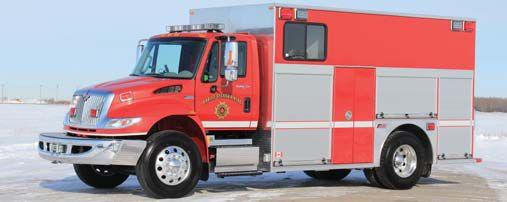
Built on an International 4400 chassis, and powered by a 330-hp MaxxForce engine and an Allison 3000 transmission, this unit features a 15-kilowatt PTO generator and a 12-volt Hannay cable reel.
DEPARTMENT: Sables-Spanish Rivers Fire Department, Ontario
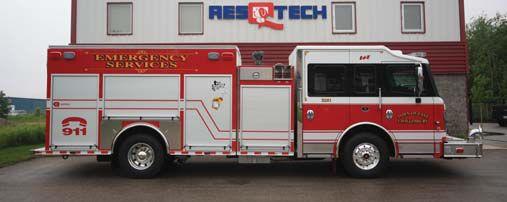
This unit was built on a Rosenbauer Commander chassis, and is powered by a 400-hp Cummins engine and an Allison 3000 transmission. It features a 1,500gpm Waterous pump, a 900-gallon water tank, a FoamPro foam system, driver and officer side vista screens, an Elkhart Cobra monitor and a Rosenbauer EZ Climb ladder.
DEPARTMENT: East Gwillimbury Emergency Services, Ontario
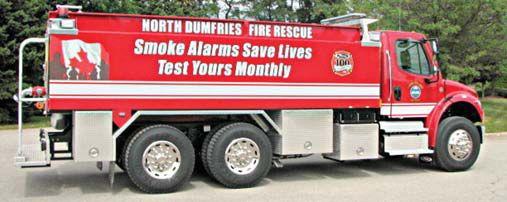
This unit features a 500-gpm Darley pump and a 3,000-gallon water tank. It was built on a Freightliner chassis, and is powered by a Cummins 330-hp engine and an Allison 3000 transmission.
DEPARTMENT: North Dumfries Fire Department, Ontario
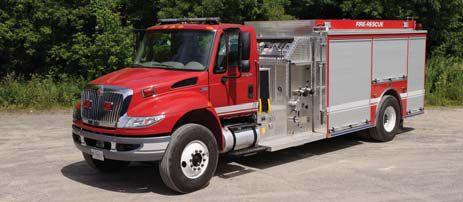
Built on an International chassis, and powered by a 330-hp MaxxForce engine and an Allison 3000 transmission, this unit features a 1,100-gpm Hale pump, a 30-imperial-gallon foam cell, Amdor
and a
DEPARTMENT: North Stormont Fire Services, Ontario
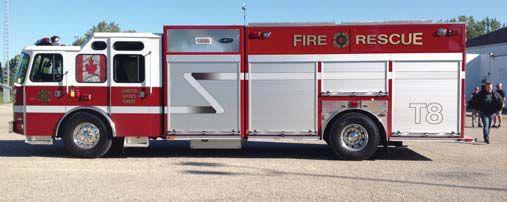
Built on a Typhoon chassis, and powered by a 450-hp Cummins engine and an Allison 3000 transmission, this unit features a 1,250-gpm Hale pump, a FoamPro foam system, a 1,280-gallon water tank, an enclosed rear pump chute, and enclosed ground ladders, pike poles and Porta-Tank.
DEPARTMENT: Lambton Shores Forest Fire Department, Ontario
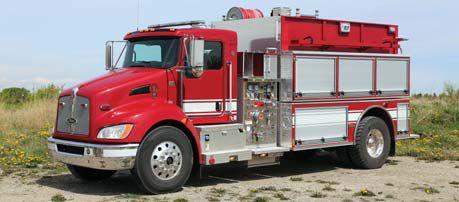
Built on a Kenworth chassis, and powered by a 380-hp Paccar engine and an Allison 3000 transmission, this unit features a 1,000-gpm Darley pump, a Husky 3 foam system, a 2,200-gallon water tank, a Zico portable tank rack, a booster hose reel, electronic stability control and a 25-centimetre (10-inch) Newton manual control rear dump valve.
DEPARTMENT: Okotoks Fire Department, Alberta
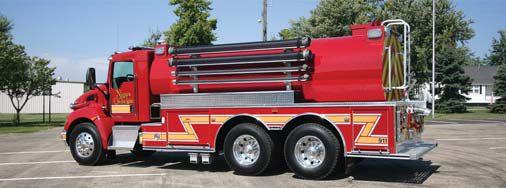
Built on a Kenworth chassis, and powered by a 380-hp Paccar engine and an Allison 300 transmission, this unit features a Darley pump, a 3,000-gallon water tank, 25-centimetre (10-inch) Newton dumps, pre-connected hose trays, and a ZICO electric portable drop tank carrier.
DEPARTMENT: Niagara-on-the-Lake Fire & Emergency Services, Ontario
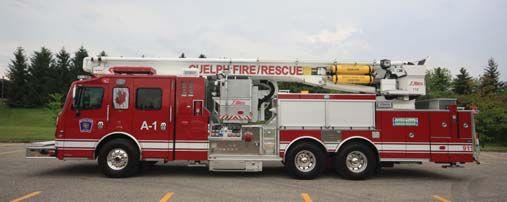
Built on a Rosenbauer Commander chassis, and powered by a 550-hp Cummins engine and an Allison 4000 transmission, this unit features a GreenStar lithium battery system, a 2,000-gpm Hale pump, a 300-gallon water tank, a FoamPro foam system, a 10-kilowatt Onan generator, a TFT Monsoon monitor, side and rear
DEPARTMENT: Guelph Fire Department, Ontario
MERCEDES TEXTILES LTD.
5838 Cypihot, Ville St. Laurent, QC H4S 1Y5
Tel: 514-335-4337
Fax: 514-335-9633
e-mail: info@mercedestextiles.com
website: www.mercedestextiles.com
Robert L. Richardson, President, W.S. (Scott) Fraser, Canadian Sales, Claude Berube, Quebec Sales
A “100% CANADIAN” Manufacturer of “High Performance” water delivery products for the Municipal, Forestry, Industrial, Airport, and Military Fire Services.
FIRE HOSE:
attack fire hose on the market. Weighs less, kinks less, and flows more water.
couplings, designed for improved “firefighter safety” during interior suppression.
couplings, designed to greatly assist firefighters during LDH deployment and retrieval applications.
light weight, stress reducing fire hose.
through 6” hose diameters (specific products)
PORTABLE FIRE PUMPS: applications.
OUR CANADIAN DISTRIBUTORS:
METALFAB LTD.
847 Central St., Centreville, NB E7K 2E8
Tel: 506-276-4551
Fax: 506-276-3648
Toll Free: 1-800-561-0012
e-mail: rastacey@metalfabfiretrucks.com website: www.metalfabfiretrucks.com
Ryan A. Stacey, CET, Sales & Marketing Manager Canadian manufacturer of customized Fire Department Pumpers, Tankers and Rescue Vehicles.
3-304 Stone Rd. W., Guelph, ON N1G 4W4
Tel: 519-763-9955
Fax: 519-763-6682
e-mail: john@metzfirerescue.com
website: www.metzfirerescue.com
John Metz
Canadian dealer for KME Fire Apparatus. Specializing in custom and commercial pumpers, aerial, rescue, tankers and wildland units.
PO Box 524, 901 Commerce Road, Luverne, MN 56156
Tel: 507-283-9141
Fax: 507-293-9142
Toll Free: 1-800-344-2059
e-mail: bjmwf@iw.net
website: www.MidwestFire.com
Brett Jensen
Midwest Fire specializes in manufacturing Tankers (Tenders) and Tanker-Pumpers for fire departments world-wide. We are based in Luverne, MN - the heart of the midwest and North America. Since 1987, we’ve been in the business of serving one specific purpose: MOVING water for Fire Fighters like you. We don’t claim to be all things to all people, but we are proud of the reputation we’ve built by our commitment to being the best in everything that we do. Midwest Fire – We specialize in MOVING water.
MSA – The Safety Company
5535 Eglinton Ave. W., Ste. 222, Toronto, ON M9C 5K5
Tel: 416-620-2533
Fax: 416-620-9697
Toll Free: 1-800-MSA-9010
e-mail: MSAInsideSales@msasafety.com website: www.MSAFire.com
Ashley Gaworski, Integrated Marketing Specialist, US and Canada
At MSA, our business is safety. We’ve been the world’s leading manufacturer of high-quality fire/ rescue and safety products since 1914, providing sophisticated devices and protective gear - the result of countless R&D hours, relentless testing, and an unwavering commitment to quality that saves lives and protects thousands of men and women each day. Our core product focus emphasizes Cairns® head, eye, face, hearing and communications protection, FireHawk® Breathing Apparatus and respiratory protective equipment, fall protection and rescue products, Altair® portable gas detection instruments and Galaxy Test Systems, and Evolution® Thermal Imaging Cameras. We believe that every life has a purpose, so we’ve made it our mission to ensure everyone goes home safely. For more information, please visit our website at www.MSAFire.com or call inside sales at 1-800-MSA-9010.
c/o Firehall BookStore, PO Box 530, 105 Donly Dr. S., Simcoe, ON N3Y 4N5
Fax: 1-877-624-1940
Toll Free: 1-877-267-FIRE (3473)
e-mail: firehallbookstore@annexweb.com website: www.firehallbookstore.com Canadian distributor for NFPA products.
555 Lordship Blvd., Stratford, CT 06615-7124
Tel: 203-377-0777
Fax: 203-380-0441
Toll Free: 1-800-766-7768
e-mail: onspot@onspot.com website: www.onspot.com
Patrick D. Freyer, President
This system permanently fastens to the vehicle’s rear suspension and allows the operator to engage and disengage tire chains at the flip of a dashboard switch without stopping, to enhance traction and braking in forward or reverse.
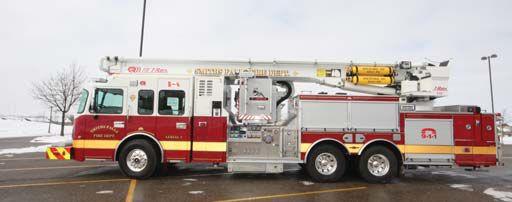
This unit features a 35-metre (115-foot) articulating platform, 2,000-gpm Hale pump, a 300-gallon water tank, a FoamPro foam system, Elkhart electric valves, a six-kilowatt Onan generator, a TFT Monsoon monitor, side and rear cameras, and driver and officer vista screens. It was built on a Spartan Gladiator chassis, and is powered by a 525-hp Caterpillar engine and an Allison 4000 transmission.
DEPARTMENT: Smith Falls Fire Department, Ontario
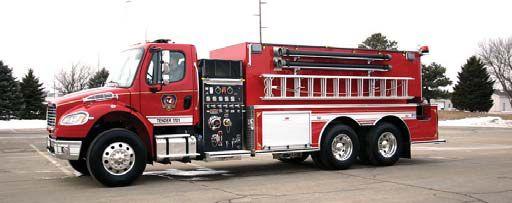
Built on a Freightliner M2-106 chassis, and powered by a 350-hp Cummins engine and an Allison 3000 transmission, this unit features a Darley pump, a 3,000-gallon water tank, 25-centimetre (10-inch) Newton dumps, a hose bed, and a portable drop tank carrier.
DEPARTMENT: Grand Prairie Fire Department, Alberta
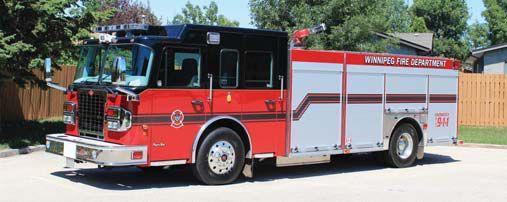
Built on a Spartan MetroStar chassis, and powered by a 380-hp Cummins engine and an Allison 3000 transmission, this unit features a 1,540-gpm Hale pump, a FoamPro foam system, a 600-imperial-gallon water tank, an independent front air-ride suspension, heated fresh air intake, an Akron electronic monitor, and an LED Shadow Command light.
DEPARTMENT: Winnipeg Fire Department, Manitoba
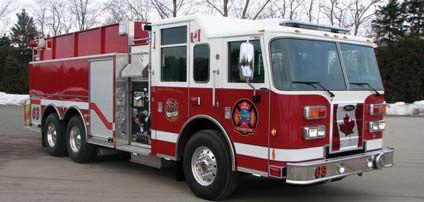
This unit features a 1,250-gpm Waterous pump and a 2,500-gallon water tank. It was built on a Saber chassis, and is powered by a Cummins 450-hp engine and an Allison 3000 transmission.
DEPARTMENT: Clearview Fire and Emergency Services, Ontario
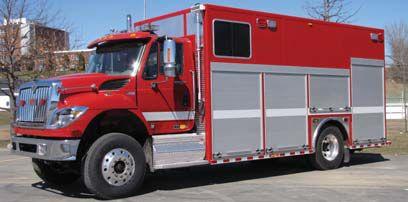
Built on an International 7500 chassis, and powered by a 350-hp MaxxForce engine and an Allison 3000 transmission, this unit features a 250-imperialgallon water tank and a VMUX multiplex system.
DEPARTMENT: Thunder Bay Fire Rescue, Ontario
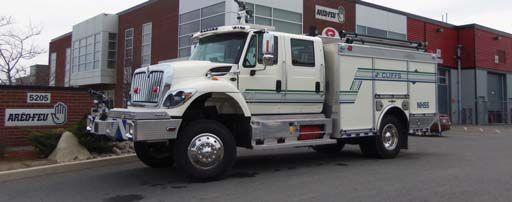
This unit features a 1,050-igpm high pressure Rosenbauer pump, a Rosenbauer CAFS system, an A & B FoamPro 2001 foam system, an 830-imperial-gallon water tank, a bullet-proof windshield, two monitors and two hose reels. It was built on an International 7400 chassis, and is powered by a MaxxForce 315-hp engine and an Allison 3000 transmission.
DEPARTMENT: Cliffs Natural Resources, Québec
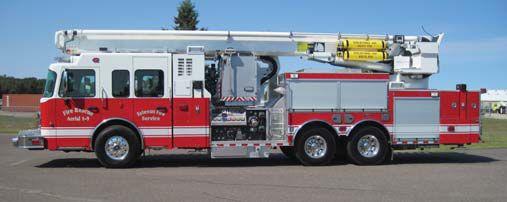
Built on a Spartan Gladiator chassis, and powered by a 525-hp Caterpillar engine and an EVS-4000 transmission, this unit features a 1,750-igpm Hale pump, a FoamPro foam system, a 250-imperial-gallon water tank, a (114foot) CAN-bus articulating platform, a 10-kilowatt Onan hydraulic generator, a Federal Signal siren, and a Whelen warning light package.
DEPARTMENT: Estevan Fire Rescue, Saskatchewan
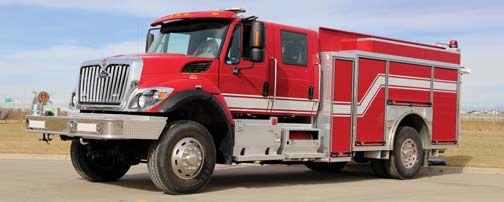
This unit features a 1,250-gpm Waterous pump, a Husky 3 foam system, a 1,000-gallon water tank, an enclosed pump operator panel, roll-up doors, and a gas generator mounted on a slide-out tray. It was built on an IHC chassis, and is powered by a 300-hp MaxxForce engine and an Allison 3000 transmission.
DEPARTMENT: Grand Prairie Fire Department, Alberta
1397 Old Hwy. 99, Dundas, ON L9H 5E3
Tel: 905-628-3324, Cell: 905-577-3471
Fax: 905-627-0521
Toll Free: 1-800-474-6698
e-mail: sales@ontariofiretruck.com website: www.ontariofiretruck.com
Wayne Robillard
Ontario Fire Truck Inc. is Ontario’s first choice for Fire Apparatus Service & Sales. We are your first and only call for Fire Apparatus Service, Sales & Testing! We offer you the finest repairs in the industry; we offer a 24 hour, 7 days a week service. All of our service staff is fully licensed Class “A” & “T” both provincially and EVT certified. We are fully insured and have over 30 years experience combined to provide the best service at your location. Our fully stocked mobile service trucks travel all over Ontario! Why take your truck anywhere, we come to you for both Service and Testing! “You’re Test Site or Our Mobile Pump Test Trailer” Our Sales staff has over 60 years combined experience in the fire industry, we offer only the finest fire apparatus, and Our Company believes only the best will do! We are the authorized sales and Service Company for many fire apparatus and equipment companies. “The bitterness of poor quality remains, long after the sweetness of low price is forgotten”
10 Central Ave., Lancaster, NY 19086
Tel: 716-683-7413
Fax: 716-683-6578
Toll Free: 1-888-514-0083
e-mail: chick@pactoolmounts.com
website: www.pactoolmounts.com
Anthony Granito, Rick Gurney
Performance Advantage (PAC) is the worldwide supplier of tool mounts and PACTRAC to emergency services. Look for us at www.pactoolmounts.com Dealers throughout Canada.
PO Box 2017, Appleton, WI 54912-2017
Tel: 920-832-3231
Fax: 920-832-3084
website: www.piercemfg.com
Pierce Manufacturing Inc., an Oshkosh Corporation [NYSE: OSK] company, is the leading North American manufacturer of custom fire apparatus. Products include custom and commercial pumpers, aerials, rescue trucks, wildland trucks, mini pumpers, elliptical tankers, and homeland security apparatus. In addition, Pierce designs its own foam systems and was the first company to introduce frontal airbags and the Side Roll Protection system to fire apparatus. To learn more about Pierce, visit www.piercemfg.com.
Head Office: 6415 Golden West Ave., Red Deer, AB T4P 3X2
Tel: 403-347-7045
Fax: 403-347-7049
Toll Free: 1-800-494-4210
e-mail: info@rockymountainphoenix.com
website: www.rockymountainphoenix.com
BRANCHES: 103-2285 Queen St., Abbotsford, BC V2T 6T3
Tel: 604-864-7303
Fax: 604-864-4938
Toll Free: 1-888-815-0500
320 Logan Rd., Bridgewater, NS B4V 3J8
Tel: 902-298-0415
Rocky Mountain Phoenix is a leader in the supply of vehicle solutions, products and services to the emergency response and fire combat industry. Your complete source for MSA SCBA, Thermal Imaging, Protective Clothing, Suppression Tools and Equipment. Visit our online catalogue at www.rockymountainphoenix.com
189 Bysham Park Drive, Woodstock, ON N4T 1P1
Tel: 519-539-0645
Fax: 519-539-0646
Toll Free: 1-800-363-7370
e-mail: resqtech@resqtech.com
website: www.resqtech.com
Brian Innis
ResQtech Systems Inc has been serving satisfied customers in the fire industry since 1985, offering a complete line of fire apparatus and fire fighting equipment. As the Ontario Rosenbauer Dealer, ResQtech has a large selection of custom fire apparatus available for your next purchase including: Pumpers, Rescues, Hazmat, Platforms, Aerials and Specialized Vehicles. ResQTech is the exclusive dealer of Interspiro SCBA, Phoschek Foam, Junkyard Dog Stabilization Struts, Ram Fan PPV Fans and is the master dealer for Elkhart Brass Products in Ontario. A variety of other products are available at ResQtech, including but not limited to, helmets, bunker gear, portable and hand lights, hose, foam, nozzles, monitors, mounting brackets and much more.Utilizing 26 years of knowledge and experience in the fire industry, ResQtech is able to provide its customers with a complete line of firefighting solutions that meet their every need.
9200 - 5 ave., Ville Saint-Georges, QC G5Y 2A9
Tel: 418-226-4961
Fax: 418-221-6147
Toll Free: 1-888-666-4961
e-mail: info@securitrim.ca website: www.securitrim.com
David Russell
Securitrim 2002 is a specialized supplier of both 3M and Reflexite microprismatic reflective sheeting for commercial and emergency vehicle graphics. Brighter graphics enhance motorist safety and is now mandated by law for Fire apparatus. Securitrim 2002 is marketing
Rpoints
for installation over diamond checker plate. Microprismatic custom made one piece pre-striping is now available in easy to install sheets, excellent for full rear coverage.
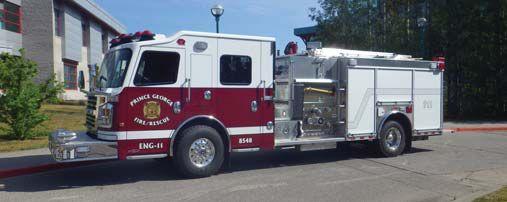
This unit features a 1,500-igpm Hale pump, a FoamPro foam system, a 418-imperial-gallon water tank, a Rosenbauer Lo-Pro hydraulic ladder rack, a Federal Signal Q siren, and a Whelen electronic siren and LED warning lights. It was built on a Rosenbauer Commander chassis, and is powered by a 370hp Cummins engine and an EVS-3000 transmission.
DEPARTMENT: Prince George Fire Rescue, British Columbia
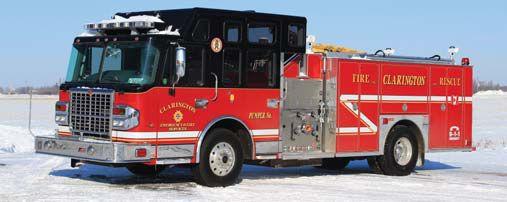
This unit features a 1,050-igpm Hale pump, a 500-gallon water tank and a FoamPro foam system. It was built on a Spartan Gladiator chassis and is powered by a 400-hp Cummins engine and an Allison 3000 transmission.
DEPARTMENT: Clarington Emergency and Fire Services, Ontario
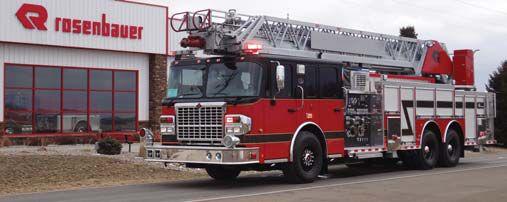
This unit features a 1,250-igpm Hale Q-Max pump, a 500-imperial-gallon water tank, a 33.2-metre hot dipped galvanized steel (109-foot) ladder, an LCD backup camera and a 15-kilowatt PTO generator. It was built on a Spartan Gladiator chassis, and is powered by a Cummins 500-hp engine and an Allison 4000 transmission.
DEPARTMENT: Marieville Fire Department, Québec
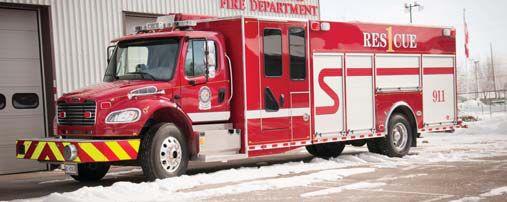
This unit features a 10-kilowatt Smart Power generator, a Command Light LED light tower, an SCBA cylinder cascade system, compartment-mounted hydraulic reels, front-, side- and rear-mounted cameras with integrated recorders. It was built on a Freightliner chassis, and is powered by a 350-hp Cummins engine and an Allison 3000 transmission.
DEPARTMENT: West Perth Fire Department, Ontario
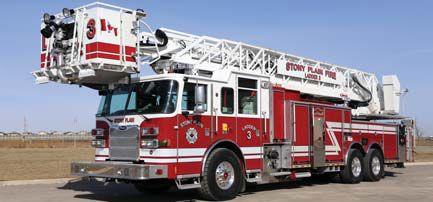
This unit features a 1,500-gpm Pierce pump, a Husky 12 foam system, a 300-gallon water tank, a 30-metre (100-foot) Sky Arm articulating platform aerial, TAK-4 independent front suspension, side-roll and frontal impact protection packages, a Safety Vision perimeter surveillance system, and Onspot automatic tire chains.
DEPARTMENT: Stony Plain Fire Department, Alberta
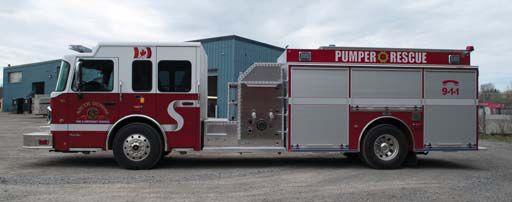
Built on a Spartan MetroStar chassis, and powered by a 330-hp Cummins engine and an Allison 3000 transmission, this unit features a 1,100-gpm Hale pump, a FoamLogix foam system, Amdor roll-up doors, a Whelen LED emergency light package and Hannay reels.
DEPARTMENT: South Dundas Fire & Emergency Services, Ontario
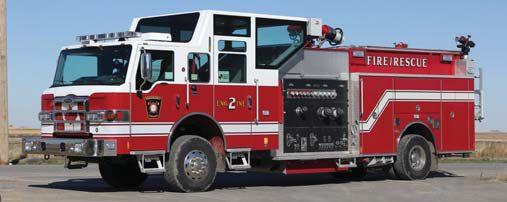
This unit was built on a Pierce chassis, and is powered by a 600-hp Cummins engine and an Allison 4000 transmission. It features a 3,000-gpm Hale pump, a Husky 60 foam system, a Hercules compressed-air foam system, a 500-gallon water tank, two TFT Monsoon remote control monitors and a Williams Ranger remote control monitor.
DEPARTMENT: Cenovus Energy, Alberta
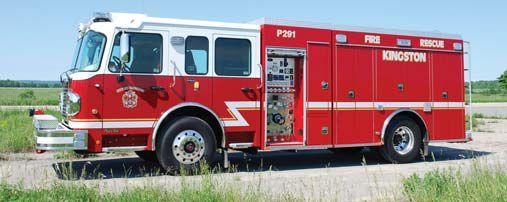
This unit features a 2,250-gpm Hale pump, a 500-imperial-gallon water tank, roll-up doors on the pump panel, a custom hose bed, and custom tool mounting. It was built on a Spartan MetroStar chassis, and is powered by a 400-hp Cummins engine and an Allison 3000 transmission.
DEPARTMENT: Kingston Fire & Rescue, Ontario

1800 Bonhill Road, Mississauga, ON L5T 1C8
Tel: 905-364-5843
Fax: 905-364-7822
e-mail: seatsinfo@seatscanada.com
website: www.seatscanada.com
Hasan Mohammed
We offer a complete line of quality Emergency Vehicle seating for driver, officer, crew, wall mount and jump seats. Engineered for comfort and safety, these seats have easy exit flip-up split headrest and are manufactured in a wide variety of covering material.

7030 Century Ave., Mississauga, ON L5N 2V8
Tel: 905-817-5990
Fax: 905-817-5992
e-mail: canada@smithsdetection.com
website: www.smithsdetection.com
Martin Hanna, 613-882-6565
Smiths Detection leads the global military and emergency response marketplace with specialized chemical, biological, radiological, nuclear and explosive (CBRNE) detection and protection solutions. Our advanced and accurate trusted solutions enable armed forces and responders to mitigate incidents with confidence as they seek to reduce risks and minimize potential losses associated with growing CBRNE threats.

(A Division of Team Eagle Ltd.)
10 Trent Dr., PO Box 670, Campbellford, ON K0L 1L0
Tel: 705-653-0775
Fax: 705-653-4732
Toll Free: 1-866-241-3264
e-mail: info@stabilitydynamics.com website: www.stabilitydynamics.com
Paul Cudmore, General Manager
Stability Dynamics produces vehicle rollover warning and data recording devices for operator training, operator awareness and vehicle monitoring applications. Our mission is to help drivers operate safely through the implementation of our products in Emergency Fire Apparatus.
1515 Sise Road, Box 5666, London, ON N6A 4L6
Tel: 519-681-3000
Fax: 519-681-1603
e-mail: debbie.fitzpatrick@stihl.ca
website: www.stihl.ca
Debbie Fitzpatrick-rudy, Admin. Assistant, Marketing STIHL is the number one manufacturer of chain saws and cut-off saws worldwide. STIHL Limited has more than 900 authorized, full-service dealers coast to coast. STIHL products are sold only at locations where service is performed to factory specifications, including assembly, pre-delivery inspection, operational information and any maintenance requirement. These specialists are the most knowledgeable in the industry and are always there for you.
23 Benton Road, Toronto, ON M6M 3G2
Tel: 416-789-4354
Fax: 416-789-5475
Toll Free: 1-800-473-5553
e-mail: infostarfield-lion@lionprotects.com website: www.starfieldlion.com
Robert Hosselet, National Sales Manager; Francesca Solano, Marketing & Merchandising Co-ordinator; Rosanne Kalenuik, Administrative Manager; Scott Coleman, Regional Sales Mgr., Western Canada. Fire Fighter and Emergency Responder Protective Clothing:
firefighter clothing
We build:
* Bunker Gear
* Fire Retardant Station Clothing
150 Pony Drive, Newmarket, ON L3Y 7B6
Tel: 905-898-0031 Ext. 4918
Fax: 905-898-0035
Toll Free: 1-800-668-0600 Ext. 4918
e-mail: shaywood@spectrumed.com website: www.healthcare.spectrum-nasco.ca
Stacey Haywood, Health Care Catalogue Director Spectrum Nasco is pleased to provide Firefighters with quality training aides for the important work that you do. We manufacture high quality manikins for use in simulation, from Rescue Randy, to water rescue manikins to the new high functioning SMART (Scenario-Based Medically Advanced Resuscitation Trainer) STAT manikin that can run completely wireless through a battery pack in the leg. The trainer runs the scenarios through a pocket PC and can run up to 6 manikins at one time. The SMART STAT is economically priced and is approximately one third of the price of comparable manikins on the market. Please contact Stacey Haywood for more information.
* Coveralls
* Wildland Fire Fighting Garments and much more For information on availability or to obtain our full-line catalogue, please contact us today at 1-800-473-5553
TASK FORCE TIPS, INC.
3701 Innovation Way, Valparaiso, IN 46383-9327
Tel: 219-462-6161
Fax: 219-464-7155
Toll Free: 1-800-348-2686
e-mail: sales@tft.com website: www.tft.com
Rod Carringer, VP of Sales and Marketing; Jim Menkee, National Sales Mgr.; Brian Podsiadlik, Cdn. Mgr.
Please contact our local authorized Distributor for all your fire suppression needs: K & D Pratt, Ltd. - 800-563-9595 (Maritime and Atlantic)
ABC Fire & Safety - 800-665-1250 (Winnipeg, MB)
Bolvin & Gavin, Inc. - 800-463-1590 (L’Ancienne-Lorette, QC)
M&L Fire & Safety - 886-445-3473 (Ingleside, ON)
Superior Safety - 800-465-6822 (Thunder Bay, ON)
WFR - 800-561-0400
(BC, AB, SK, YT, NWT, NT)
TASK FORCE TIPS, INC.
3701 Innovation Way Valparaiso, IN 46383
Jim Menkee, National Sales Manager
Brian Pods, Canadian Manager
We go the extra mile to give you personalized service that is second to none. Technical assistance is available 24/7 from knowledgeable staff with many years of fire service experience. If you should require service or repair of a product, we maintain a 24 hour in house turn-a-round on all equipment. Providing the best service to our customers is not just a goal, it’s our way of doing business every day.
Email: sales@tft.com
Website: www.tft.com
Toll Free: +1-800-348-2686
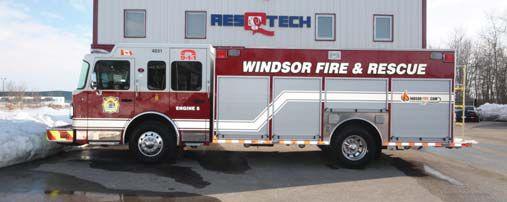
This unit features a 1,250-gpm Waterous pump, a 750-gallon water tank, a FoamPro foam system, Akron electric valves, a 20-kilowatt Onan generator, driver-, officer- and pump panel-mounted vista screens. It was built on a Spartan MetroStar chassis, and is powered by a 400-hp Cummins engine and an Allison 300 transmission.
DEPARTMENT: Windsor Fire & Rescue Services, Ontario
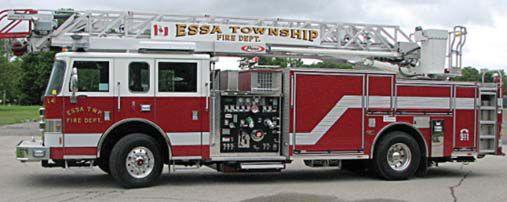
This unit was built on a Saber chassis, and is powered by a Cummins 400-hp engine and an Allison 3000 transmission. It features a 1,500-gpm Hale pump a 500-gallon water tank and a 22.9-metre (75-foot) aluminum ladder.
DEPARTMENT: The Township of Essa Fire Department, Ontario
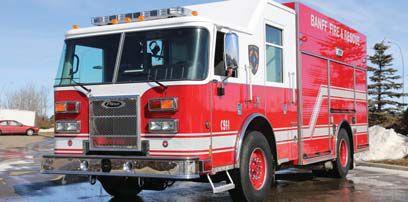
This unit features roll-up compartment doors, a Wil-Burt light tower, a high-pressure foam system, a 150-gallon water tank, an 18-bottle SCBA storage rack, two vertical tool drawers, 12 adjustable compartment shelves, two two-way slide-out tool boards, and two slide-out trays. It was built on a Saber chassis, and is powered by a 400-hp Cummins engine and an Allison 3000 transmission.
DEPARTMENT: Banff Fire Department, Alberta
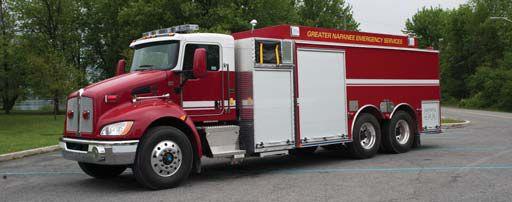
Built on a Kenworth chassis, and powered by a 380-hp Cummins engine and an Allison 3000 transmission, this unit features a 1,100-gpm Hale pump, a 2,500-imperial-gallon water tank, a Husky Porta-Tank, a 20-imperial-gallon foam tank, Amdor roll-up doors, a Whelen LED emergency light package and Newton dump valves.
DEPARTMENT: Greater Napanee Emergency Services, Ontario
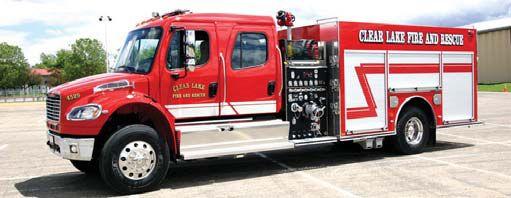
This unit features a Waterous pump, a 1,000-gallon water tank, an aluminum Alco-lite ladder, a monitor and a hose bed. It was built on a Freightliner M2-106 chassis, and is powered by a 350-hp Cummins engine and an Allison 300 transmission.
DEPARTMENT: Clear Lake Fire & Rescue, Minnesota
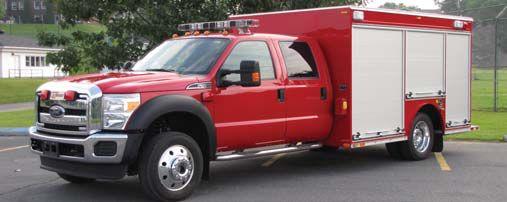
This unit features a 12-foot aluminum body length, transversal compartments, and 360 cubic feet of equipment storage space. It was built on a Ford chassis, and is powered by an automatic five-speed transmission.
DEPARTMENT: The Township of Galway-Cavendish and Harvey Fire Rescue Service, Ontario
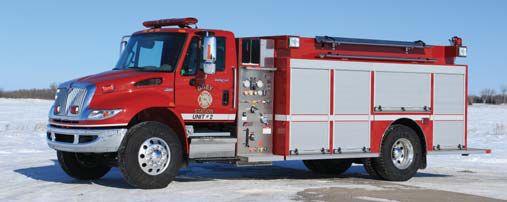
This unit features a 420-igpm Darley pump, and a 2,000-imperial-gallon water tank. It was built on an International 4400 chassis, and is powered by a 330-hp MaxxForce engine and an Allison 3000 transmission.
DEPARTMENT: Grey Township Fire Department, Ontario
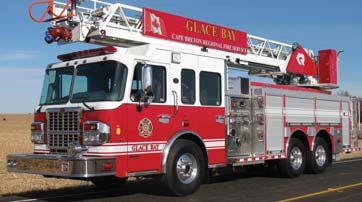
This unit features a 1,250-igpm Waterous pump, a FoamPro foam system, a 500-imperial-gallon water tank, a 24-metre (78-foot) three-section ladder, Rosenbauer Smart Aerial controls, an Akron master stream monitor, and a Whelen electronic siren. It was built on a Spartan MetroStar chassis, and is powered by a 450-hp Cummins engine and an EVS-3000 transmission.
DEPARTMENT: Glace Bay Volunteer Fire Department, Nova Scotia

EAGLE LTD. (Eagle Airfield, Eagle Integrated Solutions & Stability Dynamics)
10 Trent Dr., PO Box 670, Campbellford, ON K0L 1L0
Tel: 705-653-2956
Fax: 705-653-4732
Toll Free: 1-866-241-3264
e-mail: info@team-eagle.ca website: www.team-eagle.ca
Paul Cudmore, General Manager; Edna Barnum, Mktg. & Sales Co-Ordinator
Team Eagle Ltd. Companies provide robust technological solutions and equipment that support safer, more effective firefighting. Eagle Airfield is the best source for airport firefighting vehicles. As the Canadian representatives for Oshkosh ARFF, Oshkosh Rapid Intervention Vehicles and Danko First Response units, Eagle Airfield can provide the right equipment for your airport.Eagle Integrated Solutions provide GPS based navigation systems for firetrucks, helping firefighters respond faster while remaining safe.The EagleEye DEVS system combines a Moving Map Display with an optional Infrared Thermal Imager to give your rescue crews the information they need to safely navigate to the site of an accident, either on or off the airfield in low and no visibility conditions.Stability Dynamics produce vehicle rollover warning and data recording devices for operator training, operator awareness and vehicle monitoring applications. The LG Alert Rollover Warning System is suitable for use on any non-articulated vehicle and is particularly beneficial where the vehicle is subjected to high cornering speeds, uneven terrain, dynamic loads (such as tankers) or by design has a high centre of gravity.
125 Hardman Ave. S., South St. Paul, MN 55075
Tel: 651-450-5000
Fax: 651-450-5090
e-mail: pumpsales@waterousco.com
website: www.waterousco.com
Jim Fazekas, National Sales Mgr., USA and Canada Waterous leads the way in the fire pump suppression industry. With bold new products that will change the way we fight fires. With a full range of fire pumps, foam and CAFSystems, Portable Pumps and Pump Modules, Waterous has the fire fighting solution for any type of fire.
6635 Henri-Bourassa Ouest, Monreal, QC H4R 1E1
Tel: 514-637-5572
Fax: 514-637-3985
Toll Free: 1-800-426-5207
e-mail: info@wildfire-env.com
website: www.wildfire-environmental.com
Mark Obidniak
Our mission is to Invent, Make and Deliver comprehensive water handling solutions. Our sense of urgency when responding to emergency situations is the foundation of our reputation and is what made us the preferred choice in a field where trust matters most.
8030, 11500-35th Street S.E., Calgary, AB T2Z 3W4
Tel: 403-279-0400
Fax: 403-279-0549
Toll Free: 1-800-561-0400
Toll Free Fax: 1-888-279-1966
e-mail: inquiries@wfrfire.com website: www.wfrfire.com
James Gibson, Mark Richardson, Mathew Conte WFR is a stocking warehouse distributor as well as a manufacturer of a complete line of fire and rescue equipment, supplying Western Canadian fire departments with a full line of equipment for all their needs. We are the exclusive distributor of the Pierce line of fire trucks for Western Canada.
5746 Finch Ave., Unit 2, Scarborough, ON M1B 5R2
Tel: 416-335-0514
Fax: 416-335-0515
e-mail: unifoam@total.net
website: www.total.net/~unifoam
George Vestergom Jr.
Manufacture and development of fire fighting foams
- Alcohol Resistant, AFFF, Class A, Training Foams as well as Wetting Agents, Foam Control Agents and Fluorosurfactants.
400 Morobel Dr., #1, Milton, ON L9T 4N6
Tel: 905-878-8457
Fax: 905-878-0877
e-mail: mleslie@whelencanada.com website: www.whelencanada.com
Malcolm Leslie
Supply, installation of emergency vehicle lighting, strobe, LED & halogen light bars, NFPA vehicle lighting. We assist you with vehicle lighting specs. We also supply & install “Early Warning High Power Voice/ Siren Systems”.
10 West College Ave., PO Box 337, Yardley, PA 19067-8337
Tel: 215-493-3618
Fax: 866-493-1401
Toll Free: 1-800-711-3473
e-mail: sales@ziamatic.com
website: www.ziamatic.com
Mike Adams, Vice President - Sales Ziamatic Corp. (ZICO) was founded in 1958 with the intention of providing the men and women of the fire services industry with products that make their profession safer and easier. Over 50 years later those ideas still stand – innovative, quality products at an affordable price. If you want quality, you want ZICO.
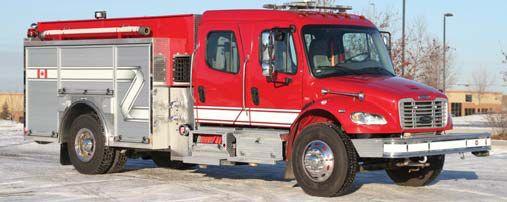
This unit features a 1,250-gpm Waterous pump, a Husky 3 foam system, a 1,000-gallon water pump, a side-control pump operator panel, a TFT Tornado remote control monitor and an electric rewind hose reel. It was built on a Freightliner M2-106 chassis, and is powered by a 360-hp Cummins engine and an Allison 3000 transmission.
DEPARTMENT: Rosalind Fire Department, Alberta
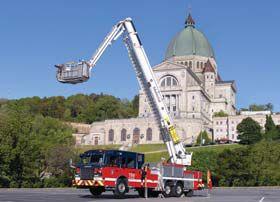
This unit features a 35-metre (115-foot) T-Rex articulating platform, a combination telescopic and articulating boom, an on-board CAN-bus electronic system and a 635-kilogram (1,400-pound) capacity. It was built on a Spartan Gladiator chassis, and is powered by a Cummins 500-hp engine and an Allison 4000 transmission.
DEPARTMENT: Service de Sécurité Incendie de Montréal, Québec
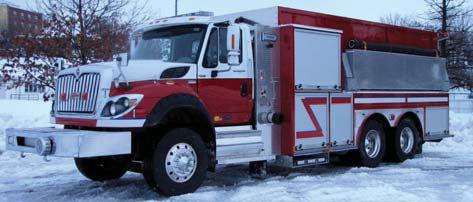
This unit featres a vacuum pump, a 3,000-gallon water tank, three heated valves, an anti-corrosion coating on the interior of the tank, and a VMUX multiplex system. It was built on an International 7600 chassis, and is powered by a 475-hp MaxxForce engine and an Allison 4500 transmission.
DEPARTMENT: Service de Sécurité Incendie de Rigaud, Québec
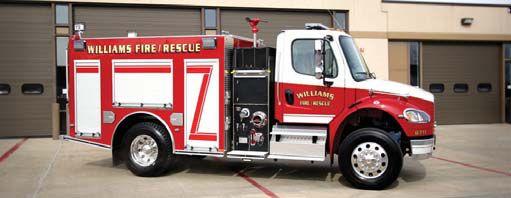
This unit features a Darley pump, a Foamlogix foam system, a 750-gallon water tank, LED lighting, a hose bed, tire chains and a deck gun. It was built on a Freightliner M2-106 chassis, and is powered by a 350-hp Cummins engine and an Allison 3000 transmission.
DEPARTMENT: Williams Fire/Rescue, Oregon
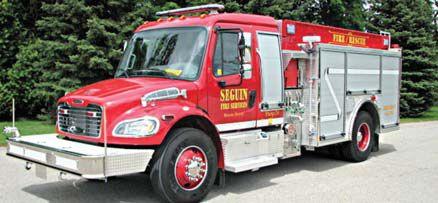
This unit was built on a Freightliner chassis, and is powered by a Cummins 360-hp engine and an Allison 3000 transmission. It features a 1,250-gpm Waterous pump, a Husky foam system and a 1,000-gallon water tank.
DEPARTMENT: Township of Seguin Fire Department, Ontario
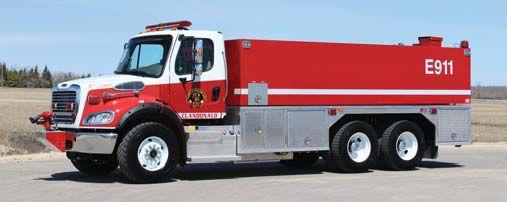
This unit features a 420-igpm Darley pump and a 3,000-imperial-gallon water tank. It was built on a Freightliner M2-112 chassis, and is powered by a 410-hp Detroit engine and an Allison 4500 transmission.
DEPARTMENT: Vermilion Fire & Rescue Department, Alberta
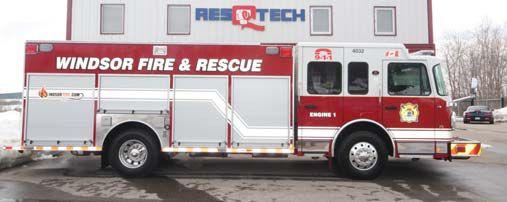
This unit features a 1,250-gpm Waterous pump, a 750-gallon water tank, a FoamPro foam system, Akron electric valves, a 20-kilowatt Onan generator, and driver-, officer-, and pump panel-mounted vista screens. It was built on a Spartan MetroStar chassis, and is powered by a 400-hp Cummins engine and an Allison 3000 transmission.
DEPARTMENT: Windsor Fire & Rescue Services, Ontario
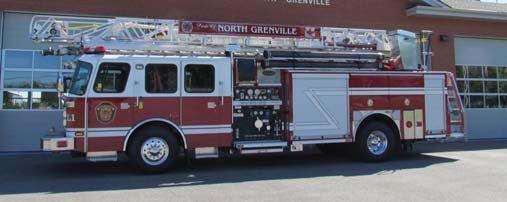
Built on a Typhoon chassis, and powered by a 450-hp Cummins engine and an Allison 3000 transmission, this unit features a 396-gpm Hale pump, a FoamPro foam system, a 300-gallon water tank, and a 24-metre (78-foot) three-section aluminum ladder.
DEPARTMENT: North Grenville Fire Service, Ontario
ALL INFORMATION contained in this apparatus directory, both product and company listings, is for the exclusive use of the purchaser and is to be used solely by the purchaser. None of the information included in this directory may be used to create, in whole or in part, any mailing list or other data compilation, in written or electronic form, that is to be sold or otherwise distributed to any third party. The purchaser may not include directory information as part of their own marketing materials. Failure to comply with these restrictions will constitute violations both of this agreement and the copyright laws of Canada. Purchase and use of this directory constitute acceptance of the restrictions set forth herein.
Although Fire Fighting In Canada magazine makes every effort to ensure the accuracy of information contained in this directory, it must rely on others over whom it has no control for certain information. Purchaser acknowledges that Fire Fighting In Canada magazine and its publishers cannot and do not guarantee or warrant that the information in the directory is complete, correct or current. Additions or corrections are invited at any time.
For more information on appearing in a future edition of the directory, please contact the publisher at 1-888-599-2228 ext. 252.
ADAPTERS
A.J. Stone
Aréo-Fire
C-Max
Canadian Safety Eqpt.
Carl Thibault Emergency
CSE Incendie
Darch Fire
Dependable
Dixon Northline
Eastway Emergency
Fort Garry
Hastings Brass
Hub Fire Engines
Kidde Canada - Angus Fire
Kochek Co., Inc.
M&L Supply
Mercedes Textiles
Metalfab
Metz Fire
Ontario Fire
ResQtech Systems
Rocky Mountain Phoenix
Task Force Tips
WFR Wholesale
Wildfire Environmental
AERIAL REPAIRS
Aréo-Fire
C-Max
Carl Thibault Emergency
Carrier Centers
CET Fire Pumps
Darch Fire
Dependable
E-One, Inc.
Eastway Emergency
Fort Garry
Metz Fire
Ontario Fire
ResQtech Systems
Rocky Mountain Phoenix
WFR Wholesale
AERIAL TESTING
Aréo-Fire
C-Max
Carl Thibault Emergency
Carrier Centers
CET Fire Pumps
Darch Fire
Dependable
Fort Garry
Metz Fire
ResQtech Systems
Rocky Mountain Phoenix
WFR Wholesale
AERIALS
Aréo-Fire
C-Max
Carl Thibault Emergency
Carrier Centers
CET Fire Pumps
Darch Fire
Dependable
E-One, Inc.
Eastway Emergency
Fort Garry
KME
Metz Fire
Ontario Fire
Pierce Manufacturing
ResQtech Systems
Rocky Mountain Phoenix
WFR Wholesale
AIRPORT
CRASH TRUCKS
Carrier Centers
Dependable
E-One, Inc.
Eastway Emergency
Fort Garry
KME
Metz Fire
Ontario Fire
ResQtech Systems
Rocky Mountain Phoenix
Stability Dynamics
Team Eagle
ALTERNATORS
C-Max
Darch Fire
Hub Fire Engines
Metalfab
Ontario Fire
Rocky Mountain Phoenix
AMBULANCES
Darch Fire
Dependable
Ontario Fire
ResQtech Systems
Rocky Mountain Phoenix
Ziamatic Corp. (ZICO)
AXLES
C-Max
Darch Fire
Dependable
Fort Garry
M&L Supply
Ontario Fire
Rocky Mountain Phoenix
BACK-UP ALARMS
C-Max
Carl Thibault Emergency
Darch Fire
Dependable
Eastway Emergency
Fort Garry
Hub Fire Engines
Metalfab
Ontario Fire
ResQtech Systems
Rocky Mountain Phoenix
WFR Wholesale
Whelen Canada
BATTERIES
Darch Fire
Ontario Fire
BELLS
C-Max
Darch Fire
Dependable
Eastway Emergency
Fort Garry
Ontario Fire
ResQtech Systems
Rocky Mountain Phoenix
BOATS
A.J. Stone
Canadian Safety Eqpt.
CSE Incendie
Darch Fire
M&L Supply
Ontario Fire
Rocky Mountain Phoenix
BRAKES
C-Max
Darch Fire
Fort Garry
Ontario Fire
BRUSH TRUCKS
A.J. Stone
CET Fire Pumps
Darch Fire
Dependable
Eastway Emergency
Fort Garry
Hub Fire Engines
KME
Metalfab
Metz Fire
Ontario Fire
ResQtech Systems
Rocky Mountain Phoenix
WFR Wholesale
Ziamatic Corp. (ZICO)
BUNKER GEAR
A.J. Stone
Canadian Safety Eqpt.
FireService Mgmt.
Globe Mfg.
Innotex
M&L Supply
ResQtech Systems
Rocky Mountain Phoenix
Starfield - Lion
WFR Wholesale
CANTEEN
Action Meals
CARGO SLIDES/TRAYS
Carl Thibault Emergency
Darch Fire
Eastway Emergency
Hub Fire Engines
Metalfab
Ontario Fire
ResQtech Systems
Rocky Mountain Phoenix
CASES – WATERPROOF
A.J. Stone
Canadian Safety Eqpt.
CSE Incendie
Darch Fire
M&L Supply
Ontario Fire
ResQtech Systems
Rocky Mountain Phoenix
CHASSIS
C-Max
Carrier Centers
Darch Fire
Dependable
Eastway Emergency
Fort Garry
Hub Fire Engines
KME
Metalfab
Ontario Fire
ResQtech Systems
Rocky Mountain Phoenix
WFR Wholesale
CO2 SYSTEMS
Kidde Canada - Angus Fire
M&L Supply
ResQtech Systems
COMMAND POSTS –MOBILE
A.J. Stone
Aréo-Fire
Canadian Safety Eqpt.
Carl Thibault Emergency
Carrier Centers
CSE Incendie
Darch Fire
Dependable
Eastway Emergency
Fort Garry
Hub Fire Engines
KME
Metalfab
Metz Fire
Ontario Fire
ResQtech Systems
Rocky Mountain Phoenix
WFR Wholesale
COMMERCIAL LAUNDRY
EQUIPMENT
A.J. Stone
COMMUNICATIONS
EQUIPMENT – ON-BOARD
Aréo-Fire
Canadian Safety Eqpt.
CSE Incendie
Ontario Fire
ResQtech Systems
Rocky Mountain Phoenix
Stability Dynamics
Team Eagle
WFR Wholesale
COMPARTMENT DOORS
C-Max
Carl Thibault Emergency
Darch Fire
Dependable
Eastway Emergency
Fort Garry
Hub Fire Engines
Metalfab
Ontario Fire
ResQtech Systems
Rocky Mountain Phoenix
WFR Wholesale
COMPARTMENT FLOORING
Aréo-Fire
C-Max
Carl Thibault Emergency
Darch Fire
Dependable
Eastway Emergency
Fort Garry
Hub Fire Engines
Metalfab
Ontario Fire
ResQtech Systems
Rocky Mountain Phoenix
COMPARTMENT LIGHTING
C-Max
Canadian Safety Eqpt.
Carl Thibault Emergency
CSE Incendie
Darch Fire
Dependable
Eastway Emergency
Fort Garry
Hub Fire Engines
Metalfab
Metz Fire
Ontario Fire
ResQtech Systems
Rocky Mountain Phoenix
WFR Wholesale
COMPRESSED AIR FOAM SYSTEMS
A.J. Stone
Aréo-Fire
C-Max
Canadian Safety Eqpt.
Carl Thibault Emergency
CET Fire Pumps
CSE Incendie
Darch Fire
Dependable
Eastway Emergency
Fort Garry
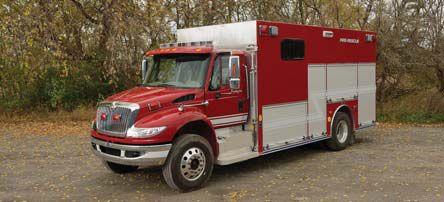
This unit features a (18.5-foot) walk-in body, interior SCBA seating for six people, an HVAC system, a fridge, a 15-kilowatt drive generator, dual Holmatro reels and two Hannay electric reels. It was built on an IHC chassis, and is powered by a 330-hp MaxxForce engine and an Allison 3000 transmission.
DEPARTMENT: North Glengarry Fire Department, Ontario
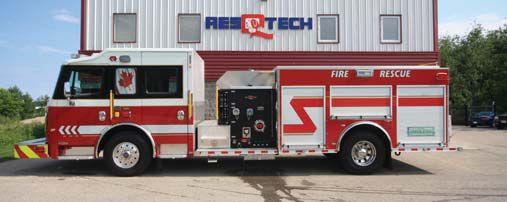
This unit features 1,500-gpm pump, an 800-gallon water tank, a Rosenbauer foam system, integrated seat communication systems, a Rosenbauer EZ Climb ladder, and a Rosenbauer ultra high-pressure system with 61 metres (200 feet) of hose. It was built on a Rosenbauer Commander chassis, and is powered by a 450-hp Cummins engine and an Allison 3000 transmission.
DEPARTMENT: Prescott Fire Service, Ontario
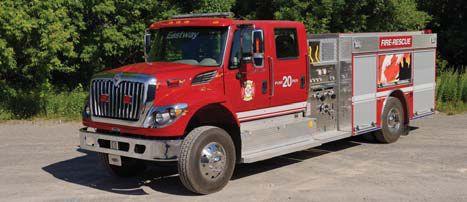
This unit was built on an International chassis, and is powered by a 330-hp MaxxForce engine and an Allison 3000 transmission. It features a 1,100-gpm Hale pump, a FoamLogix foam system, an 800-imperial-gallon water tank, a Whelen LED emergency light package and Amdor roll-up doors.
DEPARTMENT: Nalcor Energy, Newfoundland and Labrador
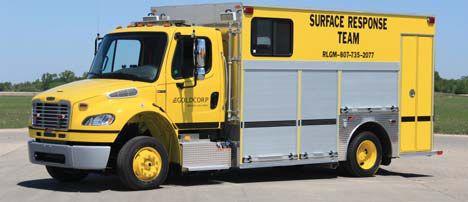
This unit features four SCBA seats, a specialty drawer system, a Honda generator and Motorola radios. It was built on a Freightliner M2-106 engine, and is powered by a 300-hp Cummins engine and an Allison 3000 transmission.
DEPARTMENT: Goldcorp Inc., Ontario
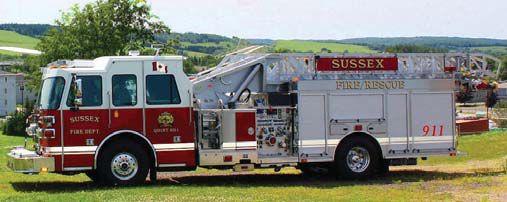
This unit was built on a Sutphen chassis, and is powered by a 450-hp Cummins engine and an Allison 4000 transmission. It features a 1,750-gpm Hale pump, a FoamPro foam system, a 500-gallon water tank, a 23-metre (75foot) aerial ladder, a camera system, FRC lighting, an Alcolite ladder package, a Stokes basket and mount, and a Whelen LED emergency light package.
DEPARTMENT: Sussex Fire Department, New Brunswick
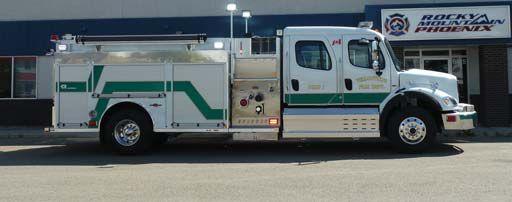
This unit features an 880-gpm Waterous pump, a Waterous Pneumax compressed-air foam system, a FoamPro foam system, a 1,500-imperial-gallon water tank, a Rosenbauer EZ-Climb rear-access ladder, and a Federal Signal back-up camera and monitor. It was built on a Freightliner M2-112 chassis, and is powered by a 450-hp Detroit engine and an EVS-4000 transmission.
DEPARTMENT: Yellowknife Fire Division, Northwest Territories
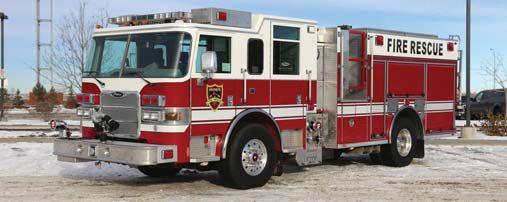
This unit was built on a Pierce chassis, and is powered by a 455-hp Detroit engine and an Allison 4000 transmission. It features a 1,500-gpm Pierce pump, a Husky 12 foam system, a 750-gallon water tank, a TAK-4 independent front suspension, a frontal-impact and side-roll protection package, and a TFT Tornado remote control monitor.
DEPARTMENT: Invermere Fire Rescue, British Columbia
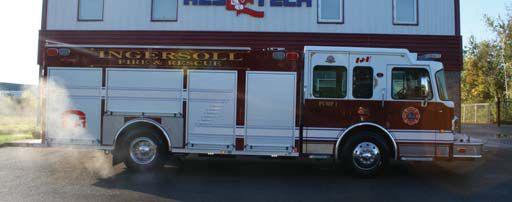
This unit was built on a Spartan MetroStar chassis, and is powered by a 380hp Cummins engine and an Allison 3000 transmission. It features a 1,250-hp Waterous pump, a 500-imperial-gallon water tank, driver and officer side vista screens, a Command Light light tower, a Rosenbauer EZ Climb ladder, and a Rosenbauer SCBA roll-out and down mounting system.
DEPARTMENT: Ingersoll Fire and Emergency Services, Ontario
Hub Fire Engines
M&L Supply
Metalfab
Metz Fire
Ontario Fire
ResQtech Systems
Rocky Mountain Phoenix
Waterous
WFR Wholesale
COMPRESSORS
A.J. Stone
Aréo-Fire
C-Max
Canadian Safety Eqpt.
CSE Incendie
Darch Fire
Dependable
Eastway Emergency
Fort Garry
Hub Fire Engines
Jordair Compressors
M&L Supply
Metalfab
Ontario Fire
ResQtech Systems
Rocky Mountain Phoenix
WFR Wholesale
COMPUTER MOUNTS
Darch Fire
Dependable
Hub Fire Engines
M&L Supply
Ontario Fire
ResQtech Systems
Rocky Mountain Phoenix
WFR Wholesale
Whelen Canada
COMPUTER SOFTWARE
FDM Software
M&L Supply
Ontario Fire
COMPUTERS
– APPARATUS MOUNTED
Ontario Fire
ResQtech Systems
Rocky Mountain Phoenix
WFR Wholesale
Whelen Canada
CONSULTING
– VEHICLE INSPECTION
C-Max
Ontario Fire
ResQtech Systems
Rocky Mountain Phoenix
Whelen Canada
CORROSION CONTROL
C-Max
Fort Garry
ResQtech Systems
CRIBBING
A.J. Stone
C-Max
Canadian Safety Eqpt.
Carl Thibault Emergency
CSE Incendie
Darch Fire
Dependable
M&L Supply
Ontario Fire
ResQtech Systems
A.J. Stone
C-Max
Carl Thibault Emergency
Darch Fire
Dependable
Eastway Emergency
Fort Garry
Hub Fire Engines
M&L Supply
Metalfab
Ontario Fire
ResQtech Systems
Rocky Mountain Phoenix
WFR Wholesale
DECK MONITORS
A.J. Stone
Akron Brass Company
C-Max
Canadian Safety Eqpt.
Carl Thibault Emergency
CSE Incendie
Darch Fire
Dependable
Eastway Emergency
Fort Garry
Hub Fire Engines
M&L Supply
Metalfab
Ontario Fire
ResQtech Systems
Rocky Mountain Phoenix
Task Force Tips
WFR Wholesale
DECONTAMINATION SYSTEMS
A.J. Stone
Canadian Safety Eqpt.
CSE Incendie
Darch Fire
Kidde Canada - Angus Fire
M&L Supply
ResQtech Systems
Rocky Mountain Phoenix
DETECTION SYSTEMS
A.J. Stone
Canadian Safety Eqpt.
CSE Incendie
M&L Supply
ResQtech Systems Smiths Detection
DOCK LIGHTS
A.J. Stone
Canadian Safety Eqpt.
CSE Incendie
Fort Garry
M&L Supply
Ontario Fire
Whelen Canada
DRY CHEMICAL SYSTEMS
A.J. Stone
Canadian Safety Eqpt.
CSE Incendie
Fort Garry
Kidde Canada - Angus Fire
M&L Supply
Ontario Fire
ResQtech Systems
Rocky Mountain Phoenix
WFR Wholesale
Carl Thibault Emergency
CSE Incendie
Darch Fire
Dependable
Eastway Emergency
Fort Garry
Hub Fire Engines
M&L Supply
Metalfab
Metz Fire
Ontario Fire
ResQtech Systems
Rocky Mountain Phoenix
WFR Wholesale
Ziamatic Corp. (ZICO)
ELECTRIC THROTTLES
Aréo-Fire
C-Max
Carl Thibault Emergency
Darch Fire
Dependable
Eastway Emergency
Fort Garry
Hub Fire Engines
M&L Supply
Metalfab
Metz Fire
Ontario Fire
ResQtech Systems
Rocky Mountain Phoenix
WFR Wholesale
ELECTRICAL SERVICE/REPAIR
C-Max
Carl Thibault Emergency
Carrier Centers
Darch Fire
Dependable
Eastway Emergency
Fort Garry
Hub Fire Engines
M&L Supply
Metz Fire
Ontario Fire
Rocky Mountain Phoenix
WFR Wholesale
Whelen Canada
ENGINE BRAKE
C-Max
Darch Fire
Eastway Emergency
Fort Garry
M&L Supply
Ontario Fire
ResQtech Systems
ENGINE GOVERNOR SYSTEMS
C-Max
Carl Thibault Emergency
Darch Fire
Eastway Emergency
Fort Garry
M&L Supply
Metalfab
Ontario Fire
ResQtech Systems
Rocky Mountain Phoenix
FITTINGS
A.J. Stone
Aréo-Fire
C-Max
Canadian Safety Eqpt.
Carl Thibault Emergency
CSE Incendie
Darch Fire
Dependable
Dixon Northline
Eastway Emergency
Fort Garry
Hastings Brass
Hub Fire Engines
Kidde Canada - Angus Fire
Kochek Co., Inc.
M&L Supply
Metalfab
Ontario Fire
ResQtech Systems
Rocky Mountain Phoenix
Task Force Tips
WFR Wholesale
FLOORING – NON-SKID
A.J. Stone
Darch Fire
Dependable
Hub Fire Engines
Metalfab
Ontario Fire
ResQtech Systems
FLOWMETERS
A.J. Stone
Aréo-Fire
C-Max
Canadian Safety Eqpt.
Carl Thibault Emergency
CSE Incendie
Darch Fire
Dependable
Eastway Emergency
Fort Garry
Hub Fire Engines
M&L Supply
Metalfab
Ontario Fire
ResQtech Systems
Rocky Mountain Phoenix
WFR Wholesale
FOAM SYSTEMS
A.J. Stone
Aréo-Fire
C-Max
Canadian Safety Eqpt.
Carl Thibault Emergency
CET Fire Pumps
CSE Incendie
Darch Fire
Dependable
Eastway Emergency
Fort Garry
Hub Fire Engines
Kidde Canada - Angus Fire
M&L Supply
Mercedes Textiles
Metalfab
Ontario Fire
Pierce Manufacturing
ResQtech Systems
Rocky Mountain Phoenix
Eastway Emergency
Fort Garry
M&L Supply
FUEL ADDITIVES
Ontario Fire
GENERATOR GOVERNOR SYSTEMS
Canadian Safety Eqpt.
CSE Incendie
Dependable
Eastway Emergency
Fort Garry
Hub Fire Engines
M&L Supply
Metalfab
Ontario Fire
ResQtech Systems
GENERATORS
A.J. Stone
Canadian Safety Eqpt.
Carl Thibault Emergency
CSE Incendie
Darch Fire
Dependable
Eastway Emergency
Fort Garry
Hub Fire Engines
M&L Supply
Metalfab
Ontario Fire
ResQtech Systems
Rocky Mountain Phoenix
WFR Wholesale
GROUND LADDER INSPECTIONS
C-Max
CET Fire Pumps
Dependable
M&L Supply
Rocky Mountain Phoenix
WFR Wholesale
HAZARDOUS
MATERIALS UNITS
Aréo-Fire
Carl Thibault Emergency
Darch Fire
Dependable
Eastway Emergency
KME
M&L Supply
Metz Fire
Ontario Fire
ResQtech Systems
Rocky Mountain Phoenix
WFR Wholesale
HEADSETS
A.J. Stone
Canadian Safety Eqpt.
CSE Incendie
Darch Fire
Eastway Emergency
Fort Garry
M&L Supply
Ontario Fire
ResQtech Systems
WFR Wholesale
ENGINES
Carrier Centers
DUMP VALVES
Rocky Mountain Phoenix
WFR Wholesale
A.J. Stone
Aréo-Fire
C-Max
Canadian Safety Eqpt.
EXHAUST
EXTRACTION
Air Technology
ResQtech Systems
Unifoam Co.
Waterous
WFR Wholesale
Wildfire Environmental
FRAME REPAIRS
C-Max
Carl Thibault Emergency
Carrier Centers
Dependable
Rocky Mountain Phoenix
WFR Wholesale
HORNS
A.J. Stone
C-Max
Carl Thibault Emergency
Darch Fire
Dependable
Eastway Emergency
Fort Garry
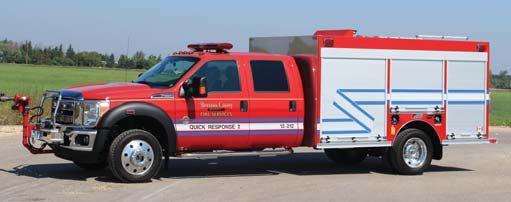
This unit features an 87-gpm Waterax pump, a Scotty foam system, a 300-gallon water tank, an Akron bumper turret, a Federal signal light package, and FRC scene lights. It was built on a Ford F-550 chassis, and is powered by a diesel engine and a six-speed automatic transmission.
DEPARTMENT: Brazeau County Fire Services, Alberta
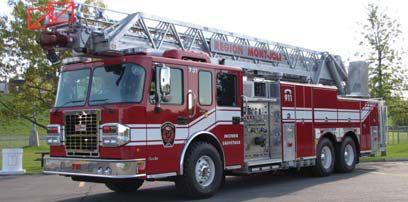
This unit was built on a Spartan MetroStar chassis, and is powered by a 450hp Cummins engine and an Allison 3000 transmission. It features a 1,050-igpm Hale pump, a 300-imperial-gallon water tank, a 33-metre (109-foot) four-section ladder, a 5,000-watt Honda generator and a VMUX multiplex system.
DEPARTMENT: Mont Joli Fire Department, Québec
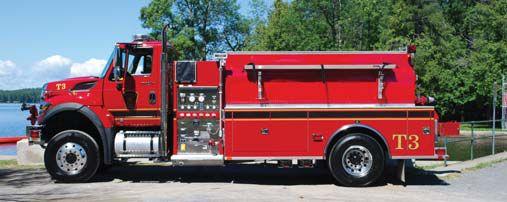
This unit was built on an International 7400 chassis, and is powered by a 330hp MaxxForce engine and an Allison 3500 transmission. It features a 1,000gpm Hale pump, a 1,800-gallon water tank, front monitor control and LED lighting.
DEPARTMENT: Ramara Fire and Rescue Service, Ontario
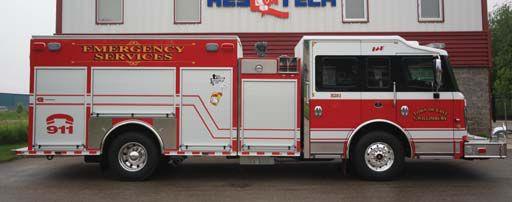
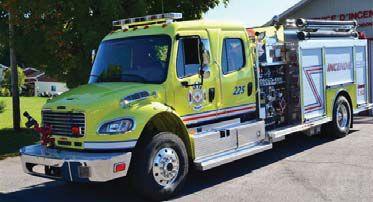
This unit was built on a Freightliner M2-106 chassis, and is powered by a Cummins 300-hp engine and an Allison 3000 transmission. It features a 1,050igpm Rosenbauer pump, a Rosenbauer EZ-Foam system, a 1,500-imperialgallon water tank, a front monitor, an automatic primer and a hose reel.
DEPARTMENT: St-Gabriel-de-Brandon Fire Department, Québec
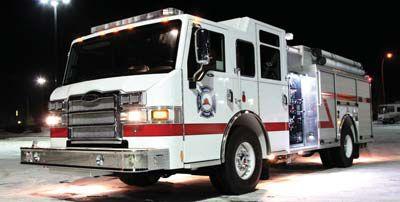
This unit was built on a Pierce chassis, and is powered by a 370-hp Cummins engine and an Allison 3000 transmission. It features a 1,500-gpm Waterous pump, a Husky 3 foam system, a 1,000-gallon water tank, a side-control pump house, and a Pierce Command Zone control system.
DEPARTMENT: Gibsons & District Volunteer Fire Department, British Columbia
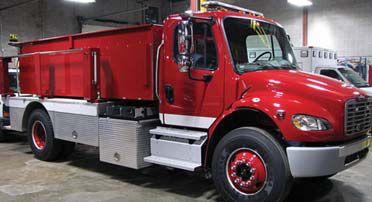
This unit features a 500-gpm Darley
on a
DEPARTMENT:
a
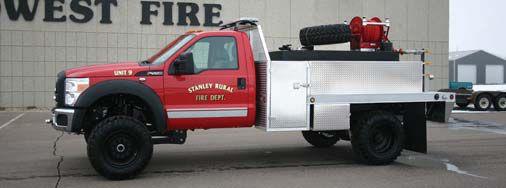
DEPARTMENT:
DEPARTMENT: East
M&L Supply
Ontario Fire
ResQtech Systems
Rocky Mountain Phoenix
Whelen Canada
HOSES & ACCESSORIES
A.J. Stone
Aréo-Fire
C-Max
Canadian Safety Eqpt.
Carl Thibault Emergency
Circul-Air Corp.
CSE Incendie
Darch Fire
Dependable
Dixon Northline
Eastway Emergency
Fort Garry
Hub Fire Engines
Kidde Canada - Angus Fire
Kochek Co., Inc.
M&L Supply
Mercedes Textiles
Ontario Fire
ResQtech Systems
Rocky Mountain Phoenix
WFR Wholesale
Wildfire Environmental Ziamatic Corp. (ZICO)
INDUSTRIAL TRUCKS –IN-PLANT
CET Fire Pumps
Darch Fire
Dependable
E-One, Inc.
Hub Fire Engines
Ontario Fire
ResQtech Systems
Rocky Mountain Phoenix
WFR Wholesale
INSTRUMENT PANELS
Aréo-Fire
C-Max
Canadian Safety Eqpt.
Carl Thibault Emergency
CSE Incendie
Darch Fire
M&L Supply
ResQtech Systems
Rocky Mountain Phoenix
WFR Wholesale
INTERCOMS
A.J. Stone
C-Max
Carl Thibault Emergency
Darch Fire
Eastway Emergency
Fort Garry
Hub Fire Engines
M&L Supply
MSA
Ontario Fire
ResQtech Systems
Rocky Mountain Phoenix
WFR Wholesale
INTERFACE VEHICLES
Darch Fire
Fort Garry
Hub Fire Engines
Metalfab
Ontario Fire
ResQtech Systems
Rocky Mountain Phoenix
WFR Wholesale
LADDER ACCESS SYSTEM
A.J. Stone
C-Max
Canadian Safety Eqpt.
Carl Thibault Emergency
CSE Incendie
Dependable
Eastway Emergency
Fort Garry
Hub Fire Engines
Metalfab
Ontario Fire
ResQtech Systems
WFR Wholesale
Ziamatic Corp. (ZICO)
LDH HARDWARE
A.J. Stone
C-Max
Darch Fire
Dixon Northline
Eastway Emergency
Fort Garry
Hastings Brass
Hub Fire Engines
Kidde Canada - Angus Fire
Kochek Co., Inc.
M&L Supply
Mercedes Textiles
Metz Fire
Ontario Fire
ResQtech Systems
Rocky Mountain Phoenix Task Force Tips
WFR Wholesale
LEASE/PURCHASE FINANCING
A.J. Stone
Carrier Centers
Darch Fire
Dependable
E-One, Inc.
Eastway Emergency
Fort Garry
M&L Supply
Ontario Fire
ResQtech Systems
Rocky Mountain Phoenix
WFR Wholesale
LIGHT CONTROL SYSTEMS
A.J. Stone
Akron Brass Company
Aréo-Fire
C-Max
Canadian Safety Eqpt.
Carl Thibault Emergency
CSE Incendie
Darch Fire
Dependable
Eastway Emergency
Fort Garry
M&L Supply
Metalfab
Ontario Fire
ResQtech Systems
Rocky Mountain Phoenix
WFR Wholesale
Whelen Canada
LIGHTS – BARS/STROBES
A.J. Stone
Aréo-Fire
C-Max
Canadian Safety Eqpt.
Carl Thibault Emergency
Carrier Centers
CSE Incendie
Darch Fire
Dependable
Eastway Emergency
Hub Fire Engines
M&L Supply
Metalfab
Ontario Fire
ResQtech Systems
Rocky Mountain Phoenix
WFR Wholesale
Whelen Canada
LIGHTS – FLOOD
A.J. Stone
Aréo-Fire
C-Max
Canadian Safety Eqpt.
Carl Thibault Emergency
CSE Incendie
Darch Fire
Dependable
Eastway Emergency
Fort Garry
Hub Fire Engines
M&L Supply
Metalfab
Ontario Fire
ResQtech Systems
Rocky Mountain Phoenix
WFR Wholesale
Whelen Canada
LIGHTS – WARNING
A.J. Stone
Akron Brass Company
Aréo-Fire
C-Max
Canadian Safety Eqpt.
Carl Thibault Emergency
CSE Incendie
Darch Fire
Dependable
Eastway Emergency
Fort Garry
Hub Fire Engines
M&L Supply
Metalfab
Ontario Fire
ResQtech Systems
Rocky Mountain Phoenix
WFR Wholesale
Whelen Canada
MASTS – TELESCOPING
A.J. Stone
Aréo-Fire
C-Max
Carl Thibault Emergency
Darch Fire
Dependable
Eastway Emergency
Fort Garry
Hub Fire Engines
M&L Supply
Metalfab
Ontario Fire
ResQtech Systems
Rocky Mountain Phoenix
WFR Wholesale
Whelen Canada
MINI-PUMPERS
A.J. Stone
Aréo-Fire
Carl Thibault Emergency
Carrier Centers
CET Fire Pumps
Darch Fire
Dependable
Eastway Emergency
Fort Garry
Hub Fire Engines
KME
M&L Supply
Metalfab
Metz Fire
Ontario Fire
Pierce Manufacturing
ResQtech Systems
Rocky Mountain Phoenix
WFR Wholesale
MONITORS
A.J. Stone
Aréo-Fire
C-Max
Canadian Safety Eqpt.
Carl Thibault Emergency
CSE Incendie
Darch Fire
Dependable
Eastway Emergency
Fort Garry
Hub Fire Engines
Kidde Canada - Angus Fire
M&L Supply
Metalfab
Ontario Fire
ResQtech Systems
Rocky Mountain Phoenix
Task Force Tips
WFR Wholesale
N.D.T. INSPECTIONS
C-Max
Carl Thibault Emergency
CET Fire Pumps
Rocky Mountain Phoenix
NOZZLES
A.J. Stone
Akron Brass Company
Canadian Safety Eqpt.
Darch Fire
Dependable
Eastway Emergency
Hastings Brass
M&L Supply
Metalfab
Ontario Fire
ResQtech Systems
Rocky Mountain Phoenix
Task Force Tips
WFR Wholesale
PEDESTALS – COMPUTER & RADIO
Darch Fire
Ontario Fire
Rocky Mountain Phoenix
PIPED-IN WATERWAYS
Carl Thibault Emergency
Darch Fire
Dependable
Eastway Emergency
Fort Garry
M&L Supply
Ontario Fire
ResQtech Systems
Rocky Mountain Phoenix
PORTABLE EXTINGUISHERS
A.J. Stone
Aréo-Fire
C-Max
Canadian Safety Eqpt.
Carl Thibault Emergency
CSE Incendie
Dependable
Eastway Emergency
Fort Garry
Kidde Canada - Angus Fire
M&L Supply
Ontario Fire
ResQtech Systems
Rocky Mountain Phoenix
PORTABLE FOAM UNITS
A.J. Stone
Canadian Safety Eqpt.
Darch Fire
Dependable
Eastway Emergency
M&L Supply
Ontario Fire
ResQtech Systems
Rocky Mountain Phoenix
Task Force Tips
WFR Wholesale
PORTABLE MONITORS
A.J. Stone
Akron Brass Company
Aréo-Fire
C-Max
Canadian Safety Eqpt.
Carl Thibault Emergency
CSE Incendie
Darch Fire
Dependable
Eastway Emergency
Fort Garry
Hub Fire Engines
Kidde Canada - Angus Fire
M&L Supply
Metalfab
Ontario Fire
ResQtech Systems
Rocky Mountain Phoenix
Task Force Tips
WFR Wholesale
PUMP ACCESSORIES
A.J. Stone
Aréo-Fire
C-Max
Carl Thibault Emergency
Darch Fire
Dependable
Eastway Emergency
Fort Garry
Hub Fire Engines
M&L Supply
Metalfab
Metz Fire
Ontario Fire
ResQtech Systems
Rocky Mountain Phoenix
Waterous
WFR Wholesale
PUMP SERVICE & TESTING
Aréo-Fire
C-Max
Carl Thibault Emergency
Carrier Centers
Darch Fire
Dependable
Eastway Emergency
Fort Garry
Hub Fire Engines
Metalfab
Metz Fire
Midwest Fire
Ontario Fire
ResQtech Systems
Rocky Mountain Phoenix
WFR Wholesale
Wildfire Environmental
PUMPERS
A.J. Stone
Aréo-Fire
Canadian Safety Eqpt.
Carl Thibault Emergency
Carrier Centers
CSE Incendie
Darch Fire
Dependable
Fort Garry
E-One, Inc.
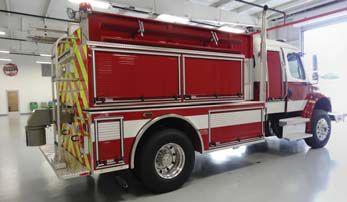
This unit was built on a Freightliner M2-106 chassis, and is powered by a 350-hp Cummins engine and an Allison 3000 transmission. It features a 1,000gpm Waterous pump, a 1,800-gallon water tank and a 25-centimetre (10-inch) manual-control rear dump valve.
DEPARTMENT: Municipal District of Willow Creek Fire Department, Alberta
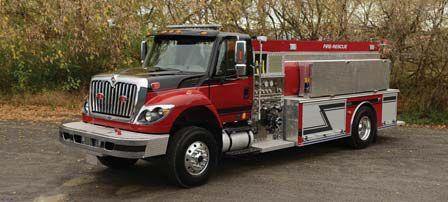
This unit featurs a 1,100-gpm Q-Flo pump, a FoamLogix foam system, a 20-gallon foam tank, a 2,000-gallon water tank, a Whelen LED emergency light package, Amdor roll-up doors and a Newton dump valve.
DEPARTMENT: Stirling-Rawdon Fire Department, Ontario
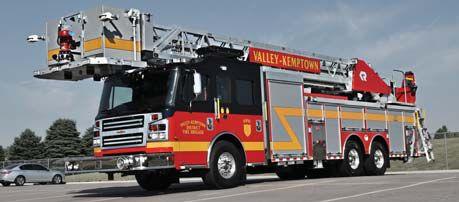
This unit was built on a Rosenbauer Commander chassis, and is powered by a 500-hp Cummins engine and an EVS-4000 transmission. It features a 1,500igpm Hale pump, a FoamPro foam system, a 420-imperial-gallon water tank, a 31-metre (101-foot) three-section ladder, Rosenbauer Smart Aerial with aerial seat command, a Federal Signal Q siren, and M6 lower LED warning lights.
DEPARTMENT: Valley Kemptown District Fire Brigade, Nova Scotia
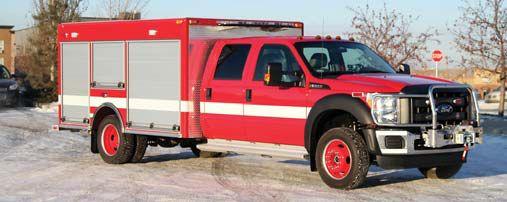
This unit features a WFR high-pressure foam system, a Warn winch, and four tow eyes. It was built on a Ford chassis, and is powered by a 300-hp Ford engine.
DEPARTMENT: Okotoks Fire Department, Alberta
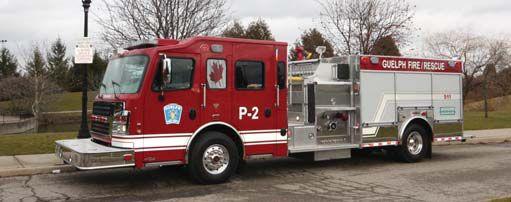
This unit was built on a Rosenbauer Commander chassis, and is powered by a 500-hp Cummins engine and an Allison 4000 transmission. It features a 1,250gpm Hale pump, a 500-gallon water tank, driver and officer side vista screens, an Elkhart Vulcan monitor, a 10-kilowatt Onan generator, and a GreenStar lithium battery system.
DEPARTMENT: Guelph Fire Department, Ontario
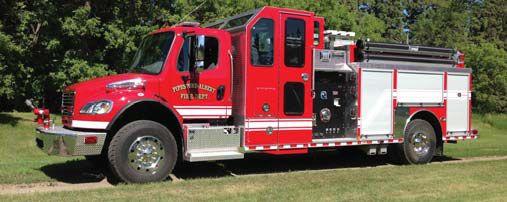
This unit was built on a Freightliner M2-106 chassis, and is powered by a 350hp Cummins engine and an EVS-3000 transmission. It features a 1,050-igpm Rosenbauer pump, a Rosenbauer FixMix foam system, a FoamPro foam system, a 1,000-gallon water tank, a Rosenbauer Lo-Pro hydraulic ladder rack, a Wil-Burt six-metre (20-foot) light tower, and a Federal Signal electric siren.
DEPARTMENT: Pipestone-Albert Volunteer Fire Department, Manitoba
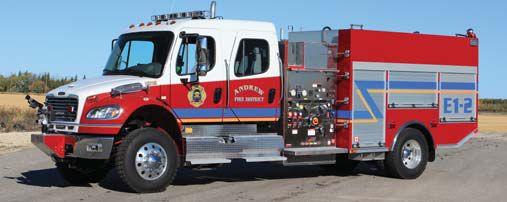
This unit features a 1,050-igpm Waterous pump, a Pneumax compressed-air foam system, a FoamPro foam system, a 500-imperial-gallon water tank, and a TFT Tornado front bumper turret. It was built on a Freightliner M2-106 chassis, and is powered by a 350-hp Cummins engine and an Allison 3000 transmission.
DEPARTMENT: Andrew Volunteer Fire Department, Alberta
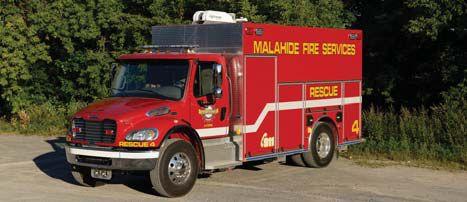
This unit was built on a Freightliner M2-106 chassis, and is powered by a 380hp Cummins engine and an Allison
and
DEPARTMENT: Malahide Fire Services, Ontario
Eastway Emergency
Fort Garry
Hub Fire Engines
M&L Supply
Metalfab
Metz Fire
Midwest Fire
Ontario Fire
Pierce Manufacturing
ResQtech Systems
Rocky Mountain Phoenix
WFR Wholesale
PUMPS – PORTABLE
A.J. Stone
Aréo-Fire
C-Max
Canadian Safety Eqpt.
Carl Thibault Emergency
Carrier Centers
CET Fire Pumps
CSE Incendie
Darch Fire
Dependable
Eastway Emergency
Fort Garry
Hub Fire Engines
Kidde Canada - Angus Fire
M&L Supply
Mercedes Textiles
Metalfab
Metz Fire
Ontario Fire
ResQtech Systems
Rocky Mountain Phoenix
Waterous
WFR Wholesale
Wildfire Environmental
PUMPS
A.J. Stone
Aréo-Fire
C-Max
Canadian Safety Eqpt.
Carl Thibault Emergency
Carrier Centers
CSE Incendie
Darch Fire
Dependable
Eastway Emergency
Fort Garry
Hub Fire Engines
M&L Supply
Metalfab
Ontario Fire
ResQtech Systems
Rocky Mountain Phoenix
Waterous
WFR Wholesale
Wildfire Environmental
REELS – ELECTRICAL
A.J. Stone
Akron Brass Company
Aréo-Fire
C-Max
Canadian Safety Eqpt.
Carl Thibault Emergency
CET Fire Pumps
Code 4 Fire
CSE Incendie
Darch Fire
Dependable
Eastway Emergency
Fort Garry
Hub Fire Engines
Metalfab
Metz Fire
Ontario Fire
ResQtech Systems
Rocky Mountain Phoenix
WFR Wholesale
Wildfire Environmental
A.J. Stone
Akron Brass Company
Aréo-Fire
C-Max
Canadian Safety Eqpt.
Carl Thibault Emergency
CET Fire Pumps
Code 4 Fire
CSE Incendie
Darch Fire
Dependable
Eastway Emergency
Fort Garry
Hub Fire Engines
Kidde Canada - Angus Fire
M&L Supply
Mercedes Textiles
Metalfab
Metz Fire
Ontario Fire
ResQtech Systems
Rocky Mountain Phoenix
WFR Wholesale
Wildfire Environmental
REFLECTIVE TAPE & MARKINGS
A.J. Stone
Aréo-Fire
C-Max
Canadian Safety Eqpt.
Carl Thibault Emergency
CSE Incendie
Darch Fire
Dependable
Eastway Emergency
Fort Garry
M&L Supply
Metalfab
Ontario Fire
ResQtech Systems
Rocky Mountain Phoenix
Securitrim 2002
REFURBISHING
C-Max
Carl Thibault Emergency
Carrier Centers
CET Fire Pumps
Darch Fire
Dependable
E-One, Inc.
Eastway Emergency
Fort Garry
Hub Fire Engines
Metalfab
Metz Fire
Ontario Fire
ResQtech Systems
Rocky Mountain Phoenix
WFR Wholesale
RESCUE TOOLS
A.J. Stone
Canadian Safety Eqpt.
Darch Fire
Footage Tools Inc.
Stihl
RESCUES
A.J. Stone
C-Max
Carl Thibault Emergency
CET Fire Pumps
Darch Fire
Dependable
E-One, Inc.
Eastway Emergency
Metz Fire
Ontario Fire
Pierce Manufacturing
ResQtech Systems
Rocky Mountain Phoenix
WFR Wholesale
ROLL-UP DOORS
C-Max
Carl Thibault Emergency
Darch Fire
Dependable
Eastway Emergency
Fort Garry
Hub Fire Engines
M&L Supply
Metalfab
Metz Fire
Ontario Fire
ResQtech Systems
Rocky Mountain Phoenix
WFR Wholesale
SALVAGE
TRUCKS
Darch Fire
Dependable
Eastway Emergency
Fort Garry
Metalfab
Ontario Fire
ResQtech Systems
Rocky Mountain Phoenix
WFR Wholesale
SAWS
A.J. Stone
Canadian Safety Eqpt.
Darch Fire
Eastway Emergency
M&L Supply
ResQtech Systems
Rocky Mountain Phoenix
Stihl
WFR Wholesale
SCBA BRACKETS
A.J. Stone
Aréo-Fire
C-Max
Canadian Safety Eqpt.
Carl Thibault Emergency
CSE Incendie
Darch Fire
Dependable
Eastway Emergency
Fort Garry
Hub Fire Engines
M&L Supply
Metalfab
Metz Fire
Ontario Fire
ResQtech Systems
Rocky Mountain Phoenix
WFR Wholesale
Ziamatic Corp. (ZICO)
SEATING
A.J. Stone
Aréo-Fire
C-Max
Canadian Safety Eqpt.
Carl Thibault Emergency
CSE Incendie
Darch Fire
Dependable
Eastway Emergency
Seats Canada
WFR Wholesale
Ziamatic Corp. (ZICO)
SIRENS
A.J. Stone
Aréo-Fire
C-Max
Canadian Safety Eqpt.
Carl Thibault Emergency
CSE Incendie
Darch Fire
Dependable
Eastway Emergency
Fort Garry
Hub Fire Engines
M&L Supply
Metalfab
Ontario Fire
ResQtech Systems
Rocky Mountain Phoenix
WFR Wholesale
Whelen Canada
SKID UNITS
A.J. Stone
Aréo-Fire
C-Max
Canadian Safety Eqpt.
Carl Thibault Emergency
Carrier Centers
CET Fire Pumps
Darch Fire
Dependable
E-One, Inc.
Eastway Emergency
Fort Garry
Hub Fire Engines
KME
M&L Supply
Metalfab
Metz Fire
Ontario Fire
ResQtech Systems
Rocky Mountain Phoenix
WFR Wholesale
Wildfire Environmental
SPEAKERS
A.J. Stone
C-Max
Carl Thibault Emergency
Darch Fire
Dependable
Eastway Emergency
Fort Garry
Hub Fire Engines
M&L Supply
Metalfab
Ontario Fire
ResQtech Systems
Rocky Mountain Phoenix
WFR Wholesale
Whelen Canada
SPEAKERS – EARLY
WARNING SYSTEMS
Darch Fire
M&L Supply
Ontario Fire
ResQtech Systems
Rocky Mountain Phoenix
WFR Wholesale
Whelen Canada
STEP CHOCKS
A.J. Stone
Dependable
Fort Garry
M&L Supply
Ontario Fire
ResQtech Systems
Rocky Mountain Phoenix
WFR Wholesale
STOP & GO LIGHTS
Aréo-Fire
Canadian Safety Eqpt.
Carl Thibault Emergency
CSE Incendie
Darch Fire
Dependable
Ontario Fire
ResQtech Systems
Rocky Mountain Phoenix
WFR Wholesale
Whelen Canada
STRAINERS
A.J. Stone
Aréo-Fire
C-Max
Canadian Safety Eqpt.
Carl Thibault Emergency
CSE Incendie
Darch Fire
Dependable
Dixon Northline
Eastway Emergency
Fort Garry
Hastings Brass
Hub Fire Engines
Kidde Canada - Angus Fire
Kochek Co., Inc.
M&L Supply
Metalfab
Ontario Fire
ResQtech Systems
Rocky Mountain Phoenix
Task Force Tips
WFR Wholesale
Wildfire Environmental
Ziamatic Corp. (ZICO)
SUSPENSION SYSTEMS
Carrier Centers
TANKERS
A.J. Stone
Carl Thibault Emergency
Carrier Centers
CET Fire Pumps
Darch Fire
Dependable
E-One, Inc.
Eastway Emergency
Fort Garry
Hub Fire Engines
KME
M&L Supply
Metalfab
Midwest Fire
Ontario Fire
Pierce Manufacturing
ResQtech Systems
Rocky Mountain Phoenix
WFR Wholesale
TANKS
A.J. Stone
Aréo-Fire
C-Max
Canadian Safety Eqpt.
Carl Thibault Emergency
Fort Garry
Hub Fire Engines
M&L Supply
Metalfab
Fort Garry
Hub Fire Engines
M&L Supply
Ontario Fire
ResQtech Systems
Rocky Mountain Phoenix
Aréo-Fire
C-Max
Canadian Safety Eqpt.
Carl Thibault Emergency
CSE Incendie
Darch Fire
CET Fire Pumps
CSE Incendie
Darch Fire
Dependable
Eastway Emergency
Fort Garry
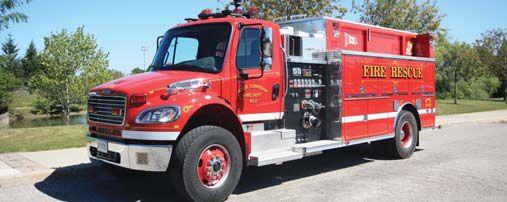
This unit was built on a Freightliner M2-106 chassis, and is powered by a 330-hp Cummins engine and an Allison 3000 transmission. It features a 1,000-gpm Darley pump, a 1,800-gallon water tank, a Rosenbauer EZ Climb ladder, a Wil-Burt light tower, and enclosed Porta-Tank storage.
DEPARTMENT: Inter-Township Fire Department, Ontario
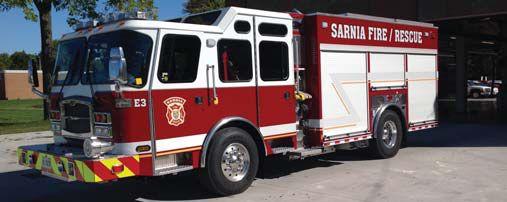
Built on a Typhoon chassis, and powered by a 450-hp Cummins engine and an Allison 3000 transmission, this unit features a 396-gpm E-One pump, a FoamPro foam system, a 780-gallon water tank, a 2.5-cubic metre (90-cubic foot) hose load and an enclosed pump module in L1.
DEPARTMENT: Sarnia Fire Rescue Services, Ontario
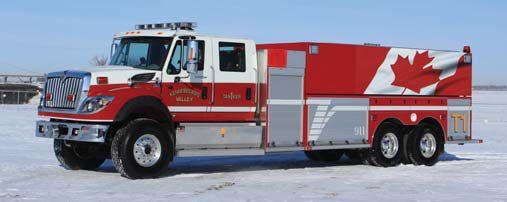
This unit was built on an International 7600 chassis, and is powered by a 410-hp MaxxForce engine and an Allison 4000 transmission. It features an 835-igpm Hale pump, a 2,450-imperial-gallon water tank, an internal ladder, Porta-Tank storage, and a Federal siren.
DEPARTMENT: Kennebecasis Valley Fire Department, New Brunswick
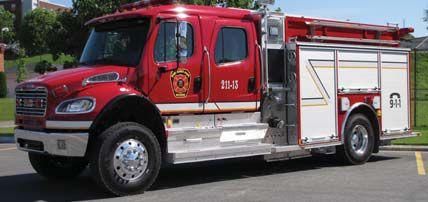
This unit was built on a Frieghtliner M2-106 chassis, and is powered by a 350-hp Cummins engine and an Allison 3000 transmission. It features a 1,250-igpm Waterous pump, an Adventus 6 foam system, an 800-imperialgallon water tank, and a VMUX multiplex system.
DEPARTMENT: Service de Protection Incendie de Baie-St-Paul, Quebec
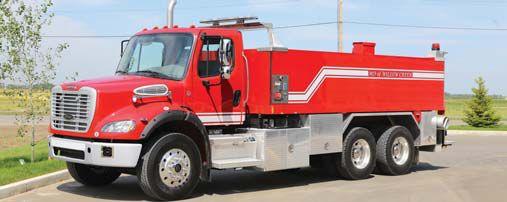
Built on a Freightliner M2-106 chassis, and powered by a 350-hp Cummins engine and an Allison 3000 transmission, this unit features a 1,000-gpm Darley pump, a 1,800-gallon water tank, a 25-centimetre (10-inch) manual-control rear dump valve, two hose reels with 30.5 metres (100-feet) of 2.5-centimetre (one-inch) hose, a TFT Tornado remote control monitor and nozzle, and a portable tank rack.
DEPARTMENT: Municipal District of Willow Creek Fire Department, Alberta
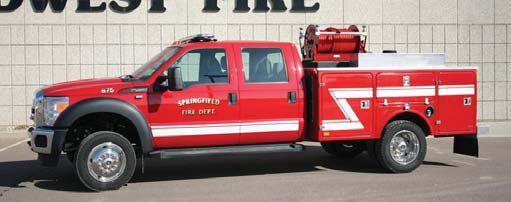
This unit was built on a Ford F450 chassis, and is powered by a 362-hp Triton engine and a Torqshift transmission. It features a Hale pump, a FoamPro foam system and a 300-gallon water tank.
DEPARTMENT: Springfield Volunteer Fire Department, Maine
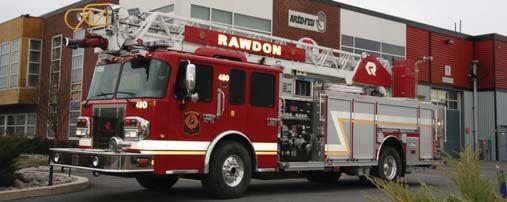
This unit was built on a Spartan MetroStar chassis, and is powered by a Cummins 450-hp engine and an Allison 3000 transmission. It features a 1,250-igpm Waterous pump, a 330-imperial-gallon water tank, a 23.8-metre (78-foot) three-section ladder and a 25-year corrosion protection warranty.
DEPARTMENT: Rawdon Fire Department, Québec
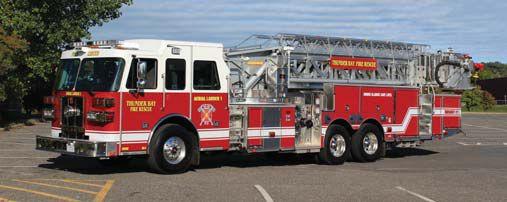
This unit was built on a Sutphen chassis, and is powered by a 500-hp Cummins engine and an Allison 4000 transmission. It features a 1,500-gpm Waterous pump, a 300-gallon water tank, a 30.5-metre (100-foot) platform, a Raydan air suspension, a Canadian cold weather package, a Whelen LED light package, and LED ladder lights.
DEPARTMENT: Thunder Bay Fire Rescue, Ontario
Hub Fire Engines
M&L Supply
Metalfab
Ontario Fire
ResQtech Systems
Rocky Mountain Phoenix
WFR Wholesale
Wildfire Environmental
TIRE CHAINS – AUTOMATIC
Carl Thibault Emergency
Carrier Centers
Darch Fire
Dependable
Eastway Emergency
Fort Garry
Hub Fire Engines
Metalfab
Onspot
Ontario Fire
ResQtech Systems
Rocky Mountain Phoenix
WFR Wholesale
Ontario Fire
TOOL MOUNTS
Performance Advantage Co.
Aréo-Fire
Darch Fire
Dependable
Jordair Compressors
M&L Supply
Ontario Fire
ResQtech Systems
Rocky Mountain Phoenix
WFR Wholesale
TRAINING & EDUCATION
A.J. Stone
Eastway Emergency
Fire Fighting In Canada
Firehall BookStore
NFPA
Smiths Detection
Spectrum Nasco
Carrier Centers
TRUCK FINISHES – PAINTS
Dependable
Eastway Emergency
Hub Fire Engines
TRUCK SERVICE & REPAIR
Aréo-Fire
C-Max
Carl Thibault Emergency
Carrier Centers
Darch Fire
Dependable
Eastway Emergency
Fort Garry
Hub Fire Engines
Metalfab
Ontario Fire
ResQtech Systems
Rocky Mountain Phoenix
WFR Wholesale
TURRETS – BUMPER
A.J. Stone
Akron Brass Company
C-Max
Canadian Safety Eqpt.
CSE Incendie
Darch Fire
Eastway Emergency
Fort Garry
Hub Fire Engines
Kidde Canada - Angus Fire
M&L Supply
Metalfab
Ontario Fire
ResQtech Systems
Rocky Mountain Phoenix
WFR Wholesale
TURRETS – ROOF
A.J. Stone
Akron Brass Company
C-Max
Canadian Safety Eqpt.
CSE Incendie
Darch Fire
Eastway Emergency
Fort Garry
Kidde Canada - Angus Fire
M&L Supply
Metalfab
Ontario Fire
ResQtech Systems
Rocky Mountain Phoenix
WFR Wholesale
USED APPARATUS
A.J. Stone
Canadian Safety Eqpt.
Carrier Centers
CET Fire Pumps
Darch Fire
Dependable
Eastway Emergency
Fort Garry
Hub Fire Engines
Metalfab
Ontario Fire
ResQtech Systems
Rocky Mountain Phoenix
WFR Wholesale
VALVES
A.J. Stone
Akron Brass Company
Aréo-Fire
C-Max
Canadian Safety Eqpt.
Carl Thibault Emergency
Carrier Centers
CSE Incendie
Darch Fire
Dependable
Dixon Northline
Eastway Emergency
Fort Garry
Hastings Brass
Hub Fire Engines
Kidde Canada - Angus Fire
Kochek Co., Inc.
M&L Supply
Metalfab
Ontario Fire
ResQtech Systems
Rocky Mountain Phoenix
Task Force Tips
Waterous
WFR Wholesale
Wildfire Environmental
VEHICLE ACCESSORIES
A.J. Stone
Aréo-Fire
C-Max
Carl Thibault Emergency
Carrier Centers
Darch Fire
Dependable
Eastway Emergency
Fort Garry
Hub Fire Engines
Metalfab
Ontario Fire
ResQtech Systems
Rocky Mountain Phoenix
WFR Wholesale
Whelen Canada
Ziamatic Corp. (ZICO)
VEHICLE CONSOLES
C-Max
Carl Thibault Emergency
Darch Fire
Dependable
Fort Garry
Hub Fire Engines
Metalfab
Ontario Fire
ResQtech Systems
Rocky Mountain Phoenix
WFR Wholesale
Whelen Canada
VEHICLE UPFITTING
C-Max
Darch Fire
Dependable
Eastway Emergency
Hub Fire Engines
M&L Supply
Metalfab
Ontario Fire
ResQtech Systems
Rocky Mountain Phoenix
WFR Wholesale
Whelen Canada
WATER/FOAM AIRCRAFT
Aréo-Fire
Dependable
M&L Supply
Ontario Fire
ResQtech Systems
Rocky Mountain Phoenix
Waterous
WELDERS
C-Max
Carl Thibault Emergency
Eastway Emergency
ResQtech Systems
WHEEL CHOCKS
A.J. Stone
Aréo-Fire
C-Max
Canadian Safety Eqpt.
Carl Thibault Emergency
CSE Incendie
Darch Fire
Dependable
Eastway Emergency
Fort Garry
Hastings Brass
Hub Fire Engines
Kochek Co., Inc.
M&L Supply
Metalfab
Ontario Fire
ResQtech Systems
Rocky Mountain Phoenix
WFR Wholesale
Ziamatic Corp. (ZICO)
A.J. Stone
C-Max
Carl Thibault Emergency
Darch Fire
Dependable
Eastway Emergency
Fort Garry
Hub Fire Engines
M&L Supply
Metalfab
Ontario Fire
ResQtech Systems
Rocky Mountain Phoenix
WFR Wholesale


BY PETER SELLS
ire services big and small across Canada are feeling the pinch. Budgets are under pressure, forcing some tough choices to be made soon. What choices, and how soon, depend on the local specifics. Some of these decisions are relatively minor adjustments, but others may involve drastic re-engineering of fire-service delivery models.
In late September, the employment of Winnipeg Fire Chief Reid Douglas was terminated just as a review of the city’s $17.8-million fire-paramedic station replacement program was to be released. The year-long review by number crunchers Ernst & Young looked at the rationale for building four new stations, examined the way development contracts were awarded, assessed the value received by taxpayers and scrutinized all oversight processes involved in the projects. The review was not a public document when I wrote this column, so there was no indication of how it is related, if it is at all, to the ending of Douglas’s long and successful career in Winnipeg.
What is clear is that money for fire protection in Winnipeg is tight. The department’s overtime bill for 2013 is expected to be in excess of 200 per cent over budget by year’s end. The department has not replaced 34 vacant firefighter positions or those of another 16 firefighters on longterm disability. Absenteeism is under scrutiny – a legitimate management function that sometimes leads to finger-pointing and misunderstanding. Consideration is being given to eliminating secondary apparatuses at two stations, provided that response times and firefighter and public safety can be safeguarded. All of these are situations that could be solved as soon as large bags of cash start falling from the sky, but I wouldn’t hold my breath for that.
How about a medium-sized city such as London, Ont.? A pending contract arbitration may award firefighters pay increases of more than 11 per cent over the next four years if parity with police wages is granted. Mayor Joe Fontana maintains that the city simply cannot afford such an increase without balancing it through some sort of cost-cutting measures. The concept of police parity was the focus of a report commissioned by the City of London. The report by Deloitte’s job-evaluation specialist Sandra Haydon concludes that first-class police officers have more complex decision-making responsibilities than first-class firefighters and should be paid two pay grades higher. This could then be interpreted as justification for paying first-class firefighters two pay grades below police parity. The City of Barrie and the Barrie Professional Fire Fighters Association (BPFFA) are also waiting for an arbitration award that may mirror the wage and benefit increases the city gave to police in 2010.
Given the history of similar arbitration awards in Ontario, BPFFA members will likely receive parity with their crime-fighting colleagues regardless of the city’s ability to sustain those salary levels. So far, there are two options on the table: fewer firefighters or lower firefighter pay. Are there other ways to create efficiencies in service delivery?
A consultant’s review received by the City of Thorold, Ont., in March suggested several efficiency options, including two that would have Thorold share fire services with the neighbouring, and larger, St. Catharines Fire Department. Thorold’s council declined to advance the shared-service options to the public discussion phase.
A shared-service model is not without precedent in Ontario. Since 2002, the towns of Newmarket and Aurora have jointly funded and operated Central York Fire Services, overseen by a joint council committee made up of three members from each of the town councils.
A jointly operated fire service is one way neighbours can work together. Contracted service agreements are another. In Newfoundland, the town of Logy Bay-Middle Cove-Outer Cove is facing a decision as to whether or not it will keep its volunteer fire department, or contract all services to the St. John’s Regional Fire Department. In this case, the decision is not driven by cost, but by effectiveness. A recent consultant’s review found that the low number of volunteers who are able to
So far, there are two options on the table: fewer firefighters or lower firefighter pay. Neither one sounds popular. ‘‘ ’’
attend fire calls is resulting in inadequate fire protection for the town.
Retired District Chief Peter Sells writes, speaks and consults on fire service management and professional development across North America and internationally. He holds a B.Sc. from the University of Toronto and an MBA from the University of Windsor. Peter is president of NivoNuvo Consulting, Inc, specializing in fire-service management. Contact him at peter.nivonuvo@gmail.com and follow him on Twitter at @NivoNuvo
In my May column I looked at a study by University of Toronto economics PhD candidate Adam Found, titled Economies of Scale in Fire and Police Services in Ontario. Found’s analysis suggests that full-time, career fire departments are about 35 per cent costlier than composite or volunteer fire departments. The City of Brockville, Ont., looked at that study, as well a service-delivery review by Toronto-based Western Management Consultants, which recommends changing the fire department to “a composite model of service delivery,” combining full-time with part-time firefighters, and possibly volunteers. Interestingly, the Western Management report also predicts operational savings of about 35 per cent, backing up Found’s findings. North Bay, Ont., is also reviewing its full-time staffing model.
We’ve been spouting buzz phrases such as doing more with less, and working smarter, for decades. It may be time to put those concepts into action.