From its origins in innovation, Niagara Pre-Hung Doors has crafted a lasting legacy.
B.C. pre-hangers seek to band together to find answers to NAFS puzzles.
Thrill your customers with these new products from top hardware manufacturers.
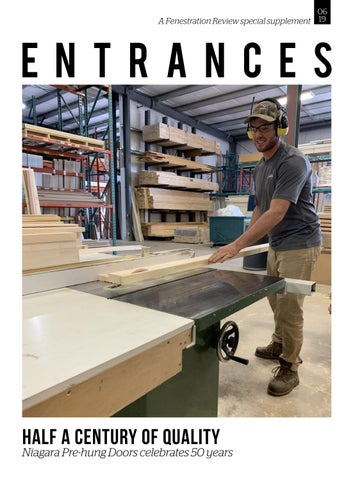
Half a century of custom quality
Niagara Pre-Hung Doors celebrates 50 years
By Andrew Snook
Nestled in the small town of Pelham, Ont., is the community of Fonthill, a bedroom community for the Niagara area better known for its fruit orchards than its industry. But standing proudly on Kottmeier Road sits the story of a successful family business that has withstood the hard times that come with being in business for half a century, and continues to do well carving out a niche for itself with contractors and residents throughout the Niagara Region.
This year, Niagara Pre-Hung Doors celebrates its 50th year in business. Of course, this third-generation family business’ story didn’t actually start in the Niagara Region – it began in Kalamazoo, Mi., in 1969.
“My father [John Beeke] was a homebuilder from Kalamazoo,” explains Jeff Beeke, who co-owns the family business with two of his brothers, Mark Beeke and Tim Beeke, ever since John retired seven years ago. “My grandpa, Louis, convinced my father to come down to Niagara and build a house for him.”
When John arrived in Niagara he was shocked to see the pre-hung door
market wide open to opportunity.
“No one was selling pre-hung doors in the Niagara Region, so he started bringing in machining to build them and sell them to local builders,” Jeff recalls.
When John arrived on the Niagara scene, any local residents, contractors or builders that were interested in these types of doors had to work with local carpenters that needed to build the units on site. A few of the local carpenters were not thrilled about his new product offerings throughout the region, but John persevered and jumped head-first into growing his business.
“He started right into the wholesale business. He built for apartment buildings and bigger complexes for 15 years,” Jeff says.
The business did well out of the gate and outgrew its first location – a barn on a dead-end road named McSherry Lane – within its first two years of operation. John expanded in 1971 and built a second location on Highway 20 that operated as the company’s base of operations for the next 38 years.
At its peak growth, the company expanded its reach to service builders and contractors as far as the Toronto area.
“At one time we had two other outlets in Hamilton in the 1990s,” Jeff recalls.
But after the punishing recession in the ‘90s homebuilding market, and getting burned on a
few deals by unscrupulous builders in the Toronto area, John decided to reduce his radius and build prehung doors to serve the company’s loyal base of customers in the St. Catharines, Niagara Falls, Niagaraon-the-Lake, Welland, Dunnville, Grimsby and Fort Erie areas.
“We got focused on keeping and improving our Niagara business,” Jeff says. “Our typical work area is the Niagara Region and a bit into Stoney Creek and Hamilton, but we’re pretty choosey about that. We service what we build so we don’t want to be too far out.”
In 2009, John moved shop one more time and set up at the company’s current location on Kottmeier Road, by the intersection of Highway 406 and Highway 20.
“We specialize in all residential doors, interior and exterior, trim and hardware,” Jeff says. “Exterior doors are available in wood, fibreglass and steel, pre-finished; either painted or stained. Customers have the choice of doing their own finishing as well. Frames for the exterior doors are available in vinyl, composite or wood; either pre-finished or not. Most of our door units are custom retrofitted to existing homes, so all of our units that we install are pre-measured by us and made to specific sizing to ensure proper fitting upon installation. Custom widths of jambs, brickmoulds and sills are all part of proper fits for our door units. We also supply local builders who
“We really don’t have a lot of turnover. There’s a few reasons for that. For one, we want to make sure we treat them right, and we pay better than fair.”
typically do their own installs.”
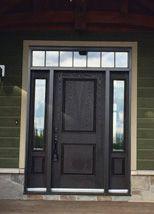
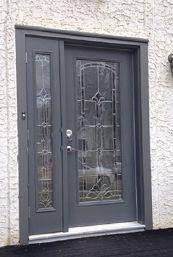
From more common standard door units to custom door units with specialty glass with sidelights or shaped transoms, Niagara Pre-Hung Doors is set up to do them all.
“Interior doors vary from paint grade to stain grade in any wood species. Panel doors or glass panels, frosted or different textured or patterned glass as well,” Jeff adds. “So there’s a big market we fill.”
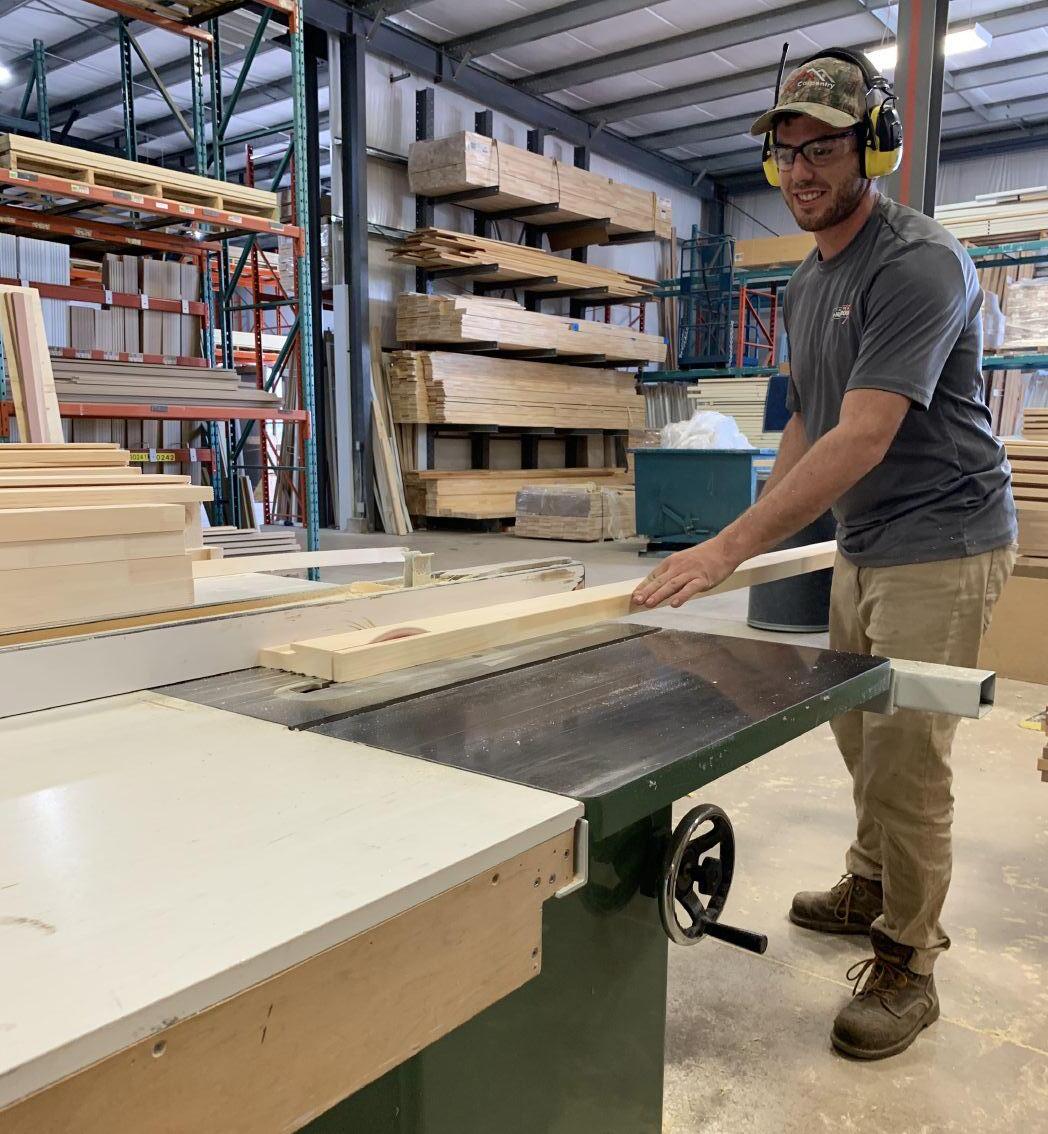
As we walked the shop floor, Jeff pointed out a variety of handcrafted custom doors.
“Every unit you see here is for a person’s home,” he says, proudly. “We mill our own frames so they’re a little stronger, a little thicker. All of our components are a little more heavy-duty than you typically find at a lumber store.”
STAYING CURRENT
Jeff says that it has been vital for he and his brothers to stay proactive in the selection of doors and hardware.
“We try to stay on top what’s trending, stay on top of what’s hot,” he says. “If we’re going to sell doors, we have to sell what’s current.”
Having a showroom that can display all of the latest trending doors and hardware is
another key aspect of the family business.
To showcase the latest and greatest, the company built a 3,000 square foot showroom that you immediately walk into when you enter the building from its main doors.
Another challenge that is an important element to keeping this business healthy is having a reliable supply line for components, Jeff says.
“The big thing is finding suppliers you can rely on,” he says. “A lot of the suppliers will offer stock programs – for our jambs, for example. A lot of them will stock our own stuff and it’s up to them to replenish it. You just have to be able to rely on them to have the stock on hand.”
A LOYAL CREW
Between the company’s administration staff, people working on the shop floor and installation crews, Niagara Pre-Hung Doors currently employs about 20 people yearround. And unlike many other companies in the manufacturing world, these guys have no issues with employee retention.
“A lot of our guys have been here a long time,” Jeff says. “Part of your success is your employees. We never have a problem with people coming in late or always calling in sick. We can rely on each other, it’s a real
team effort.”
One long-standing staff member just retired, who had worked for the company for 44 years. Jeff says his family’s company currently has another employee that’s been working there for 35 years, one that’s been with them for 33 years, and several that have been with the company between seven and 10 years.
“We really don’t have a lot of turnover. There’s a few reasons for that. For one, we want to make sure we treat them right, and we pay better than fair,” Jeff explains. “We like to treat them like family, so they’re not just a number.”
Jeff knows plenty about family. He is one of 13 children: eight boys and five girls.
“So you can imagine when my Pops started the business, it wasn’t just all roses,” he says, smiling.
ALL IN THE FAMILY
When Jeff was about 30 years old, his father started rolling out shares of the company to himself and his brother Tim – the start of John’s succession planning. Jeff and his brothers are the second generation to take up the family business. Jeff’s son, Joe, who works on the shop floor, is the third generation learning his family’s craft.
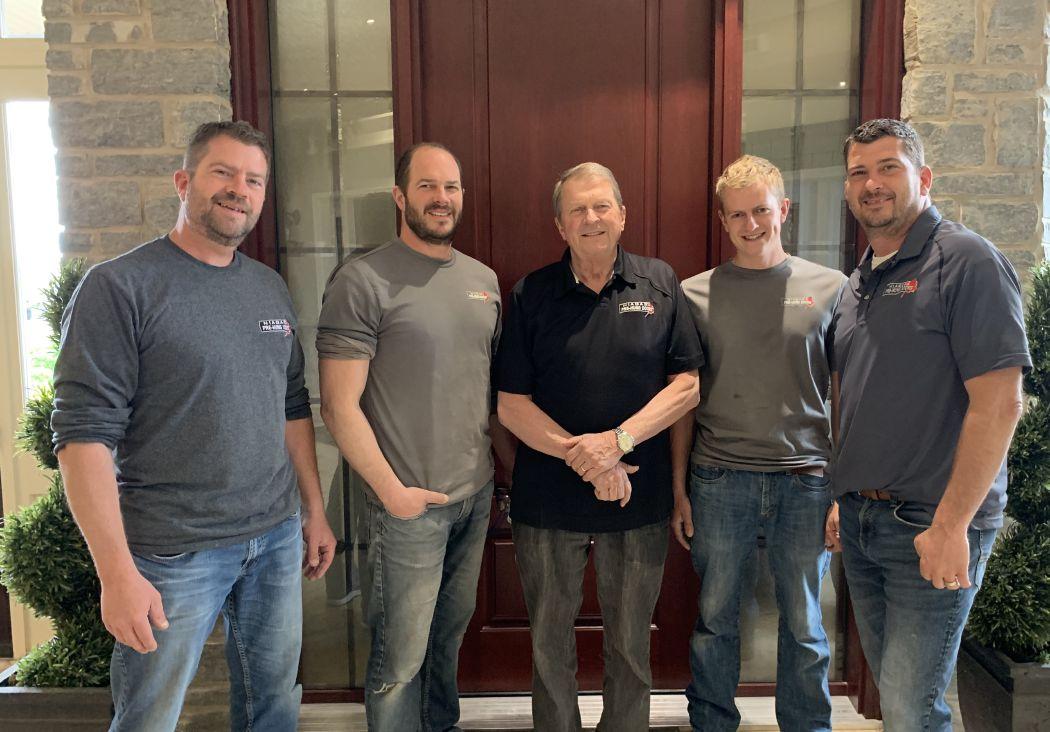
(L to R) Jeff, Mark, John, Joe and Tim Beeke make up the three generations of family-run Niagara Pre-Hung Doors in Fonthill, Ont.
A voice for prehangers
B.C. manufacturers look to smooth NAFS compliance with a new association.
By Andrew Snook
The 2010 National Building Code of Canada (NBC) marked a monumental shift in how doors are tested in Canada with the introduction of NAFS, the North American Fenestration Standard. The most updated version of NAFS is currently being used in the 2018 B.C. Building Code, and it requires doors being installed in the province to be NAFS compliant. Unfortunately, that doesn’t mean all the players in the B.C. door market are adhering to the necessary bylaws, particularly in the Lower Mainland. From building inspectors being unsure on how to properly enforce these standards, to counterfeit labels showing up on jobsites, the NAFS standard has definitely encountered some roadblocks in its practical implementation into the B.C. market.
This has placed additional strain on companies like B.C. Door and other manufacturers in the province that are supportive of the government’s NAFS compliance and U-value requirements, and have already put forward thousands of dollars in new products and testing to comply with the new standard. To try to find a solution to these challenges, B.C. Door president Shayne Palmer is working with another Lower Mainland manufacturer, Jason Sun of Parwood Door Products, to potentially build a NAFS prehangers association in B.C.
“We’re looking to work with people who want to work with the association to make things better,” Palmer says, adding that the association would ask for its members to become NAFS-certified manufacturers. “We’re looking for people having problems with what NAFS is and getting NAFS compliant – or having problems manufacturing NAFS frames – and help them through and how to rectify it.”
Palmer says there is a potentially large group of manufacturers that could come together and draw from each other’s ideas to help create solutions to their NAFS challenges.
Sun says getting all the manufacturers together within an association to share ideas will be extremely helpful for solving the industry’s current issues. He says the challenges the industry is facing right now are coming from three different directions:
• The building code and the new act manufacturers have to comply with for meeting new requirements with existing products in the marketplace;
• The individual companies are not big enough to handle every issue they’re currently facing, when considering the time and effort required to deal with each one on their own; and
• Counterfeit products that don’t meet the necessary certification standards.
In addition to helping solve the industry’s current challenges, he says that forming an association could help all the manufacturers improve their operations through collaboration. “When we get more and more information from all over from these members I think it will help to improve our systems, too,” Jason Sun says. “That’s the goal we set and we’re working towards.”
APP-roving the right products
Sun and Palmer are looking to help building inspectors deal with counterfeit and other non-conforming products flooding the marketplace through the creation of an app inspectors could install on their smartphones to check labels on doors at worksites. Sun says fake labelling is a really bad issue in the Lower Mainland and that you could “probably drive around and see those fake labels every day in half of the jobsites.”
“With the app it could make them much more at ease,” Palmer says, adding that he’s heard of some cases in B.C. where inspectors are signing off on products that appear to be NAFS approved, but the inspectors can’t necessarily
tell for sure. “With this app and the lab making certified labels, when the inspector sees a certified label on the product itself they should have complete comfort.
One section of the statement to form an association, created by Palmer and Sun, includes a $2,000 lab fee per company to become certified with the lab to create labels. The lab would also be responsible for confirming quality control at each operation.
“If you look at the inspector’s job when he goes to look at a door frame, it’s like buying a car. How would you know which one meets your criteria? It’s very difficult because you have a draft seal sill, you have the Parwood sill, and you have an Endura sill… how would the inspector even know which sill he’s even looking at? Whose sill is it?” Palmer says. “It becomes very confusing for the inspector, and that’s why the building officials of B.C. are having a tough time even wanting to inspect for this situation, because now once they’ve passed it, they’re on the hook by saying, ‘Yes, I approve this because it was NAFS.’ They are only approving it because they see a label. But they’re not really inspecting how the door frame was really made. ‘Does it look like it was made properly?’ is the question mark and how would they be able to tell? They’re an inspector, they’re not a door manufacturer.
“This label system that Jason has come up with is to create
an app on the inspector’s phone that would be a real tremendous help for the building inspector to type in the address and look at the test reports, if necessary, and then he’s not questioning it anymore. He knows what he’s doing is proper. ”
The association would construct a database for the members’ NAFS-complaint products that would function as a tracking system for every product sold into the marketplace that could be used for auditing by government officials, building envelope consultants and engineers.
The association database would offer the following functions:
• Recording the product selling history of all of its members;
• Recording the factory inspection history of all of its members;
• Recording the product’s installed jobsite information;
• Providing needed information for industry guidance;
• Providing checking tools for the city inspector;
• Providing information for the insurance companies;
• Providing bonding foundation for all the material suppliers to their benefit of innovation.
Sun says the inspectors would be able to use the app to identify every one of the NAFS-certified products easily.
“The game is saving time and money,” he says. “And by getting the fake products out, saving the taxpayers some money.”
Added benefits
As an association, Palmer believes the industry in B.C. would have a stronger voice to lobby officials to enforce the proper labeling of products.
Other benefits of creating an association would include creating a united group to share the cost of tests and improvements to door systems; providing tools and educations for building officials, engineers and building envelope professionals about these tools and how to use them to better the industry; bringing in a testing facility and having it monitored with a third party performing tests to find out the quality level of products; and insisting on third-party certifiers to perform factory inspections at random, ensuring that association members are building door units up to the standard.
Palmer says that everyone adopting the same program, at the end of the day, would be win-win for everyone.
“I’m trying to make a better door and I think the other manufacturers are trying to make better doors,” he says.
“We want this article to go around and explain our opinions and our ideas,” Sun adds. “We want people to come in and talk to us and generate solutions. This is all the value to me. Whoever is willing to talk to us, we’re happy to talk to. I want people to hear the worries coming from this side, and we want new voices coming from outside coming here. You never know, it’s all for helping the industry to grow healthily.”
INTRODUCING THE COMMDOOR FOLDING DOOR SYSTEM
Designed for spectacular year-round enjoyment. Connect your outdoor oasis with the indoors: private residences, restaurants, cottages, patios, event centres, and entertainment complexes. Experience the full potential of your space today. commdooraluminum.com
Automate to meet demand
New technology can help when skilled painters are hard to find.
By Treena Hein
More door manufacturers than ever in Canada are painting in-house – and that means more are opting to automate the finishing process, especially for fibreglass and steel doors.
“A lot of painting used to be outsourced but companies are now doing it themselves because they want reduced lead time,” notes Luca Tosetti, owner at INT Machinery in Toronto, the Canadian distributor for door-finishing equipment made by Italy-based Giardina. “It also means that if something goes wrong with the finish on one door, say out of an order of 20 doors, you can deal with the problem right away and ship the order out.”
However, if your painter is absent for any reason, explains Maria Jasminez, you will experience some serious downtime. “If you don’t have a back-up painter, over time it’s likely your painter is going to risk some sort of repetitive strain injury,” adds Jasminez, who is head of customer relations at AquaSurTech, which has offered waterbased coatings and stains for almost 25 years and has mixing operations in Toronto, Montreal and Ohio and also offers custom coating services and automation technology. “There is only so much output a human can provide, consistently, in one shift.”
Jasminez adds that in Ontario (where most of Canada’s door manufacturing occurs), there are not that many painters available and it’s therefore really hard to retain them. “The competition is so fierce,” she asserts, “that some other company is going to be desperate enough to get your painter by offering a higher wage.”
Therefore, instead of choosing to have painting done in-house by hand, door makers are opting for automated systems, which are fast, consistent and require fewer and less-skilled workers.
Jasminez says this route has proved cost-effective for their customers in terms of logistics, material handling and eventual warranty claims. By offering a turn-key solution, she adds, there is also no finger-pointing between suppliers in case of a problem.
However, there can be hesitancy to get a robotic system, notes Paul Breault, sales manager at Quebec-based PMC Automation. He
believes this likely stems from the fact that door finishing is not yet an industry where robotics are standard. “The fear of lack of talent to utilize the technology effectively is often present,” Breault observes, “but a robot is just a machine with six servo motors, programmed like any other multiprocessor.”
Sales for the automated finishing systems made by PMC are quite high in Quebec (over 20 installations), and Breault muses that this could be due to Quebec door firms having more difficulty getting workers than elsewhere in Canada, or simply positive word of mouth among customers there. “It could also be that some firms outside Quebec aren’t looking at true ROI, including costs of new minimum wage hikes,” he notes.
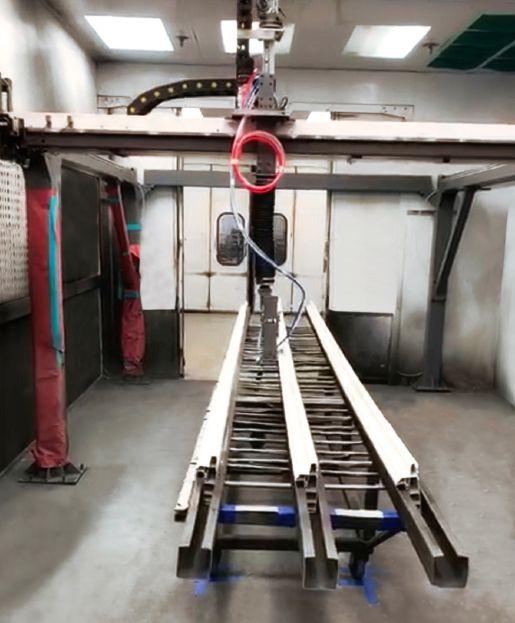
AquaSurTech realized less was more when it comes to machine enclosures. They install the gantry system right inside a customer’s spray booth, saving floor space and making it possible to finish very large pieces.
The competition is so fierce... that some other company is going to be desperate enough to get your painter by offering a higher wage.
For some firms, automation is not warranted as their door volumes aren’t quite high enough, but in some cases, machinery with some degree of automation may be considered for a specialized finishing procedure. This is the case for Chameleon Wrapping and Lamination in Edmonton, which applies colour foils and also wood laminate to doors, door jambs and window frames and started automating their window frame finishing about five years ago. (Their window machine applies primer, then the film; the windows are then stacked and cured before a polyurethane topcoat is applied.) Chameleon Topcoatings, also in Edmonton, has offered custom finishing for windows and doors for the building industry for ten years.
The specialized door finishing for which Chameleon Wrapping and Lamination may consider buying a machine involves pressing wood film onto the aluminum slab and sealing all six sides, explains president and CEO, Amber Gunderson. “It lasts a very long time as moisture cannot enter,” she says. “We are importing some doors finished this way this year and we’ll see how they are received in the market. If it goes well, we will look into purchasing the machine for this.”
SPECIFIC EQUIPMENT ADVANCES
PMC has offered robotic systems for door finishing for about three years and Breault explains that each installation is tailored to the specific needs of the end user. Systems can include head and sill finishing, jamb assembly, insert install and hinge install. They have also installed systems that position windows for painting (helping to reach shadow grooves in the corners, for example) but none for doors so far.
The most recent development at Giardina is the addition of a patented feature called Dualfast a few years ago. It allows for very quick colour changes because the system has up to four different colours at the ready at any time. “When you need to change colour, you remove the plates which closes the flow of one paint, and when you add the new set of plates that triggers the other circuit to allow another paint colour to flow,” Tosetti explains. “You can also flush out colours that are not being used right now
and load new ones if you want.”
AquaSurTech continues to make “great strides in automation,” says Jasminez, and has recently launched new machinery since the release of their LH1100 automatic door coating machine in January 2017. “In 2018, we completed 11 installations of various pieces of automation equipment,” she says. “These include the semi-automated lineal painting machine, the FlamePro and the LH1100.” Customers range from small to high-volume producers.
Del Windows and Doors in Stoney Creek, Ont., purchased a first-generation LH1100 in the late 2016. Spokesperson Leo Stabile says they use it to paint steel and fibreglass door panels, between 20 and 30 panels a day. “I recommend you have proper fixtures made for holding the panels in place when painting, and racks to hold the finished panels,” he says. “The system is very easy to use once all programs are in.”
About a year ago, AquaSurTech staff – having heard from many potential customers that they didn’t have the space for both an LH1100 and a spray booth – recognized that the mechanisms of the LH1100 could be easily transferred into an existing spray booth. “It was a lightbulb moment that we didn’t really need the housing,” says Jasminez.
With this concept, the firm created the Universal Gantry Spray System and launched it in 2018. “Basically, we took the housing off the LH1100 and directly assembled the CNC-driven robotic spray arm inside a customer’s existing spray booth,” Jasminez explains, “through the use of a gantry track system.” With it, you can paint doors in excess of 42 by 95 inches and larger window boxes and lineals up to 21 feet.
No matter what automated system or finishing machine is chosen however, there will be a learning curve of some sort.
For Giardina systems for example, Tosetti explains that it takes a few months to get familiar with how to use the paint. “There are several types of paint on the market, water-based and solvent-based, some working at high pressure and some at low pressure,” he says, “and the same type of paint – water-based/high pressure, for example – will be different from different paint suppliers. Typically, our customers pick a paint supplier, do their tests and stick with that one supplier or maybe have two.”
All AquaSurTech automated systems are designed to use the firm’s water-based coatings. Initial programming takes about 15 minutes and changeover of design and colour about 10 minutes. “On installation, we do the programming for the customer’s SKUs and pre-populate the menu and submenus with options in the system for custom jobs as well,” Jasminez says. “The operator just chooses the type of job – doors, boxes, lineals – and paint, [choosing] from one to five colours.”
Top door products
Connected and automated inmotion.company
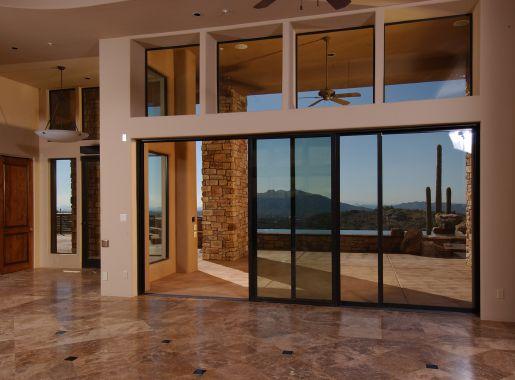
InMotion lets users control their surroundings with a touch of a button. The system automates any type of exterior or interior sliding door system – from curved to corner to pocket – gracefully uniting outdoor and indoor living areas into one magnificent space. InMotion is SmartHome compatible and comes with motion and safety sensors, a battery back-up, a party mode option and wireless communication enabling connection with internet-of-things supported by concierge-level service. Up to an 80-inch multi-slide door system can be integrated with home automation systems and
elegant wall switch options. 900-megahertz wireless systems allow for easy installation with superior, reliable signals over secure networks and with outstanding range, allowing for use through multiple layers of building materials.
Maximum security fentro.com
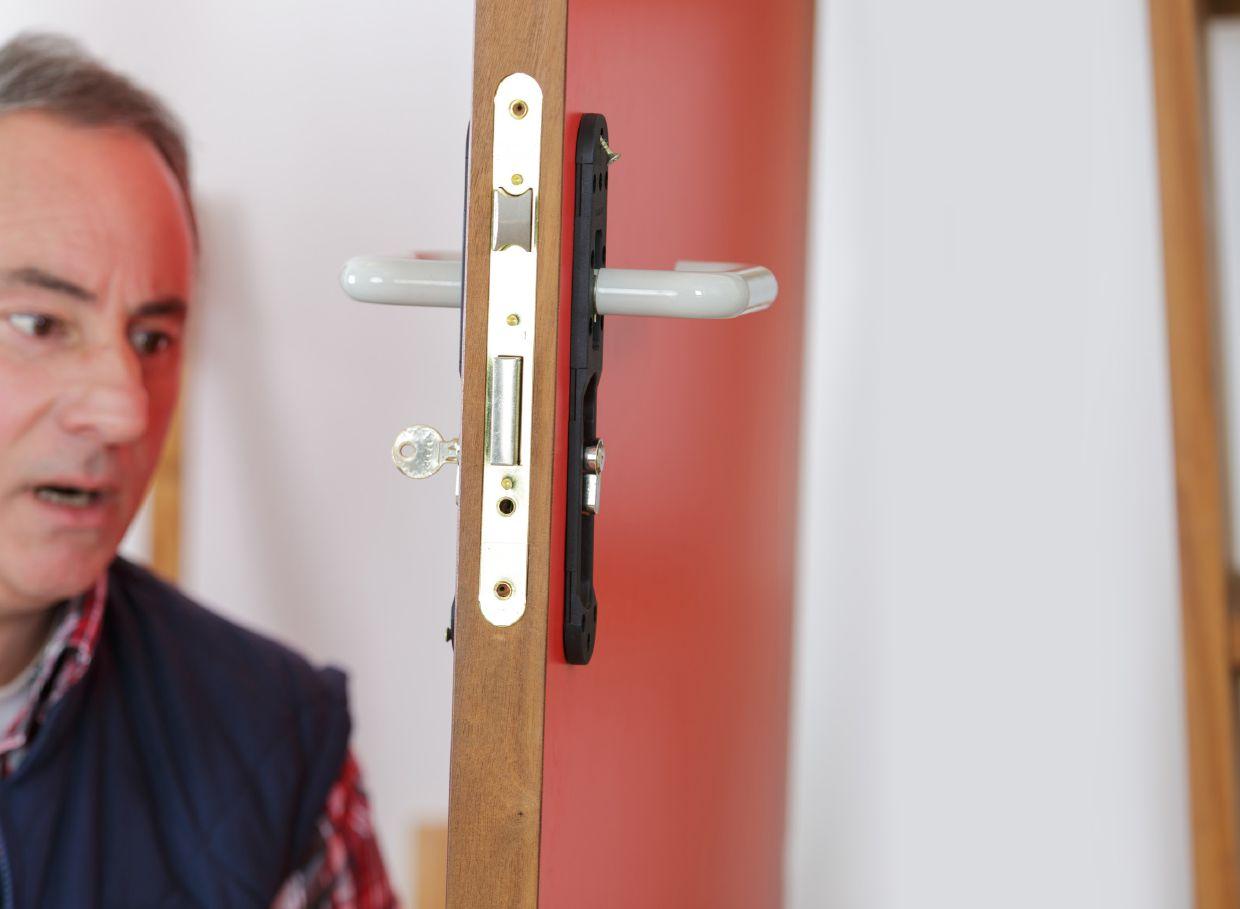
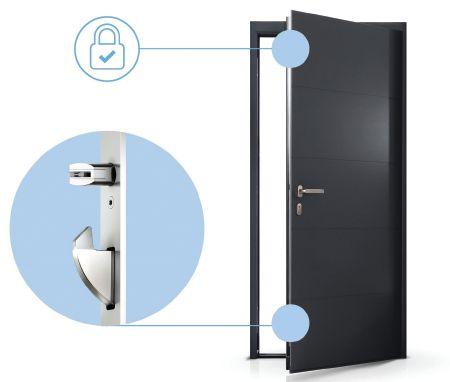
KFV multi-locking entry door gear comprises a handle or key-operated three-latch lock for triple security. Modern multi-point locks not only make doors more secure, more convenient and more intelligent, they also open up entirely new possibilities to develop new markets. The three-latch lock is equipped with the main lock latch as
well as two sprung soft lock latches in order to fix the door sash three times in the frame by just closing it. This gives long-term protection against door warping and against unauthorised entry attempts, even when unlocked, by pushing the main lock latch back. After locking with the key, the massive hook boltlatch combinations ensure maximum intruder resistance. The easily operated gear with powerful door tightening ensures an optimal seal as well as excellent heat and sound insulation with heavy pushpull pressure. Fabricator benefits include enhanced basic security; availability with three e-openers; availability with an optional, preassembled T2 safety lock; and suitability for apartment doors, residential front doors and commercial applications. Users appreciate the two additional latches in the auxiliary lock cases make it
more difficult for an intruder to open the door by pushing the main lock latch back with a credit card. The combination of hook bolt and latch prevents intruders from breaking or prising the door open for a high burglar resistance class up to RC3.
Contemporary patio look rotonorthamerica.com
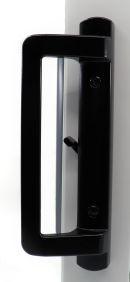
The new RotoFasco Secura 9600 sliding patio door handle features a contemporary look for an entry-level handle. The one-piece design allows for ease of installation and the handle offers a matching exterior design, with or without a keyed option. The 9600 handle is available in a variety of powder coat finishes including white, black, faux ORB and almond. The handle is offered with Roto’s single point or two-point mortise locks. To complement the 9600 and the mortise locks,
RotoFasco Secura offers a variety of rollers to enhance the functionality of the sliding patio door.
Blinds in glass odl.com
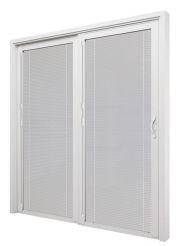
ODL’s most recent product innovation, Blink Blinds Plus Glass, allows for custom sizes and colours in as few as eight days. Blink Blinds Plus Glass is an insulated glass panel for windows and doors that features blinds between the glass. Blink provides a modern alternative to traditional corded or cordless door and window blinds. Blink built-in blinds incorporate traditional window blinds between an insulated panel, making them easy to use, convenient, and safe. Blink products are ideal for a variety of window styles as well as sliding patio doors, French doors, and other exterior glass doors.
Strong storm doors everlastproducts.ca
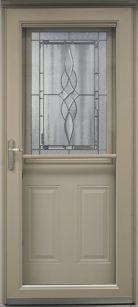
Everlast vinyl storm doors feature an aluminum stiffener througout for superior strength and maximum durability. Corners are fusion welded at 45 degrees with mechanically fastened 90-degree aluminum brackets for added strength. They come with an aluminum pre-hung frame for easy installation. Available finishes are brass or silver with an optional oil-rubbed bronze elite lever handle with a matching door sweep. Everlast vinyl storm doors comply with the CGSB-82GP-3M standard. The Maxview model features a full tempered glass insert delivering maximum vision area that doesn’t obscure decorative doorglass. The Prestige includes a hidden retractable screen for easy ventilation that slides out of the top rail and locks into multiple venting positions.
With a focus on quality, Tru Tech Doors began a relentless mission to manufacture the finest doors and doorlites possible. A product whose features and attention to detail are clearly visible against the competition.
by Todd Hassman
DOORKNOCKING
Say no to shortcuts
Avoid these pitfalls when trying to meet customers’ expectations.
Iunderstand the pressure to say “yes” to customers. In today’s modern world of endless online choices, entries must be visual stunning. Homeowners and project developers fall in love with their preferred door entryway. Why not? A grand entrance can create up to 35 per cent more perceived value in a home. But then sticker shock hits, challenging manufacturers and pre-hangers to fabricate these entrance systems at low cost while meeting building codes for NAFS and energy ratings.
At some point, the pre-hanger should say “no.” There’s a limit to what can be achieved at a certain price point. In my time I’ve seen a lot of attempts to take shortcuts around the laws of economics, and they usually end poorly.
The most obvious issue is a system that doesn’t meet the homeowner’s expectations for functionality or a finished look. When they complain, the installer gets the first call. Once they are stumped, the pre-hanger gets involved. Then the manufacturer gets blamed. But when the manufacturer inspects the system, the product is not the issue but rather how all the components were put together. No one is happy, and no one has a simple – or cheap – solution for the homeowner. All of this could be prevented with a simple “no” at the point of quotation when the homeowner demands a certain look and function at an unreasonable price point.
Automatic multi-locks work well in multi-unit residences – too well
for many residents. They need only get locked out on the doorstep in their bathrobe once to fall out of love with them. Single-locking deadbolts with two heavy commercial roll catchers are a popular lower-cost option that can even sneak in under the bar for a North American Fenestration Standard test, but they carry their own problems with causing a loud slamming noise. Exercise caution when saying “yes” to these cost-cutting measures.
Before saying “yes” to pull bars, remember the better ones are more expensive, with better fastener systems and heavier metal. Angle offset bars can have an issue, depending on the internal door structure, where they don’t perform well. For example, after repeated opening and closing over time the offset angle bars can put a lot of pressure on the door skins of steel and fiberglass doors, especially if there is no structural reinforcing under the skin. The skins may bend, crack or break open where the fasteners meet the skin. In the case of less expensive pull bars, the fasteners themselves will require tightening or shims that require adjusting. Maybe better to
Beware of low-cost primed finger-joint jamb. I’ve seen it rotting in the joints themselves or near the sill.
say “no” to them up front. Doors that don’t have a constant latching point on the middle tend to warp or move in and out. This may cause problems with engaging the deadlock or unlocking the door to escape in an emergency.
Beware of low-cost primed finger-joint jamb. I’ve seen it rotting in the joints themselves or near the sill. It may begin to rot before the house is completed, leaving it to the new homeowner or the installer to fix. In most cases it is just covered by the painters and then it is up to the homeowner to discover. In those cases, no recourse and no warranty. If it’s discovered in time, it becomes a cost for the builder, installer and pre-hanger to fix. Low-cost composite jamb and T-bars tend to warp and crack. Smaller finger-joint-primed T-bars split near the sill or header and at the locking points. Finally, resist the temptation to offer non-energy-rated glass and doors or doors with no testing at all. Some low-cost pre-hangers turn to products that, a first sight, look amazing. On closer inspection, the glass in the door may not be low-E or energy rated. In fact, the doors themselves are not tested for structure or performance or energy. They look very similar to rated doors, and it’s very hard for inspectors to tell the difference. Labels can be faked, or it’s implied that the door is from a major door supplier. It’s only a matter of time before issues with these poor products are discovered. Once they are, not all homeowners will be willing to bear the cost to replace them and they will come looking for the installer and pre-hanger. Better to just say “no” in the first place when you’re asked to provide a non-compliant product.
Todd Hassman is a consultant with Evergreen Energy Solutions. He’s been in the industry since 1990. He can be contacted at tp.hassman@telus.net